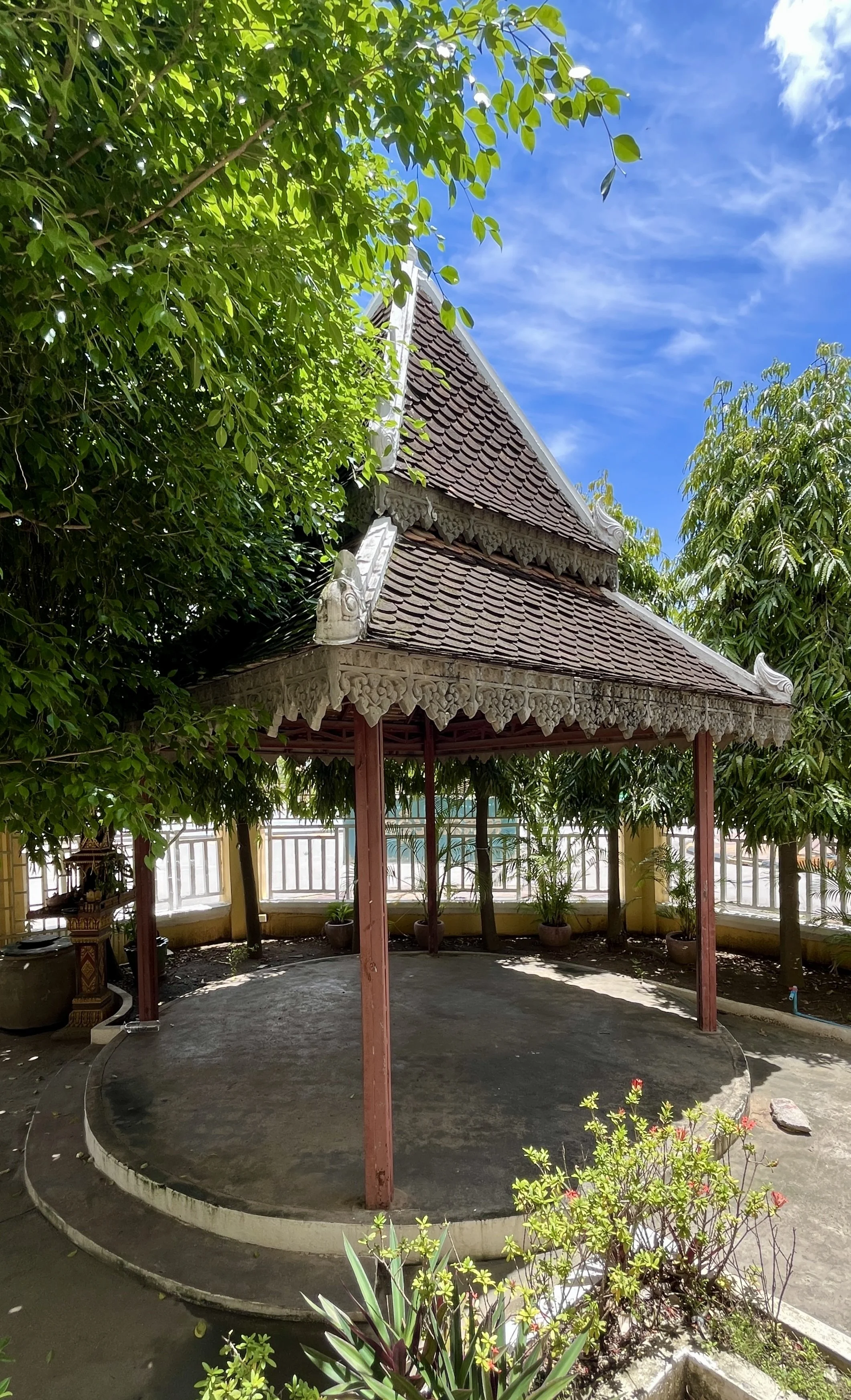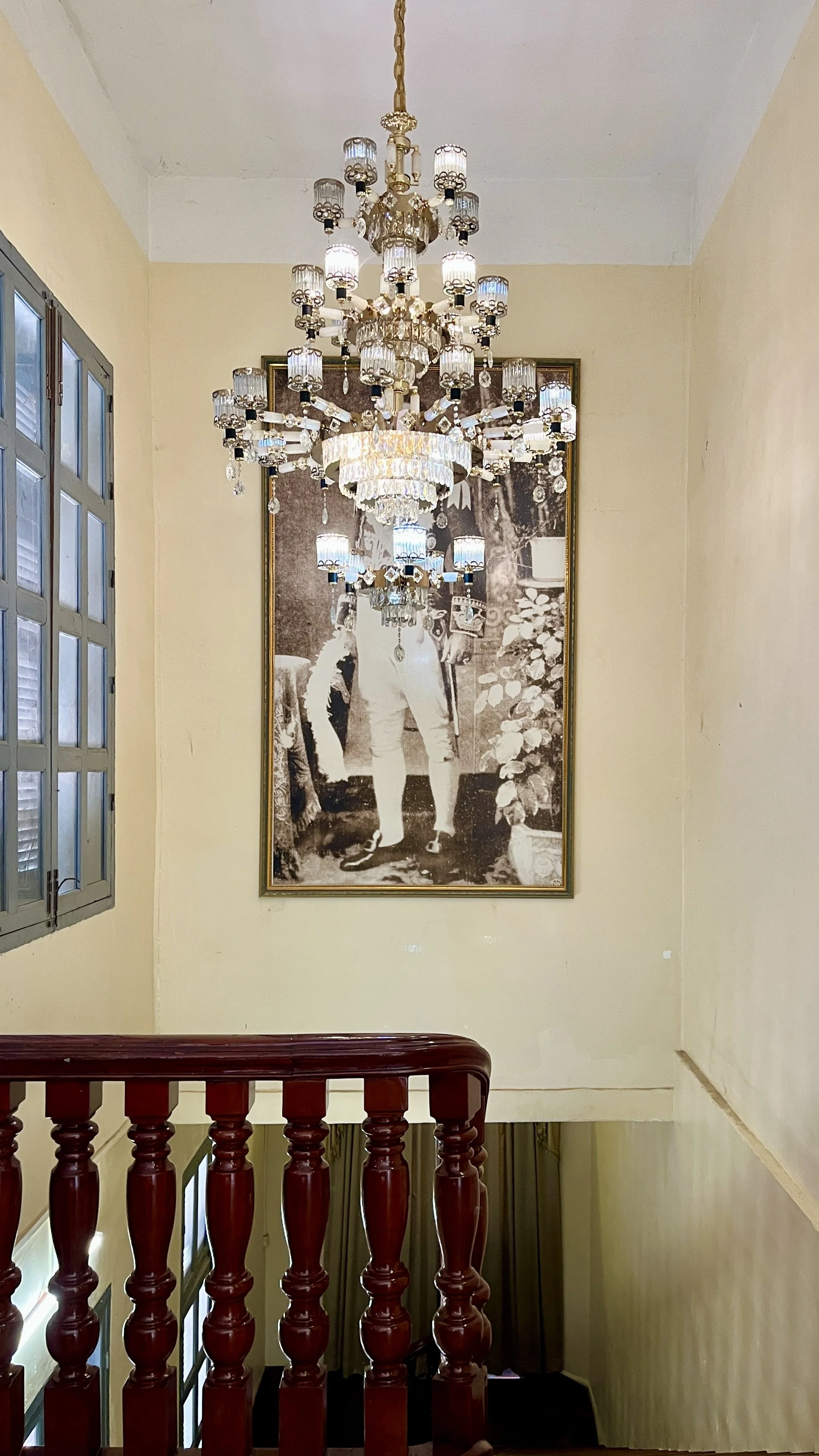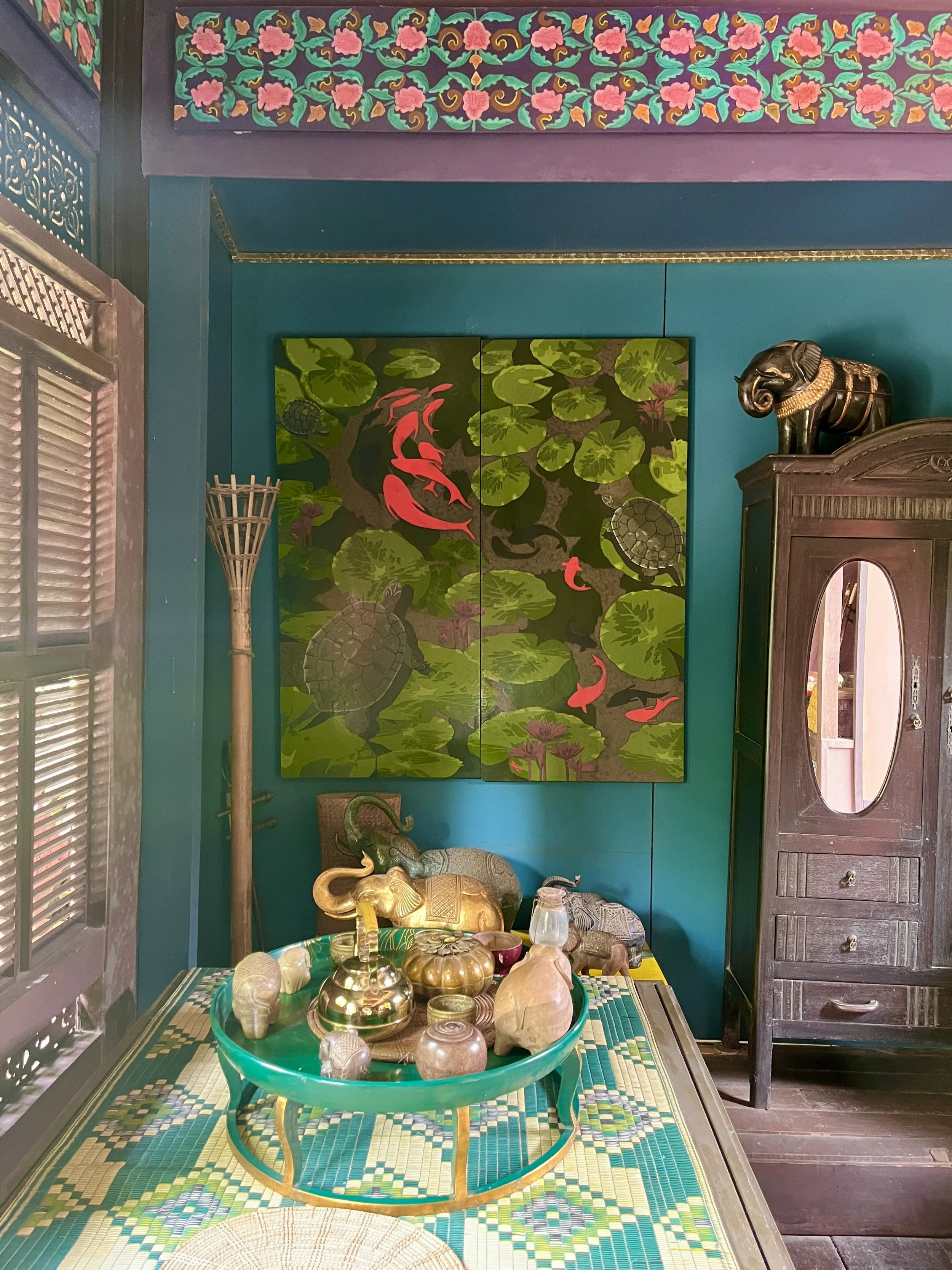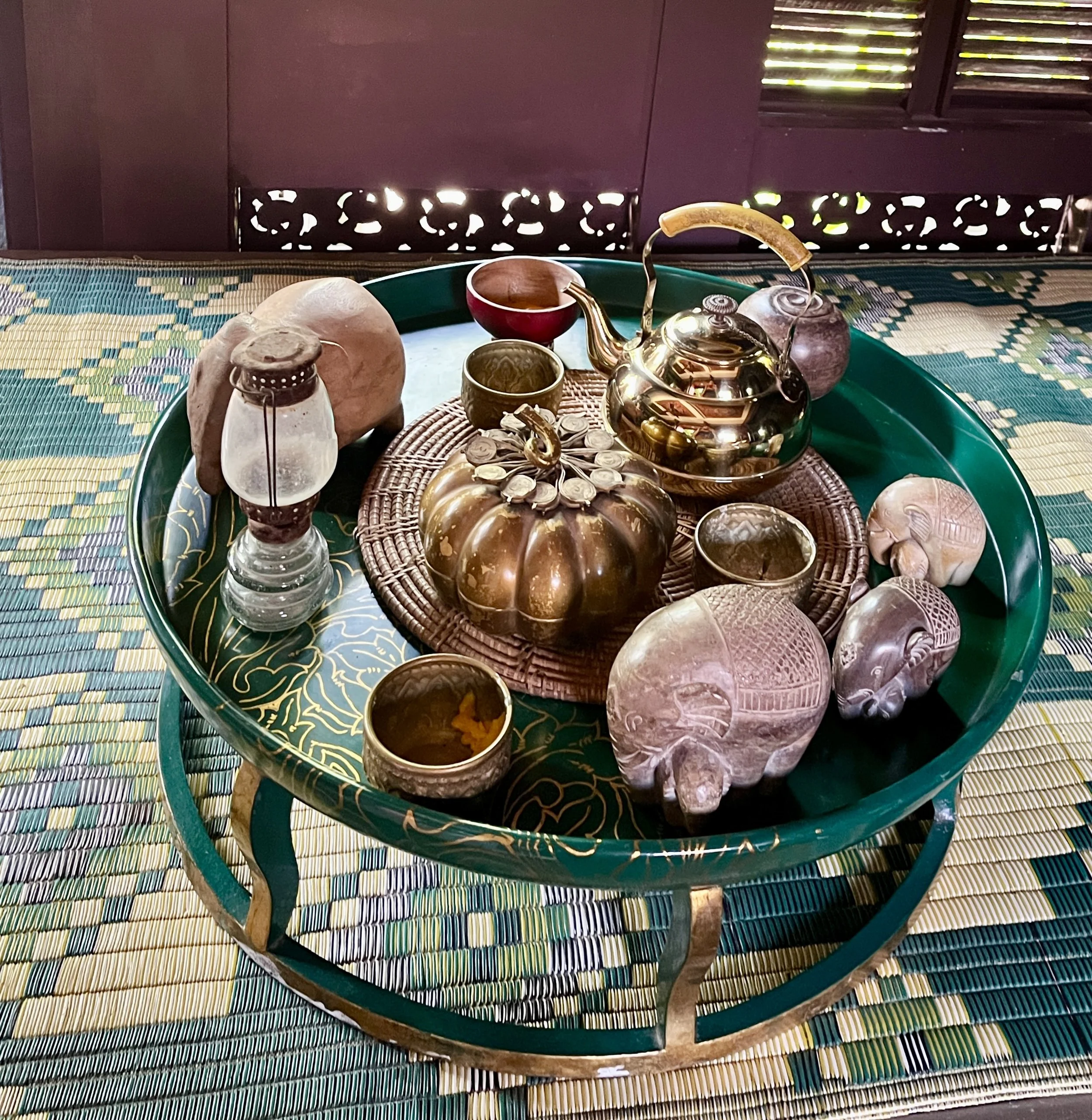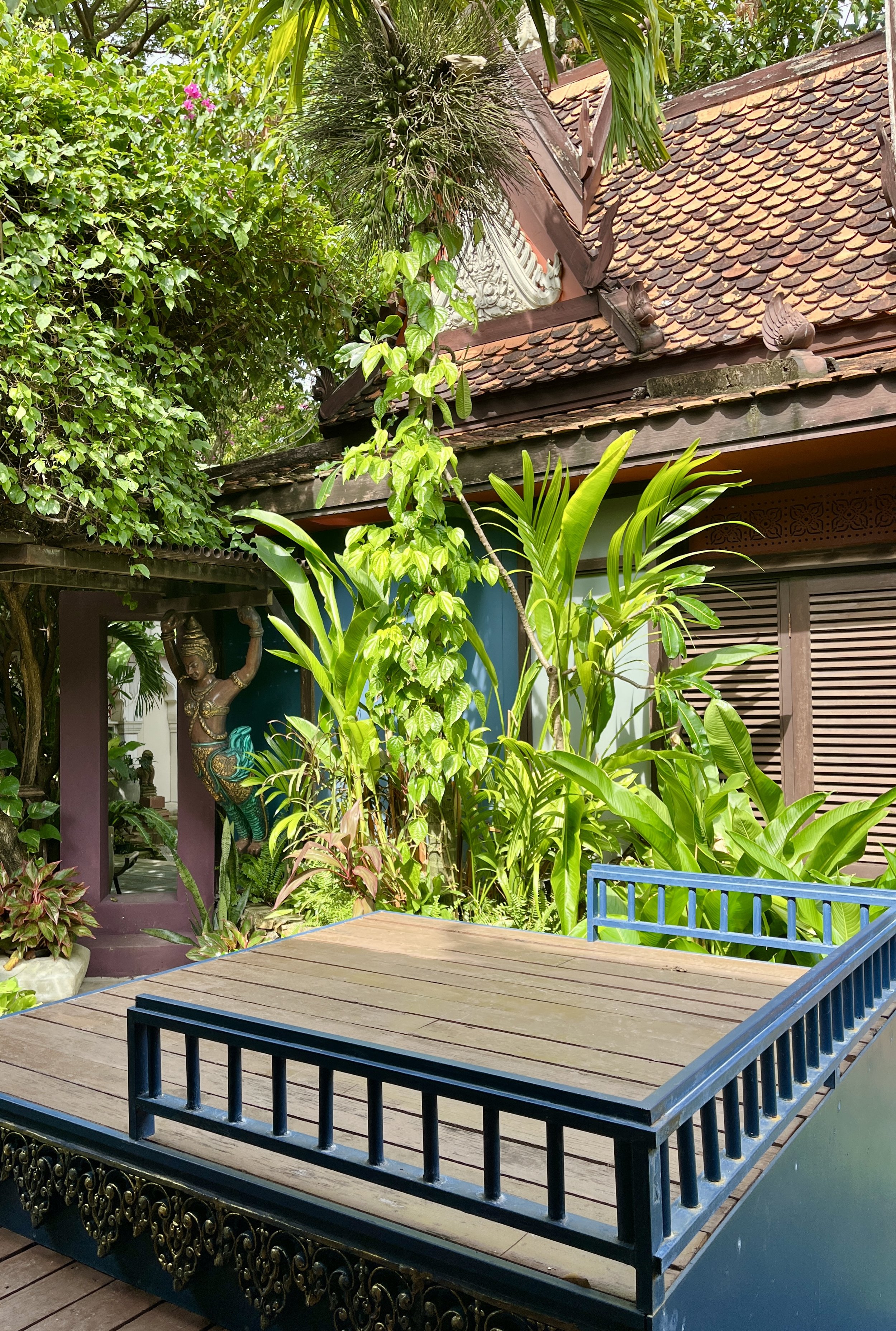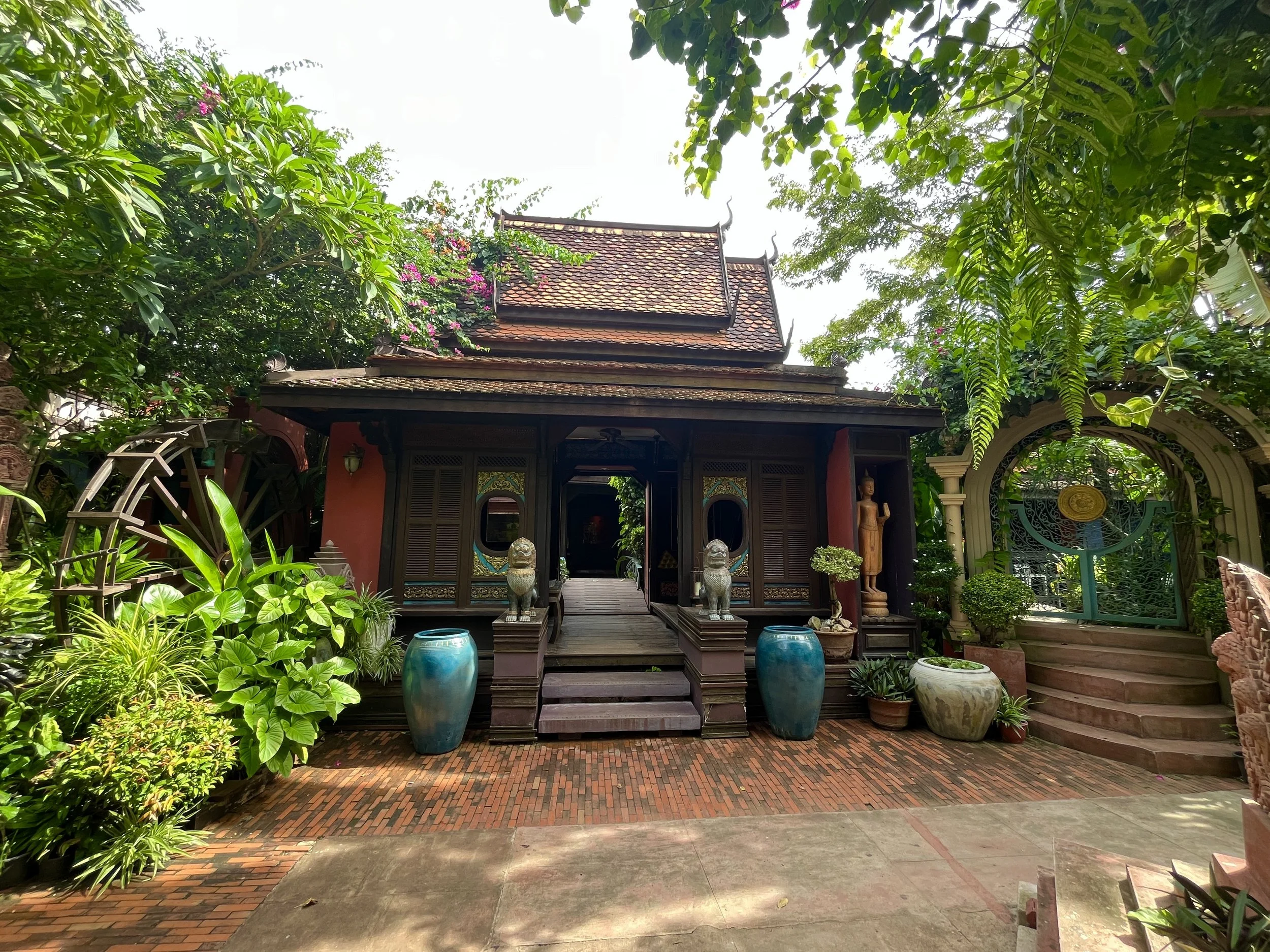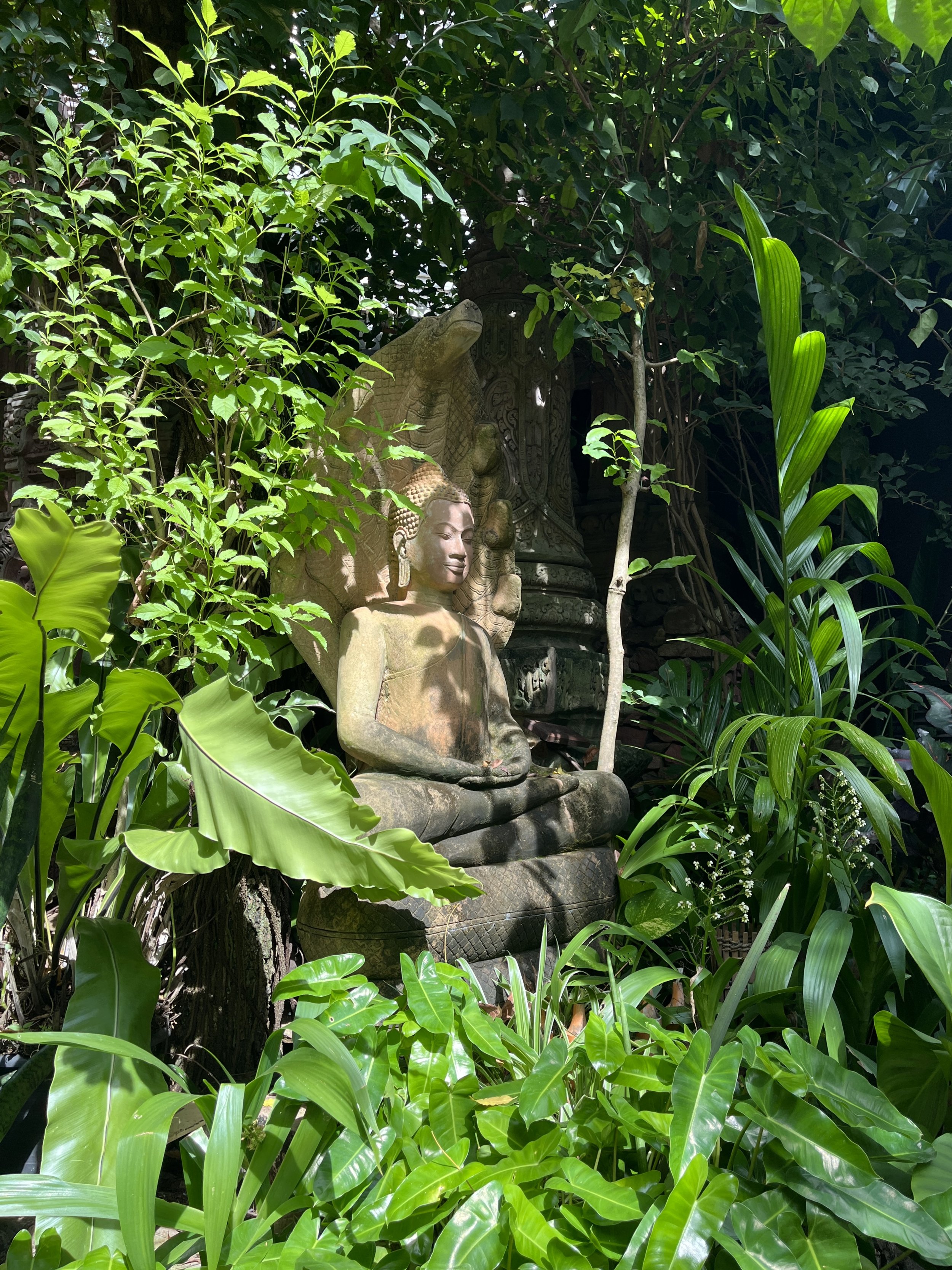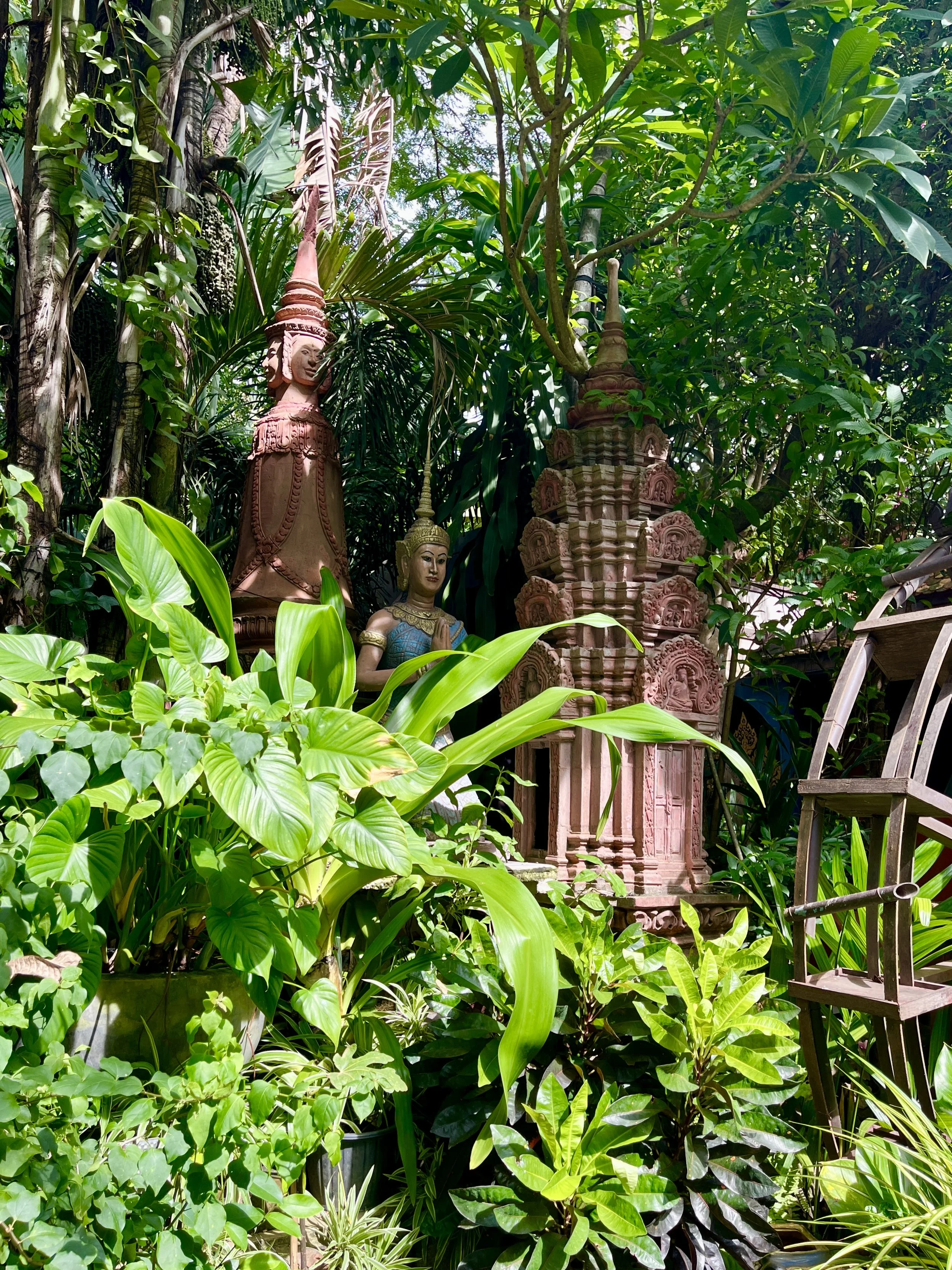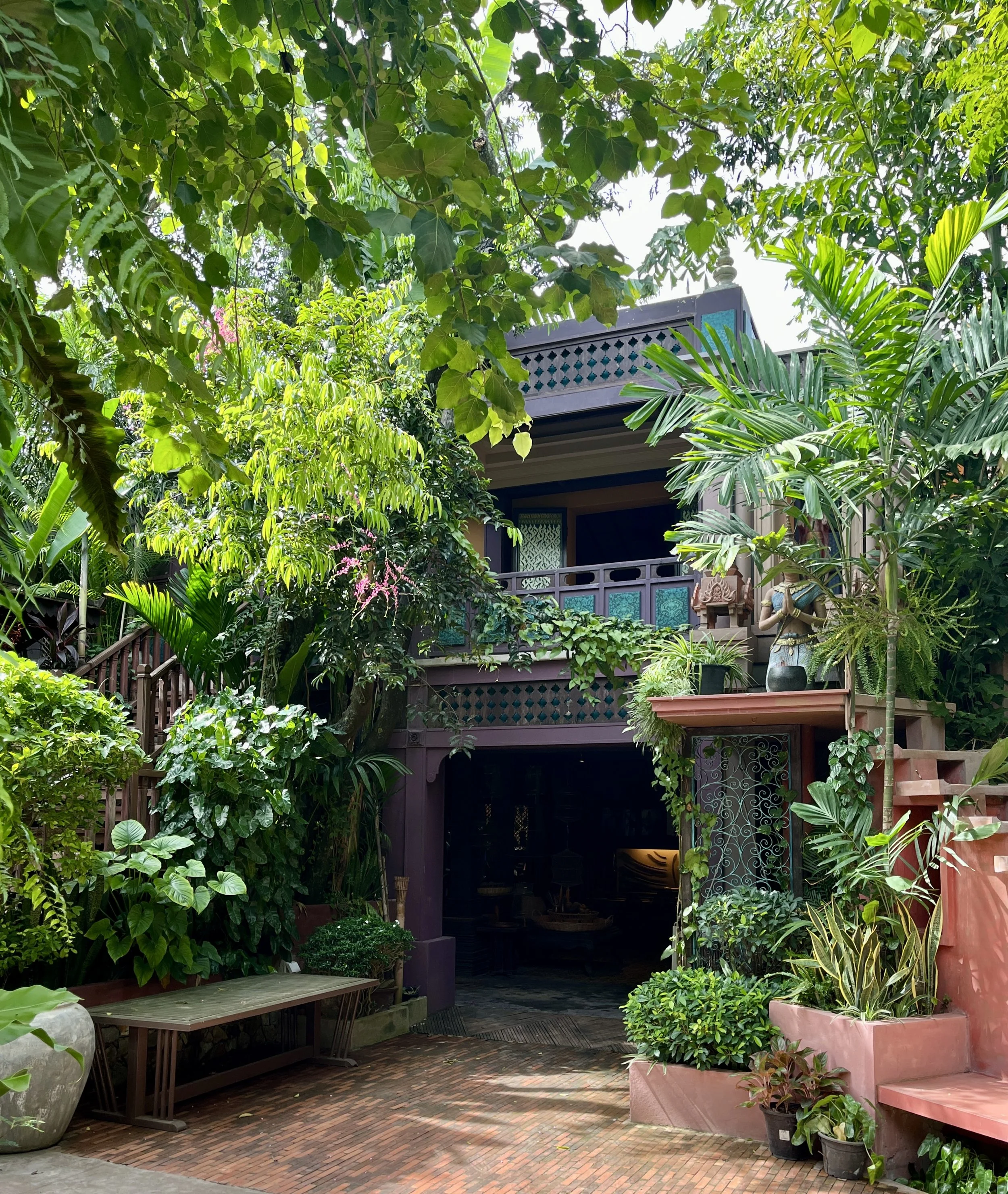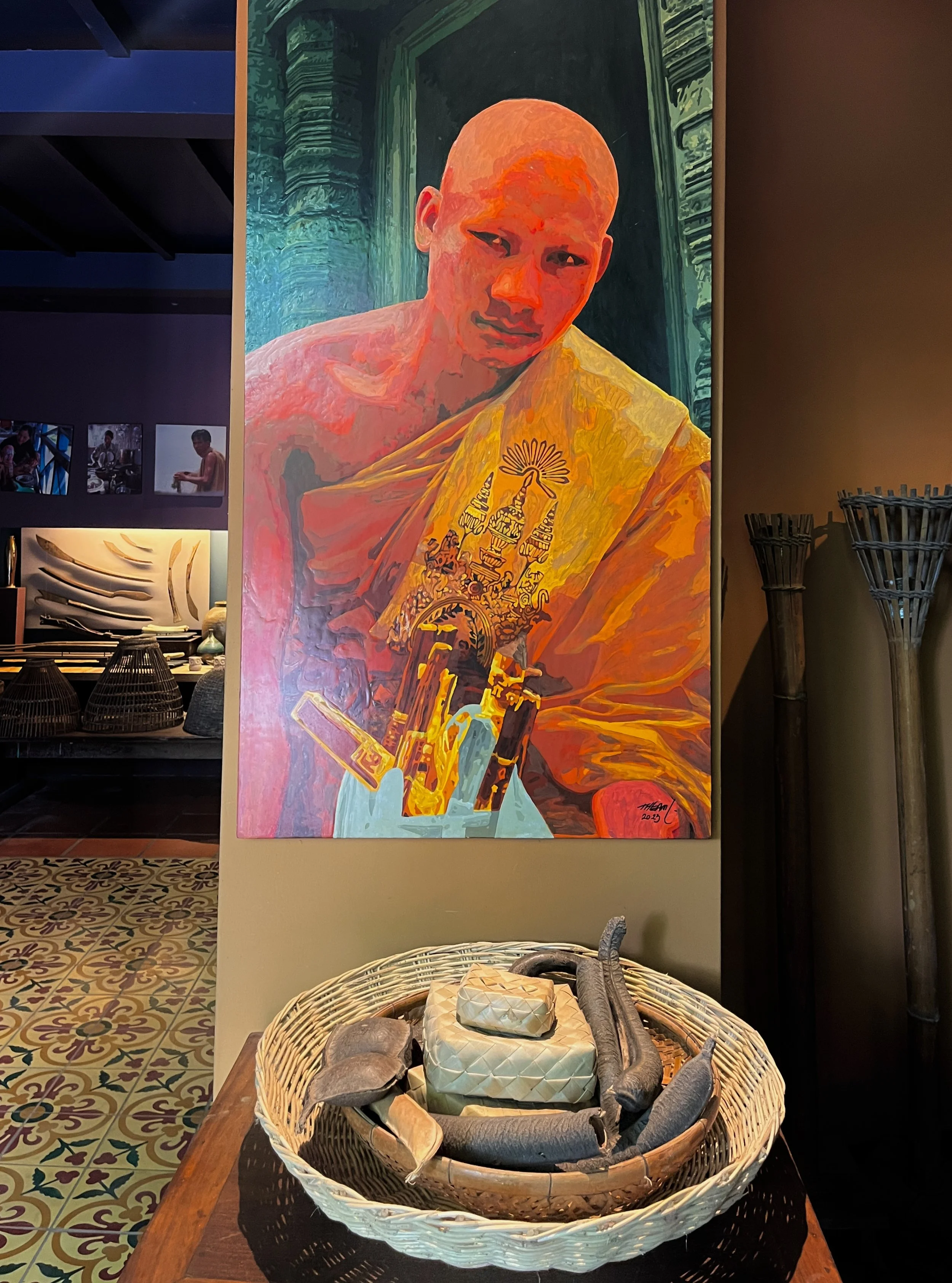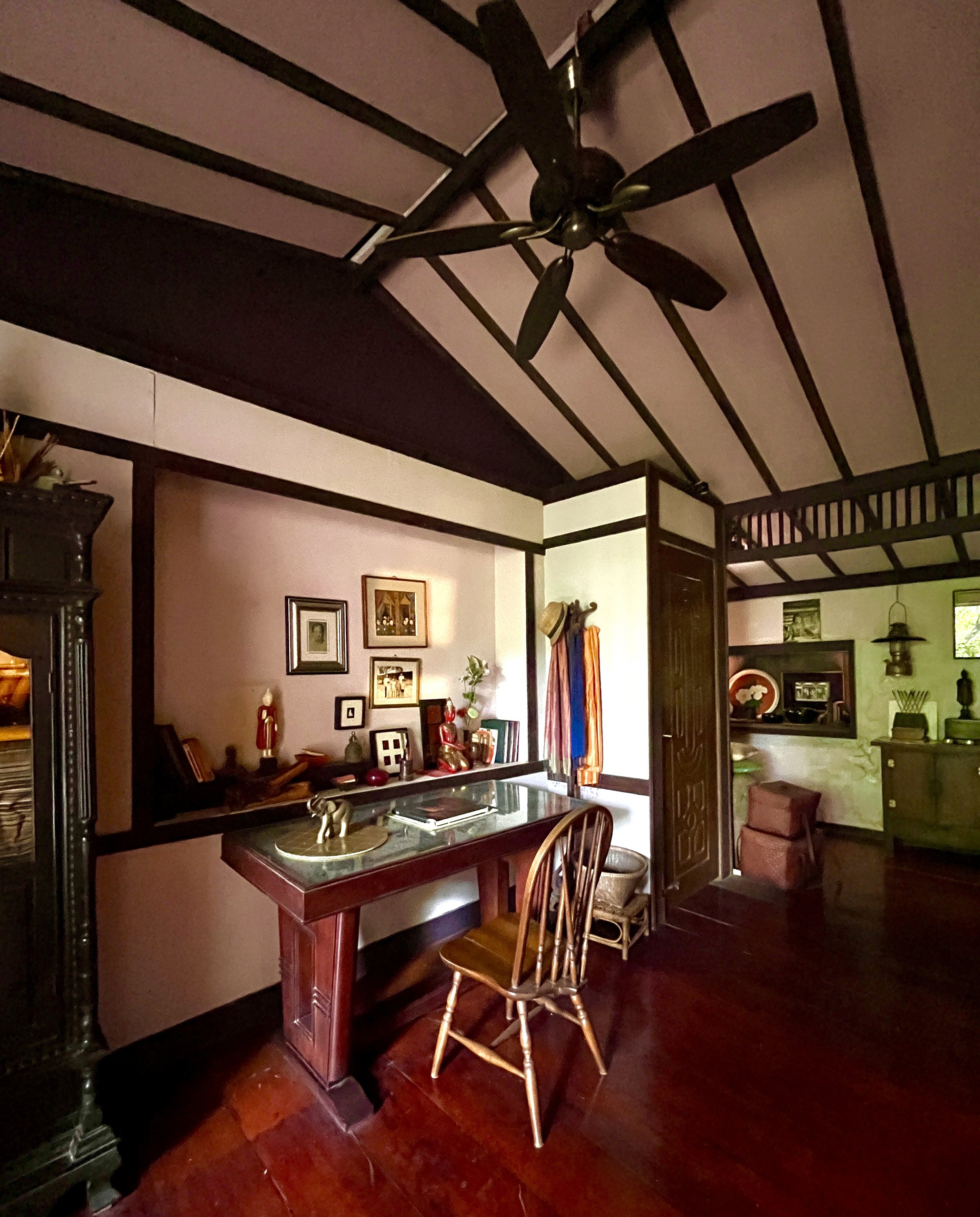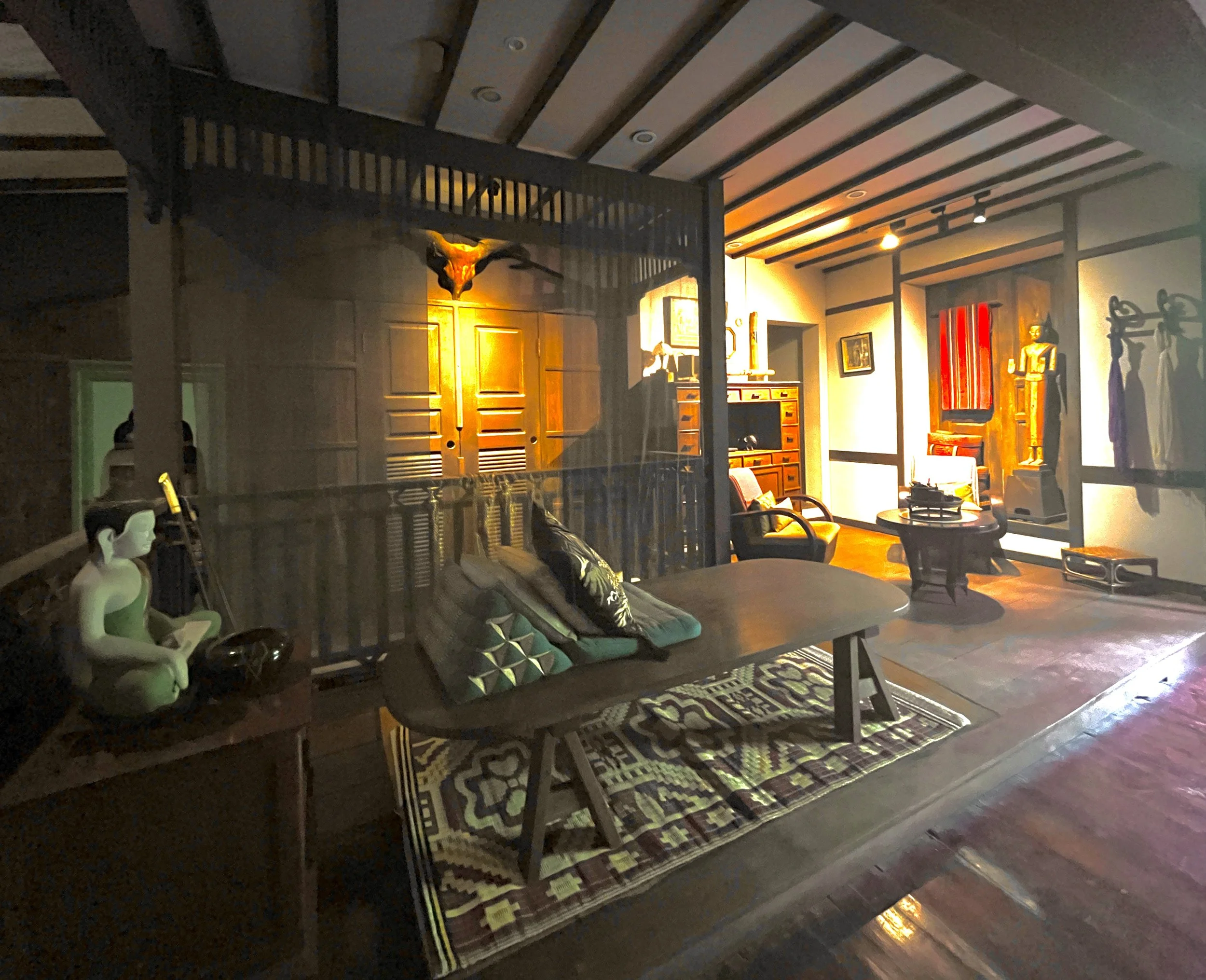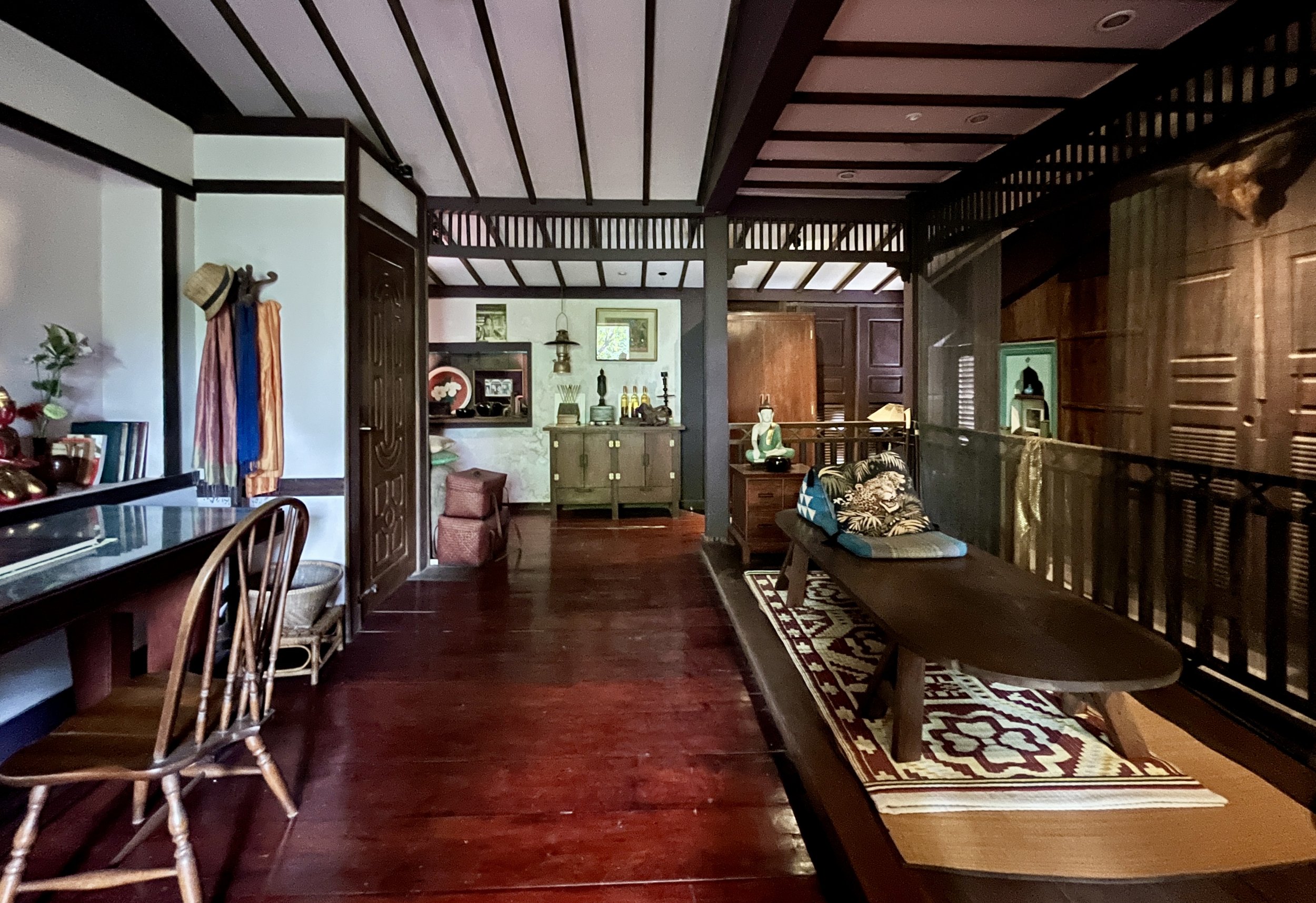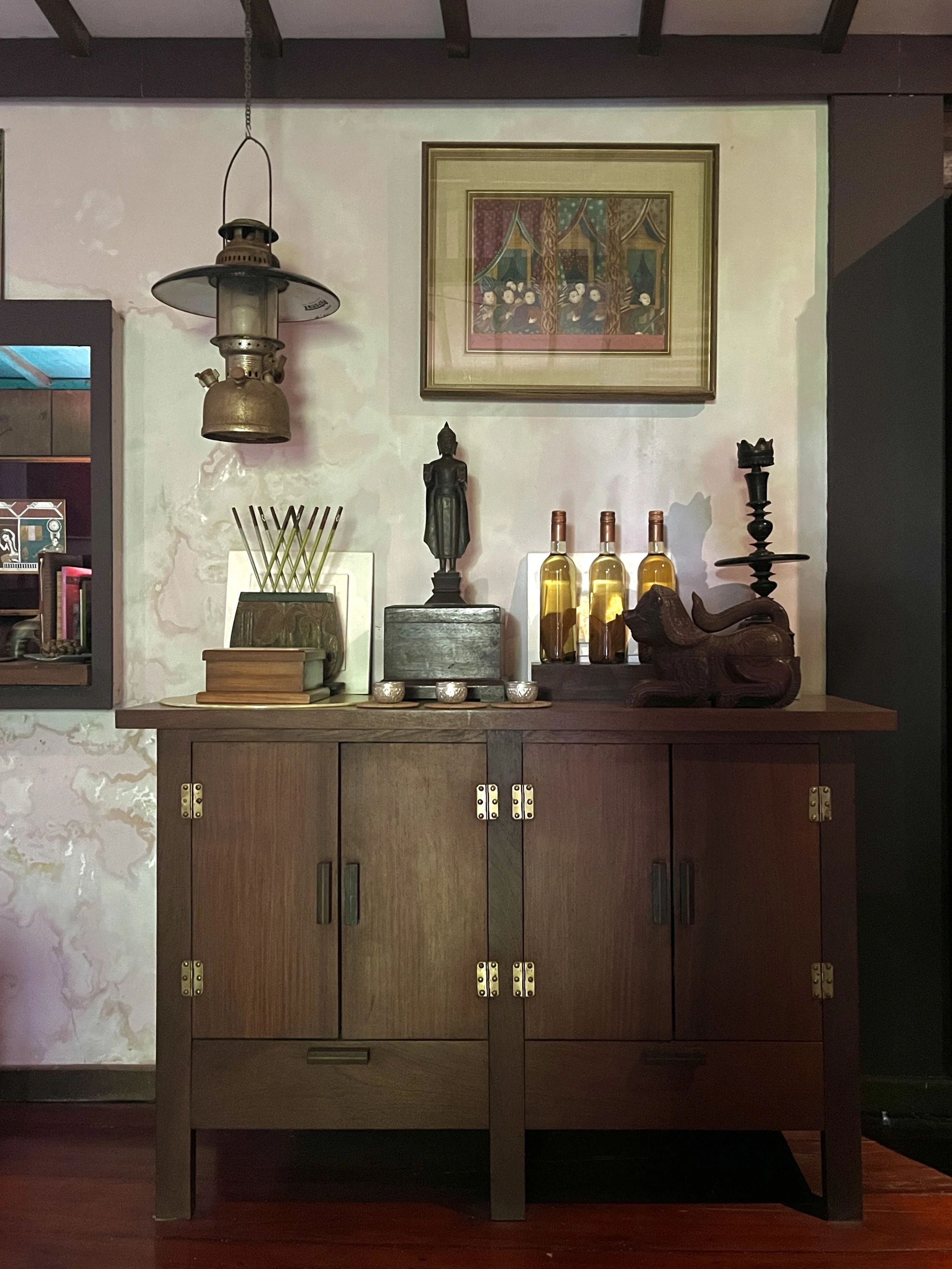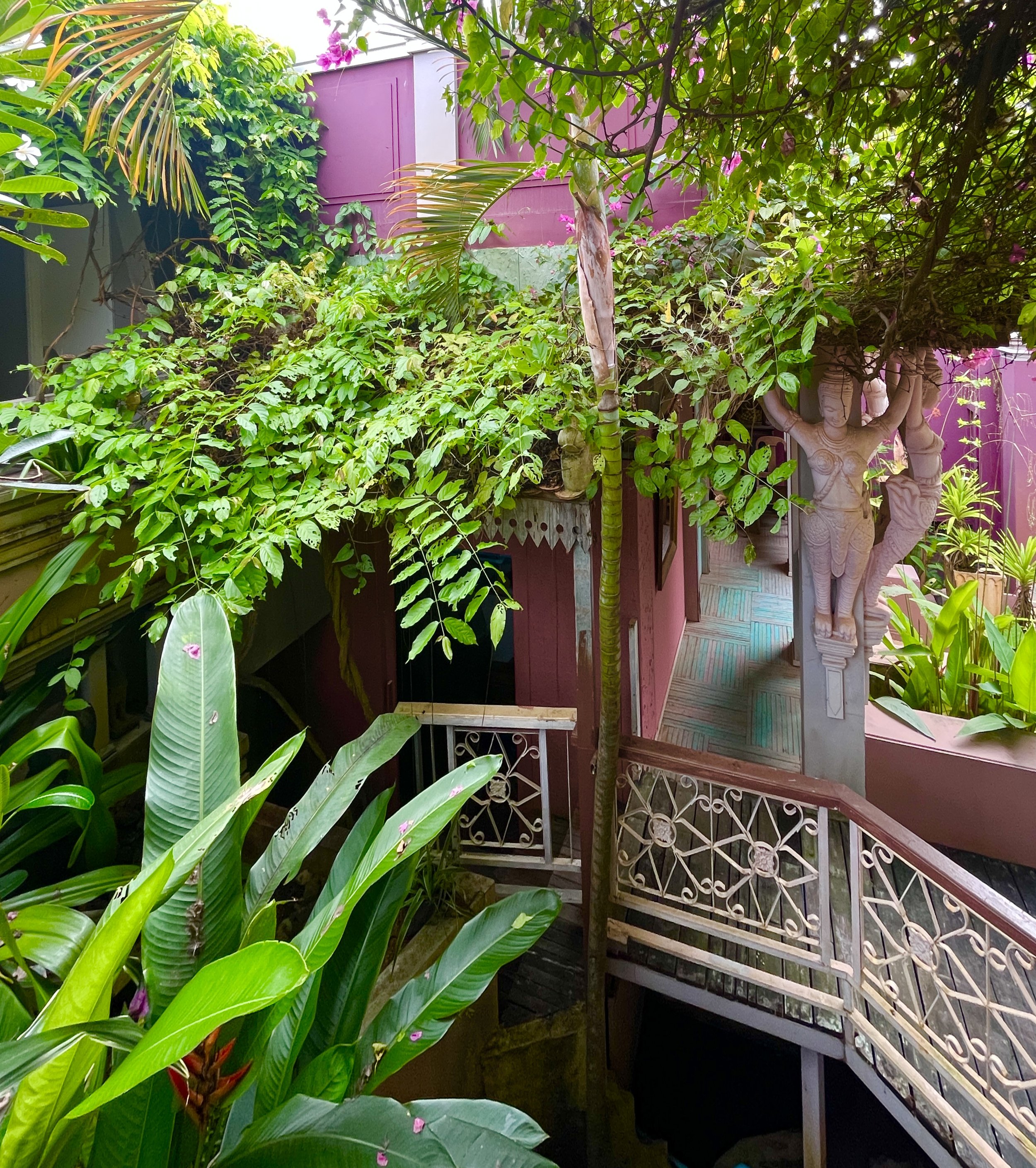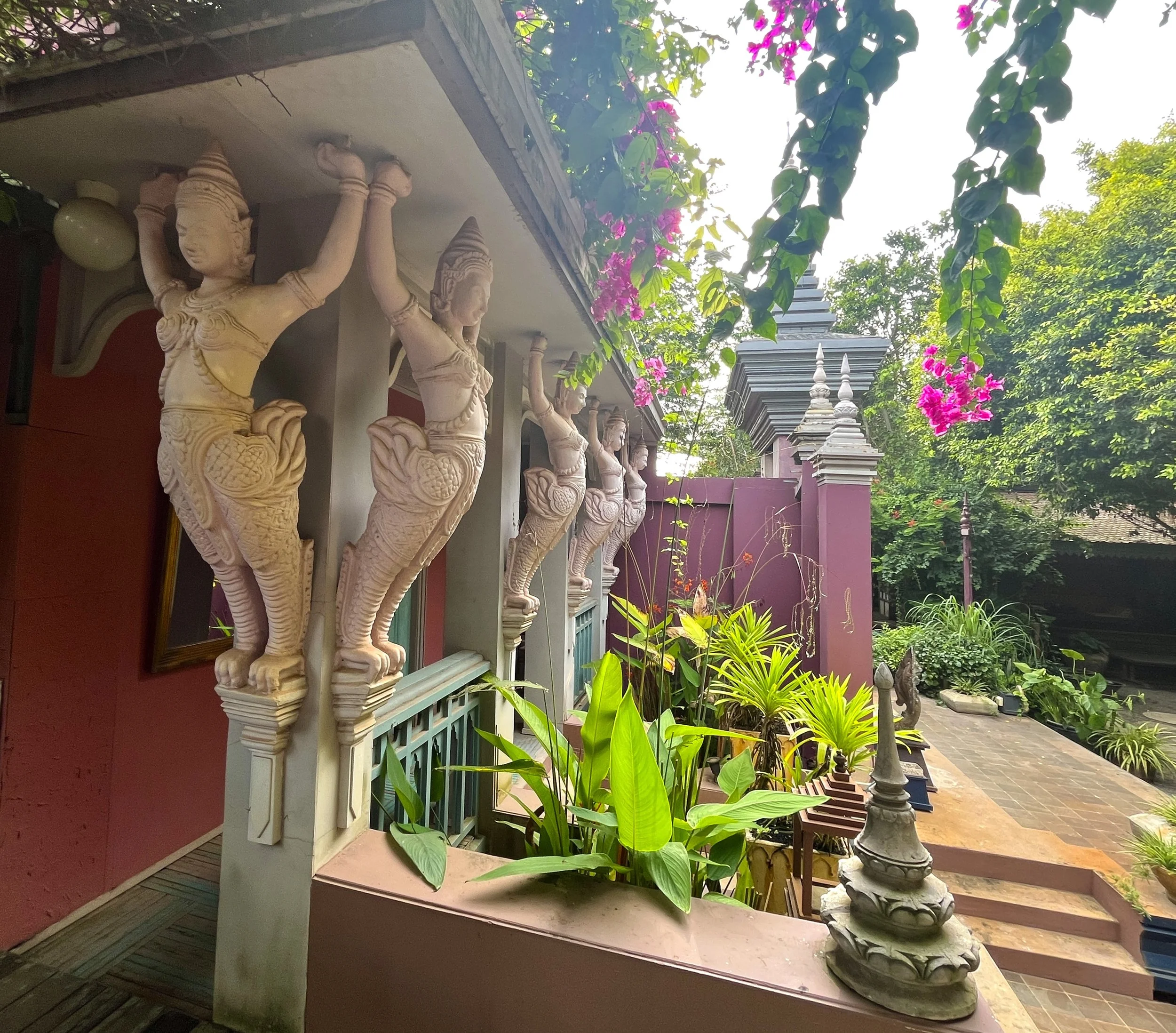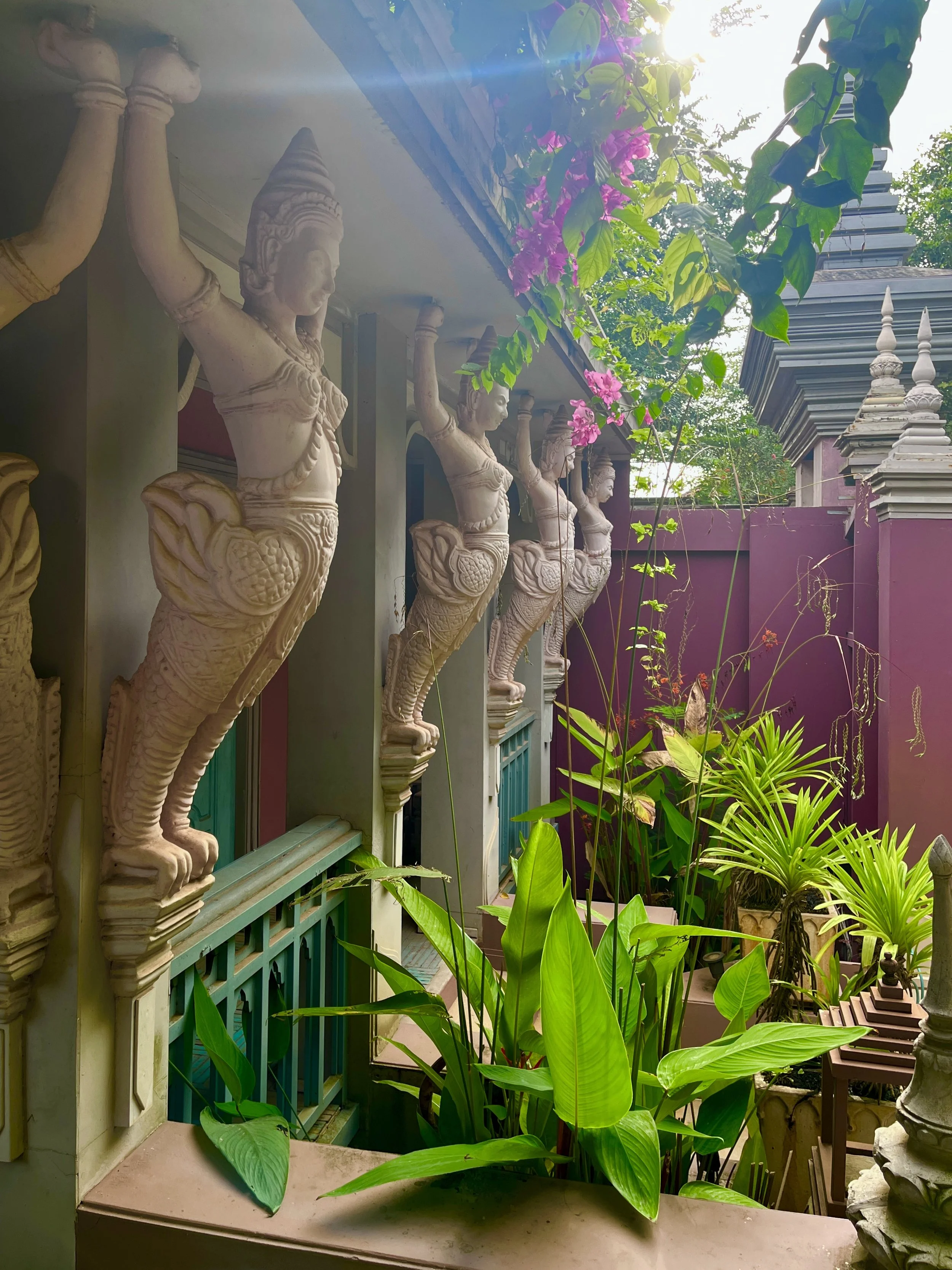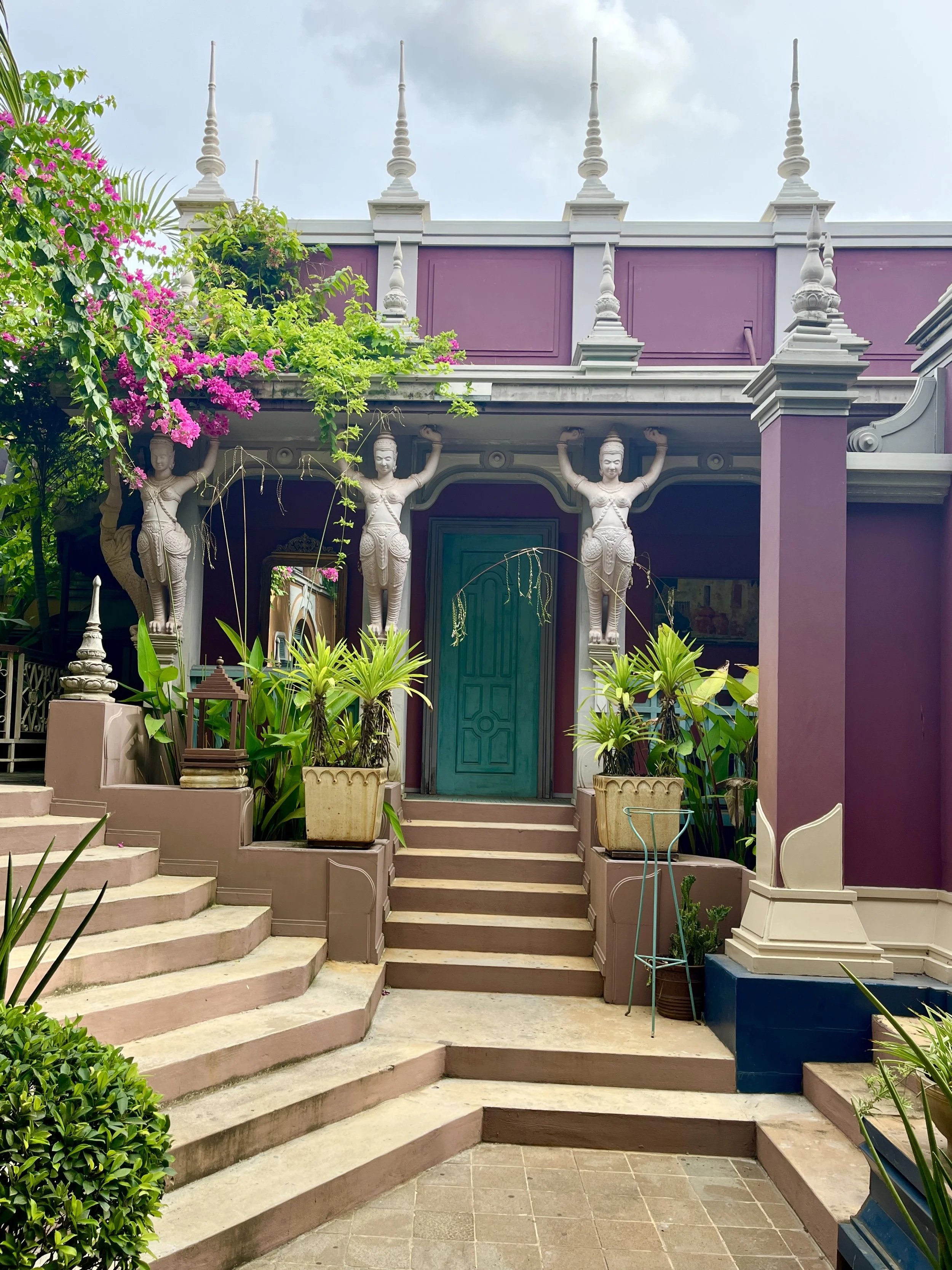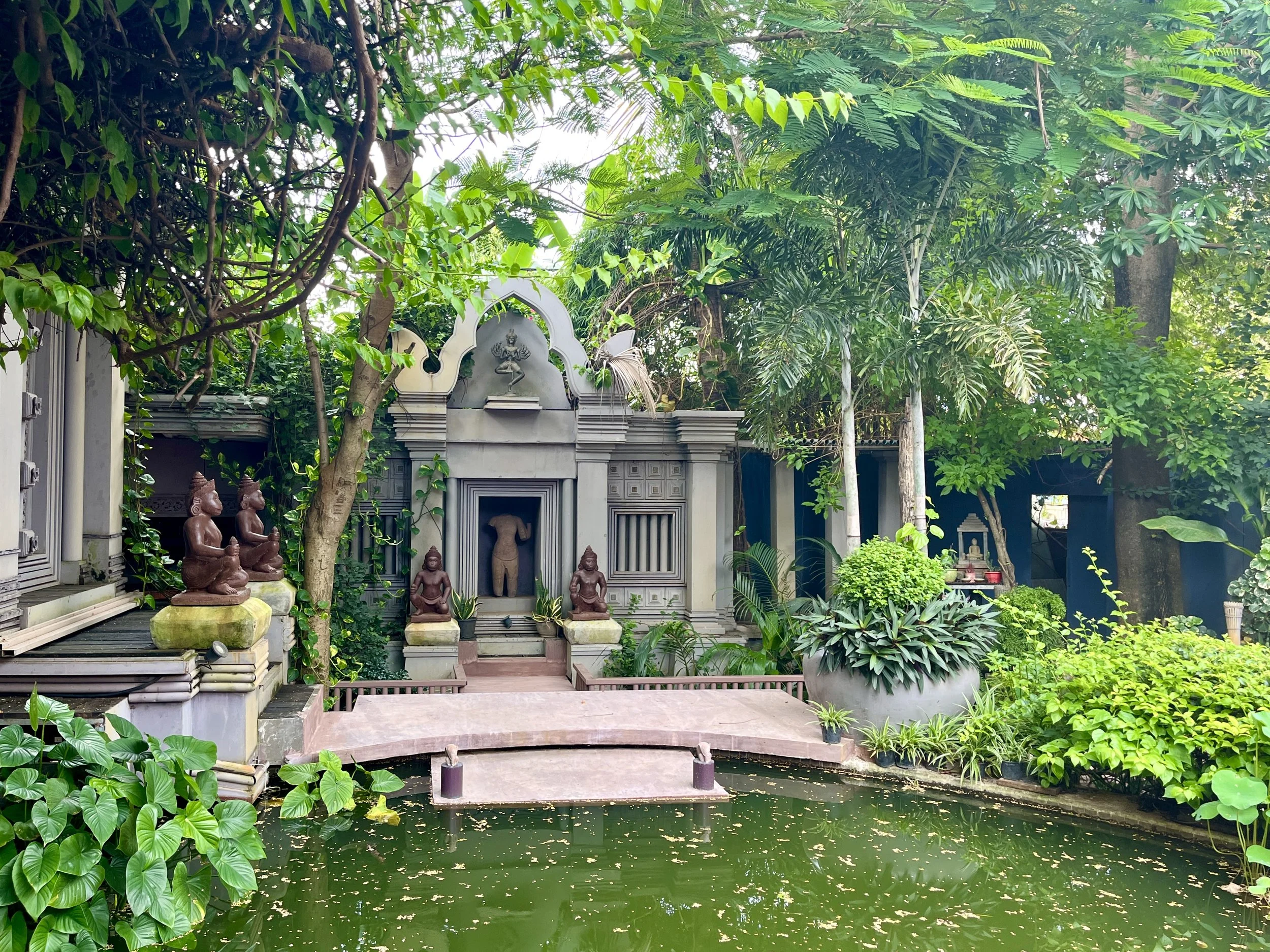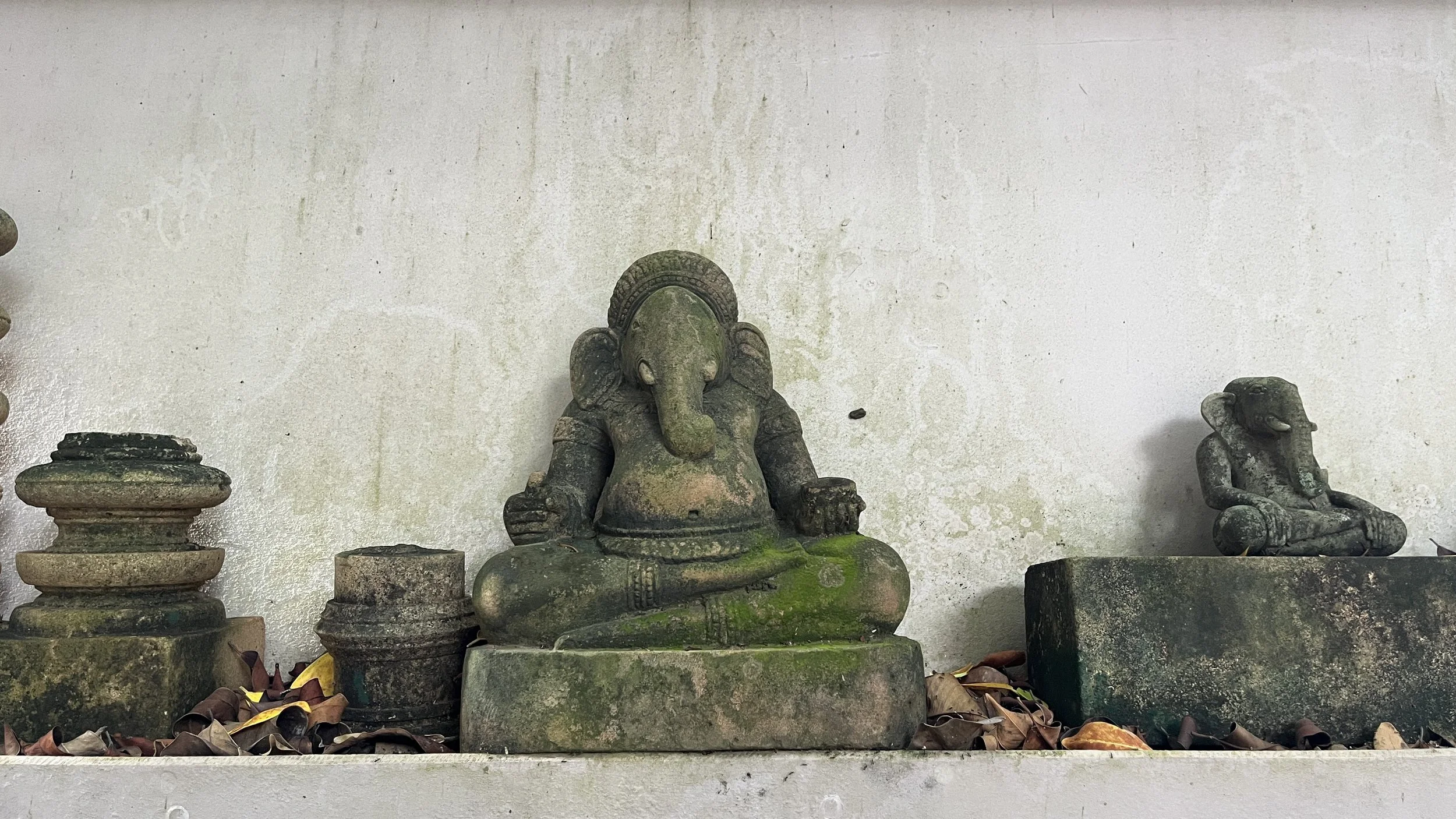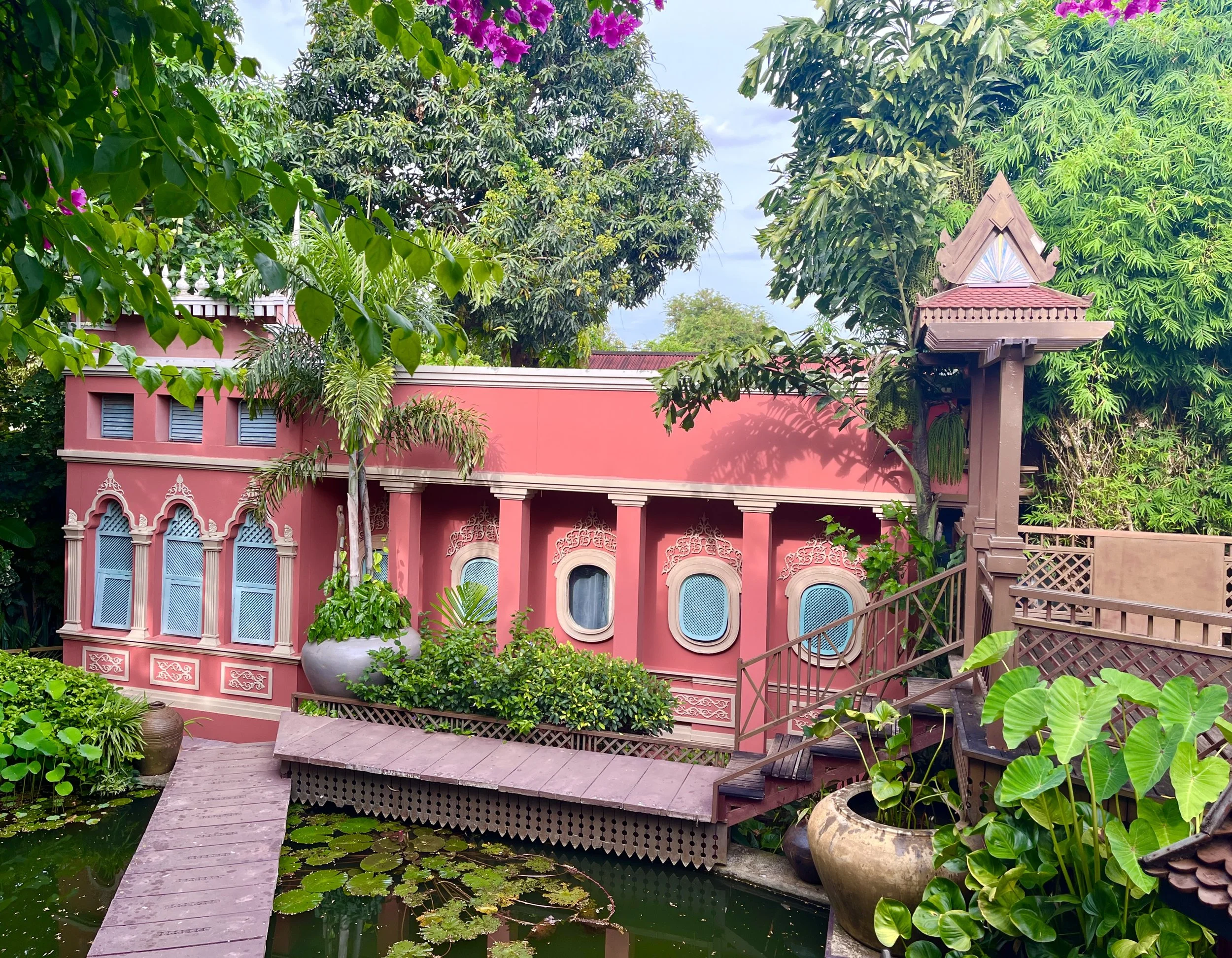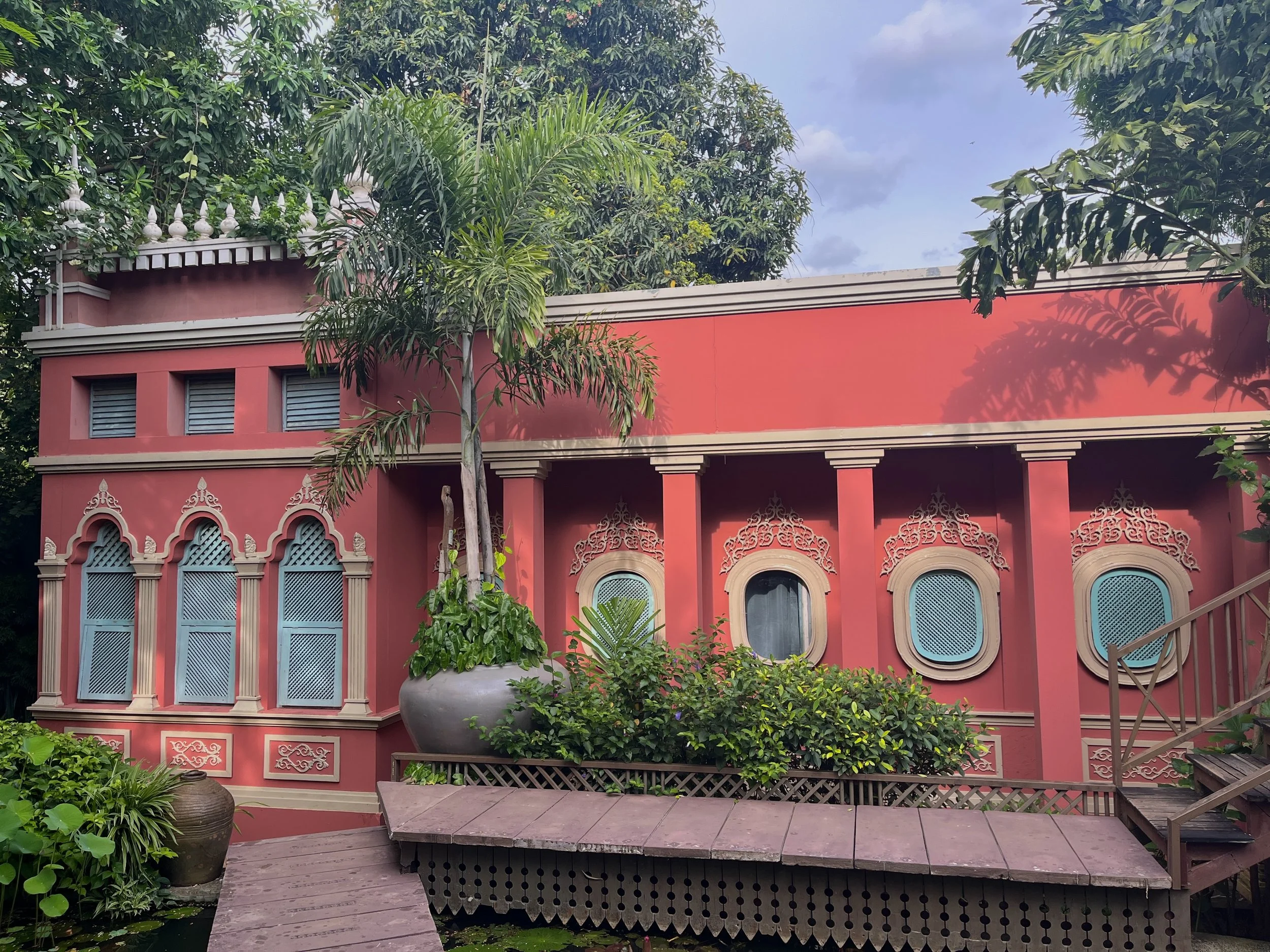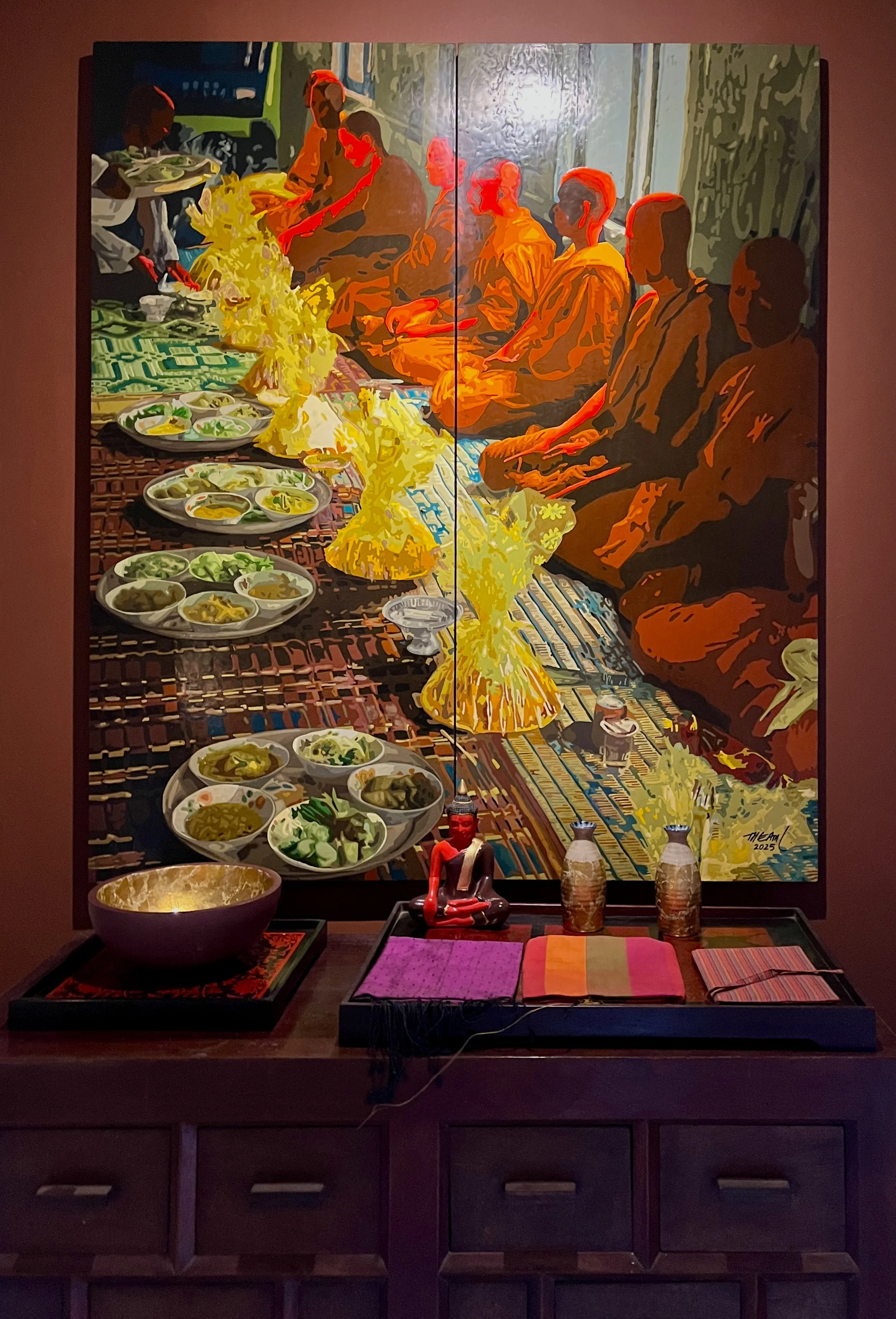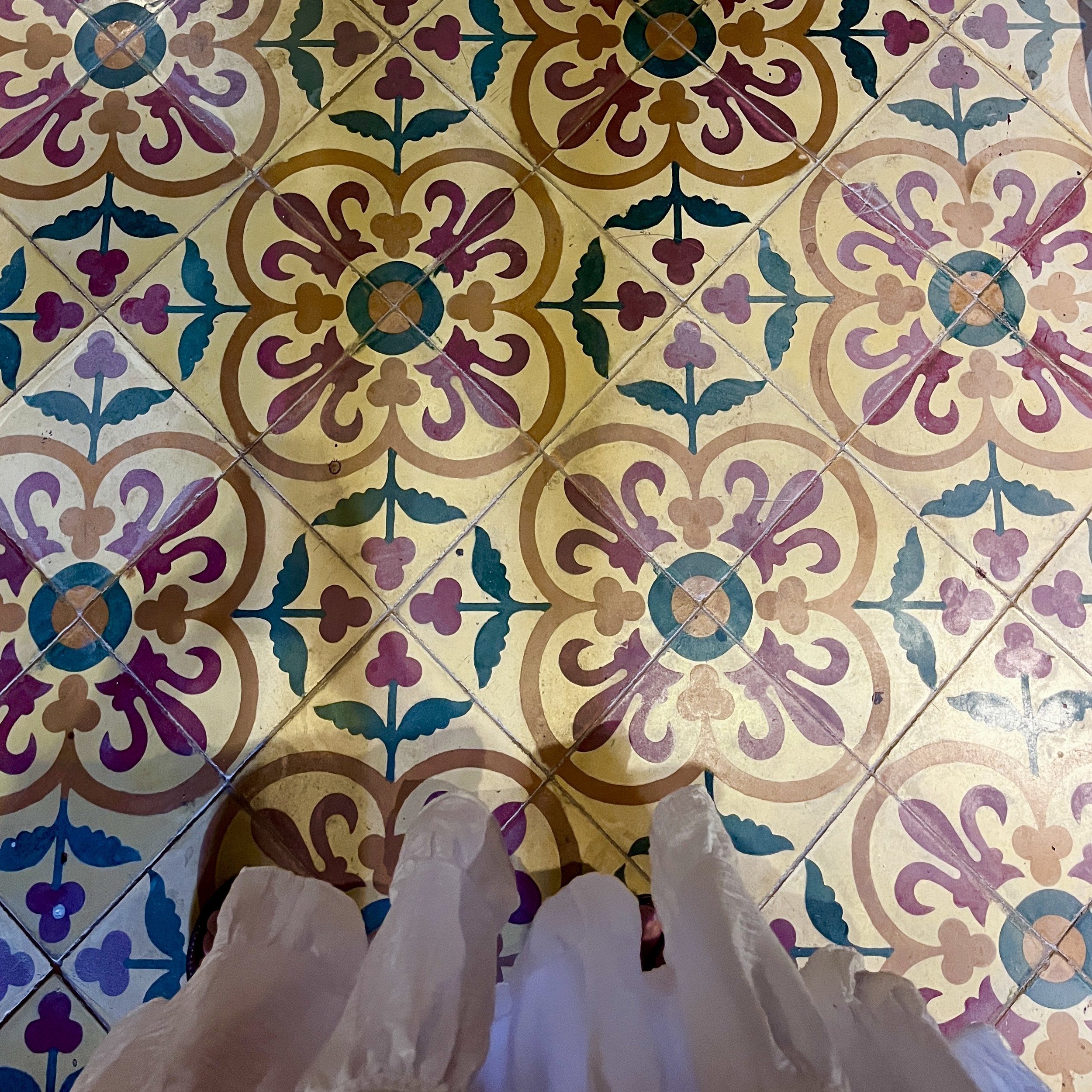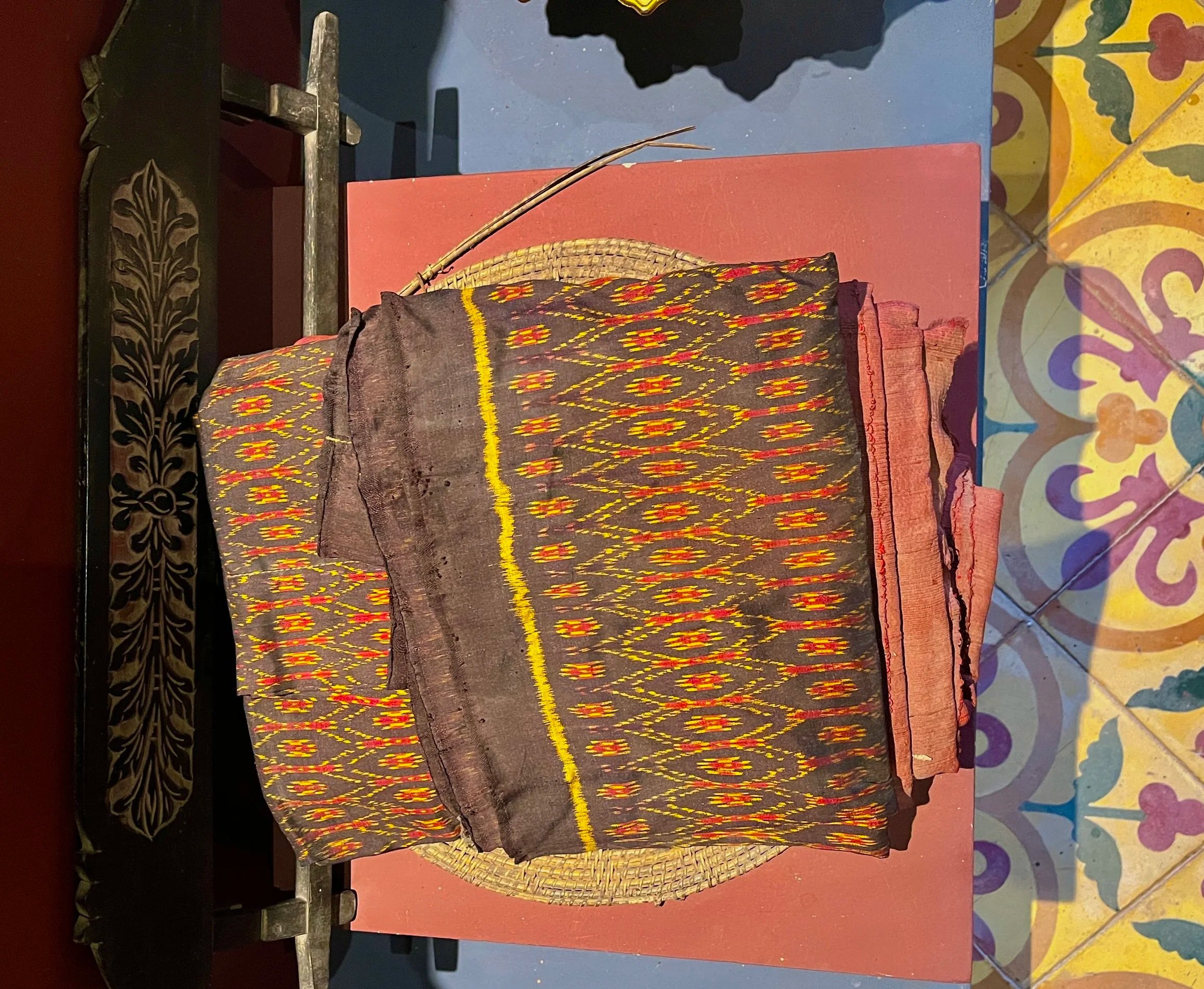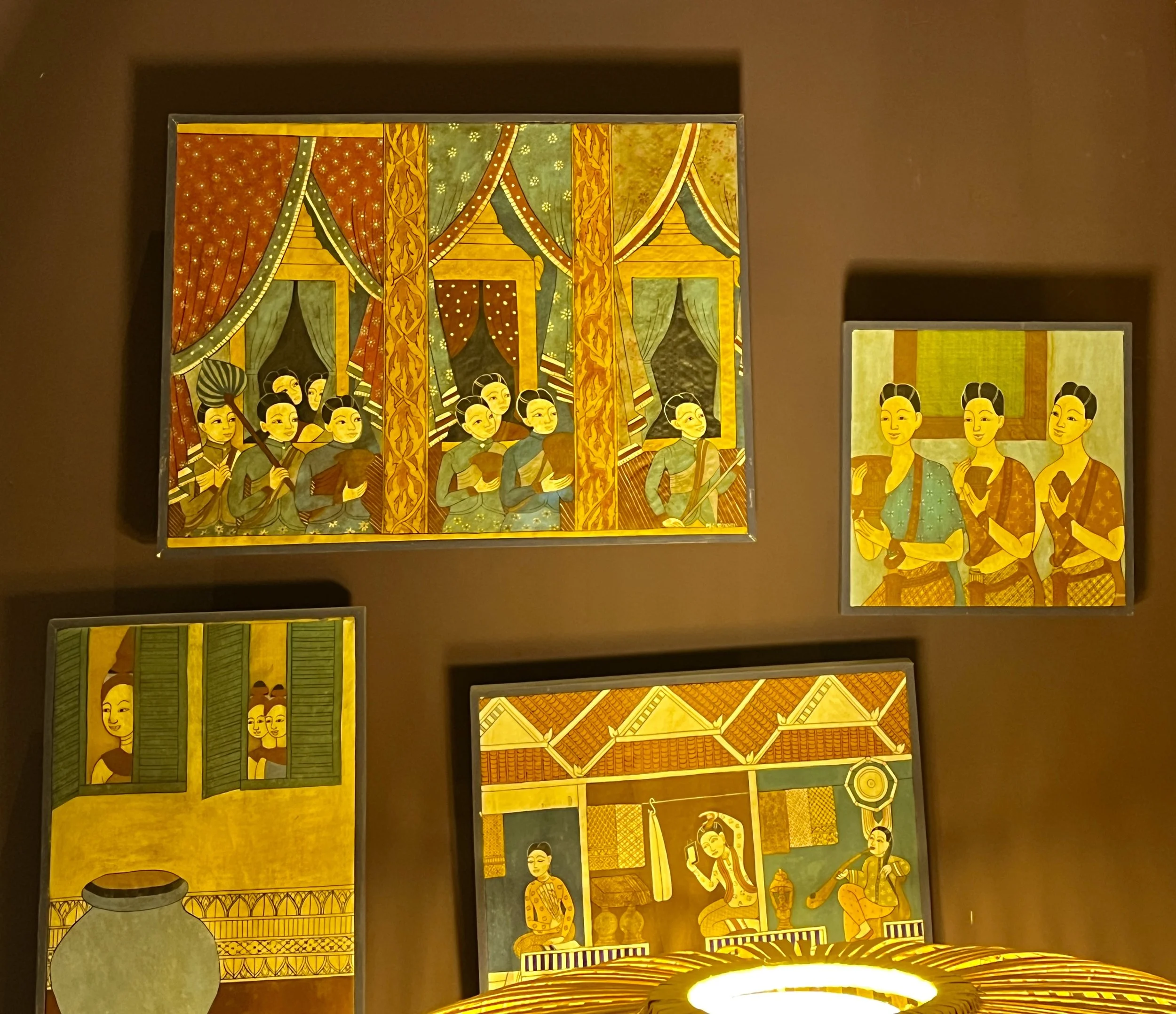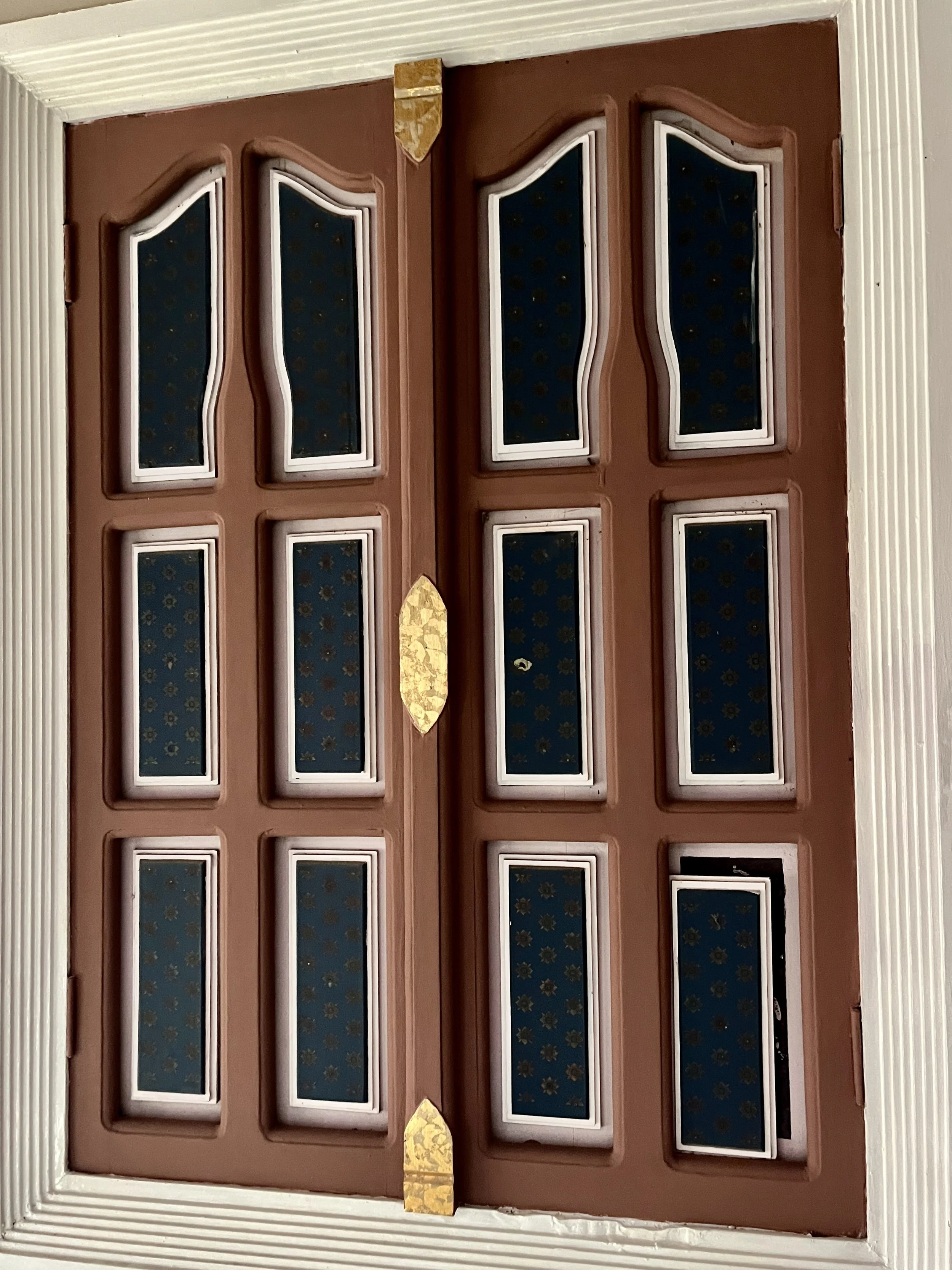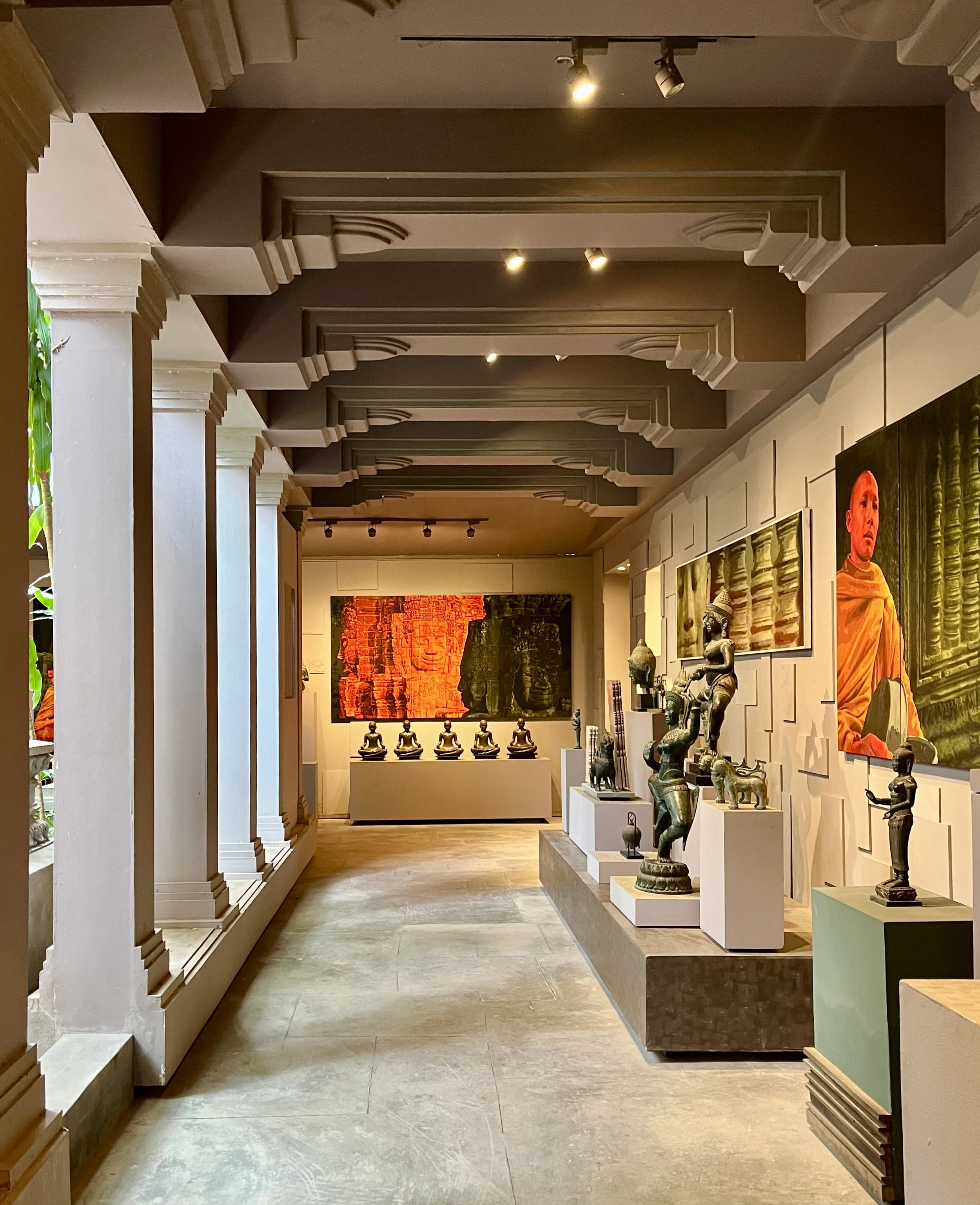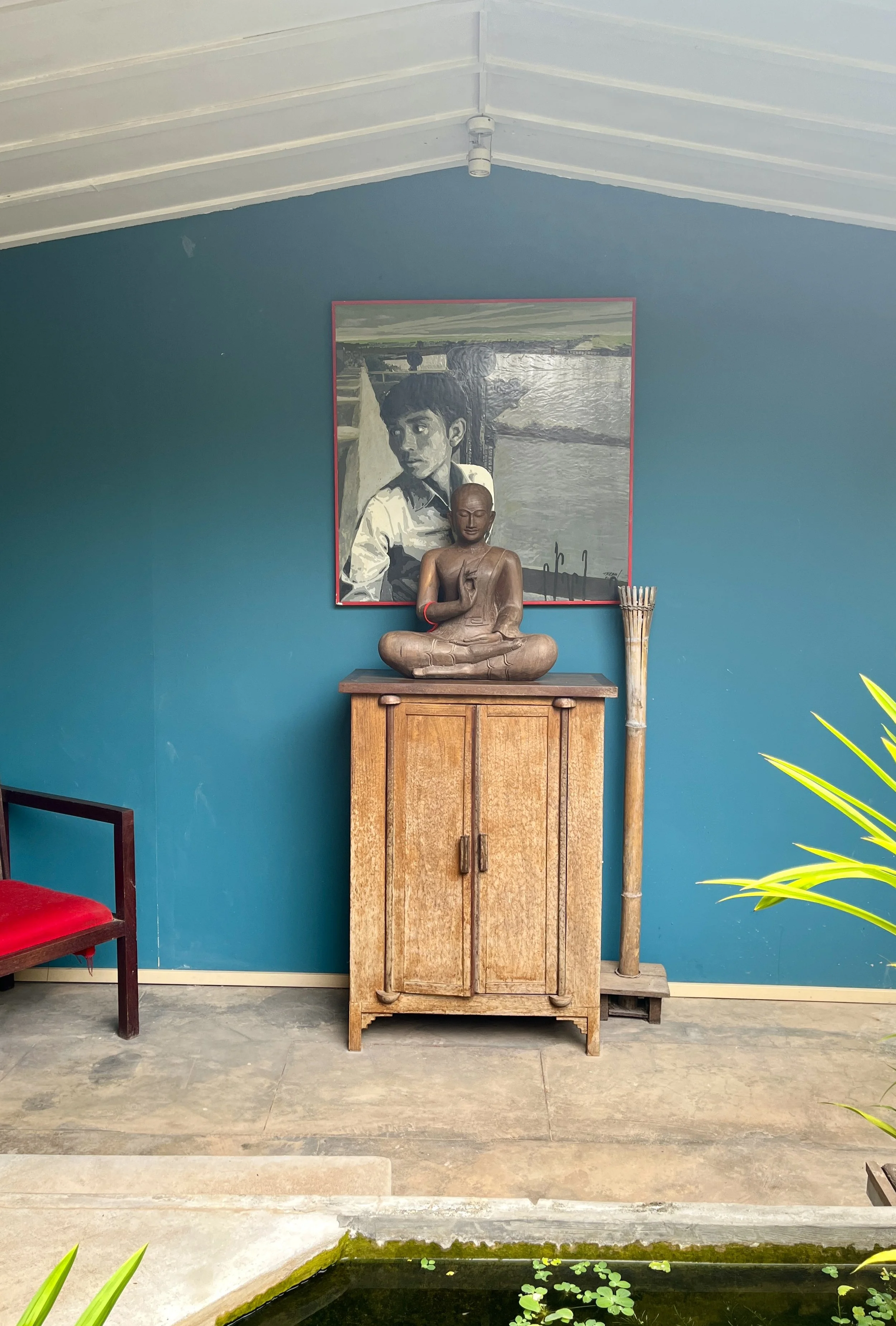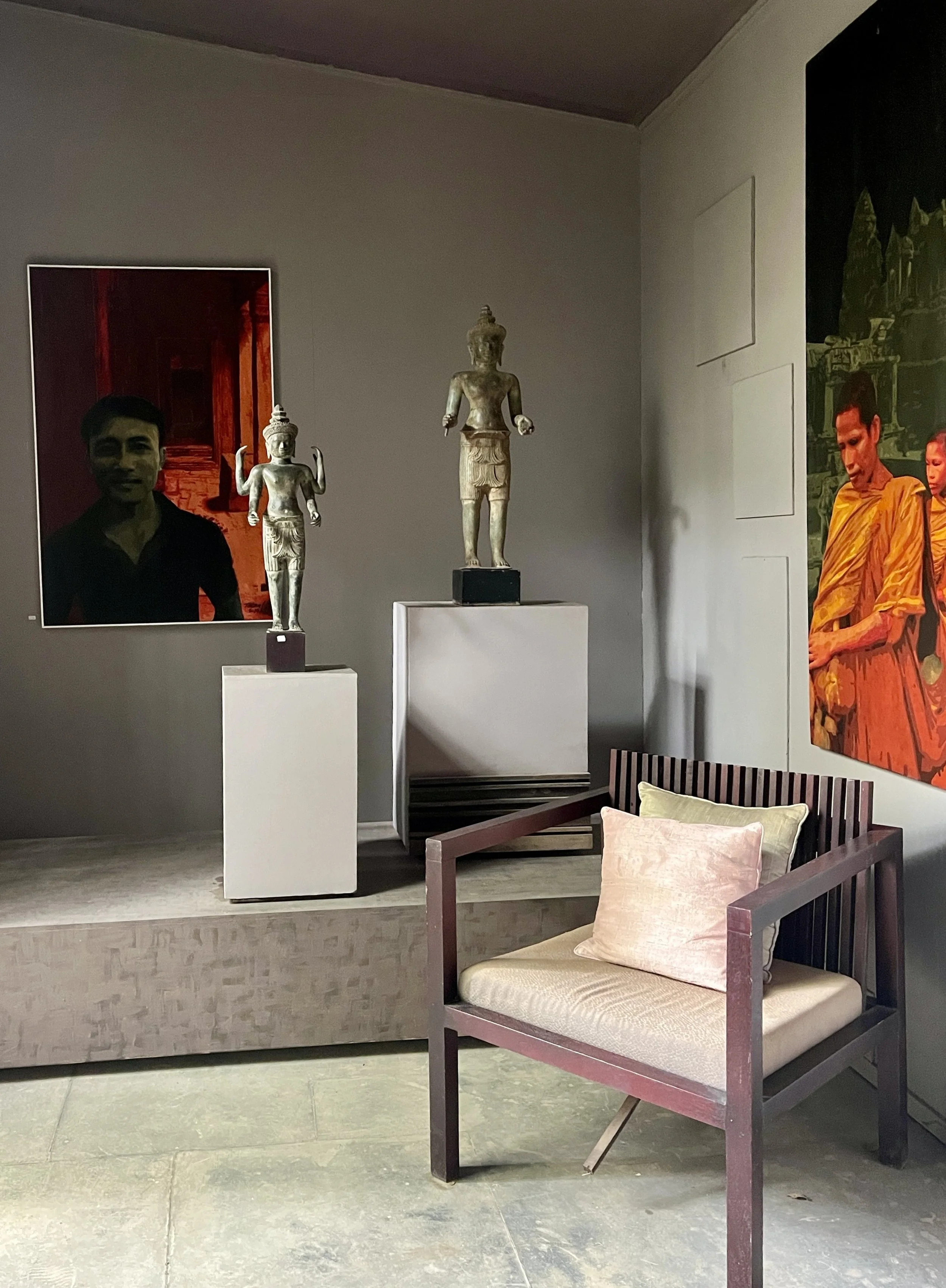
habitat

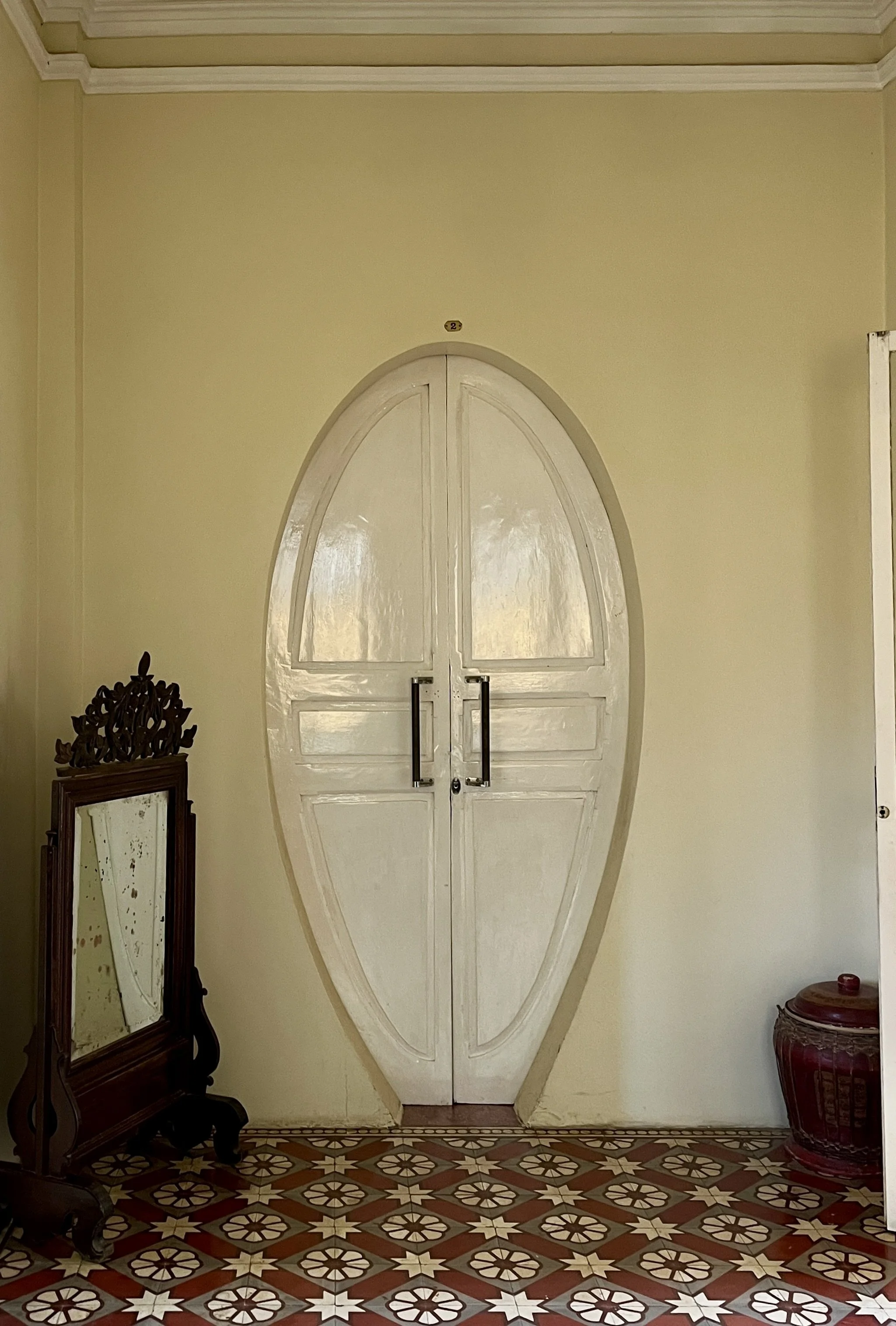
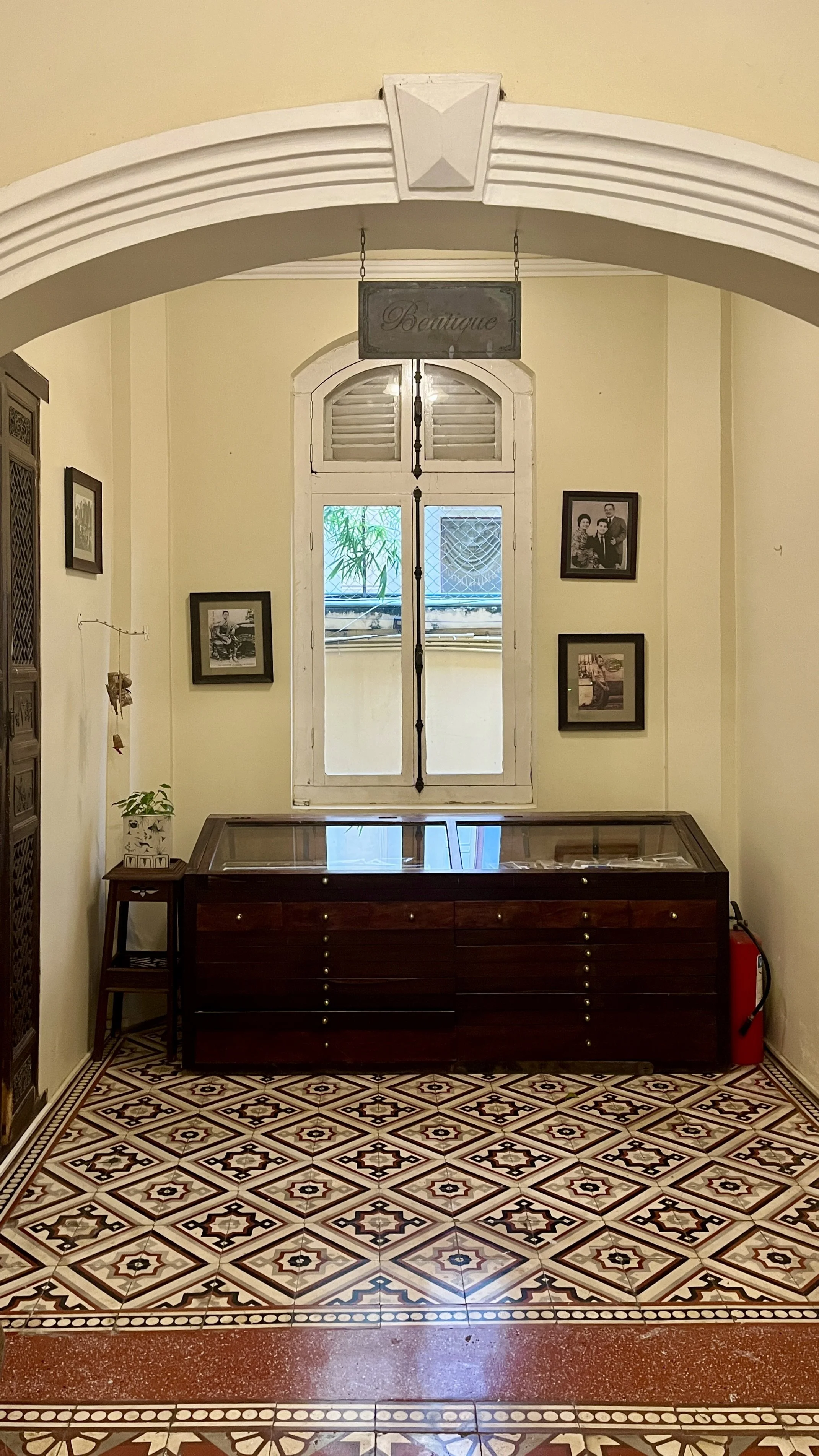
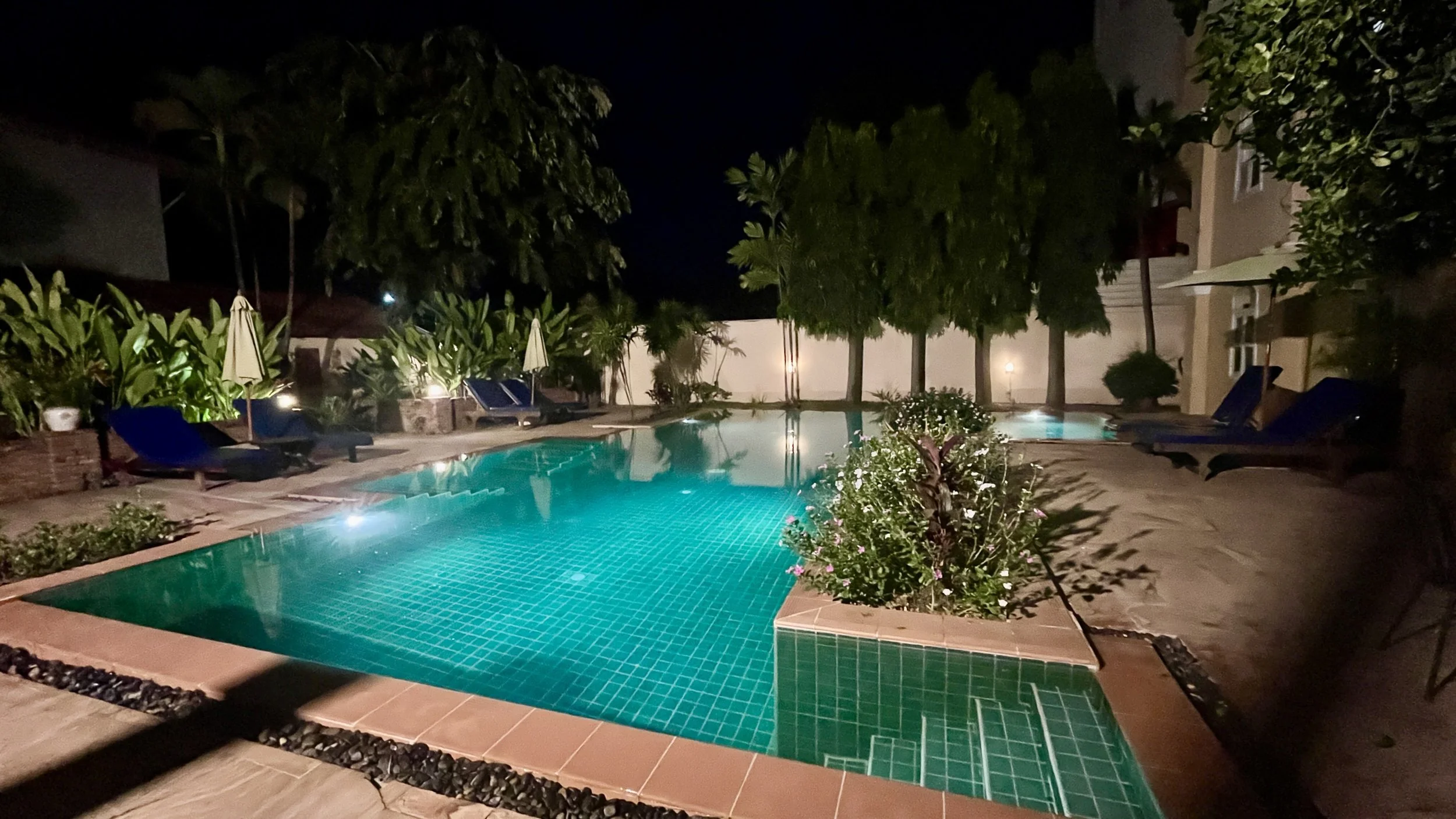
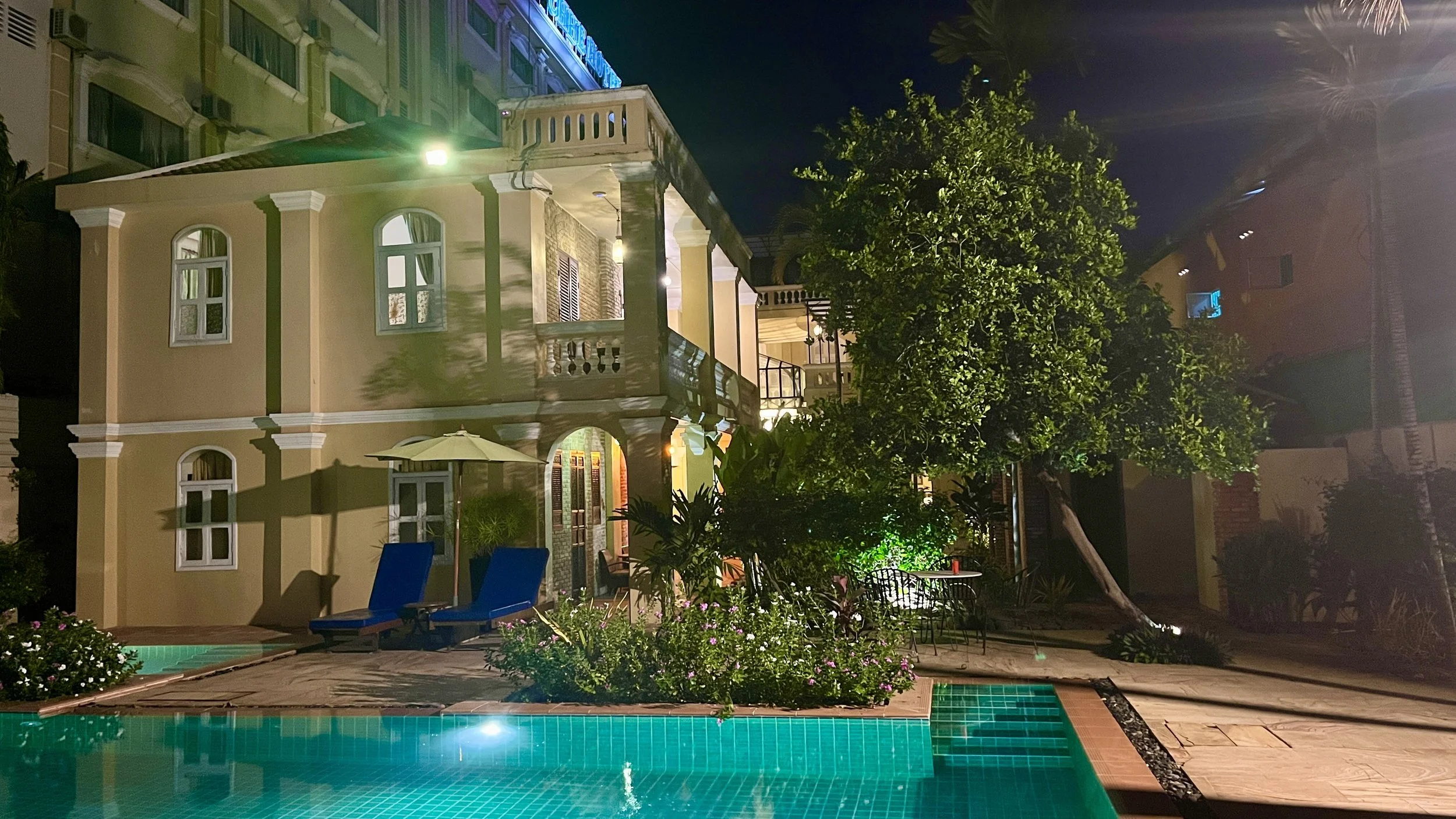
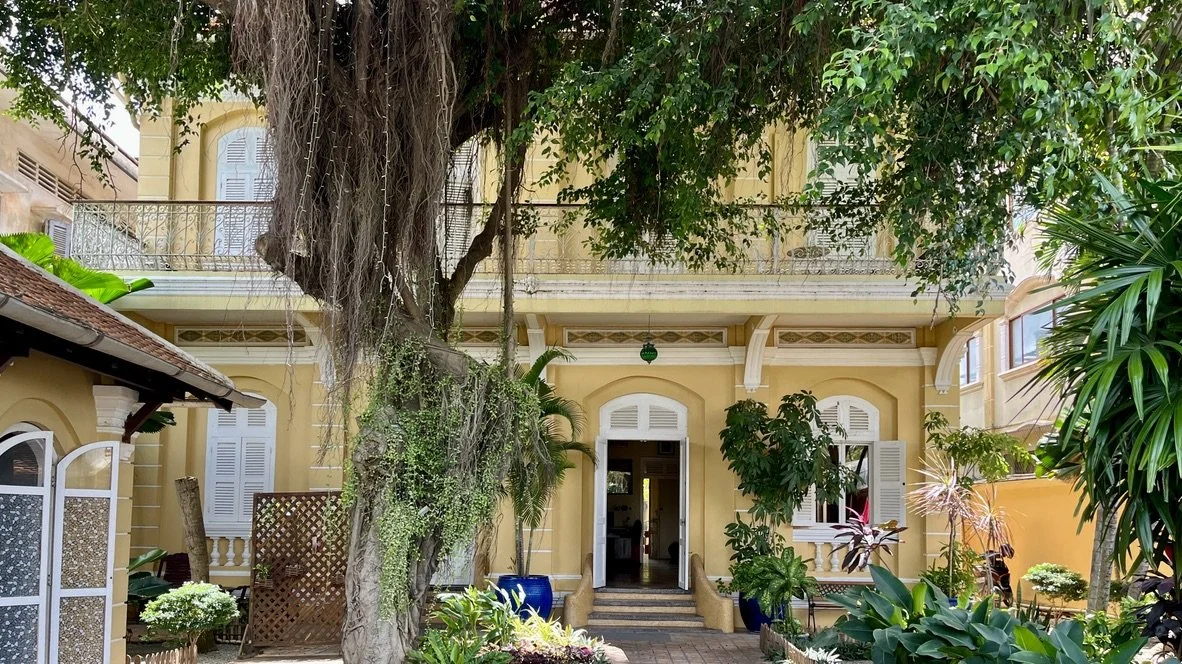
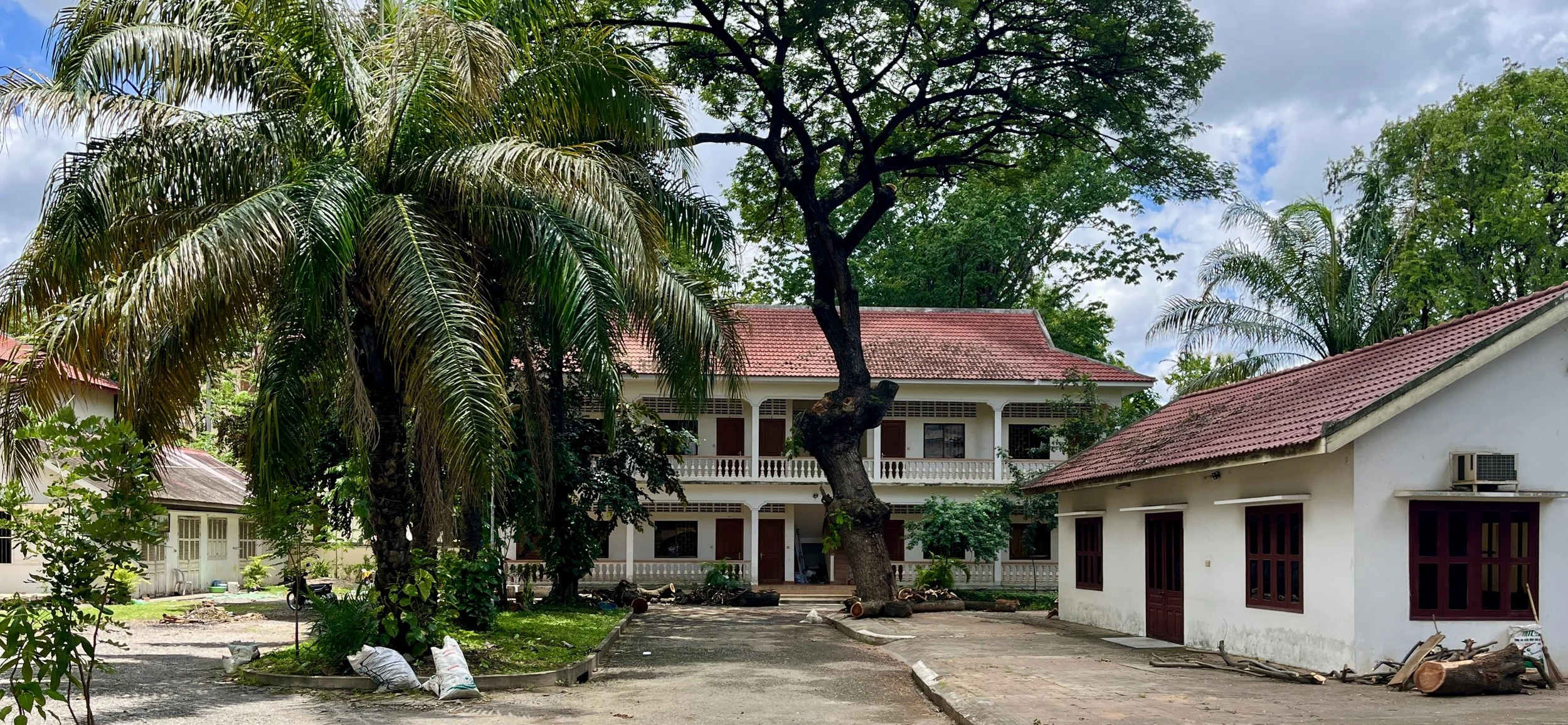
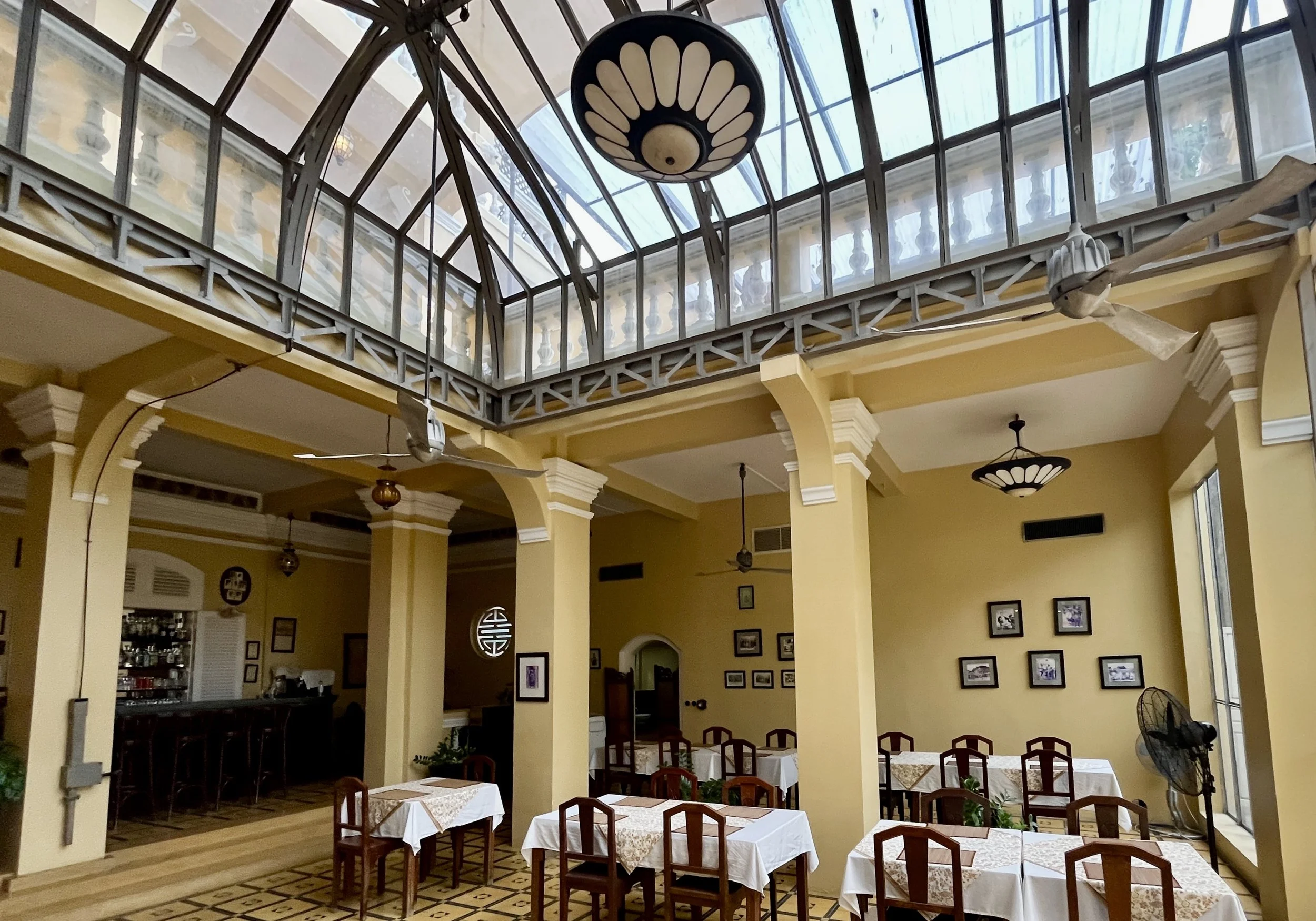
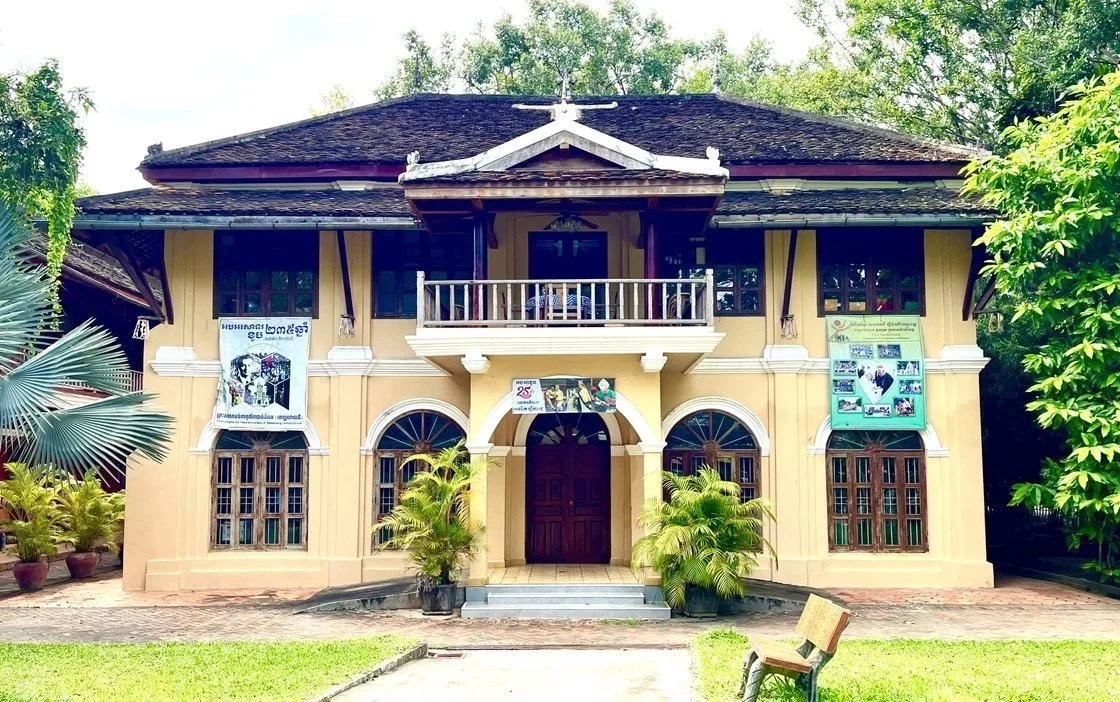
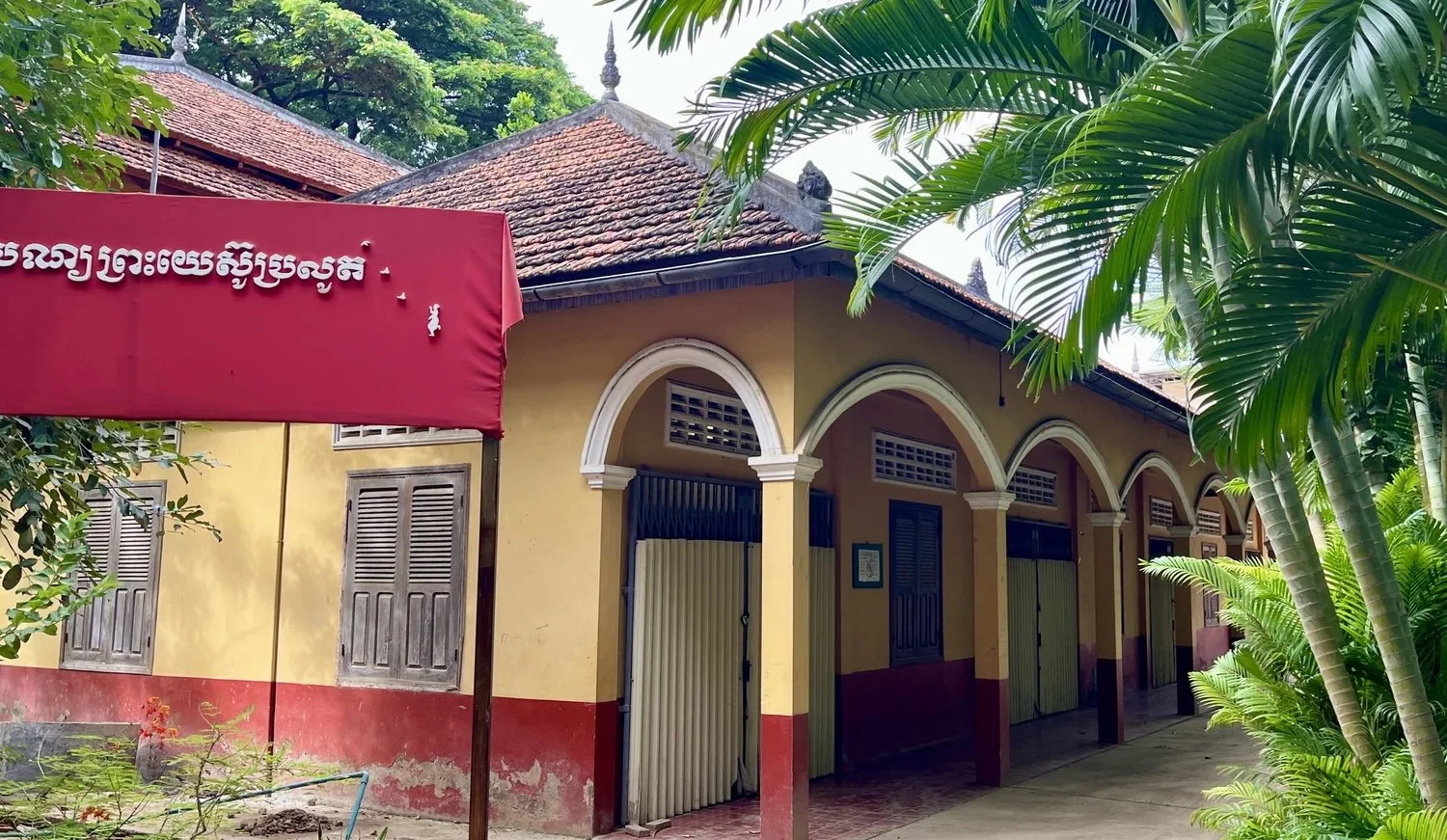
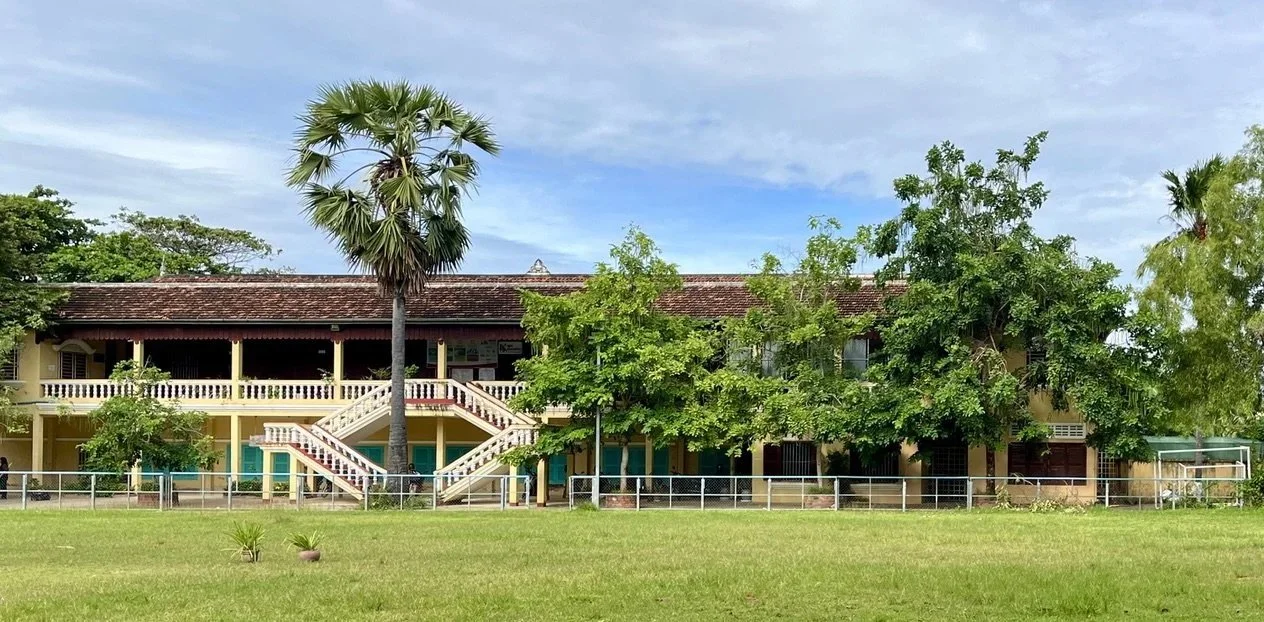
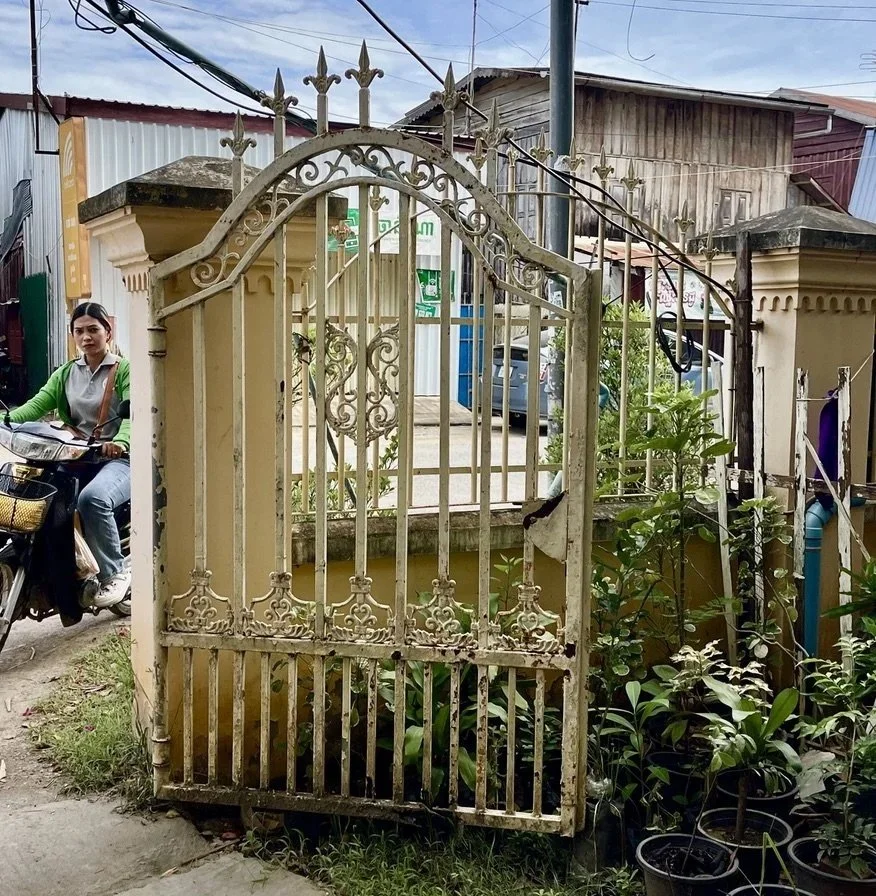
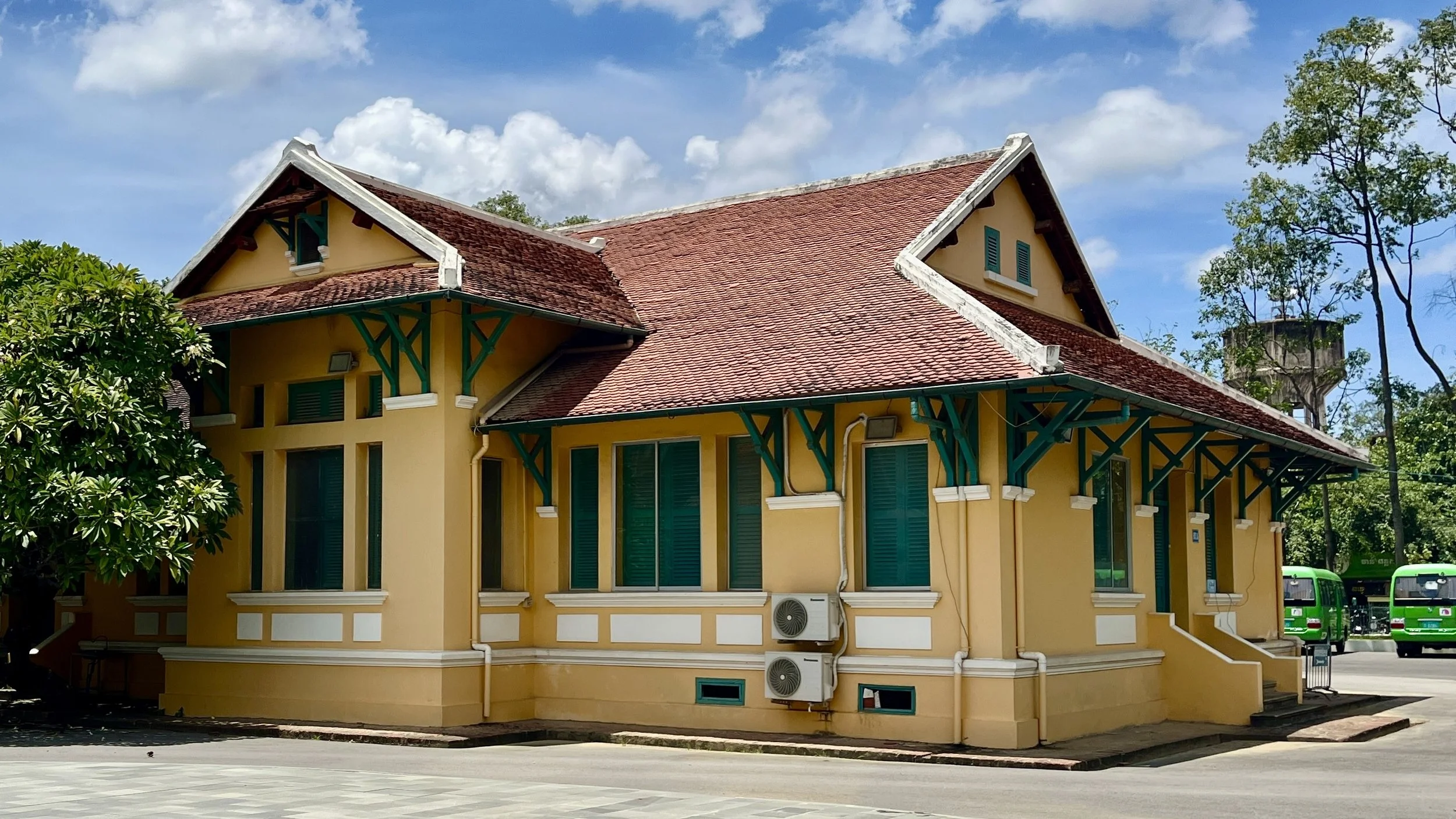
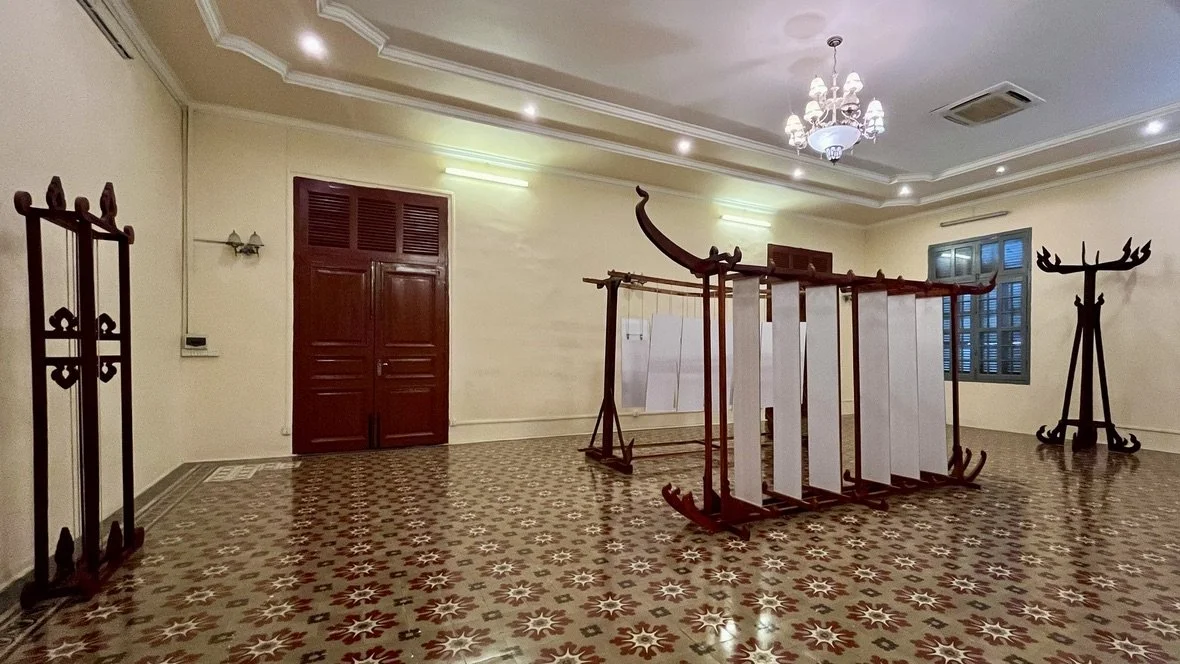
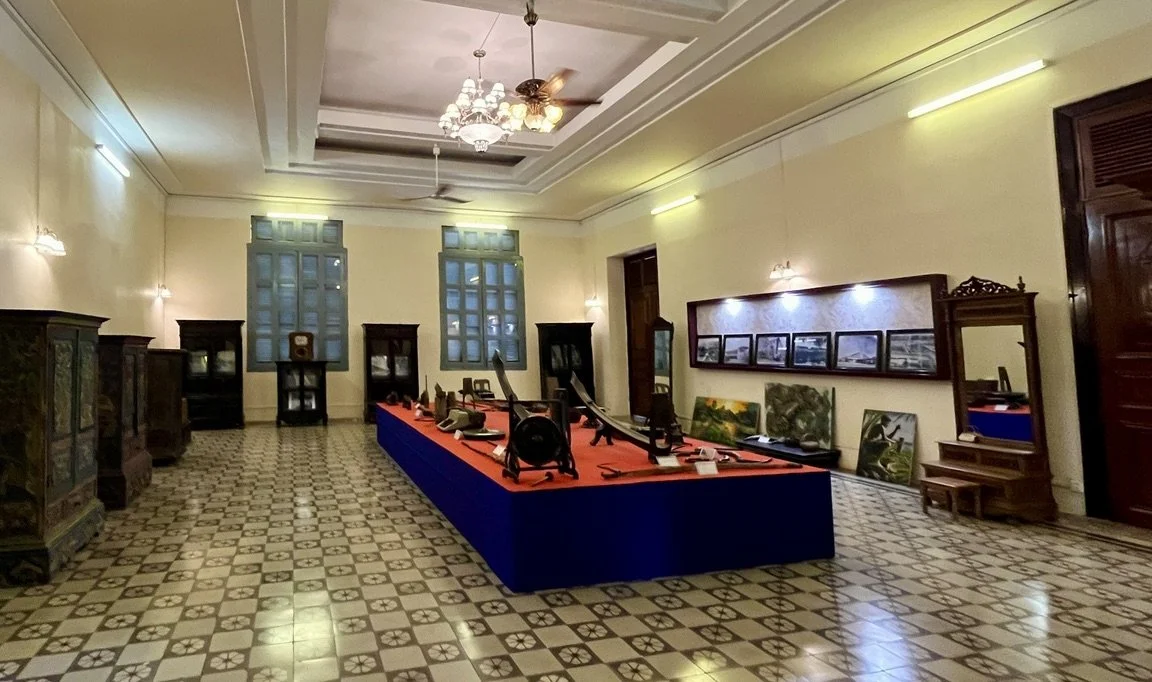
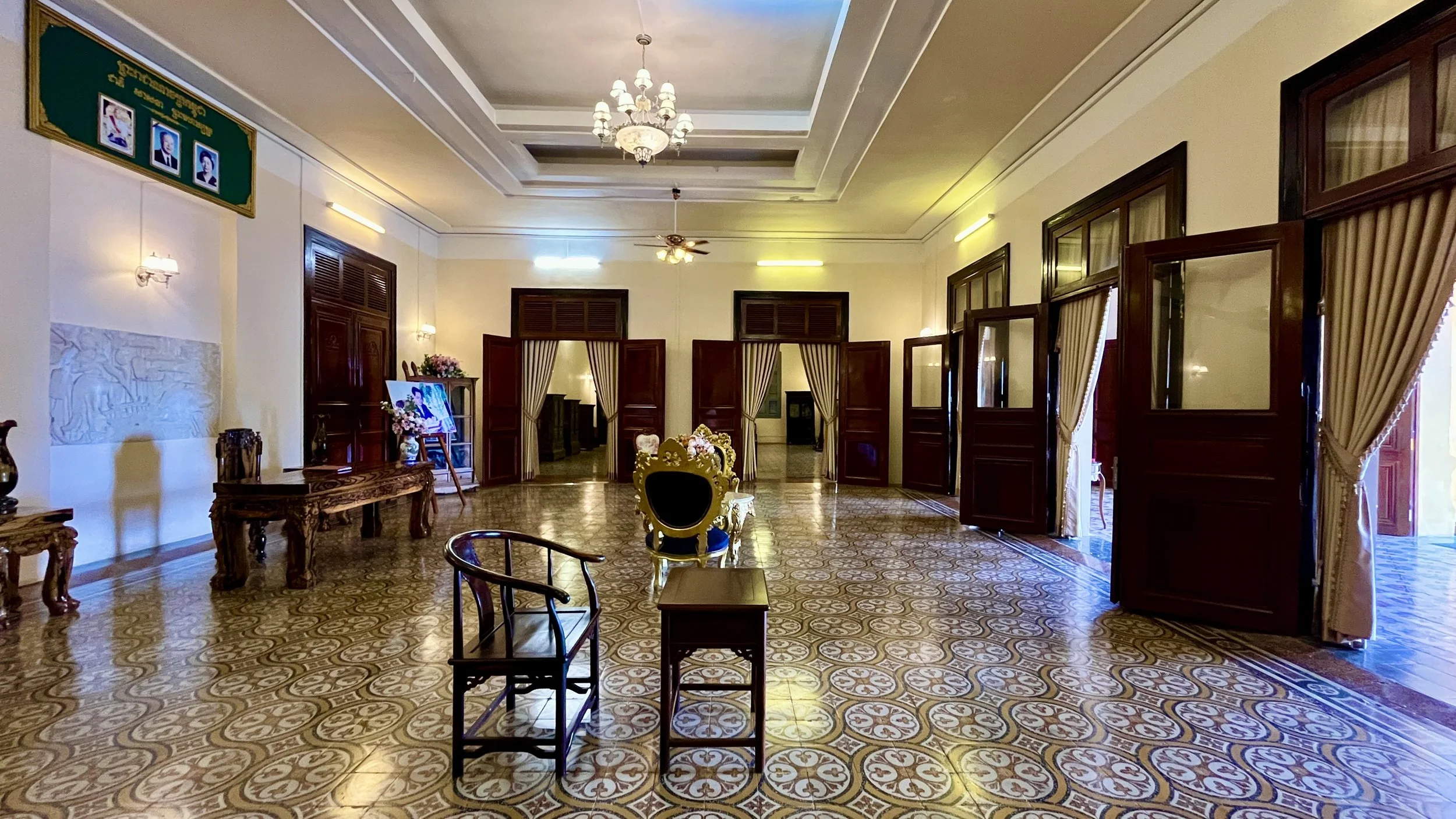
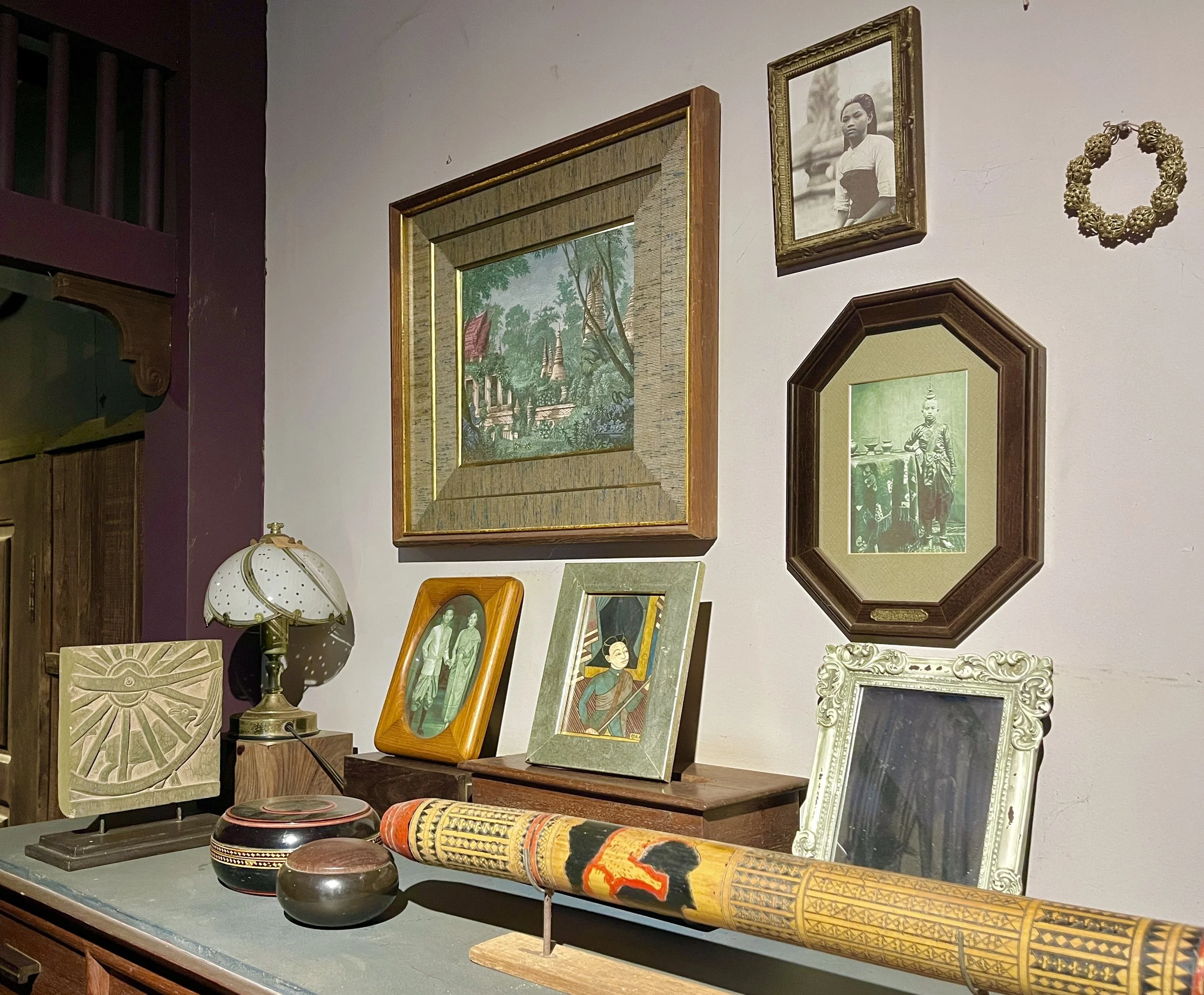
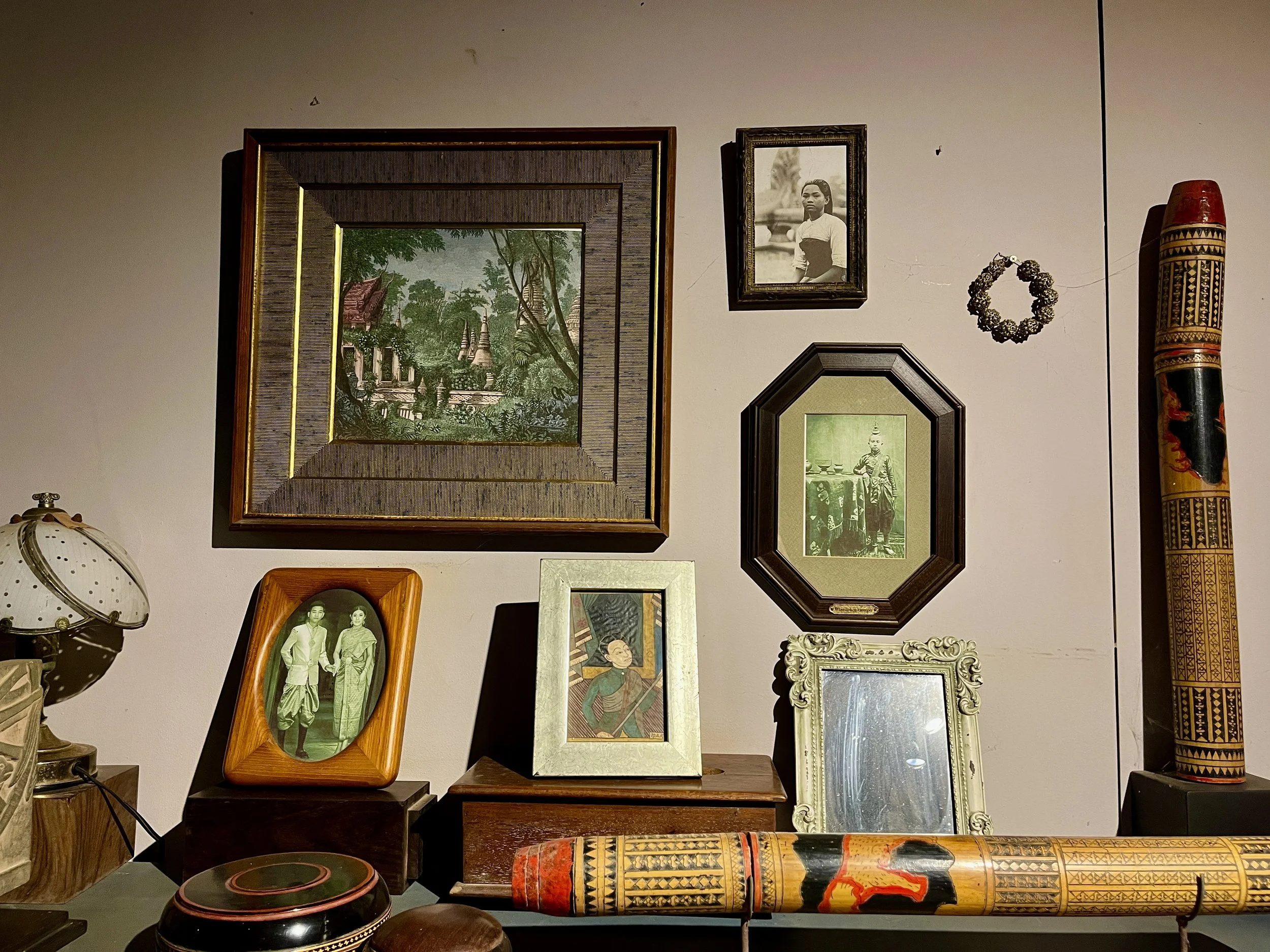
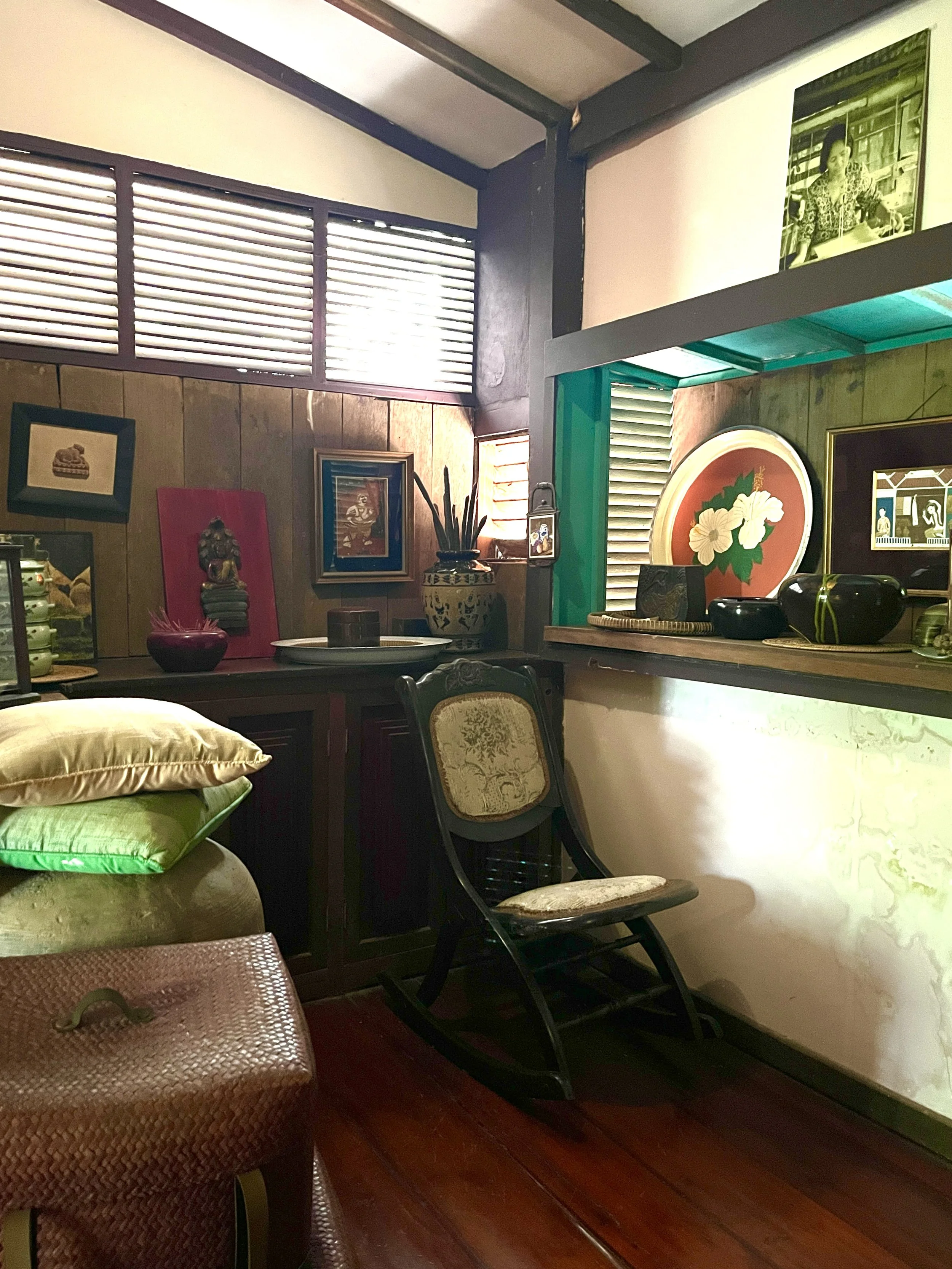
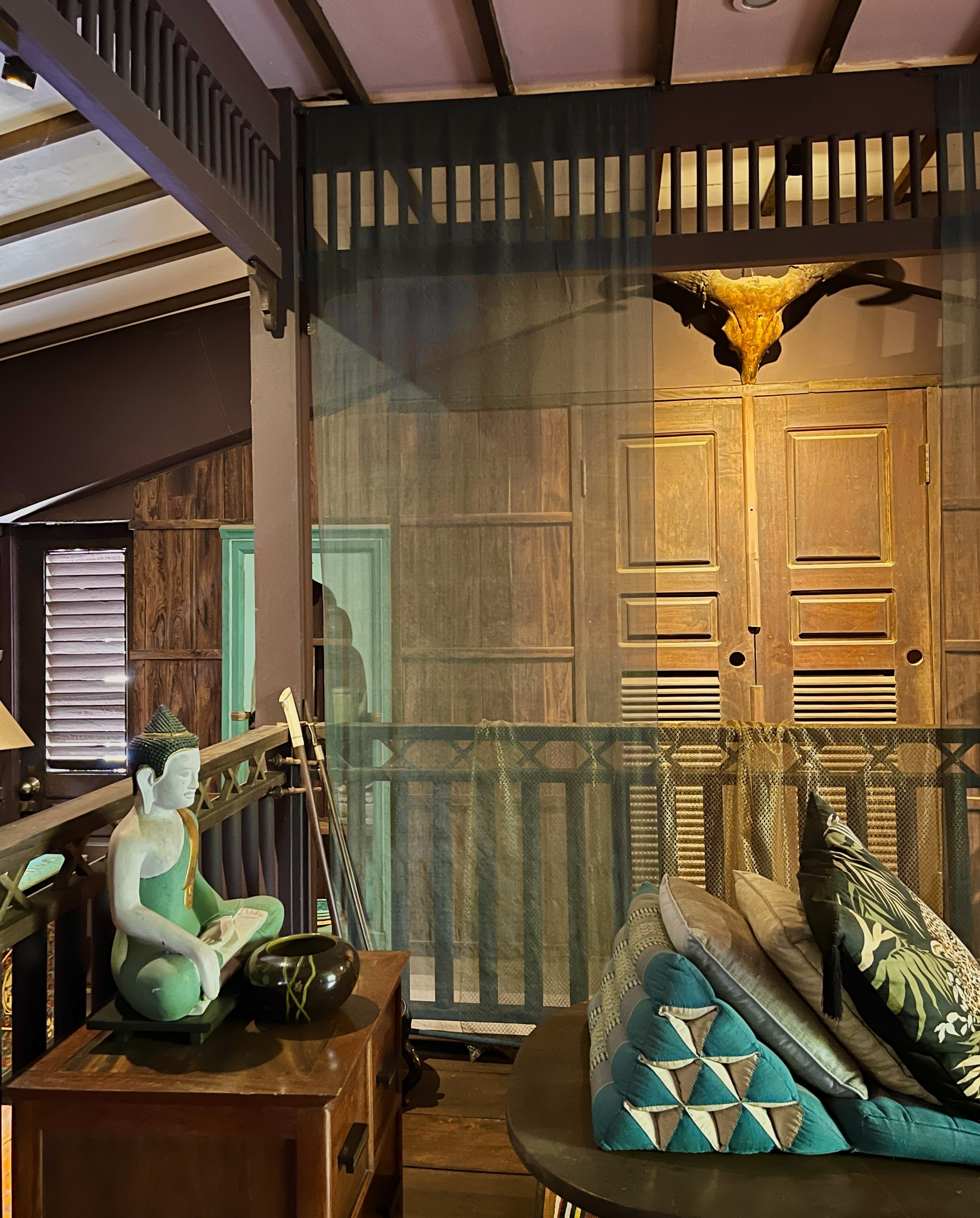
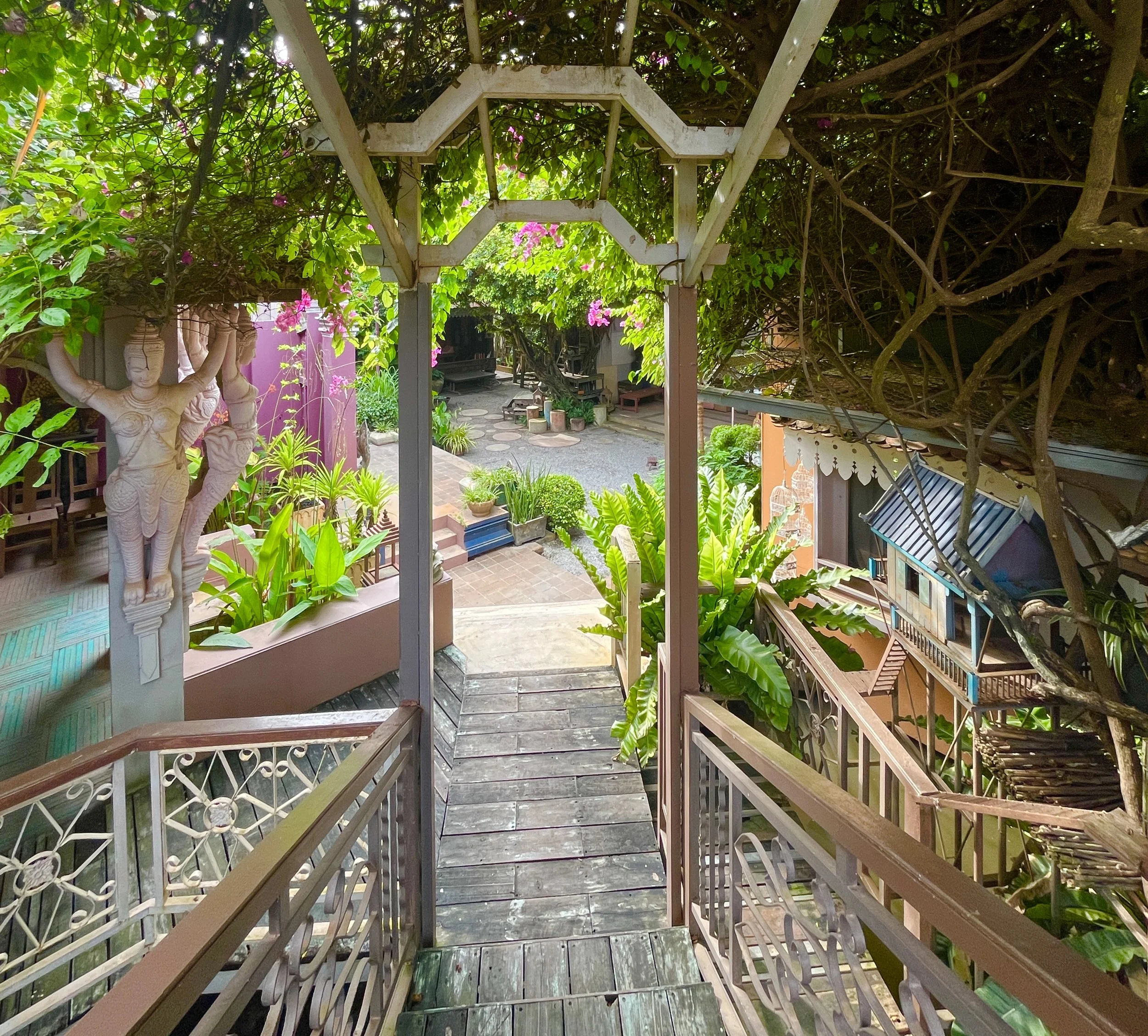
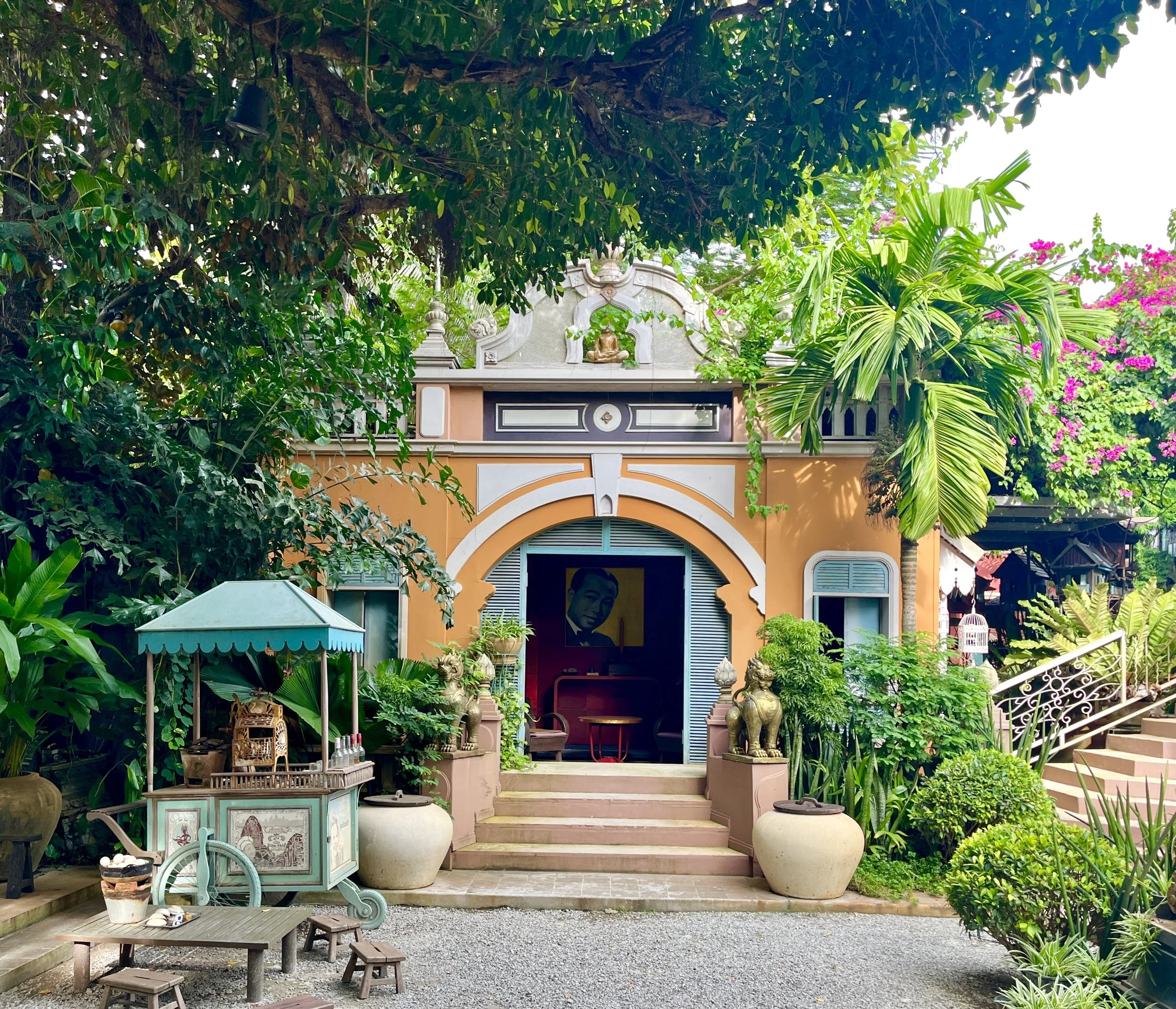
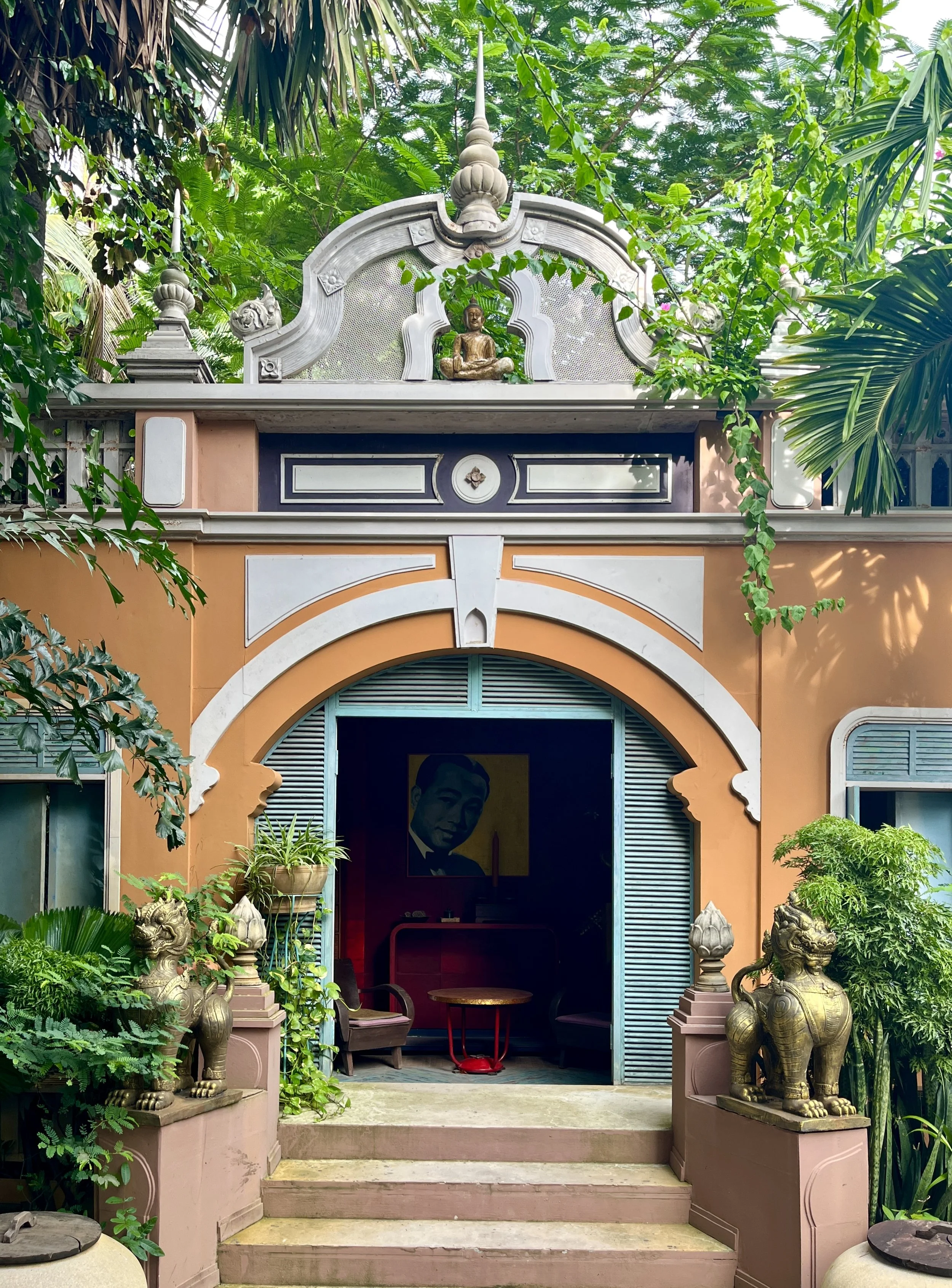
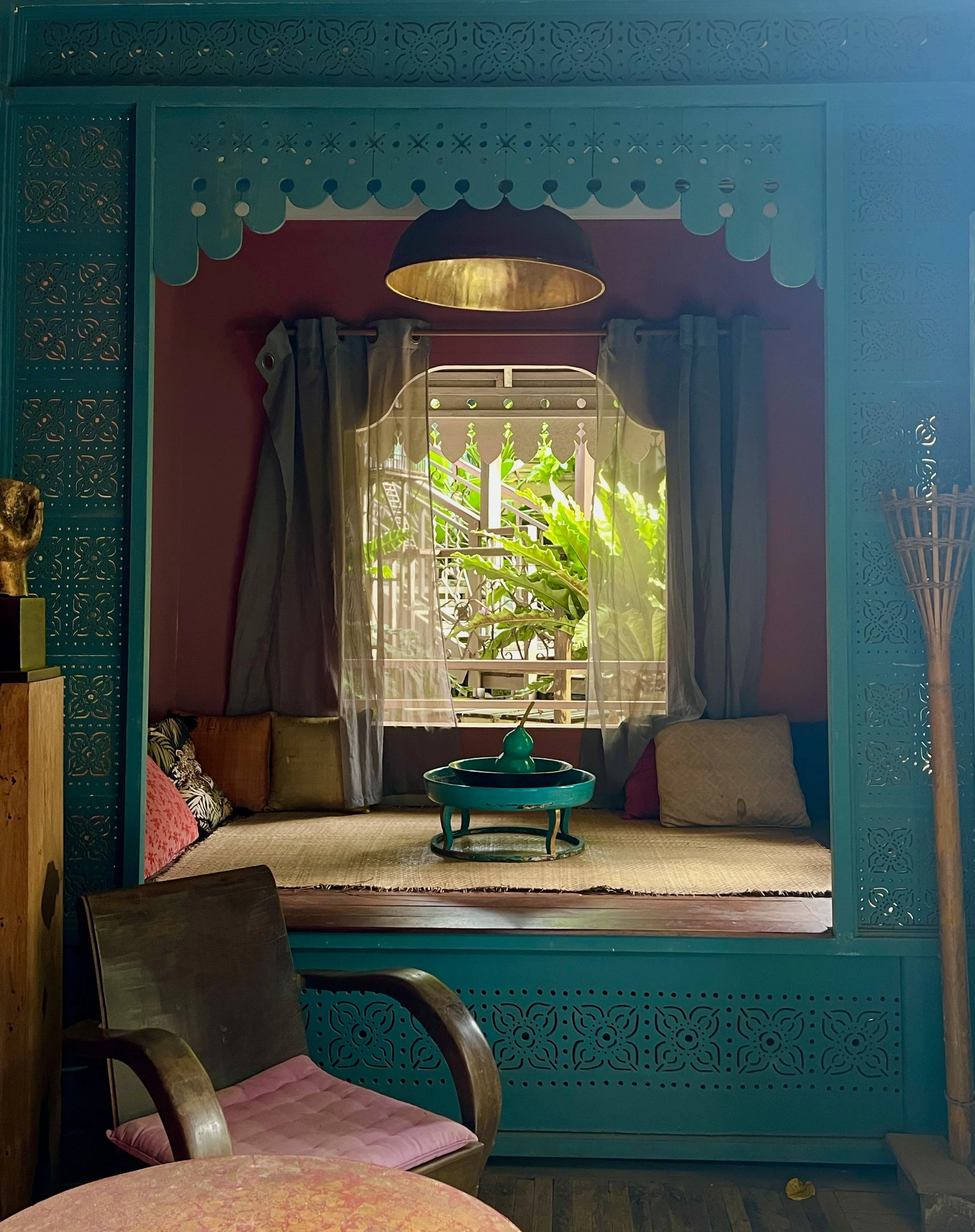
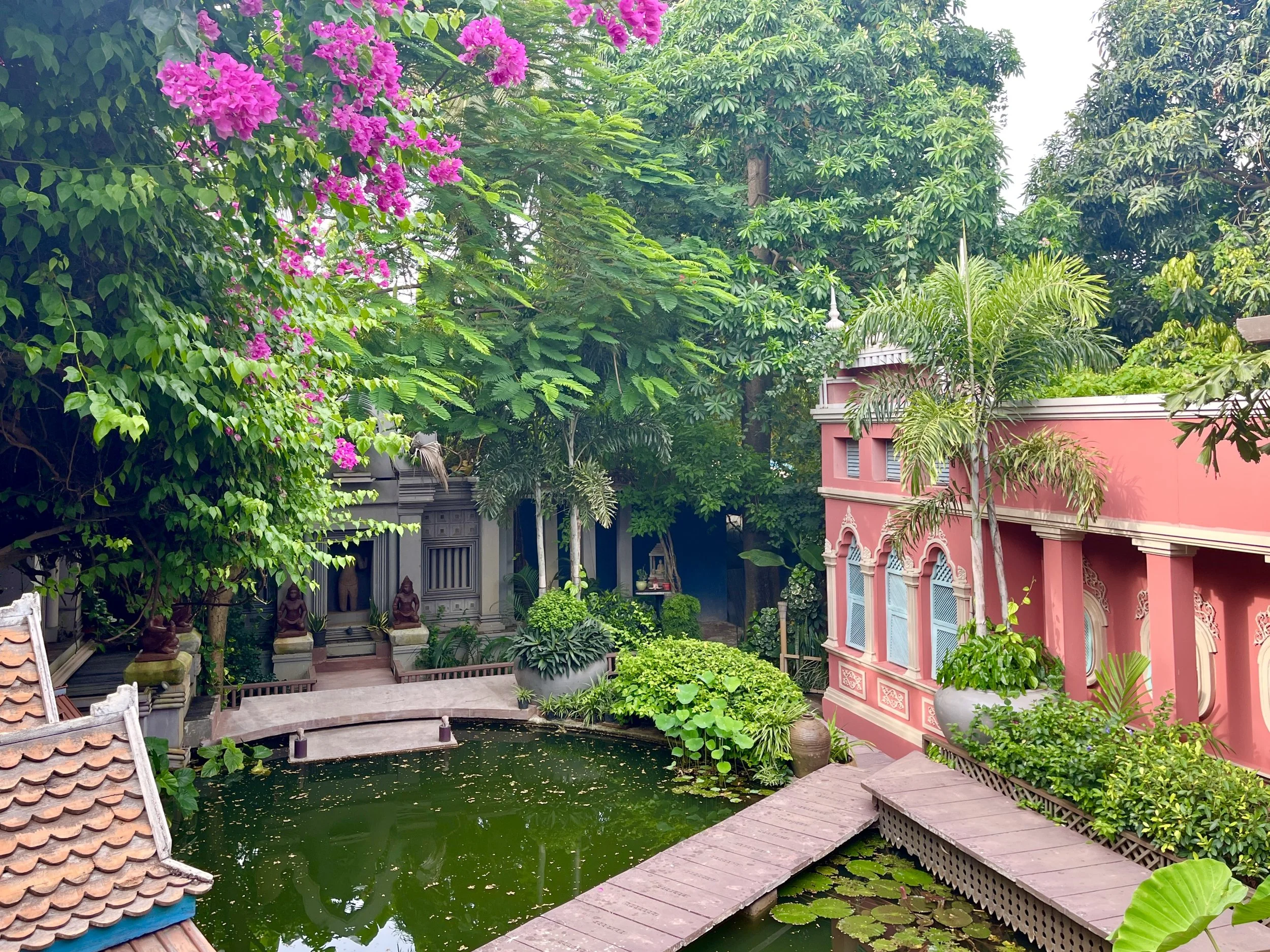
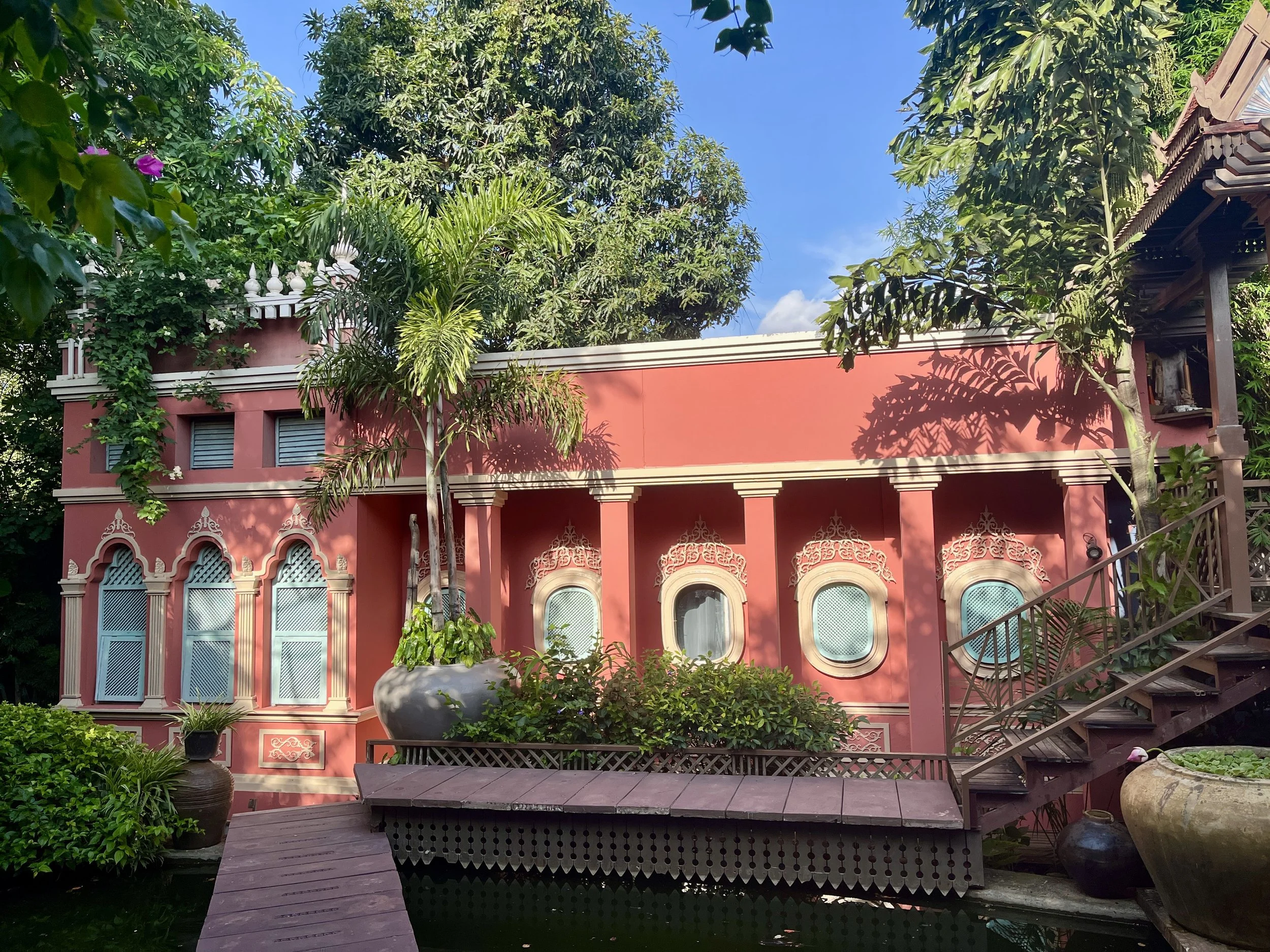
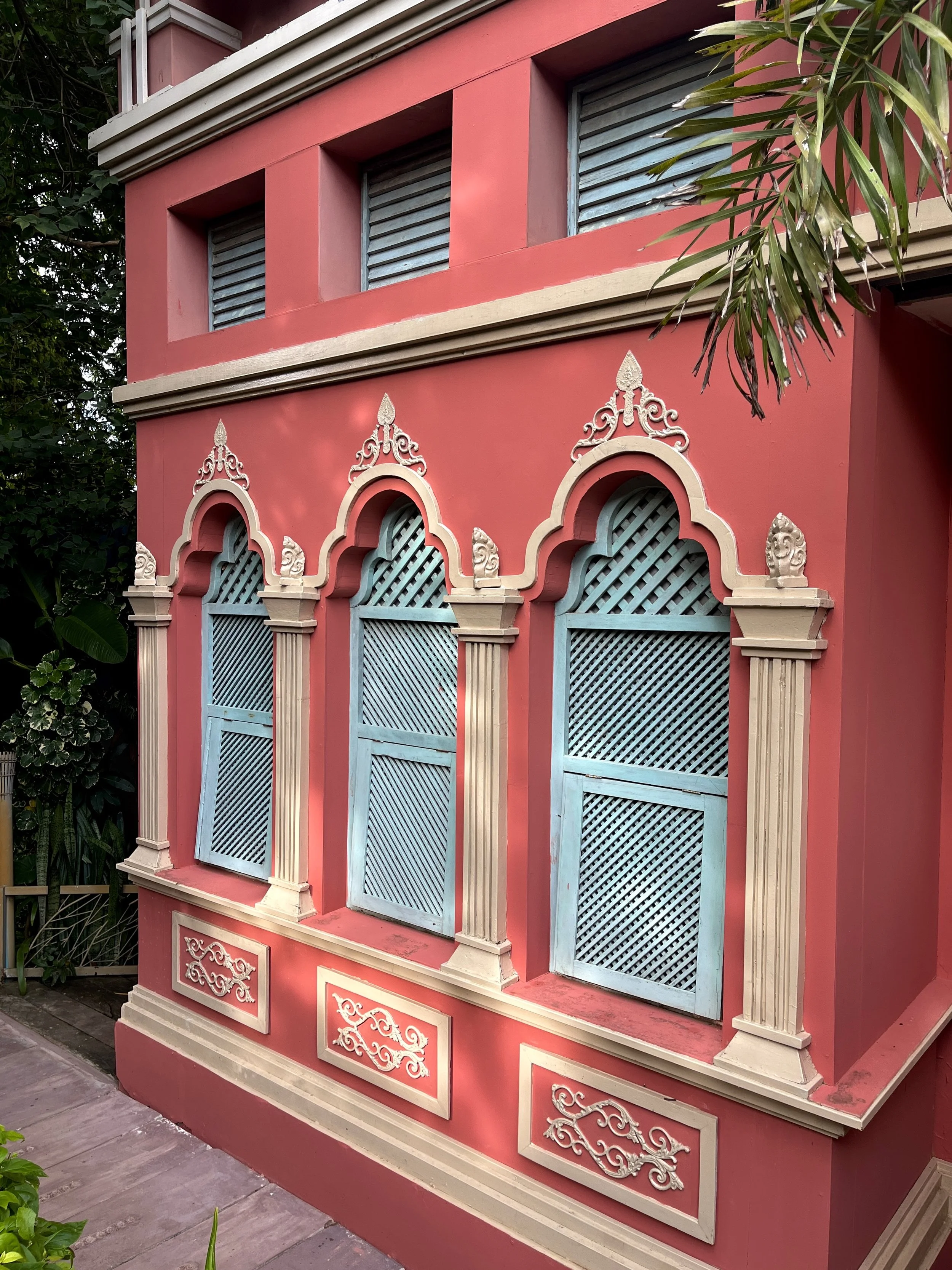
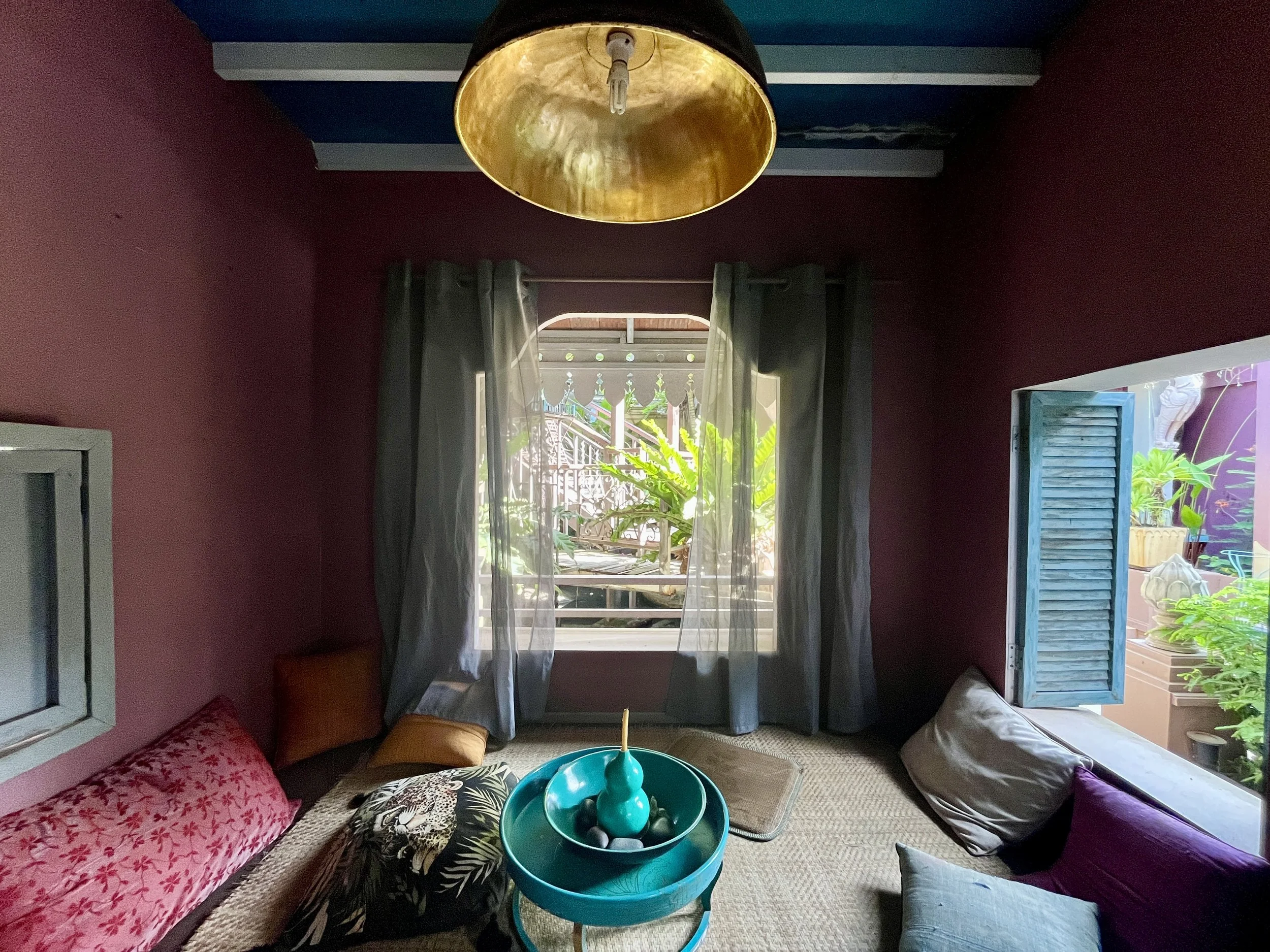
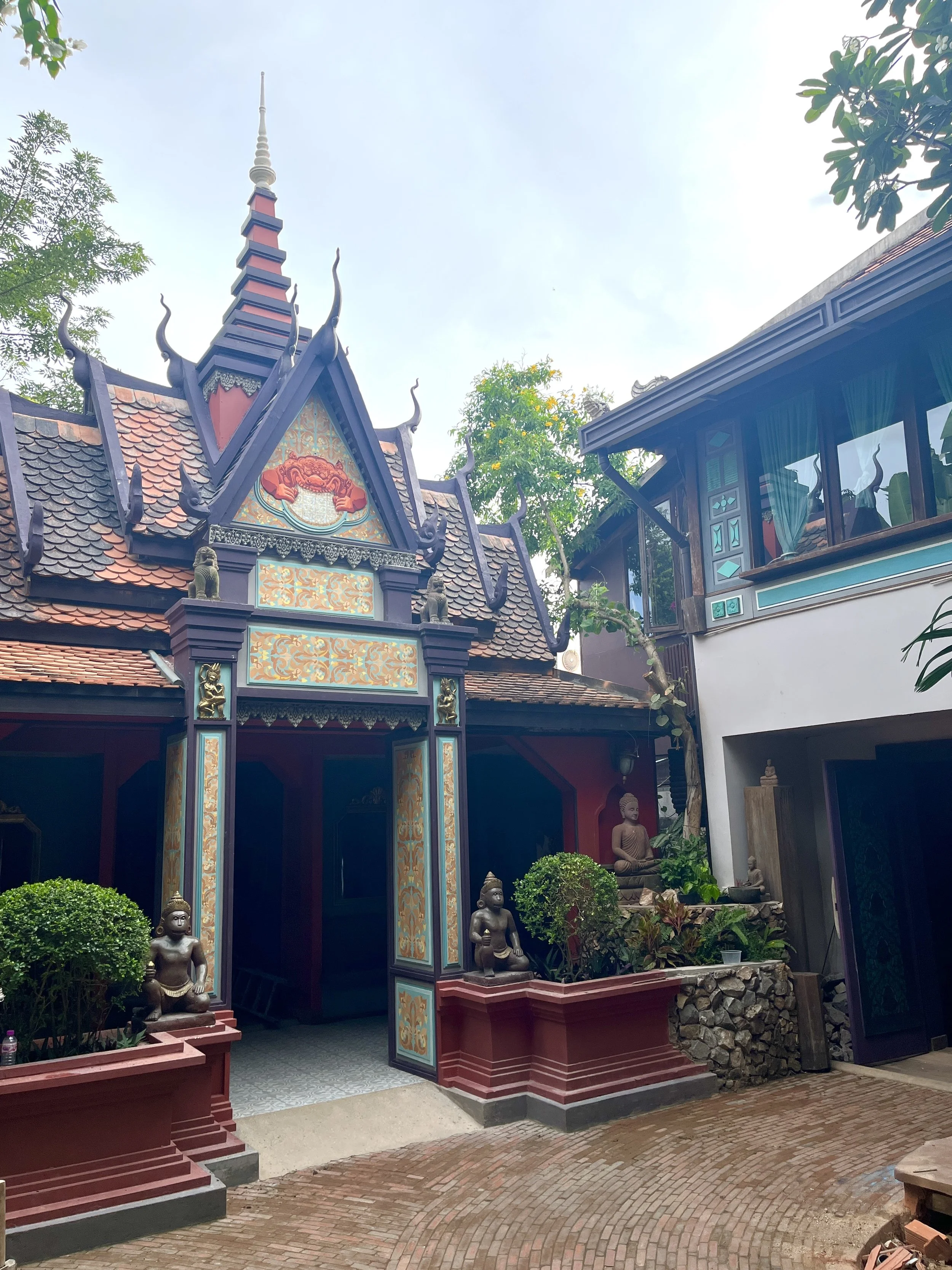
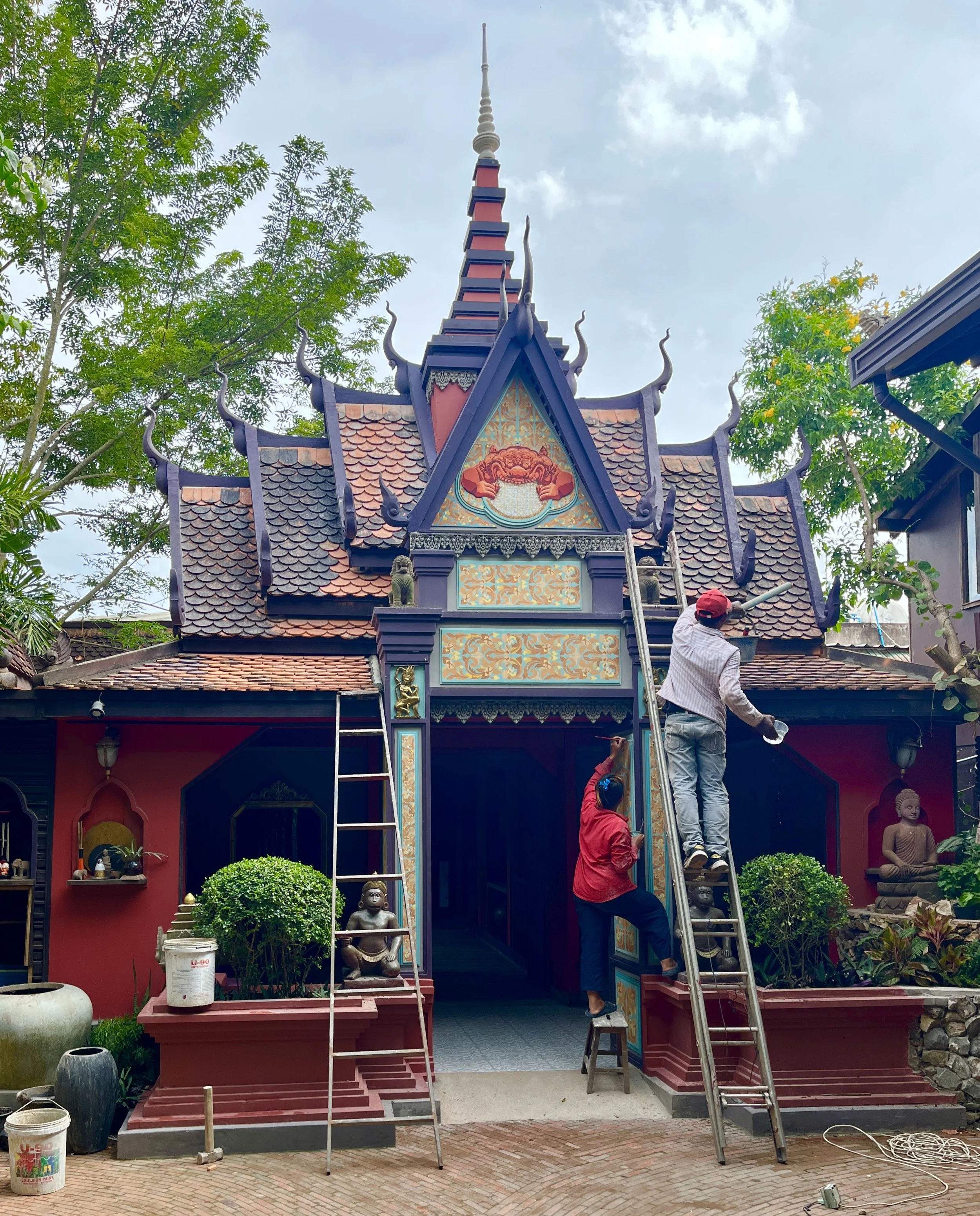
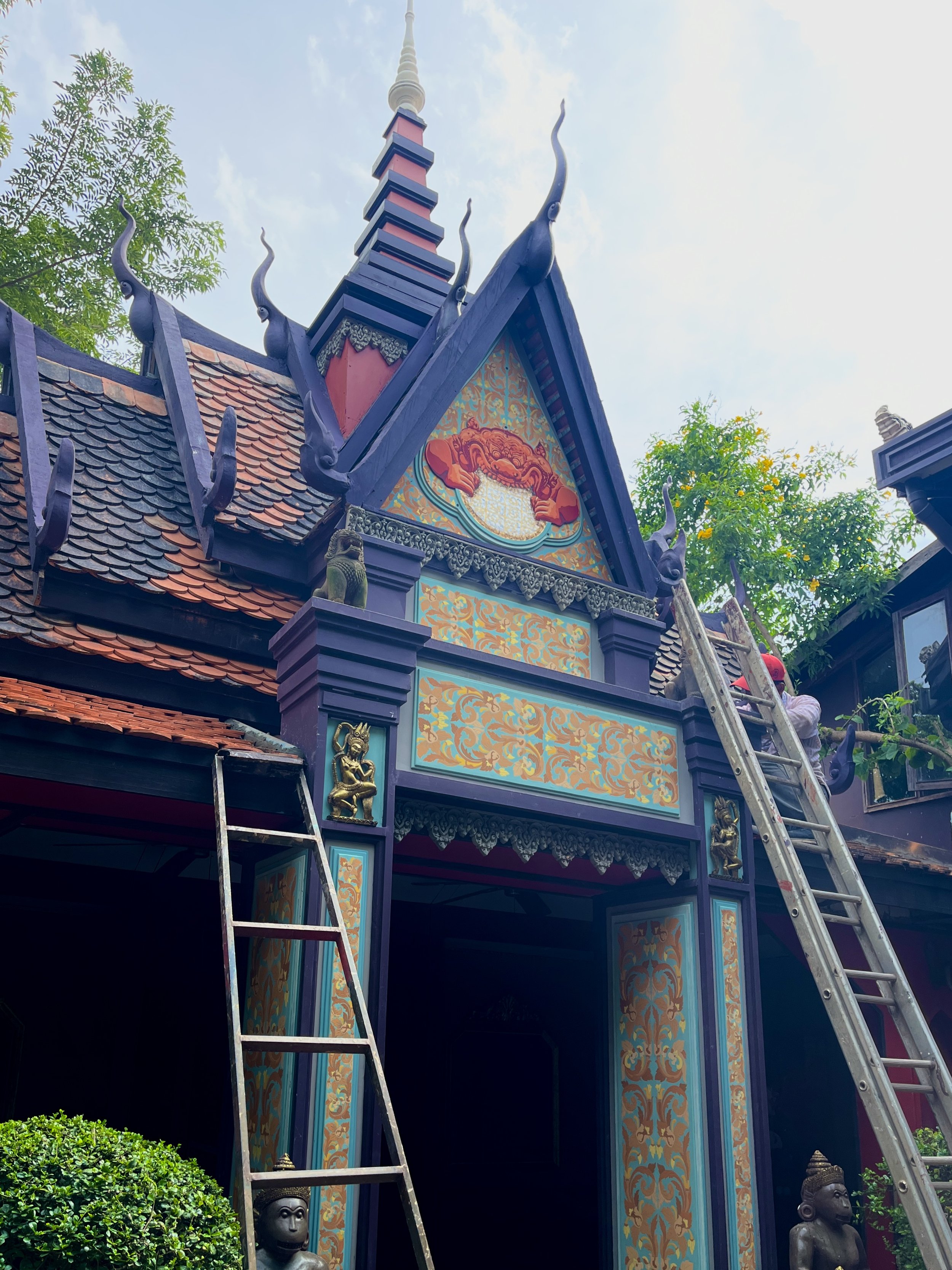
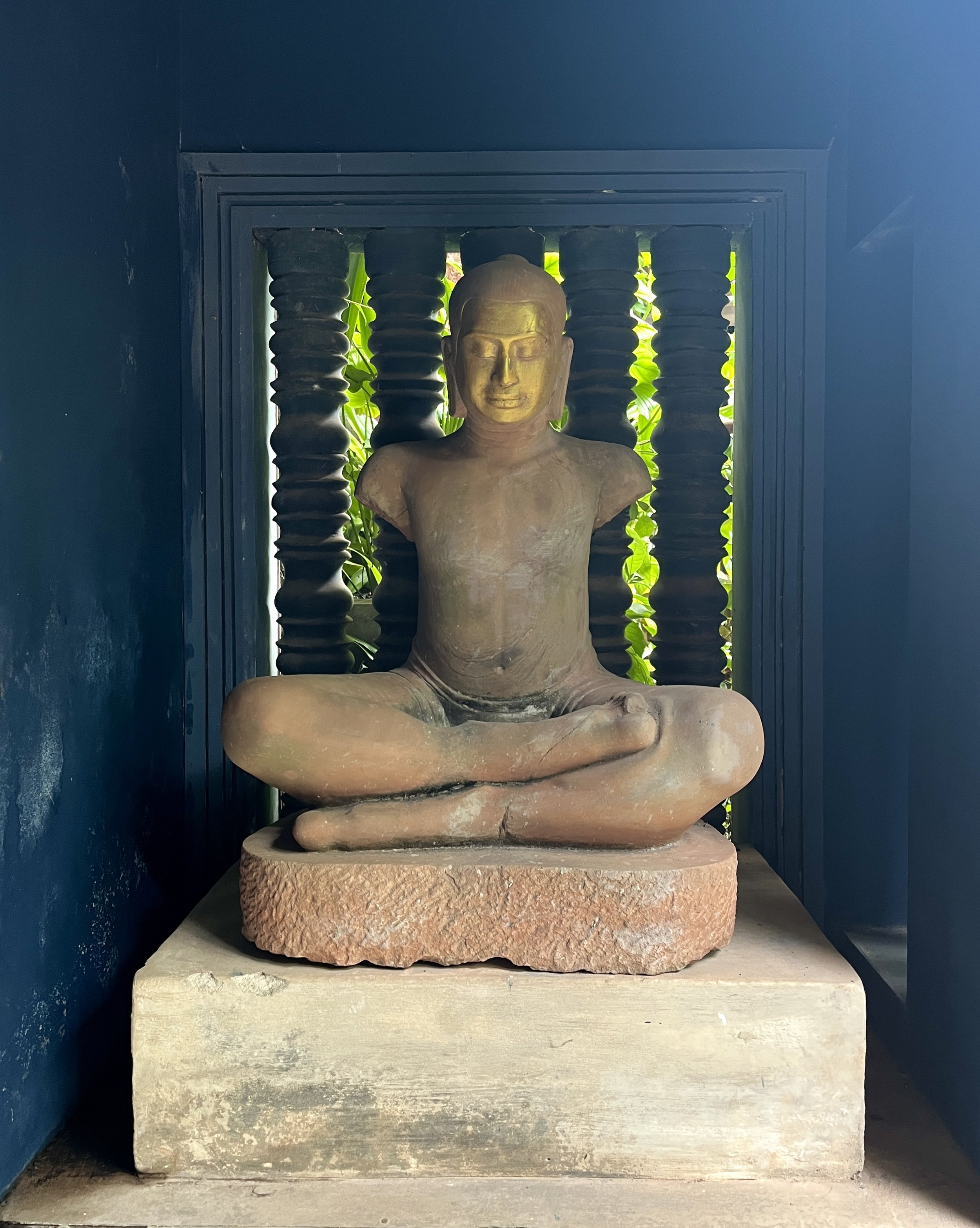
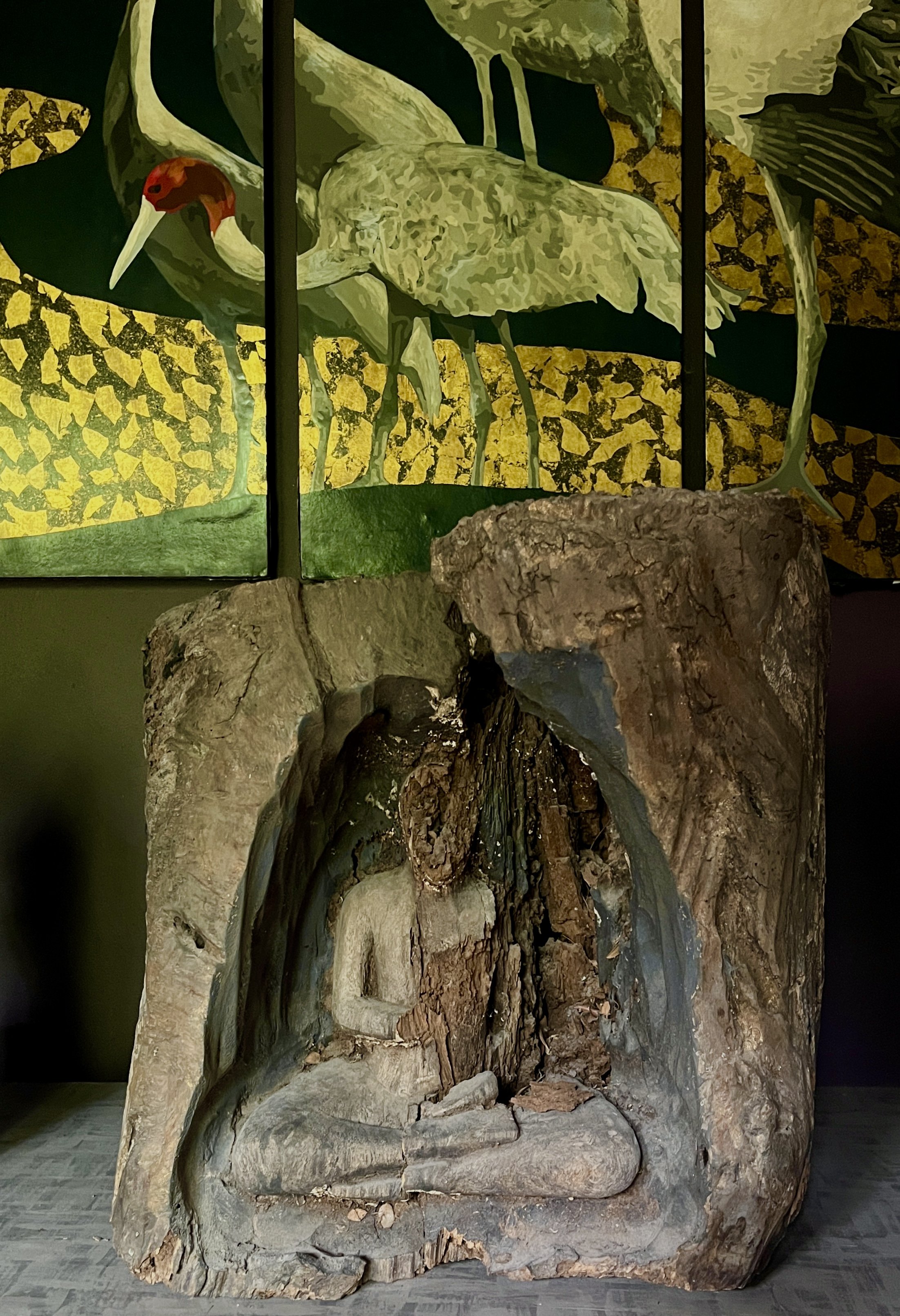
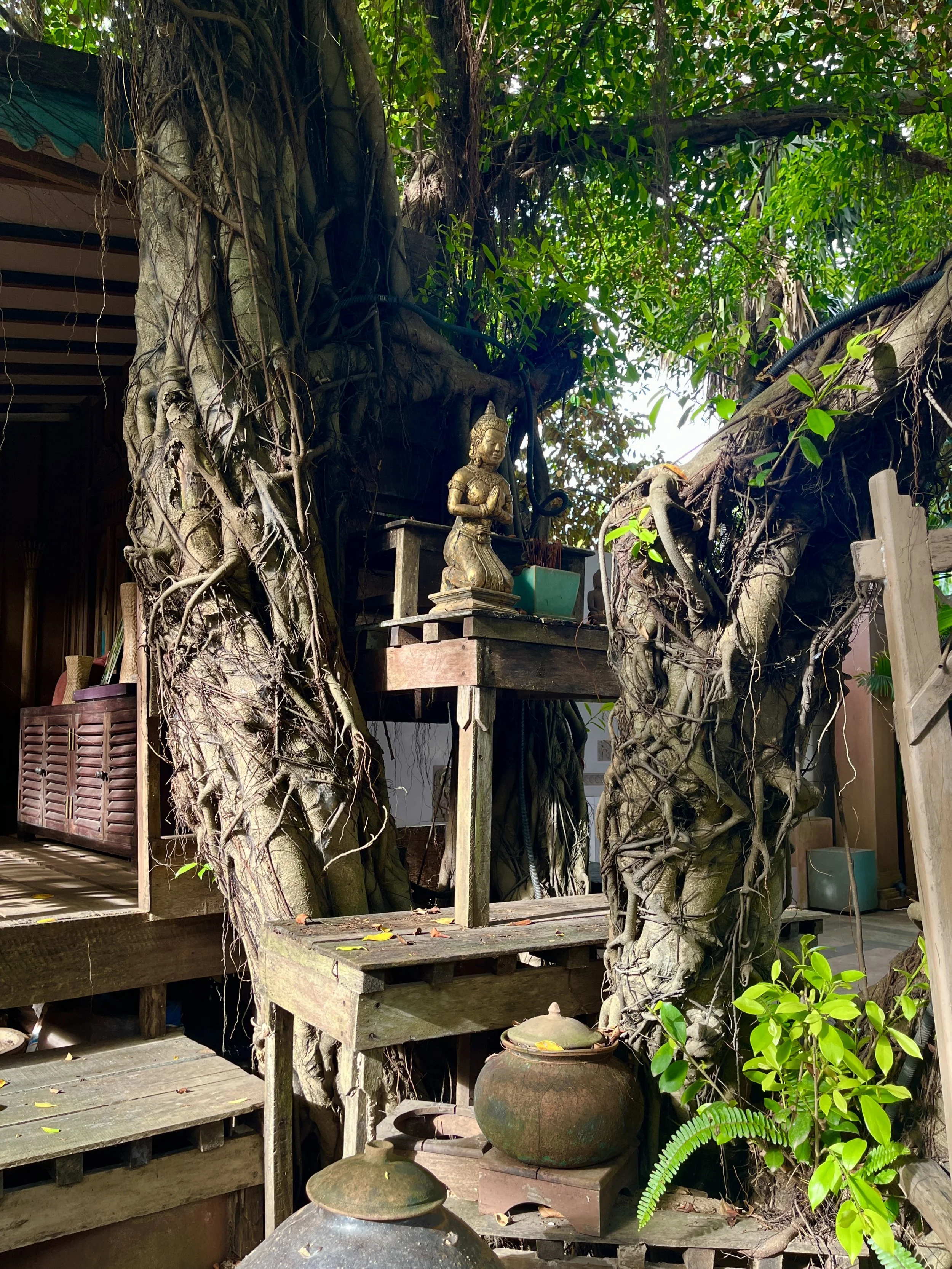
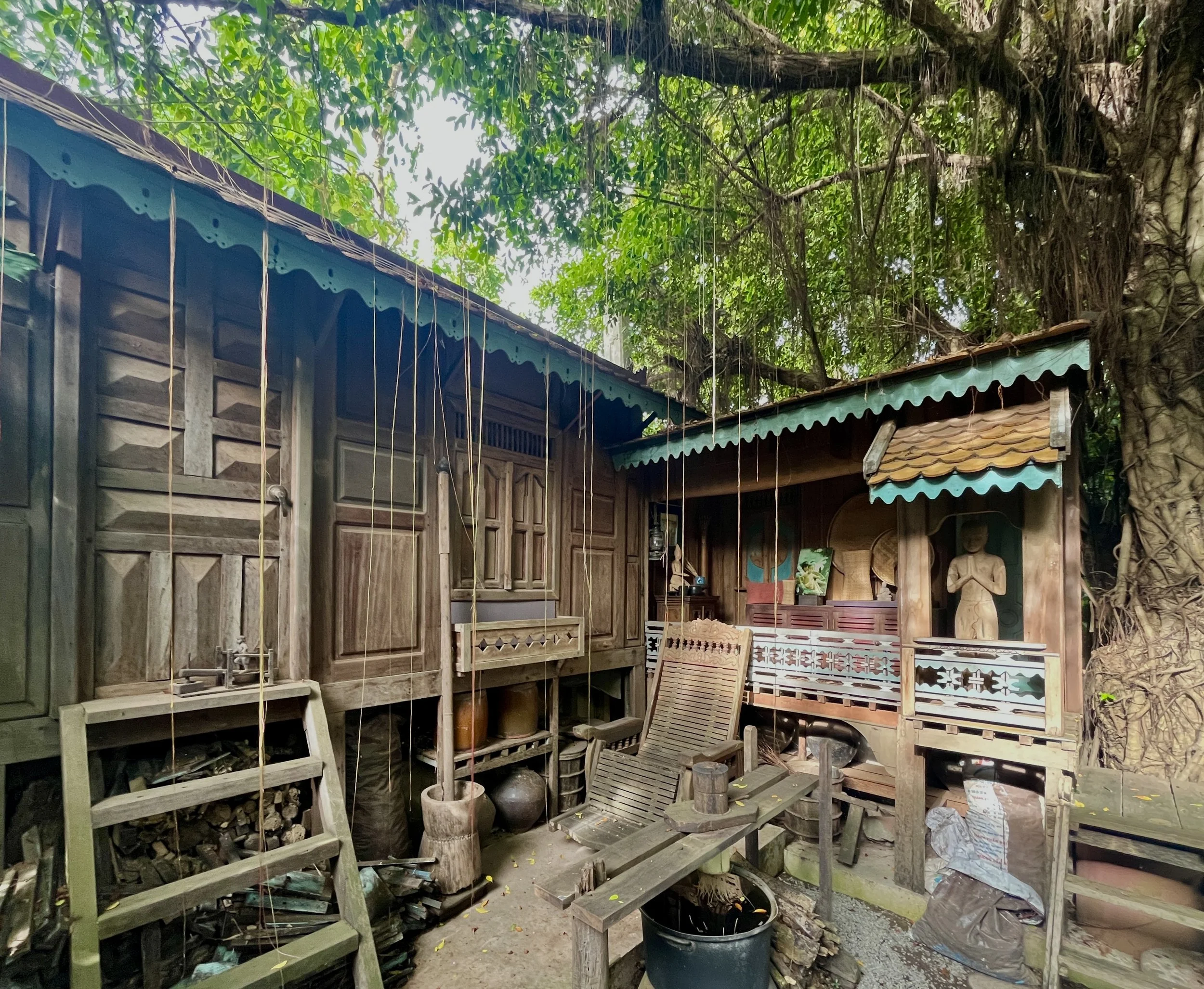
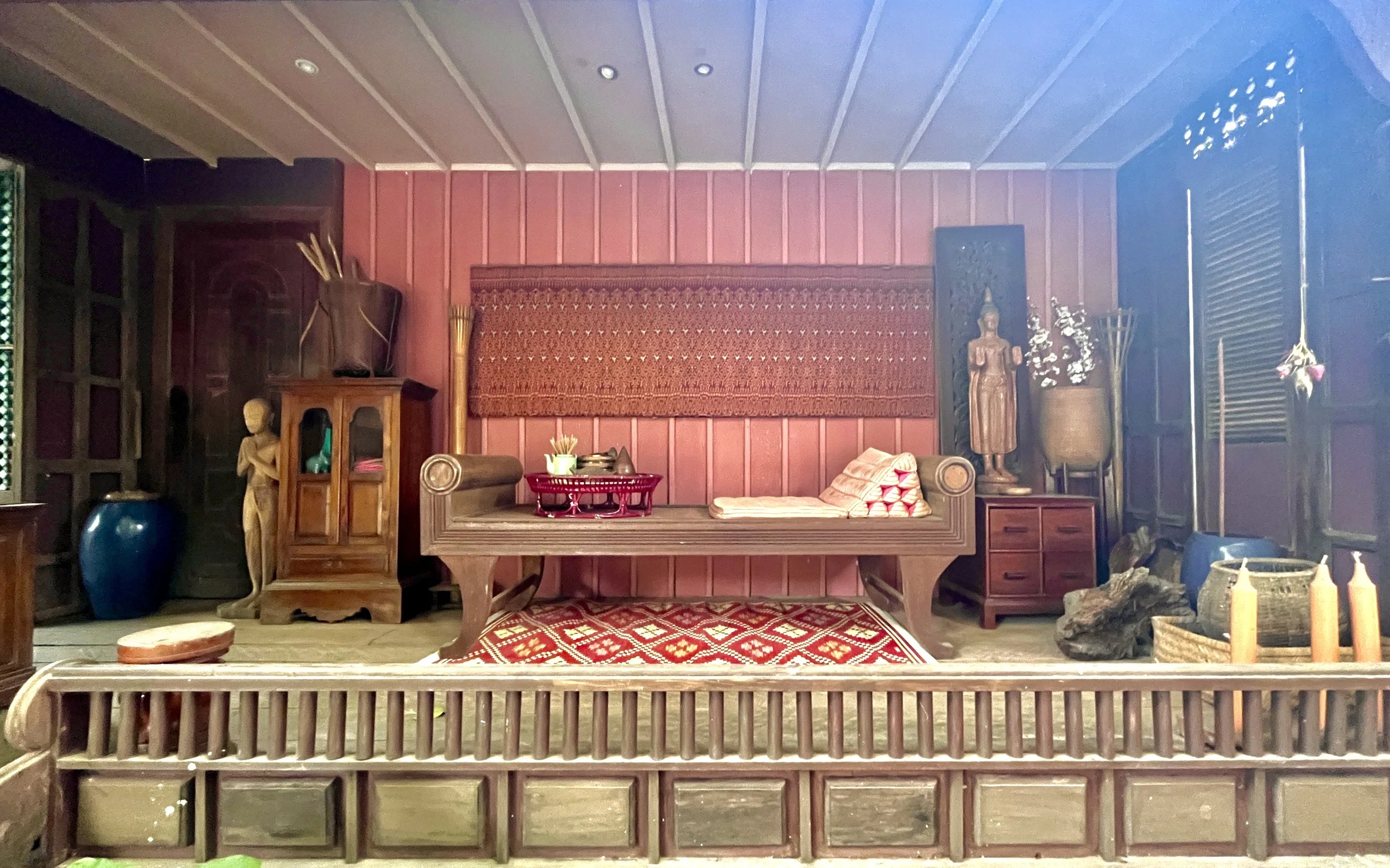
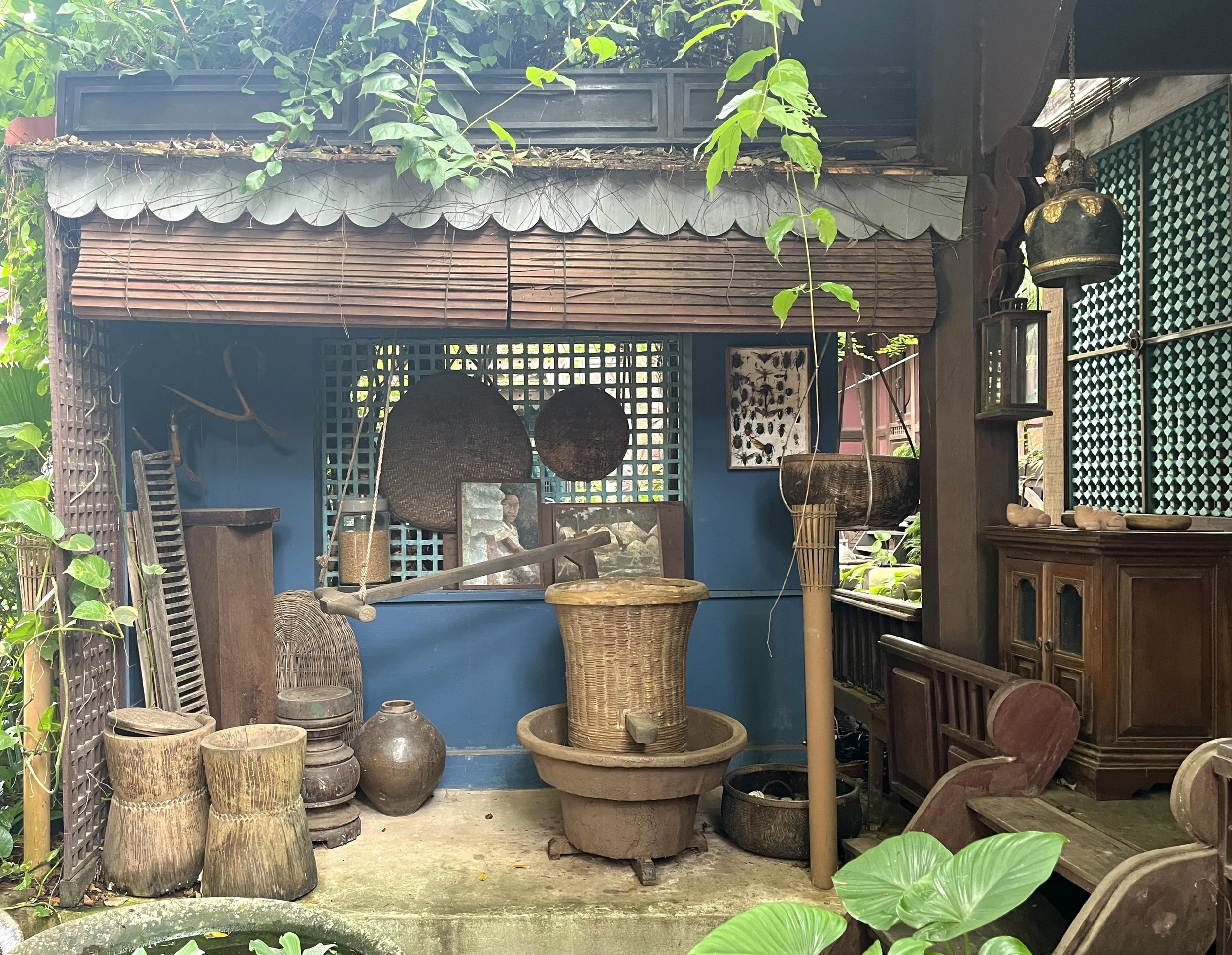
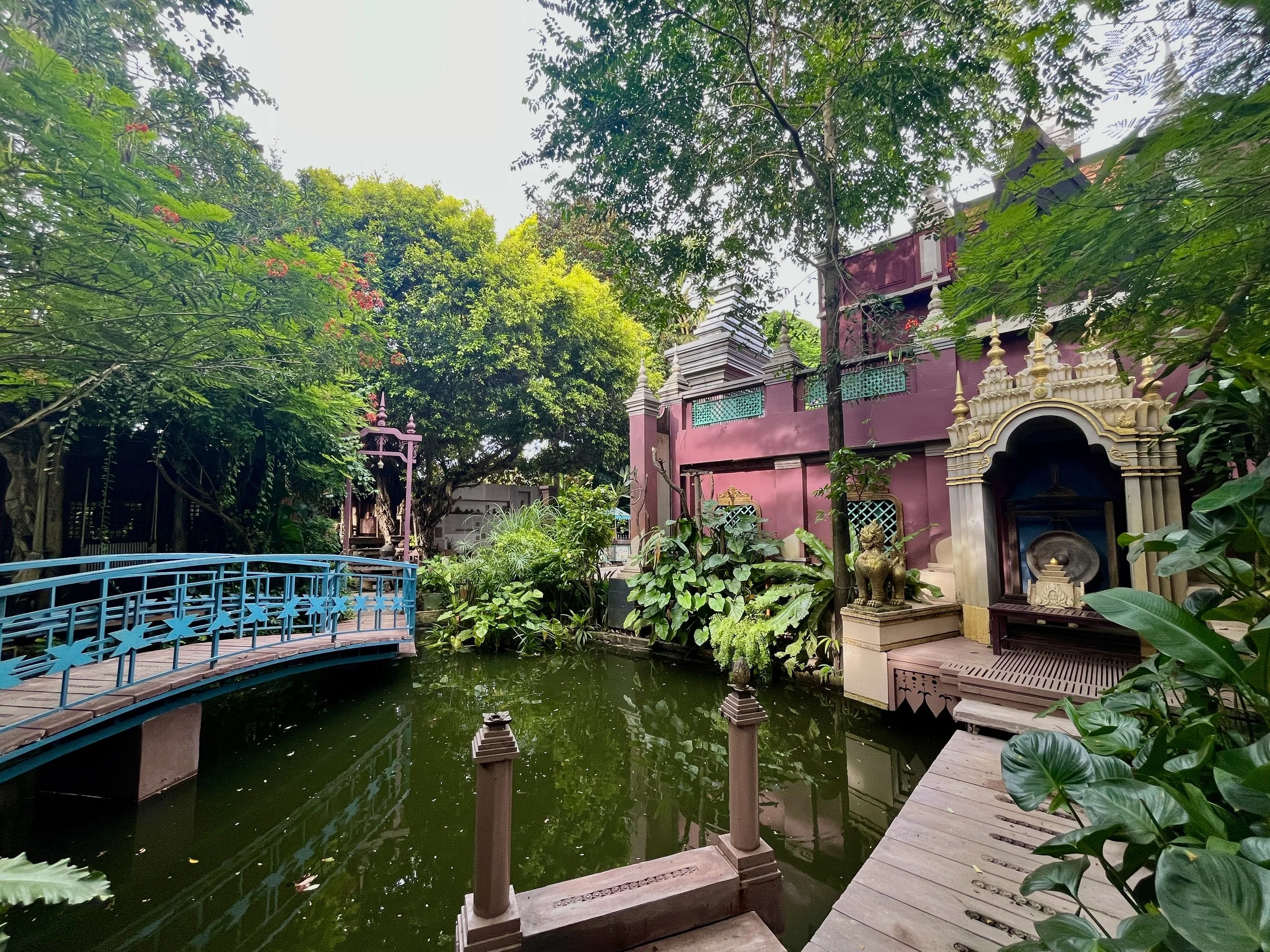
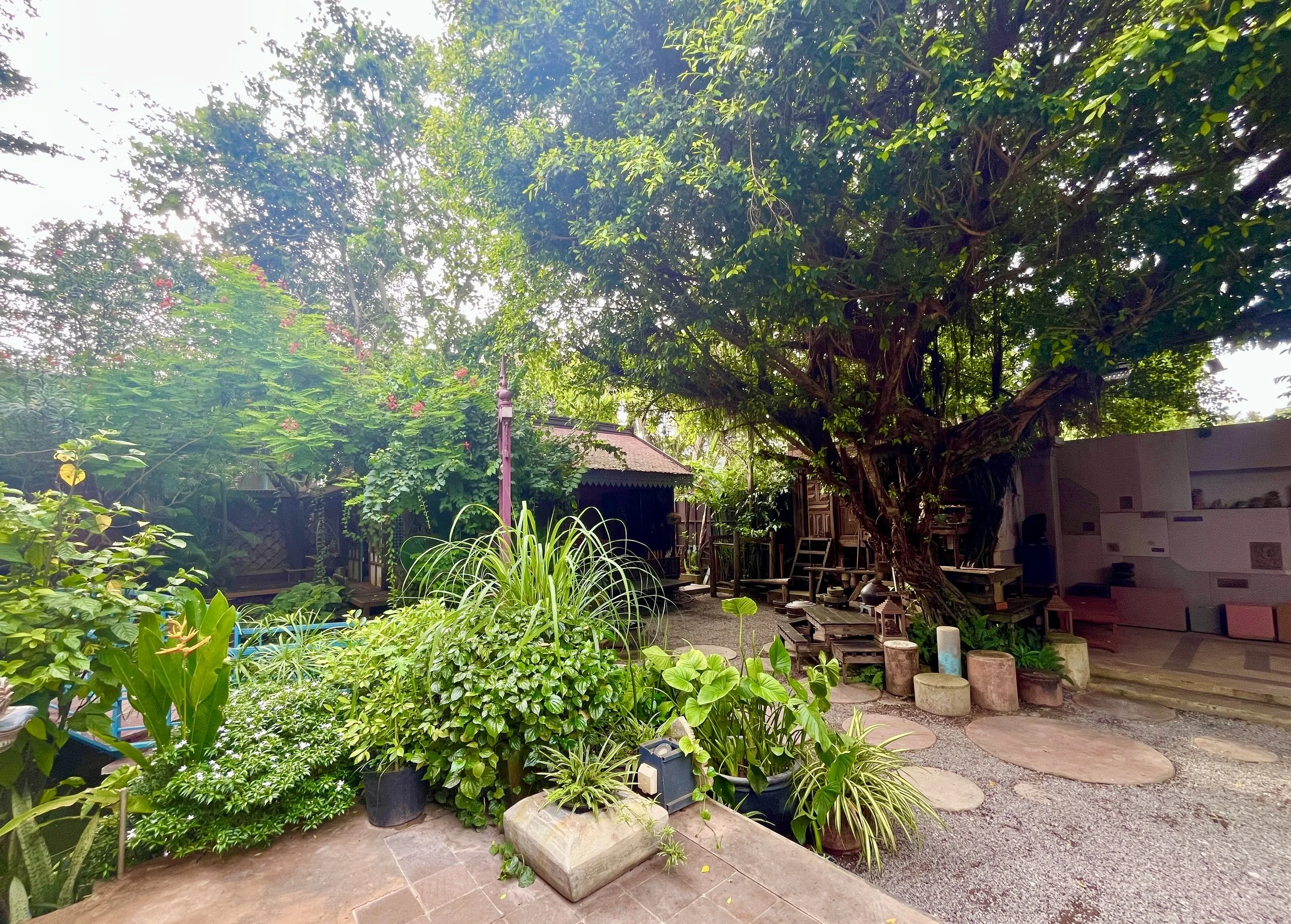
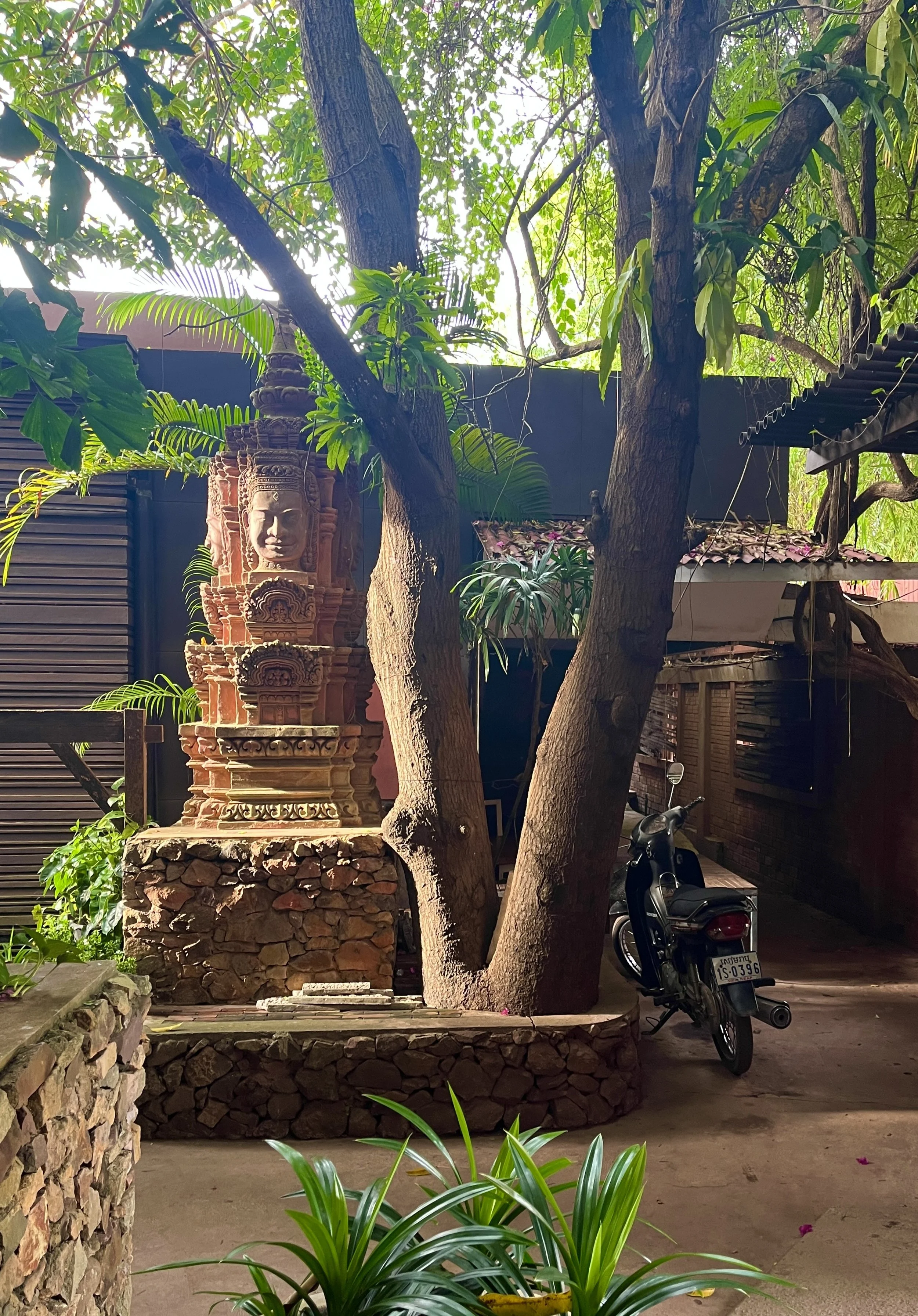
La Villa Hotel, Battambang | Cambodia

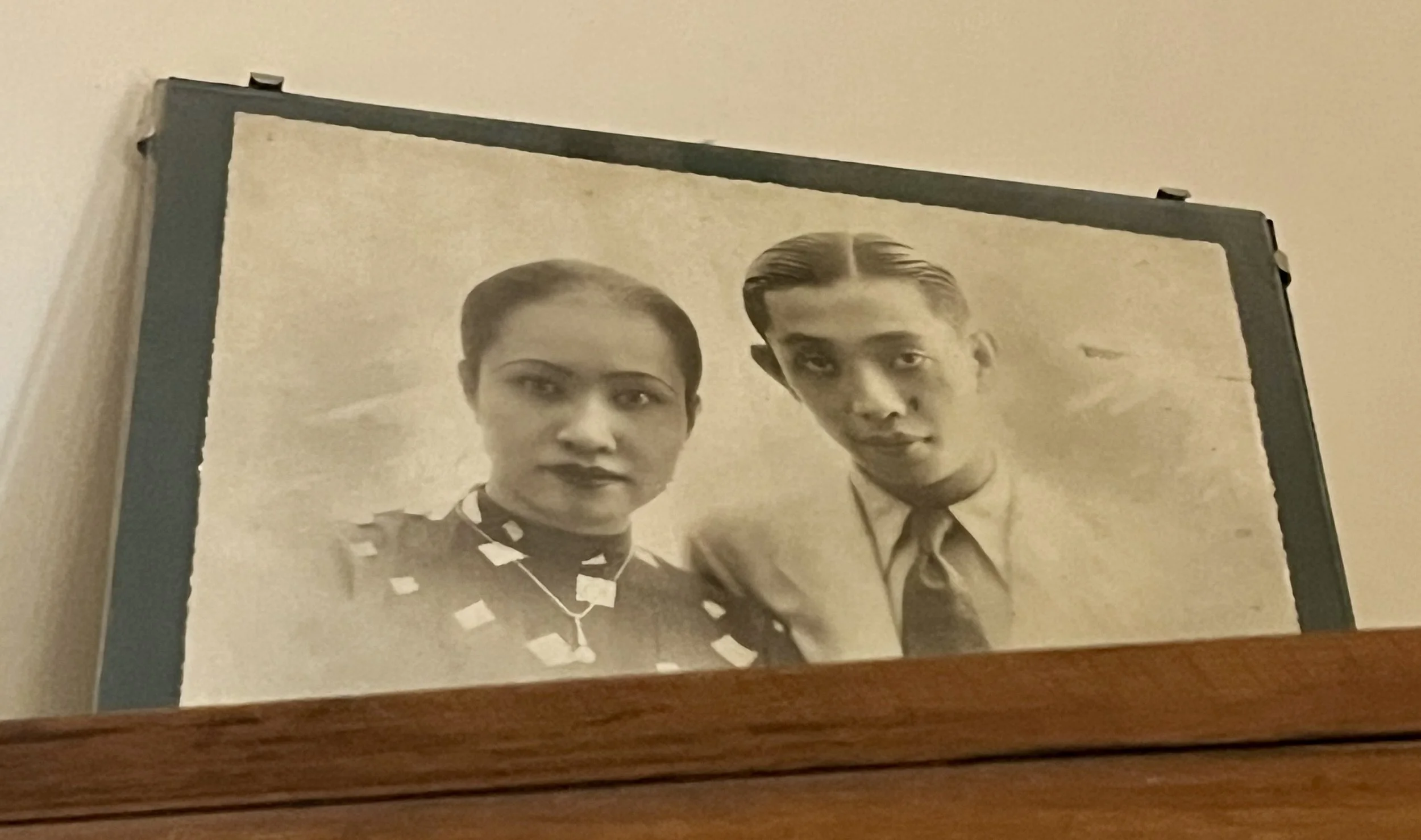
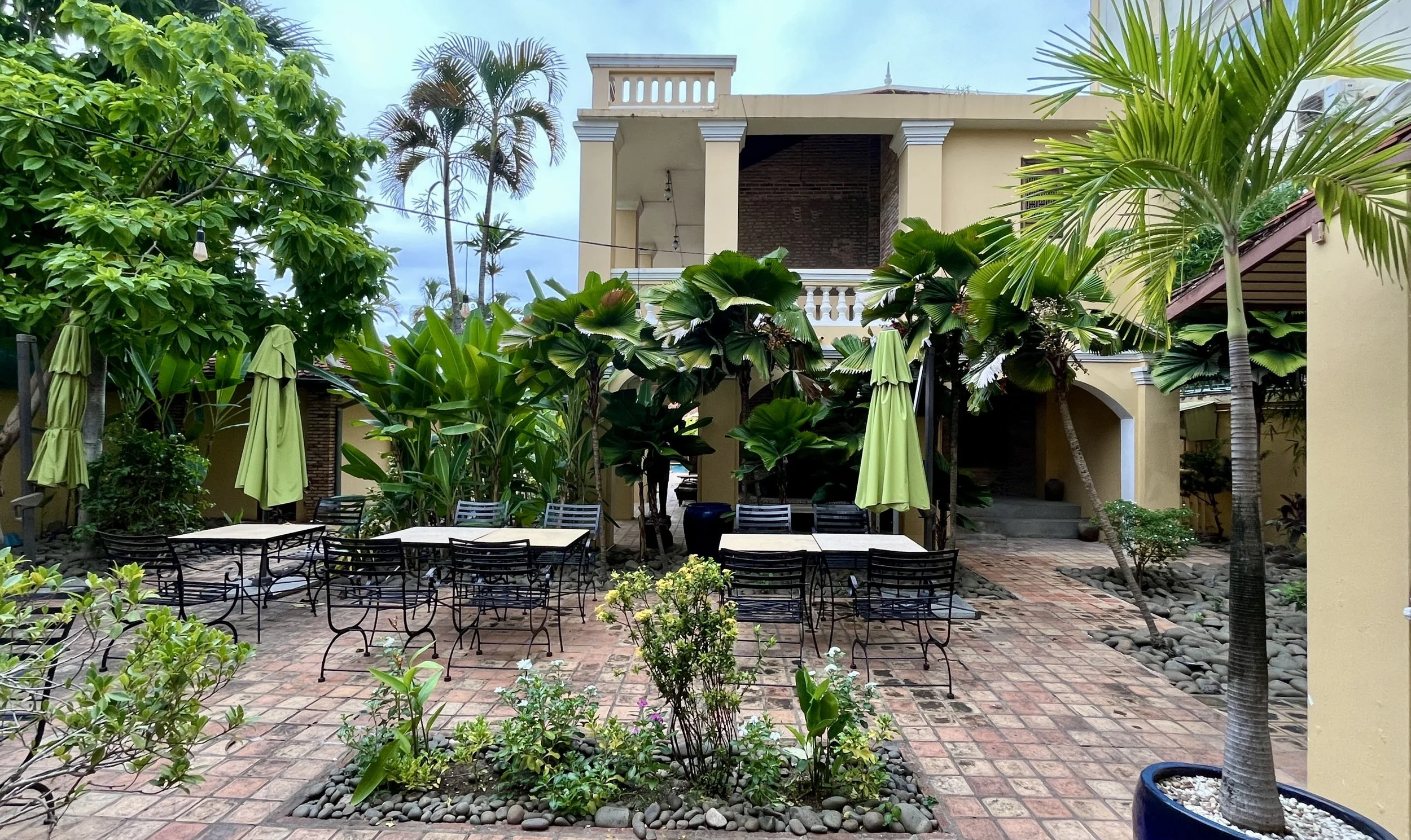
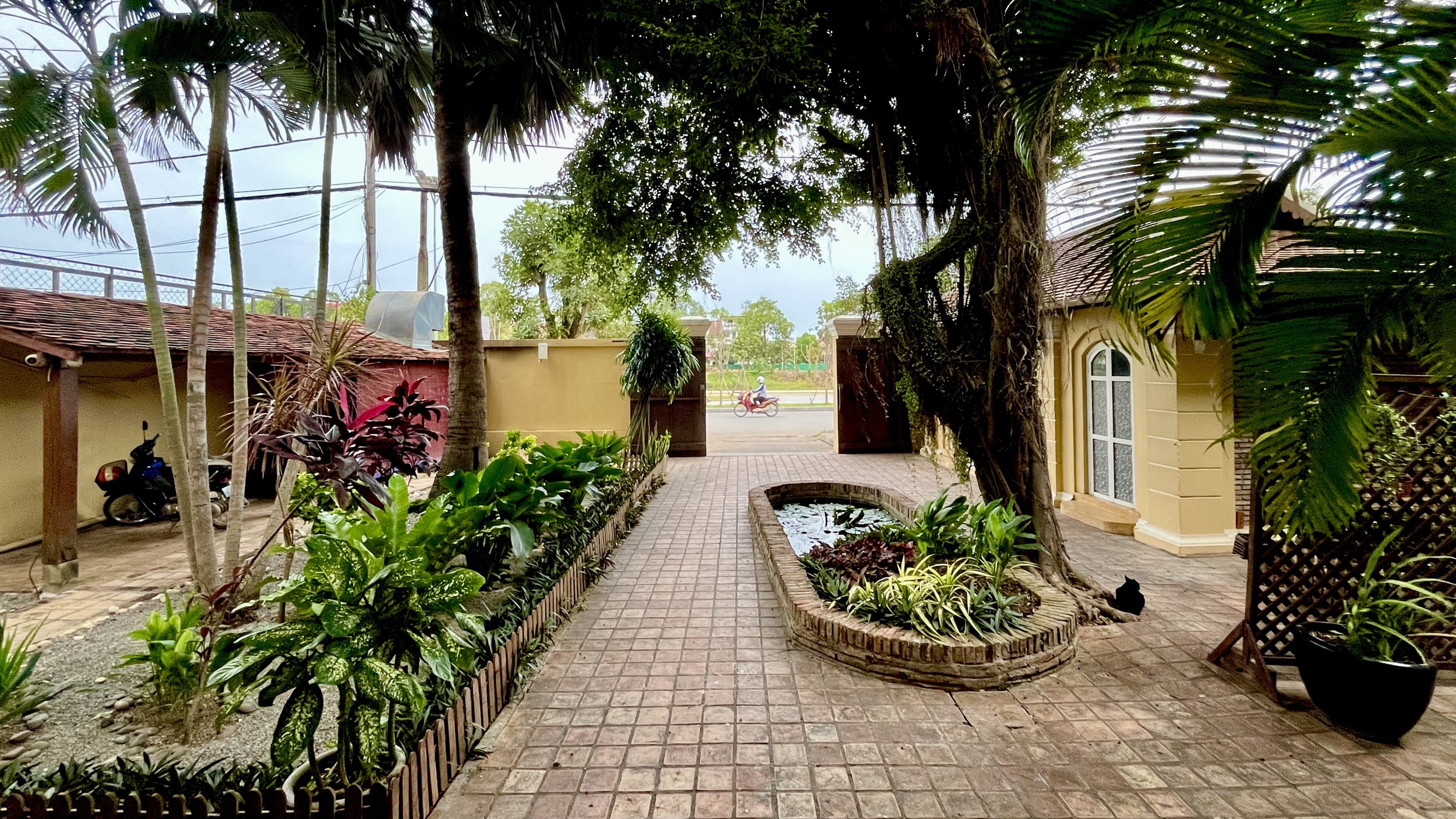
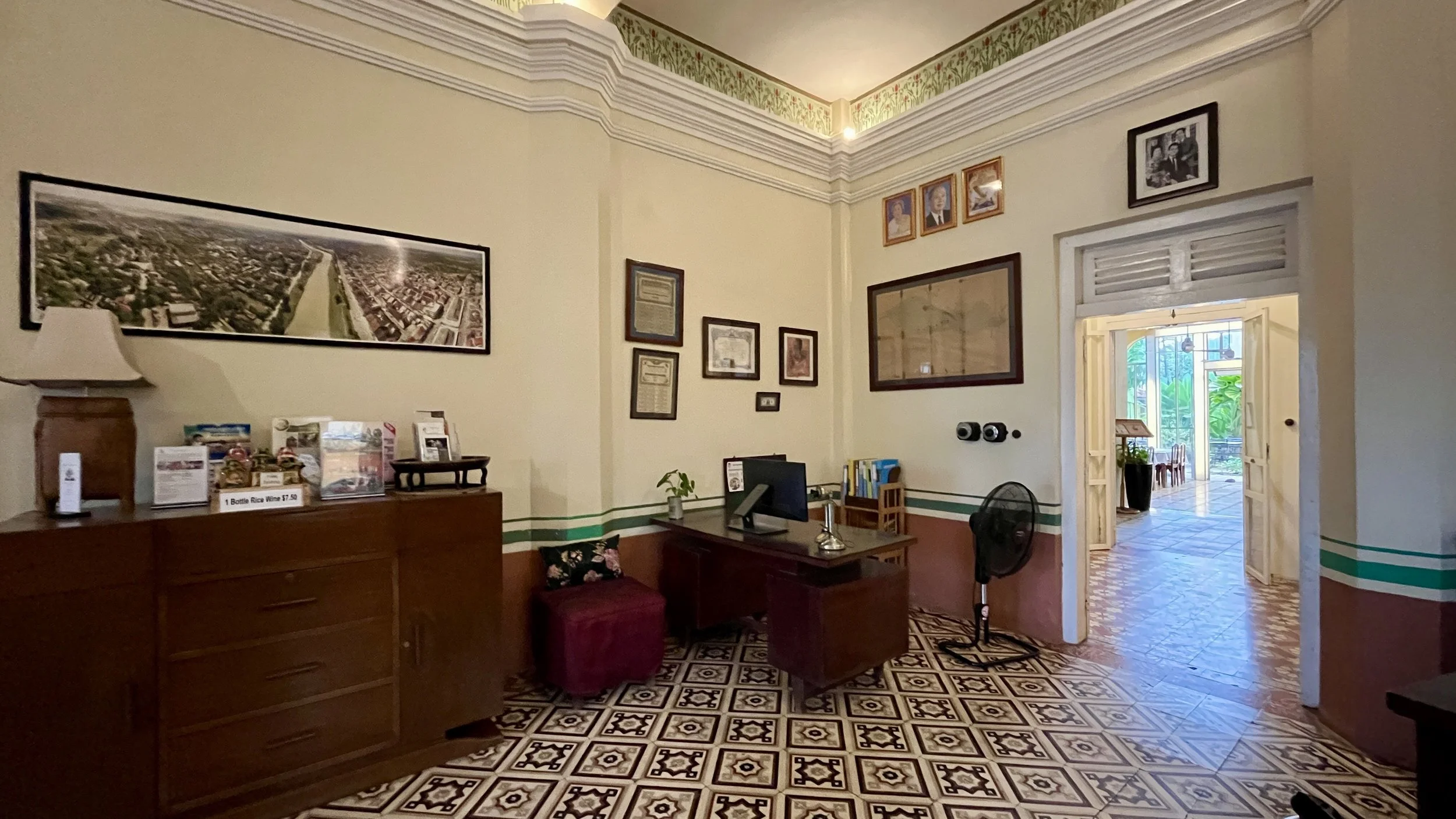
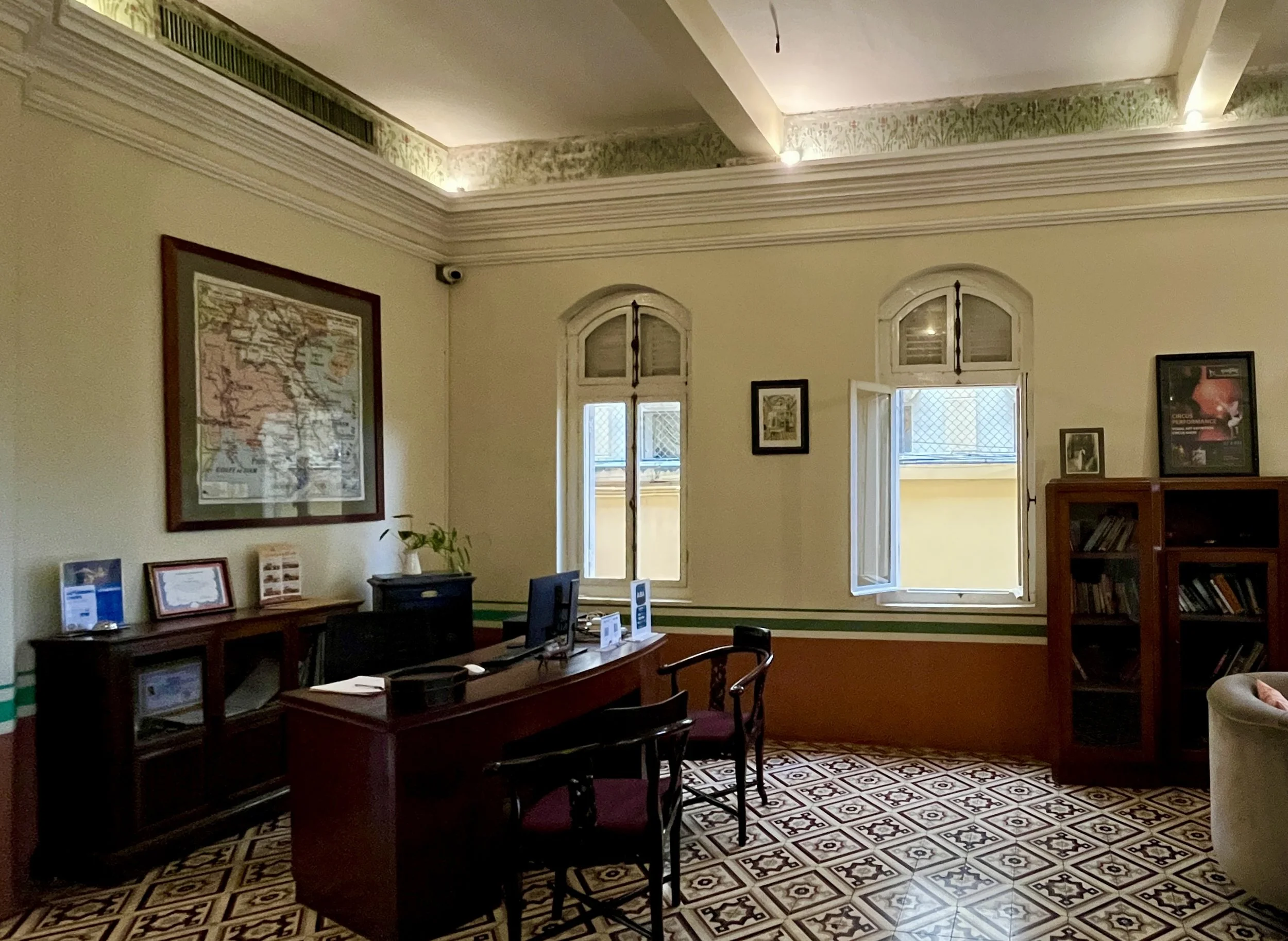
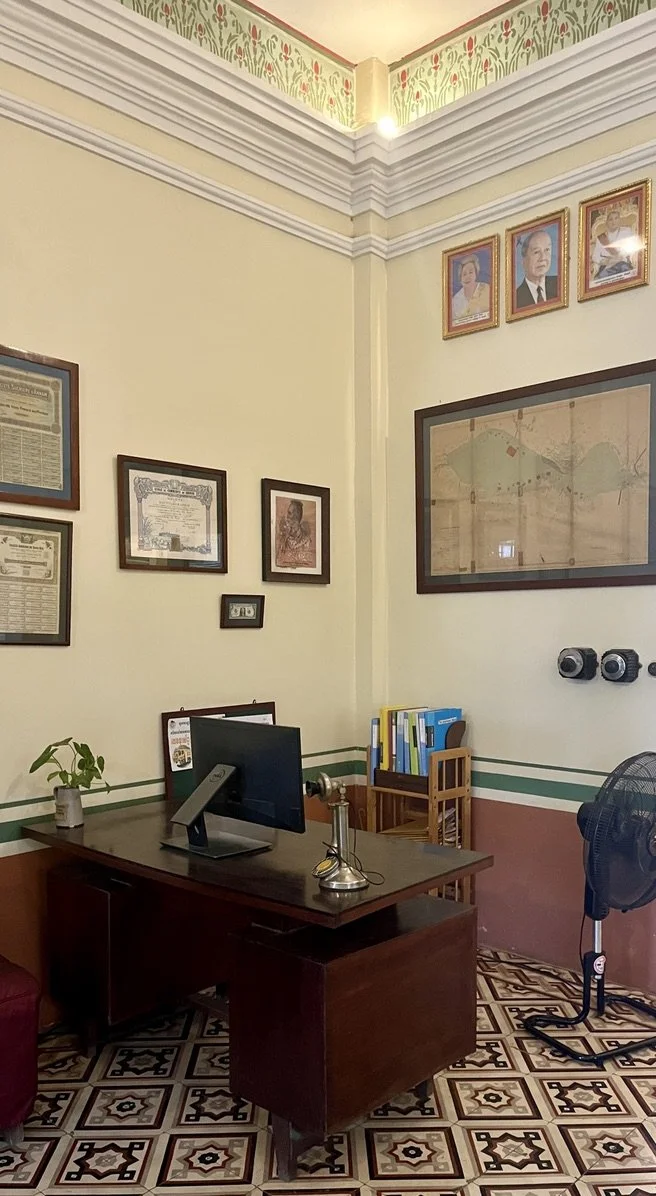
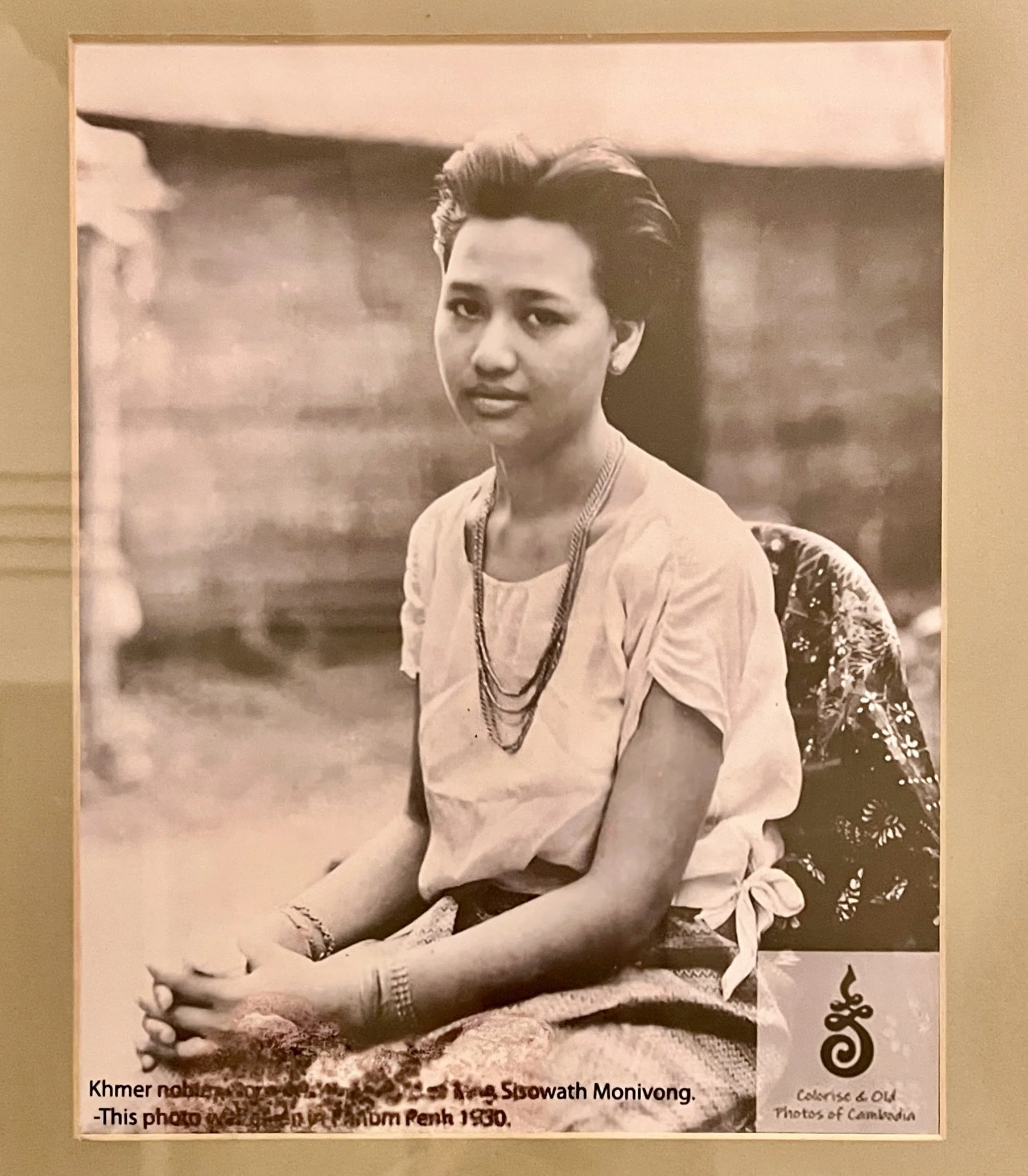
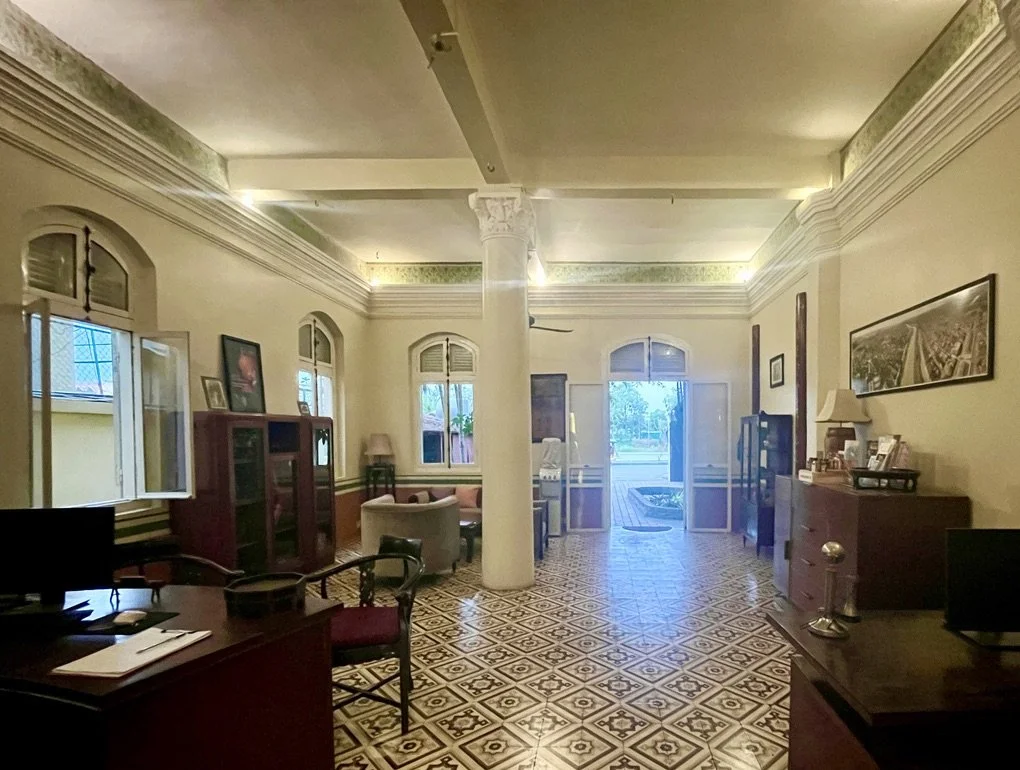
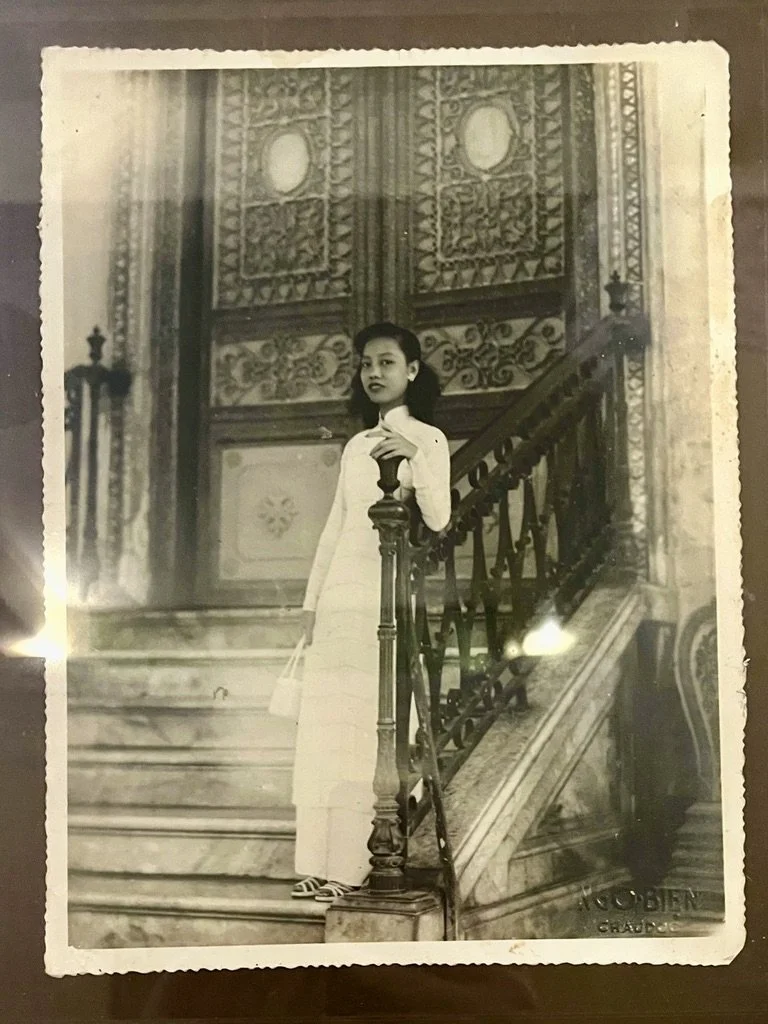
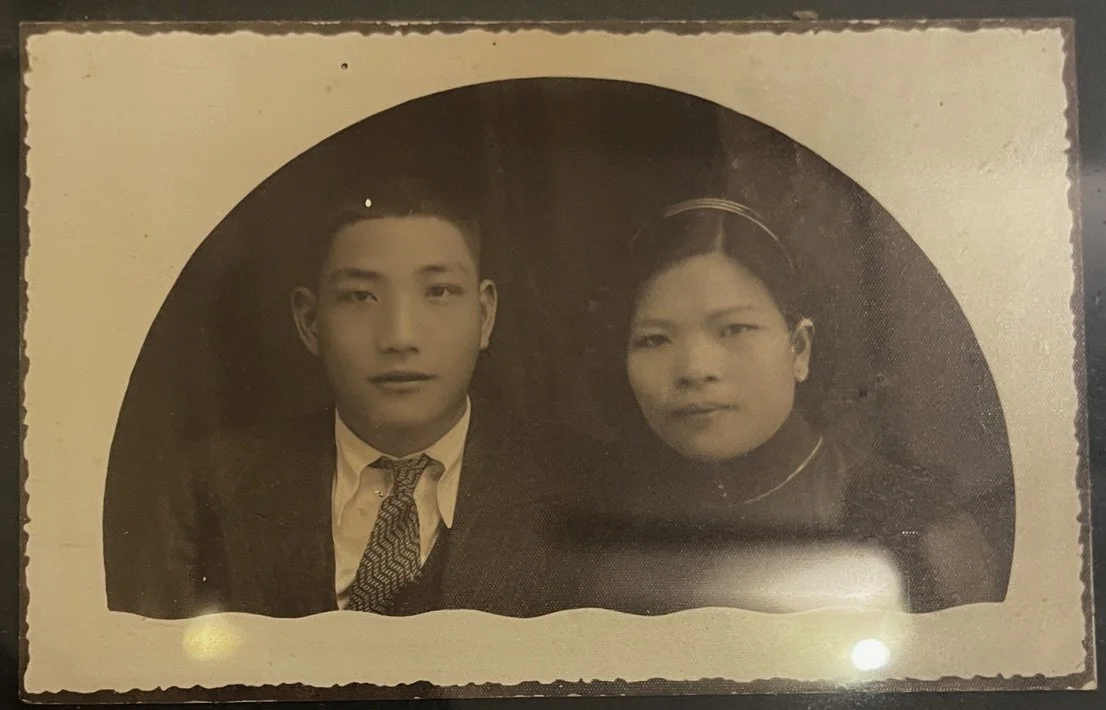
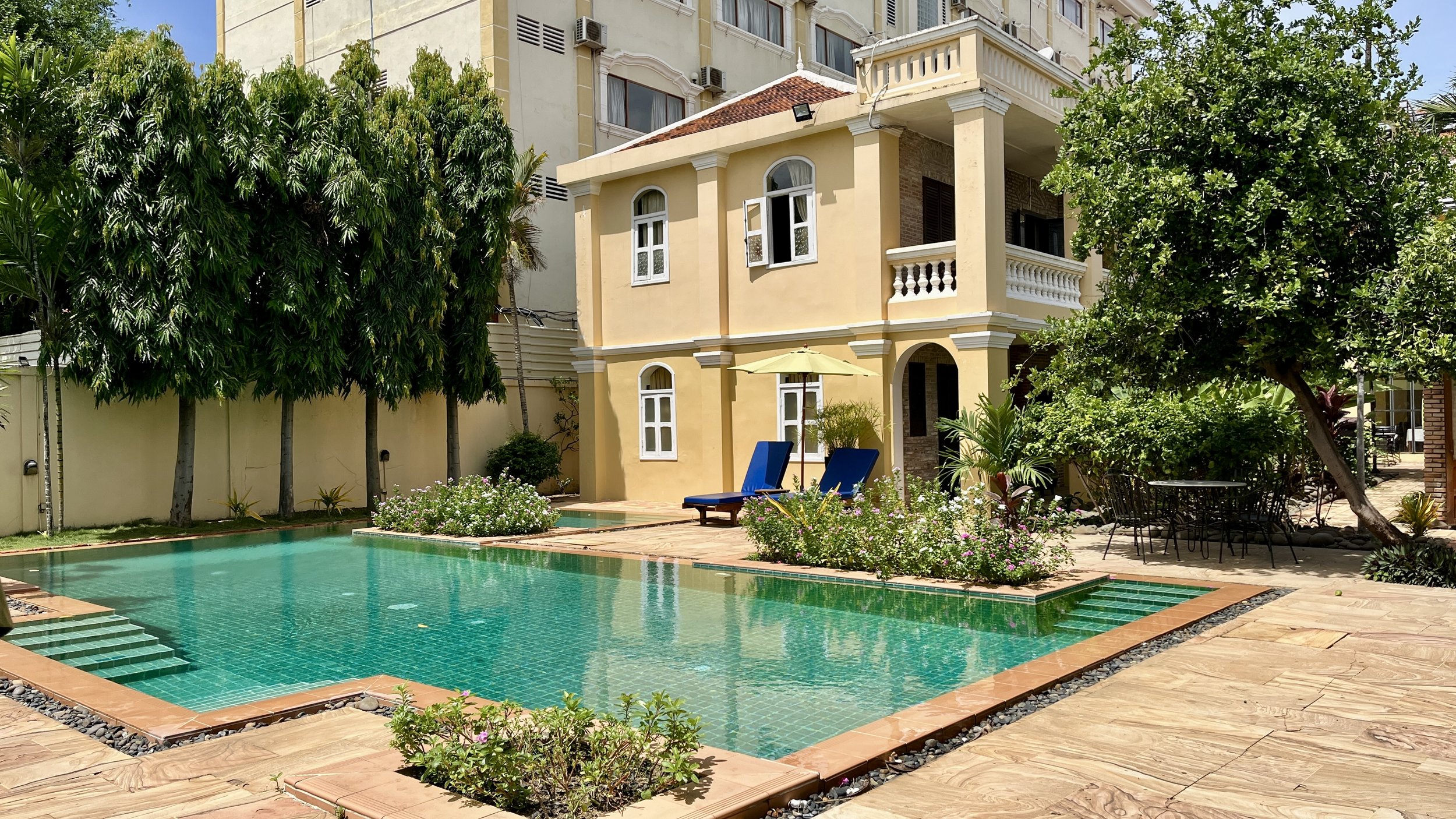
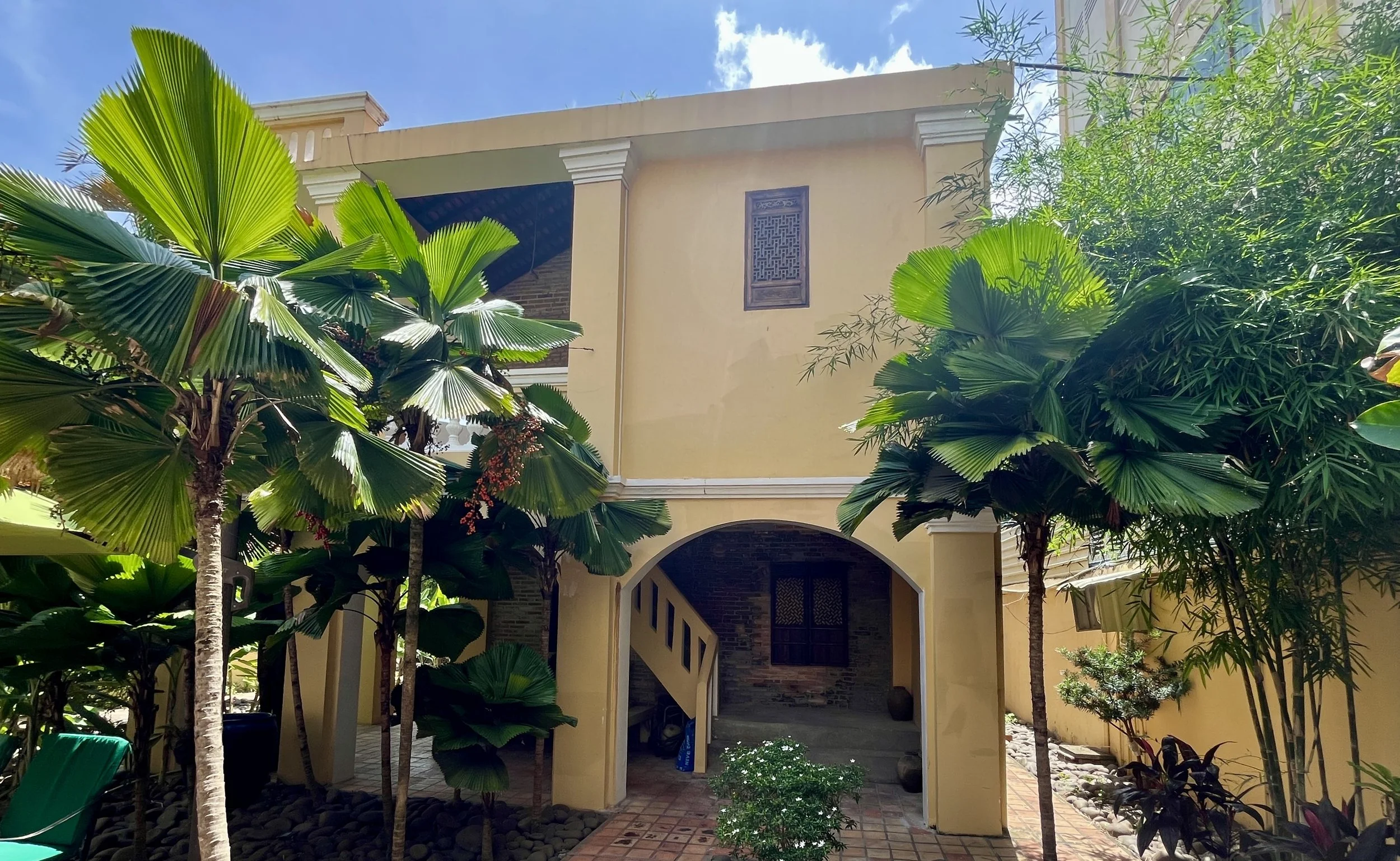
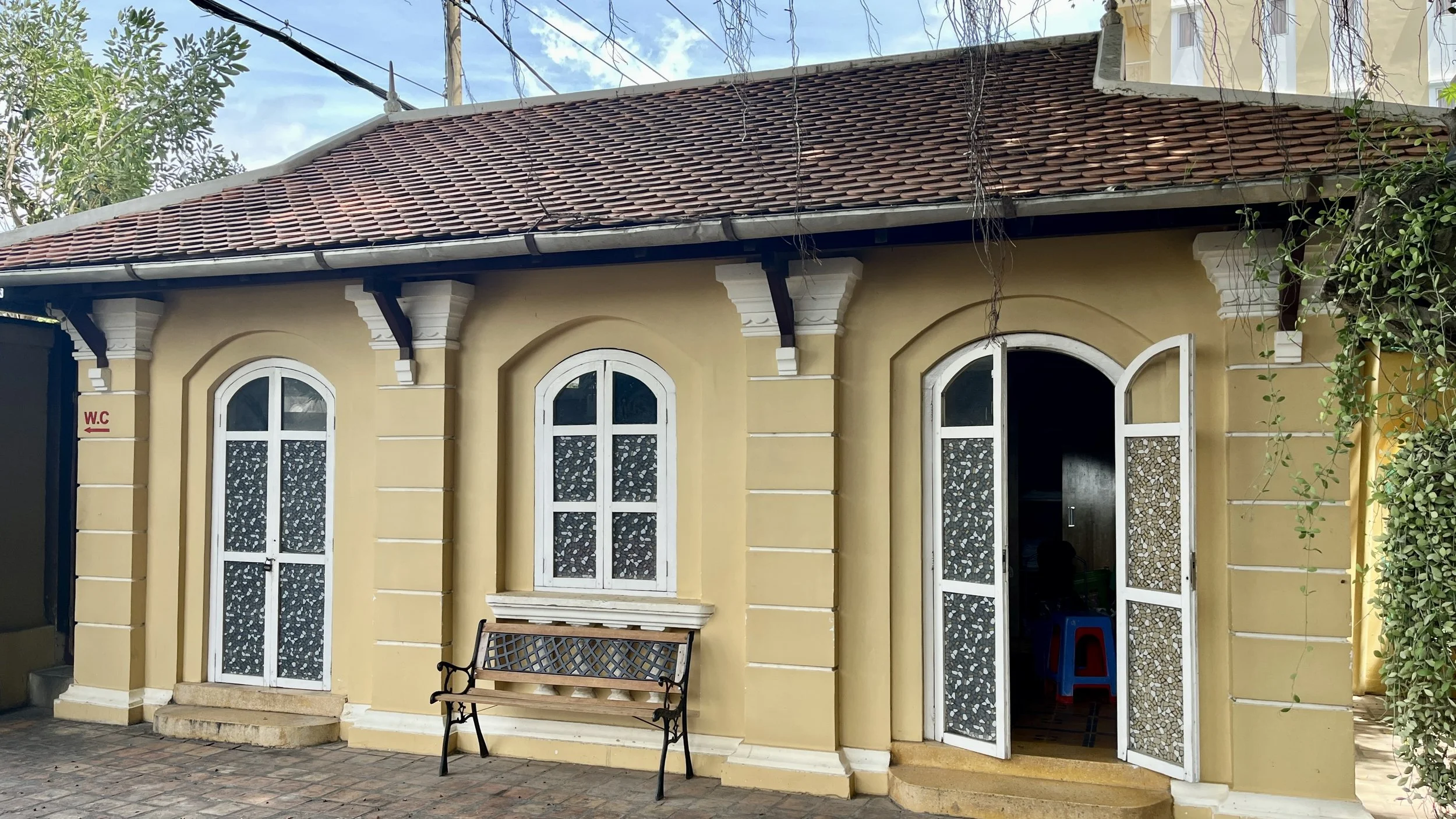
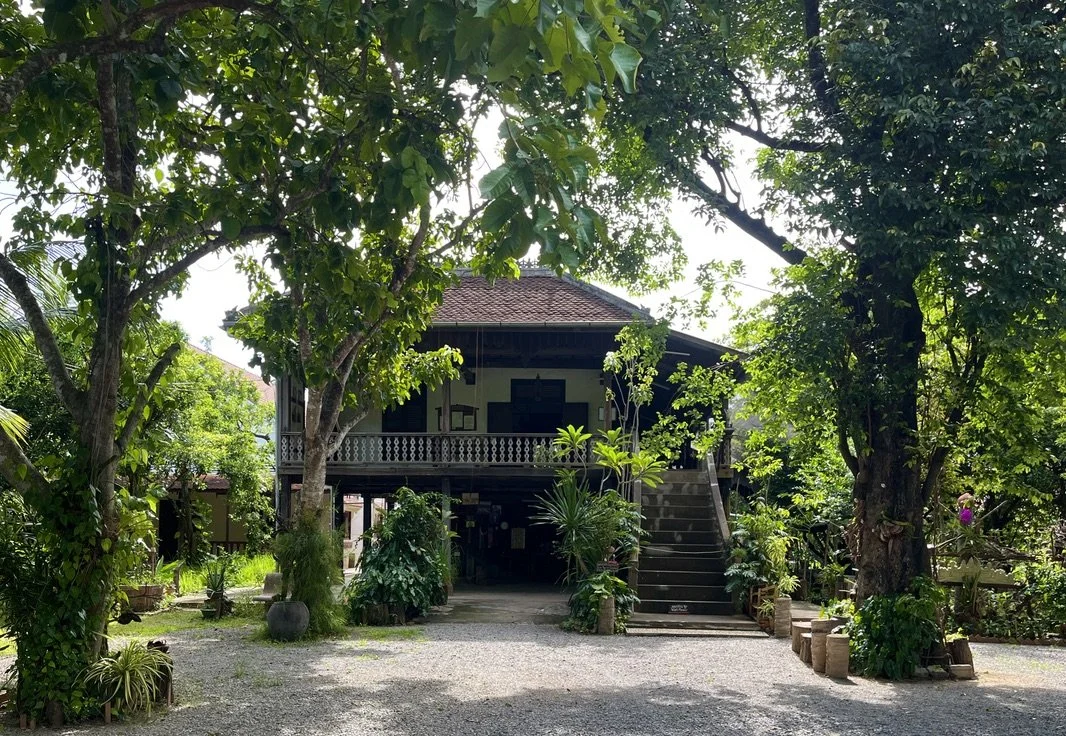
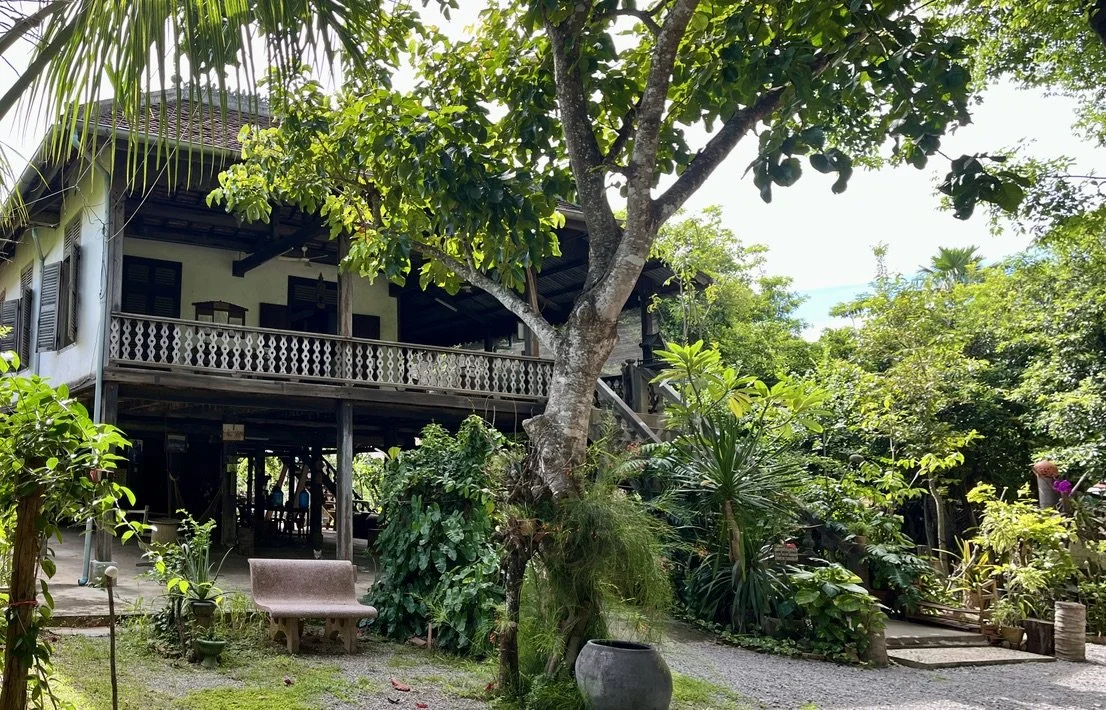
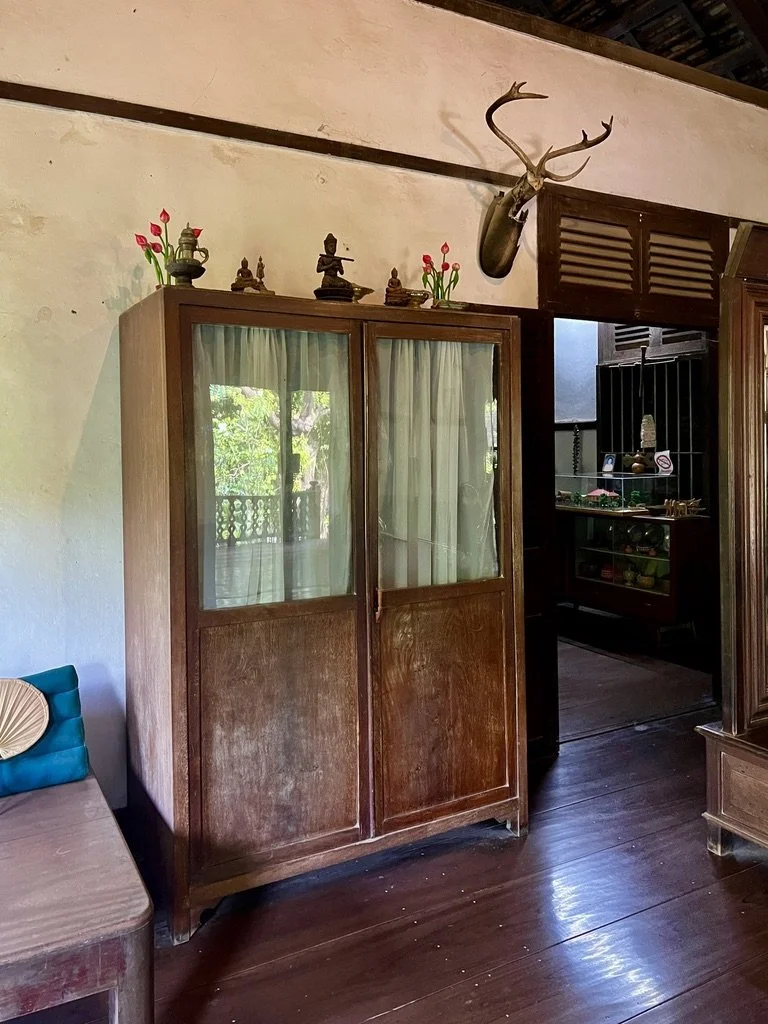
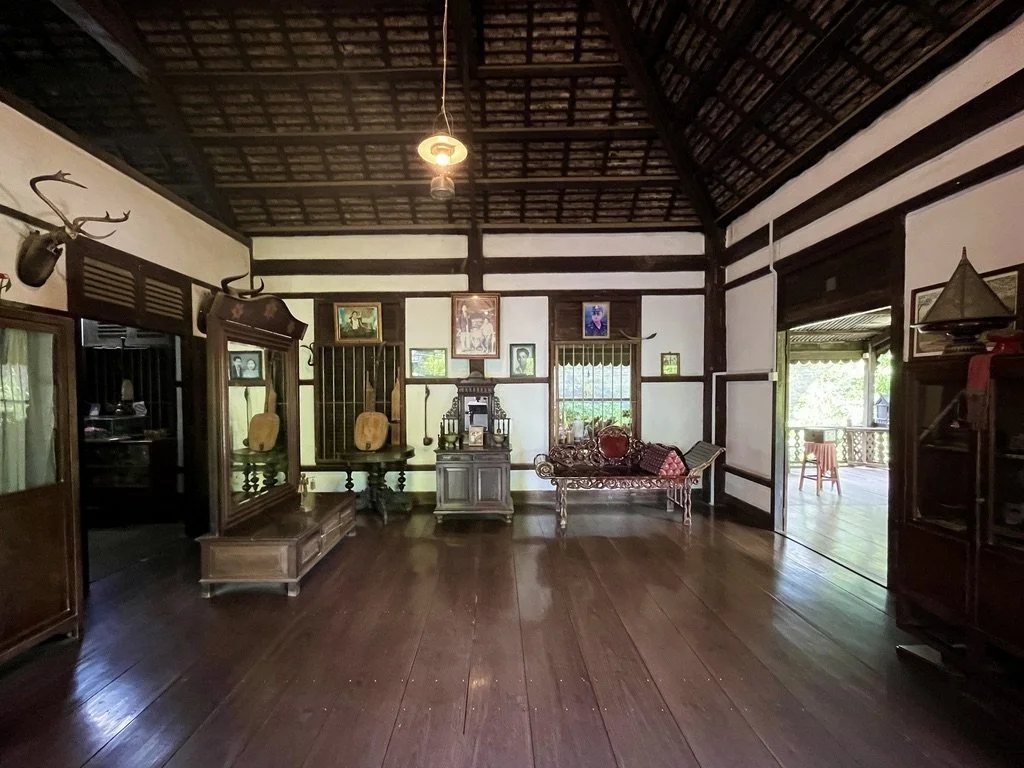
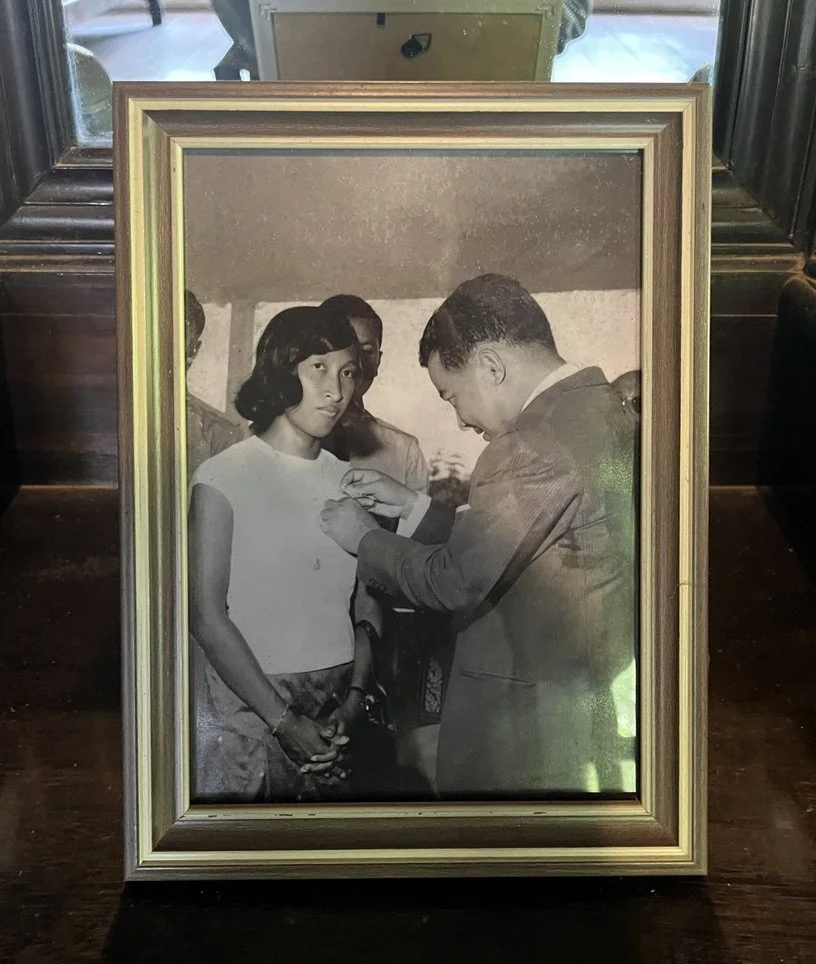
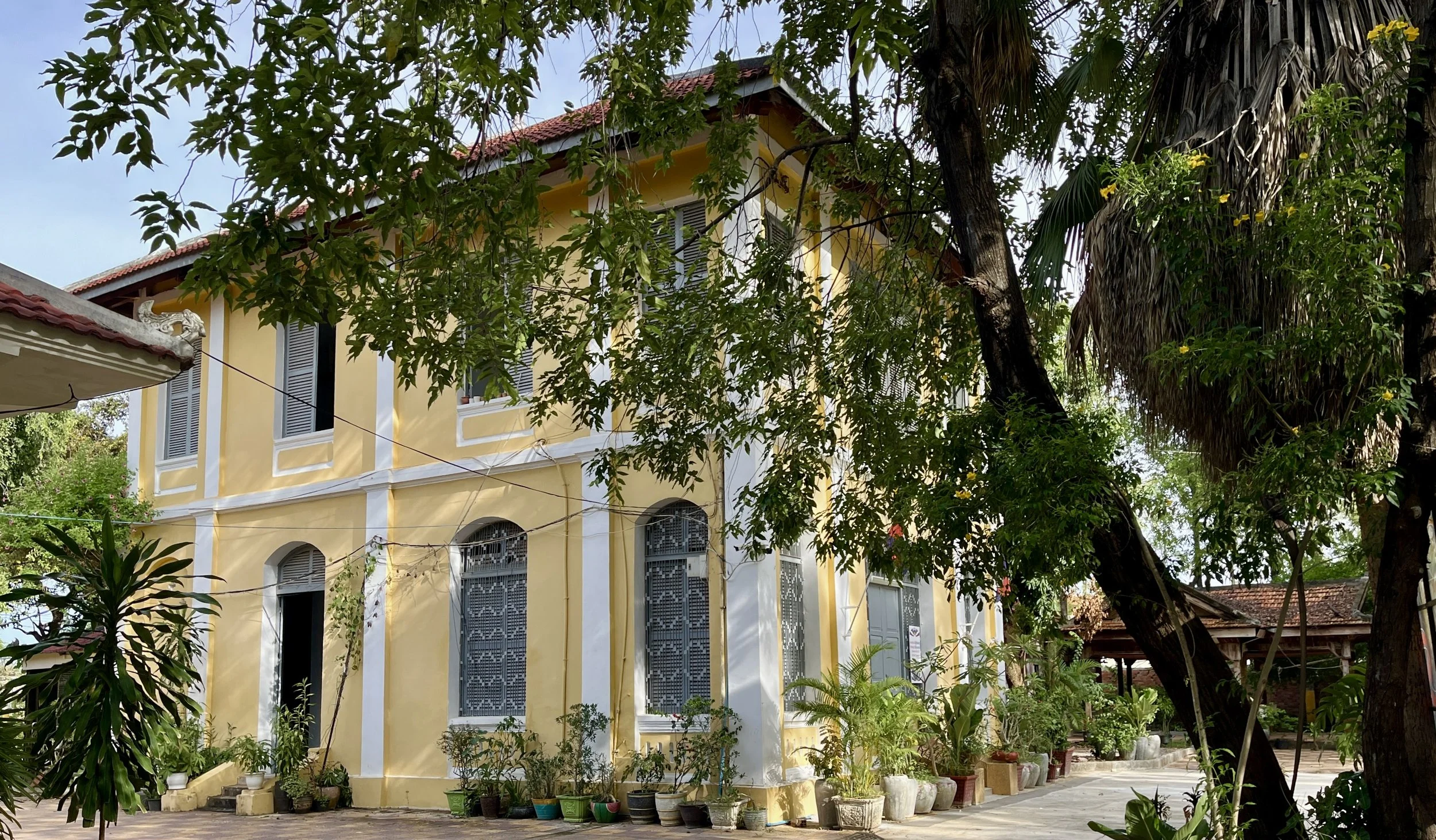
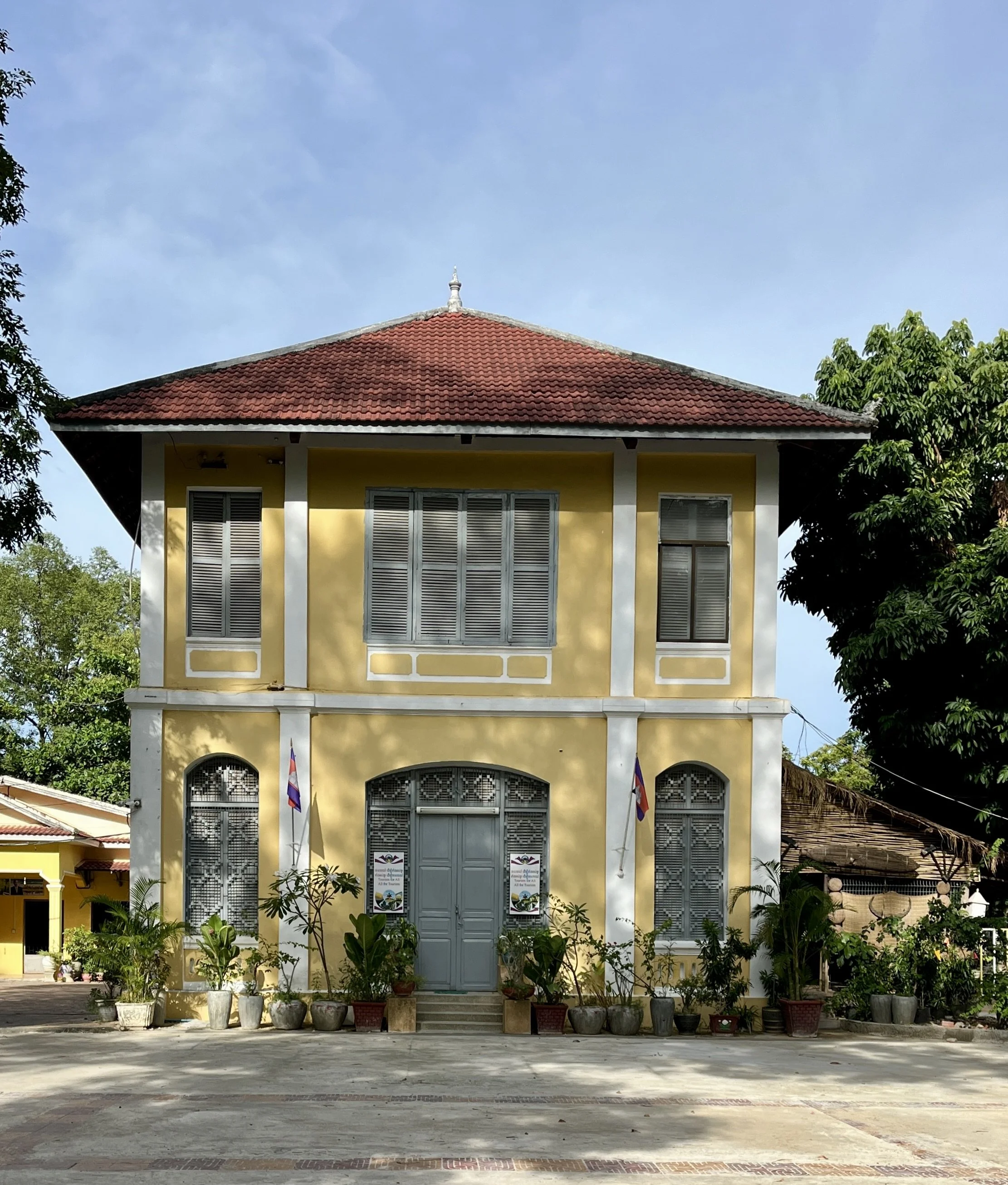
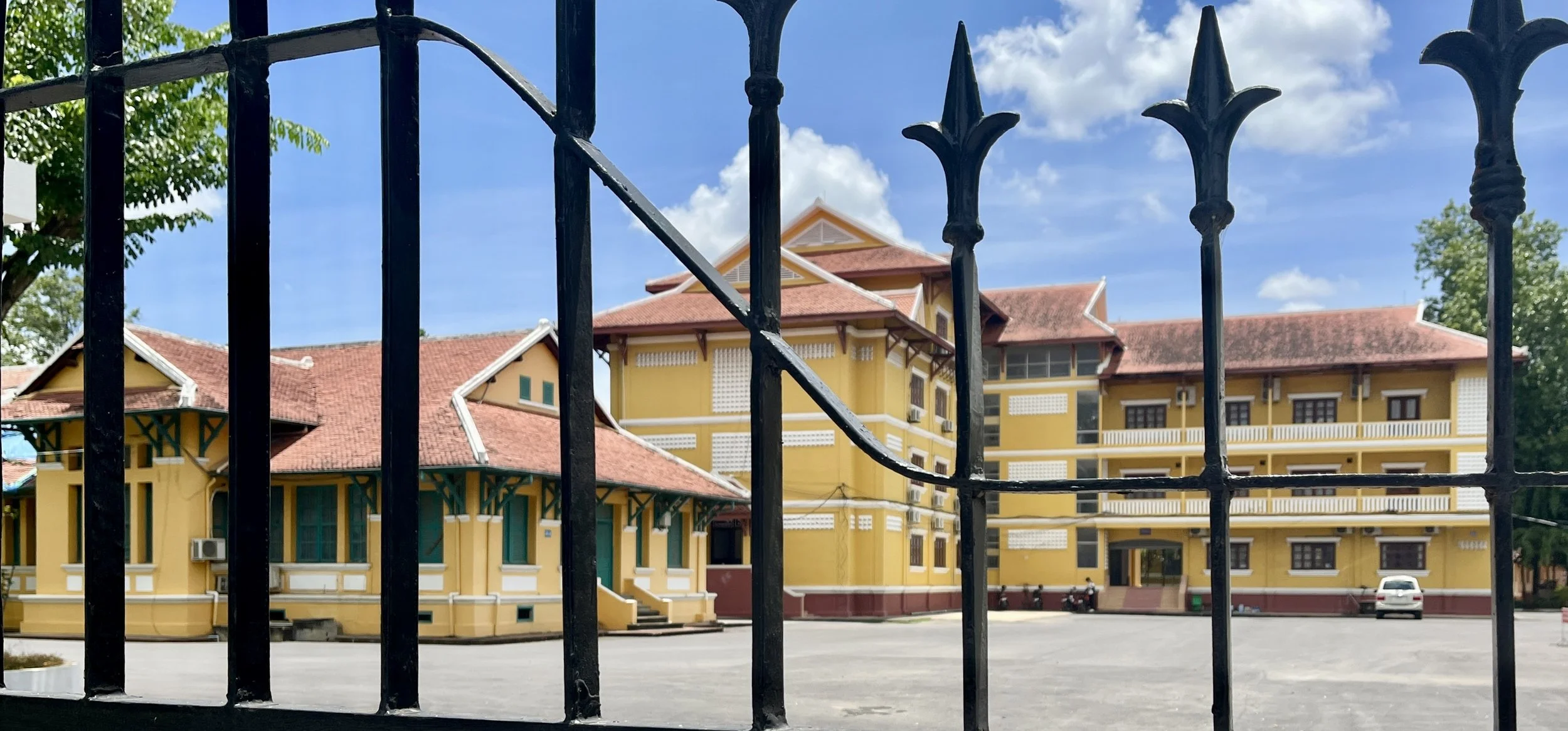
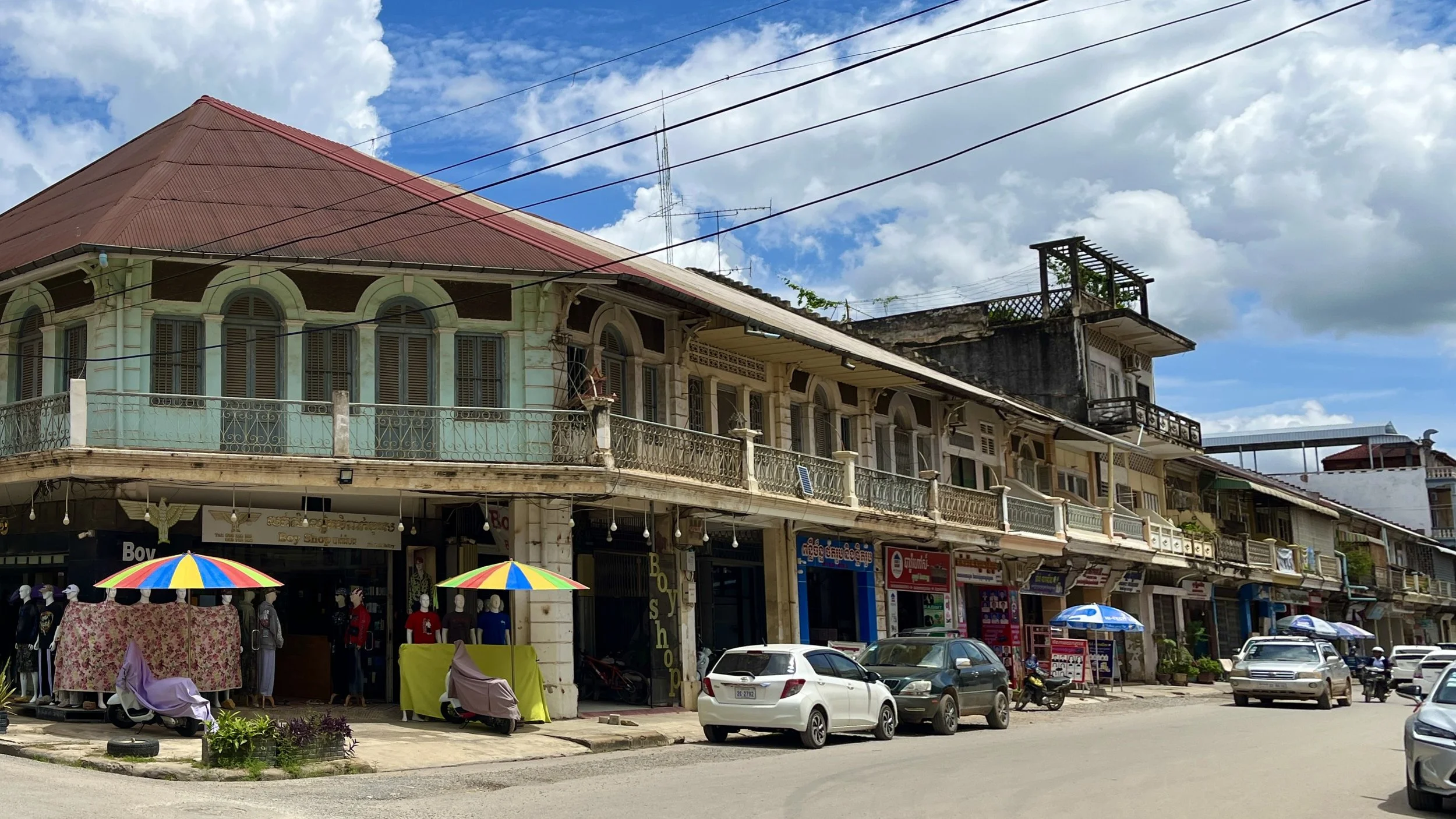
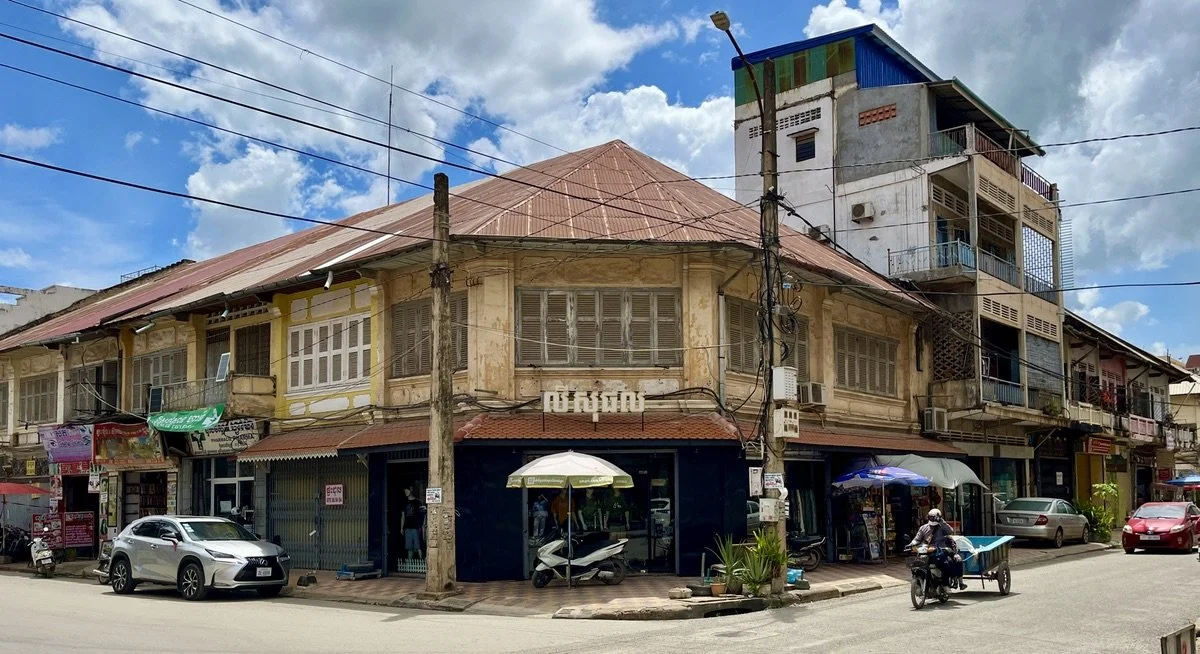
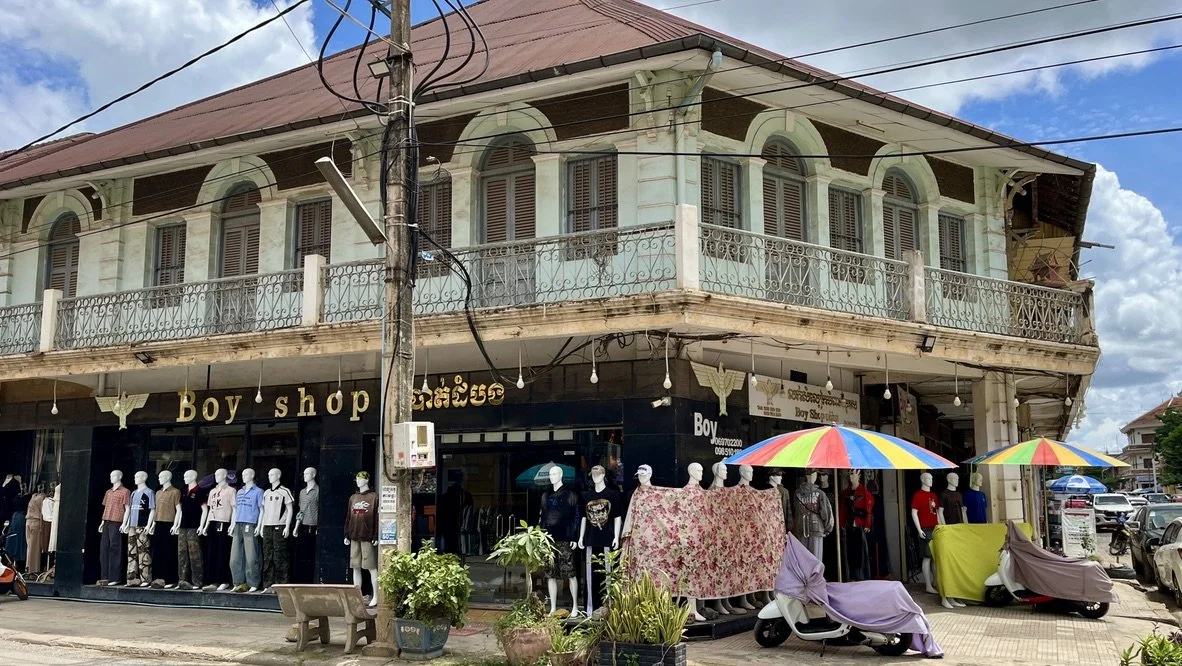
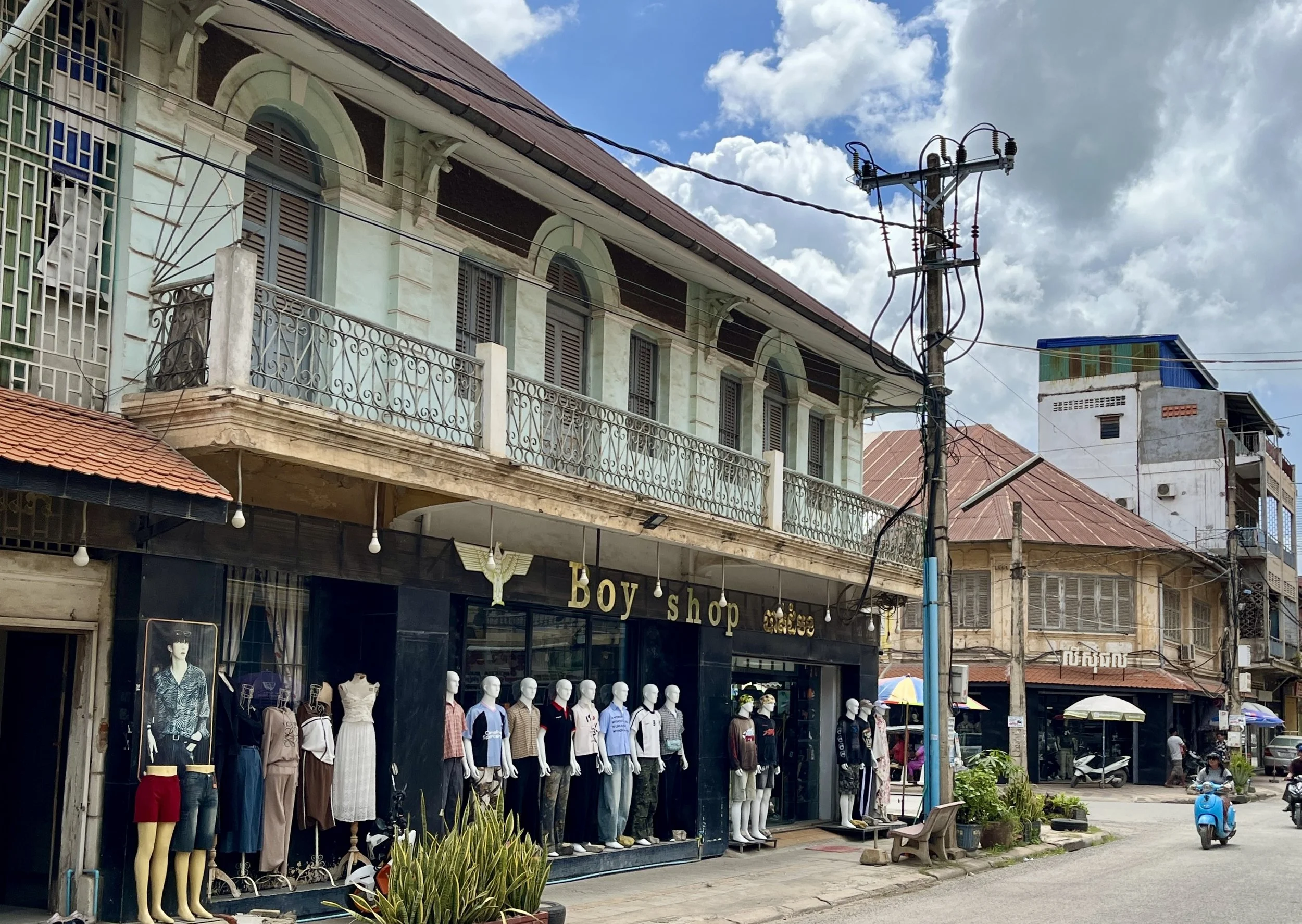
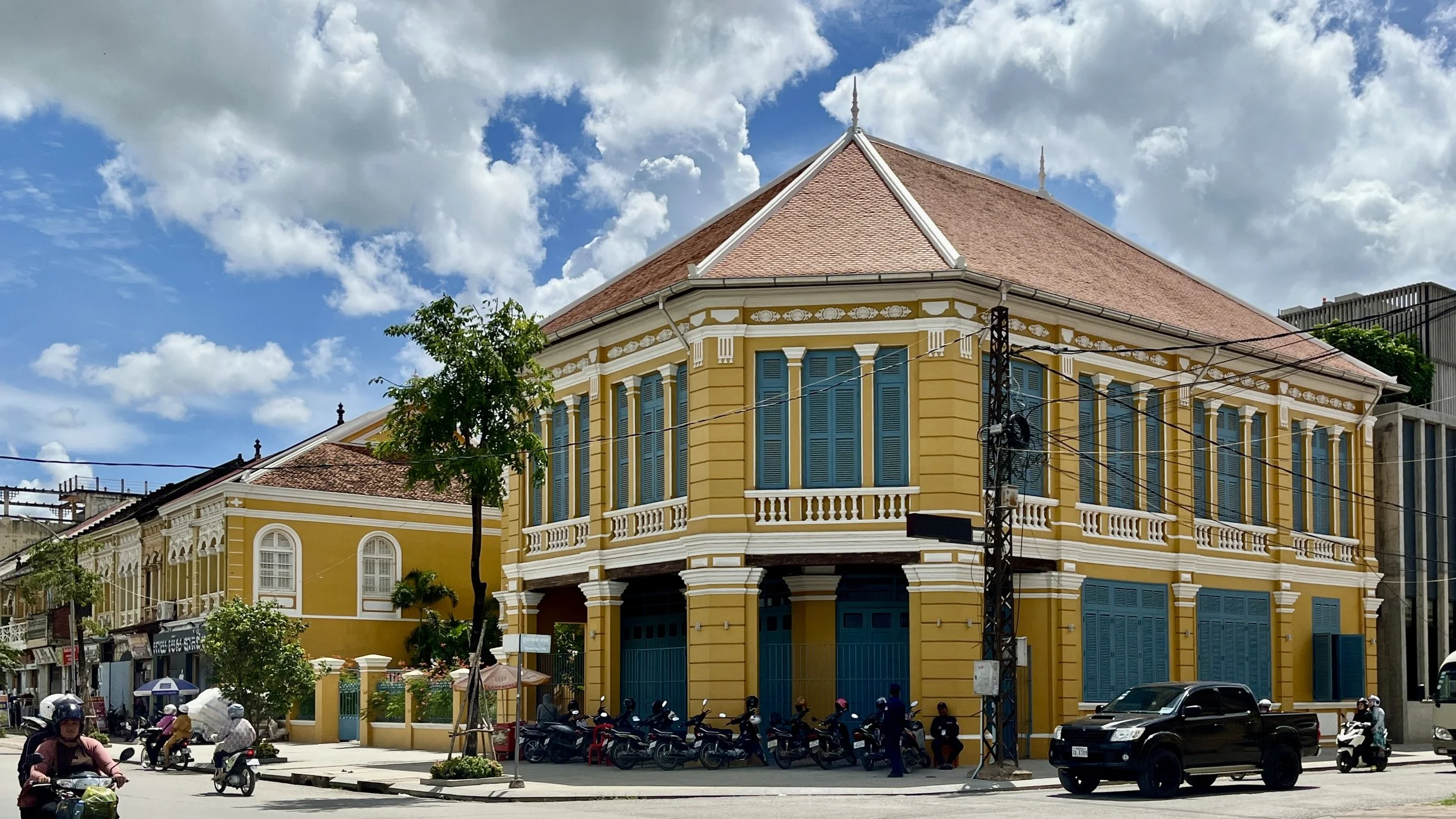
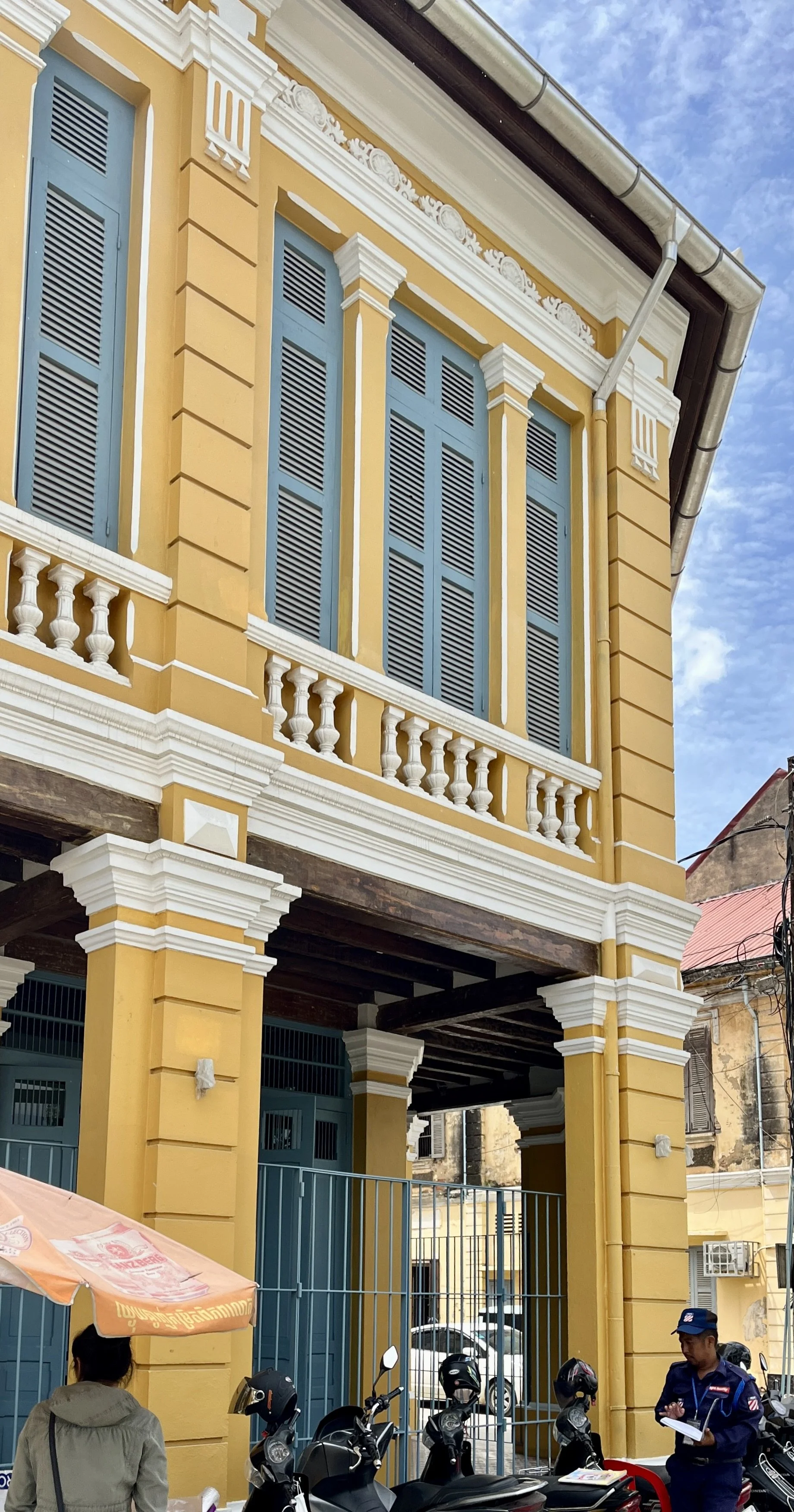
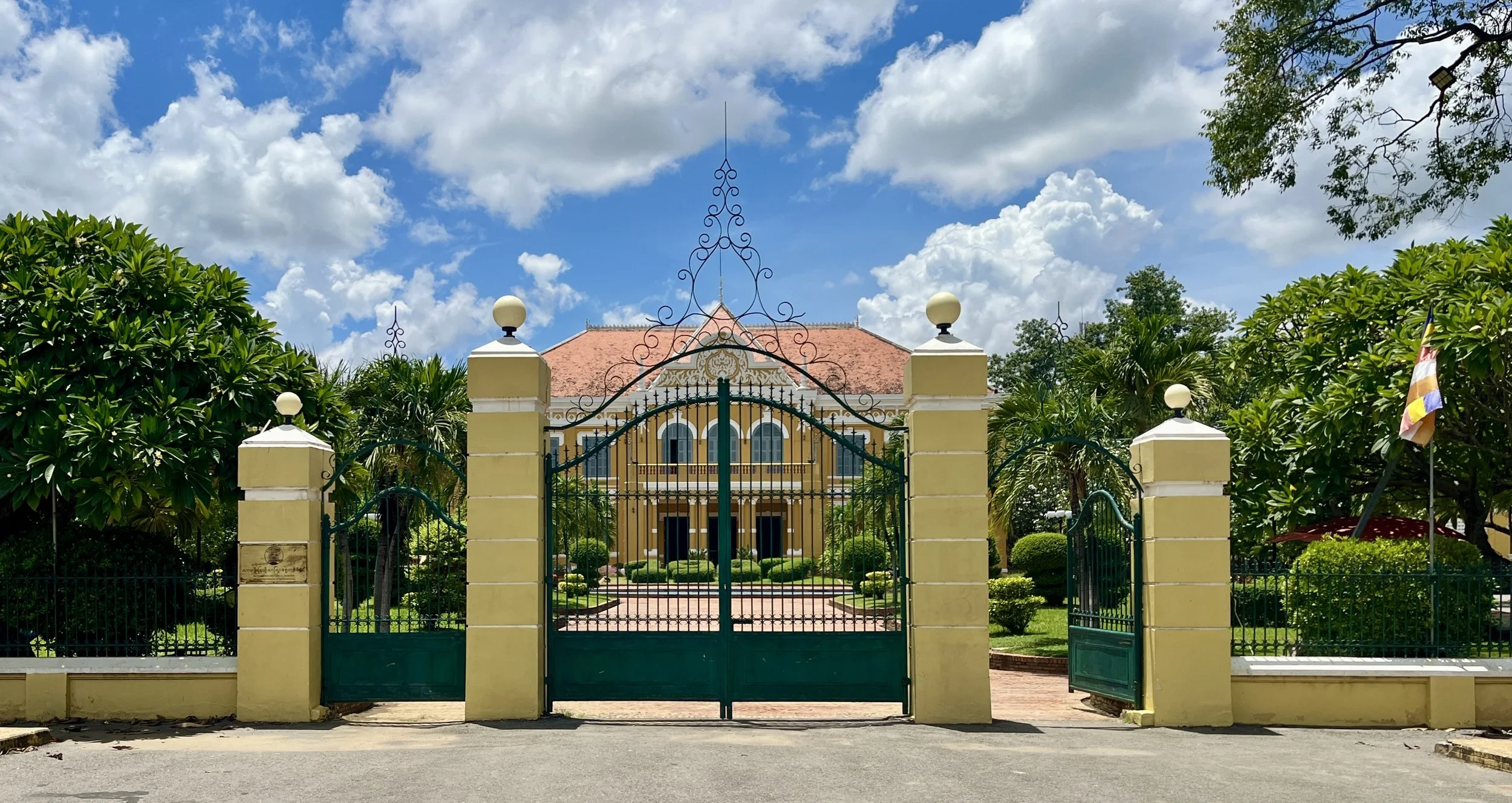
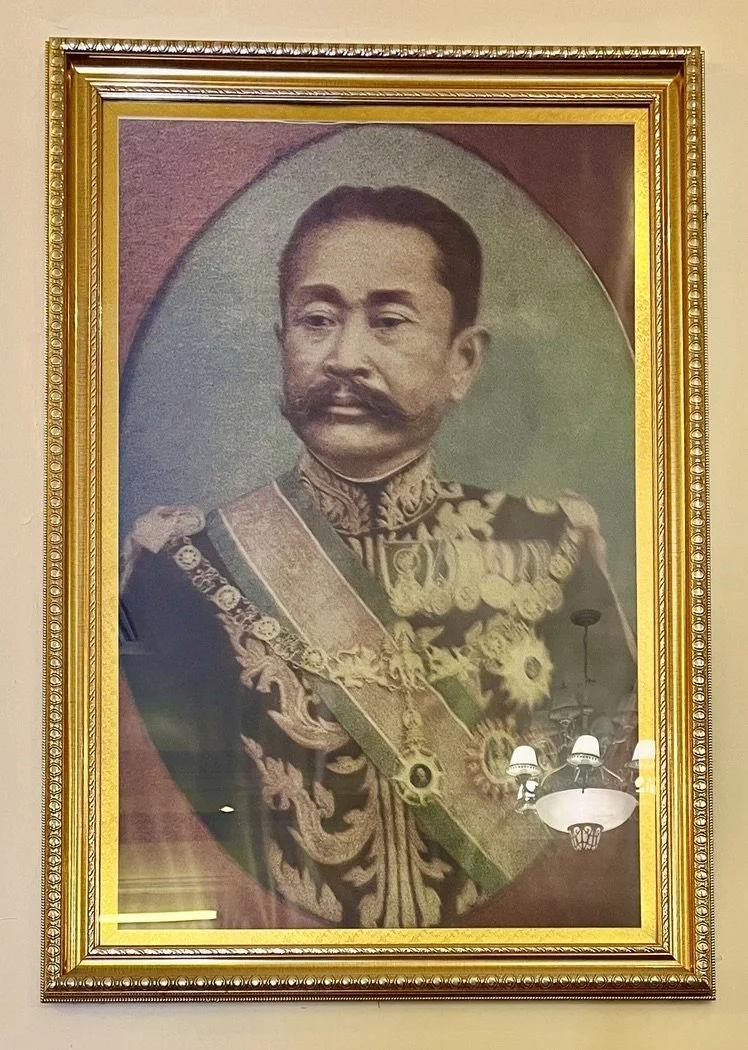
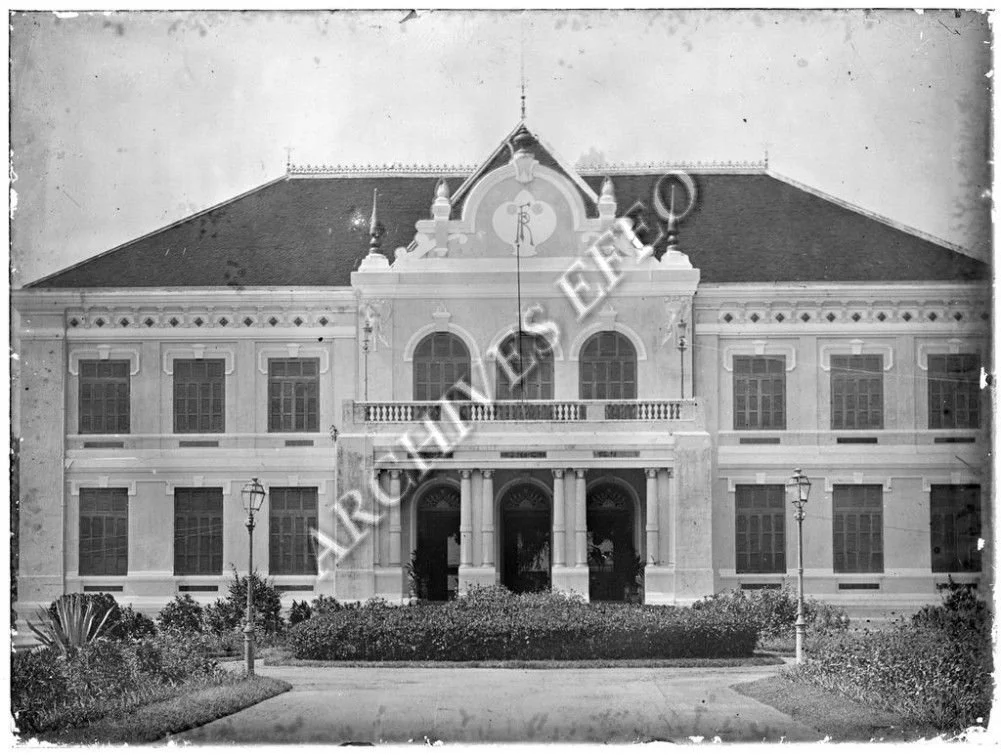
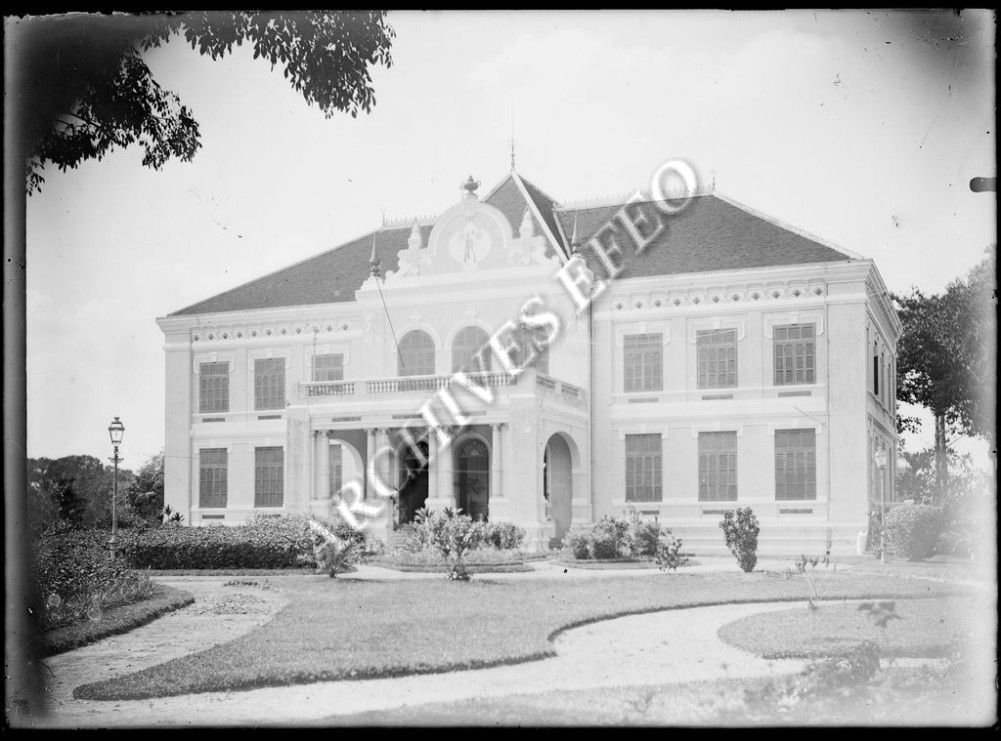
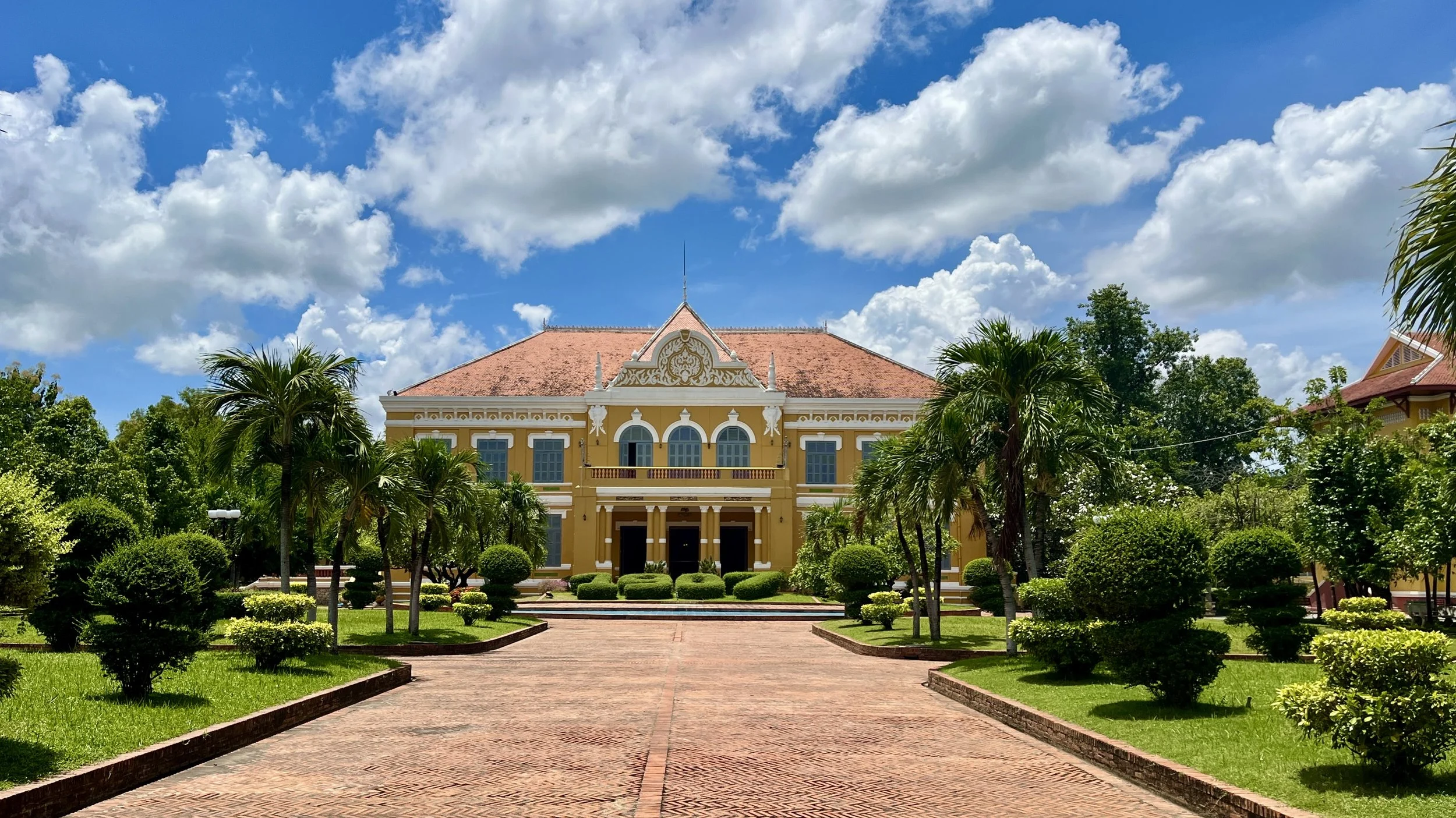
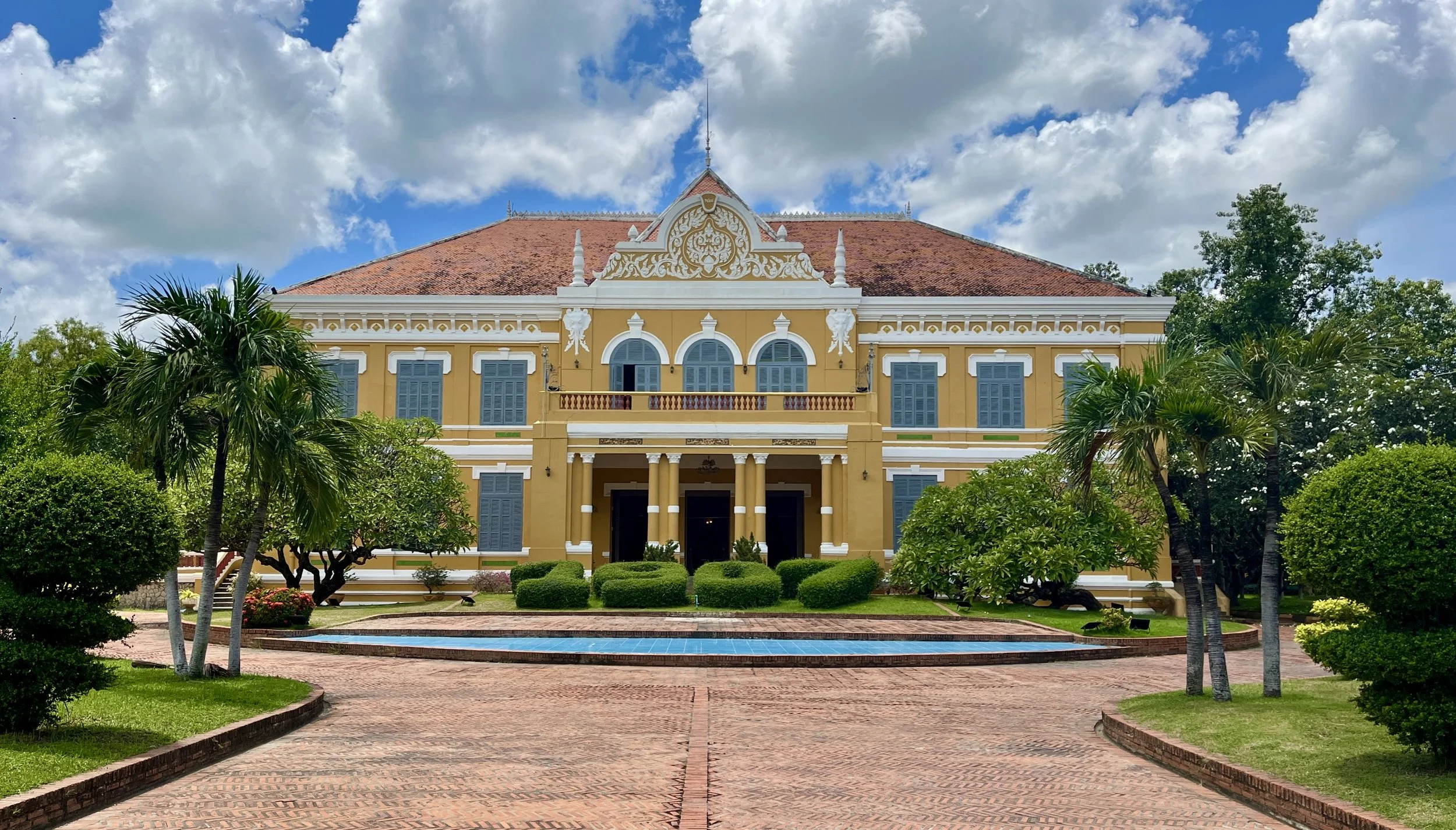
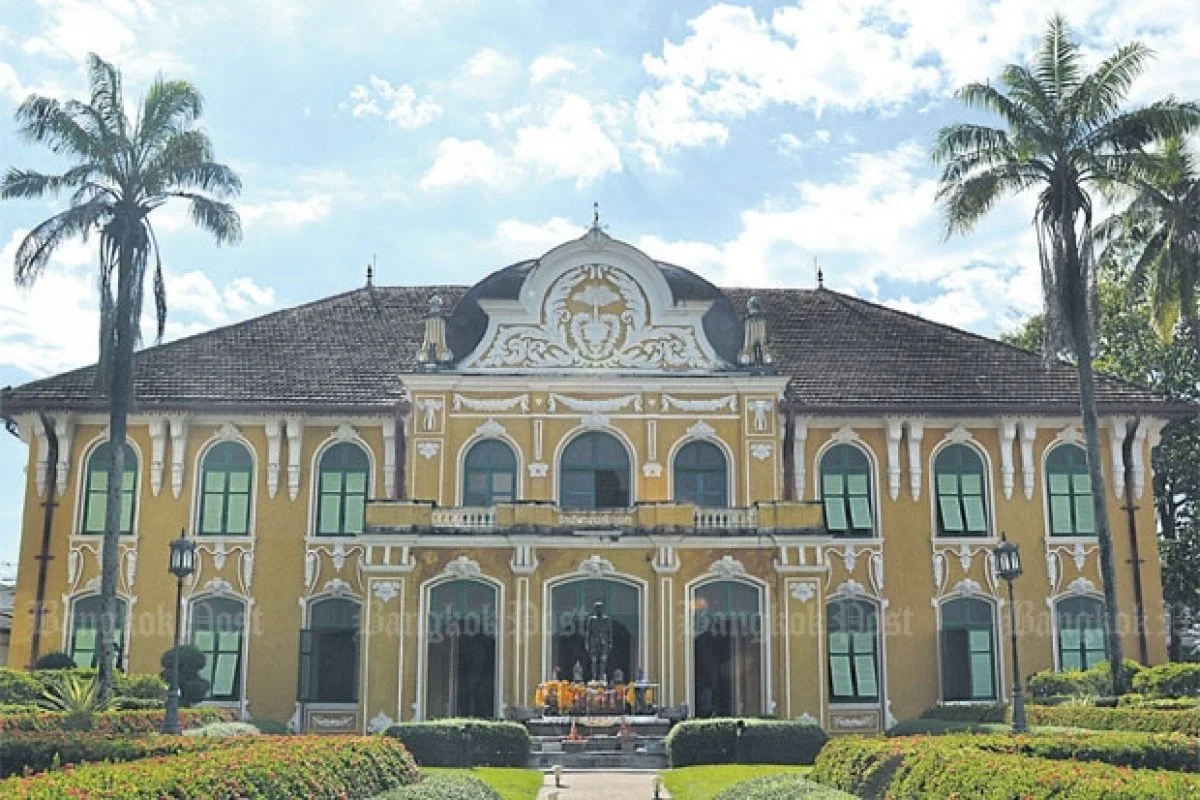
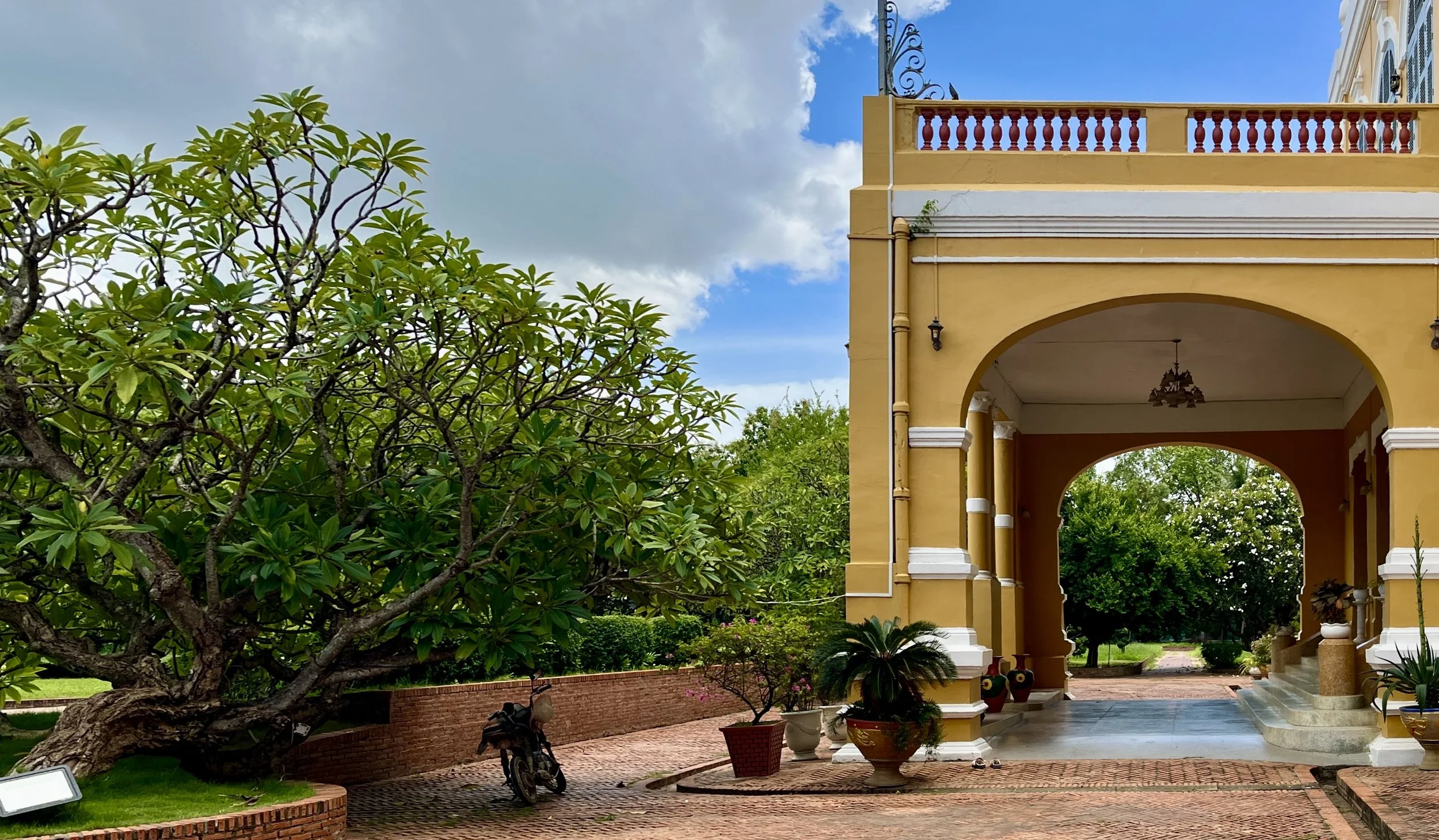
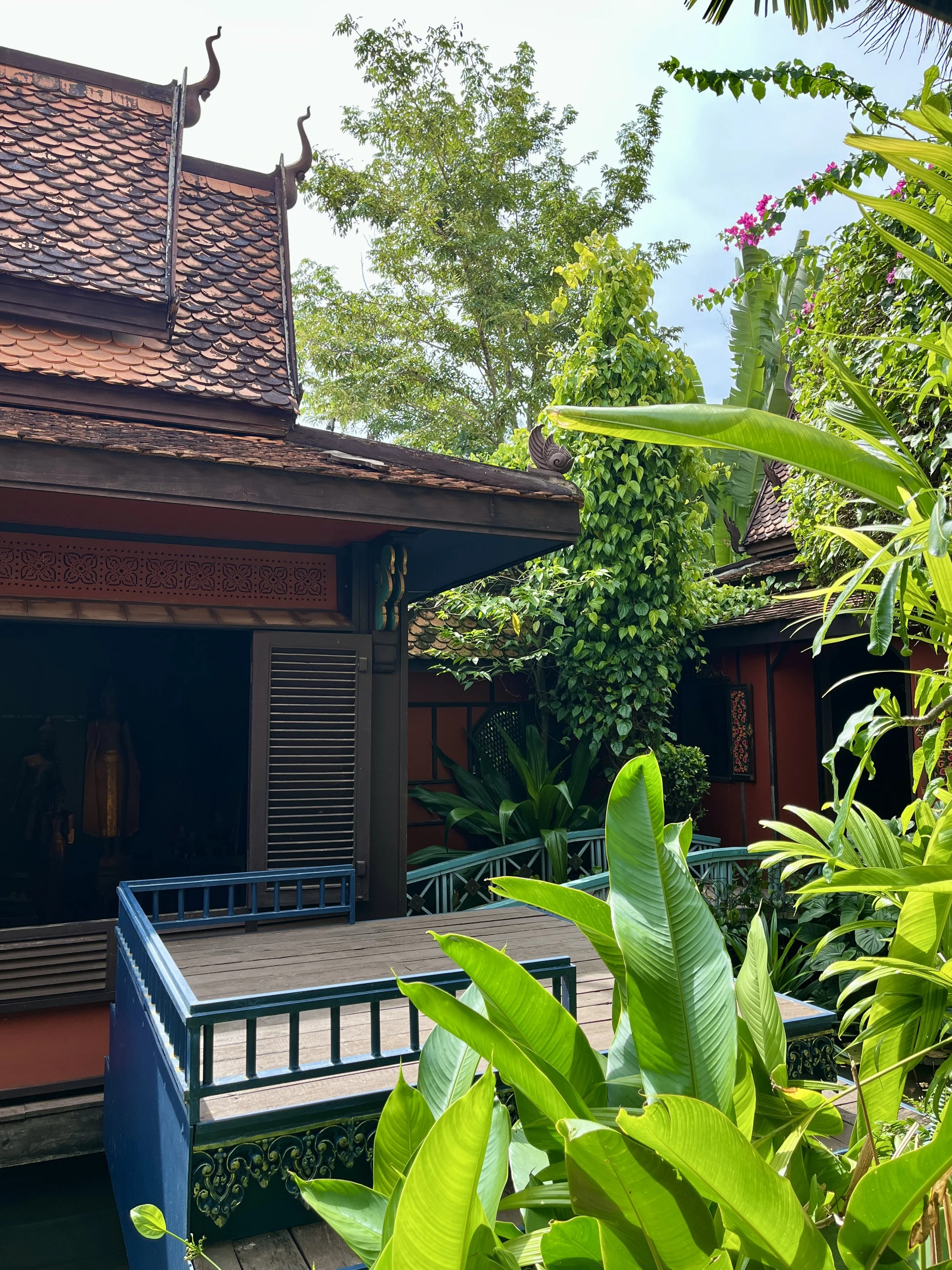
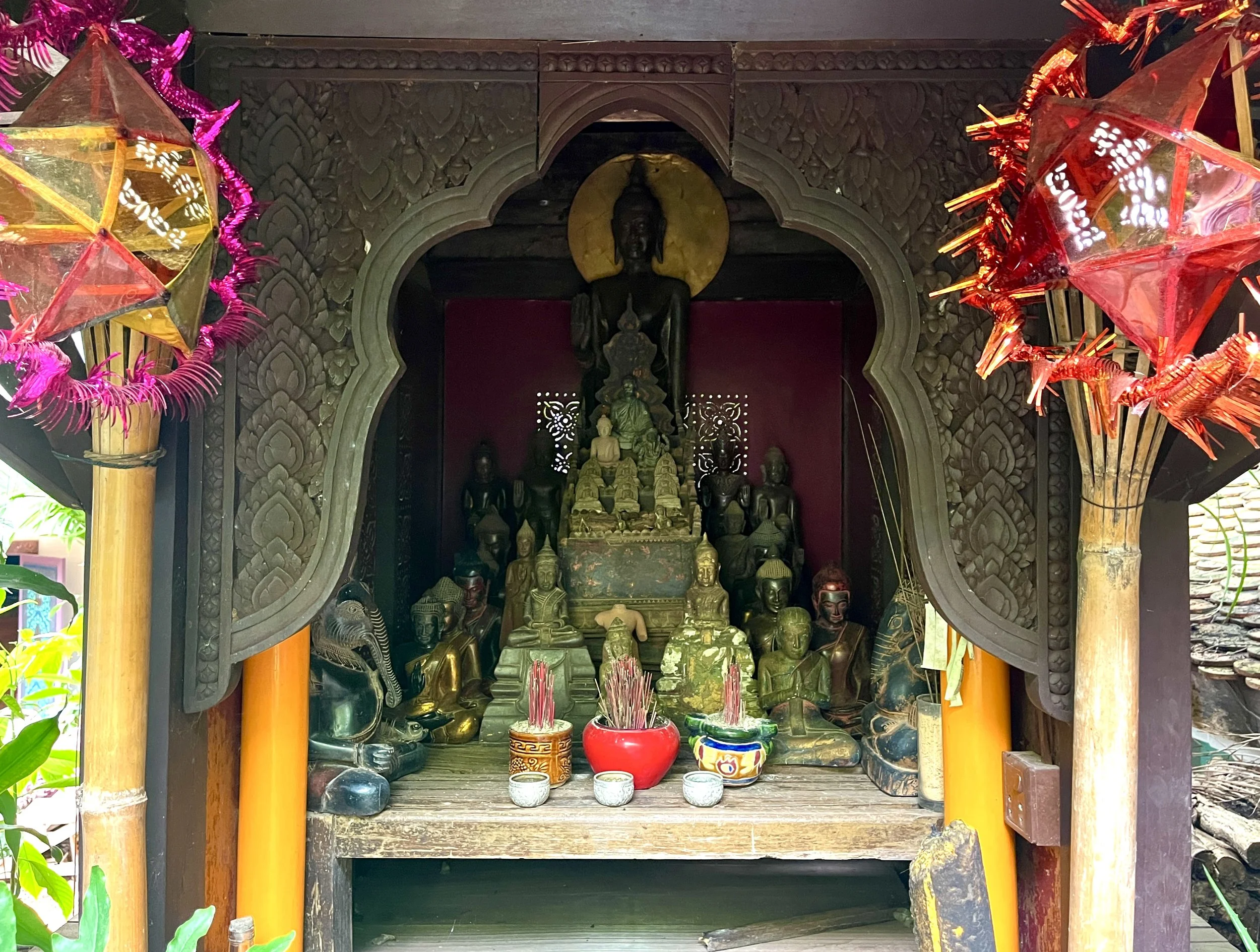
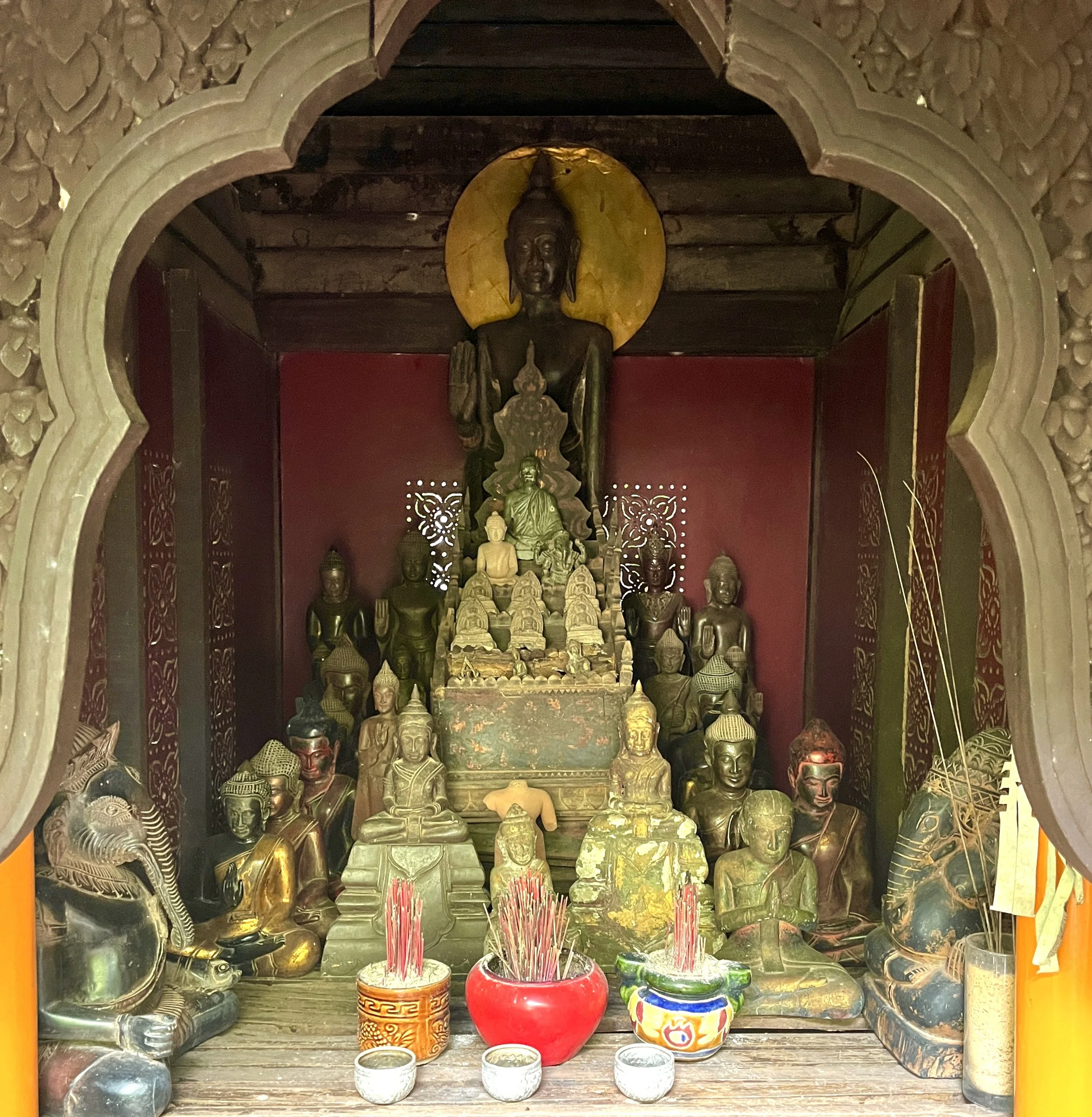
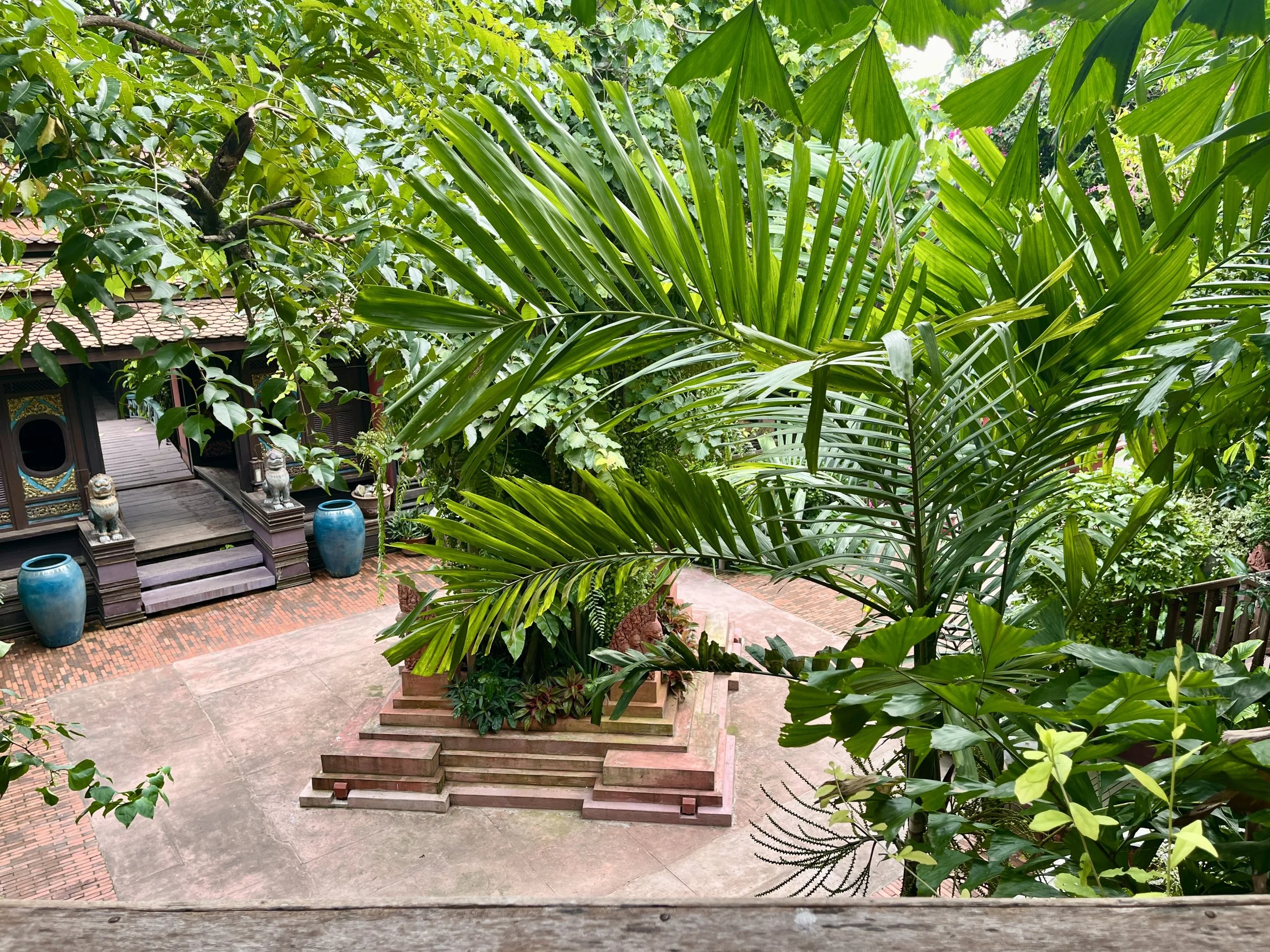
According to the hotel, La Villa was constructed in 1933 as the private residence of local ‘tradesman’ Eap Heo, and lived in by his descendants until the Khmer Rouge takeover in 1975. When the Vietnamese defeated the Khmer Rouge and occupied Battambang in 1979, they made this their local headquarters. When the Vietnamese left in 1989, the building was alternately leased or squatted in until it was sold to the present owners, “a young expat couple”, in 2004, and following renovation opened as a hotel in 2005.

We all know young expat couples can’t actually purchase property in Cambodia, so who knows what the truth actually is– I’m guessing at least one member of said couple is the K visa kid of refugees in France, or maybe the Cambodian kid of a corrupt government bigwig who studied and married abroad. Over the decades since Pol Pot died, these types have scooped up anything nice, setting up as landlords and hoteliers, many continuing to live in Europe while collecting rents here.

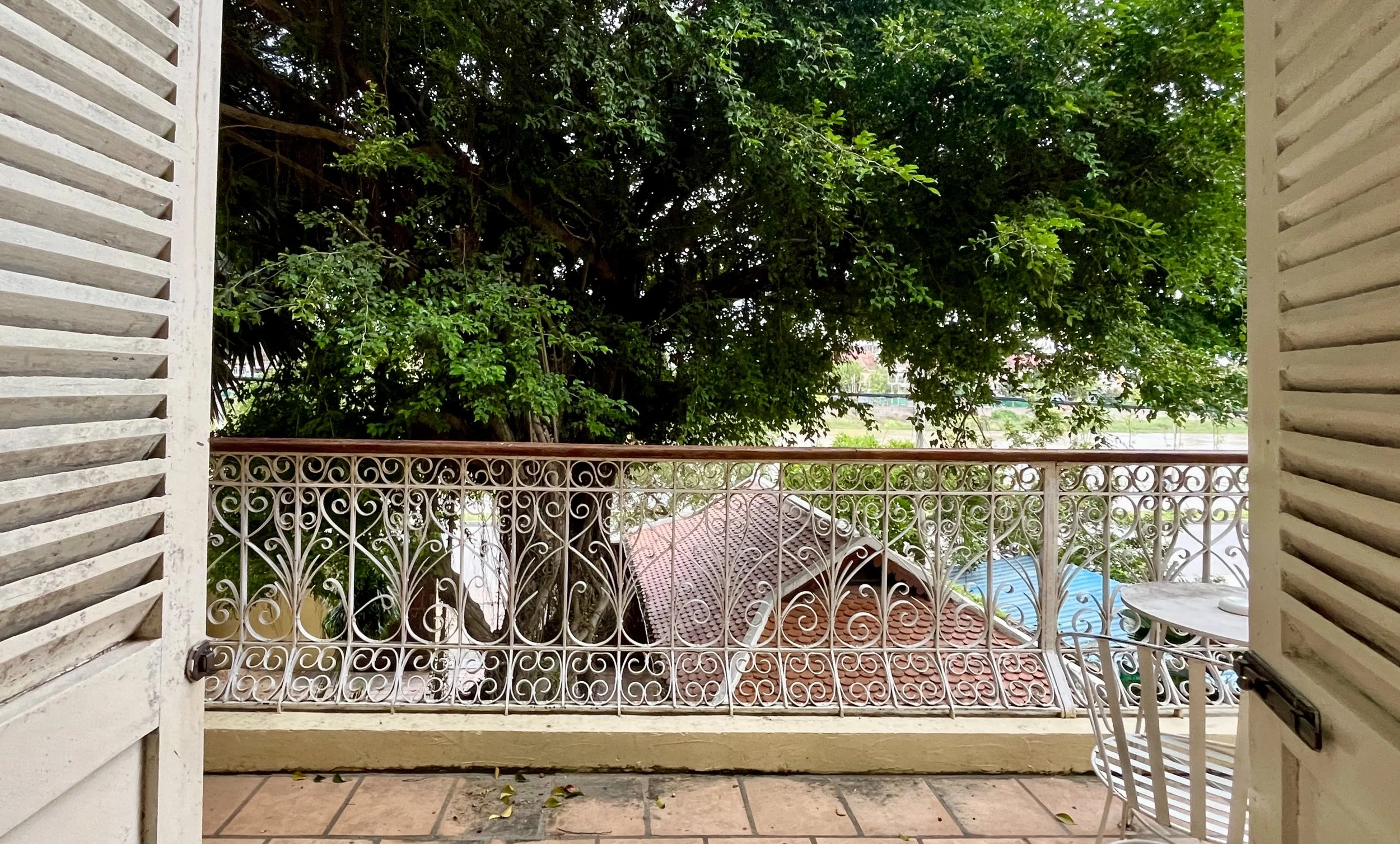
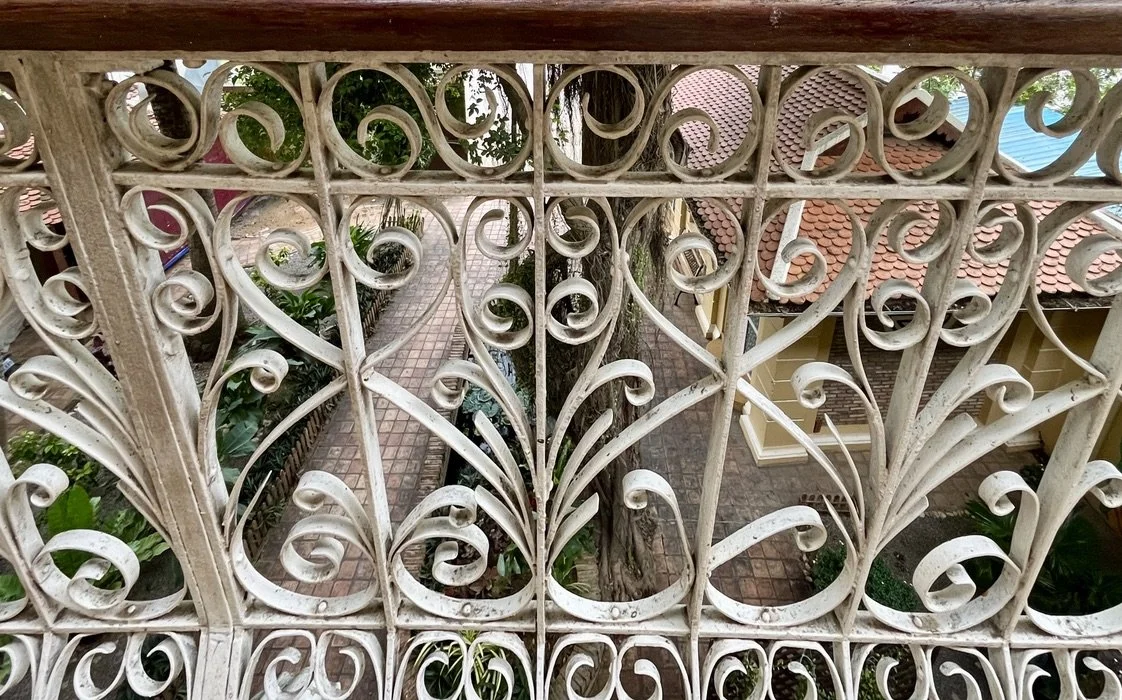
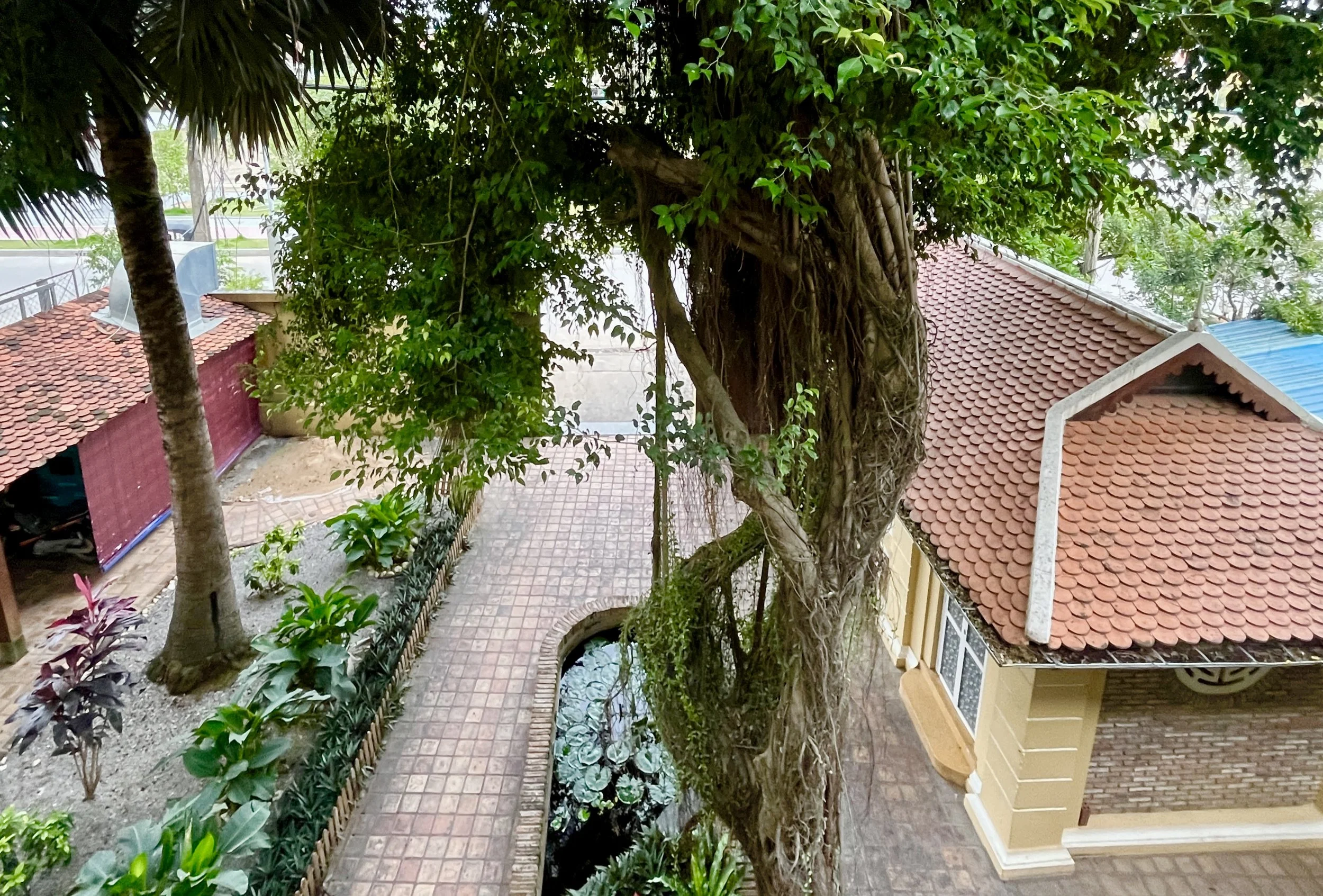
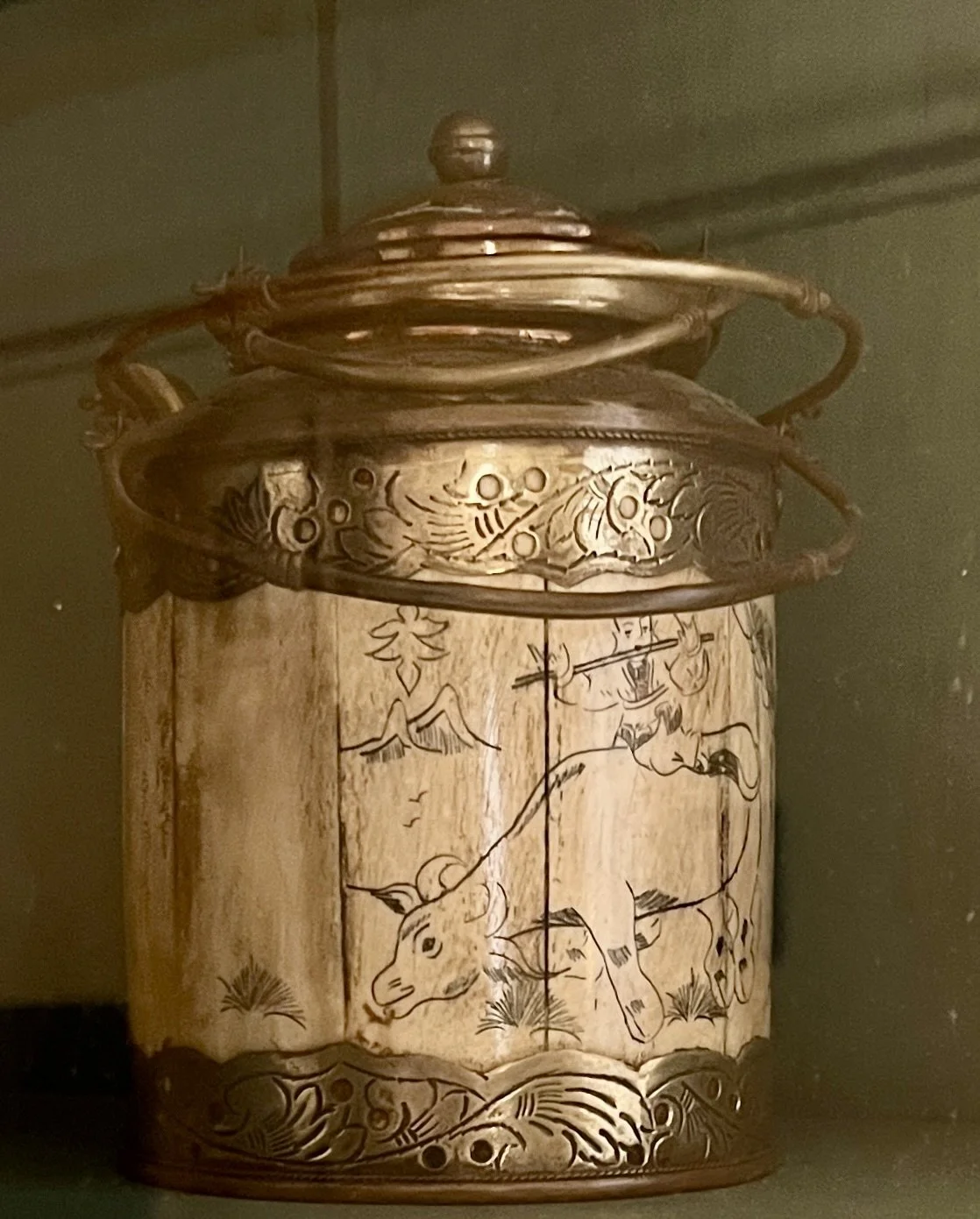
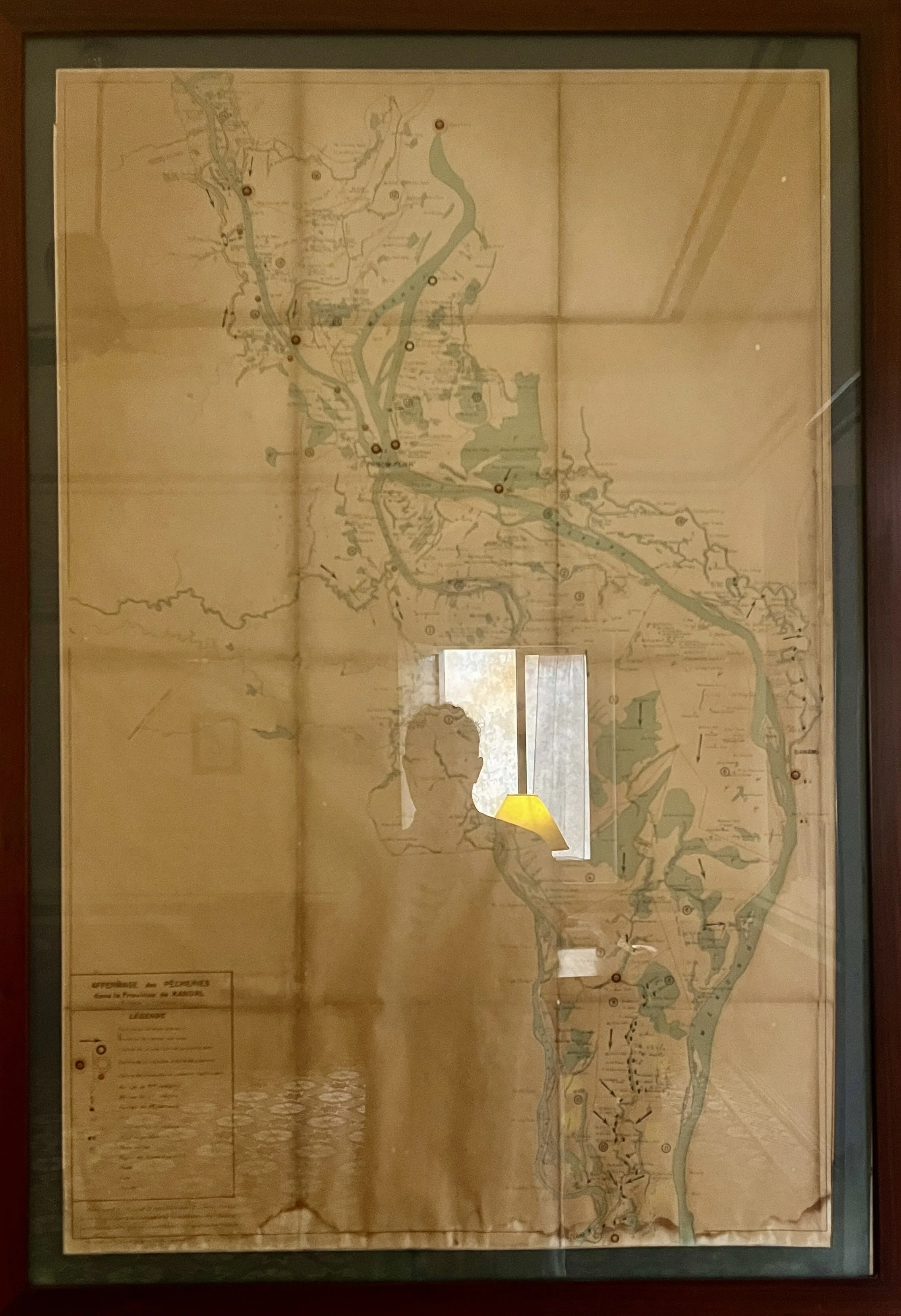
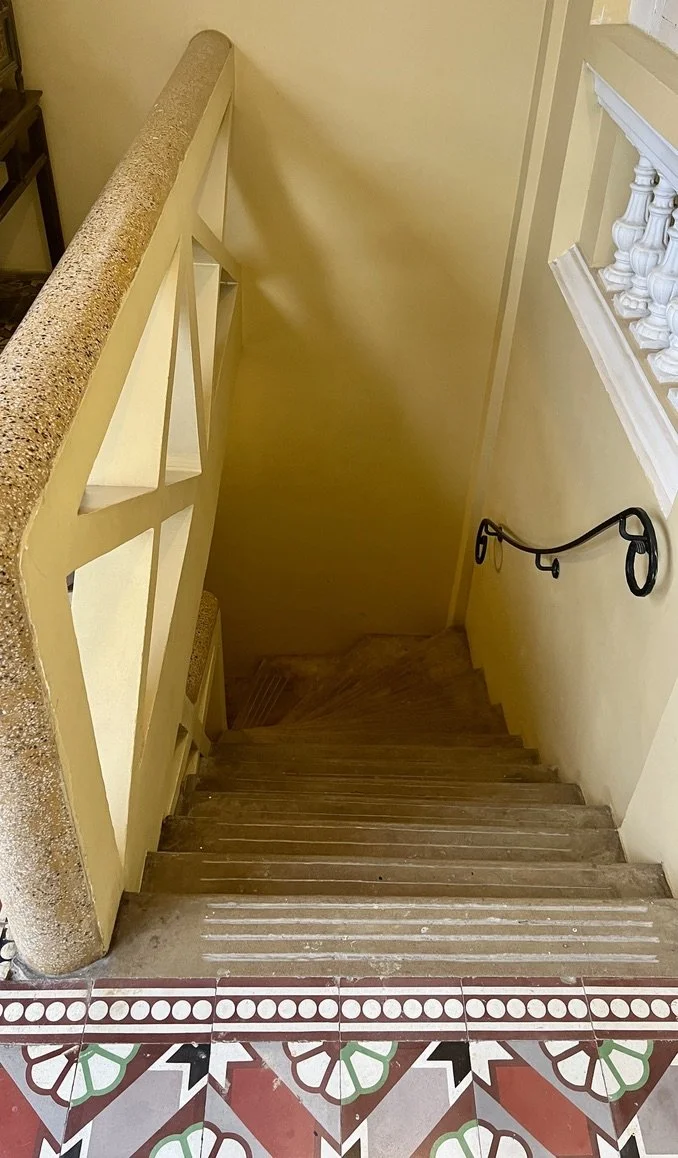
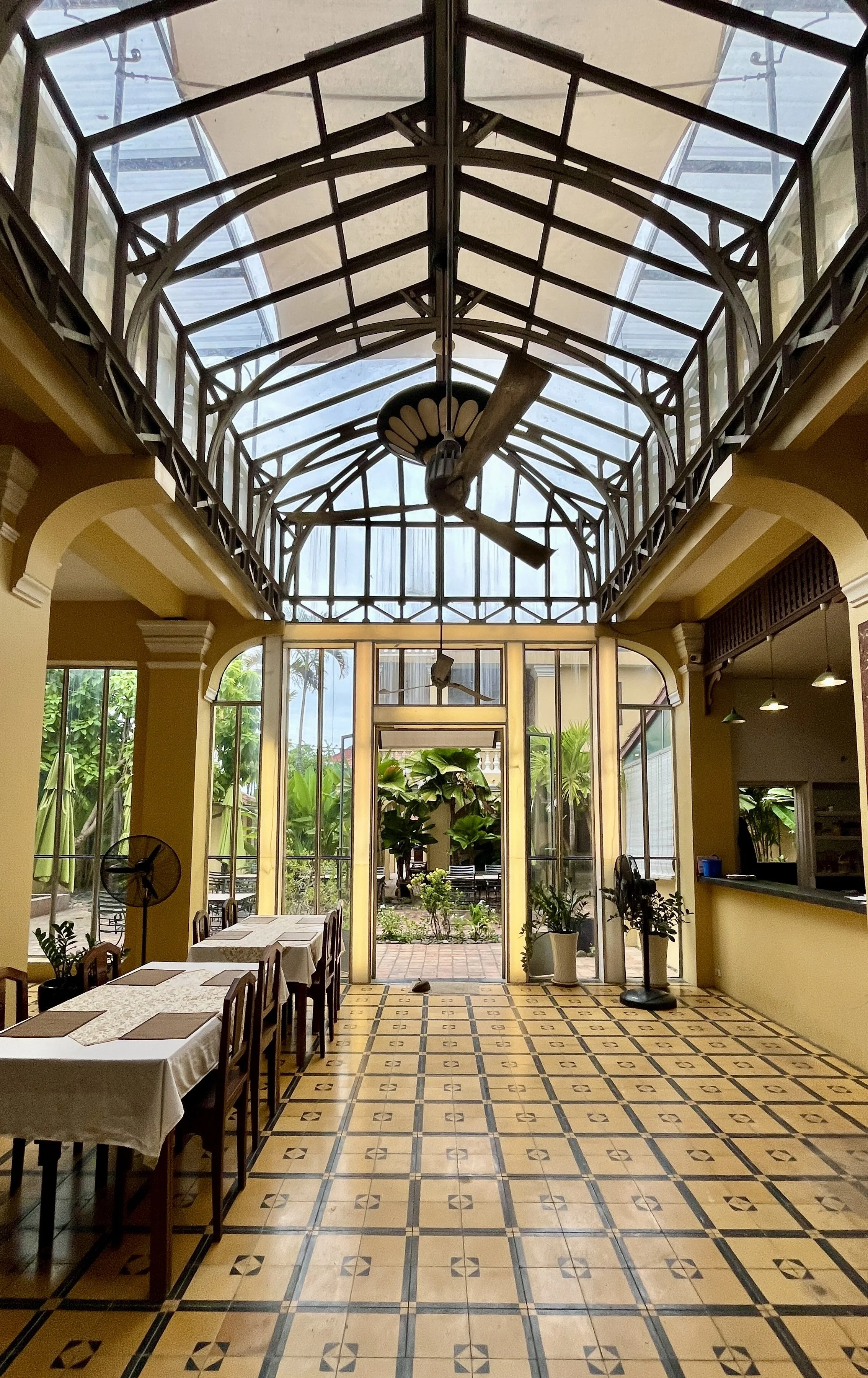
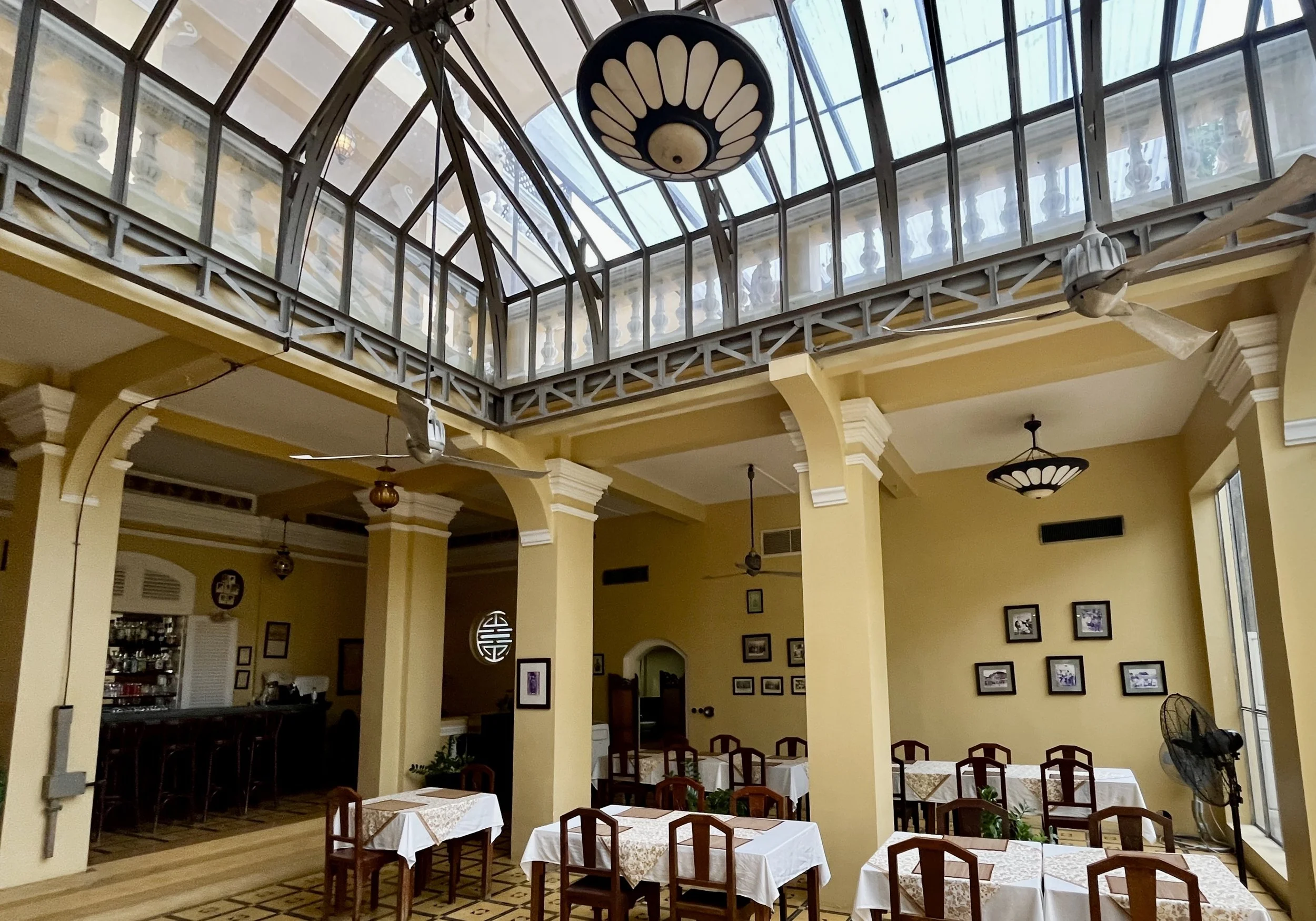
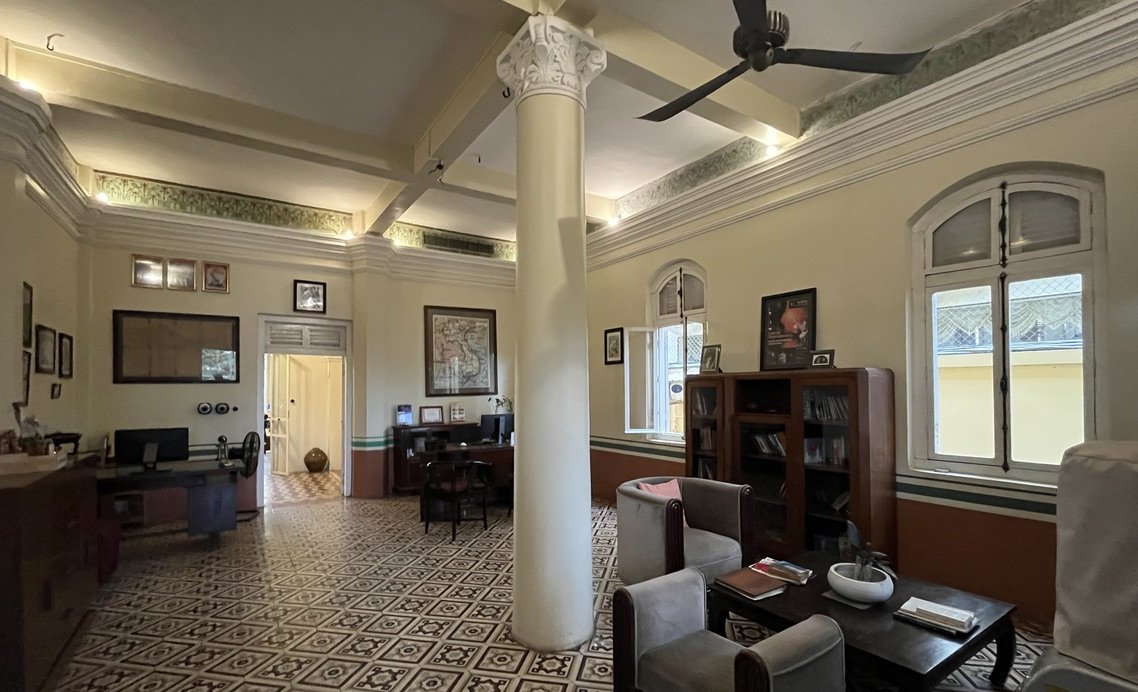
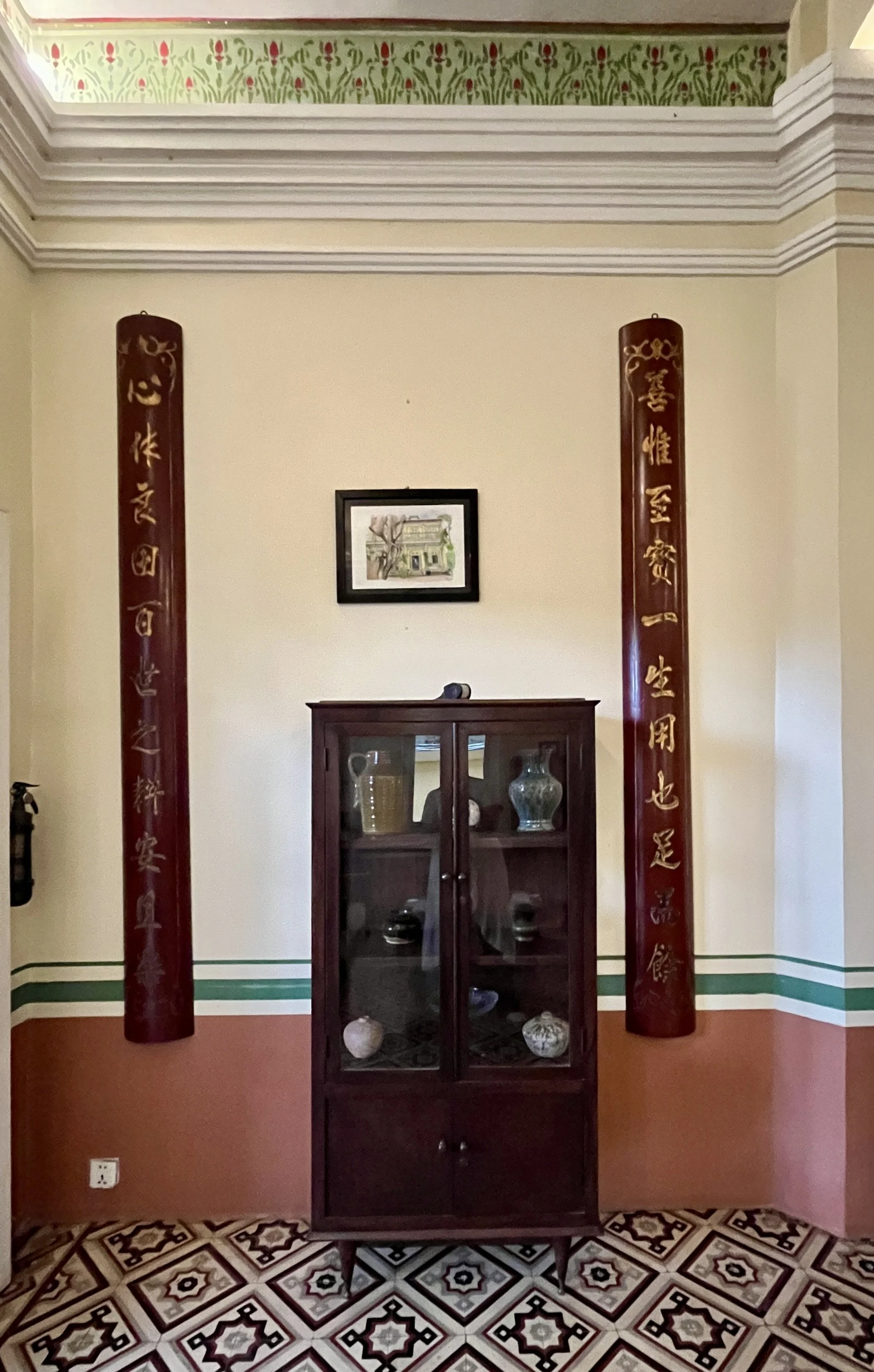
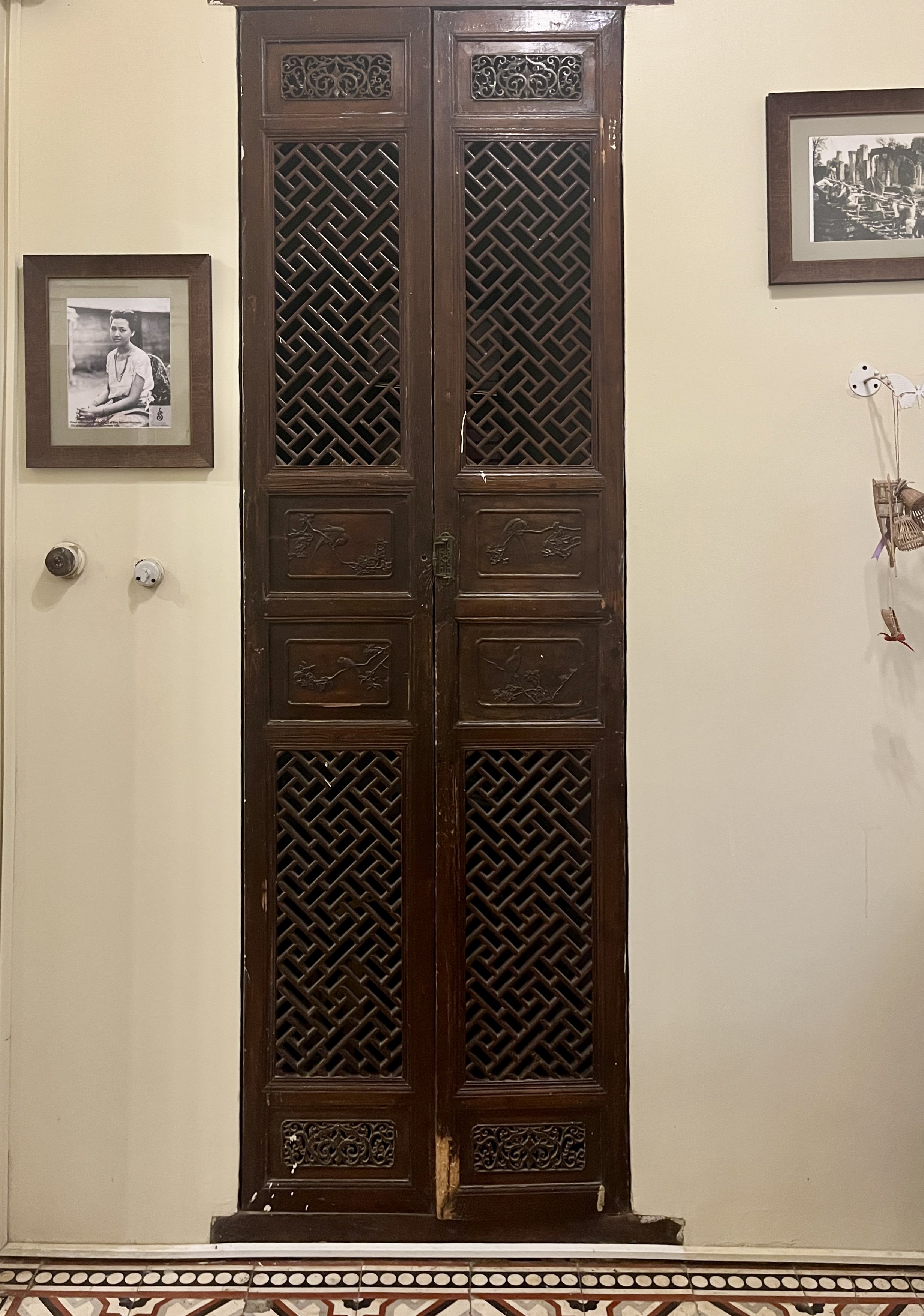
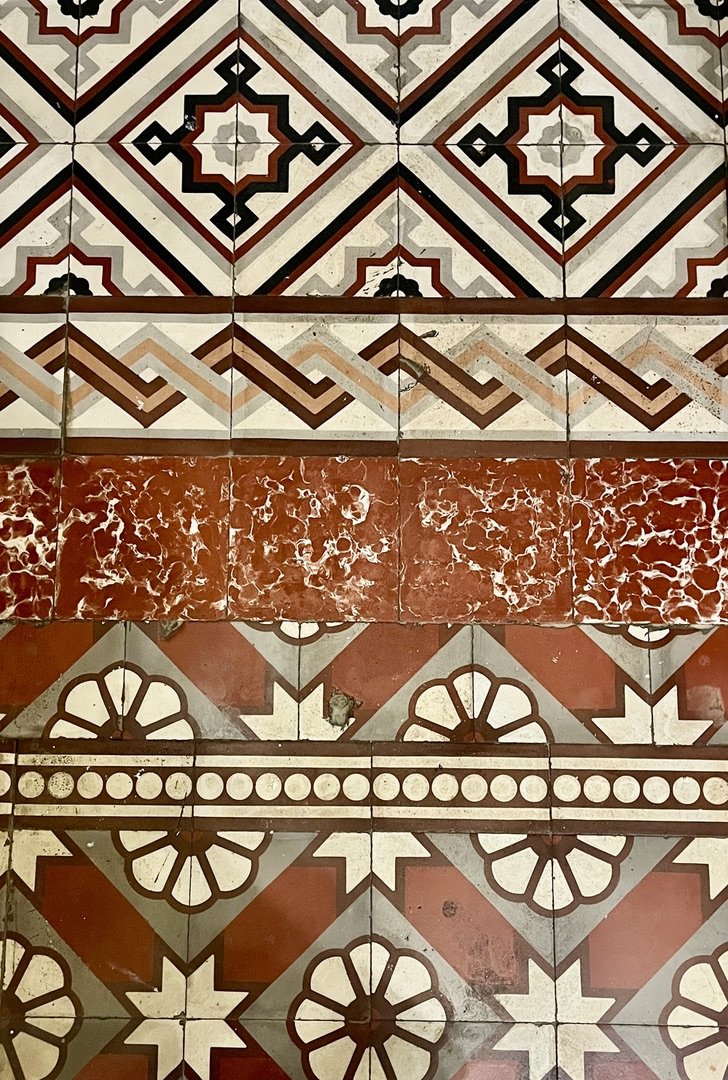
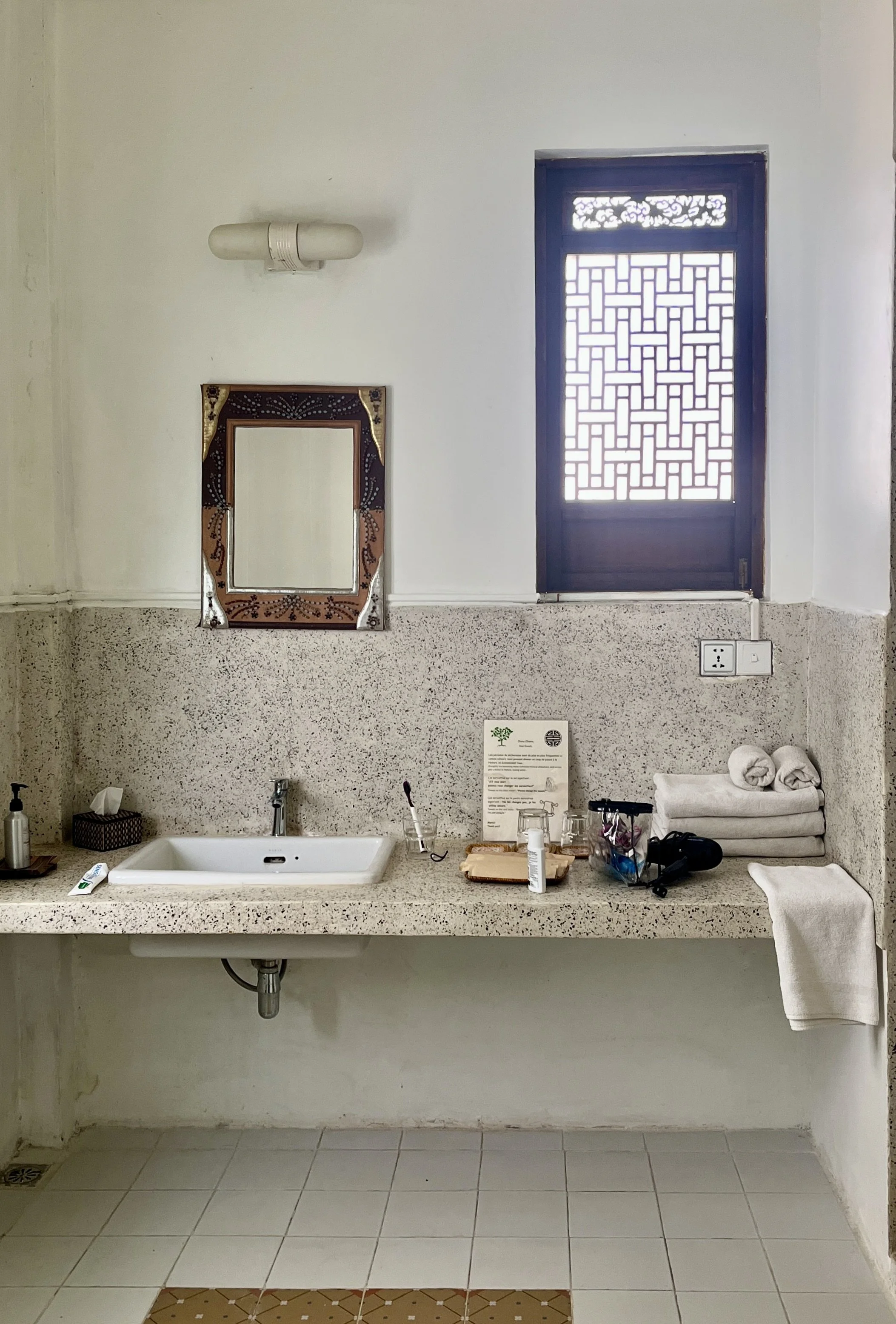
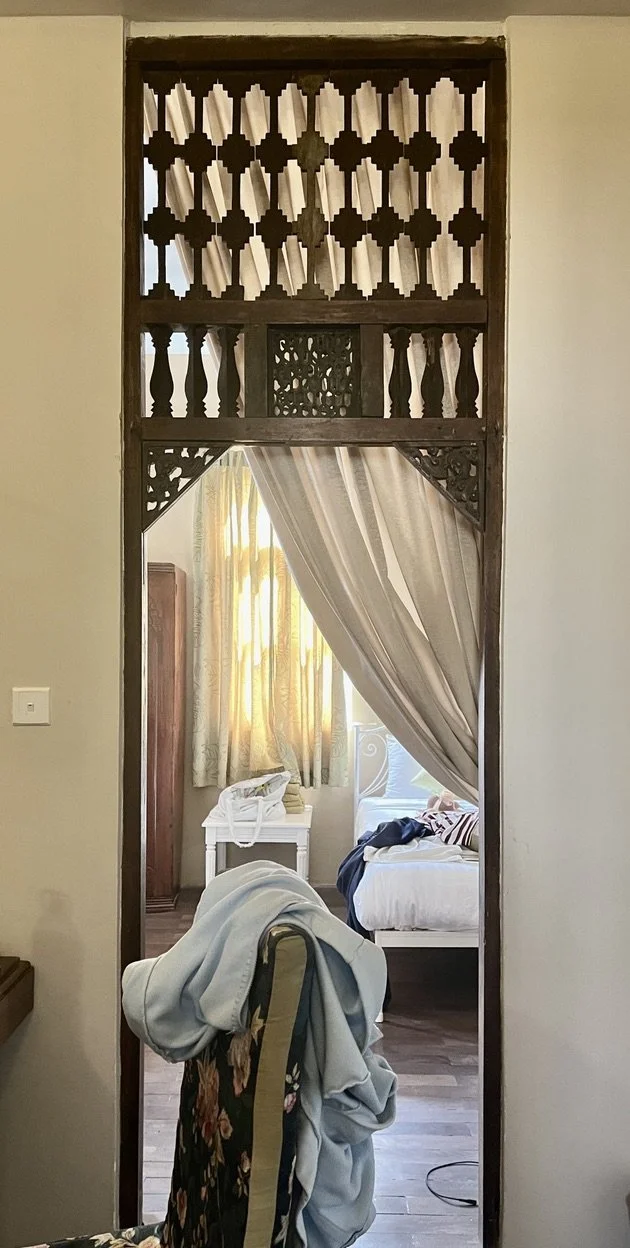
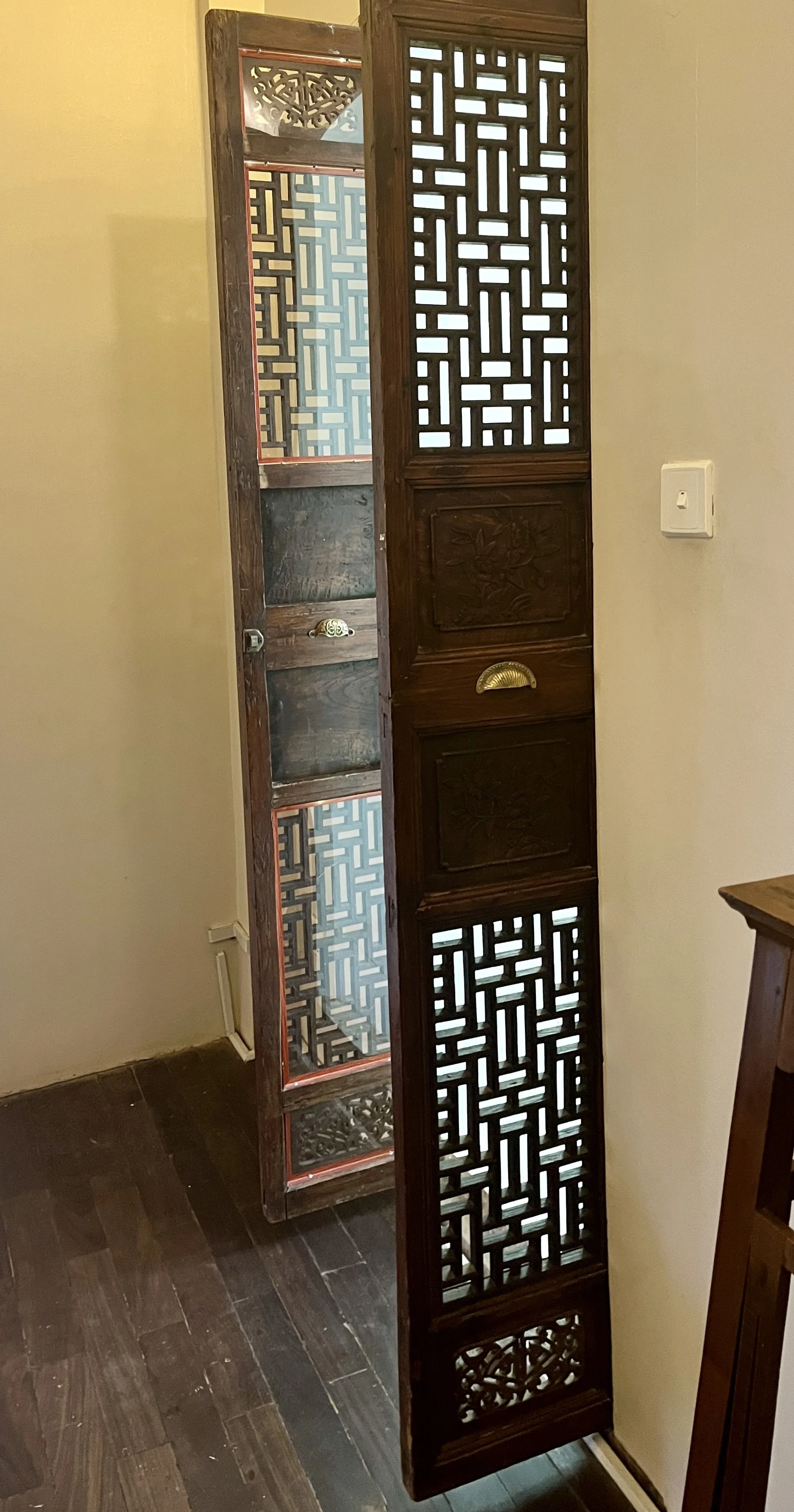
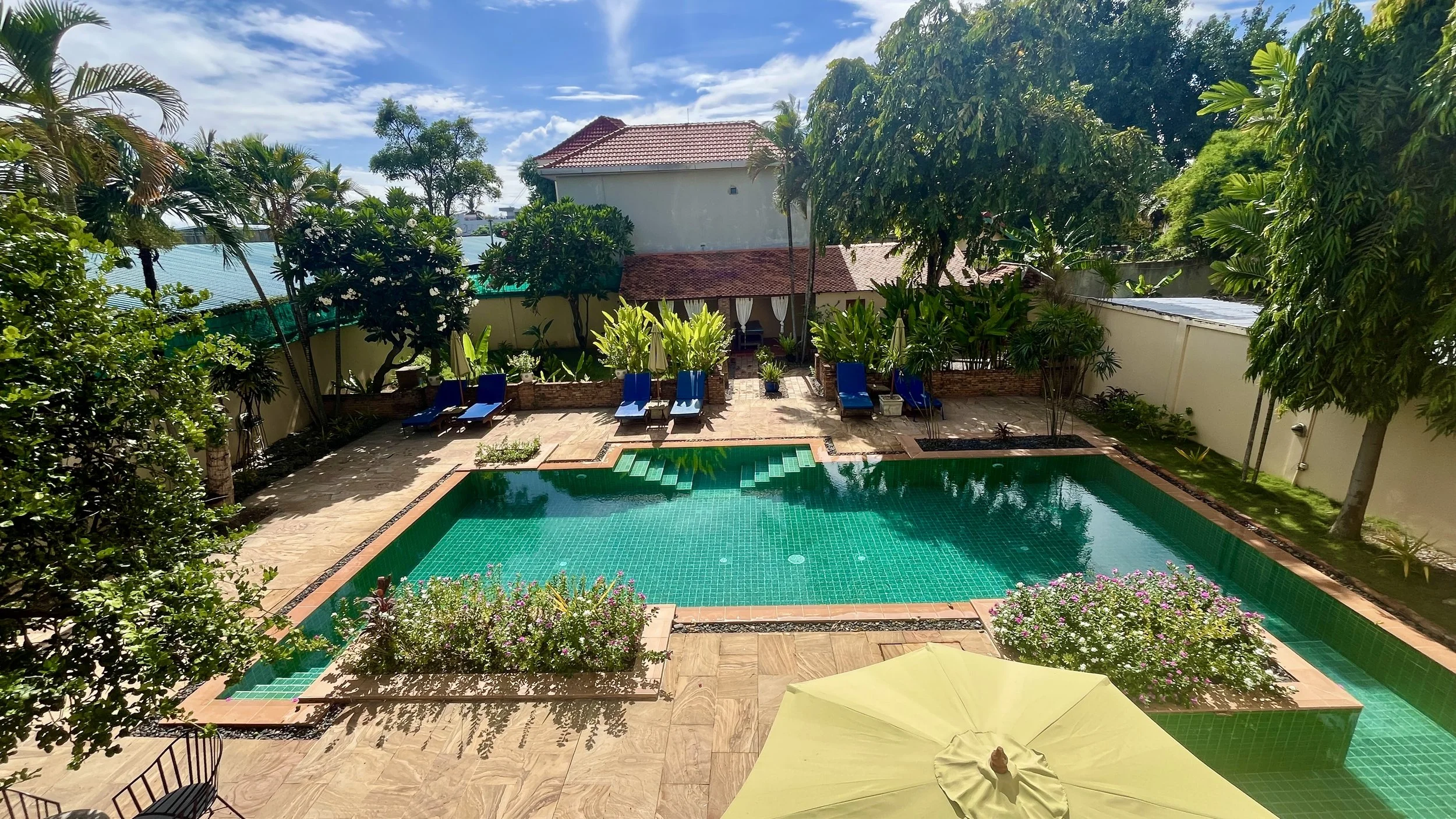
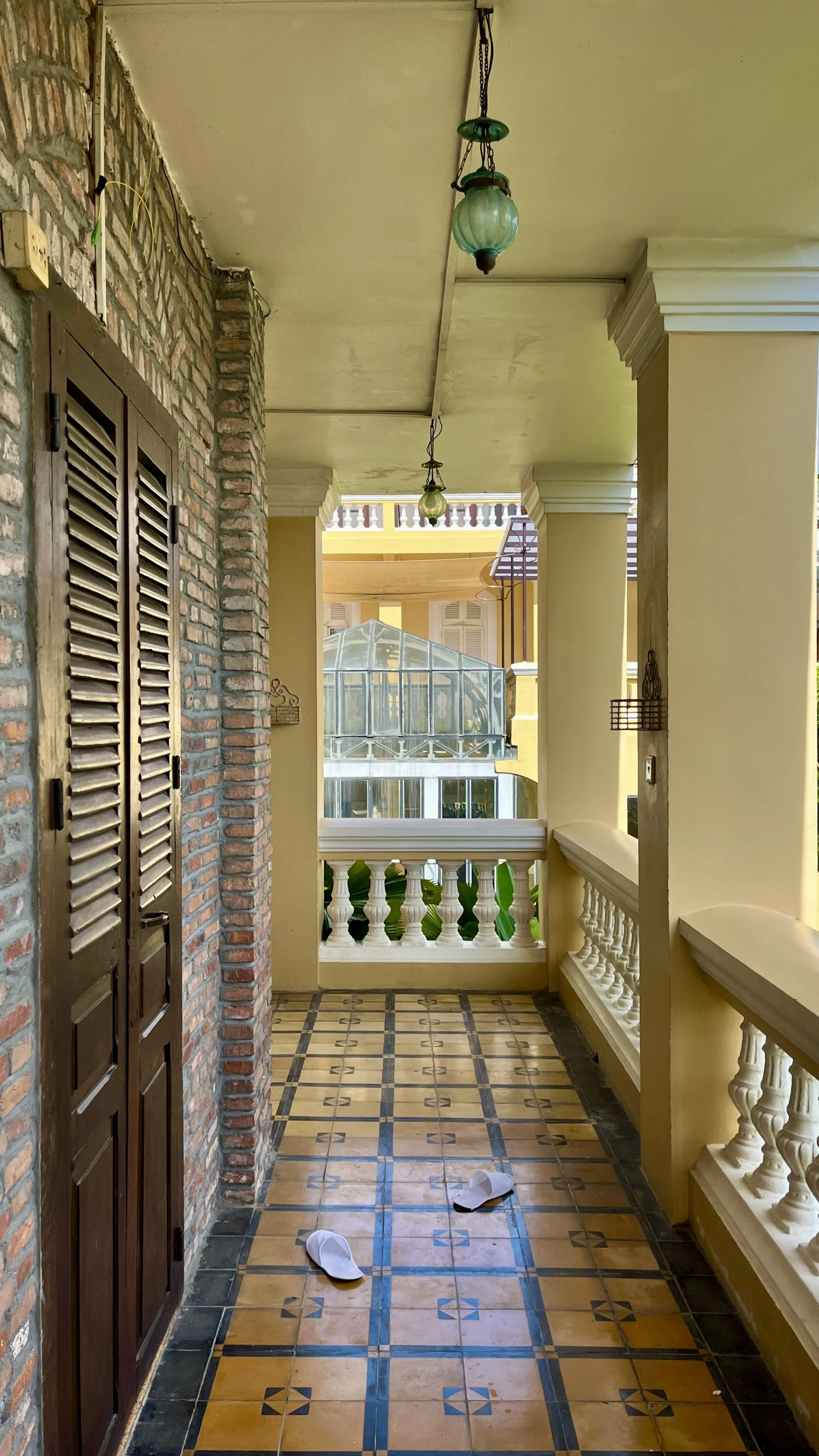
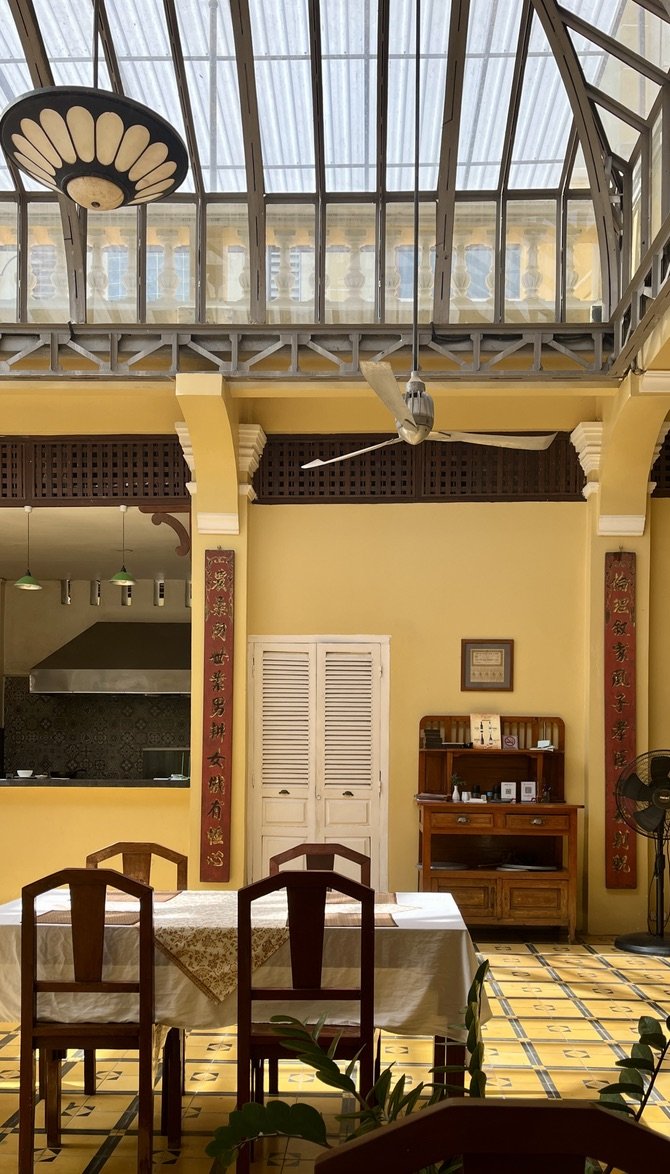
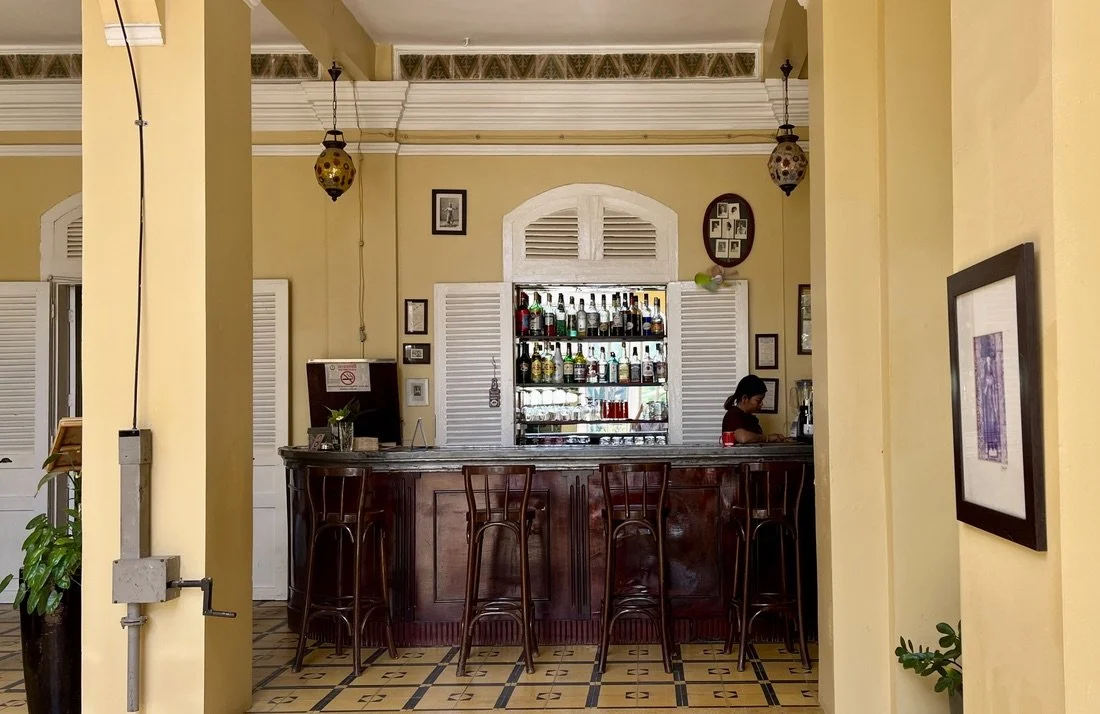
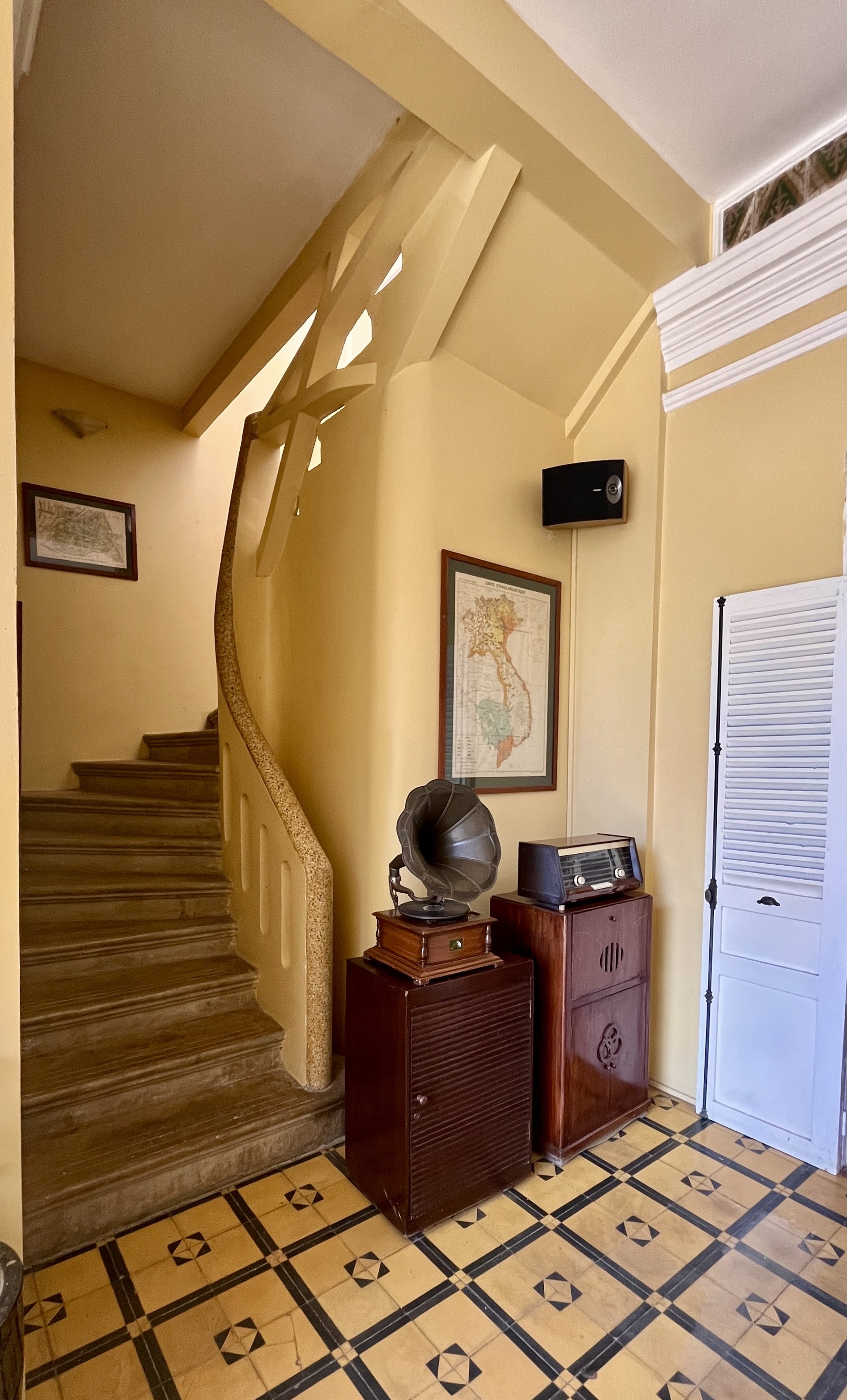
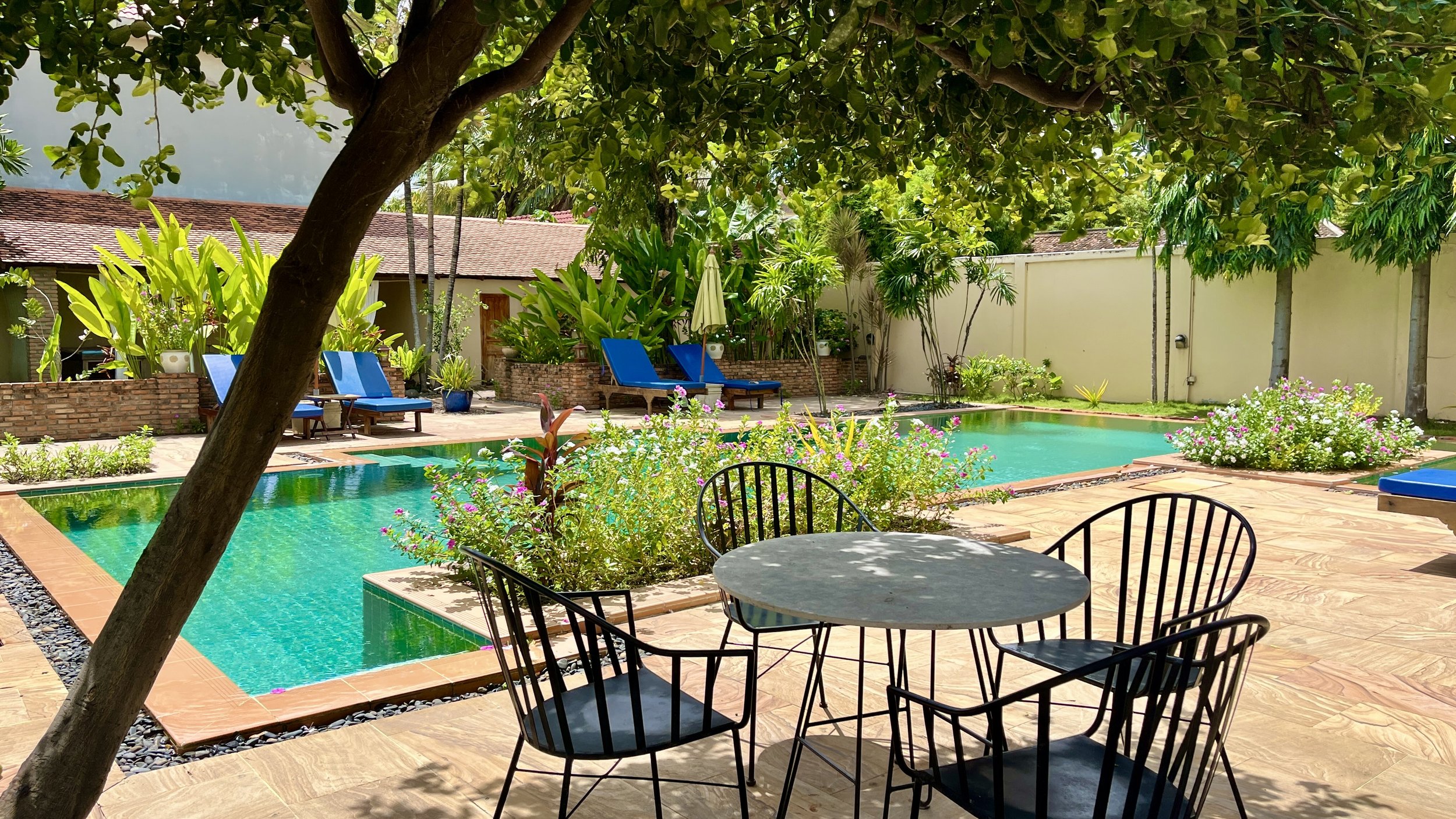
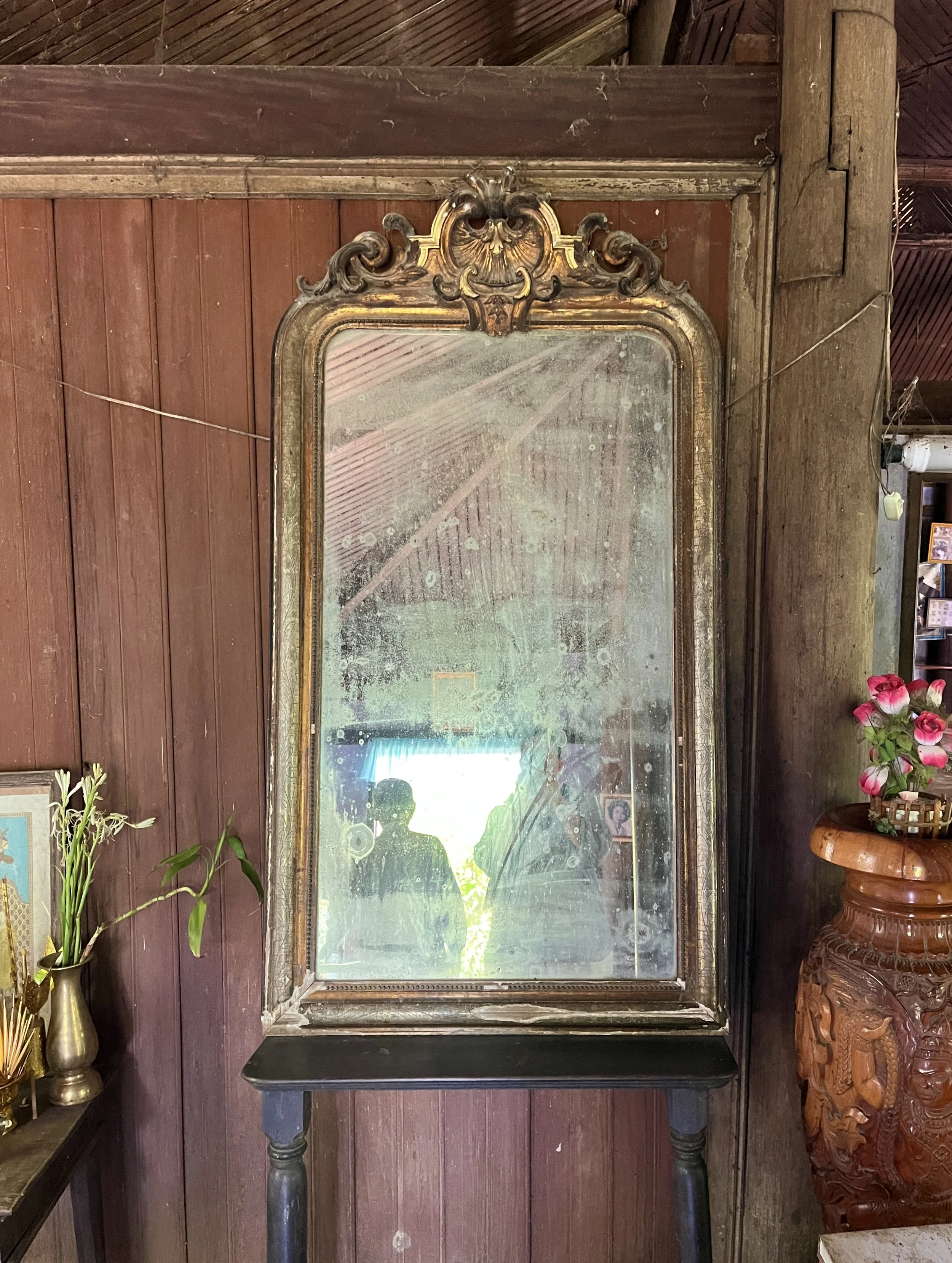
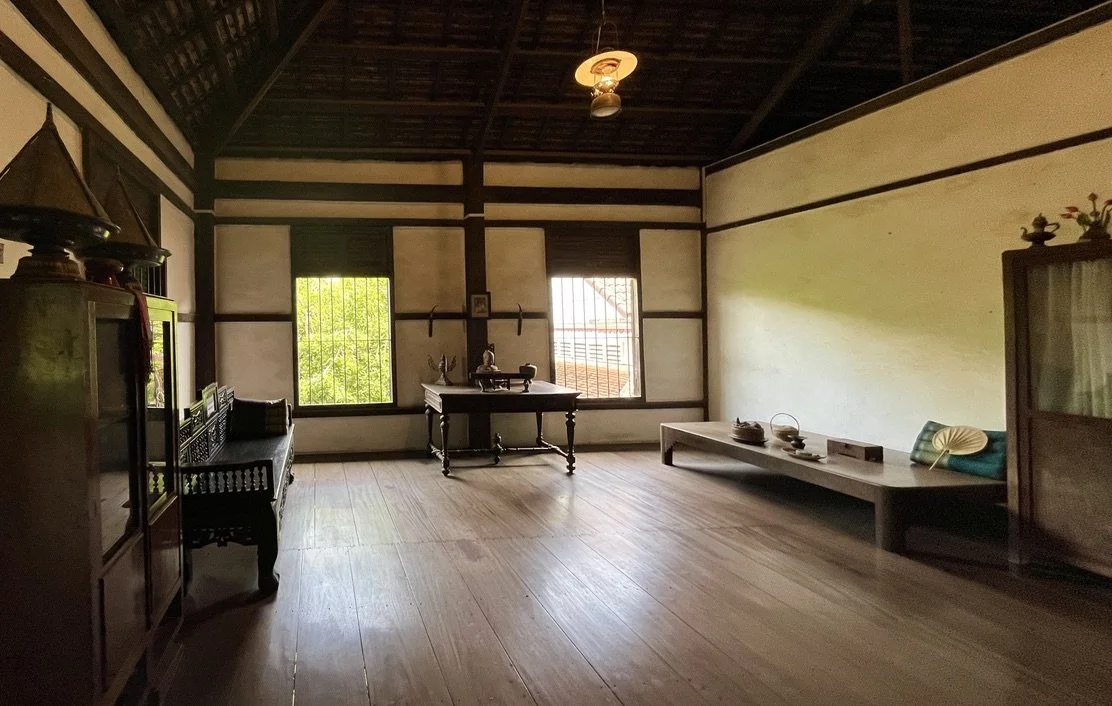
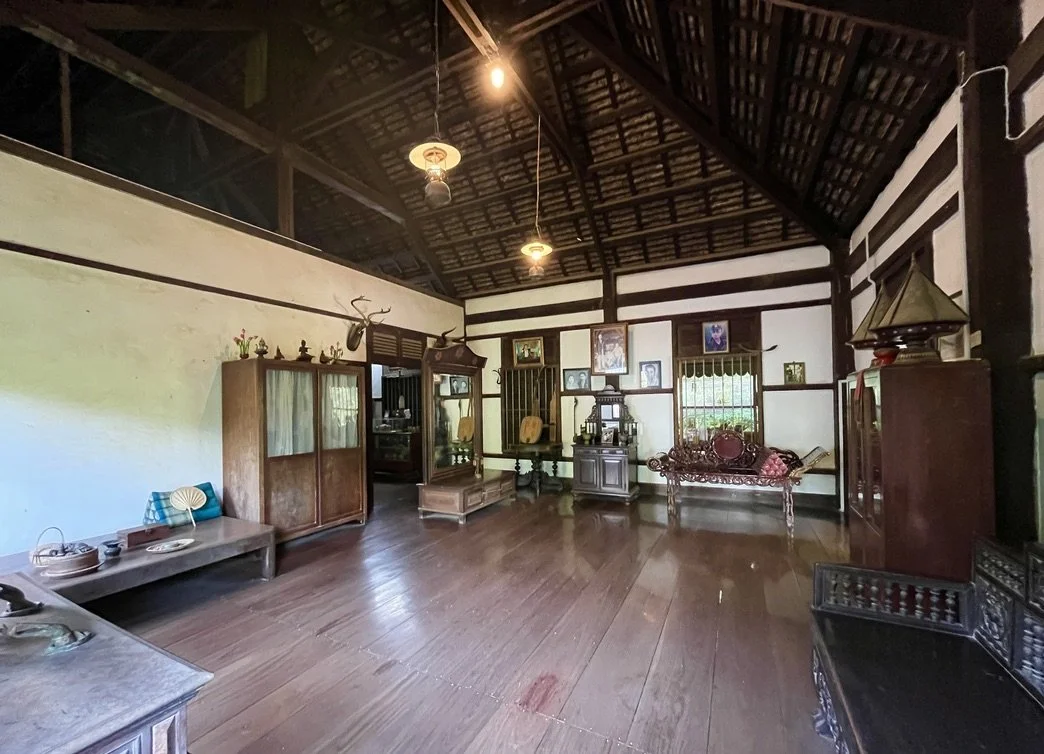
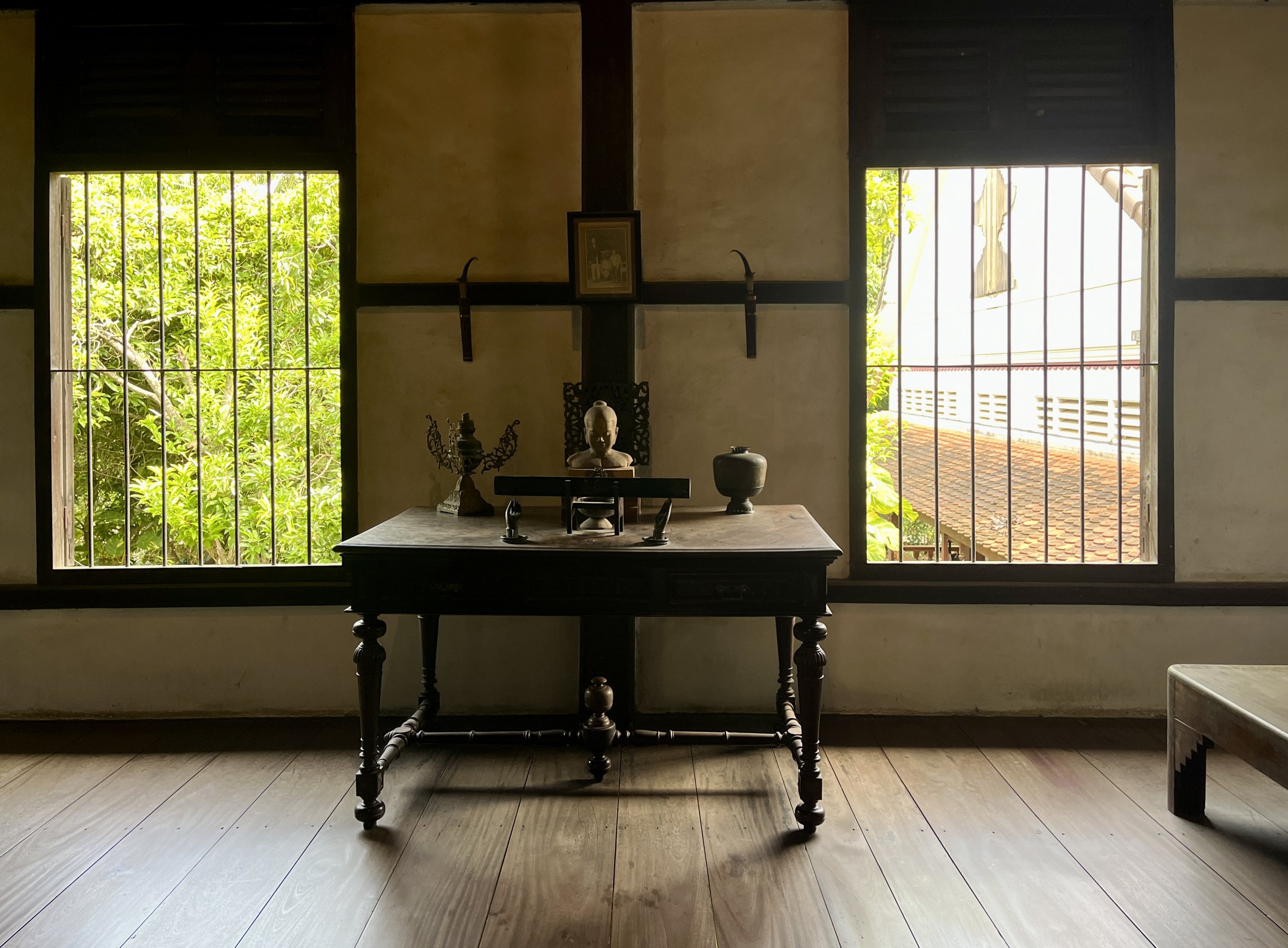
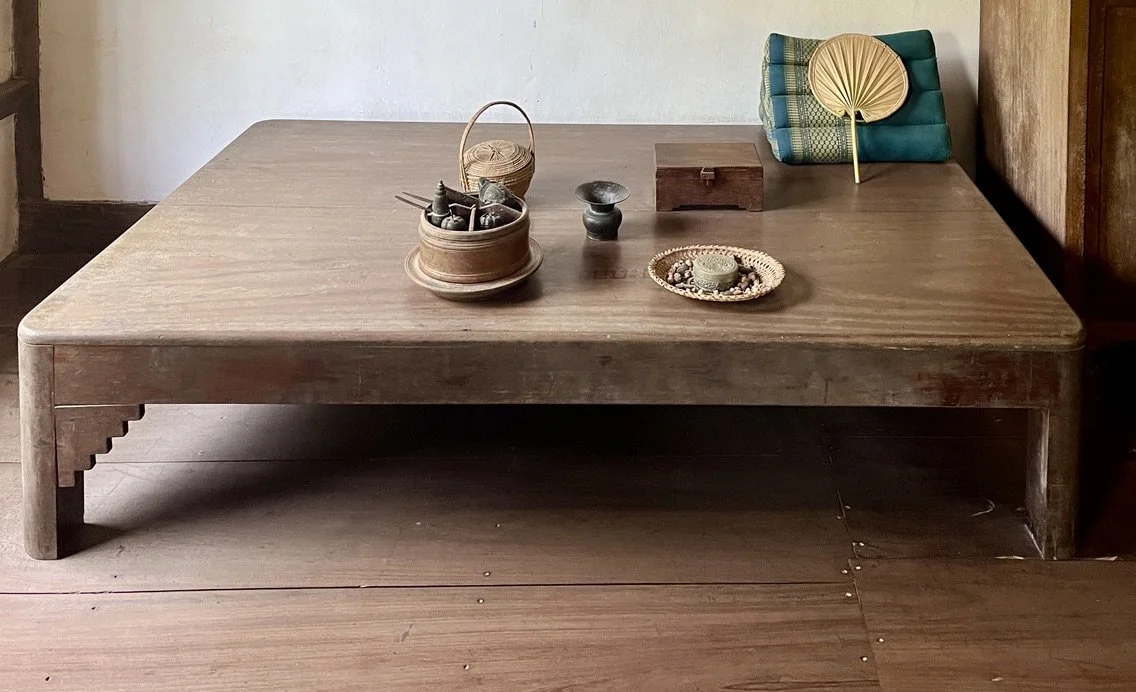
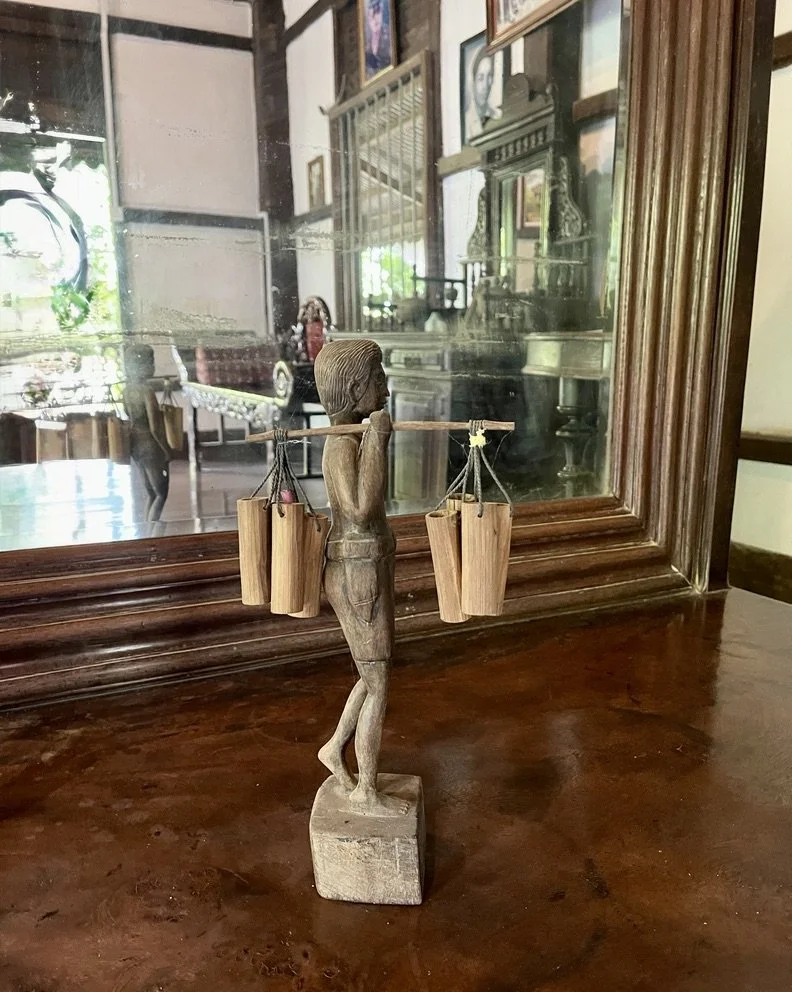
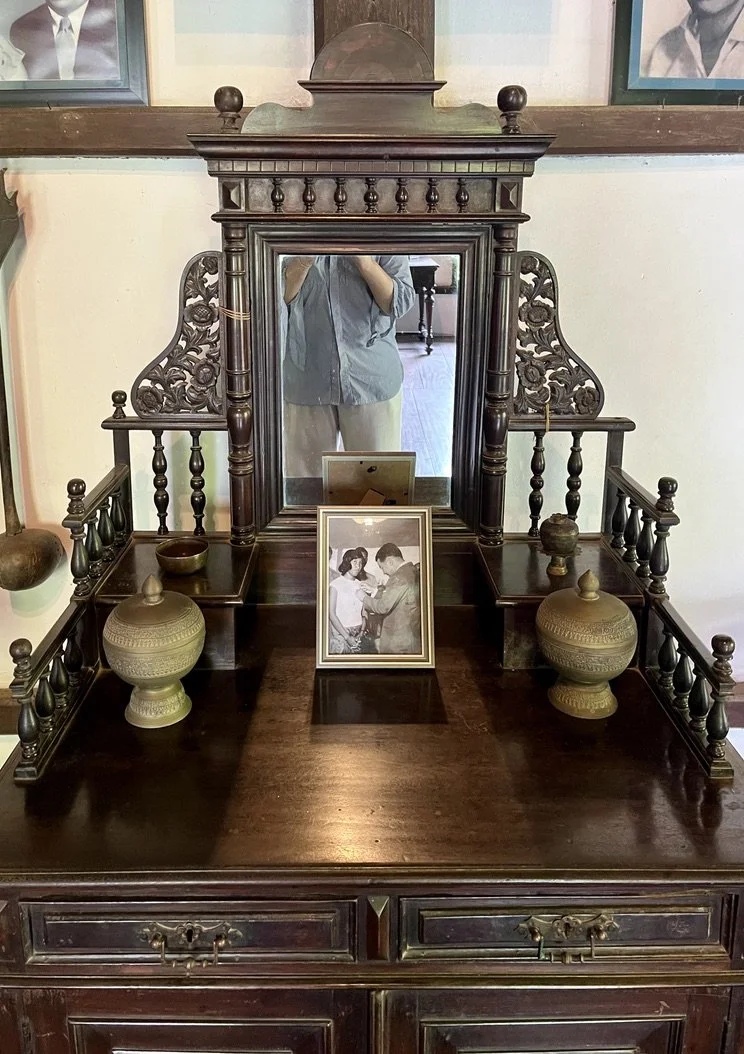
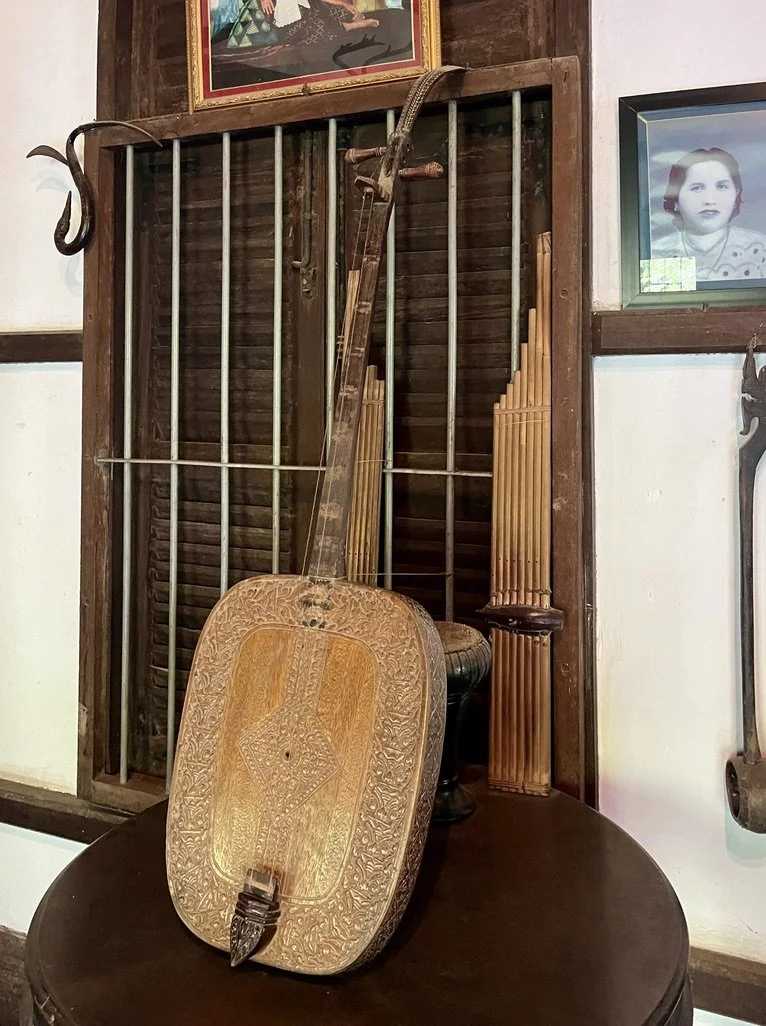
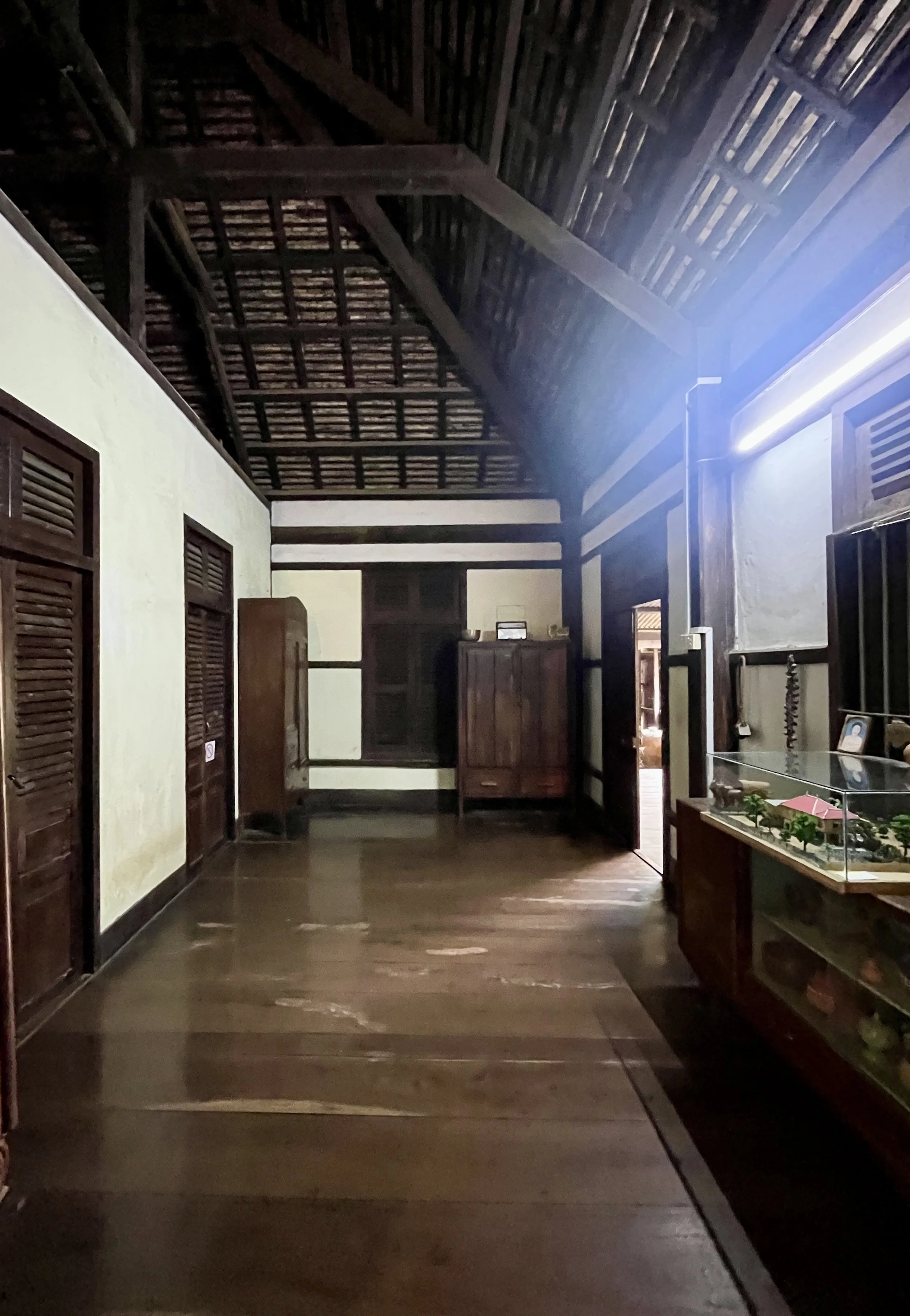
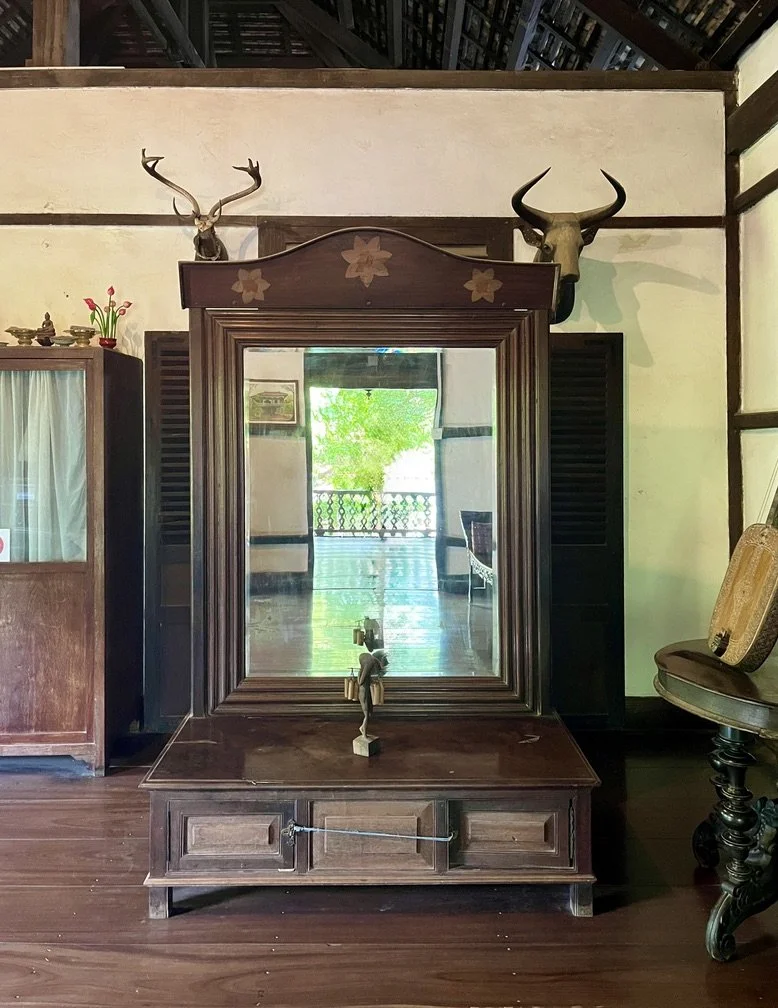
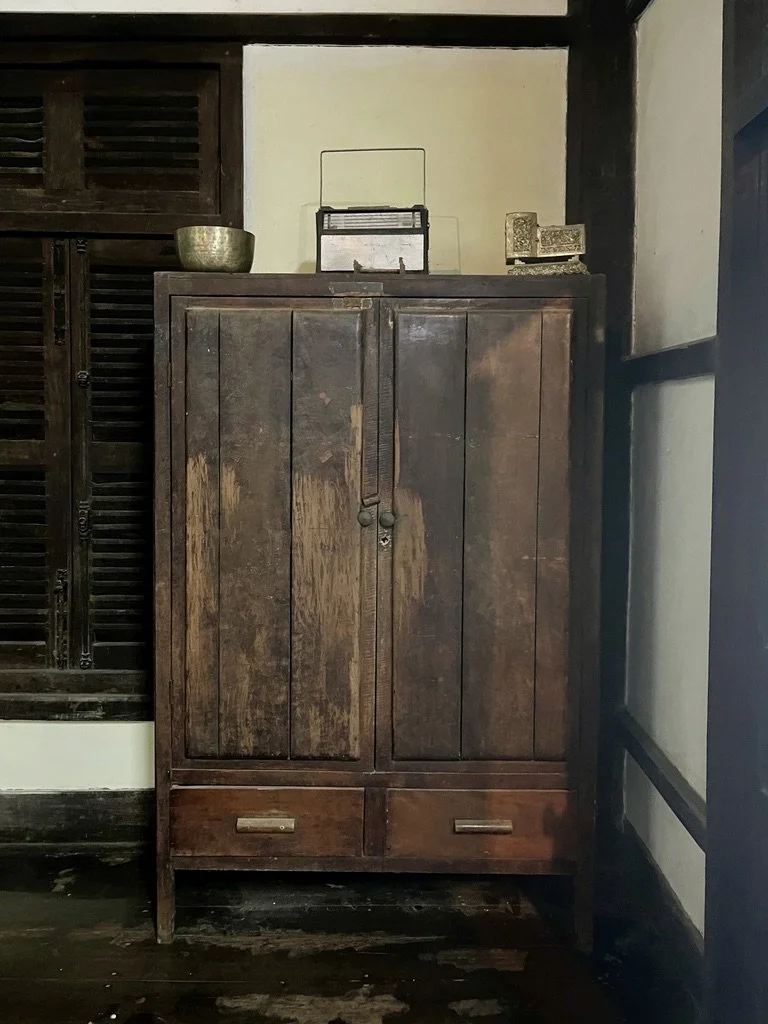
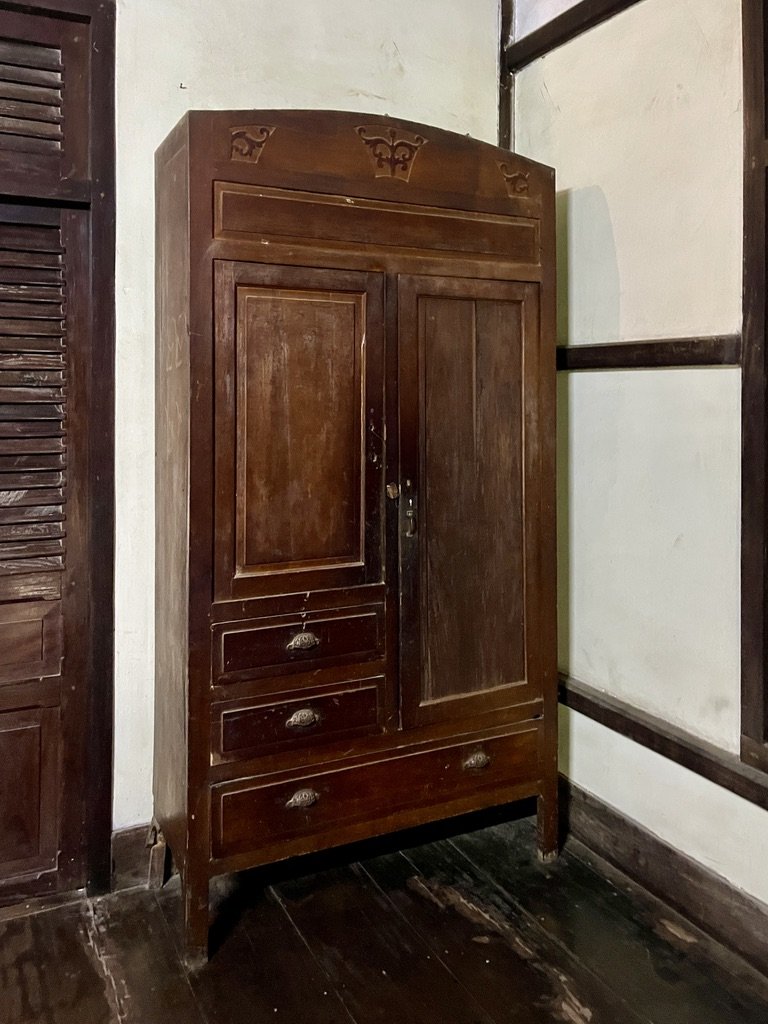
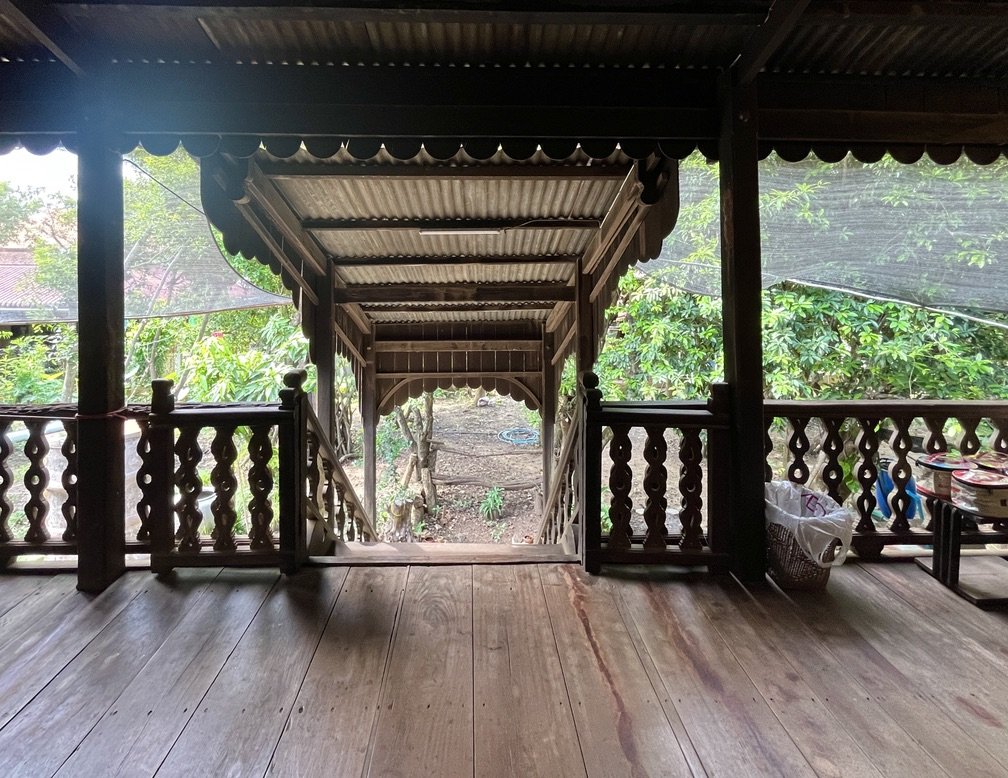
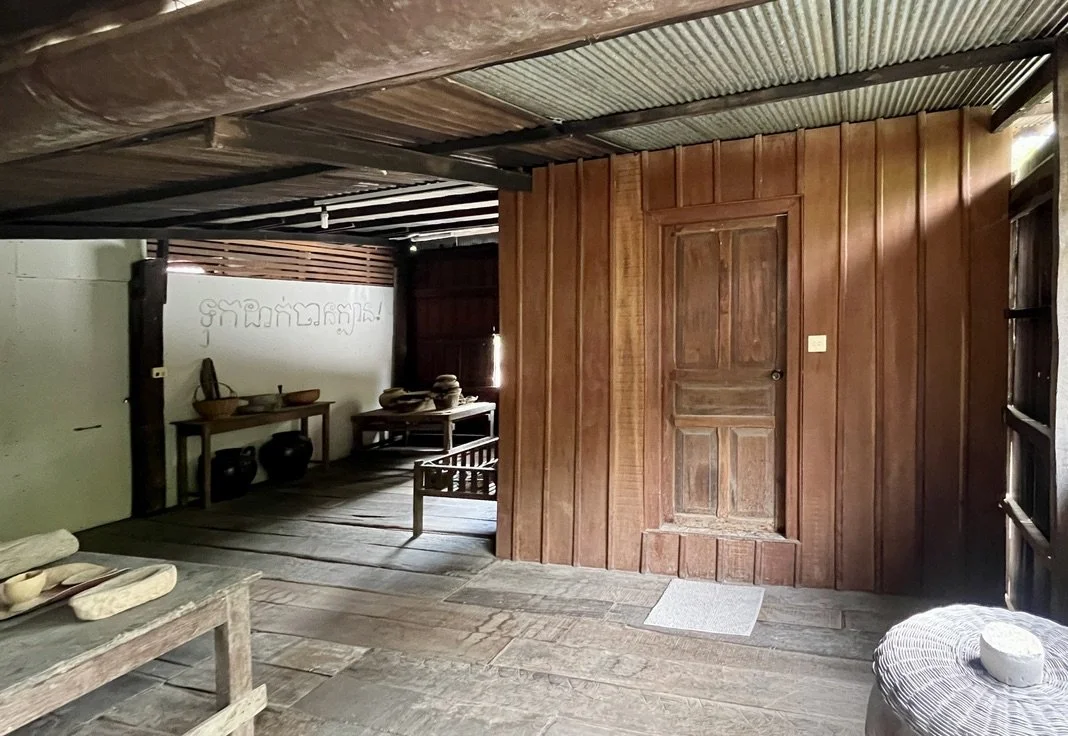
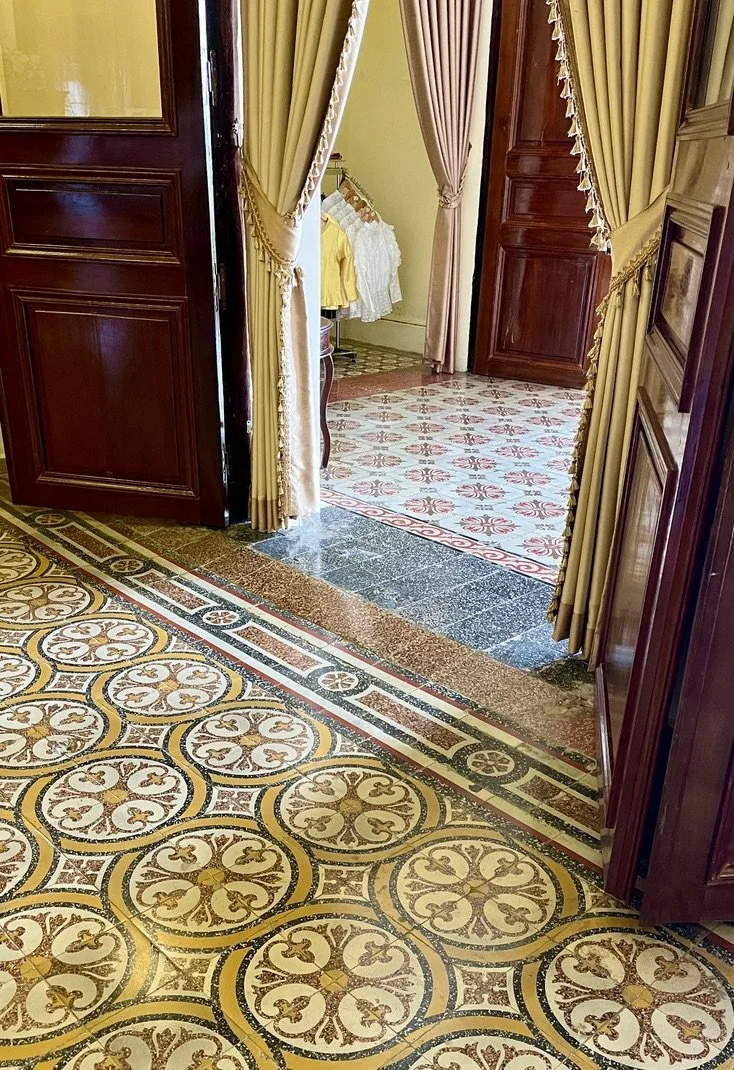
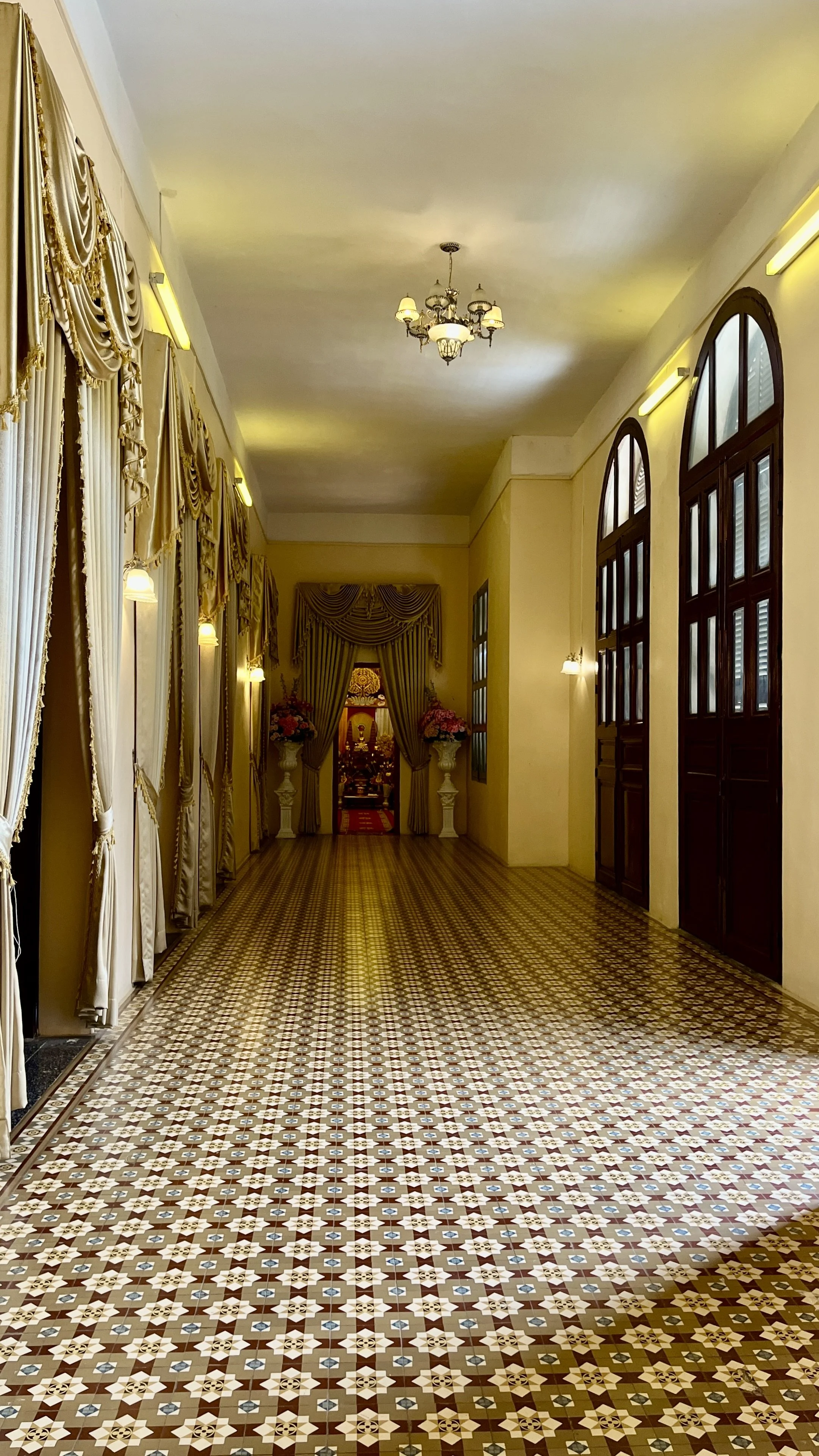
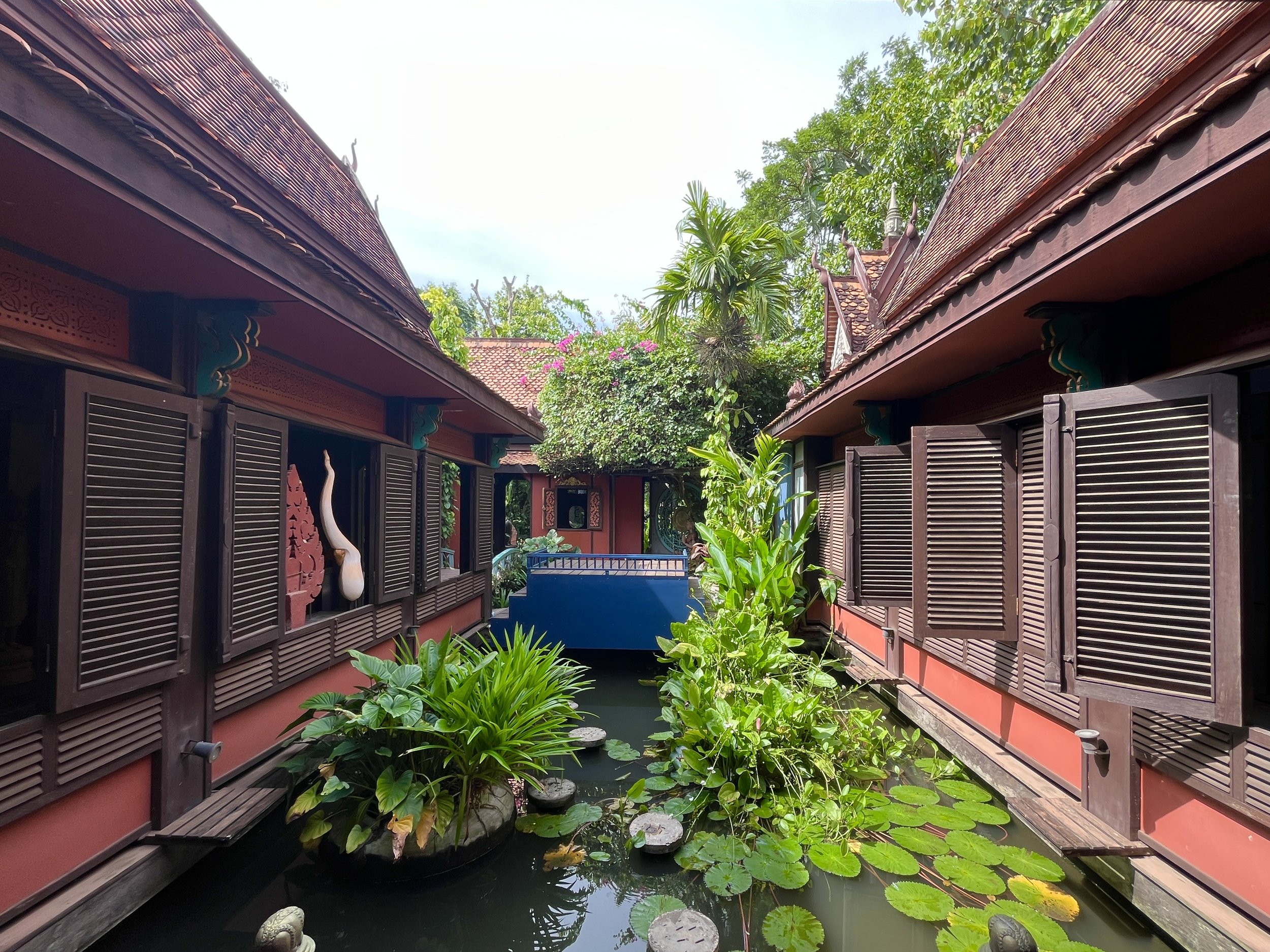
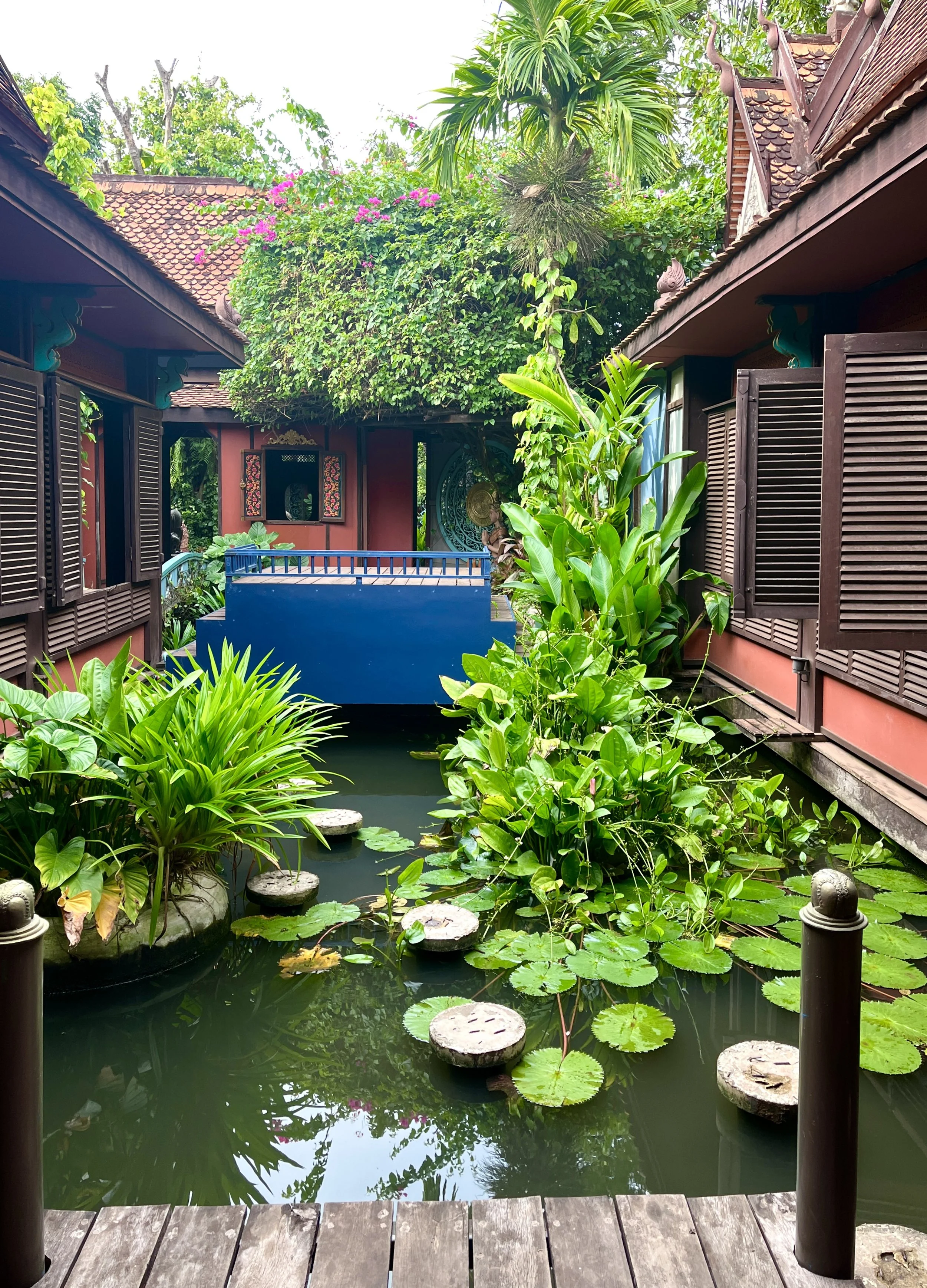
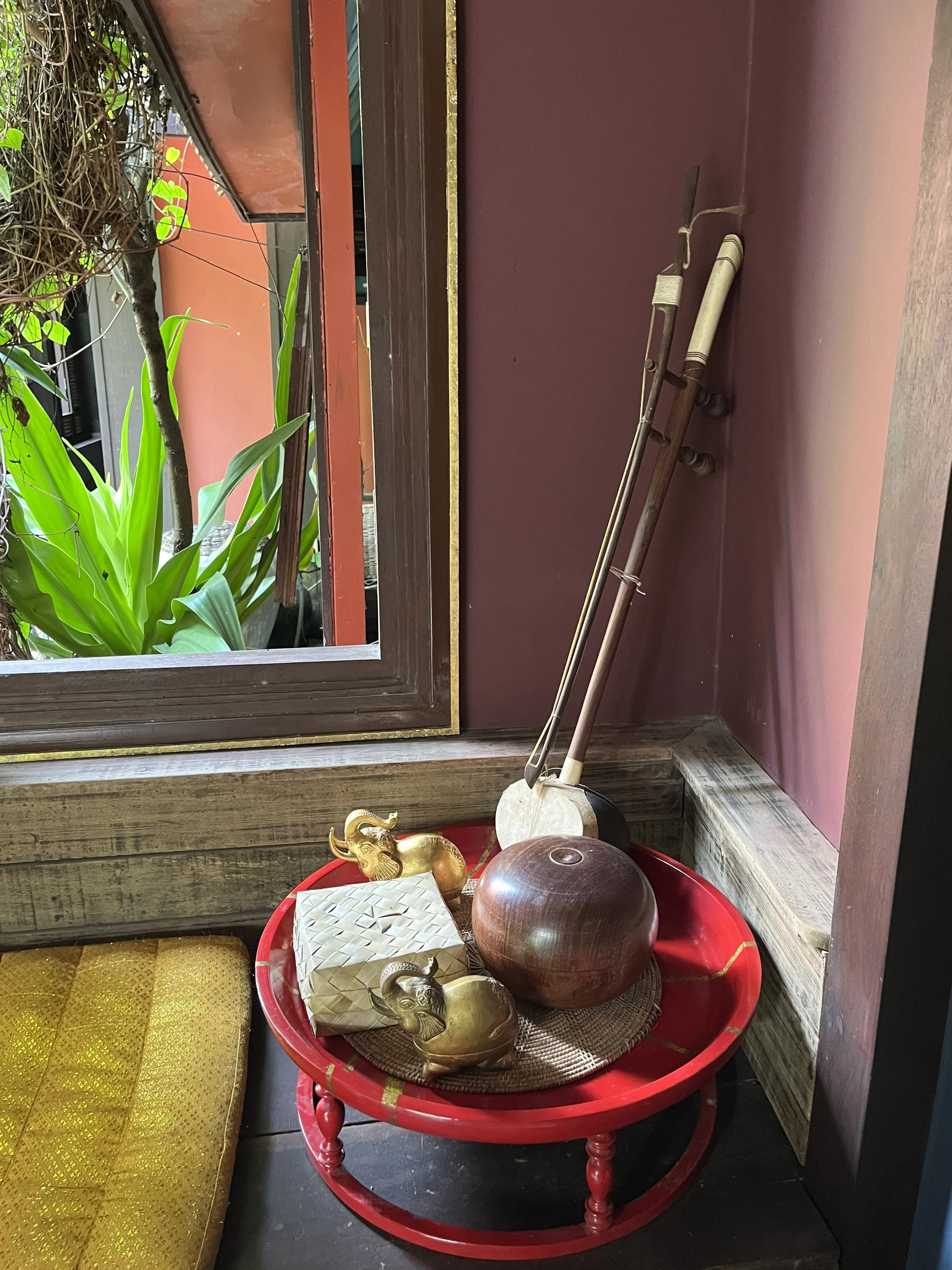
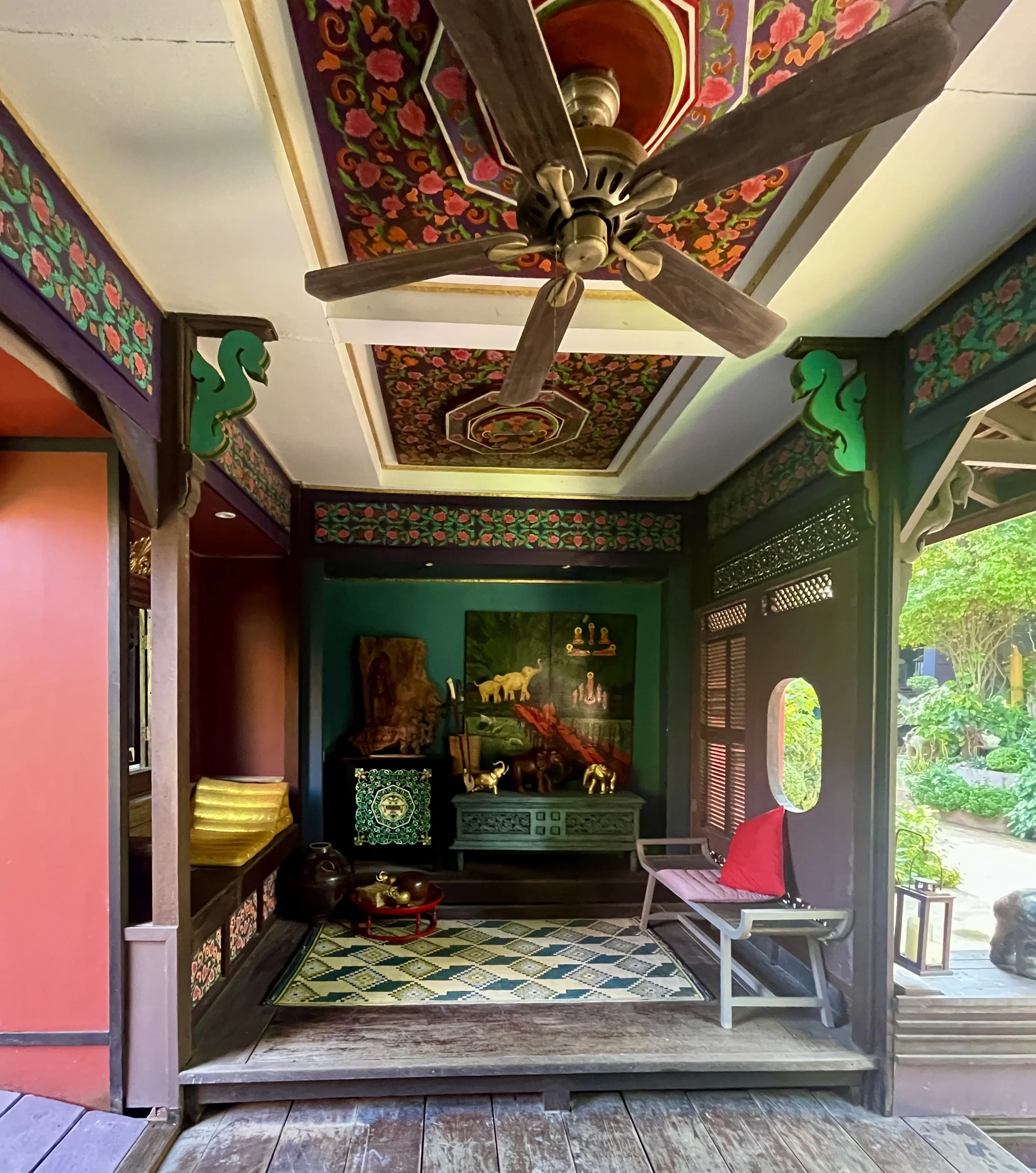
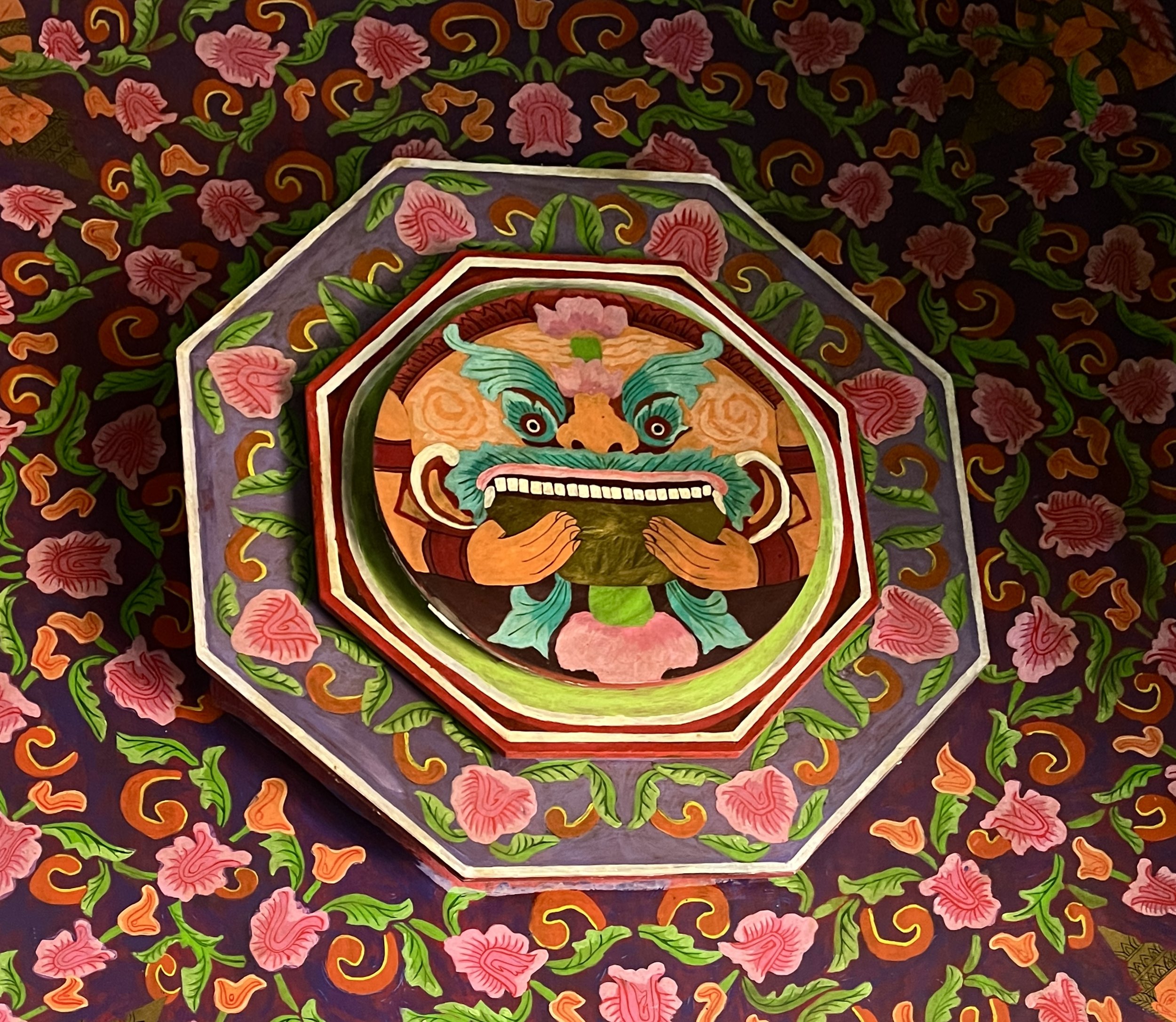
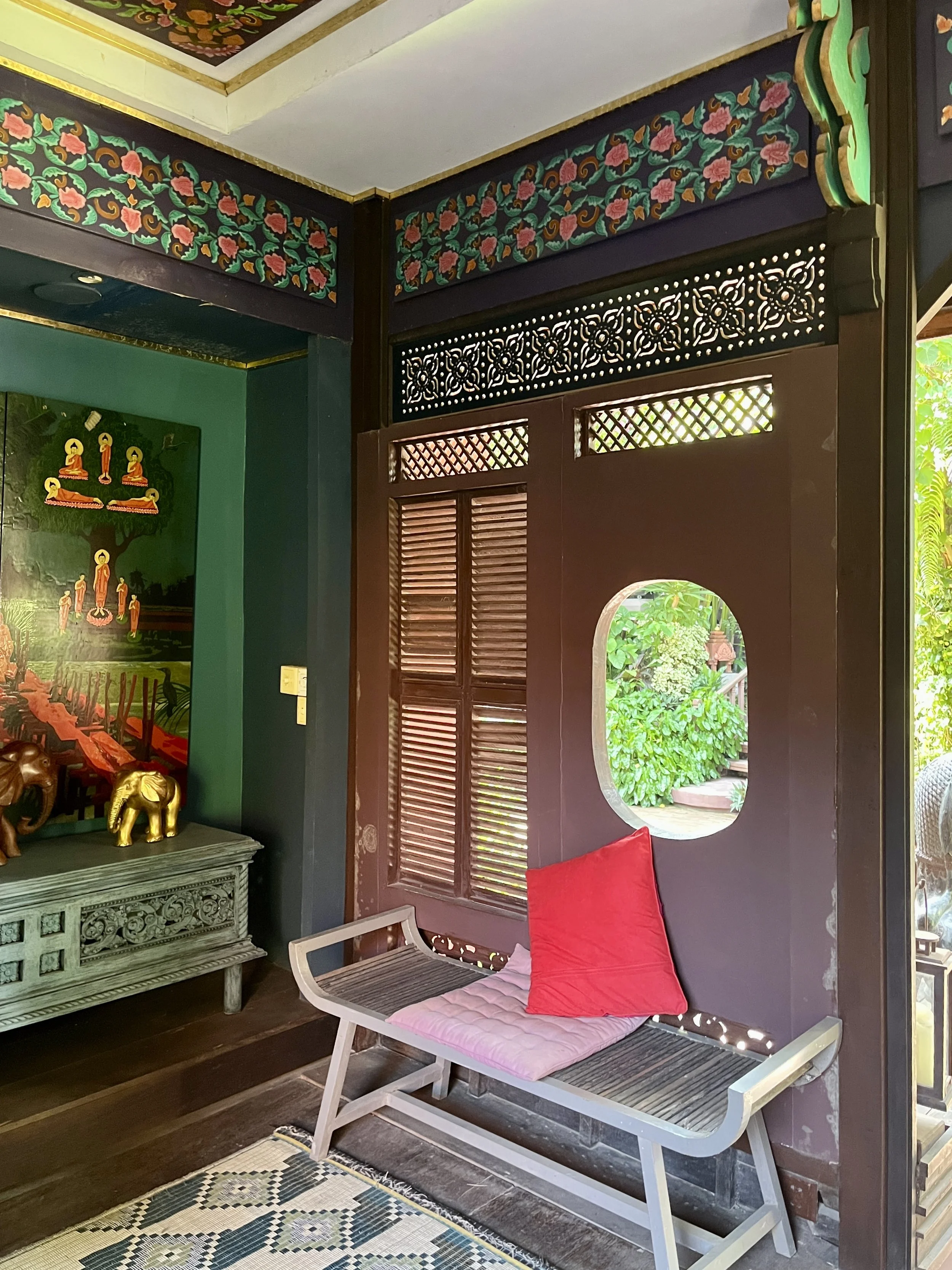
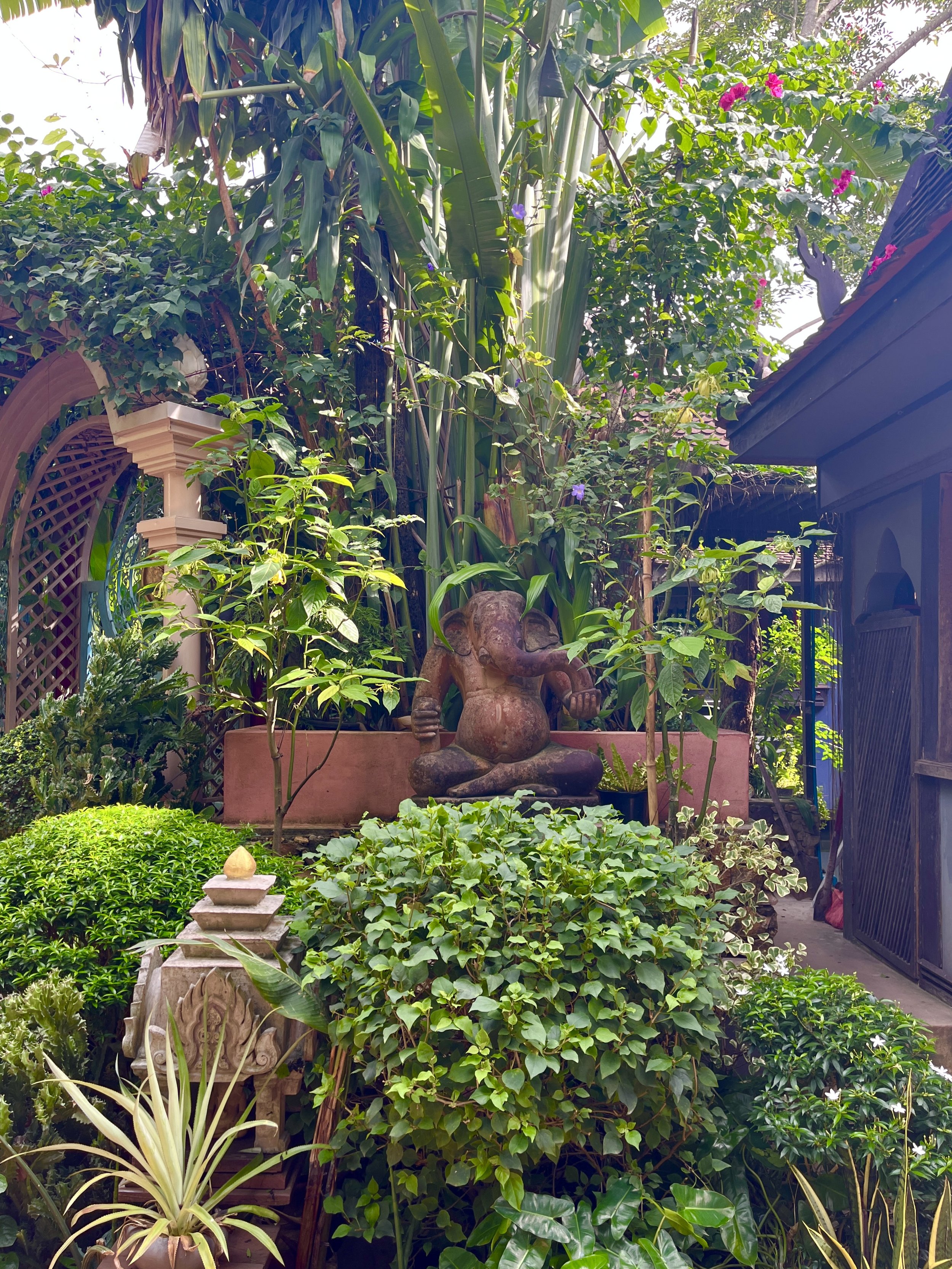
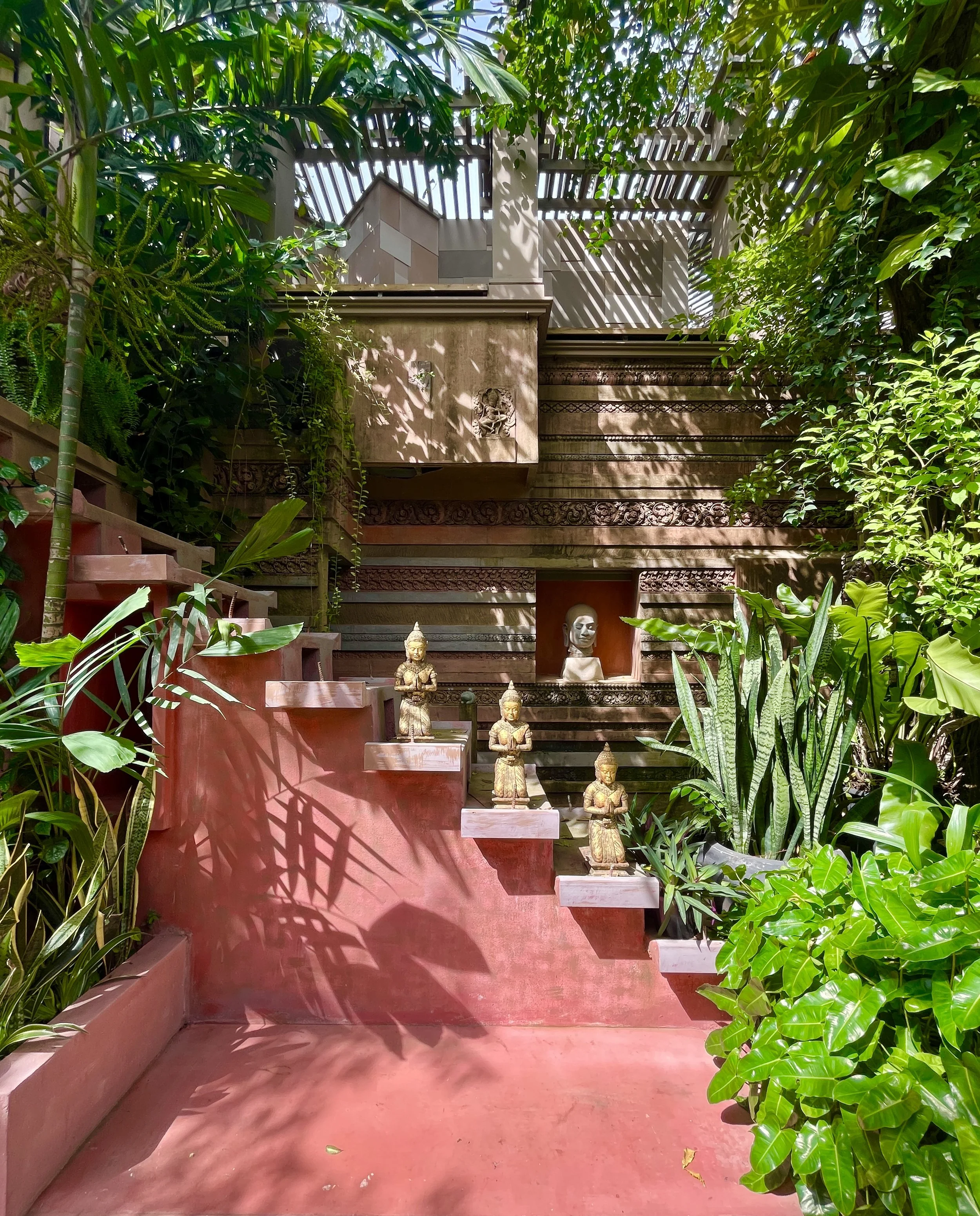
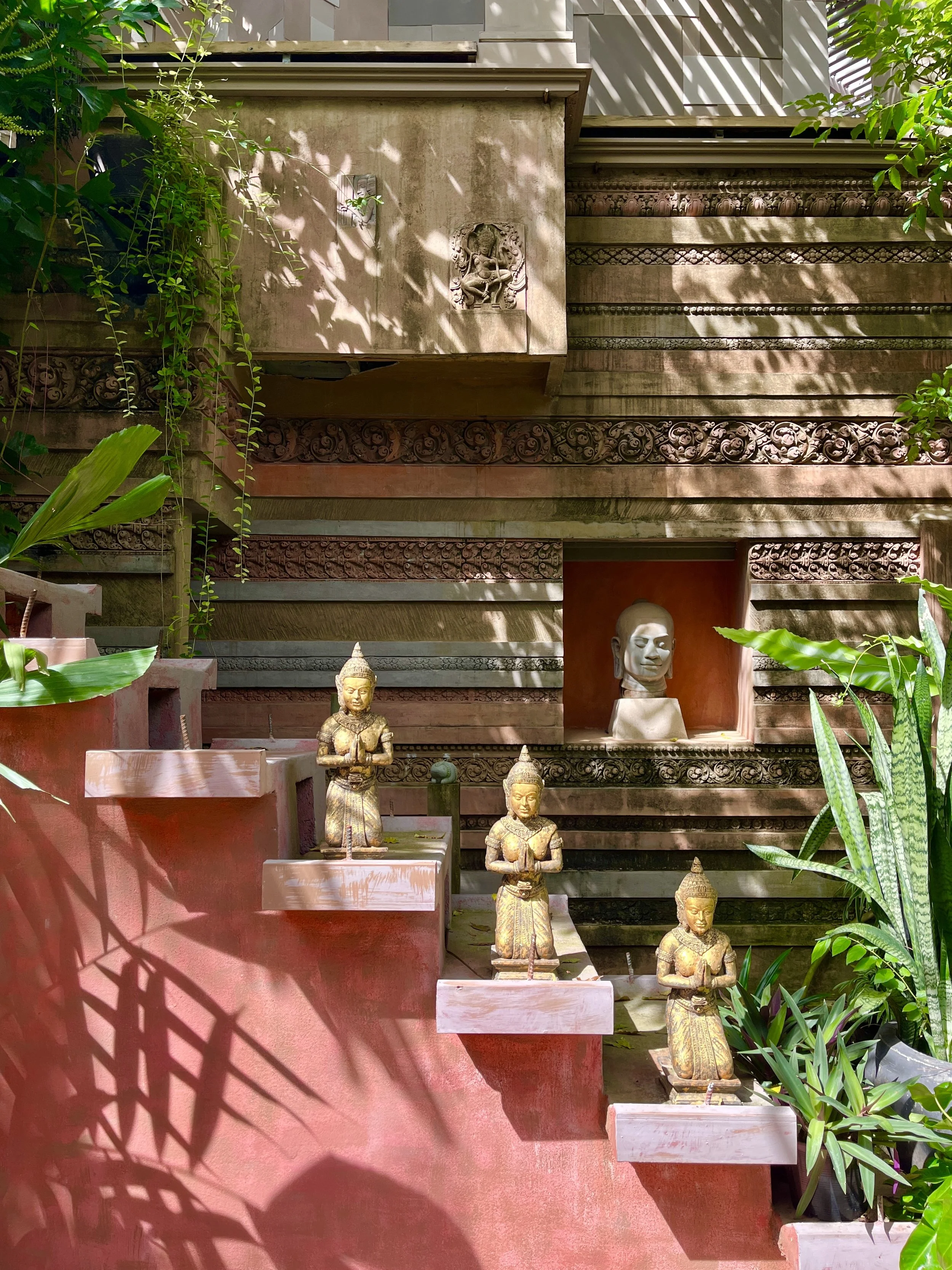
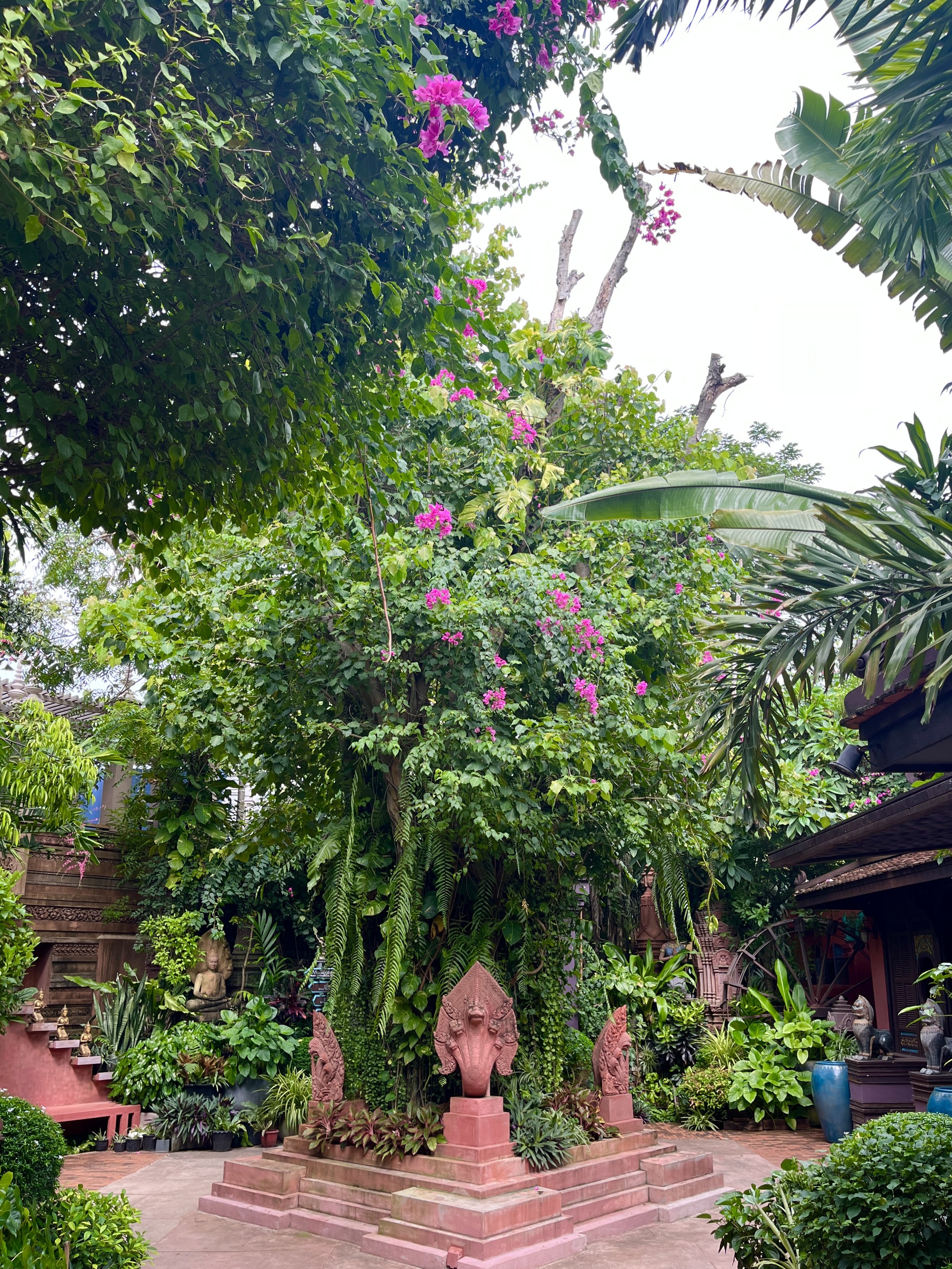
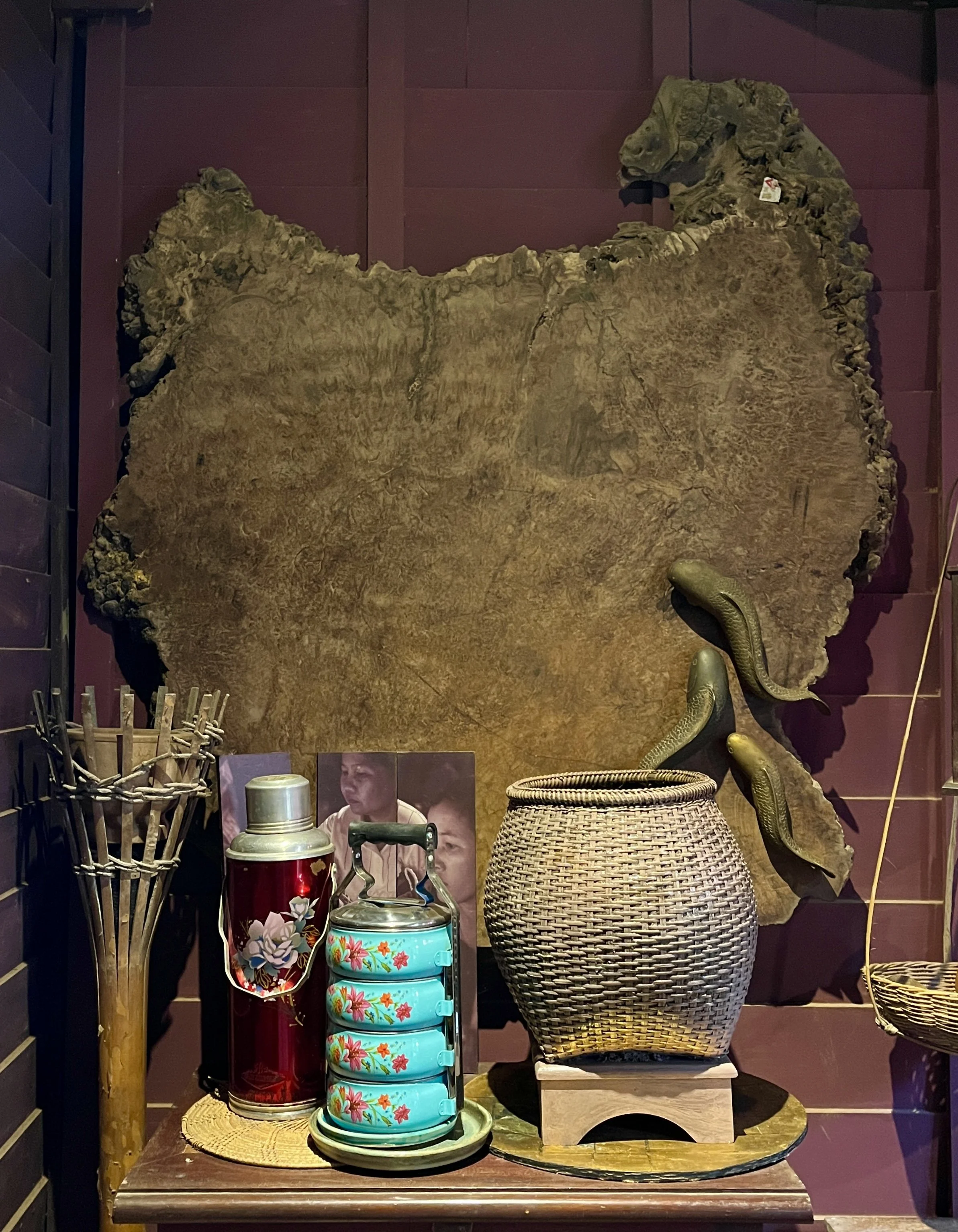
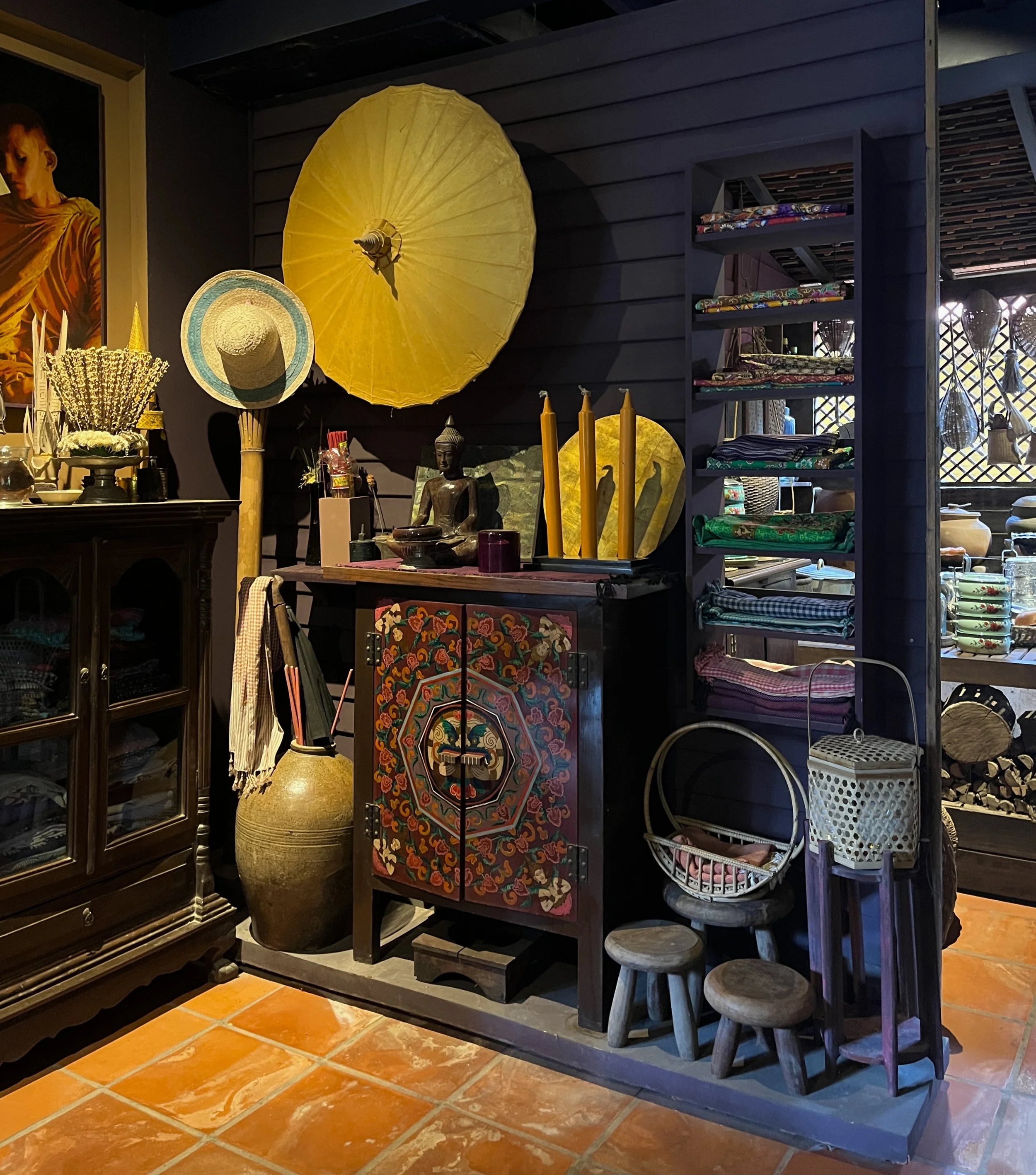
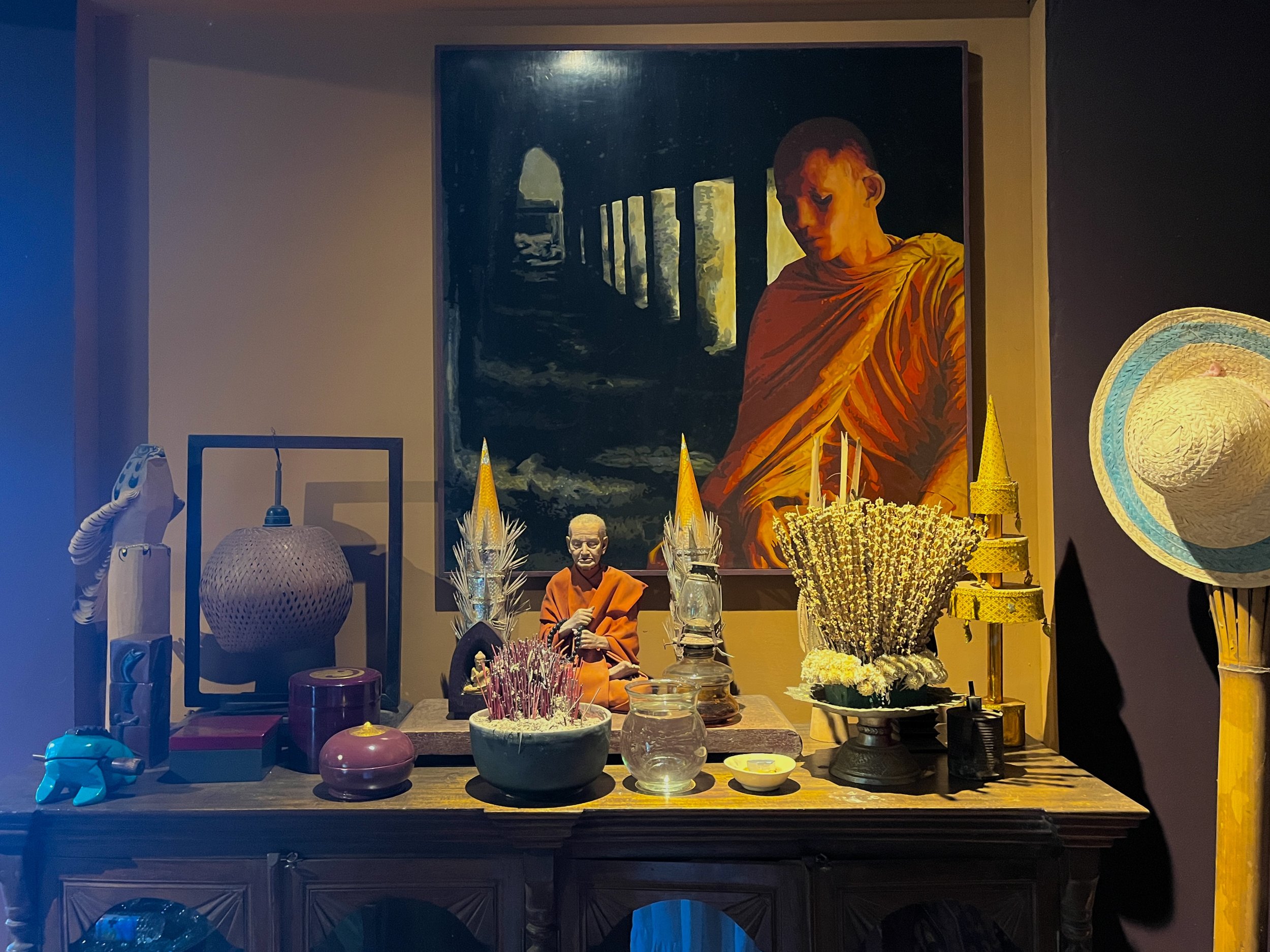
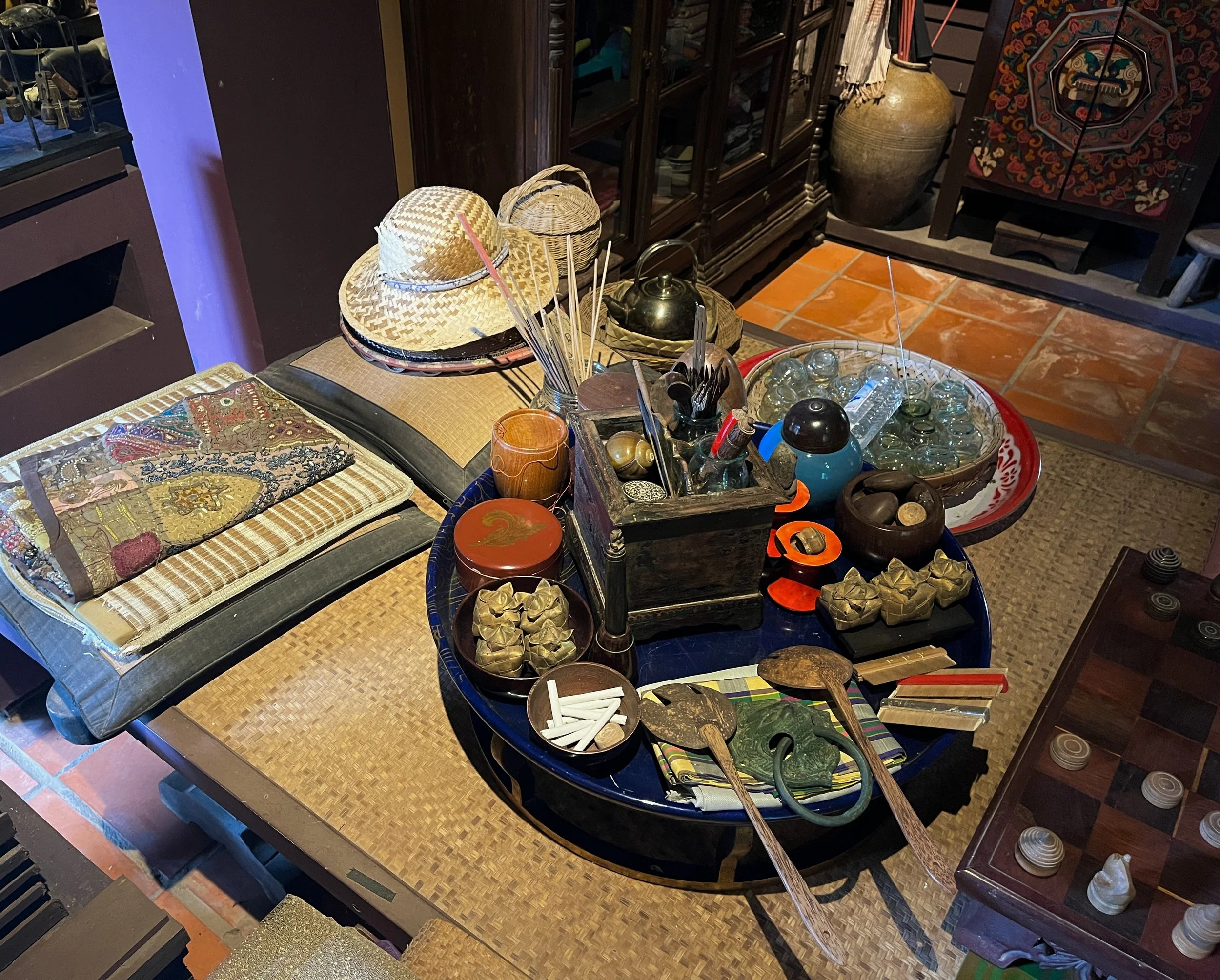
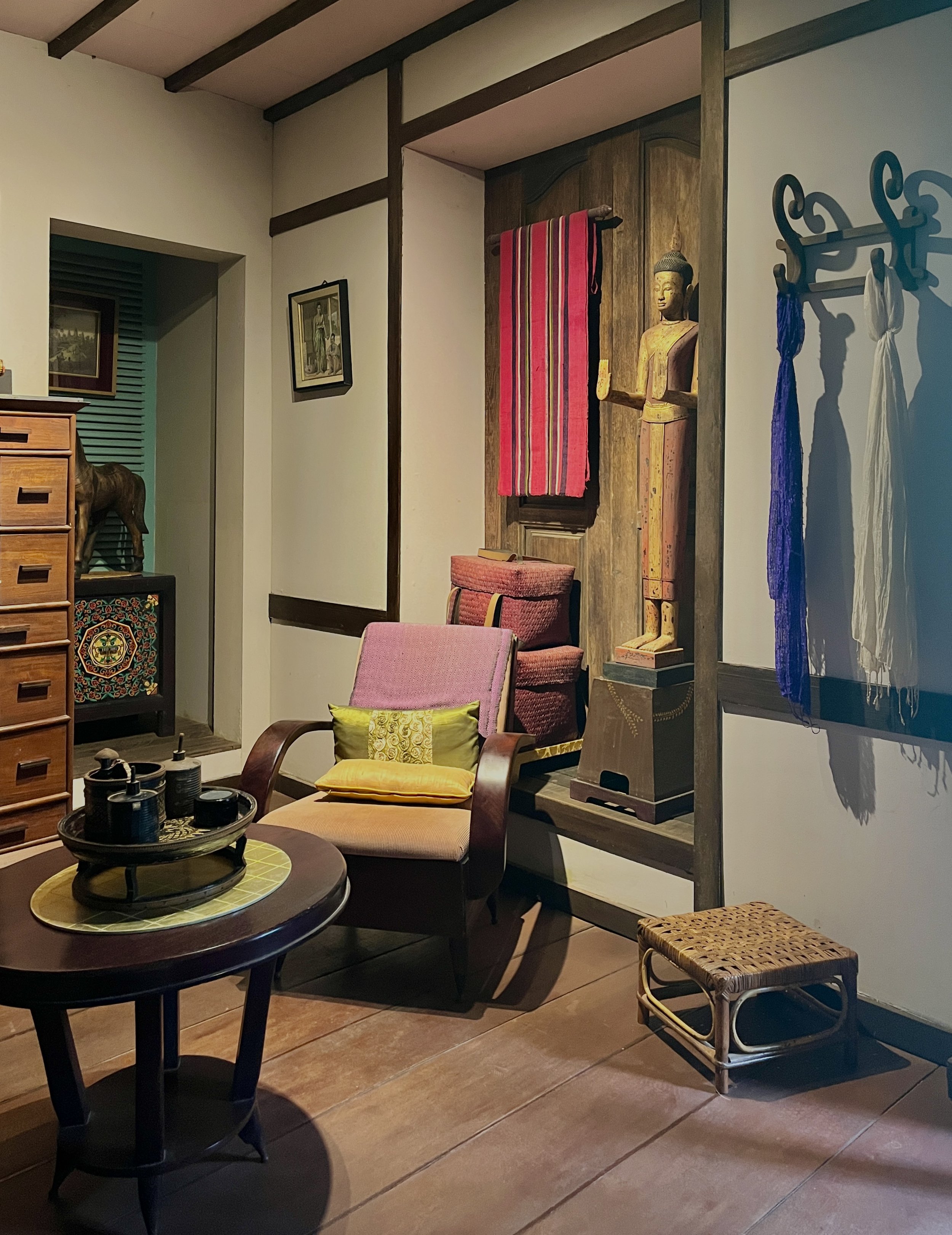
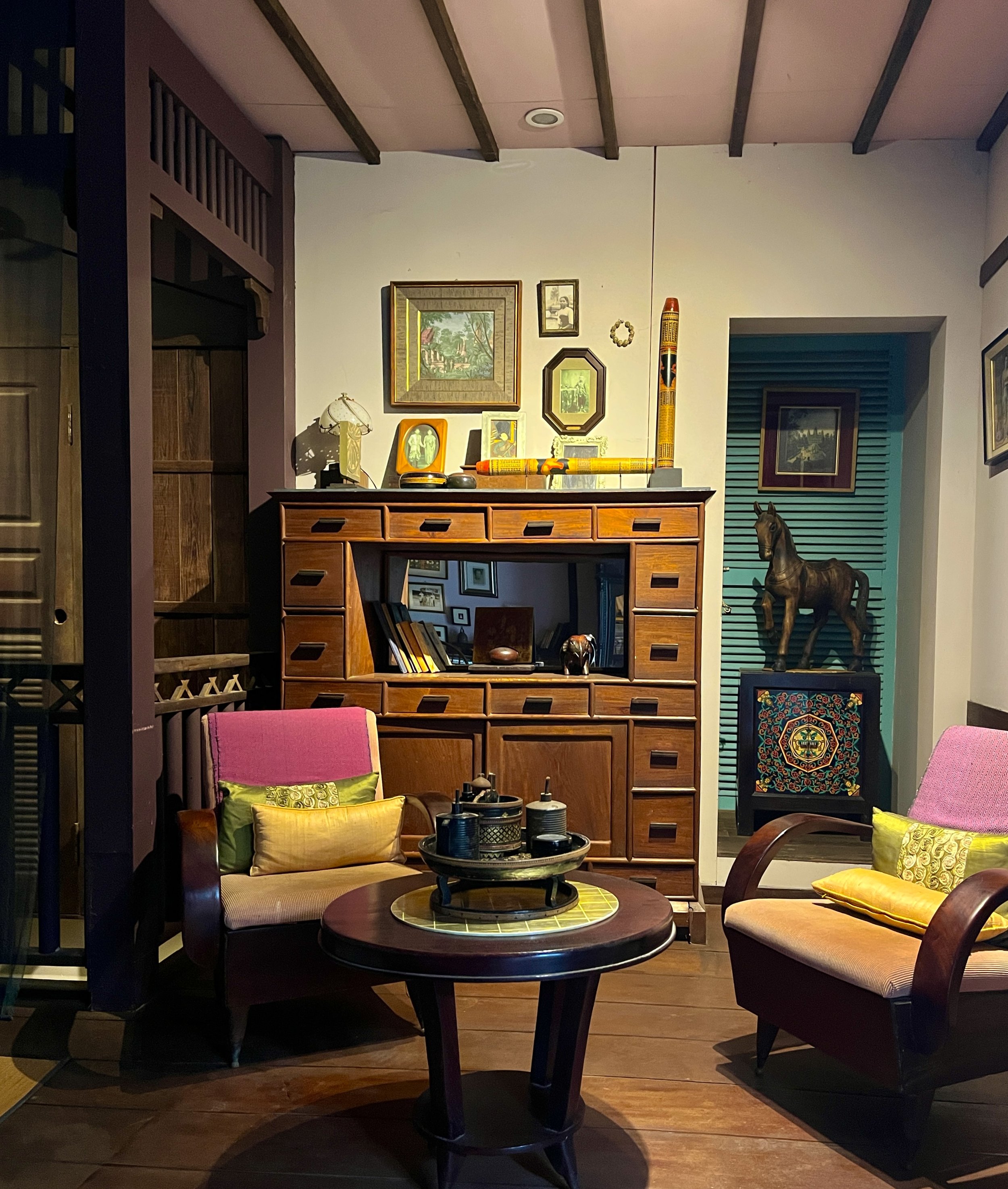
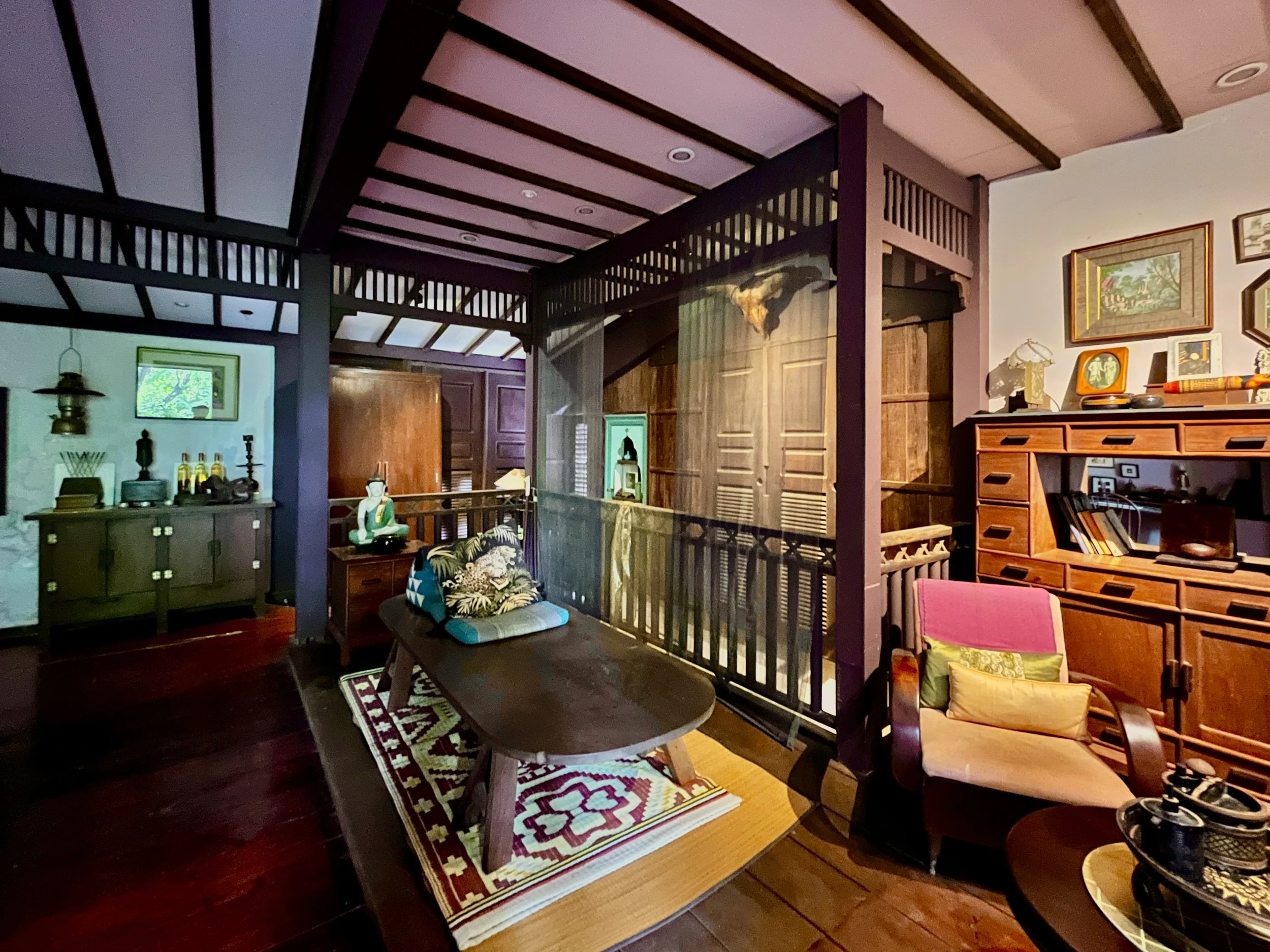
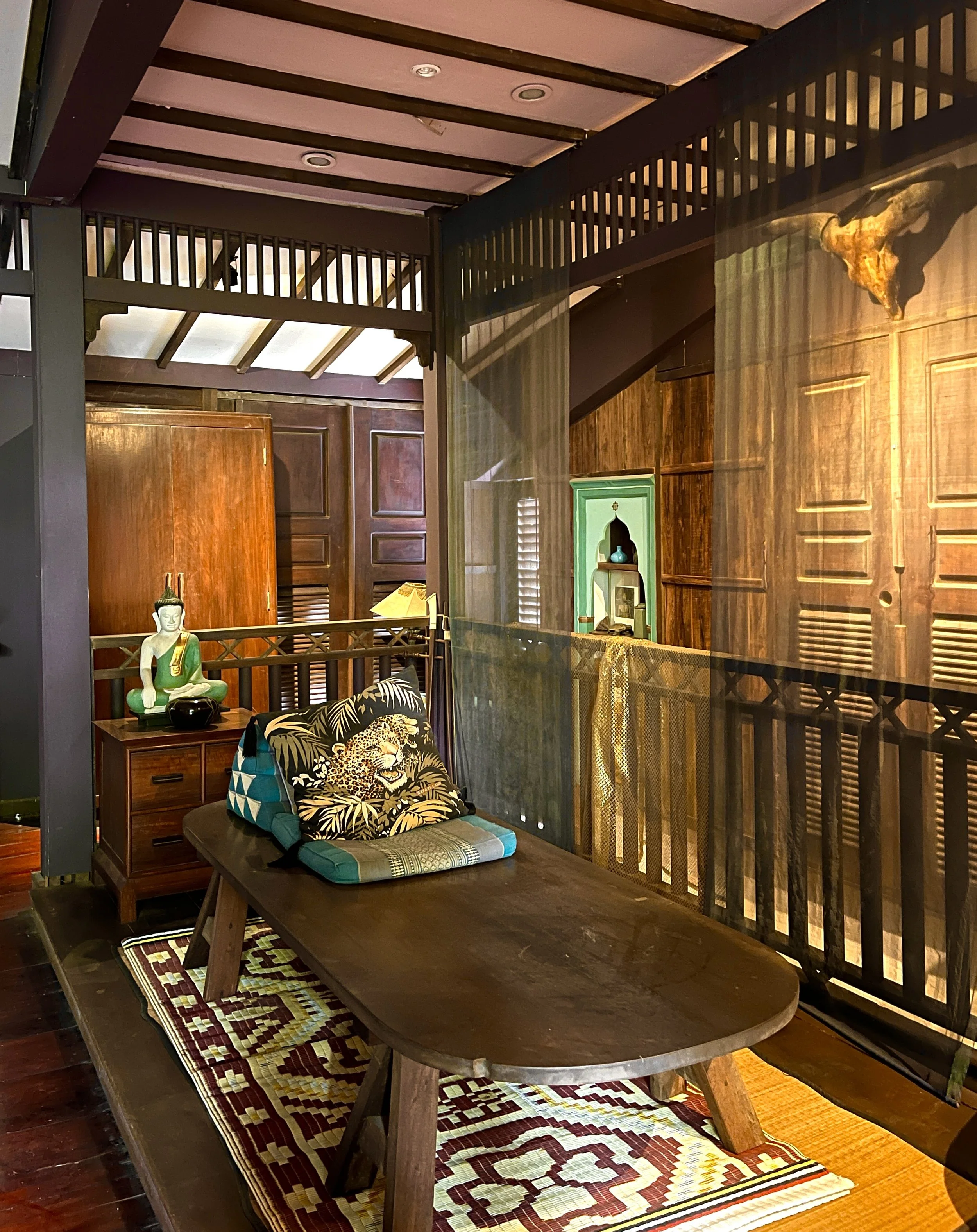
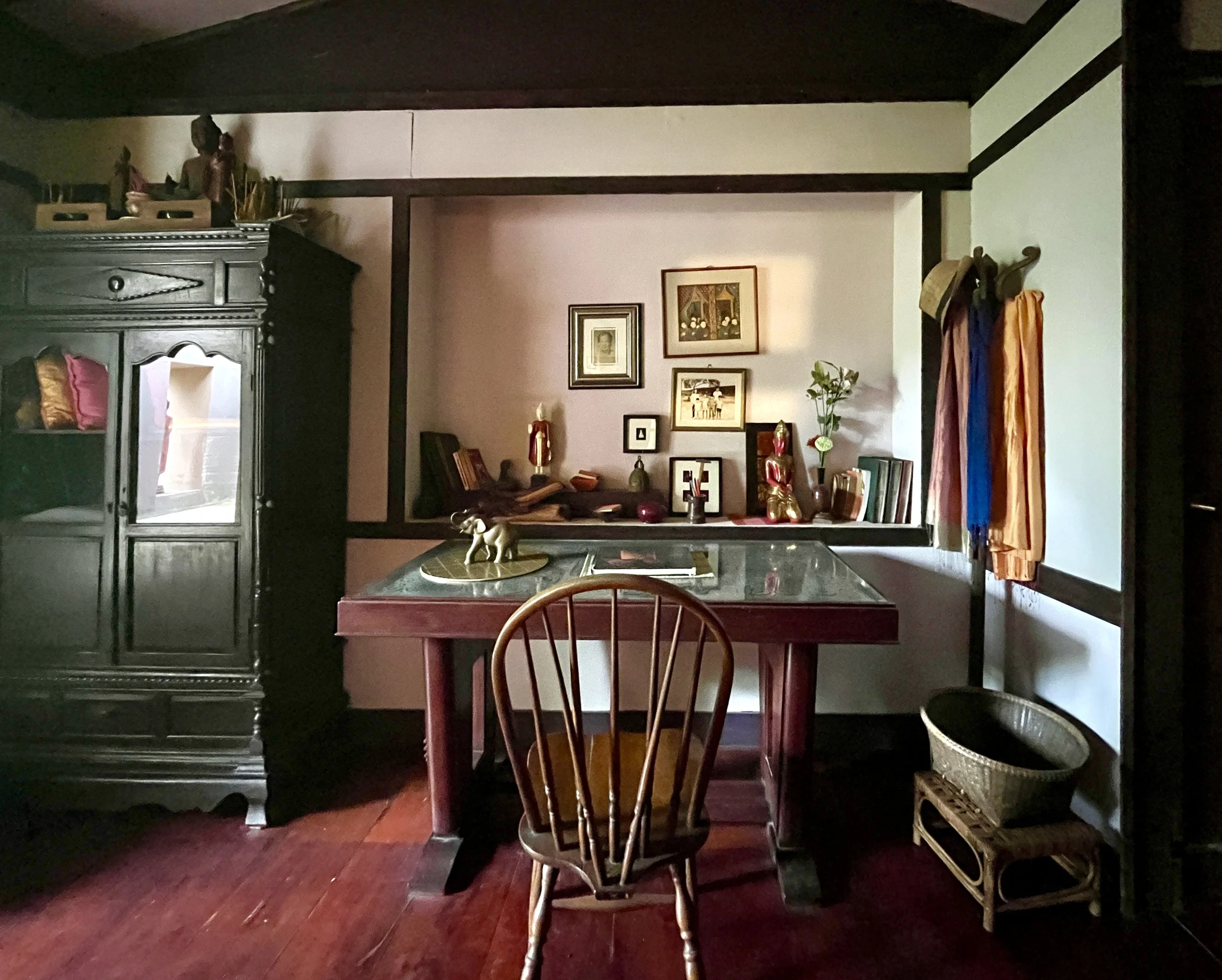
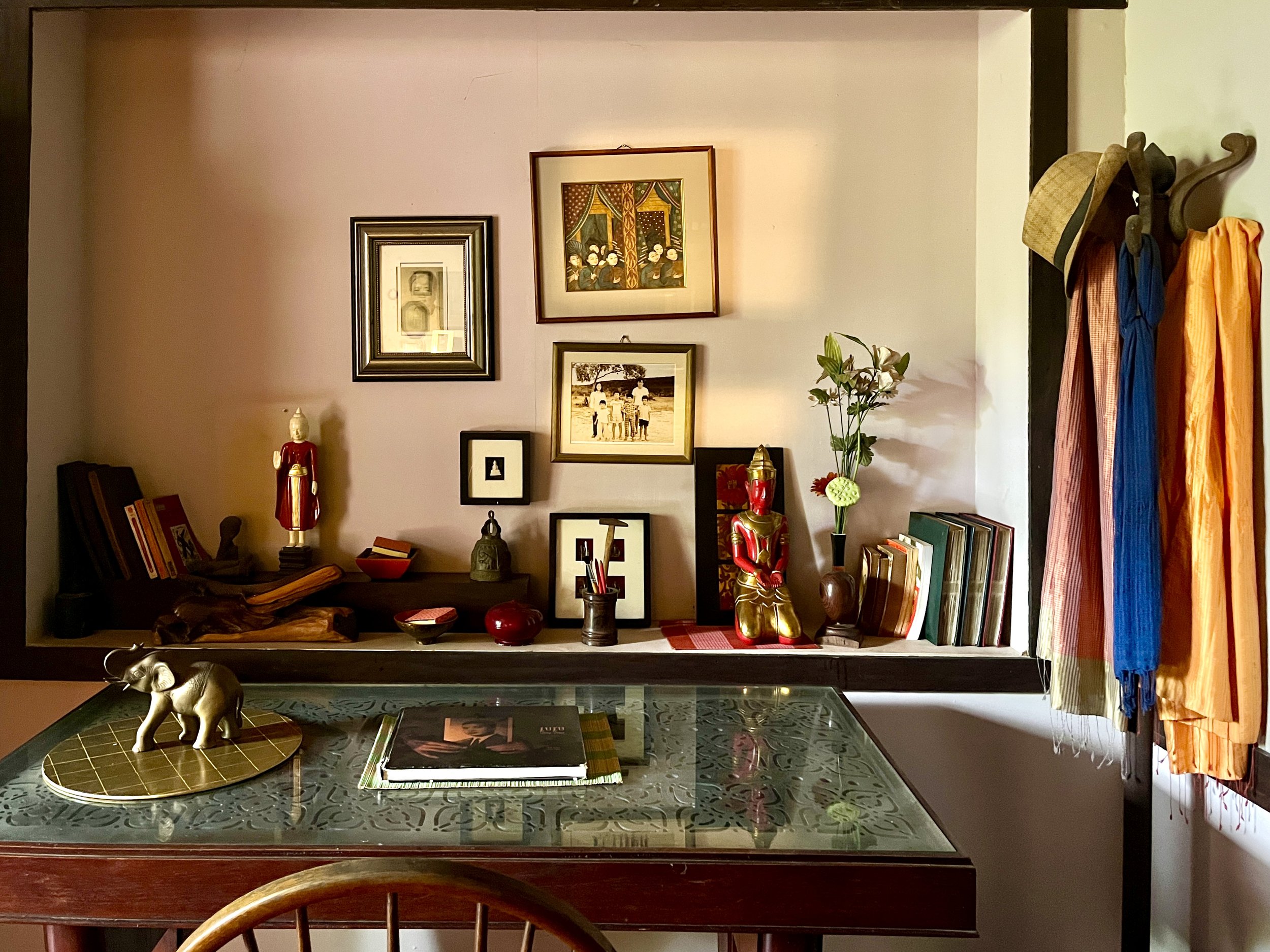
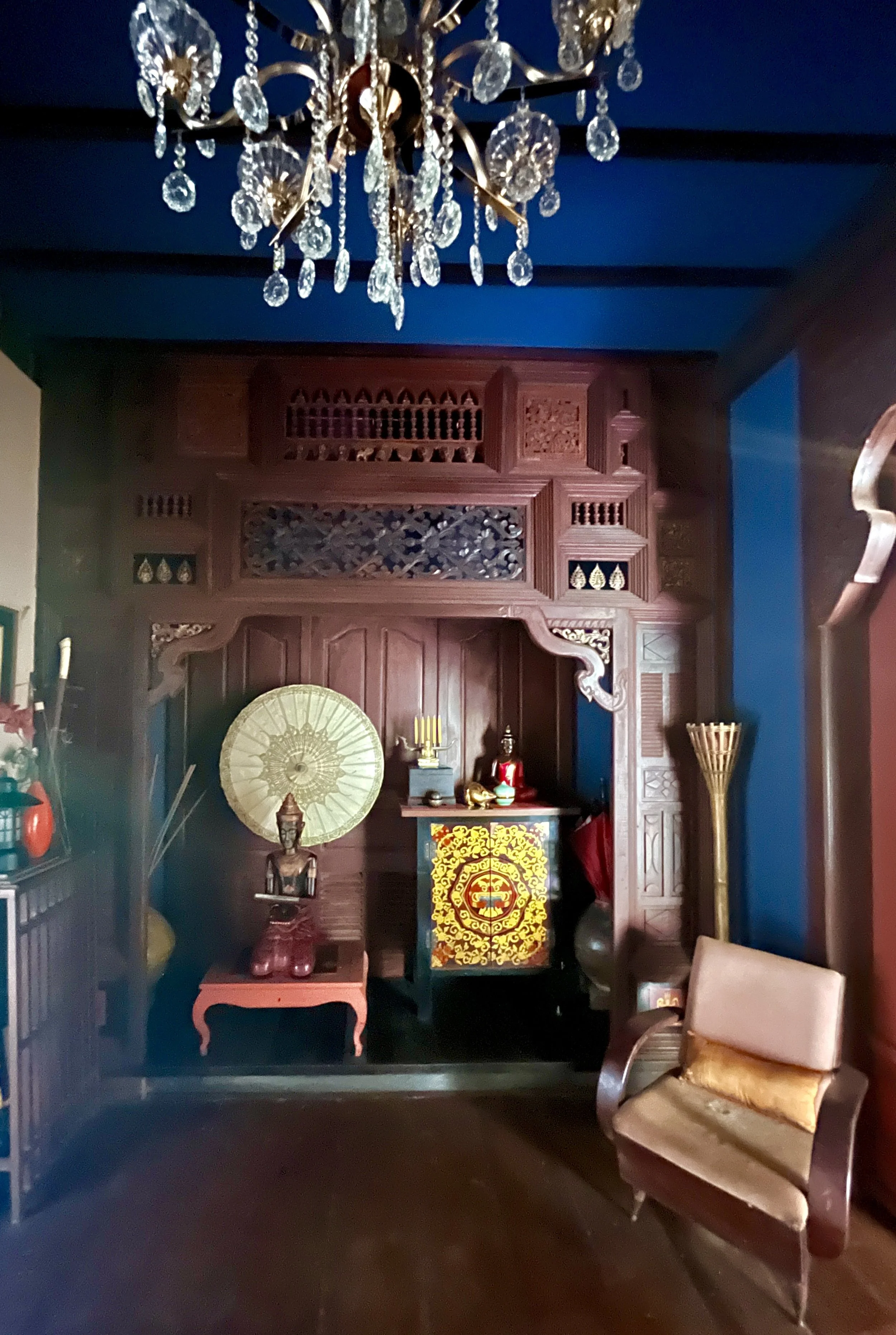
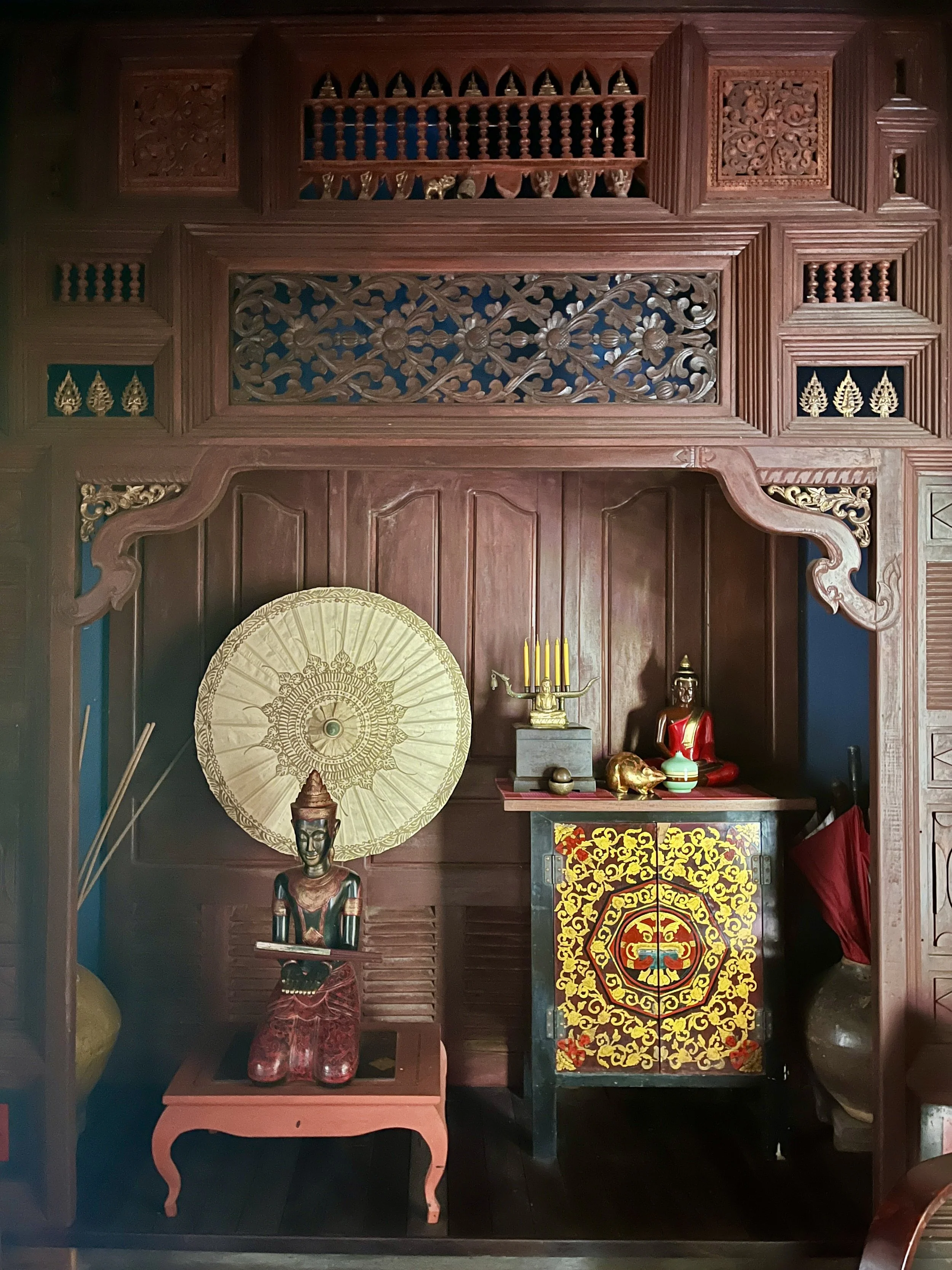
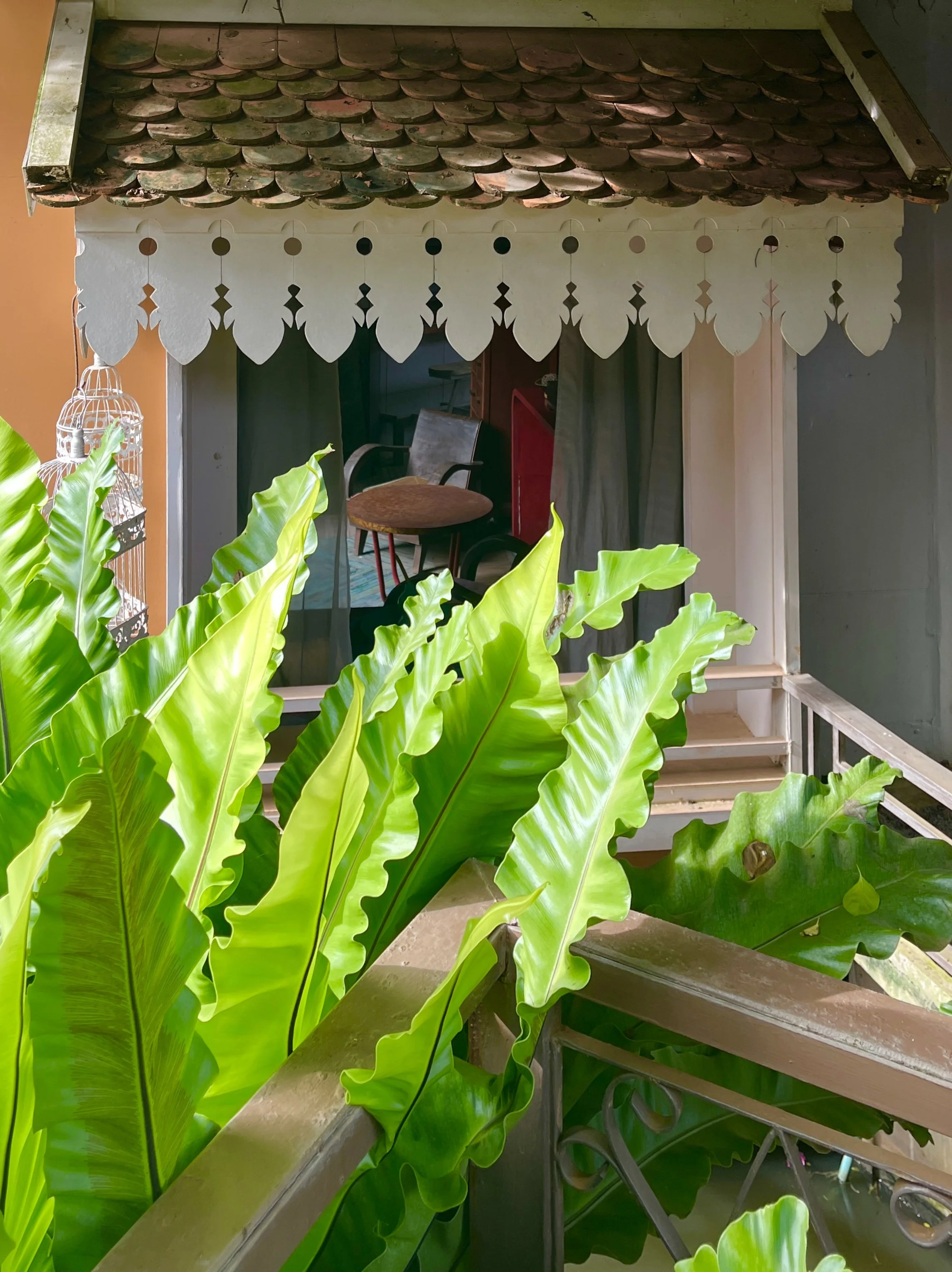
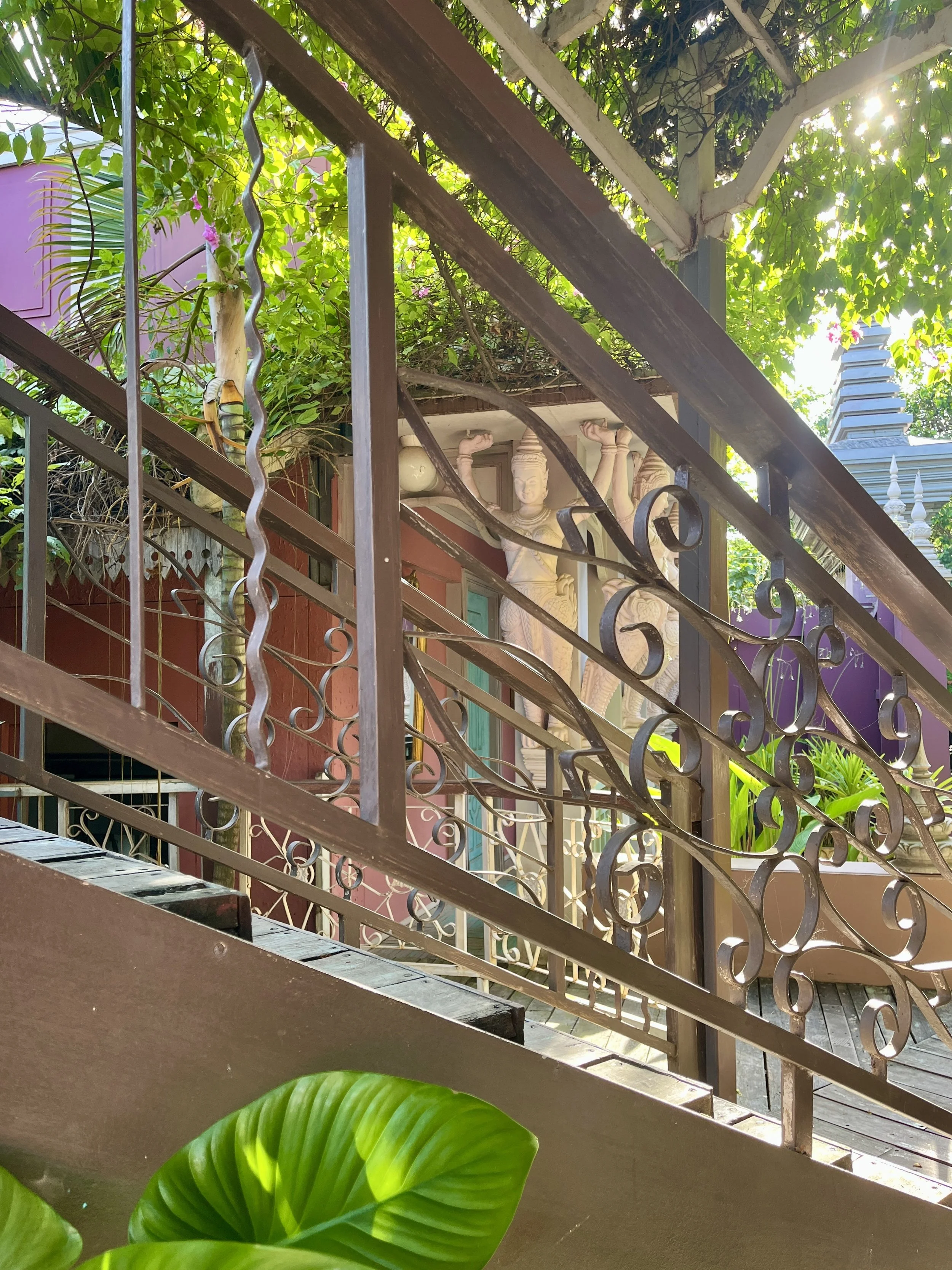
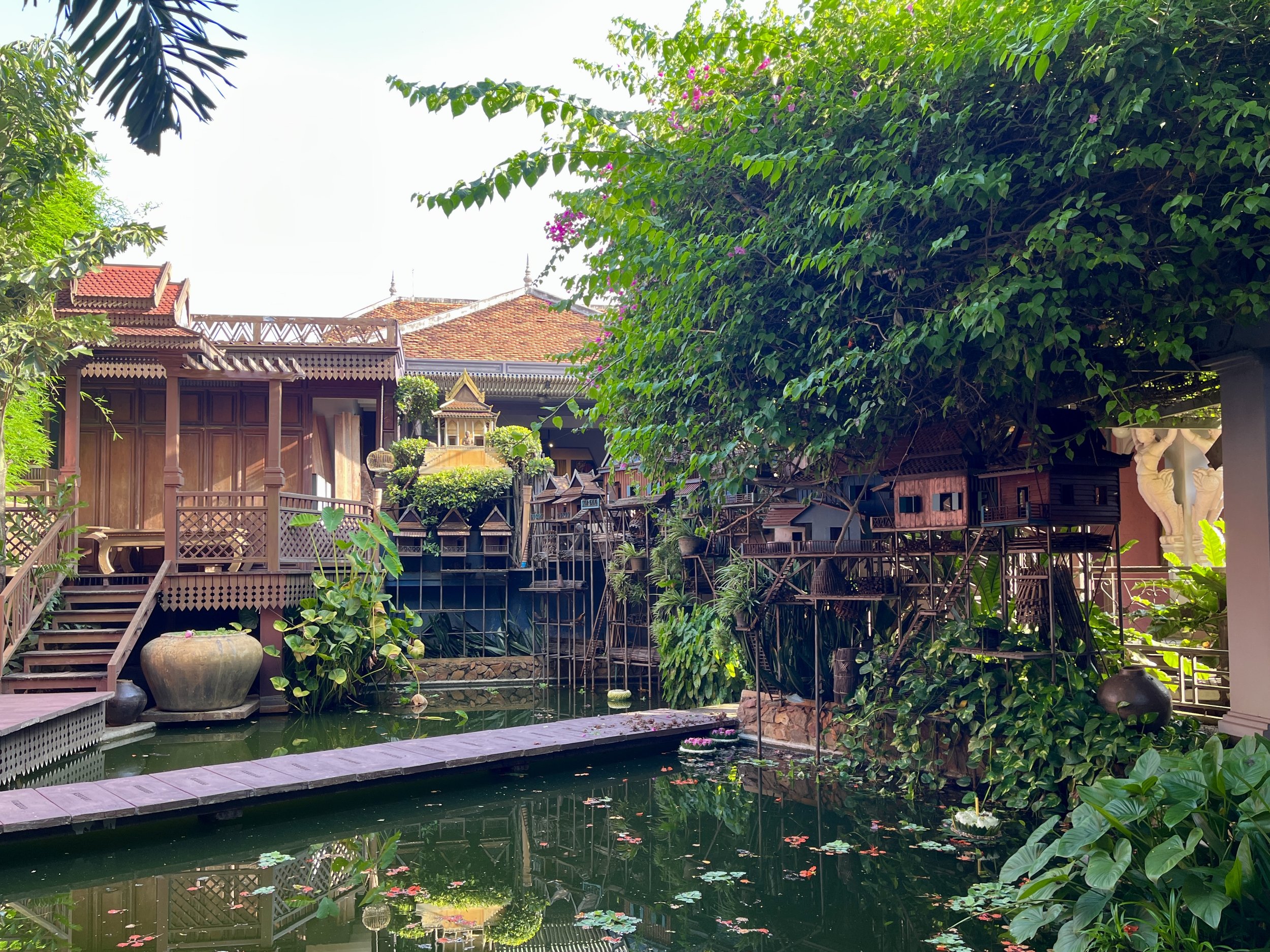
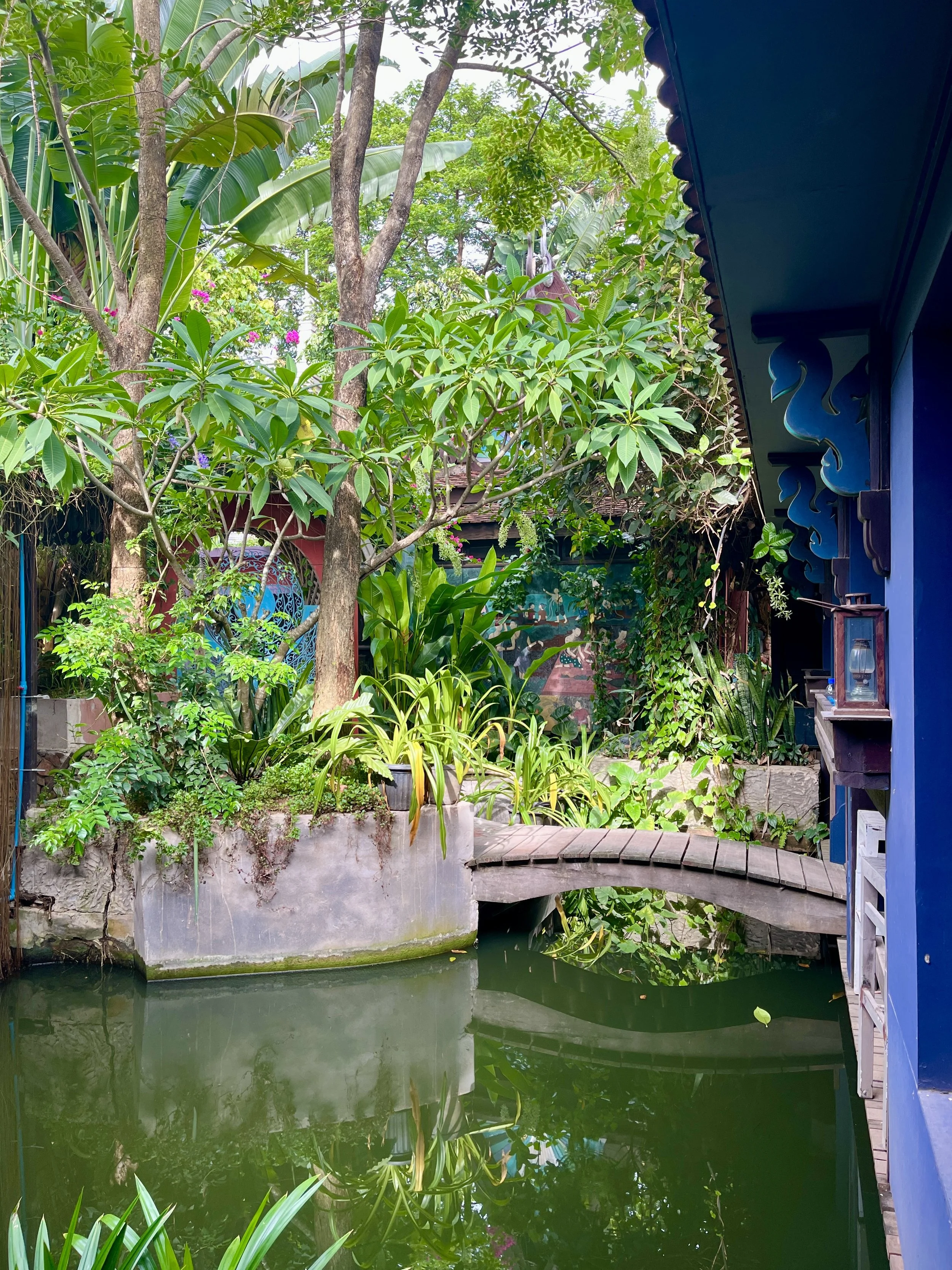
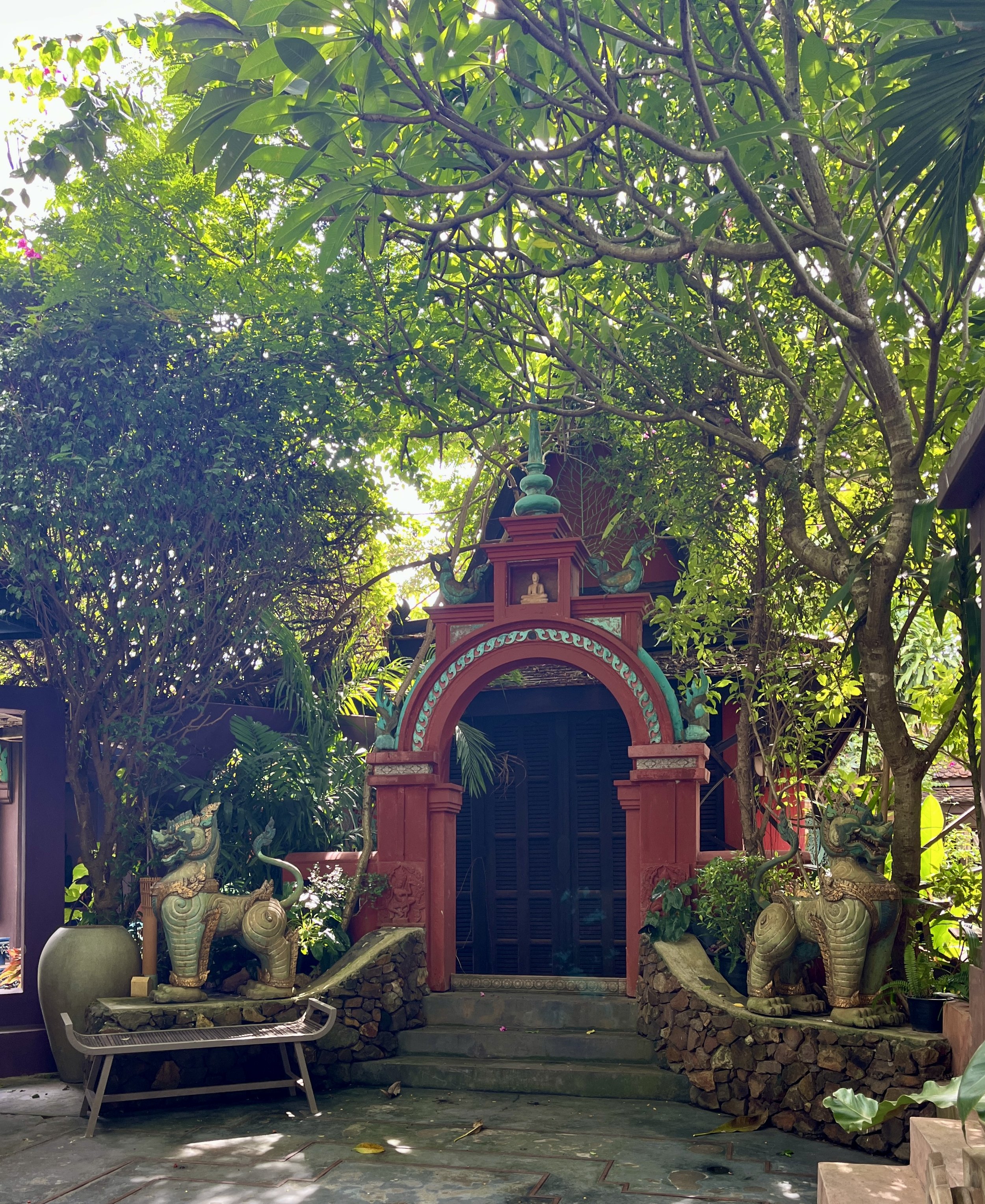
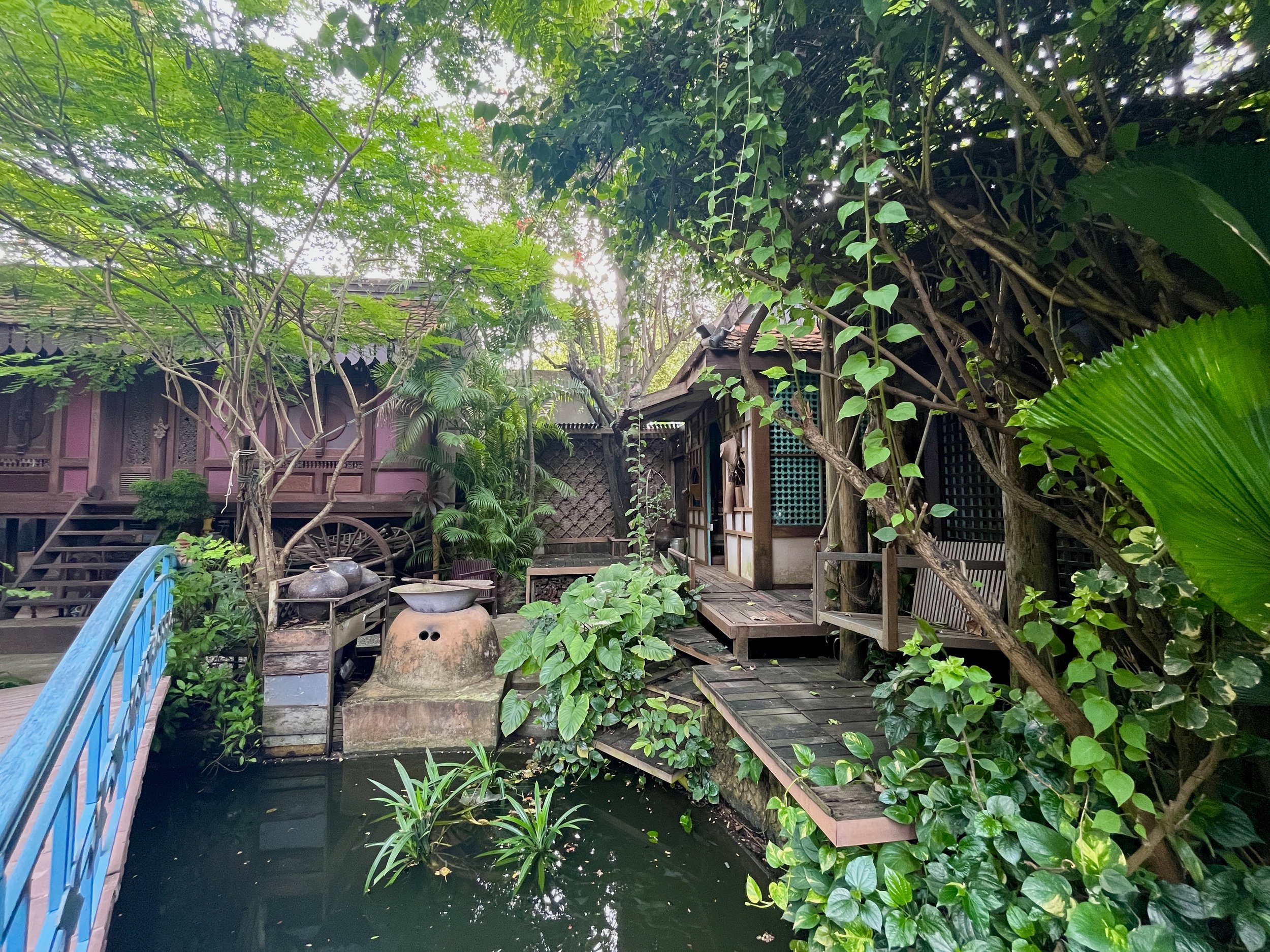
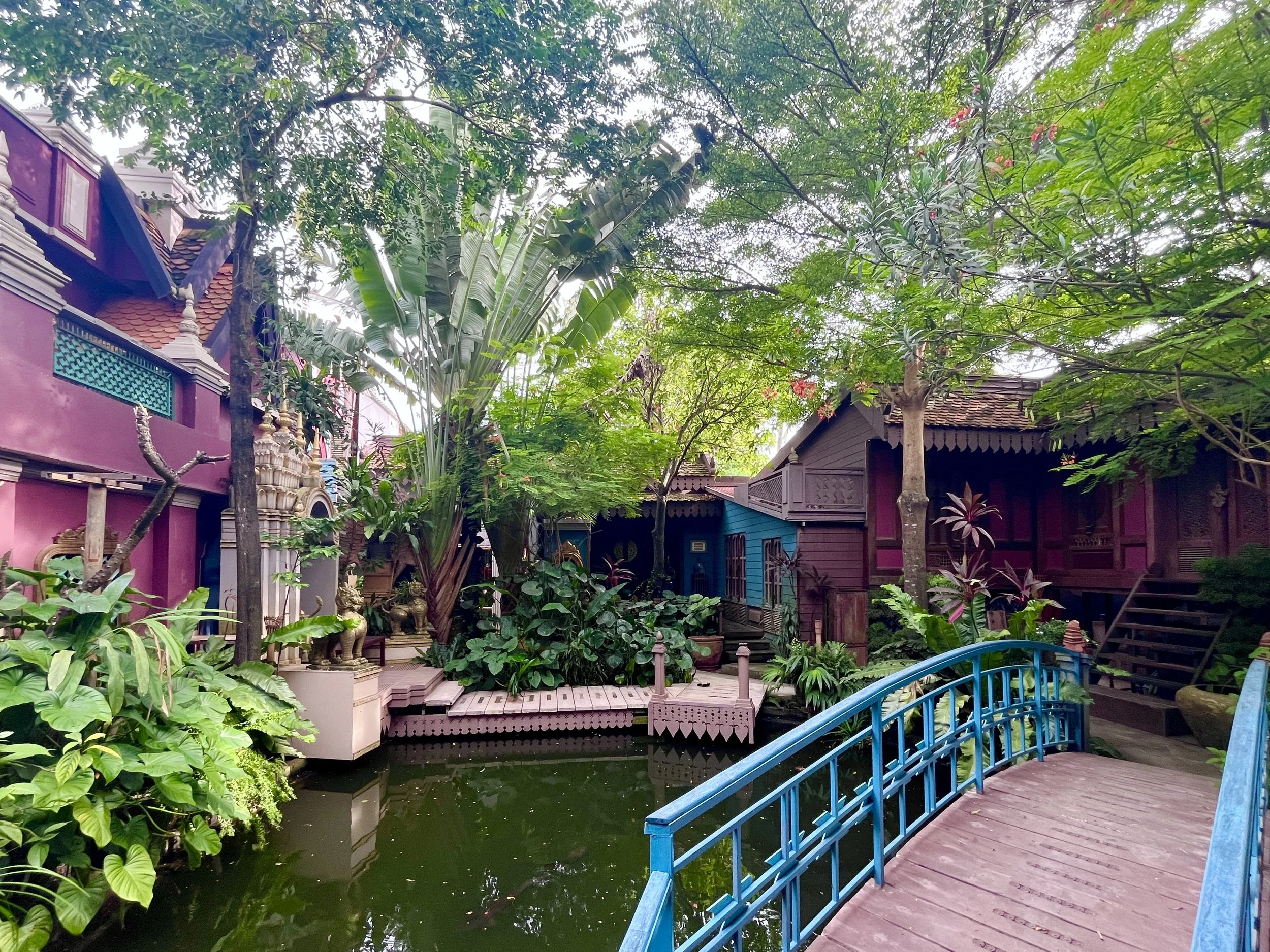
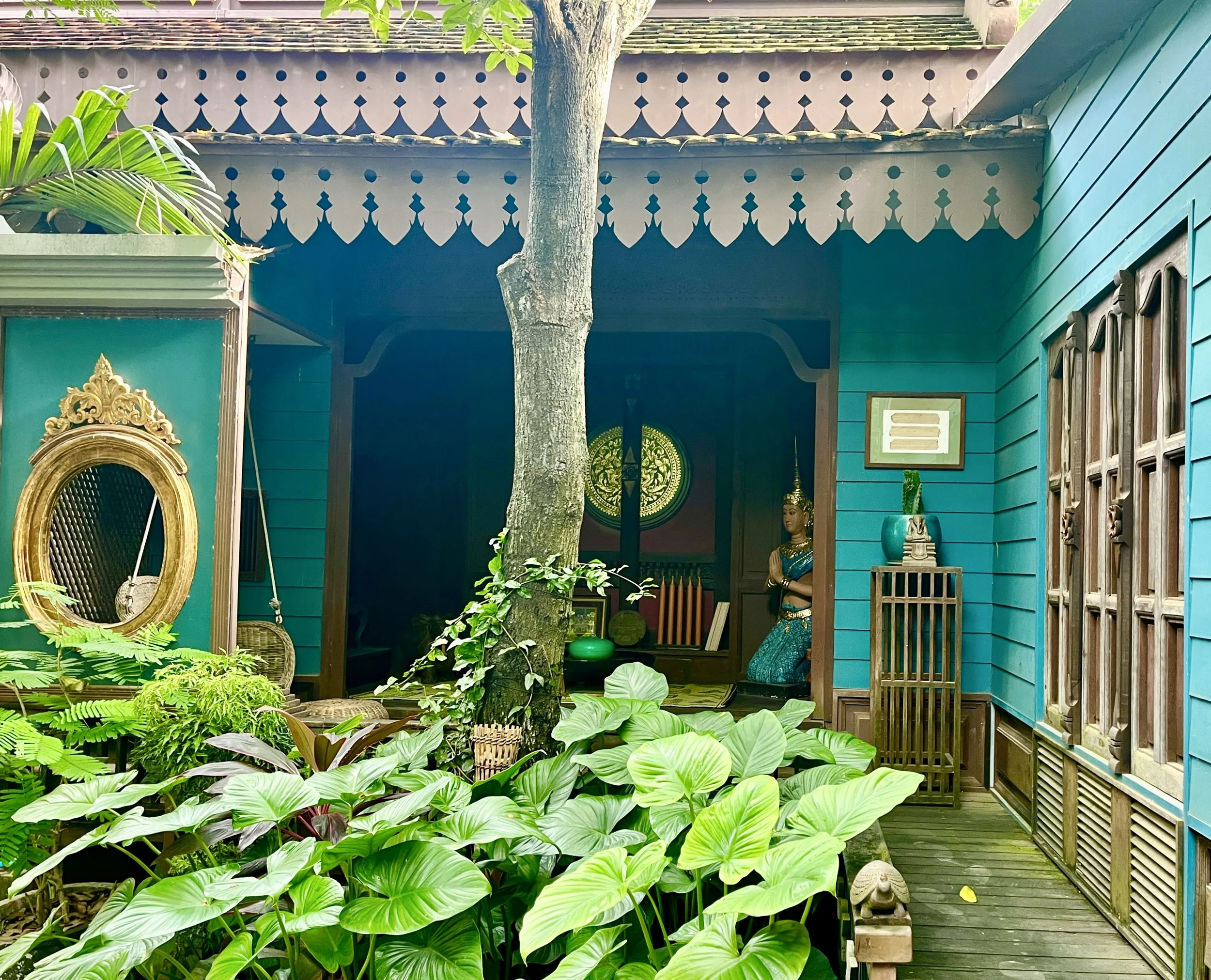
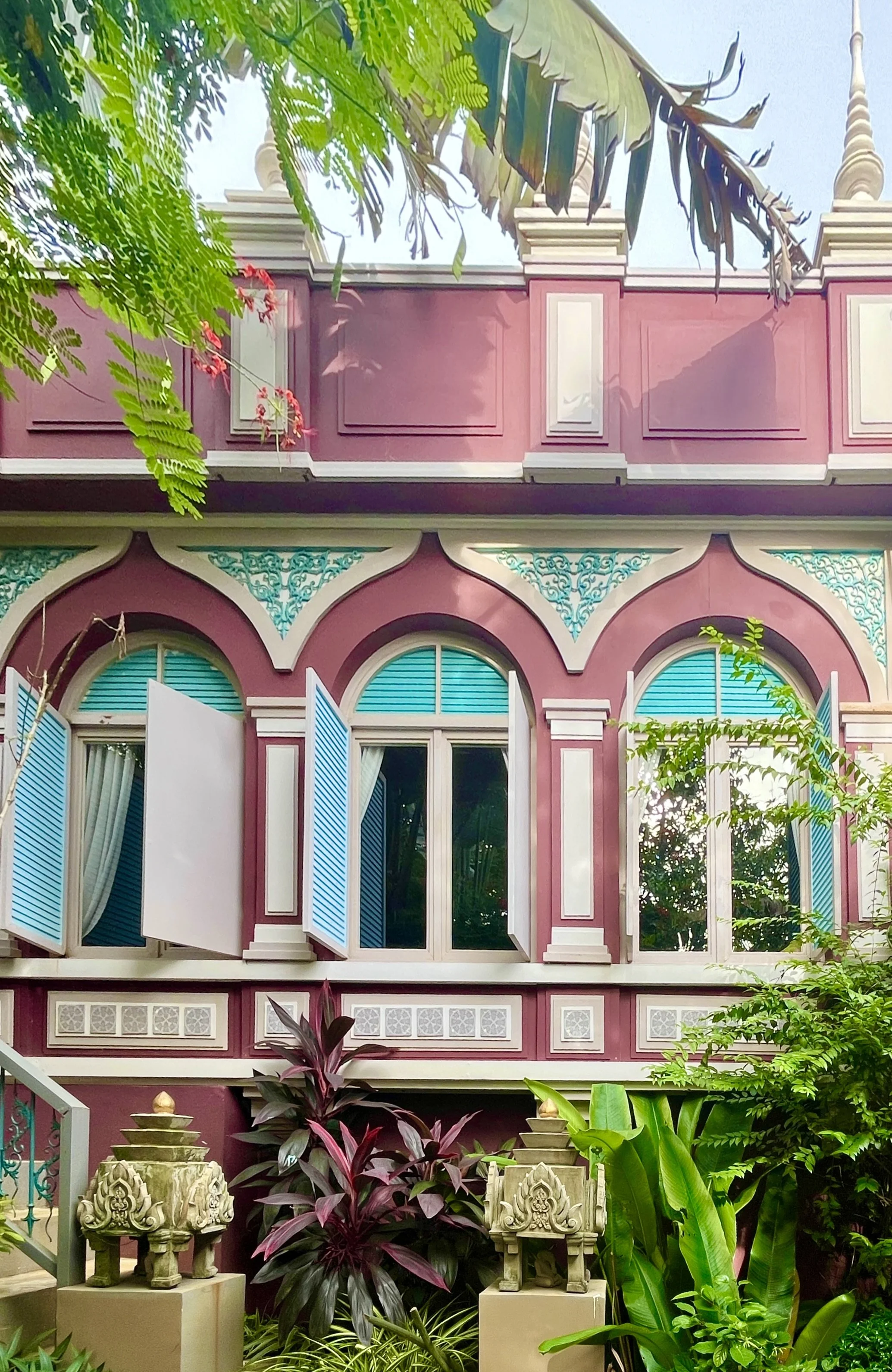
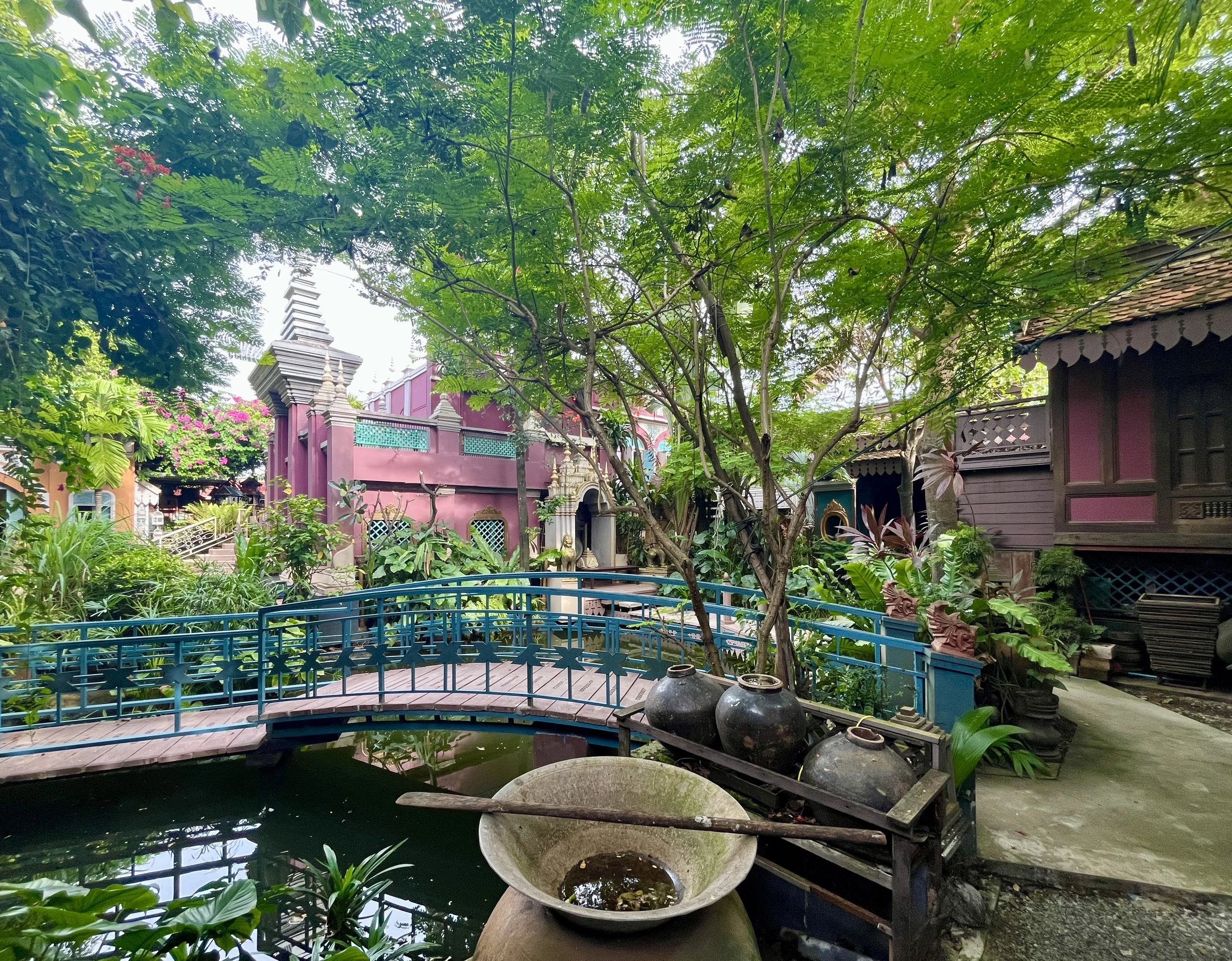
I really like that the renovation was more like a restoration, with period-perfect details and decor. It really feels like stepping back into the late 1930s; everything but the pool is accurate enough to be a movie set. Well, I guess there’s one minor caveat– all the antiques etc. are Vietnamese, not Khmer. However, as I’ve written before, after the Khmer Rouge, there are few if any surviving Khmer antiques (not looted artifacts). Zero pretense has been made towards inauthentic generic “luxury” in the style of Raffles, and I really like that. On the other hand, housekeeping is really not up to snuff; the rooms were very visibly dusty, smelled vaguely of either stale cigarettes or mold, and the linens etc. have clearly never been refreshed. It reminded me a lot of Loire valley 2 or 3 stars I stayed in as a teenager in the ‘90s.

In terms of service . . . not good enough. There were assholes smoking in front of my bathroom window and the concierge refused to ask them to stop or move– he did the standard SEA act of pretending to ask them not to smoke, then coming back to me and denying they had. When I told him I saw it with my own eyes, smelled it with my own nose, and wanted them and the furniture they were sitting on moved away so it didn’t happen again, he again, according to what seems to be a standardized SEA playbook of bullshit for hoteliers, refused to confront them, instead offering to move me into another room, as if I was the problem. I had paid for their most expensive suite– and therefore shouldn’t be inconvenienced, and certainly not downgraded– but was forced to choose another lesser room because the head staffer refused to confront the offending guests.

Same thing with the restaurant– instead of seating smokers far away from other guests outside, they let them sit right next to the glass doors, and left the doors propped all the way open, not caring if people purposefully sat inside in order to not be disturbed by smokers. It’s not an issue of not getting it, it’s an issue of not caring. Any complaints are answered with feigned ignorance, lies, and malicious compliance, it’s so, SO gross. I’ve been in SEA long enough to expect this nastiness rather than be surprised by it, but it still disappoints and disgusts me every time.

The restaurant is overpriced but reliable. The cocktails are fine. My favorite thing about this place, other than its architectural integrity, is how few other guests were there most of the time. It’s the kind of place I’d like to buy and turn back into a private residence.

The Old Khmer Houses of Wat Kor, Battambang | Cambodia

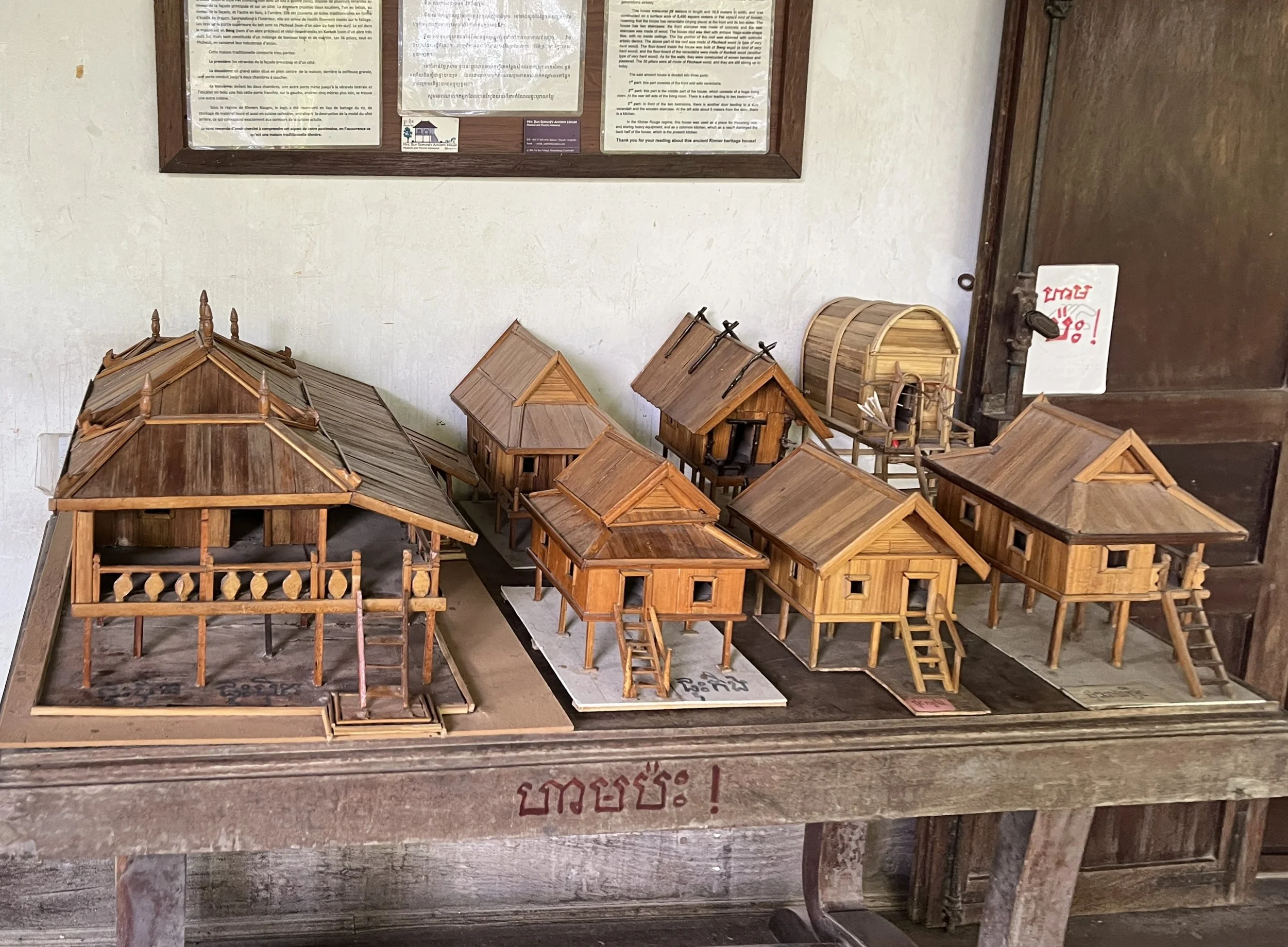
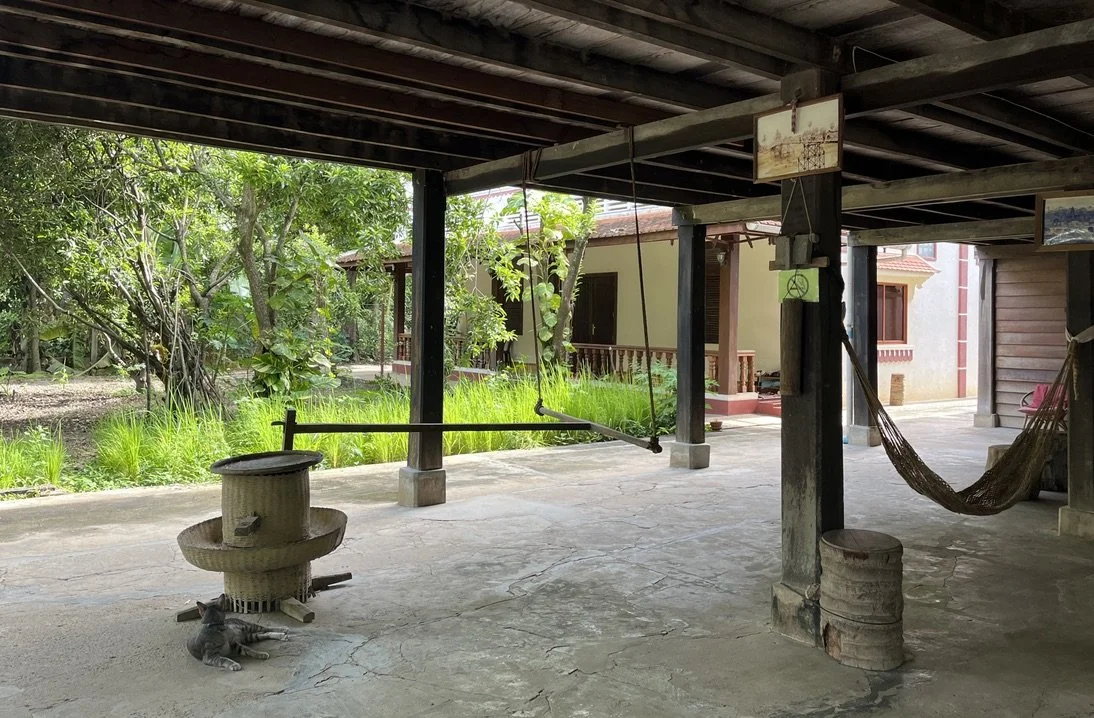
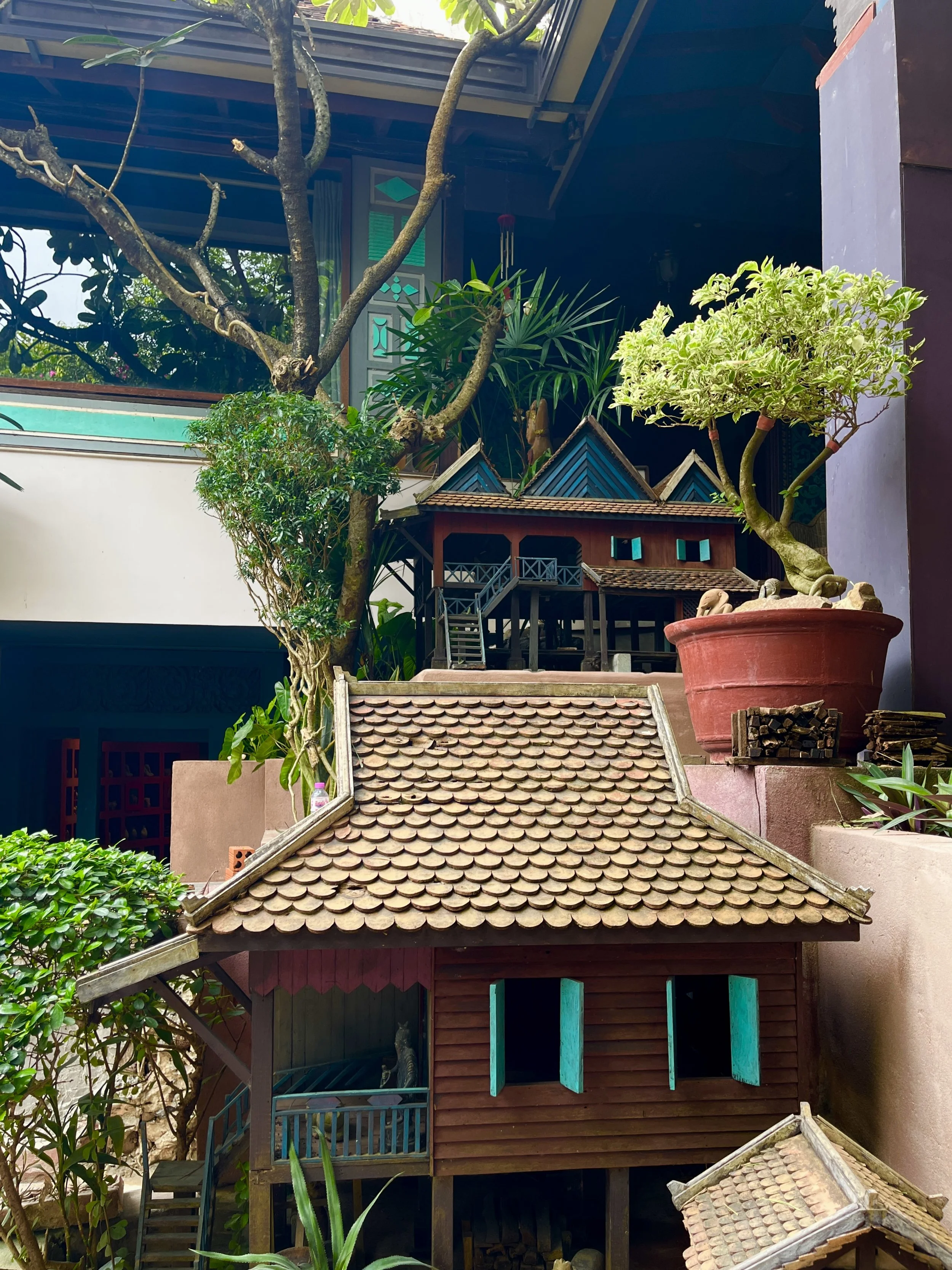
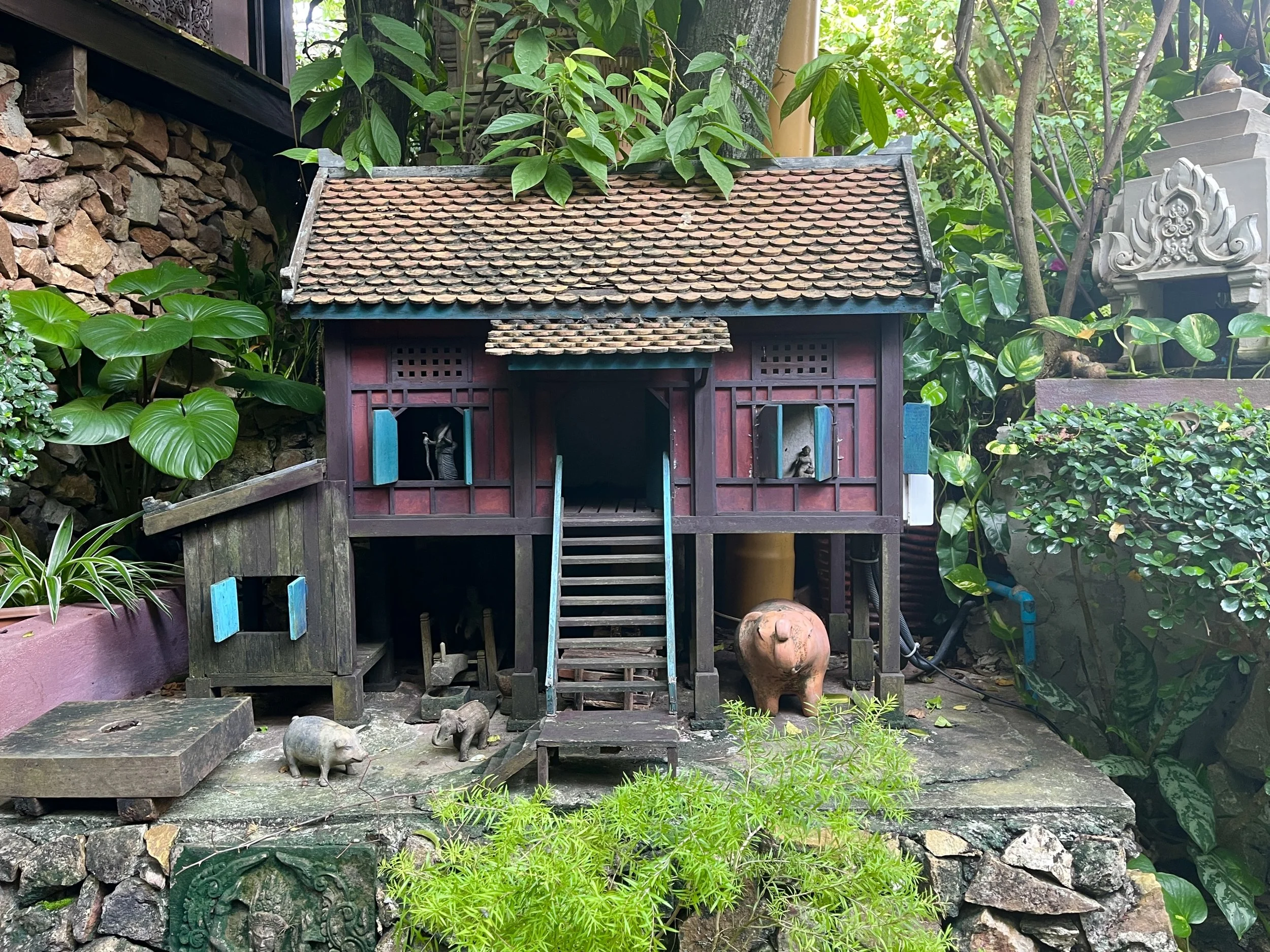
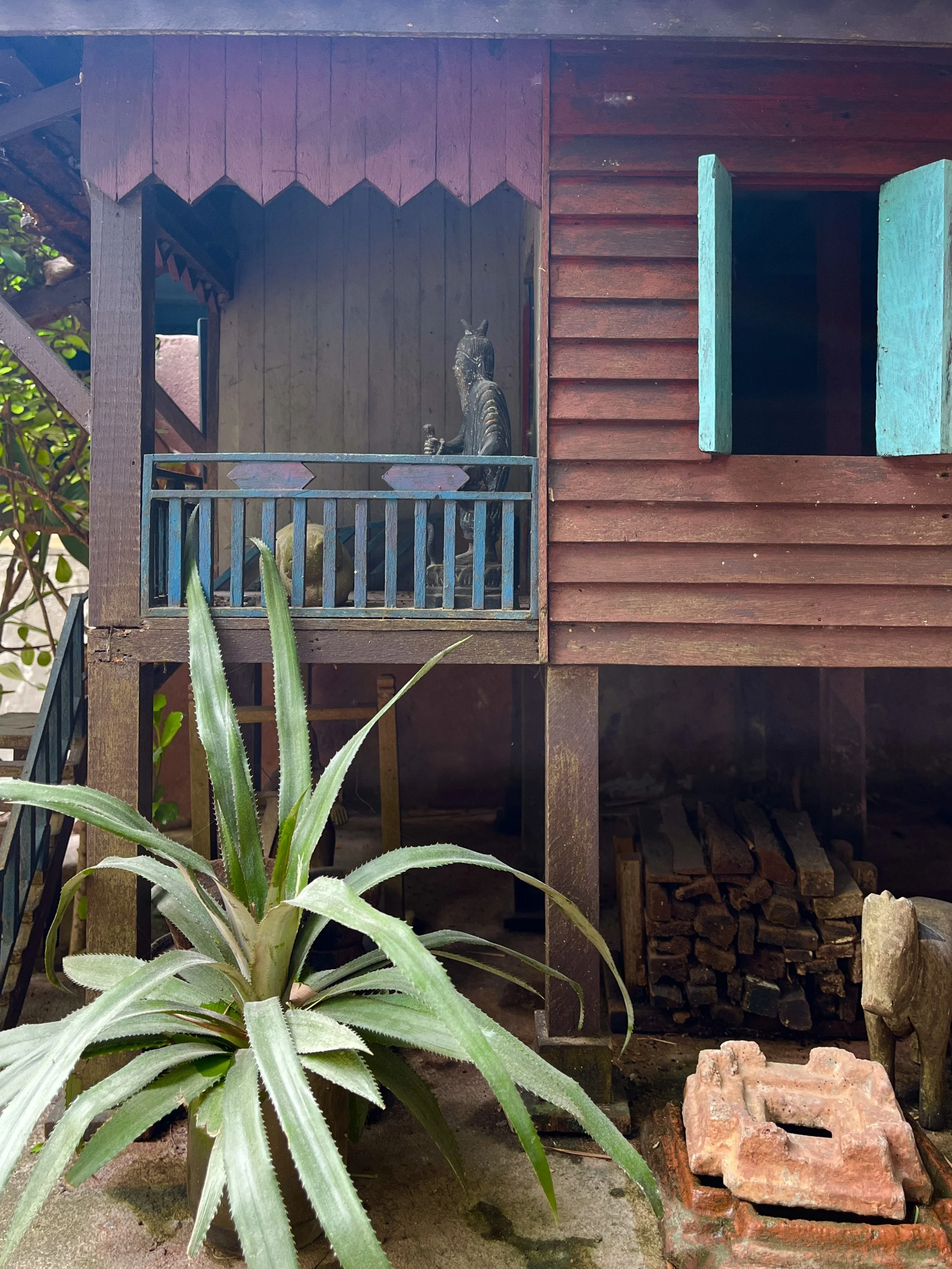
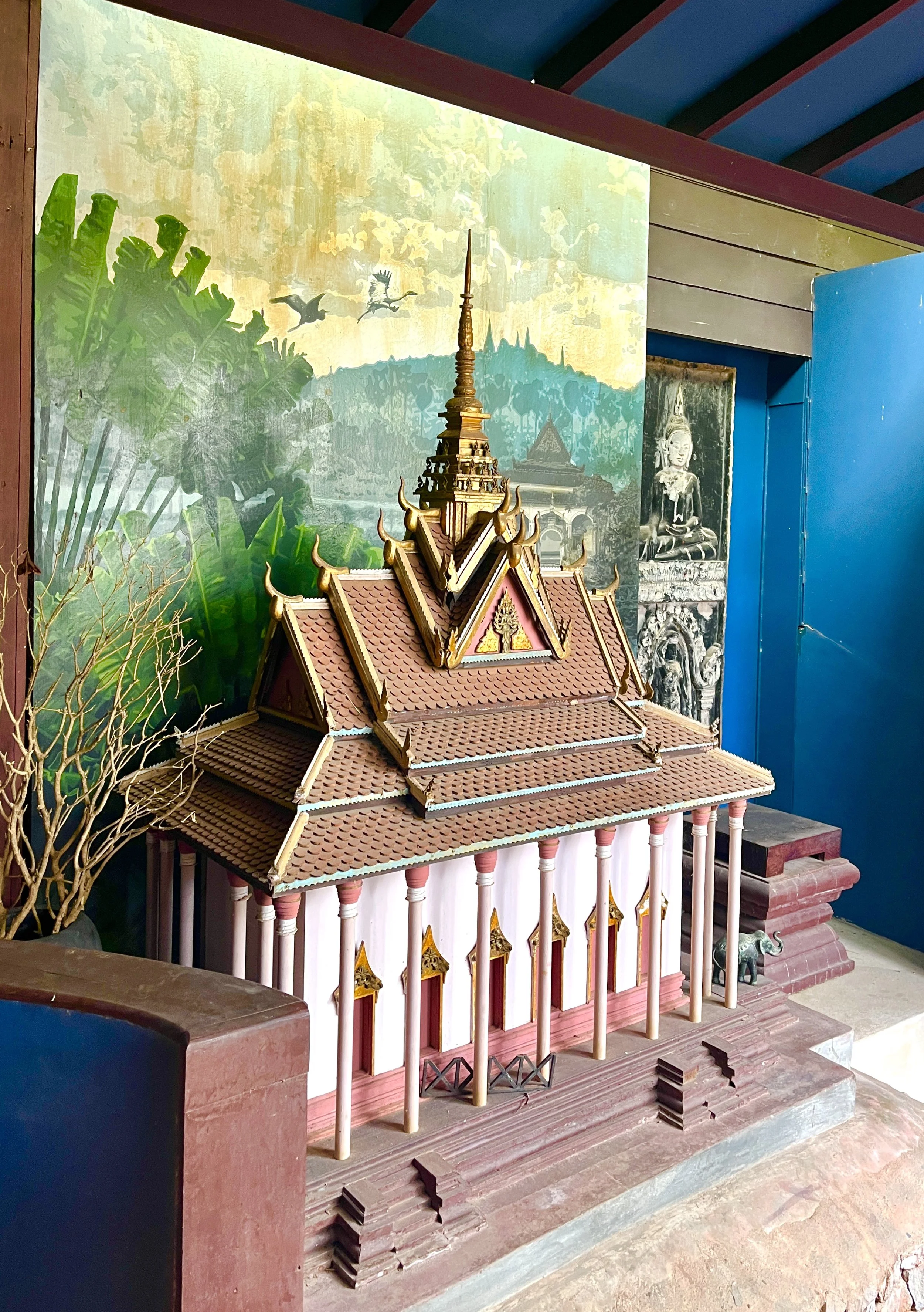
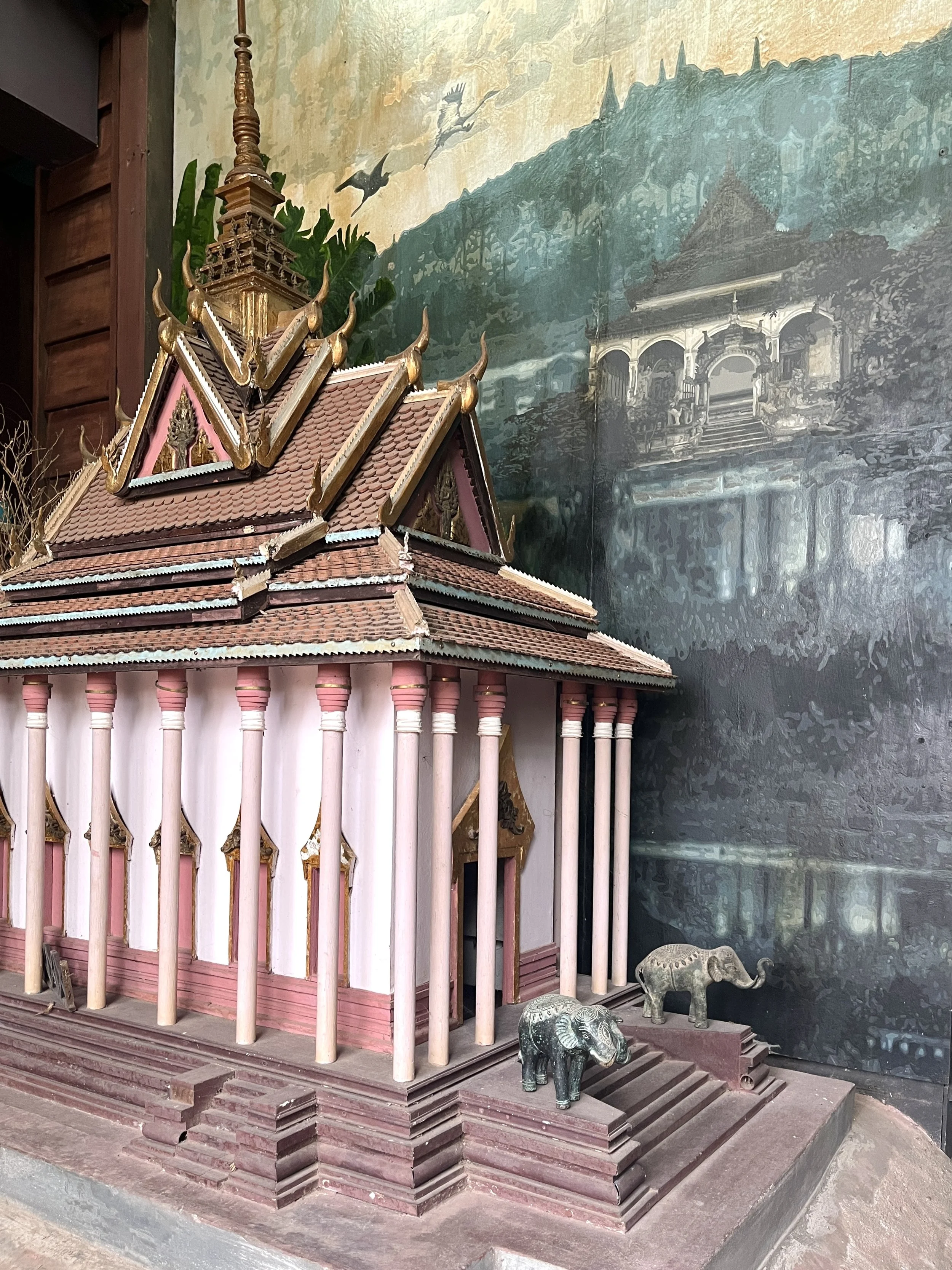
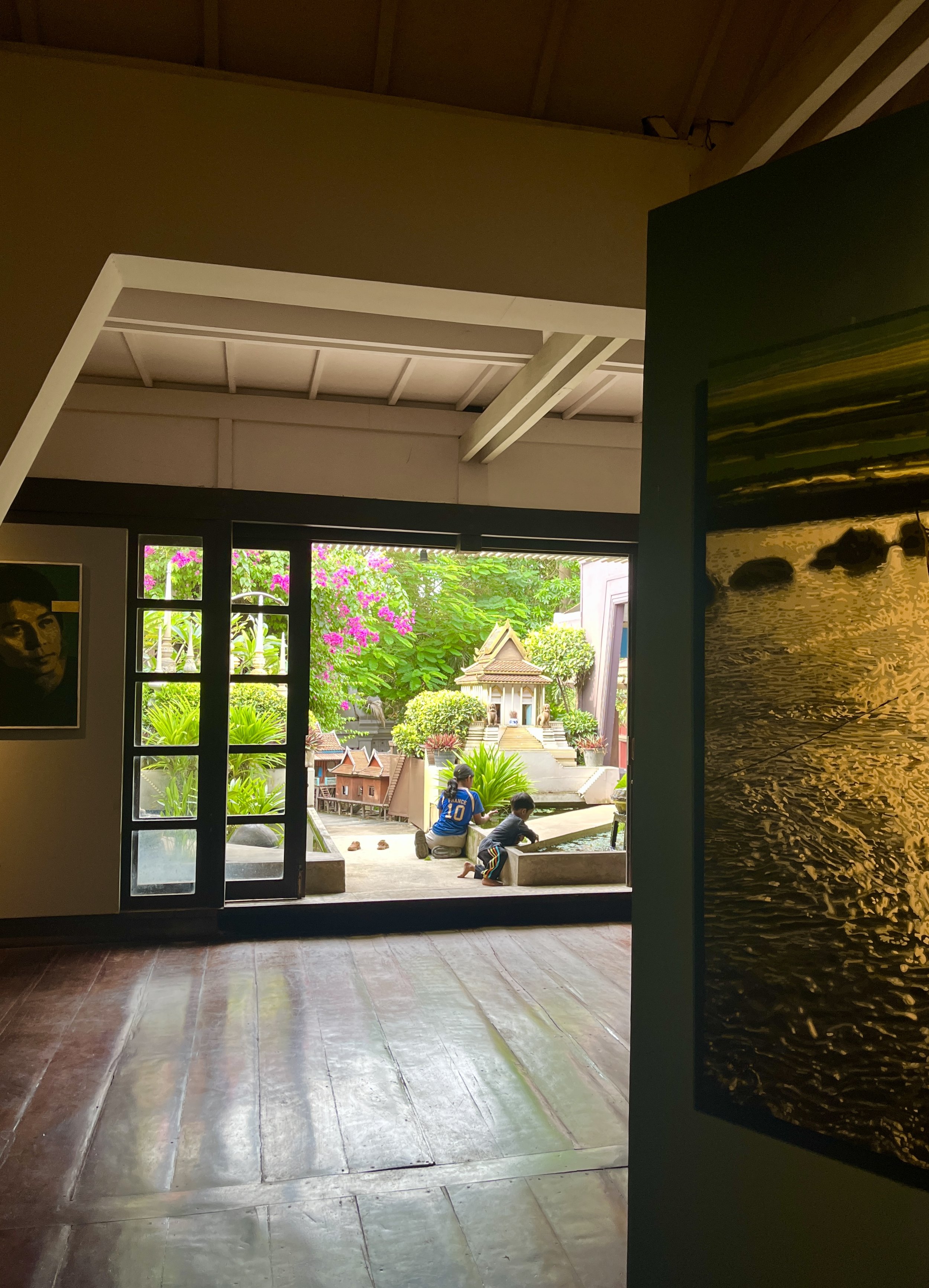
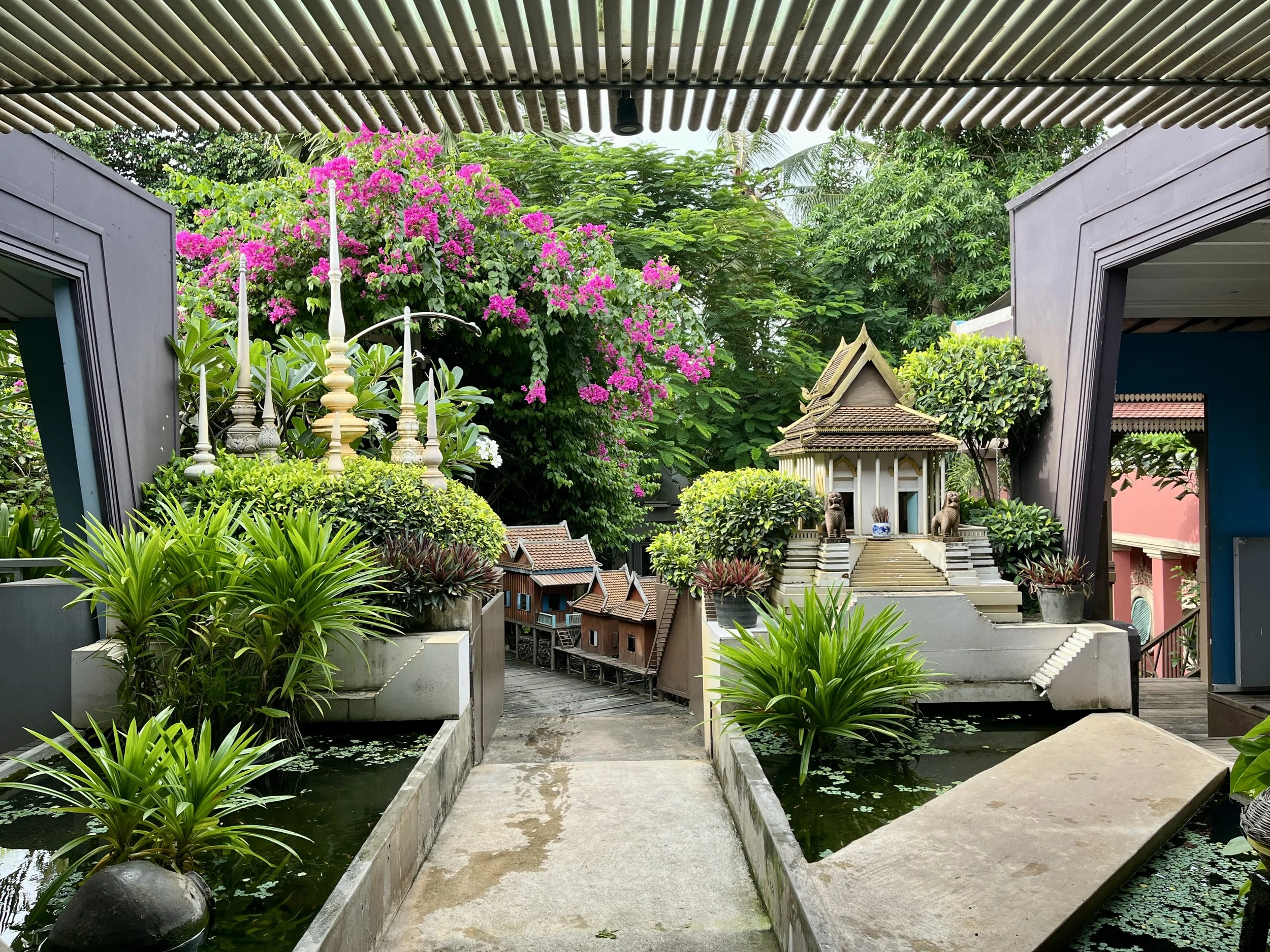
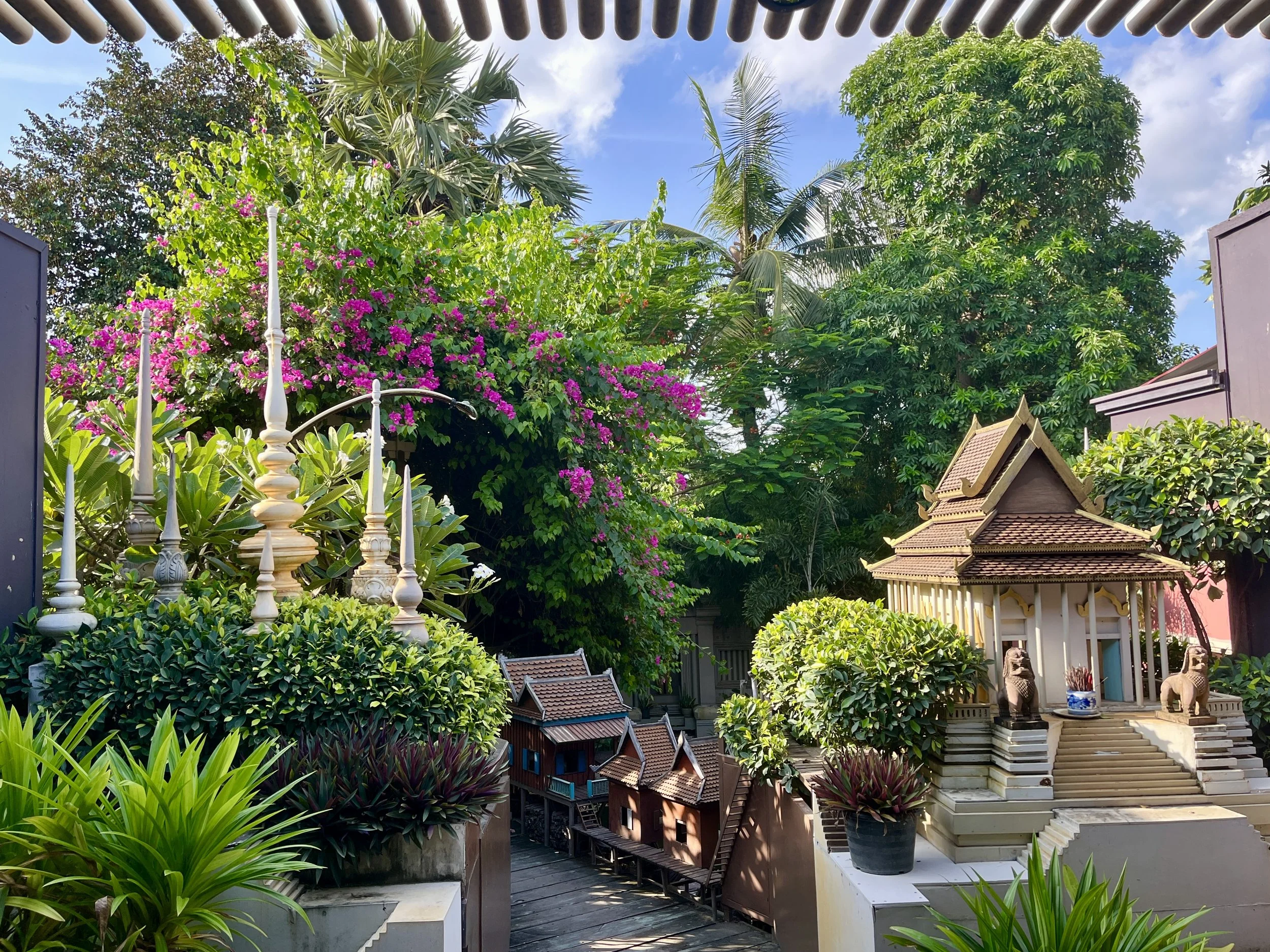
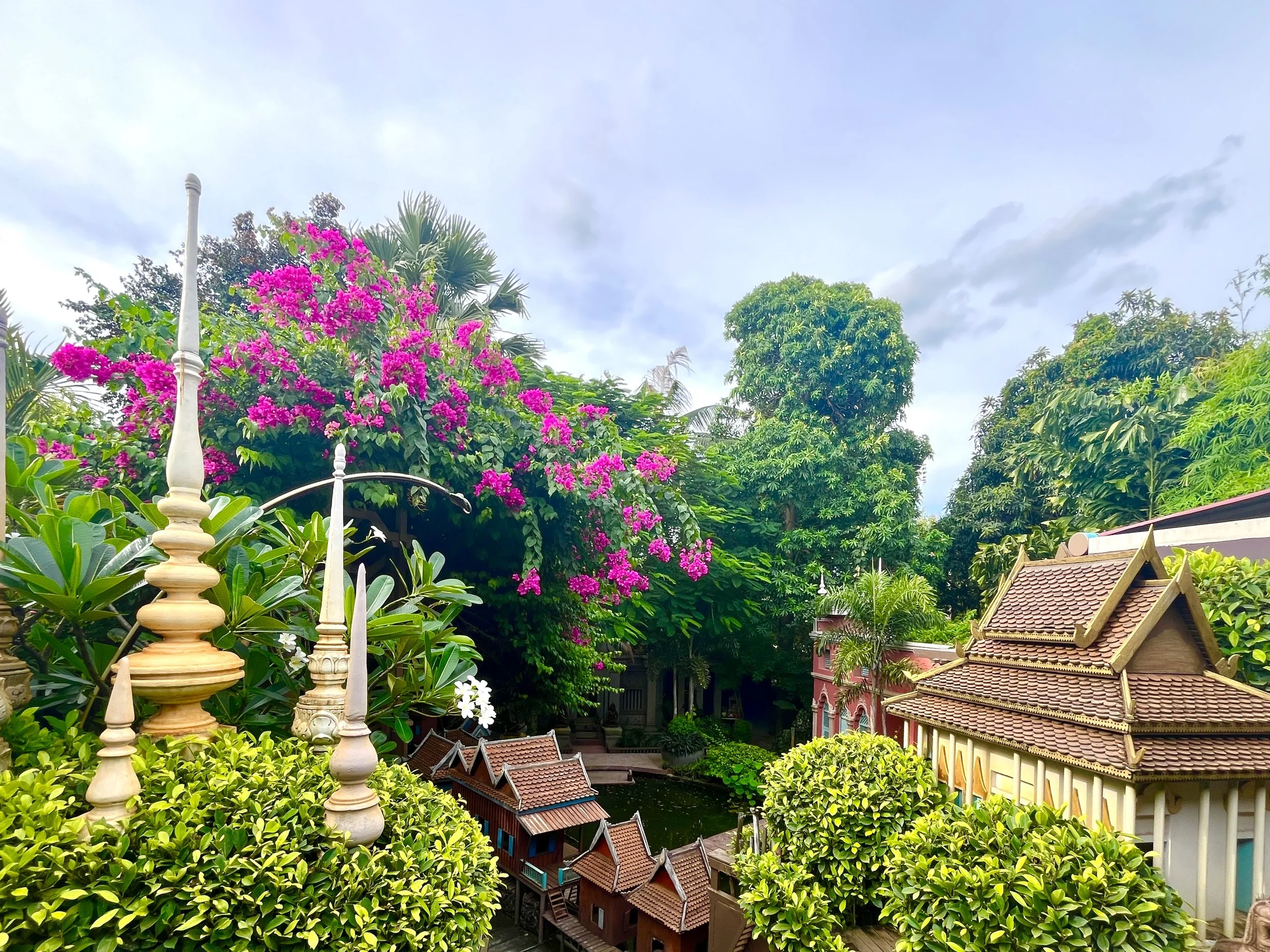
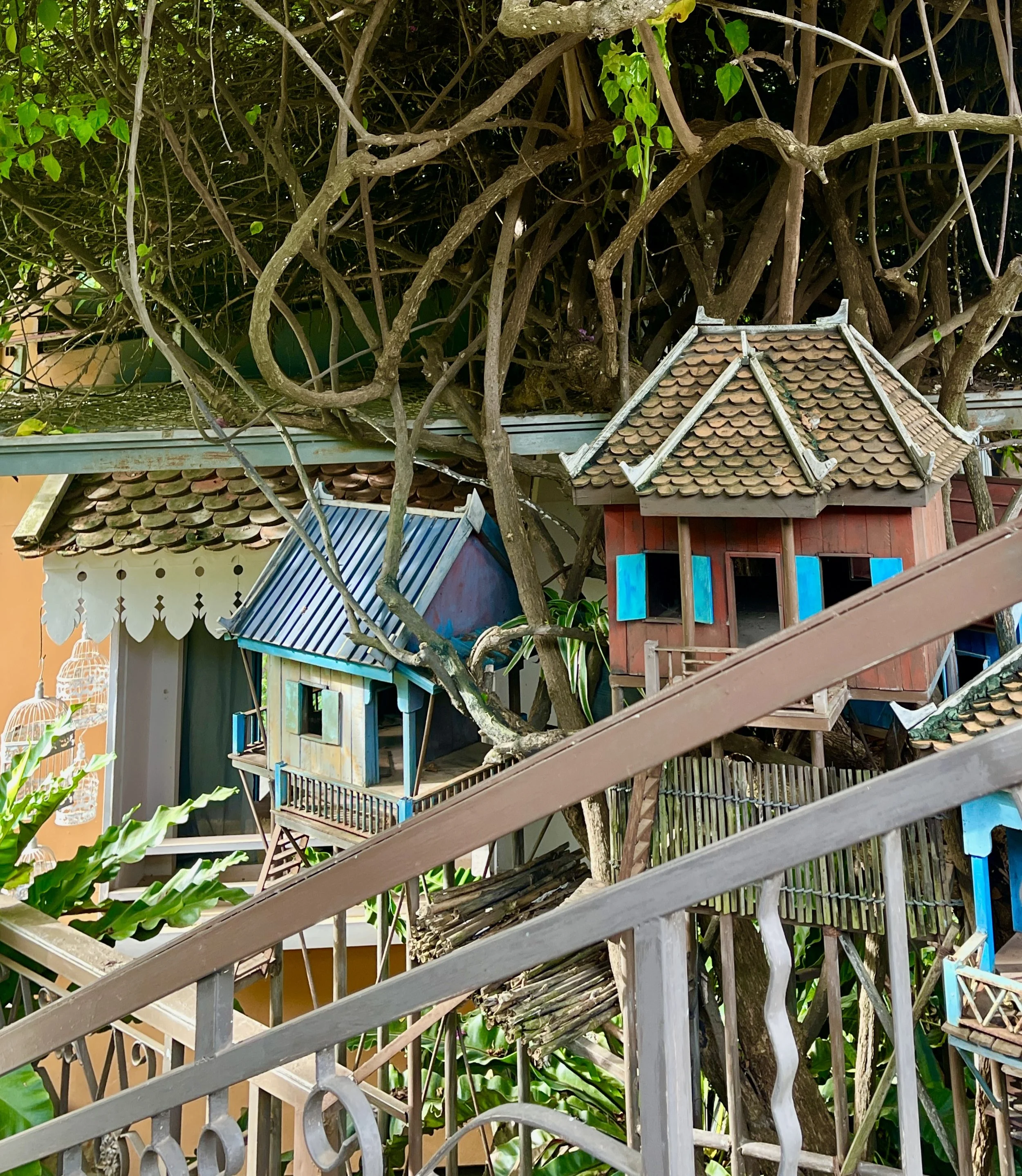
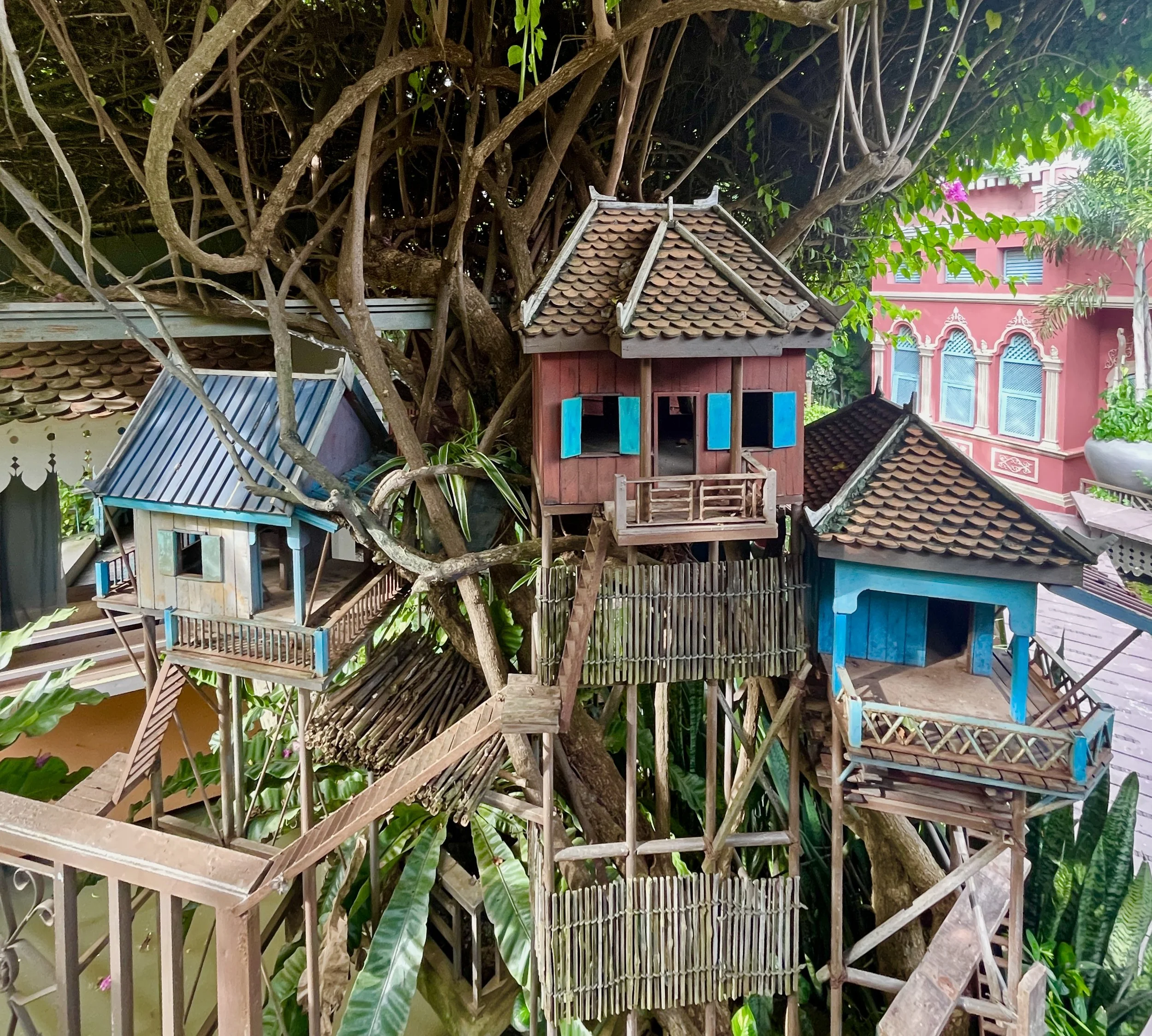
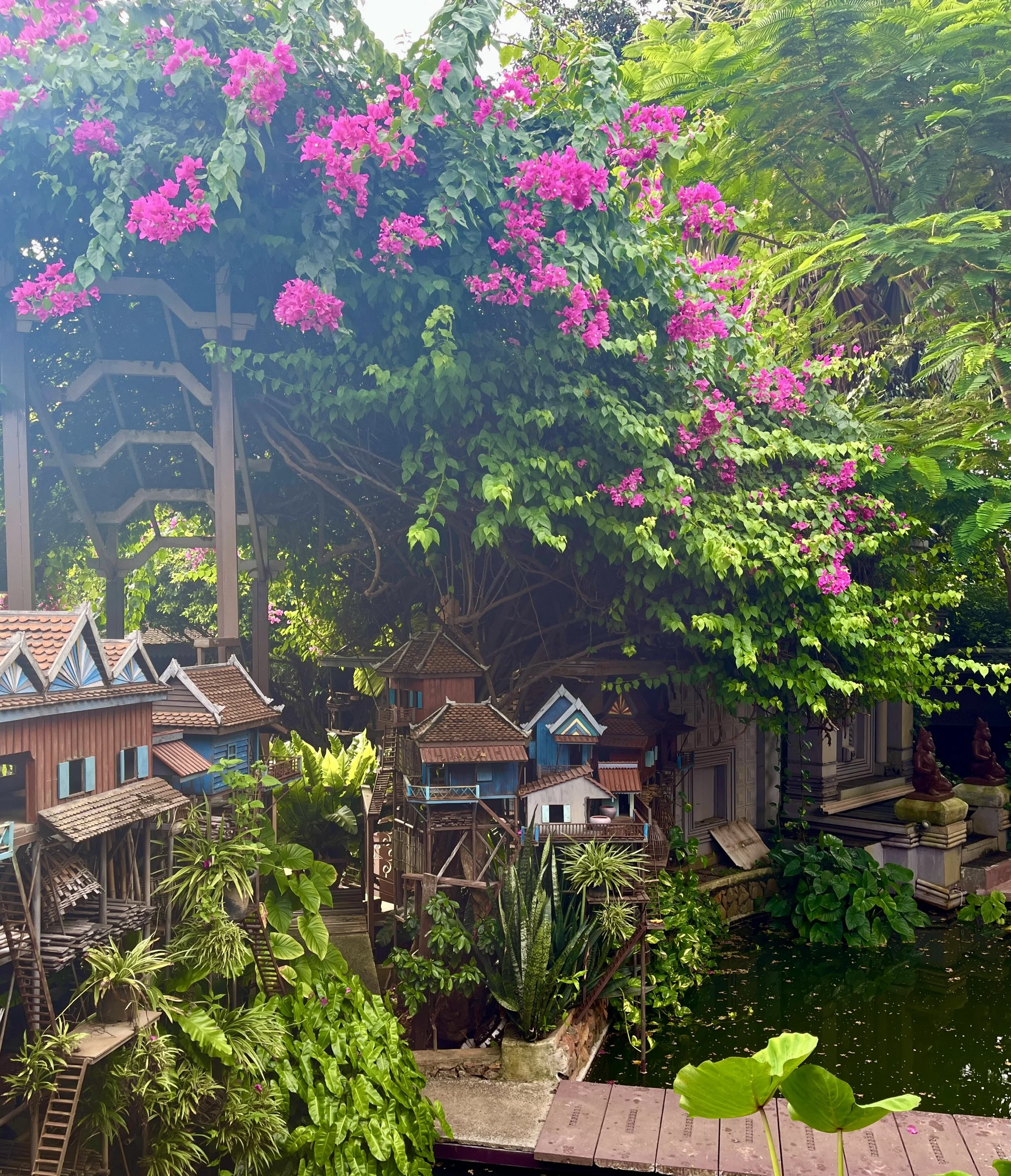
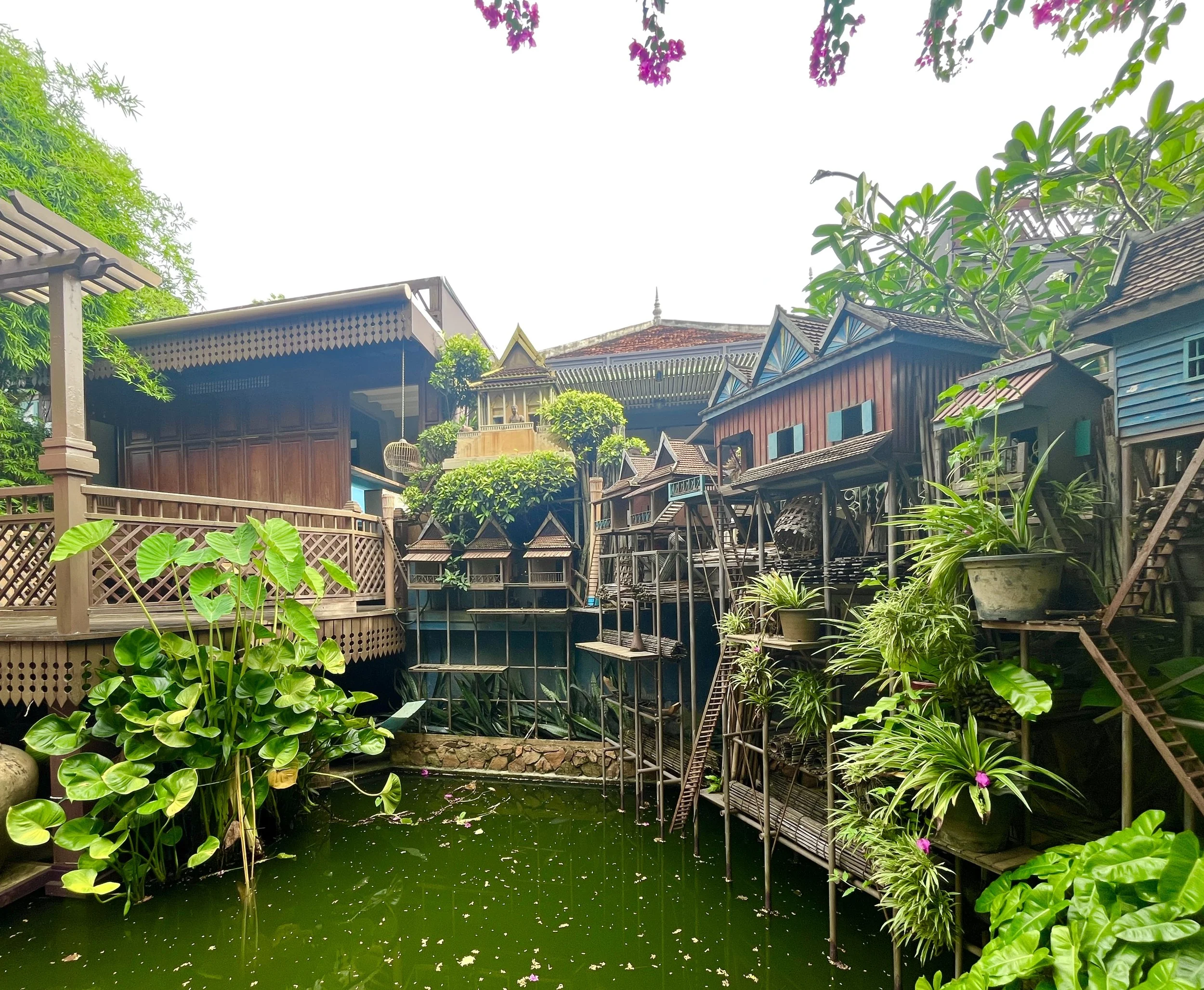
Models of various traditional Khmer house types at Mrs. Bun Roeung’s House

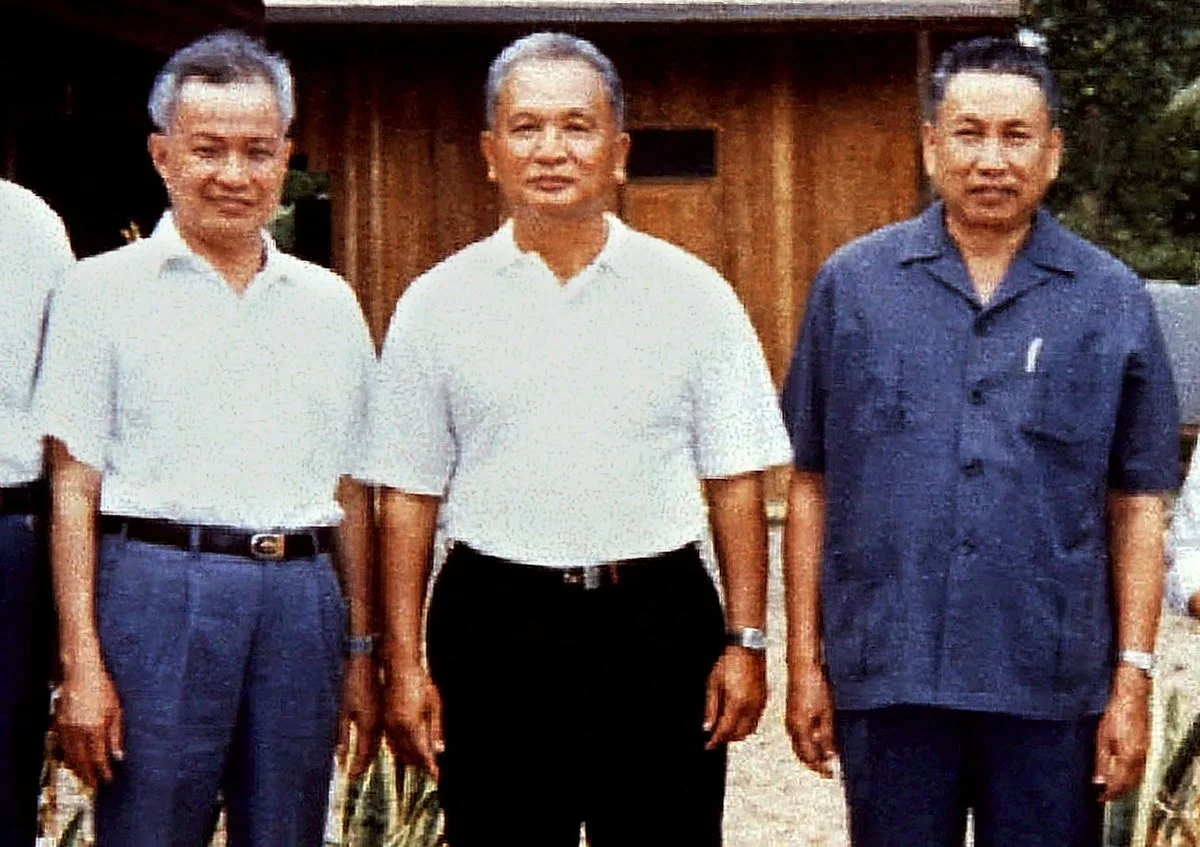
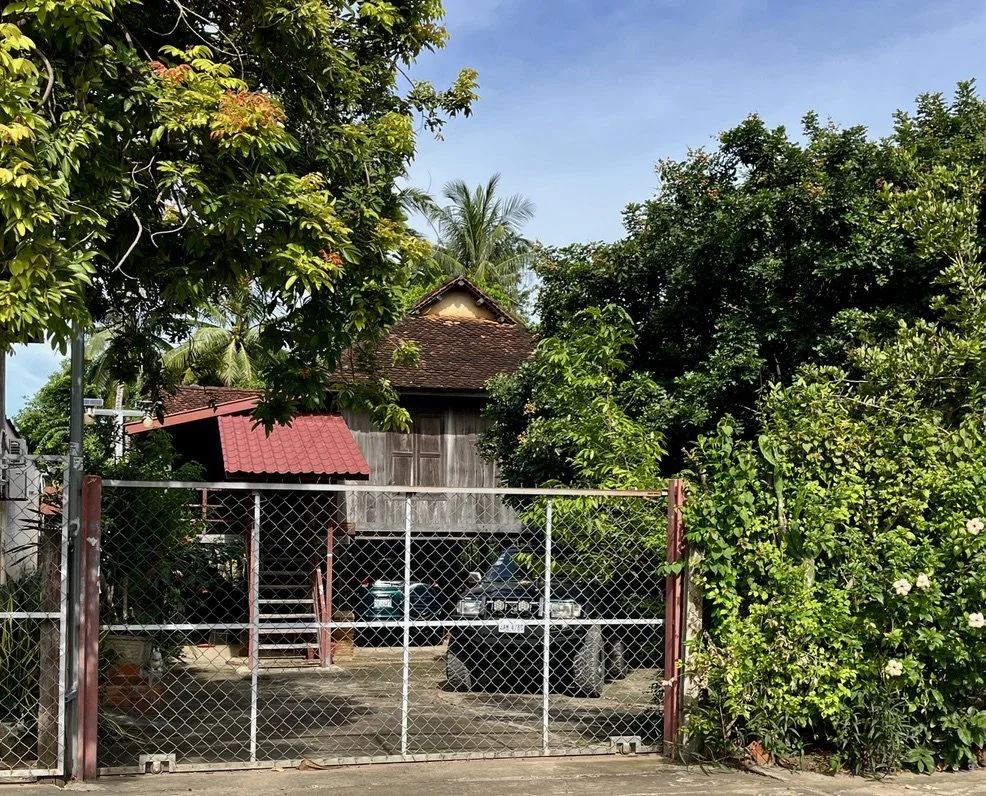
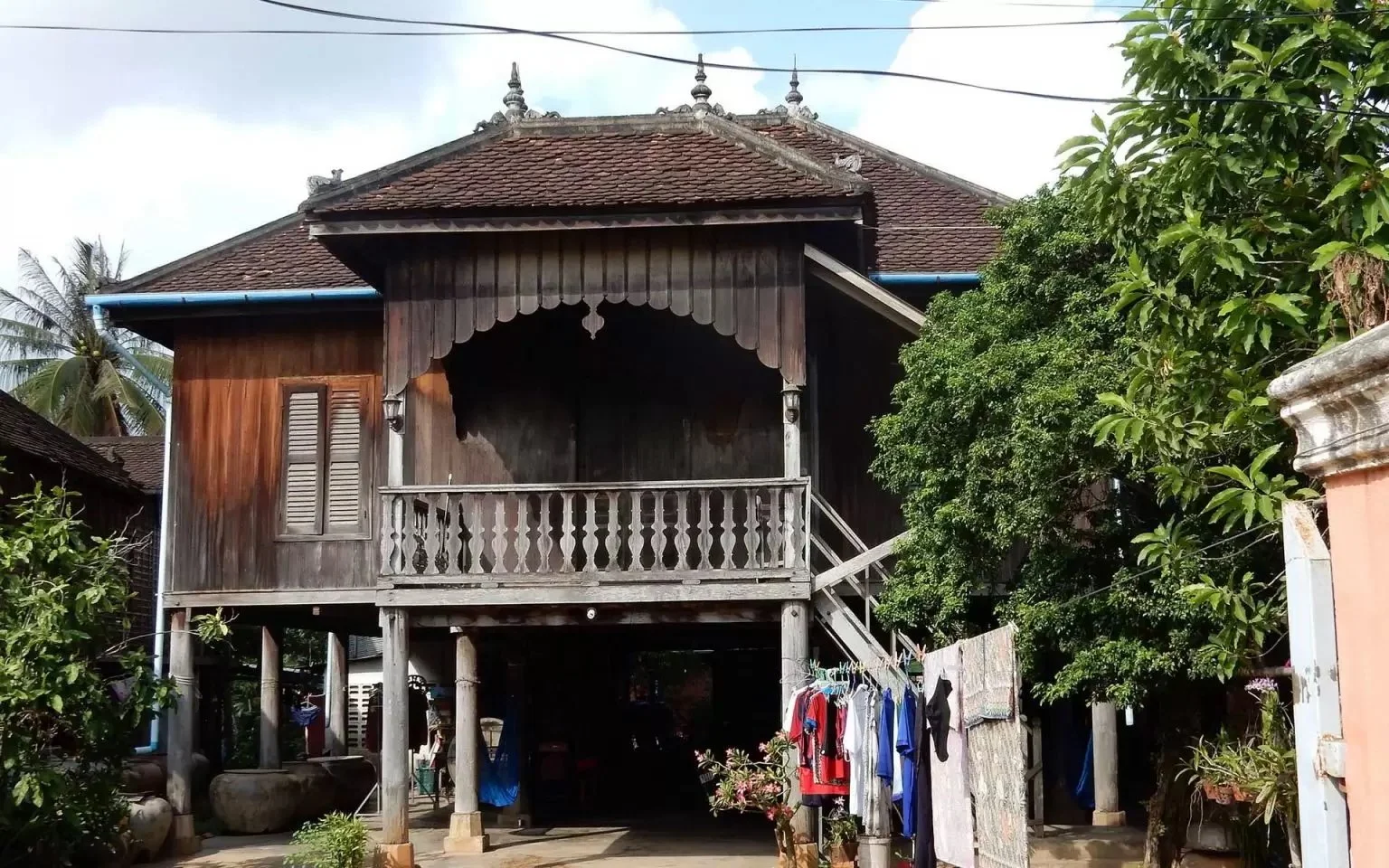
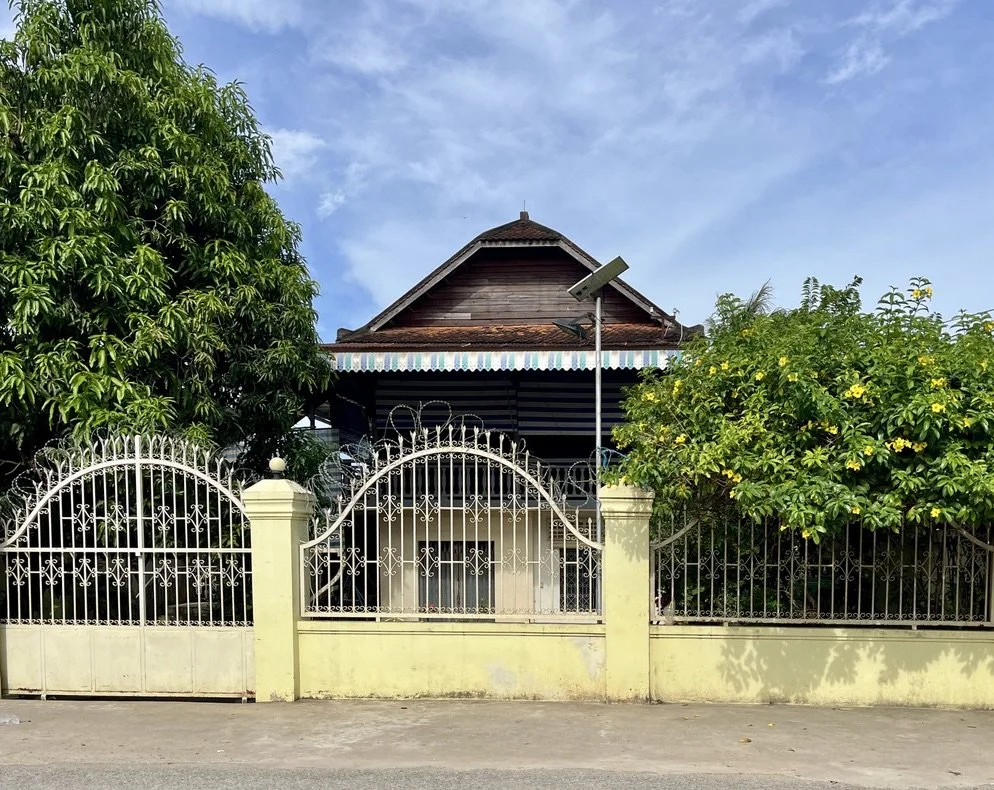
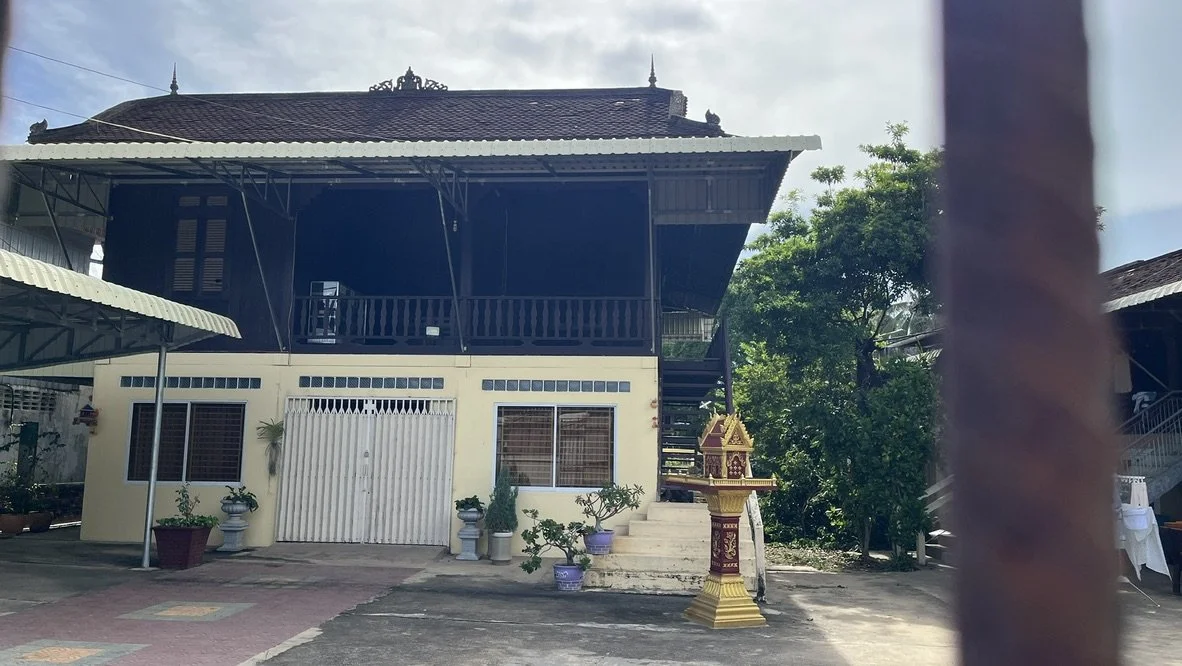
Wat Kor village, 2km south of Battambang proper, was the neighborhood historically chosen by wealthy Khmers a century ago. Today, it is best known for its 20ish heritage houses showcasing local traditional architecture; 20 years ago, it was best known as the hometown of Brother Number 2, who was born in one such house in 1926 to wealthy Chinese immigrants.

The house is still there, but no one will tell you which one it is; there’s no photo identifying it online; in person and search results the laughable party line is “the house no longer belongs to Nuon Chea’s family; it was purchased by a local resident in the late 1980s from someone else.” Who else? In the 80s, when everyone was squatting and no one had any kind of ownership documents, or money to speak of? Battambang was held by the Khmer Rouge by turns until 1996.

The Khmer Rouge leadership in 1986: Khieu Sampan, Nuon Chea, Pol Pot

No matter, I was there for the architecture. And that architecture may have been at least partially preserved because Batttambang– and Wat Kor village specifically– were occupied BY KR top brass.

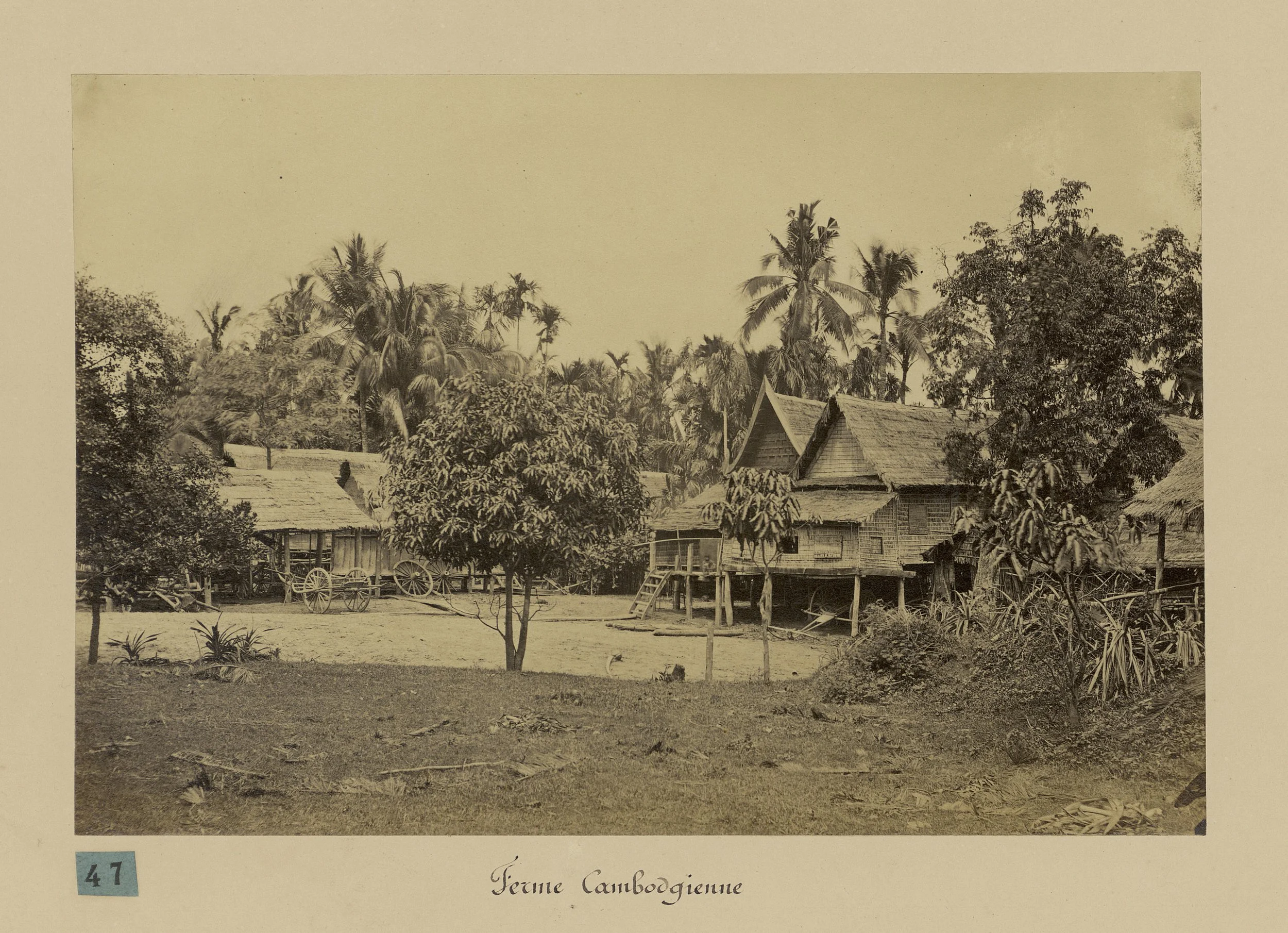
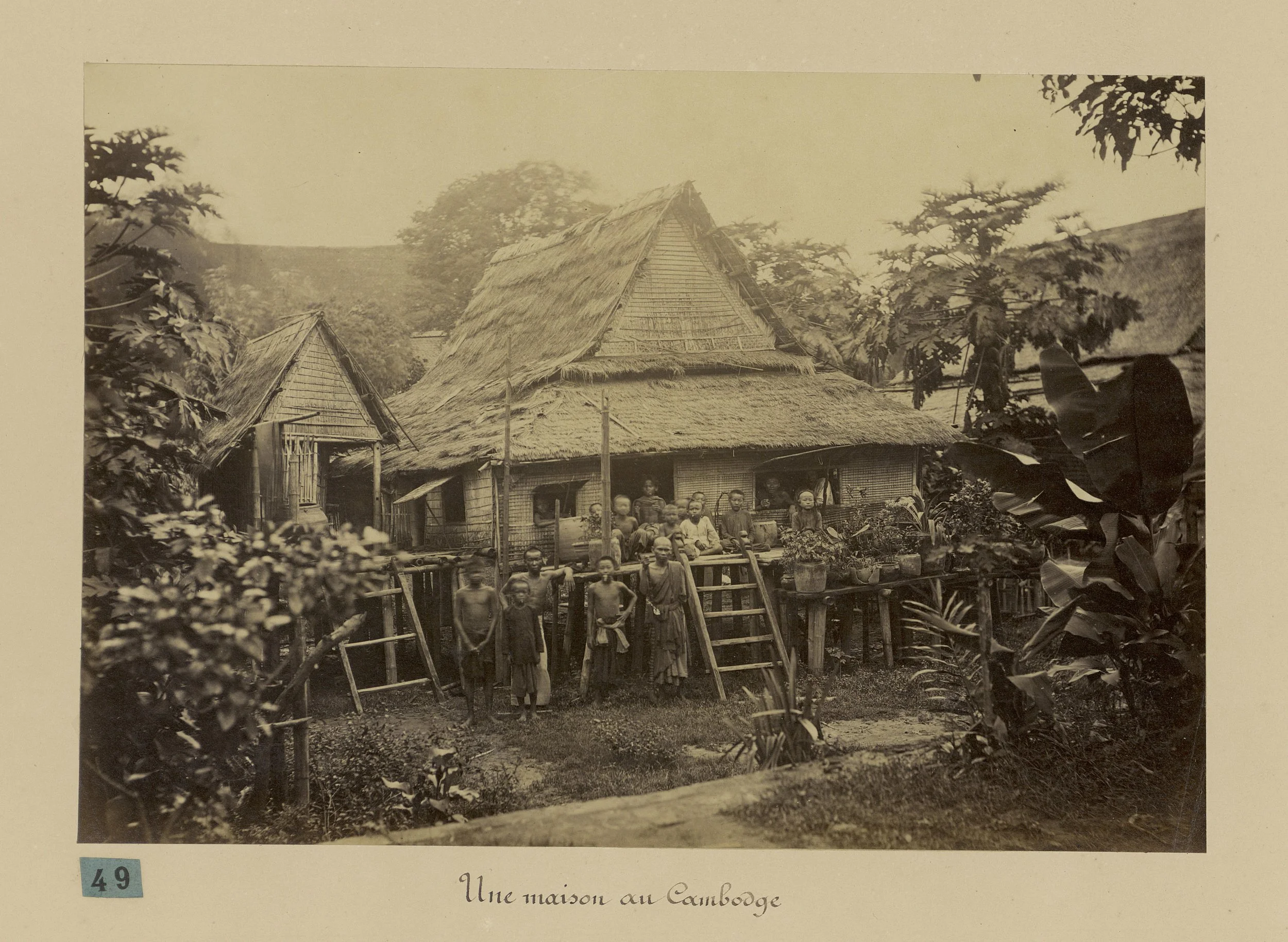
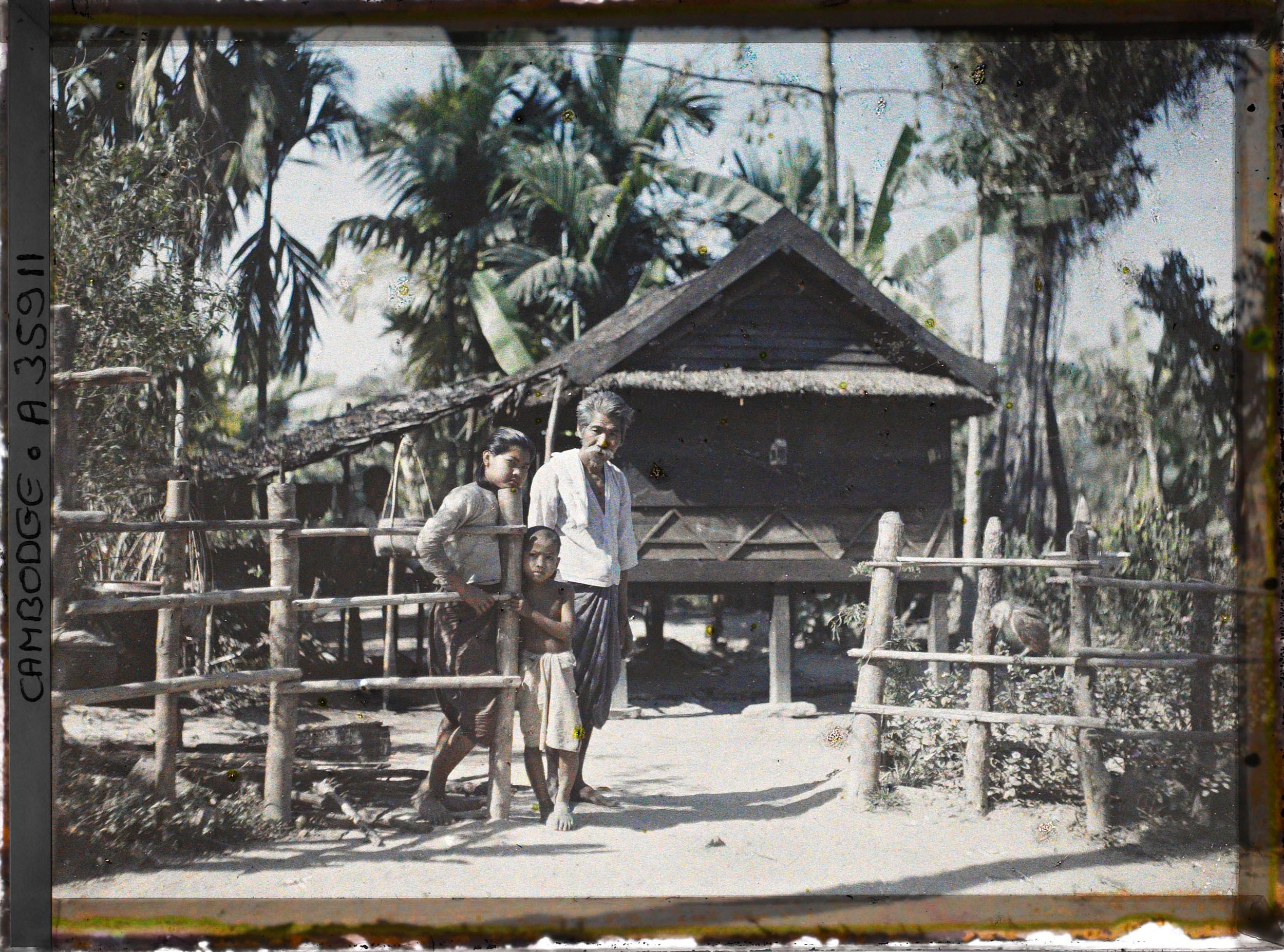
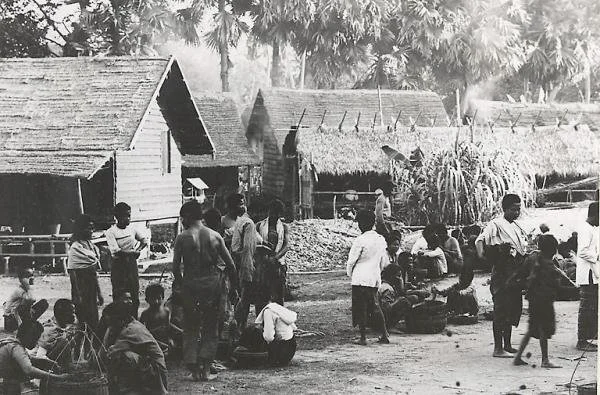
In photos of well-to-do villages dating from the 3rd quarter of the 19th century, the houses tend to have walls of woven grass and thatched roofs, but the bones of the regional architecture are the same: stilt houses with square layouts and gabled roofs.

The wealthier houses featured front or wraparound porches covered by a second lower roof, and a connected outhouse for cooking. These photos were taken by Émile Gsell between 1877 and 1879.

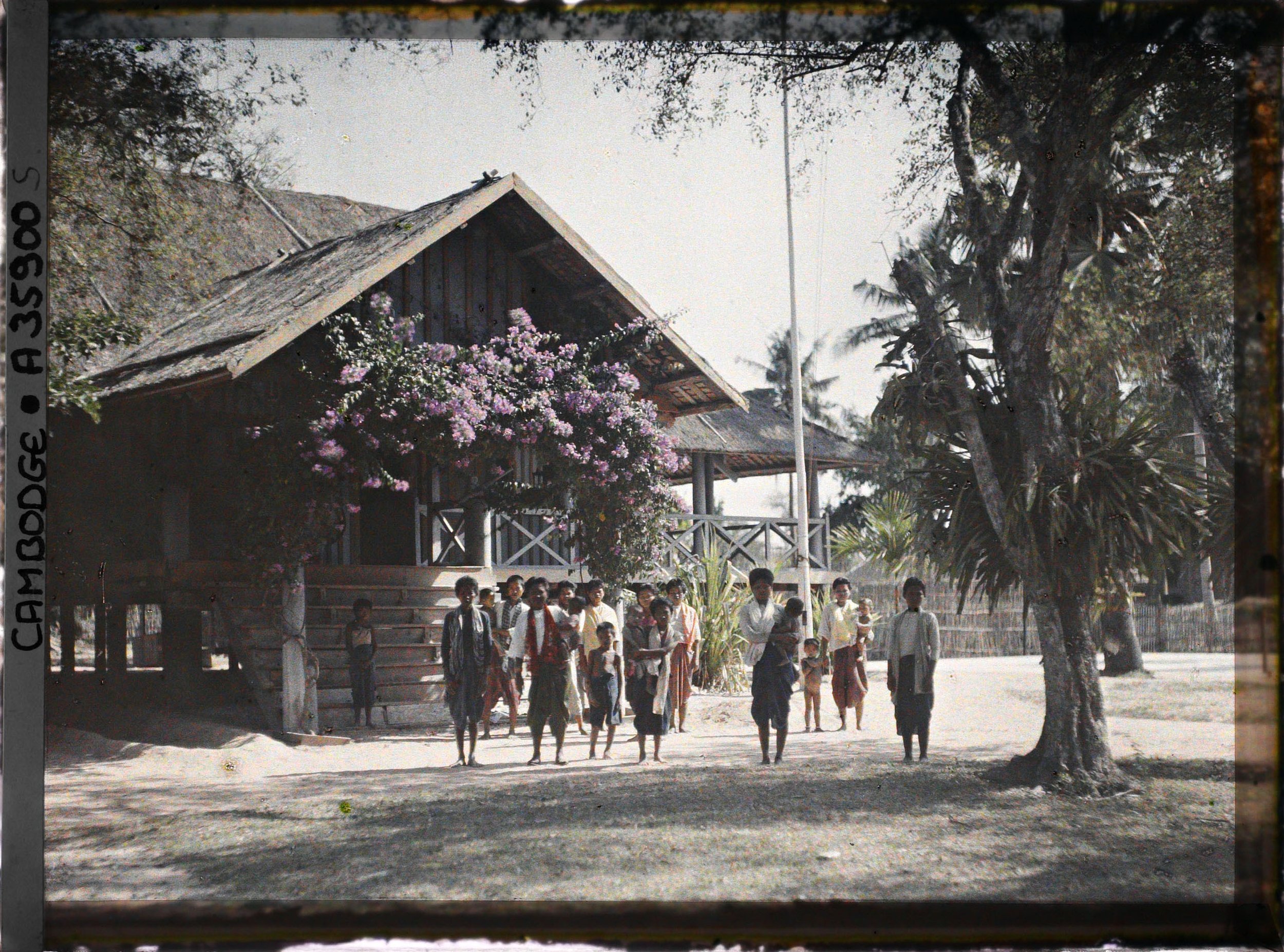
In photos taken 30 to 40 years later, so around the same time the heritage houses of Wat Kor village were constructed, anyone who could afford to was building out of wood rather than woven grass– having even a small wood house became preferable to a large grass one.

But the layout remained the same, squarish with gabled roofs. You’ll also notice that at first, thatched roofs on wooden houses was the norm. These photos were taken by Léon Busy between 1926 and 1931.

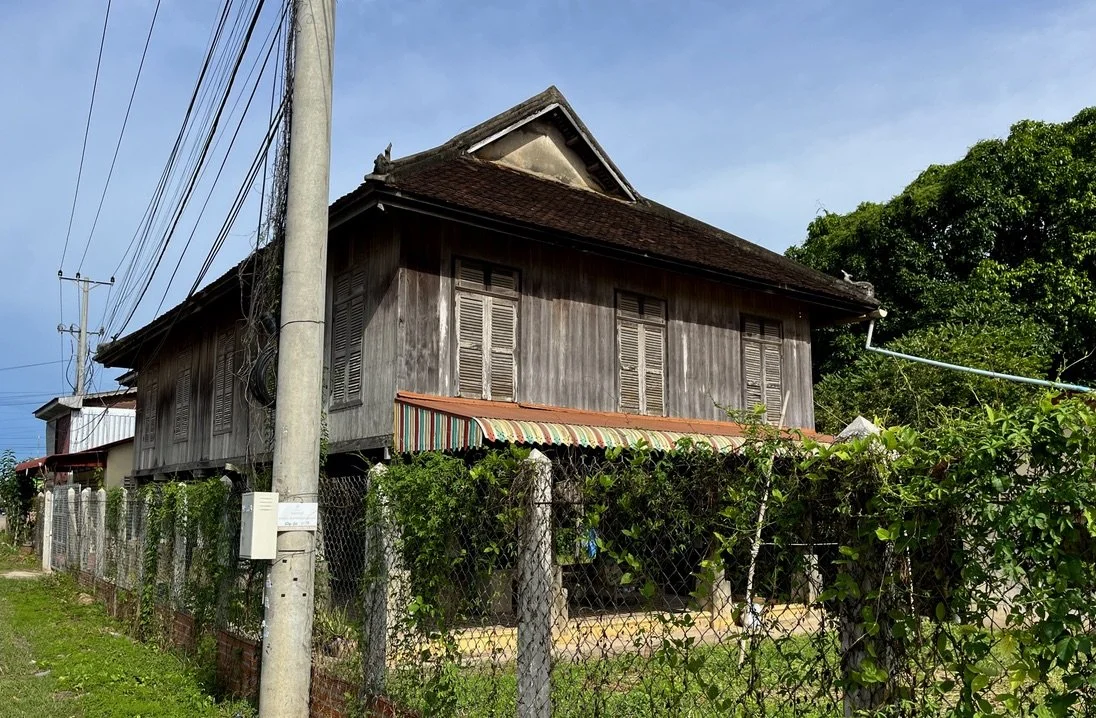
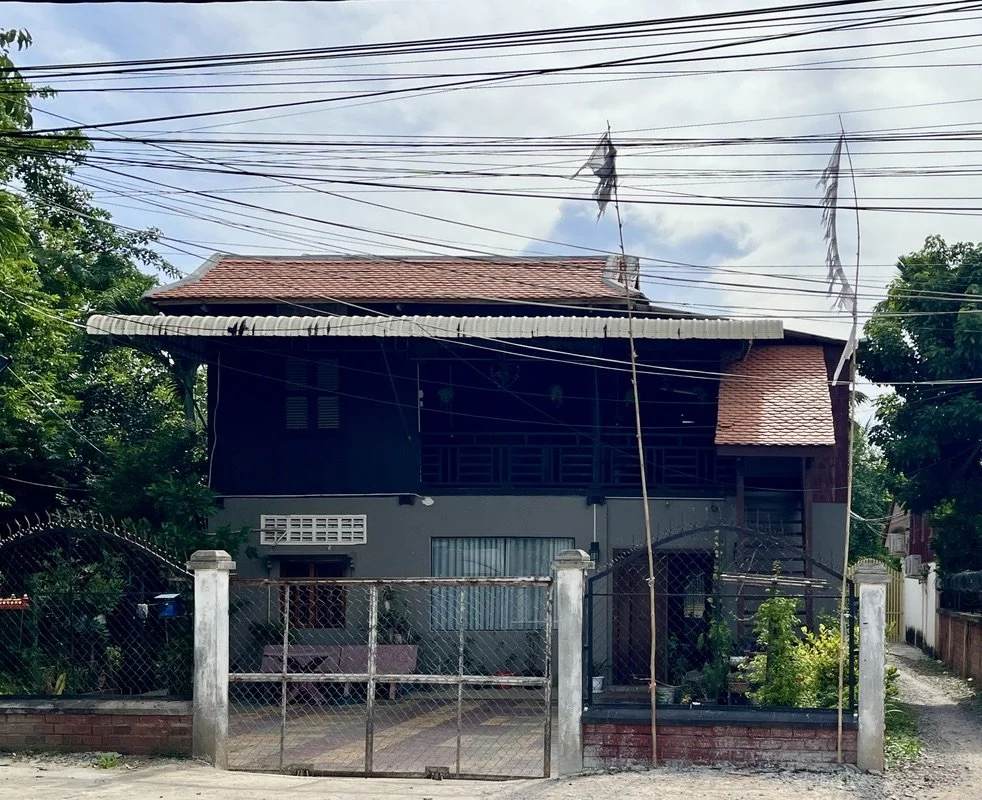
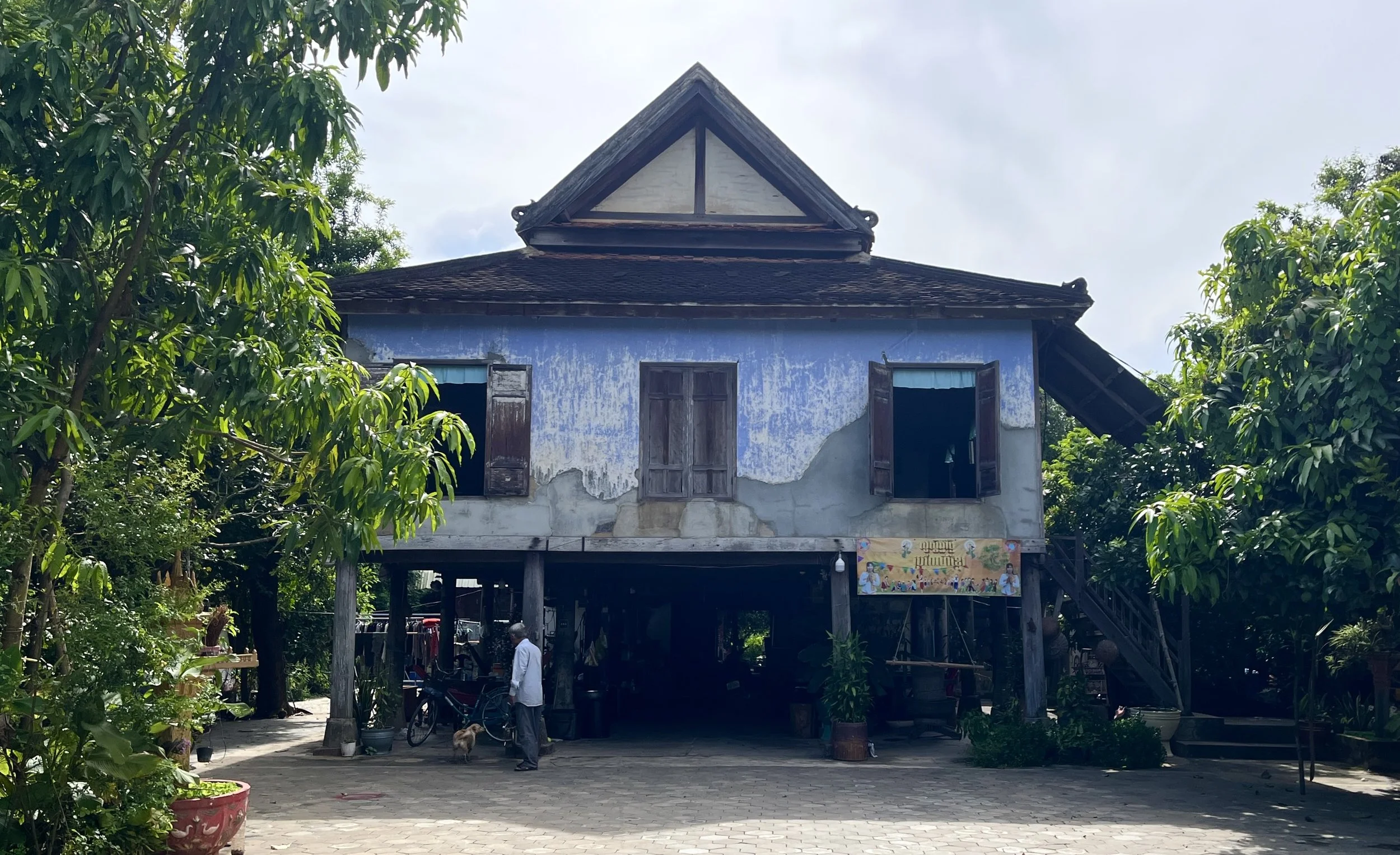
A classic simple wooden house in Wat Kor village.

By the first quarter of the 20th century, anyone who could afford to was building with or renovating to tiled roofs. This is a great example of a house that was built with a wooden roof initially intended for thatch, but had tile laid over top.

As the local Thai colonial architecture became more formal and sophisticated, the gables shrunk, while the perimeter roofs, originally meant to cover just the porch, were made to cover more of the central house, for a more tiered Siamese look.

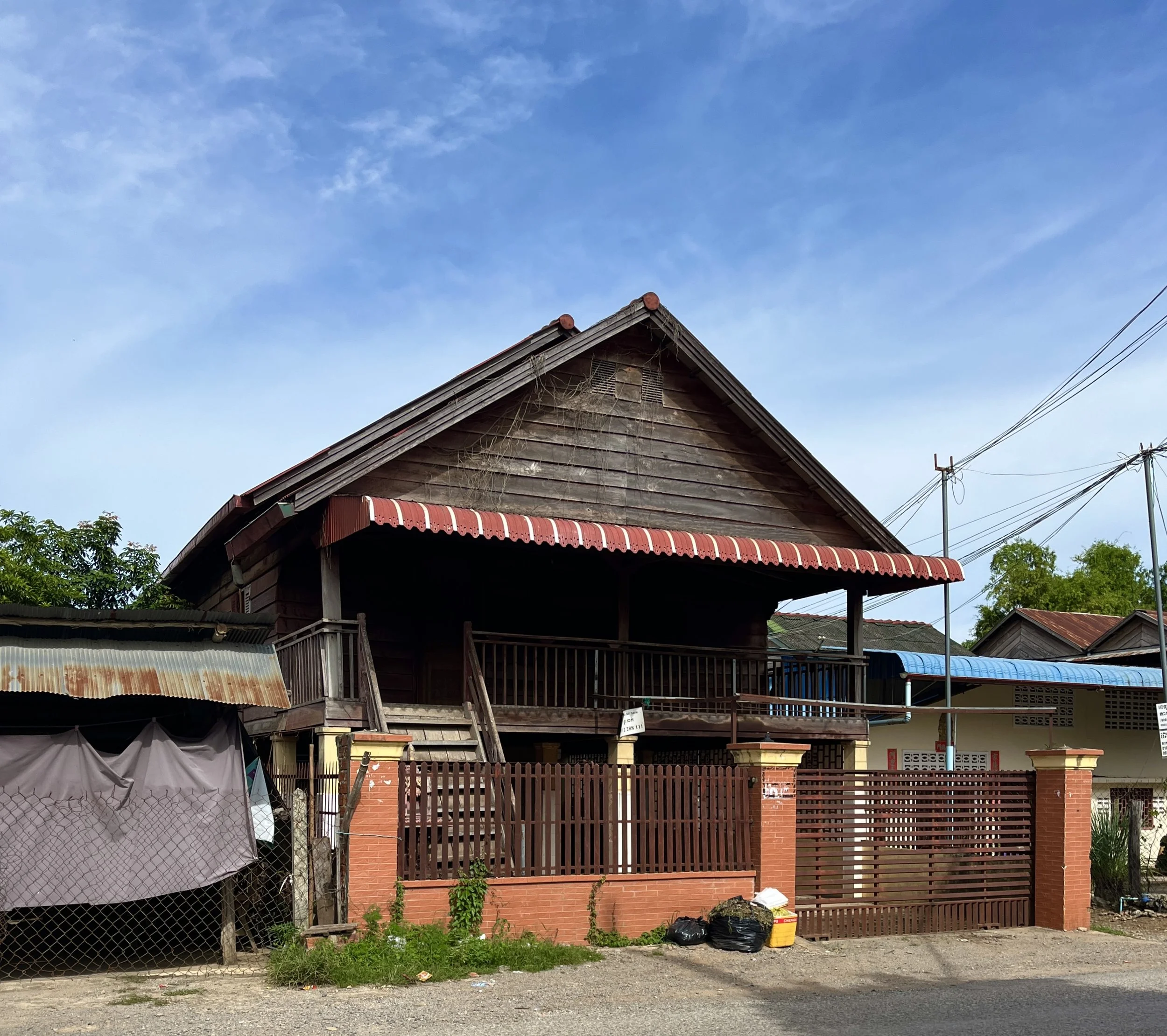
By the turn of the century, new houses were constructed to showcase beautiful tiered Siam style tiled roofs with cement finials. Decorative aprons became popular in the 1910s.

Another option when putting on a new tiled roof was a French style mansard roof. Enclosing the stilted area below the house also became the norm in the French colonial era.

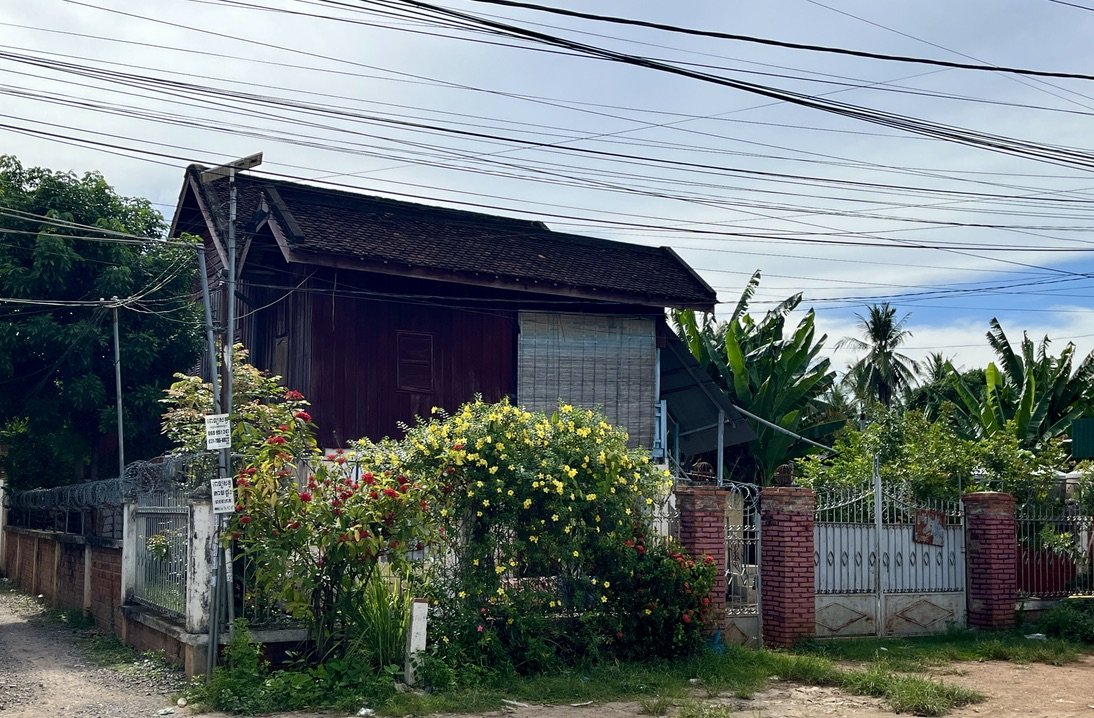
Later houses feature a flattened rectangular layout better suited to showcase the tiers of the Siamese style tile roofs, and emphasize the central finial–usually a flame, but occasionally something else– I’ve seen some with the year inscribed.

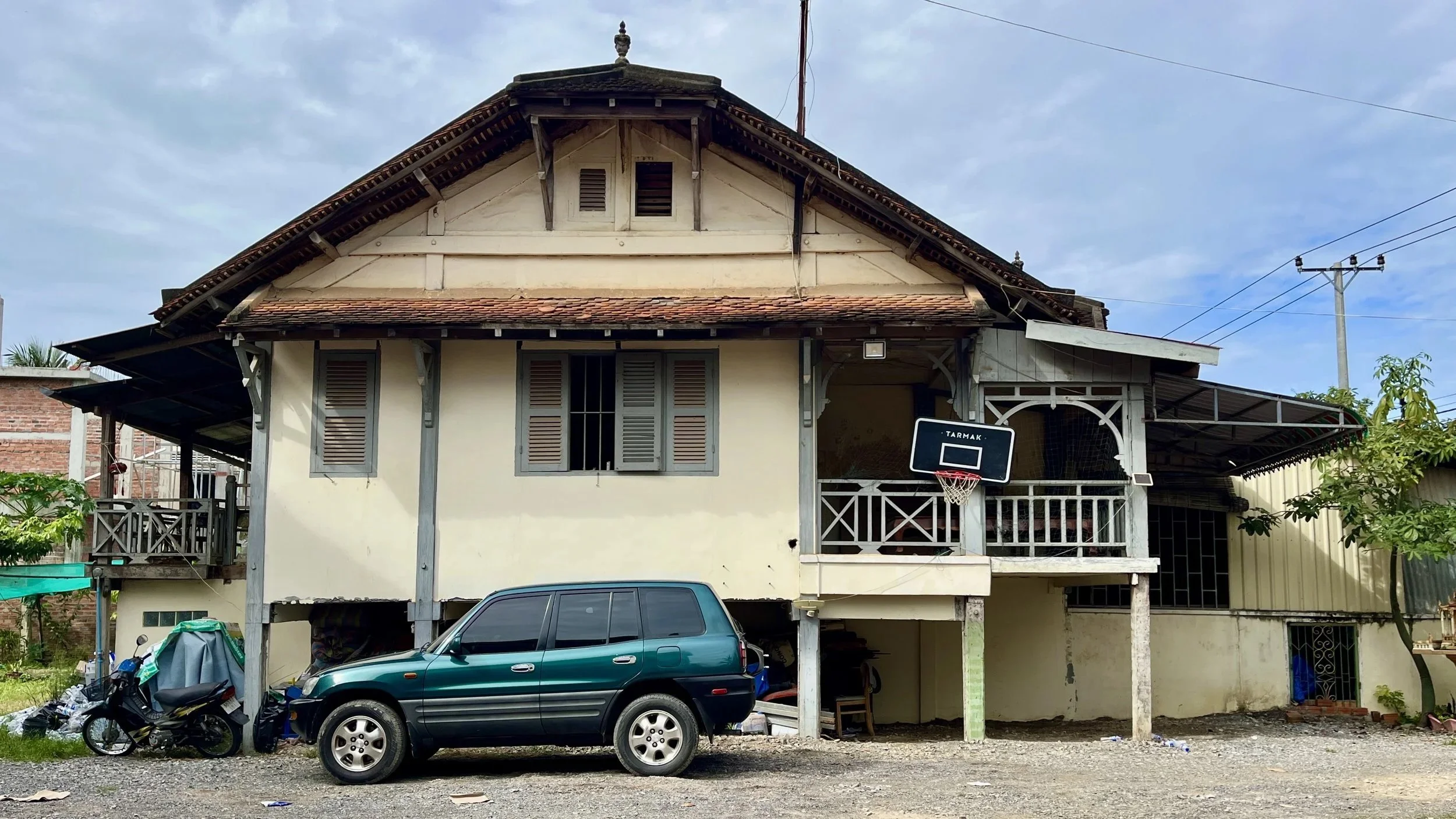
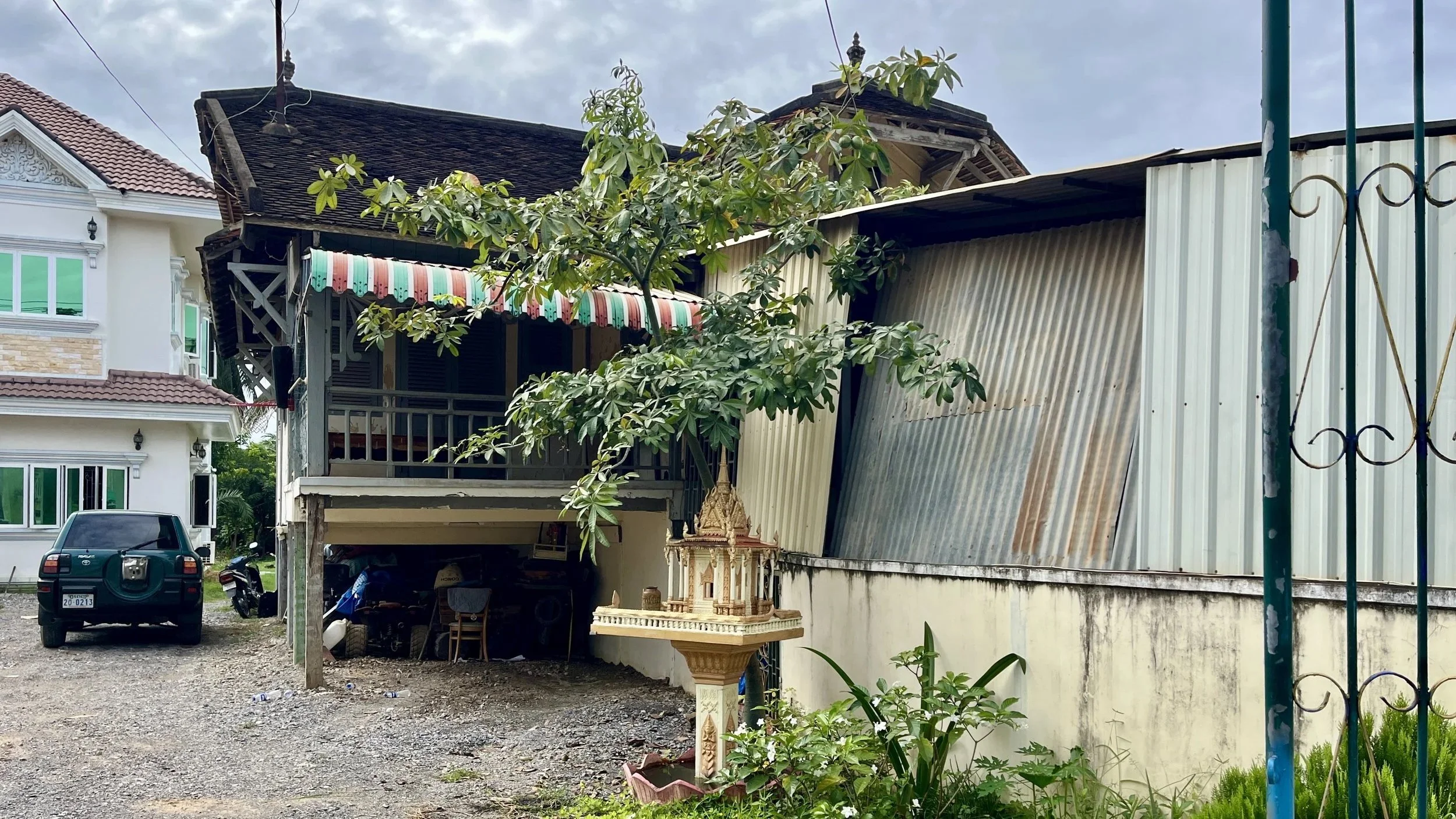
The final iteration: extensively renovated with each decades’ favored modern “upgrades”– most noticeably the picture window and metal sunroof– this house is actually rather old. Yet, it is the template for most ‘Khmer style’ houses constructed today; the only dead giveaway here is the rather steep outdoor wooden staircase coupled with the enclosed ground floor– in a modern house, it would be one or the other, but not both.

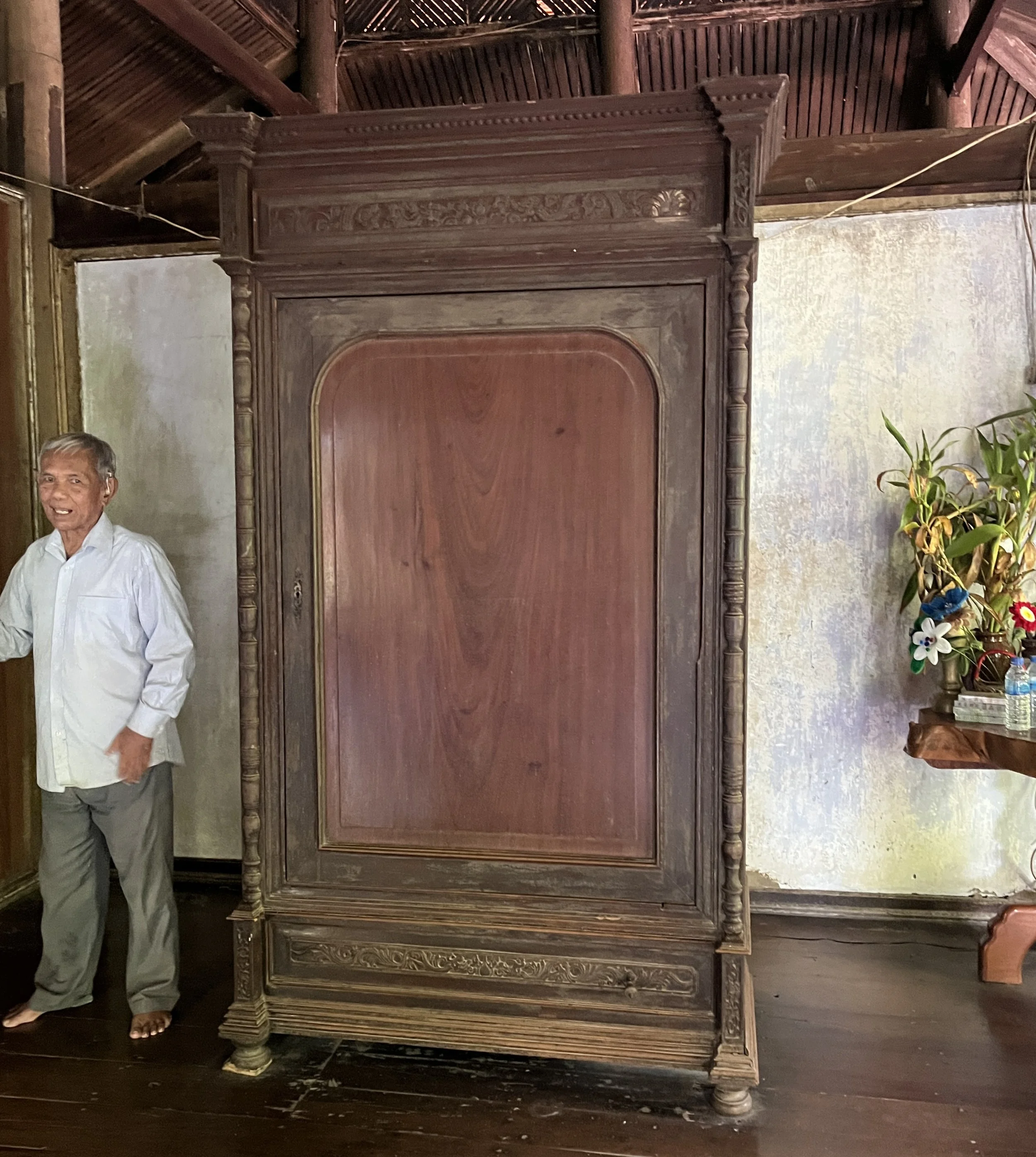
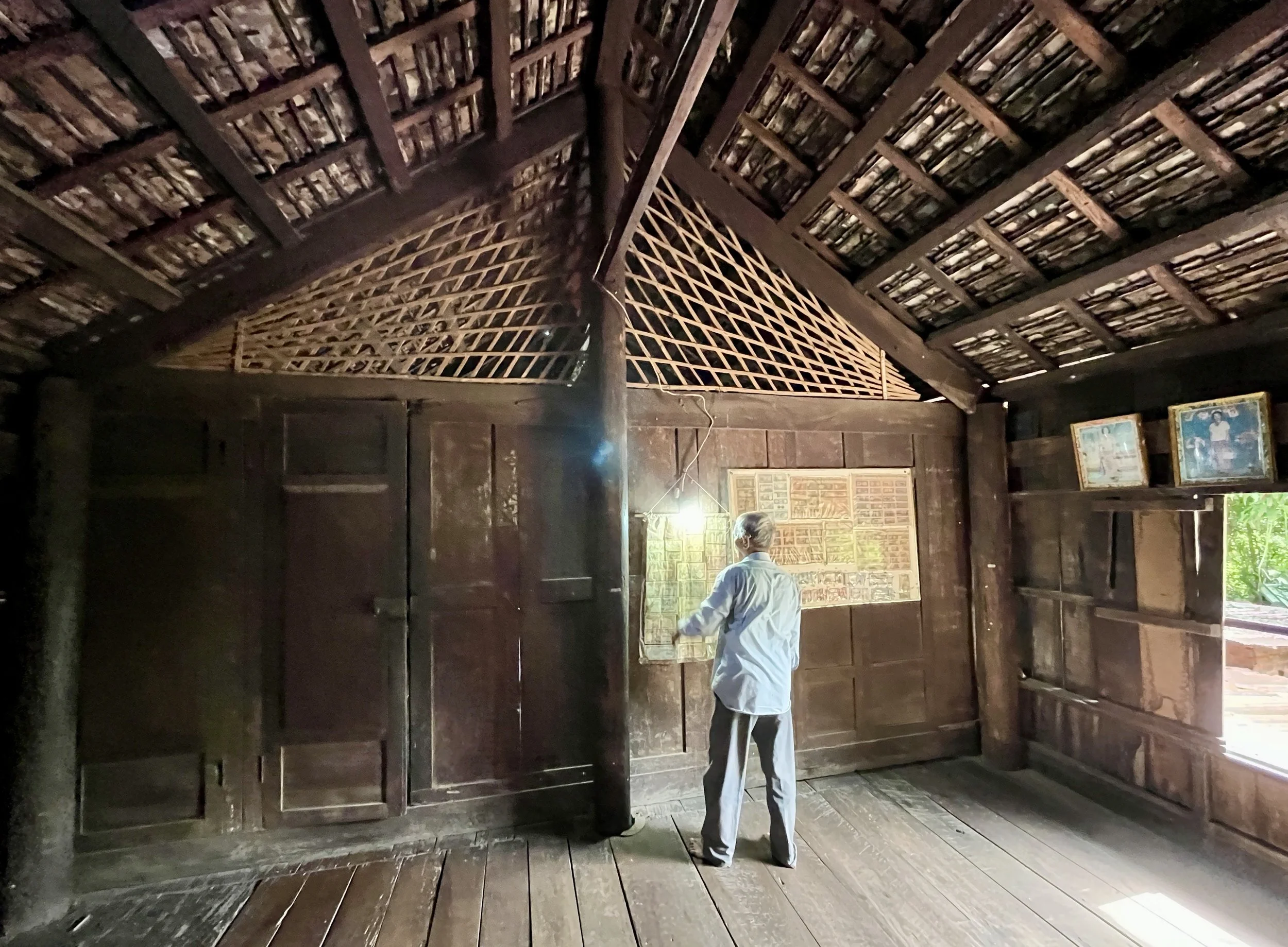
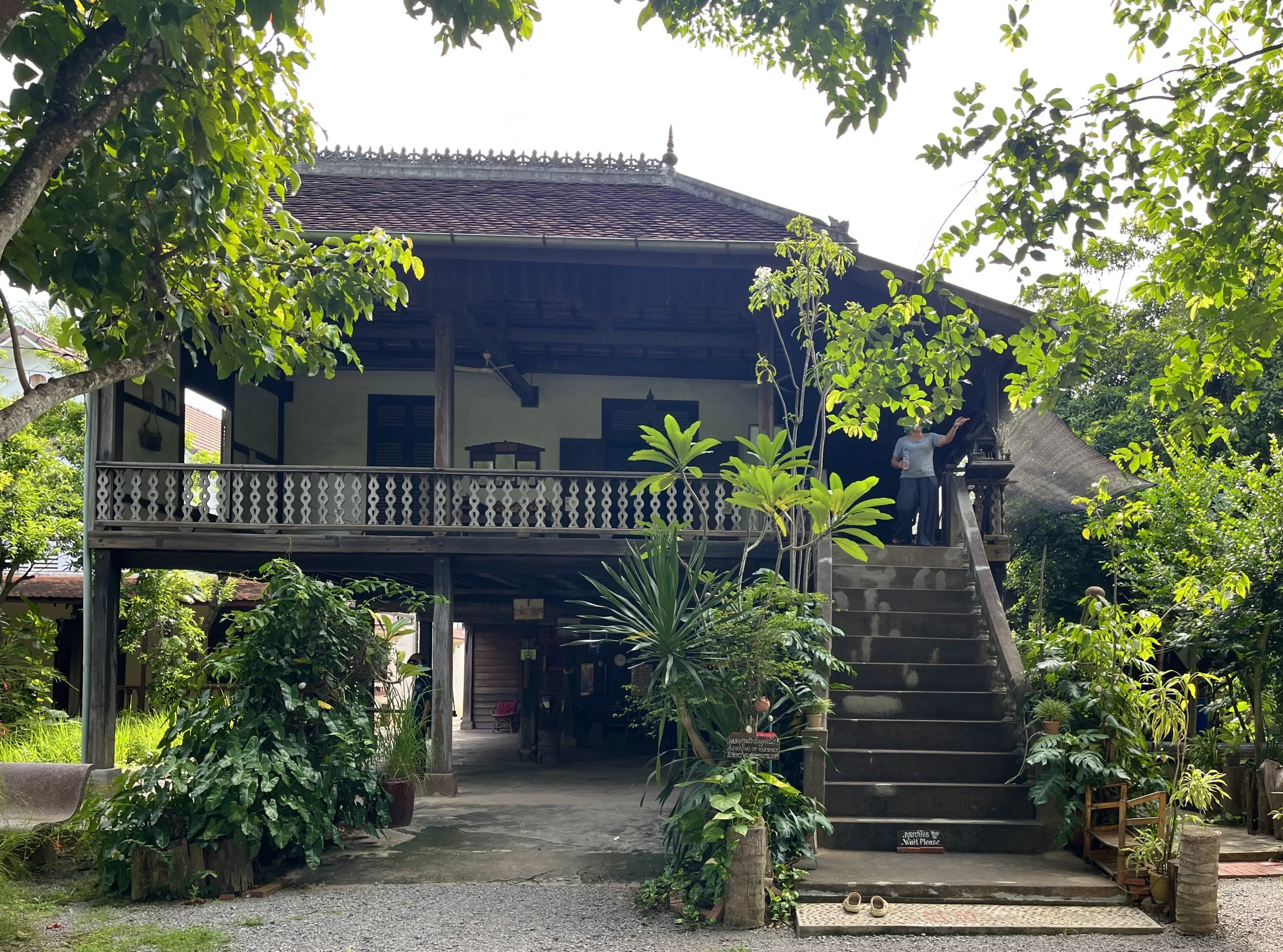
Khor Sang House is one of the two in the village that operates as a museum. It was built in 1907 by the present owner’s grandfather, then a young secretary to a colonial Thai official. I wonder if, like the governor’s mansion, construction was begun here before the surprise handover to the French, or if it was built with the proceeds of a severance package. The proportions of the house are inconspicuous, but the owner standing in this photo gives enough of a sense of scale to appreciate how large the place really is.

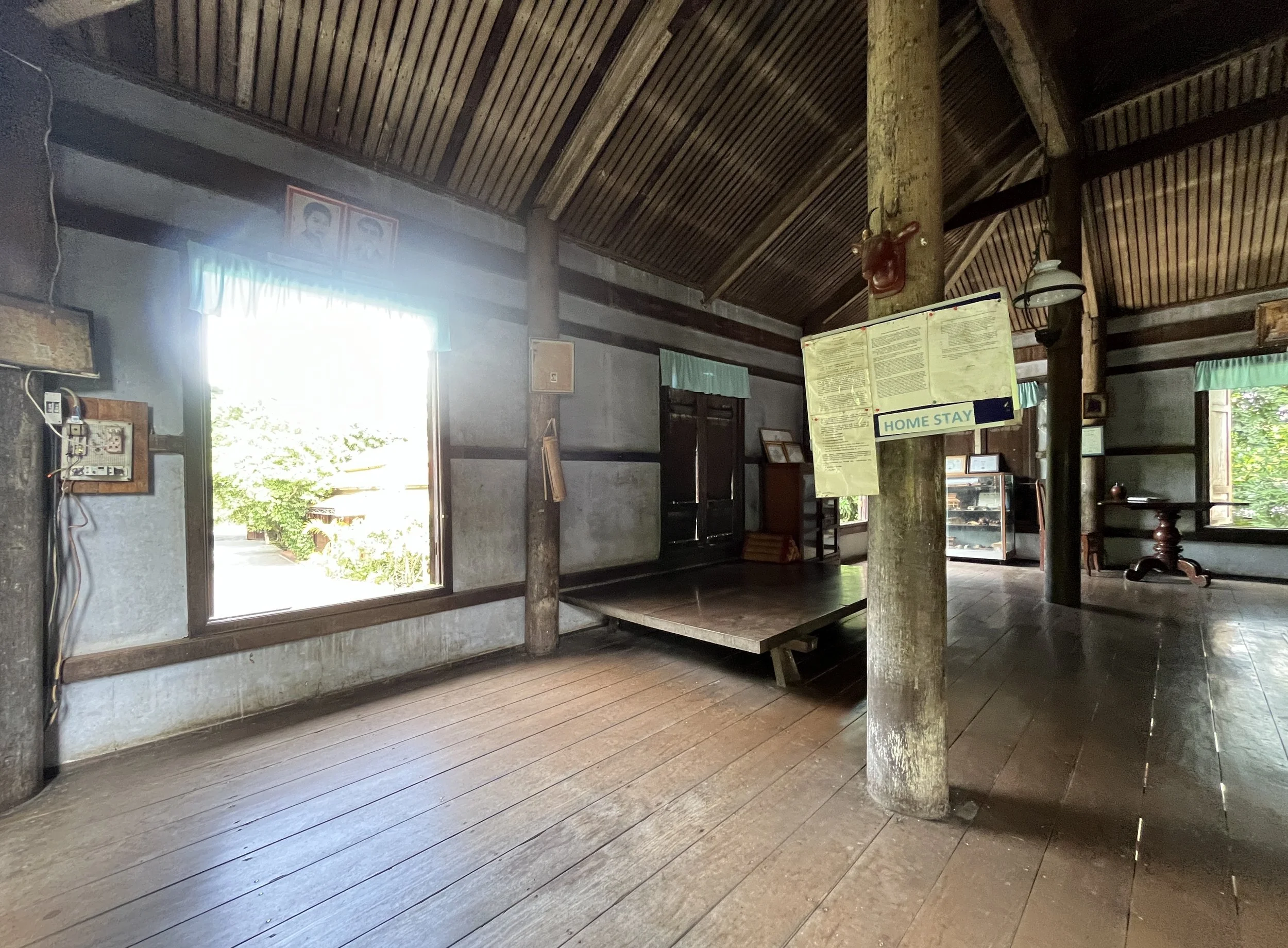
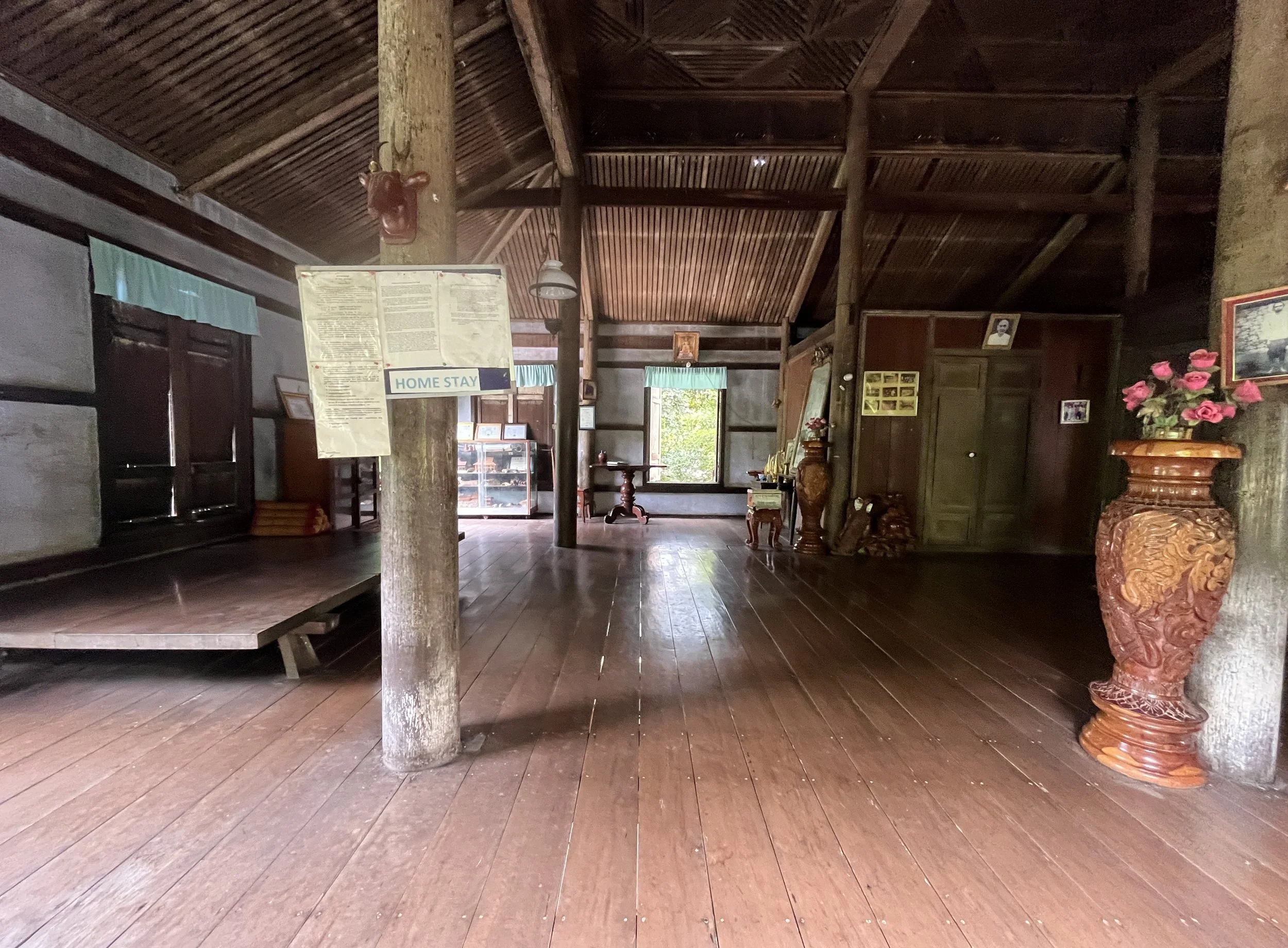
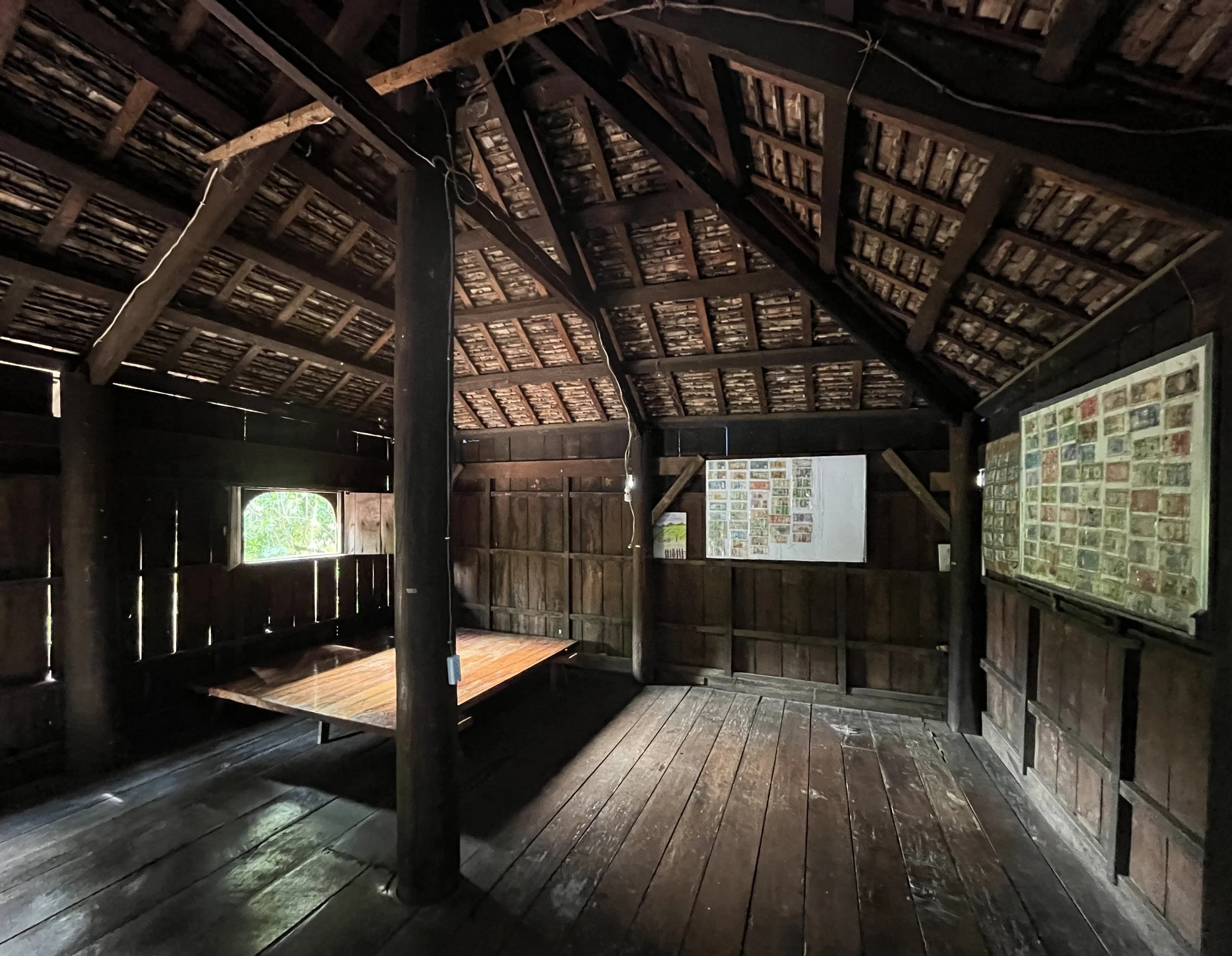
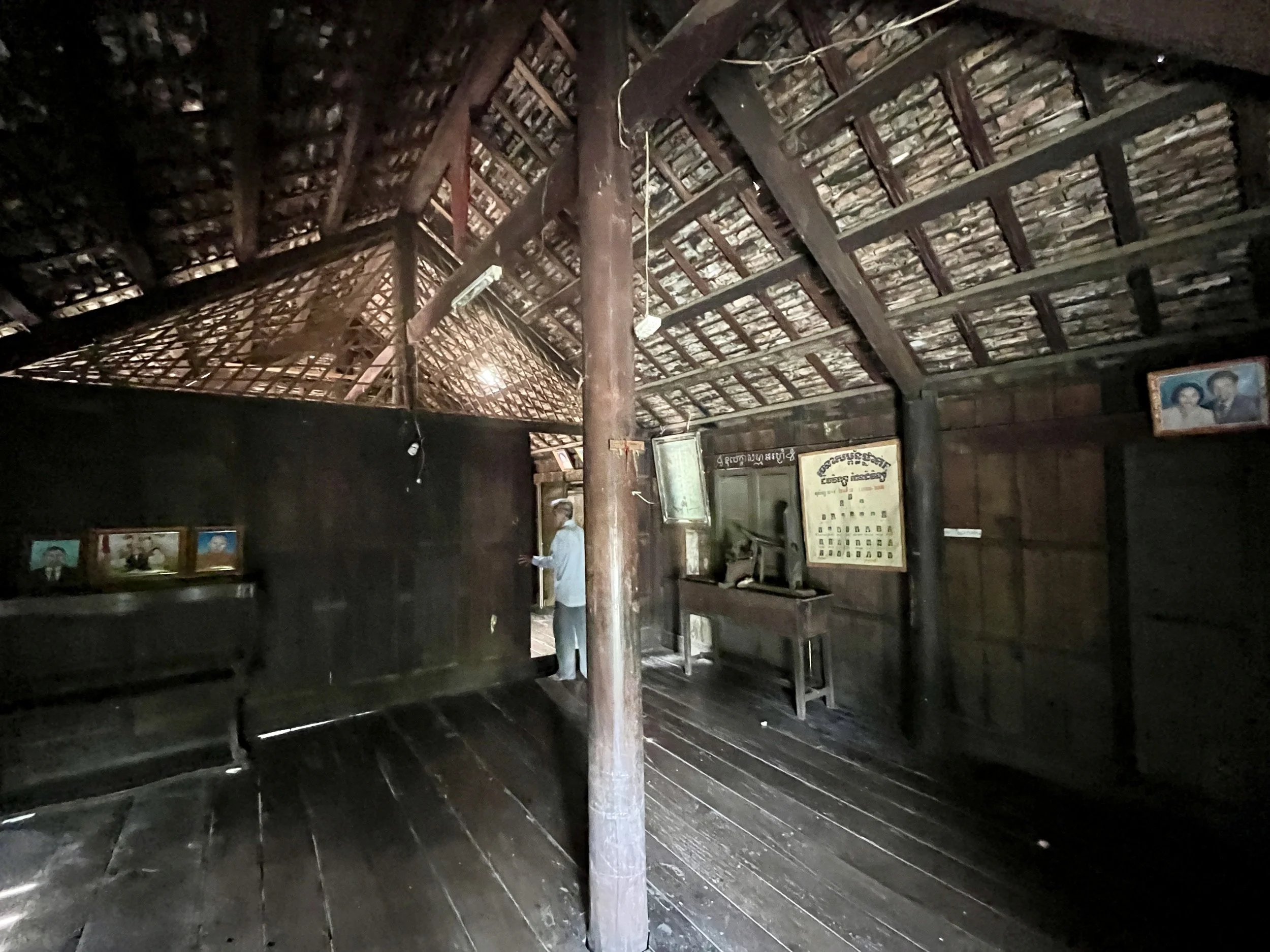
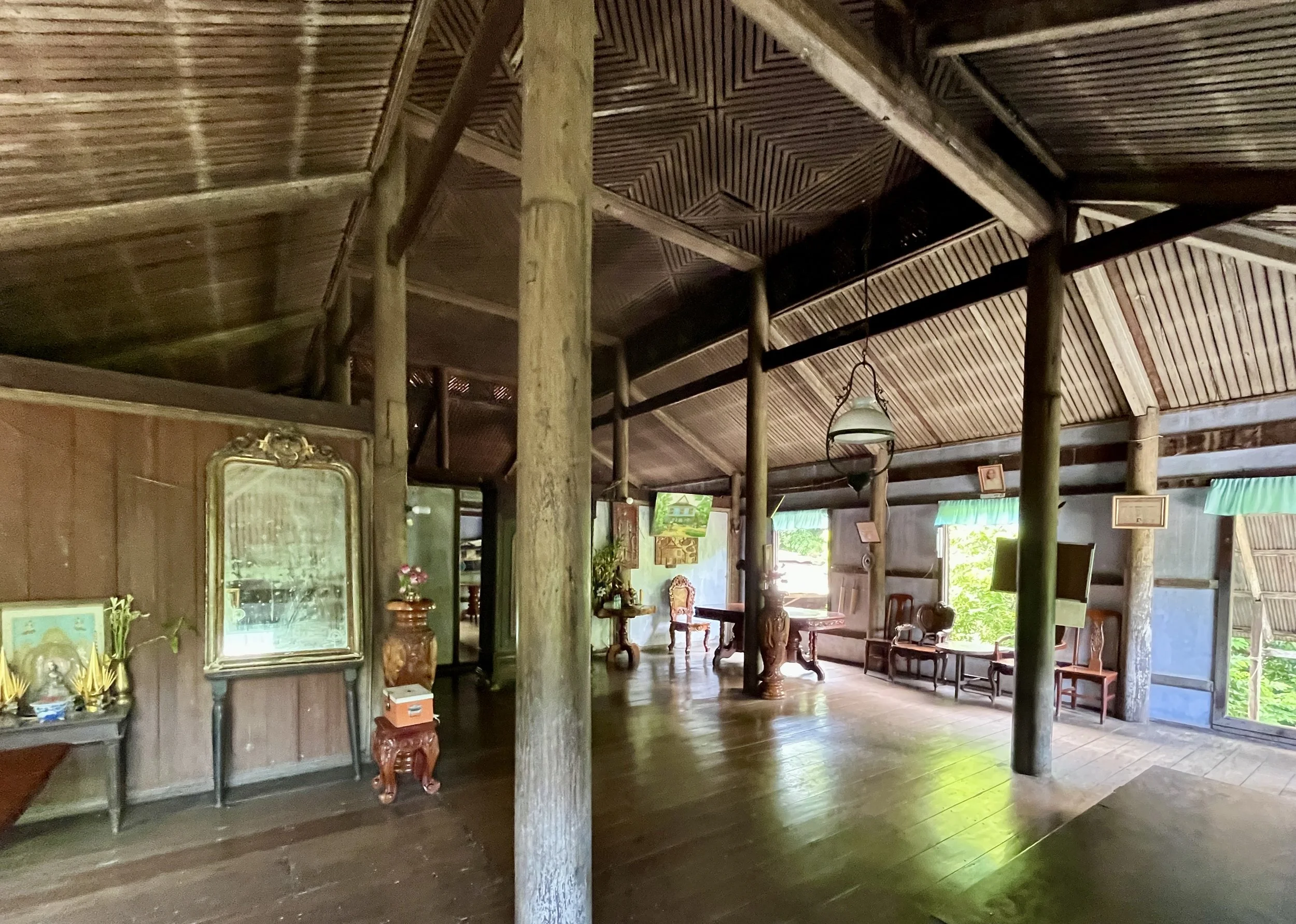
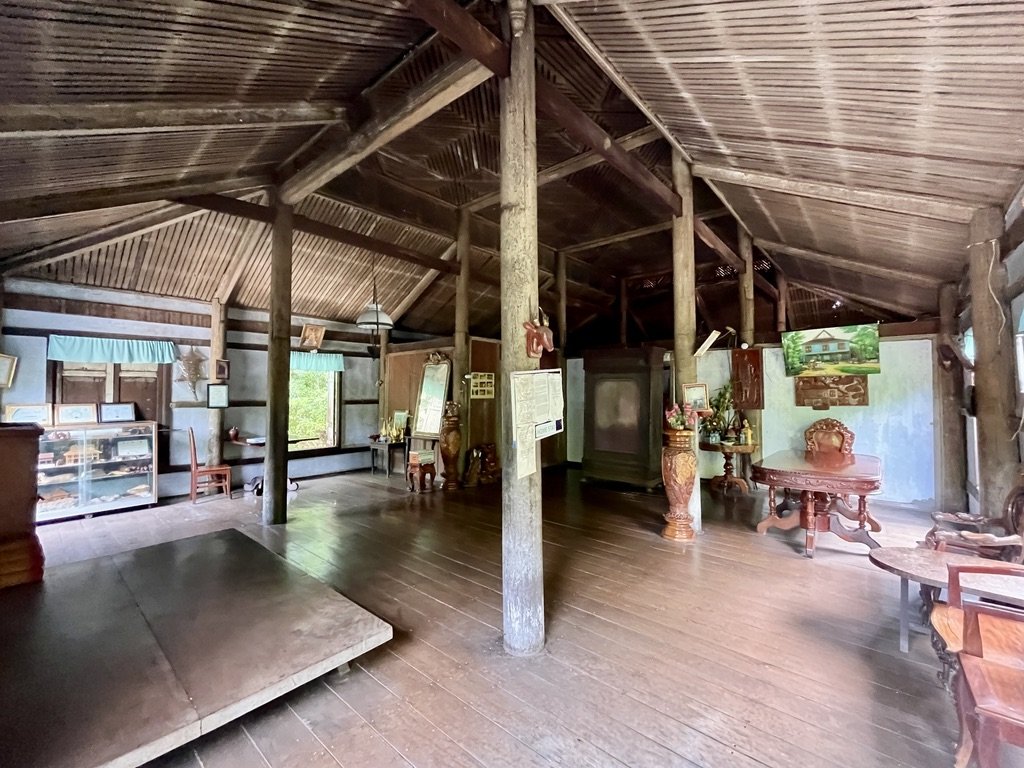
Compared to pictures on google maps from 2018ish, there’s less furniture in the house than there used to be, so it looks a bit empty. The layout is the traditionally Khmer open square with some walled off bedrooms.

The high ceilings and oversized windows really give a feel of rustic grandeur.

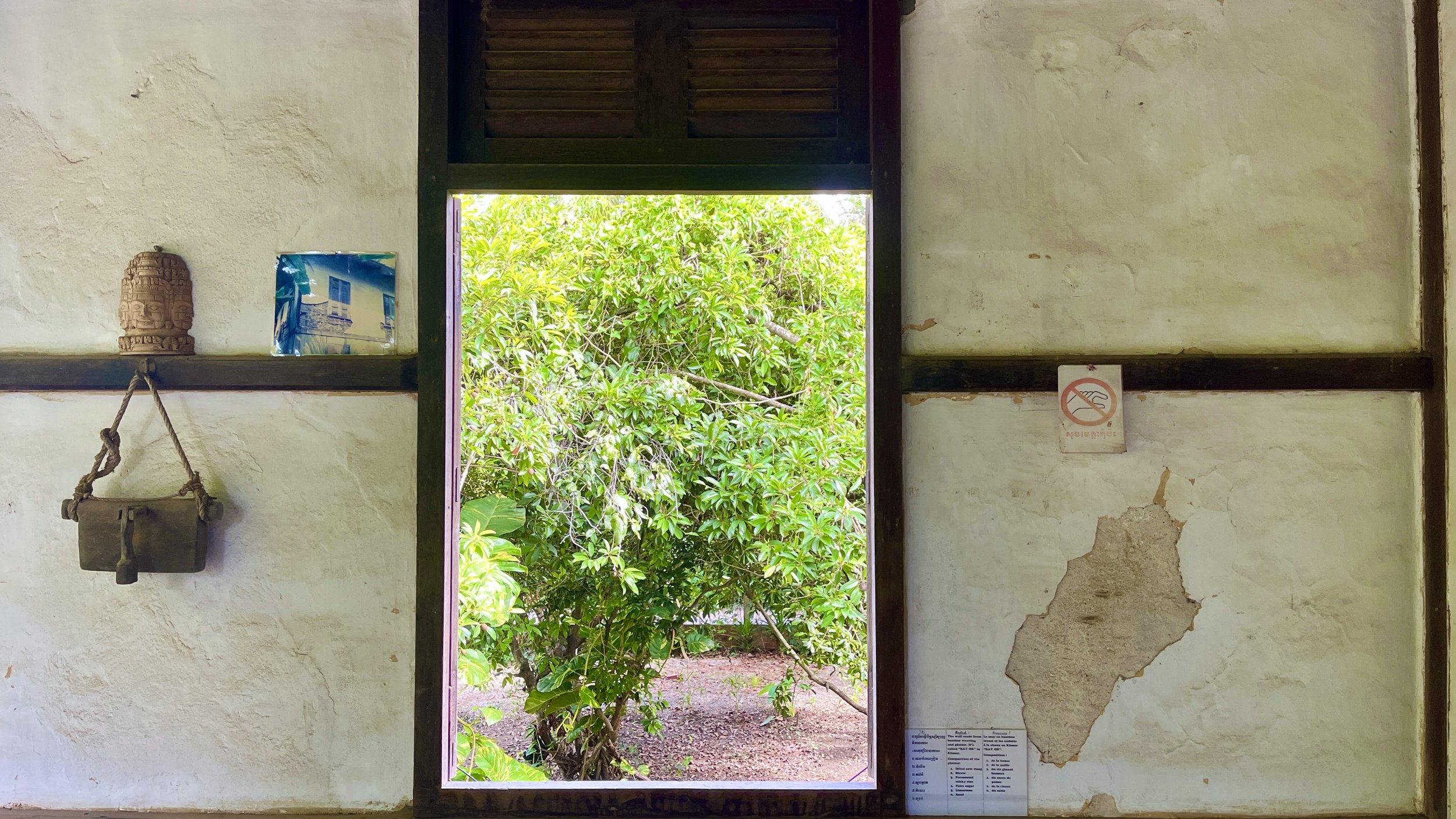
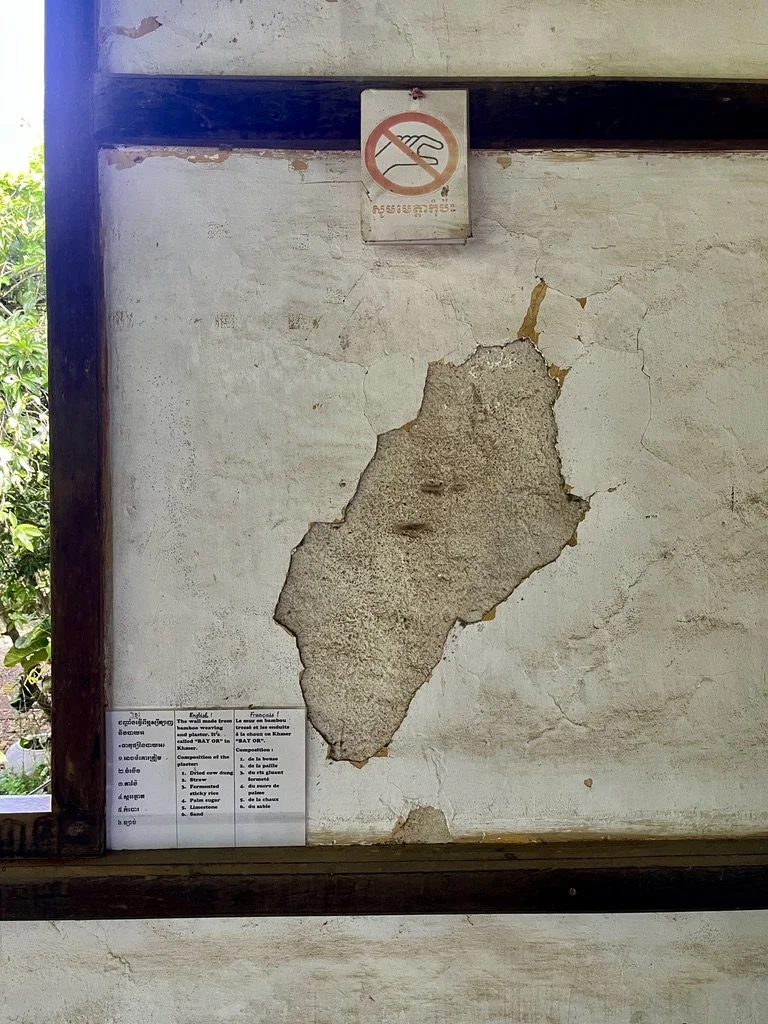
The walls are wattle and daub– in Cambodia, that means layers of latticed bamboo and plaster.

The owner doesn’t speak English– only mile a minute strongly accented French. My French is poor, so it was hard for me to keep up! In his father and grandfather’s generations, most colonial administrators, lawyers, successful merchants, etc. were polyglots, speaking the Chinese dialect of their ancestors (usually Cantonese), Khmer, Thai, and French.
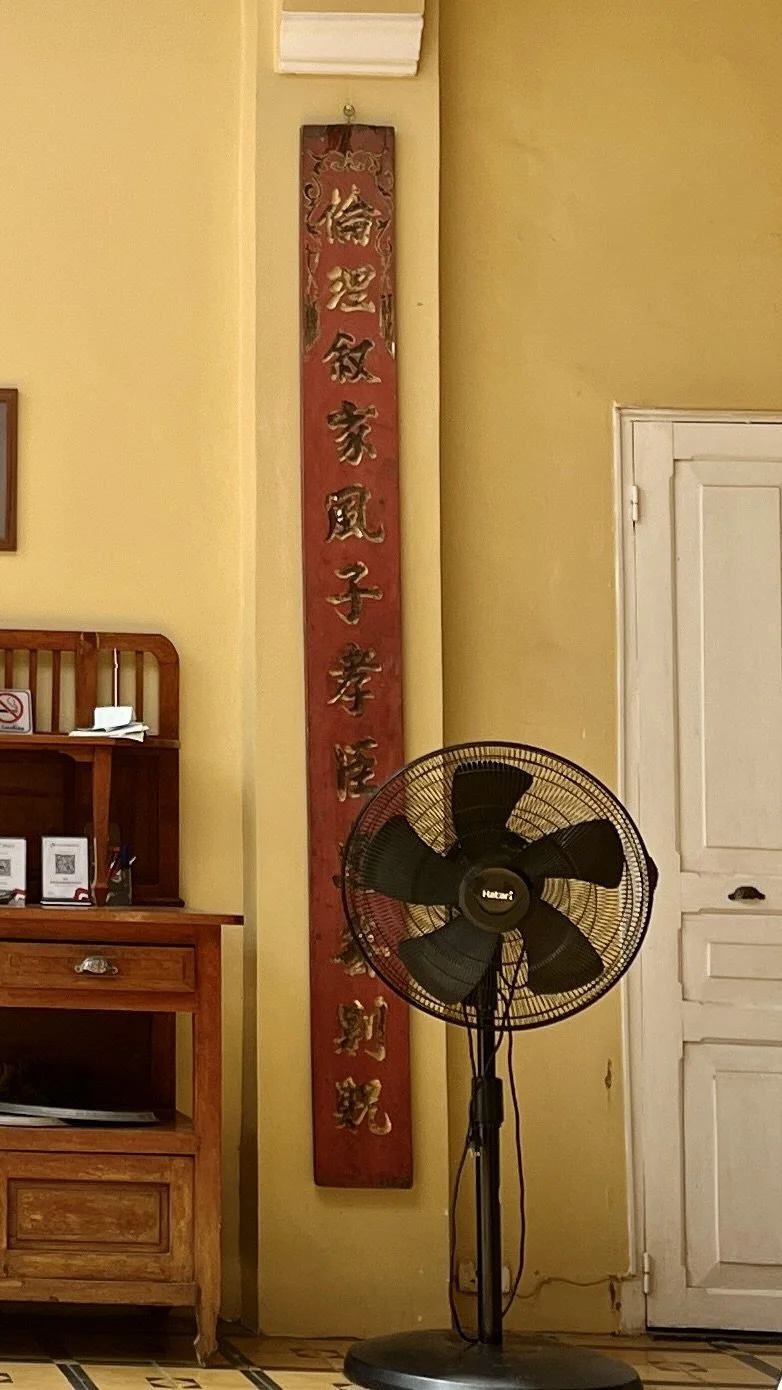
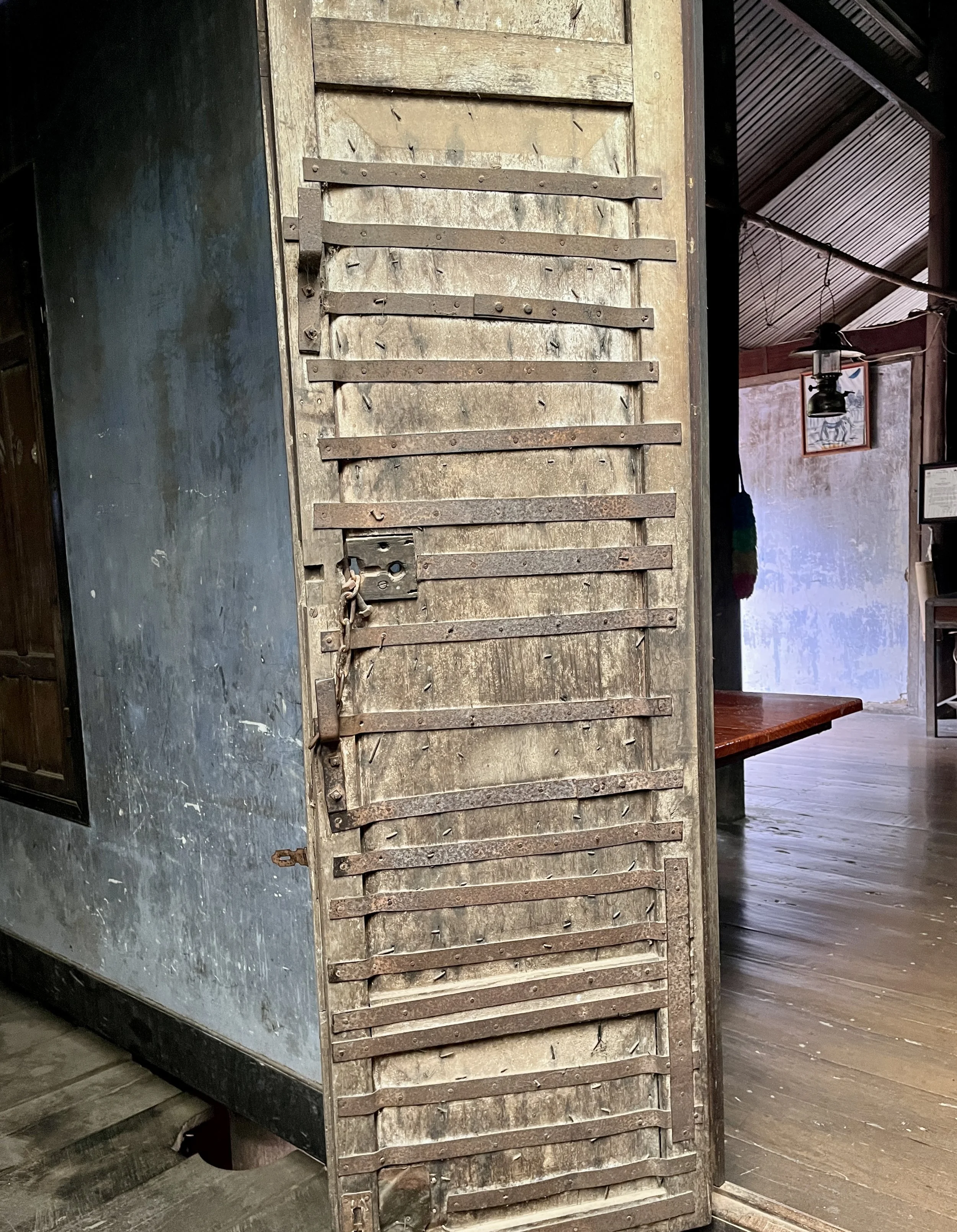
This made me laugh– must have been the money room!
Inside one of the bedrooms.

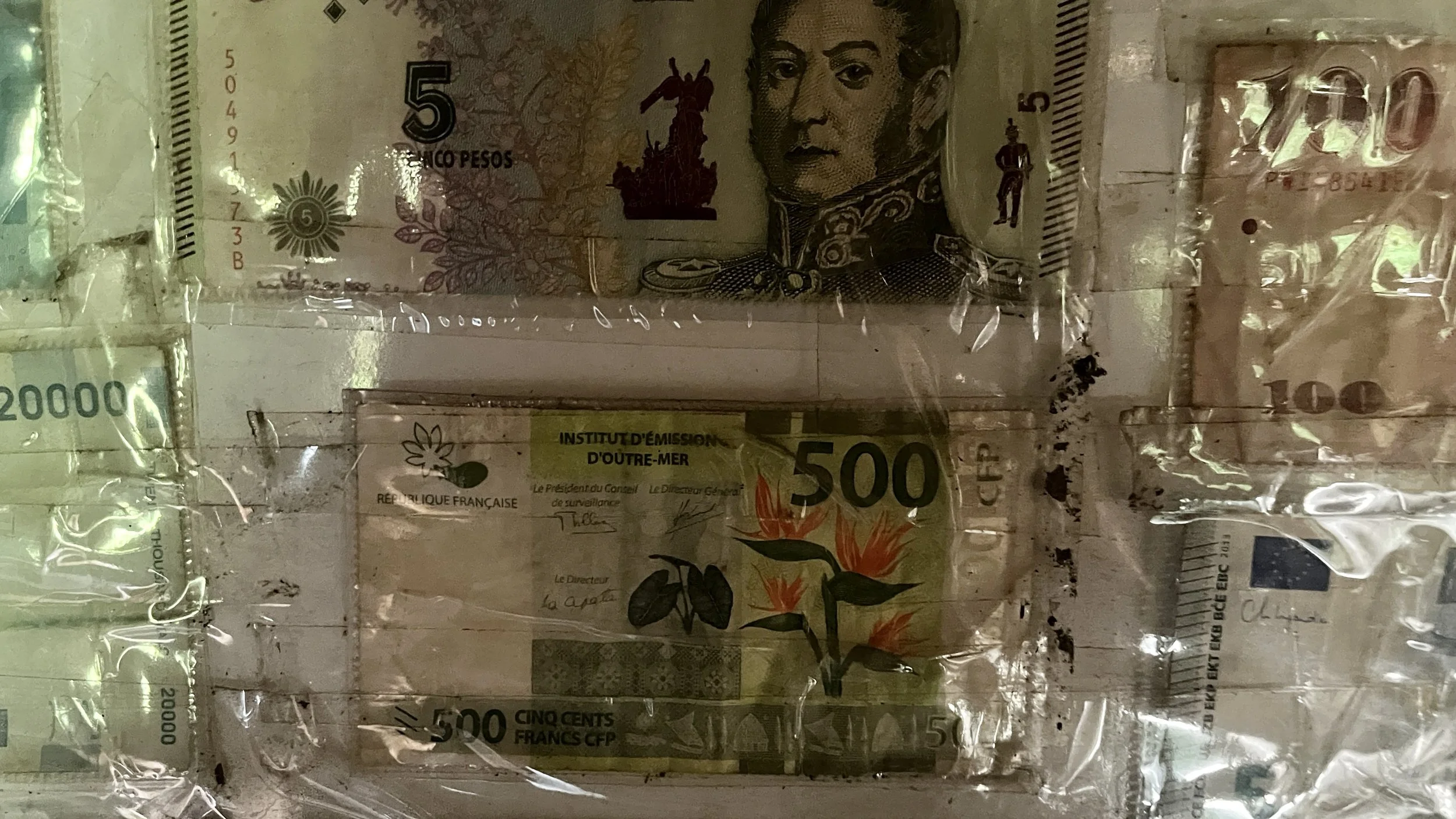
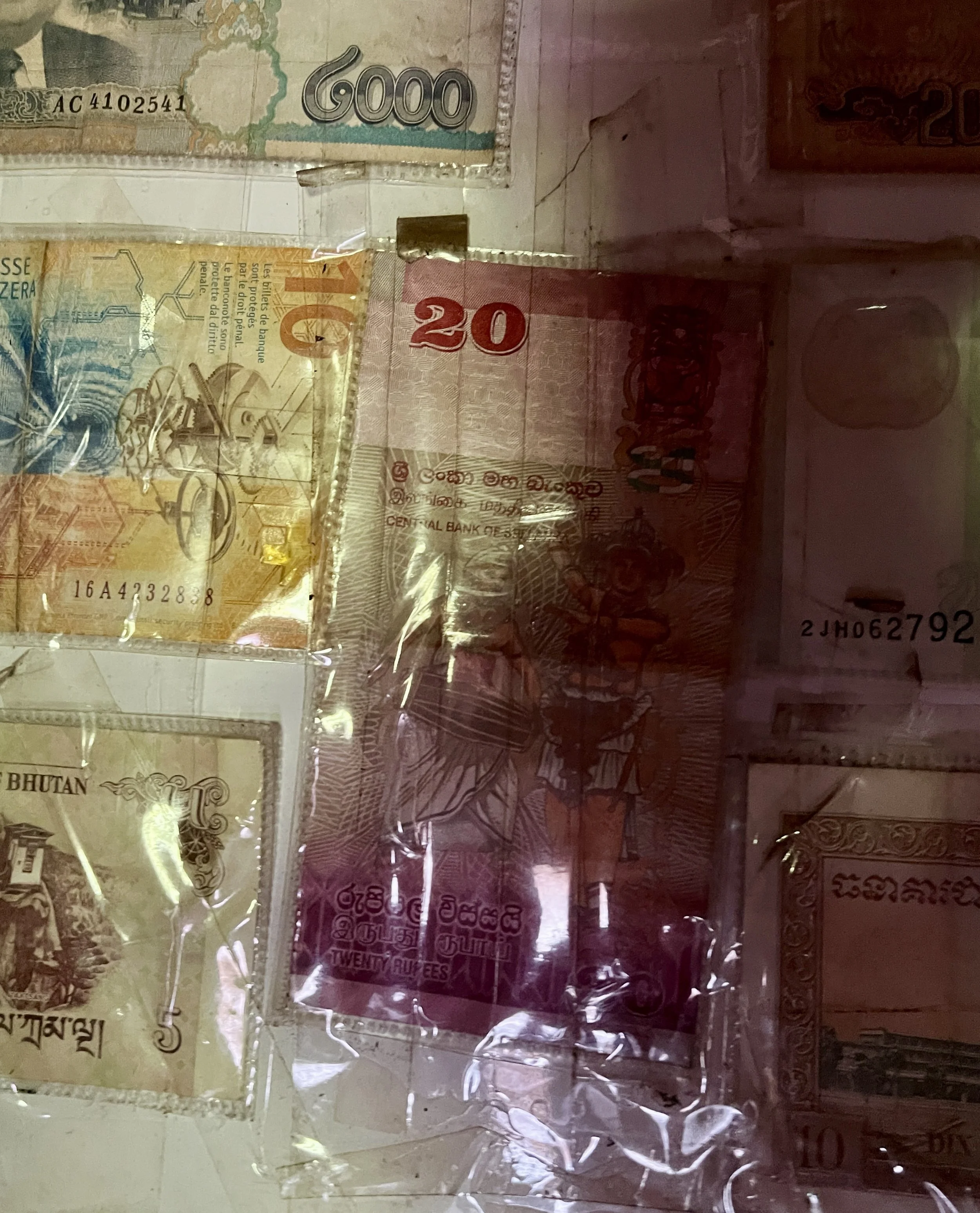
There’s a collection of bills from all over the world, cash donations tourists have made.

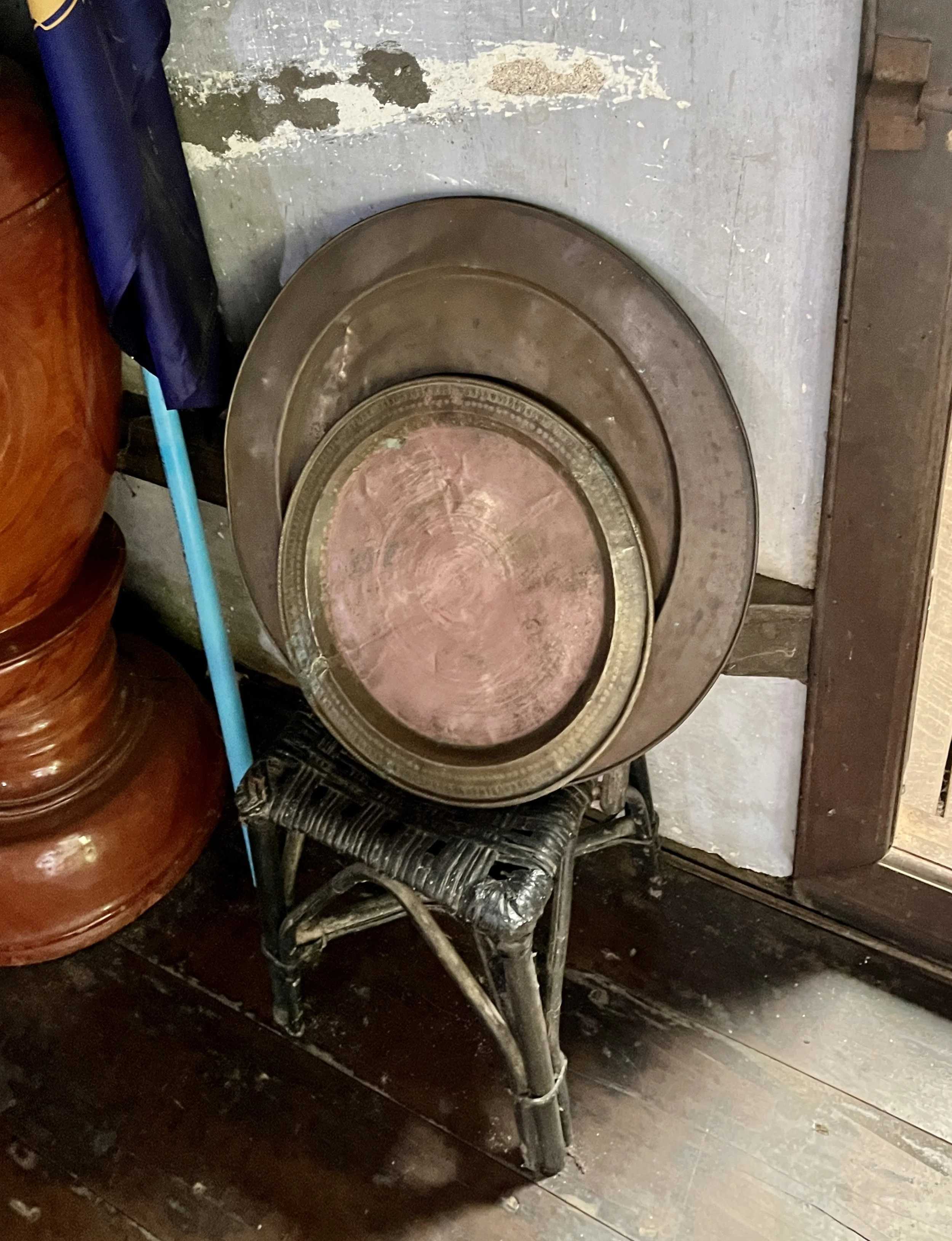
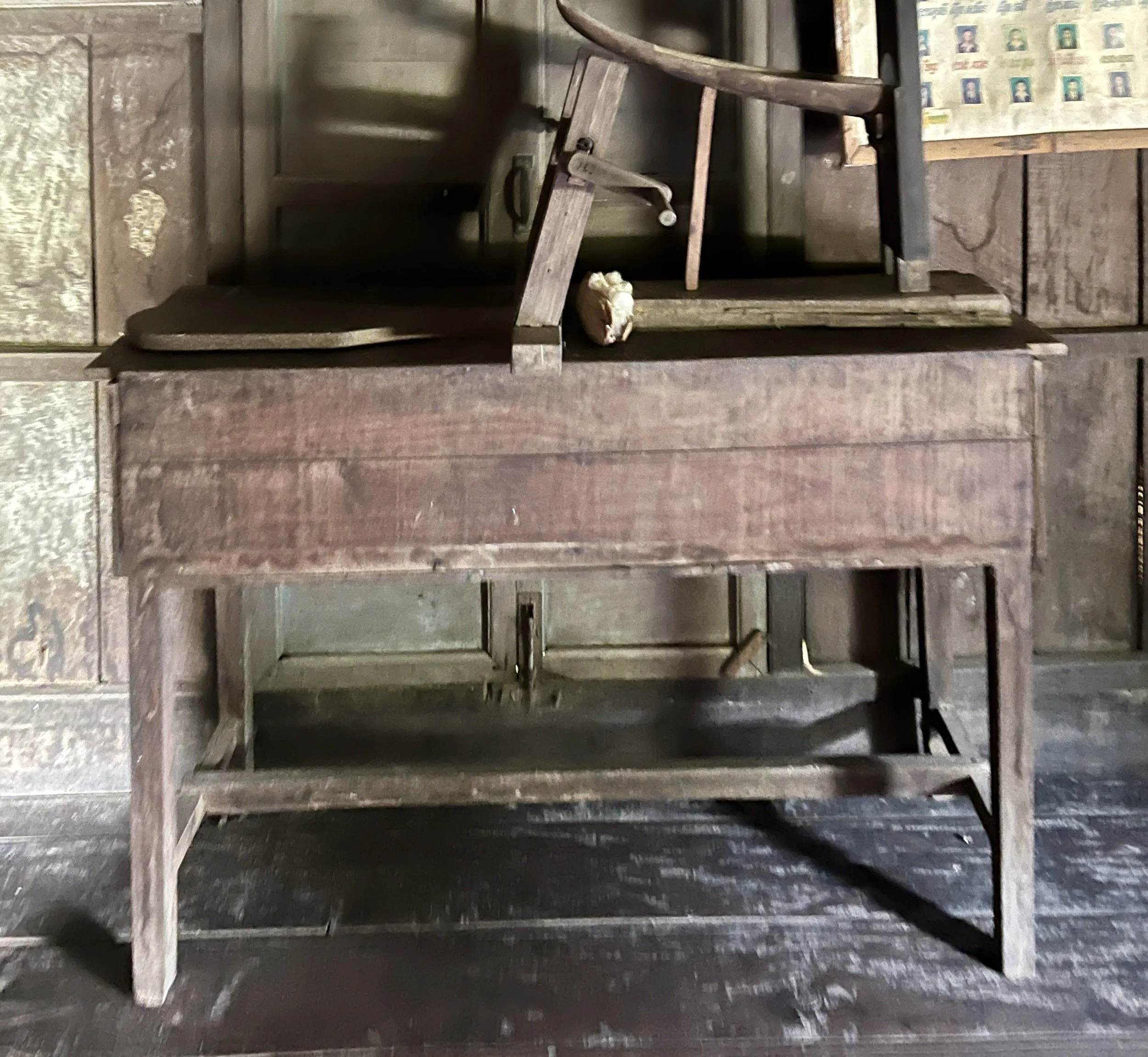
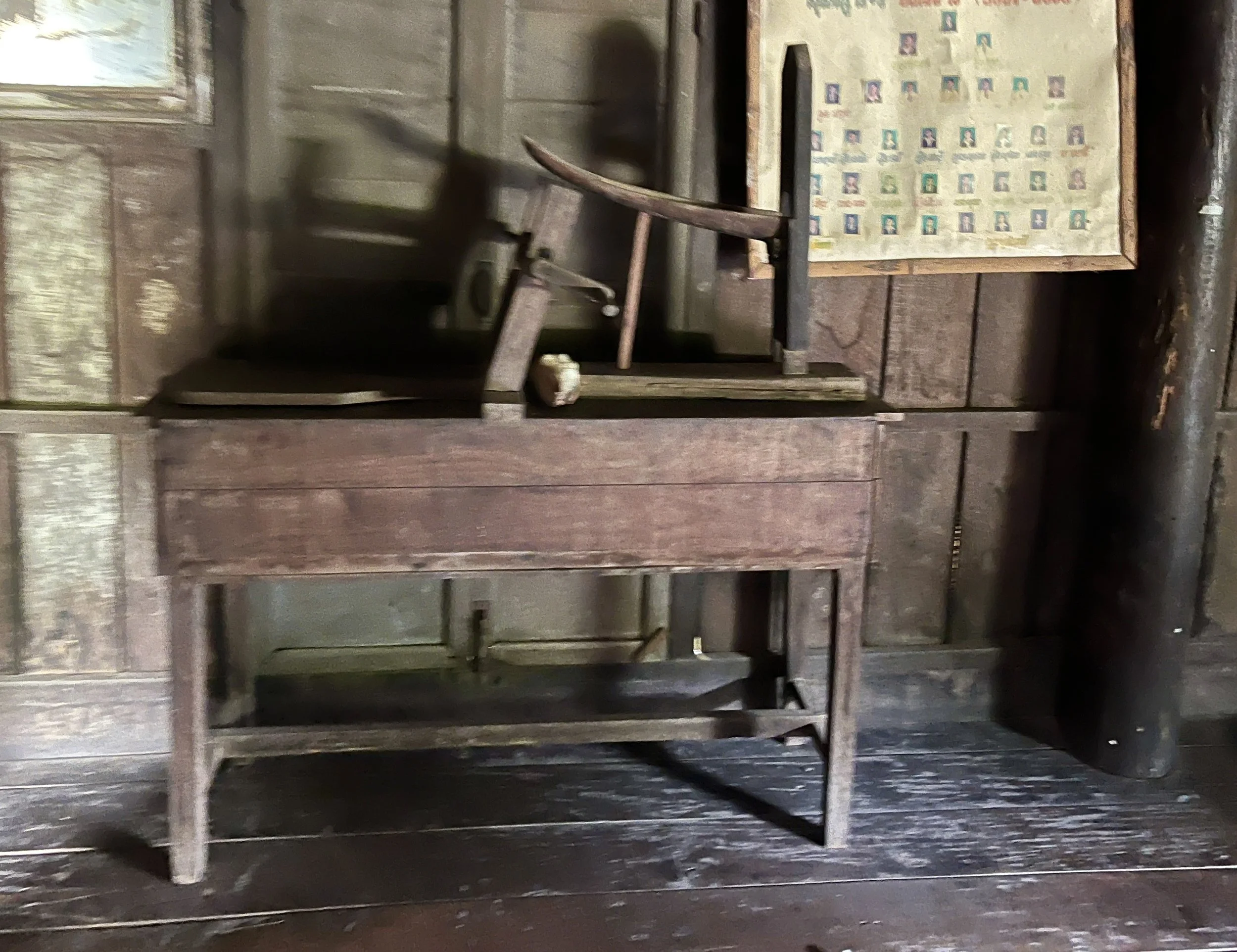
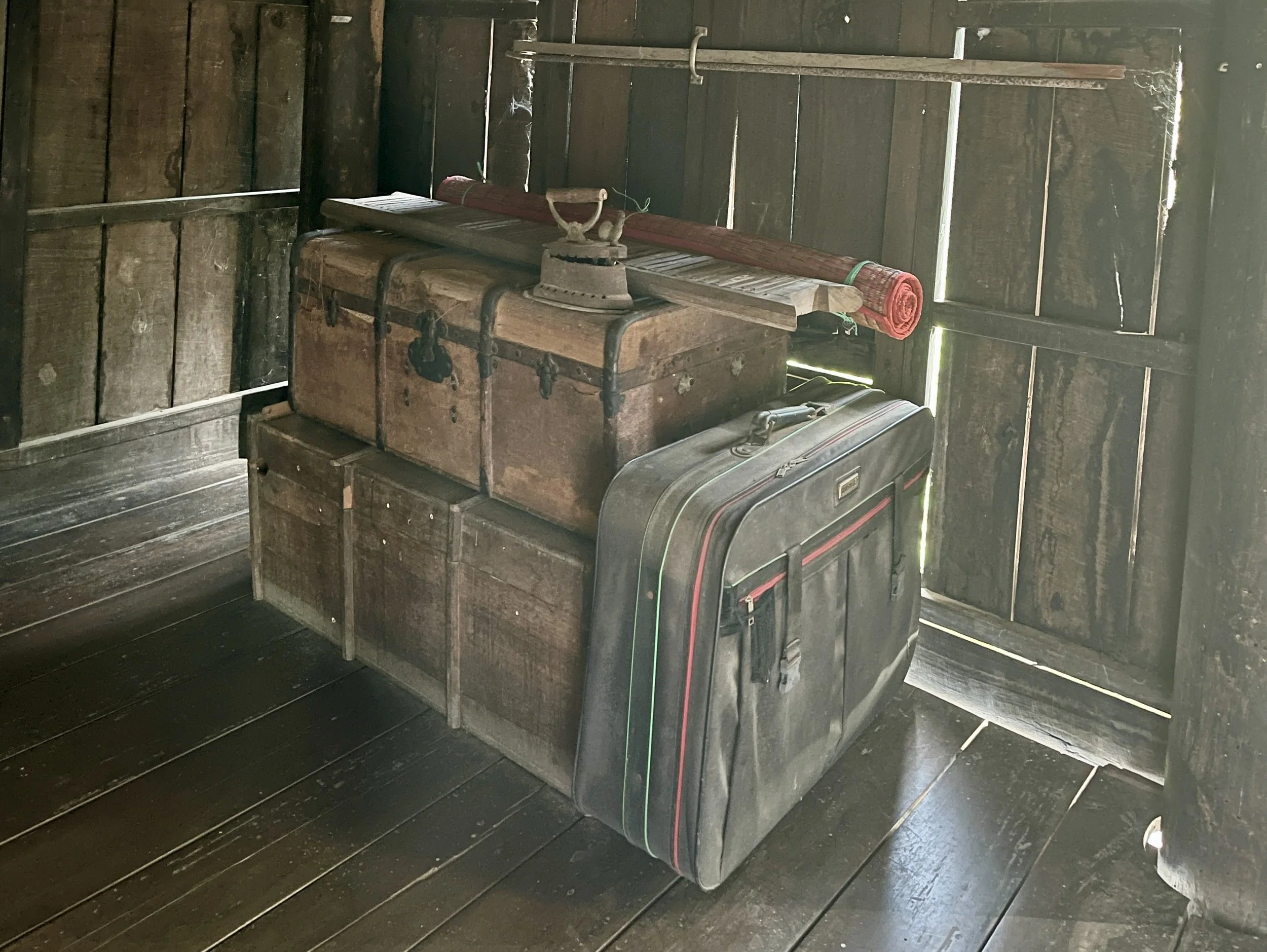
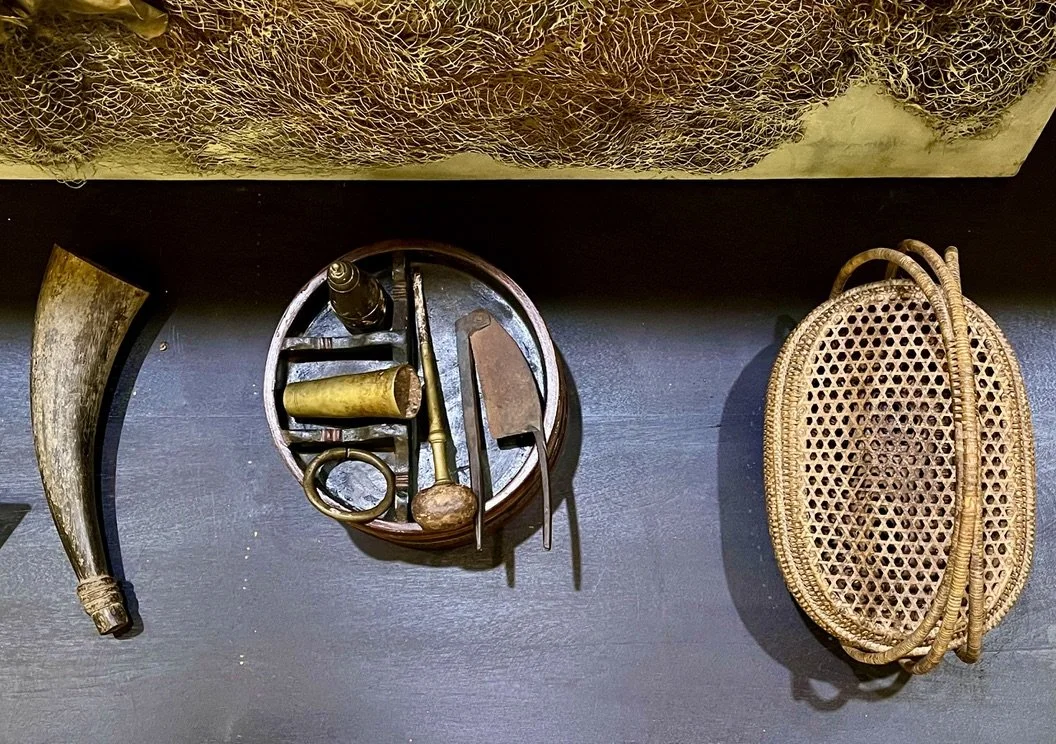
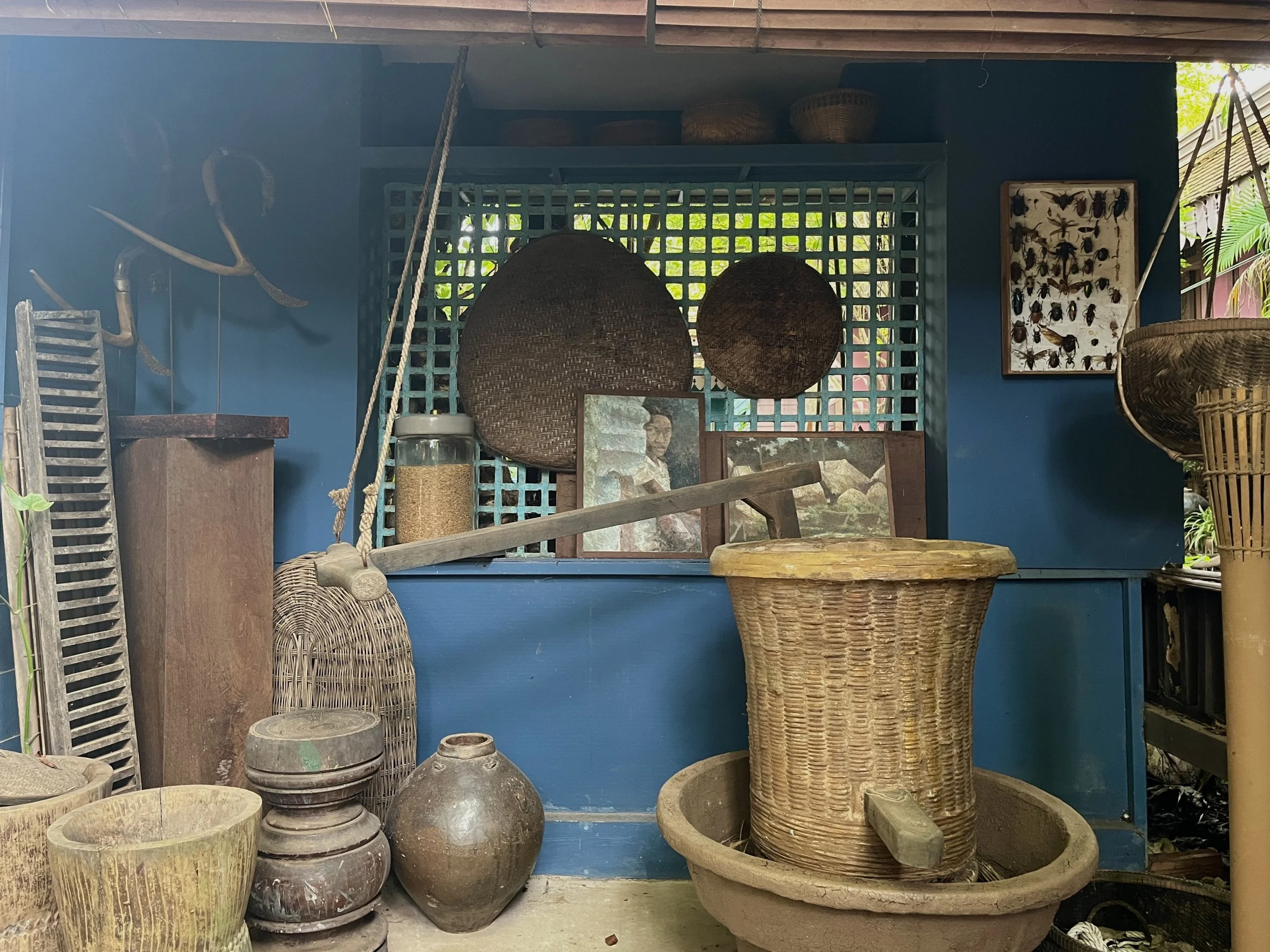
Around the house are some old household tools.

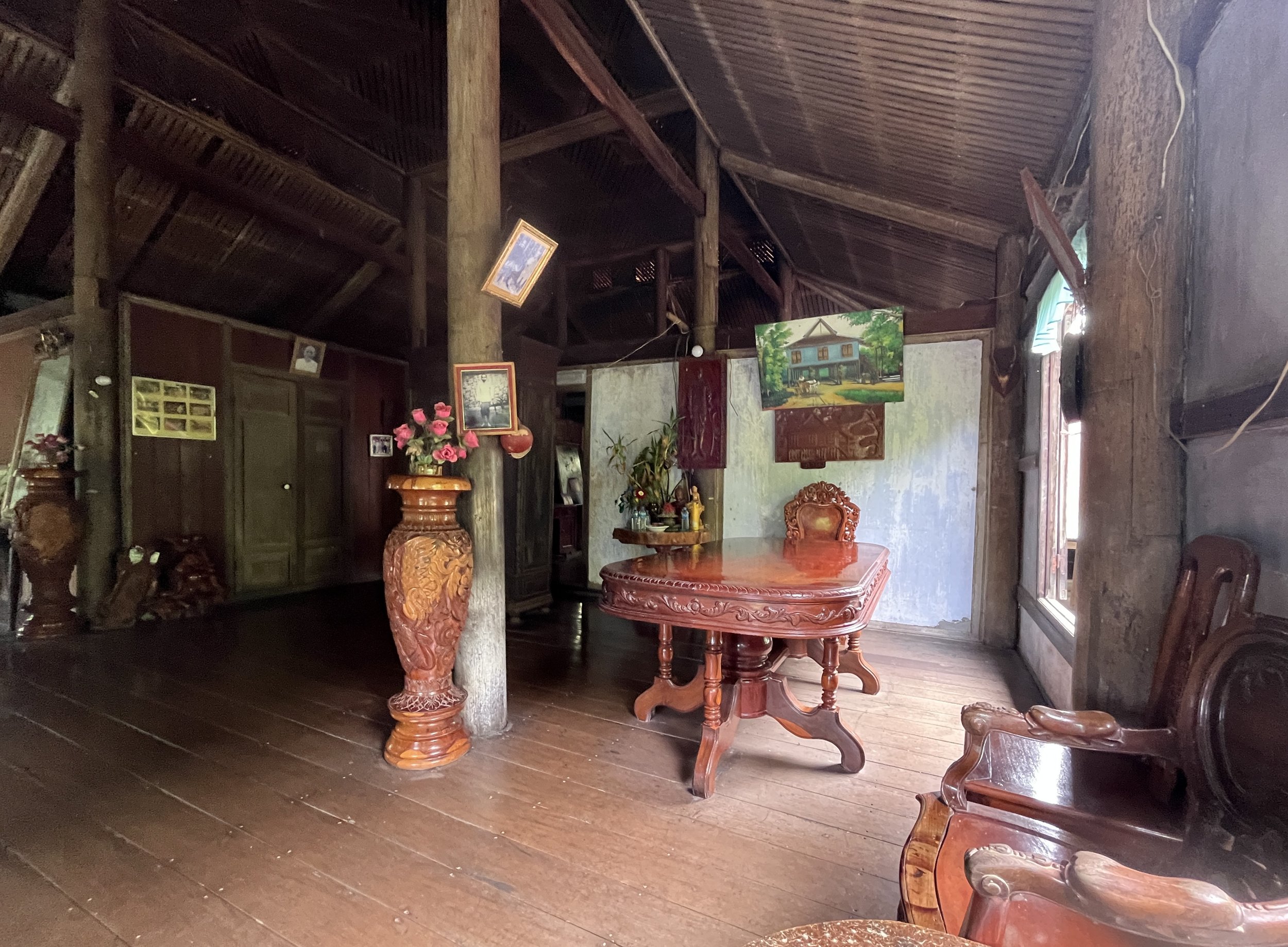
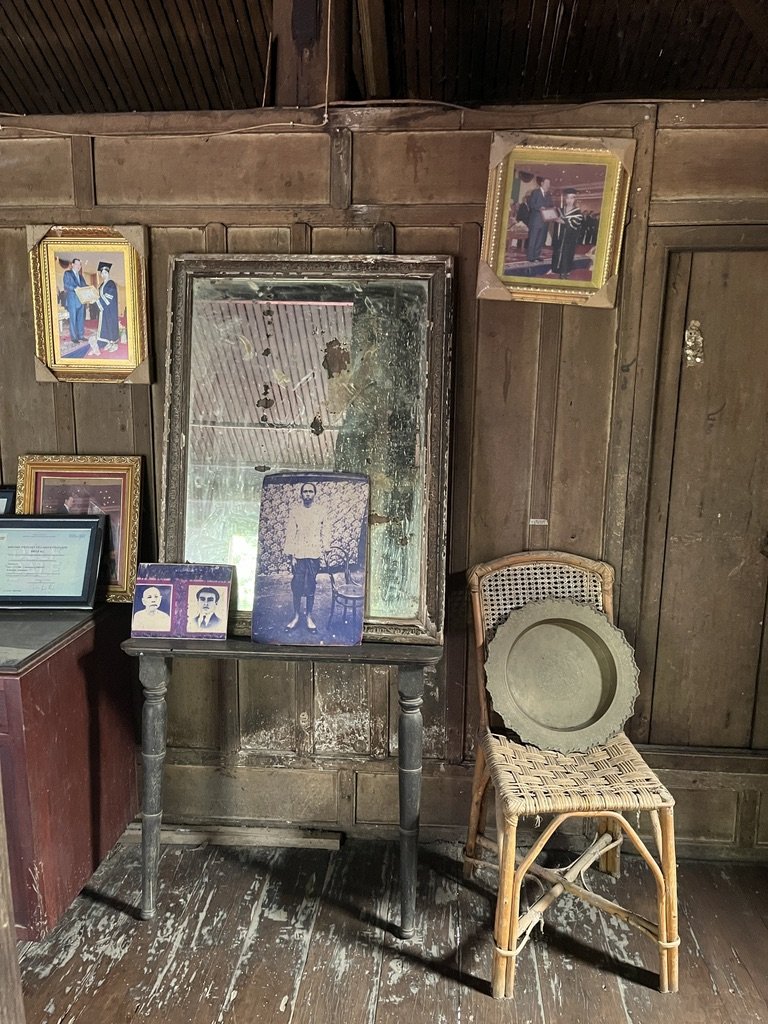
I found it interesting that a good half of the old furniture was locally made, rough hewn versions of European styles.

The walla aren’t decorated but for calendars, portraits and graduation photos. It is cheering to see a family who have valued education so highly over multiple generations.

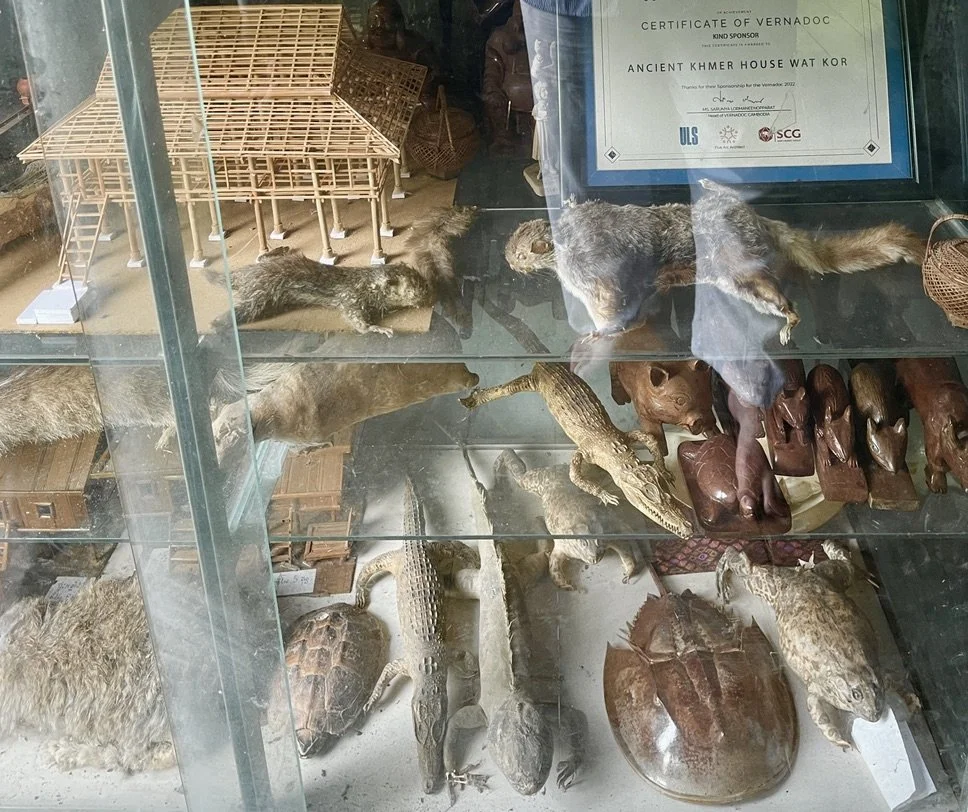
I have no idea what this cabinet of curiosities is about, but it did make me smile.

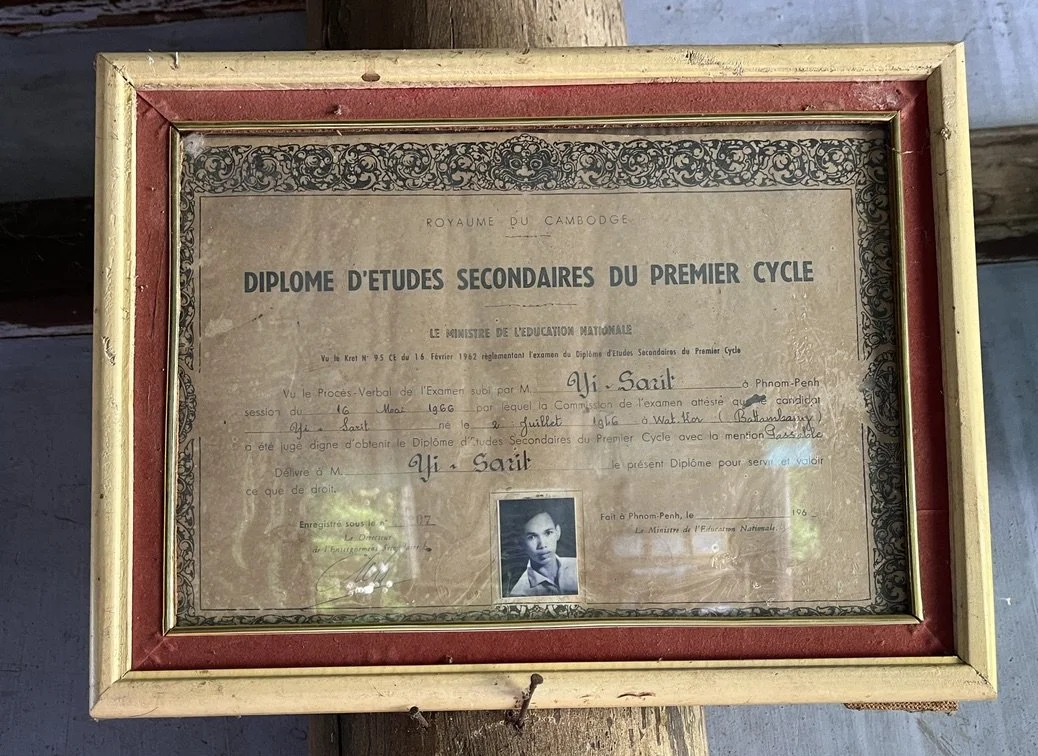
The owner’s diploma from 1966. I always want to ask how someone like him survived the Khmer Rouge, but fear the answer, and don’t want to re-traumatize or offend either.

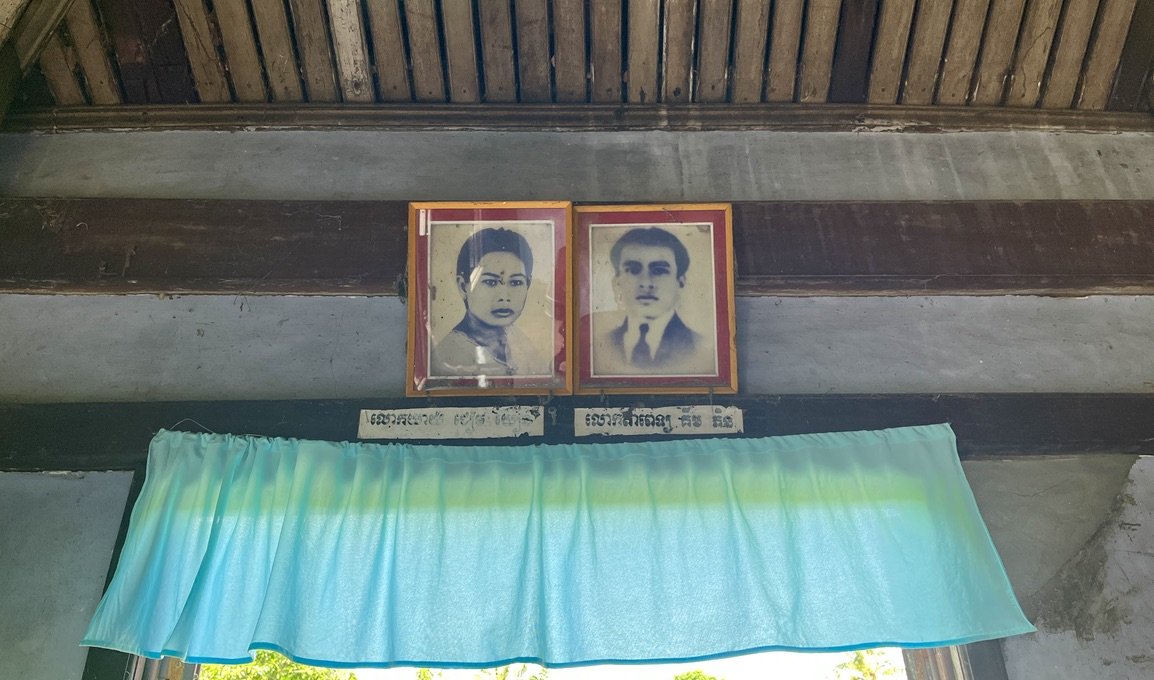
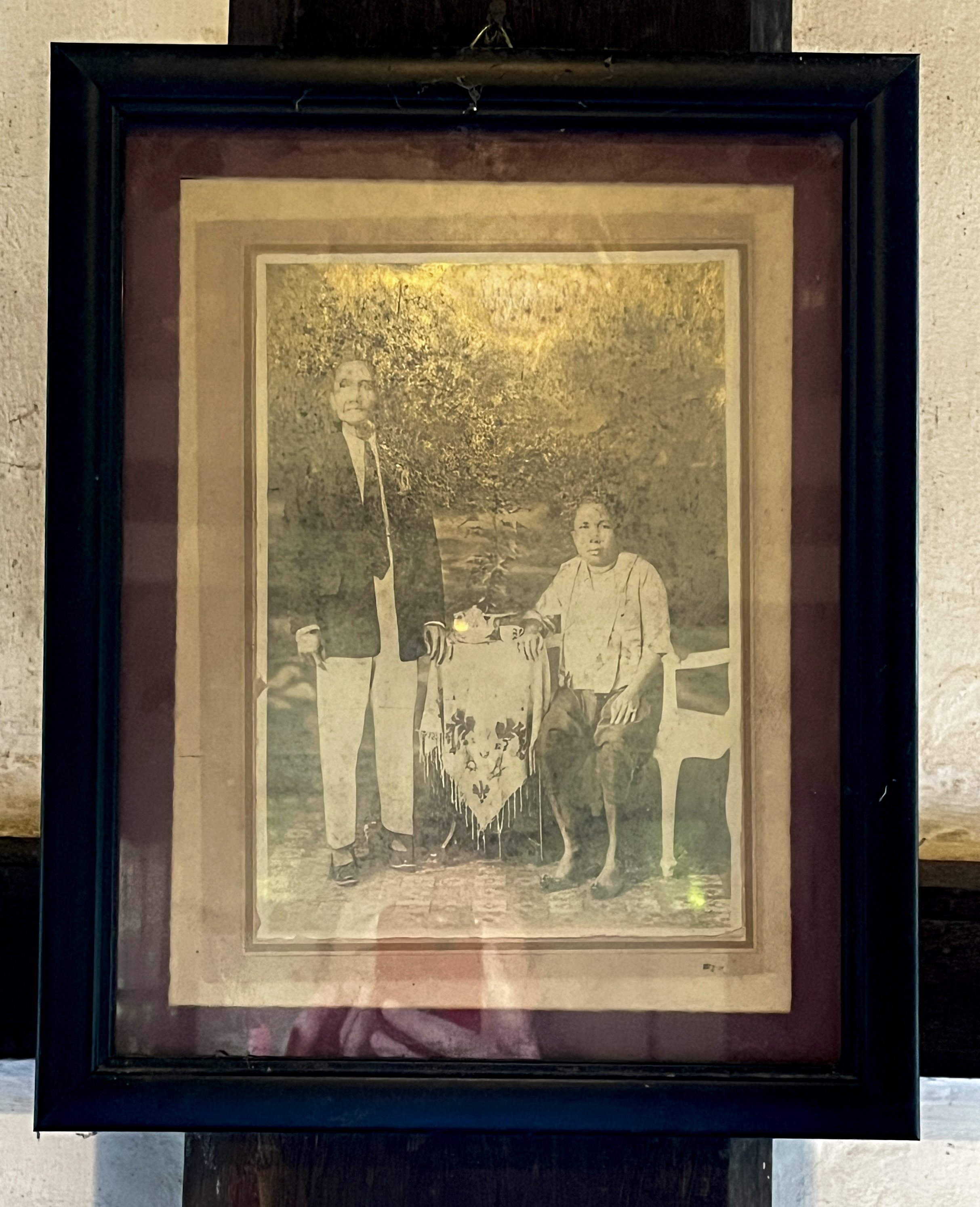
The original builders of the house, I believe.

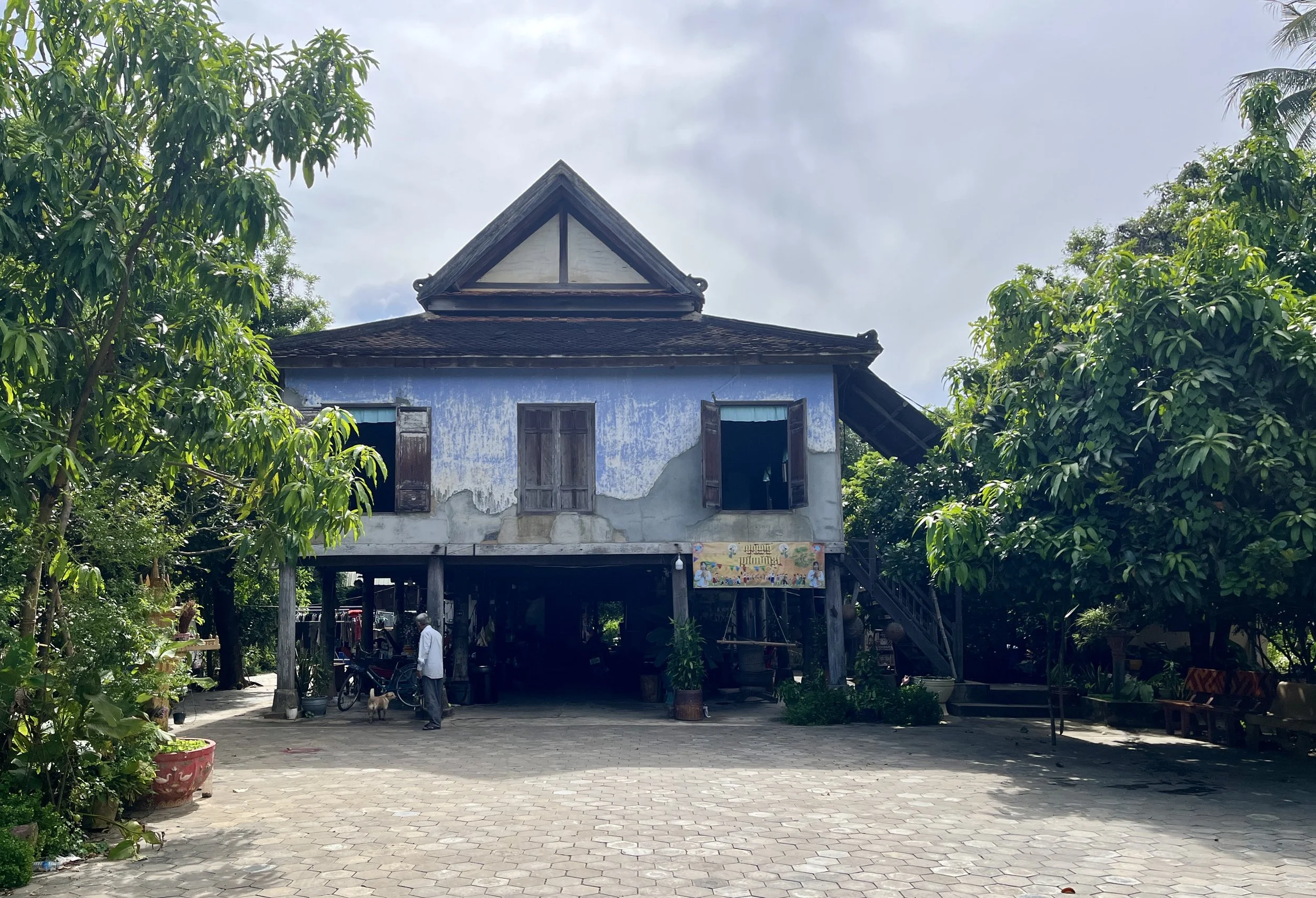
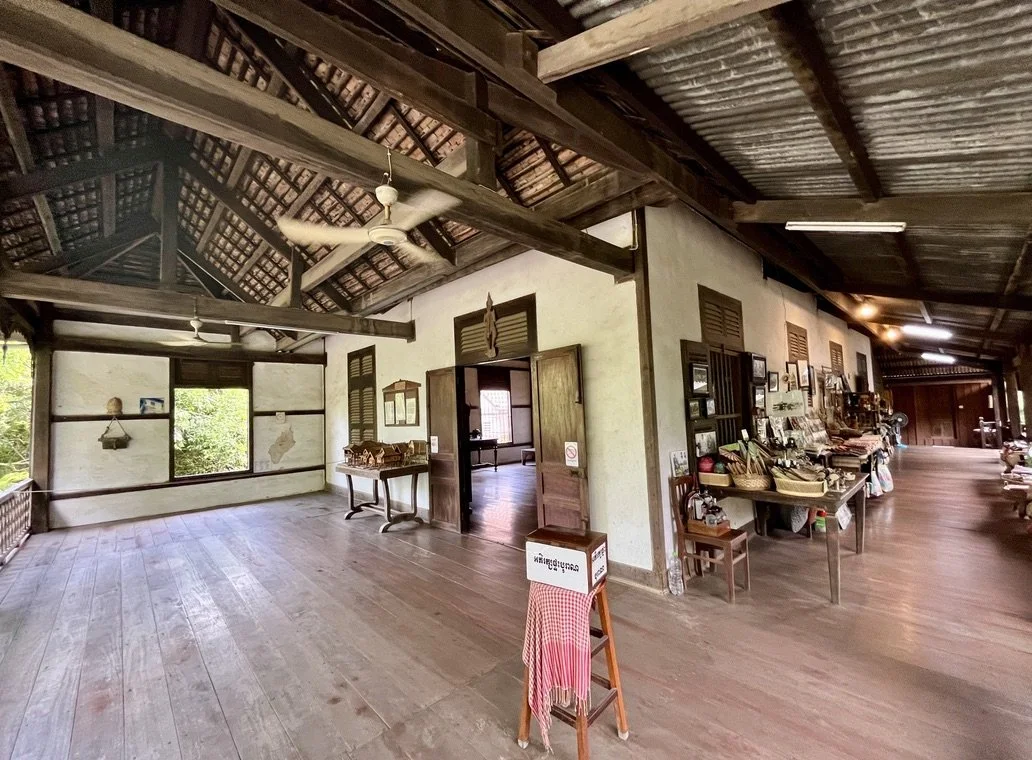
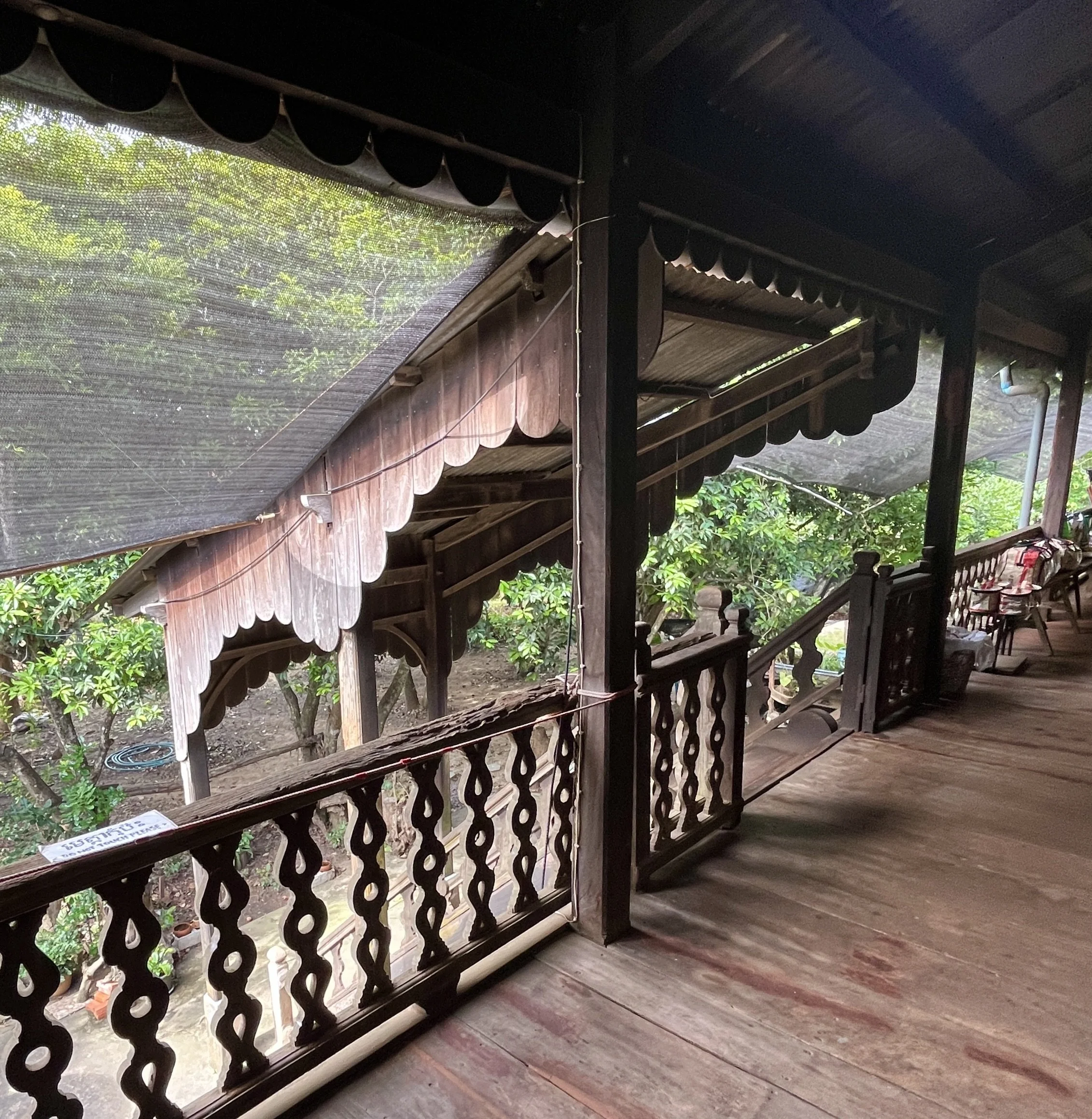
The second heritage home open to tourists is Mrs. Bun Roeung’s house. She is also a third generation inhabitant of the house.

She speaks English, so I was able to pick up a lot more about the house’s construction and history. It was built by her grandparents in 1920; her grandfather was an Okhna and retired general, working as a lawyer when the house was built.

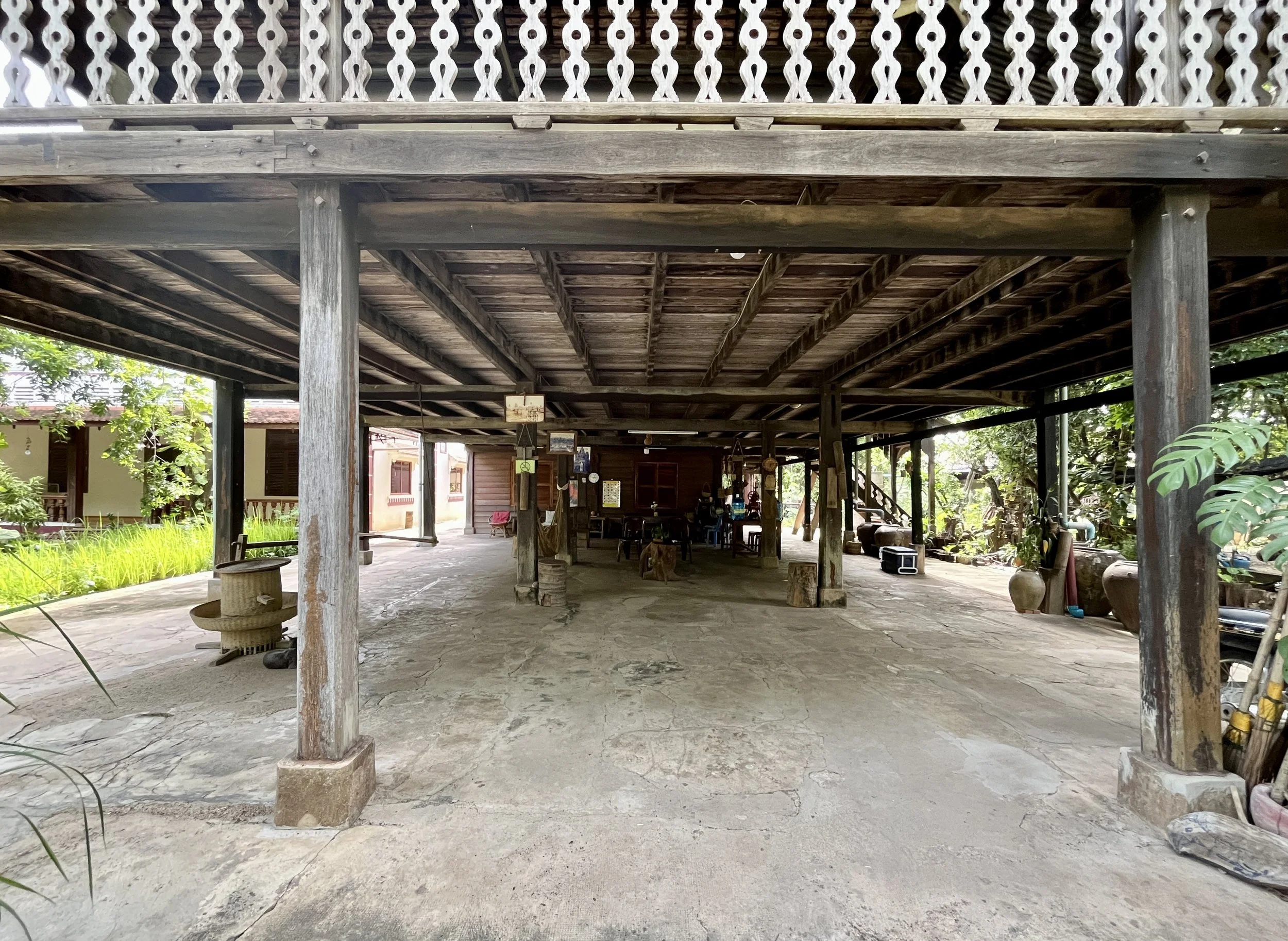
One thing that was emphasized to me, and is also visible in Yi Sarit’s house, is the mix of valuable hardwoods used in construction. The 36 structural pillars and roof frame are Phcheuk, the indoor floorboards are Beng and the outdoor floorboards are Korkoh. The design of the house is called “Pet”– with a wraparound verandah.

Right next door, visible through the window, is the smaller modern house the family currently resides in.

The walls are wattle and daub.

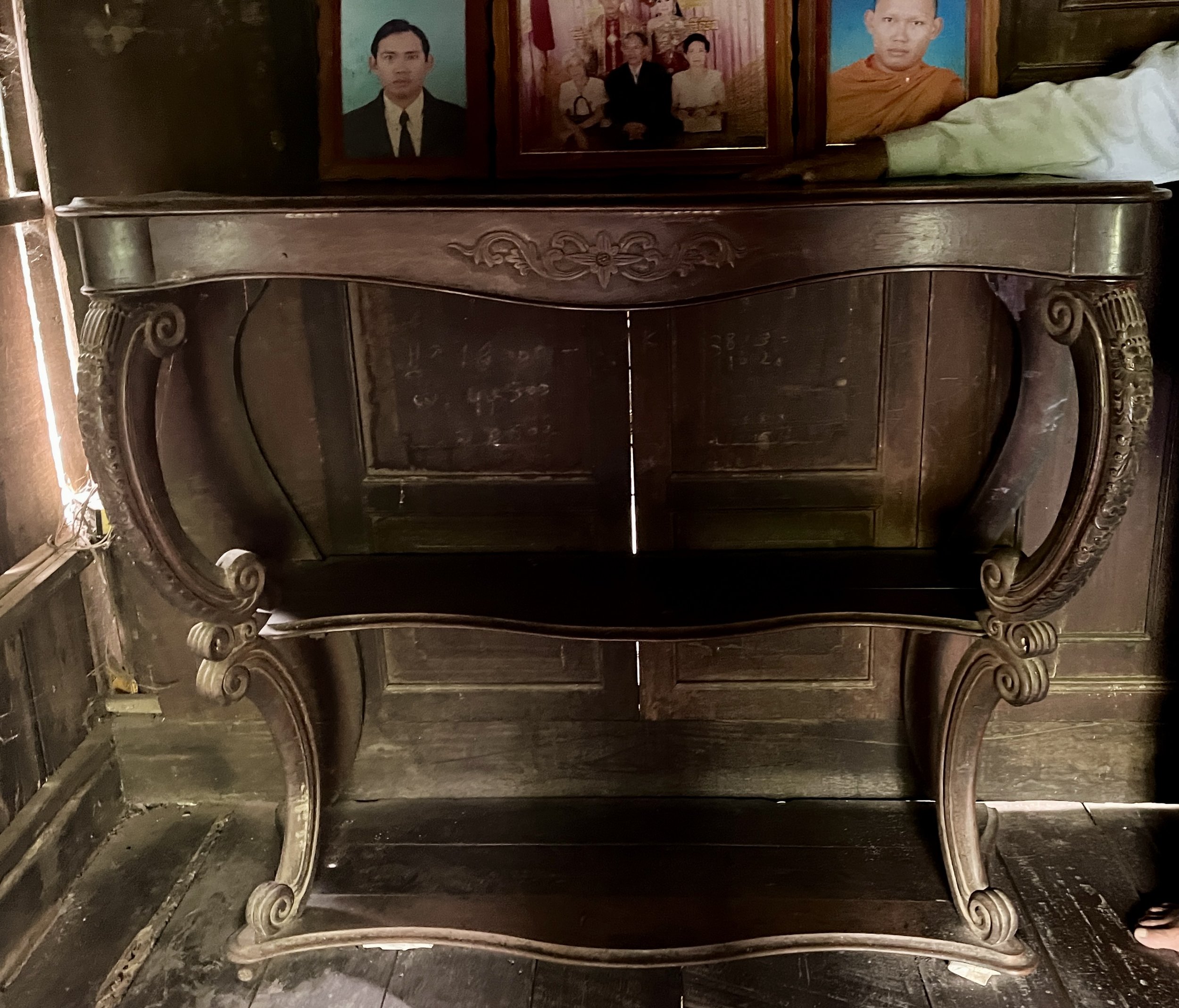
All the furniture is old. Some of it is not original to the house, but similar to what was once there and replaced by the owner. She said the original pieces are the biggest and heaviest; the Khmer Rouge stole everything that wasn’t too heavy to carry.

The original owners of the house.

According to the Battambang government website:

“The said ancient house is divided into three parts:
1st part: this part consists of the front and side verandahs.
2st part: this part is the middle part of the house, which consists of a huge living room. At the rear left side of the living room, there is a door leading to two bedrooms.
3rd part: in front of the two bedrooms, there is another door leading to a side verandah and the wooden staircase. At the left side about 5 meters from the door, there is a kitchen.”

She explained that in a typical eat-the-rich move, the Khmer Rouge turned this house, arguably the fanciest in the neighborhood, into the communal kitchen/place for storing heavy equipment and threshing rice. She says having big vats of water and porridge leaking onto this part of the verandah for years was what damaged the wood, and any lesser wood would have rotted completely.

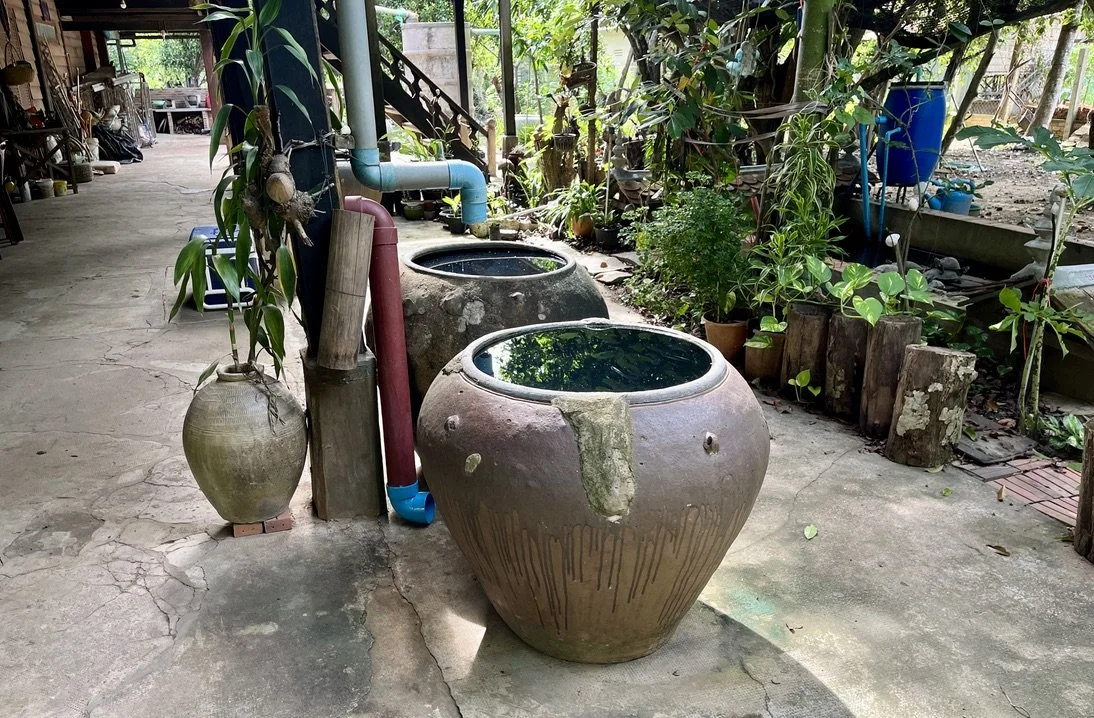
The running water for the garden as it is today.

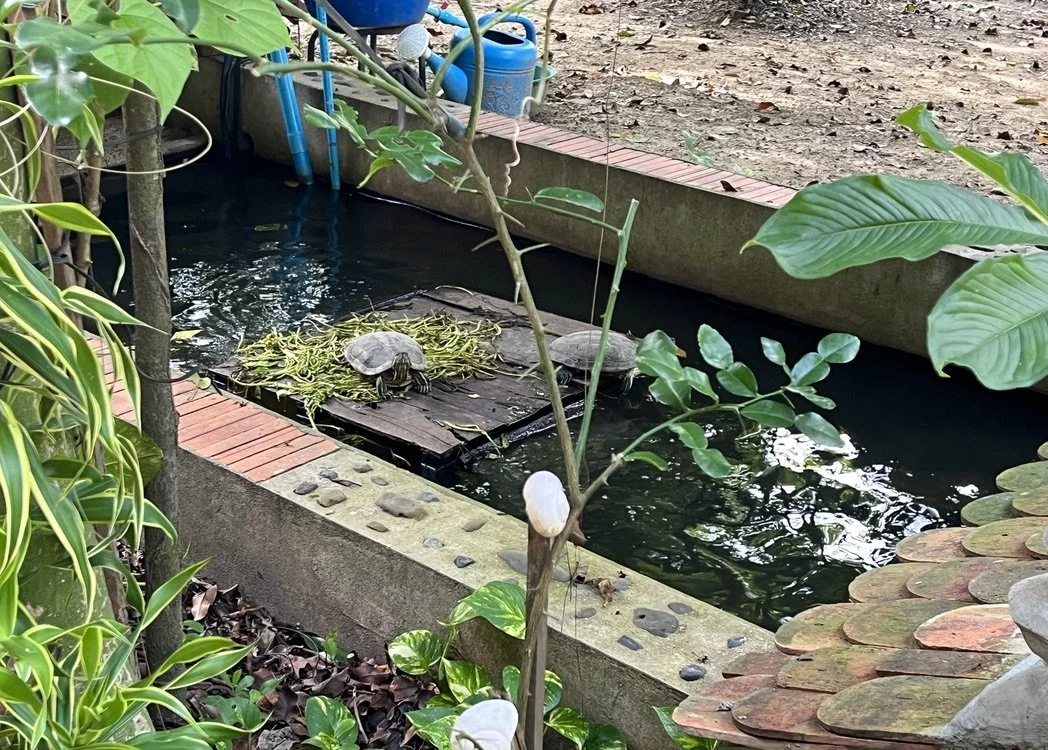
I’d love a pet turtle but alas, can’t have any pets at present.

Downstairs are some old tools for threshing rice, weaving fabric etc.

The cement stairwell is original; at the time, it was considered modern and stylish.

Colonial Architecture in Battambang | Cambodia

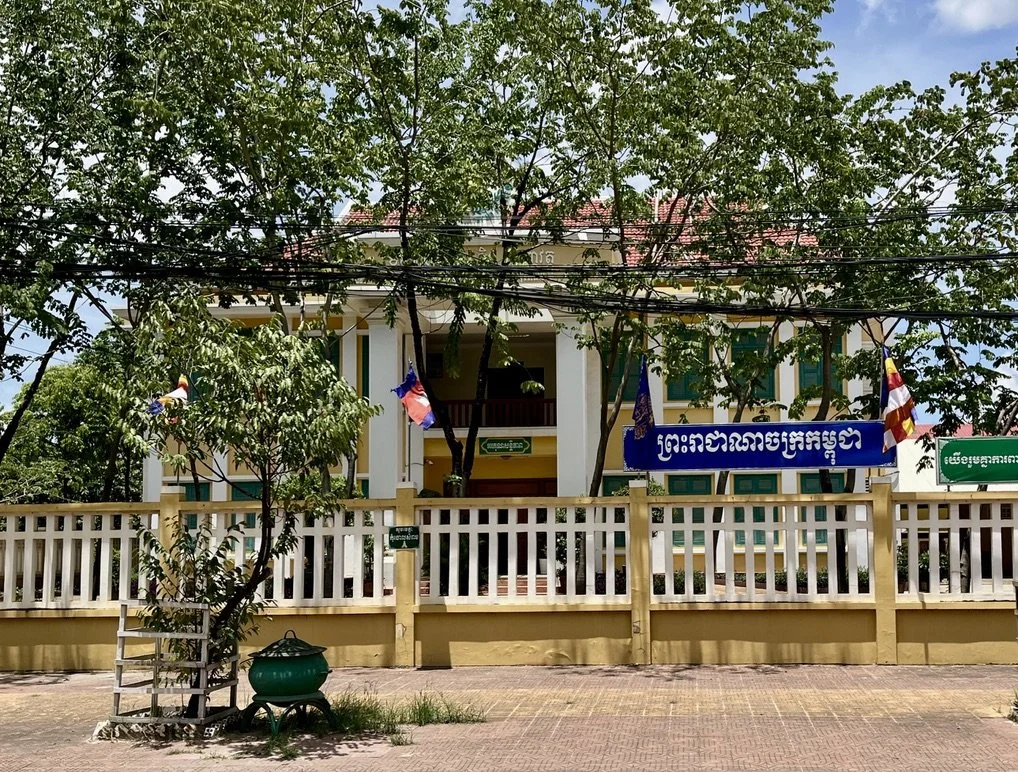
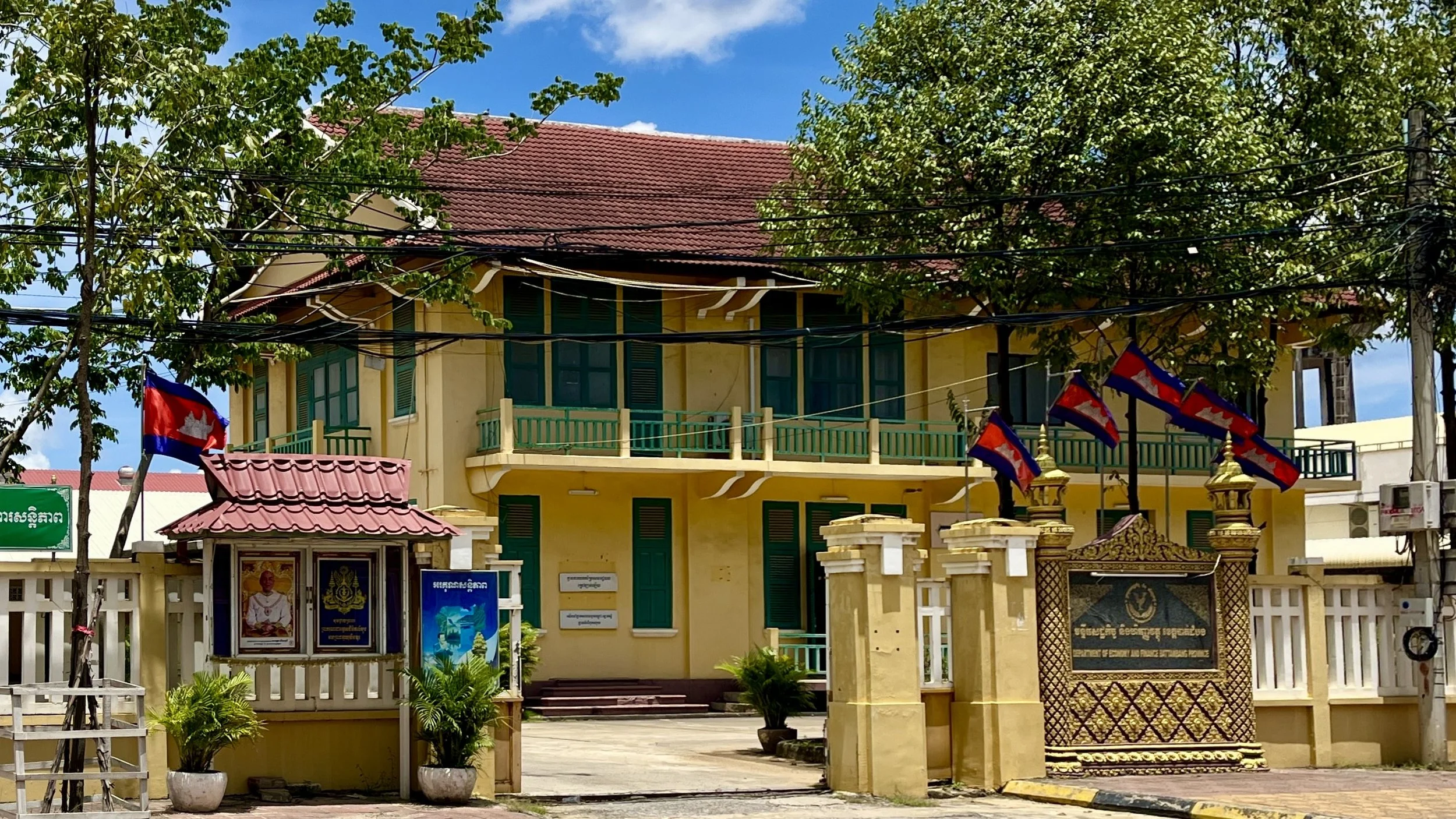
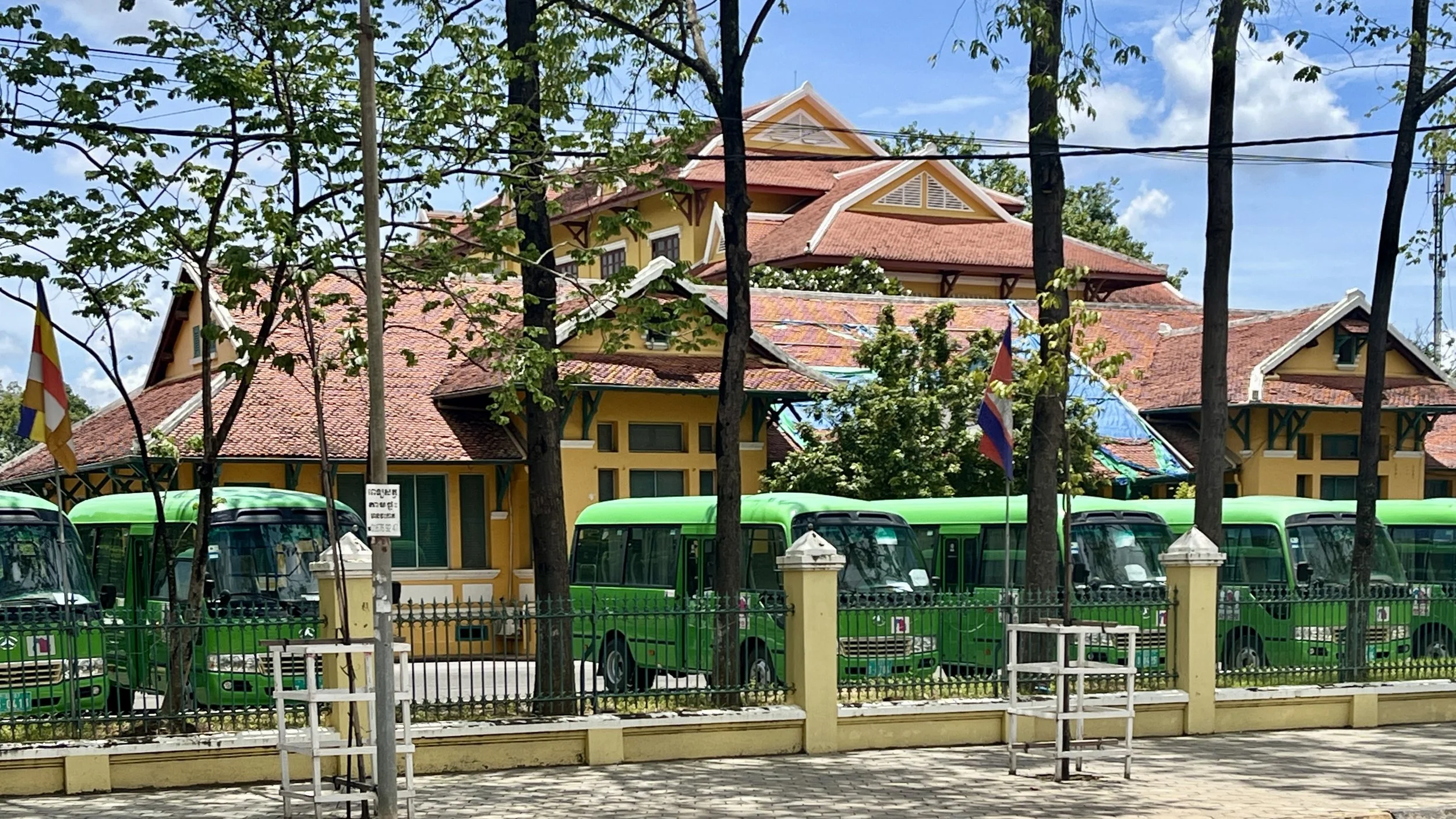
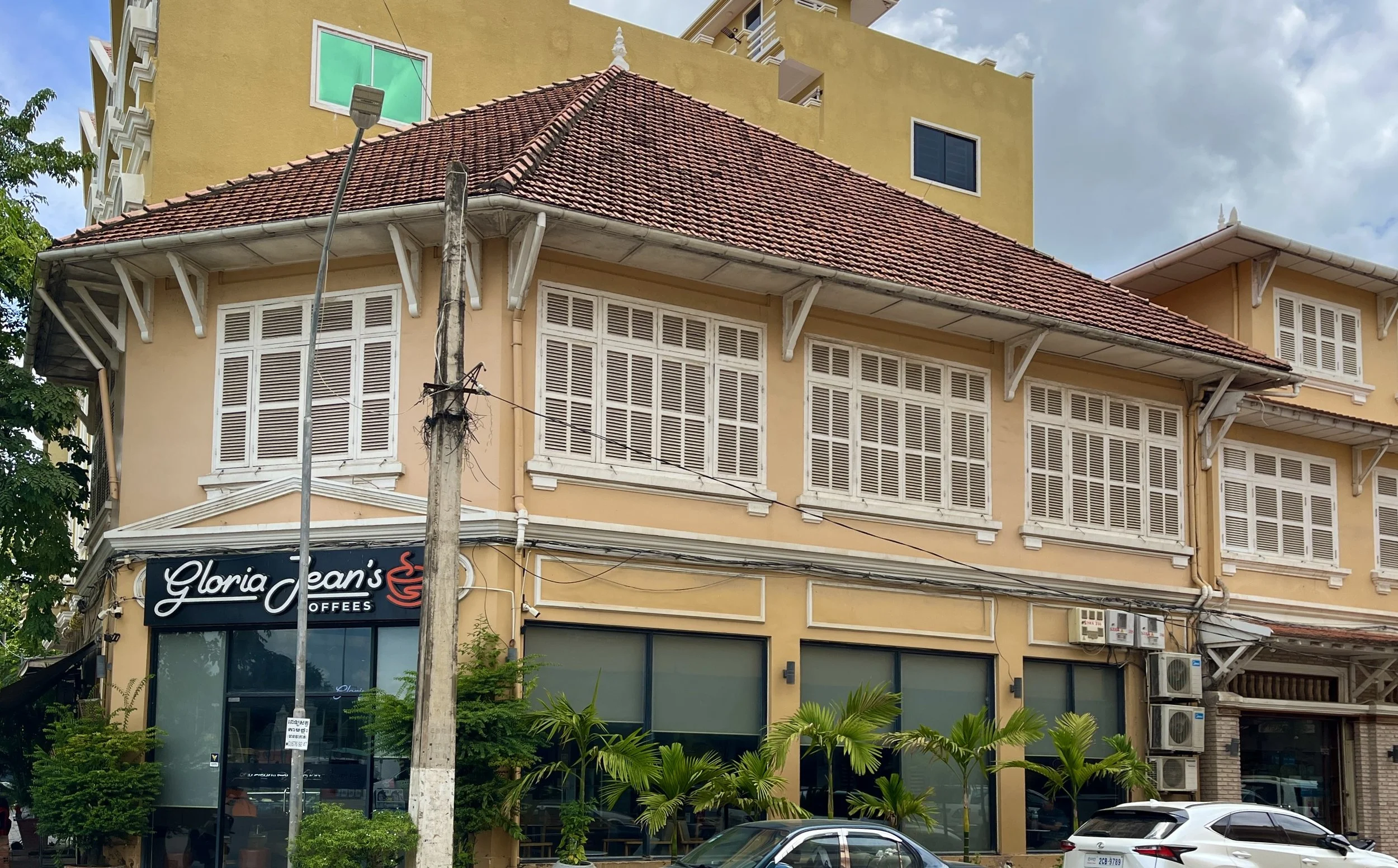
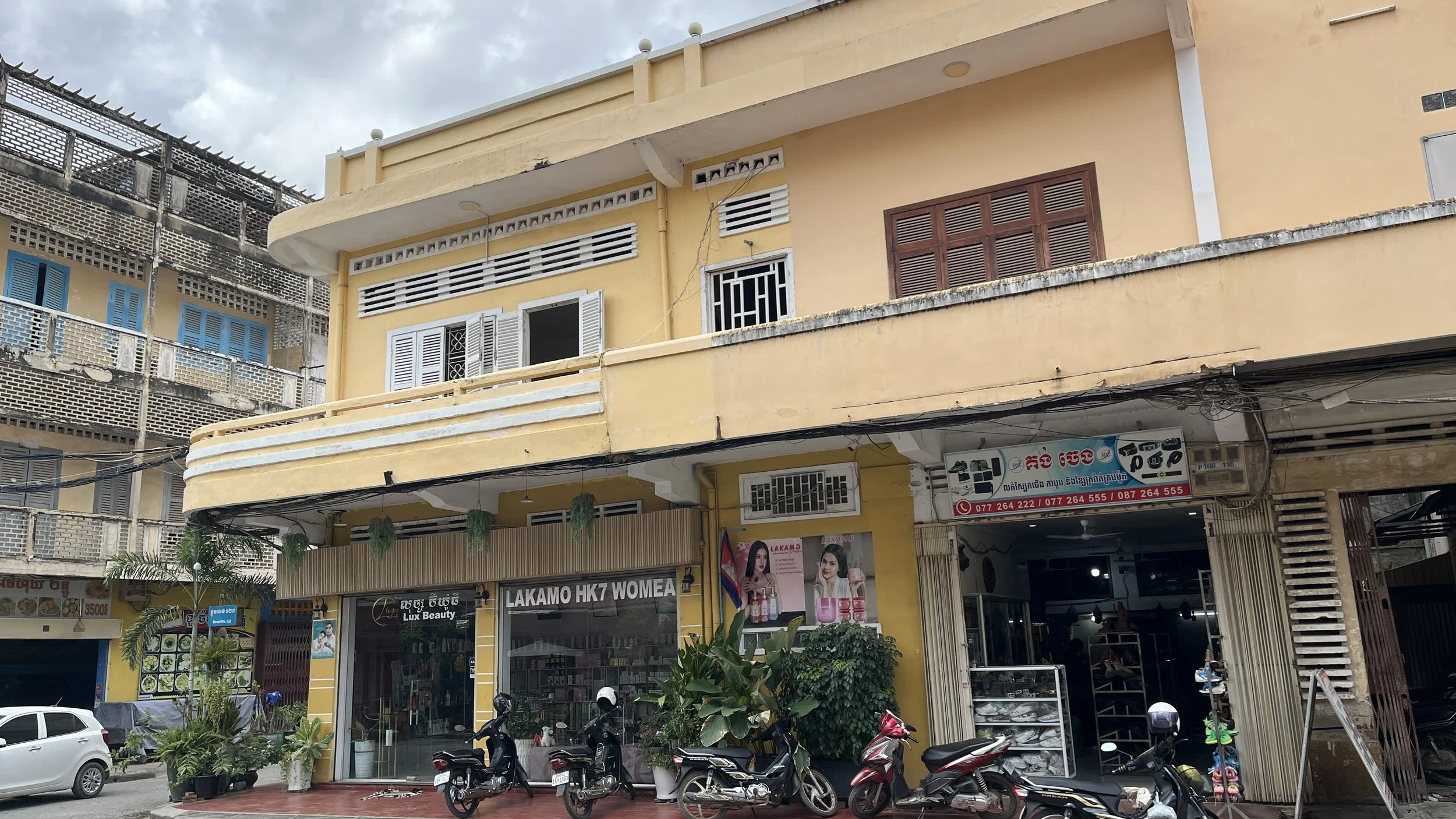
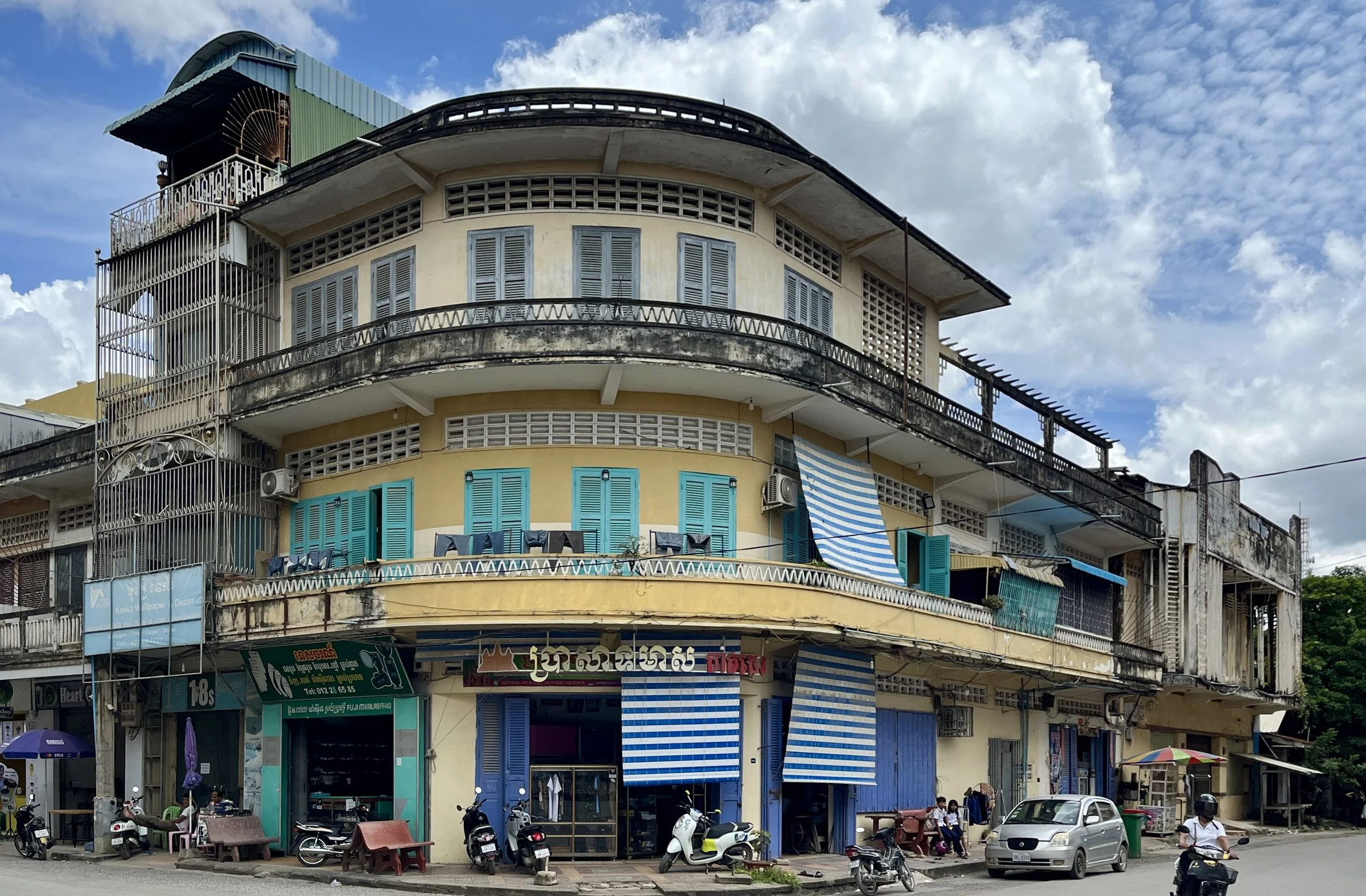
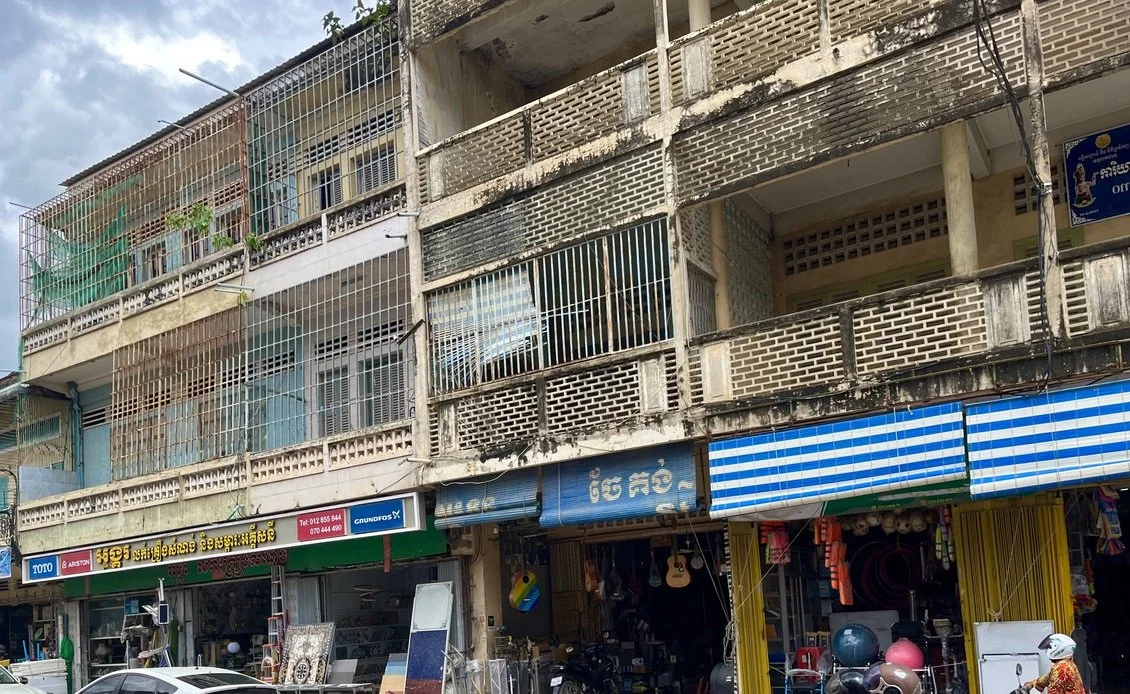
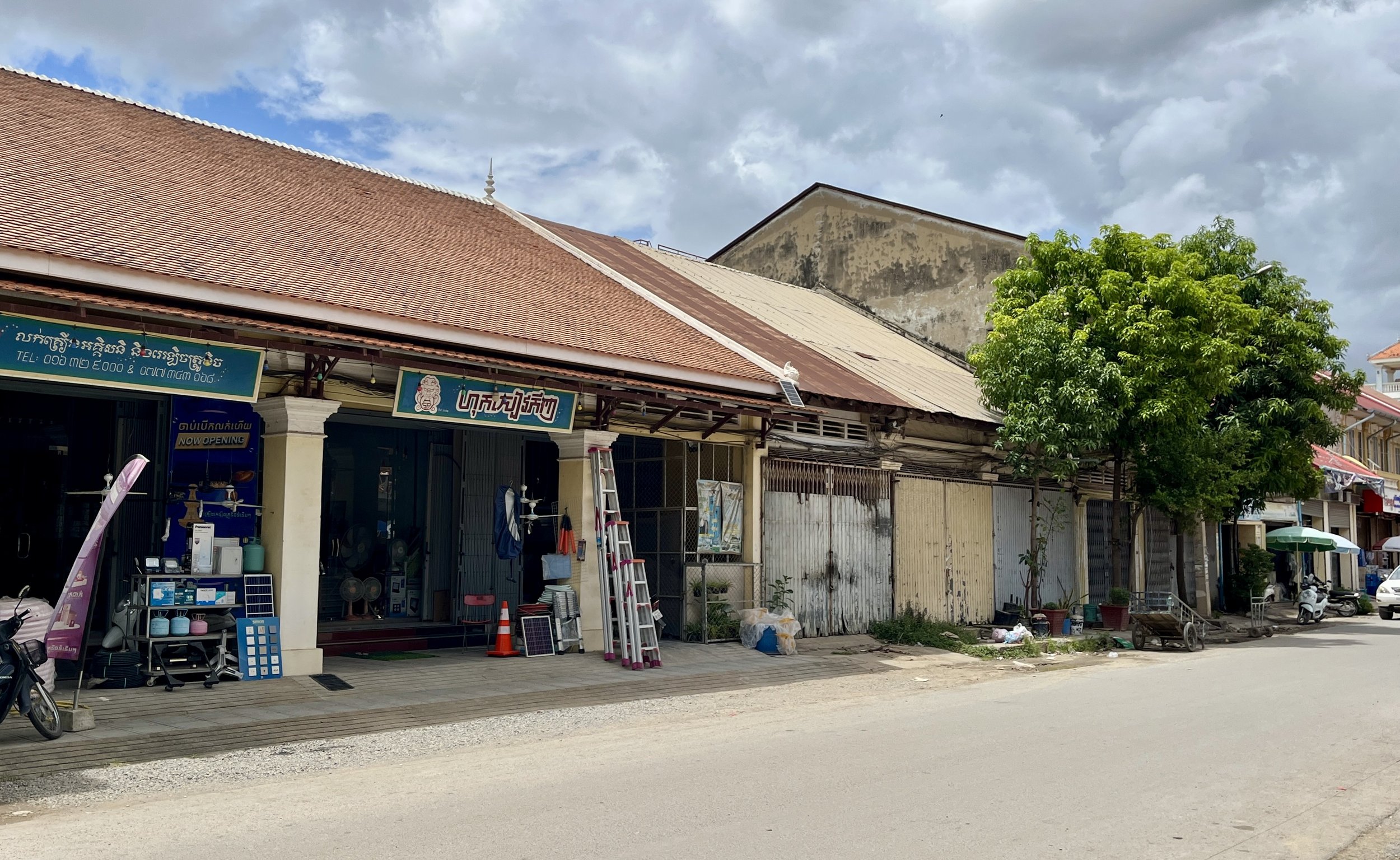
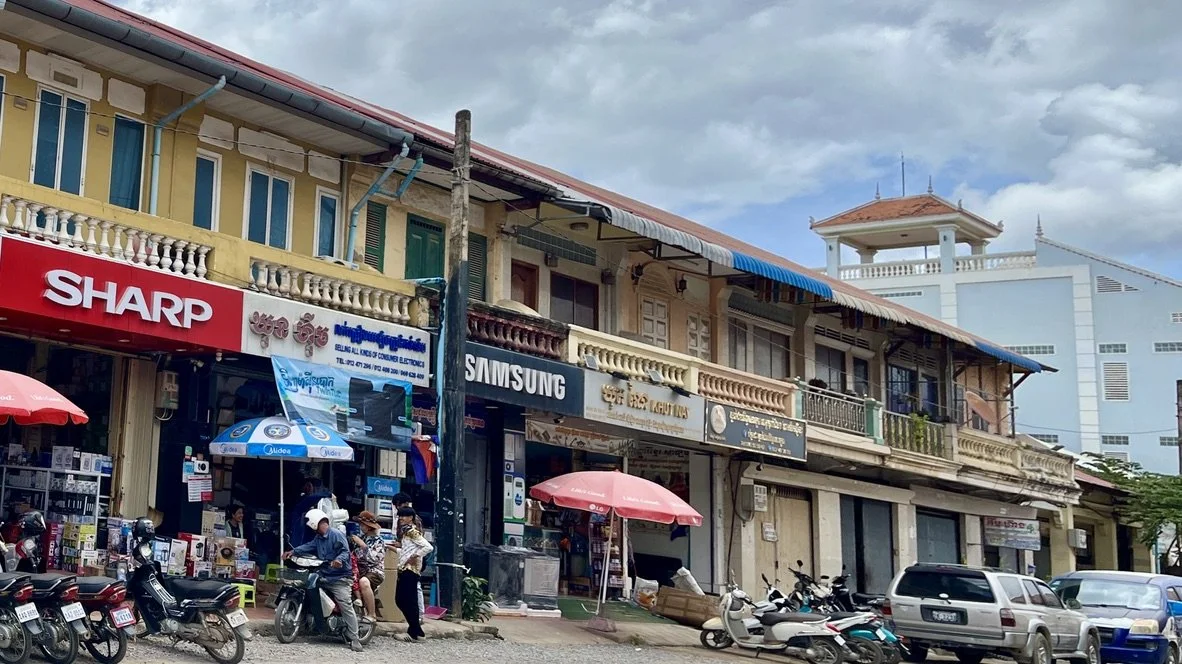
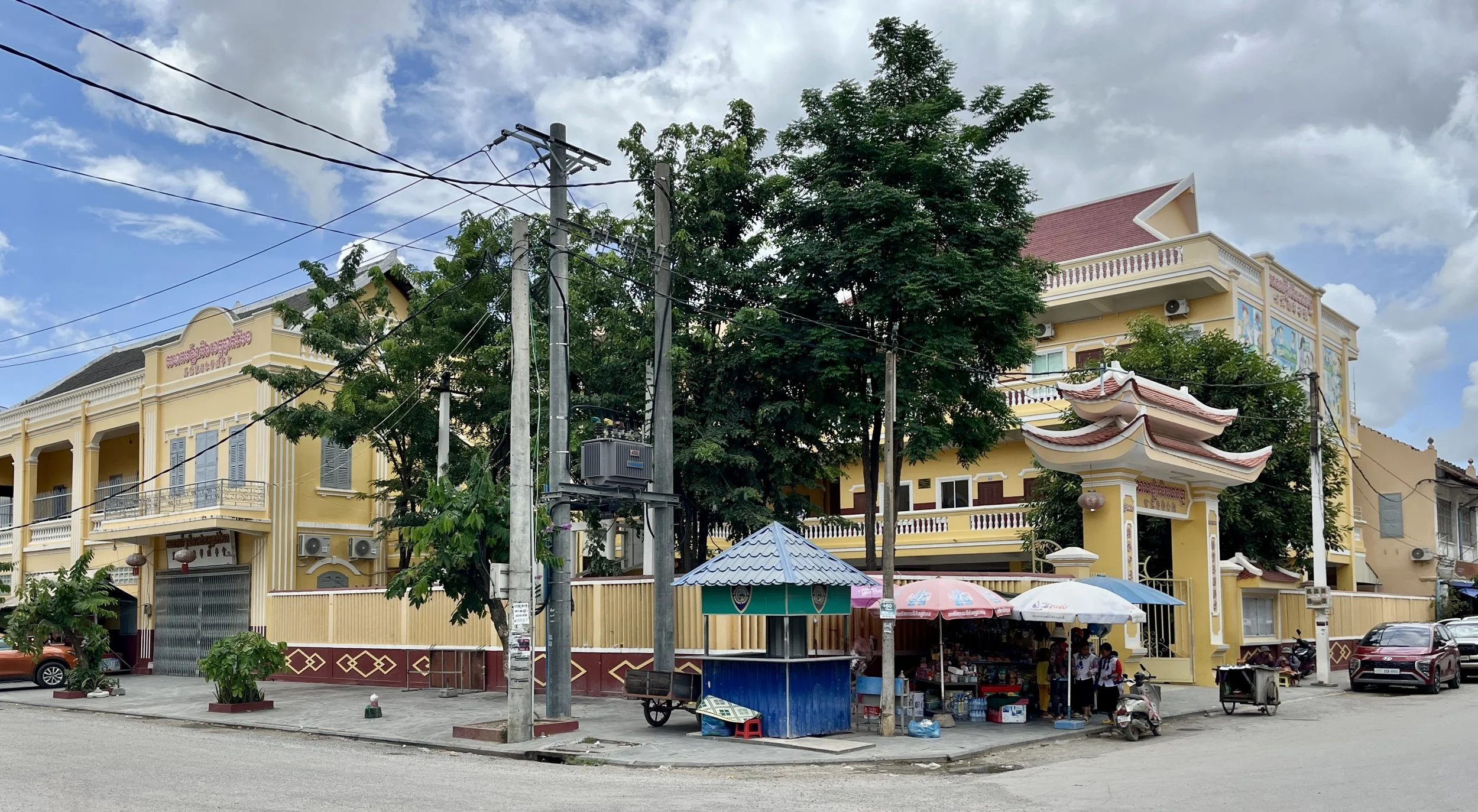
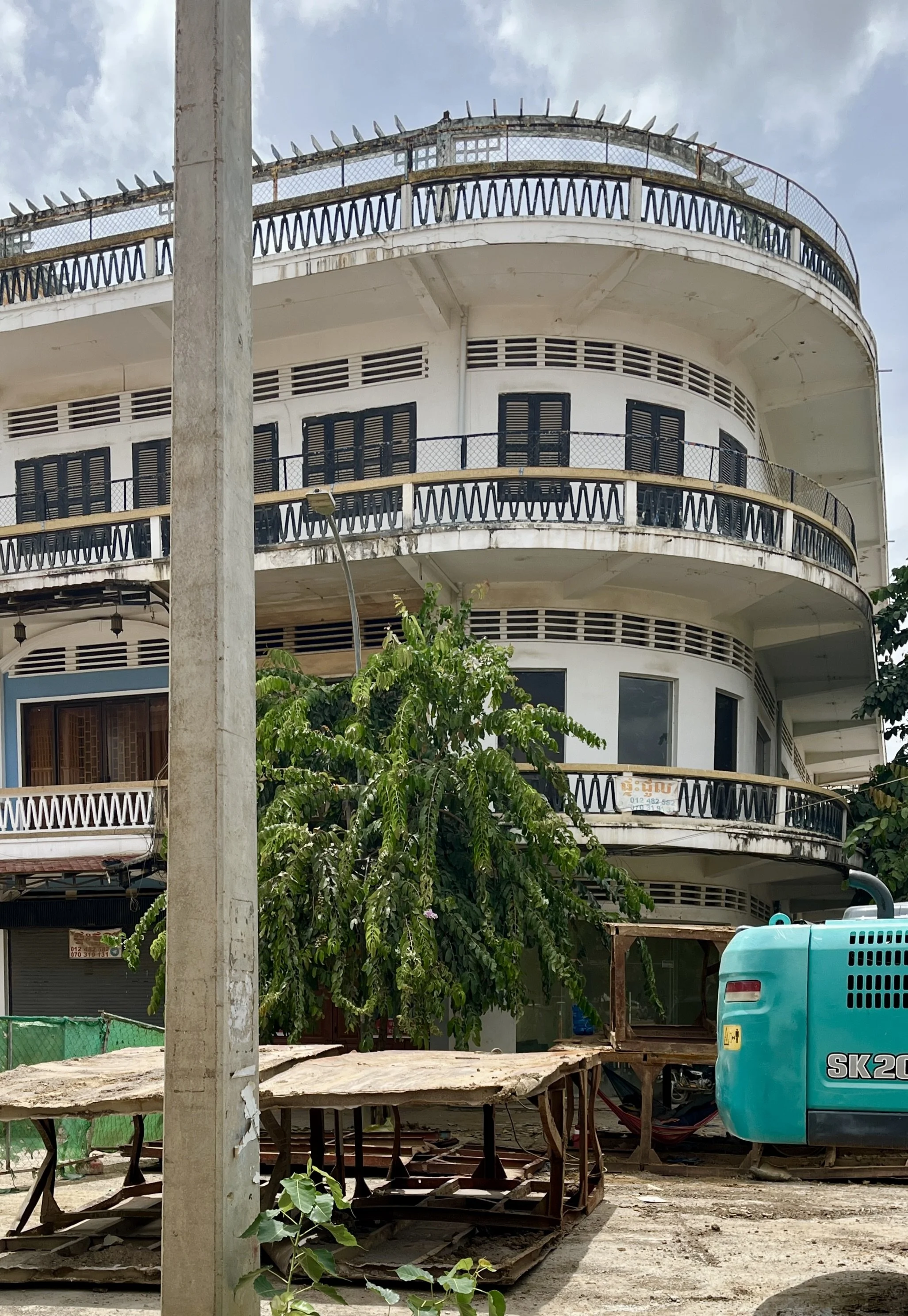
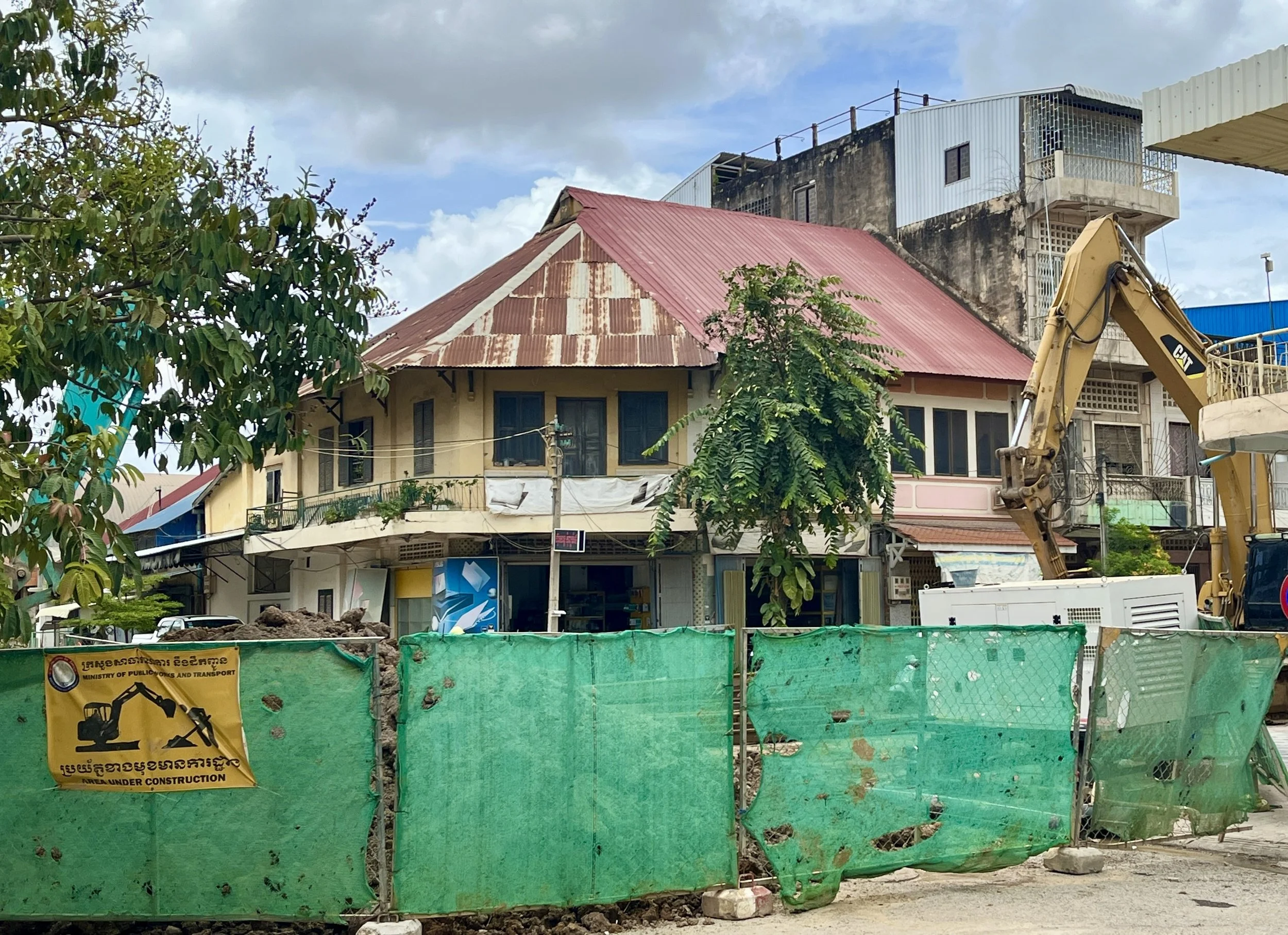
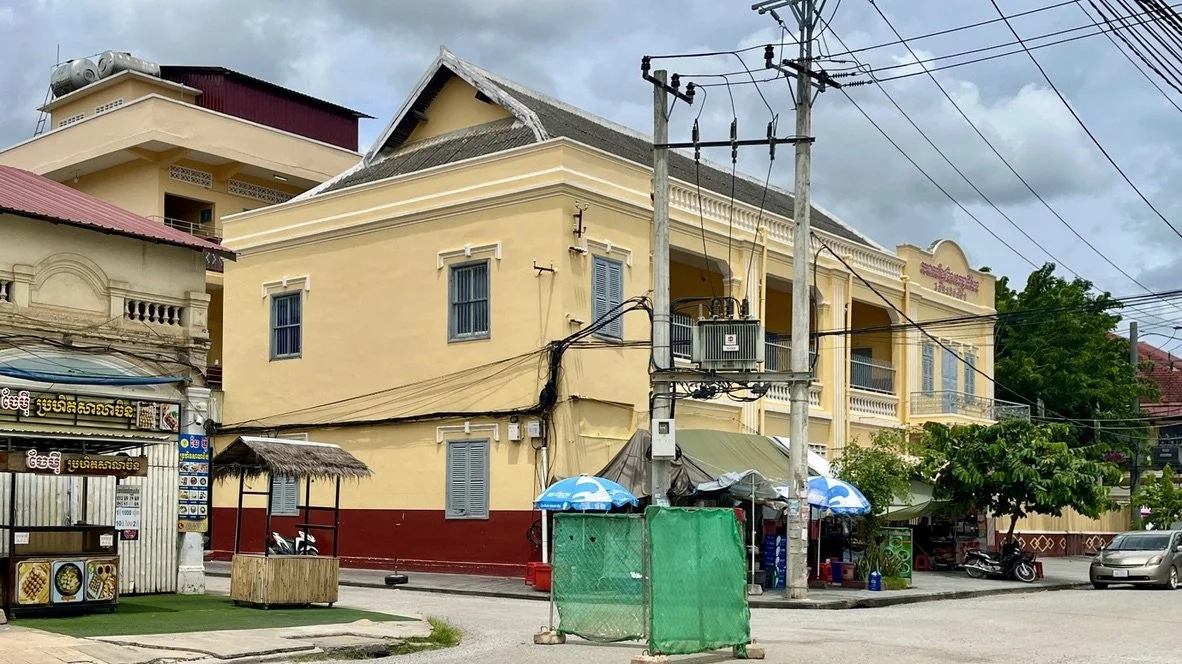
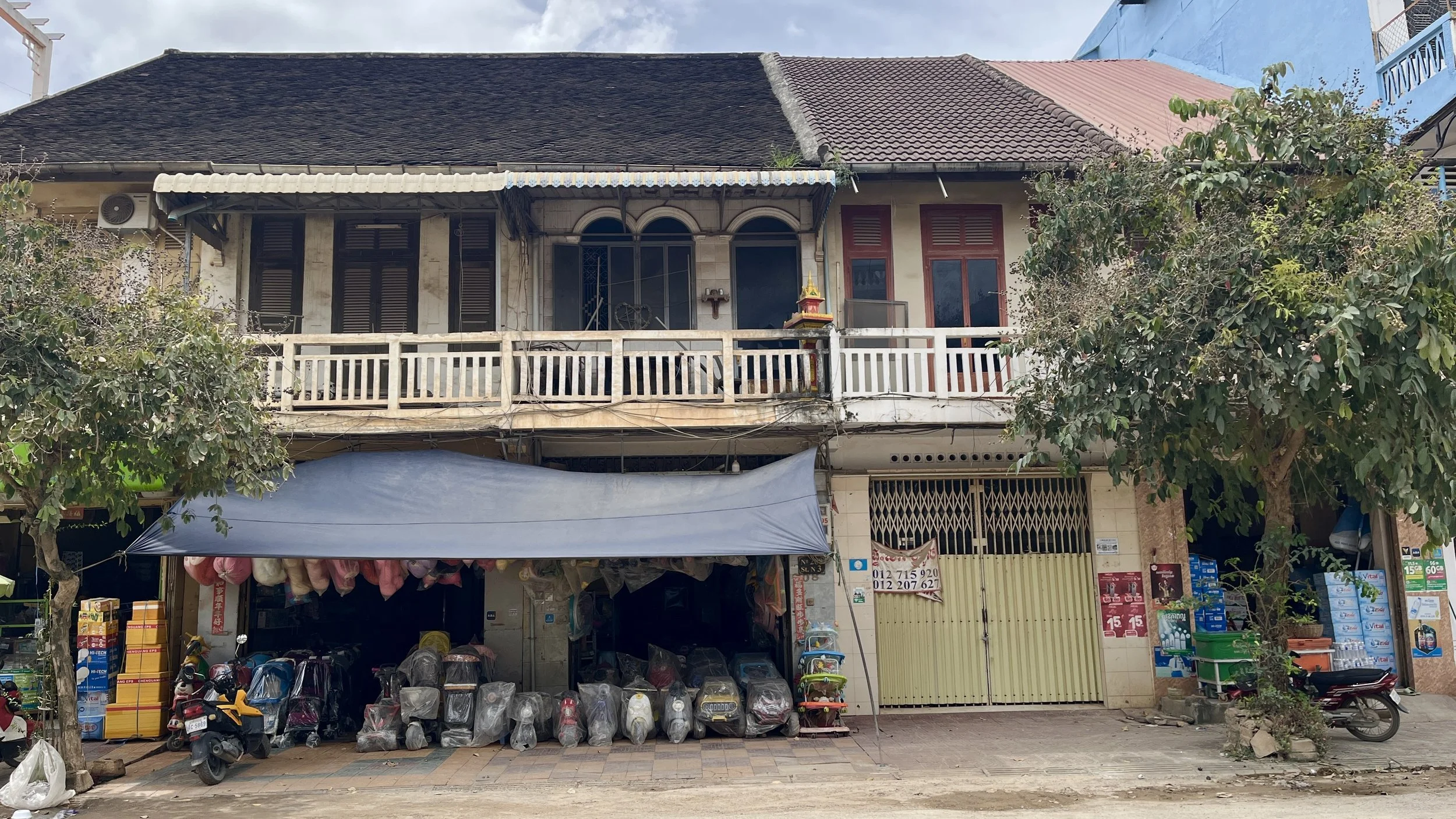
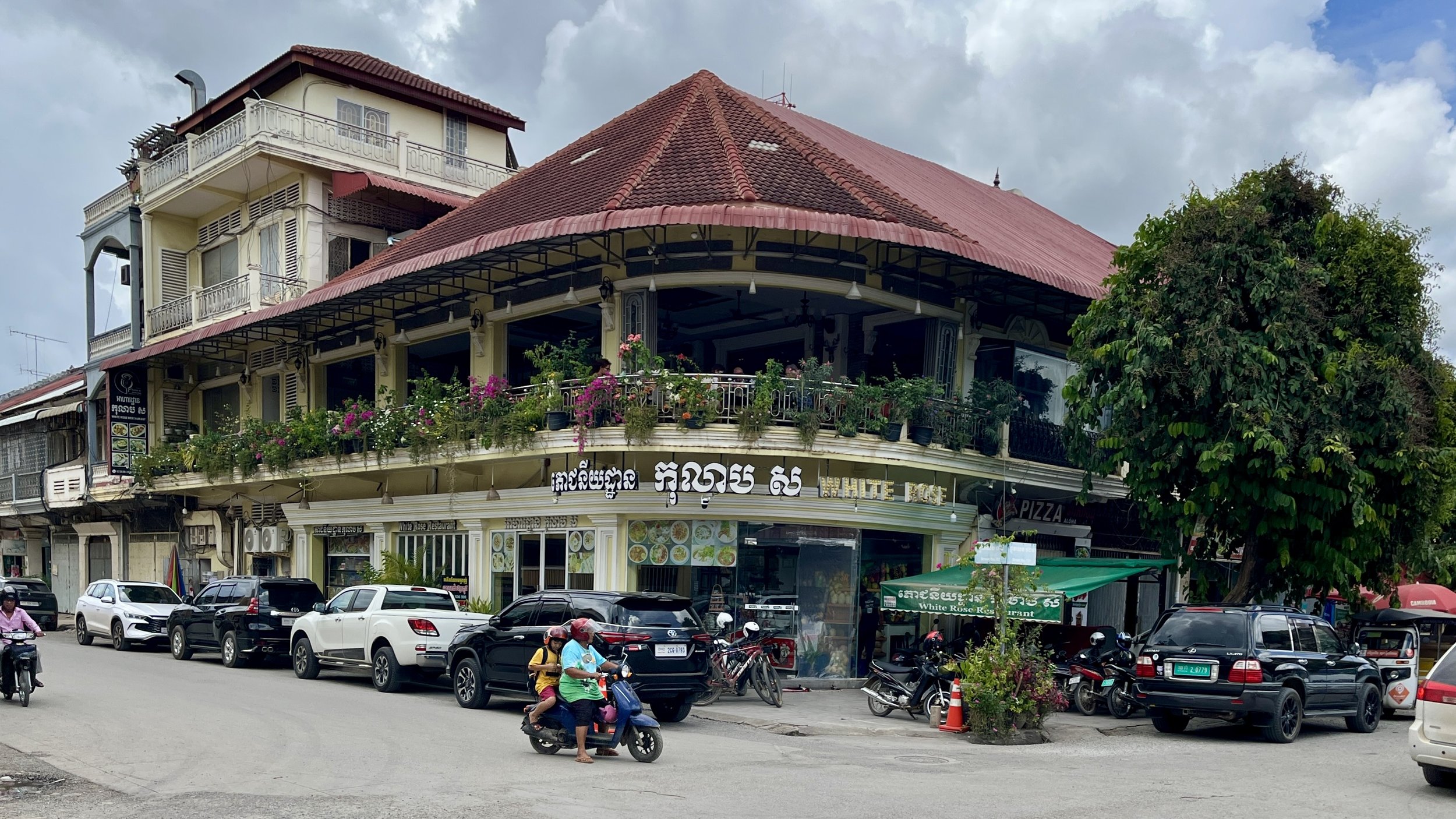
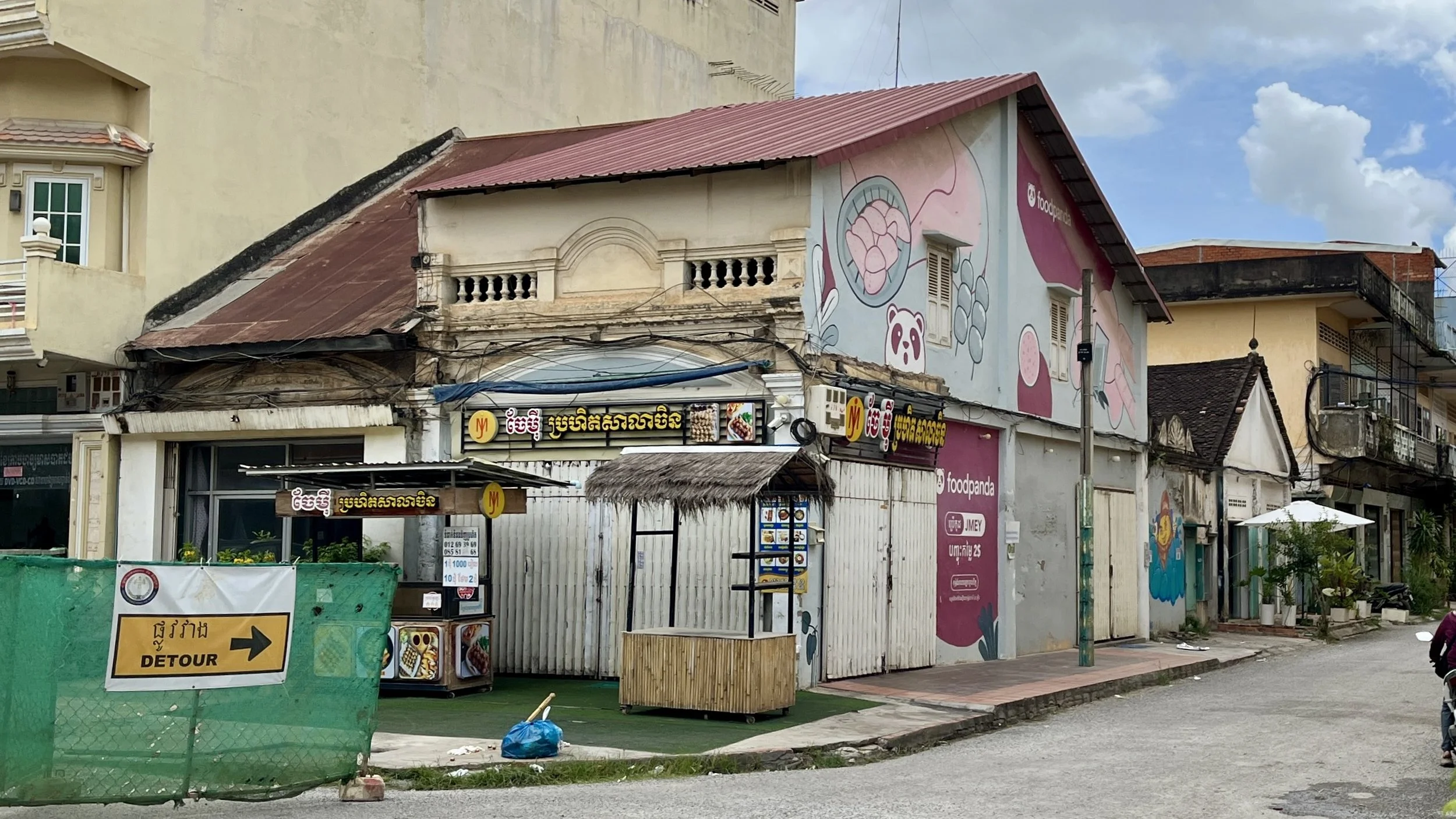
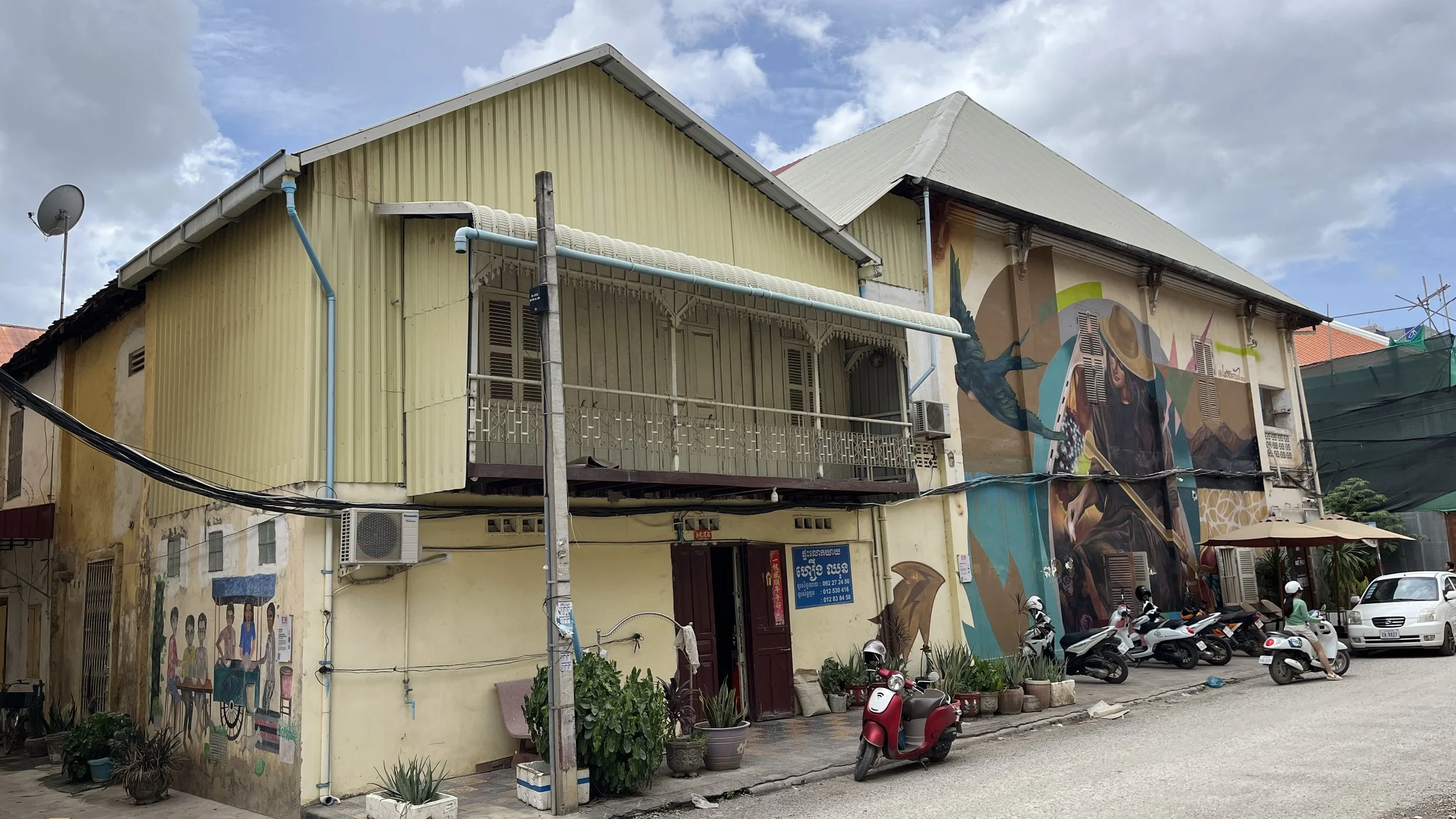
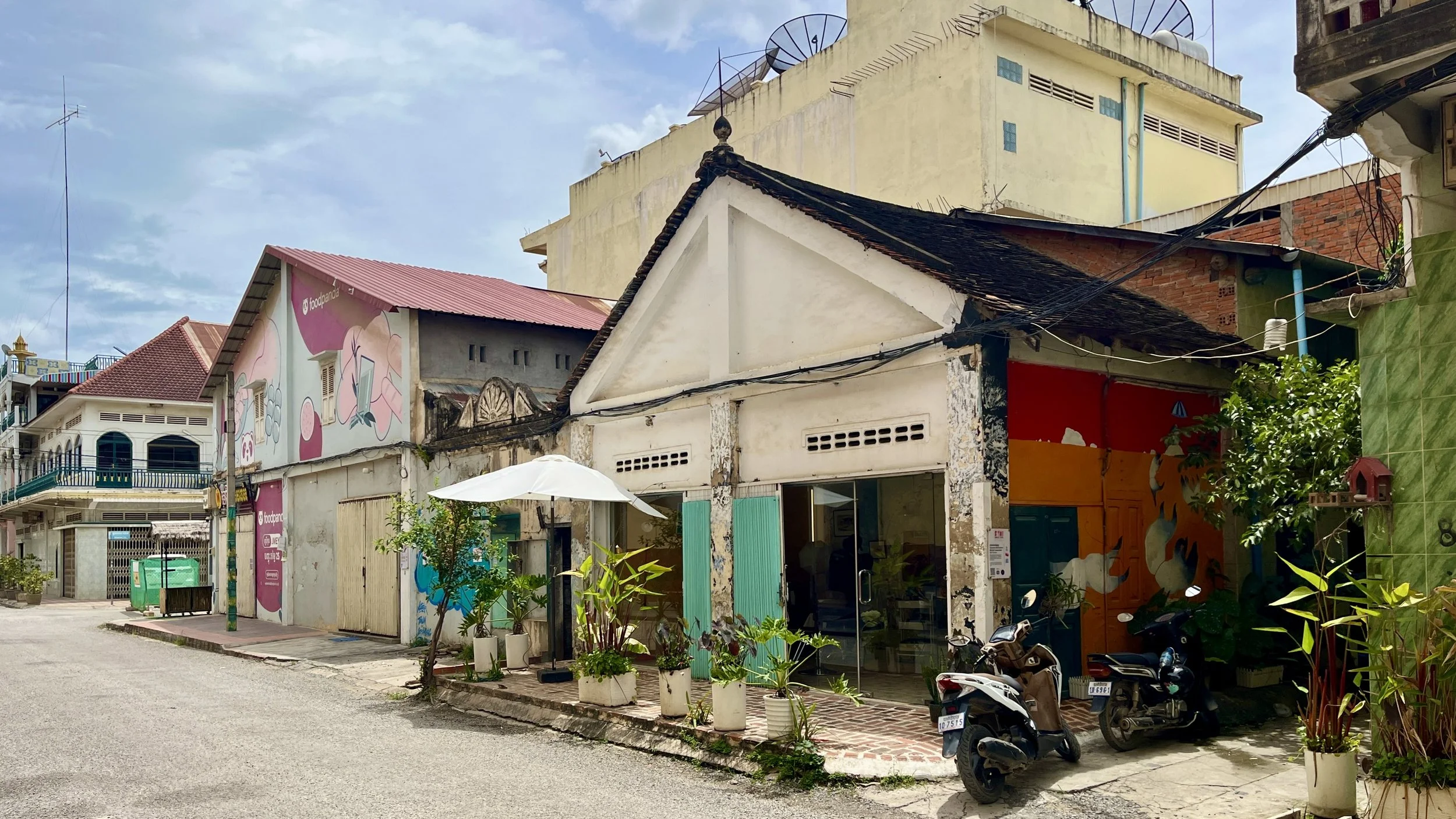
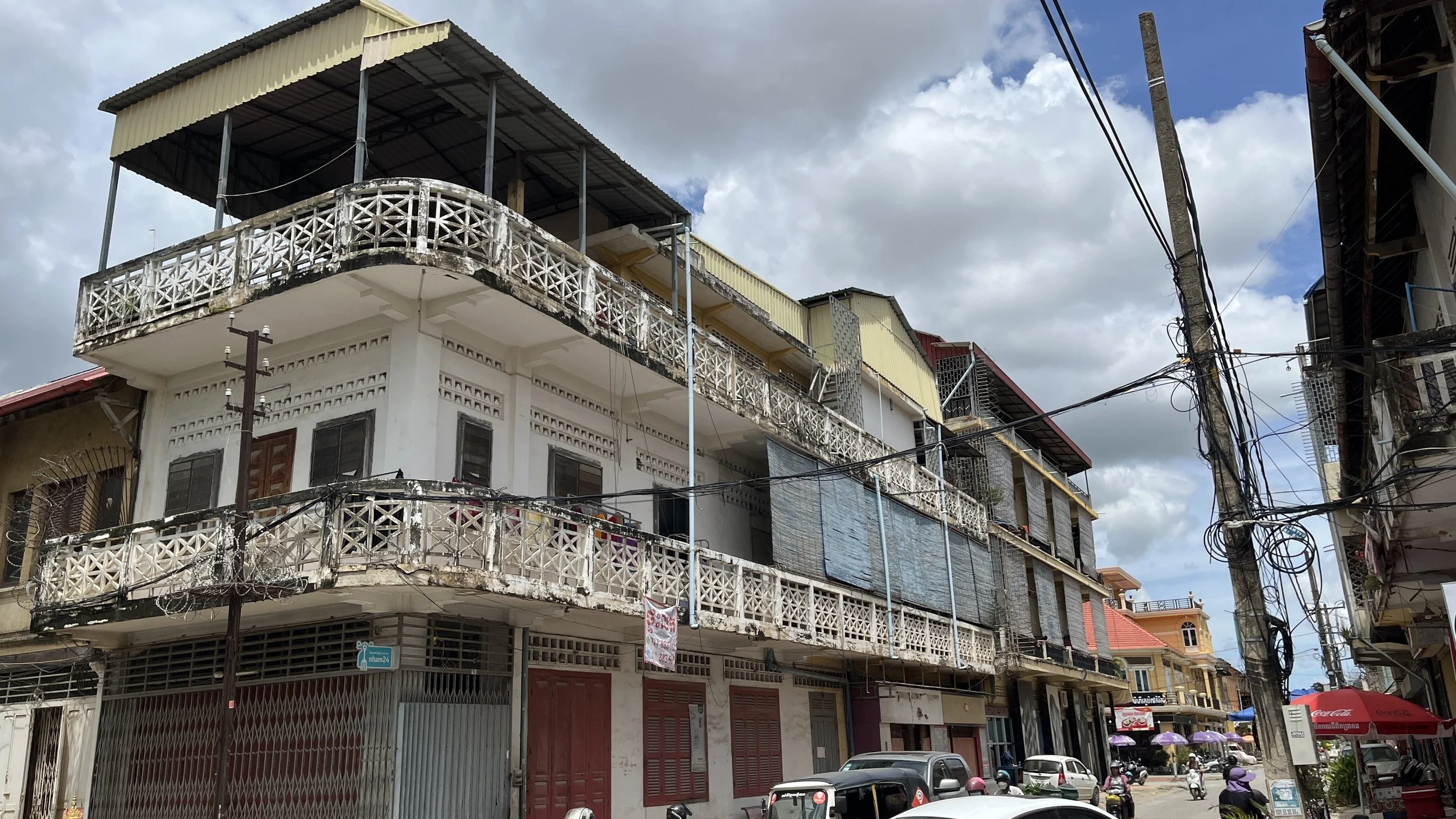
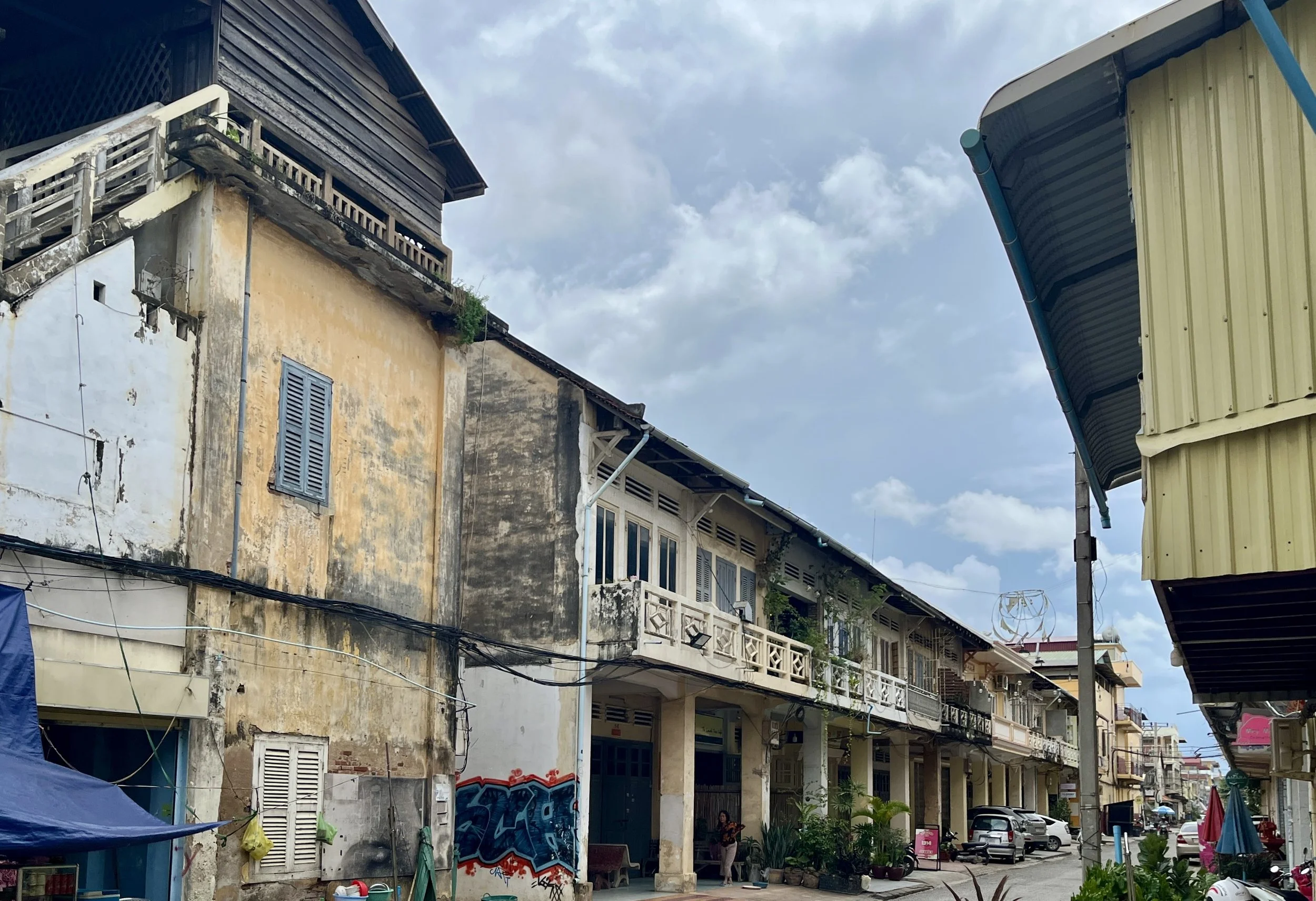
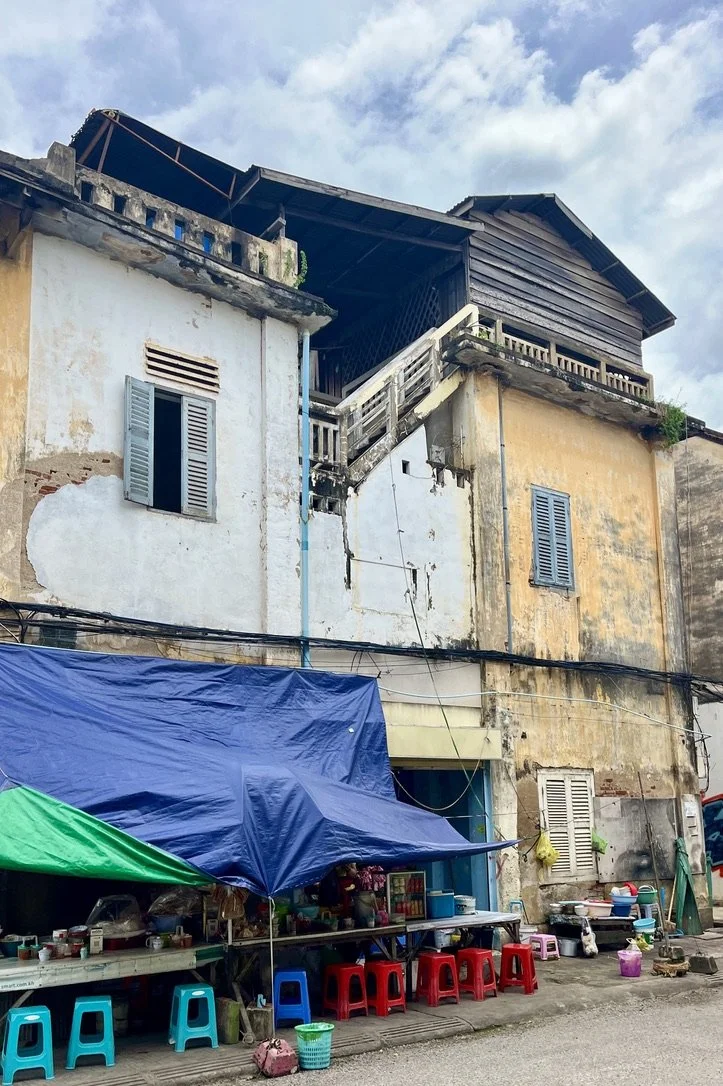
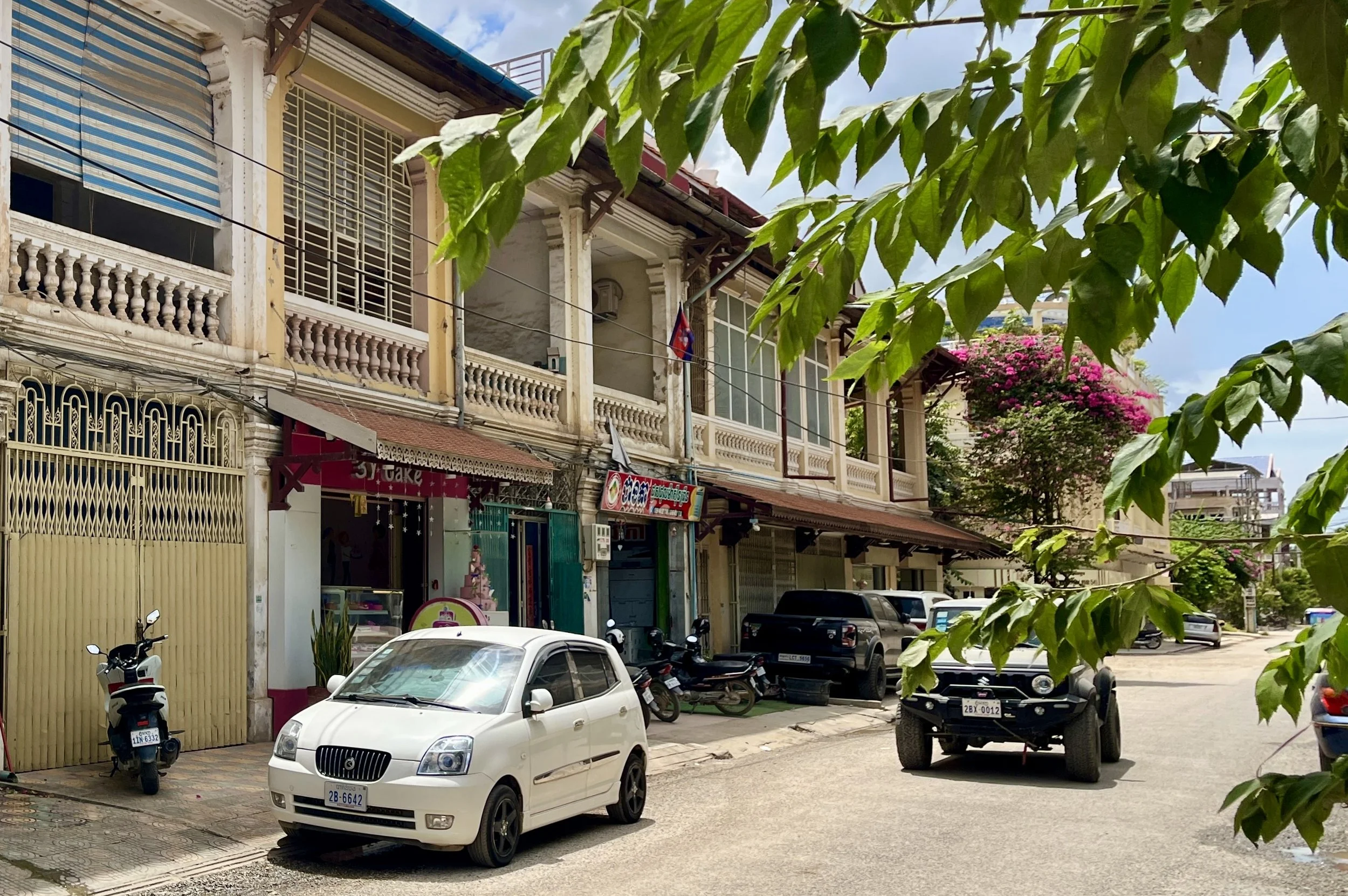
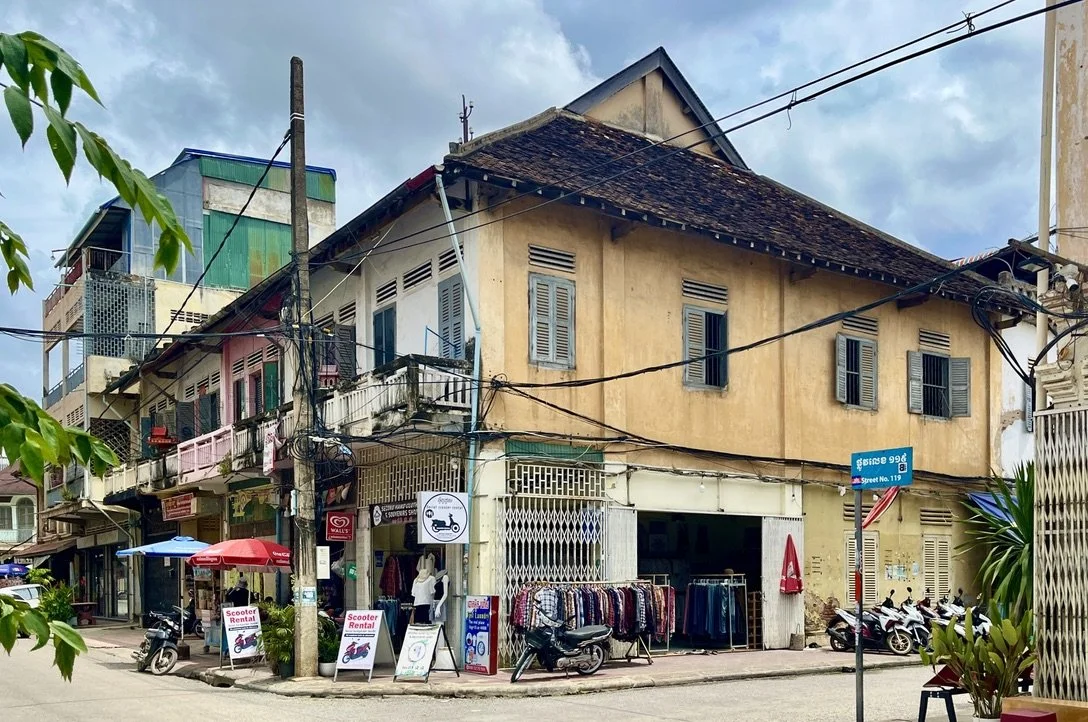
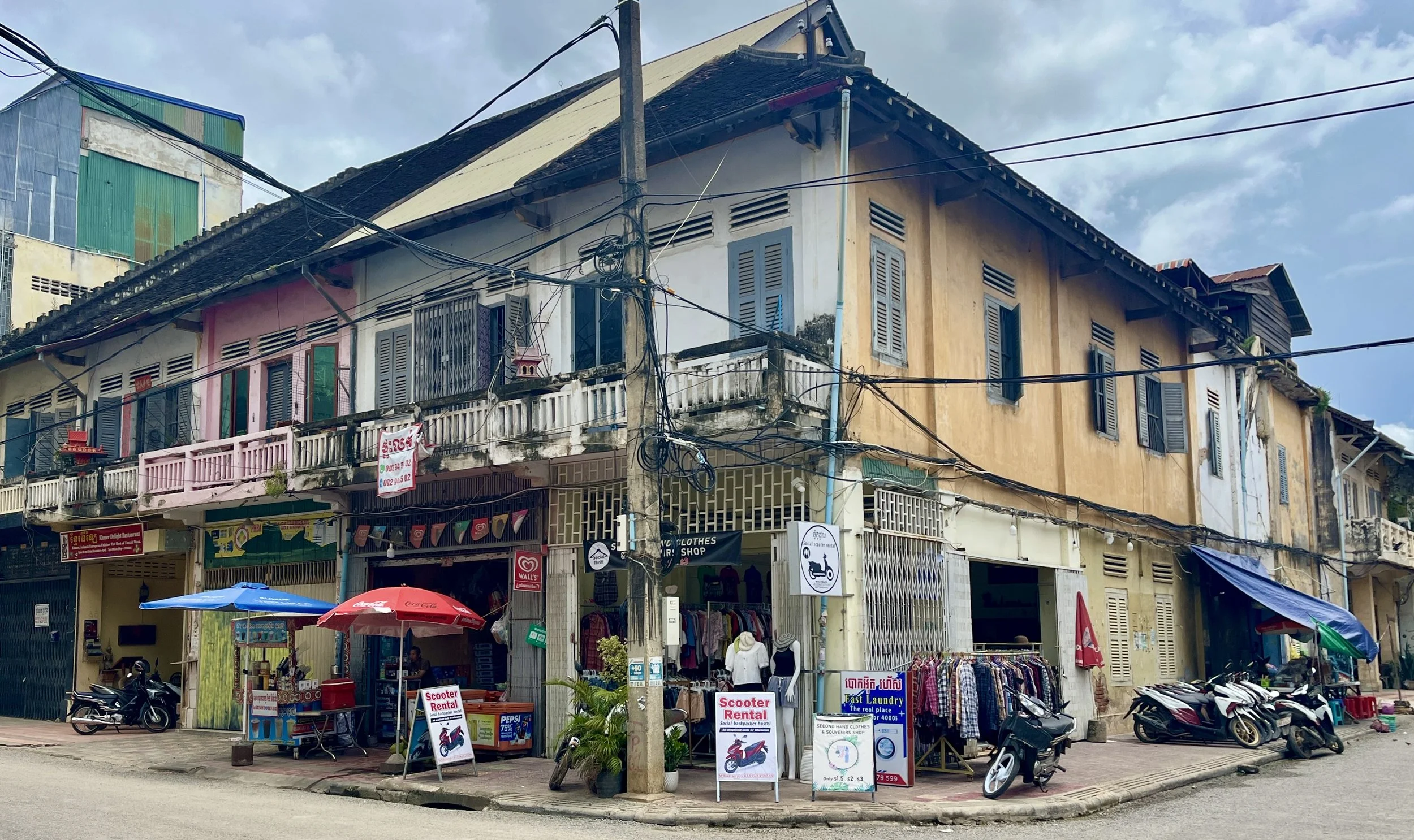
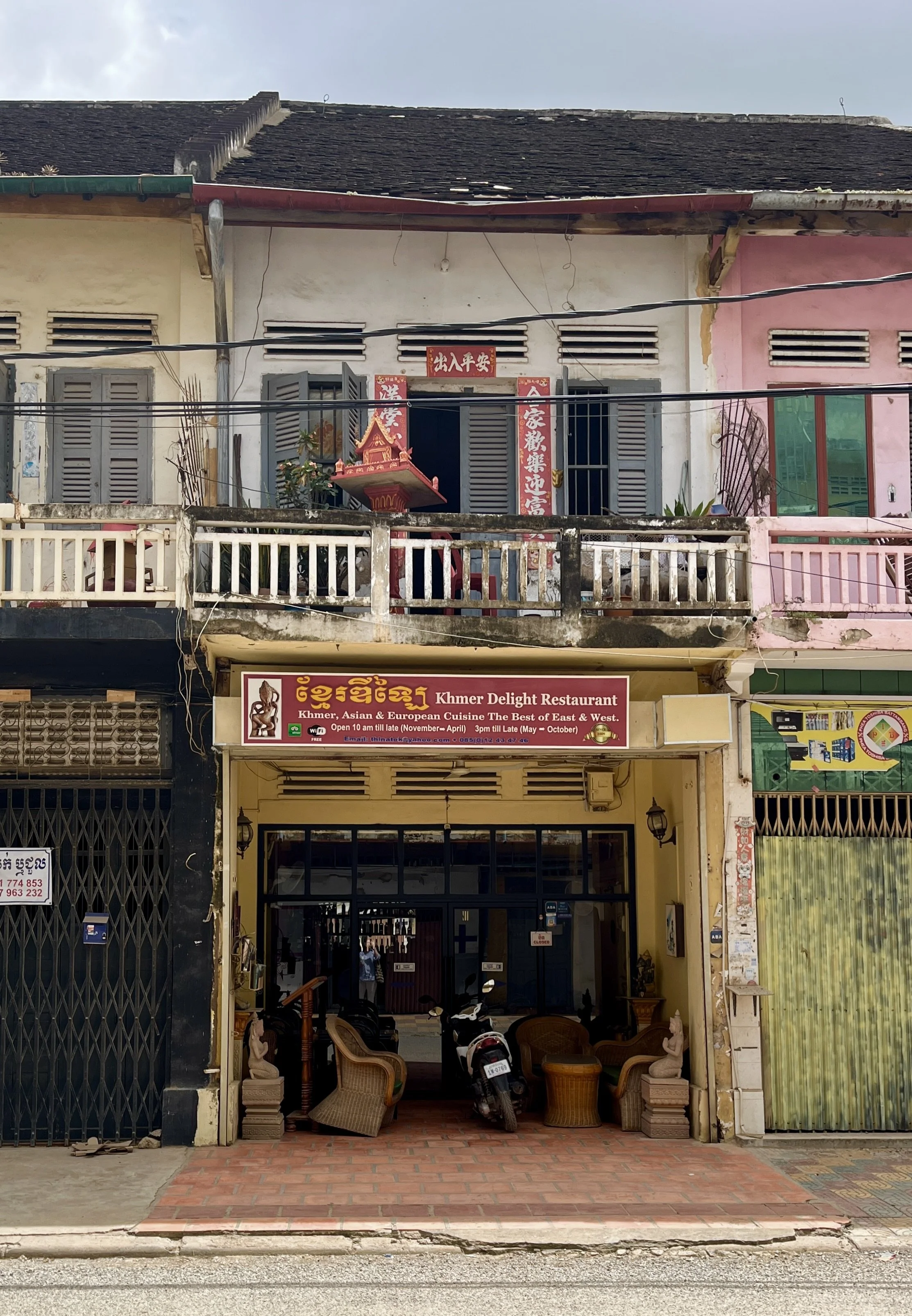
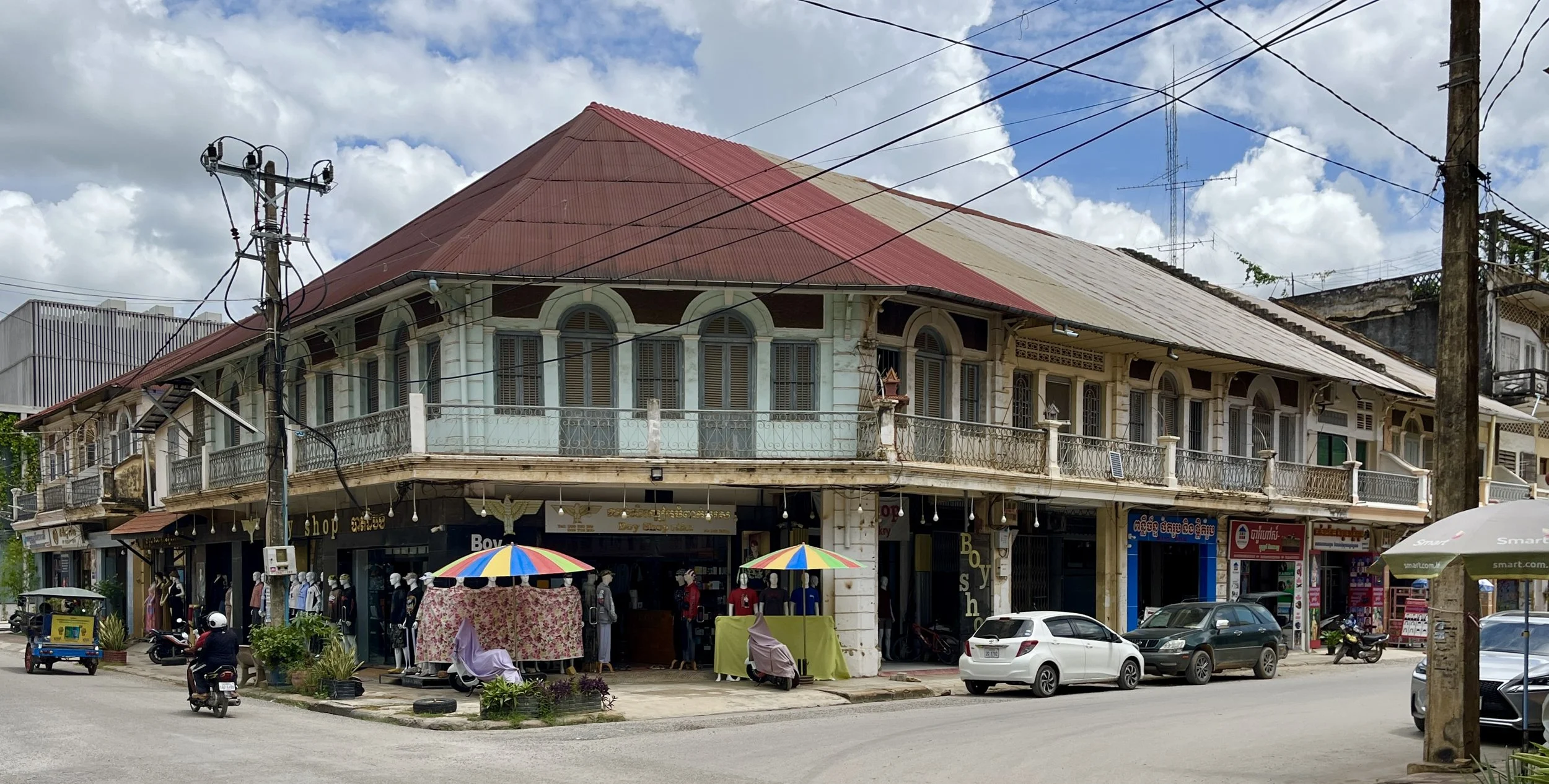
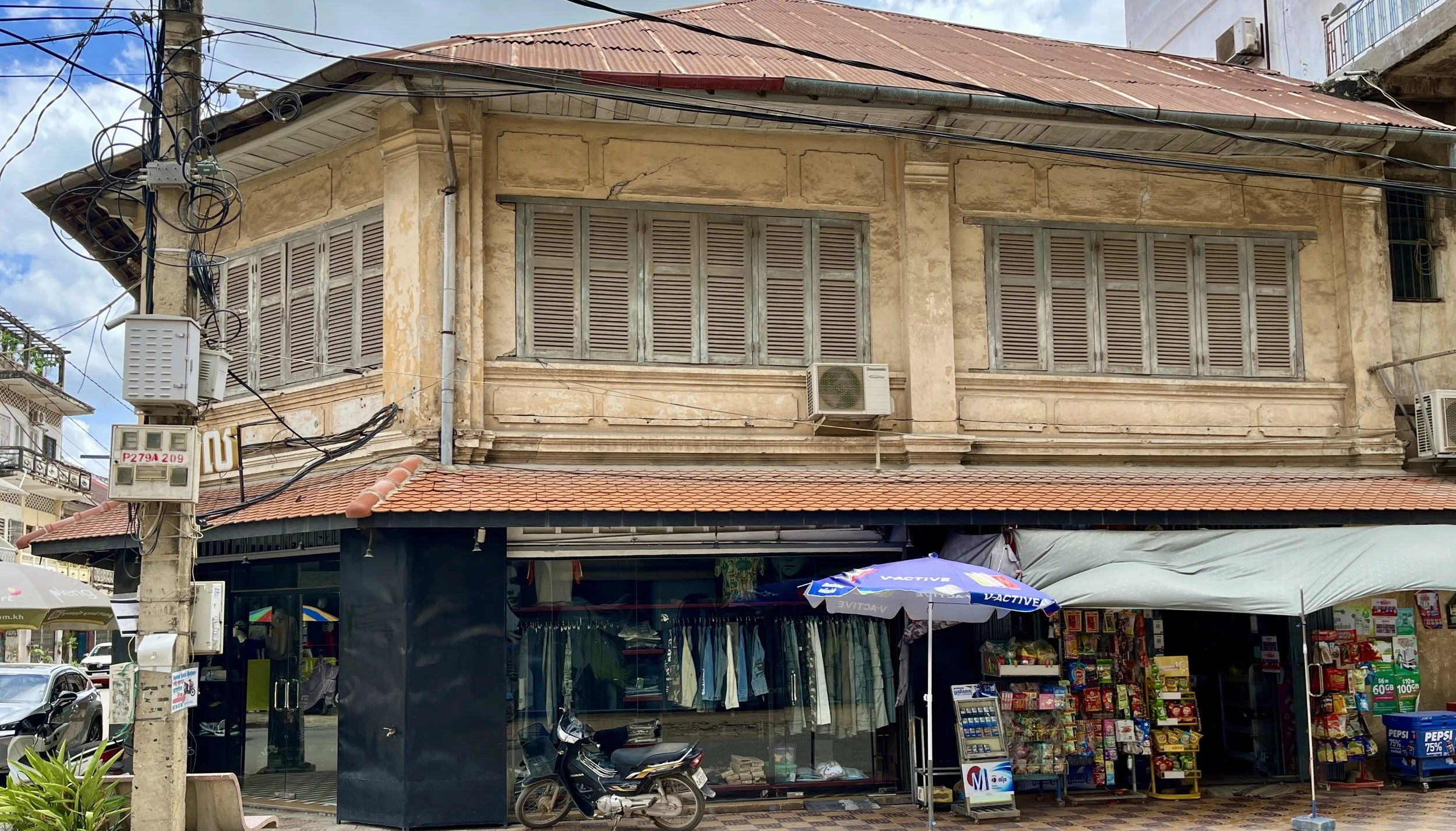
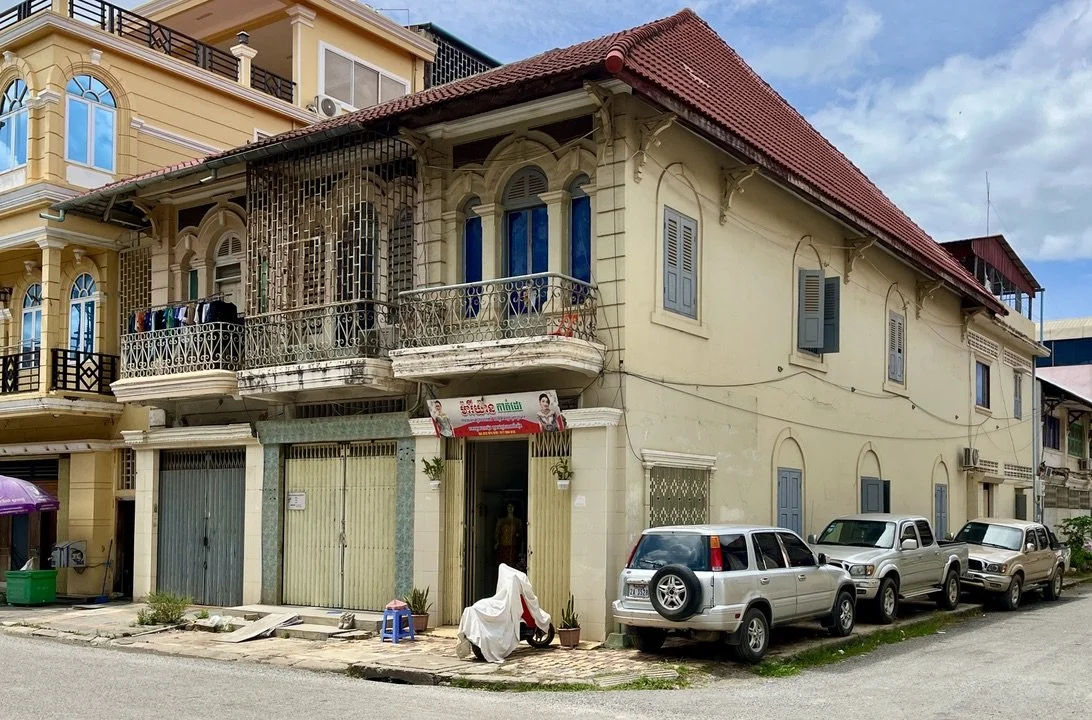
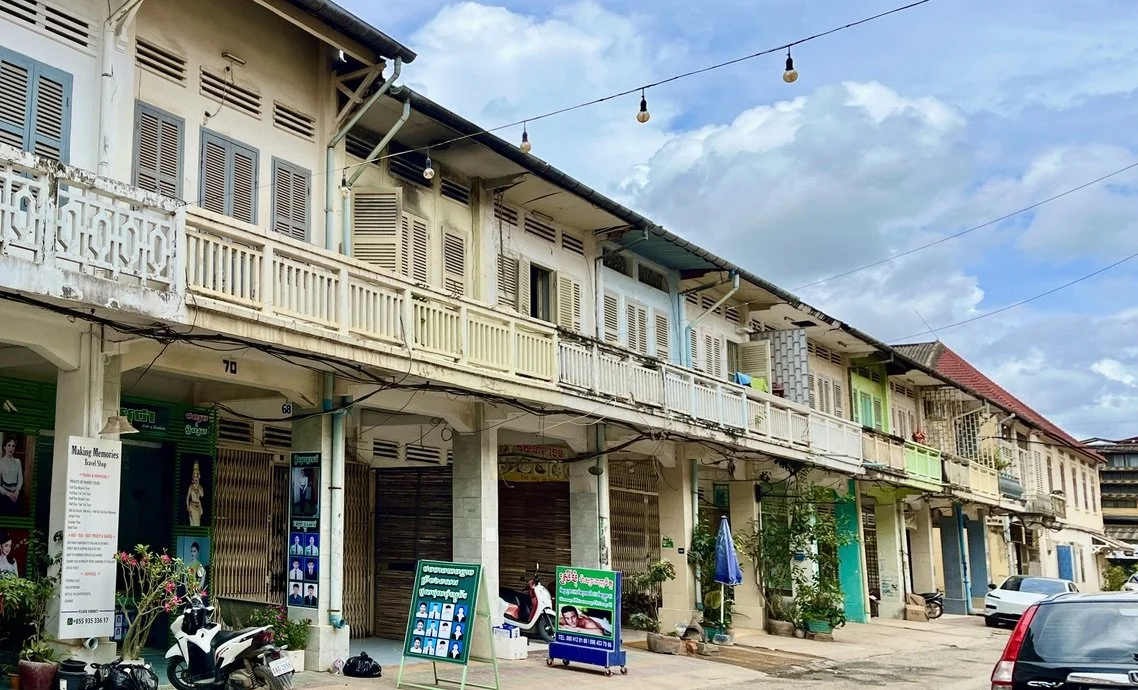
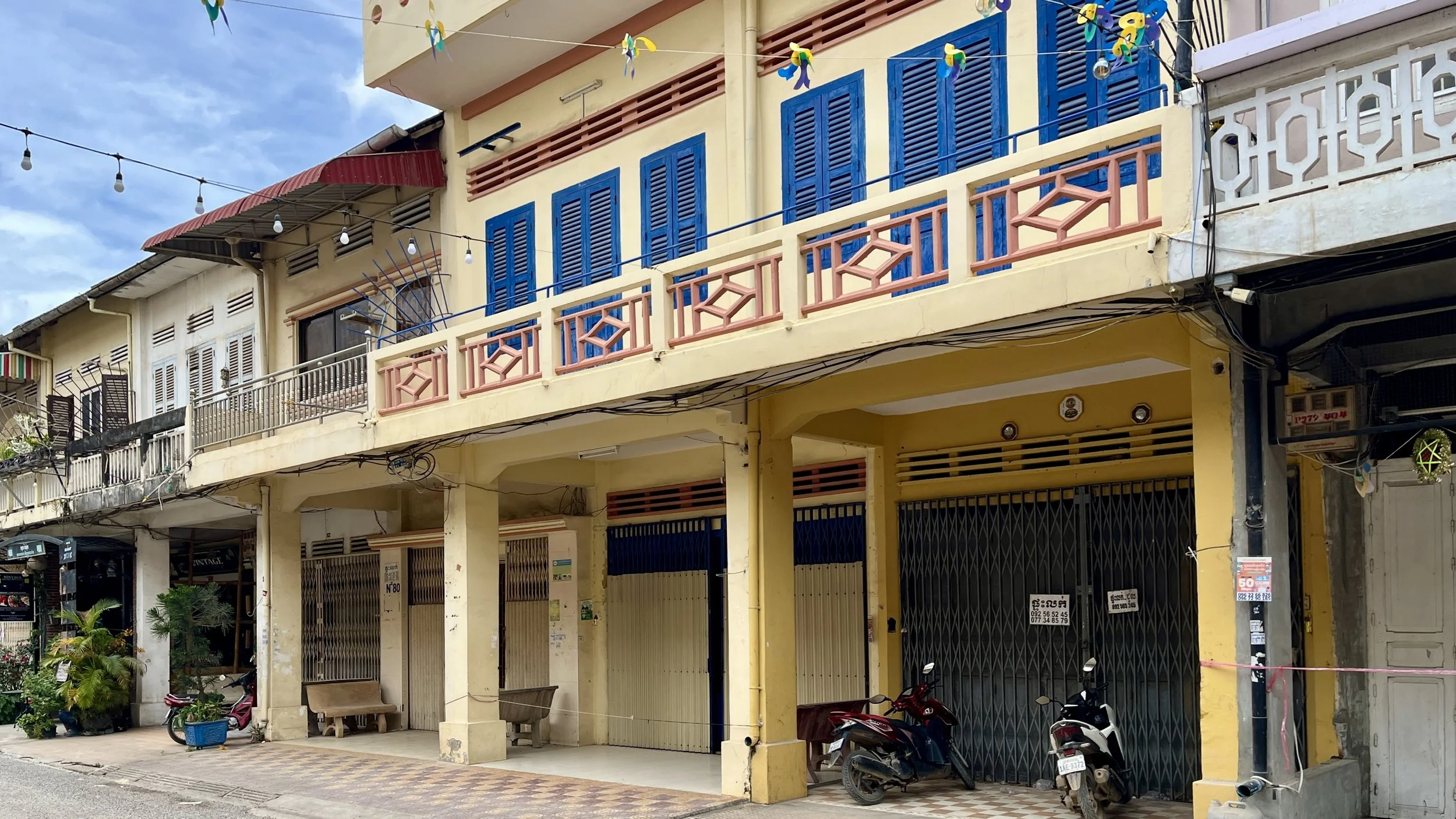
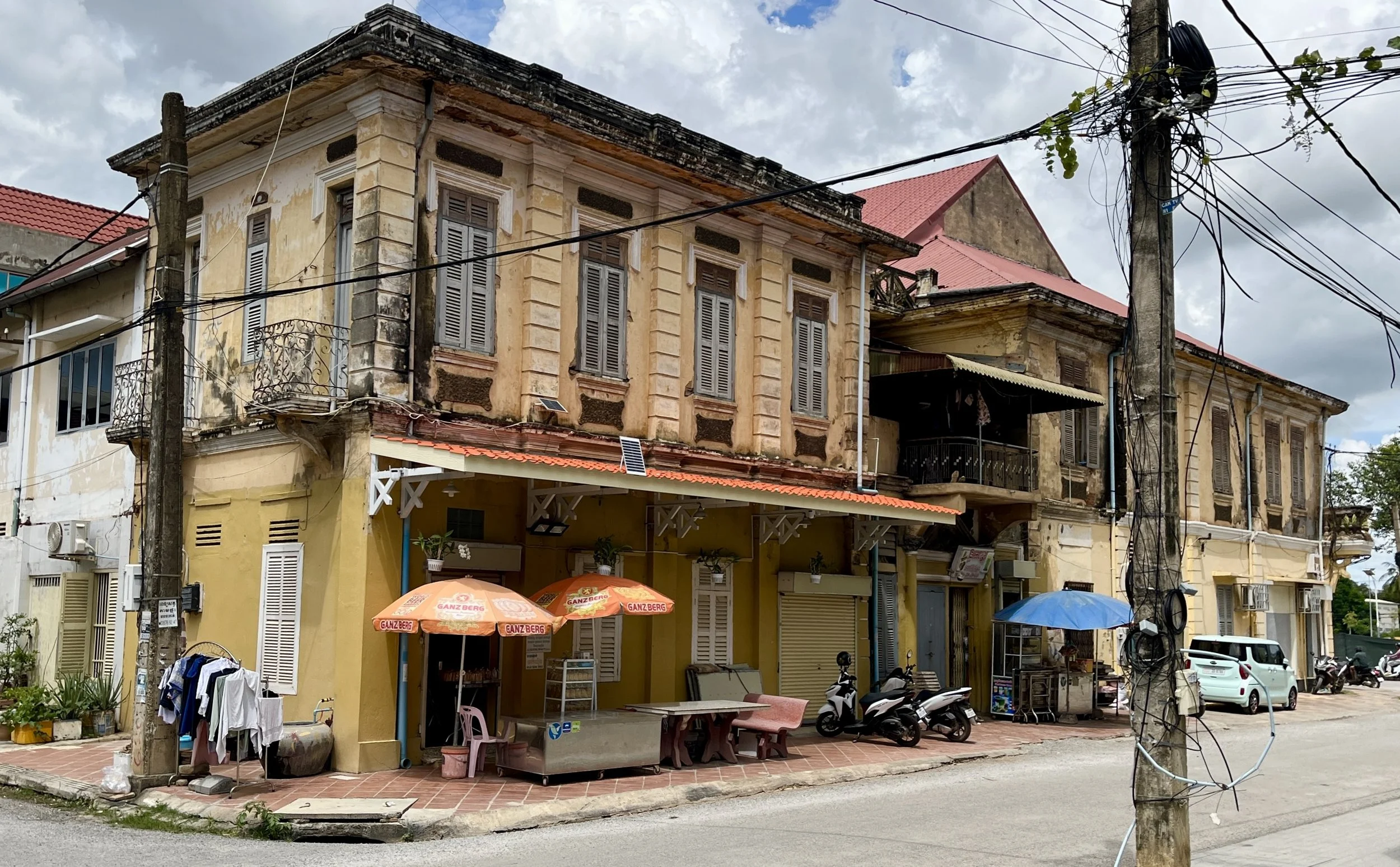
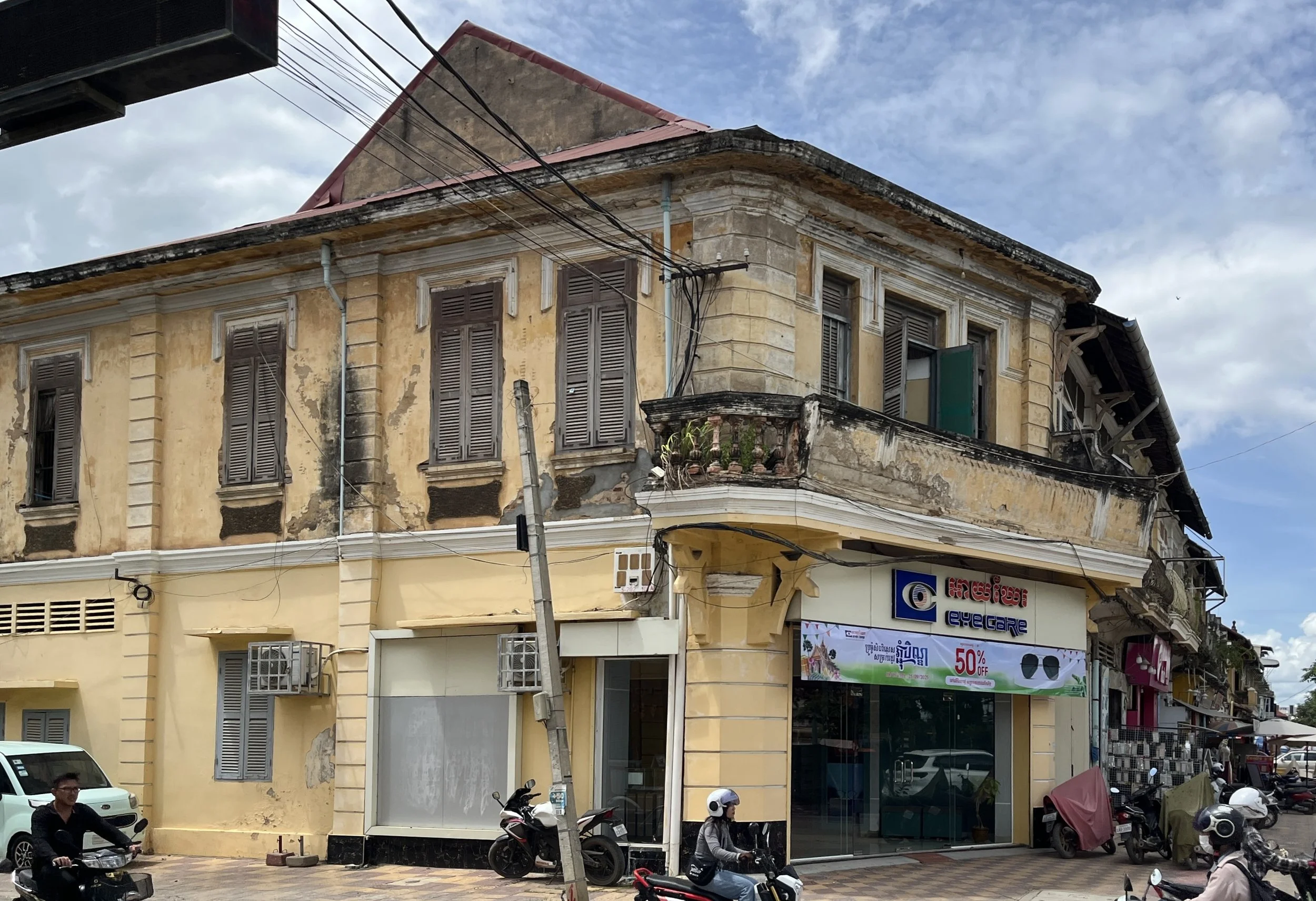
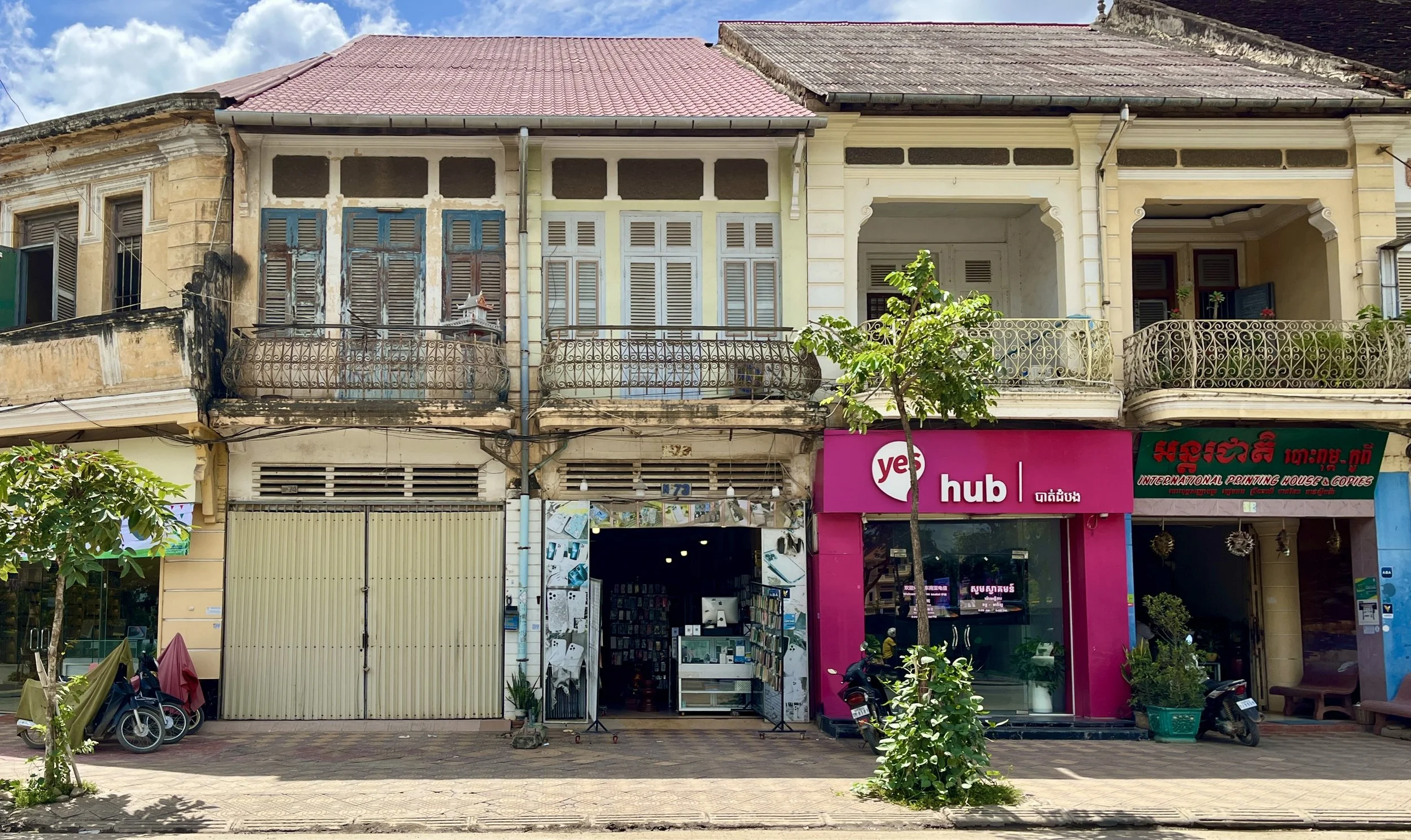
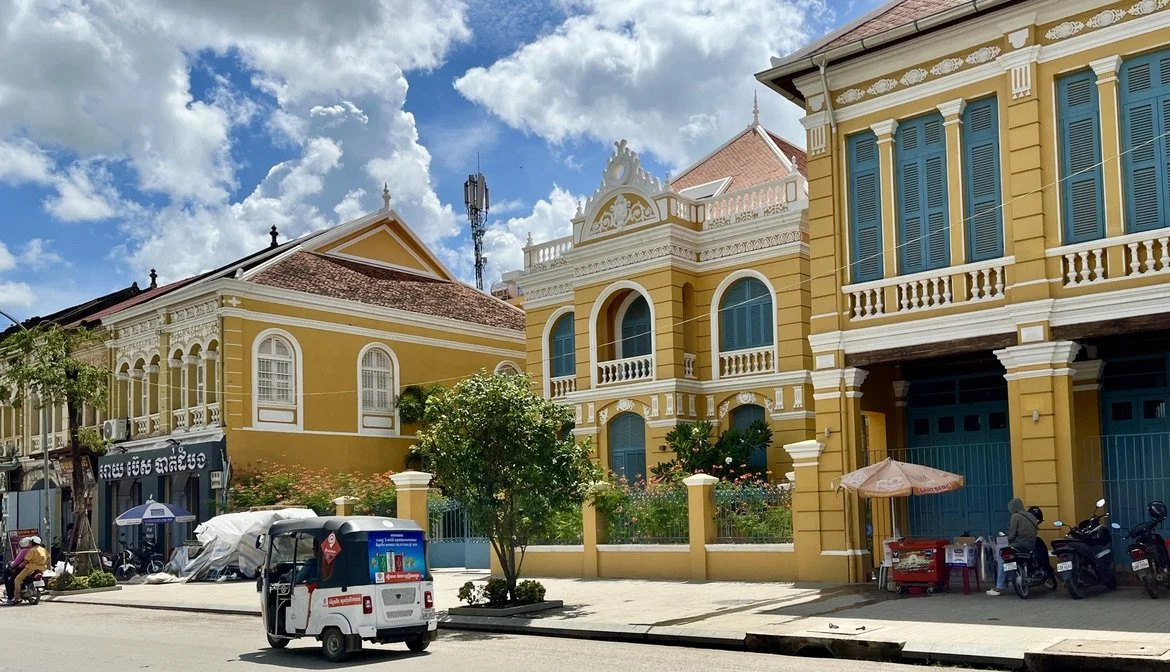
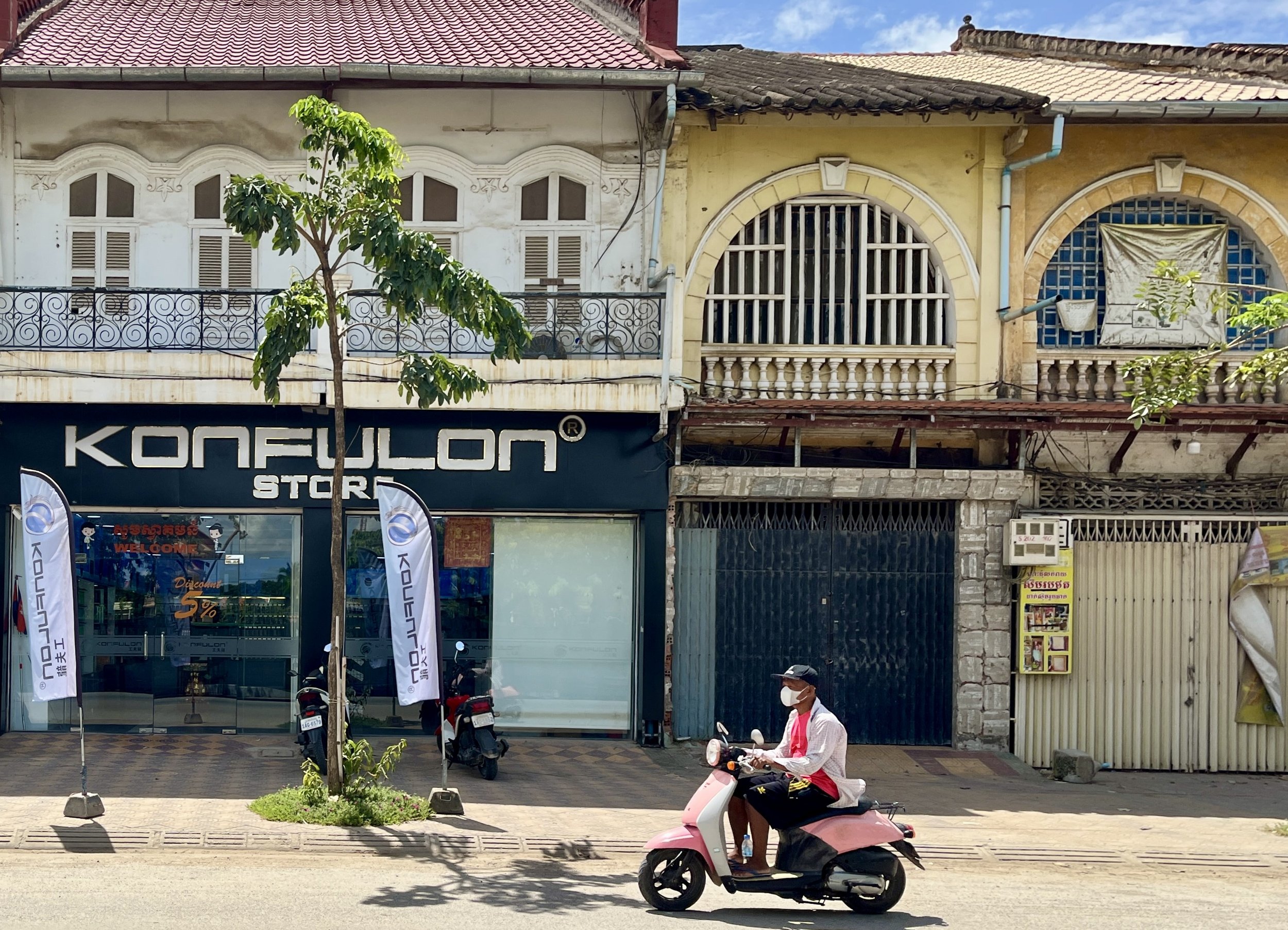
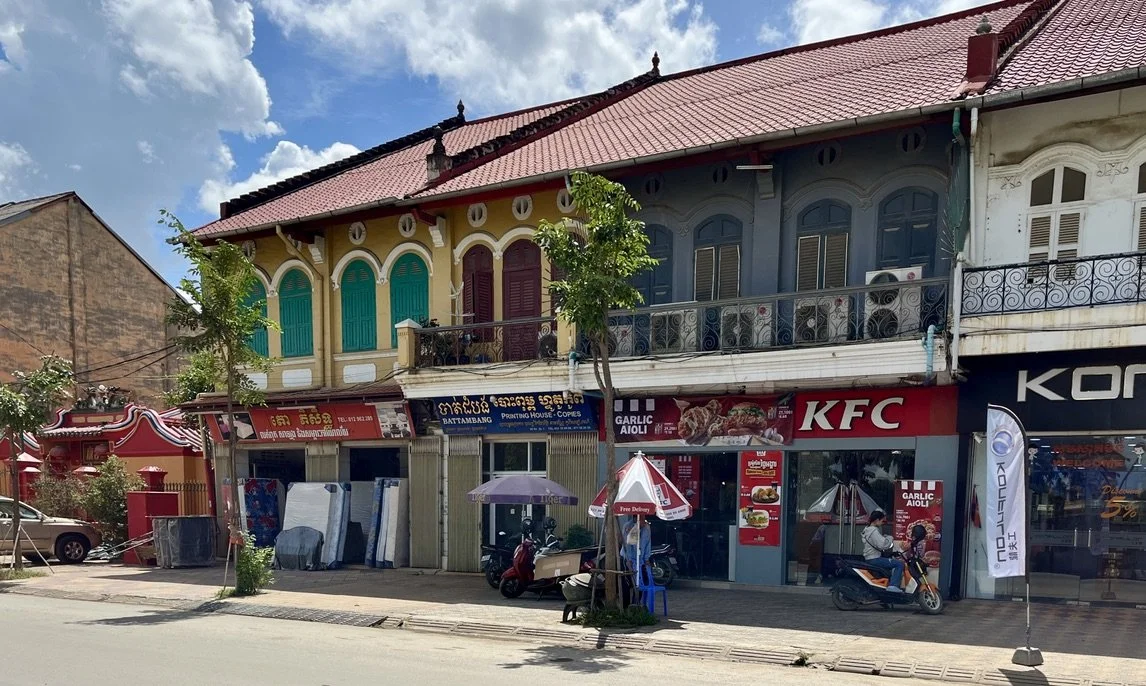
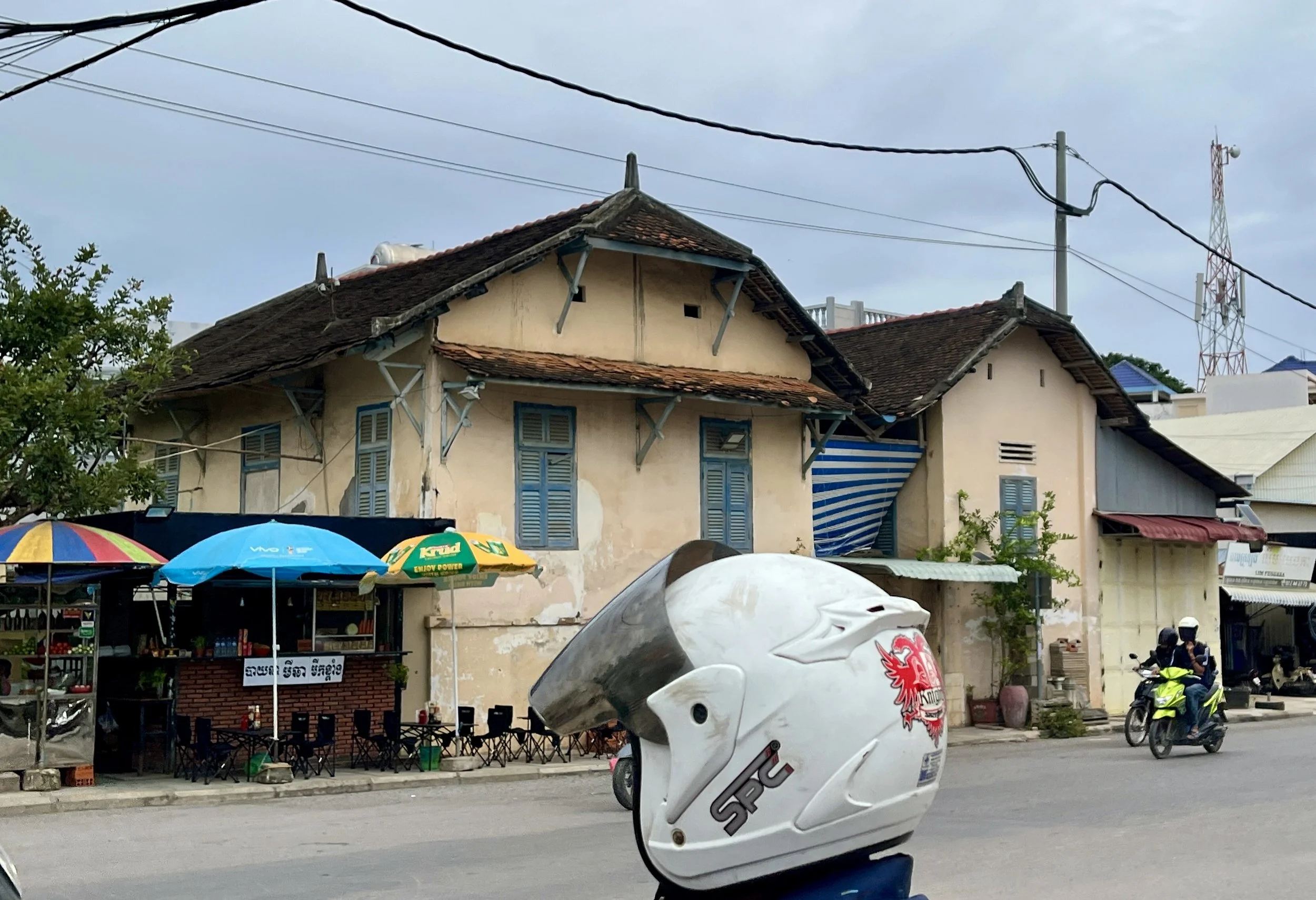
Honestly . . . underwhelming. Yes, there are many colonial buildings– over 800 according to conservation area records– but they’re 1. of the simplest sort 2. ill maintained and often extensively renovated in all the wrong ways. I visited thinking perhaps I’d find a cute house to rent . . . definitely not. It’s everything I don’t like about Siem Reap– dusty streets and falling apart buildings; constant traffic noise and fumes; trashy peasant neighbors chainsmoking, playing awful music until the wee hours, and burning their rubbish, in both the city proper and the surrounding villages; litter absolutely everywhere– but a fifth the size, with extremely limited dining and shopping.

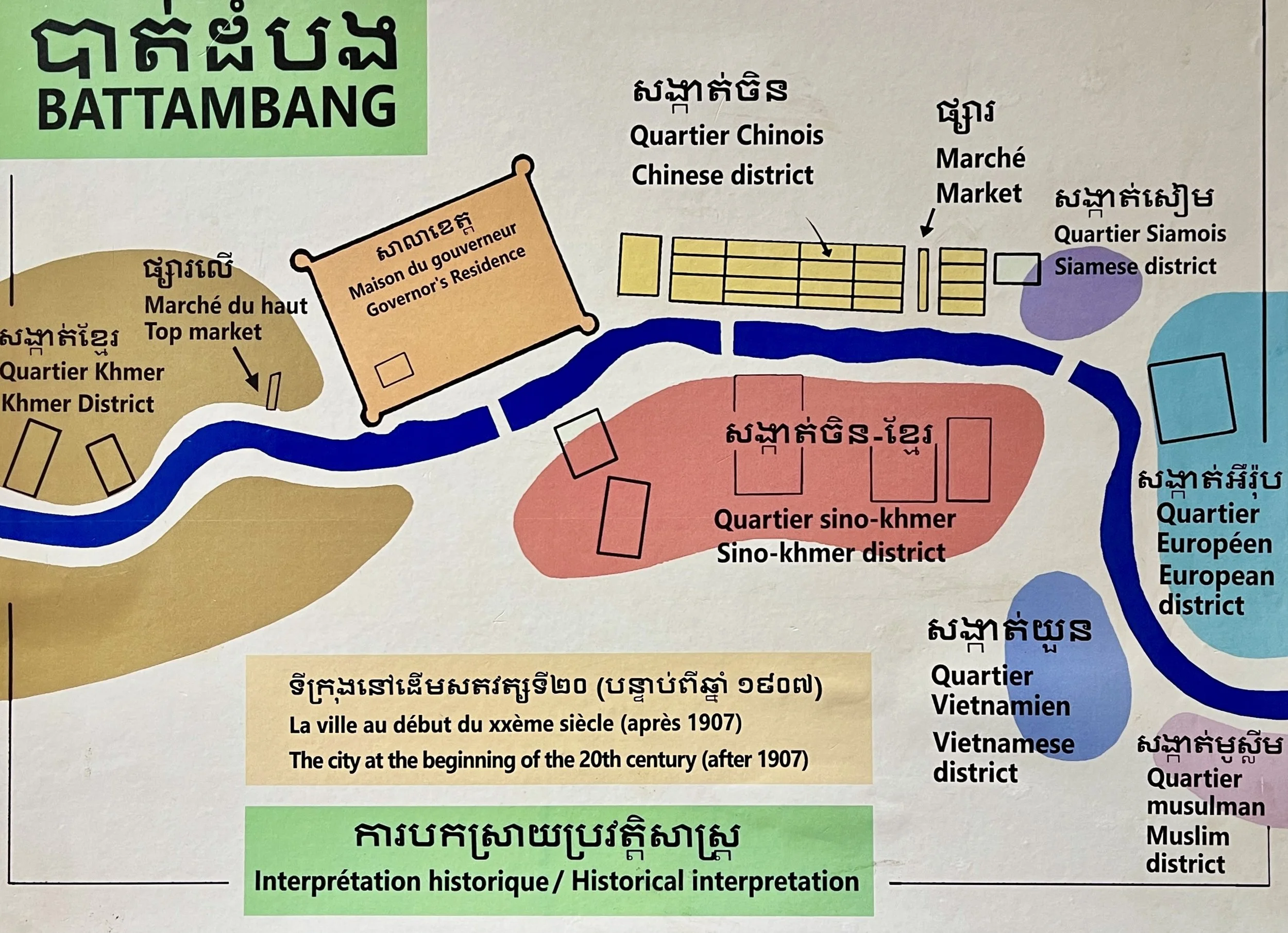
The neighborhoods at the time of the handover from Siam to France in 1907. Though the bridge locations are indicated on this map, there actually weren’t any permanent bridges at this time; the first was built in 1916. I’ll cover the neighborhoods from left to right.

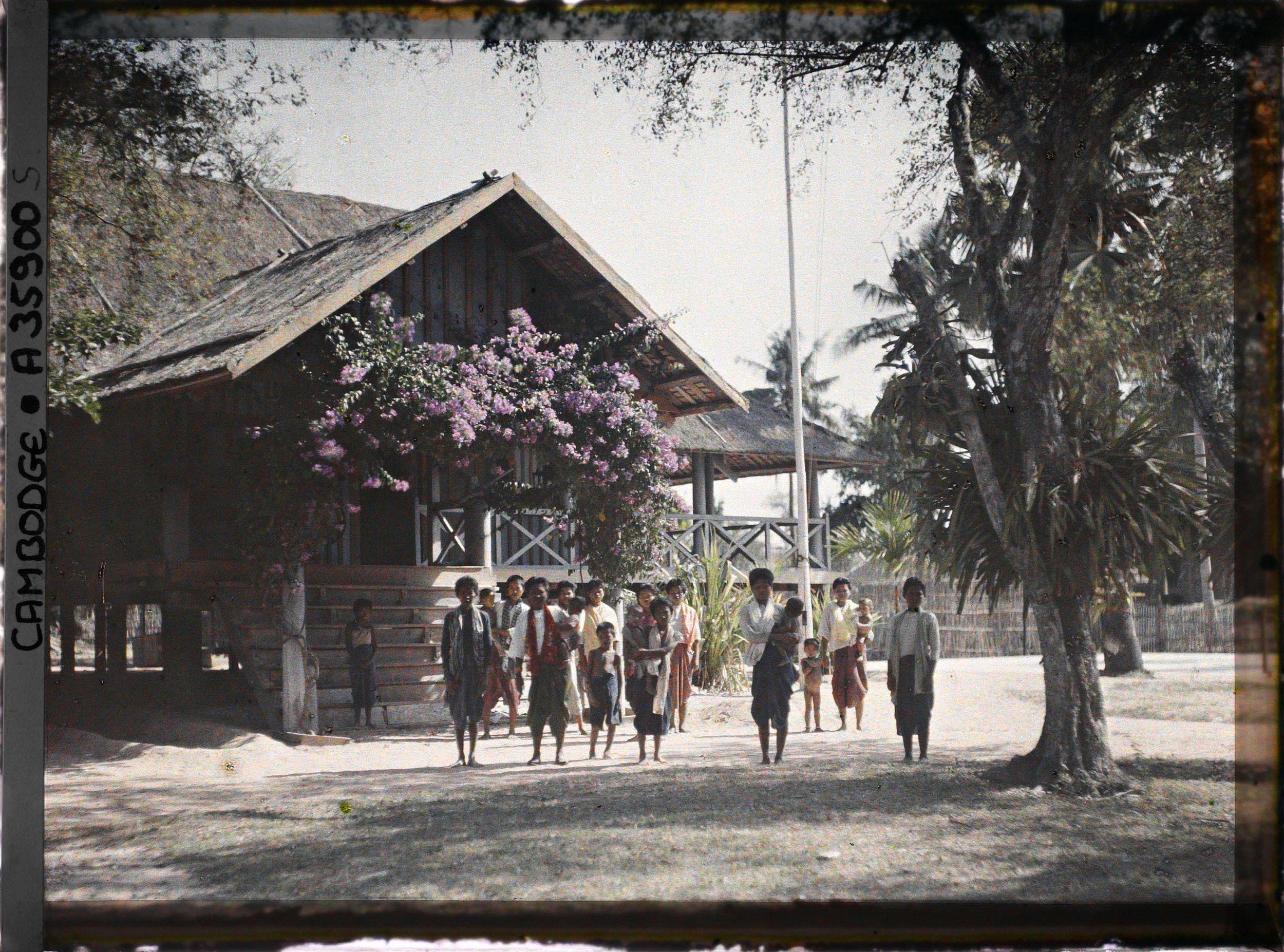
The Khmer district. I’ll be covering the antique Khmer houses around Battambang more thoroughly in a separate blog post (click here); I’ve just chosen this photo as an aesthetic/representative example. This photo of the family of a local administrator outside their house/office was taken by Léon Busy between 1914 and 1921, likely closer to 1921.

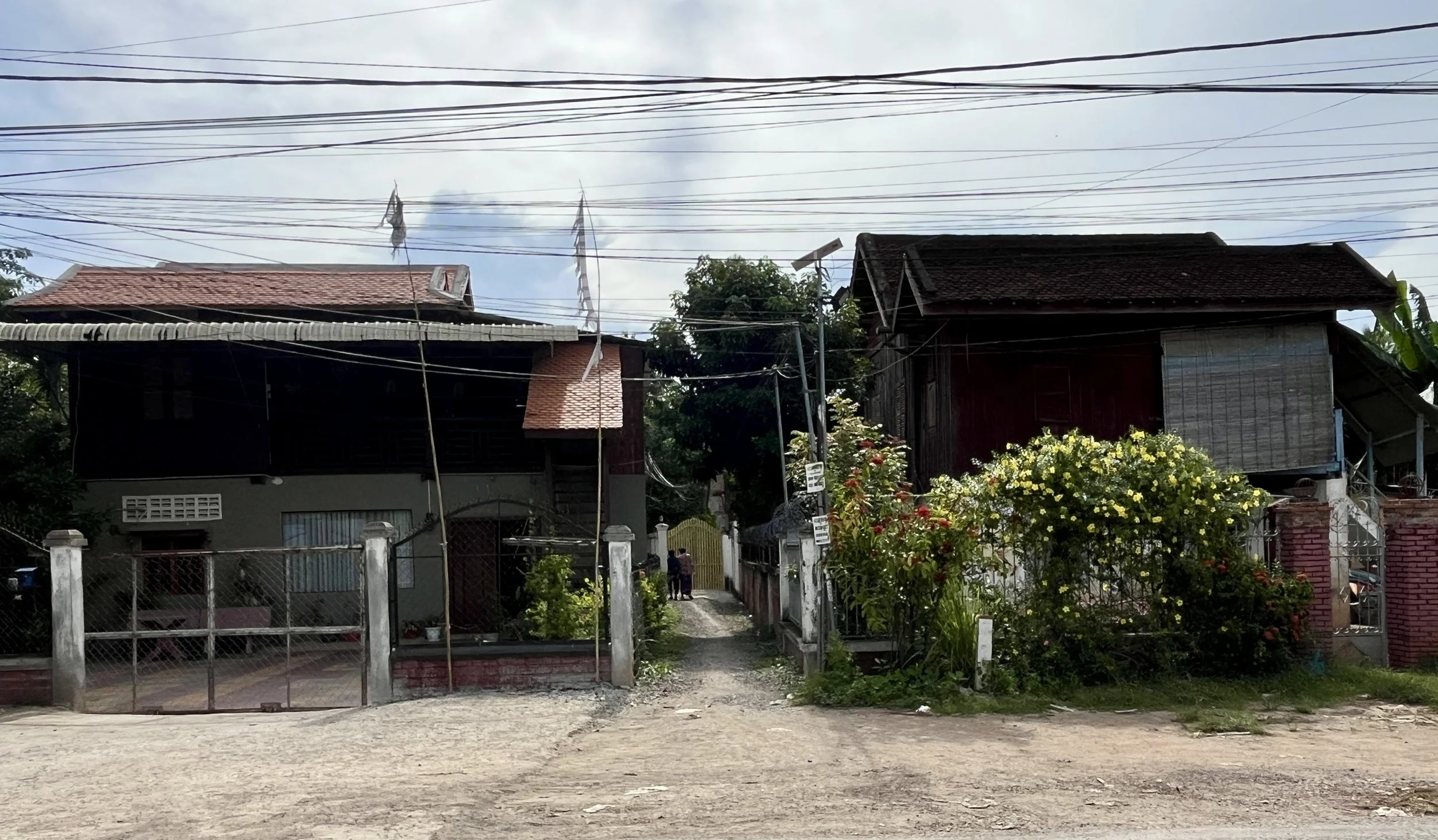
Khmer houses from the first quarter of the 20th century are still around, a couple with the descendants of colonial administrators still living in them.

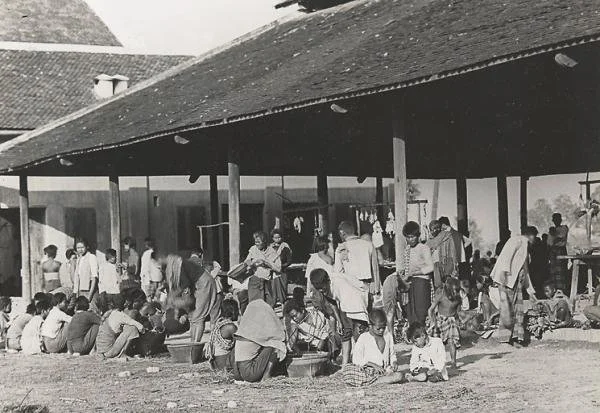
The Khmer neighborhood market in 1931, attributed to Léon Busy (but probably taken by a staff photographer).

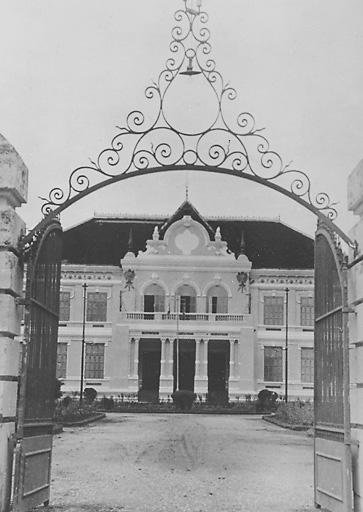
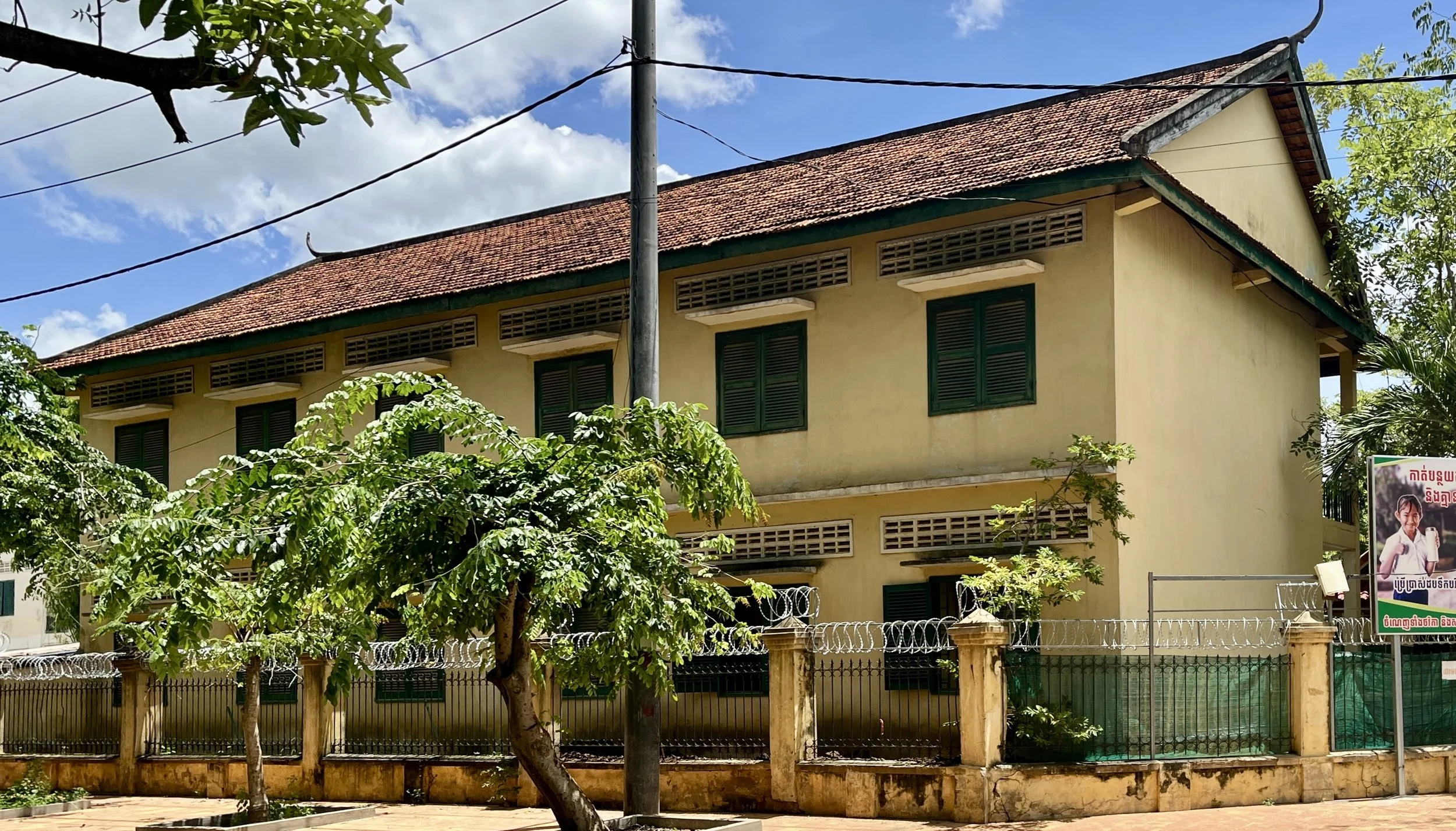
The Governor’s Residence in August 1948, less than a year before Cambodia was granted limited autonomy as a member state of the French Union amidst multiple independence movements.

The grounds of the Governor’s Residence dominate the 1907 map, and while it is in what people perceive as French colonial style, it is of course Thai, commissioned from an Italian favored by Thai King Chulalongkorn for his ‘European’ buildings. So are several other administrative buildings in this neighborhood; it’s a mix of Thai-European-style and actually French. For a post solely about this house, click here.

The carved wooden window grilles on this building are quite delicately done.

A recently renovated colonial building, with typical weird bastardized details like these windows.

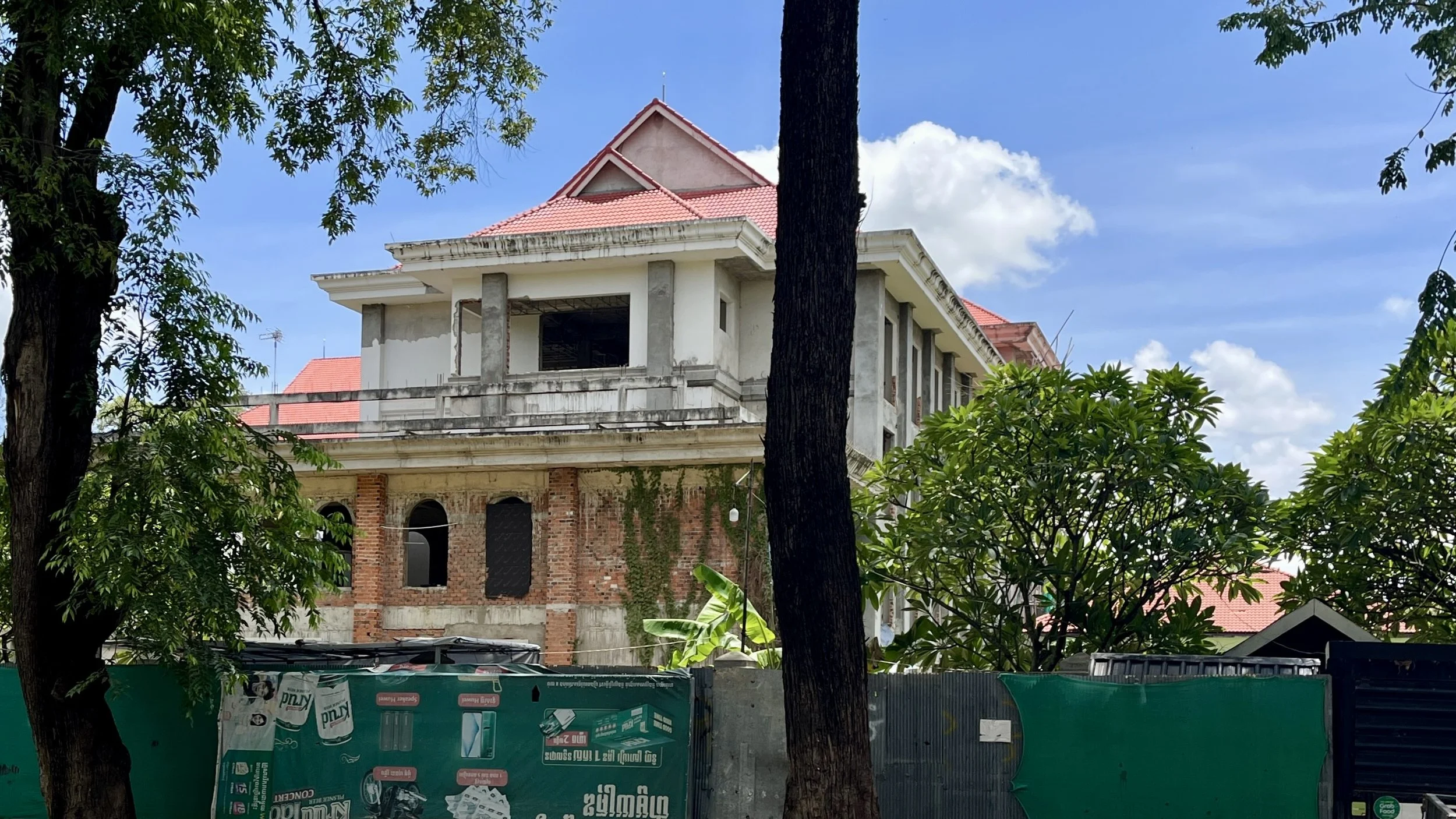
Most of the big old colonial mansions/onetime offices are in disuse/disrepair, apparently owned by local grandees who think they’ll sell them to an international corporation one fine day for millions.

Many have been partially renovated, then abandoned, and are now in ruins.

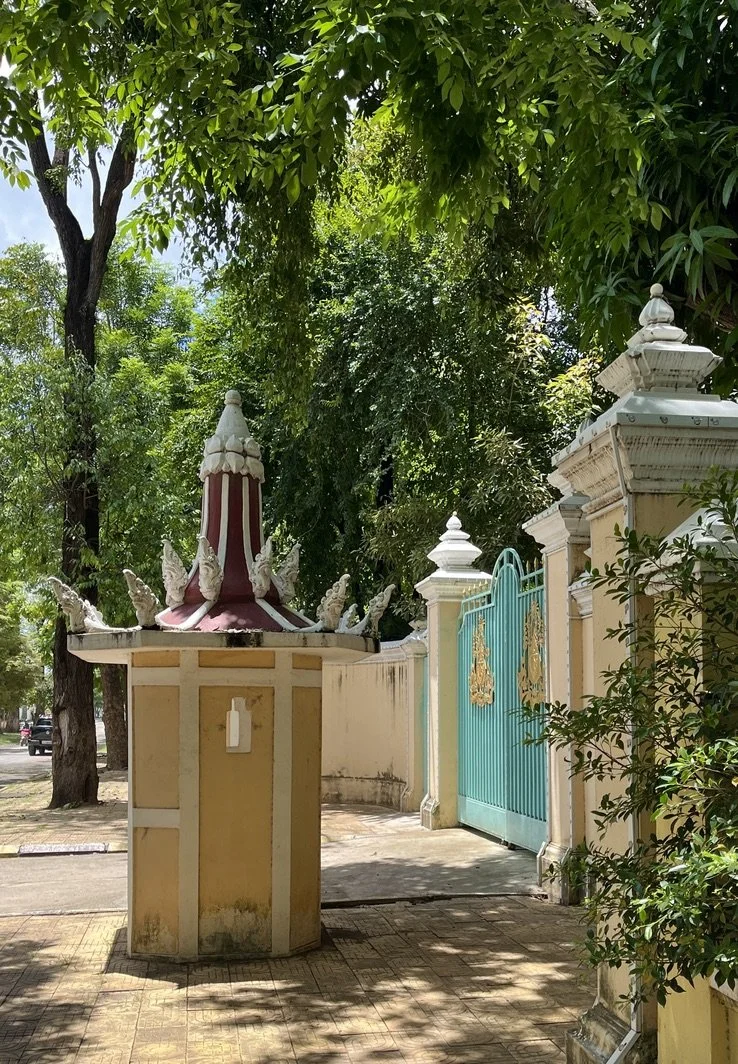
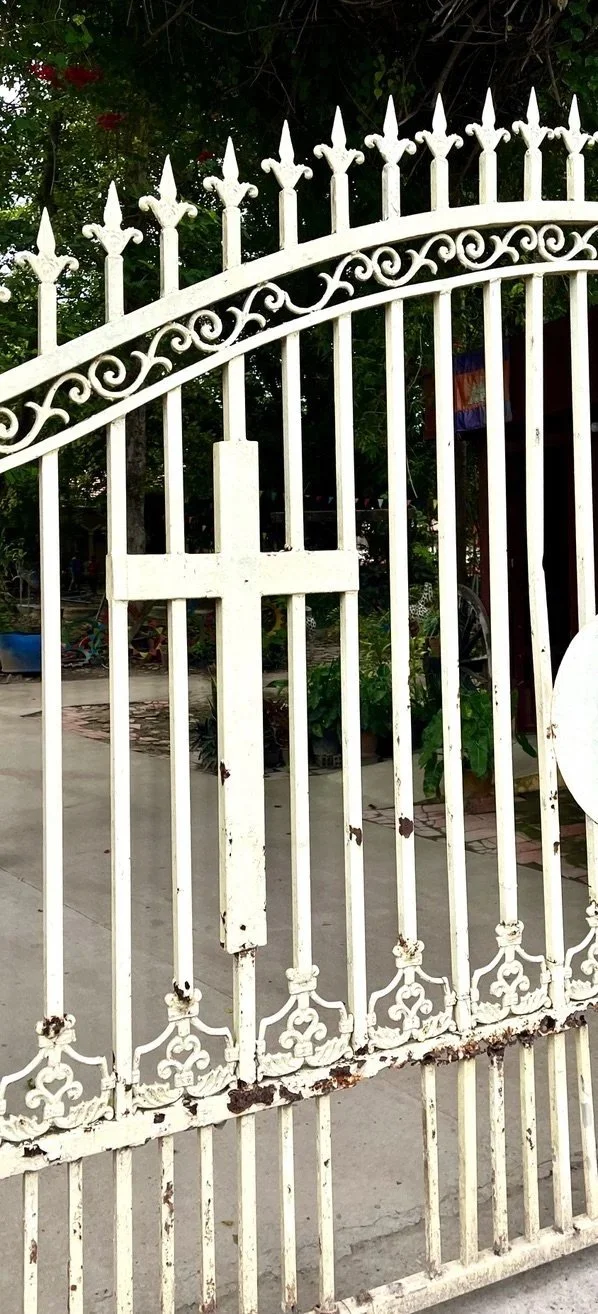
A never or rarely used official residence is somewhere beyond this gate.

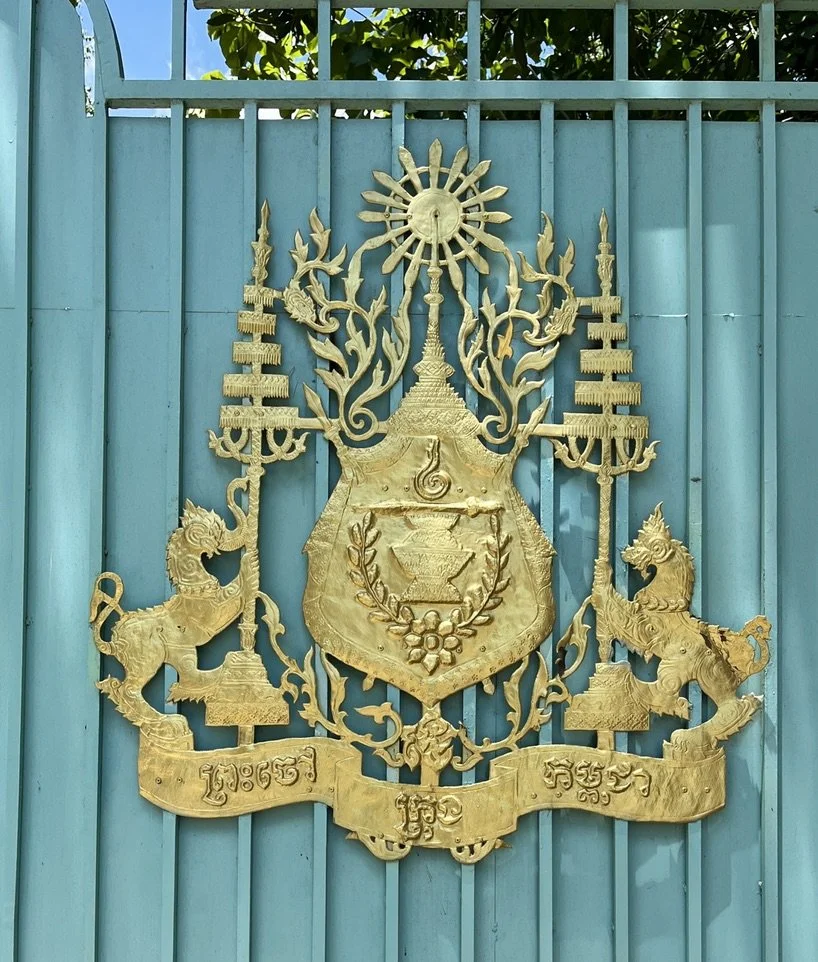
The royal seal of Cambodia.

Not sure what this is– I think the office of an NGO– but this is my dream house in Cambodia. Rip up the concrete, put in a pool and gardens, perfect.

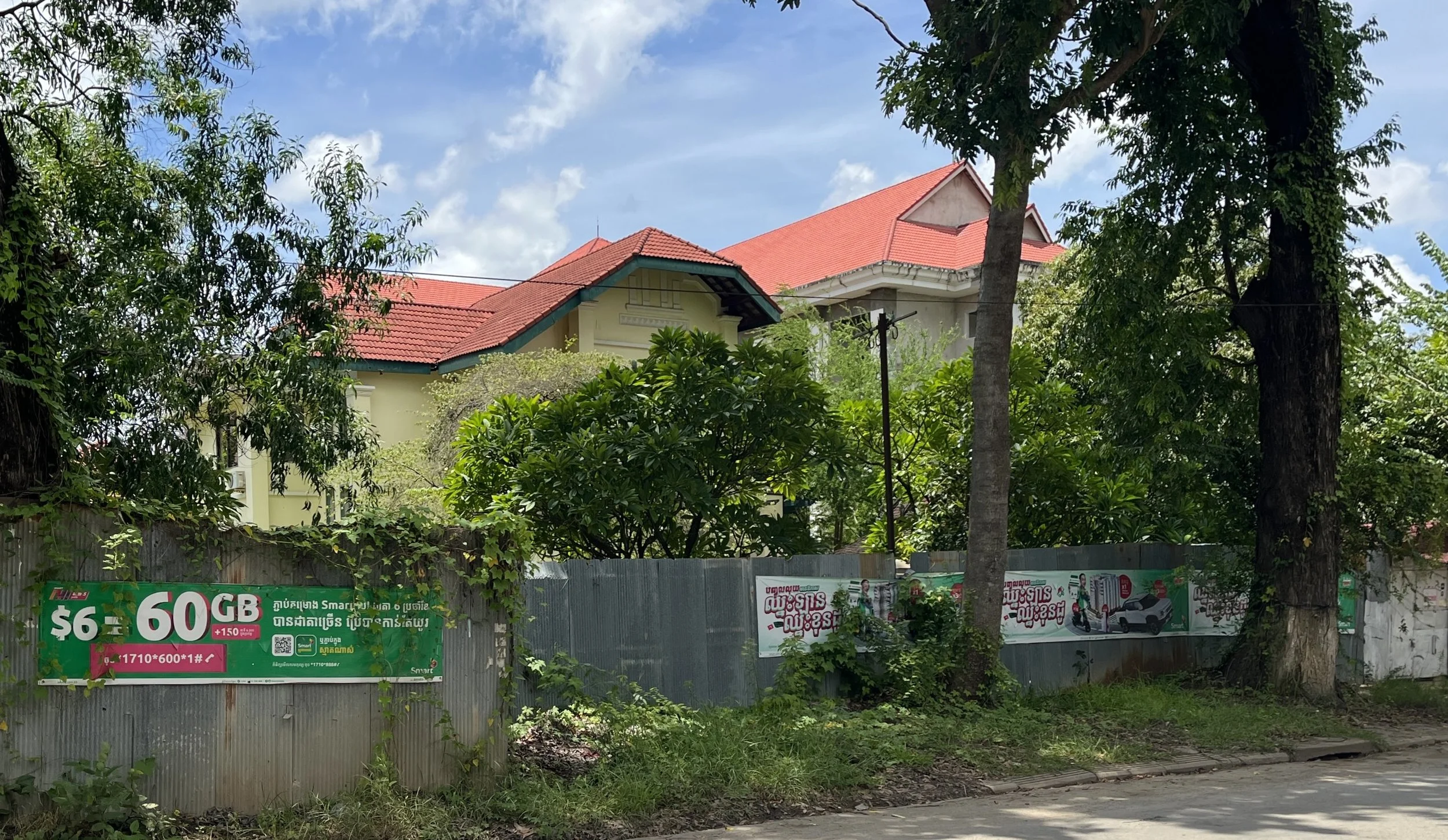
I think? this is a modern building built in the old style to blend in. This is common in Cambodia.

The definitely actually old building next door.

On the grounds of the Governor’s Residence; the backsides show clearly the colonial building vs. the colonial style building.

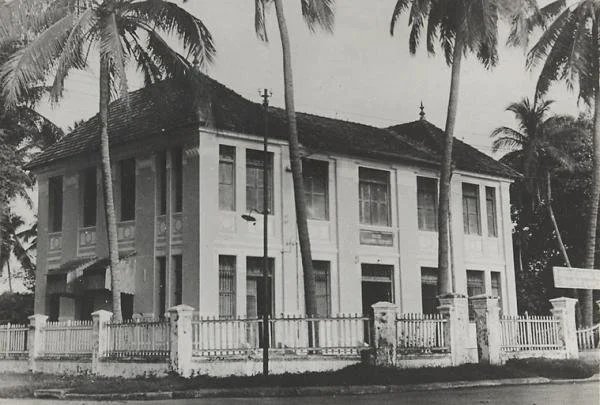
The post office in August 1948

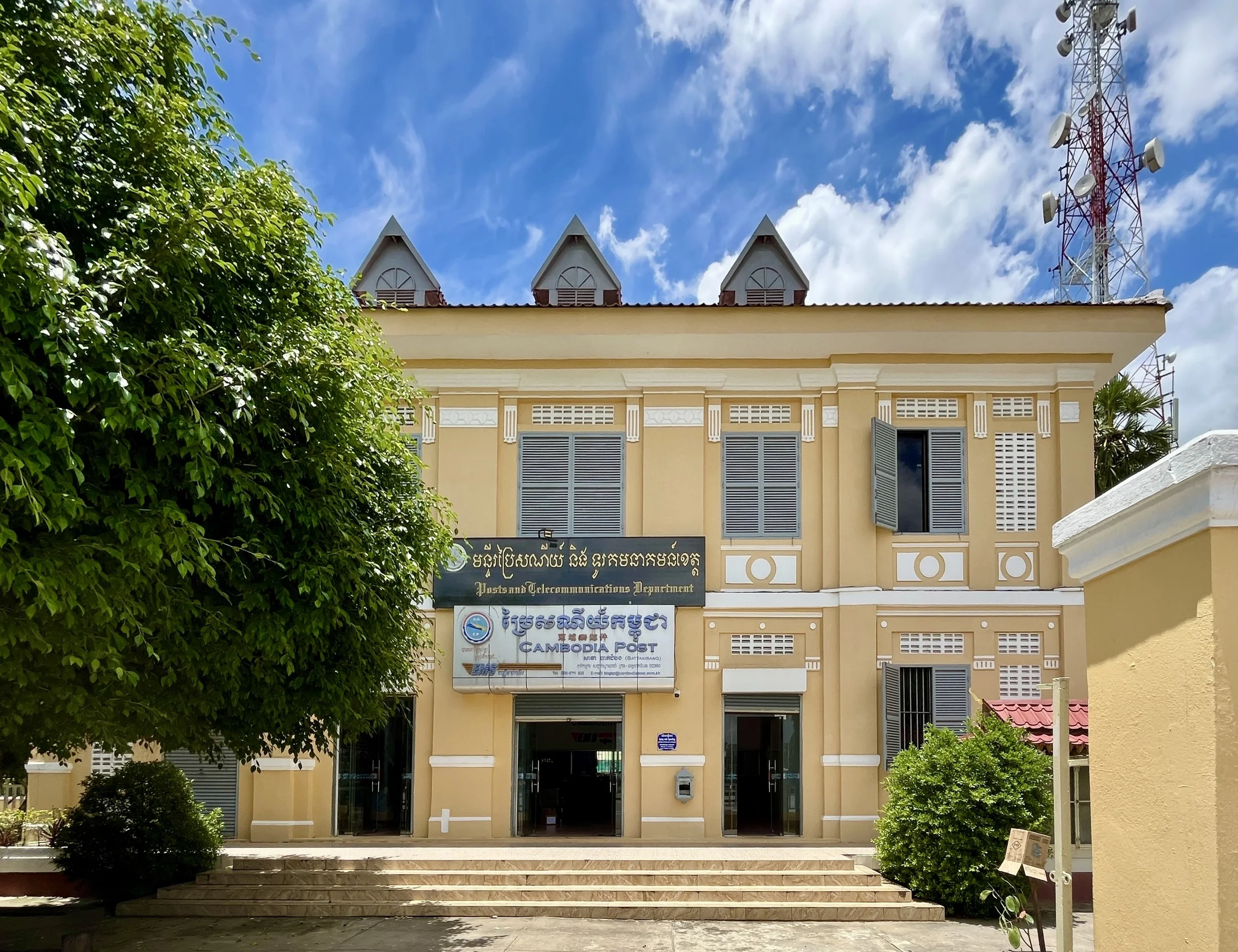
The post office, 2025

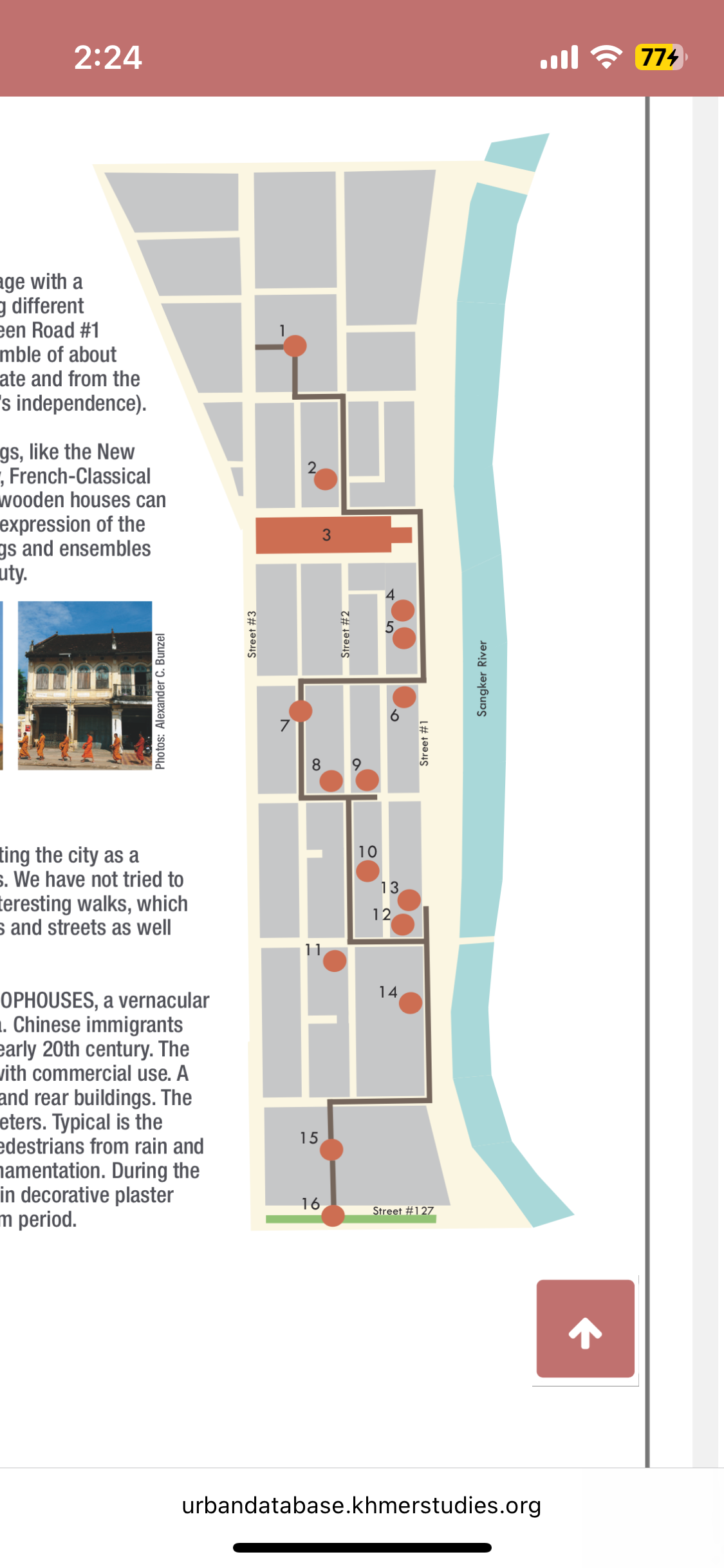
I found this little map showing Battambang’s historical buildings on urbandatabse.khmerstudies.org. It only covers the old Chinese quarter, which was almost completely removed by the French and replaced with simple shophouses, which were then reinhabited by the same people. I’d say it’s bordered at one end by the museum, and on the other by the neighborhood just beyond the 1931 ‘new’ market. I wish the map covered more of the old city.

it would look so fab if it was just clean– not even renovated, just clean.

Thai era building. I always wonder how much it costs to get these things really nice again.

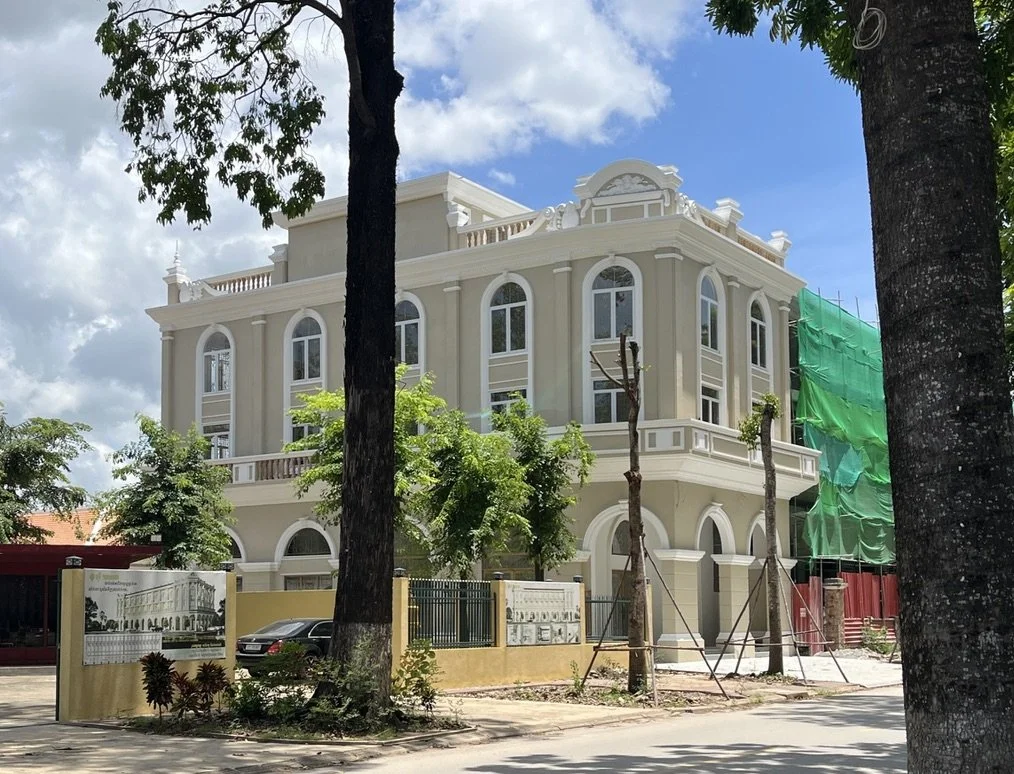
My understanding is this was a bank at some point. Private villa? Government? Still a bank? A couple years ago it was in the news that it was going to be an economics museum. Unclear, but the renovation was literally just finishing as I photographed it in October 2025. Clearly a Thai buidling.

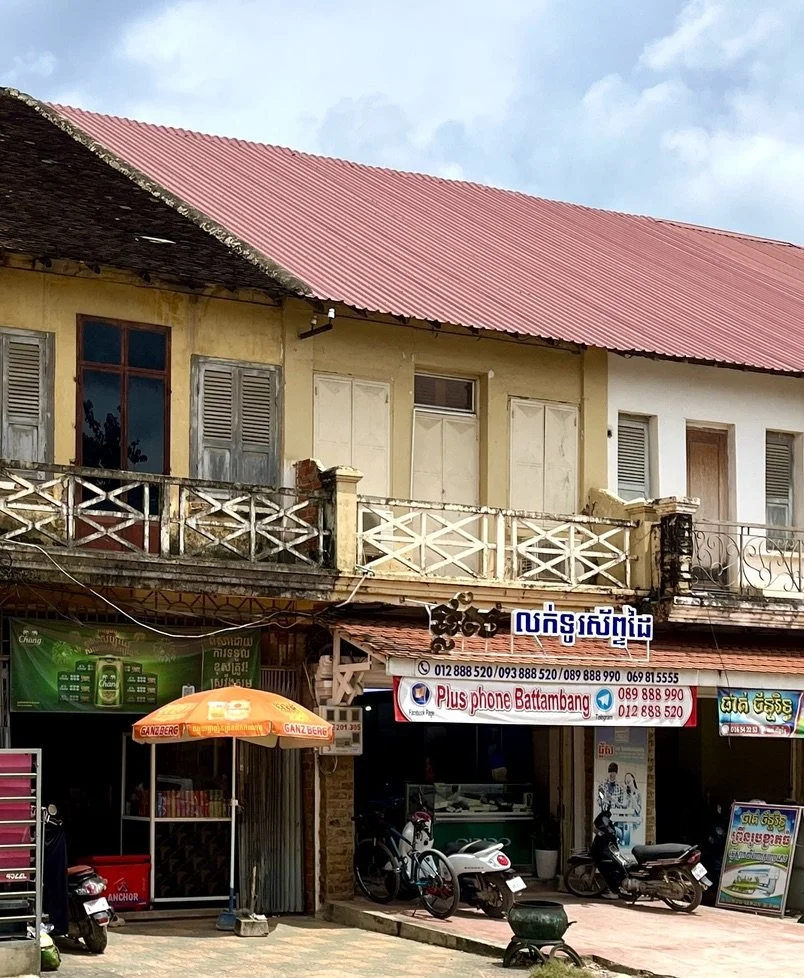
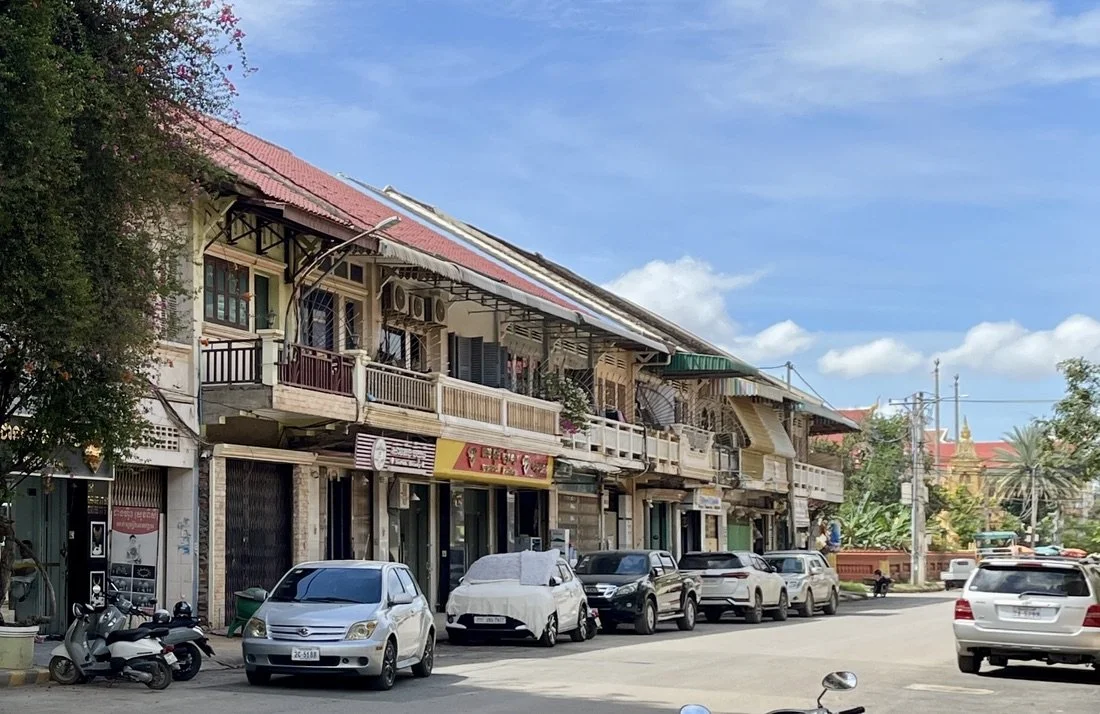
French era shophouses

Thai era shophouses

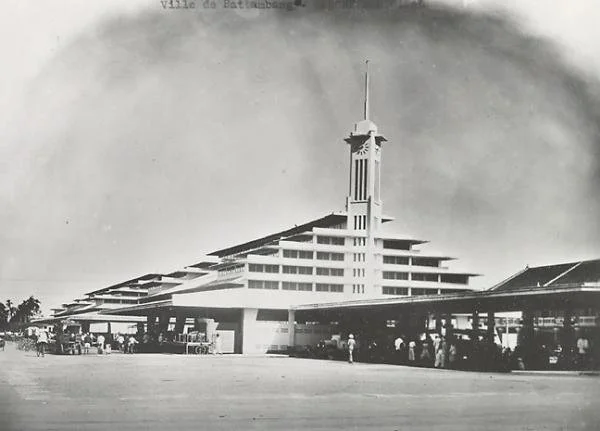
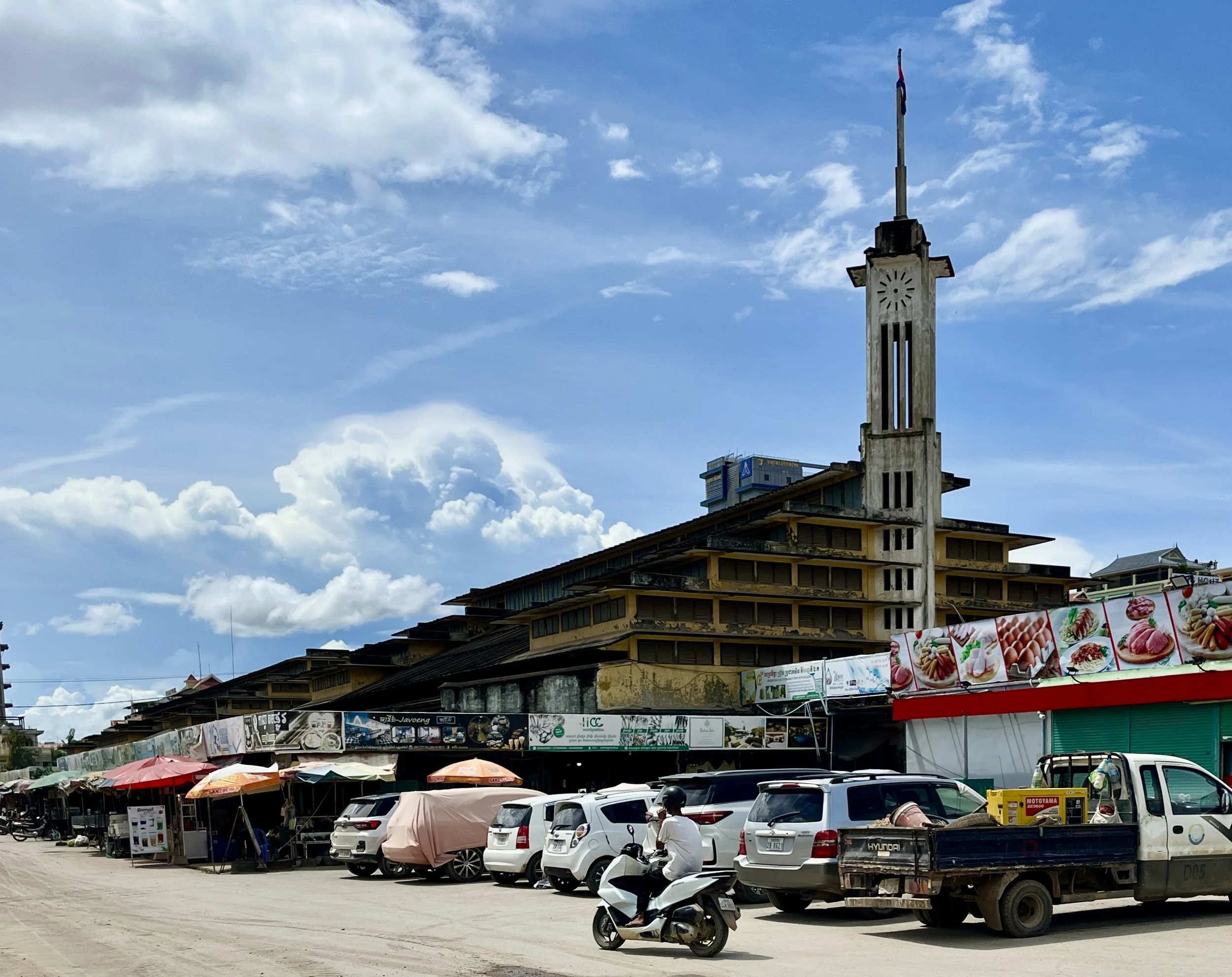
The new indoor market,1931

The new outdoor market, 1931

The indoor and outdoor market in 2025

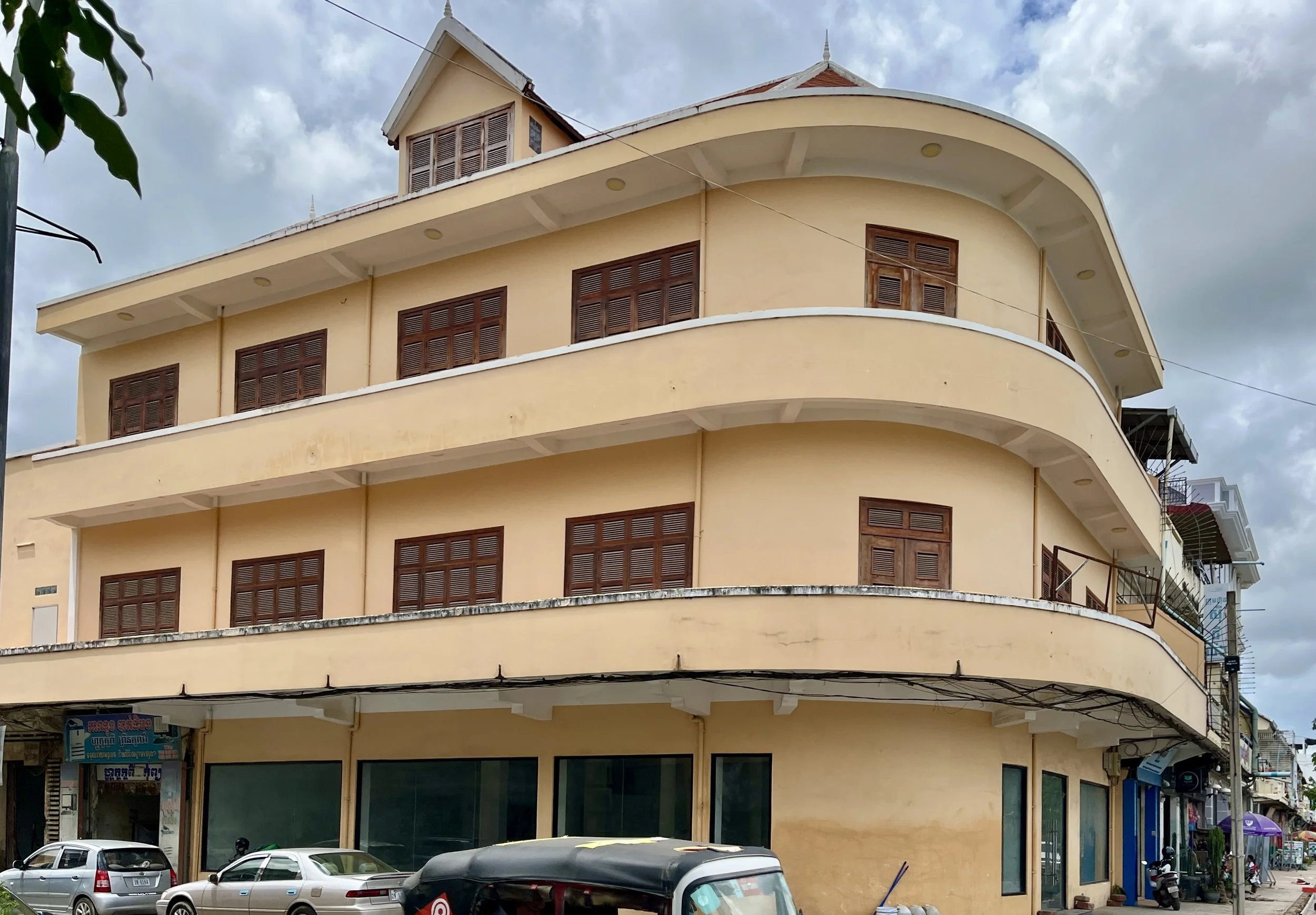
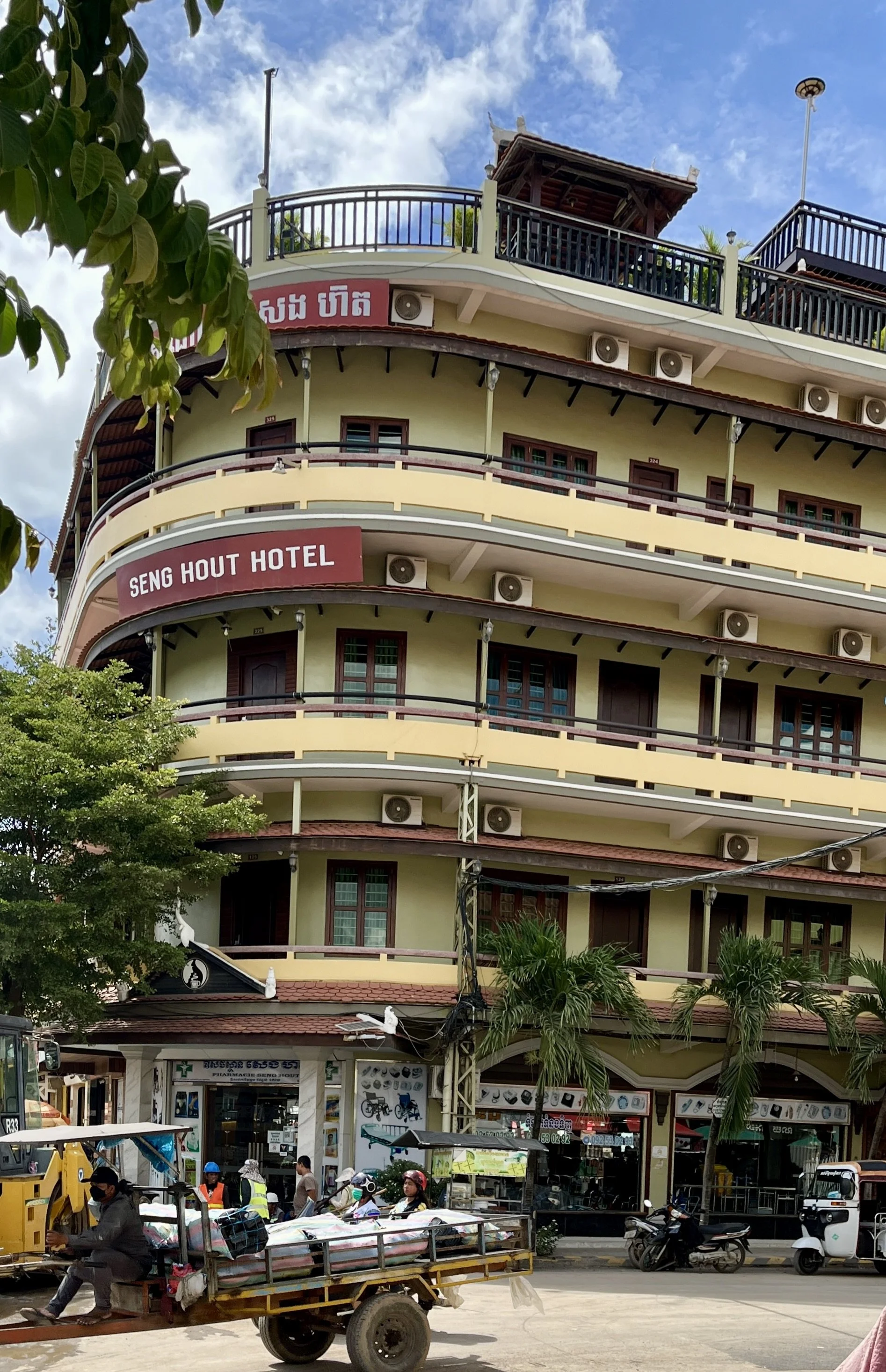
One of the oldest hotels in town, the very simple Art Deco 30s/40s Seng Hout.

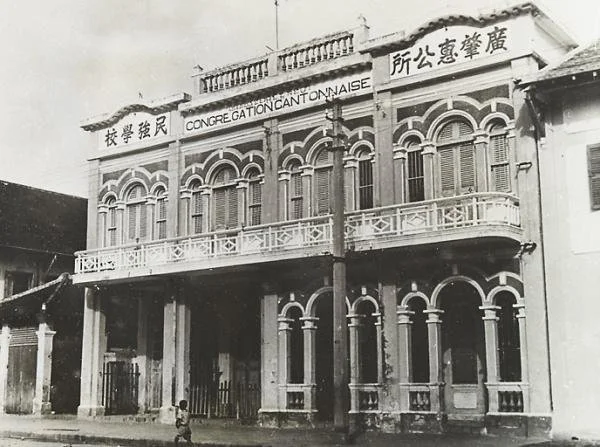
Cantonese school/guild in August 1948.

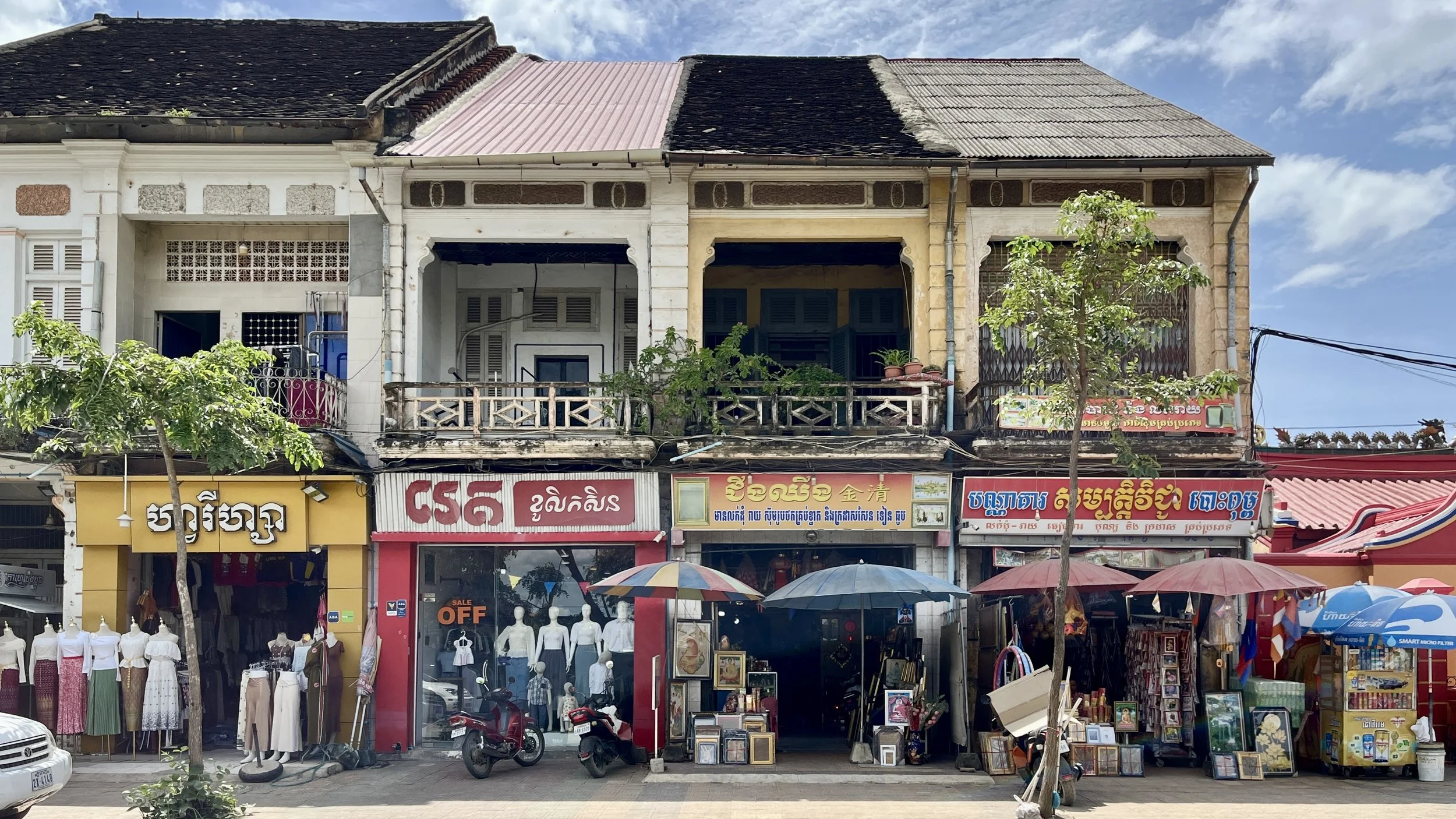
As it stands today, converted into shophouses.

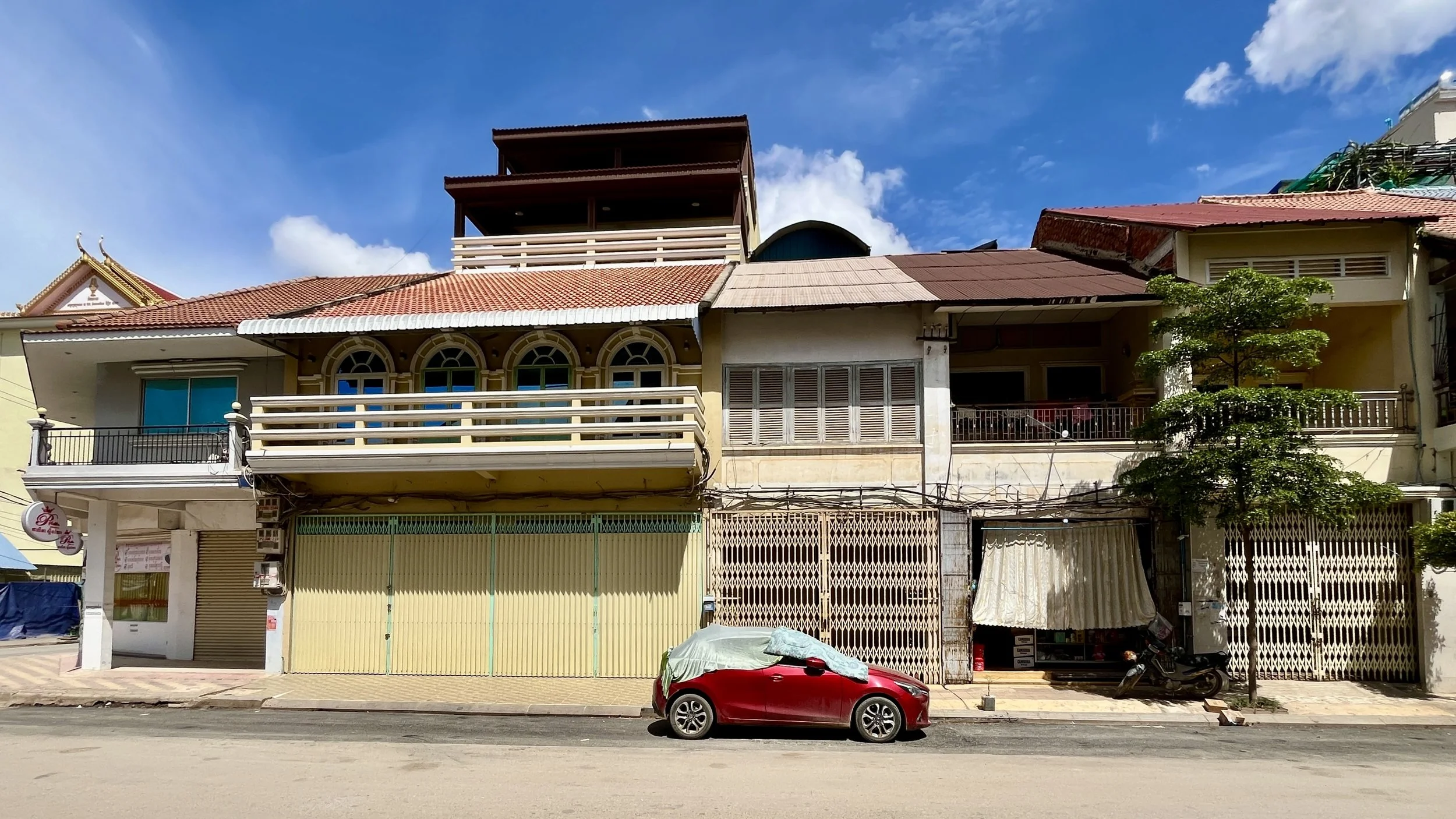
Some shophouses have been combined into larger residences.

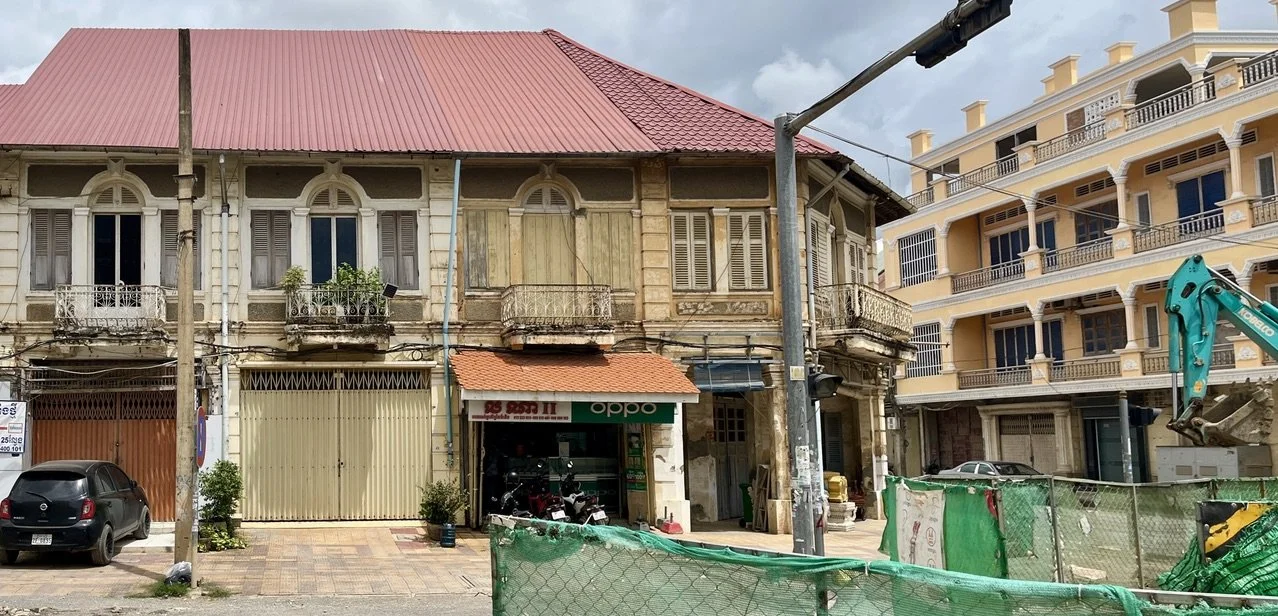
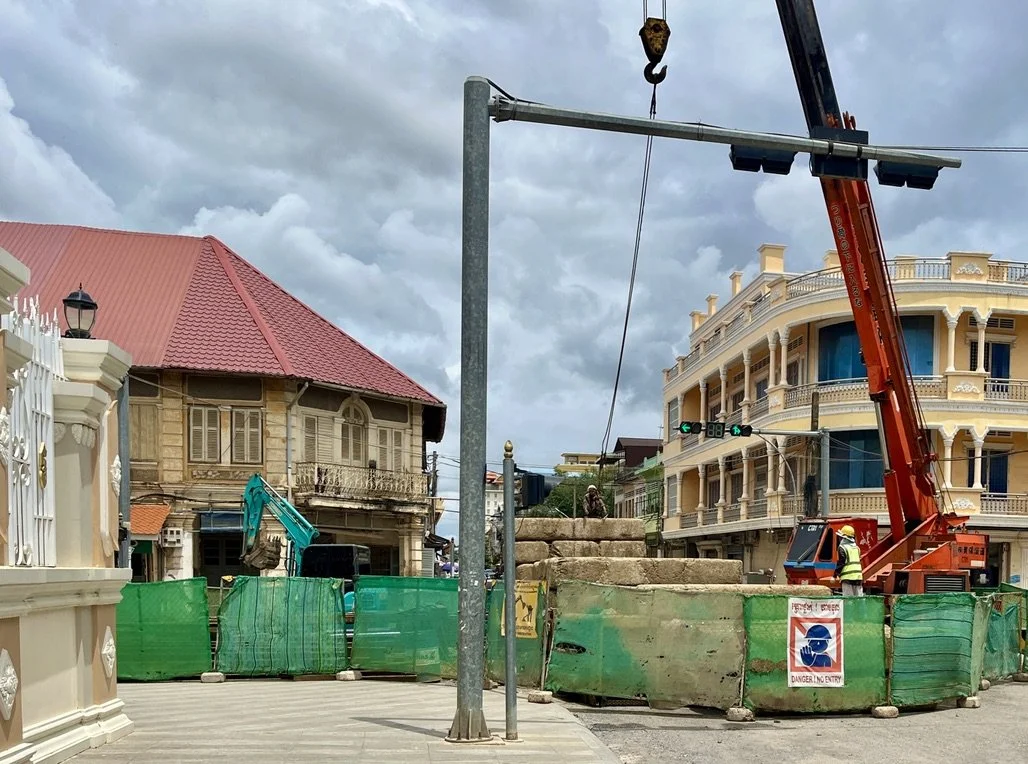
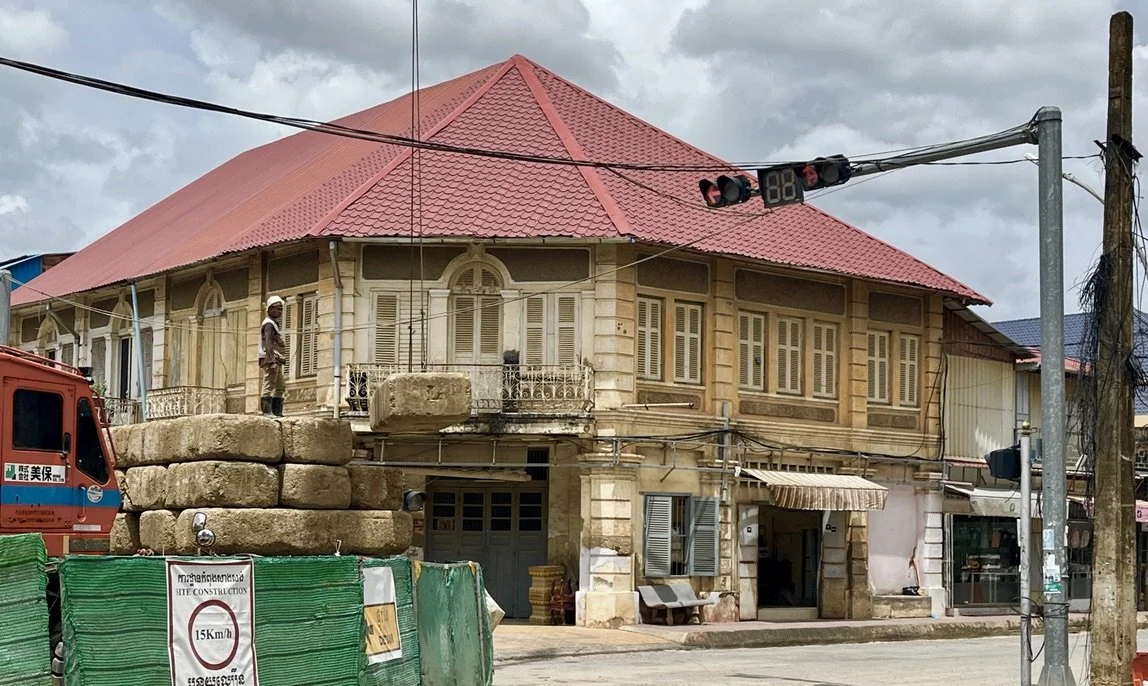
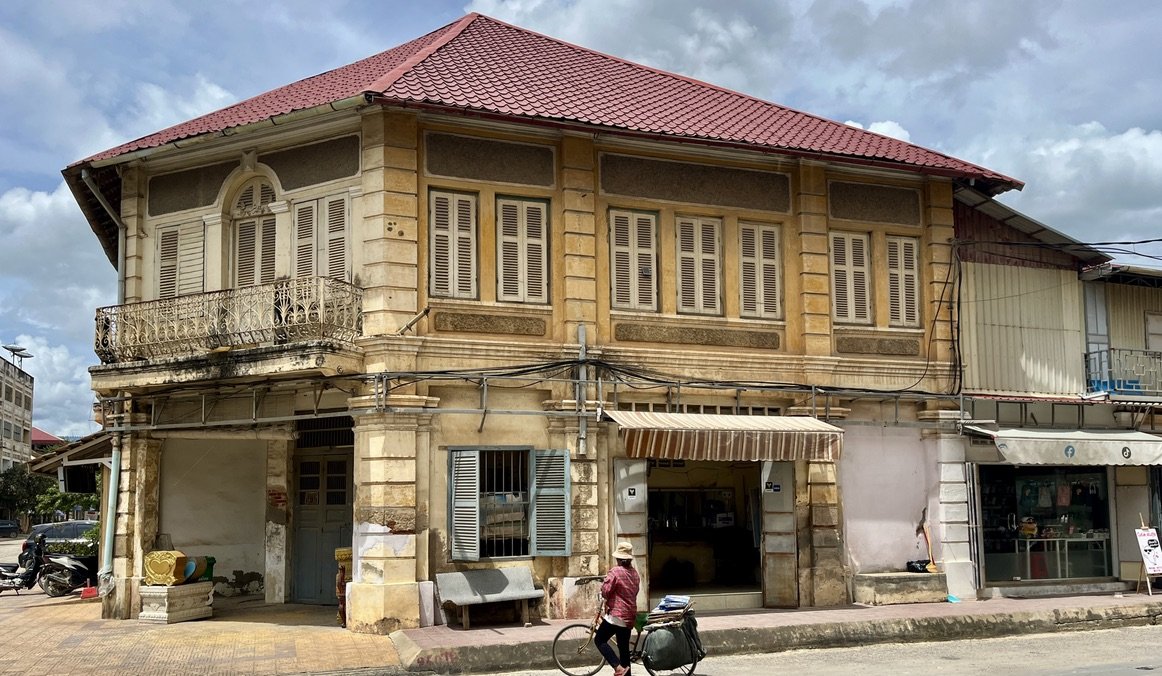
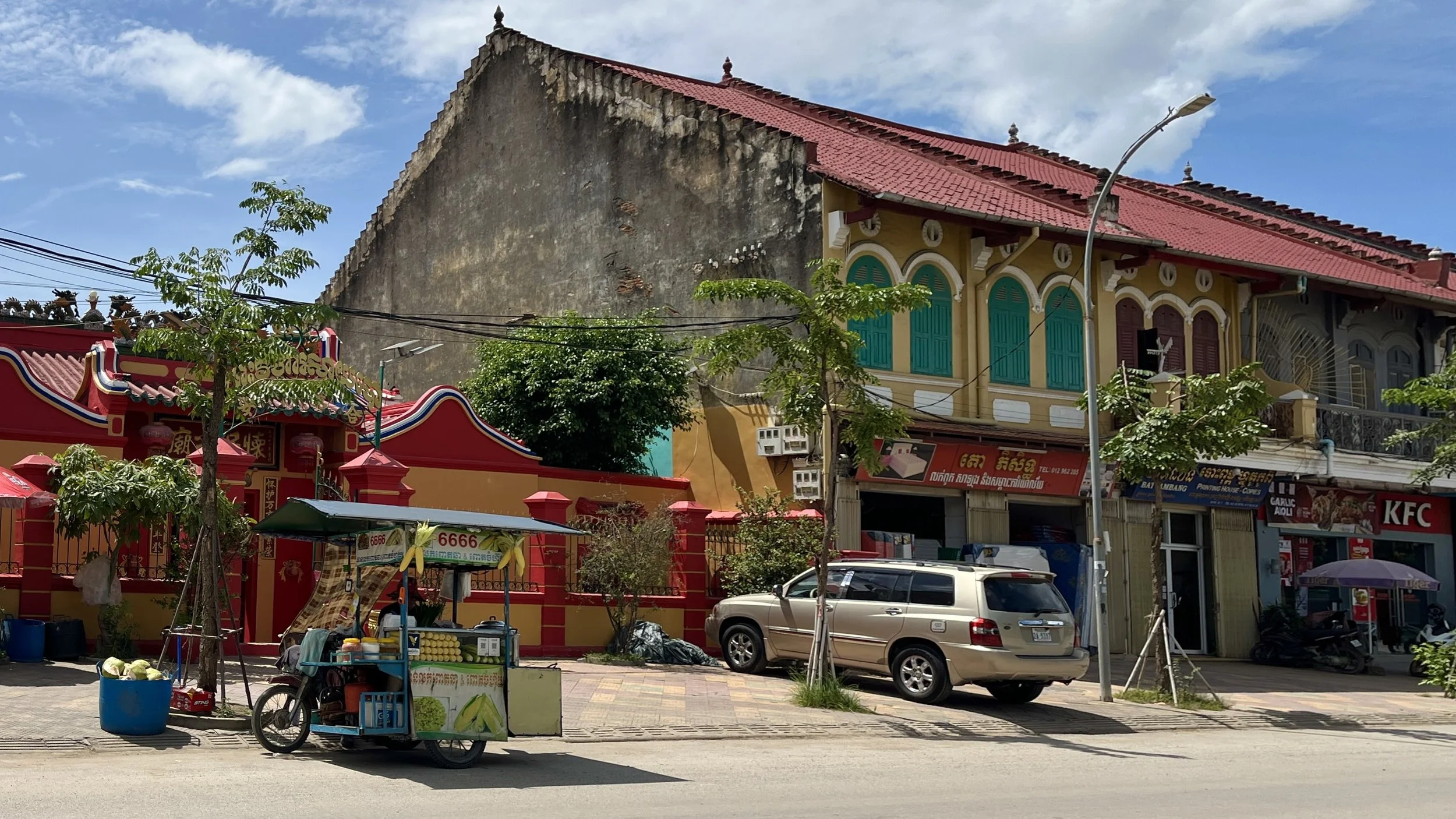
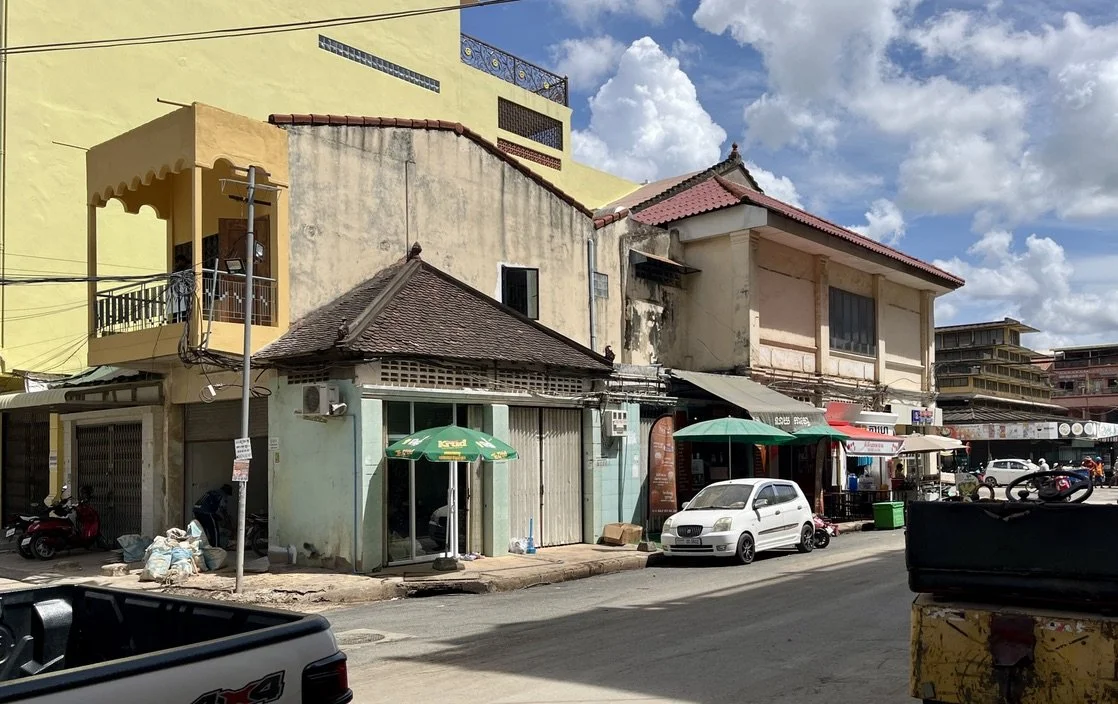
I do enjoy a Frankenbuilding! This one just beyond the market is really extra– it looks like a classic Vietnamese style block through shophouse with a front and back house, built before the street pictured here was paved– it looks like a house on the corner was knocked down for this street to be paved, and new retail storefronts were built to face the new street– but at different times, the short green building to the left probably 1920s, and the taller building to the right likely 40s or even later. The very modern yellow balcony out the back with Indian/Malay vibes completes the charm.

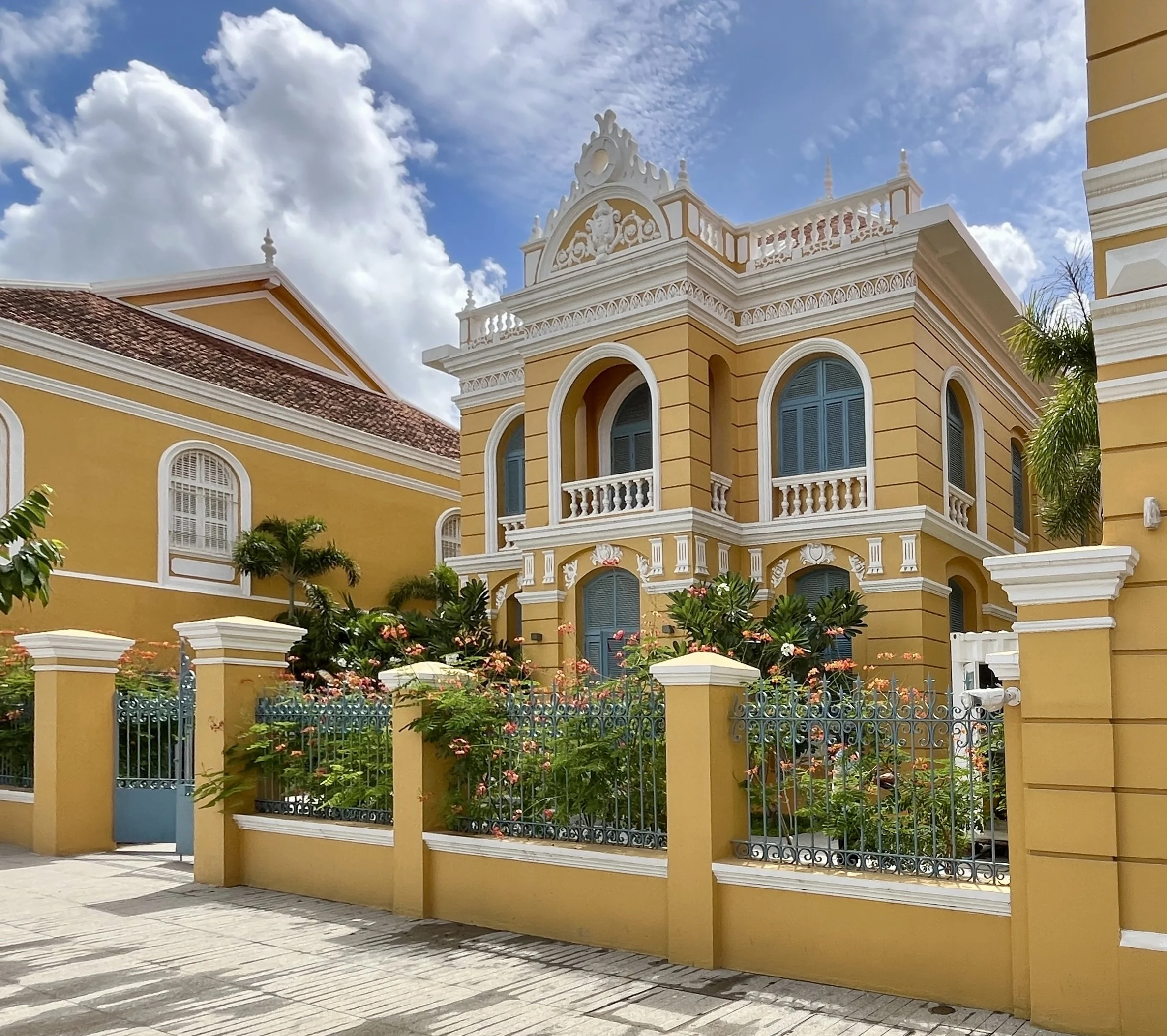
I felt my stay here was worth its own post (click here) but I’m placing this here to show what I suppose is an exception to the rule? Located in the ‘Sino-Khmer’ neighborhood and built by a wealthy local businessman, the La Villa hotel is entirely ‘European style’.

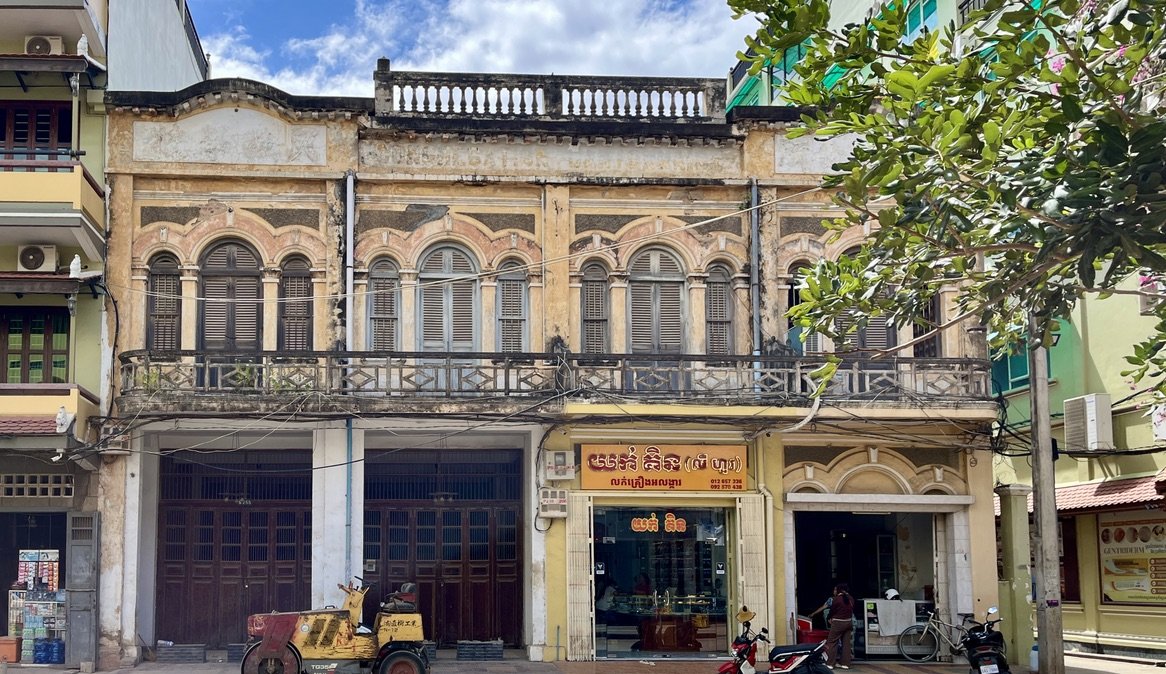
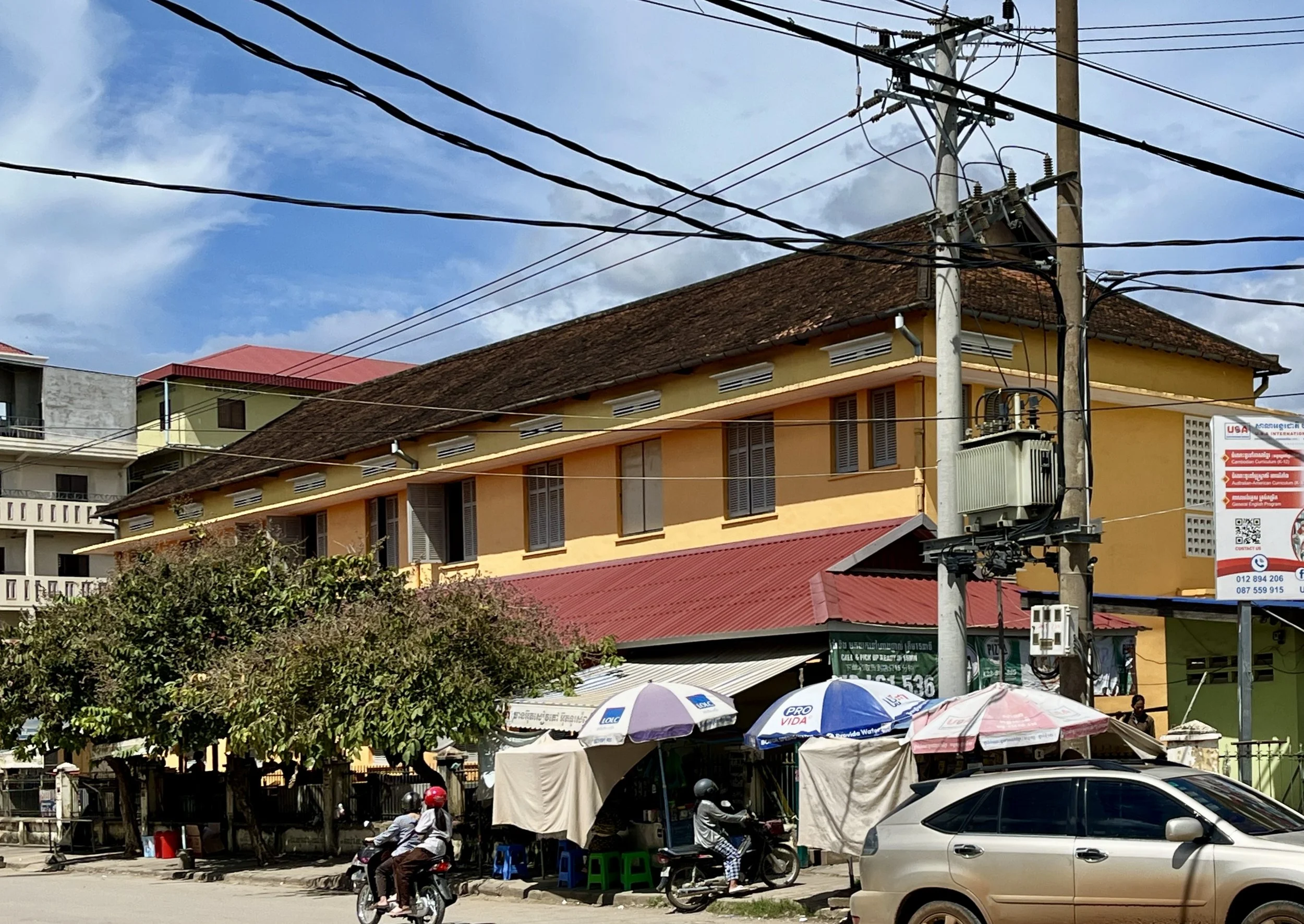
Just as there’s nothing particularly ‘Sino-Khmer’, there’s little to nothing visibly ‘Siamese’ left in the then-Siamese district. Instead, there are Thai era European styled colonial buildings sprinkled throughout. This one’s a good example: probably Thai, possibly French.

It’s very possible, particularly based on Émile Gsell’s photographs, that the vast majority of the houses, be they Sino-Khmer, Siamese, or European, were wooden and therefore didn’t survive and/or were disassembled, moved, or reused.

Likewise, there are very few European buildings left in the once European district; they may have been destroyed, rotted, or just renovated beyond all recognition.

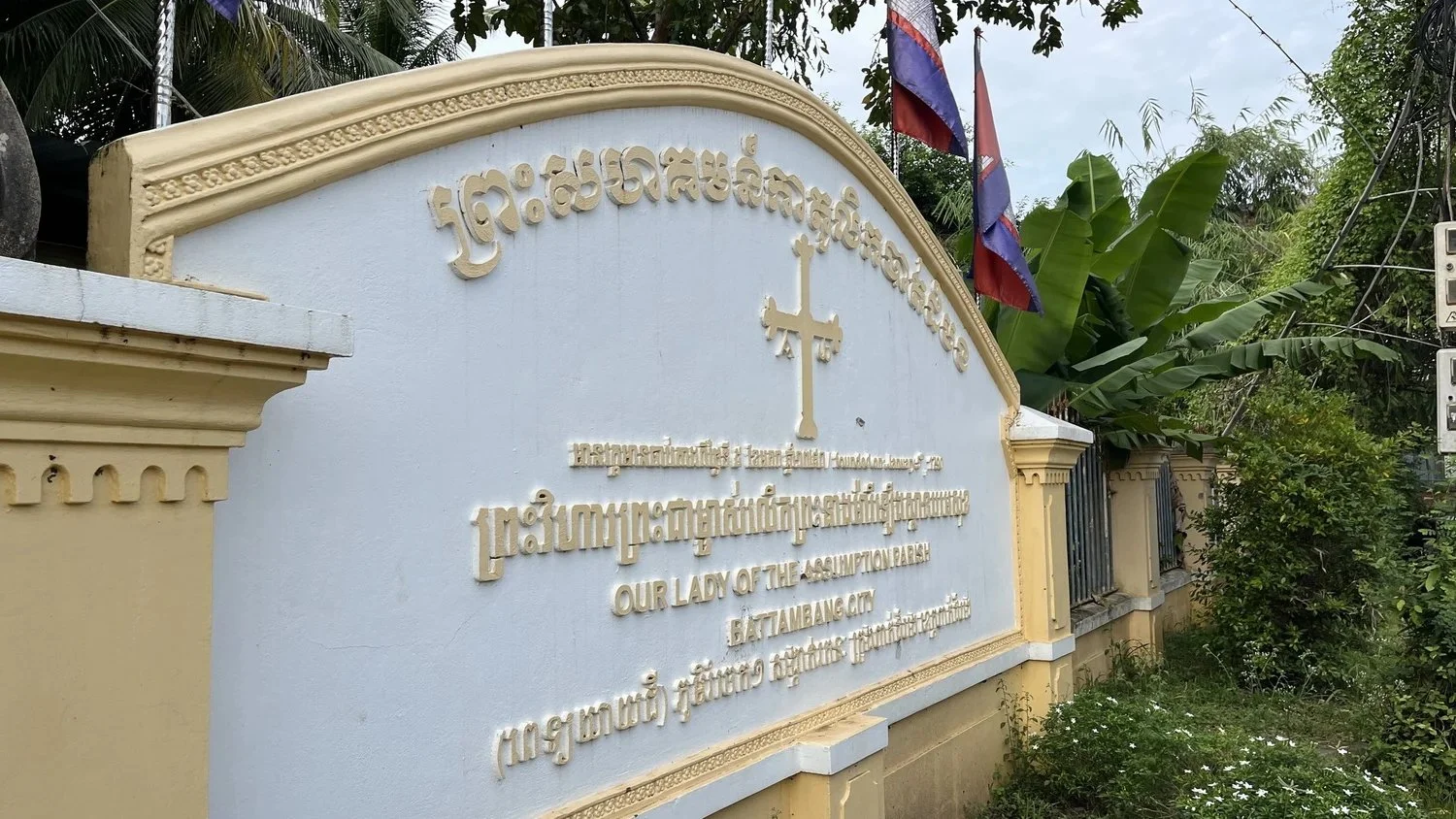
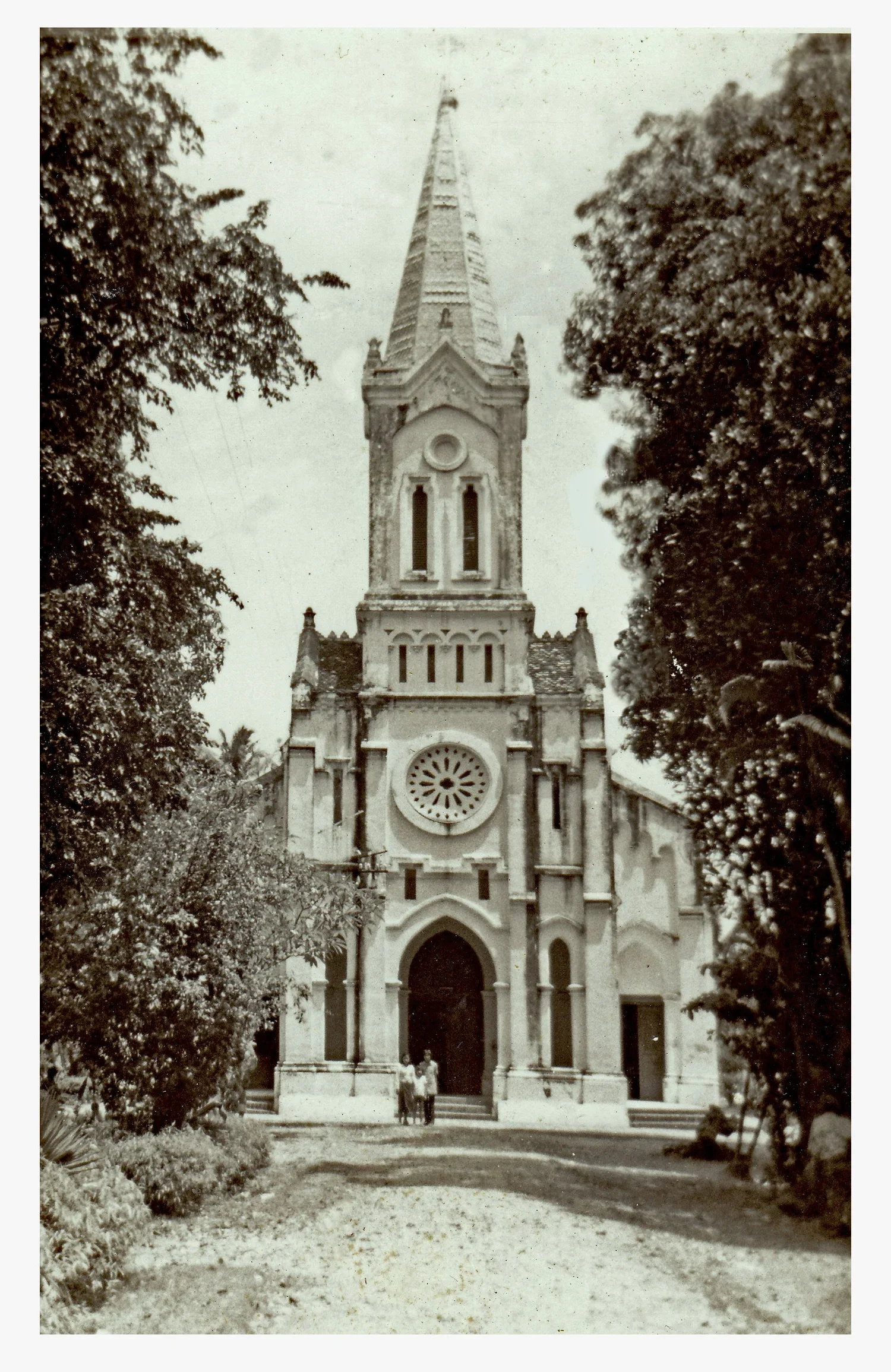
Built in 1929, the local Roman Catholic Cathedral was blown up by the Khmer Rouge in 1975.

The French colonial outbuildings remain, and it’s still fully functional as a church, school, community center, etc.

A few doors down from the church was this old French colonial house, now split into two. The owner told me she’d been here since 1981? 1985? something like that. After the rural dislocation and genocide, Cambodia was littered with empty houses, and people squatted on a first come first served basis. There are still two classes of property deed, soft and hard titles: hard titles are official; soft titles are been-there-forever squatters’ rights, or 10-50 year leases. The soft title holder here told me that once in the ‘90s a Frenchman visited and told her he grew up in this house, but didn’t ask for anything but to see inside again. Pre-Khmer Rouge property rights have never been restored or respected for Cambodian survivors or foreign returnees.

The typical sloppy division of a once fine house into 2 or 3 “connected houses”, each for 1-2 multigenerational families, none of whom have any qualms about disrespecting the architecture with absurd, cheap, ugly, damaging, or irreversible changes.

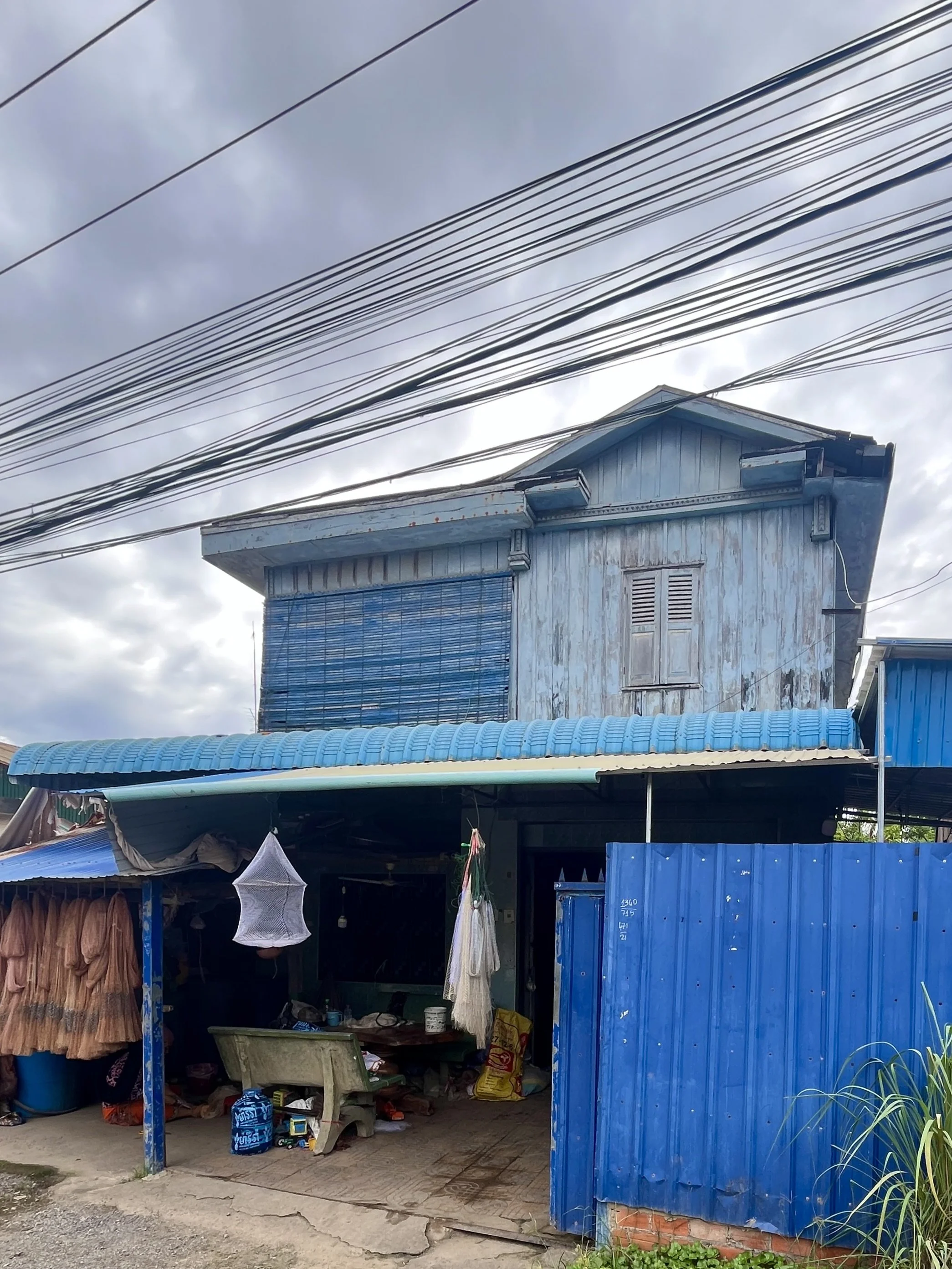
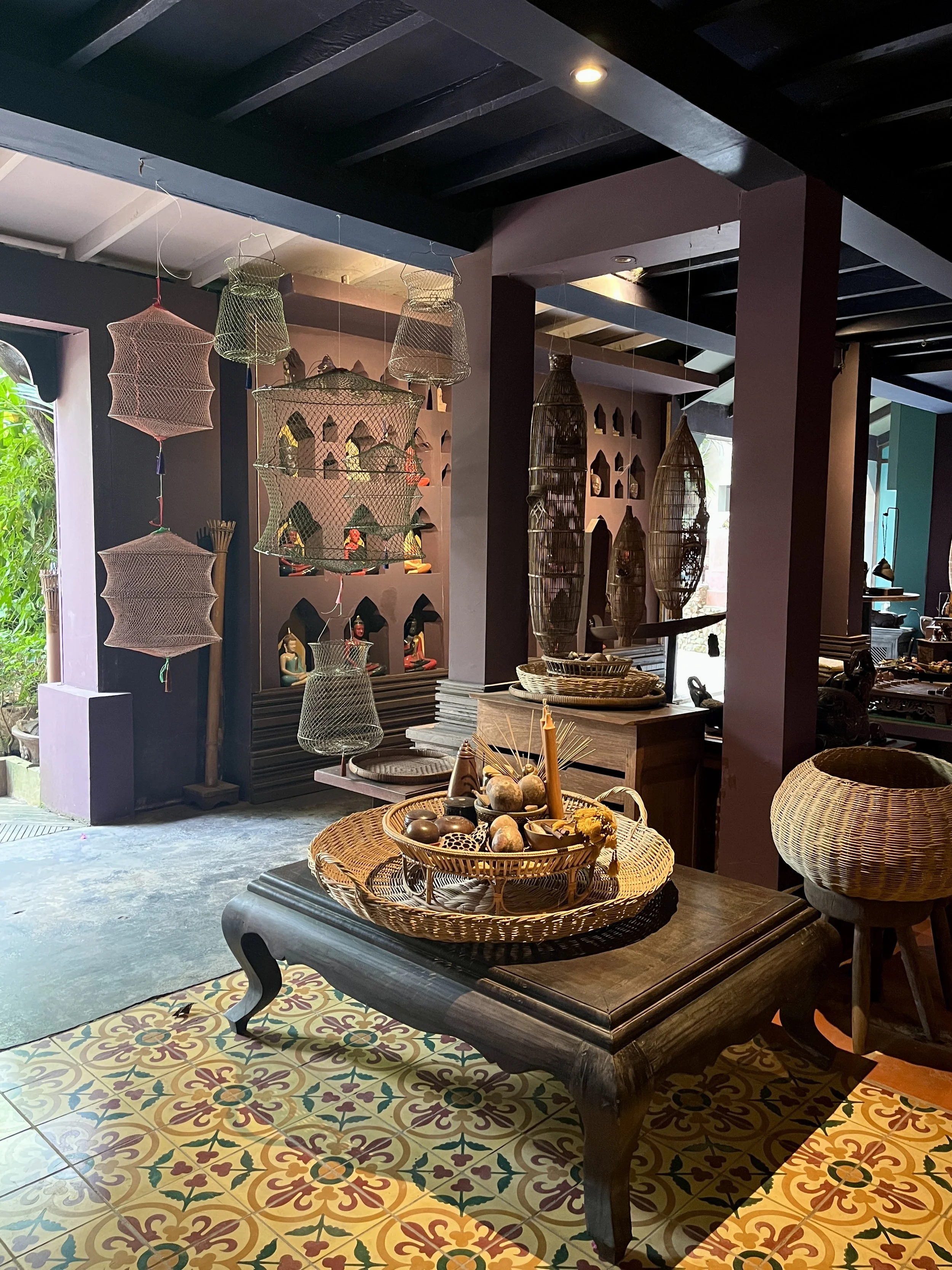
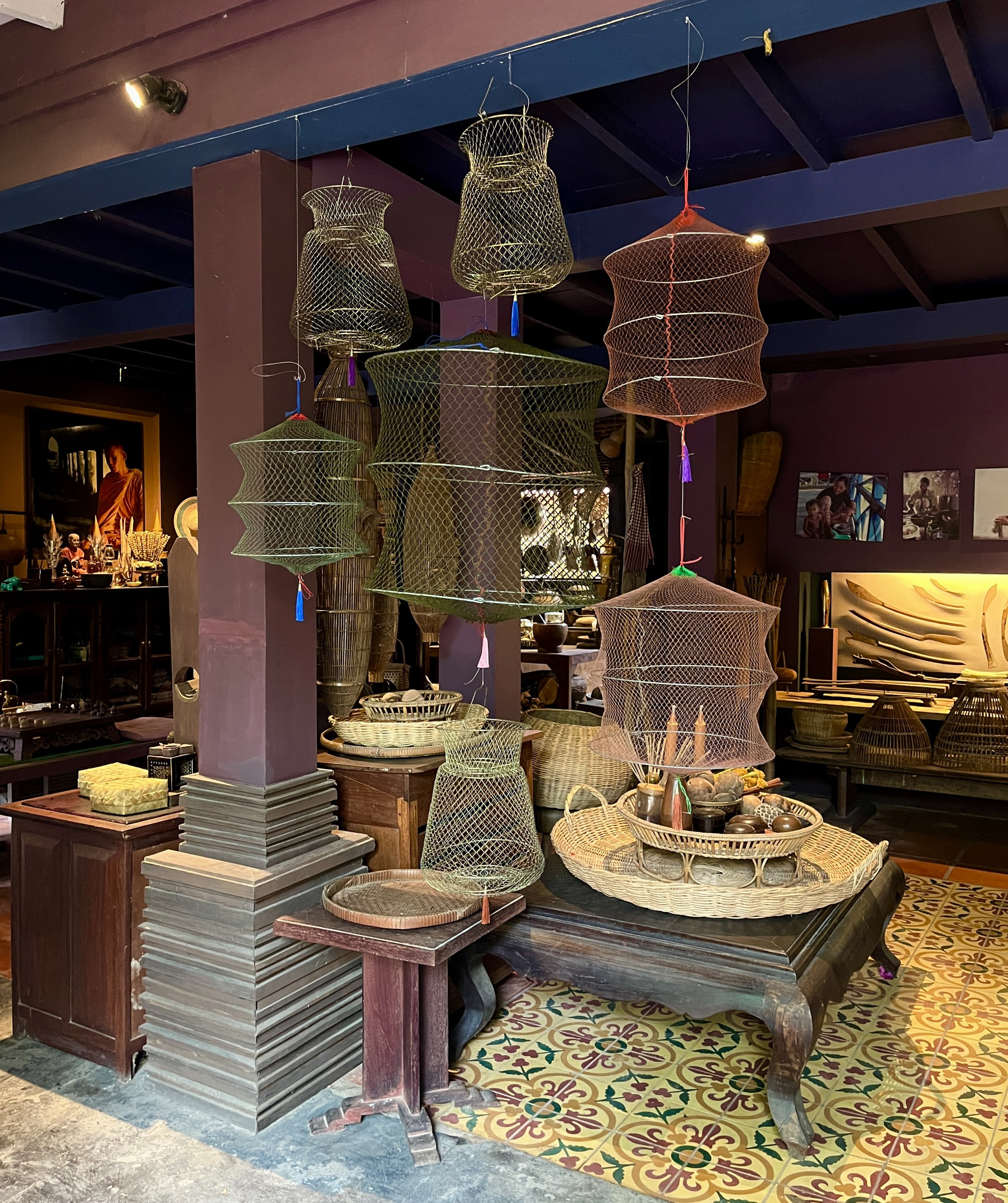
The Muslim neighborhood is still Muslim today, and apparently handmade fishing nets have been one of their dedicated handicrafts all this time.

The Governor's Mansion that Never Was . . . Battambang | Cambodia

Occasionally I visit a place that’s simply not worth the entrance fee, and this is one.

Lord Chhum Aphaiwongse

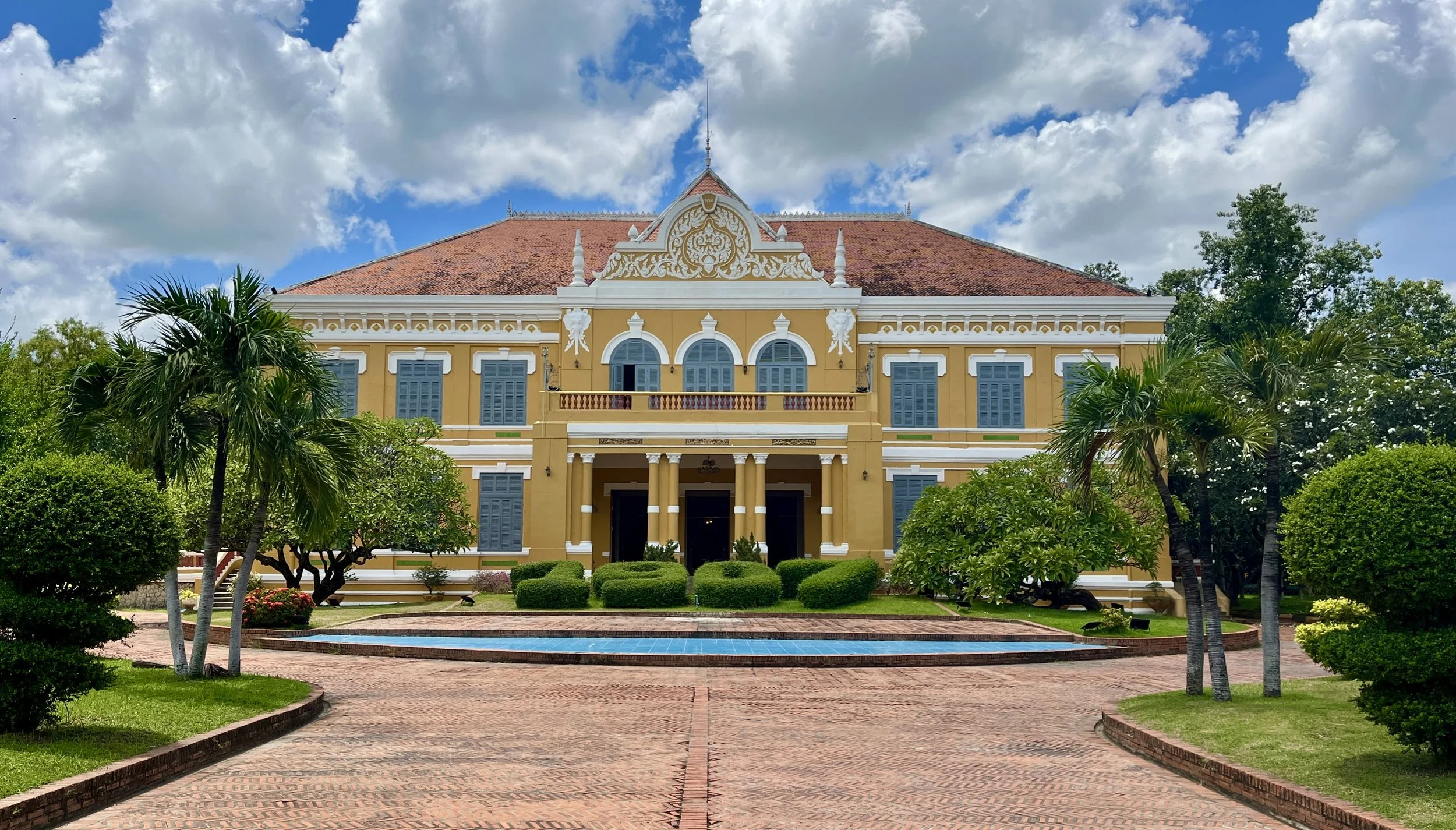
Commissioned by Lord Chhum Aphaiwongse in 1905 from Mario Tamagno (best known for the Ananta Samakhom Throne Hall at Dusit Palace), this is as close to a simple template of a French colonial style mansion as could be conceived, the SEA base model McMansion of a hundred years ago. It’s an almost eery feeling; I’ve walked through this exact house, all over SEA, smaller or larger, with only slight differences.

Lord Chhum must not have seen the Franco-Siamese Treaty of 1907 coming. In 1904, Siam gave France Trat in exchange for Chantaburi. In 1905, Lord Chhum commissioned the house. In 1907, just as it was completed, Siam got Trat back by trading in the Buphaphon, the area including Siem Reap and Battambang that the Aphaiwongses had hereditarily governed since 1795.

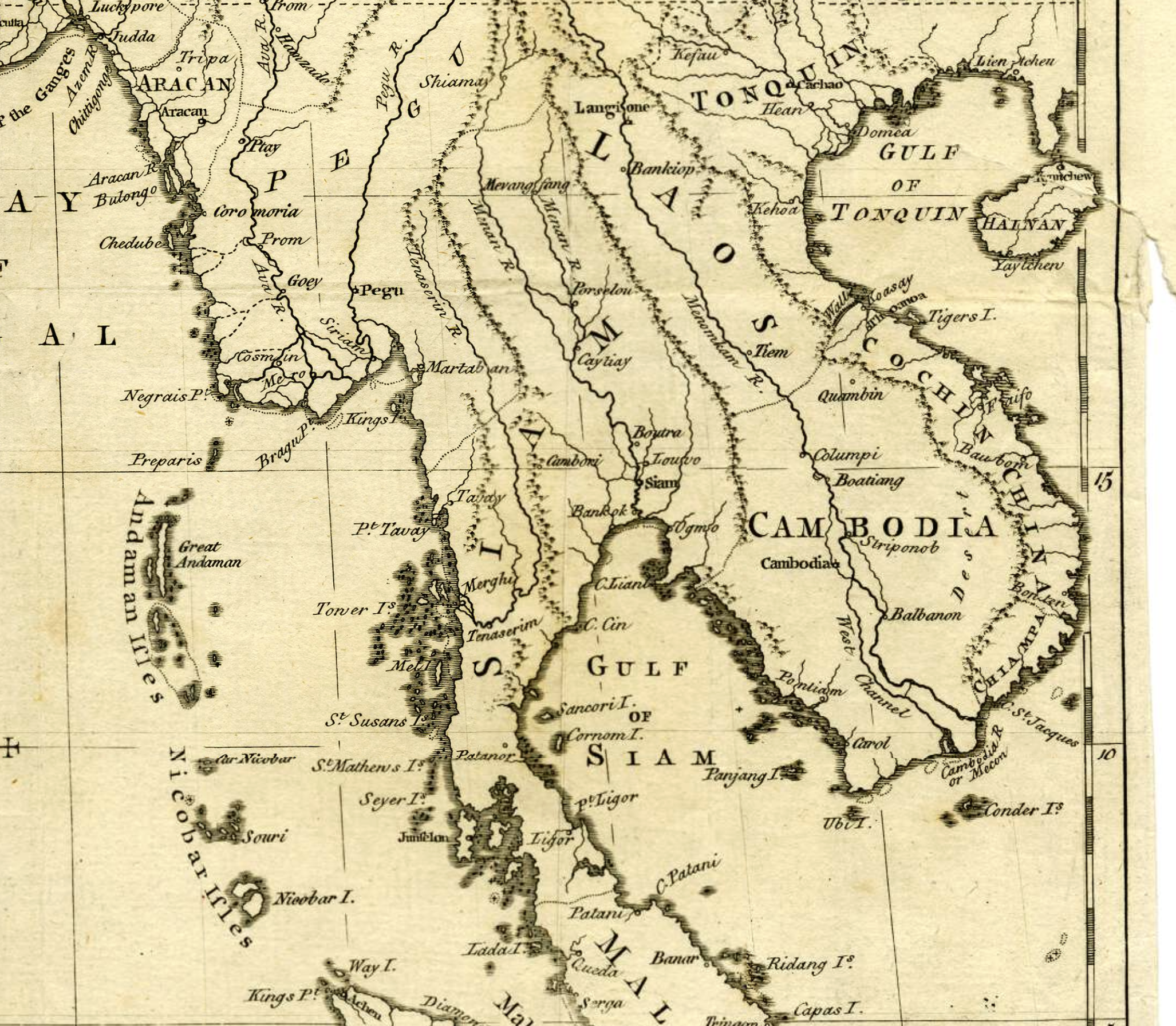
The Aphaiwongses, originally local warlords in far southern Treang, rose to nobility and wealth with Siamese backing in the latter half of the 18th century. When local Cambodian chiefs went to war for Cambodian puppet kings supported by either Siam or Annam, the Aphaiwongses supported, and were supported by, Siam. When the Nguyens became distracted by the Tay Son rebellion, Siam got the upper hand in Cambodia, culminating in the first Aphaiwongse Okhna, Chau Baen, serving as regent over the Cambodian child puppet King Ang Eng.

1773 map by Thomas Kitchin

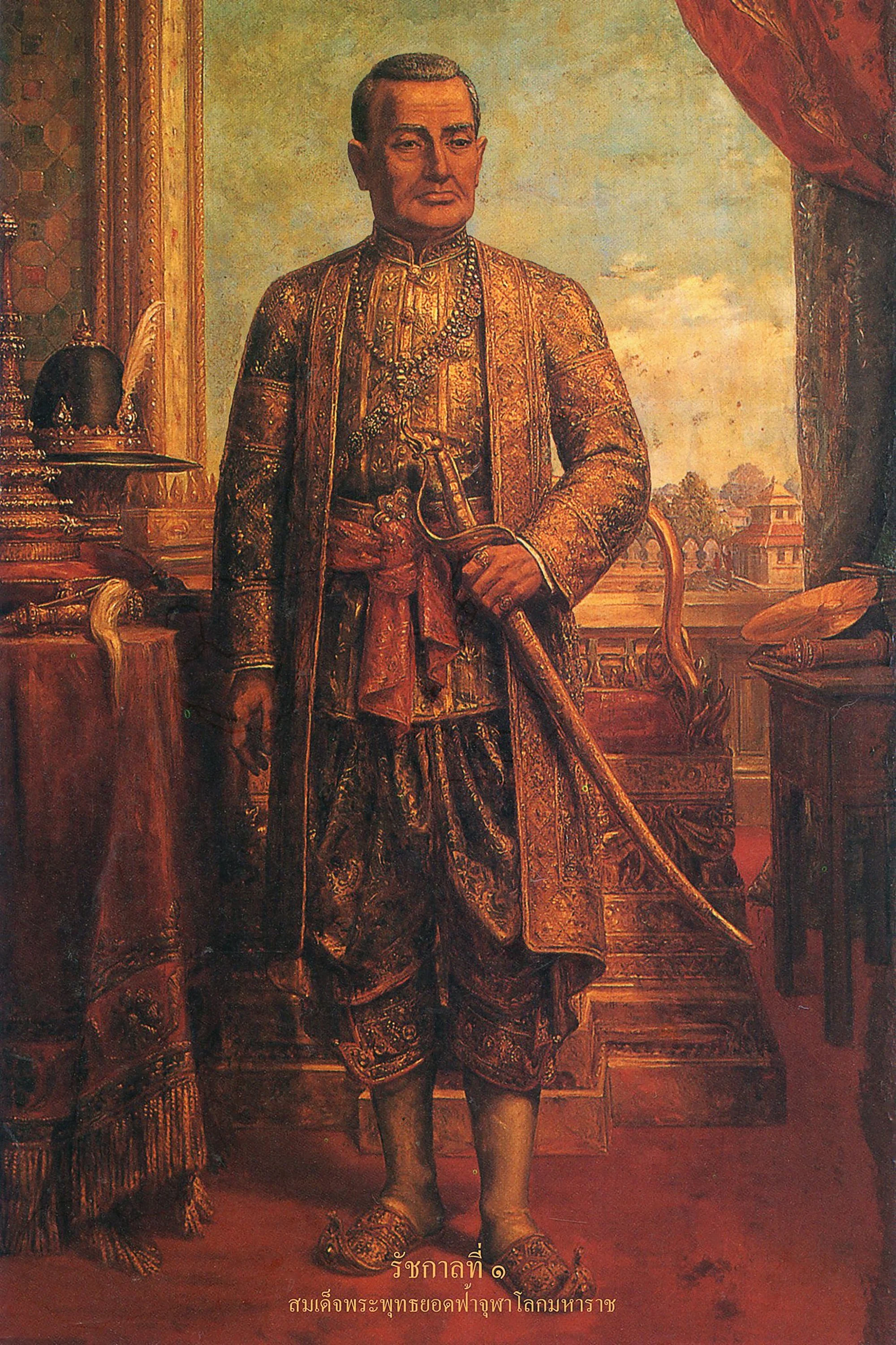
Over time the court in Oudong divided into those who wished to continue with the current line of puppet kings, and those who preferred to just give Chau Baen Aphaiwongse the throne in his own name. To prevent civil war in Cambodia, and/or the rise of a formidable rival, Siamese King Rama I recalled Chau Baen from Oudong, but raised him to the nobility and awarded him the hereditary governorship of Battambang, Siem Reap, and Sisophon, to defend and administer as annexed Siamese territories.

Thai King Rama I

After the 1907 treaty, the French offered Lord Chhum, the sixth generation ruler of Bupaphon, to stay on as their governor in Battambang. However, like his ancestors, Lord Chhum again chose loyalty to Siam, moving his family to the Bangkok court of Rama V (Chulalongkorn) after the handover. Briefly installed as the governor of Prachin Buri, he had the Tamagno house built for him again there, hoping to entertain Chulalongkorn in style. Other than the window shapes and plaster appliqués, everything was exactly the same. Unfortunately Rama V died before the house was finished.

The Prachin Buri twin house

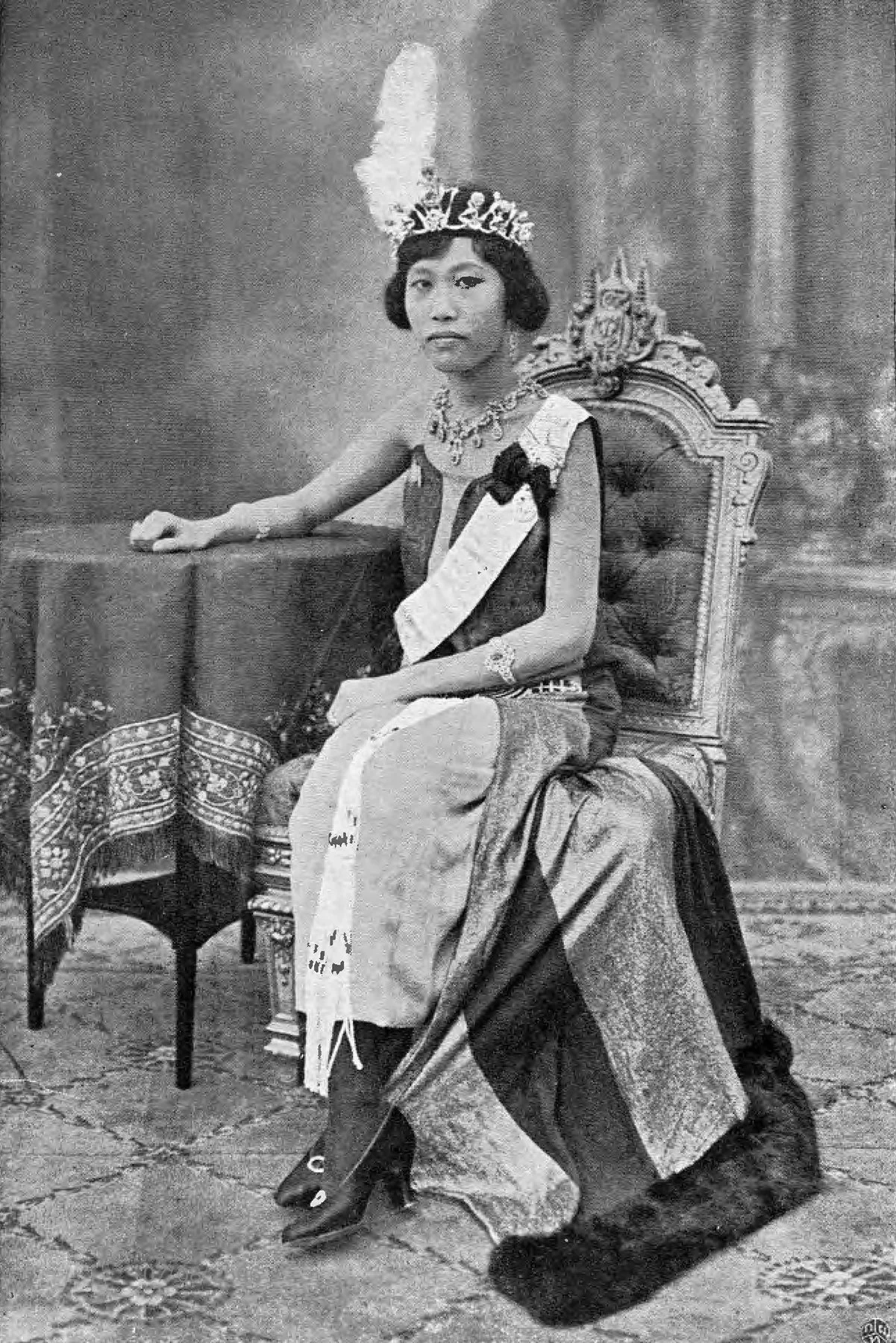
When Lord Chhum’s granddaughter eventually married Rama VI, becoming the Princess Consort of Thailand, Lord Chhum gave them the Prachin Buri house as a wedding gift. Unfortunately Rama VI died before Princess Suvadhana could have a son, so the throne passed to his younger brother . . . and the Prachin Buri house remained unoccupied. At the outbreak of WW2, Suvadhana and her daughter fled to England, remaining there until 1957.

Princess Suvadhana

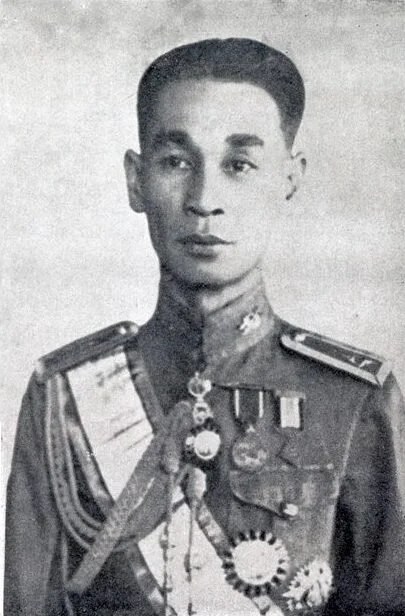
Because Thailand allied with Japan in WW2, Suvadhana’s father Lueam officially became the last Abhayavongsa governor of Buphaphon during the period Japan occupied Cambodia, from 1941 through 1945– though he still never lived in the Battambang house, which was used as Japanese army offices.

Khuang Aphaiwongse in the 1930s

Meanwhile, her older brother Khuang served as Prime Minister of Thailand three times between 1944 and 1948. After the war, he remained the leader of Thailand’s Democratic party until his death in 1968. Suvadhana had a royal funeral in 1985, and the family is still considered noble/royal in Thailand.

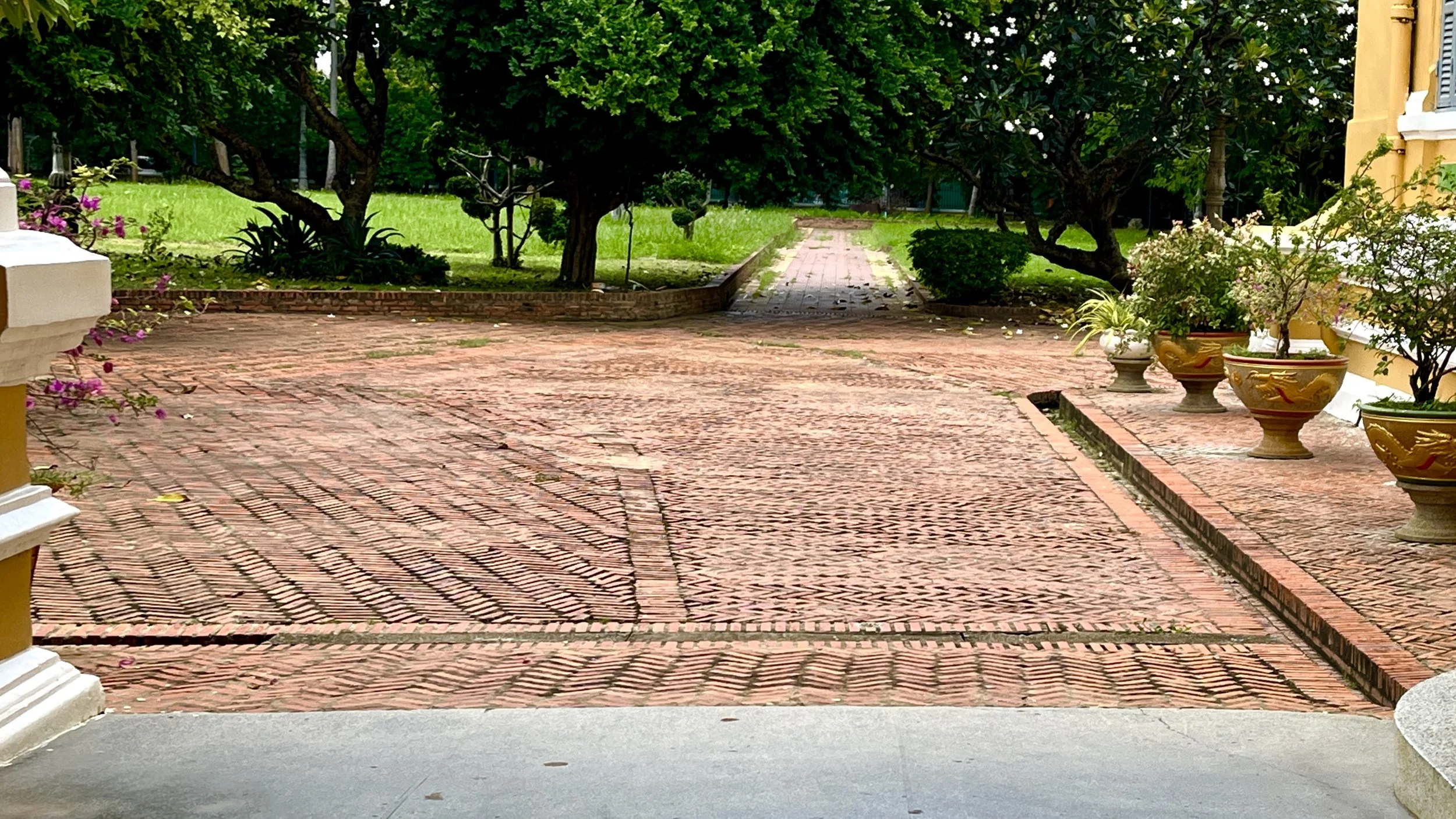
The most impressive thing about the place is the grounds. Large grassy lawns with manicured trees are rare things in Cambodia, it’s typically either city living or a waterlogged mess.

Another colonial era building on the grounds.

There are several government office buildings in one corner of the grounds.

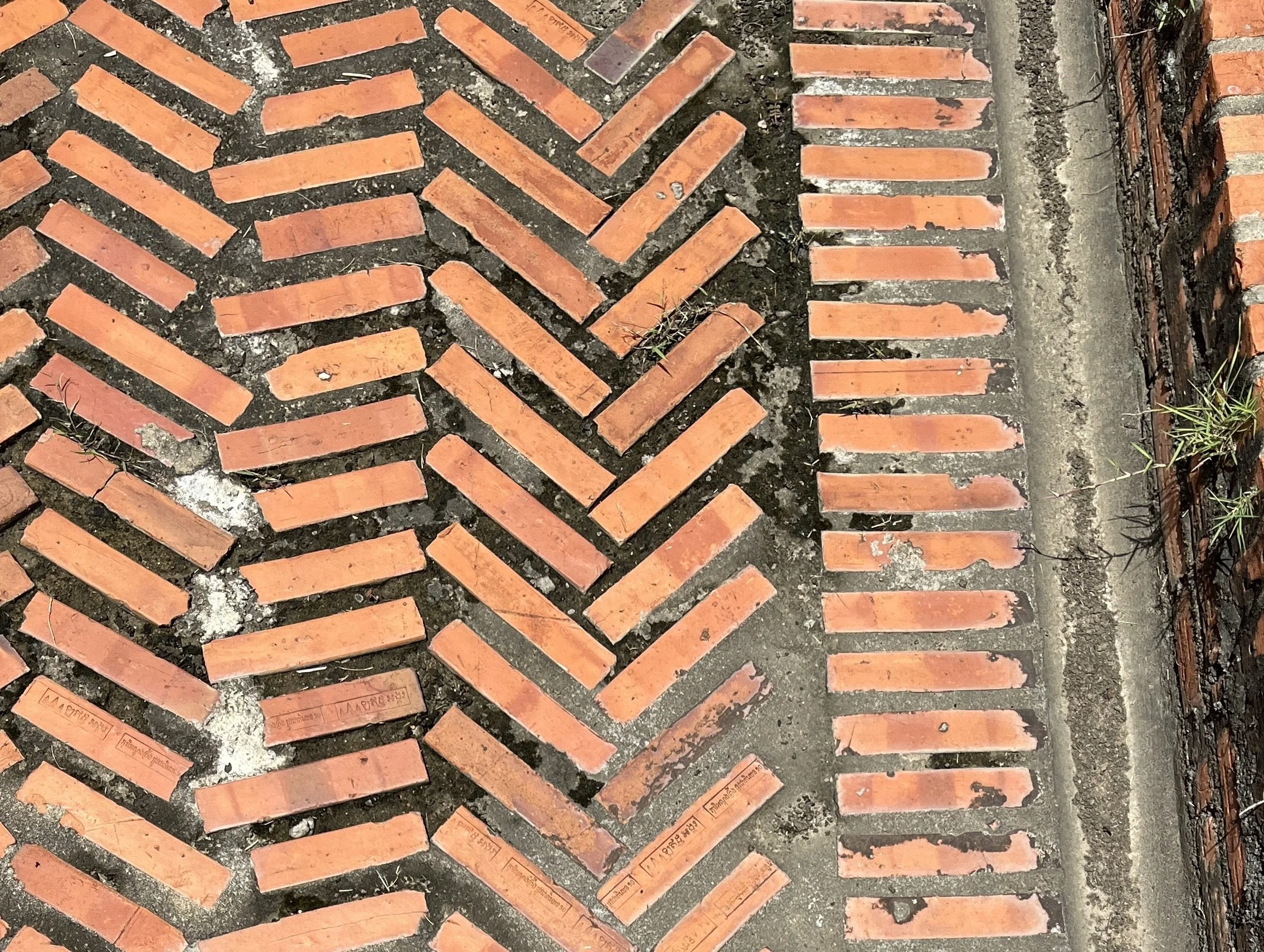
I like the chevron brickwork.

Inside is both inauthentically renovated (lol at that layered drop ceiling) and as dull as possible.

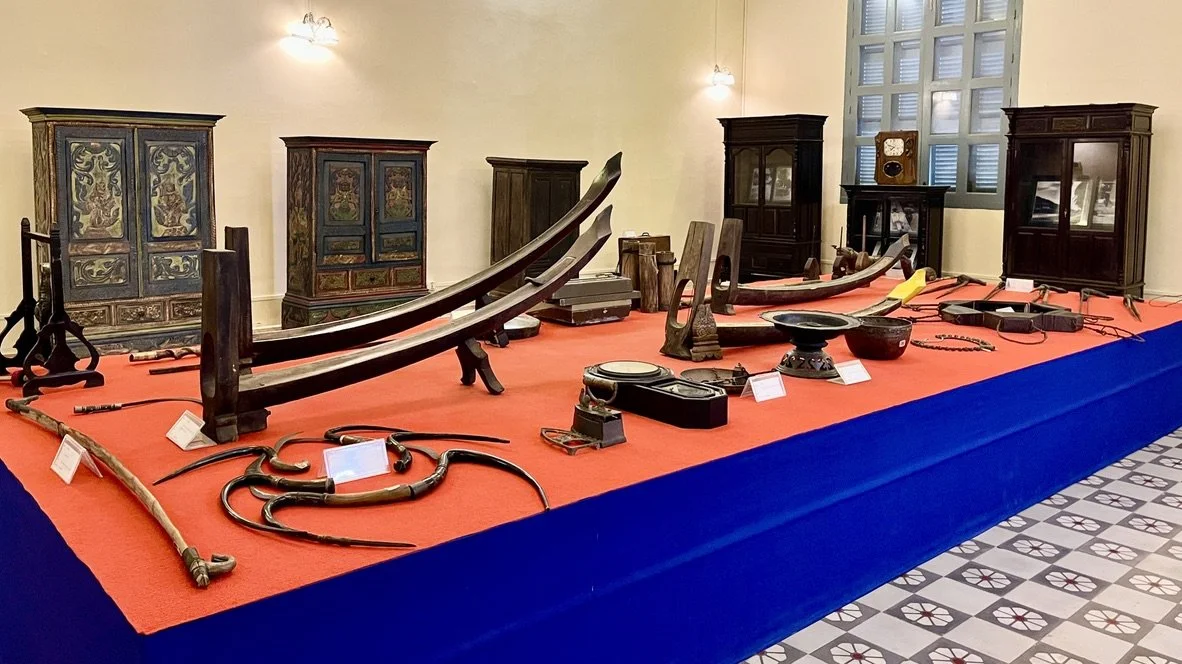
The ground floor is occupied by what they think passes as a museum. It’s the most pointless, random assortment of mostly vintage objects.

A jumble of bad, mostly recent furniture.

Horrid door that has clearly had things ripped off at some point.

Are they trolling?

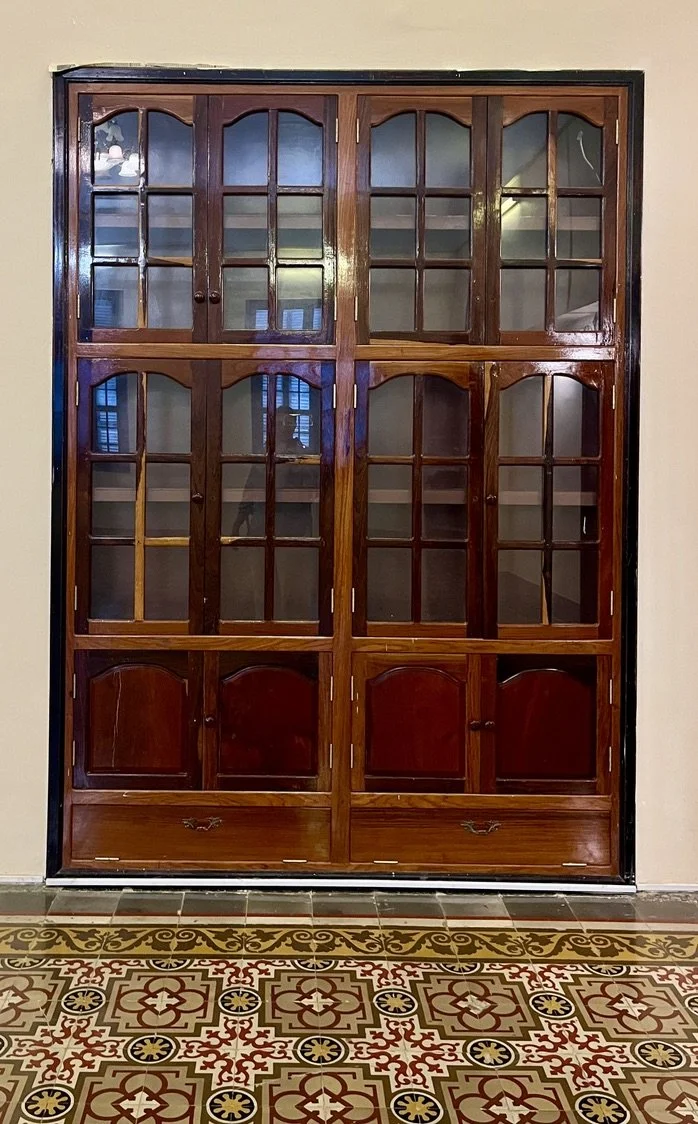
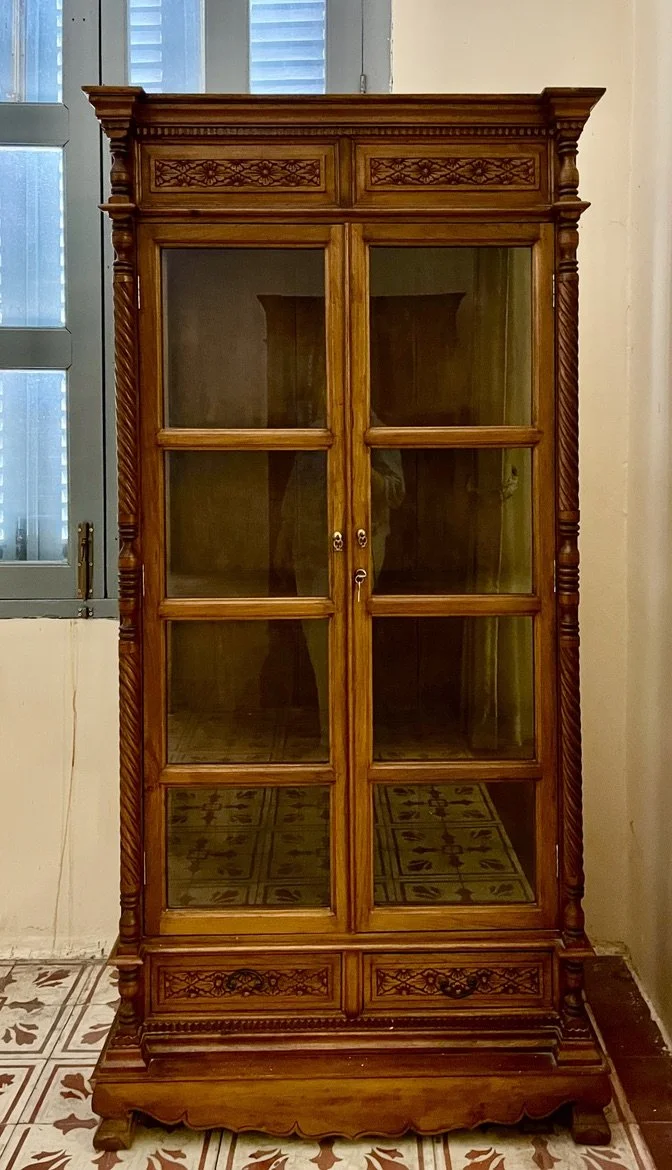
Built in features have mostly been ripped out, but there were 2 bookcases like this.

I wonder if it was never quite finished because the family knew they’d never move in, or if things were ripped out at some point.

Hard to tell if these are original tiles or not. I think mostly, but there is a huge jumble in this building. The pretentious polyester curtains really bring out the depression of it all.

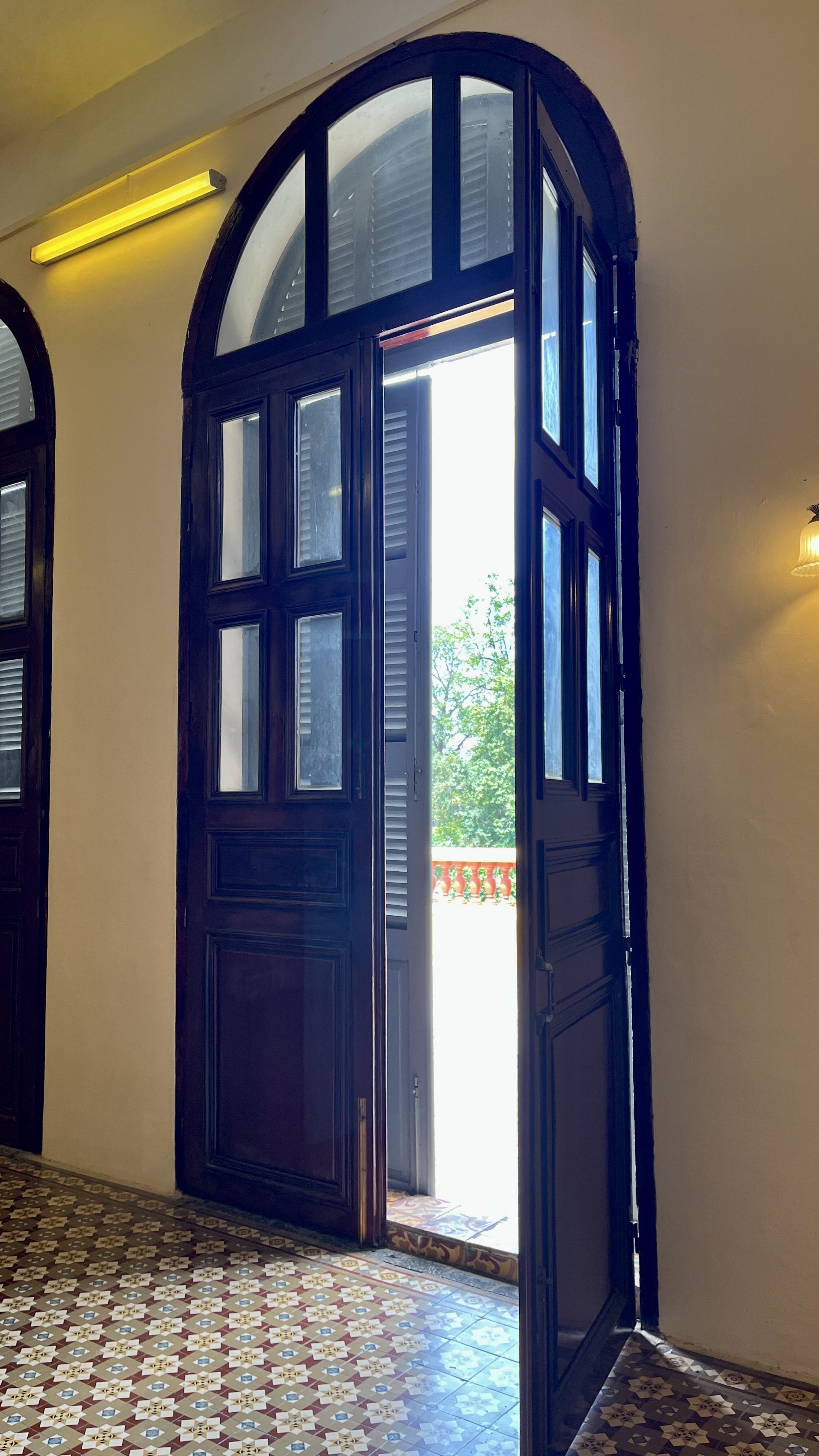
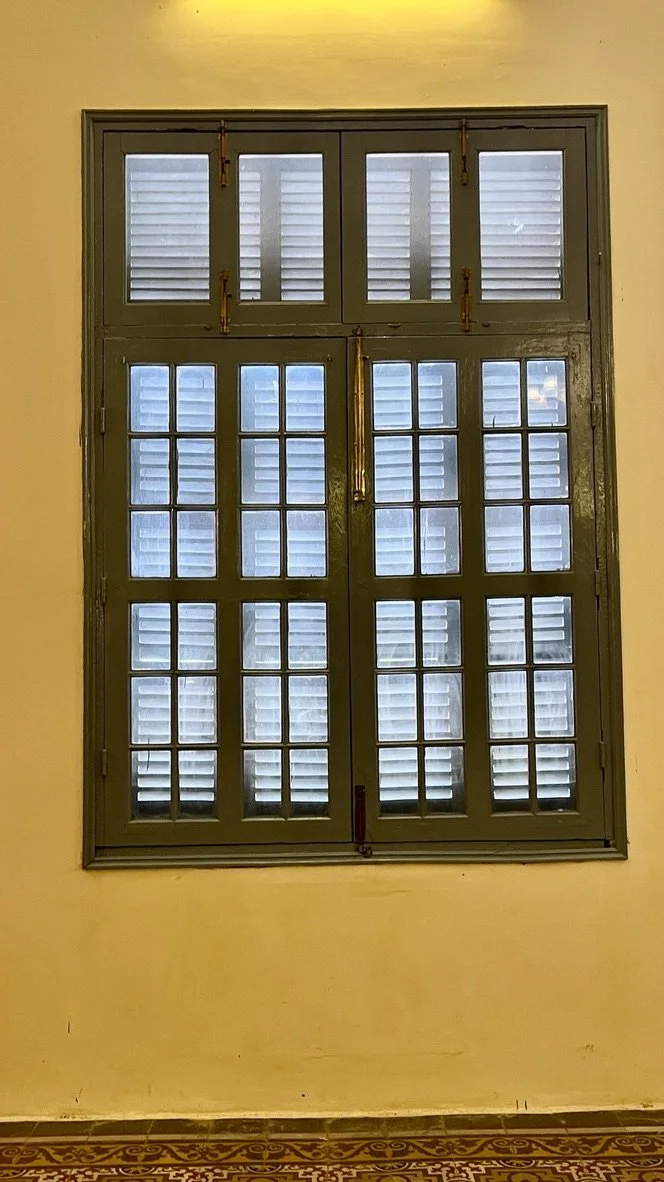
I don’t even know why I took this picture. Despair? Wanting to remember the dimensions should I ever install shutters?

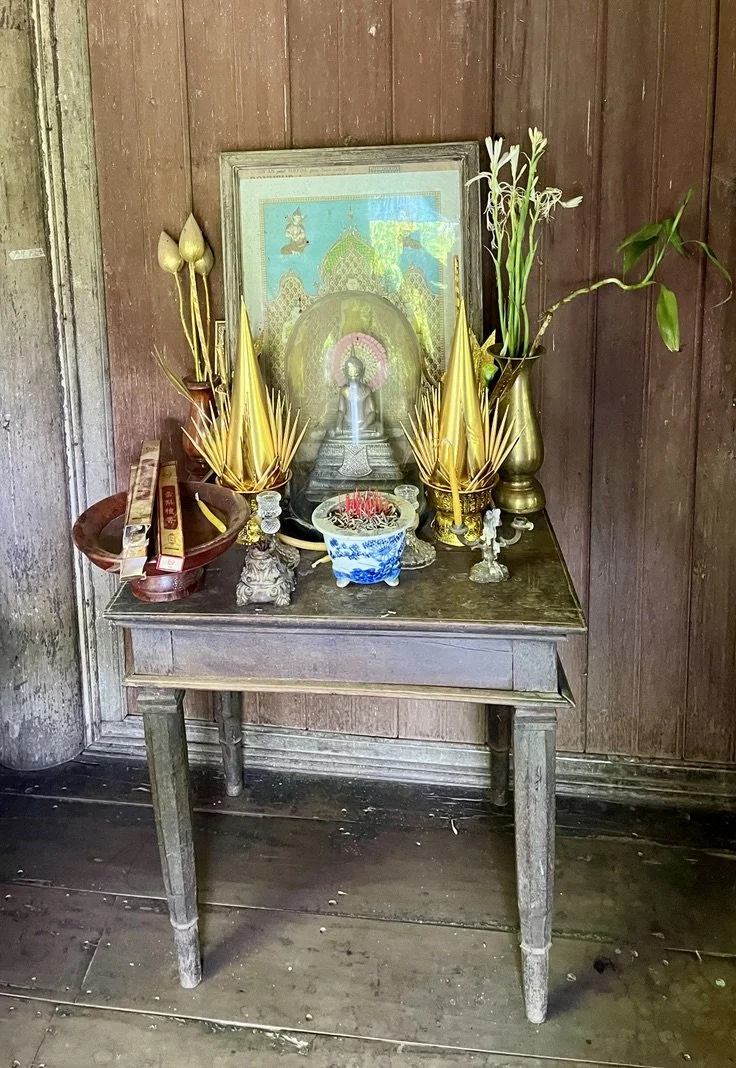
The performative shrine of course.

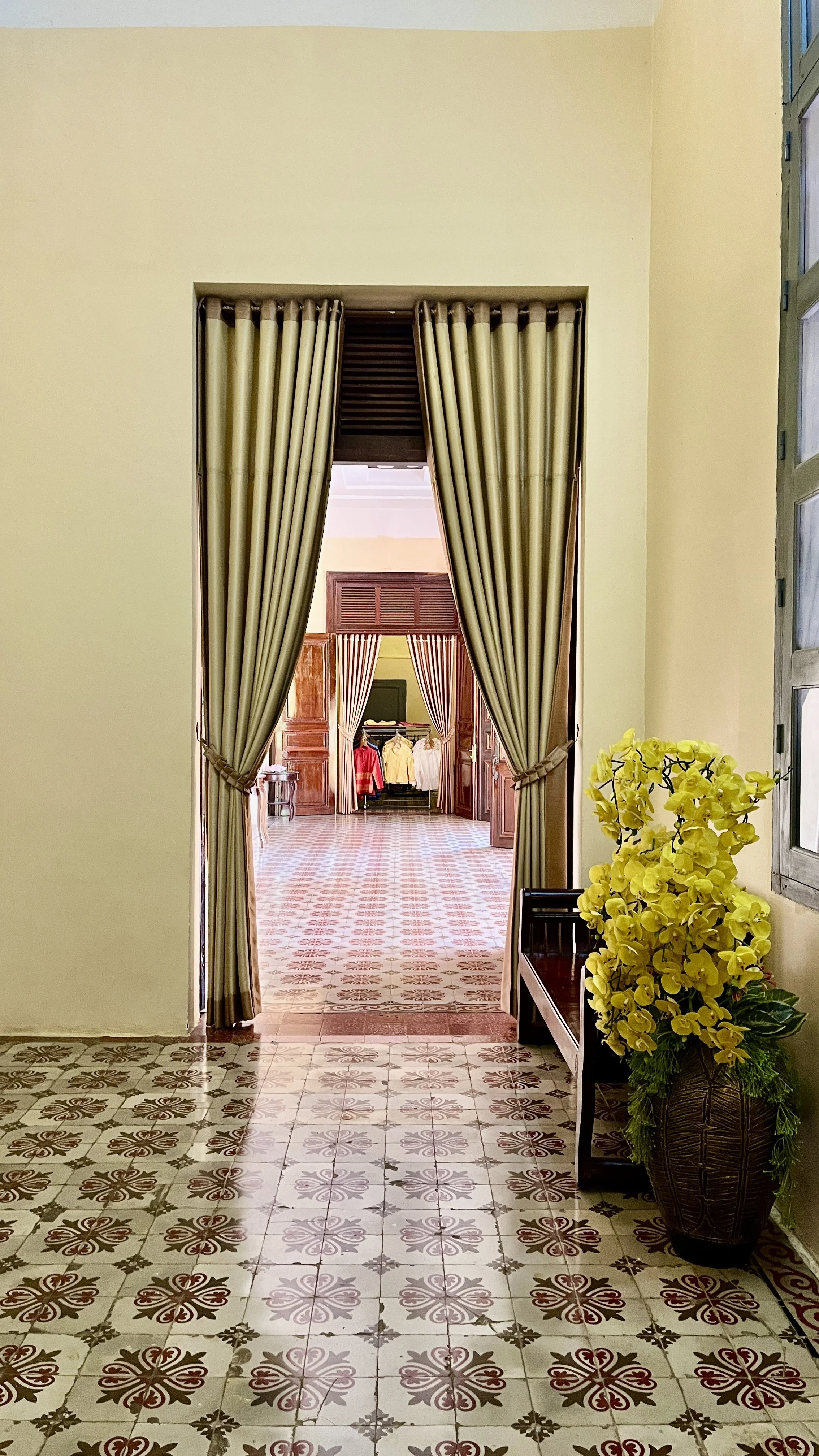
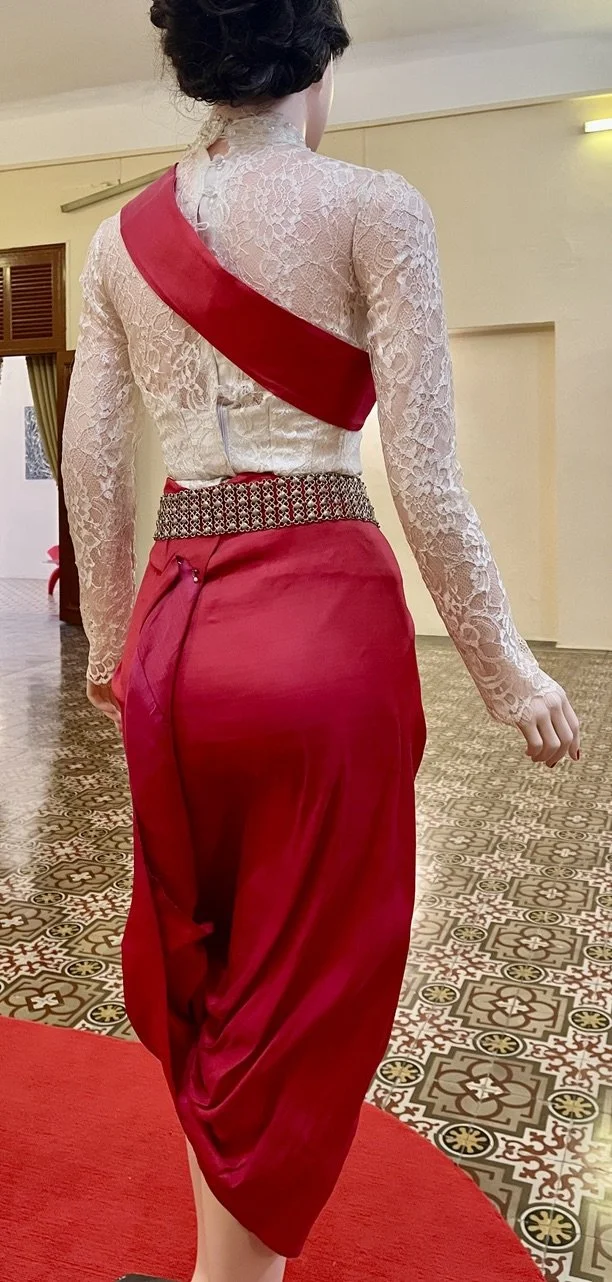
I guess some people will pay to rent traditional clothes and do a little photo shoot here?

I took lots of pictures of the tile border combos for inspiration

Weird assortment of farm equipment and housewares.

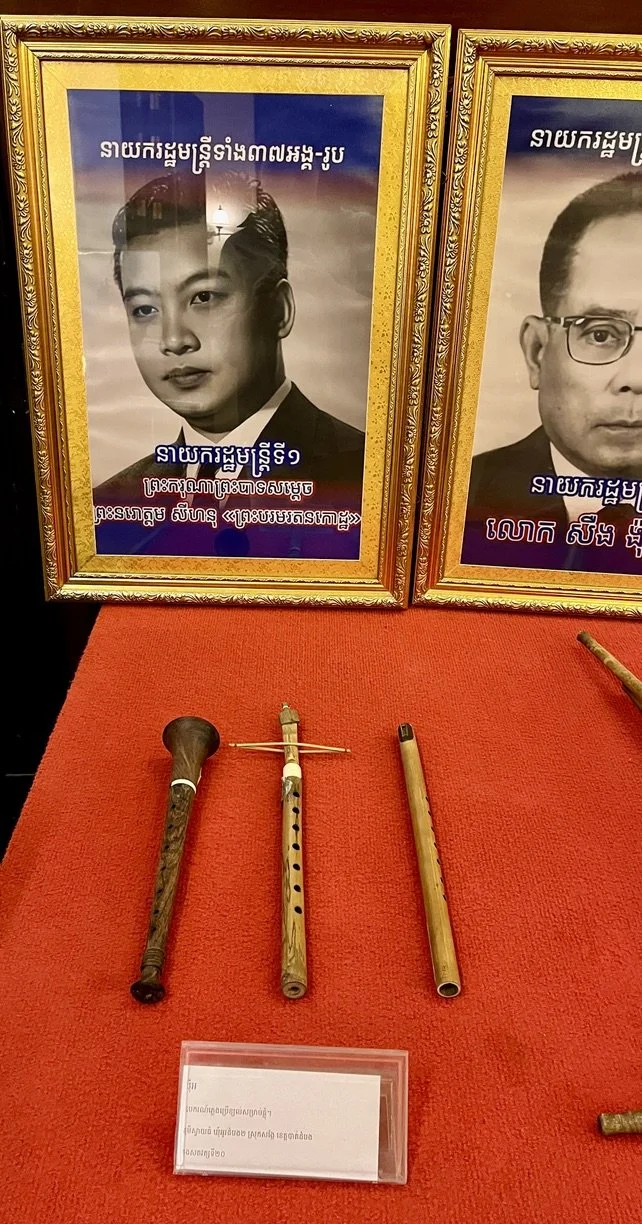
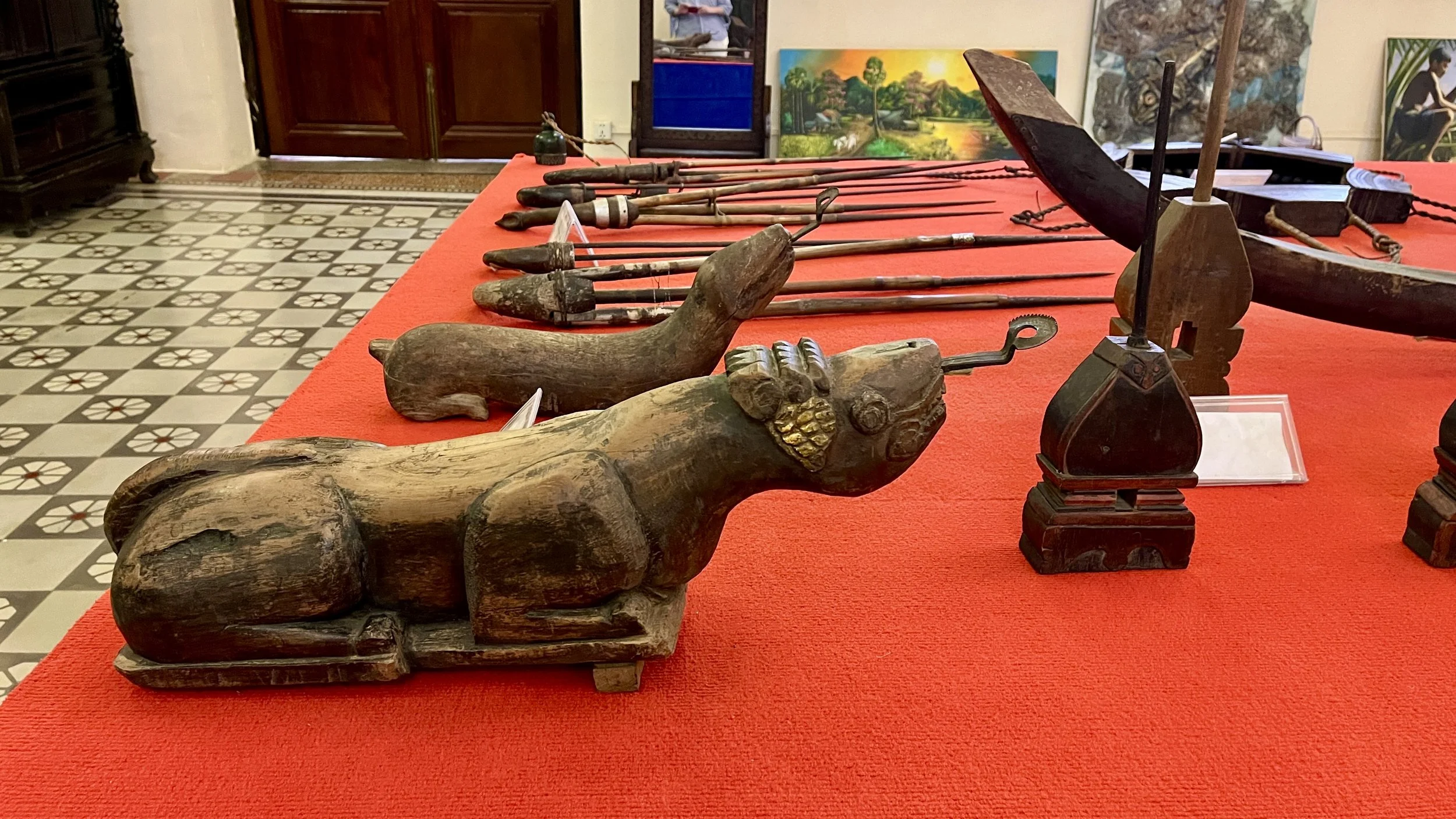
Hard to say because nothing was translated, but I think these were the personal hobby instruments of famous people?

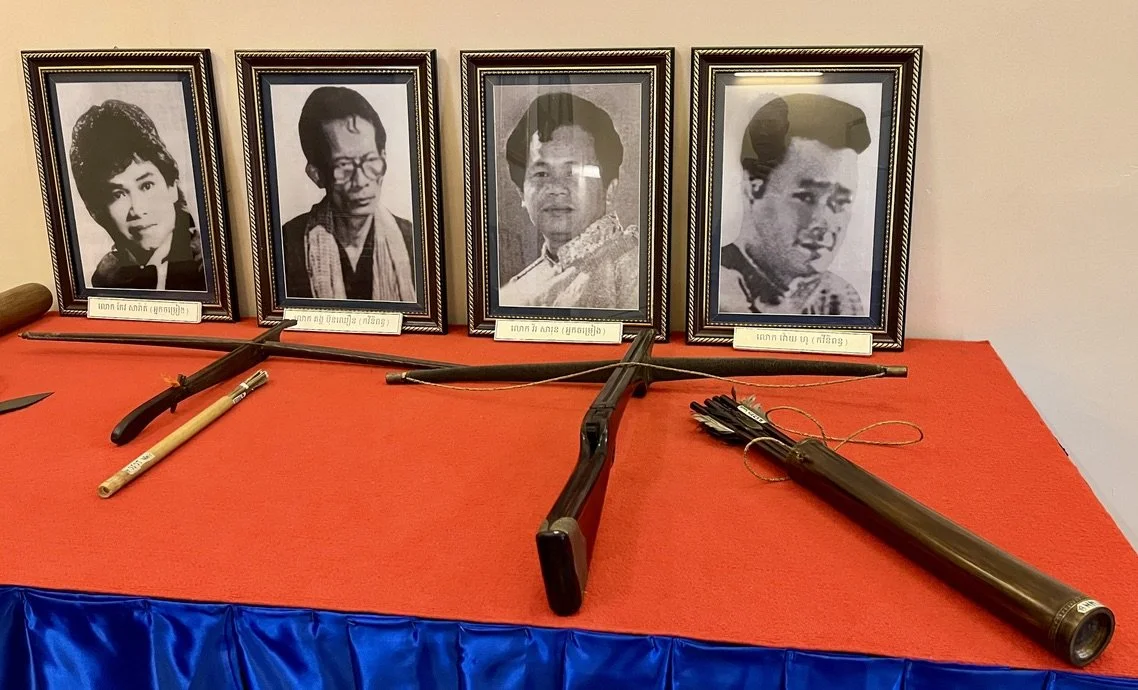
Likewise, hobby shooting items?

There are a bunch of old photos.

This view is not much different today.

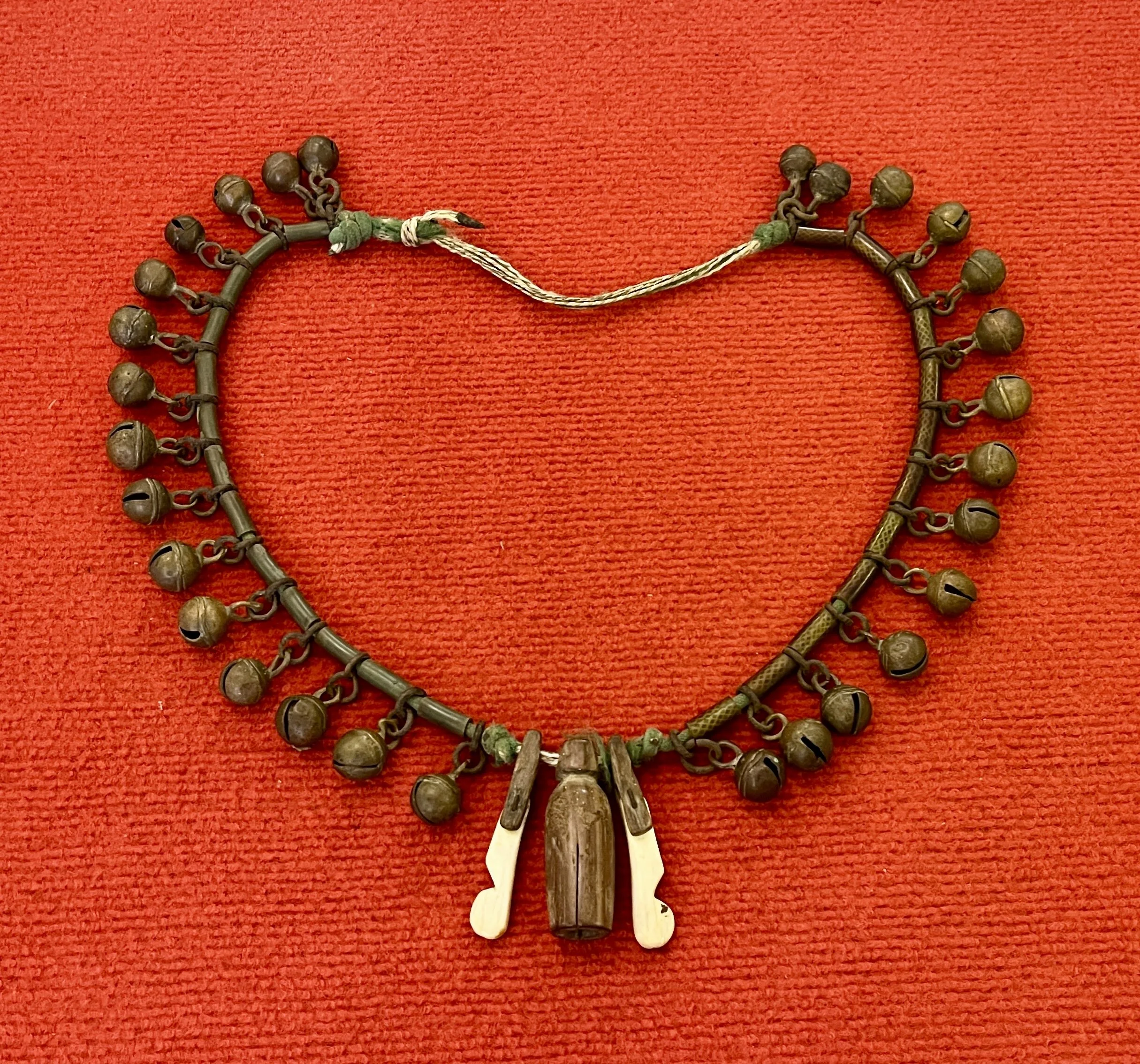
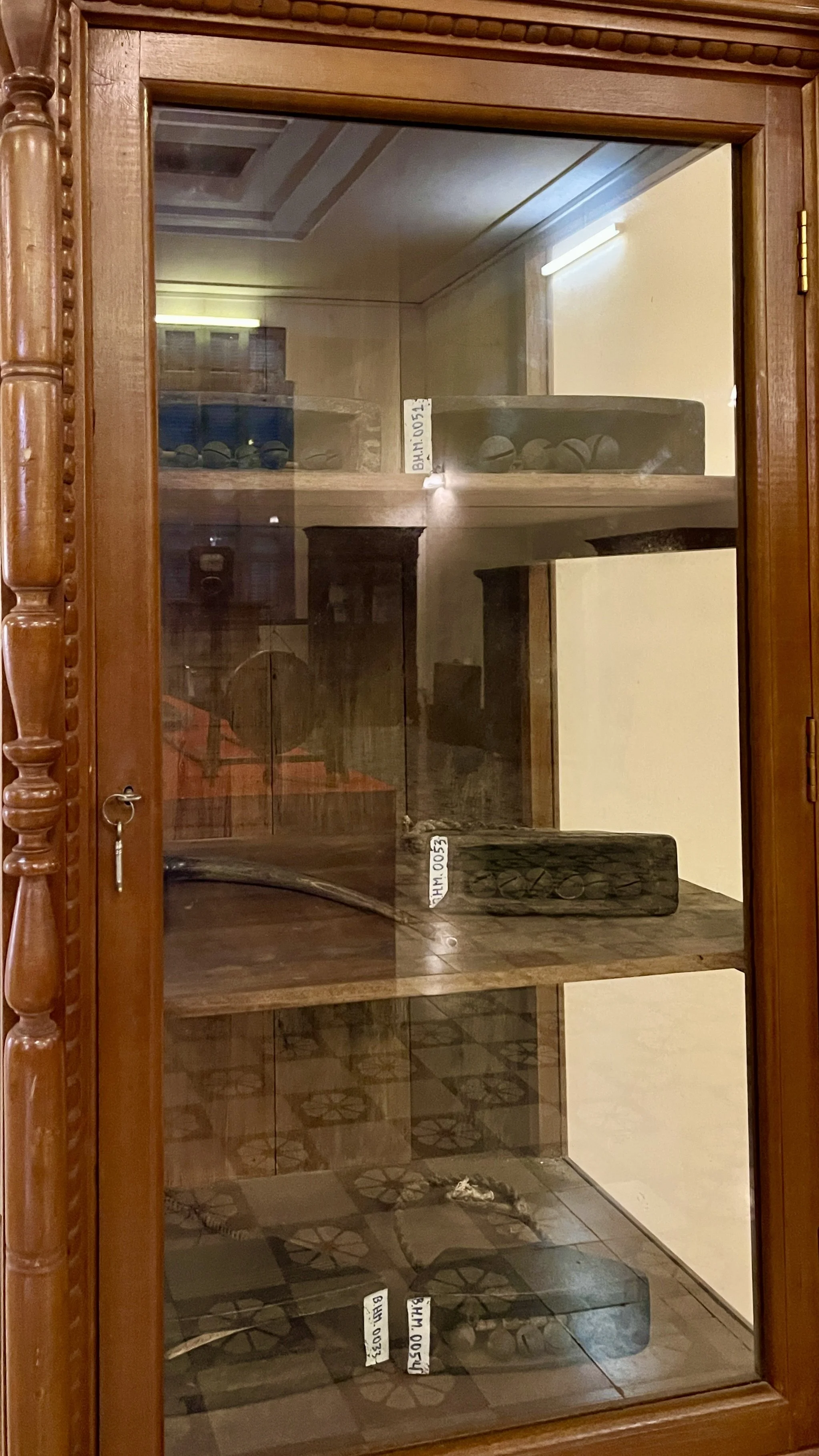
Are these cowbells? Are these cowbells in a display cabinet or am I losing my mind?

Not particularly fond of this style but it’s growing on me.

Why are these things in a museum?!

It’s always struck me as strange how local museums in Asia have “antiques” so much worse than literally anything in my grandparents’ very middle class homes in New York.

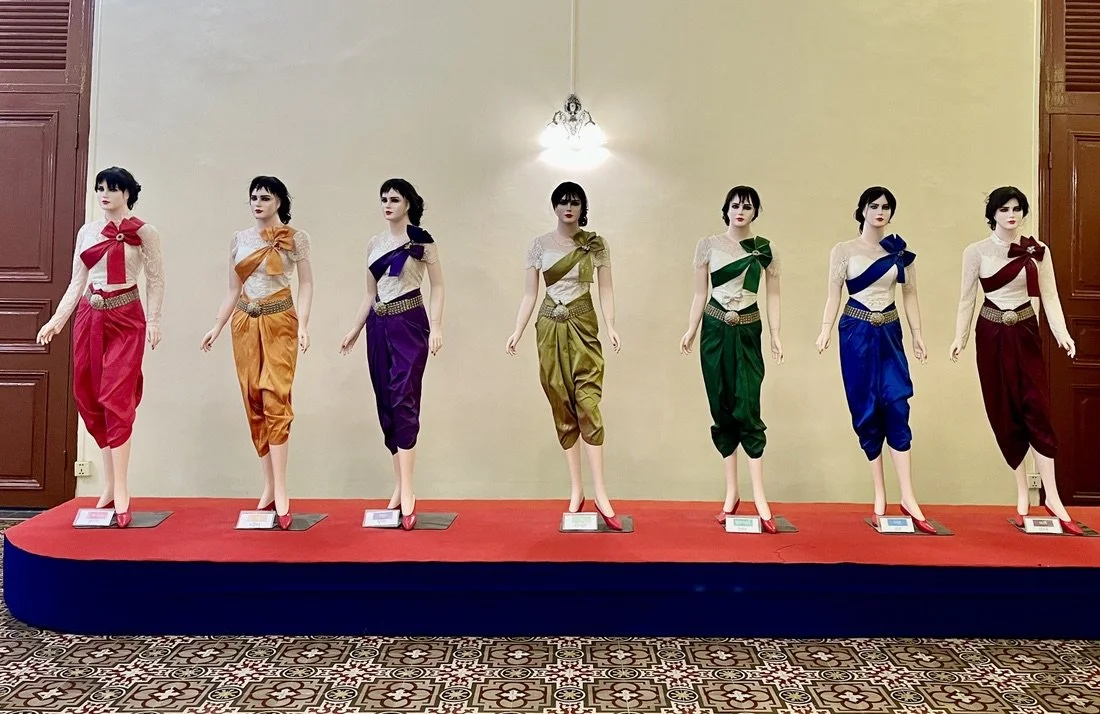
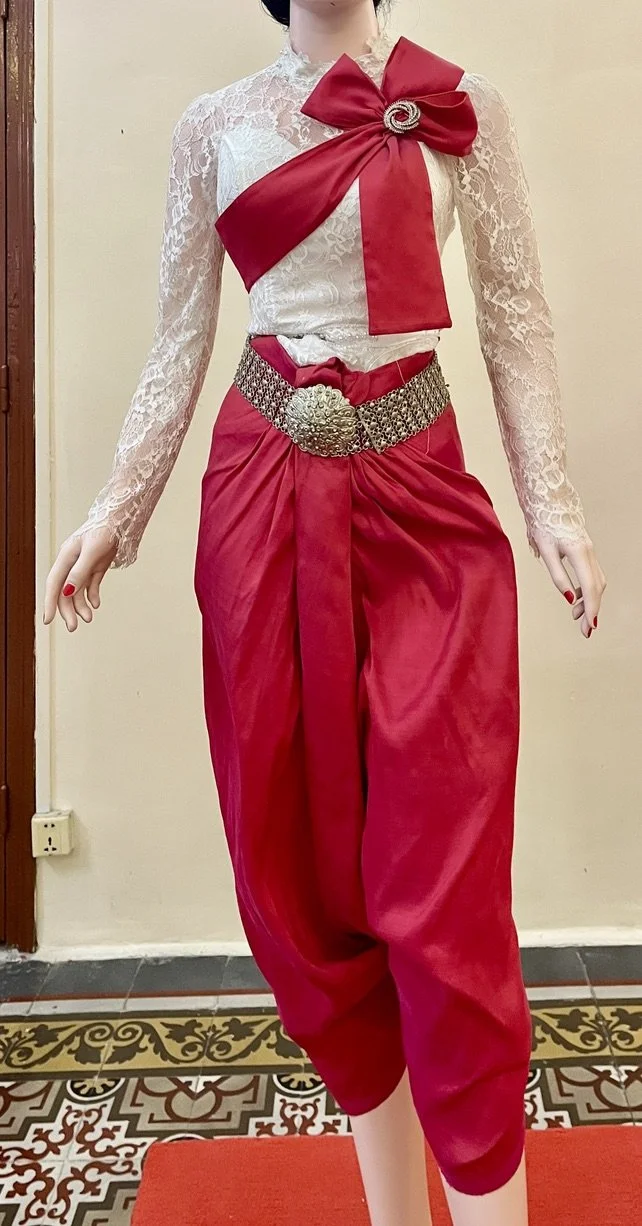
It’s a custom for court women in Thailand and Cambodia to wear a specific color every day of the week.

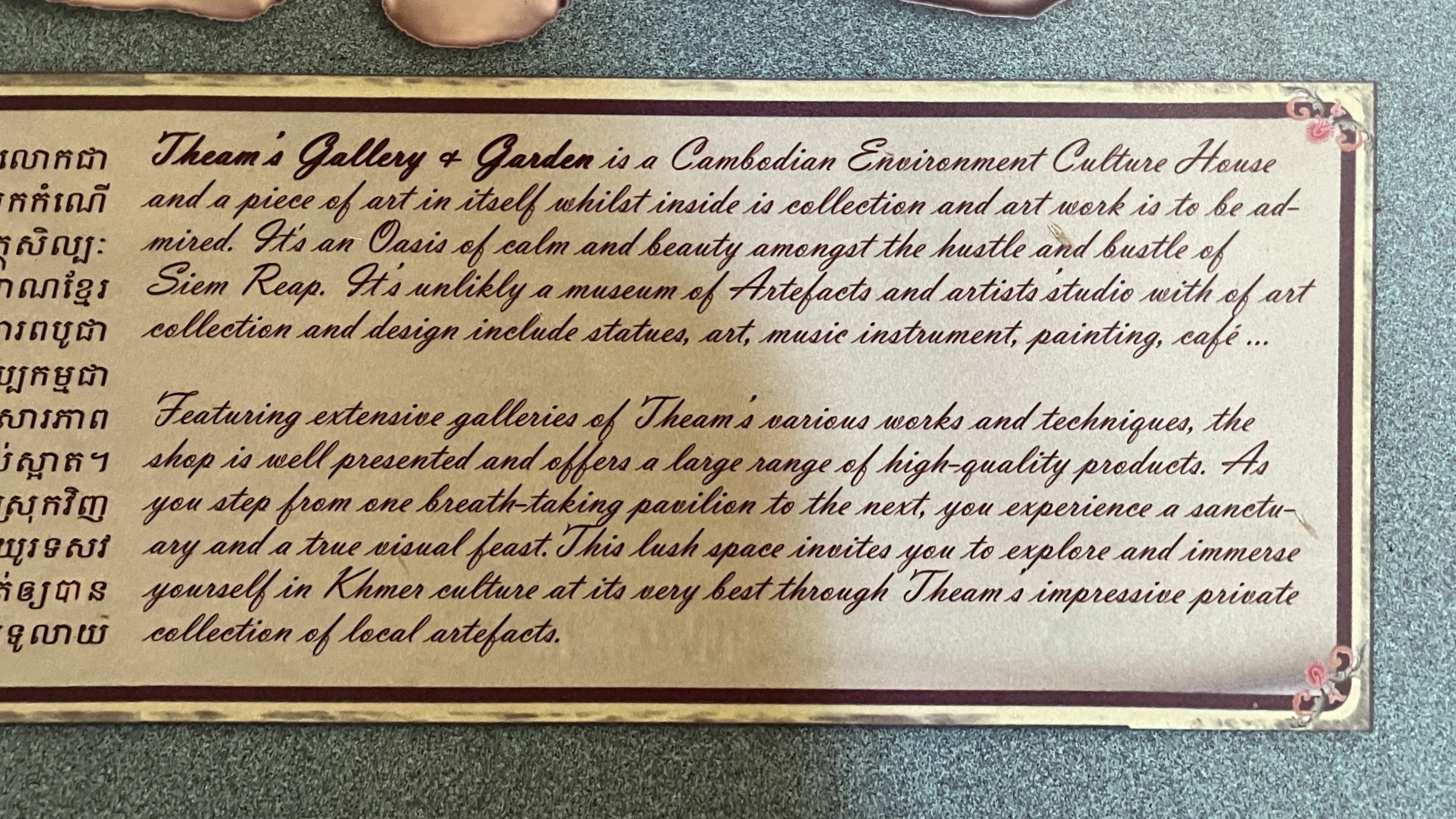
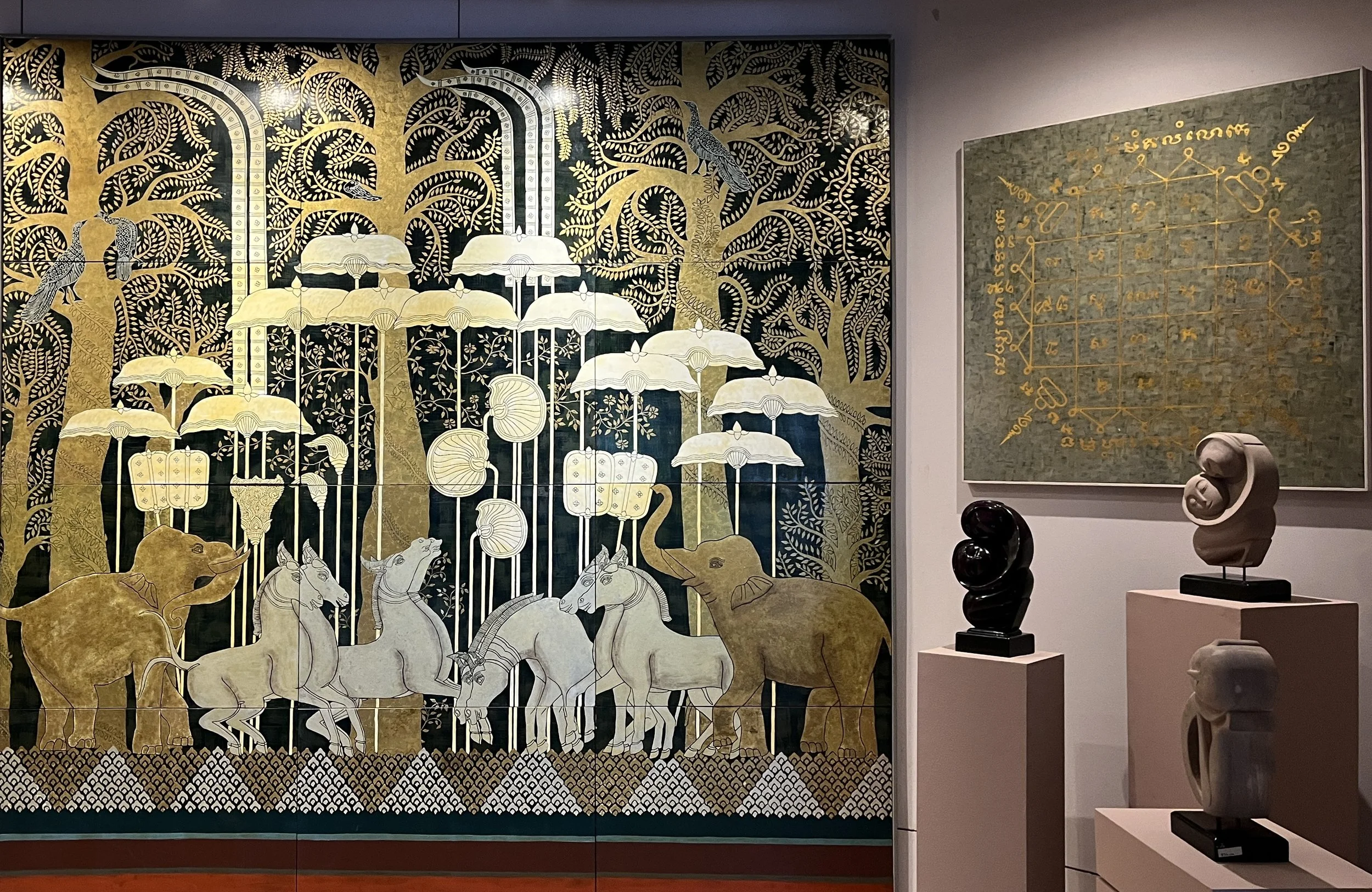
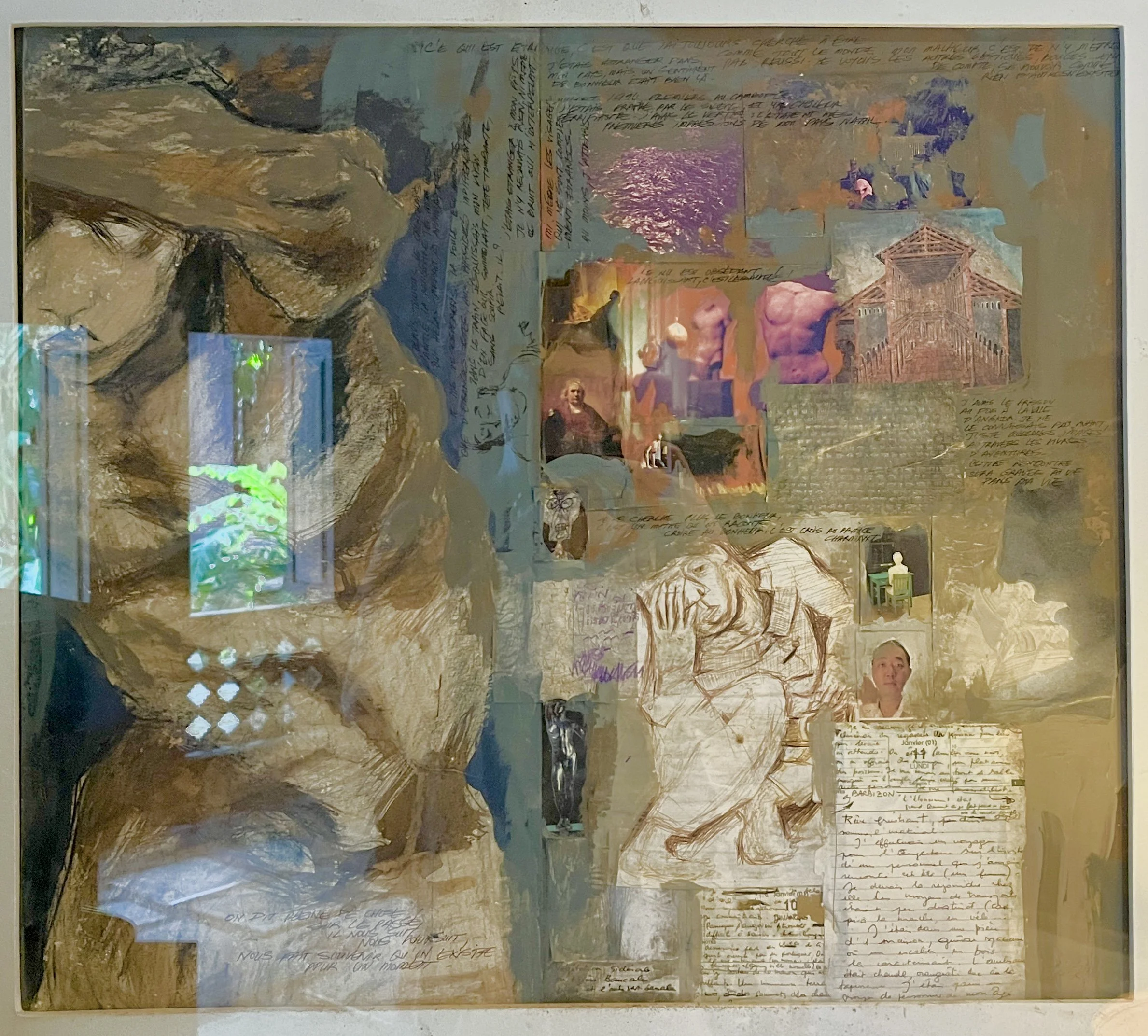
Theams Gallery, Siem Reap | Cambodia

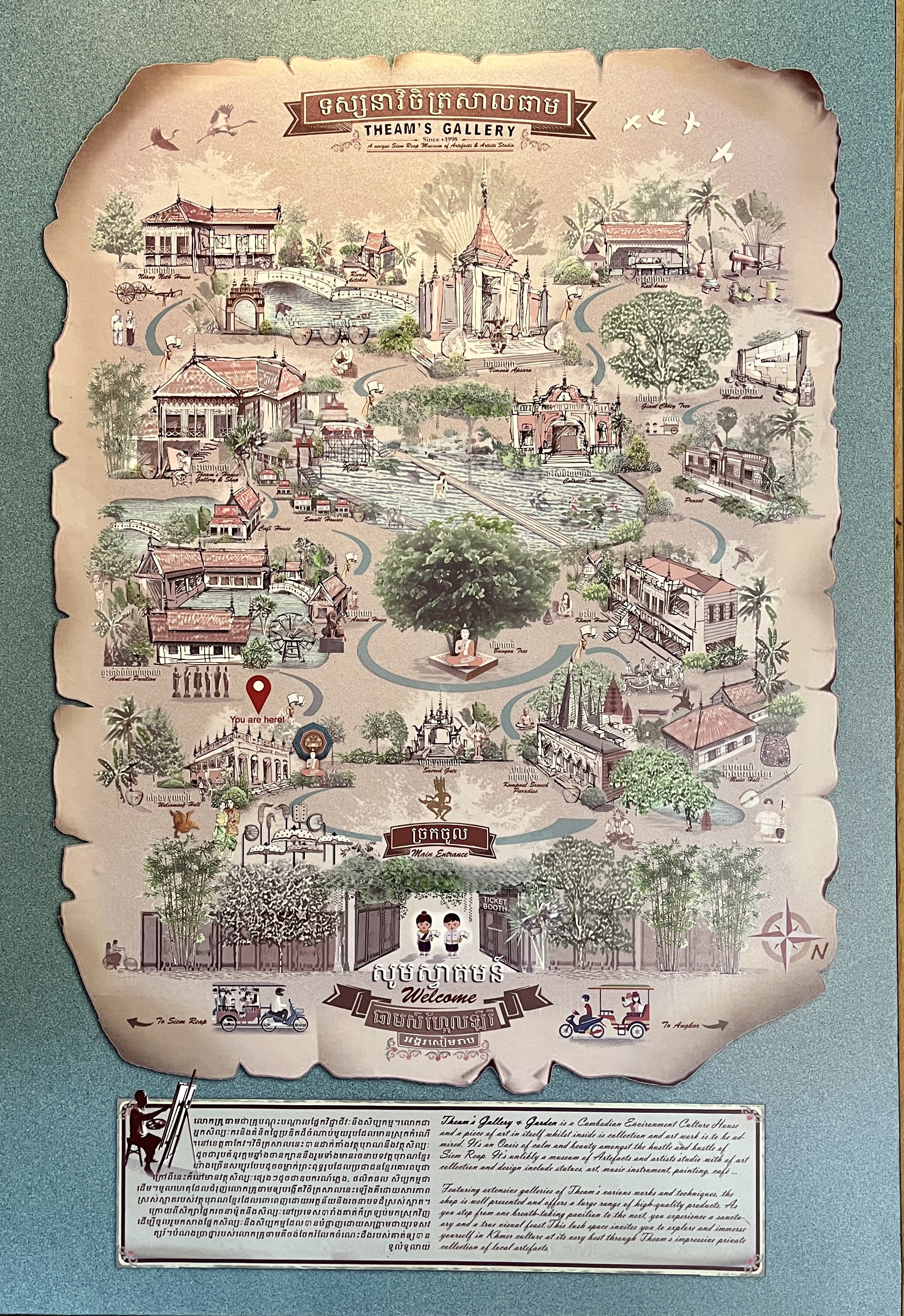
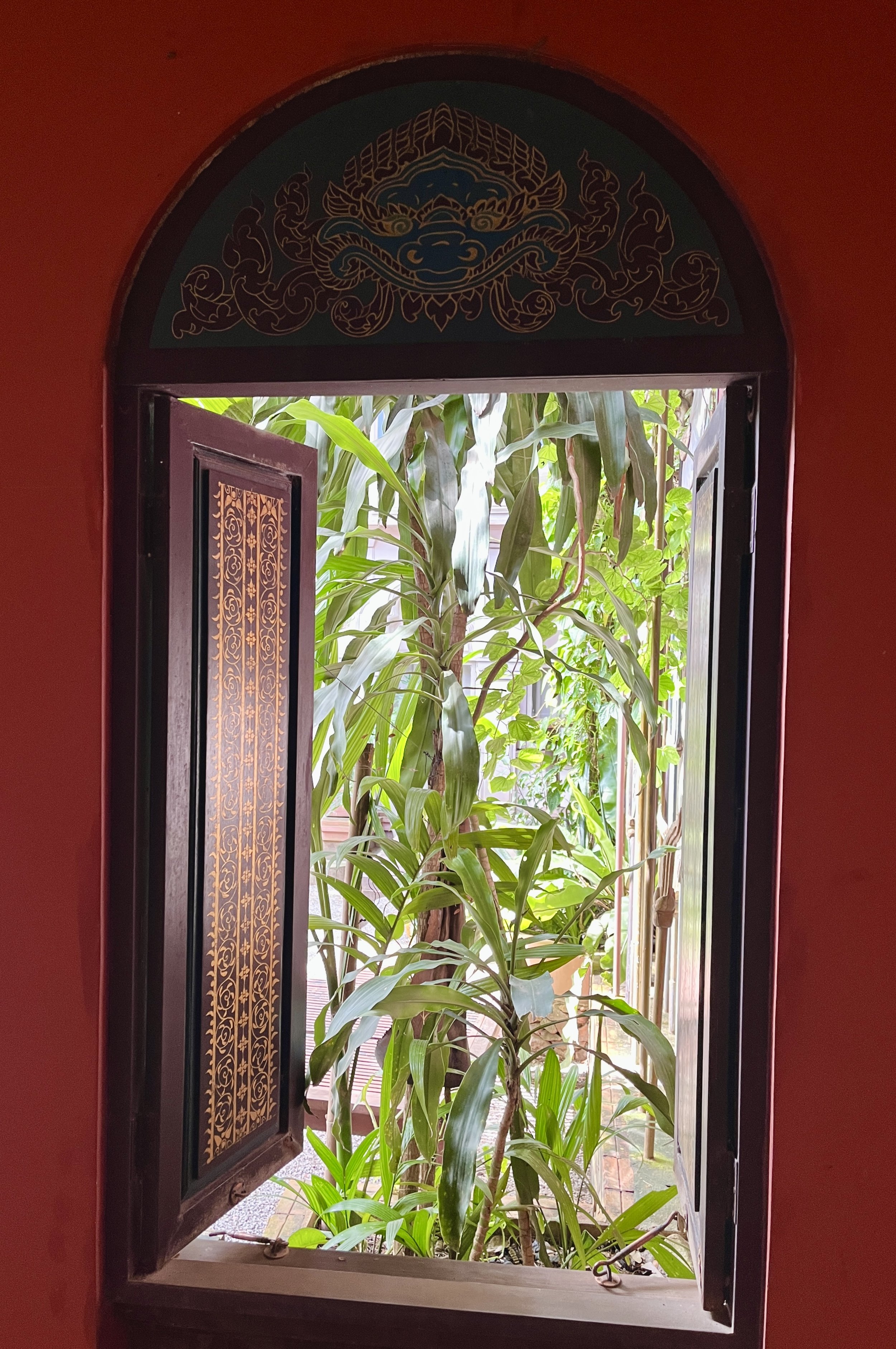
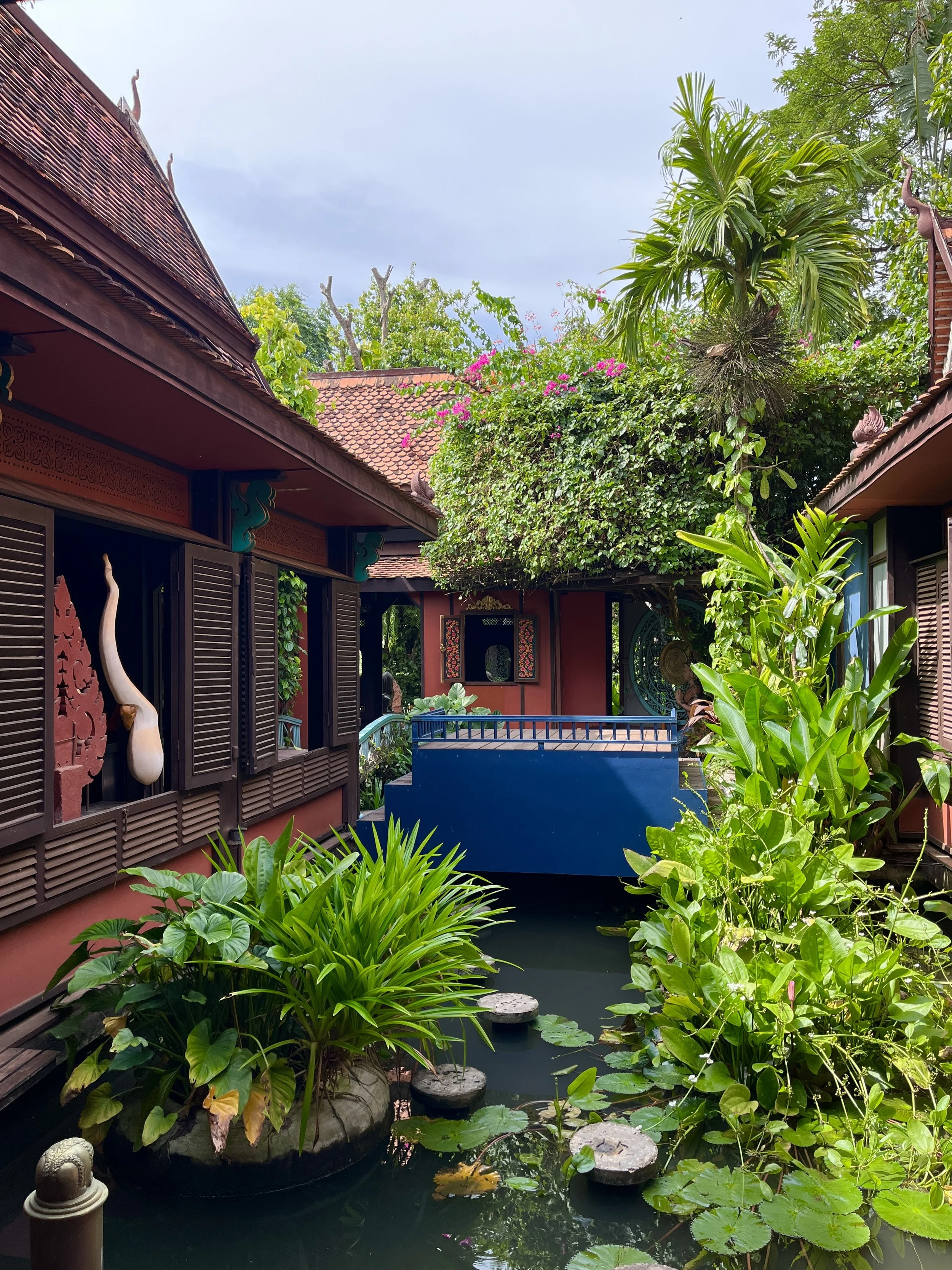
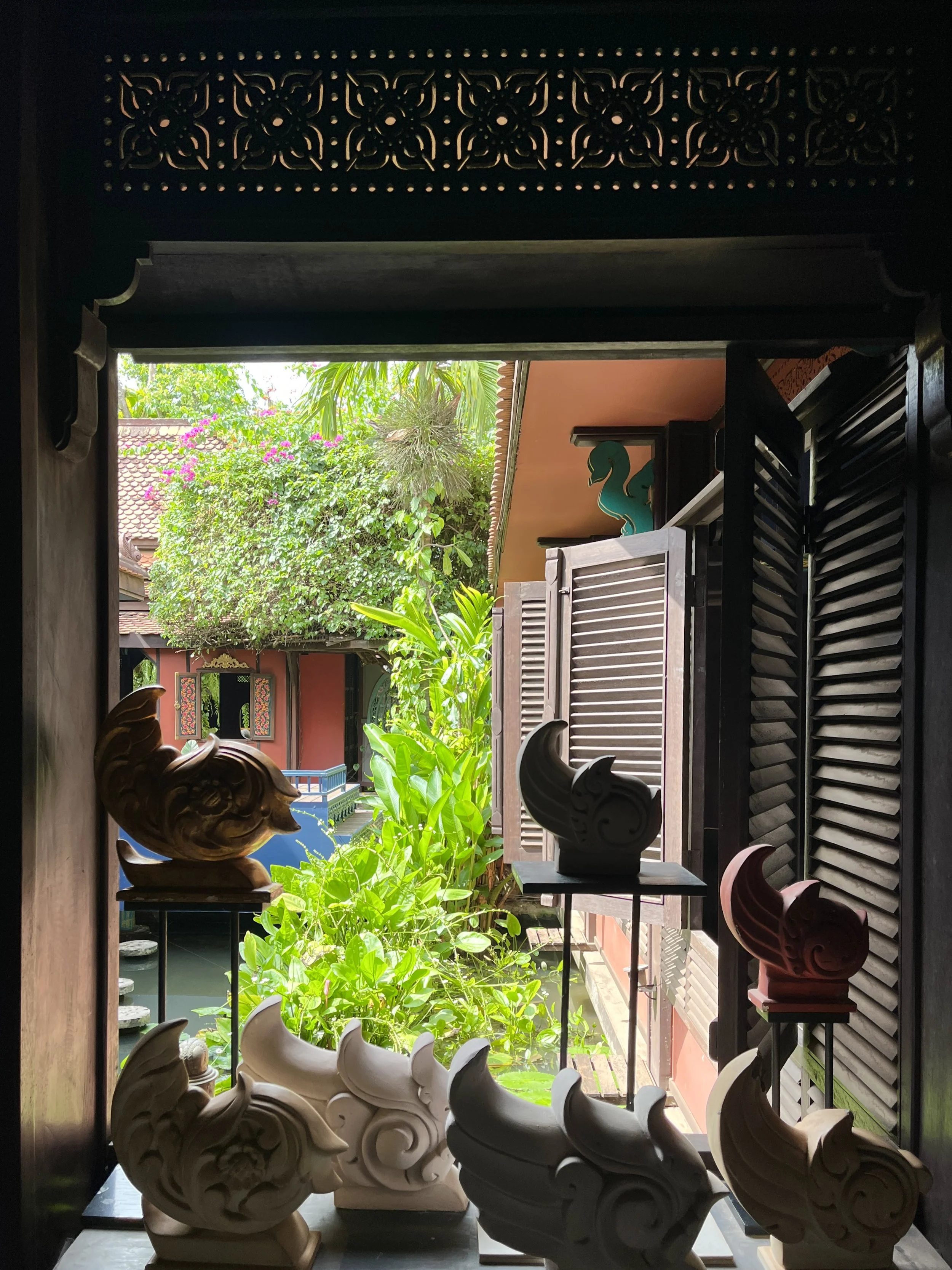
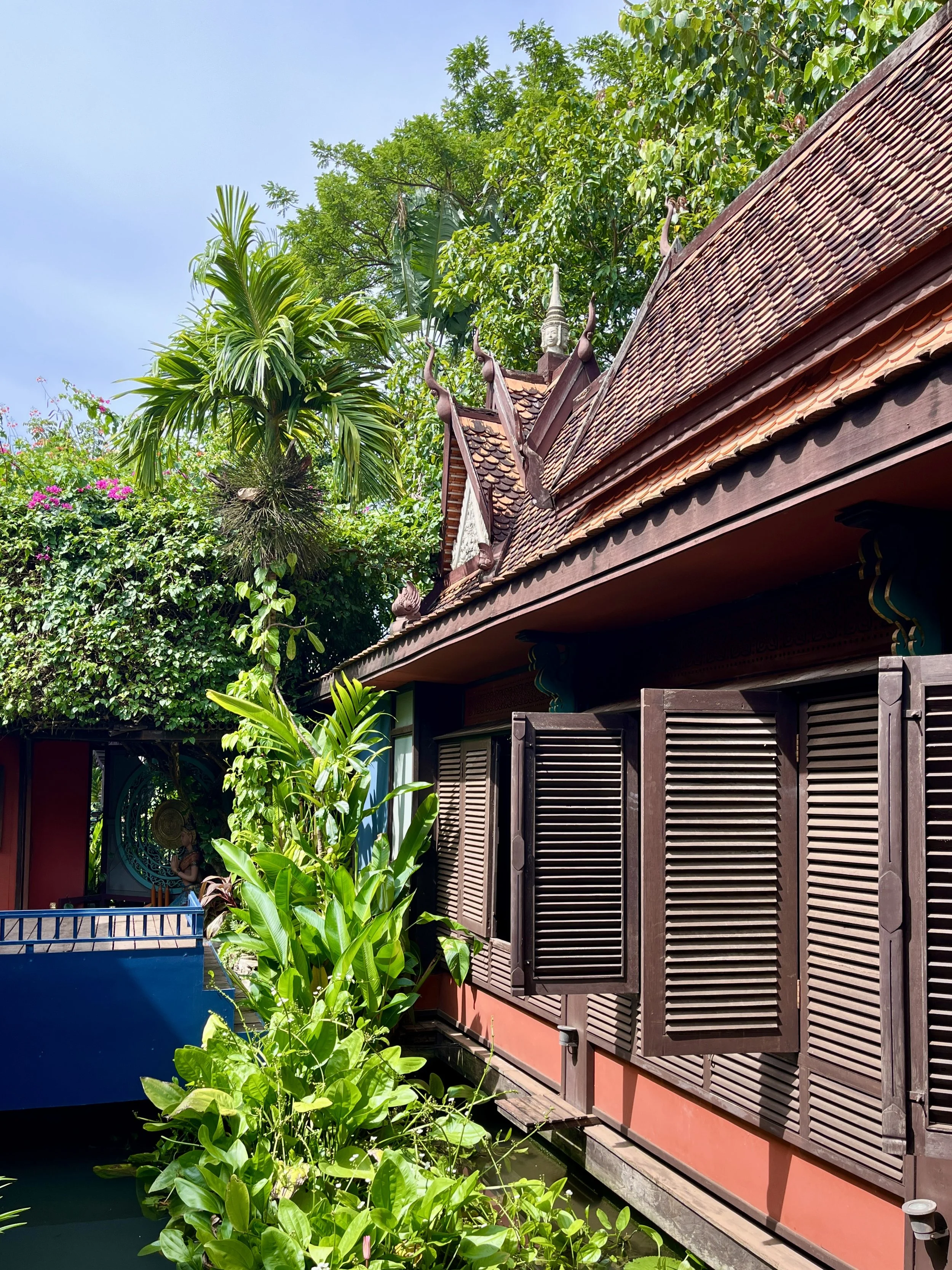
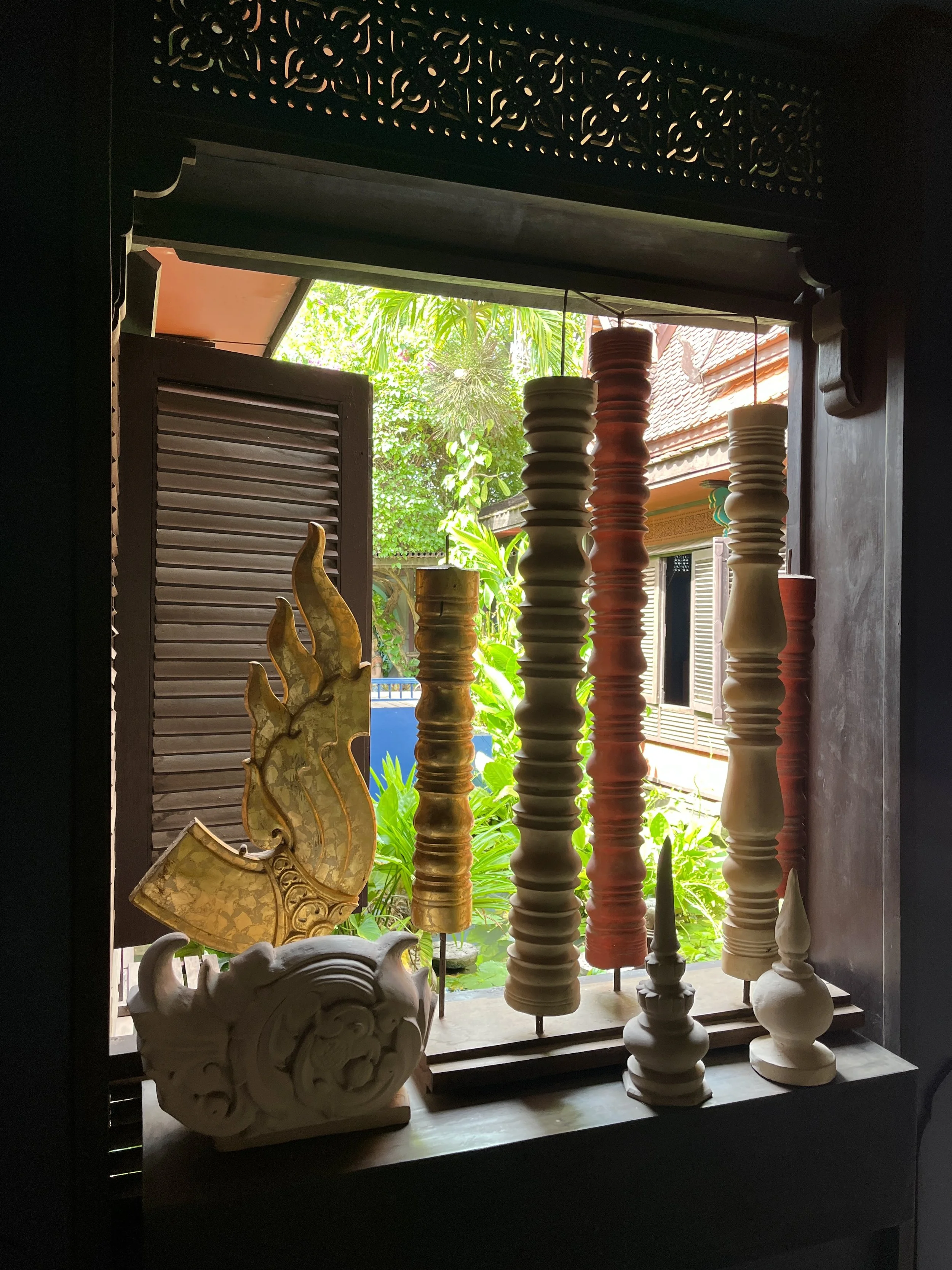
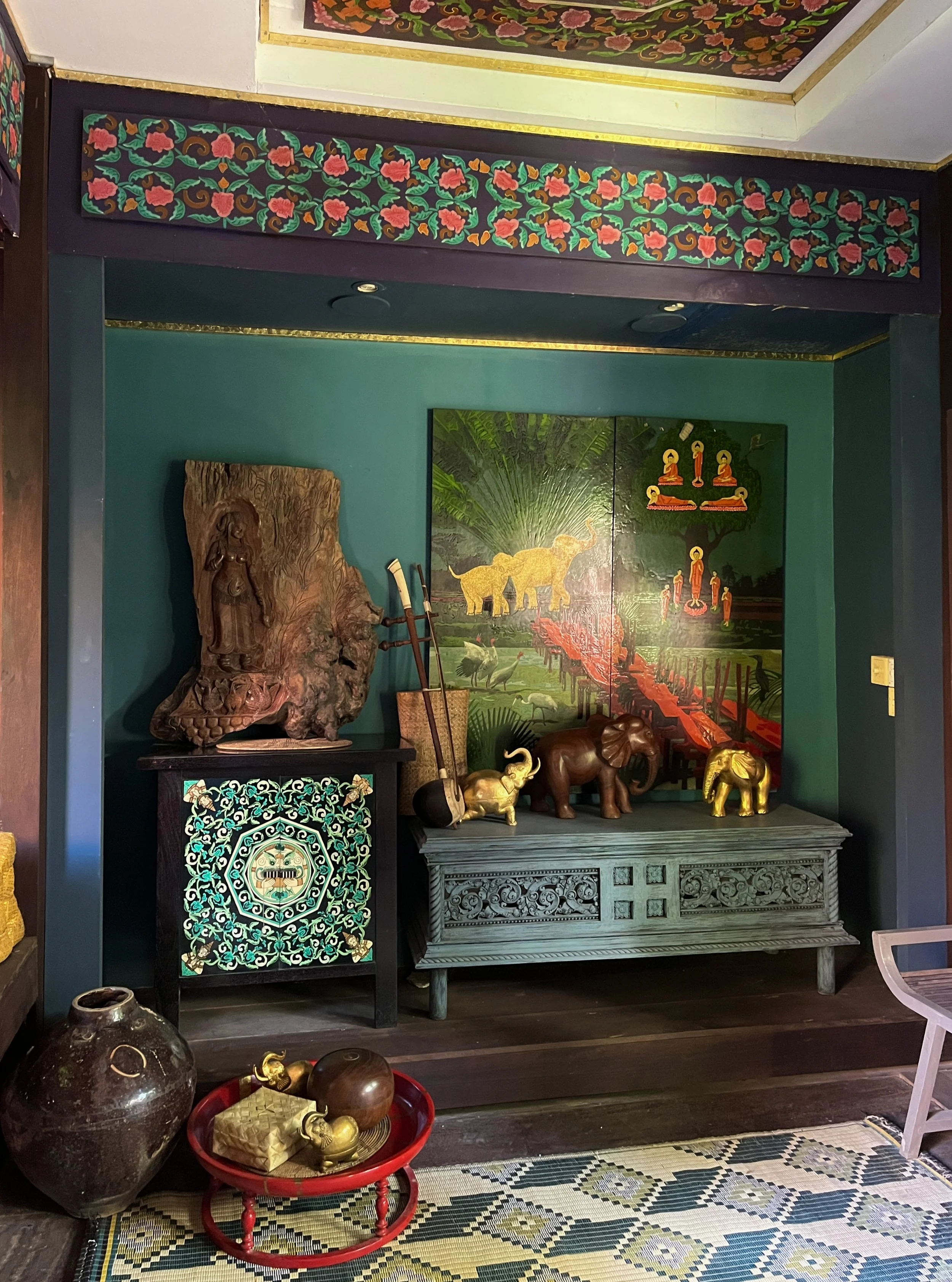
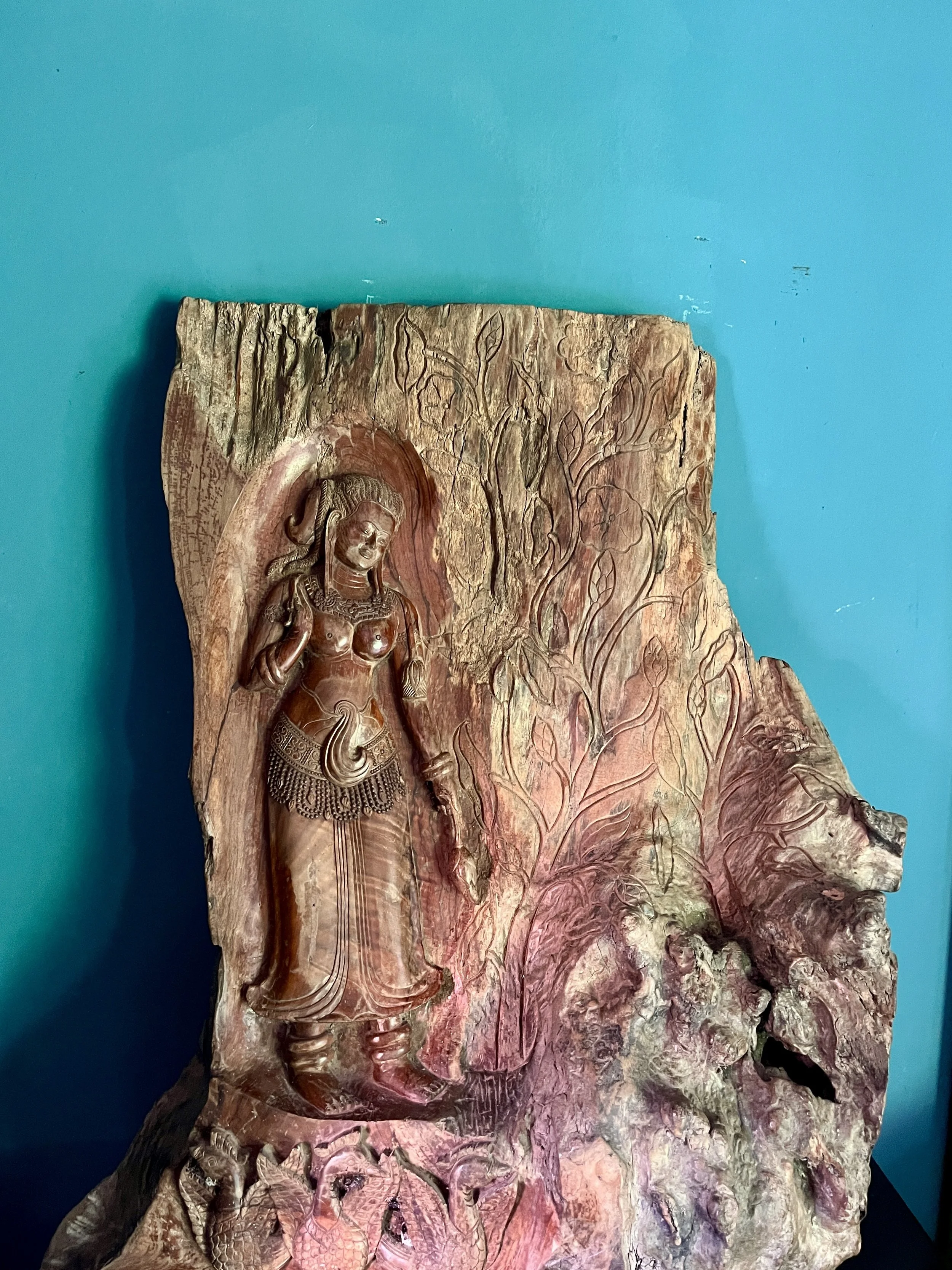
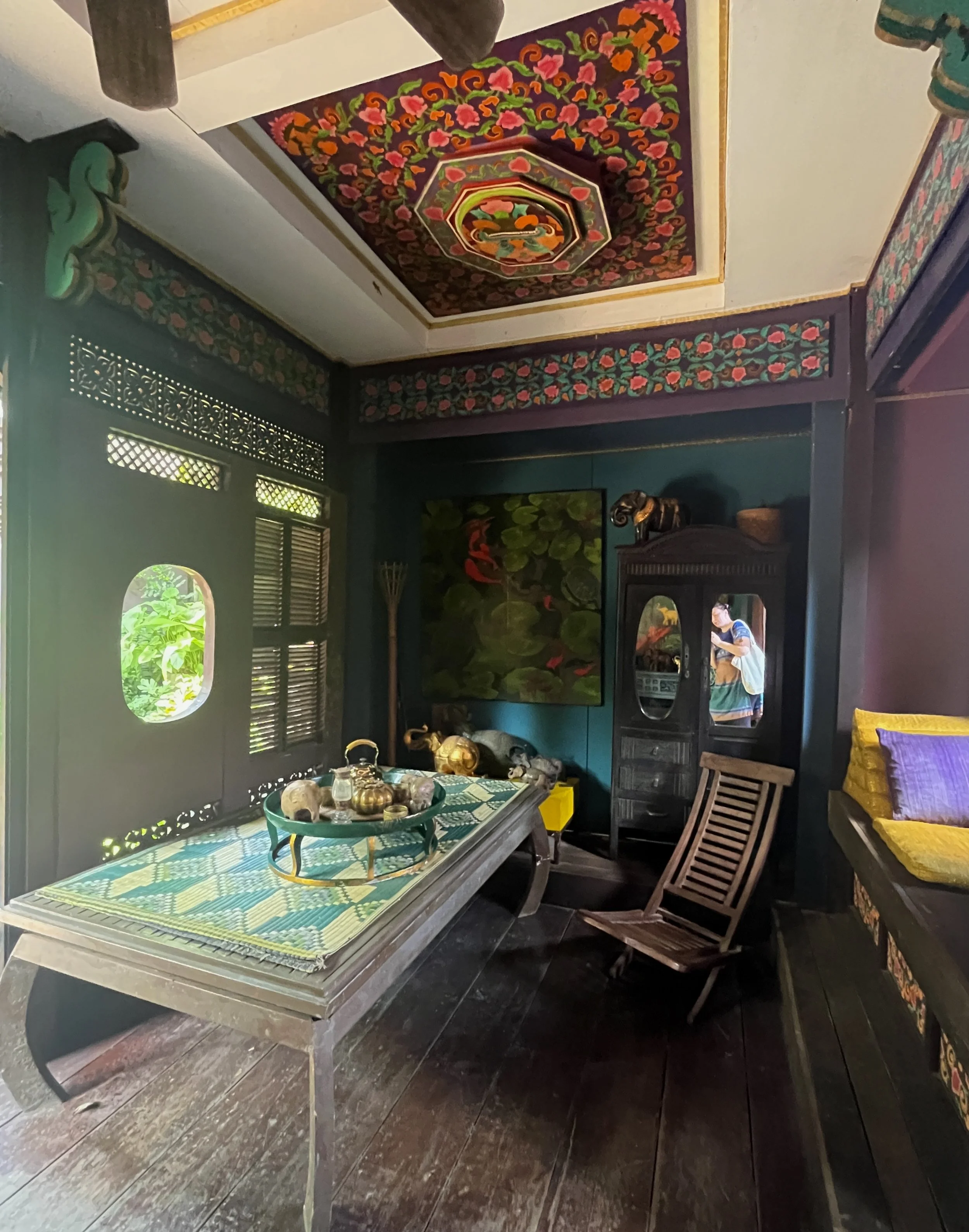
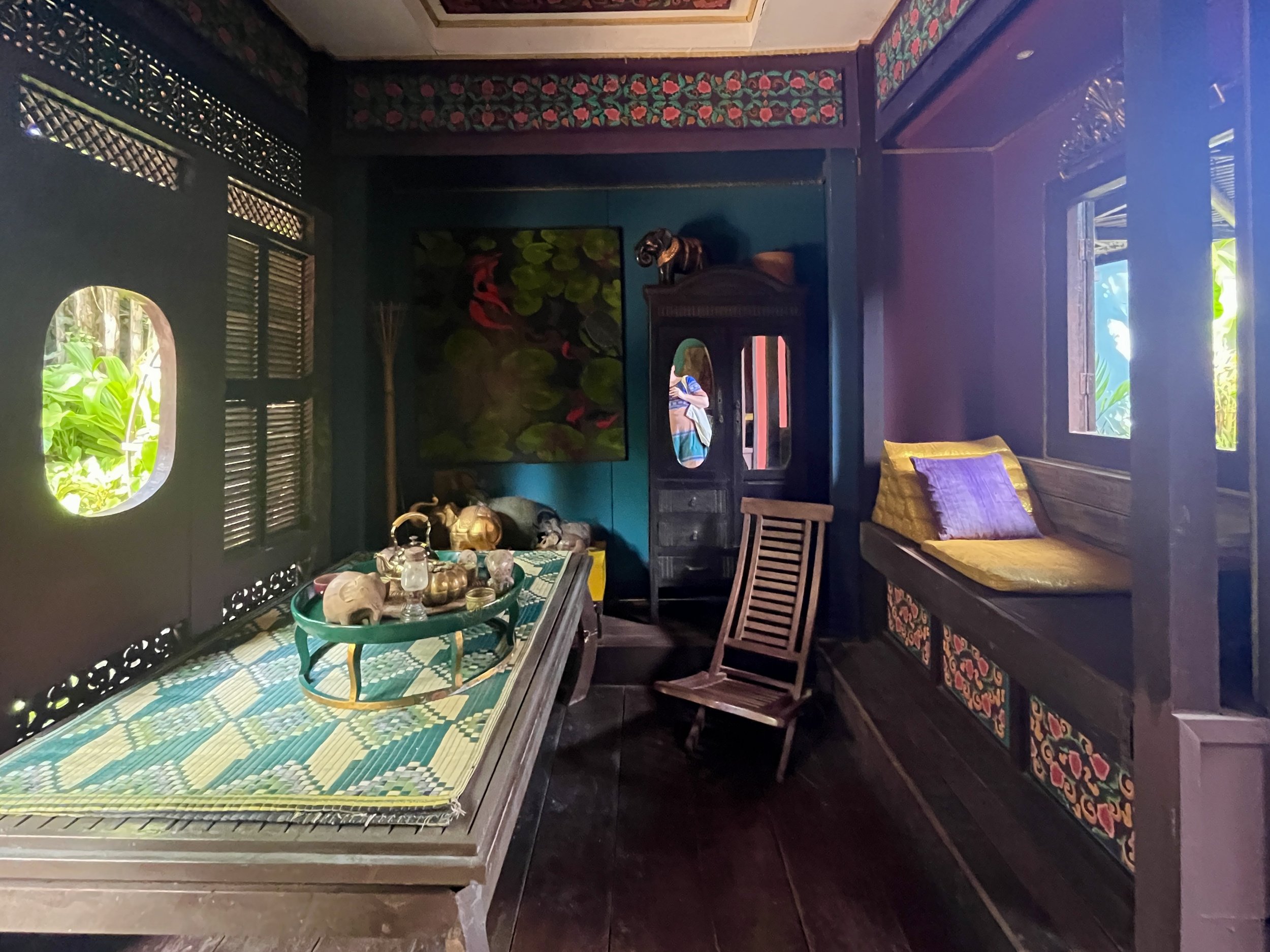
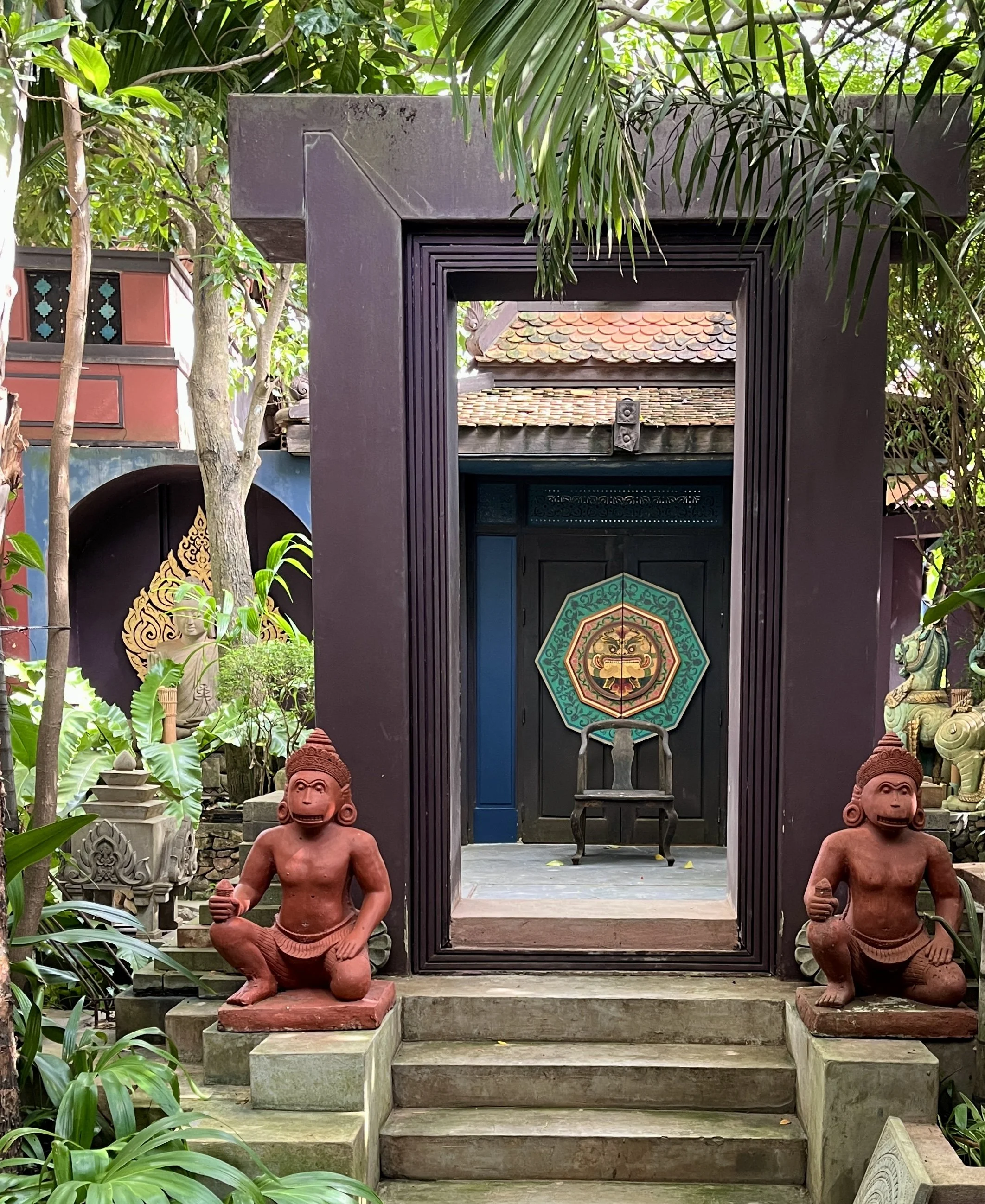
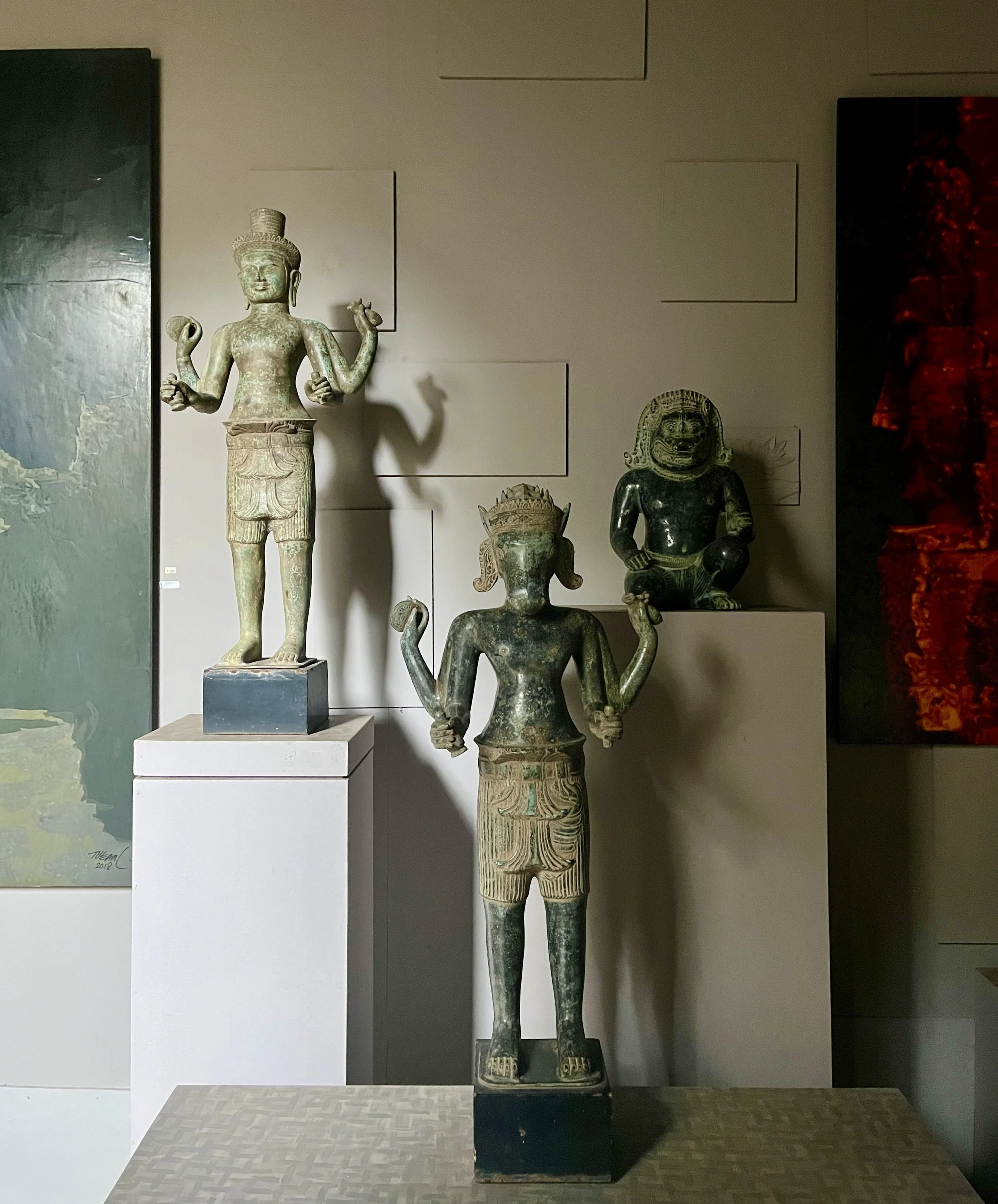
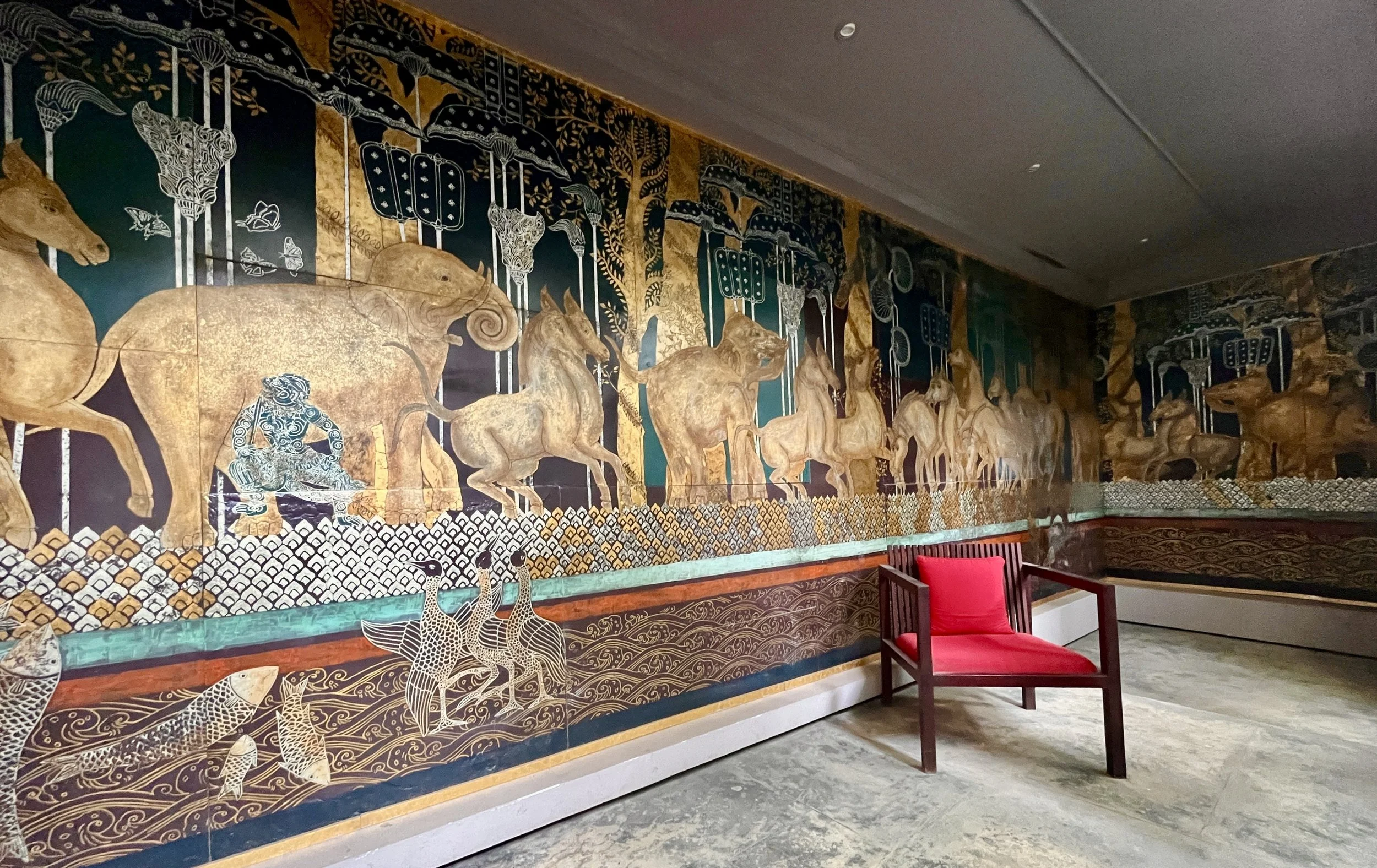
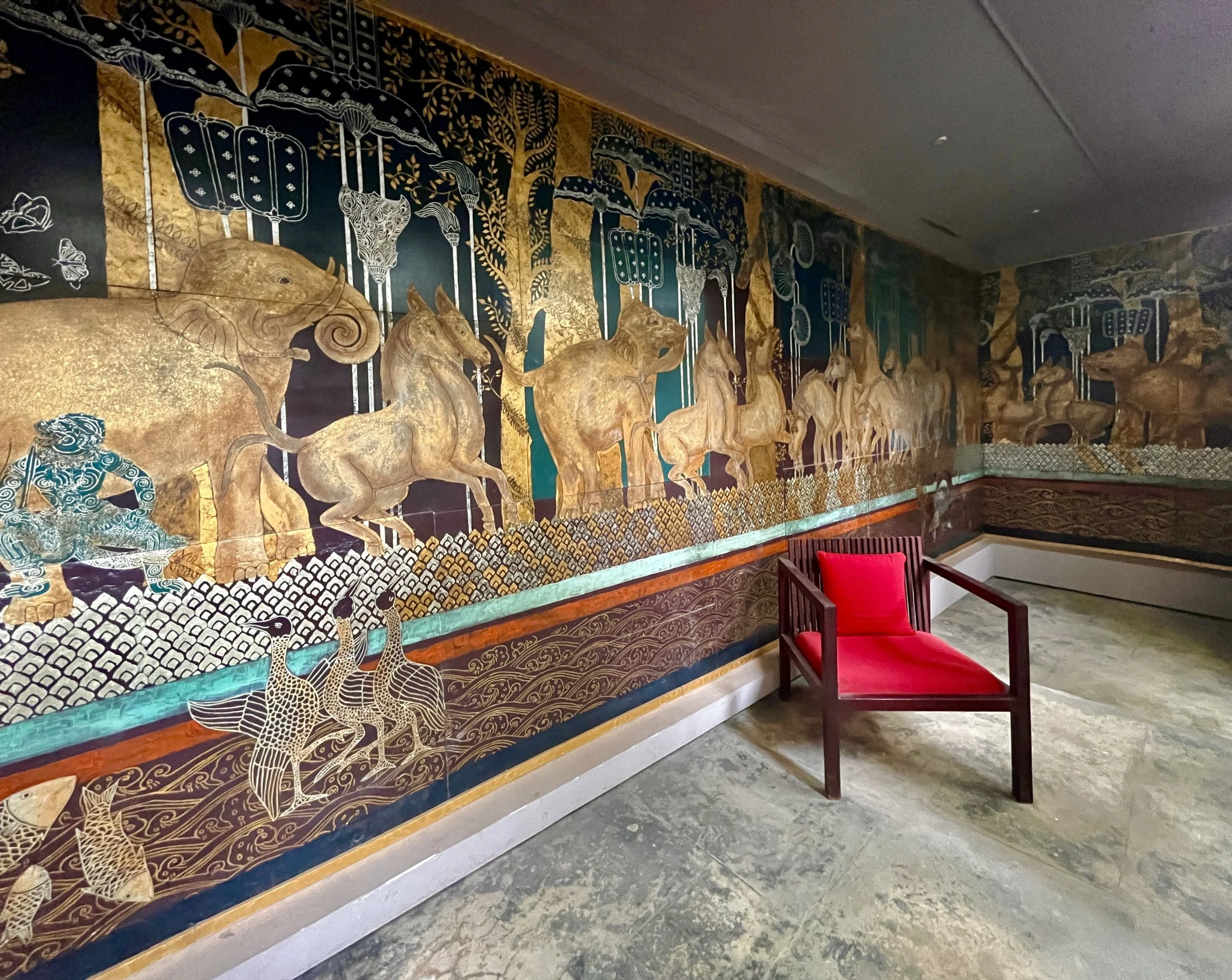
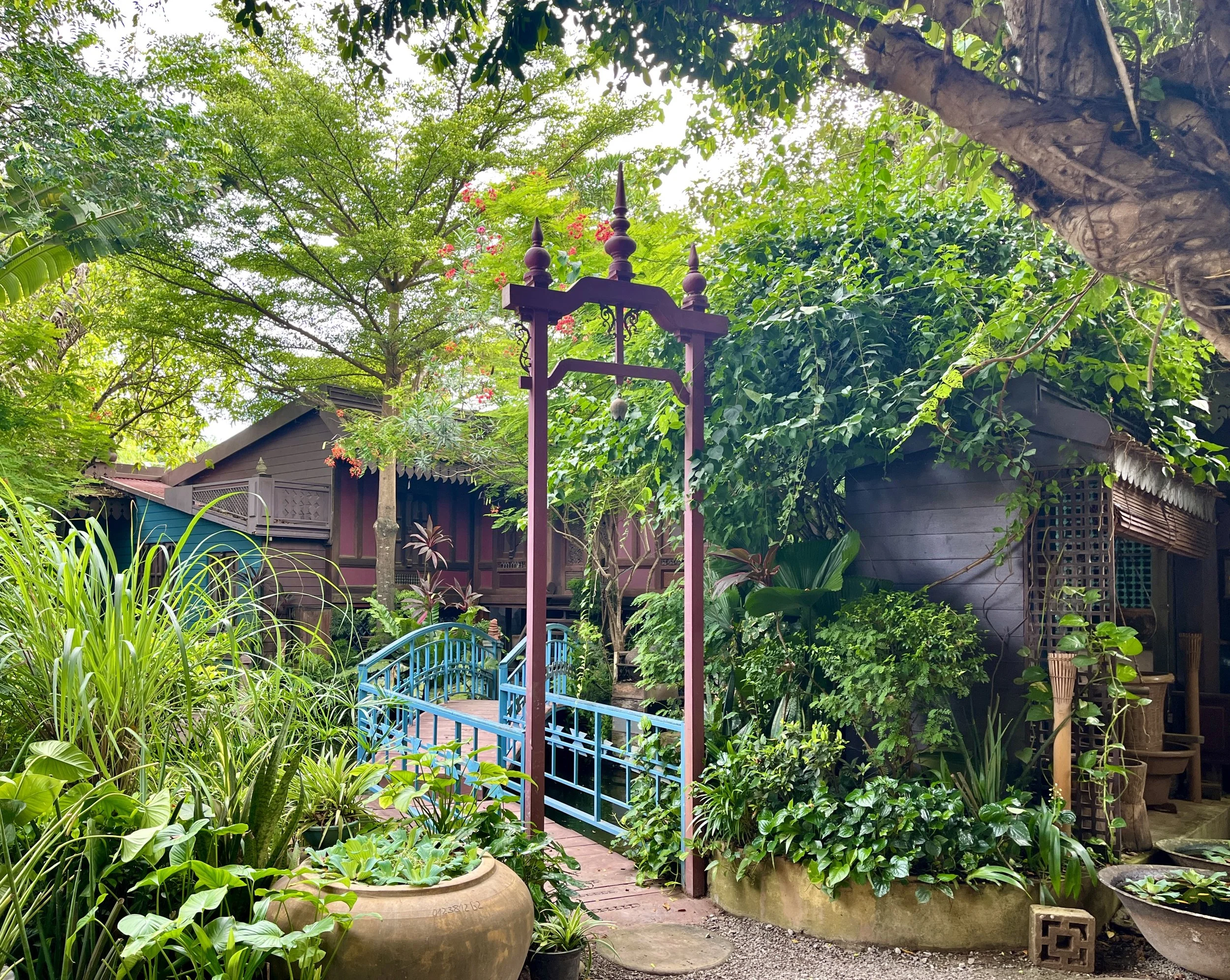
I’ve found myself in a fixer upper in Siem Reap. So, curious to see what local architectural identity consists of, I ended up spending hours one afternoon taking photos at Theam’s gallery.

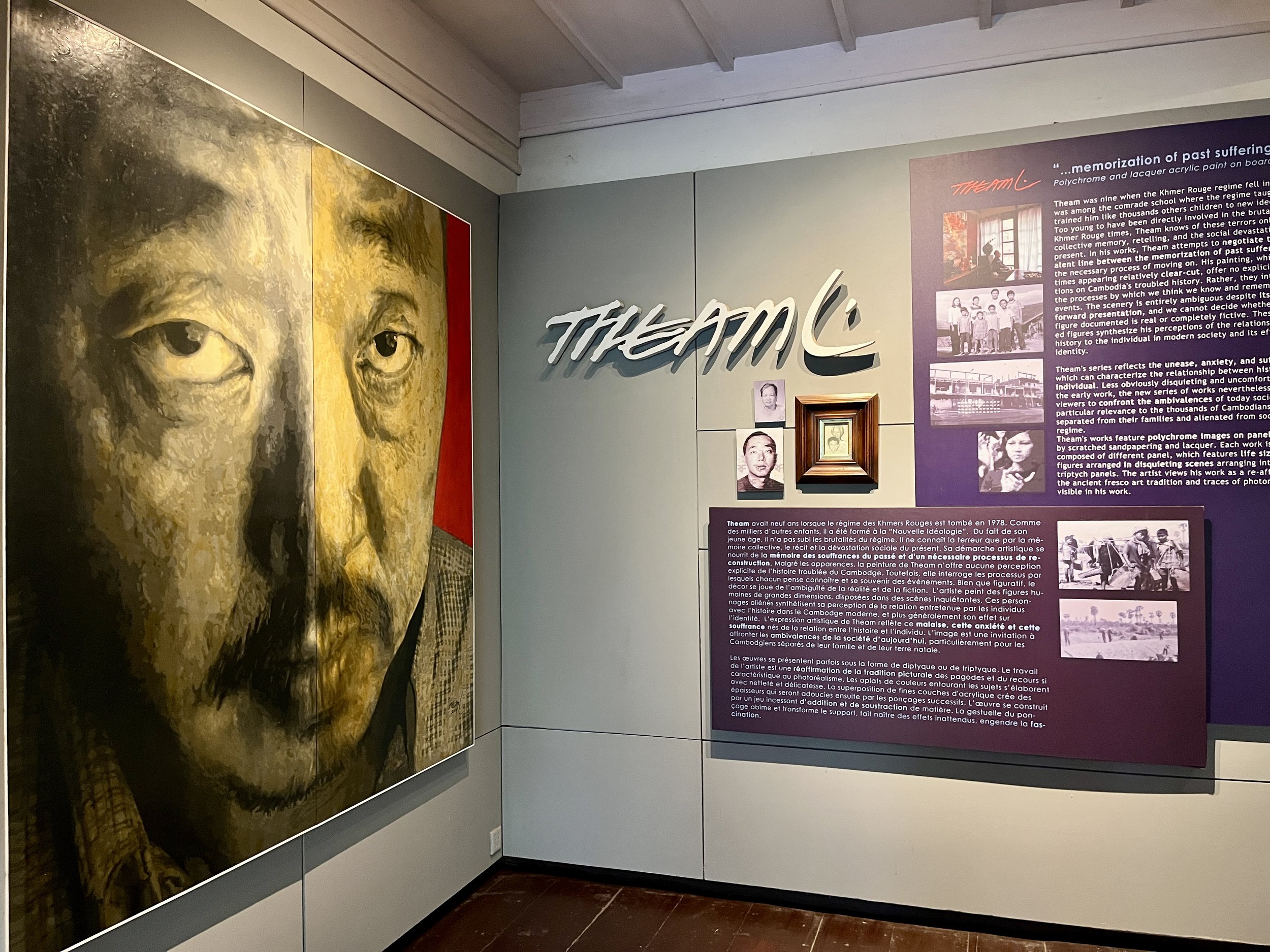
Born in 1969, Lim Muy Theam’s family survived the Khmer Rouge regime and arrived in France as refugees in 1980. According to his bio, he was educated at École Boulle, Beaux-Arts and Arts Décoratifs; his aesthetic is very much idealized Khmer with strong European influence.

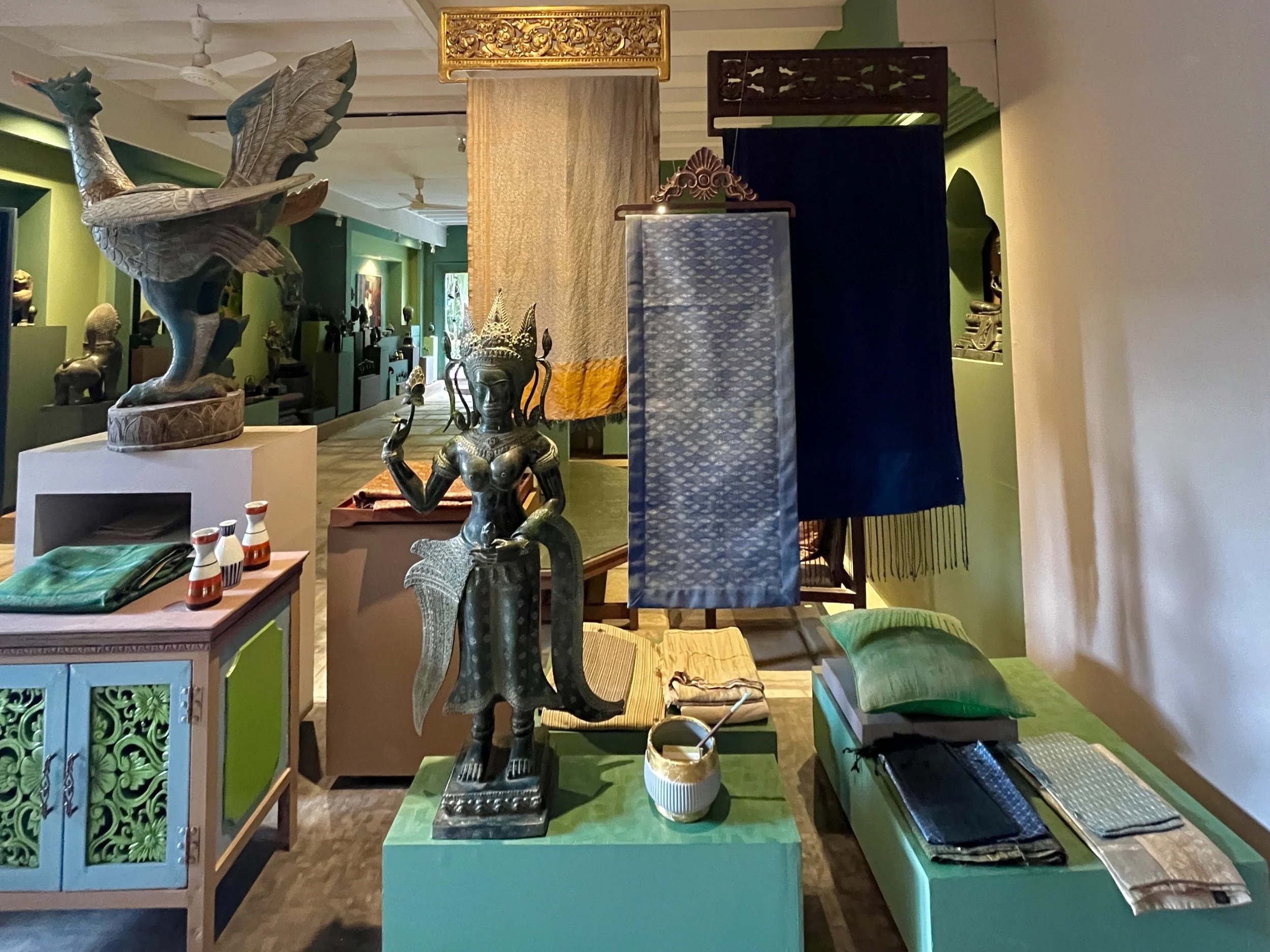
His declared mission is to revive traditional and innovative modes of Cambodian arts and crafts by training local artisans. Onsite there’s an extensive gift shop of his work, that of his protégés, and a collection of the best pieces from other local shops, including IKTT and Artisans d’Angkor . . . all gathering dust, as tourists to Siem Reap generally do not have the budget to spend on this sort of thing, and, even if they did, are more the hiker/backpacker type than the sort who bring home handwoven silk panels and lacquer triptychs, and, even if they were, they’d undoubtedly find the source before they found Theams. So, the admission fee is $5 USD, and I do think it’s worth it.

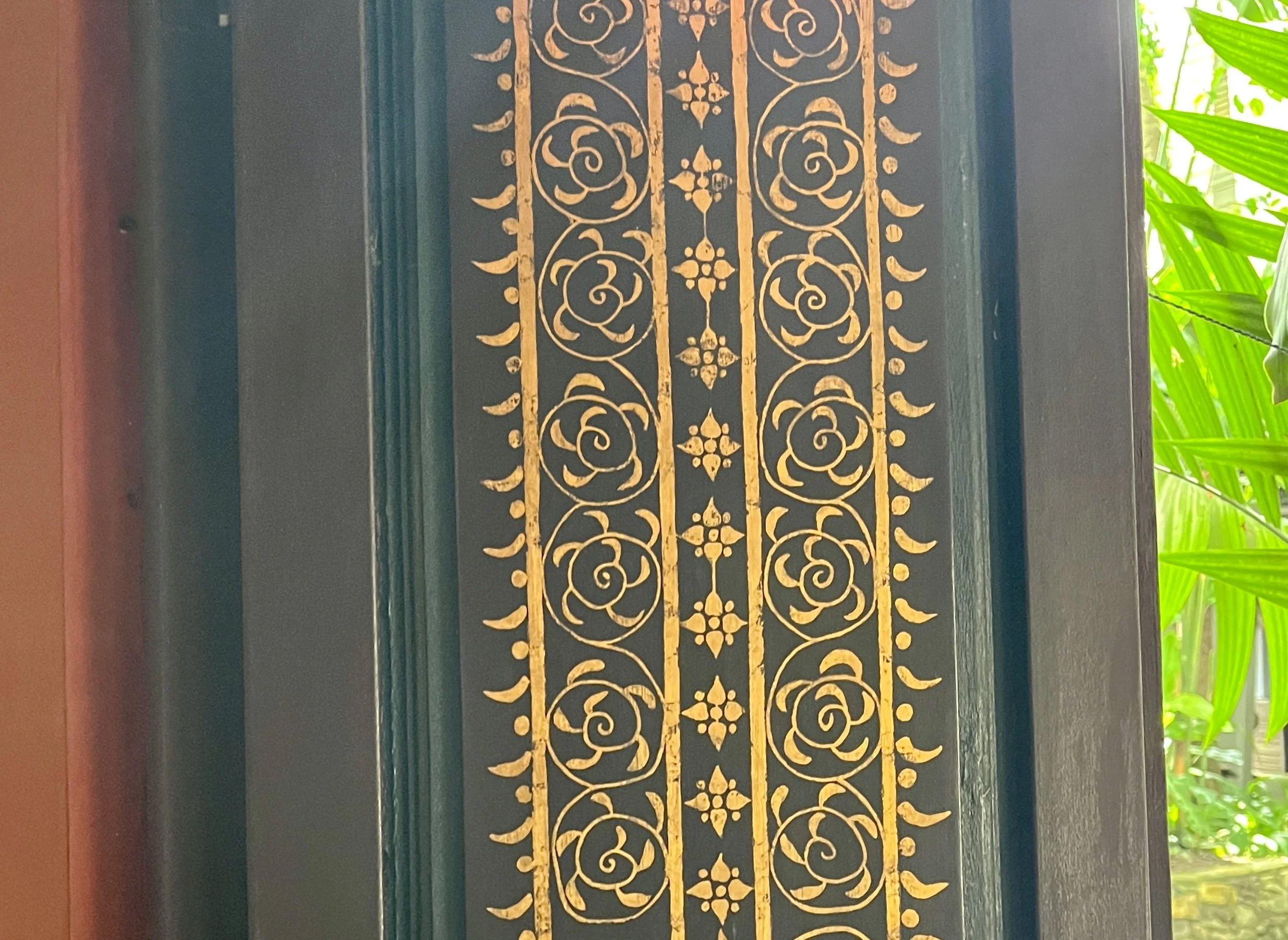
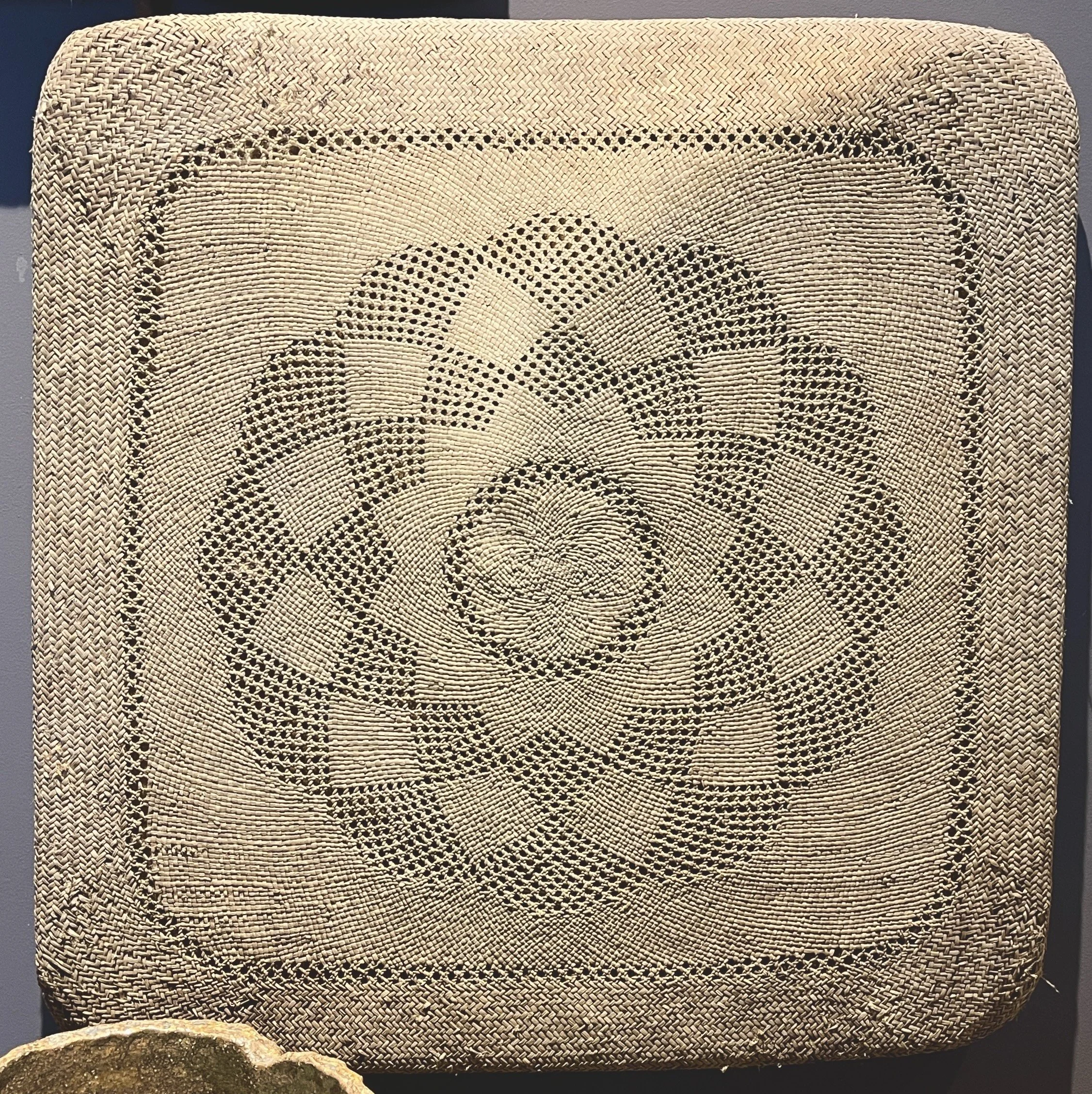
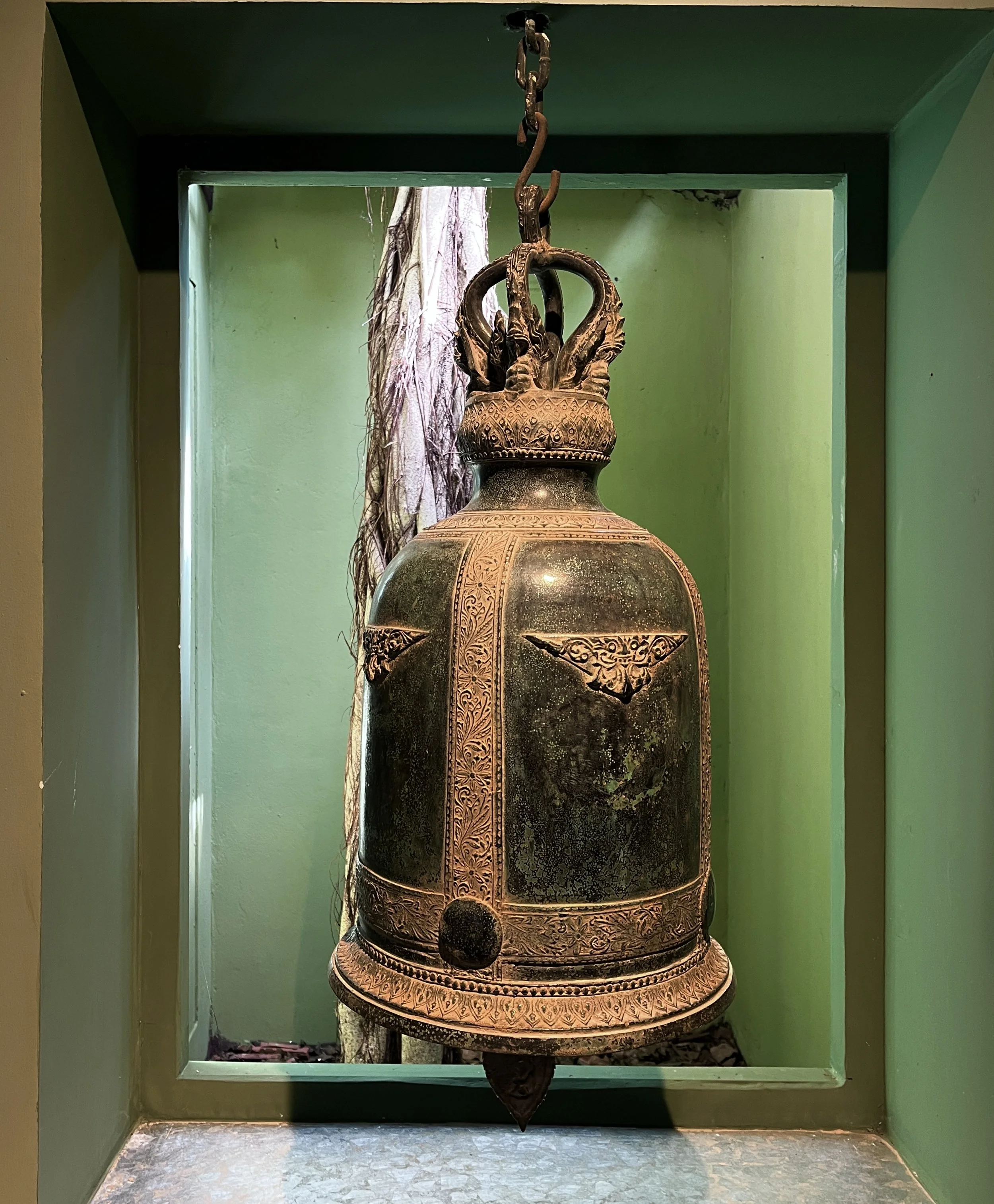
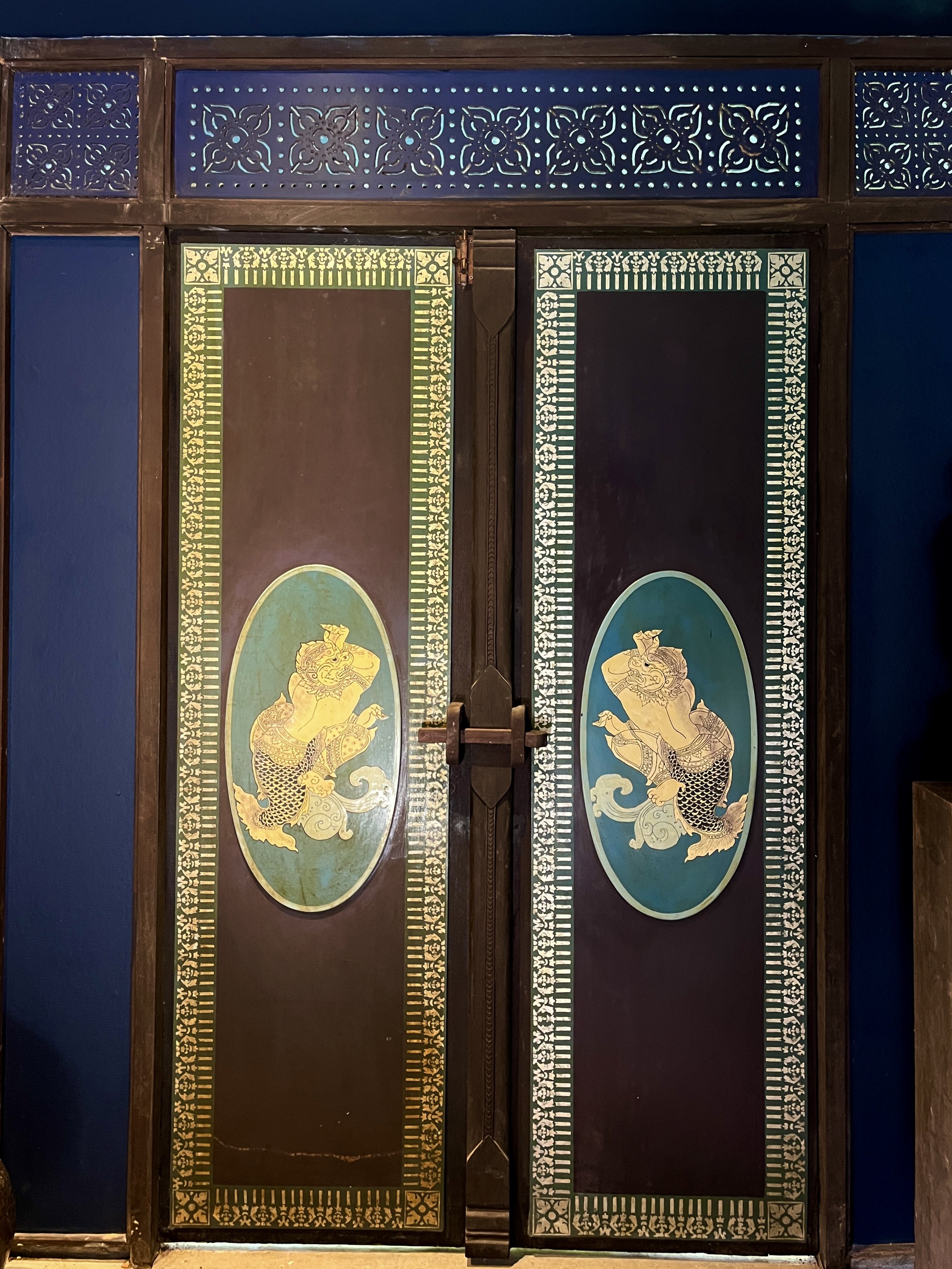
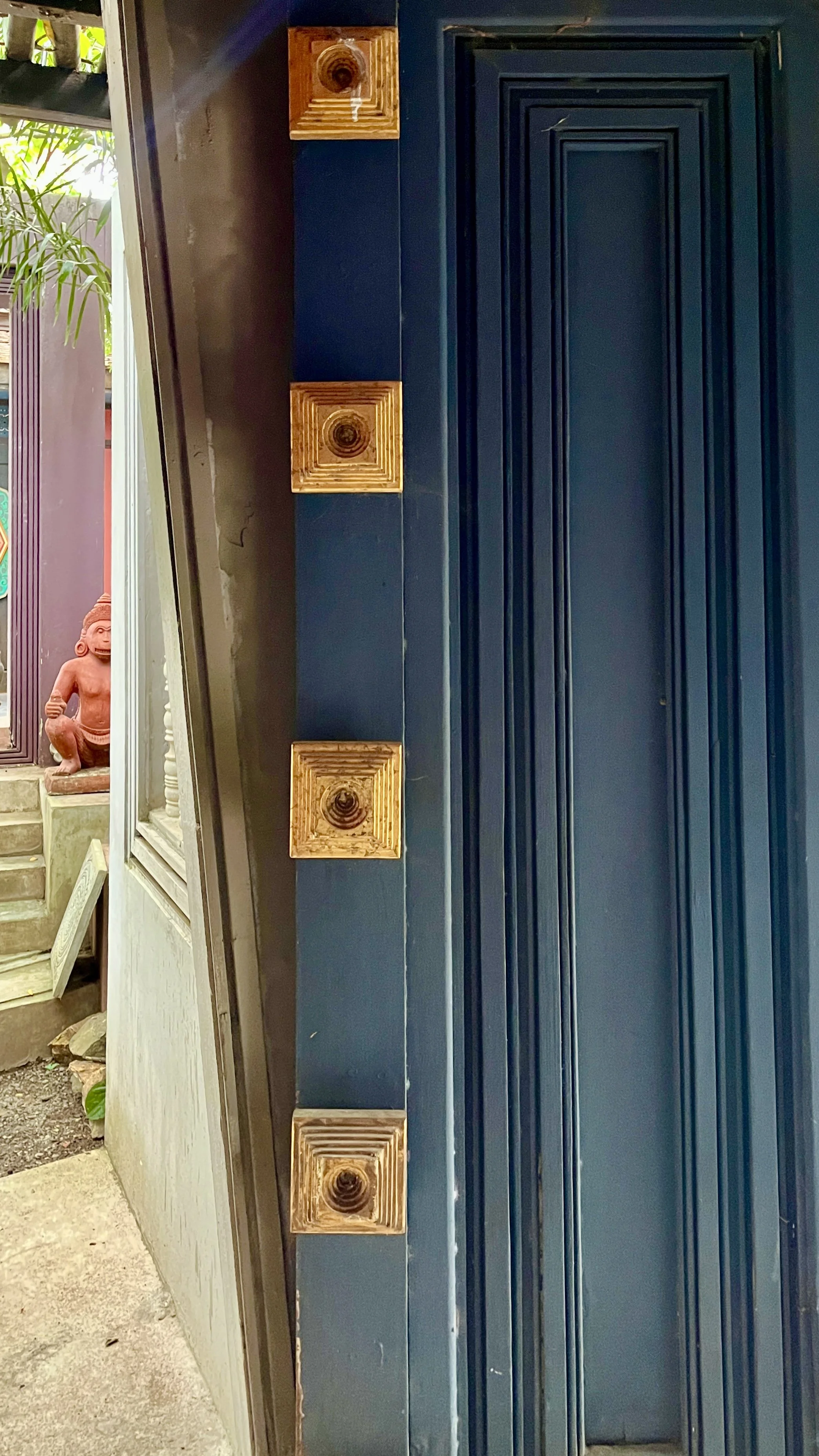
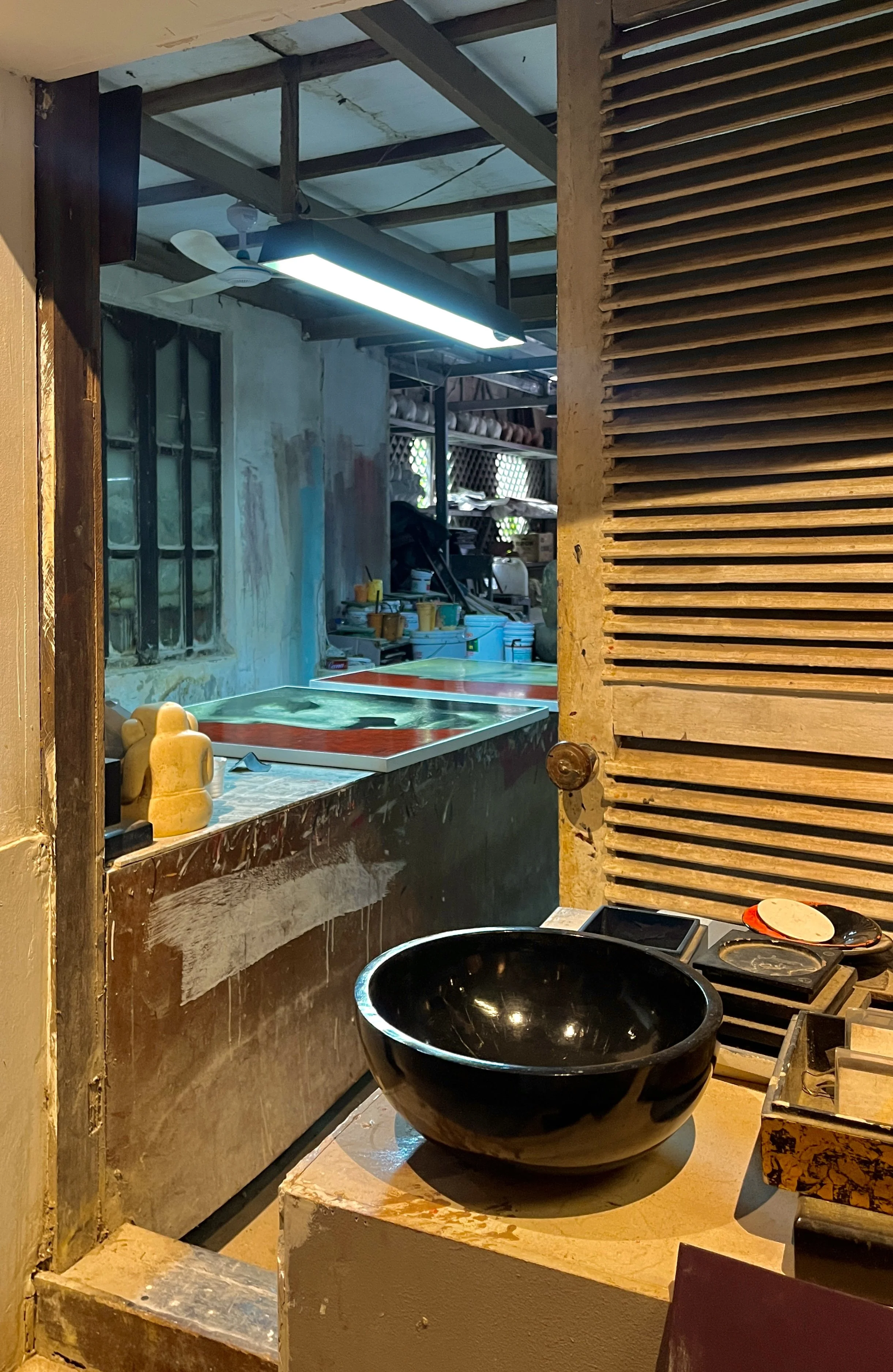
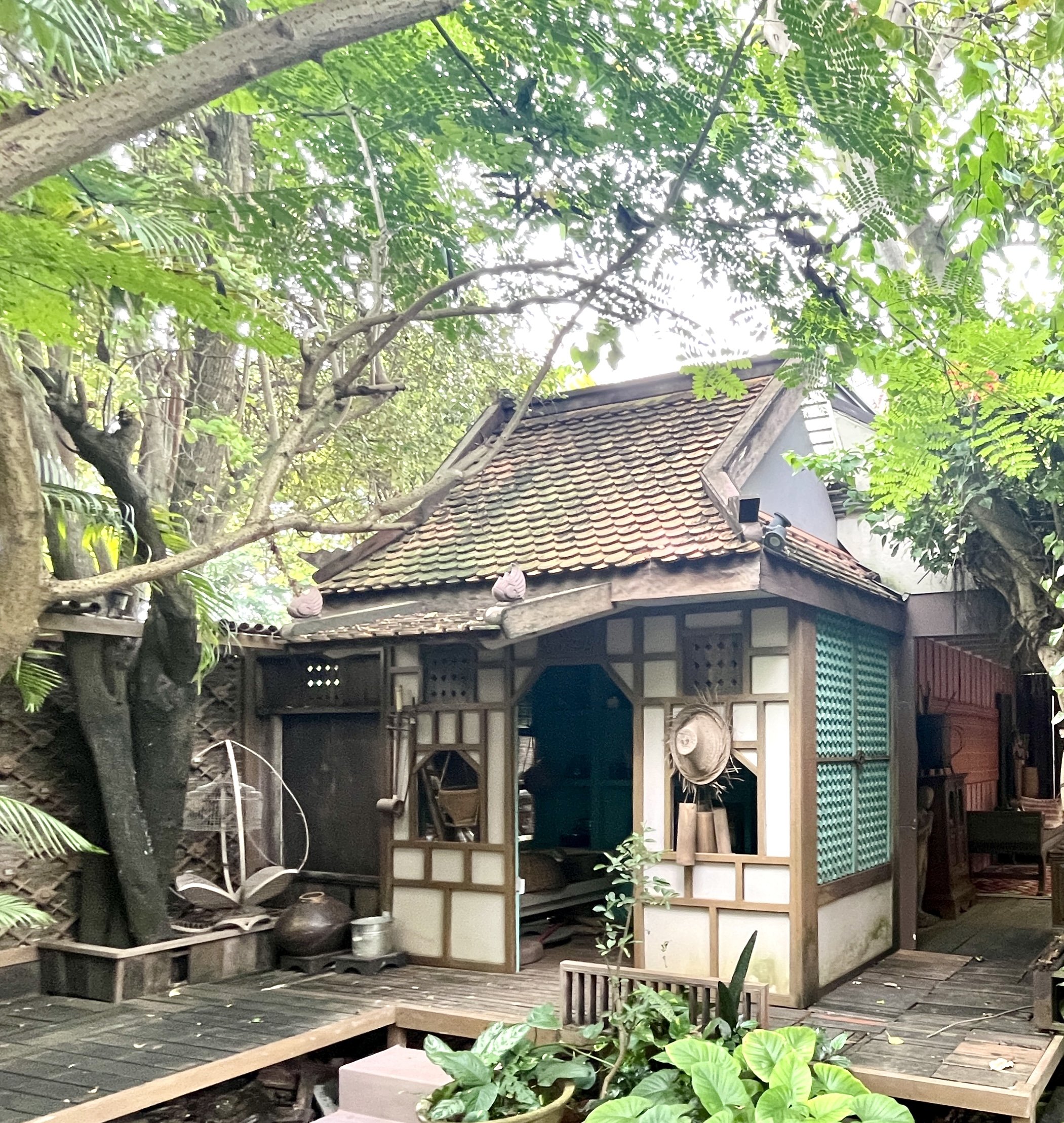
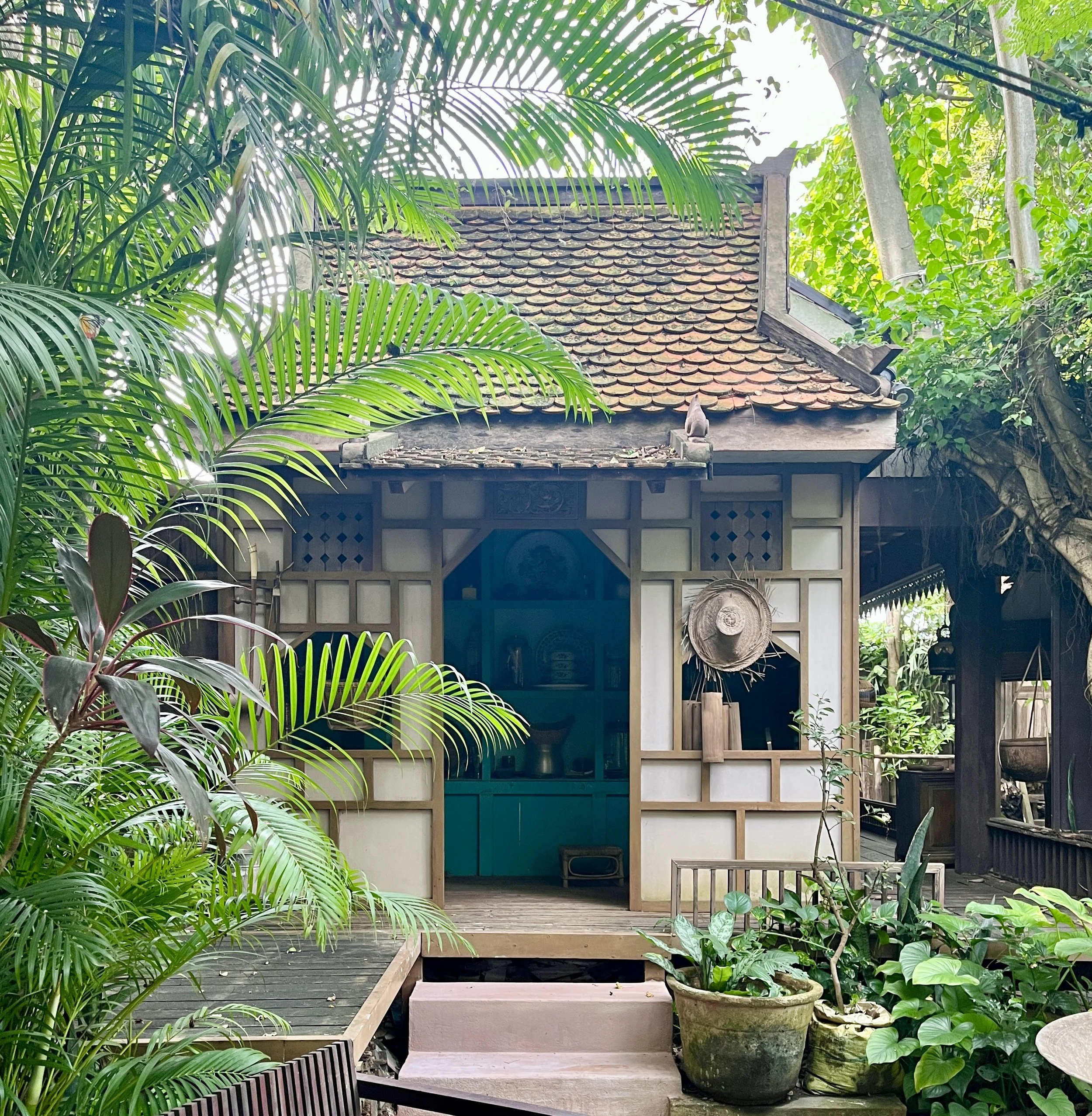
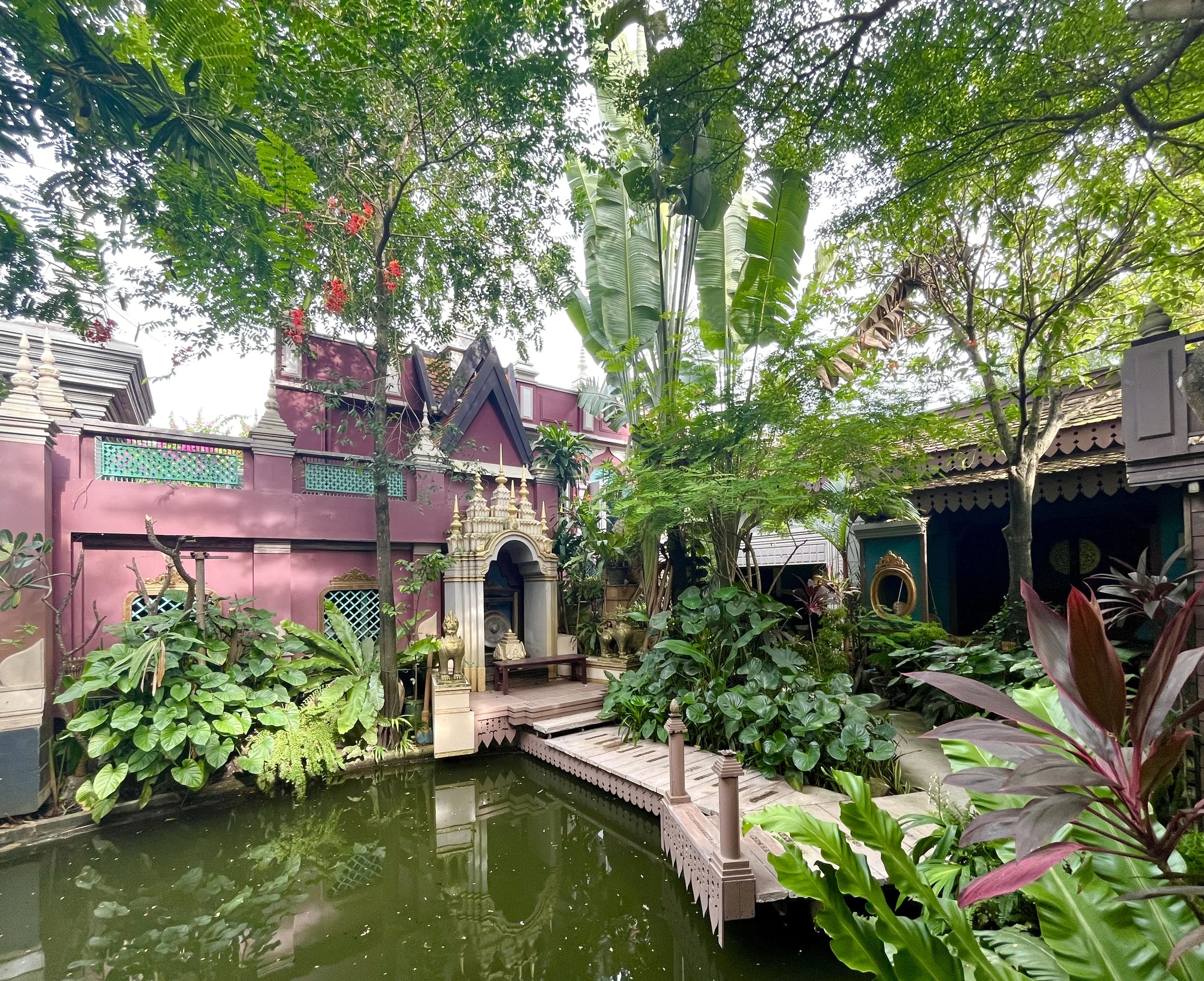
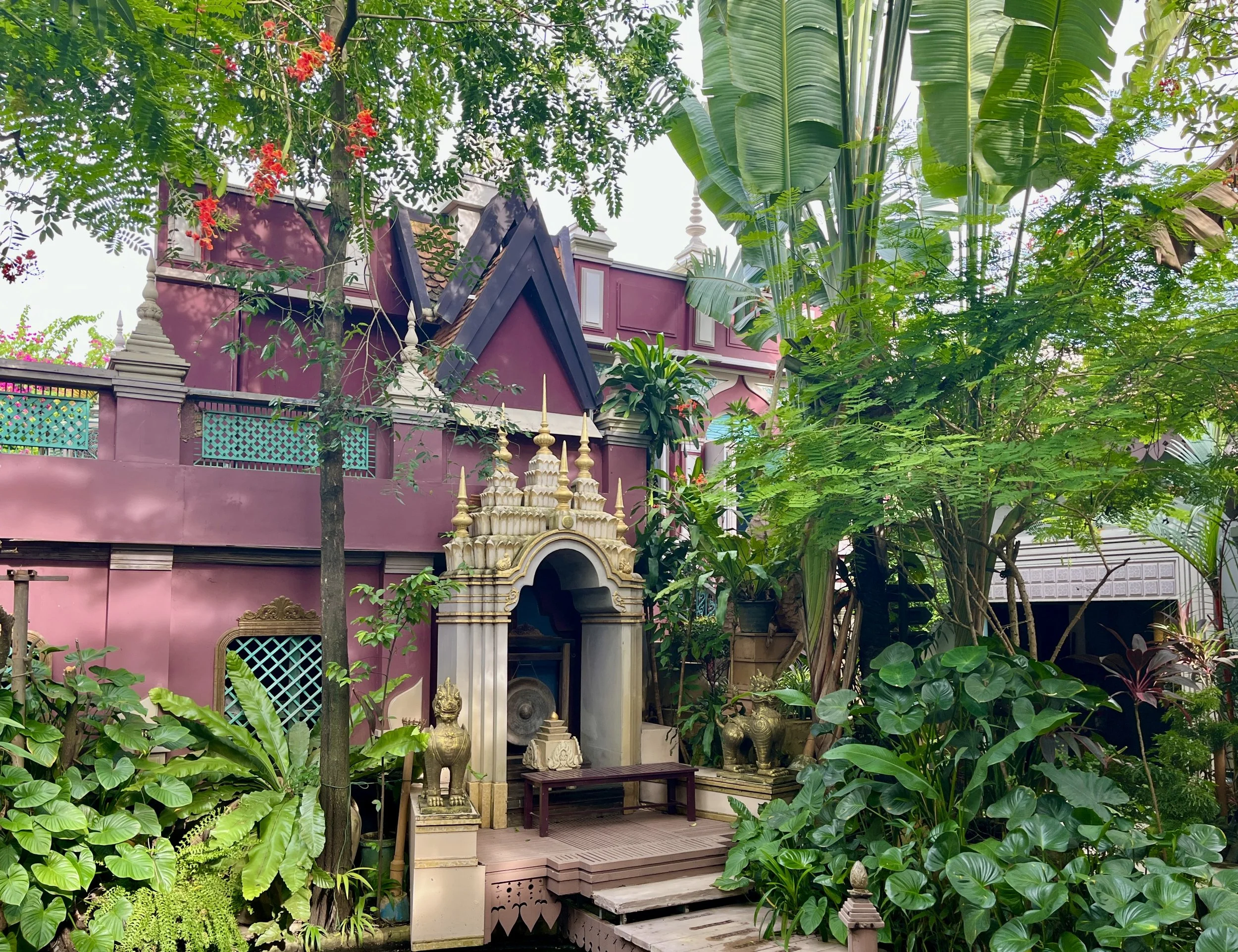
The place is a series of architectural and decorative arts vignettes, composed entirely of traditional crafts and motifs, studded with a few genuine antiques. The skill and taste level here is often mid, but occasionally striking, and rather more delightful when you understand and witness the place as a living document, an open workshop. Theam himself was on the premises when I visited, directing some roofing and repainting of a façade; he noticed me but did not introduce himself. In addition to the introduction to the language of Khmer aesthetics, the thing I appreciated most is his color sense- very different from mine, but I don’t dislike it. Dark chocolate woods and gemtone paints and fabrics figure heavily.

Since visiting the gallery, I’ve looked at these photos countless times for renovation inspiration.

Cat Cat Village, Sa Pa | Vietnam

catcat5.jpg

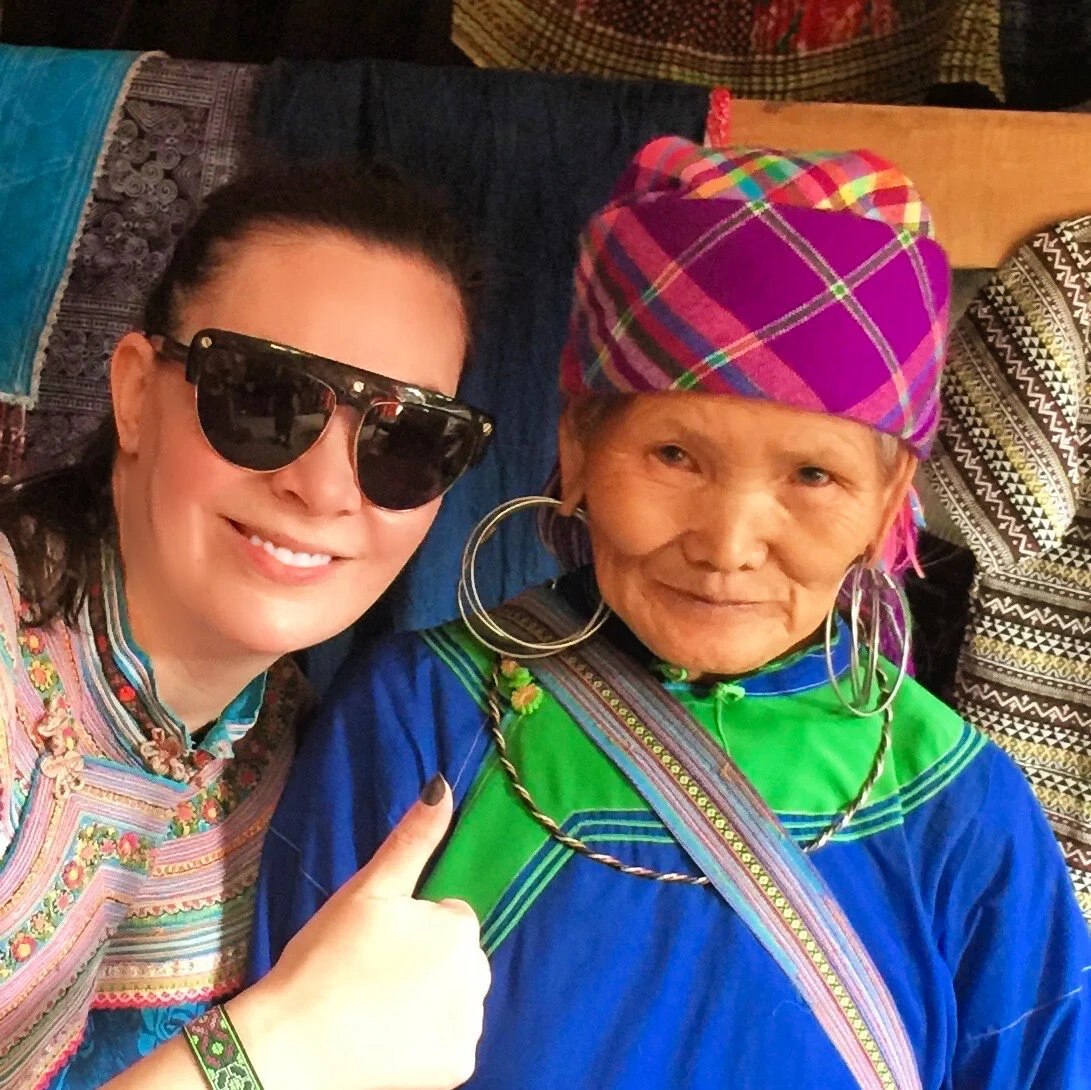
There’s no nice way to say it . . . Cat Cat Village is fake. It’s an entirely modern tourist trap built as a combo souvenir shop/Instagram set. Can you see ethnic minority people there? Sure. Can you buy genuine handicrafts from them? Yes, assuming you know what to look for. 

catcat2.jpg
catcat6.jpg
catcat14 (1).jpg
catcat4.jpg
catcat16_ (1).jpg

90% of the place, however, is Vietnamese shopkeepers selling junk souvenirs and costumes to Vietnamese tourists, who spend the day taking photos for social media. The costumes are about as close to what local minority women wear as Disney’s Princess Jasmine outfit is to traditional Kurdish costume.

catcat18.jpg
catcat20.jpg
catcat22.jpg
catcat24.jpg
catcat29.jpg

No one lives in the “H’mong family houses,” they just sell batik outside. To add insult to injury, Vietnamese pop music blasts through loudspeakers, and every couple hours there’s a ridiculous dance show supposedly featuring ethnic minority performers doing traditional dances in traditional costume (nope, definitely not, and barely).

catcat23.jpg
catcat26.jpg
catcat25 (1).jpg
catcat27.jpg
catcat28.jpg

The village is more or less a convenience. If you are:

  • too old or infirm to hike to a real village, or

  • you want to pick up Western style clothes “inspired by” the craft processes of the region (rather than wear things made by and for H’mong and Dao), or

  • you only travel for the ‘gram so you’re trying to get as many picturesque selfies as possible in one day

this is the place for you.

catcat31.jpg
catcat32.jpg
catat30.jpg
catcat33.jpg
catcat34.jpg

Personally, I only had two hours to spend here, and almost burst into tears when it seemed like the paths of shit shops would never end, and any good landscape shot was occupied by at least 3 couples inanely posing.

catcatshopping.jpg
catcat7.jpg
catcat21.jpg
catcat25.jpg
catcat9.jpg

My best advice for Cat Cat village is:

#1 It’s better under the influence. The food is better, the trash souvenirs are funnier, the people taking their social media personas way too seriously seem less of a nuisance, and when you inevitably overpay for something, it bothers you less

#2 Do it backwards. The main entrance is right next door to the Sapa Sky hotel. Pay for your ticket, get a map, and then walk down the hill for 20 minutes to the other entrance and go in there. If you want to buy authentic clothes and snacks from local ethnic minority people, they occupy the far less trafficked backend of the park, probably because the rent is cheaper. 

catcat11.jpg
catcat12.jpg
catcat10.jpg
catcat13.jpg

Sa Pa Town | Vietnam

sapa lake (1).jpg

Sa Pa is a popular tourist destination situated in the Northwestern highlands of Vietnam, in Lao Cai province, near the Chinese border. The main draws are interacting with exuberant and traditionally dressed ethnic minorities, and trekking through 500 year old rice terraces and bamboo forests. 

ricefield (1).jpg

The more athletic climb Mount Fansipan, the highest mountain in Indochina; the more materialistic hit all the ethnic and faux-ethnic shops and markets. Some come just to escape the heat and pollution of Hanoi, and stay in a luxury hotel for a relatively low price. Others come to rough it with the locals, butchering their own meals and cross-stitiching the day away in a wifi-free world.

sapa dog.jpg

Before the 16th century, the area was very sparsely populated, but there is evidence of prehistoric people: a 3 square mile area of 150-200 large stones carved with petroglyphs (called Bãi Đá Cổ, or Ancient Stone Field) spreads over Tả Van, Hầu Thào and Sử Pán communes in the Mường Hoa valley, just below the town. Archaeologists don’t know much about the glyphs (it’s been suggested that they’re pictographic, religious, related to 3 different language groups, made at different times by different groups, etc.) but believe they date to between 600 and 2000 years ago.

Screen Shot 2019-12-11 at 7.30.28 PM.png

By the 16th century, the northern highlands became home to the various ethnic minority tribes that still live in the villages today: Hmong (over 50%), Dao (25%), Tay (around 5%), and Giay (around 2%); plus Muong, Thai, Hoa and Xa Pho (just a few households of each). These groups were pushed into what is now Vietnam from China, during a time when the border was not clearly defined. 

dao women (1).jpg

The hill tribe people you meet in Sapa Town will mostly be Black Hmong and Red Dao, because their tribes have the largest populations in the villages closest to town. Somewhat further away (a day’s walk or so) are the White Hmong and Tay villages. To see other tribespeople in any great number requires a 2+ hour drive out of Sapa. 

sapa lady.jpg

Having colonized Tonkin in the 1880s, and signed two treaties with China defining its borders (in 1887 and 1895), the French began building up Sapa Town in the 1910s. At first a military hill station, it quickly became a high society resort. Roughly two days away from Hanoi via train and carriage (these days shortened to 8 hours via sleeper bus), Sa Pa is a relatively cool, mosquito free respite in all seasons. 

frenchy (2).jpg

The French famously lost their war with the Viet Minh in 1952, and bombed Sapa town into oblivion upon retreat. So, no colonial buildings remain. The French influence, however, lingers in two indelible ways: religion and cuisine. Most of the local Hmong, to my surprise, are Catholic, converted by the French a hundred years ago. As far as Western restaurants go, traditional French cuisine dominates, with boeuf bourgignon, blanquette de veau, and croque monsieurs more readily available here than in Hanoi.

sapa cathedral.jpg

Only in the ‘60s did ethnic Kinh people (the very dominant lowland majority, who foreigners identify as ‘Vietnamese’) begin to visit Sa Pa; only in the ‘90s (when Vietnam changed from central planning to a controlled capitalist economic model) did they begin settling in and opening tourist reliant businesses. Nowadays, the ratio of foreign tourists to Vietnamese natives of any ethnicity is 1:1 in the low season and much higher in the summer months. 

sapapotato (1).jpg

Sa Pa is currently building so much and so quickly it has sparked lots of debate about over-tourism. In town, every other building is a hotel/restaurant; all are constructed around a small, partly artificial lake/park, and every 5th lot or so there’s another hotel going up. Construction laws in Vietnam are lax, so construction noise is a nuisance from sunrise to sunset, 7 days a week. Countless tourist buses, vans and cabs clog the small and windy roads badly enough to make it slightly dangerous to walk during the day, and truly inadvisable after dark. 

sapa town (1).jpg

In the villages, most families have built houses with cement blocks and corrugated metal roofs, abandoning their traditional wooden architecture. Buzzwords like “ethical and sustainable tourism” have become meaningless ploys to overcharge for the same standardized experiences offered by the gazillion tour companies. The supply of handmade souvenirs far exceeds the demand, and the locals are extremely aggressive about selling them, including lying (*everything* is either an “antique“ or “took 2 years to make”) and trailing Westerners for literal hours. 

market (1).jpg

Apart from the practical, ecological and economic impacts, a cultural debate is also raging: which is worse, the “Kinh-washing” that’s rebuilding Sapa as a giant luxury instagram set for Vietnamese tourists (who naturally support Kinh-owned businesses that lock minority locals out of their own economy), or the “enforced primitivism” Westerners perpetuate (by patronizing the most old-fashioned/impoverished looking people in the name of authenticity).

view (1).jpg

I’m making it sound terrible. It’s not! I spent 3 weeks in Sapa and its surrounds and really enjoyed it. 

The Cooper Hewitt + Cube Museum 2019 Design Triennial: NATURE

Fantasma by AnotherFarm: transgenic silk (injected with coral DNA to glow red) dresses

Fantasma by AnotherFarm: transgenic silk (injected with coral DNA to glow red) dresses

As per the website:

With projects ranging from experimental prototypes to consumer products, immersive installations, and architectural constructions, Nature—Cooper Hewitt Design Triennial, co-organized with Cube design museum, presents the work of sixty-two international design teams. Collaborations involve scientists, engineers, advocates for social and environmental justice, artists, and philosophers. They are engaging with nature in innovative and ground-breaking ways, driven by a profound awareness of climate change and ecological crises as much as advances in science and technology.

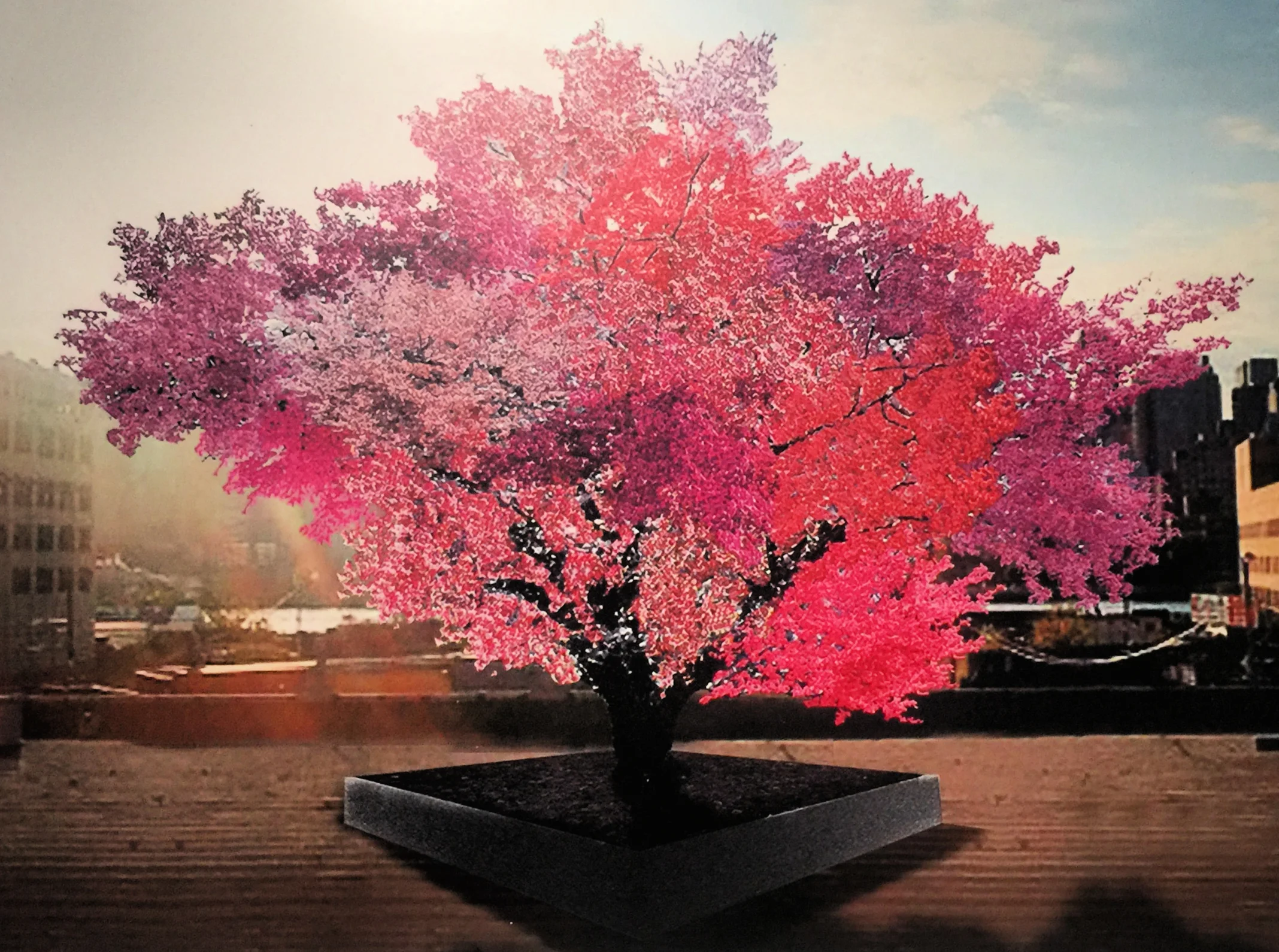
Tree of 40 Fruit by Sam Van Aken: using centuries old grafting techniques, 40 varietals are incorporated into one living tree

Tree of 40 Fruit by Sam Van Aken: using centuries old grafting techniques, 40 varietals are incorporated into one living tree

ch 6.jpg

Choreography of Life by Charles Reilly: depicts ATP synthase harvesting the metabolic energy stored in ATP bonds

Bioreceptive Concrete Panels by Marcos Cruz, Richard Beckett, Javier Ruiz, Nina Jotanovic, Anete Salman, Manja van de Worp: a natural method of fighting air pollution

Bioreceptive Concrete Panels by Marcos Cruz, Richard Beckett, Javier Ruiz, Nina Jotanovic, Anete Salman, Manja van de Worp: a natural method of fighting air pollution

ch 8.jpg
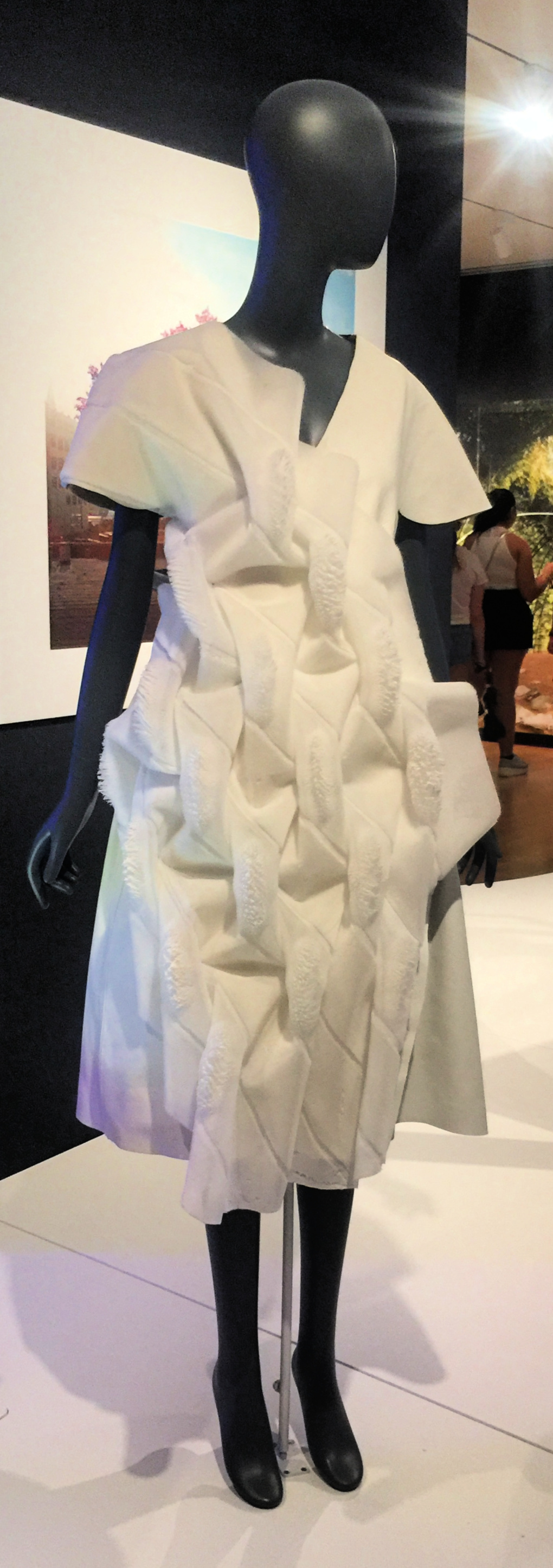
Cillia coat by Jifei Ou, Hiroshi Ishii, Fabian Neumann, Sen Dai: 3D printed hairlike structures on the coat can be programmed to provide warmth, act as sensors or aid movement

Cillia coat by Jifei Ou, Hiroshi Ishii, Fabian Neumann, Sen Dai: 3D printed hairlike structures on the coat can be programmed to provide warmth, act as sensors or aid movement

Bamboo Theatre by Xu Tiantian: with a little help from an architect, local Chinese bamboo basketmaking knowhow helps villagers build stable architectural structures for community gatherings

A World of Sand by AtelierNL: a sentimental statement about teamwork and diversity?

A World of Sand by AtelierNL: a sentimental statement about teamwork and diversity?

Screen Shot 2019-07-05 at 2.50.49 PM.png
AIR (Avoid-Intercept-Redesign) sneaker prototype for Adidas by Parley for the Oceans: running shoes made entirely of marine plastic waste

AIR (Avoid-Intercept-Redesign) sneaker prototype for Adidas by Parley for the Oceans: running shoes made entirely of marine plastic waste

3D-Painted Hyperelastic Bone by Adam E. Jakus and Ramille Shah: hydroxyapatite (a form of calcium found in bones) makes these implants porous, flexible, strong and recognized by the body like real bones, aiding faster bone regeneration and tissue in…

3D-Painted Hyperelastic Bone by Adam E. Jakus and Ramille Shah: hydroxyapatite (a form of calcium found in bones) makes these implants porous, flexible, strong and recognized by the body like real bones, aiding faster bone regeneration and tissue integration with low or no immune response

ch 12.jpg

The Substitute by Alexandra Daisy Ginsberg: CGI animation and DeepMind behavioral software is used to recreate the extinct male northern white rhino

Project Coelicolor by Natsai Audrey Chieza: Textiles dyed with pigment producing bacteria eiiminate water waste and pollution from the process. Colors are controlled by pH, oxygen exposure and time.

Project Coelicolor by Natsai Audrey Chieza: Textiles dyed with pigment producing bacteria eiiminate water waste and pollution from the process. Colors are controlled by pH, oxygen exposure and time.

ch 14.jpg
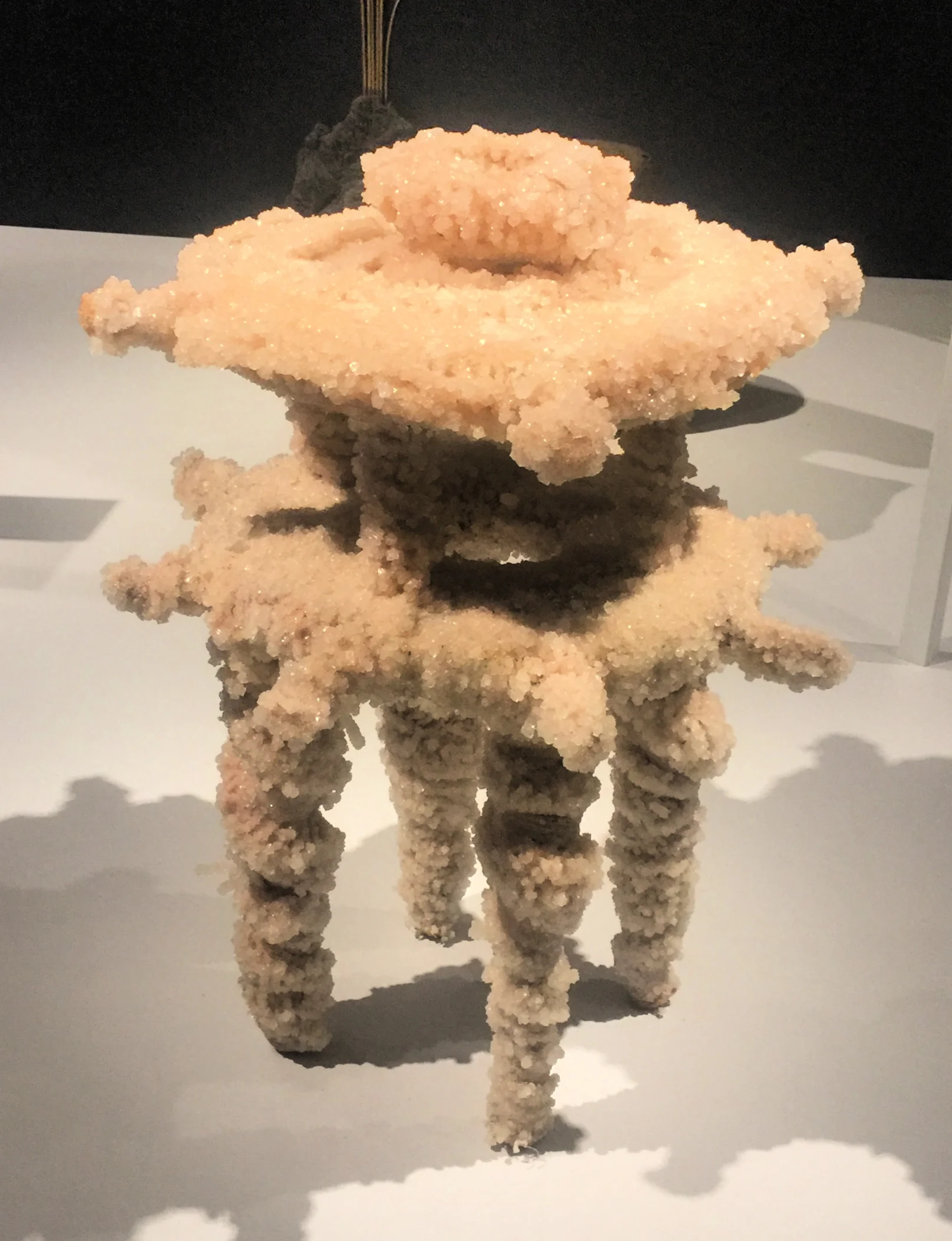
Bleached (II) by Erez Navi Pana: this salt-crystallized loofah and wood stool symbolizes changing human perception of natural commodities.

Bleached (II) by Erez Navi Pana: this salt-crystallized loofah and wood stool symbolizes changing human perception of natural commodities.

Cisterns by Hiroshi Sambuichi: displayed in old city cisterns around the world, this installation transposes the experience of visiting the Itsukushima Shrine (in Miyajima, Japan) onto local environments

Biocement Masonry by Ginger Krieg Dosier: made of mixed sand, nutrients and microorganisms, these bricks are as strong as standard bricks and are grown and dried in molds, eliminating high carbon emissions typical of the standard firing process.

Biocement Masonry by Ginger Krieg Dosier: made of mixed sand, nutrients and microorganisms, these bricks are as strong as standard bricks and are grown and dried in molds, eliminating high carbon emissions typical of the standard firing process.

Warka Water Tower by Arturo Vittori: collects potable water from dew, fog and rain

Warka Water Tower by Arturo Vittori: collects potable water from dew, fog and rain

Aguahoja II by Neri Oxman: made of biocomposite materials made from shrimp shells and fallen leaves, these “skin and shell” structures can be 3D printed and programmed with different mechanical, optical and olfactory properties, including timed deco…

Aguahoja II by Neri Oxman: made of biocomposite materials made from shrimp shells and fallen leaves, these “skin and shell” structures can be 3D printed and programmed with different mechanical, optical and olfactory properties, including timed decomposition.

Curiosity Cloud by Katharina Mischer and Thomas Traxler: hand fabricated replicas of different insects that would not be found together in nature are united, and triggered to flutter by human movement

Made by Rain by Aliki van der Kruijs: textiles dyed by rain interacting with their ink are “fingerprints'“ of location, date, time interval, and millimeters of rainfall

Made by Rain by Aliki van der Kruijs: textiles dyed by rain interacting with their ink are “fingerprints'“ of location, date, time interval, and millimeters of rainfall

After Ancient Sunlight by Charlotte McCurdy: this petroleum free algae-based plastic raincoat is manufactured in a manner that metabolizes atmospheric carbon rather than emitting it

After Ancient Sunlight by Charlotte McCurdy: this petroleum free algae-based plastic raincoat is manufactured in a manner that metabolizes atmospheric carbon rather than emitting it

Personal Food Computer by Daniel Poitrast and the OpenAg team at MIT: a tabletop sized, robot monitored chamber creates environmental conditions yielding desired phenotypic expressions from plants

Personal Food Computer by Daniel Poitrast and the OpenAg team at MIT: a tabletop sized, robot monitored chamber creates environmental conditions yielding desired phenotypic expressions from plants

Visualizing the Cosmic Web by Kim Albrecht: how are galaxies in our universe related? mapping their connections with different models helps us better understand the history of our universe, or potential multiverse

Monarch Sanctuary by Mitchell Joachim and Vivian Kuan: a vertical meadow with glass facade and carefully temperature and humidity controlled interior helps replete dwindling Monarch butterfly populations

Monarch Sanctuary by Mitchell Joachim and Vivian Kuan: a vertical meadow with glass facade and carefully temperature and humidity controlled interior helps replete dwindling Monarch butterfly populations

ch 20.jpg
ch 21.jpg

I hope against hope that some of these carbon negative and pollution upcycling technologies become standard before we ruin Earth’s habitability.

Rockefeller Style: Inspiration & Picks from the Peggy & David Rockefeller May 2018 Auctions at Christie's

Wealth, New York City, politics, modern art, banking . . . the name Rockefeller evokes such strong associations of privilege that most people assume they couldn't pick up anything from their style. After all, what room wouldn't be improved by a Renoir or Picasso? What dinner wouldn't be beautified by a service made for Napoleon?

Looking over the Peggy & David Rockefeller auctions, though, there's a lot to be gleaned by the average decorator. The areas in which they chose to collect (apart from blue chip art and gems) are both indicative of their milieu and easy to imitate, with high quality reproductions or inspired modern products:

  • Granny's antique porcelain dinner and dessert services, with hits from virtually every active region of creation in the 18th and 19th centuries (Sèvres, Coalport, Minton, Wedgwood, Edo period Japanese, Chinese export, Herend, Meissen, etc.)
  • lots of coats and crests engraved on silver, almost all George II & George III, with emphasis on tea and chocolate pots and salvers/waiters/trays
  • animalia in textures from Meissen porcelain figurines to vintage wooden duck decoys
  • exotic souvenirs including Greek relief pottery, gilded Buddhas, Chinese watercolors, African masks, and Persian miniature paintings
  • English furniture, again almost all George II & George III, with a focus on veneers and inlays in amboyna, amaranth, and fruitwoods
  • Americana: hurricane lamps, naïve portaits and nautical paintings, southwestern Native artifacts
  • comfy Victoriana: andirons, tea caddies, bedwarmers

The classic palette is also of note: hallway and kitchen walls are ivory; rooms for entertaining are mustard yellow, cherry red, apple green, and papered; rooms for relaxation and reflection are wood paneled. Floor length curtains with matching pelmets are the only sort of window treatment, with chintzes featuring prominently. Upholstery is the aforementioned chintz, silk damask, cotton velvet, or needlepoint. Rugs are antique Oriental carpets only.

Finally, the arrangement of objects is very classic: art and lighting is always centered, tablescapes always symmetric, lamps and side tables only come in pairs, every mantel is furnished with a garniture. Lighting comes from sconces, chandeliers and table lamps, no overheads or standing lamps. Folding screens artfully hide doors; most every surface has a decorative bowl or grouping of humorous porcelain figures flanked by a pair of table lights. Display cabinets abound, and mirrors are set up to reflect careful arrangements of objects, rather than expand the feeling of space. 

The online sale lasts a week, starting May 1st, and there are several items with estimates below $1000. If you need a special touch or conversation piece for a room, these are my picks:

Click here to go to the online auction at christie's