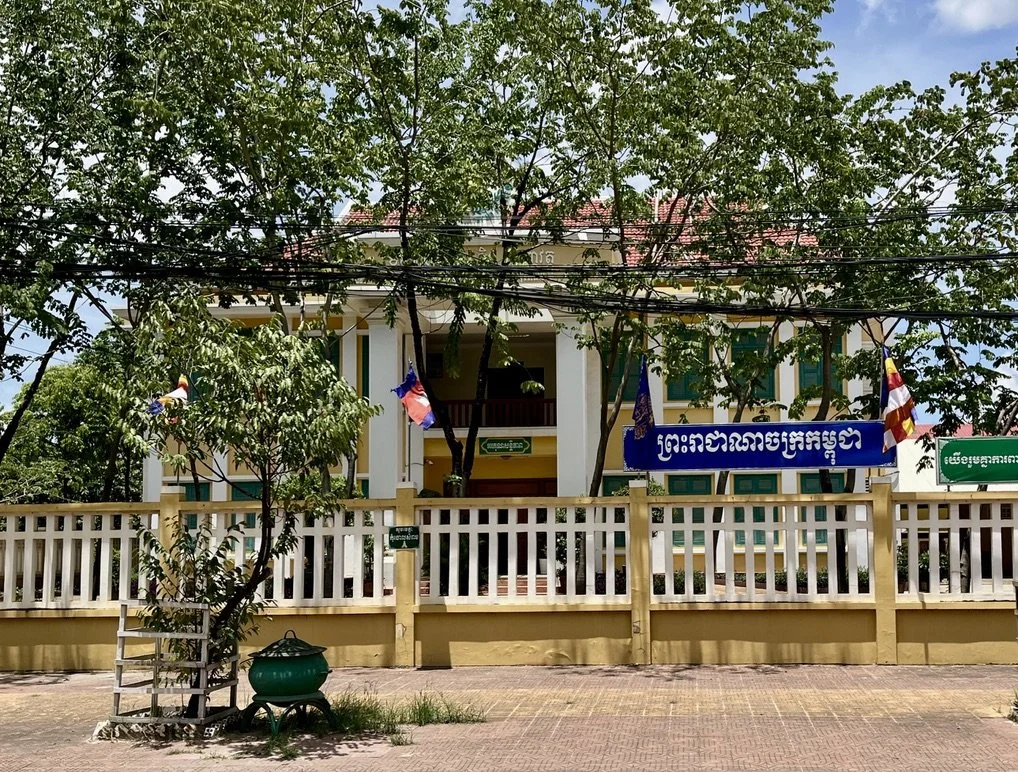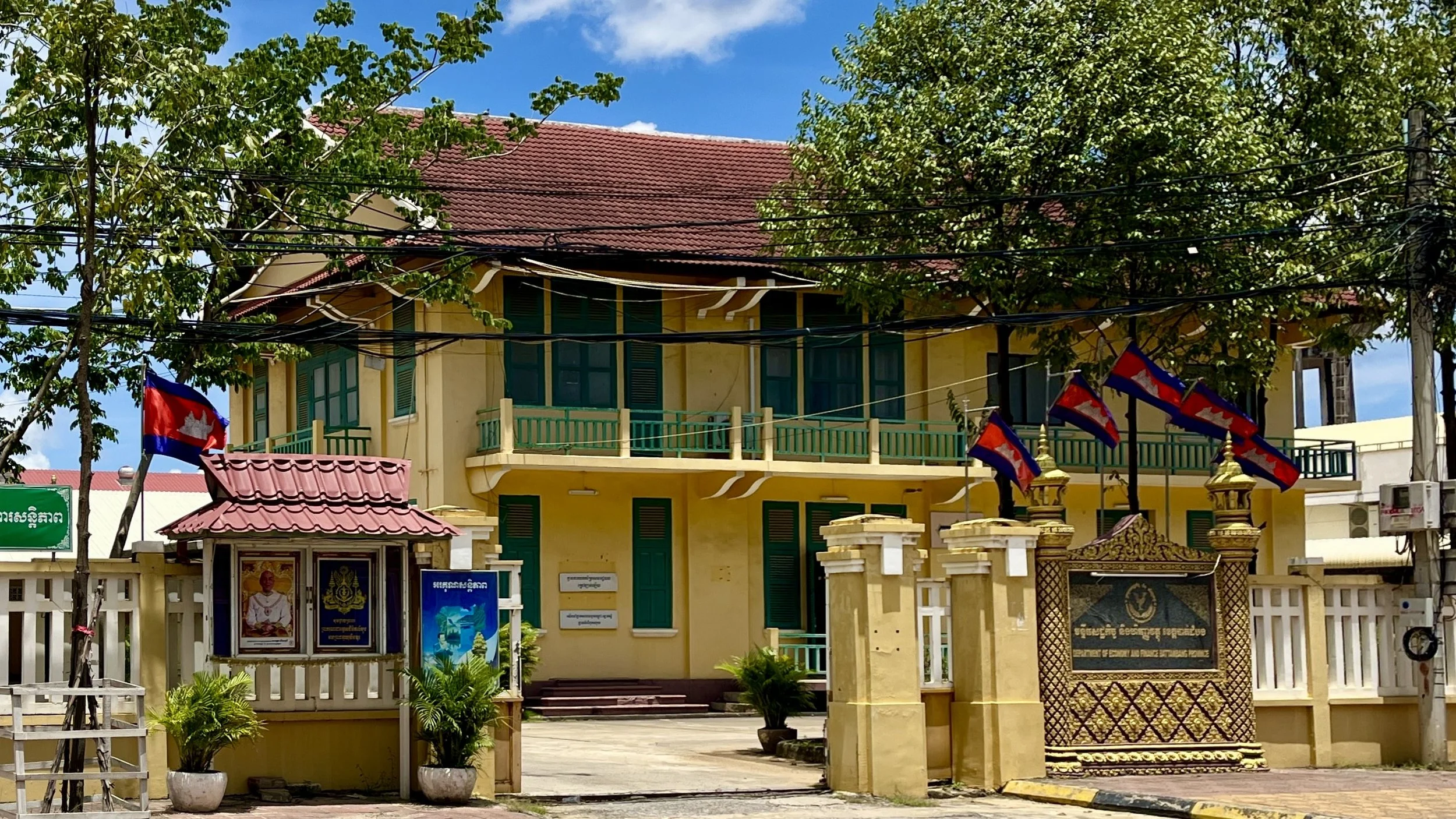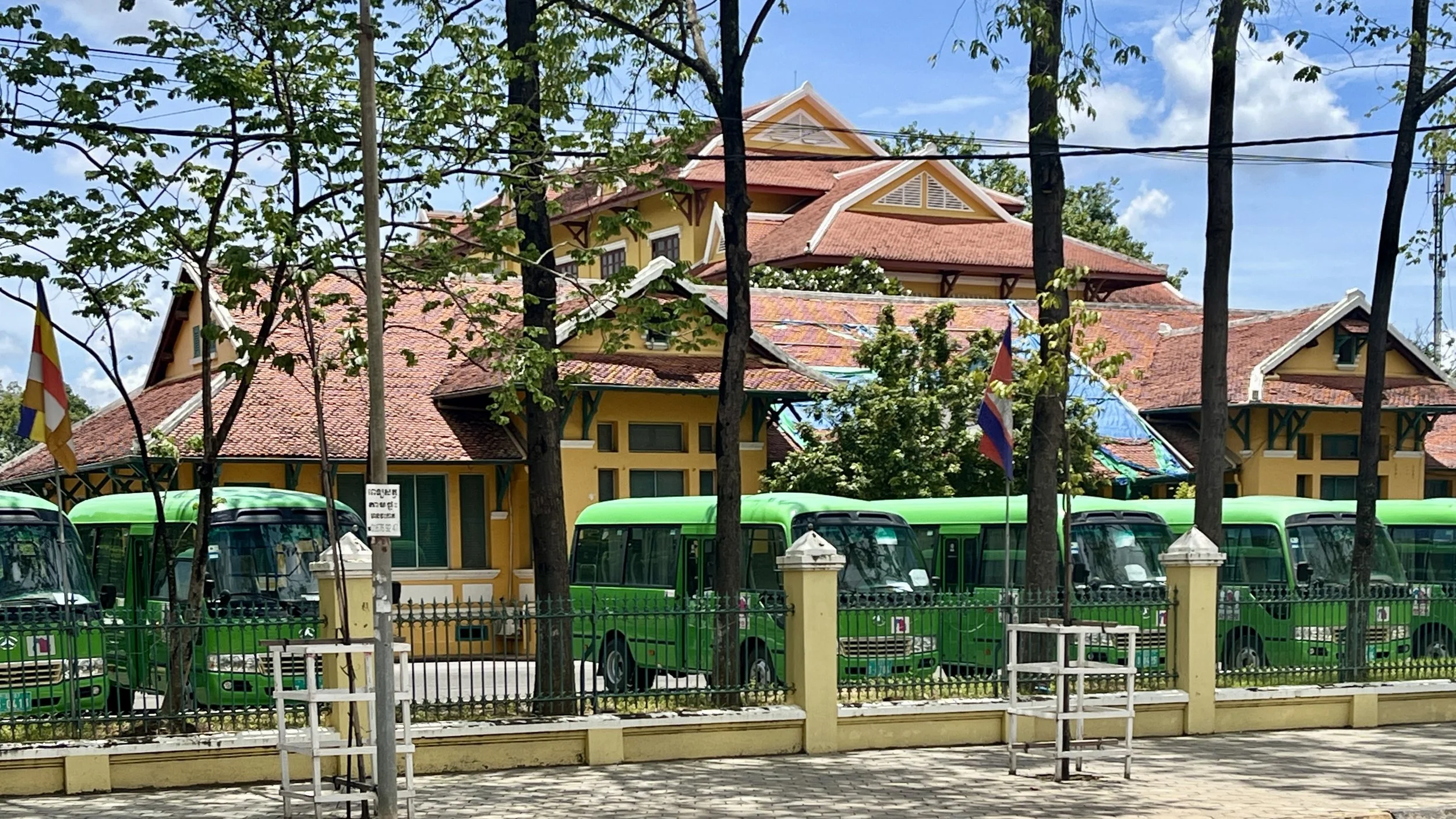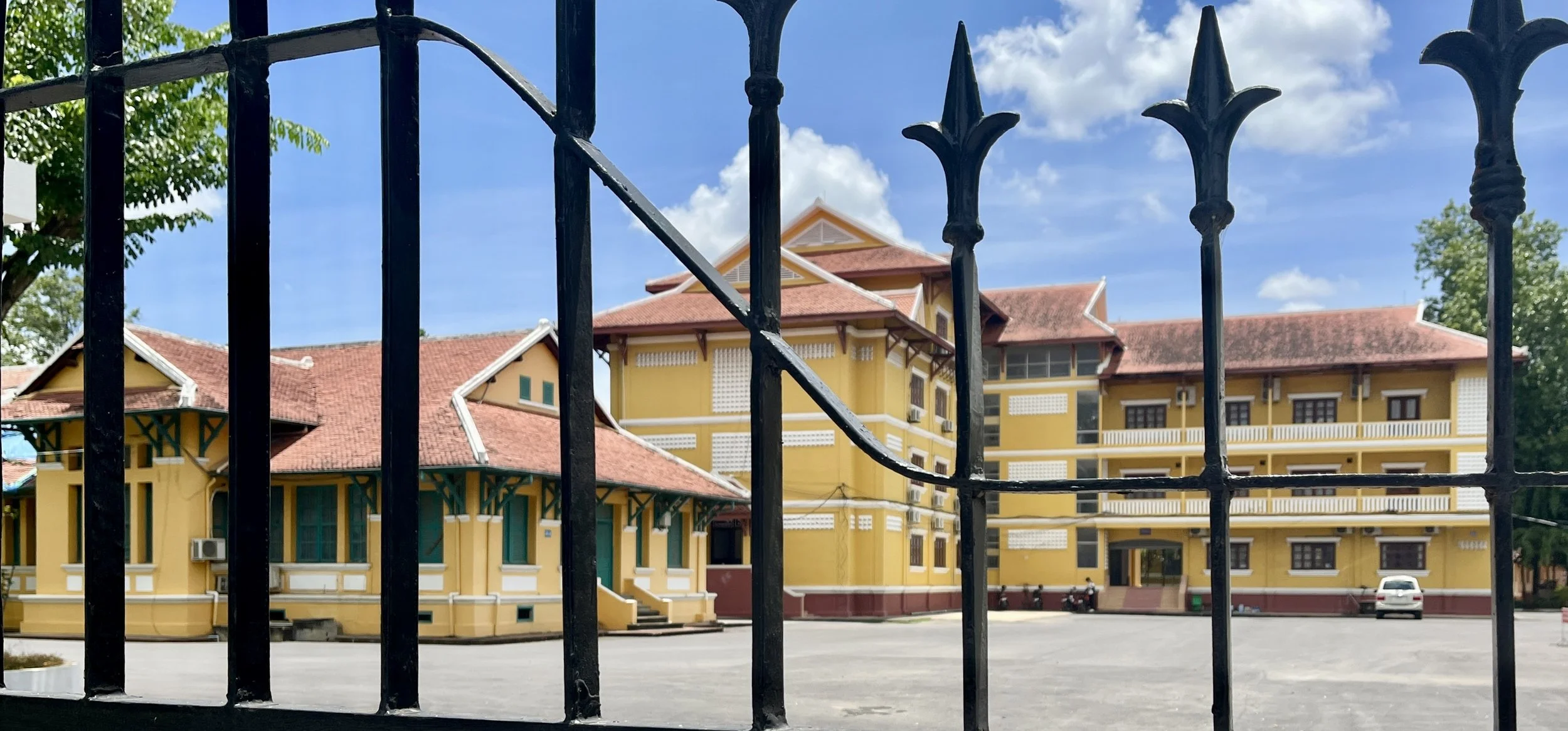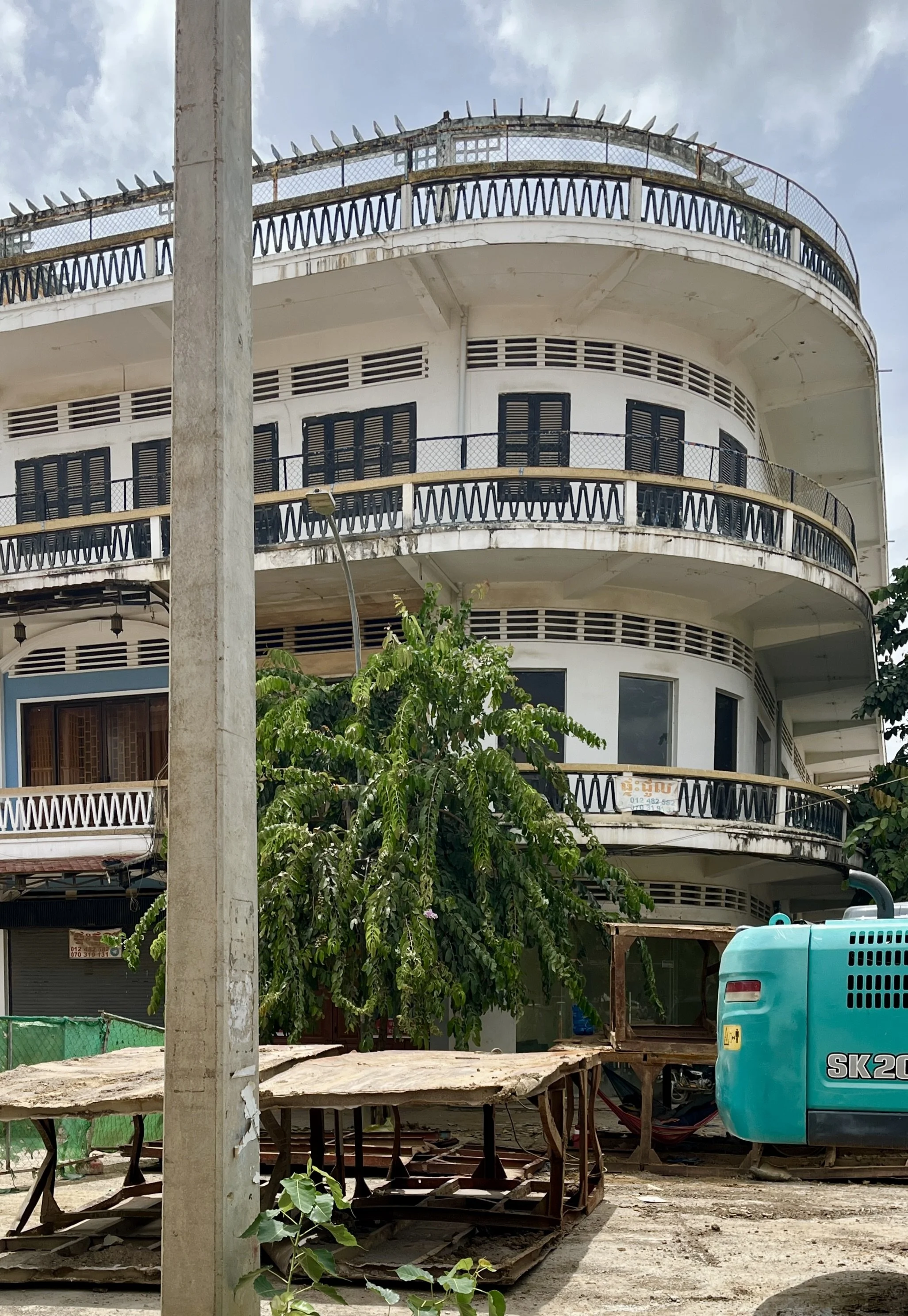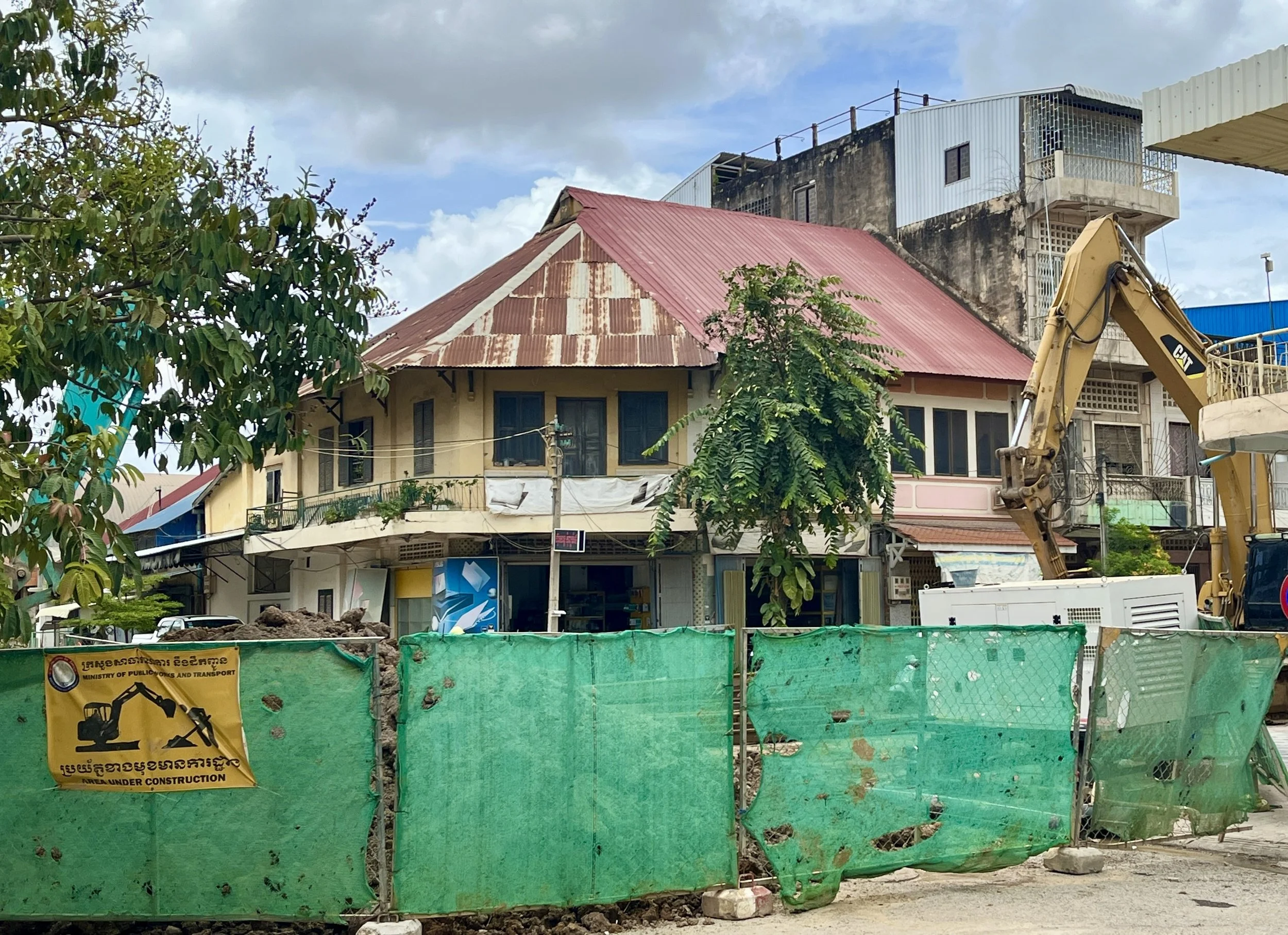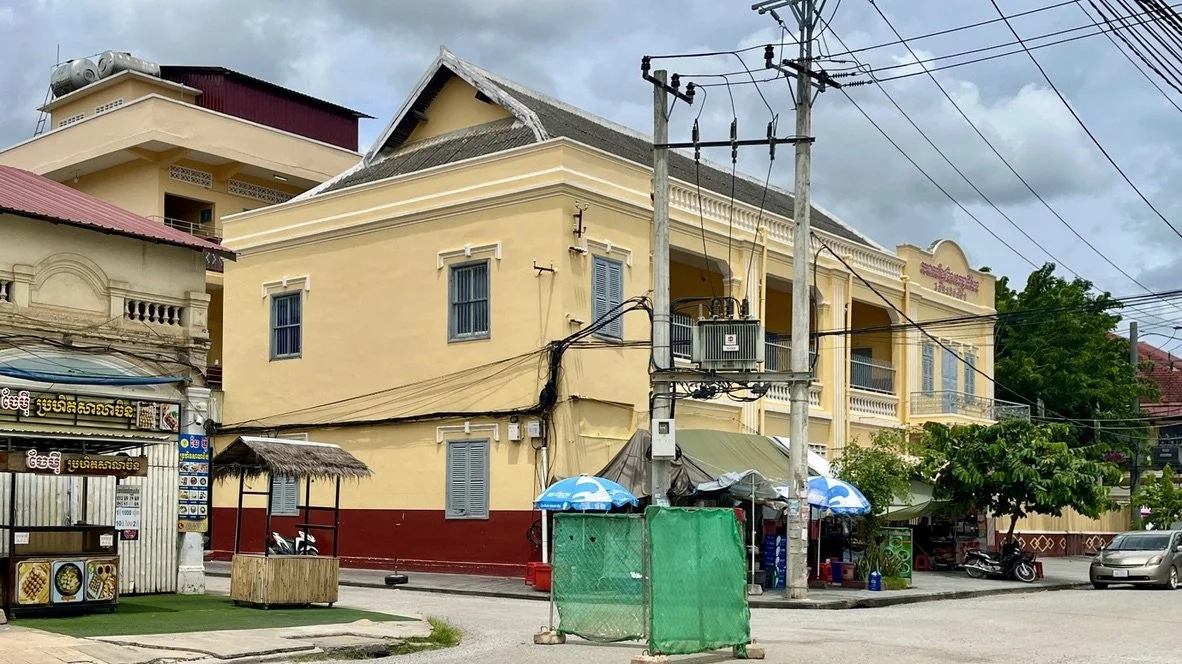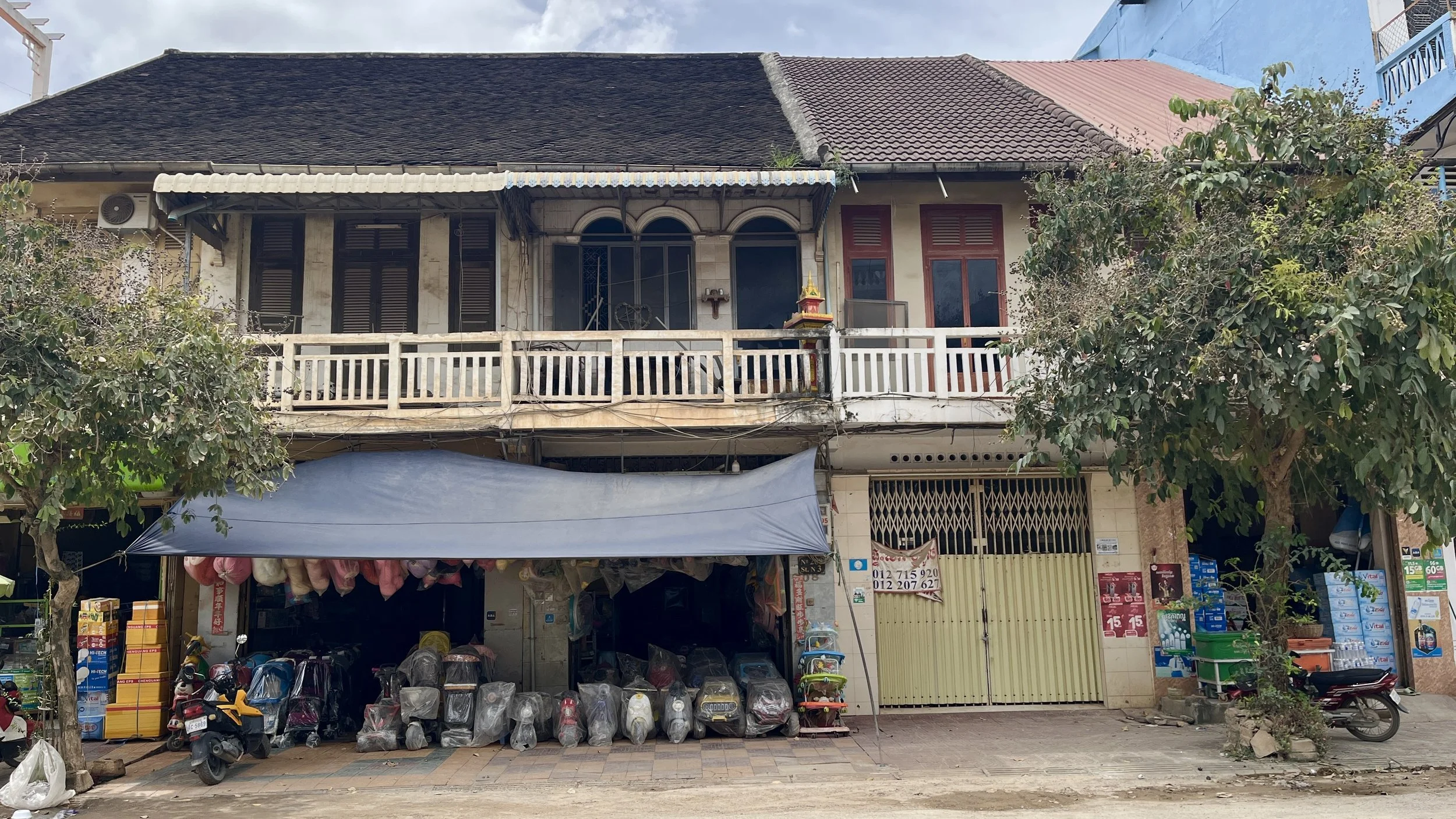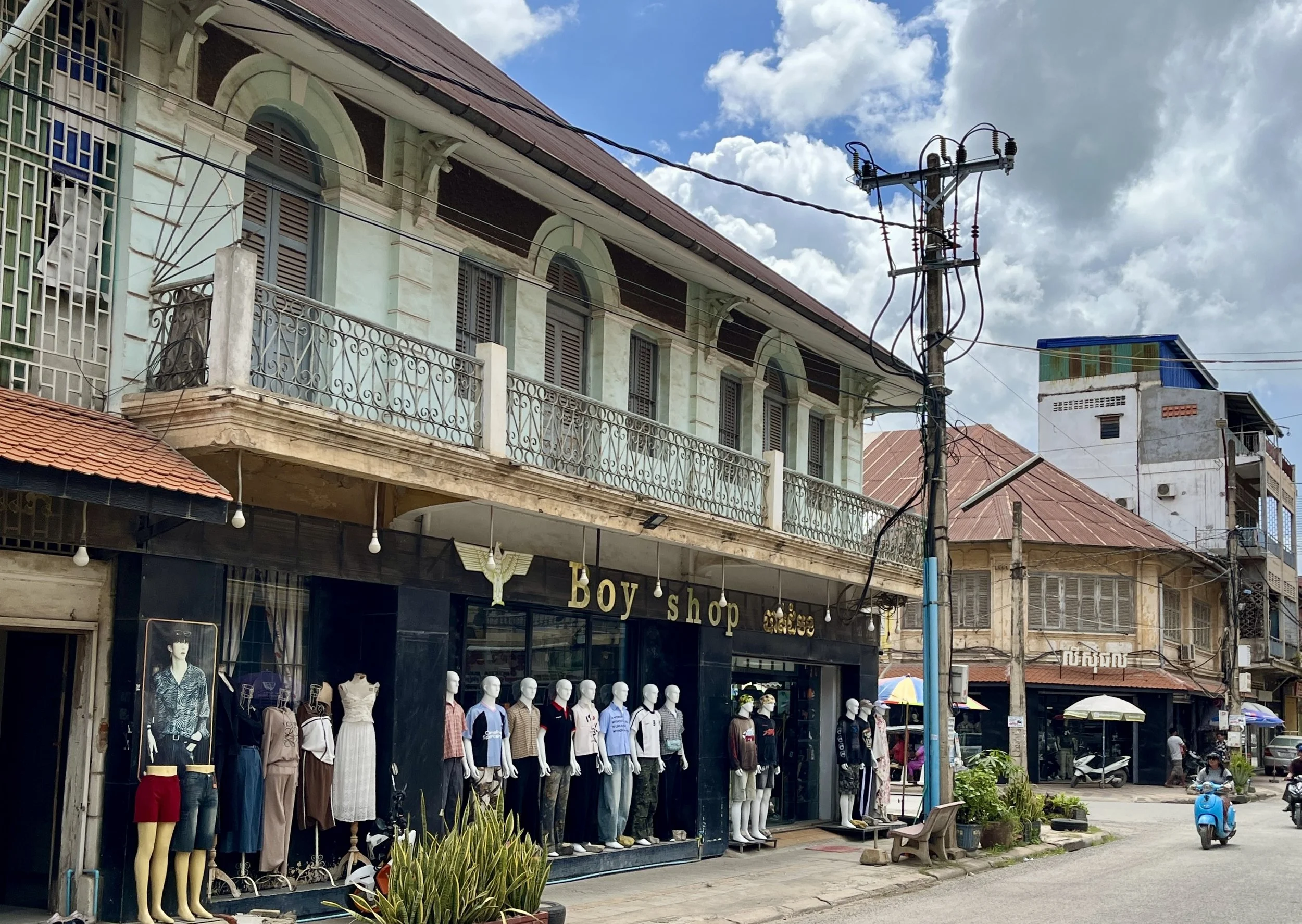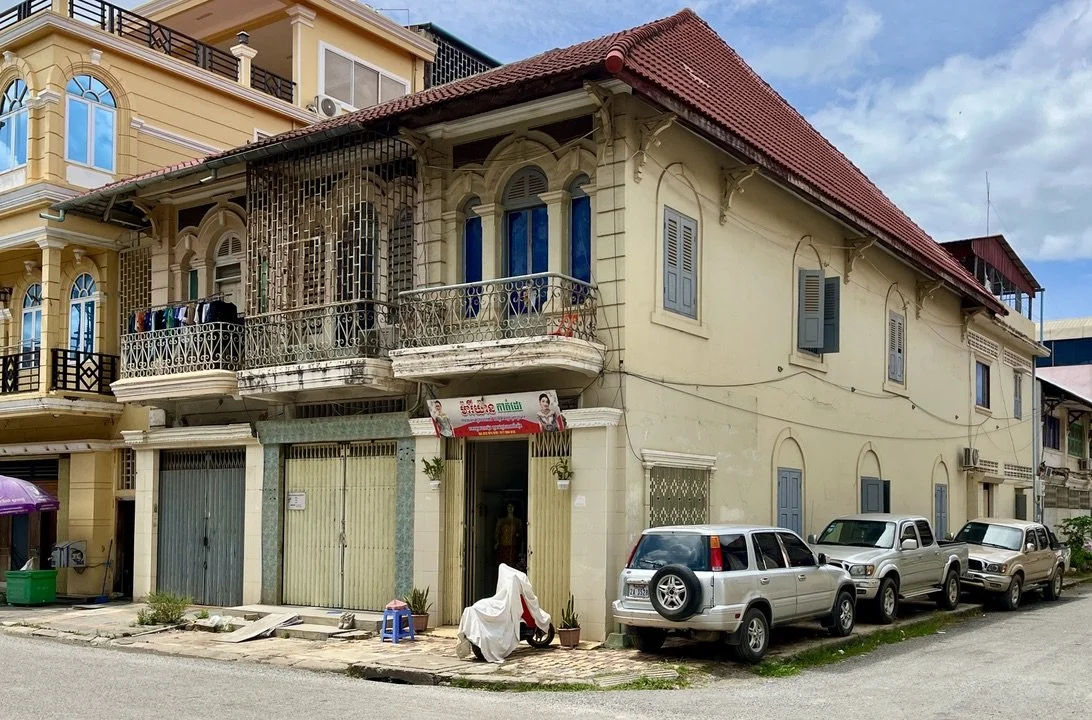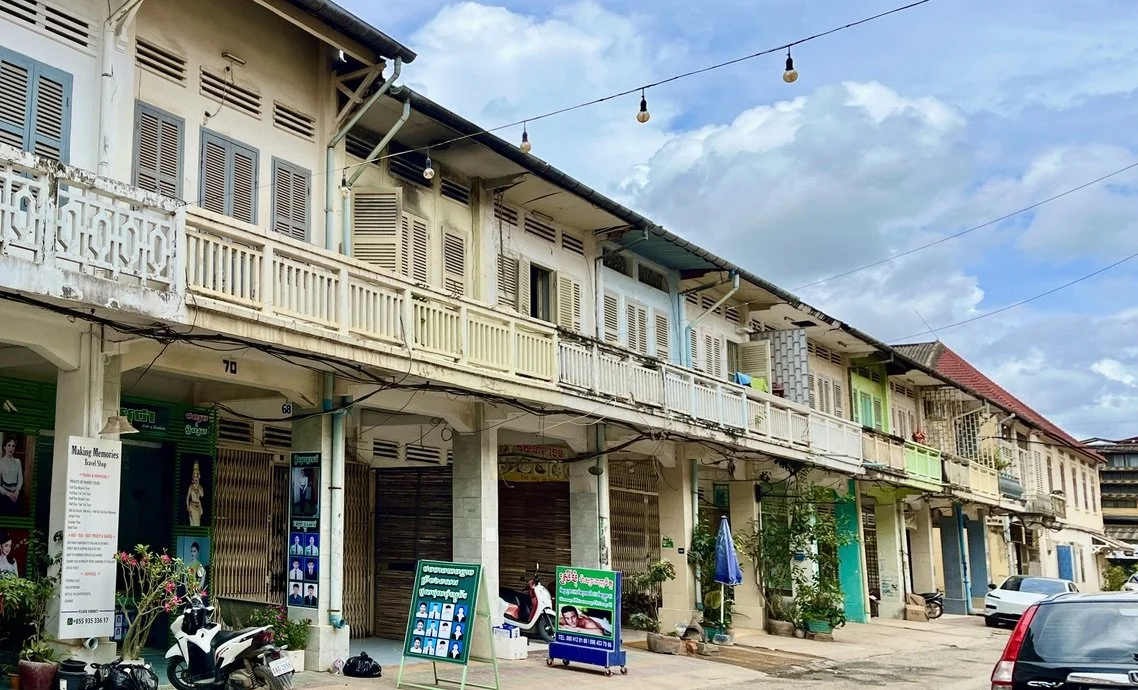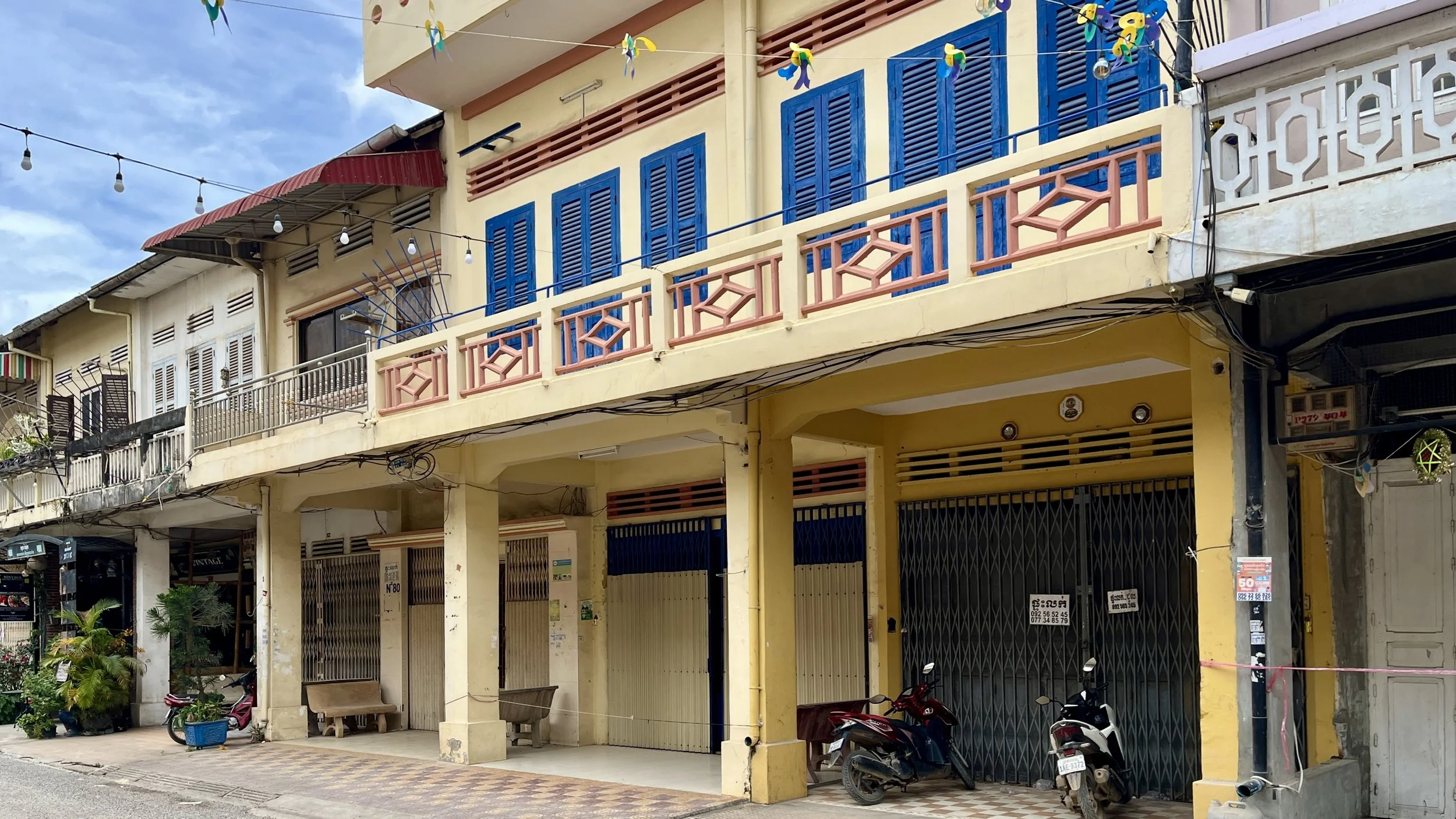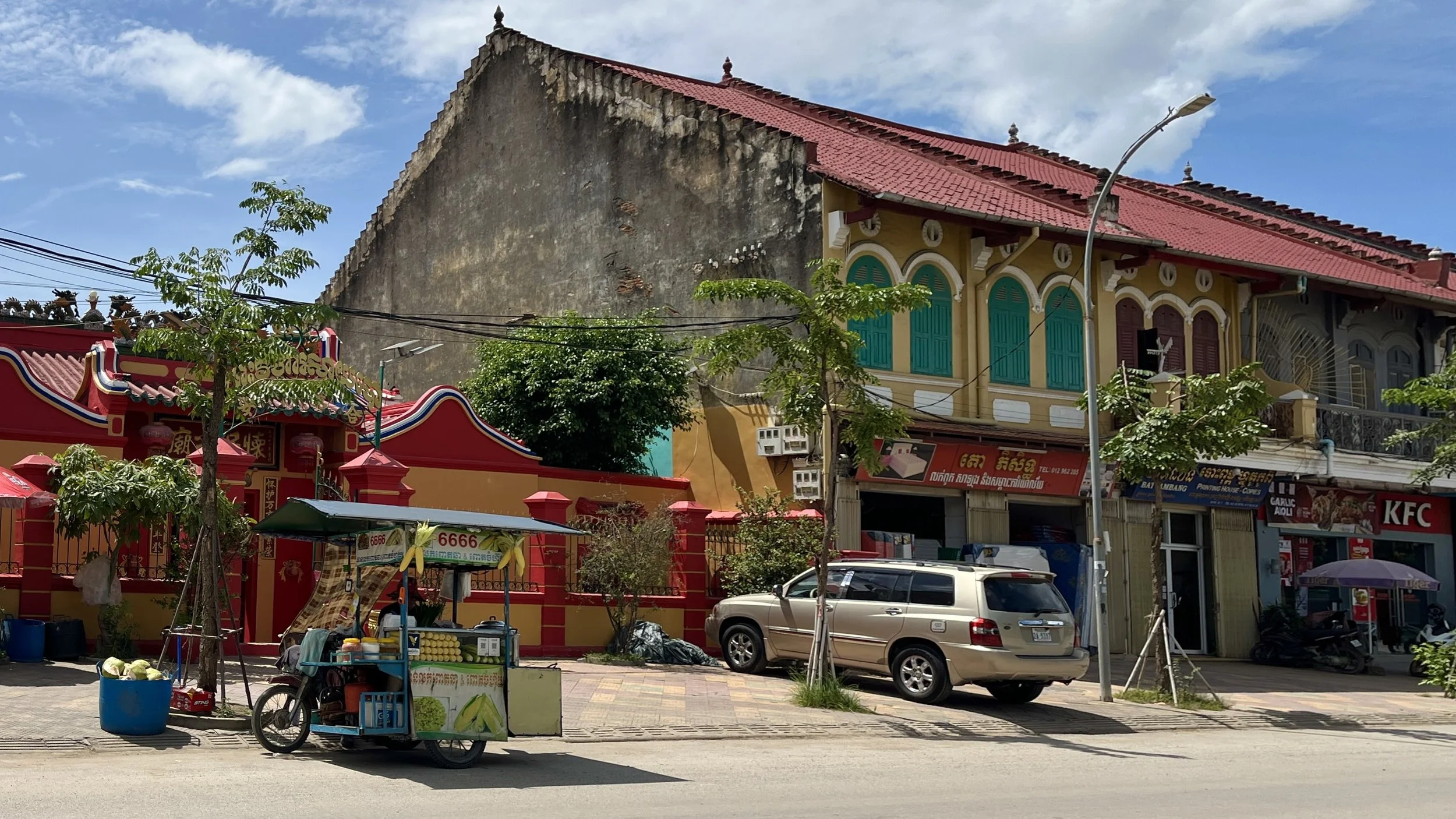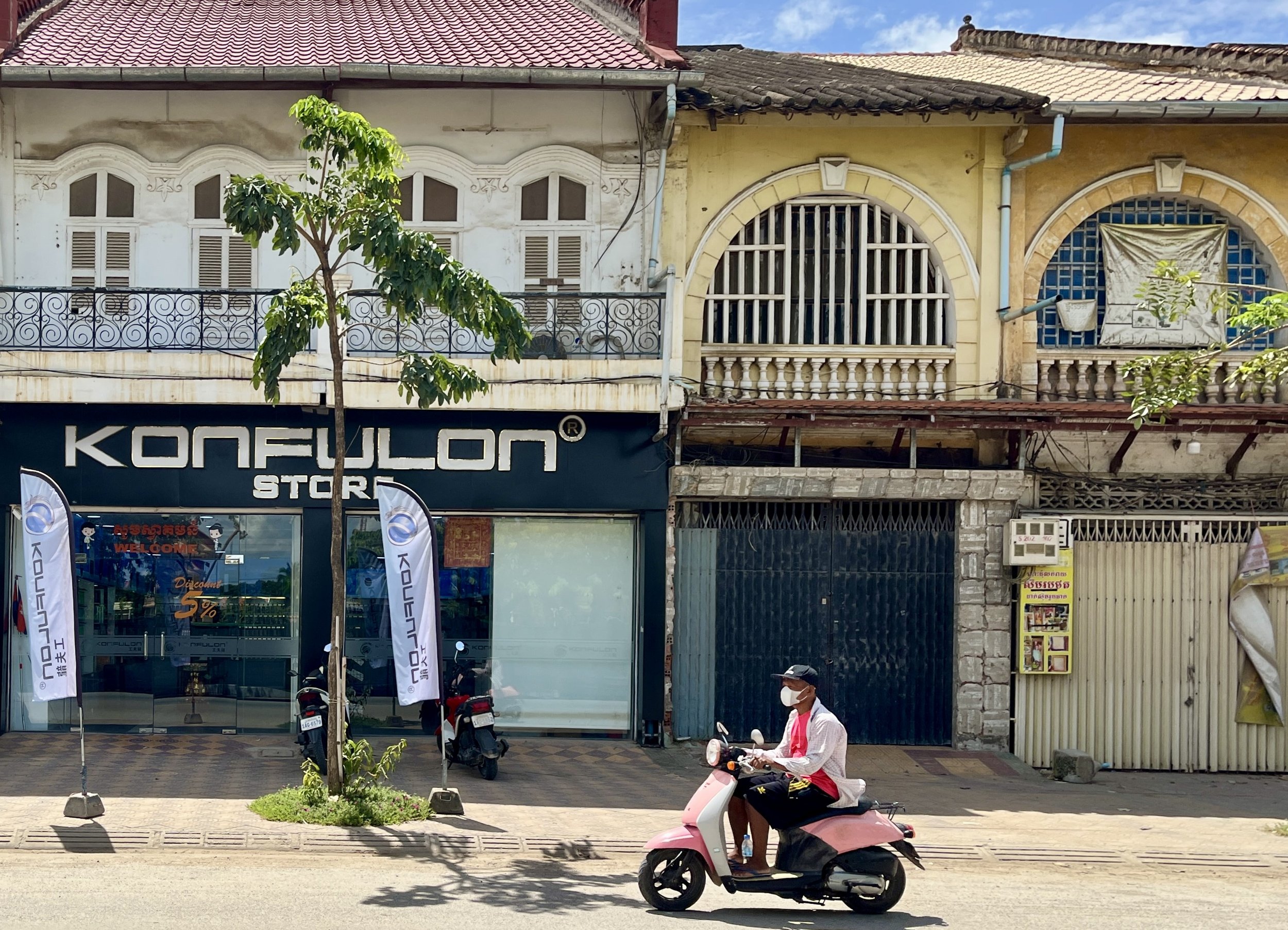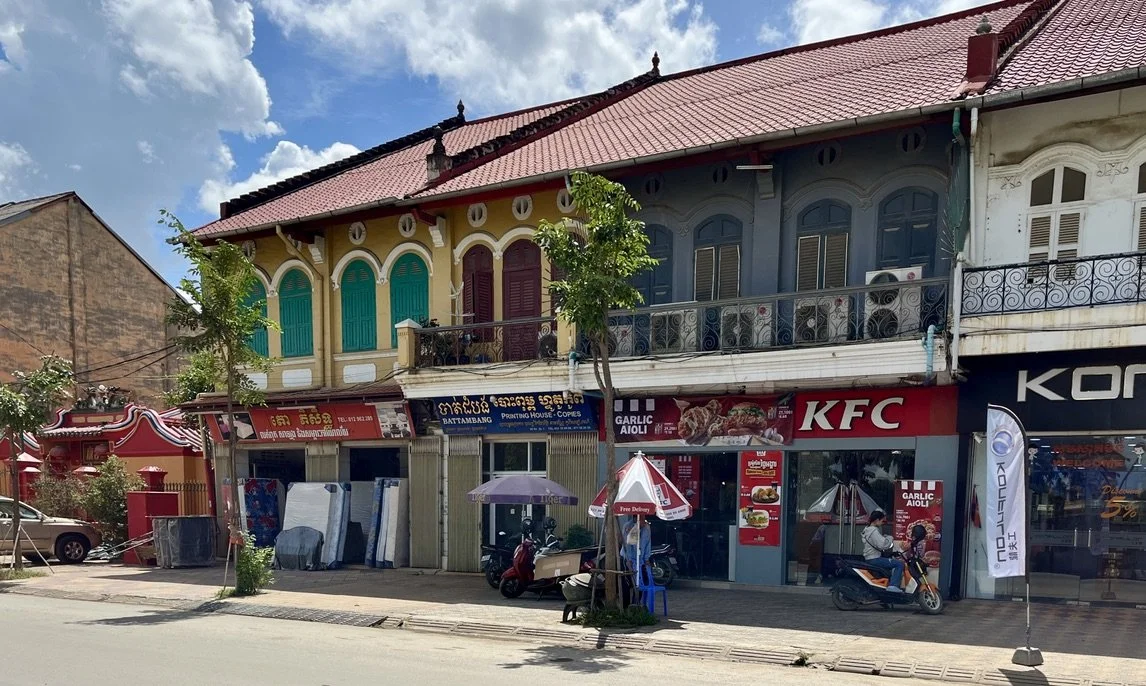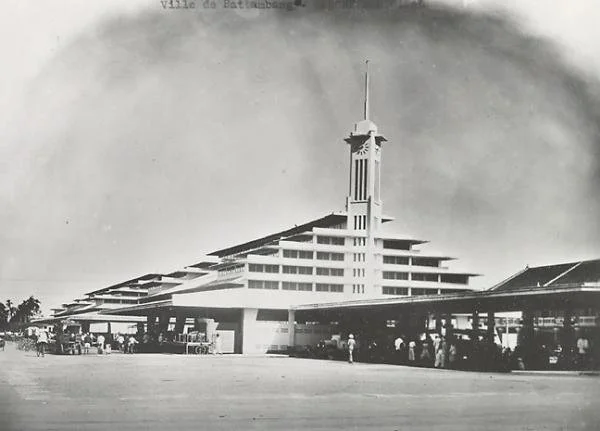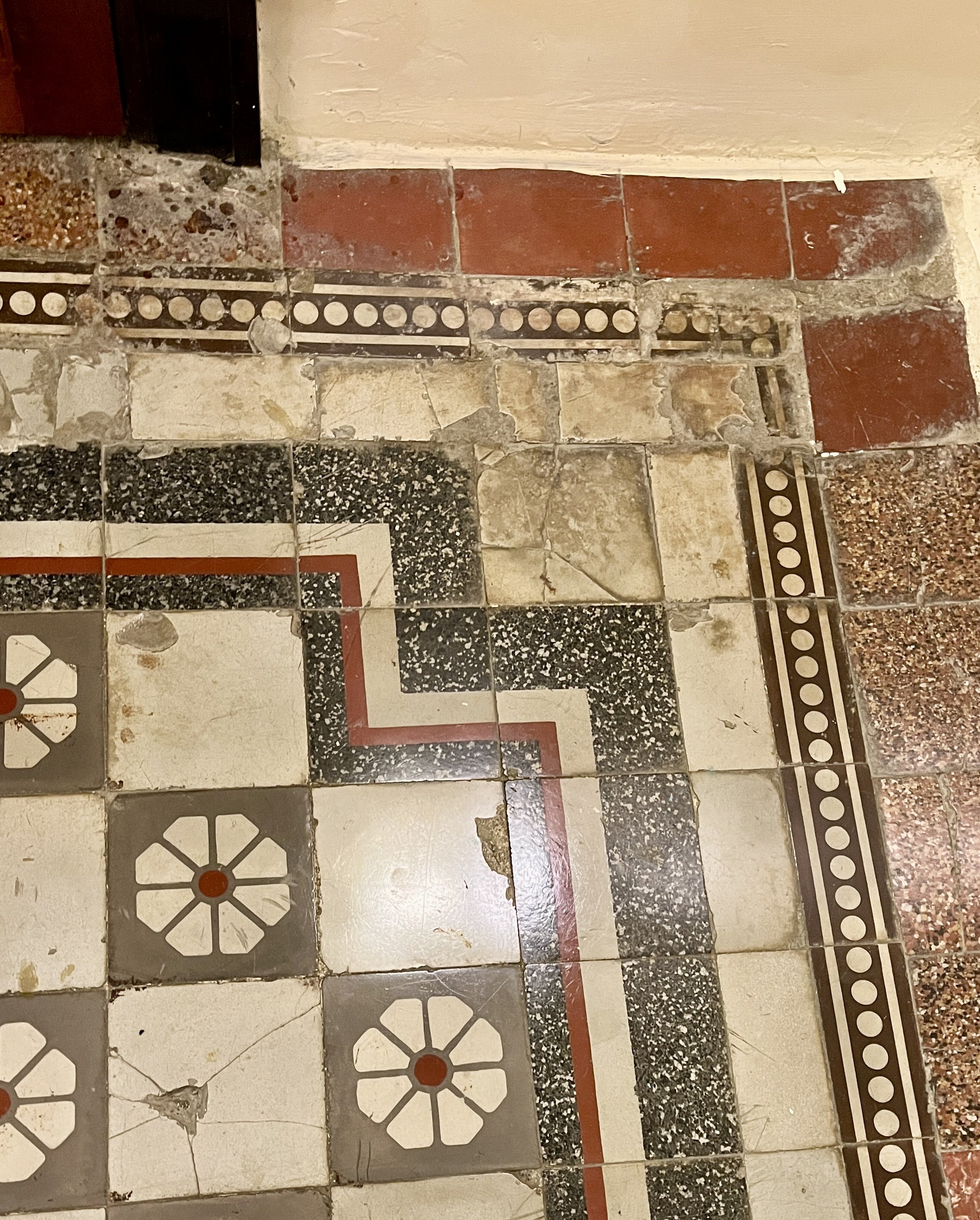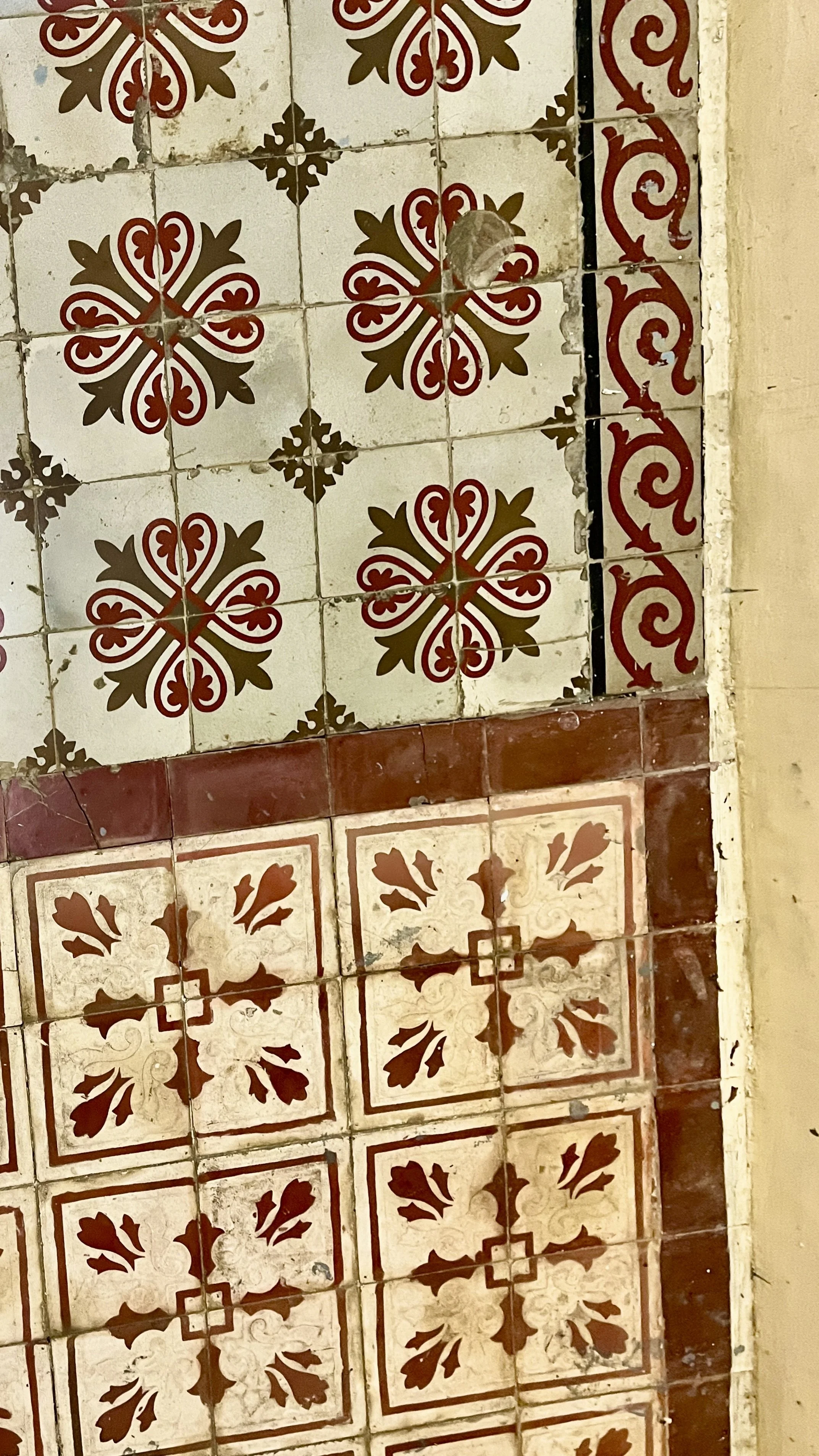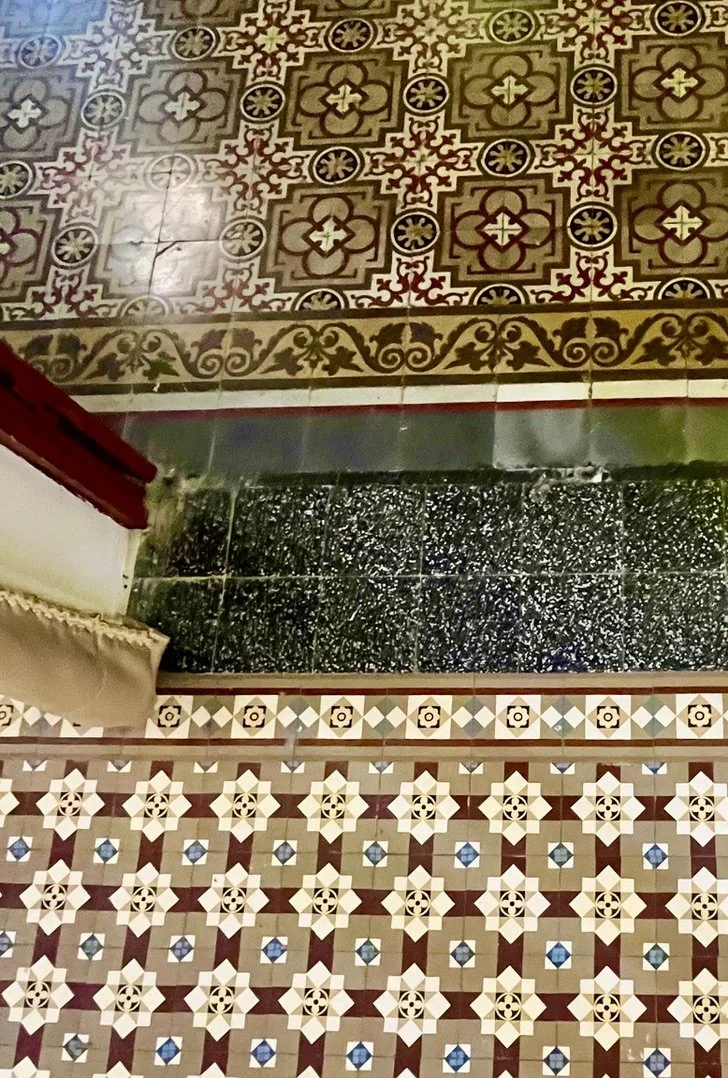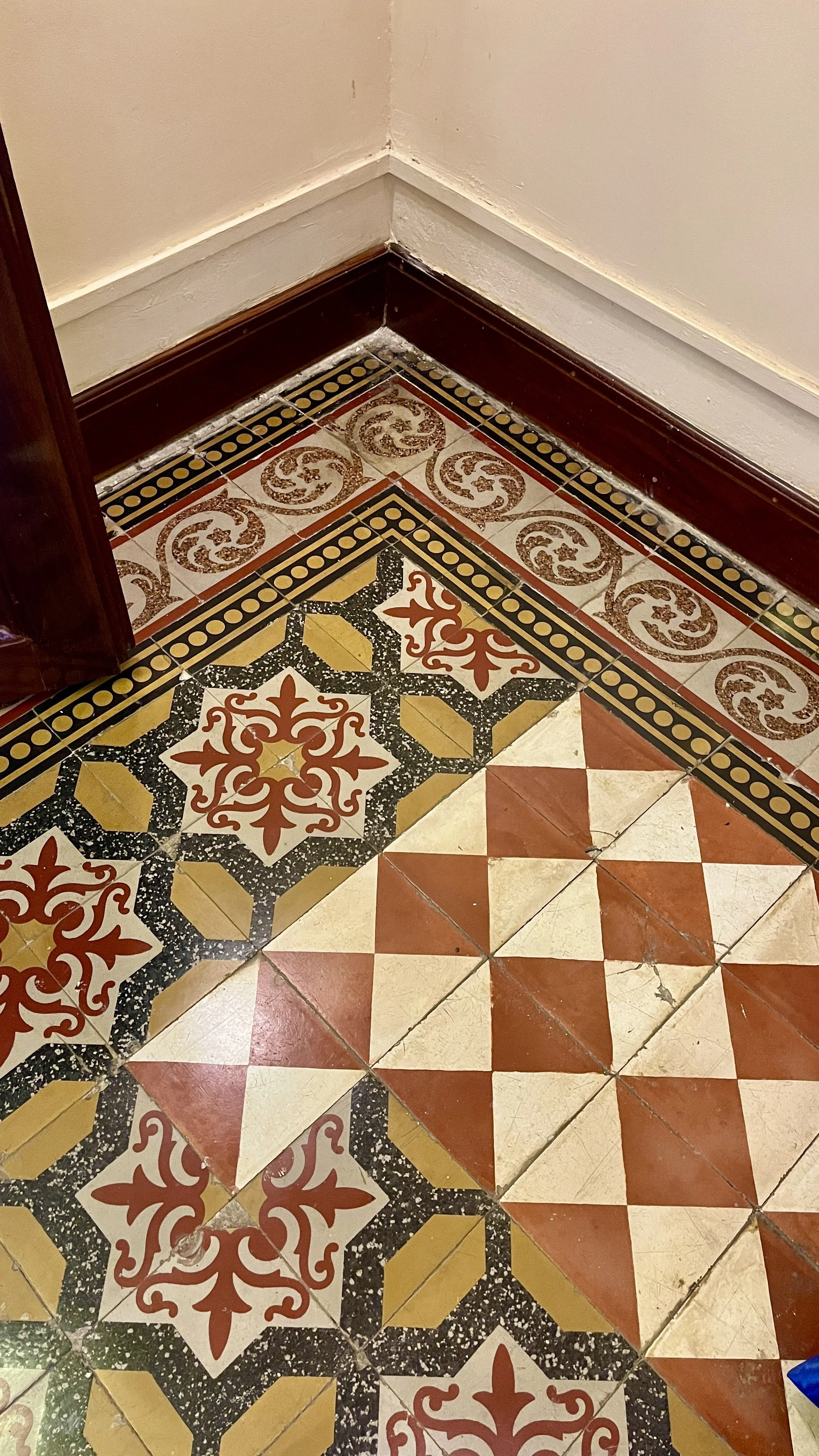
colonial architecture

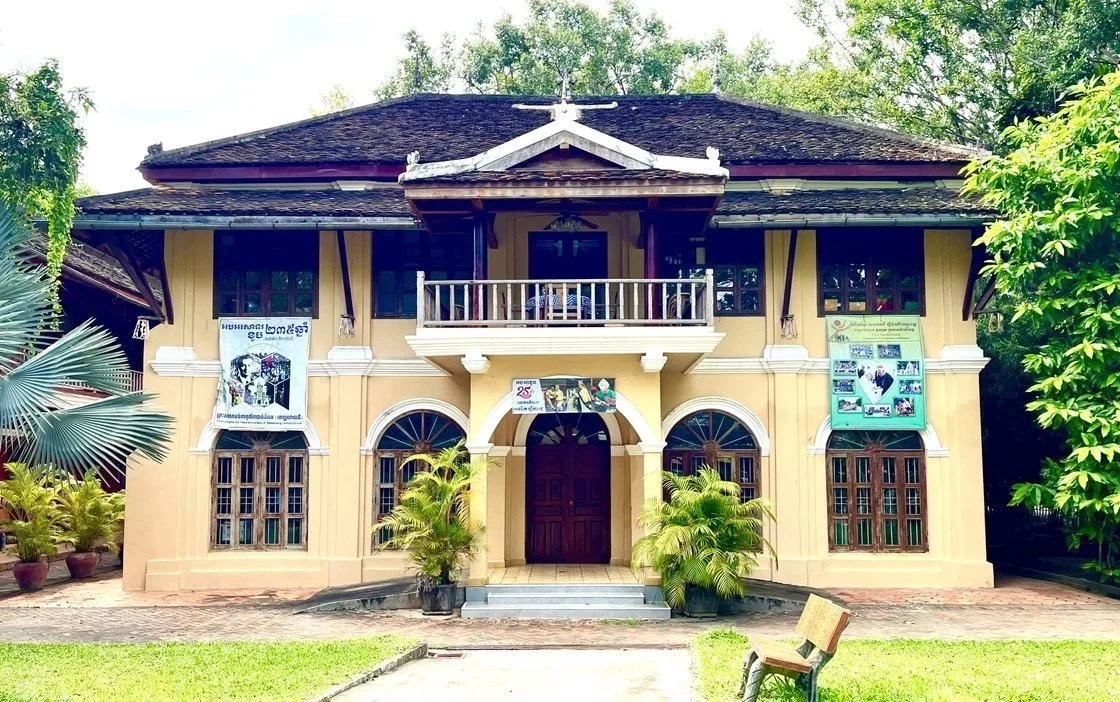
La Villa Hotel, Battambang | Cambodia

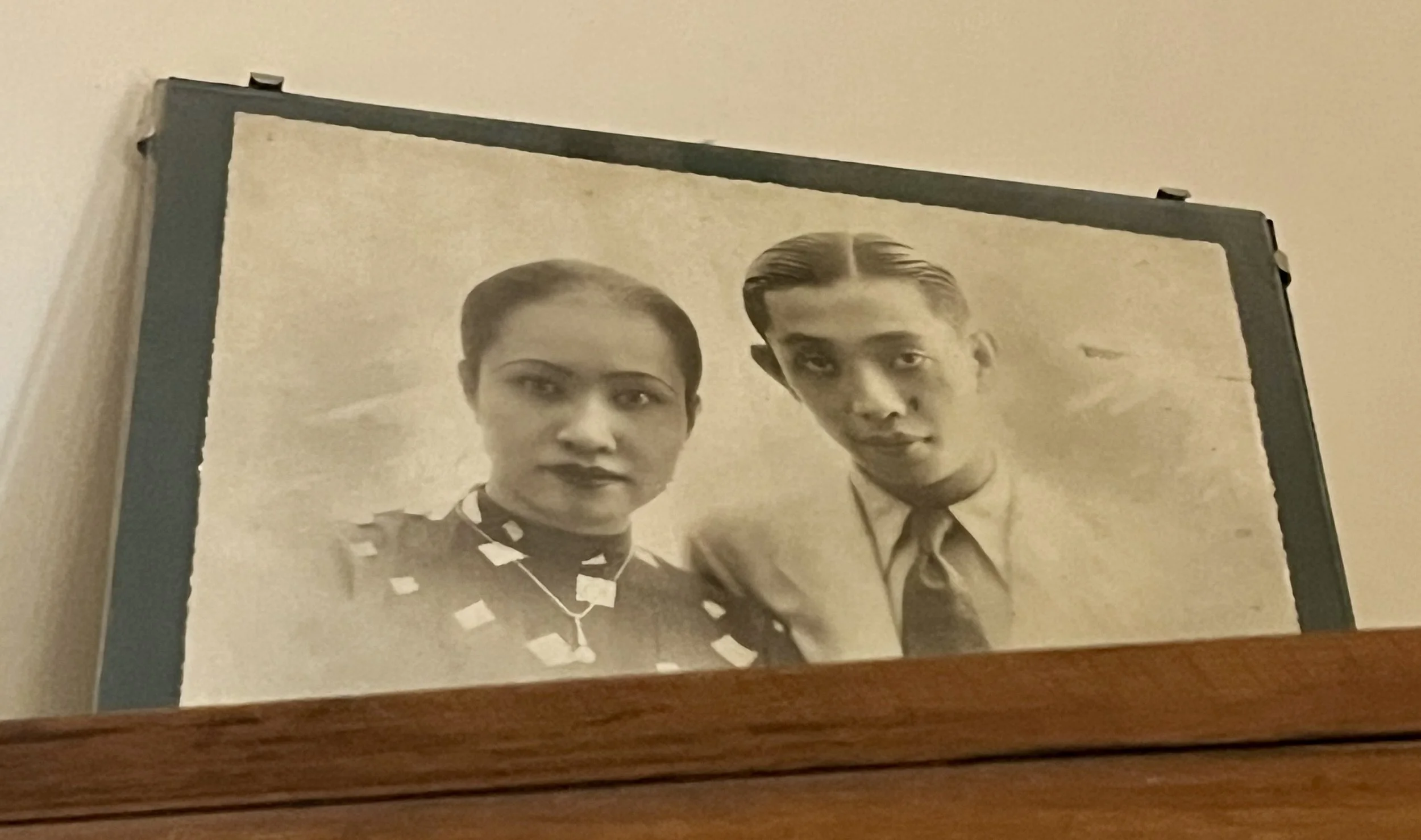
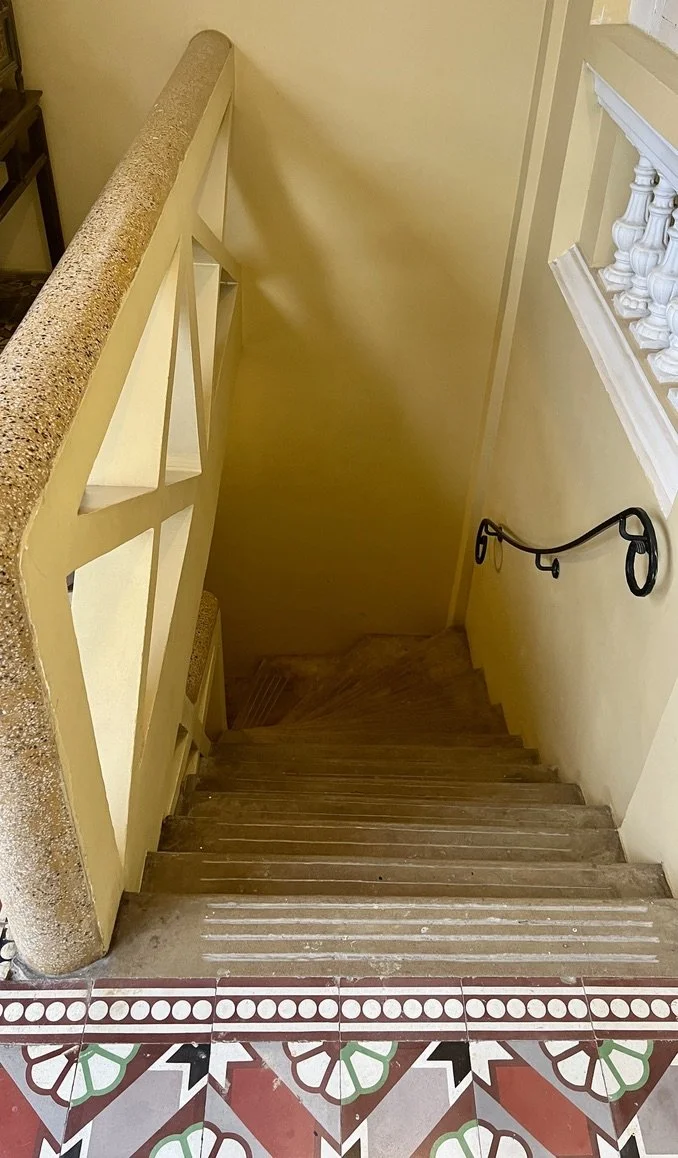
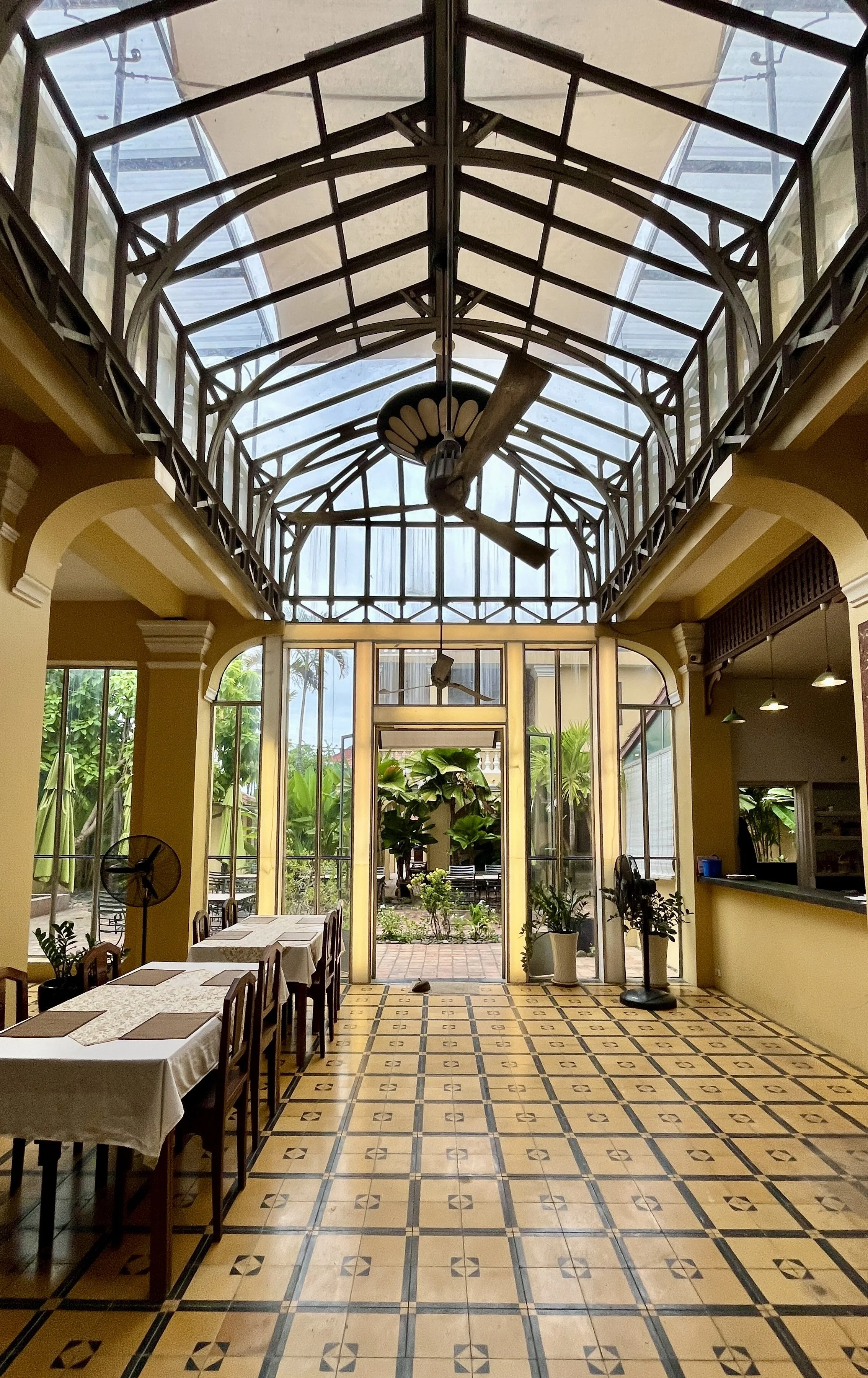
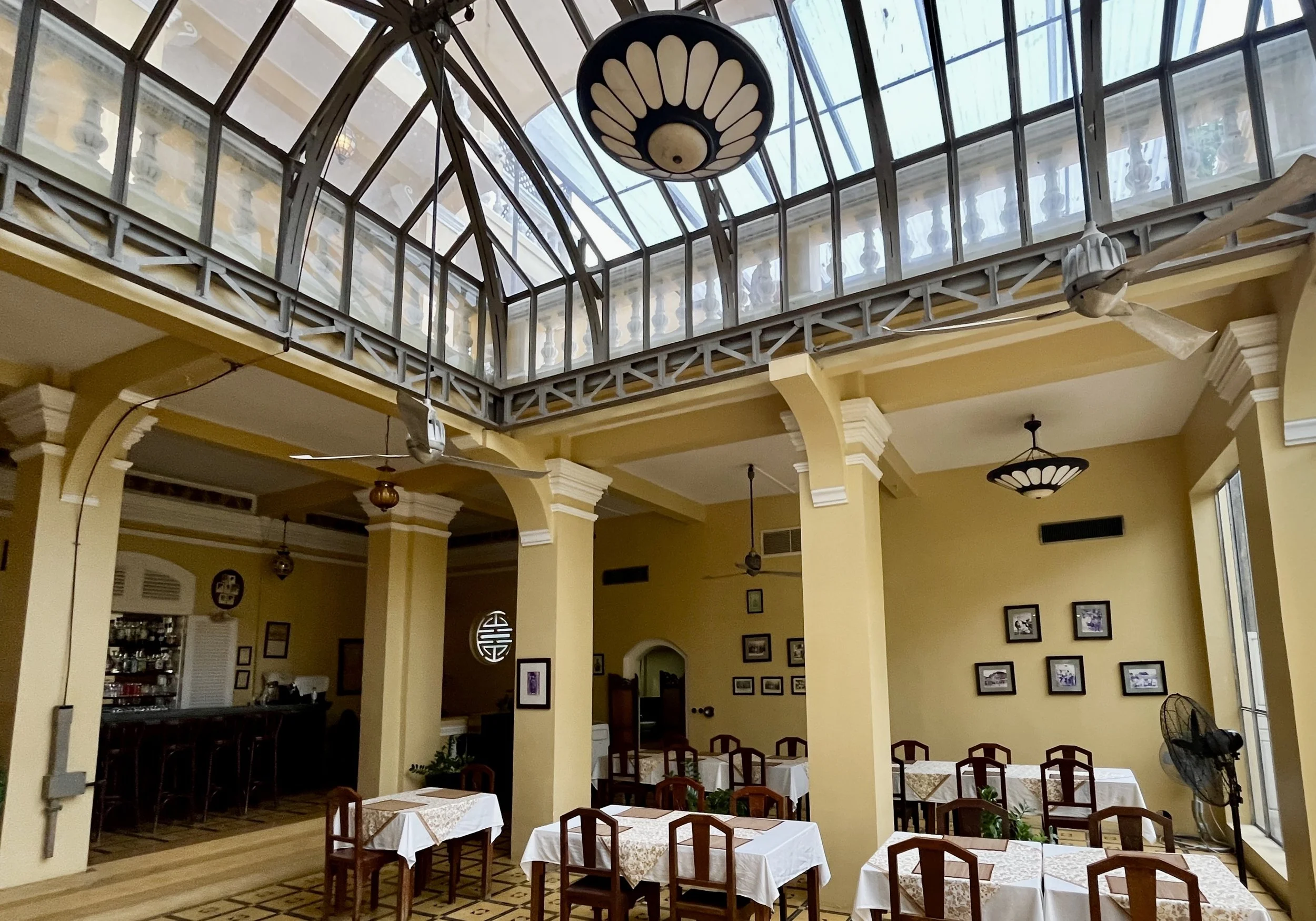
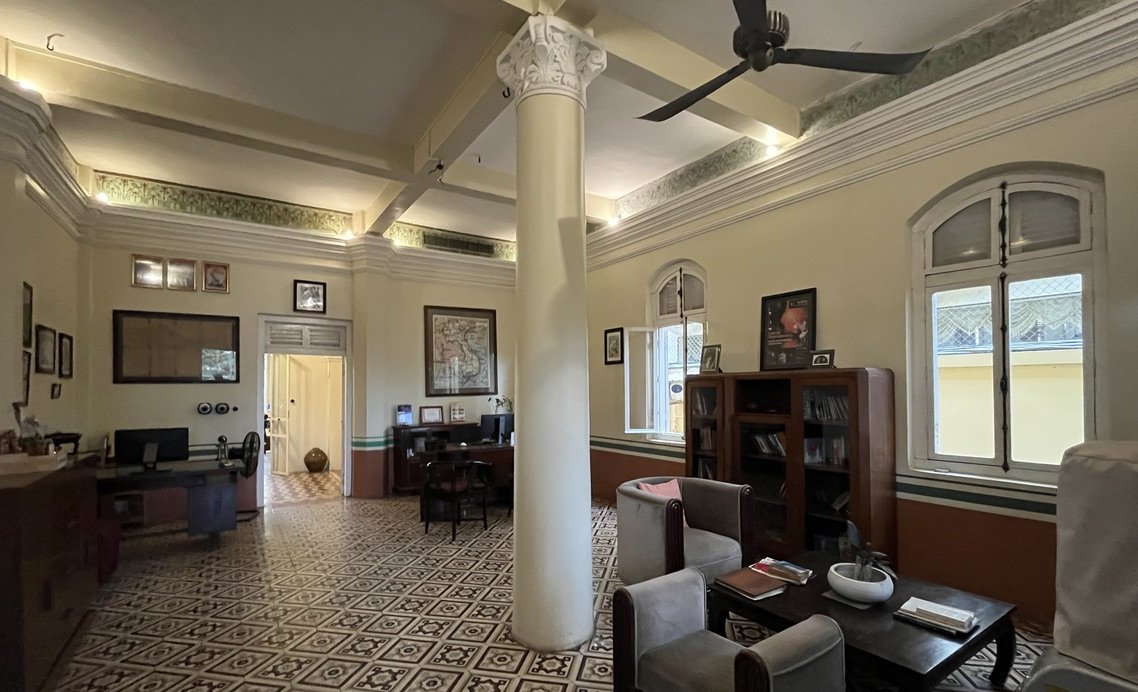
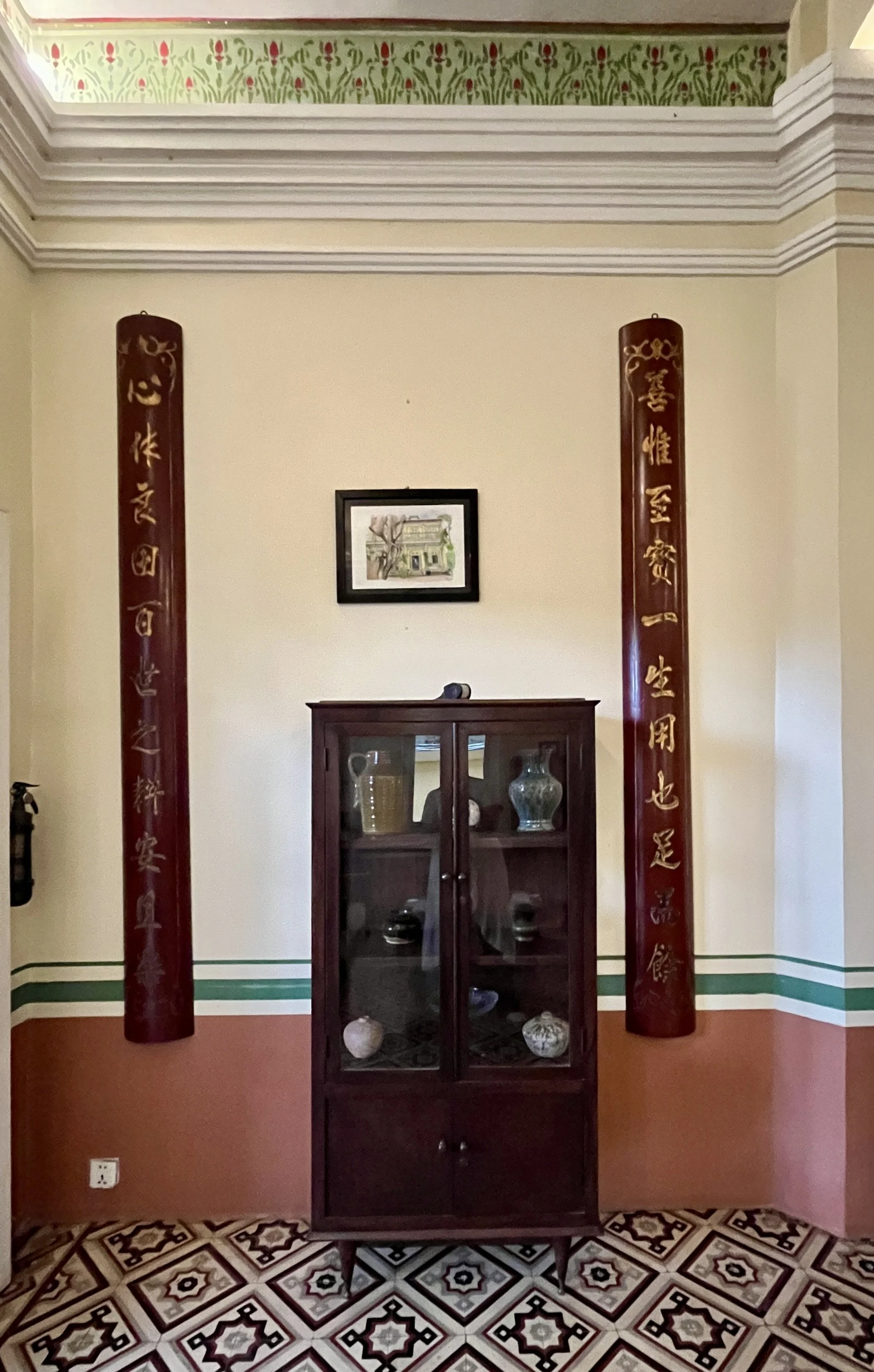
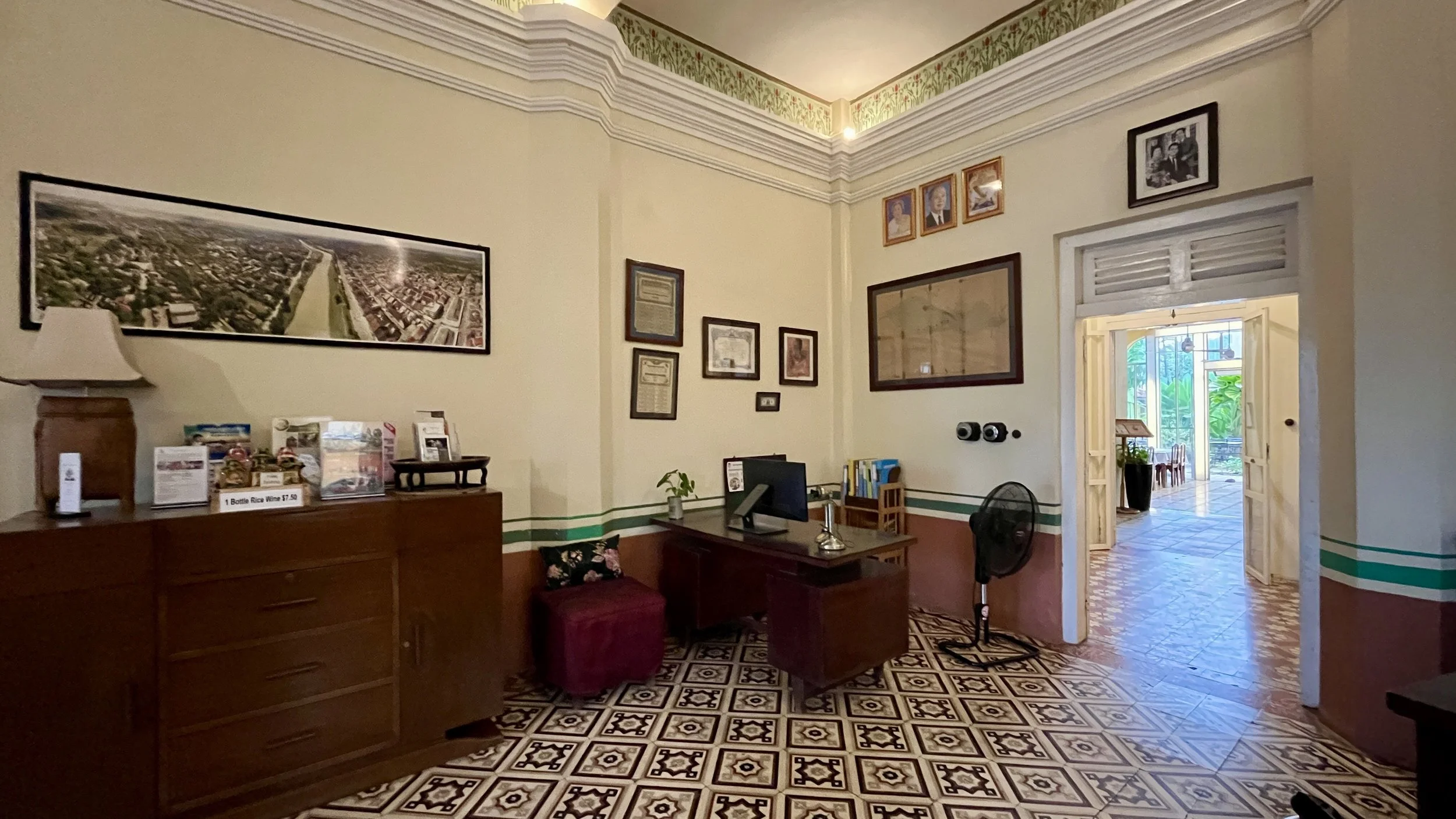
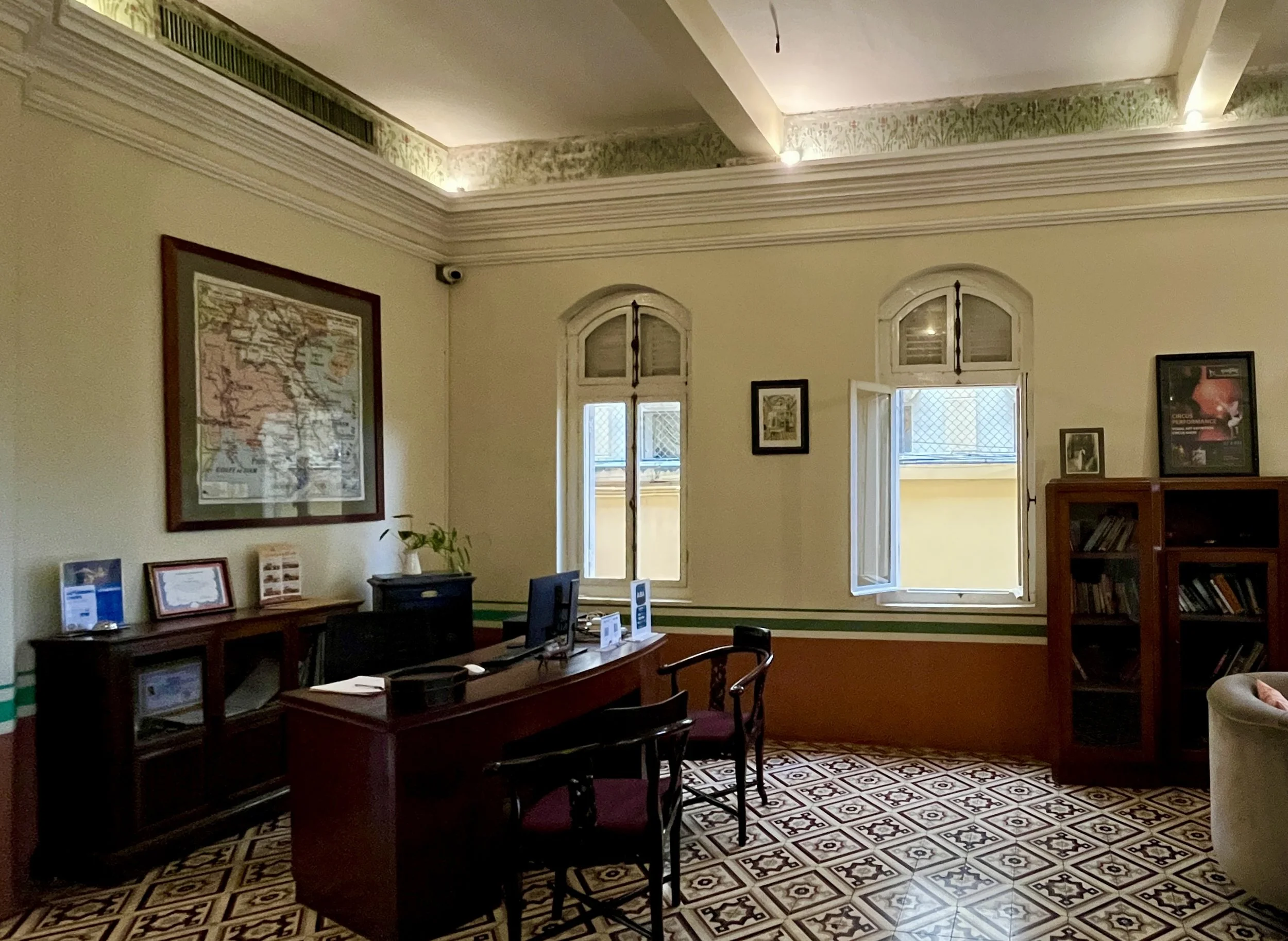
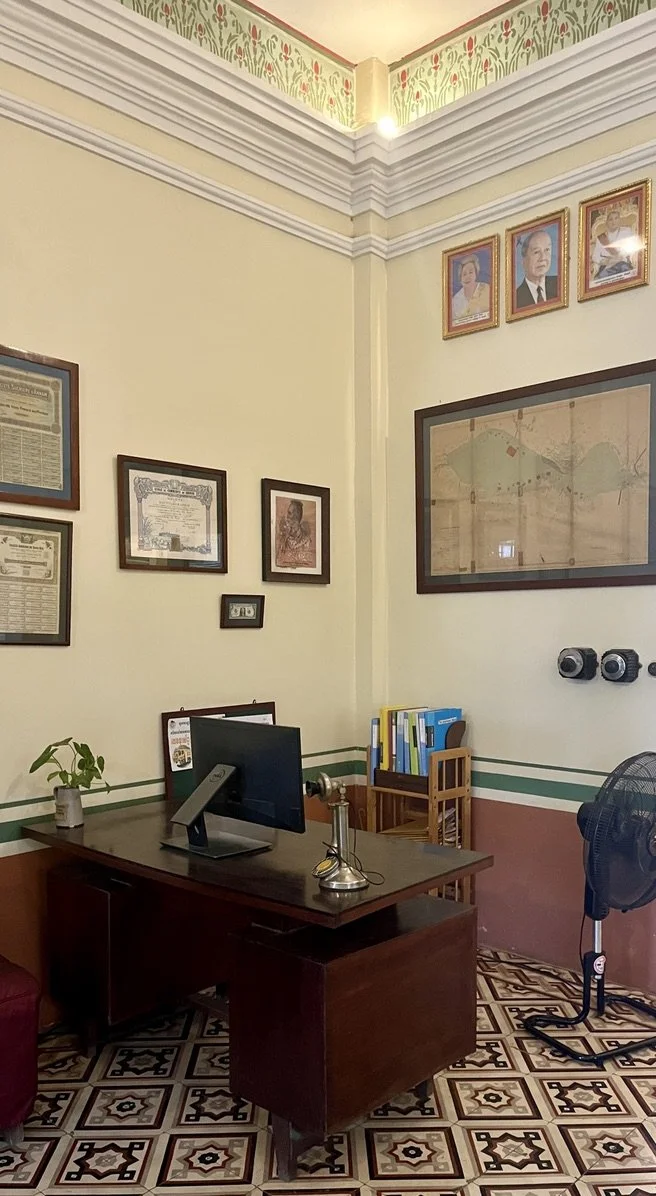
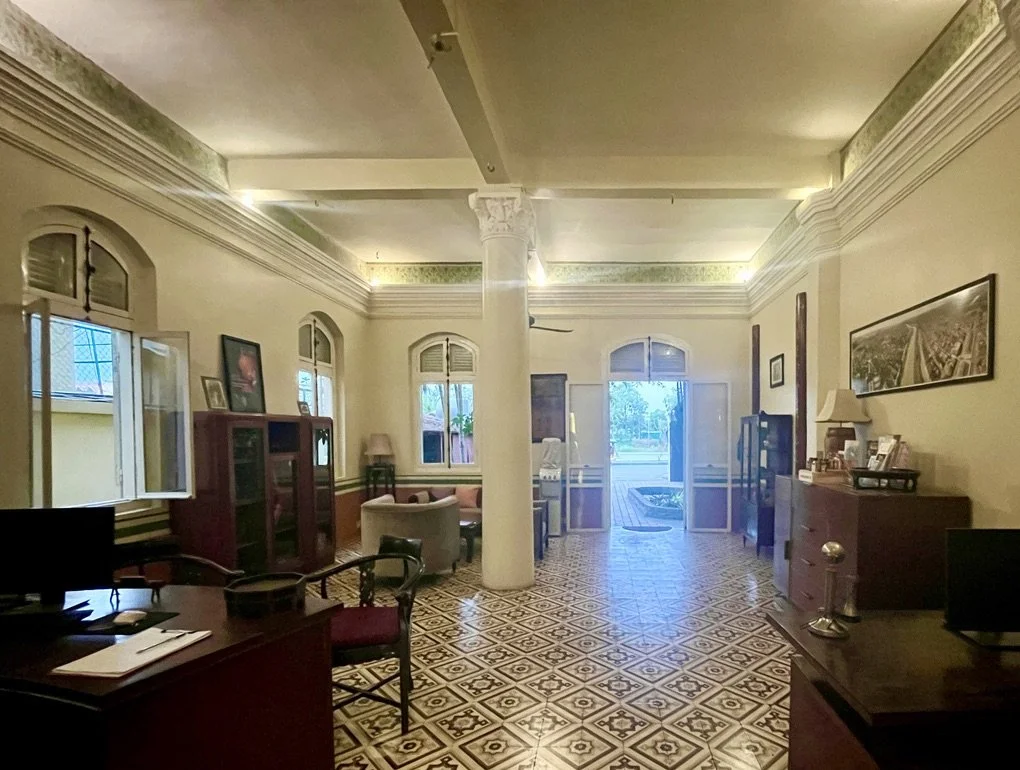
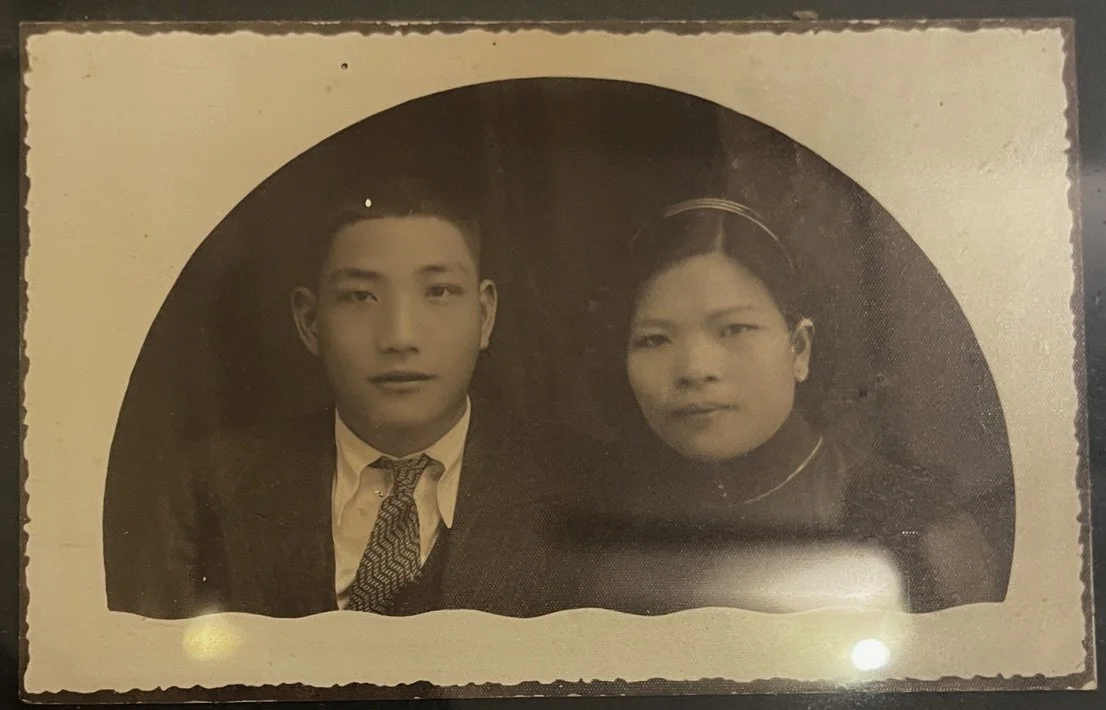
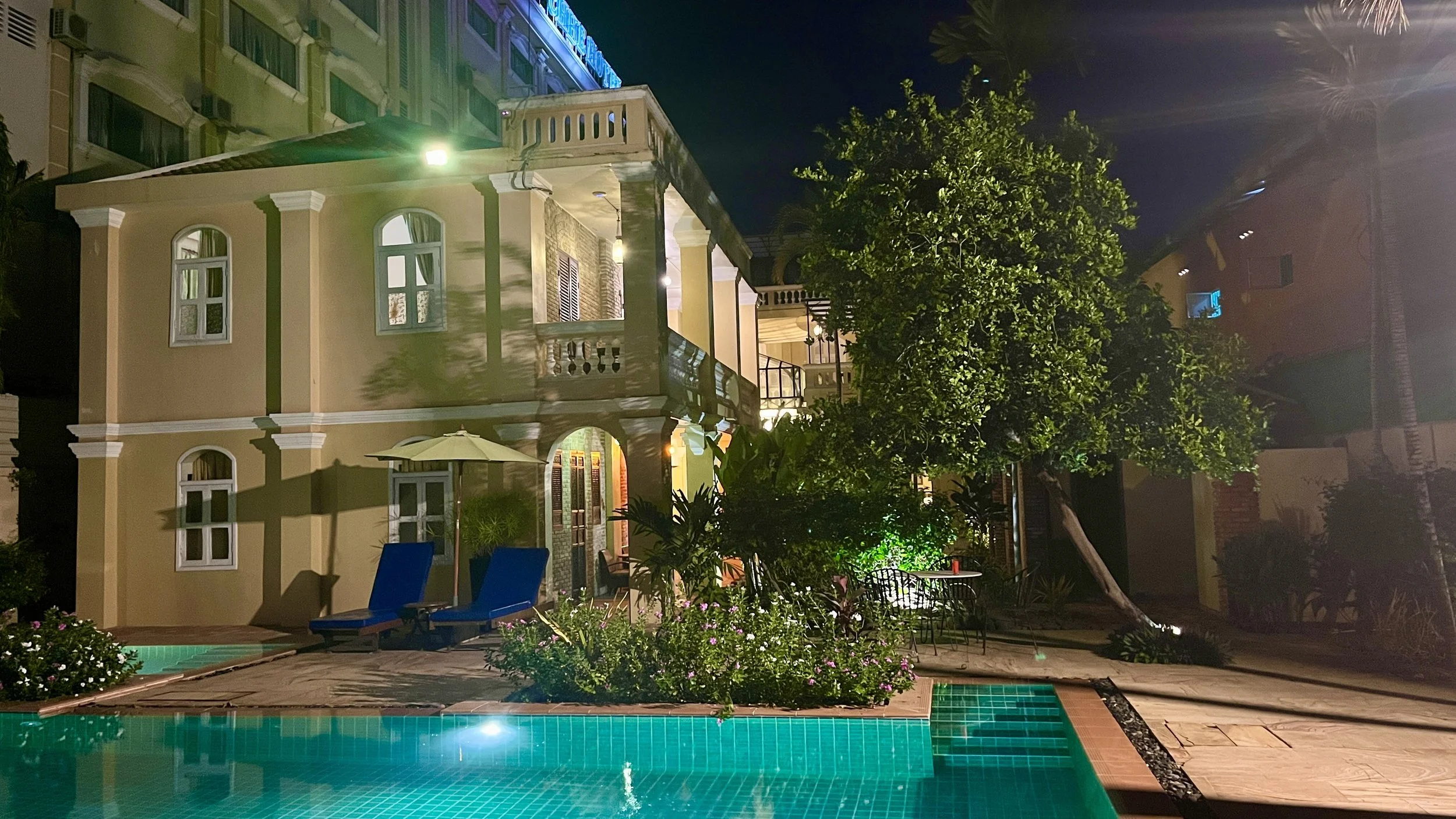
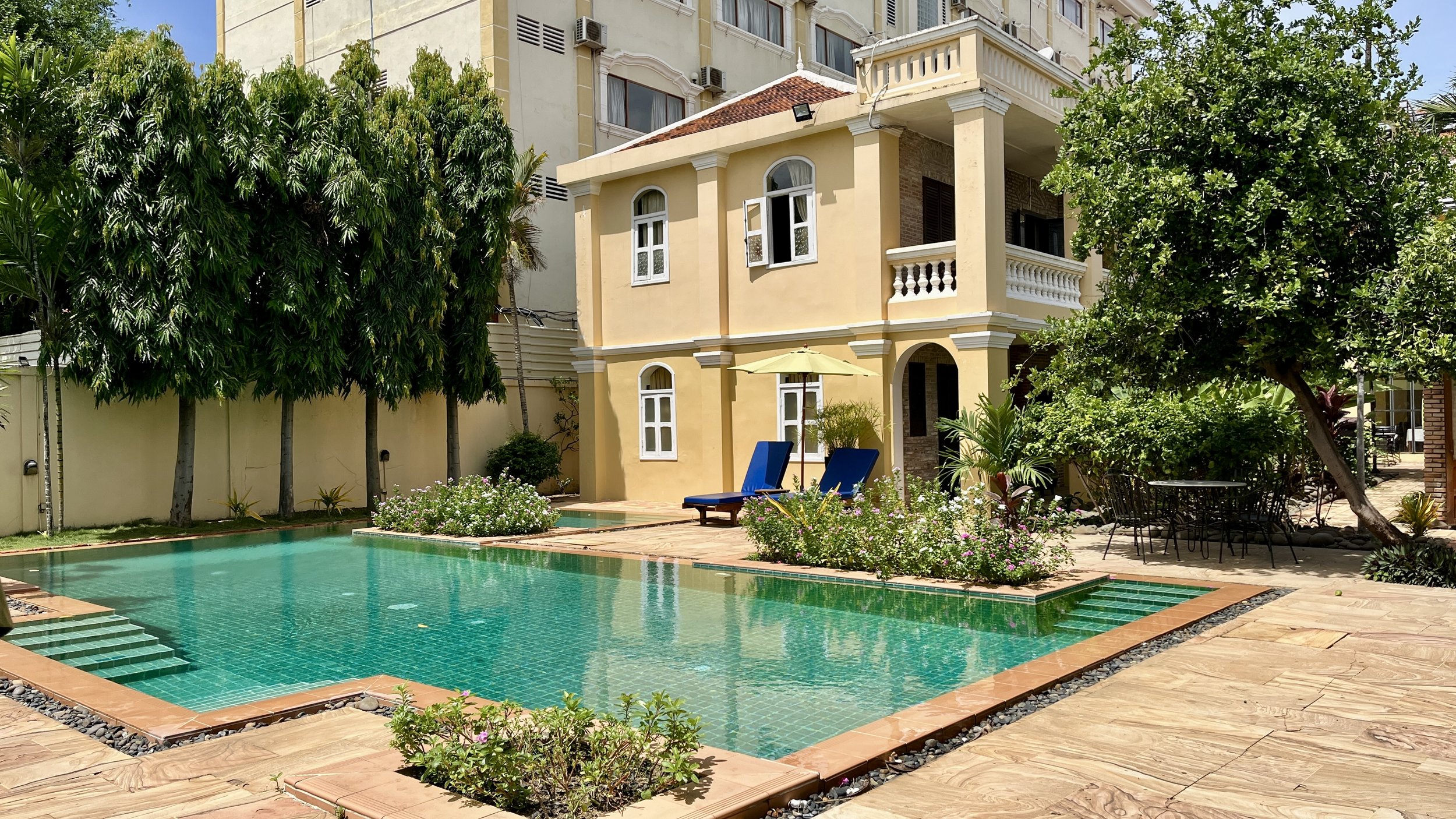
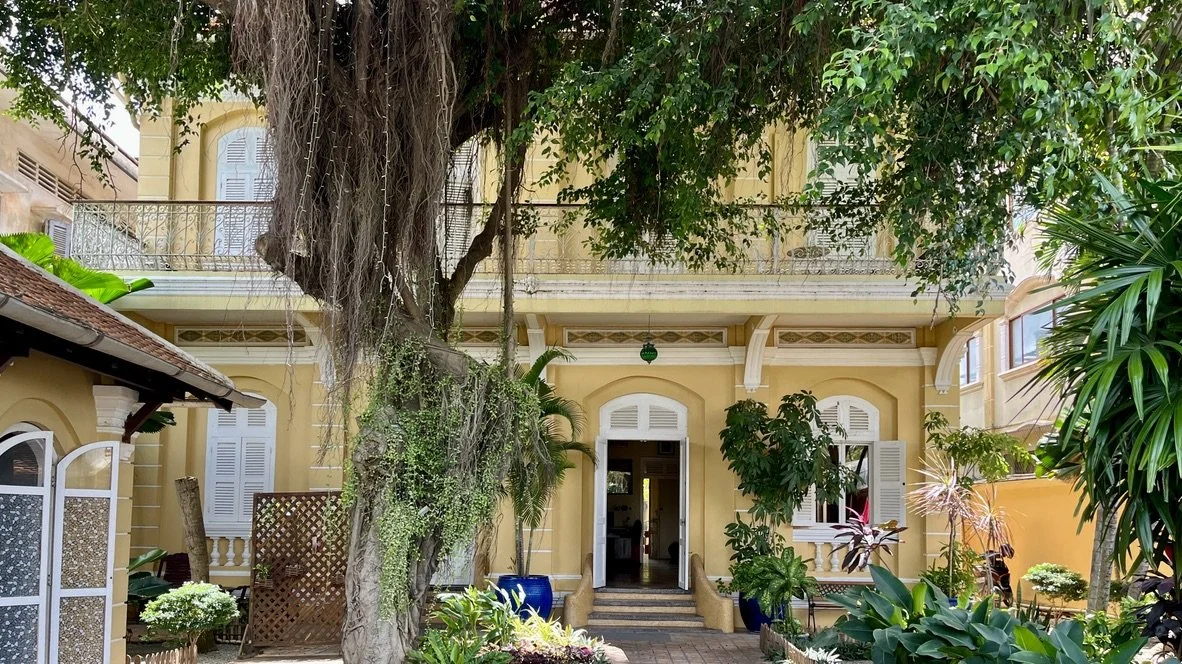
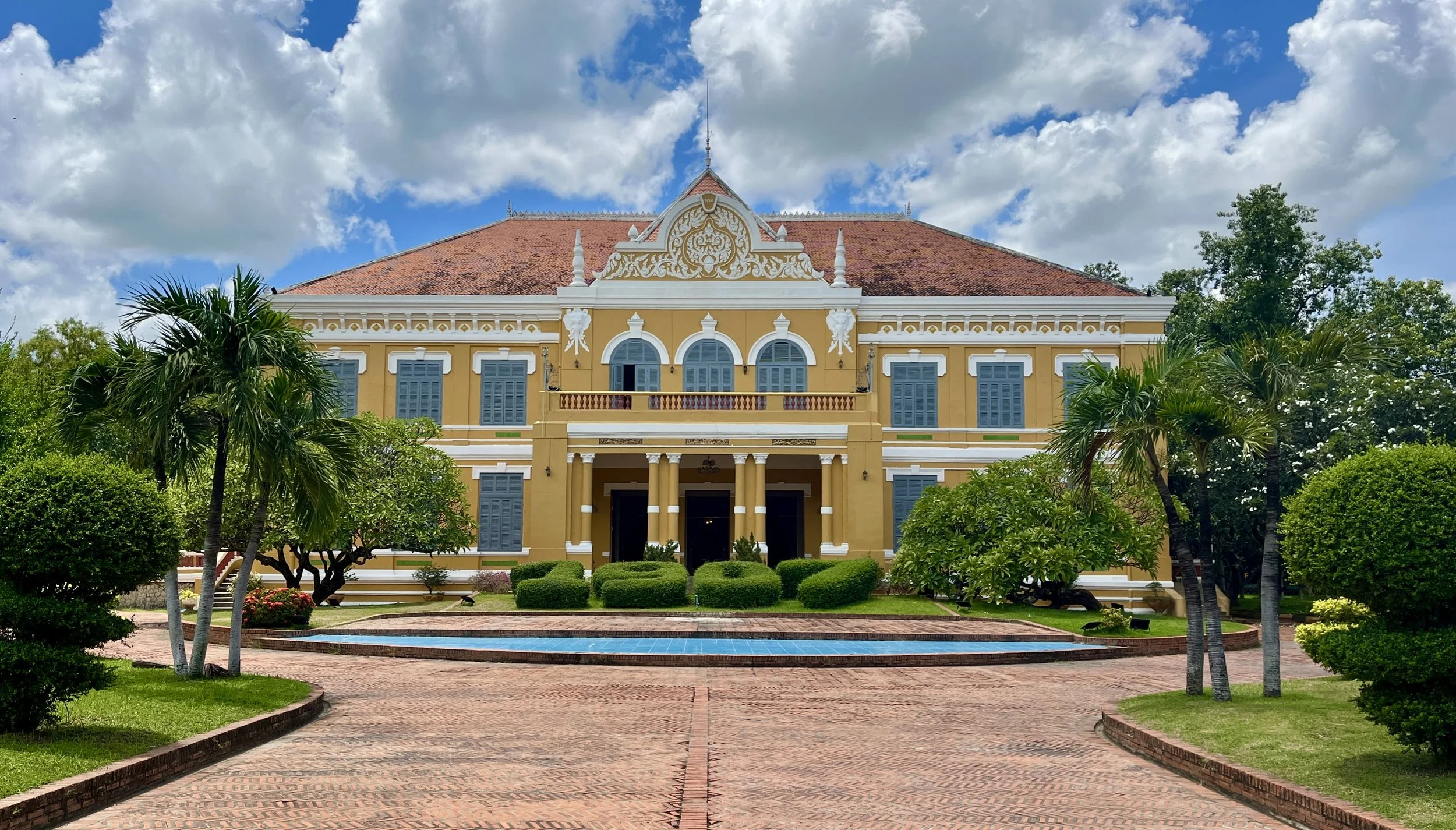
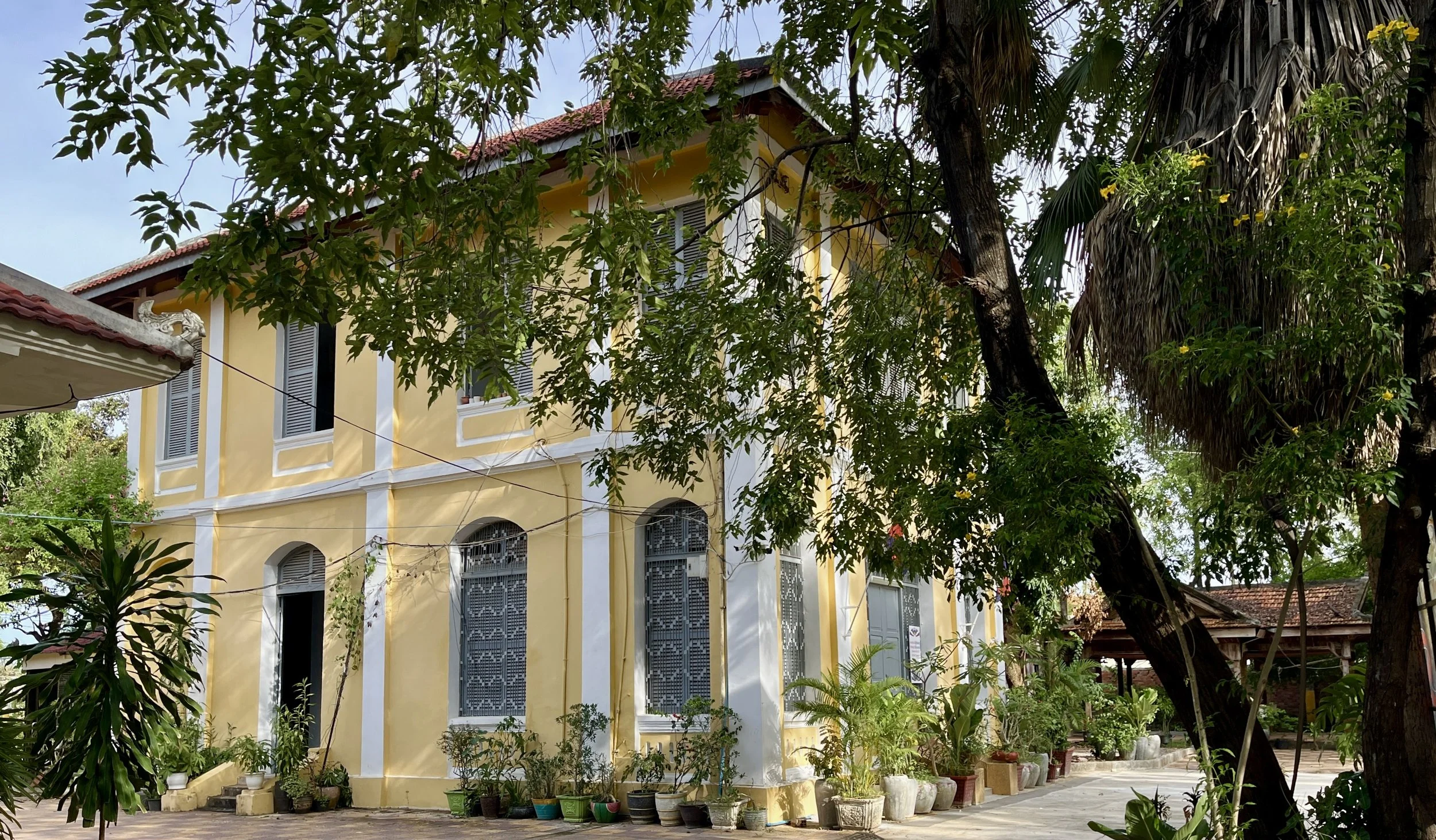
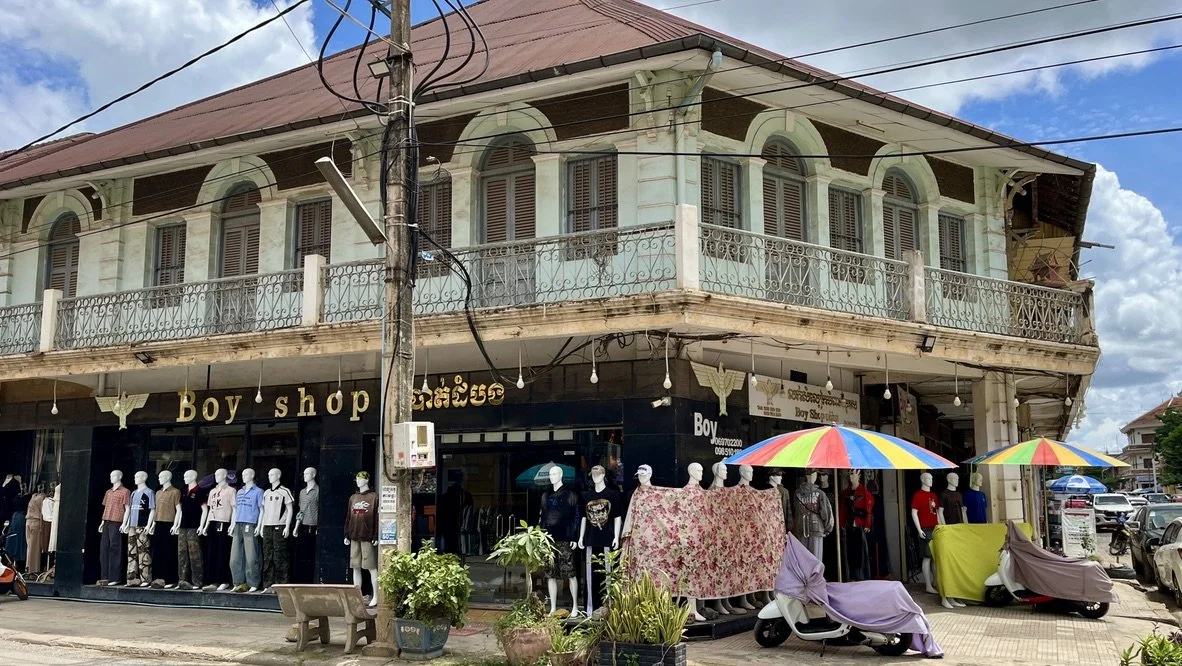
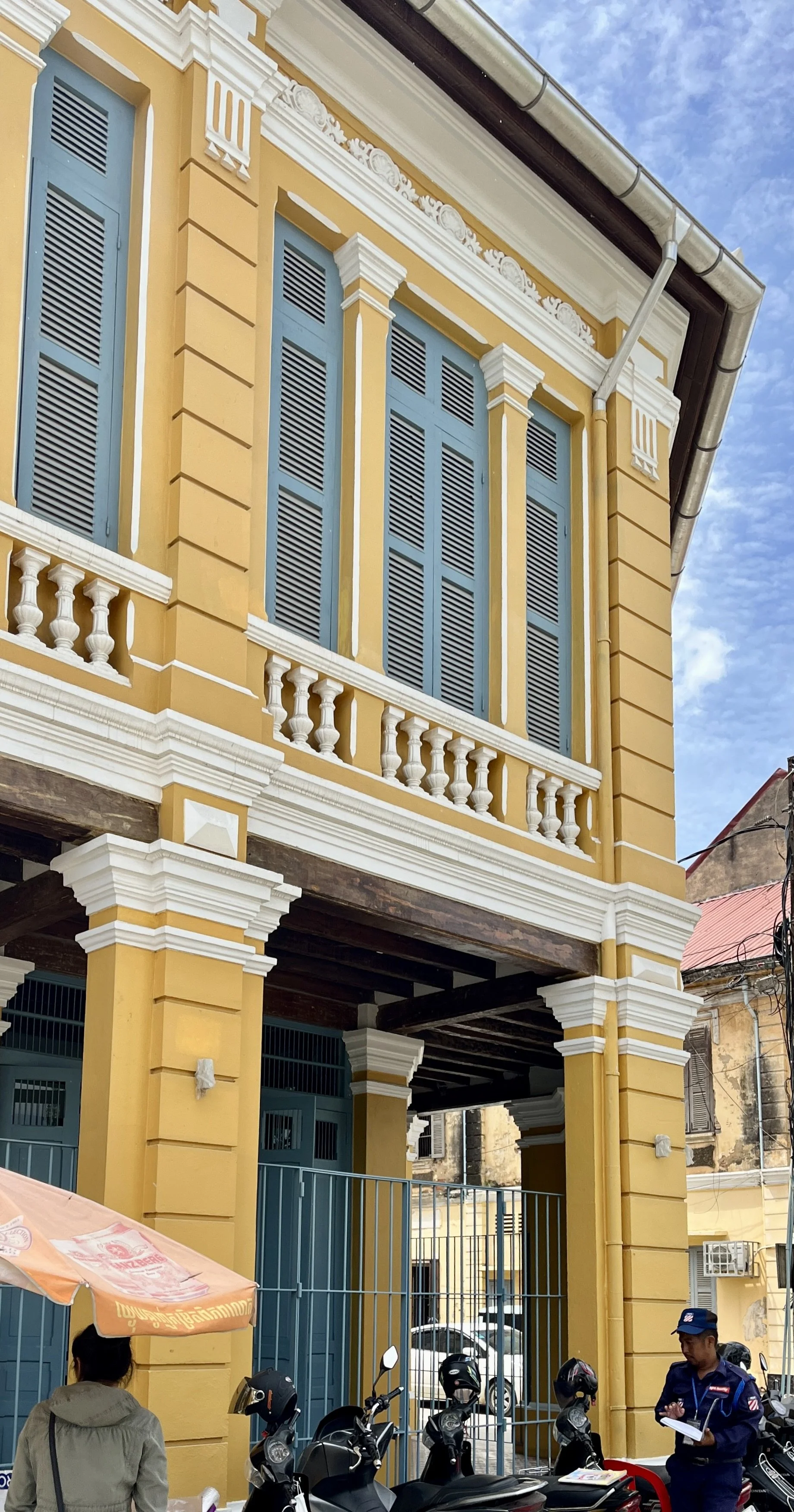
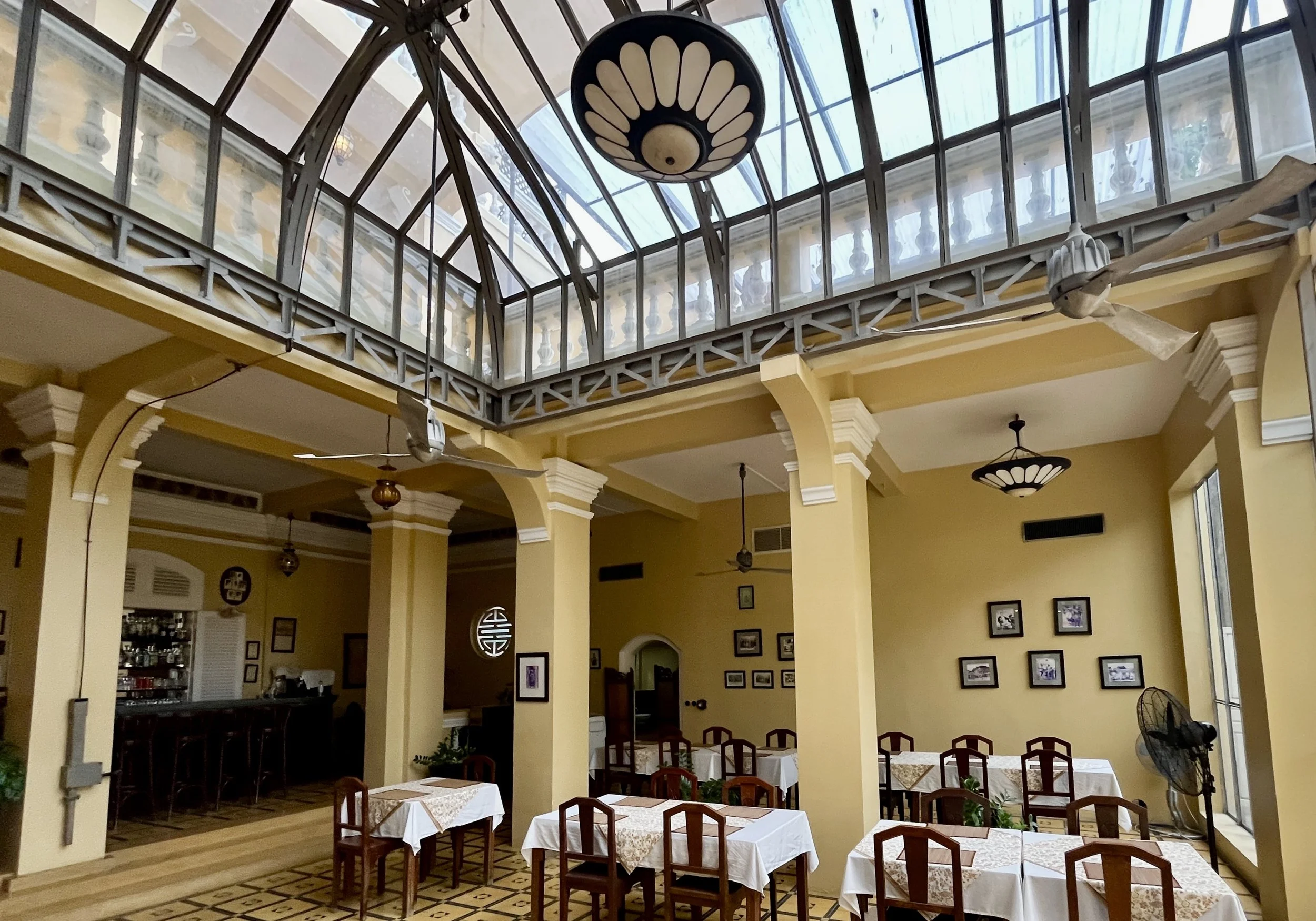
According to the hotel, La Villa was constructed in 1933 as the private residence of local ‘tradesman’ Eap Heo, and lived in by his descendants until the Khmer Rouge takeover in 1975. When the Vietnamese defeated the Khmer Rouge and occupied Battambang in 1979, they made this their local headquarters. When the Vietnamese left in 1989, the building was alternately leased or squatted in until it was sold to the present owners, “a young expat couple”, in 2004, and following renovation opened as a hotel in 2005.
We all know young expat couples can’t actually purchase property in Cambodia, so who knows what the truth actually is– I’m guessing at least one member of said couple is the K visa kid of refugees in France, or maybe the Cambodian kid of a corrupt government bigwig who studied and married abroad. Over the decades since Pol Pot died, these types have scooped up anything nice, setting up as landlords and hoteliers, many continuing to live in Europe while collecting rents here.
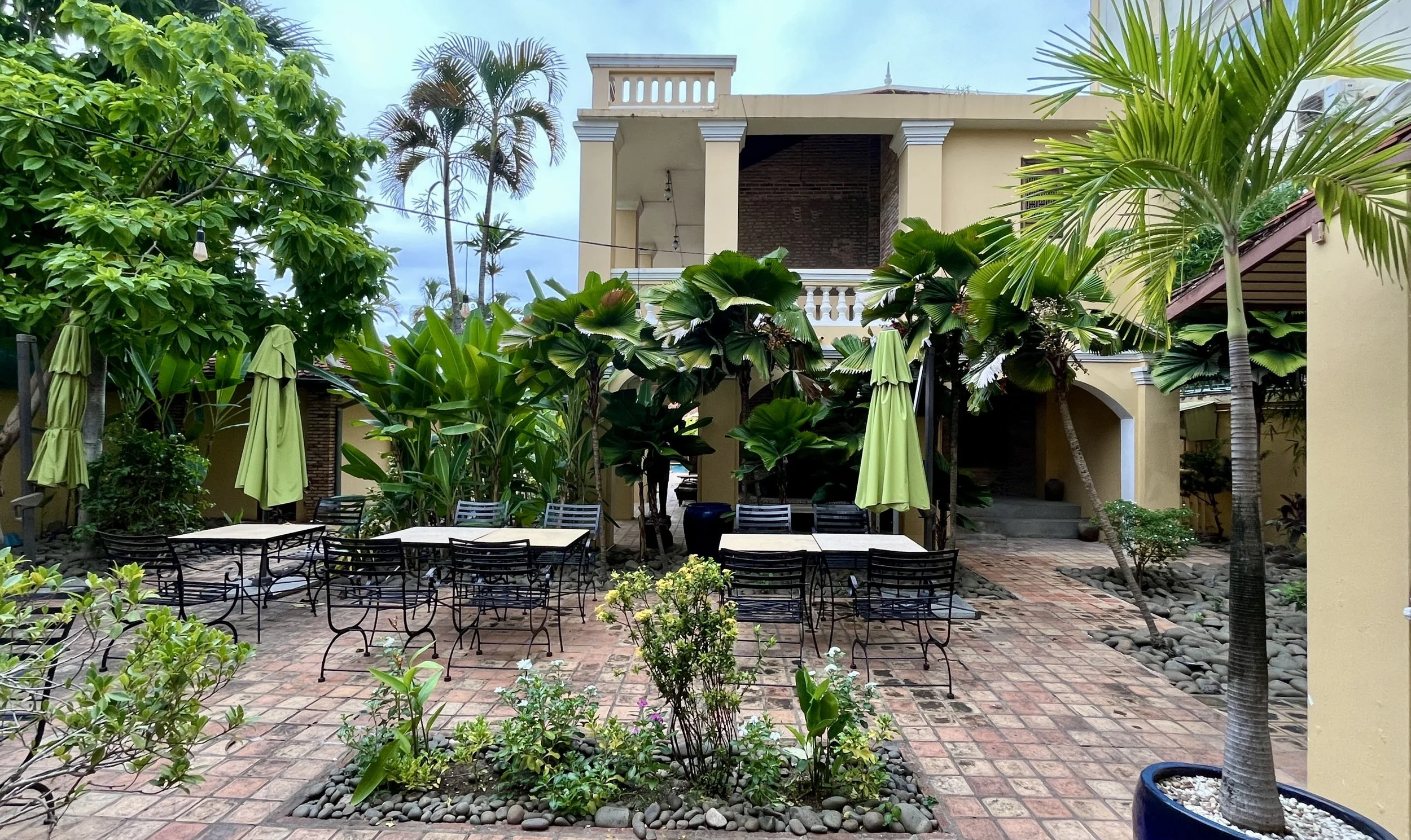
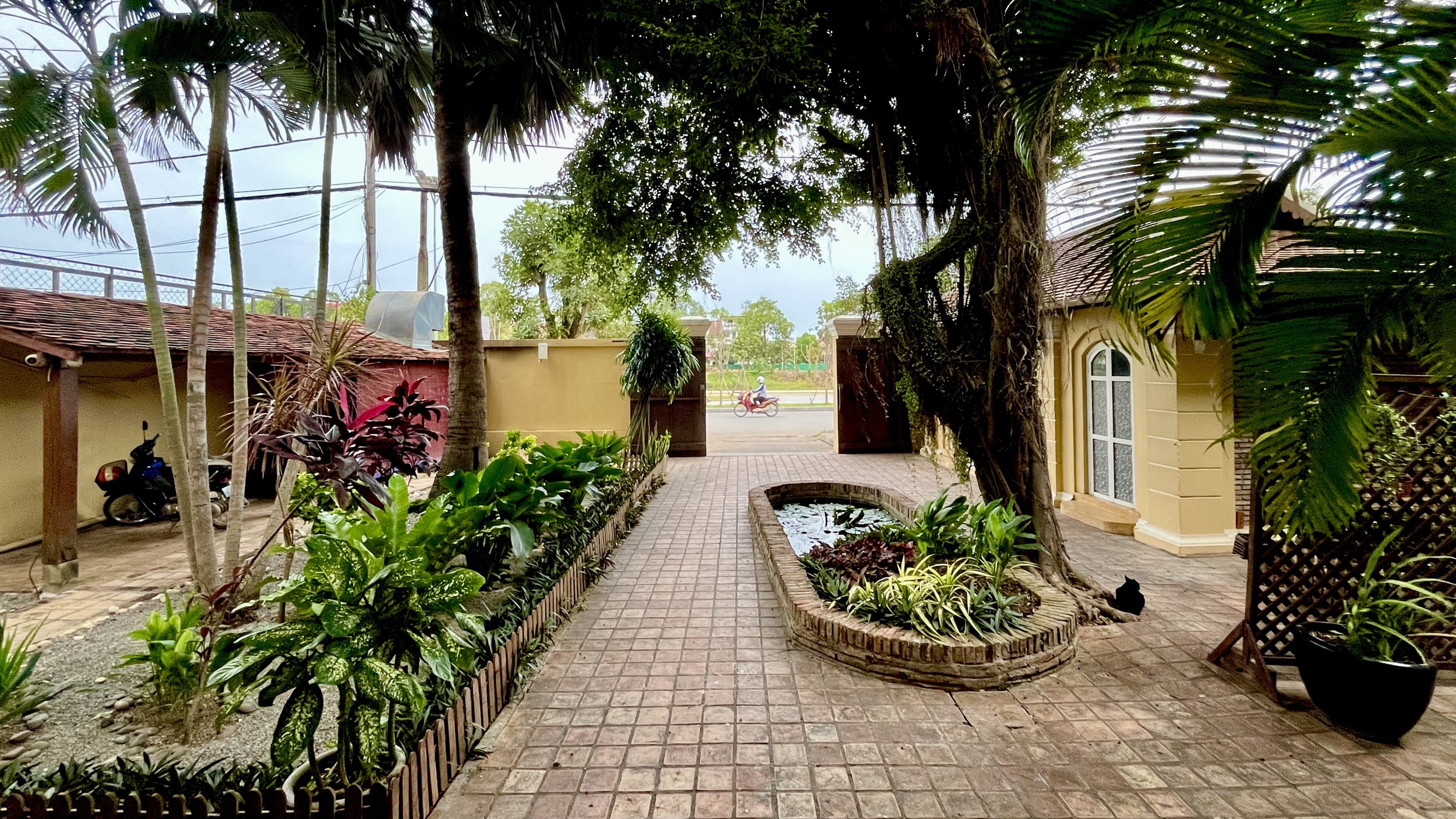
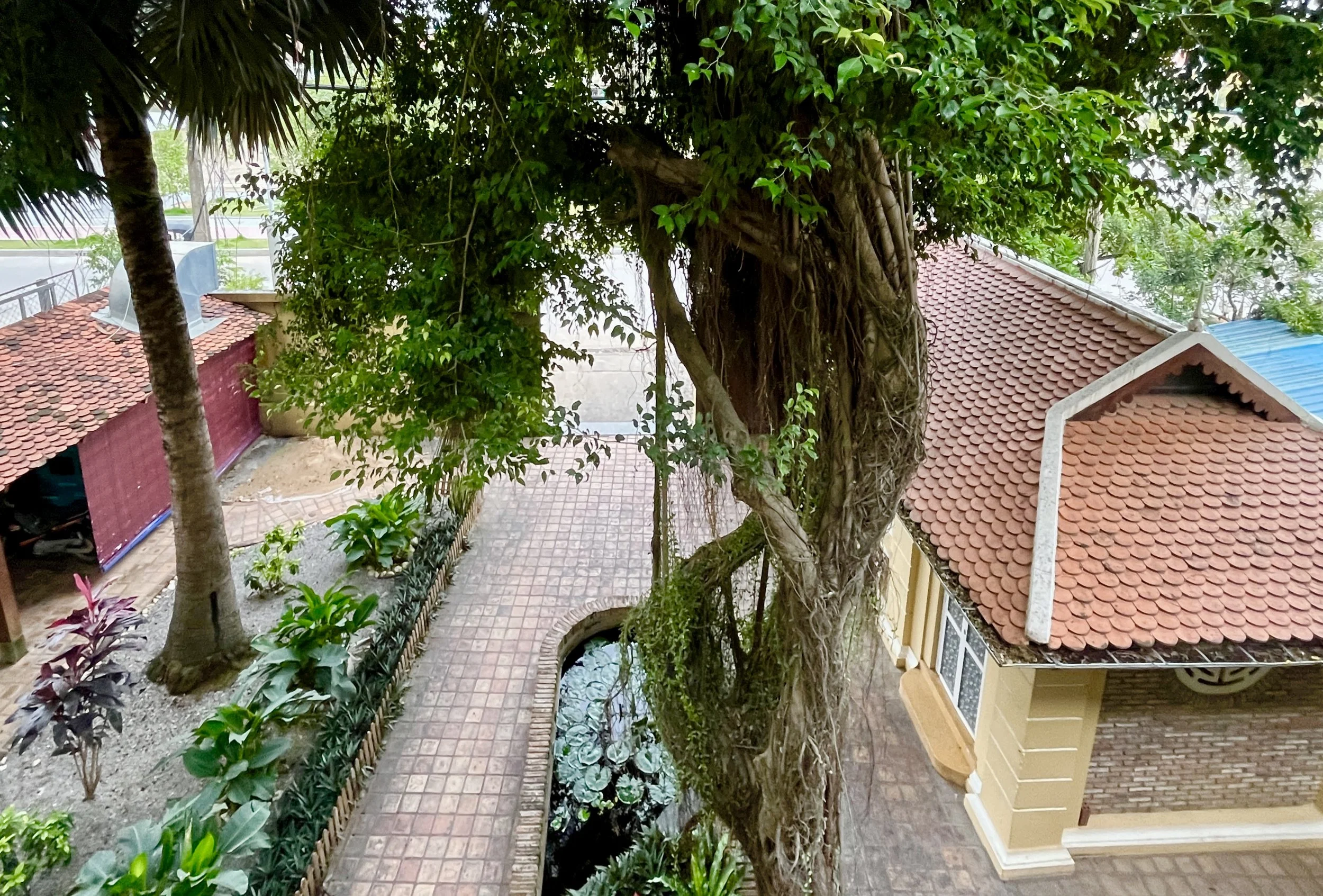
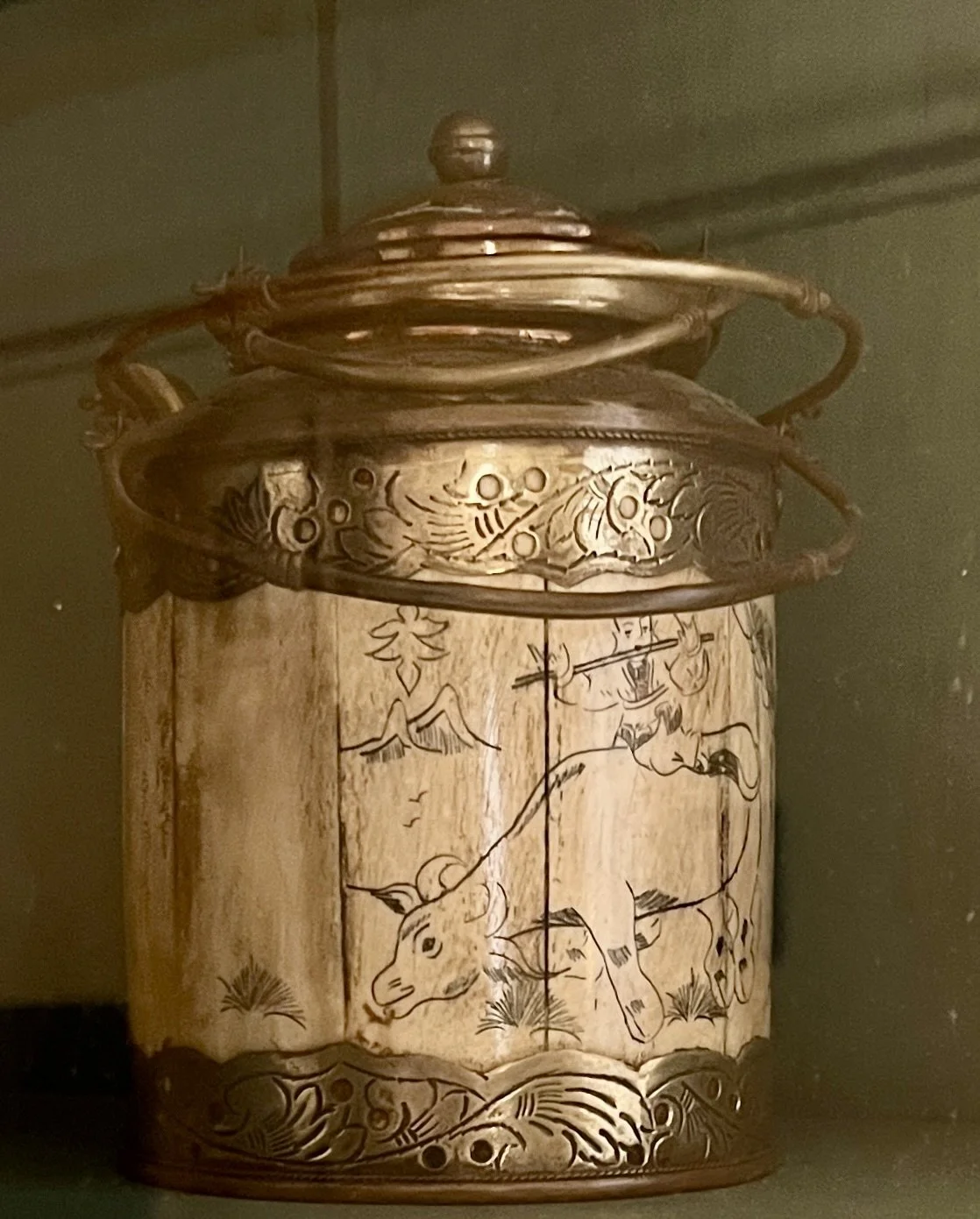
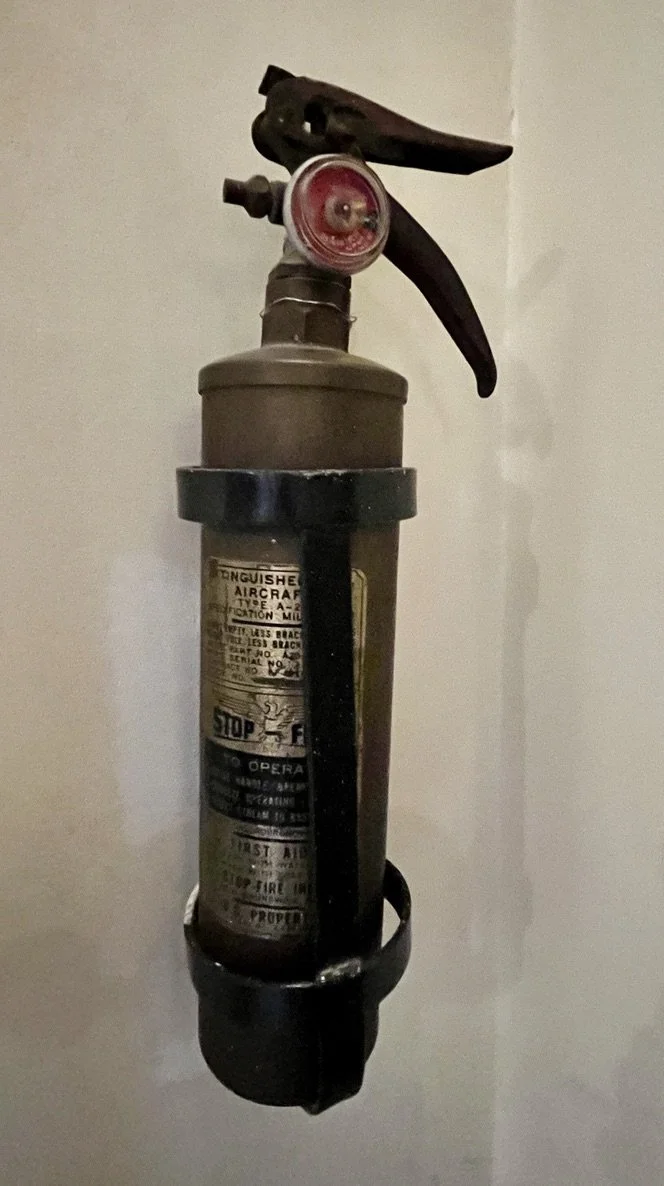
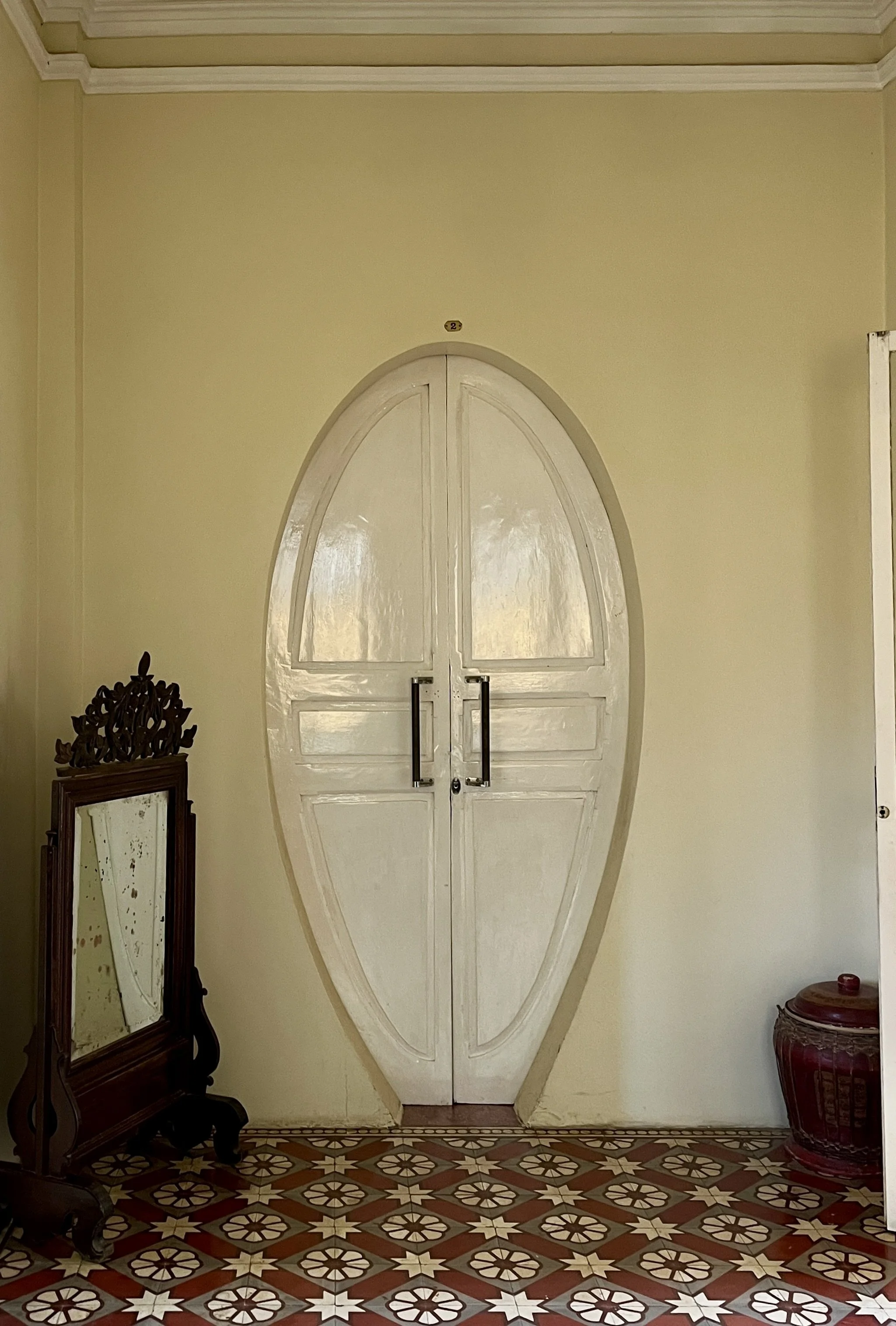
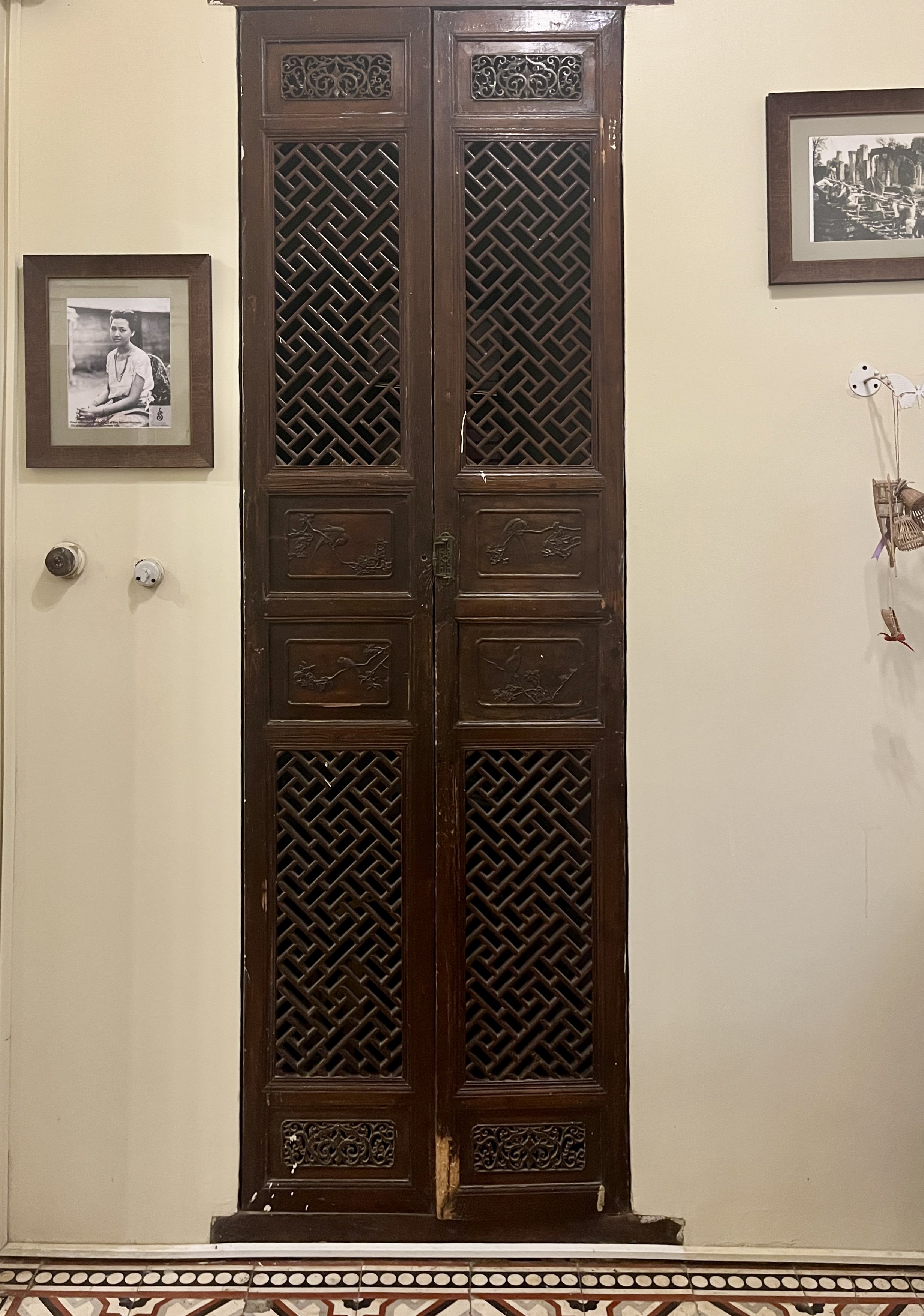
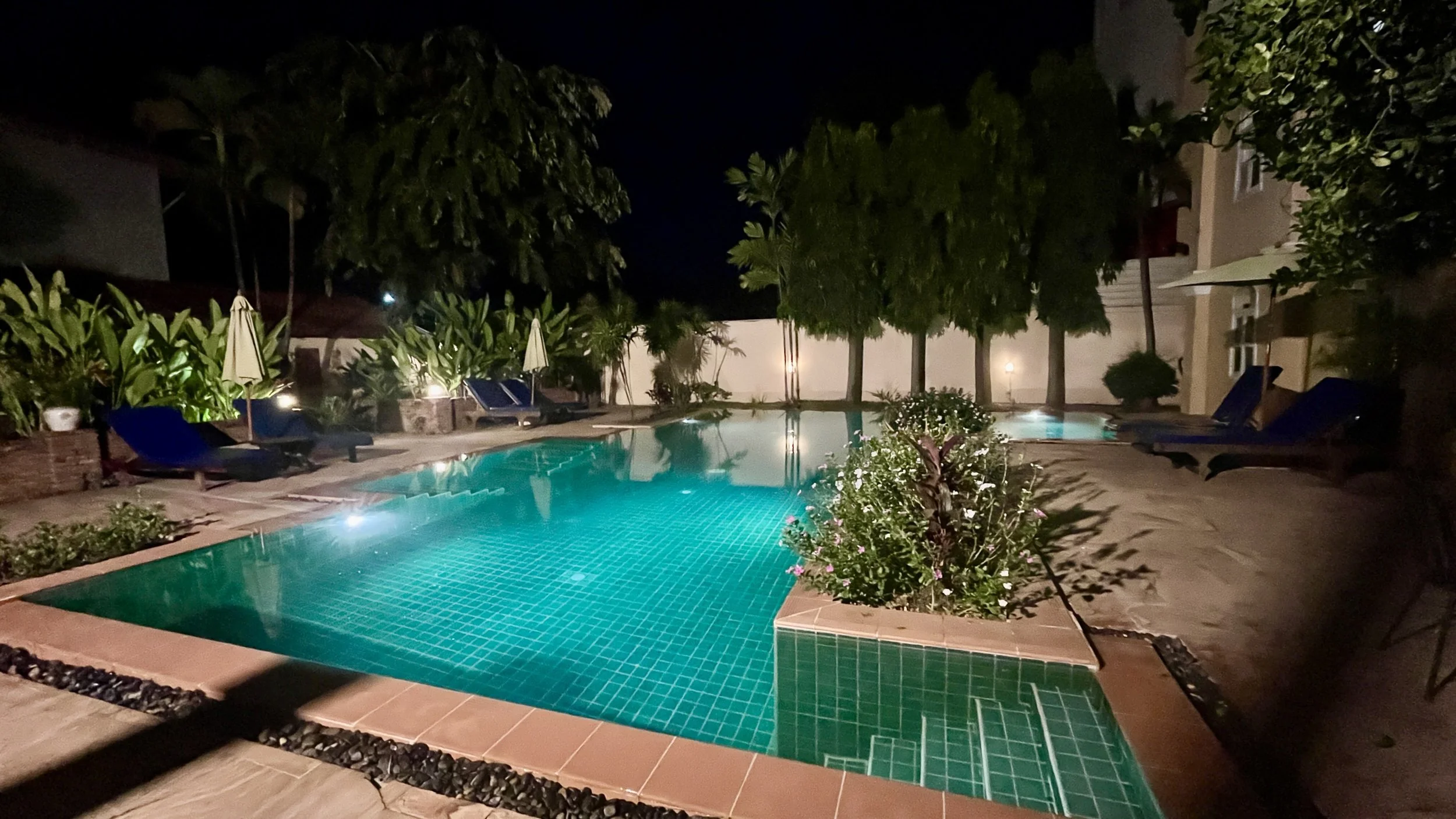
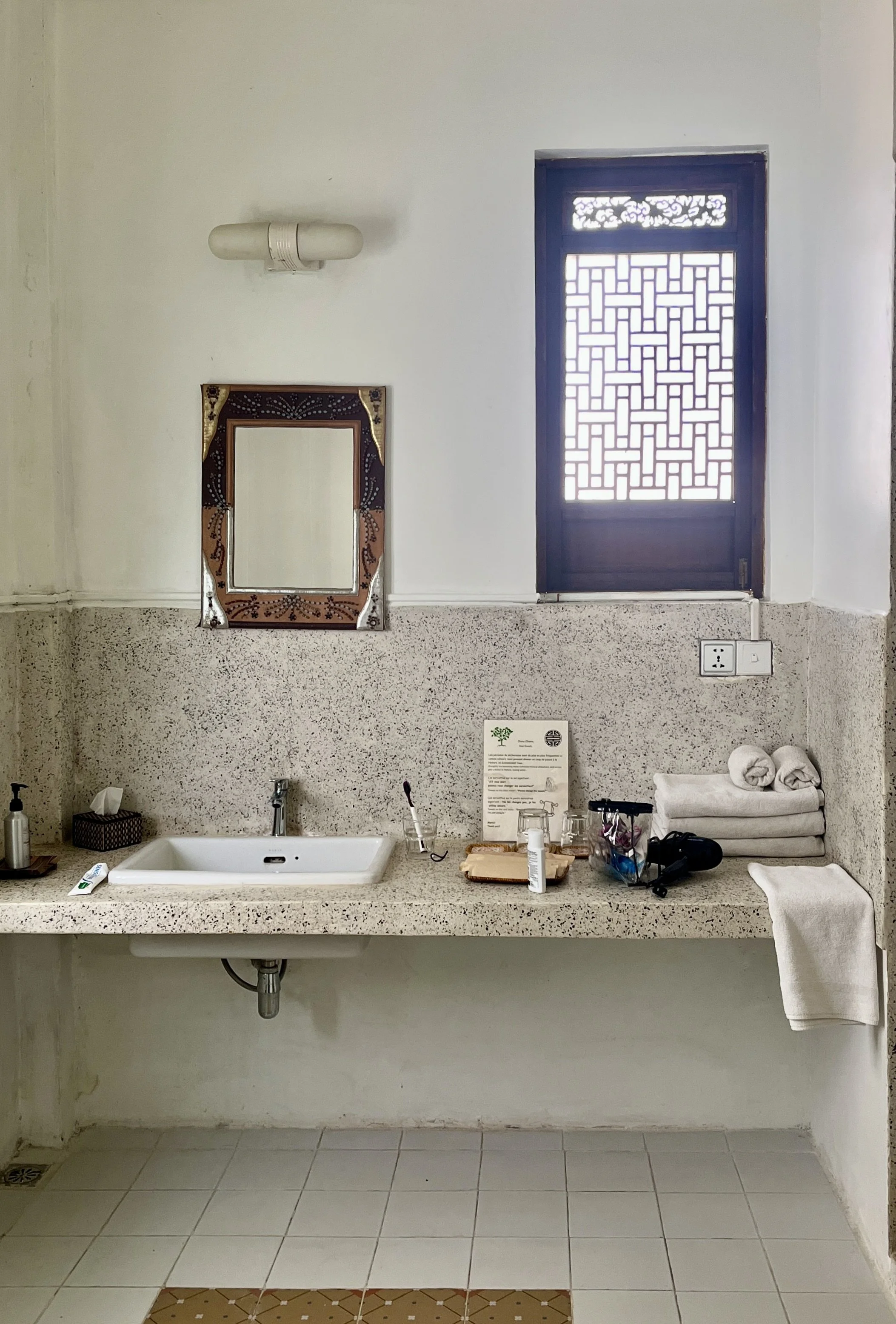
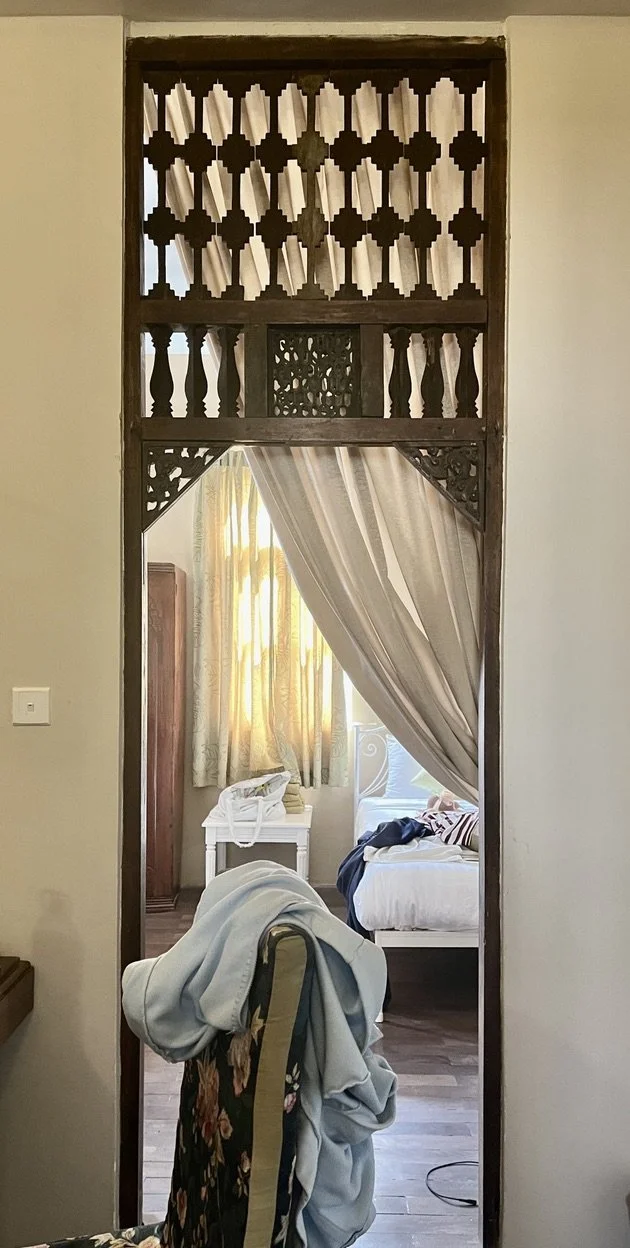
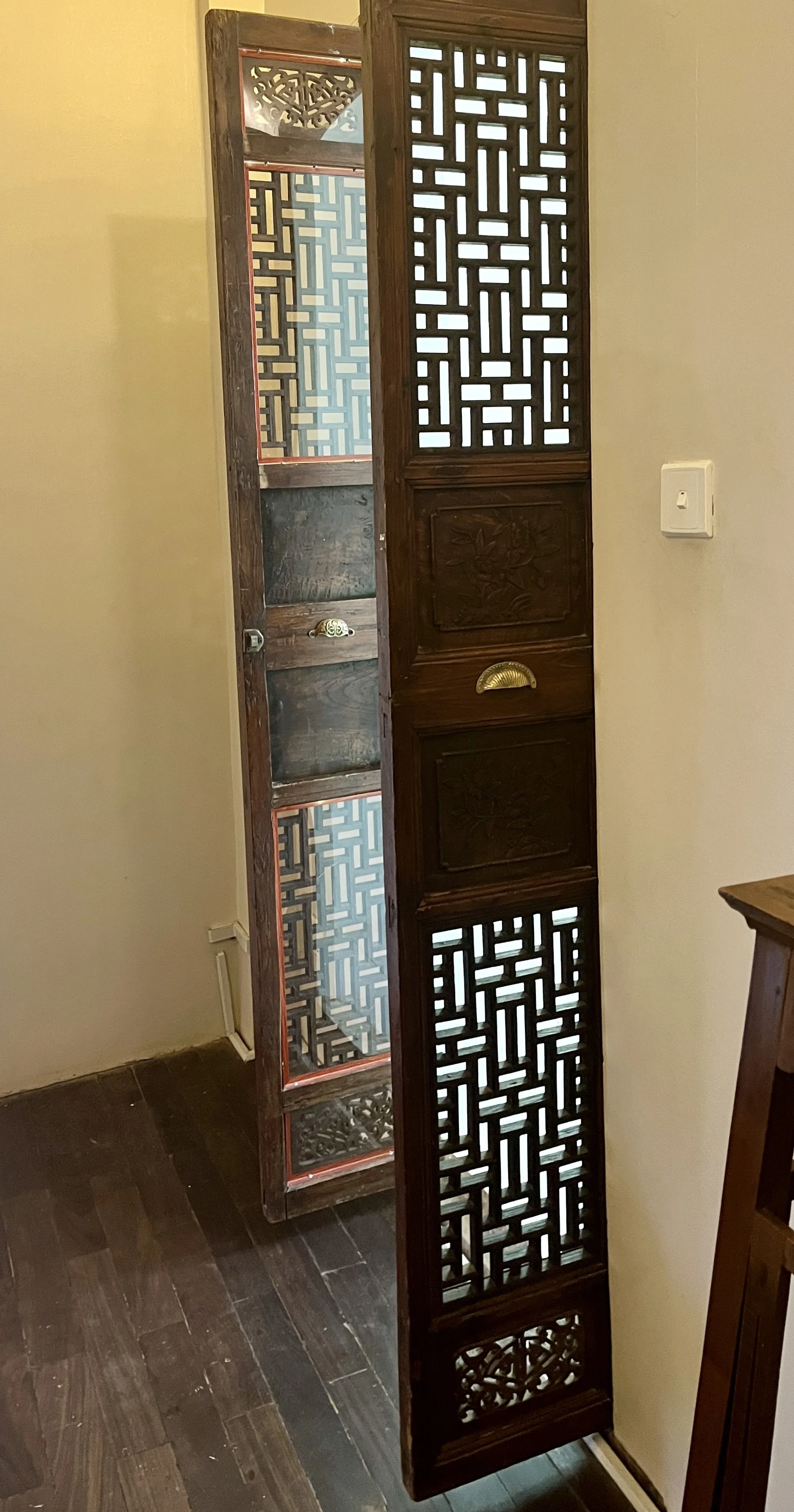
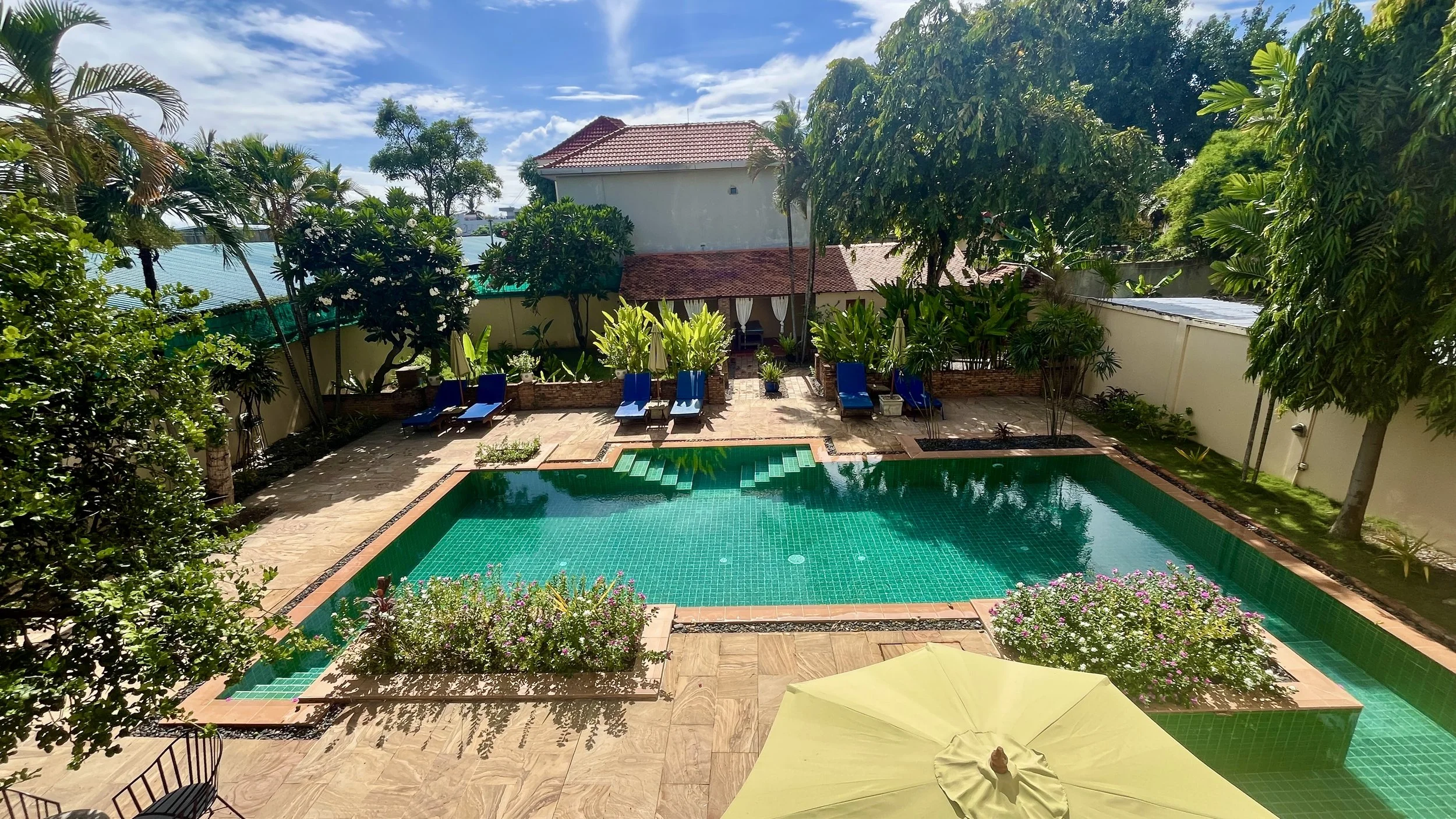
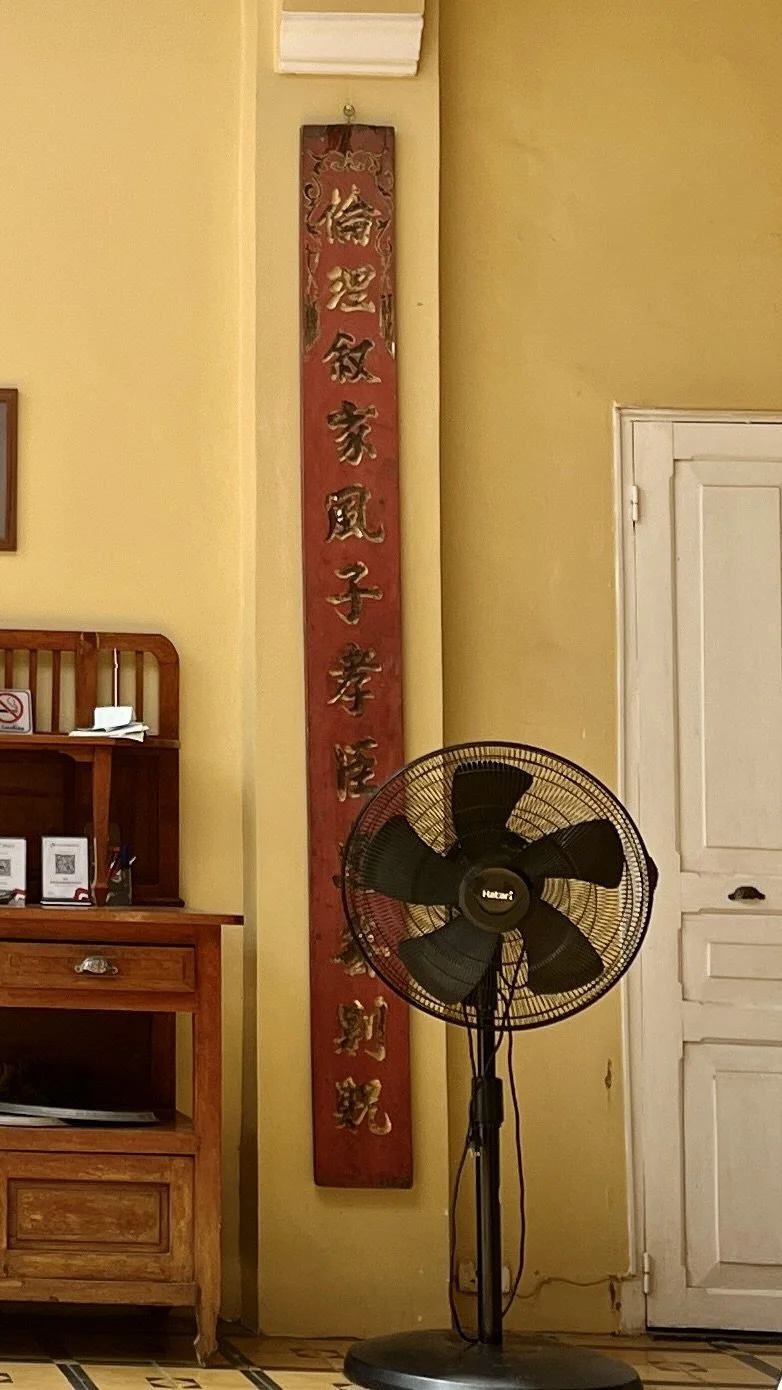
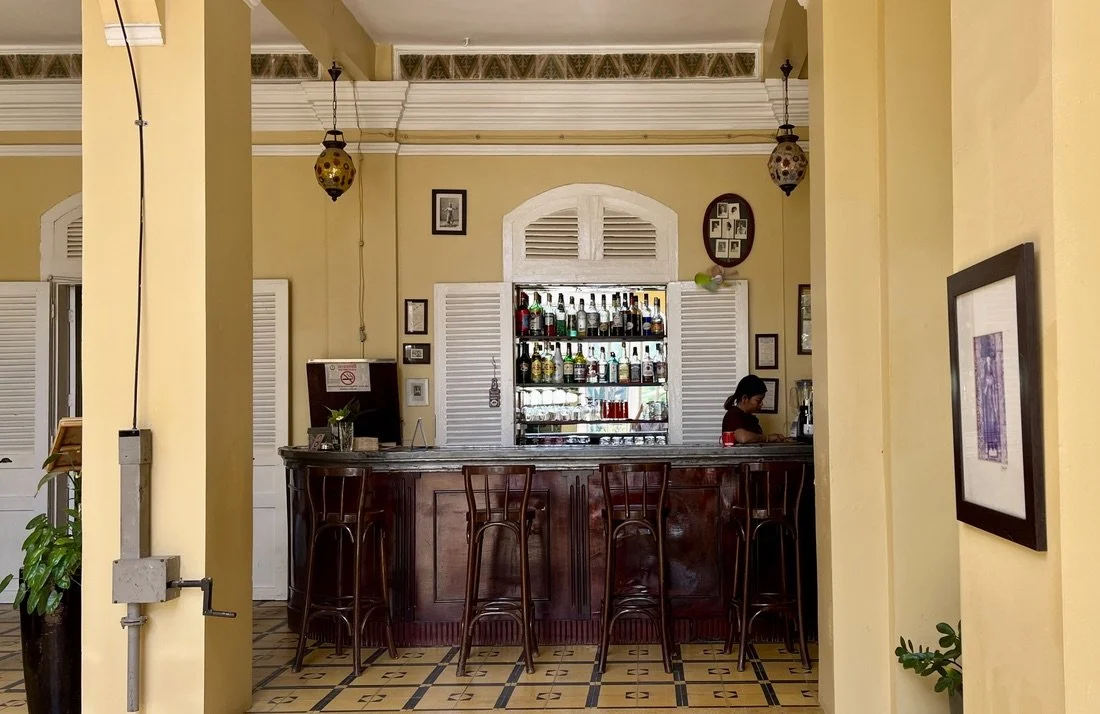
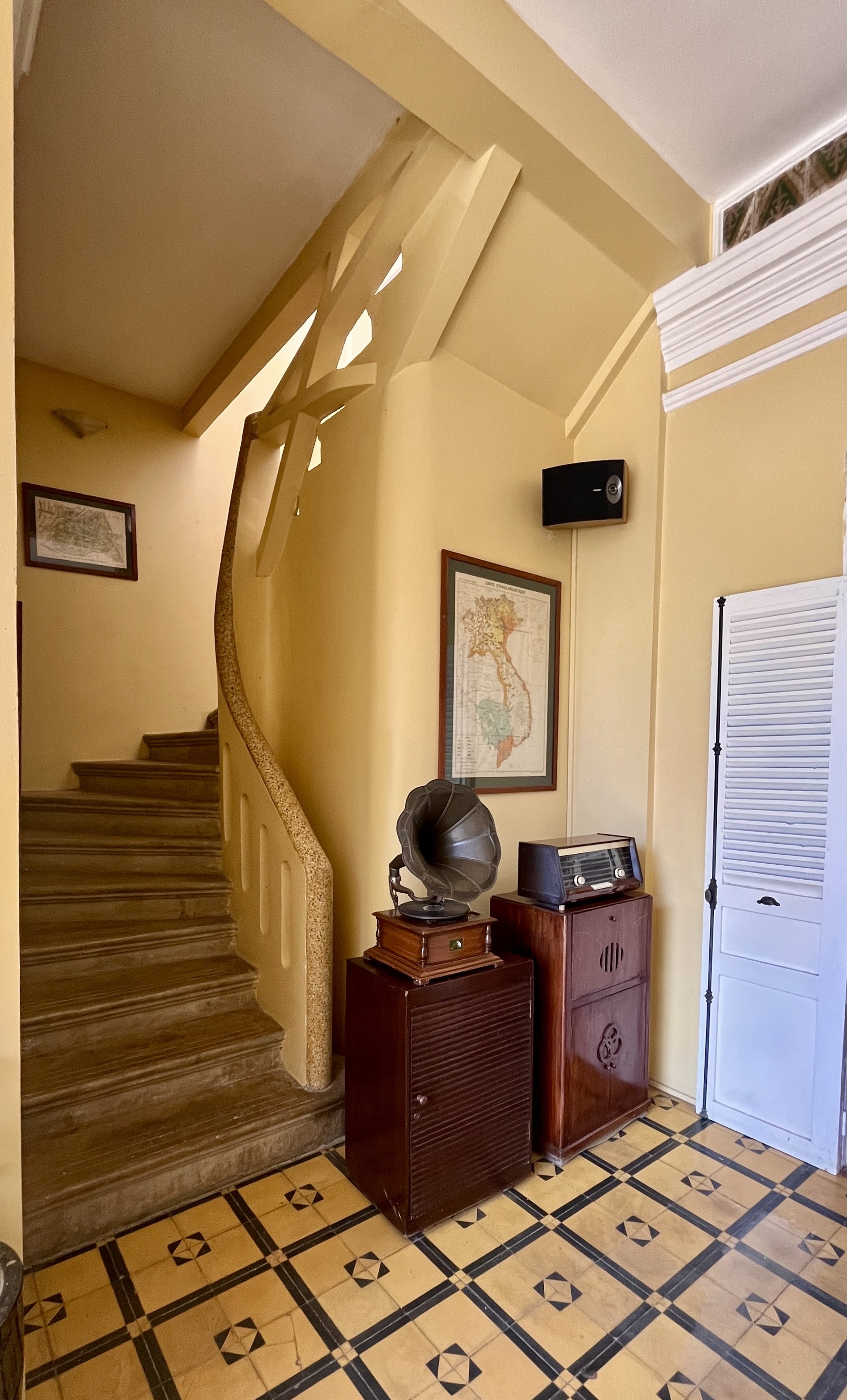
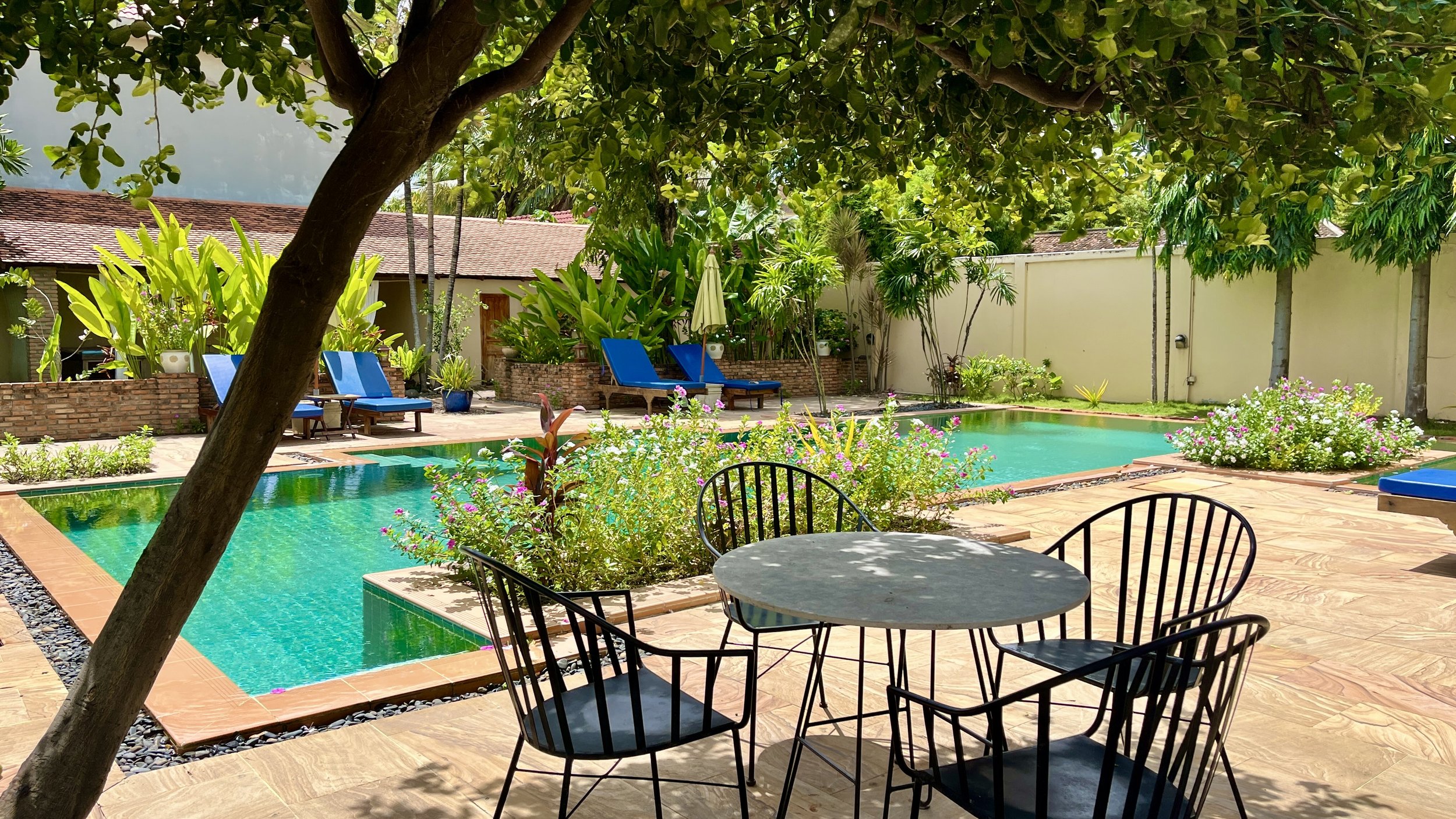
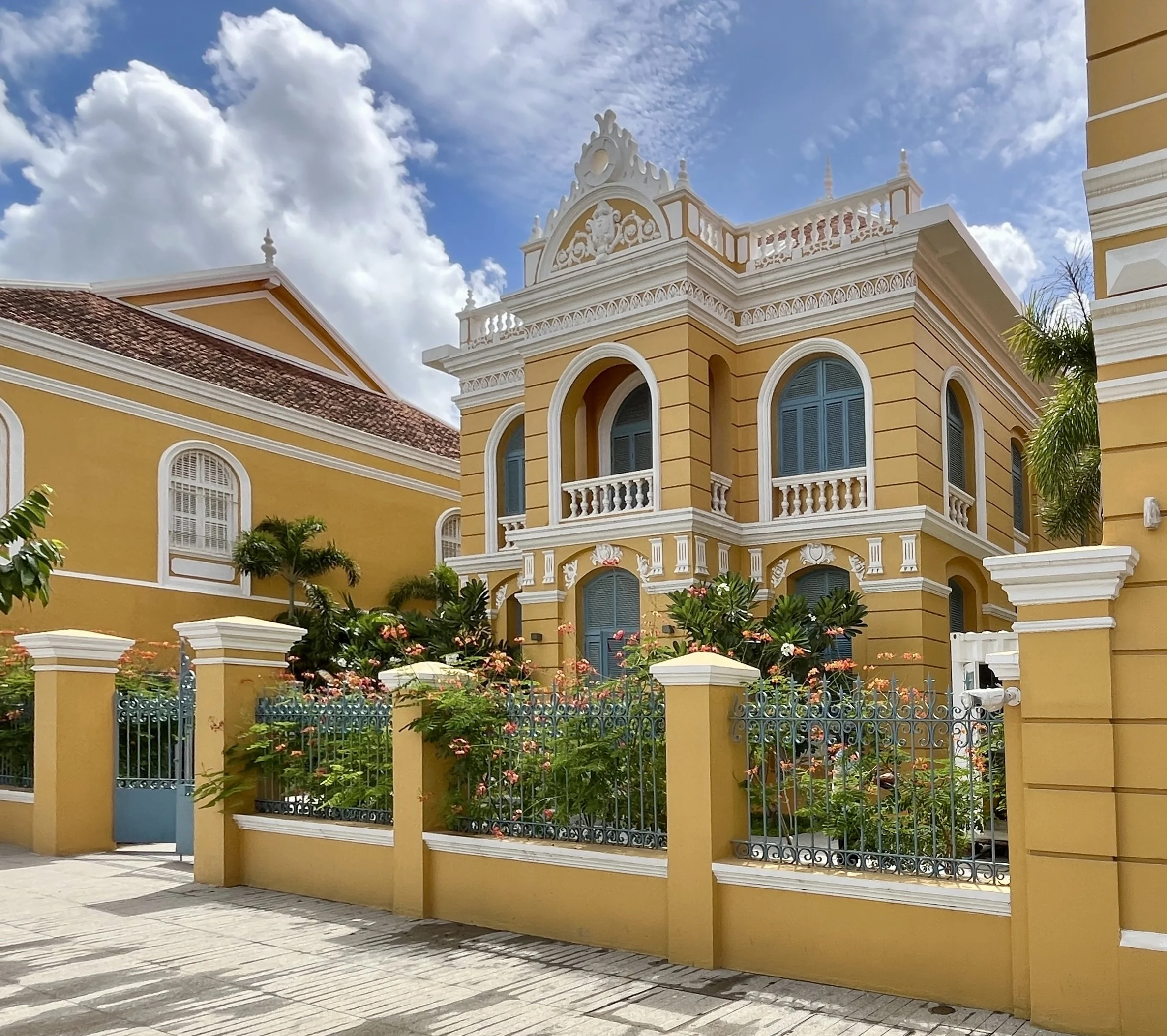
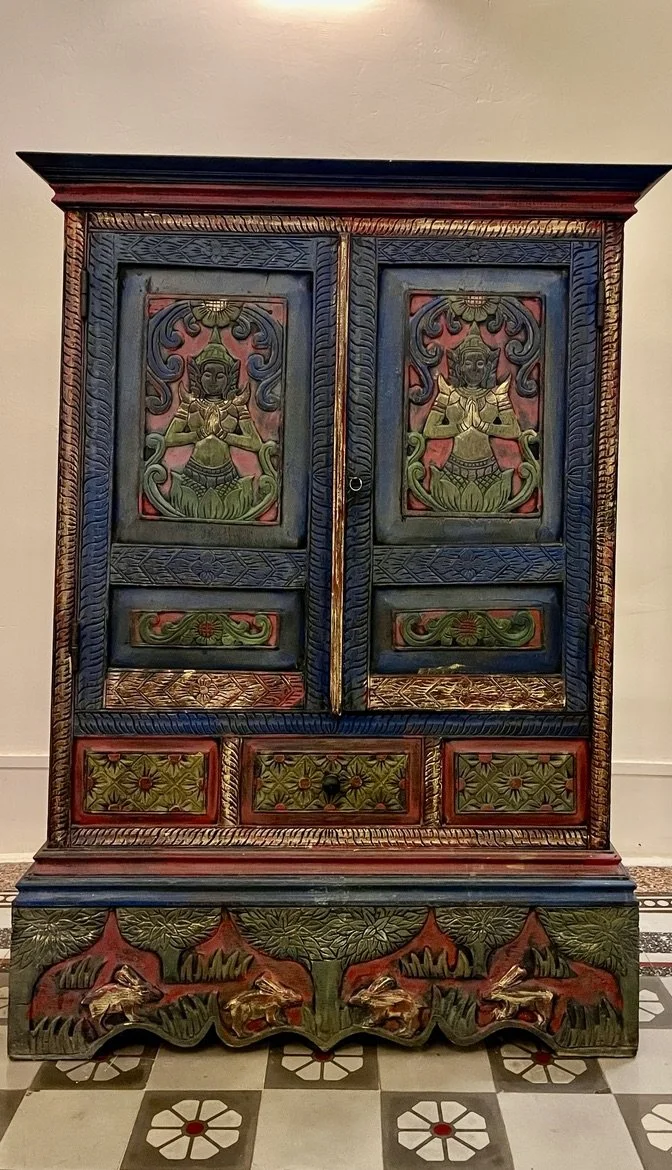
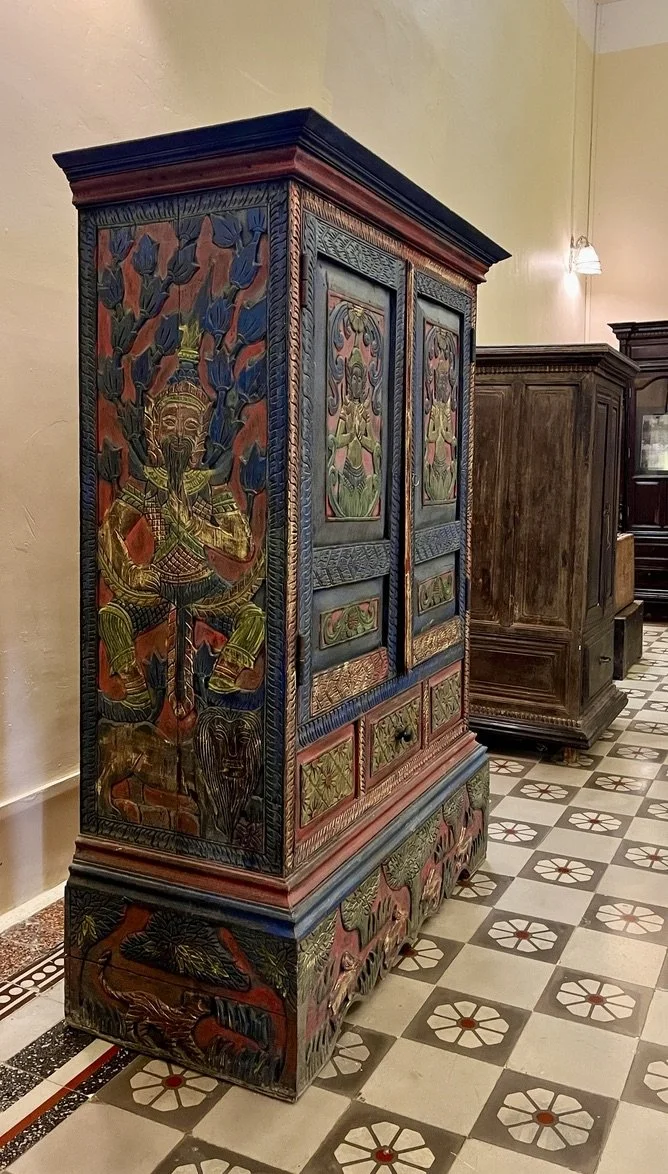
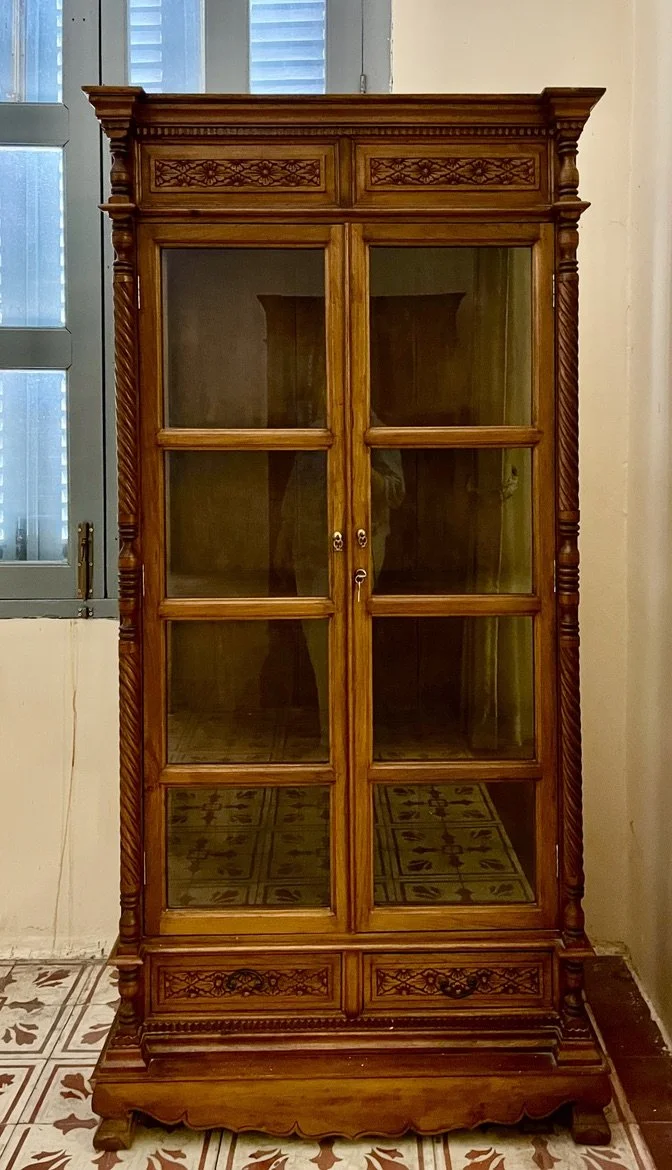
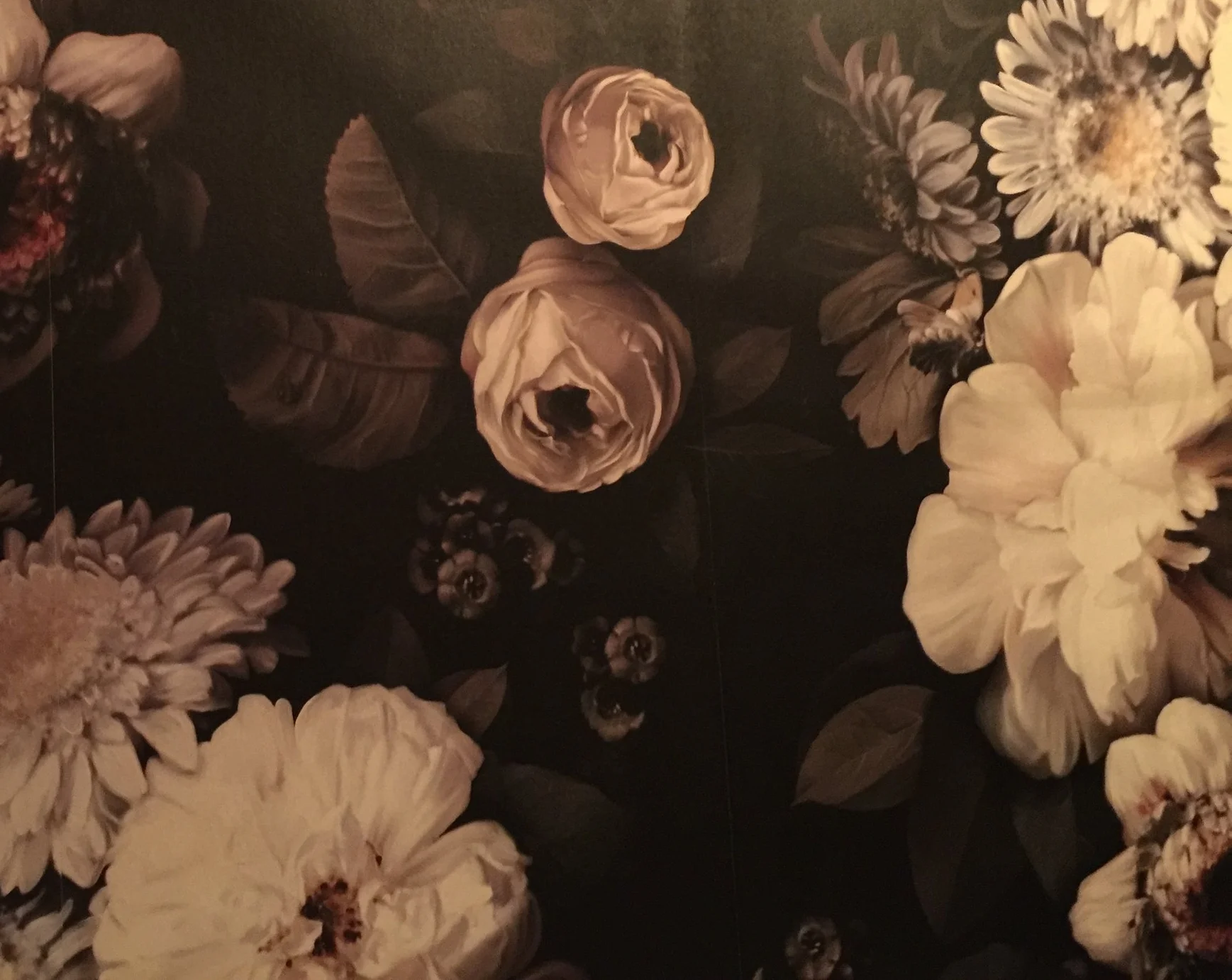
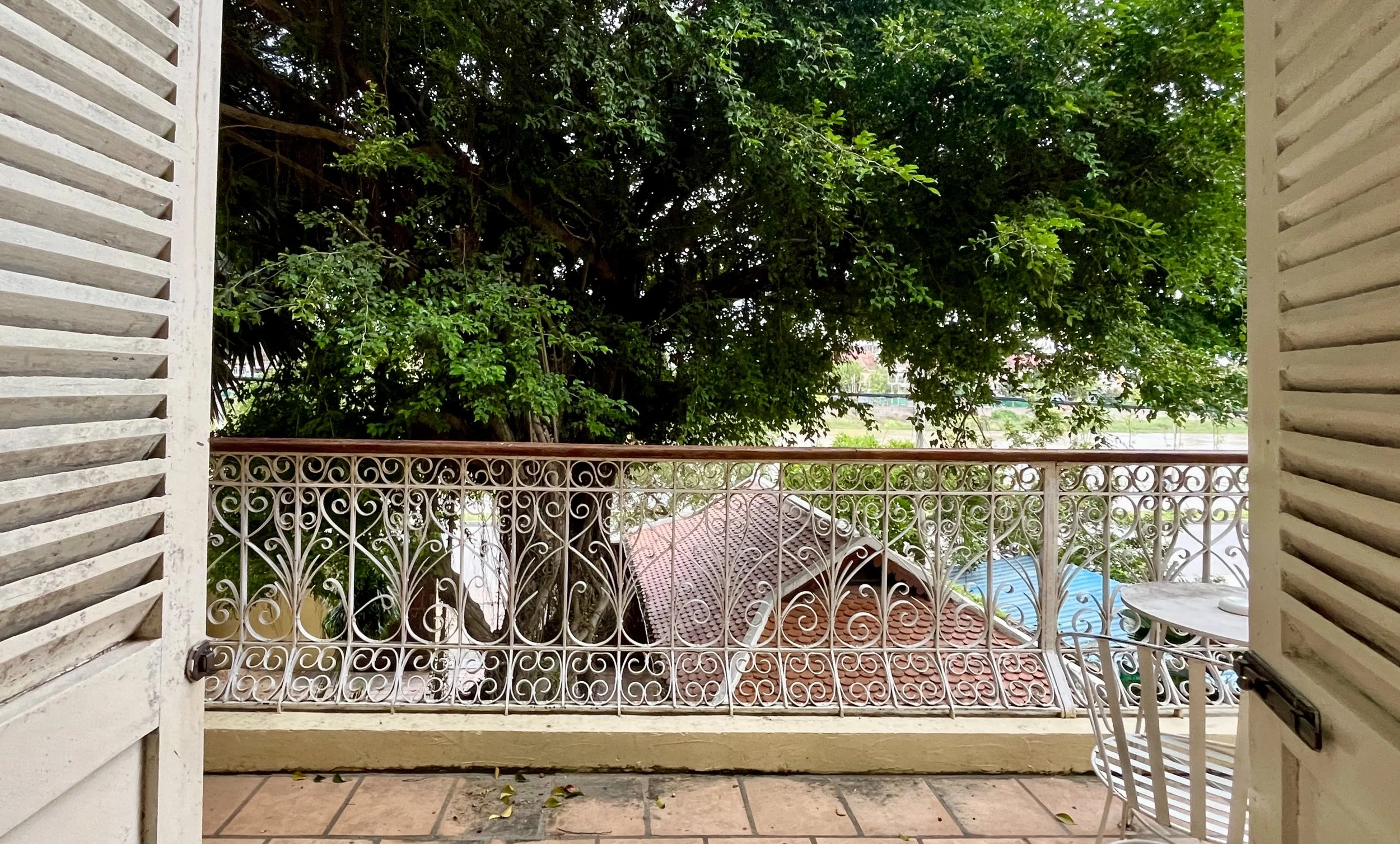
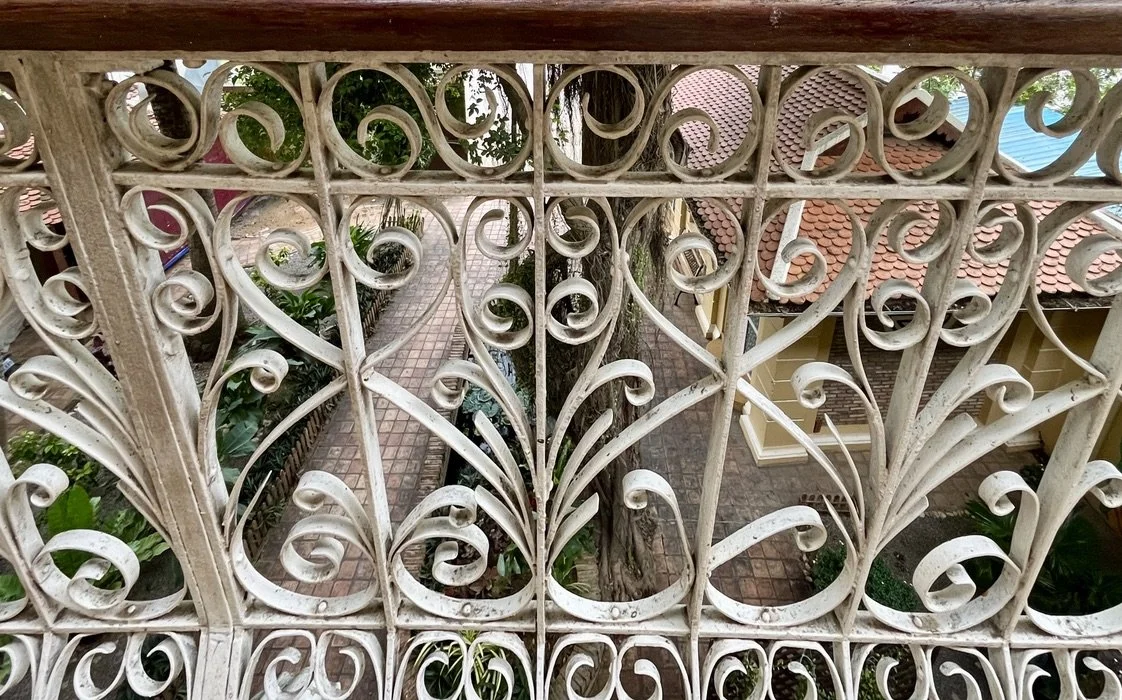
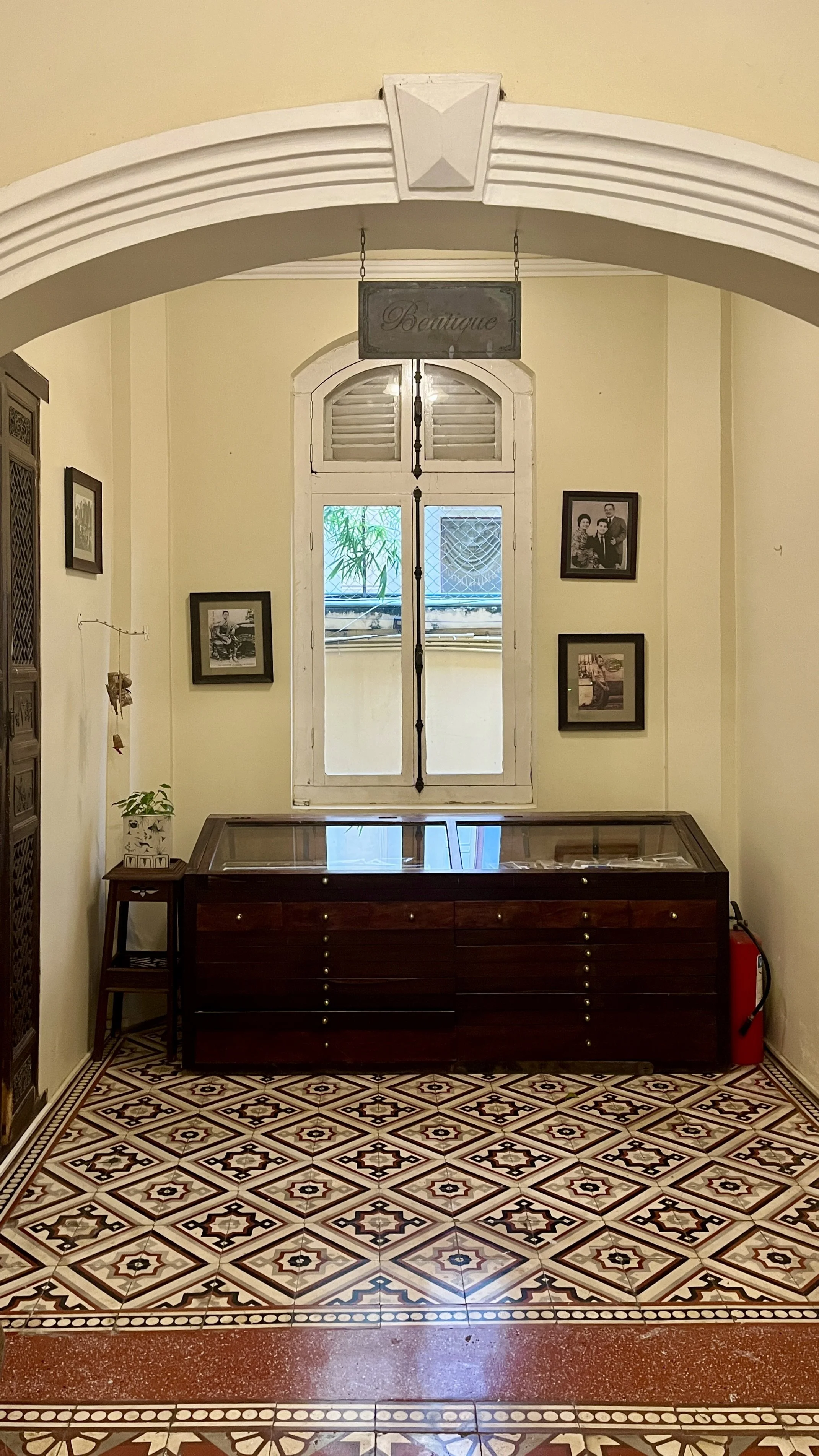
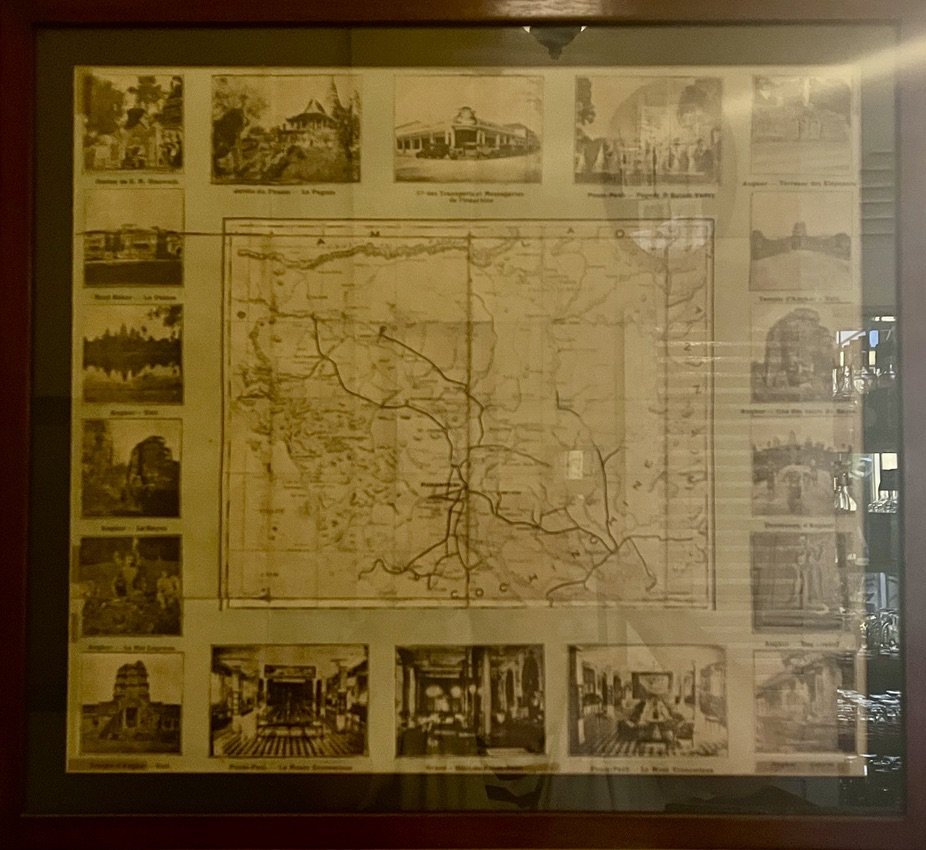
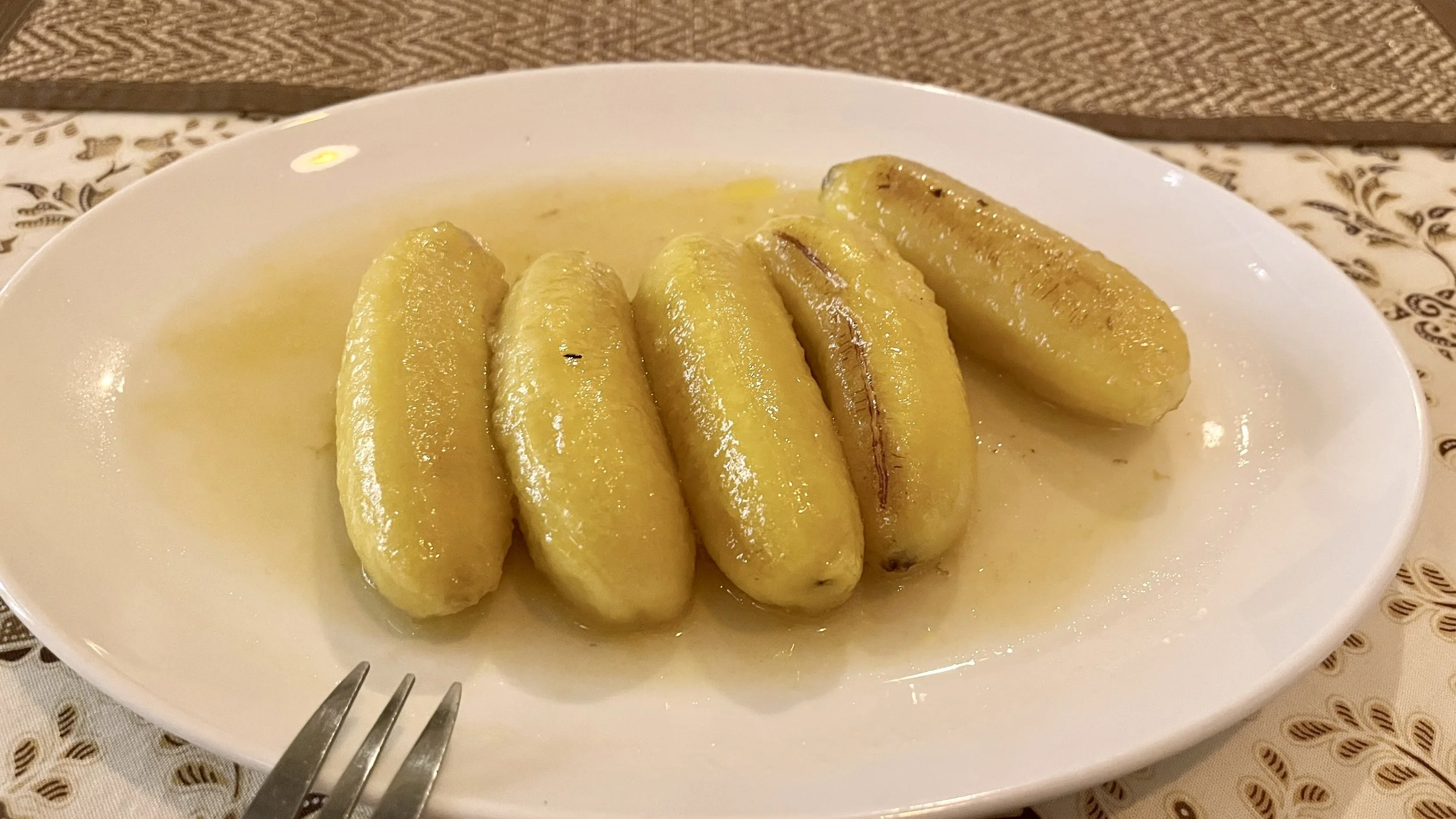
I really like that the renovation was more like a restoration, with period-perfect details and decor. It really feels like stepping back into the late 1930s; everything but the pool is accurate enough to be a movie set. Well, I guess there’s one minor caveat– all the antiques etc. are Vietnamese, not Khmer. However, as I’ve written before, after the Khmer Rouge, there are few if any surviving Khmer antiques (not looted artifacts). Zero pretense has been made towards inauthentic generic “luxury” in the style of Raffles, and I really like that. On the other hand, housekeeping is really not up to snuff; the rooms were very visibly dusty, smelled vaguely of either stale cigarettes or mold, and the linens etc. have clearly never been refreshed. It reminded me a lot of Loire valley 2 or 3 stars I stayed in as a teenager in the ‘90s.
In terms of service . . . not good enough. There were assholes smoking in front of my bathroom window and the concierge refused to ask them to stop or move– he did the standard SEA act of pretending to ask them not to smoke, then coming back to me and denying they had. When I told him I saw it with my own eyes, smelled it with my own nose, and wanted them and the furniture they were sitting on moved away so it didn’t happen again, he again, according to what seems to be a standardized SEA playbook of bullshit for hoteliers, refused to confront them, instead offering to move me into another room, as if I was the problem. I had paid for their most expensive suite– and therefore shouldn’t be inconvenienced, and certainly not downgraded– but was forced to choose another lesser room because the head staffer refused to confront the offending guests.
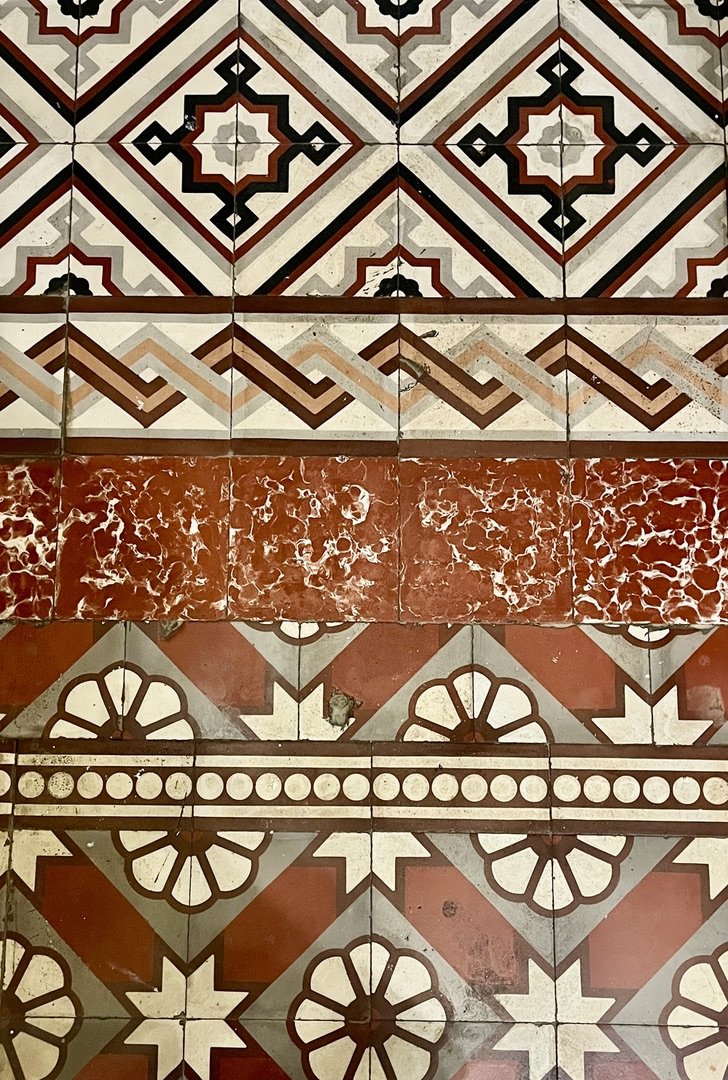
Same thing with the restaurant– instead of seating smokers far away from other guests outside, they let them sit right next to the glass doors, and left the doors propped all the way open, not caring if people purposefully sat inside in order to not be disturbed by smokers. It’s not an issue of not getting it, it’s an issue of not caring. Any complaints are answered with feigned ignorance, lies, and malicious compliance, it’s so, SO gross. I’ve been in SEA long enough to expect this nastiness rather than be surprised by it, but it still disappoints and disgusts me every time.
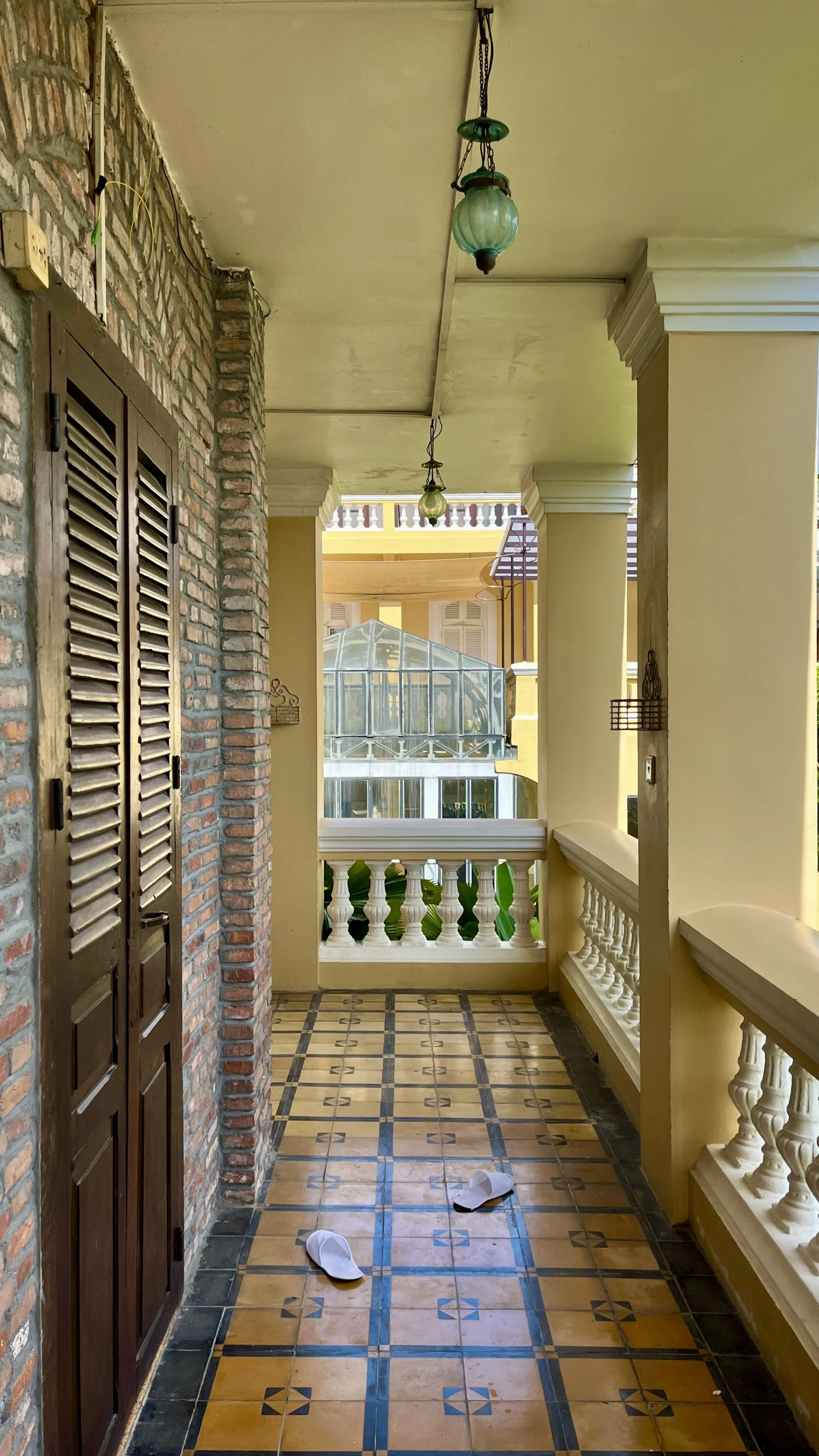
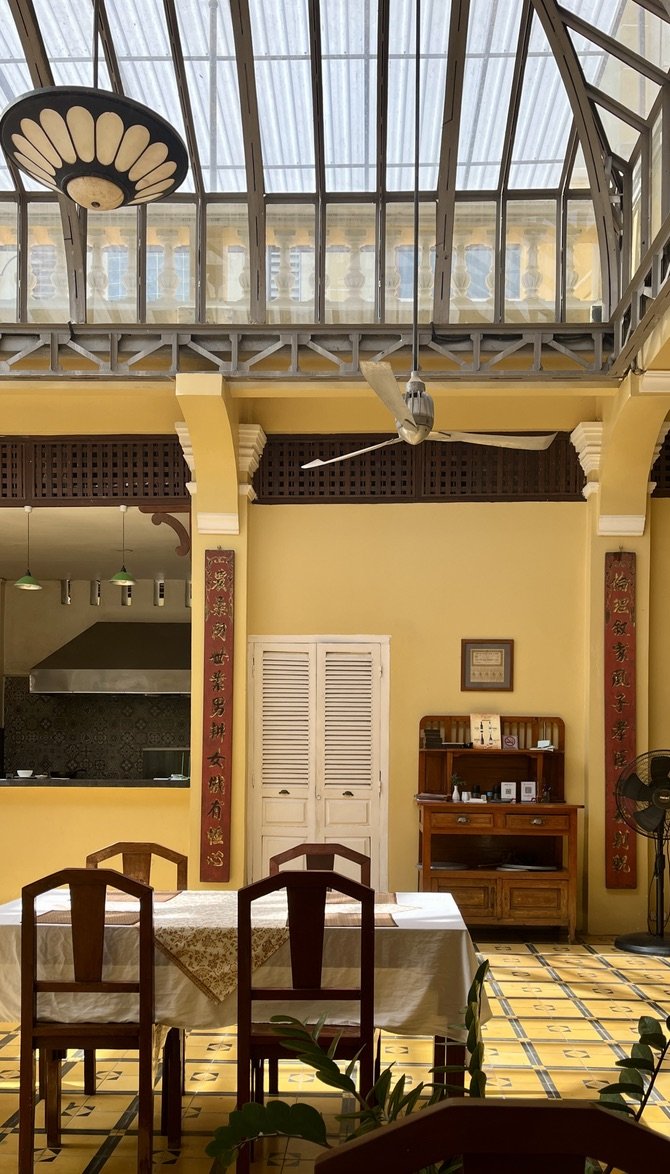
The restaurant is overpriced but reliable. The cocktails are fine. My favorite thing about this place, other than its architectural integrity, is how few other guests were there most of the time. It’s the kind of place I’d like to buy and turn back into a private residence.
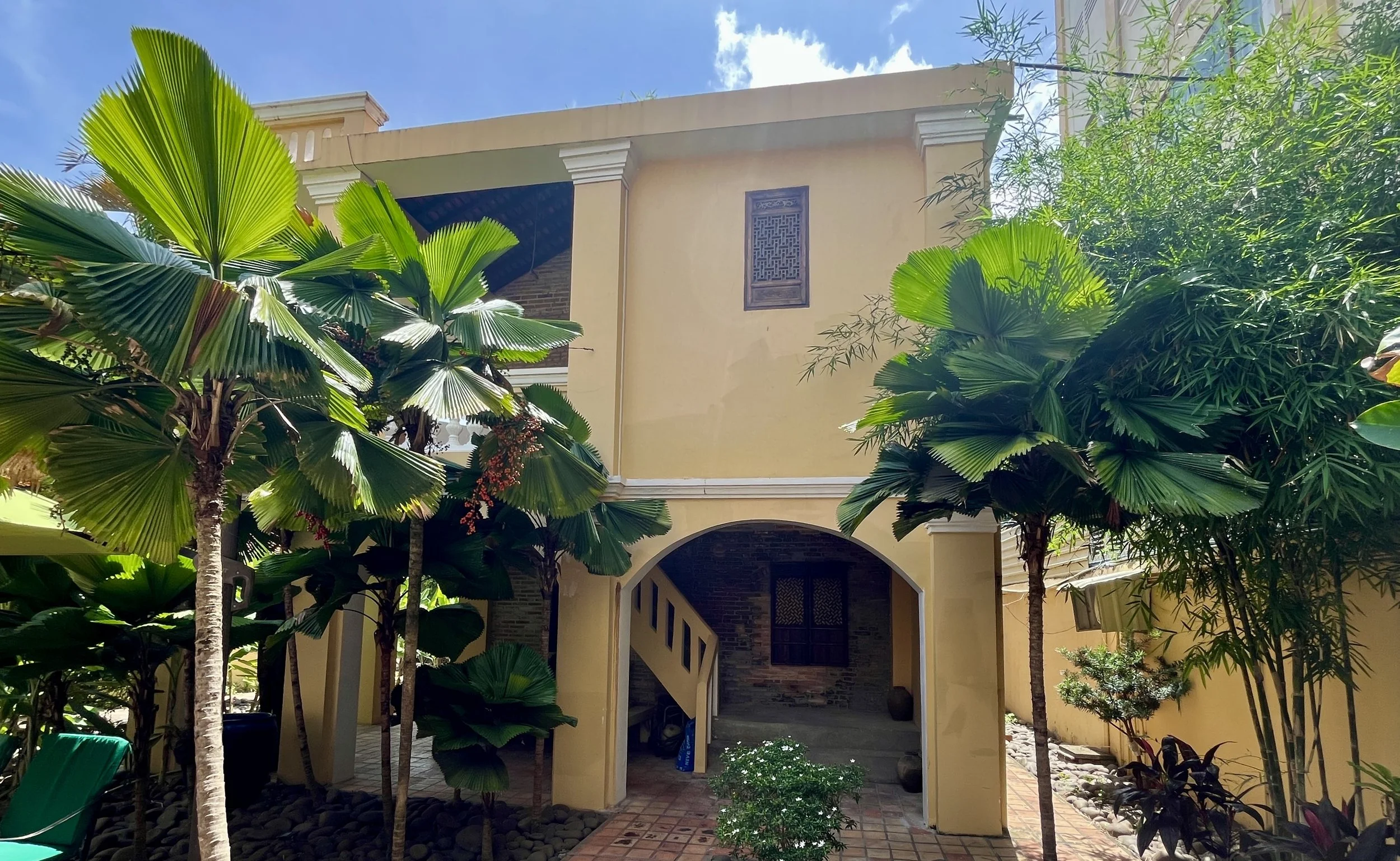
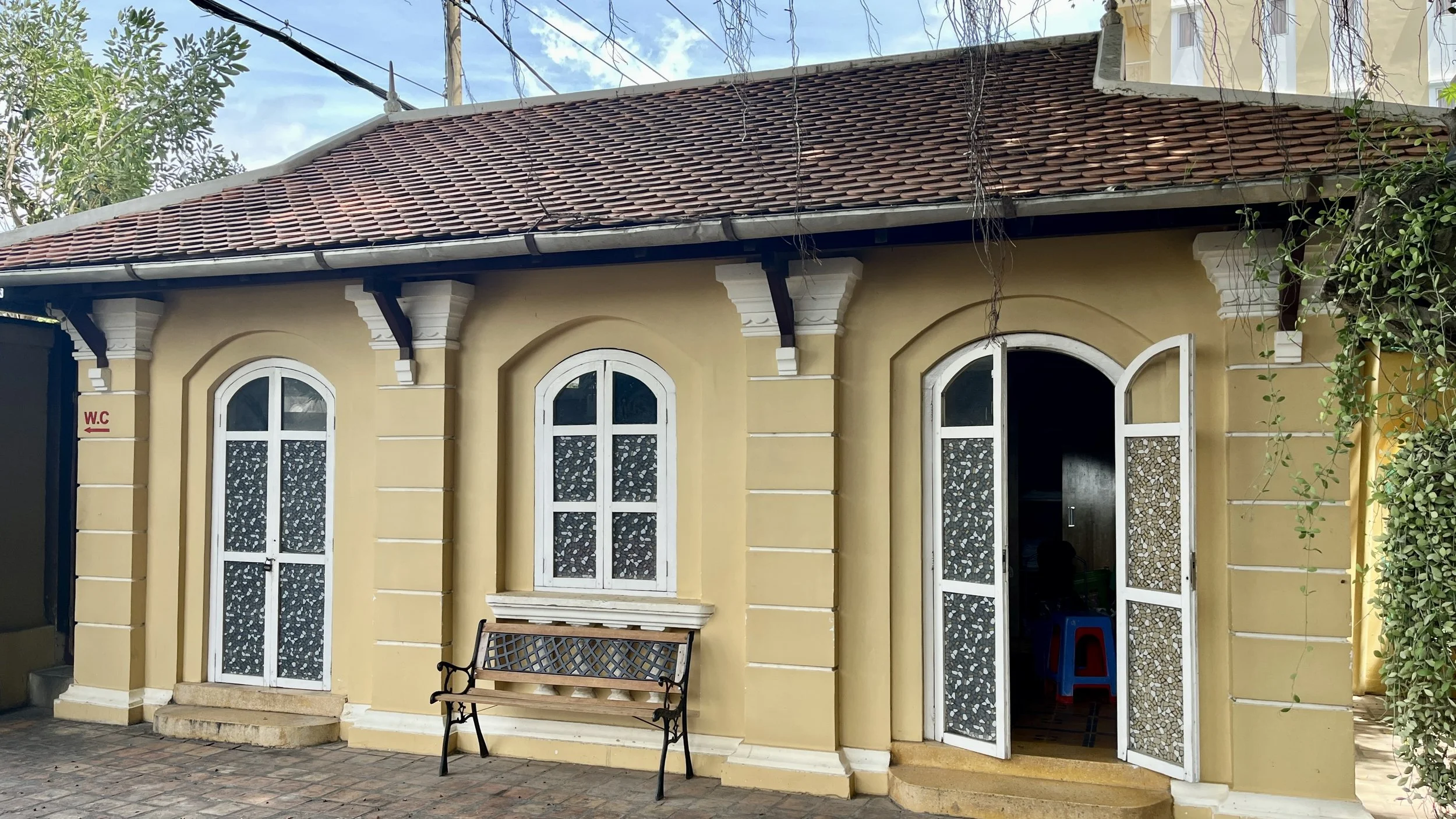
Colonial Architecture in Battambang | Cambodia

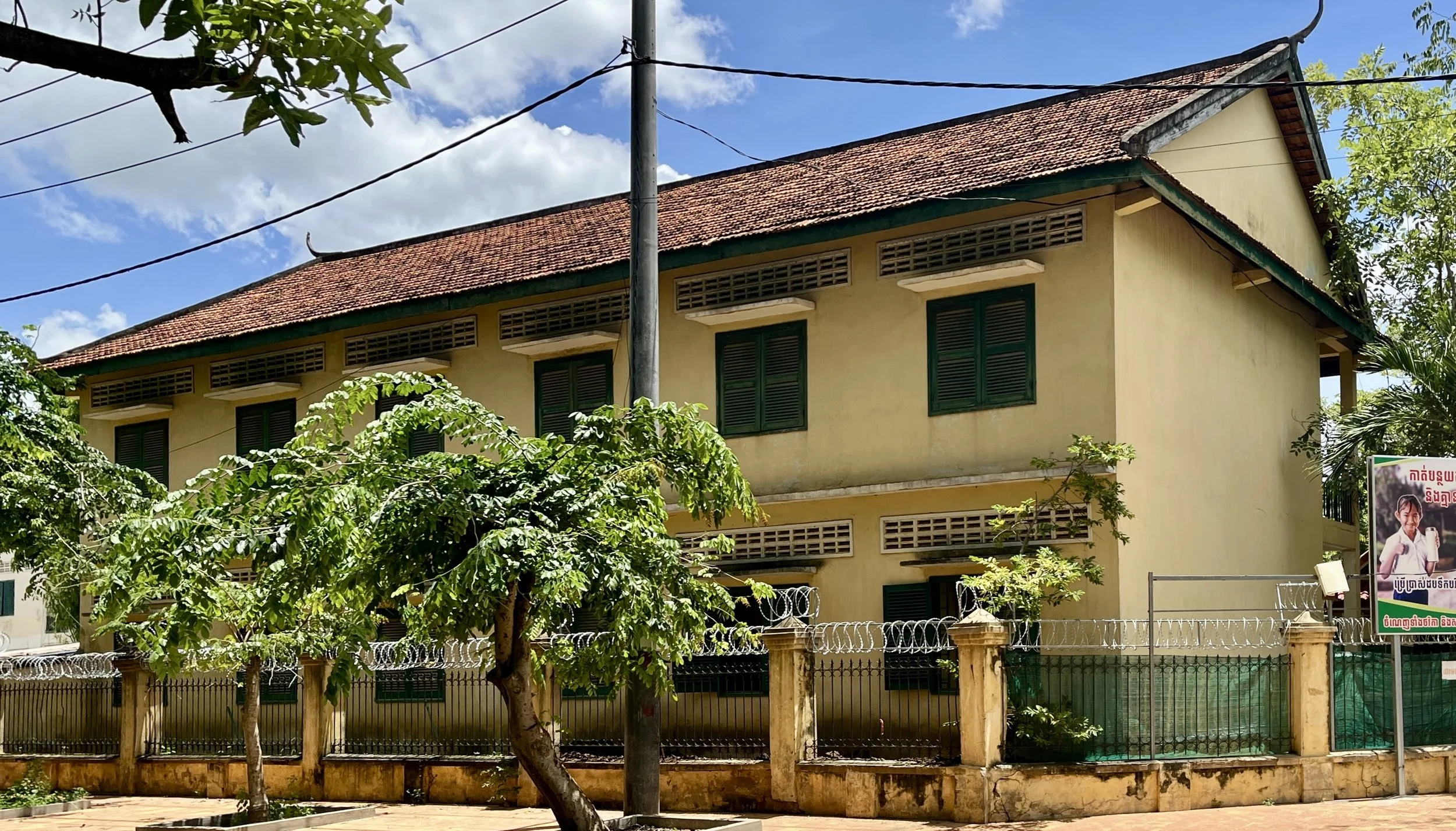
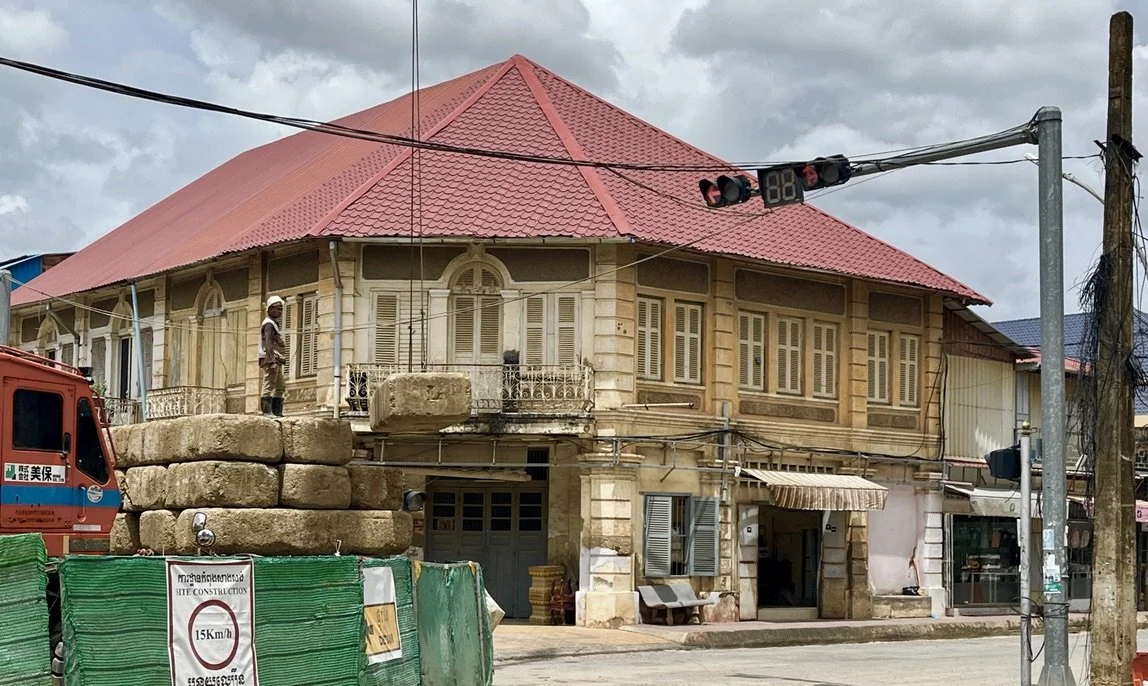
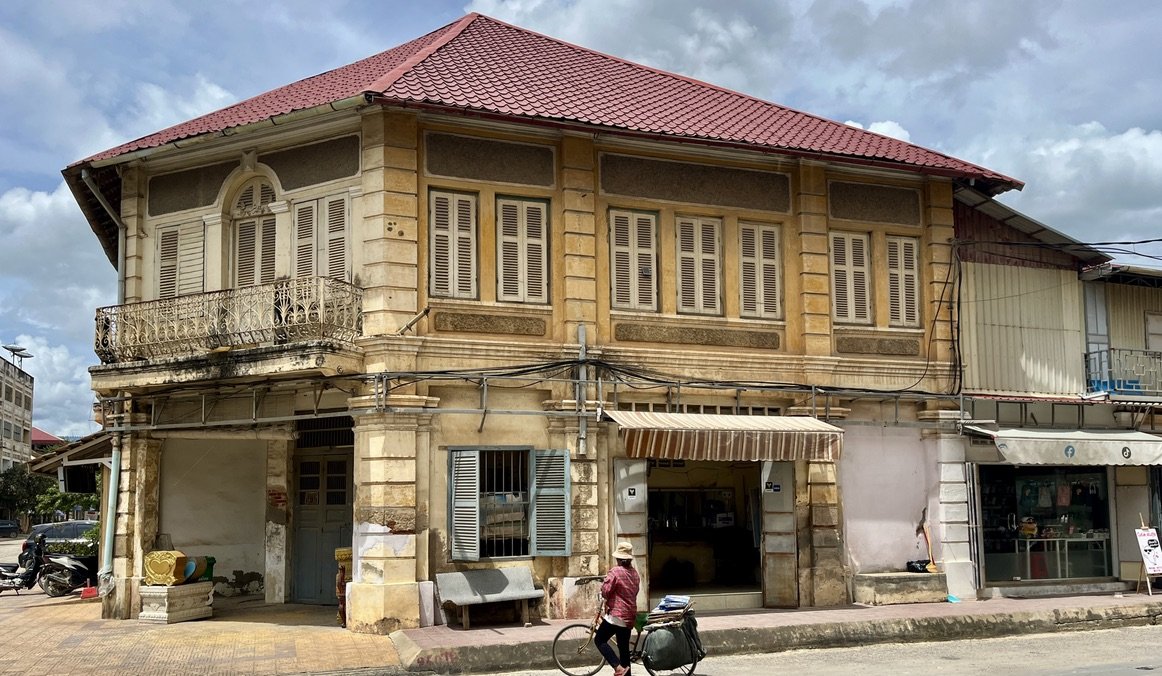
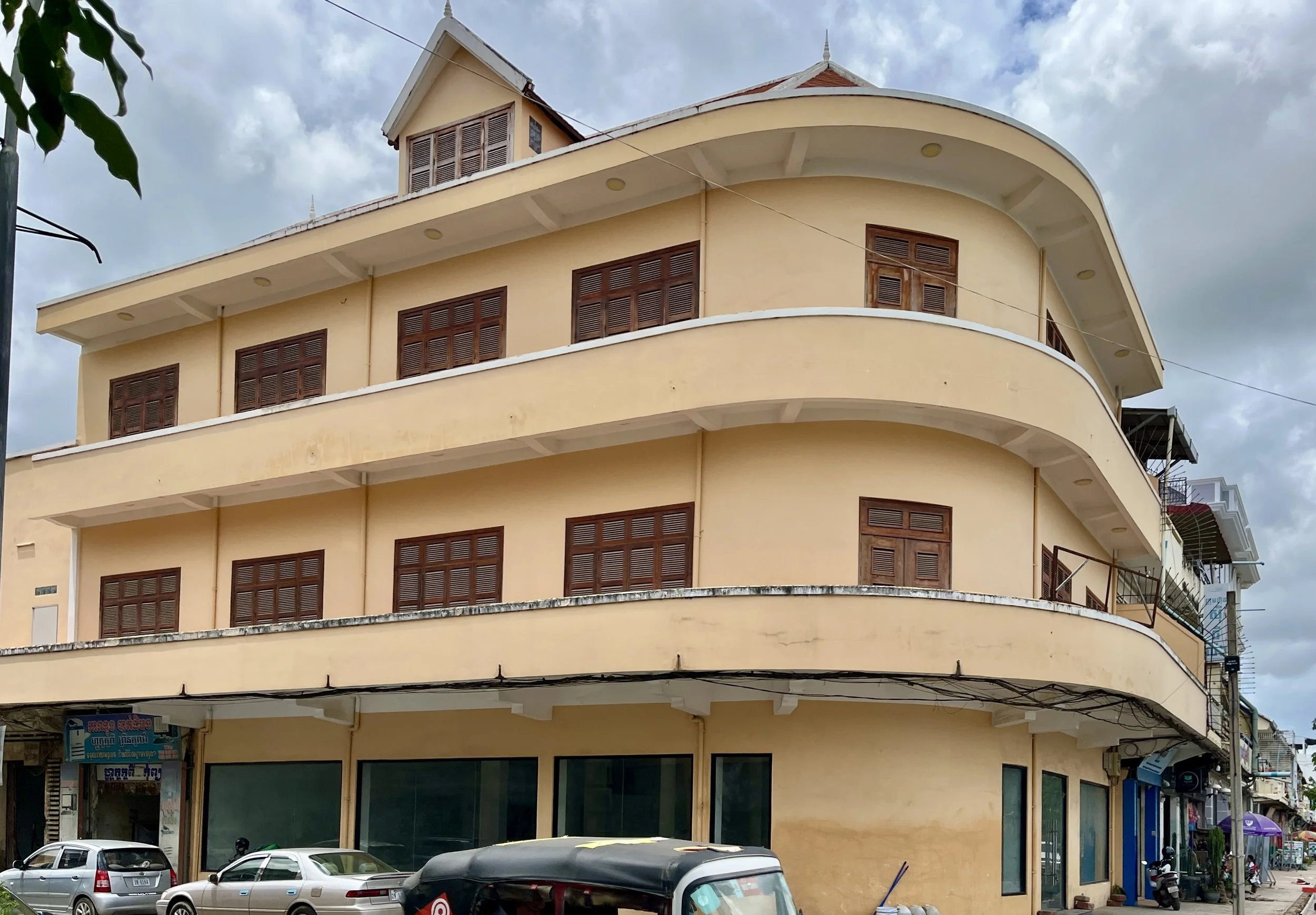
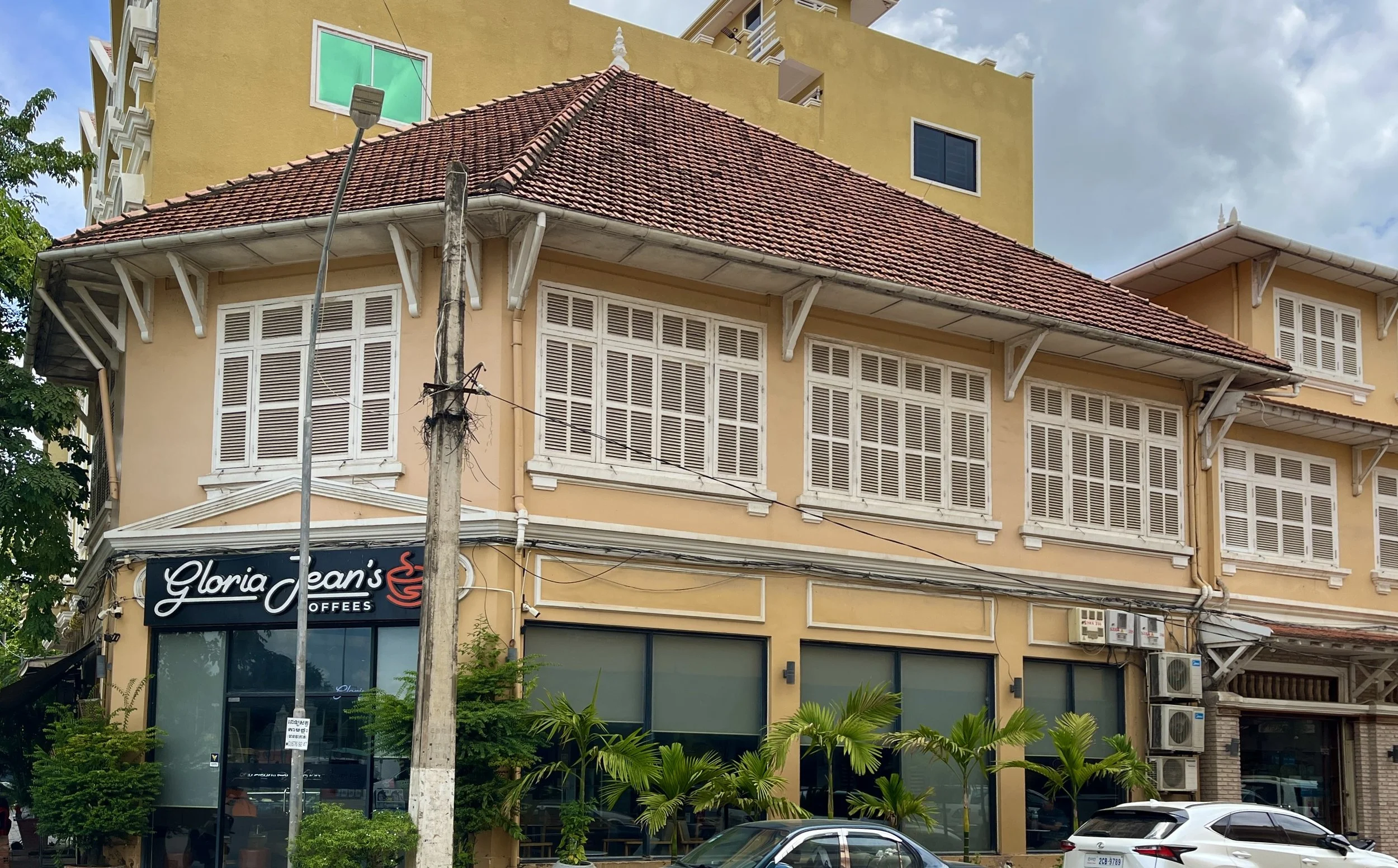
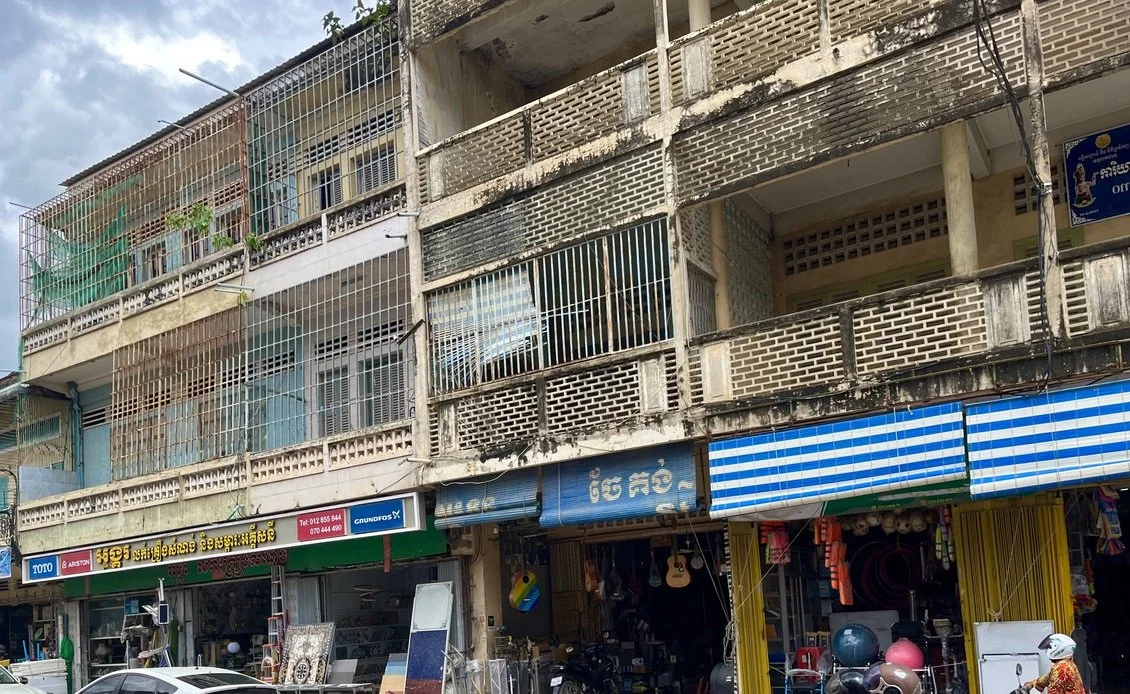
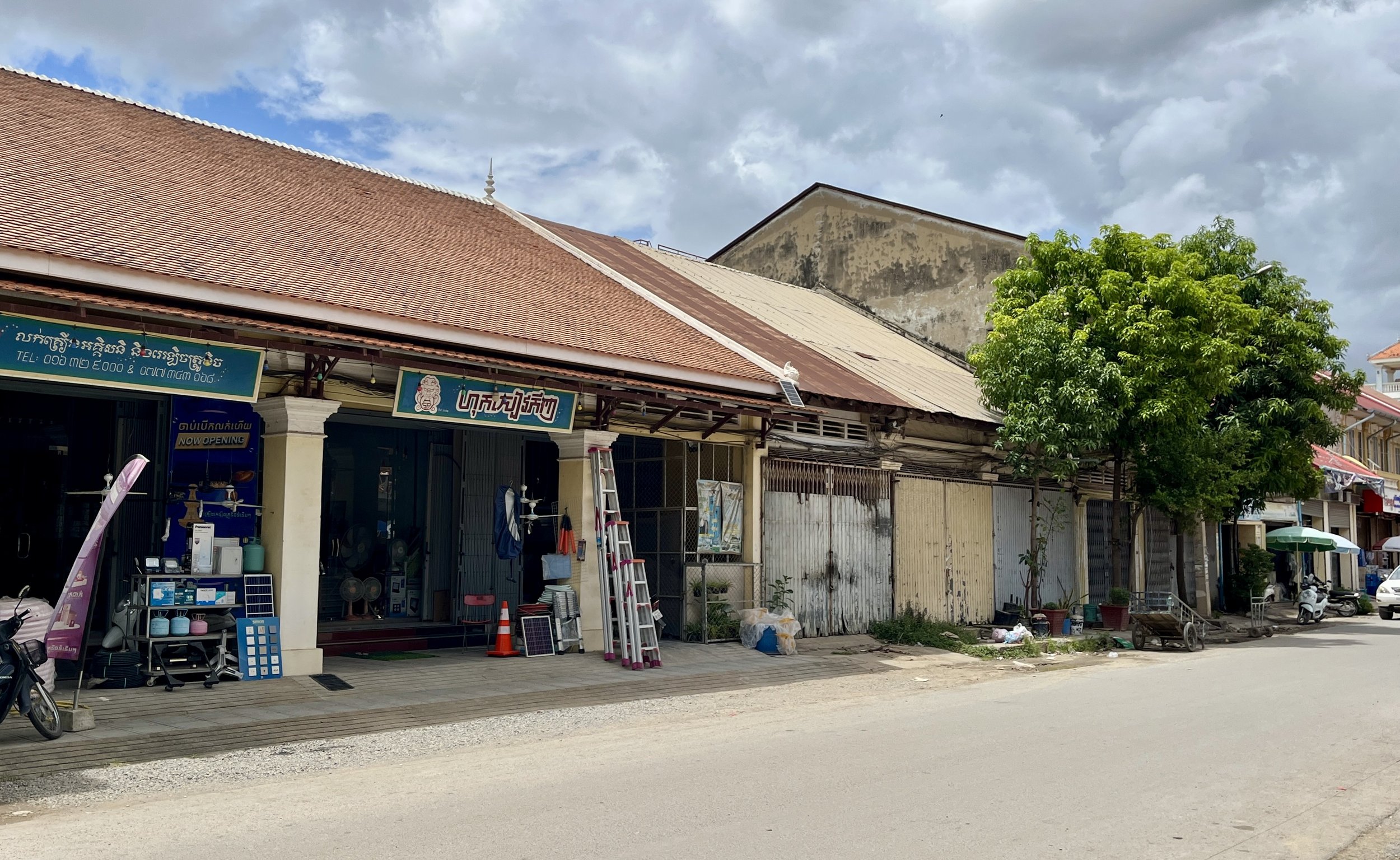
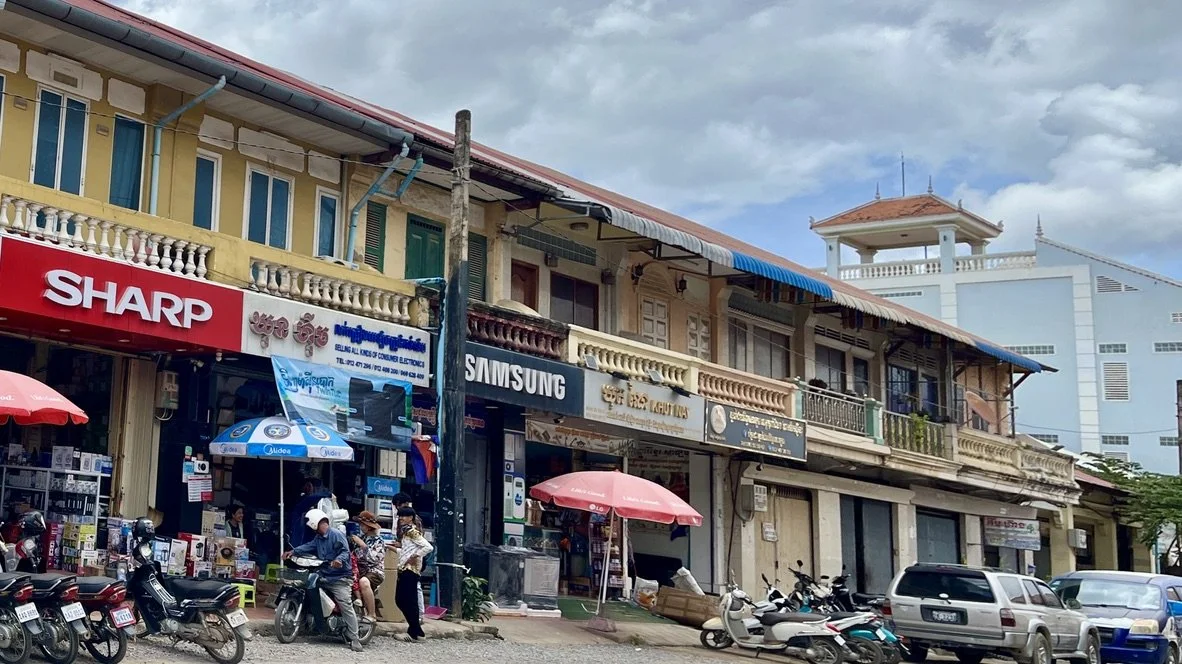
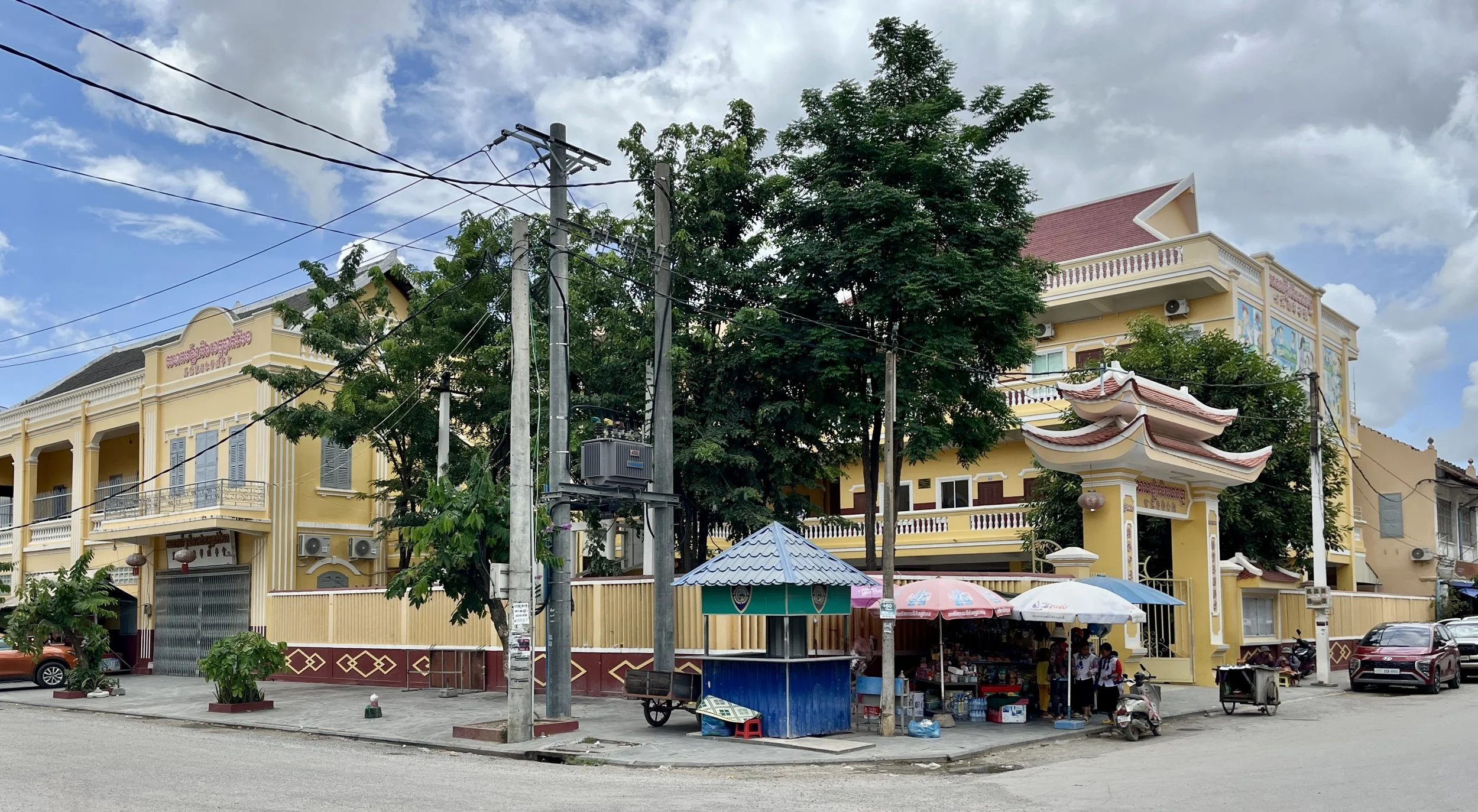
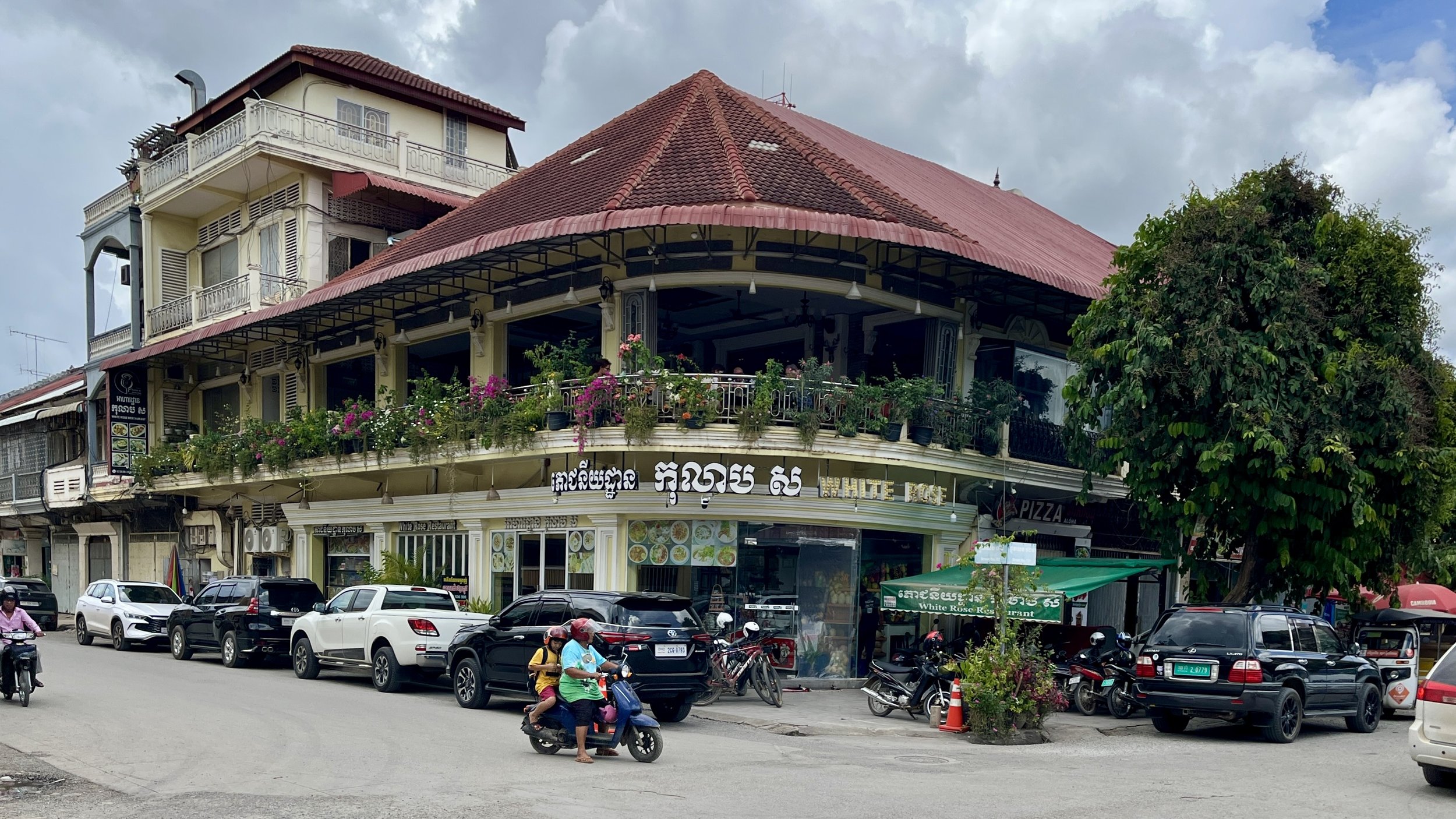
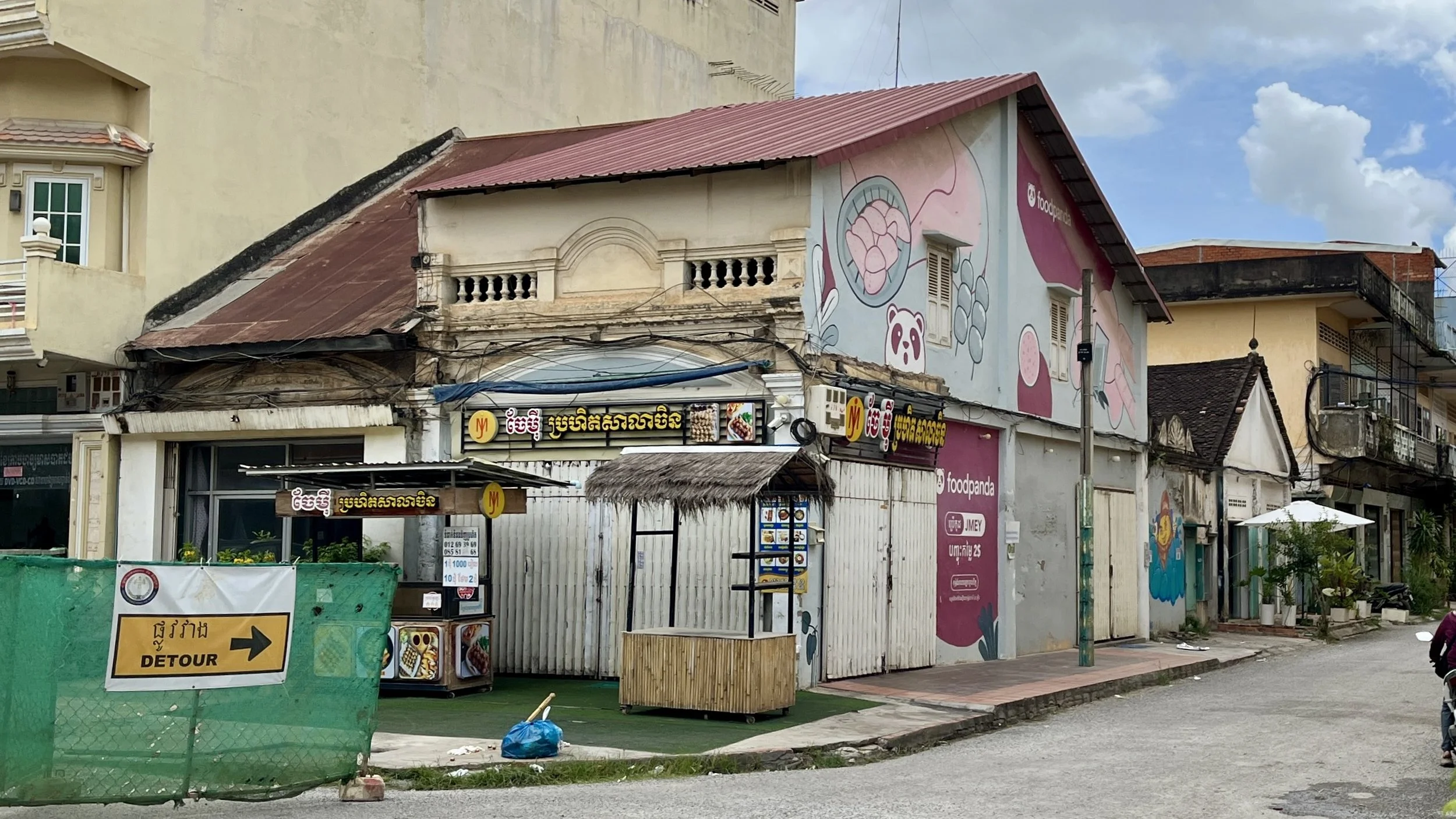
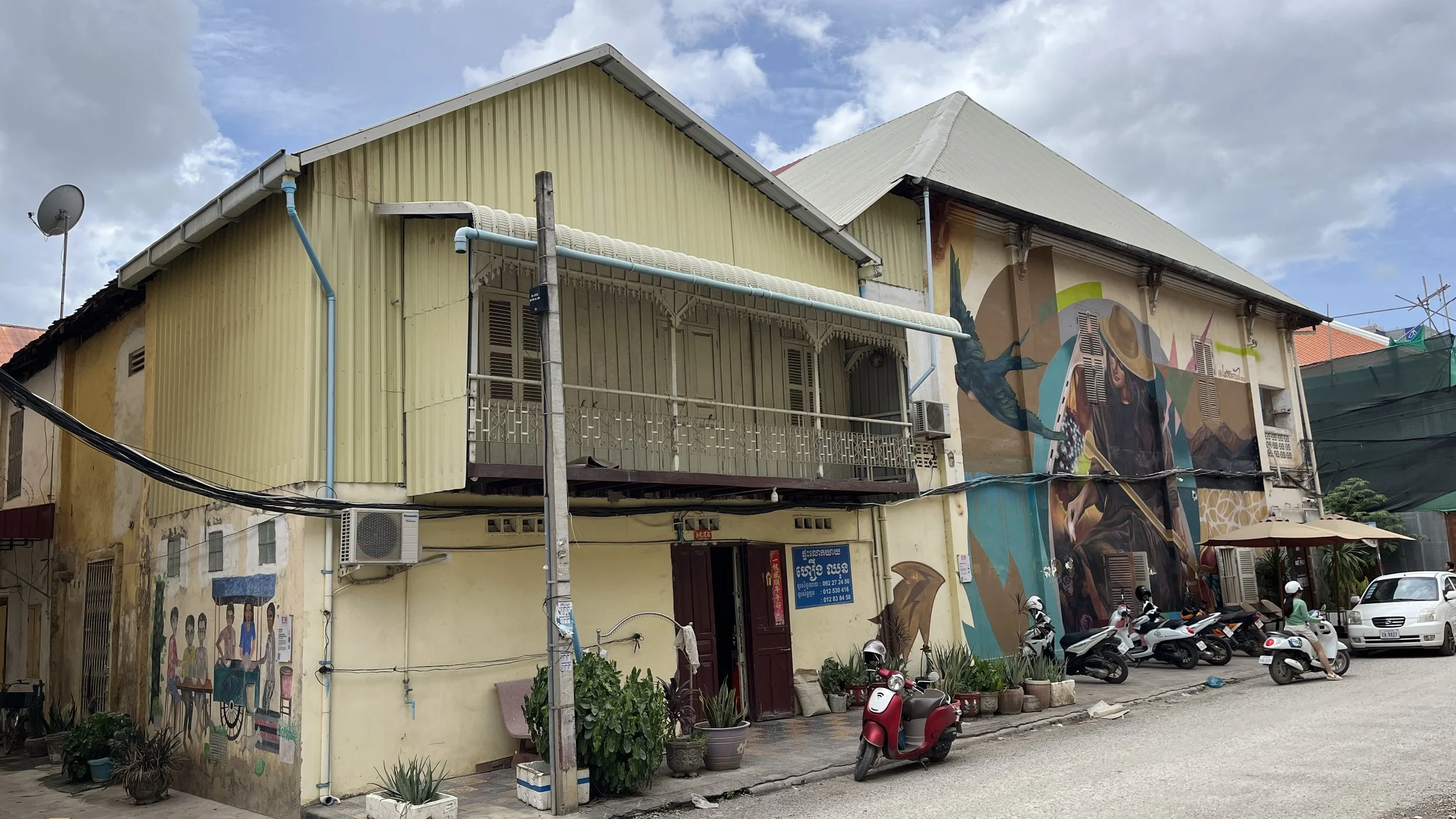
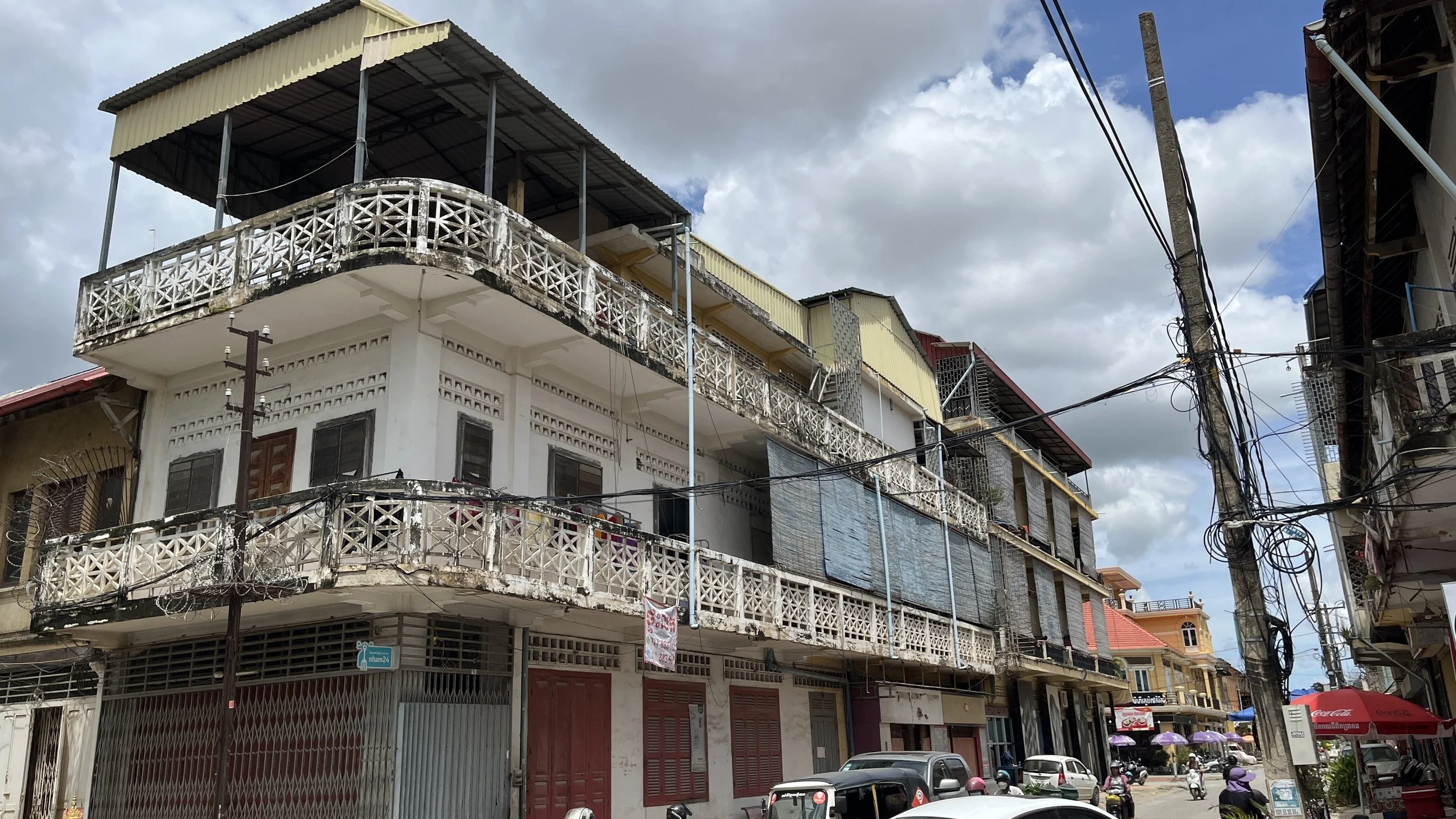
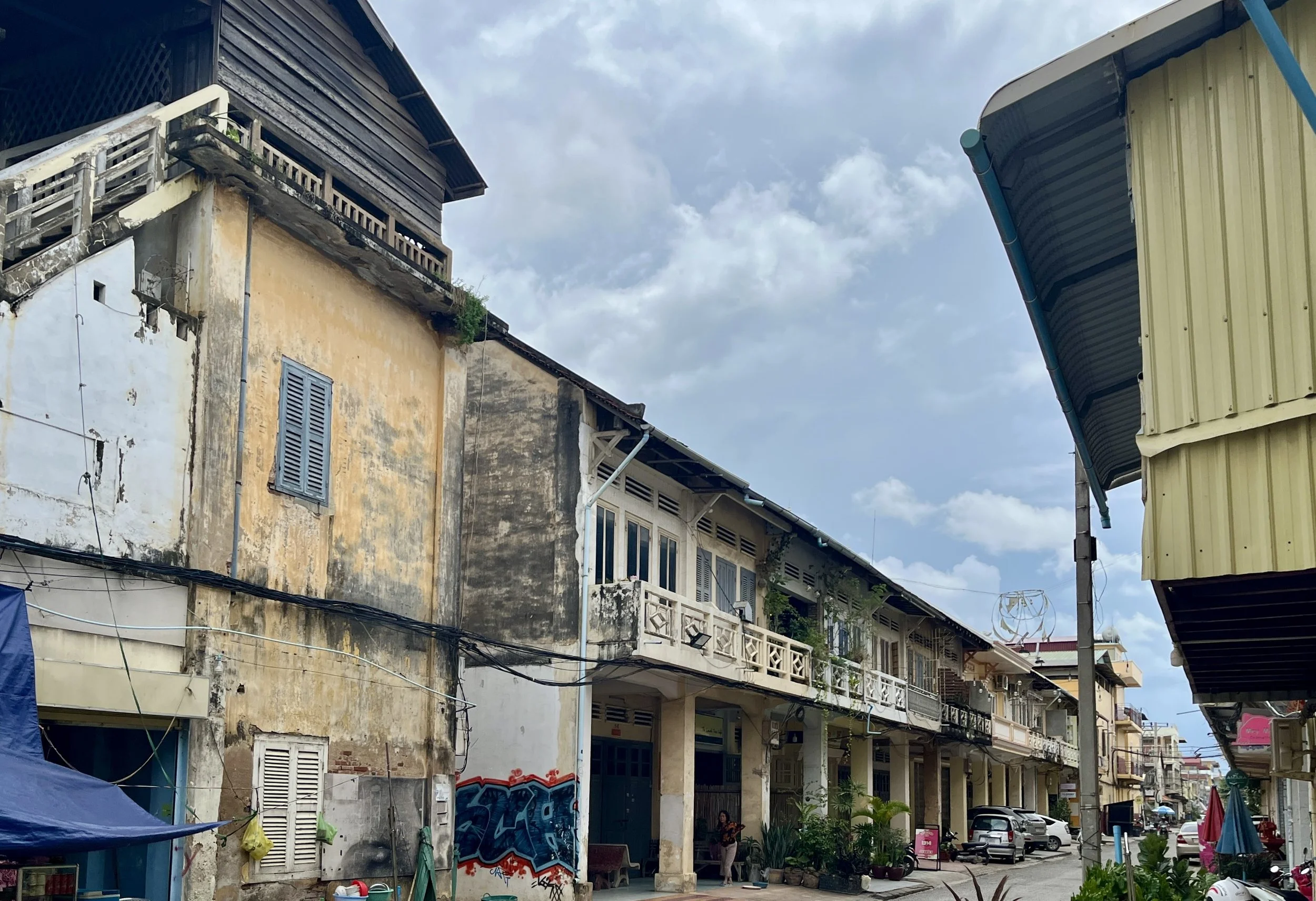
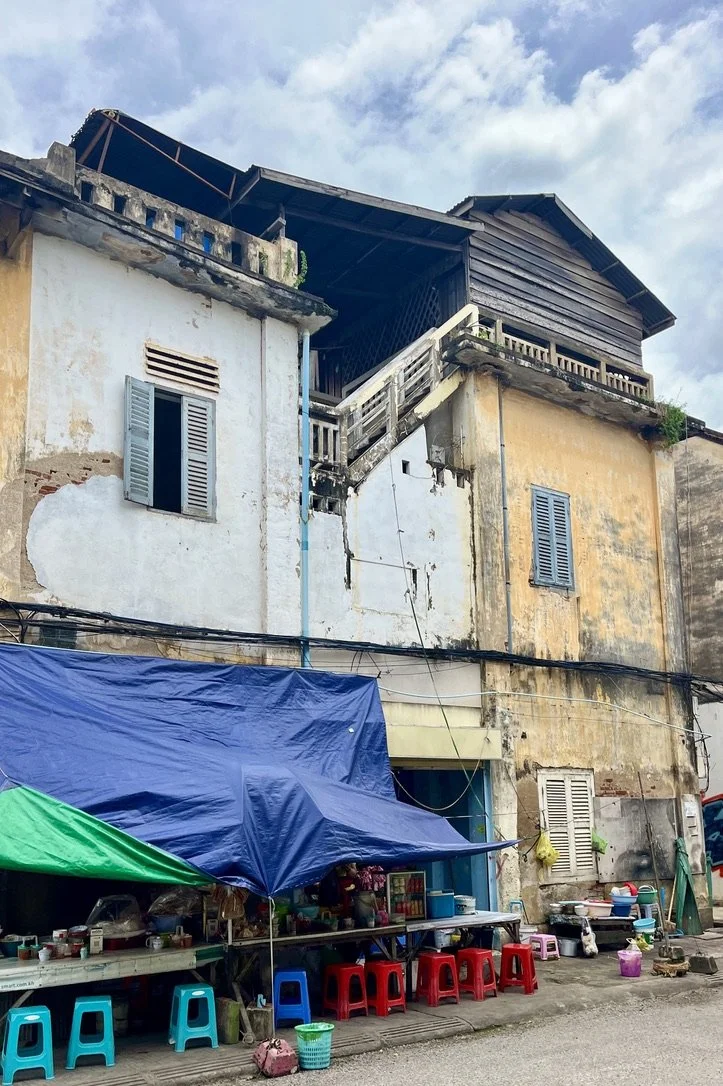
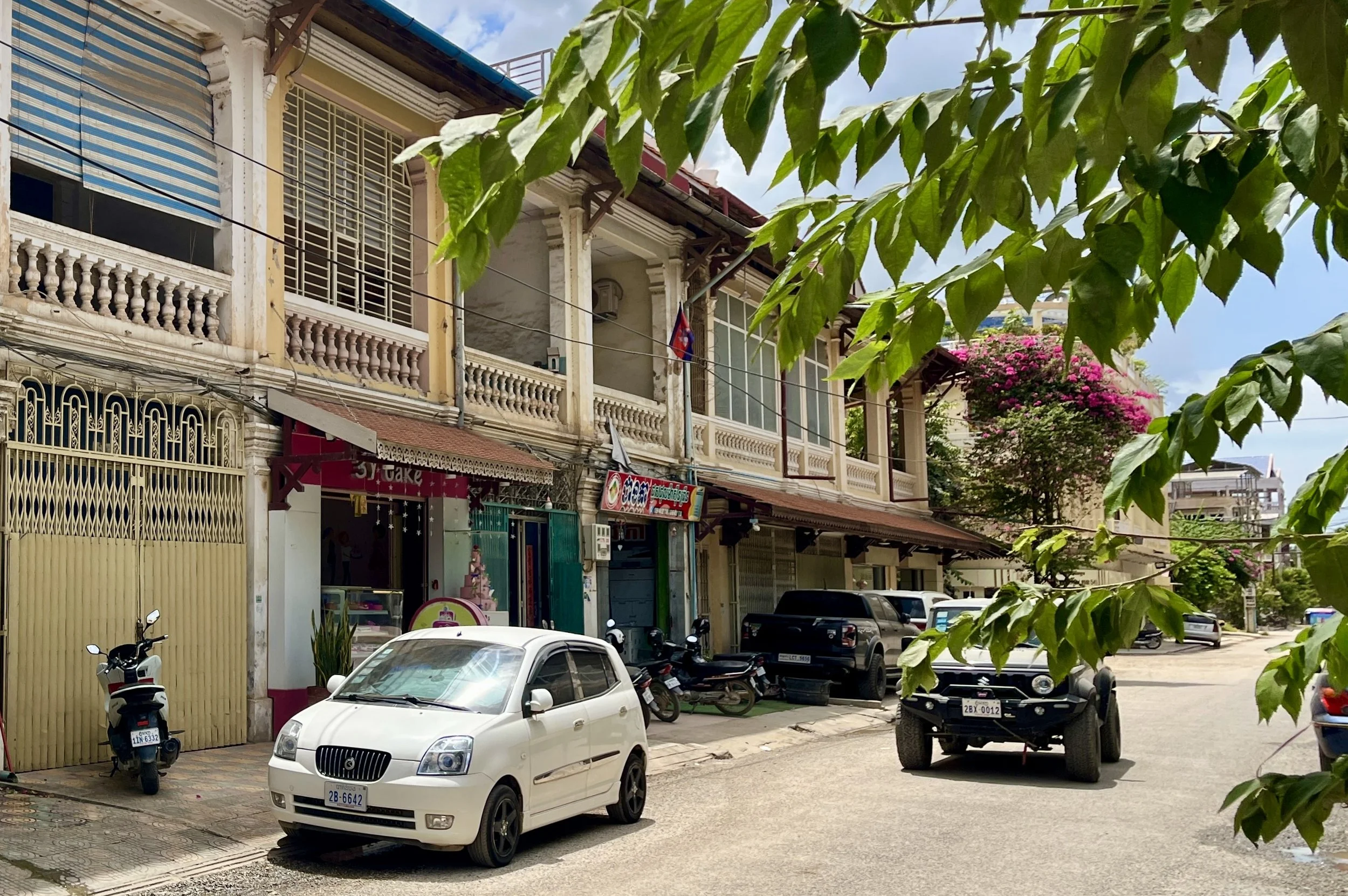
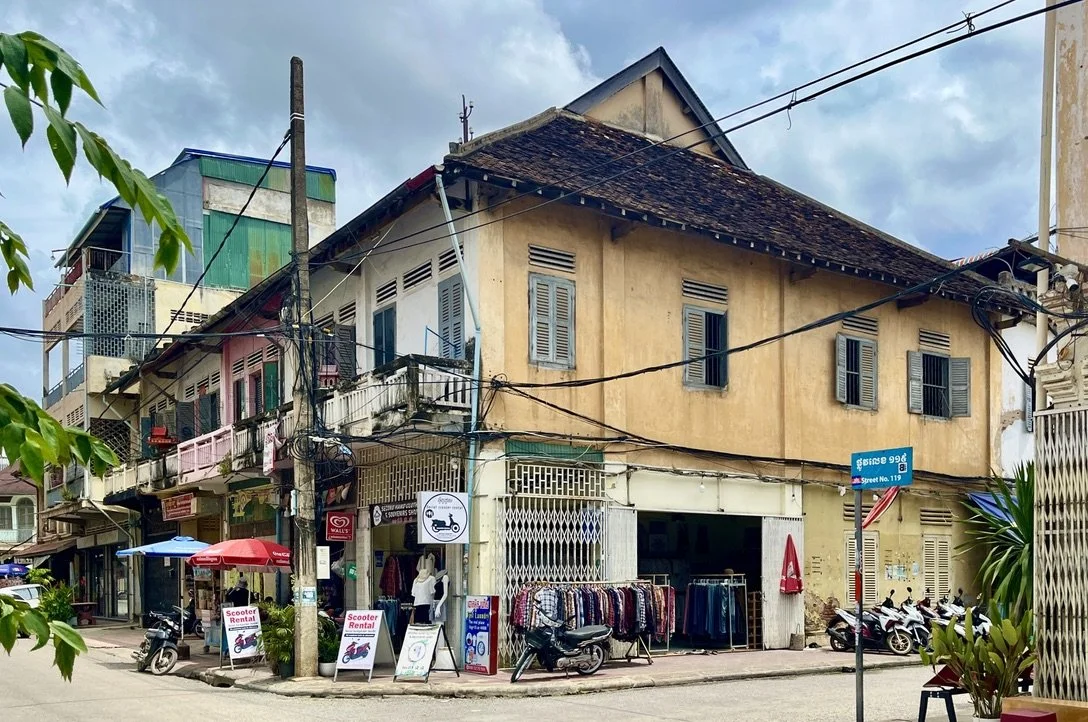
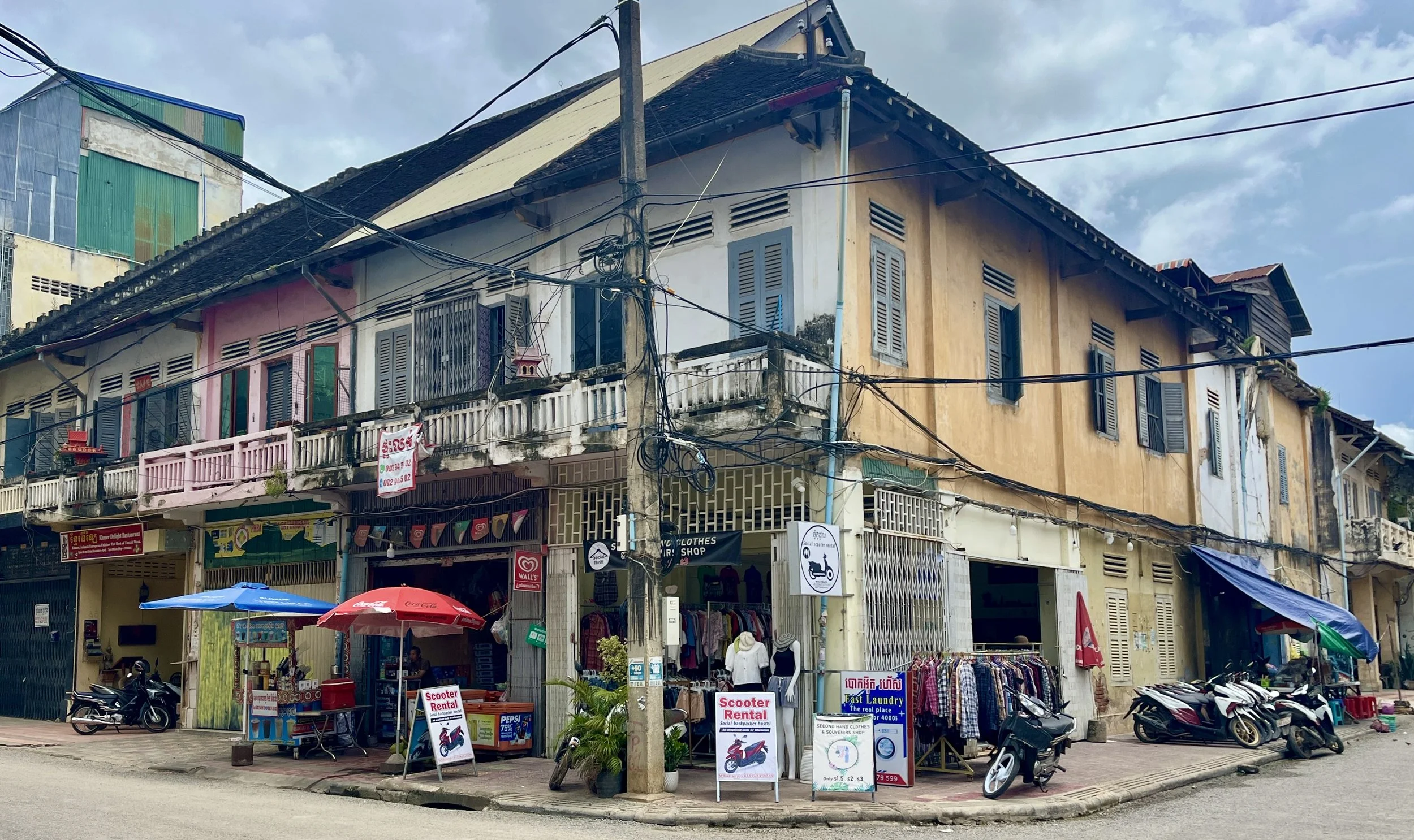
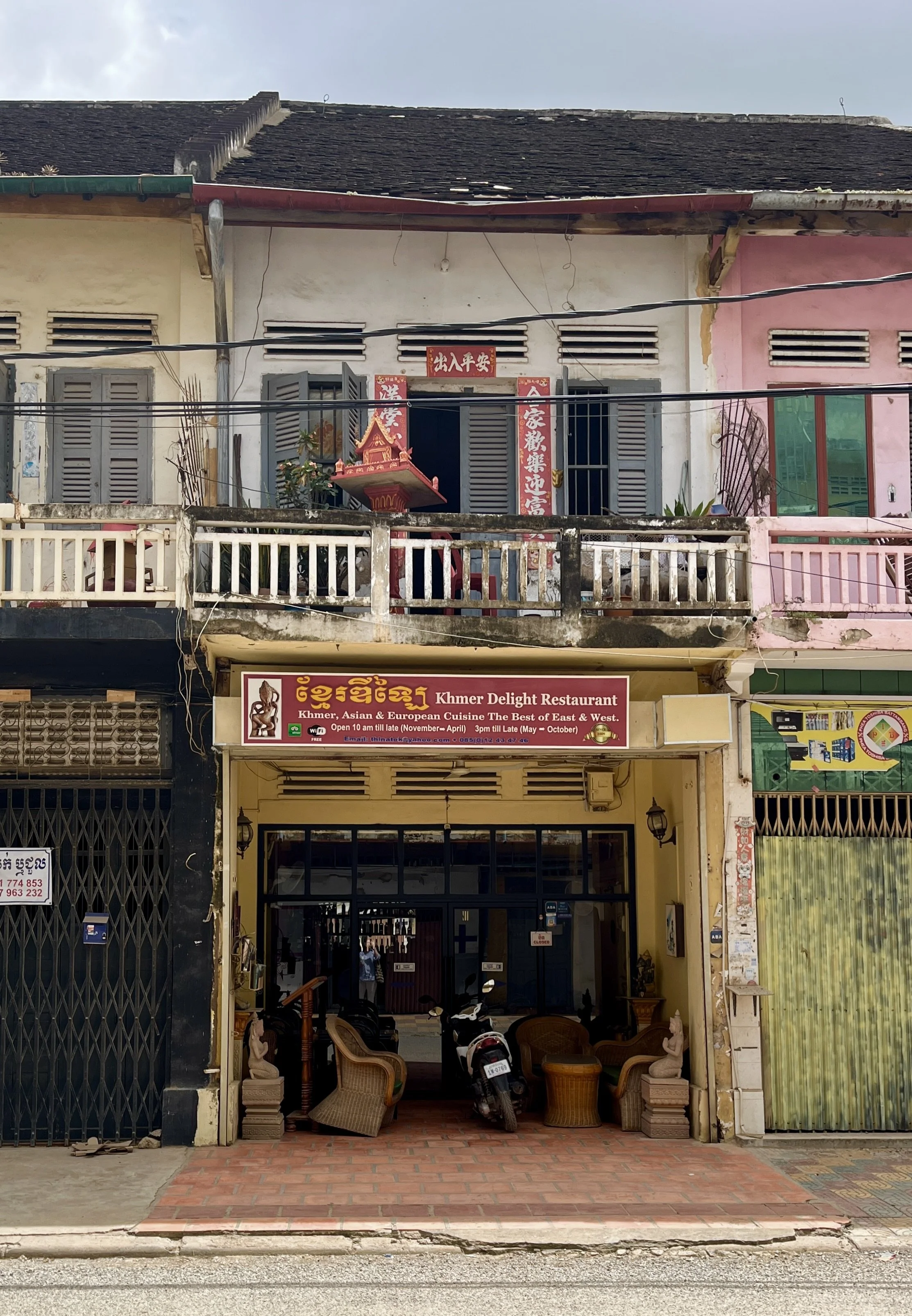
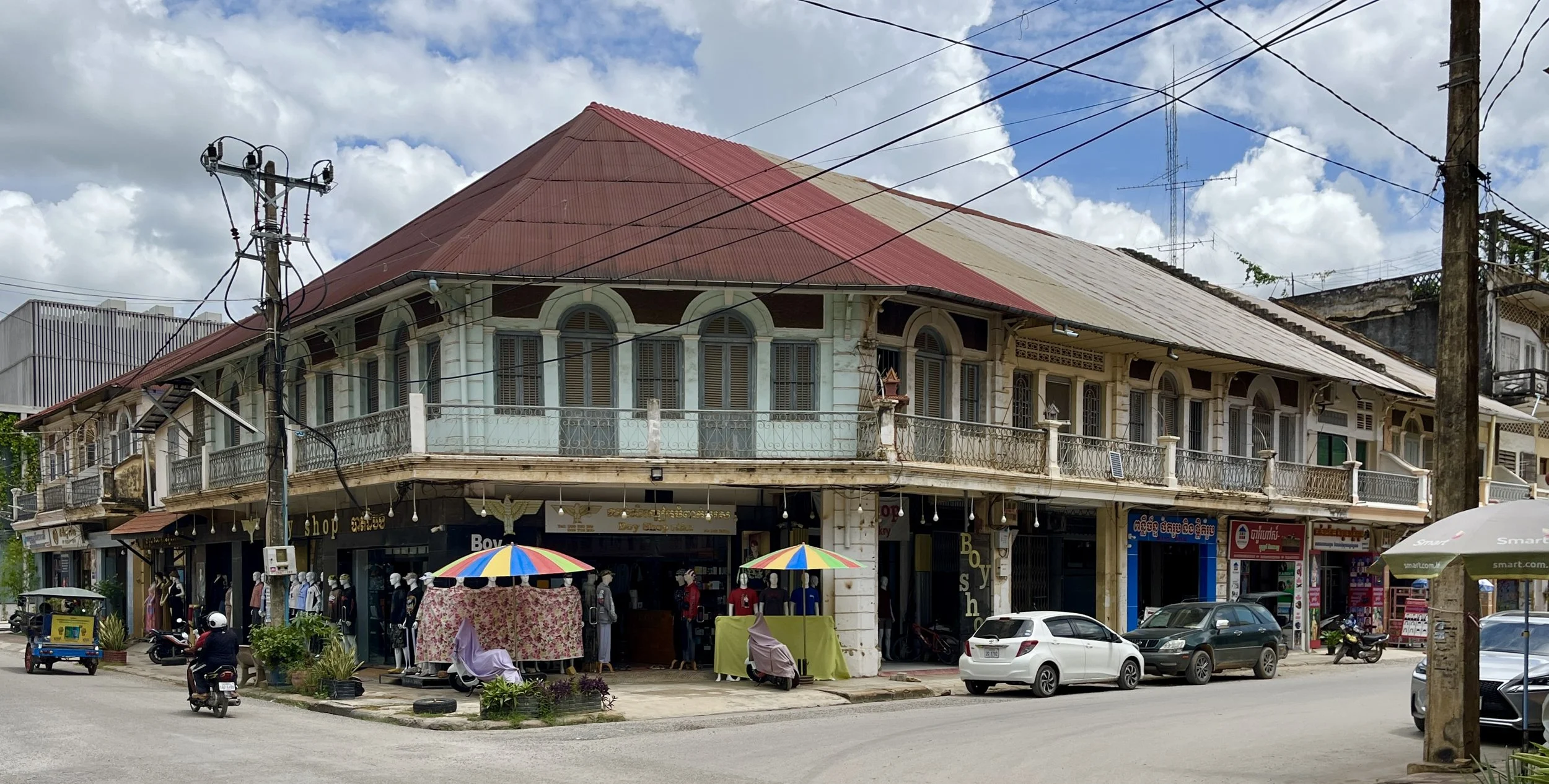
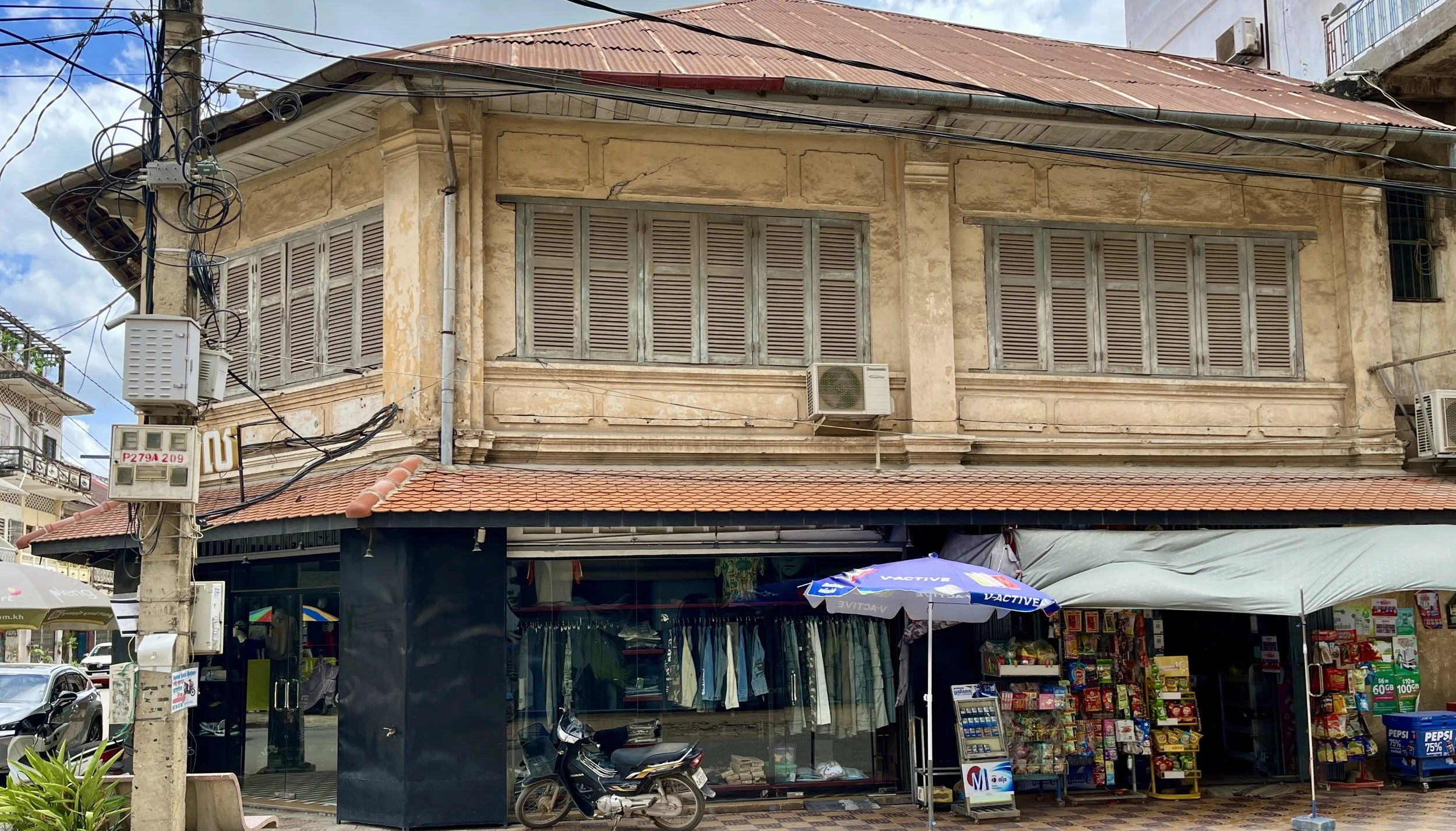
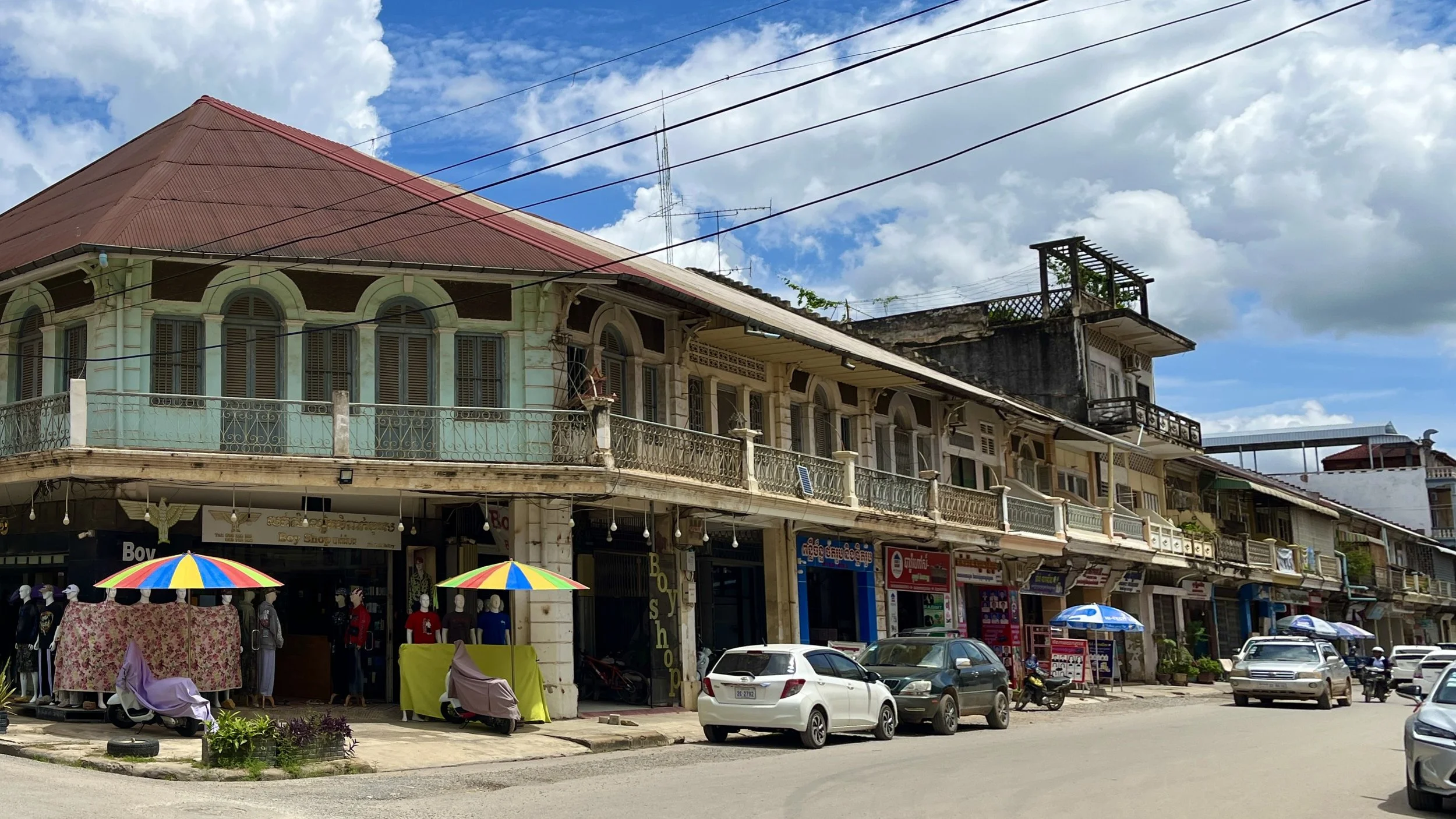
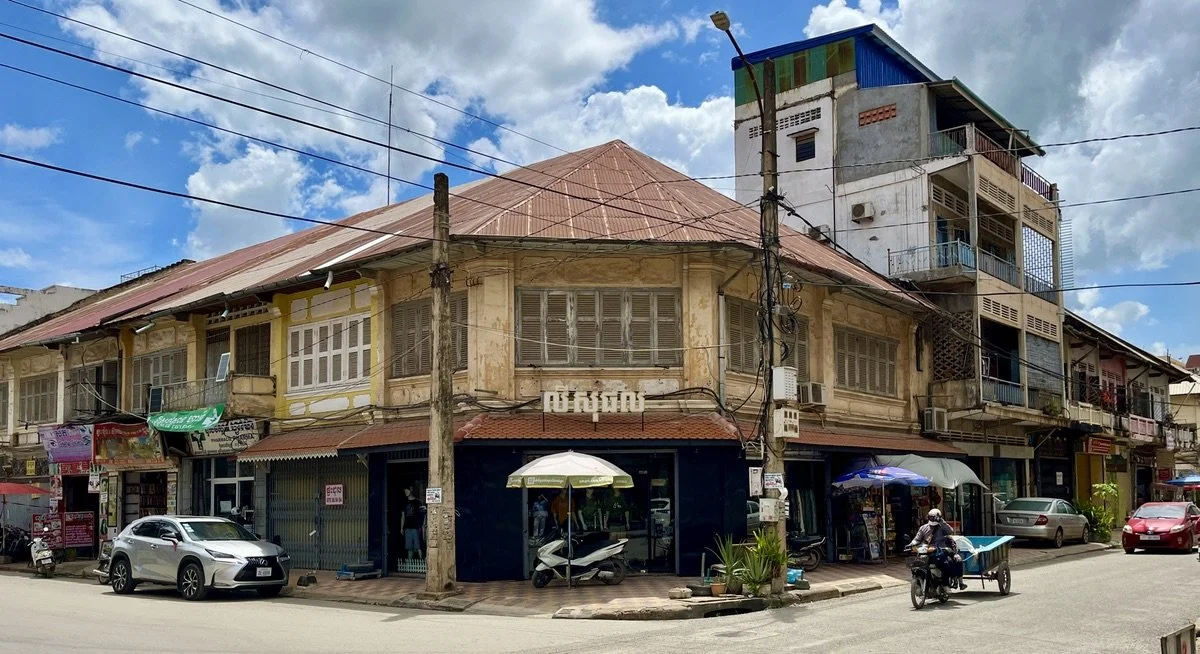
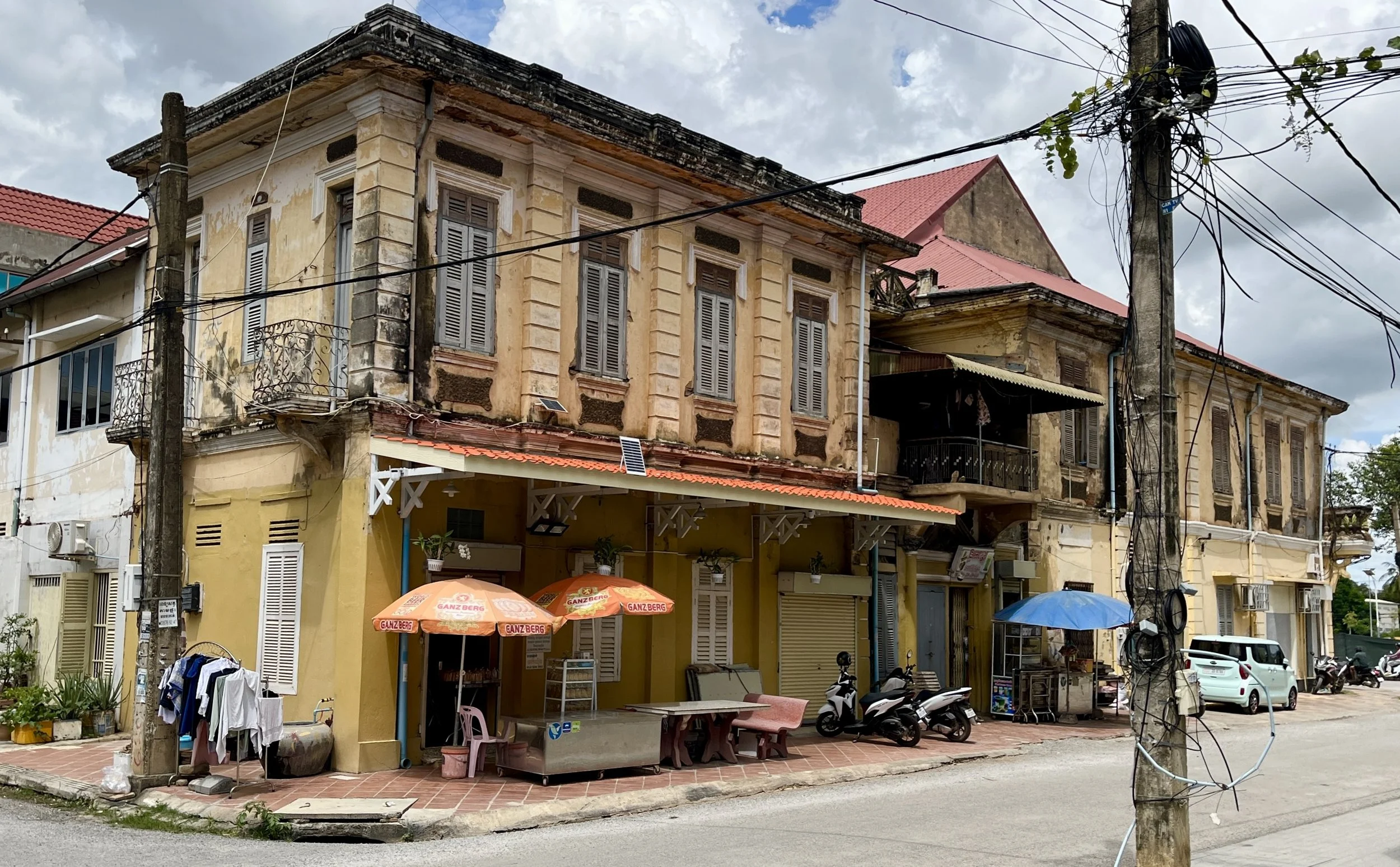
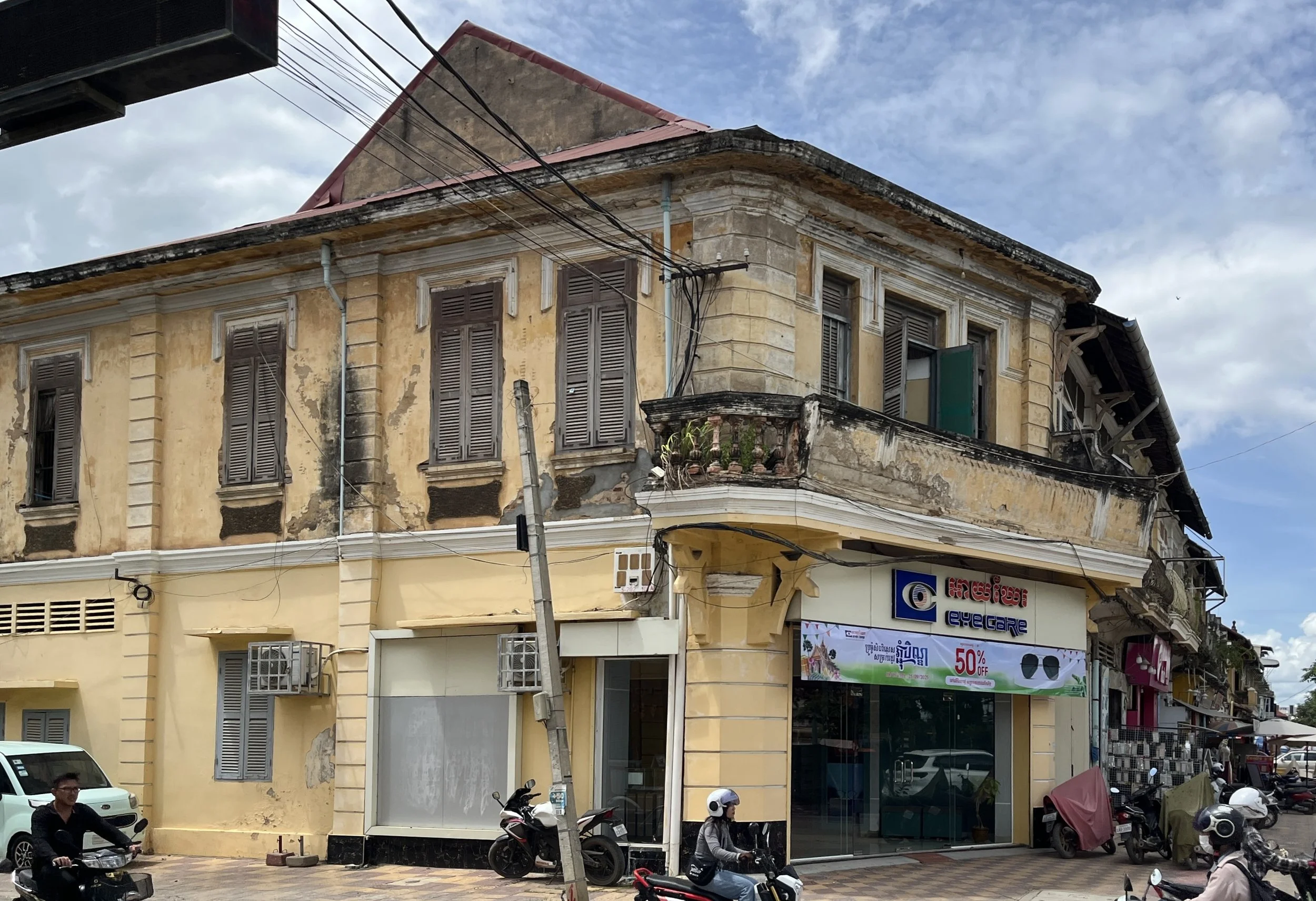
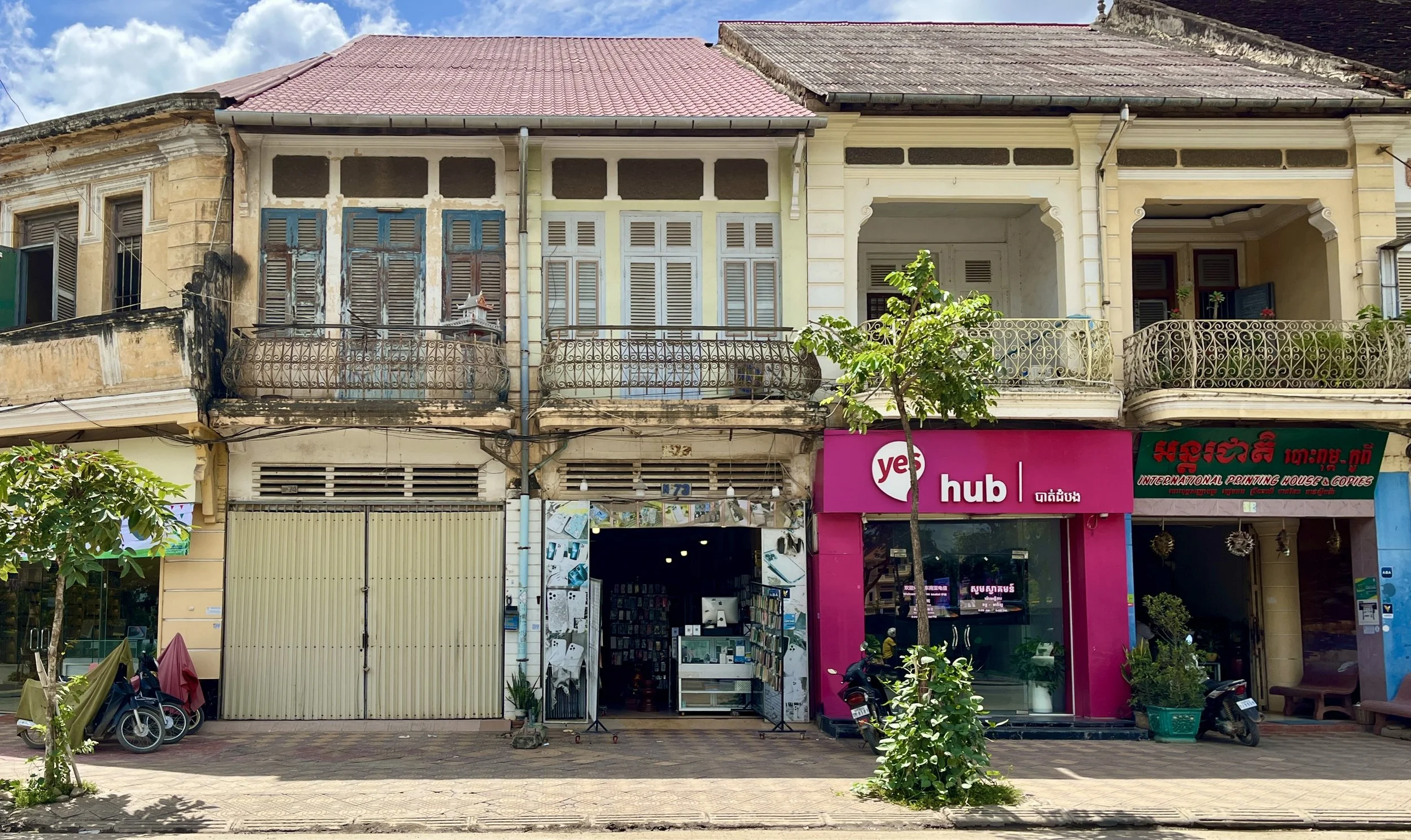
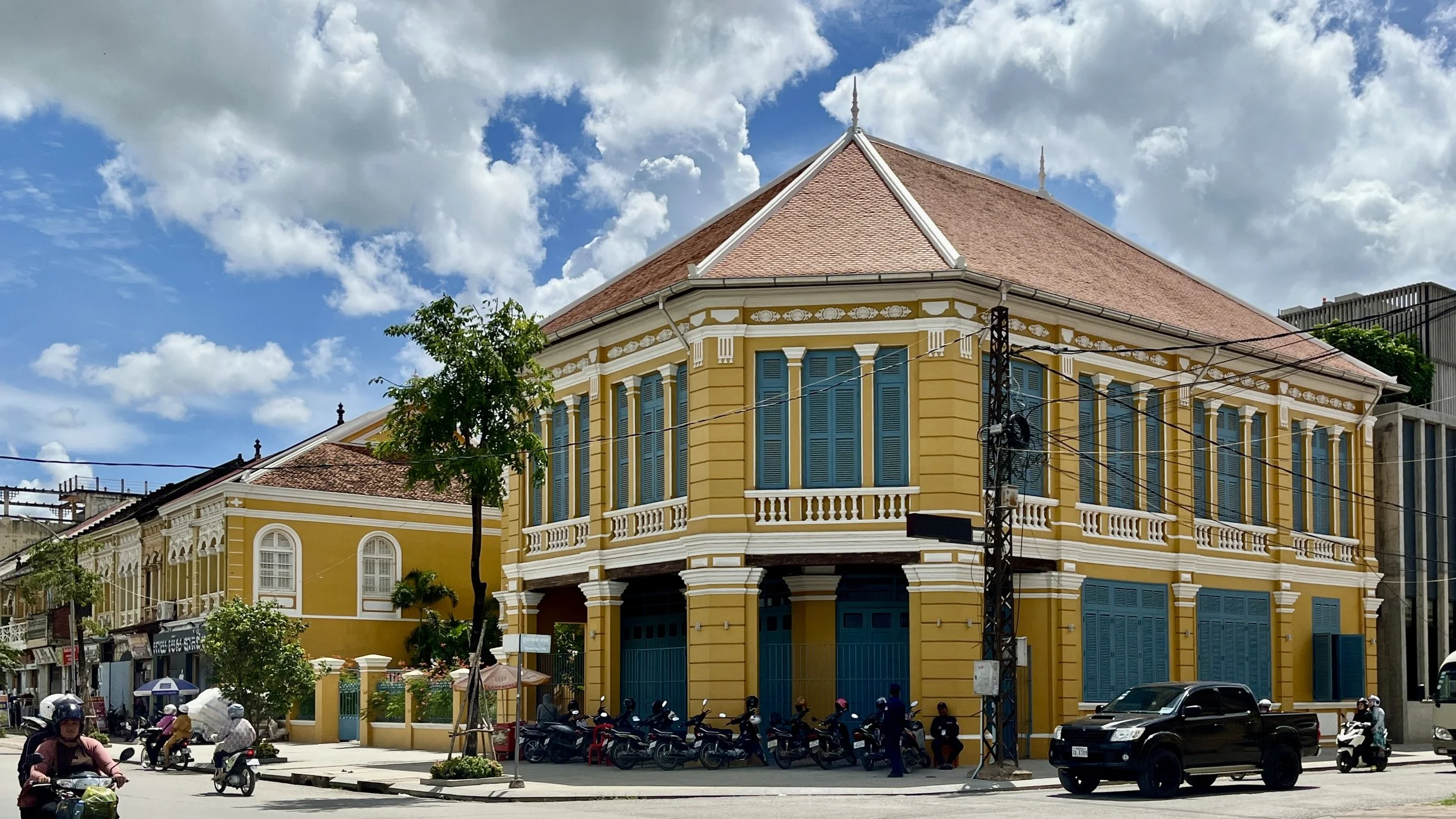
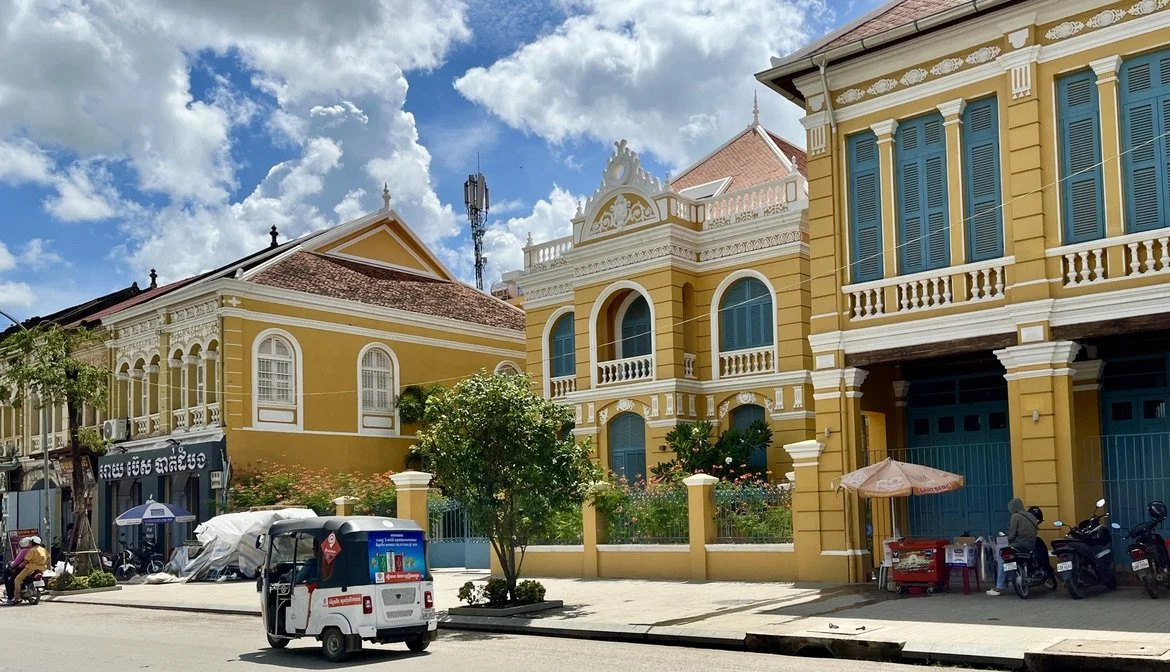
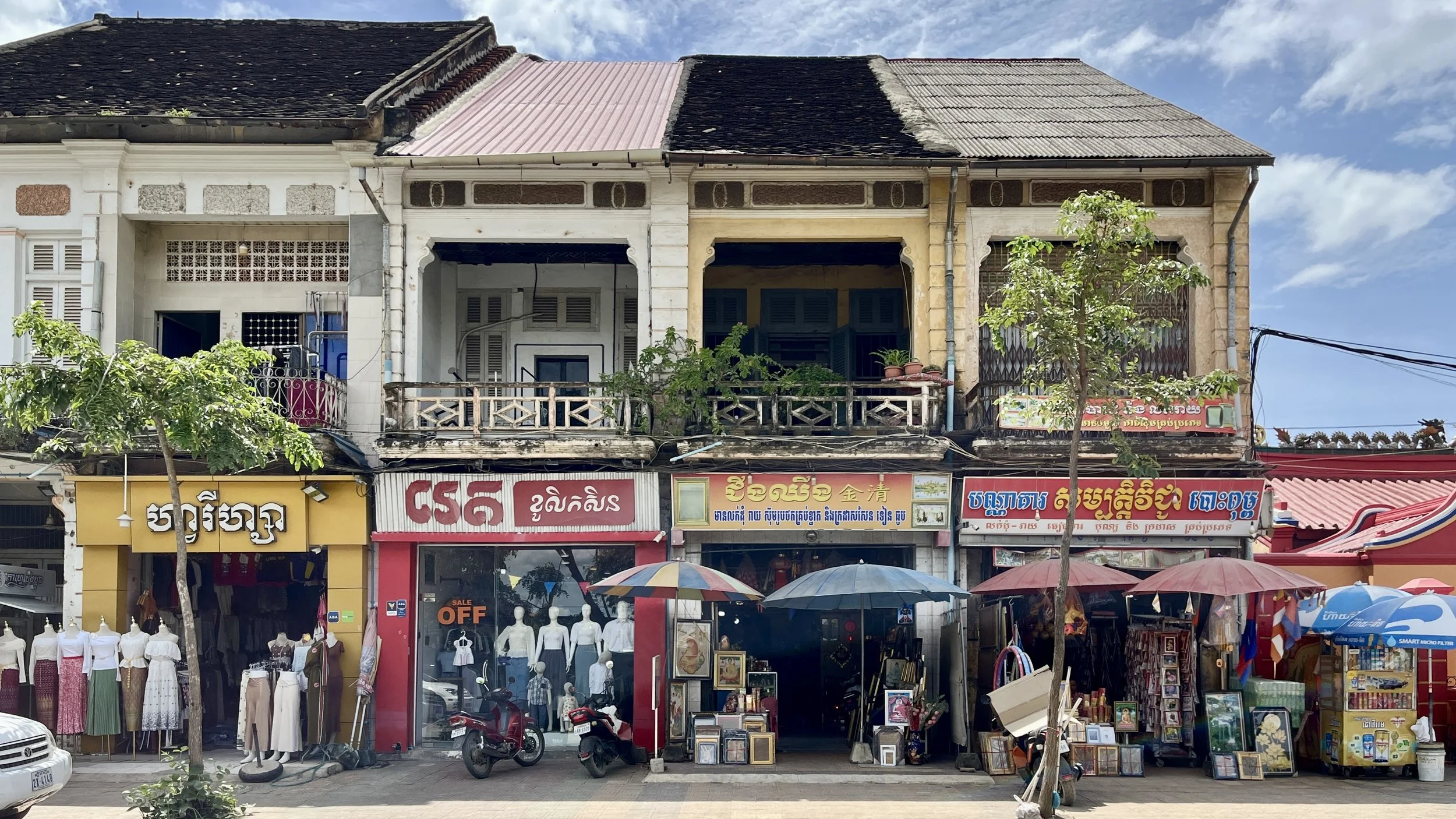
Honestly . . . underwhelming. Yes, there are many colonial buildings– over 800 according to conservation area records– but they’re 1. of the simplest sort 2. ill maintained and often extensively renovated in all the wrong ways. I visited thinking perhaps I’d find a cute house to rent . . . definitely not. It’s everything I don’t like about Siem Reap– dusty streets and falling apart buildings; constant traffic noise and fumes; trashy peasant neighbors chainsmoking, playing awful music until the wee hours, and burning their rubbish, in both the city proper and the surrounding villages; litter absolutely everywhere– but a fifth the size, with extremely limited dining and shopping.

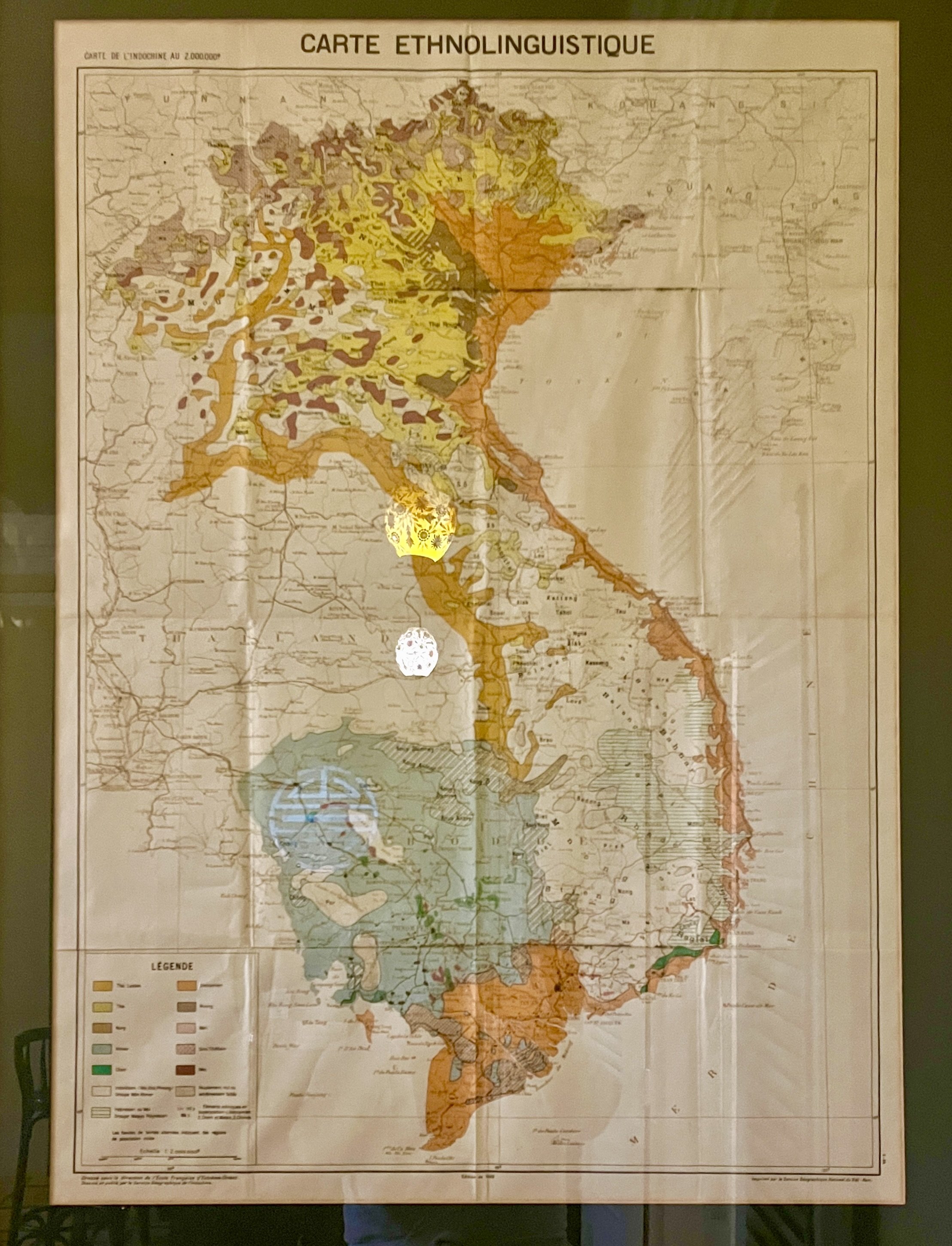
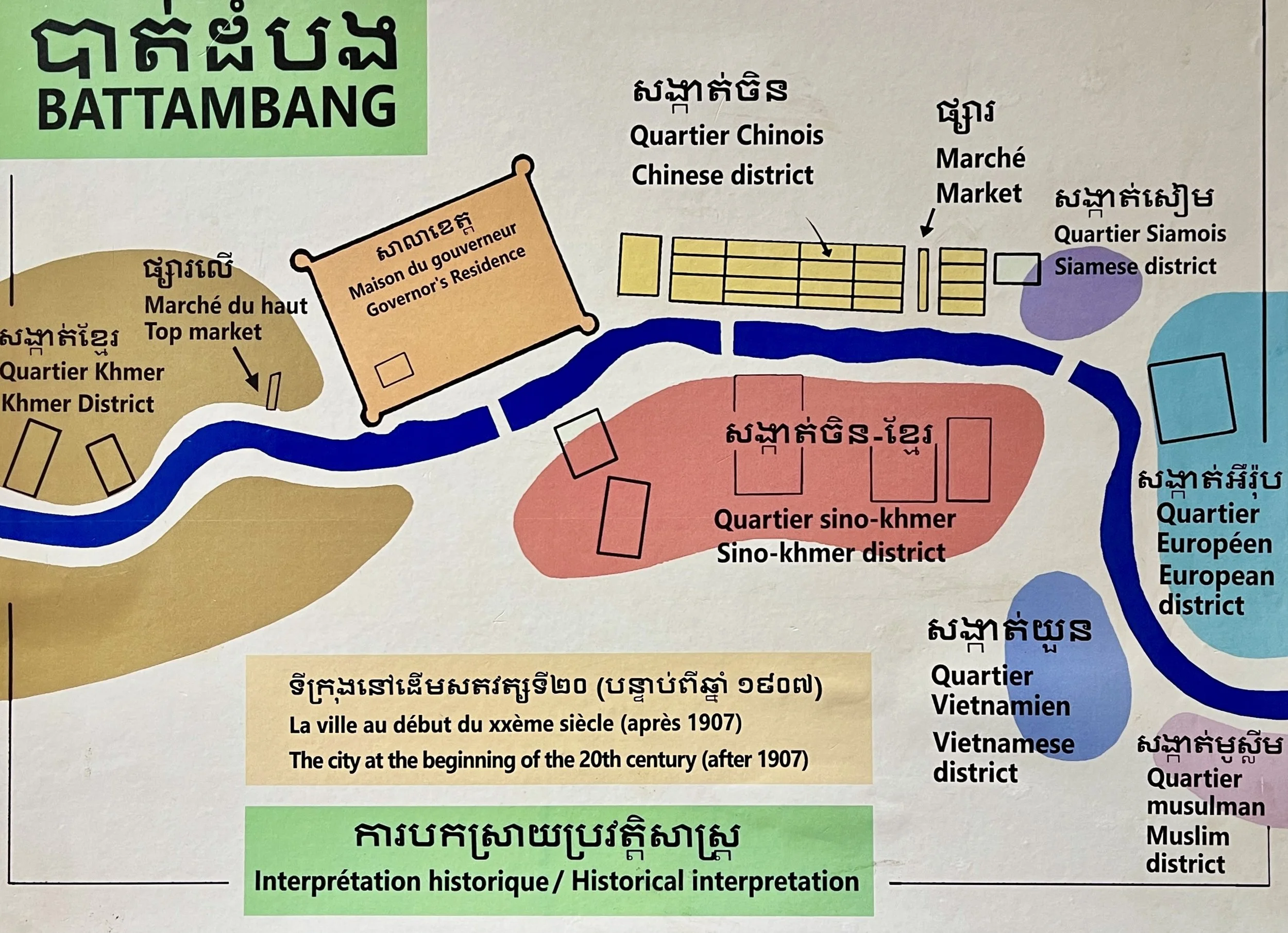
The neighborhoods at the time of the handover from Siam to France in 1907. Though the bridge locations are indicated on this map, there actually weren’t any permanent bridges at this time; the first was built in 1916. I’ll cover the neighborhoods from left to right.

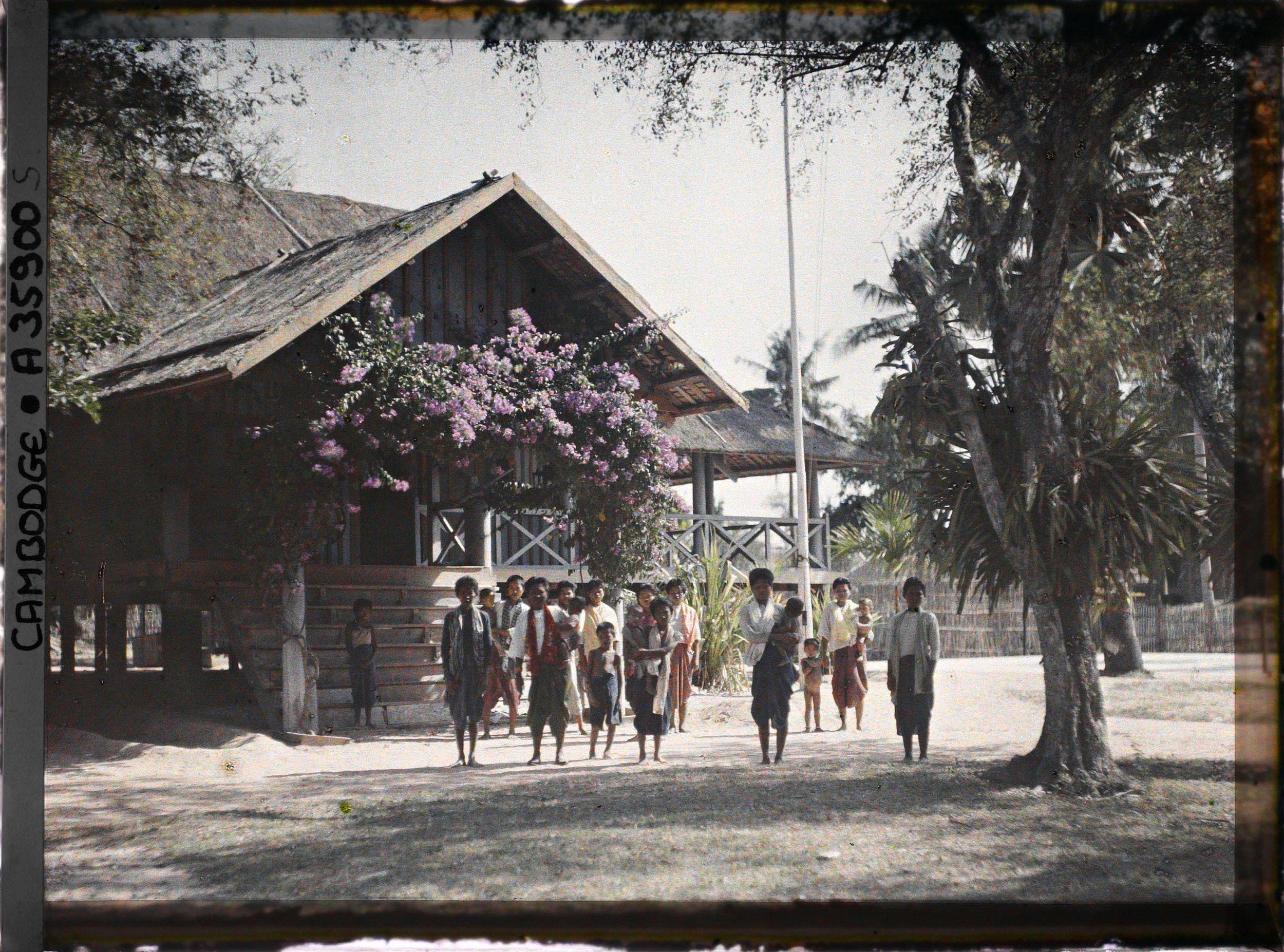
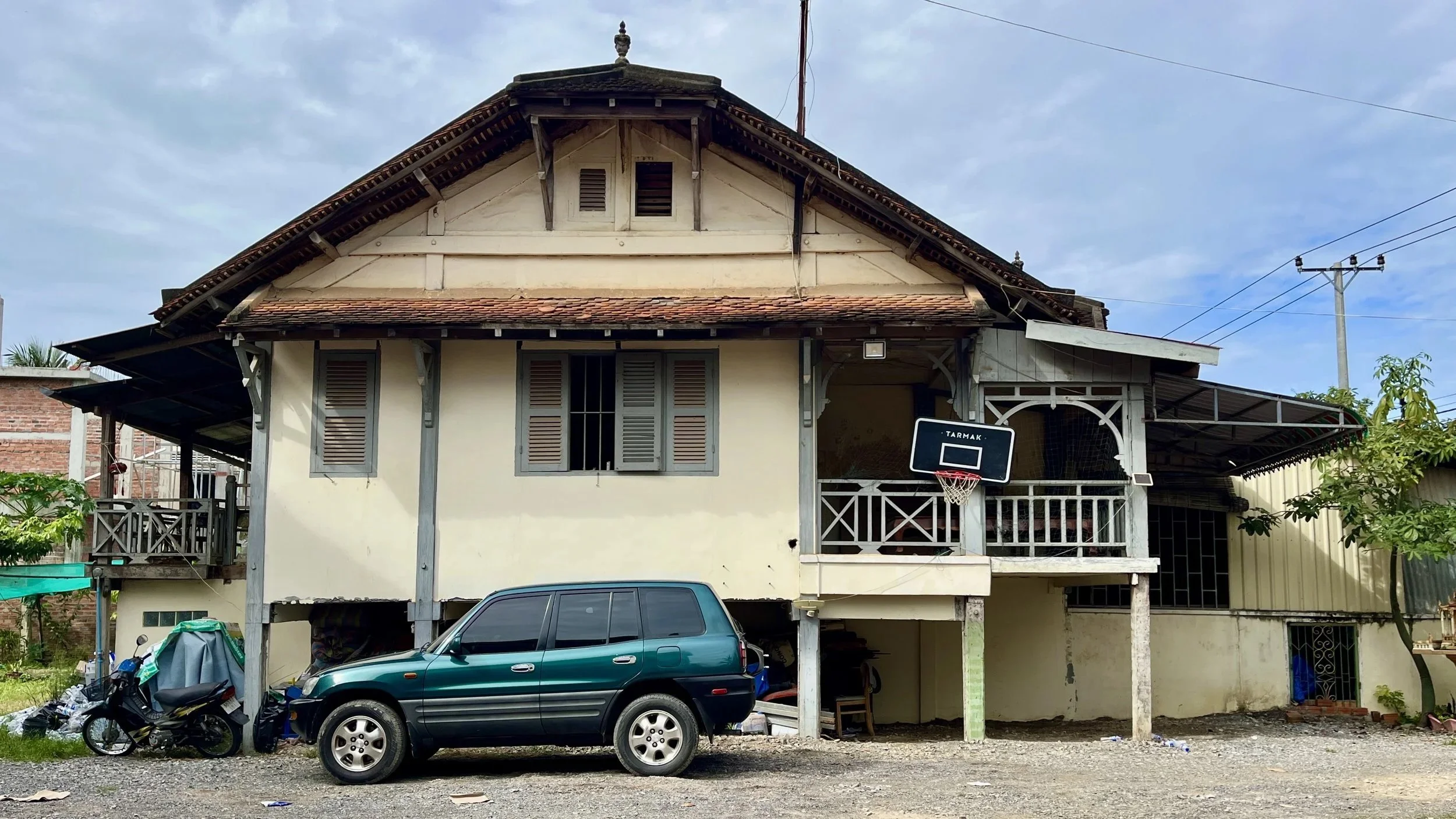
The Khmer district. I’ll be covering the antique Khmer houses around Battambang more thoroughly in a separate blog post (click here); I’ve just chosen this photo as an aesthetic/representative example. This photo of the family of a local administrator outside their house/office was taken by Léon Busy between 1914 and 1921, likely closer to 1921.
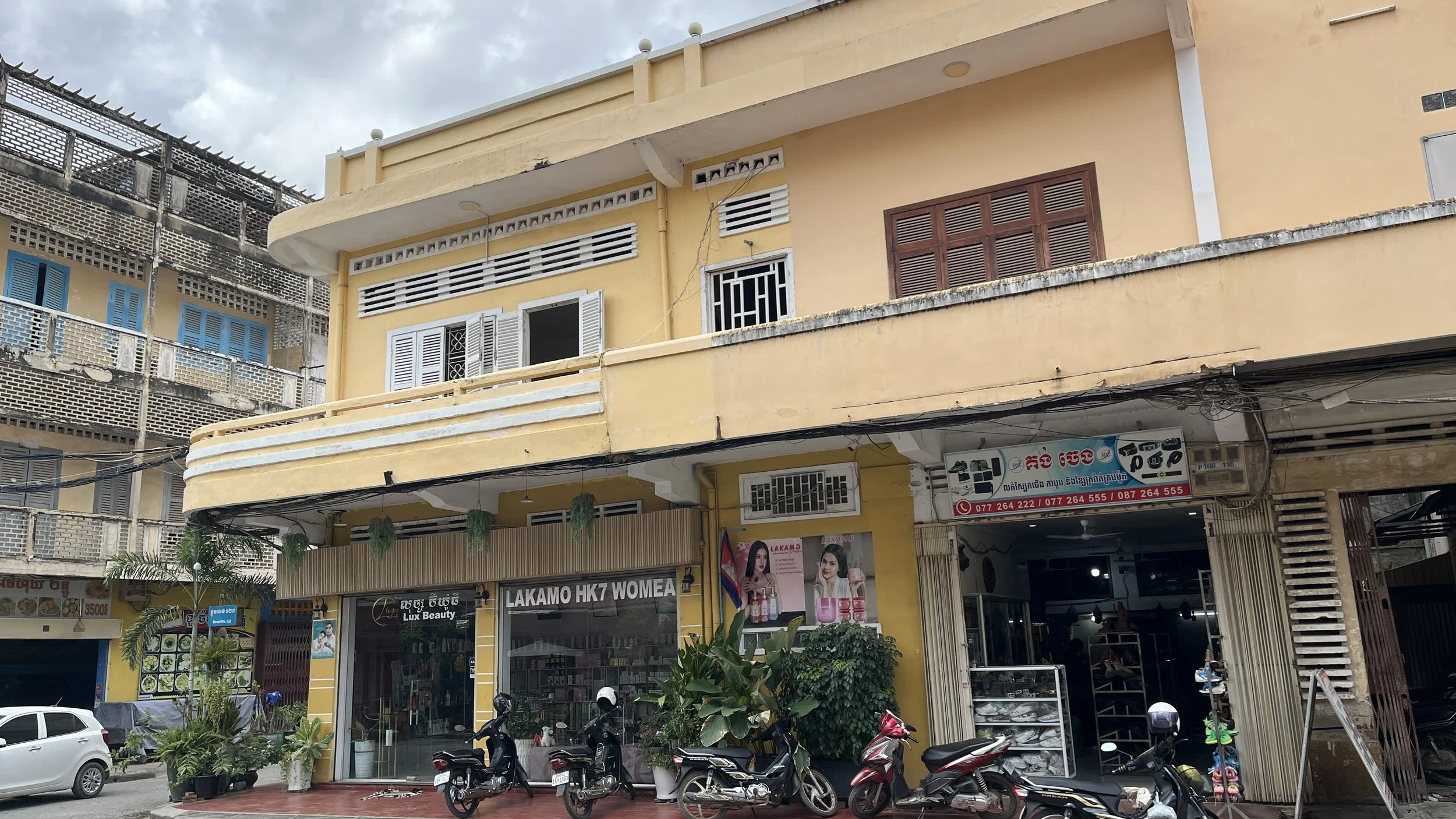
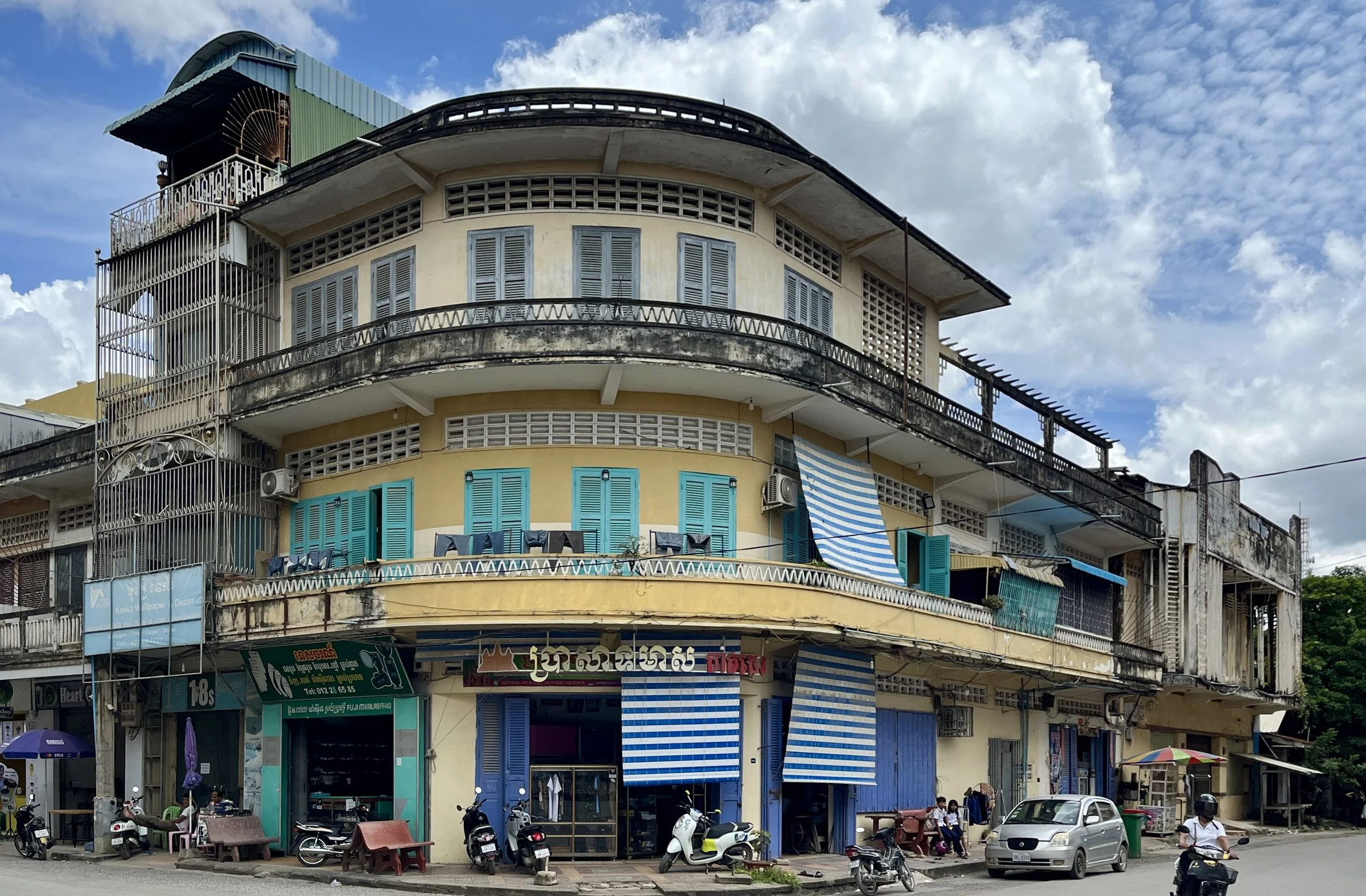
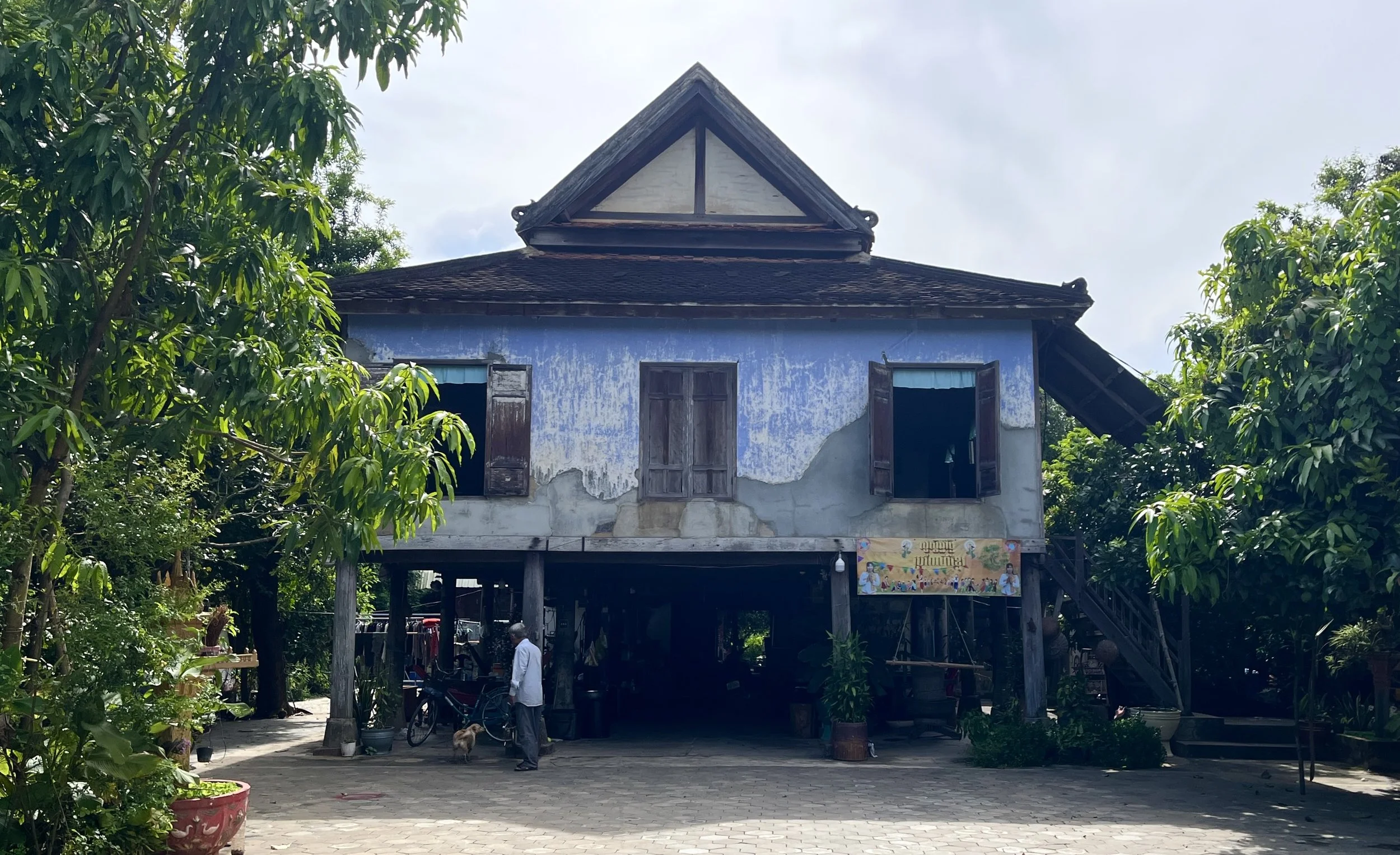
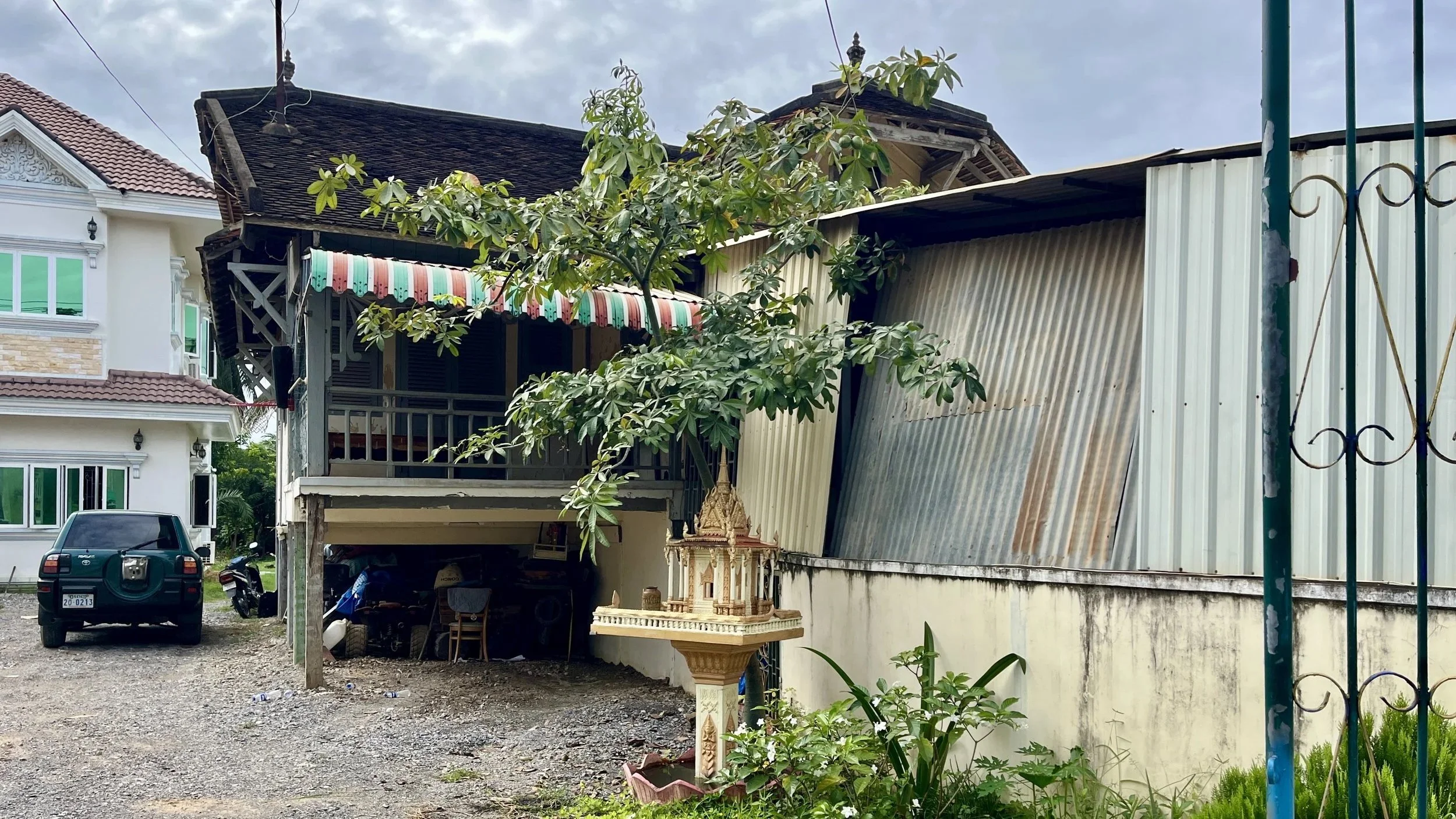
Khmer houses from the first quarter of the 20th century are still around, a couple with the descendants of colonial administrators still living in them.

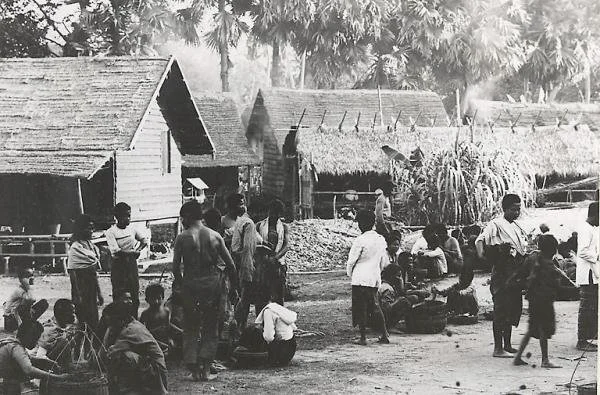
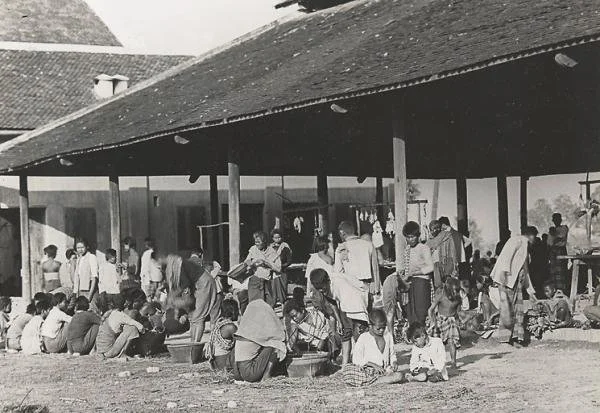
The Khmer neighborhood market in 1931, attributed to Léon Busy (but probably taken by a staff photographer).

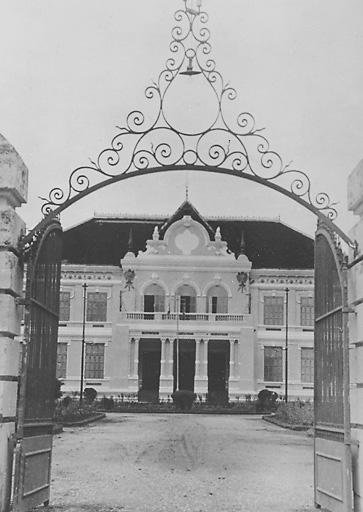
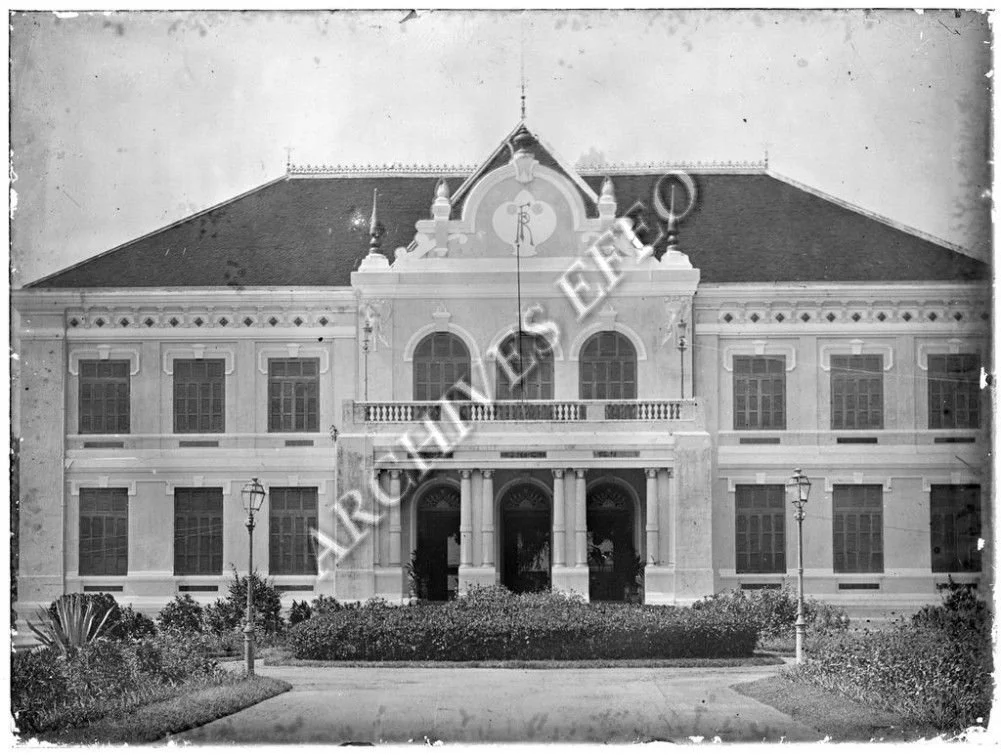
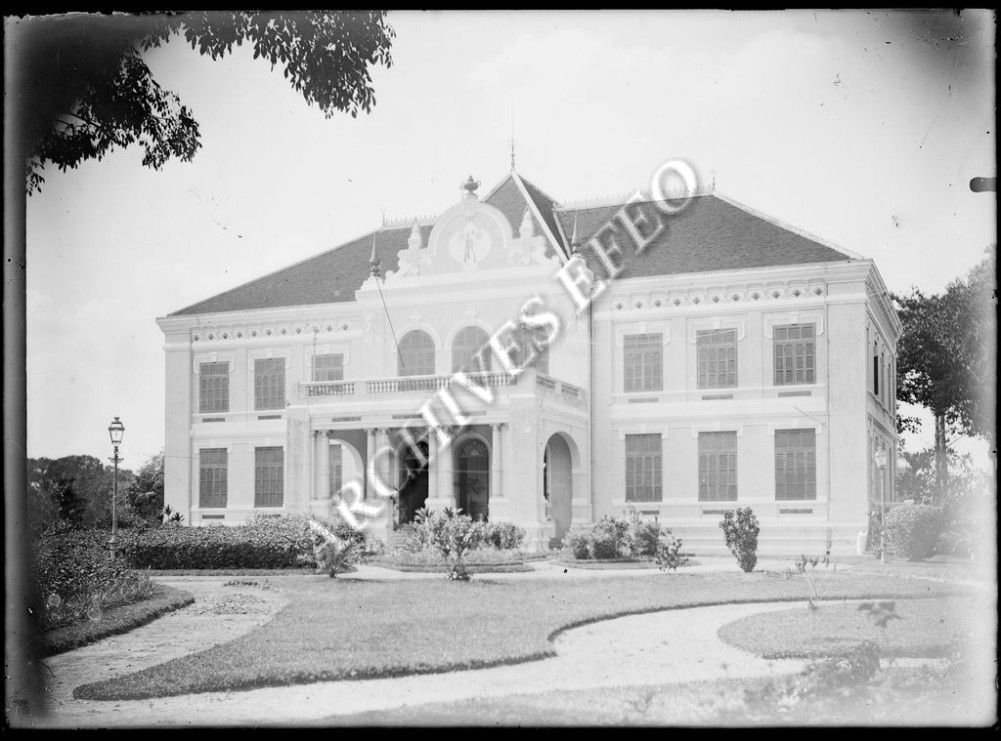
The Governor’s Residence in August 1948, less than a year before Cambodia was granted limited autonomy as a member state of the French Union amidst multiple independence movements.

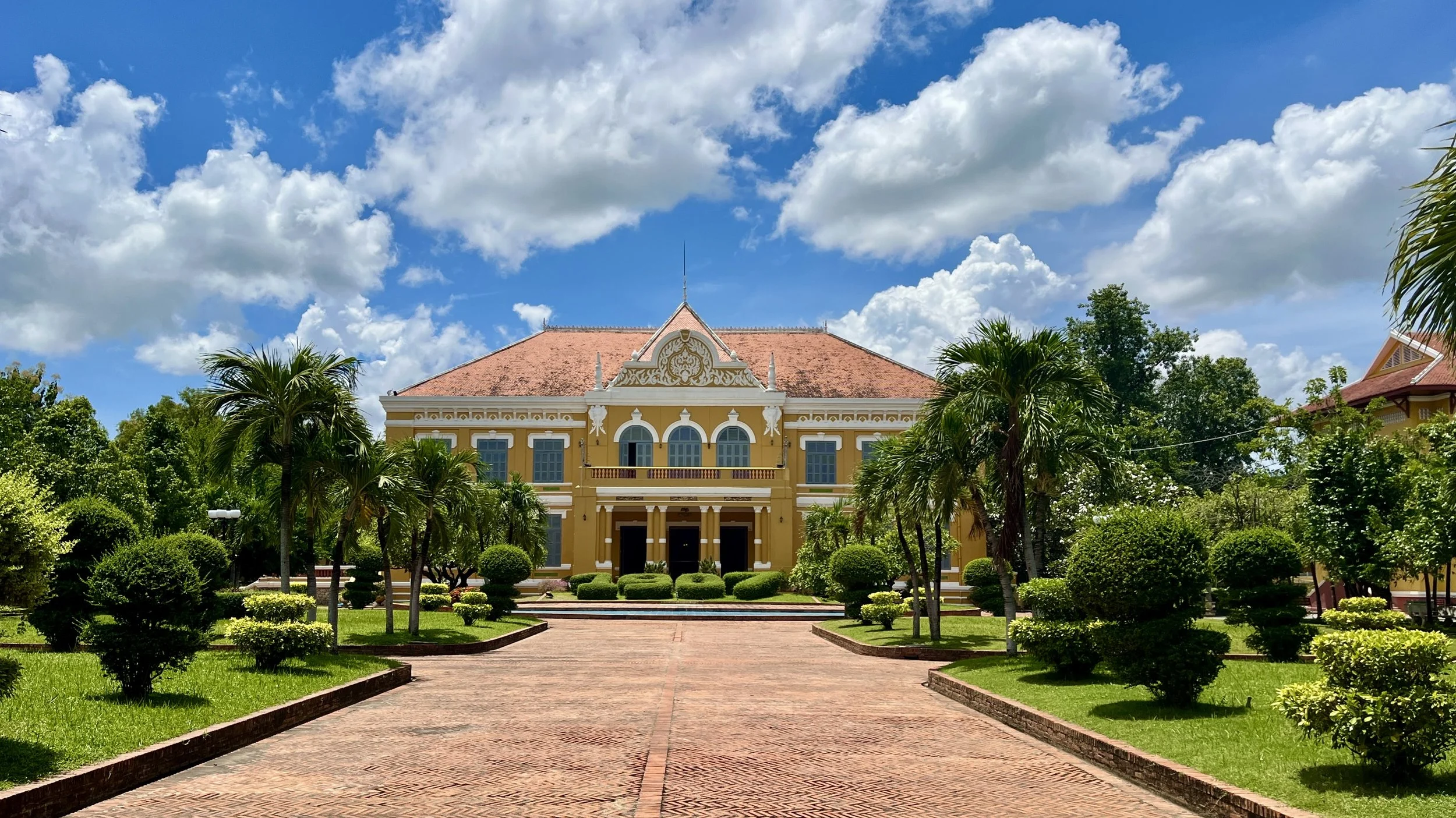
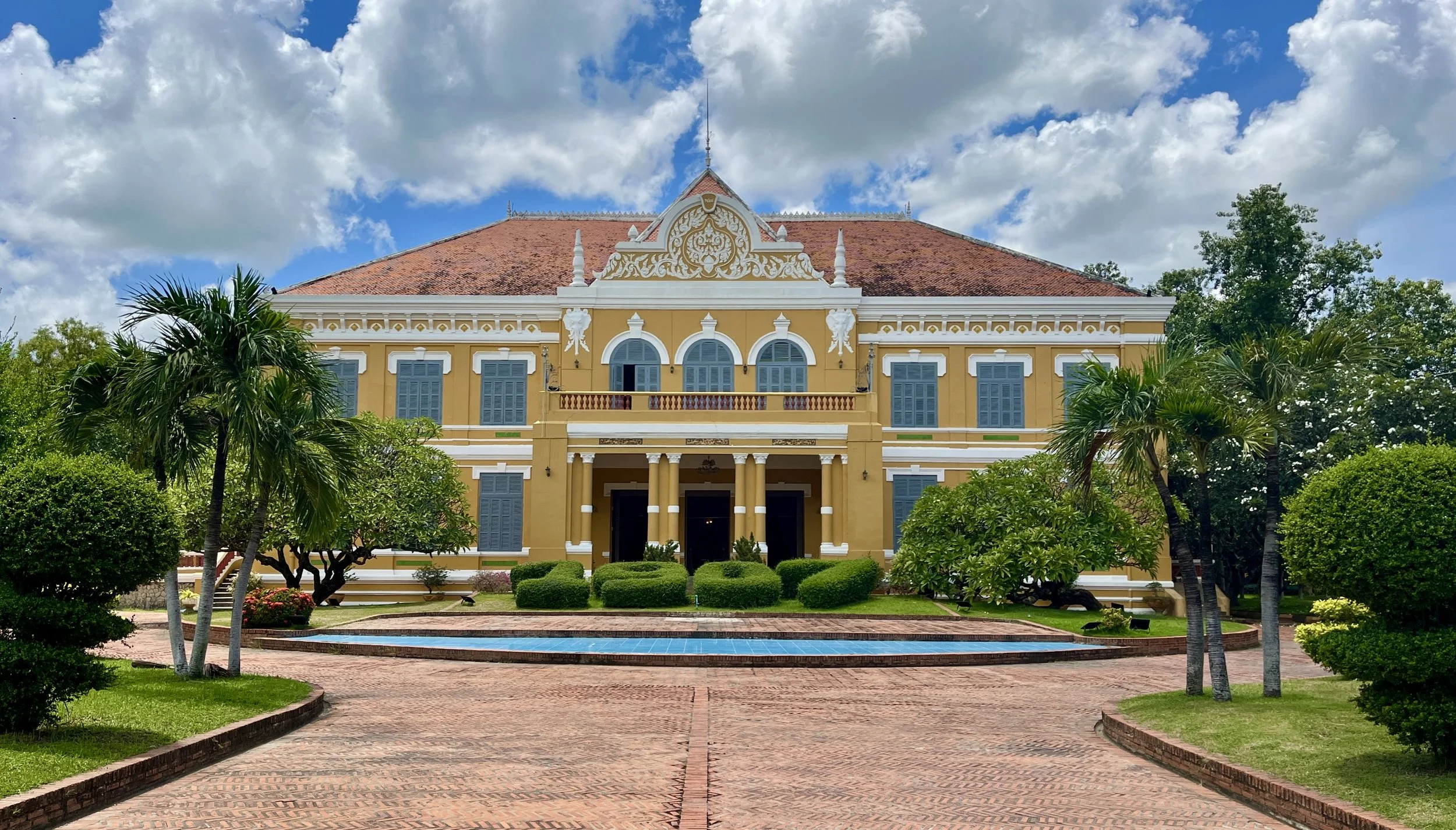
The grounds of the Governor’s Residence dominate the 1907 map, and while it is in what people perceive as French colonial style, it is of course Thai, commissioned from an Italian favored by Thai King Chulalongkorn for his ‘European’ buildings. So are several other administrative buildings in this neighborhood; it’s a mix of Thai-European-style and actually French. For a post solely about this house, click here.
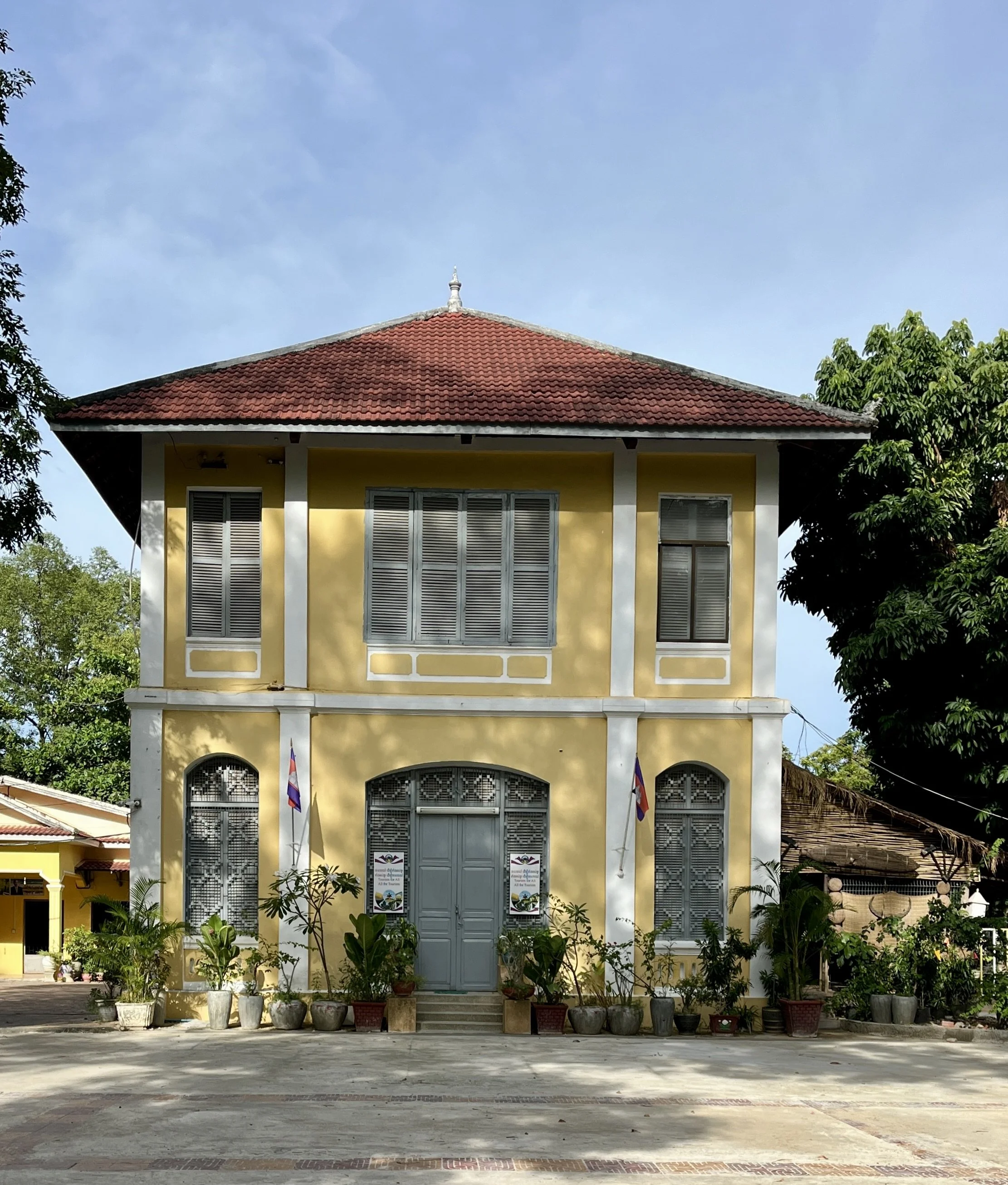
The carved wooden window grilles on this building are quite delicately done.
A recently renovated colonial building, with typical weird bastardized details like these windows.

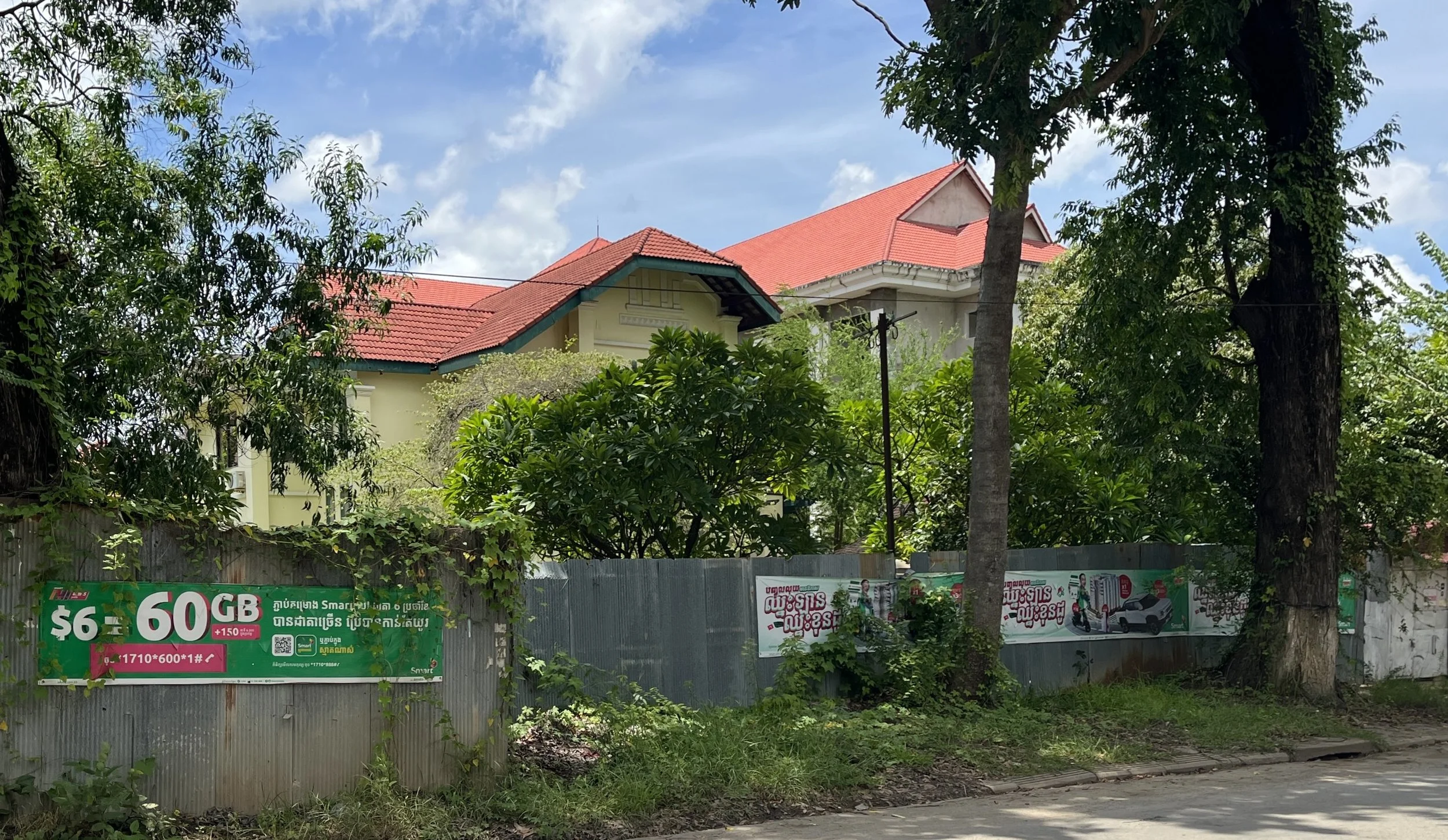
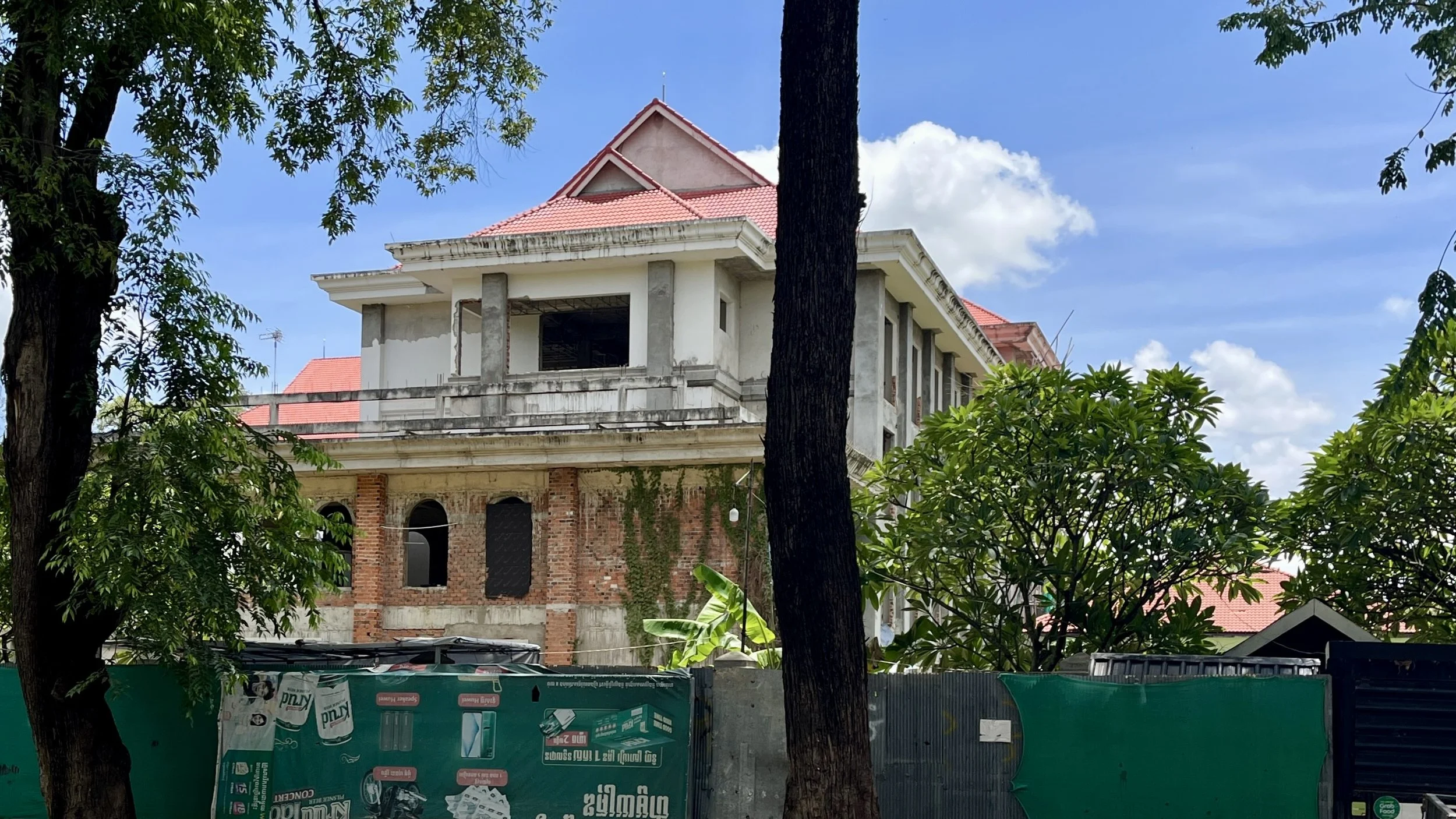
Most of the big old colonial mansions/onetime offices are in disuse/disrepair, apparently owned by local grandees who think they’ll sell them to an international corporation one fine day for millions.

Many have been partially renovated, then abandoned, and are now in ruins.

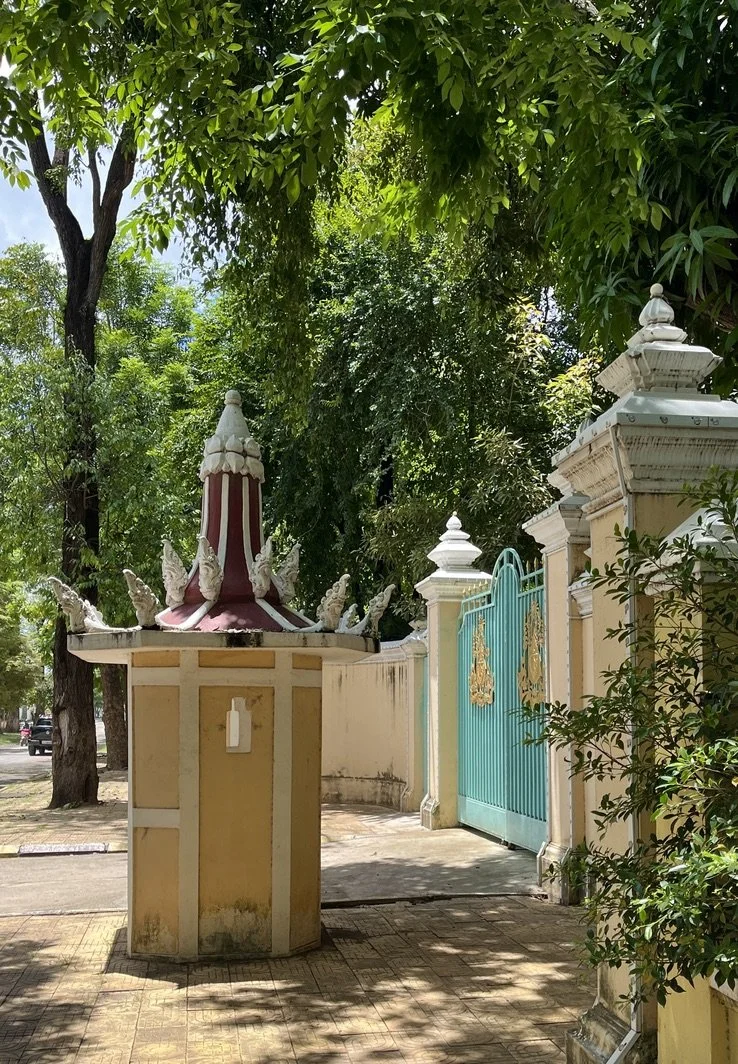
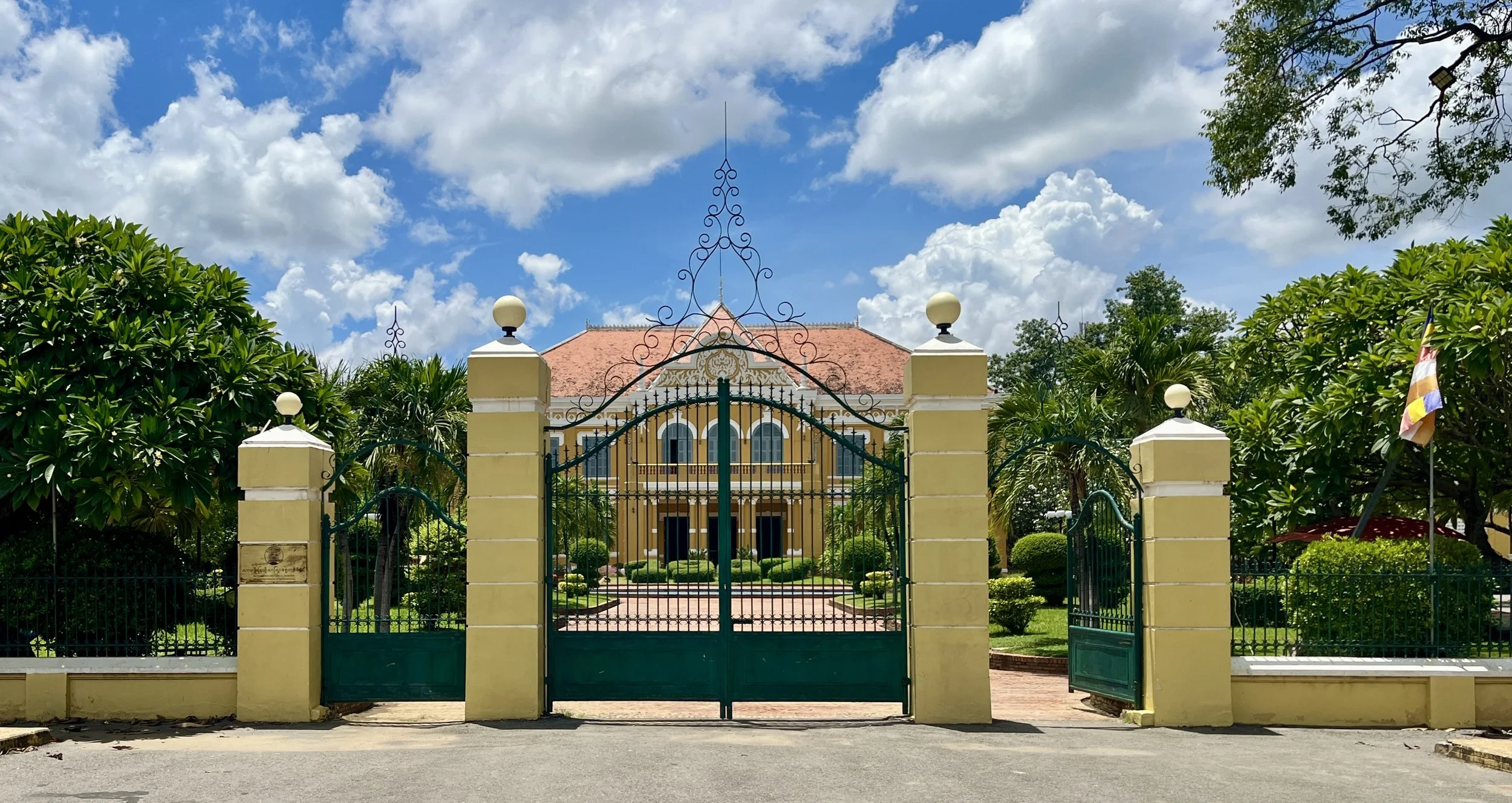
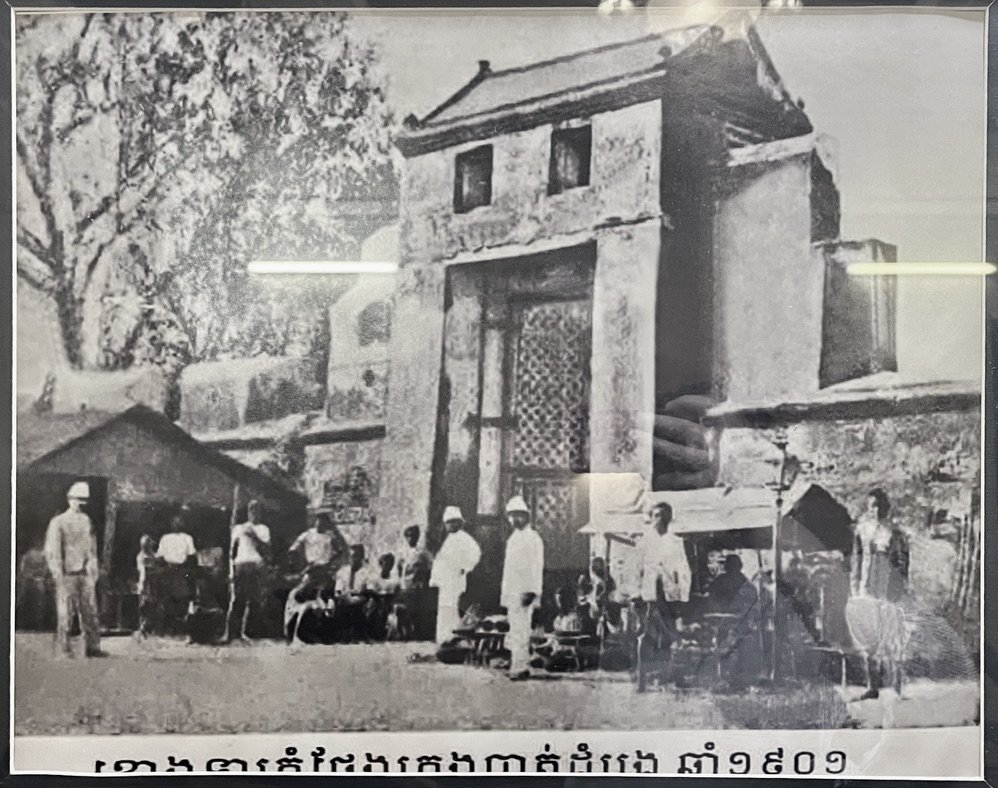
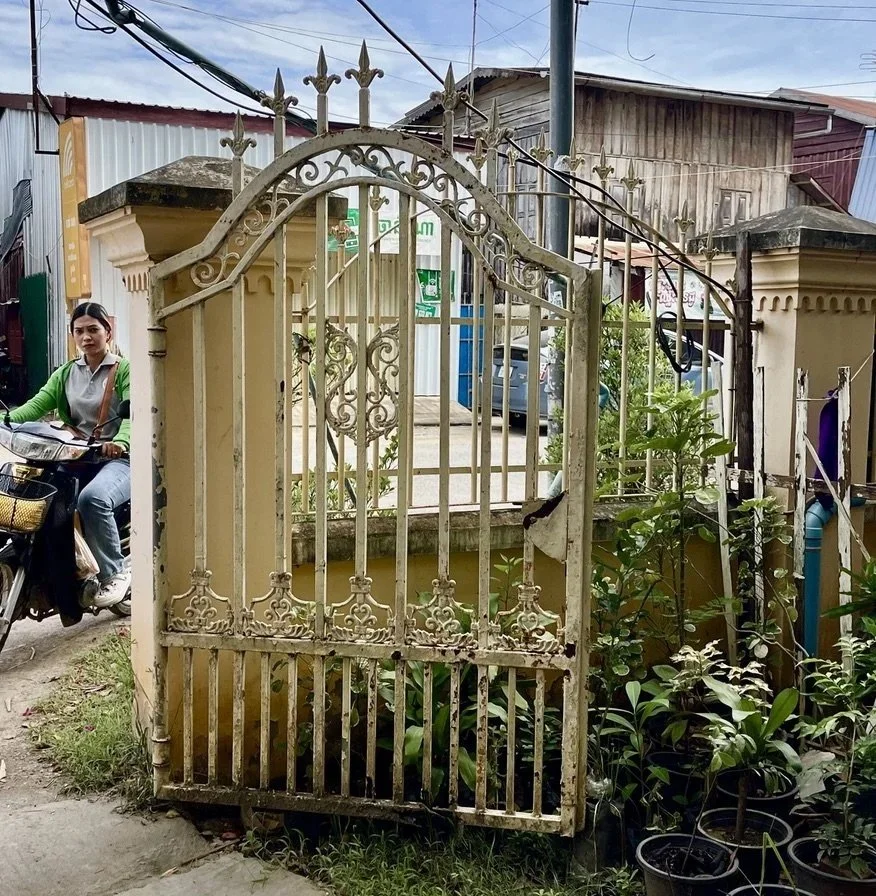
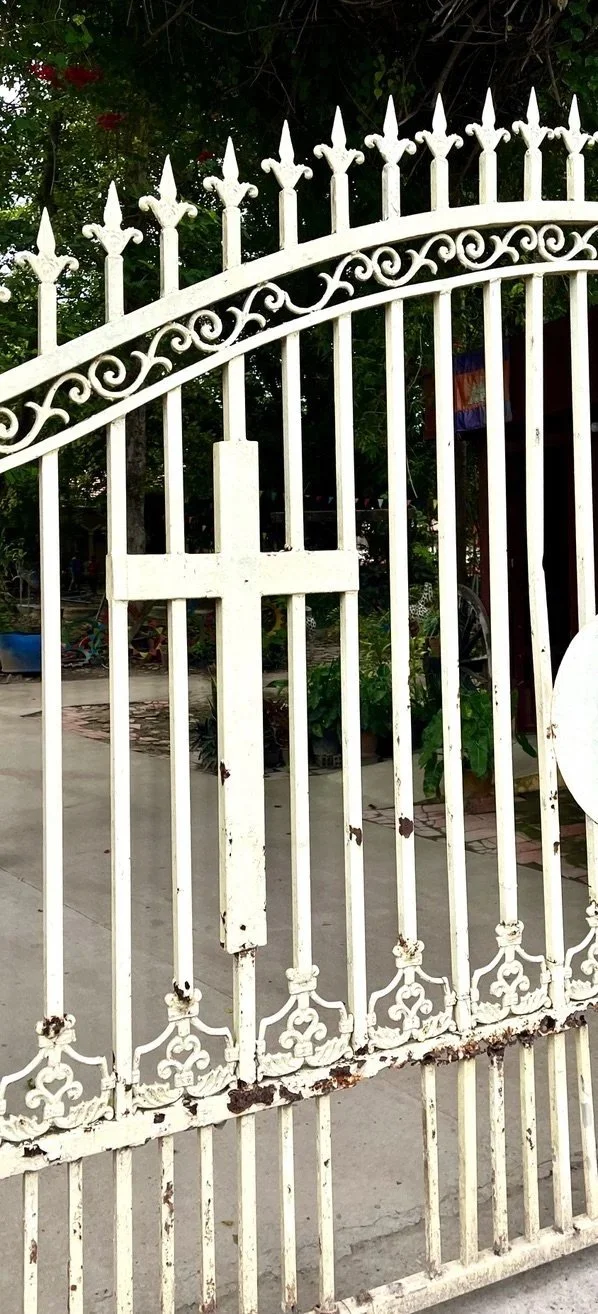
A never or rarely used official residence is somewhere beyond this gate.

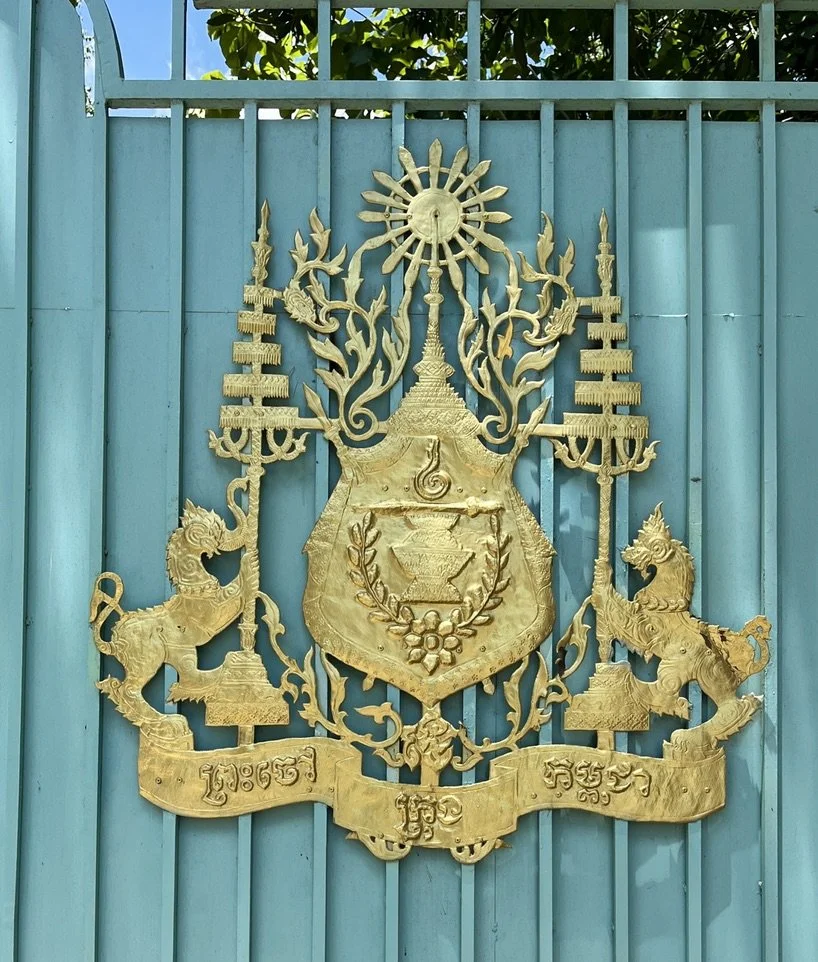
The royal seal of Cambodia.

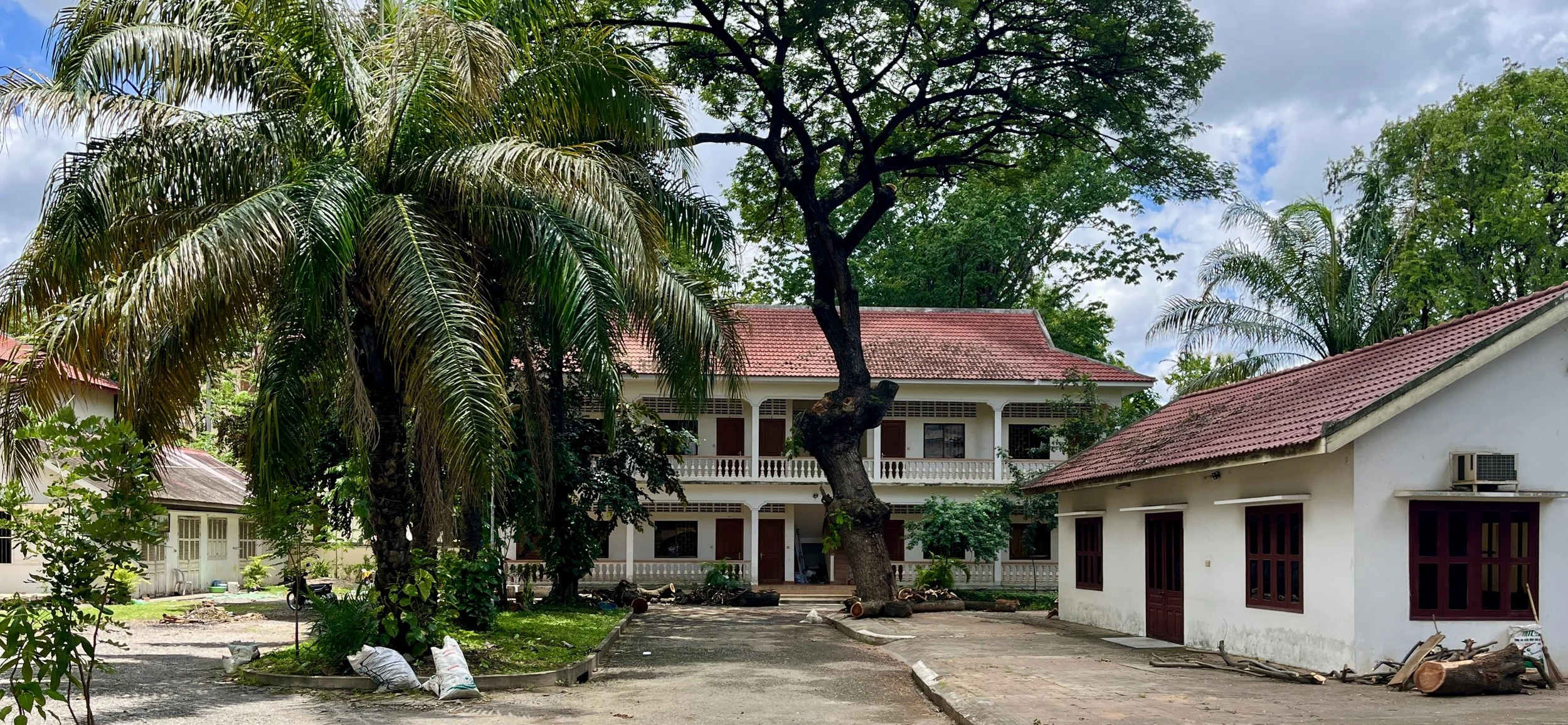
Not sure what this is– I think the office of an NGO– but this is my dream house in Cambodia. Rip up the concrete, put in a pool and gardens, perfect.

I think? this is a modern building built in the old style to blend in. This is common in Cambodia.

The definitely actually old building next door.

On the grounds of the Governor’s Residence; the backsides show clearly the colonial building vs. the colonial style building.

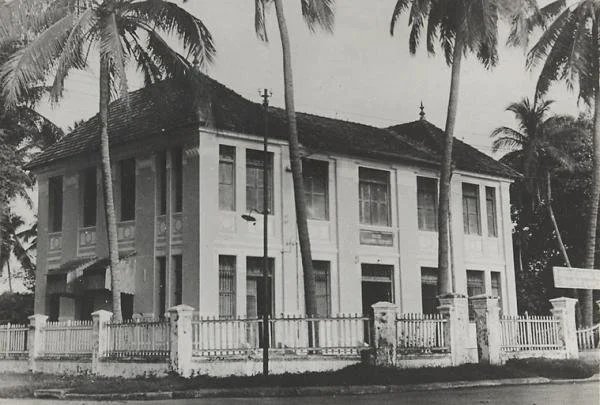
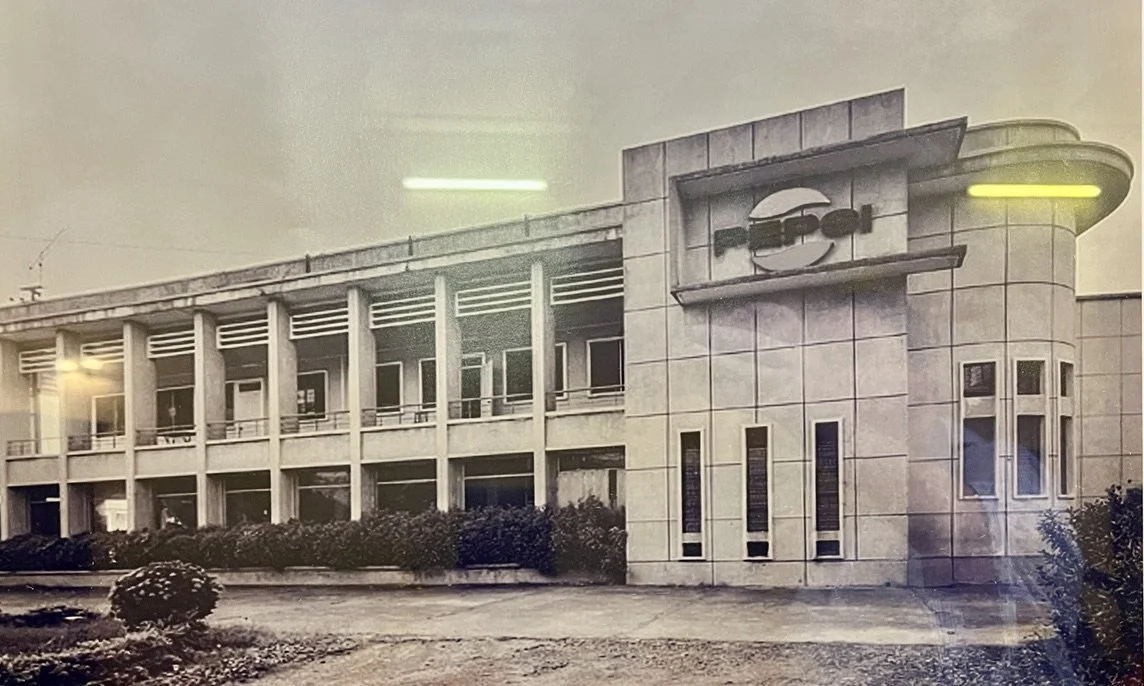
The post office in August 1948

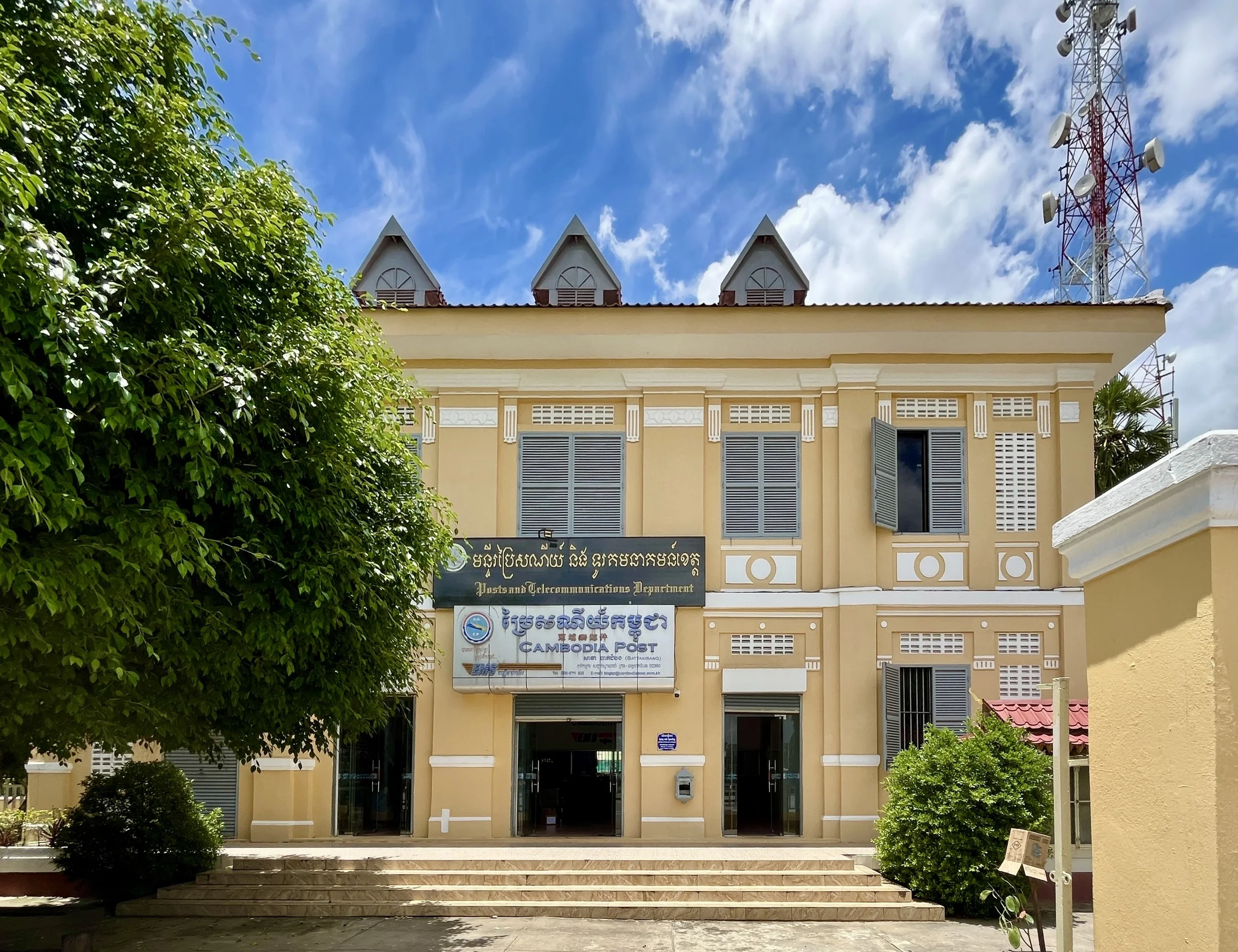
The post office, 2025

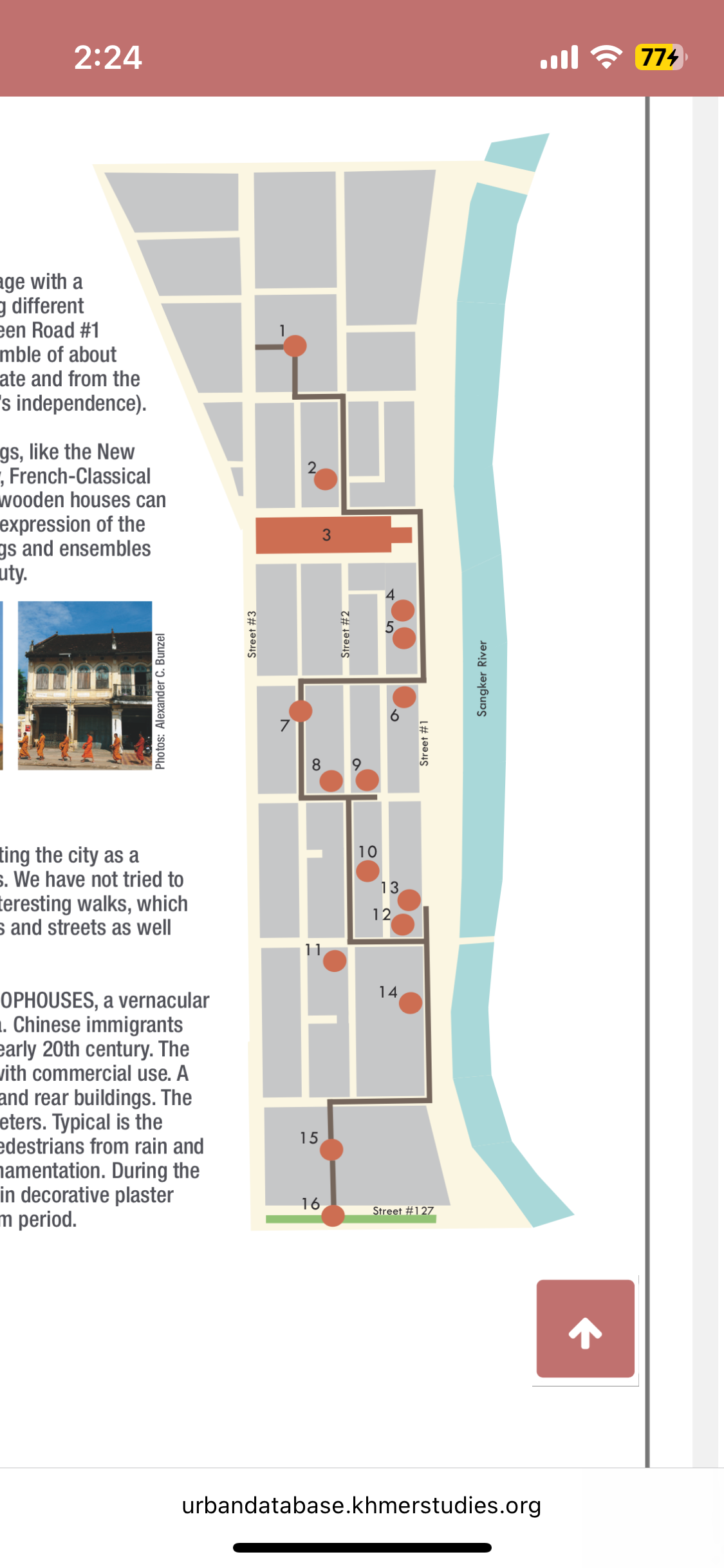
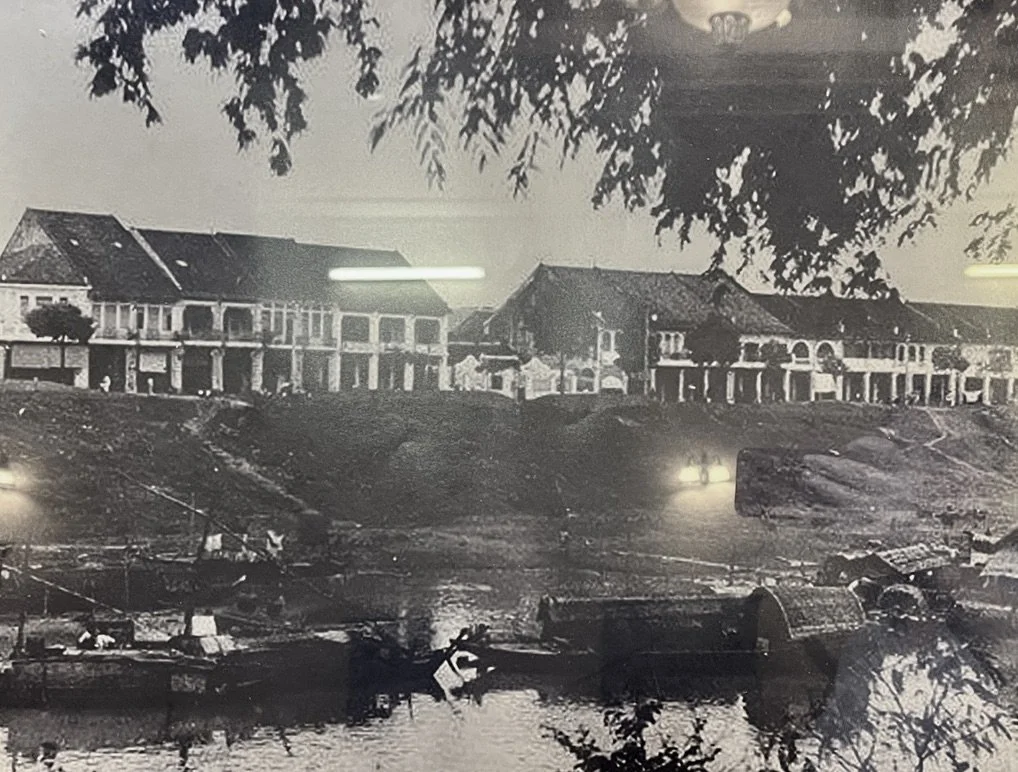
I found this little map showing Battambang’s historical buildings on urbandatabse.khmerstudies.org. It only covers the old Chinese quarter, which was almost completely removed by the French and replaced with simple shophouses, which were then reinhabited by the same people. I’d say it’s bordered at one end by the museum, and on the other by the neighborhood just beyond the 1931 ‘new’ market. I wish the map covered more of the old city.

it would look so fab if it was just clean– not even renovated, just clean.

Thai era building. I always wonder how much it costs to get these things really nice again.

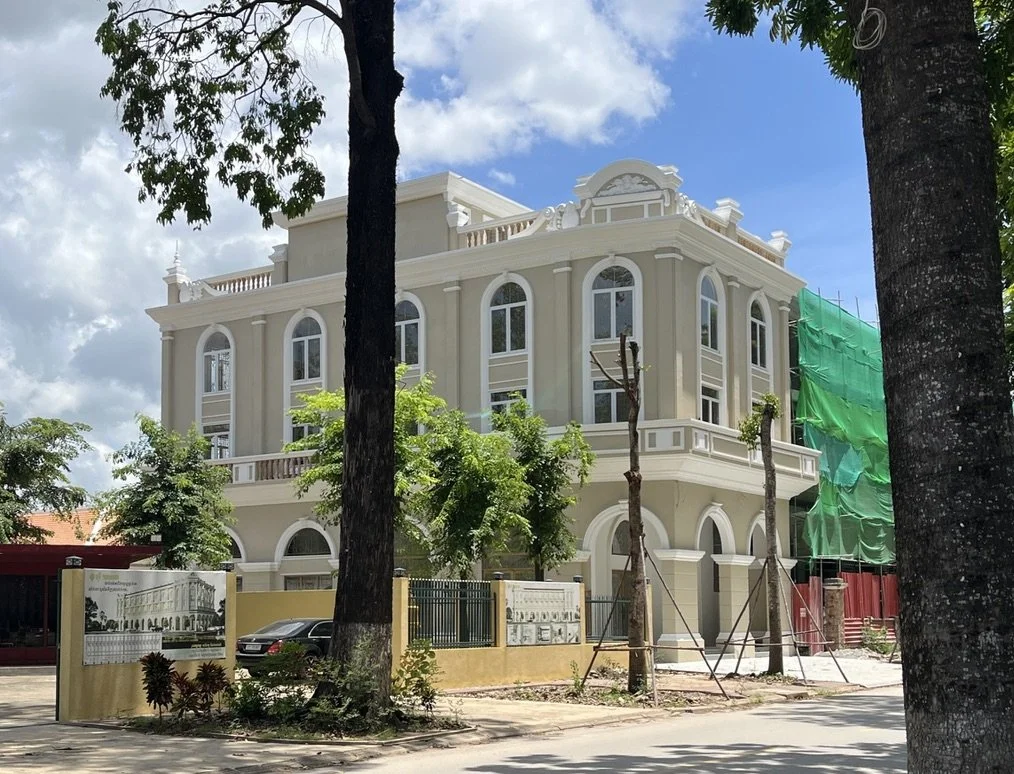
My understanding is this was a bank at some point. Private villa? Government? Still a bank? A couple years ago it was in the news that it was going to be an economics museum. Unclear, but the renovation was literally just finishing as I photographed it in October 2025. Clearly a Thai buidling.

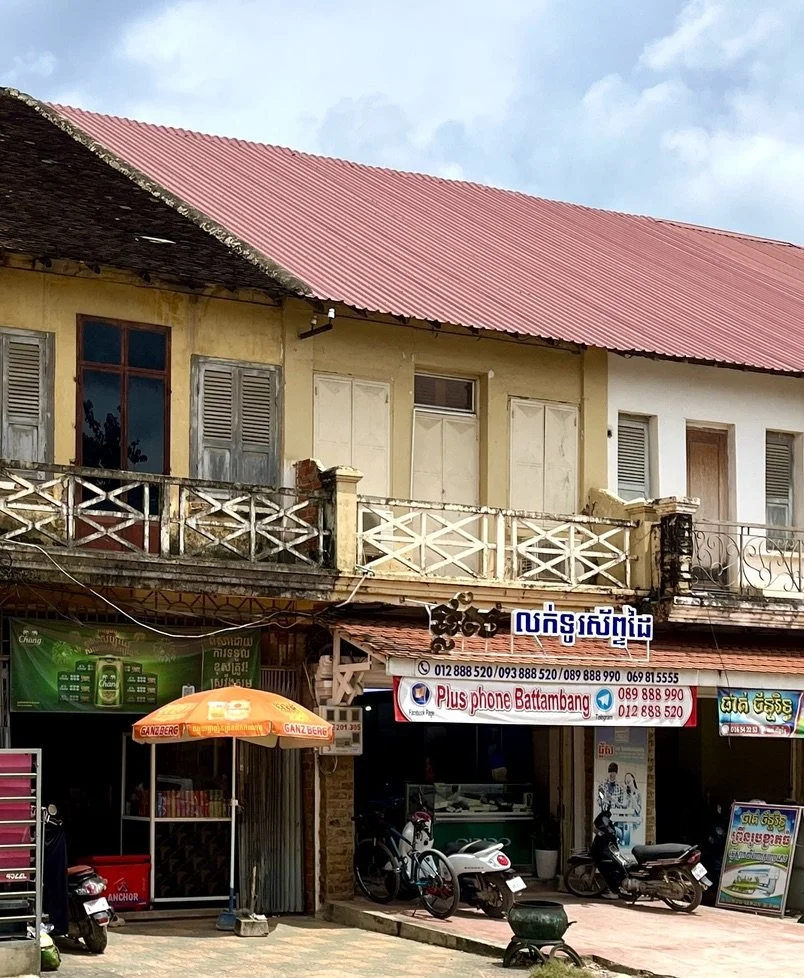
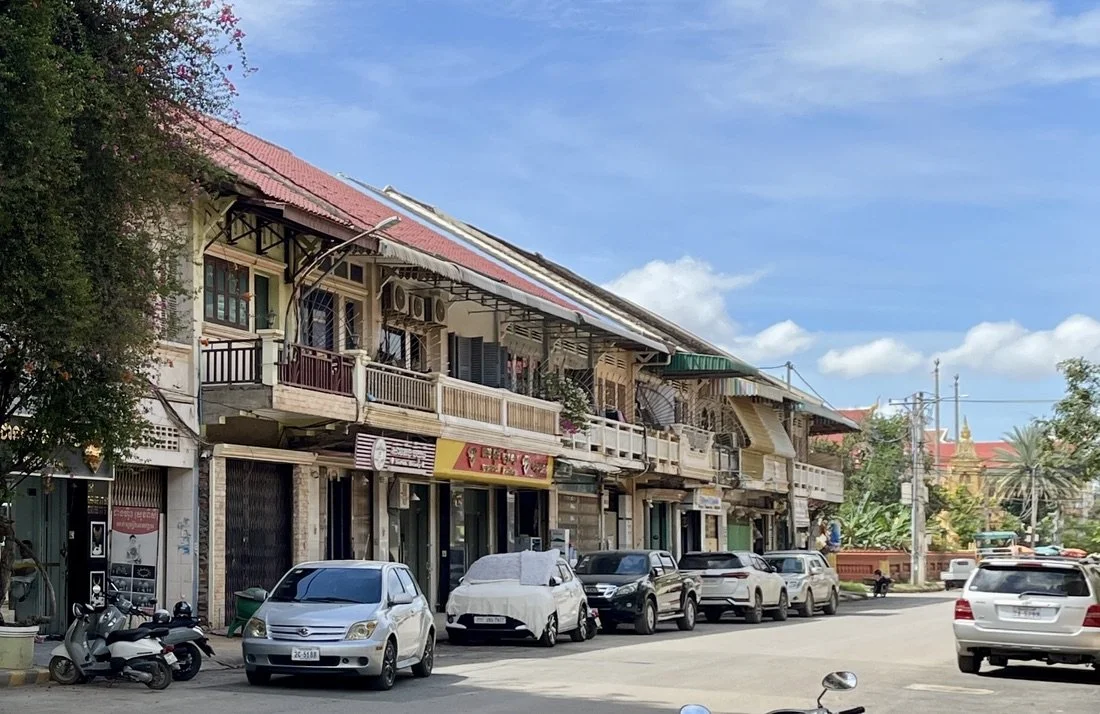
French era shophouses

Thai era shophouses

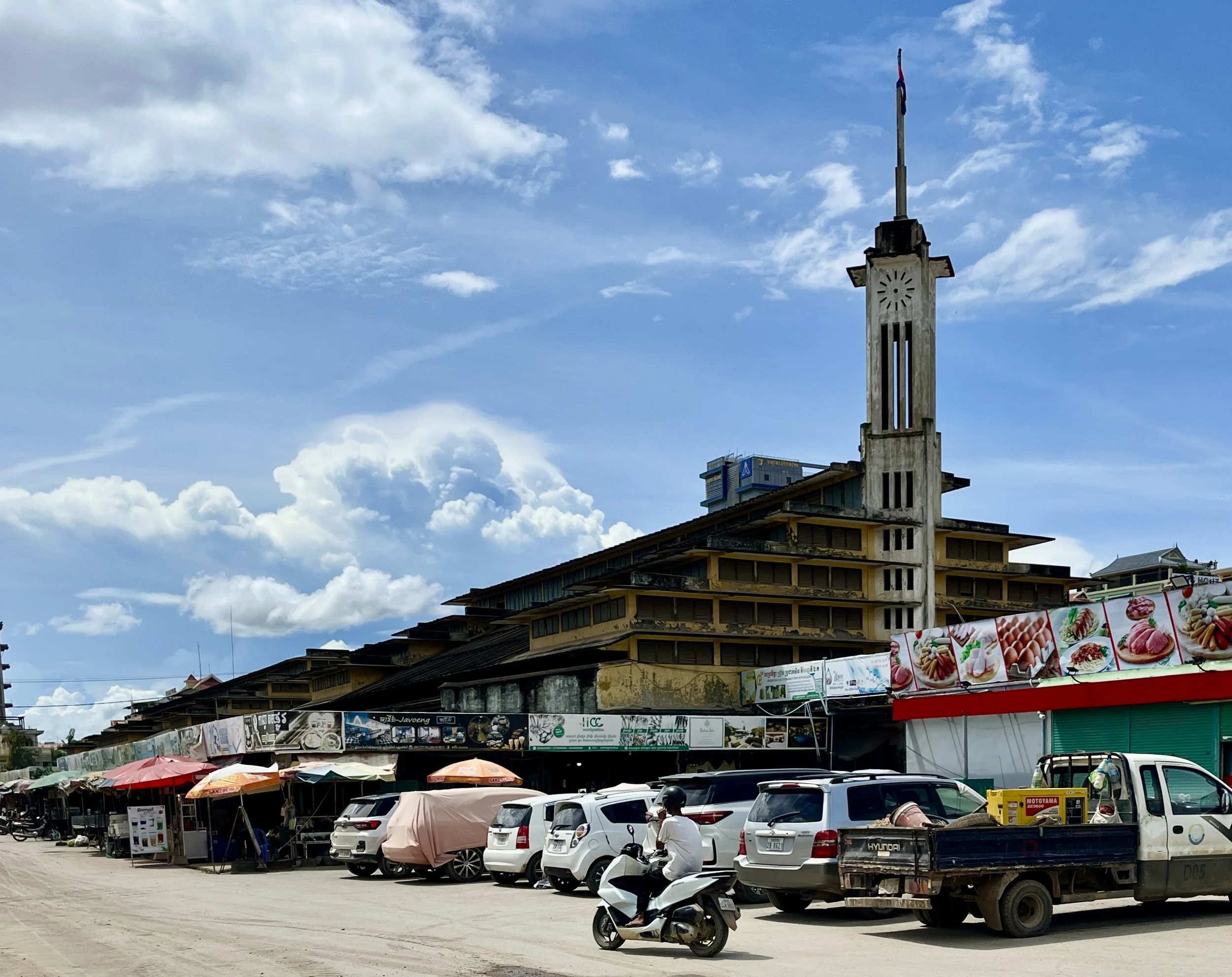
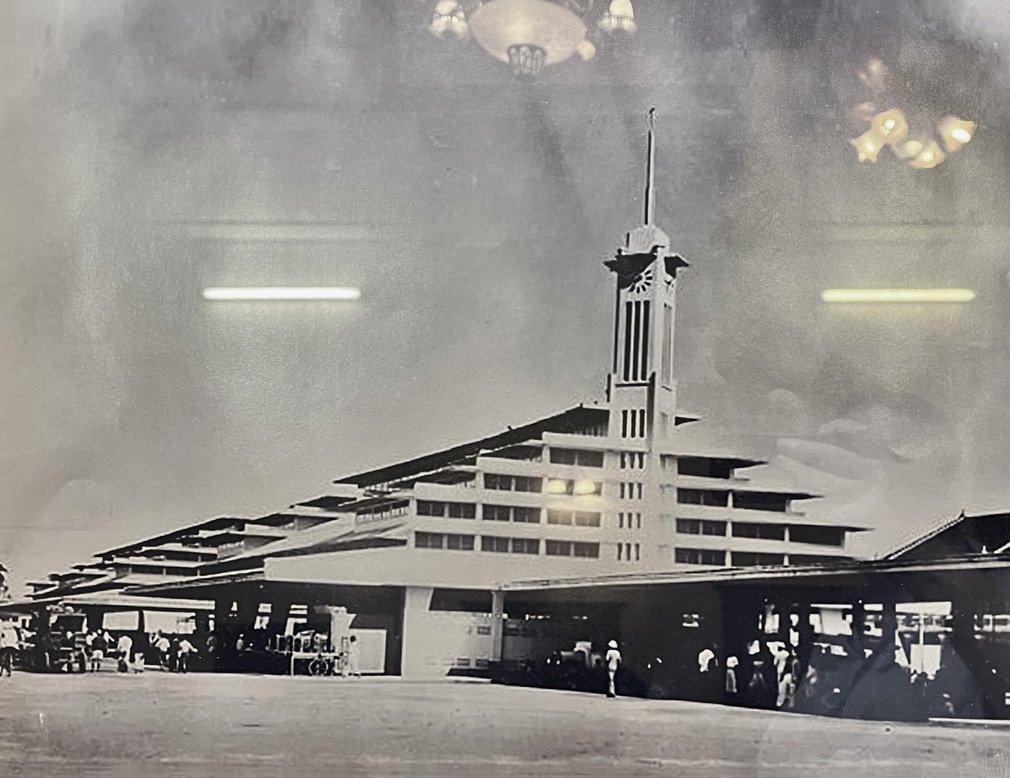
The new indoor market,1931

The new outdoor market, 1931

The indoor and outdoor market in 2025

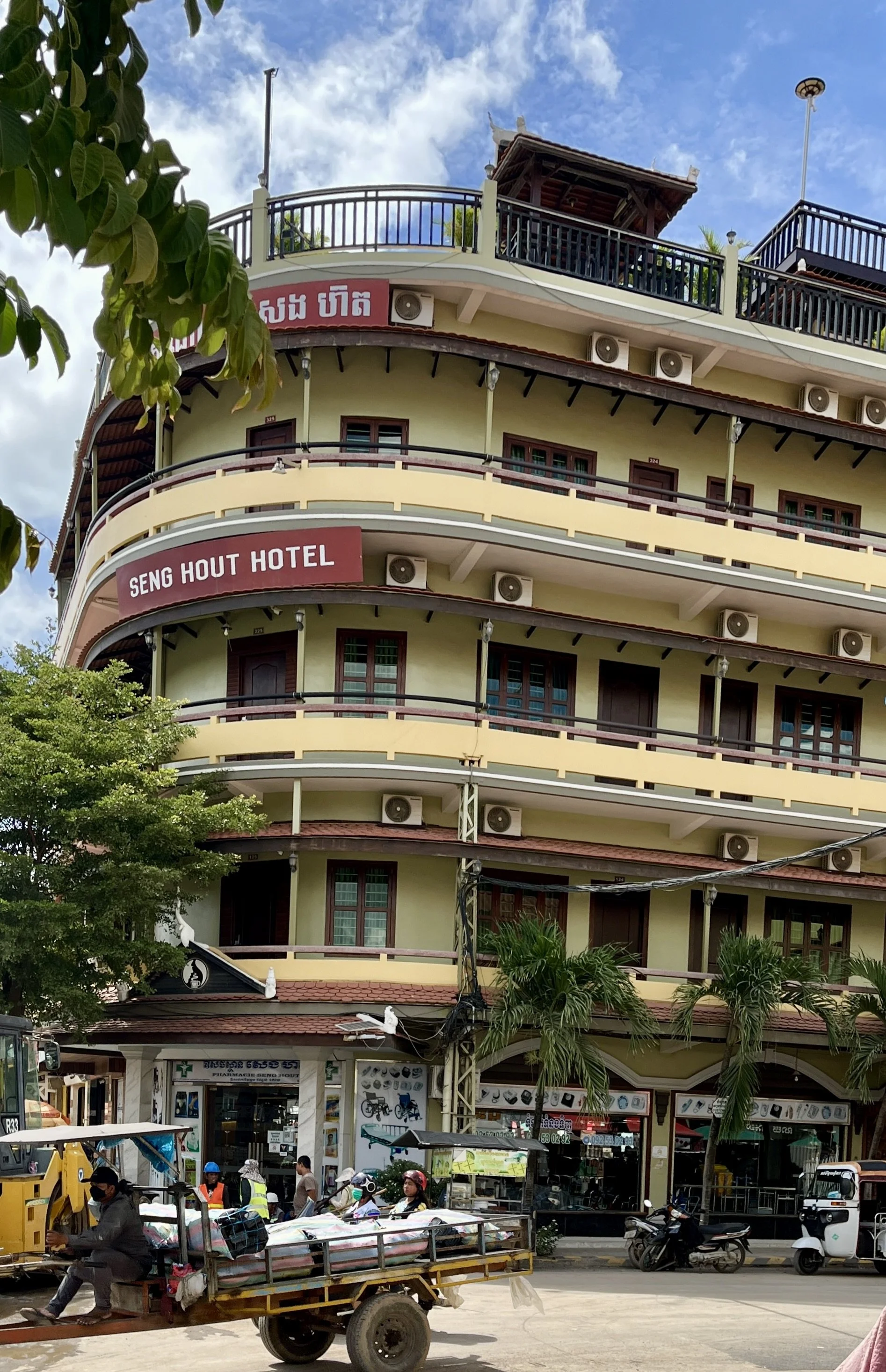
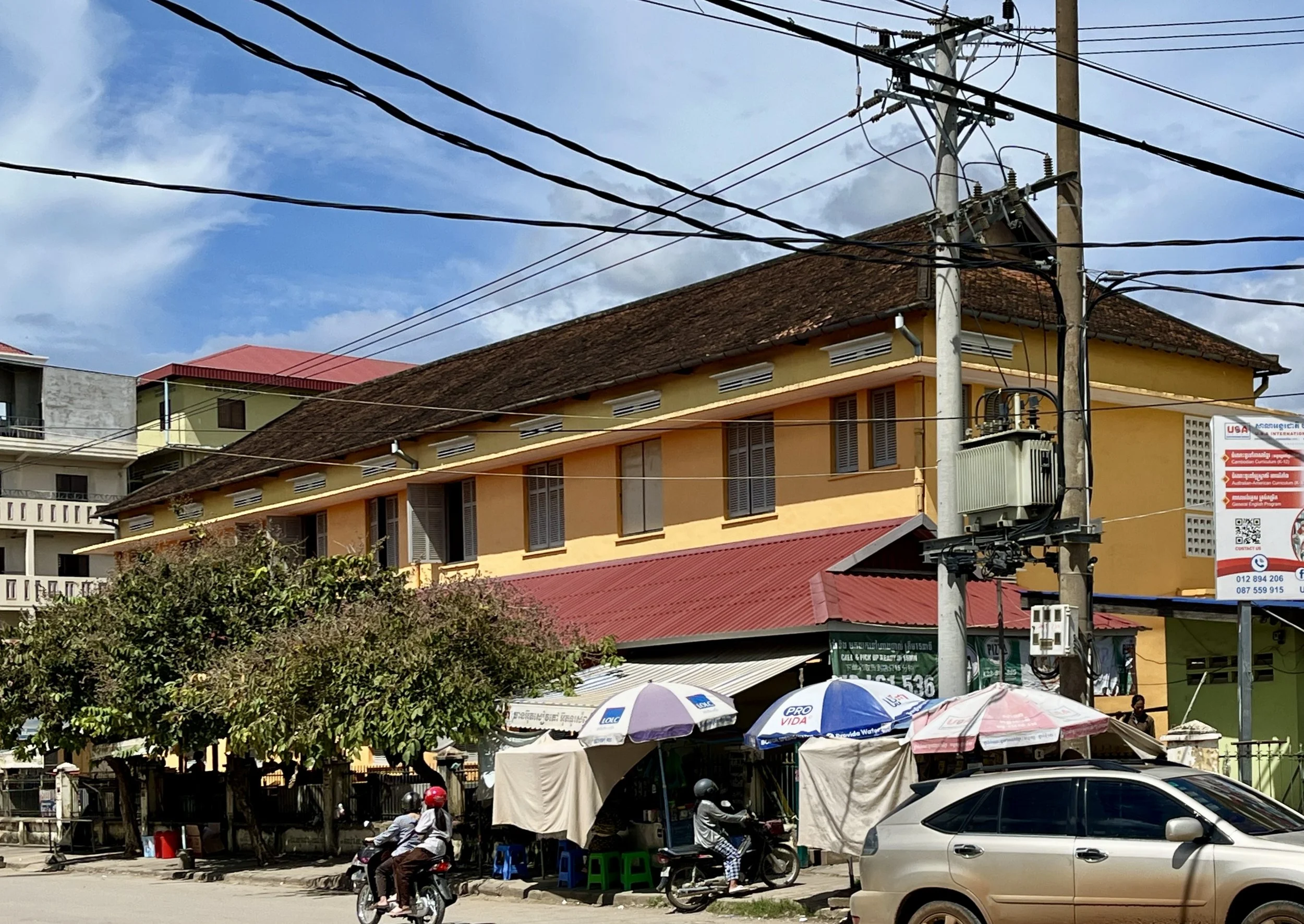
One of the oldest hotels in town, the very simple Art Deco 30s/40s Seng Hout.

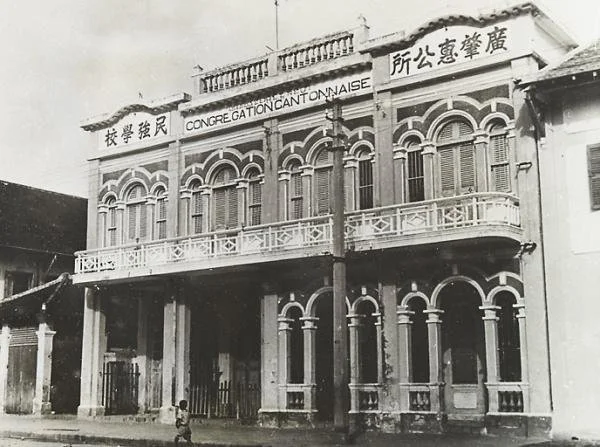
Cantonese school/guild in August 1948.

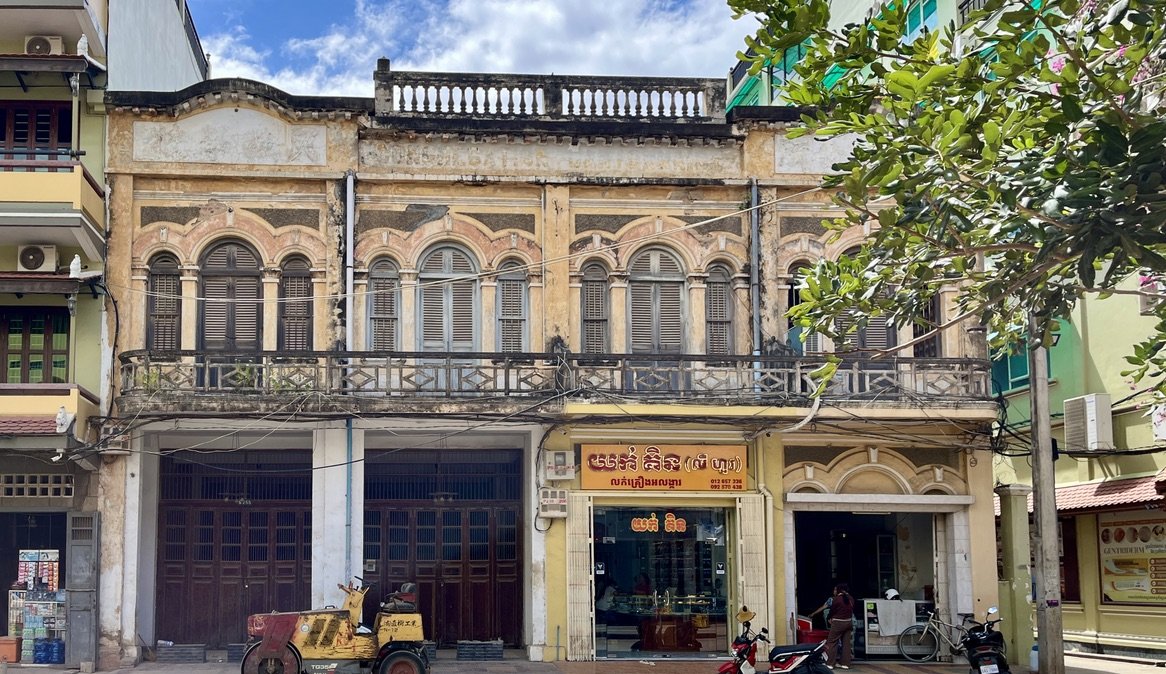
As it stands today, converted into shophouses.

Some shophouses have been combined into larger residences.

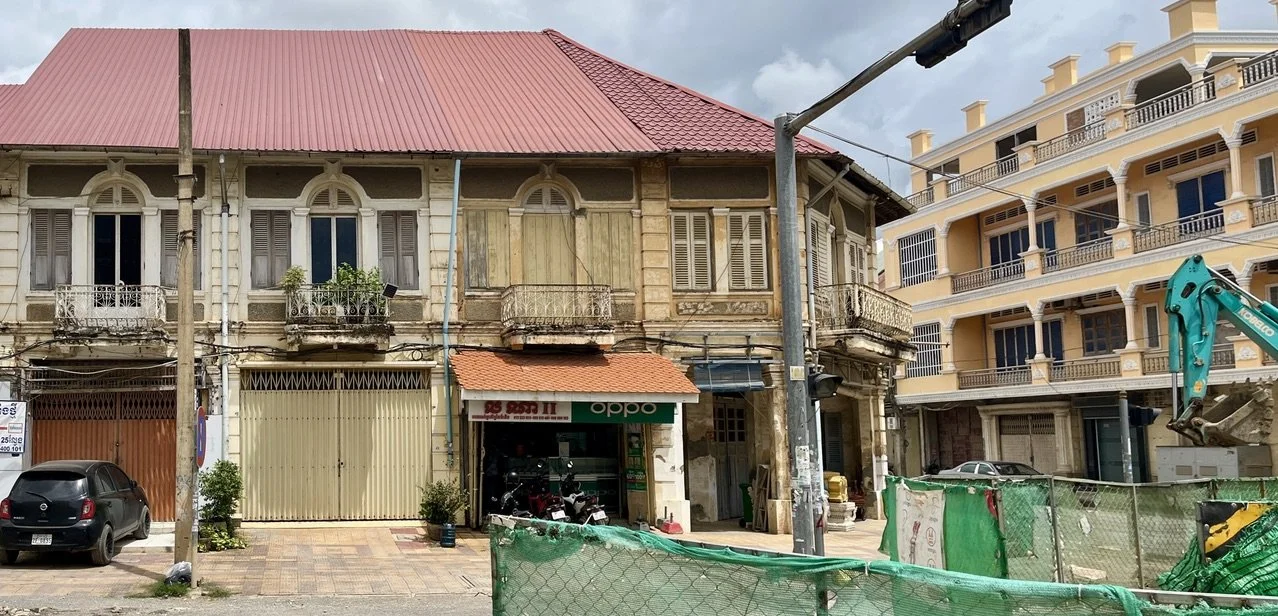
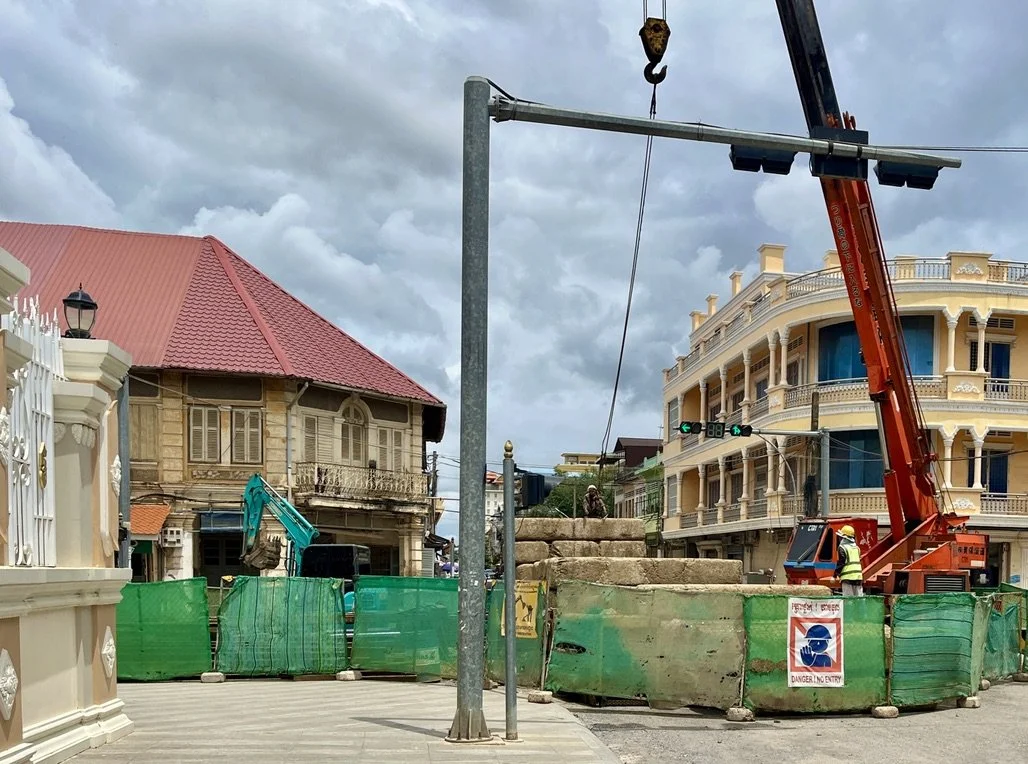
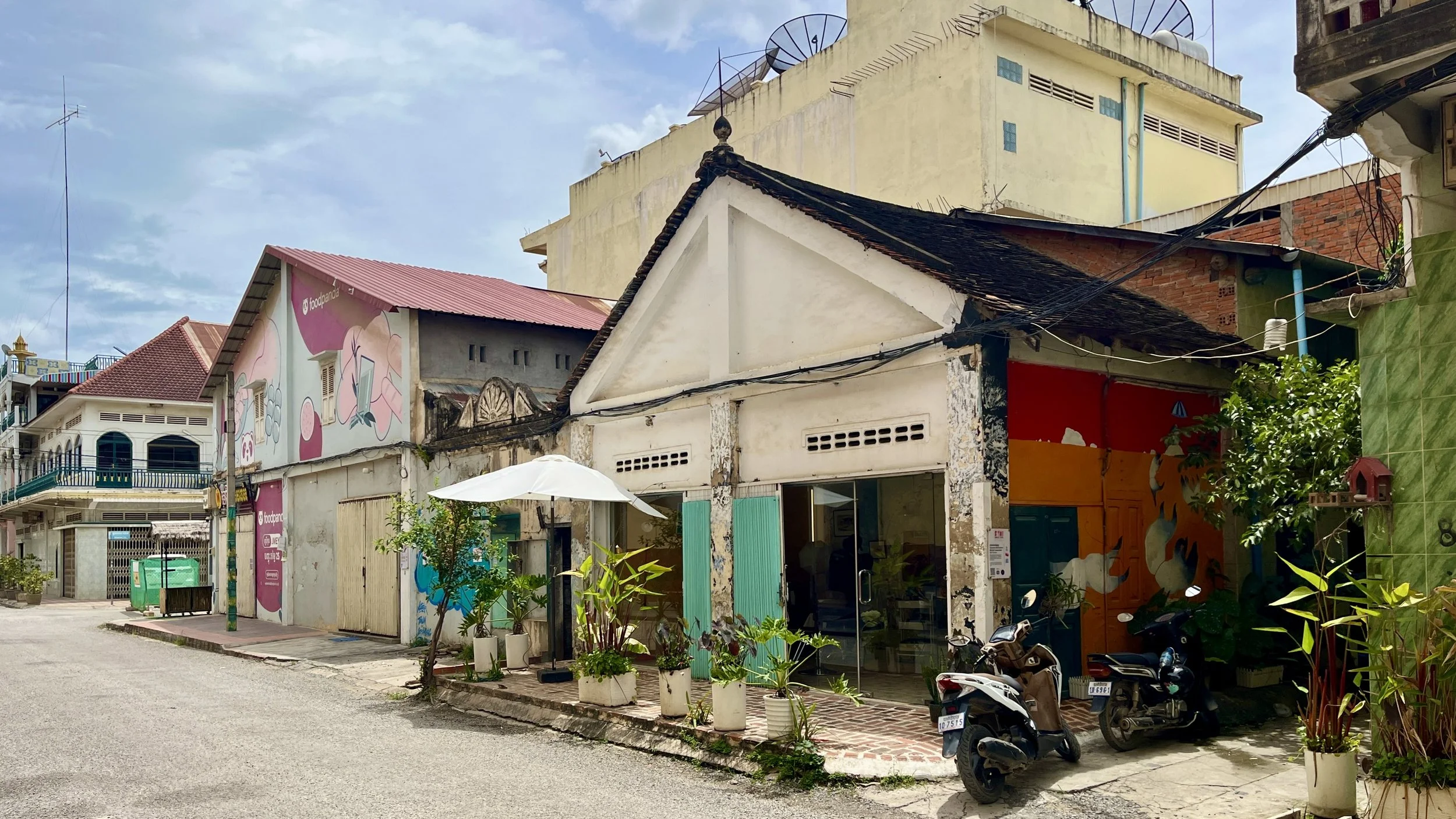
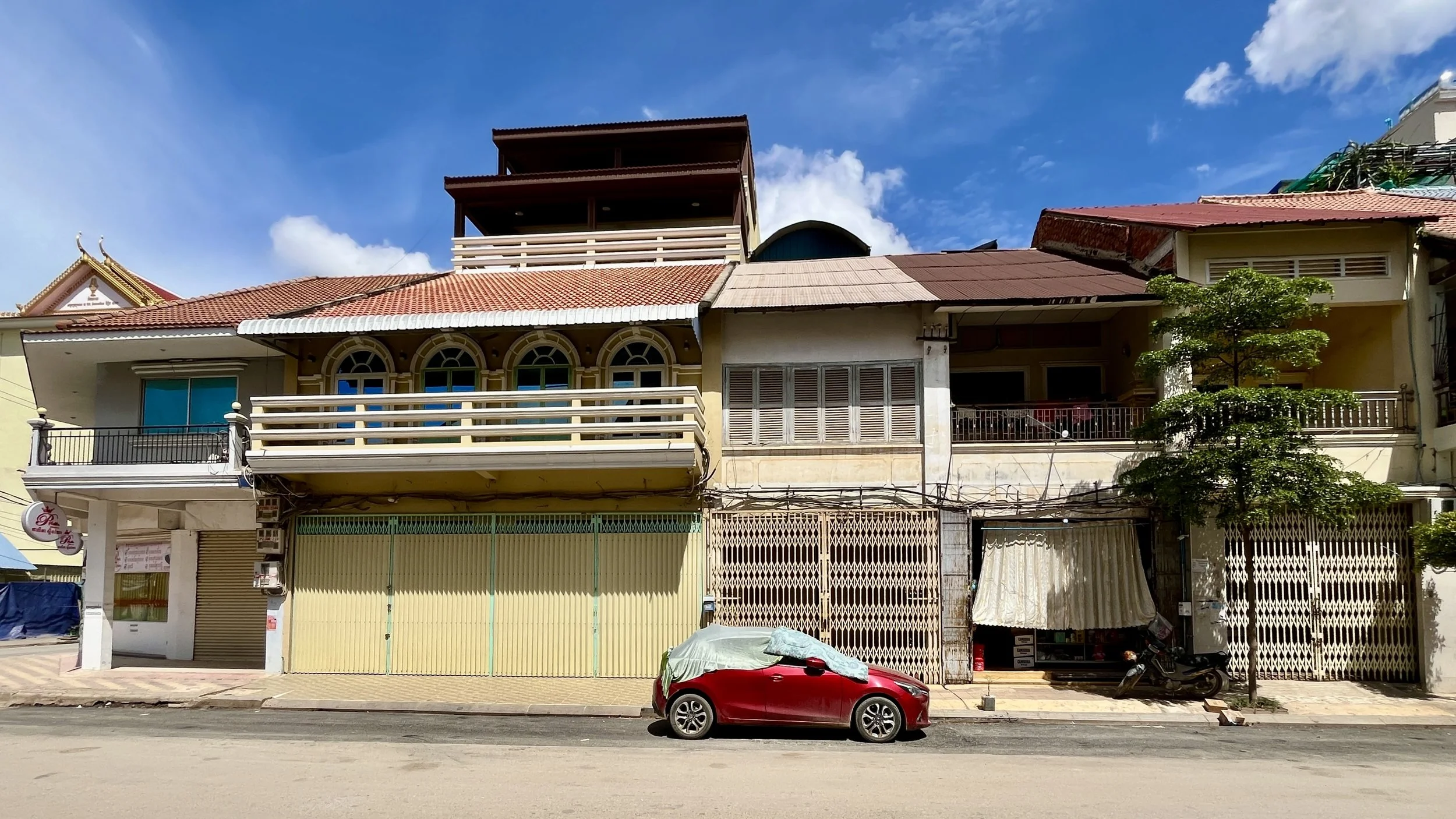
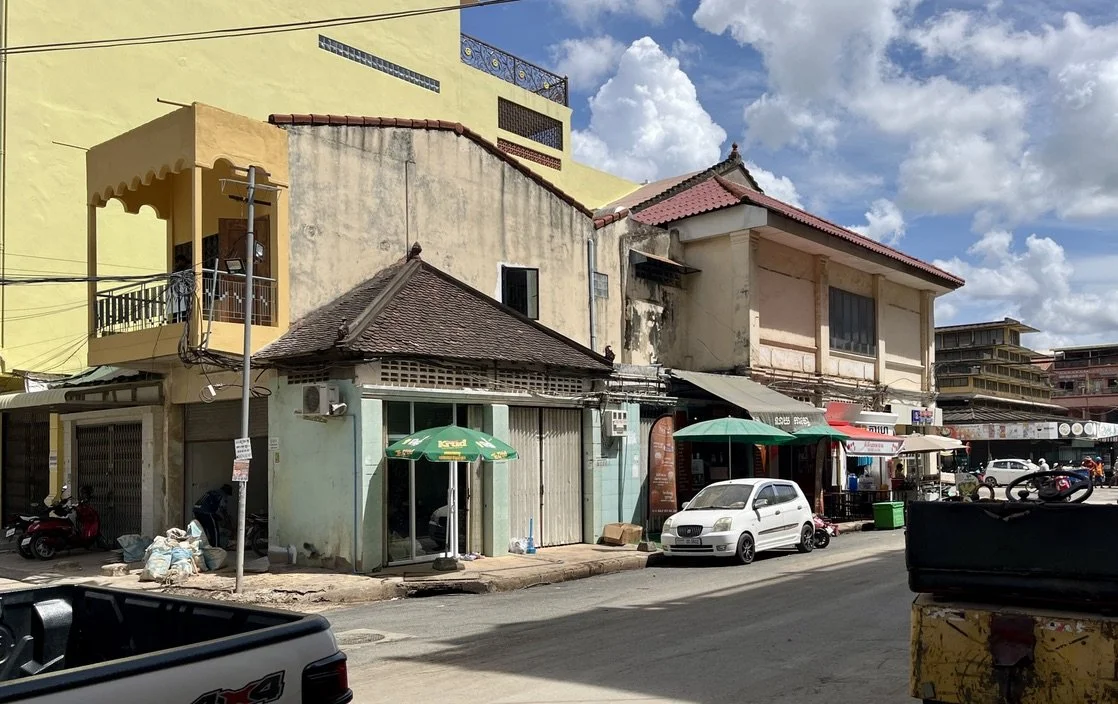
I do enjoy a Frankenbuilding! This one just beyond the market is really extra– it looks like a classic Vietnamese style block through shophouse with a front and back house, built before the street pictured here was paved– it looks like a house on the corner was knocked down for this street to be paved, and new retail storefronts were built to face the new street– but at different times, the short green building to the left probably 1920s, and the taller building to the right likely 40s or even later. The very modern yellow balcony out the back with Indian/Malay vibes completes the charm.

I felt my stay here was worth its own post (click here) but I’m placing this here to show what I suppose is an exception to the rule? Located in the ‘Sino-Khmer’ neighborhood and built by a wealthy local businessman, the La Villa hotel is entirely ‘European style’.

Just as there’s nothing particularly ‘Sino-Khmer’, there’s little to nothing visibly ‘Siamese’ left in the then-Siamese district. Instead, there are Thai era European styled colonial buildings sprinkled throughout. This one’s a good example: probably Thai, possibly French.

It’s very possible, particularly based on Émile Gsell’s photographs, that the vast majority of the houses, be they Sino-Khmer, Siamese, or European, were wooden and therefore didn’t survive and/or were disassembled, moved, or reused.

Likewise, there are very few European buildings left in the once European district; they may have been destroyed, rotted, or just renovated beyond all recognition.

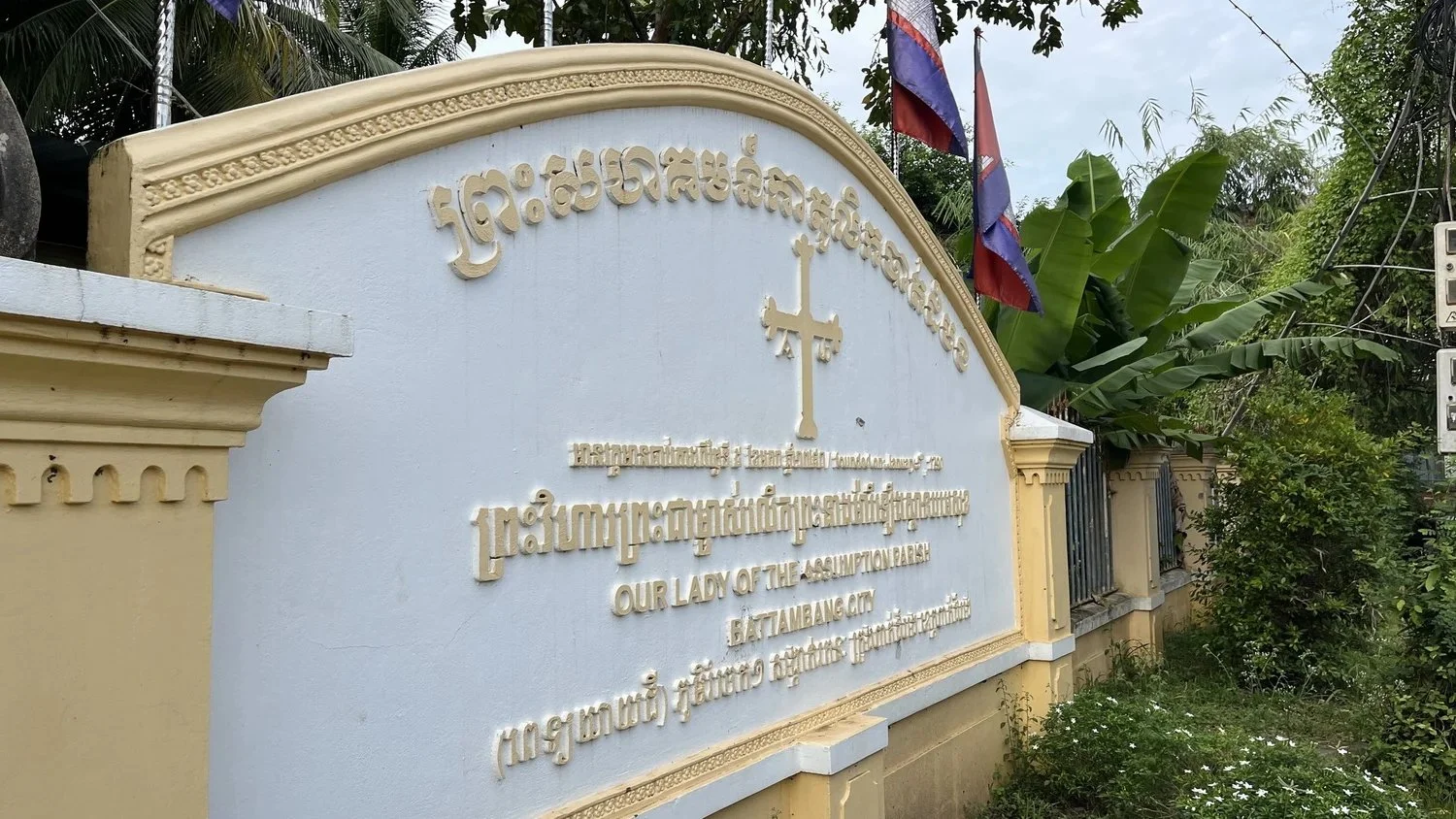
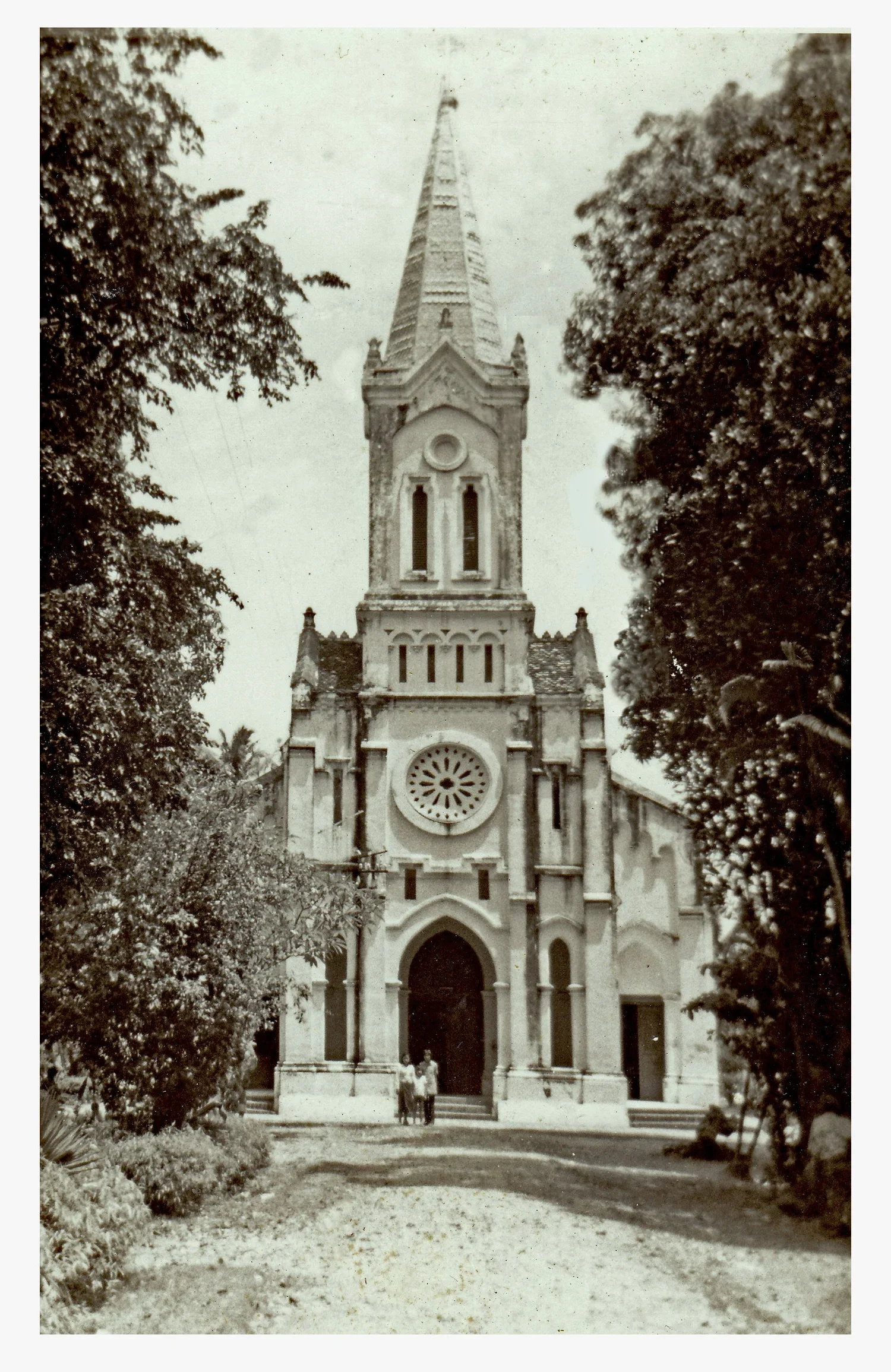
Built in 1929, the local Roman Catholic Cathedral was blown up by the Khmer Rouge in 1975.

The French colonial outbuildings remain, and it’s still fully functional as a church, school, community center, etc.

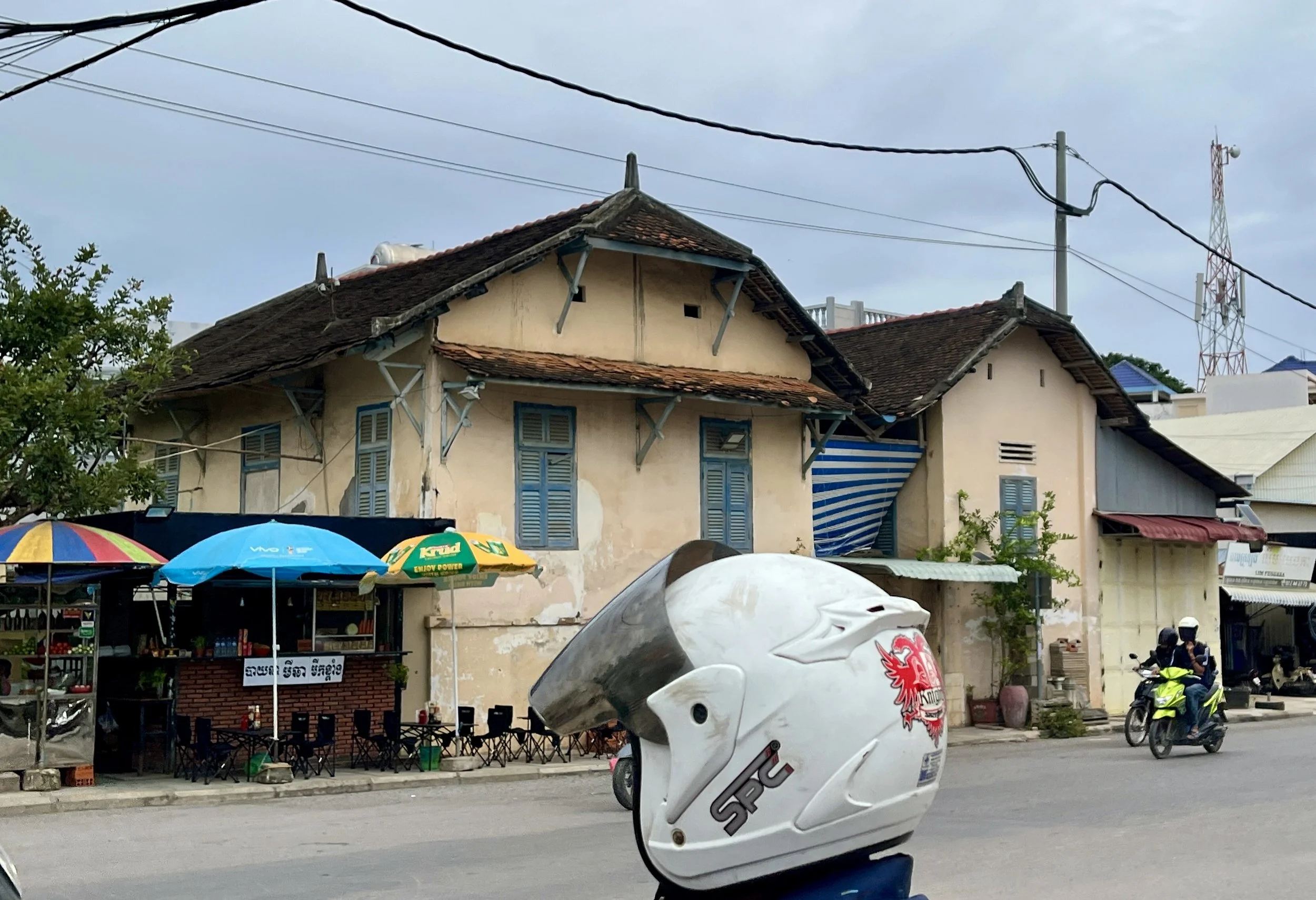
A few doors down from the church was this old French colonial house, now split into two. The owner told me she’d been here since 1981? 1985? something like that. After the rural dislocation and genocide, Cambodia was littered with empty houses, and people squatted on a first come first served basis. There are still two classes of property deed, soft and hard titles: hard titles are official; soft titles are been-there-forever squatters’ rights, or 10-50 year leases. The soft title holder here told me that once in the ‘90s a Frenchman visited and told her he grew up in this house, but didn’t ask for anything but to see inside again. Pre-Khmer Rouge property rights have never been restored or respected for Cambodian survivors or foreign returnees.

The typical sloppy division of a once fine house into 2 or 3 “connected houses”, each for 1-2 multigenerational families, none of whom have any qualms about disrespecting the architecture with absurd, cheap, ugly, damaging, or irreversible changes.

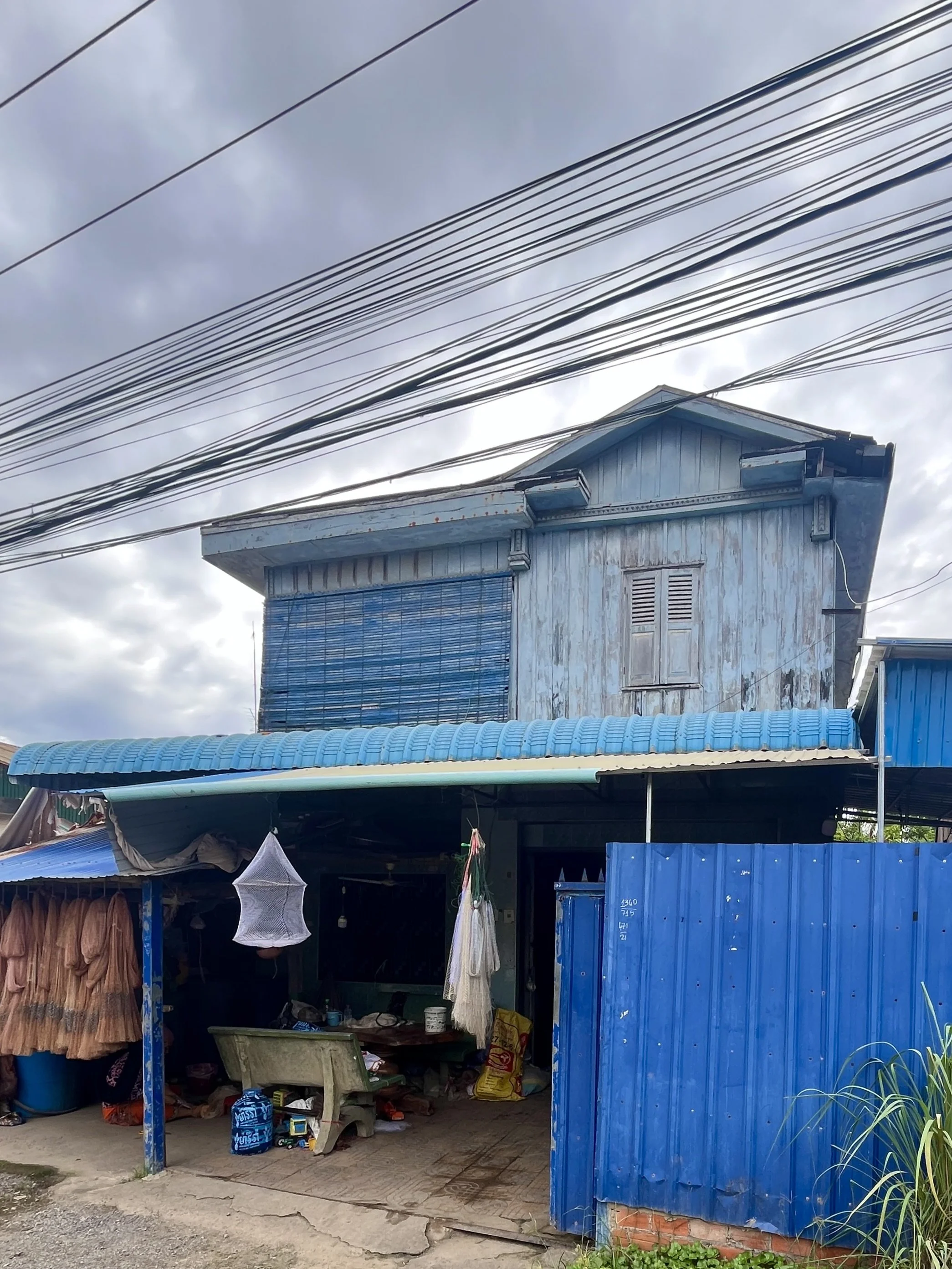
The Muslim neighborhood is still Muslim today, and apparently handmade fishing nets have been one of their dedicated handicrafts all this time.

The Governor's Mansion that Never Was . . . Battambang | Cambodia

Occasionally I visit a place that’s simply not worth the entrance fee, and this is one.

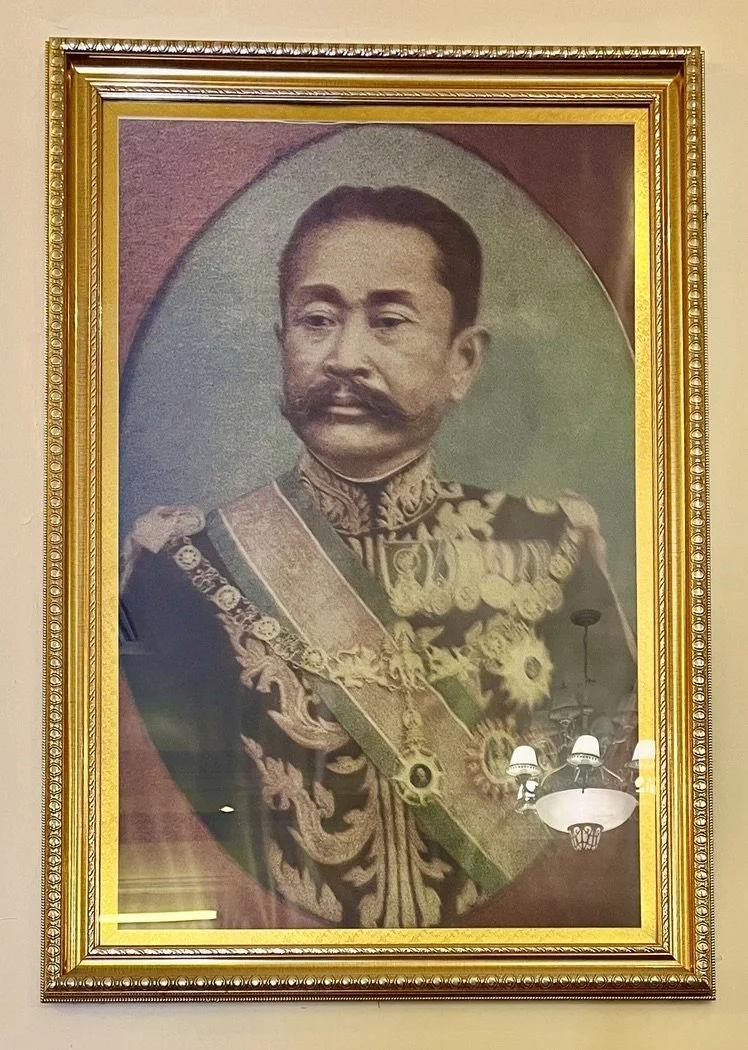
Lord Chhum Aphaiwongse

Commissioned by Lord Chhum Aphaiwongse in 1905 from Mario Tamagno (best known for the Ananta Samakhom Throne Hall at Dusit Palace), this is as close to a simple template of a French colonial style mansion as could be conceived, the SEA base model McMansion of a hundred years ago. It’s an almost eery feeling; I’ve walked through this exact house, all over SEA, smaller or larger, with only slight differences.

Lord Chhum must not have seen the Franco-Siamese Treaty of 1907 coming. In 1904, Siam gave France Trat in exchange for Chantaburi. In 1905, Lord Chhum commissioned the house. In 1907, just as it was completed, Siam got Trat back by trading in the Buphaphon, the area including Siem Reap and Battambang that the Aphaiwongses had hereditarily governed since 1795.

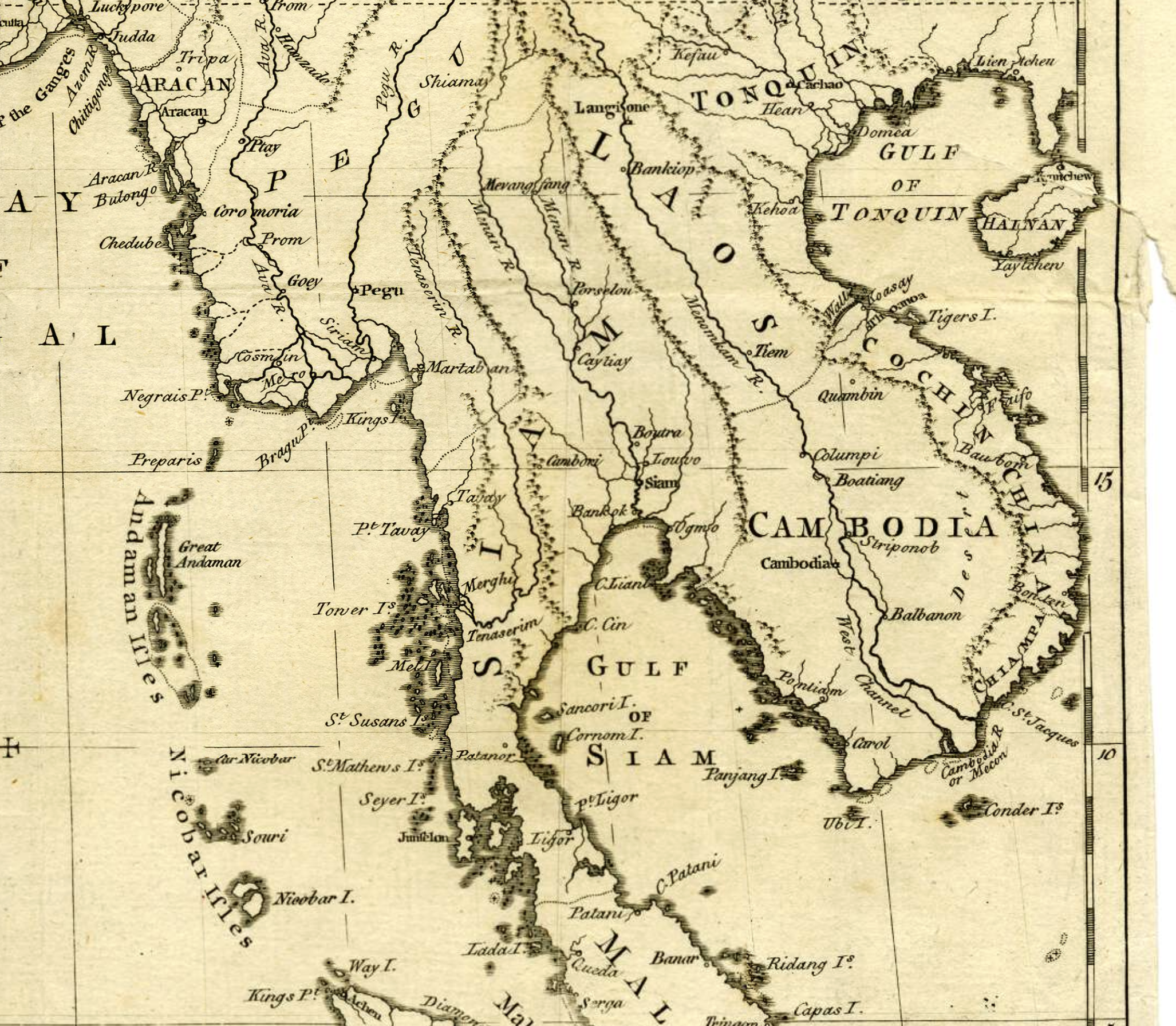
The Aphaiwongses, originally local warlords in far southern Treang, rose to nobility and wealth with Siamese backing in the latter half of the 18th century. When local Cambodian chiefs went to war for Cambodian puppet kings supported by either Siam or Annam, the Aphaiwongses supported, and were supported by, Siam. When the Nguyens became distracted by the Tay Son rebellion, Siam got the upper hand in Cambodia, culminating in the first Aphaiwongse Okhna, Chau Baen, serving as regent over the Cambodian child puppet King Ang Eng.

1773 map by Thomas Kitchin

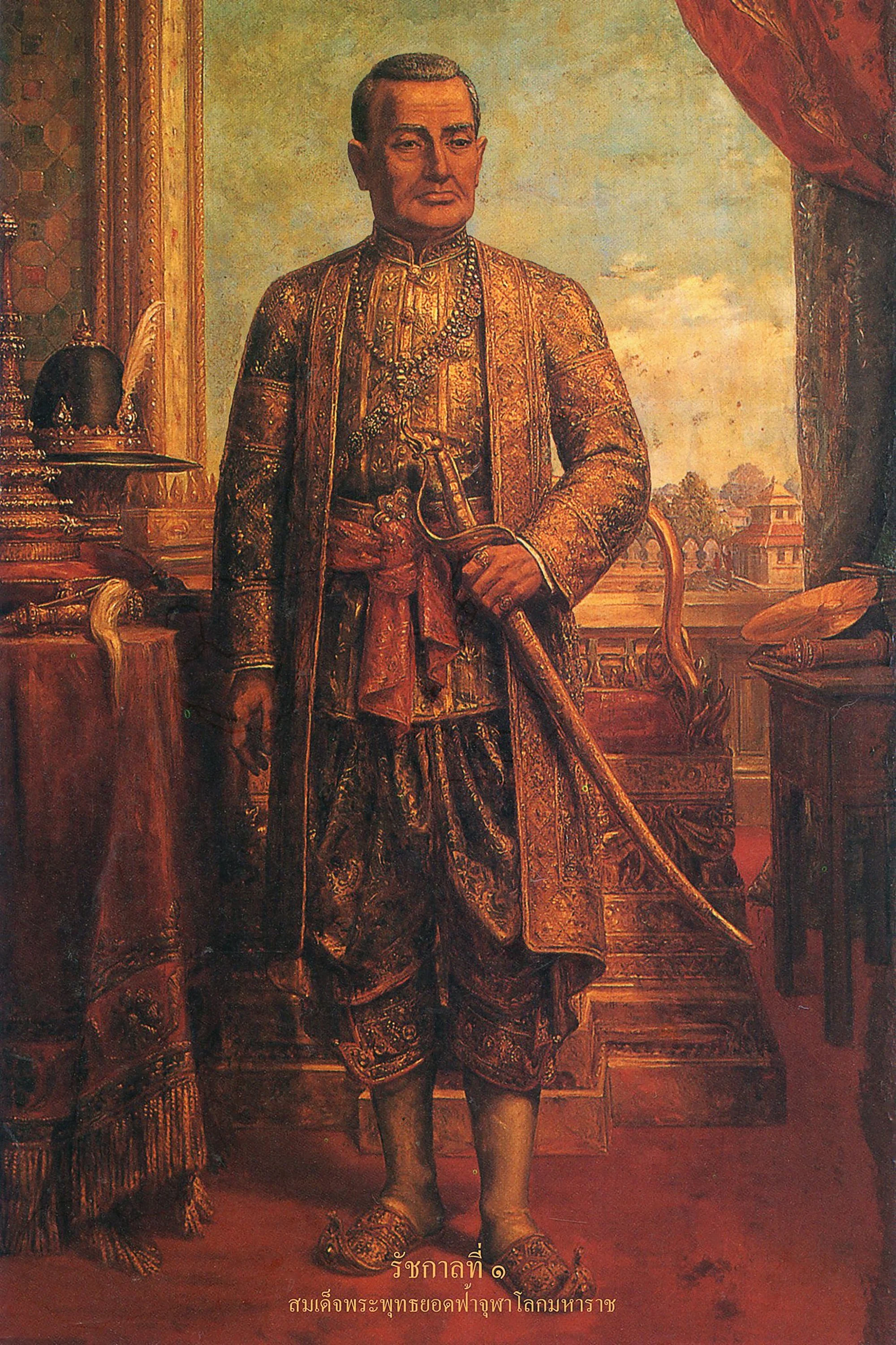
Over time the court in Oudong divided into those who wished to continue with the current line of puppet kings, and those who preferred to just give Chau Baen Aphaiwongse the throne in his own name. To prevent civil war in Cambodia, and/or the rise of a formidable rival, Siamese King Rama I recalled Chau Baen from Oudong, but raised him to the nobility and awarded him the hereditary governorship of Battambang, Siem Reap, and Sisophon, to defend and administer as annexed Siamese territories.

Thai King Rama I

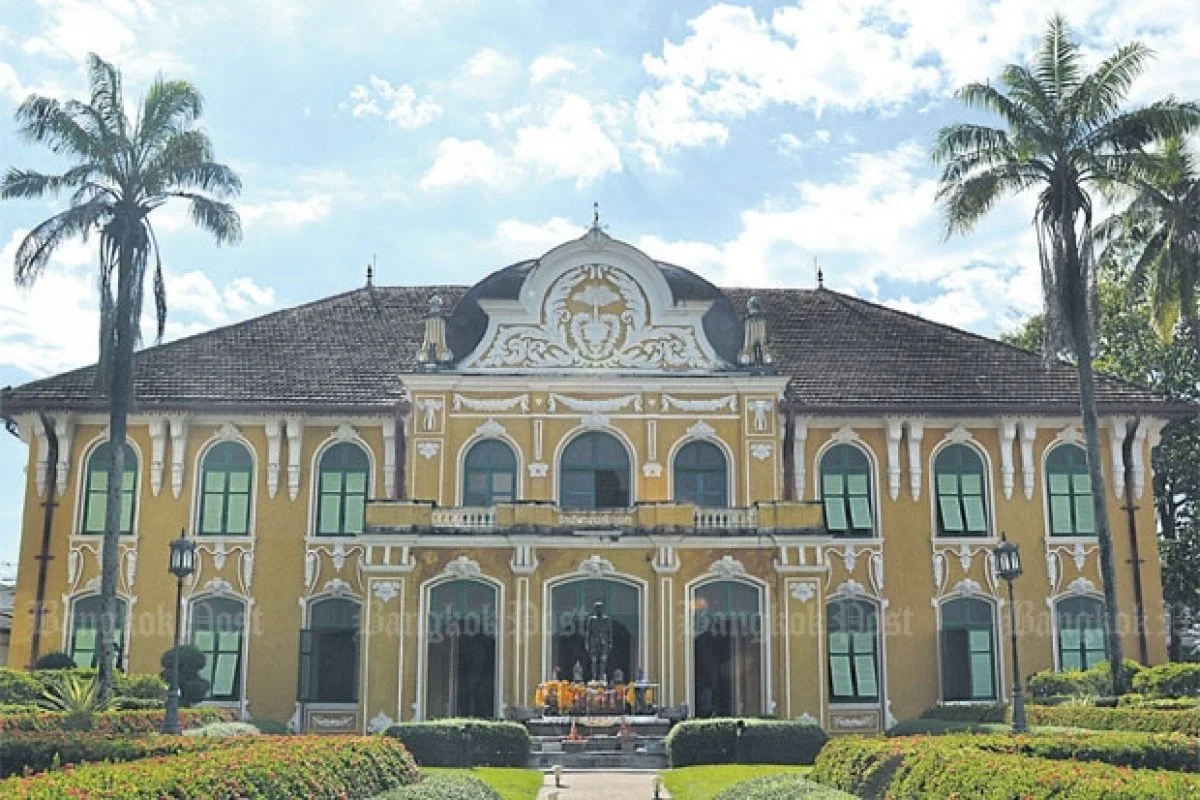
After the 1907 treaty, the French offered Lord Chhum, the sixth generation ruler of Bupaphon, to stay on as their governor in Battambang. However, like his ancestors, Lord Chhum again chose loyalty to Siam, moving his family to the Bangkok court of Rama V (Chulalongkorn) after the handover. Briefly installed as the governor of Prachin Buri, he had the Tamagno house built for him again there, hoping to entertain Chulalongkorn in style. Other than the window shapes and plaster appliqués, everything was exactly the same. Unfortunately Rama V died before the house was finished.

The Prachin Buri twin house

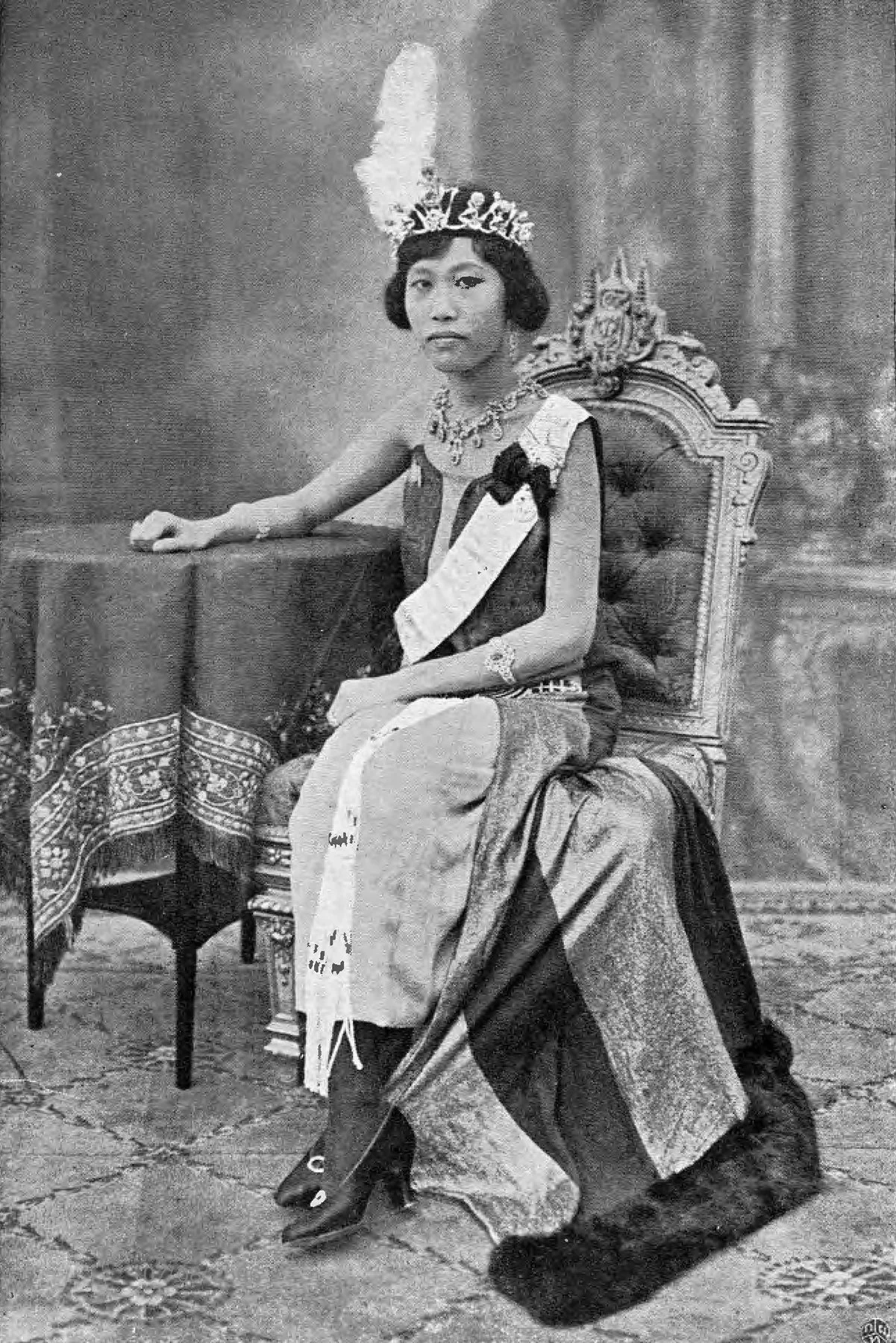
When Lord Chhum’s granddaughter eventually married Rama VI, becoming the Princess Consort of Thailand, Lord Chhum gave them the Prachin Buri house as a wedding gift. Unfortunately Rama VI died before Princess Suvadhana could have a son, so the throne passed to his younger brother . . . and the Prachin Buri house remained unoccupied. At the outbreak of WW2, Suvadhana and her daughter fled to England, remaining there until 1957.

Princess Suvadhana

Because Thailand allied with Japan in WW2, Suvadhana’s father Lueam officially became the last Abhayavongsa governor of Buphaphon during the period Japan occupied Cambodia, from 1941 through 1945– though he still never lived in the Battambang house, which was used as Japanese army offices.

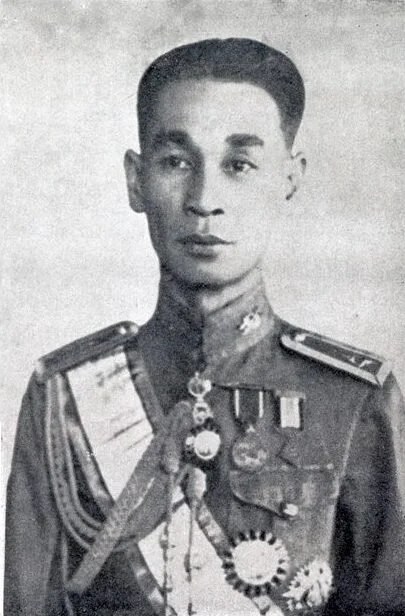
Khuang Aphaiwongse in the 1930s

Meanwhile, her older brother Khuang served as Prime Minister of Thailand three times between 1944 and 1948. After the war, he remained the leader of Thailand’s Democratic party until his death in 1968. Suvadhana had a royal funeral in 1985, and the family is still considered noble/royal in Thailand.

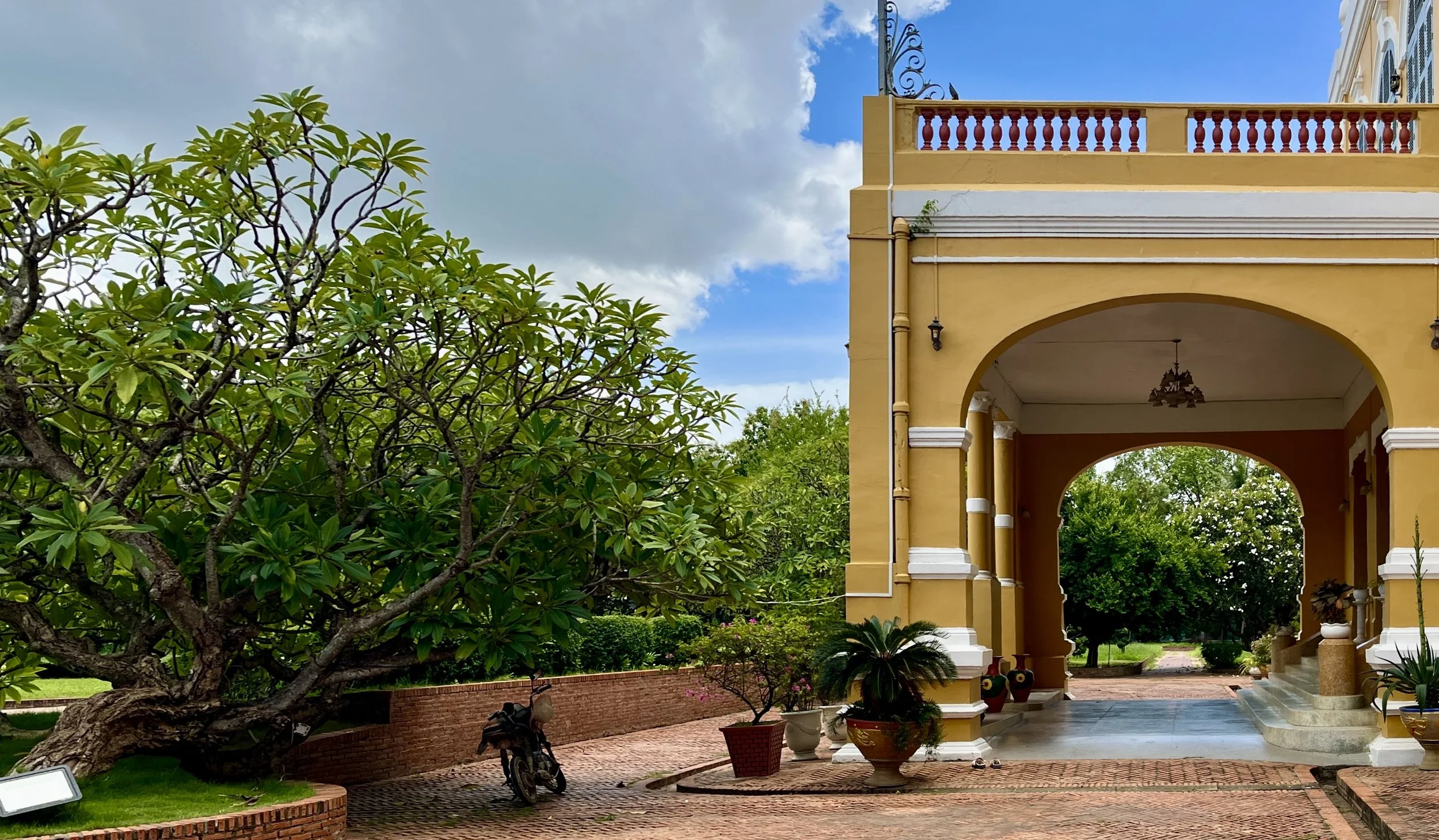
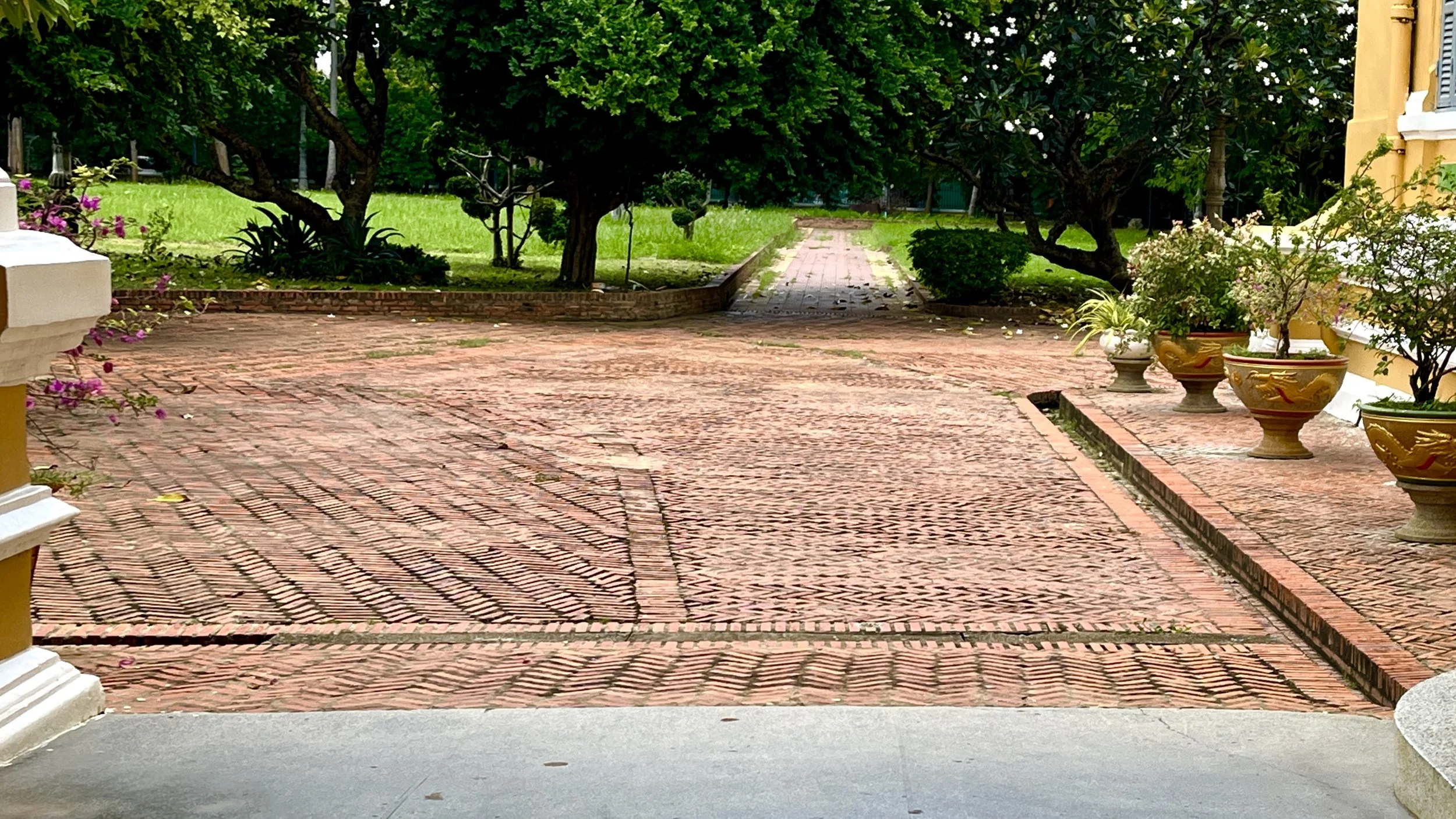
The most impressive thing about the place is the grounds. Large grassy lawns with manicured trees are rare things in Cambodia, it’s typically either city living or a waterlogged mess.

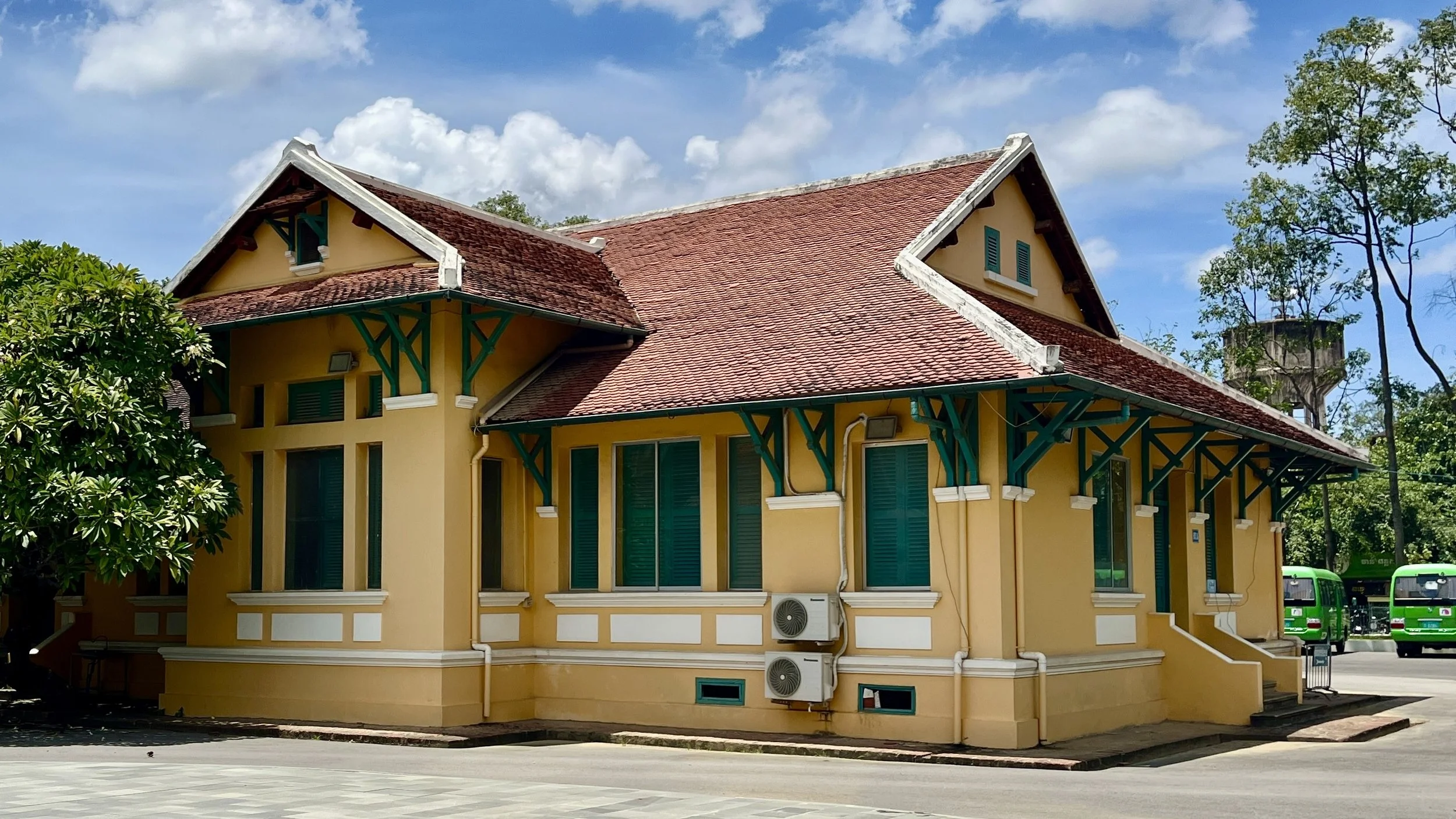
Another colonial era building on the grounds.

There are several government office buildings in one corner of the grounds.

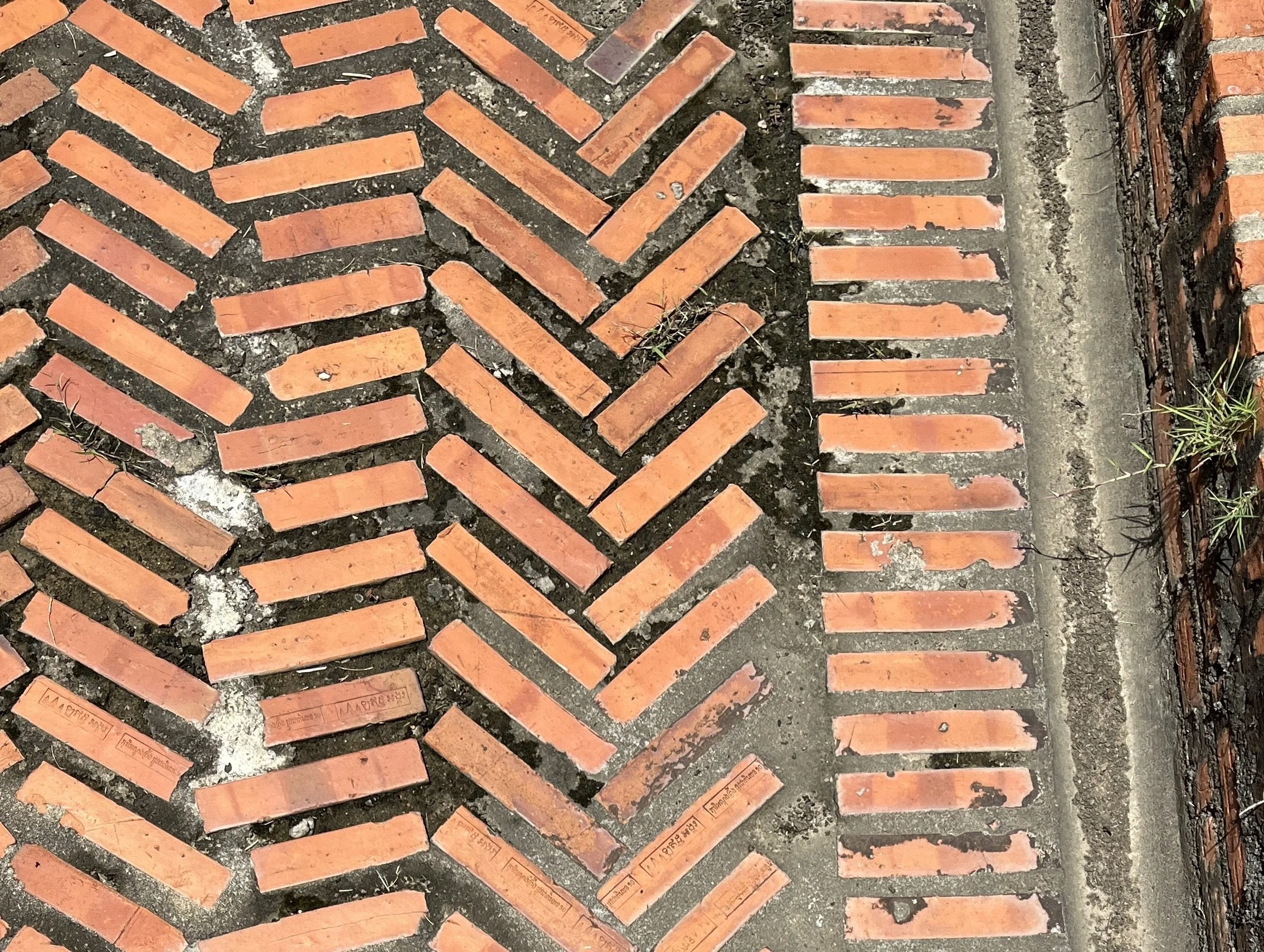
I like the chevron brickwork.

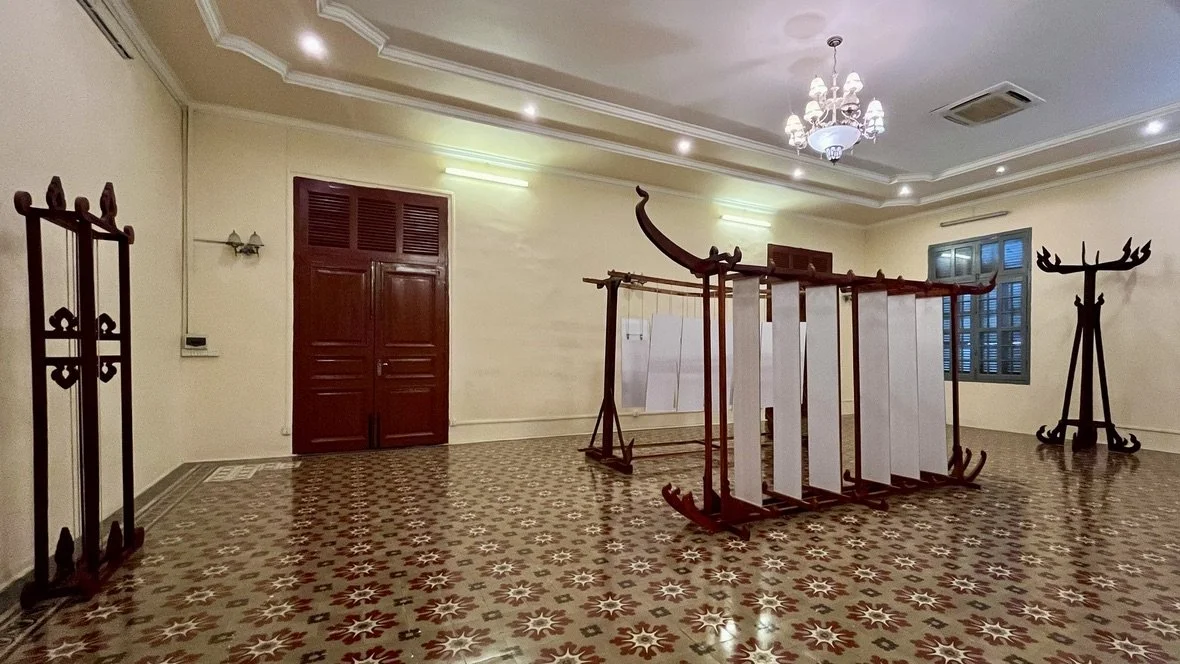
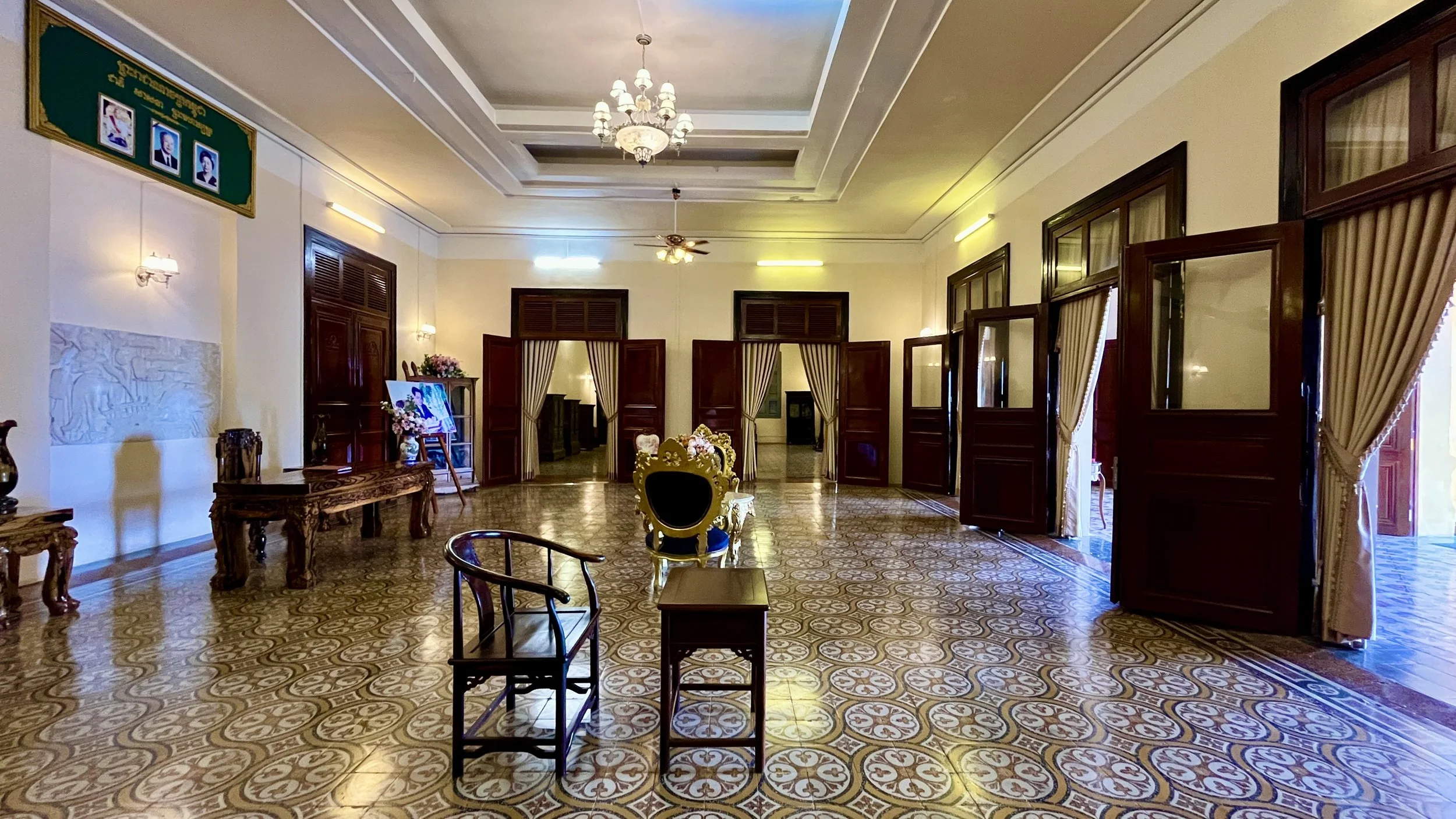
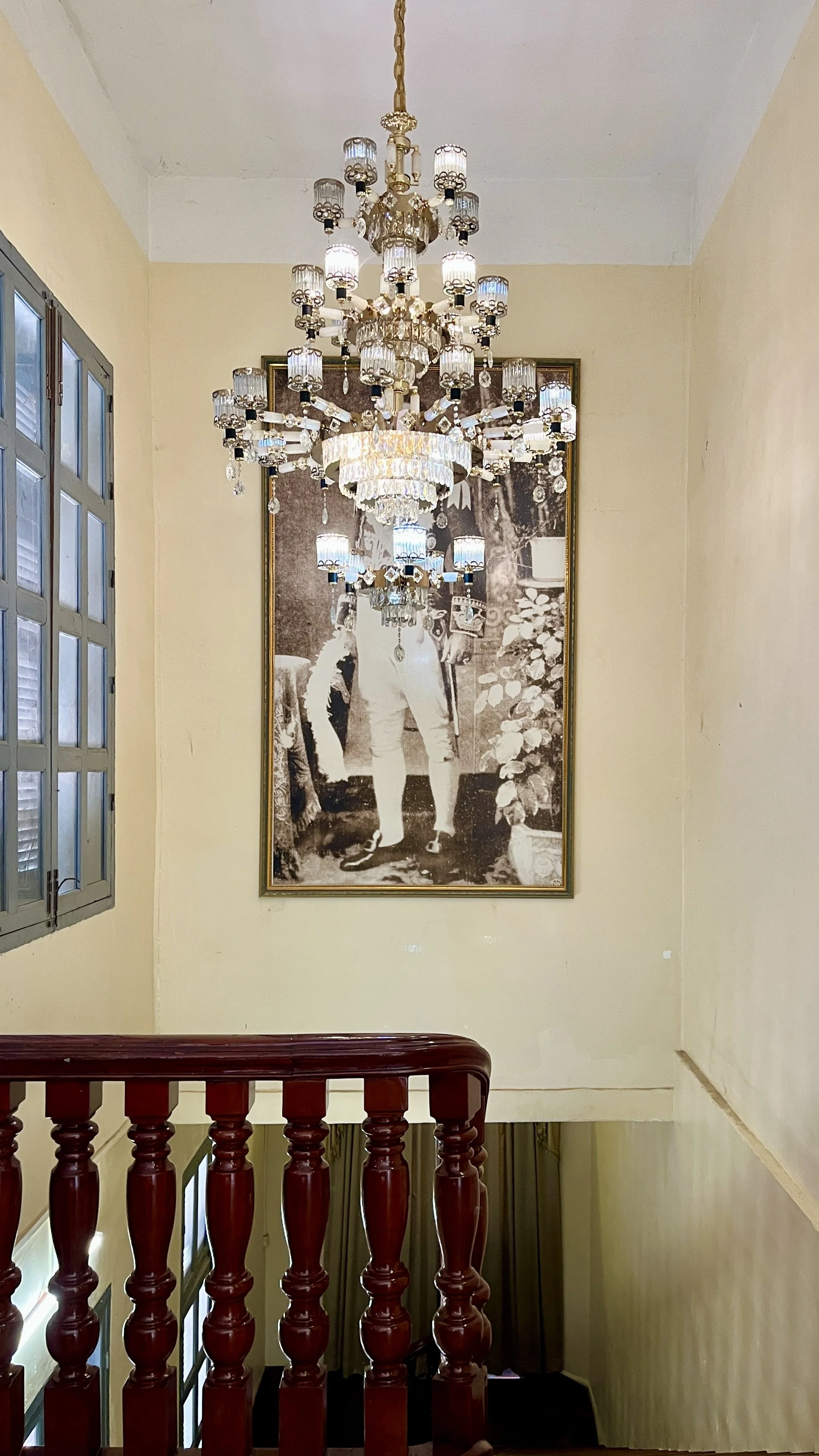
Inside is both inauthentically renovated (lol at that layered drop ceiling) and as dull as possible.

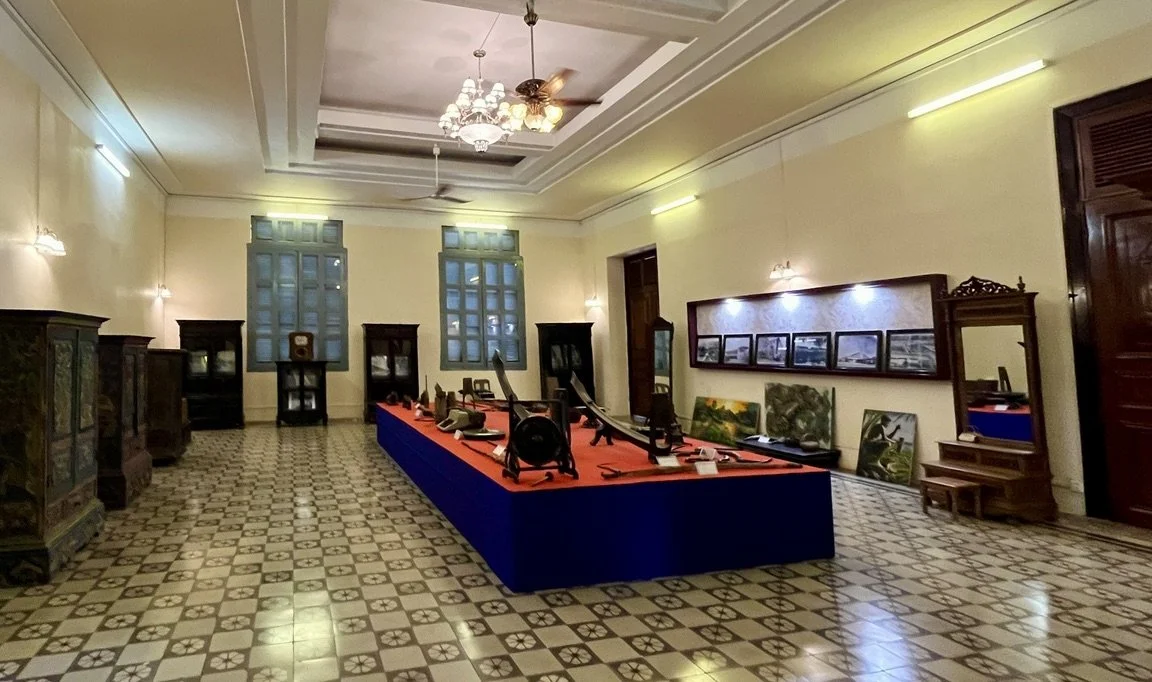
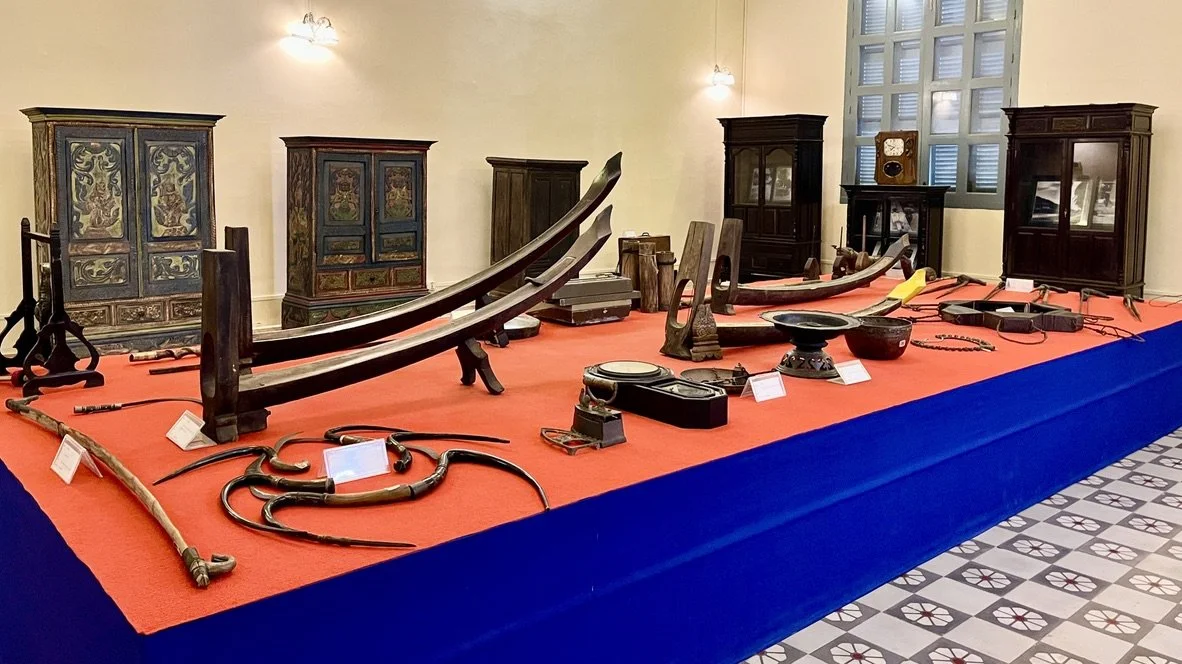
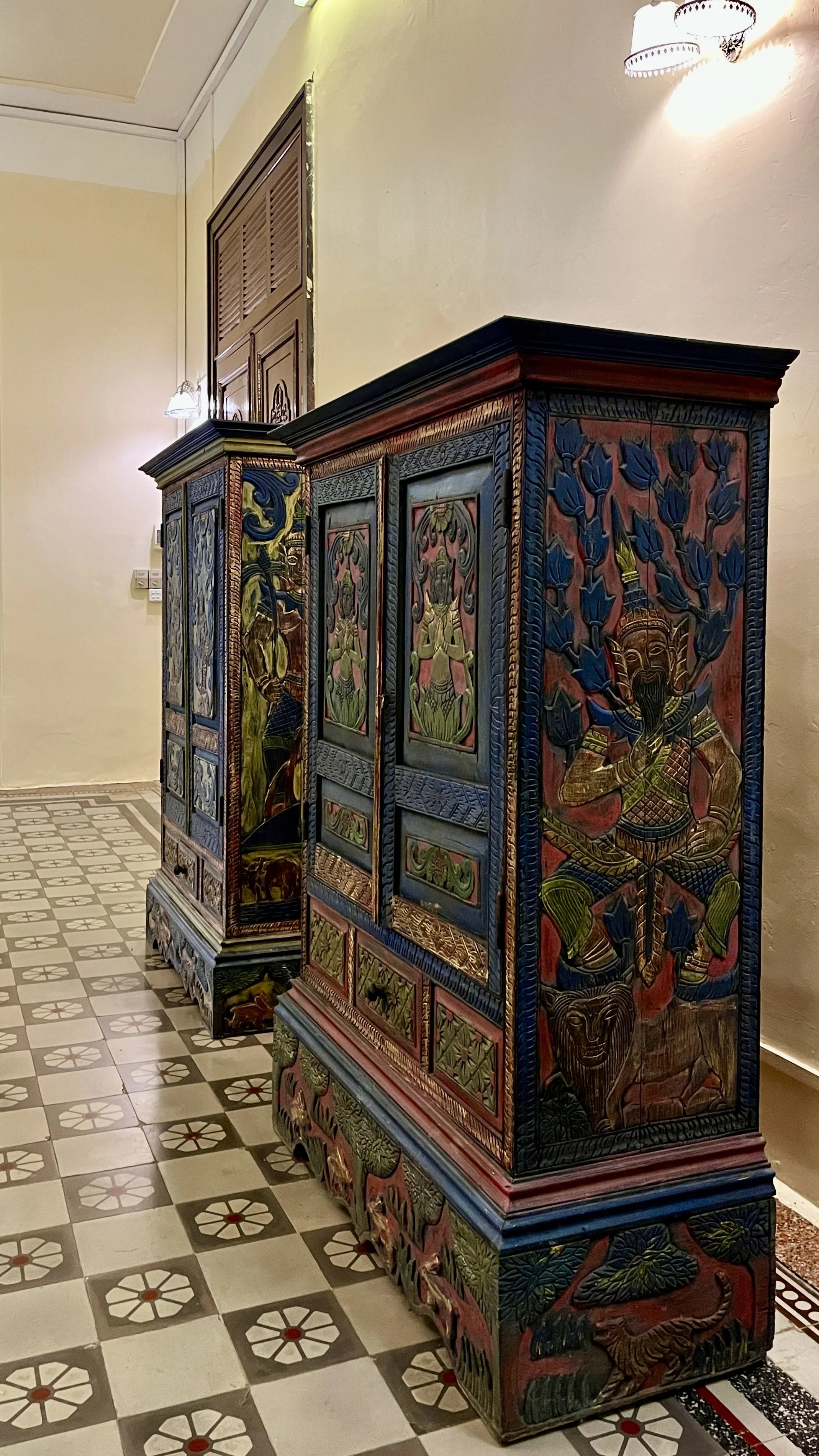
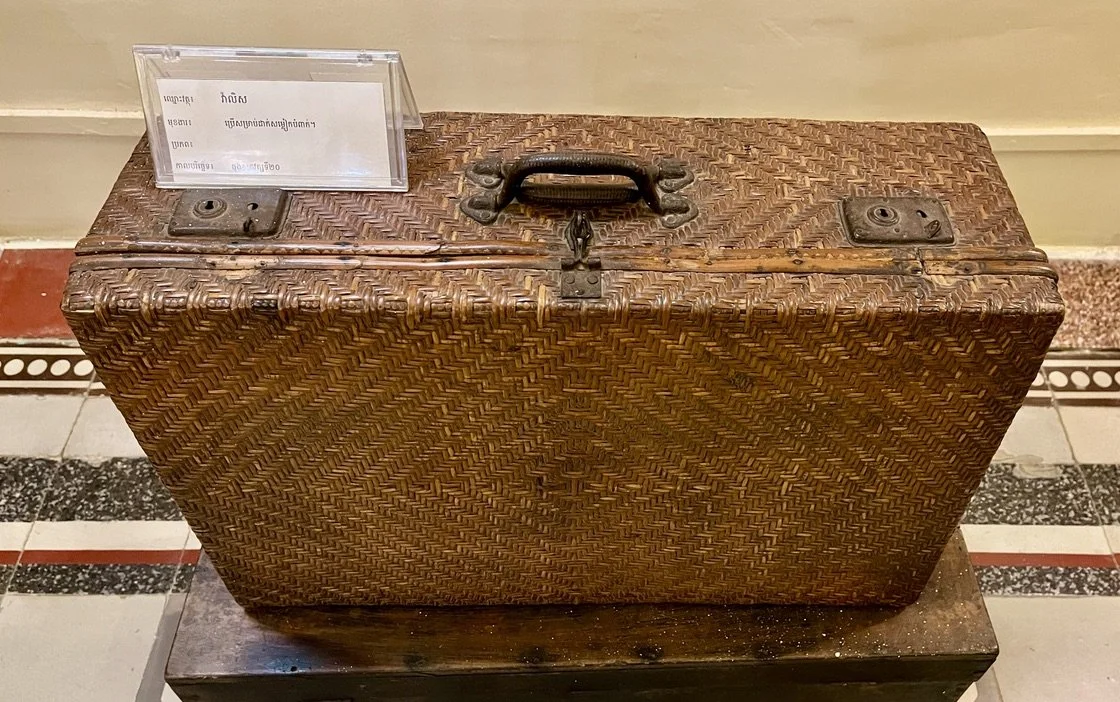
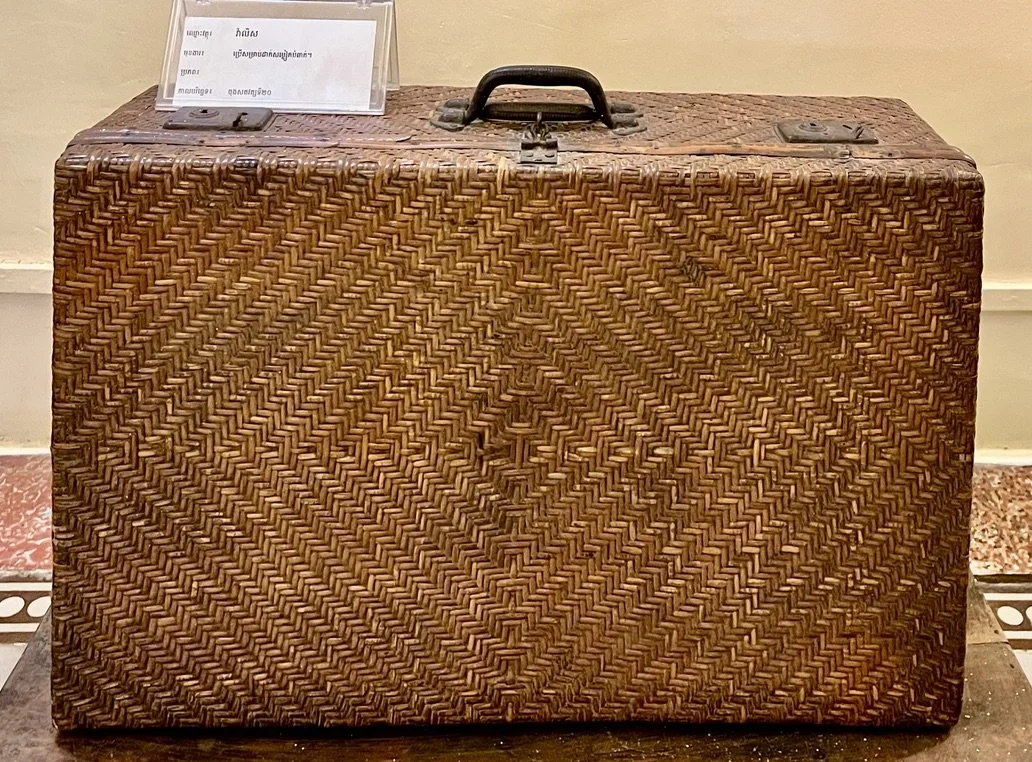
The ground floor is occupied by what they think passes as a museum. It’s the most pointless, random assortment of mostly vintage objects.

A jumble of bad, mostly recent furniture.

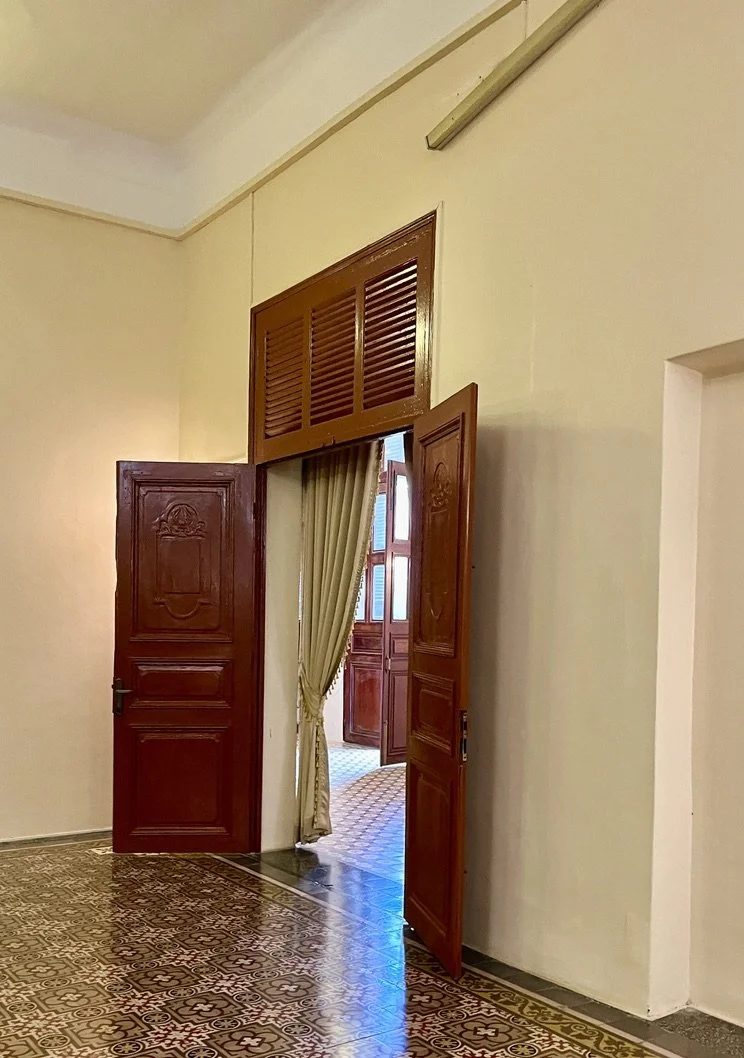
Horrid door that has clearly had things ripped off at some point.

Are they trolling?

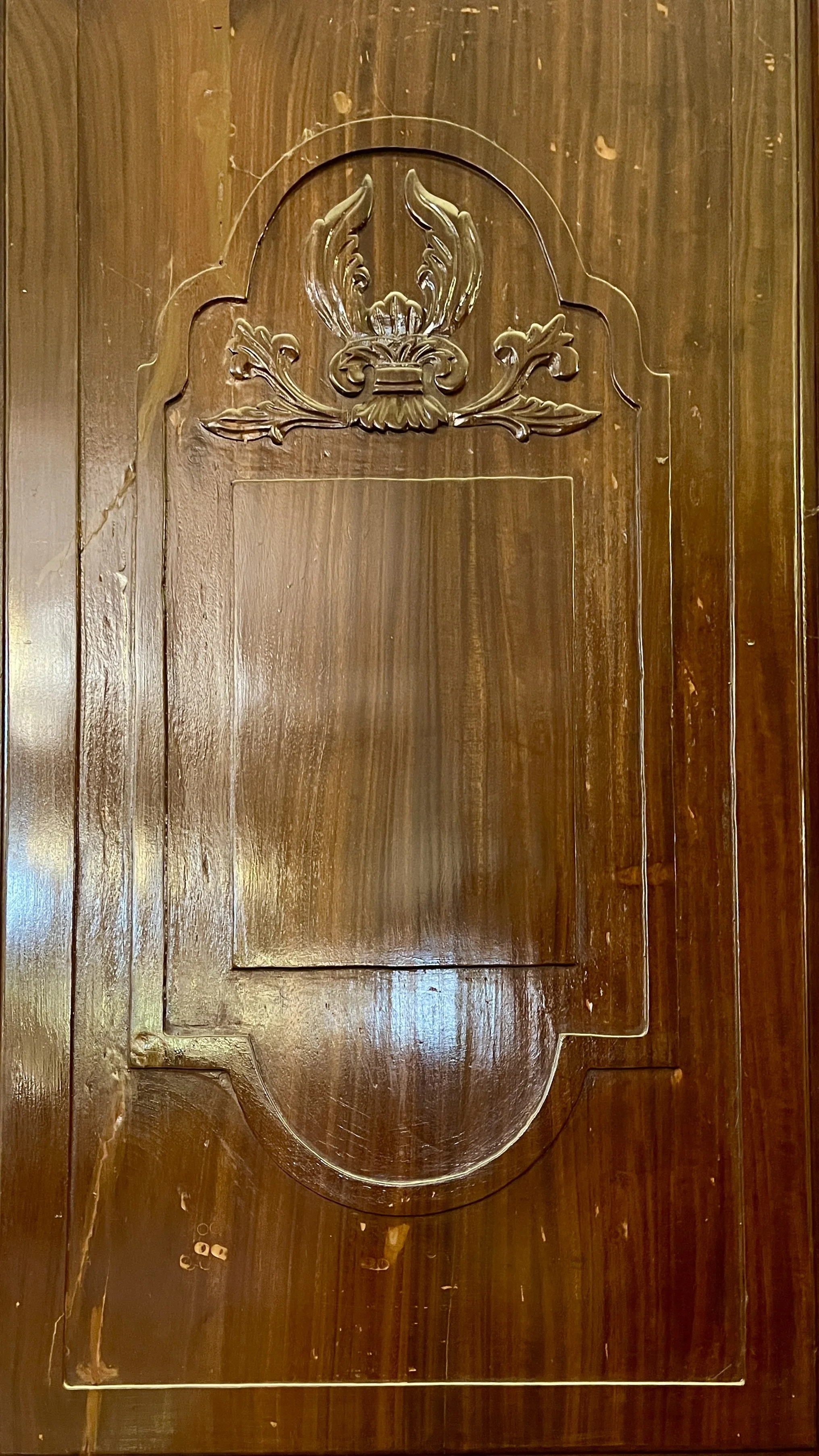
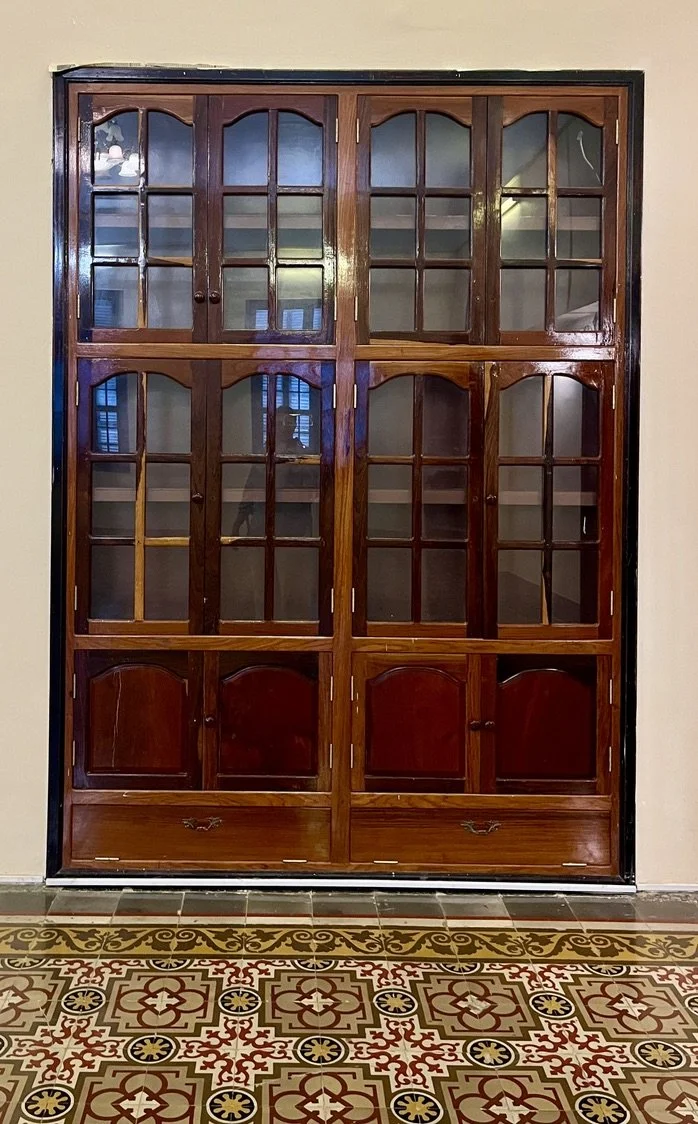
Built in features have mostly been ripped out, but there were 2 bookcases like this.

I wonder if it was never quite finished because the family knew they’d never move in, or if things were ripped out at some point.

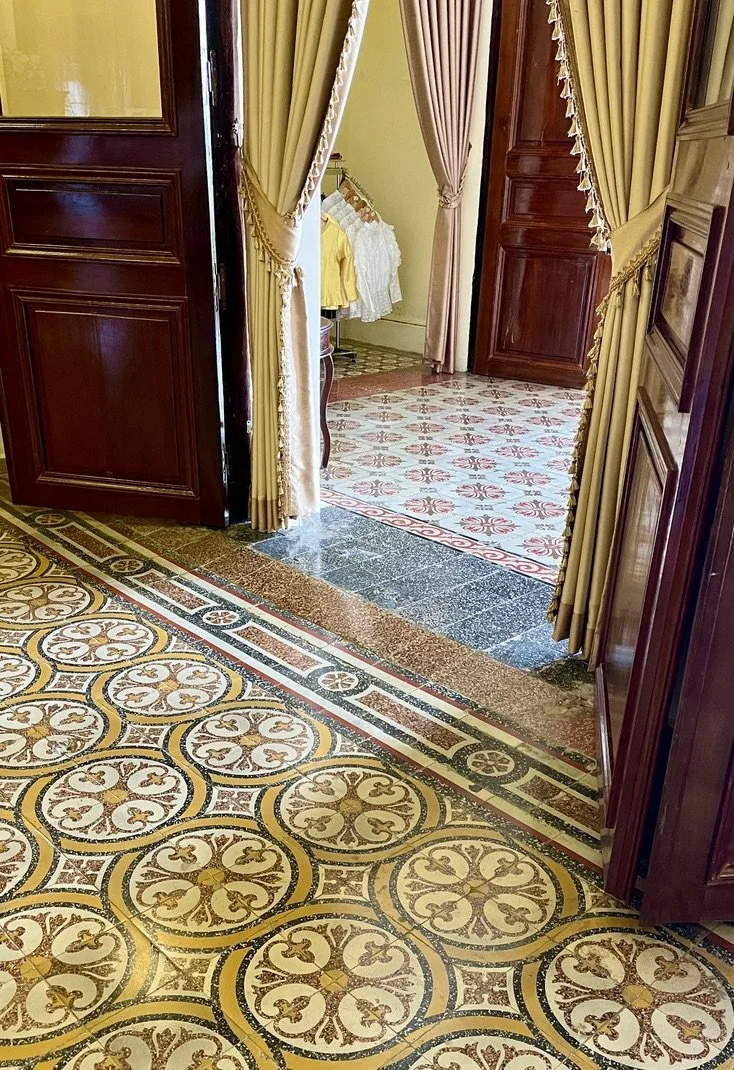
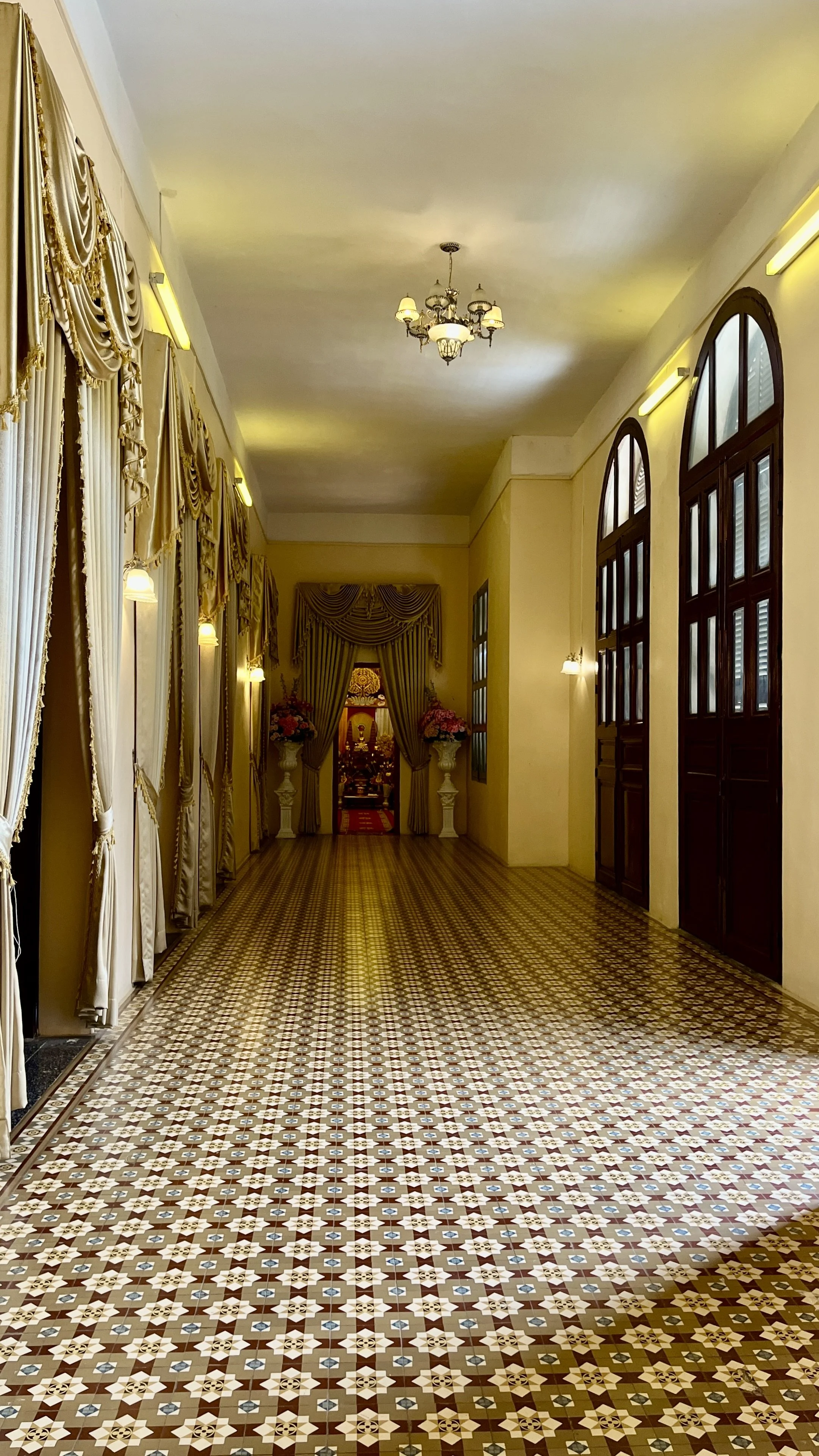
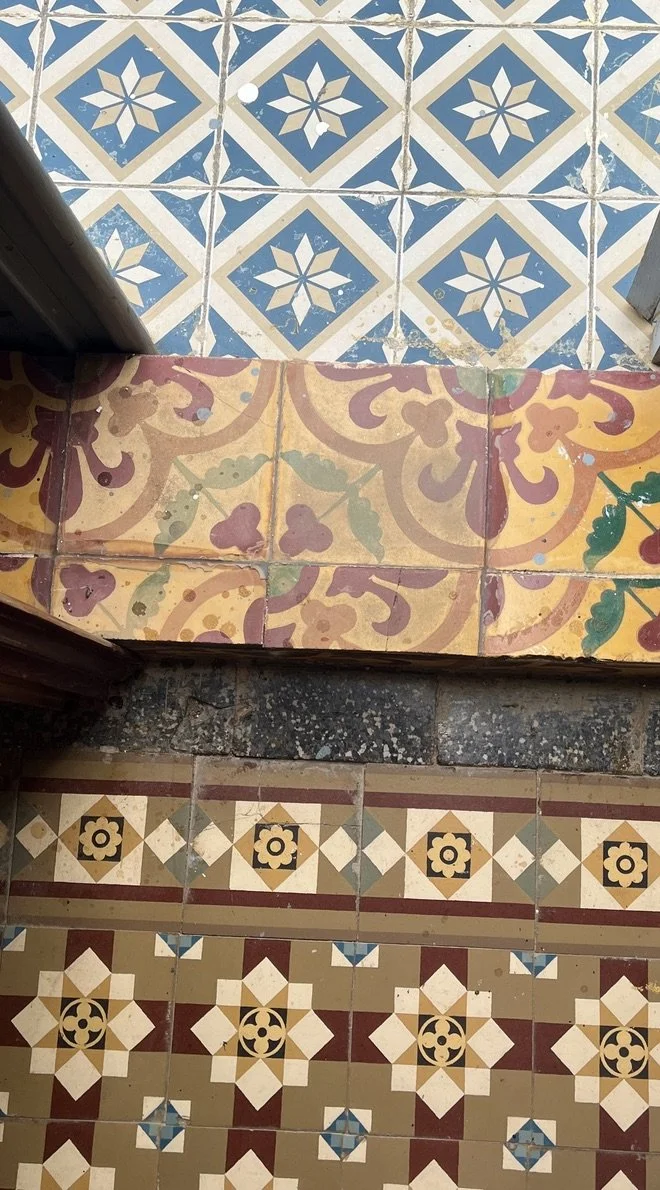
Hard to tell if these are original tiles or not. I think mostly, but there is a huge jumble in this building. The pretentious polyester curtains really bring out the depression of it all.

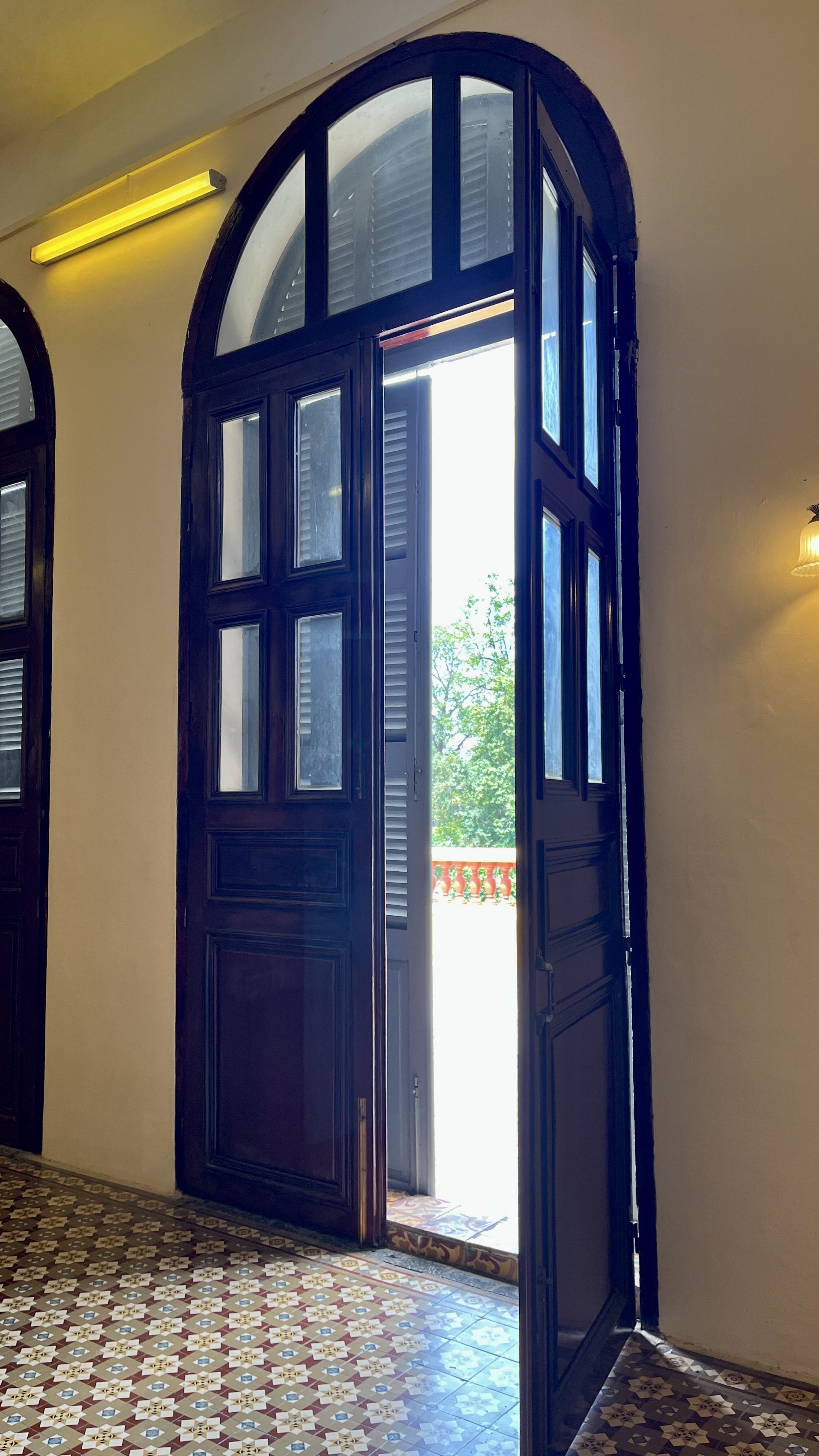
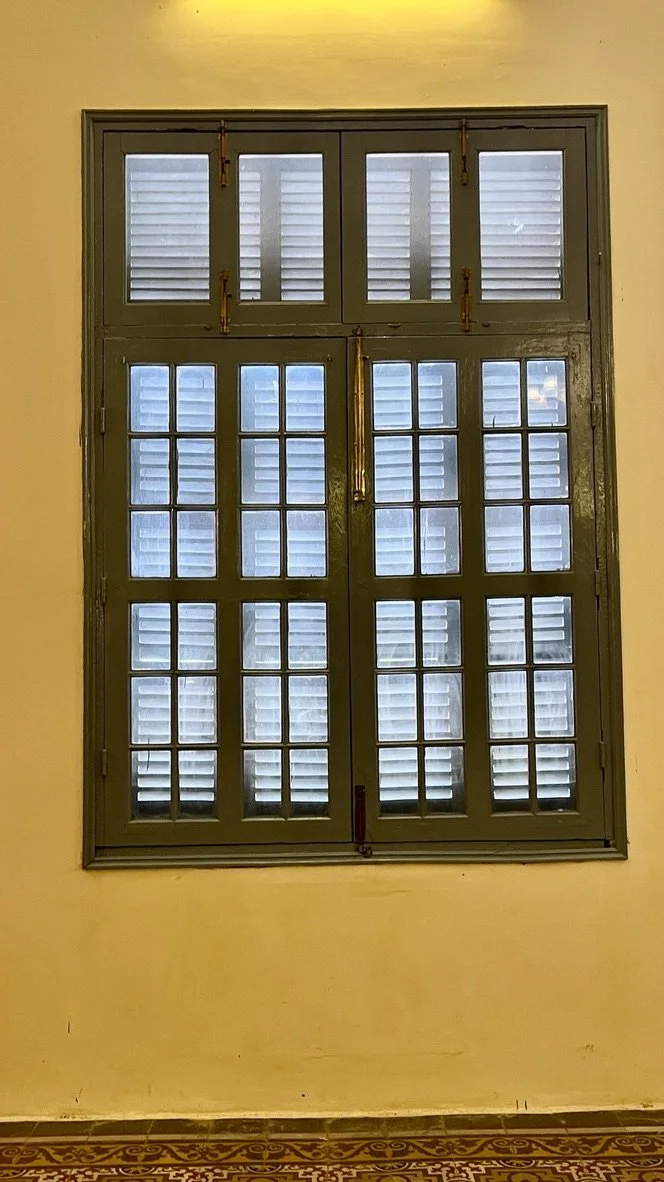
I don’t even know why I took this picture. Despair? Wanting to remember the dimensions should I ever install shutters?

The performative shrine of course.

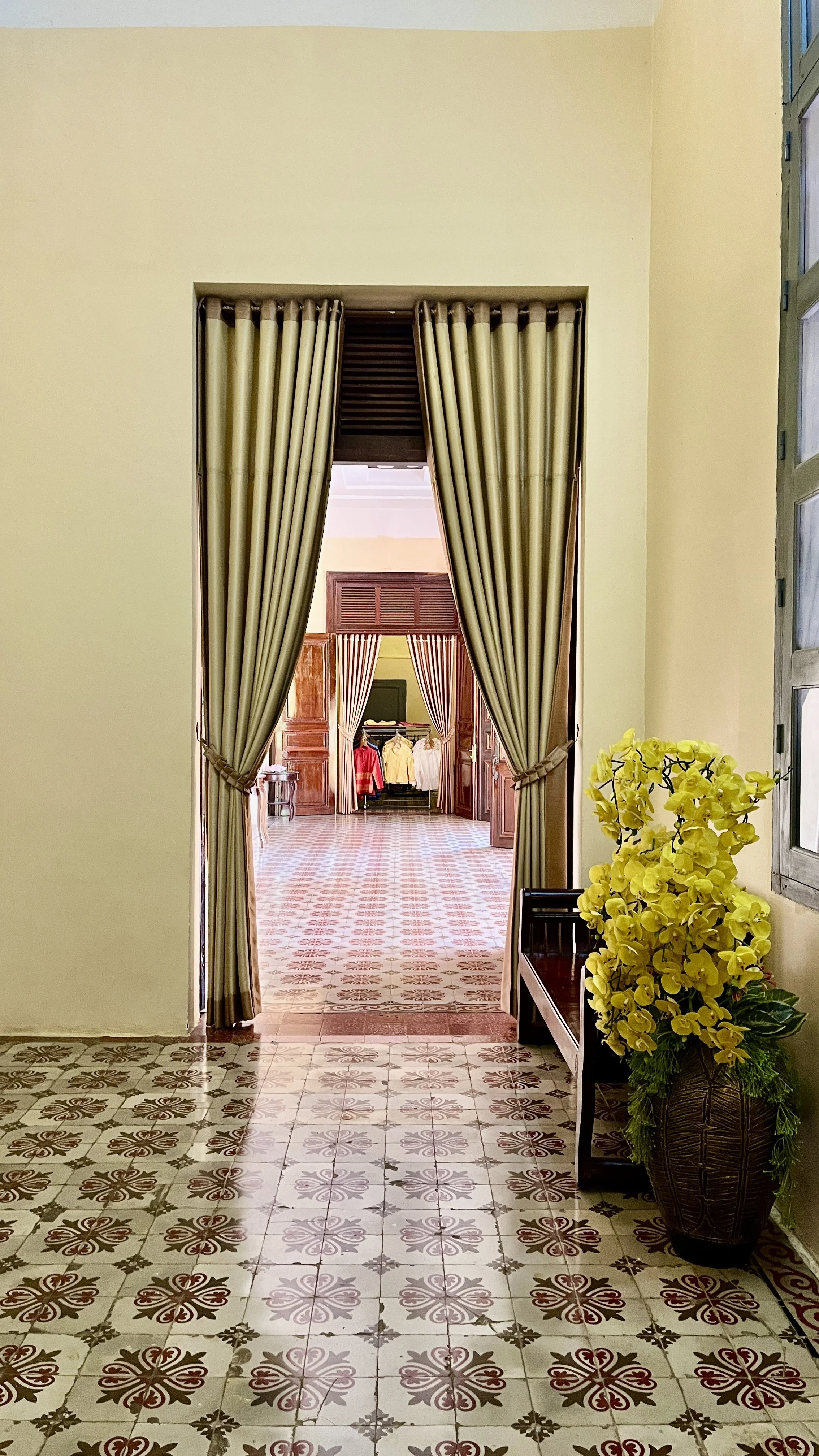
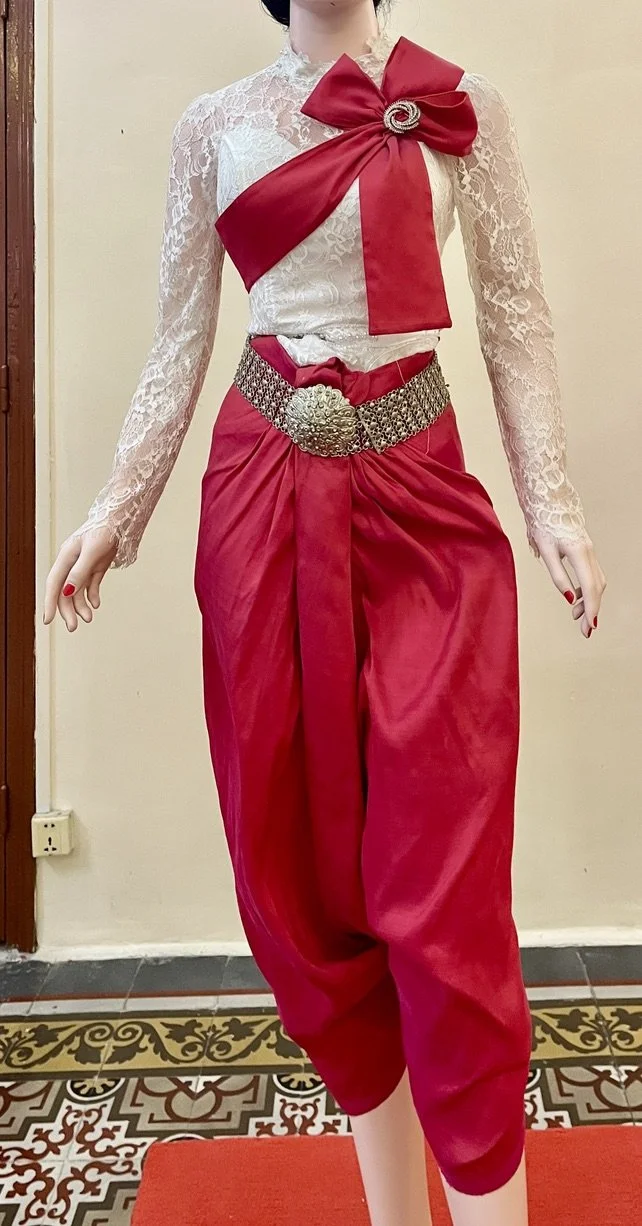
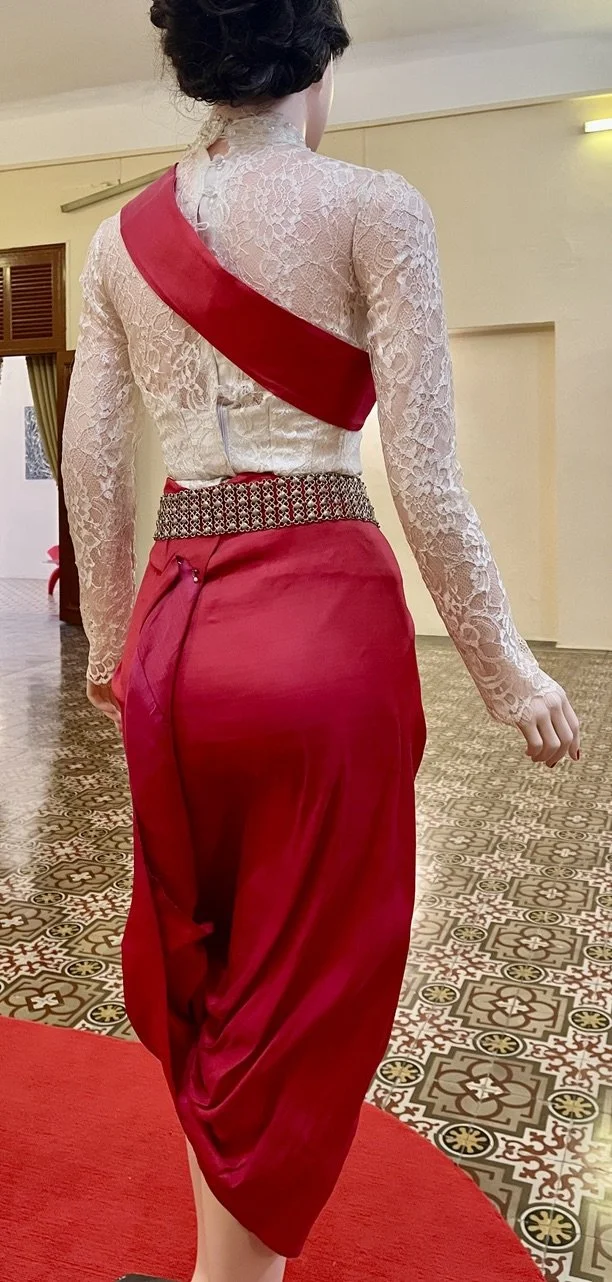
I guess some people will pay to rent traditional clothes and do a little photo shoot here?

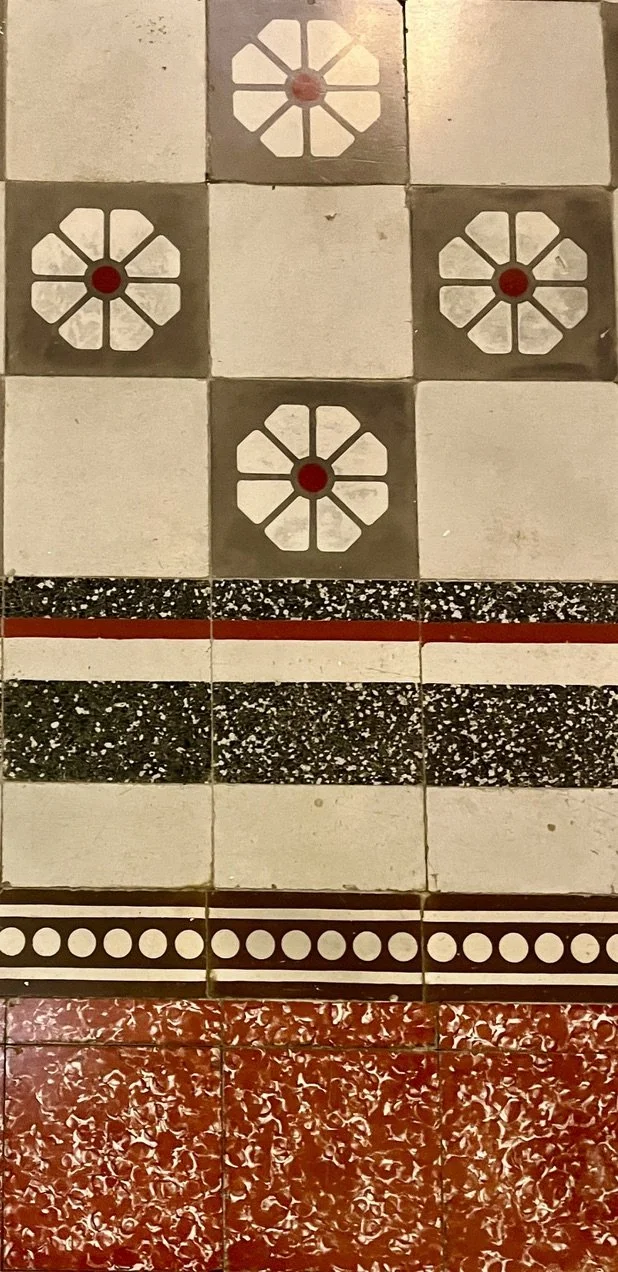
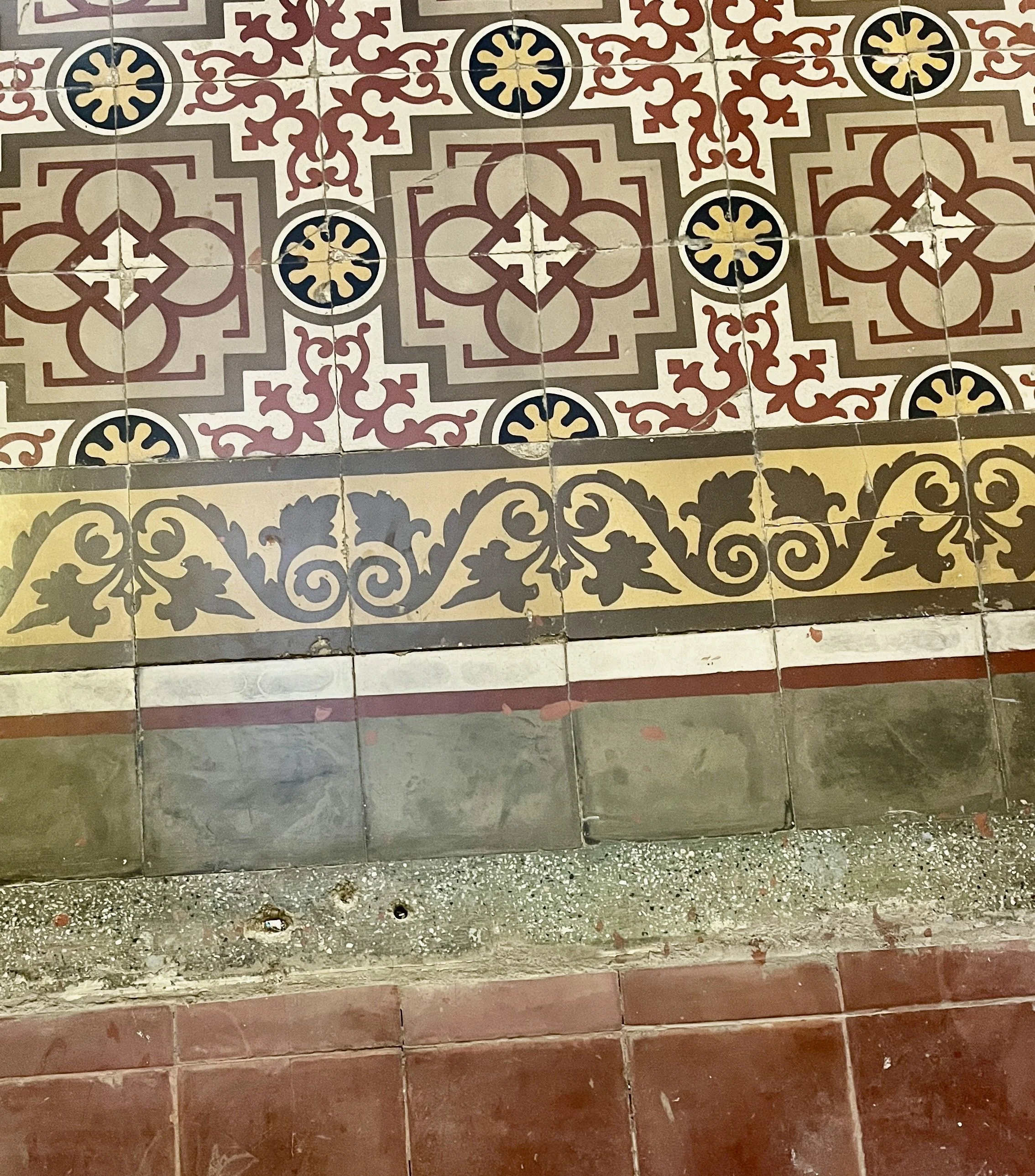
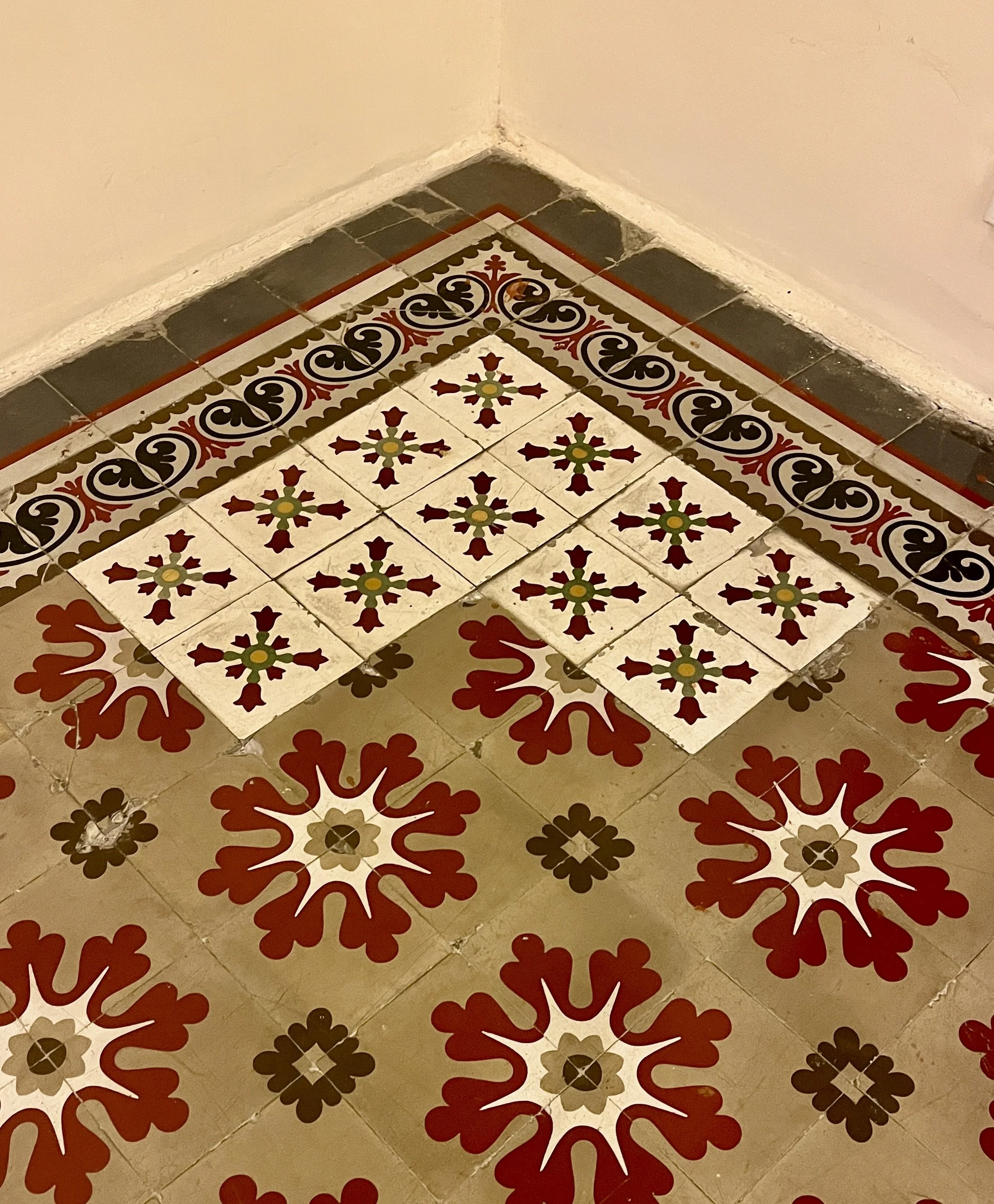
I took lots of pictures of the tile border combos for inspiration

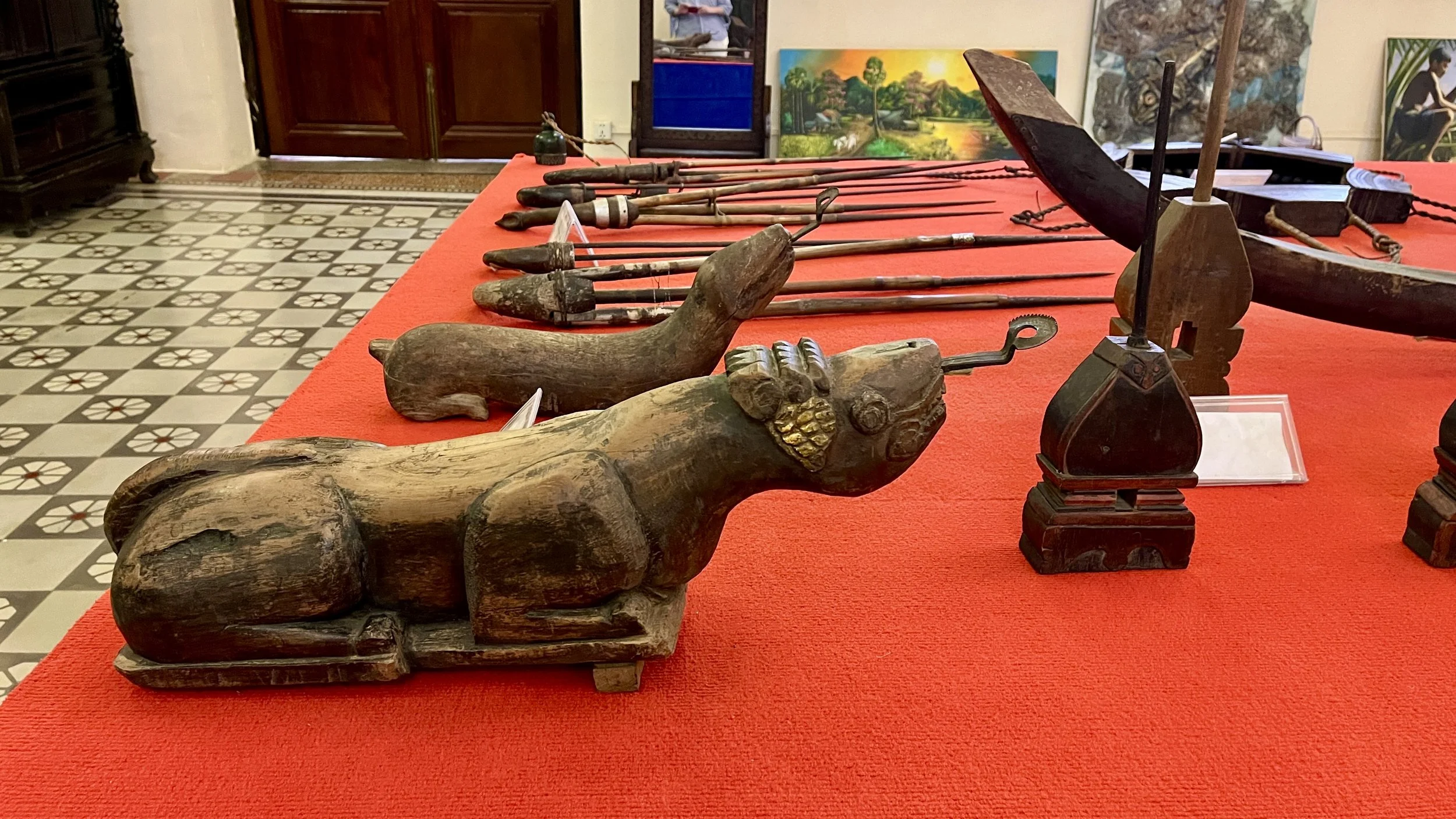
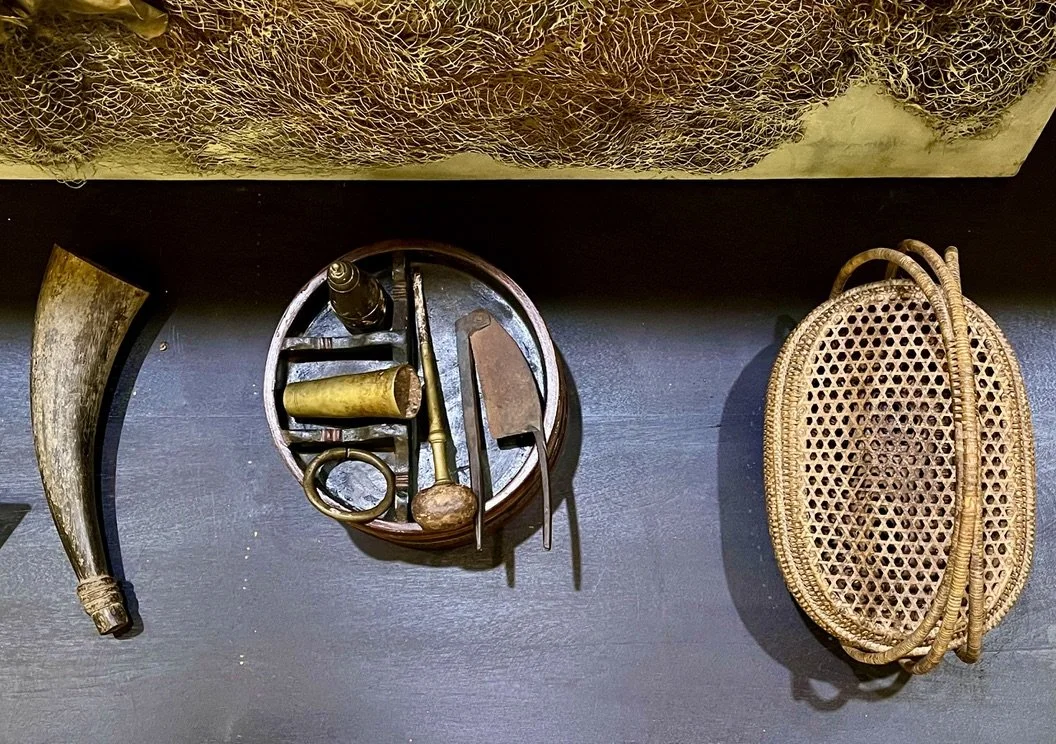
Weird assortment of farm equipment and housewares.

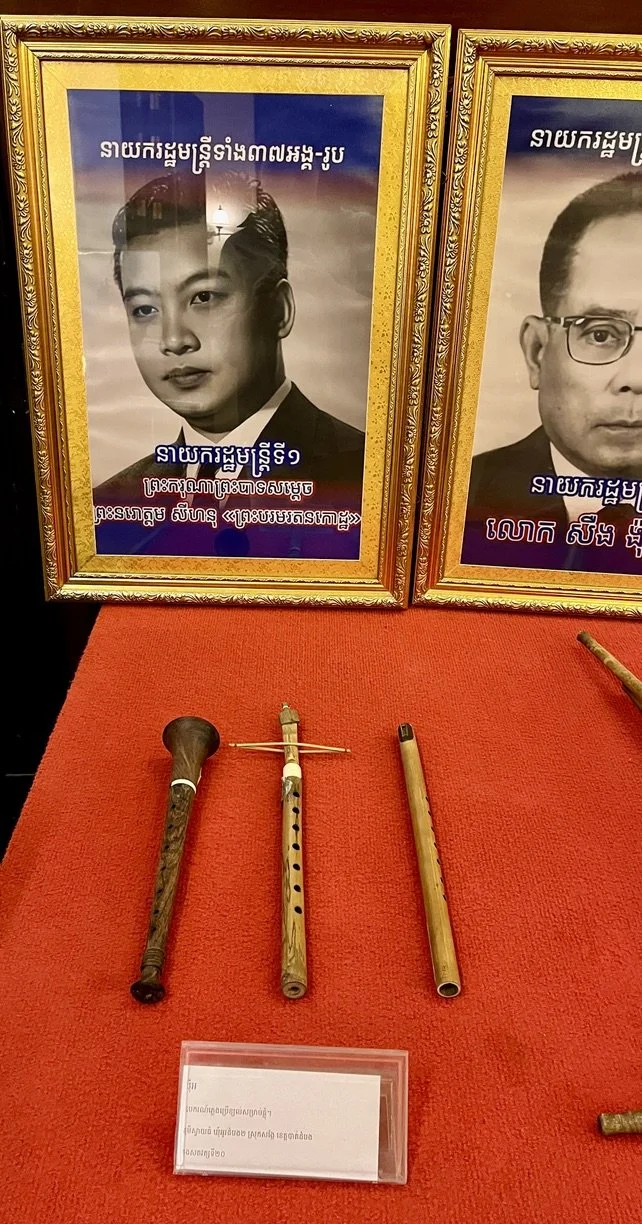
Hard to say because nothing was translated, but I think these were the personal hobby instruments of famous people?

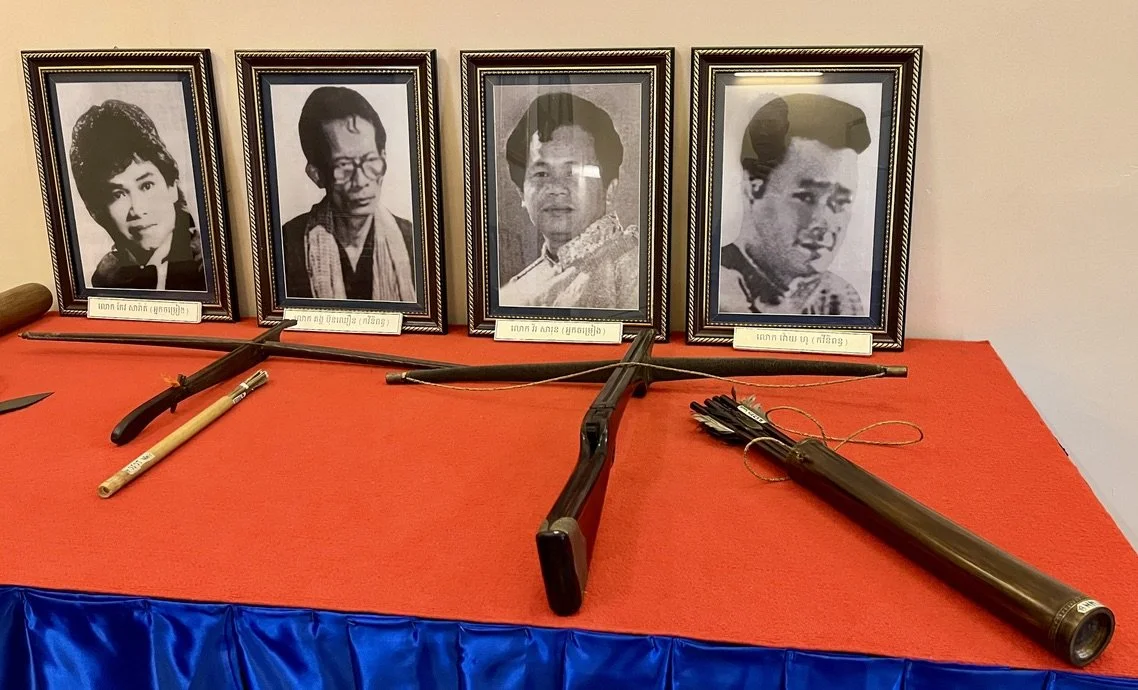
Likewise, hobby shooting items?

There are a bunch of old photos.

This view is not much different today.

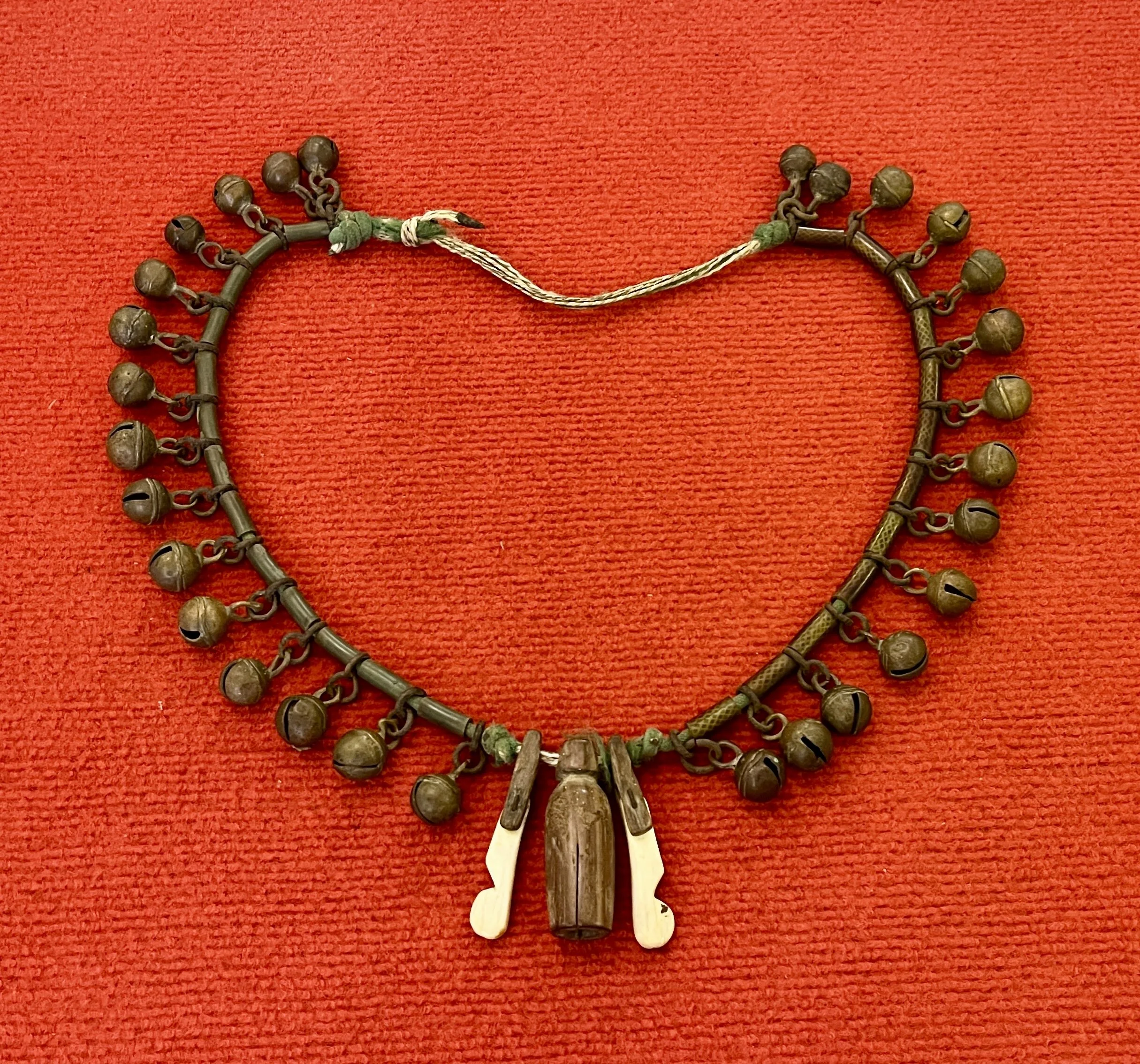
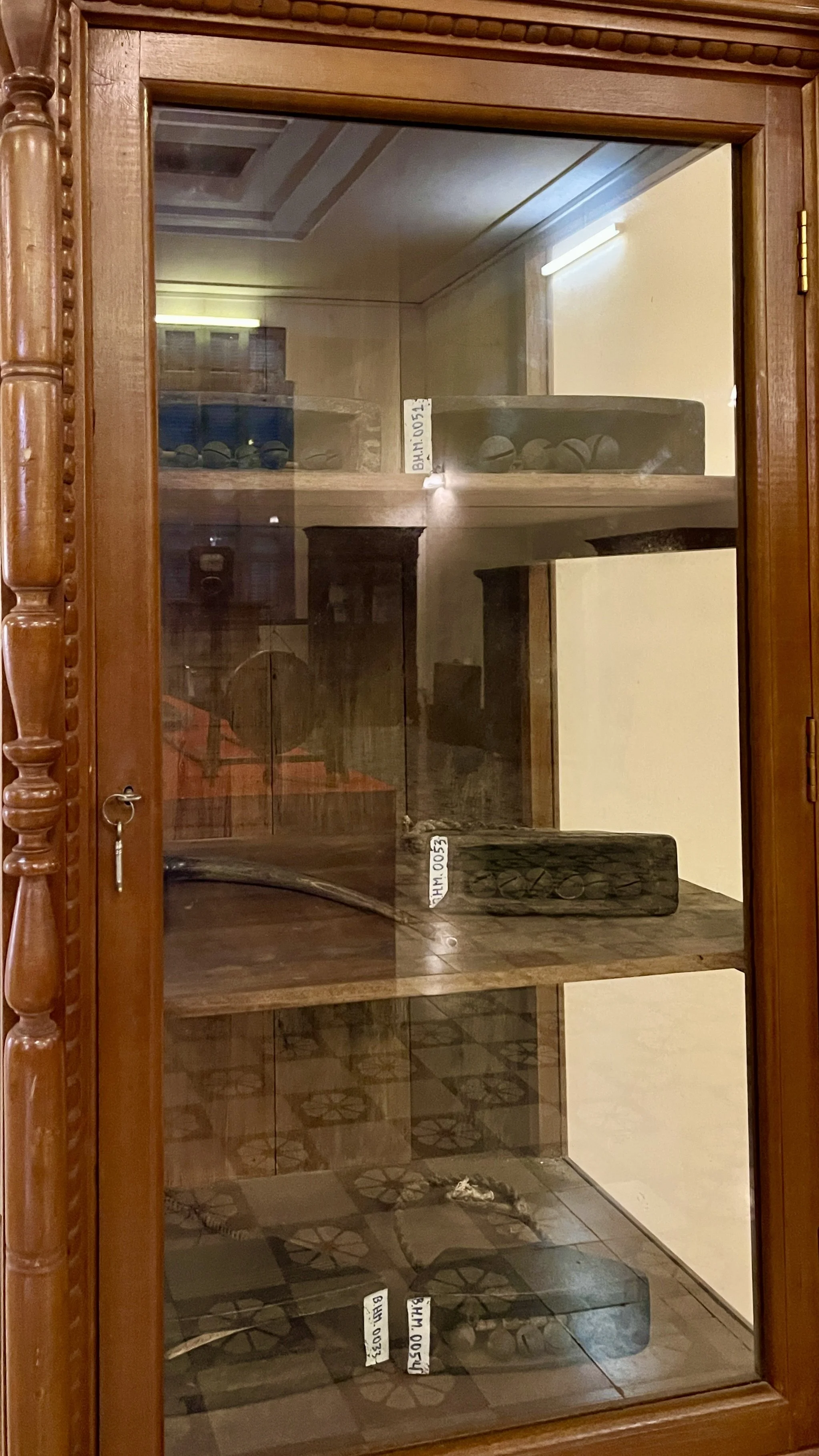
Are these cowbells? Are these cowbells in a display cabinet or am I losing my mind?

Not particularly fond of this style but it’s growing on me.

Why are these things in a museum?!

It’s always struck me as strange how local museums in Asia have “antiques” so much worse than literally anything in my grandparents’ very middle class homes in New York.

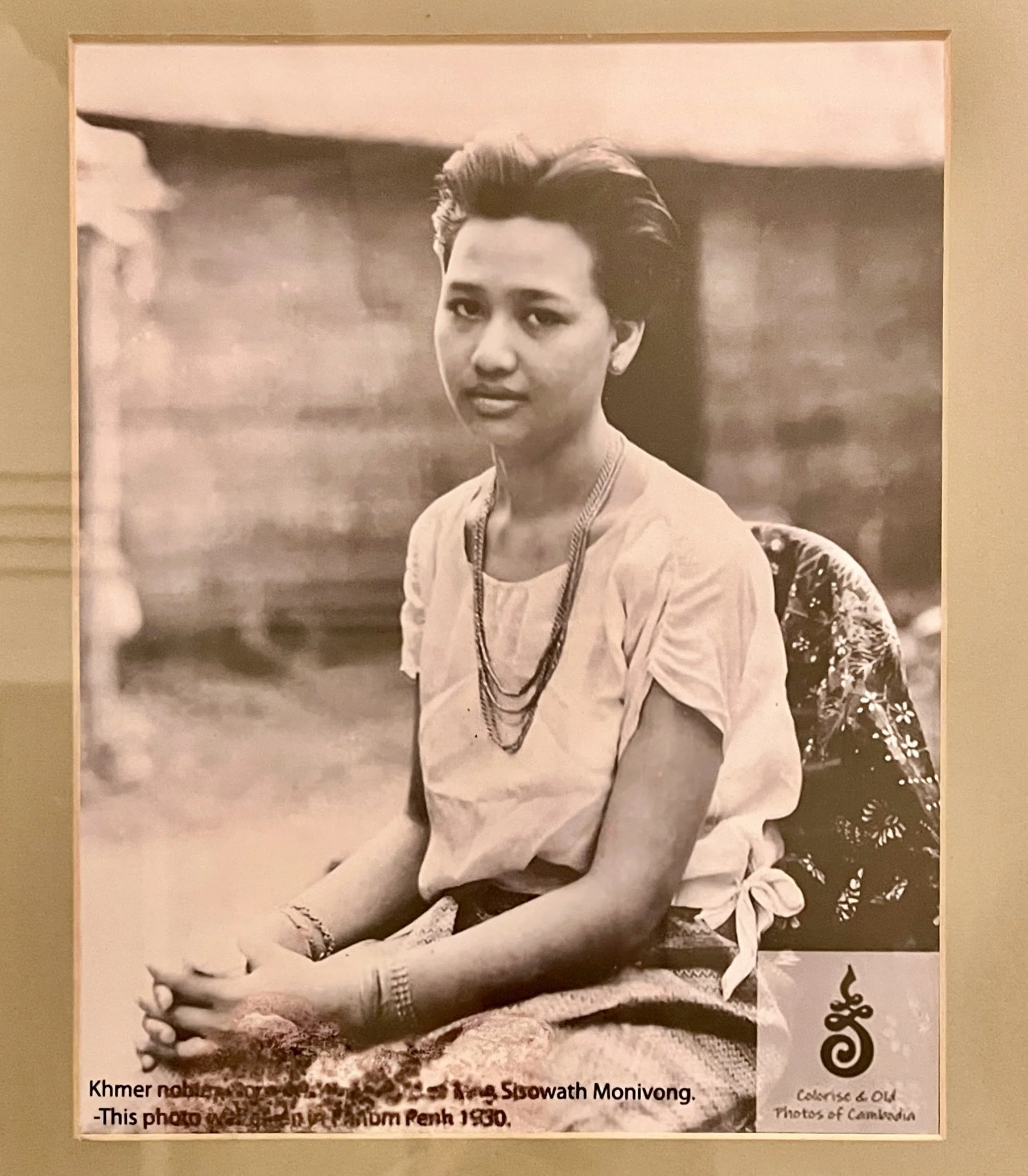
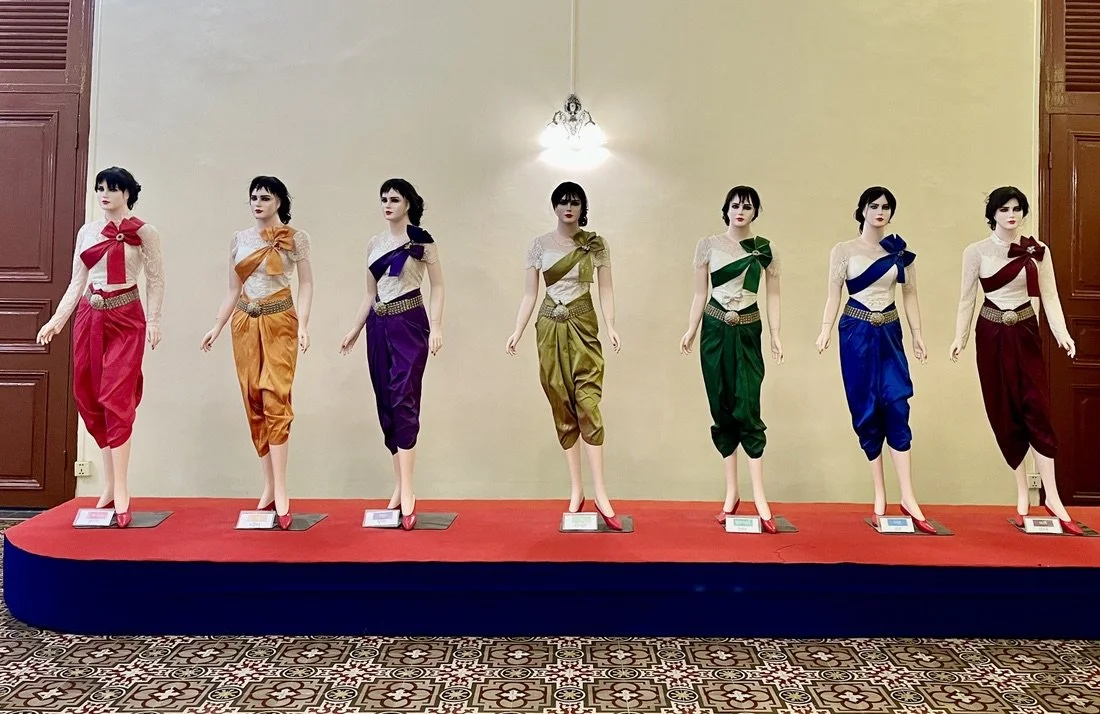
It’s a custom for court women in Thailand and Cambodia to wear a specific color every day of the week.