battambong

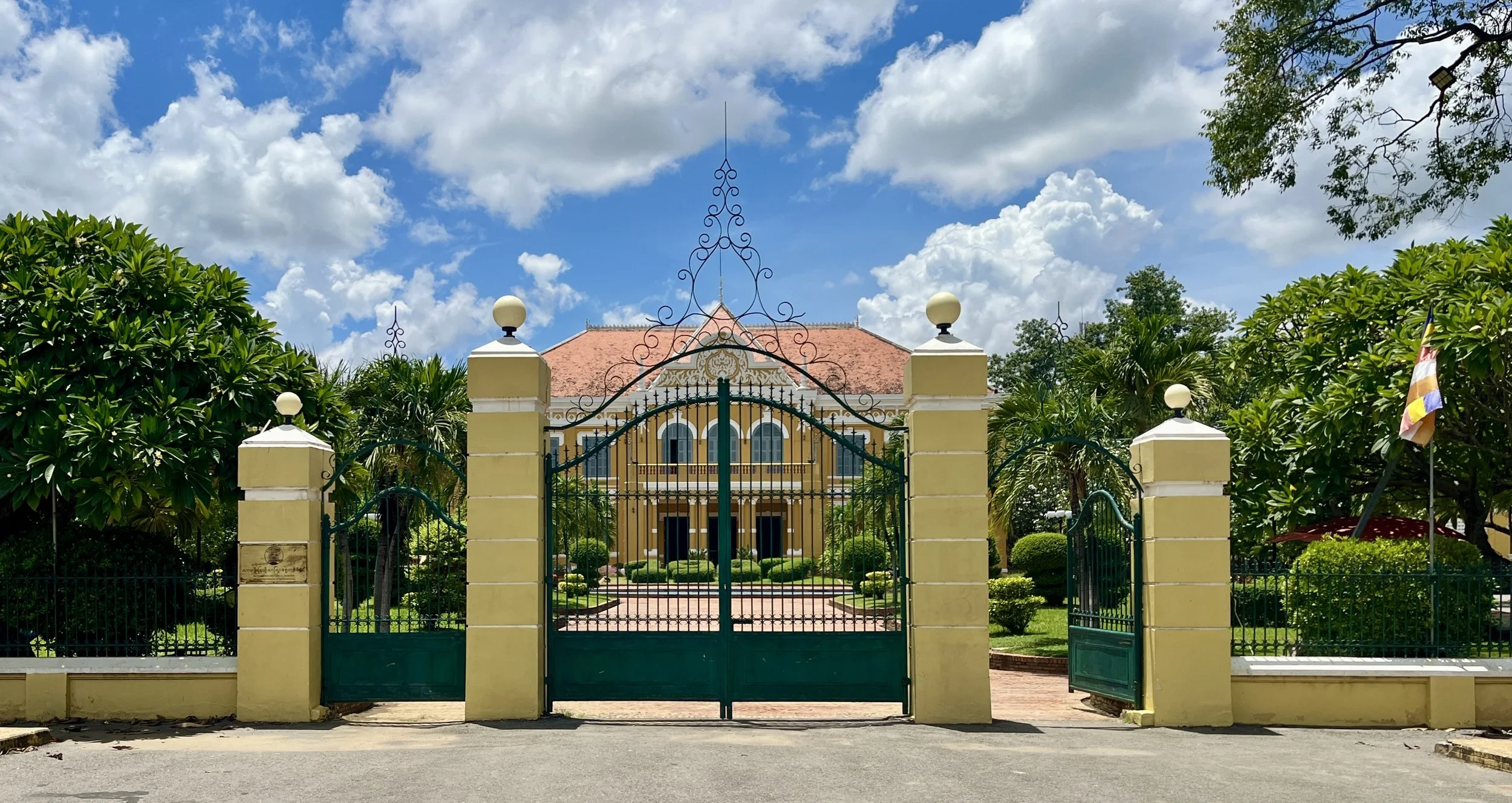
The Governor's Mansion that Never Was . . . Battambang | Cambodia

Occasionally I visit a place that’s simply not worth the entrance fee, and this is one.
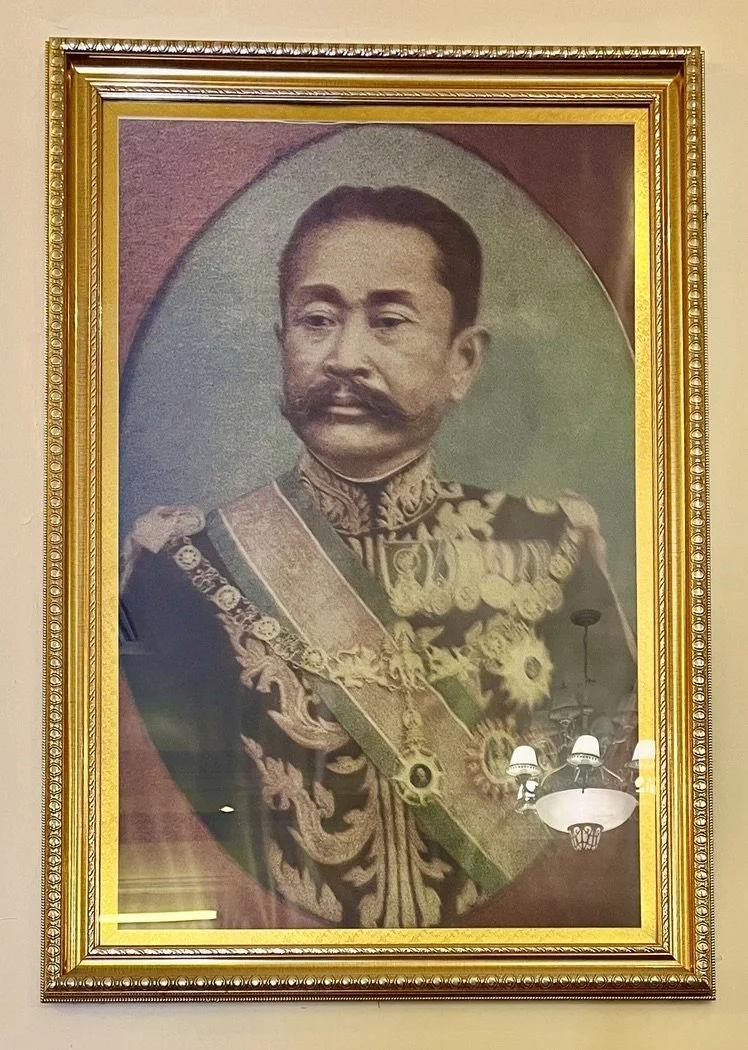
Lord Chhum Aphaiwongse

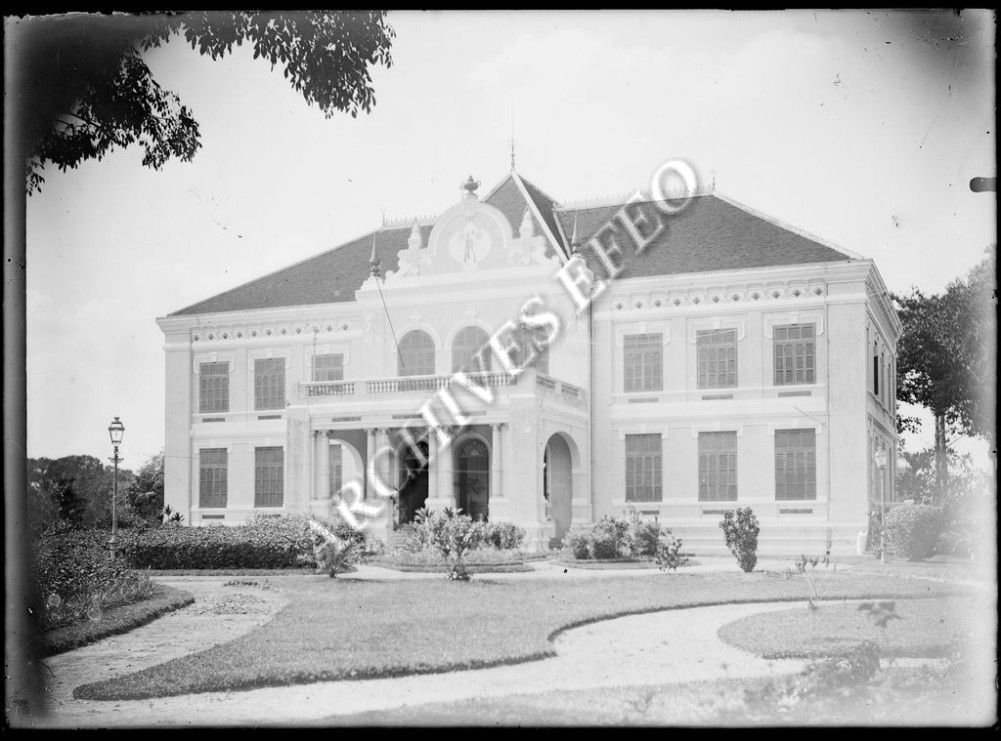
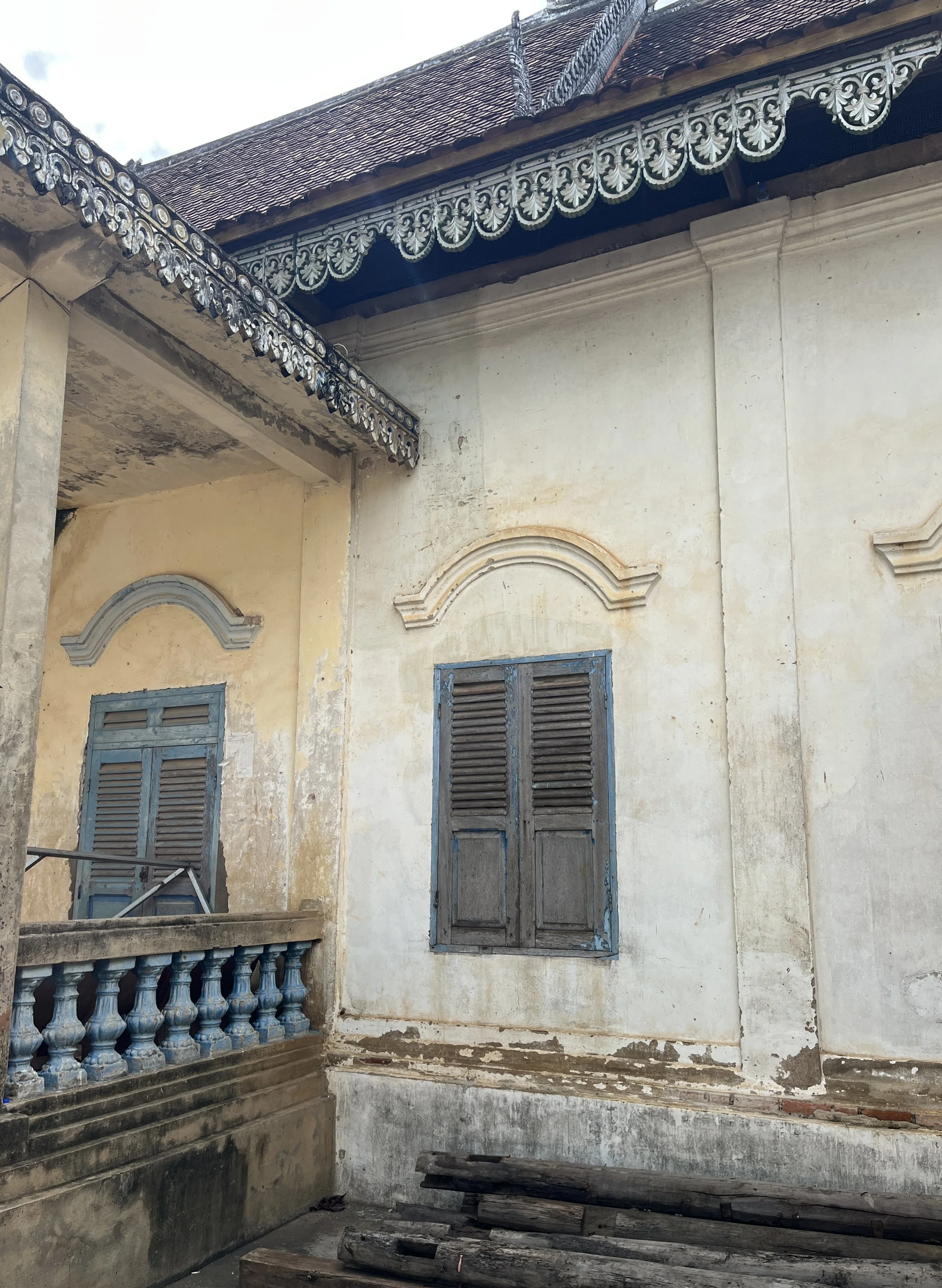
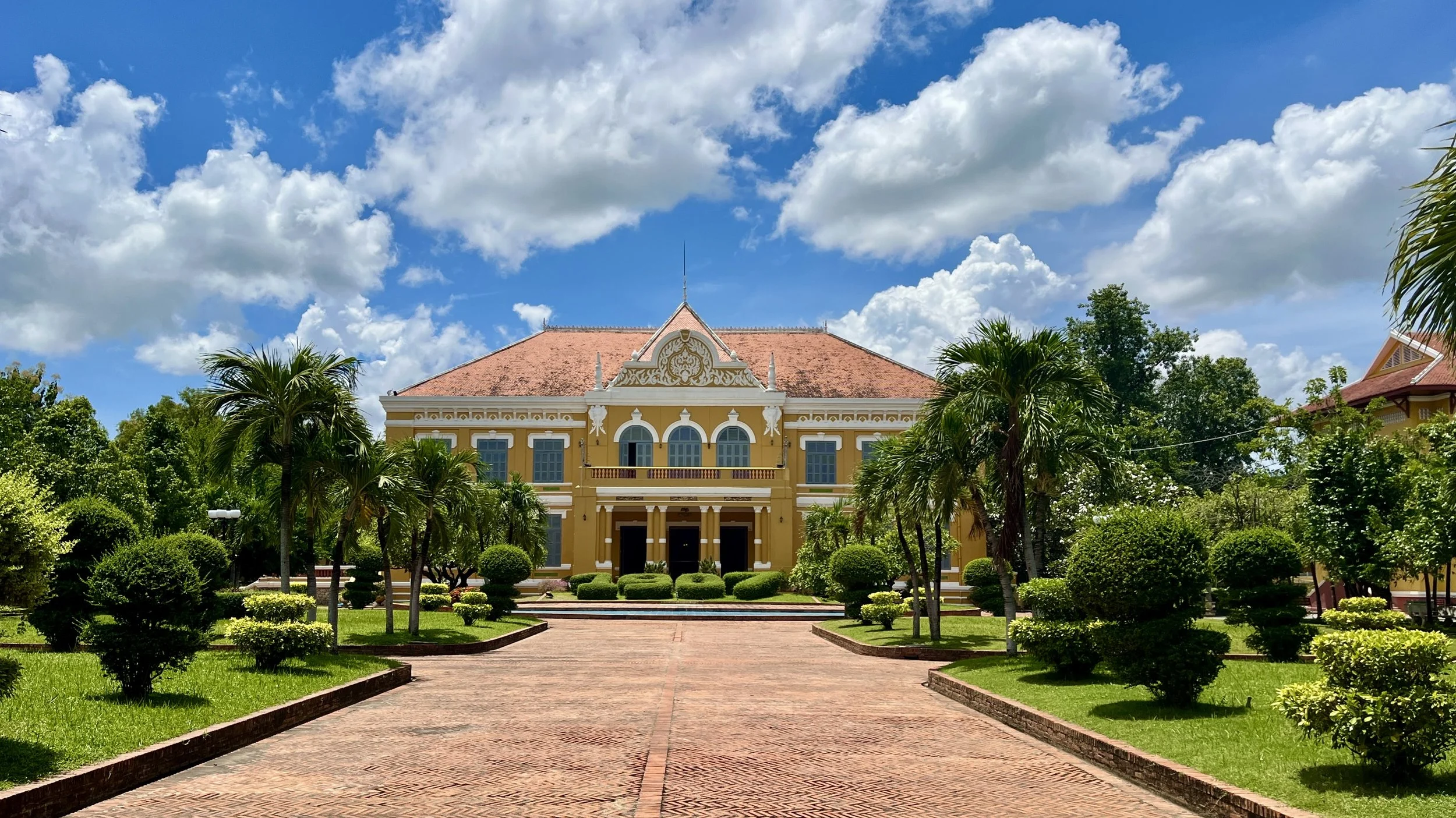
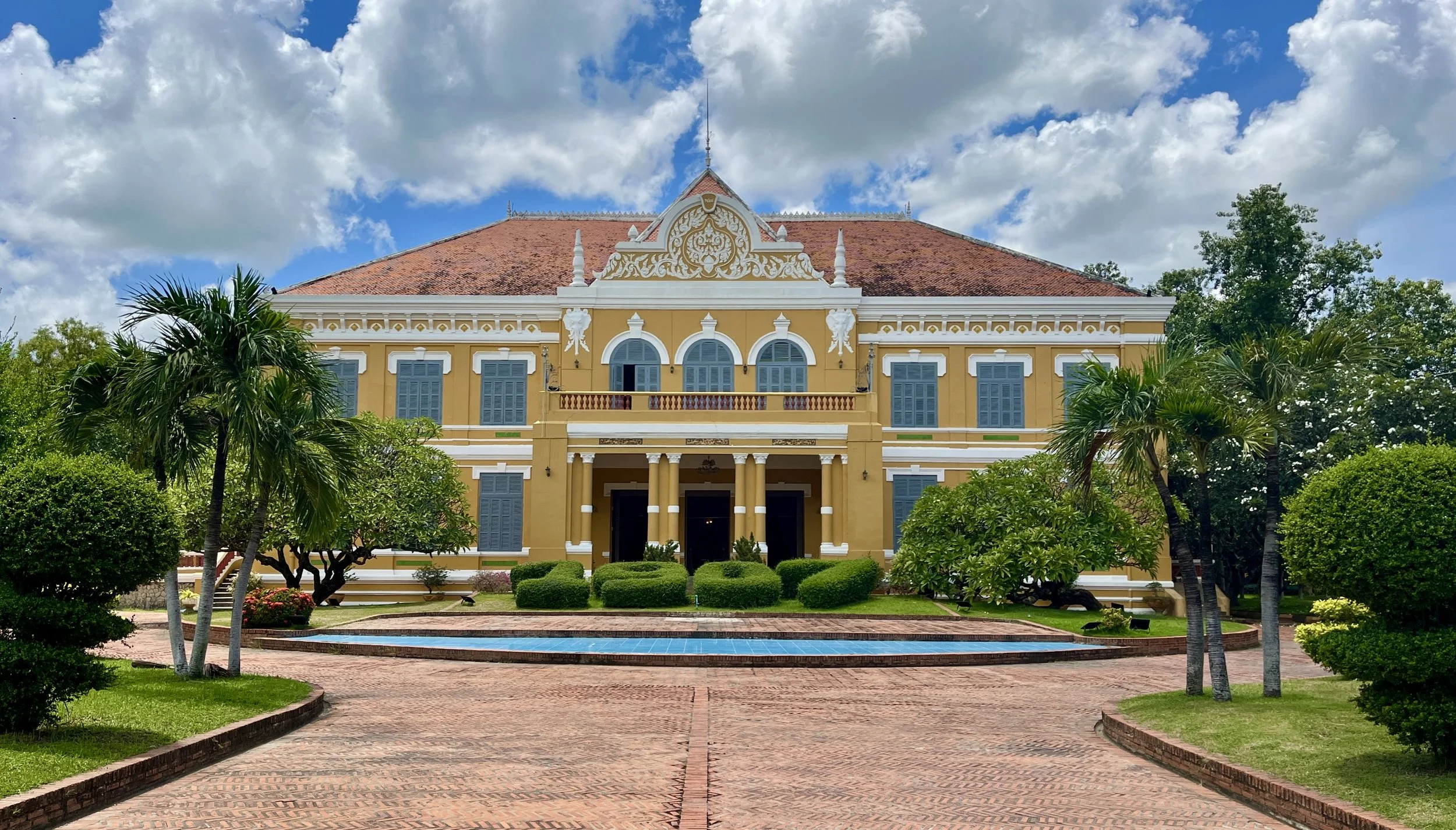
Commissioned by Lord Chhum Aphaiwongse in 1905 from Mario Tamagno (best known for the Ananta Samakhom Throne Hall at Dusit Palace), this is as close to a simple template of a French colonial style mansion as could be conceived, the SEA base model McMansion of a hundred years ago. It’s an almost eery feeling; I’ve walked through this exact house, all over SEA, smaller or larger, with only slight differences.
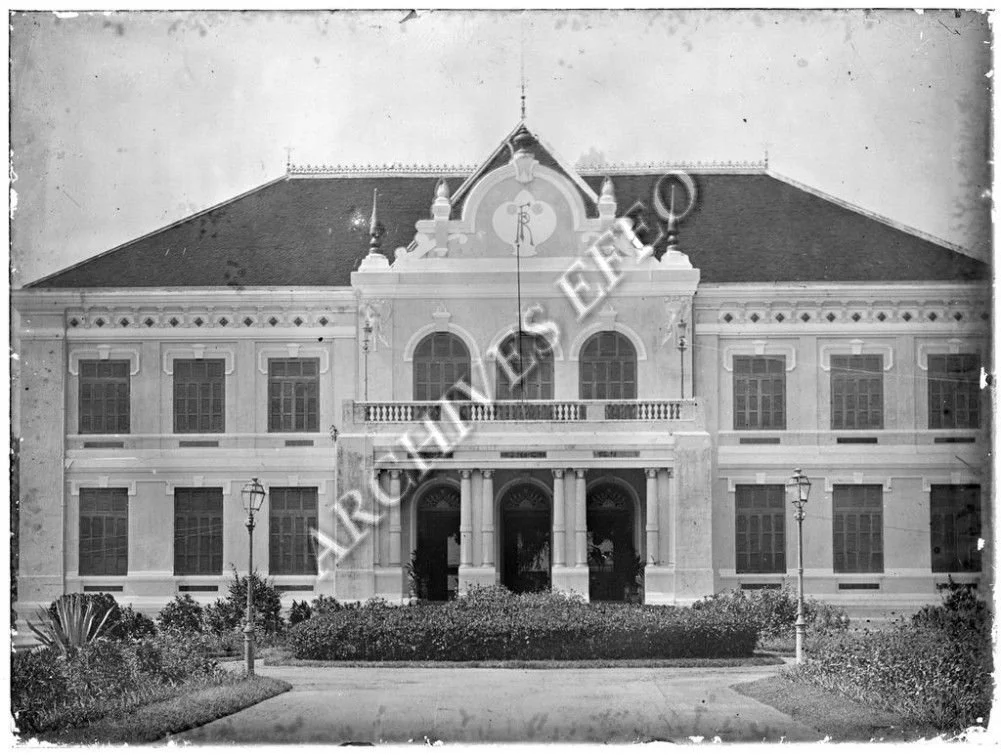
Lord Chhum must not have seen the Franco-Siamese Treaty of 1907 coming. In 1904, Siam gave France Trat in exchange for Chantaburi. In 1905, Lord Chhum commissioned the house. In 1907, just as it was completed, Siam got Trat back by trading in the Buphaphon, the area including Siem Reap and Battambang that the Aphaiwongses had hereditarily governed since 1795.
The Aphaiwongses, originally local warlords in far southern Treang, rose to nobility and wealth with Siamese backing in the latter half of the 18th century. When local Cambodian chiefs went to war for Cambodian puppet kings supported by either Siam or Annam, the Aphaiwongses supported, and were supported by, Siam. When the Nguyens became distracted by the Tay Son rebellion, Siam got the upper hand in Cambodia, culminating in the first Aphaiwongse Okhna, Chau Baen, serving as regent over the Cambodian child puppet King Ang Eng.
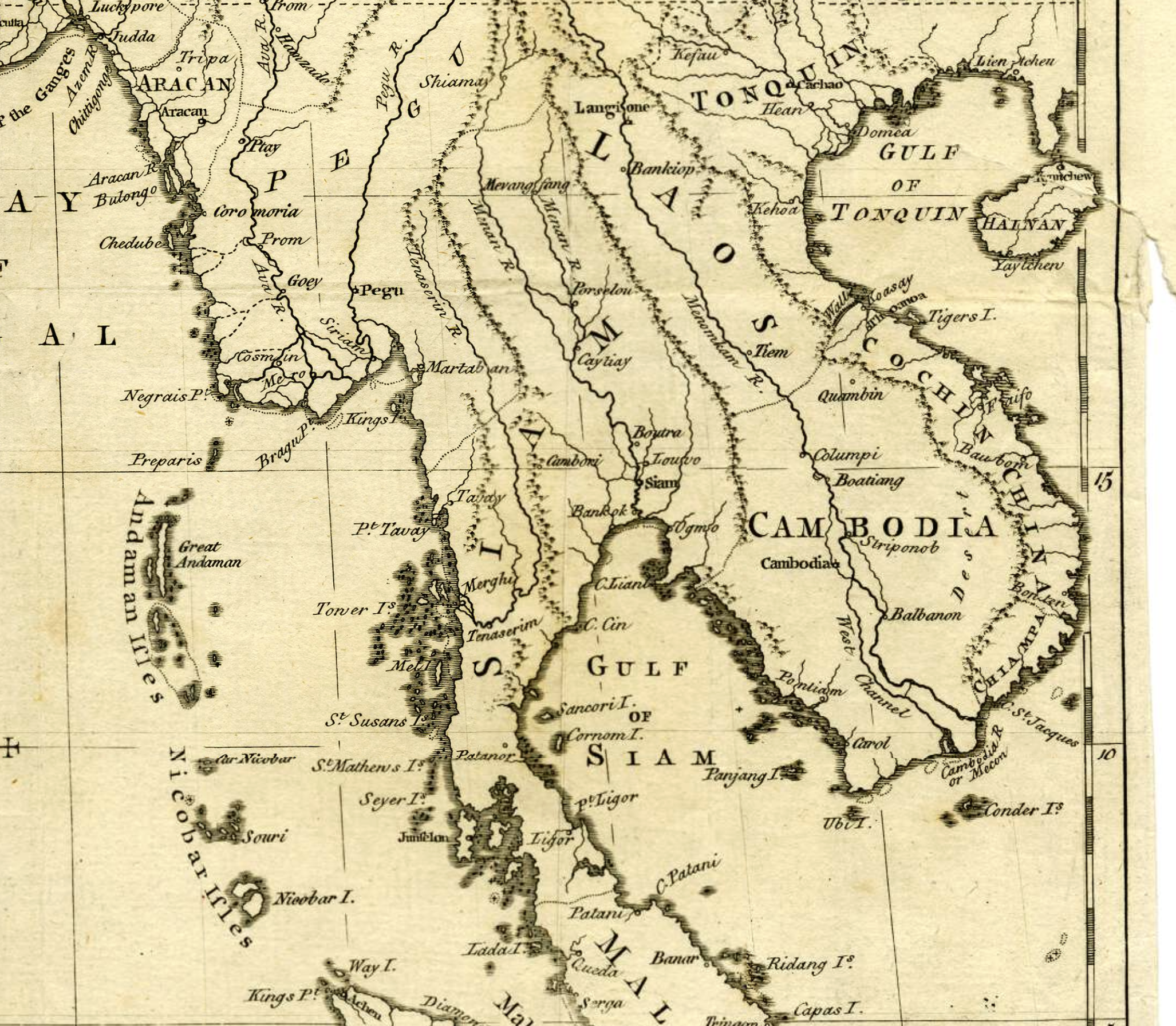
1773 map by Thomas Kitchin

Over time the court in Oudong divided into those who wished to continue with the current line of puppet kings, and those who preferred to just give Chau Baen Aphaiwongse the throne in his own name. To prevent civil war in Cambodia, and/or the rise of a formidable rival, Siamese King Rama I recalled Chau Baen from Oudong, but raised him to the nobility and awarded him the hereditary governorship of Battambang, Siem Reap, and Sisophon, to defend and administer as annexed Siamese territories.
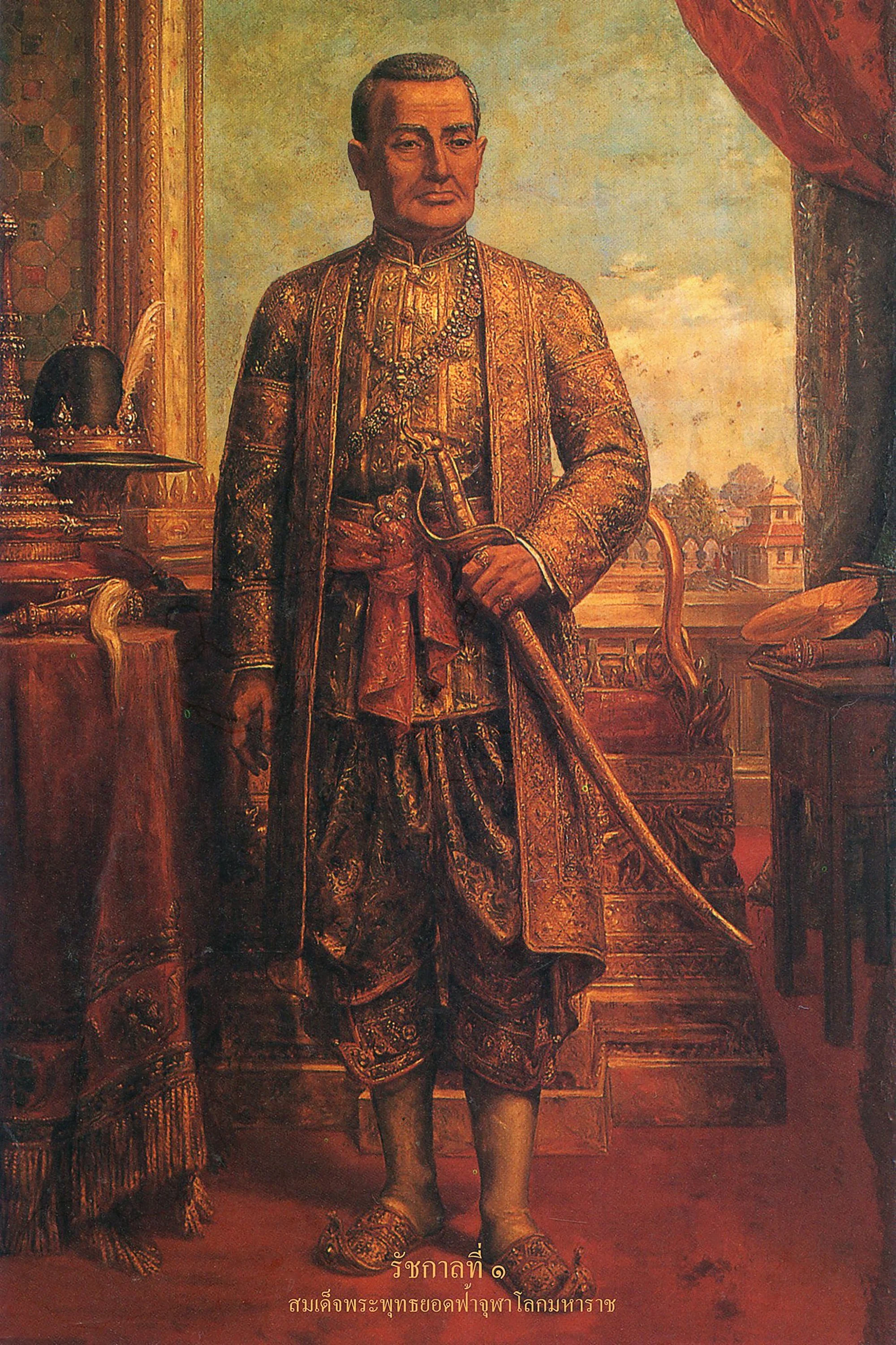
Thai King Rama I

After the 1907 treaty, the French offered Lord Chhum, the sixth generation ruler of Bupaphon, to stay on as their governor in Battambang. However, like his ancestors, Lord Chhum again chose loyalty to Siam, moving his family to the Bangkok court of Rama V (Chulalongkorn) after the handover. Briefly installed as the governor of Prachin Buri, he had the Tamagno house built for him again there, hoping to entertain Chulalongkorn in style. Other than the window shapes and plaster appliqués, everything was exactly the same. Unfortunately Rama V died before the house was finished.
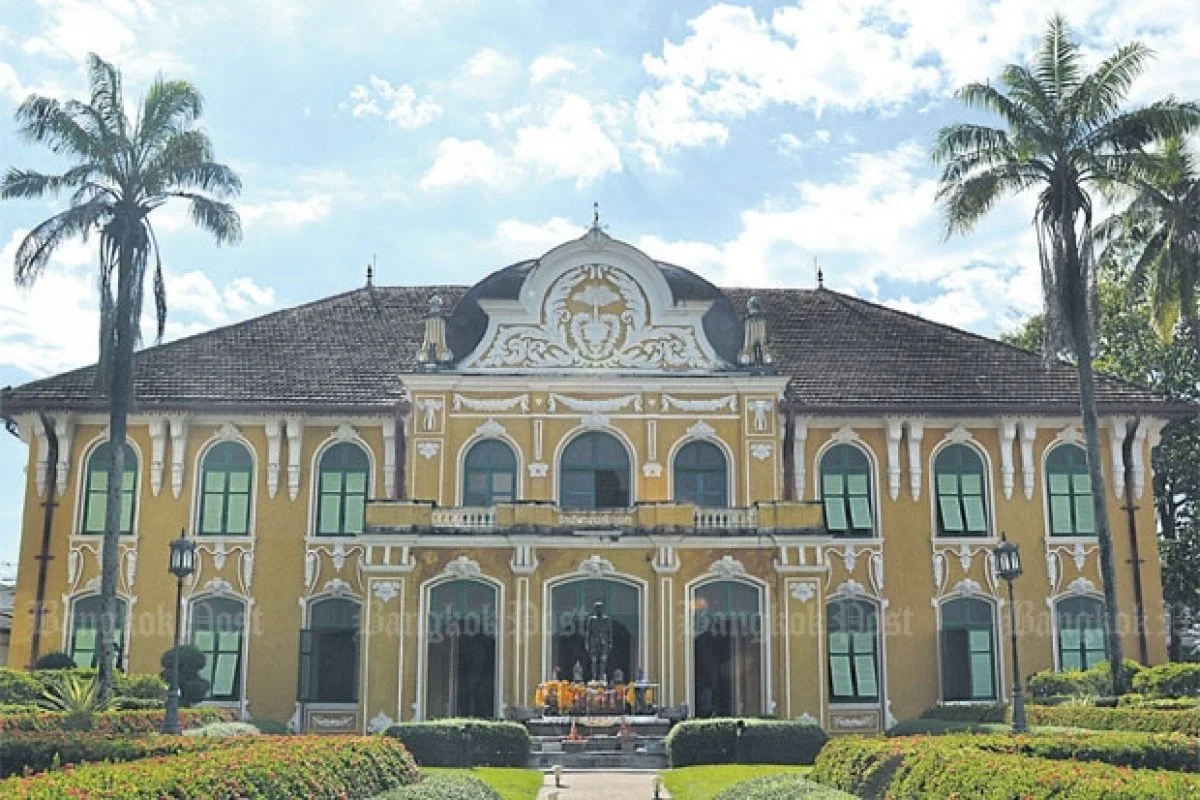
The Prachin Buri twin house

When Lord Chhum’s granddaughter eventually married Rama VI, becoming the Princess Consort of Thailand, Lord Chhum gave them the Prachin Buri house as a wedding gift. Unfortunately Rama VI died before Princess Suvadhana could have a son, so the throne passed to his younger brother . . . and the Prachin Buri house remained unoccupied. At the outbreak of WW2, Suvadhana and her daughter fled to England, remaining there until 1957.
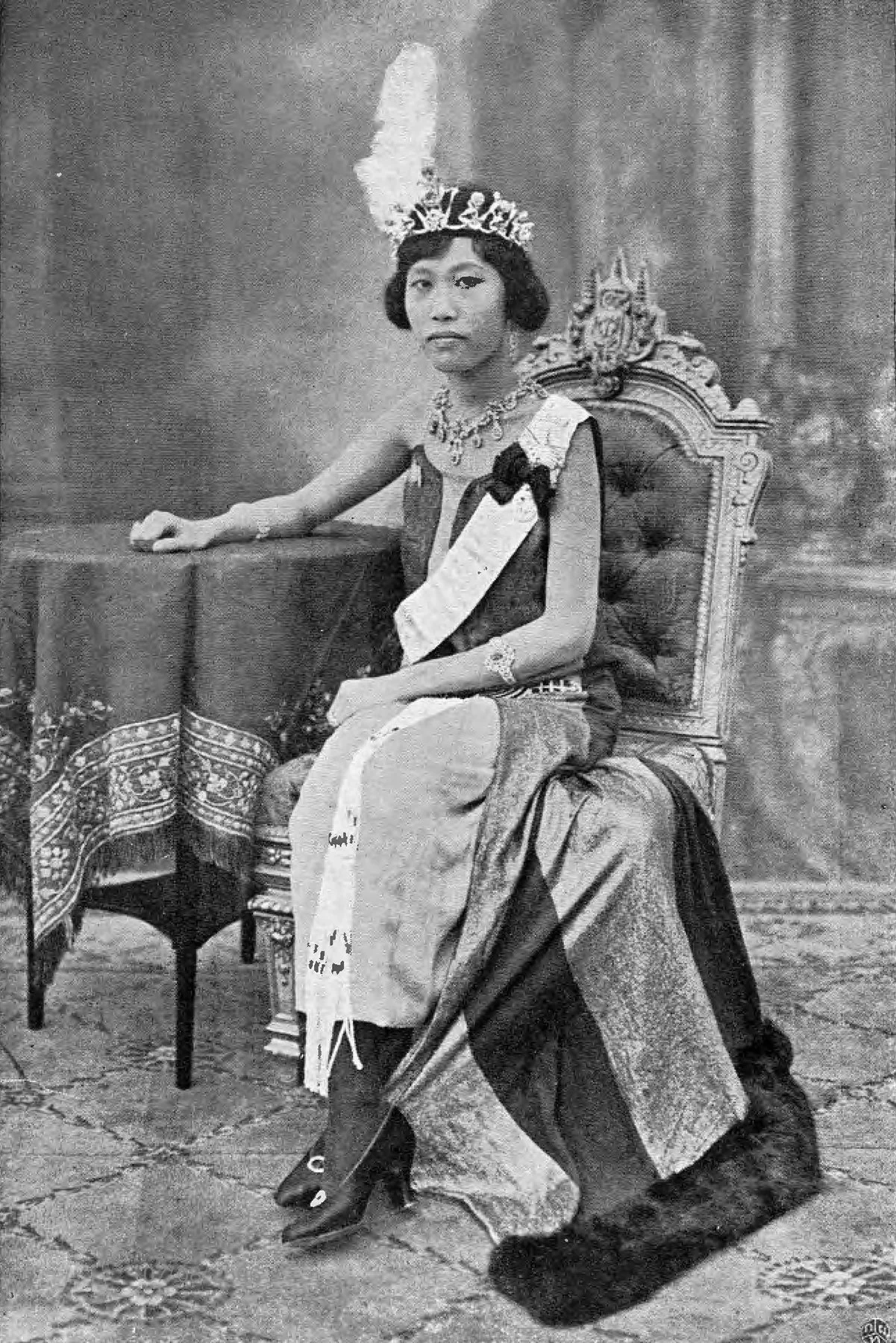
Princess Suvadhana

Because Thailand allied with Japan in WW2, Suvadhana’s father Lueam officially became the last Abhayavongsa governor of Buphaphon during the period Japan occupied Cambodia, from 1941 through 1945– though he still never lived in the Battambang house, which was used as Japanese army offices.
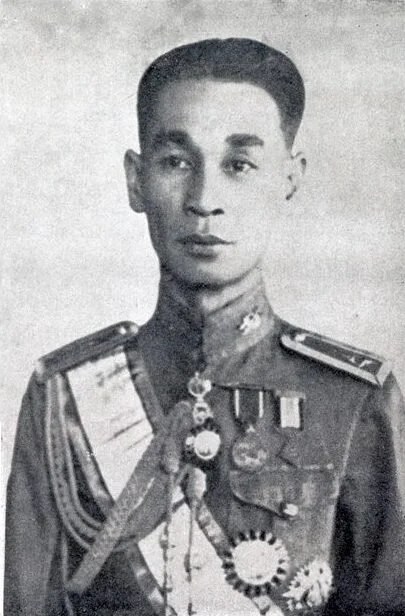
Khuang Aphaiwongse in the 1930s

Meanwhile, her older brother Khuang served as Prime Minister of Thailand three times between 1944 and 1948. After the war, he remained the leader of Thailand’s Democratic party until his death in 1968. Suvadhana had a royal funeral in 1985, and the family is still considered noble/royal in Thailand.
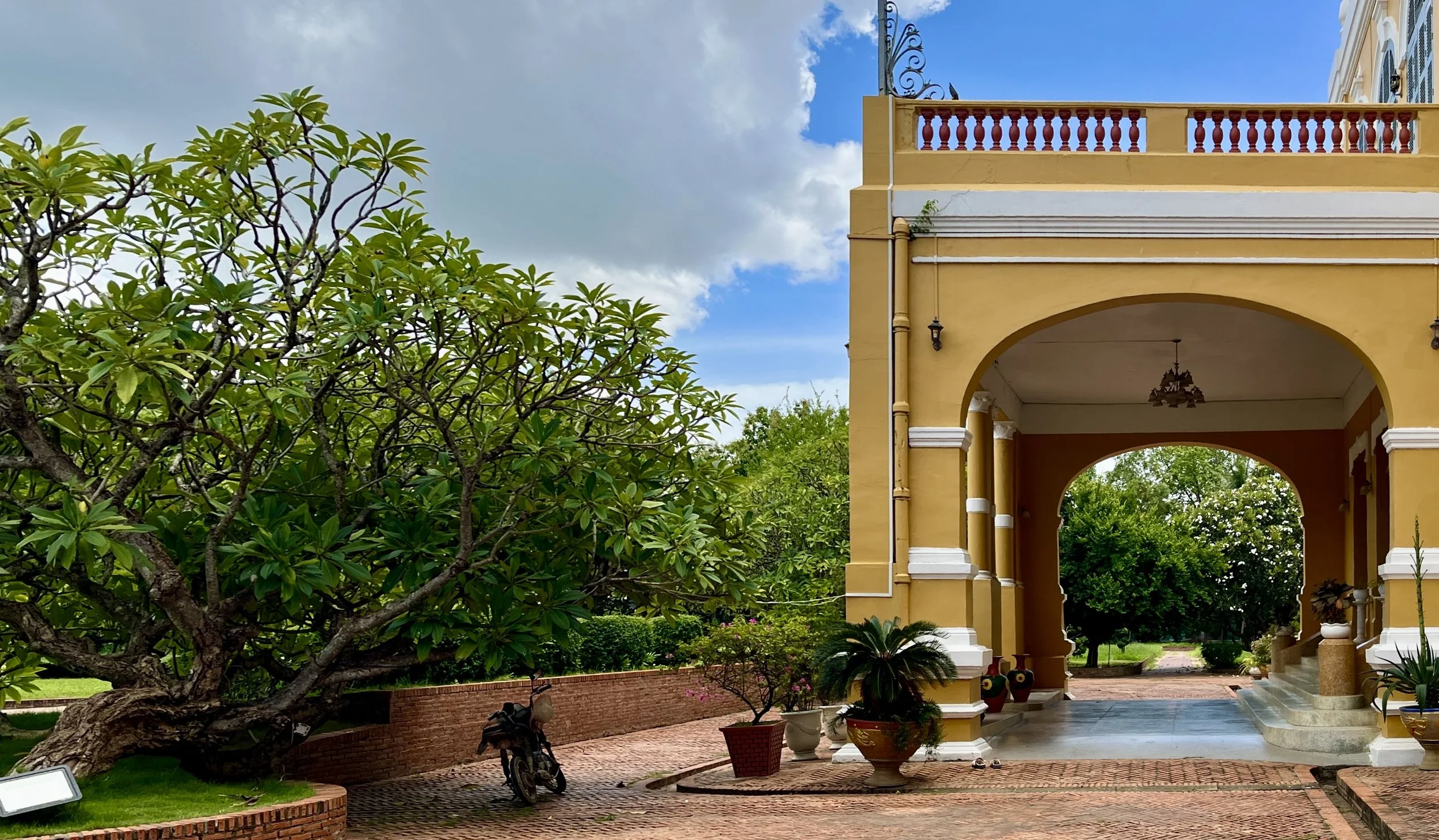
The most impressive thing about the place is the grounds. Large grassy lawns with manicured trees are rare things in Cambodia, it’s typically either city living or a waterlogged mess.
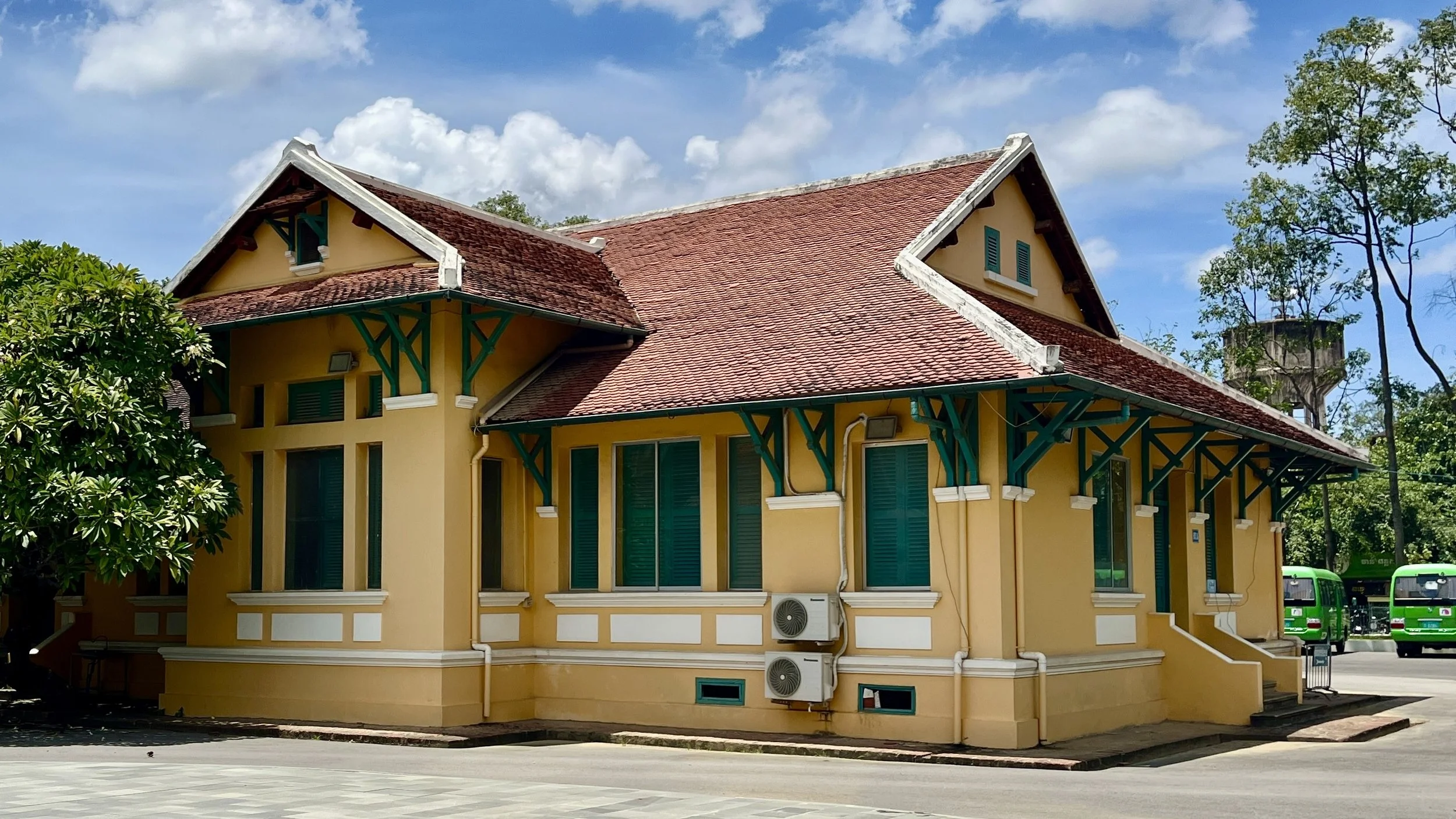
Another colonial era building on the grounds.
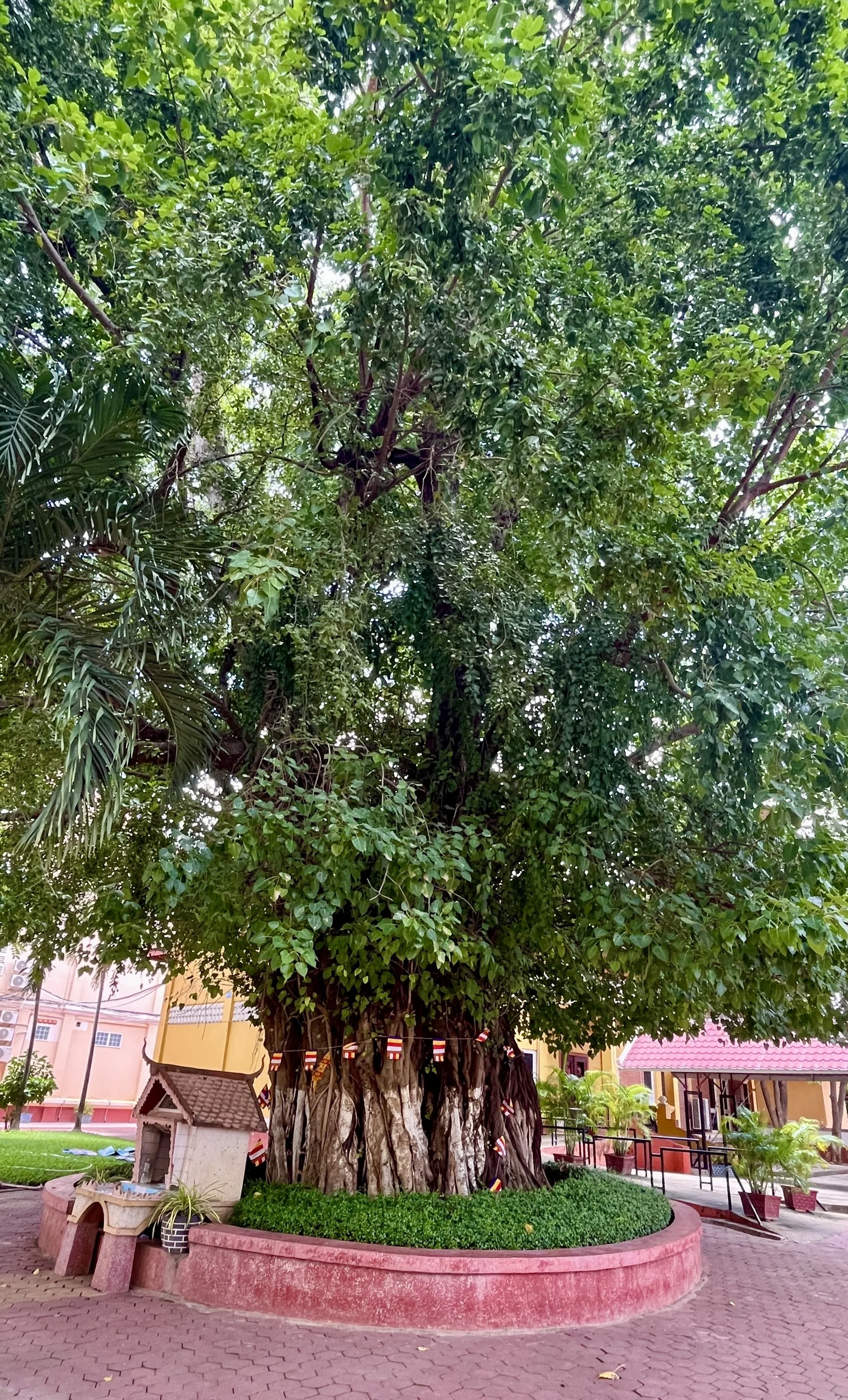
There are several government office buildings in one corner of the grounds.
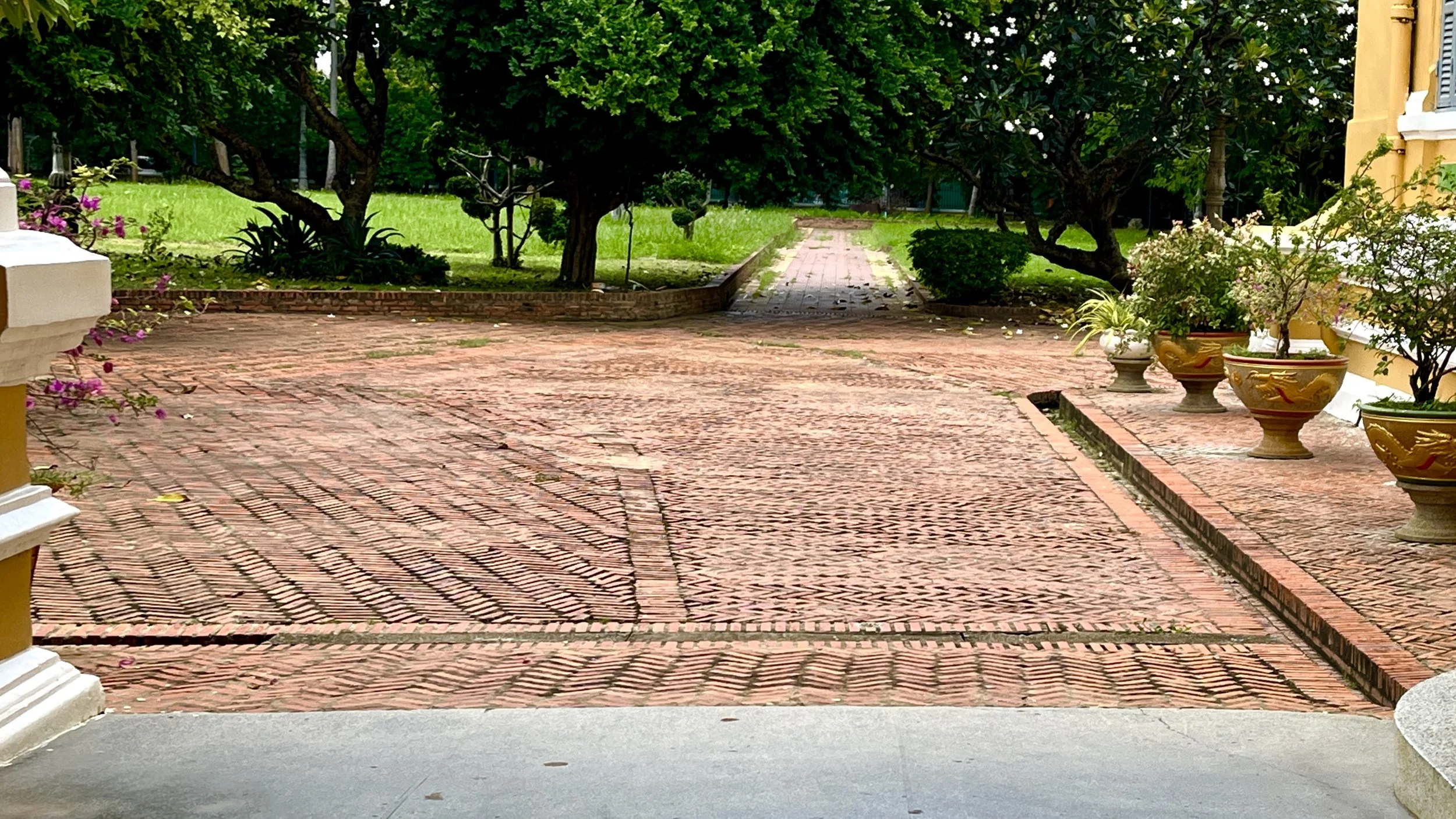
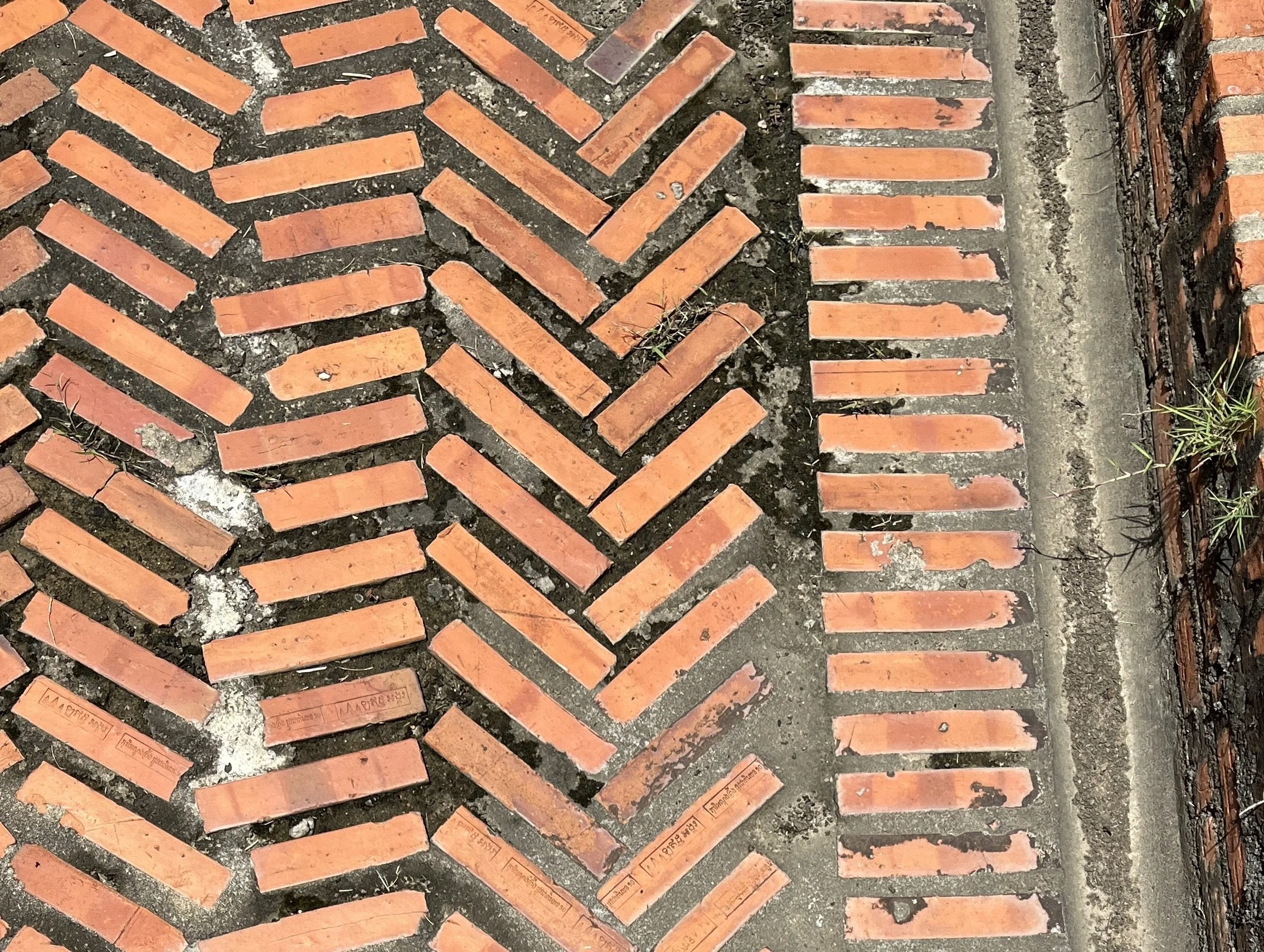
I like the chevron brickwork.
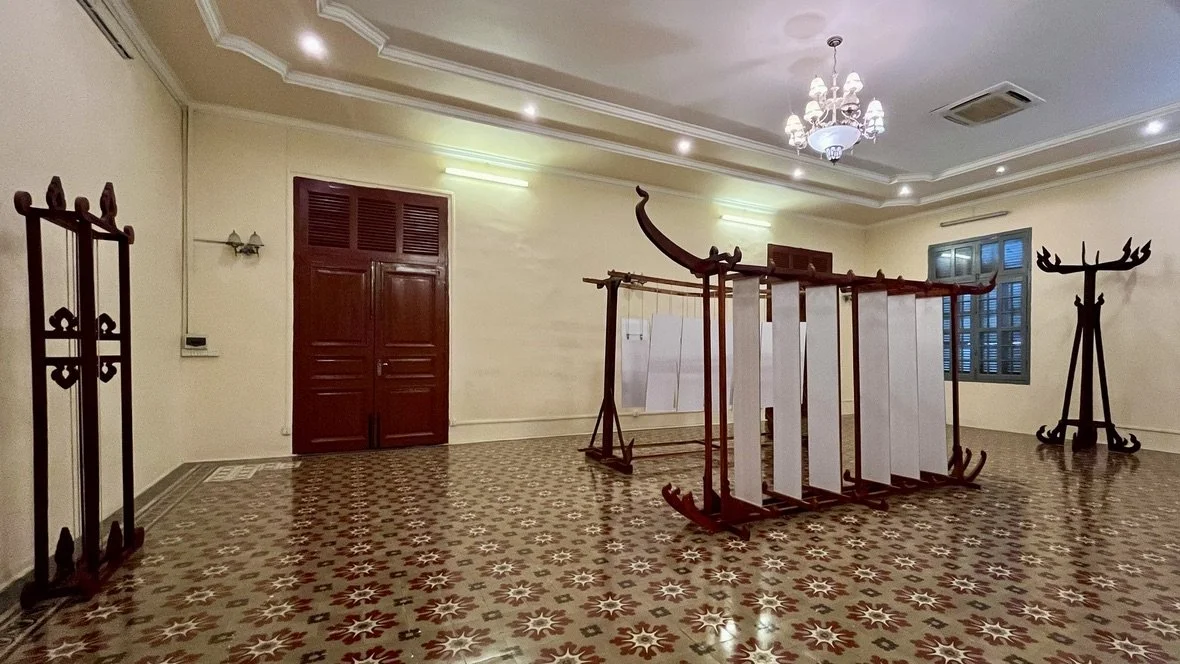
Inside is both inauthentically renovated (lol at that layered drop ceiling) and as dull as possible.
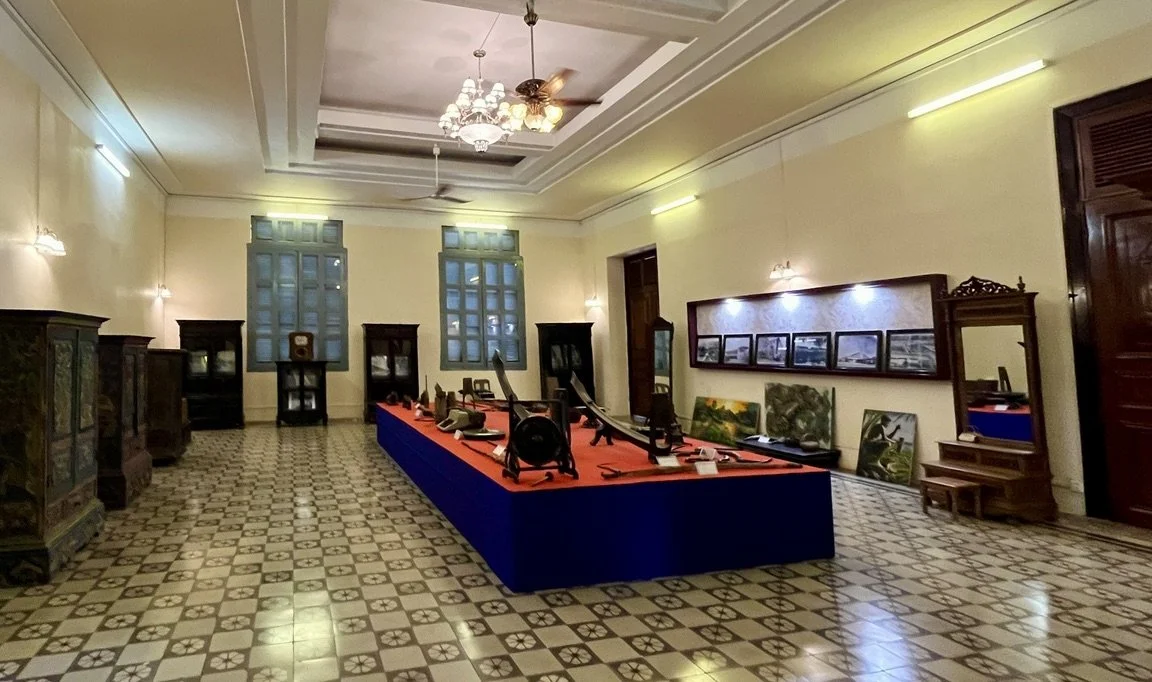
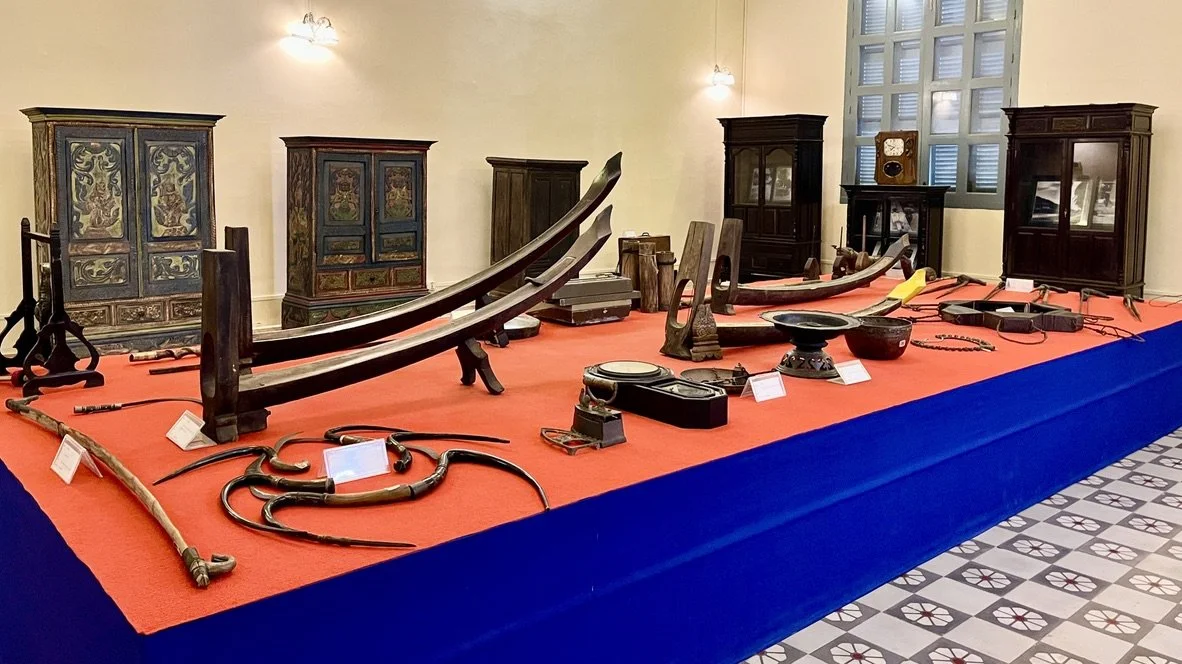
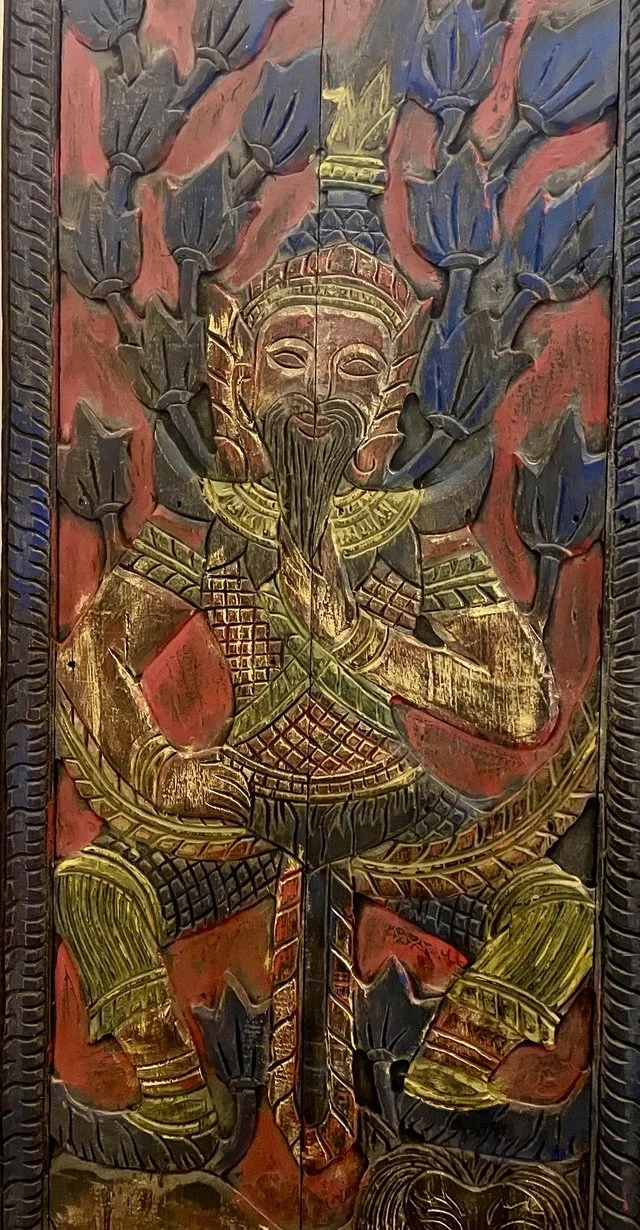
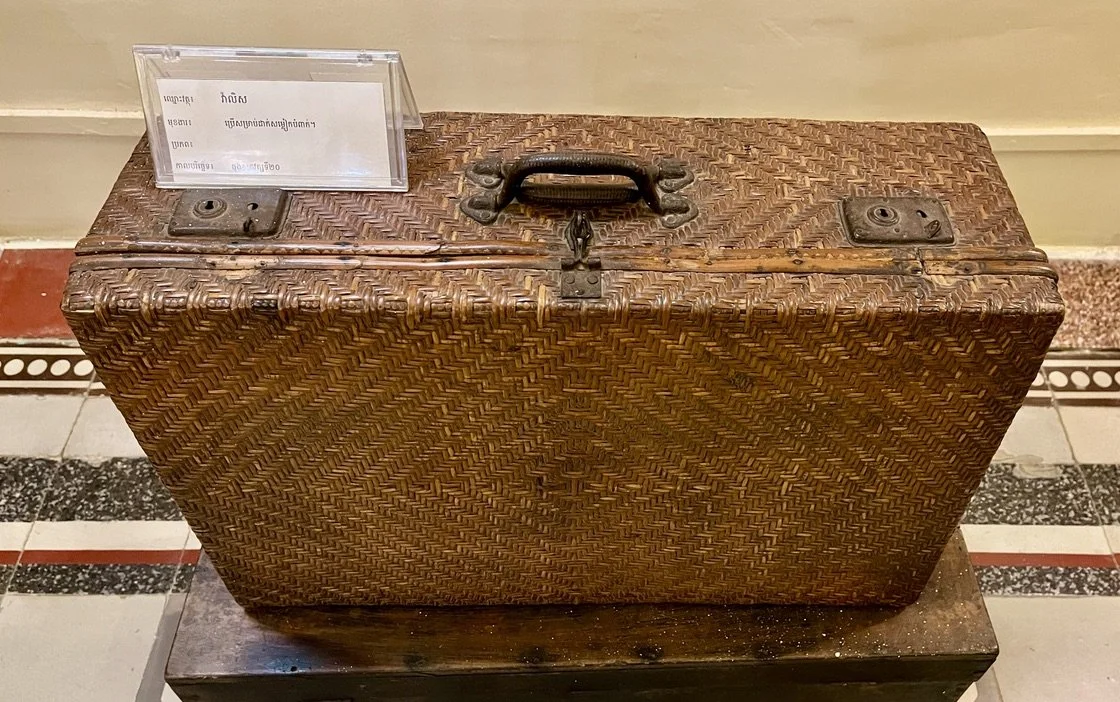
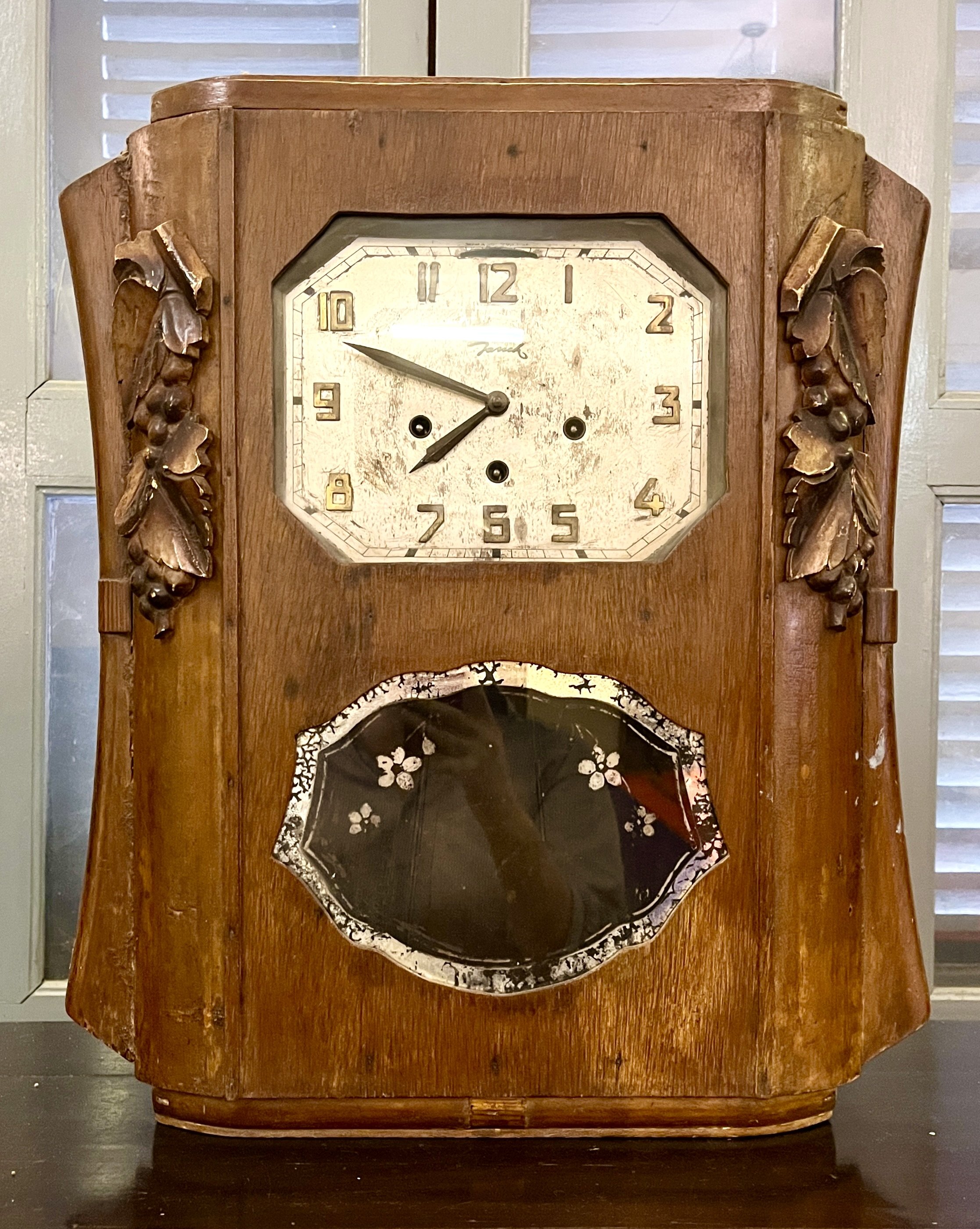
The ground floor is occupied by what they think passes as a museum. It’s the most pointless, random assortment of mostly vintage objects.
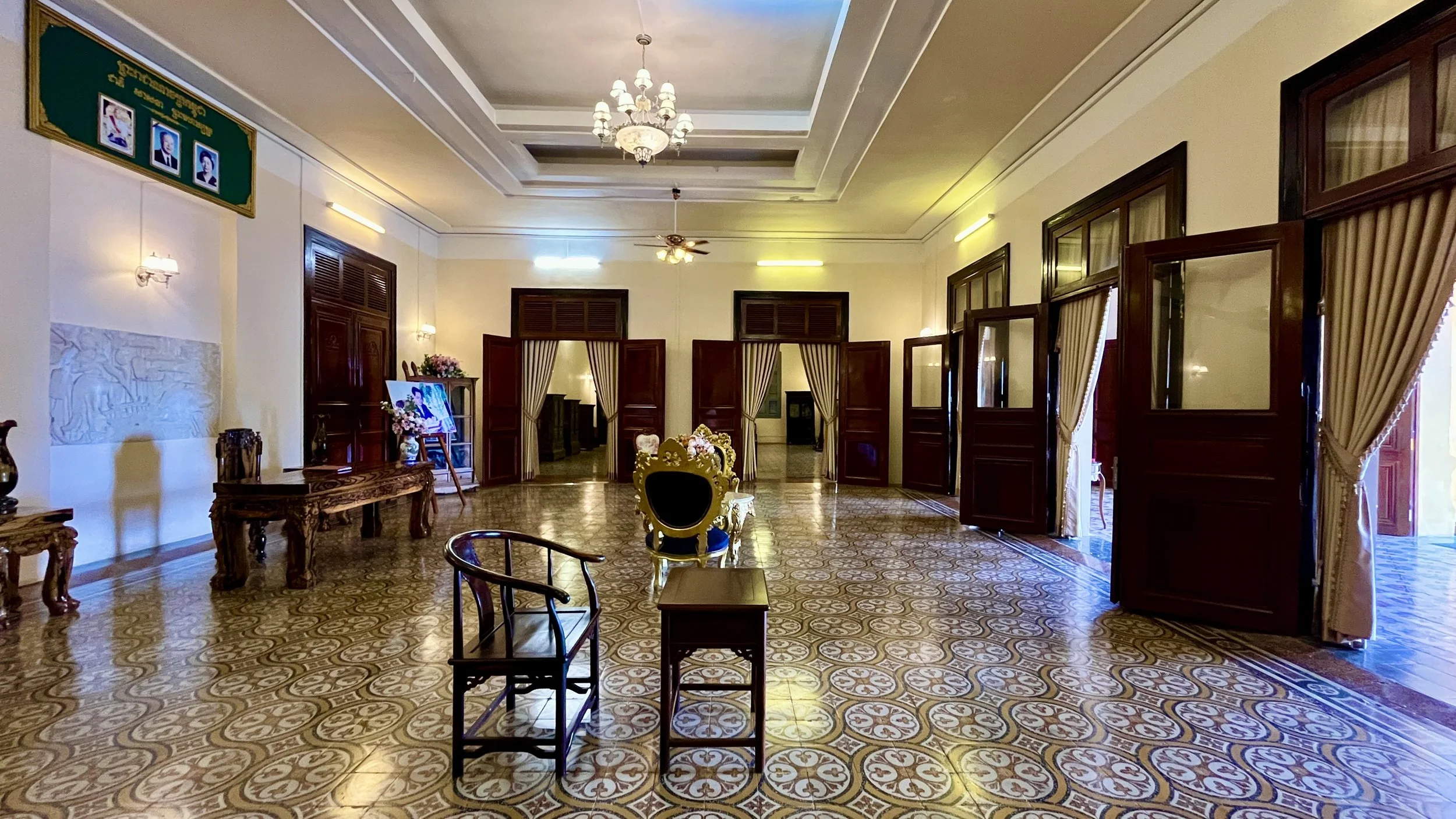
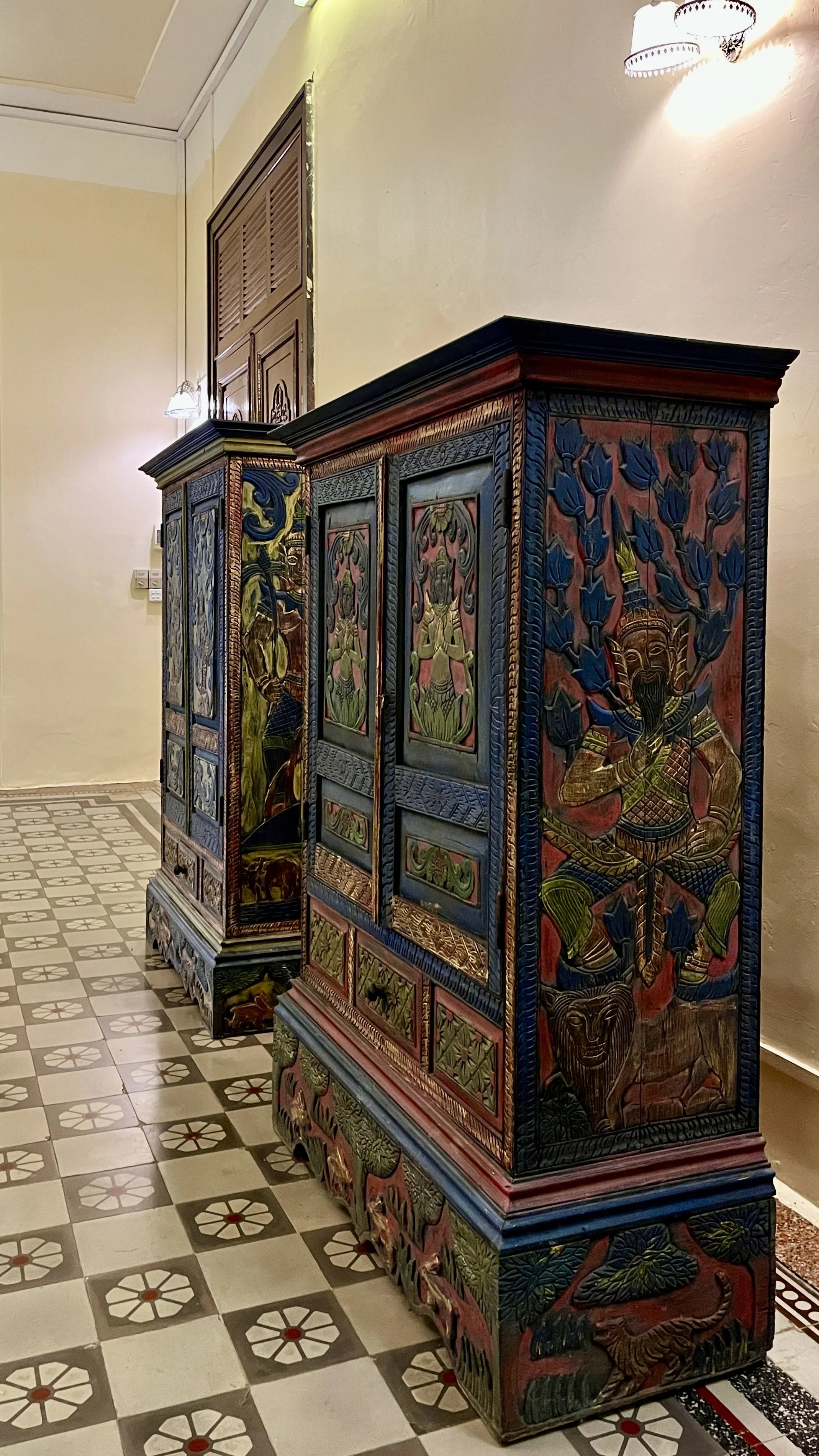
A jumble of bad, mostly recent furniture.
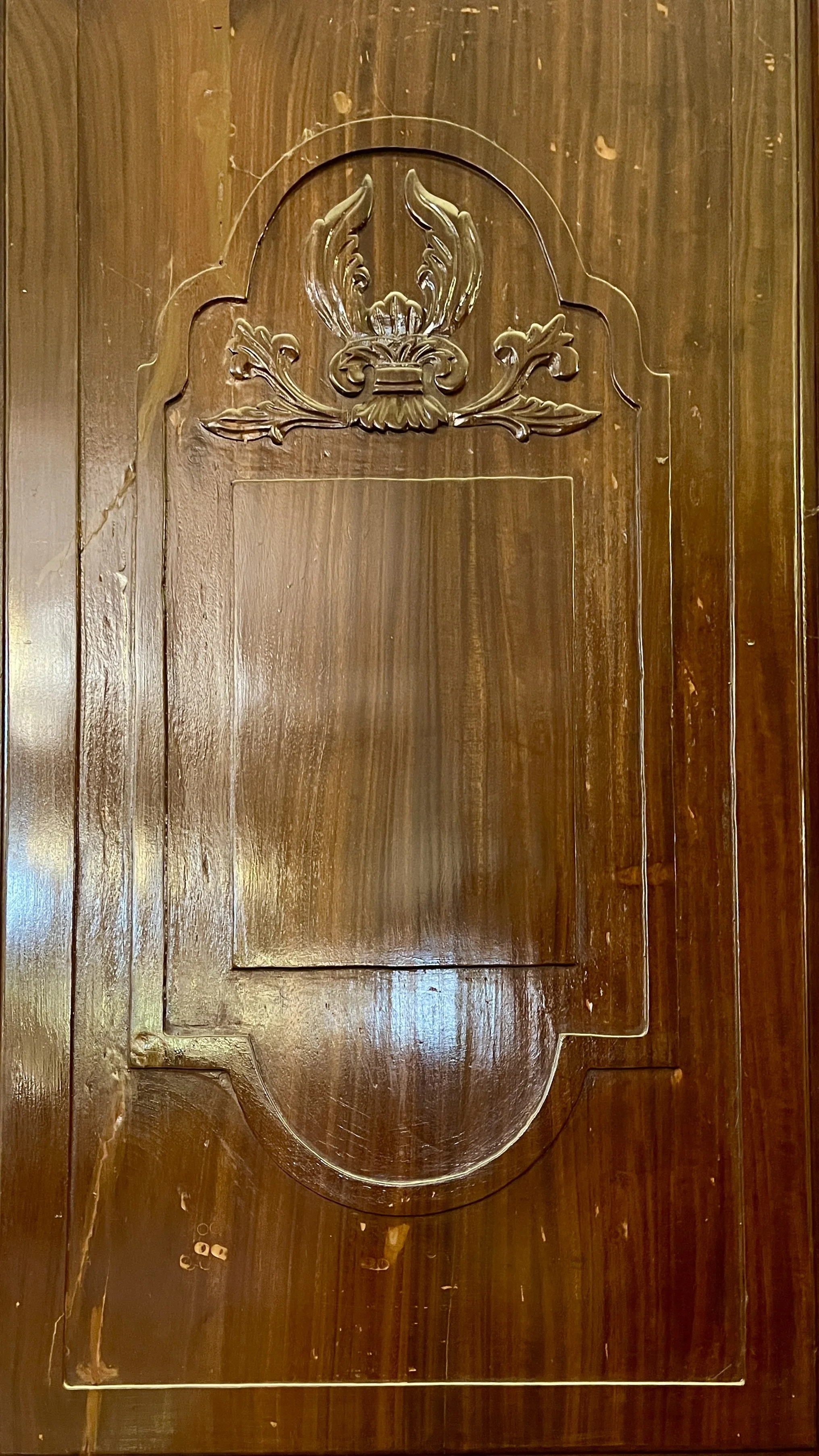
Horrid door that has clearly had things ripped off at some point.
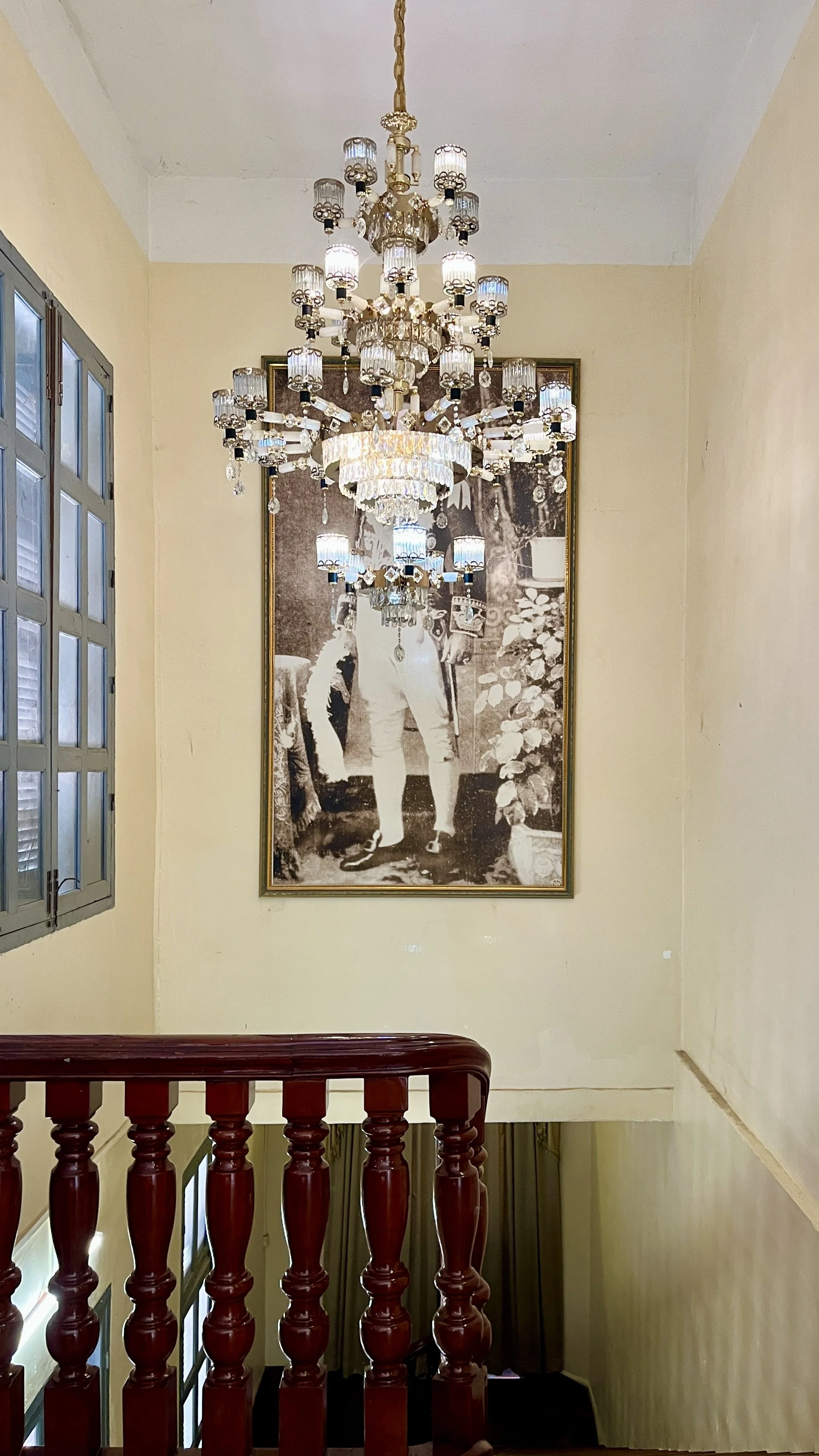
Are they trolling?
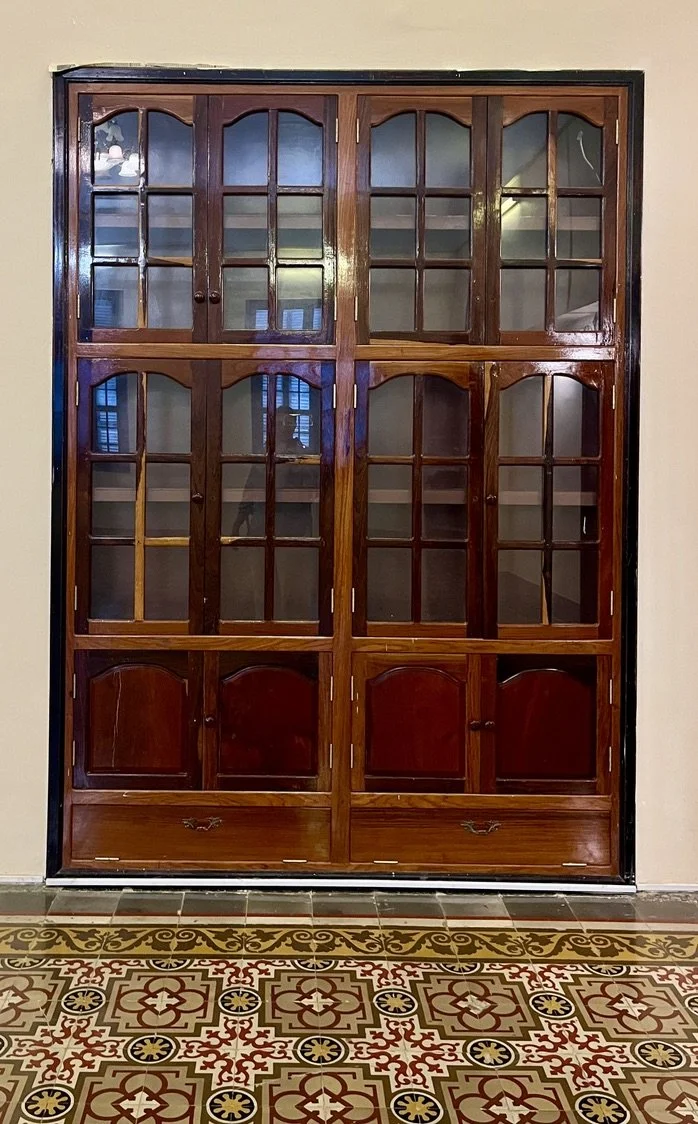
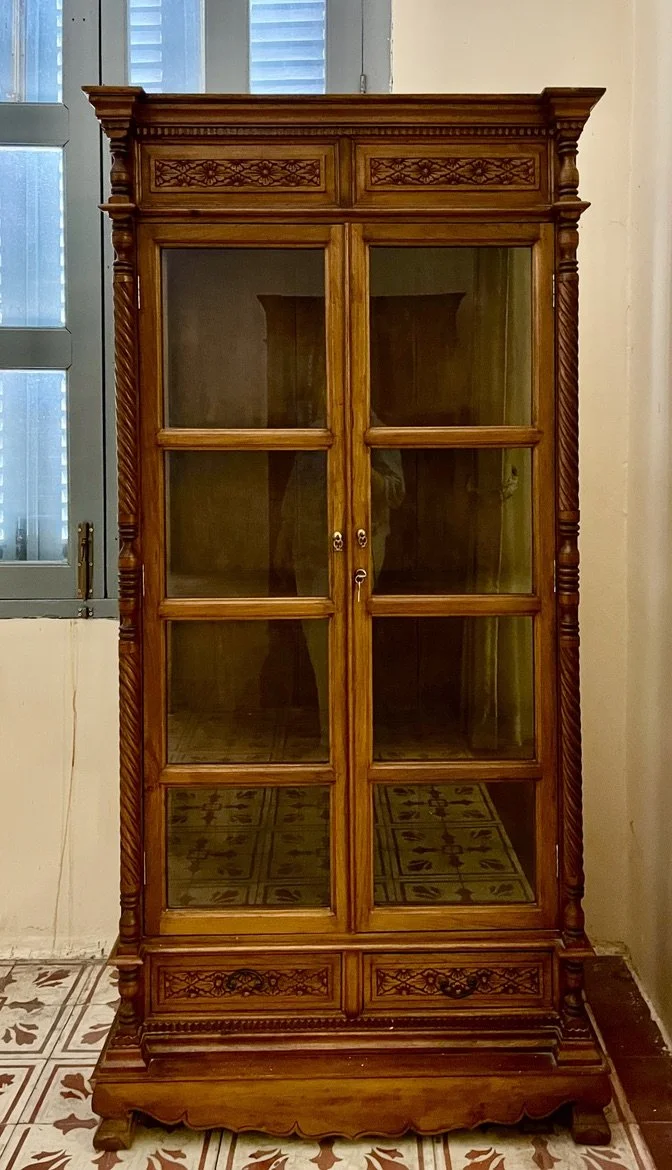
Built in features have mostly been ripped out, but there were 2 bookcases like this.
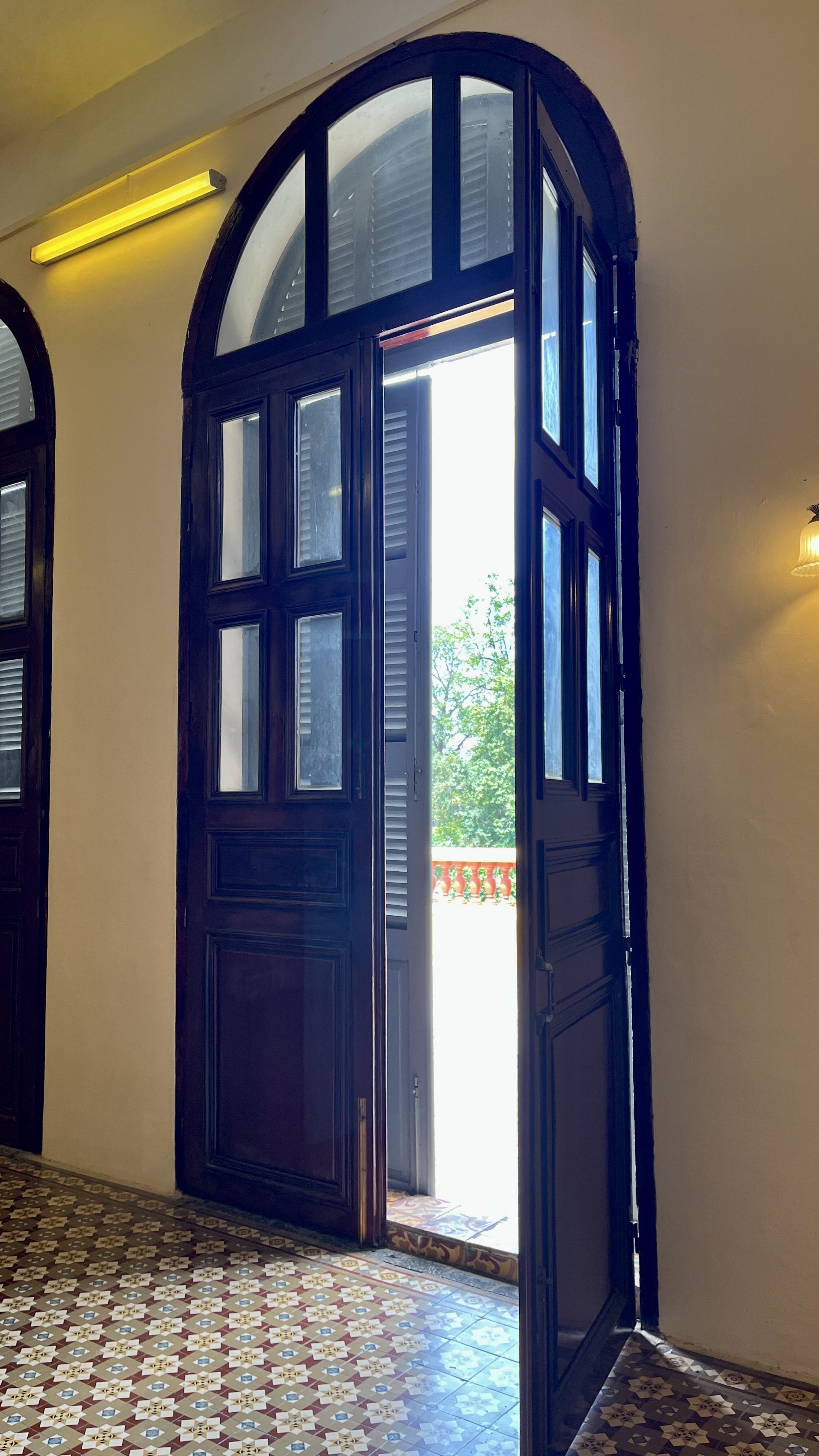
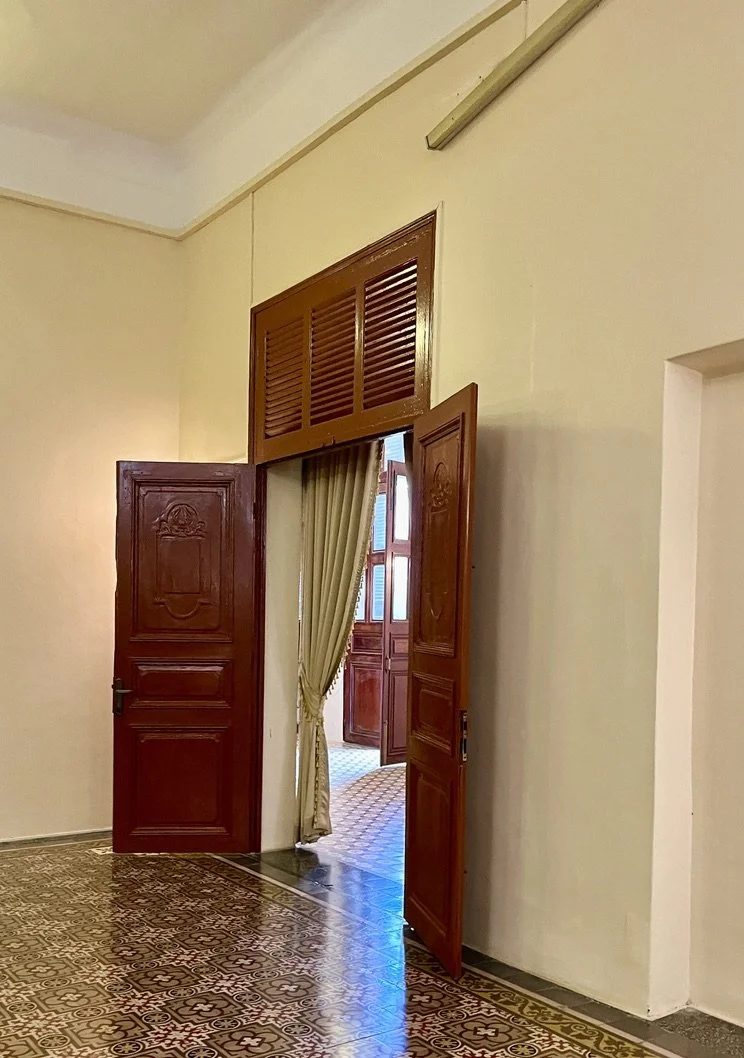
I wonder if it was never quite finished because the family knew they’d never move in, or if things were ripped out at some point.
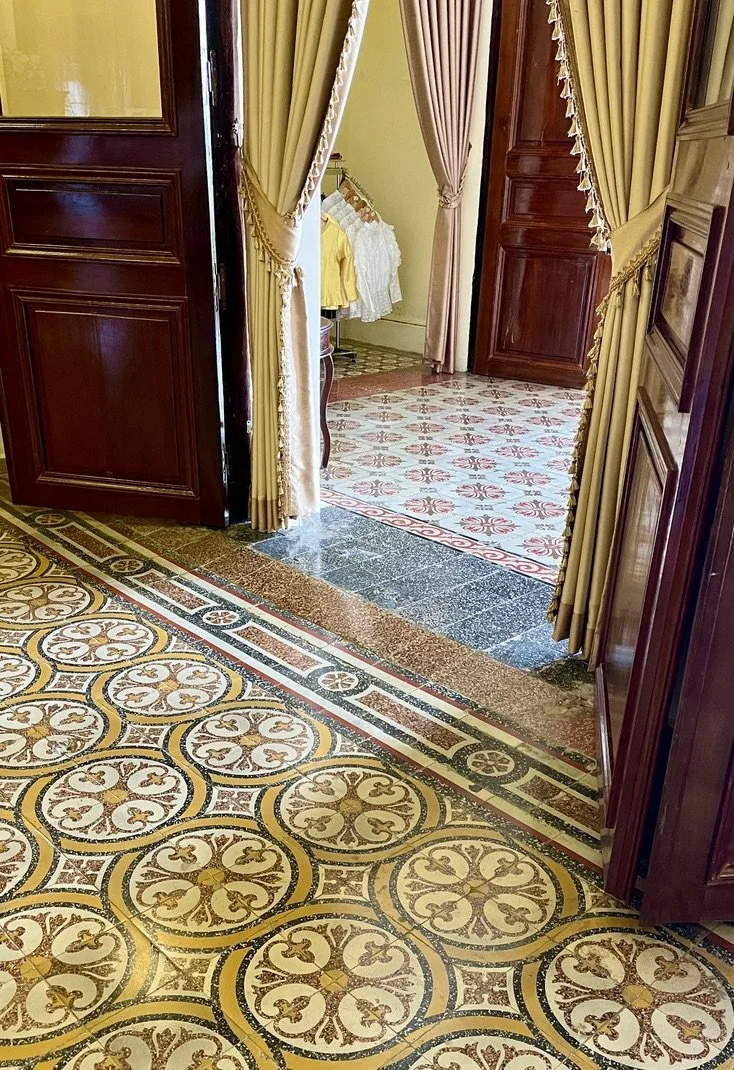
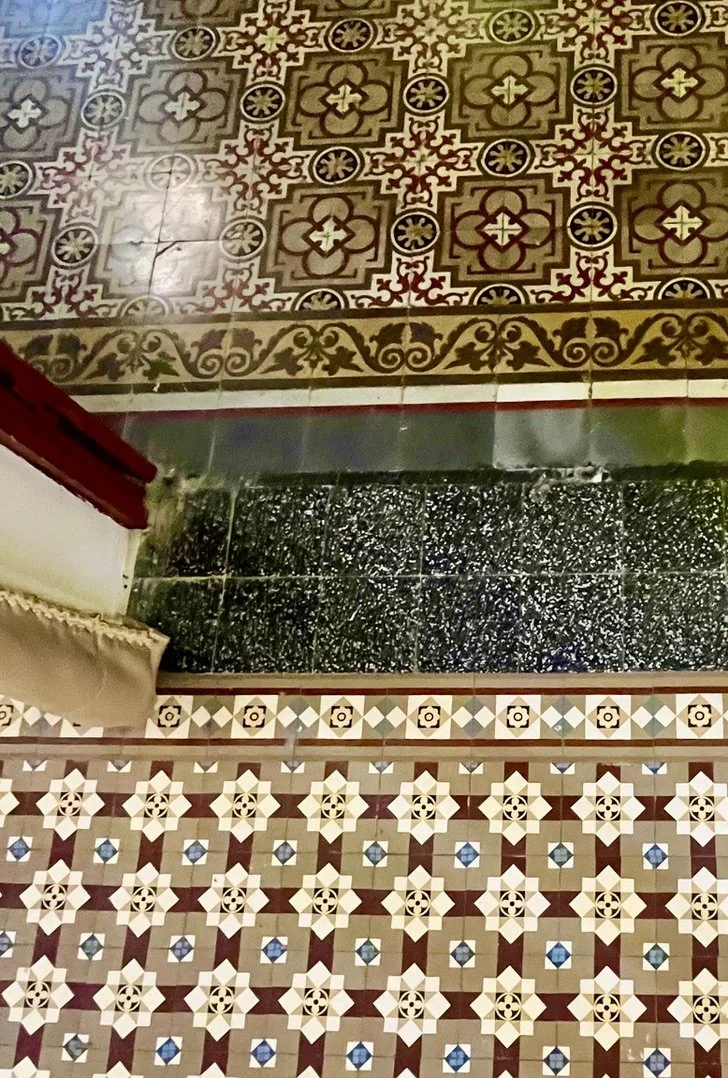
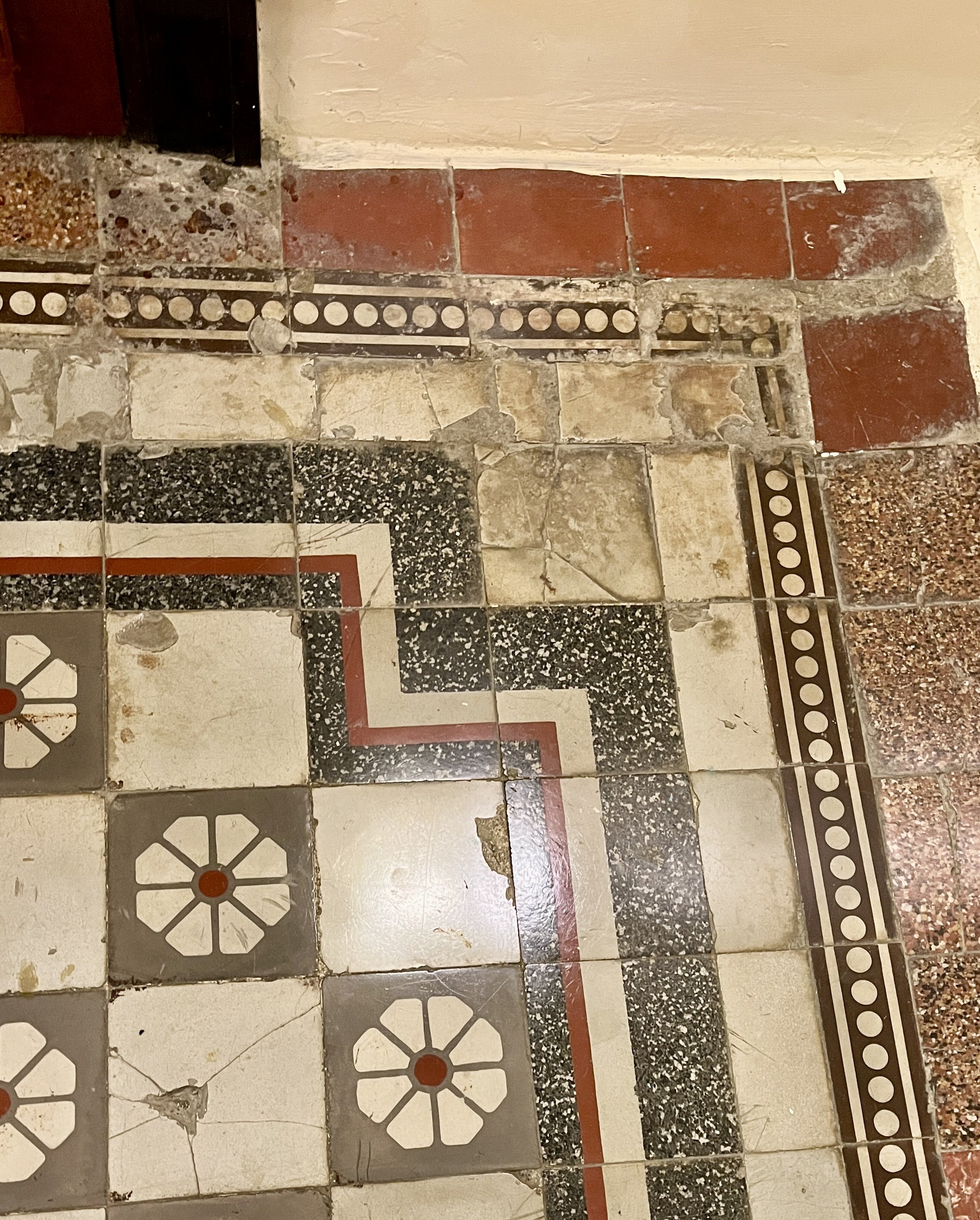
Hard to tell if these are original tiles or not. I think mostly, but there is a huge jumble in this building. The pretentious polyester curtains really bring out the depression of it all.
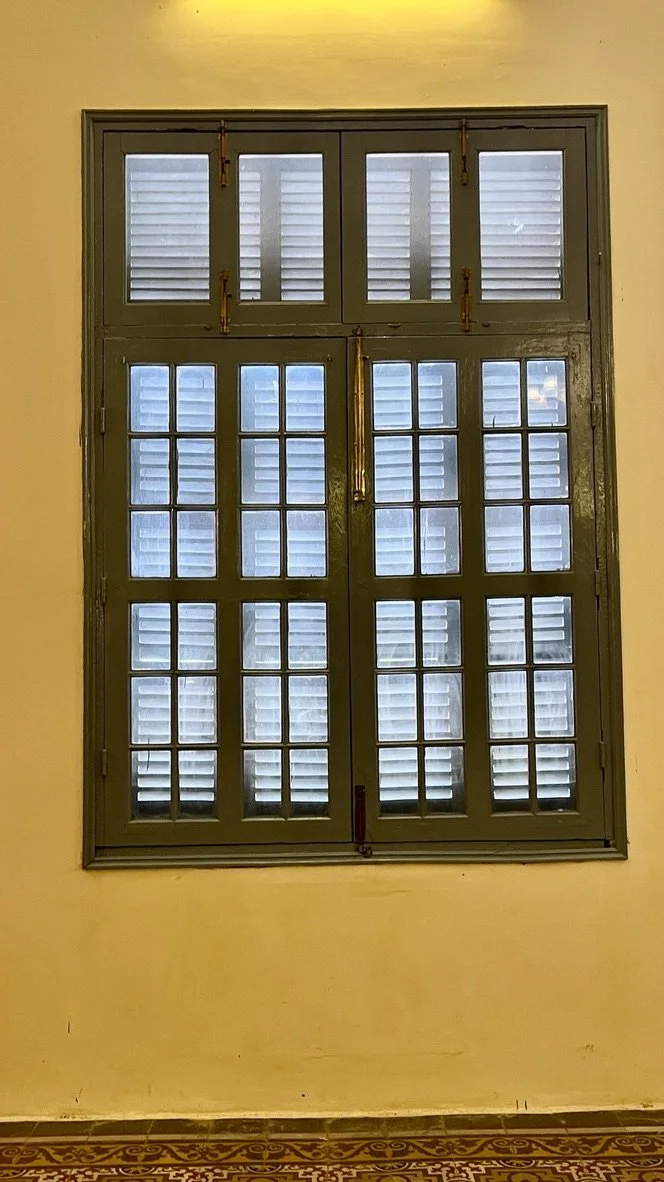
I don’t even know why I took this picture. Despair? Wanting to remember the dimensions should I ever install shutters?
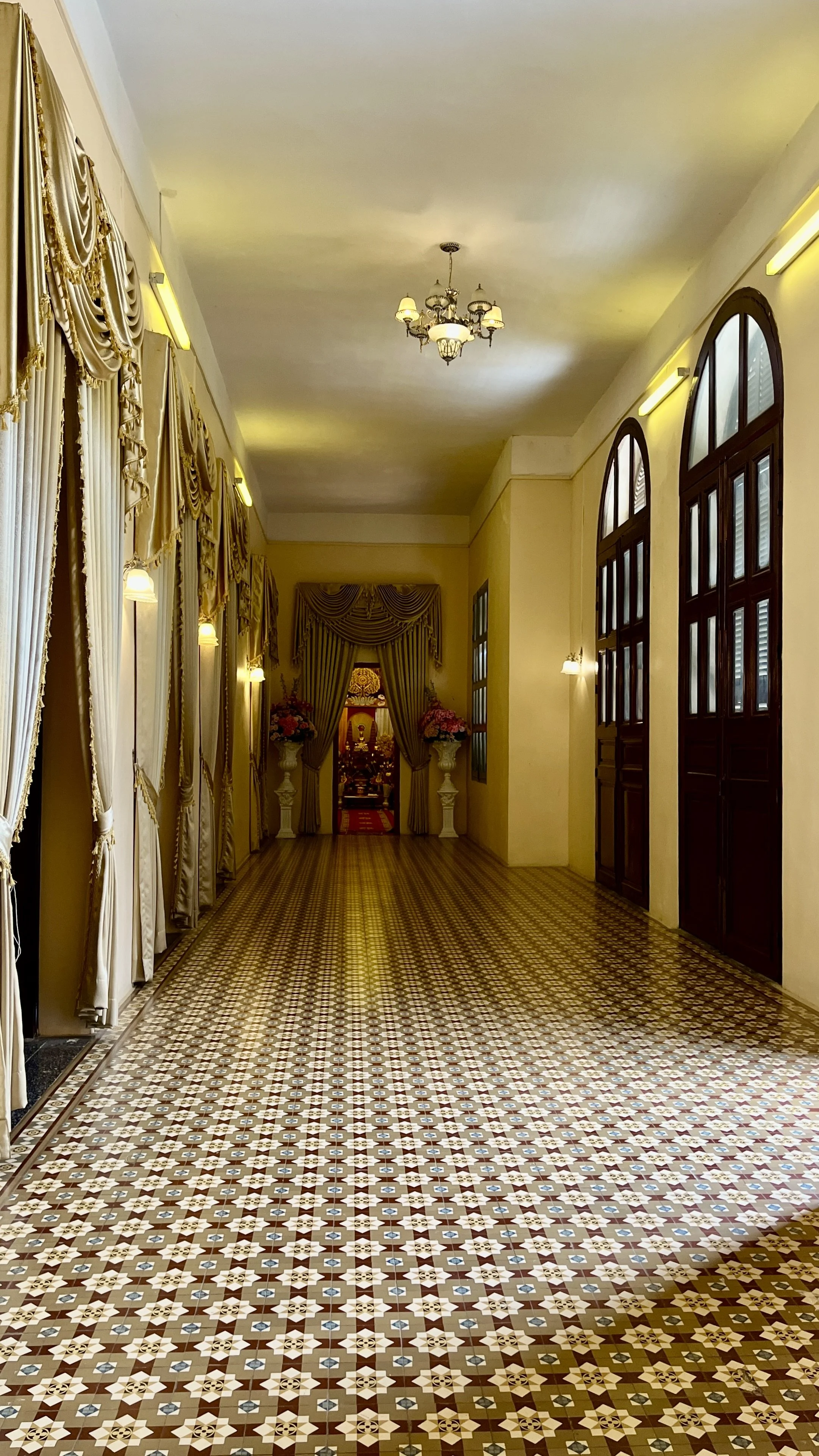
The performative shrine of course.
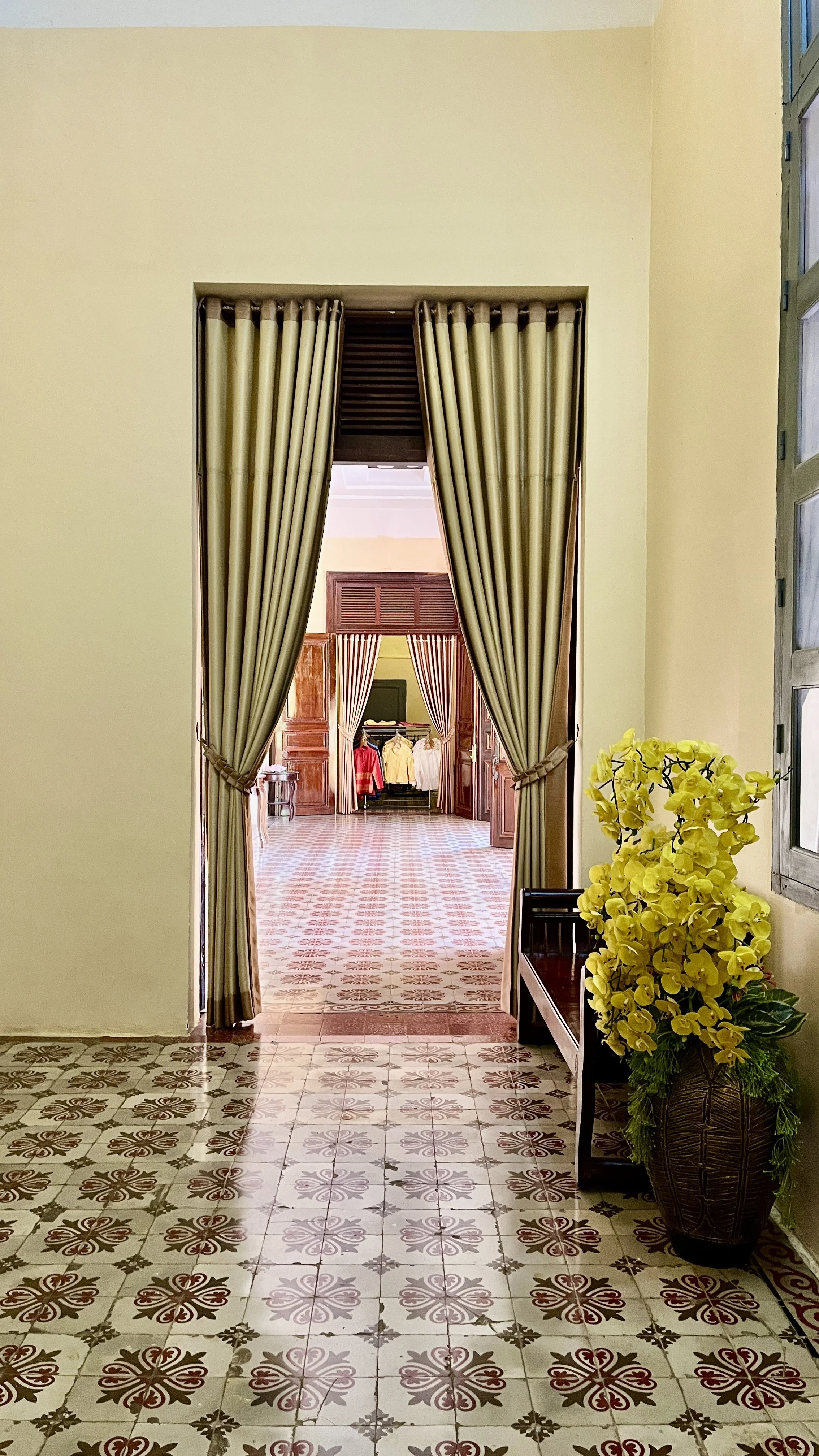
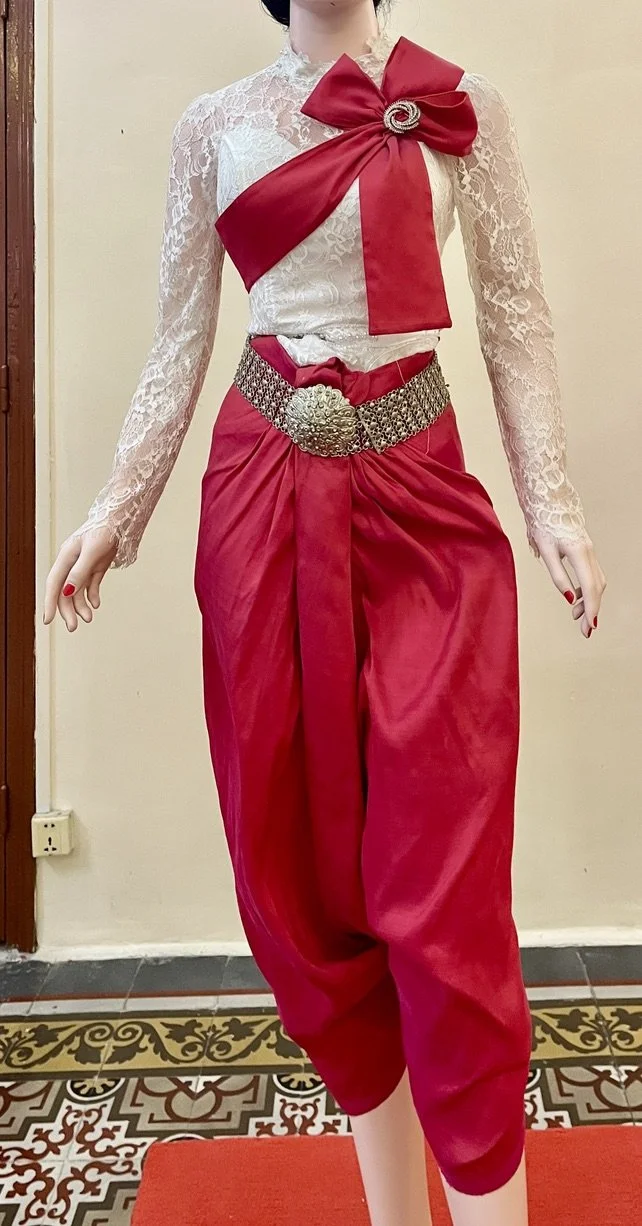
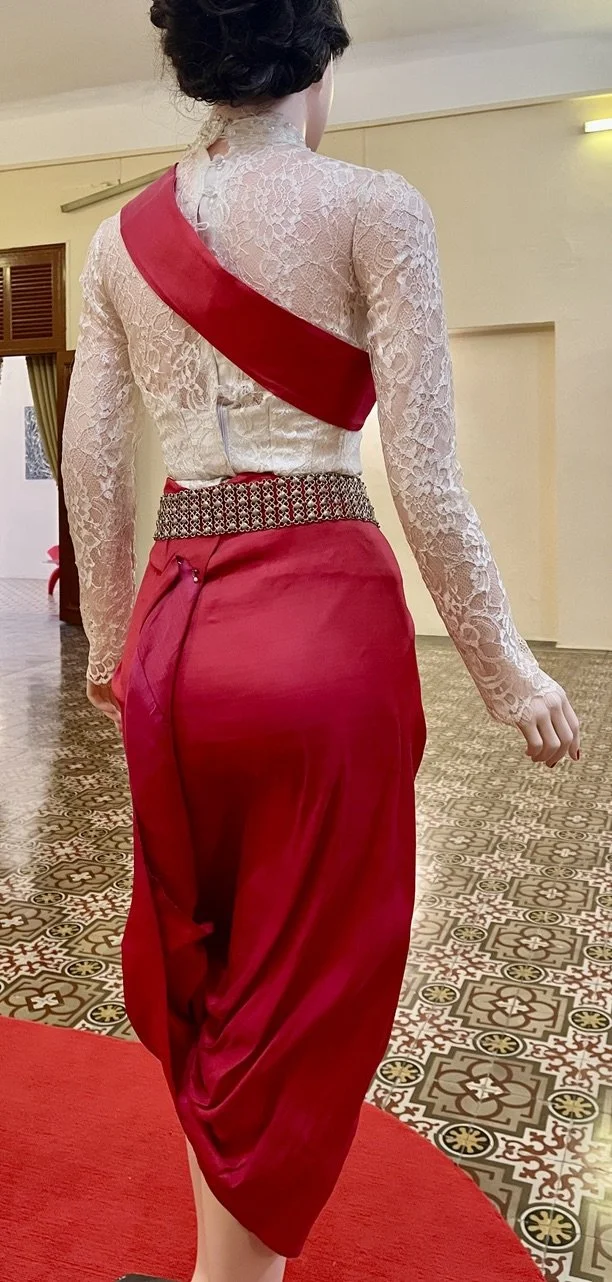
I guess some people will pay to rent traditional clothes and do a little photo shoot here?
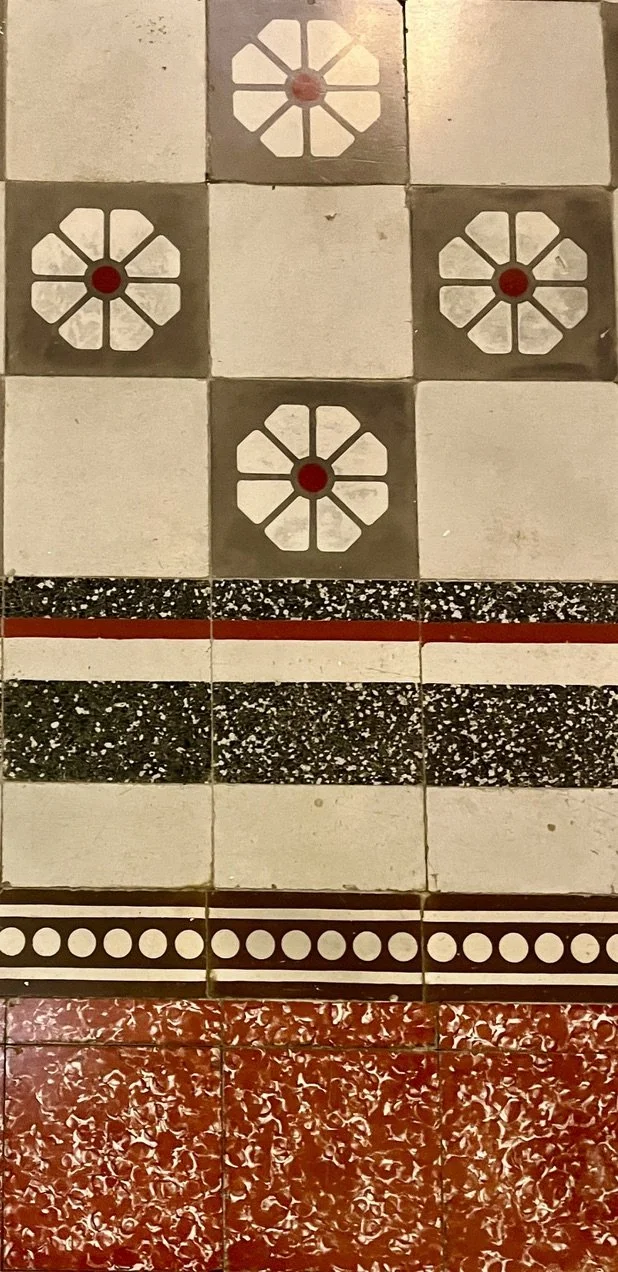
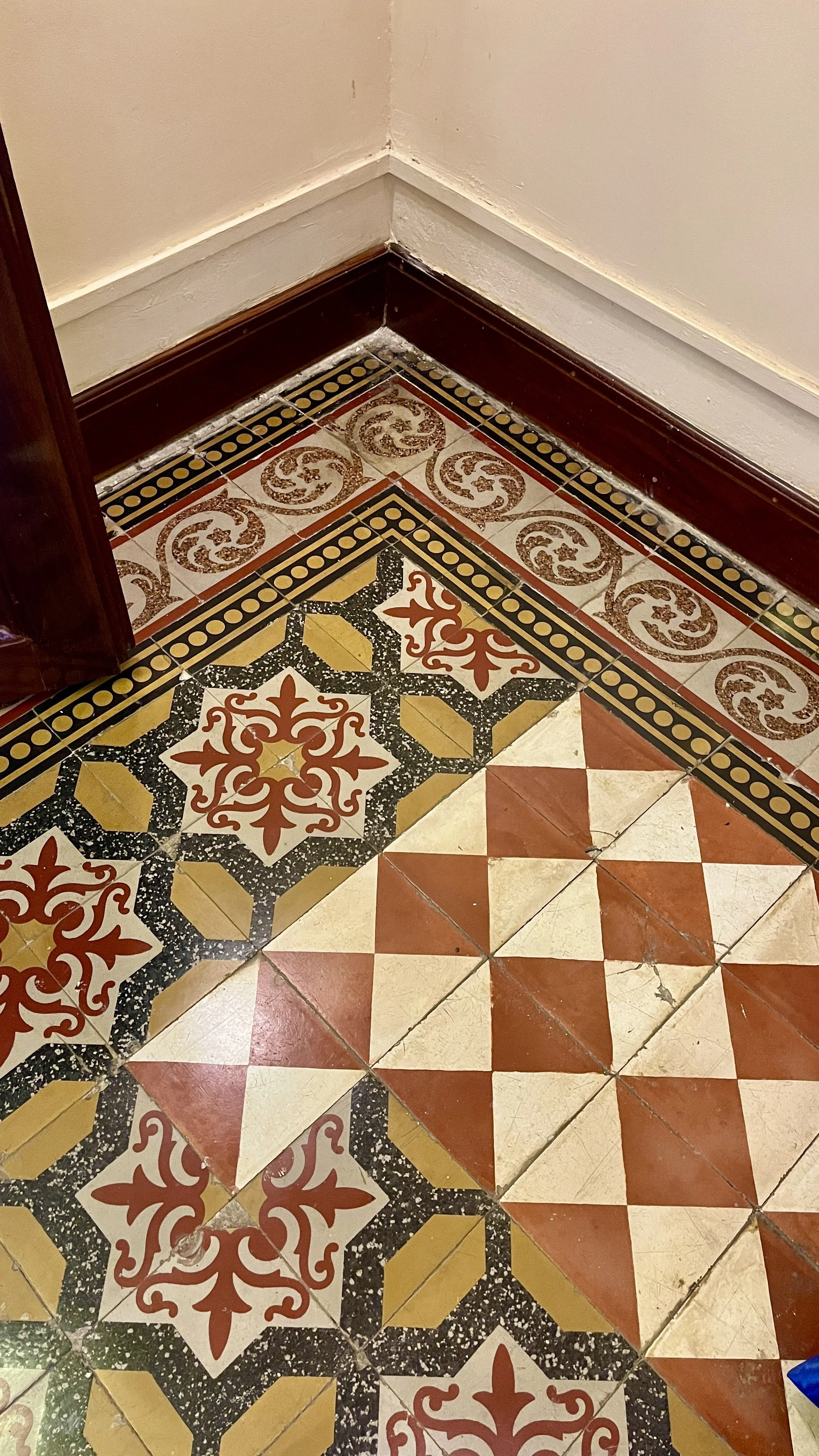
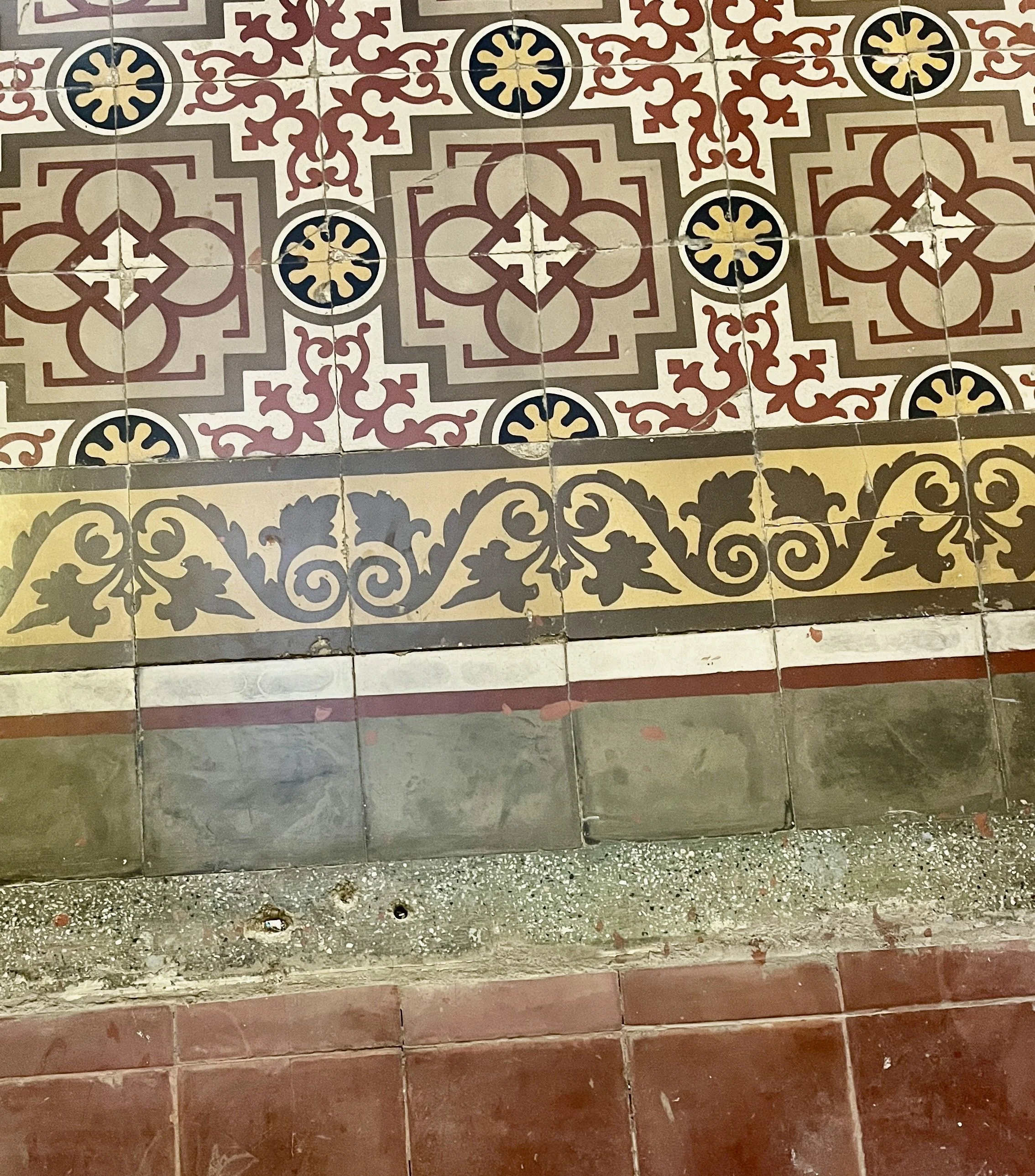
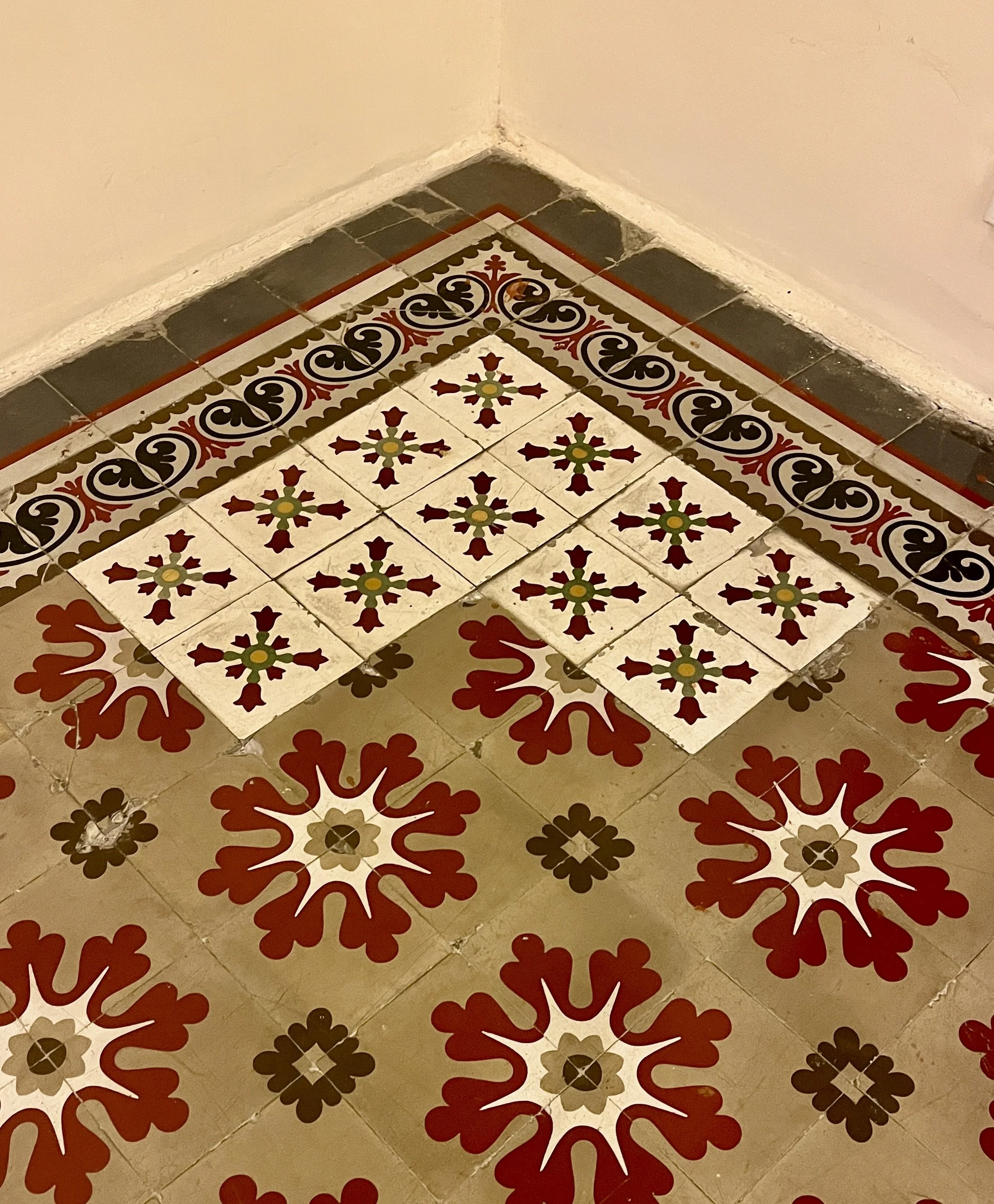
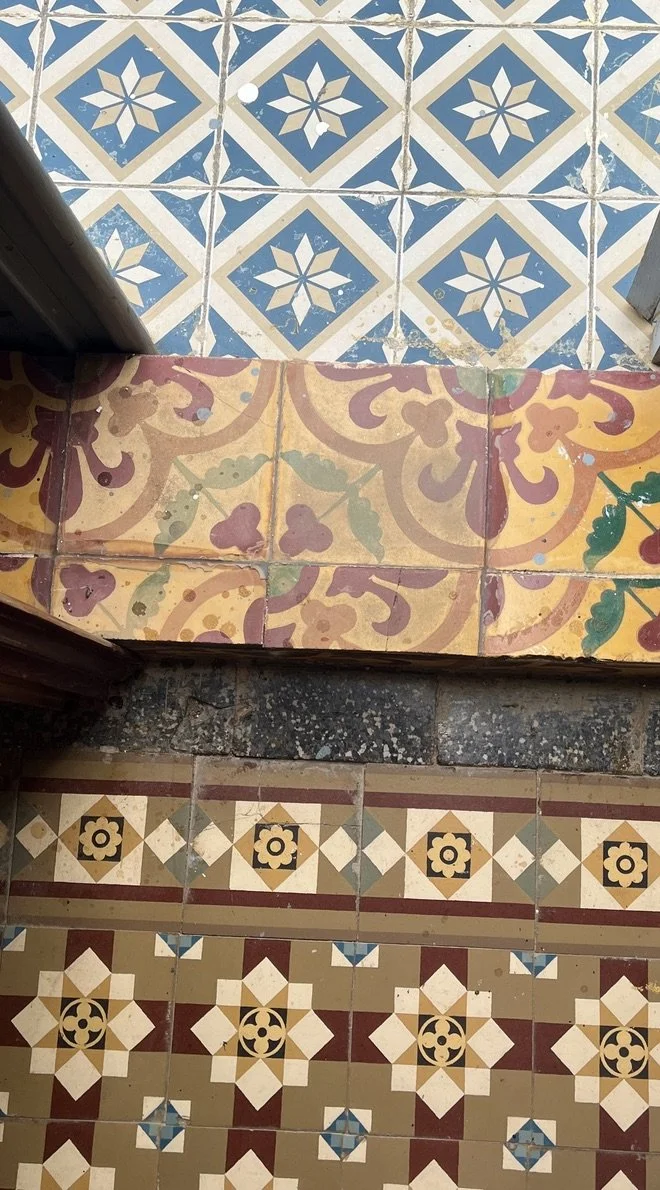
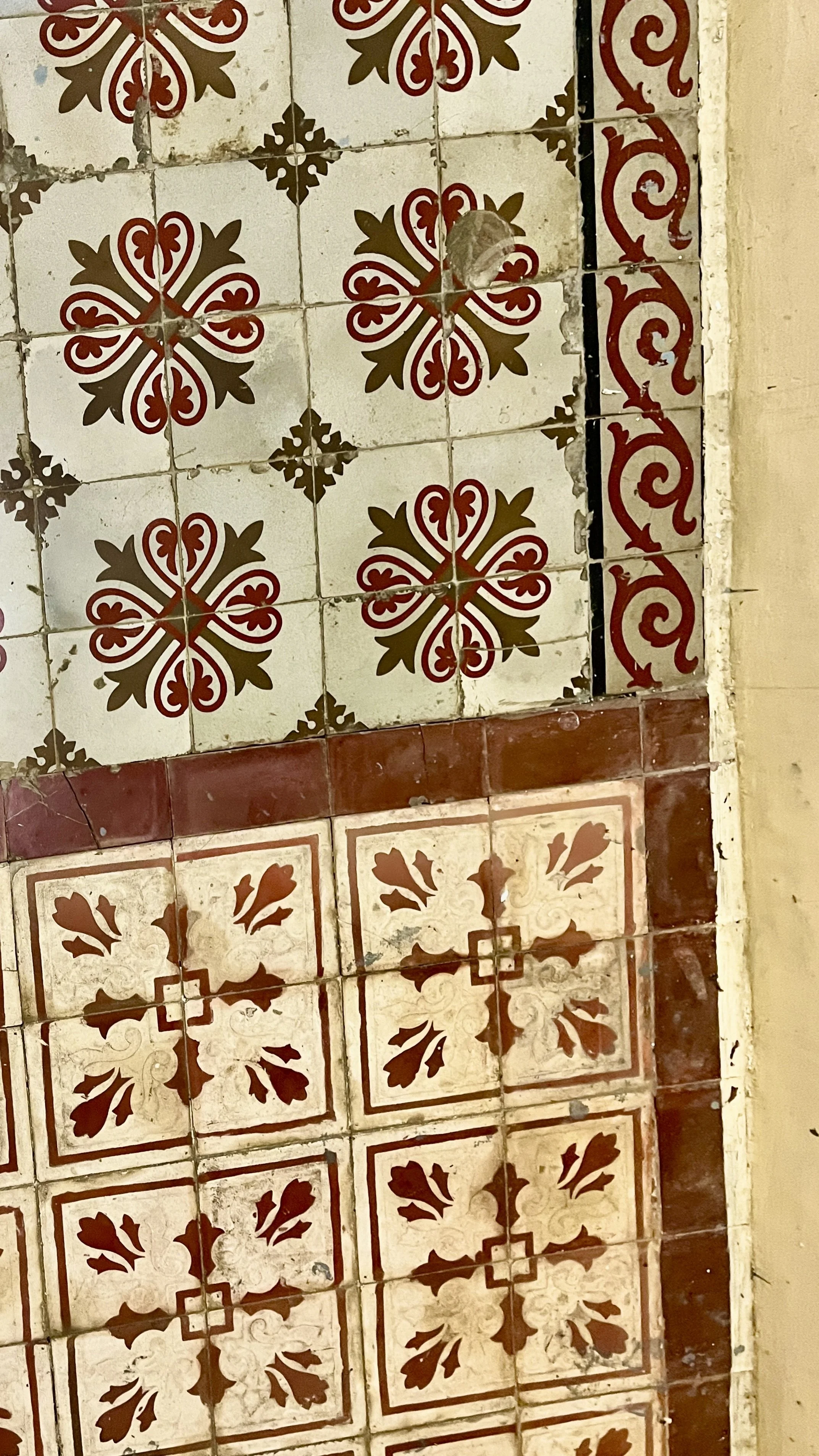
I took lots of pictures of the tile border combos for inspiration
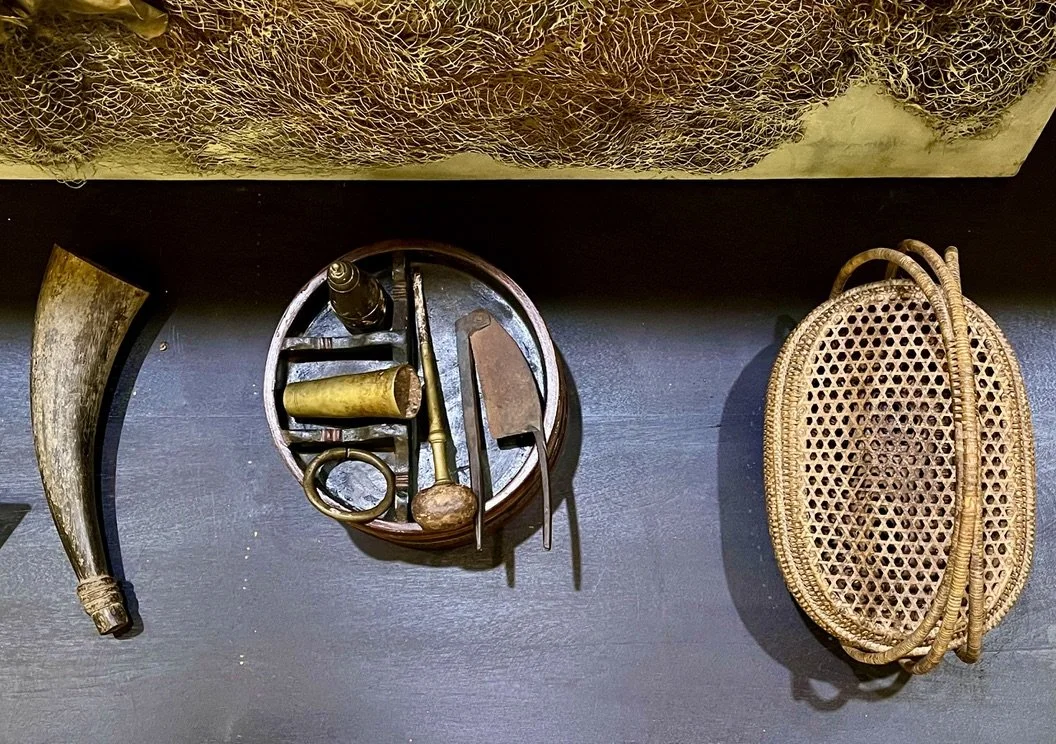
Weird assortment of farm equipment and housewares.
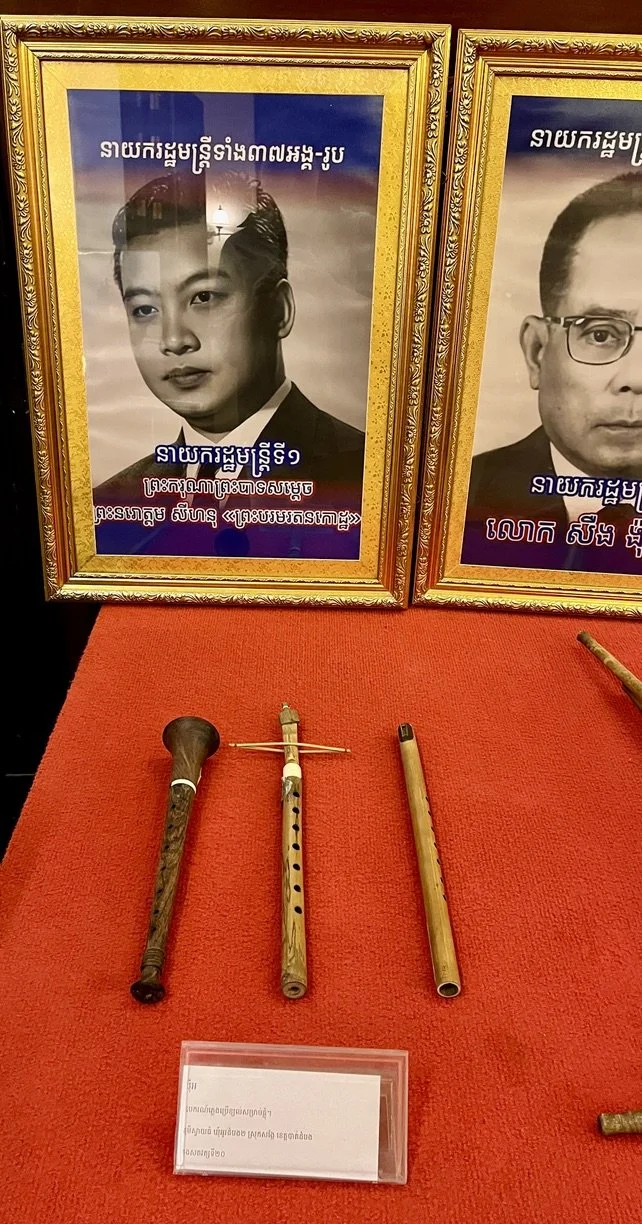
Hard to say because nothing was translated, but I think these were the personal hobby instruments of famous people?
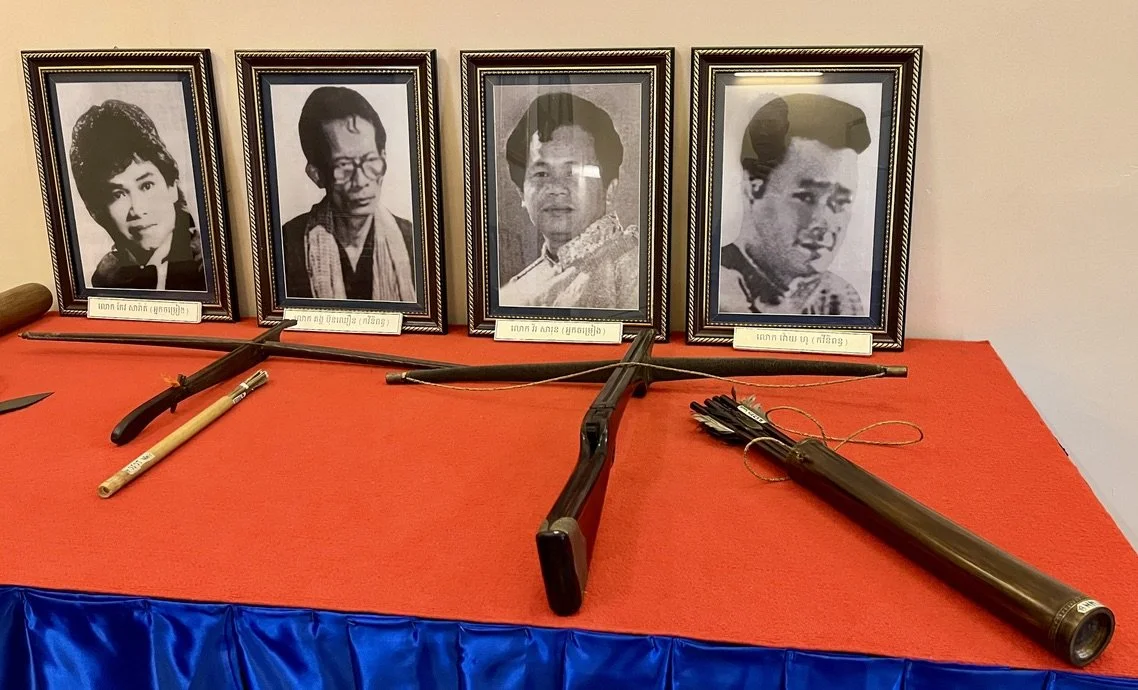
Likewise, hobby shooting items?
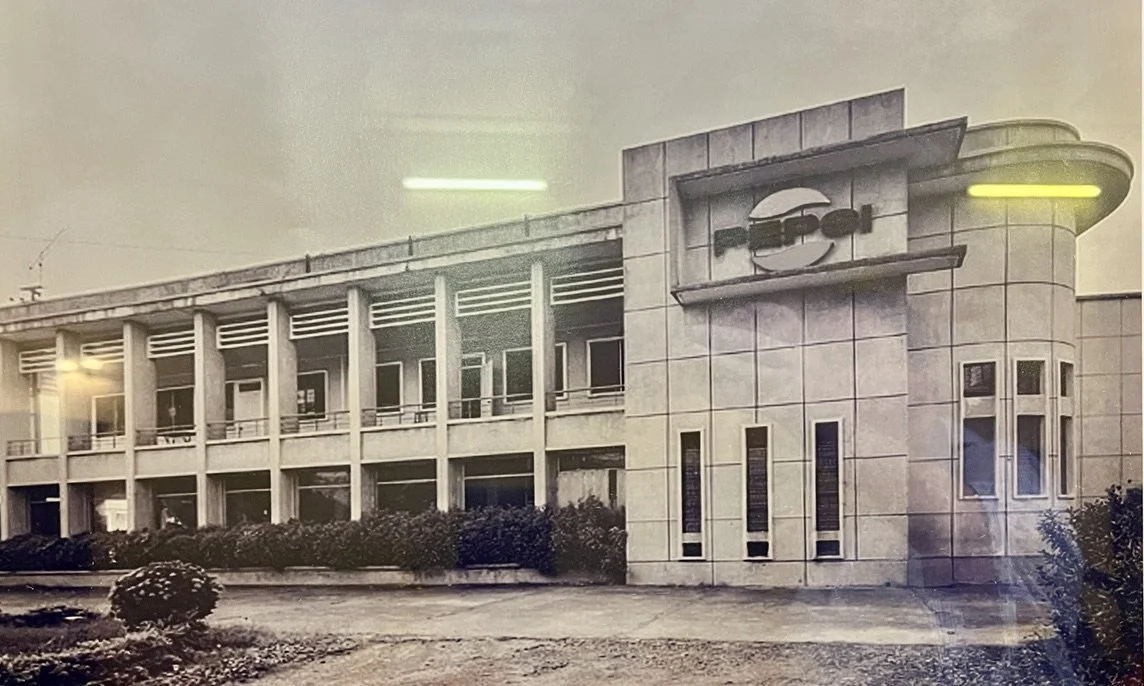
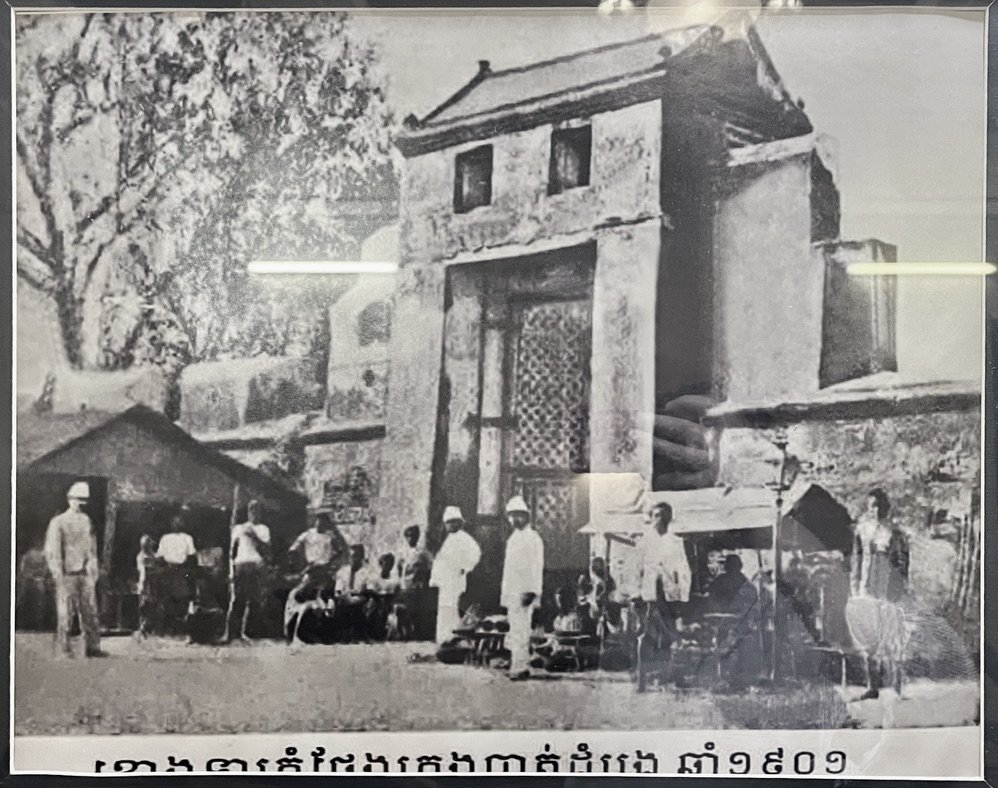
There are a bunch of old photos.
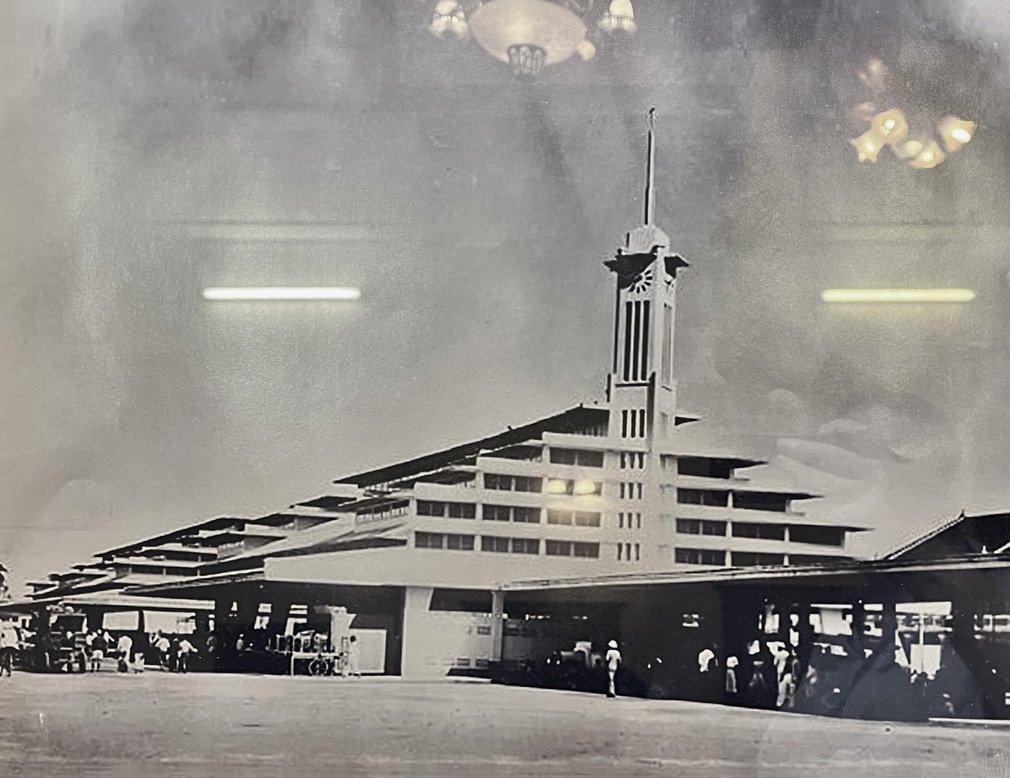
This view is not much different today.
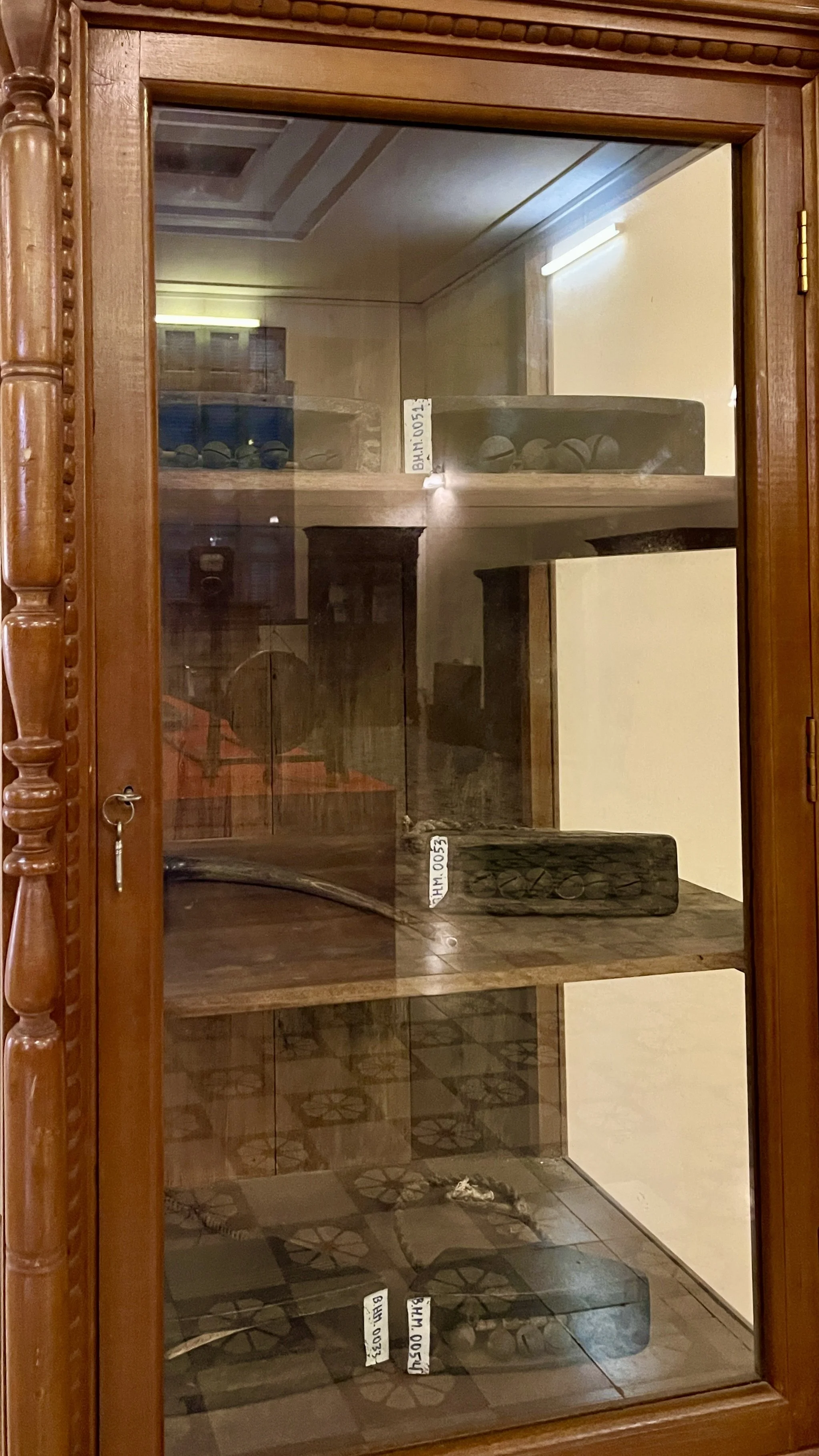
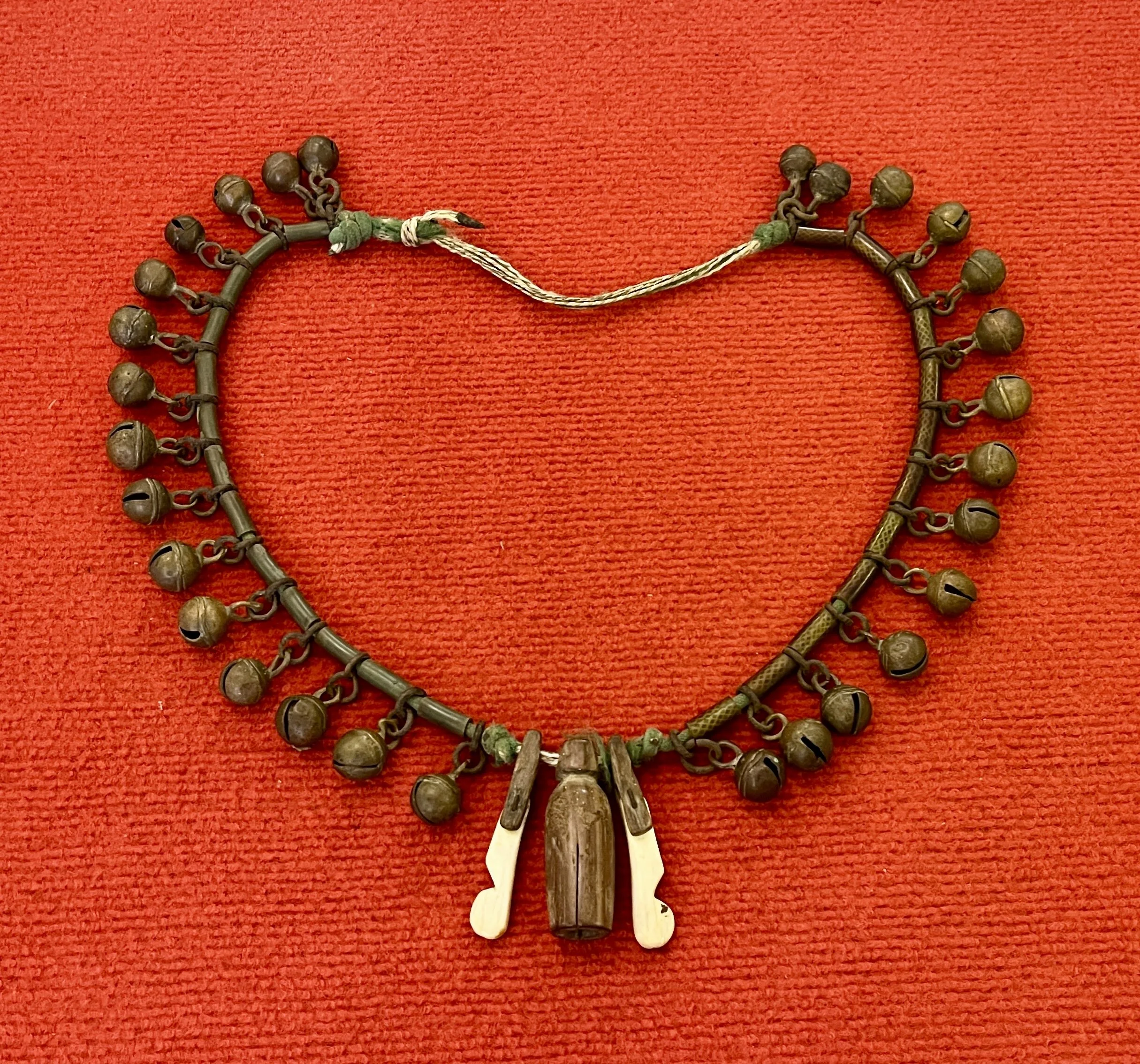
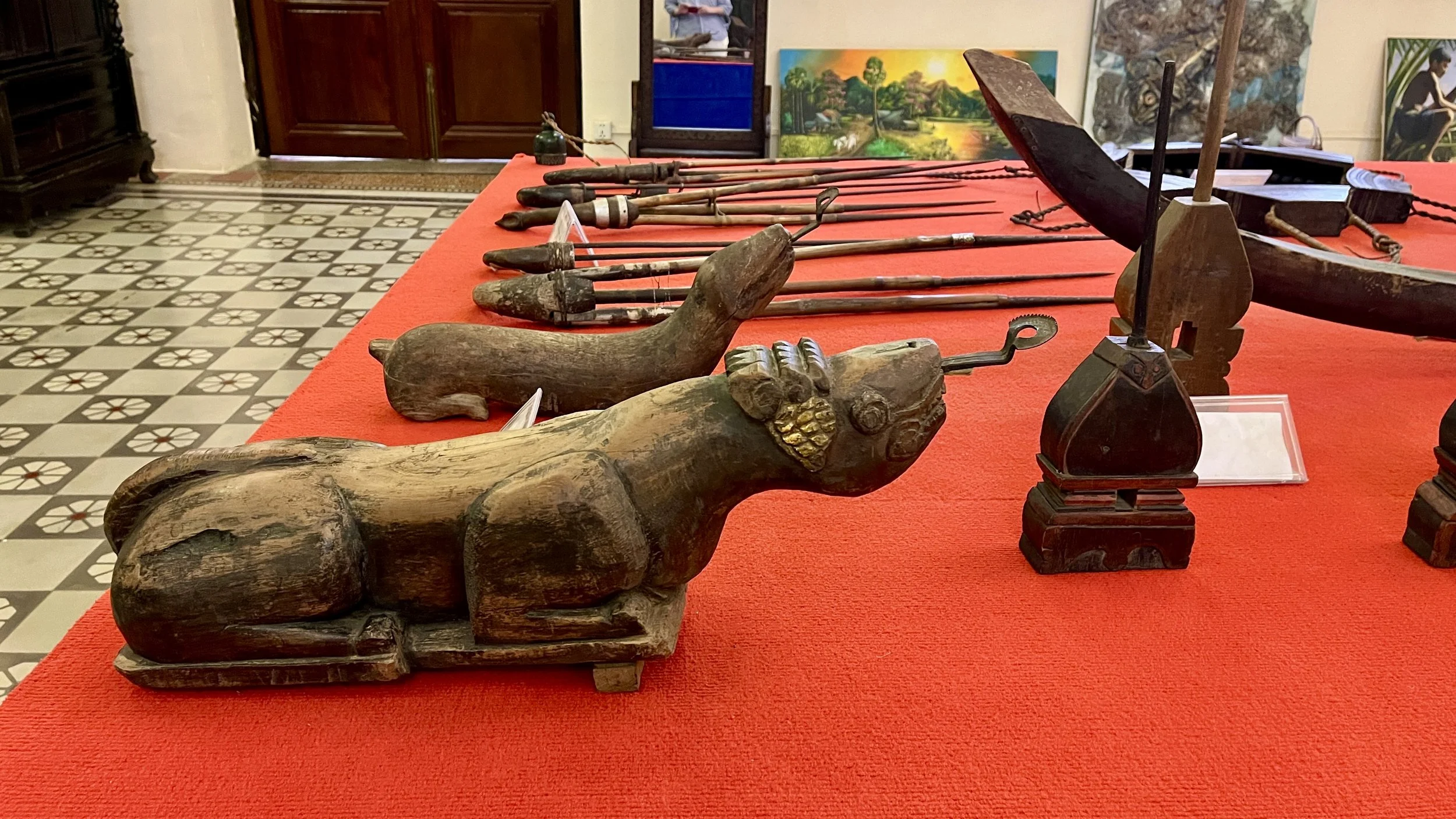
Are these cowbells? Are these cowbells in a display cabinet or am I losing my mind?
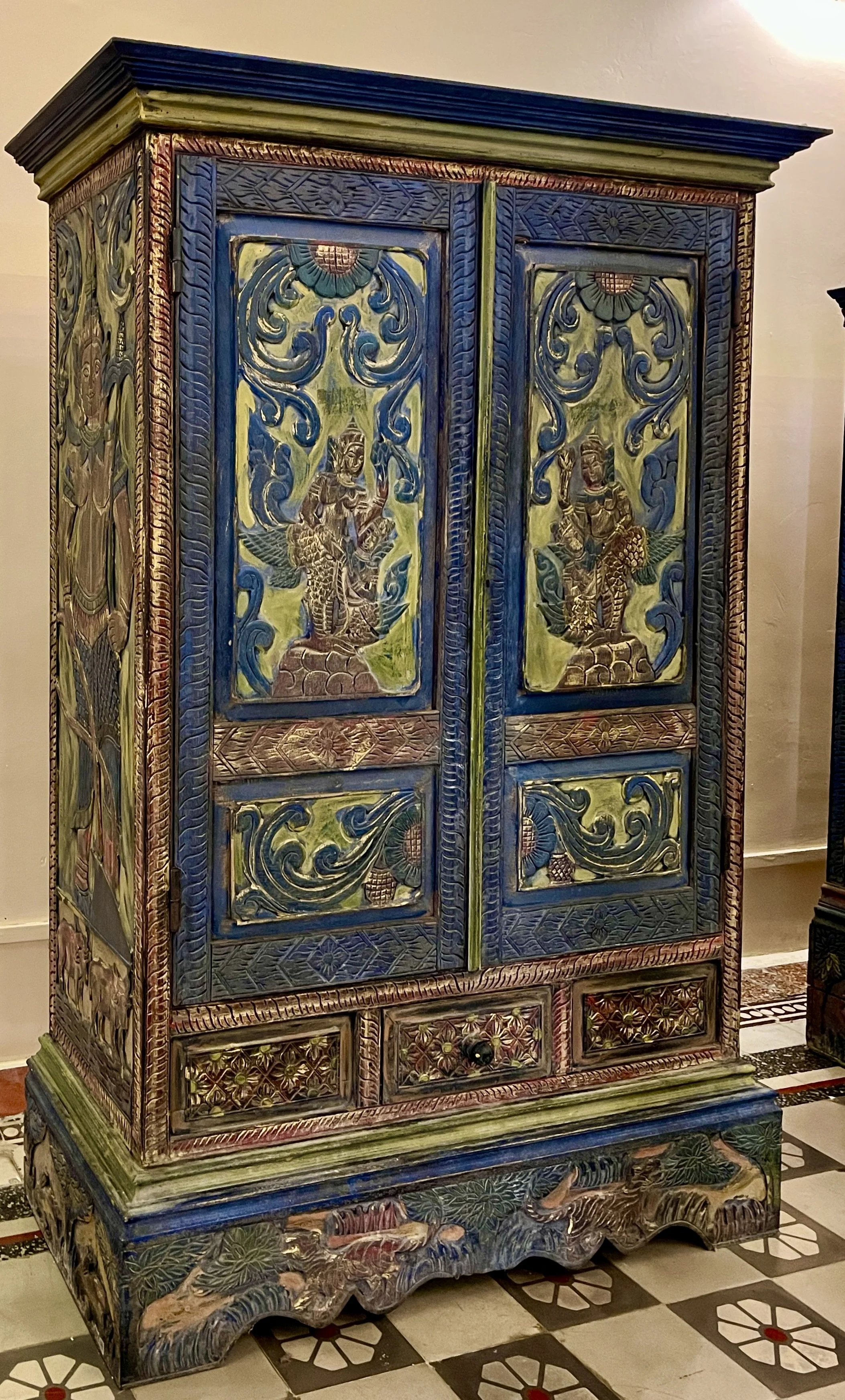
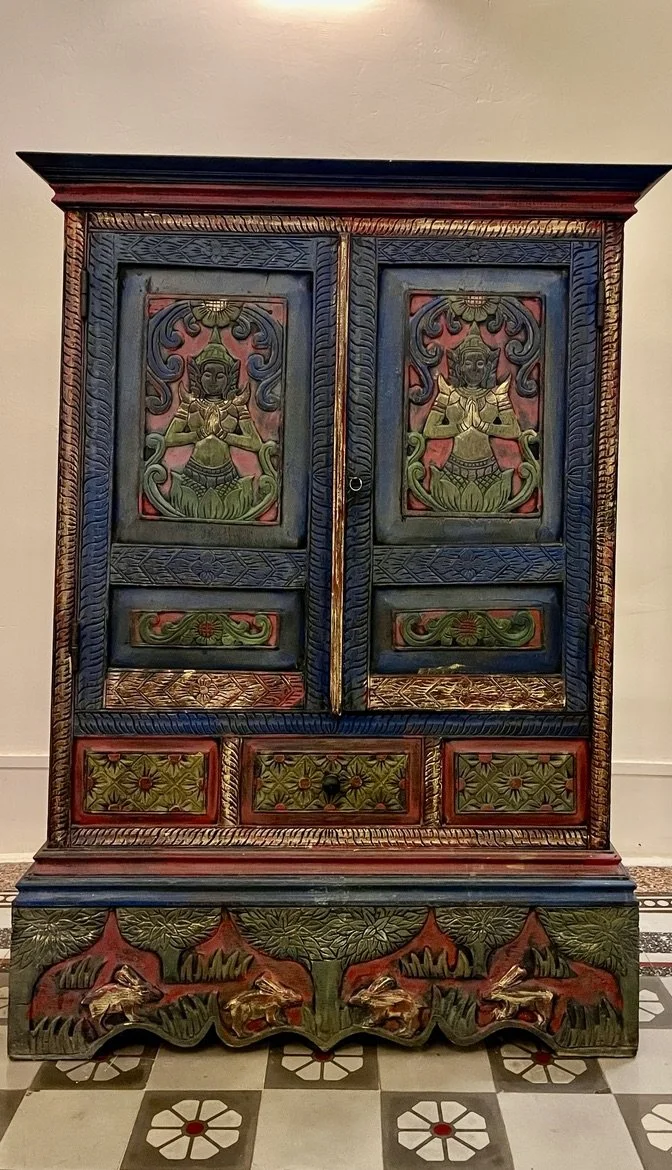
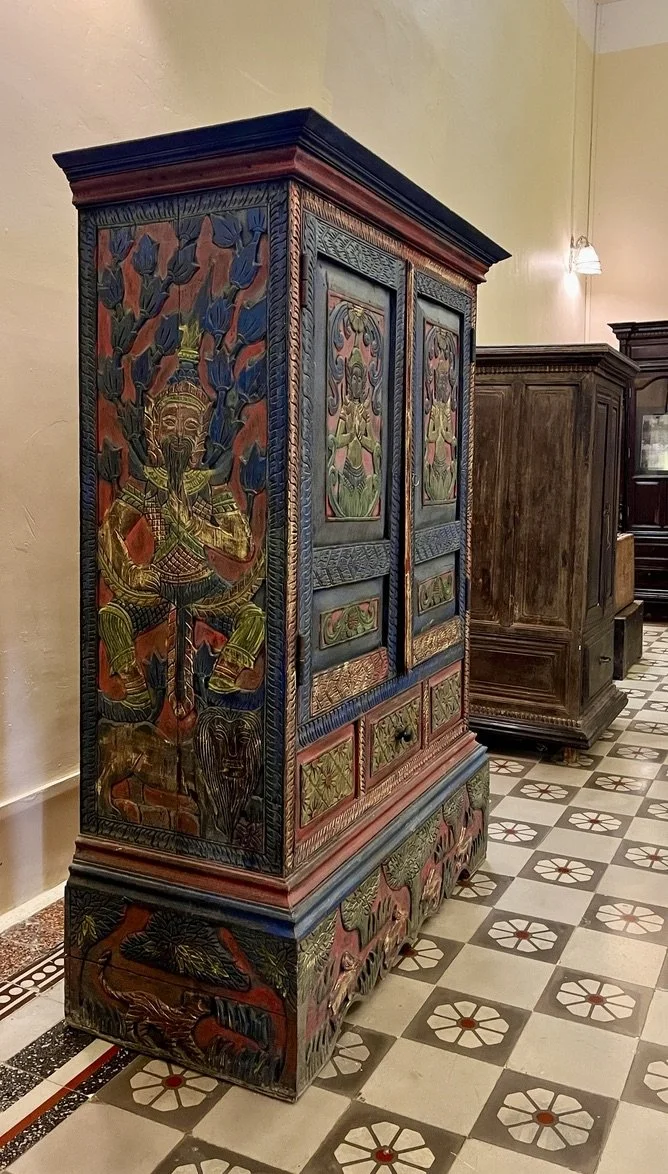
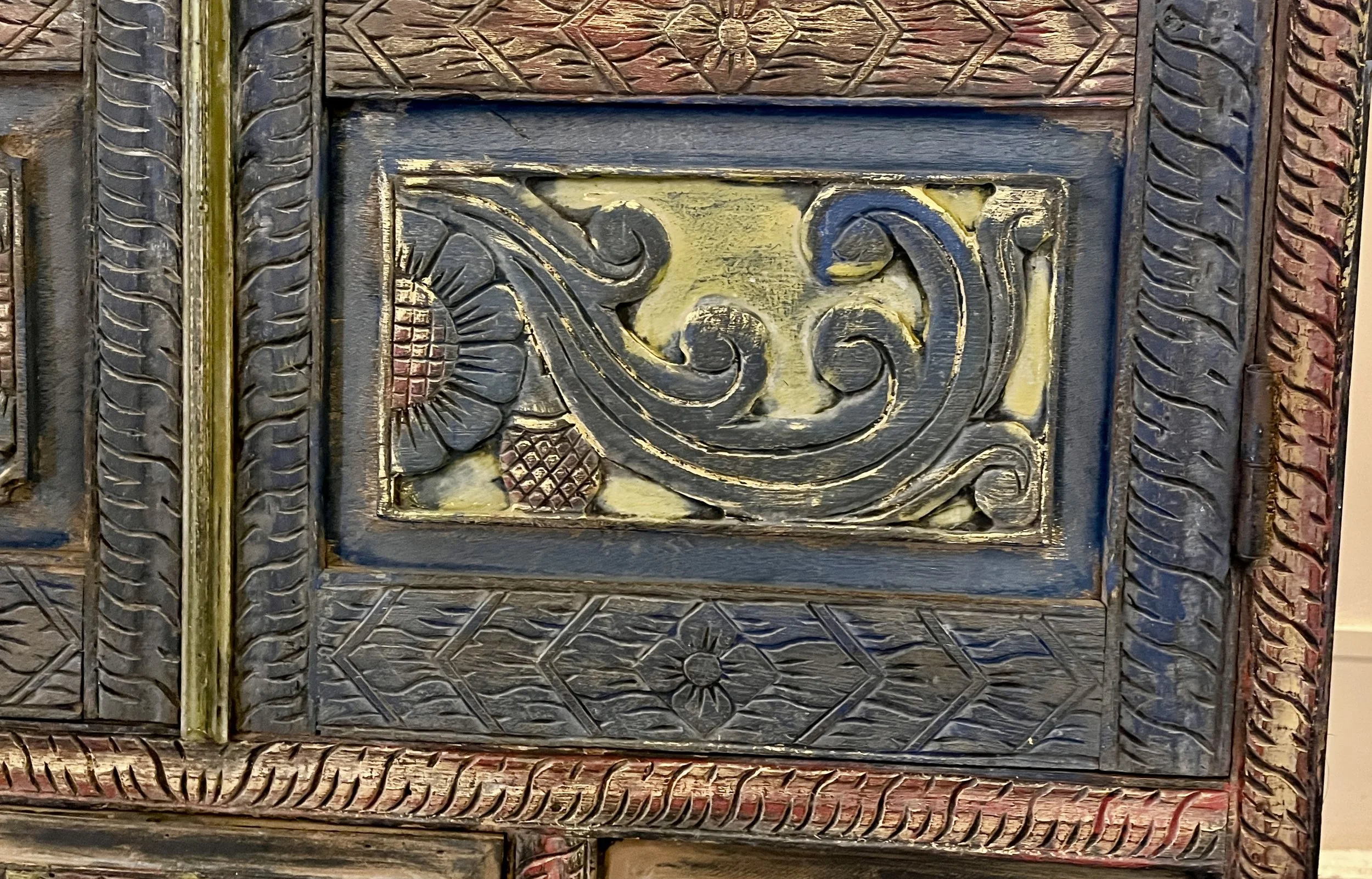
Not particularly fond of this style but it’s growing on me.
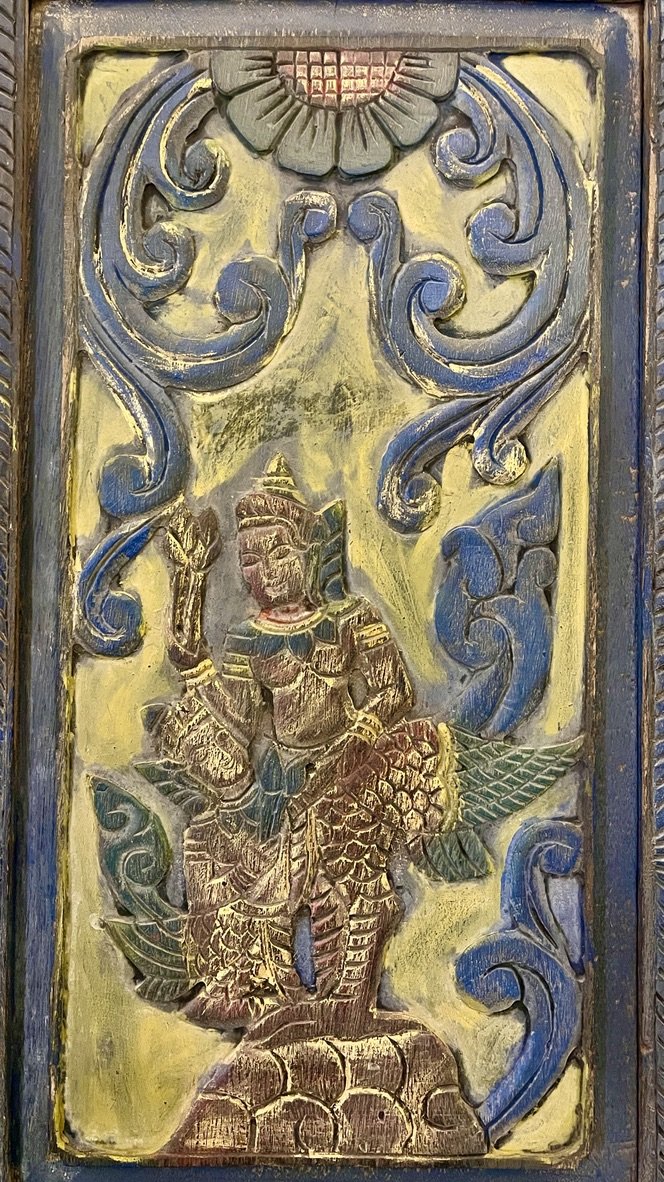
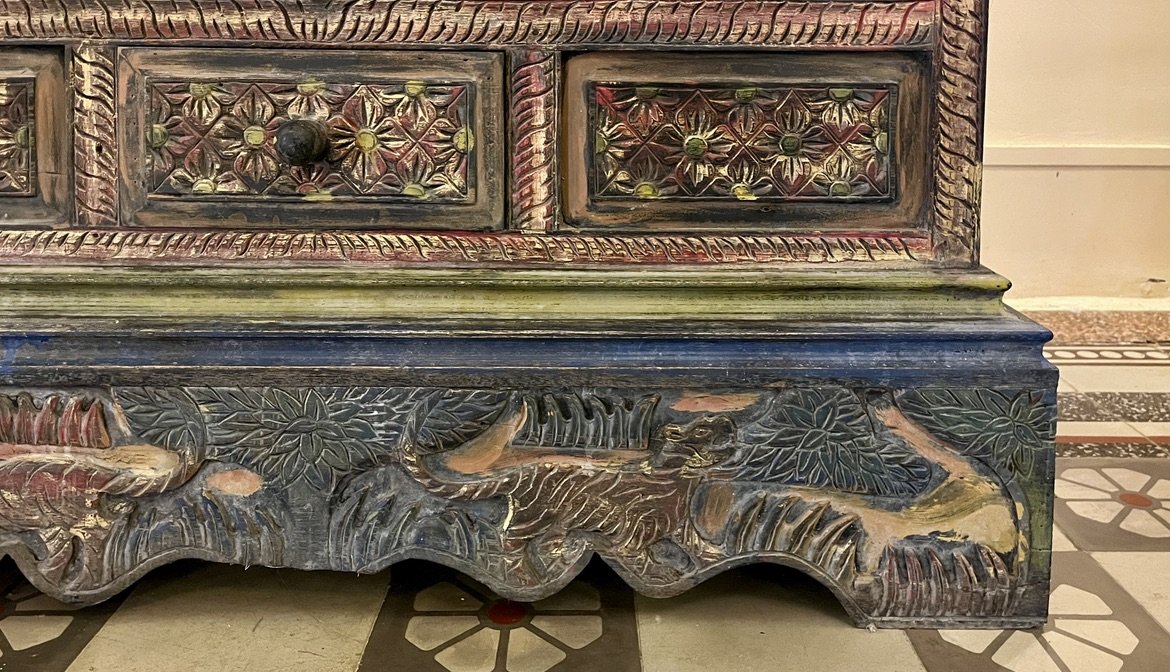
Why are these things in a museum?!
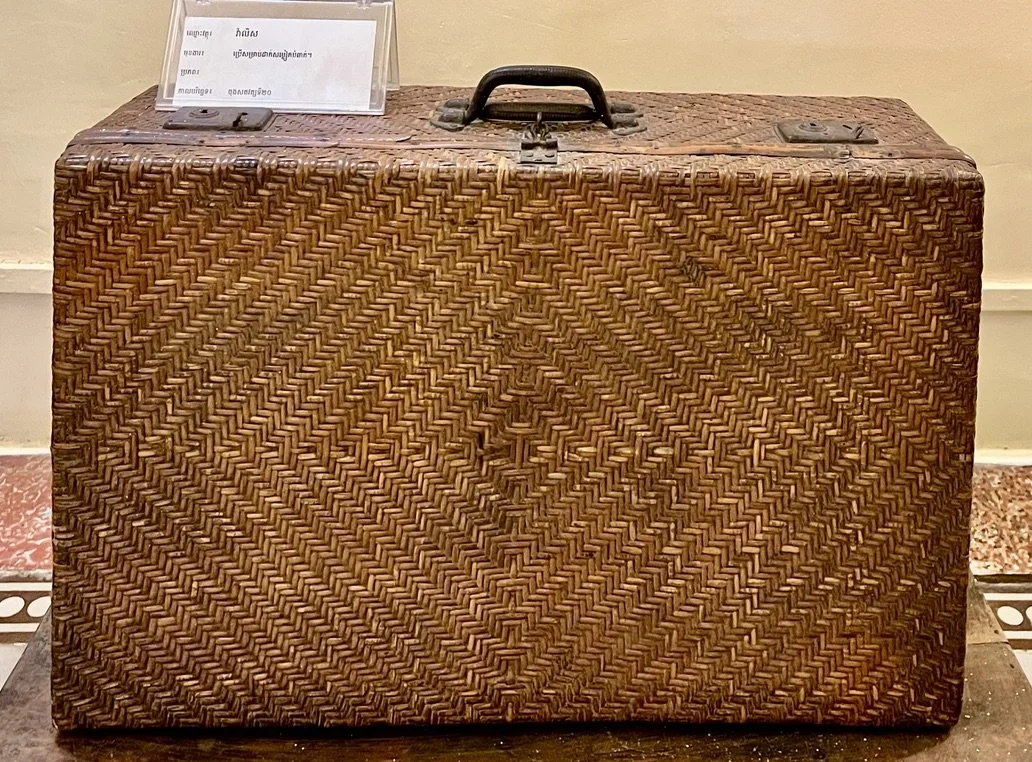
It’s always struck me as strange how local museums in Asia have “antiques” so much worse than literally anything in my grandparents’ very middle class homes in New York.
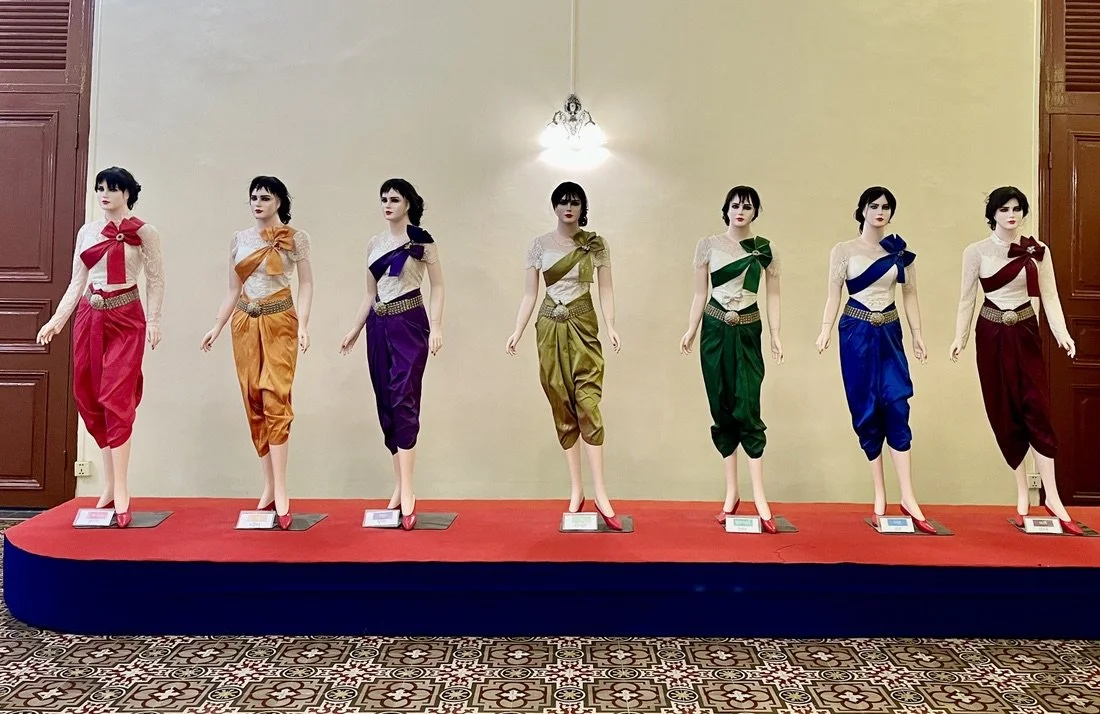
It’s a custom for court women in Thailand and Cambodia to wear a specific color every day of the week.
Out and About in Battambang | Cambodia

I spent two half days just cruising the town and countryside of Battambang with a tuktuk driver, really enjoying seeing the old houses and people going about their day.

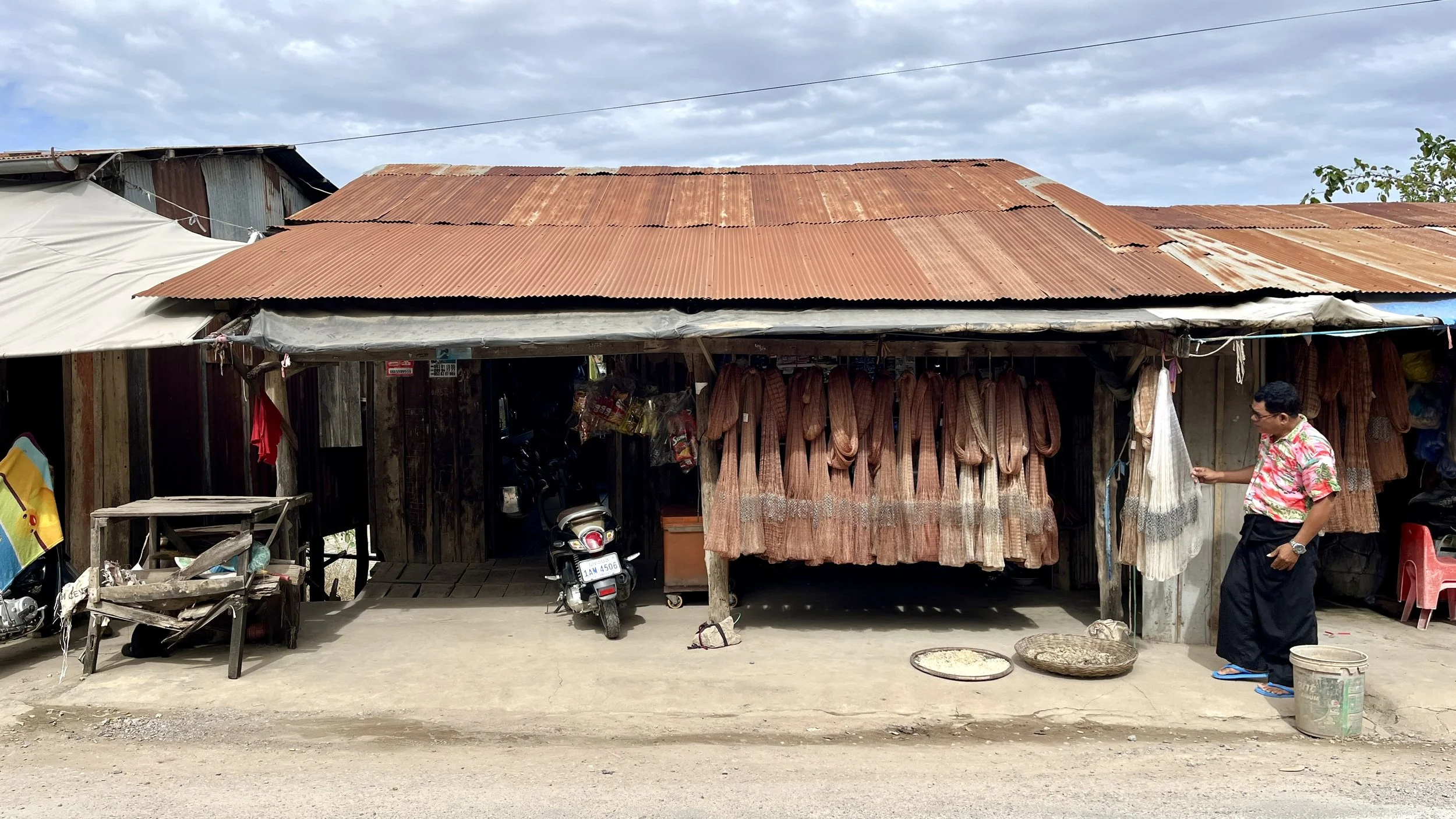
Handmade fishing nets for sale. This is a common handicraft in the old Muslim neighborhood.

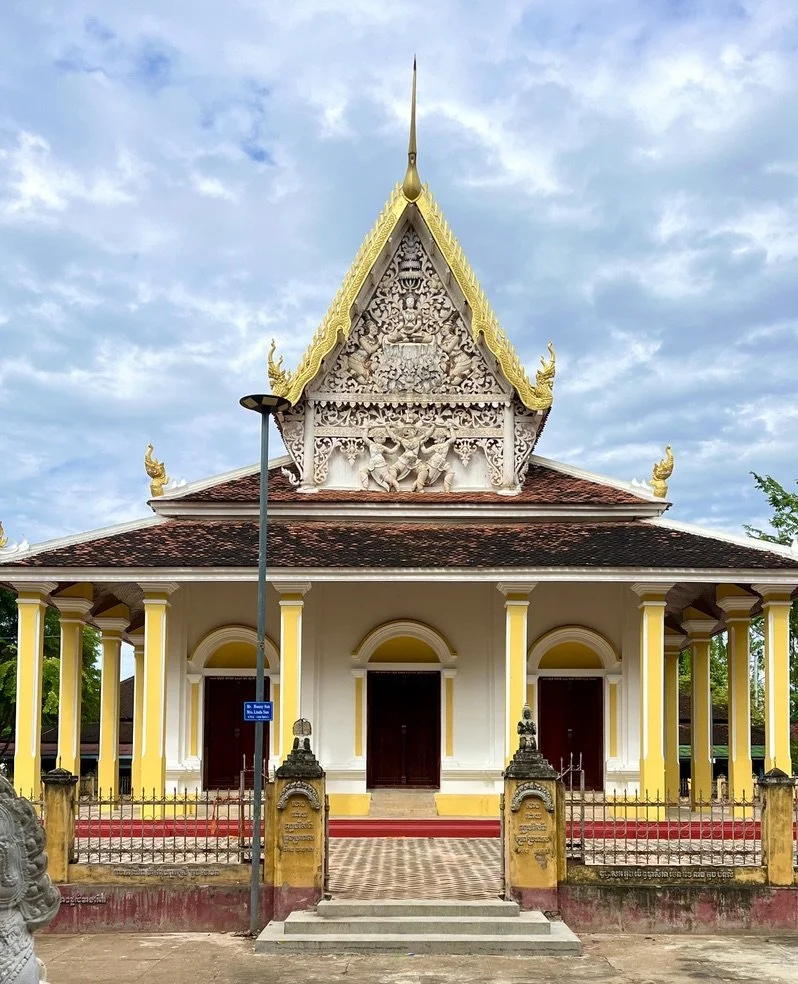
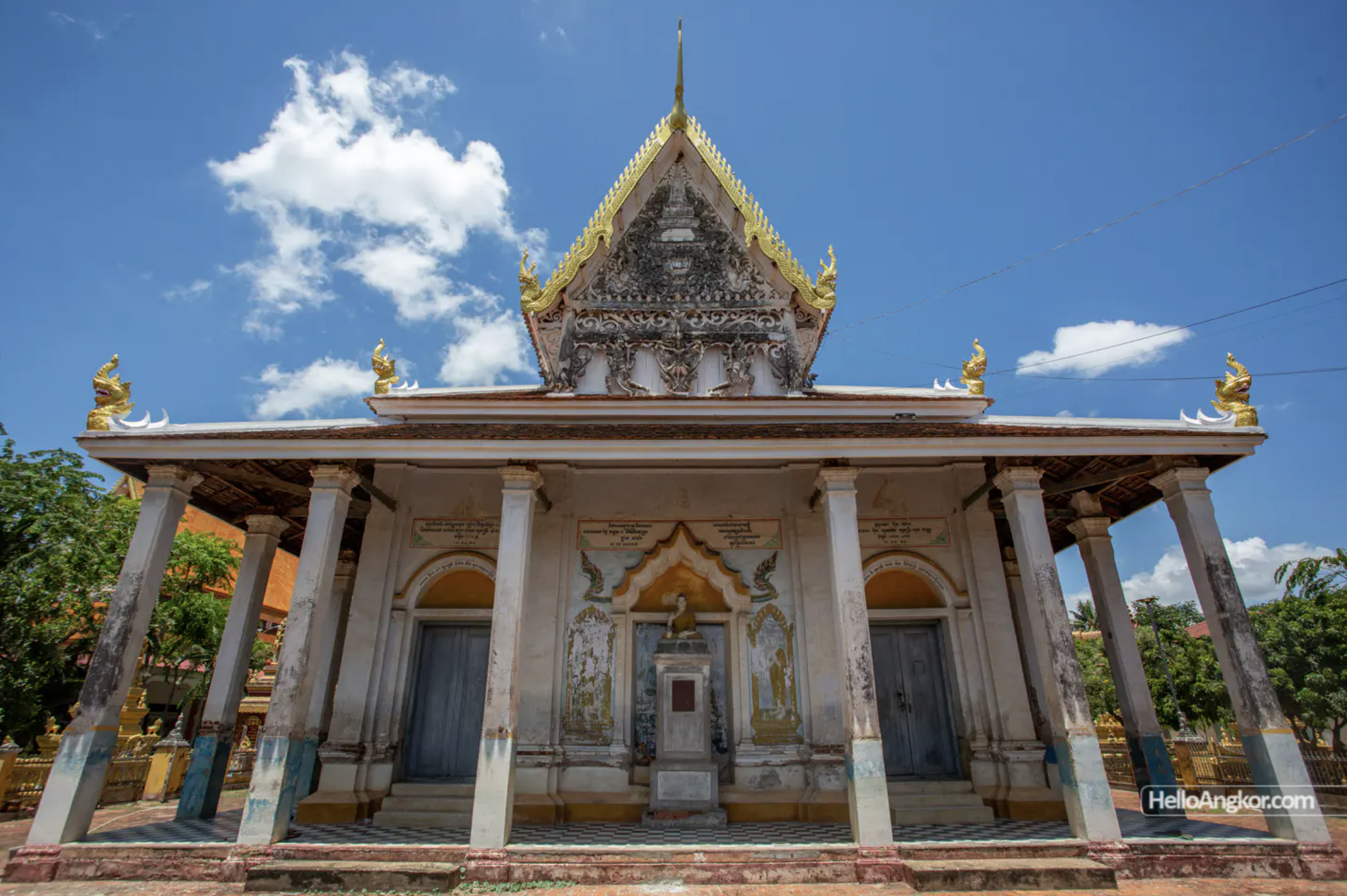
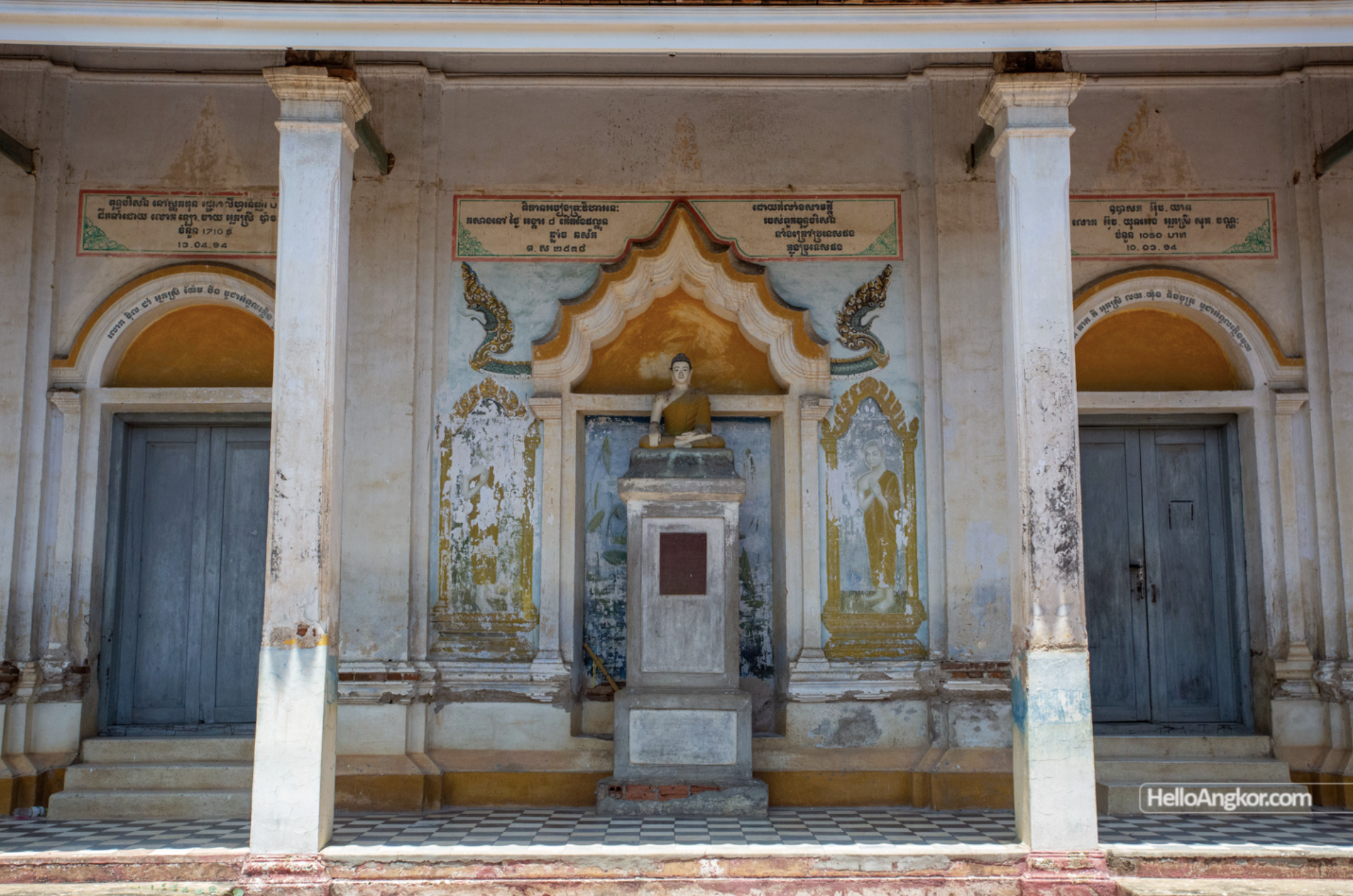
I can’t find much info on Wat Balat– online sources say it’s around 100 years old, but there’s no real verification anywhere.

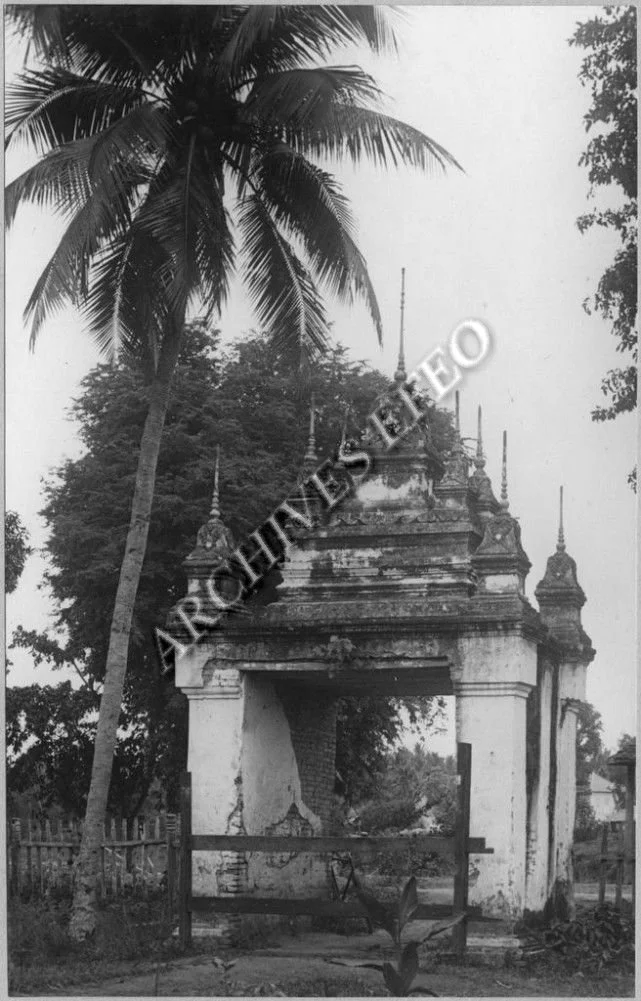
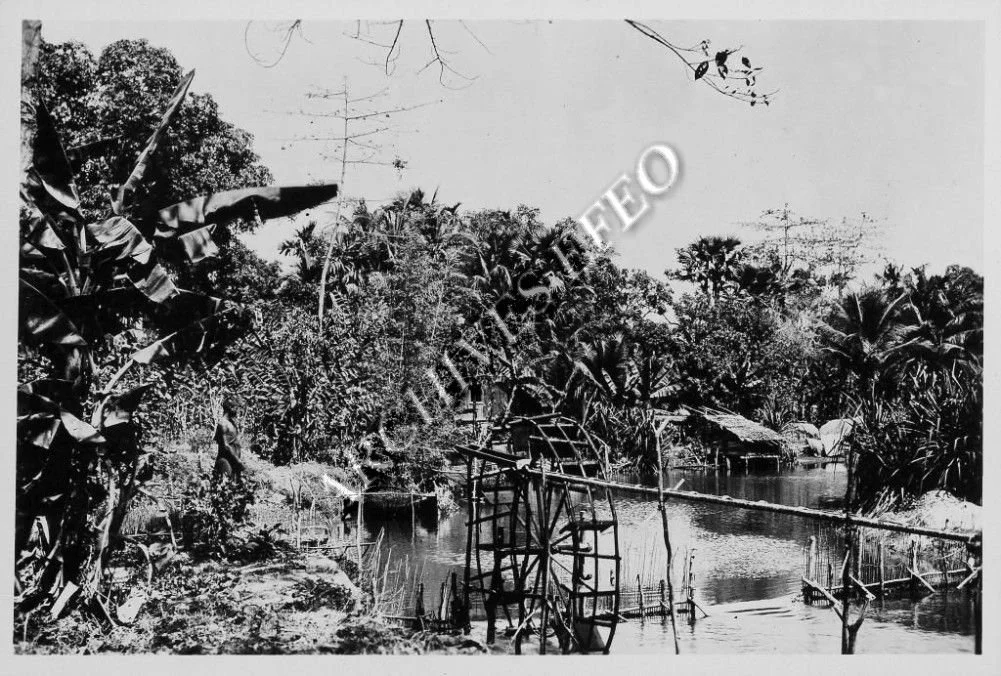
The only EFEO archive image is this gate from July 1934 . . . indicating the Wat, at least as it exists today, is younger.

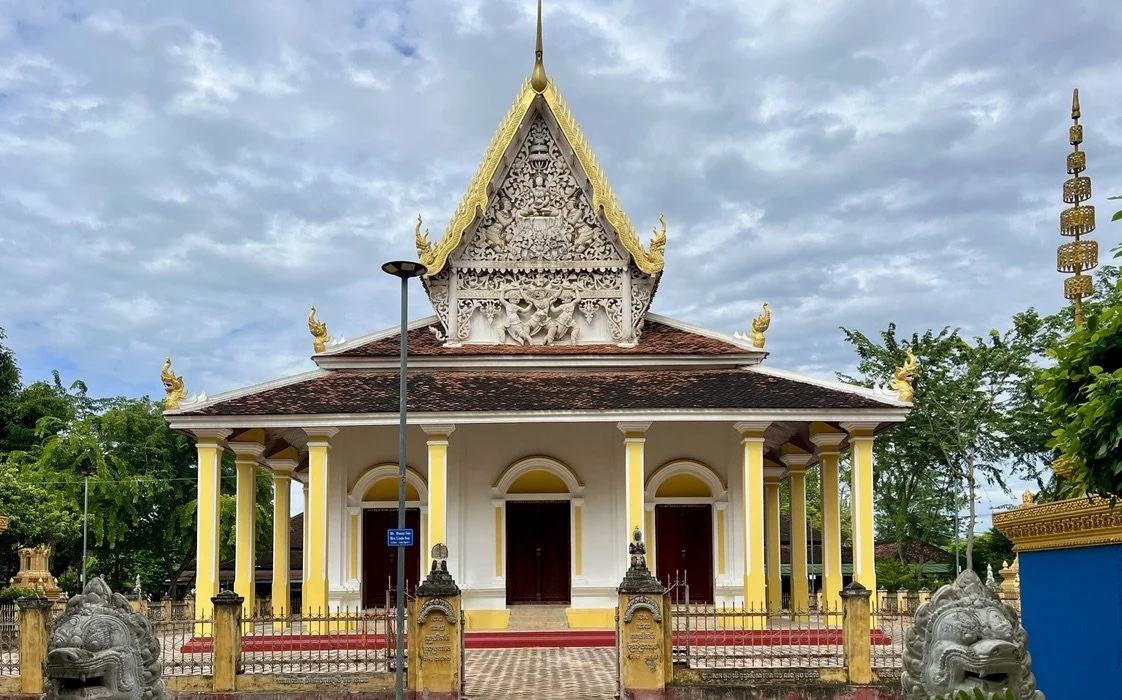
It’s recently been repainted this hideous lemon yellow and white.

As recently as 4 years ago its much more charming vintage, perhaps even original, paint was still hanging on.

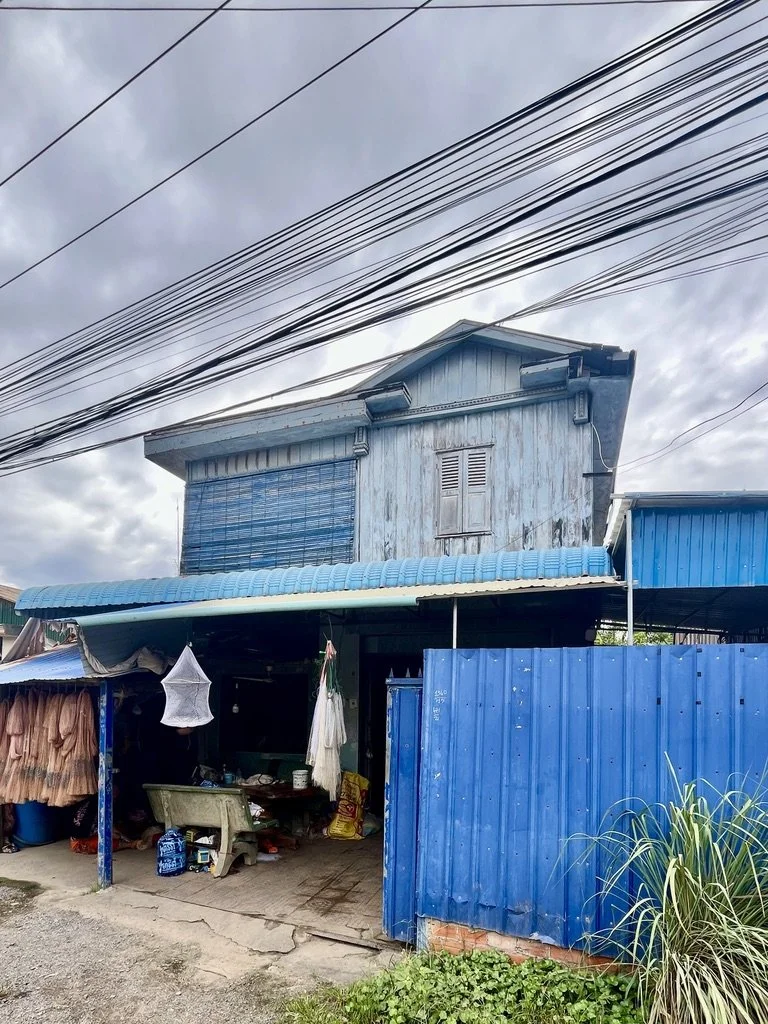
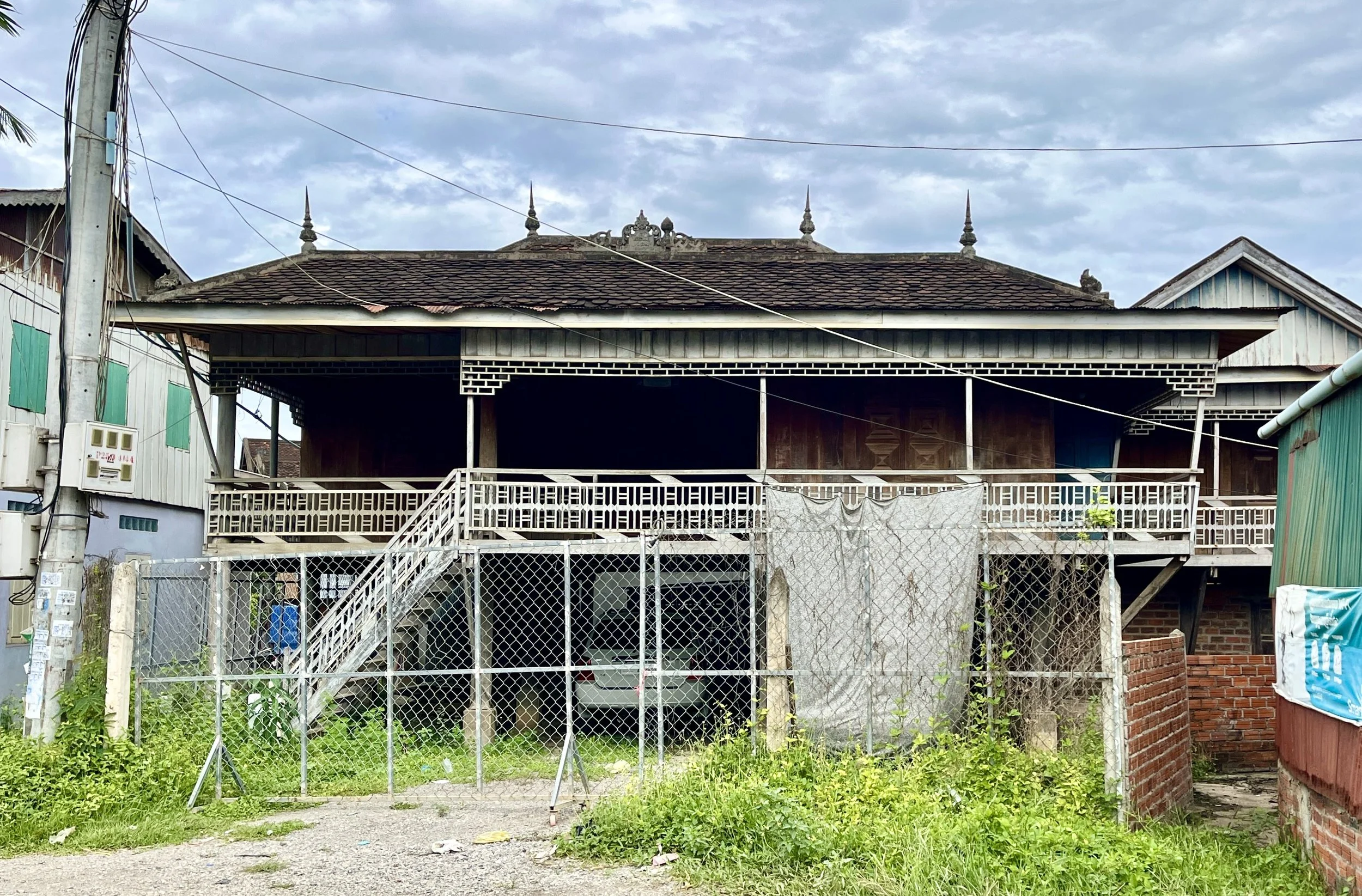
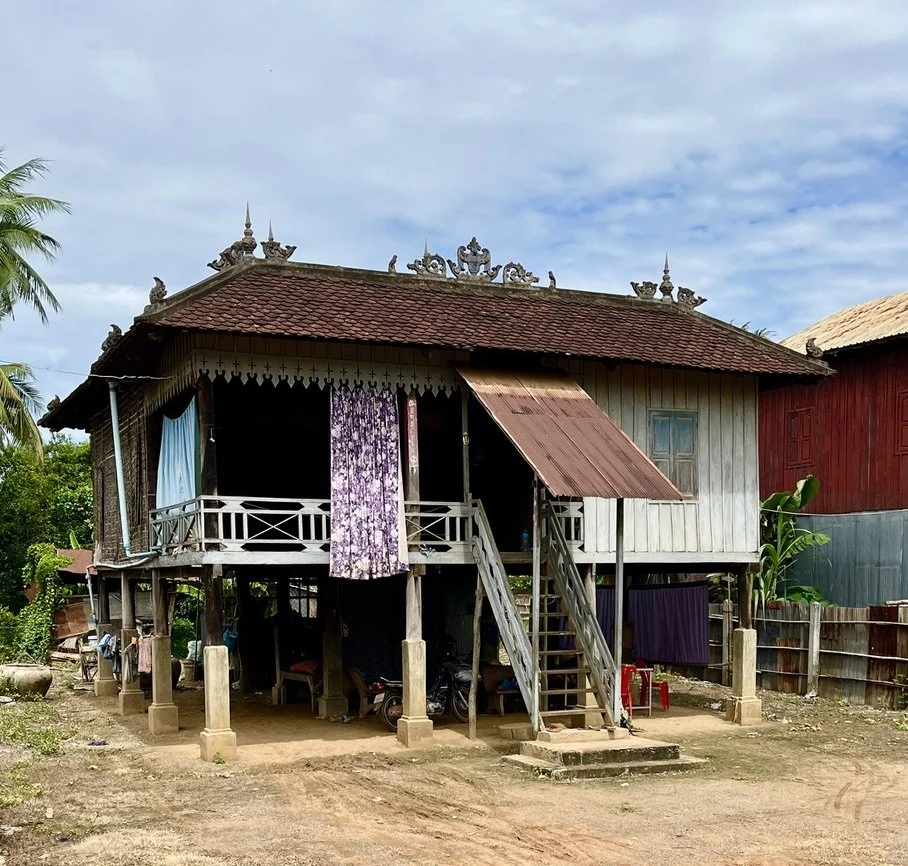
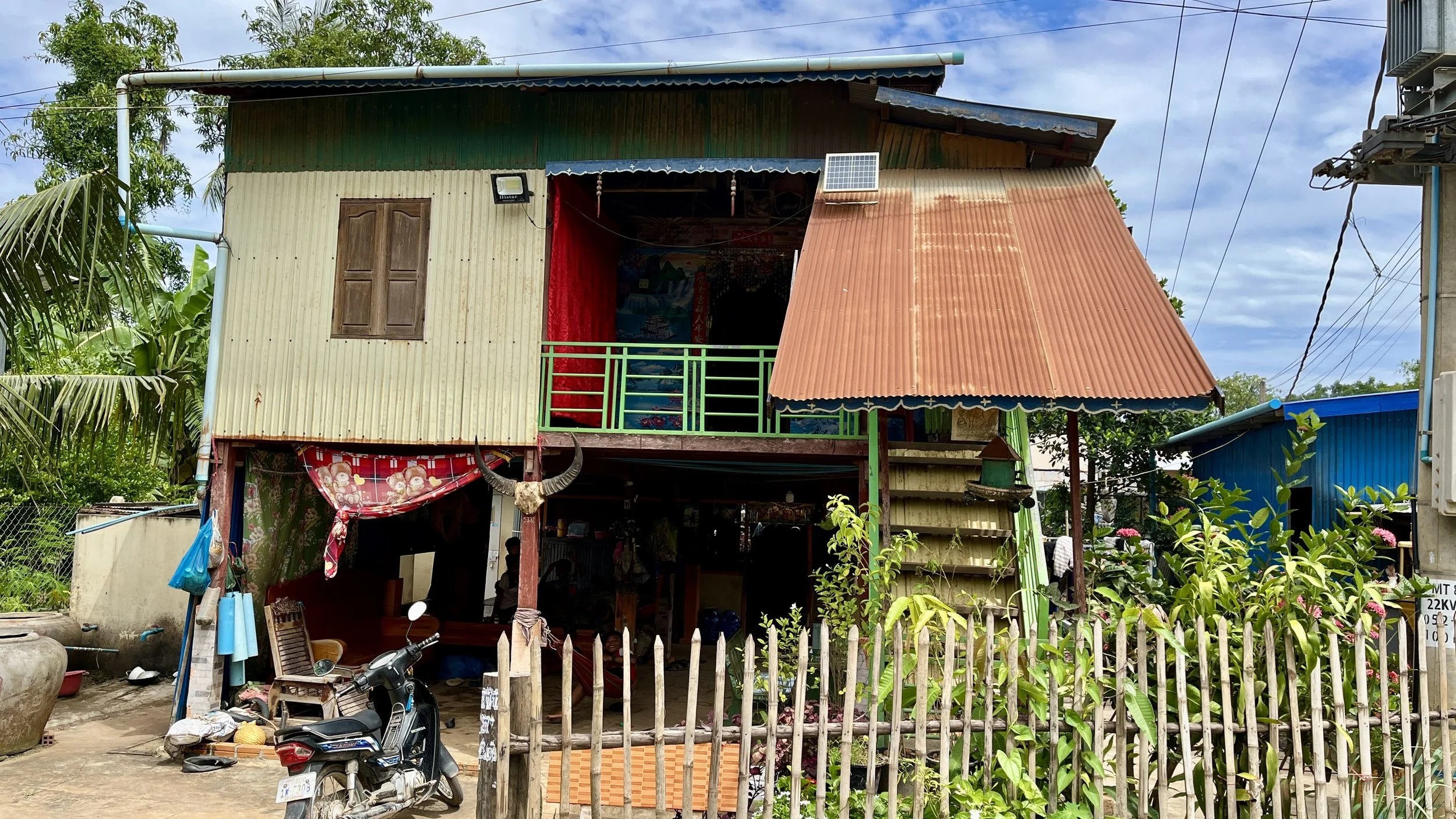
Genuinely old or just built in the old style? It’s often difficult to tell. I think it’s genuinely old. All the houses in this neighborhood seemed old. For a post about the guaranteed heritage houses of Battambang, click here.

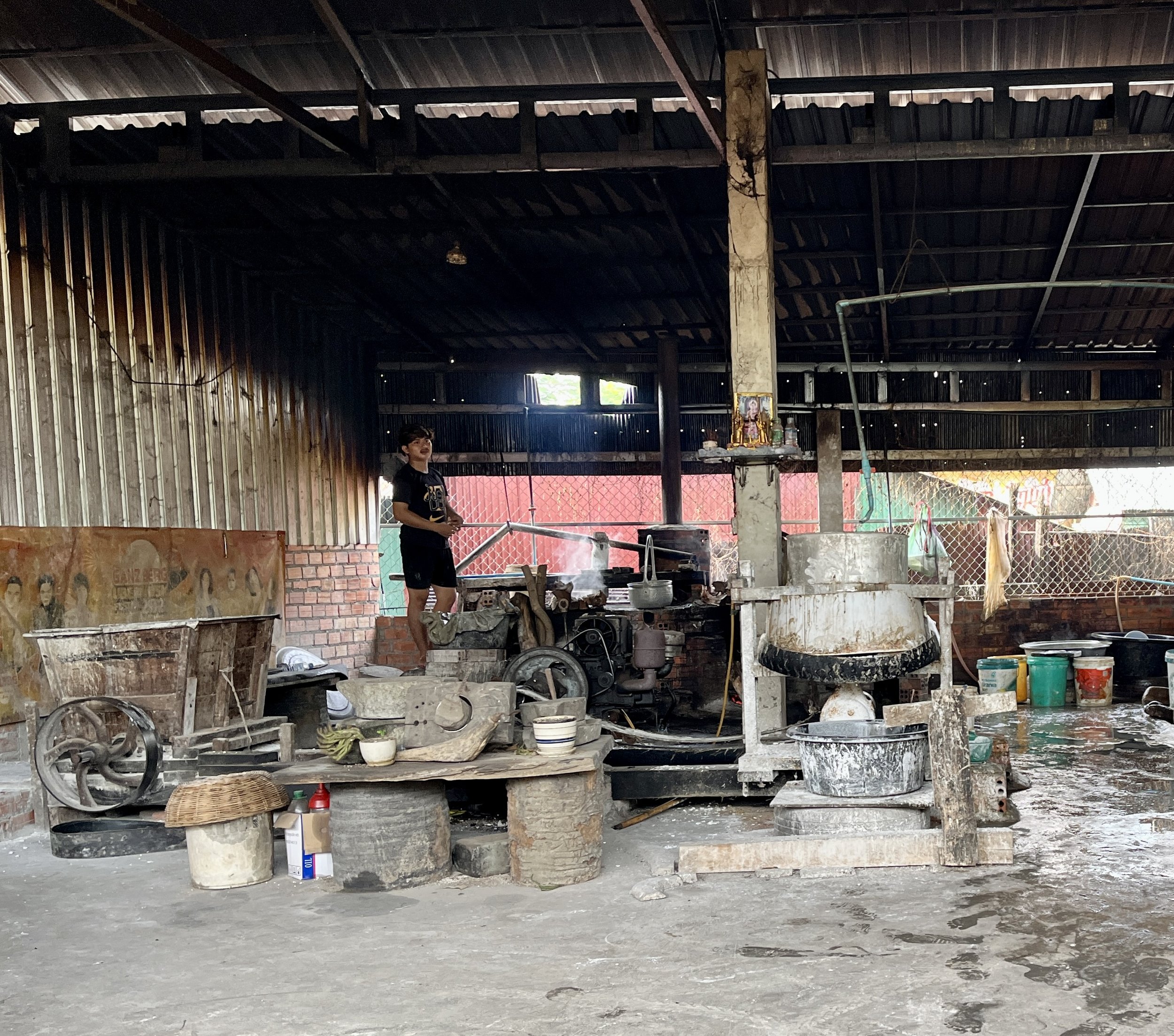
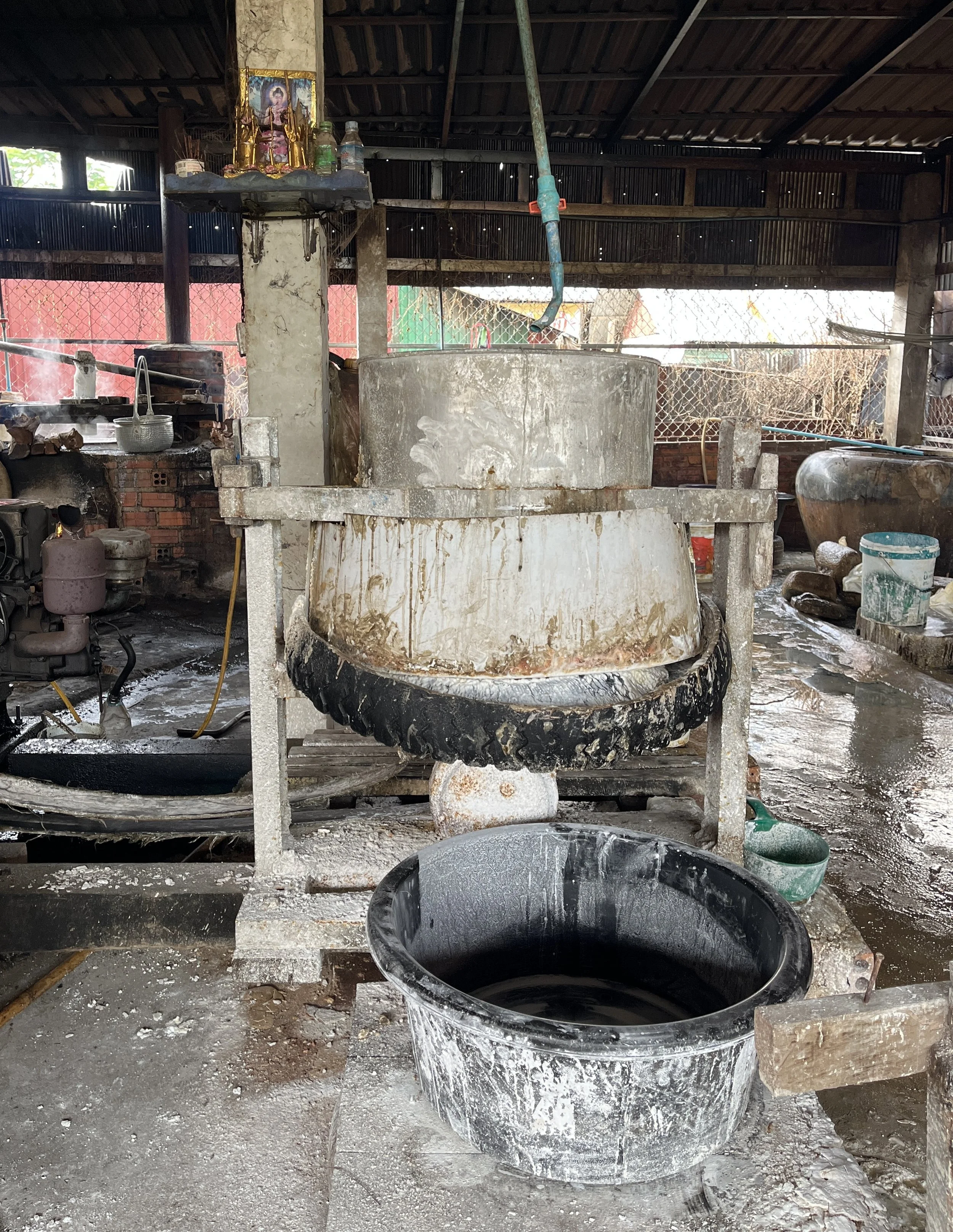
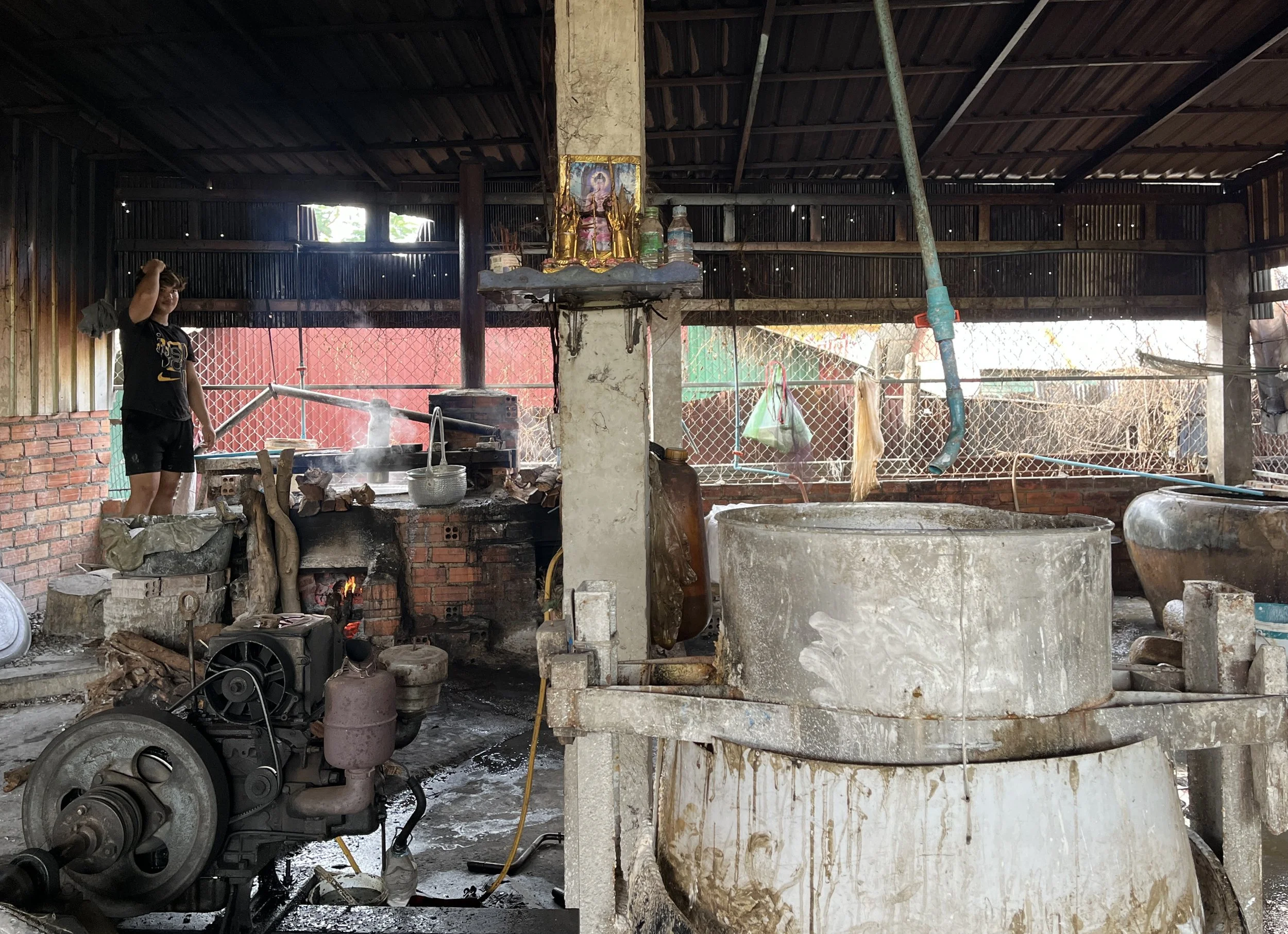
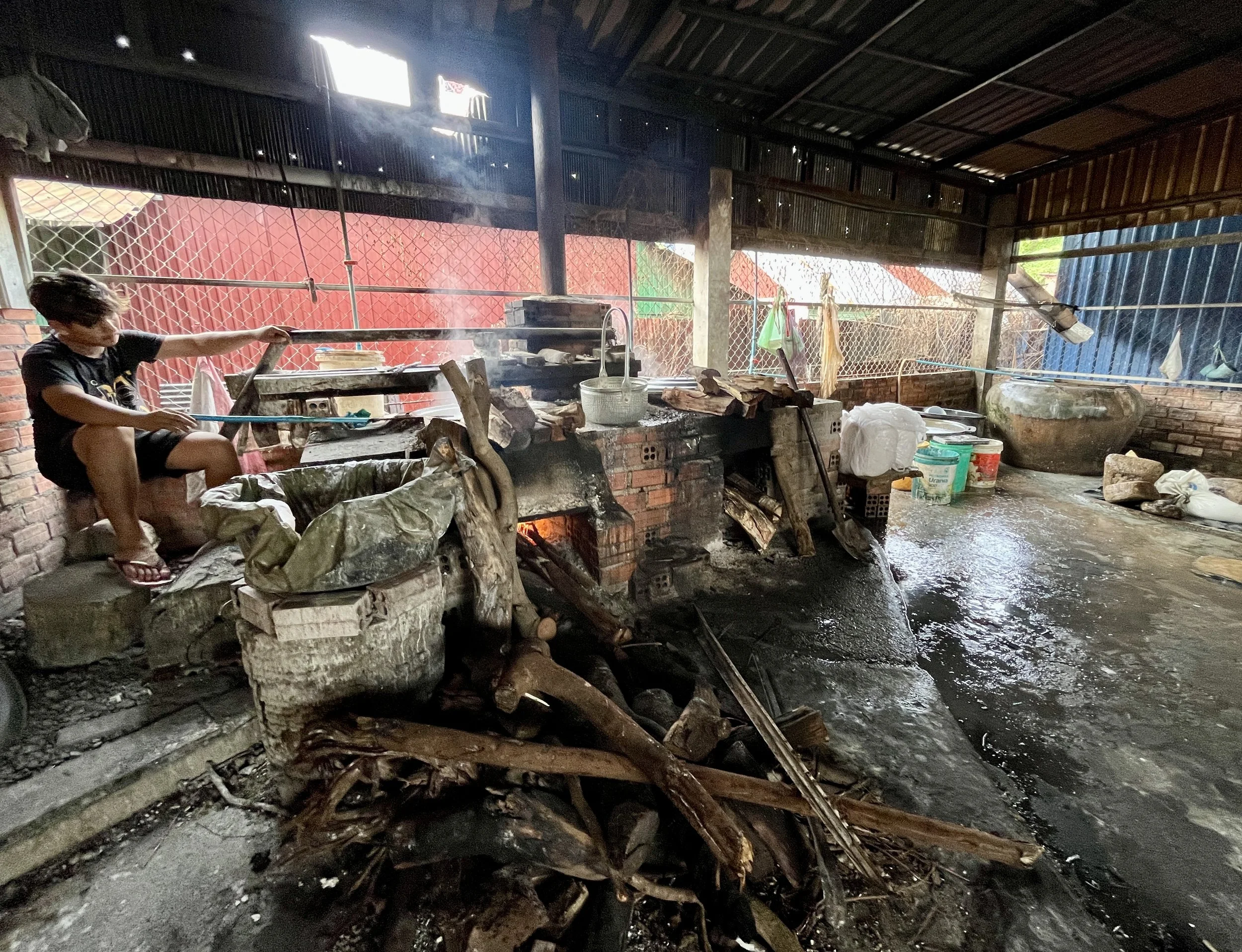
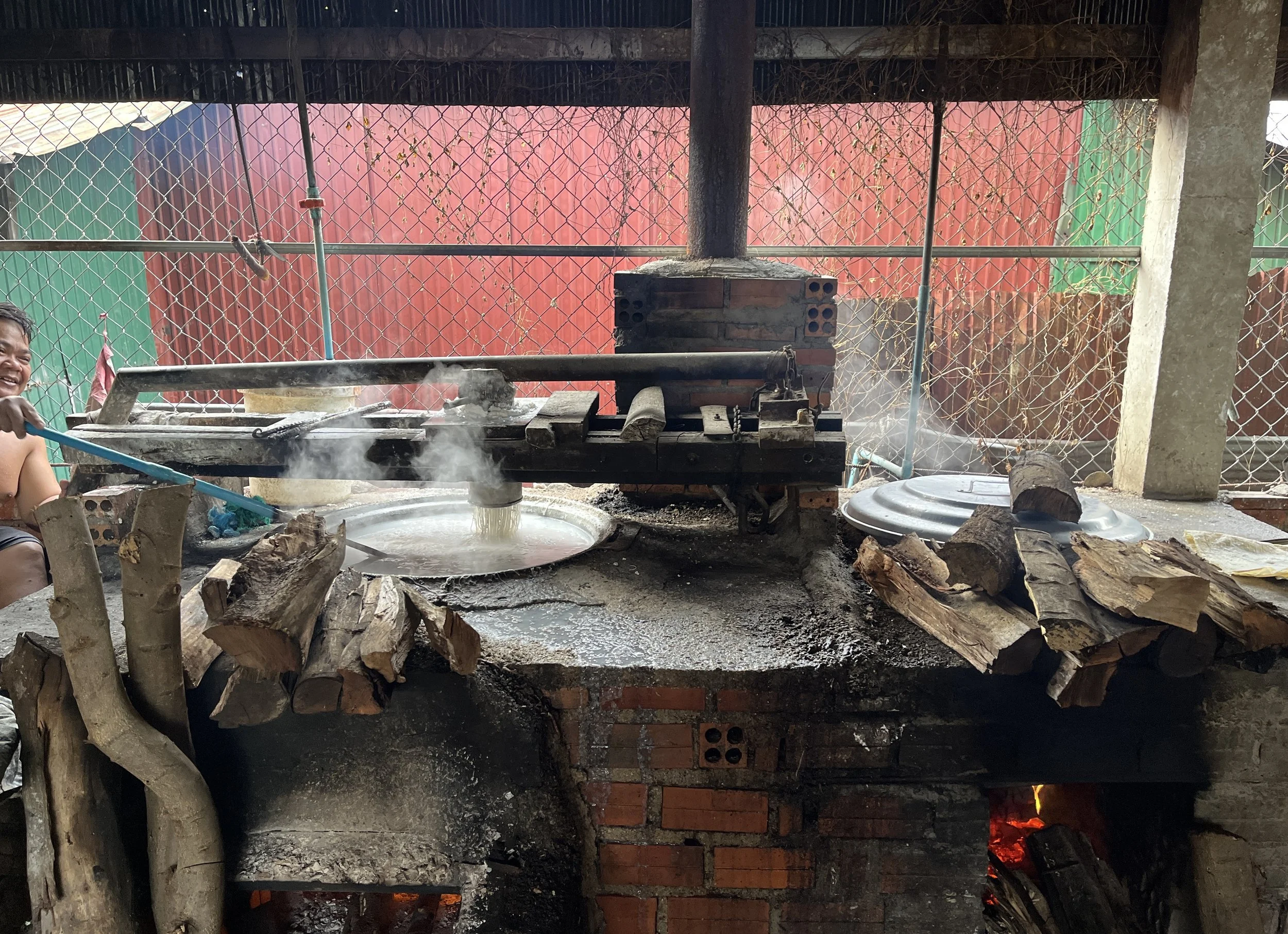
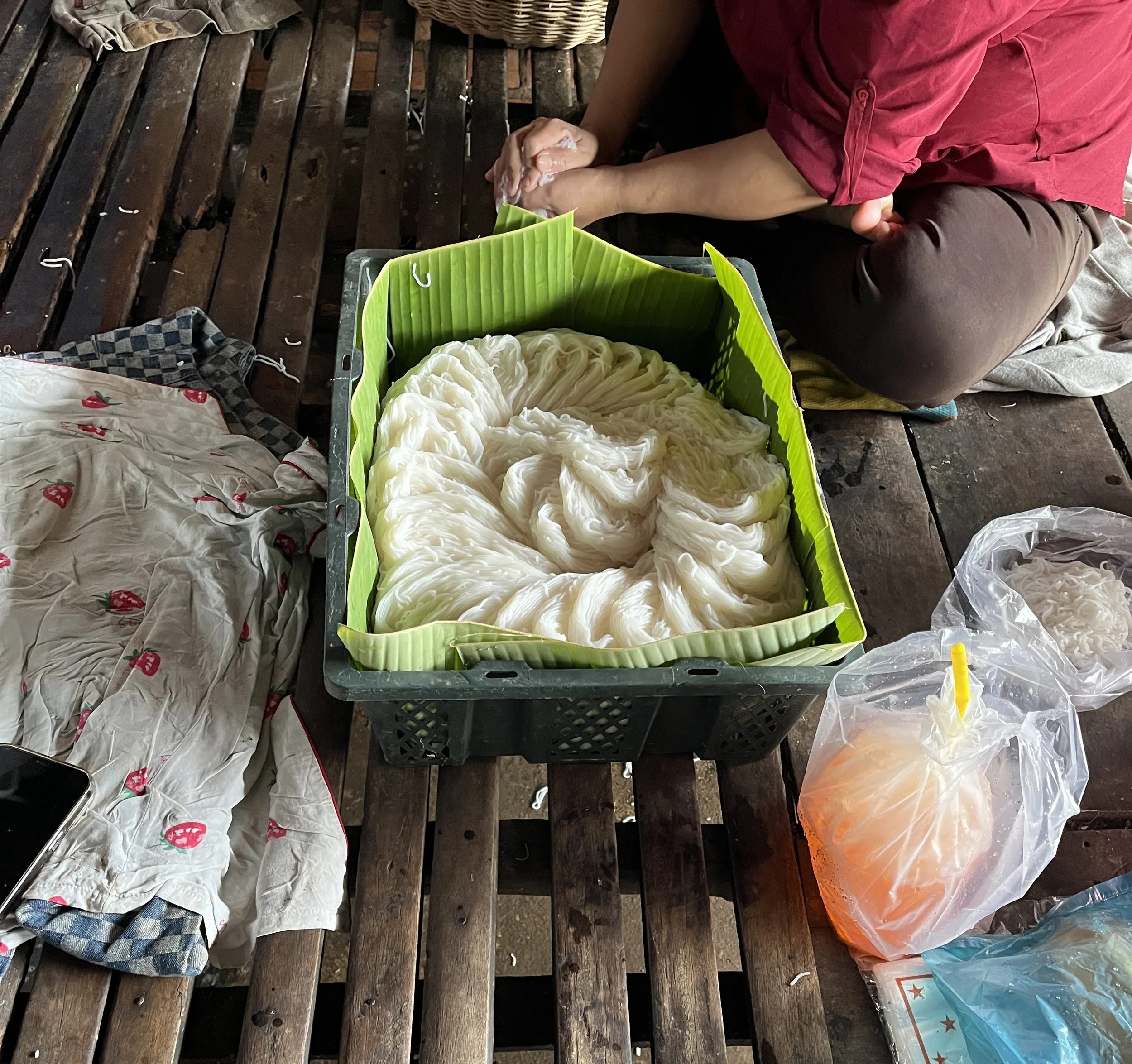
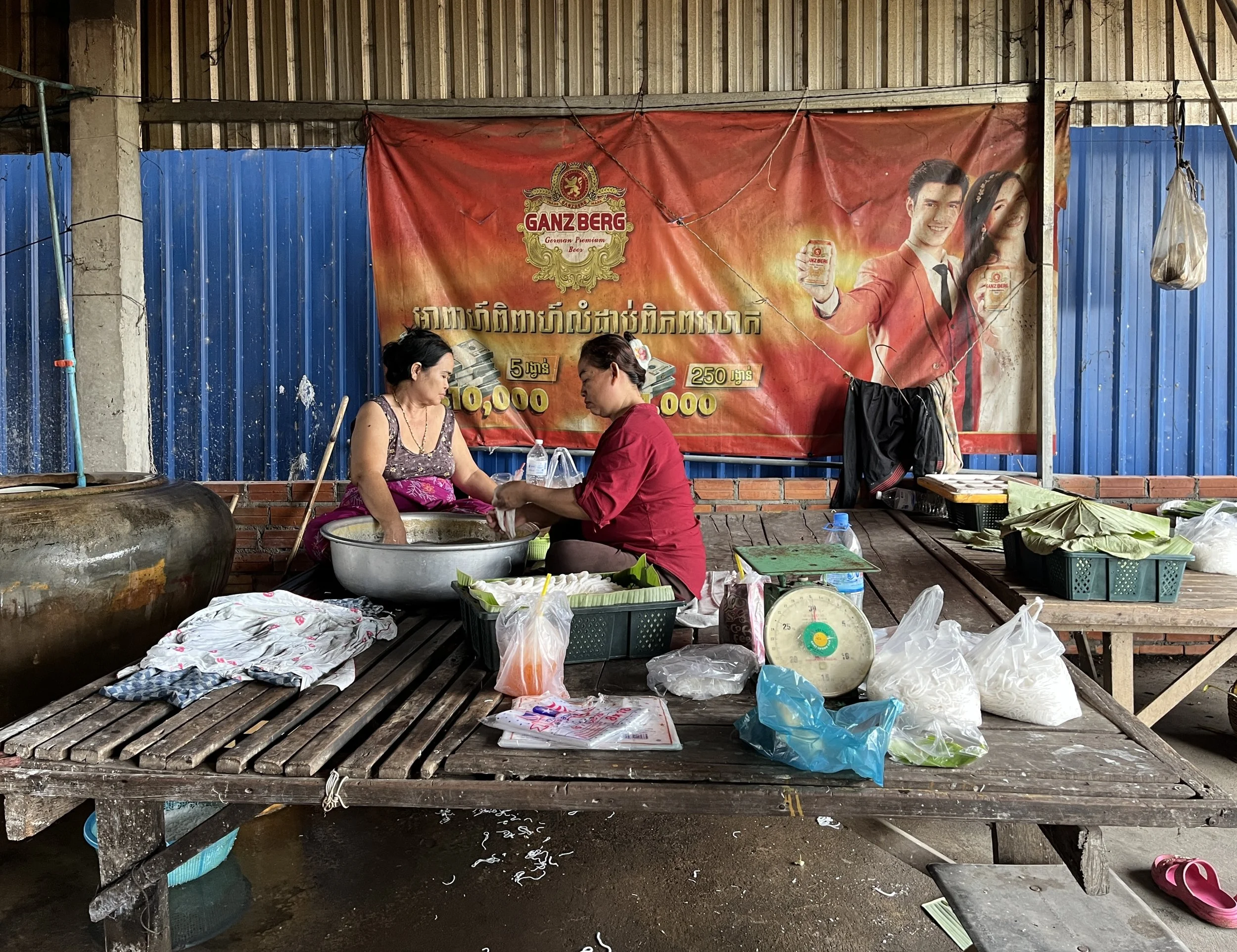
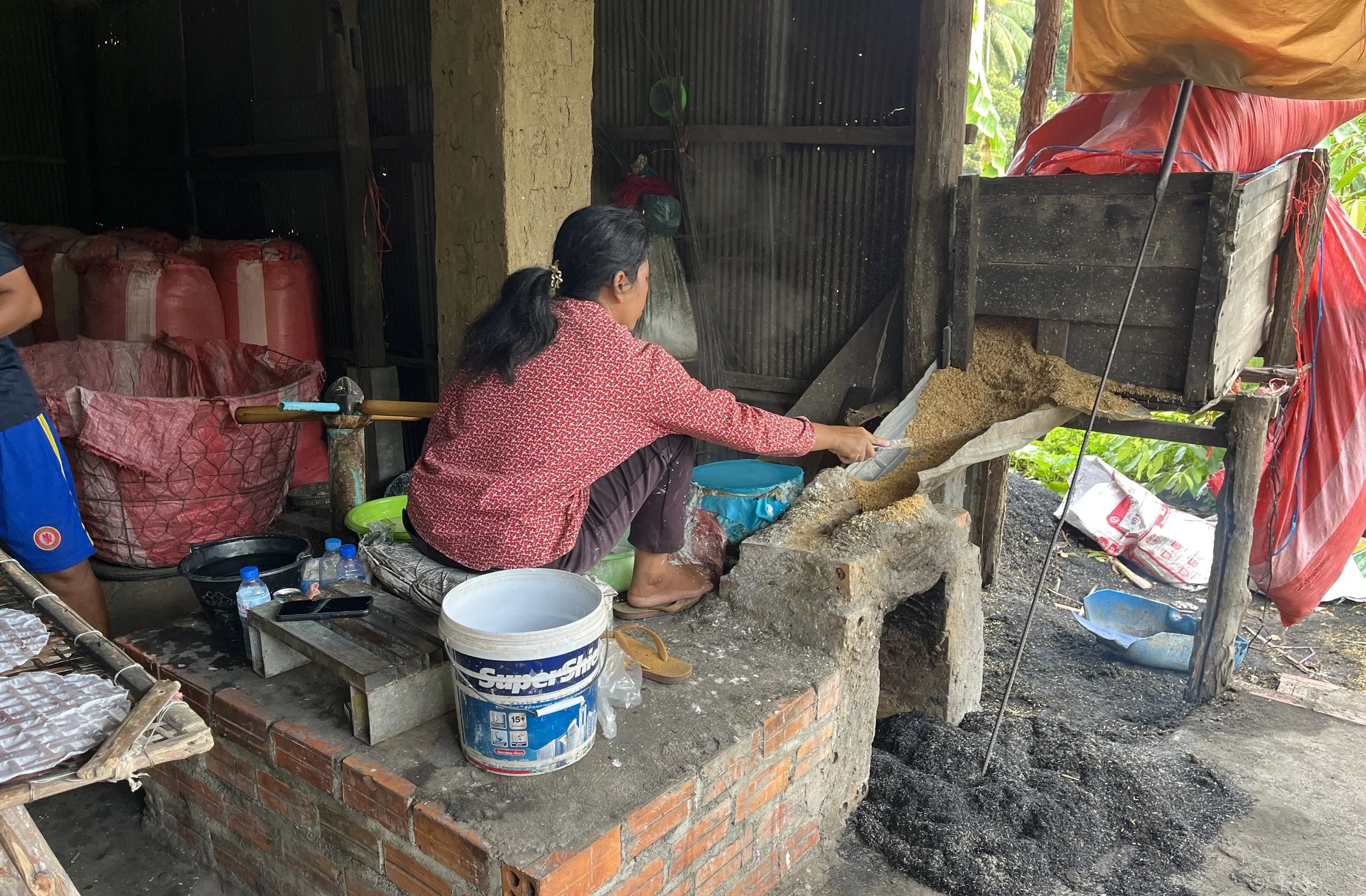
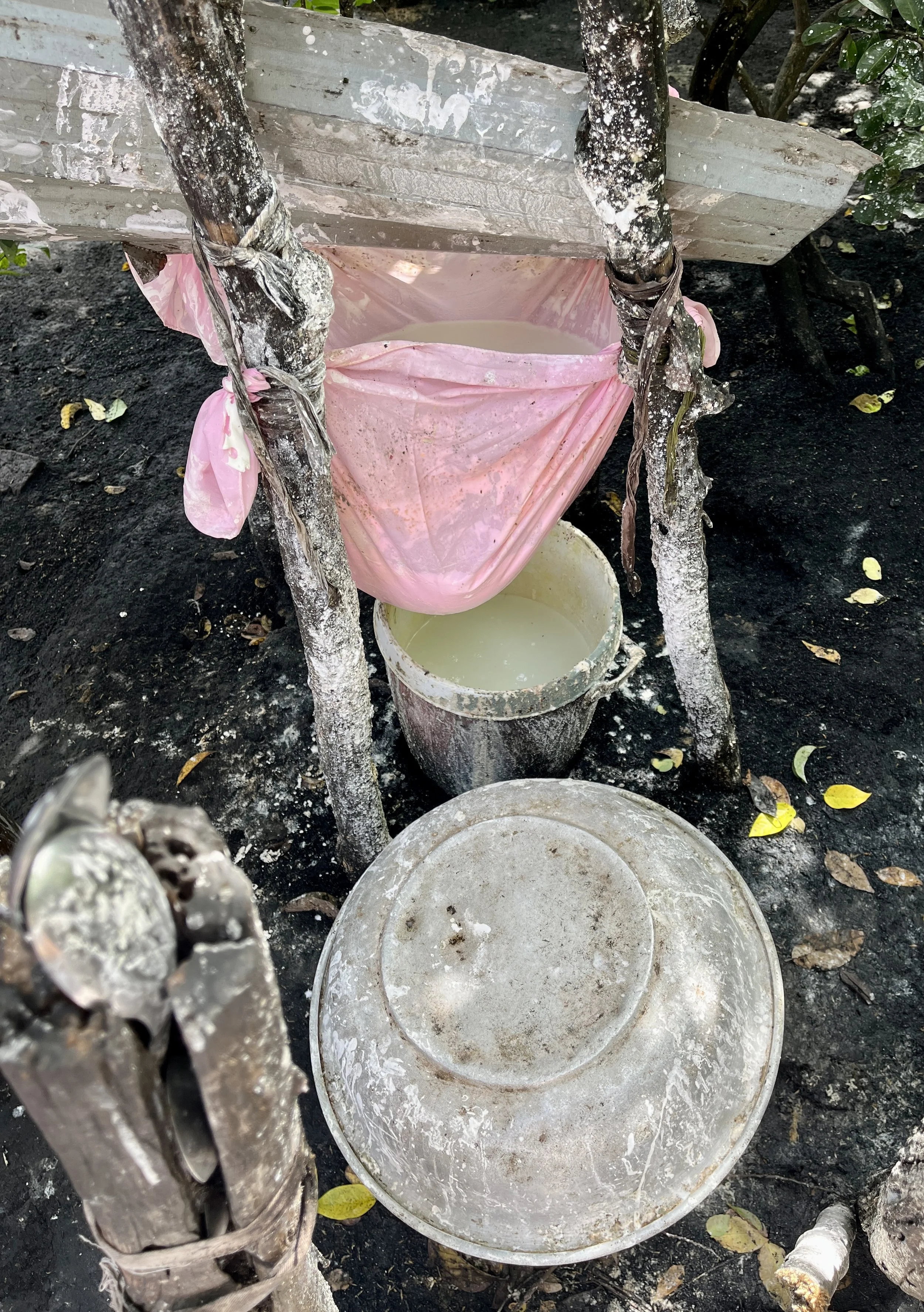
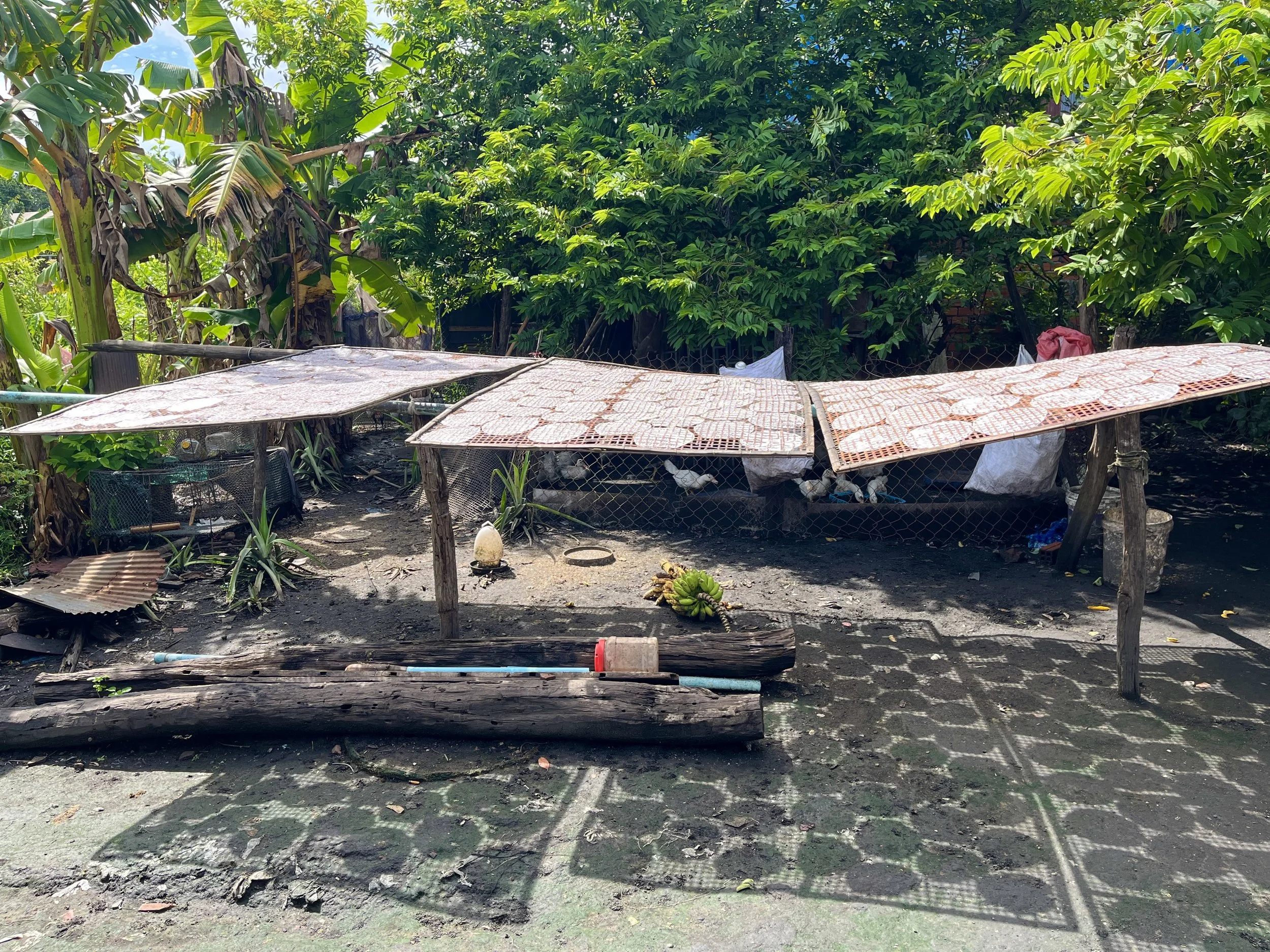
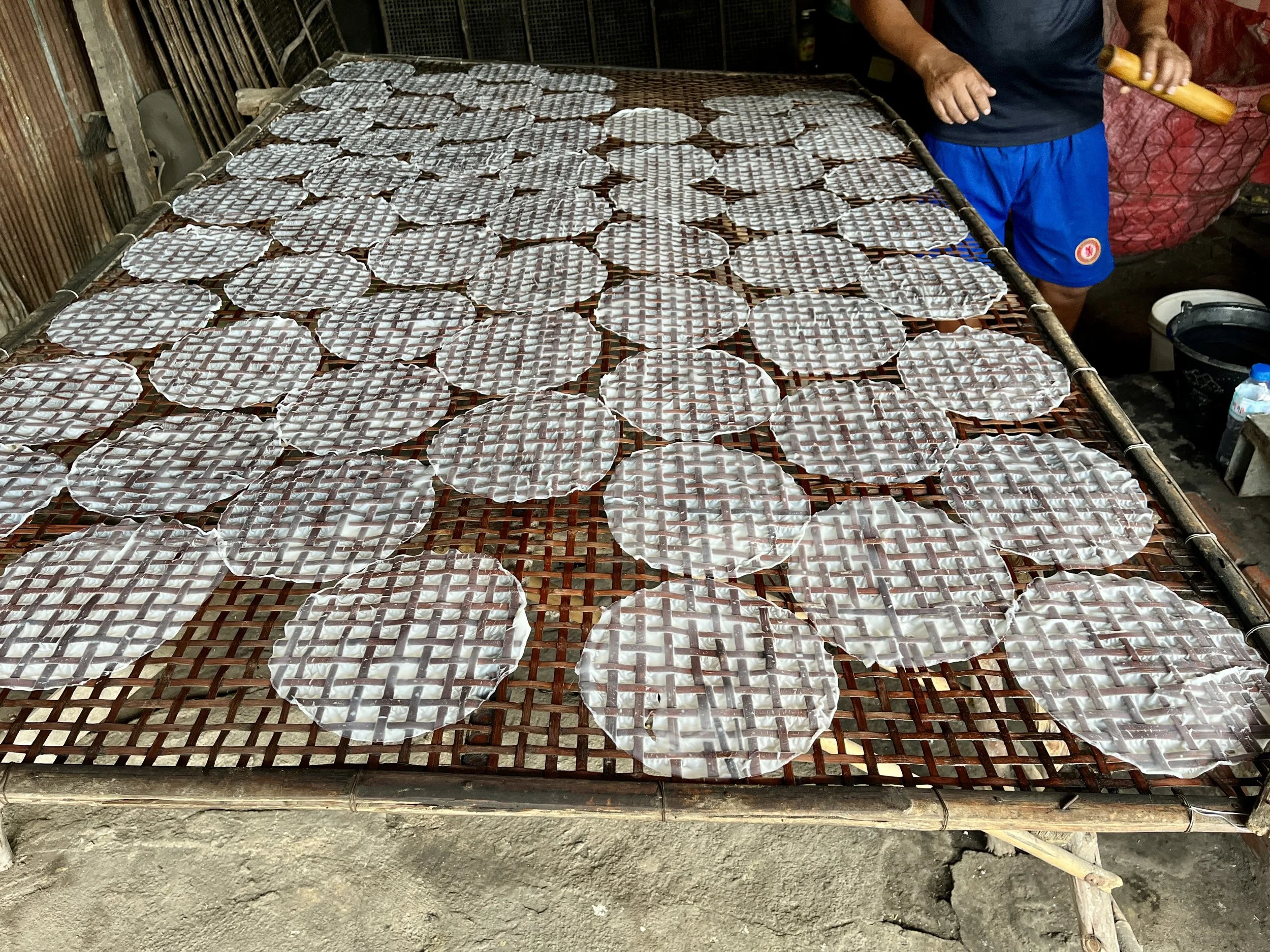
The local rice noodle maker

The local rice noodle maker

Post Khmer Rouge era Pali learning center

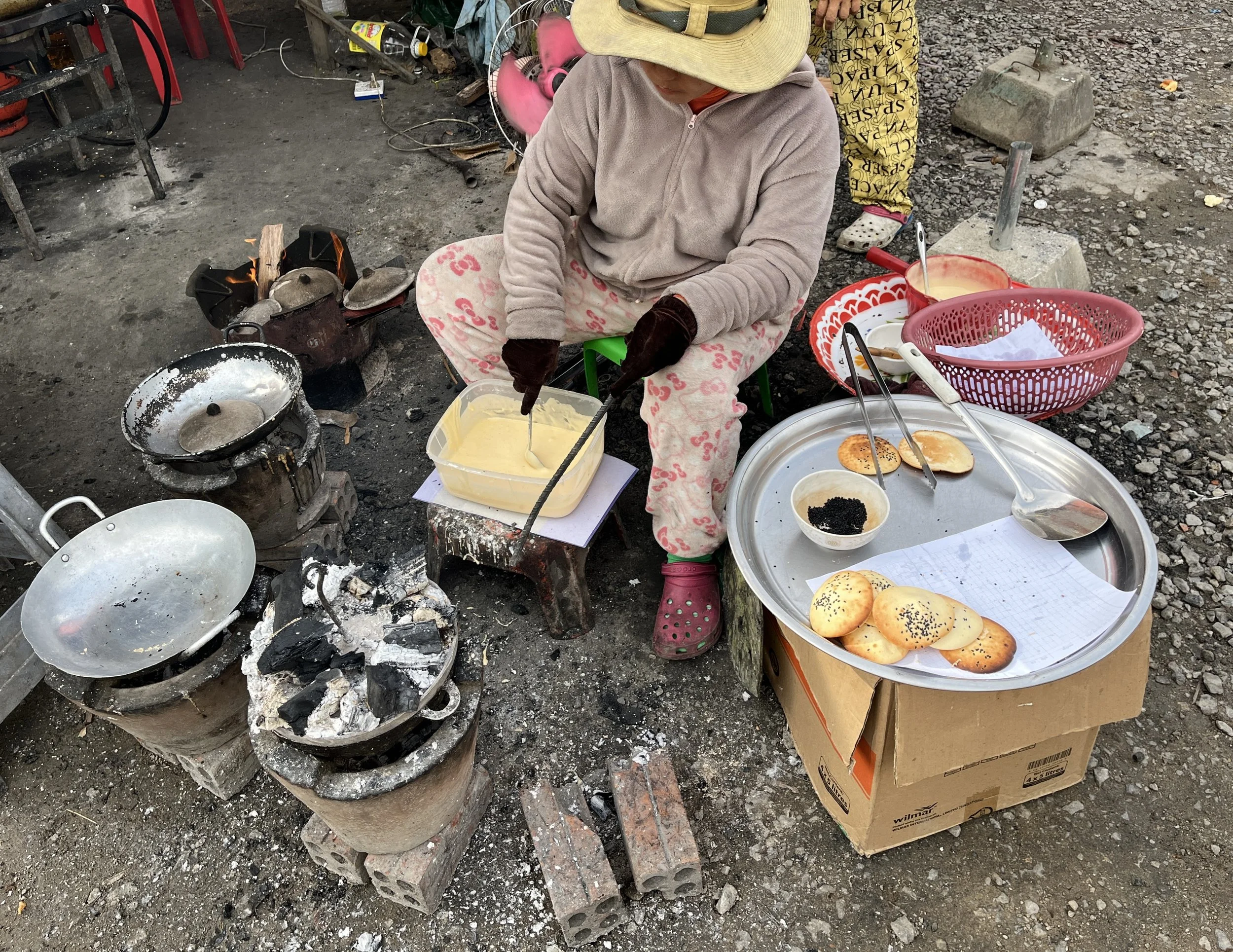
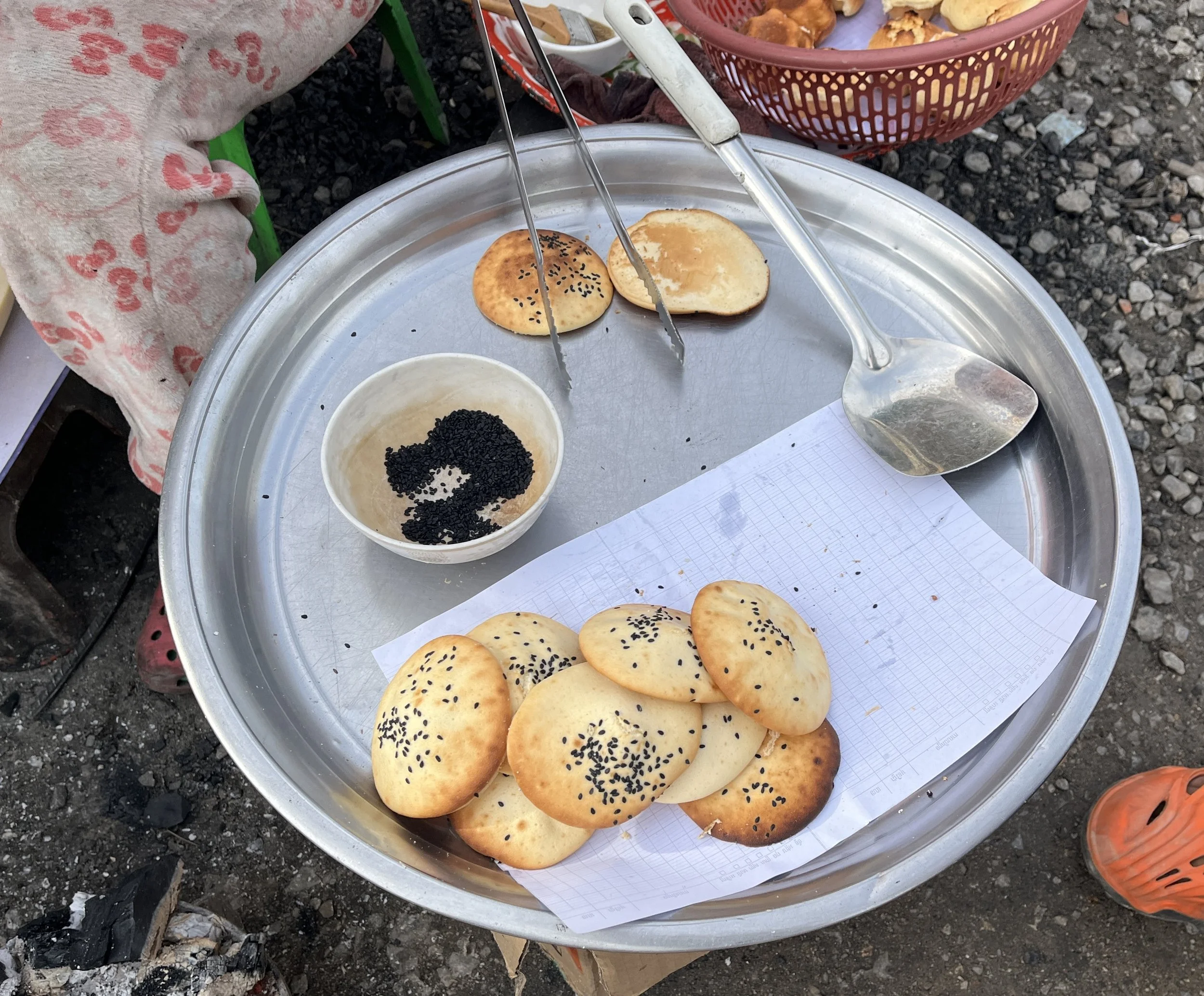
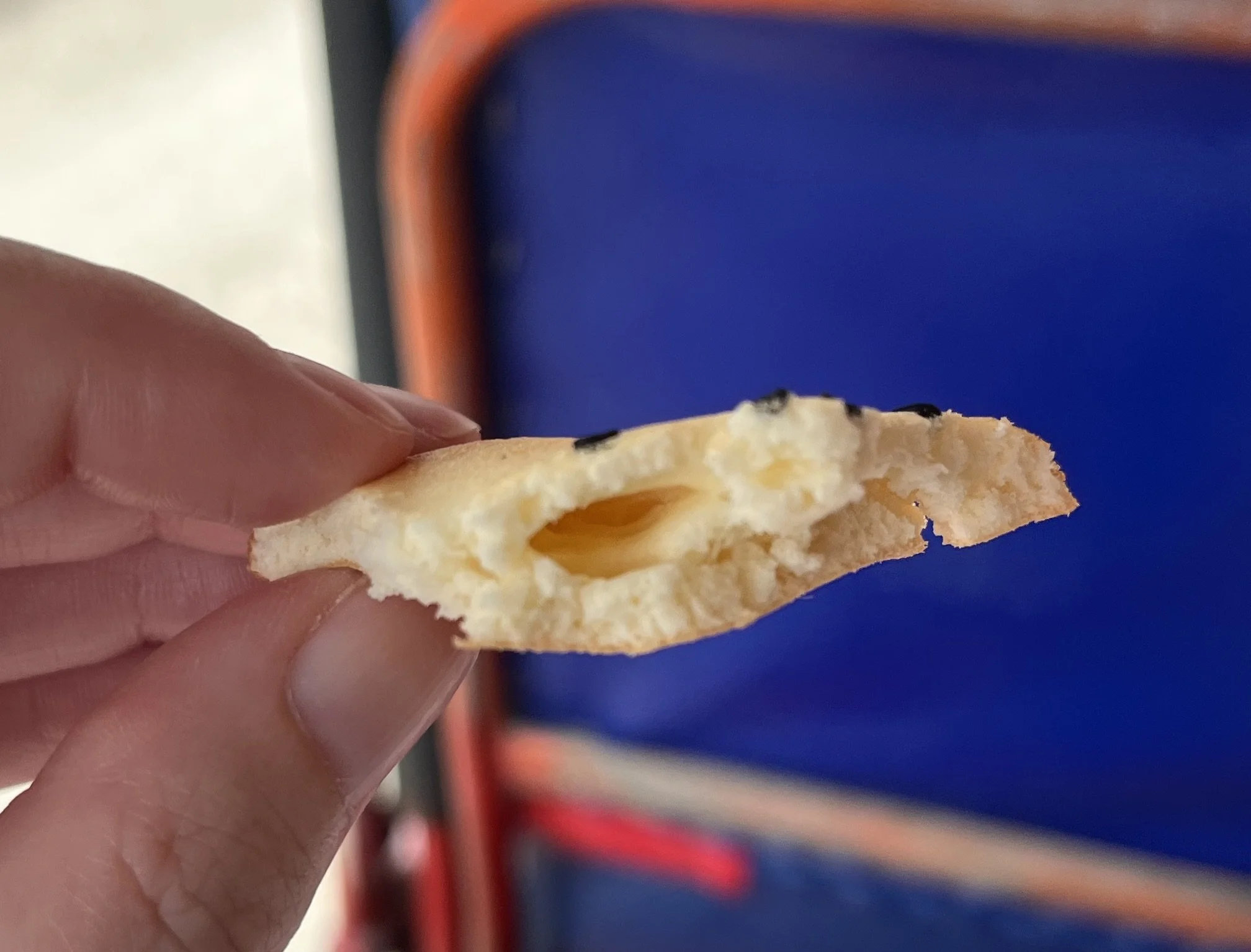
Donuts with sesame seeds on top are a popular local breakfast

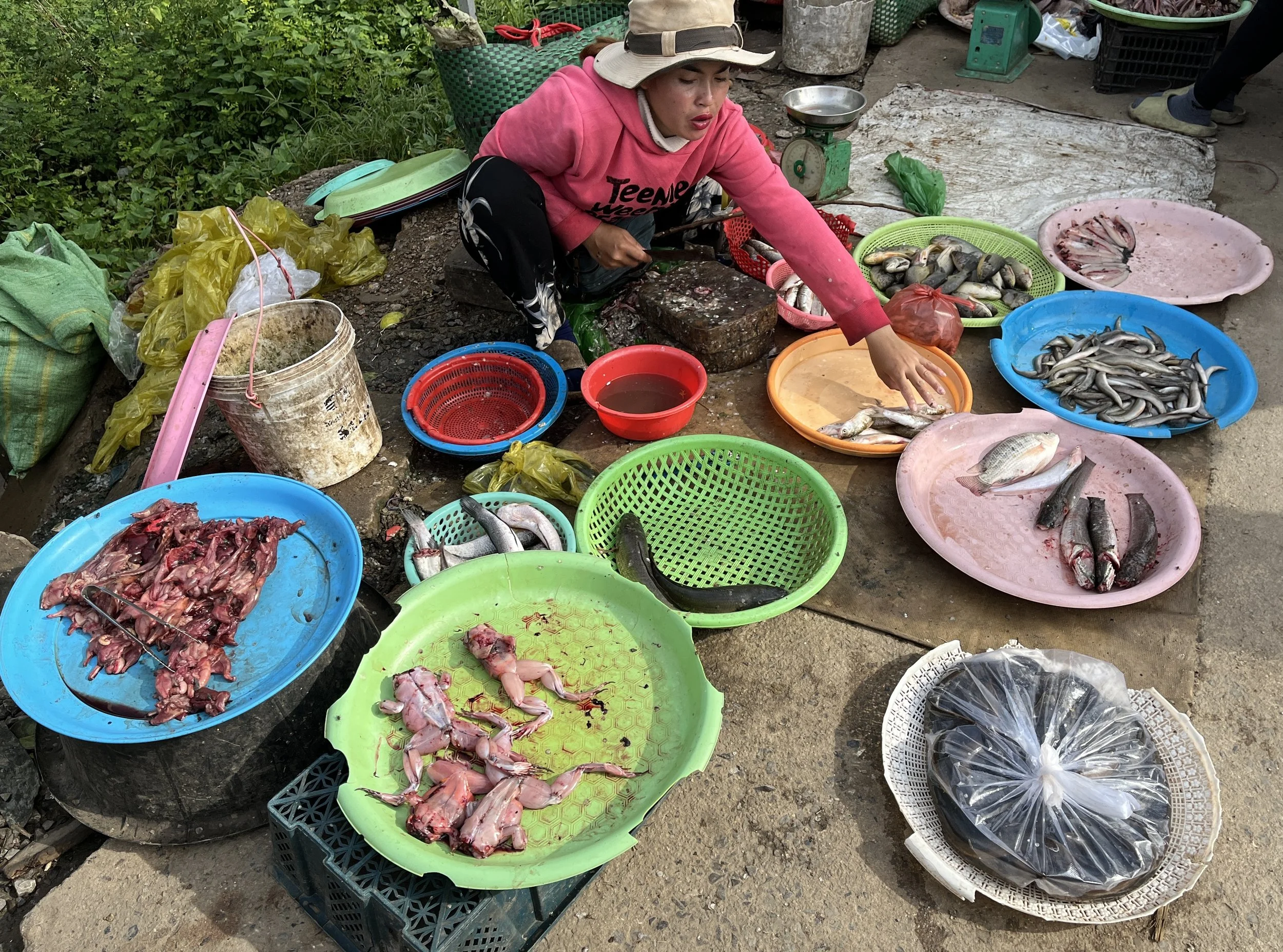
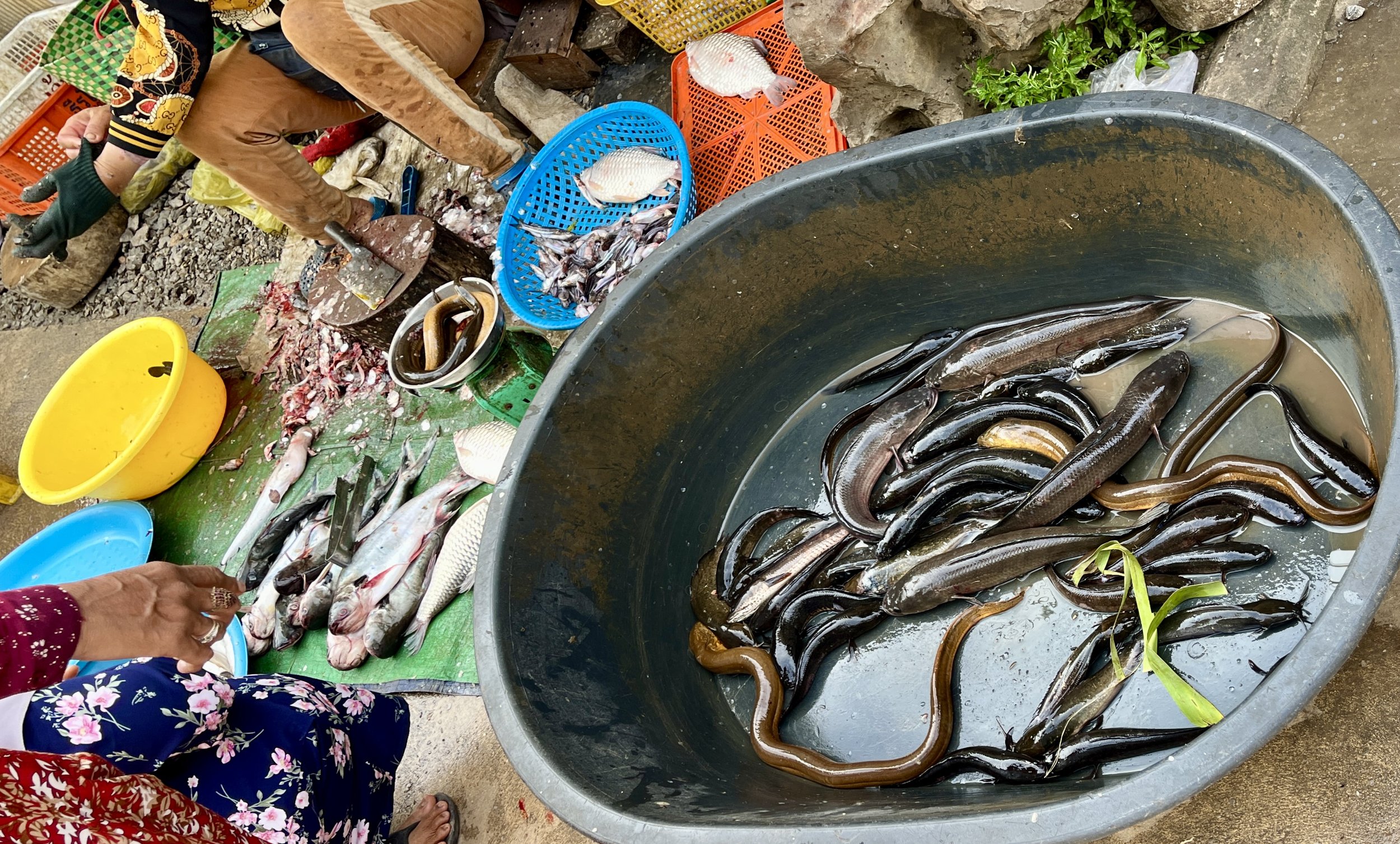
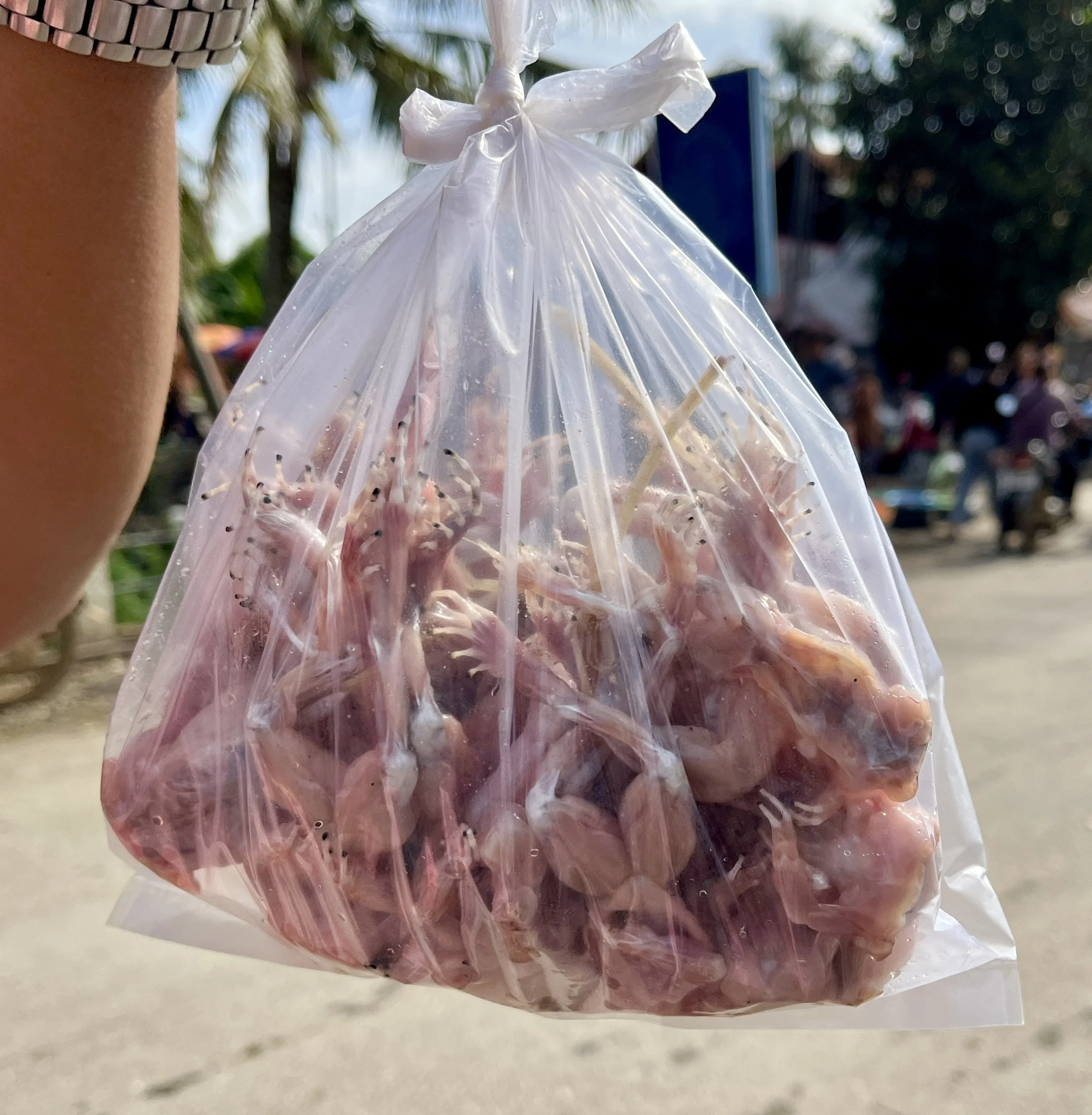
Seafood at the wet market– it’s all from the river, so it’s not just fish, but frogs, toads, snakes, etc.

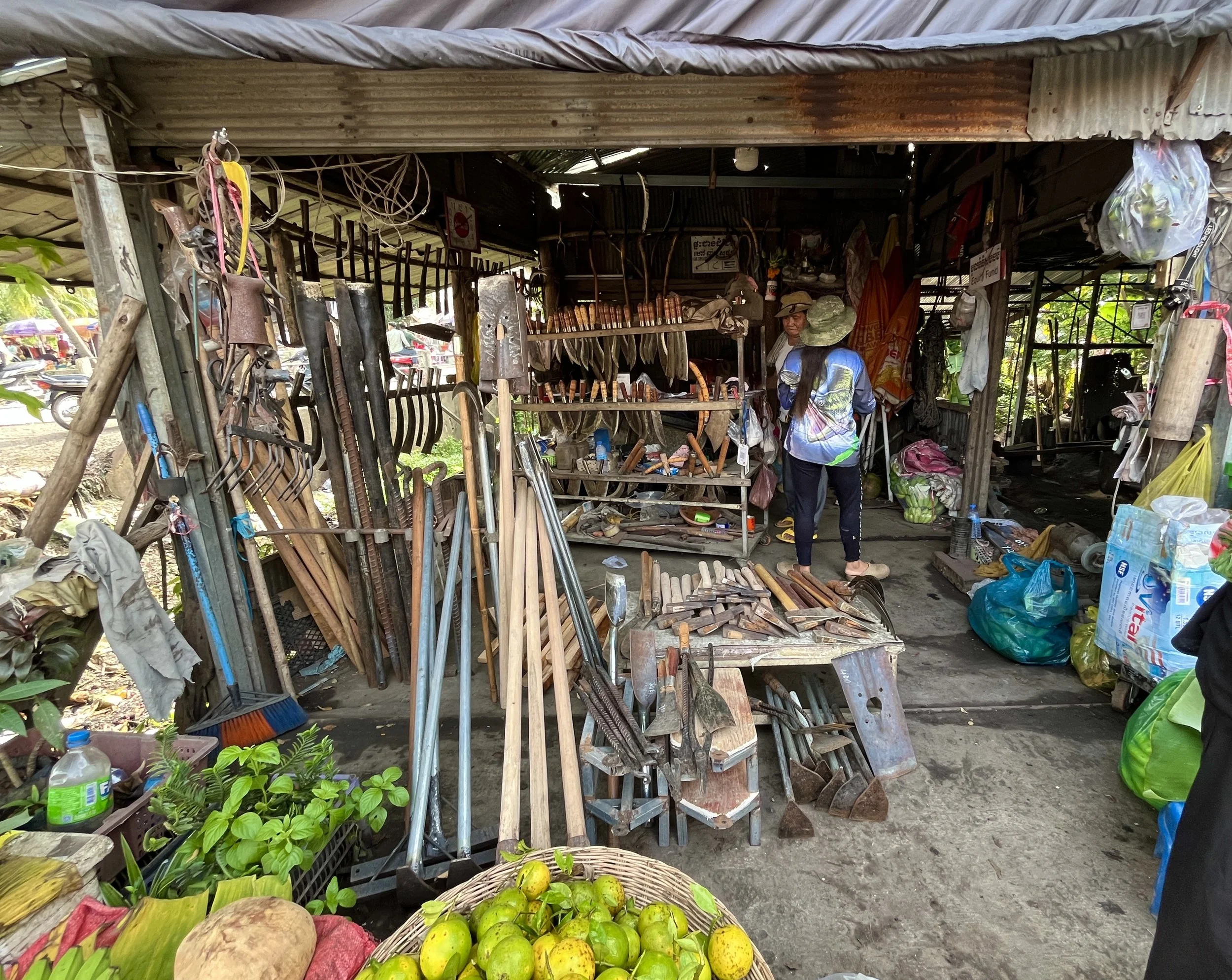
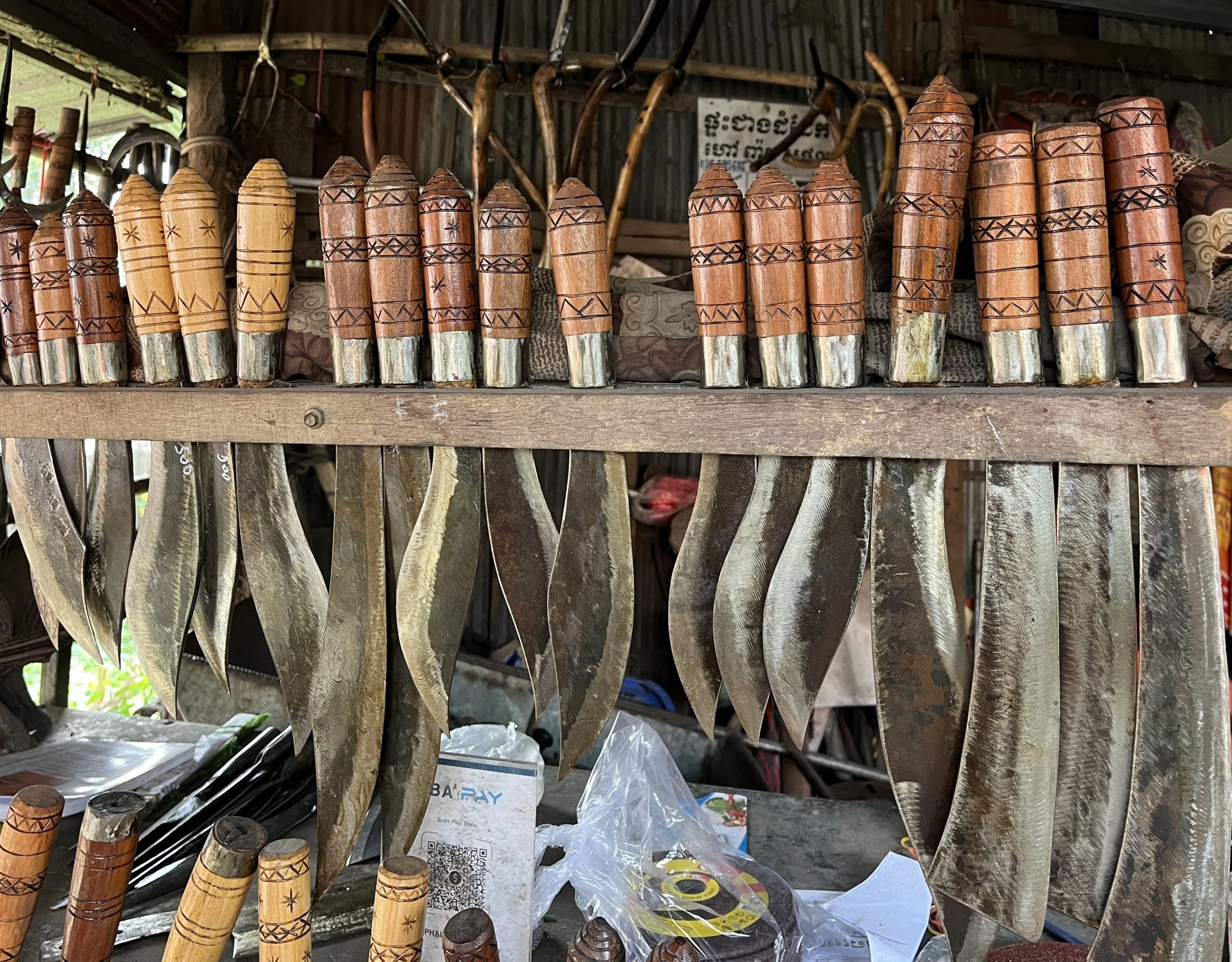
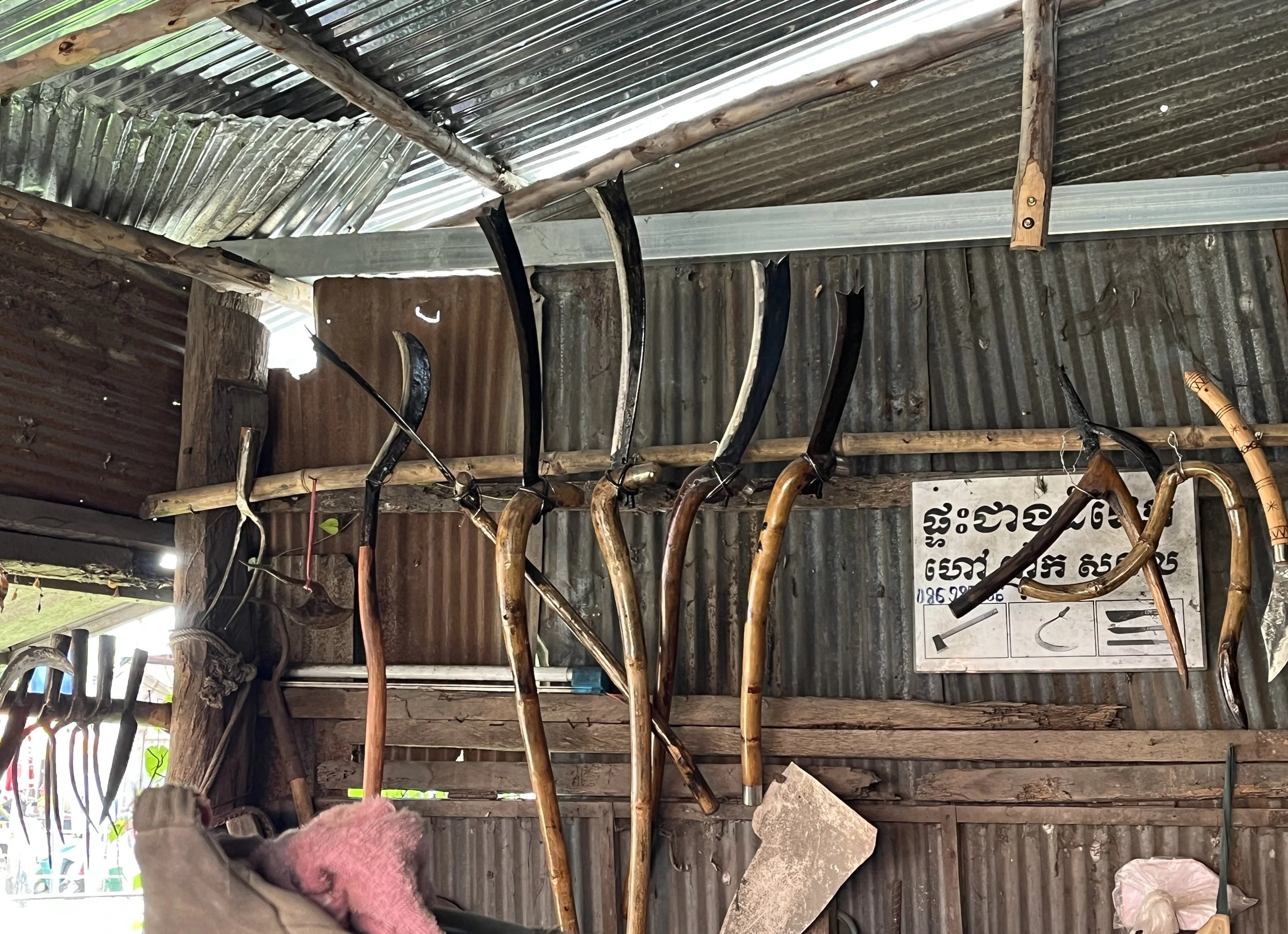
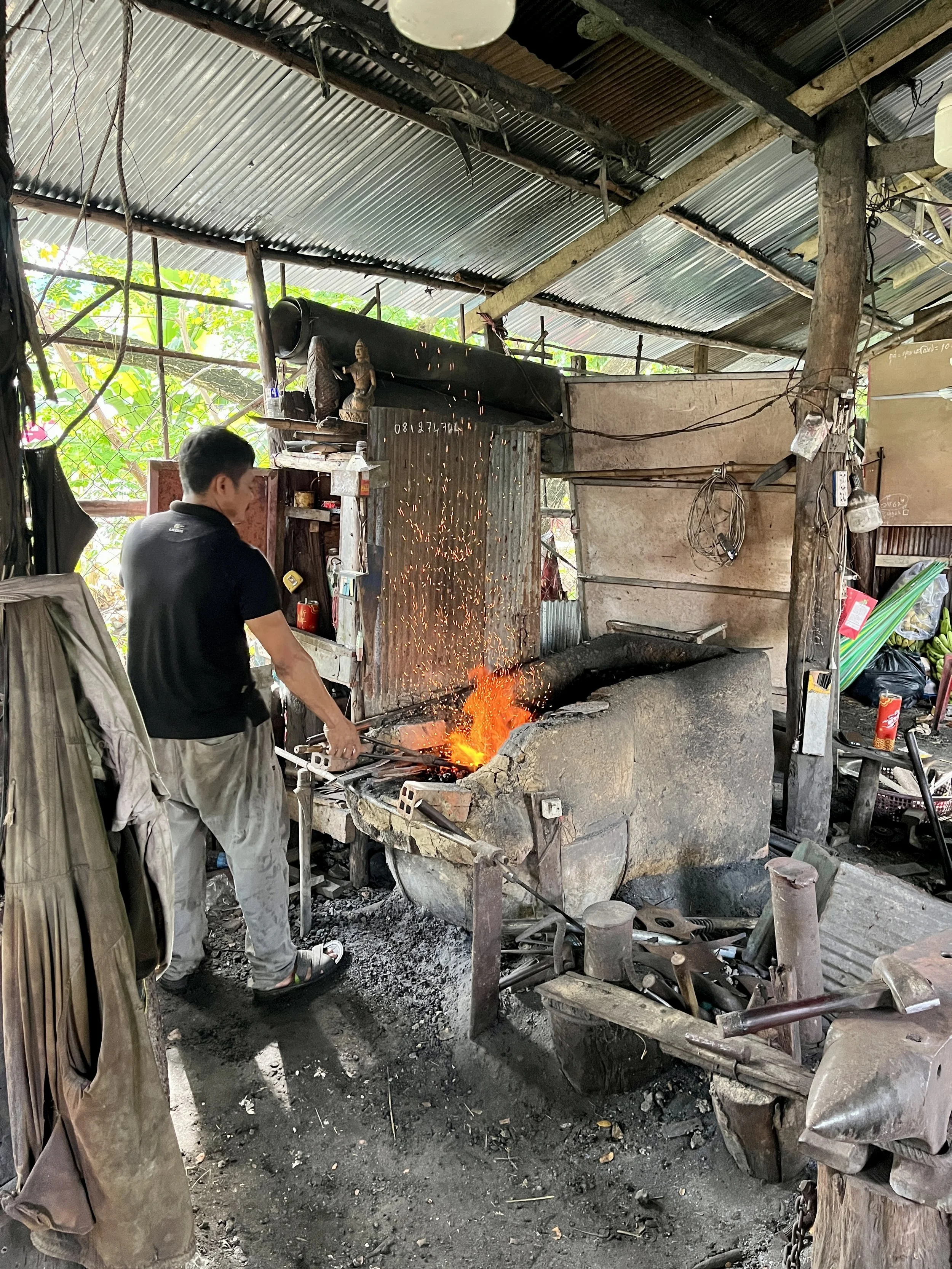
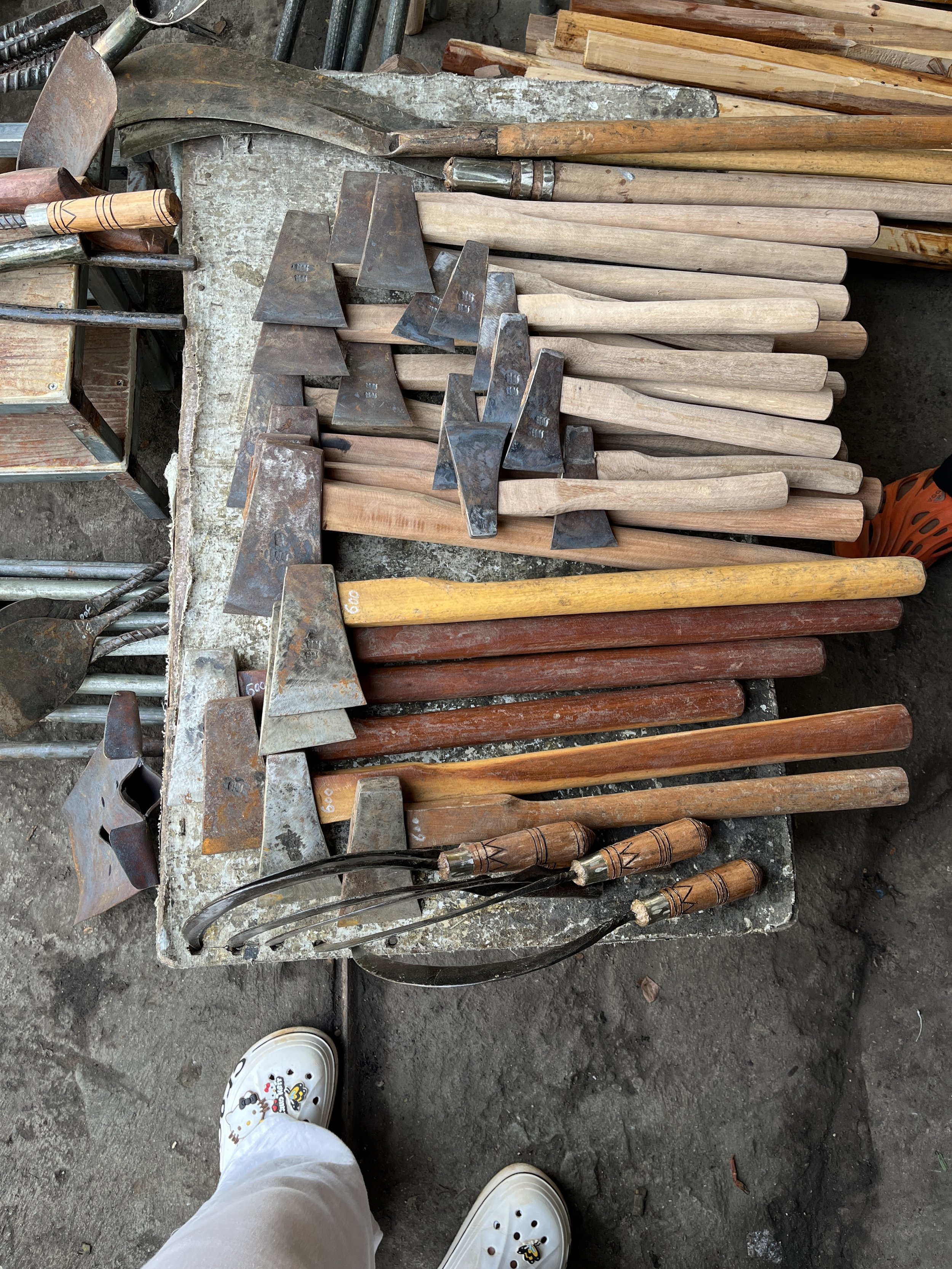
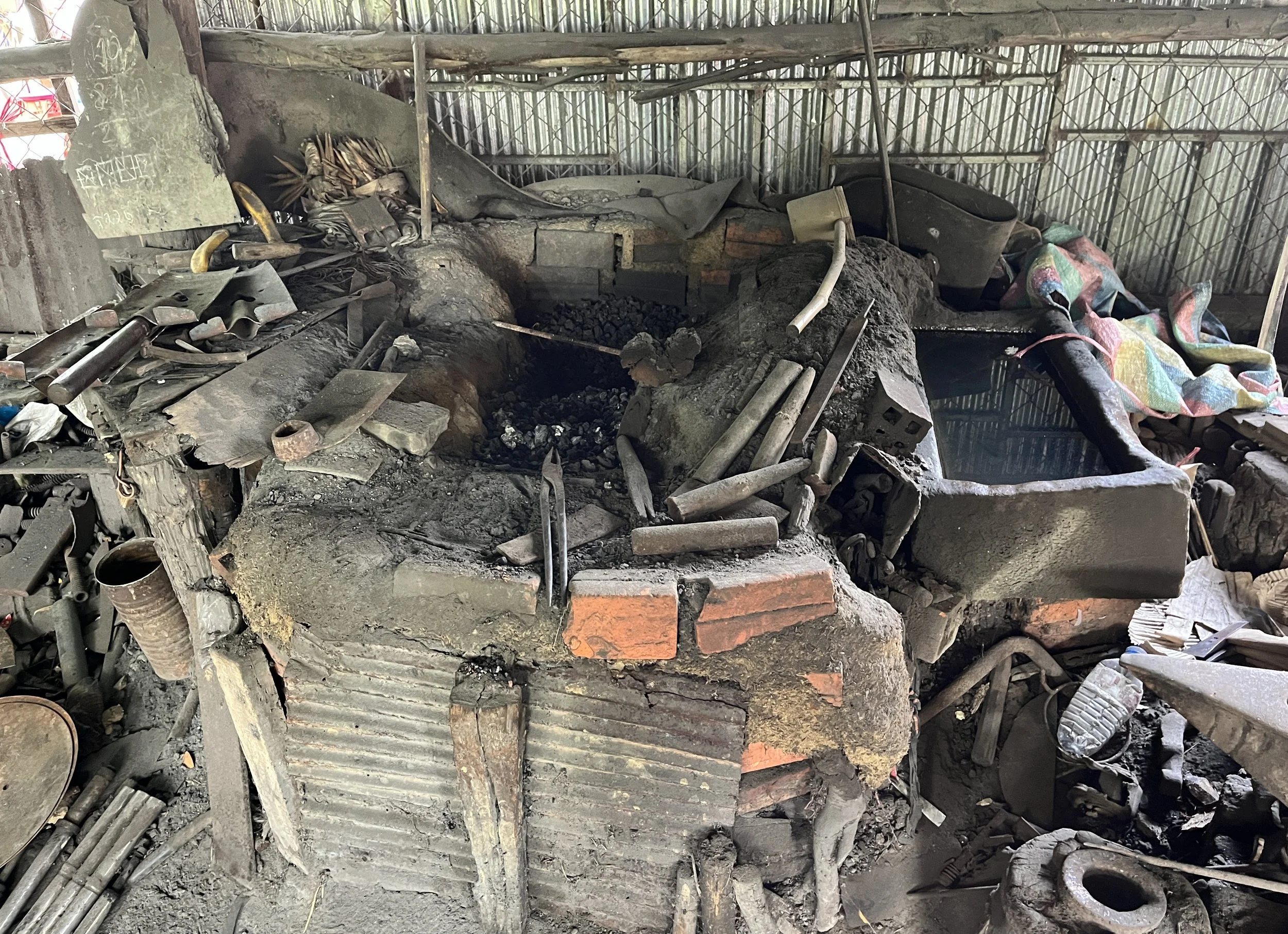
The knife and farming tool maker. Everything is made from melted down scrap metal of varying quality and composition, and the workers don’t even wear masks, forget any kind of ventilation system. It’s sort of horrifying.

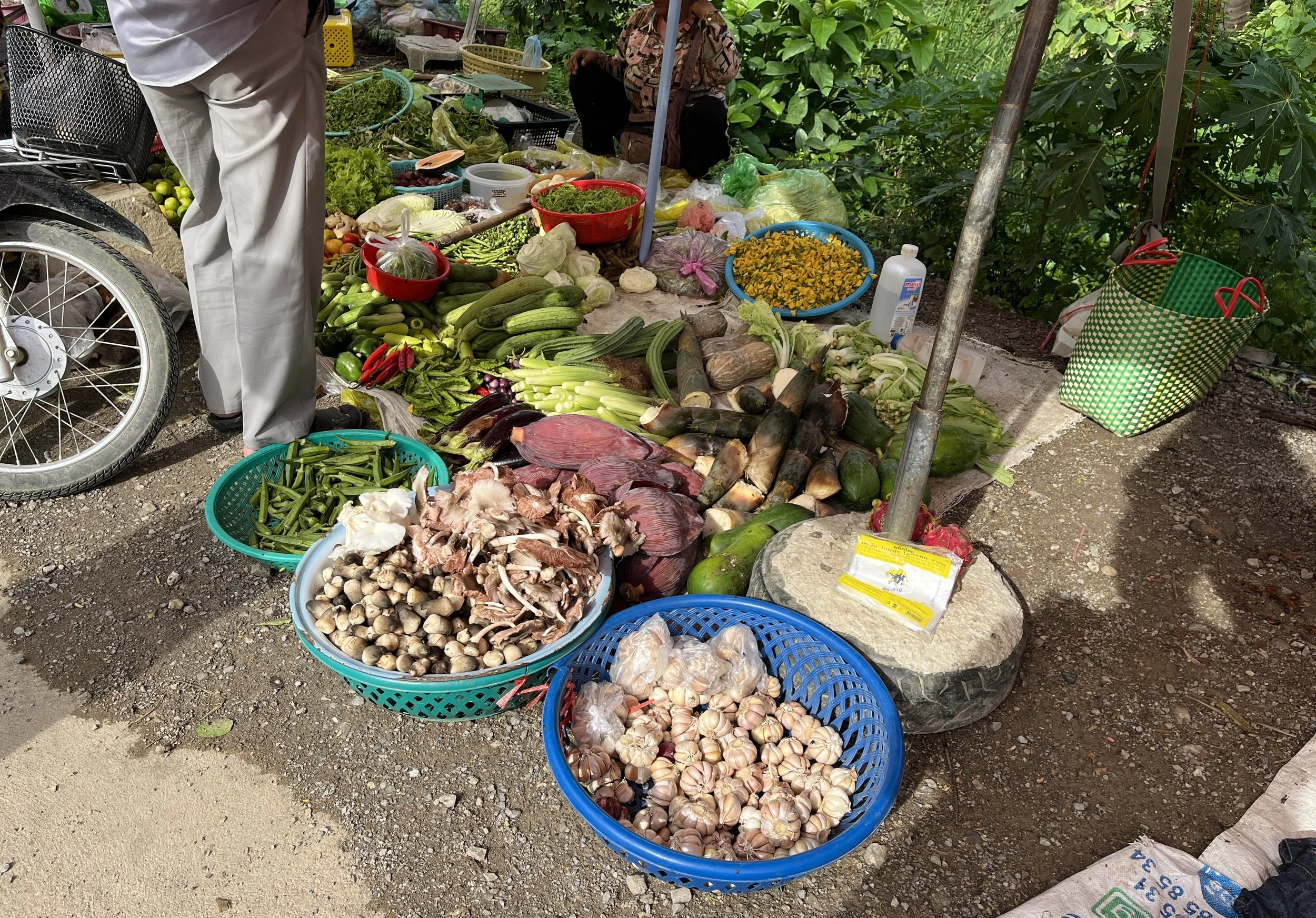
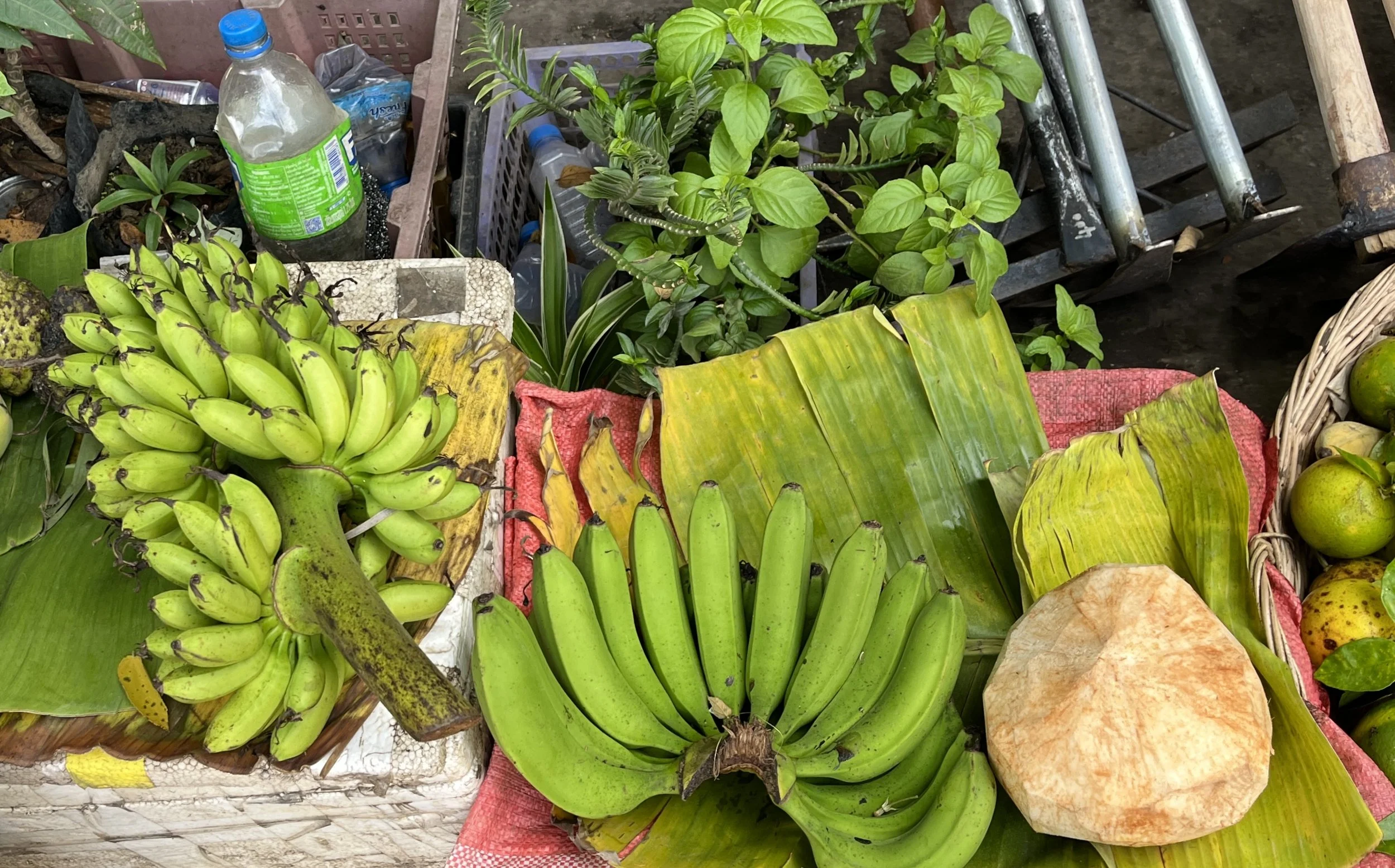
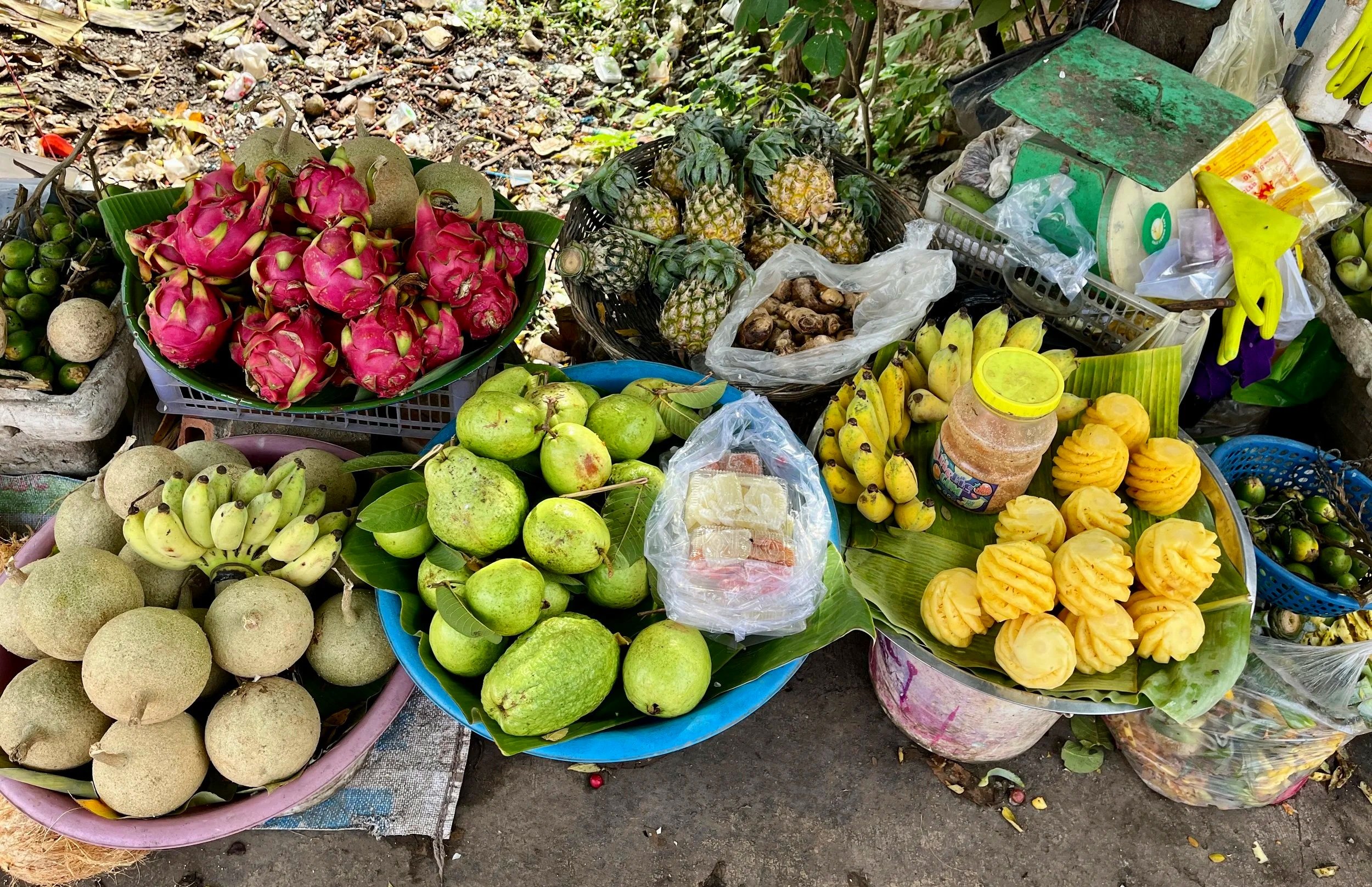
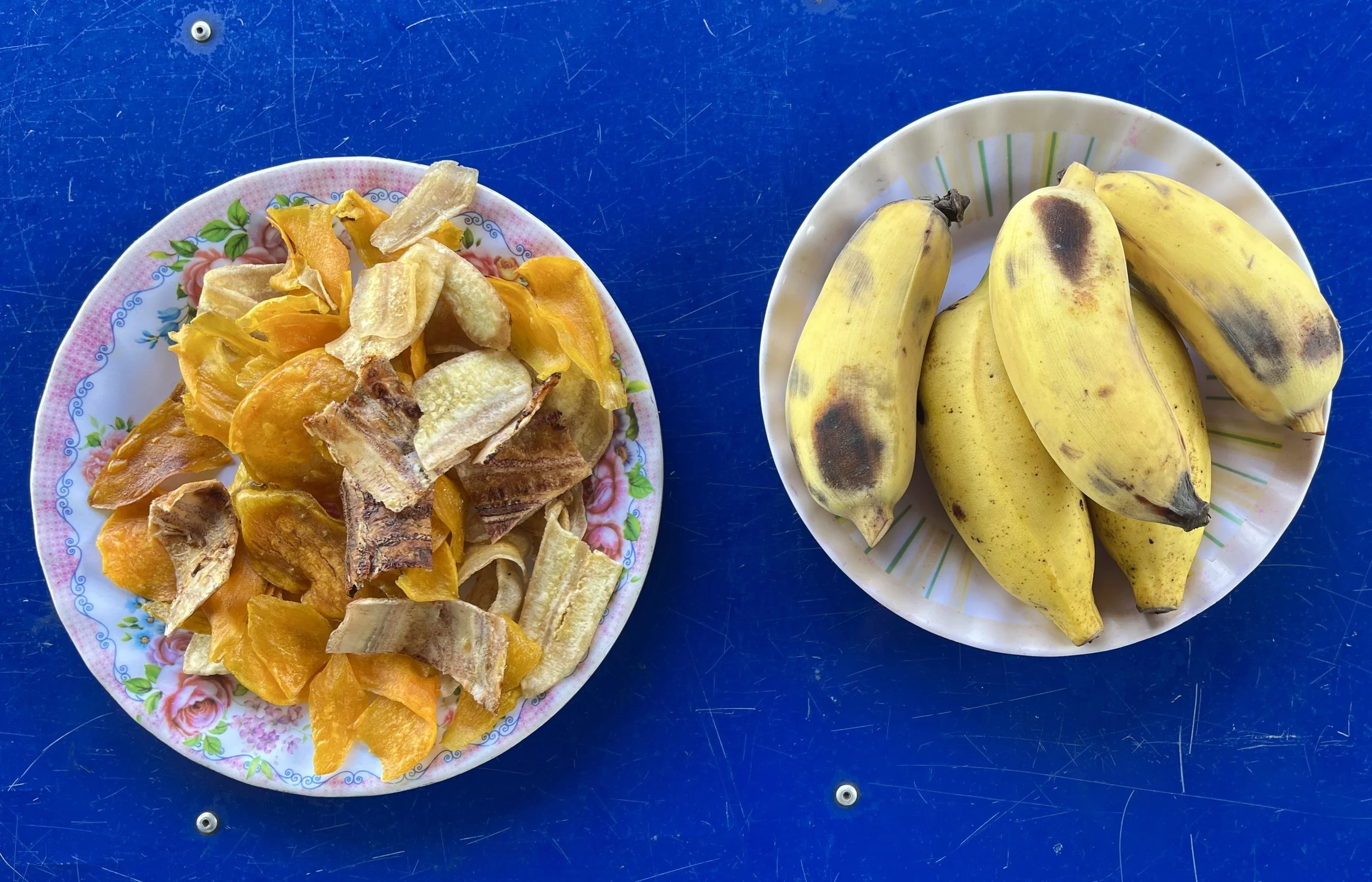
One of the pleasures of living in Cambodia is fresh cheap pineapple or bananas everywhere for pennies.

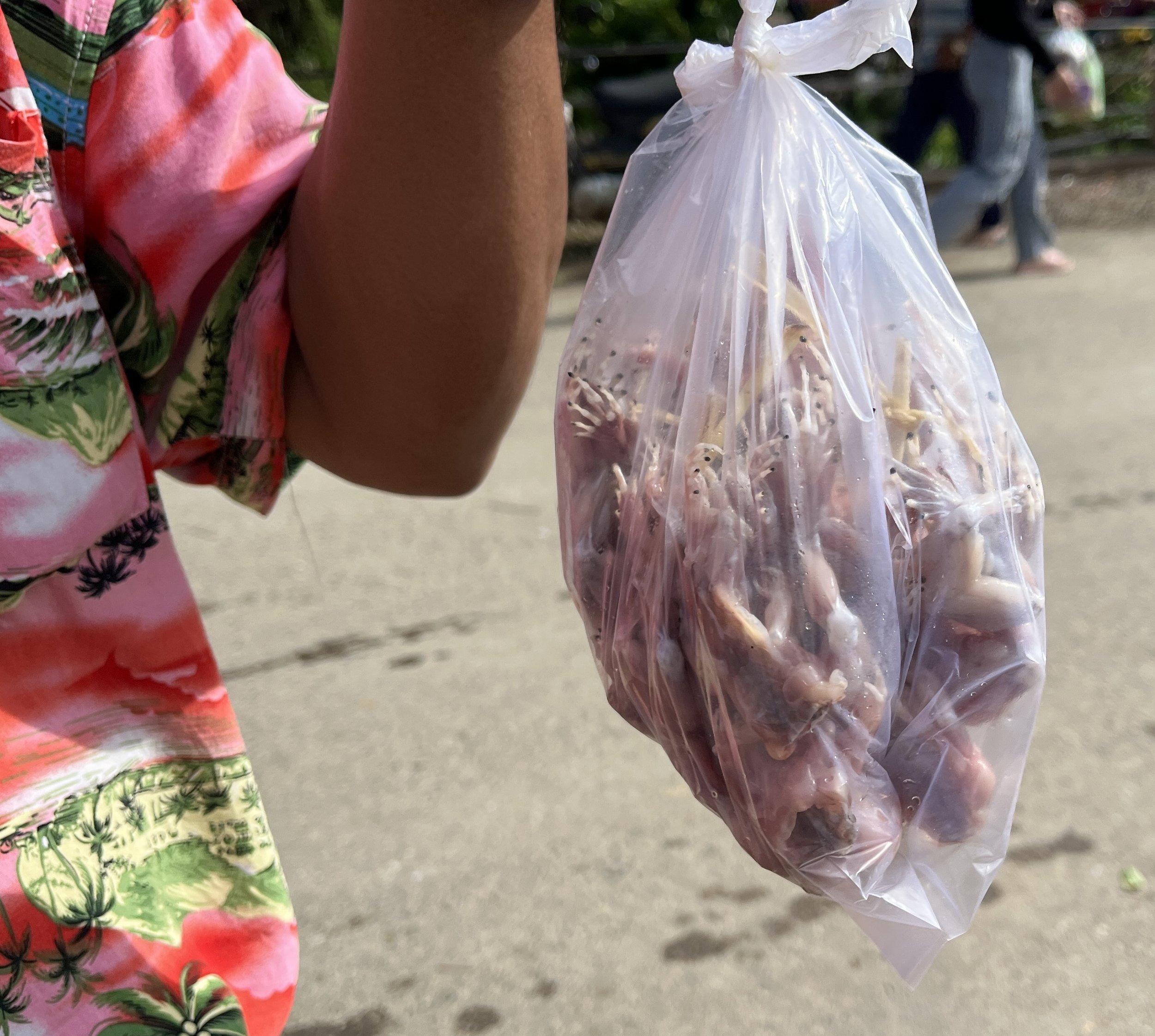
My tour guide said frog soup is the Cambodian version of chicken soup– the standard when you feel sick.
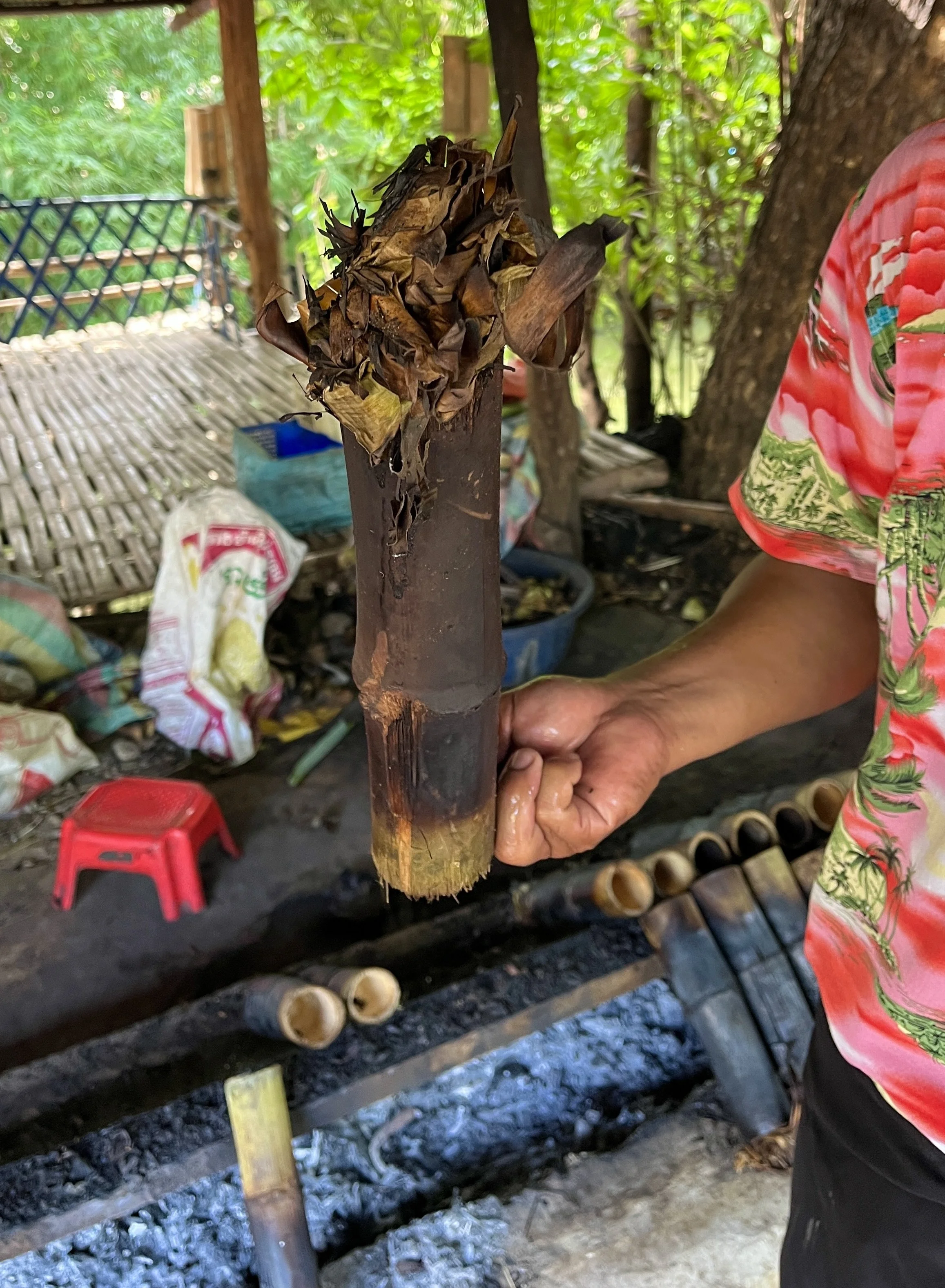
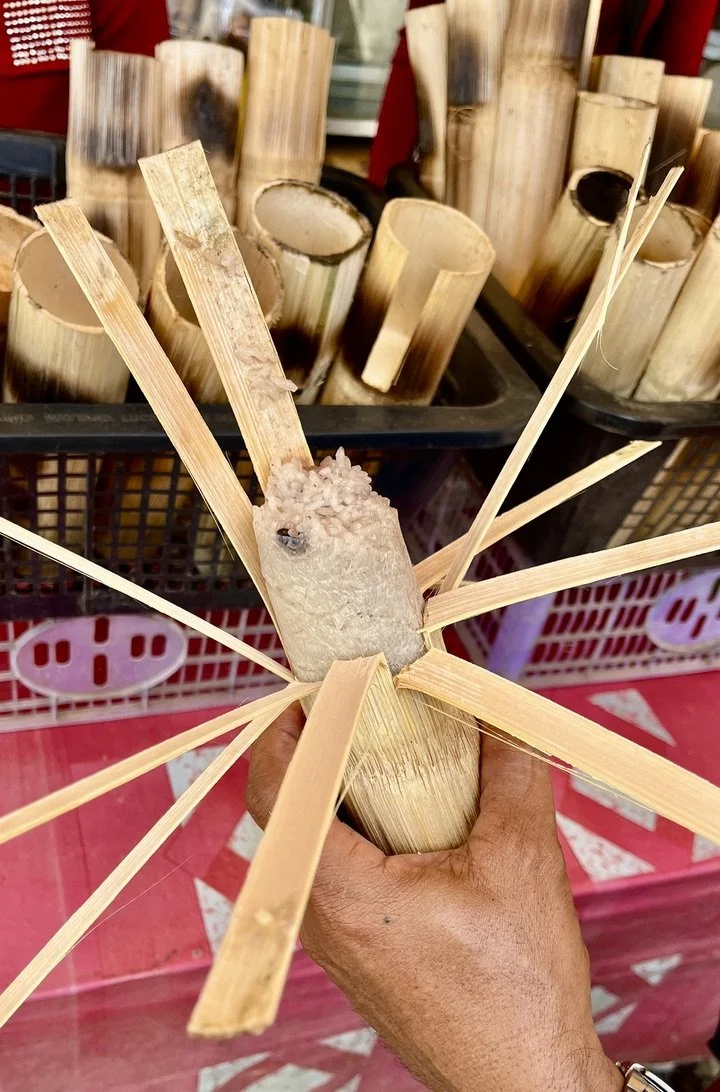
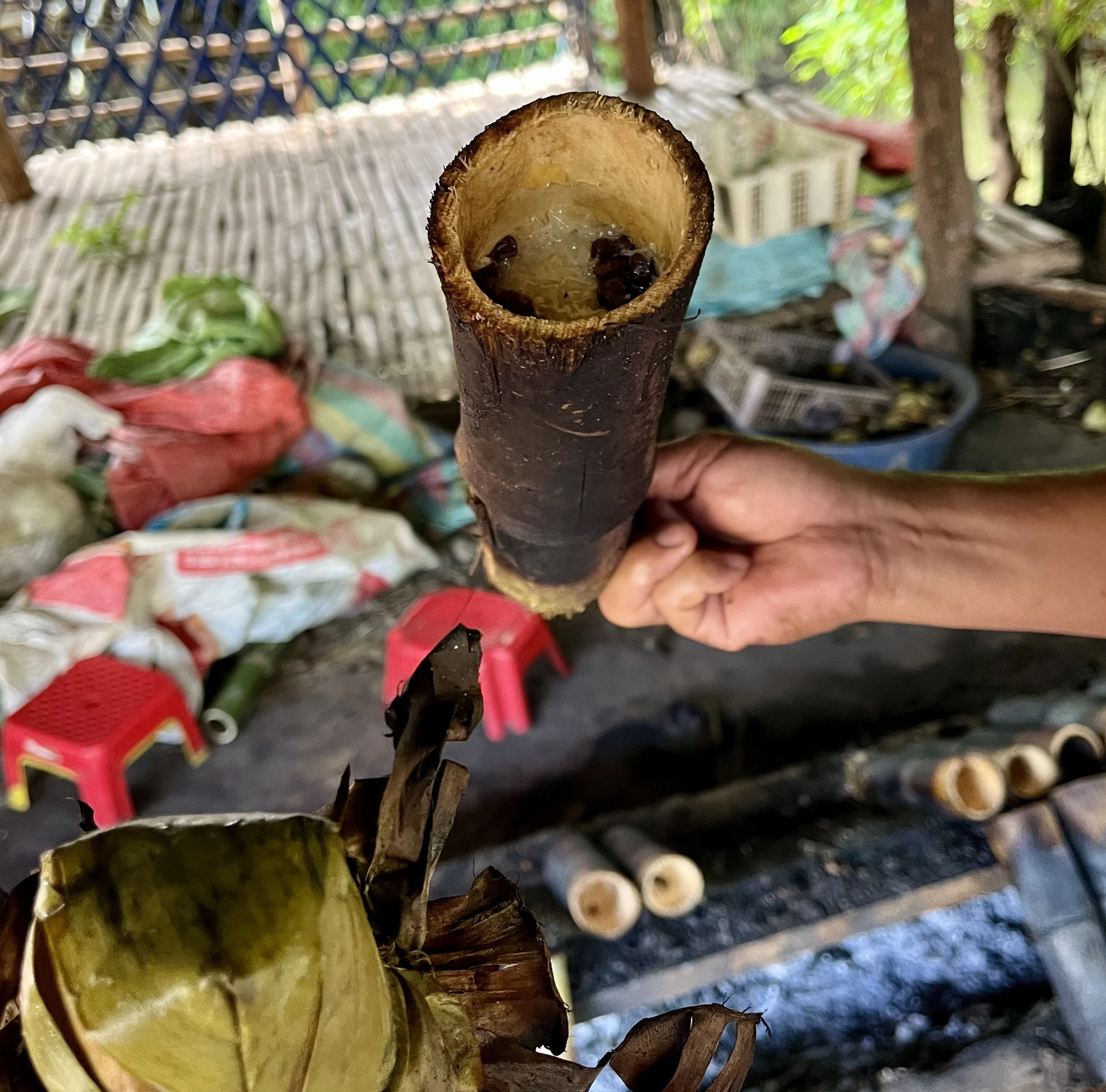
Sticky rice roasted in bamboo

We usually make rice oudding with raisins, but here they’re sweet black beans of some kind.
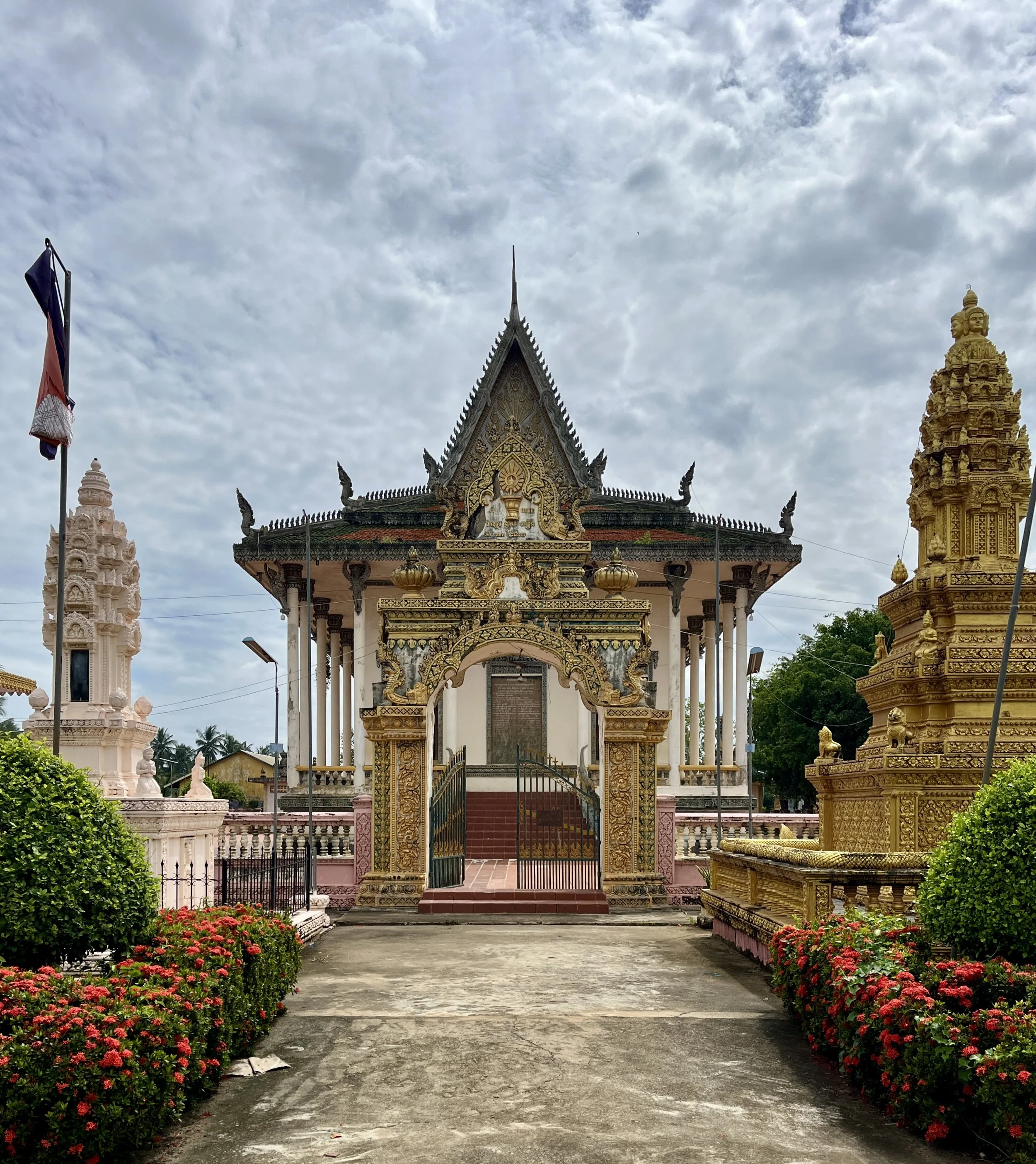
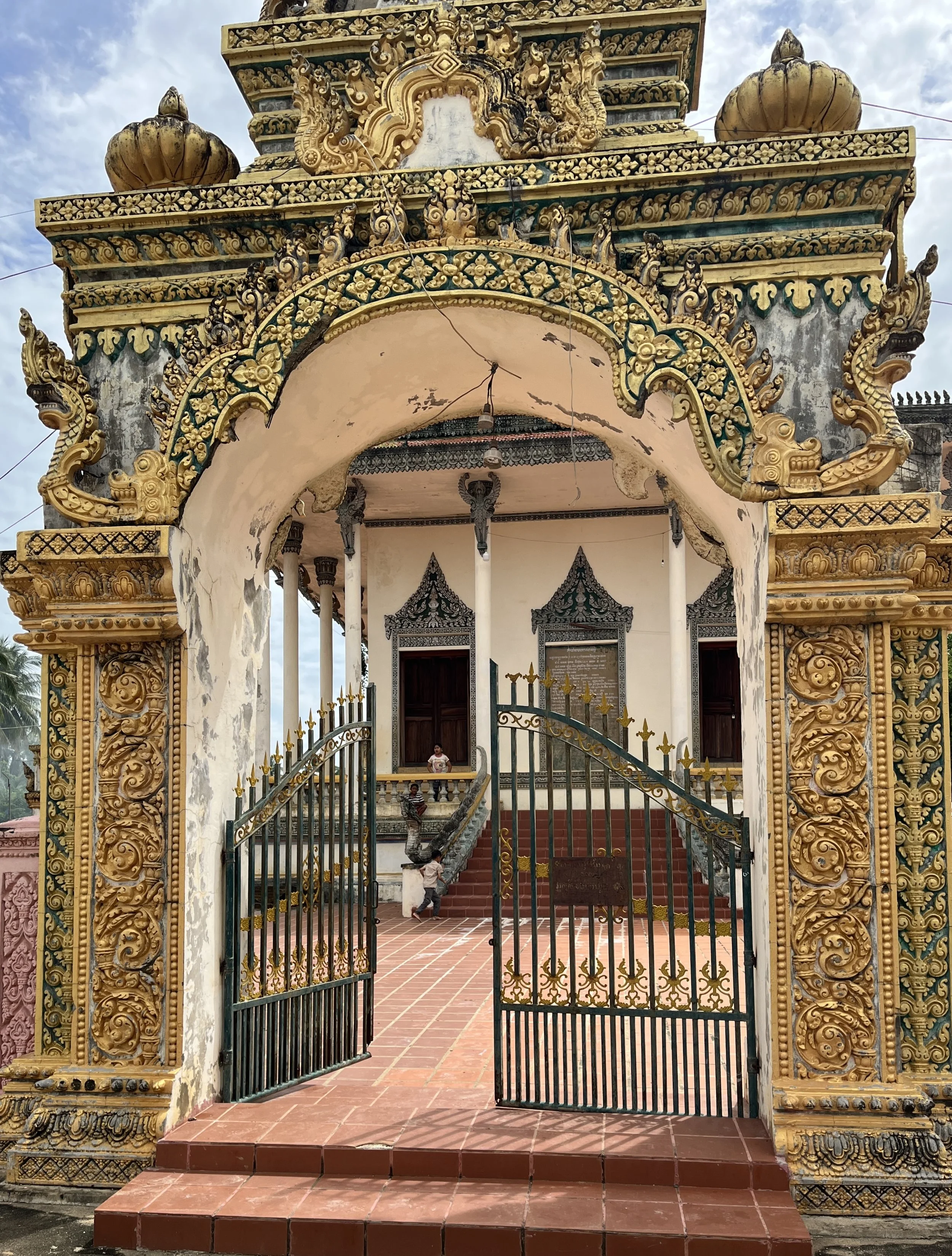
Wat Svay Chom– clearly contemporary, and locally important, but I can’t find any substantive info about it.

Kids playing at Wat Svay Chom.

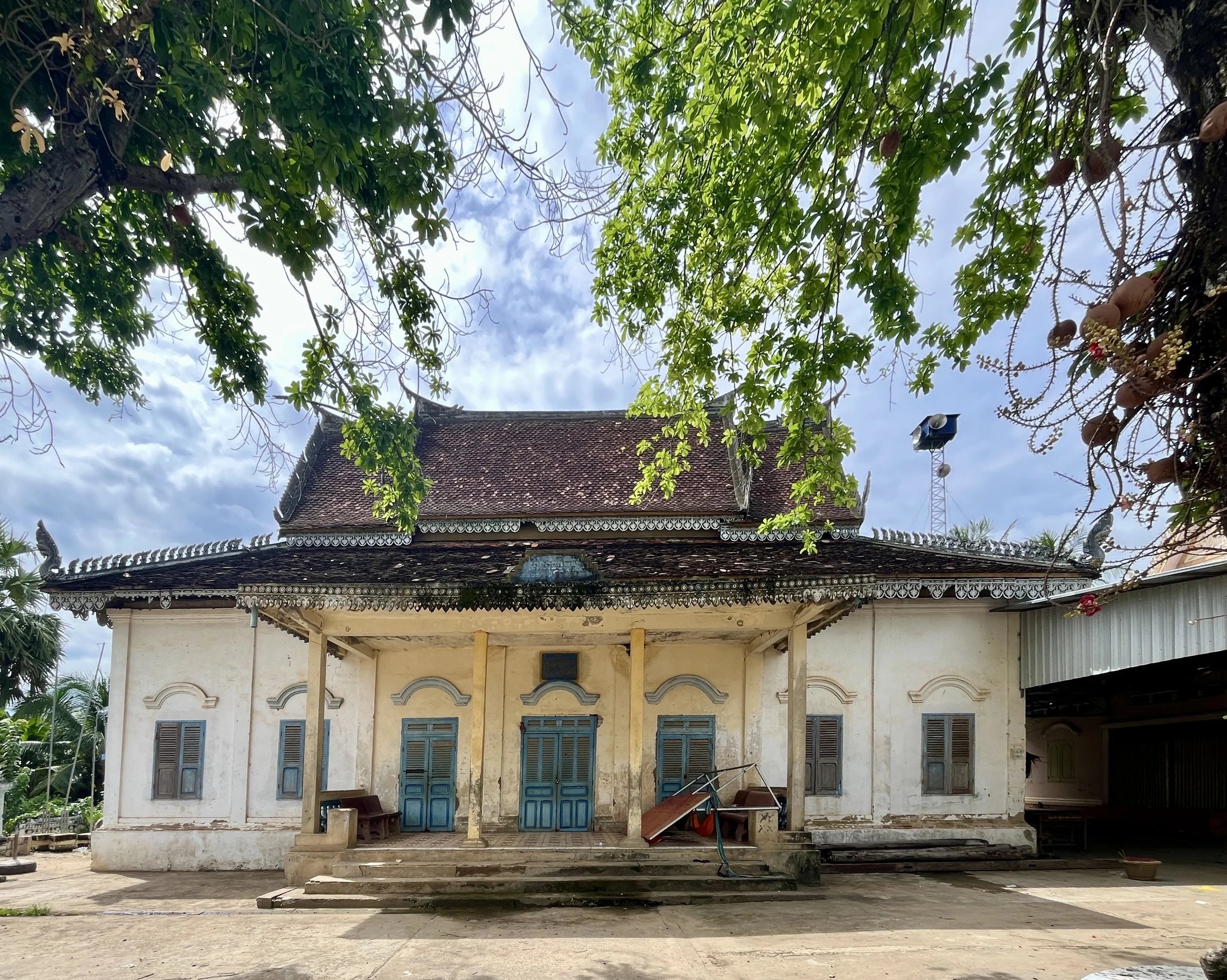
The older wat

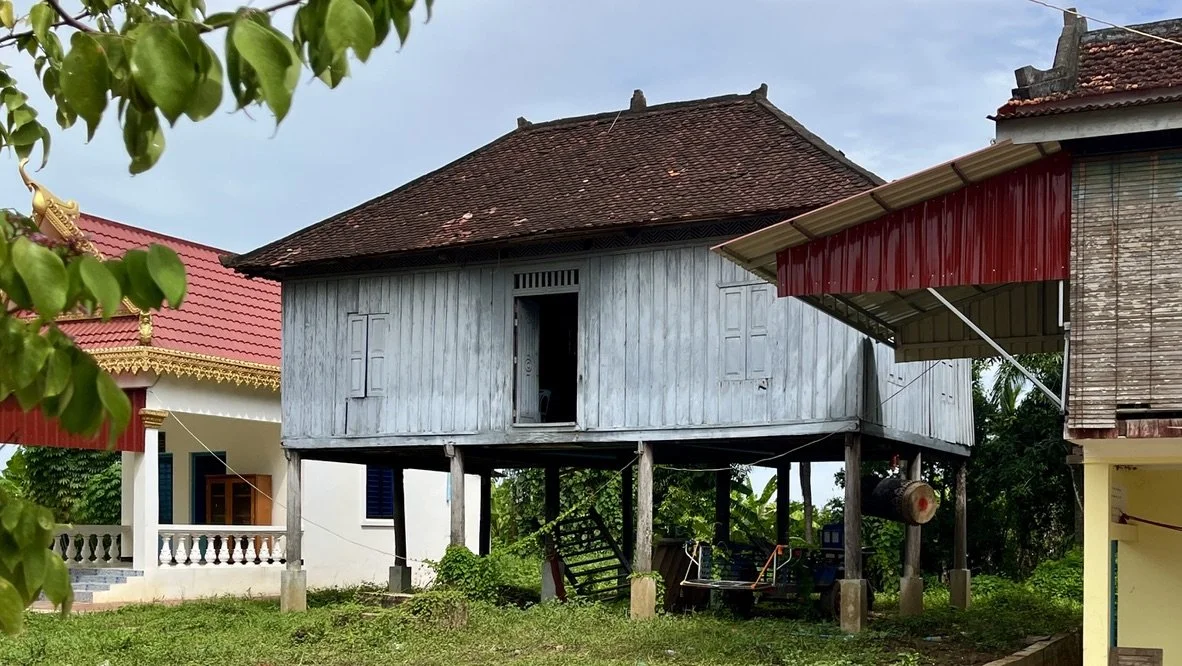
It’s falling apart, but has lovely details.

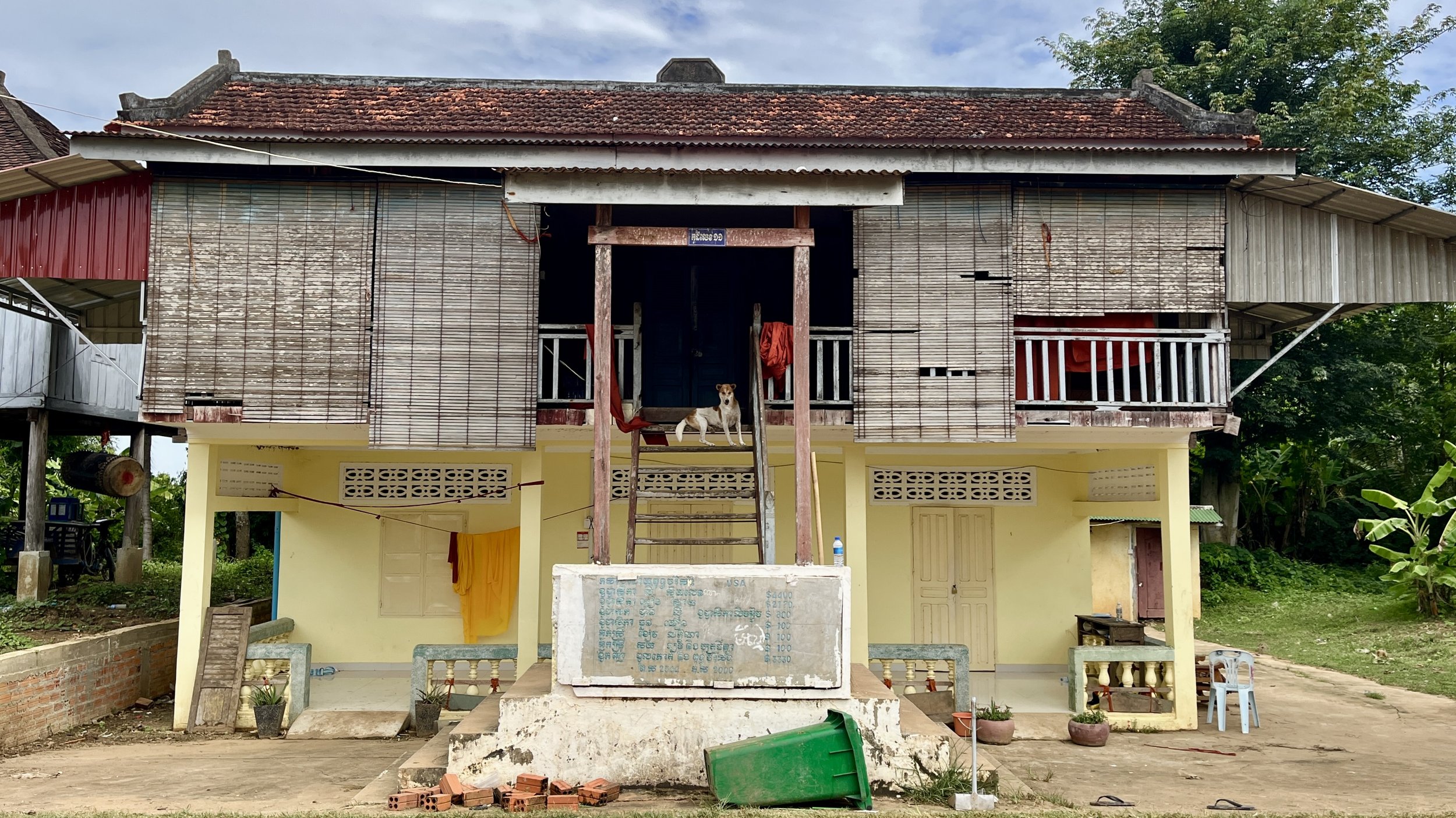
Monk’s housing, with the names of the donors who paid for it honored in front.

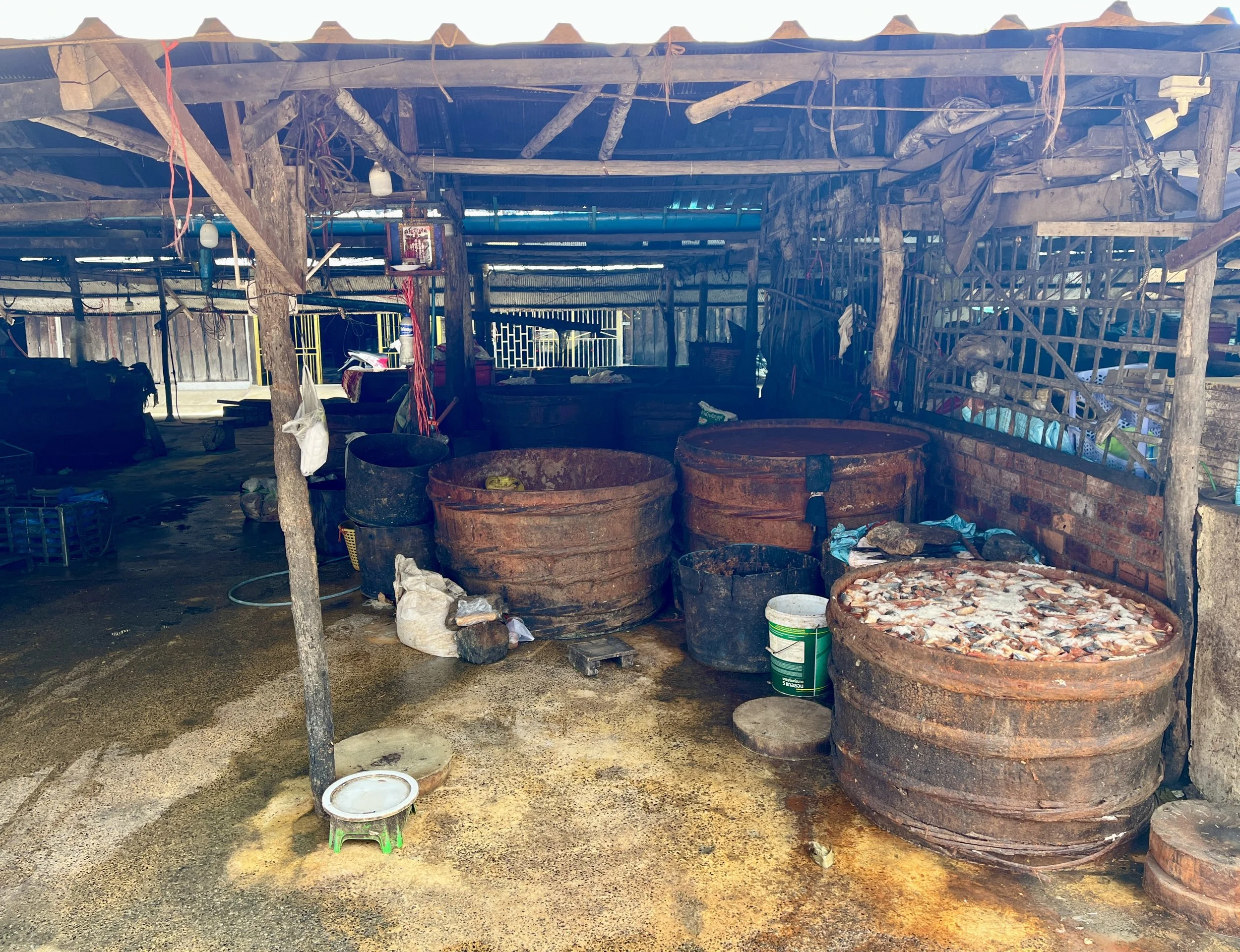
The fish sauce factory– it smelled SO strongly I couldn’t bear to step further inside to take more photos

The rice cake seller

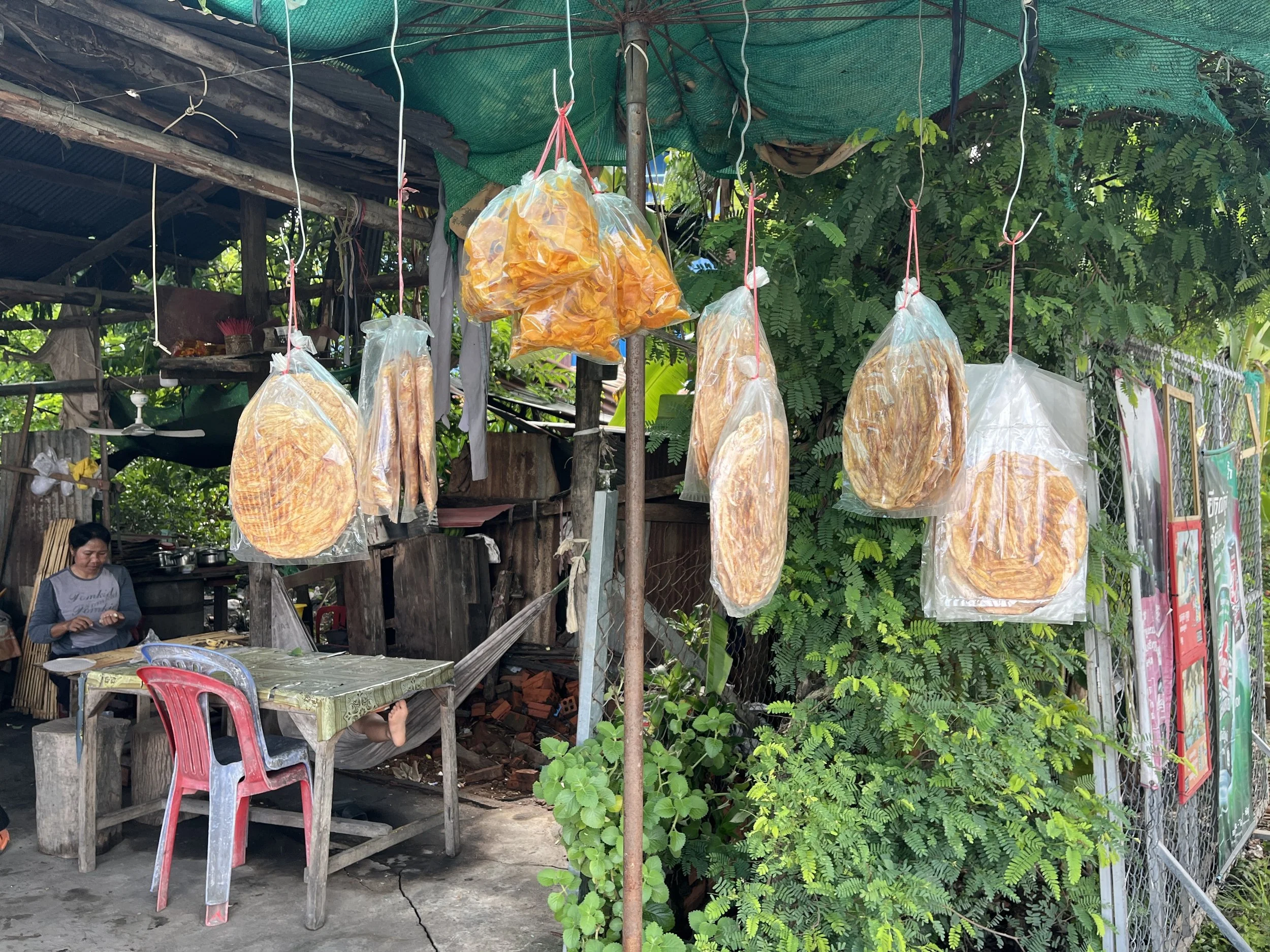
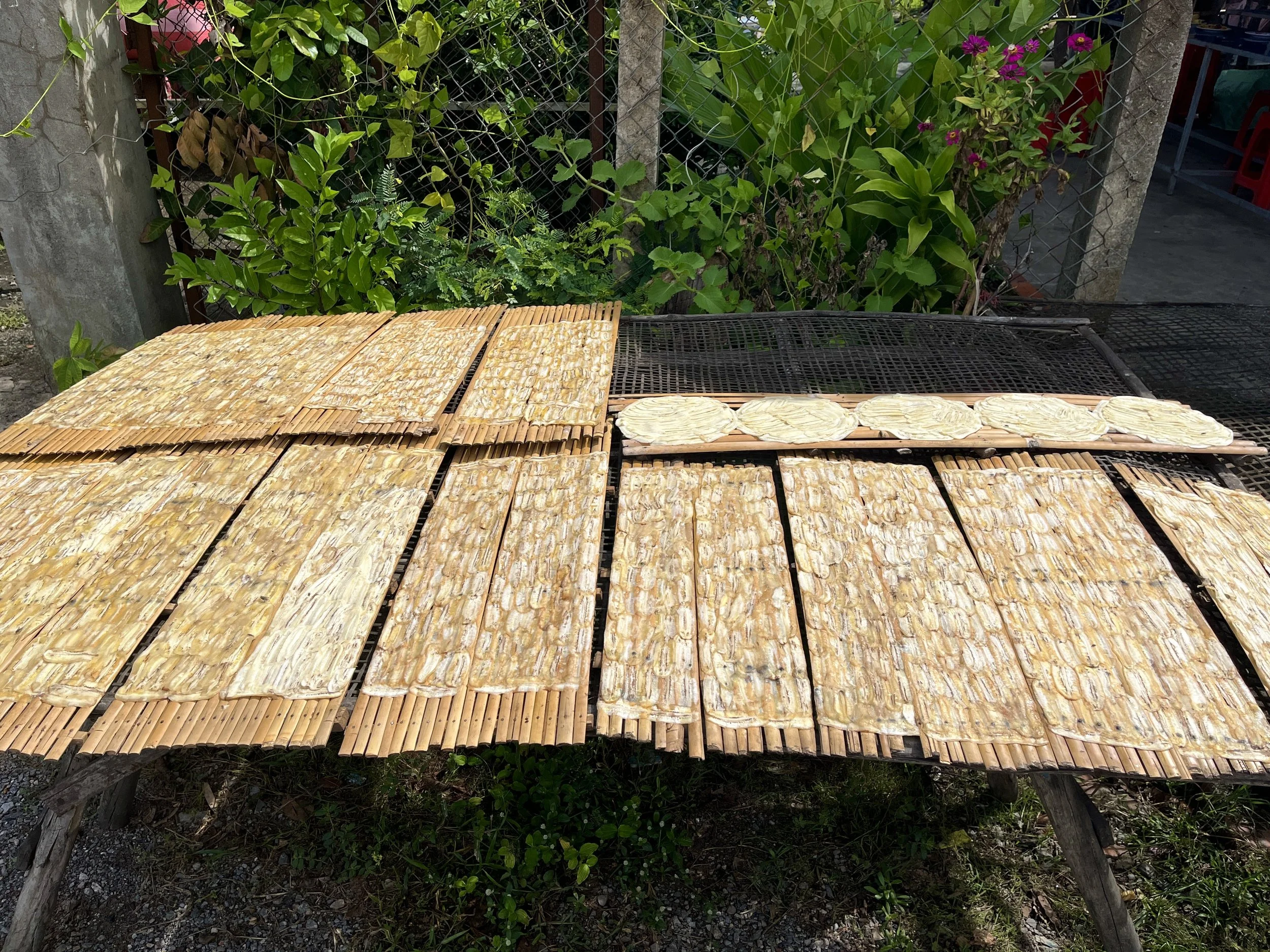
The dried and fried banana seller

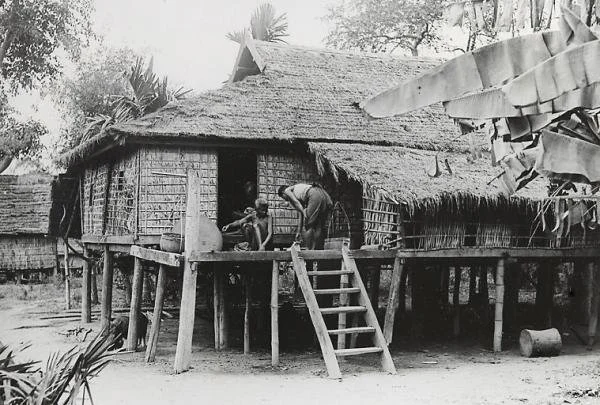
Taken by René Têtard in Battambang between 1919 and 1926, sowing how woven grass mats used to be used much more extensively.

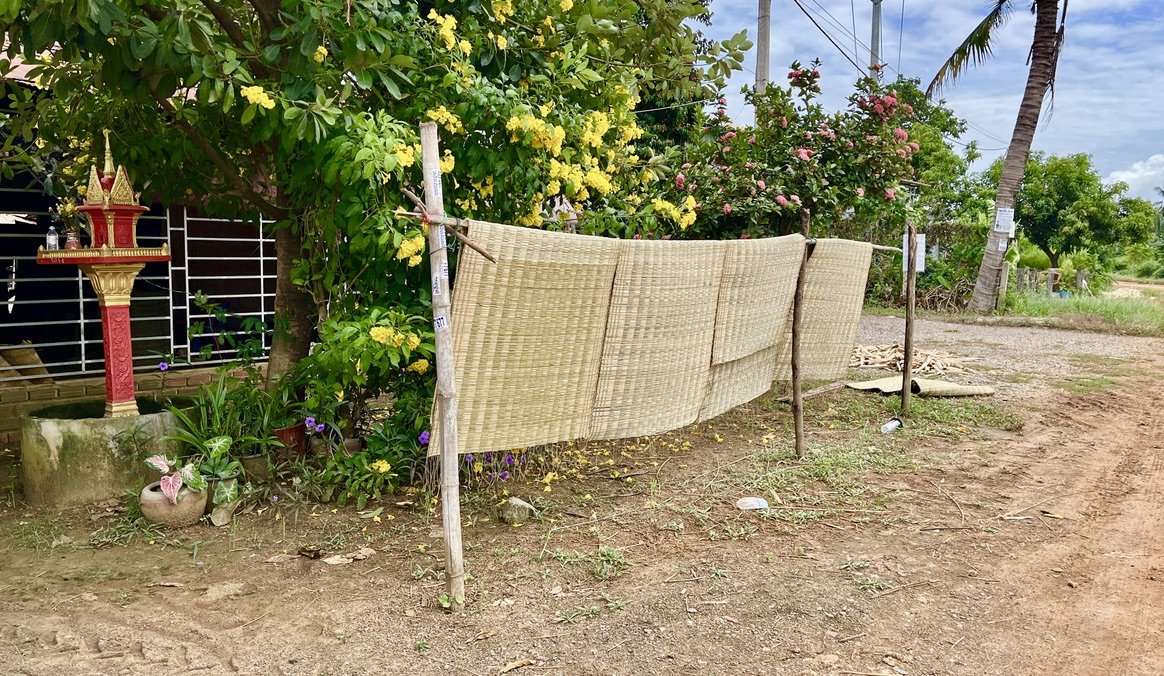
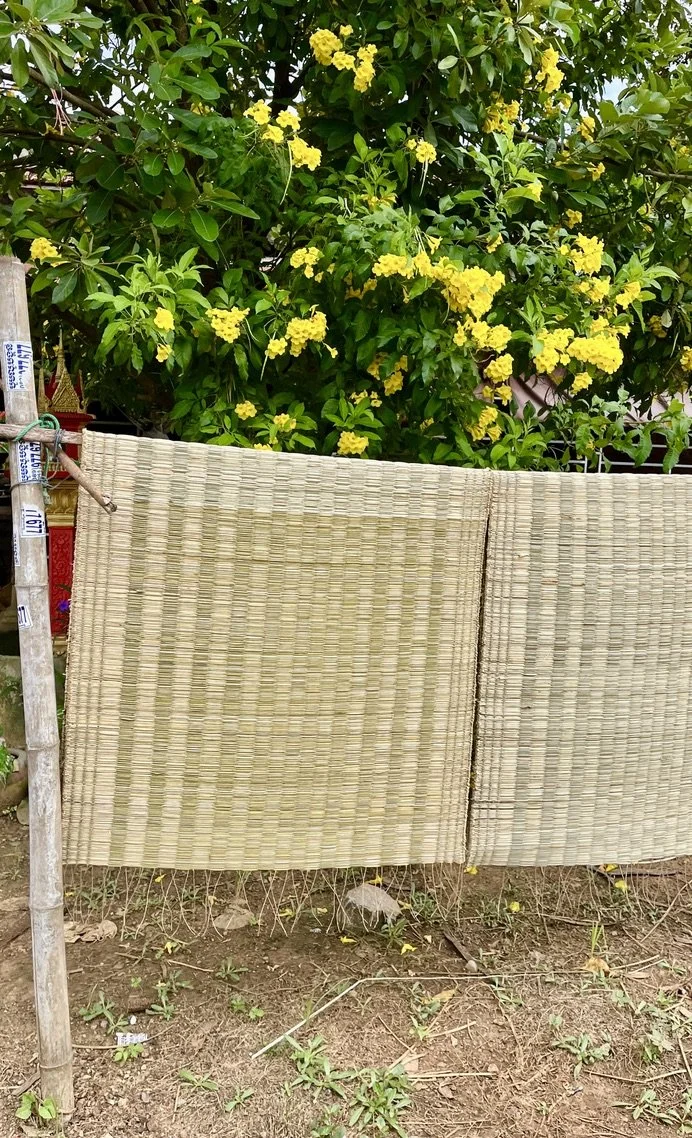
A woven mat seller.

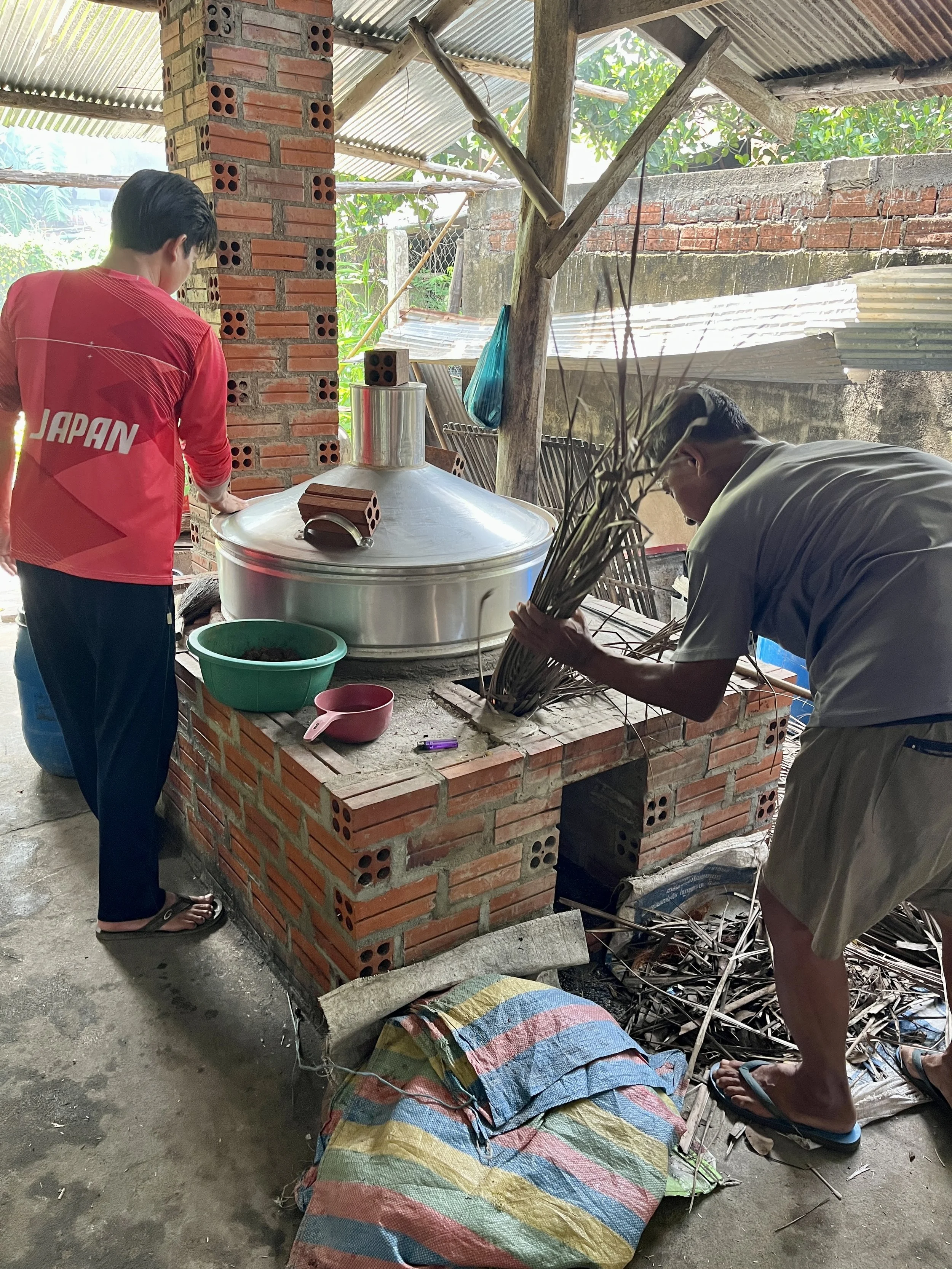
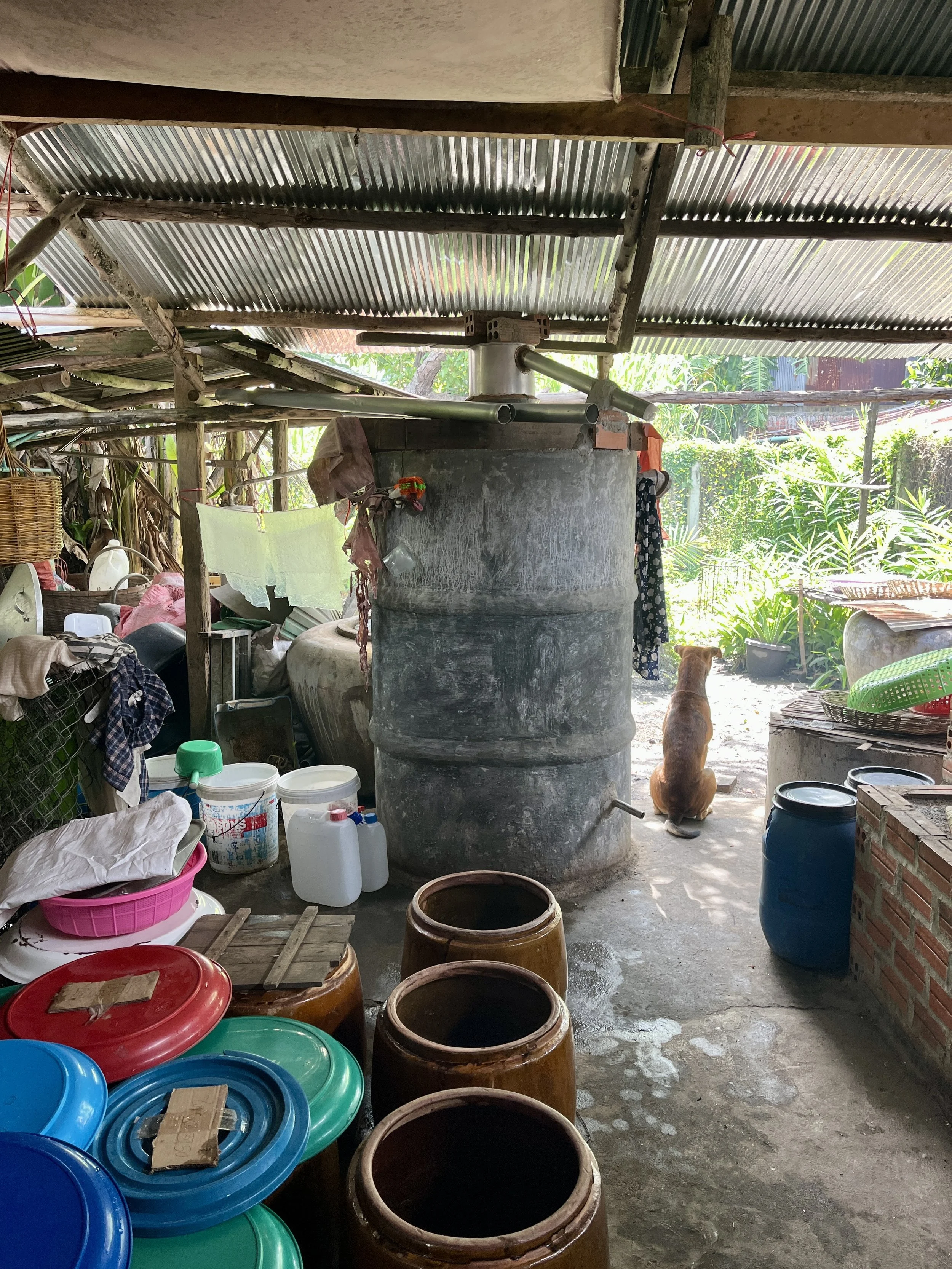
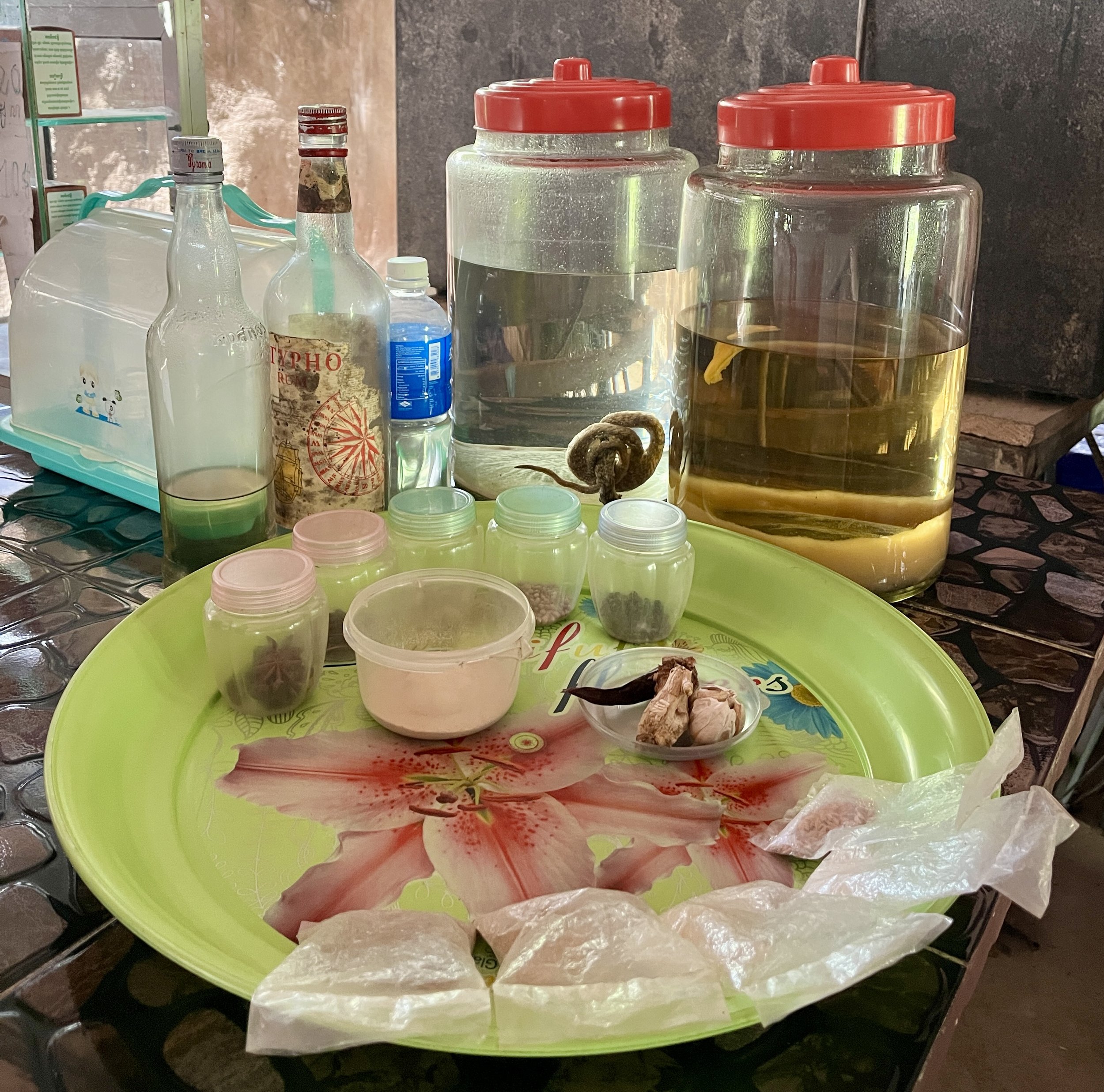
Possibly the happiest sellers in Battambang, the rice wine makers.

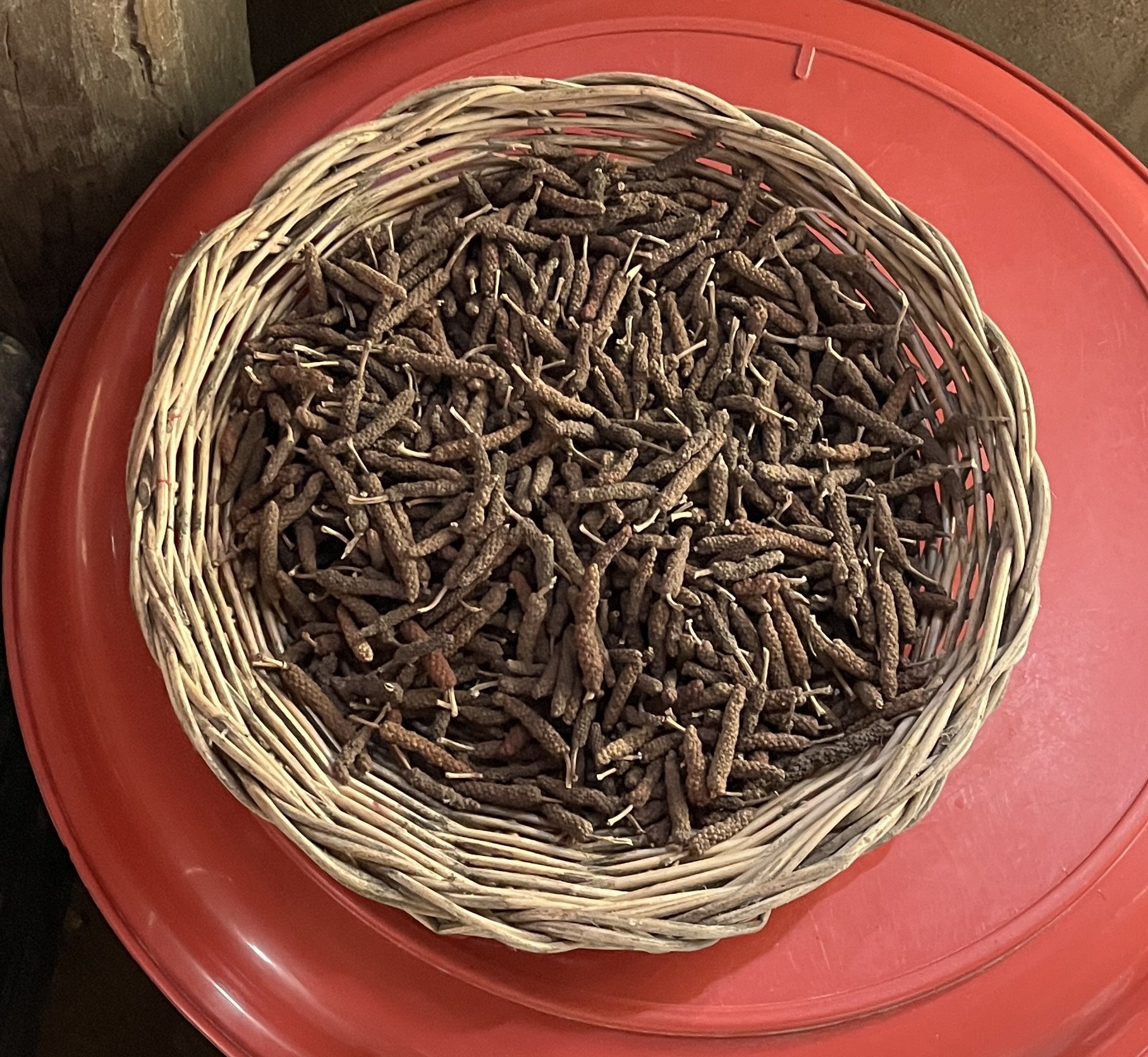
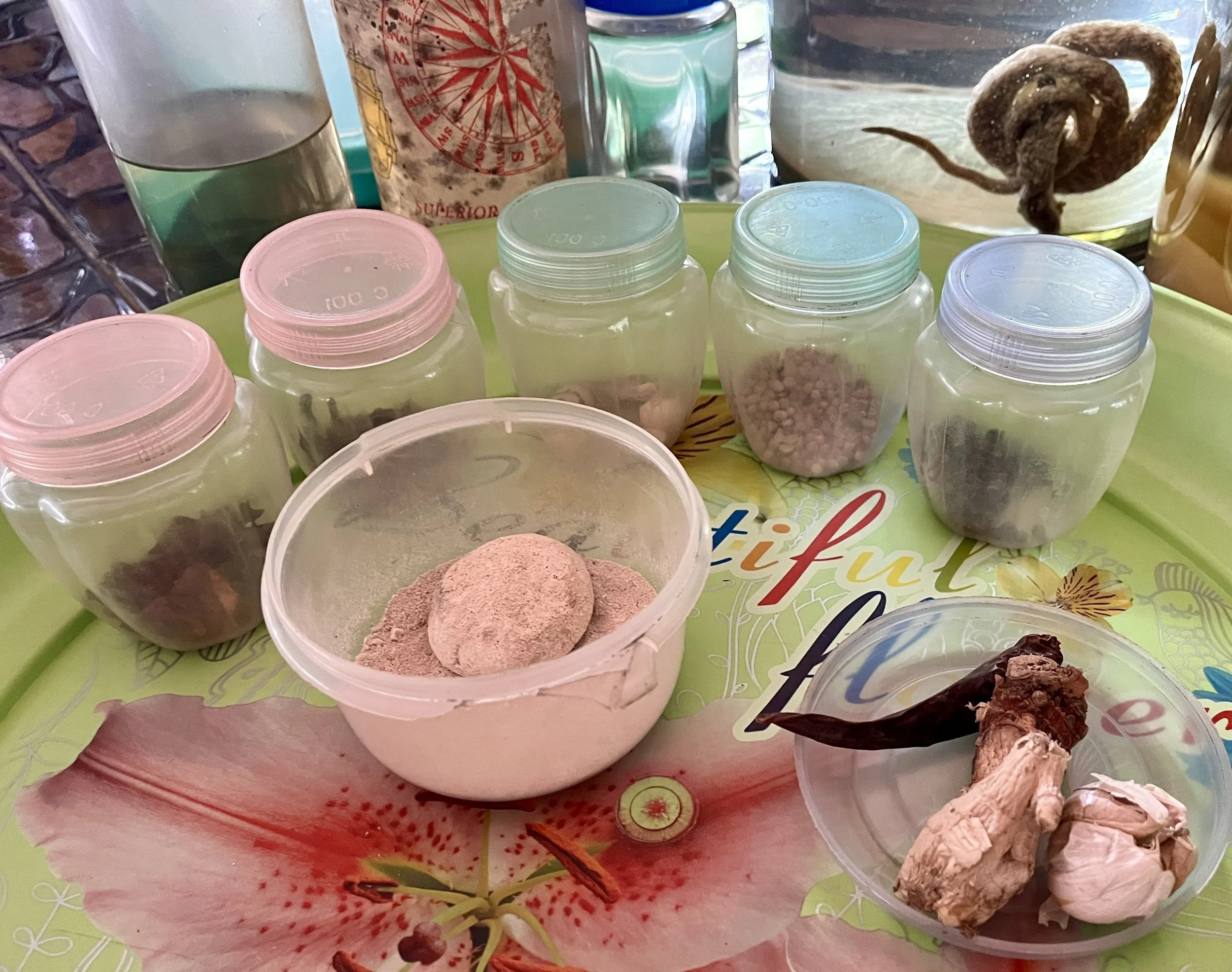
The famous kampot pepper, used to flavor some of the wine.

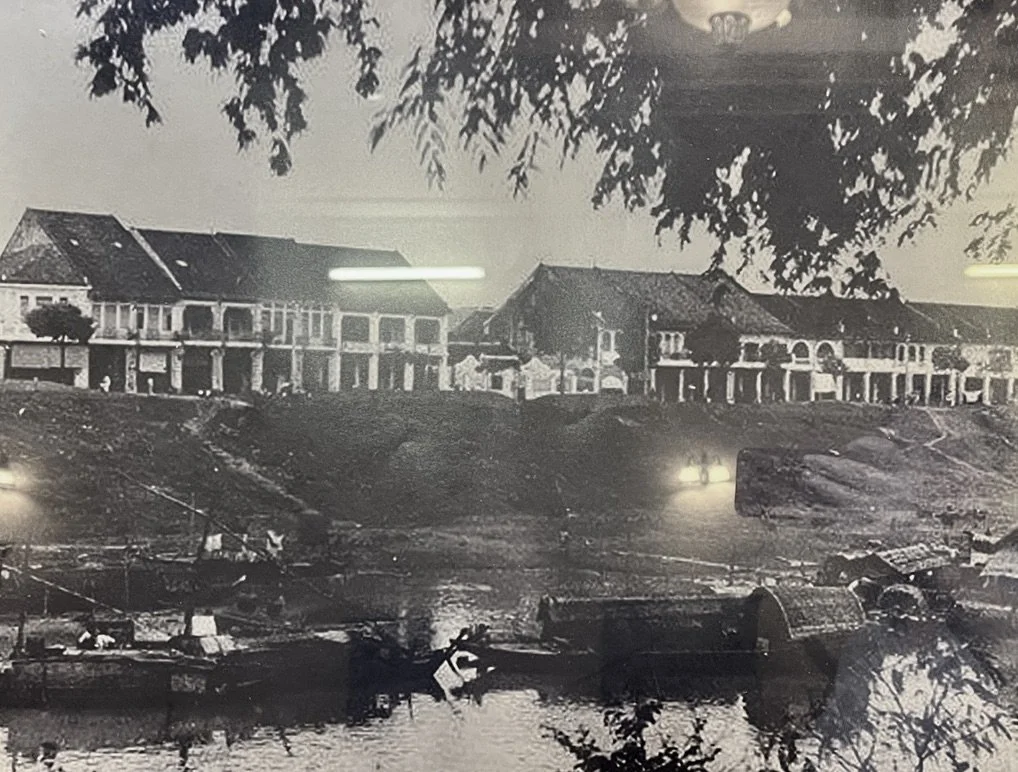
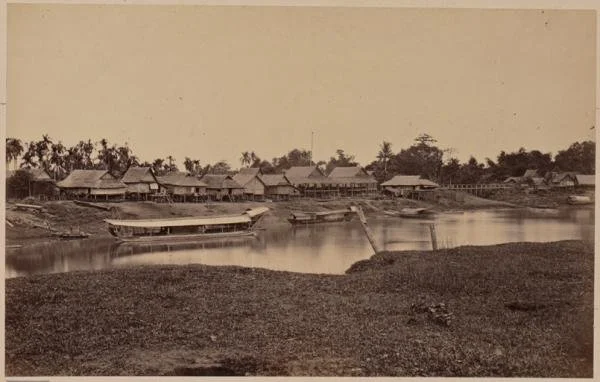
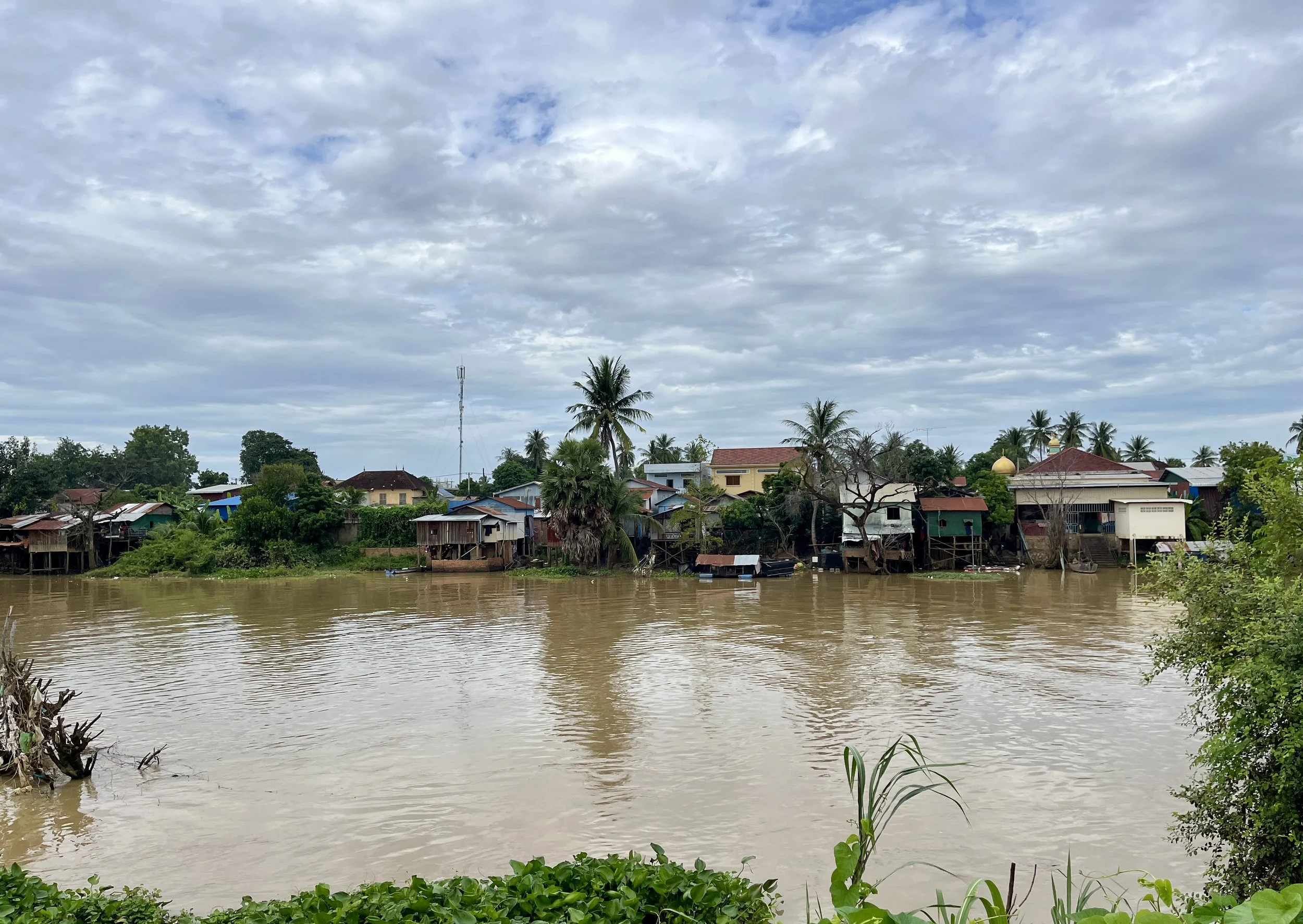
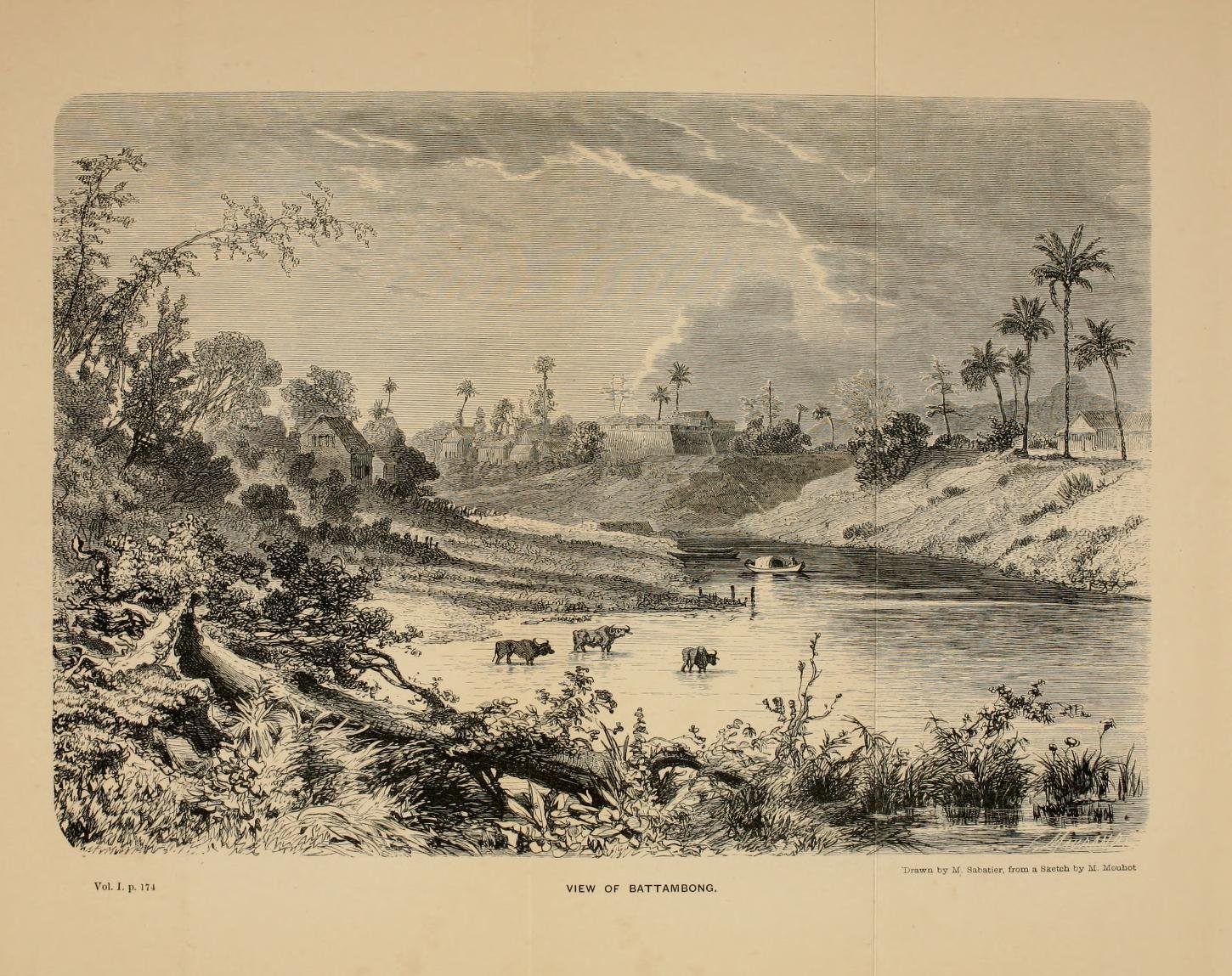
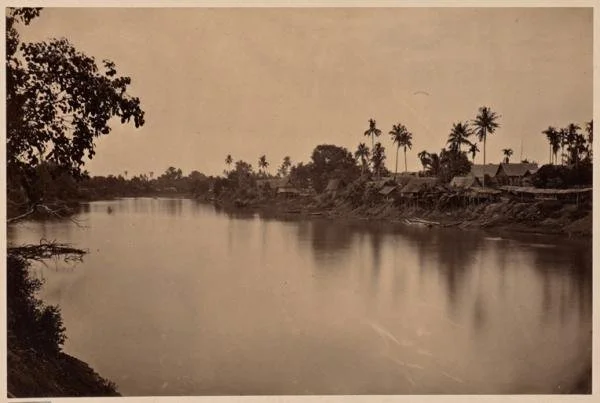
The Battambang riverside 150 years ago, photographed by Émile Gsell c. 1873

Illustration after Henri Mouhot c. 1859

Émile Gsell c. 1873

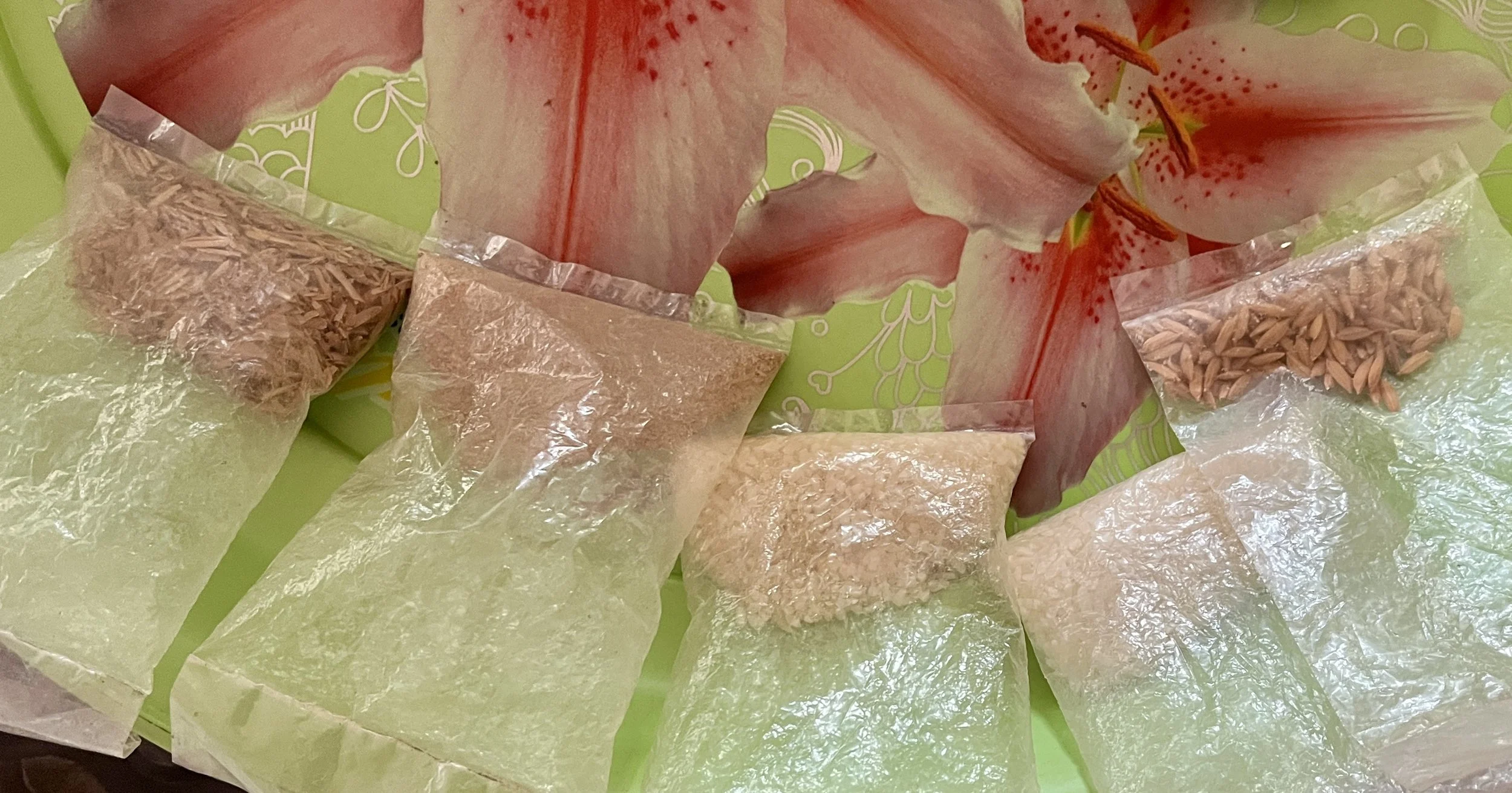
Rice, of course.

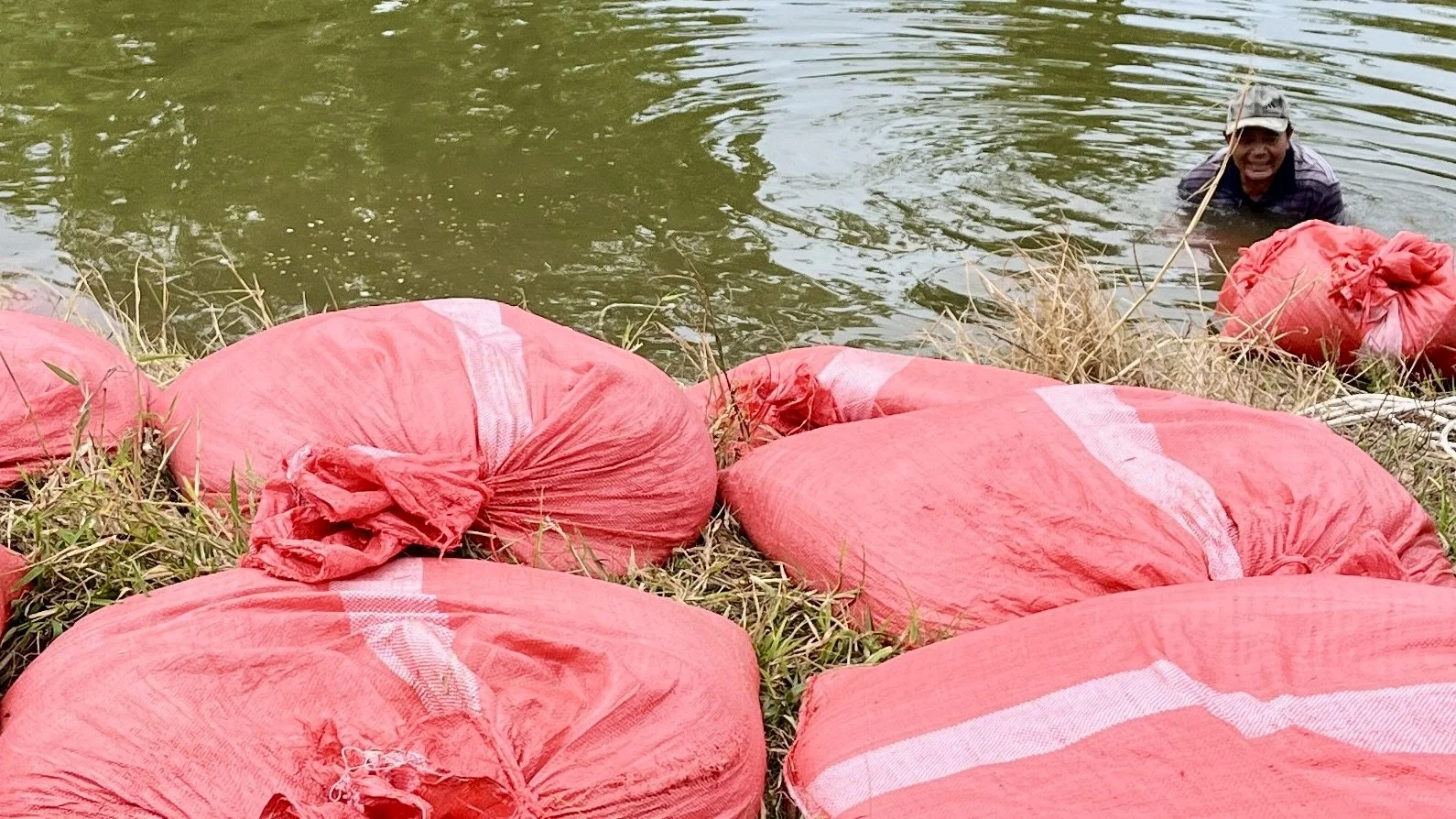
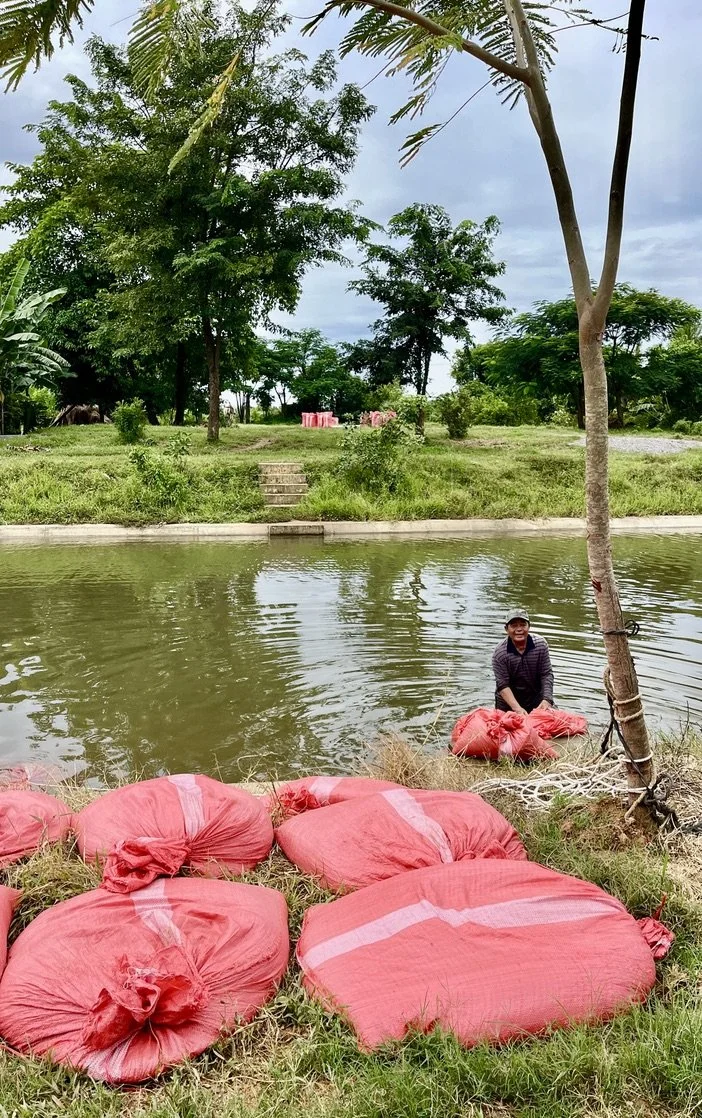
I genuinely forget what was in these bags! Whatever it is has to soak in the river for a couple days.

1954

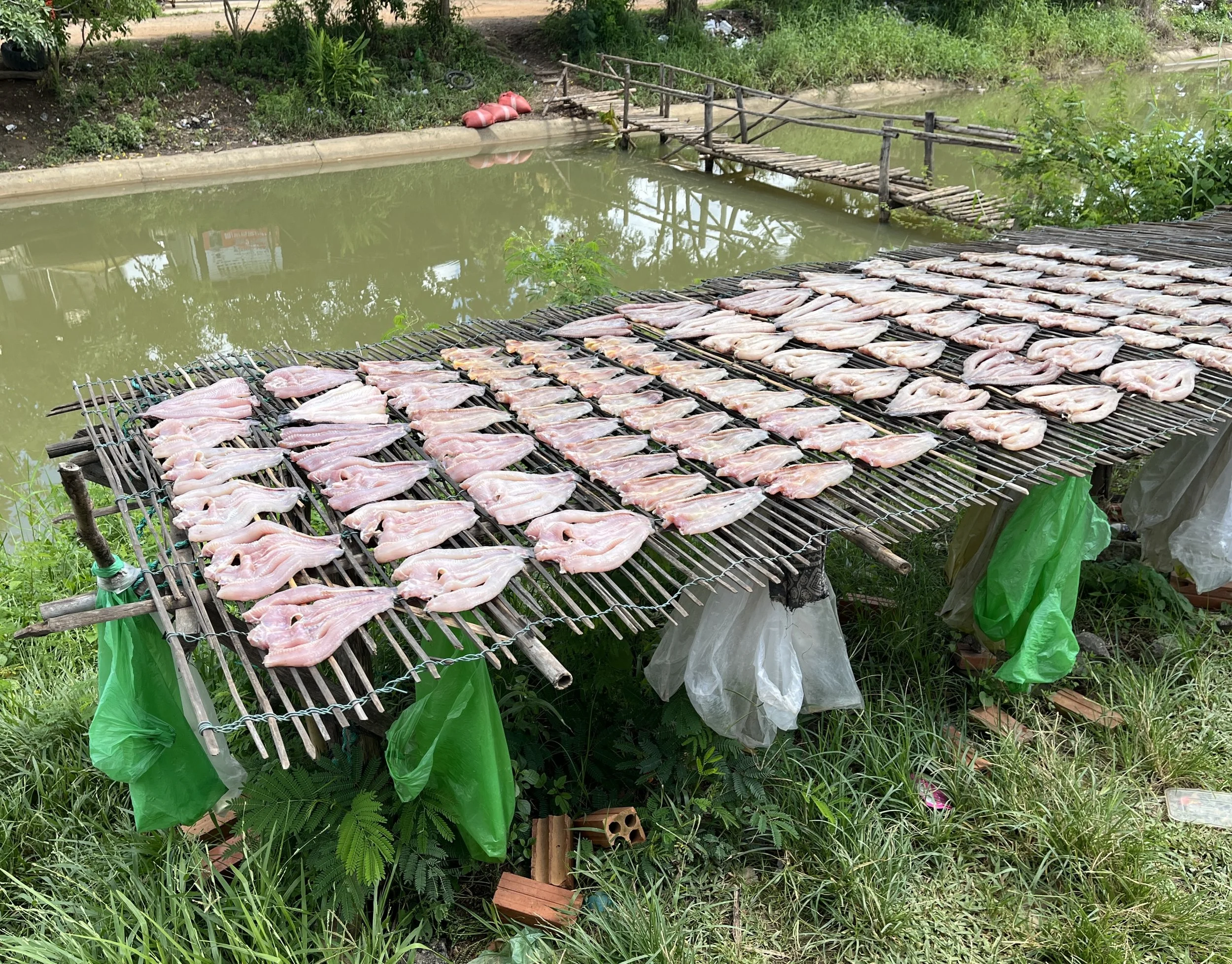
Freshly skinned and fileted fish by the riverside, ready to grill or perhaps dry to jerky in the sun.

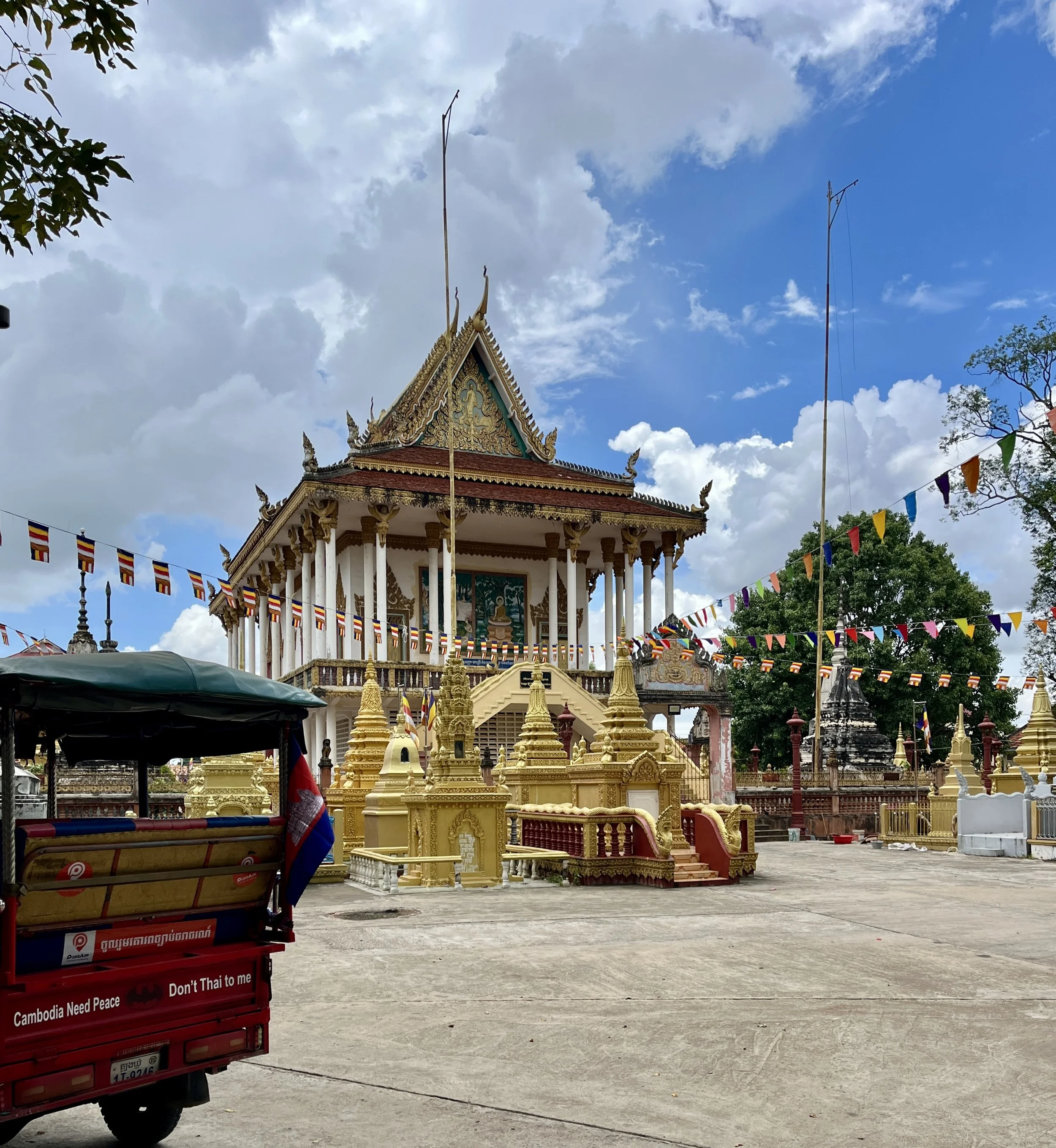
Wat Ta Mem, yet another temple we didn’t go inside. I’m unclear on why or if this temple is particularly significant because, having joined a group of 4 other women from all different countries, my tour guide stopped here to give us a speech about why Cambodia needs peace with Thailand. It made exactly as much sense as his bumper lettering– Cambodia needs peace, but also refuses to hear Thailand out. He really tried to convince us that after decades of peaceful trade at the border, Thai soldiers just woke up one morning and decided they wanted an extra Angkorian ruin and would kill Cambodians to get it.

‘Don’t Thai to me’ has become the phrase used in response to any defense of Thai actions or motivations, though at different points (and often the same points) in the conflict, both sides have been wrong. It’s clear as crystal that leaders of either country are initiating these border skirmishes as means to solidify their own power domestically, by rallying all the jingos to vote for ‘no change’ while their country is ‘at war’. It reminds me of when this worked in 2004 with George W. Bush in the US, how unexpectedly effective the play was– even my beloved, sensitive, highly intelligent boyfriend fell for it, and voted for it, due to peer pressure, particularly from his boomer war-hawk conservative father. I remember our votes cancelling each other’s out, and feeling a bit helpless and betrayed, politically, for the first time in my young life. Writing a blank check to the military industrial complex and upholding autocracy is horrid, and no one is less of a patriot for refusing to do so.

But back to 2025– it’s also incredibly impractical for most while being extremely beneficial for an influential few, which muddies the waters. Nationalist social media influencers have made their names and fortunes on this, and one can’t help but think that while some are true jingos, most know better and are simply greedy. Just like Cambodian civilians, especially those living in border regions, have little control over their government and want peace, Thai civilians have little control over their government and want peace. “Don’t Thai to me" is an insanely reductive and racist attitude to take towards them, and all the related, histrionic government measures– blocking Thai websites, halting Thai imports, refusing to renew visas and work permits for Thais– make it seem like a new norm Cambodians must conform to, even if they personally don’t agree with it intellectually or morally.

For someone making a living off tourists, such cheerful self-sacrifice is absurd: in 2024 Thais made up 30% of tourists to Cambodia, more than any other nationality; Chinese made up 12.7%, coming in third behind Vietnamese. In 2025, the Chinese stopped coming due to scam center kidnapping stories finally hitting their news; so with Thais being actively mistreated and denied service by all classes of Cambodians, Cambodia has effectively killed off about 40% of its tourism industry in a single year! Truly impressive own foot shooting, I think they got both.

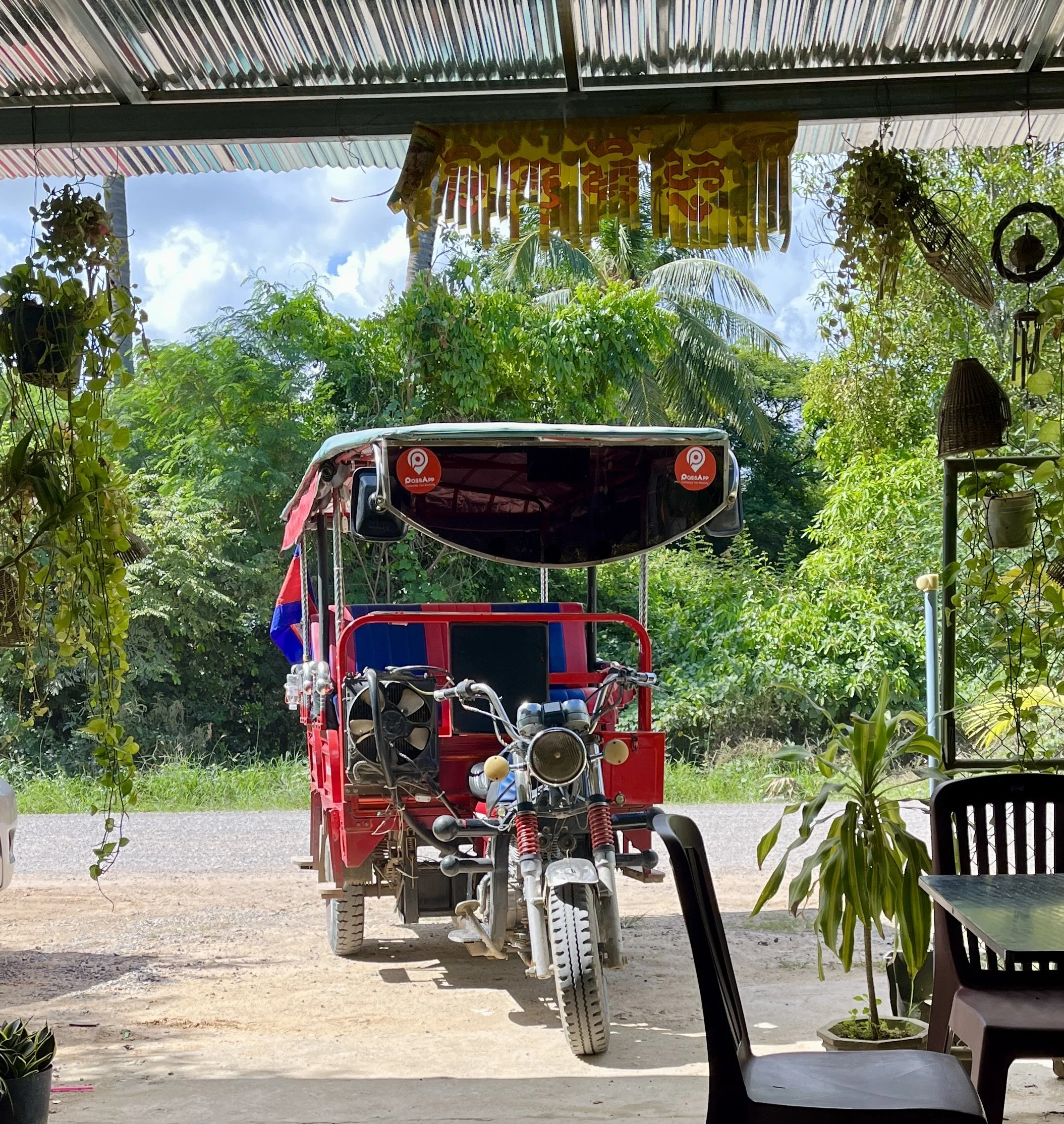
My guide’s trusty steed.

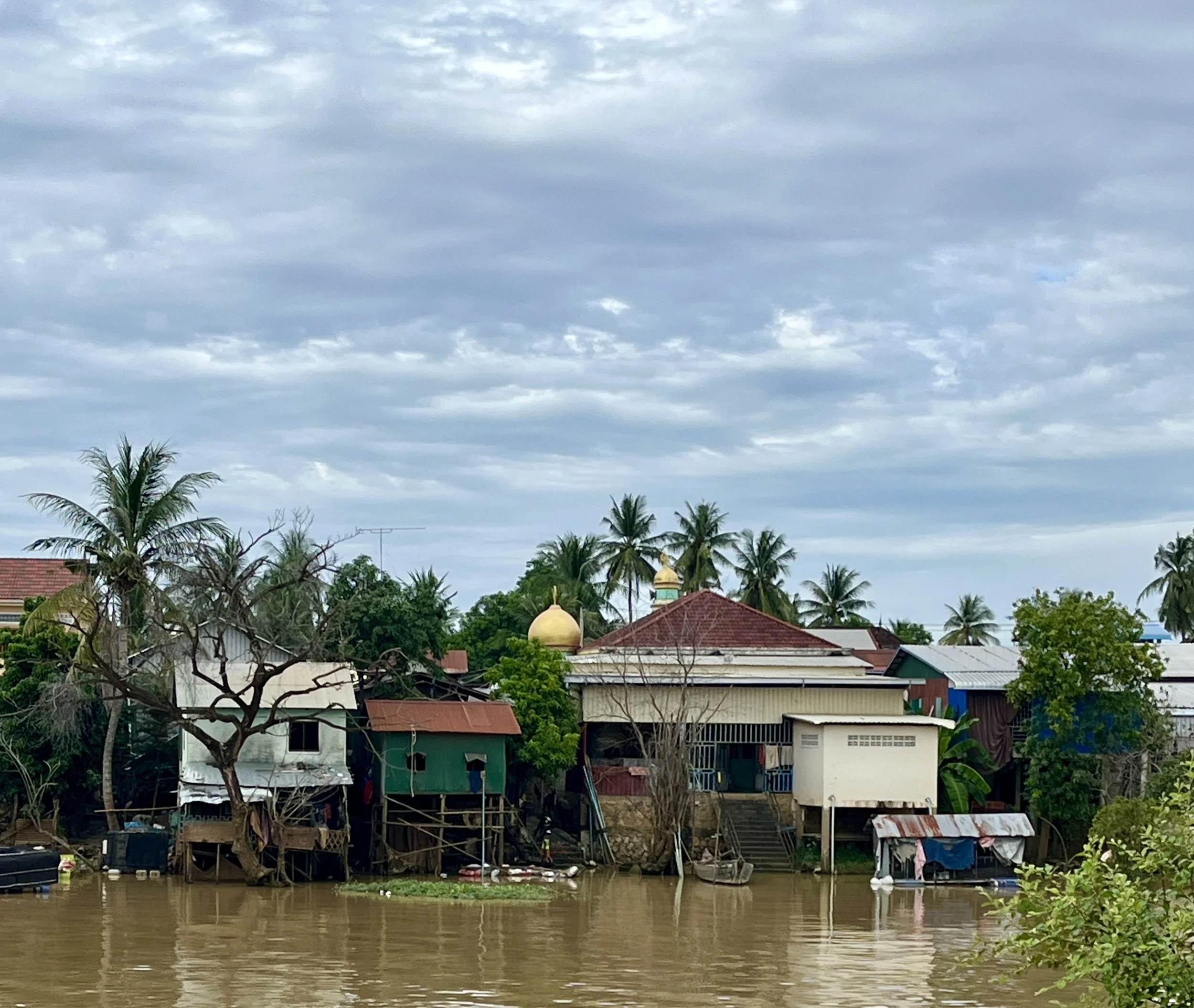
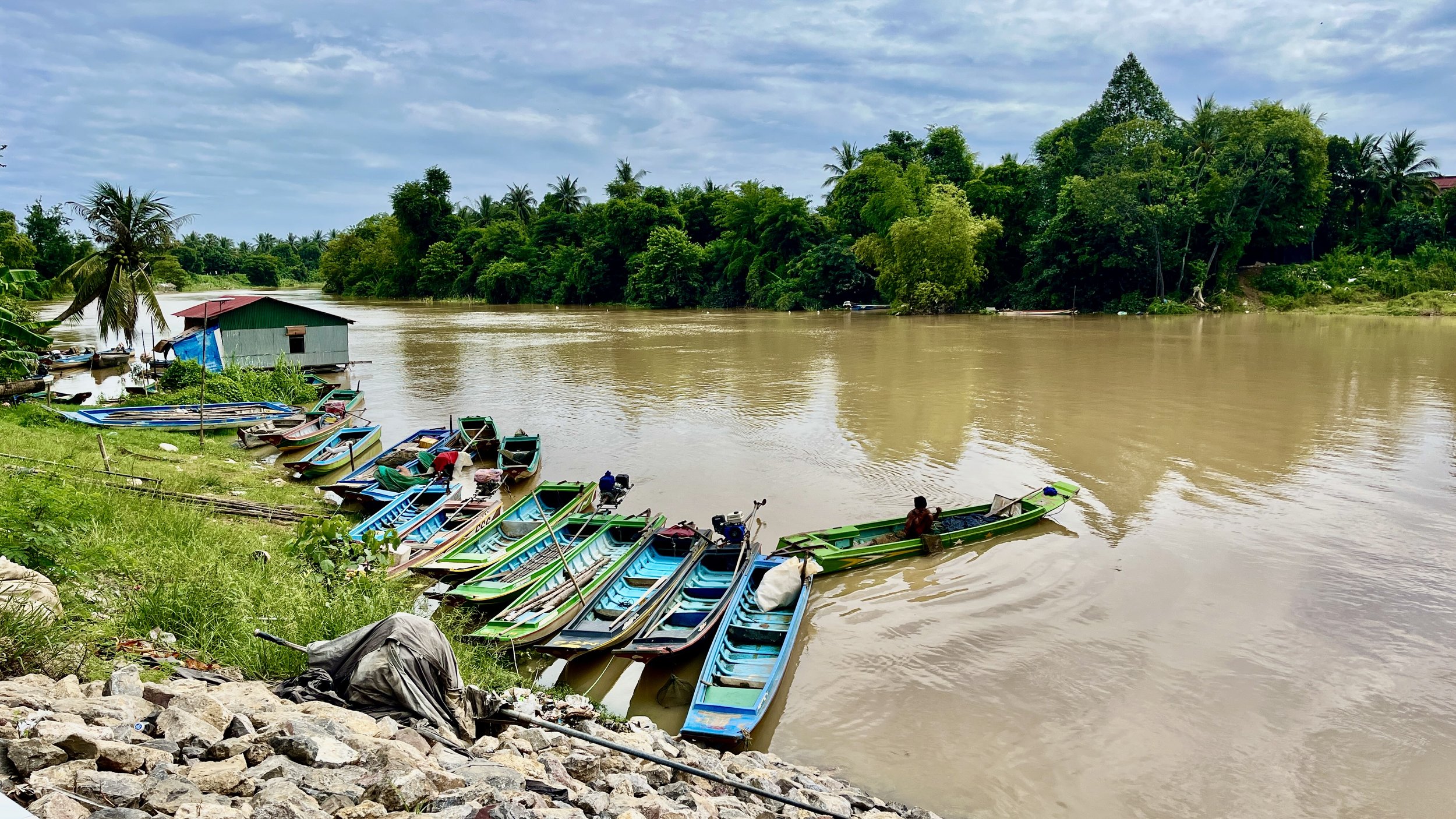
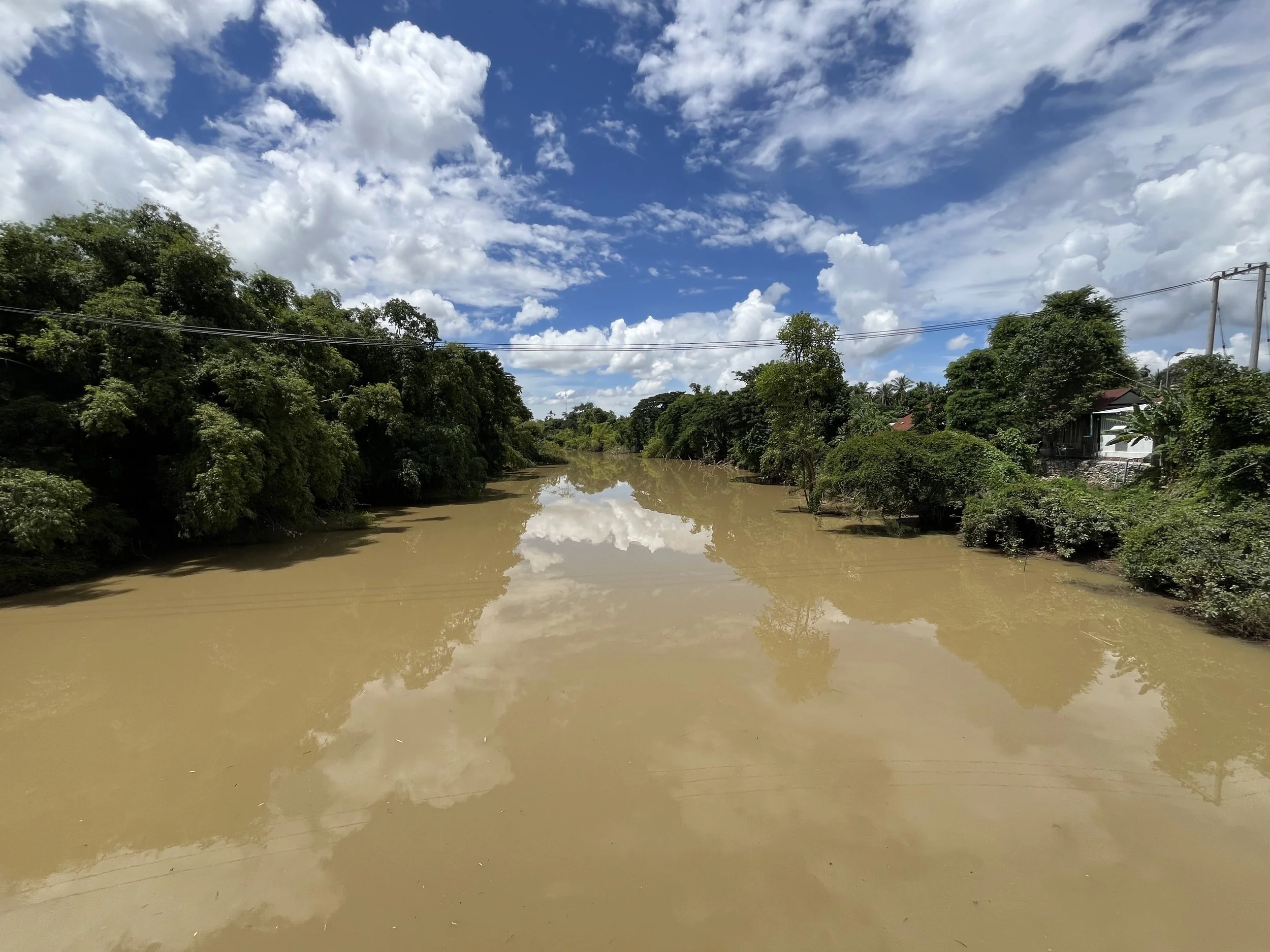
The Sangkae river. All rivers in Cambodia are green-brown.

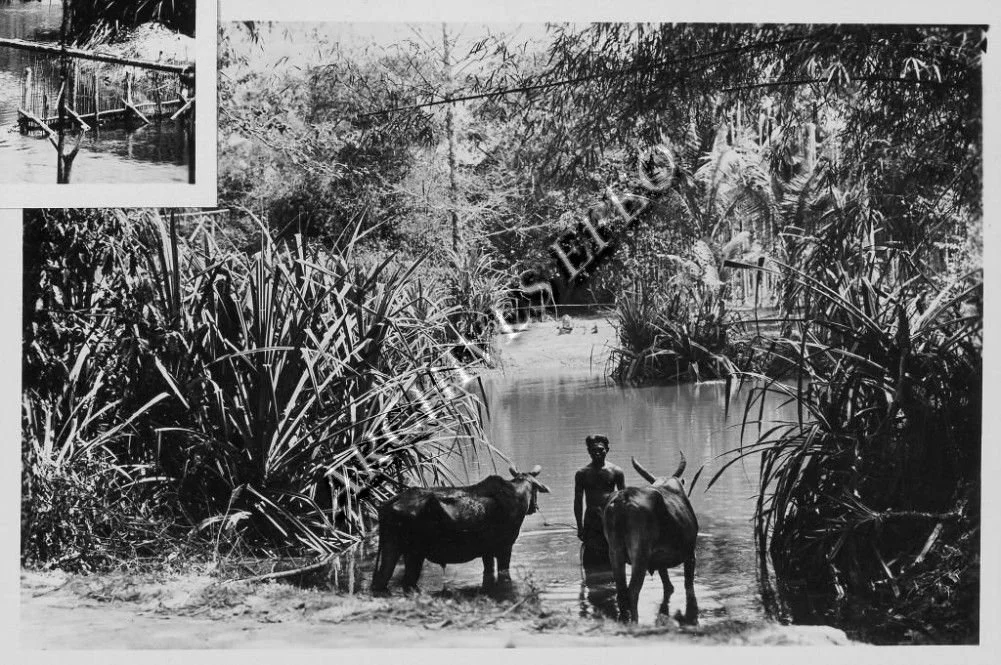
The Sangkae river in 1954

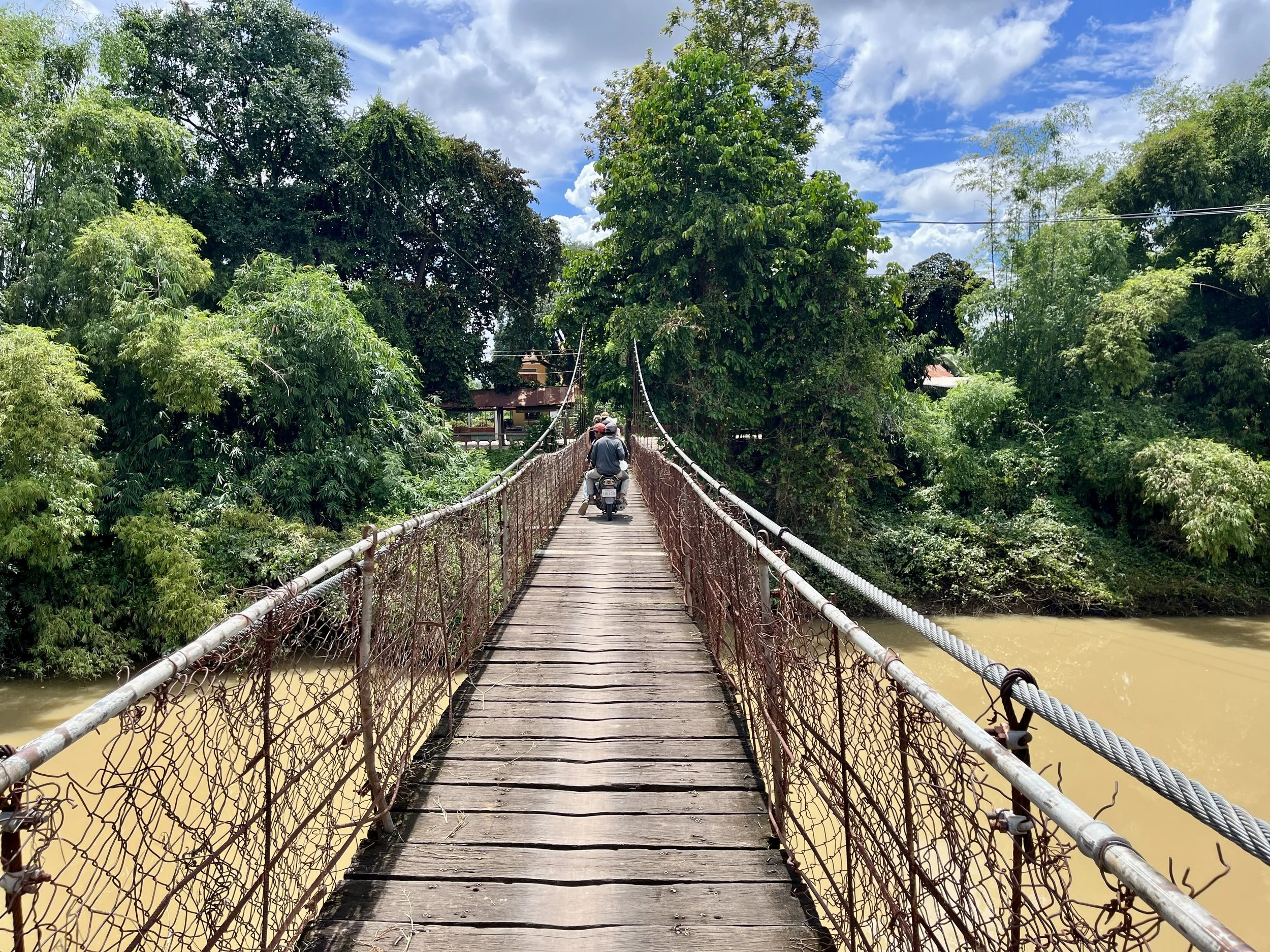
They’ve decided this “rope bridge” is a good tourist spot: wobbly enough to probably not feel like home, safe enough that absolutely nothing can go wrong. Needless to say, I’ve crossed far sketchier bridges.

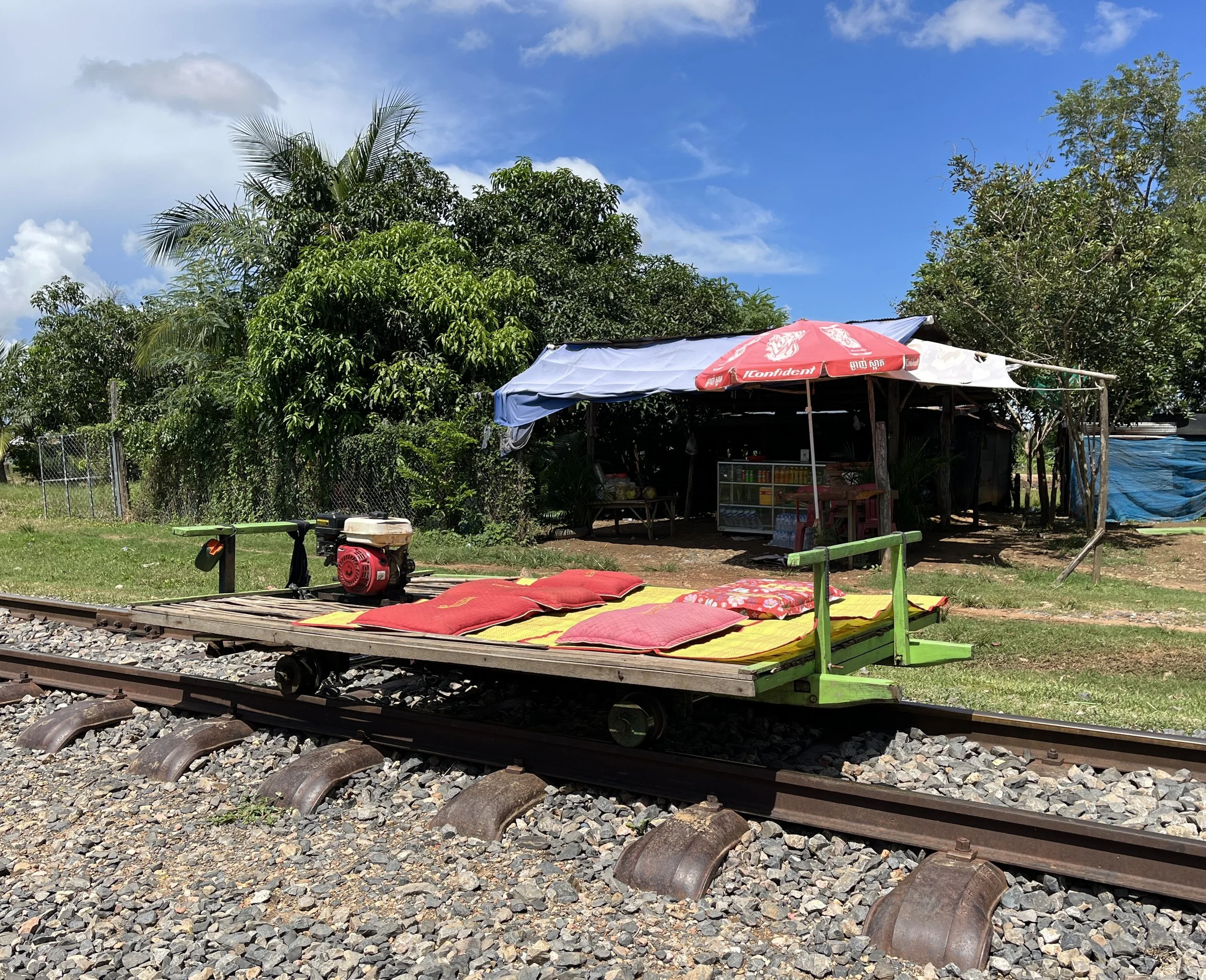
The famous bamboo train. This is the ‘old train’, on old French track; there’s also a ‘new train’ purely for tourists. Both are marked clearly on google maps. It’s basically just wooden platforms with metal wheels grooved at the appropriate gauge, apparently called norries, powered by an external motor. It’s not particularly thrilling or scenic, more what you would expect– a straight shot through mostly rice fields. The stations and railcars were blown up by the Khmer Rouge, and one blown up shell of an old train station is visible along this route. The system in this area was never rebuilt by the Cambodian government (they only got around to the Phnom Penh - Poipet route in 2017), but it still goes more or less village to village, so it’s used by locals sometimes to transport things when cheaper or more direct than a truck would be. Before car ownership became the norm, it was much more popular; these days it’s mostly a novelty for tourists.

More sticky rice! It became one of. my favorite snacks.

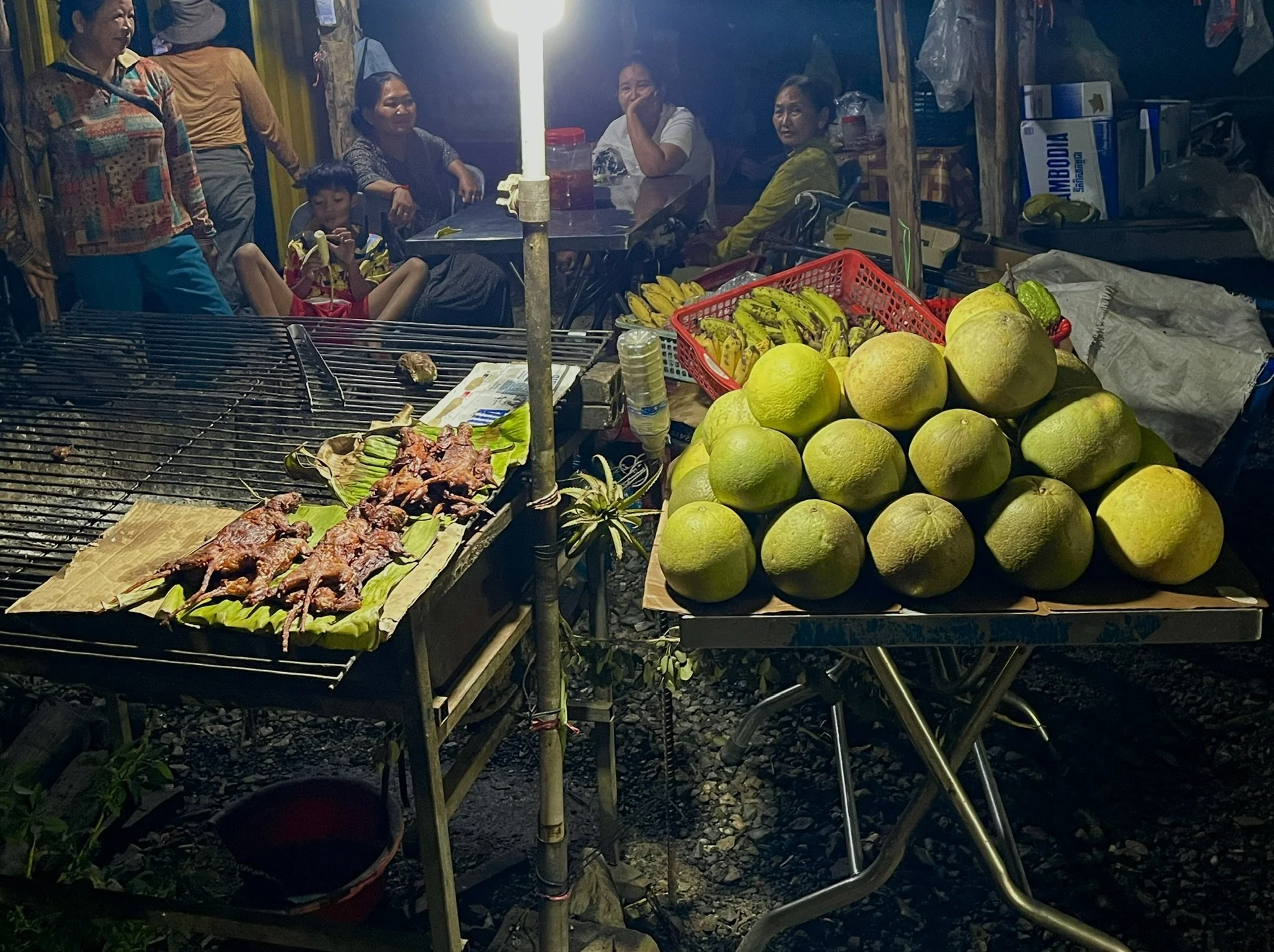
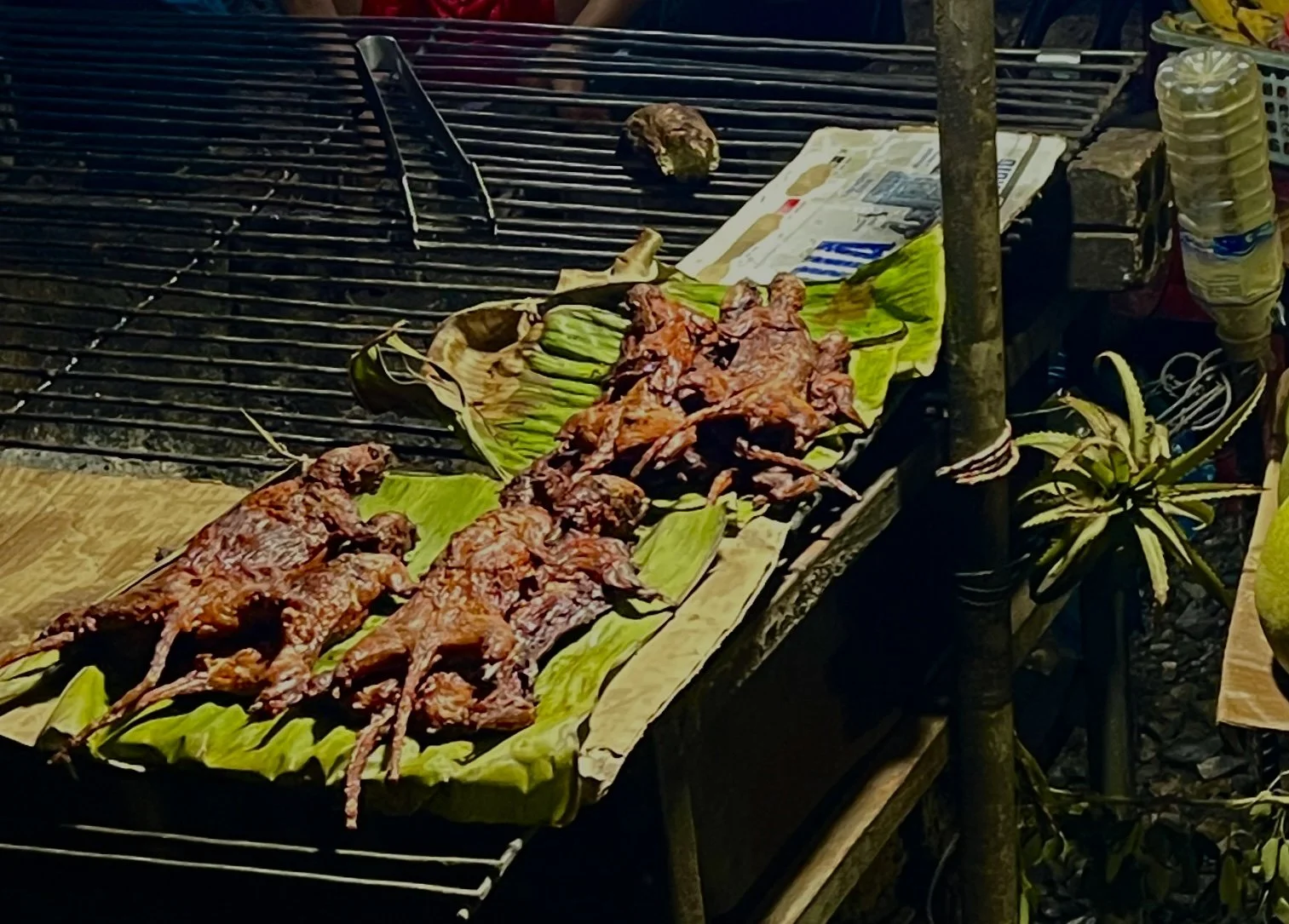
The roadside grilled rat seller! It seems crazy, but rats are a nostalgic food here, reminding people of something a bit good during the Khmer Rouge era. Field rats are the norm, considered fat, clean, and tasty. But over the past five years or so, some sellers have also started farming rats.