Honestly . . . underwhelming. Yes, there are many colonial buildings– over 800 according to conservation area records– but they’re 1. of the simplest sort 2. ill maintained and often extensively renovated in all the wrong ways. I visited thinking perhaps I’d find a cute house to rent . . . definitely not. It’s everything I don’t like about Siem Reap– dusty streets and falling apart buildings; constant traffic noise and fumes; trashy peasant neighbors chainsmoking, playing awful music until the wee hours, and burning their rubbish, in both the city proper and the surrounding villages; litter absolutely everywhere– but a fifth the size, with extremely limited dining and shopping.
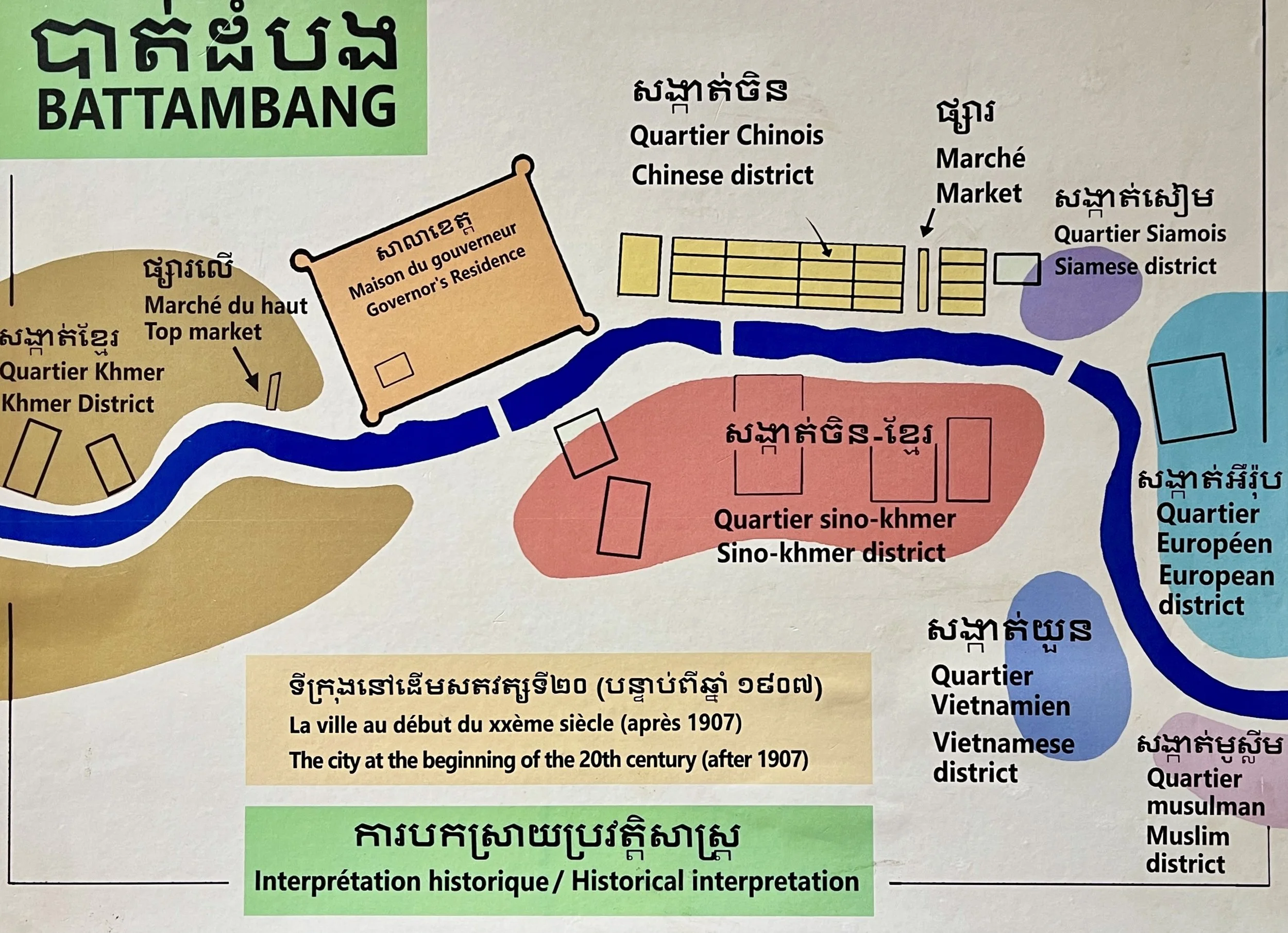
The neighborhoods at the time of the handover from Siam to France in 1907. Though the bridge locations are indicated on this map, there actually weren’t any permanent bridges at this time; the first was built in 1916. I’ll cover the neighborhoods from left to right.
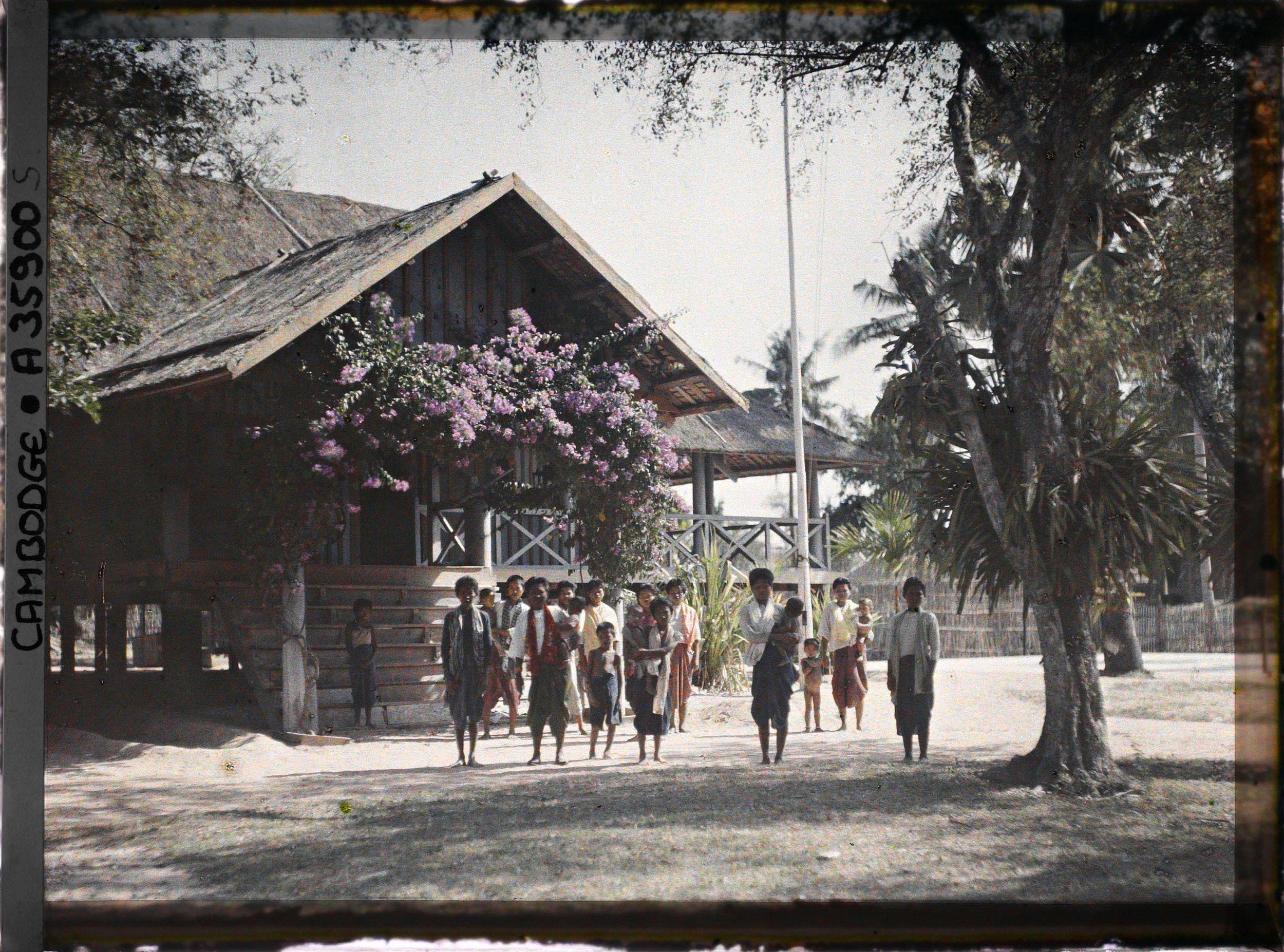
The Khmer district. I’ll be covering the antique Khmer houses around Battambang more thoroughly in a separate blog post (click here); I’ve just chosen this photo as an aesthetic/representative example. This photo of the family of a local administrator outside their house/office was taken by Léon Busy between 1914 and 1921, likely closer to 1921.
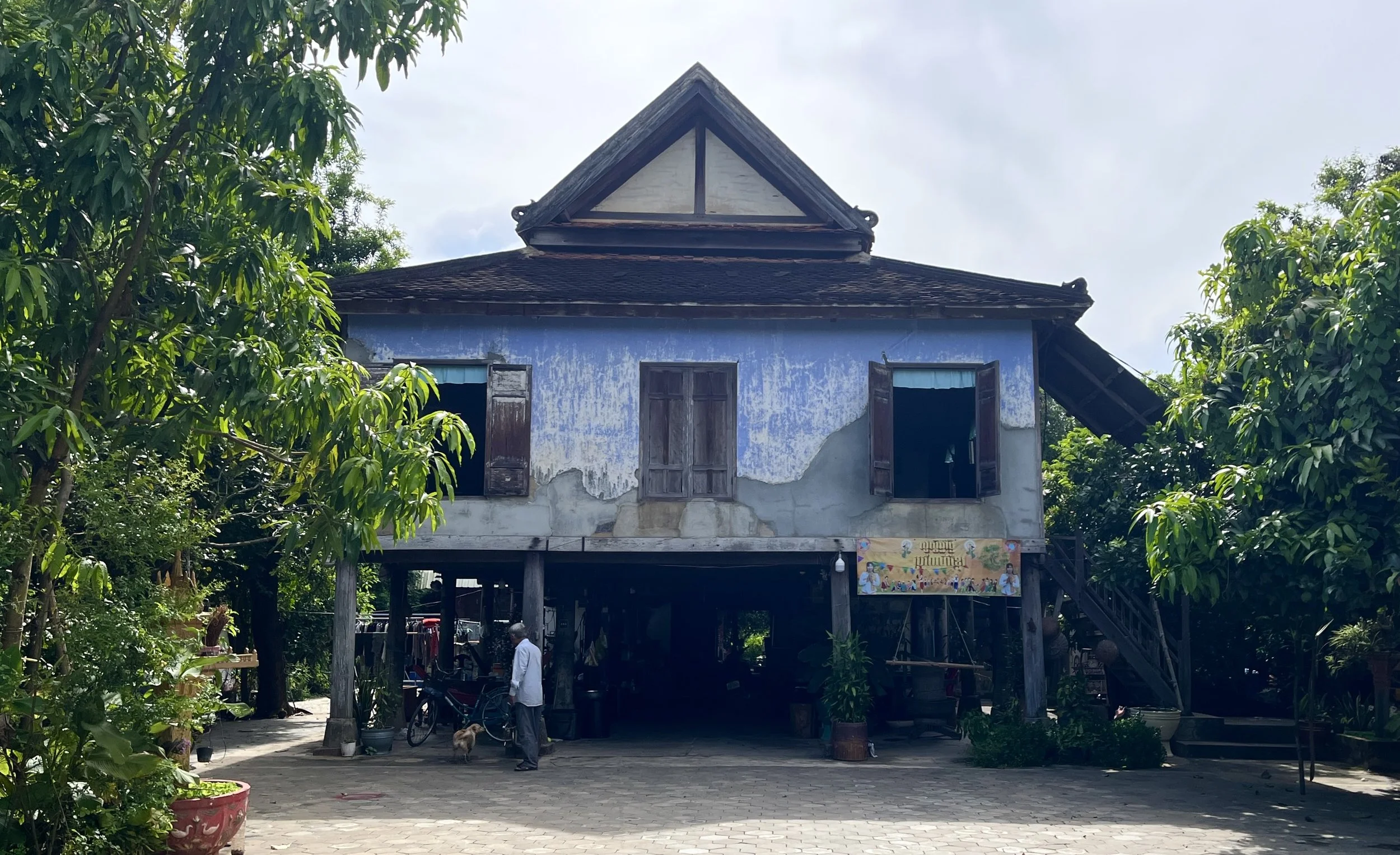
Khmer houses from the first quarter of the 20th century are still around, a couple with the descendants of colonial administrators still living in them.
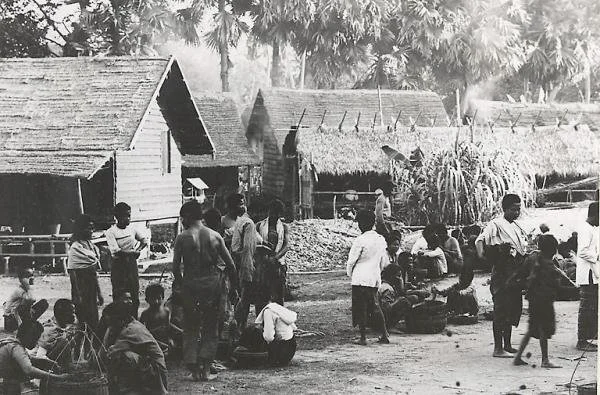
The Khmer neighborhood market in 1931, attributed to Léon Busy (but probably taken by a staff photographer).
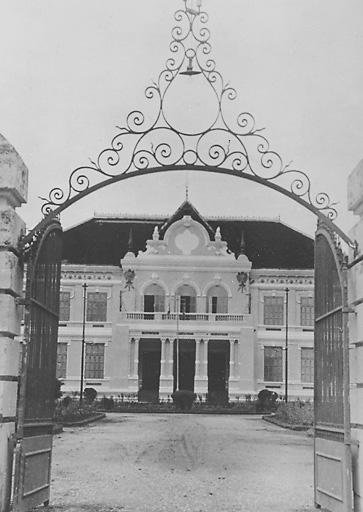
The Governor’s Residence in August 1948, less than a year before Cambodia was granted limited autonomy as a member state of the French Union amidst multiple independence movements.
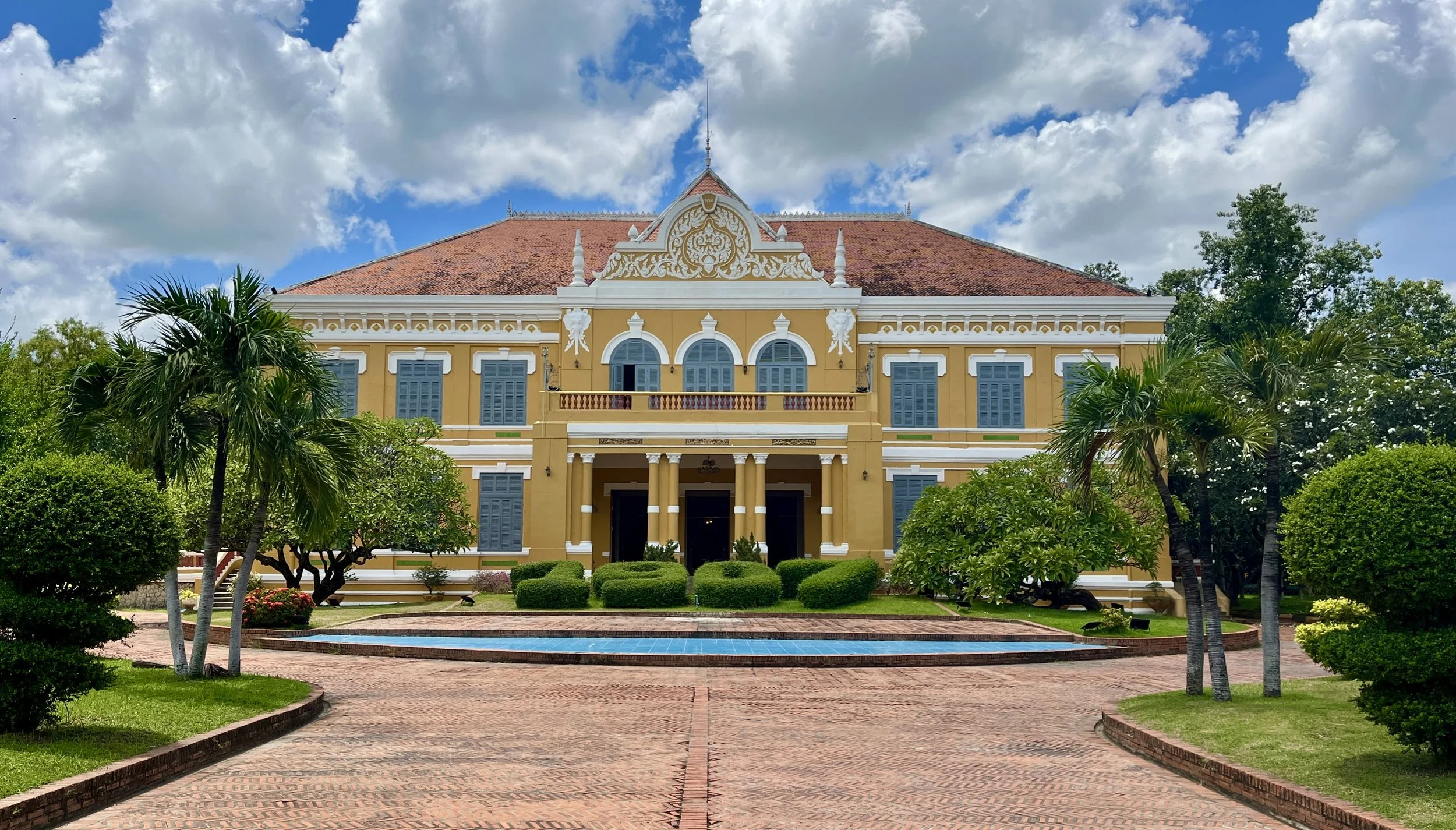
The grounds of the Governor’s Residence dominate the 1907 map, and while it is in what people perceive as French colonial style, it is of course Thai, commissioned from an Italian favored by Thai King Chulalongkorn for his ‘European’ buildings. So are several other administrative buildings in this neighborhood; it’s a mix of Thai-European-style and actually French. For a post solely about this house, click here.
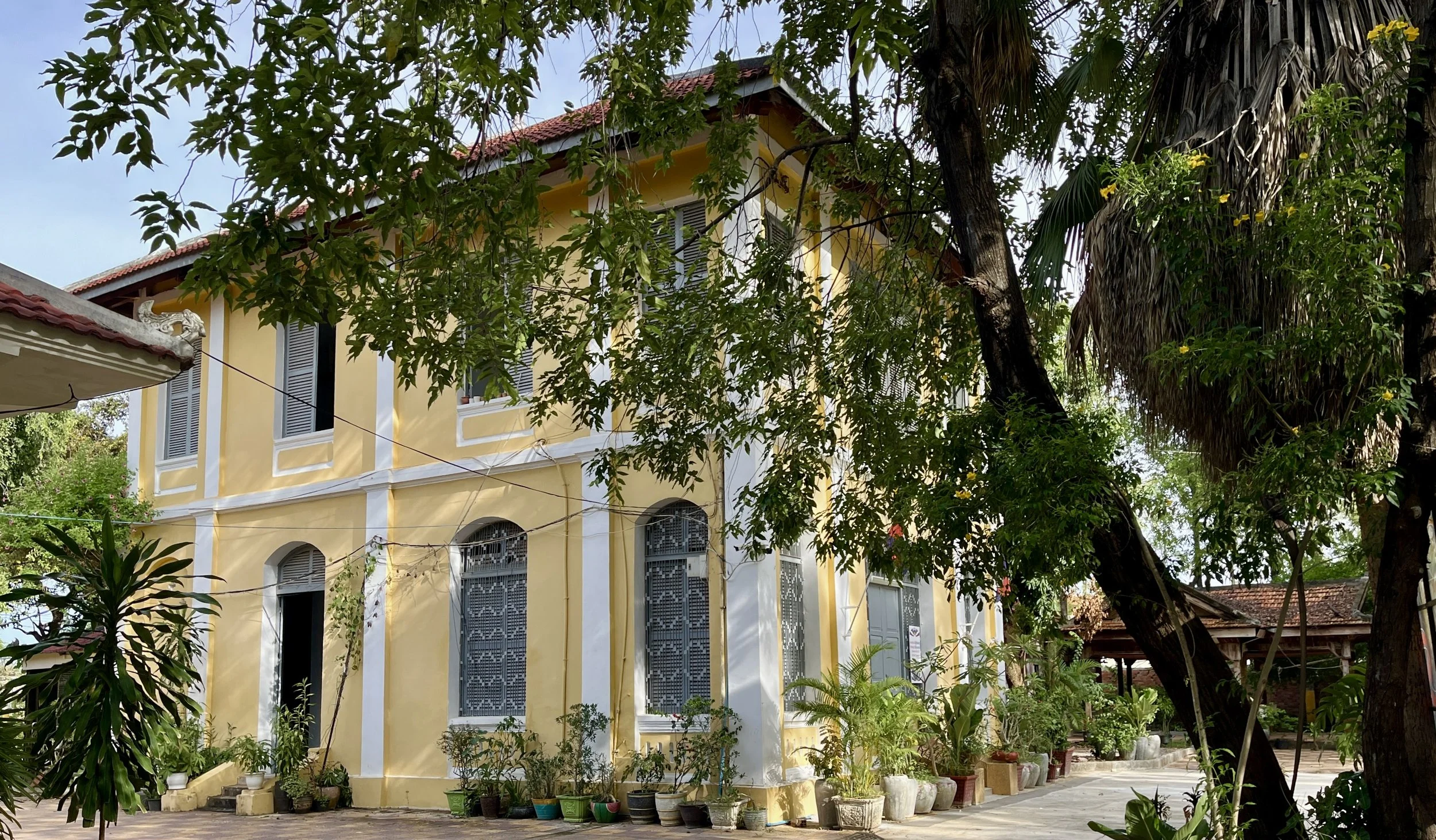
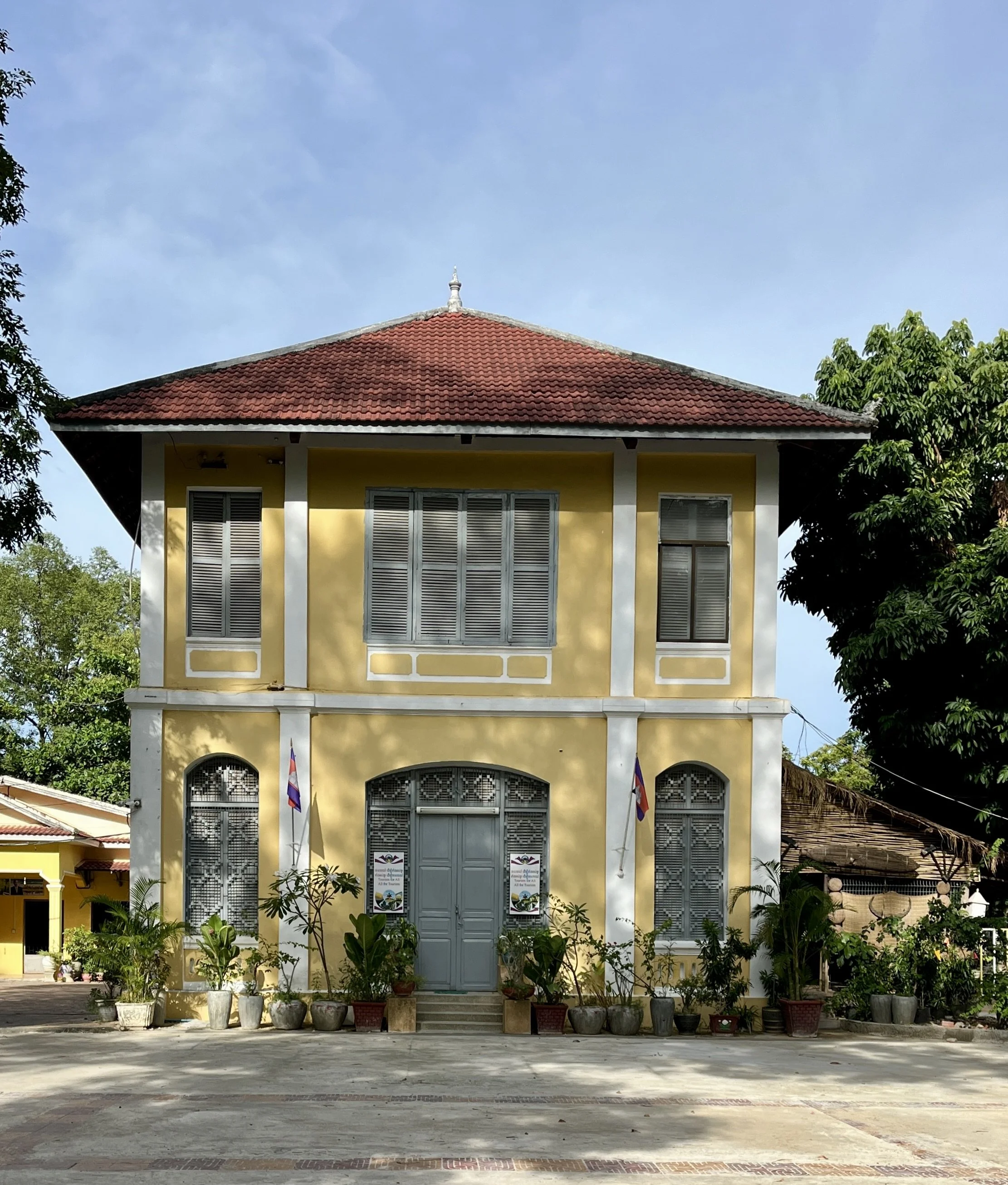
The carved wooden window grilles on this building are quite delicately done.

c. 1910s postcard showing High Commissioner’s office.
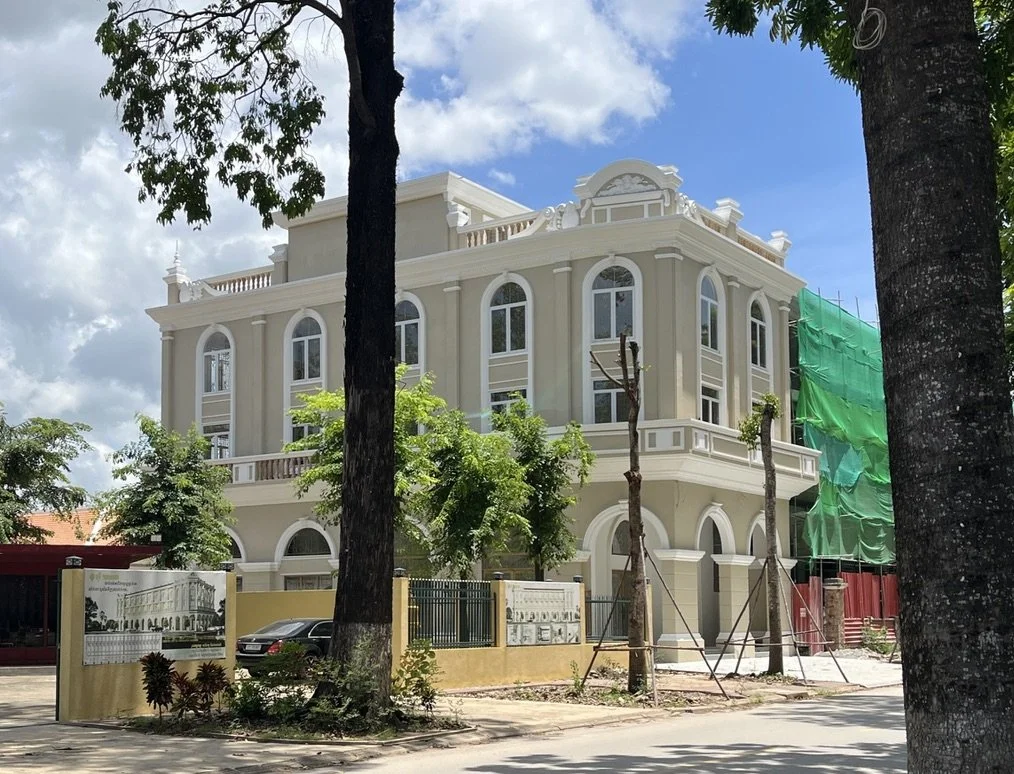
I believe this is the building above, freshly butchered, with typical weird changes like an extra floor, a totally incongruous utility room or apartment on the roof, terrible windows . . .
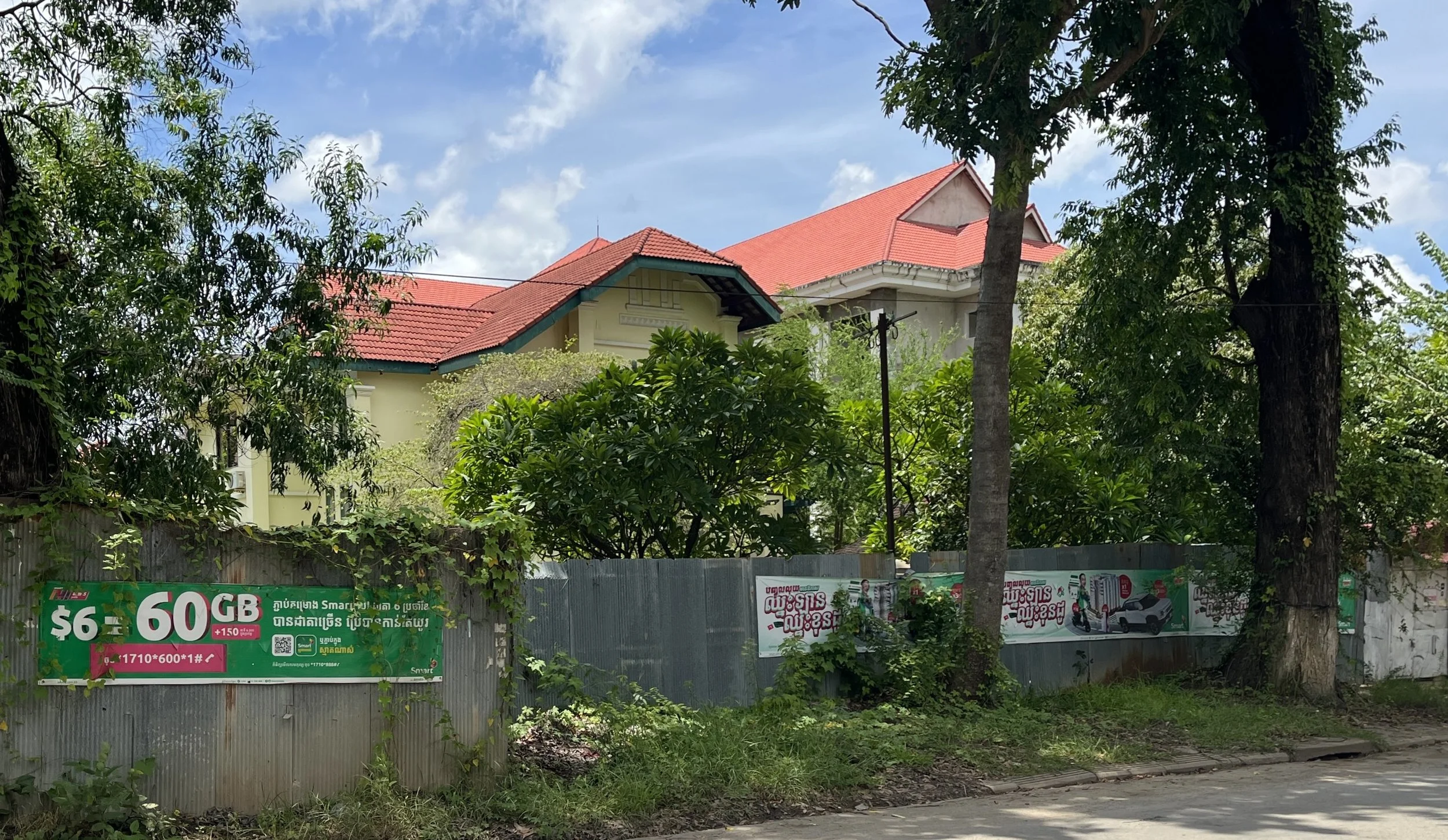
Most of the big old colonial mansions/onetime offices are in disuse/disrepair, apparently owned by local grandees who think they’ll sell them to an international corporation one fine day for millions.
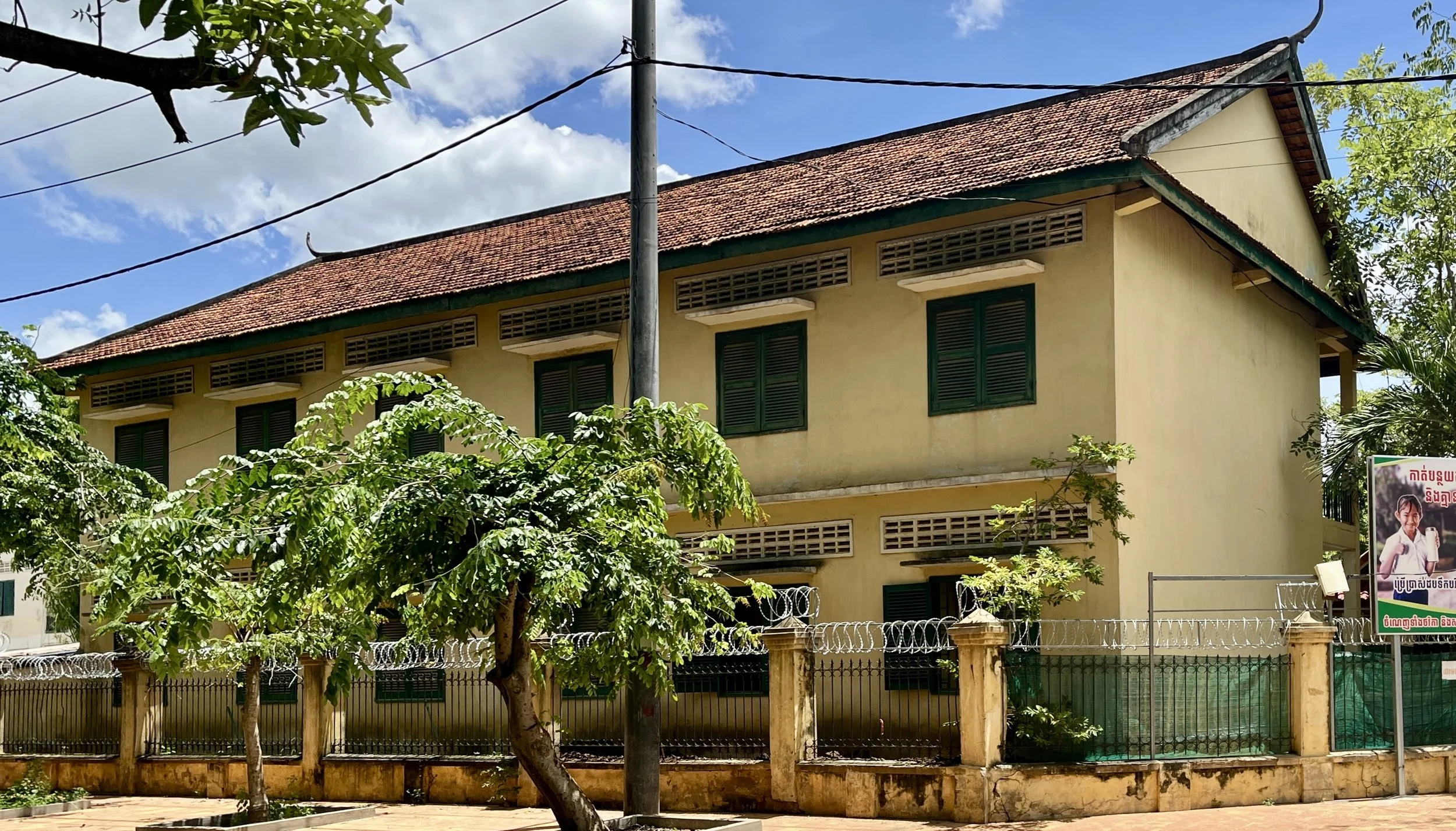
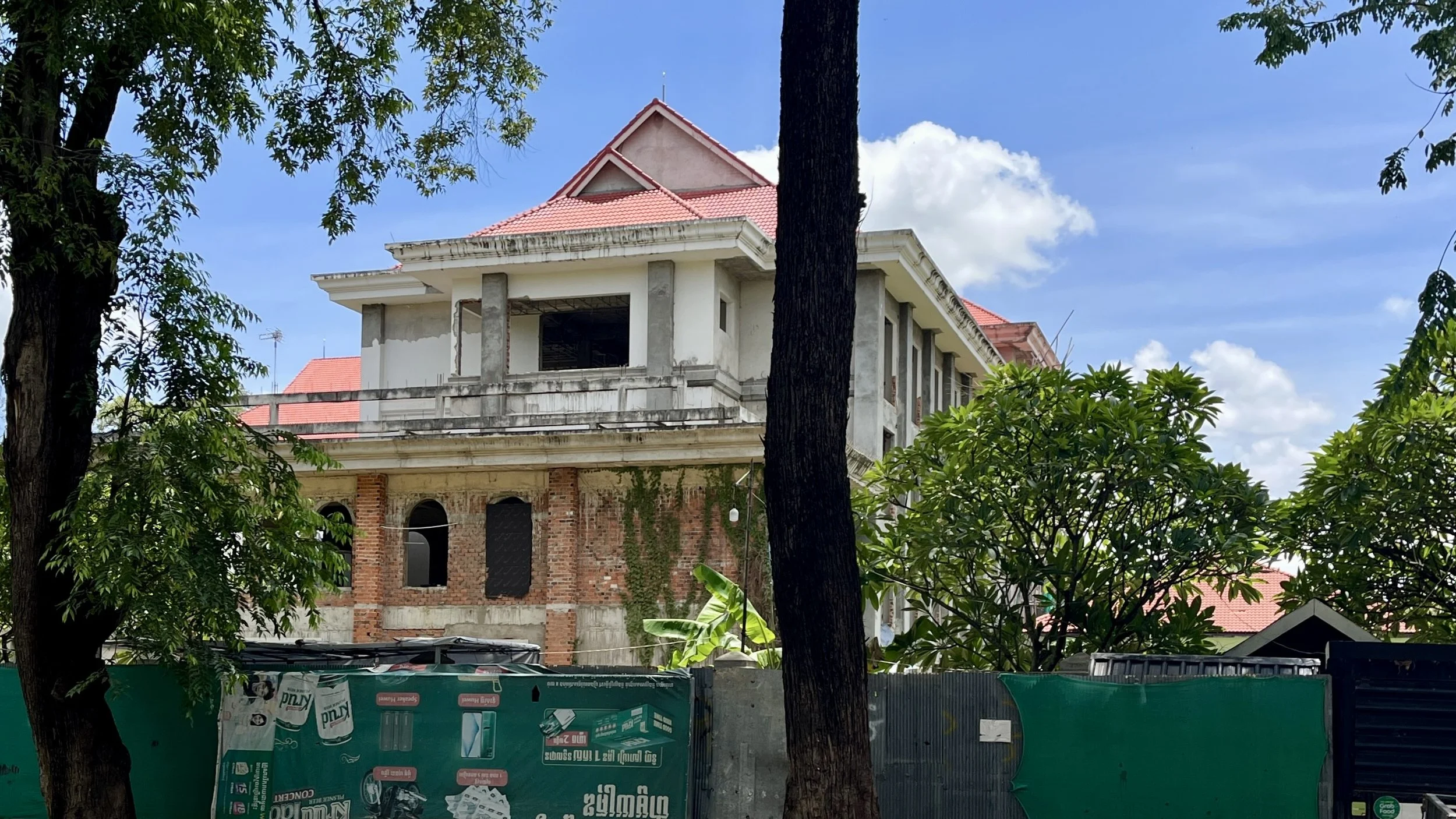
Many have been partially renovated, then abandoned, and are now in ruins.
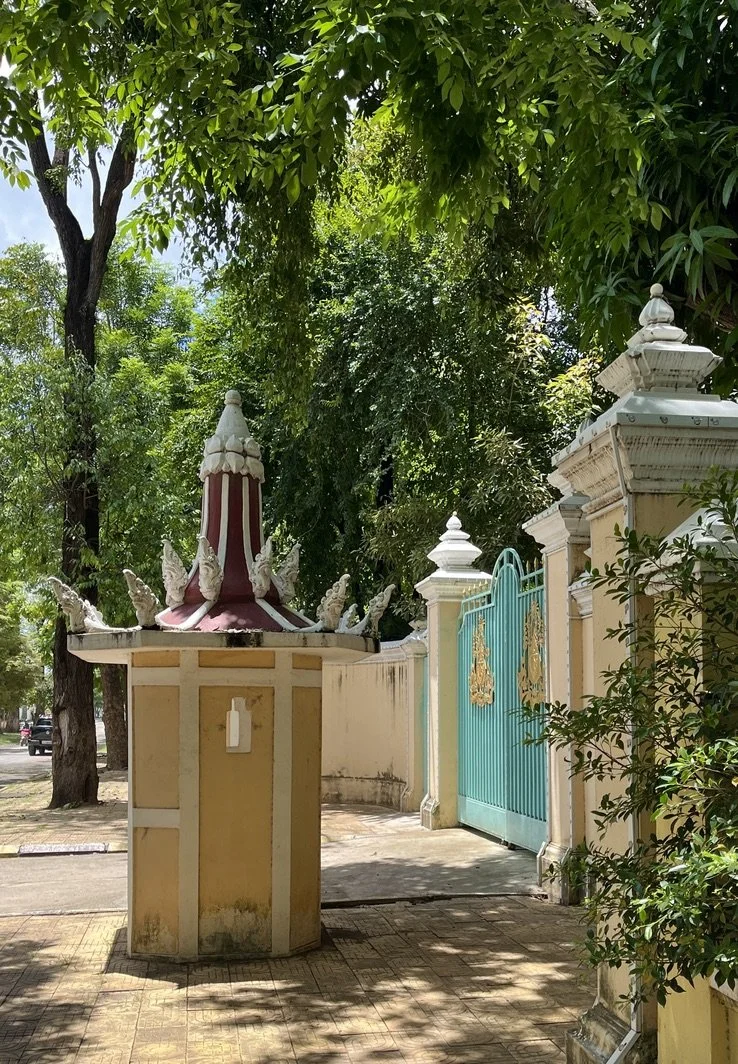
A never or rarely used official residence is somewhere beyond this gate.
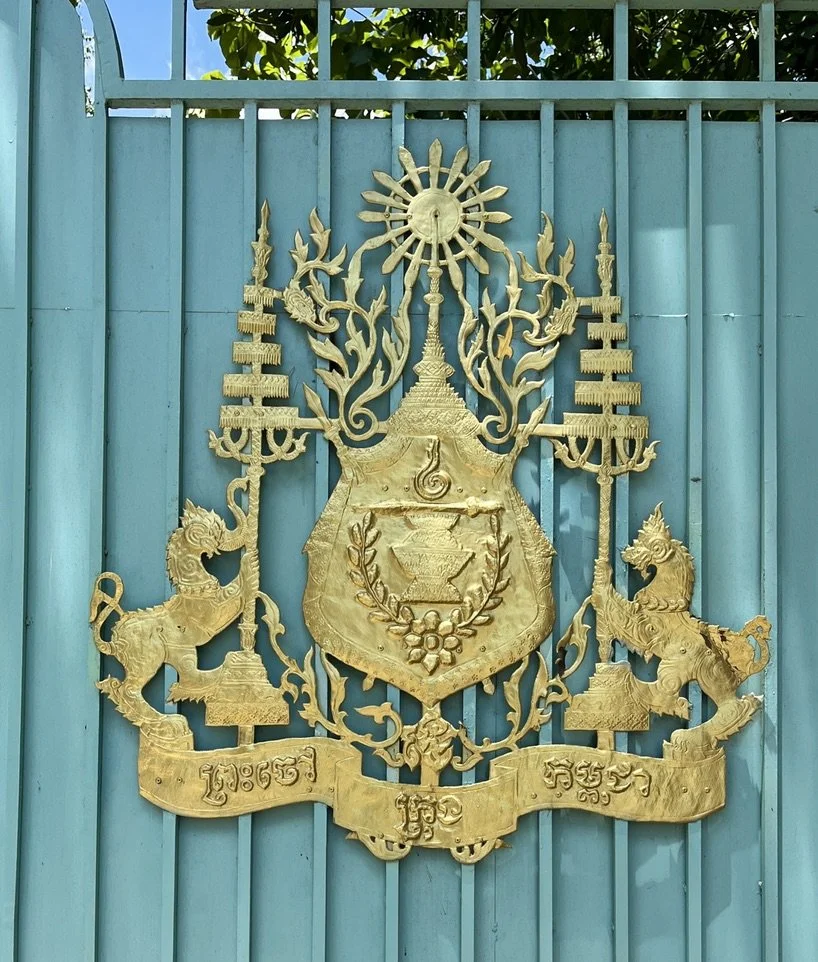
The royal seal of Cambodia.
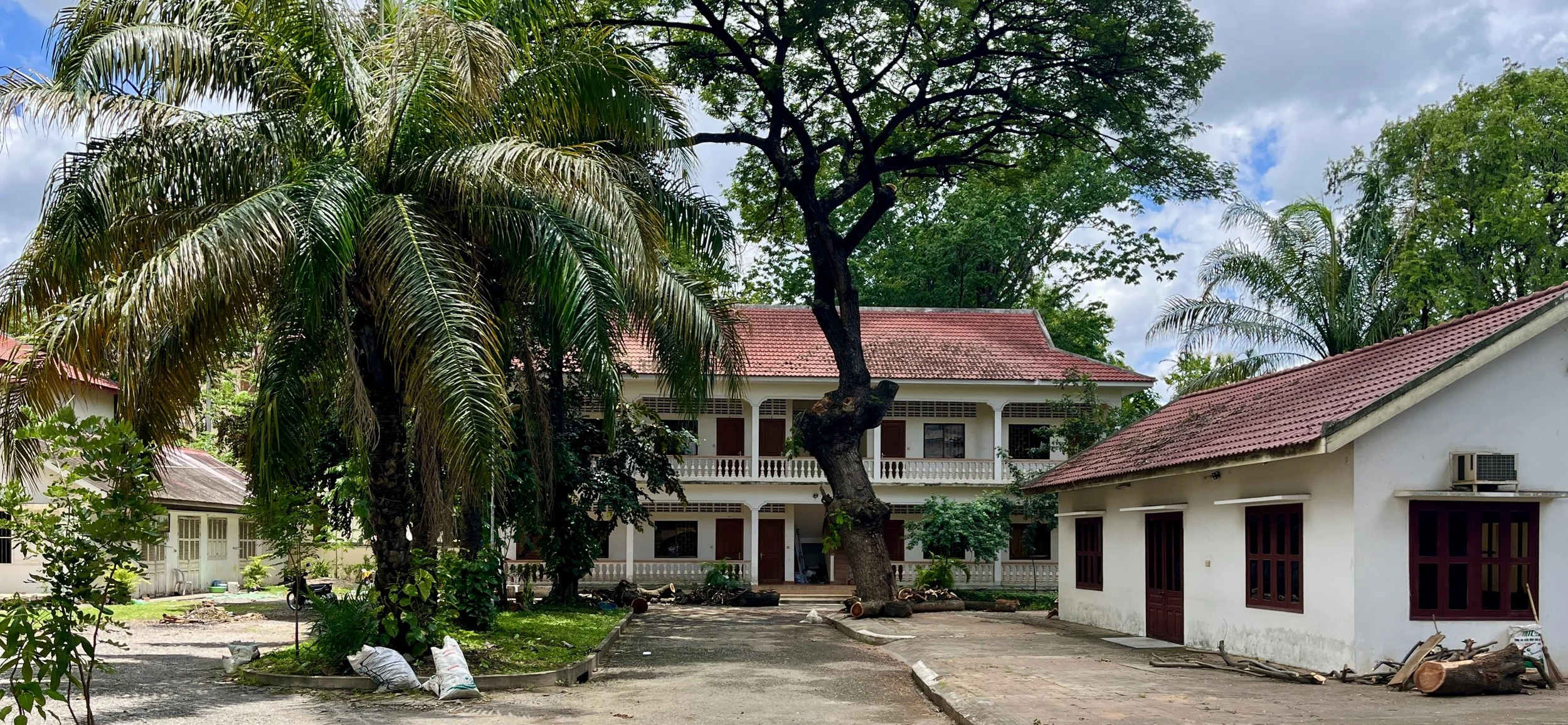
Not sure what this is– I think the office of an NGO– but this is my dream house in Cambodia. Rip up the concrete, put in a pool and gardens, perfect.
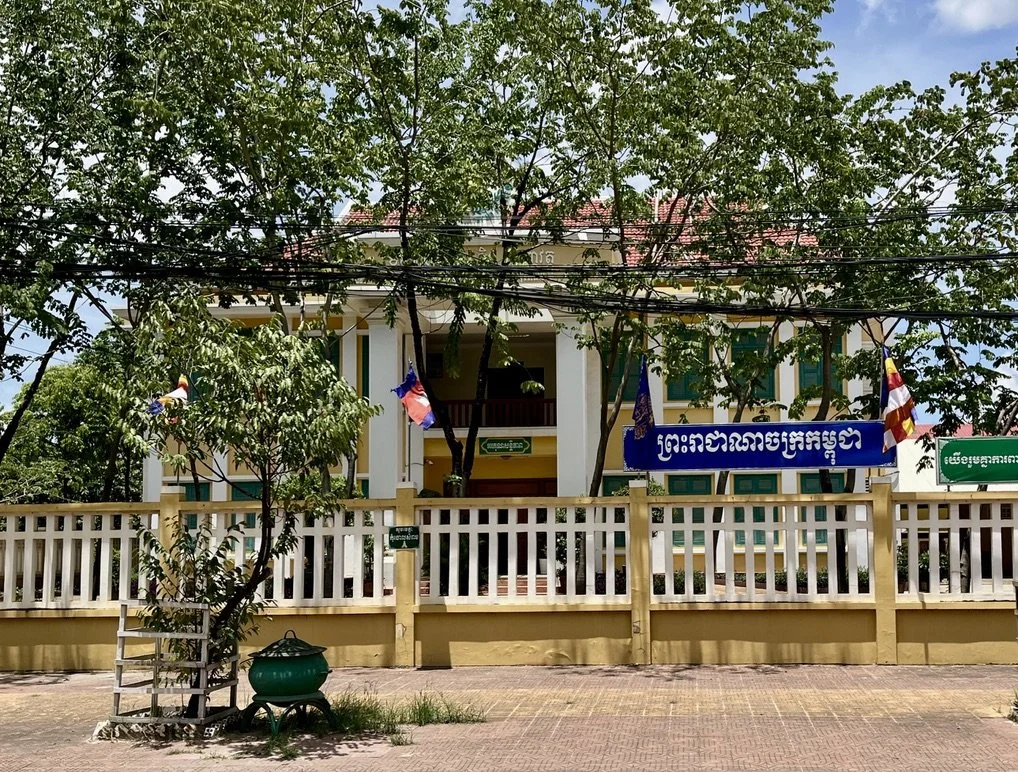
I think? this is a modern building built in the old style to blend in. This is common in Cambodia.
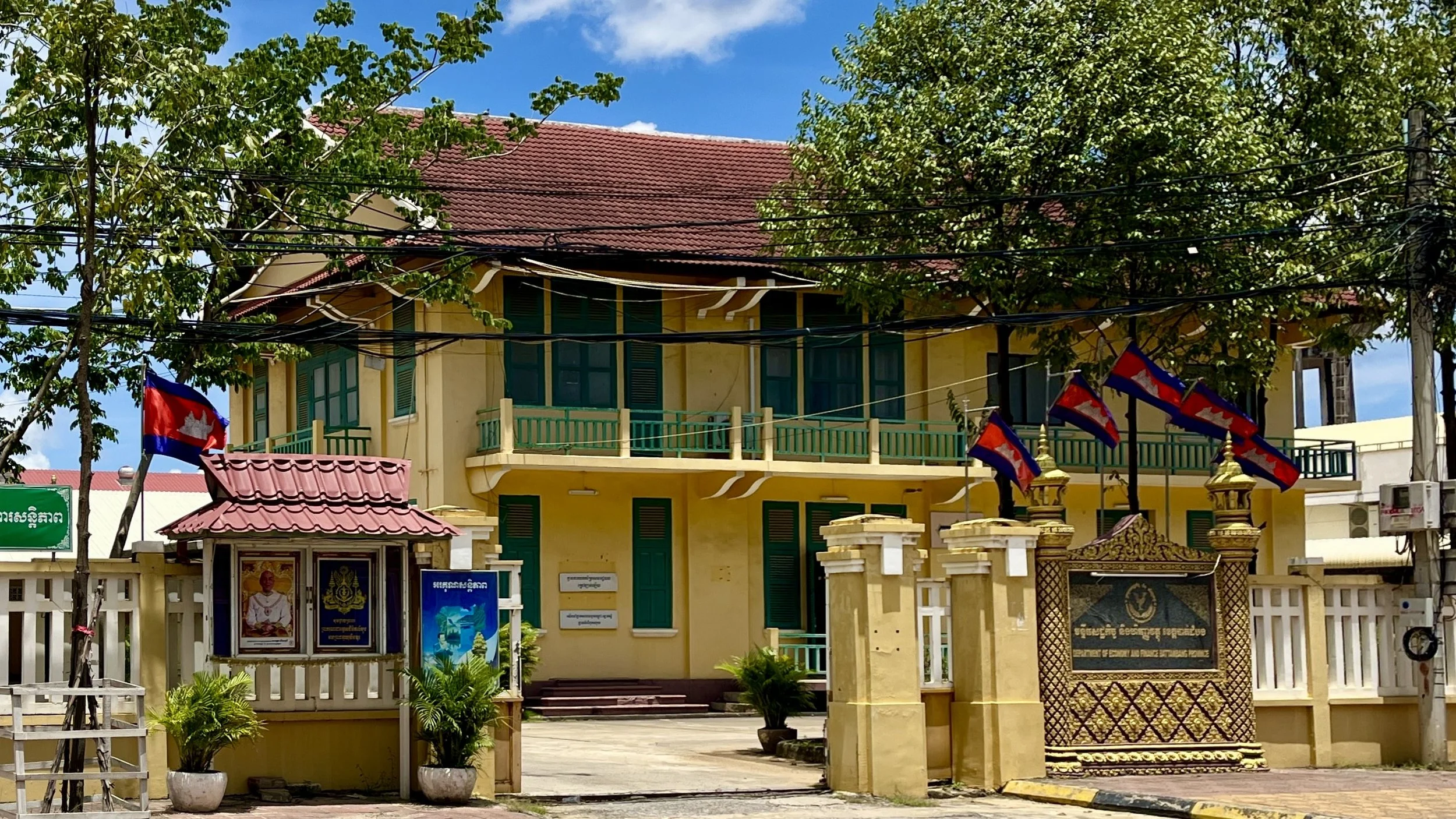
The definitely actually old building next door.
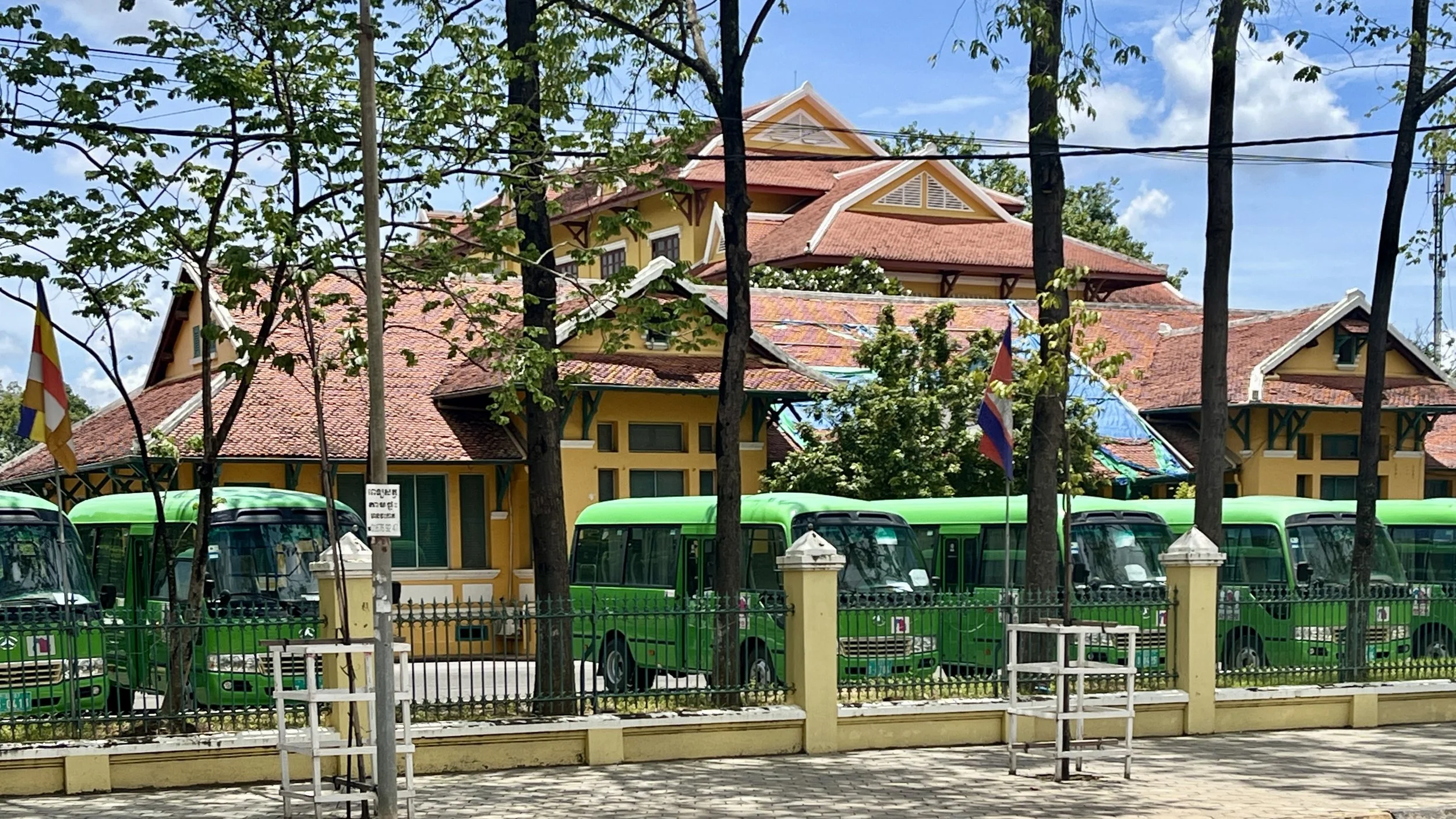
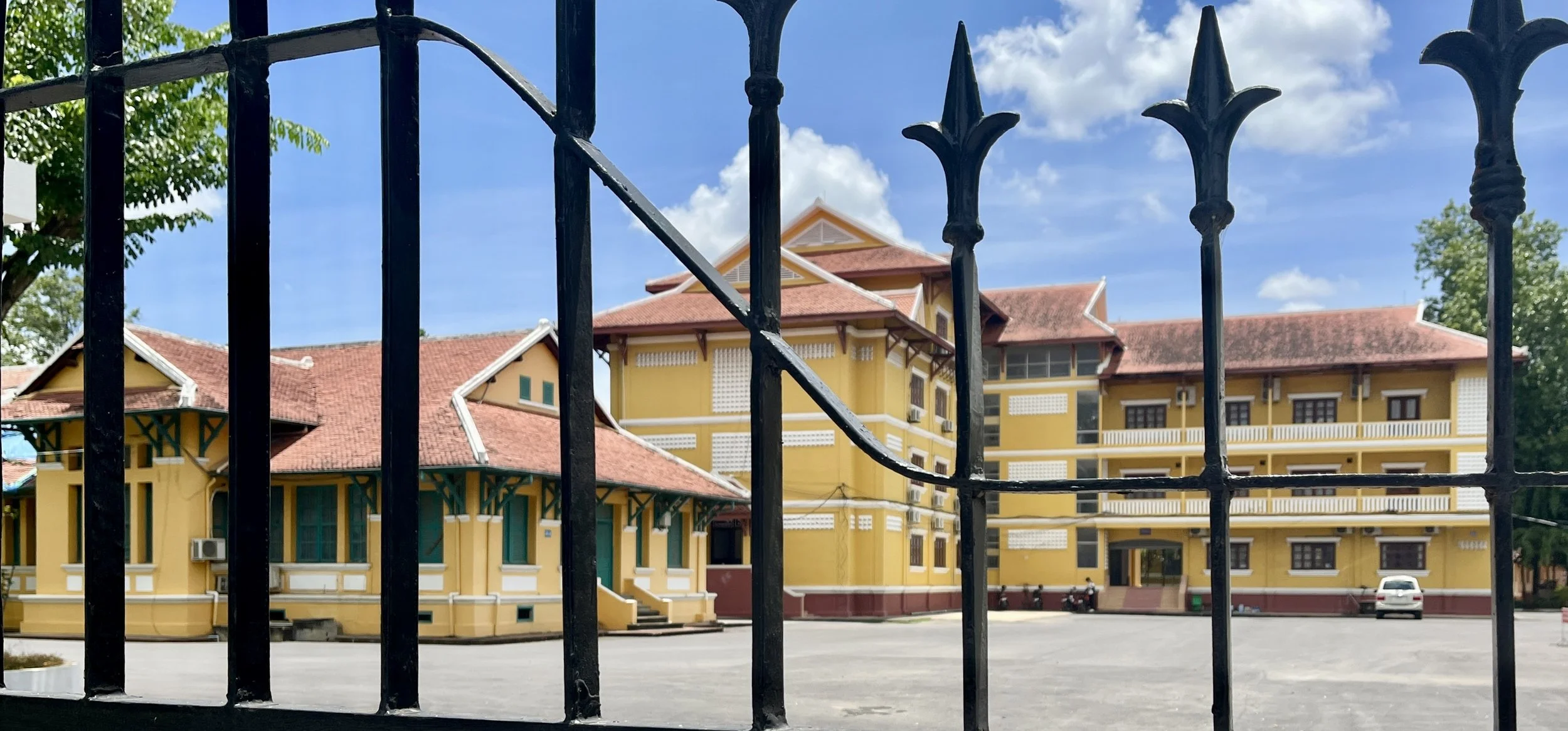
On the grounds of the Governor’s Residence; the backsides show clearly the colonial building vs. the colonial style building.
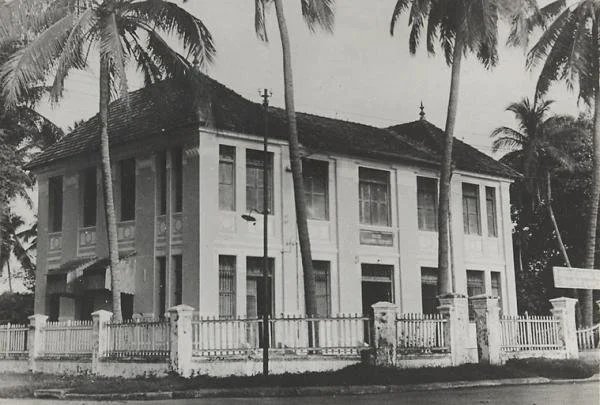
The post office in August 1948
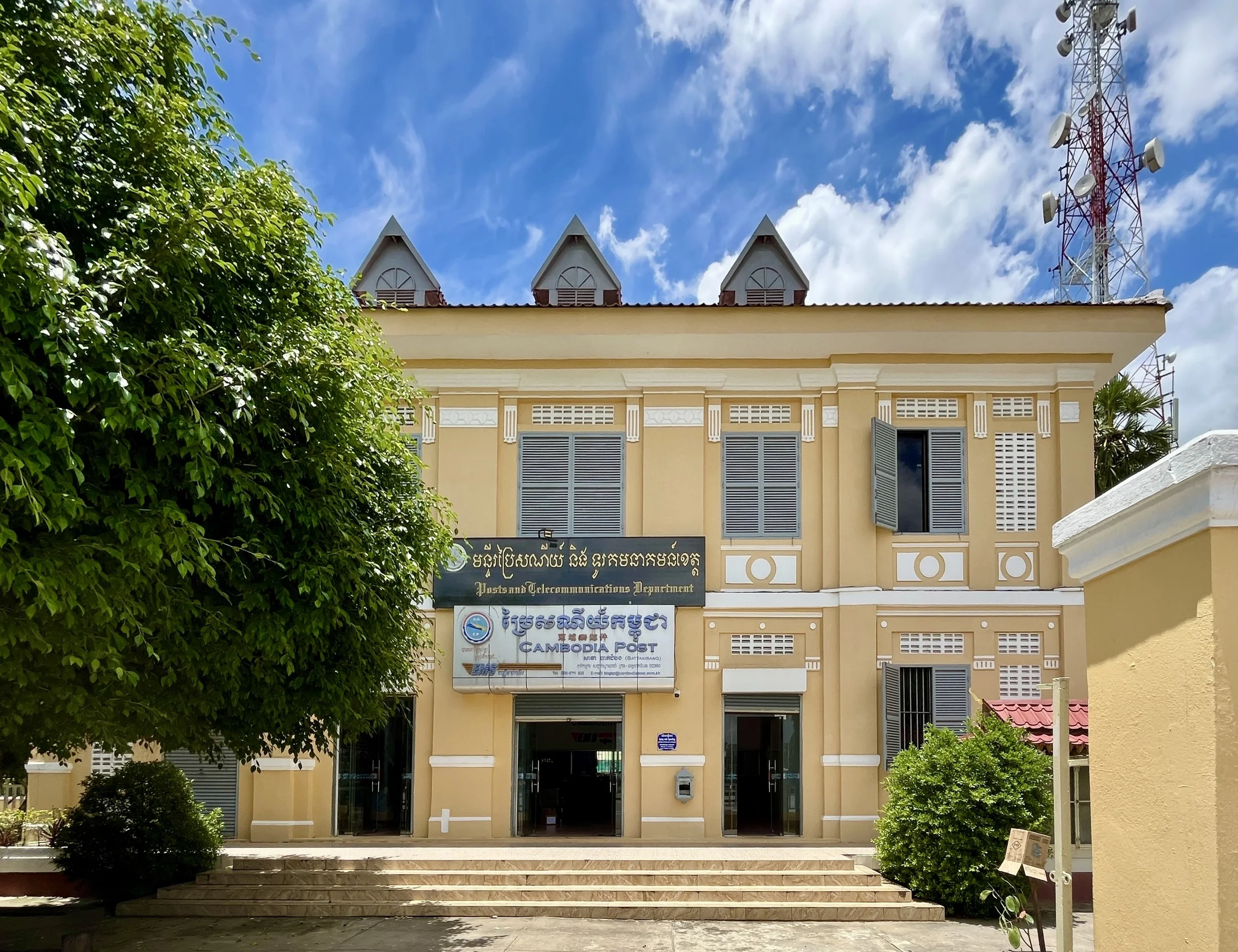
The post office, 2025
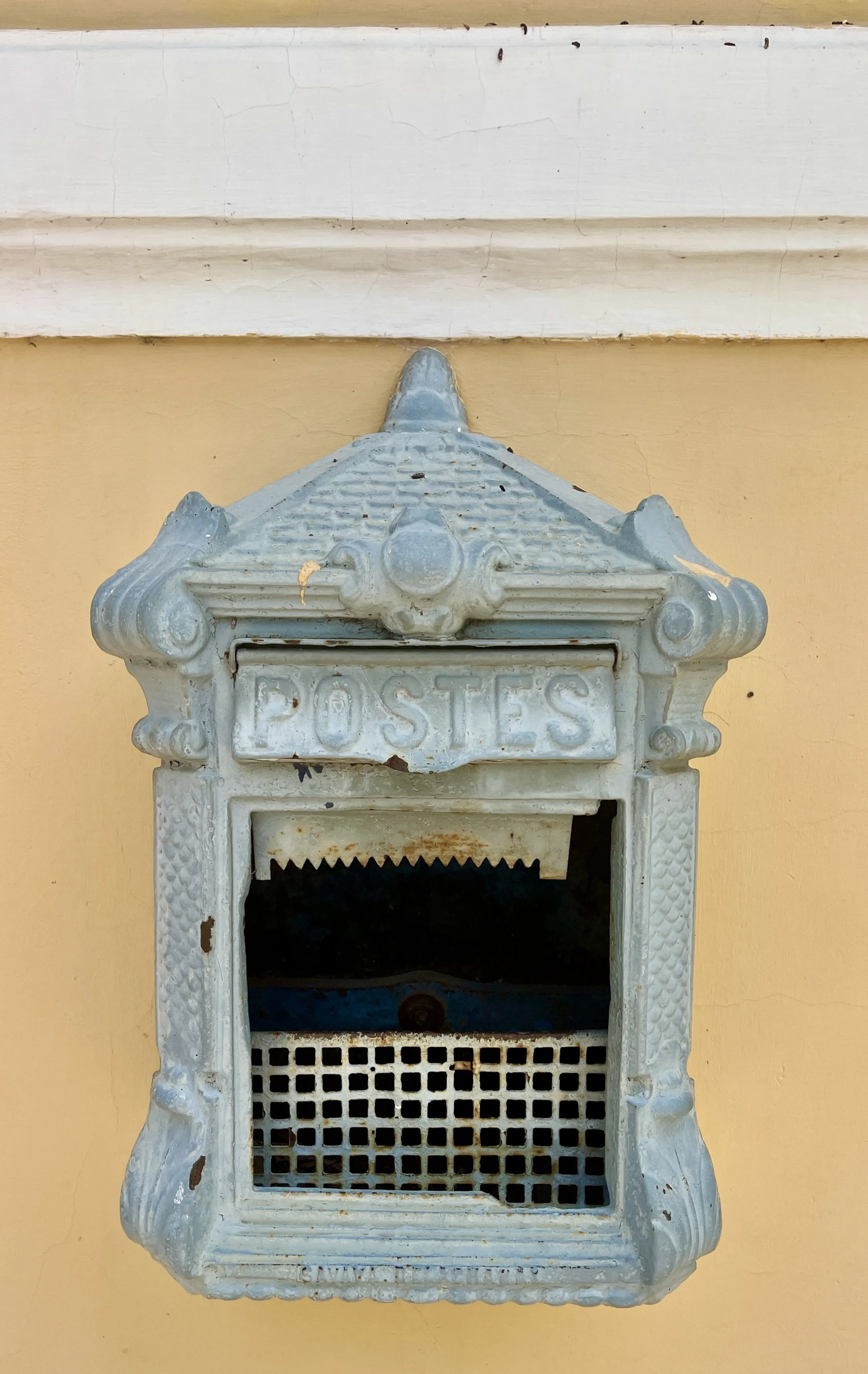
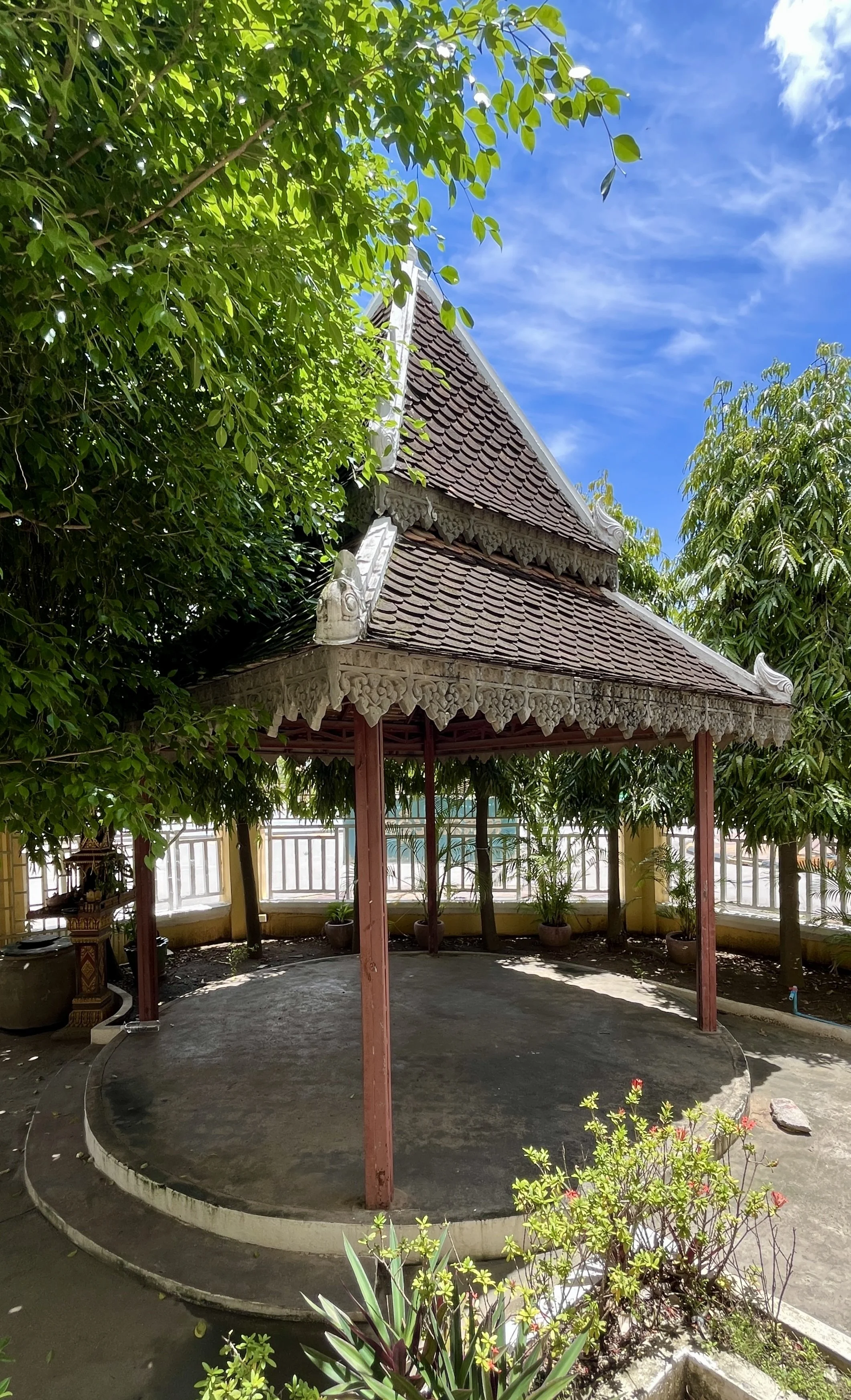
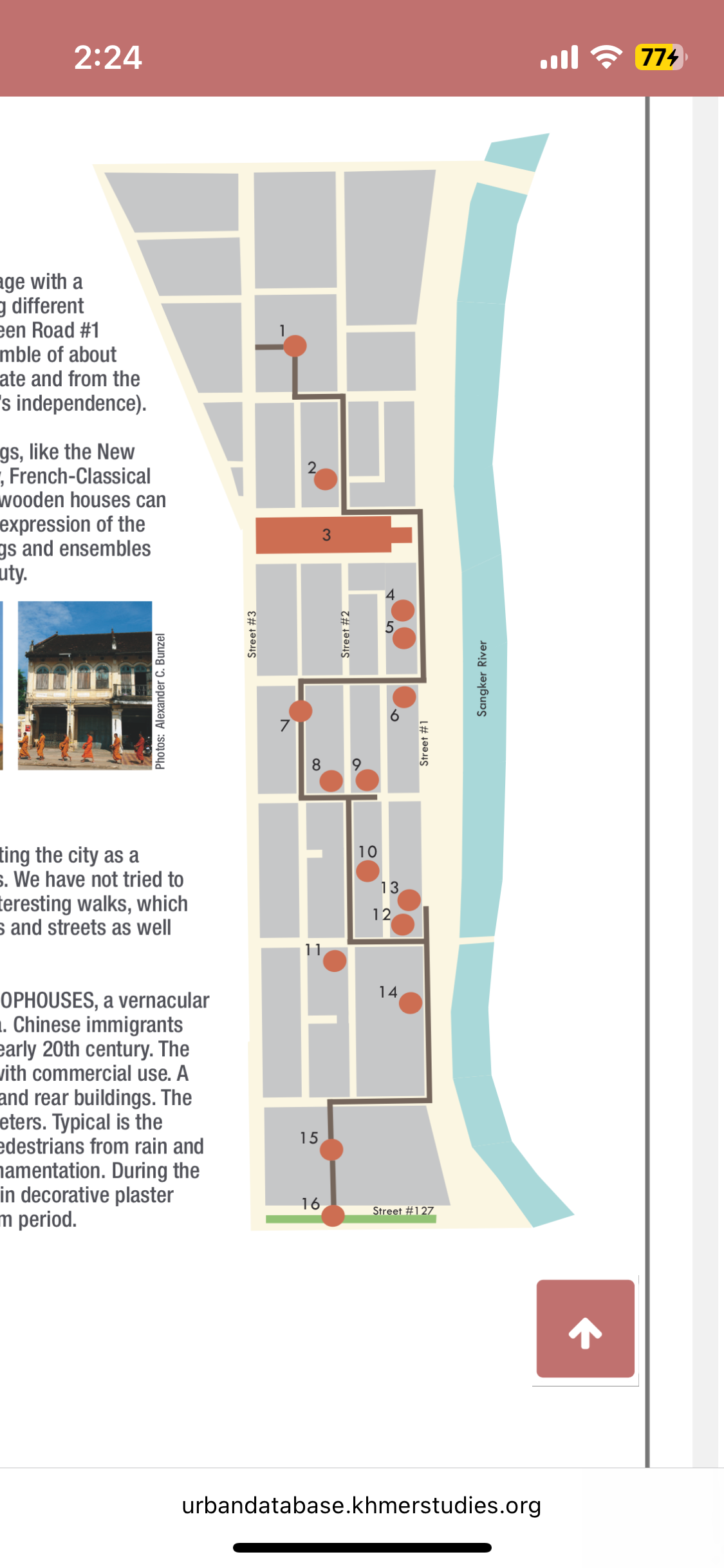
I found this little map showing Battambang’s historical buildings on urbandatabse.khmerstudies.org. It only covers the old Chinese quarter, which was almost completely removed by the French and replaced with simple shophouses, which were then reinhabited by the same people. I’d say it’s bordered at one end by the museum, and on the other by the neighborhood just beyond the 1931 ‘new’ market. I wish the map covered more of the old city.
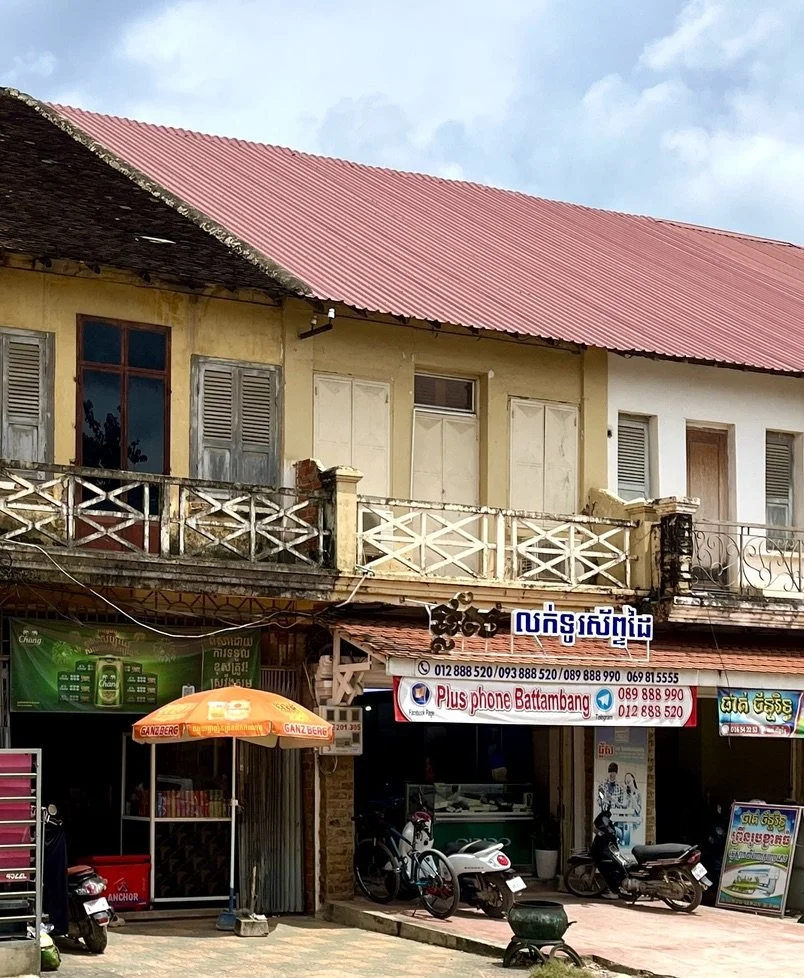
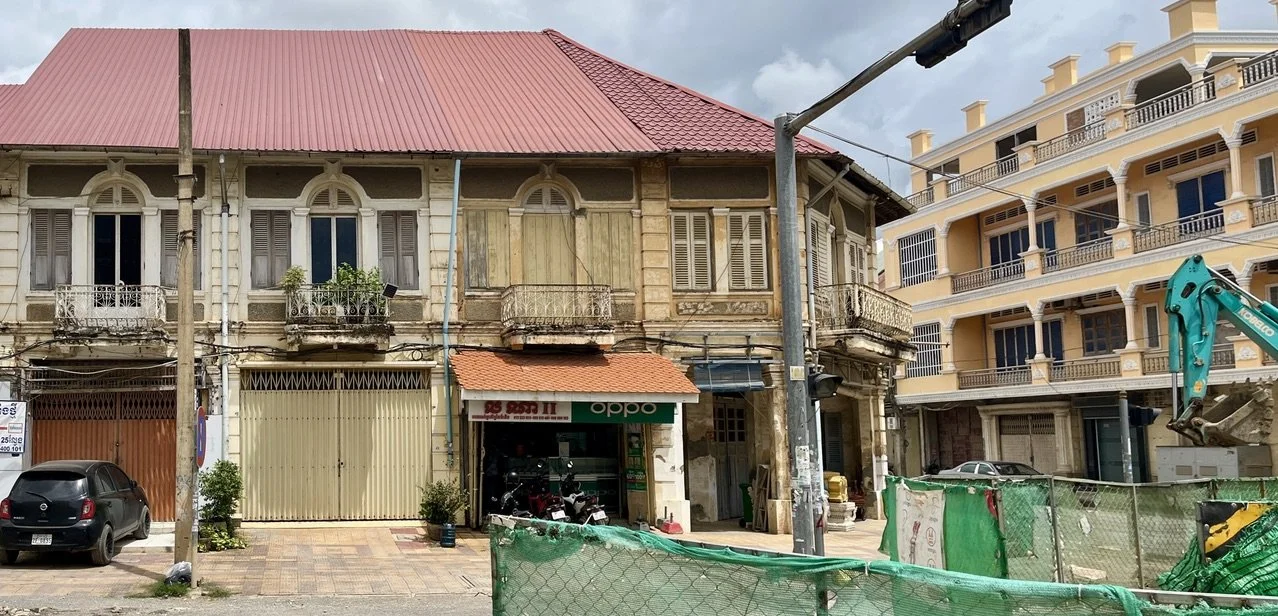
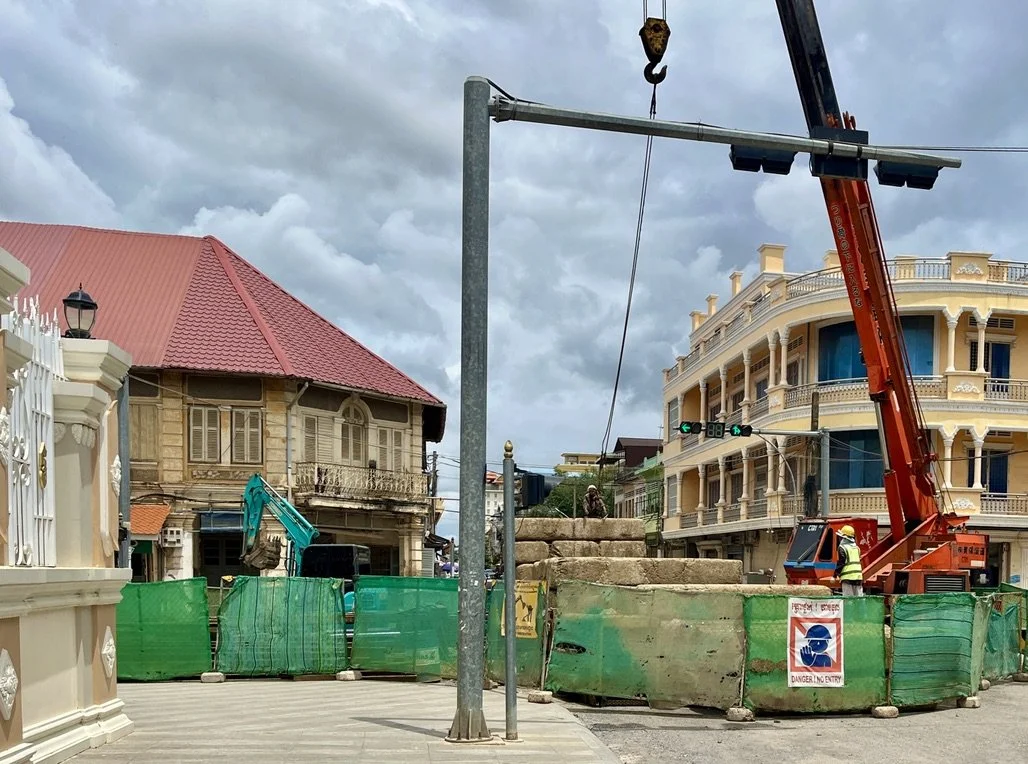
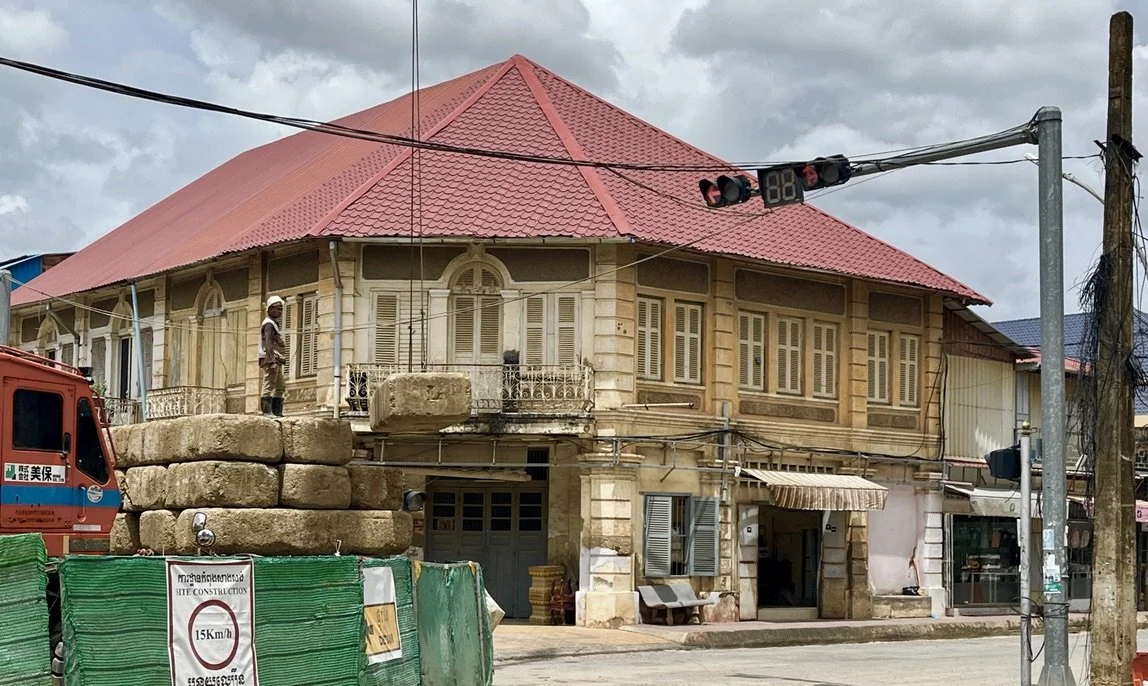
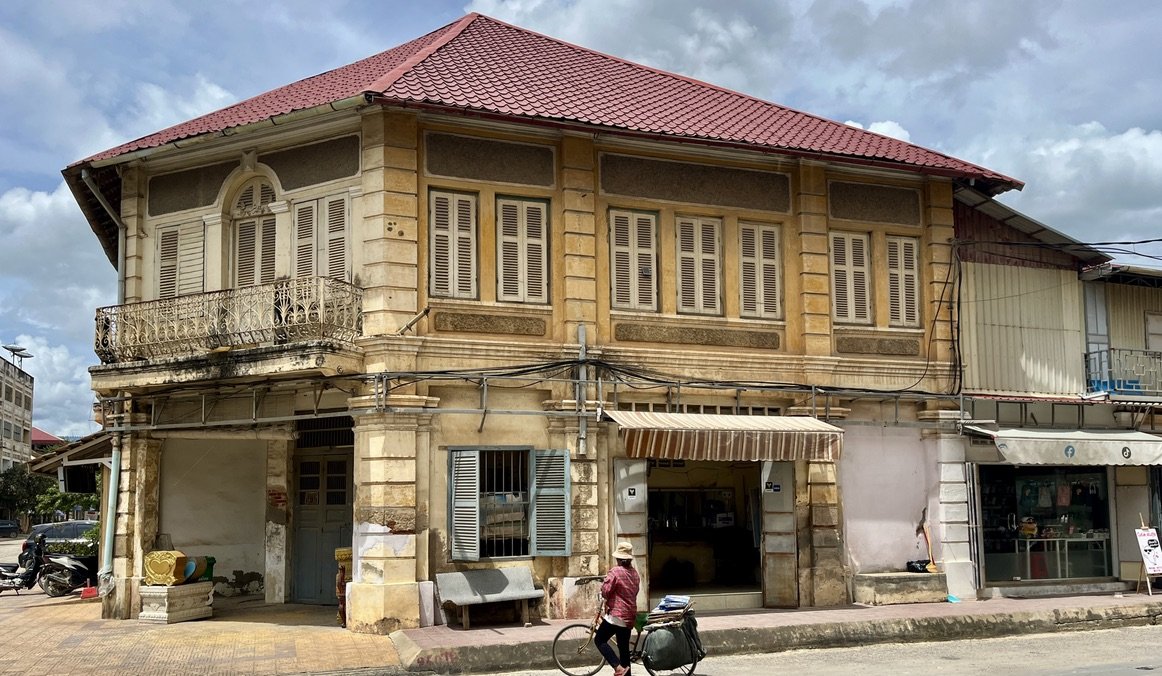
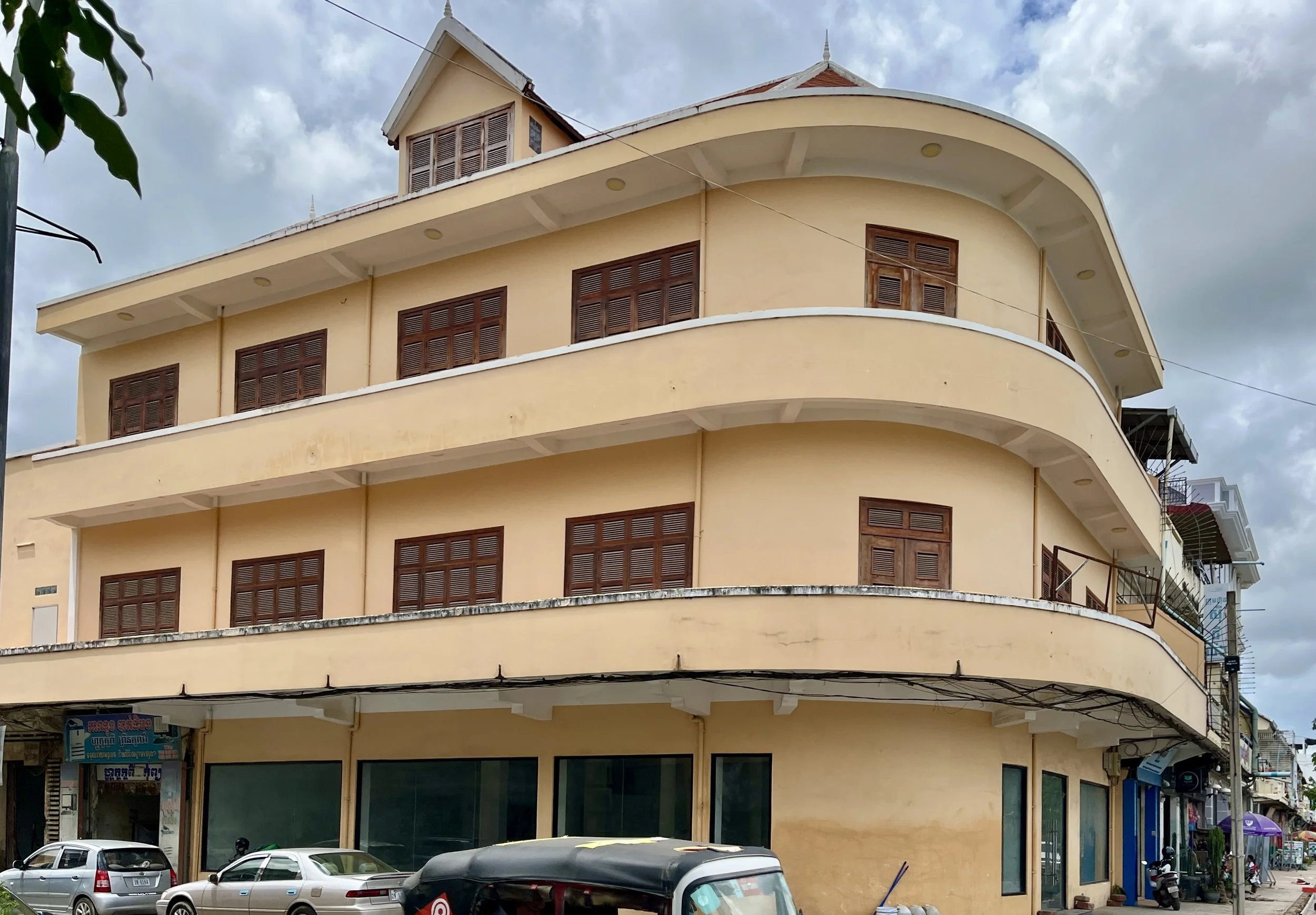
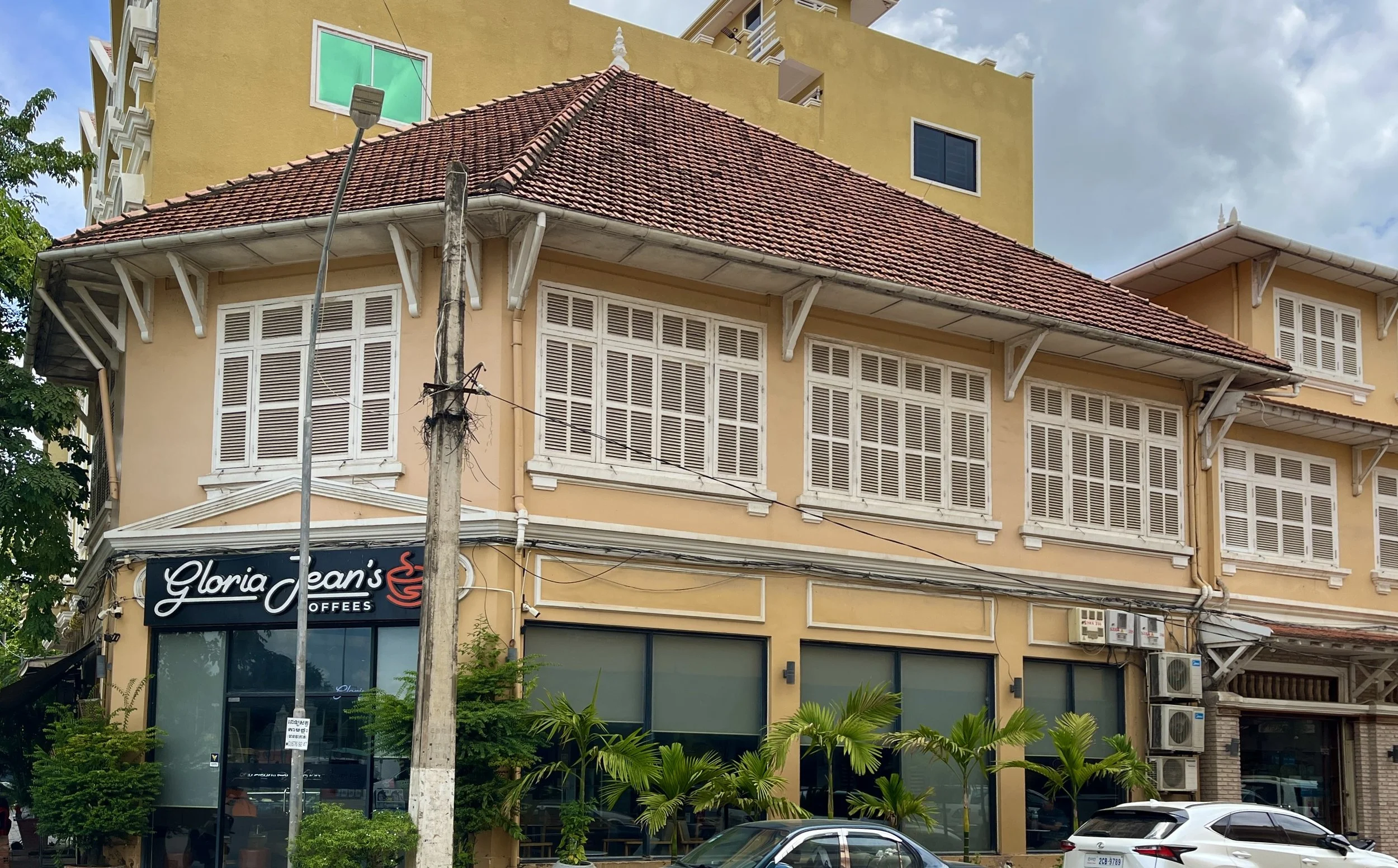
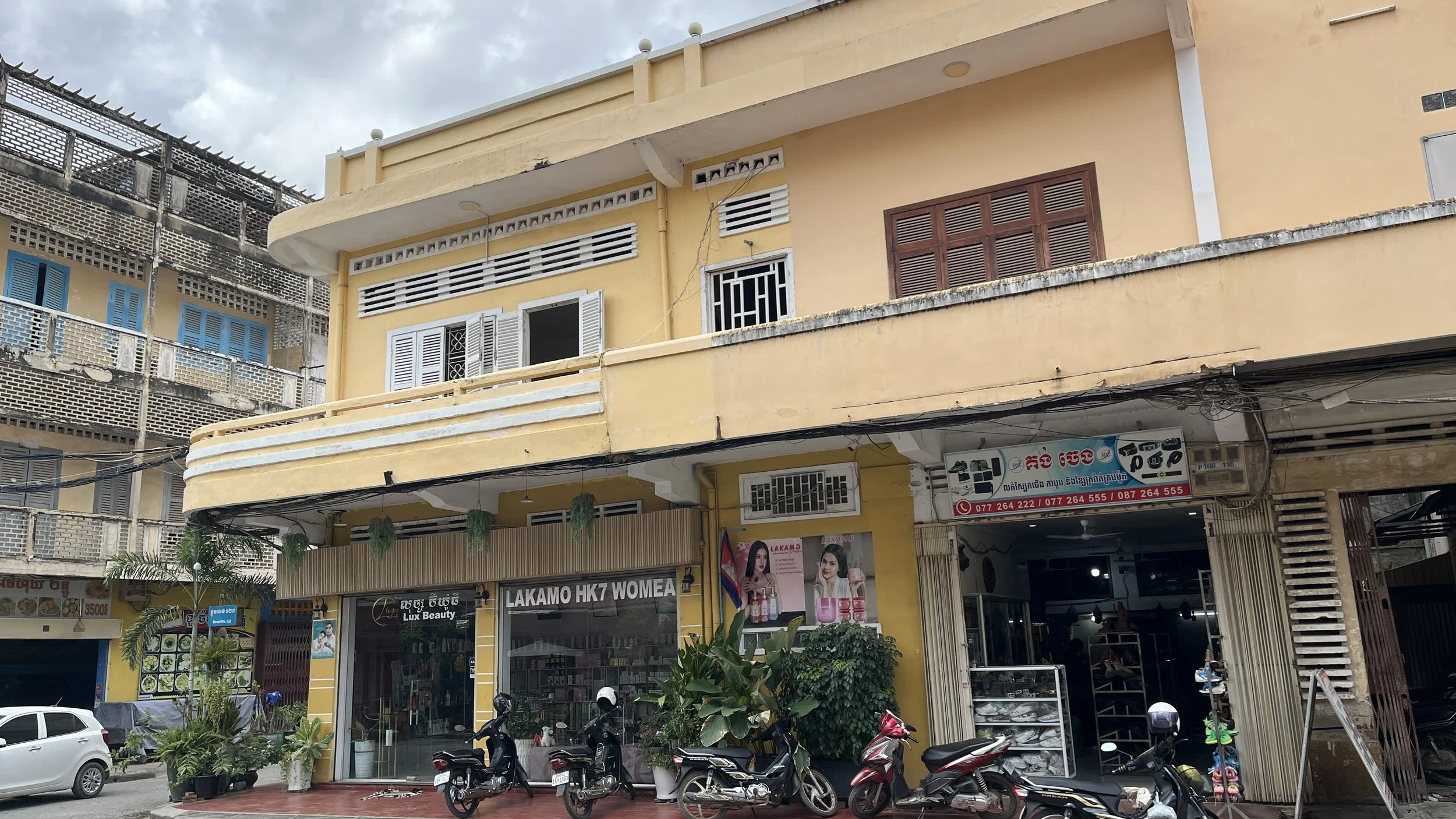
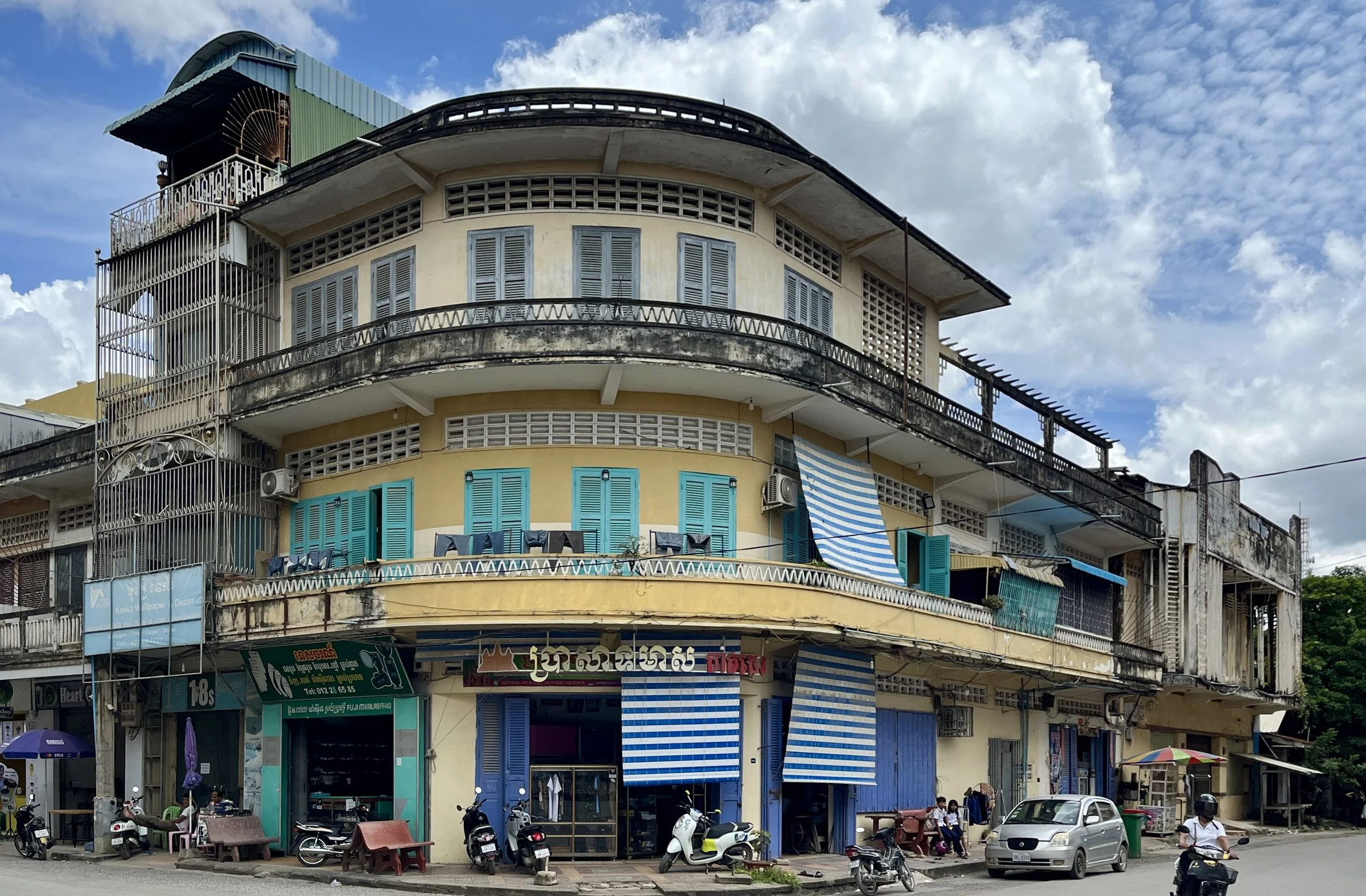
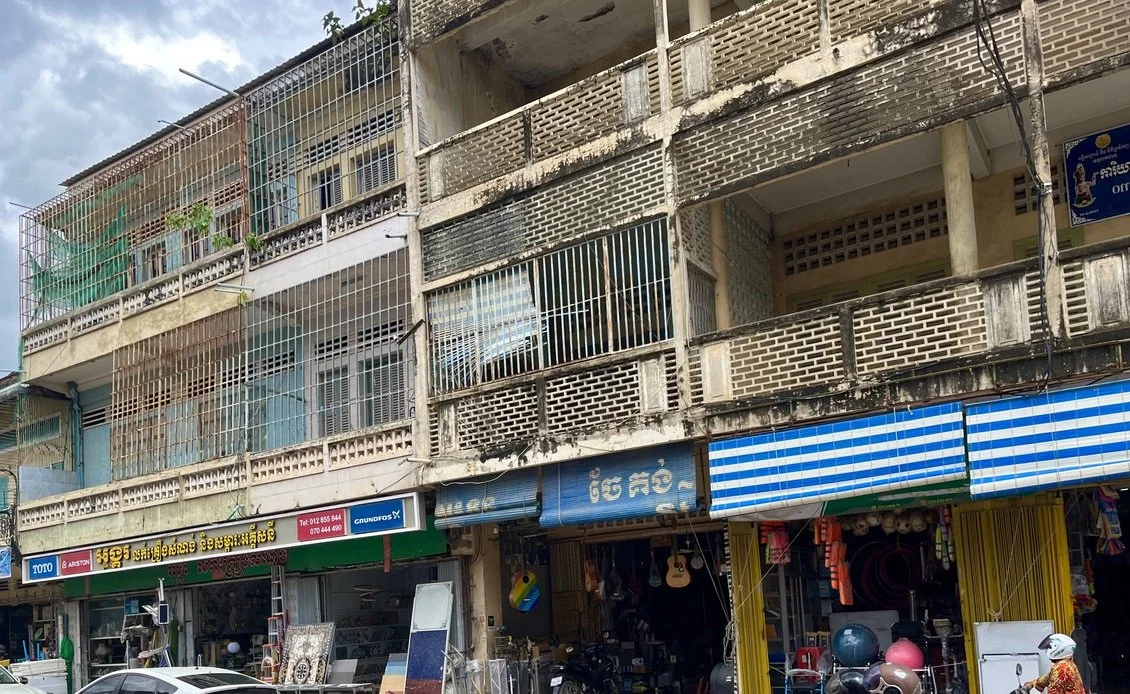
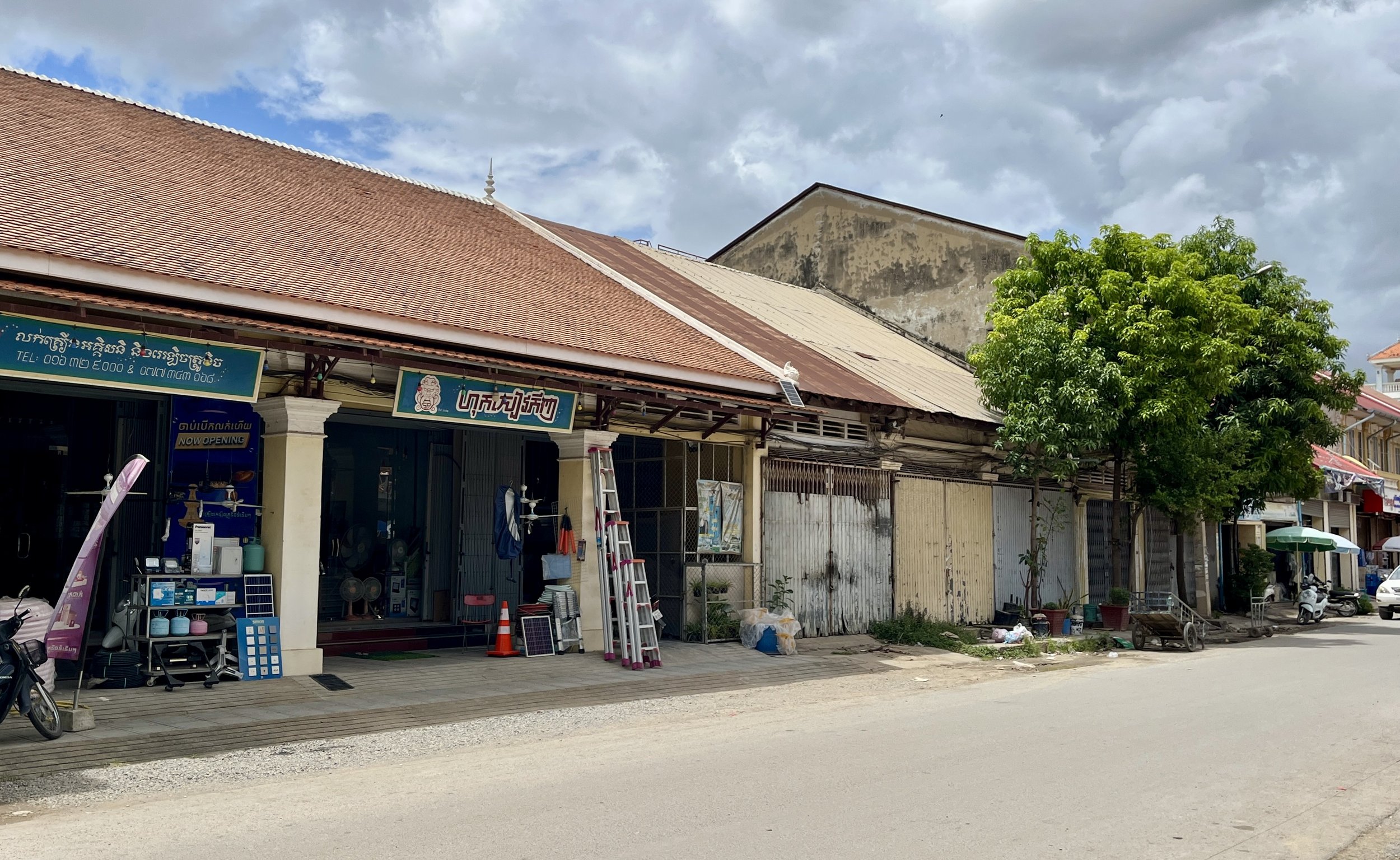
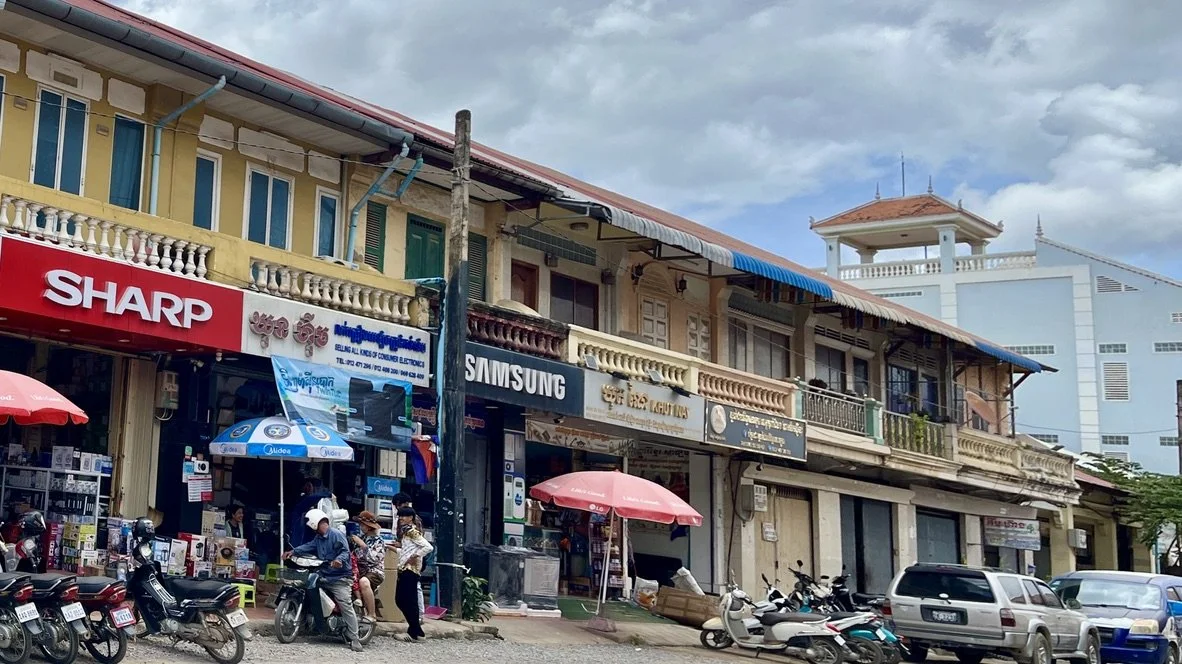
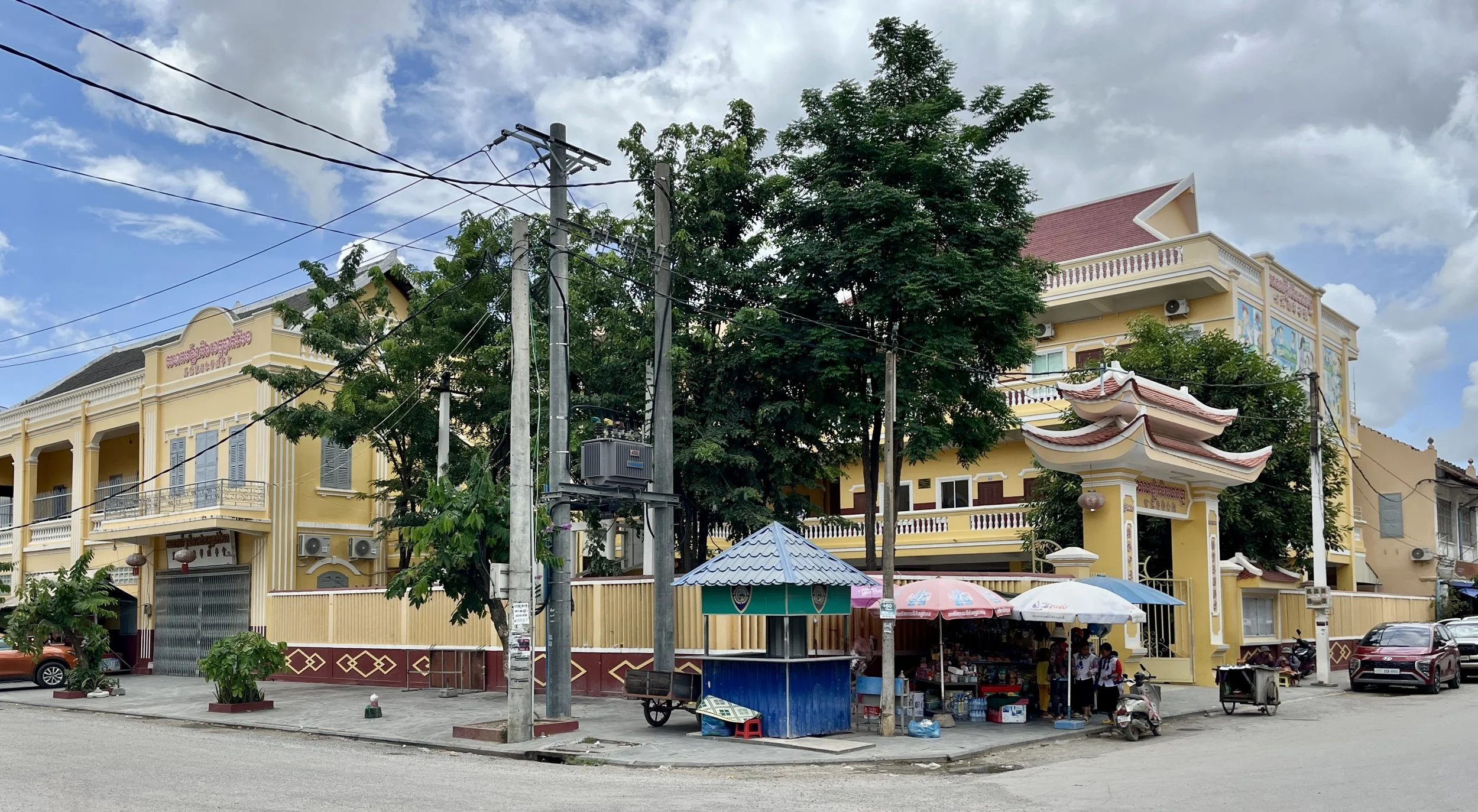
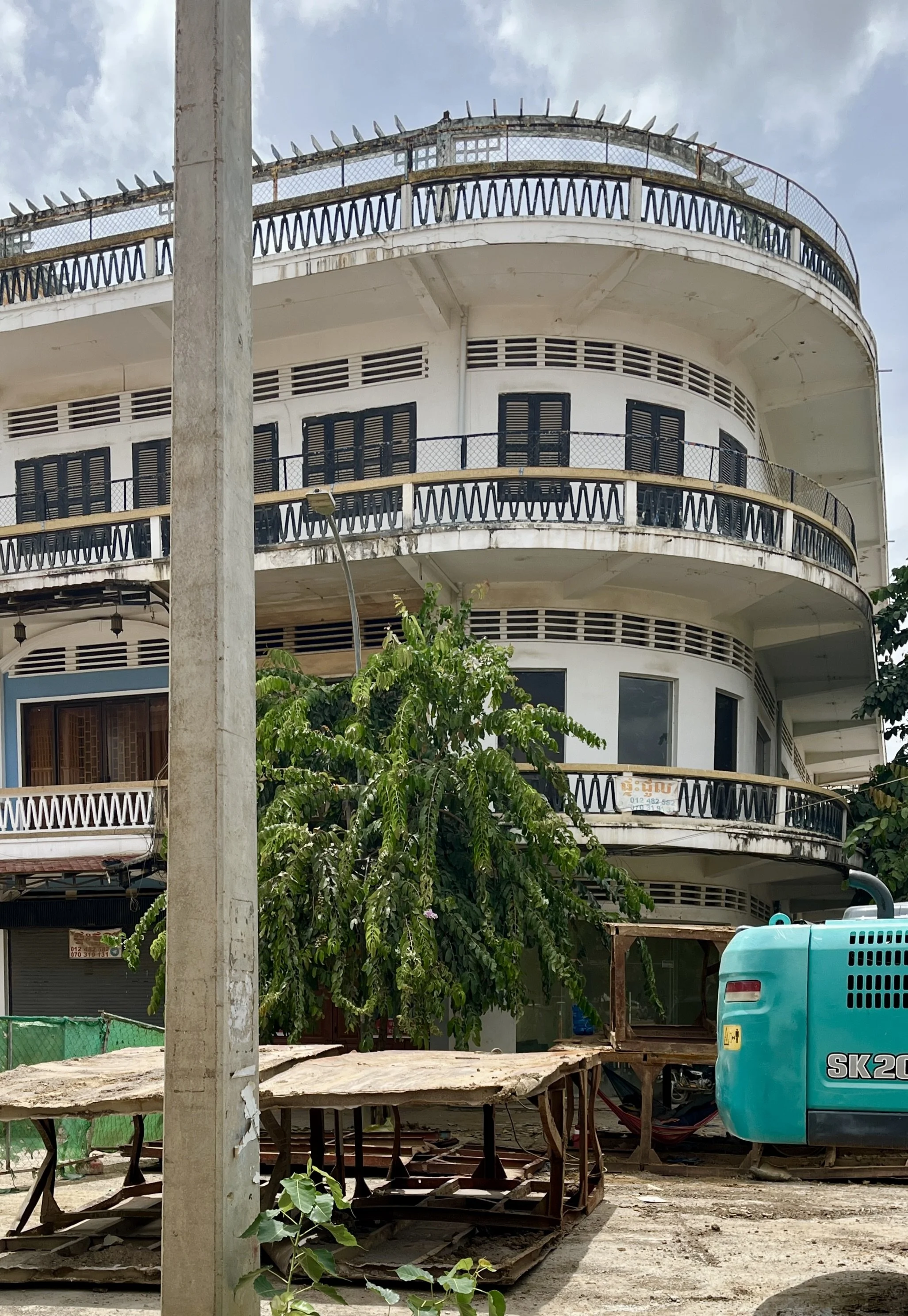
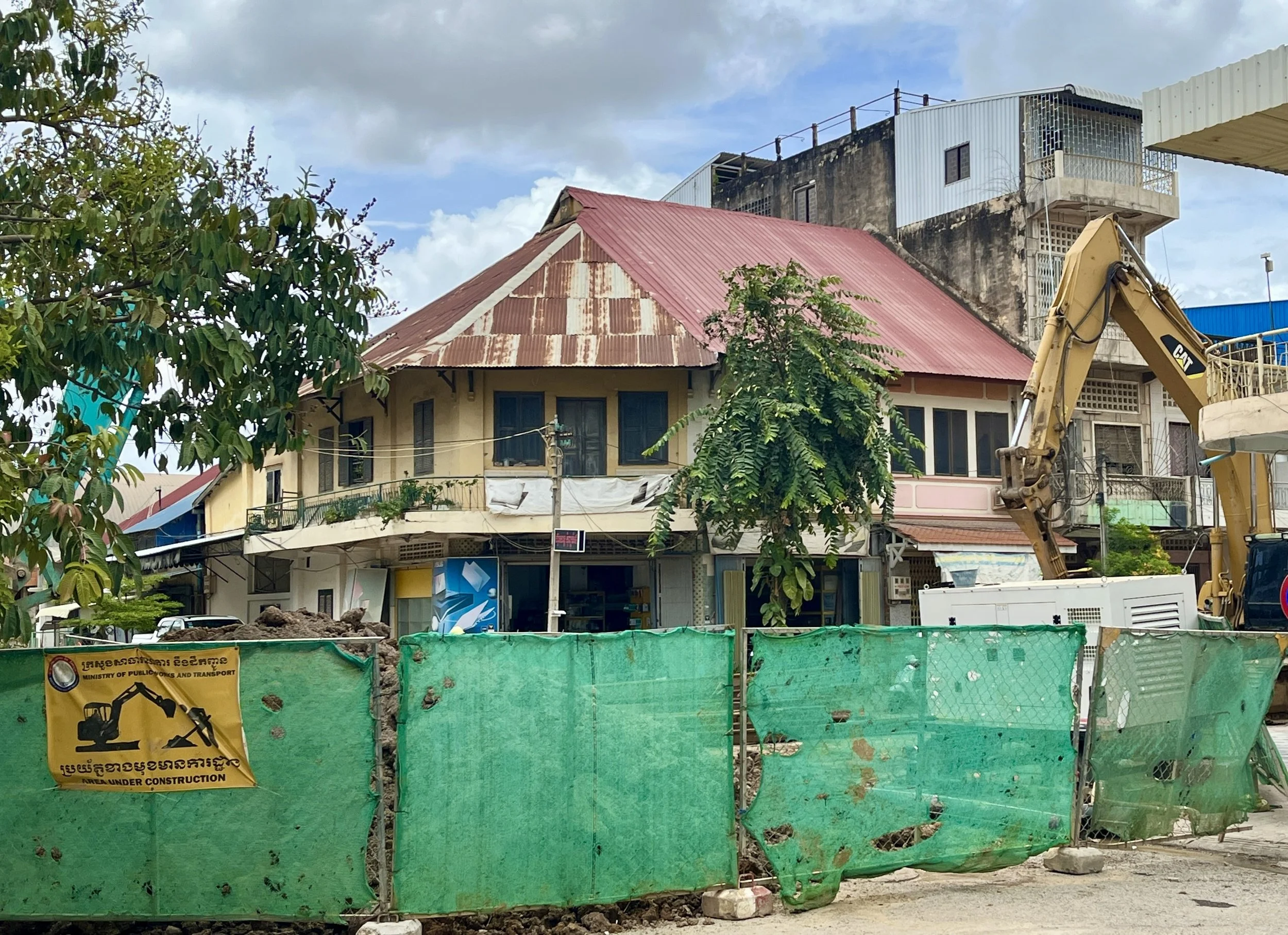
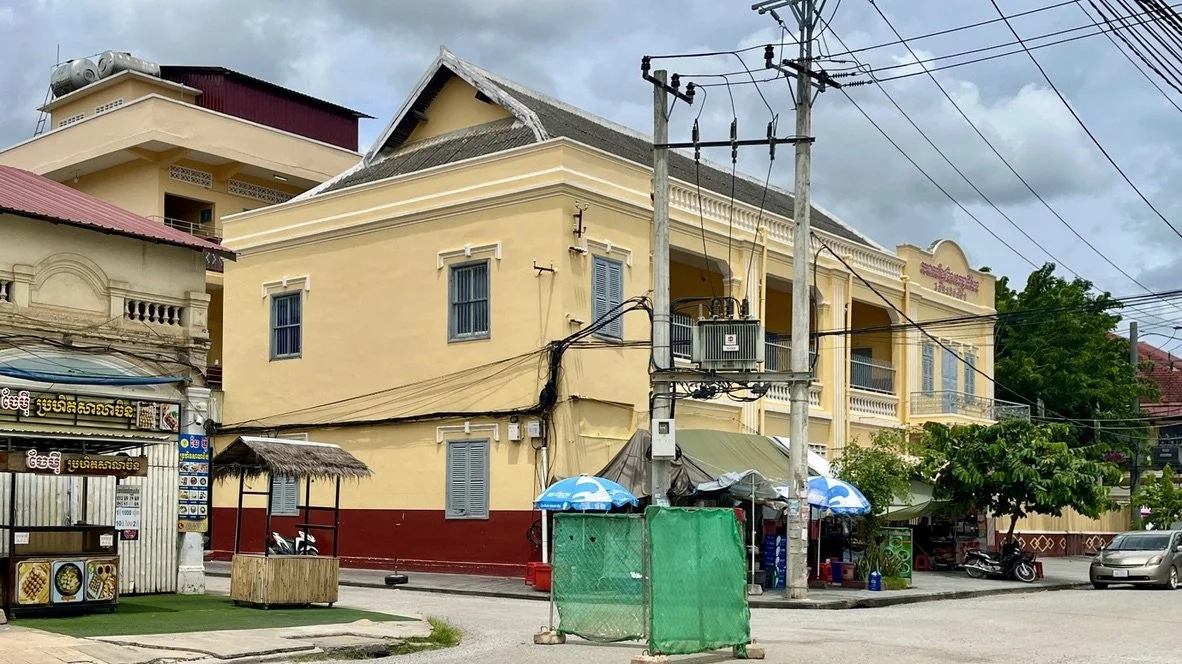
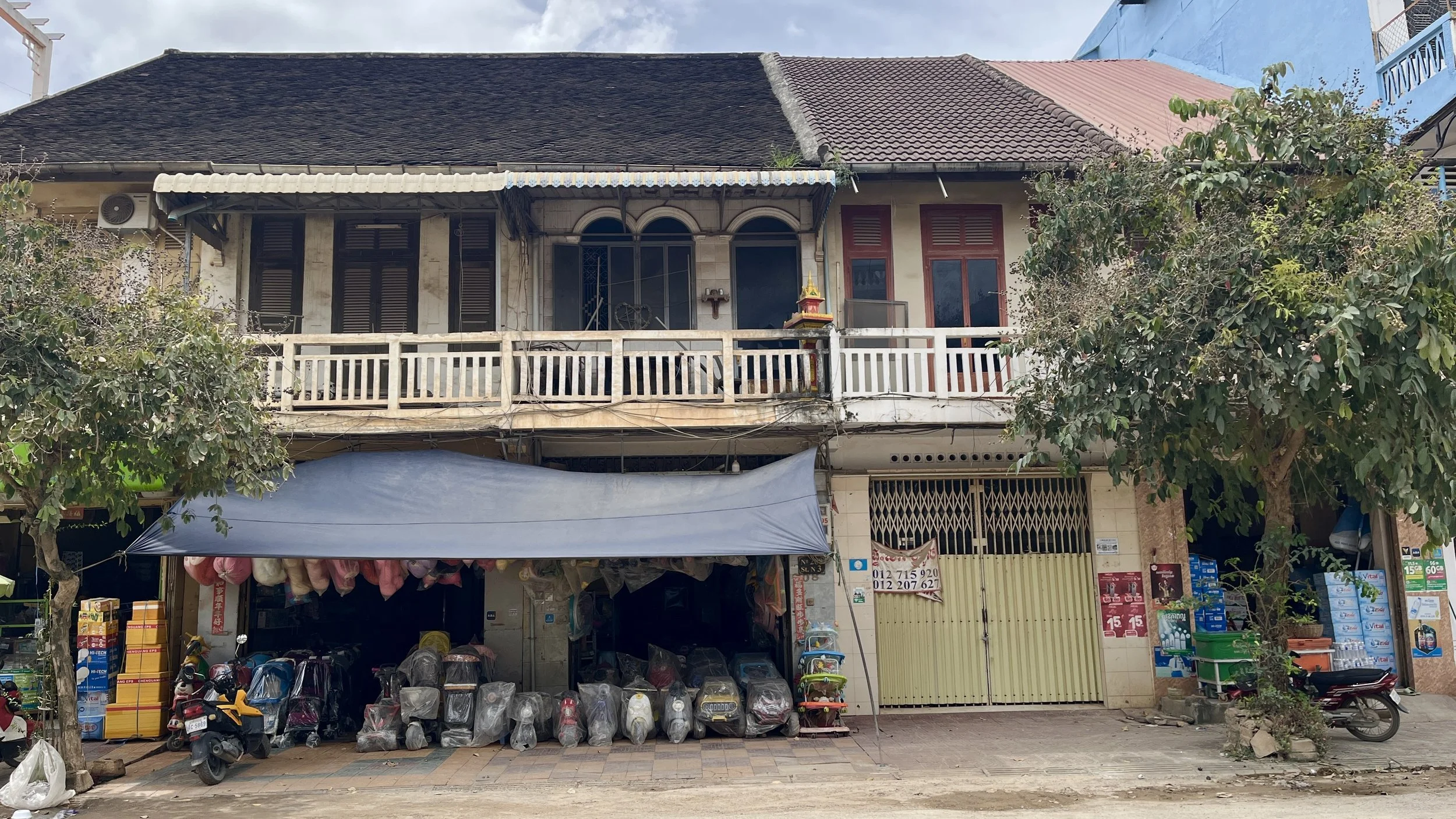
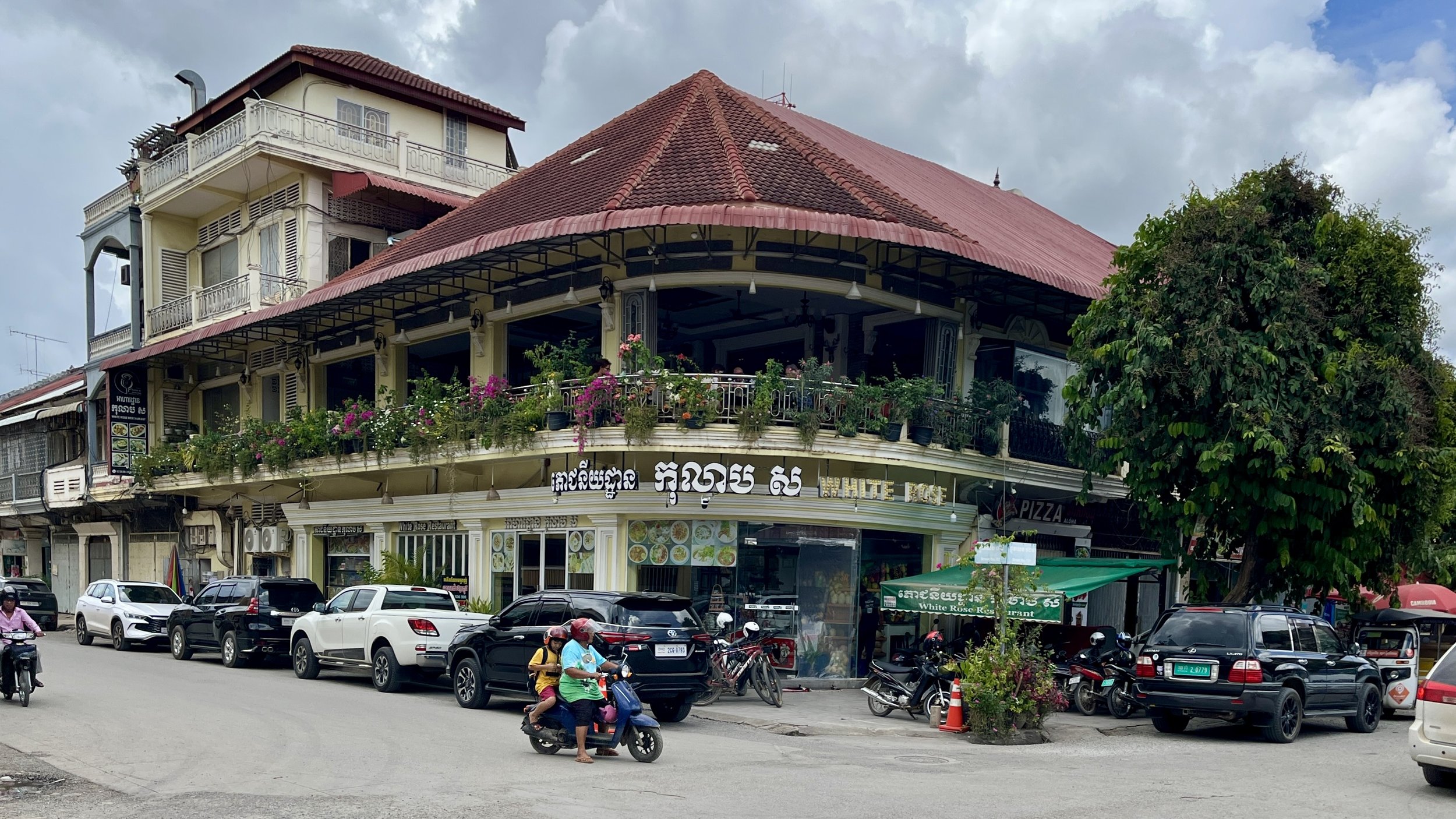
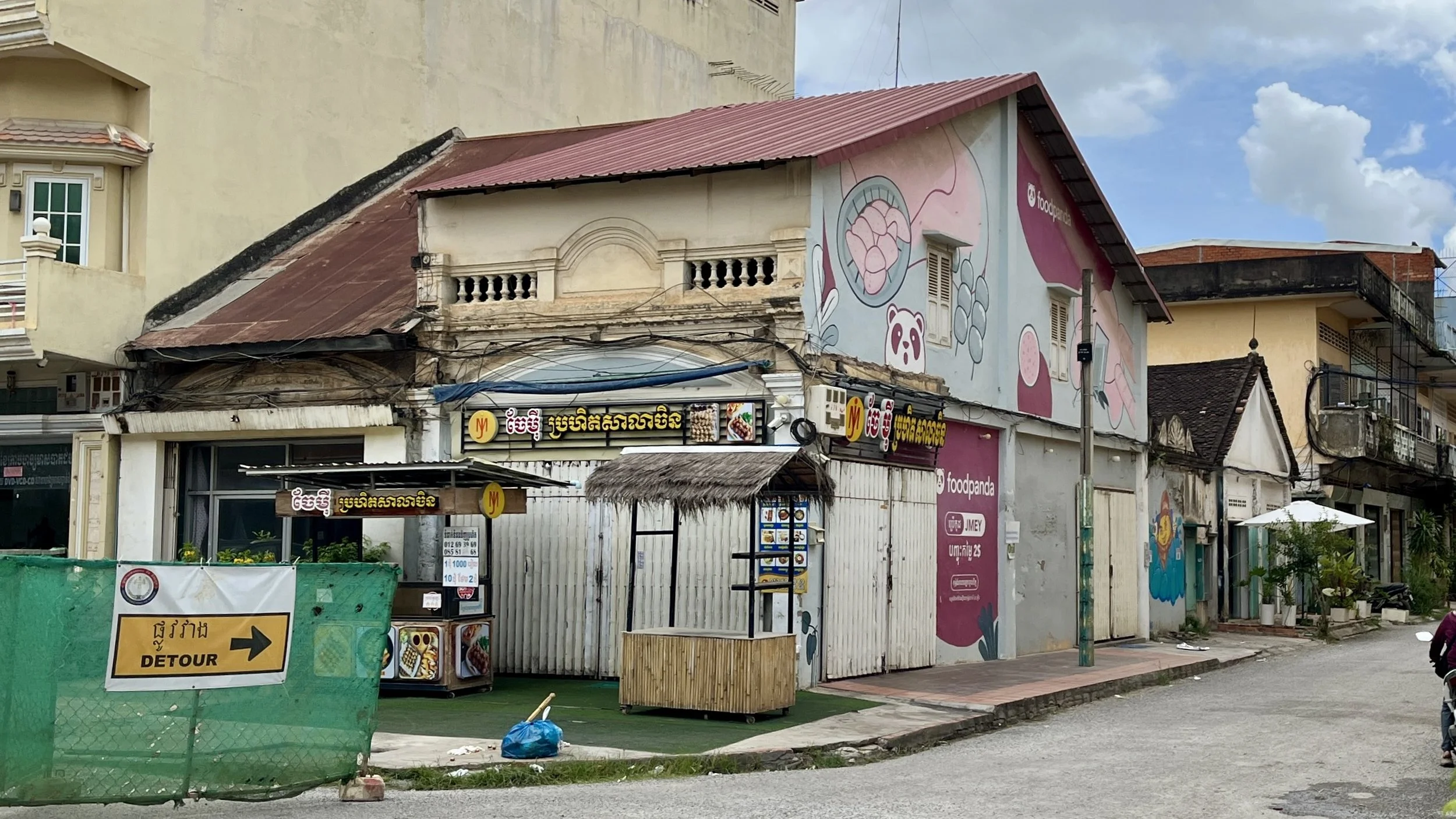
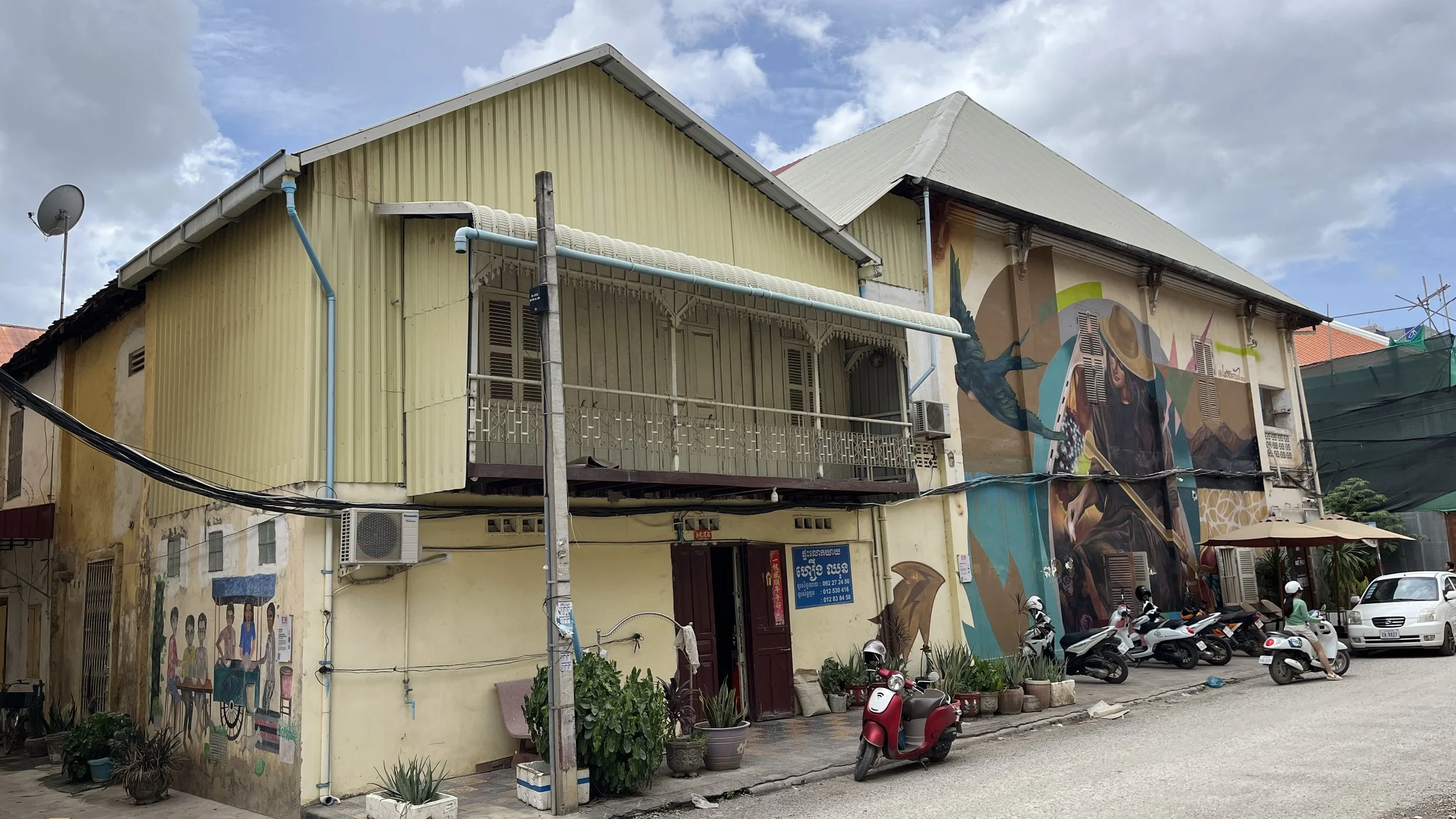
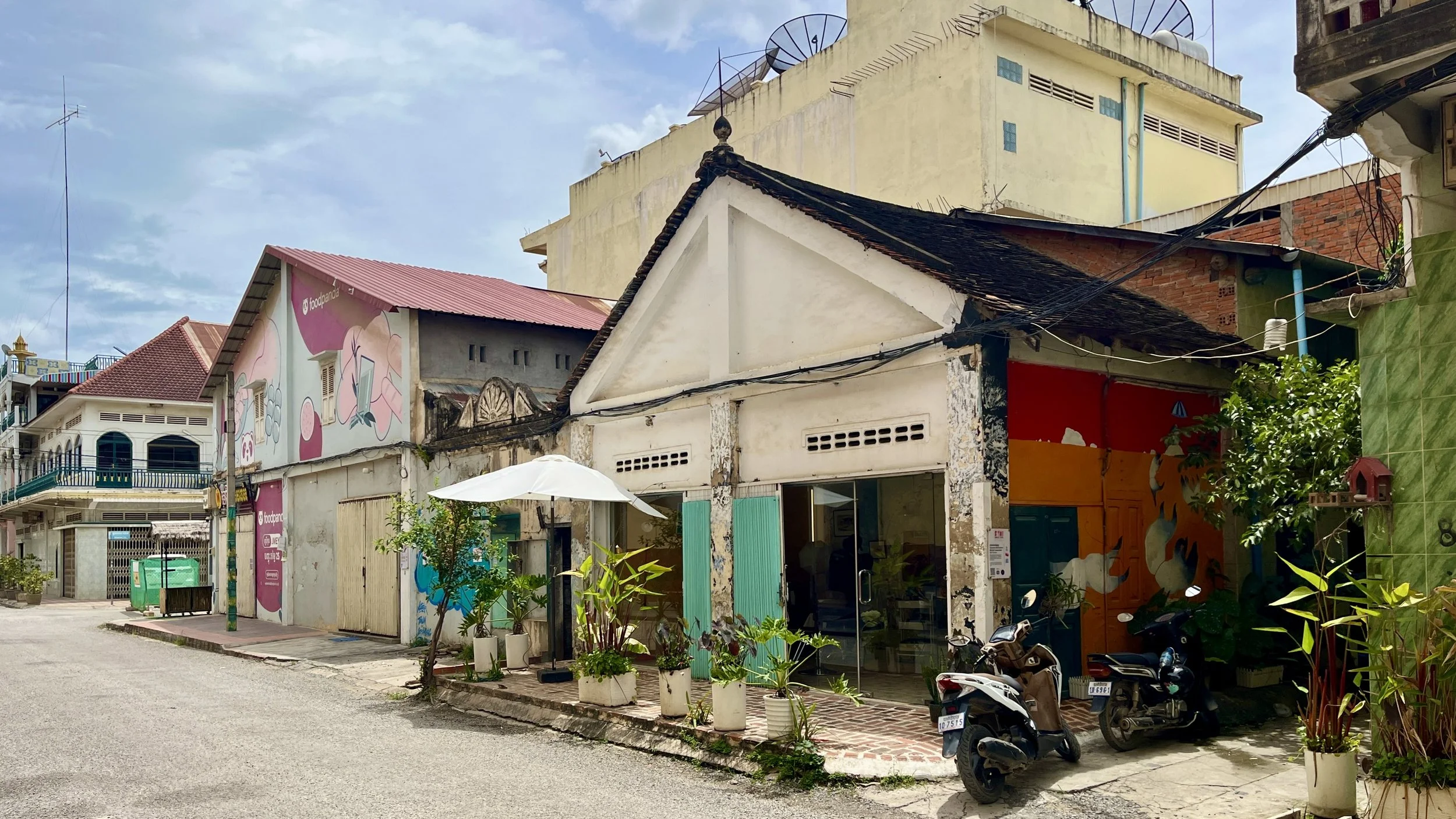

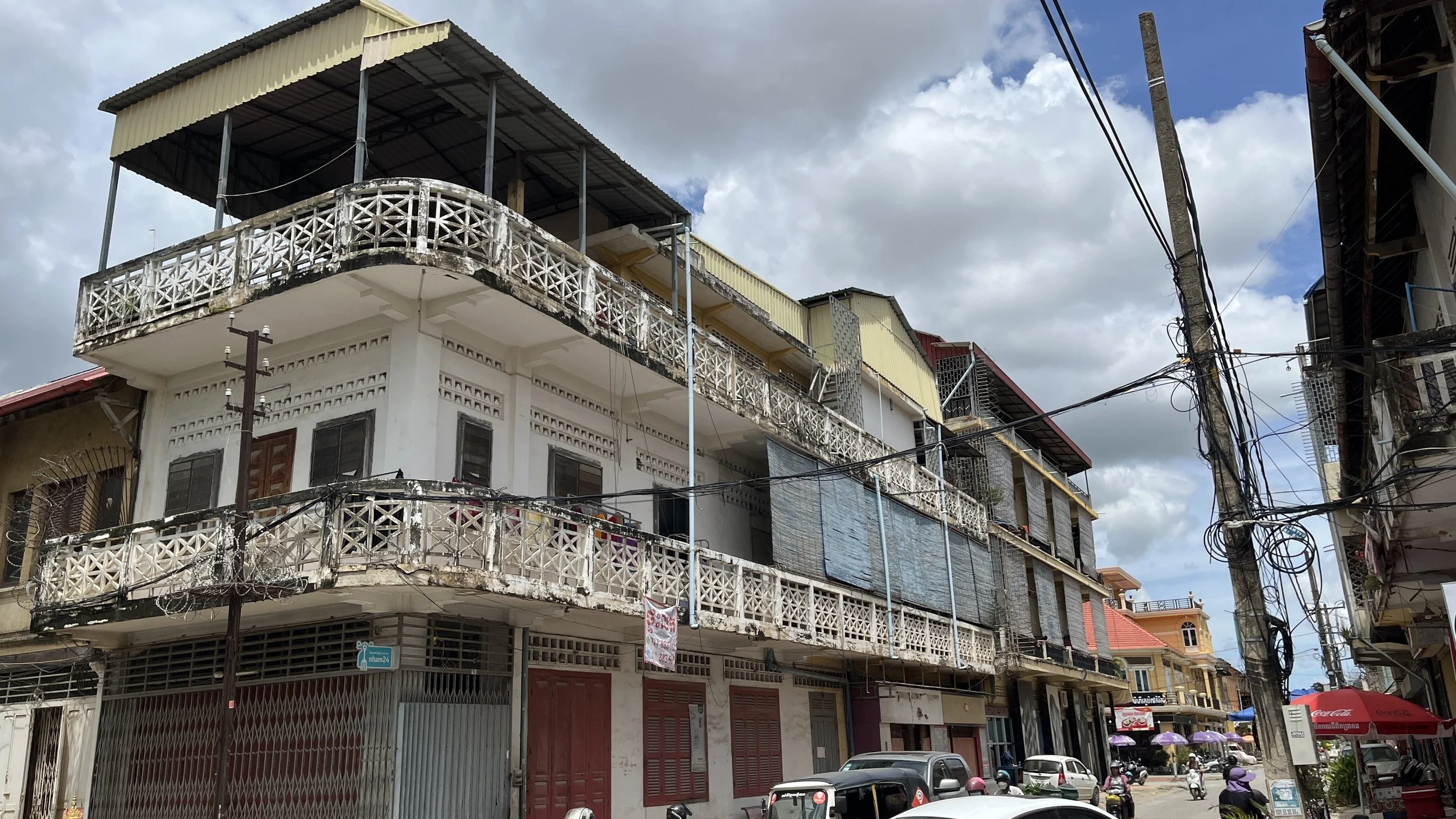
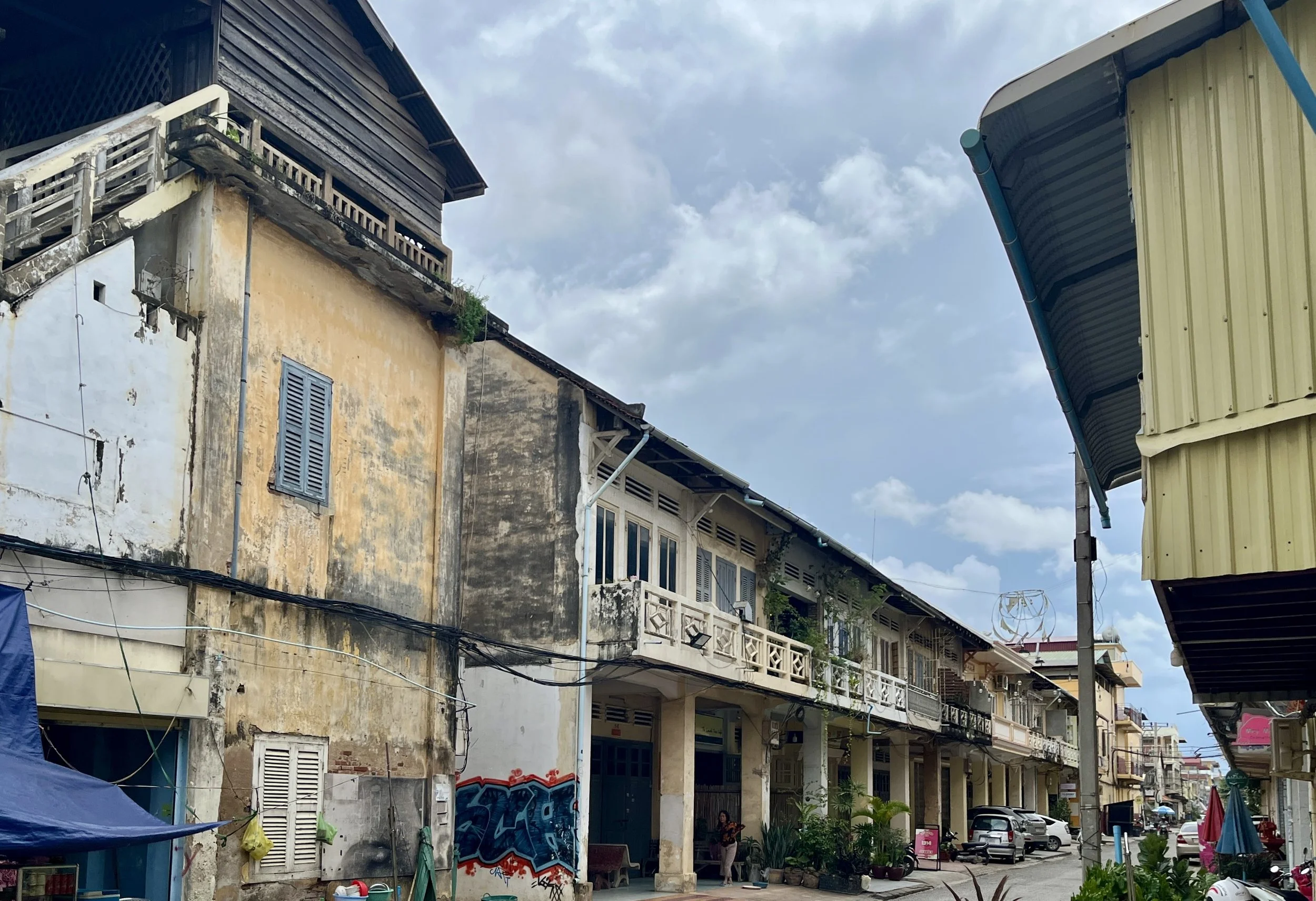
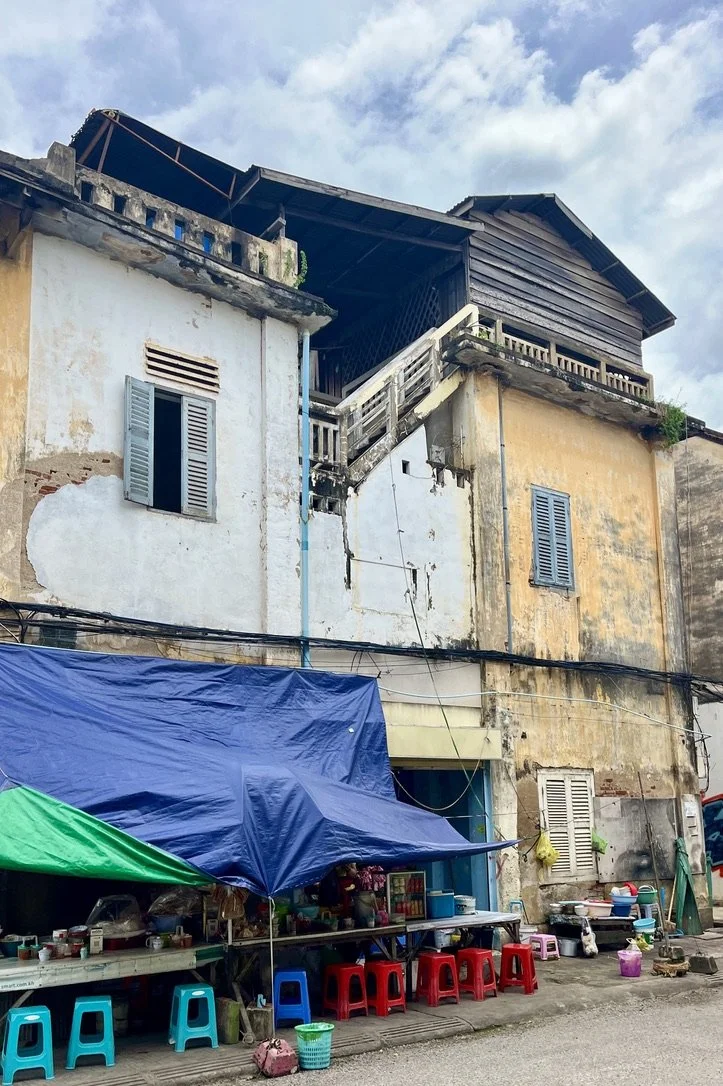
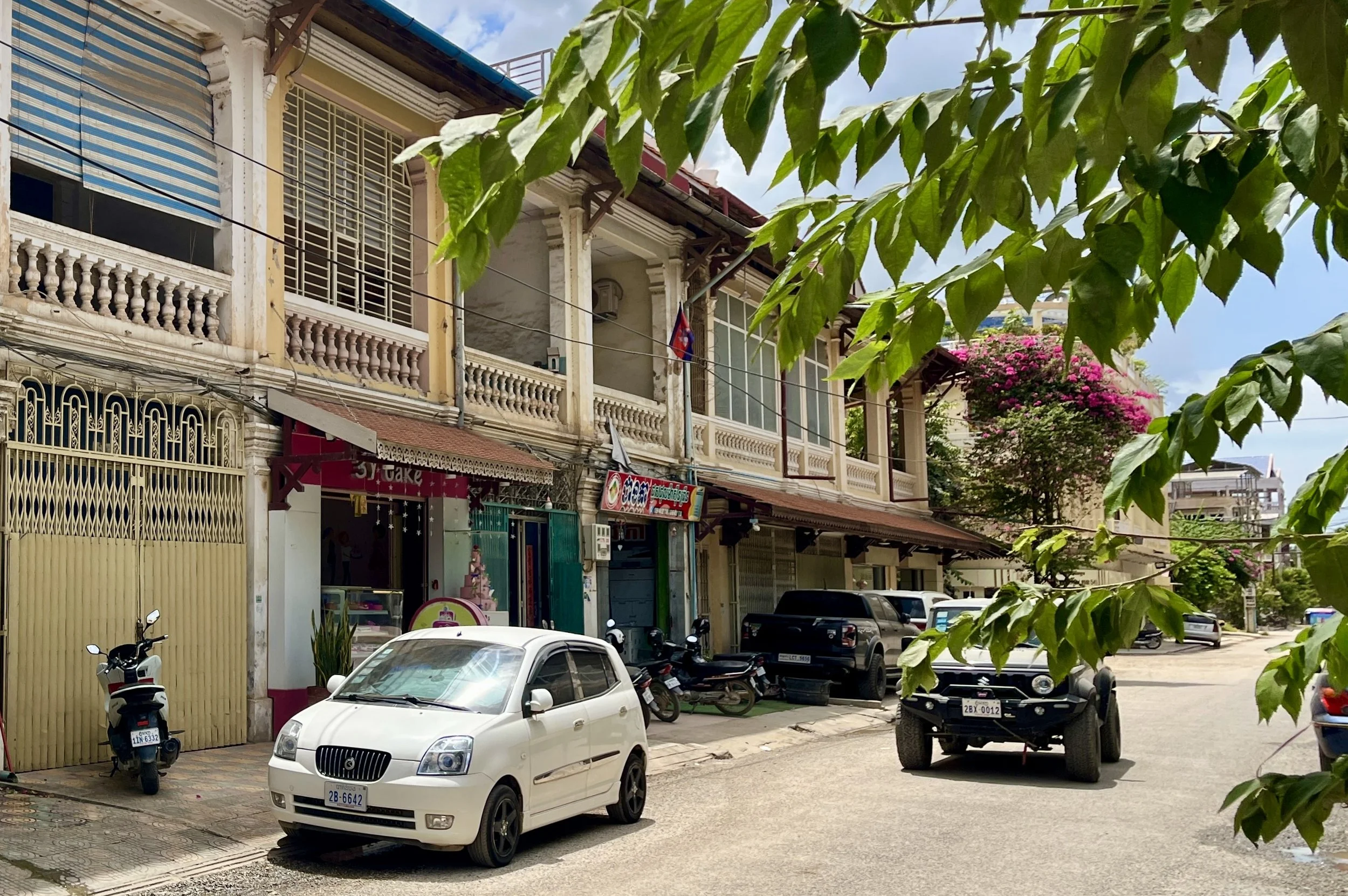
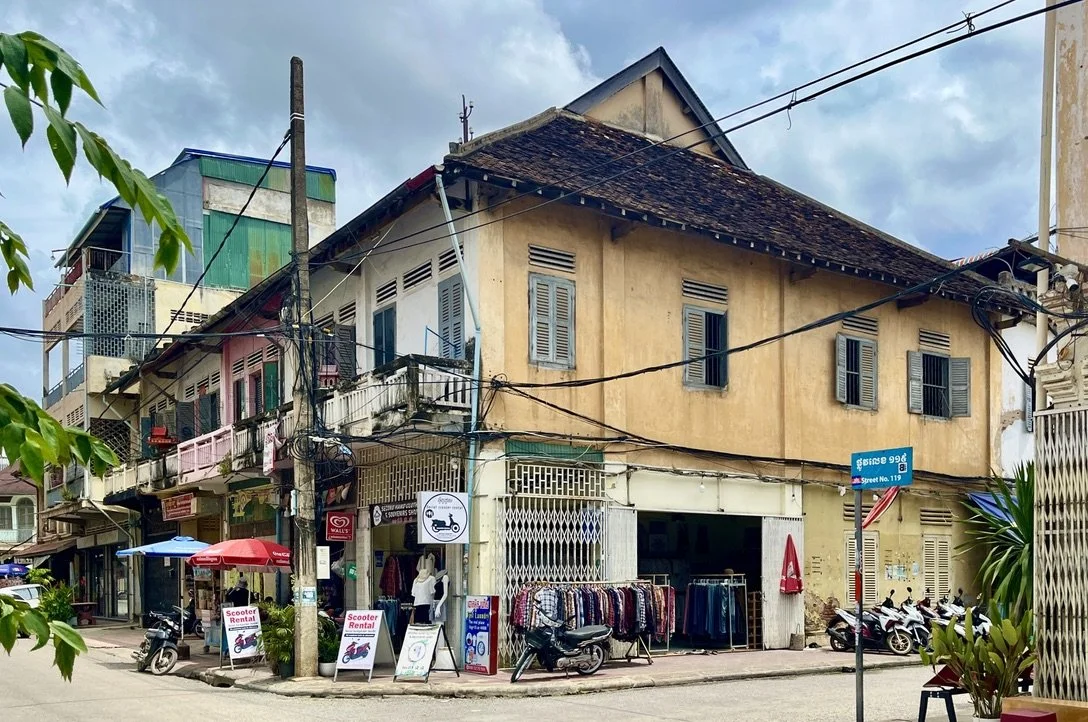
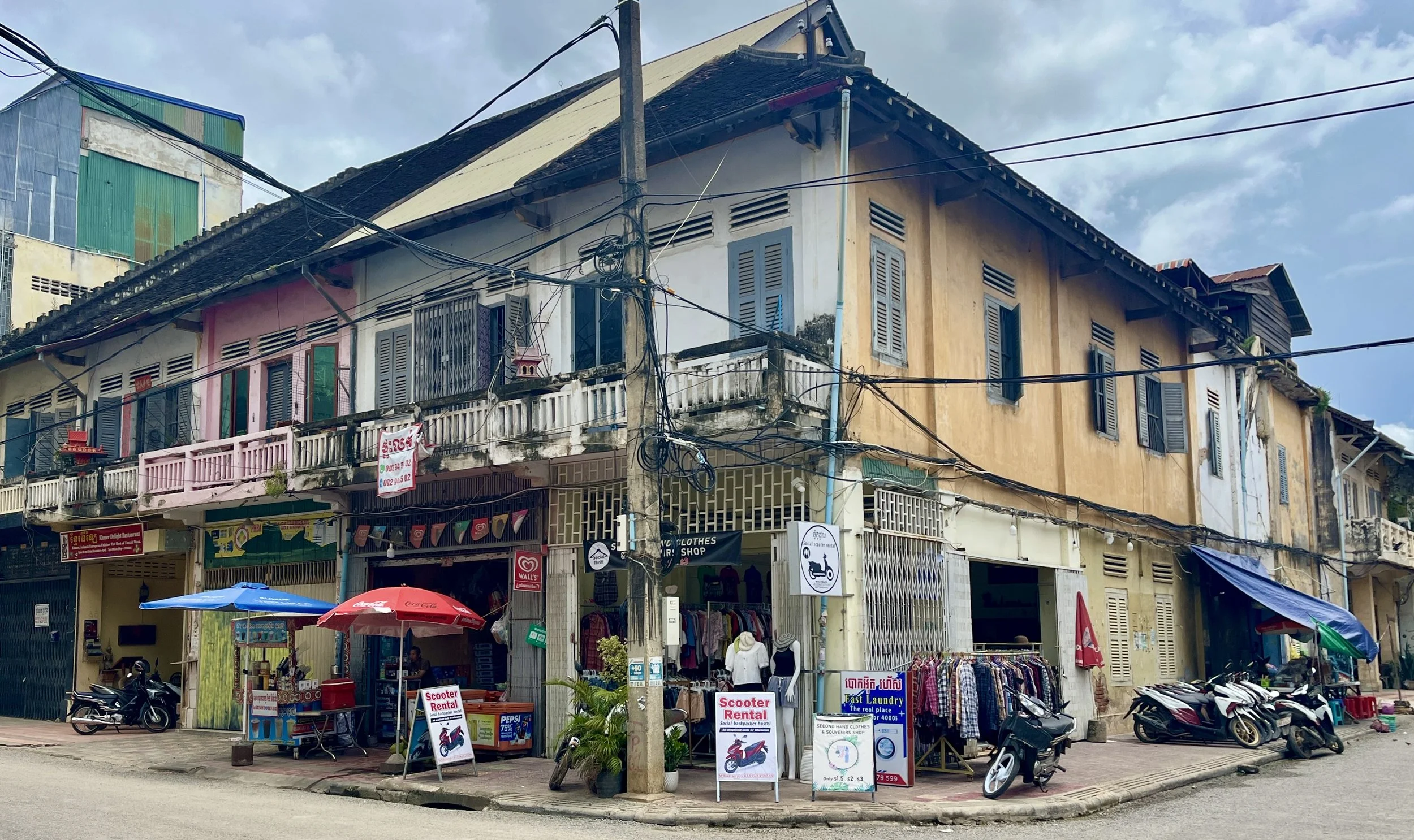
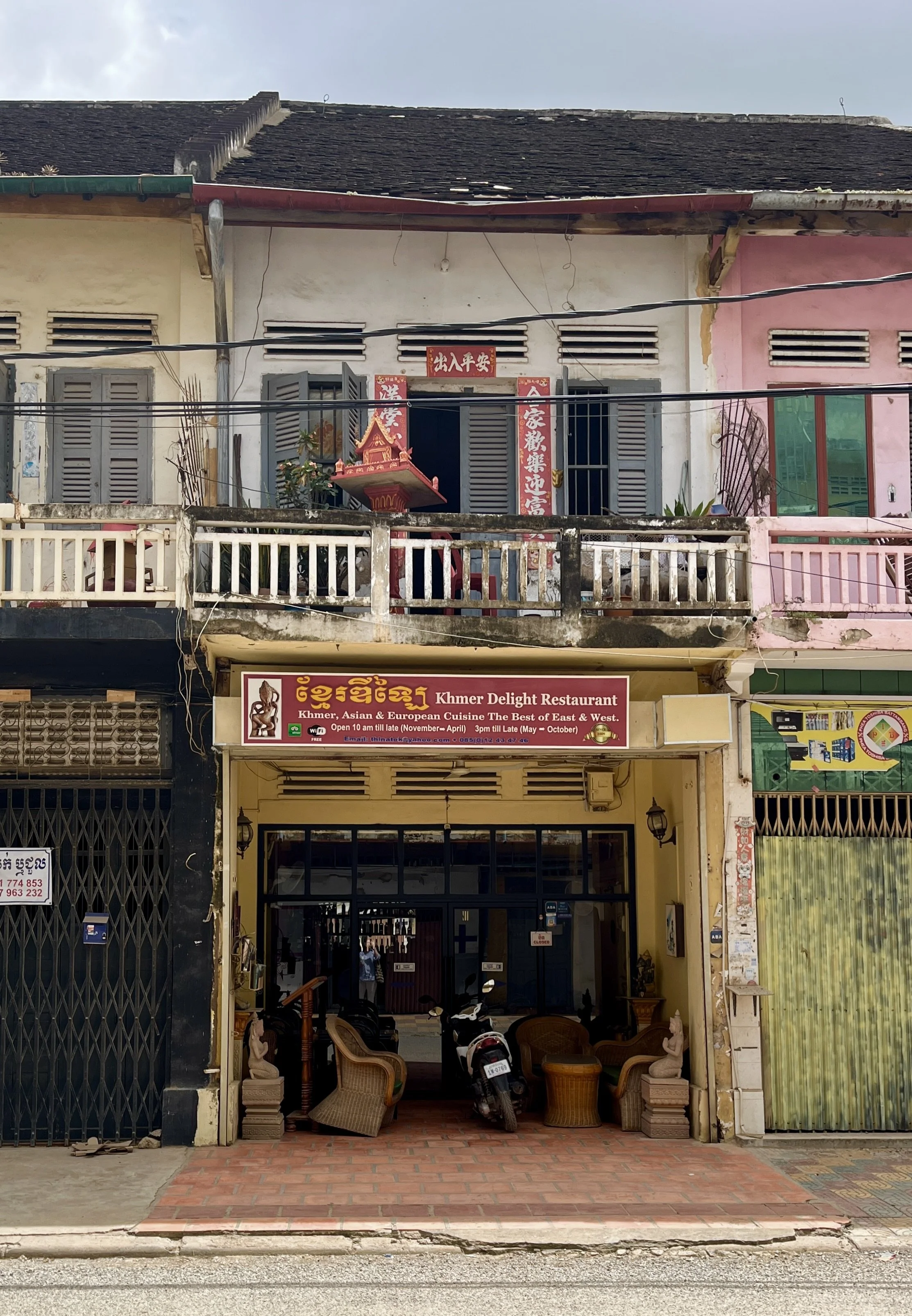
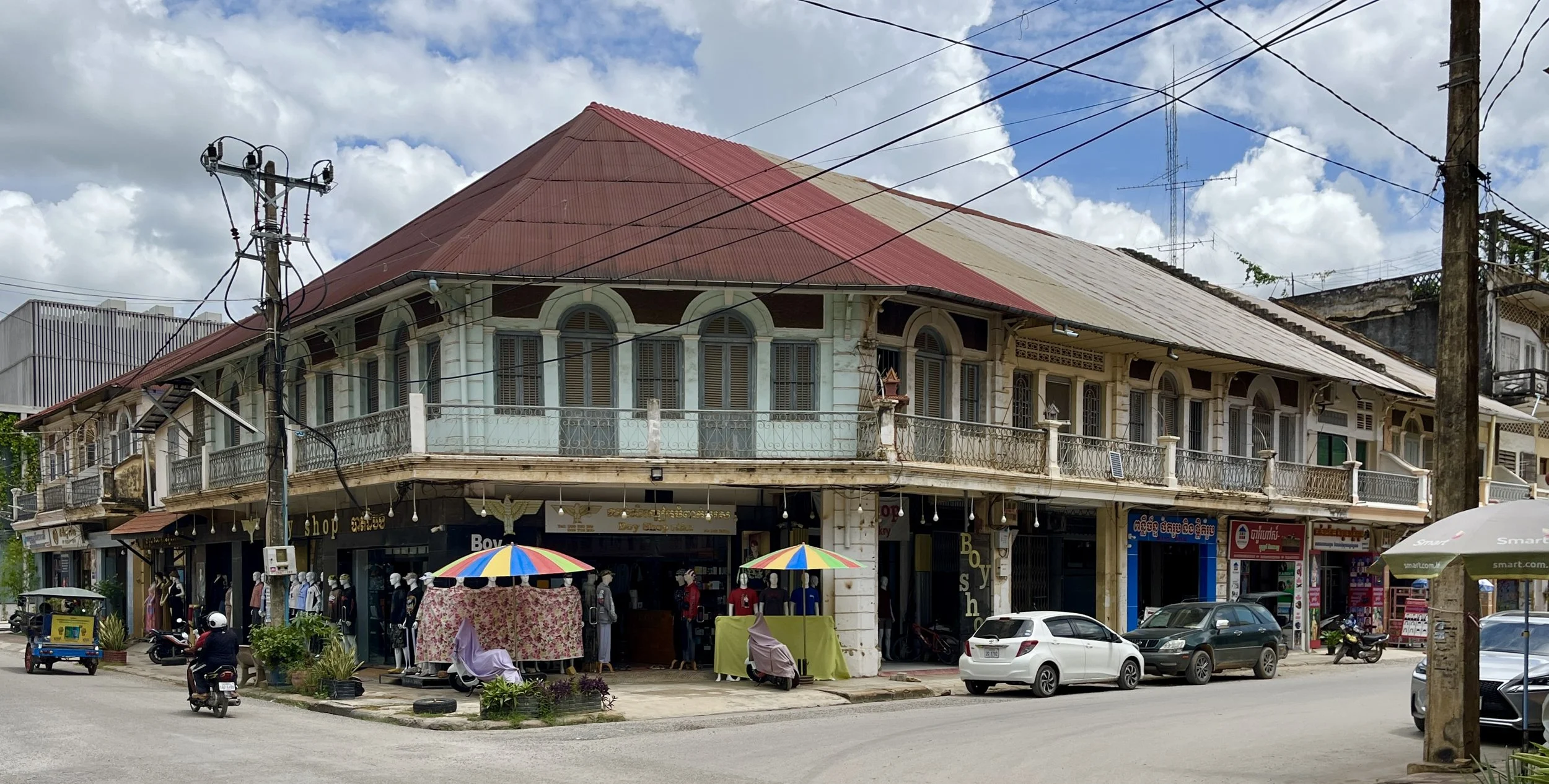
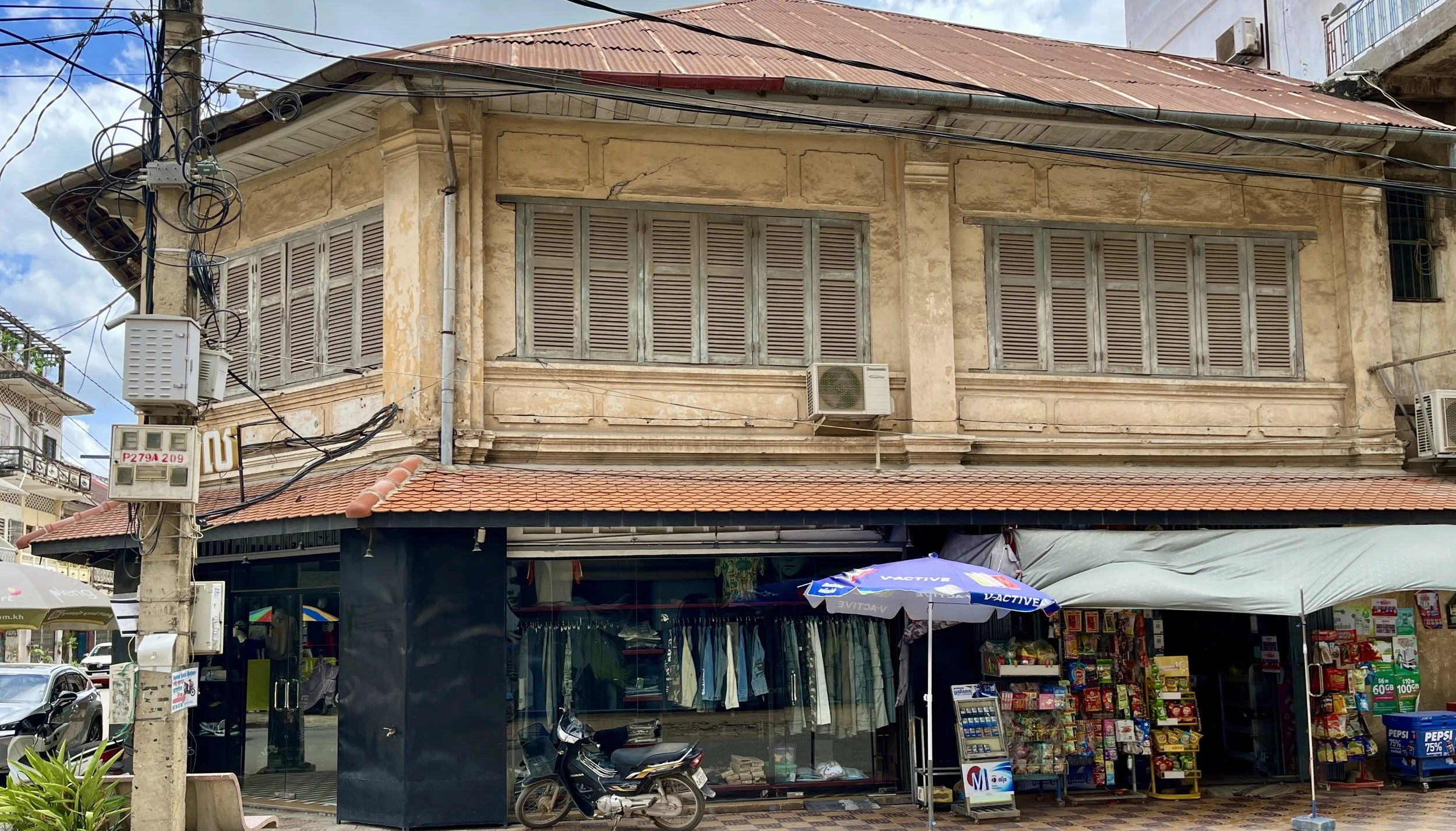
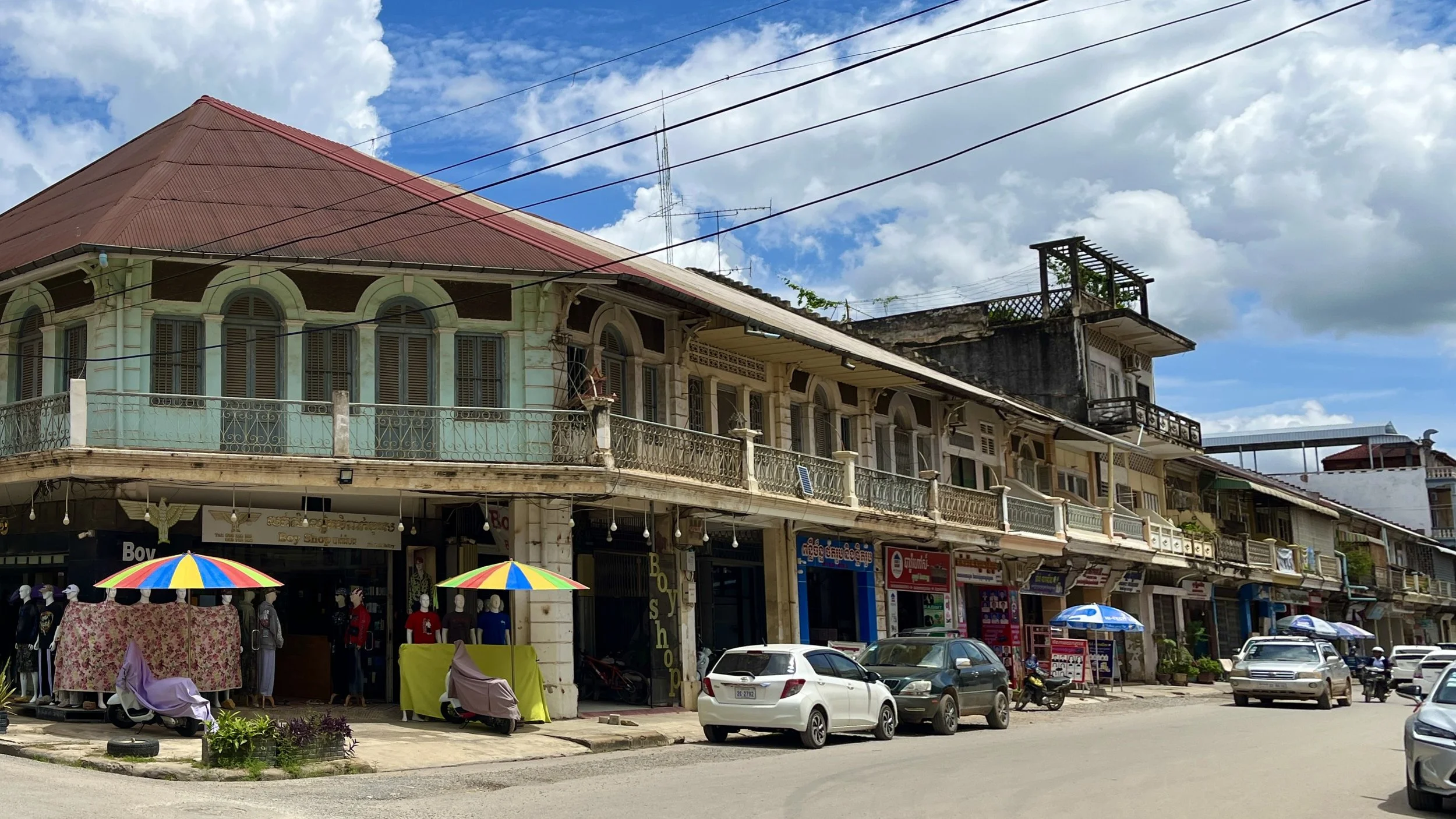
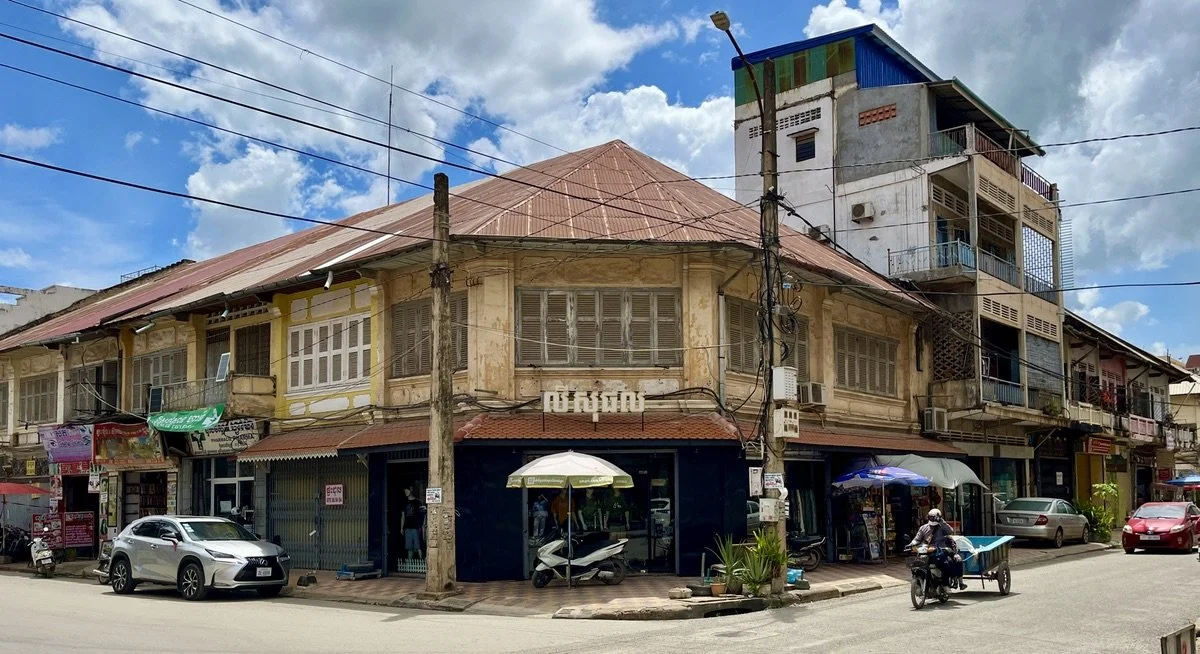
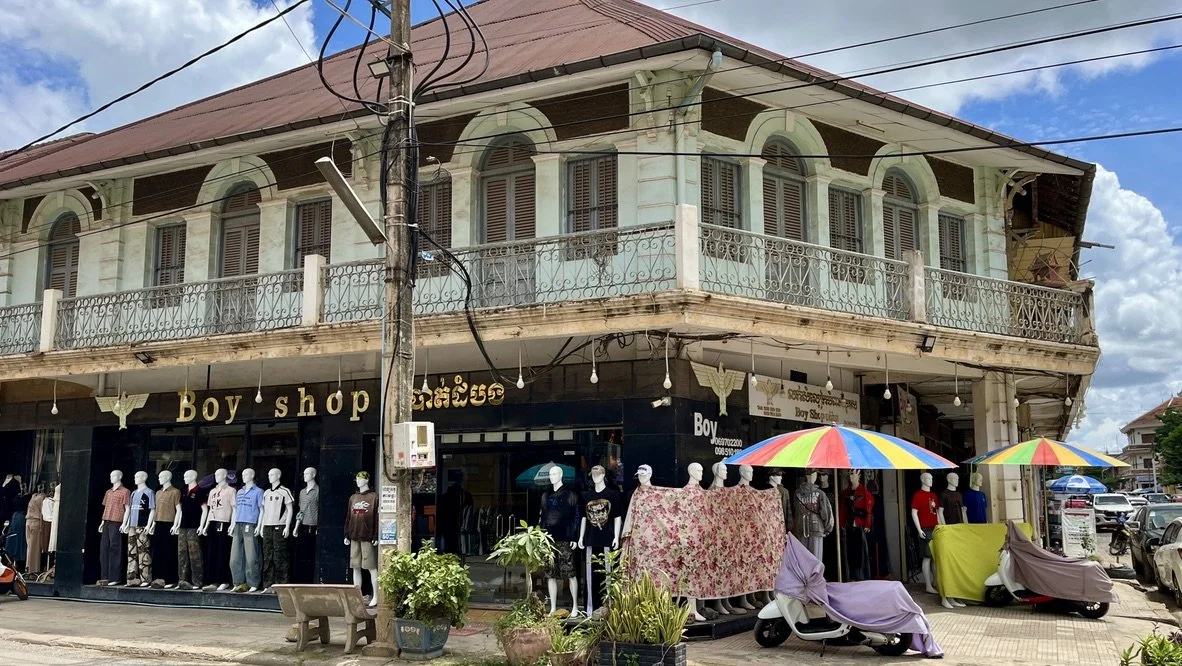
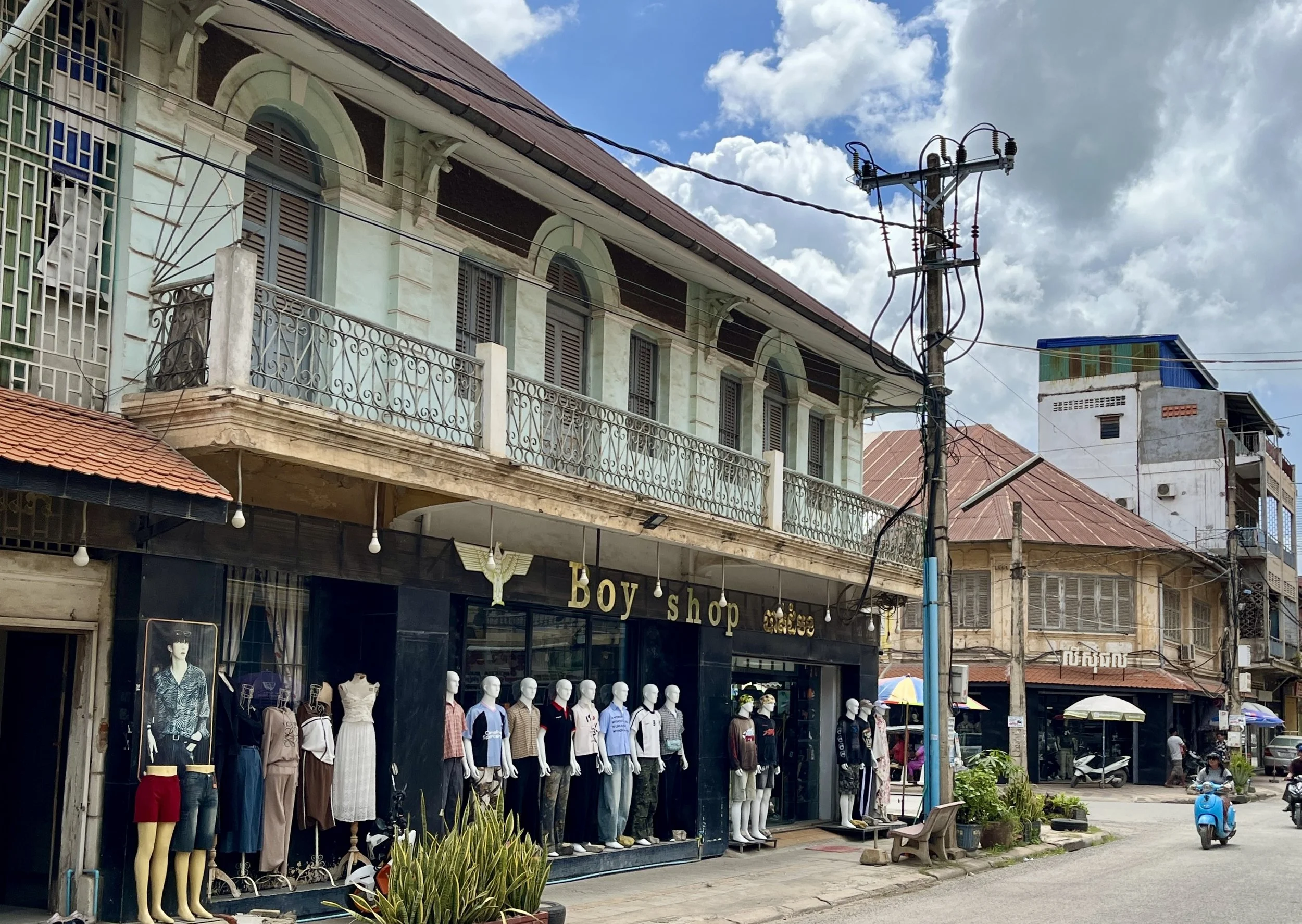
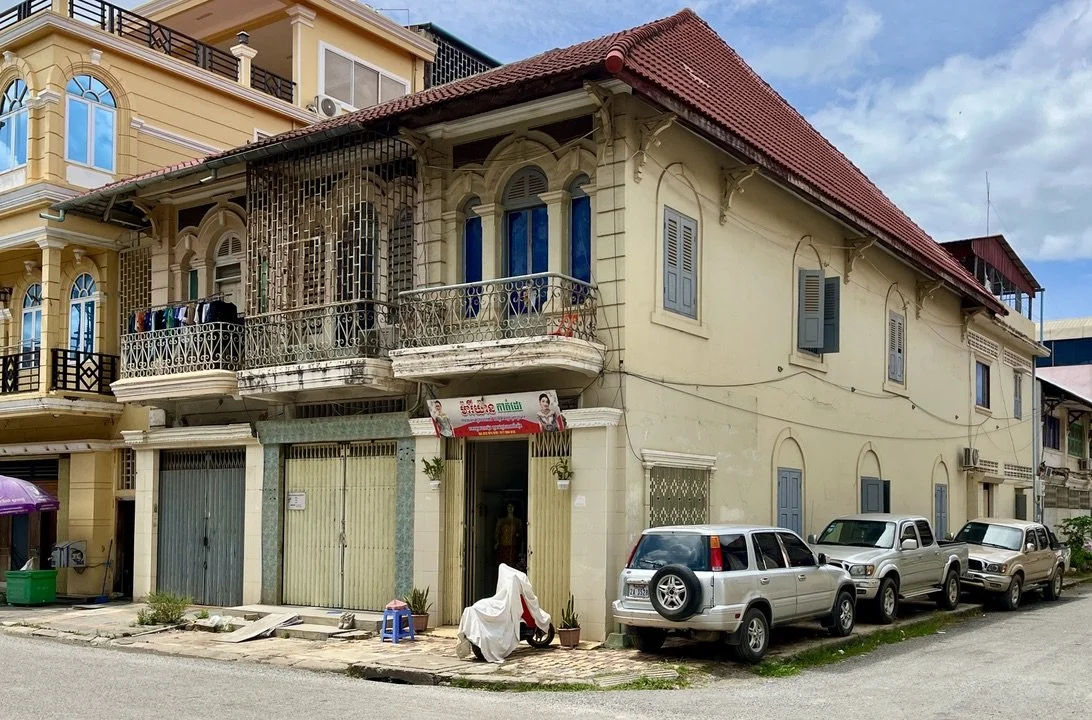

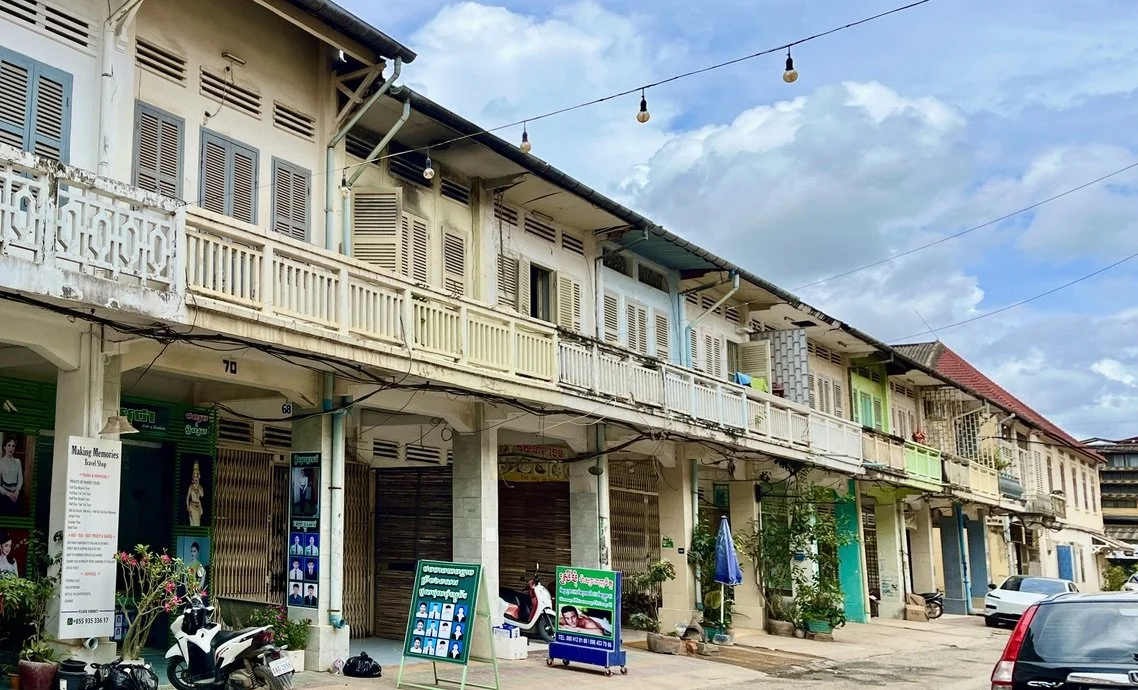
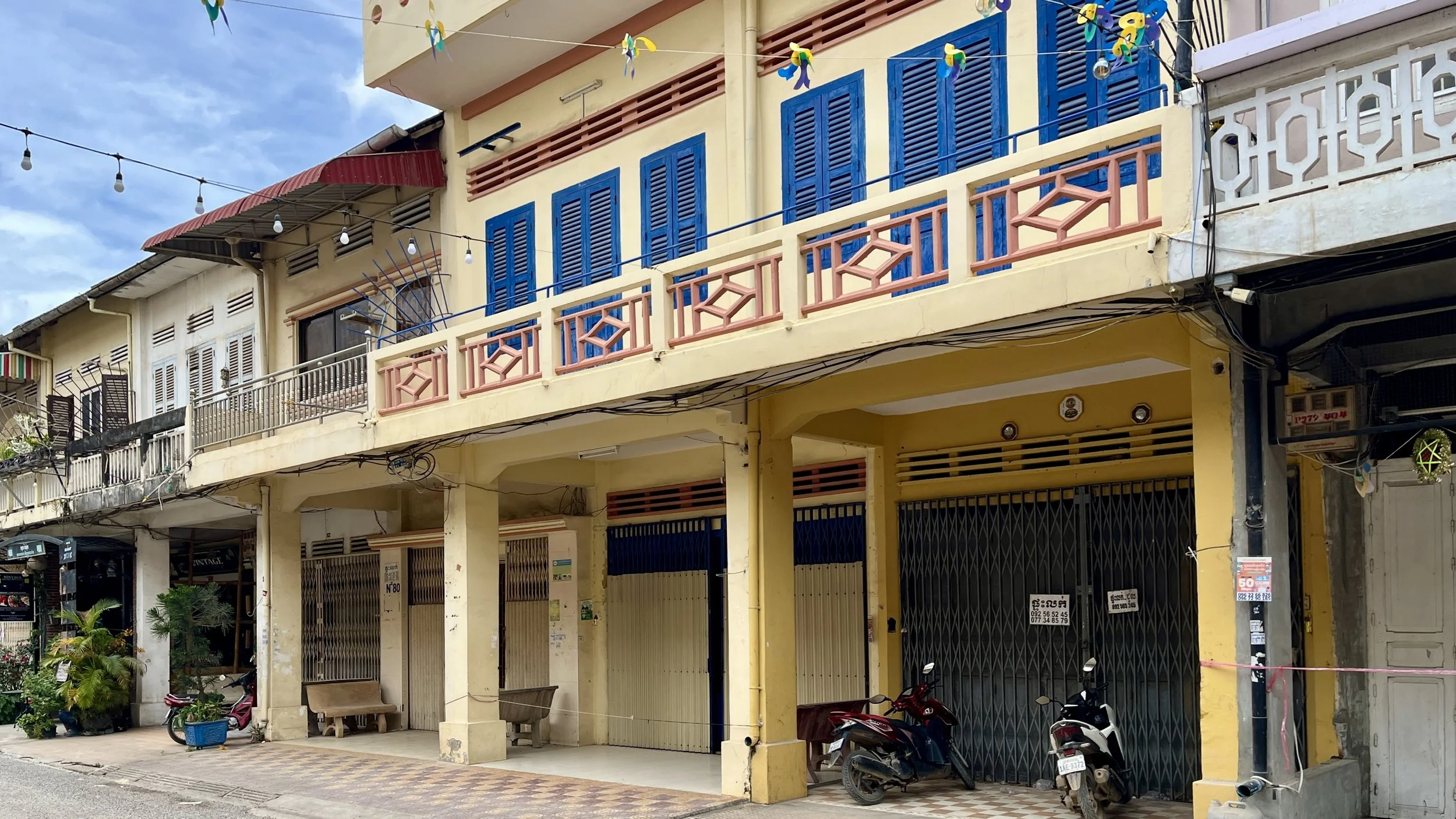
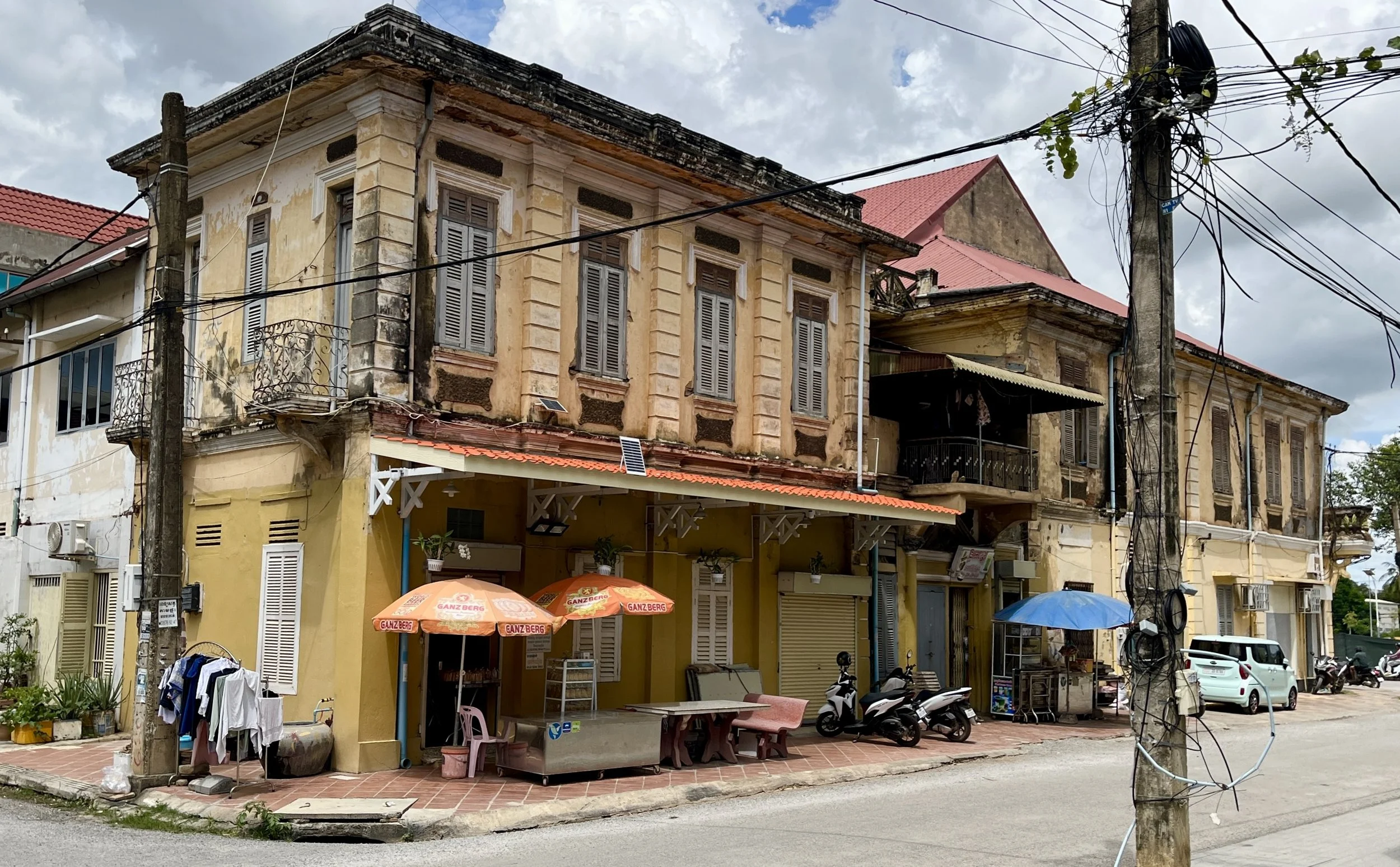
it would look so fab if it was just clean– not even renovated, just clean.
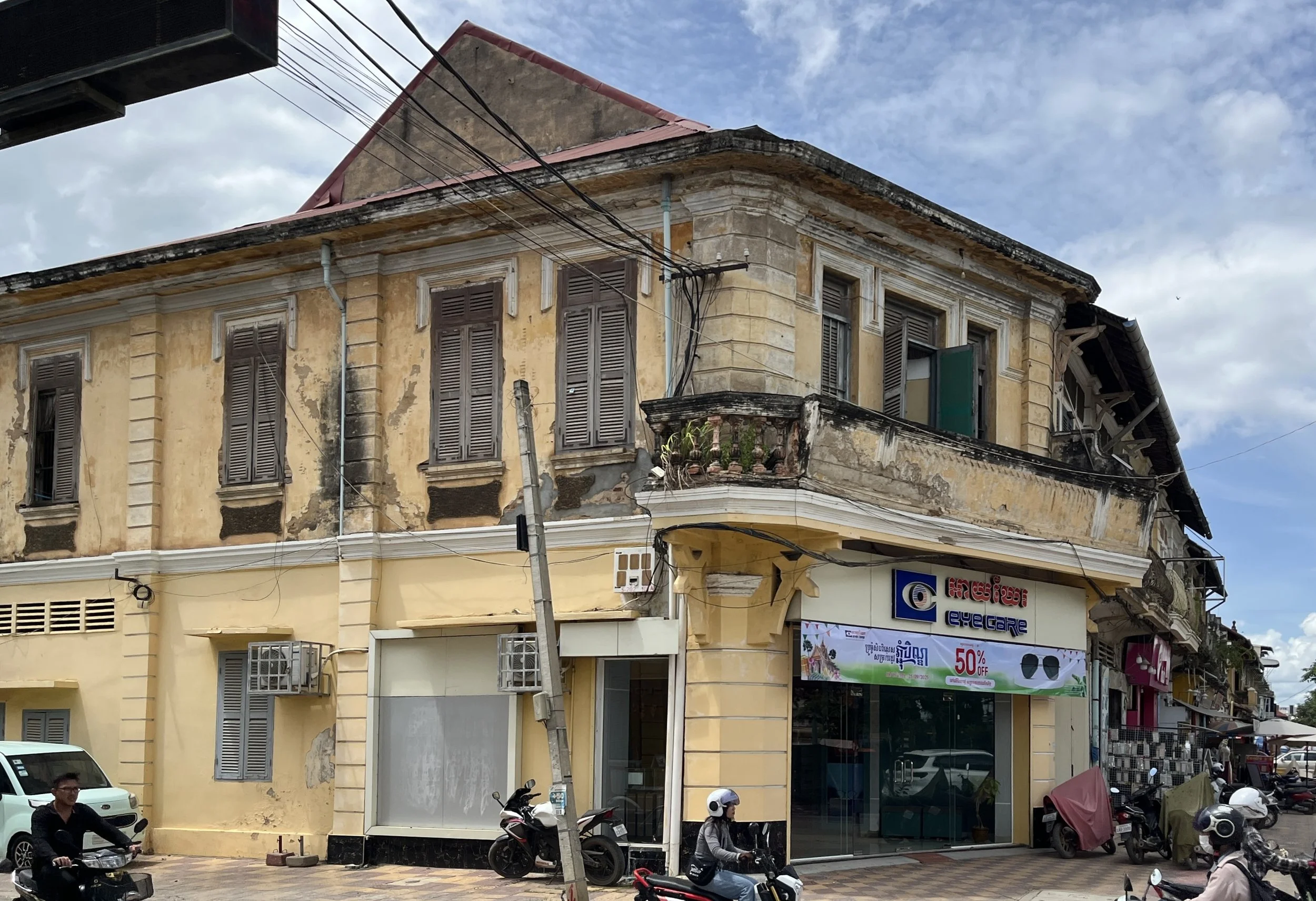
Thai era building. I always wonder how much it costs to get these things really nice again.
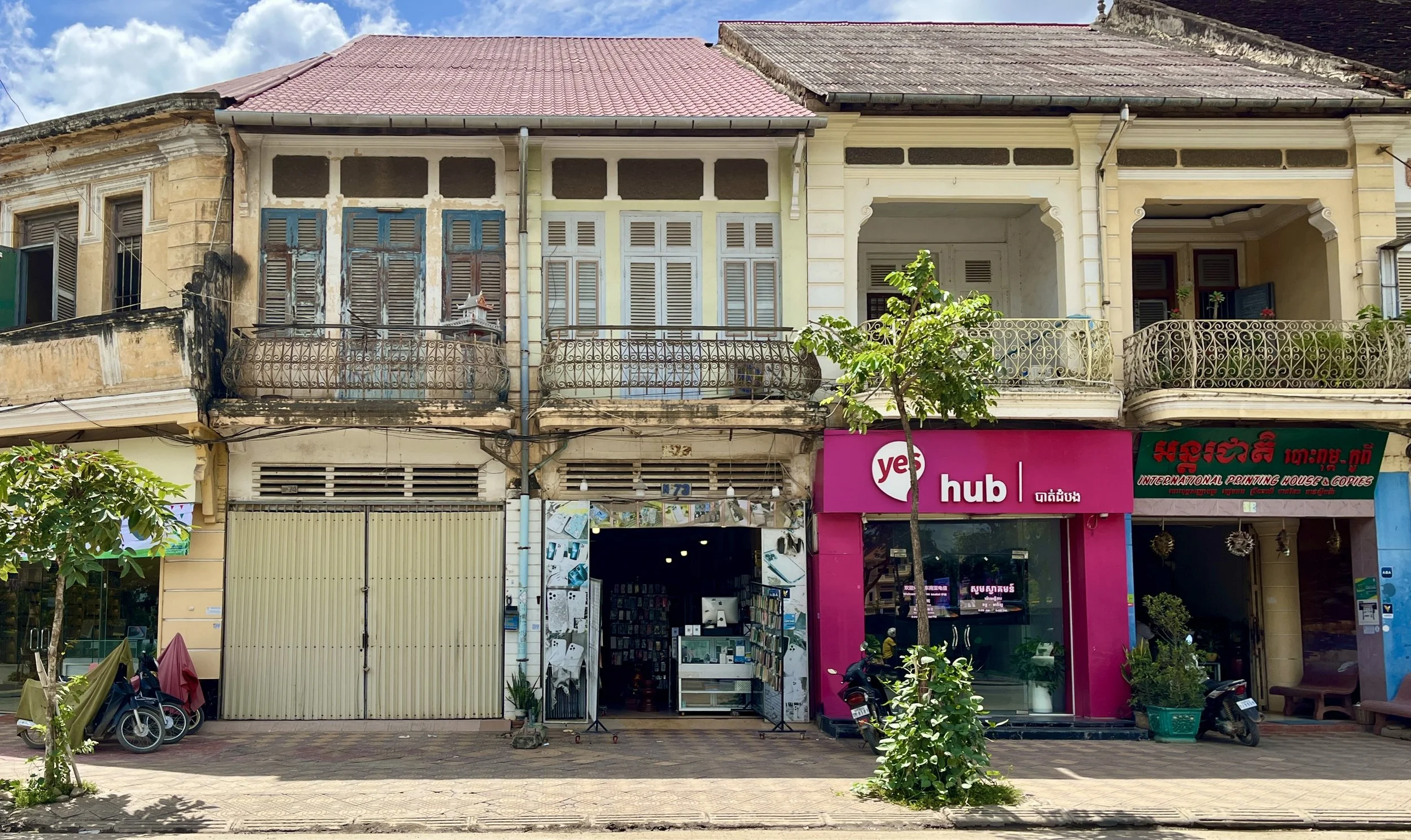
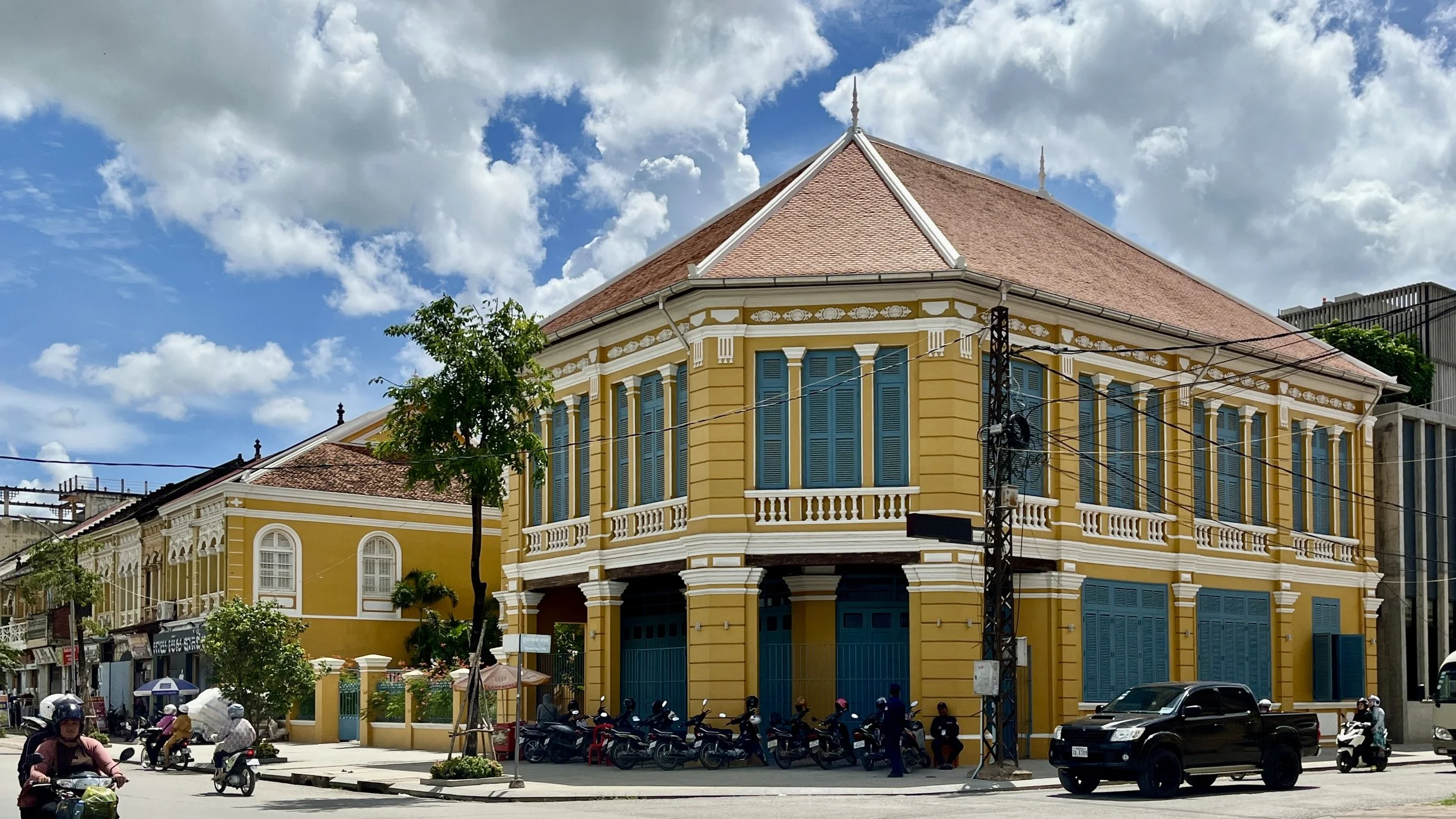
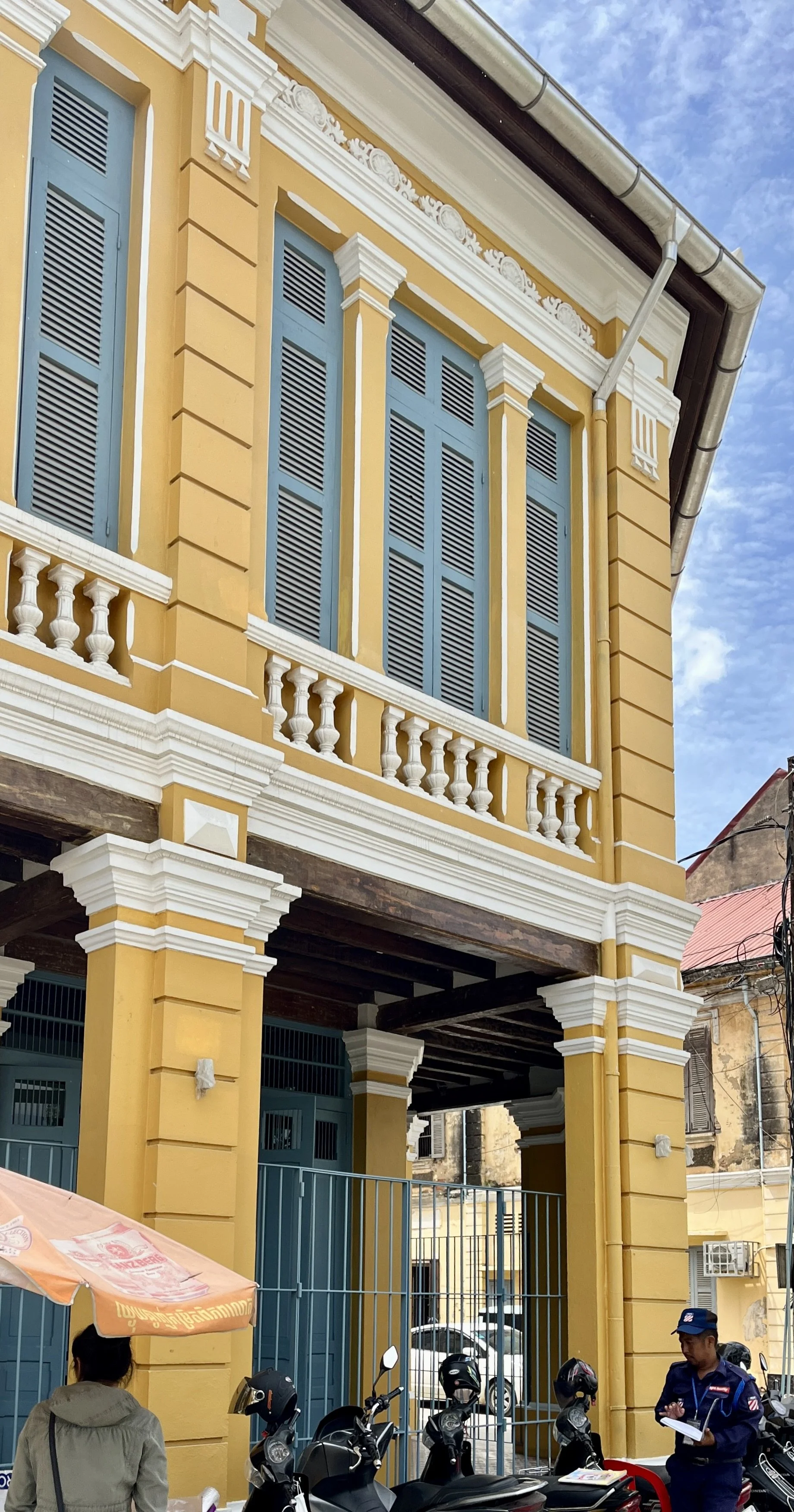
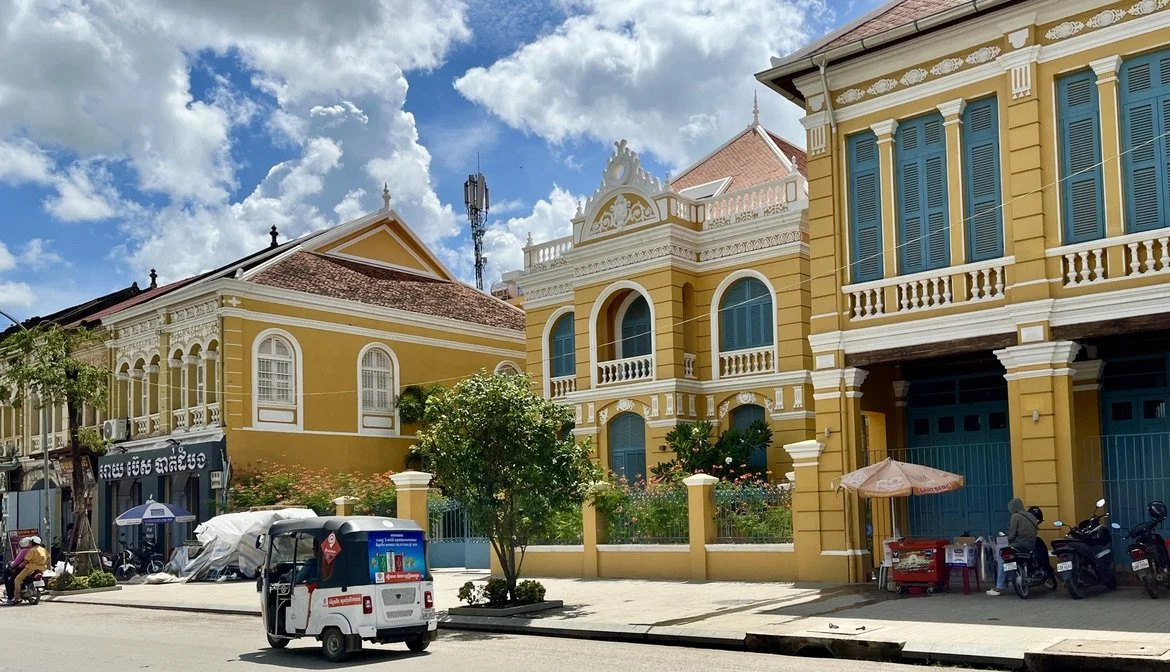
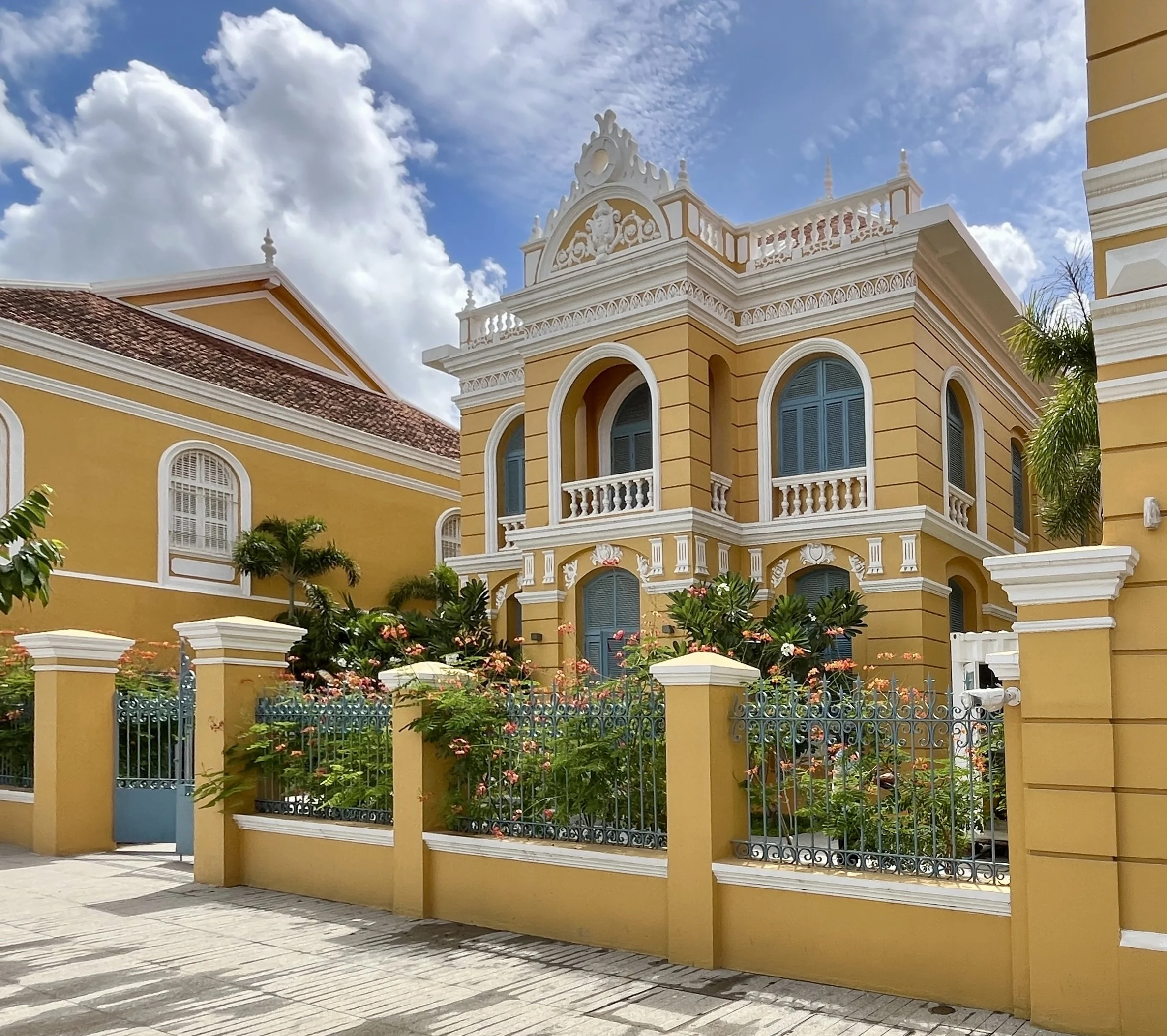
My understanding is this was a bank at some point. Private villa? Government? Still a bank? A couple years ago it was in the news that it was going to be an economics museum. Unclear, but the renovation was literally just finishing as I photographed it in October 2025. Clearly a Thai buidling.
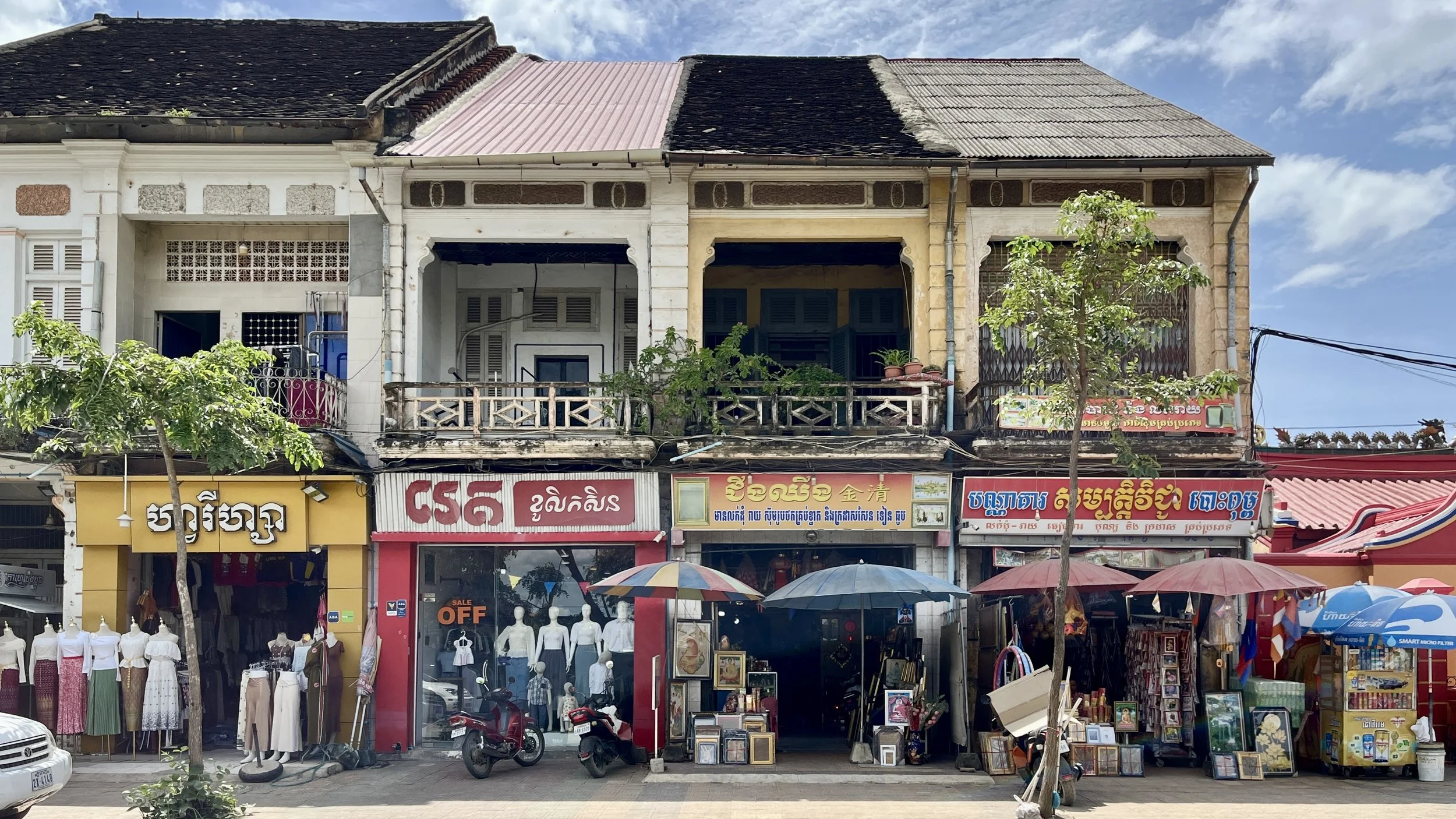
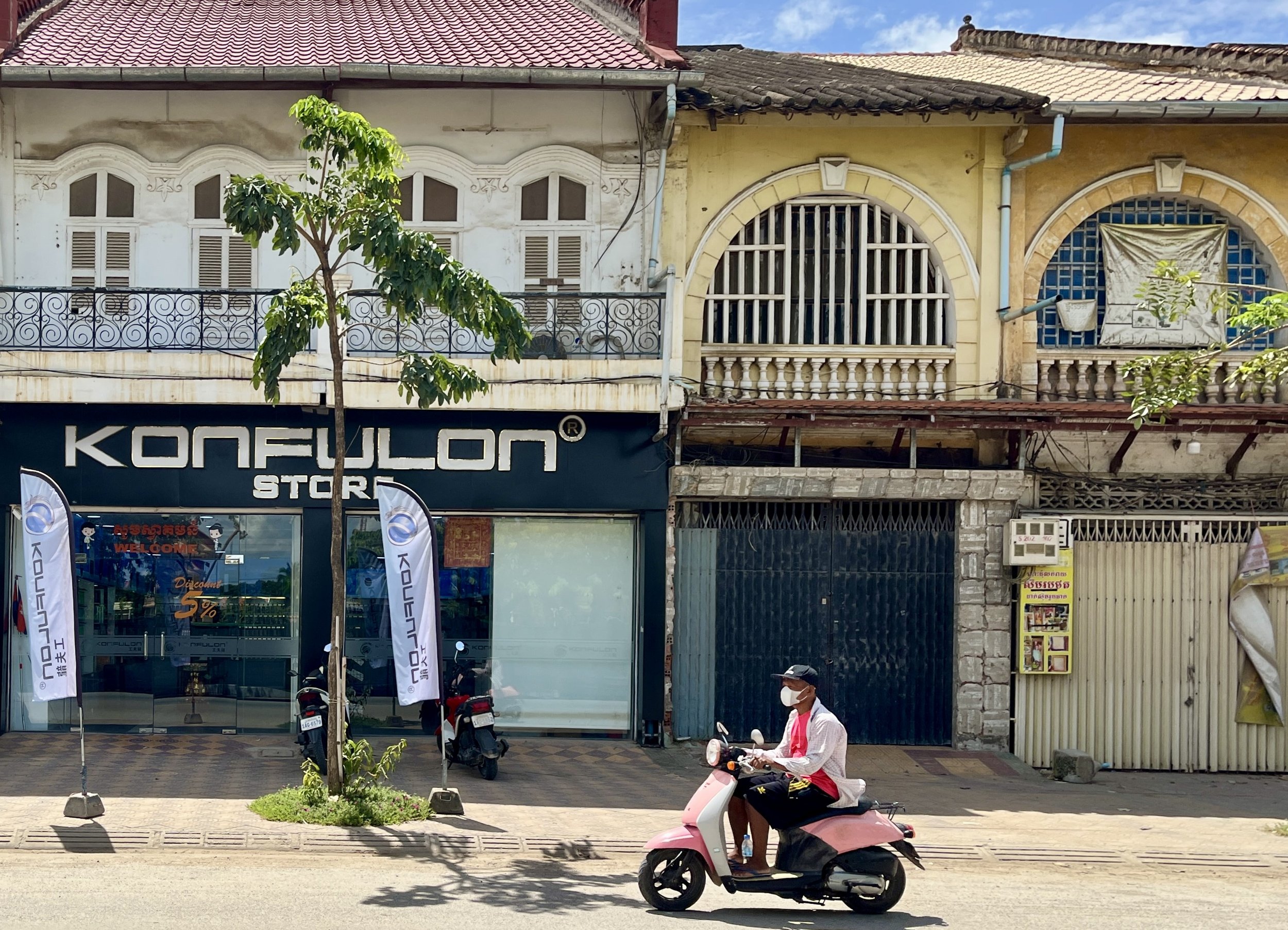
French era shophouses
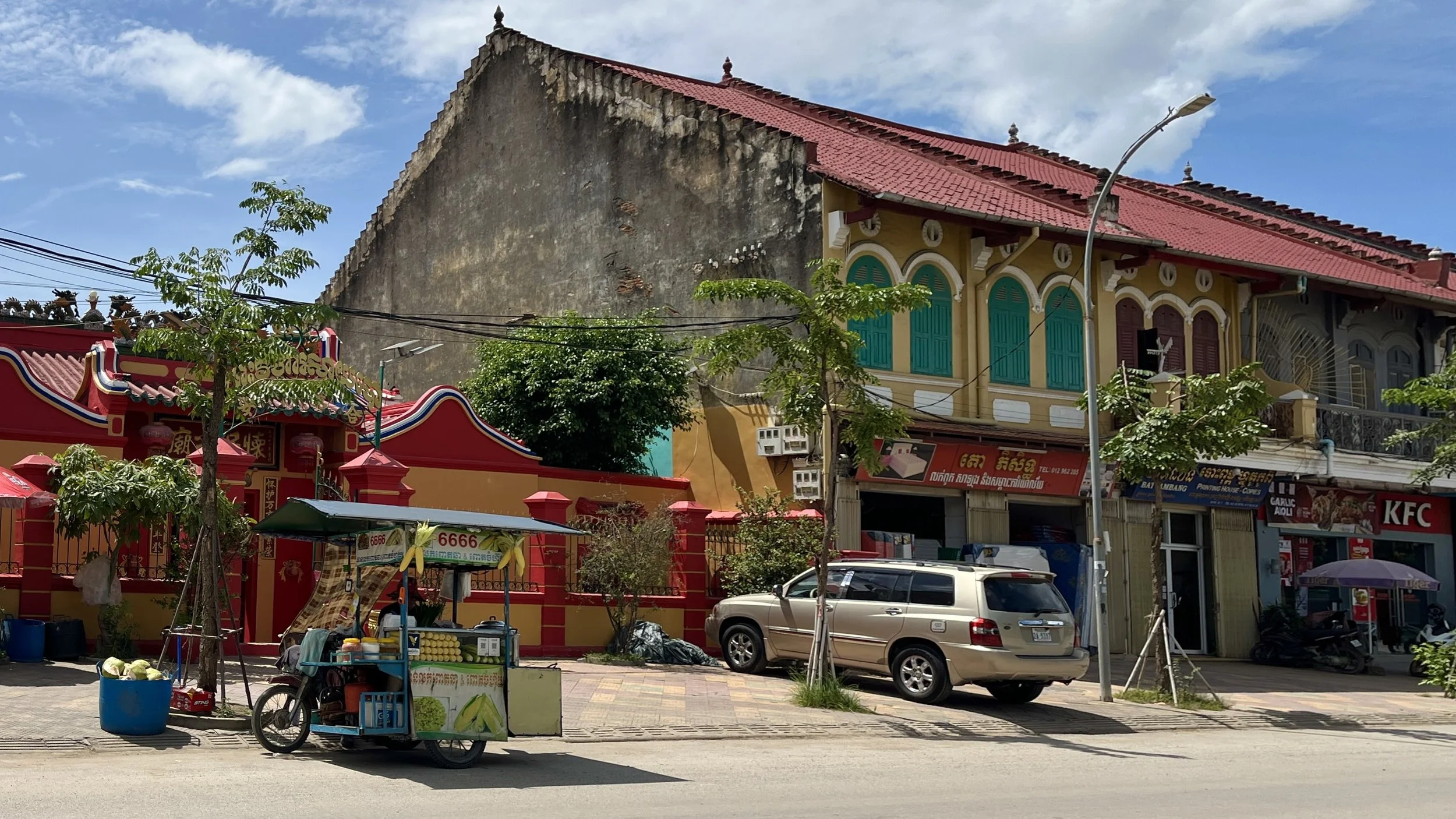
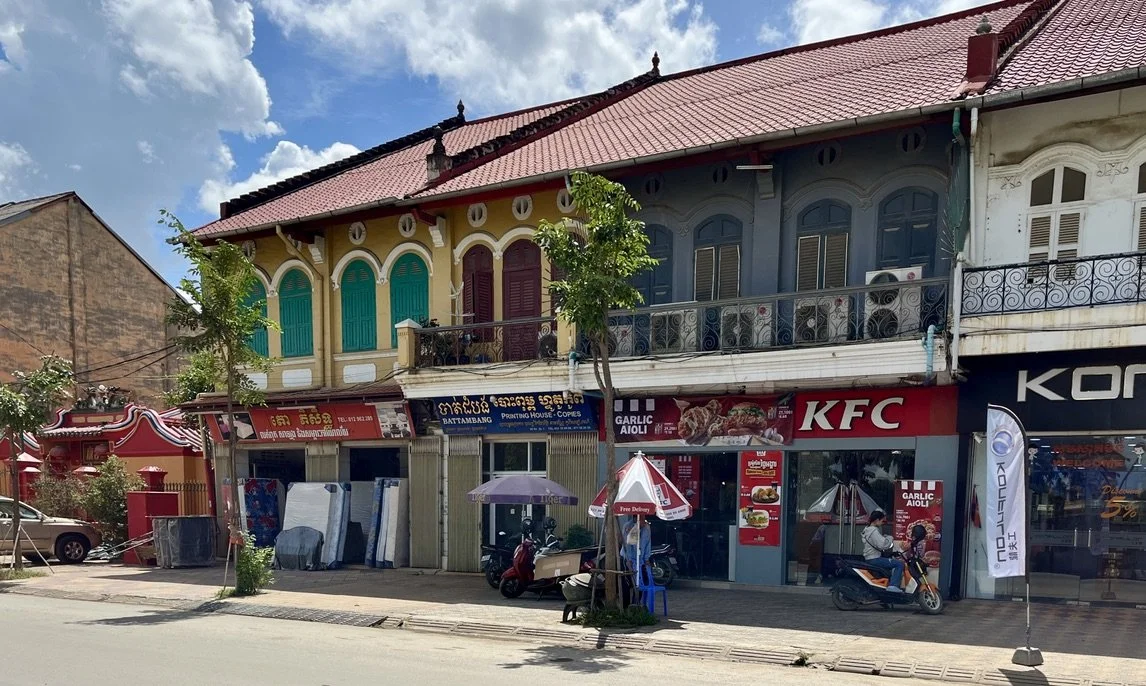
Thai era shophouses
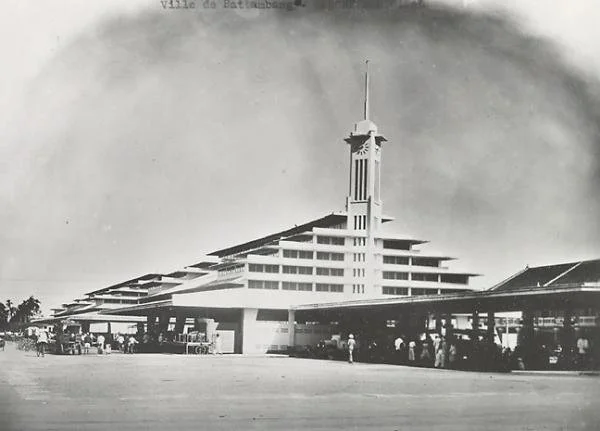
The new indoor market,1931
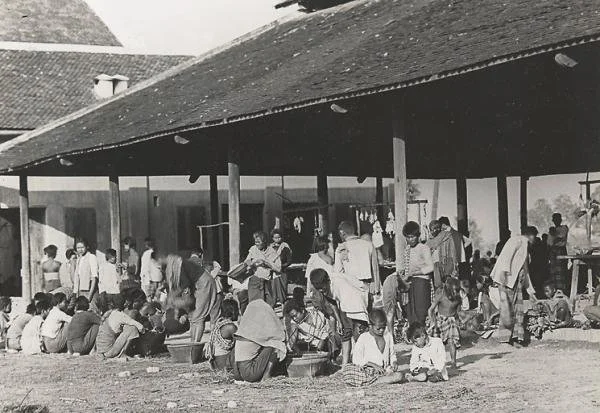
The new outdoor market, 1931
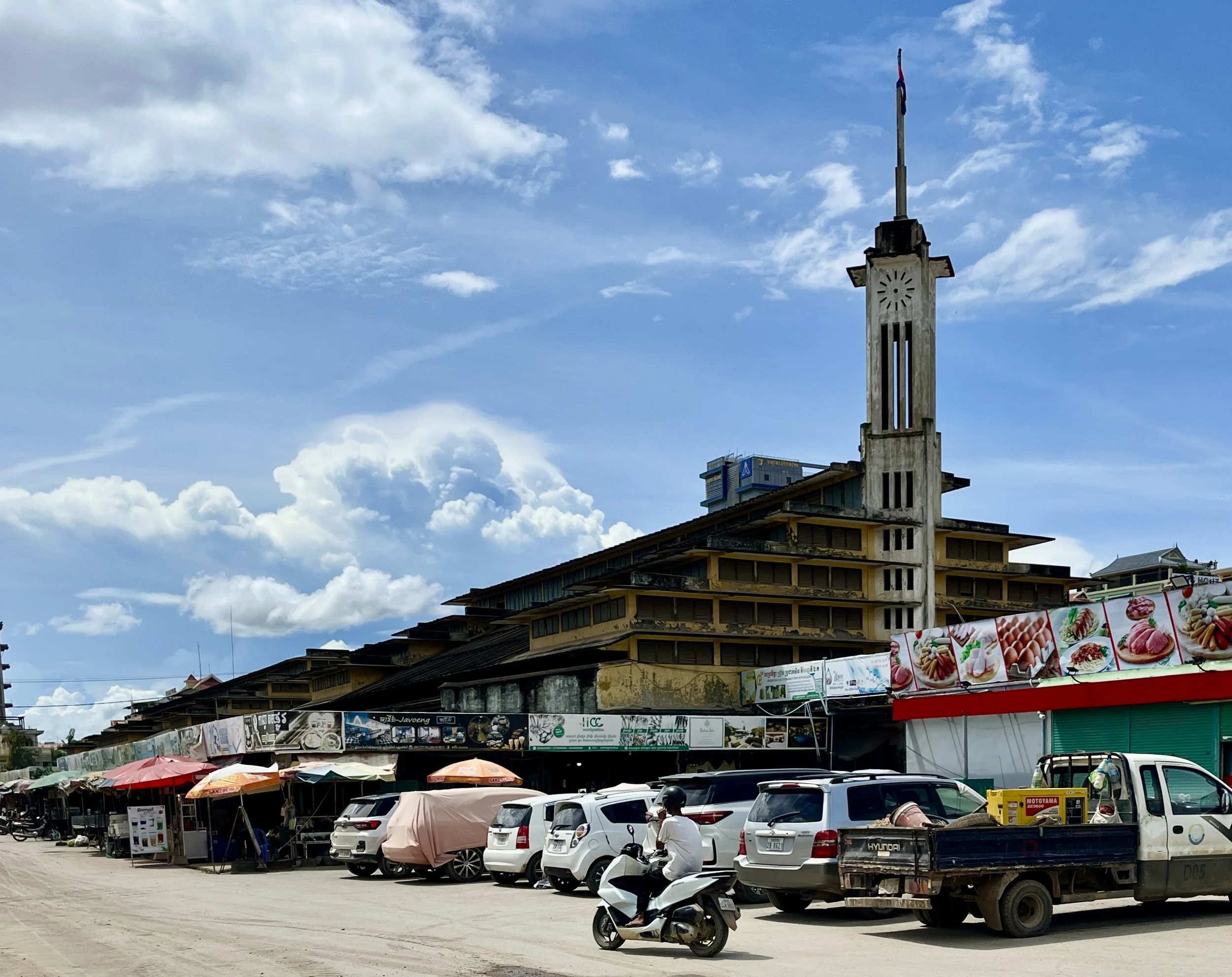
The indoor and outdoor market in 2025
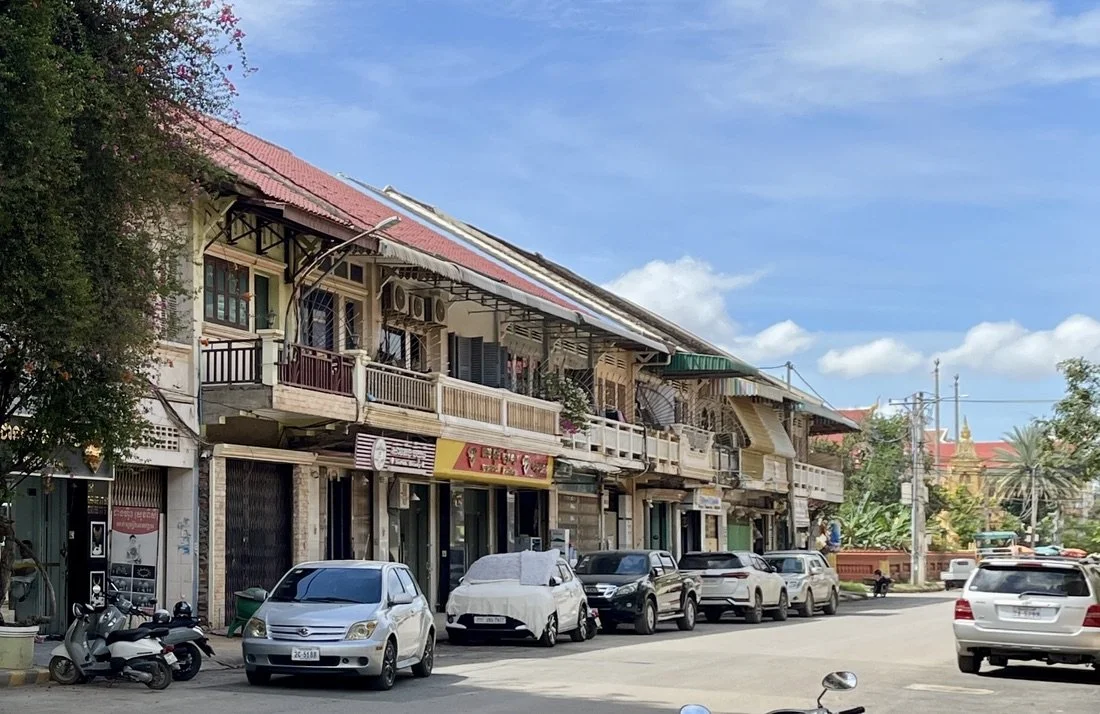
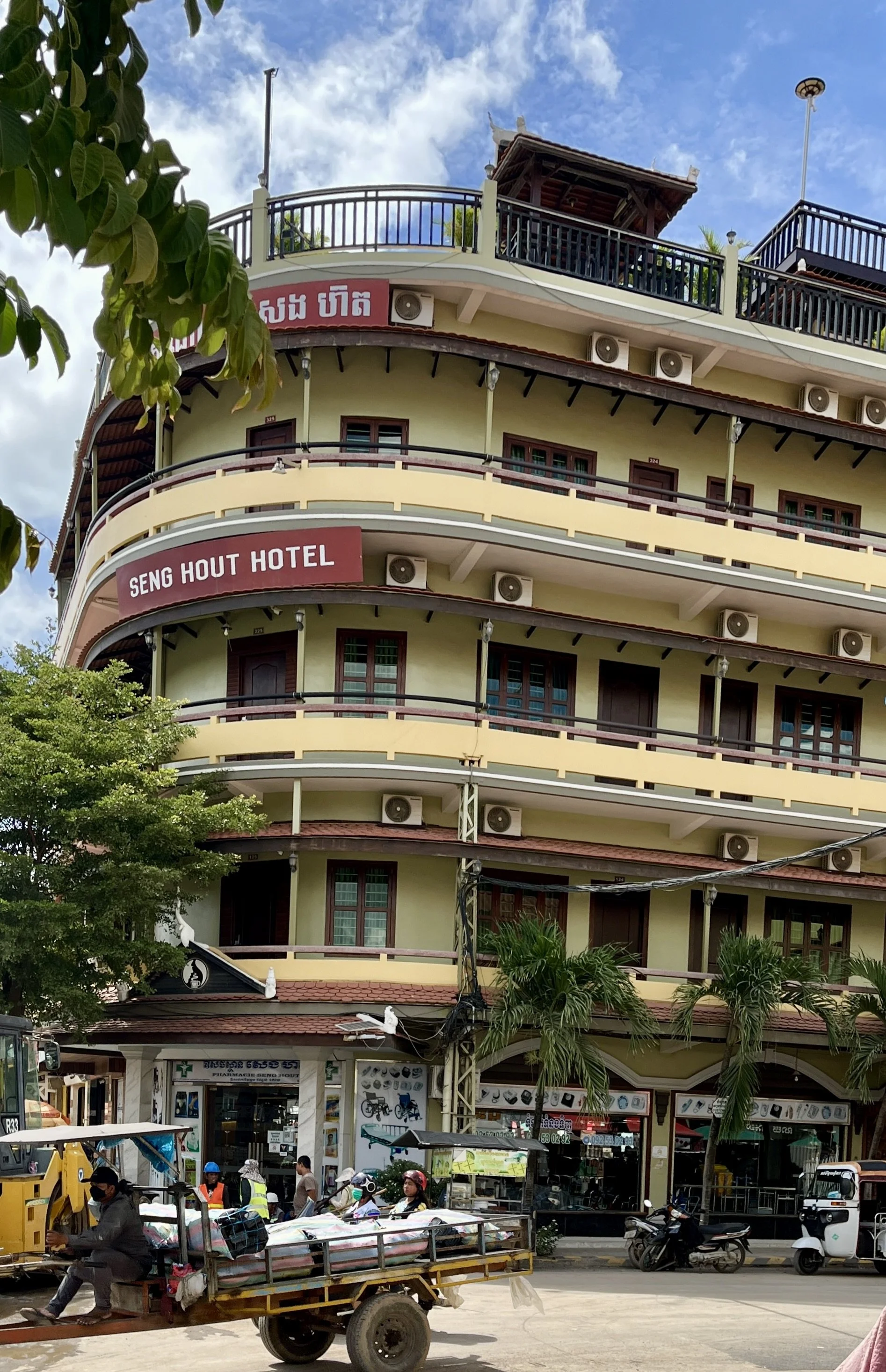
One of the oldest hotels in town, the very simple Art Deco 30s/40s Seng Hout.
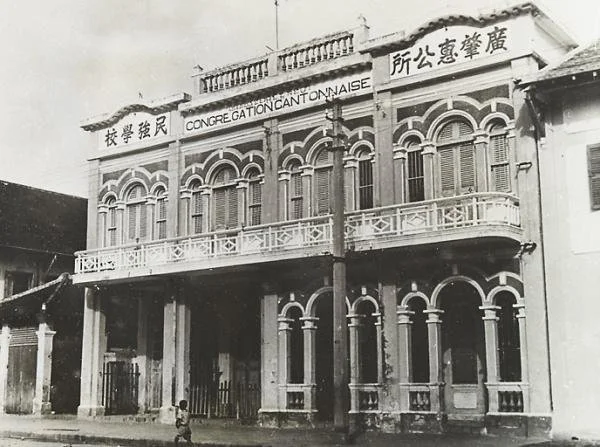
Cantonese school/guild in August 1948.
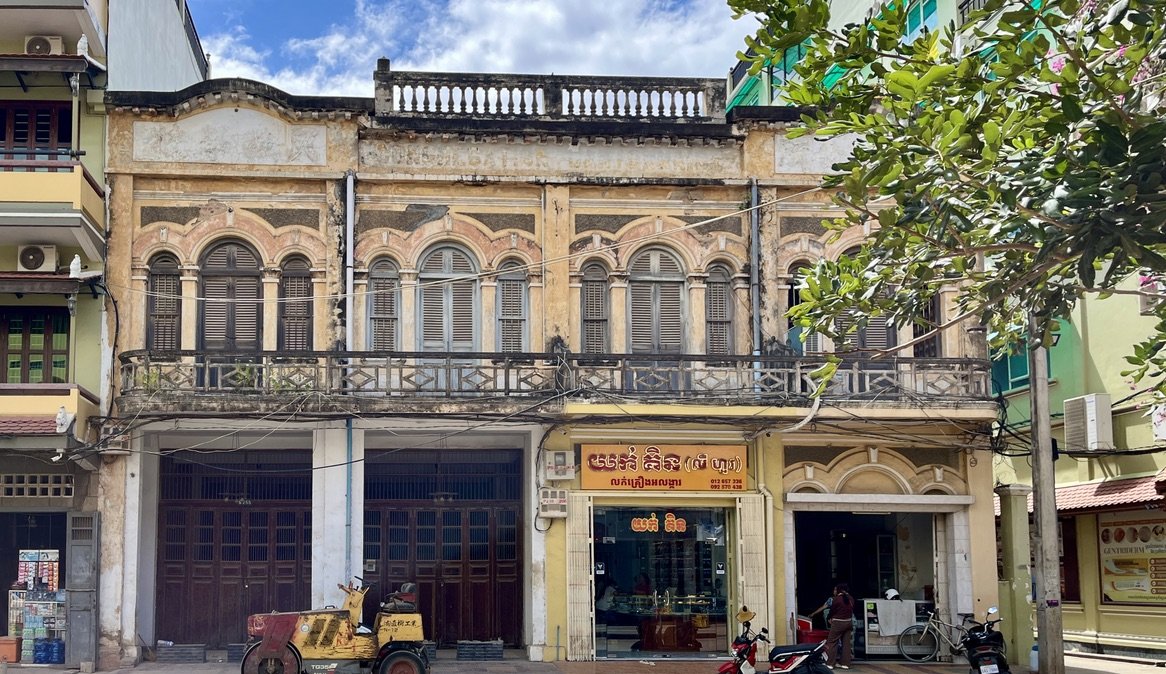
As it stands today, converted into shophouses.
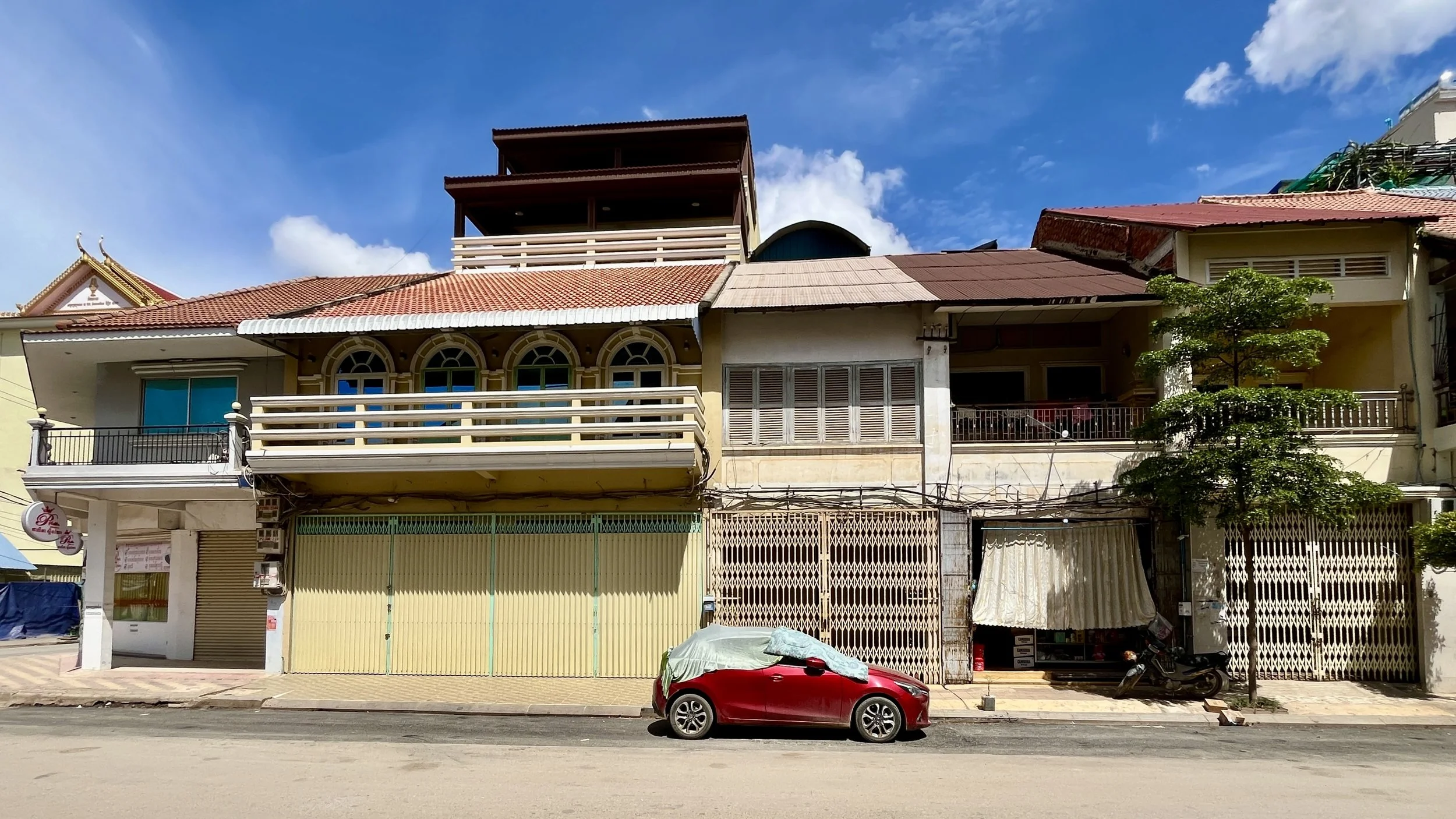
Some shophouses have been combined into larger residences.
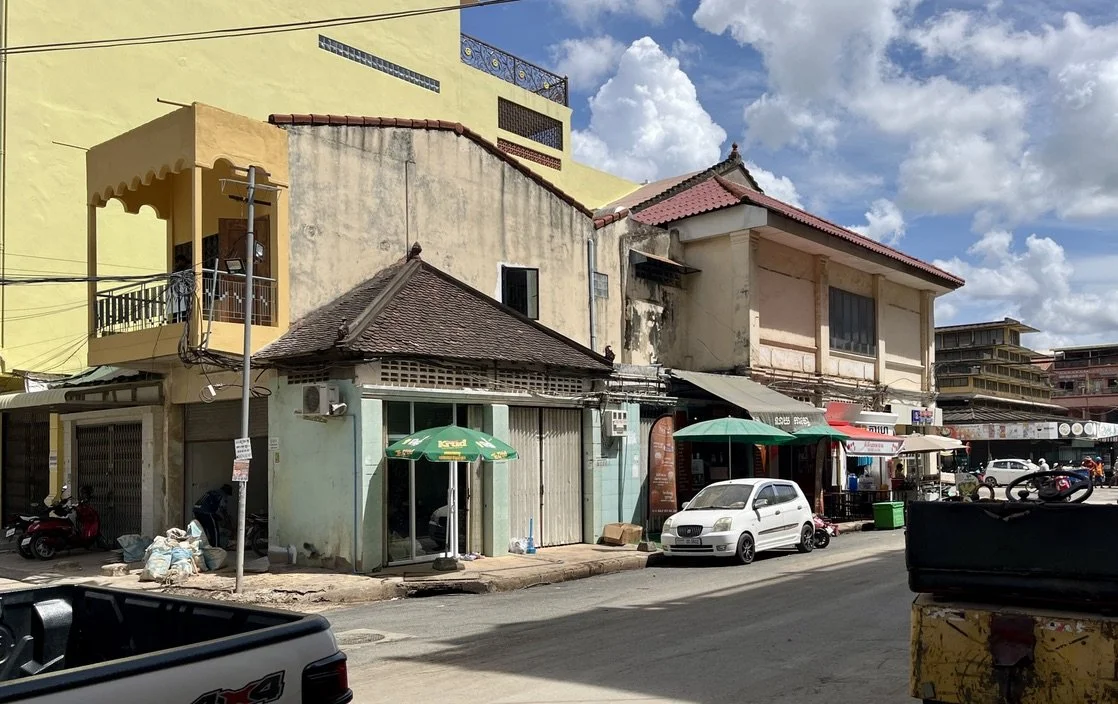
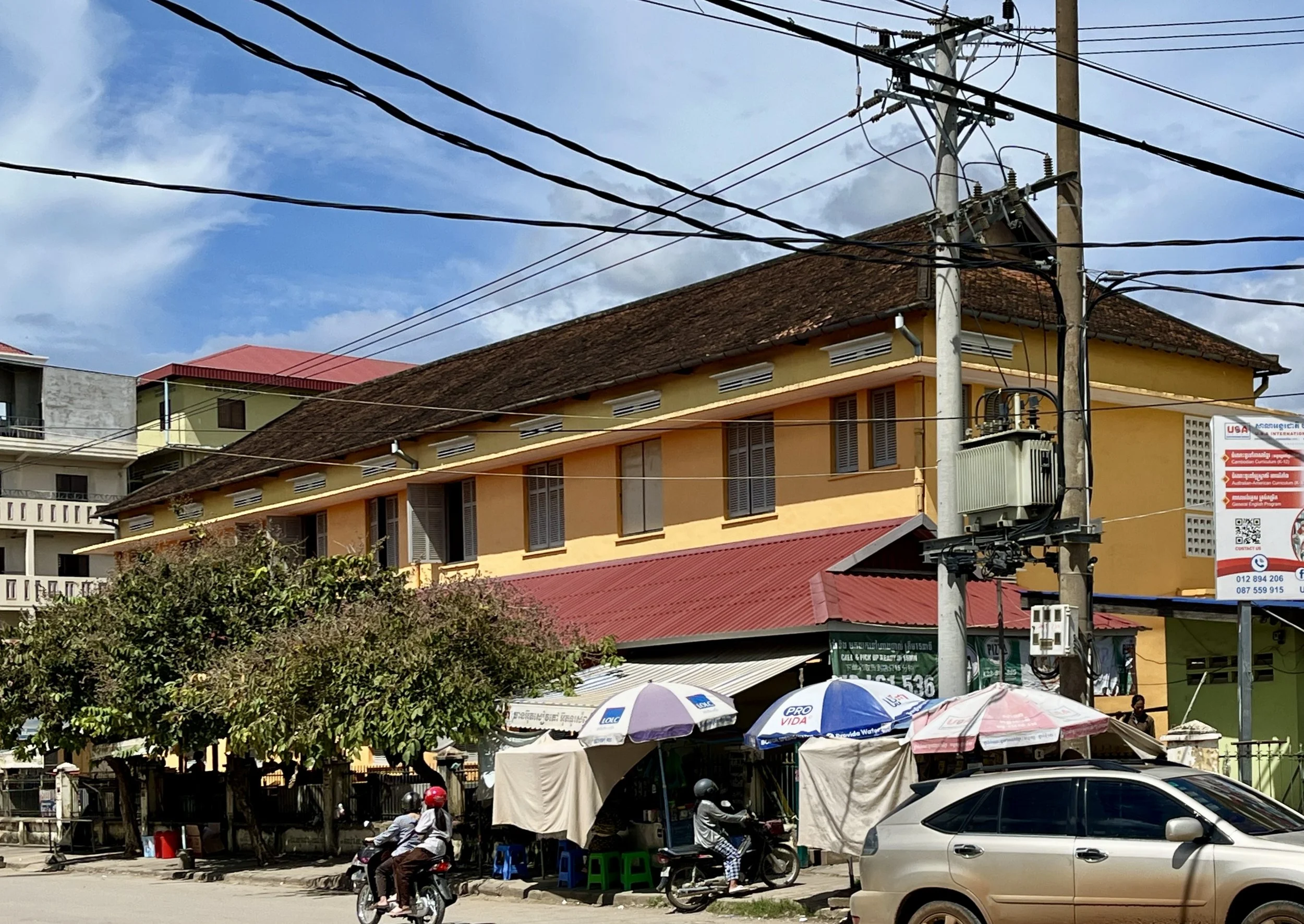
I do enjoy a Frankenbuilding! This one just beyond the market is really extra– it looks like a classic Vietnamese style block through shophouse with a front and back house, built before the street pictured here was paved– it looks like a house on the corner was knocked down for this street to be paved, and new retail storefronts were built to face the new street– but at different times, the short green building to the left probably 1920s, and the taller building to the right likely 40s or even later. The very modern yellow balcony out the back with Indian/Malay vibes completes the charm.
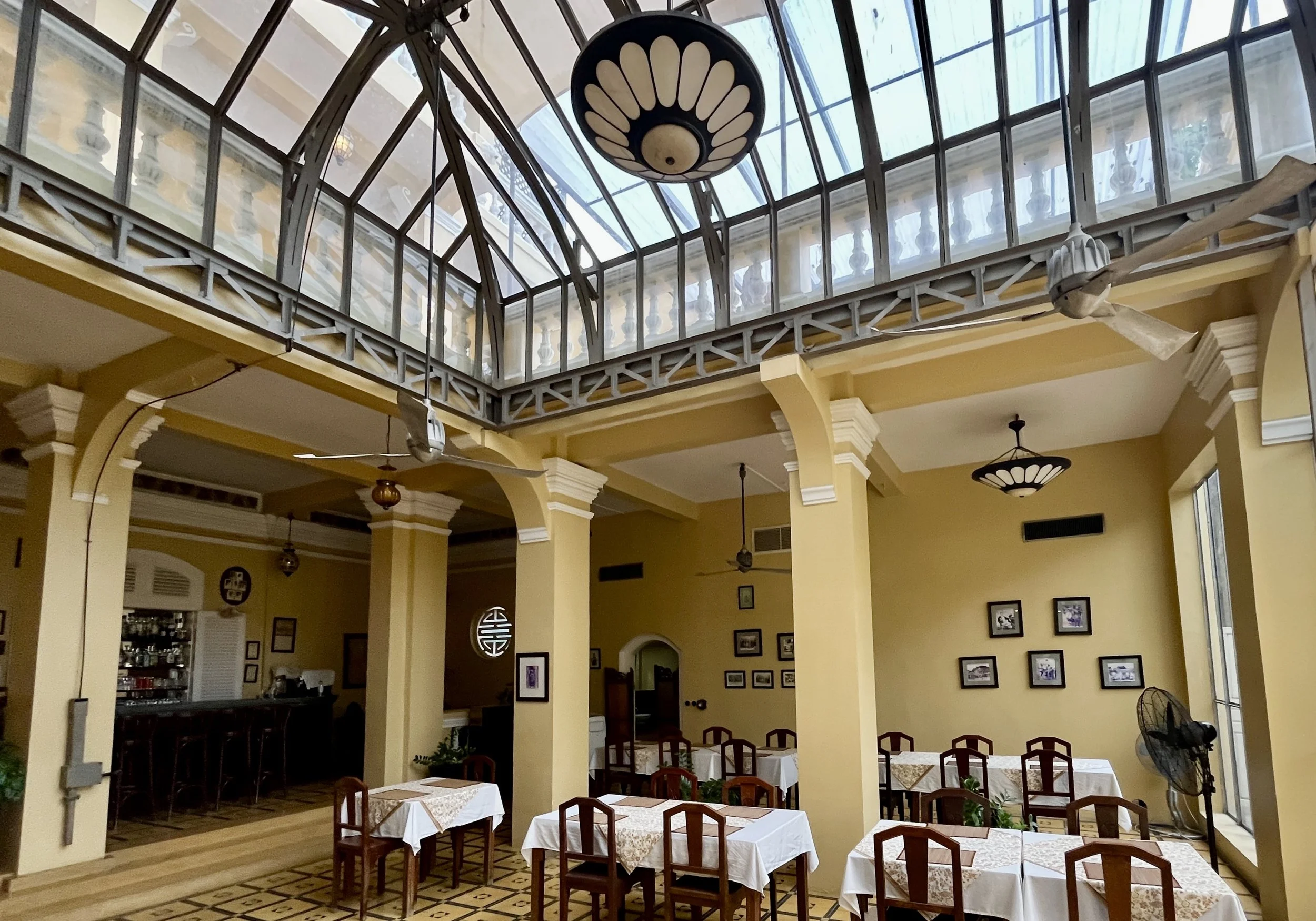
I felt my stay here was worth its own post (click here) but I’m placing this here to show what I suppose is an exception to the rule? Located in the ‘Sino-Khmer’ neighborhood and built by a wealthy local businessman, the La Villa hotel is entirely ‘European style’.
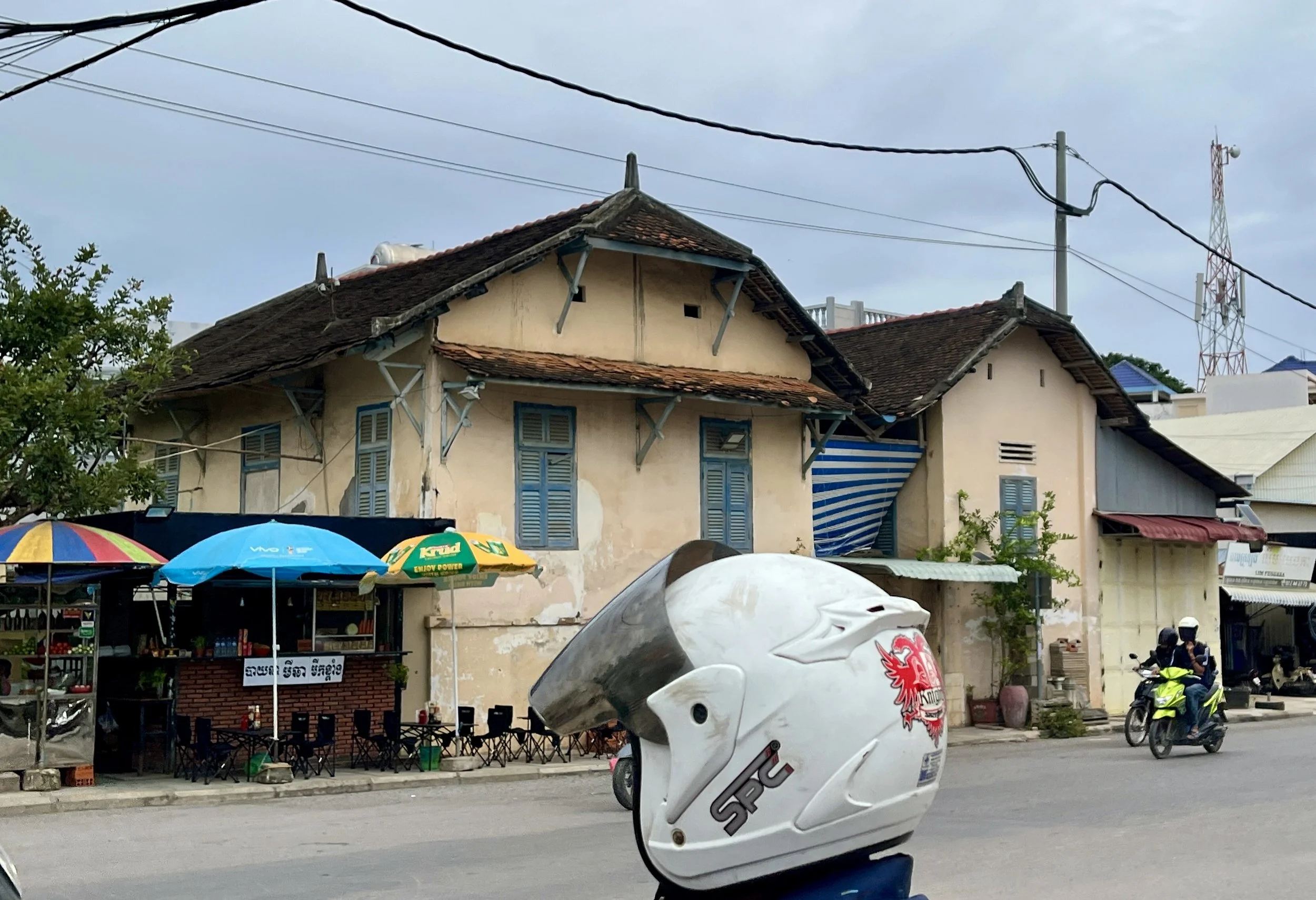
Just as there’s nothing particularly ‘Sino-Khmer’, there’s little to nothing visibly ‘Siamese’ left in the then-Siamese district. Instead, there are Thai era European styled colonial buildings sprinkled throughout. This one’s a good example: probably Thai, possibly French.
It’s very possible, particularly based on Émile Gsell’s photographs, that the vast majority of the houses, be they Sino-Khmer, Siamese, or European, were wooden and therefore didn’t survive and/or were disassembled, moved, or reused.
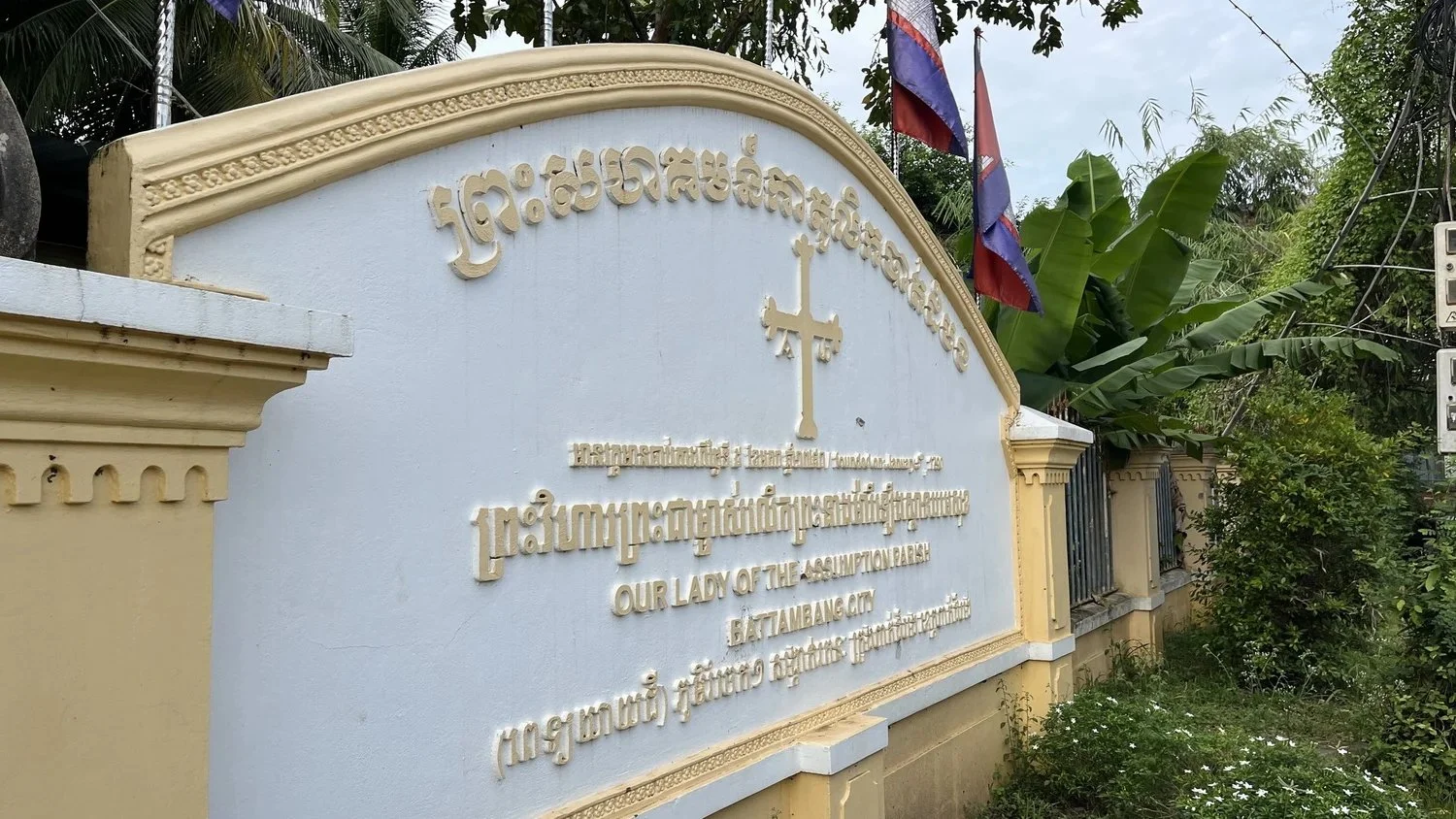
Likewise, there are very few European buildings left in the once European district; they may have been destroyed, rotted, or just renovated beyond all recognition.
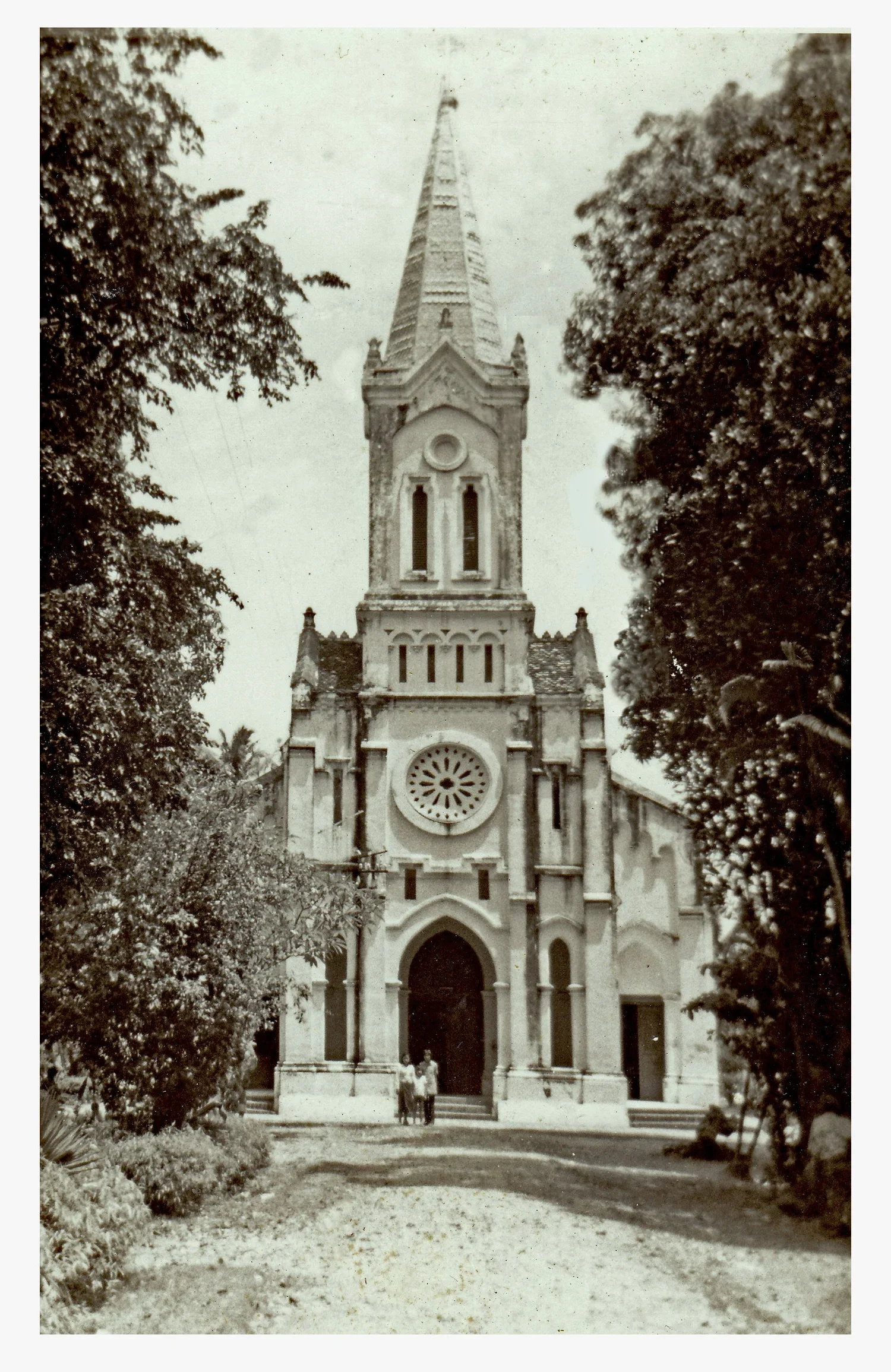
Built in 1929, the local Roman Catholic Cathedral was blown up by the Khmer Rouge in 1975.
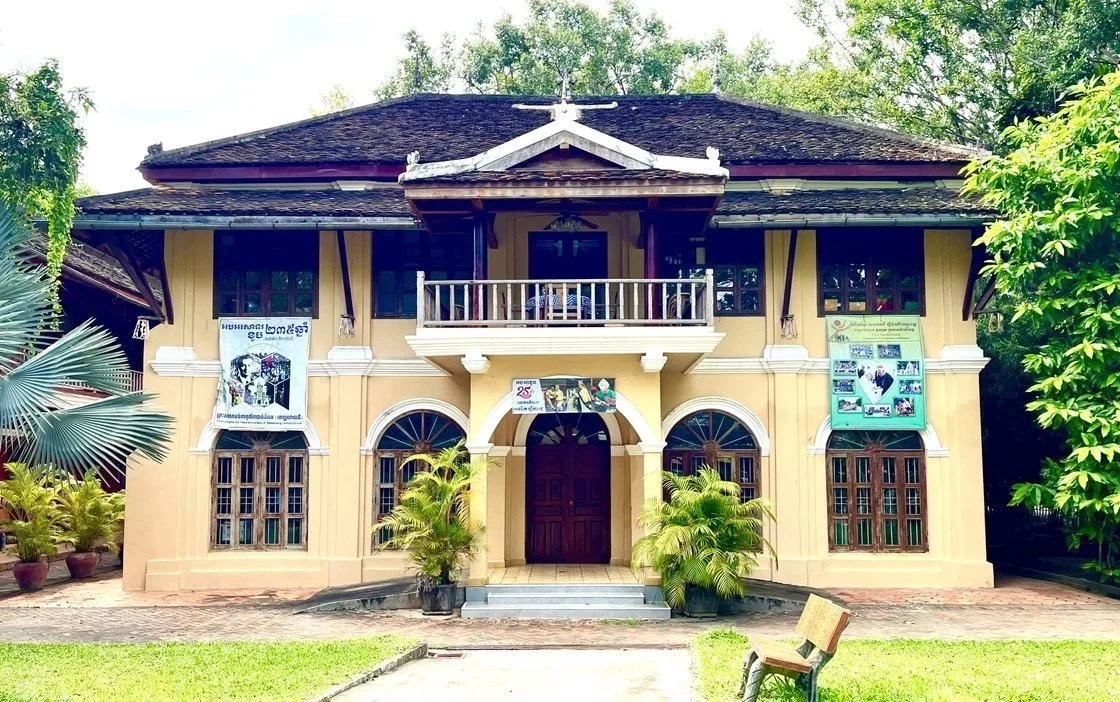
The French colonial outbuildings remain, and it’s still fully functional as a church, school, community center, etc.
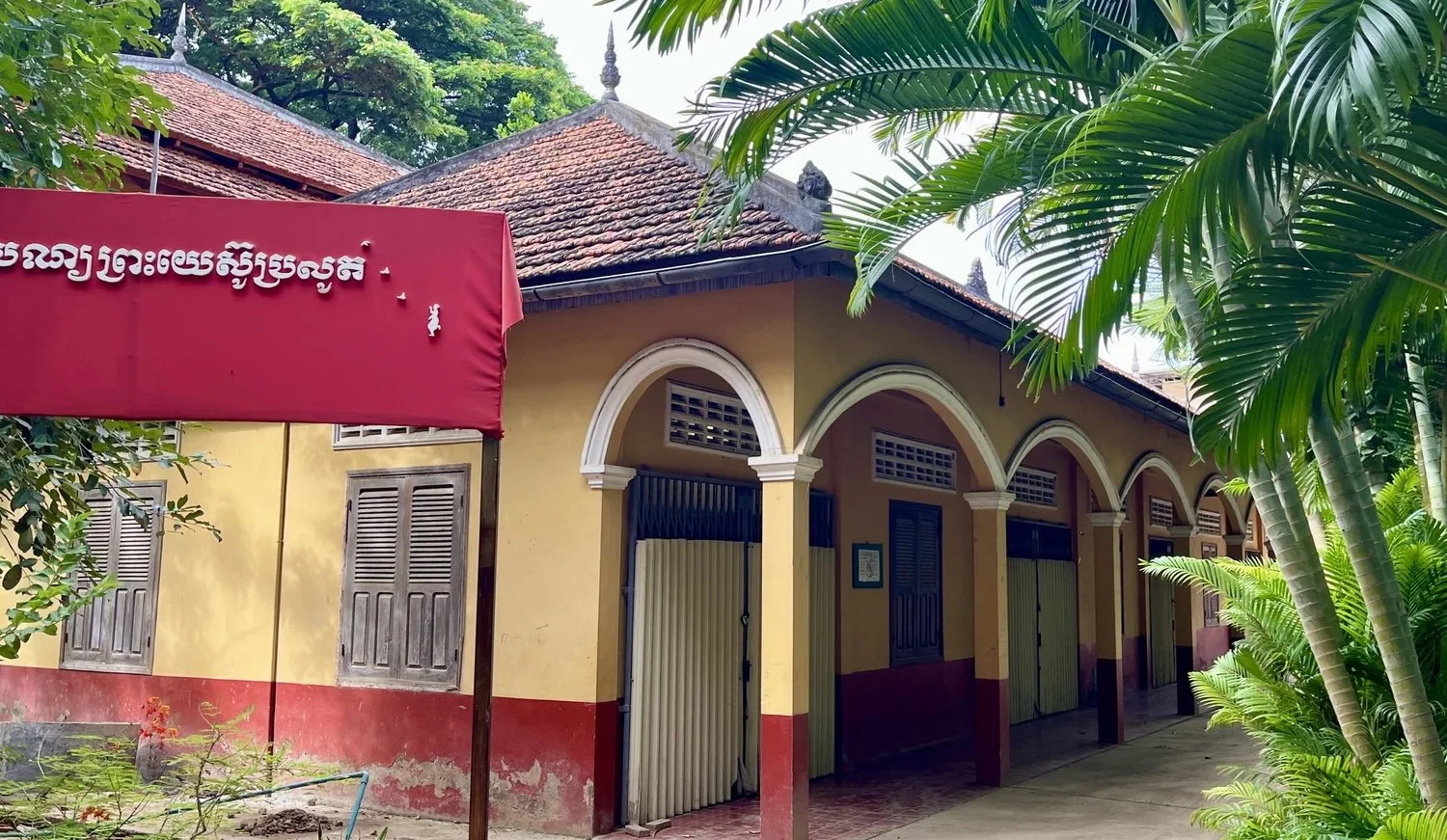
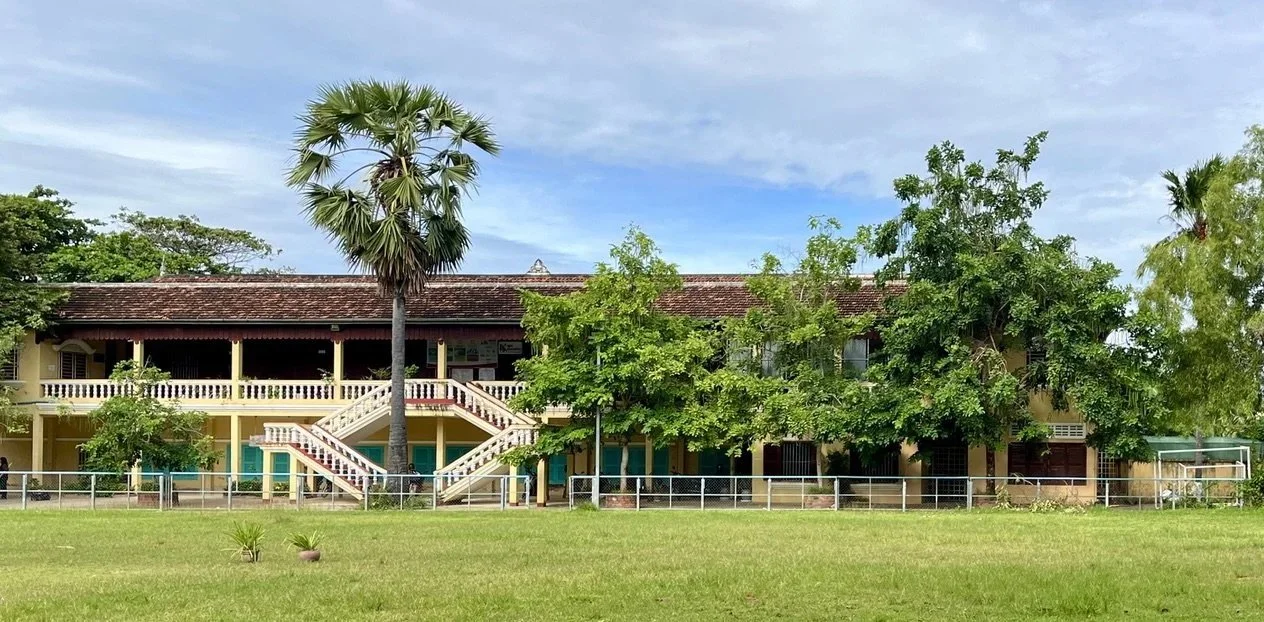
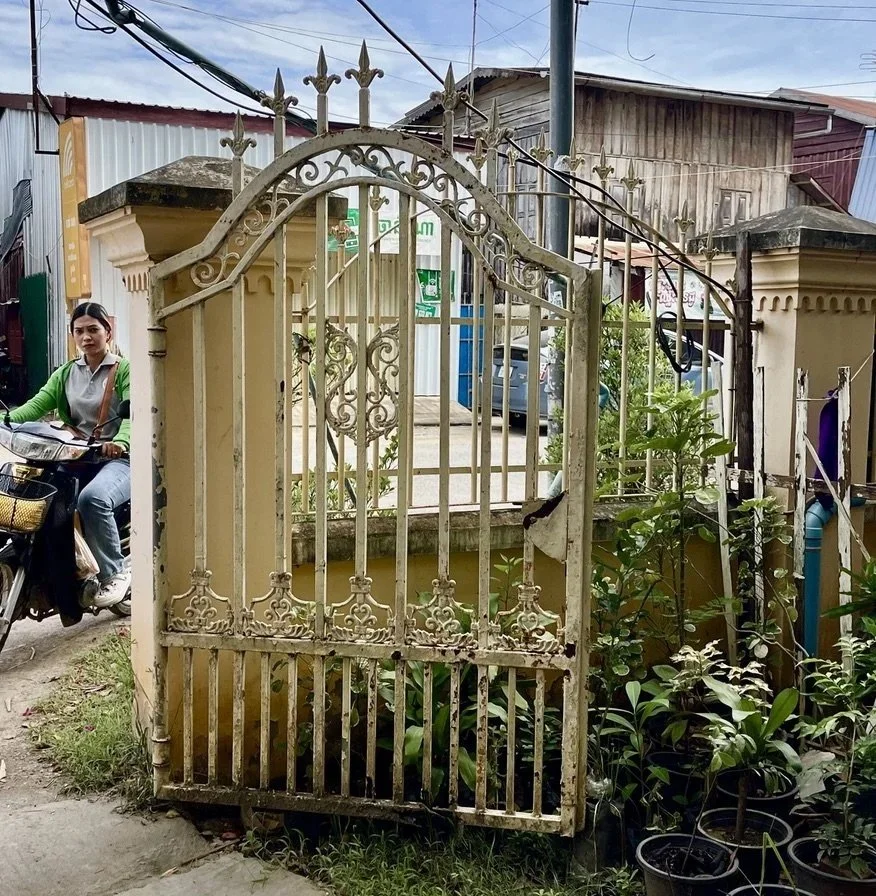
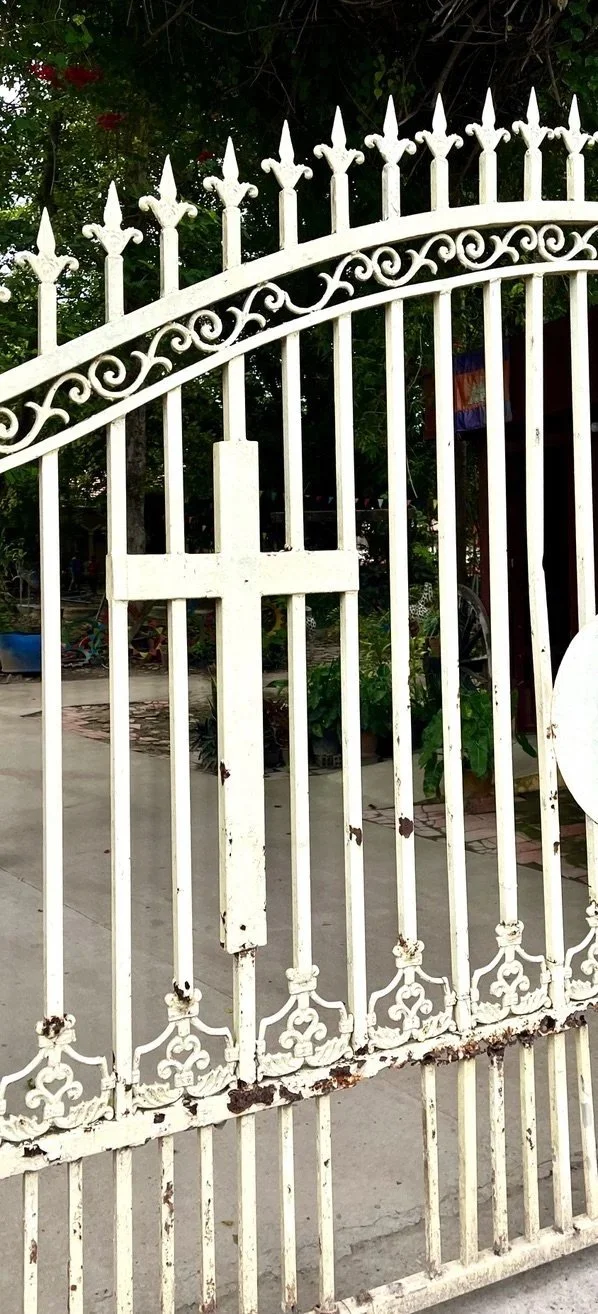
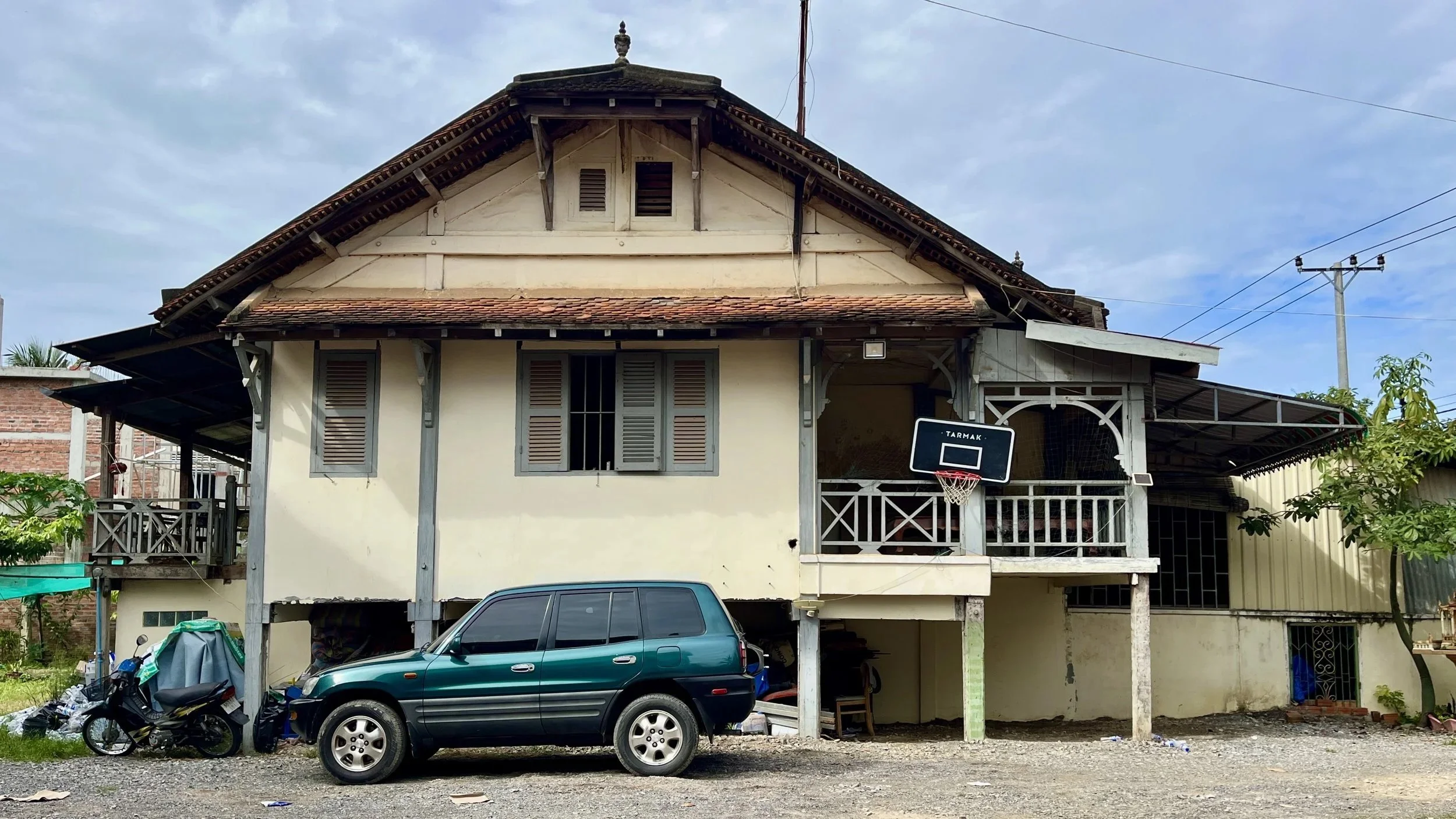
A few doors down from the church was this old French colonial house, now split into two. The owner told me she’d been here since 1981? 1985? something like that. After the rural dislocation and genocide, Cambodia was littered with empty houses, and people squatted on a first come first served basis. There are still two classes of property deed, soft and hard titles: hard titles are official; soft titles are been-there-forever squatters’ rights, or 10-50 year leases. The soft title holder here told me that once in the ‘90s a Frenchman visited and told her he grew up in this house, but didn’t ask for anything but to see inside again. Pre-Khmer Rouge property rights have never been restored or respected for Cambodian survivors or foreign returnees.
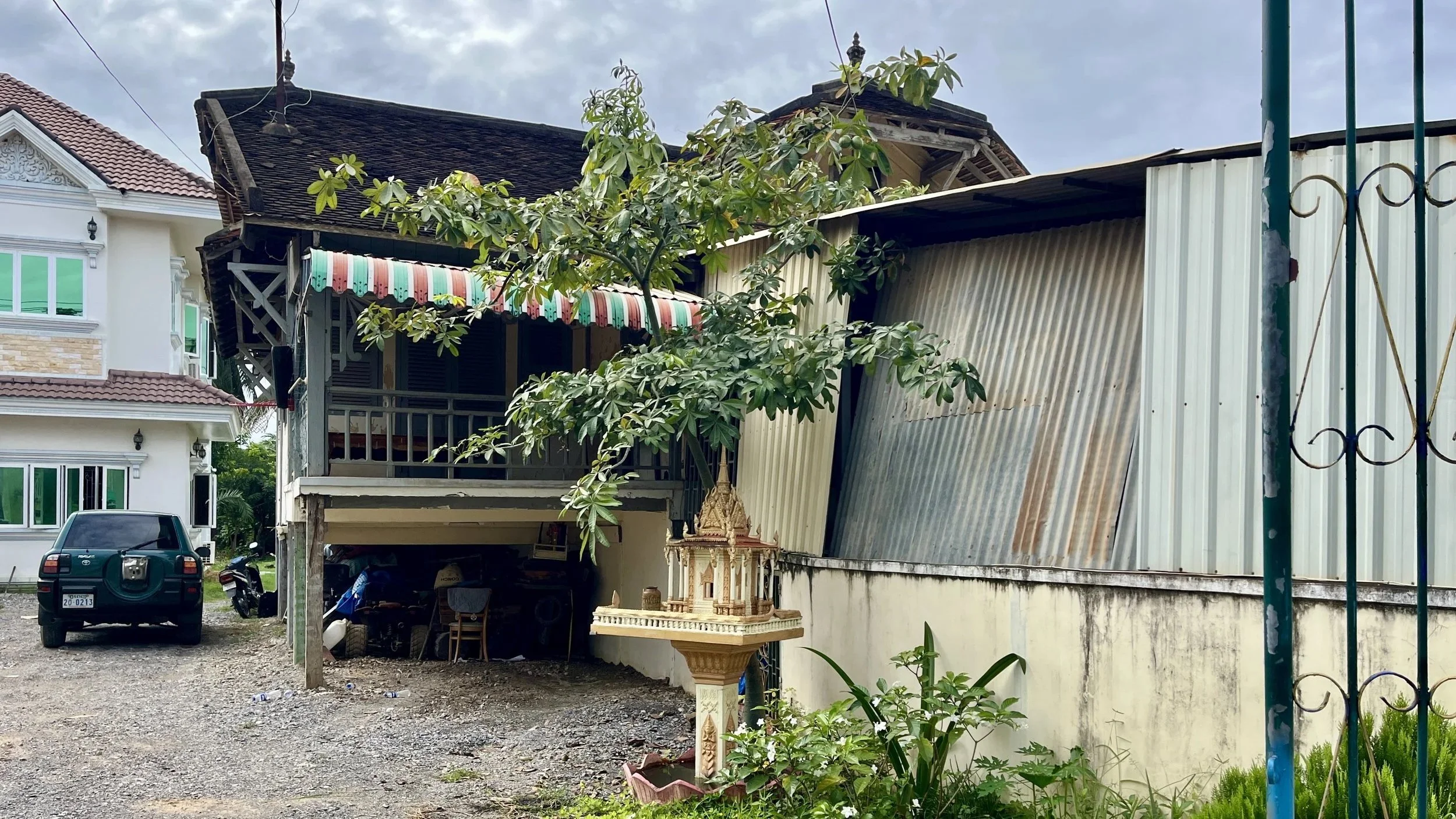
The typical sloppy division of a once fine house into 2 or 3 “connected houses”, each for 1-2 multigenerational families, none of whom have any qualms about disrespecting the architecture with absurd, cheap, ugly, damaging, or irreversible changes.
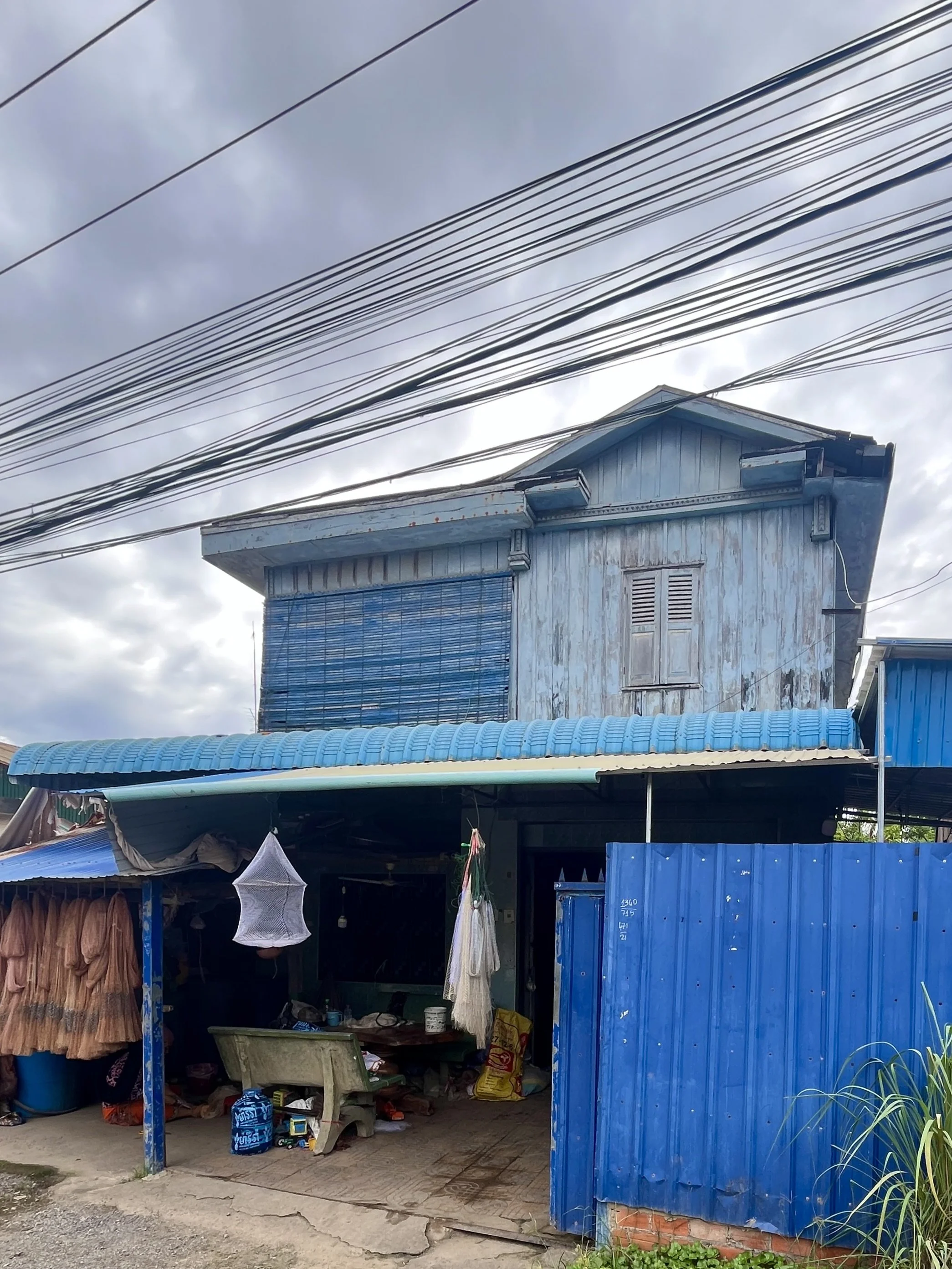
The Muslim neighborhood is still Muslim today, and apparently handmade fishing nets have been one of their dedicated handicrafts all this time.