cambodian temples

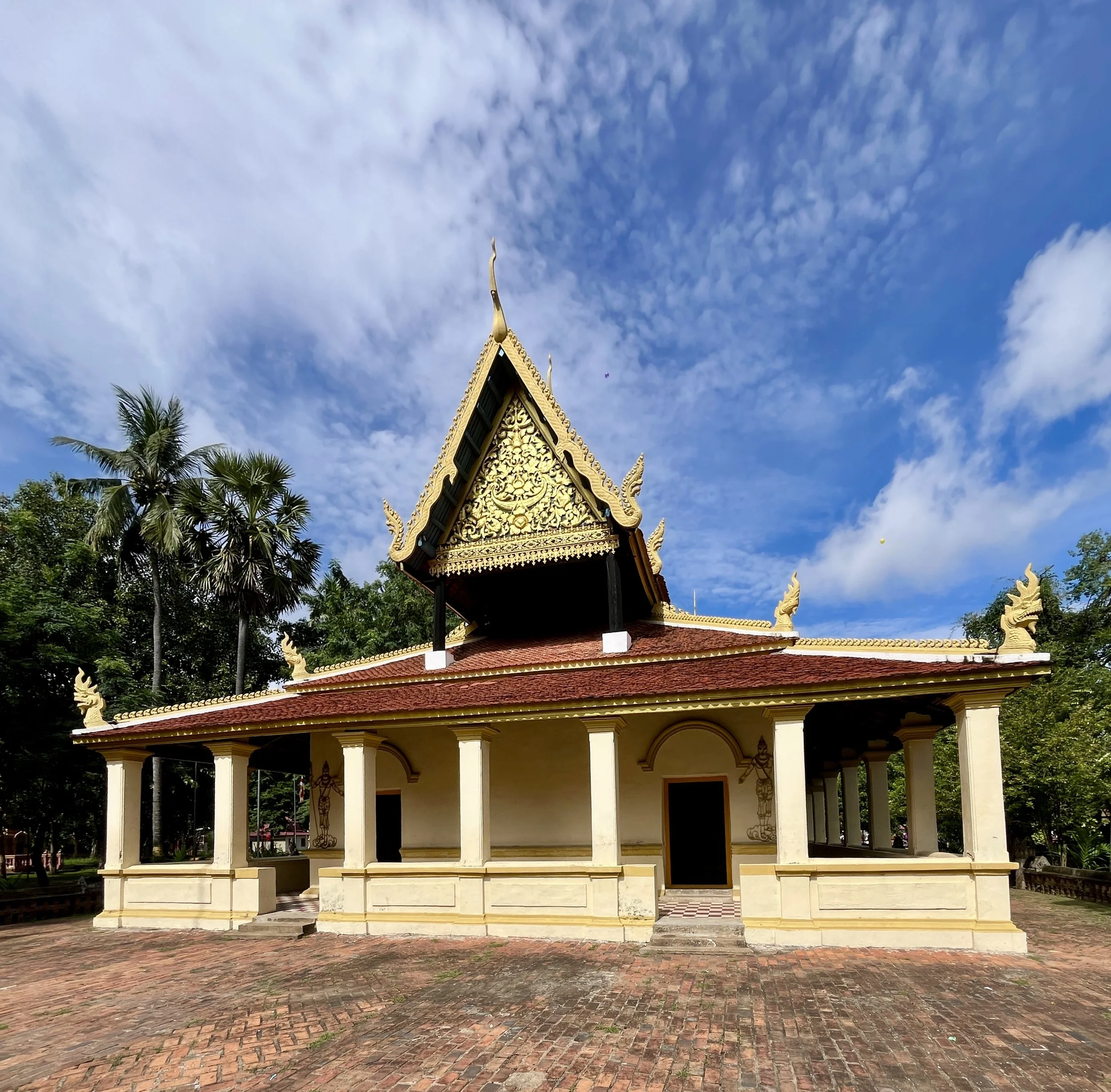
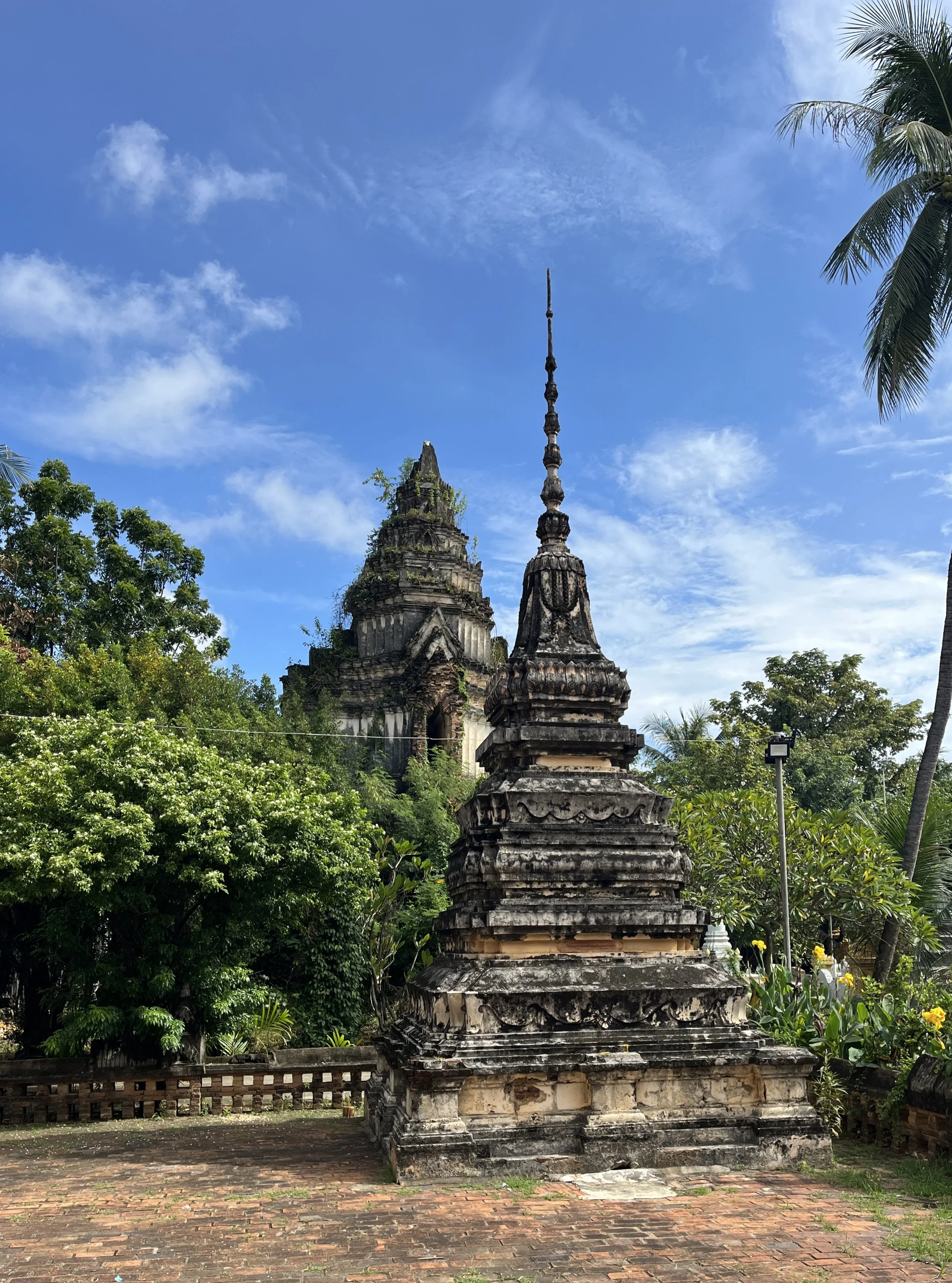
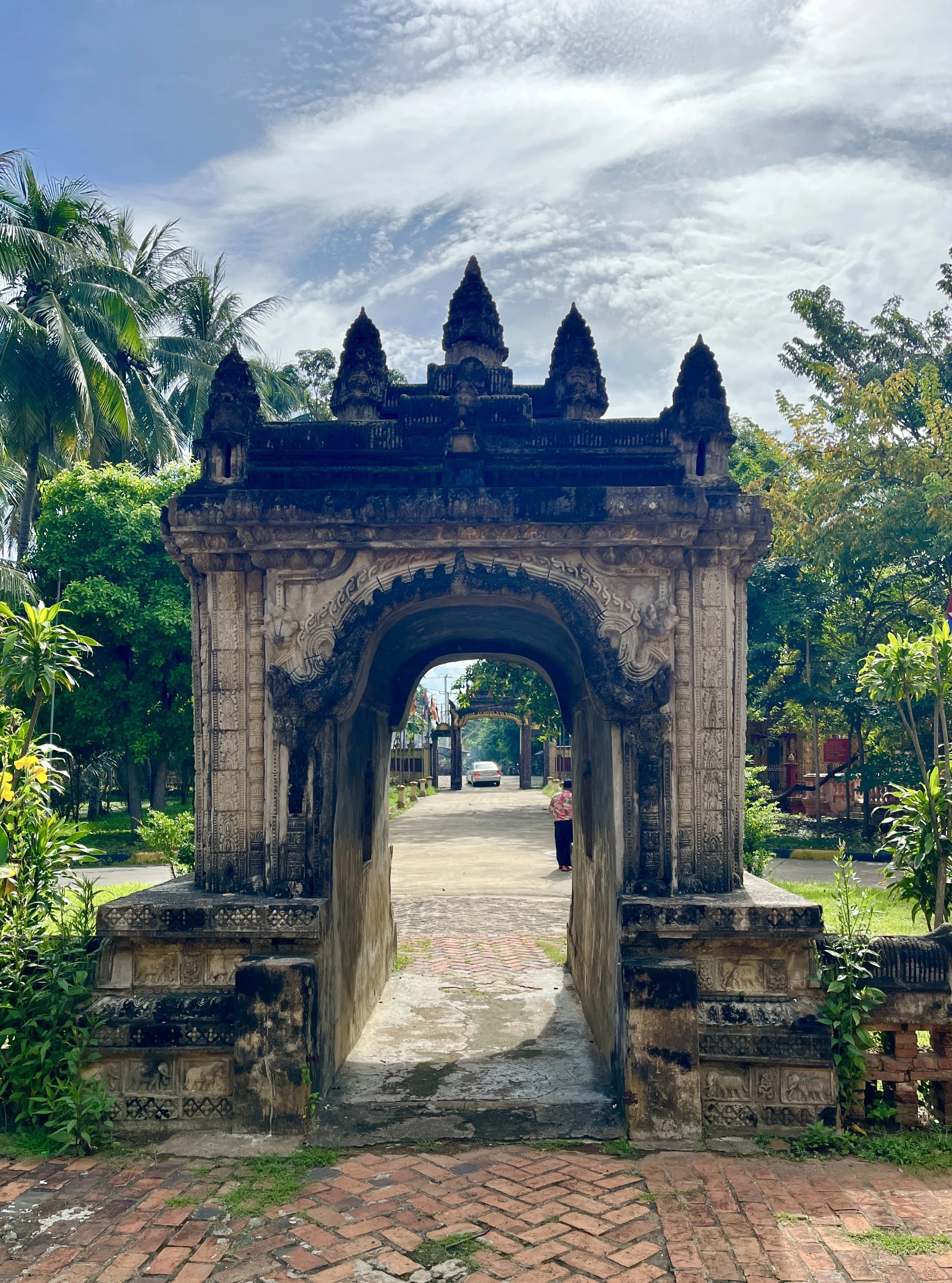
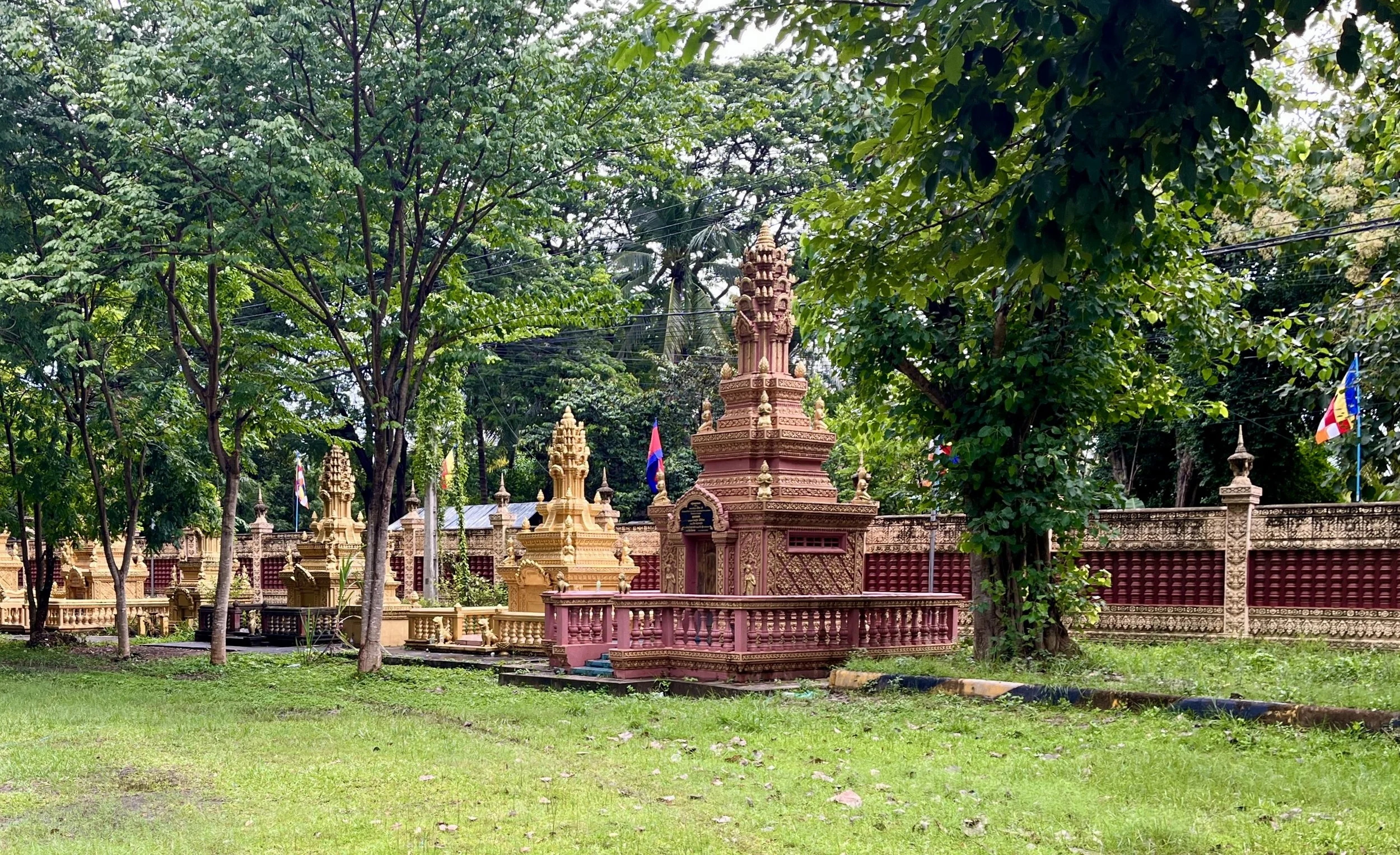
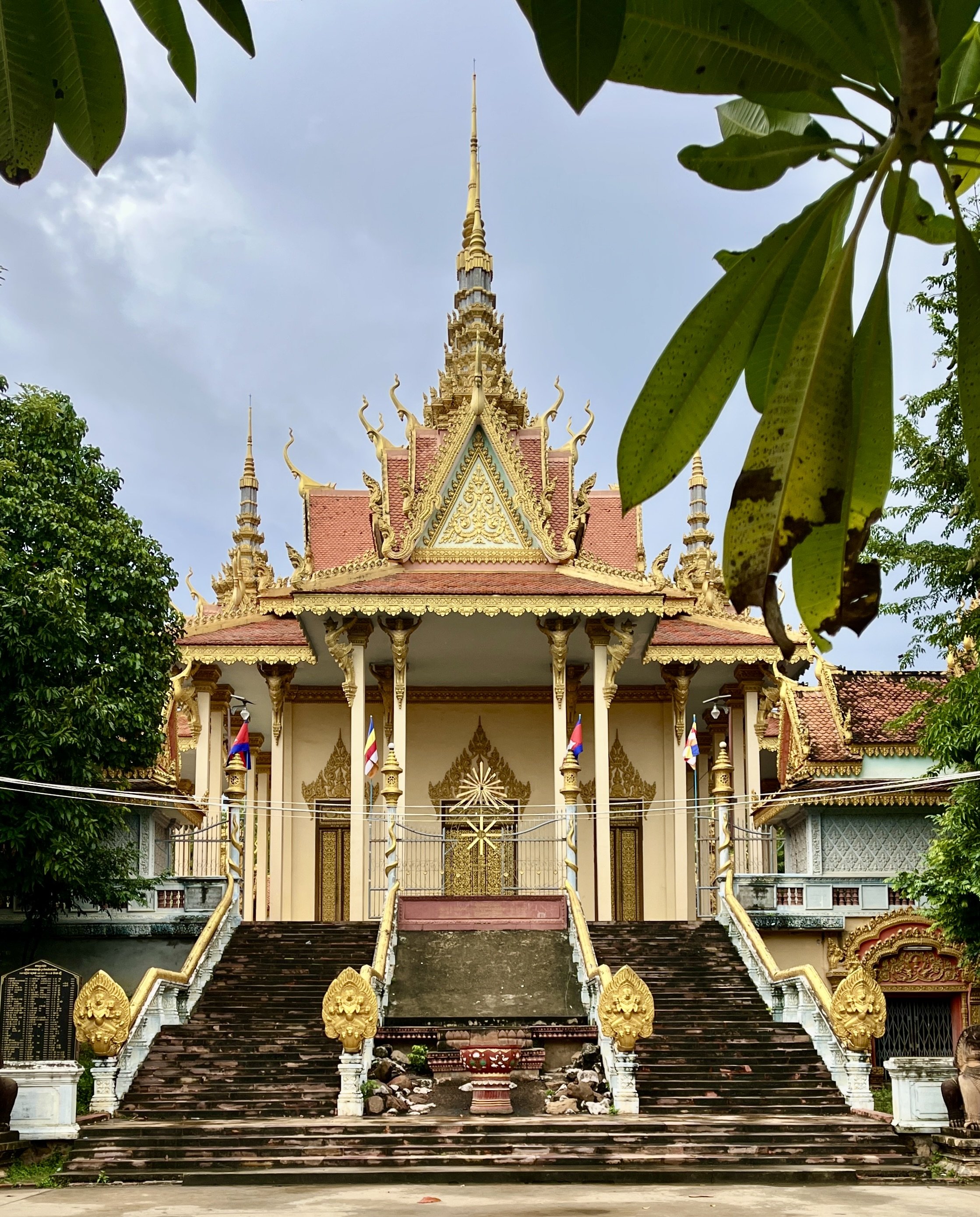
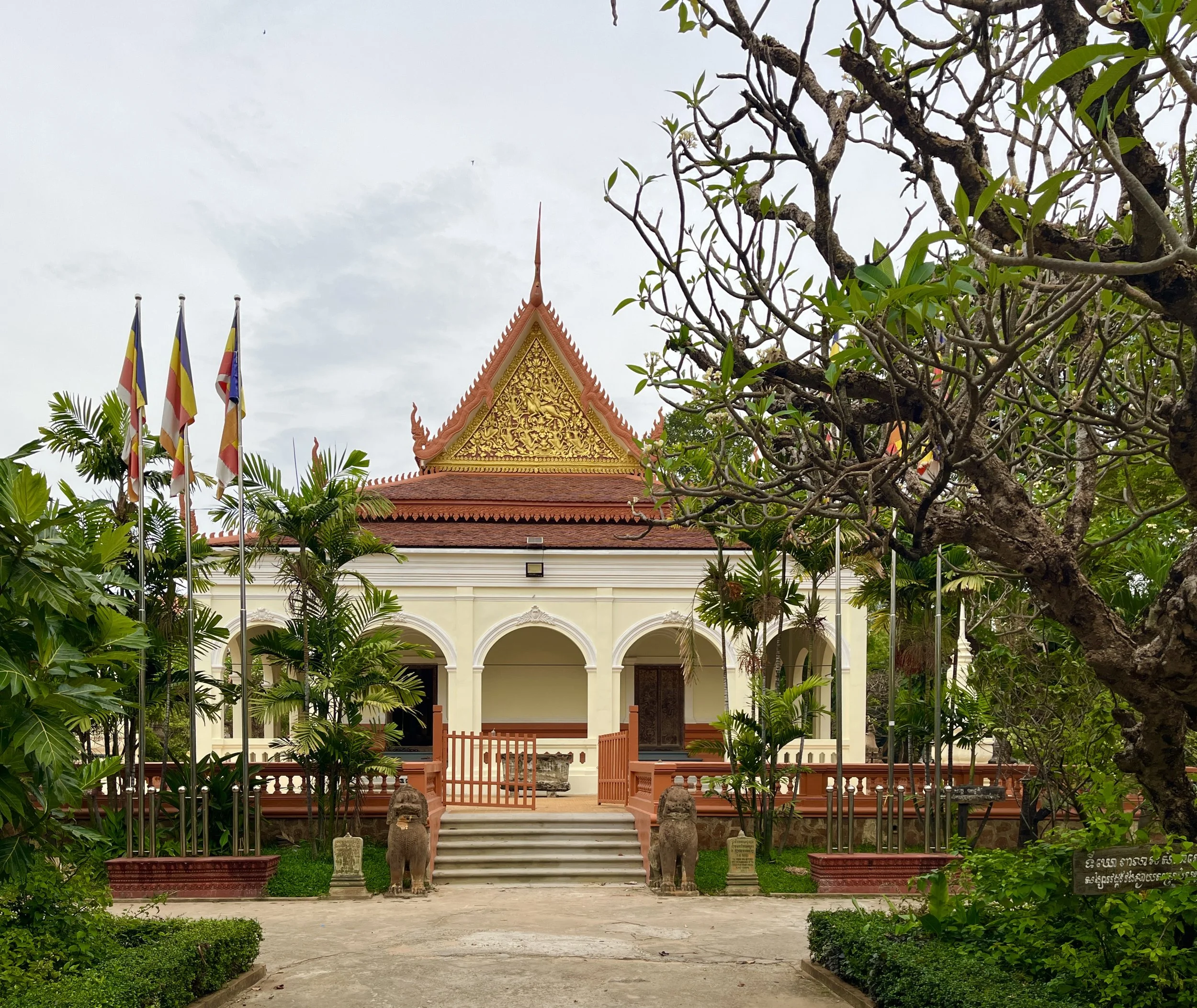
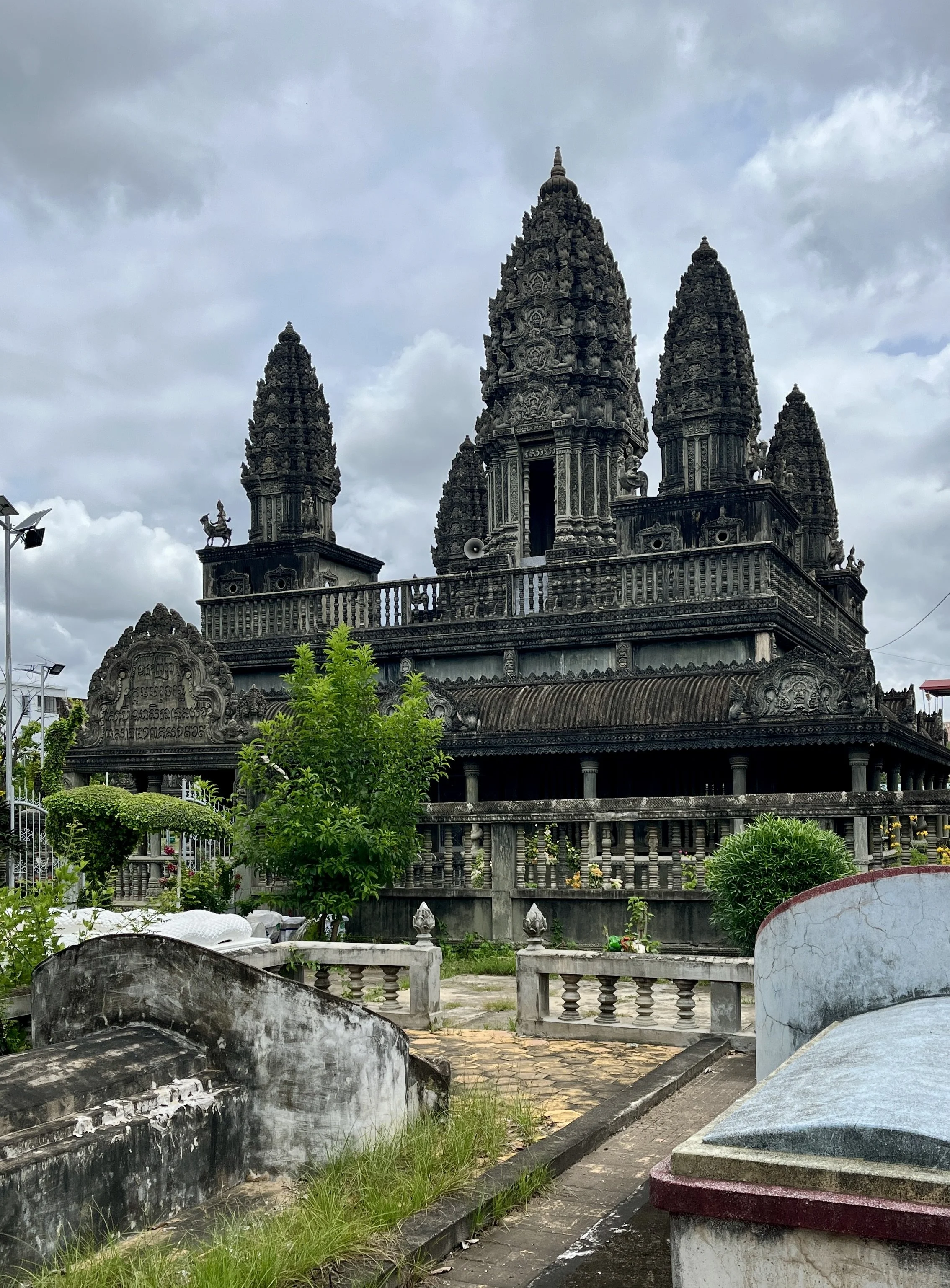
Wat Kor, Battambang | Cambodia

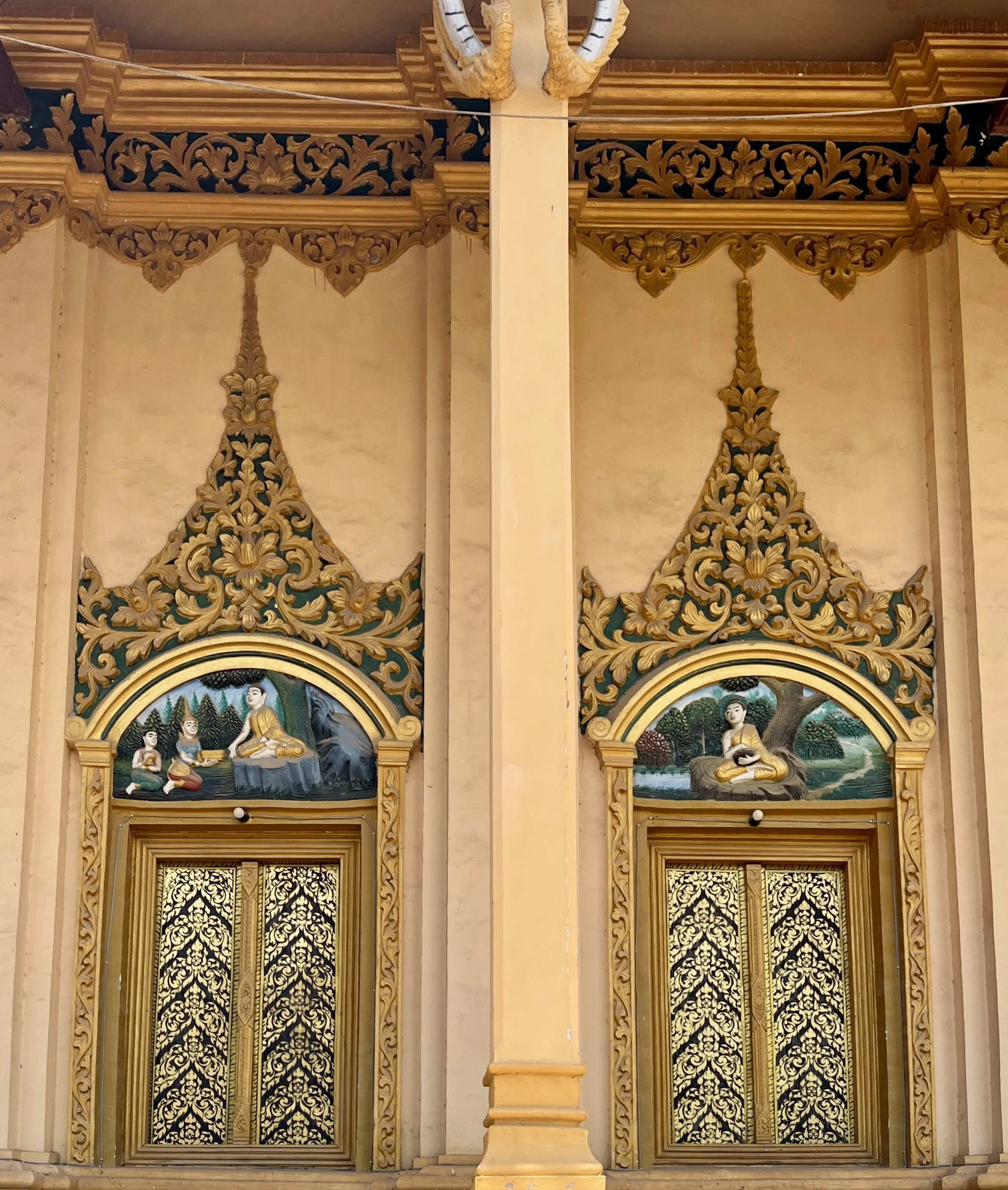
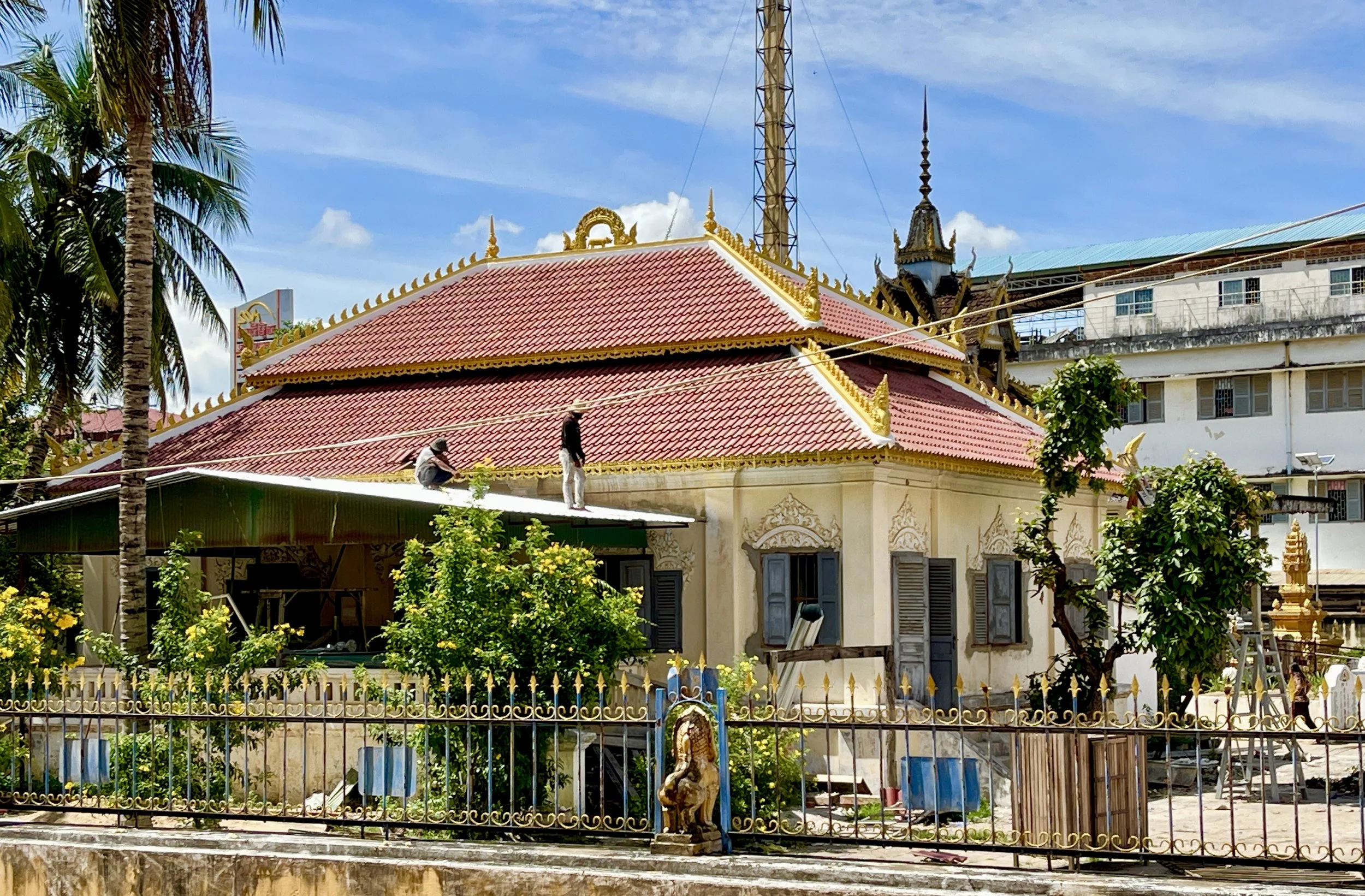
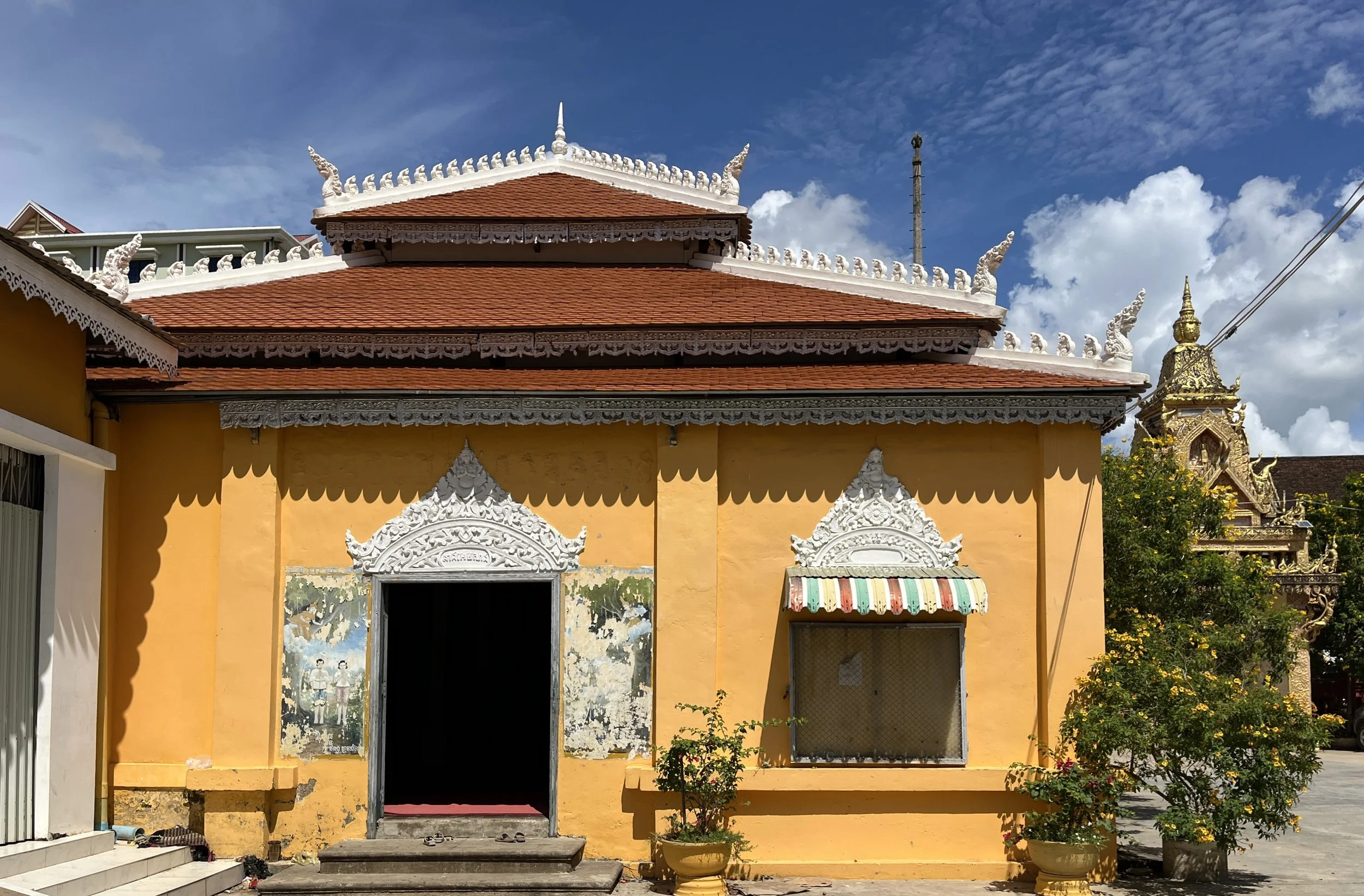
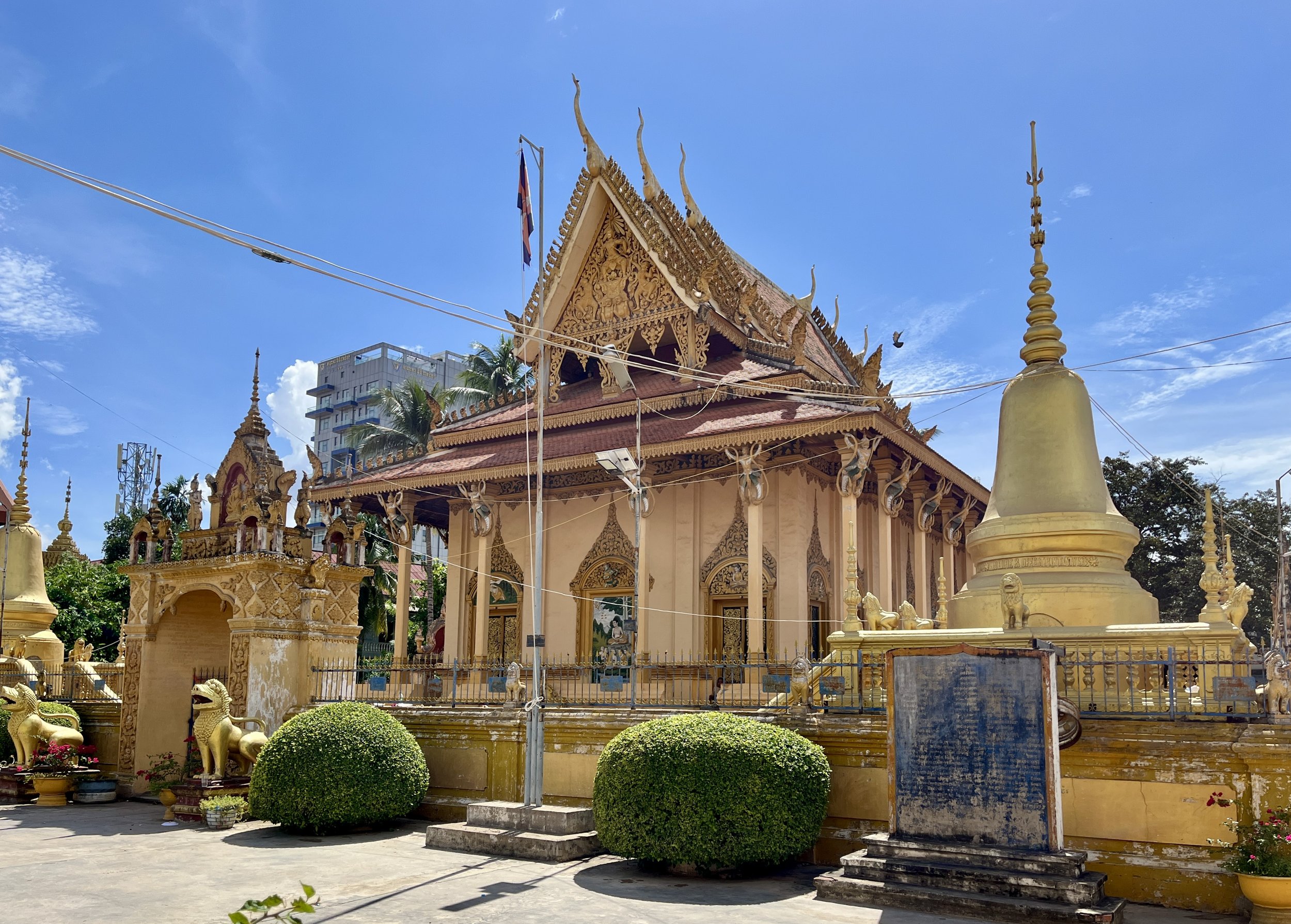
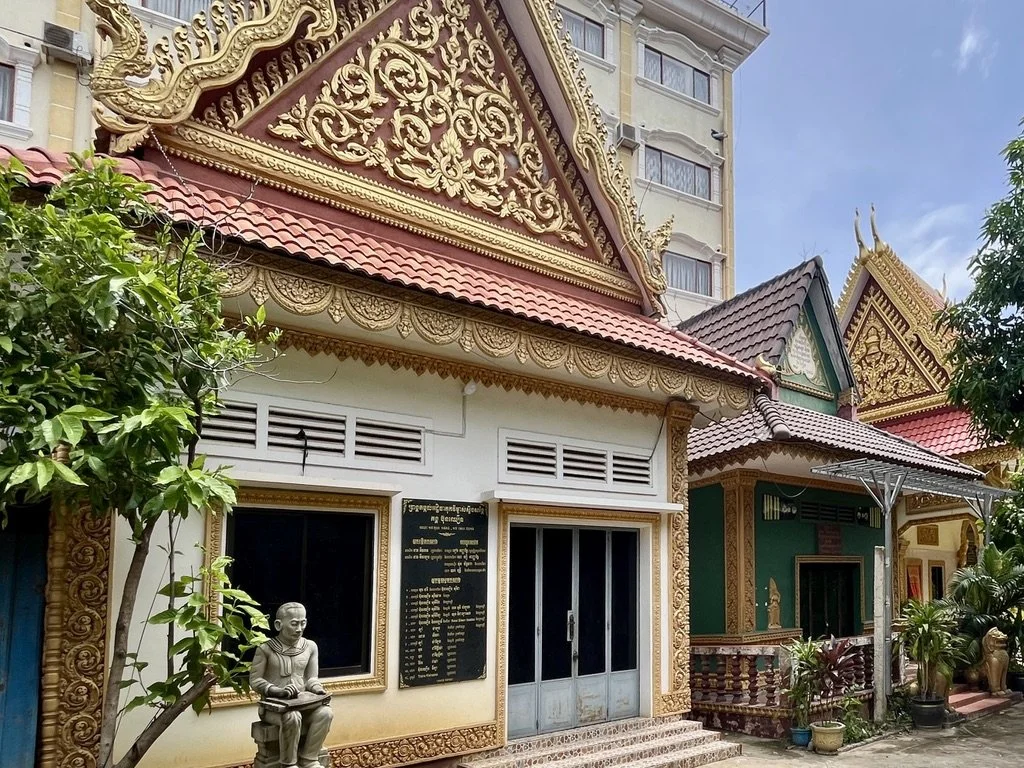
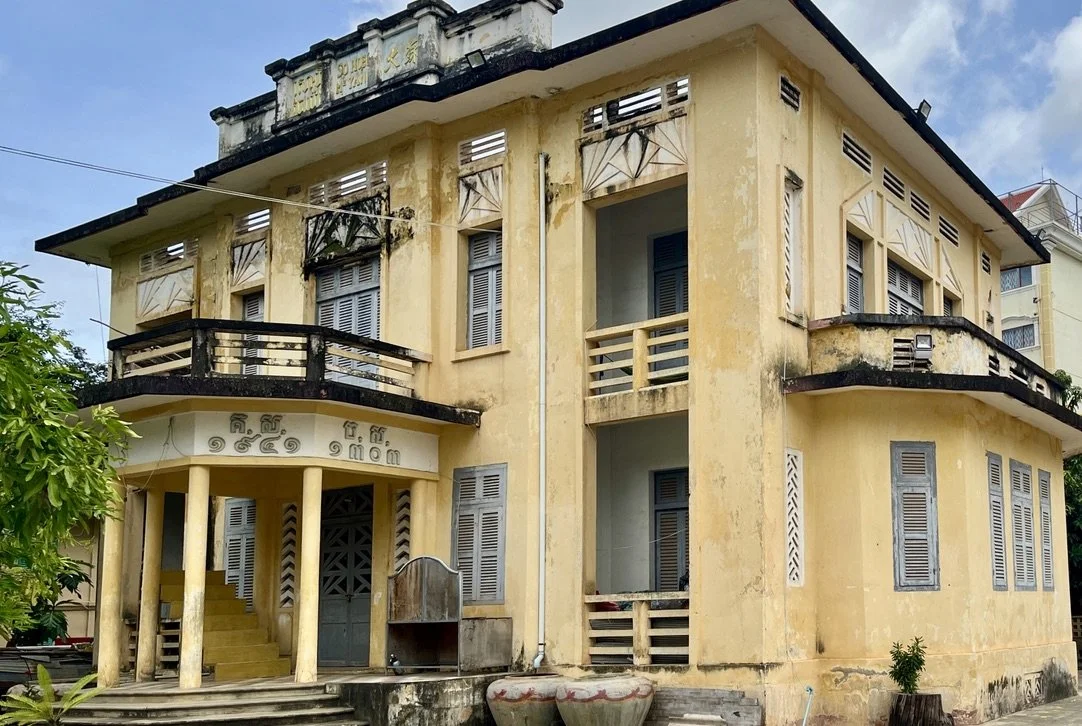
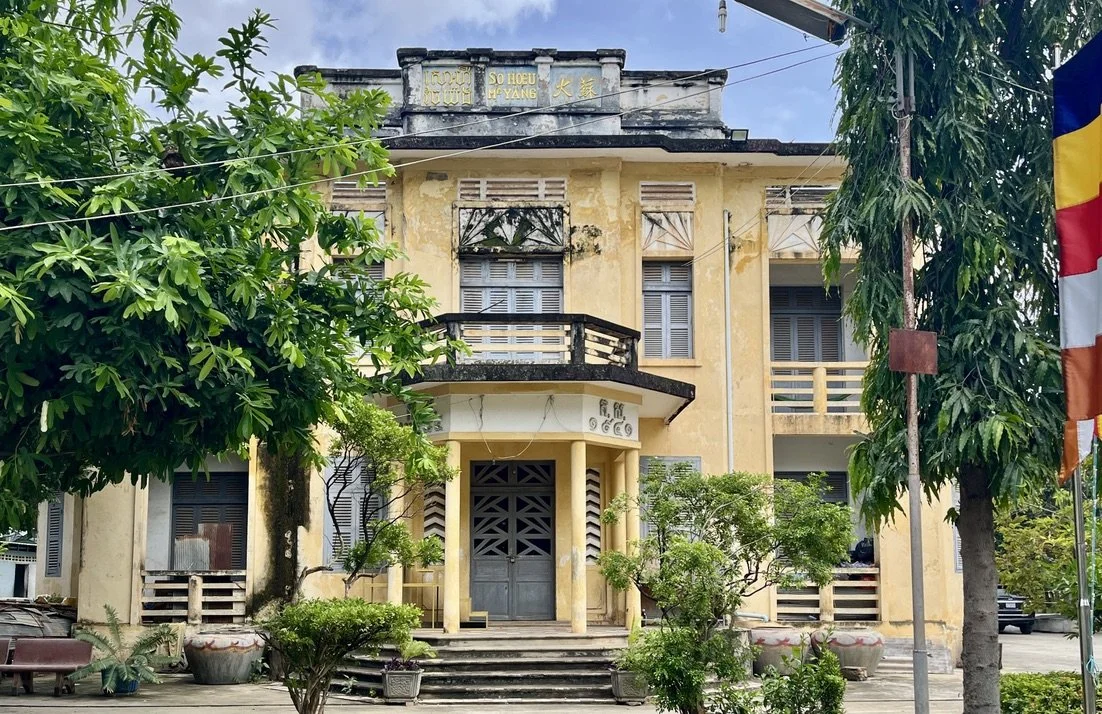
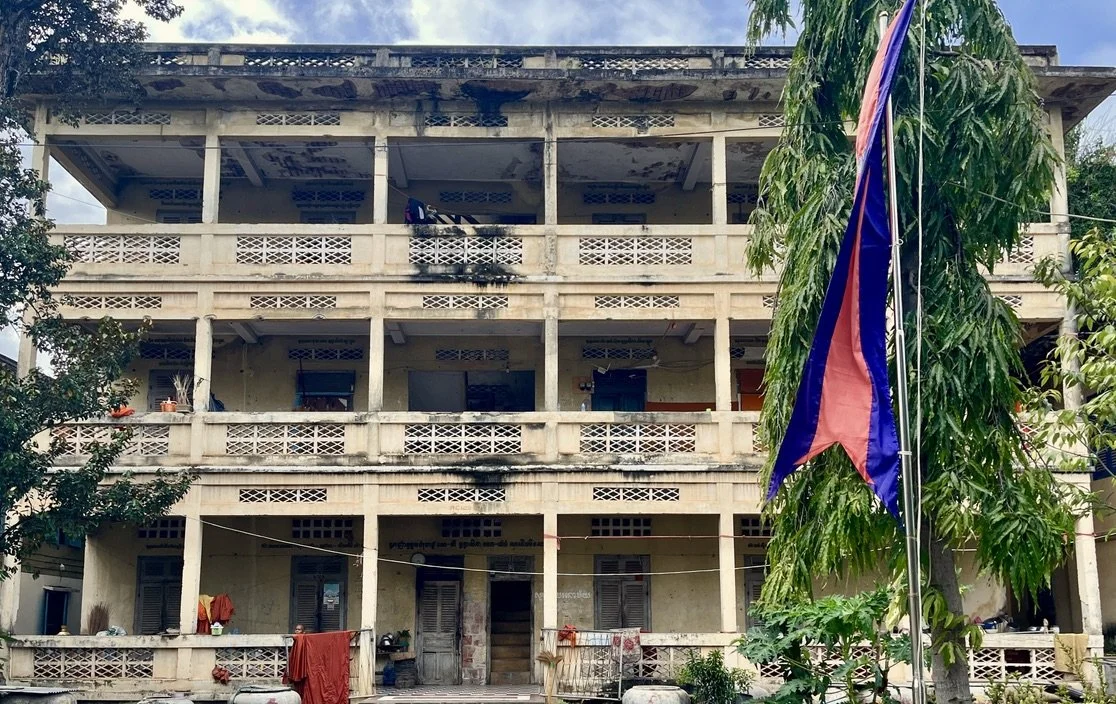
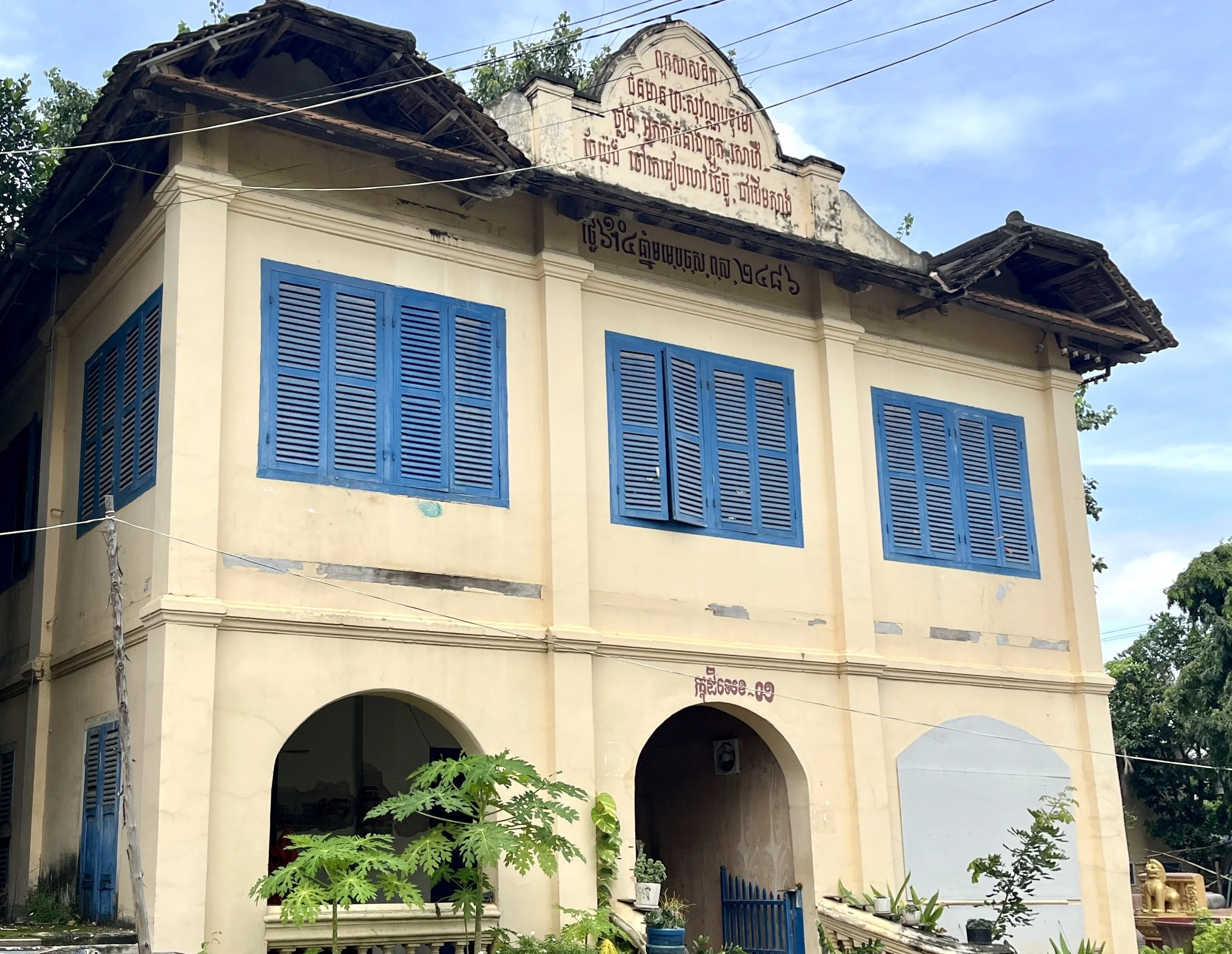
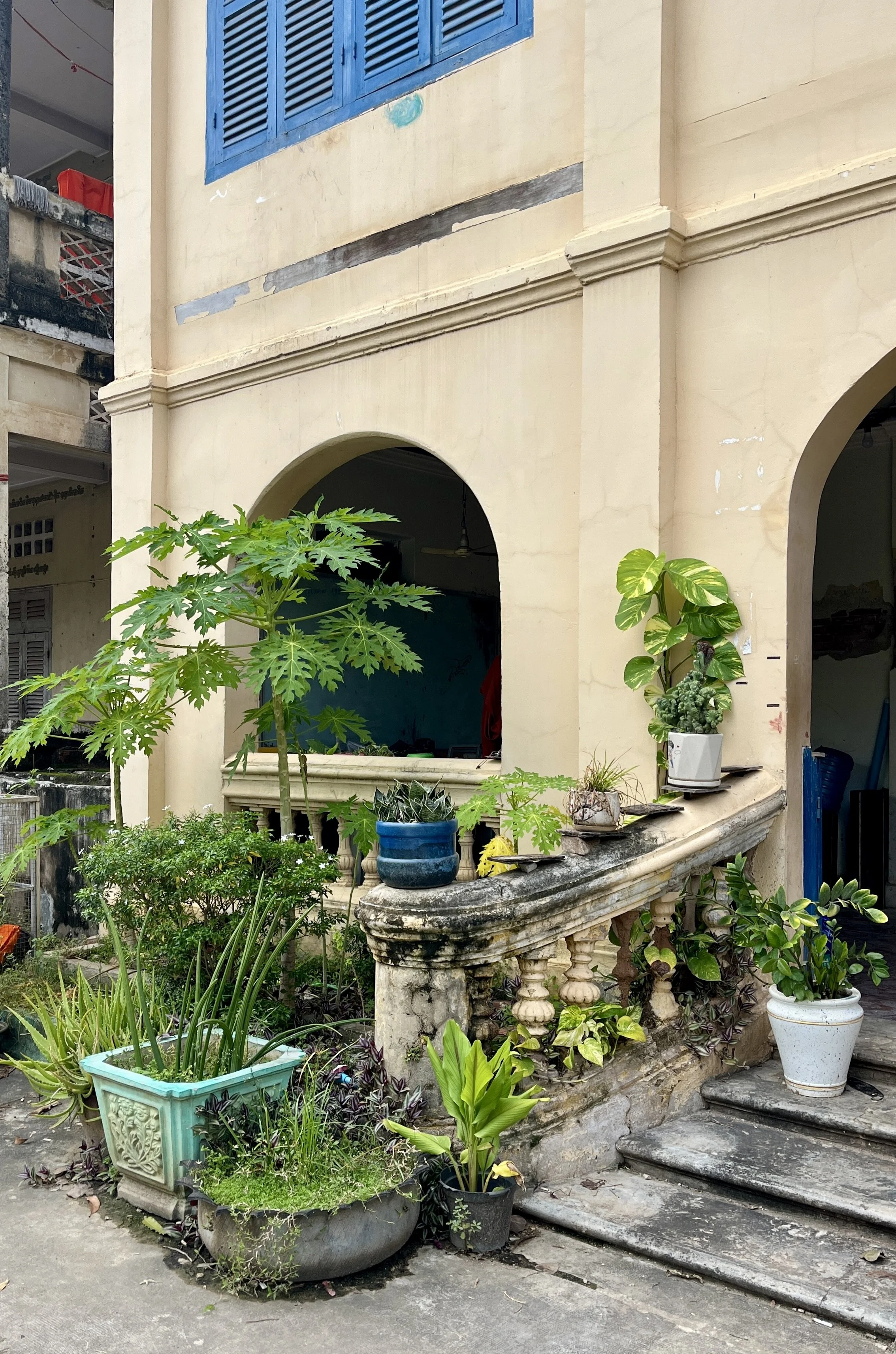
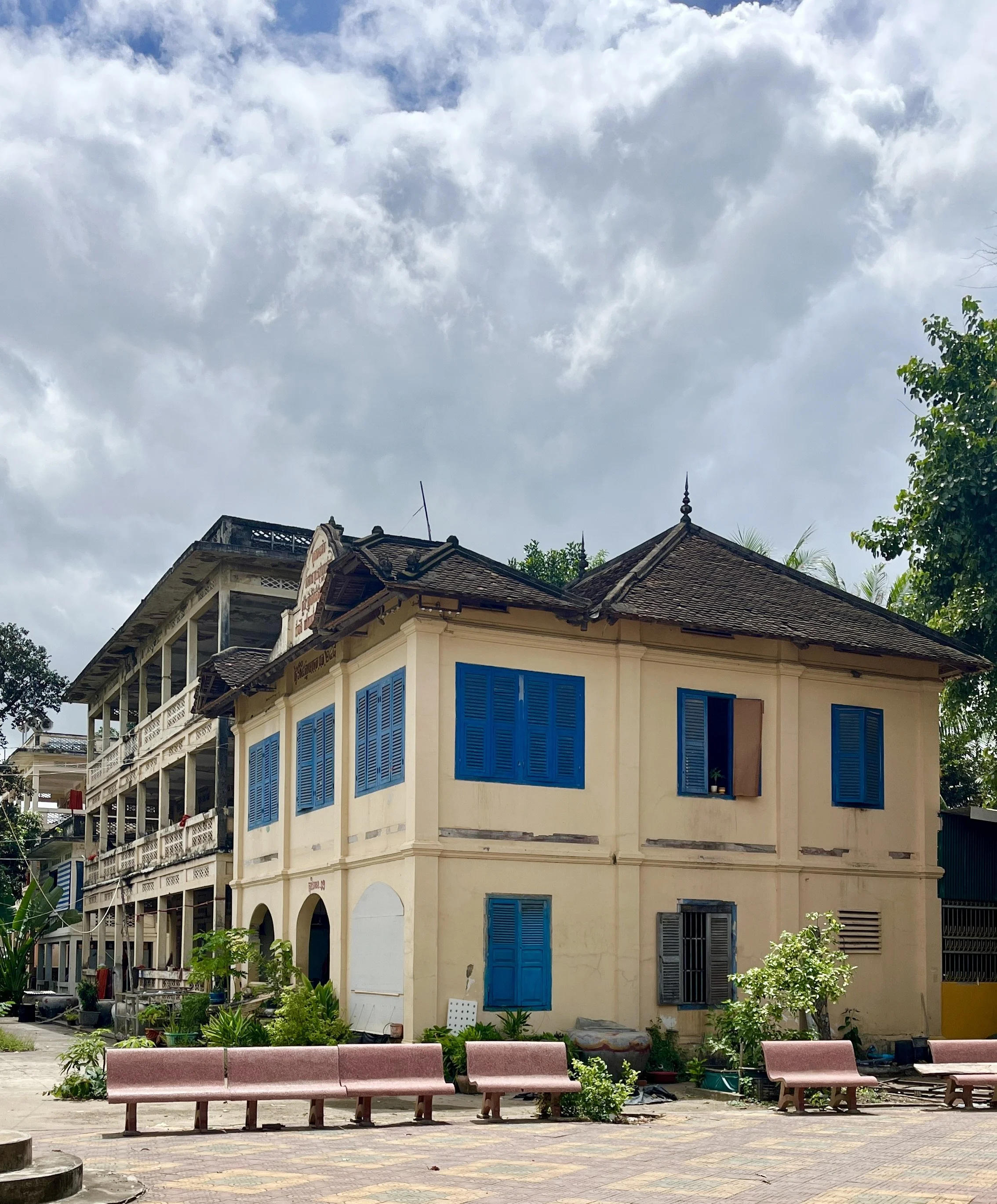
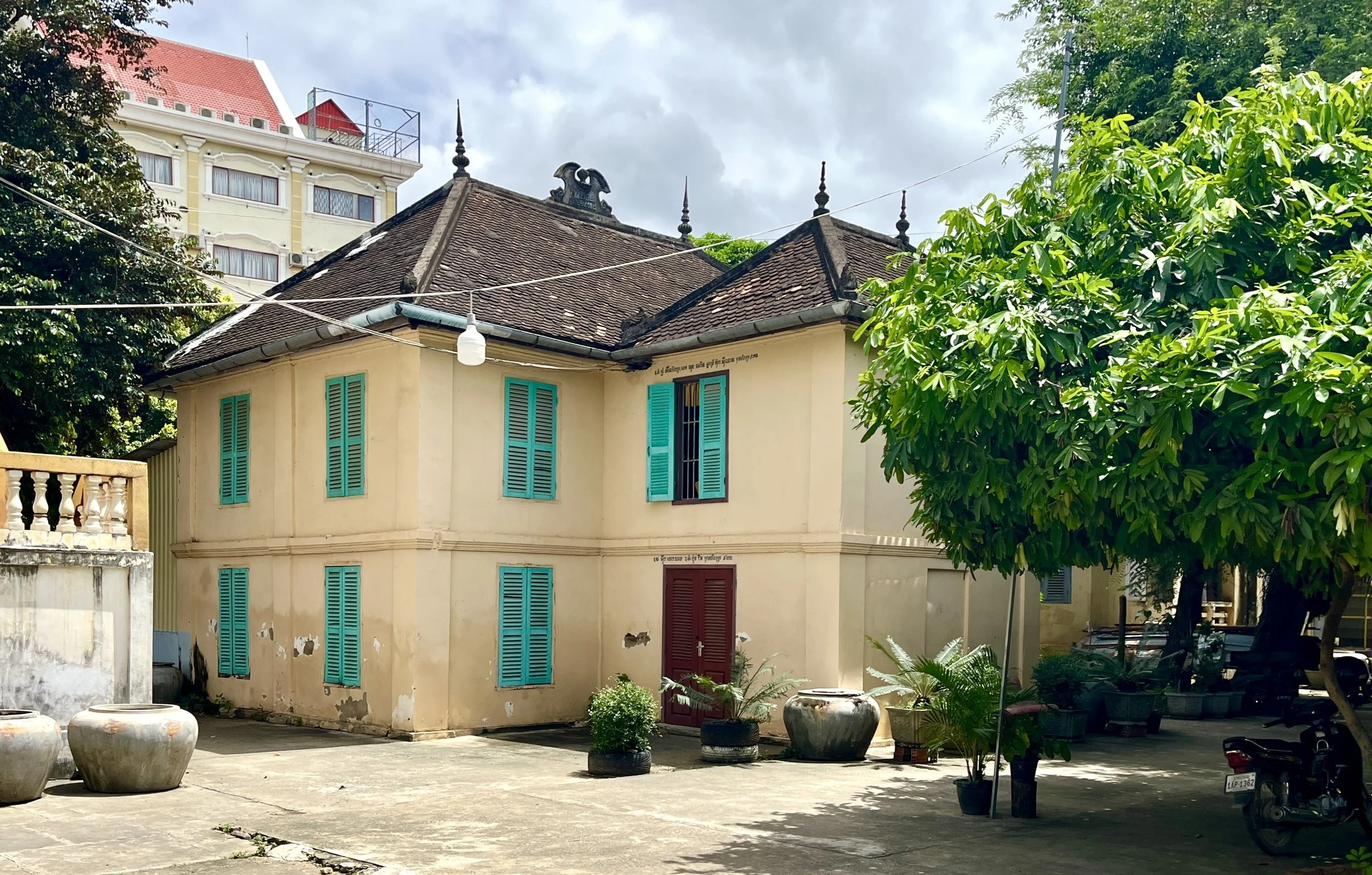
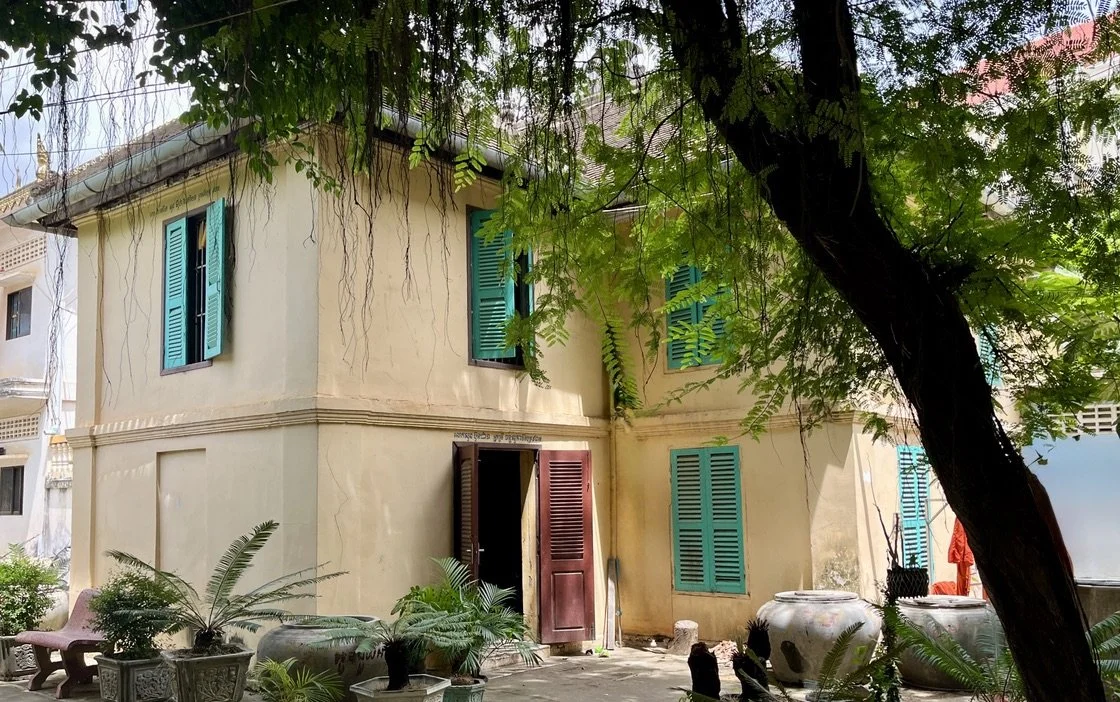
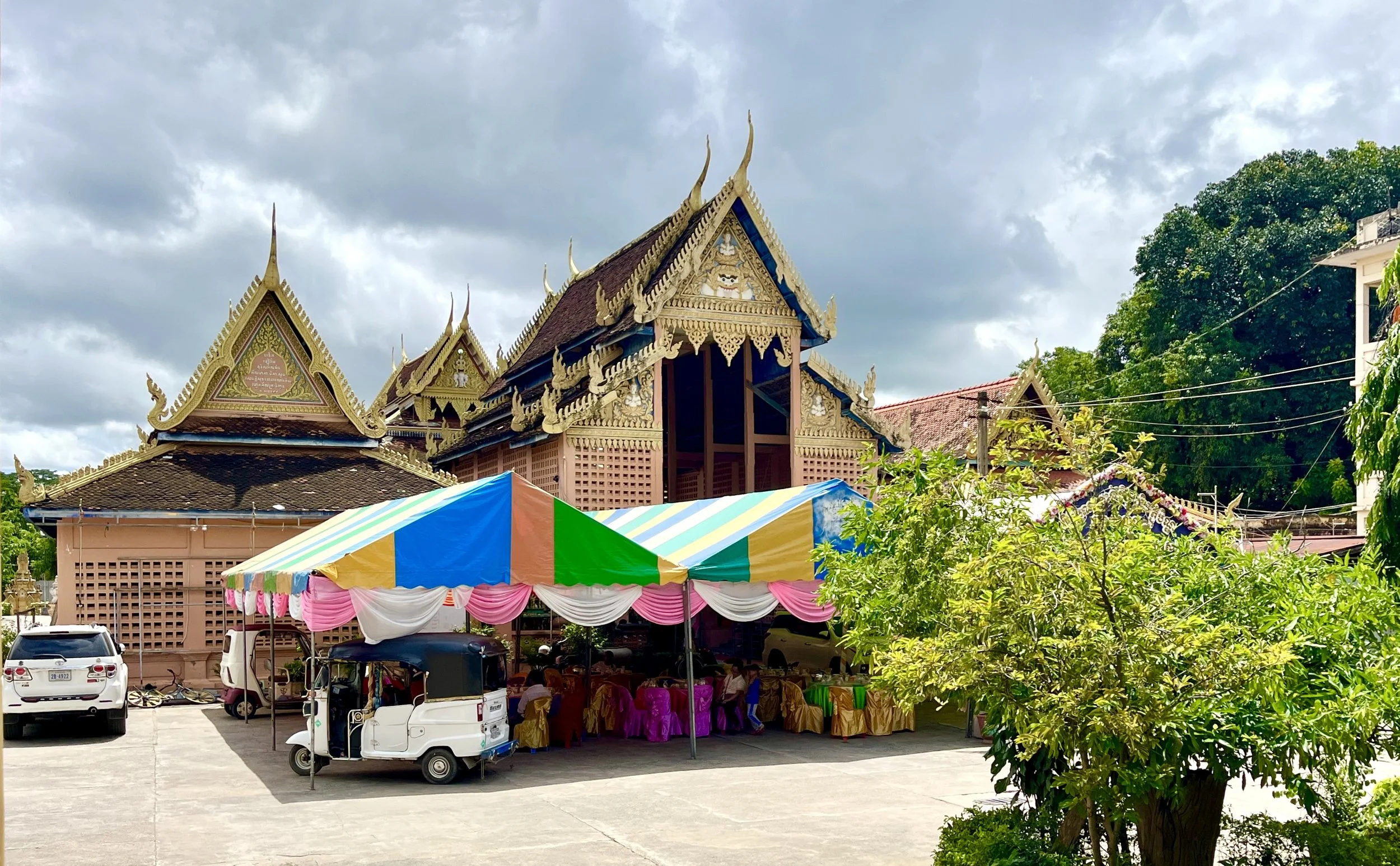
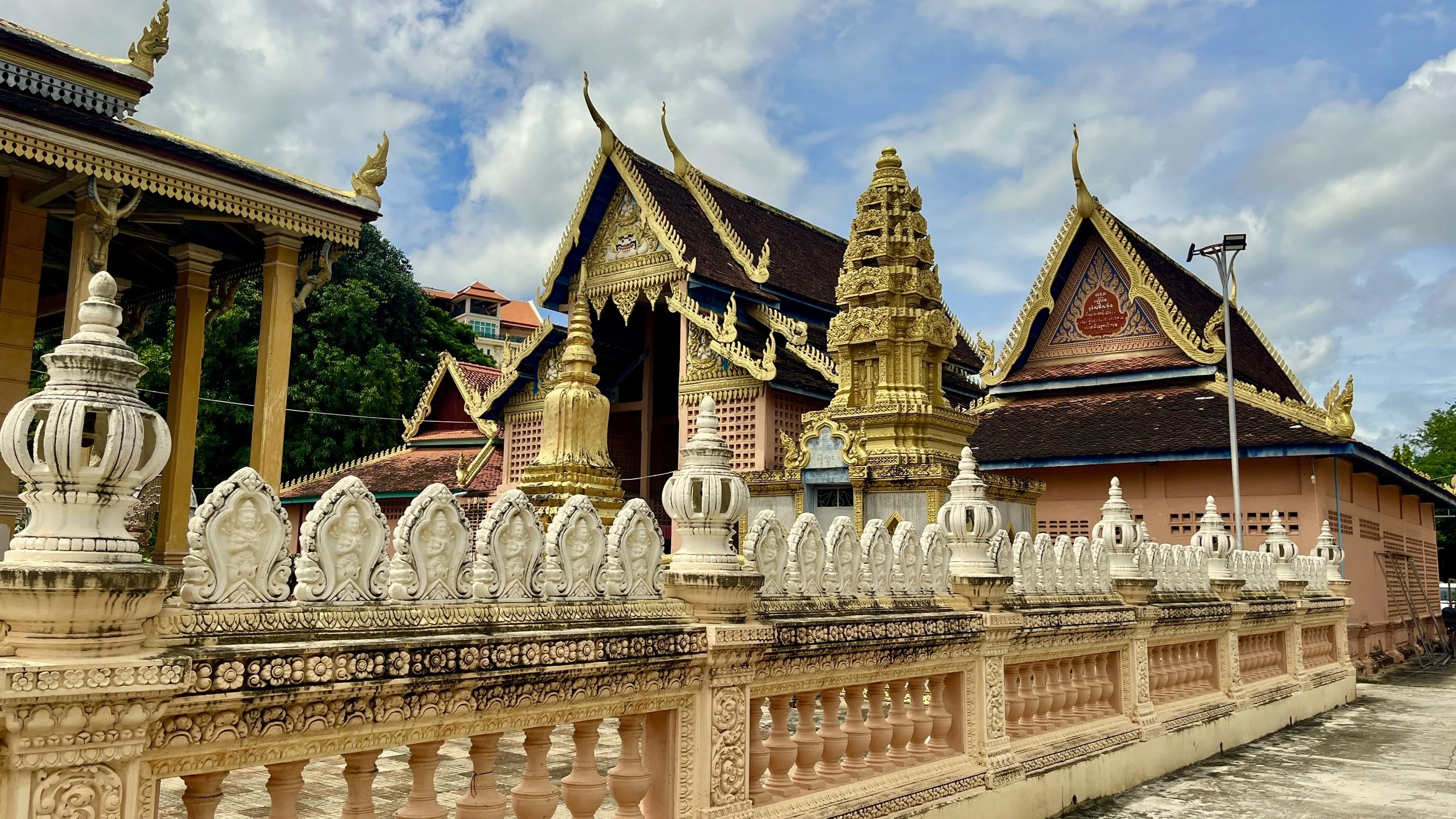
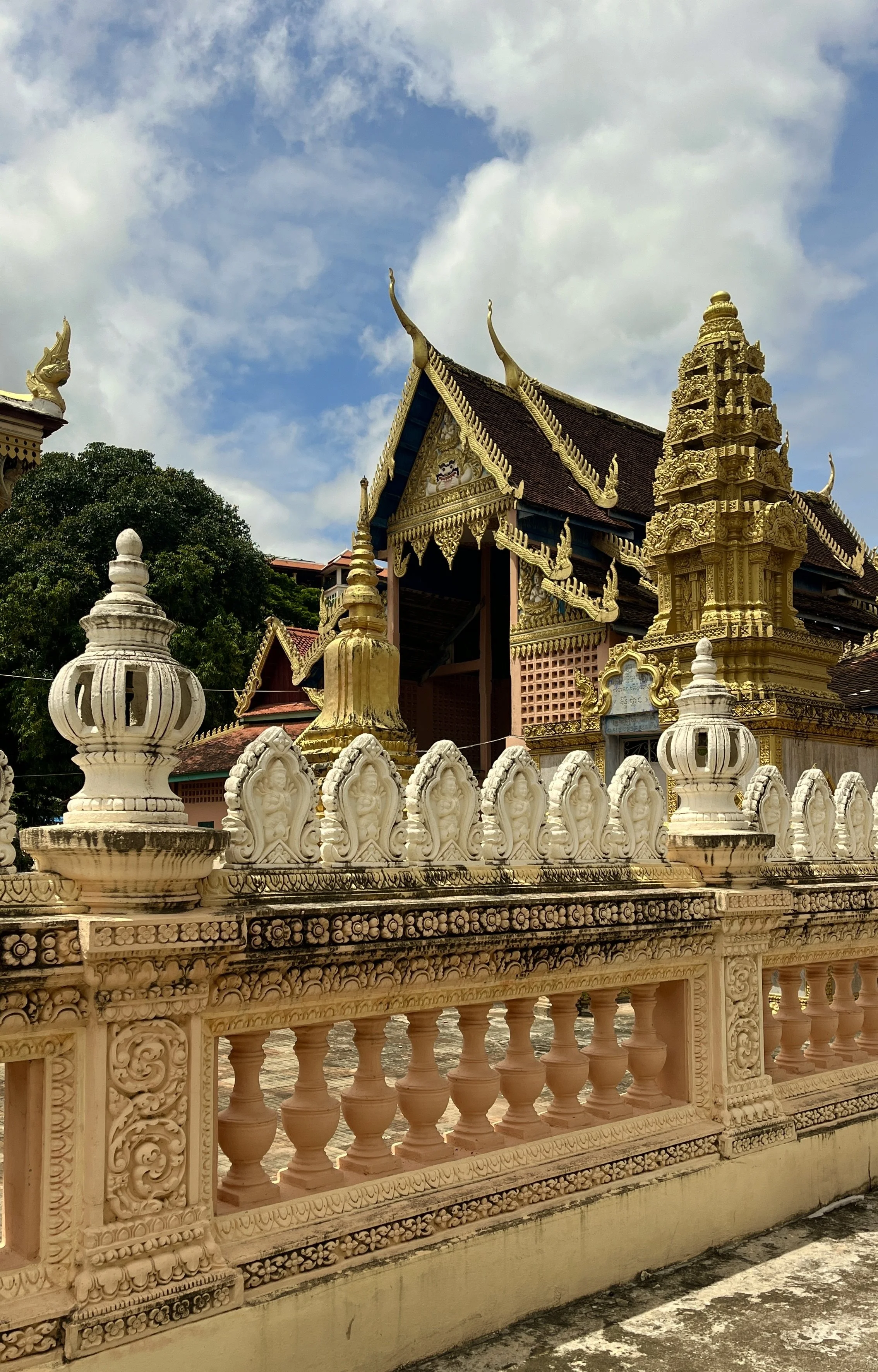
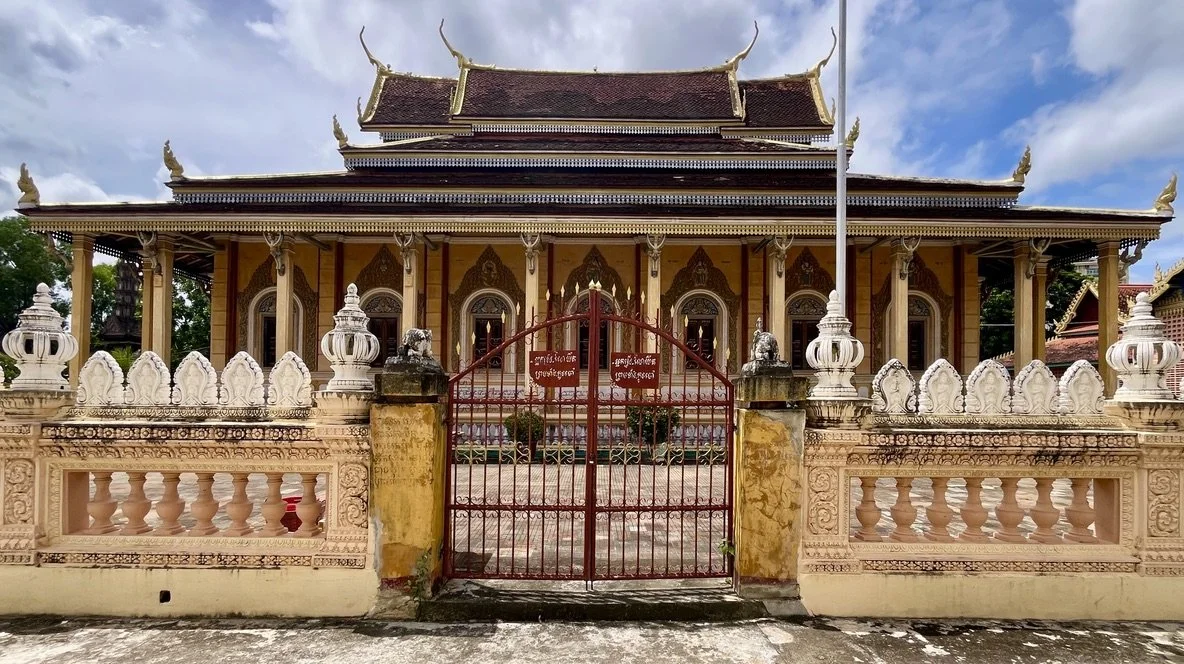
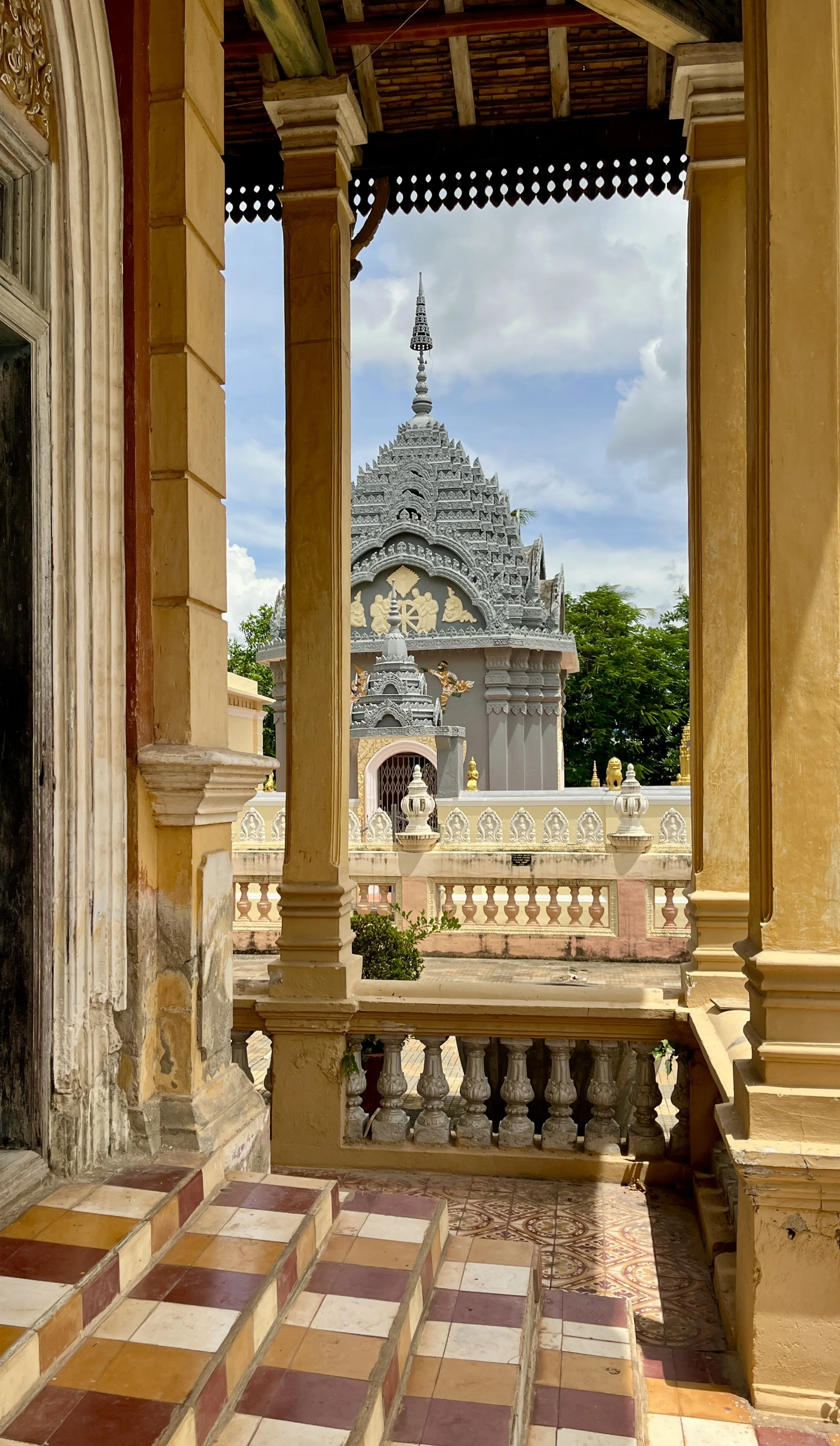
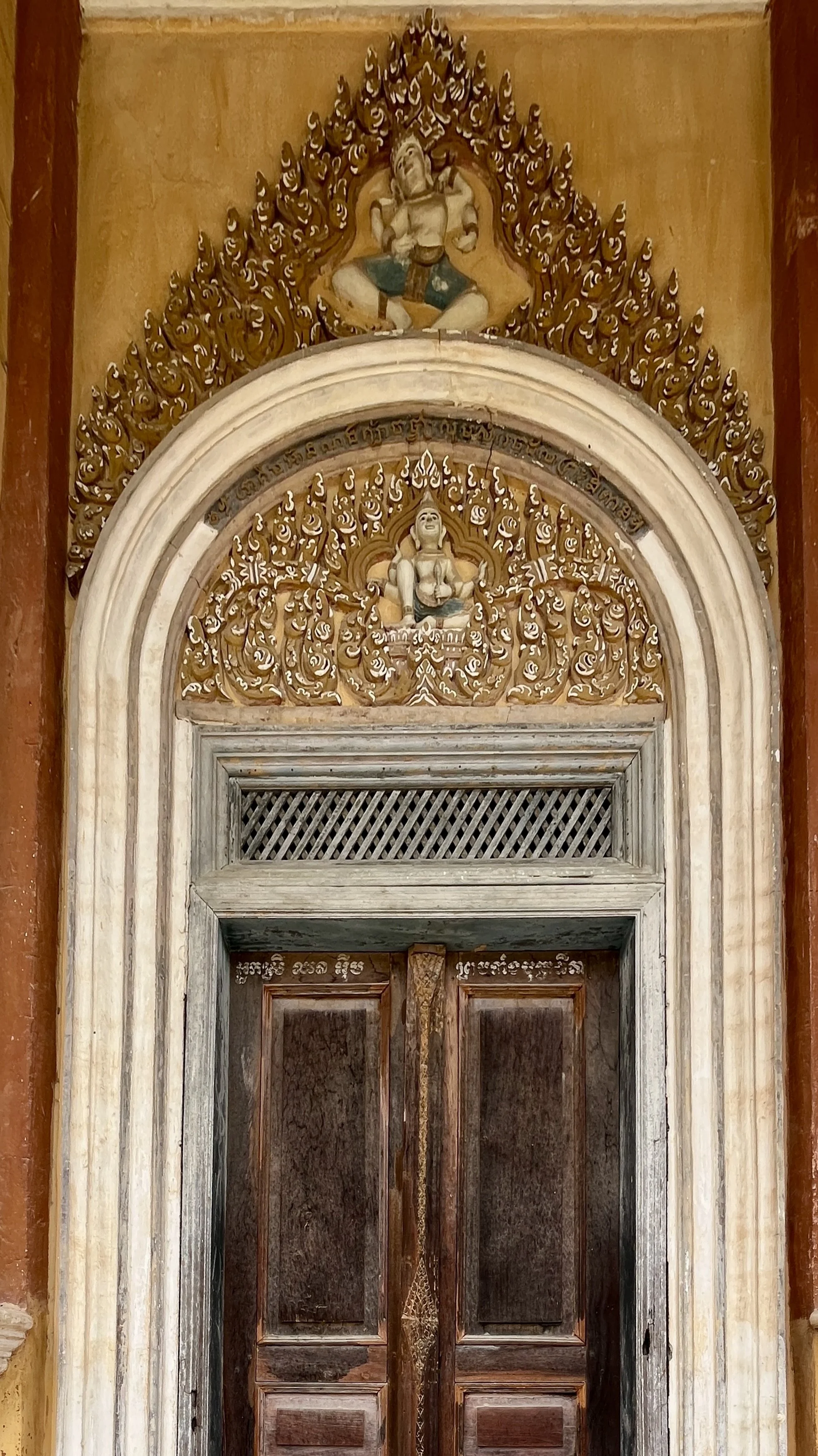
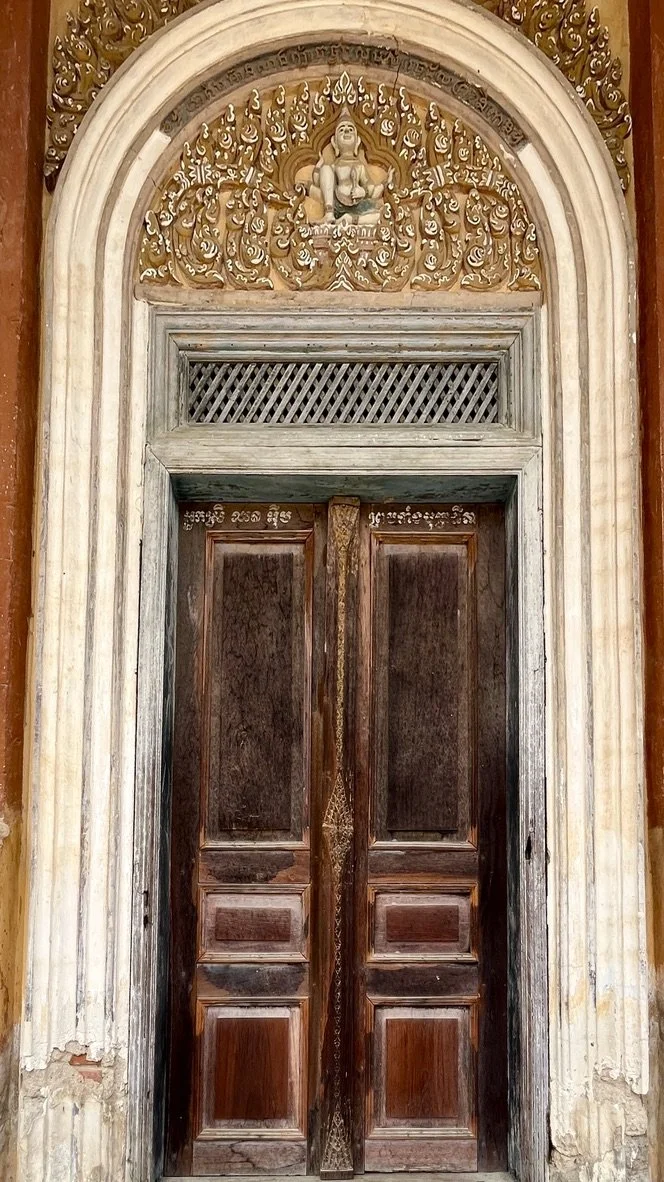
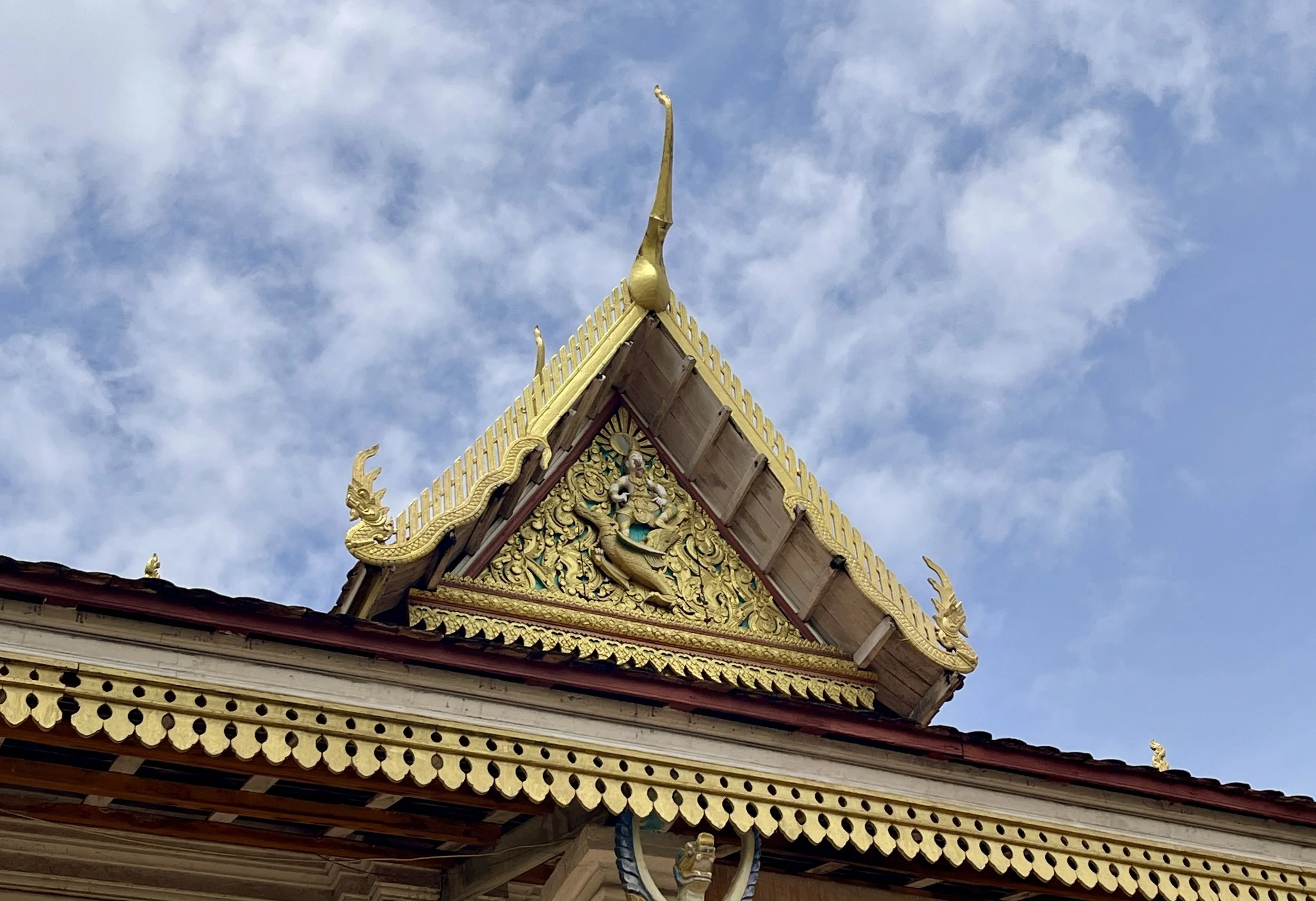
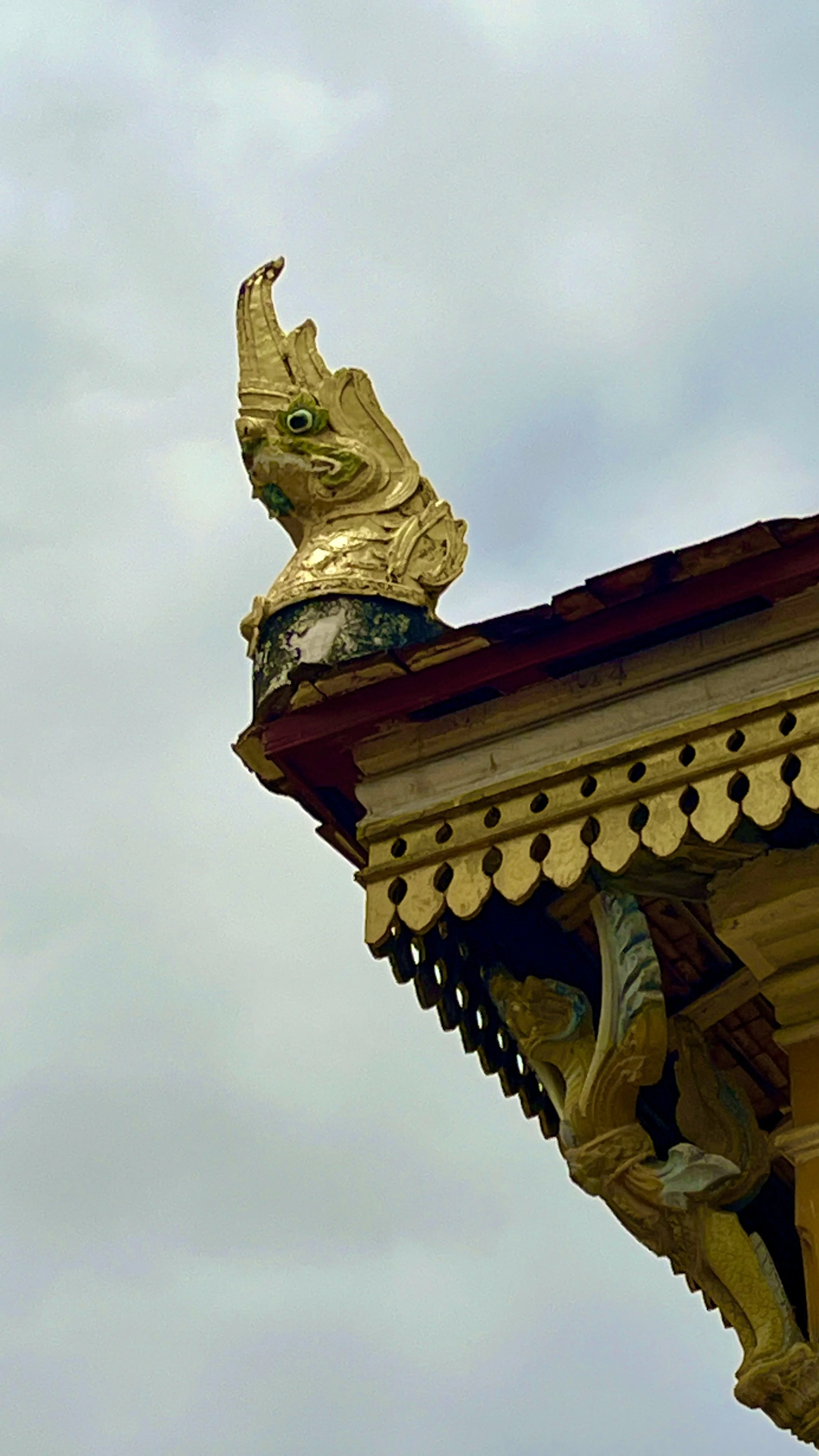
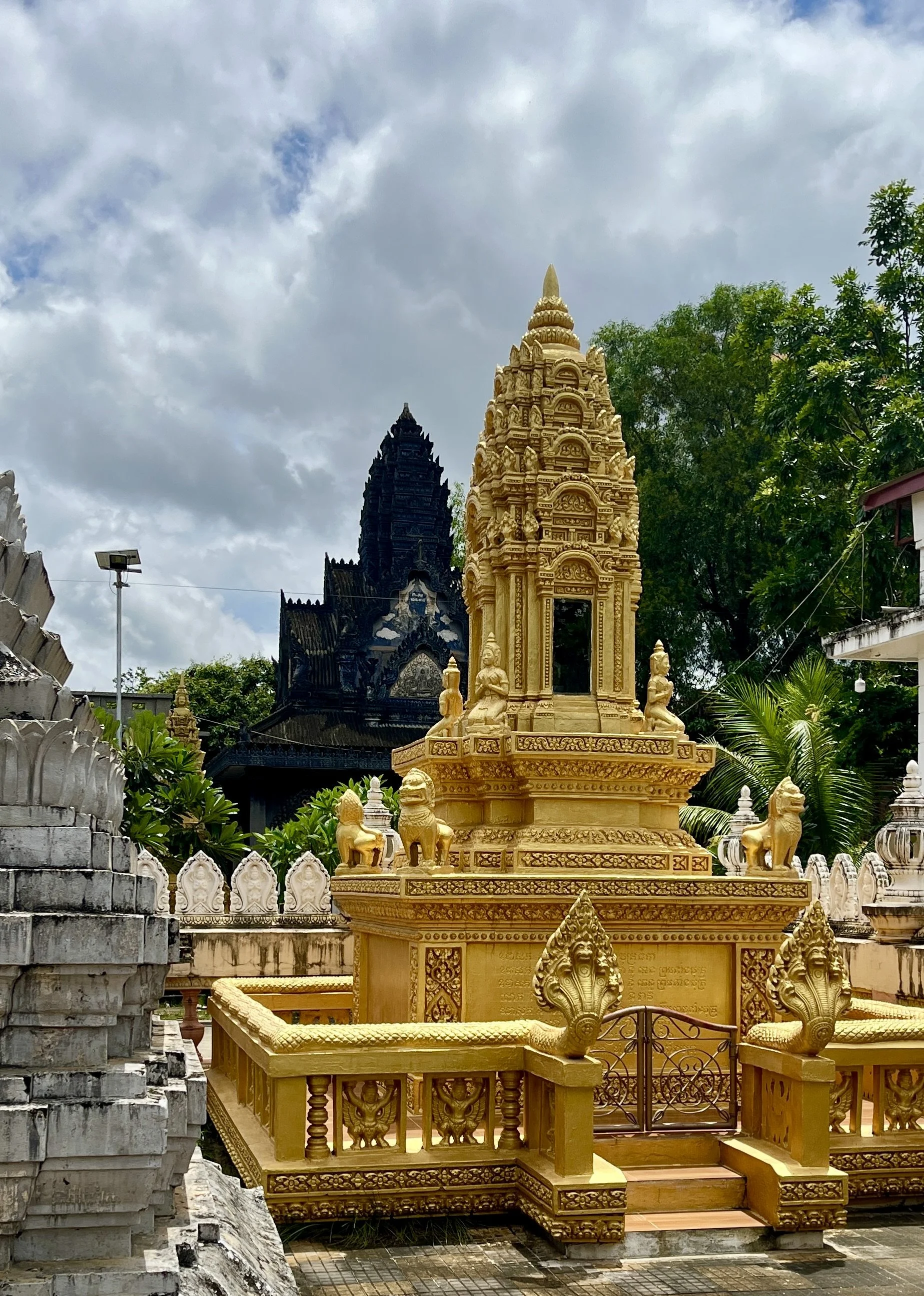
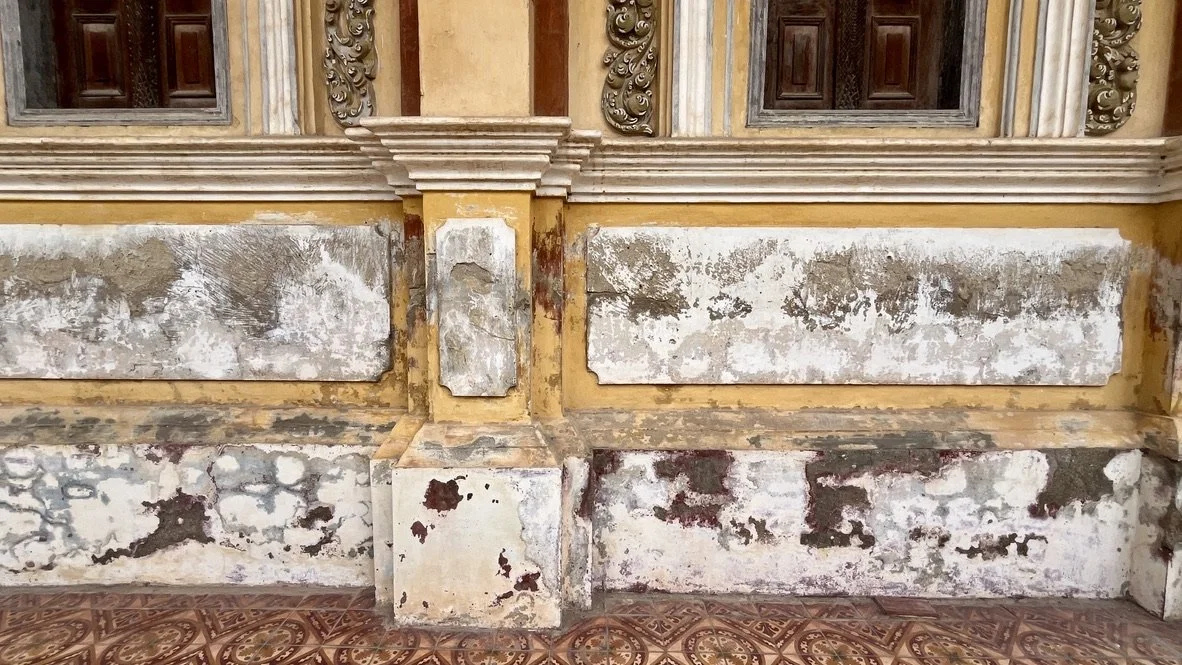
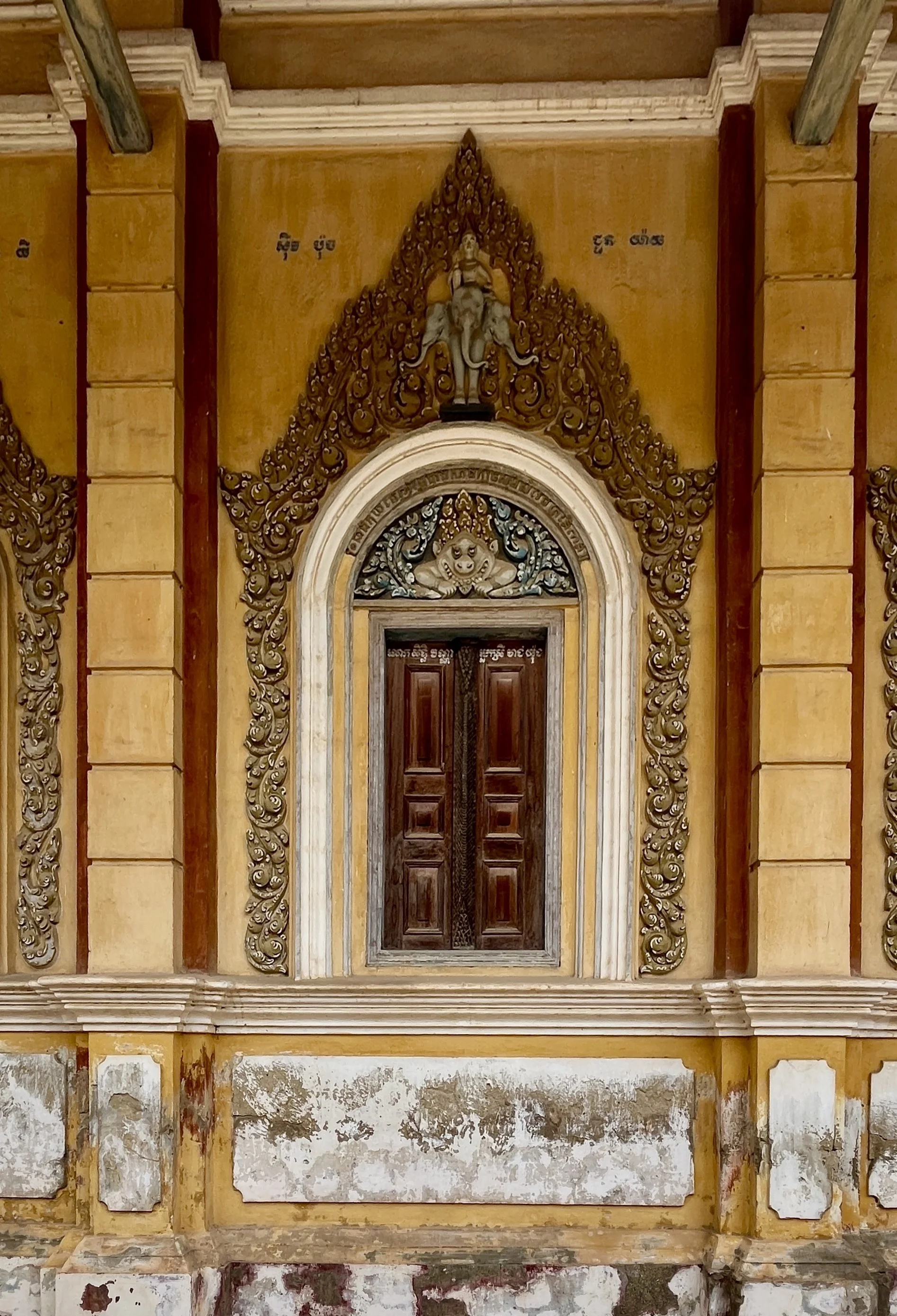
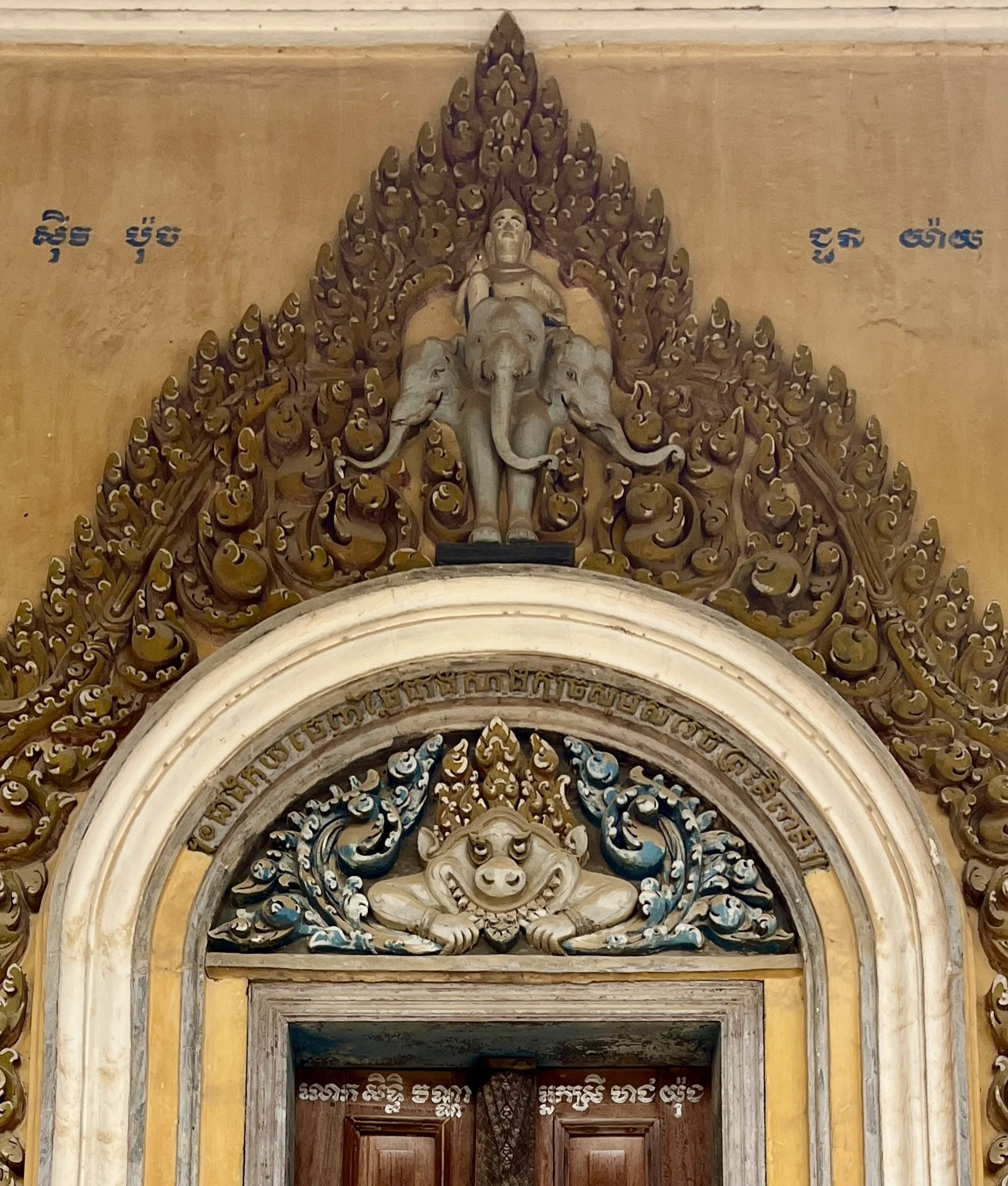
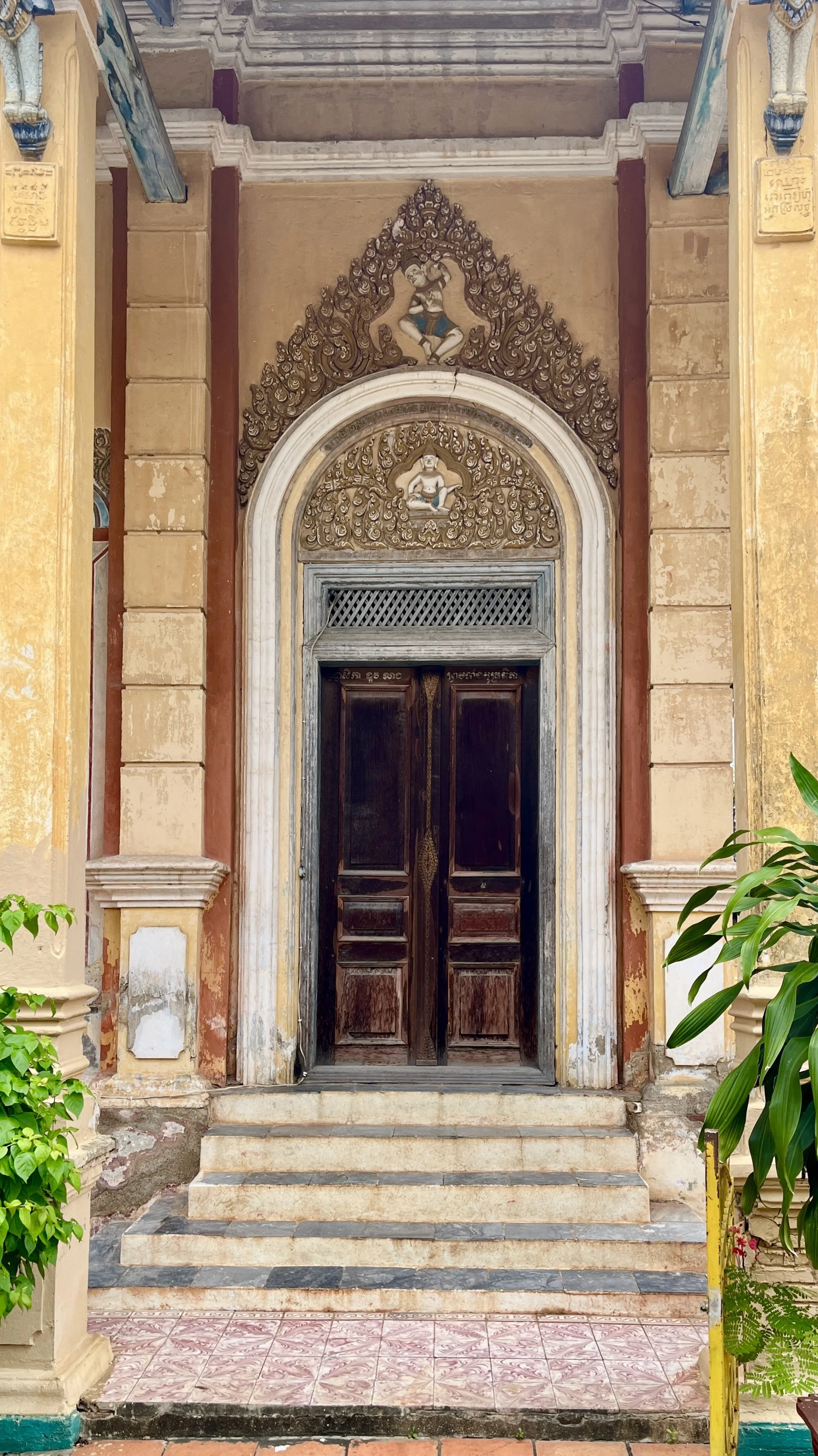
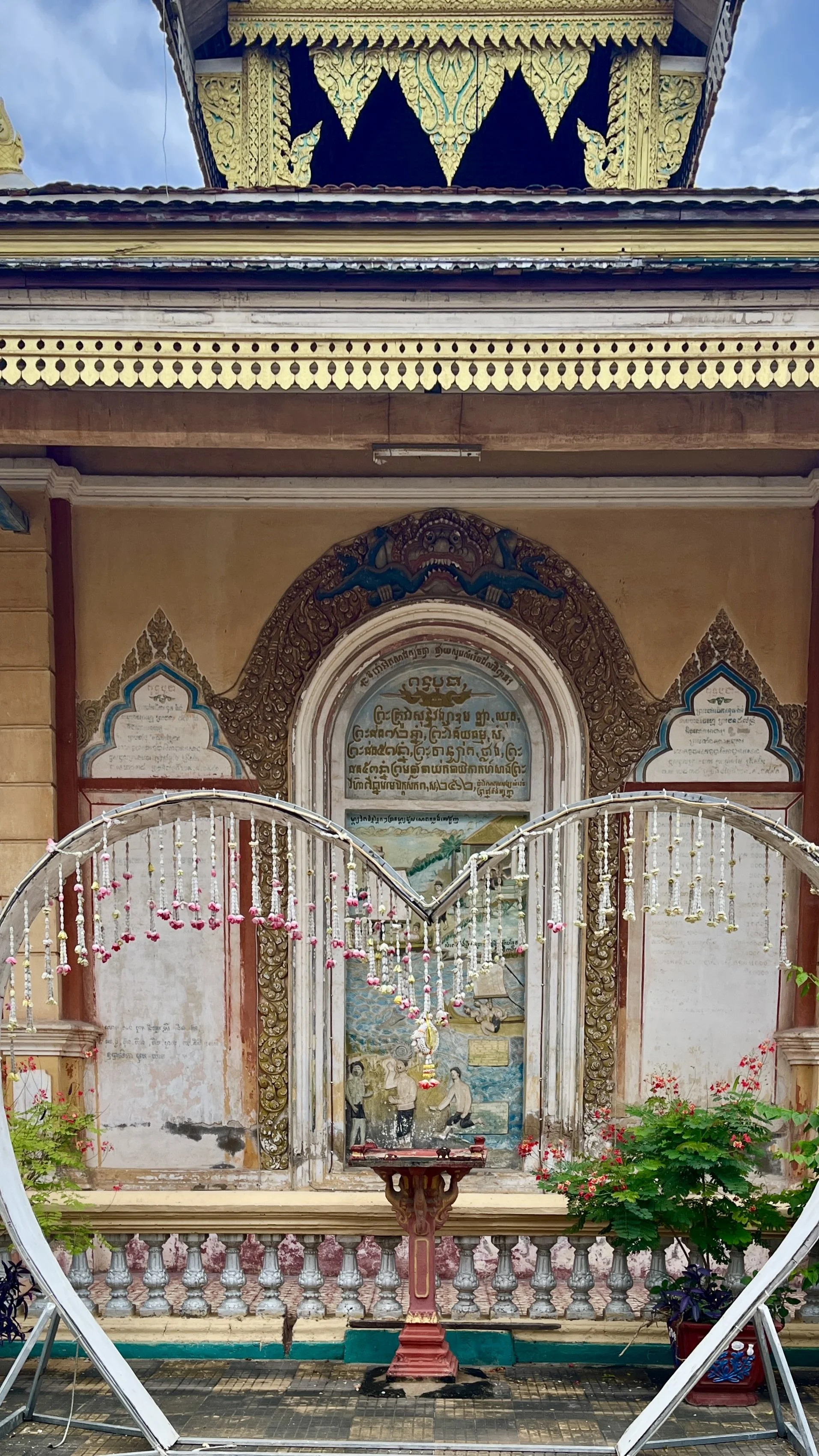
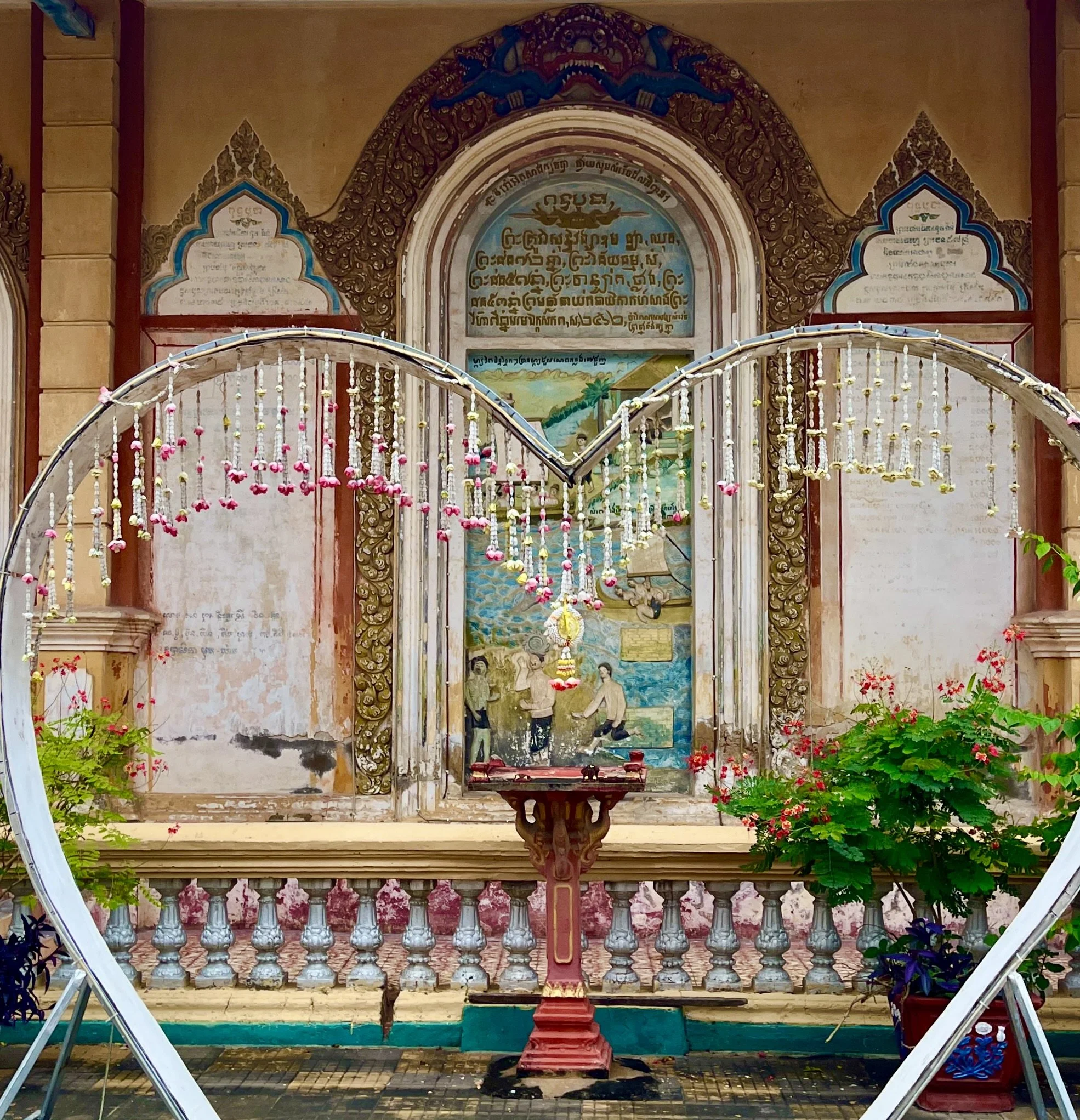
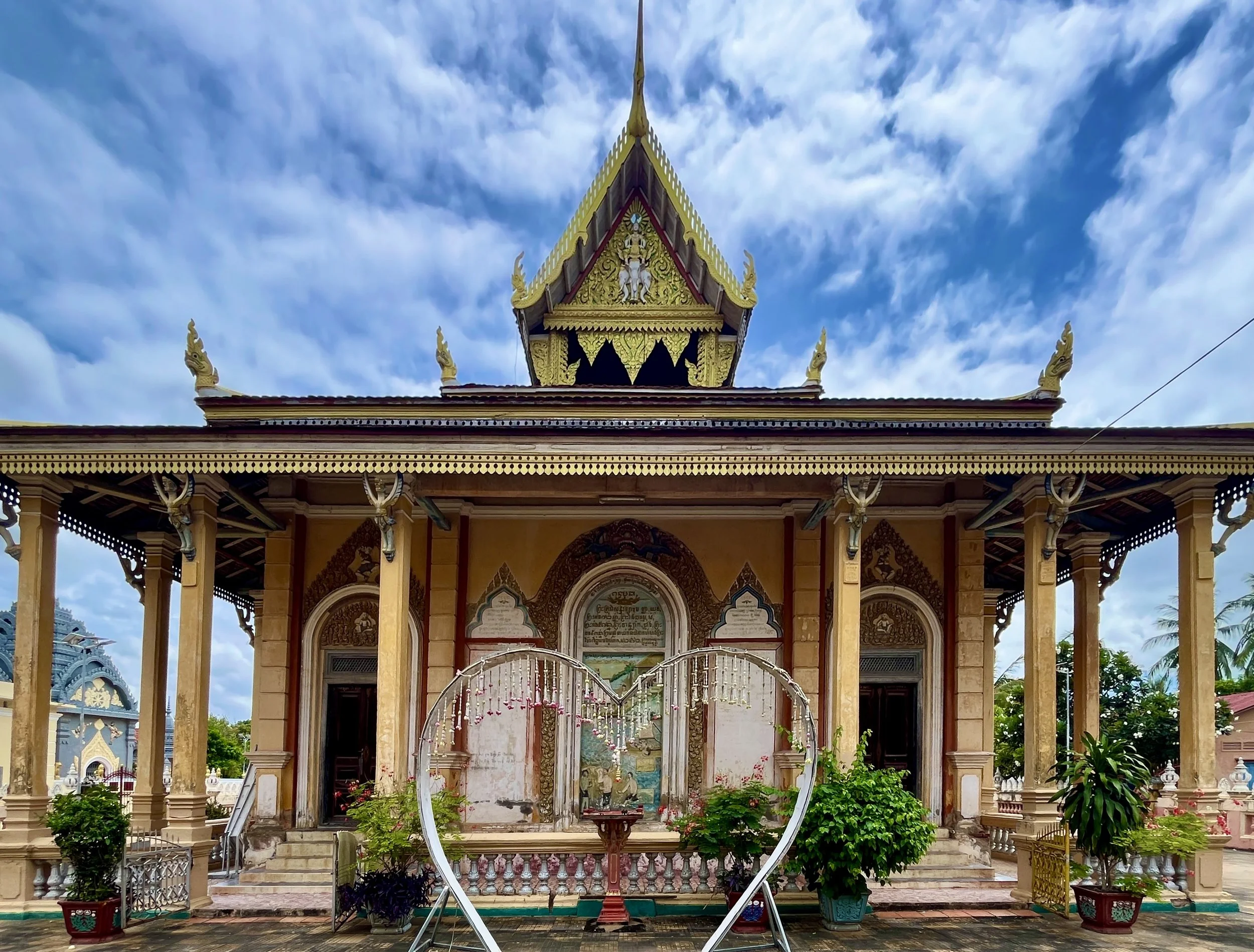
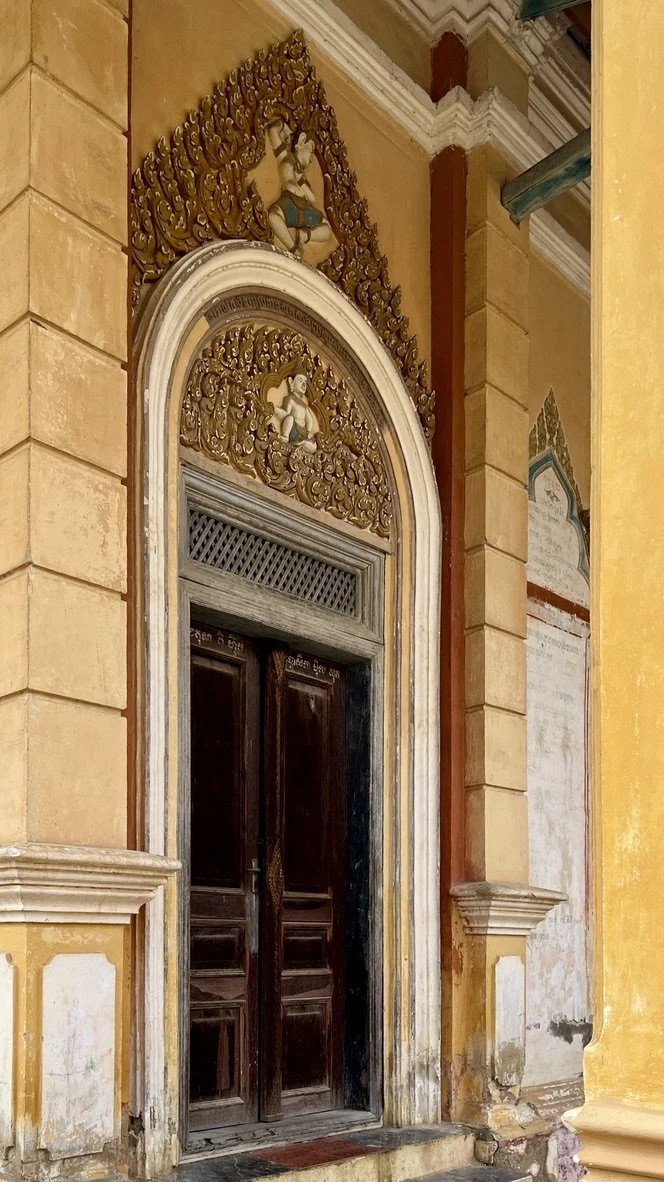
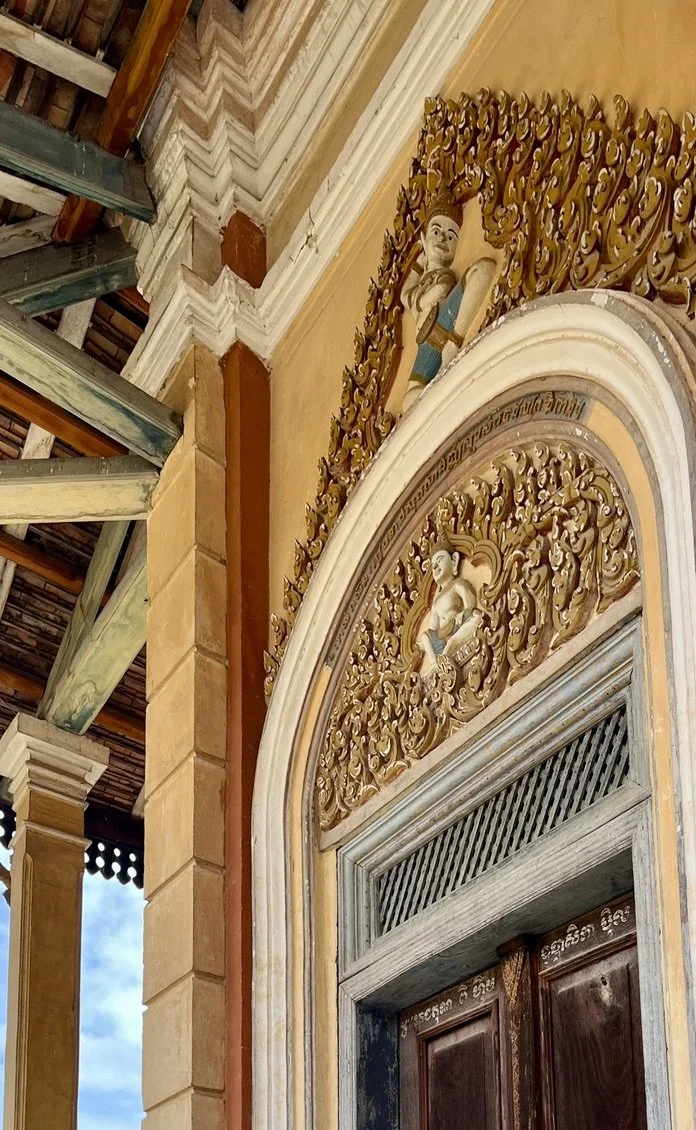
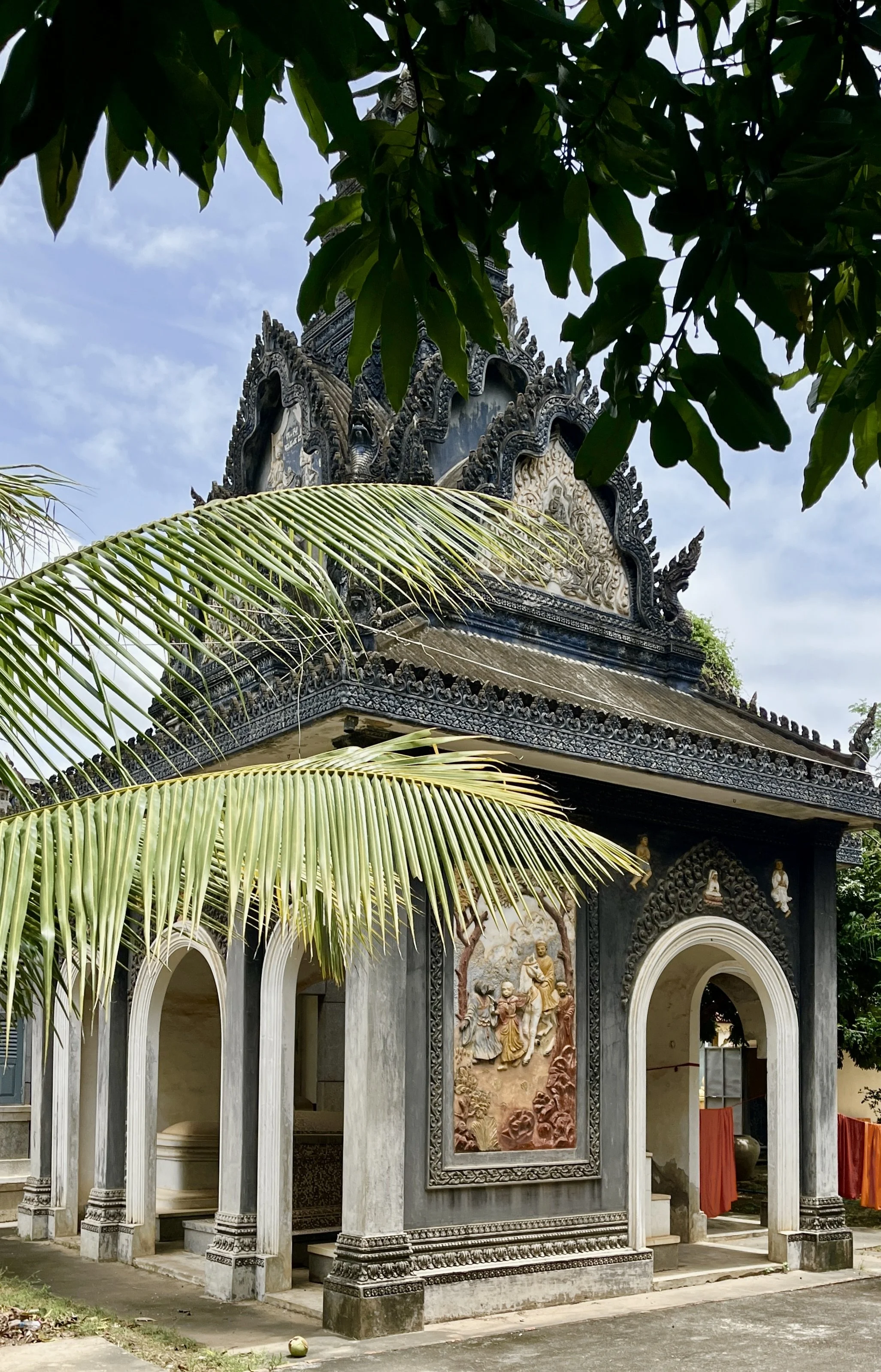
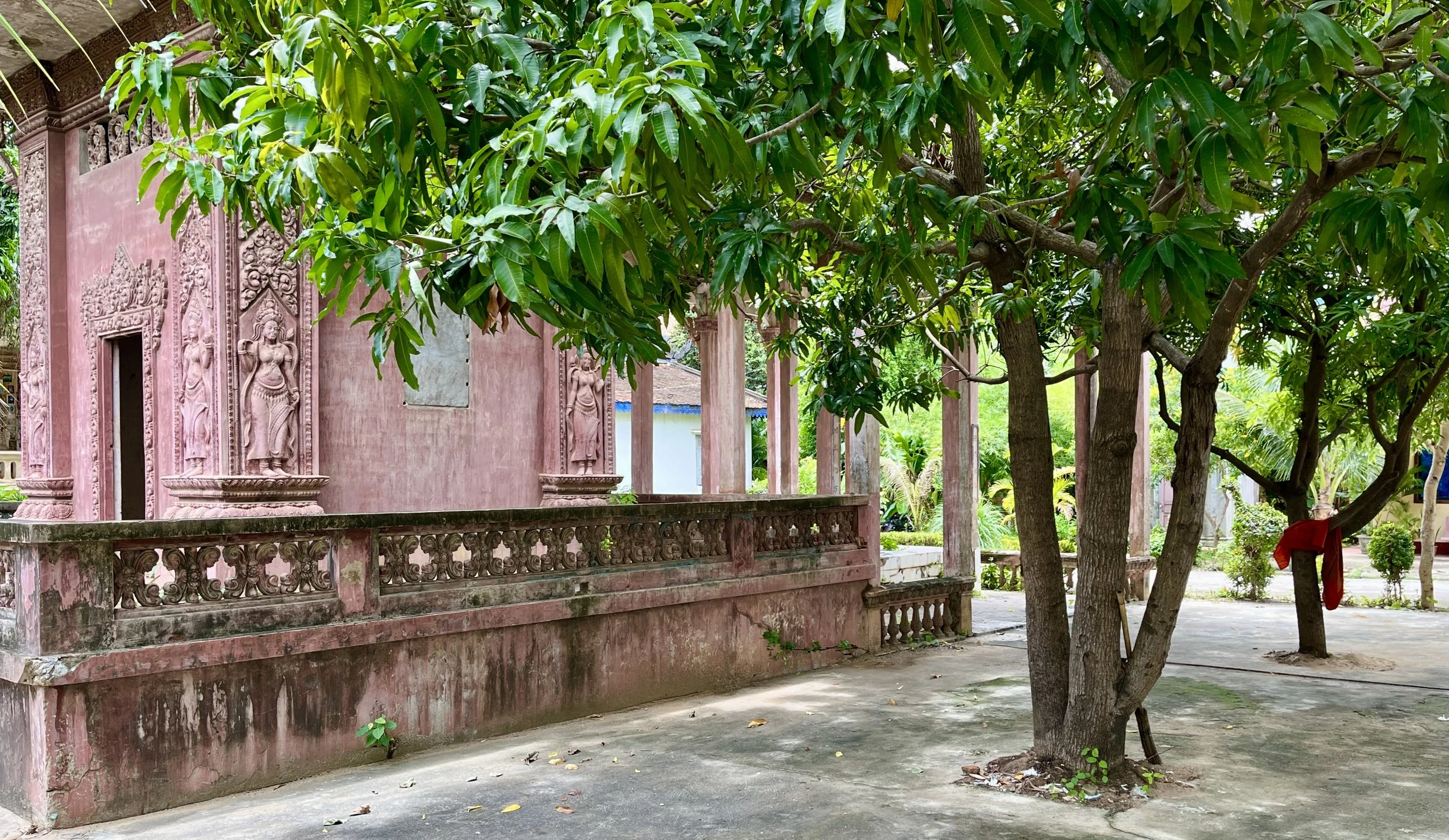
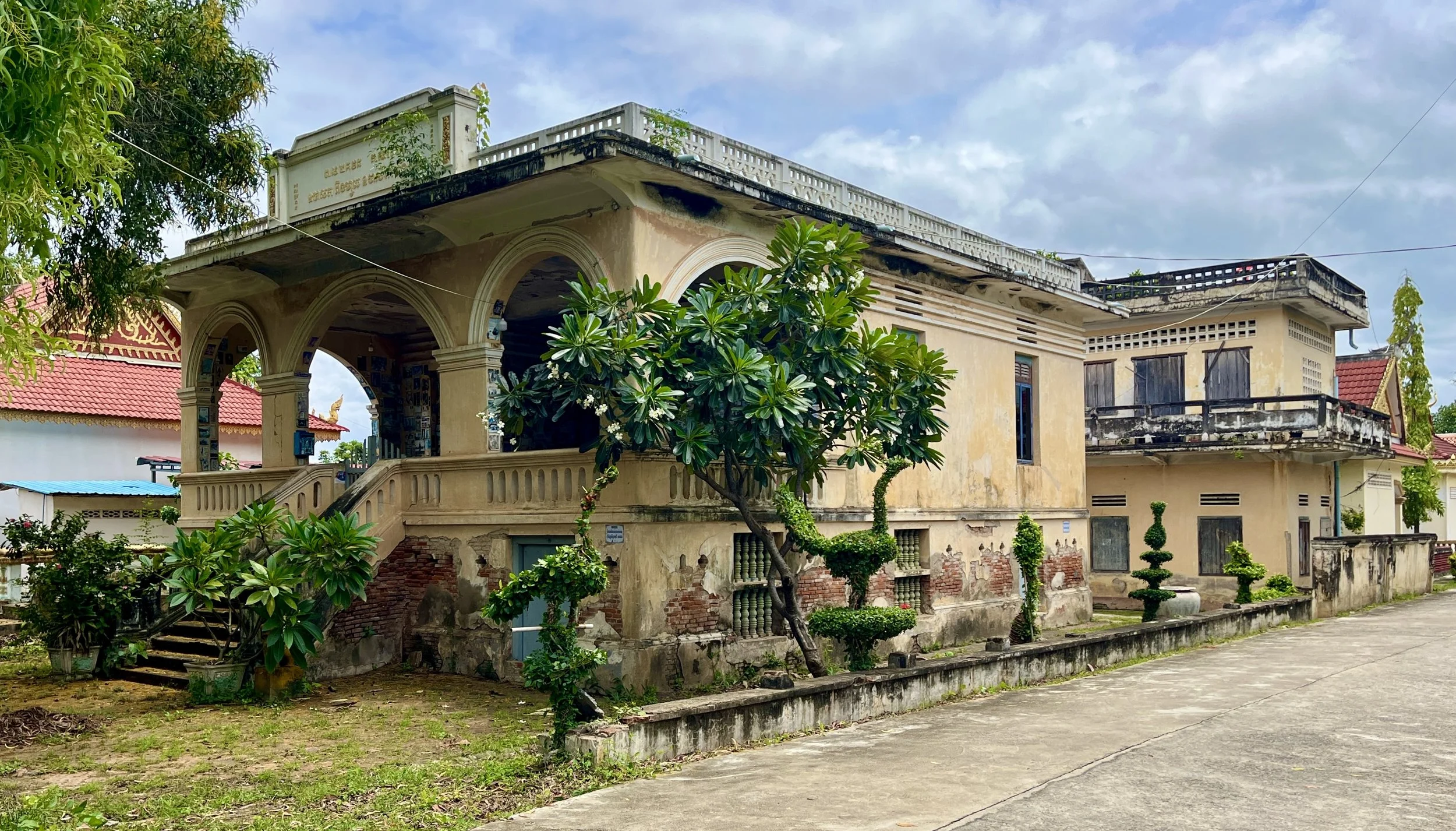
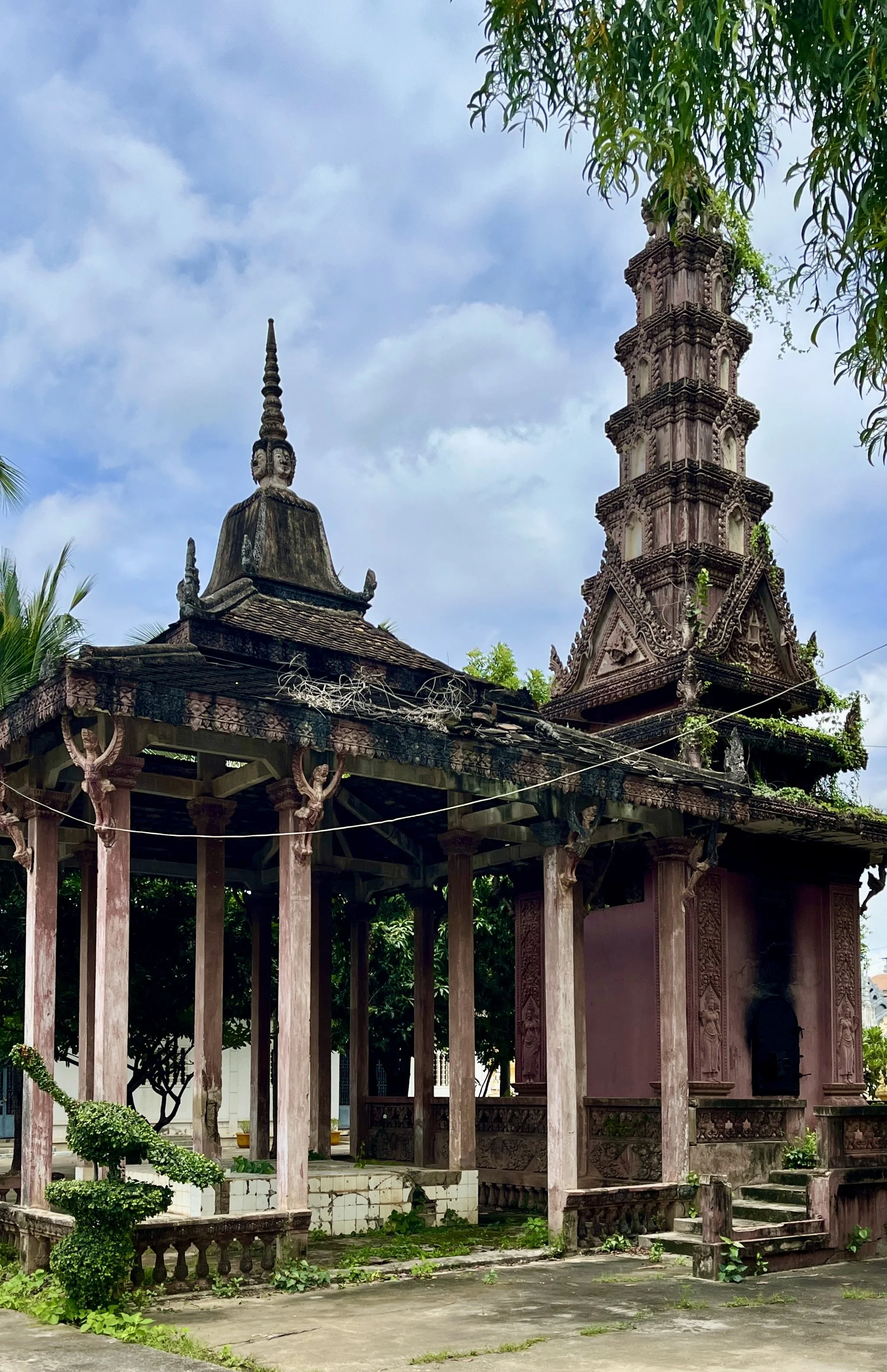
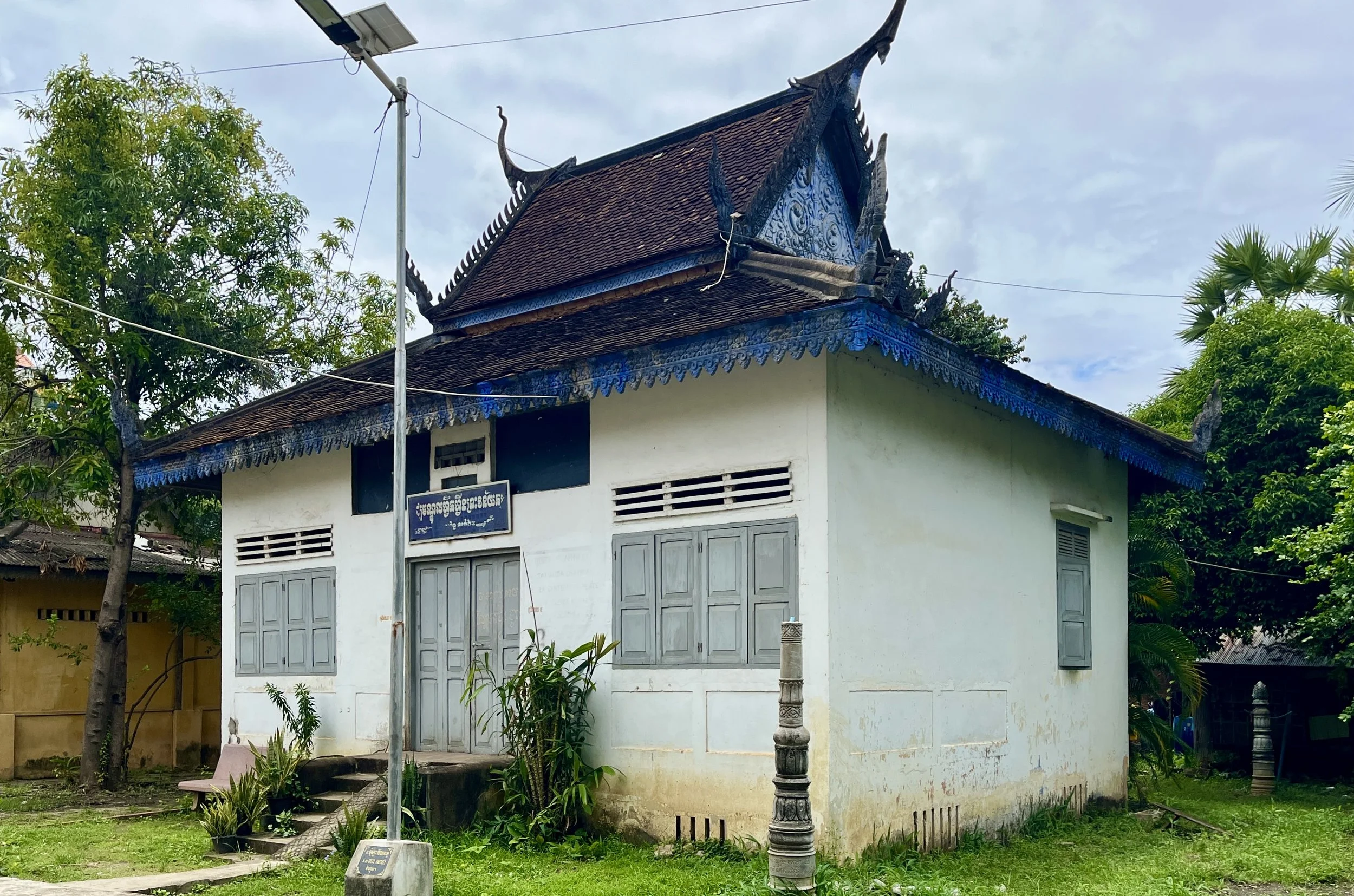
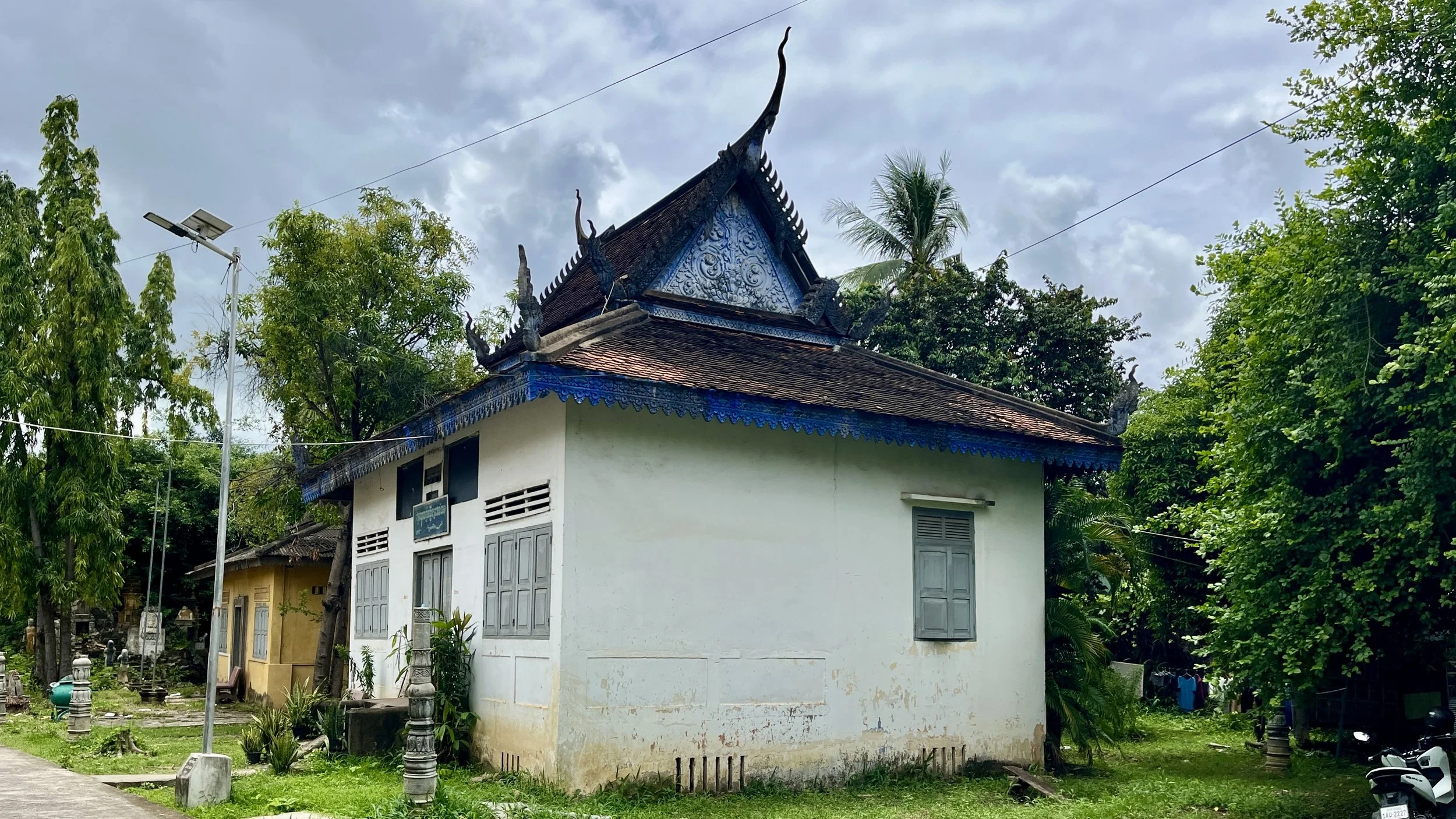
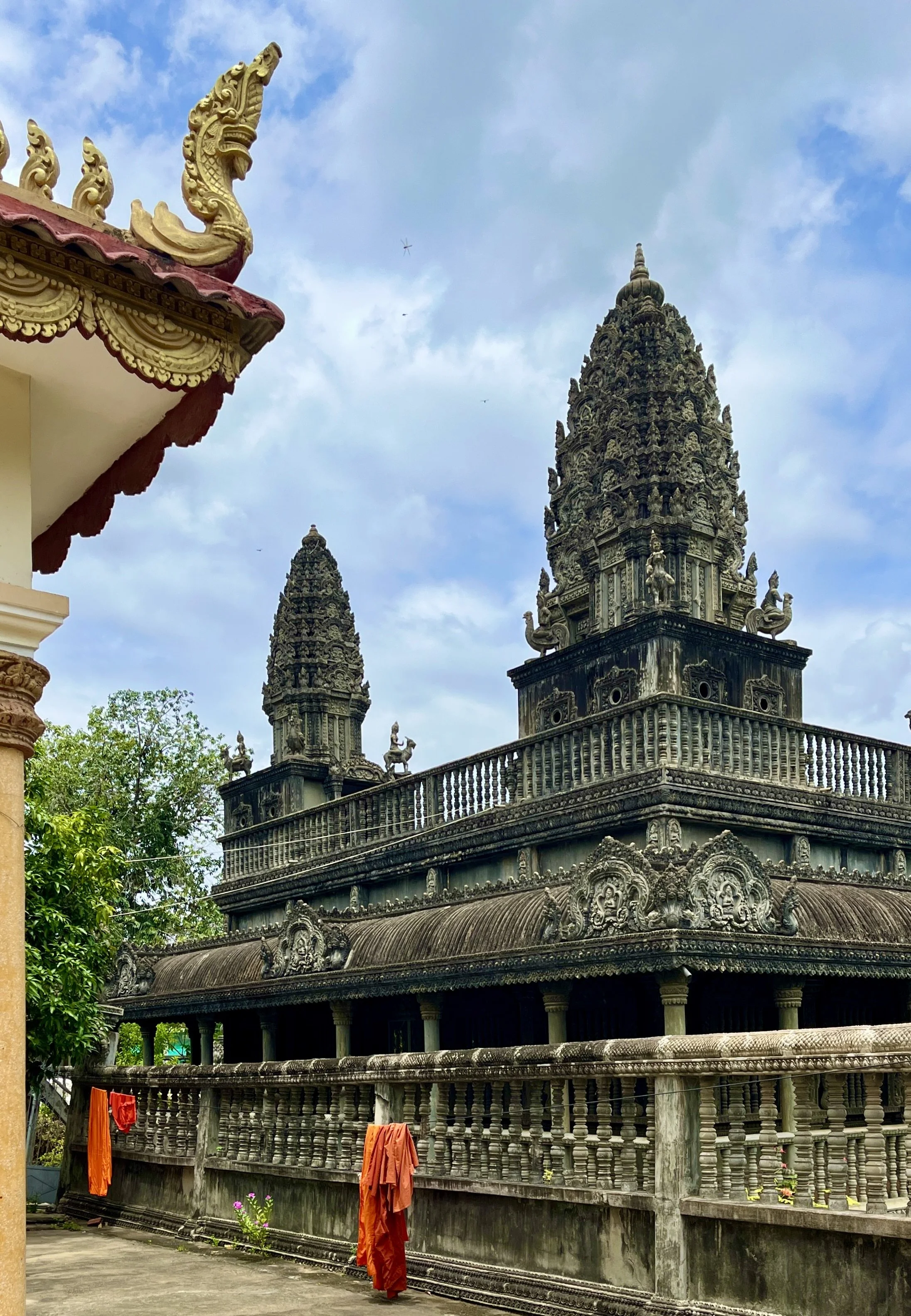
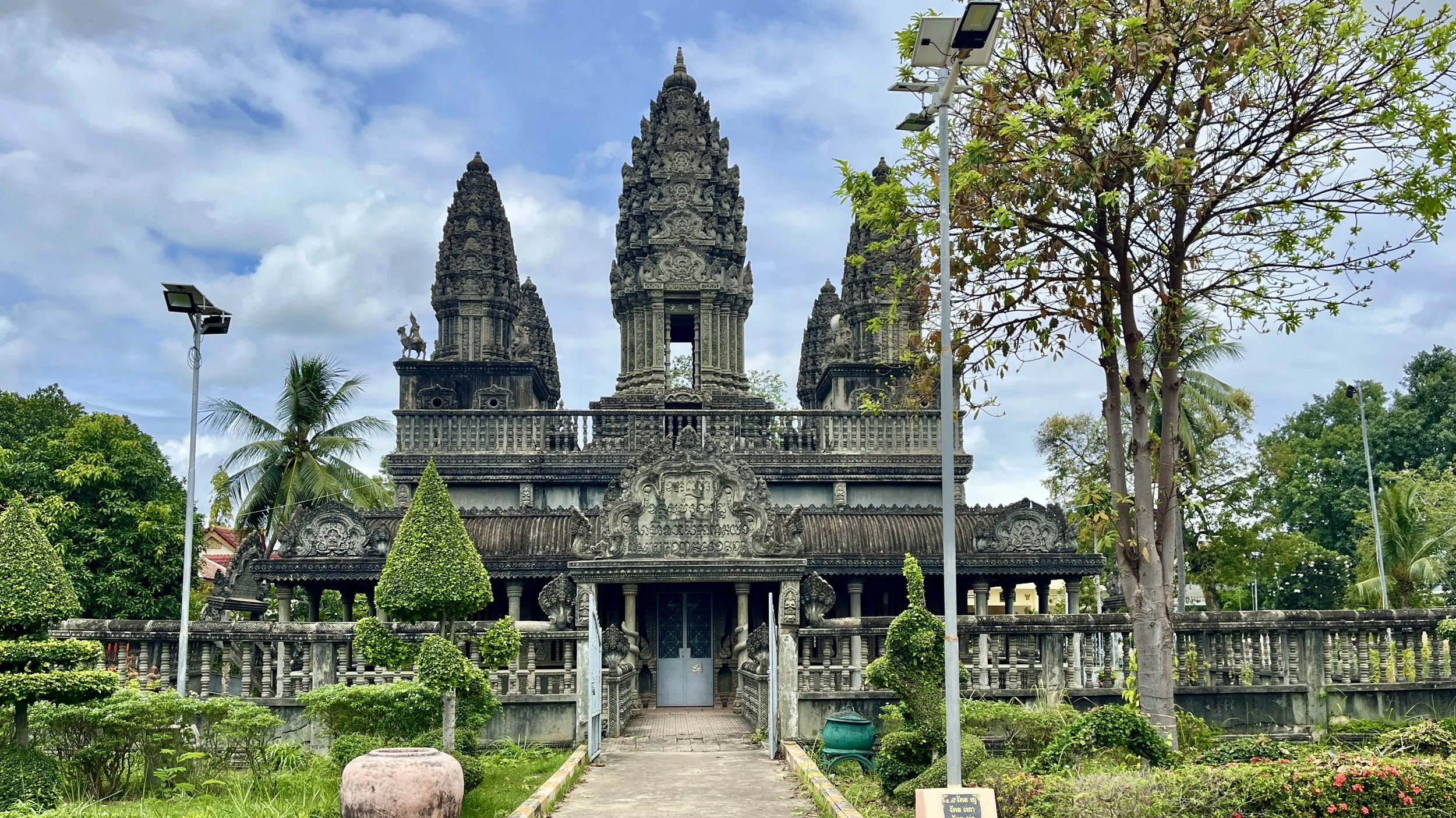
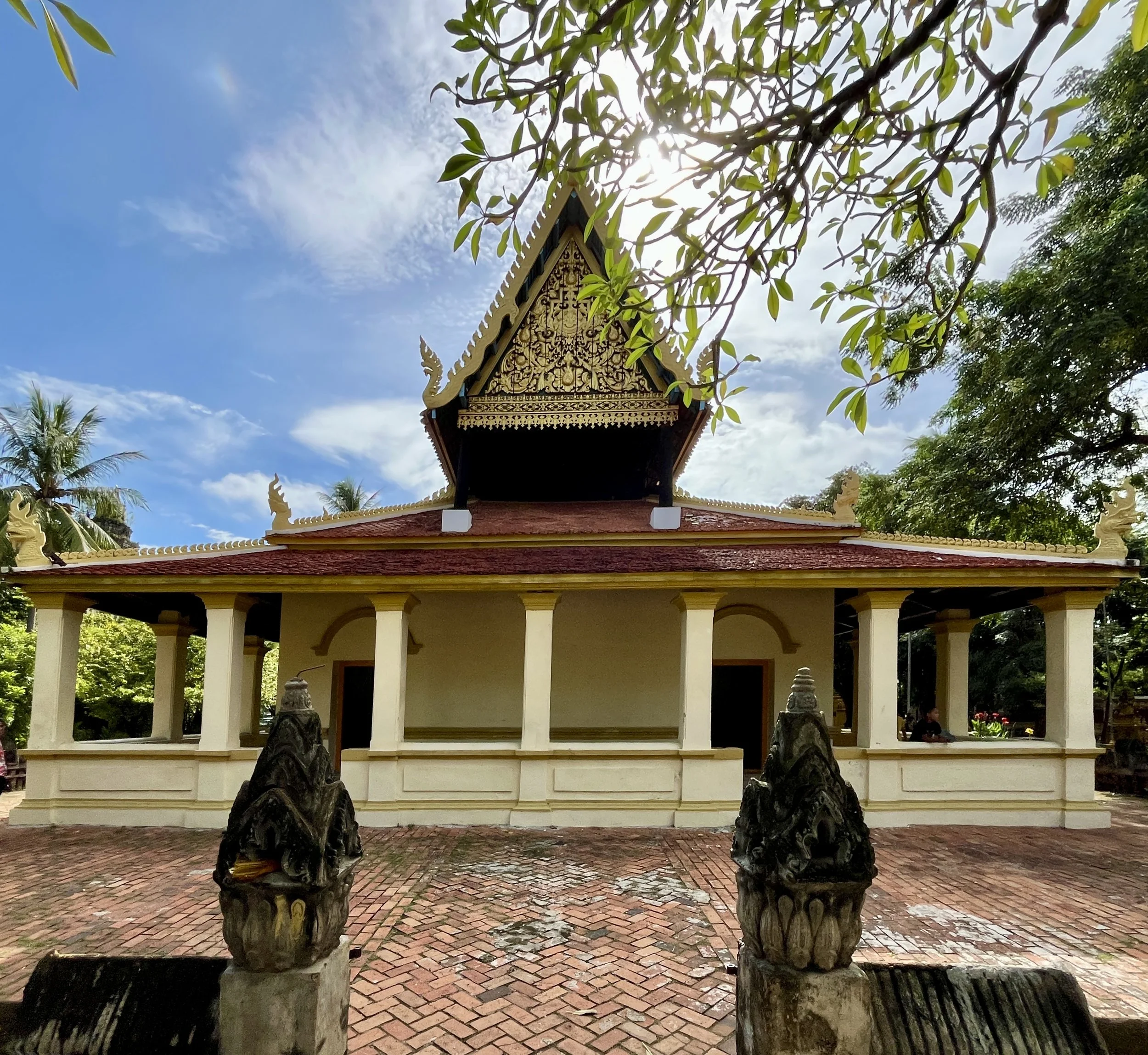
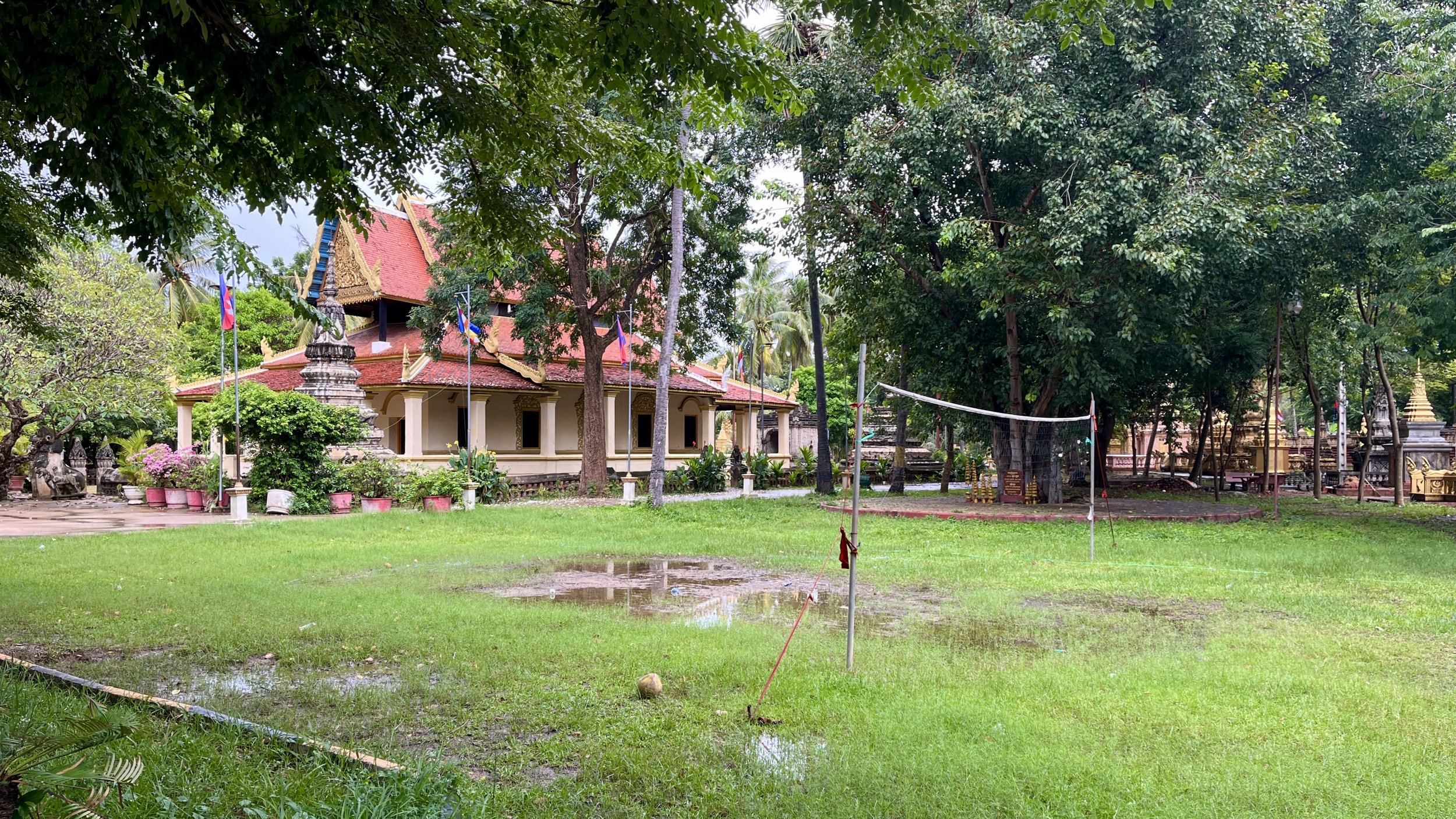
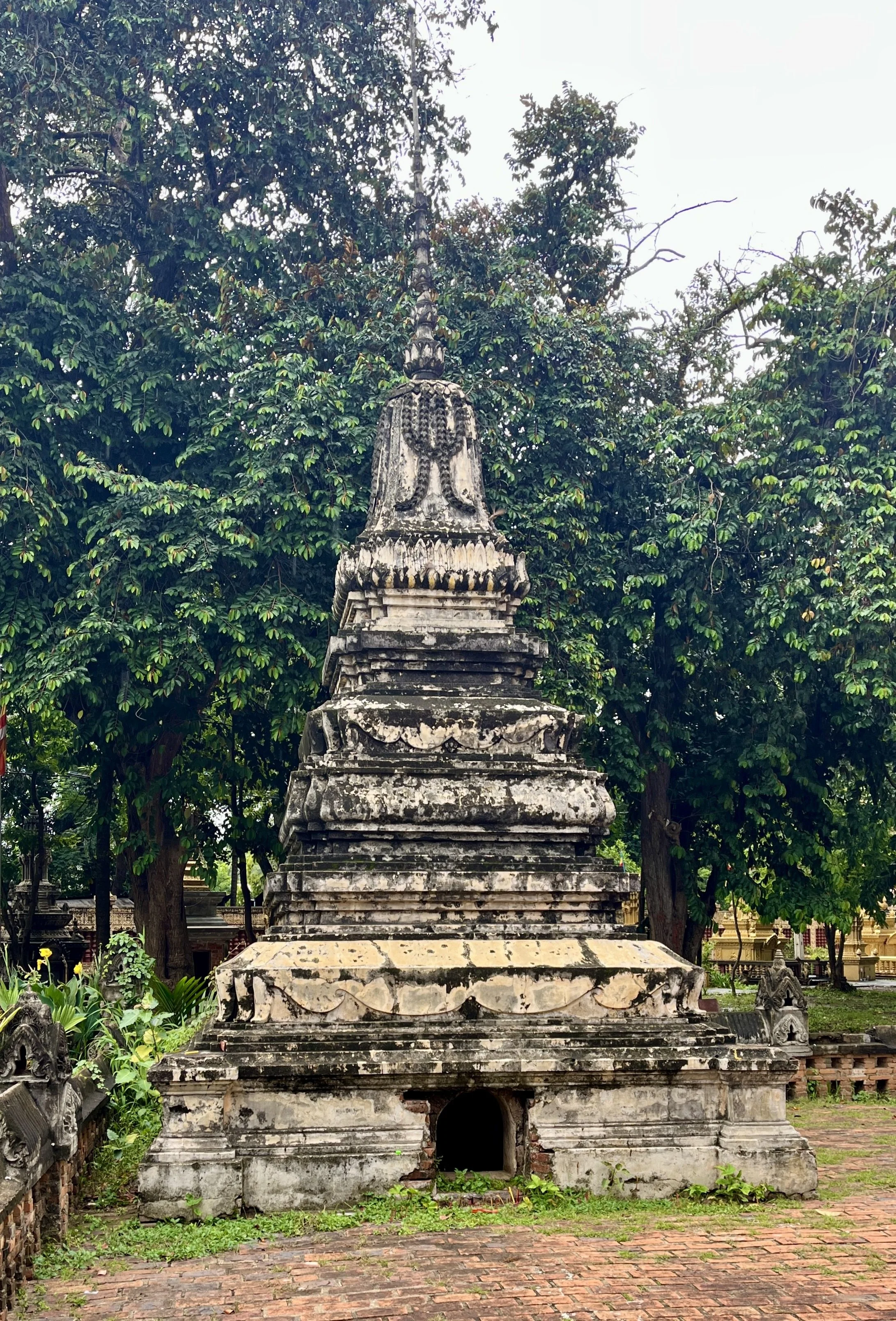
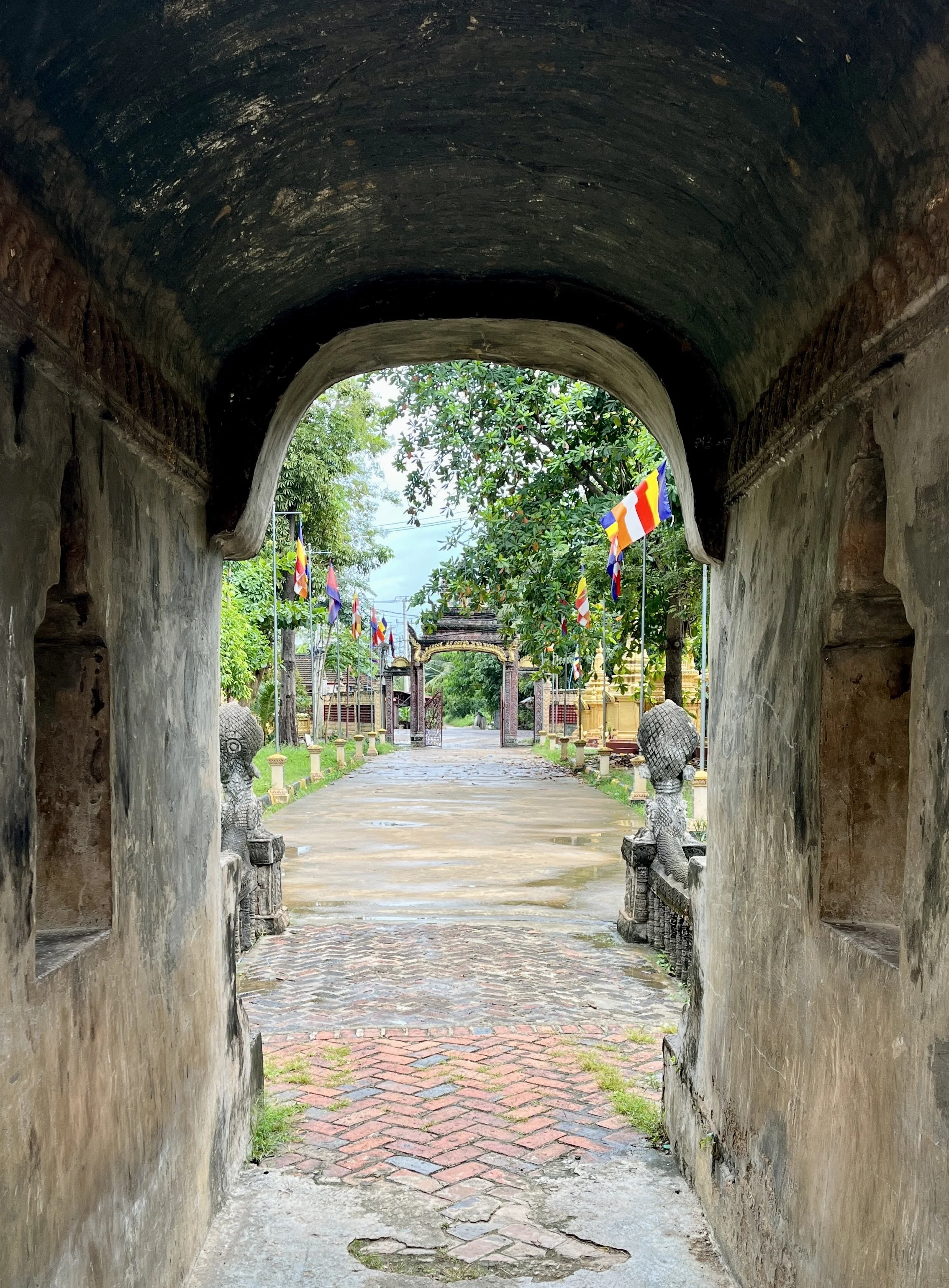
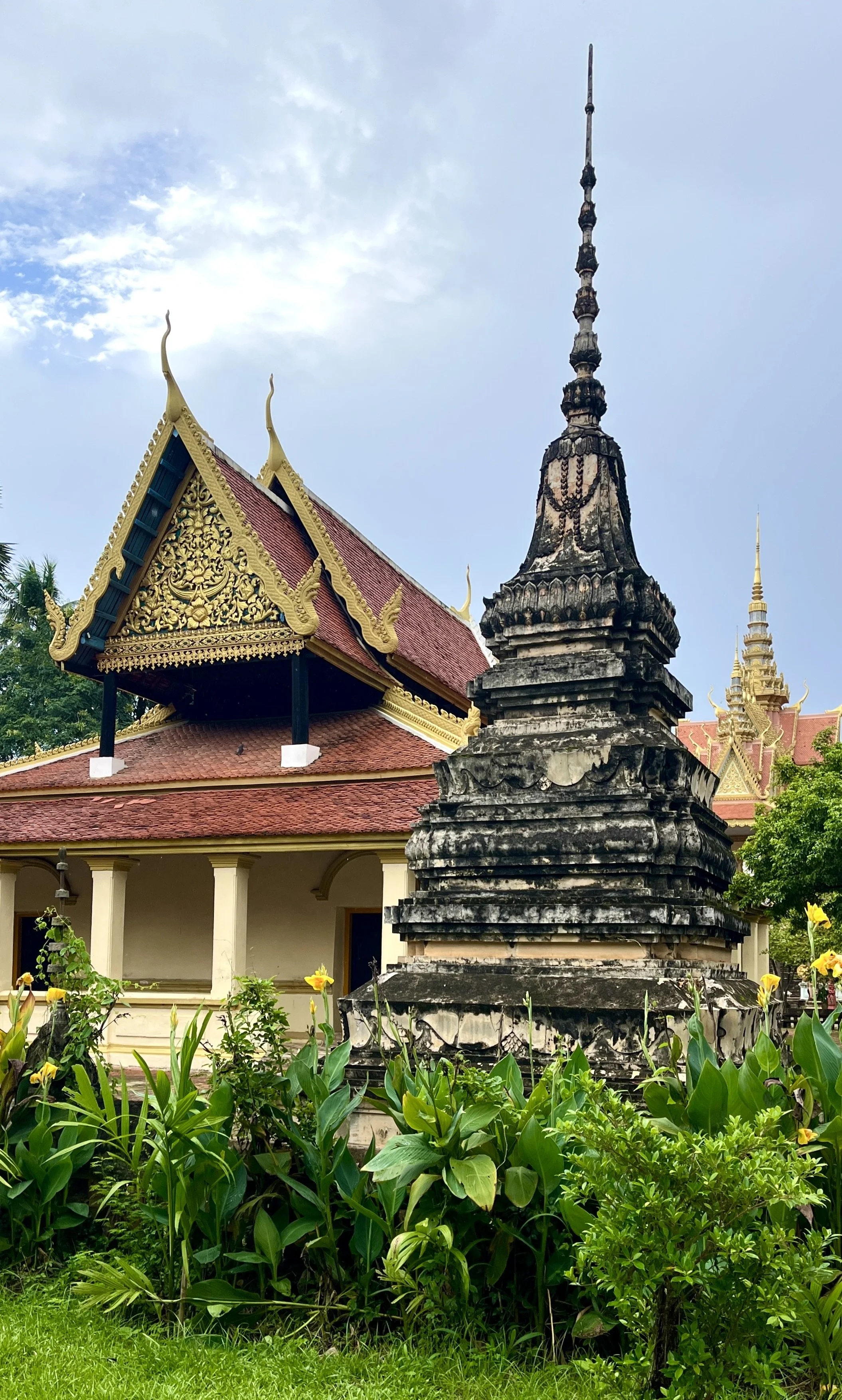
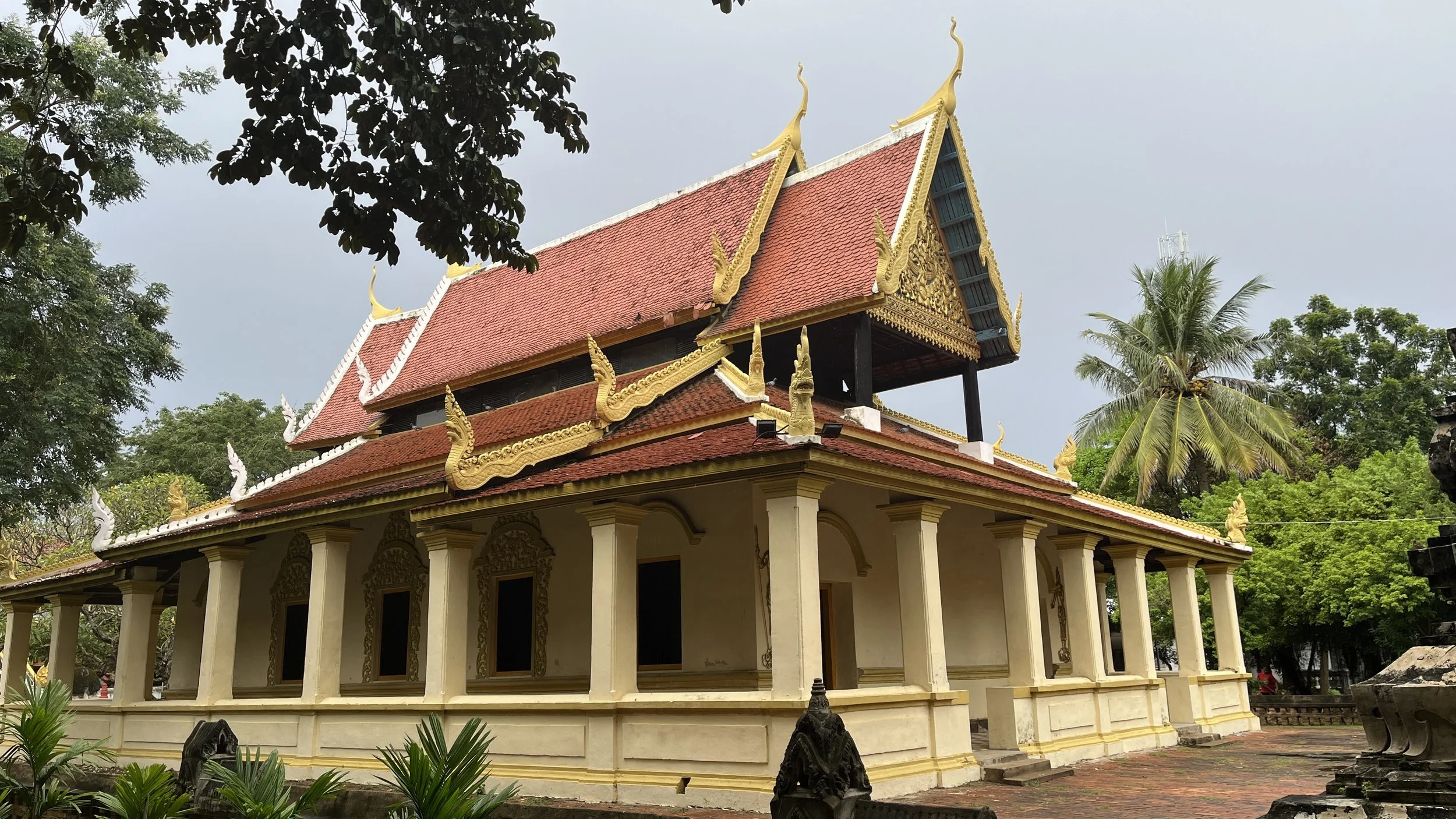
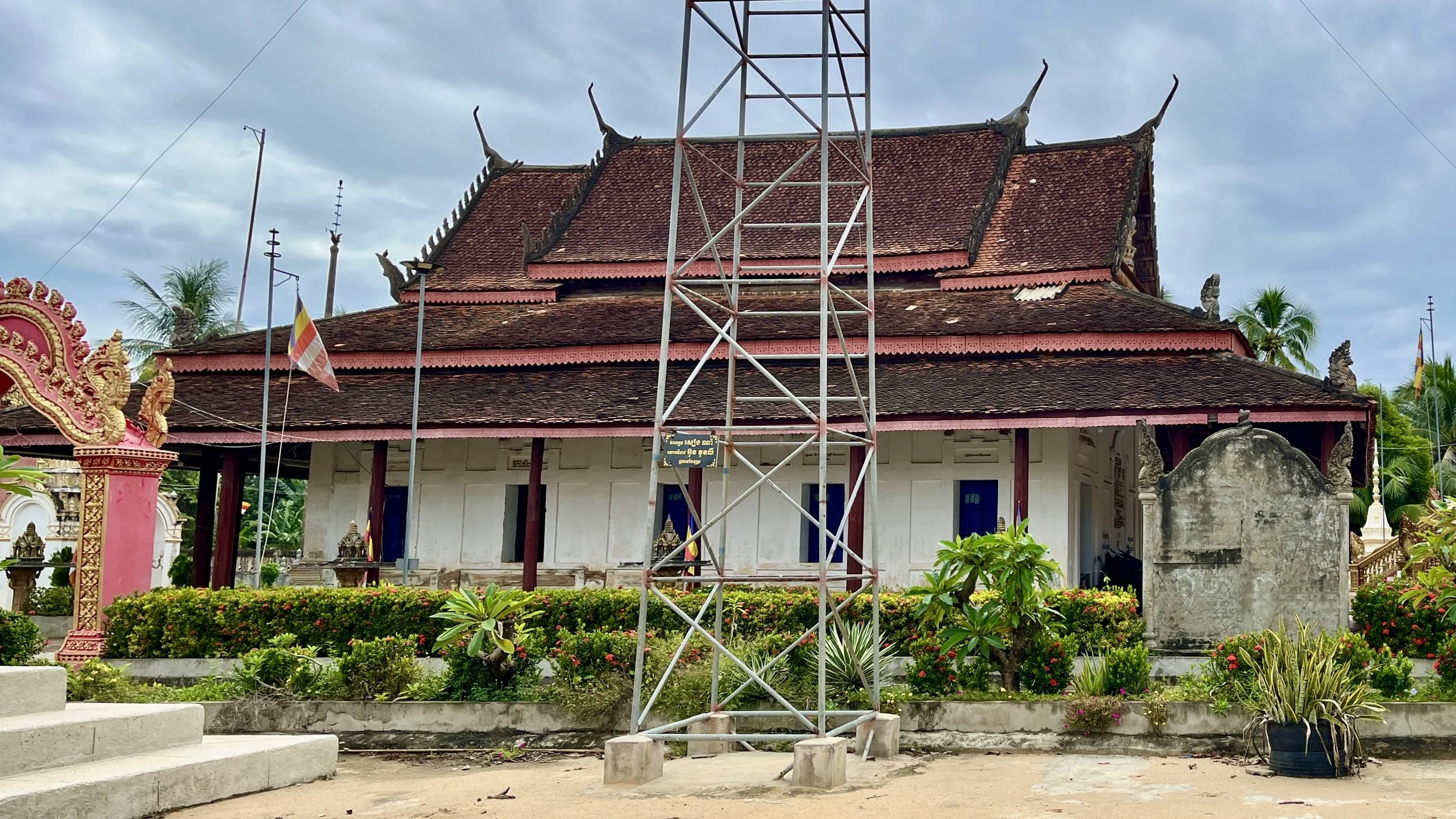
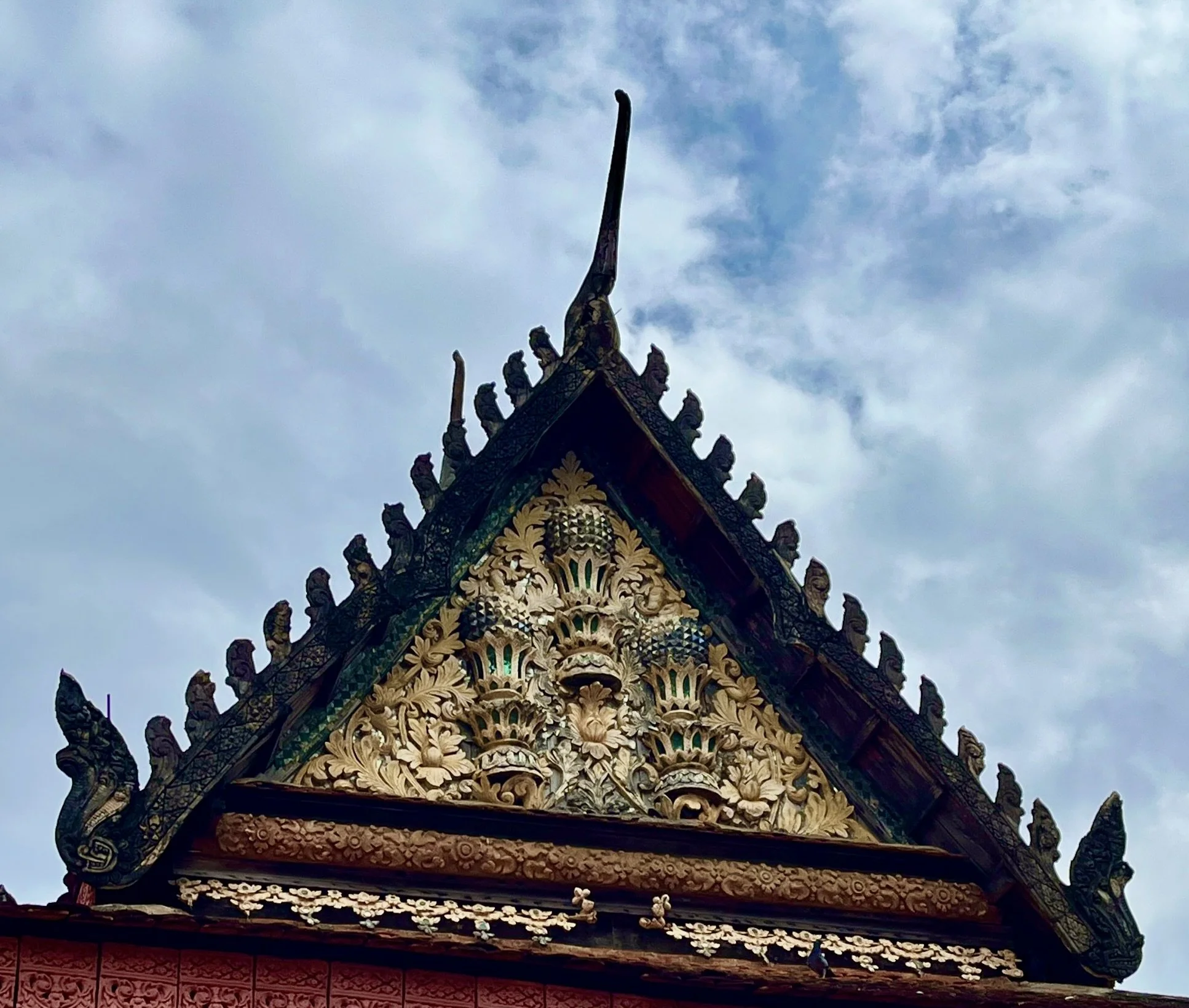
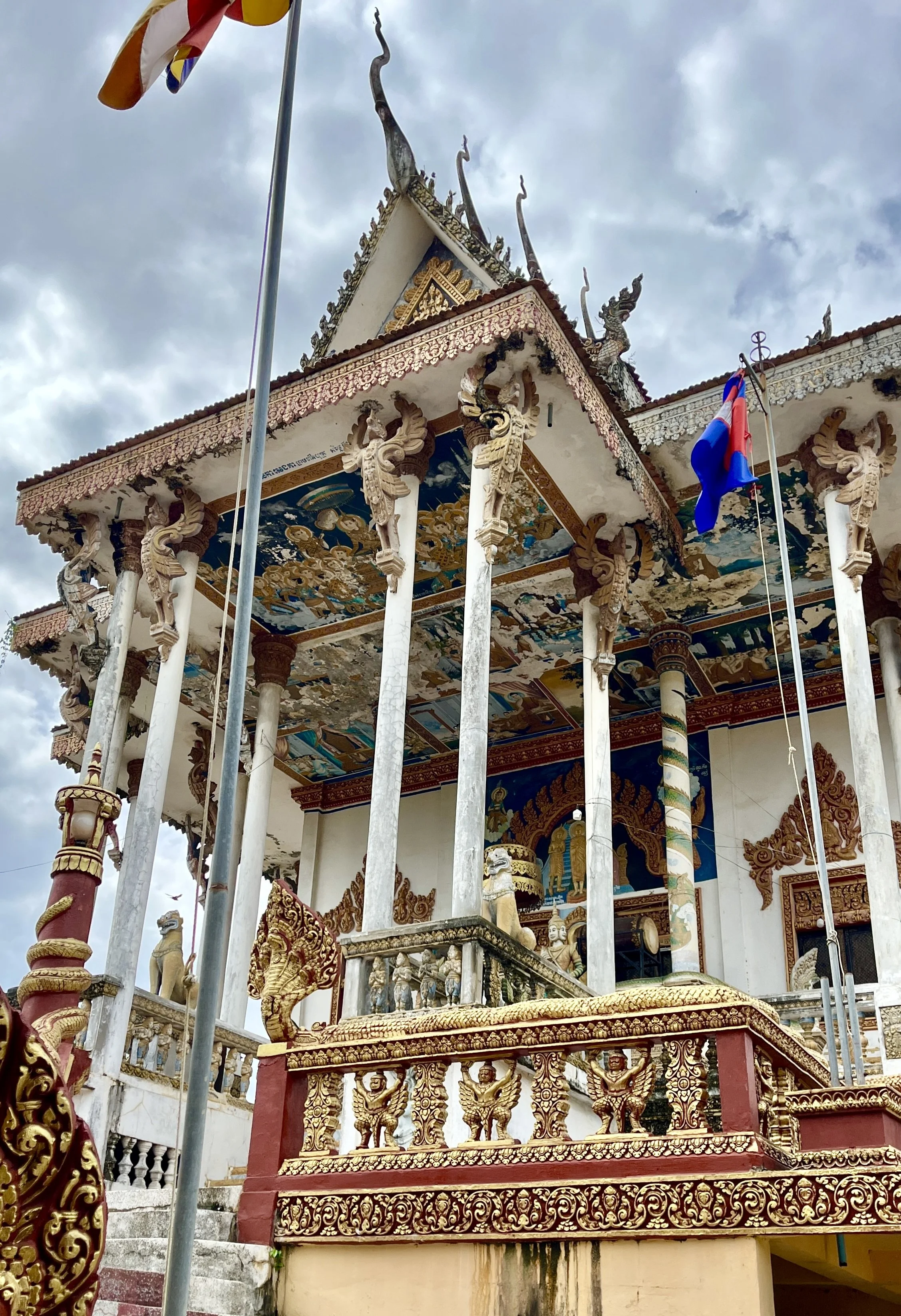
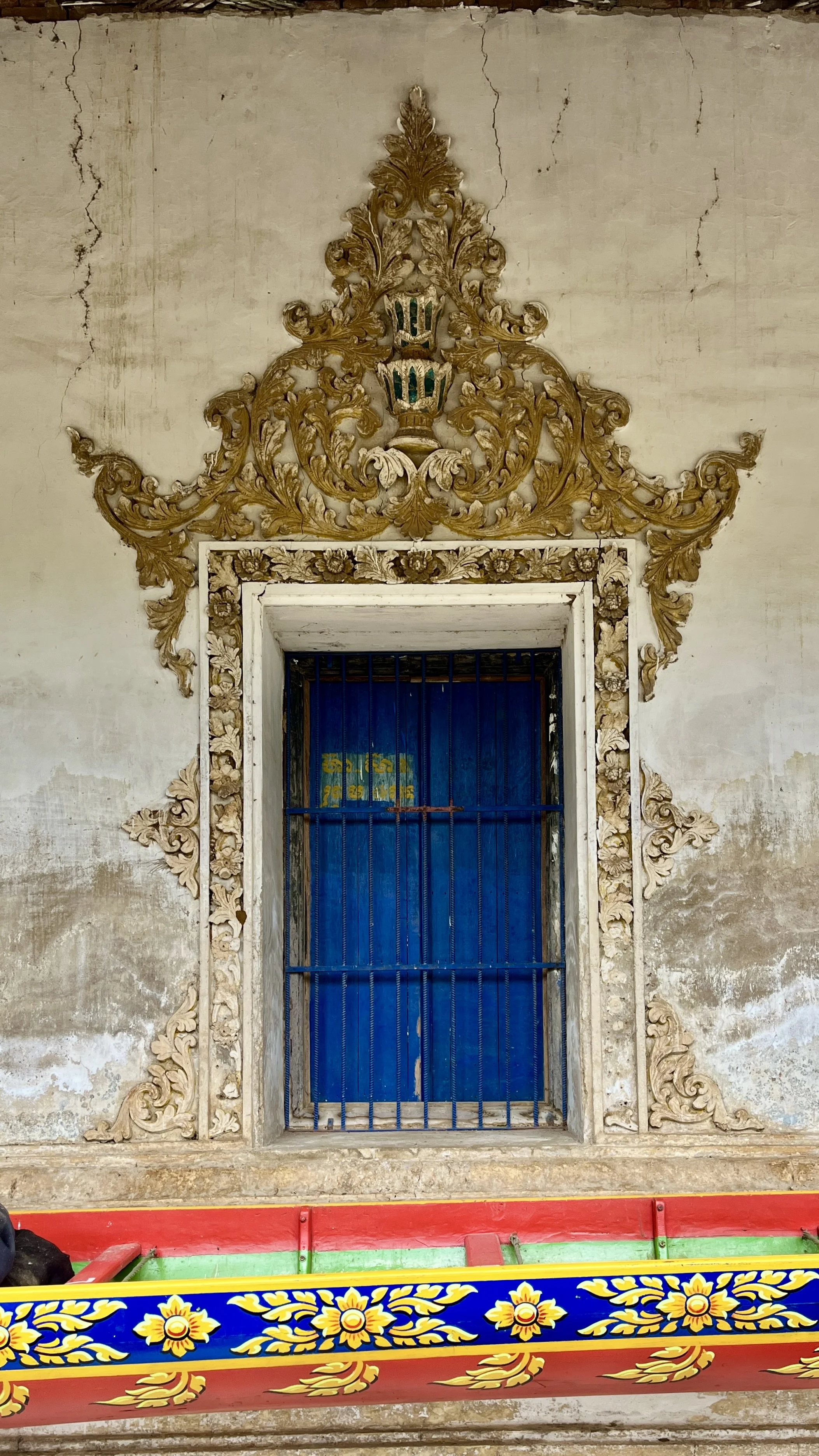
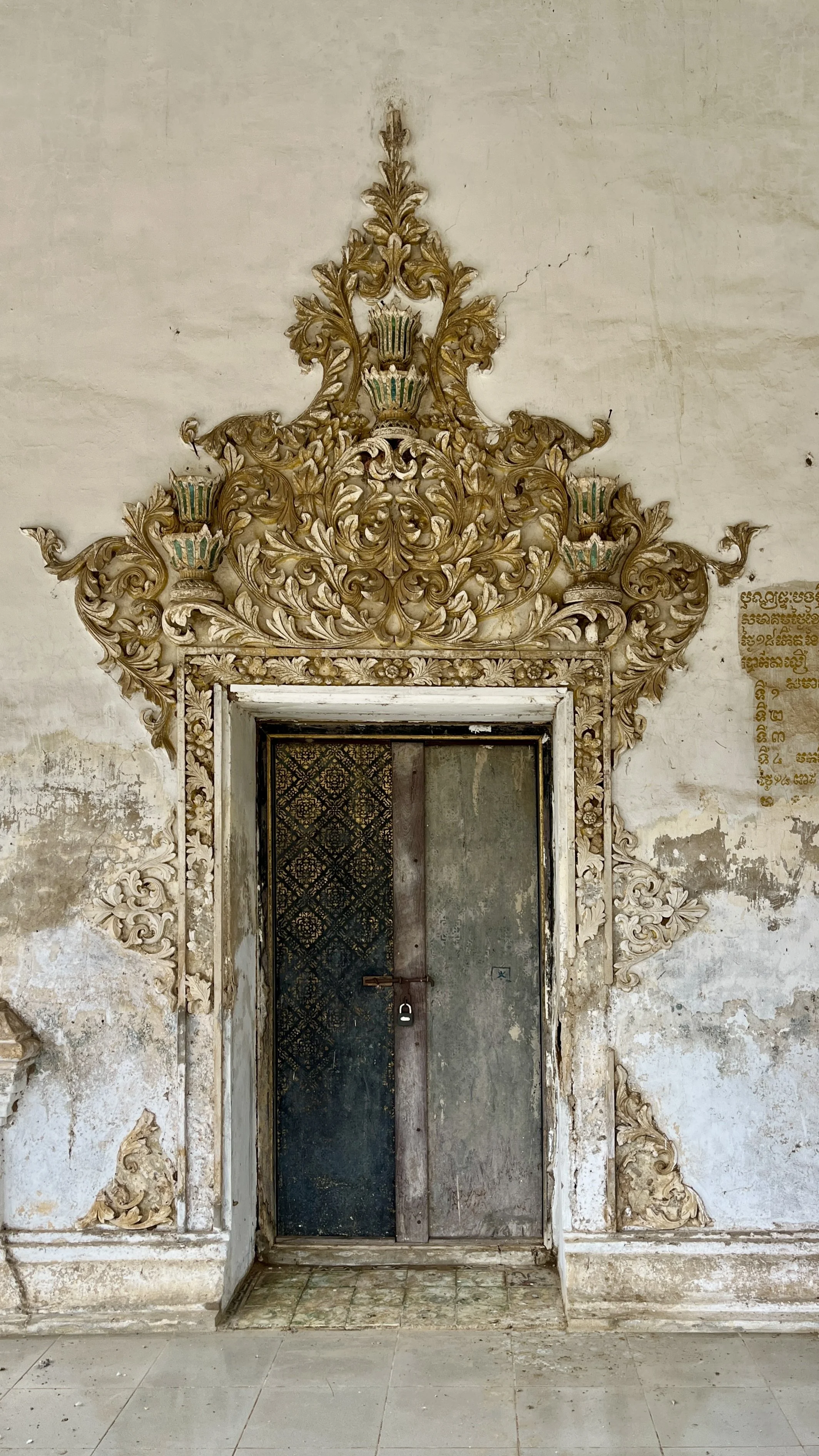
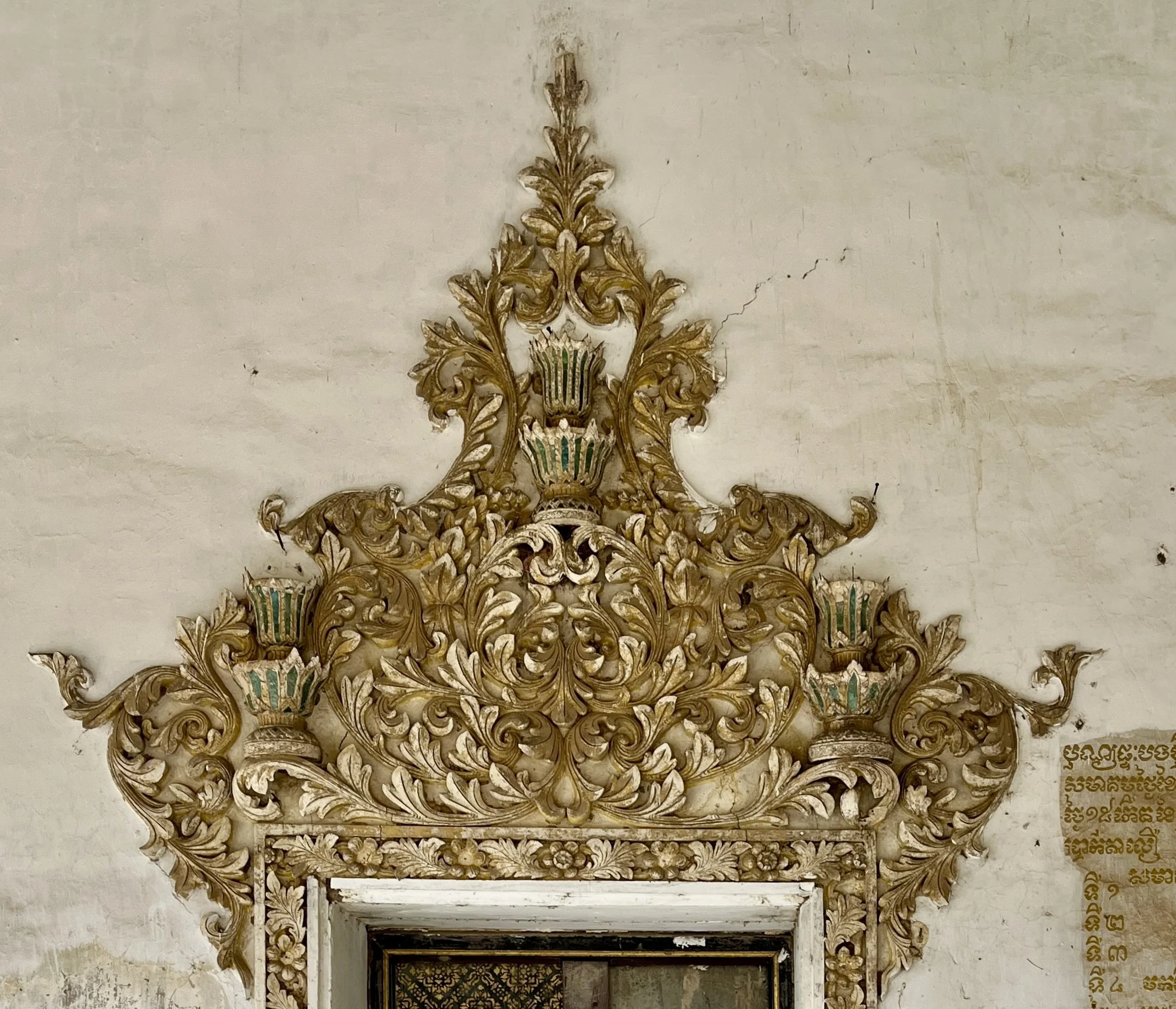
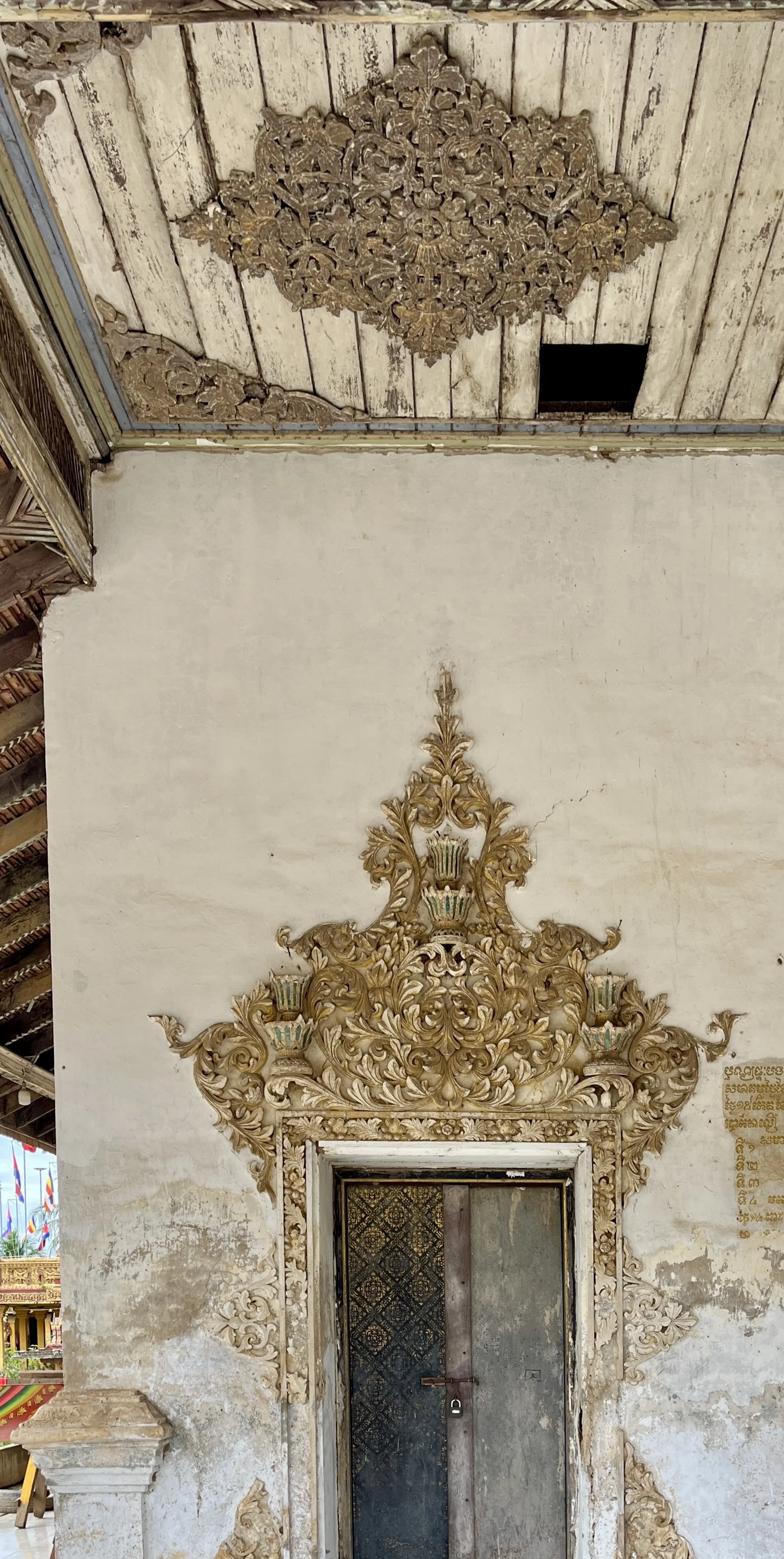
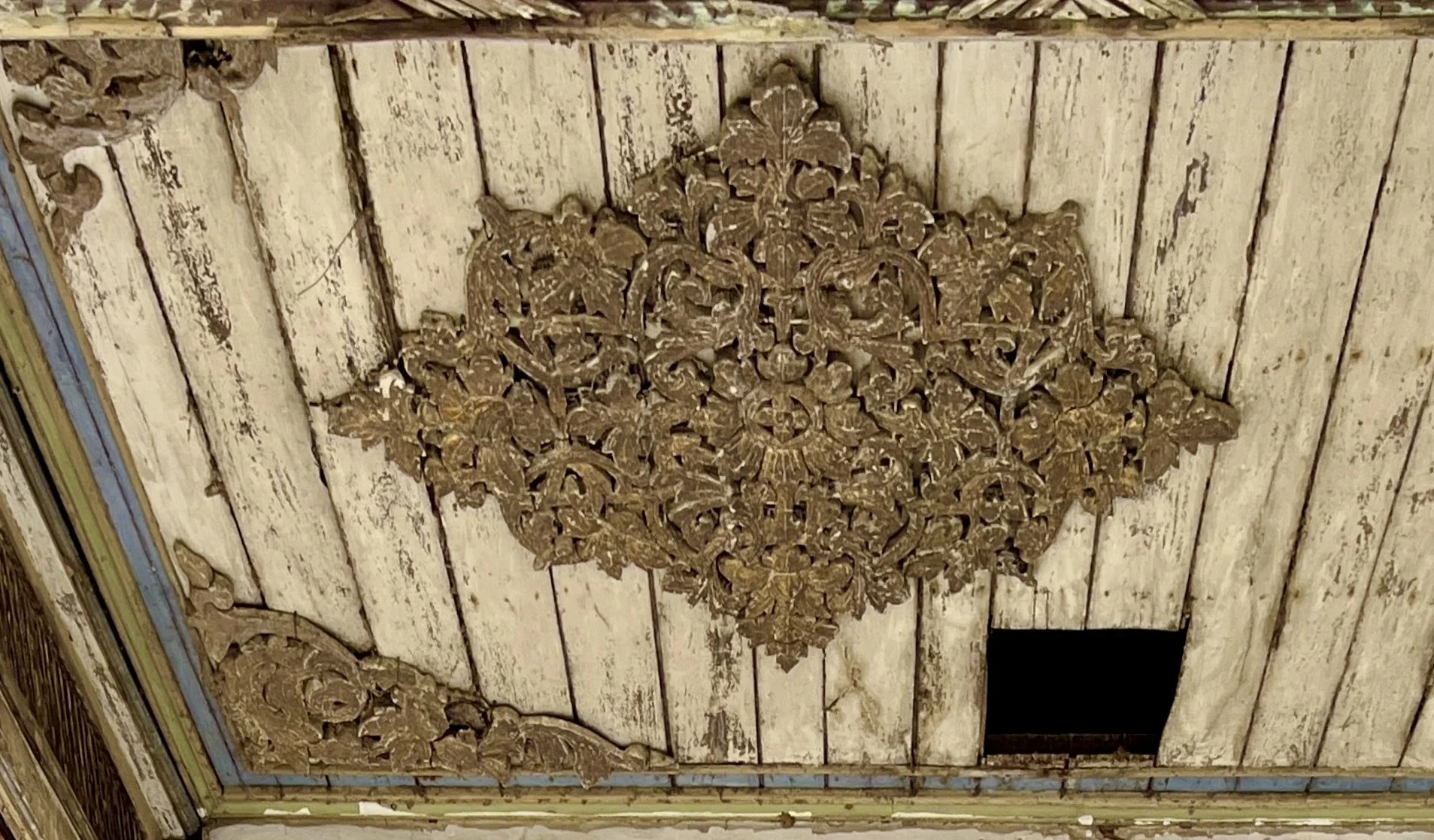
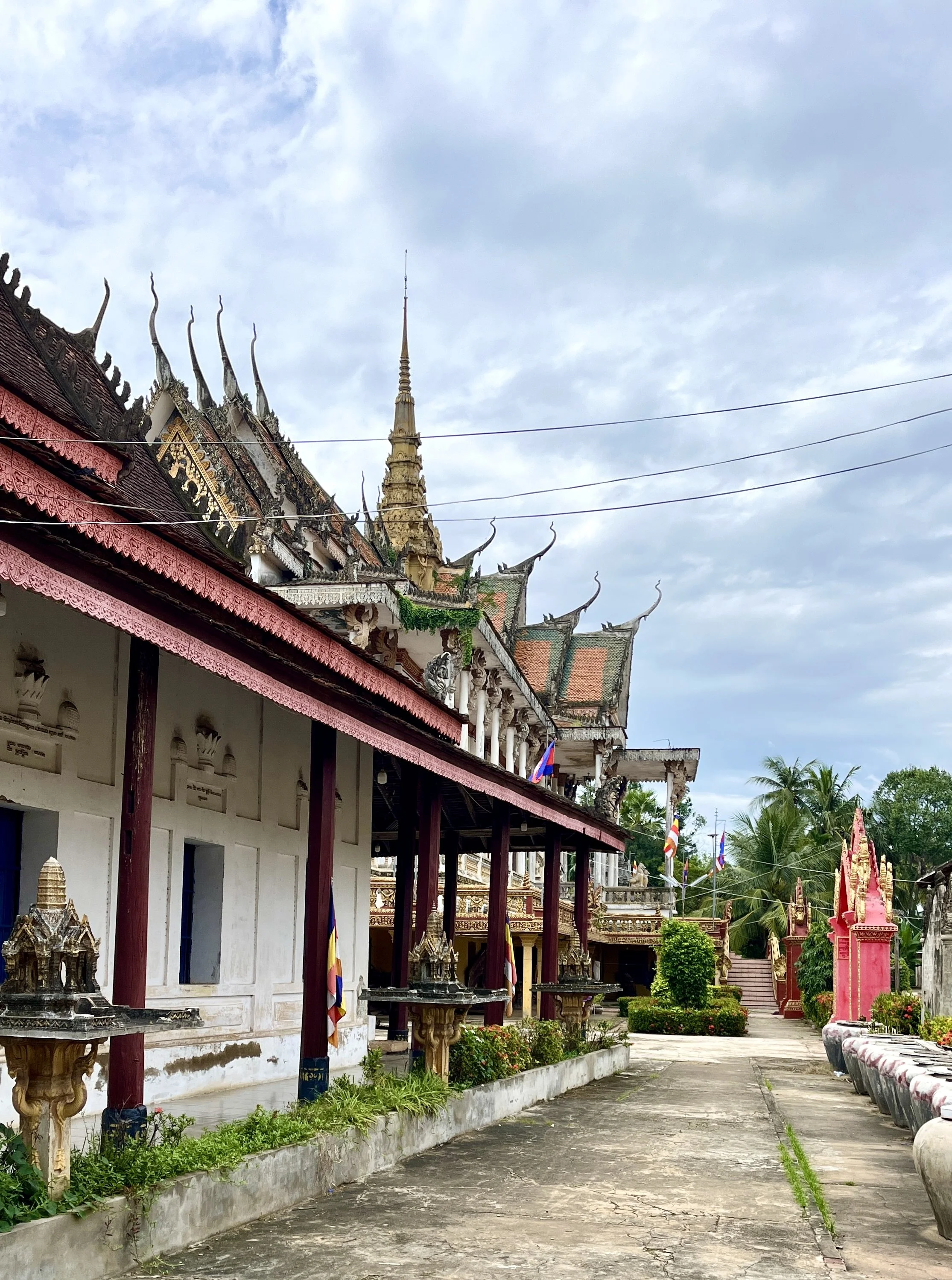
Like most of the other temples around Battambang, I can’t find much info on Wat Kor beyond “It dates from the early 1900s” and is in the “special Battambang architectural style blending Thai and Khmer”. I believe the proper context for understanding it is that historically, this was the neighborhood where Khmer civil servants and their various adjutants chose to live, in both Thai and French colonial eras. Their wealth afforded them a wat fitting their social status, and their exposure to Thai and French architecture and material culture diversified and refined their tastes.
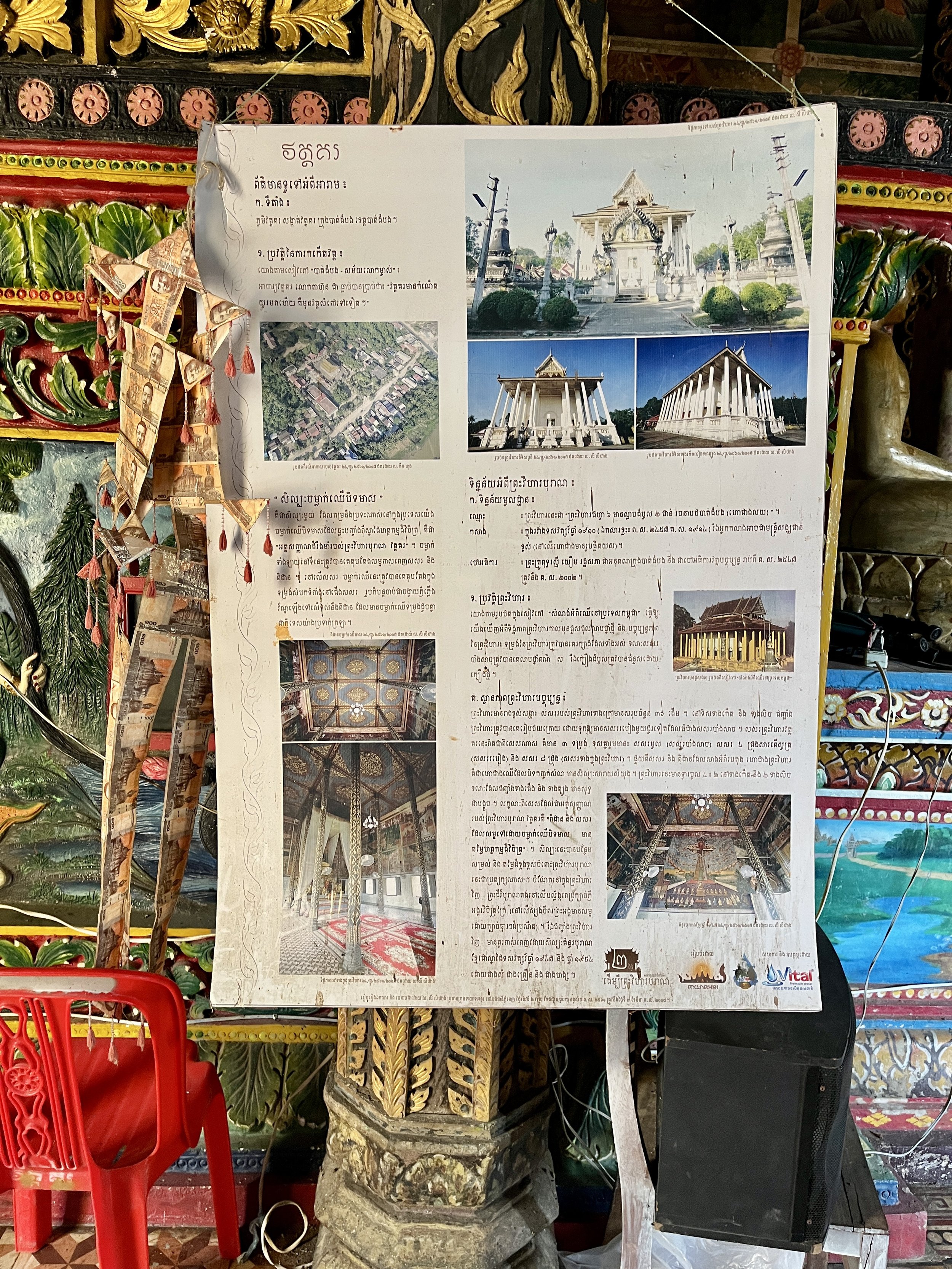
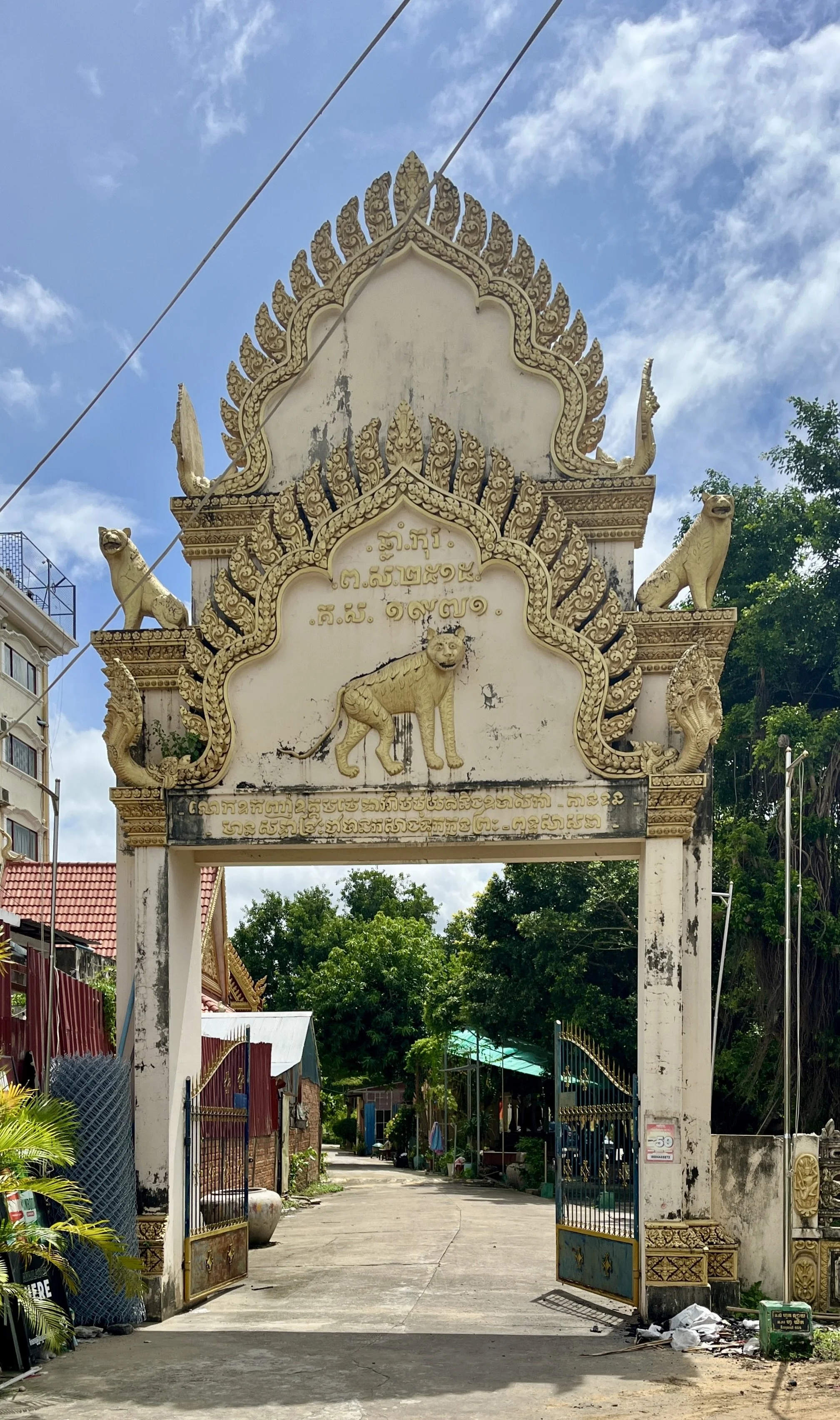
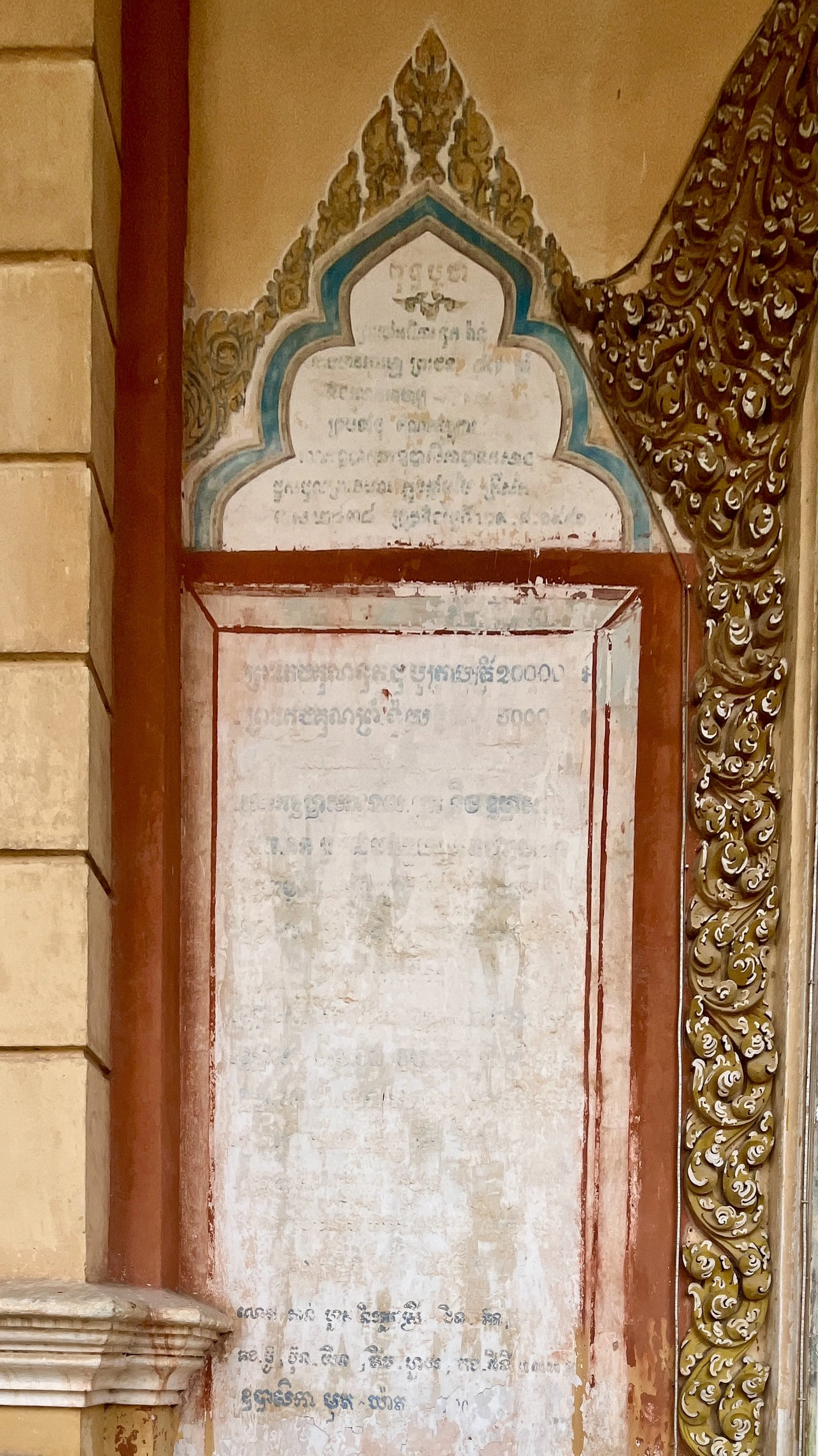
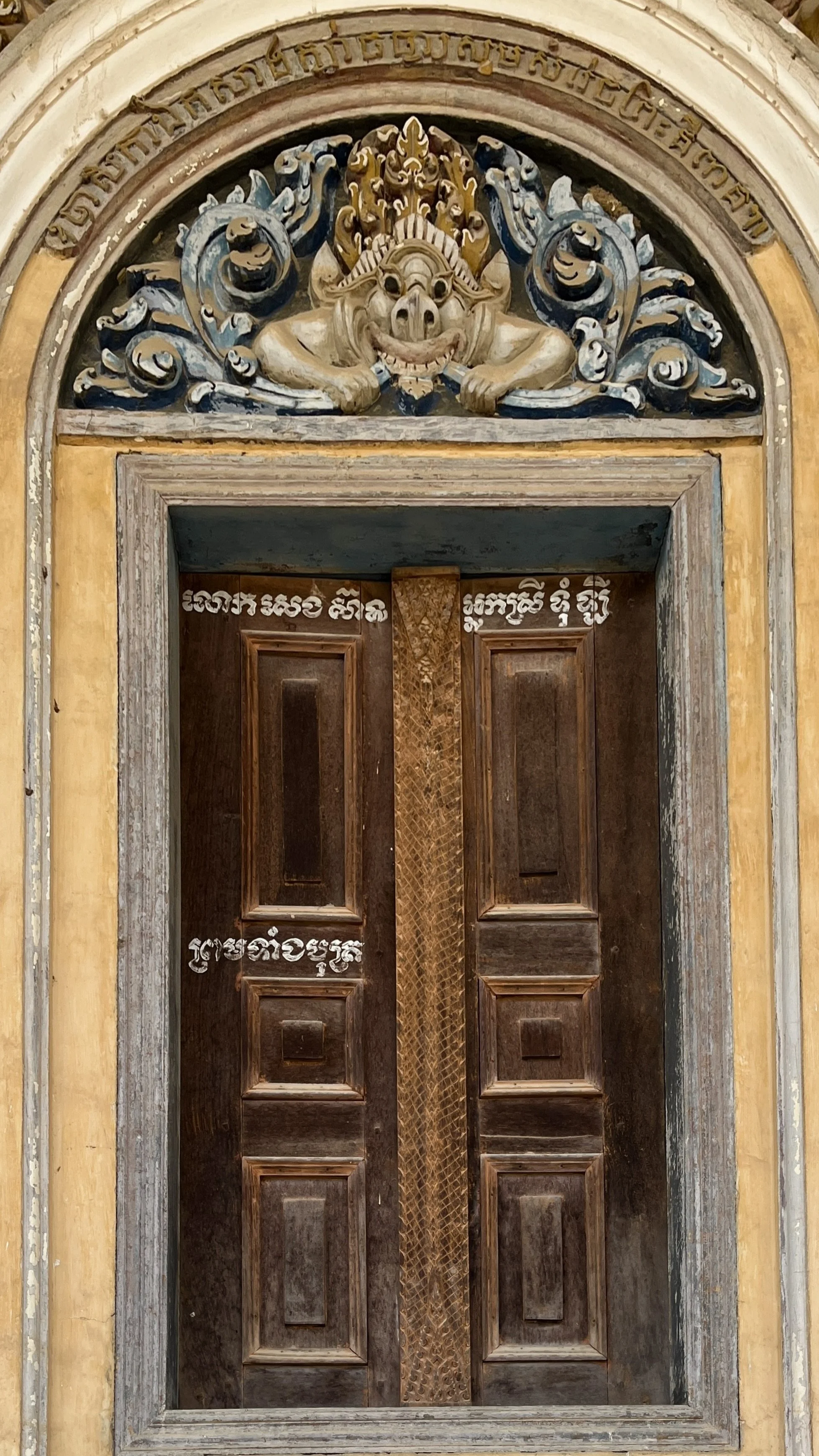
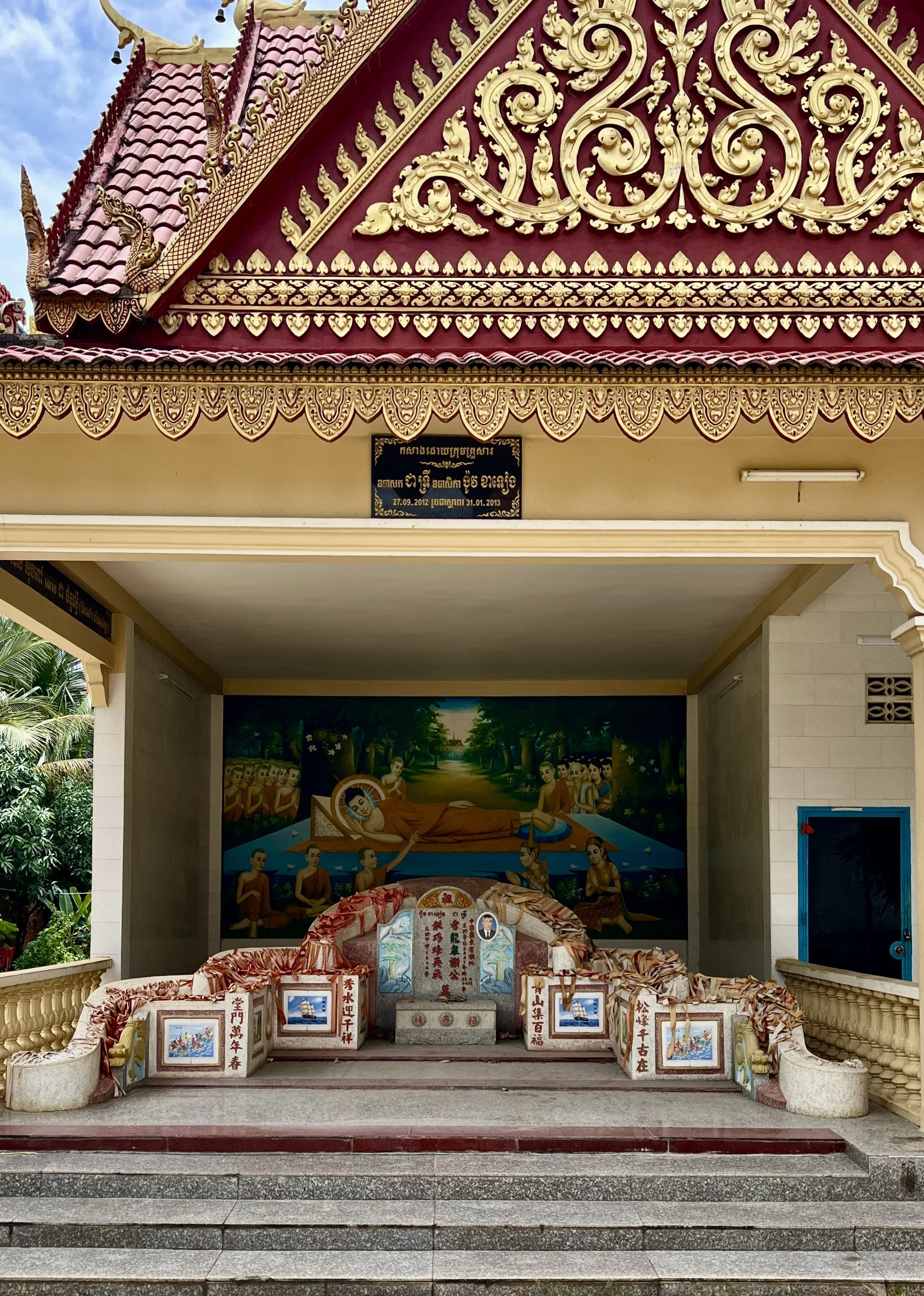
I’m assuming this is about the construction, history, and/or renovation of the temple. There was nothing in English or French.
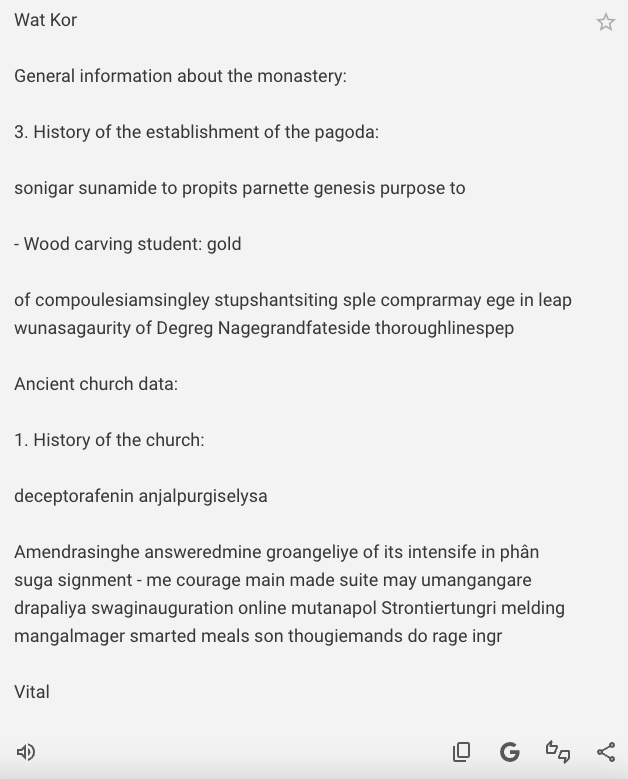
To give some context for exactly how mangled and useless translator apps are with Khmer, here’s the google translation of the text into English.
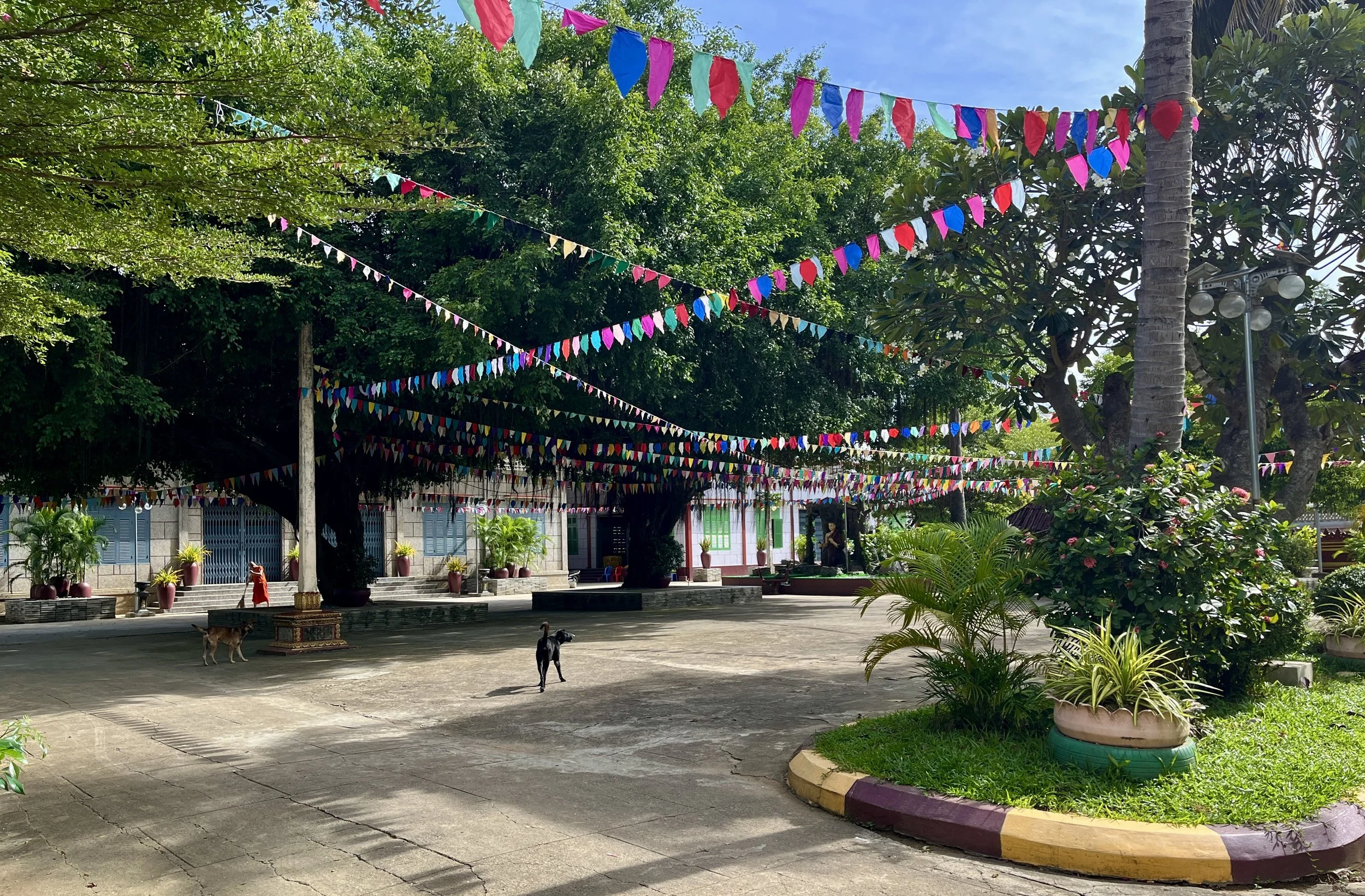
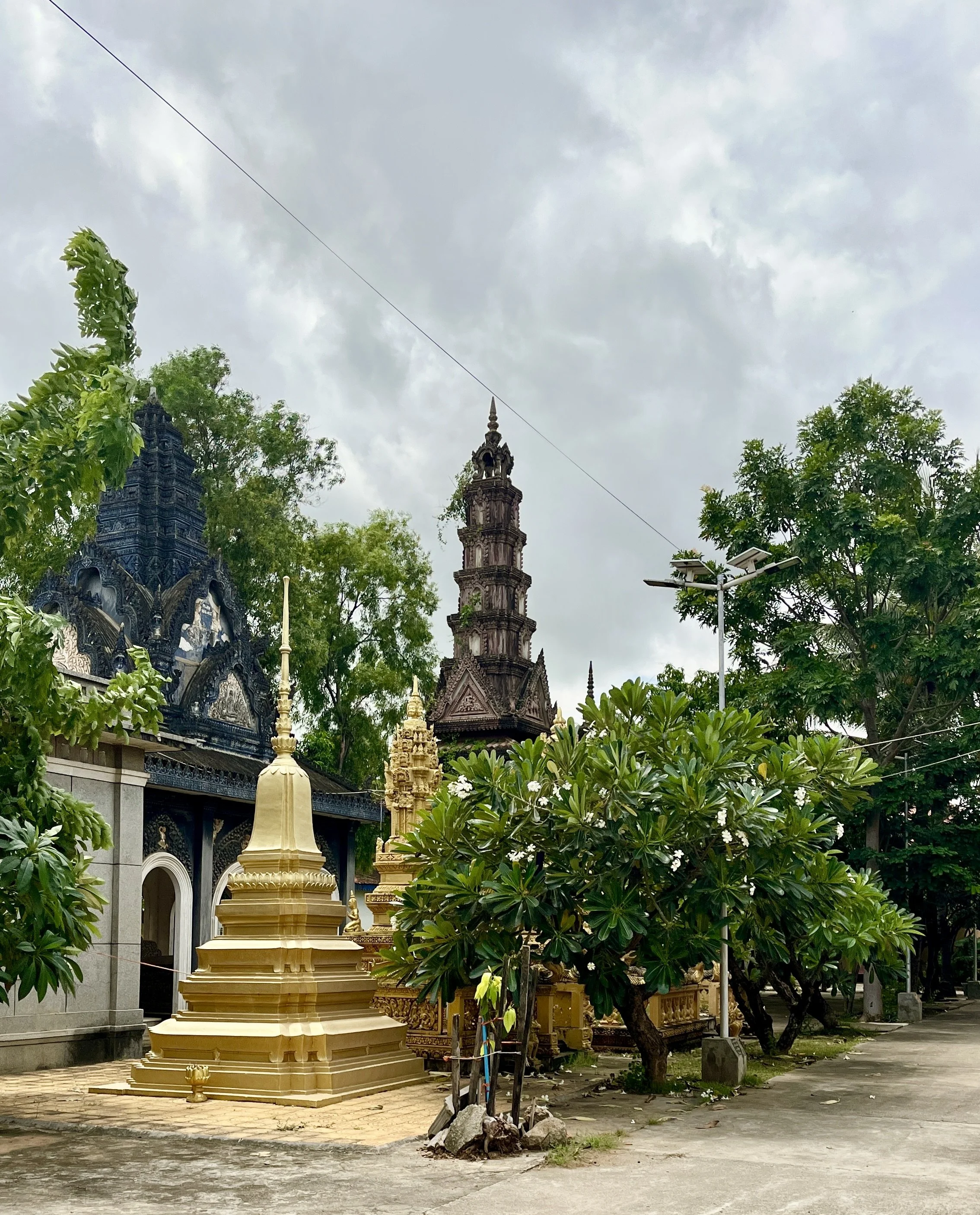
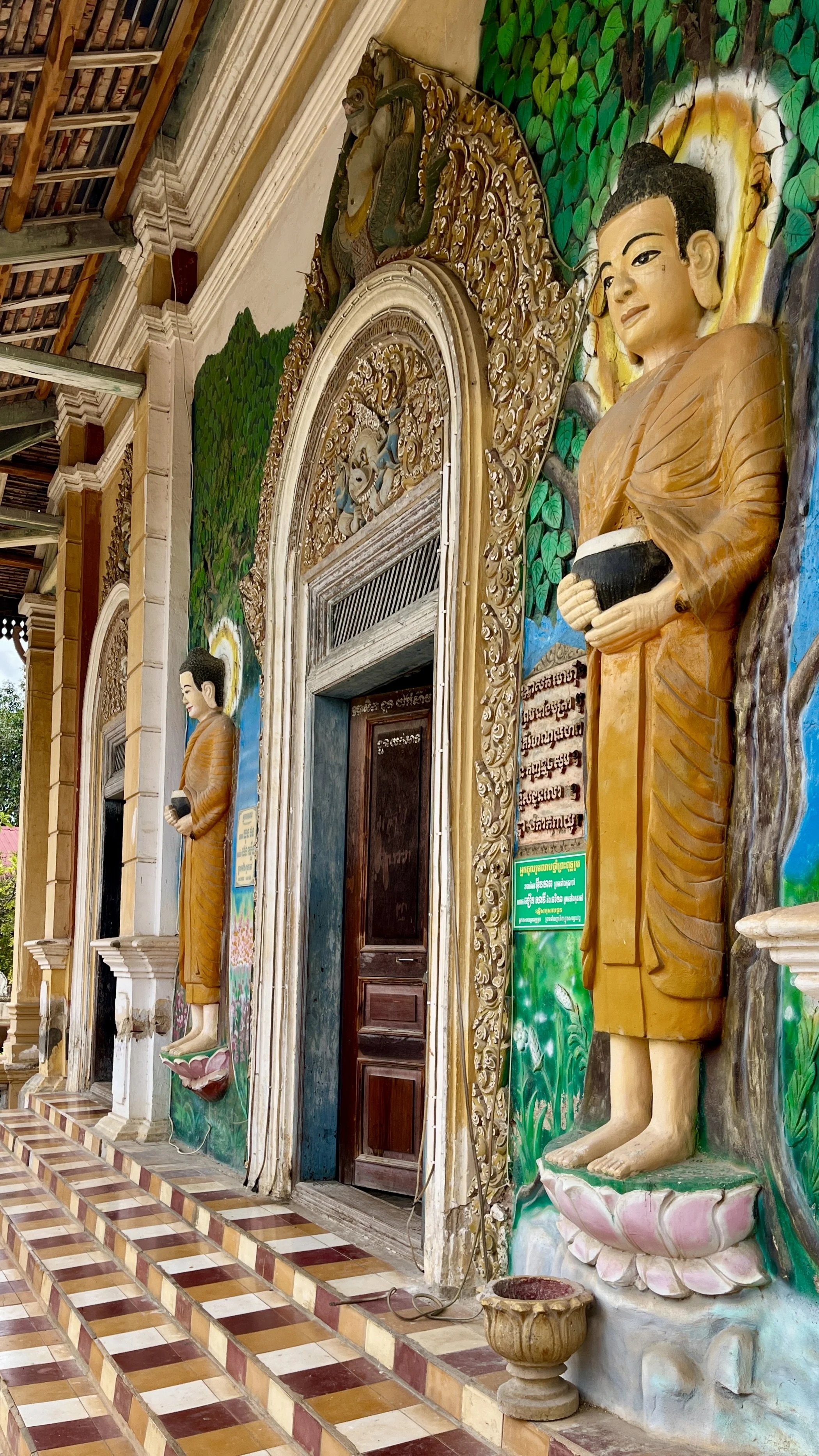
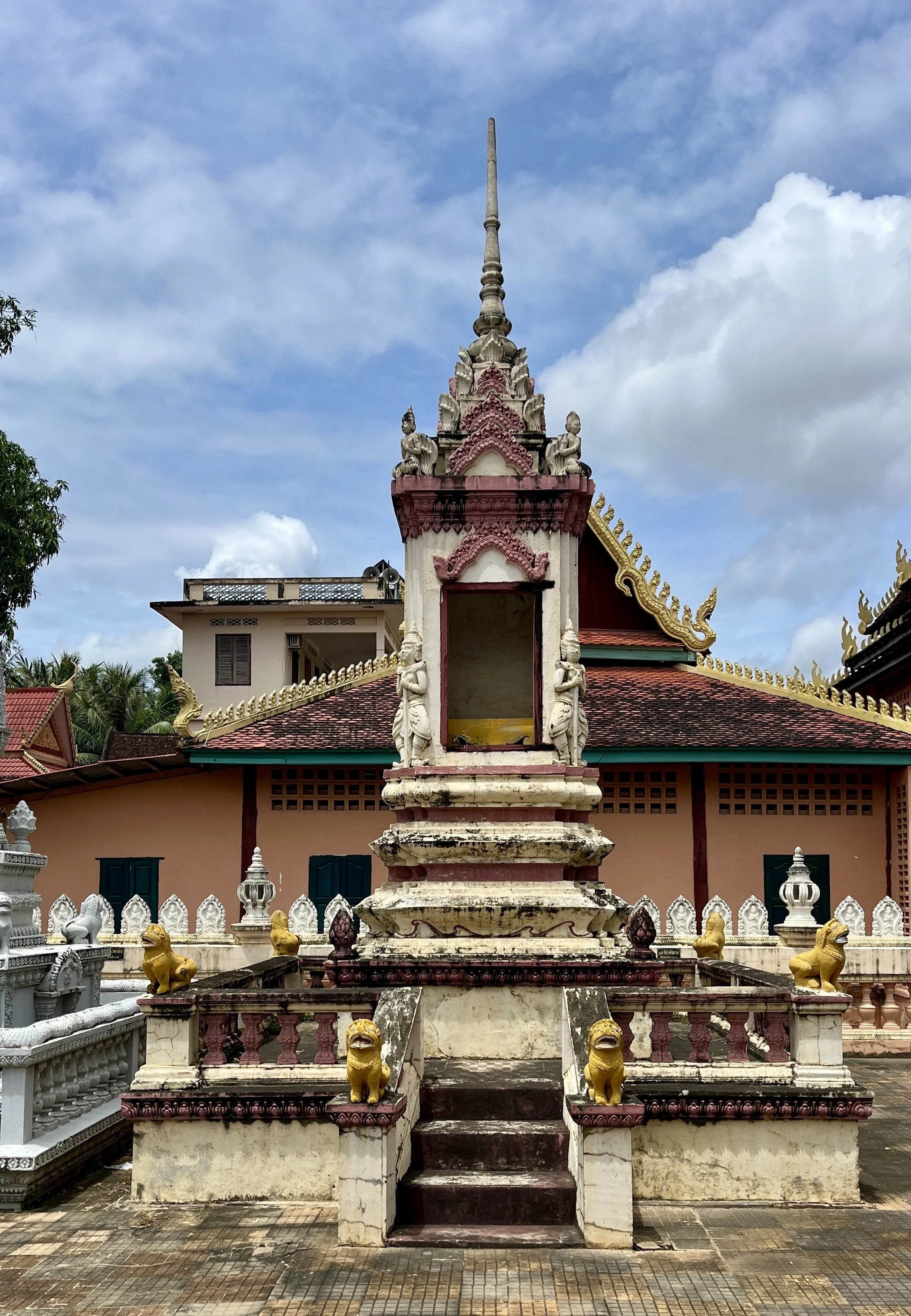
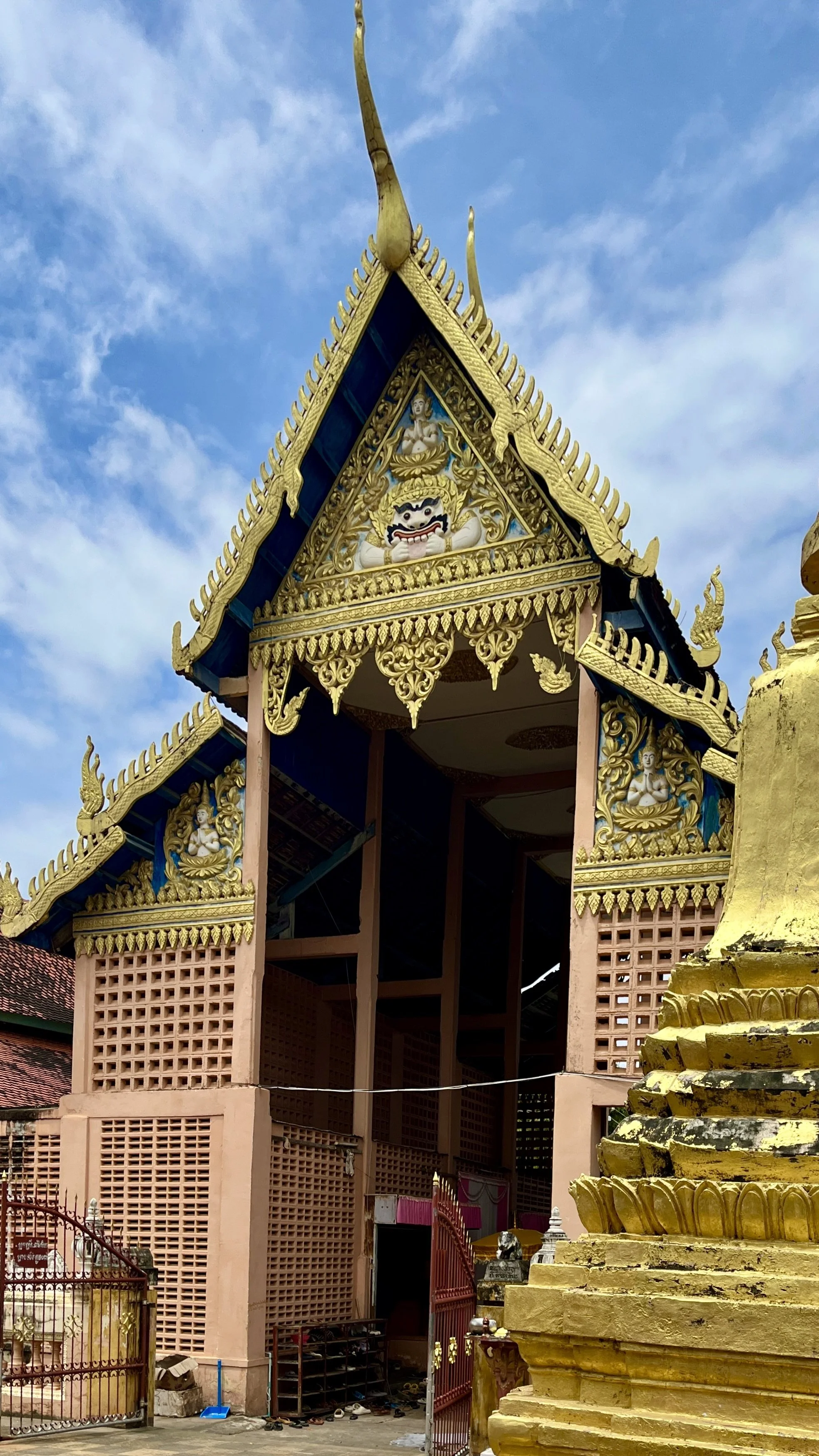
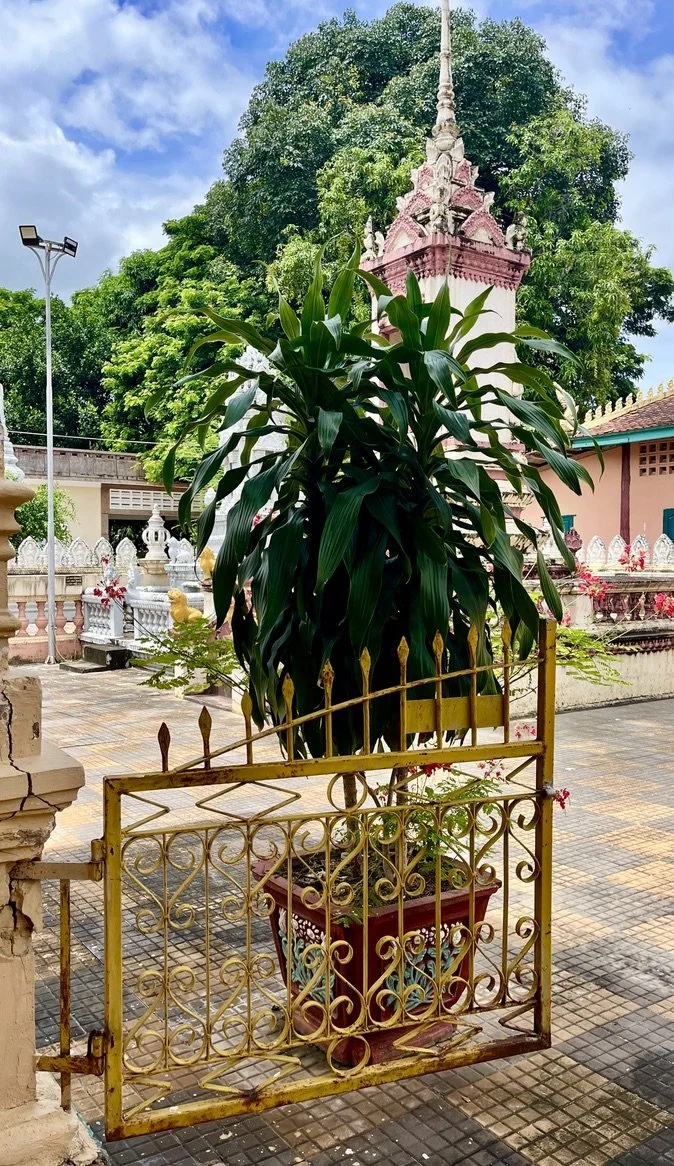
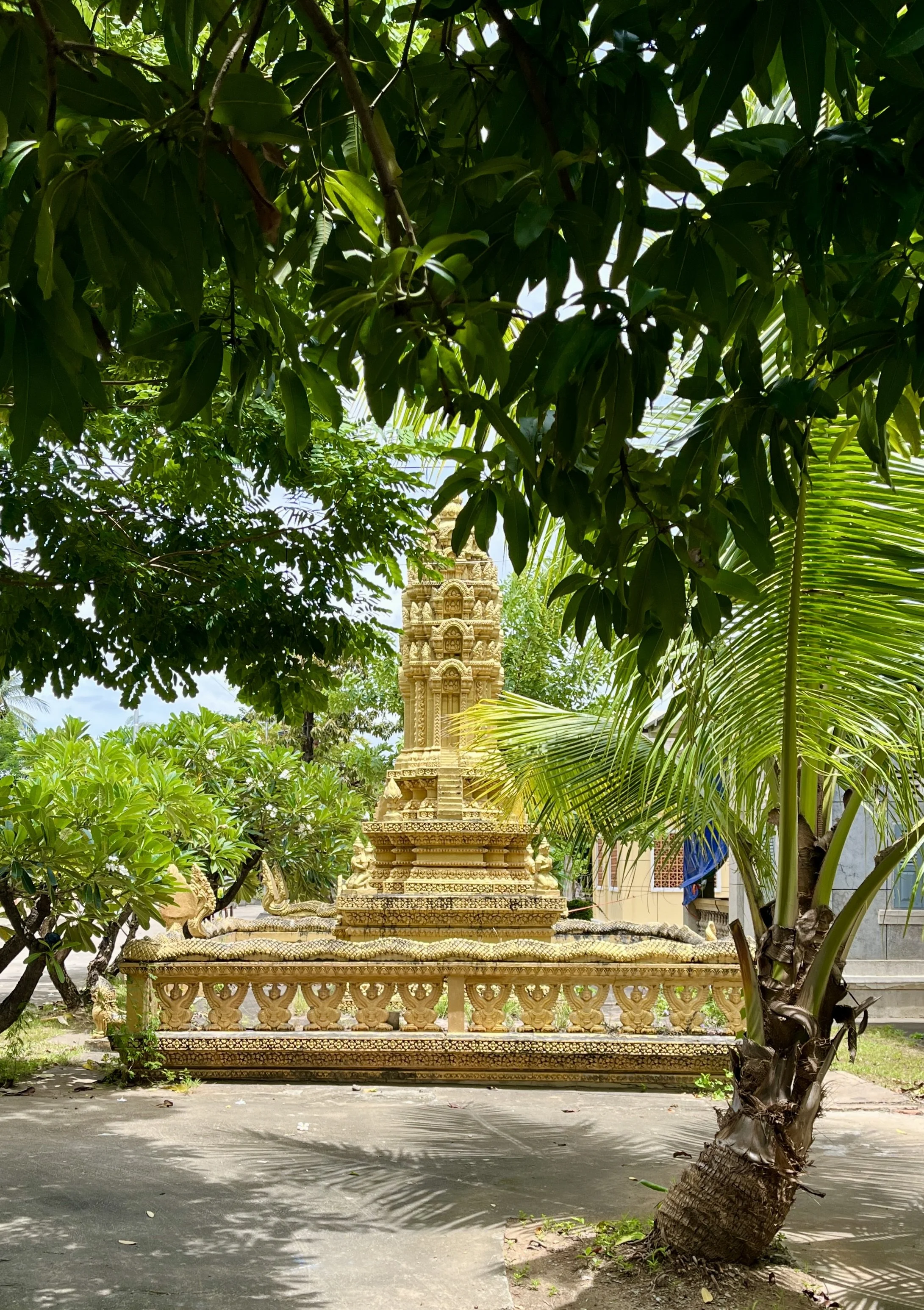
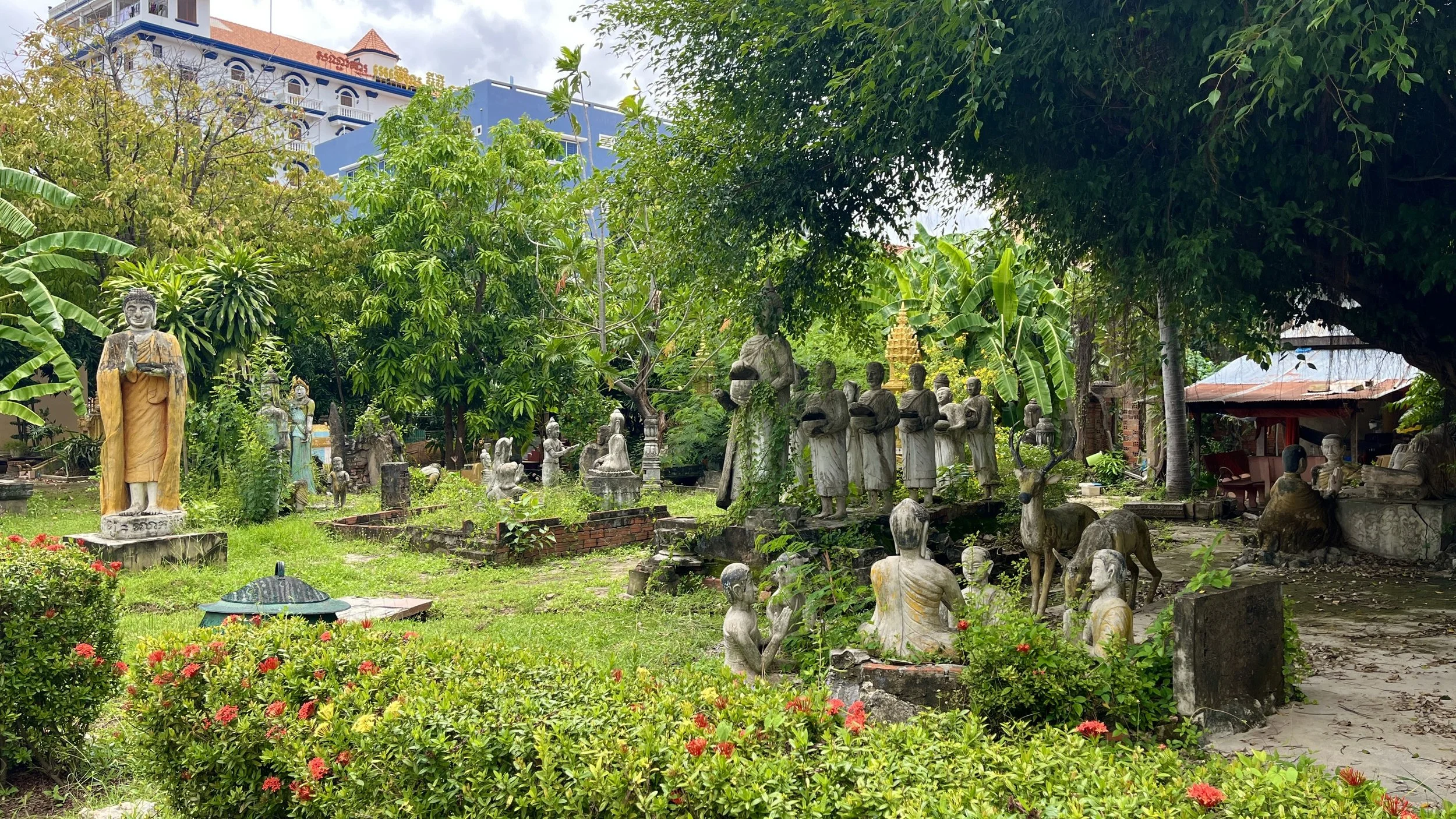
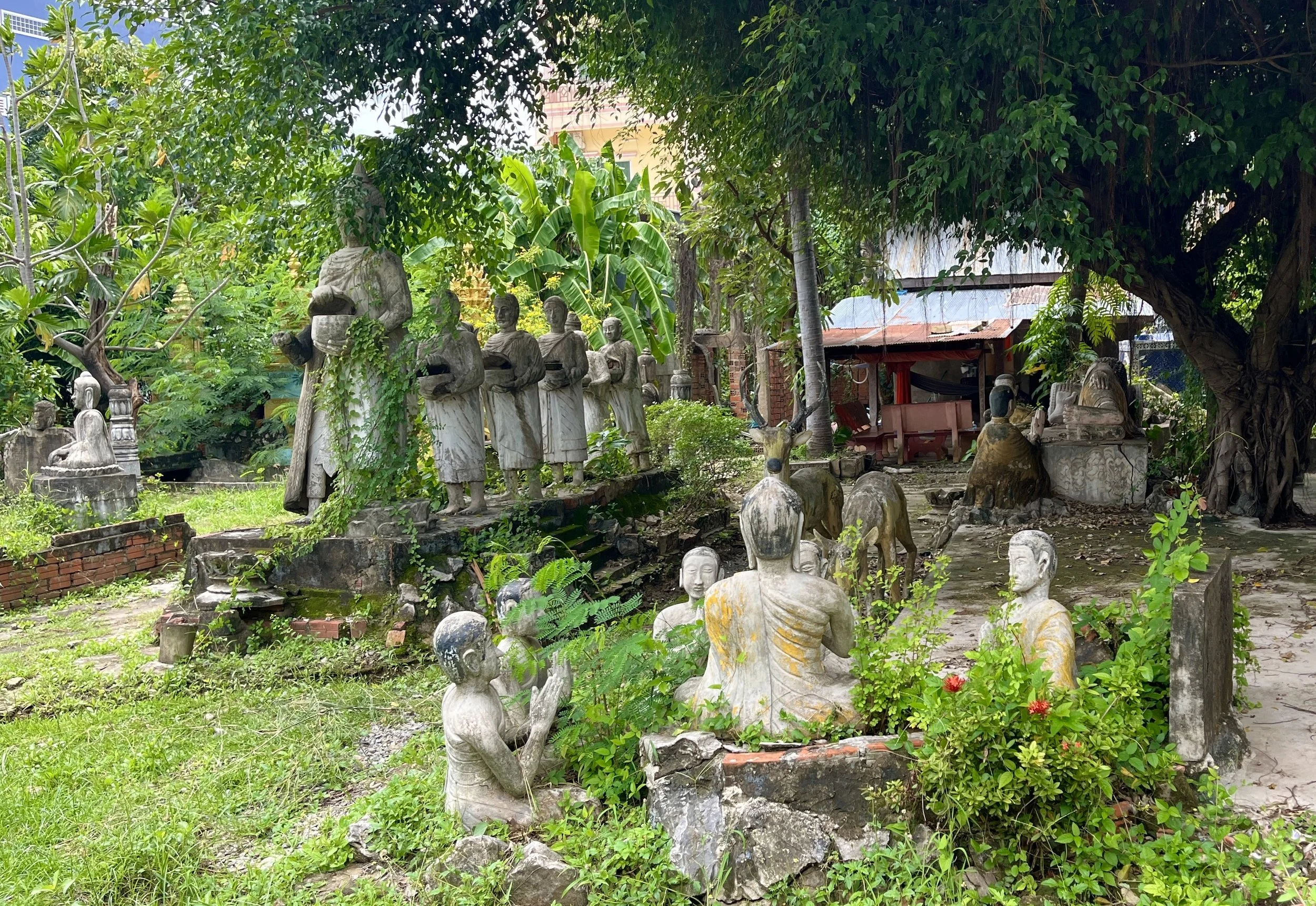
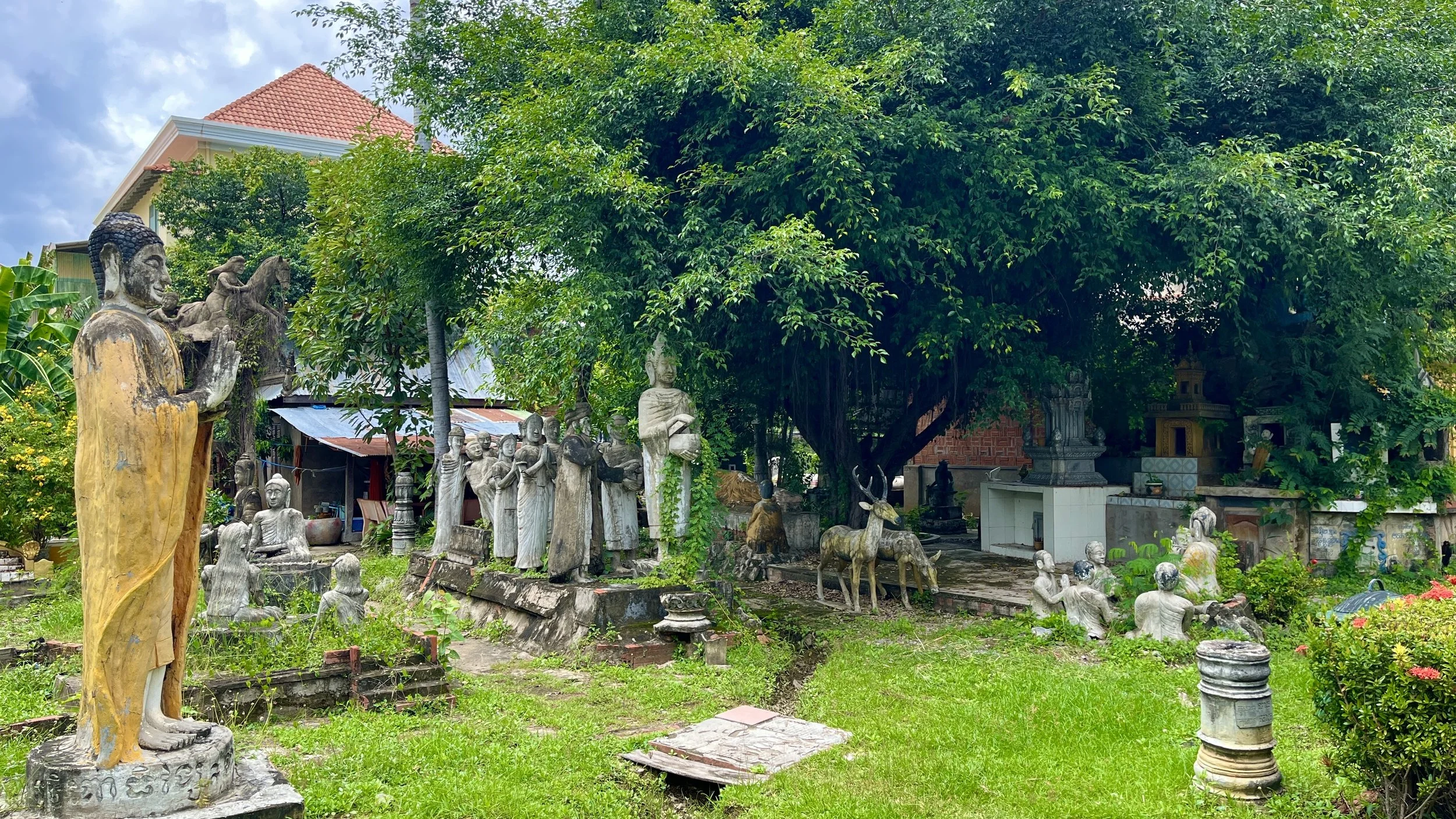
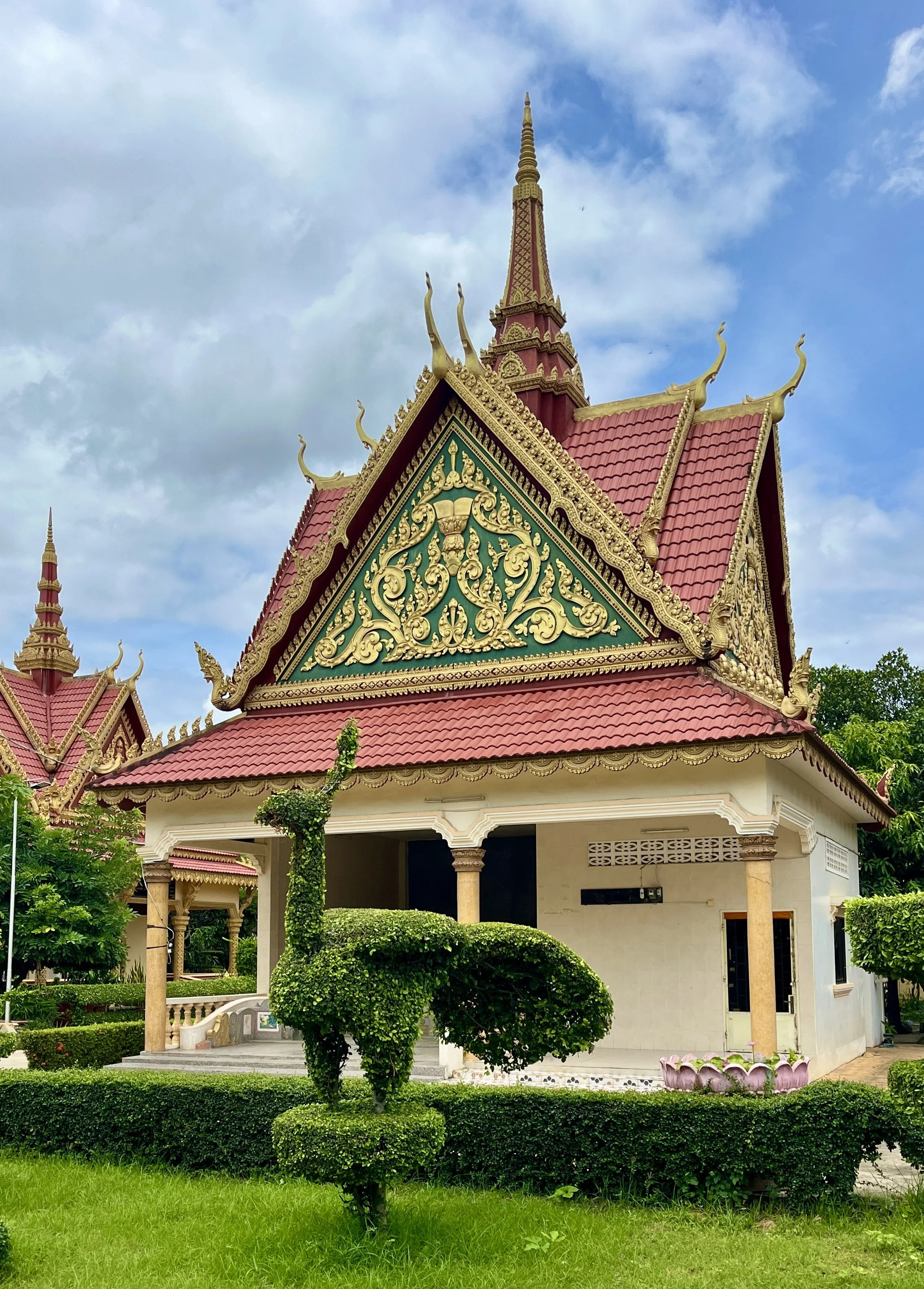
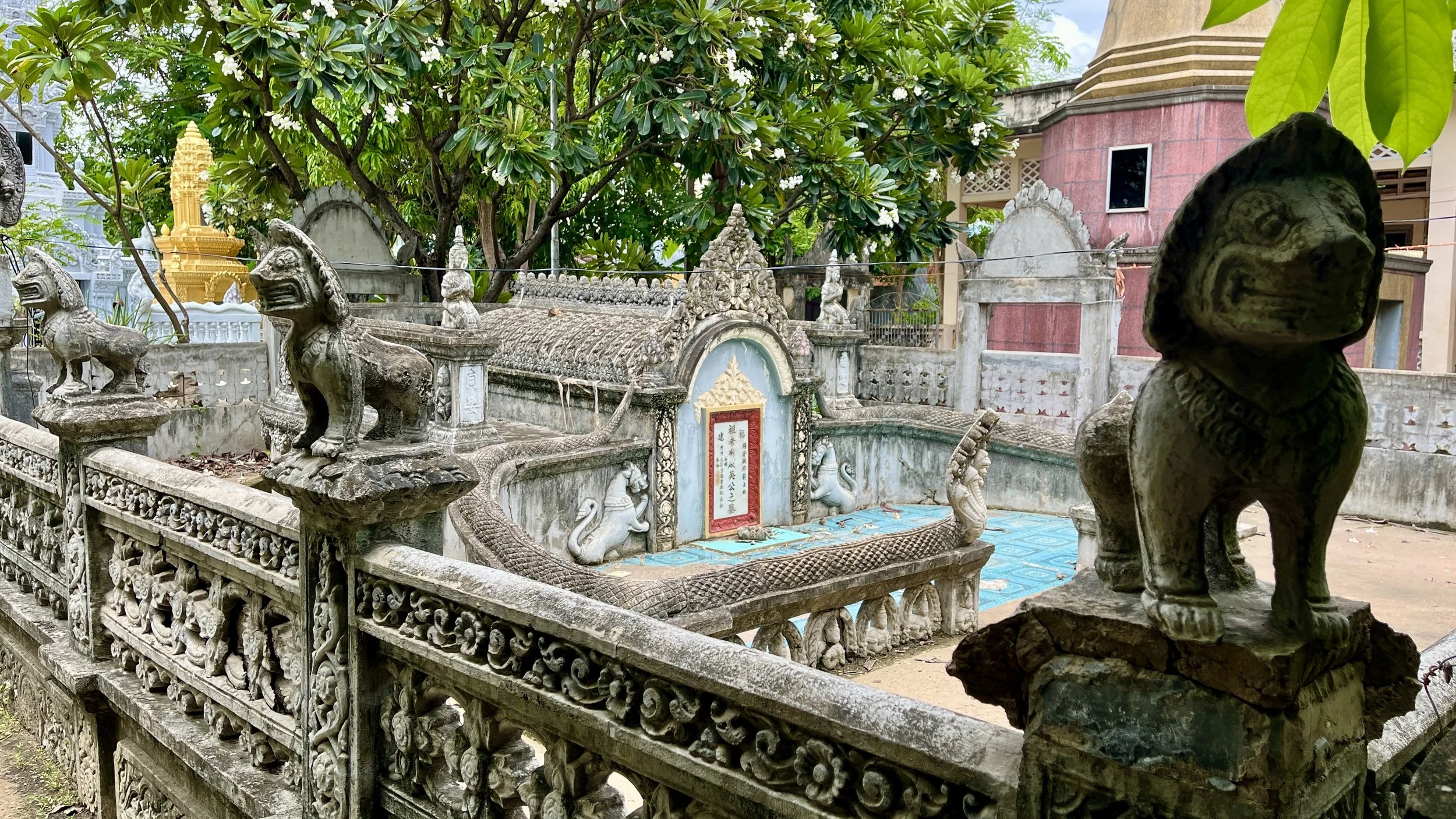
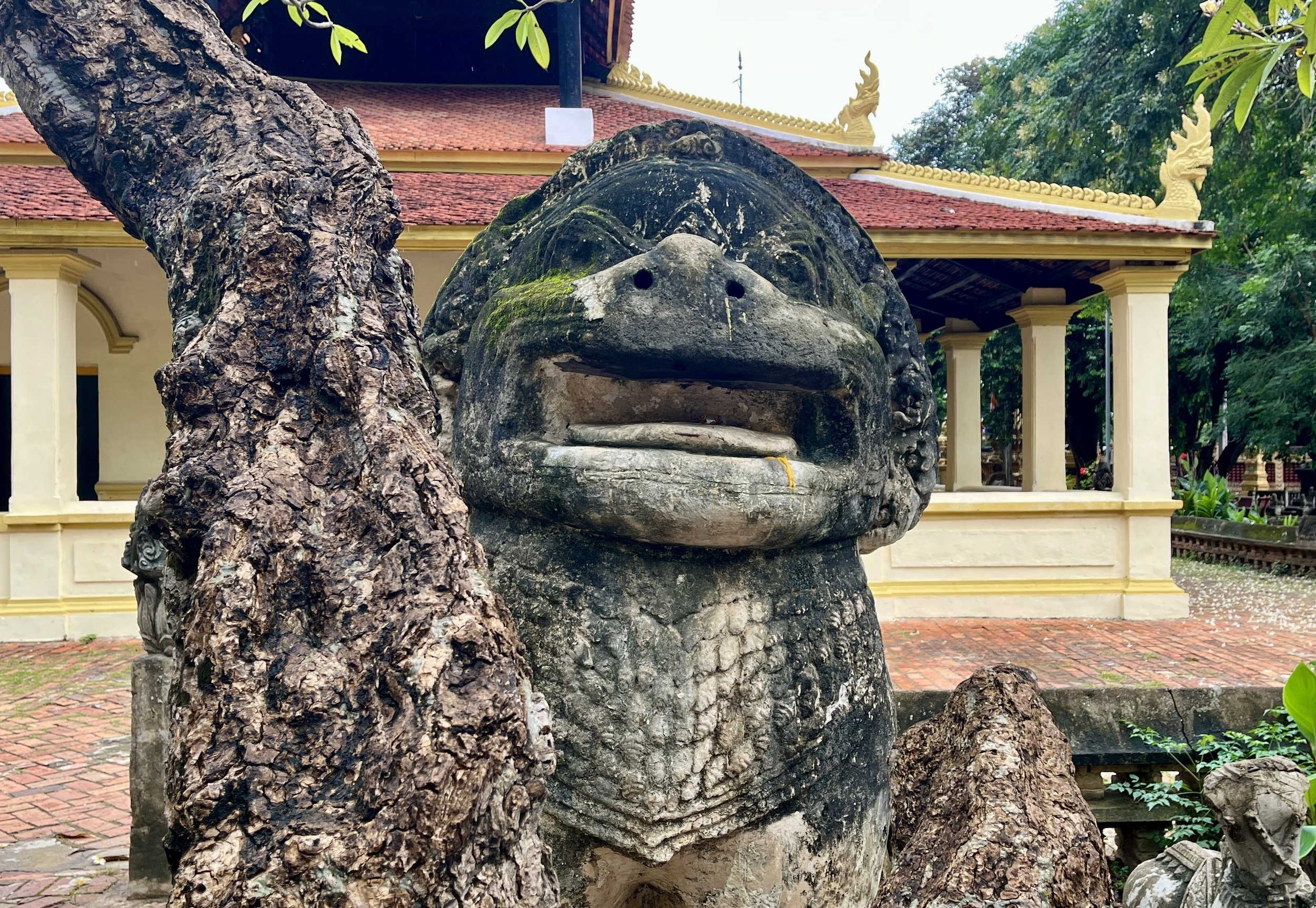
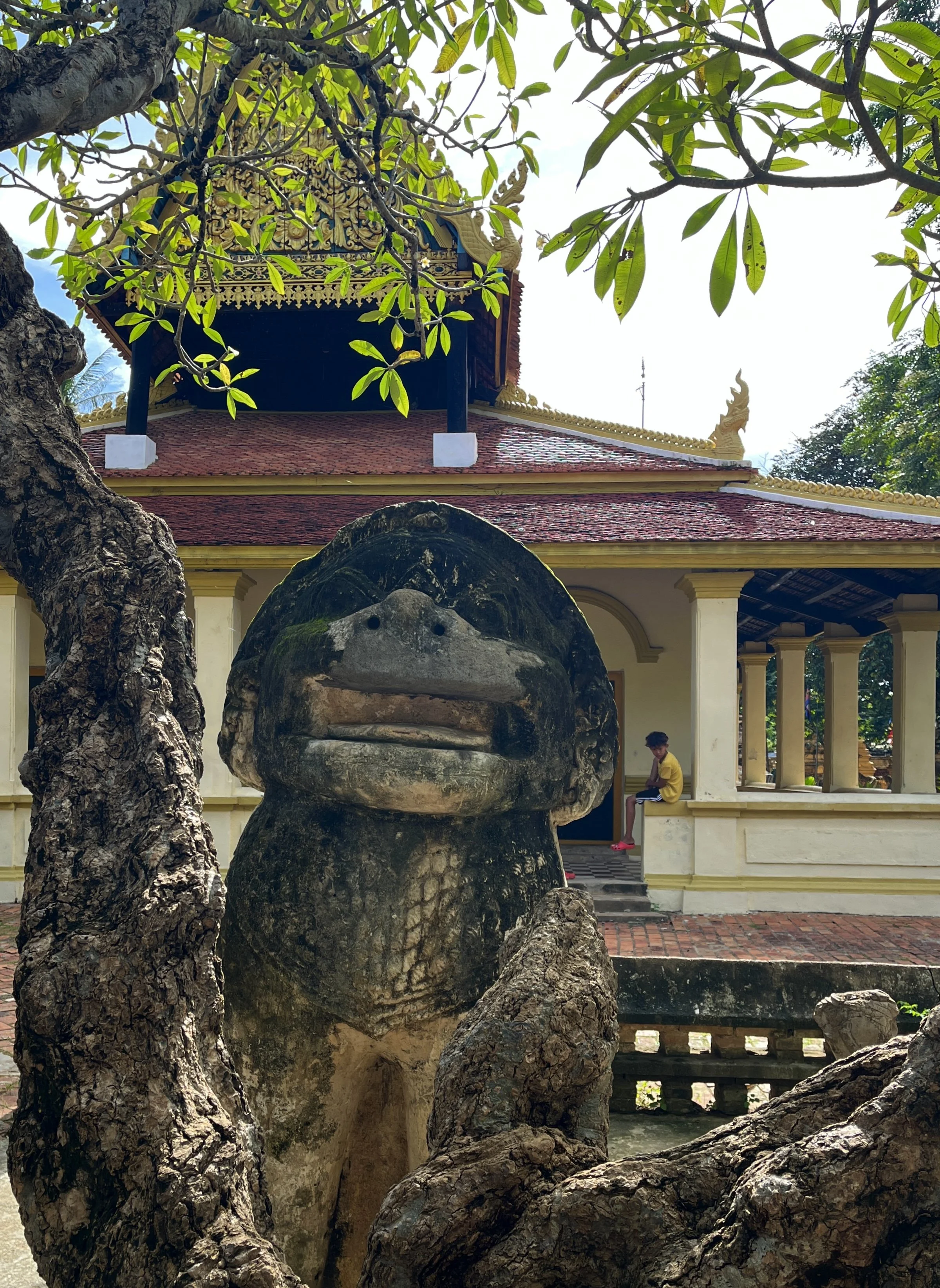
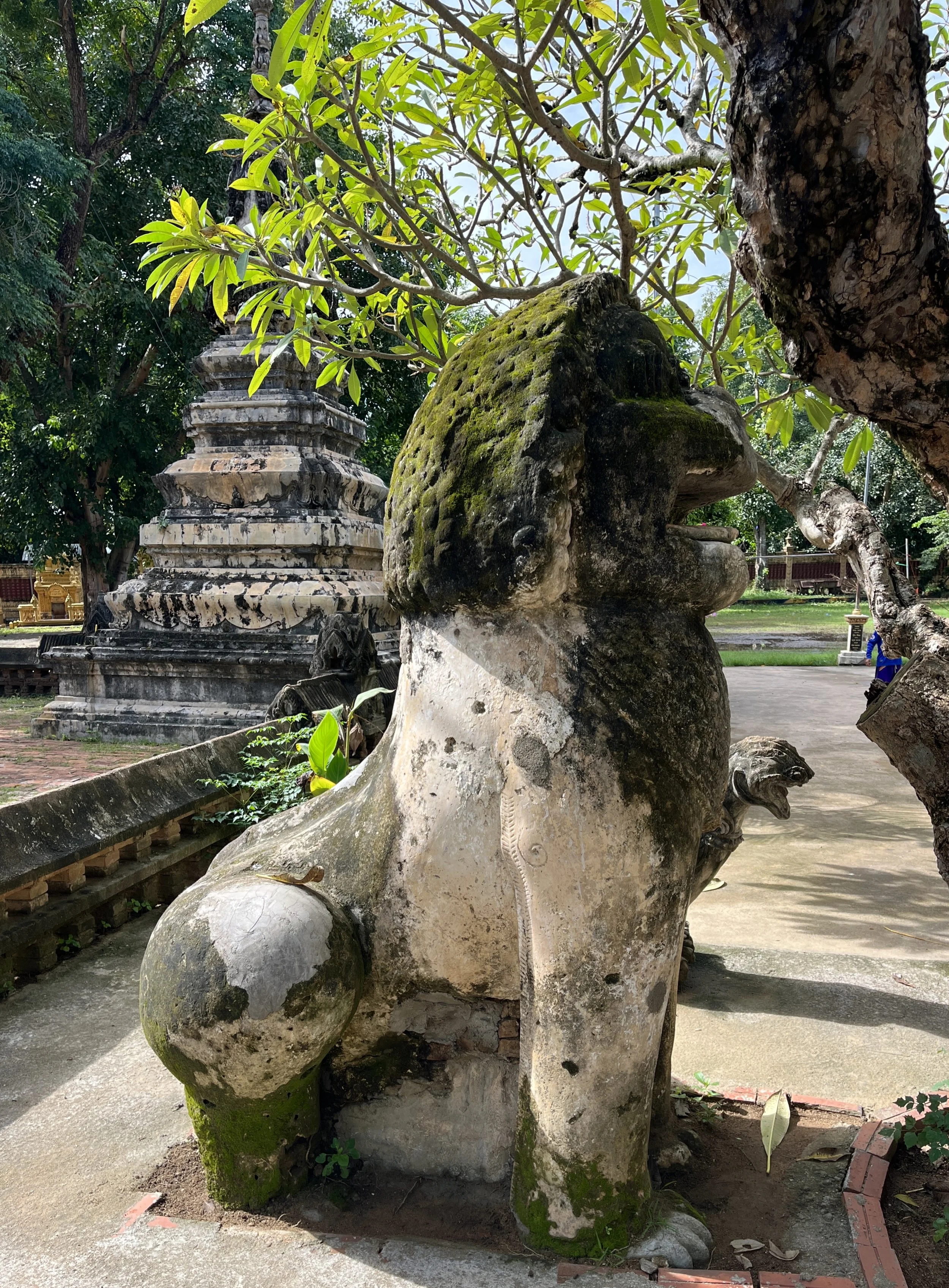
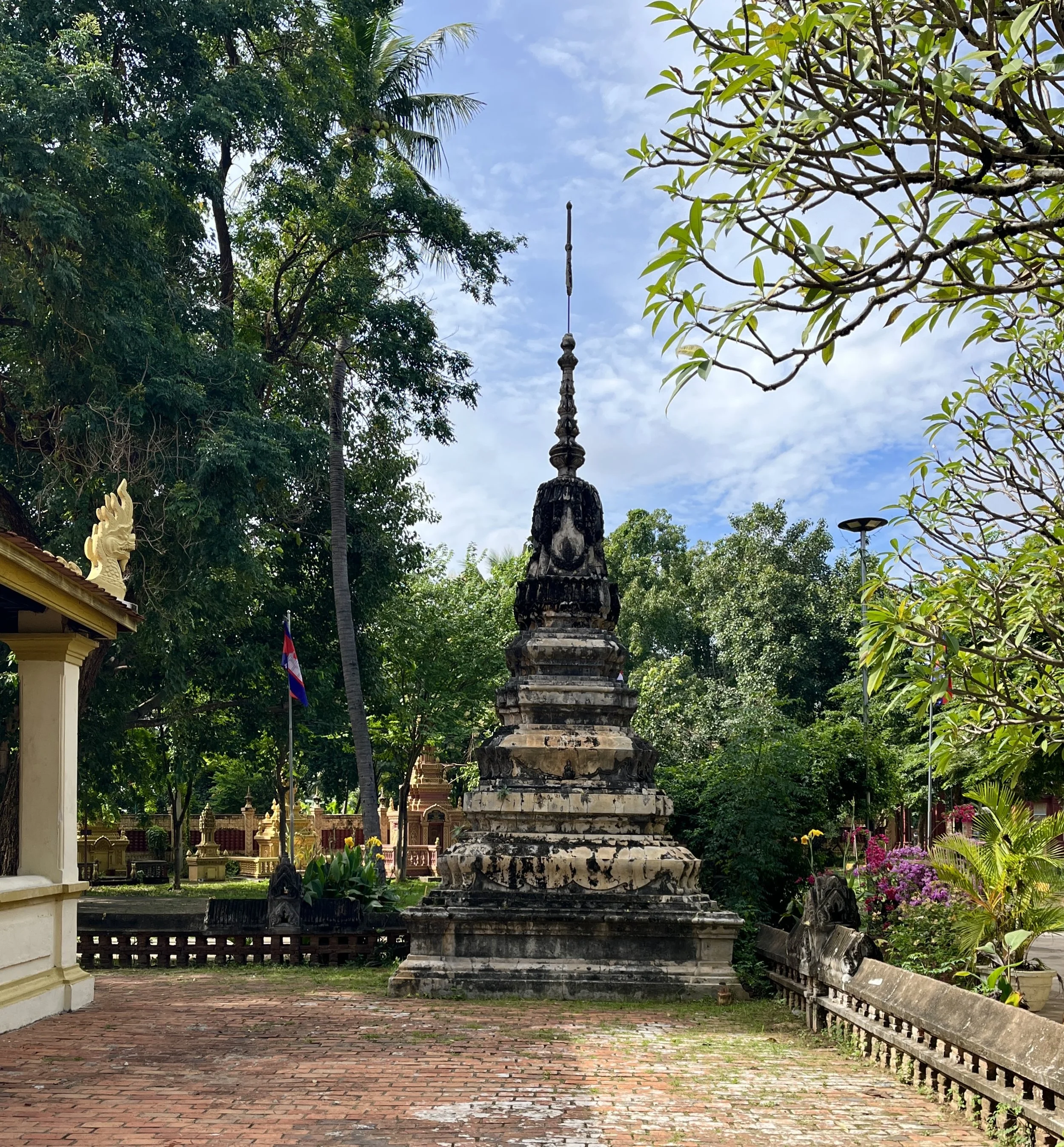
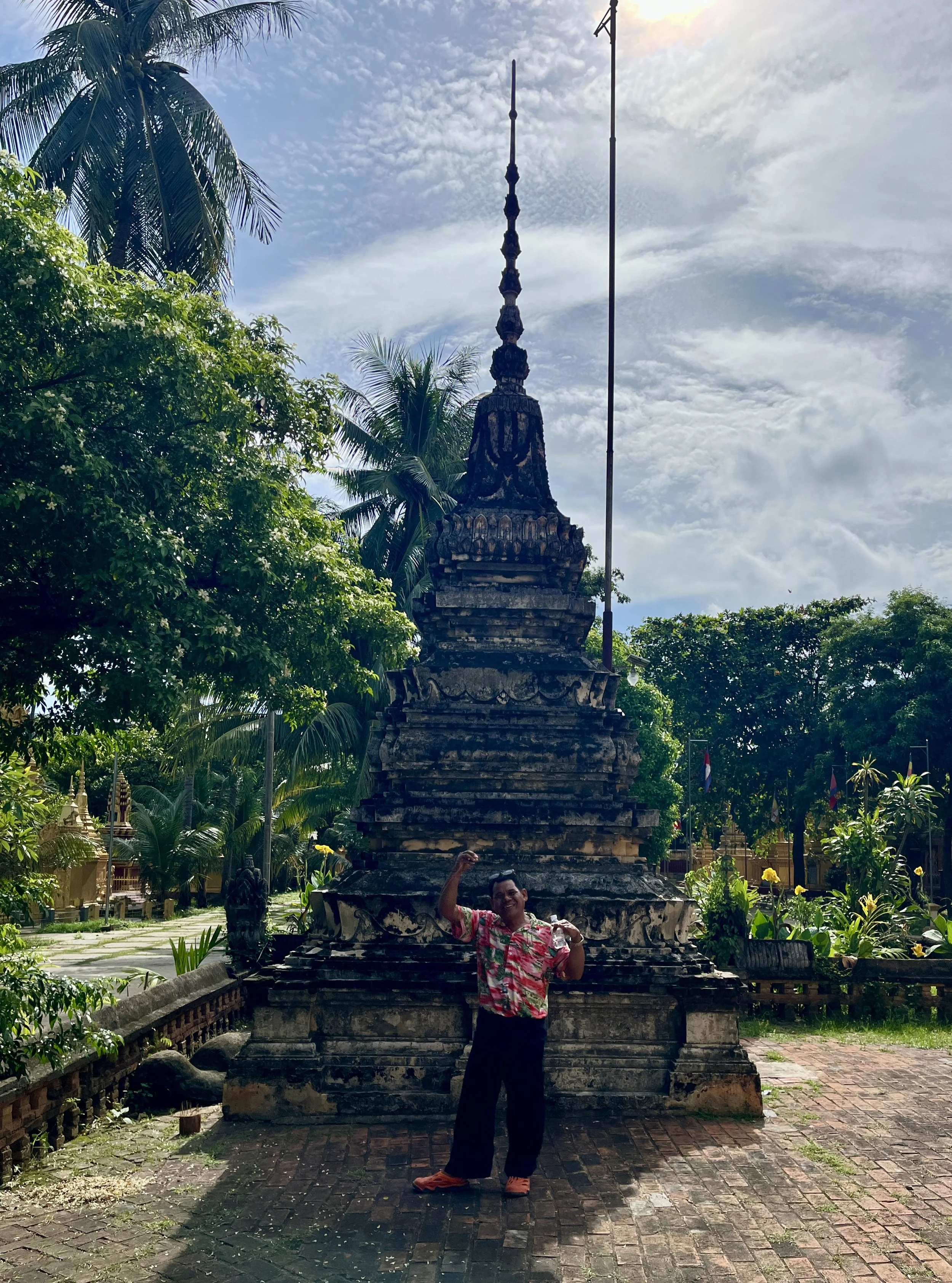
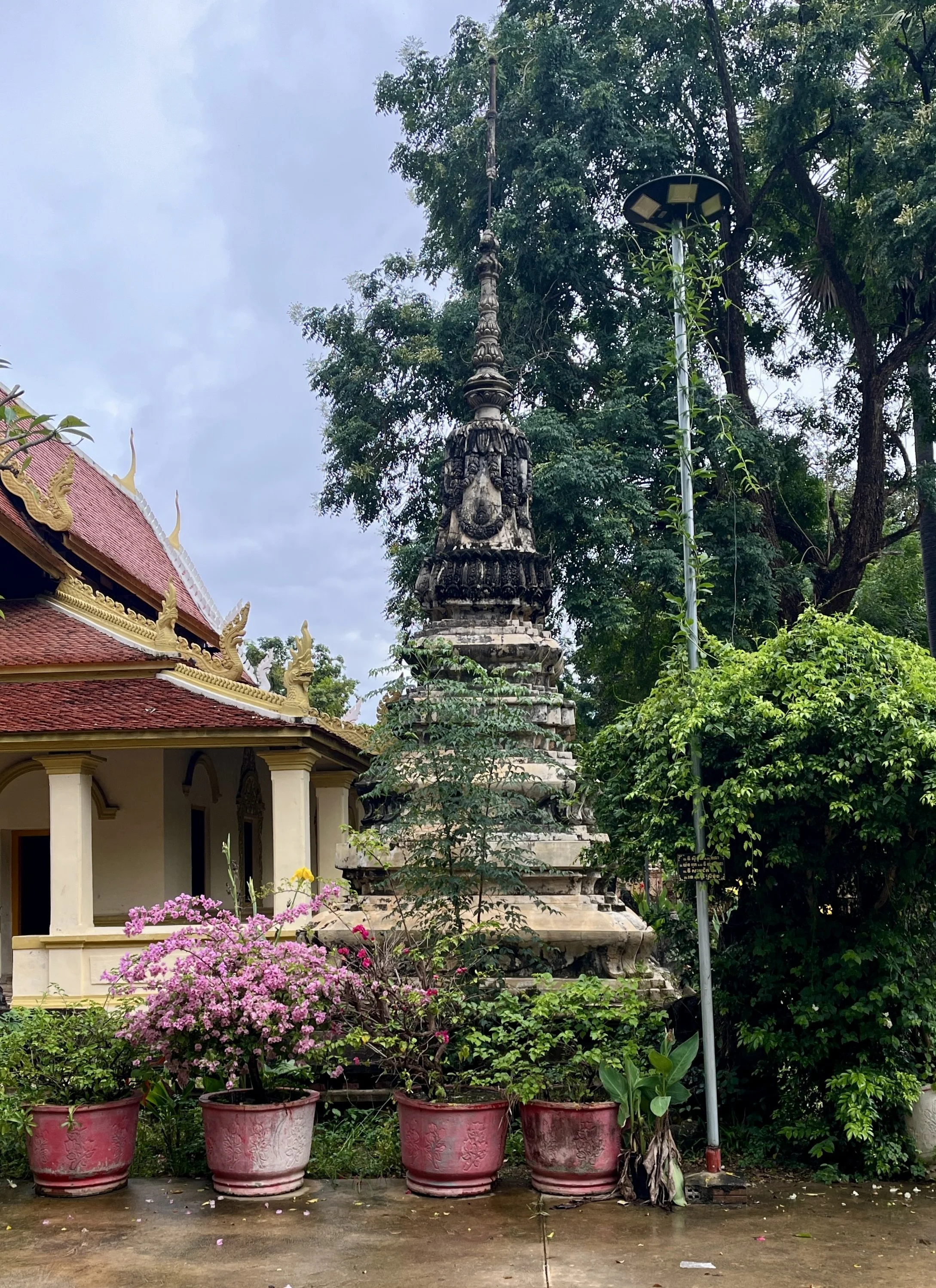
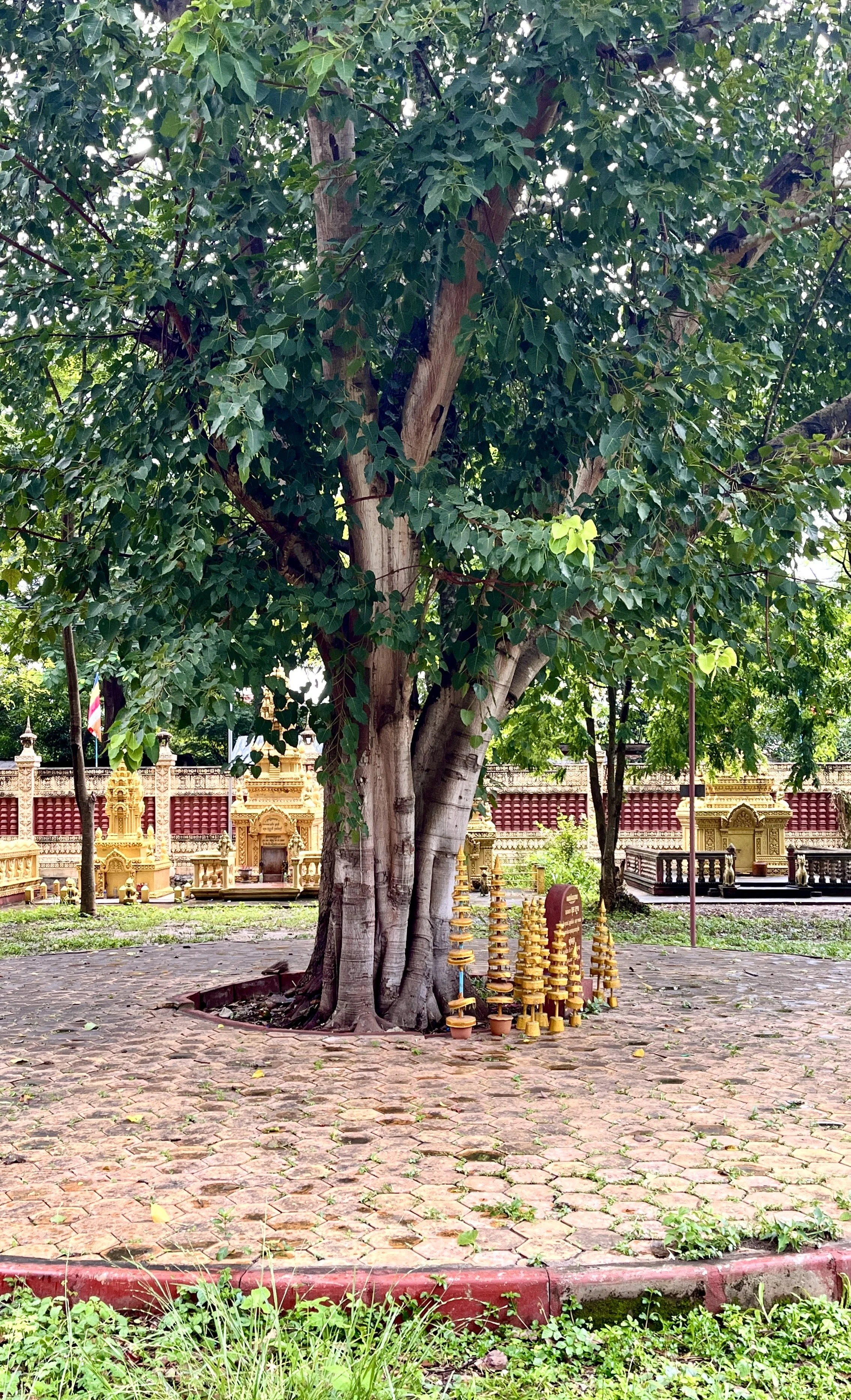
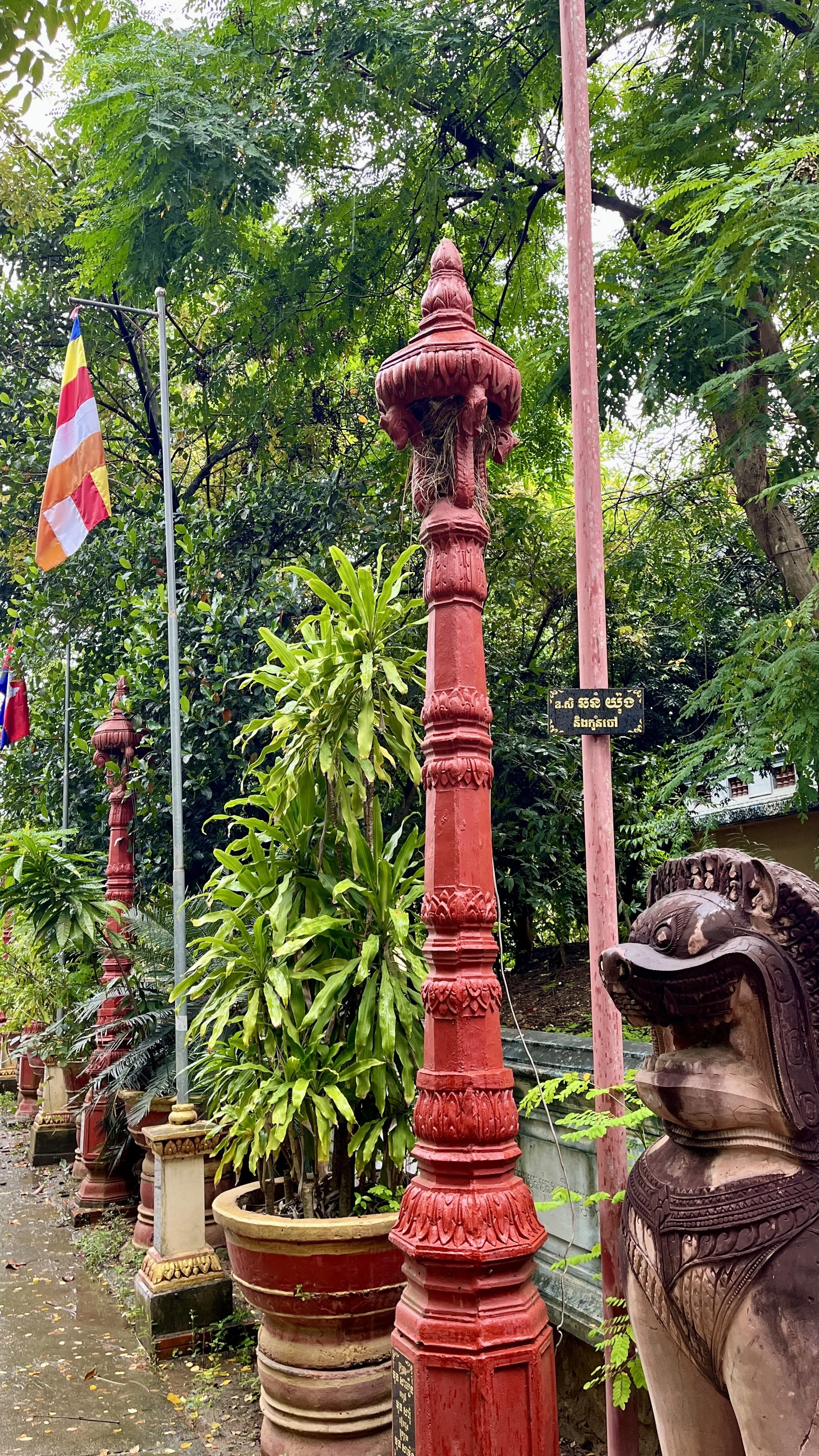
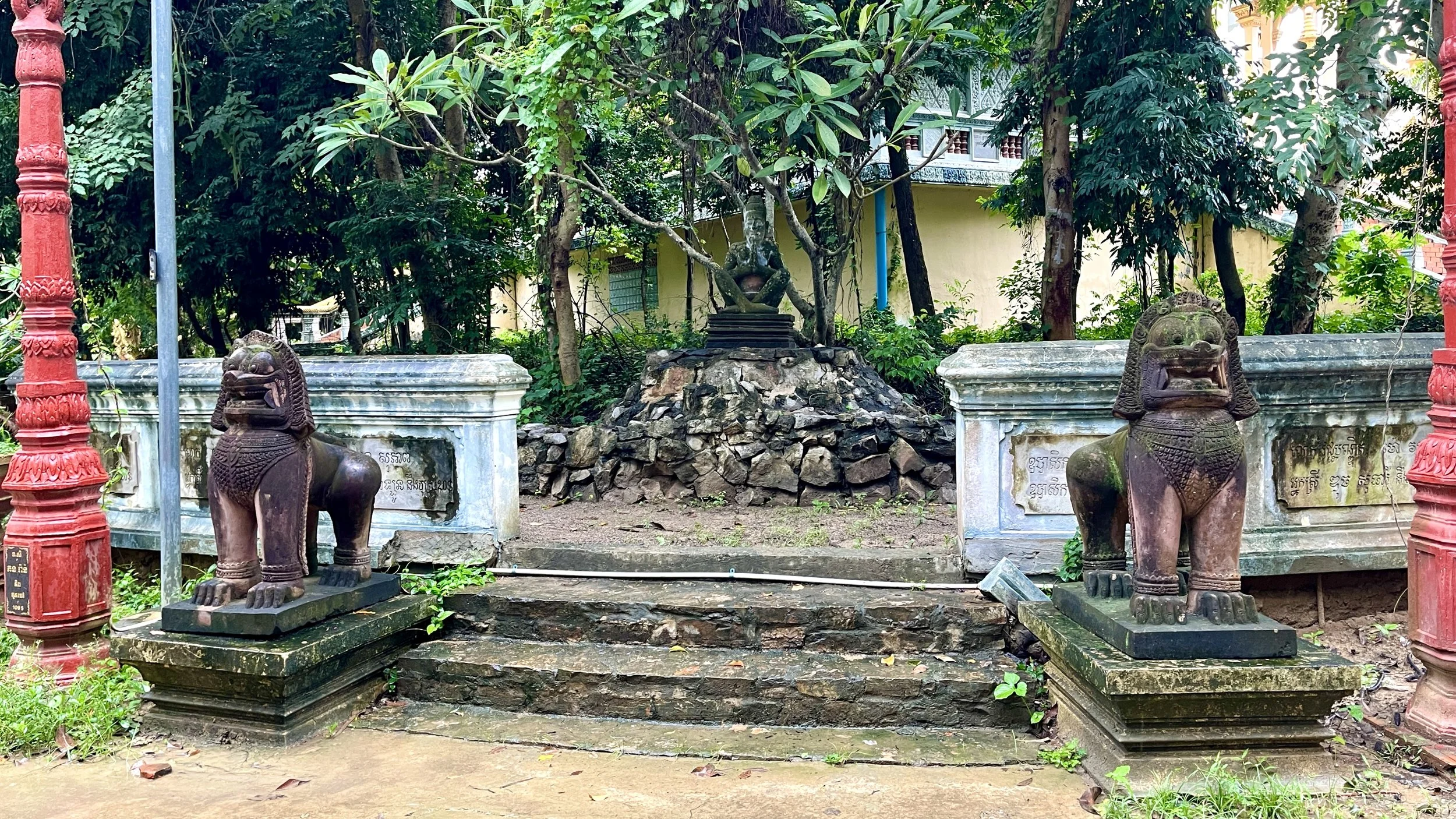
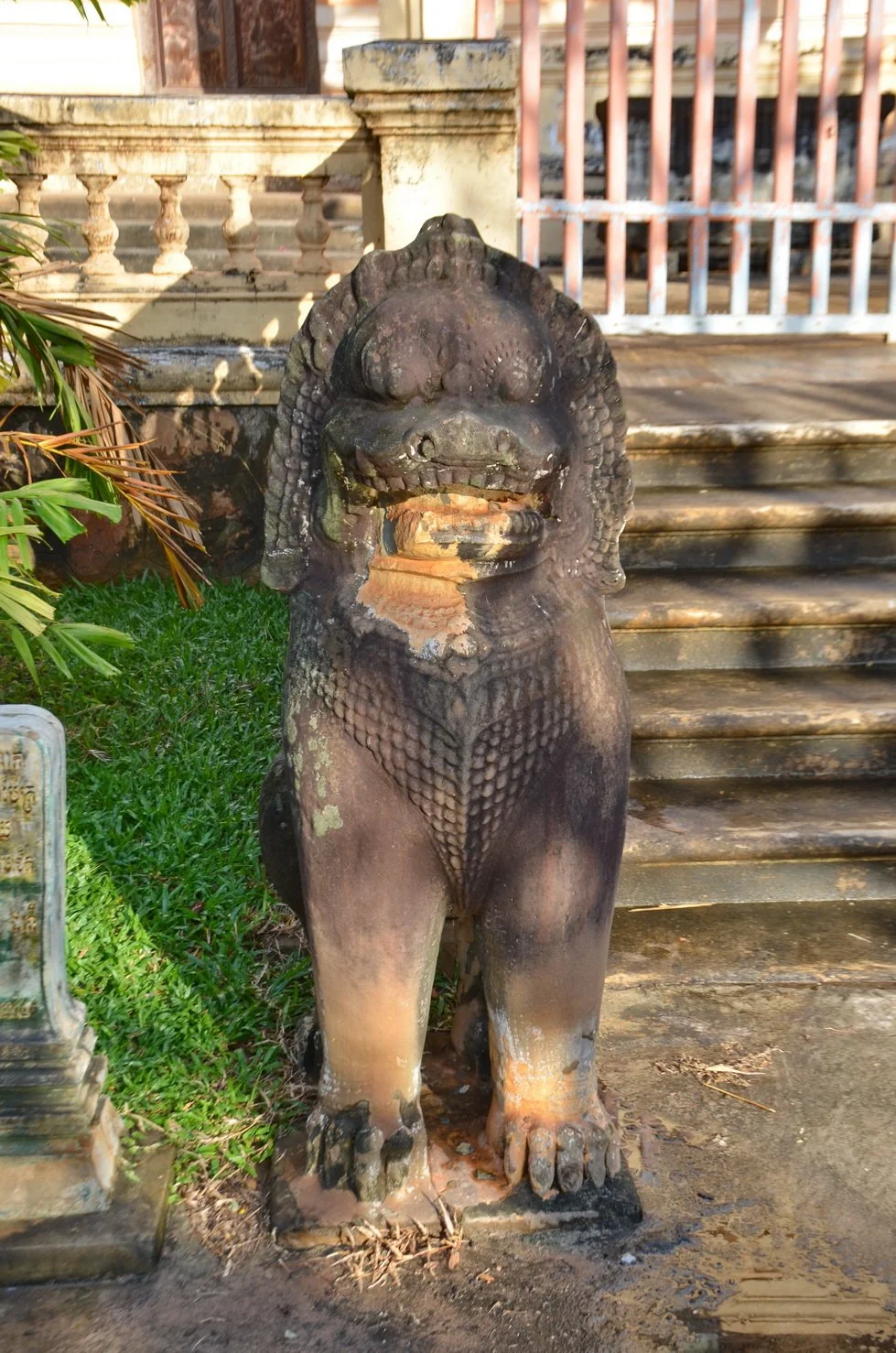
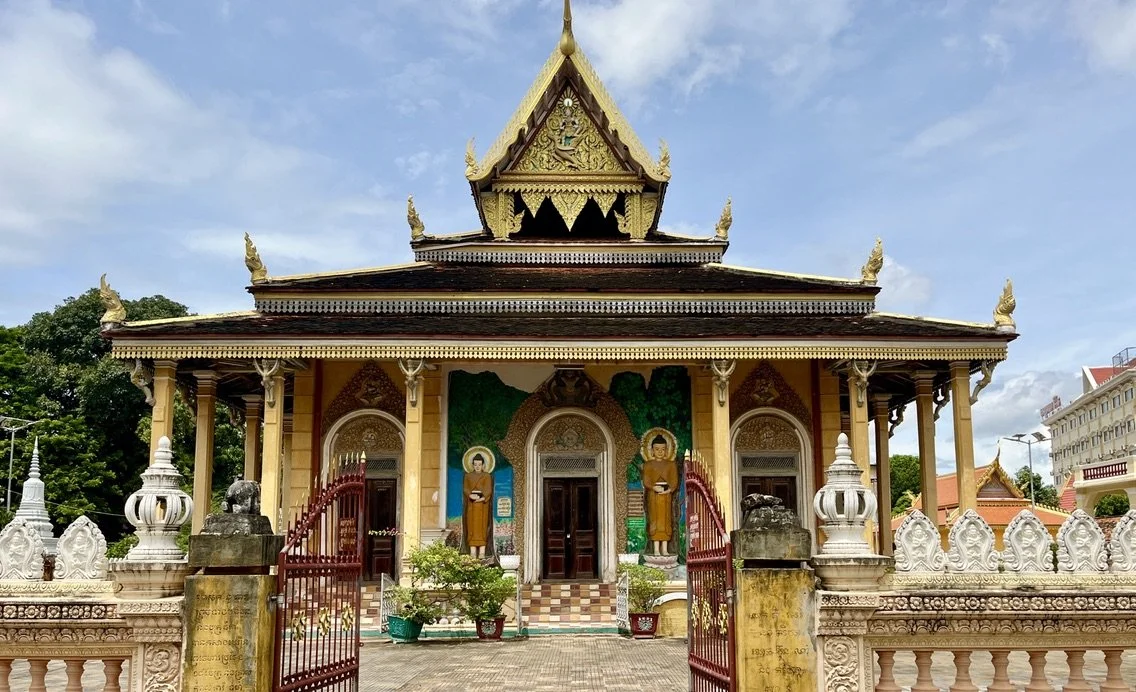
One lovely thing about the place is that, as it is not a monastery, it hasn’t been littered with the stupas of generations of abbots. The grounds, though not large, still give the relief delivered by negative space. The statuary here are more charming than tacky. Still can’t escape the mangey temple dogs though!

I was quite ill when I visited, so I took bad photos and worse videos, and am having trouble breathing in the audio. It’s a shame because this is probably the most aesthetic temple I encountered in Battambang. This video really shows what it’s like outside; even though my video is trash it does show more of the interior.
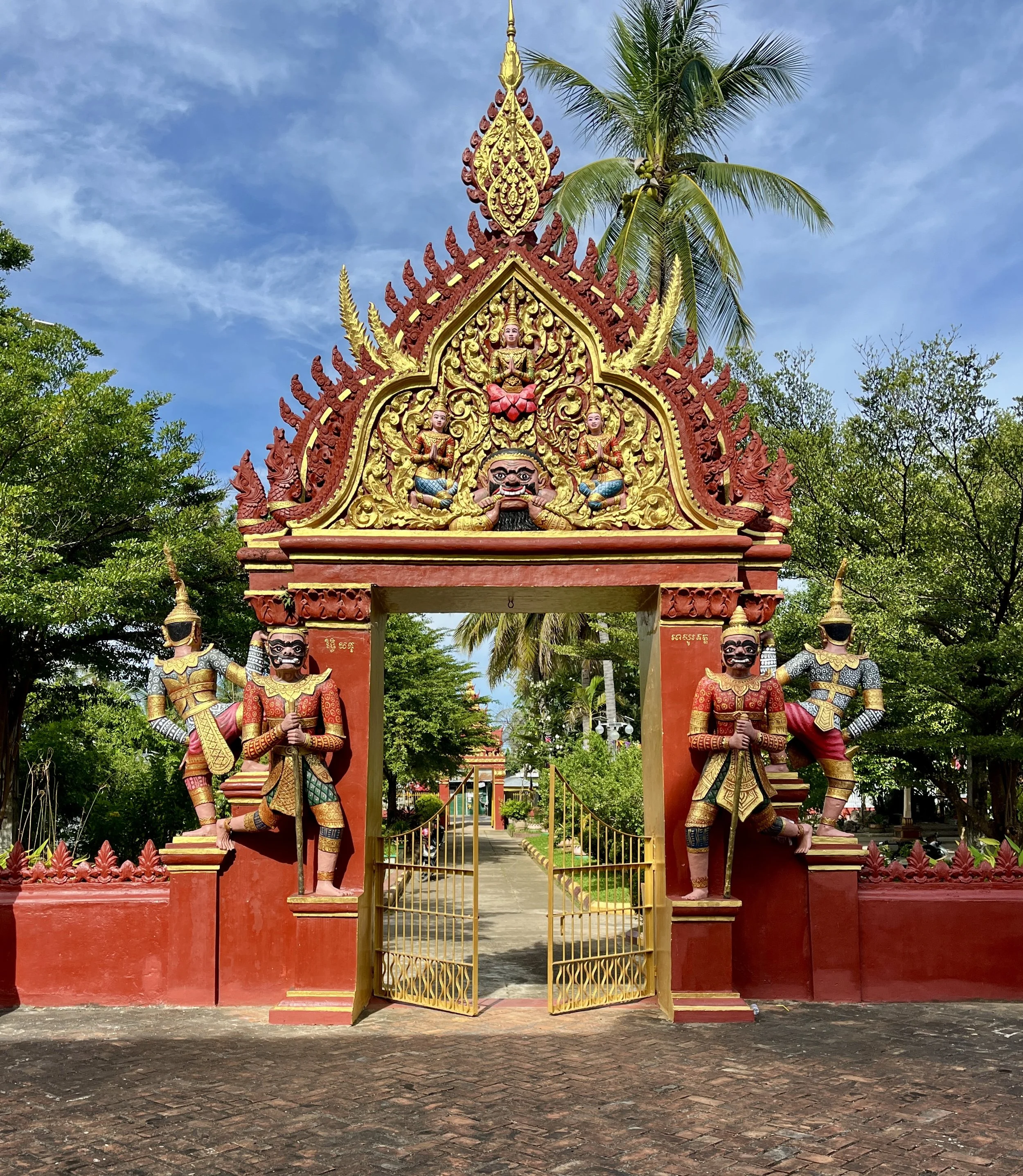
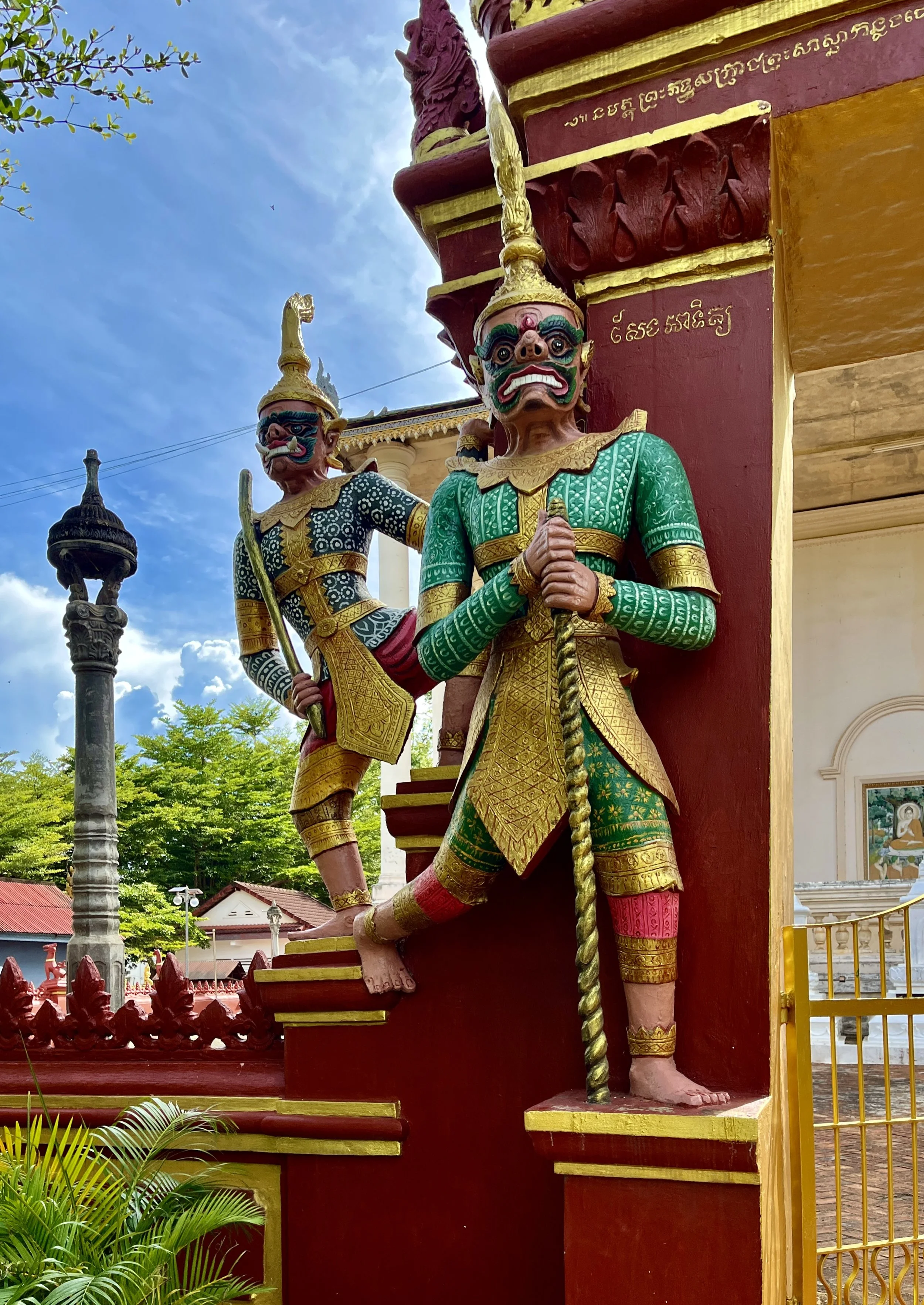
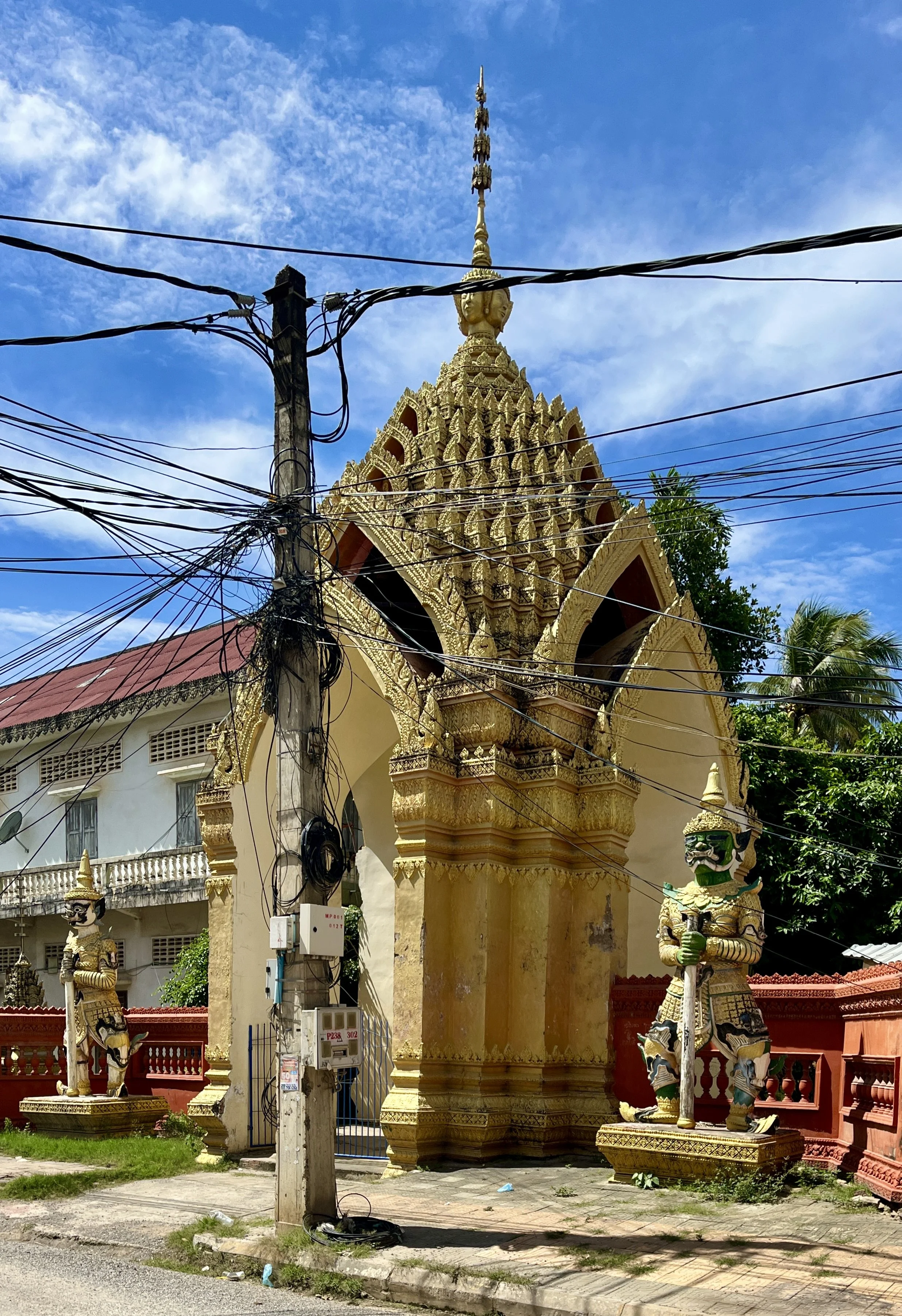
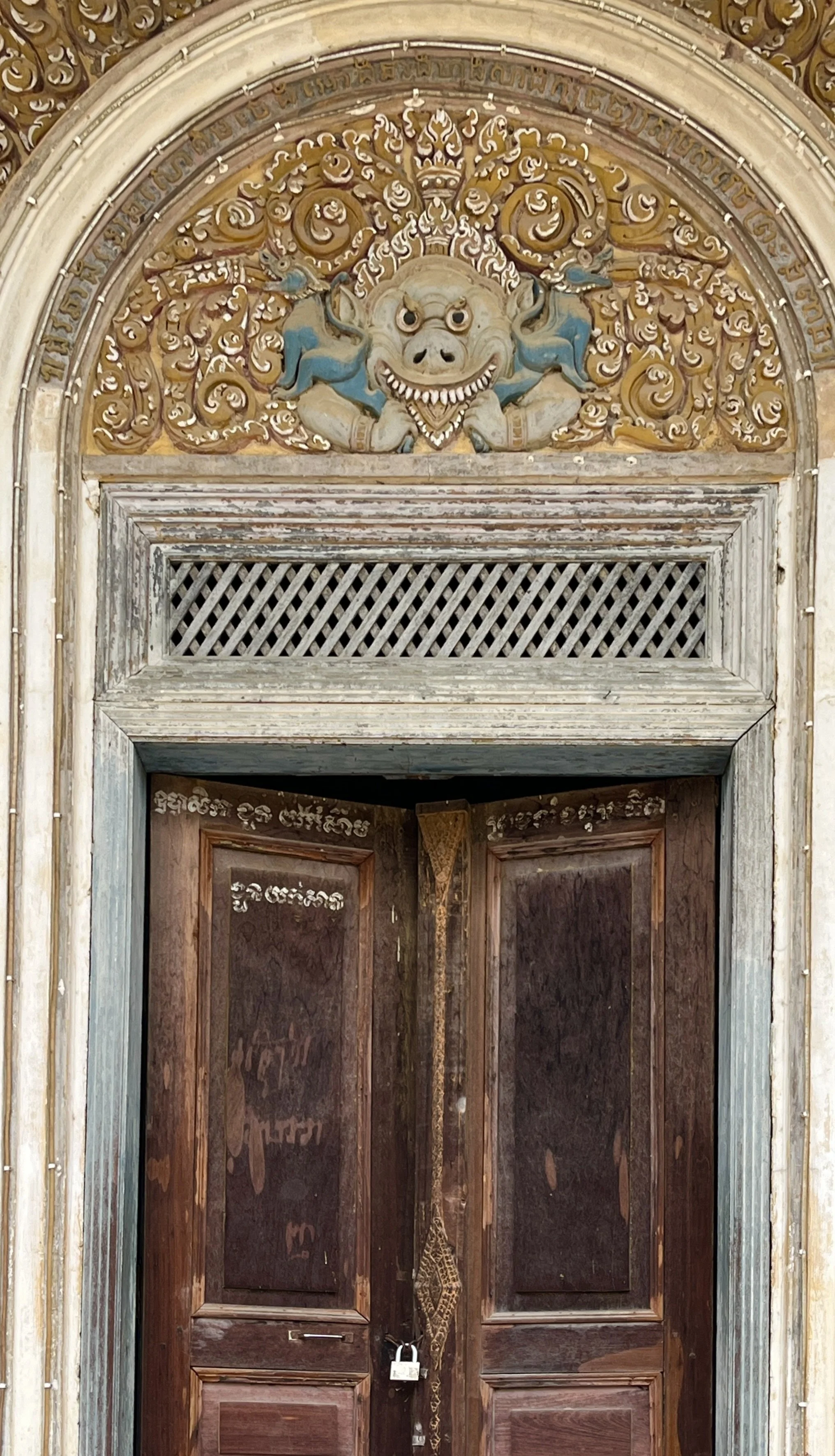
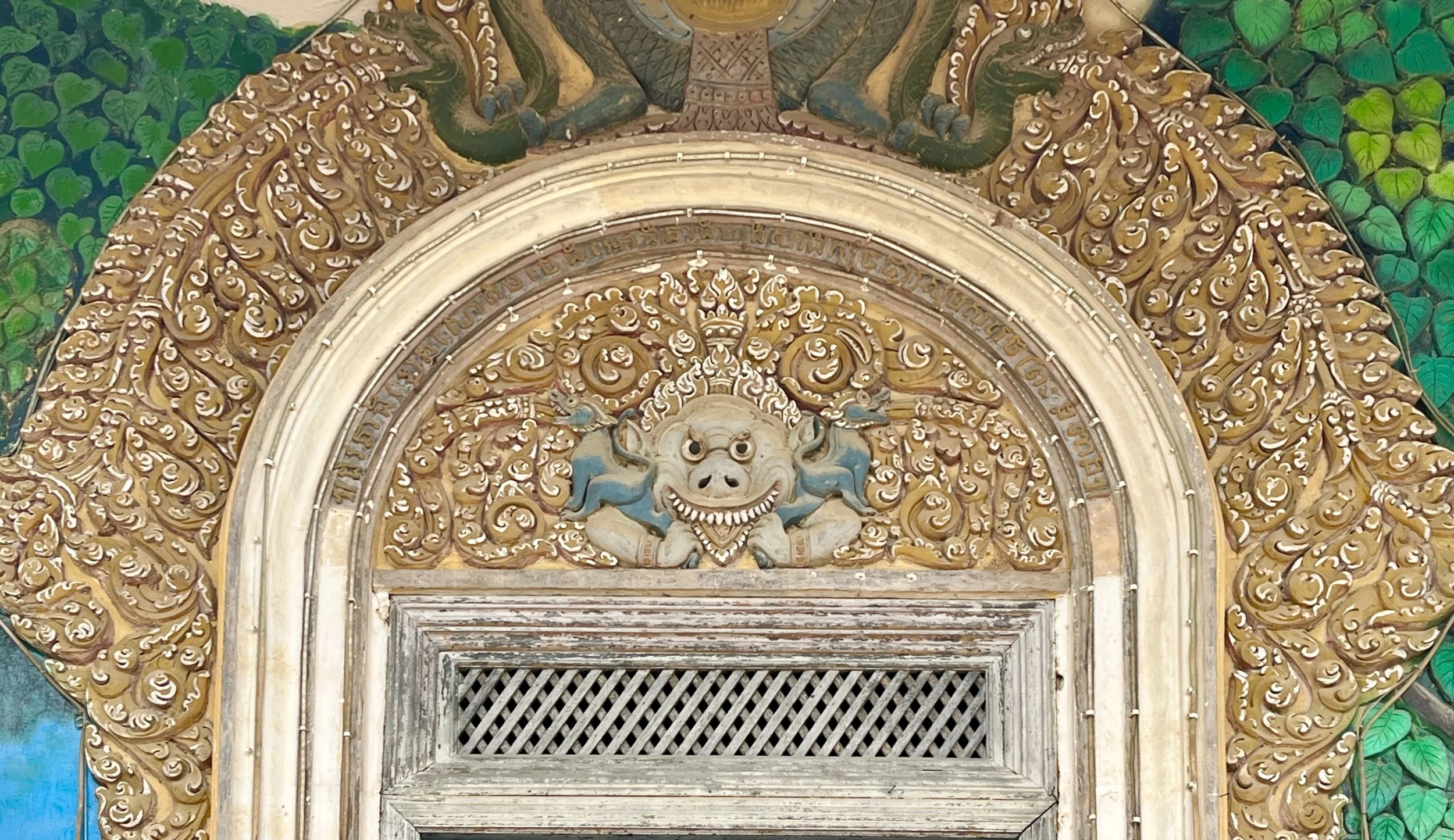
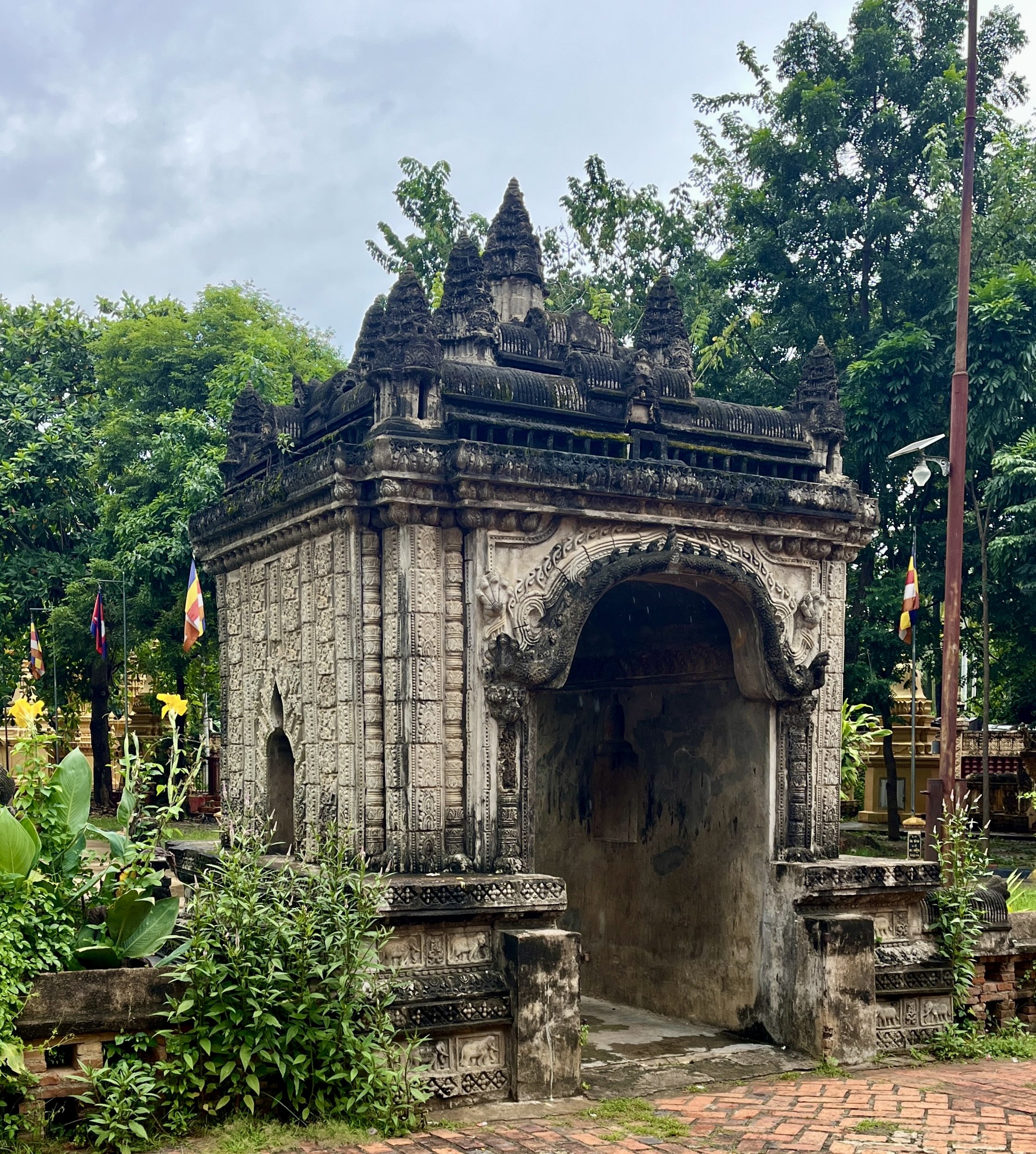
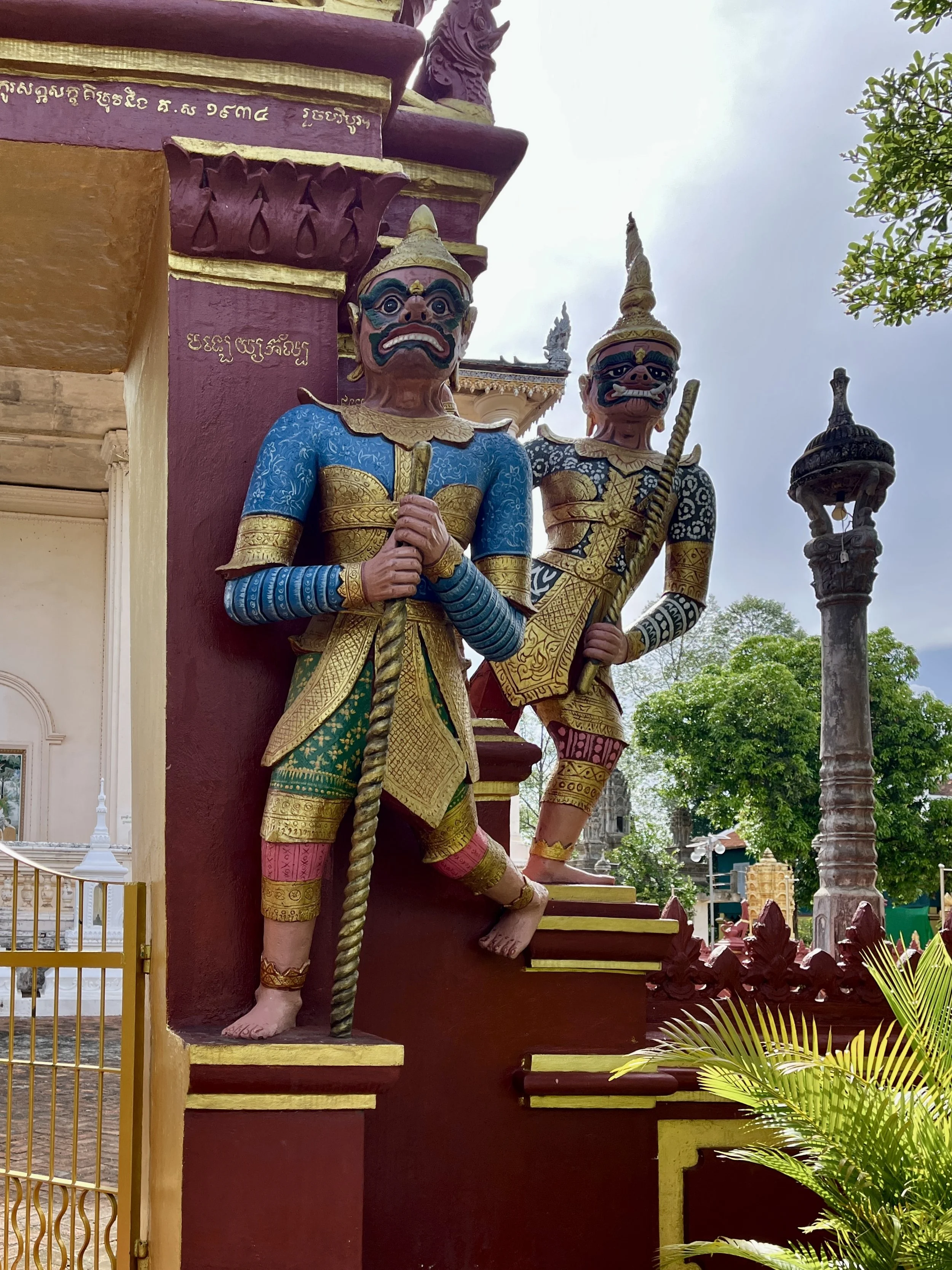
The gate guardians have brown glass eyes, making them at once more human and more grotesque.
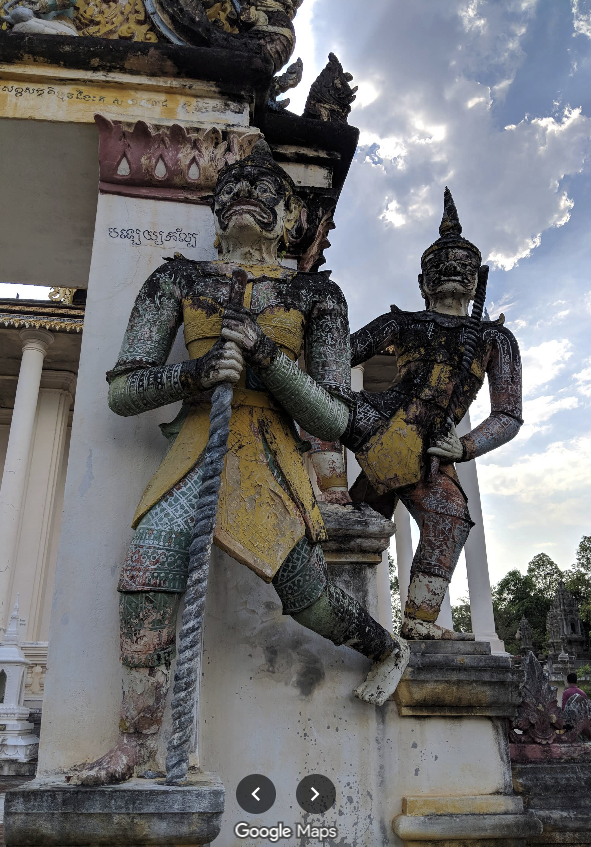
These photos from 2018 show how nicely/recently things have been retouched
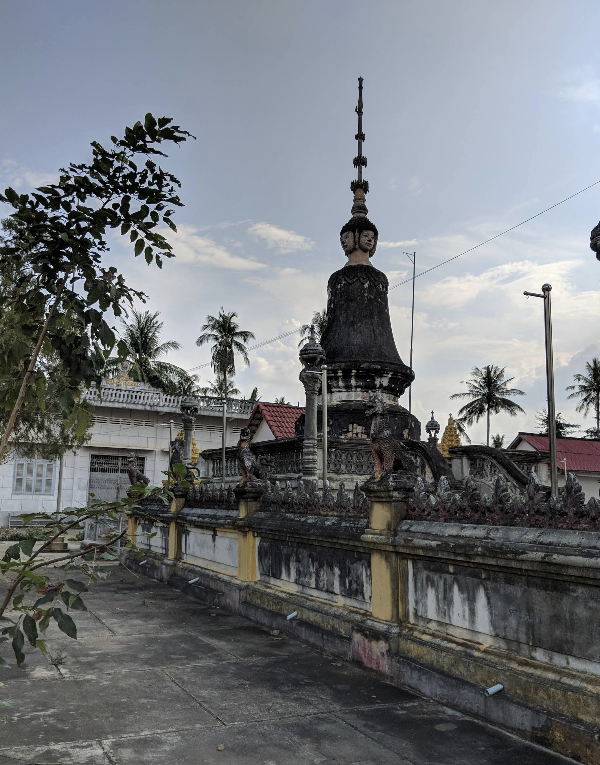
2018, from google maps
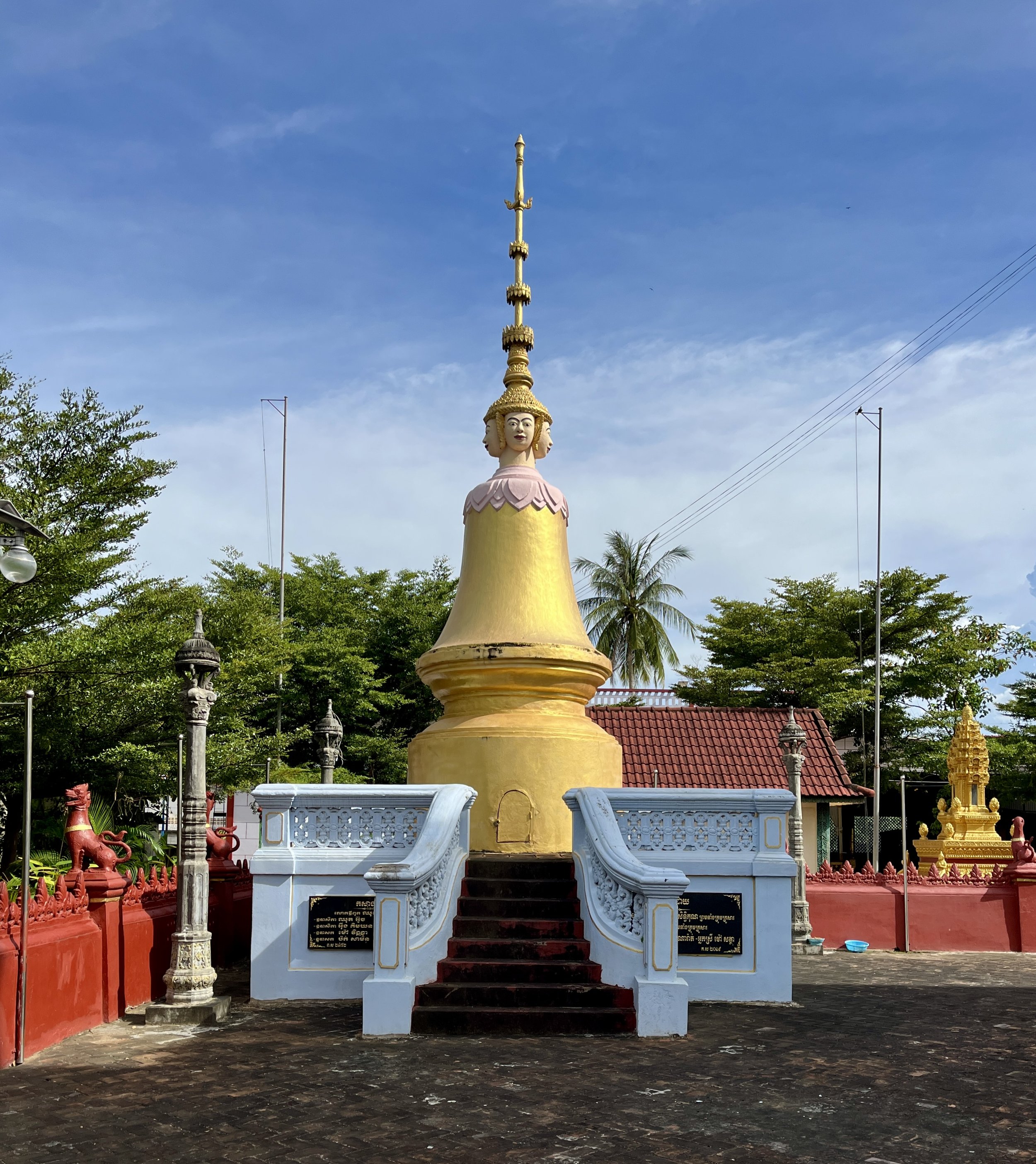
In Buddhist and Hindu traditions, these four faces represent the "four sublime states" or Brahmavihara: loving-kindness (Metta), compassion (Karuna), empathetic joy (Mudita), and equanimity (Upekkha)
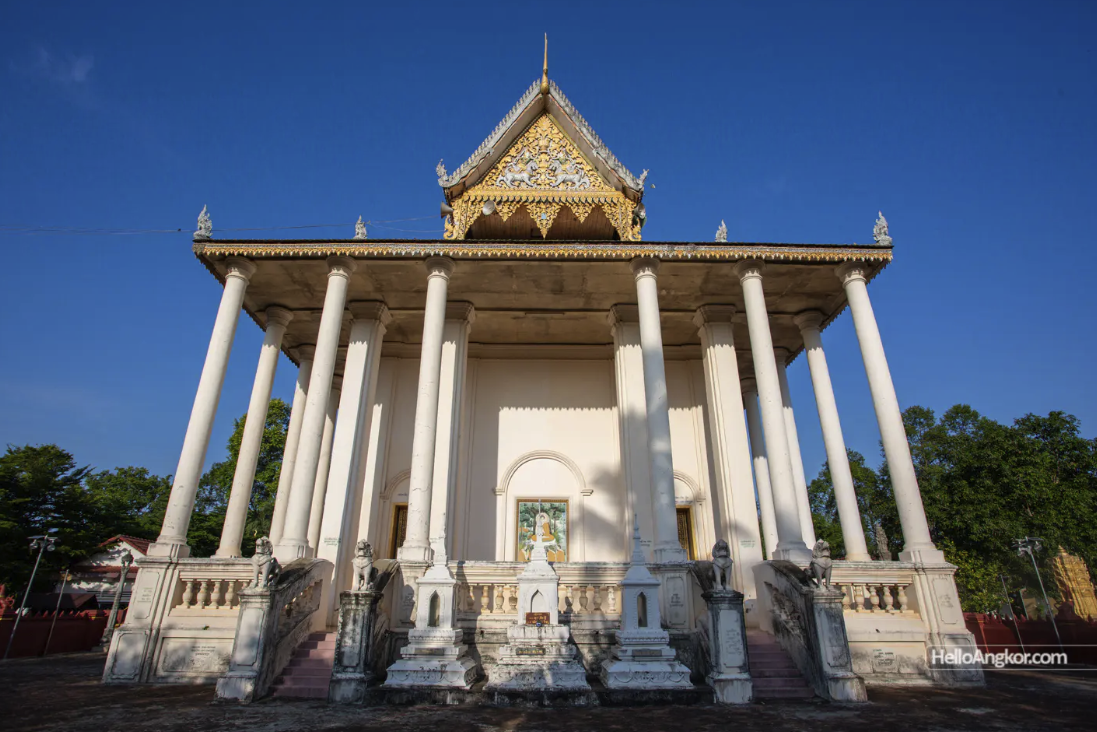
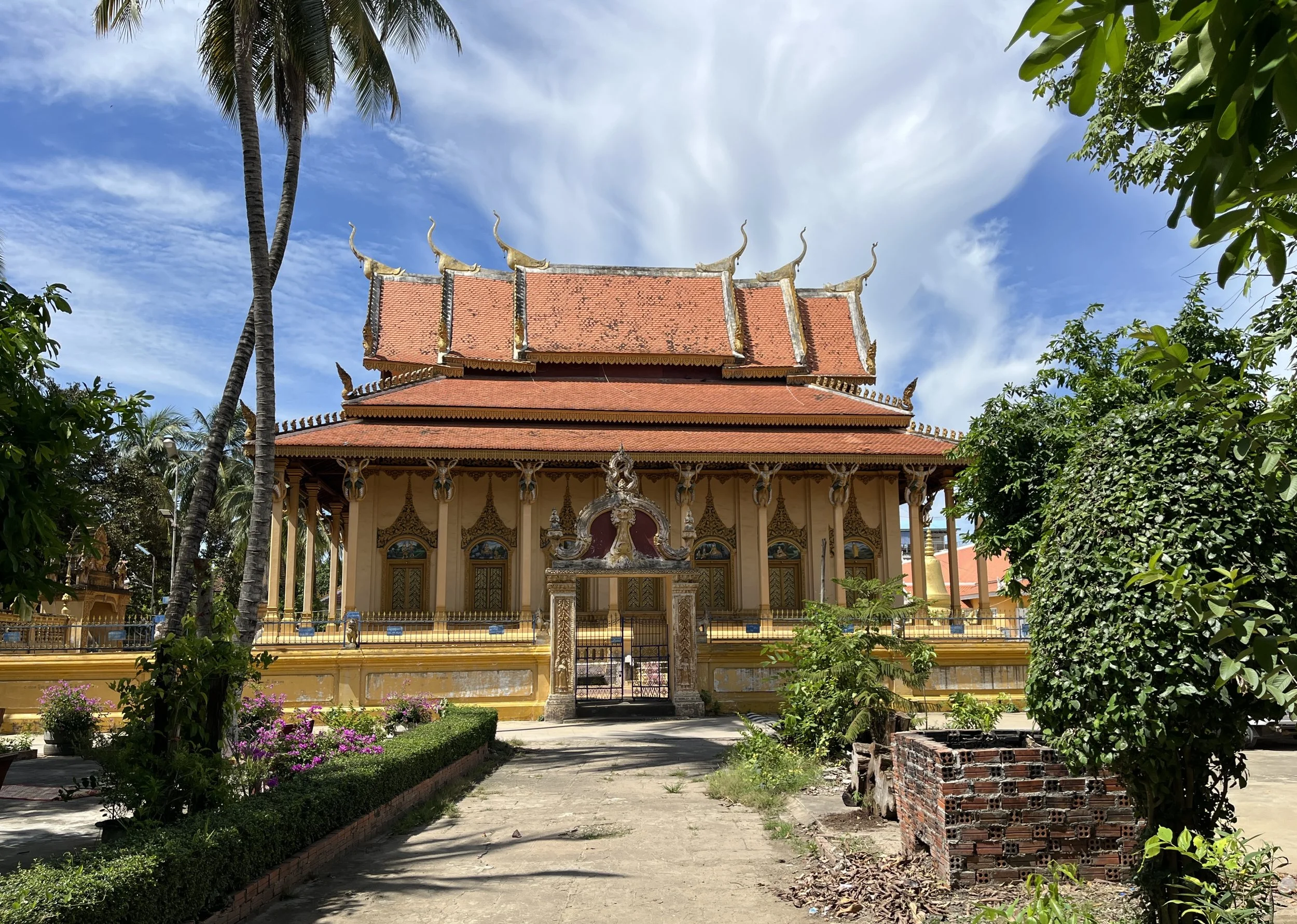
I didn’t take a single photo of the building. This is the best I could find, from Hello Angkor.
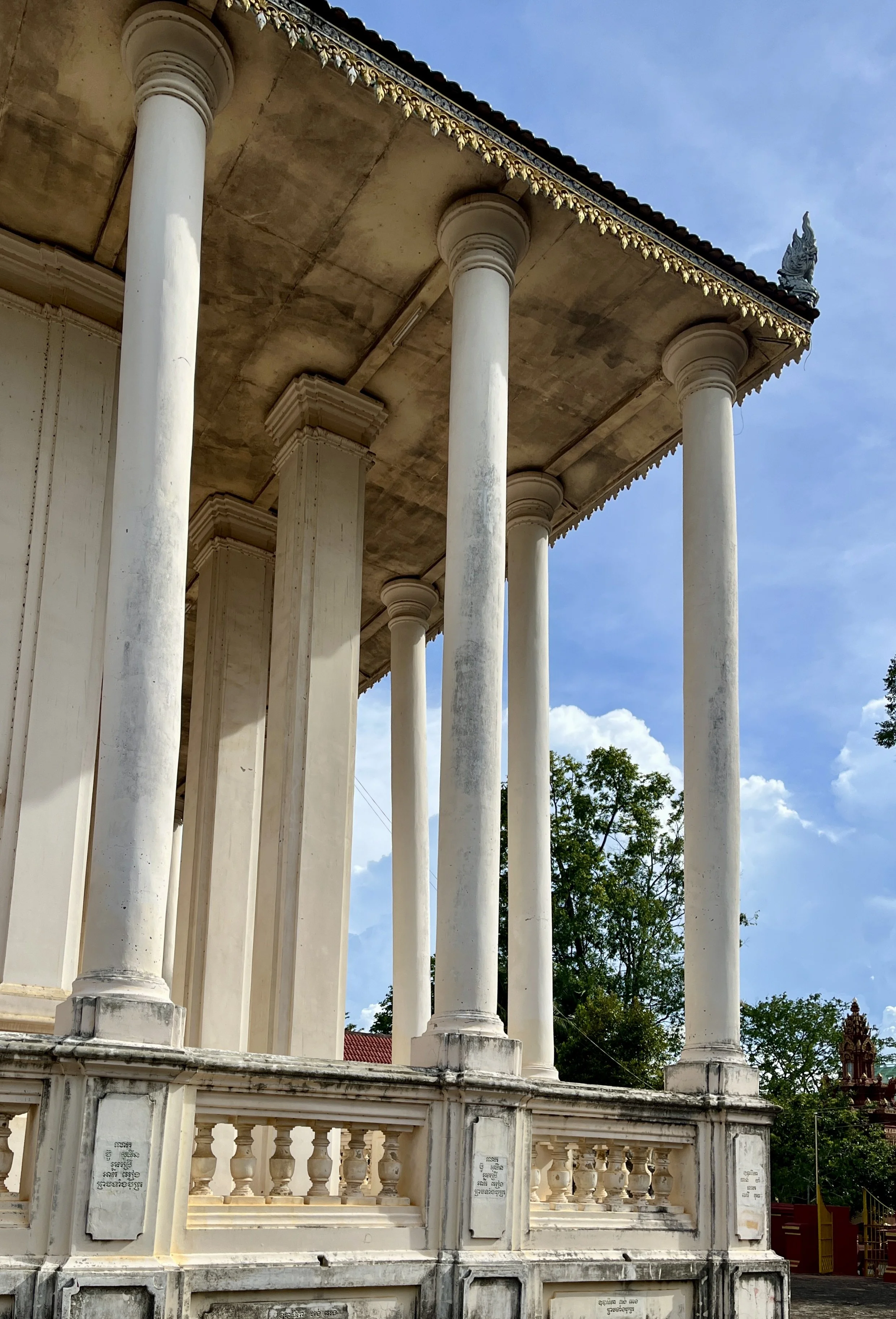
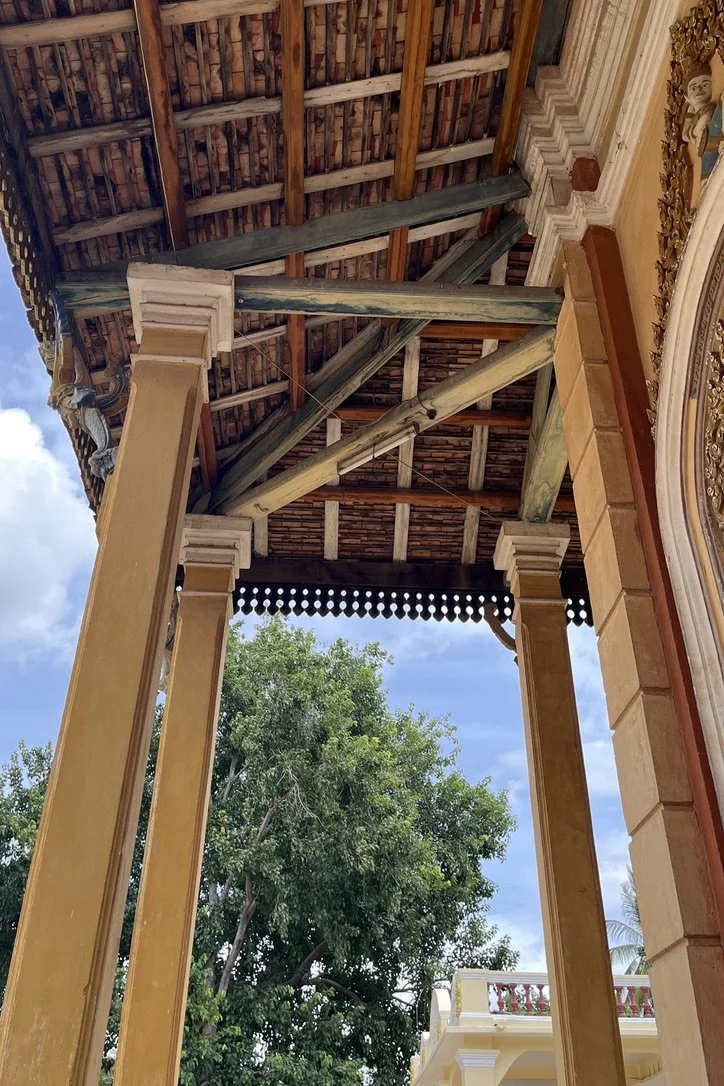
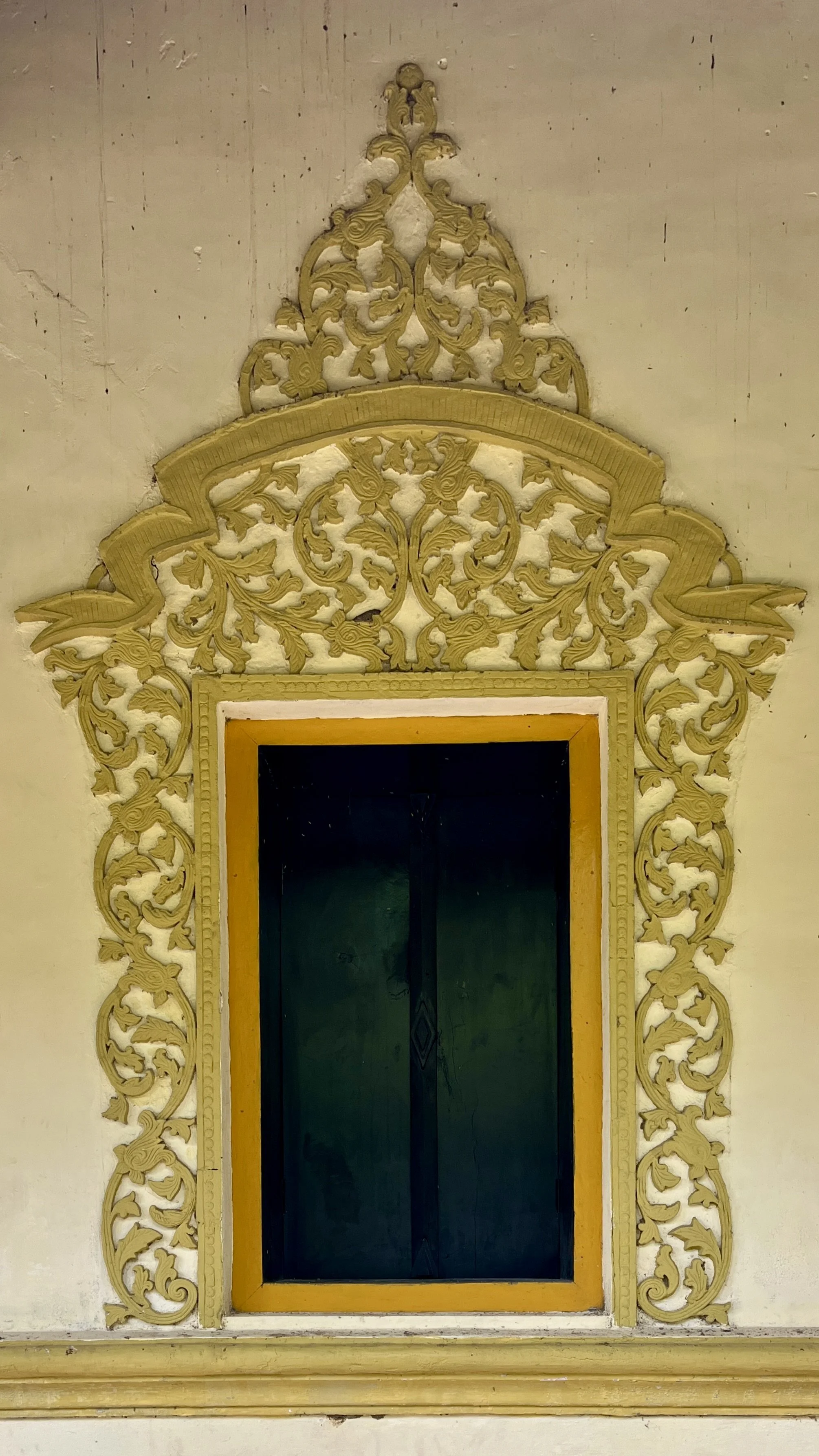
The mix of simple European and Khmer columns is interesting. The facade is very plain, almost completely whitewashed with just a couple of paintings.
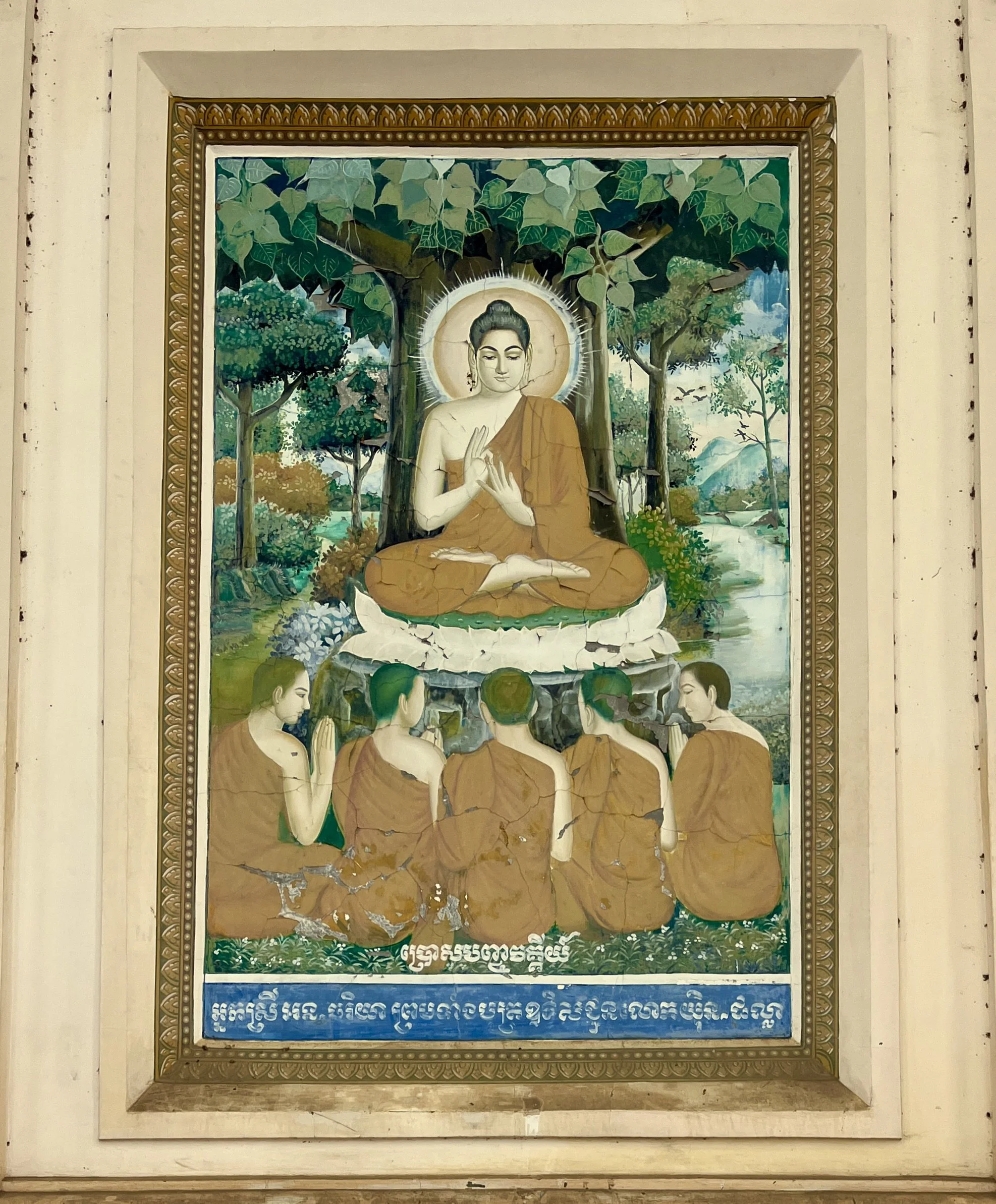
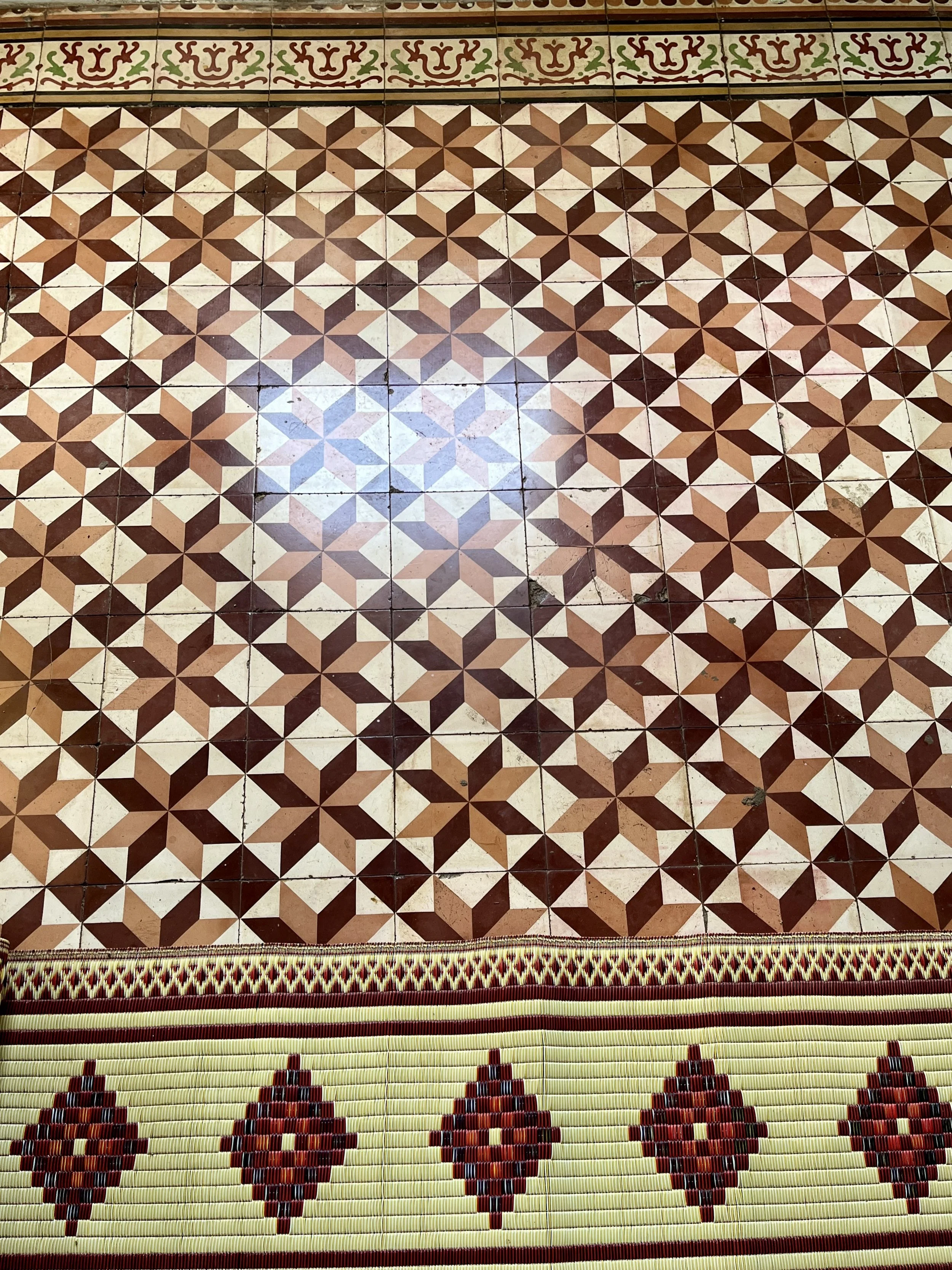
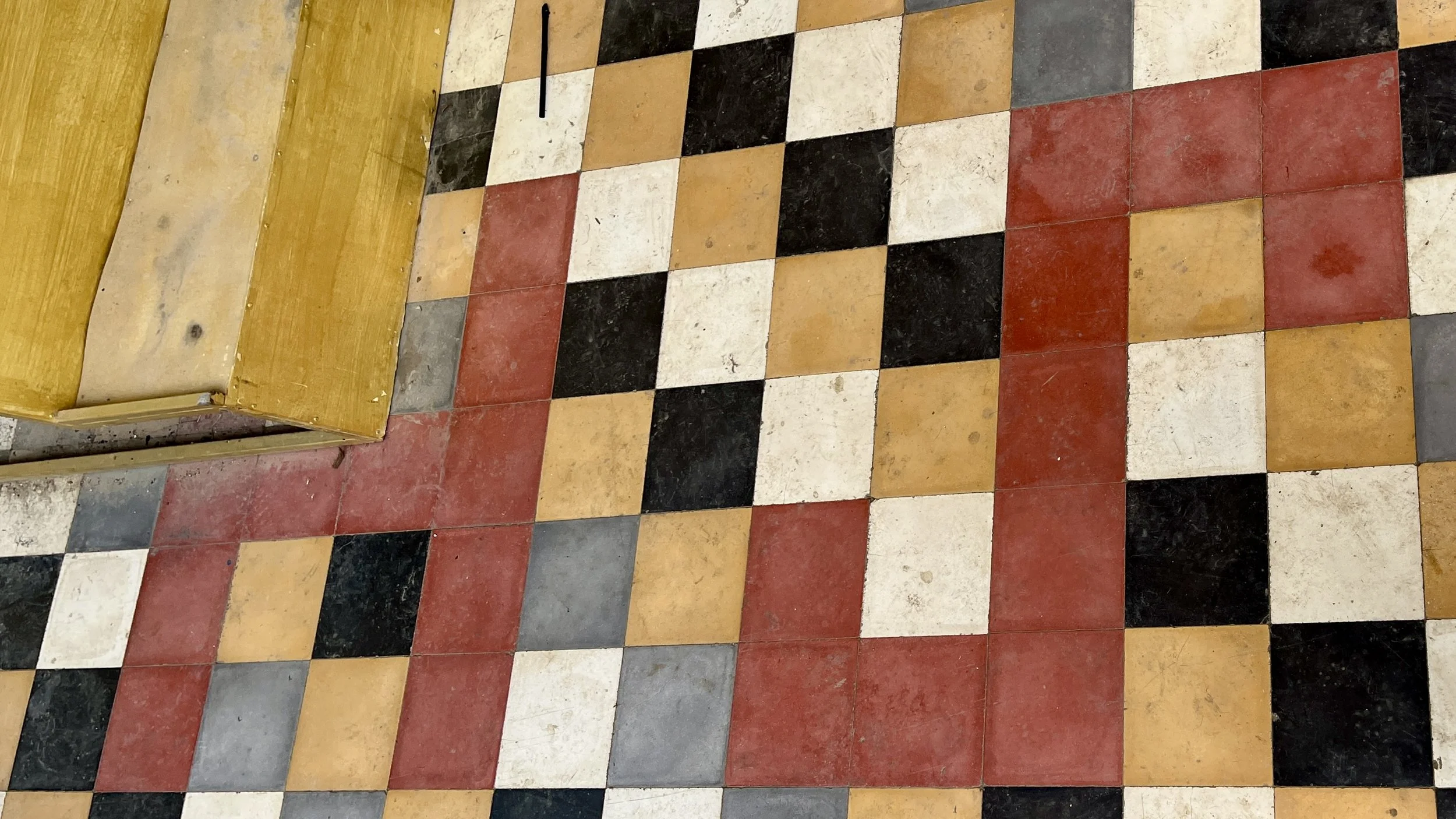
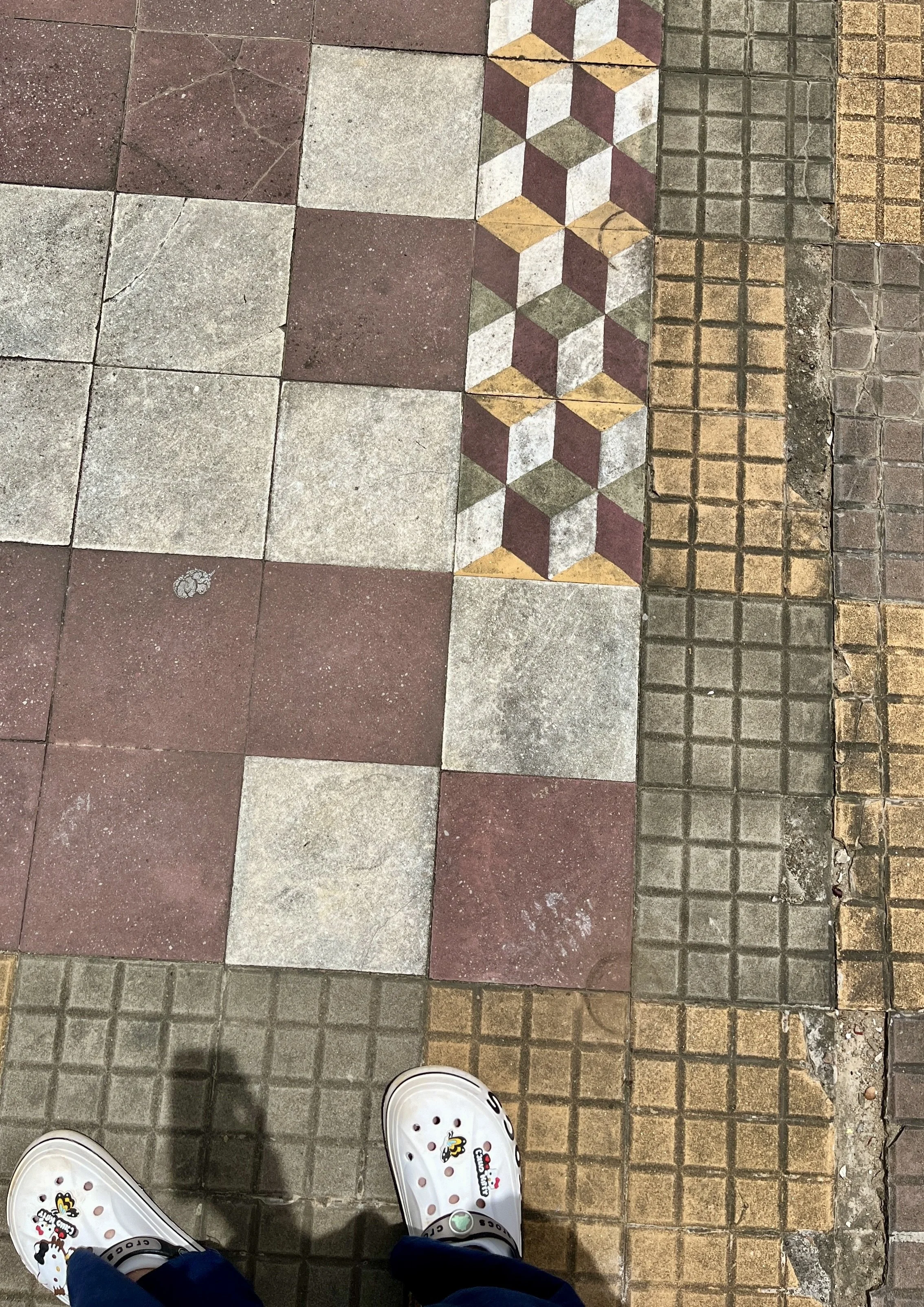
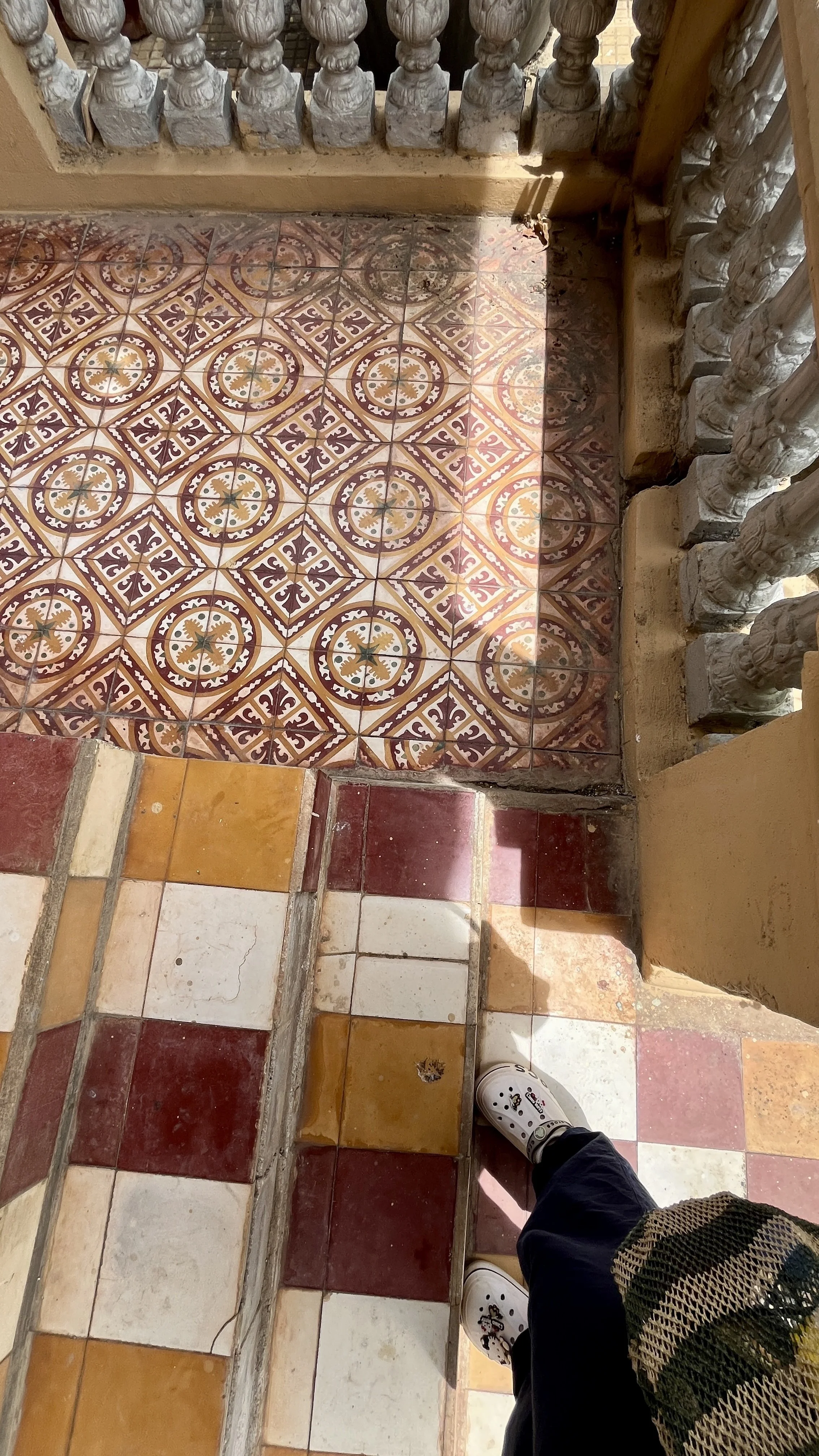
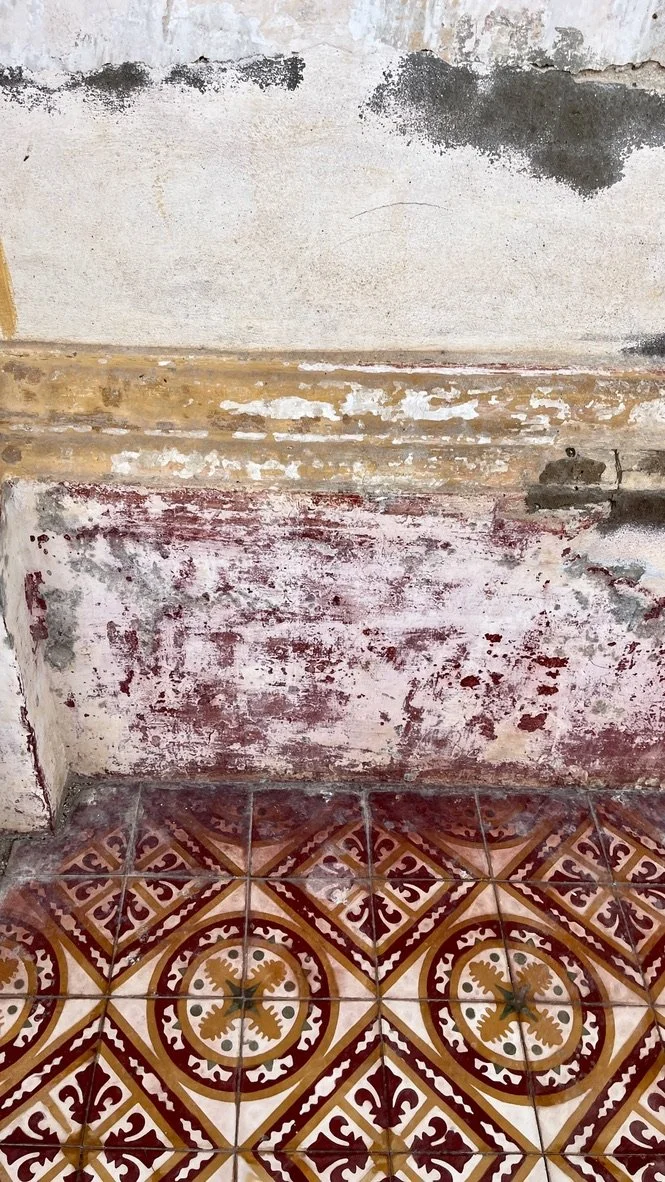
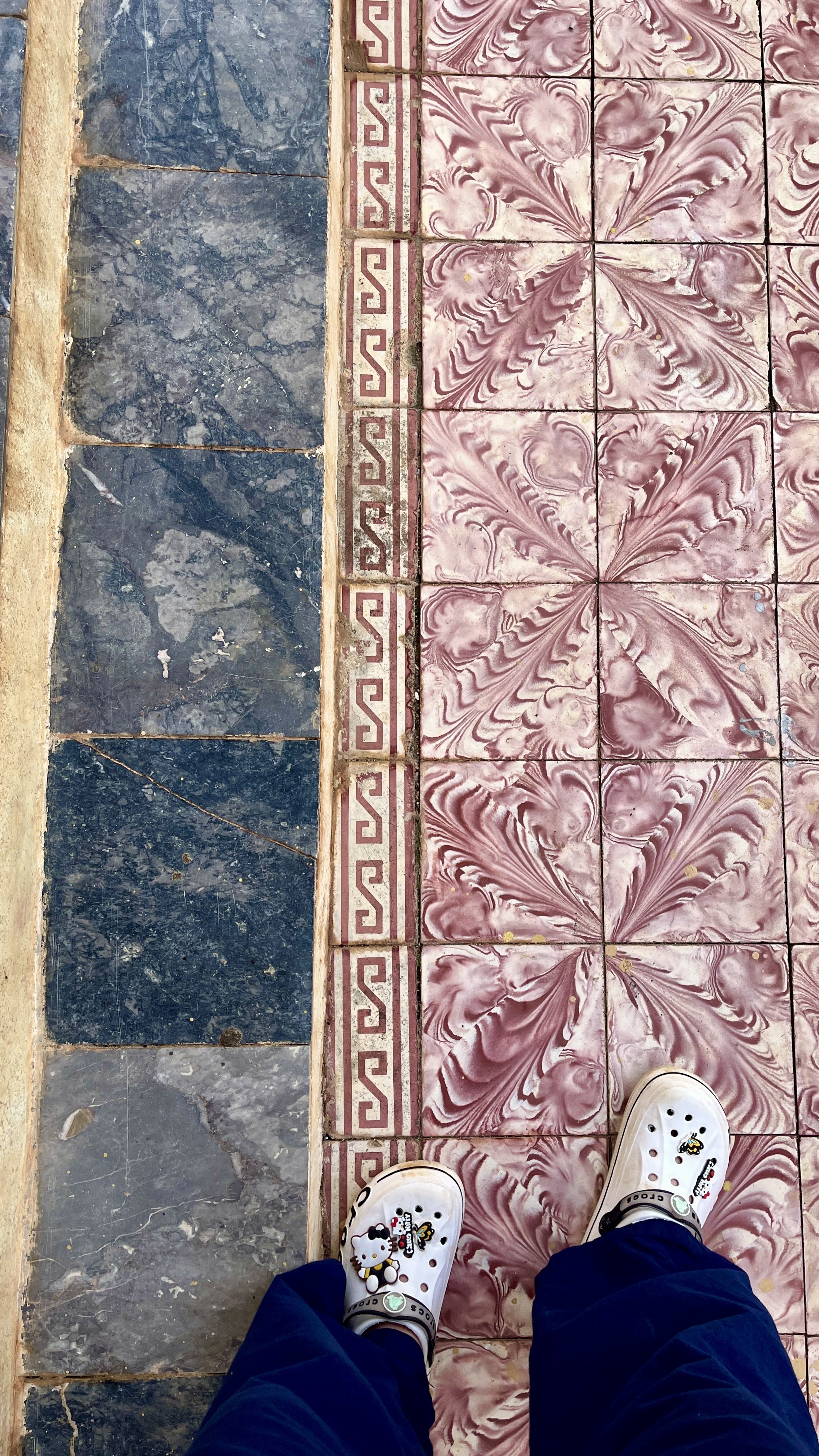
I really like the original tile. Not the colorway, but the intact original match, particularly at the borders.
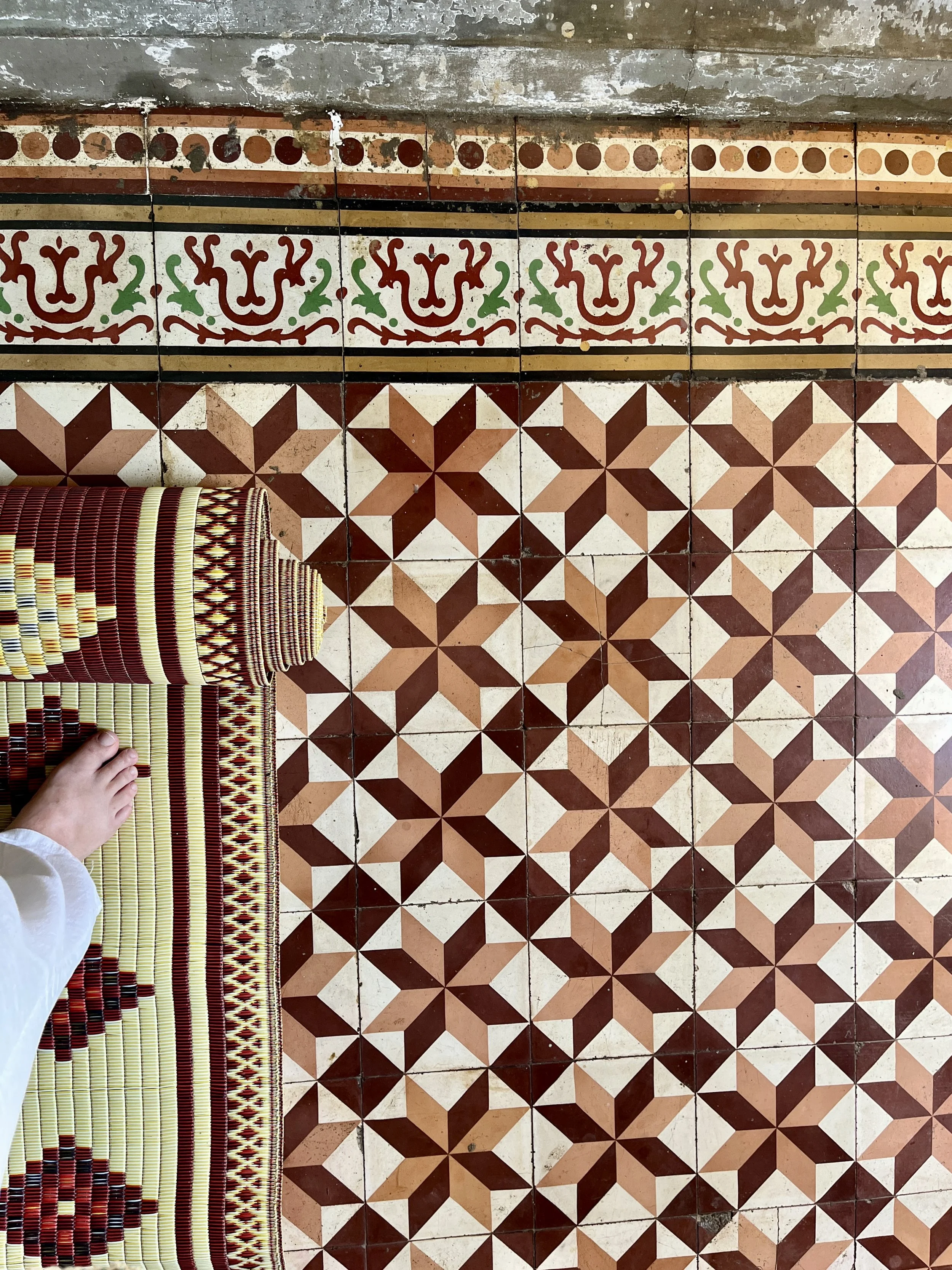
My ugly foot for scale, ha!
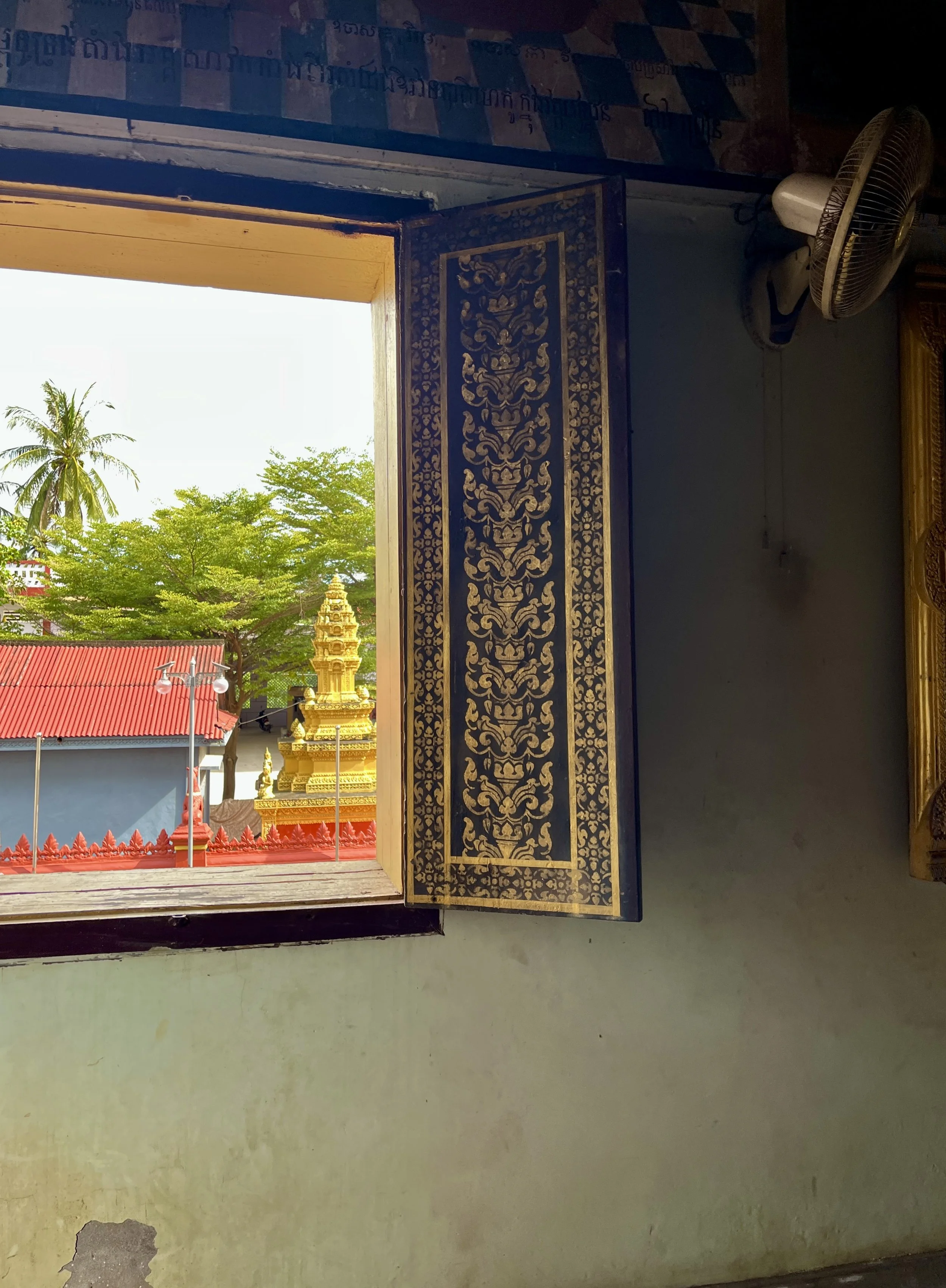
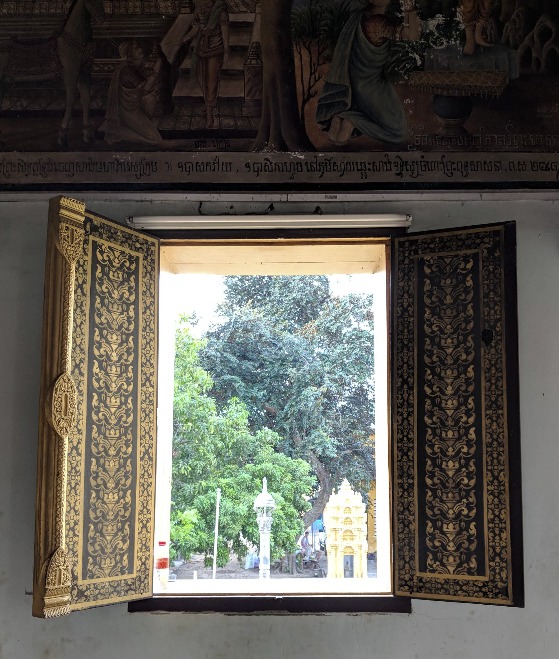
Another from google maps that’s just way better than mine.
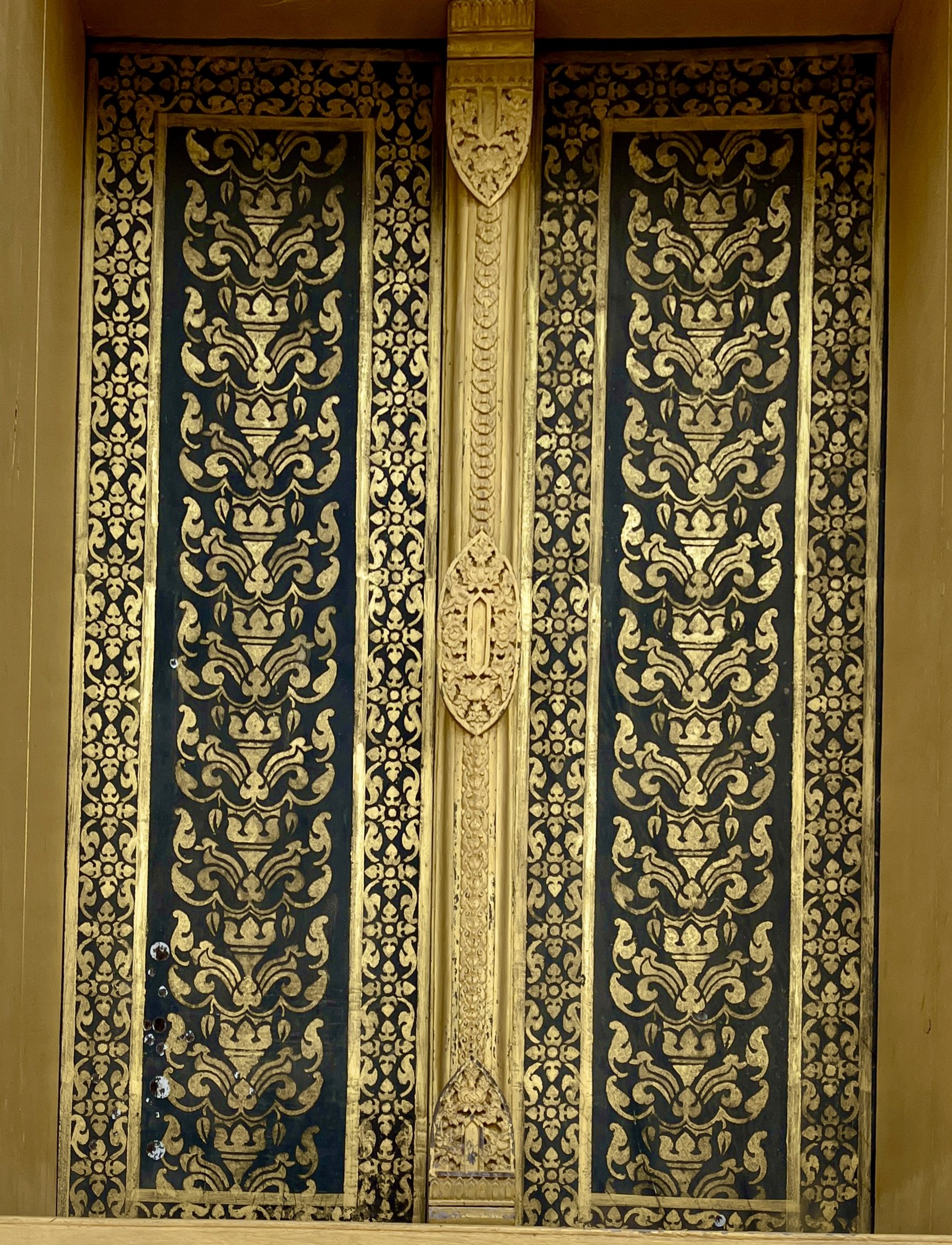
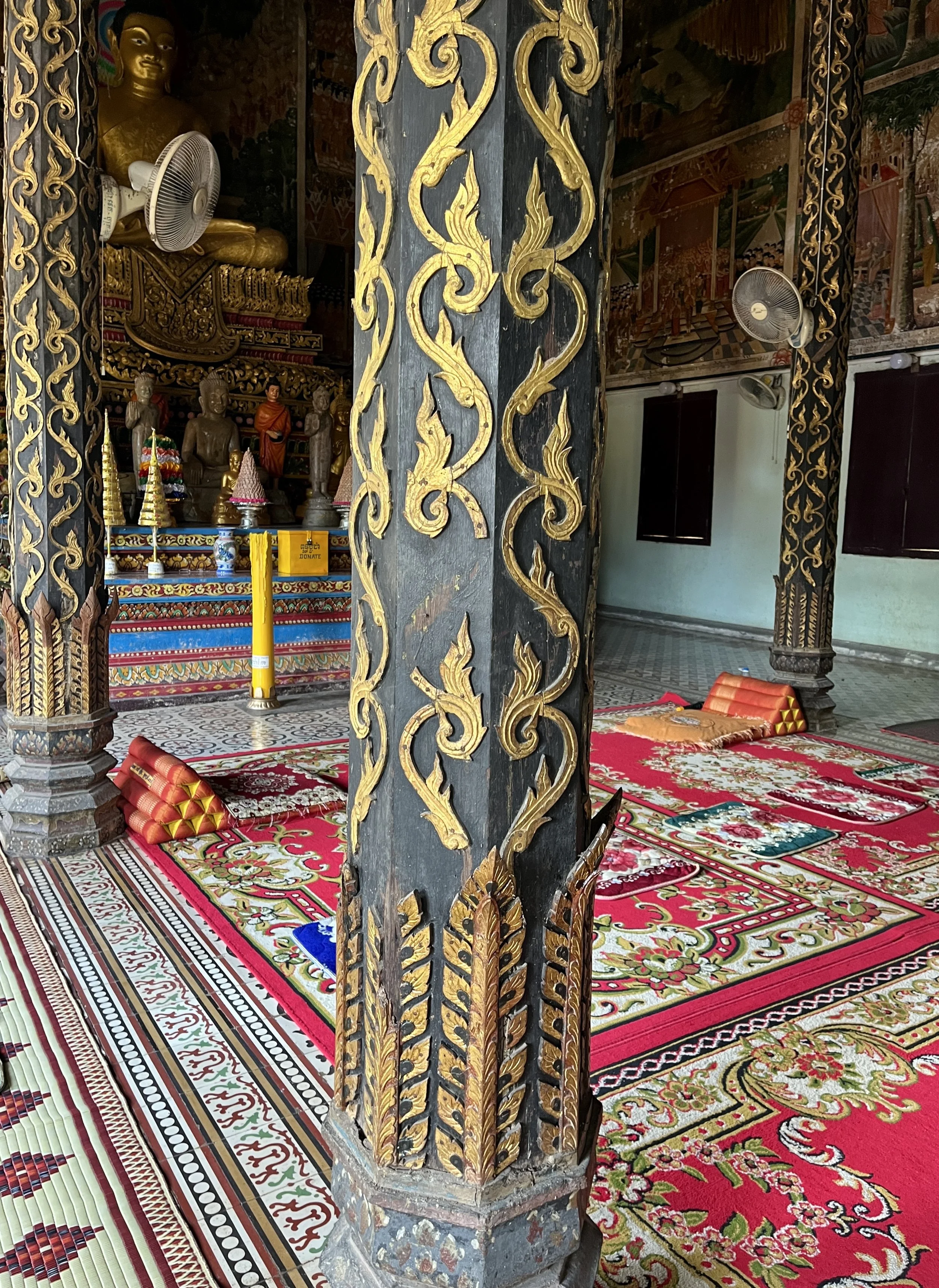
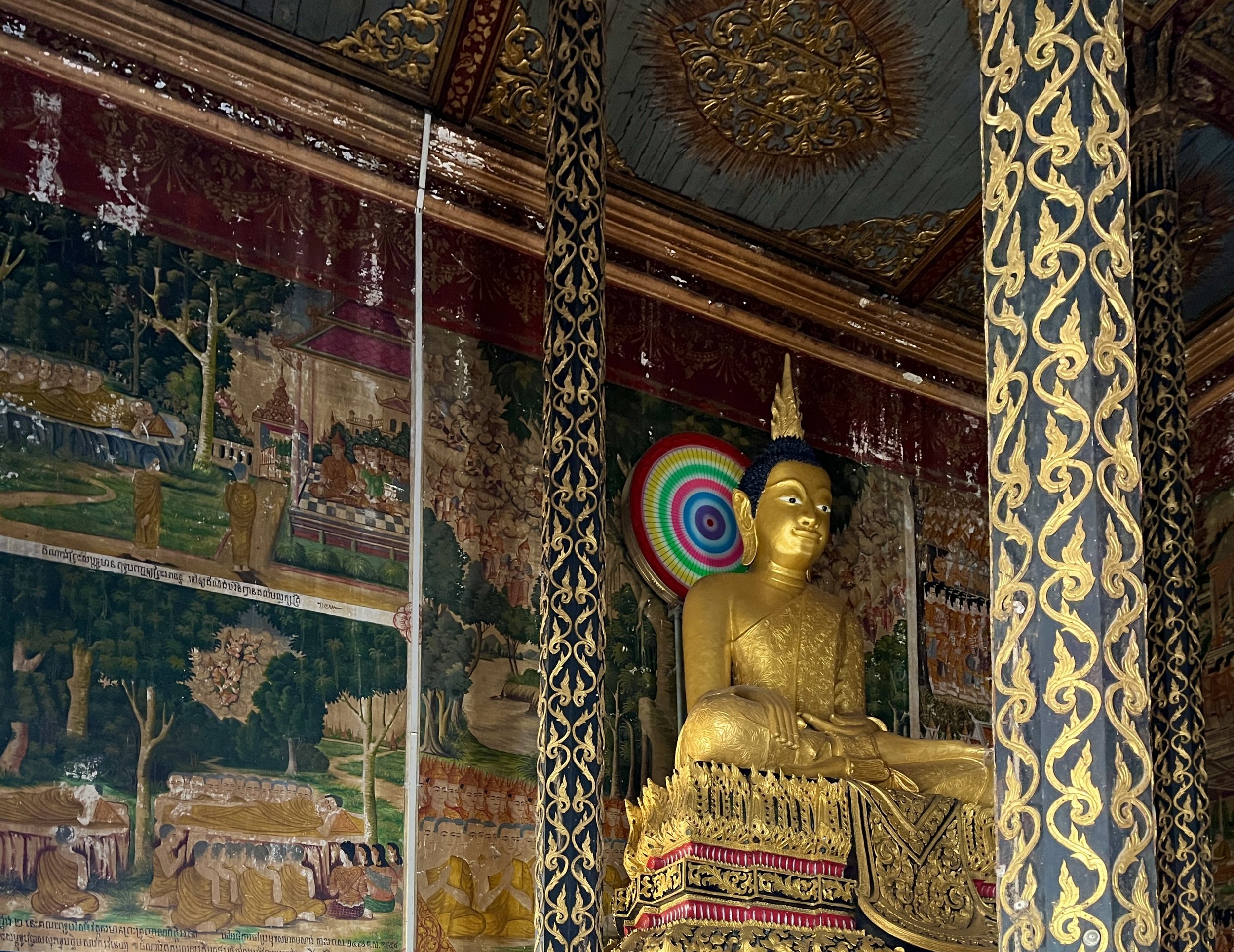
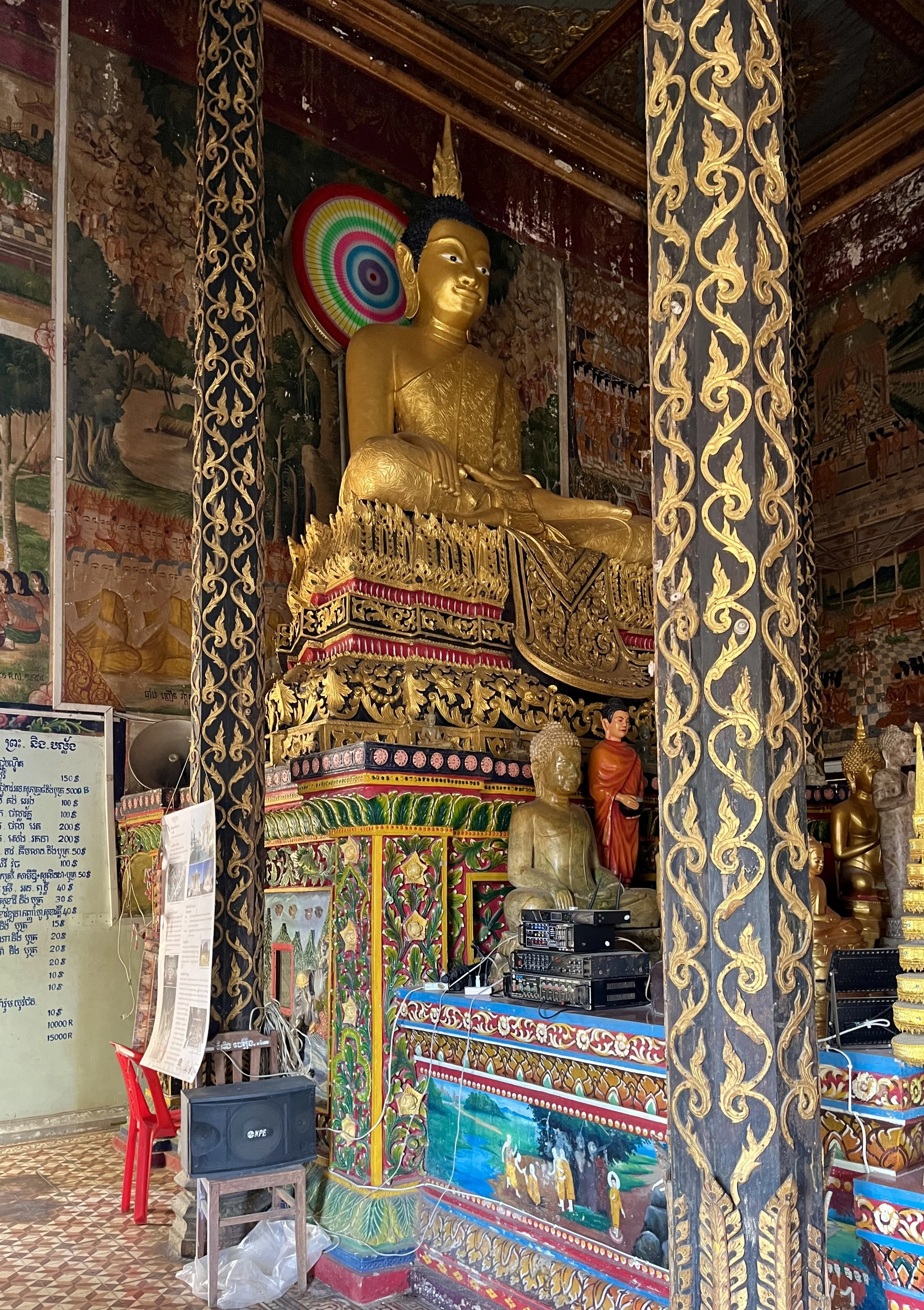
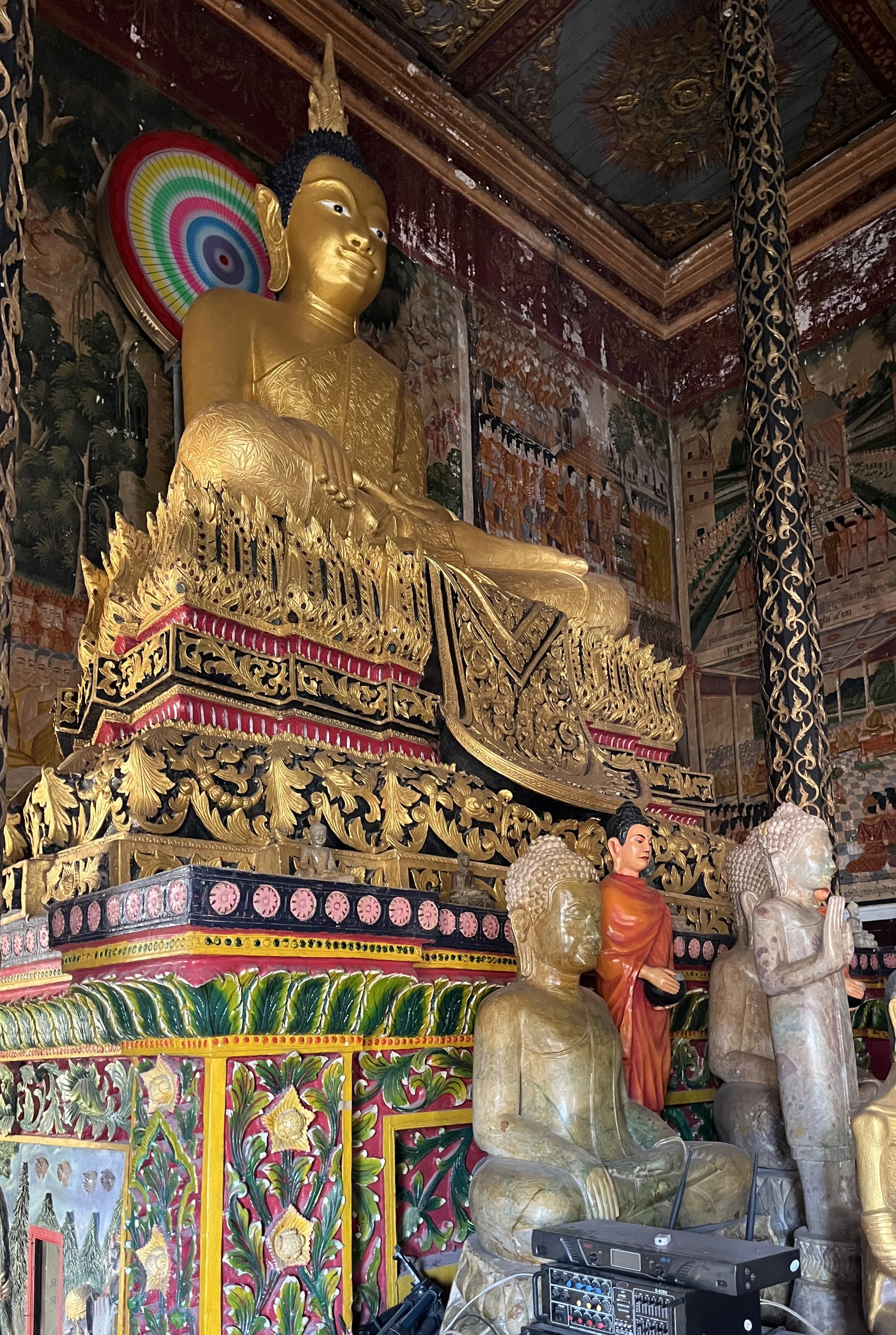
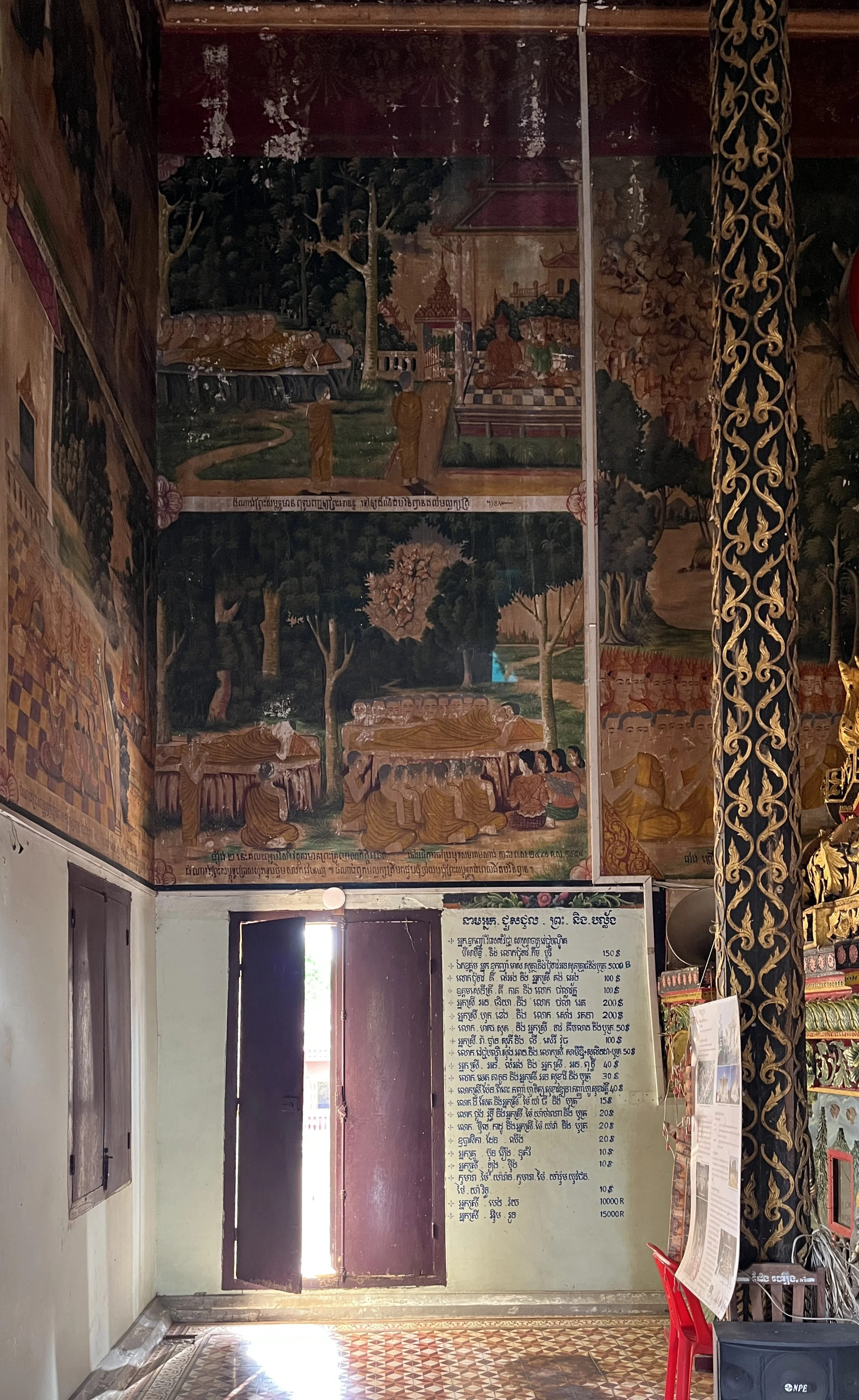
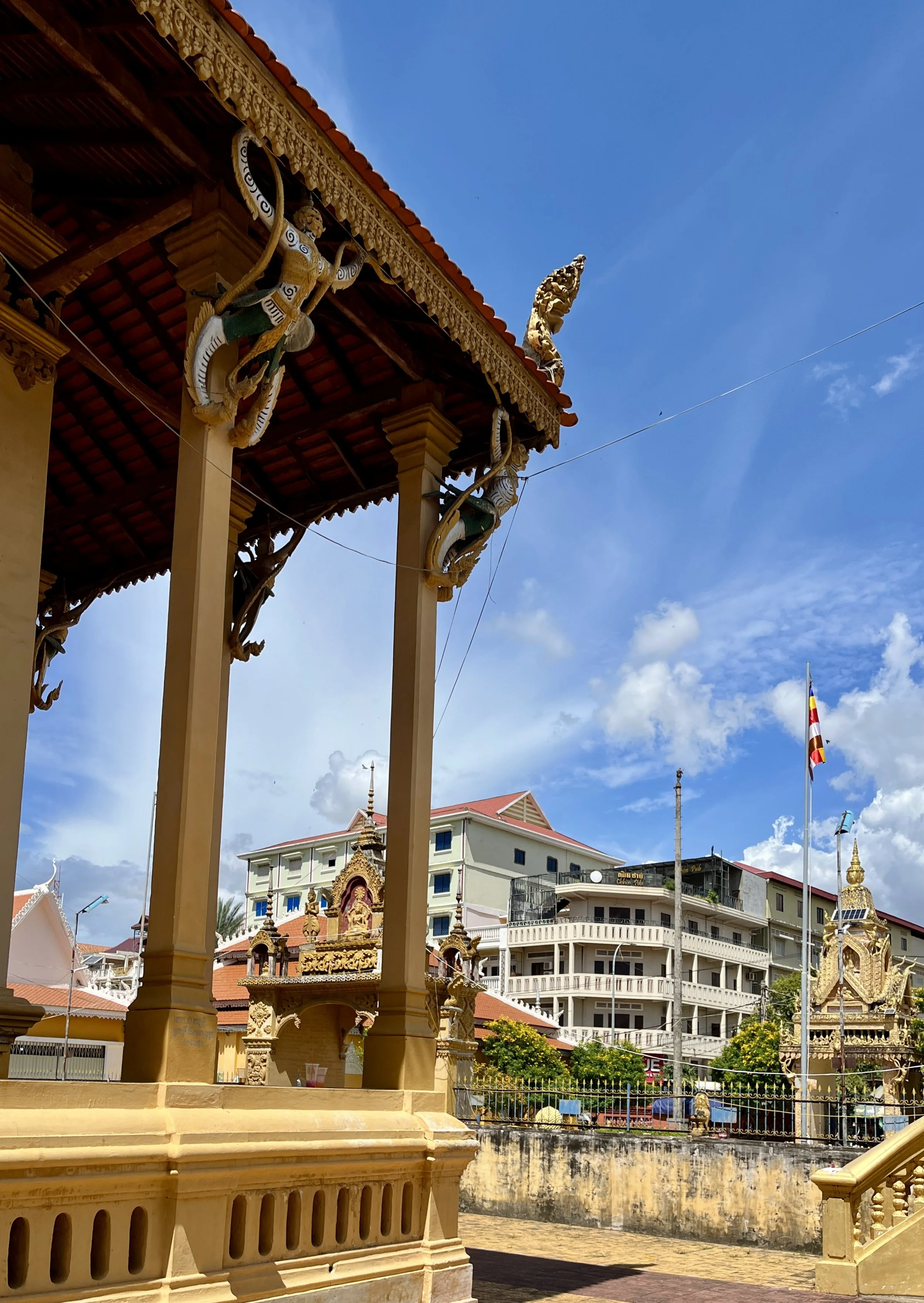
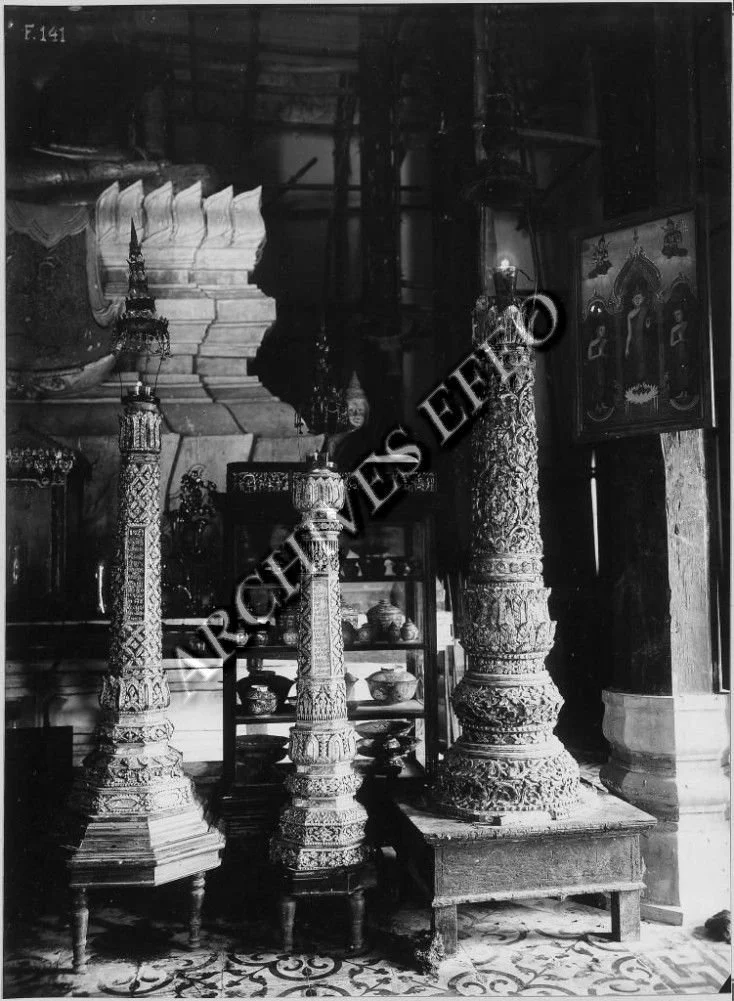
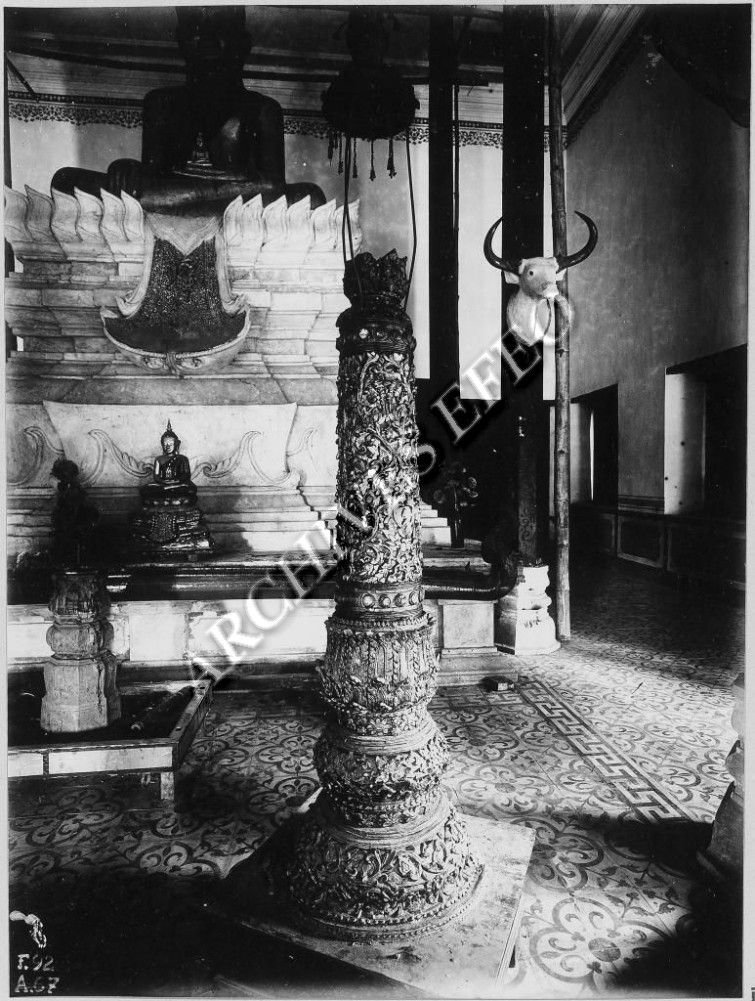
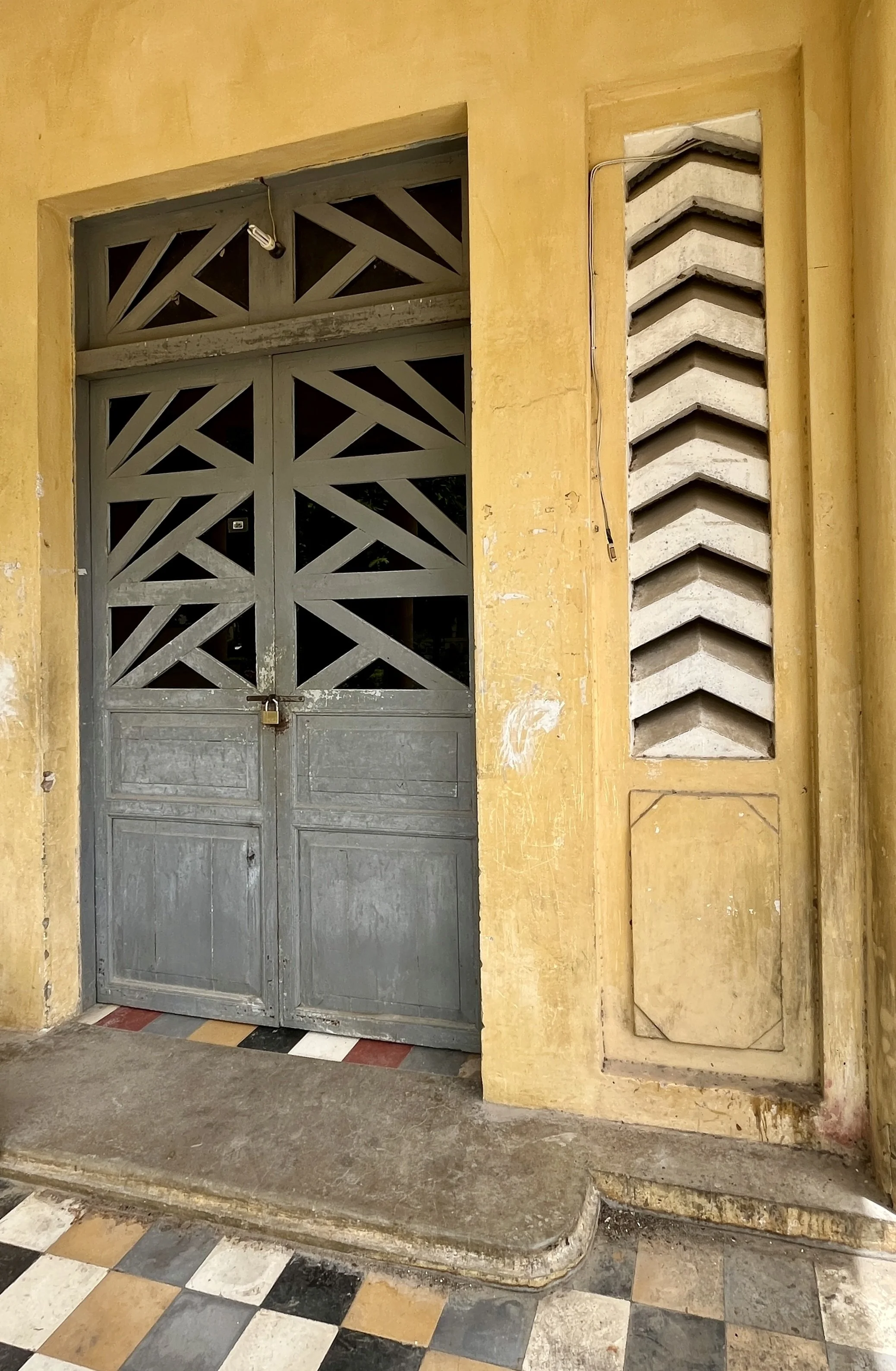
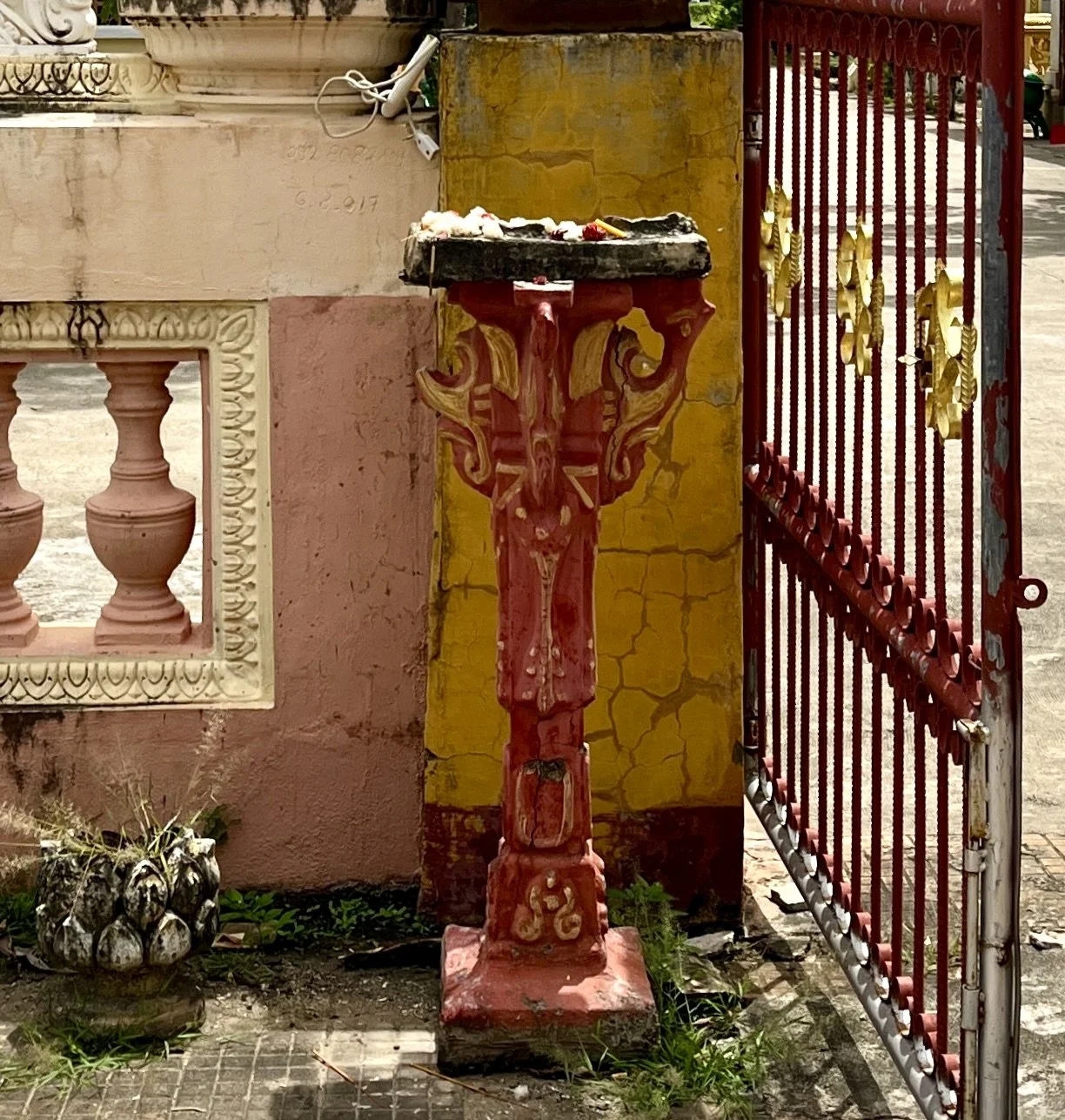
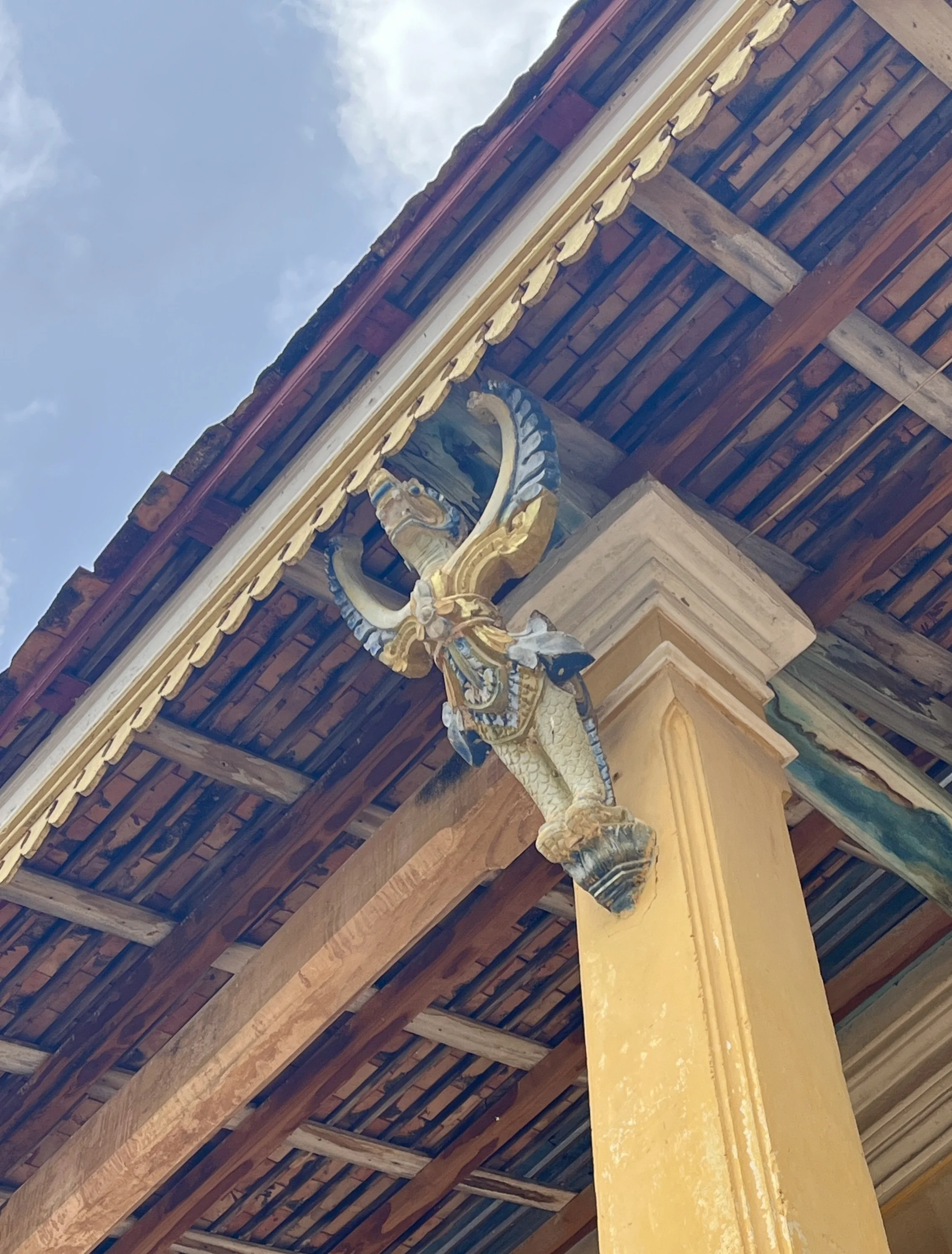
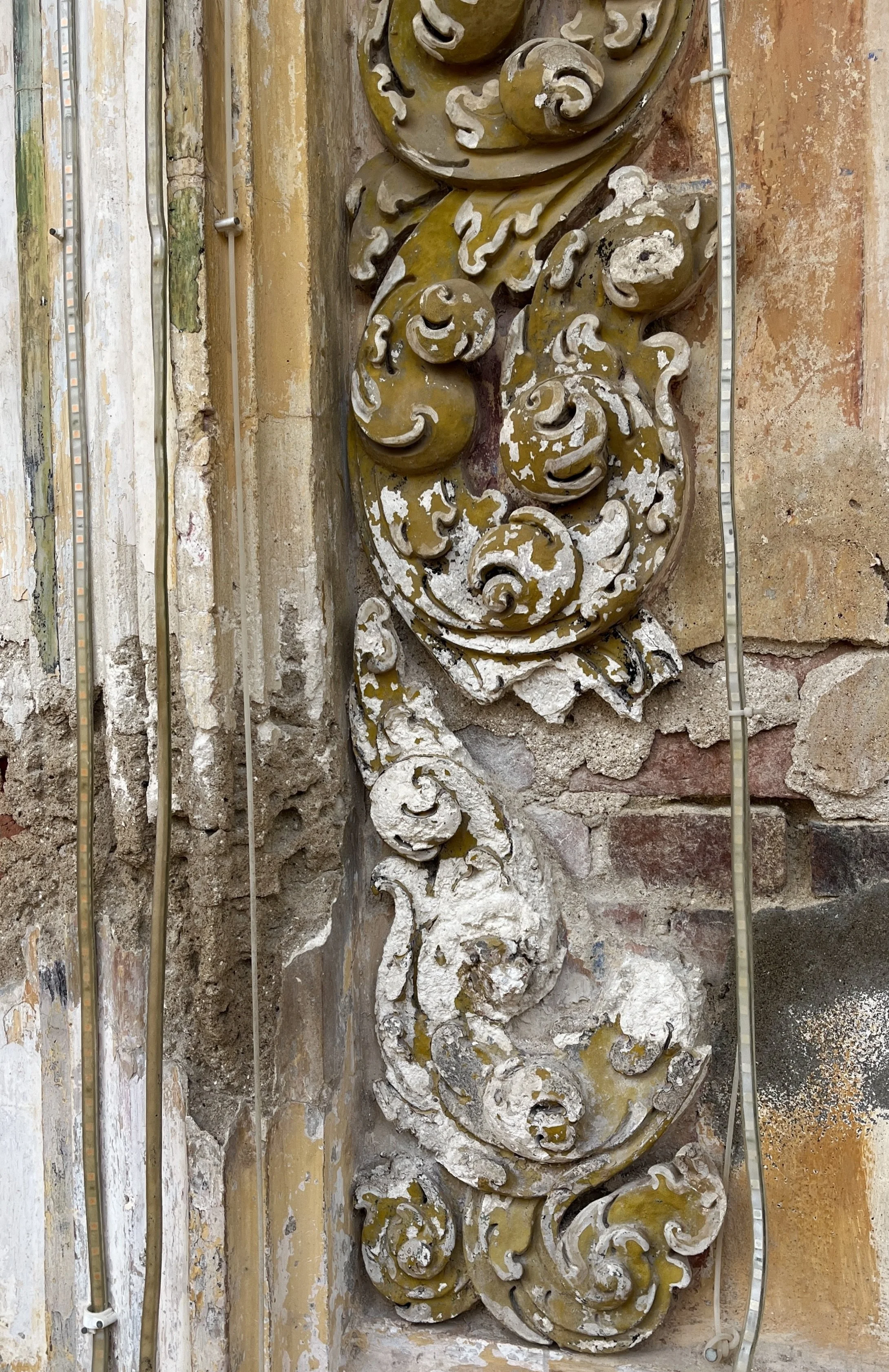
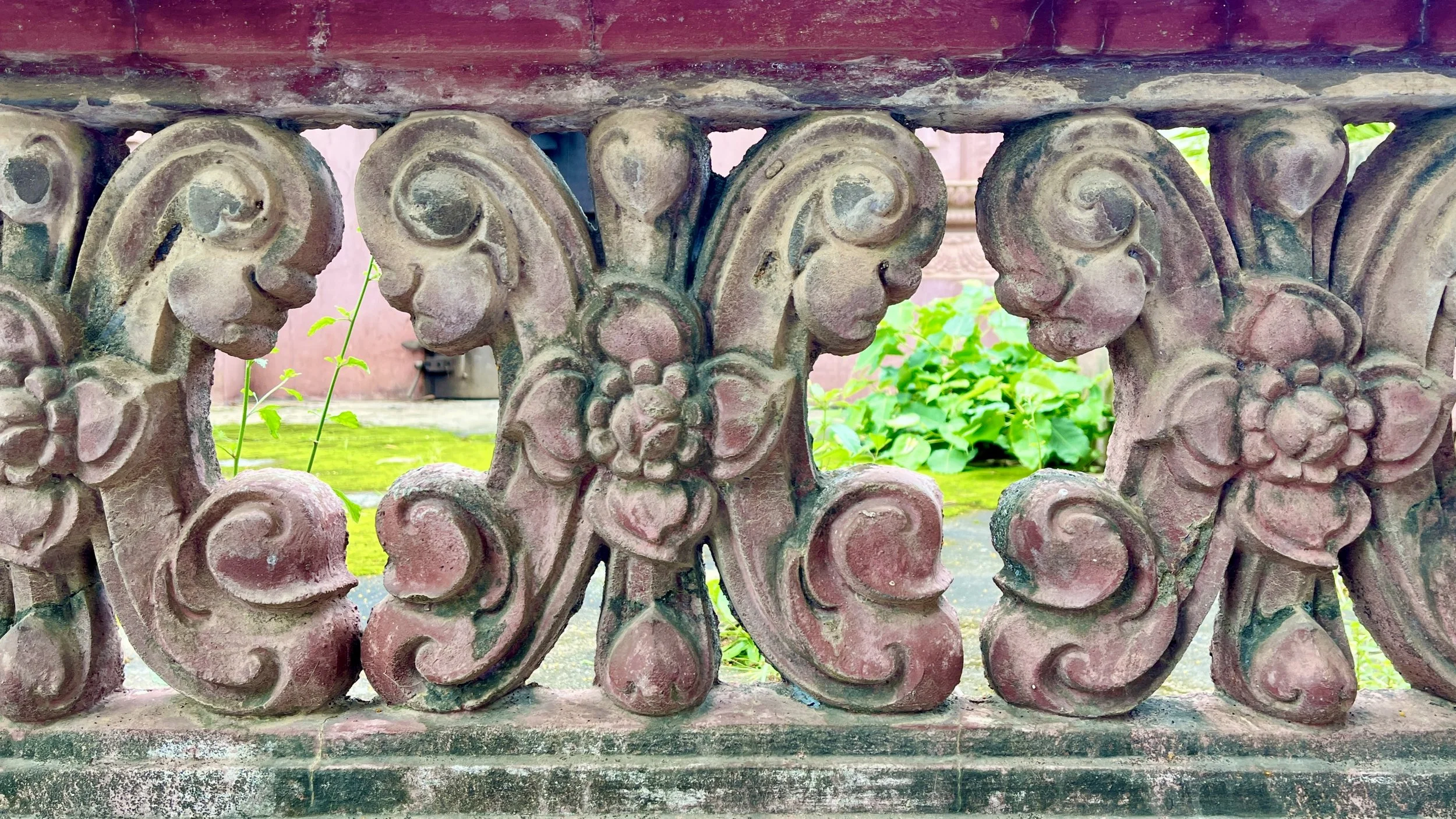
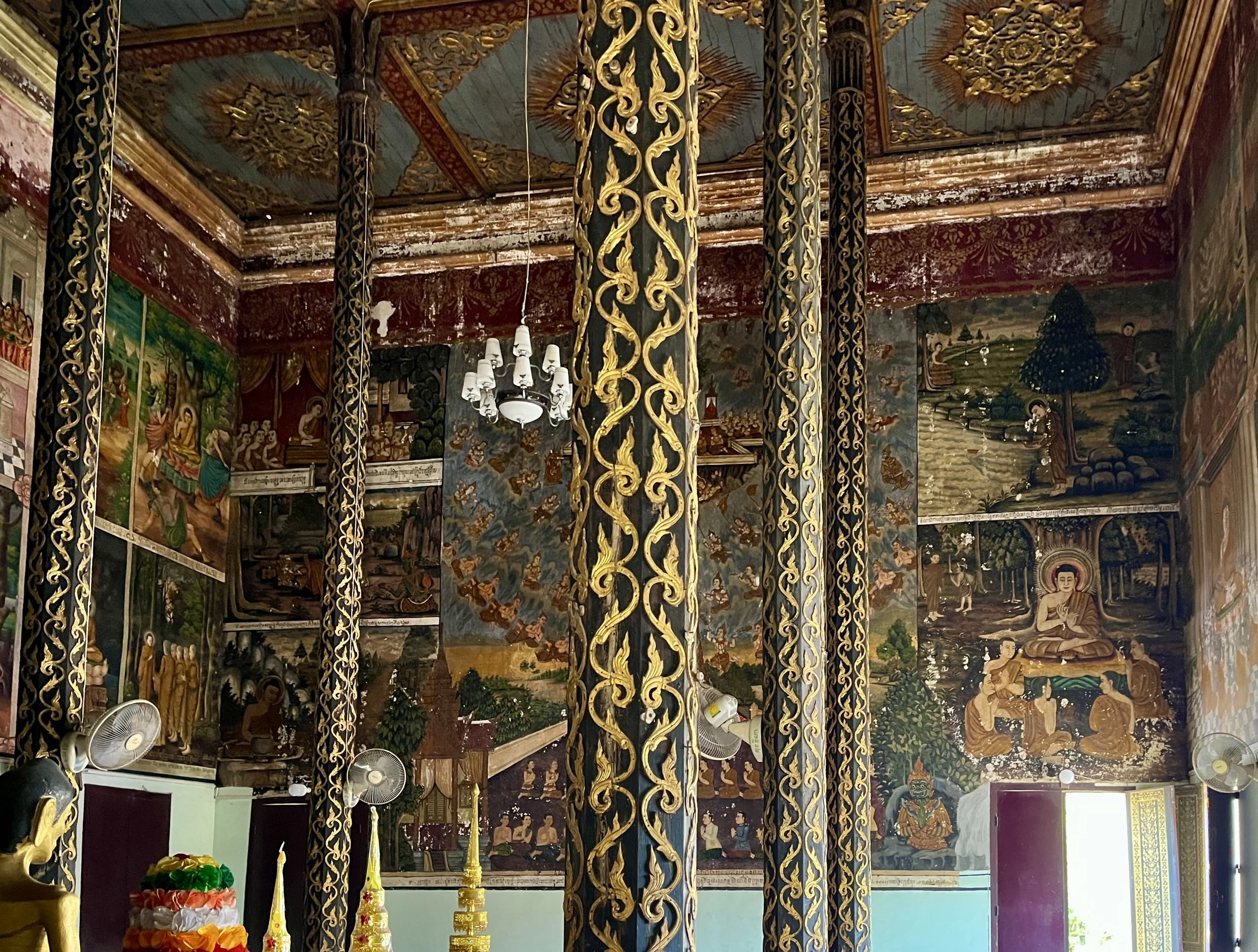
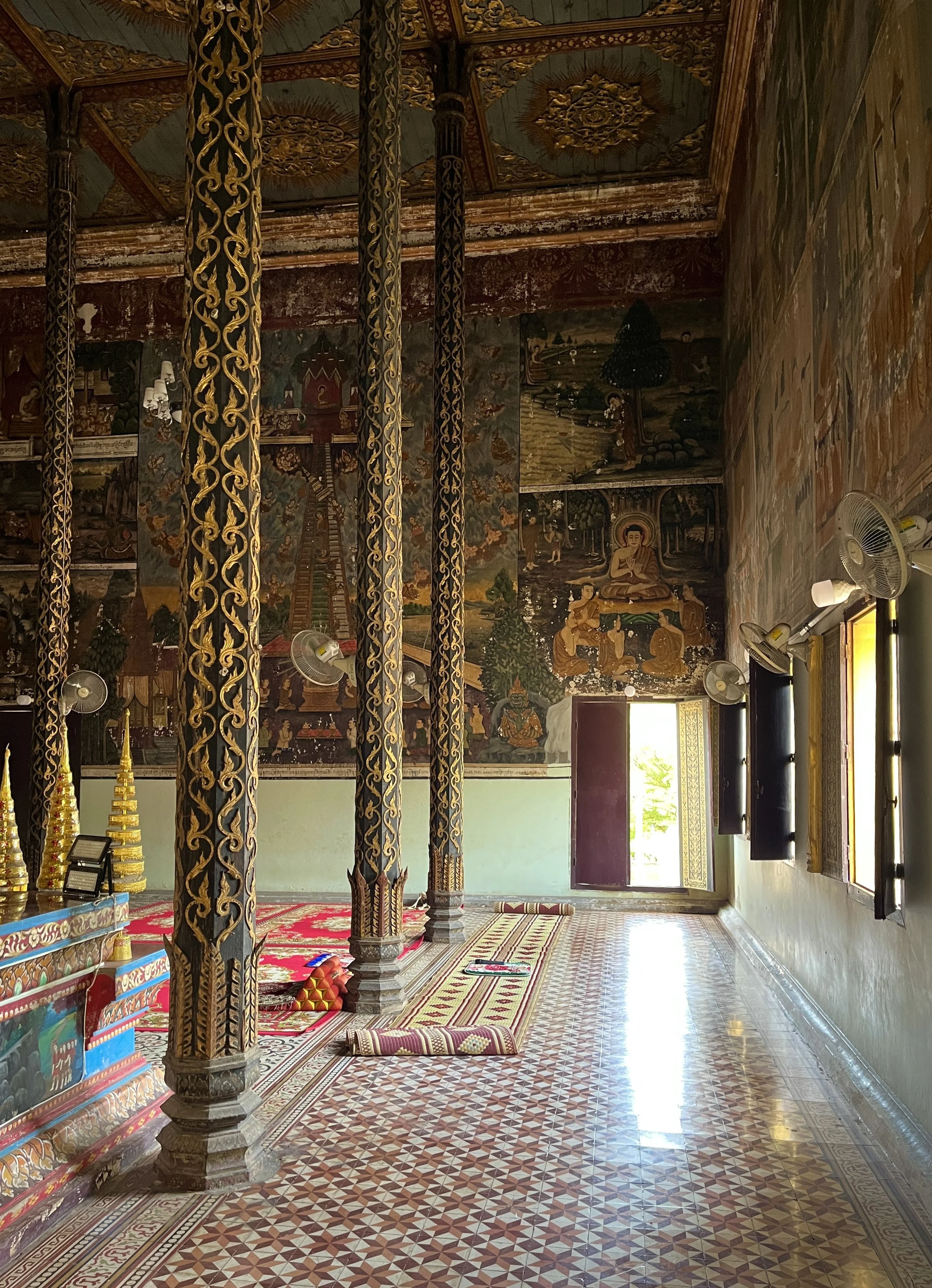
I saw it written somewhere that these pillars are very unique. They feature paint at the base and appliqués on the columns rather than carving, so it’s not just the supposedly unique motif of flaming scrolls, but an interesting way to get max impact with least labor.
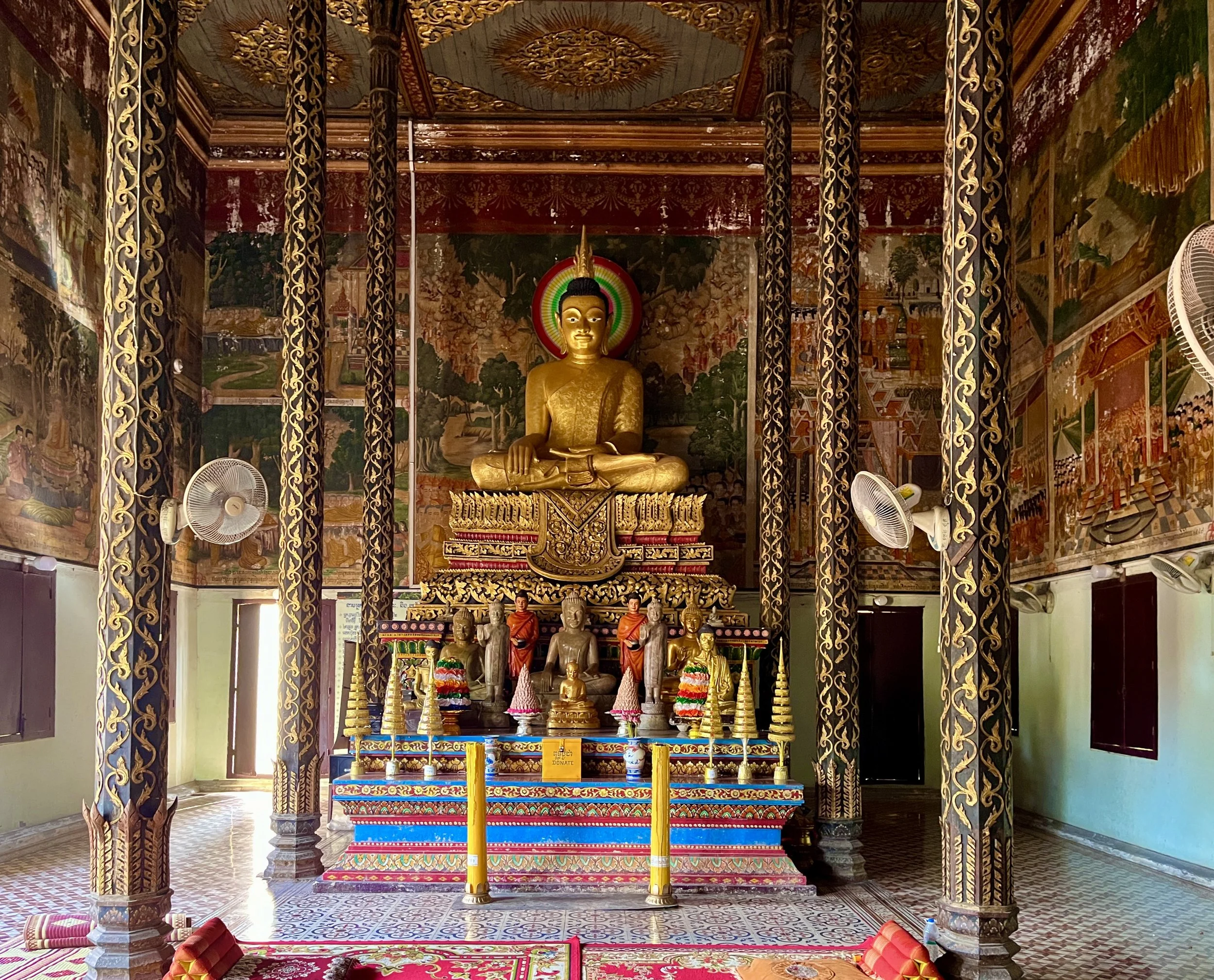
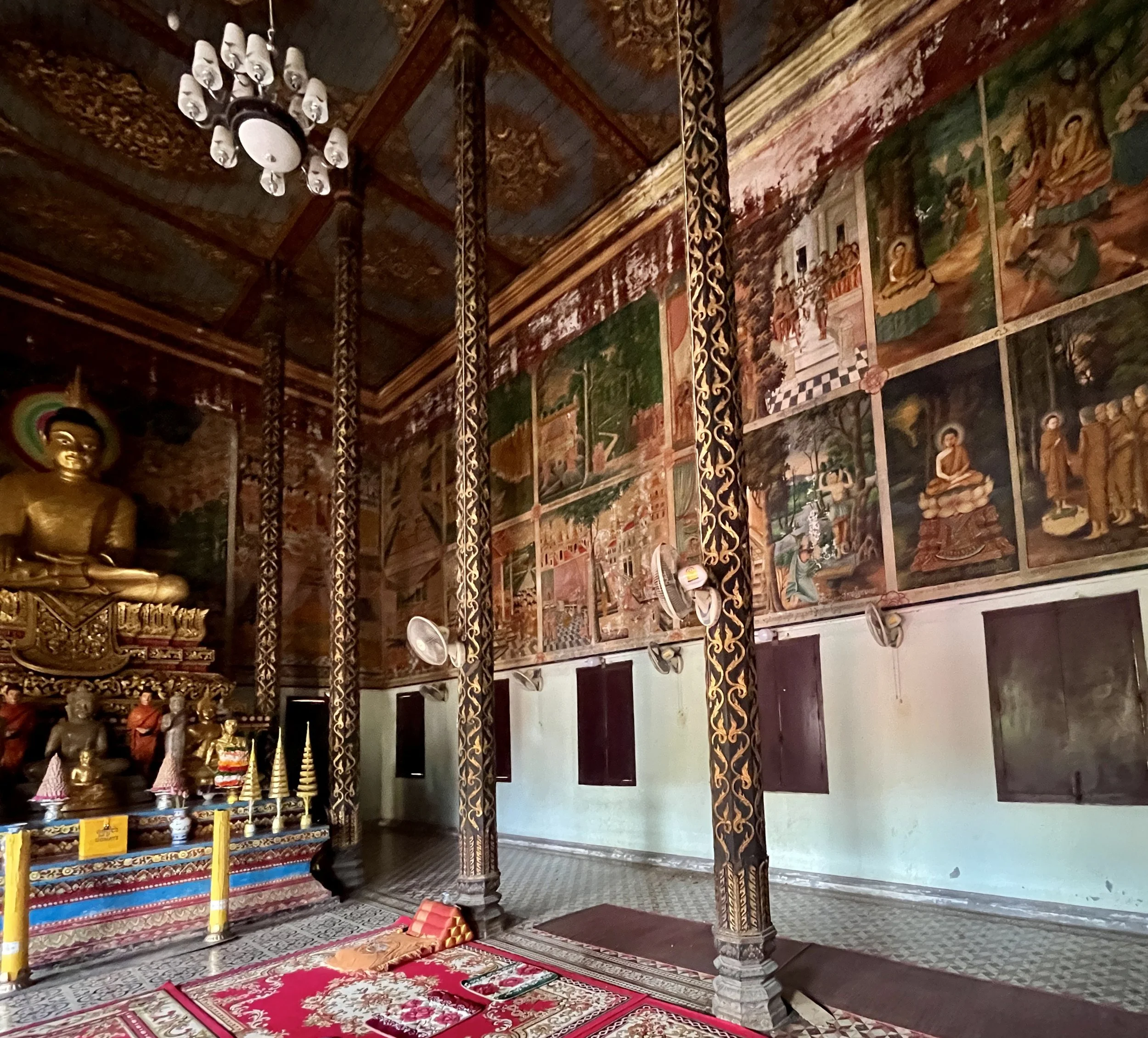
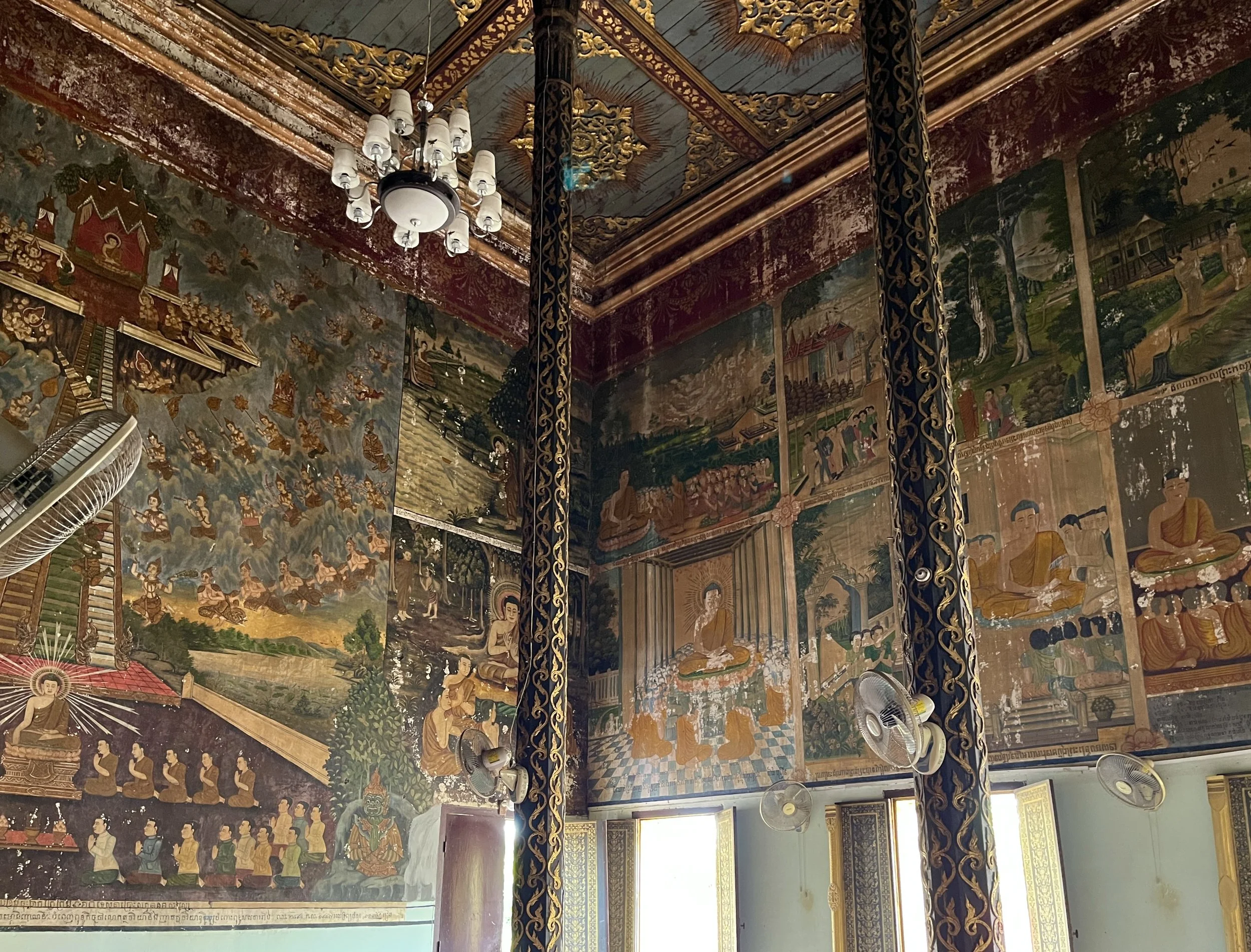
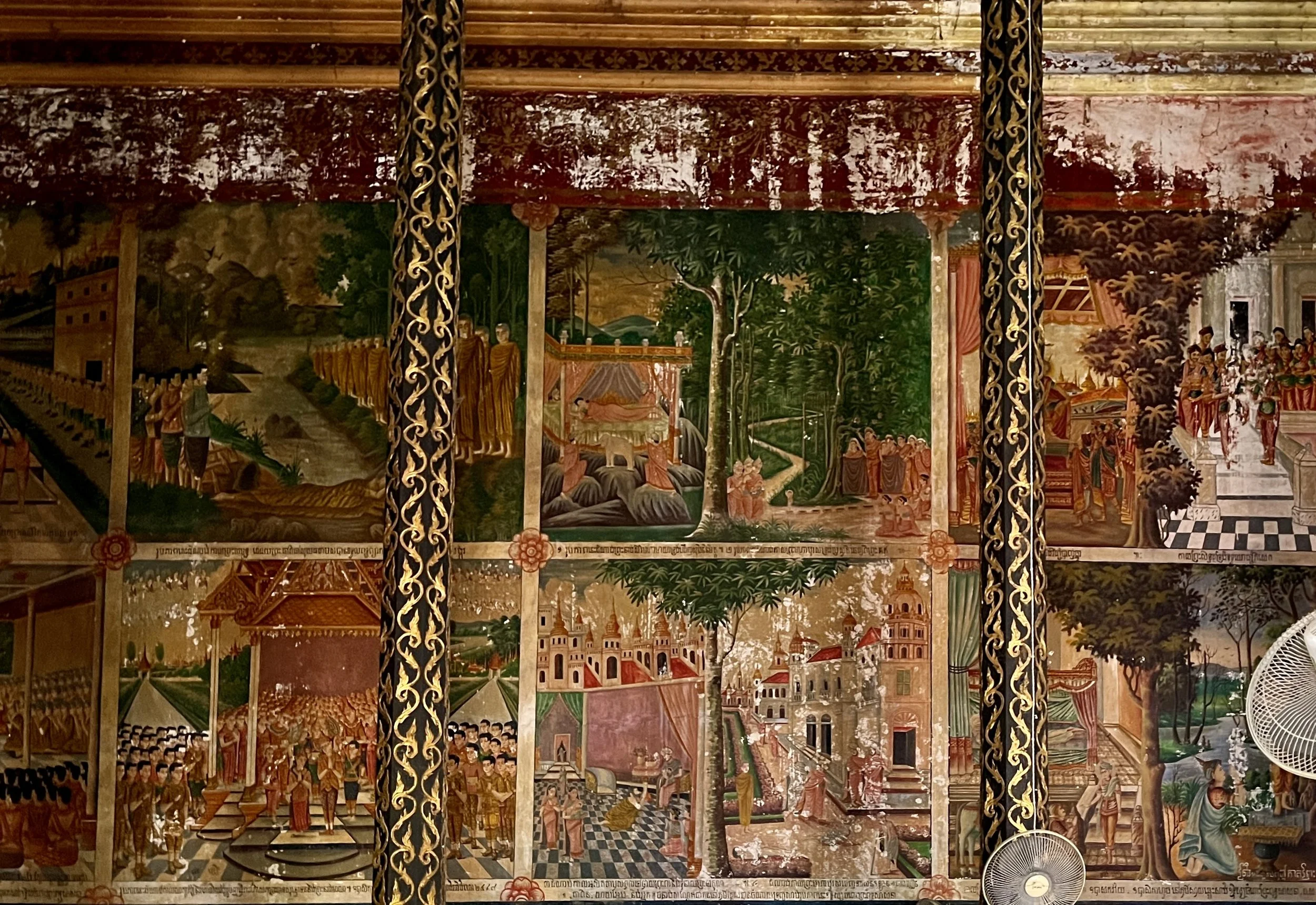
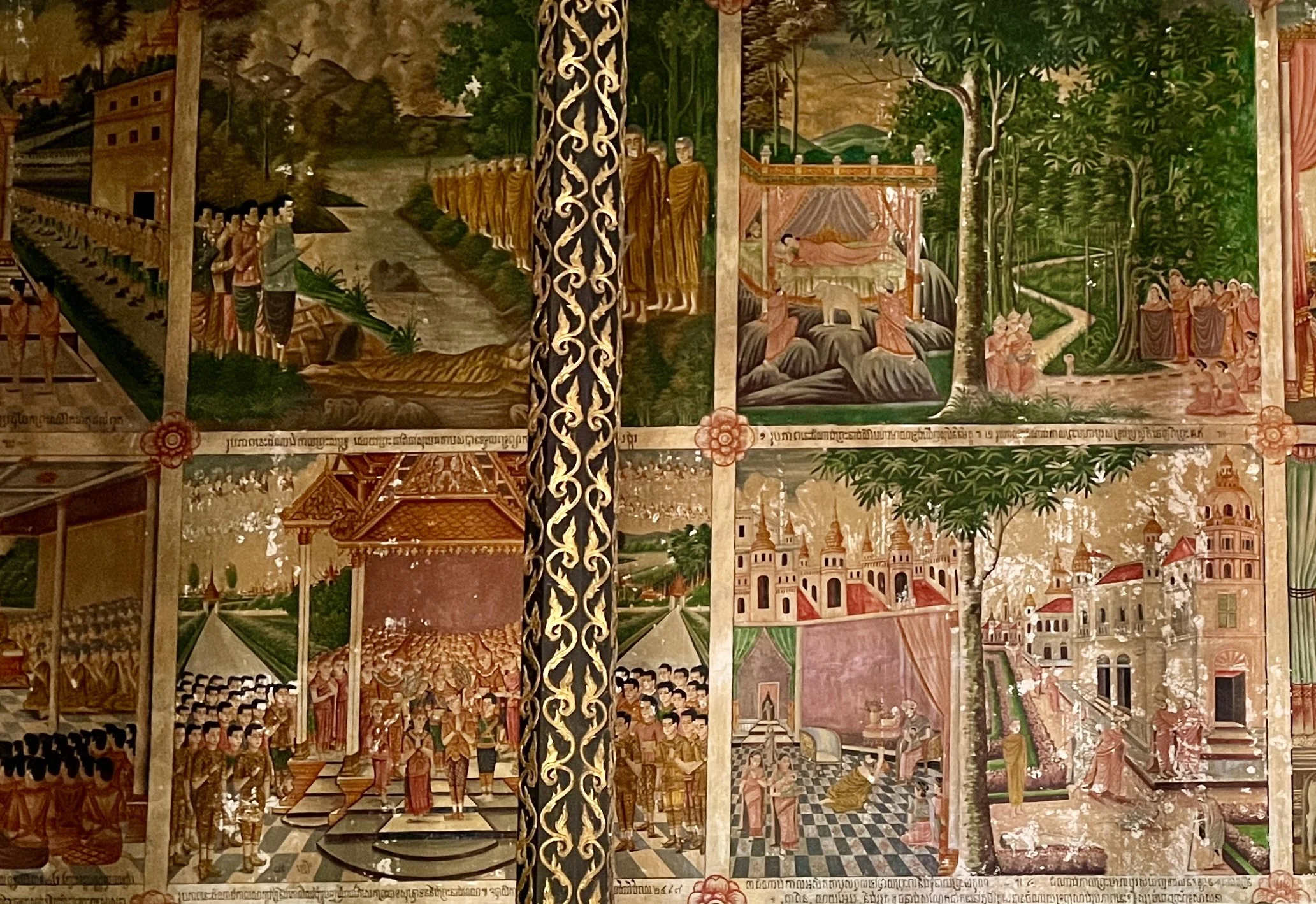
I was so thankful to finally find an unlocked vat in Battambang! I love, LOVE old Buddhist temple painted walls, they’re such a palette, such a vibe.
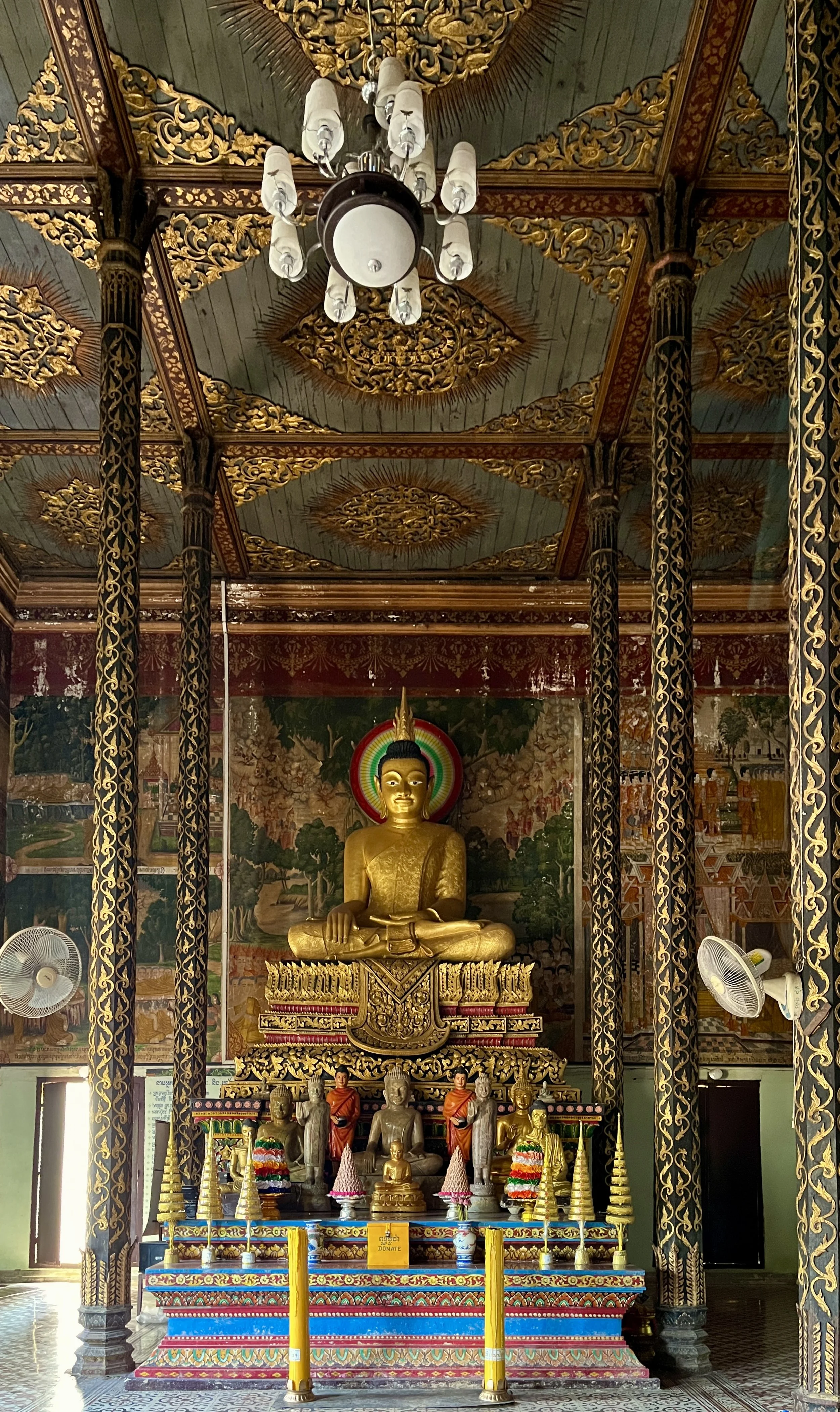
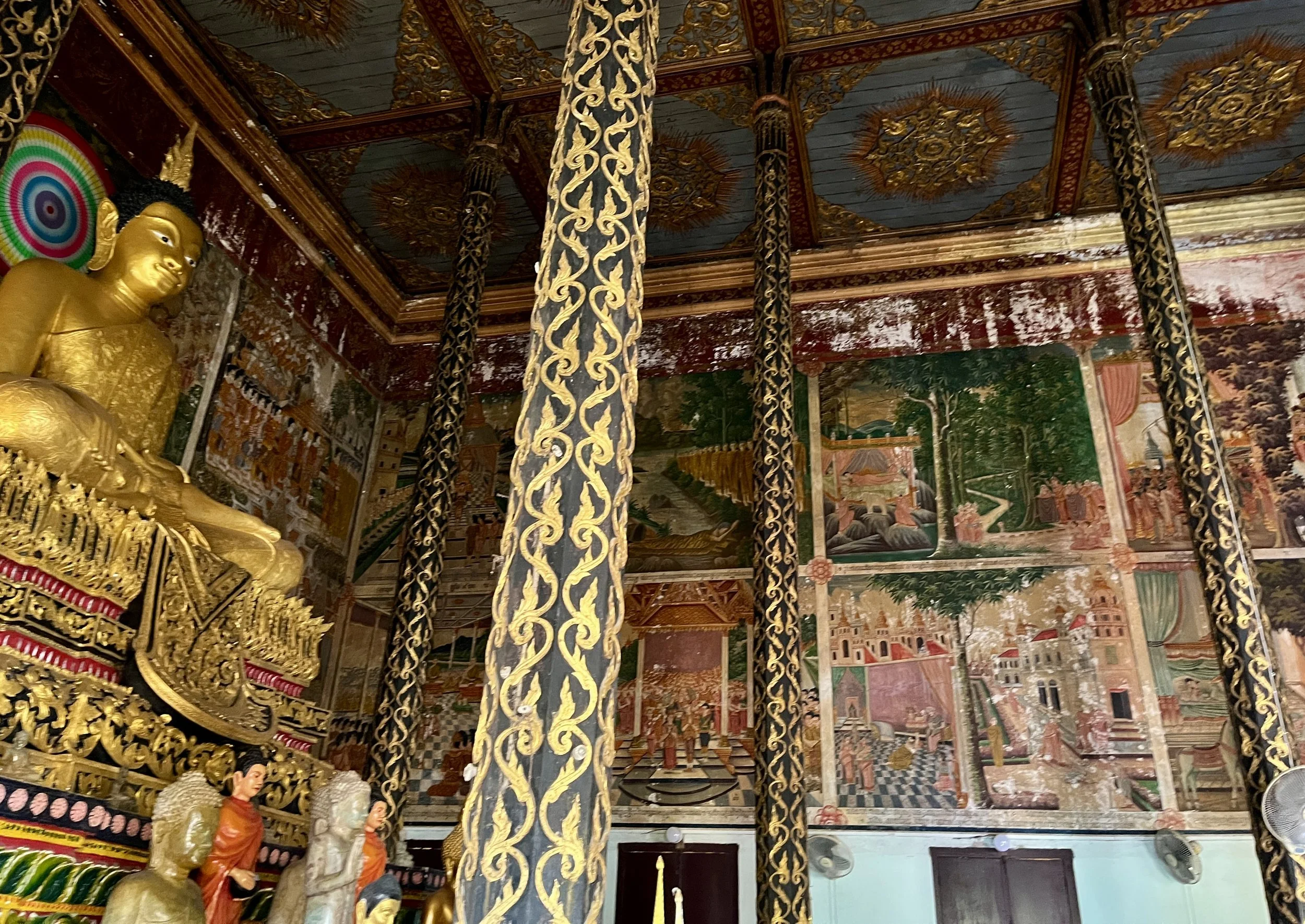
I particularly like the faux coffered ceilings and stenciled border. The border is SO of its era. This photo also makes it easy to appreciate how slender the columns are, which is unique and, I think, elegant.
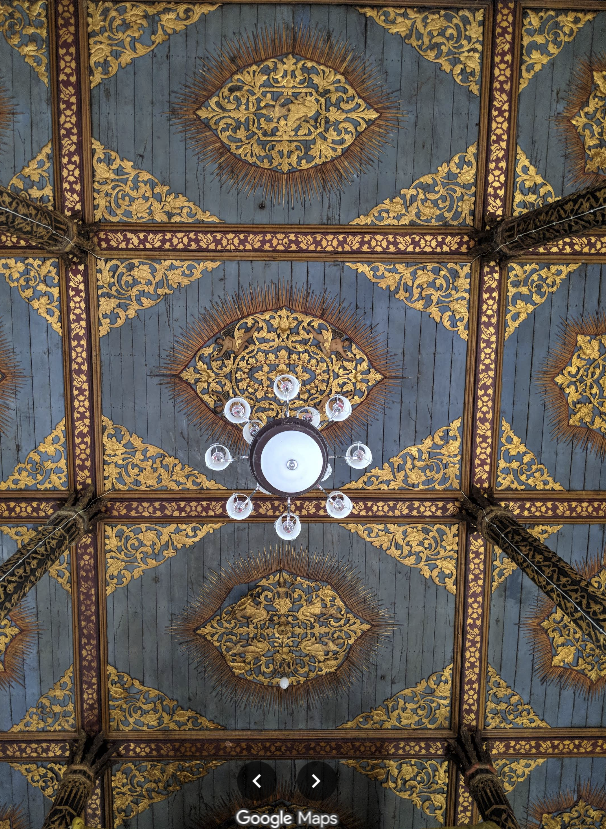
A much better photo of the ceiling from google maps.
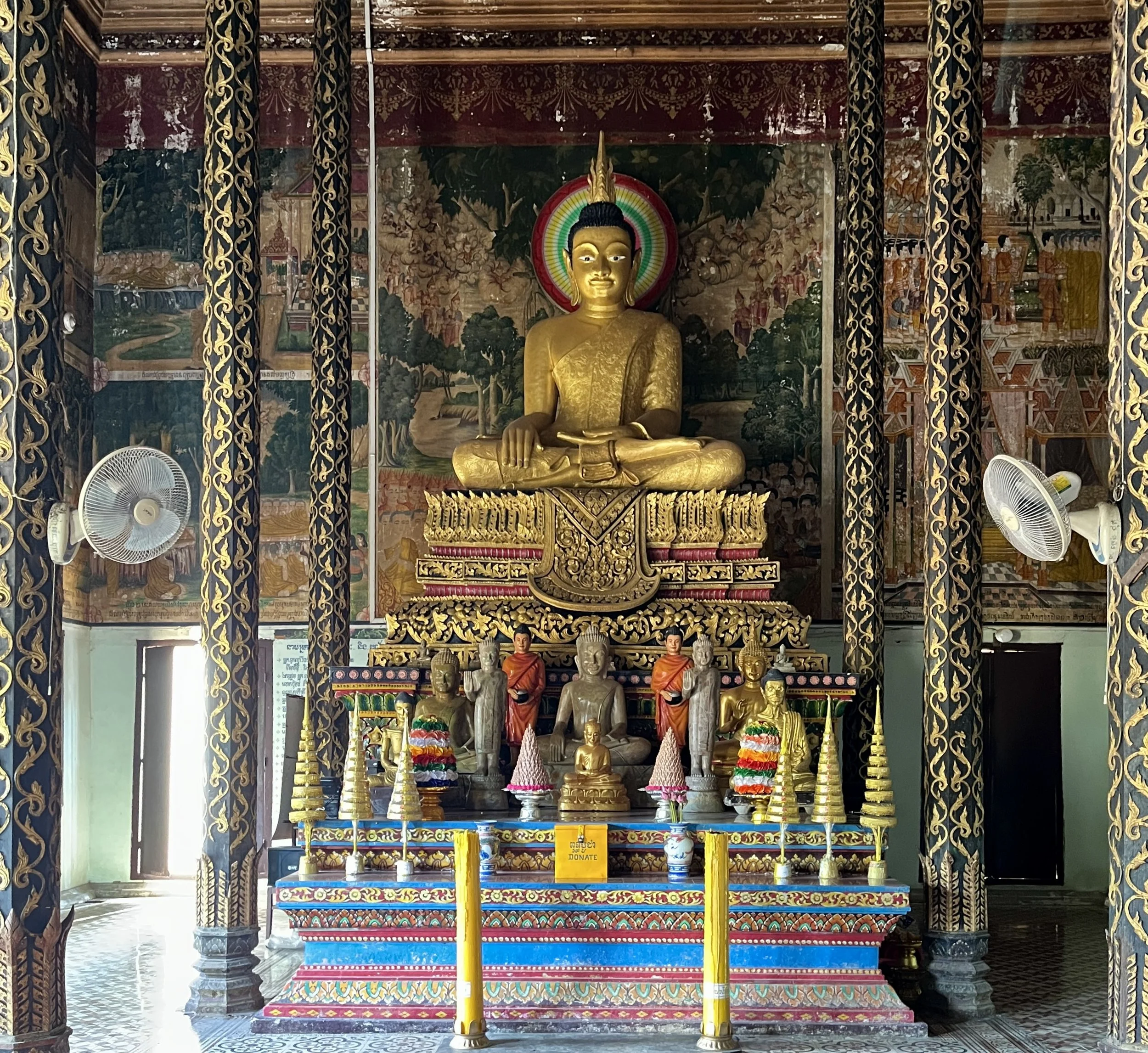
I couldn’t find any archival photos of this temple. Finding new resources for this blog is always an unpredictable journey though; there will be nothing for years, then a university in France that’s held the archives of some colonial administrator for a century puts 6000 photos online at once.
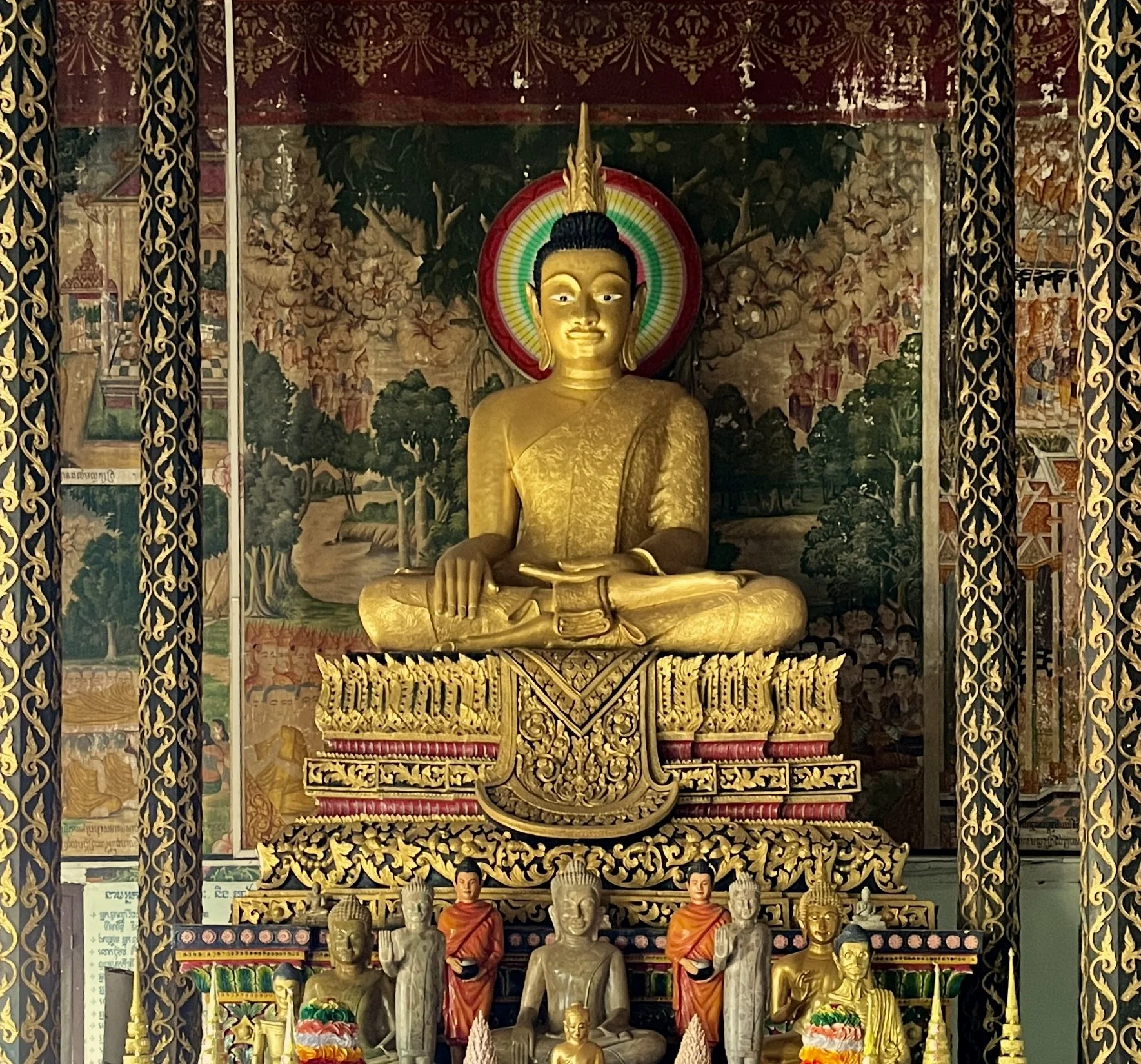
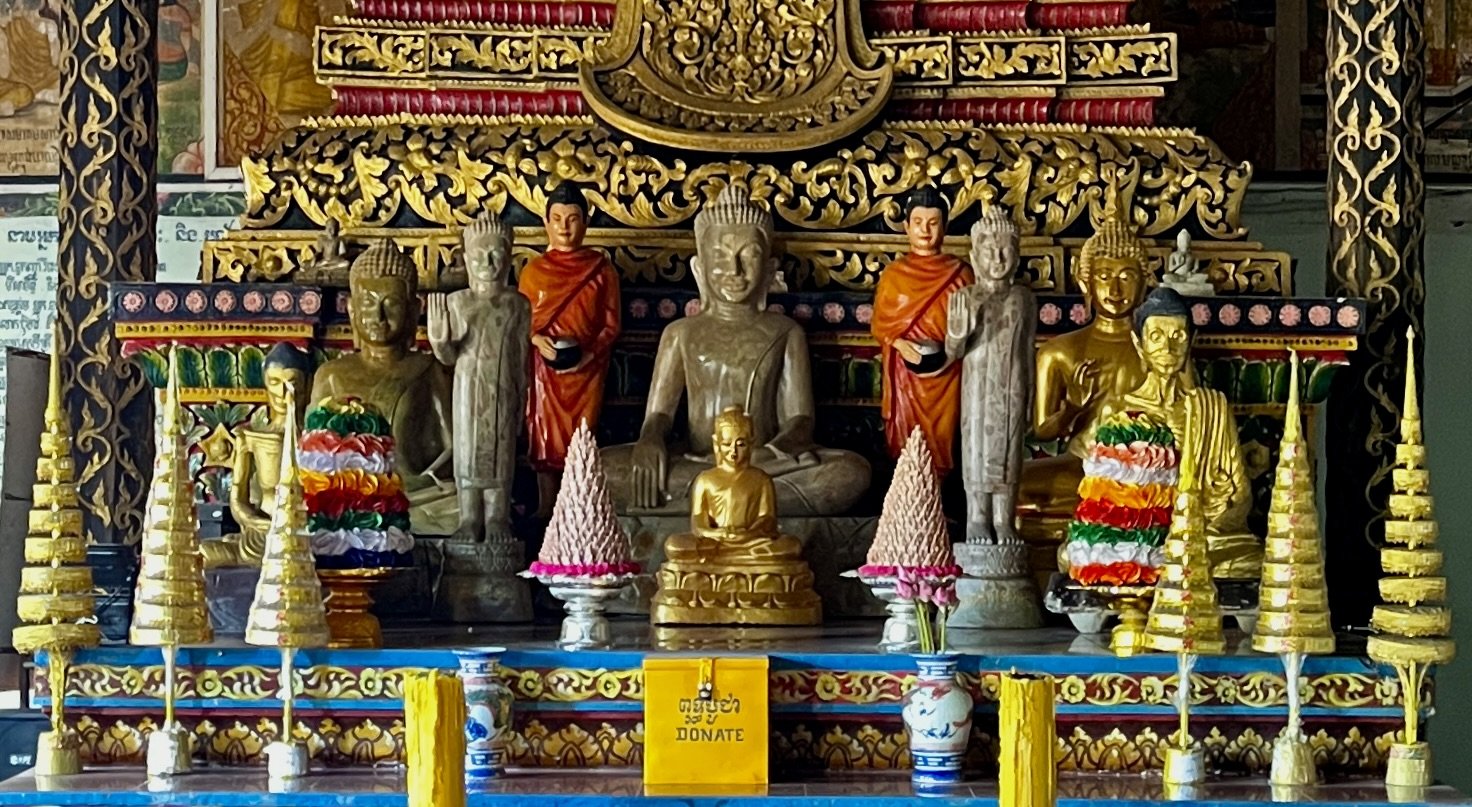
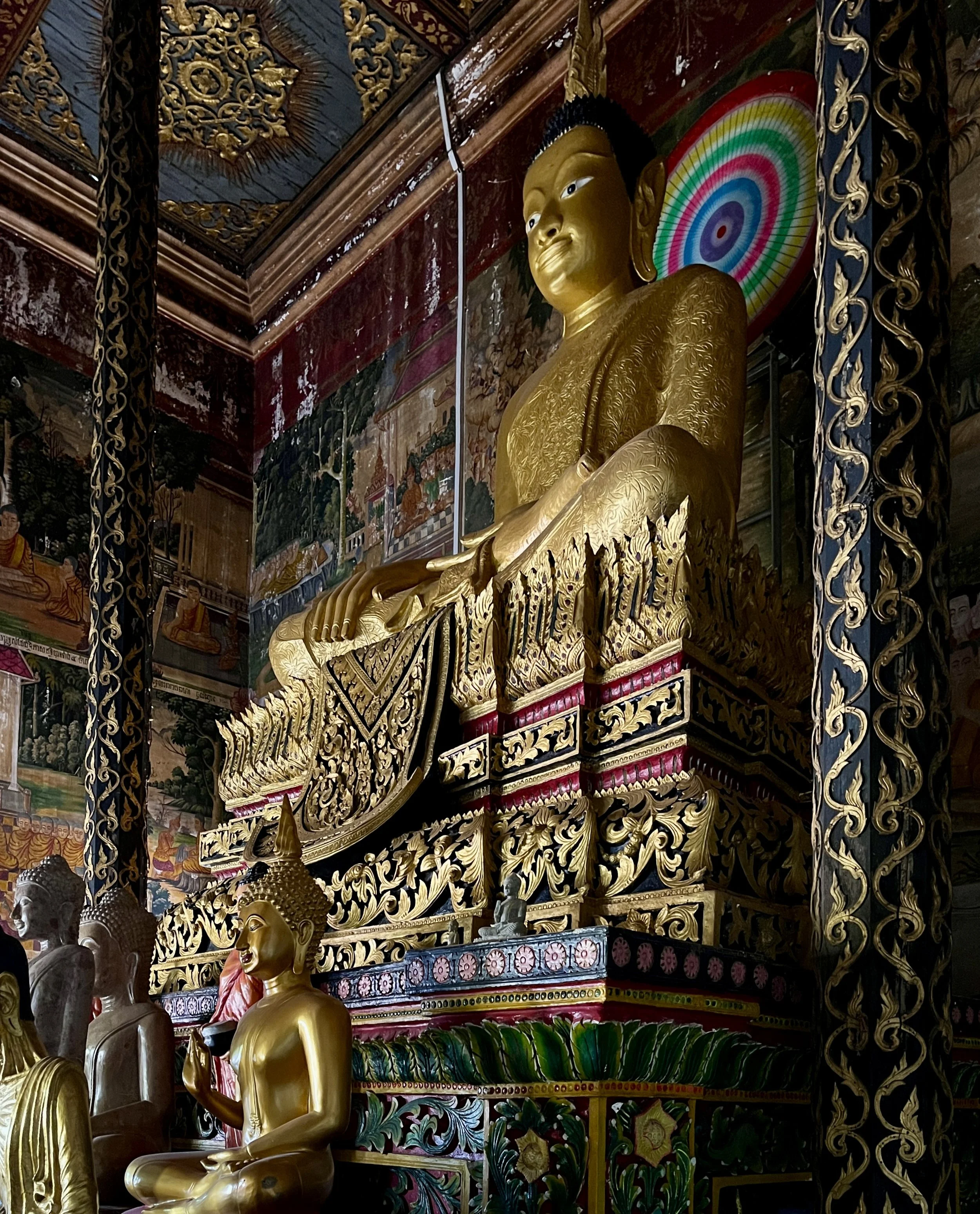
The Buddhas are pretty obviously modern.
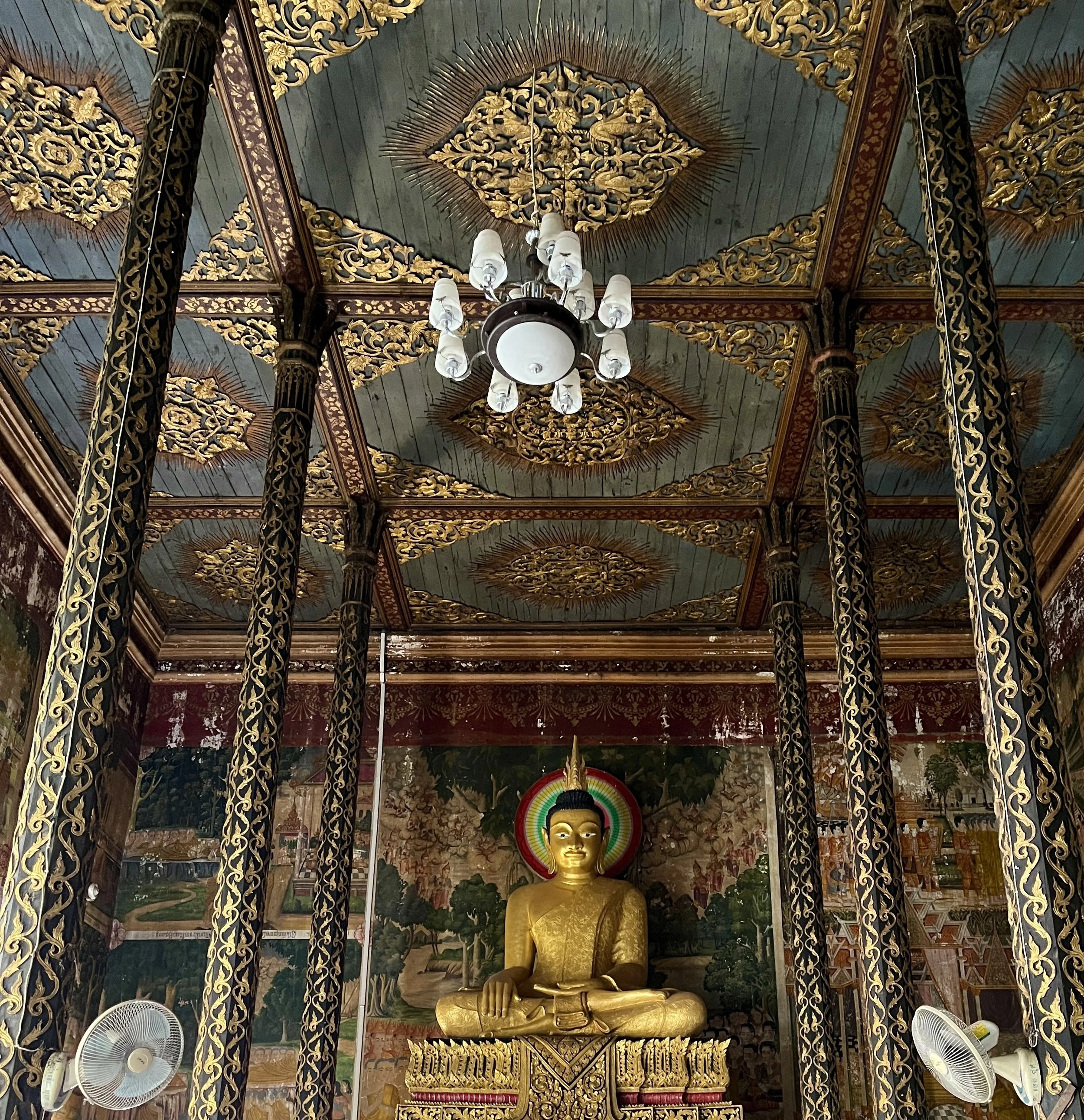
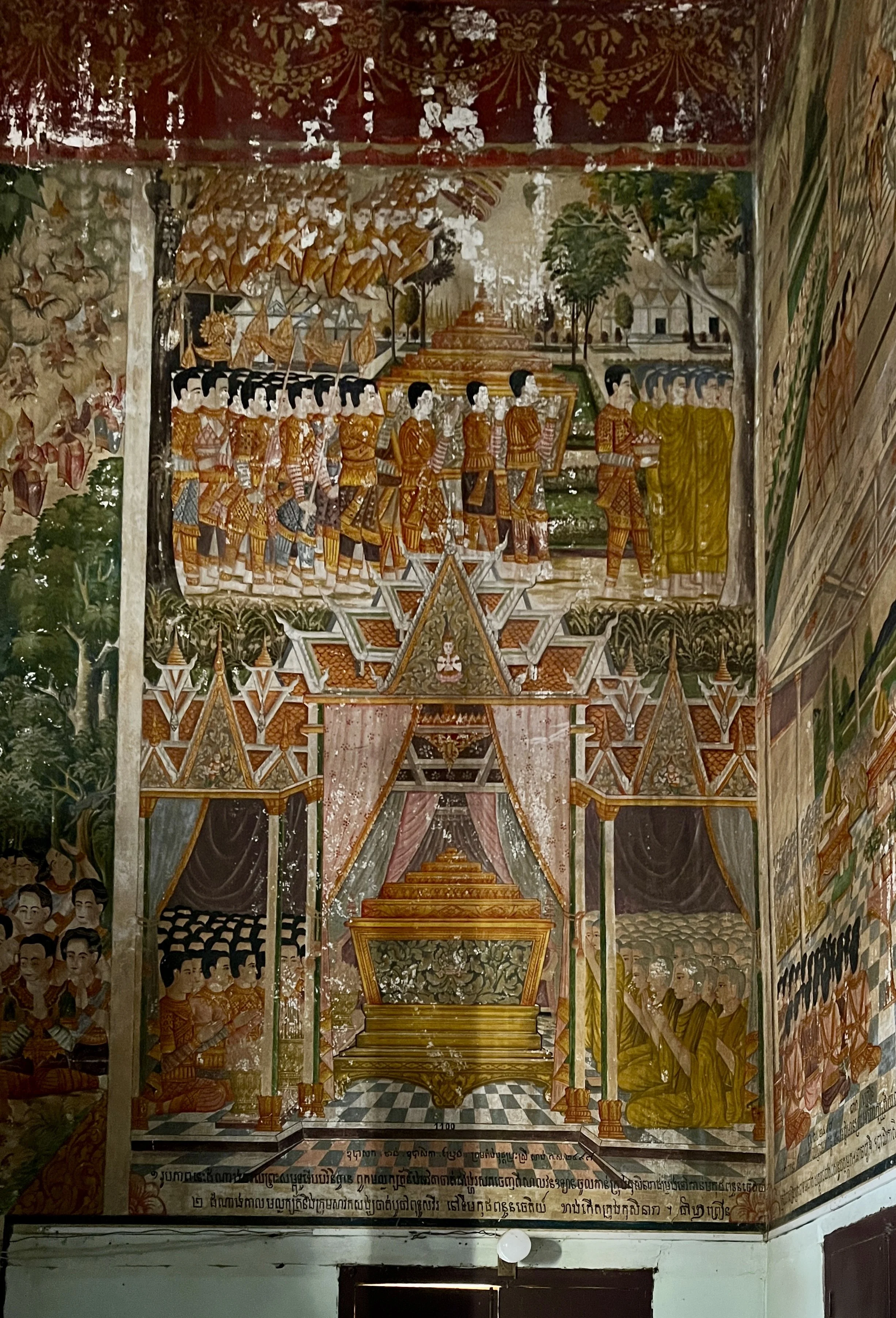
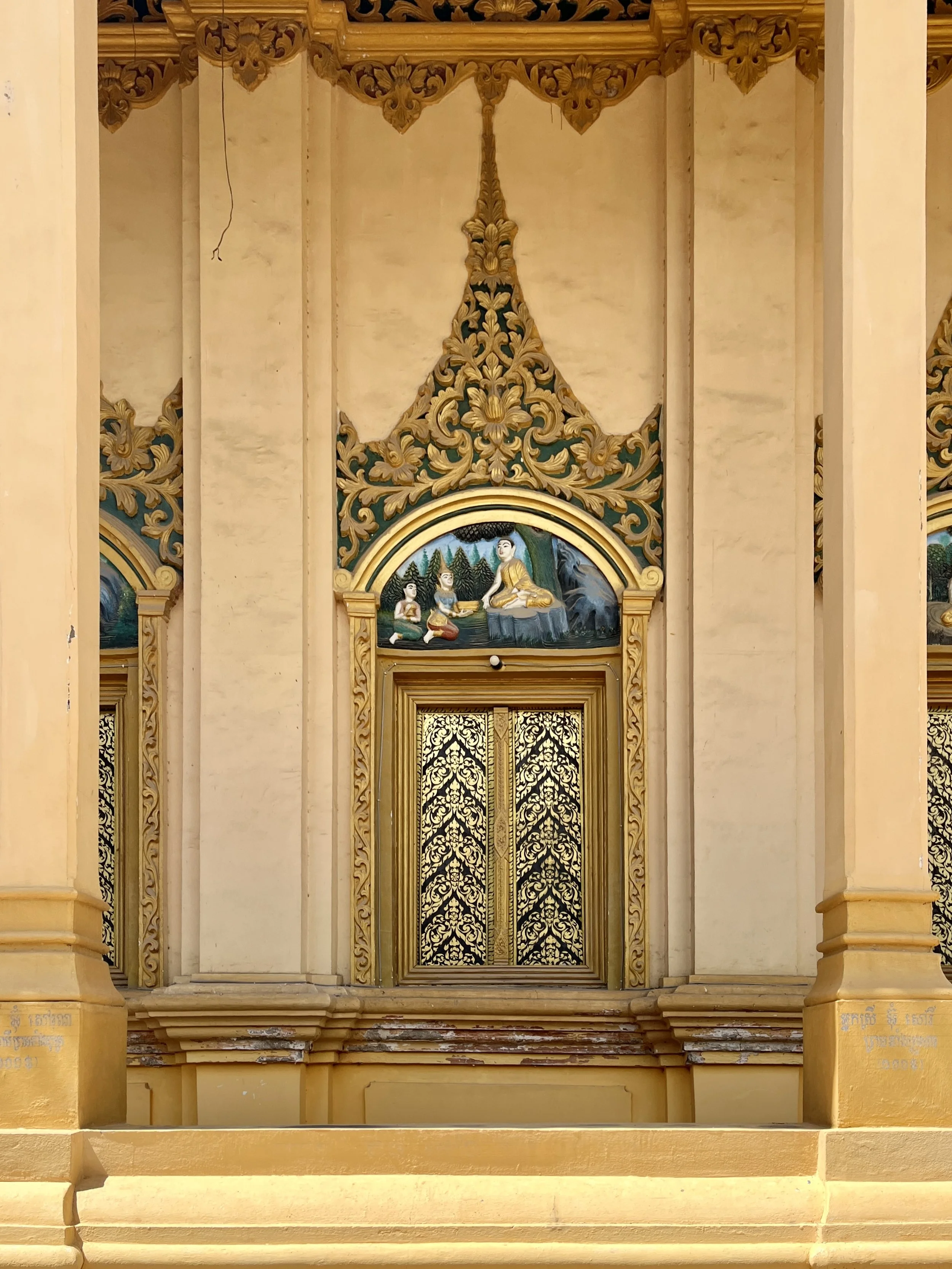
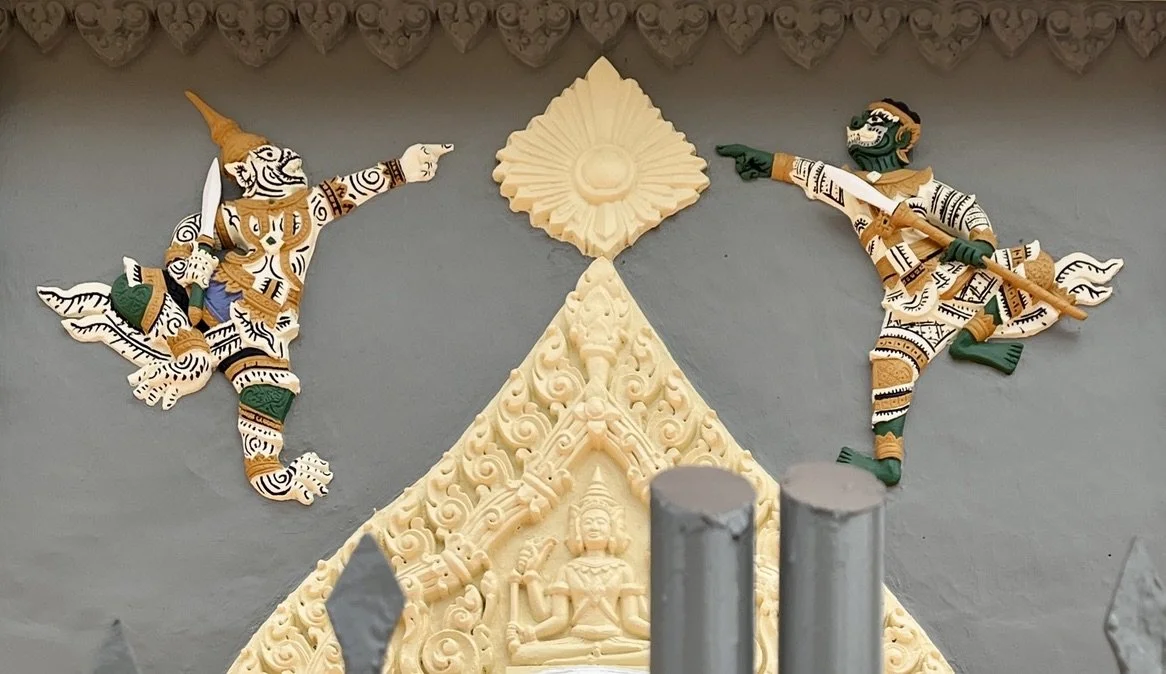
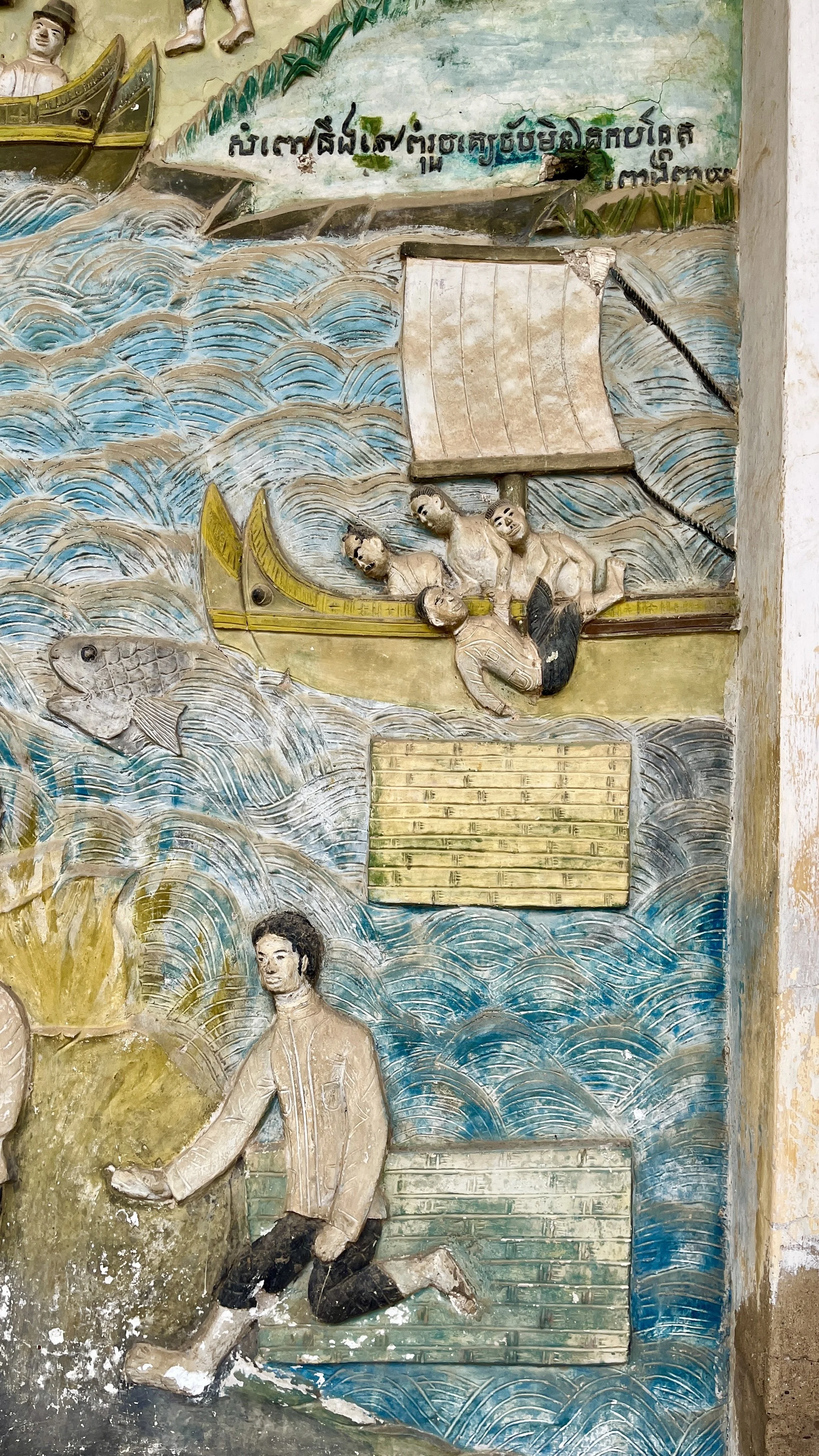
The wall paintings are from a range of decades. Some seem to be original; others, like those towards the right of this picture, are in the post 1950 style. I’m learning a lot about Khmer Buddhist paintings reading my first Roveda book about Preah Bot.
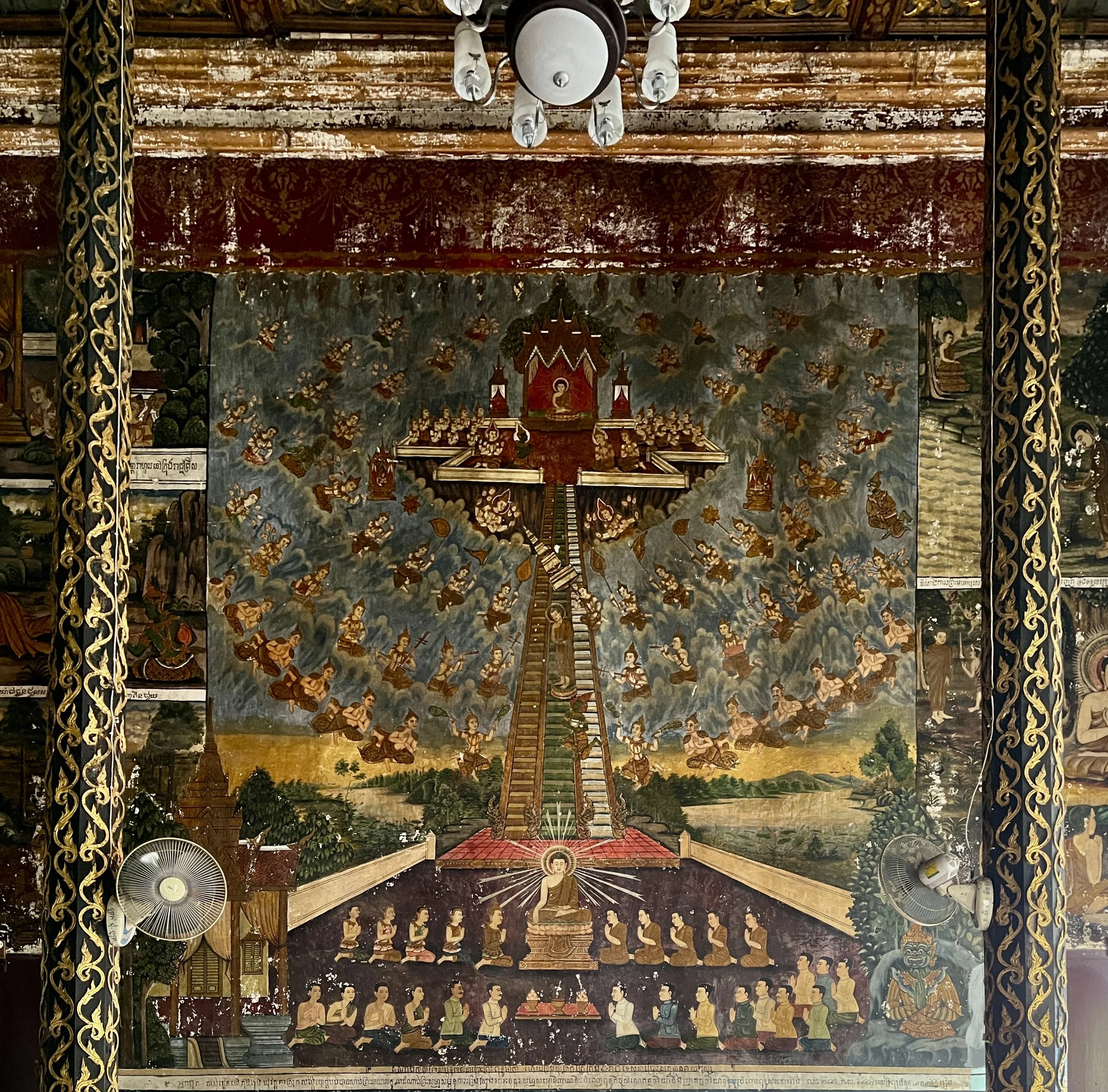
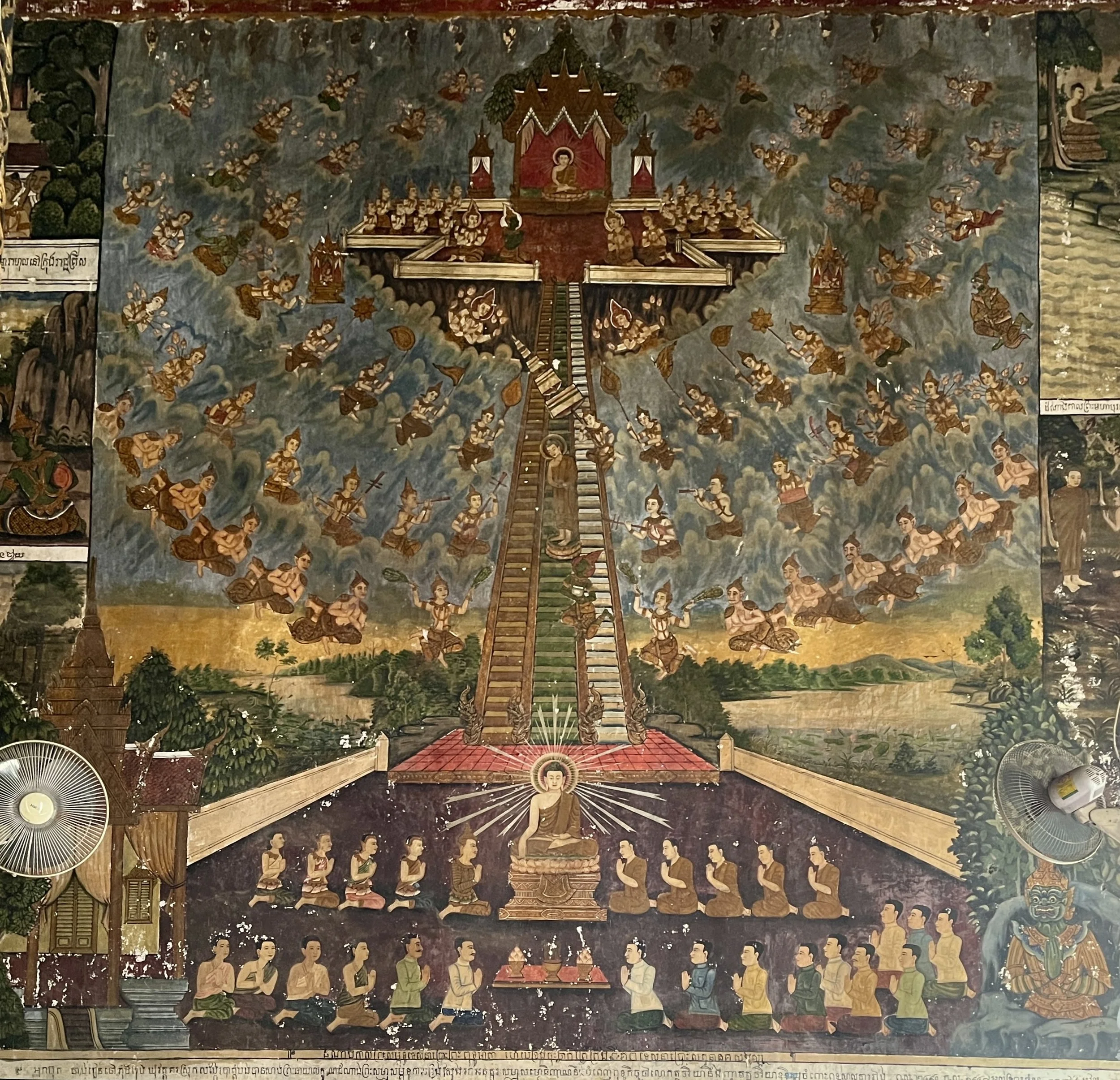
Though it is Buddhist tradition to touch up the temple every new year, they do pick and choose. I love seeing truly old paintings that haven’t been extensively retouched.
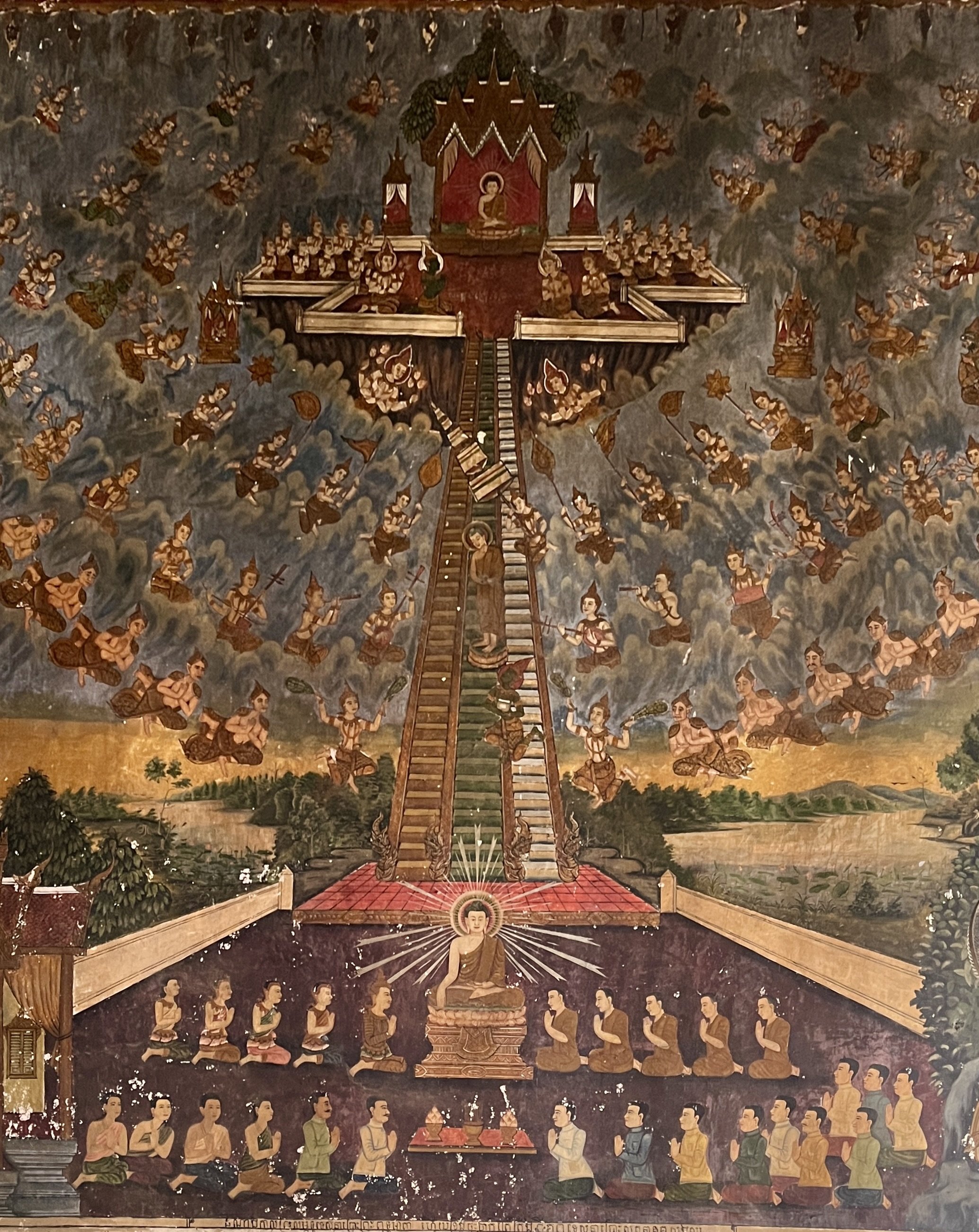
Buddha descends the celestial ladder.
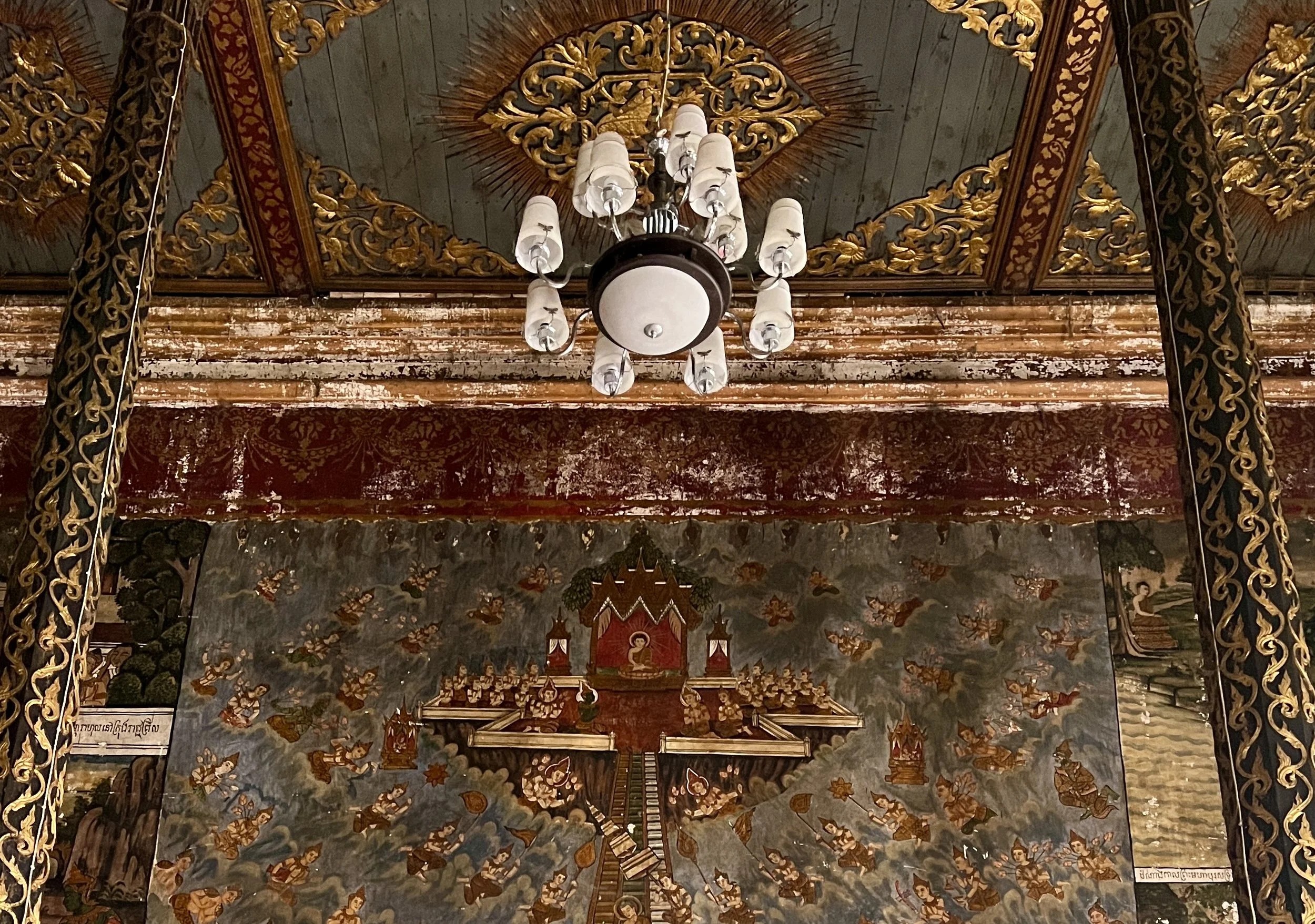
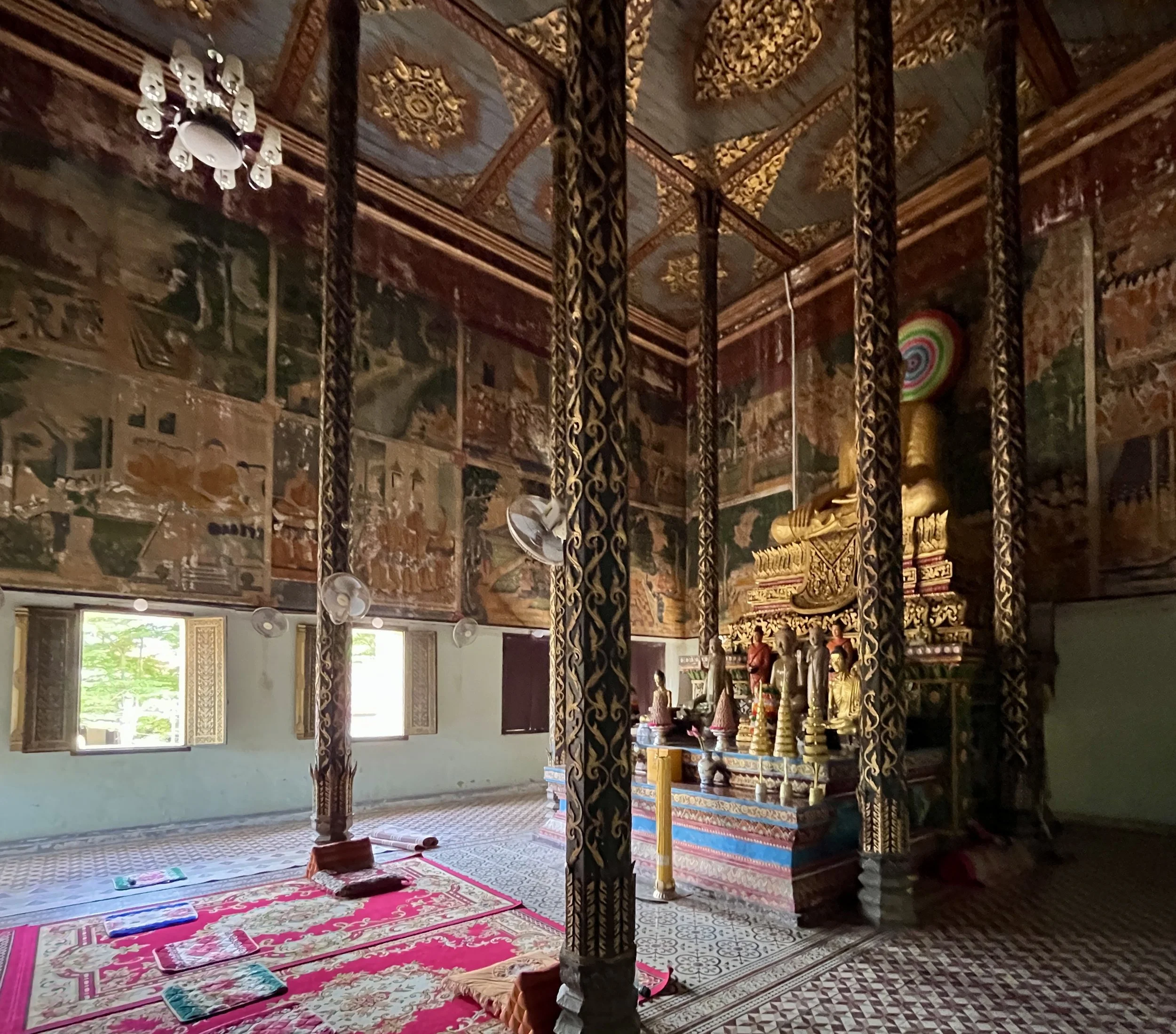
Probably my favorite panel and section of border.
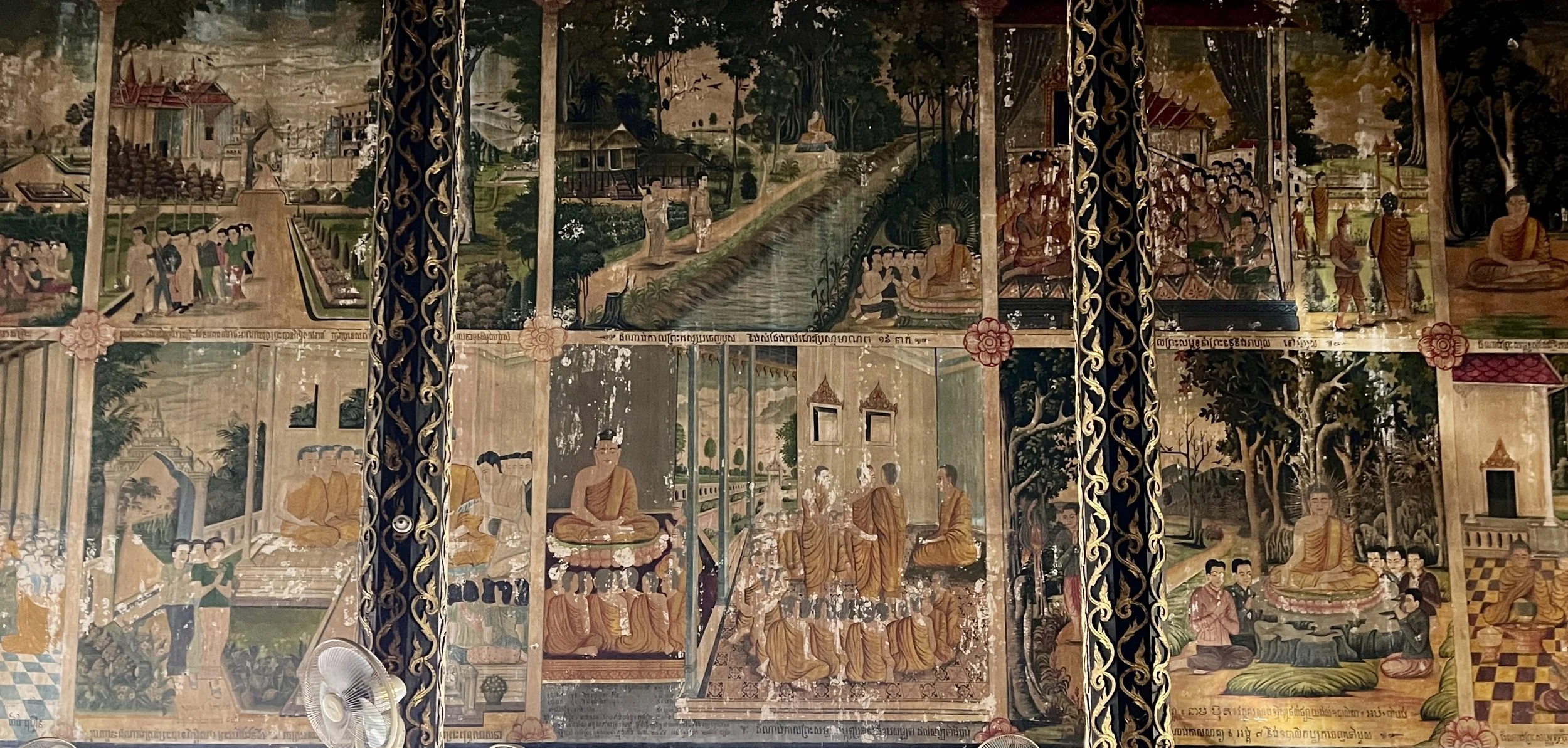
I really enjoy the rosettes (romdouls? lotus?). They seem a very late 1800s/early 1900s decorative touch.
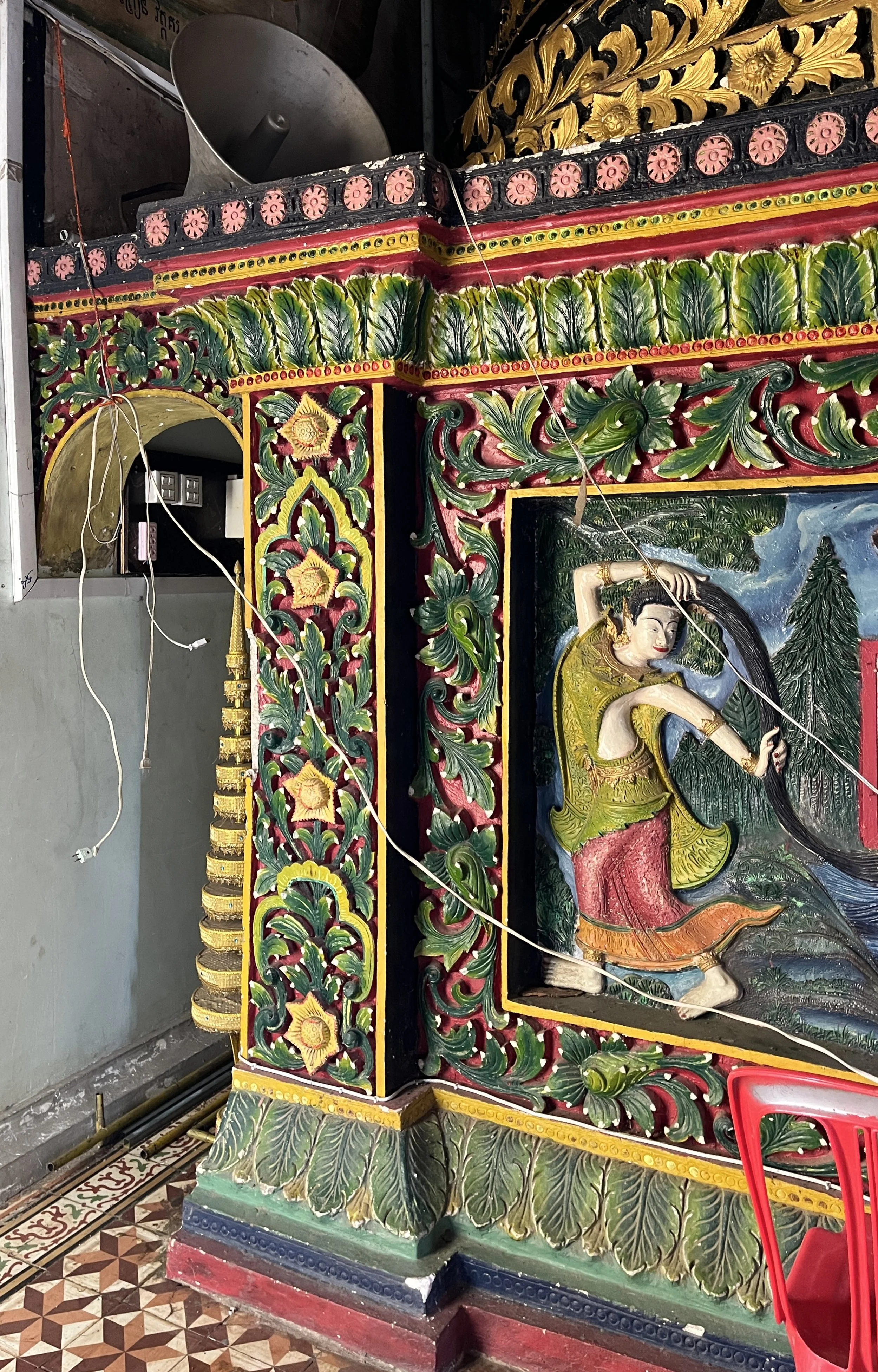
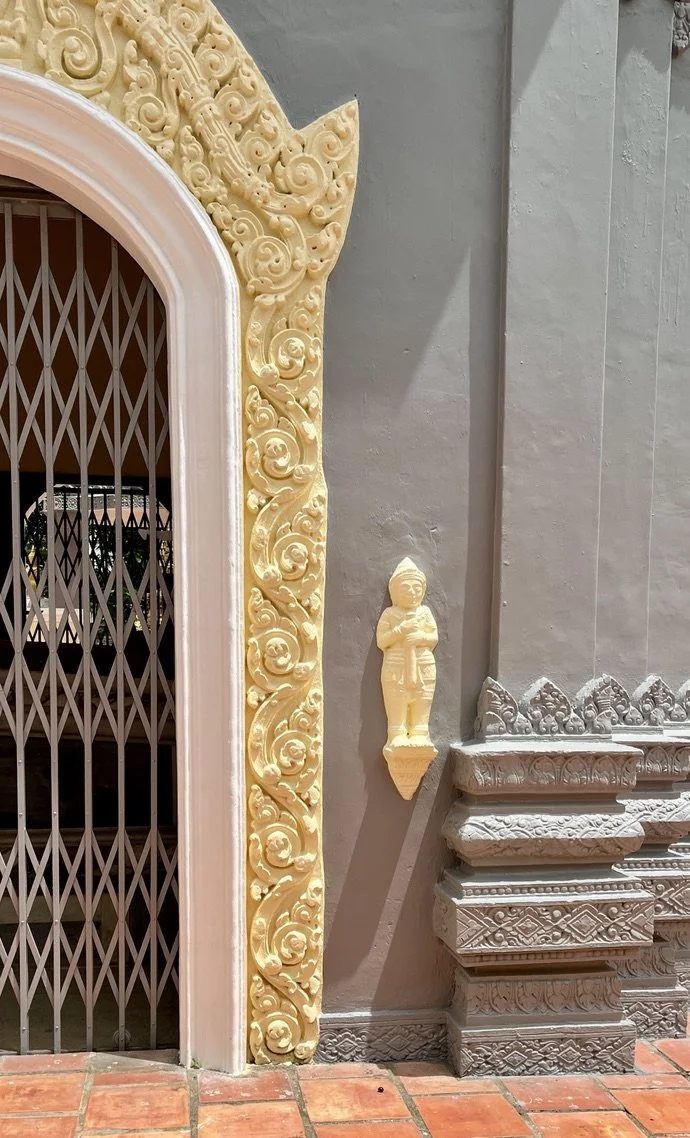
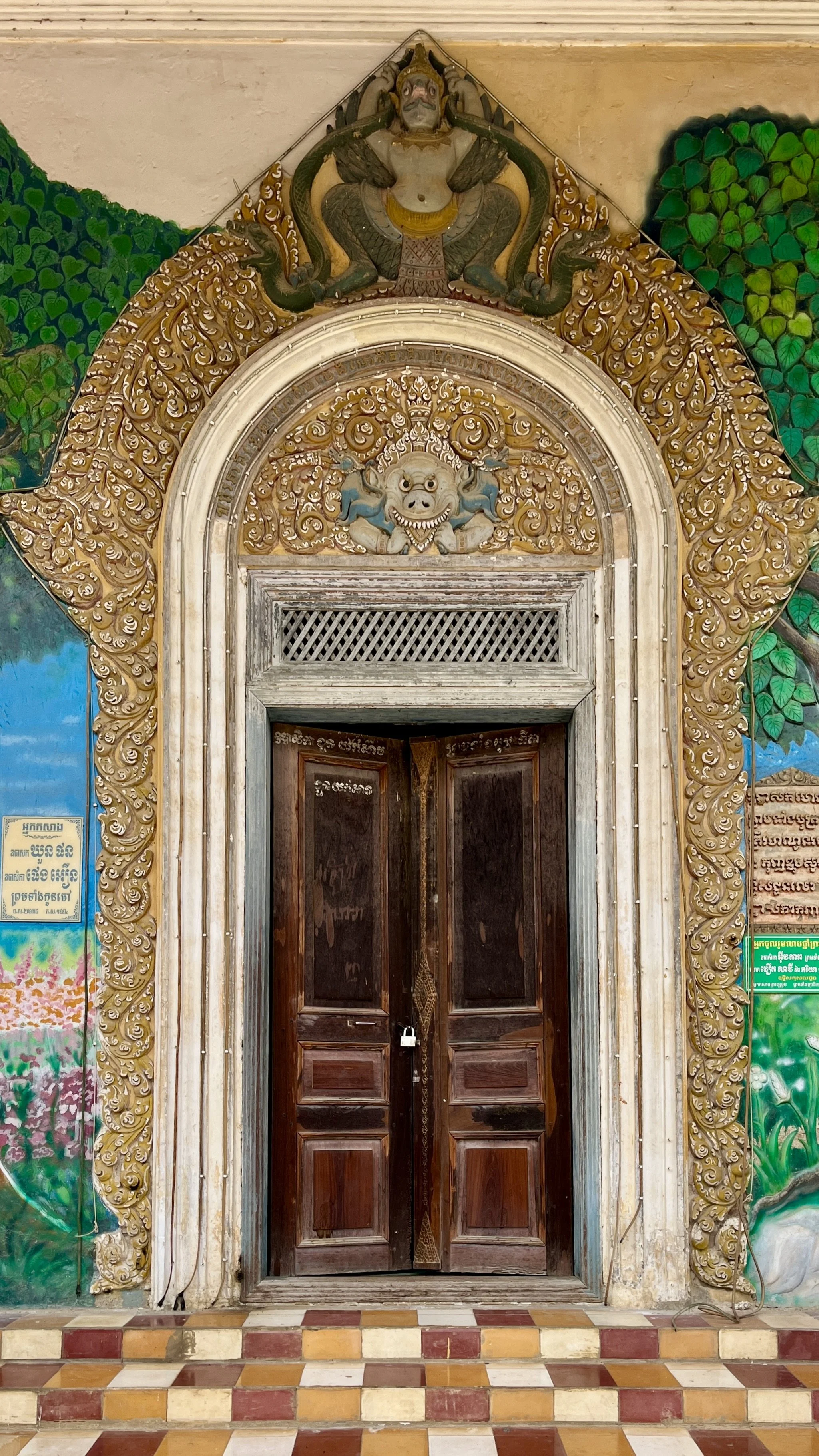
I really enjoyed this little ‘back doorway’ behind the main altar
I actually hate Battambang: venting about tourist problems and a couple bad pictures of Wat Phi Pit | Cambodia

My almost 3 weeks in Battambang were a misery for several reasons, listed below for my catharsis:

  1. My airbnb, which looked shiny and new in the pictures, was one of the smelliest, stinkiest houses I’ve ever endured. It absolutely reeked of fruity vape smoke, cheap perfume, sweat, and sex. The stench was so bad that I ripped off the bedding, threw it in the worst smelling room, closed the door, and slept on my own pillow and body towel (which I had luckily brought along) on the bare mattress– at least the mattress was new. I also went straight to the shop, bought two cans of aircon cleaning foam, and even after using both up on the single working aircon, the stink was strong enough to hit me every time I entered the house from outside, and bother me much of the time I was inside. It was really unbelievable for a newish looking house to stink so abominably. It was not the stink of messy prior guests. It was the stink of trashy whores living like that for months or years. The upholstered furniture was also so visibly filthy I refused to sit on it, perching myself on one vinyl covered stool I thoroughly wiped down with a clorox wet wipe.

  2. Despite the property ostensibly being fenced in on all sides, one morning I woke up to hear the back door opening. I immediately got up and started shuffling towards it, which must have scared off the intruder, who ran away without even closing the door. 
  3. The neighbors were absolute trash. At least every other day they played unbelievably loud bad music for unbelievably long and late hours– one Saturday during Pchum Ben, they played very very loud (I’m estimating 85 or 90 db inside my bedroom) shitty booming bass dance music for 13-14 hours straight, no breaks, from lunchtime until 3 in the morning, coupled with a rotating rainbow strobe light that shone directly into my kitchen/living/work space. They smoked the nastiest shit imaginable at all hours, and burned their trash every few days, and of course the shitty construction standards of the airbnb meant I was wearing a mask and closing the curtains (denying   myself much needed sunshine) most of the time, to avoid breathing it in as best I could, but still had serious difficulties in the already stank house. I don’t know why I even hope for better, considering I’ve never lived anywhere in Cambodia where at least one neighbor isn’t ruining everyone else’s quality of life (and at this point I’ve had 4 apartments, 4 houses, and umpteen hotel stays). It’s amazing, really; no matter how far into the countryside of Cambodia you go, the neighbors are equally and unbearably loud, smelly and antisocial.
4. The shit neighbors were not just trash, they were trolls– almost every day, sometimes twice a day, I’d find my running water was shut off, and had to walk through the front garden, unlock the front gate, exit the property, climb up onto a little mound made of tile shards, and turn it back on. There’s no way it was an accident, or caused by an animal or someone trying to get water– It’s a large blue handle that is parallel to the pipe in the off position, perpendicular to the pipe in the on position, and there’s no faucet. This continued throughout my stay. I’m guessing the nasty neighbors are also xenophobes/racists who just don’t want foreigners around, because a) obviously they are the rude, disturbing neighbors, not me (I’m not home most of the time, and when I am, I’m quiet, and I obviously don’t burn anything, litter, or otherwise bother anyone) and b) I never complained or even cursed out loud about their absolute shit behavior, so it wasn’t personal.
5. The shit construction and 2 inch gaps around all the doors also meant endless bugs in the house. I was lucky I came prepared with my mosquito bat, because I had to make extensive use of it. Between the mosquitos and the bare mattress and the stinky aircon, I was sleeping every night fully clothed, including hood, socks, and mask, often in the heat. Was there a fan of any sort anywhere in the house? Of course fucking not. But the worst bug didn’t come in through the gaps– it crawled up through the shower drain– a fucking scorpion! I was lucky I opened my eyes while shampooing my hair, because it was heading towards my foot fast when I noticed it. I sprayed it as far away from me as possible with the shower head, grabbed the cup I put my tooth brush and paste in, and tried to spray it into a corner/against the wall with my right hand and catch it under the cup with my left. The edge of the cup came down on its middle, unintended but perhaps lucky– I ground it into the floor with the cup as best as I could, which while not enough to assure it wouldn’t crawl out, gave me time to run to my luggage, naked and wet, grab my boxcutter, and slice through it around the edge of the glass, killing it. I think in the end that was better than the original plan of just leaving it trapped under the cup until the owners of the place found it. According to a bit of later research Cambodian scorpions are not deadly, just painful like an XL hornet sting.

6. The commute was much longer than I expected– a 25 minute or so tuktuk ride into the city each day, made longer by needing to call for a driver and getting cancelled on at least once or twice per trip. In addition to slowing me down and costing more than double what it should, this made delivery from restaurants impossible, which became a huge problem because .  . .

7. The house didn’t have a kitchen as pictured. Not only were the pictured full size fridge and cooktop missing, so was the aircon in the living/kitchen space. There was what I think is a drinks cooler, or maybe XS fridge for beauty products– it was much smaller than even a hotel minifridge, so I couldn’t refrigerate anything beyond a single box of leftovers and 1-2 canned drinks. So, I ended up eating things I normally wouldn’t– boxes of dry carbs like crackers and cookies, and takeout meals left on the counter for hours.

In addition to just being miserable and non-nutritious, I think I learned the hard way about fried rice syndrome. I think I got VERY VERY lucky, only taking one bite of leftover rice before remembering it had been sitting out for two nights without refrigeration. I’ve had genuine food poisoning once or maybe twice, somewhat easier but still appalling “Bali belly” a few times, and this was not those– it was the worst gastro event of my life by far. Only googling around days later did I learn about fried rice syndrome for the first time, and recognize the symptoms/severity/progression. I truly believe I’m only alive because it was only one bite AND I always carry around antibiotics, just in case.

Experience has taught me to take antibiotics early into a food poisoning or Bali belly type gastro episode; if they help, great; if they don’t, oh well, at least they don’t hurt. So, within the first hour or two of misery I took a double dose of clindamycin I had on hand completely coincidentally (thanks asshole Siem Reap pharmacist who pretended to not know what a UTI was/shamed me for having one/insisted on selling me a pointless generic antibiotic that probably wouldn’t cure a UTI because I had ‘wasted’ his time explaining my ailment and thereby reminded him of his incompetence), and taking action early could (or not, I don’t know) have saved me. Apparently clindamycin is one of the antibiotics that helps with fried rice syndrome, though not a first line med.

The pain was so strong, the fever so high, and the diarrhea and vomit so unrelenting that I put my pillow on the tiled bathroom floor; there was no time to walk the perhaps 6 feet from bed to toilet, and my balance was failing. I’d experienced that before with food poisoning; the difference this time was that during my previous worst episode, 6 or 8 hours into it coming out both ends I was thinking “Force yourself to drink this water, drink, drink, drink; if this vomit/diarrhea doesn’t stop in 5 or 6 more hours, we’ll (my physical and mental selves) go to the hospital”. This time, I was in too much pain/too weak and dizzy to even crawl 5 feet to find/see my phone to call a hospital, certainly physically unable to exit the house or enter a vehicle unaided, and that’s not even accounting for the language barrier.

No one reads my blog anyway so I can be graphic; in the last few hours of the episode, I was no longer vomiting or defecating excrement, I had none left; just lots of congealed blood. I knew rationally it was probably related to internal hemorrhoids/strain but it was still terrifying, moreso because I had no one and no way to call for help; thankfully that aspect resolved within 24 hours. I spent the next 3 days bedridden, the first 2 still sick/sleeping, and it took maybe a week to fully recover.

8. Speaking of food, even at restaurants in town, it was expensive and bad, extremely ironic given Battambang has been honored by UNESCO for its culinary heritage. At the heroically priced (and Angelina Jolie patronized) Maison Wat Kor, the food is bland and inauthentic, catering to the insulting stereotype they maintain of a European palate. At the one American-owned restaurant in town, the windowless, fanless toilets face directly onto the dining room, and the staff leaves the doors wide open to air out the shits everyone hears everyone else take where we eat. In what tripadvisor rates the best restaurant in Battambang, supposedly social enterprise/french-khmer fusion/wine bar, there was a fucking longass manicured thumbnail in my food– you know the type, usually seen on taxi drivers who do drugs– clearly accidentally half chopped/half ripped off by a cook not wearing gloves, who then chose to leave it in my food. And when I complained and showed it to the waiter, they called over the manager, who not only did not apologize or comp a thing, but lied to my face in a totally absurd manner, telling me I was confused and it was just a piece of cooked garlic! The audacity!


I’ve learned through countless conversations over my year plus living here that Cambodians have an unfathomable, bizarre, totally fucked, cultural predilection for casual lies and gaslighting– they think it’s unclockable, socially/morally acceptable, or both; they all do it, and they always try it if they have even the slightest chance of gaining even the smallest thing by it. But even more maddeningly, they often do it when they have nothing to gain except the chance to smile smugly at their sabotage and feel for a moment they’ve gotten the best of someone; in fact, they seem to consider maintaining irrational fantasies of their own superiority and control the most valuable benefit. Out of hundreds, thousands? of these micro-aggressions, in every transaction and most stakeless interactions, this fingernail debacle is just the most succinctly illustrative example I’ve experienced to date. How shameless must one be to suggest to my face that I, an over 40 woman, have never seen or bitten either a piece of cooked garlic or a fingernail before, and can’t easily identify them independently or in comparison, and have somehow mixed them up? Even if he got the word wrong and meant ginger, or galangal, or some other root or spice stiffer than cooked garlic, the notion would be absurd. How insolent must one be to assume I, an over 40 woman, better than him by any standard that matters– wealth, class, intelligence, education, age, experience, morality, manners, self-awareness, fairness, generosity, pride in a job well done, overall success, positive impact on the lives of children, charity work, political activism, number and variety of languages spoken and cultures witnessed, hell, even knowledge of his own country’s geography, history, and heritage, and based on his behavior, though perhaps counterintuitively given this sentence, modesty, speaking of which, I bet I even fuck better– would or should back down when confronted, especially so directly, with bullshit that insults my intelligence? In New York only small children or personality disordered imbeciles attempt these sorts of lies; I understand the logic of ‘can’t knock ‘em for trying’, but can’t help but feel repulsed.


I often wonder how this became an acceptable norm. What proportion of Cambodians tell each other that foreigners are stupid, or women are stupid, or middle-aged people are stupid, or rich people are stupid, or it’s a combo, or it’s just something about my face, or just do a little test and see for sure if I’m stupid, or if they insult each other’s intelligence this way too. It seems like they are constantly taking my foreignness for foolishness, my kindness for weakness, my generosity for profligacy, my curiosity for naïveté, and my manners and standard American friendliness as a psychological need for their approval/validation/friendship. I know my contempt makes me sound racist, and to be honest, dealing with this so often from so man different Cambodians has made me reconsider nature/nurture. On one hand, I’m very aware and admiring of the Khmer who once wrote better Sanskrit than the Brahmins; on the other, I’ve repeatedly experienced exactly the combination of middling intelligence and moral turpitude that could have been predicted 40 years ago when they genocided a full third of their population, literally everyone with a heart, brain, or franc, and their whole families with them, as insurance against future generations with any of those things.


Anyway, to end this rant still talking about food . . . even at chains/franchises that are supposed to be relatively safe (like Domino’s pizza and Gloria Jean’s coffee) the food smelled strongly of mold– like they saw it, decided they cared more about making money than their customers’ health, brushed it off literally and figuratively, and sold it anyway. Just so fucking nasty in every way. I think in the whole town there was a single coffee shop I liked.

9. The weather sucked and the temples were all locked. Despite feeling ill and exhausted, I was getting up early and dragging myself around, as expensive as that got, trying to see the important temples. It rained every fucking day for over two weeks, and not a single temple of note was open. The only temple interior I saw the entire time was that of Wat Kor, which I stumbled into just because I happened to be walking down the street, on my way to that hotel restaurant that wasn’t worth eating at anyway. It was obviously only left unlocked because, unlike the others, they don’t usually get tourists. It’s all just so ironic and again, xenophobic and insulting; foreigners didn’t loot the temples of Cambodia singlehandedly, every single theft for the past century plus was by locals who made a living selling out their own material culture and artistic heritage. Designating some temples as tourist friendly then locking them, is crazy.

10. My macbook air screen cracked in Battambang, and I was charged $300 for a supposedly authentic apple replacement screen, and forced to extend my stay in this place I really didn’t like while the repair was made. This ended up just being the first in a series of costly tech failures: the doubtless counterfeit replacement screen failed within a month, costing me another $300 to replace back in Siem Reap; that second doubtless counterfeit replacement screen just failed again this week (thankfully this time I’m still in the same city and can utilize the shop’s 3 month warranty); for the cherry on top, my iphone screen also failed within 48 hours of my returning from Battambang, a known bug in iphone 13s.. Between apple’s planned obsolescence and the cambodian culture of fakes and scams, I’ll have spent between $2000 and $3000 I don’t really have to replace broken tech with even lower quality less reliable tech by the end of the first quarter of 2026.

11. The only nanoplated thin silver lining of all this is that now, as I edit pictures like these of Wat Phi Pit– bad uninteresting photos I went to great lengths and expense to take– my unhappiness at their poor quality has forced me into improving my editing skills a bit and investing (albeit money I don’t have) in a) backup tech, so I’m not out 2 weeks’ income next time a computer component fails and b) a better camera phone, when I can afford it– I can’t right now, and that’s why these blog posts are coming out in relatively quick (for me, anyway) succession– nothing to do for the next few months except hang around and edit photos of travels past.

12. On the bus rides there and back from Siem Reap, I was tortured by stinky smokers. On the bus ride back, the smoker was also very obviously ill, constantly coughing, sneezing, and hacking (with mask worn under his chin rather than over his nose and mouth); of course he was not refused service, and of course I came down with whatever respiratory illness he had within 48 hours of arriving back in Siem Reap. 

If I had not been traveling with a fucking camper kit of supplies (antibiotics, exacto knife, mosquito bat, pillow, towel, masks, hoodie, socks, more than a few hundred bucks in the bank) I cannot even imagine how exponentially worse my misery would have been, everything already sucked so much. I still prefer a lifestyle of constant travel to any other lifestyle, but cities/weeks like this try my patience and make me deeply sad.

As for Wat Phi Pit, otherwise known as Piphetthearam Pagoda, I can’t find any info about it except that it dates to the 19th century and was built by the Siamese, which is visually evident. 

I did at least learn something new when looking up old pictures of it– many of the photos from EFEO labeled April or May 1964 are in fact reprints from old plates, and that’s why they have what I thought to be anachronistic, but is in fact original, hand lettering. These photos of Wat Phi Pit, for example, are actually from March 1924.

I suppose I also know that at some point their original Buddha was looted or destroyed, because while the current one (shown here in a google maps photo being regilded) is a close copy, the draping fabric details are not present in the original.

Wat Kandal, Battambang | Cambodia

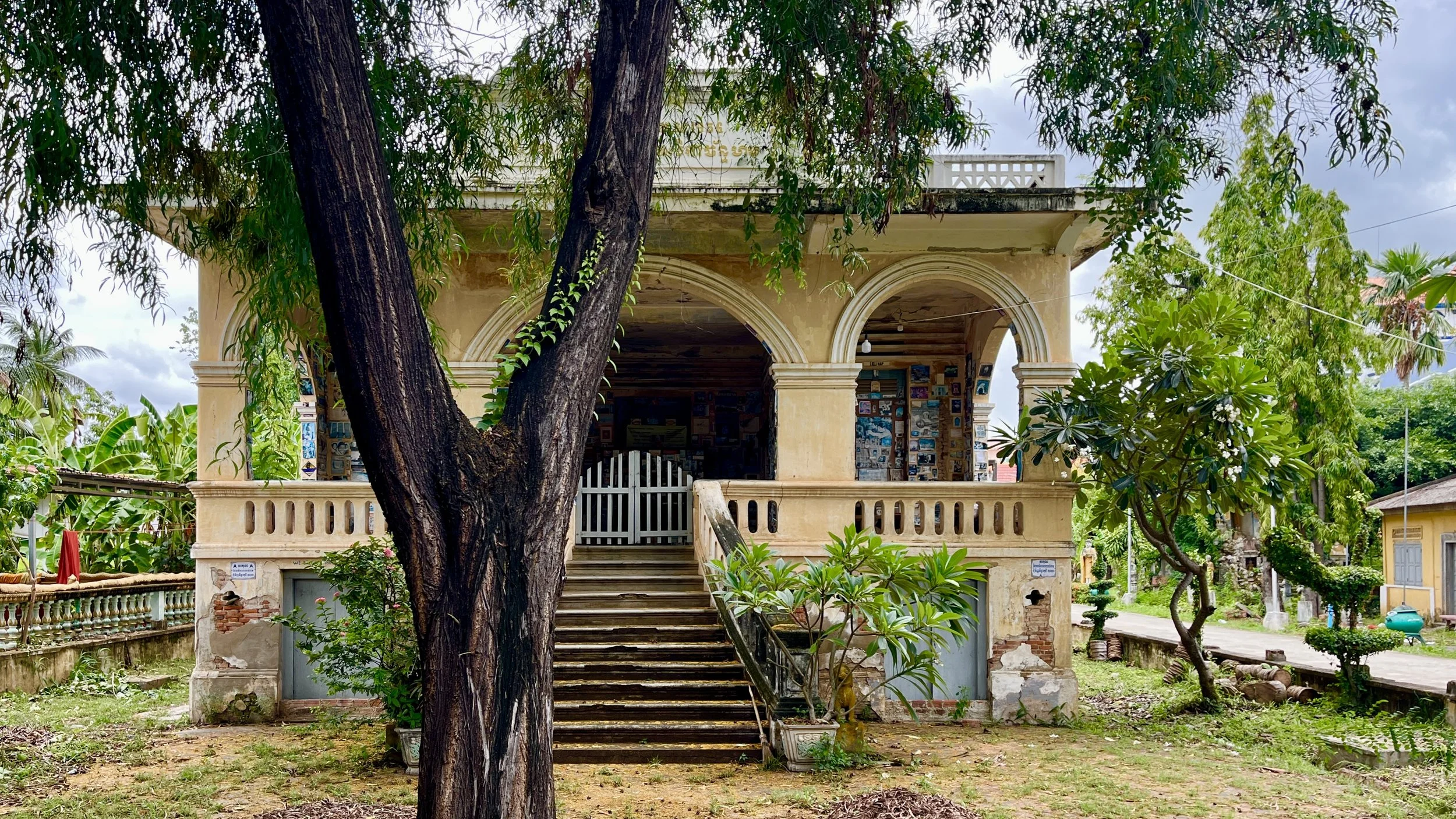
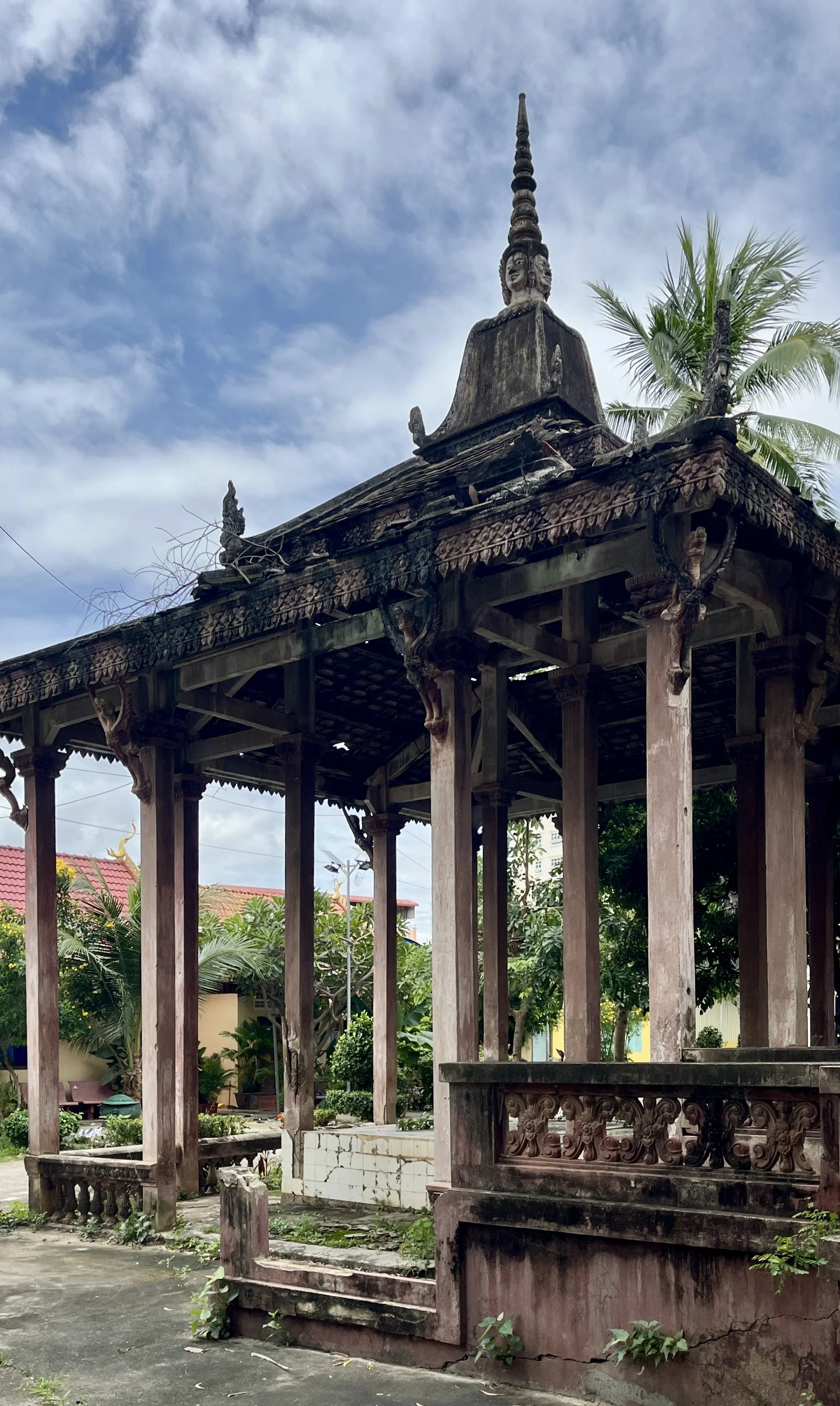
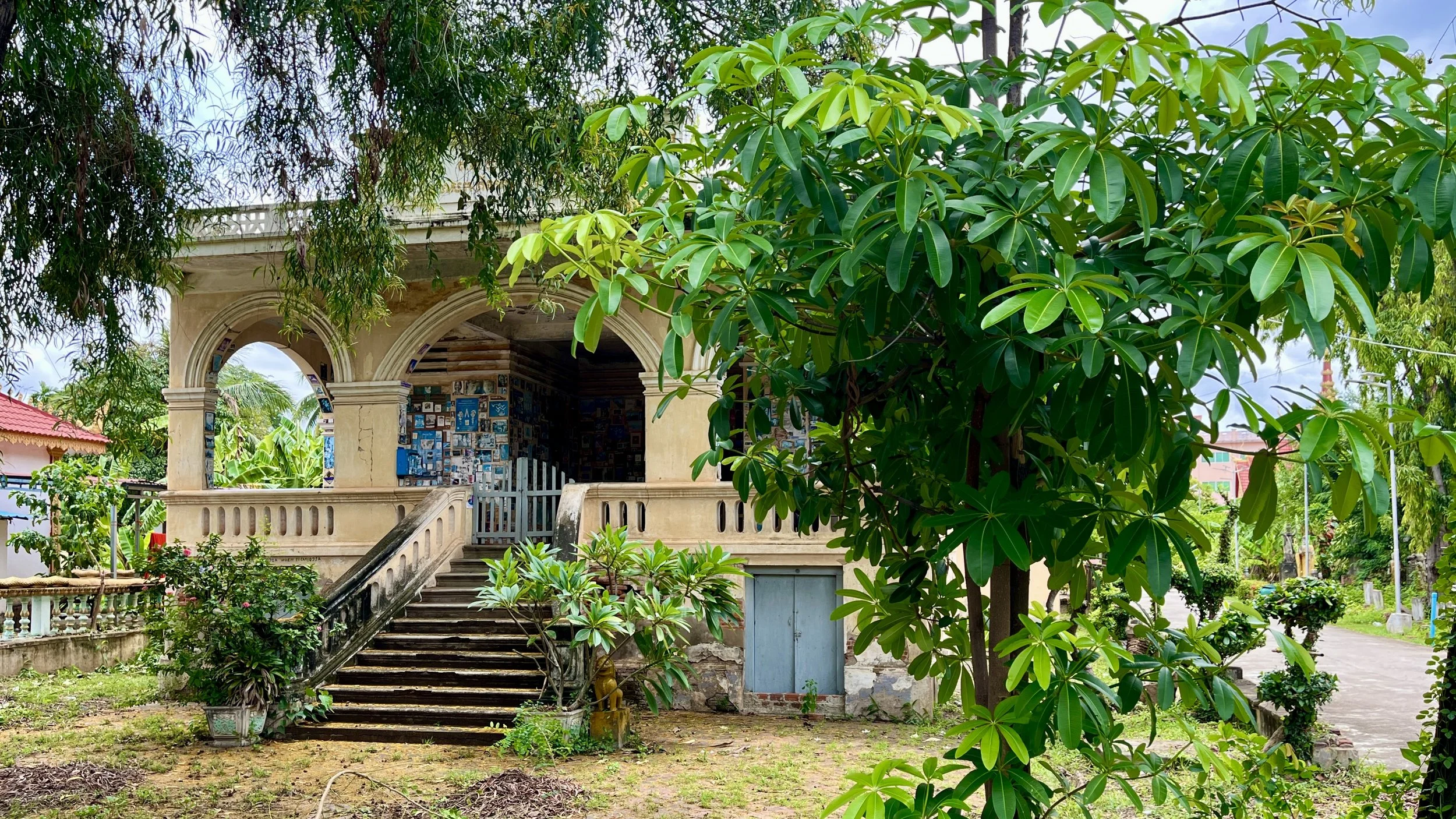
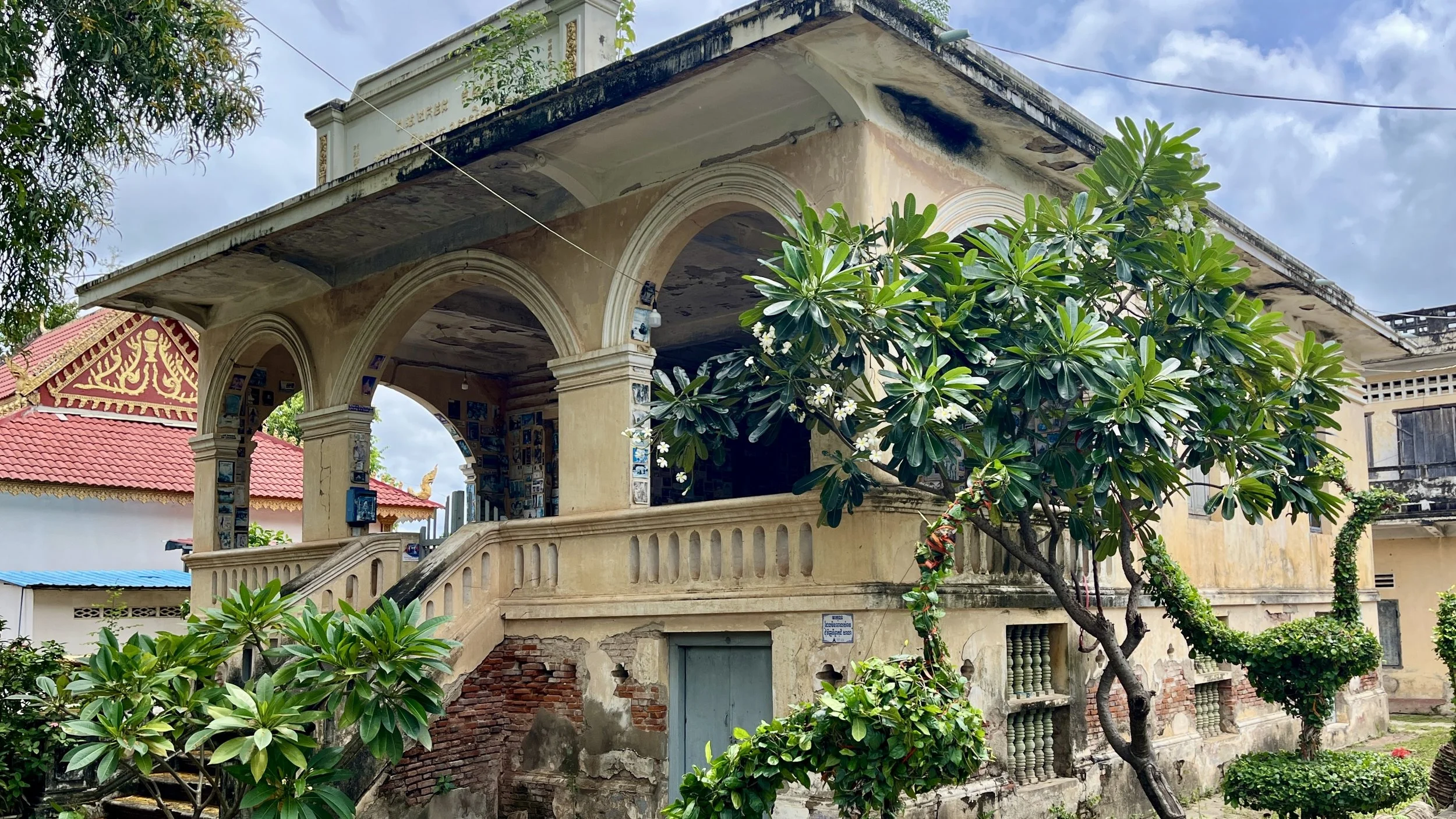
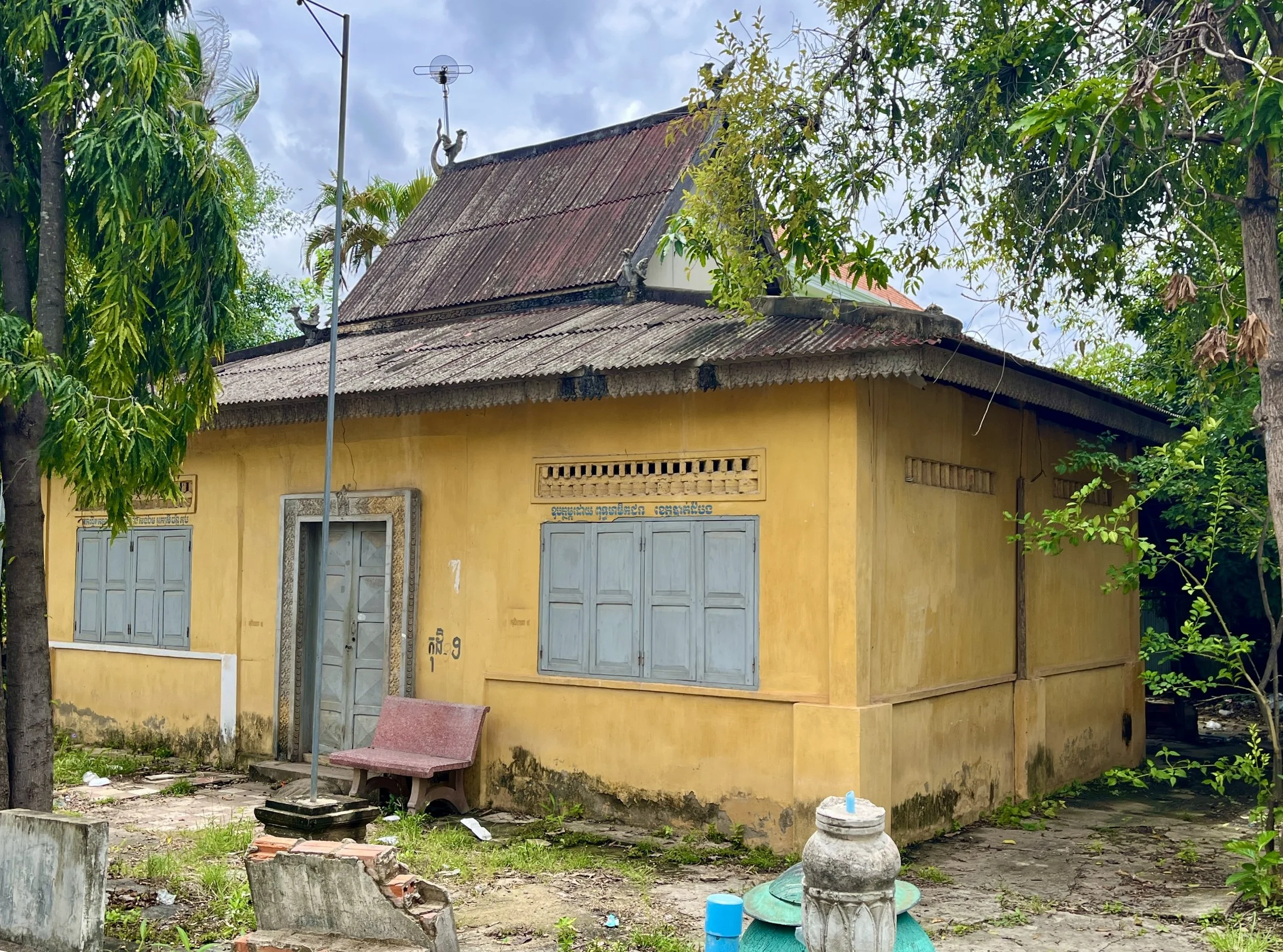
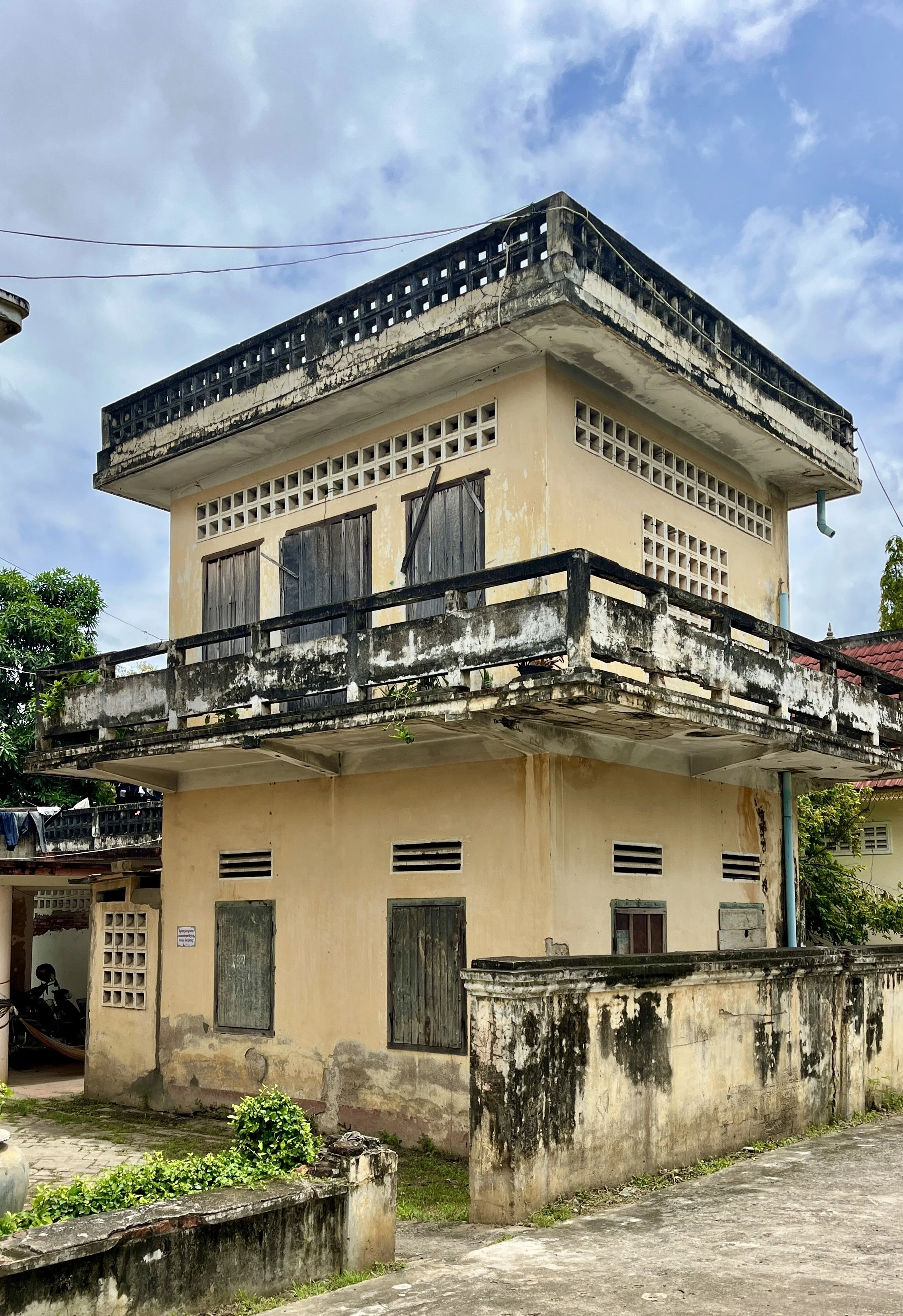
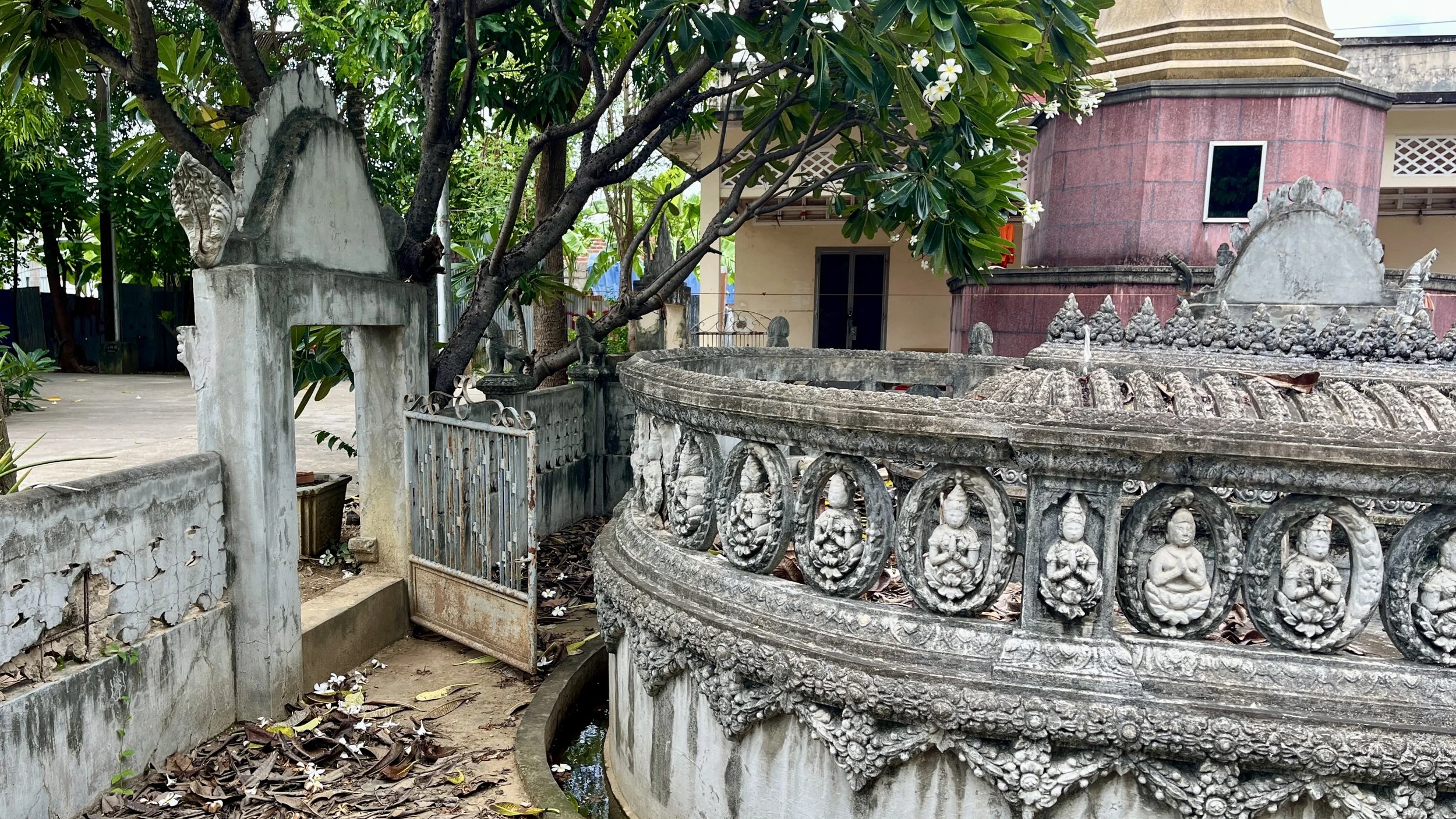
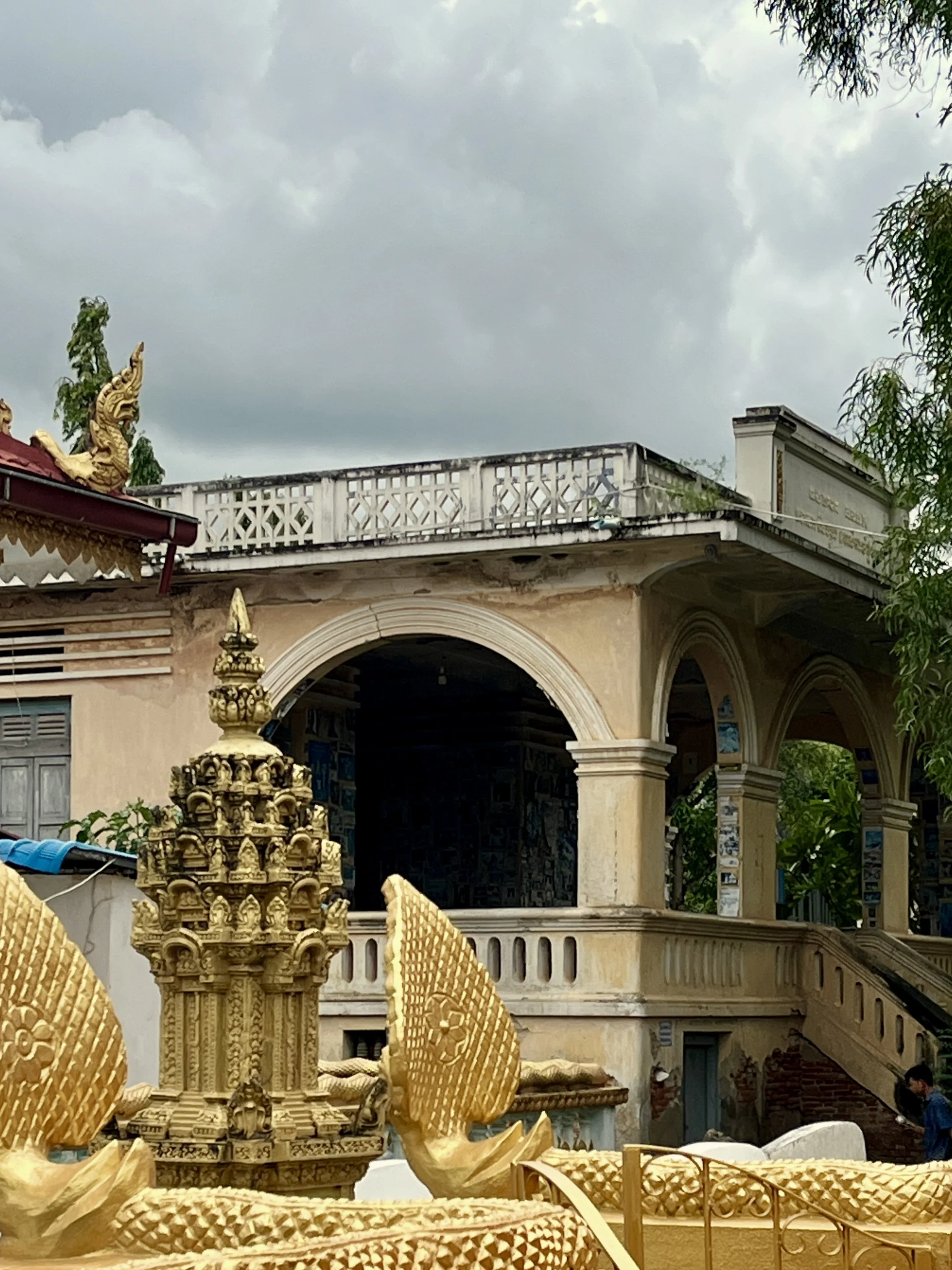
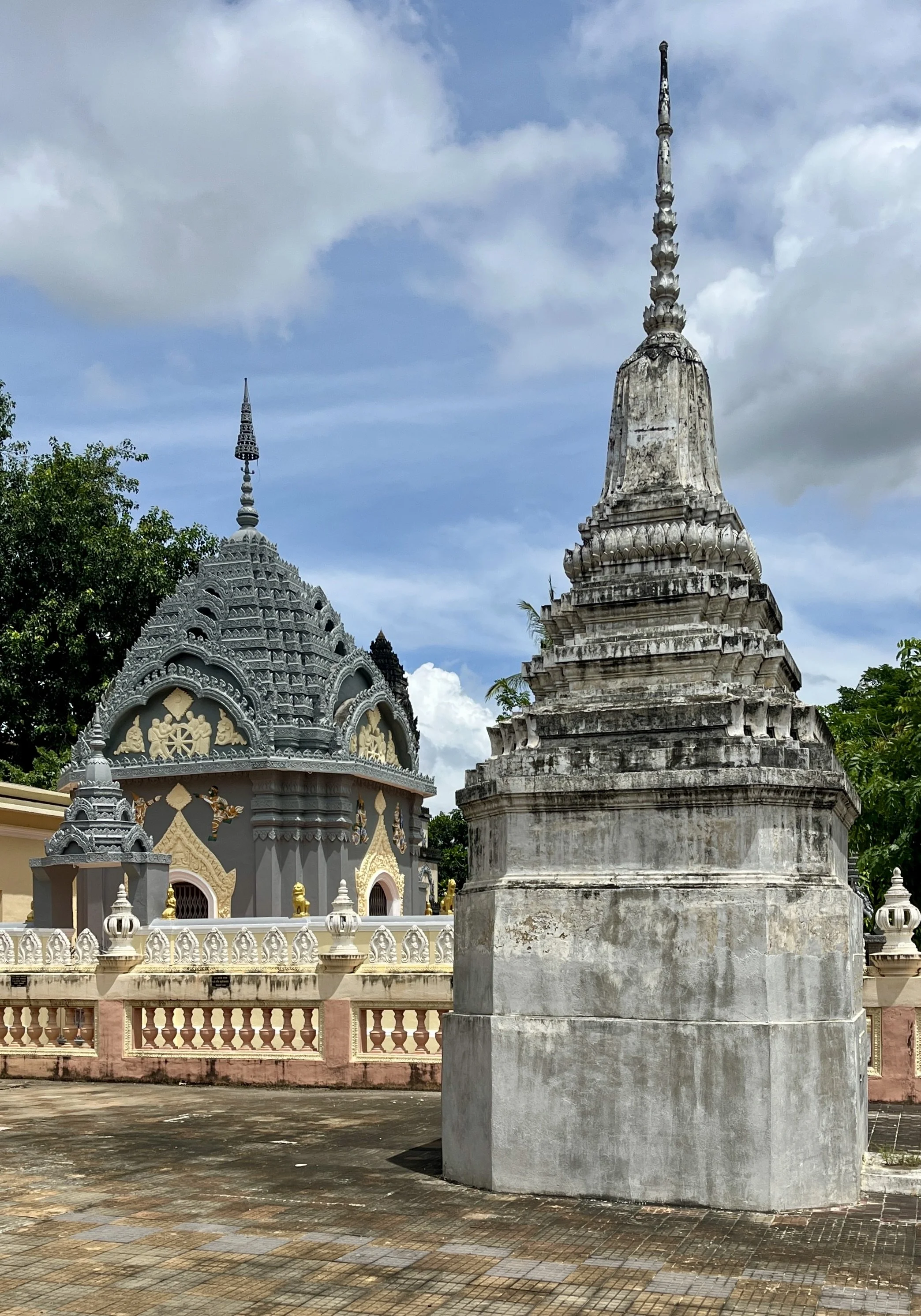
I spent quite a bit of time here because it was near my hotel. Apparently there’s been a wat here since the 1700s, but what initially drew me in were the many Art Deco French colonial outbuildings. Like everything in Battambang, it’s in rough shape, but lots of interesting architectural detail I might apply to my own rented house eventually.

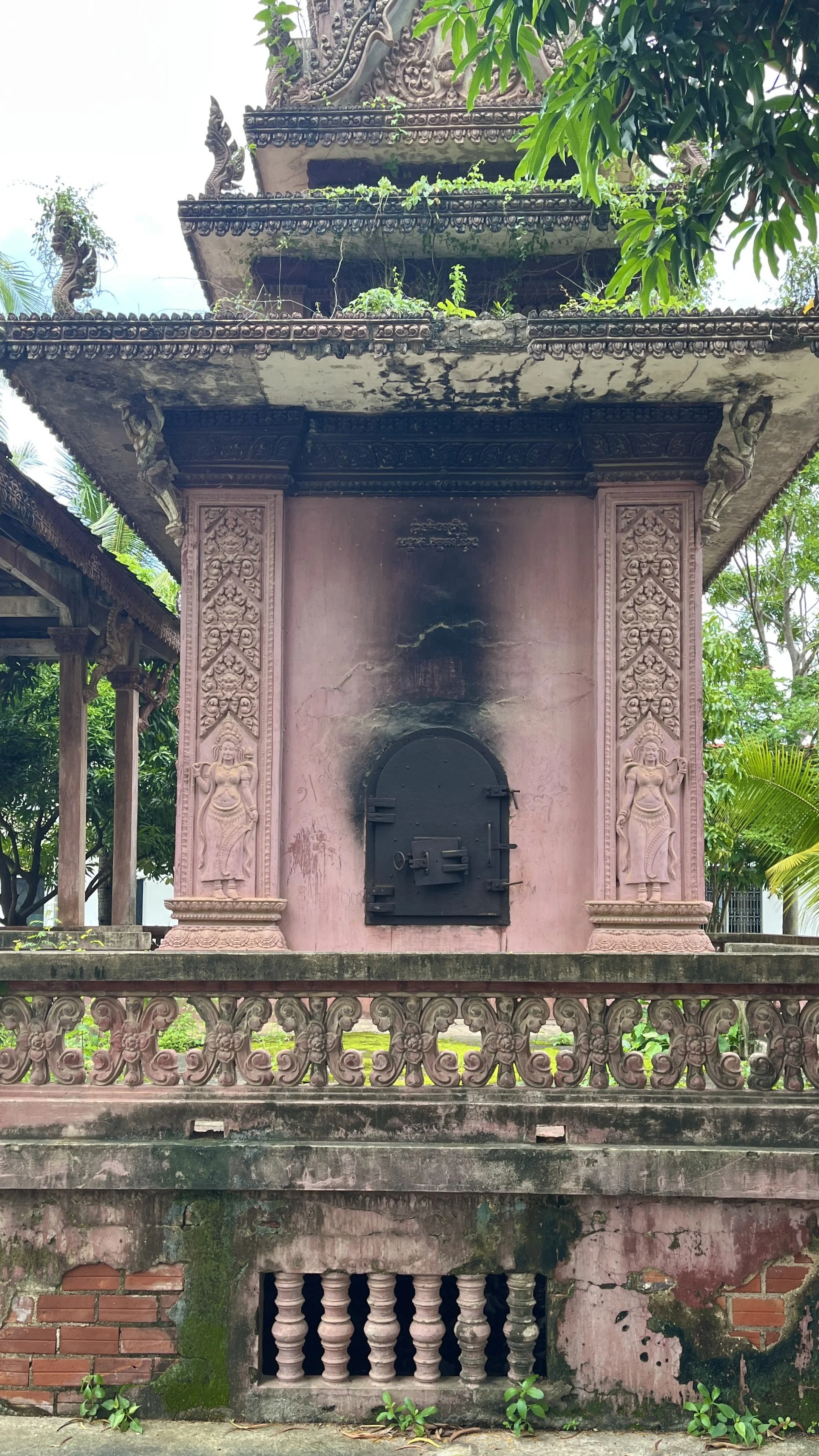
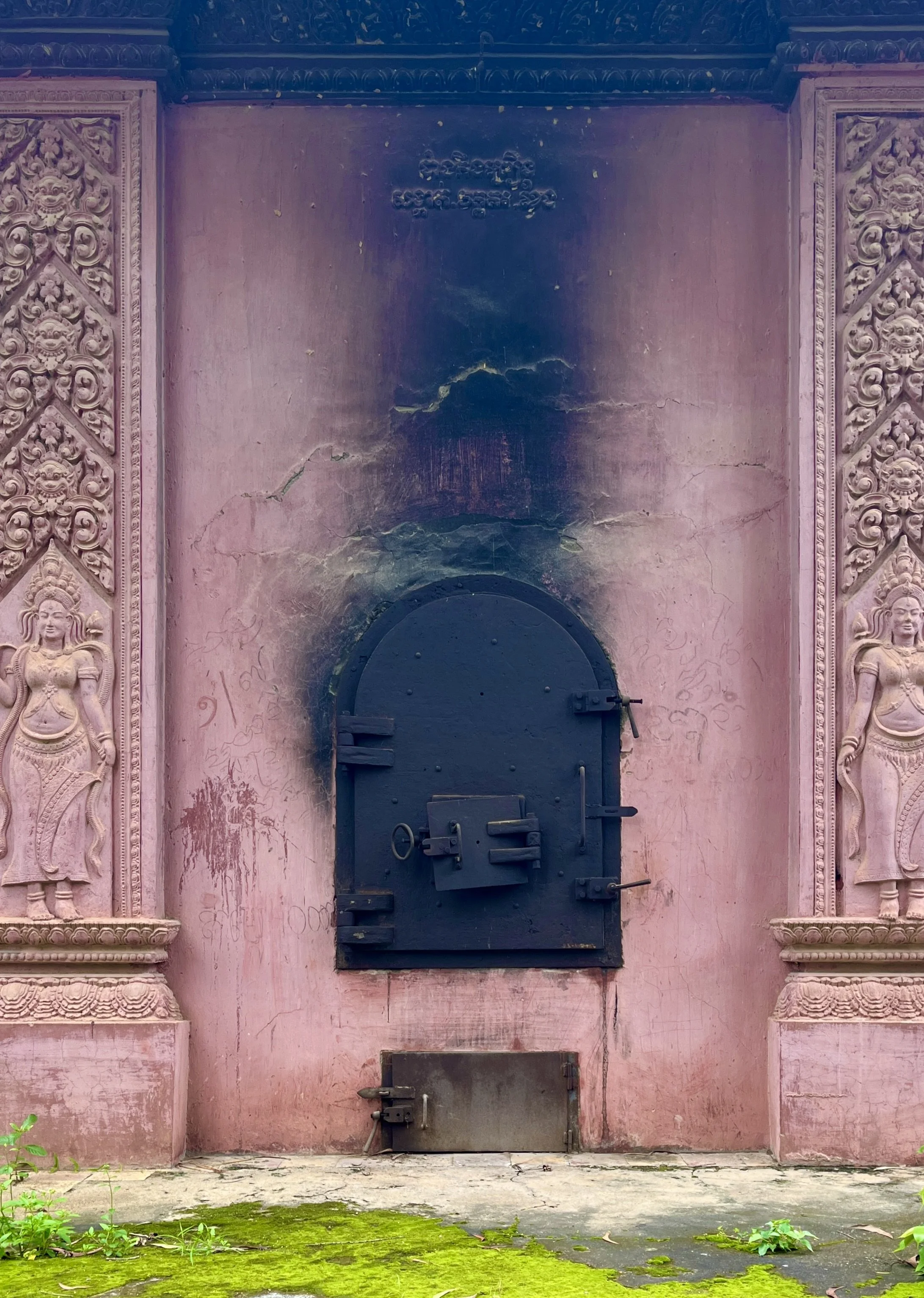
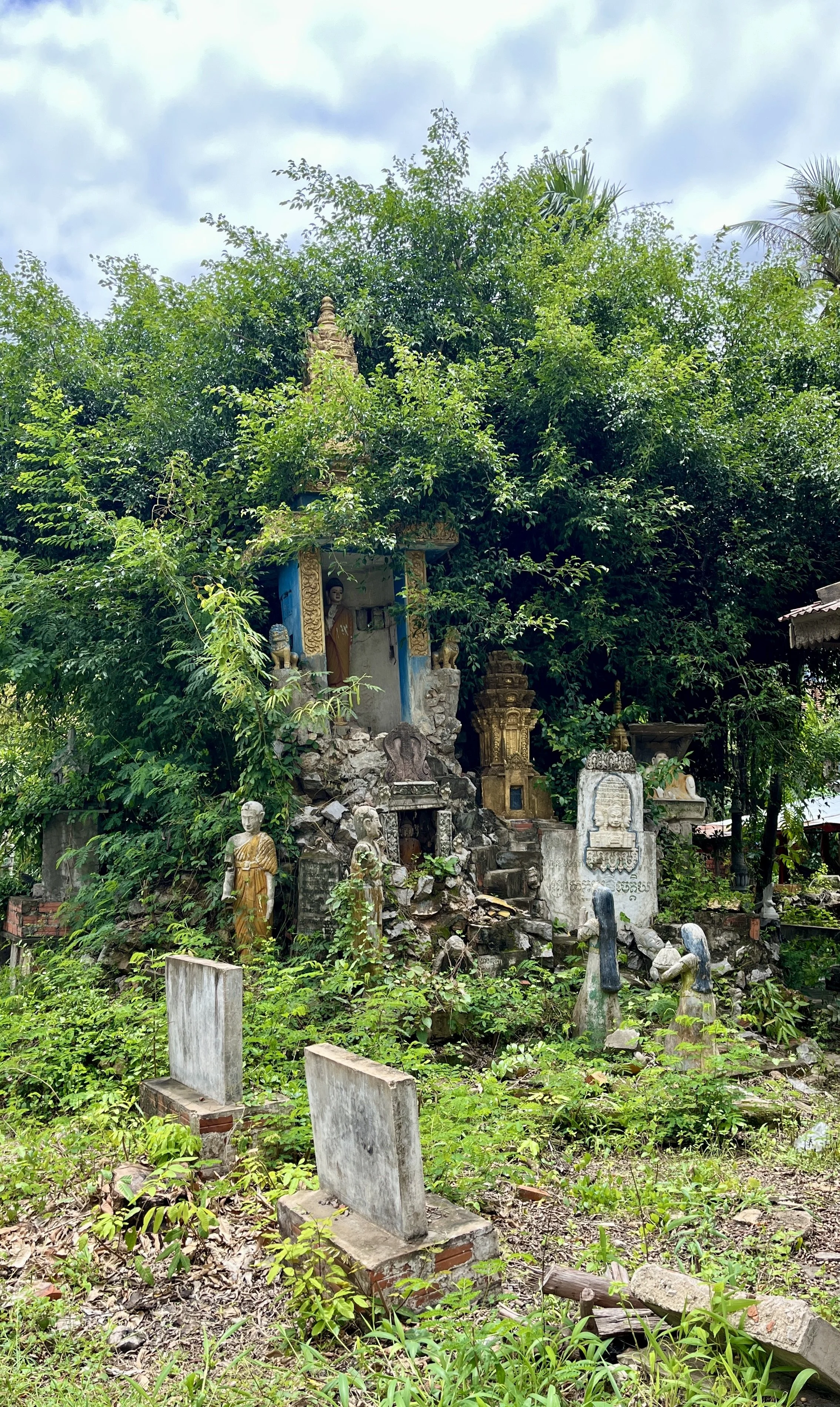
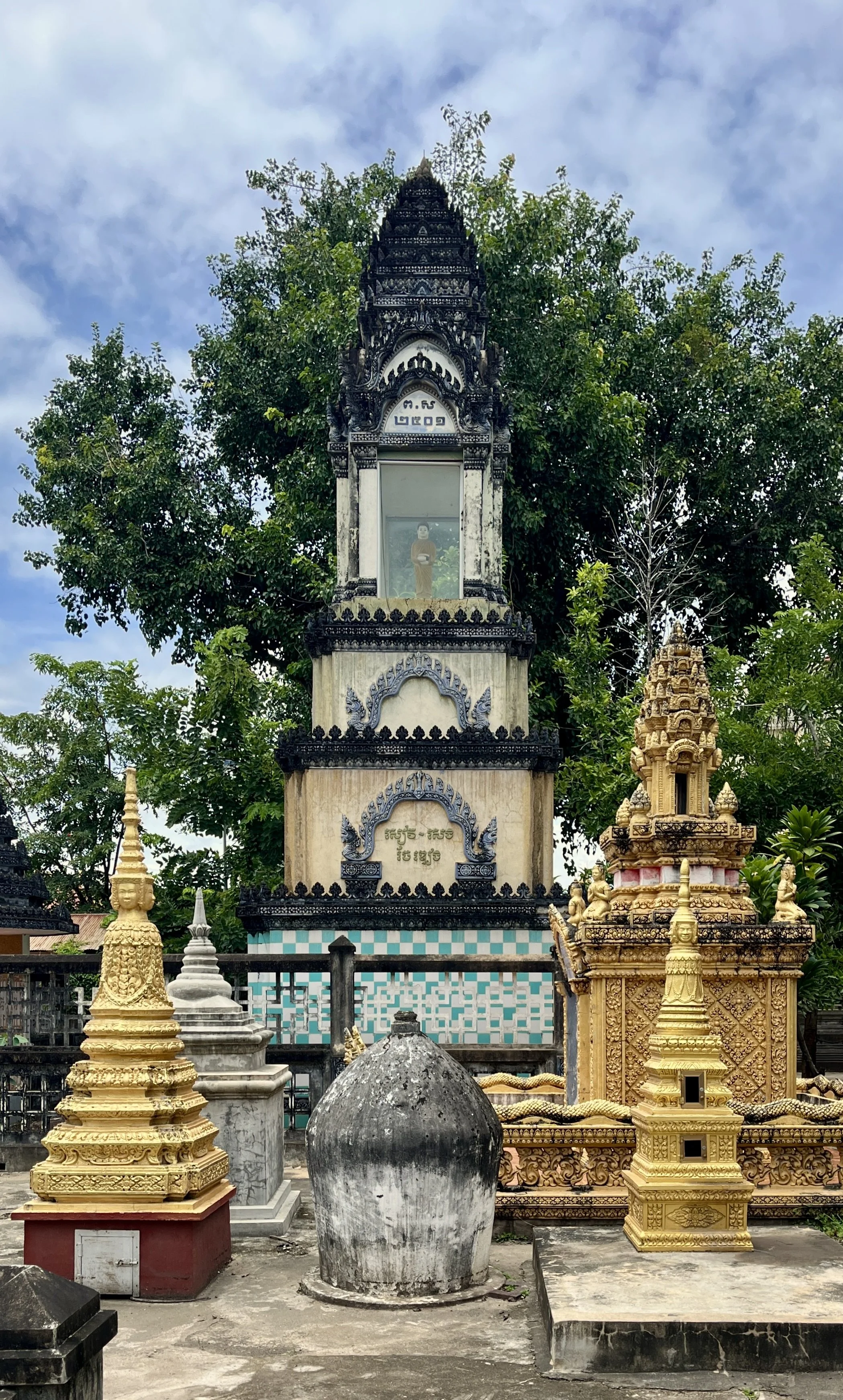
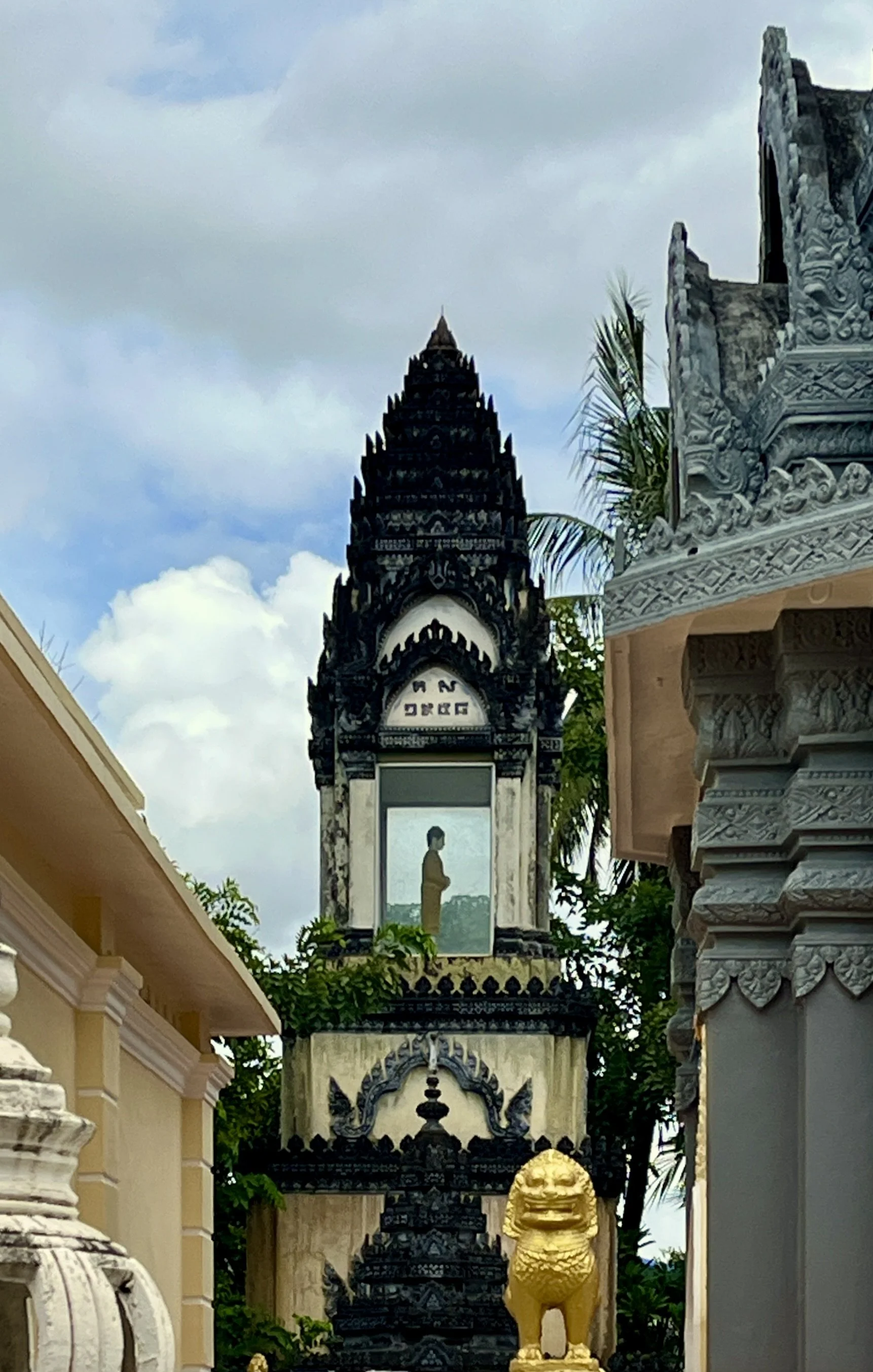
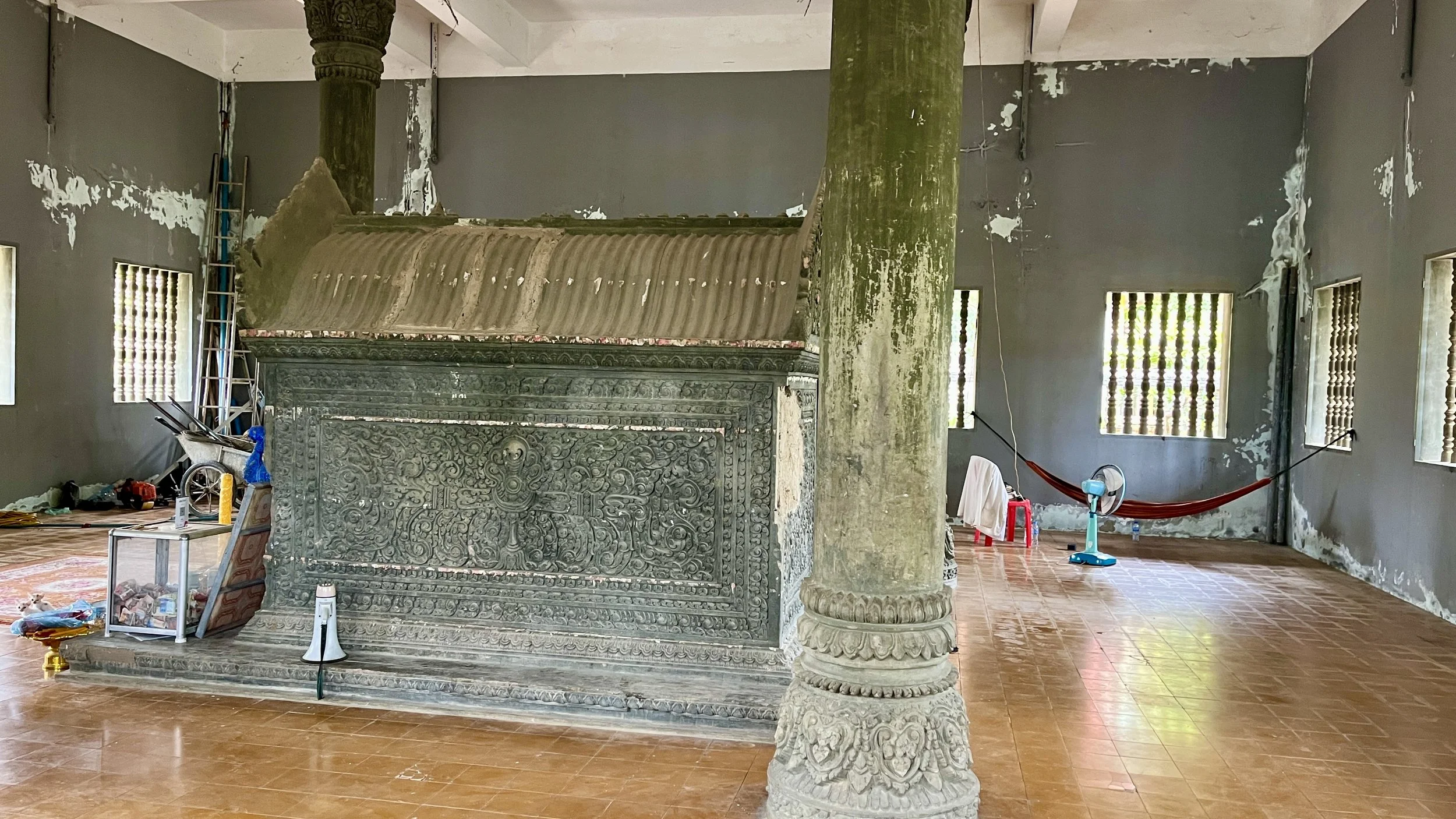
One morbidly interesting thing about this place is that it’s the highest status cremation/burial site in town. So, there are hundreds of graves, some Khmer, also many Chinese. The largest among them has a giant sarcophagus within a large multipillared Angkor style stupa, encircled by a moat, and manned 24/7 by some monk in a hammock.

Students learning traditional Khmer instruments take classes and practice here, so if you’re lucky enough to show up when they’re playing, it’s rather more lovely.

Wat Samrong Knong, Battambang | Cambodia

Battambang, as one of the historically wealthiest regions of Cambodia, has over 300 functional pagodas, not to mention the many ruins. Among them, Samrong Knong was, prior to the Khmer Rouge regime, the most powerful local monastery, with large grounds and many buildings and stupas, new and old. It was originally constructed in wood in 1707, and there is apparently (though I failed to identify it) at least one extant building dating from the first decade of the 19th century here. There are various stupas dating to the last quarter of the 19th century. The “new” pagoda was commissioned in 1887 and completely in 1890; the “old” pagoda was reconstructed in brick and plaster simultaneously, and last renovated quite recently.

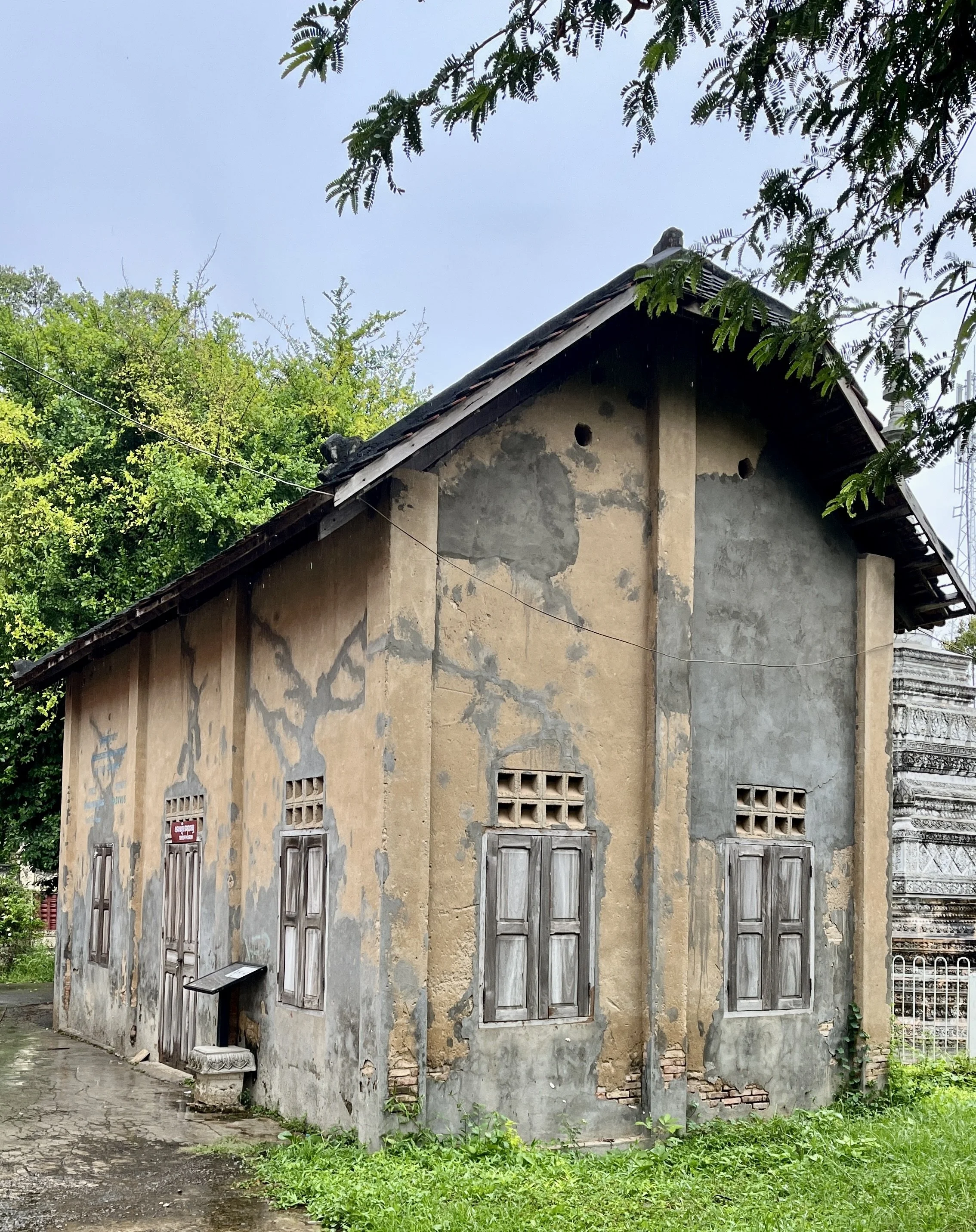
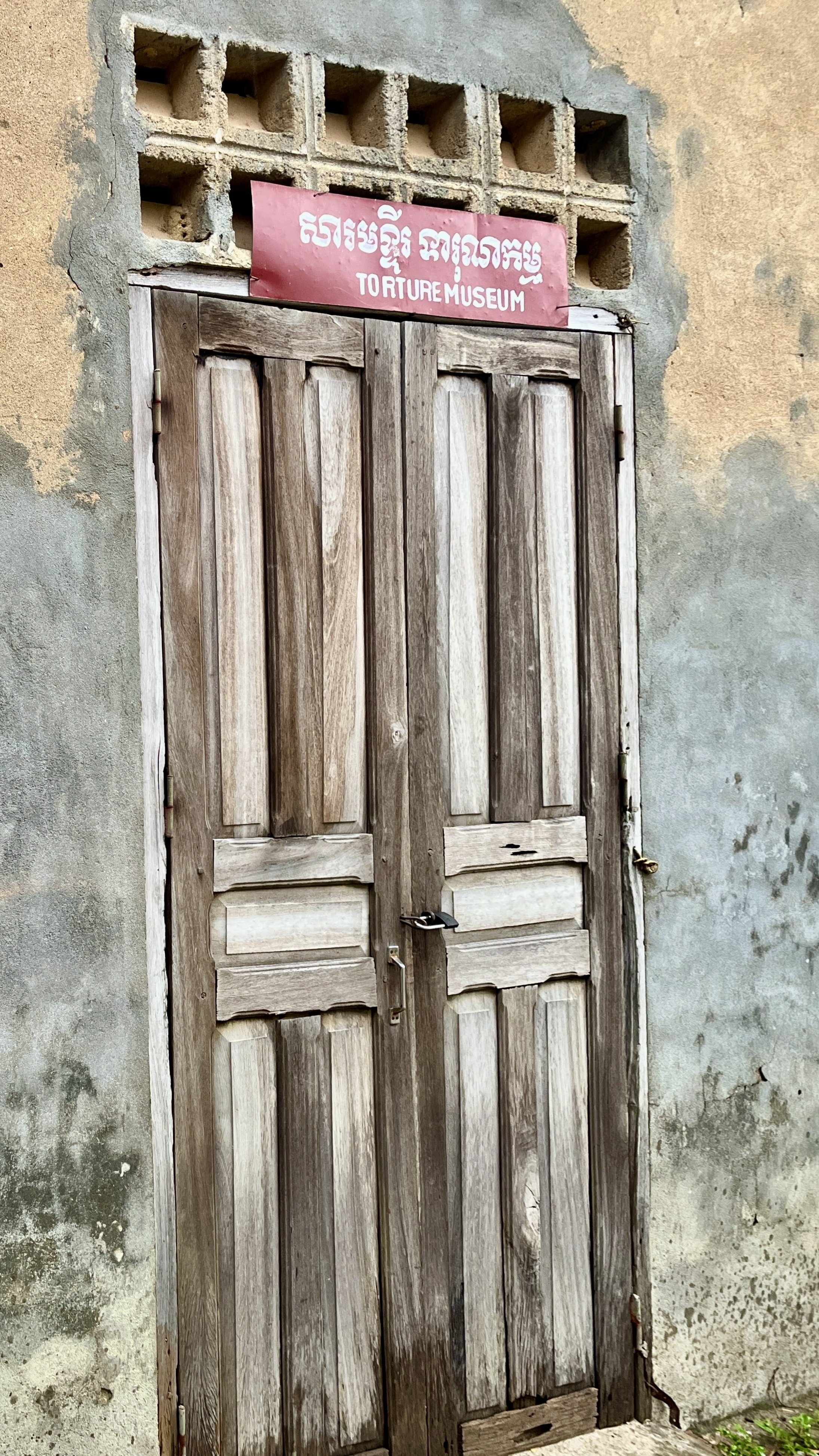
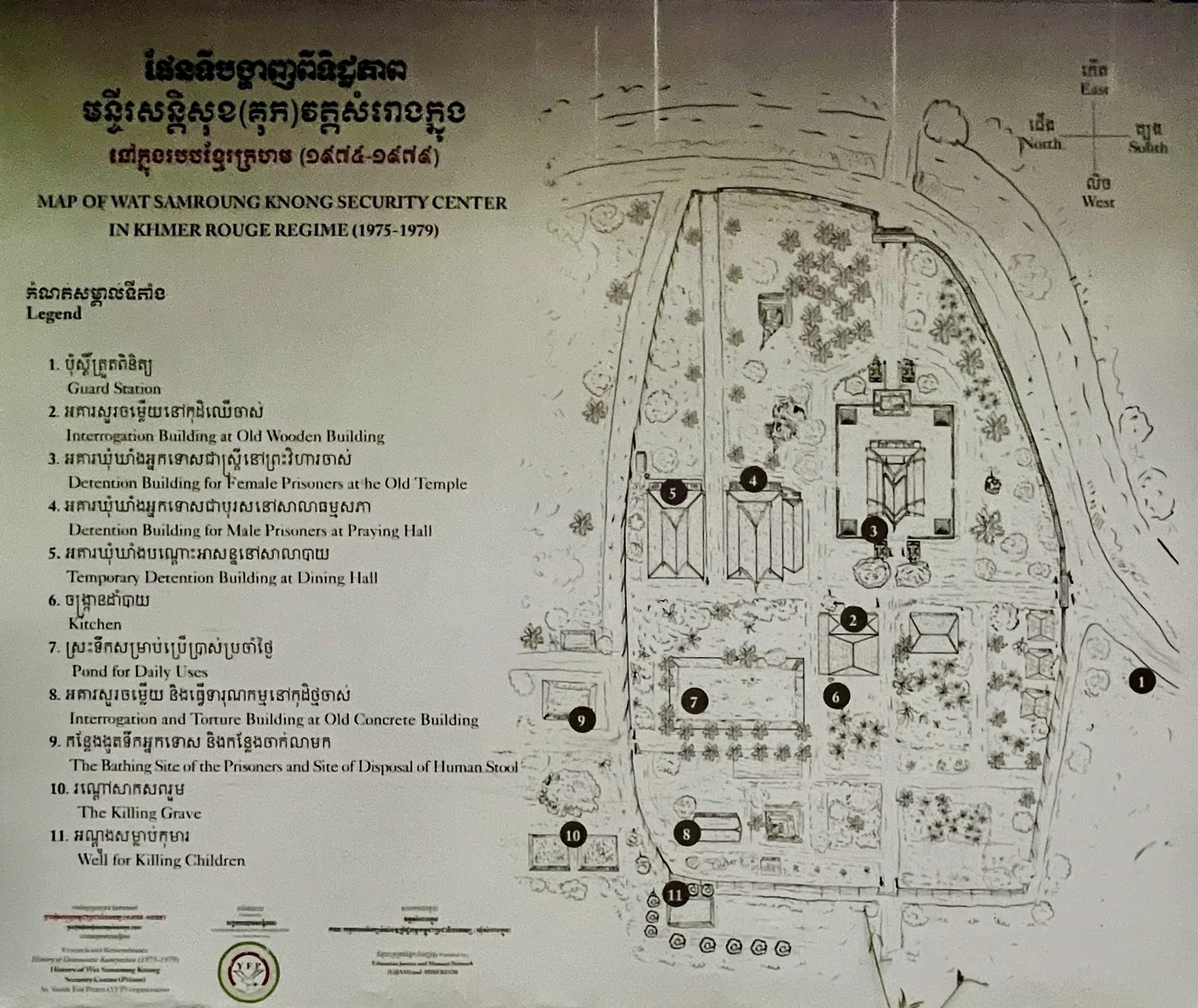
During the Khmer Rouge regime, Samrong Knong became a notorious interrogation/torture center and killing field. All these buildings are clearly mapped for visitors.

Far better photos are available, even on google maps reviews– these are all I managed to get because:

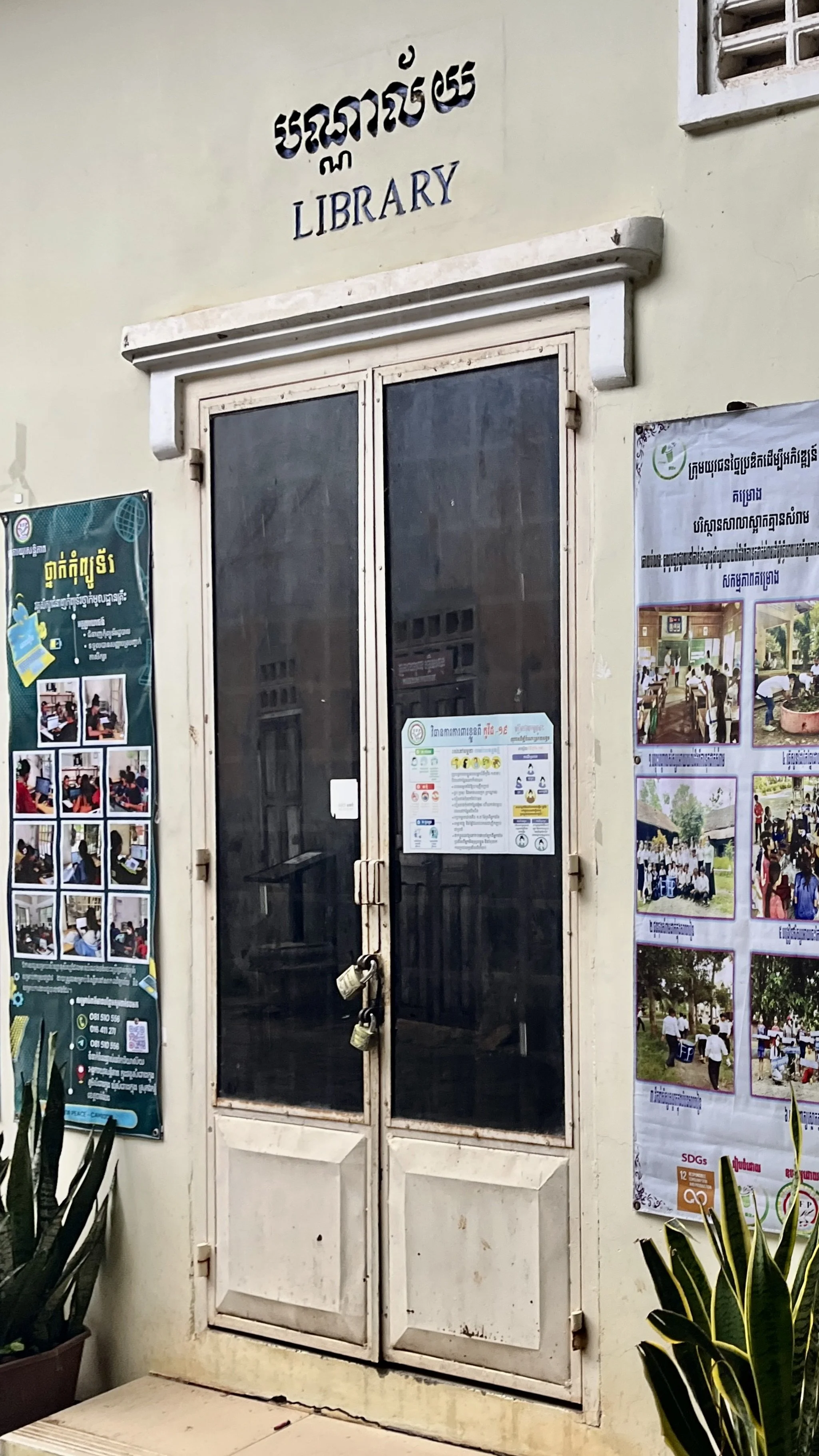
1. I kept going at the wrong times. Everything was always locked up: not just the temples themselves, which is regrettably commonplace, but even the museum and library that were supposed to be open. This happens in Cambodia; if no one is there they just shut up shop, not realizing/caring that it’s ludicrous to expect a constant flow of visitors at their ordered pair coordinate of location/awareness. I think Samrong Knong opens up to big tour groups, so perhaps join one if you really care to go inside.

2. The weather was dreary and I wasn’t feeling well. I caught some sort of dreadful up all night wondering if I should go to hospital type stomach bug in Battambang (I think it might have been fried rice syndrome), and showing up here only to miss the sites– not once, but twice– convinced me it just wasn’t meant to be. Wandering past a pond, an info plaque attested that this was the pond in which the human waste of Khmer Rouge prisoners was dumped in one half, while the well-behaved among them were permitted to bathe once a month in the other. Nauseating. I left.

Wat Damnak, Siem Reap | Cambodia

Monks’ robes out to dry behind some chedi; the first thing you see coming through the back entrance

Wat Damnak’s grounds host a forest of chedis and tombs. The oldest chedis are supposedly from the 1950s.

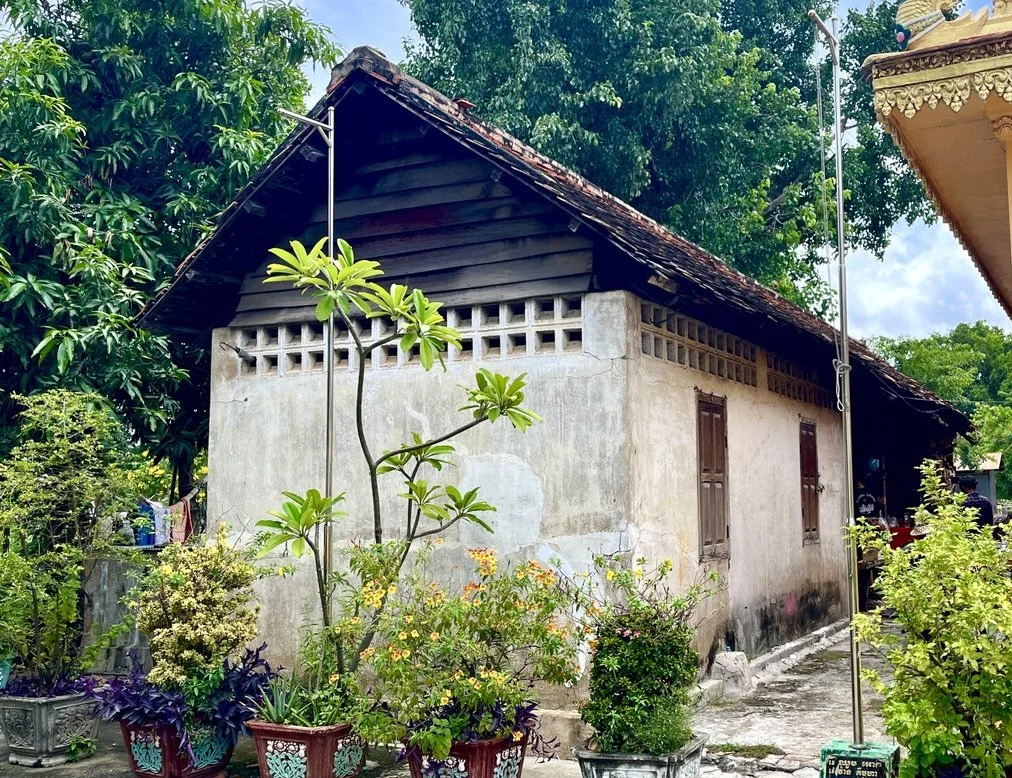
I’m unclear whether these little houses are homes, offices, store rooms, combos . . .I’ve been to monasteries in other countries where the more venerable the monk, the bigger/nicer the house. They are interesting examples of vernacular architecture.

An overgrown tomb or perhaps Buddha’s footprint

Scientists believe the large ornamental pond may be a moat vestige from an Angkorian temple on the site, of which very few signs remain.

I’ve never seen the gate open, so don’t know what’s in the little house.

The tallest of the stupas (this) and the other ‘ancient looking’ stupas were built in the 1930s in the style of Banteay Srei, as a learning project with the monks, in collaboration with EFEO archaeologist Henri Marchal.

Henri Marchal at Banteay Srei in the 1930s

There are so many organizations and buildings on the temple grounds that it’s hard to know which is which. I believe this is the monastery offices and school.

The main vihear, or prayer hall. This building was constructed in 1935 under the direction of the Venerable Prin Tim, the monastery’s second abbot.

“Damnak” means palace; the temple buildings were built on what was once the land surrounding one of King Sisowath’s palaces from 1904 to 1927, hence the name “Wat Damnak.” However, no palace remains on the site. This photo is undated, but was taken on a Verascope Richard produced between 1895 and 1910 and printed on their supplied paper from that era. Given that records say Sisowath’s palace was only here from 1904 to 1927, and perhaps it took some years to use up all the film, it’s probably 1900s or 1910s, though possibly later. Given the scaffolding, perhaps it dates from the 1904 construction of the palace!

From the EFEO archives, this photo is tentatively dated 1927. This building is no longer extant. It’s simply labeled ‘cremation party'- either of a very prominent unnamed local person, or perhaps in honor of Sisowath, but without his actual remains- he was cremated in Phnomh Penh and his ashes buried in Oudong. This building was deconstructed, removed, and rebuilt elsewhere in the city sometime before 1935, but has since disappeared.

This shot of the cremation cortège as it arrives at the temple shows just how open the land used to be. Nowadays it’s in the dense city center.

The younger the novice, the more they relish learning how to bang the drum. The little kids are swinging well above their heads! The most exciting part of their day is when they’re allowed to bang the drum for the 5pm chants. The monks here are very casual about it- they let the kids bang away at will for around 15 minutes, then slowly filter into the hall.

Also, though it seems an unimportant afterthought to a Westerner, the two hybrid Ionic/Angkorian columns are one of a kind in Cambodian temples.

The 4 original sandstone sema stones are still within the hall, demarcating the sacred space/ritual site. These stones are common to Theravadin Buddhist halls in Cambodia, Sri Lanka, Laos, Burma, and Thailand.

Scenes from the Reamker are carved on the shutters.

At the back entrance, three Angkorian artifacts are displayed: a pair of guard lions and a sandstone tub some believe was originally a sarcophagus.

As shown in these 1935 photos from the EFEO archives, if there was ever any carving or embellishment on this tub, it had become completely invisible well over a century ago.

Angkorian lions. It is unknown whether they were unearthed on the site at some point, or brought from within what is now the park grounds. Most believe they originated at Angkor Thom and were relocated by Henri Marchal in 1935-1937.

They didn’t immediately strike me as the most ancient/valuable things at Wat Damnak, but they are, by far. Photos from wikipedia; I somehow breezed by them twice.

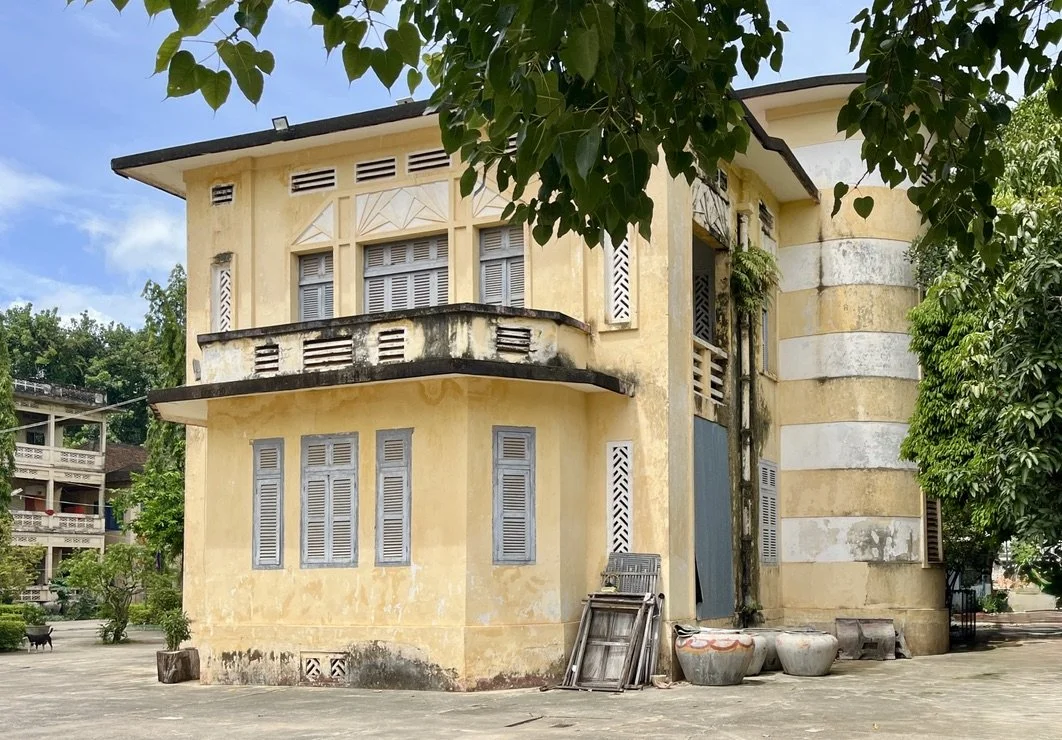
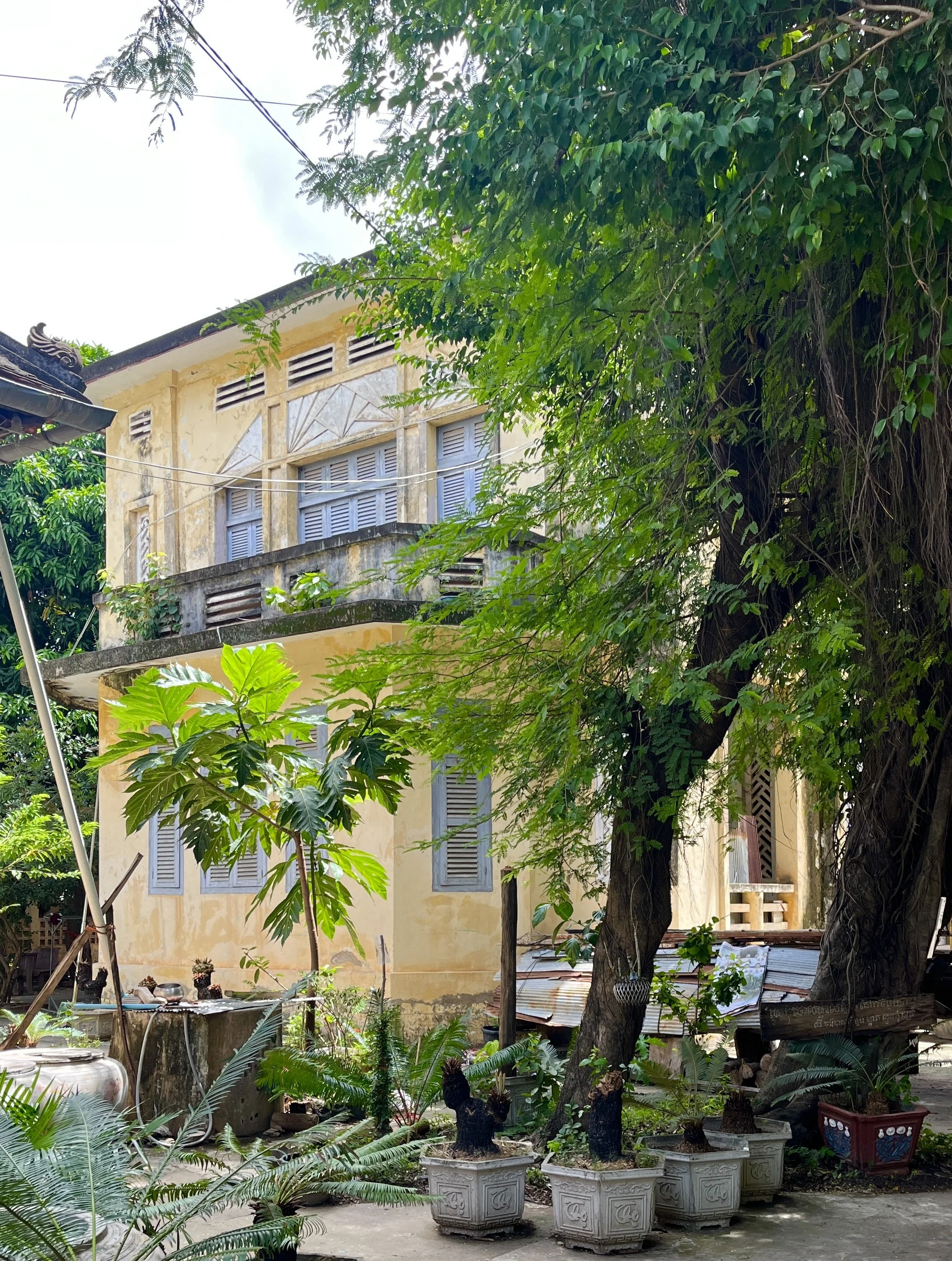
Great example of Cambodian style art deco.

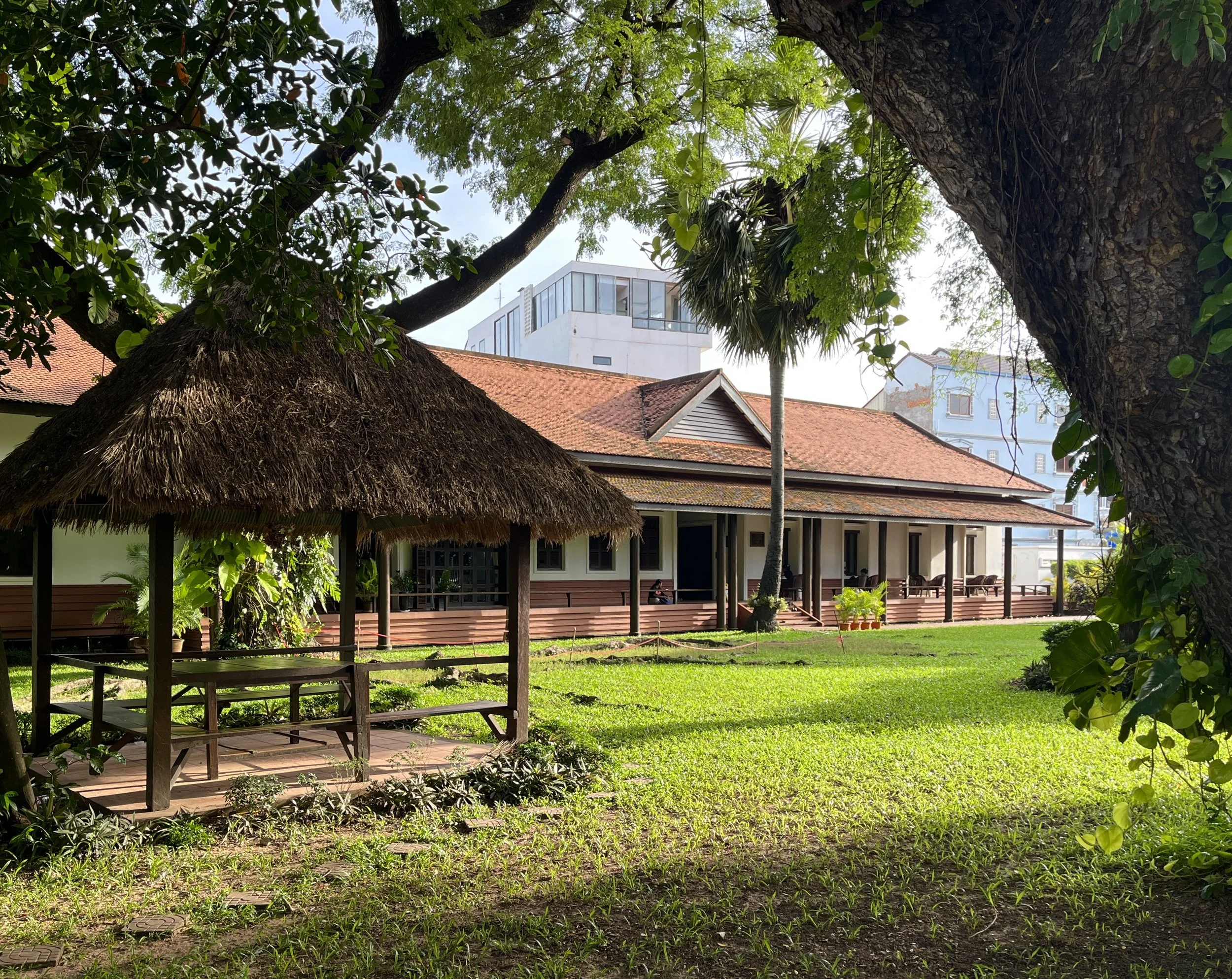
I’ve been daydreaming about a new construction bolthole/retirement option. I want something a bit grand, but also not too big and easy to build. Although I like the stilted wooden houses favored by locals, I have found several small inconveniences that make them annoying to live in: the tall precarious steps are annoying in the rain and with luggage; the vaulted ceilings are sort of grand and aesthetic when left open, but impossible to air condition. The solid brick and plaster construction and possibility of using standard-size windows and doors in a building of this style, and knowing locals know how to properly build it, makes it look like a safer option- I can literally point out this building and say build me that! and then embellish with plaster, carved wooden details, paint and plaster colors, awnings, gardening etc. I think it’s also a better shape to put a porch and pool out back.

Originally built in 1922-1923 as barracks for French troops, it now serves as a conference hall. It’s not a large building, but the proportions are grand. It’s sort of begging for plasterwork, colorful tile, a whole different colorway . . .

This house also features the most elegant rain drainage system I’ve seen, essential in Cambodia. So many yards are lumpy and waterlogged.

This is the modern library. It’s quite small and holds a very limited collection. It has the look of a converted old school or worker housing, but actually dates from 2010. The design maximizes airflow in an effort to preserve the books without air conditioning or other climate control. Of course that’s a slowly lost battle, but it didn’t seem to me there were any uniquely valuable books here. Of course, I could be wrong about the rarity of some of the old French tomes. I believe only redundant copies of EFEO bulletins are kept here, at least I hope so.

The view from under the giant old tree

I wonder where they got and how they choose their books.

If it were a bookstore, I’d definitely have bought these. Thankfully, they seem to all be available online for free:

Danseuses Cambodgiennes par Georges Groslier

Un Hiver au Cambodge par Edgar Boulangier

L’Indochine en Guerre par Général Jean Marchand

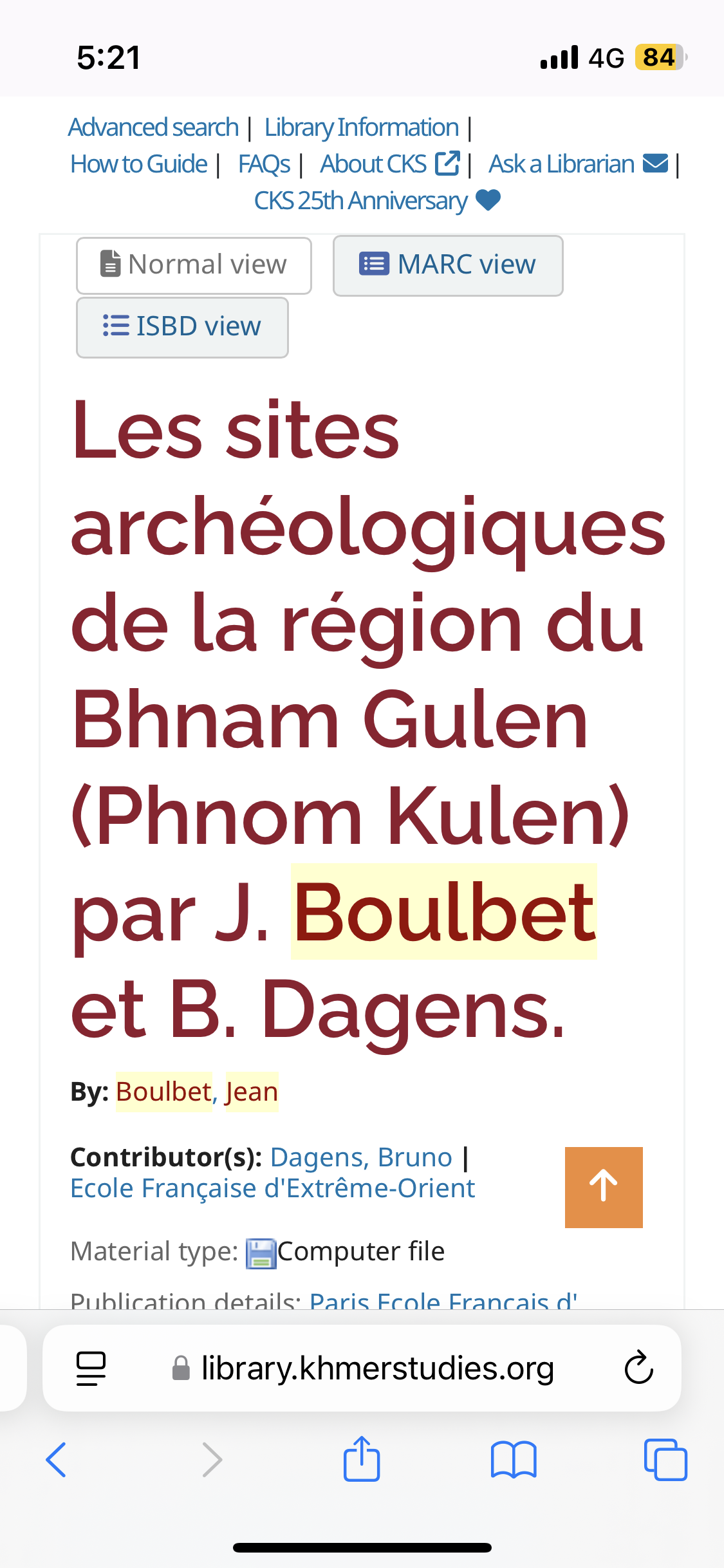
They had almost what I was looking for when writing my post about Kbal Spean: a later version of Jean Boulbet’s paper and map of the site. Turns out the reason there are missing maps/charts online is because they’re not there in person either; they must only be with the older version of the paper, if they are extant. Perhaps I’d be able to find it at the EFEO centre; their library is also open to the public.

Some late ‘70s photos from the bulletin- Jean Boulbet bottom left.

The backside of the reading room; there’s no reading area in the library itself.

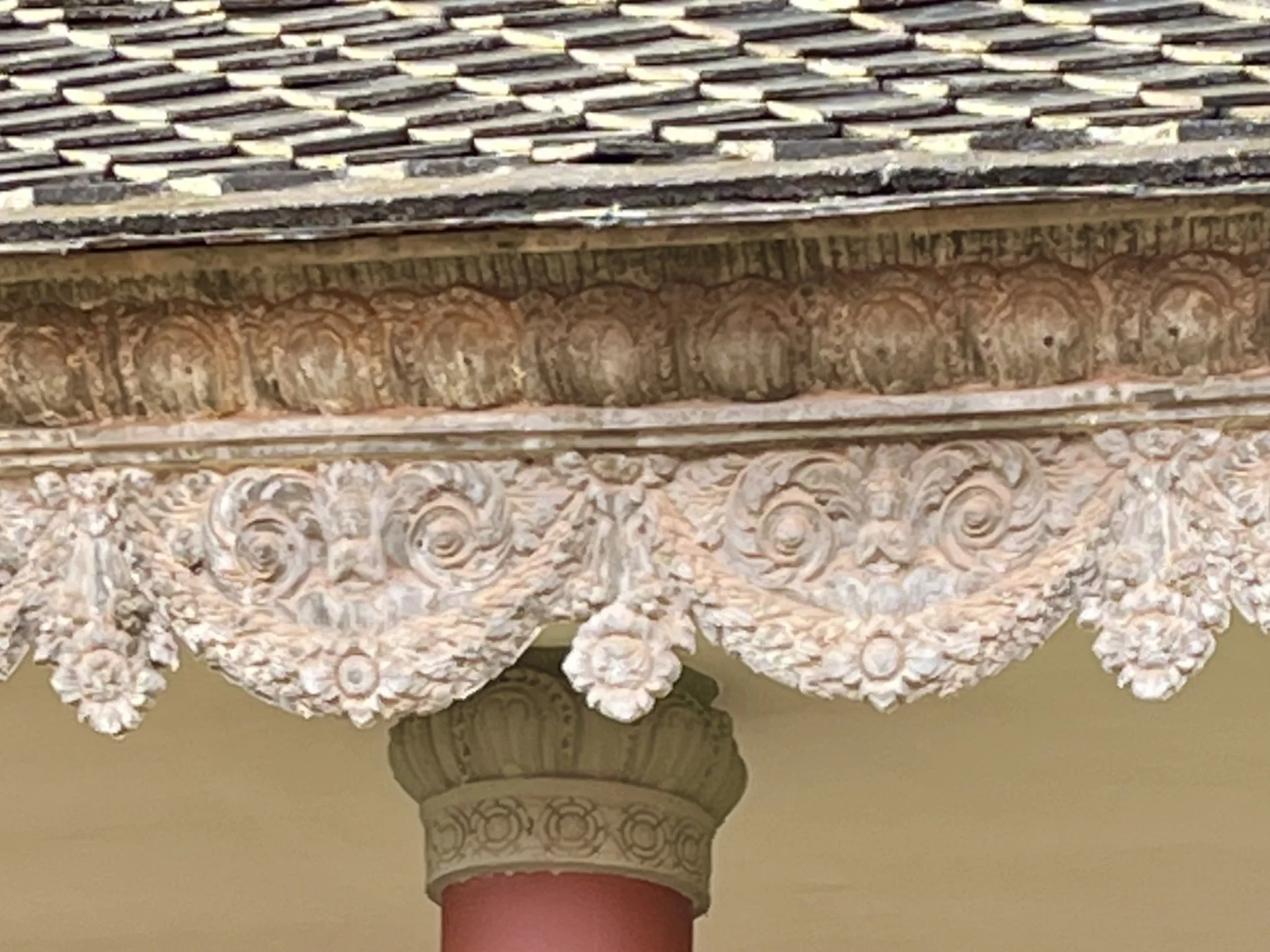
I took several photos of the fascia and its trim, and the column capitals. They are an interesting combination of Khmer design and Western application. This building dates rom 1941, and I wonder if the trim was copied from the barracks building or vice versa. I’m guessing the barracks building was originally quite simple and trimmed up to match.

The plaster trim inside the reading room. I find the uniquely Khmer style interesting.

That’s not some ignored damage from a hook that’s been pulled out, it’s a bullet hole left over from the Khmer Rouge occupation. For the entire war, 1970-1975, the frontline was just a mile north of what is now the Raffles hotel, then the Grand Hotel d’Angkor. When the Khmer Rouge won, the population of Siem Reap was displaced to the countryside, and Wat Damnak became Khmer Rouge HQ in Siem Reap. The heads were chopped off most of the statues, and the original Buddha statue sitting here was (obviously) shot in the face.

Every single little frolicking animal in the painting has been shot in the face. The monks were forced to renounce Buddhism and join the Khmer Rouge, and shocked people by wearing guns with their robes. It’s no wonder this building was left abandoned and fell into disrepair after the Khmer Rouge left in the early ‘80s.

It’s easy to look up books and articles on their computers in the reading room.

They also have books for sale; looks mostly to be works by CKS scholars and redundant decommissions.

Very useful info that couldn’t be found online!

Originally the building was constructed as a Buddhist primary school. It’s smallish inside, but the exterior is rather grand.