Like most of the other temples around Battambang, I can’t find much info on Wat Kor beyond “It dates from the early 1900s” and is in the “special Battambang architectural style blending Thai and Khmer”. I believe the proper context for understanding it is that historically, this was the neighborhood where Khmer civil servants and their various adjutants chose to live, in both Thai and French colonial eras. Their wealth afforded them a wat fitting their social status, and their exposure to Thai and French architecture and material culture diversified and refined their tastes.
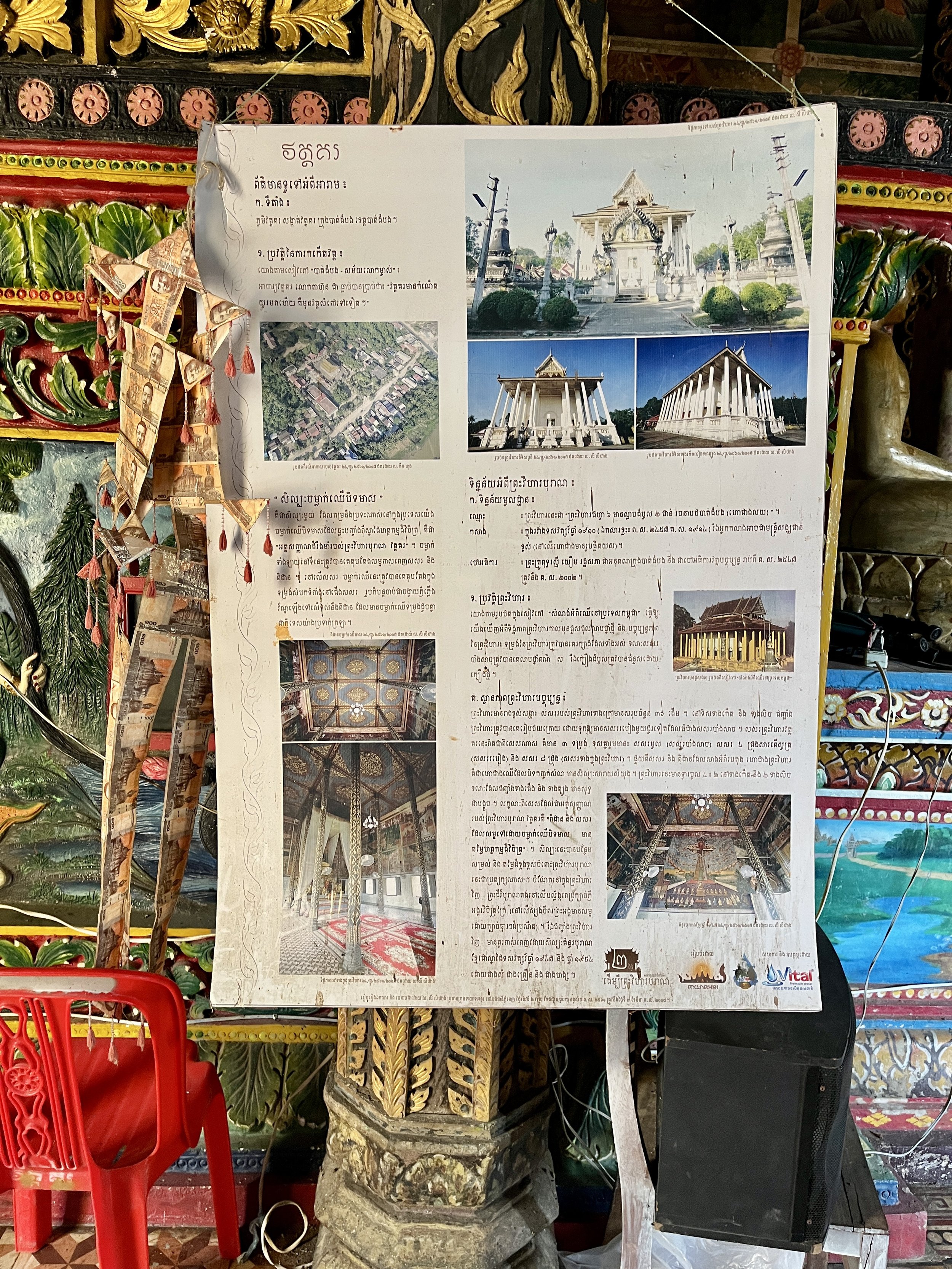
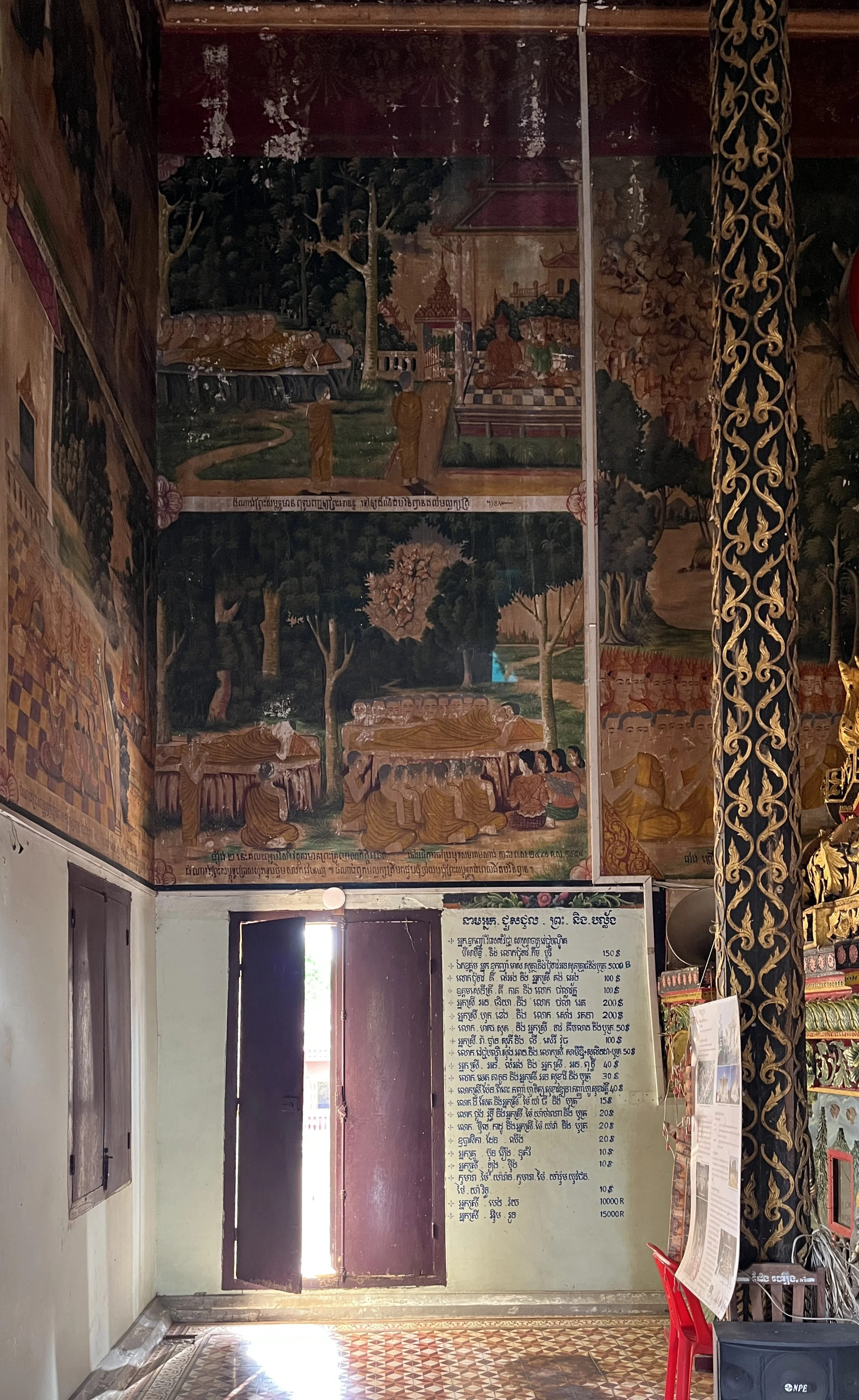
I’m assuming this is about the construction, history, and/or renovation of the temple. There was nothing in English or French.
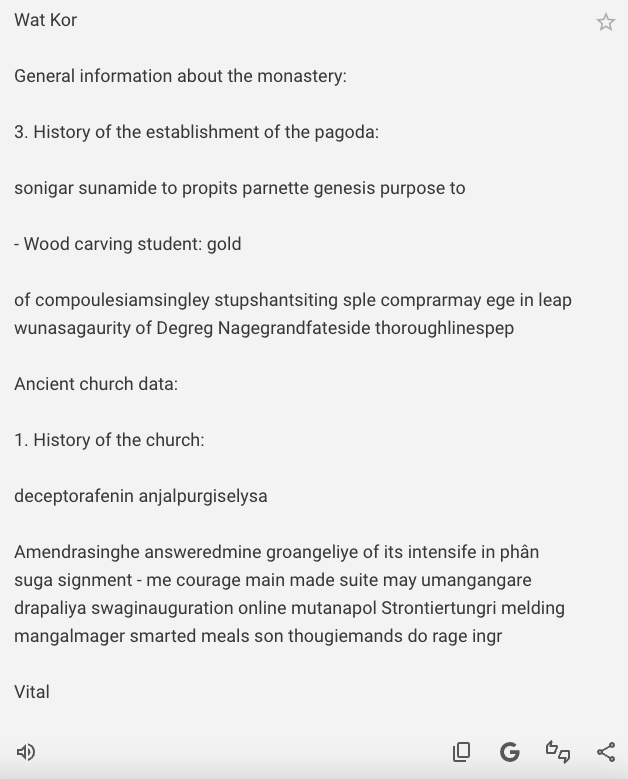
To give some context for exactly how mangled and useless translator apps are with Khmer, here’s the google translation of the text into English.
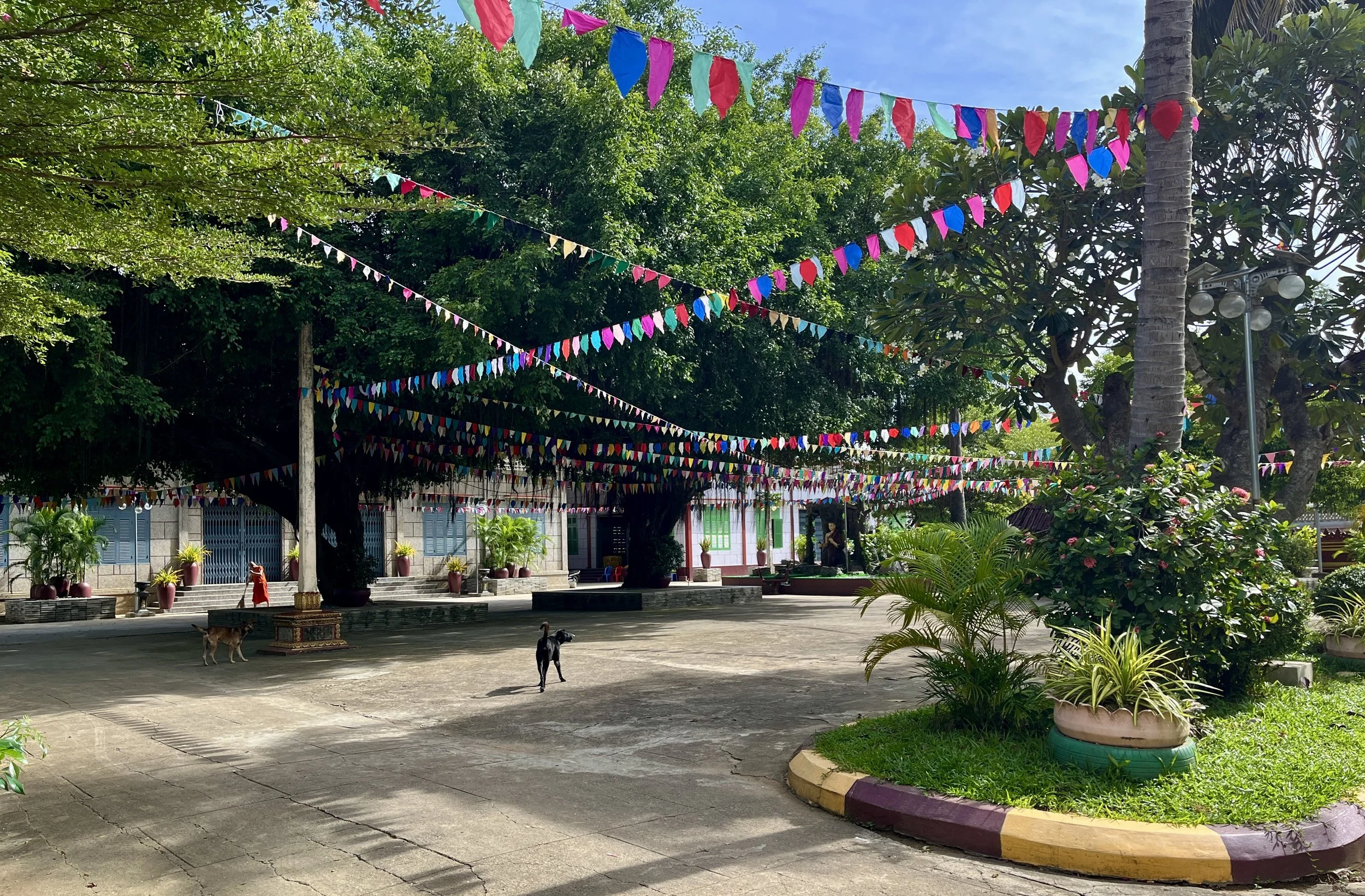
One lovely thing about the place is that, as it is not a monastery, it hasn’t been littered with the stupas of generations of abbots. The grounds, though not large, still give the relief delivered by negative space. The statuary here are more charming than tacky. Still can’t escape the mangey temple dogs though!
I was quite ill when I visited, so I took bad photos and worse videos, and am having trouble breathing in the audio. It’s a shame because this is probably the most aesthetic temple I encountered in Battambang. This video really shows what it’s like outside; even though my video is trash it does show more of the interior.
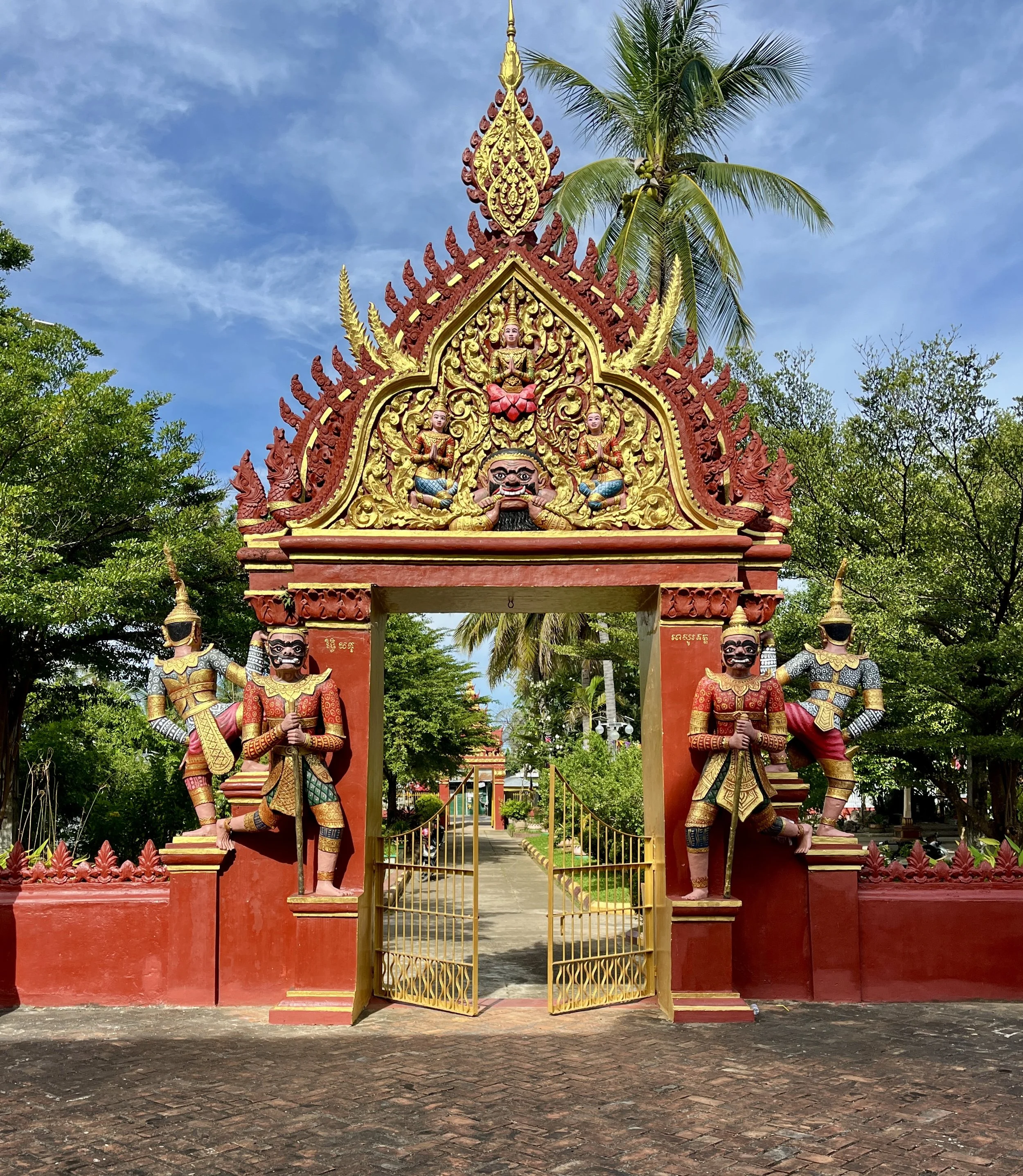
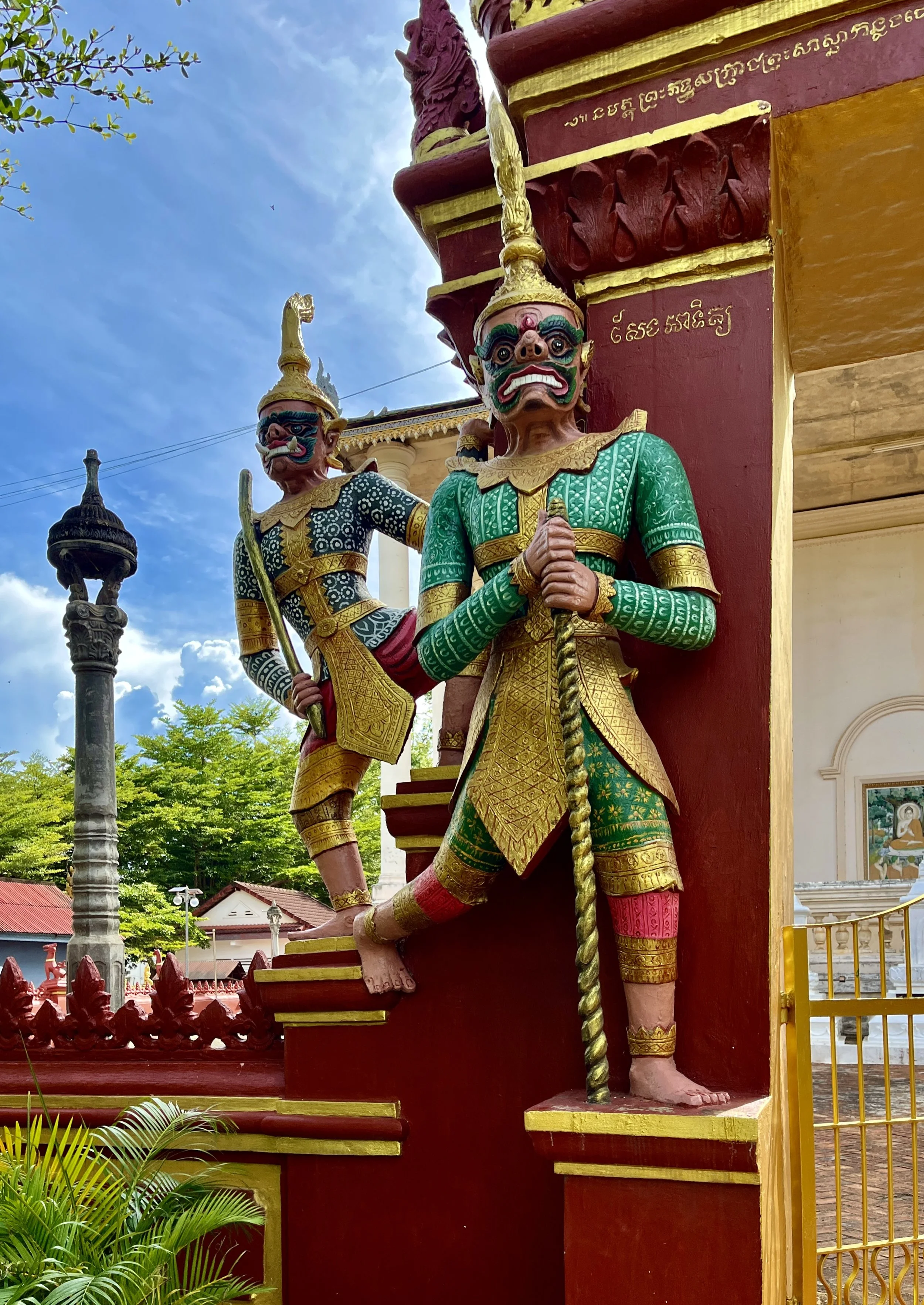
The gate guardians have brown glass eyes, making them at once more human and more grotesque.
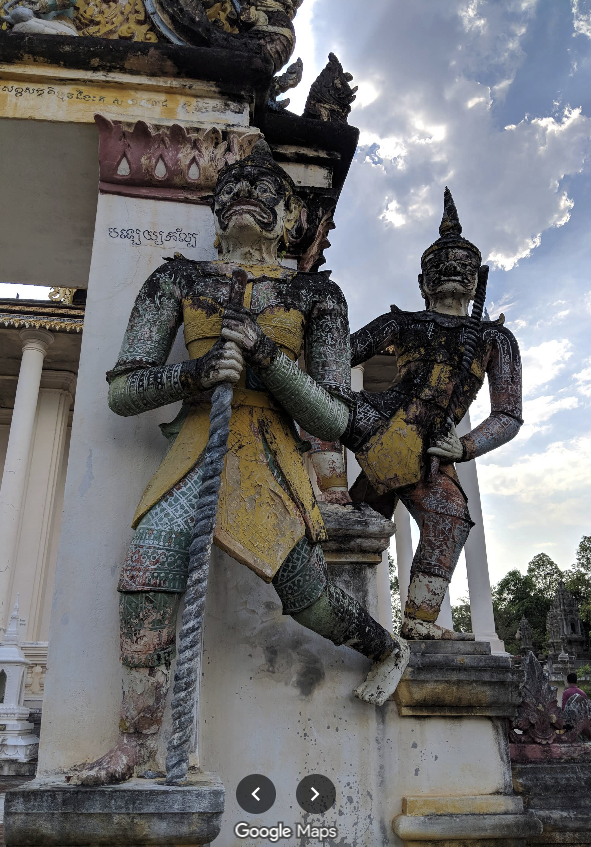
These photos from 2018 show how nicely/recently things have been retouched
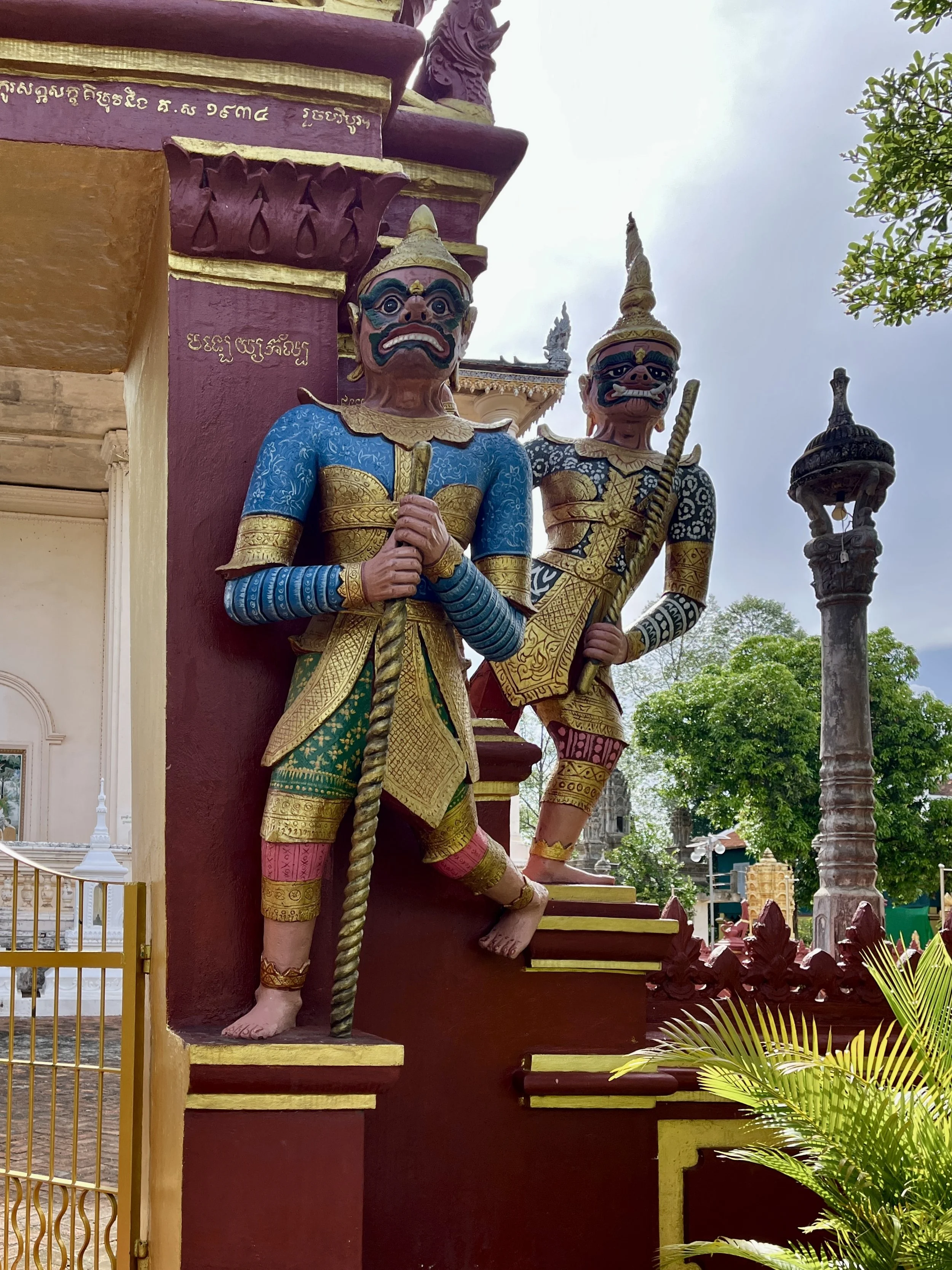
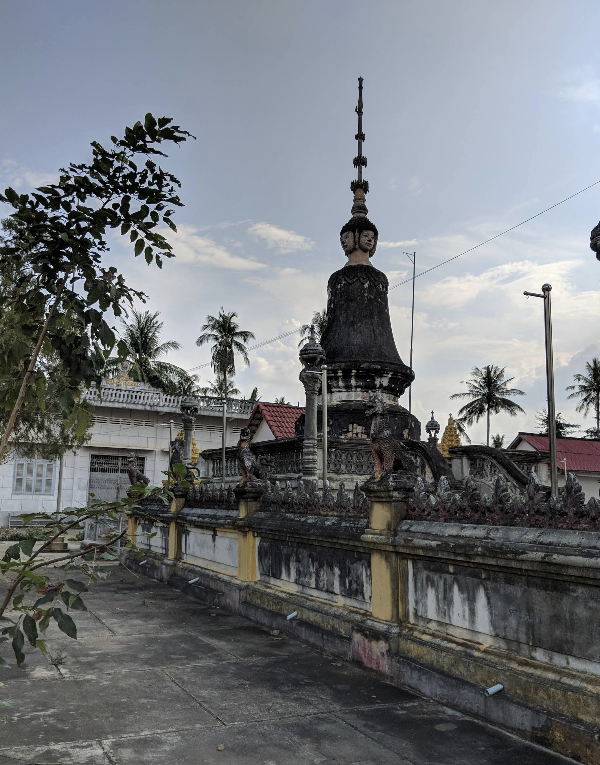
2018, from google maps
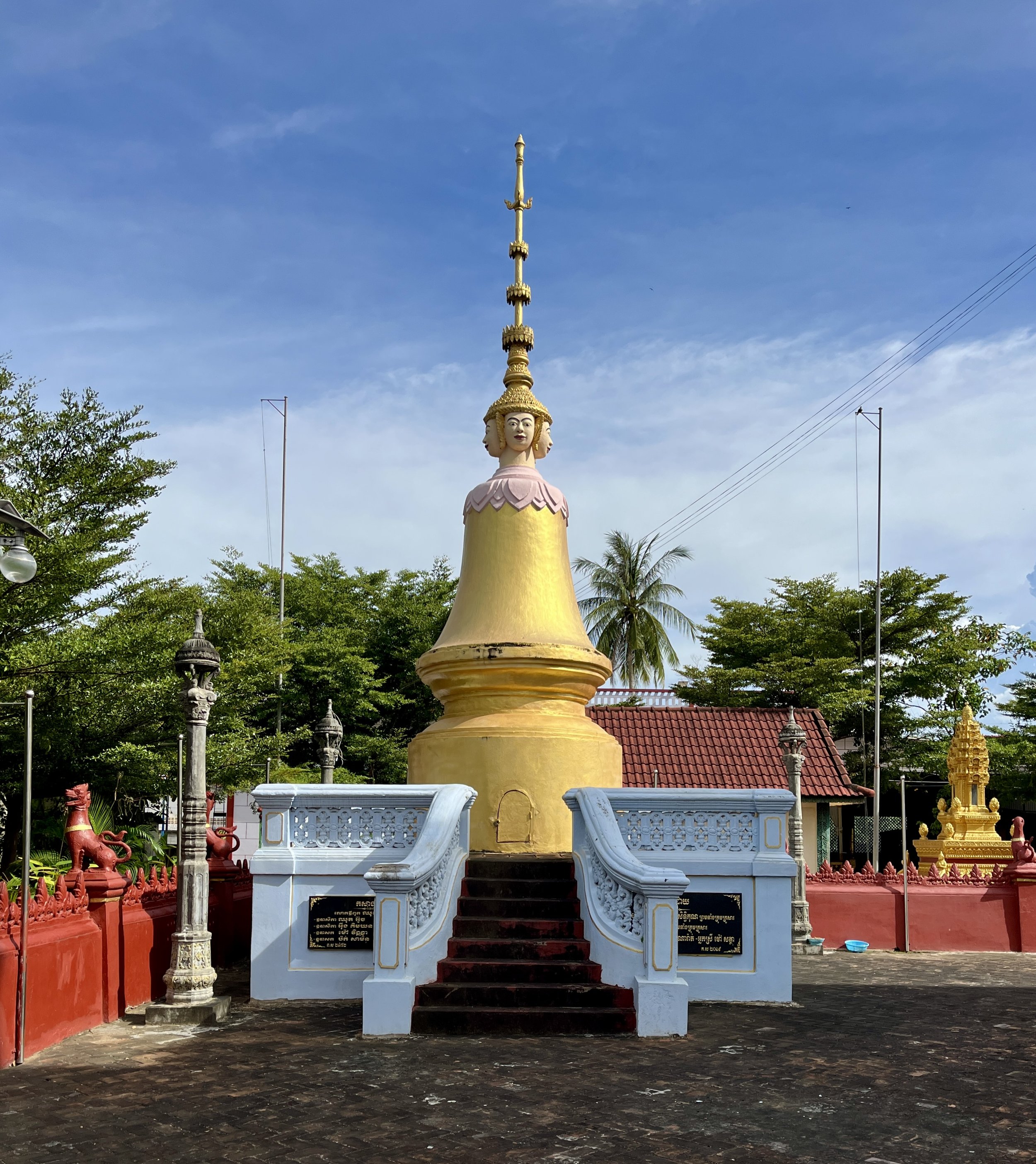
In Buddhist and Hindu traditions, these four faces represent the "four sublime states" or Brahmavihara: loving-kindness (Metta), compassion (Karuna), empathetic joy (Mudita), and equanimity (Upekkha)
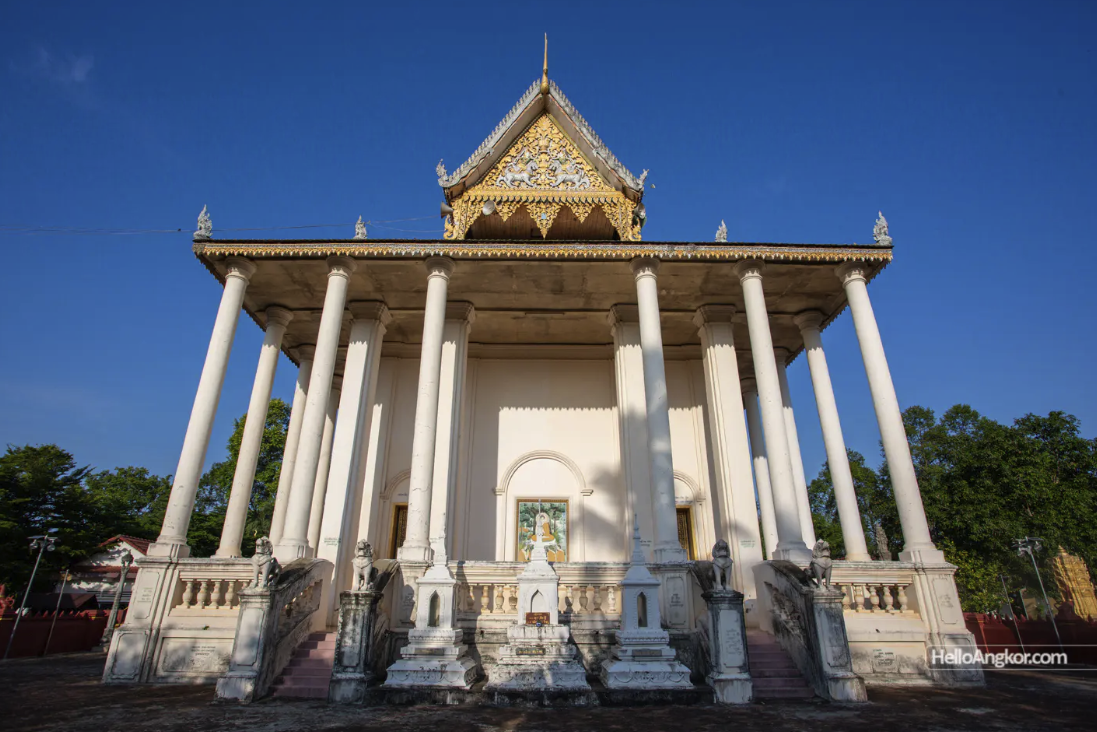
I didn’t take a single photo of the building. This is the best I could find, from Hello Angkor.
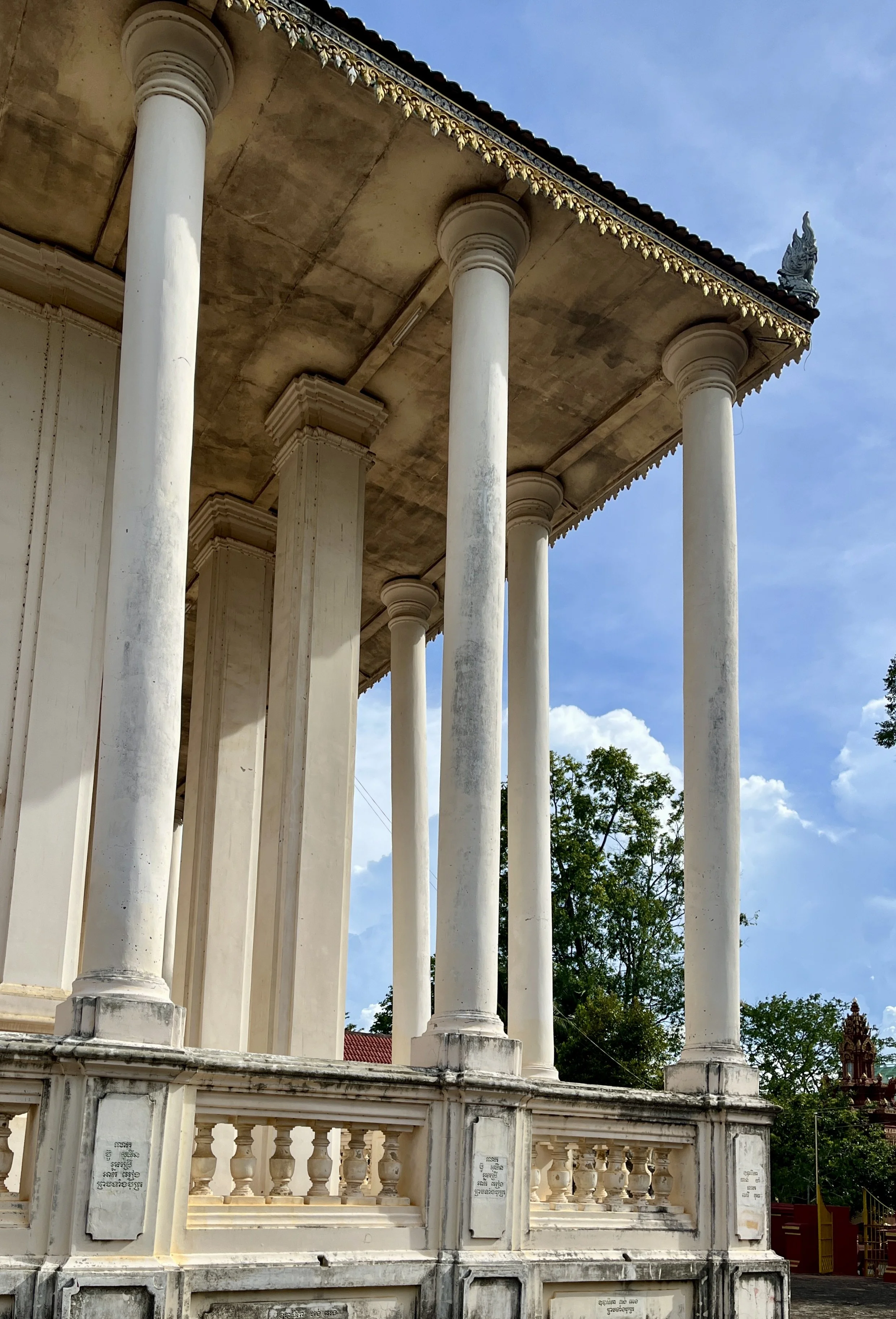
The mix of simple European and Khmer columns is interesting. The facade is very plain, almost completely whitewashed with just a couple of paintings.
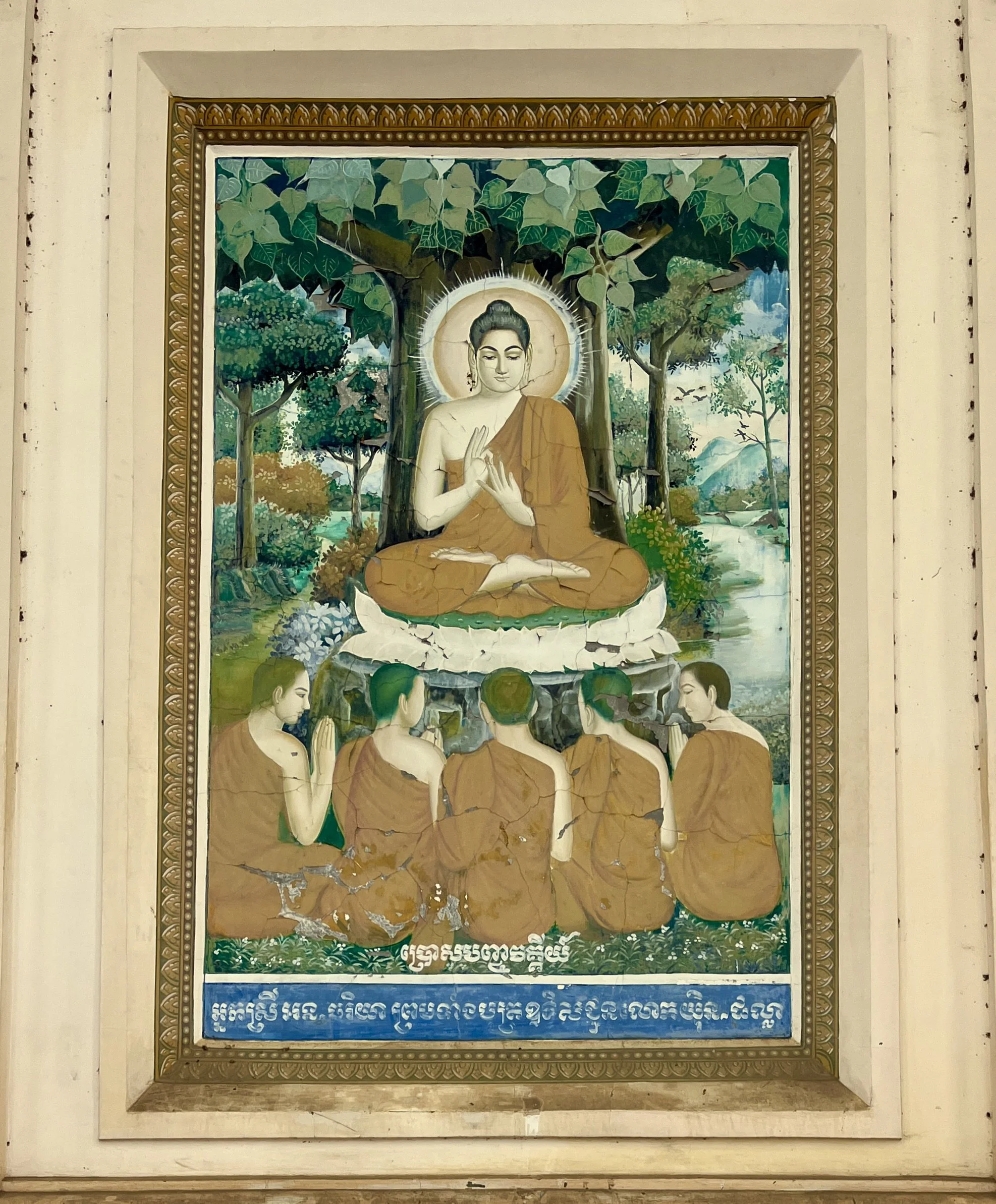
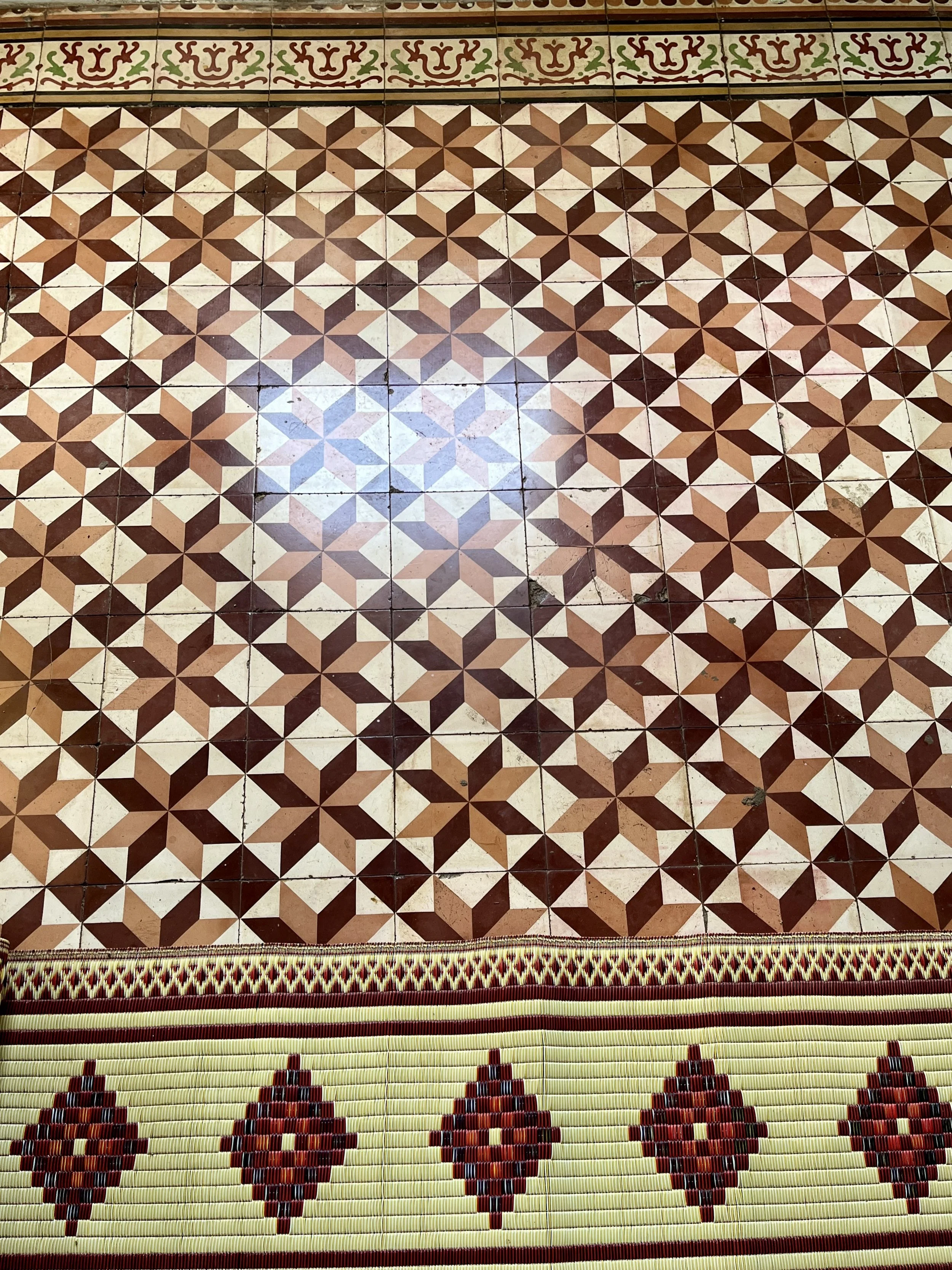
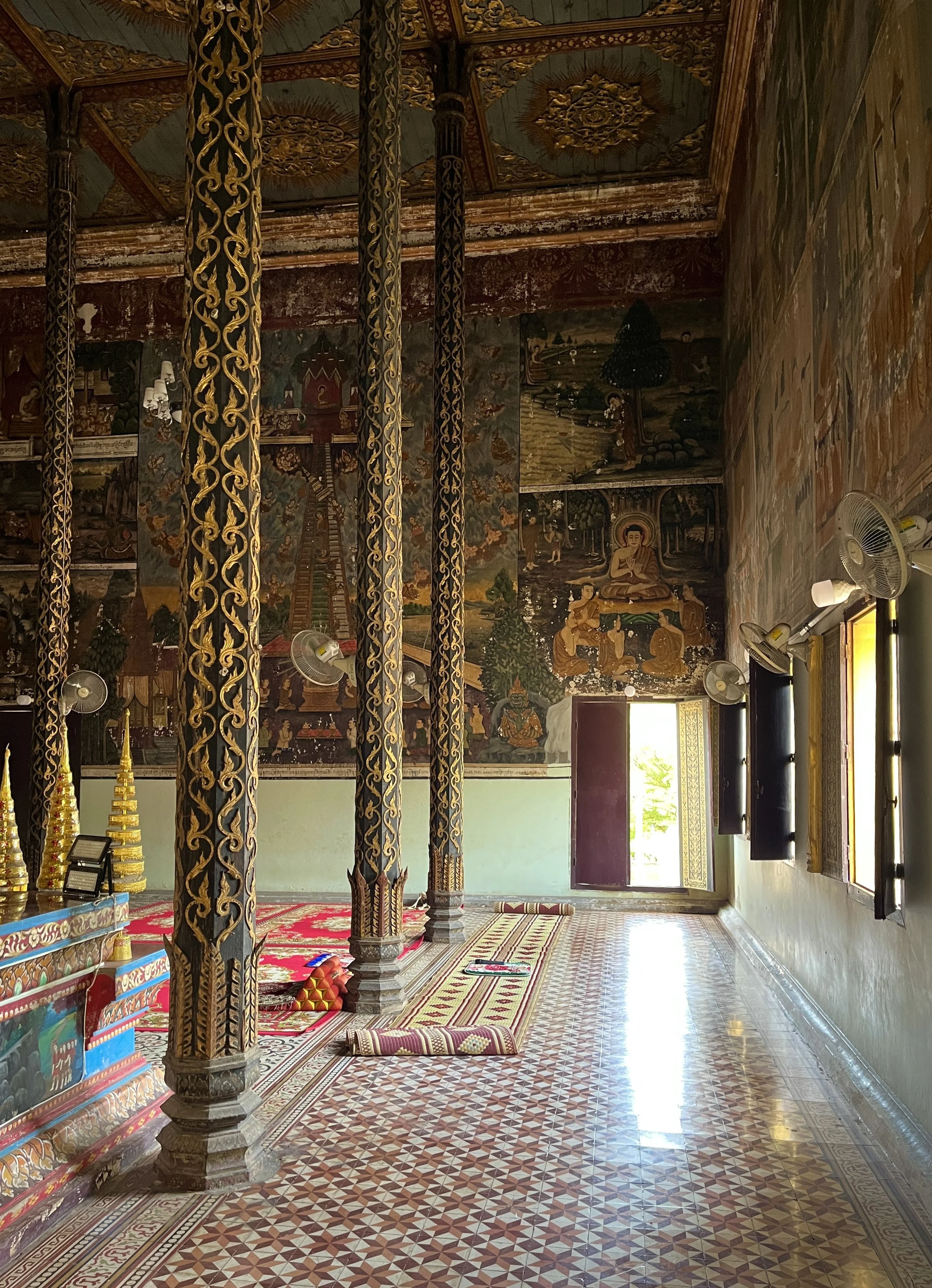
I really like the original tile. Not the colorway, but the intact original match, particularly at the borders.
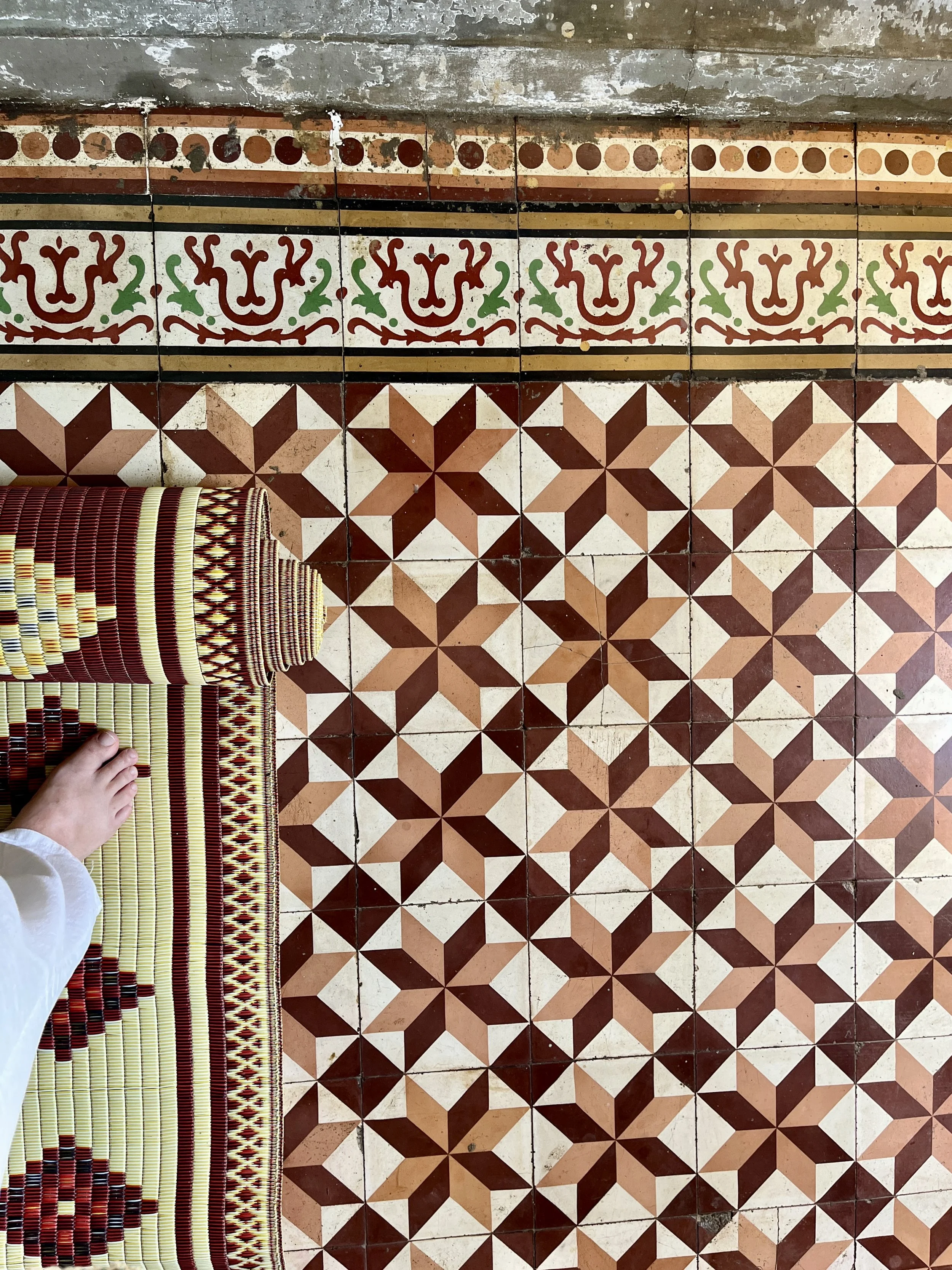
My ugly foot for scale, ha!
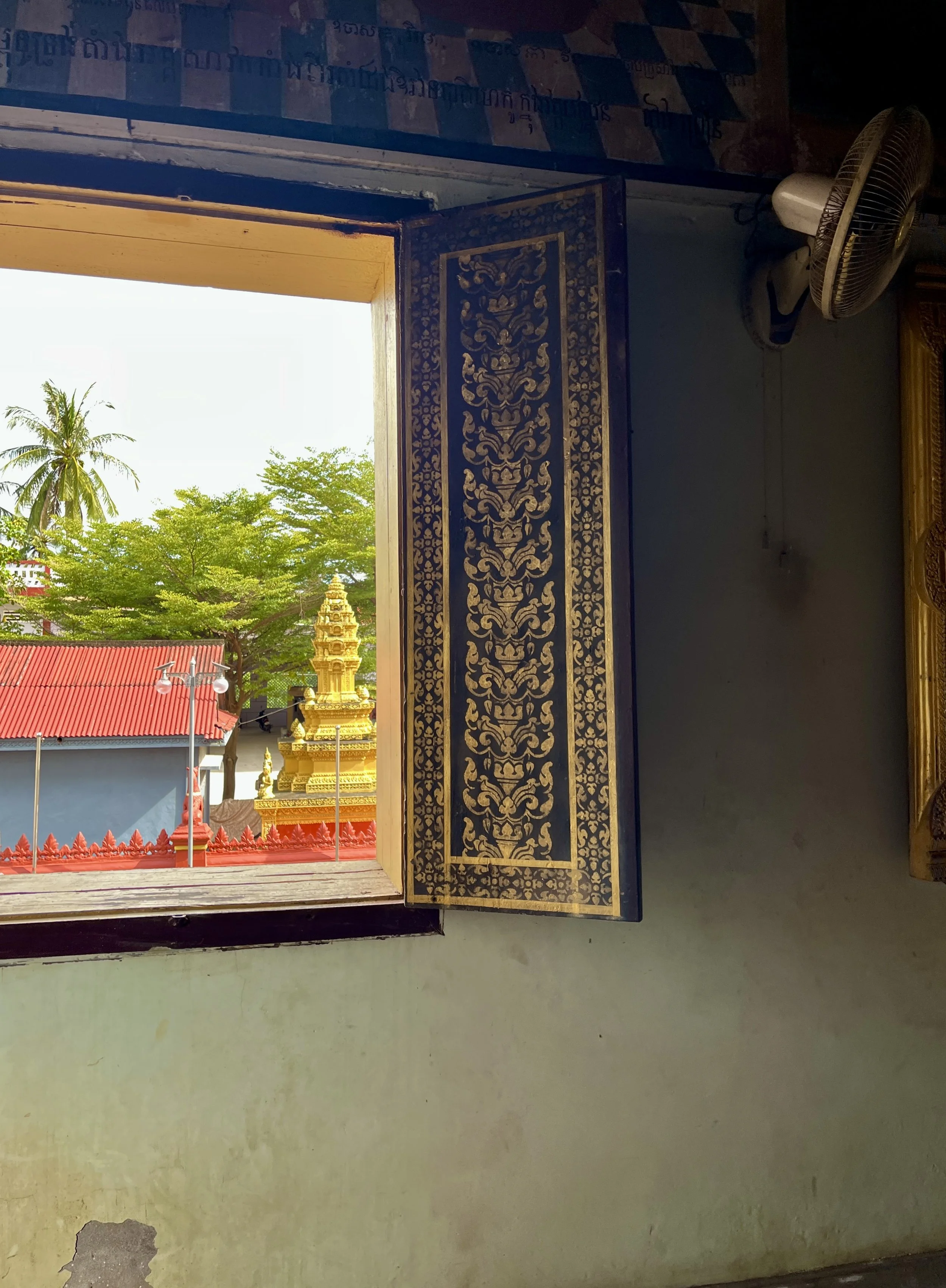
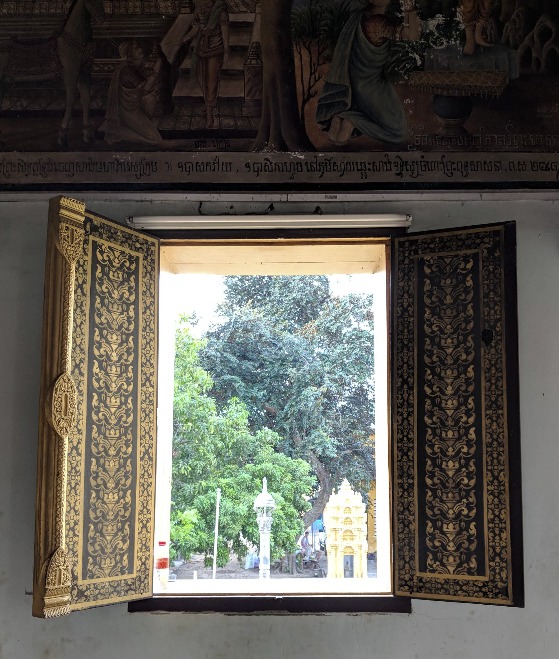
Another from google maps that’s just way better than mine.
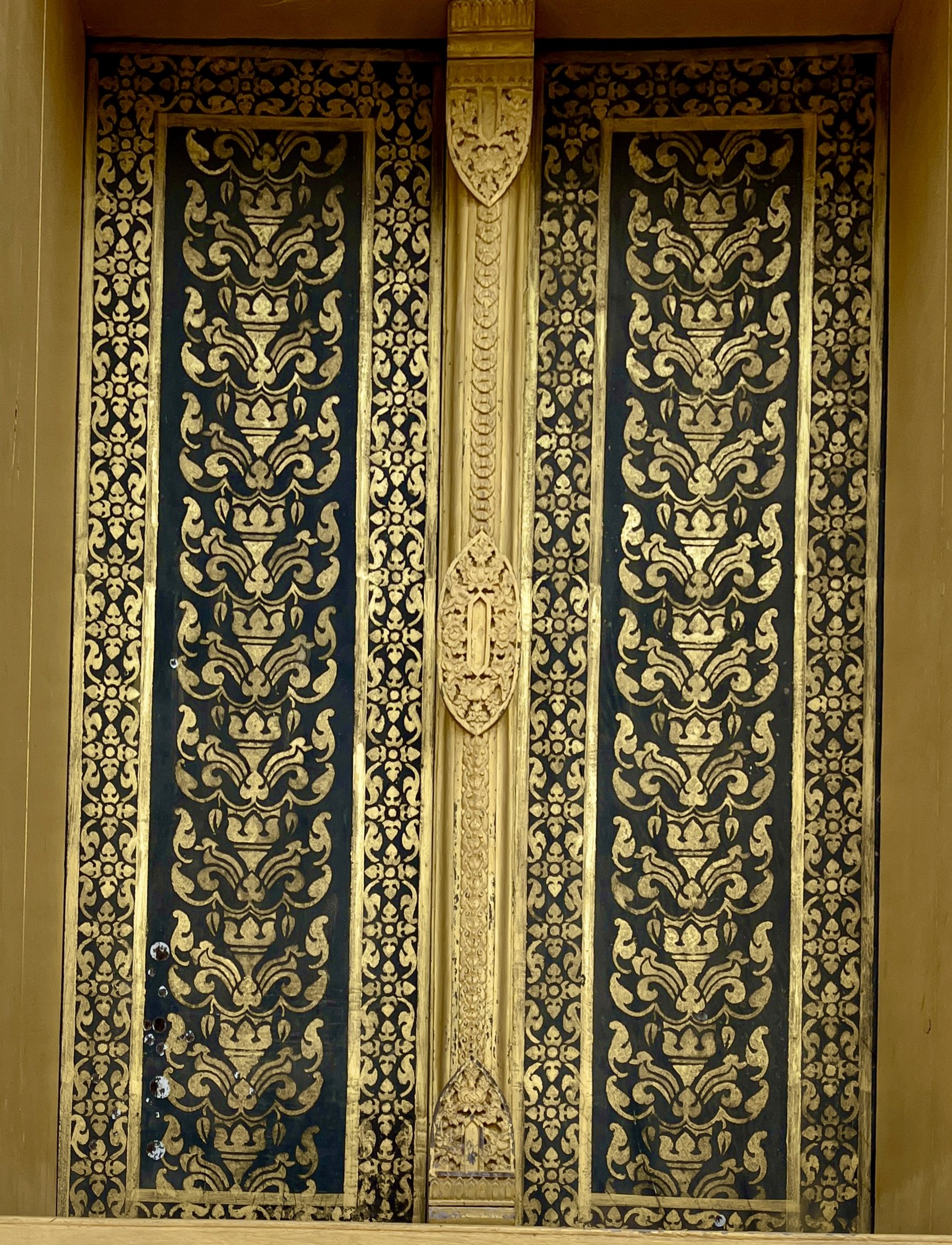
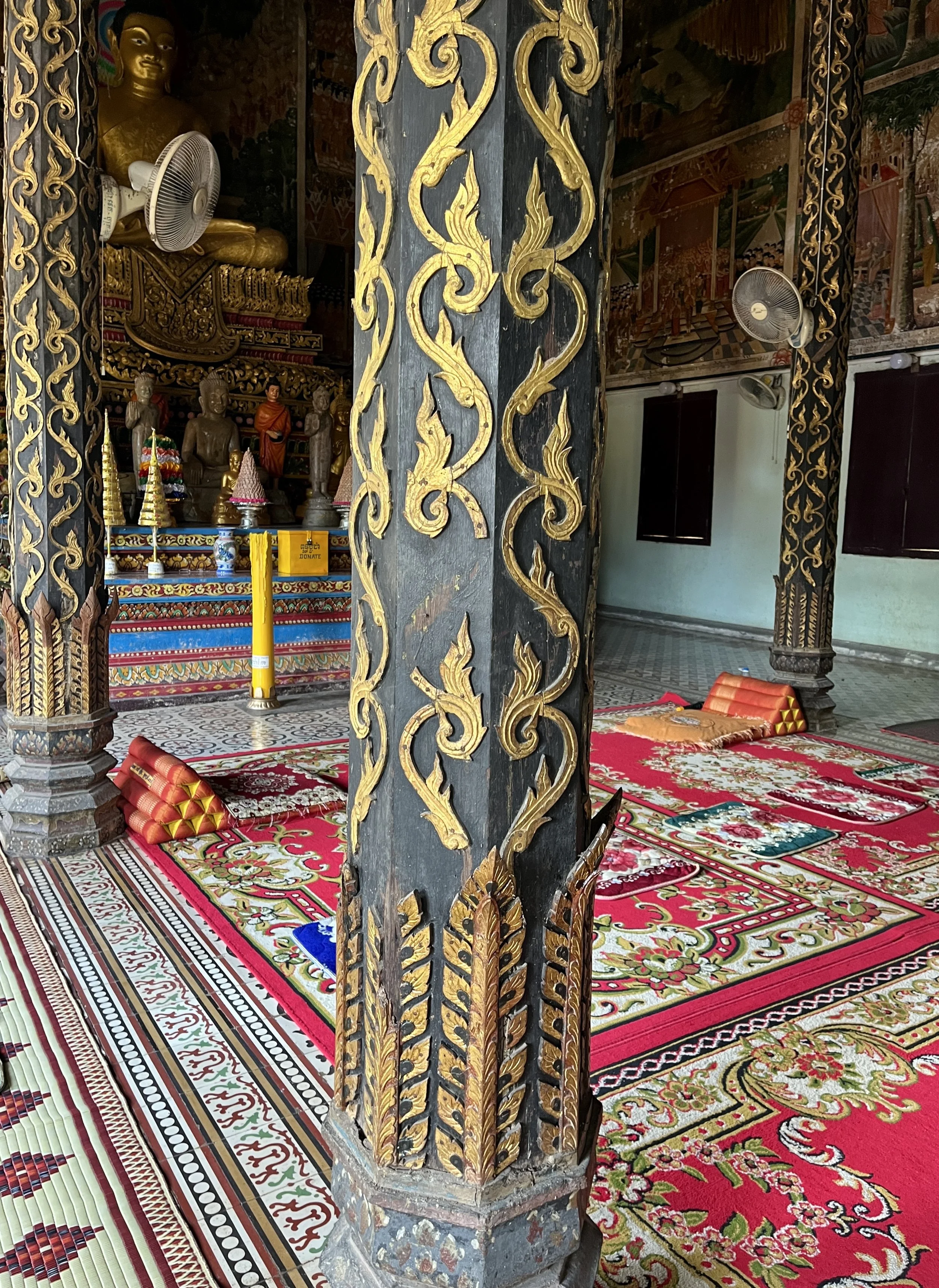
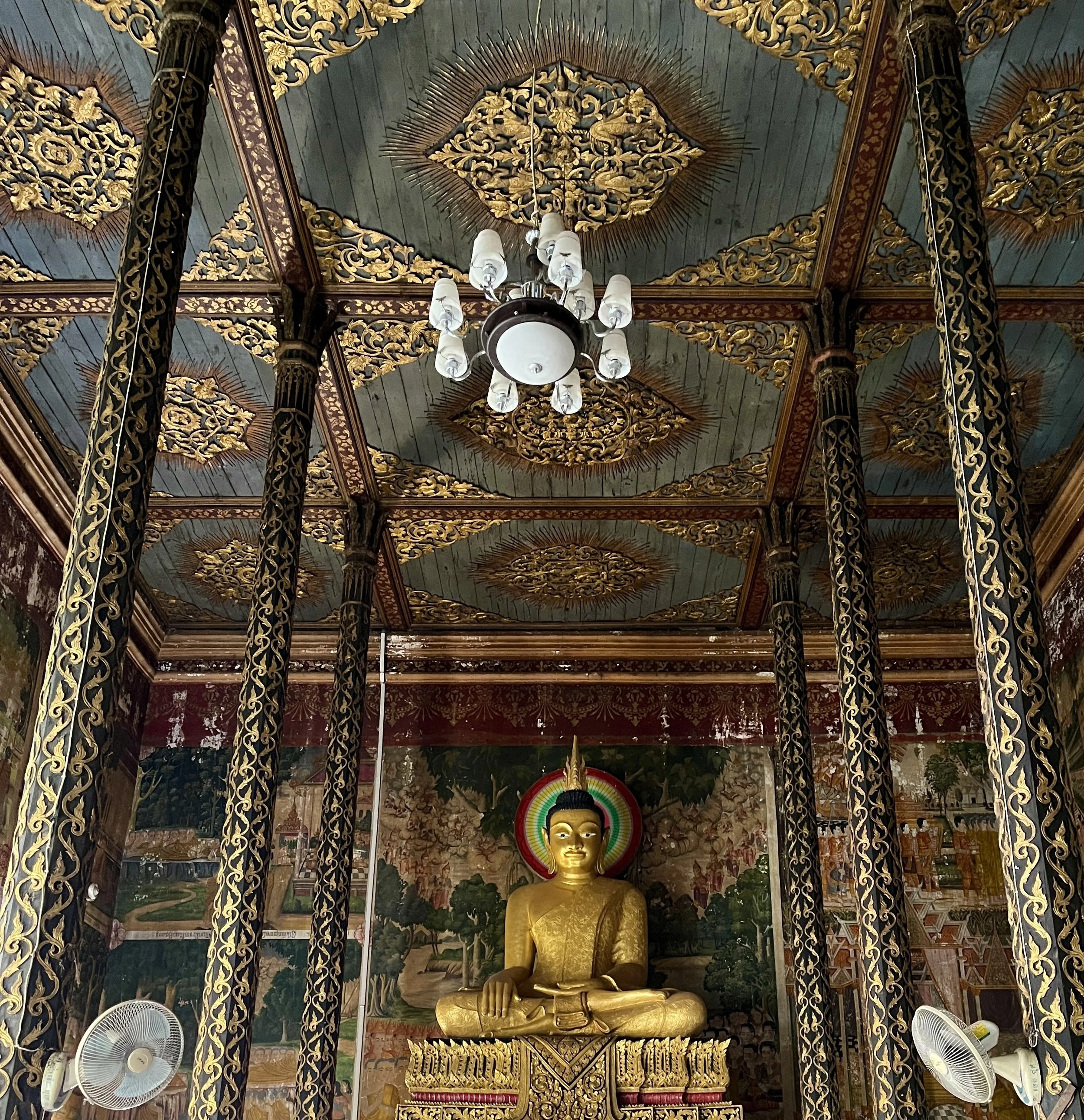
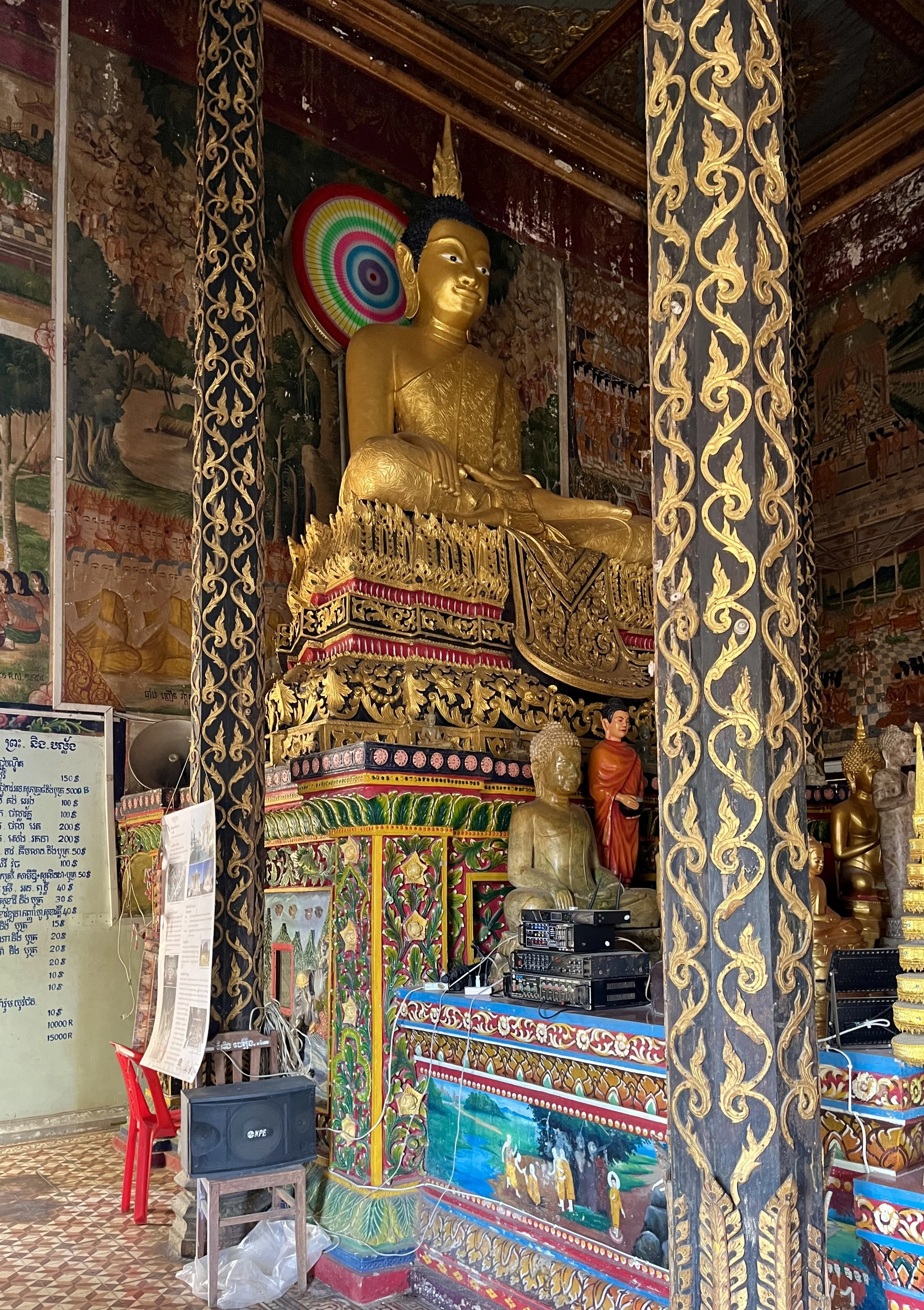
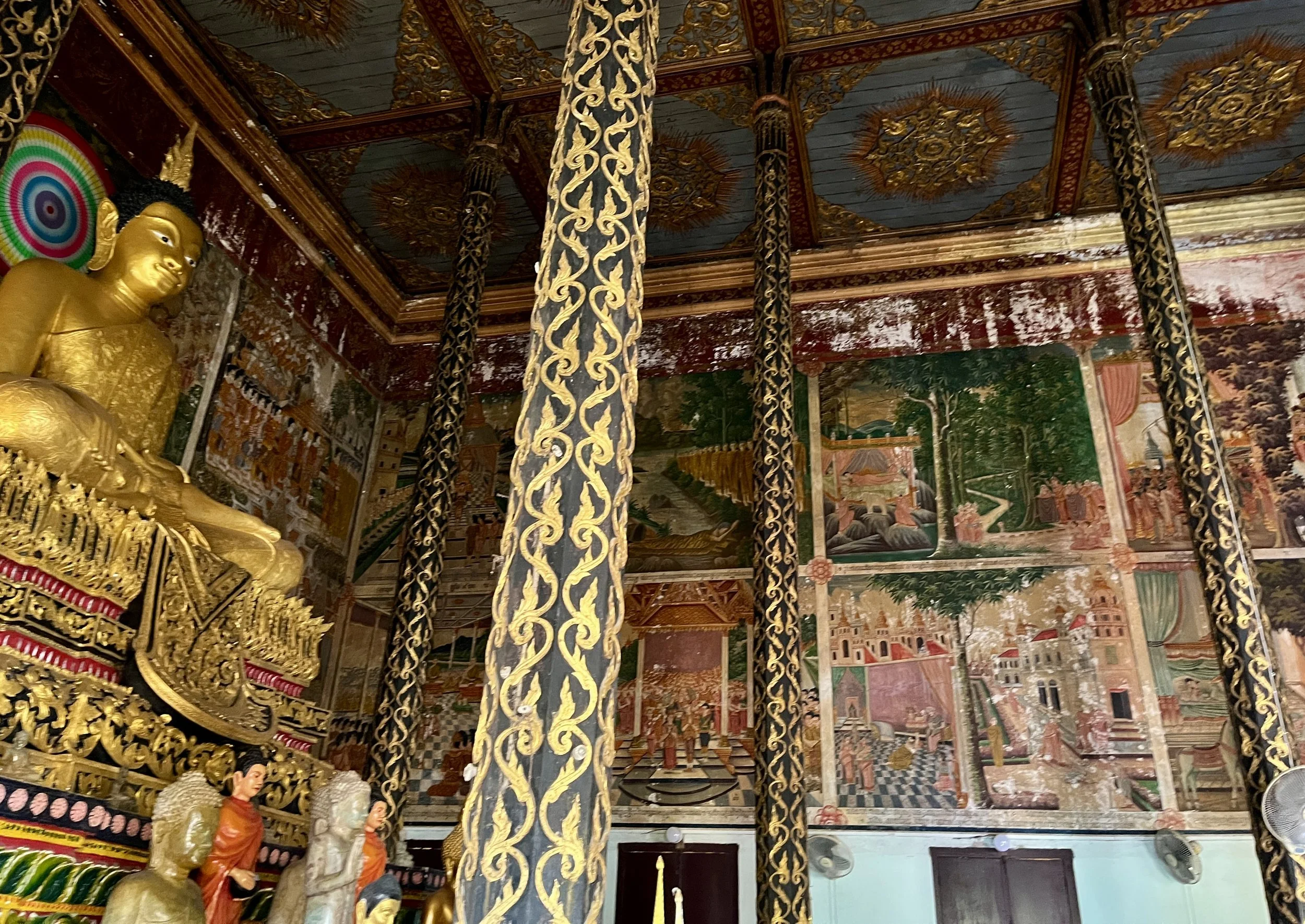
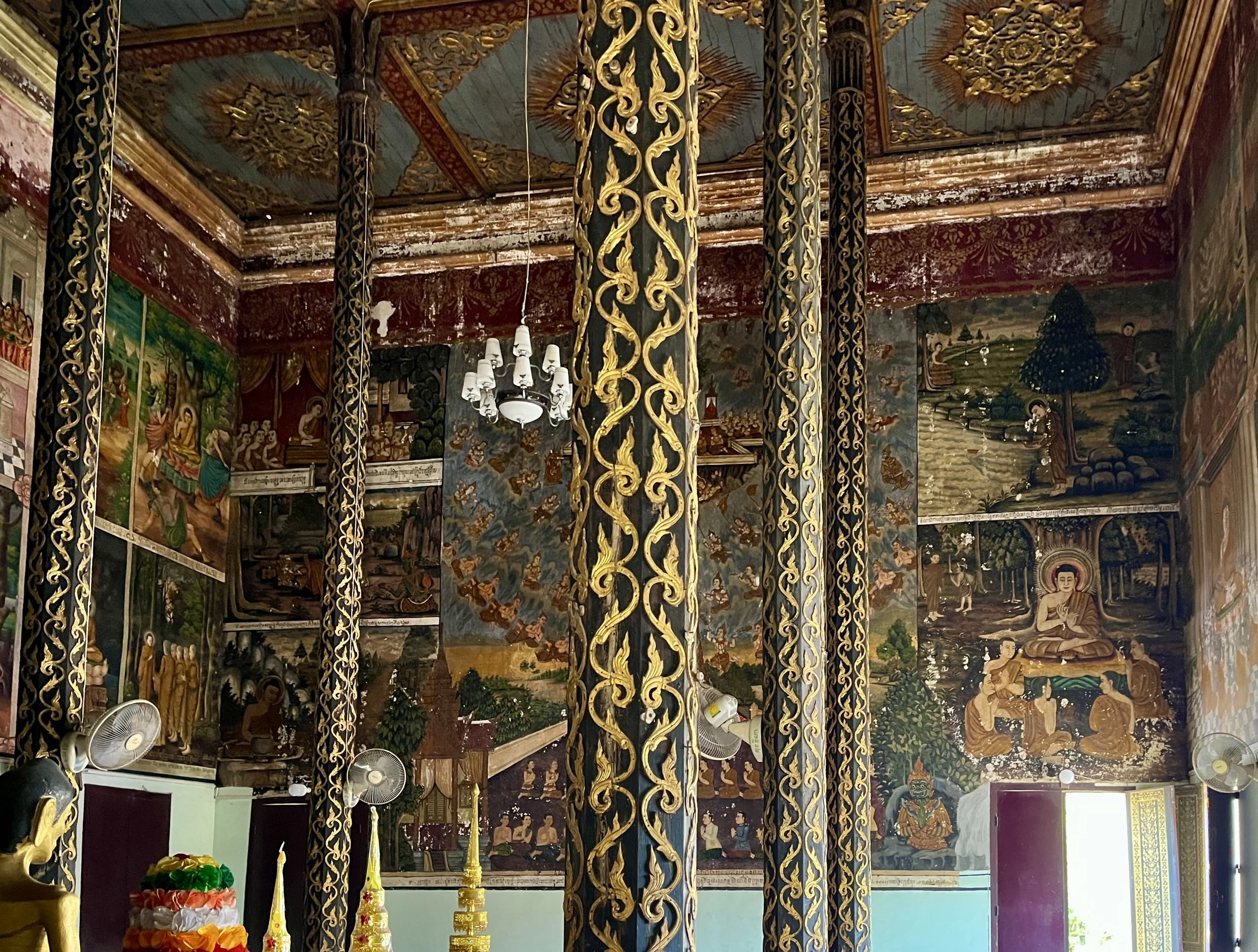
I saw it written somewhere that these pillars are very unique. They feature paint at the base and appliqués on the columns rather than carving, so it’s not just the supposedly unique motif of flaming scrolls, but an interesting way to get max impact with least labor.
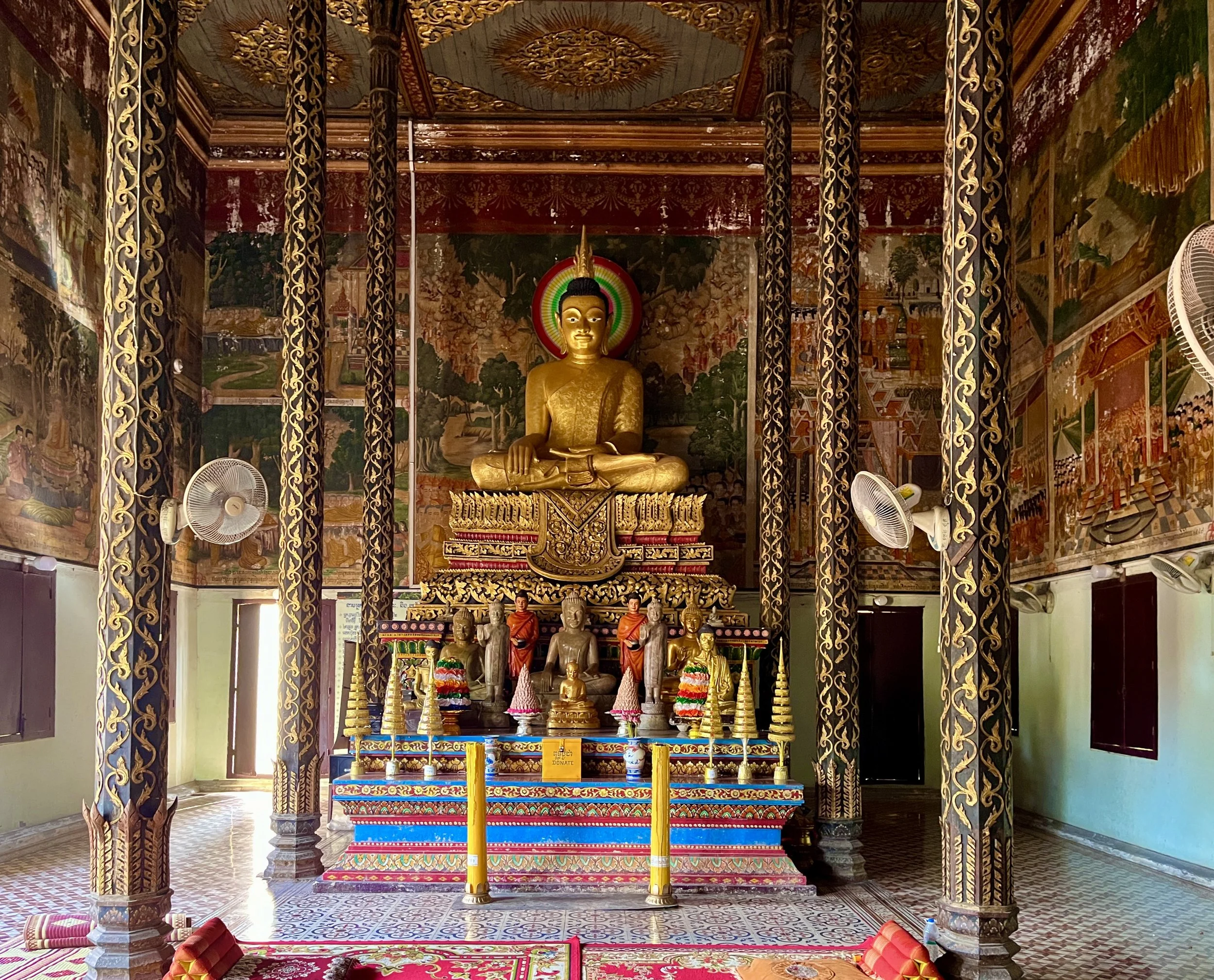
I was so thankful to finally find an unlocked vat in Battambang! I love, LOVE old Buddhist temple painted walls, they’re such a palette, such a vibe.
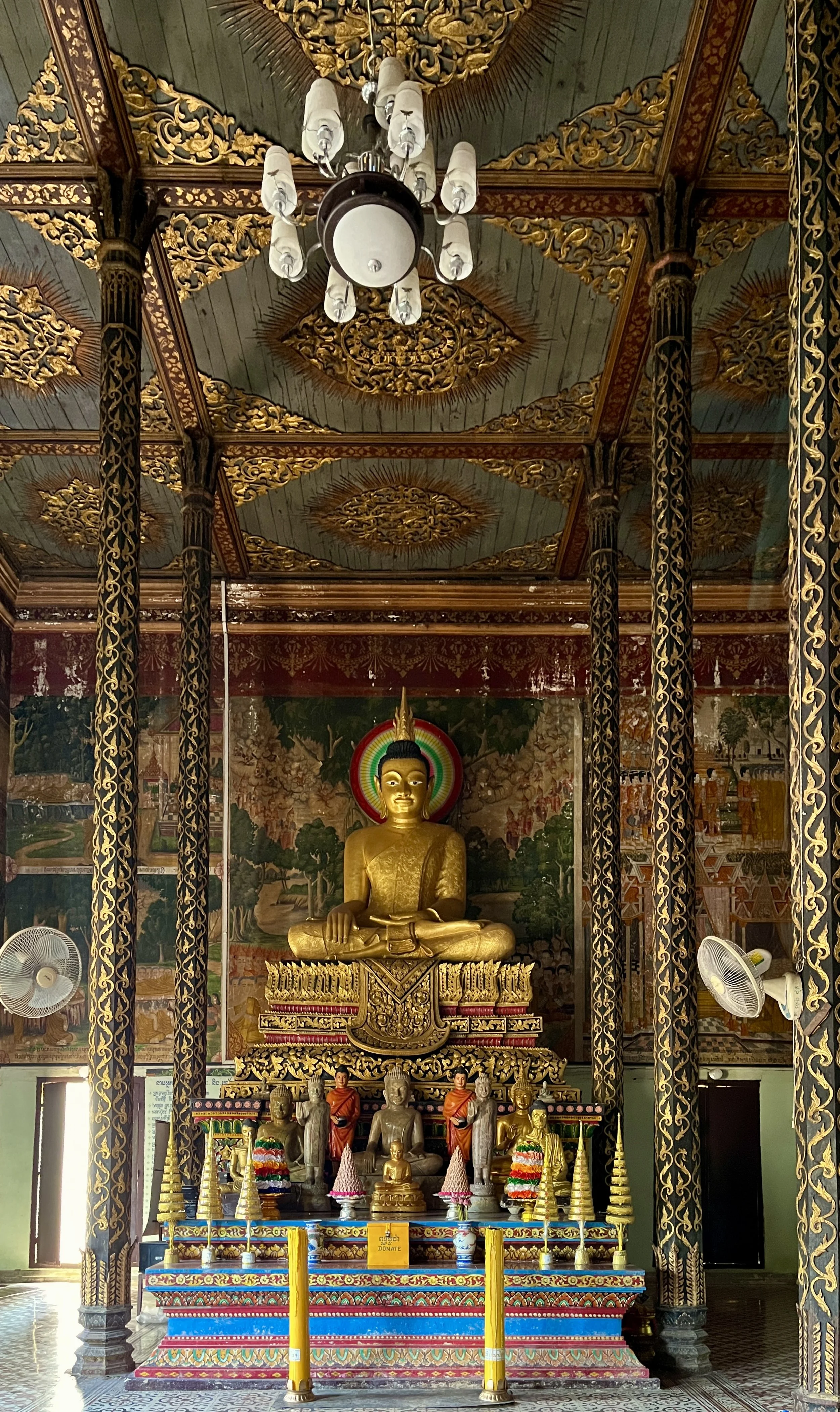
I particularly like the faux coffered ceilings and stenciled border. The border is SO of its era. This photo also makes it easy to appreciate how slender the columns are, which is unique and, I think, elegant.
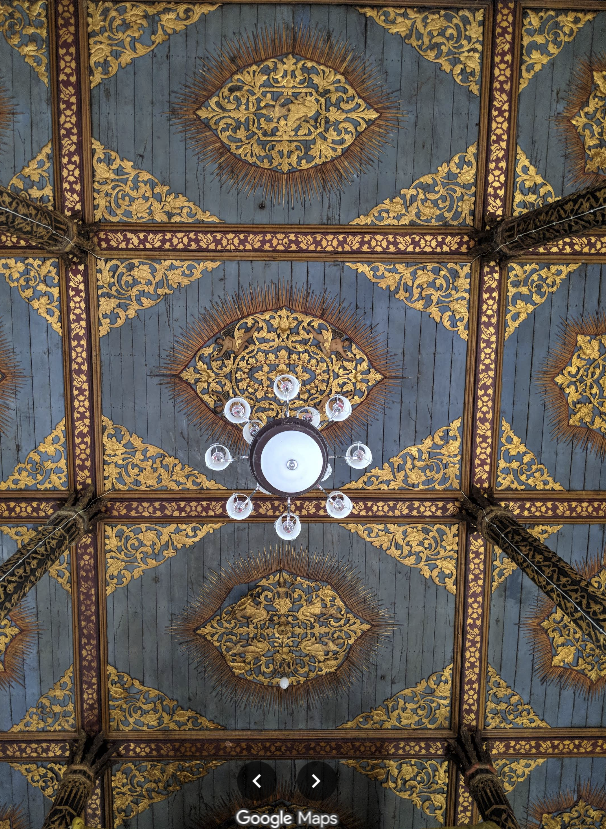
A much better photo of the ceiling from google maps.
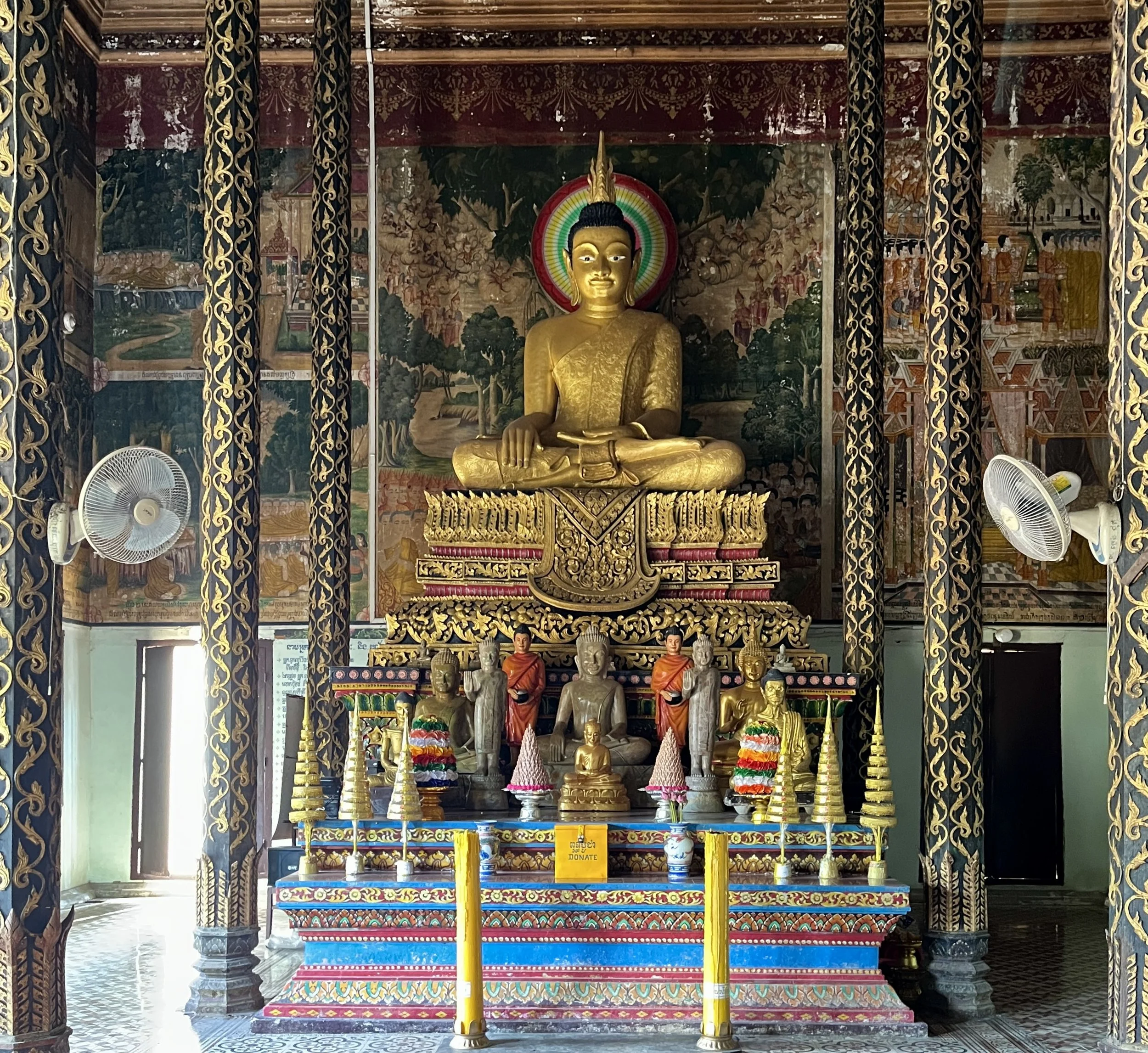
I couldn’t find any archival photos of this temple. Finding new resources for this blog is always an unpredictable journey though; there will be nothing for years, then a university in France that’s held the archives of some colonial administrator for a century puts 6000 photos online at once.
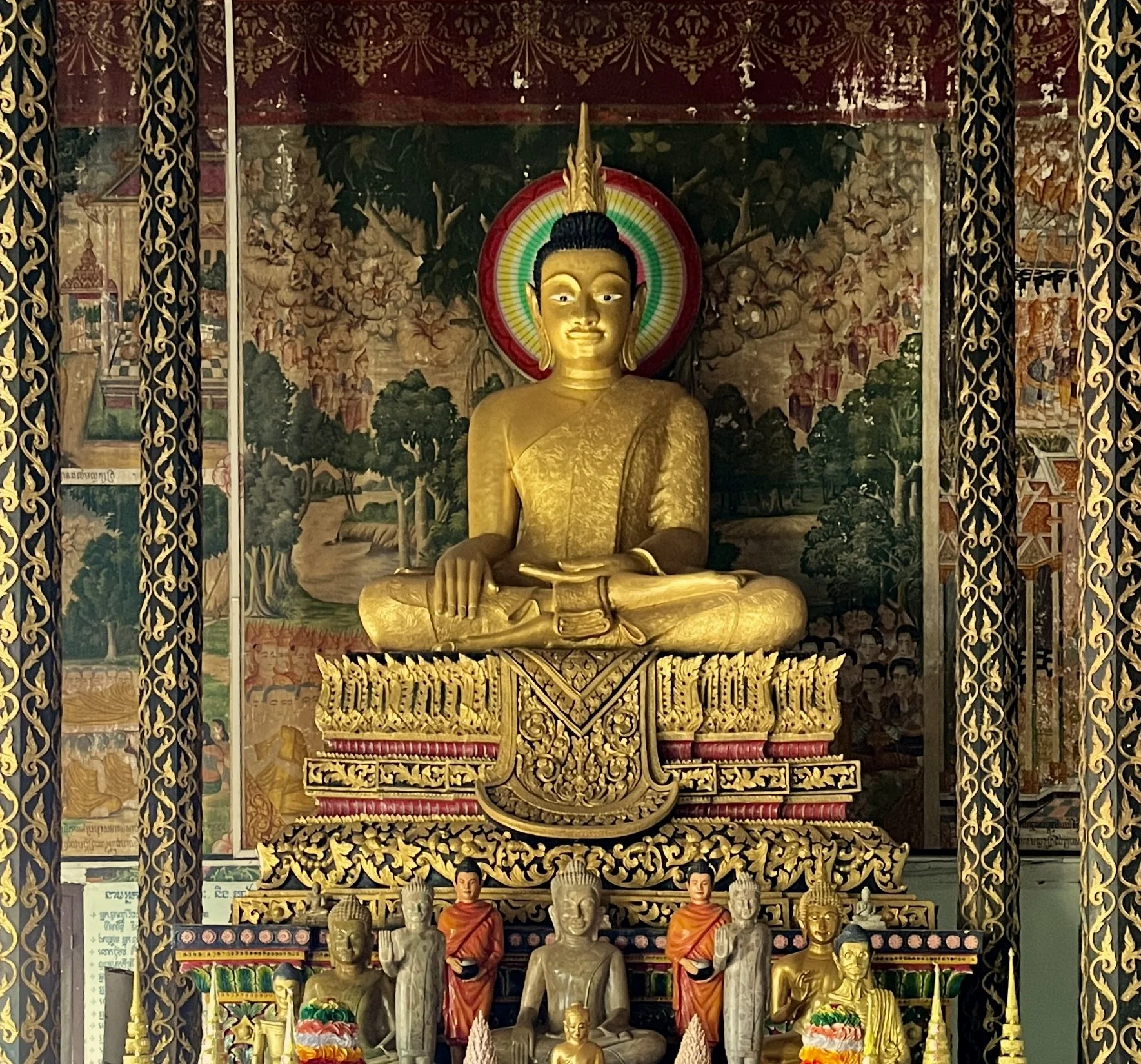
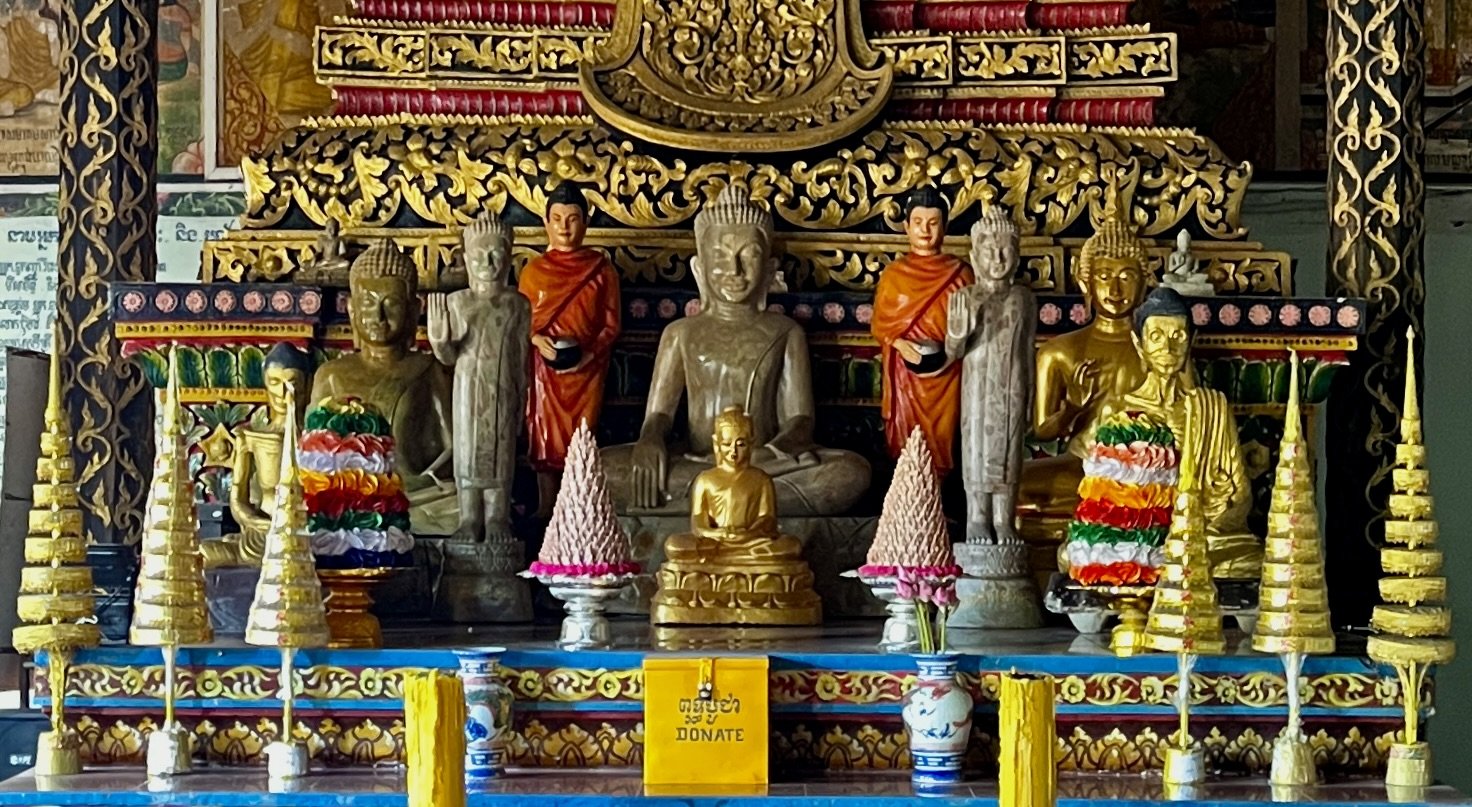
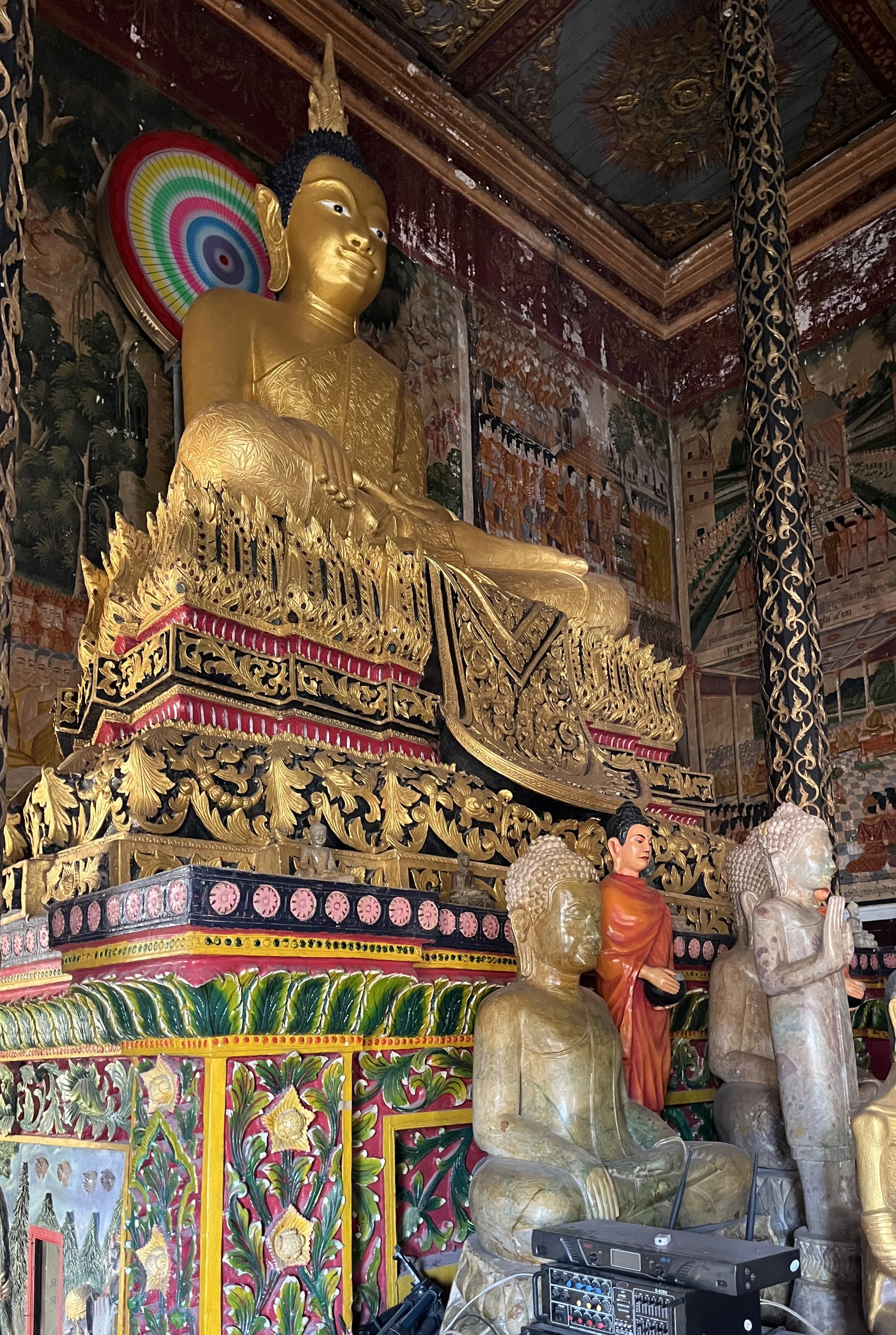
The Buddhas are pretty obviously modern.
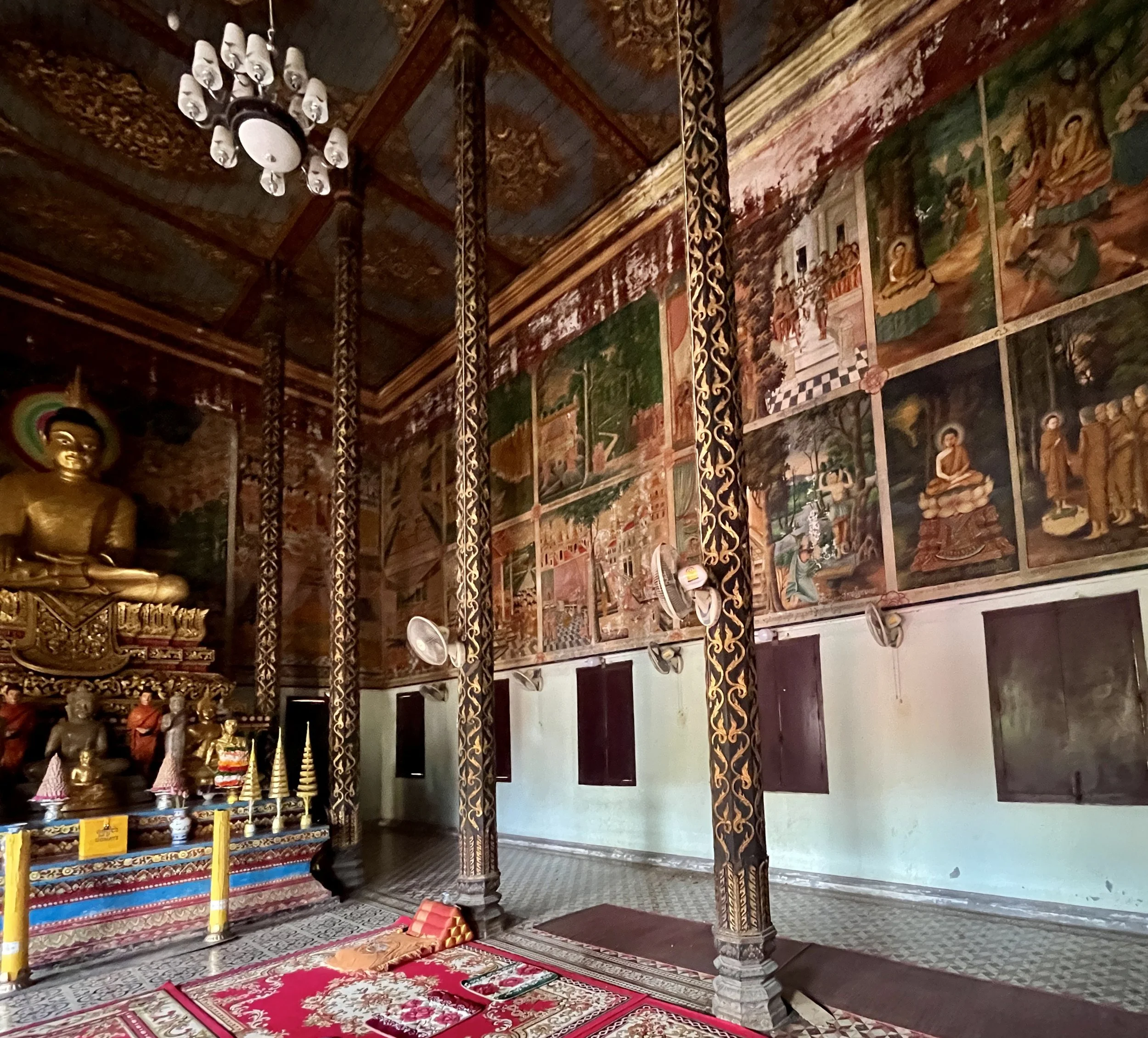
The wall paintings are from a range of decades. Some seem to be original; others, like those towards the right of this picture, are in the post 1950 style. I’m learning a lot about Khmer Buddhist paintings reading my first Roveda book about Preah Bot.
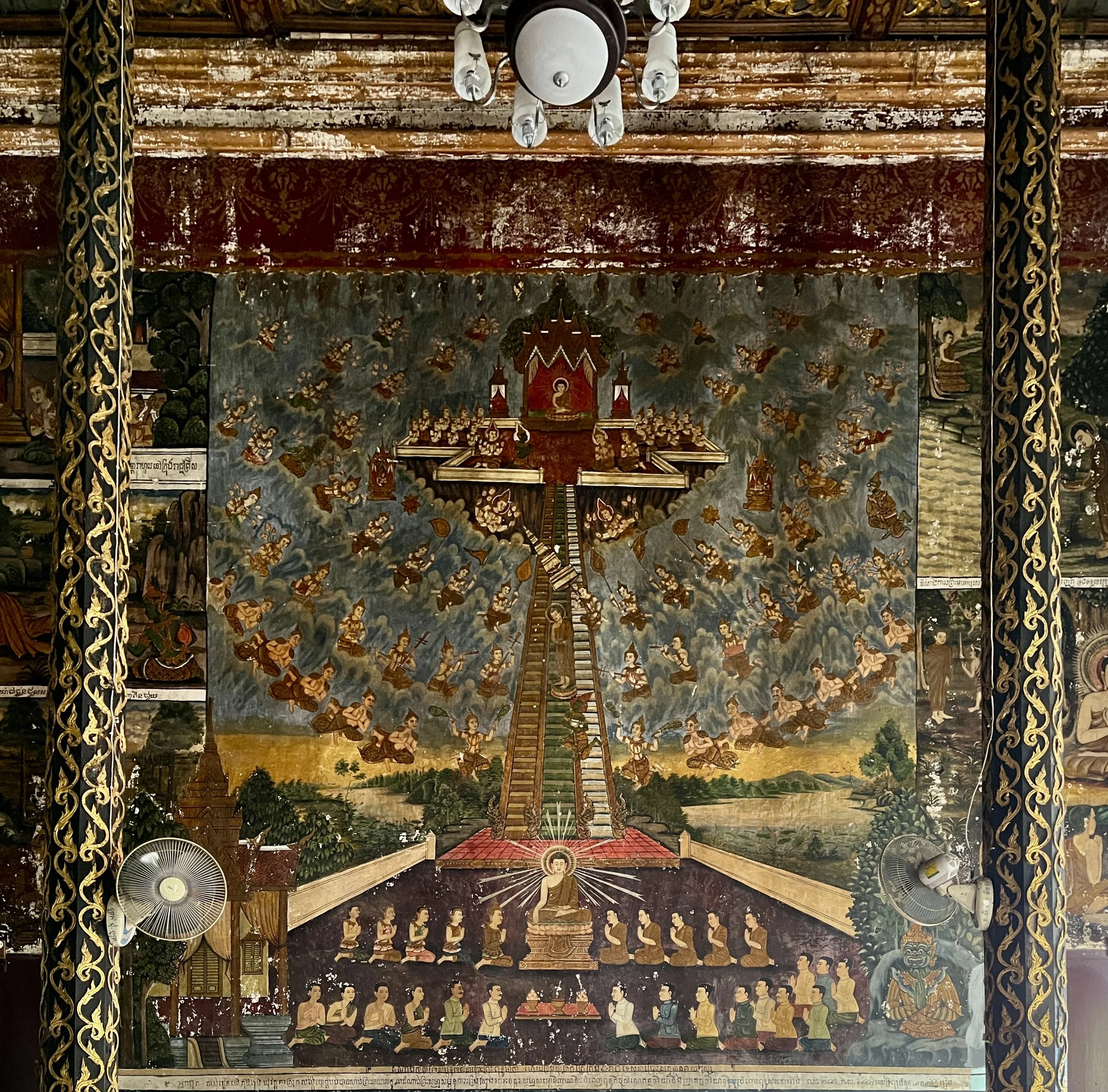
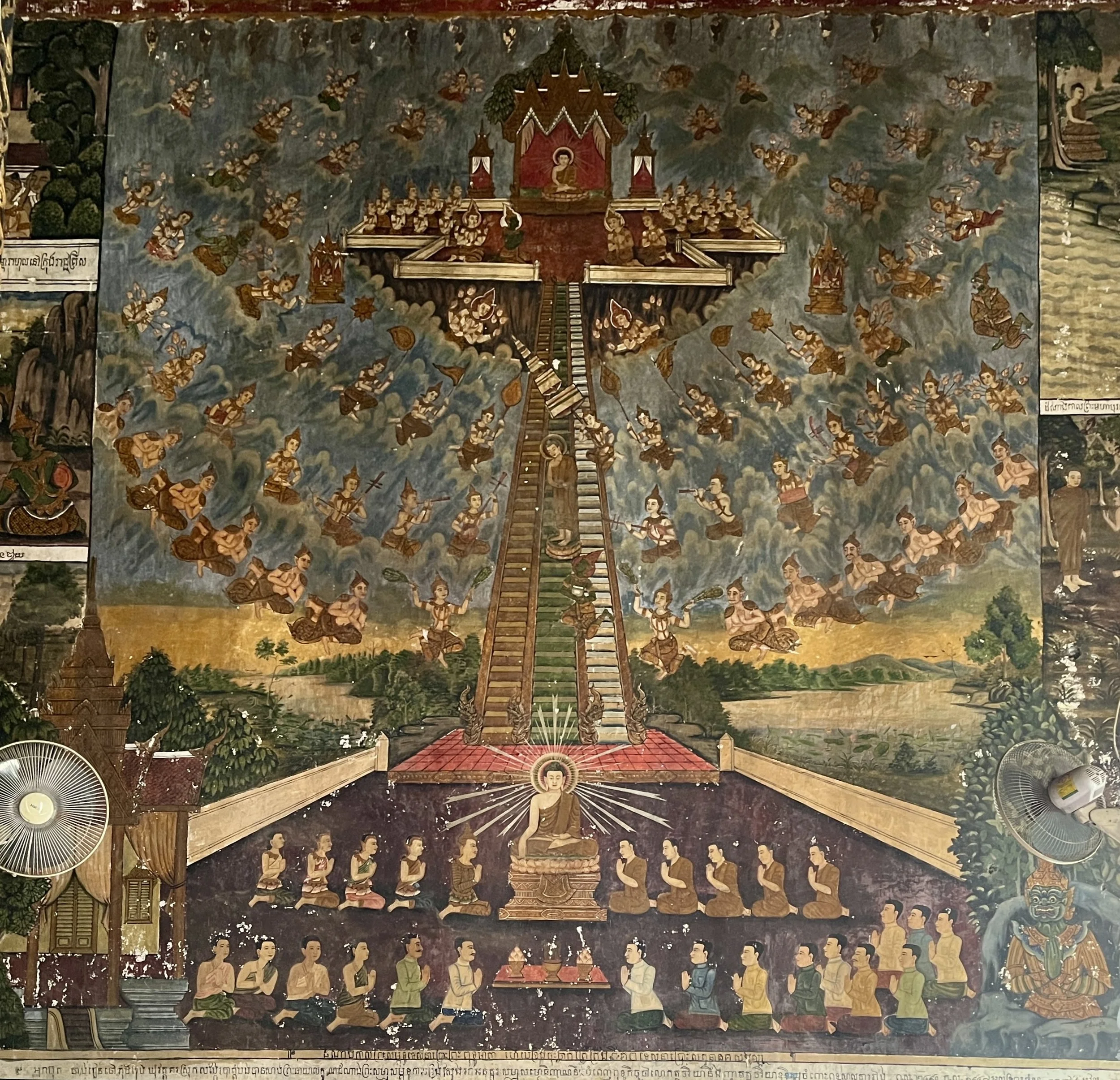
Though it is Buddhist tradition to touch up the temple every new year, they do pick and choose. I love seeing truly old paintings that haven’t been extensively retouched.
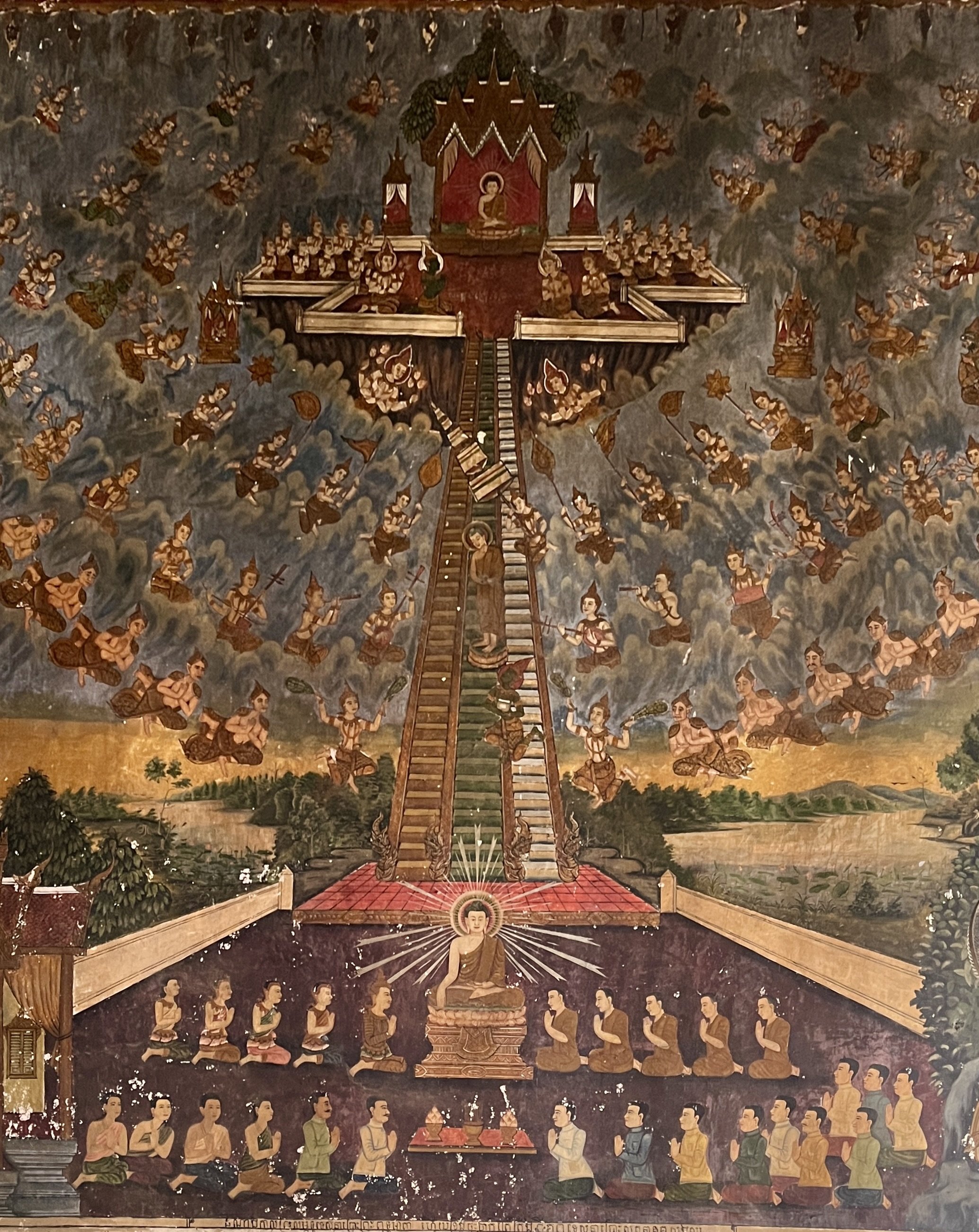
Buddha descends the celestial ladder.
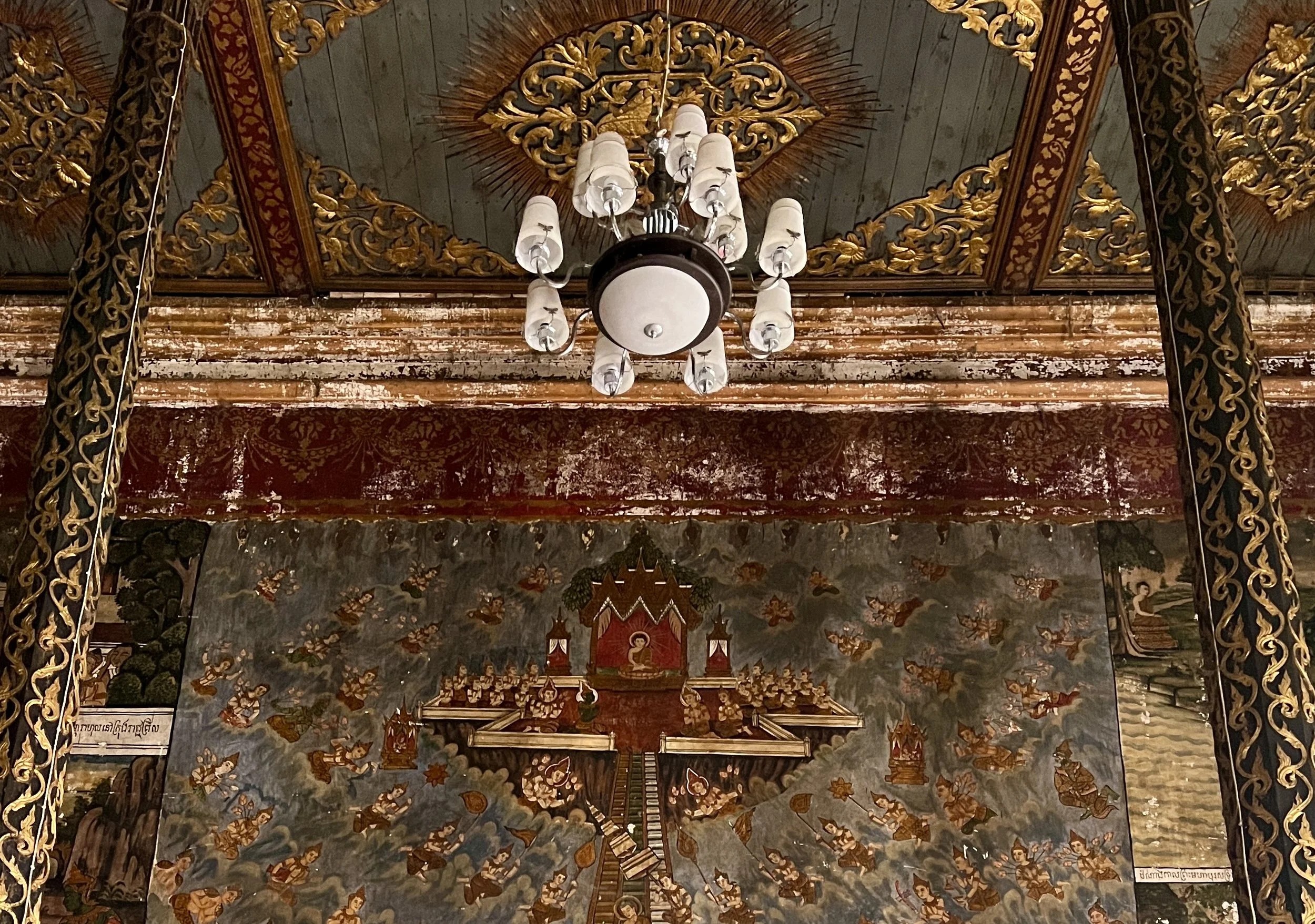
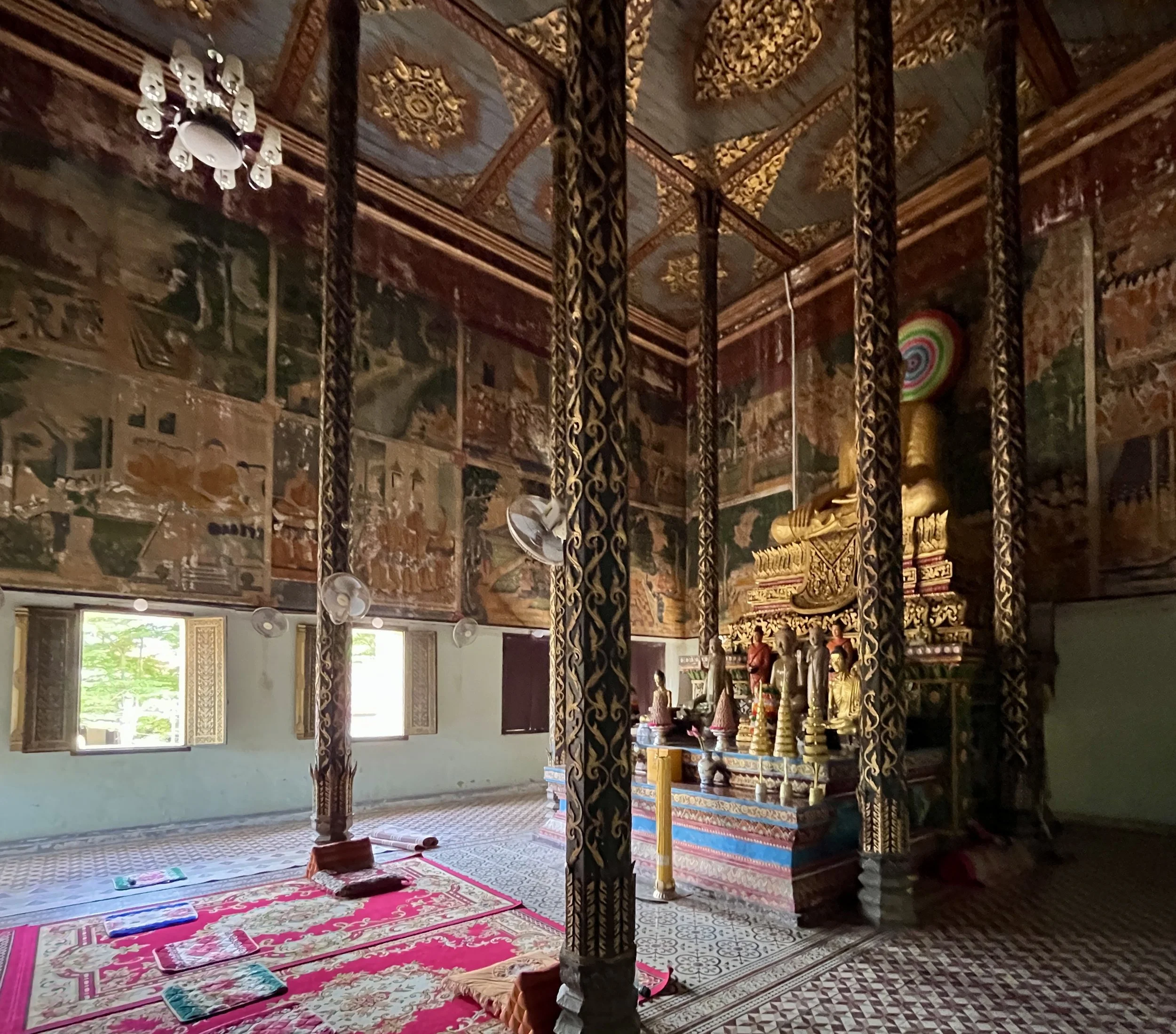
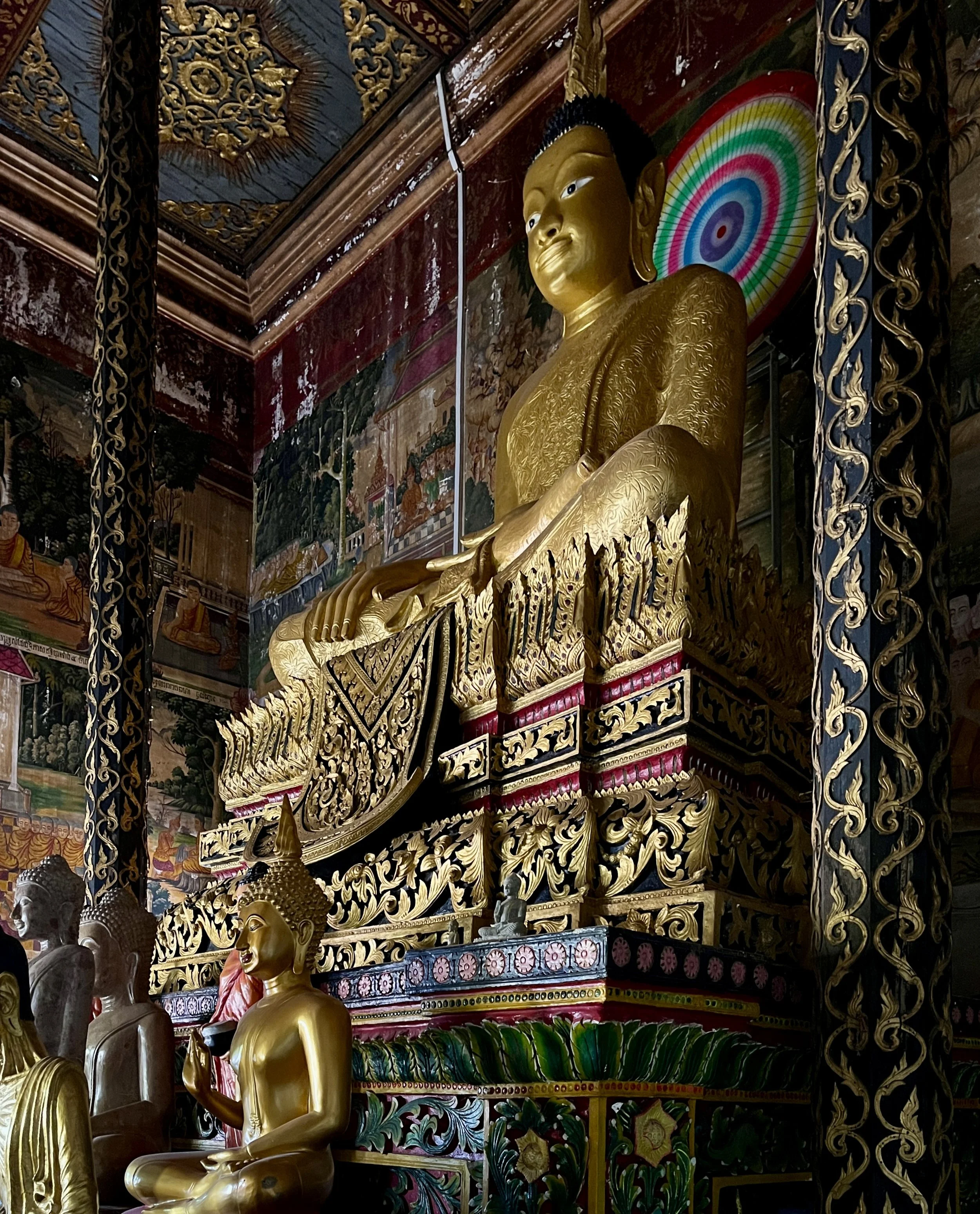
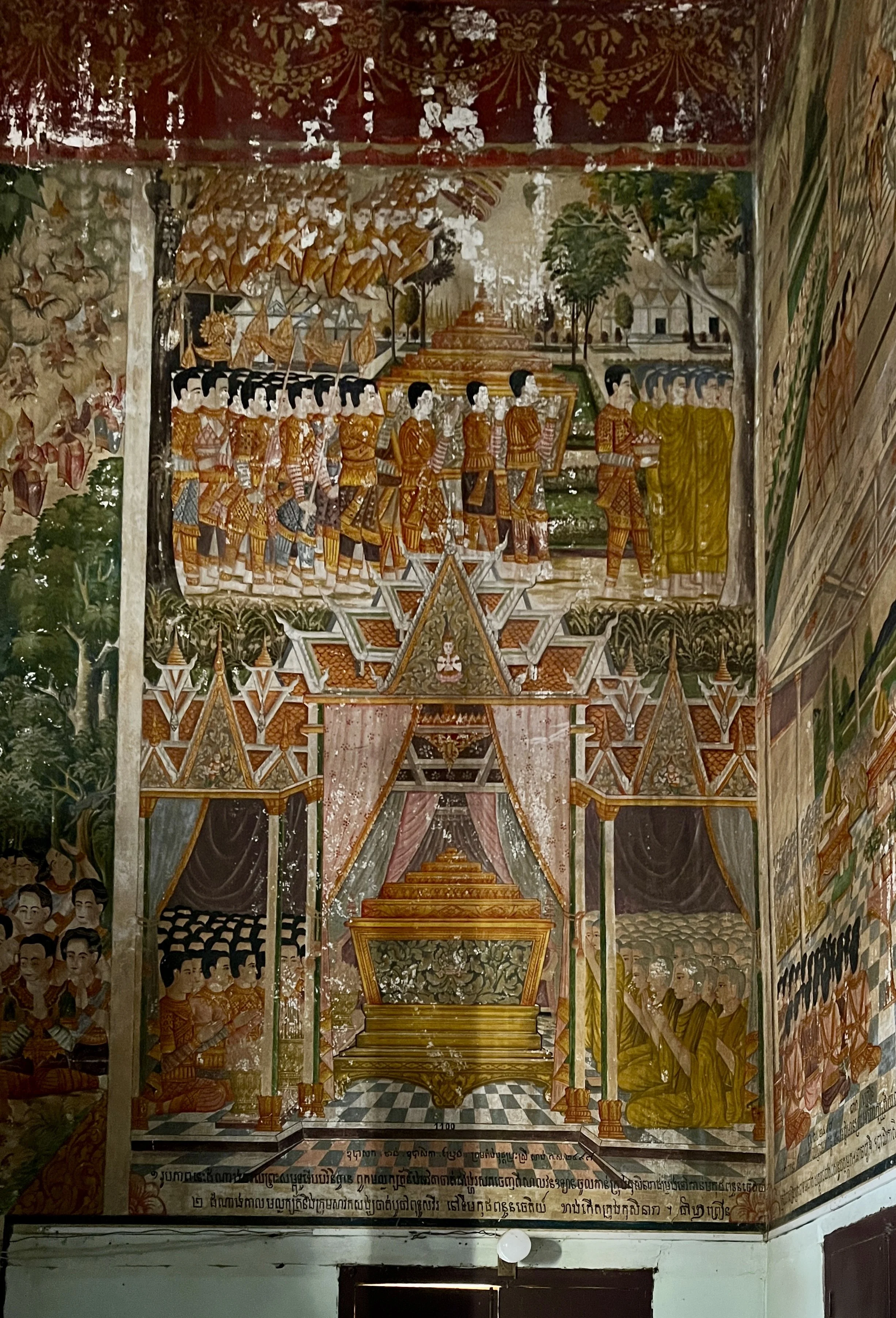
Probably my favorite panel and section of border.
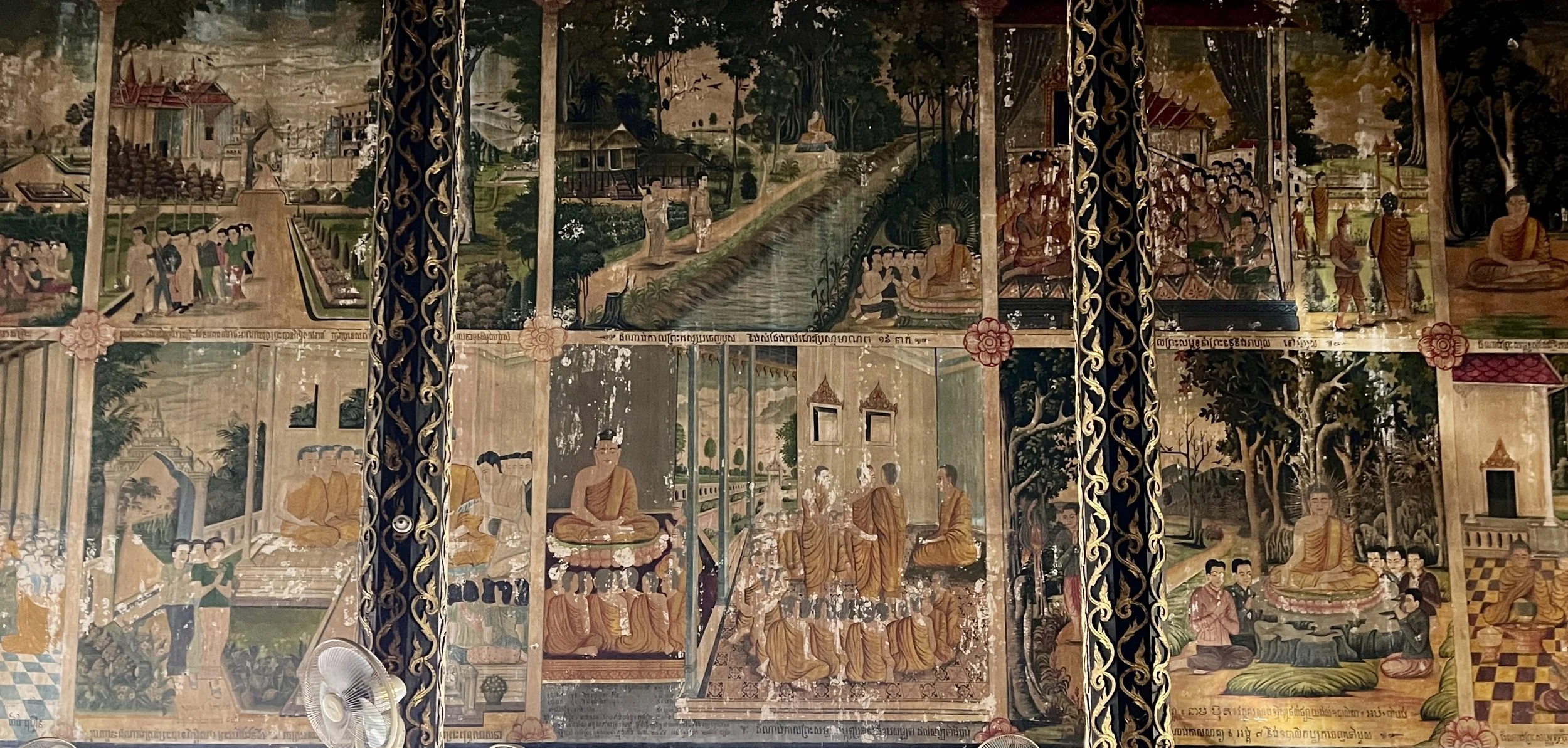
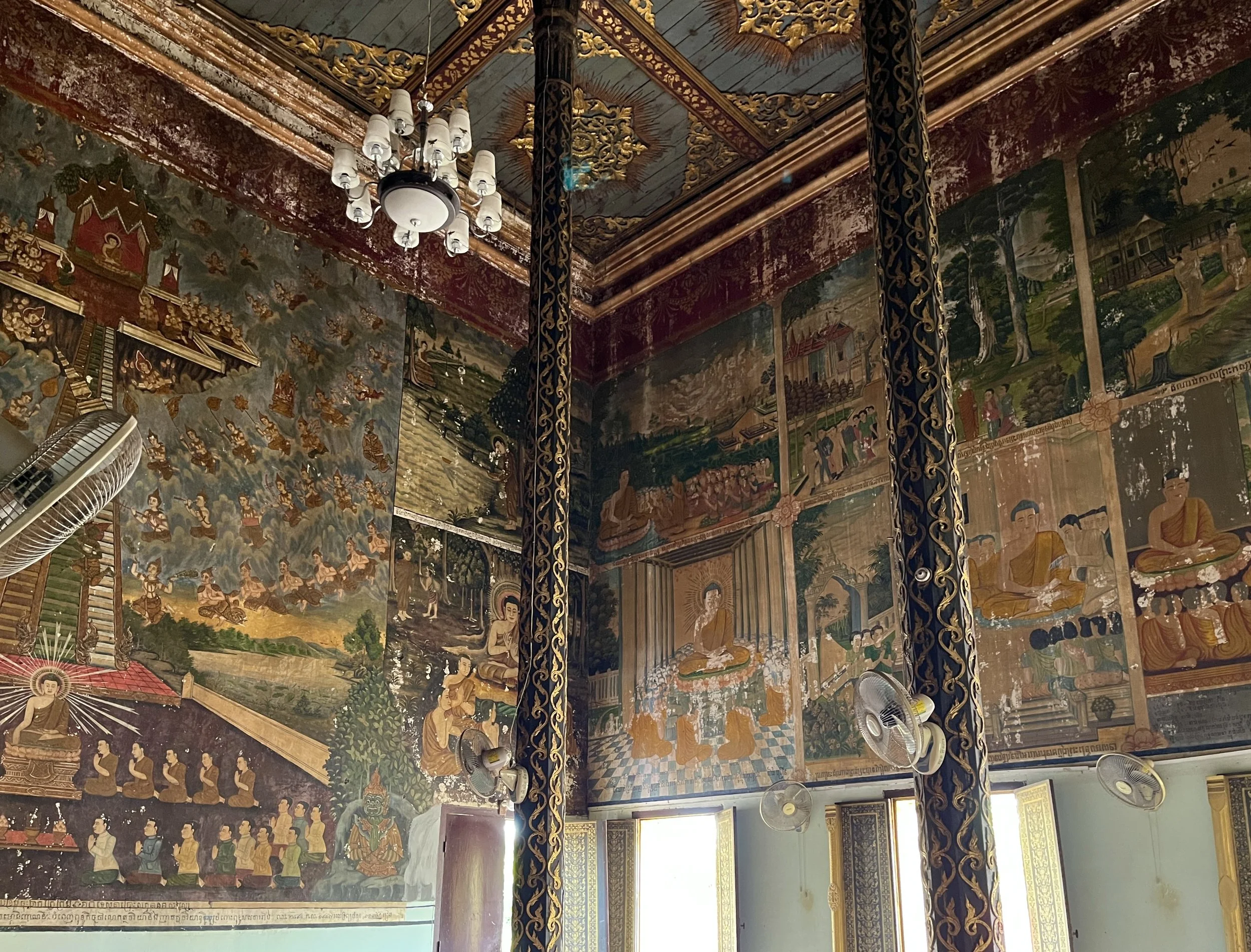
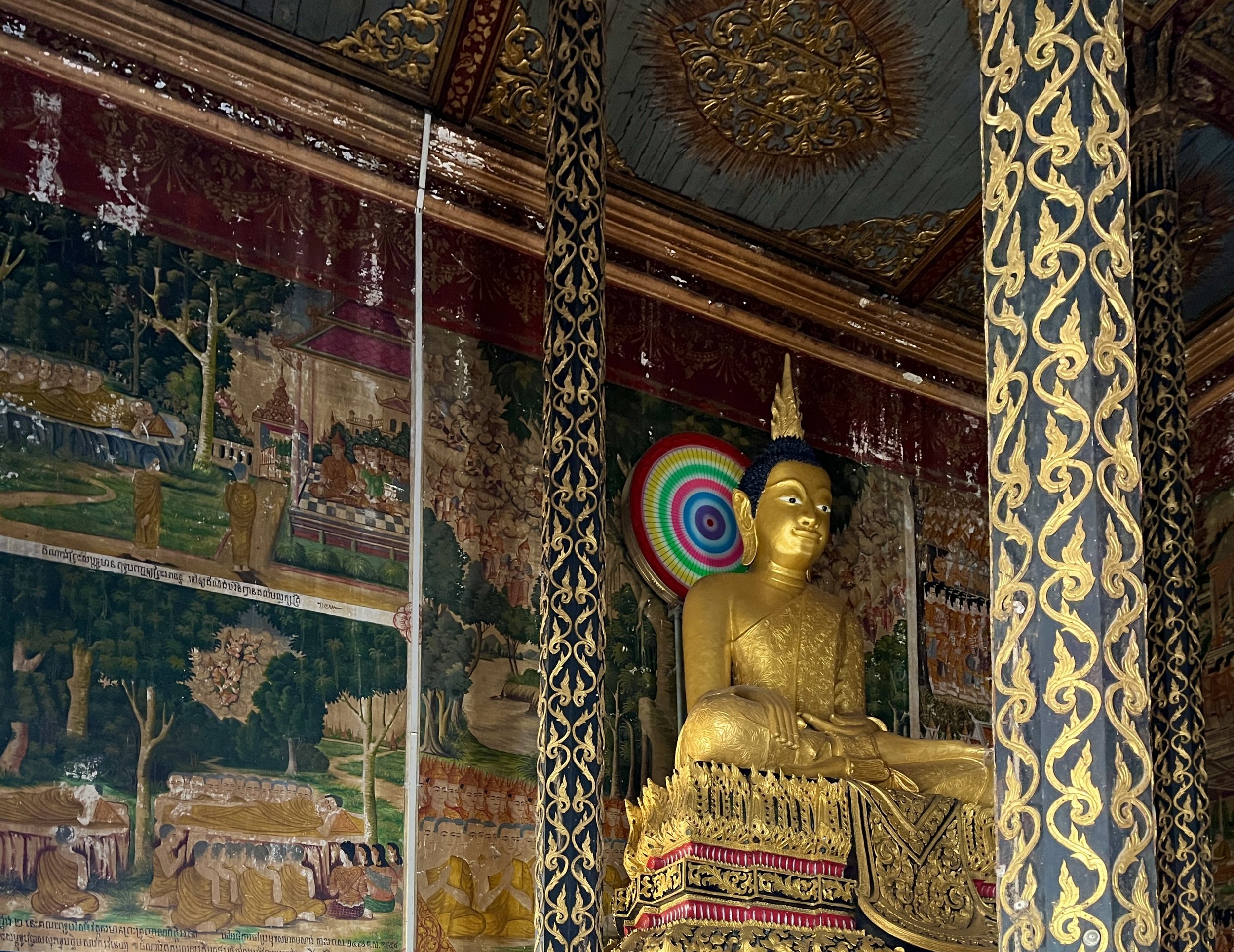
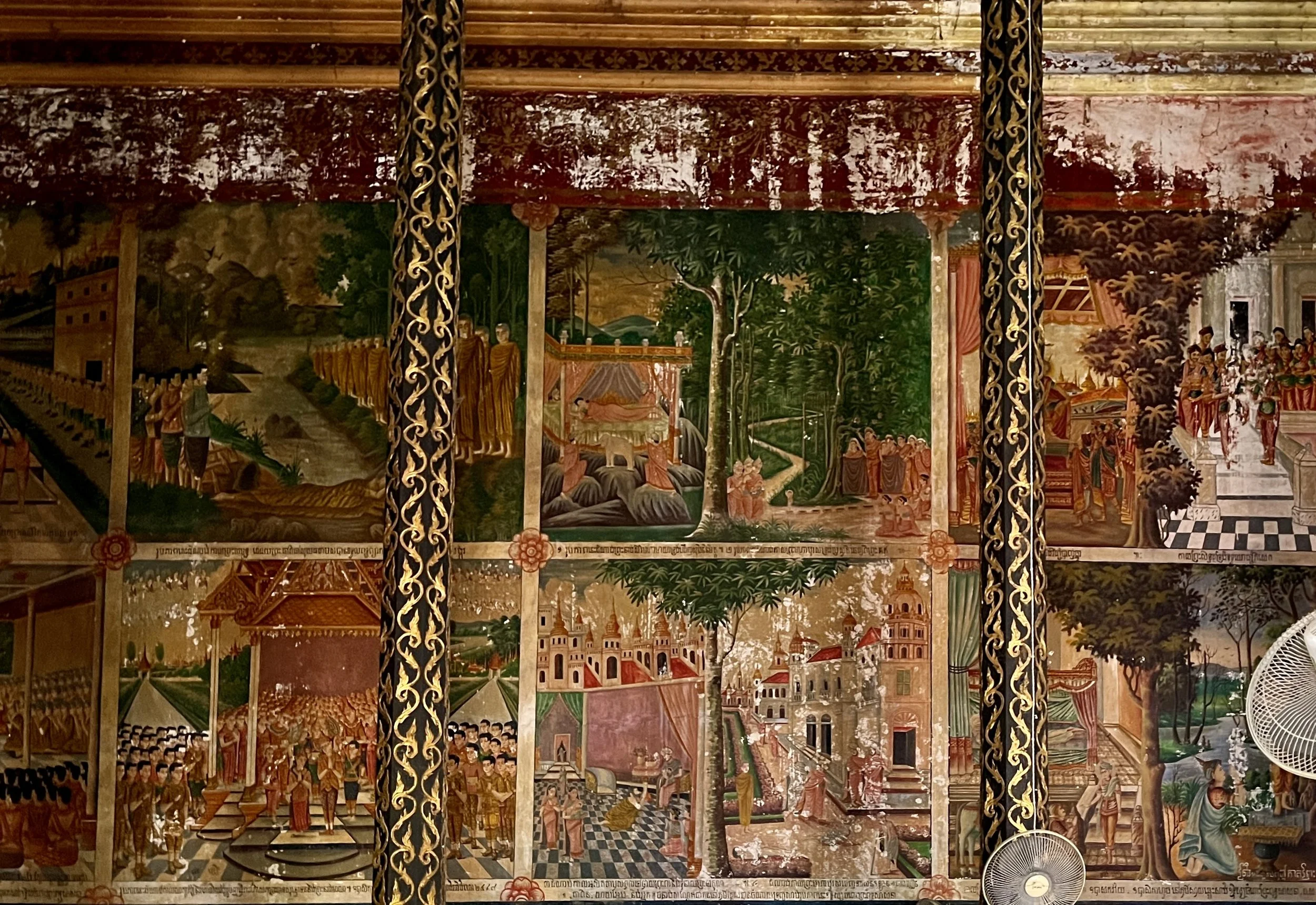
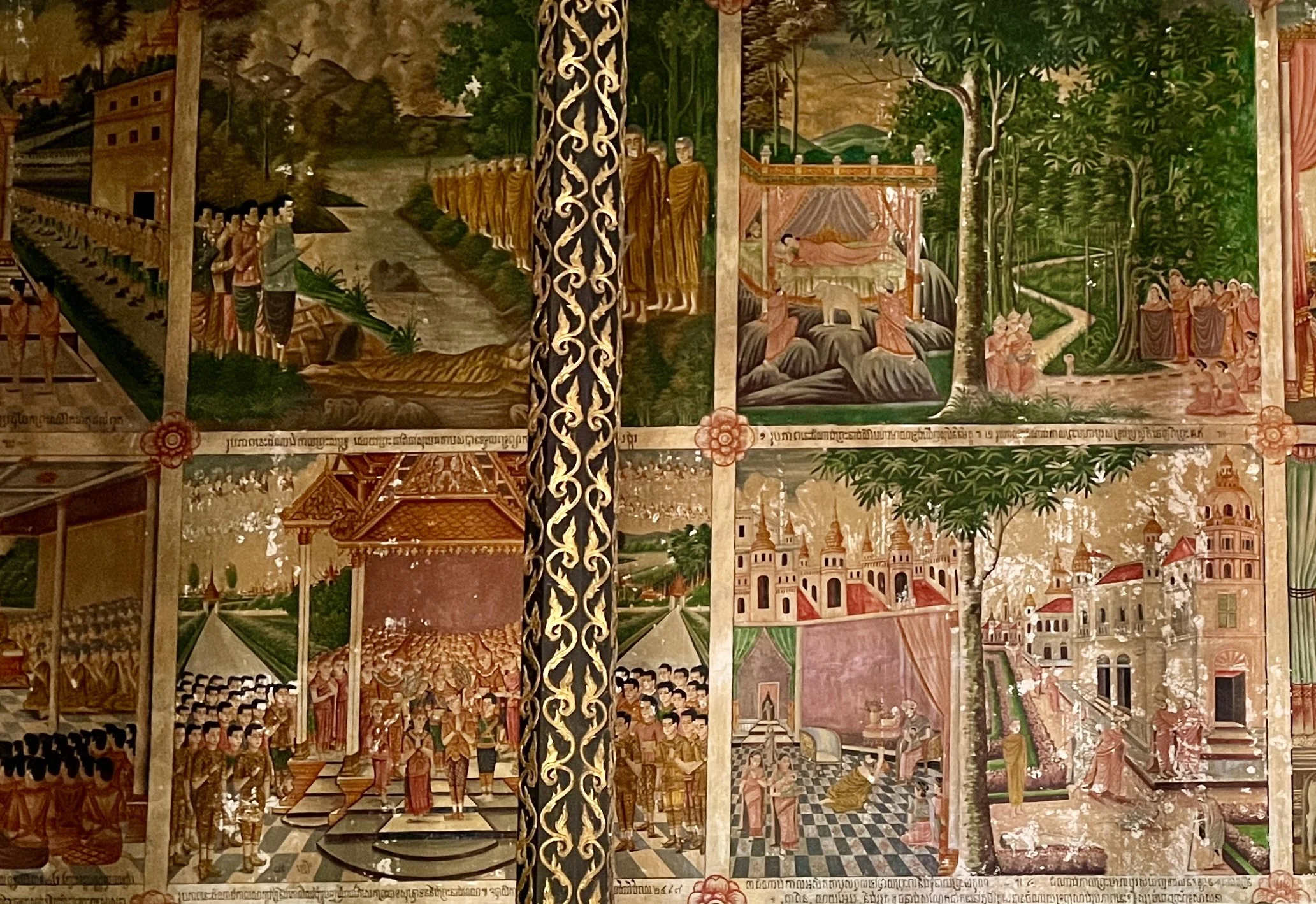
I really enjoy the rosettes (romdouls? lotus?). They seem a very late 1800s/early 1900s decorative touch.
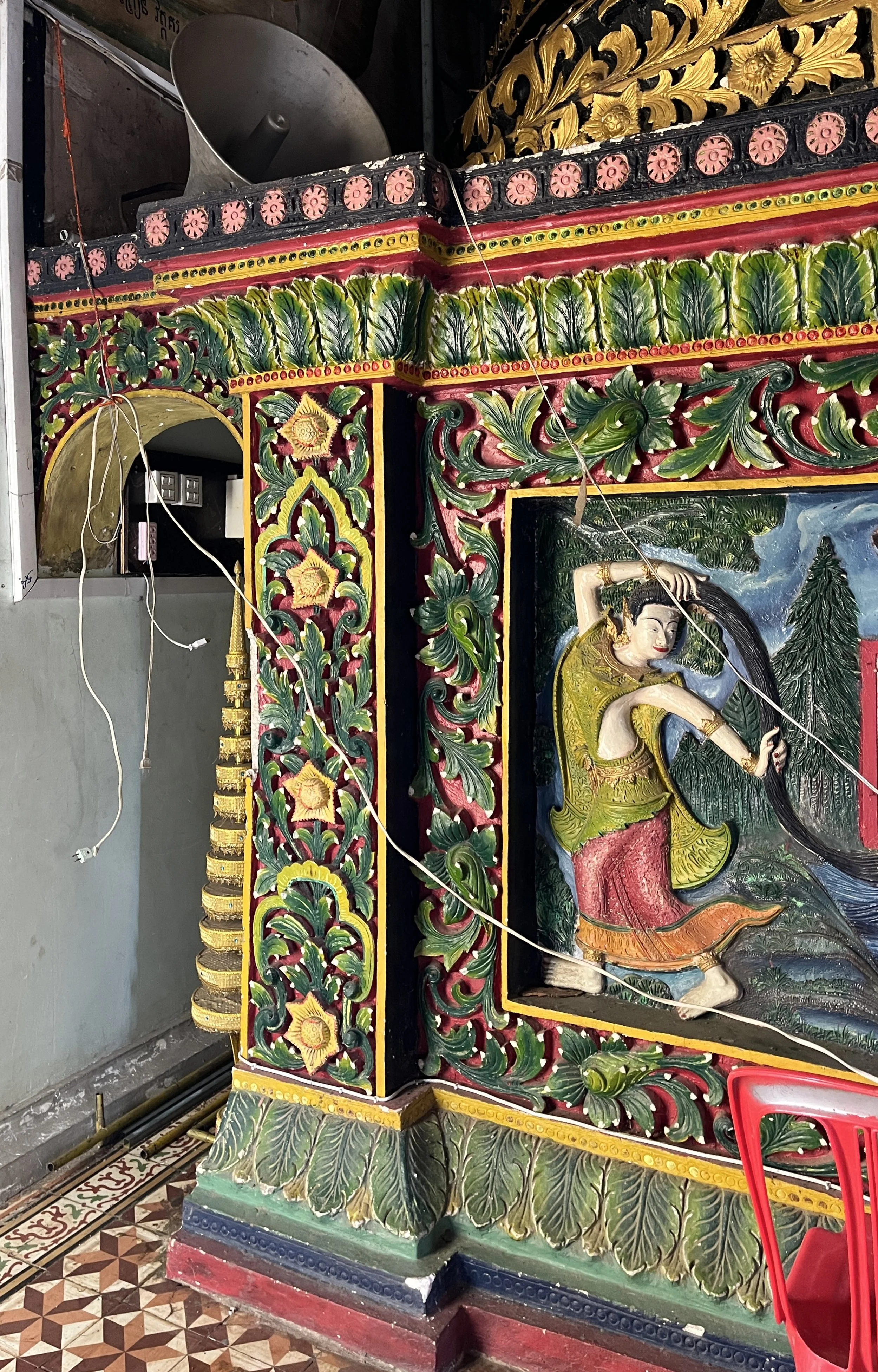
I really enjoyed this little ‘back doorway’ behind the main altar