buddhist temple battambang

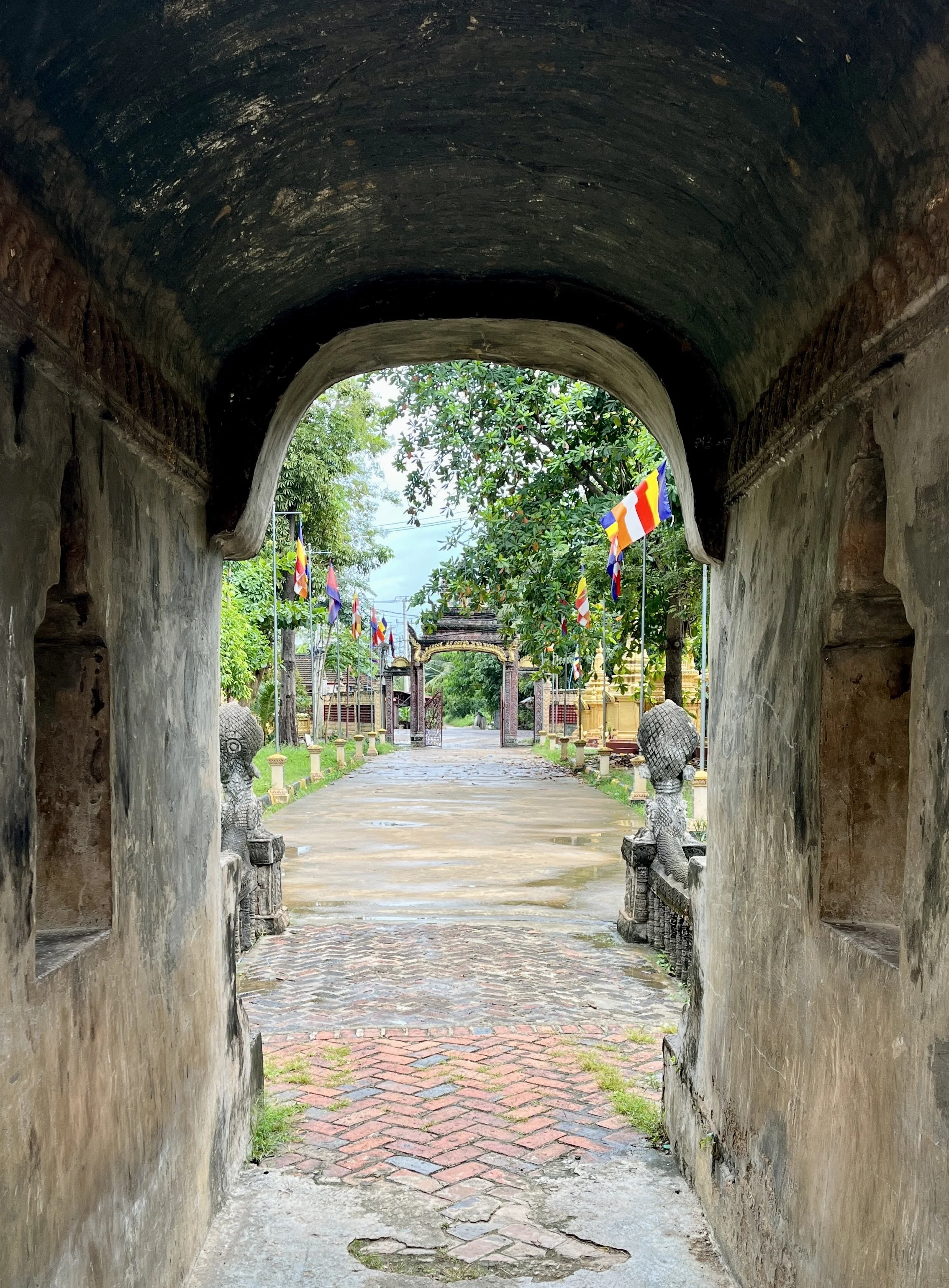
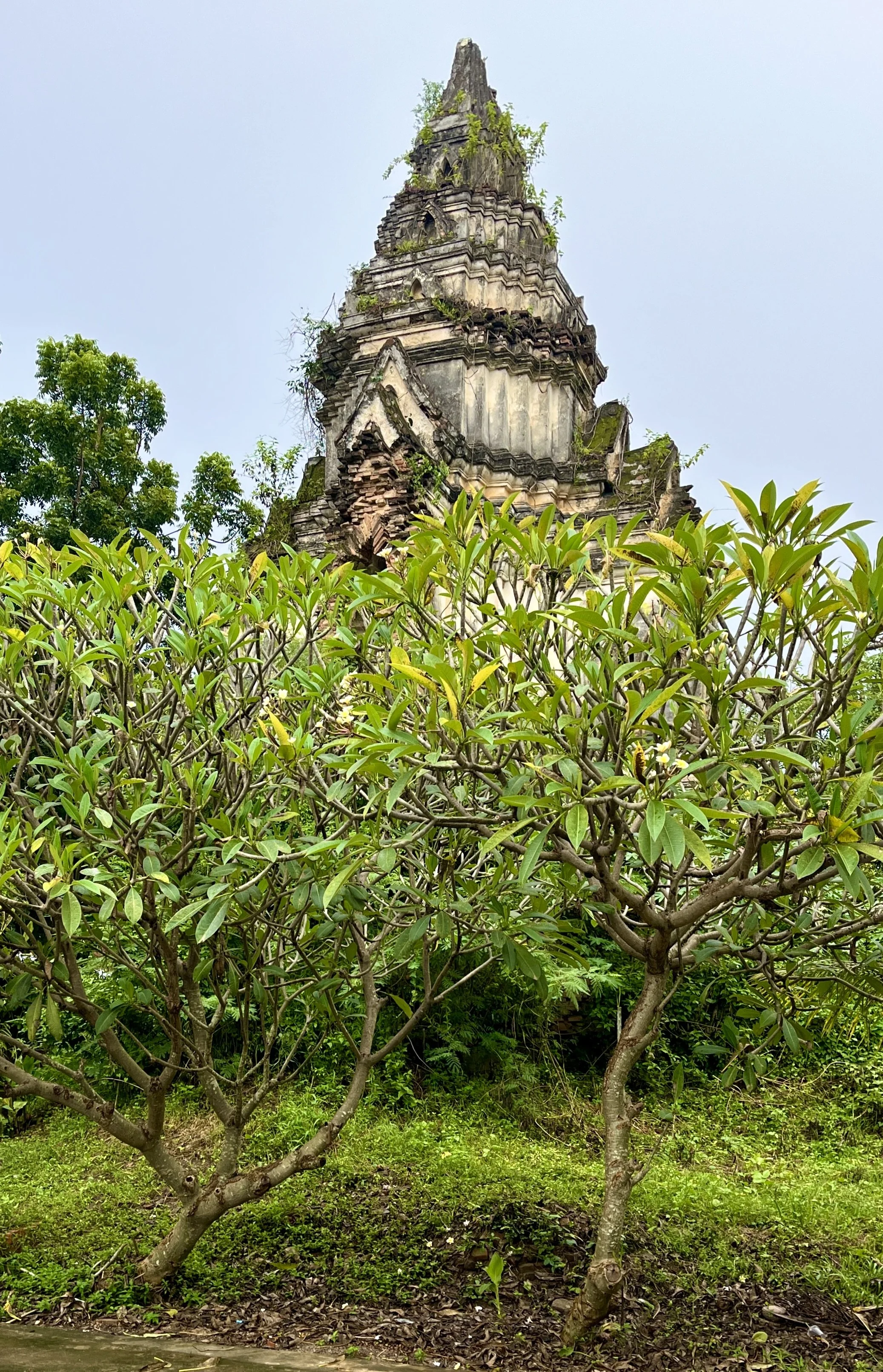
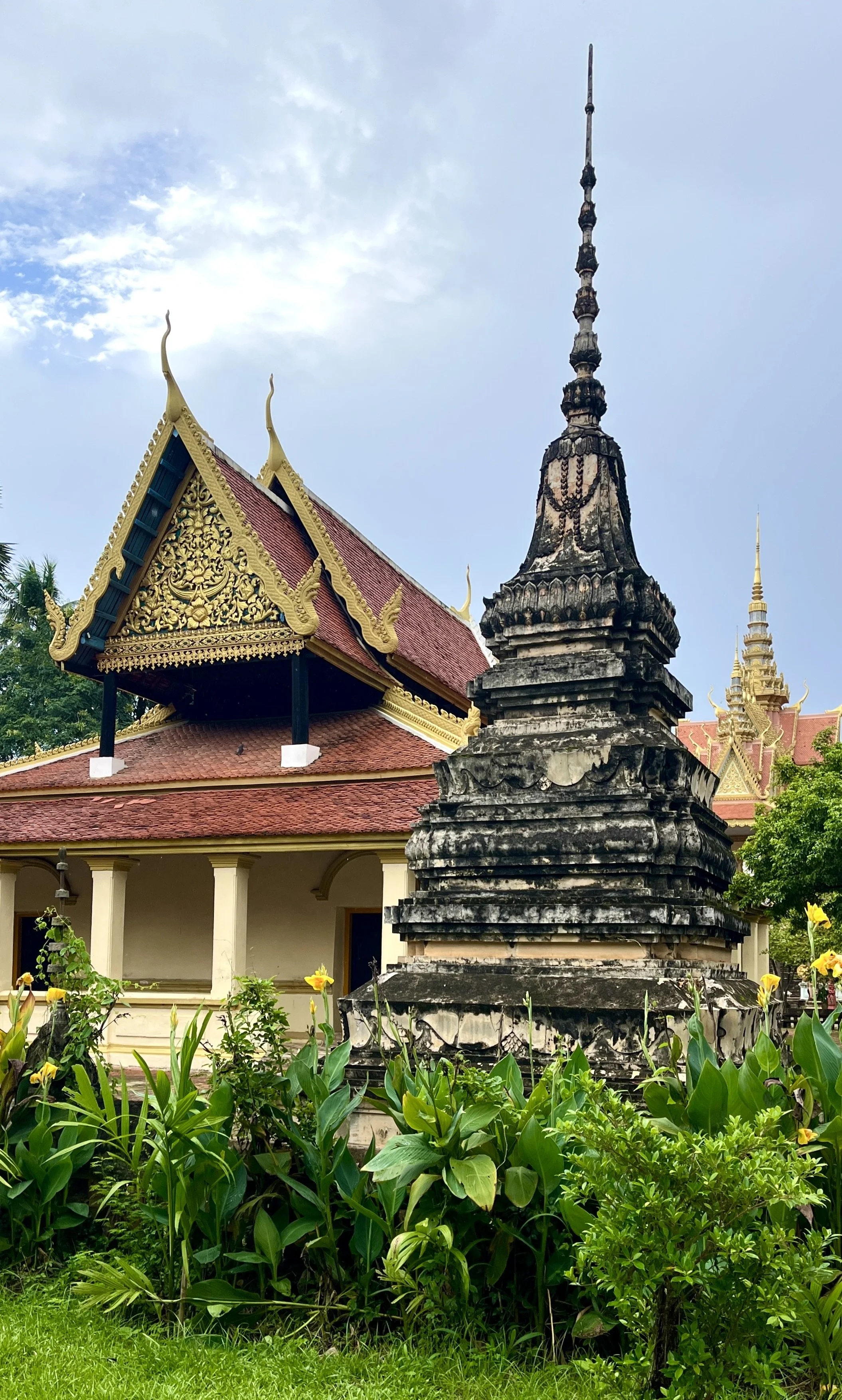
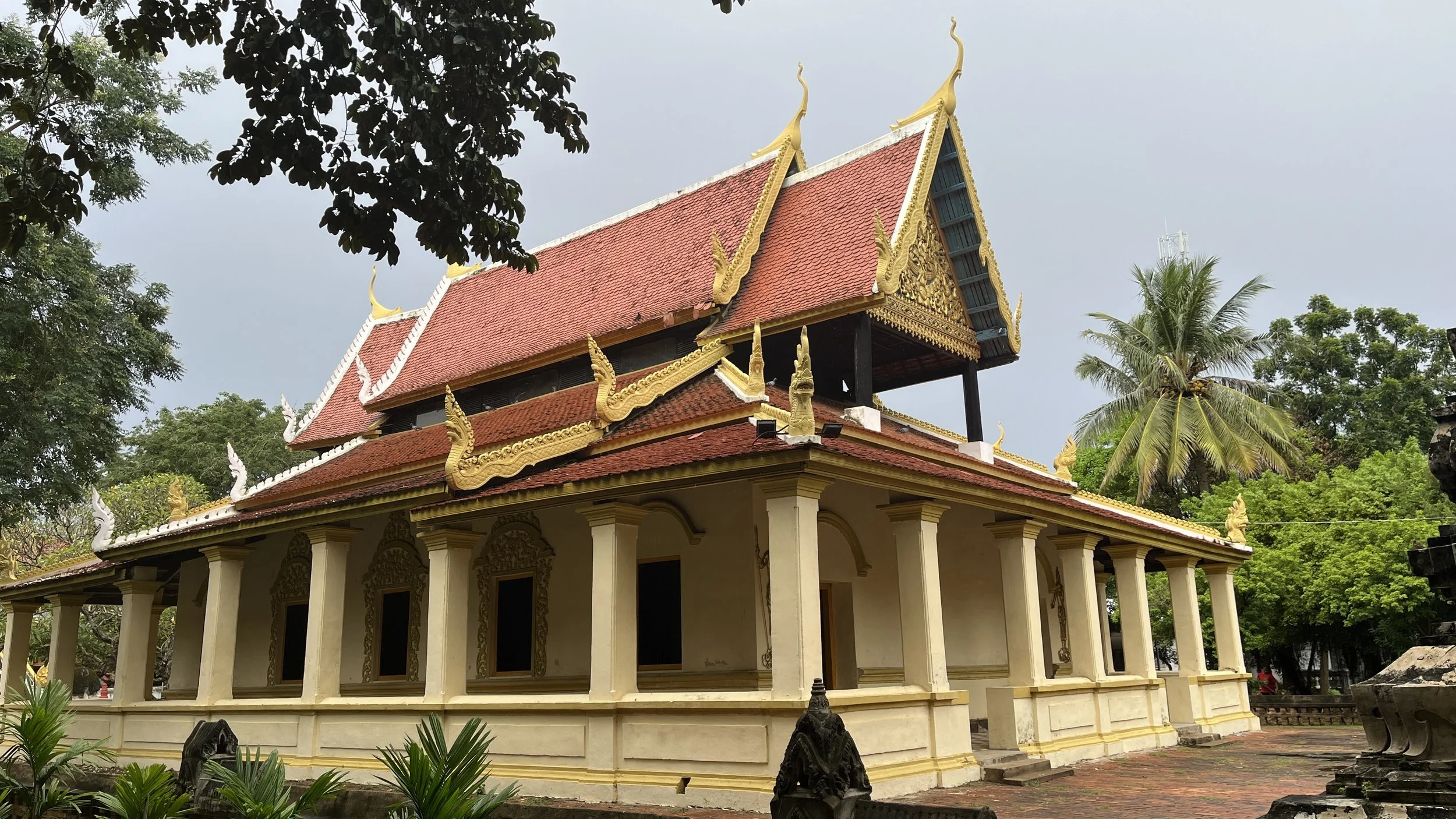
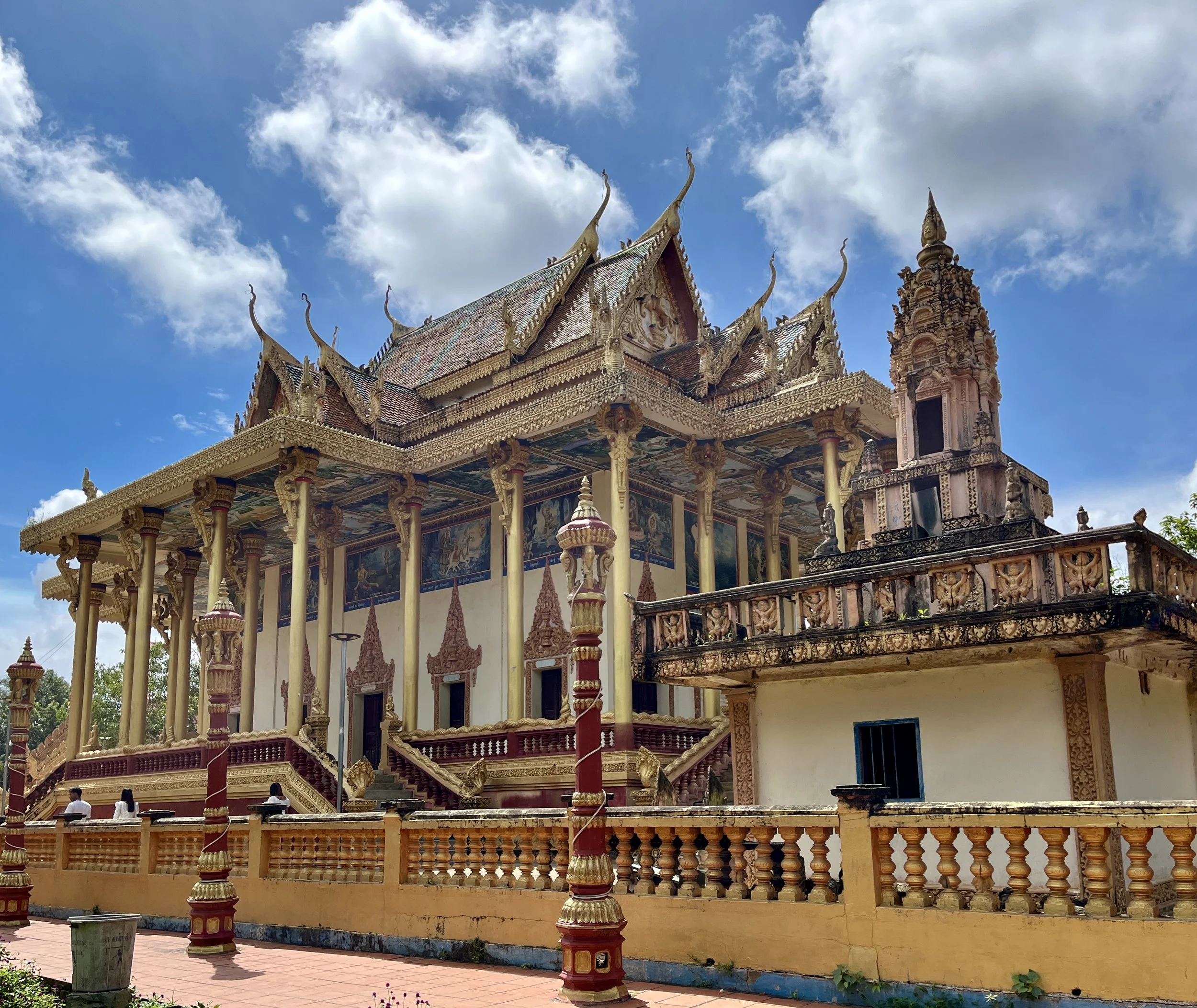
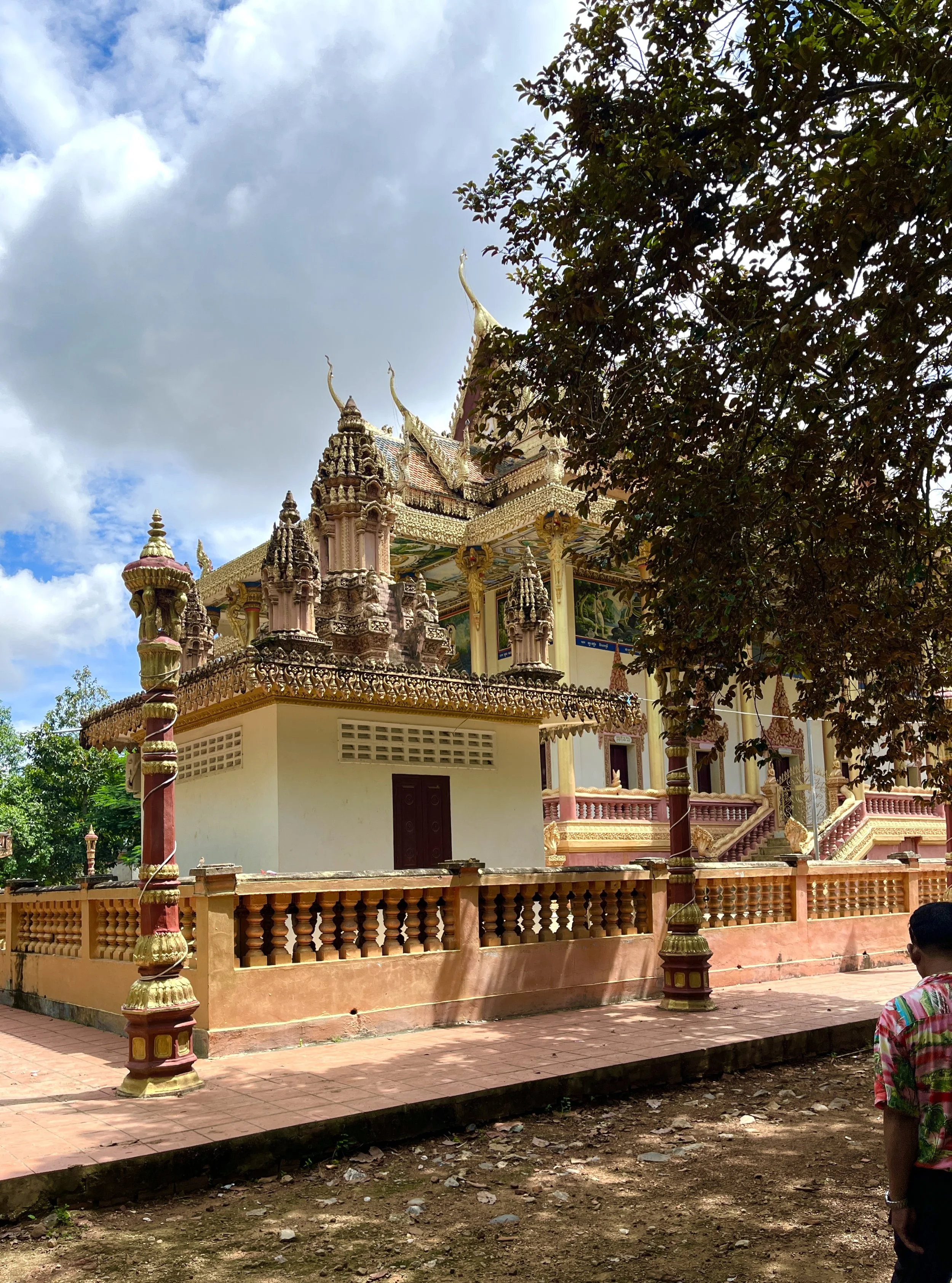
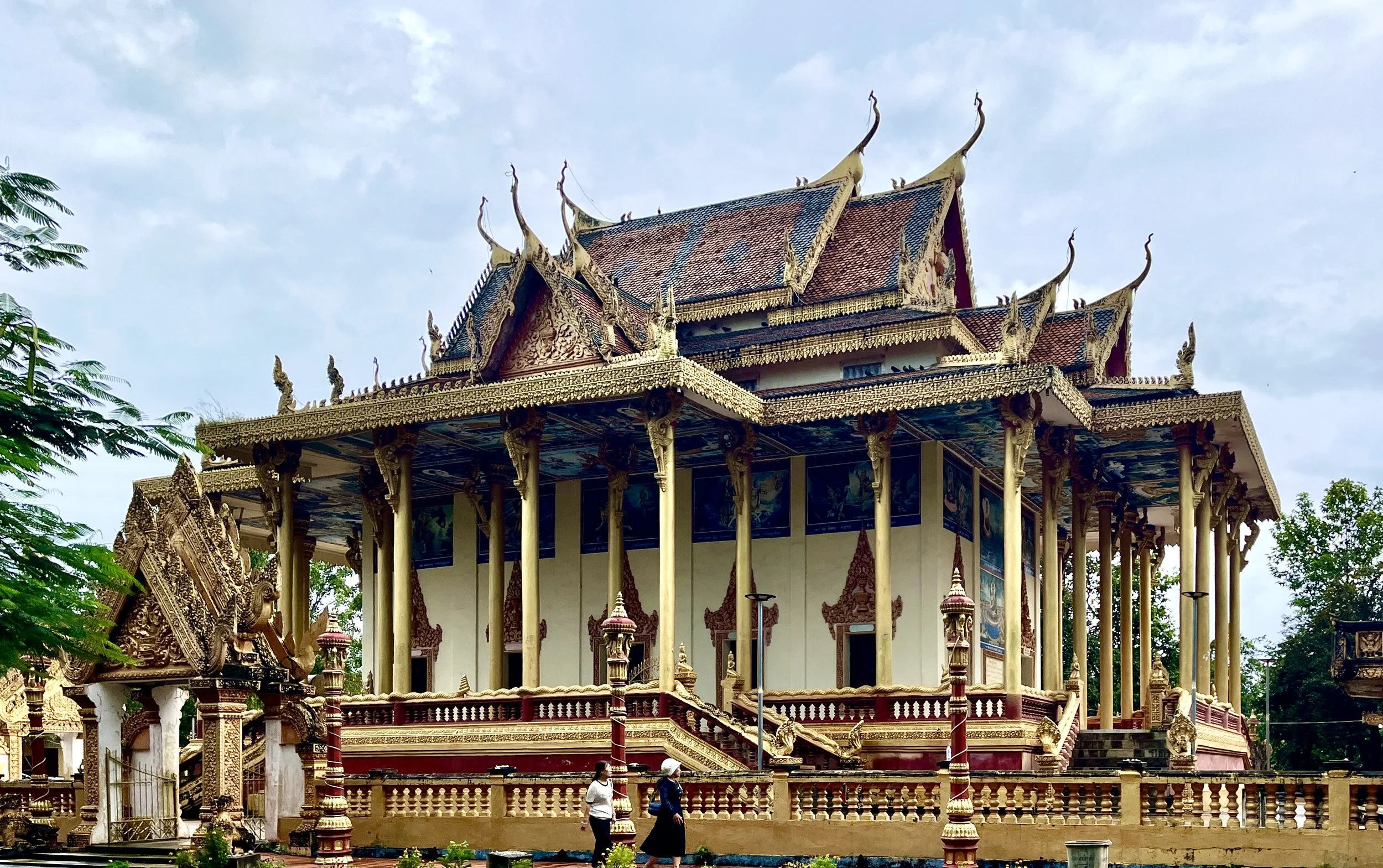
Wat Kor, Battambang | Cambodia

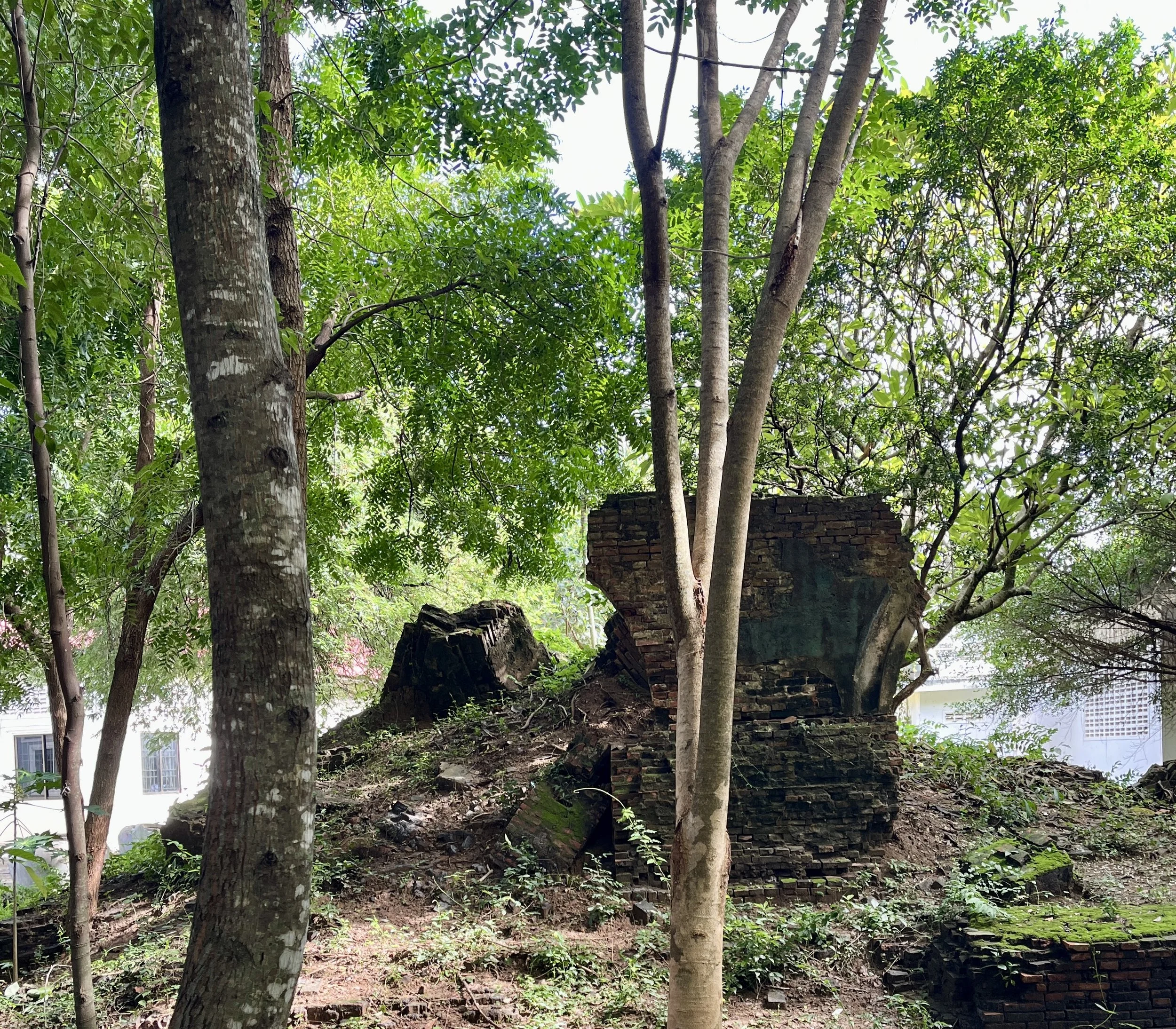
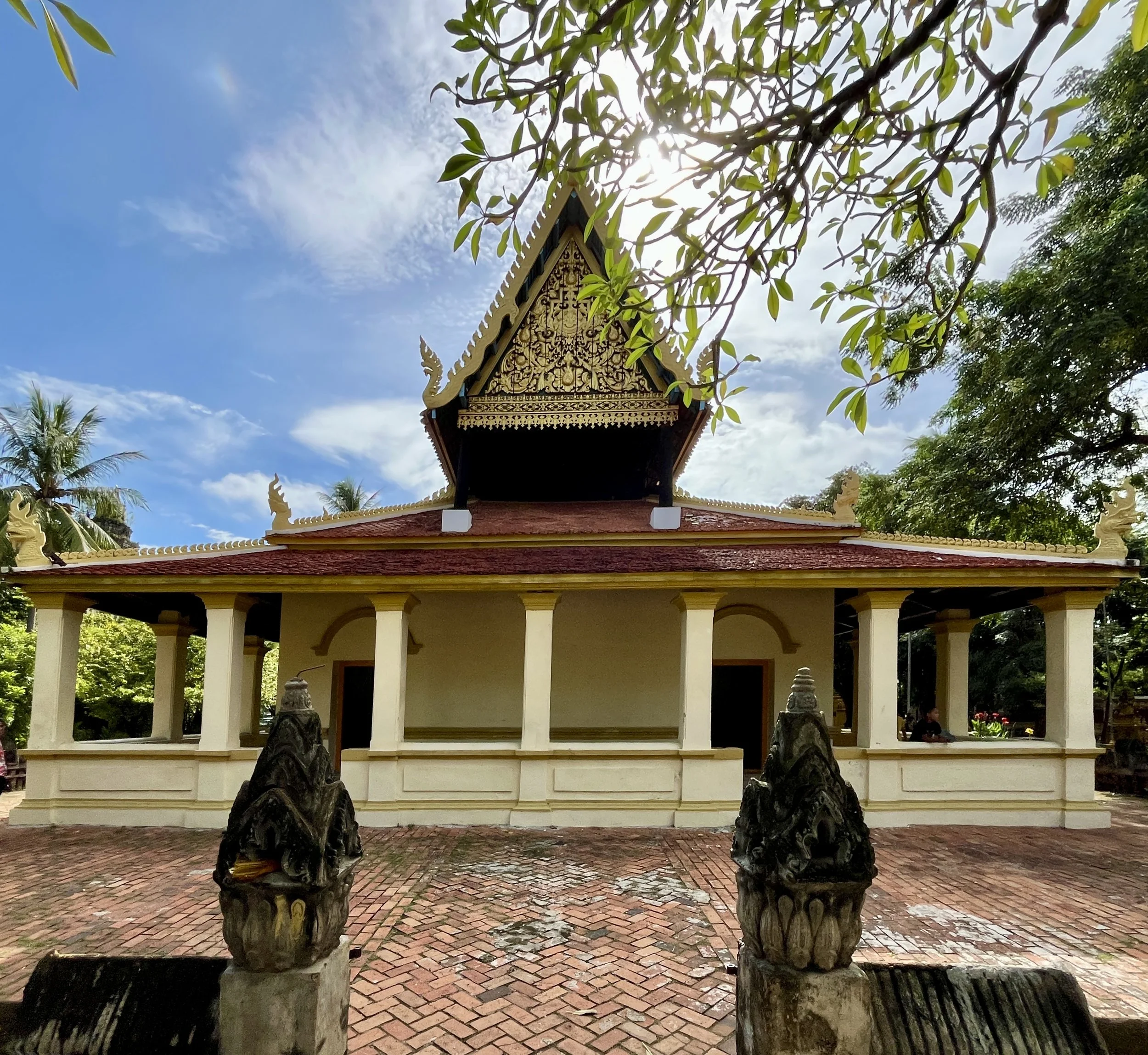
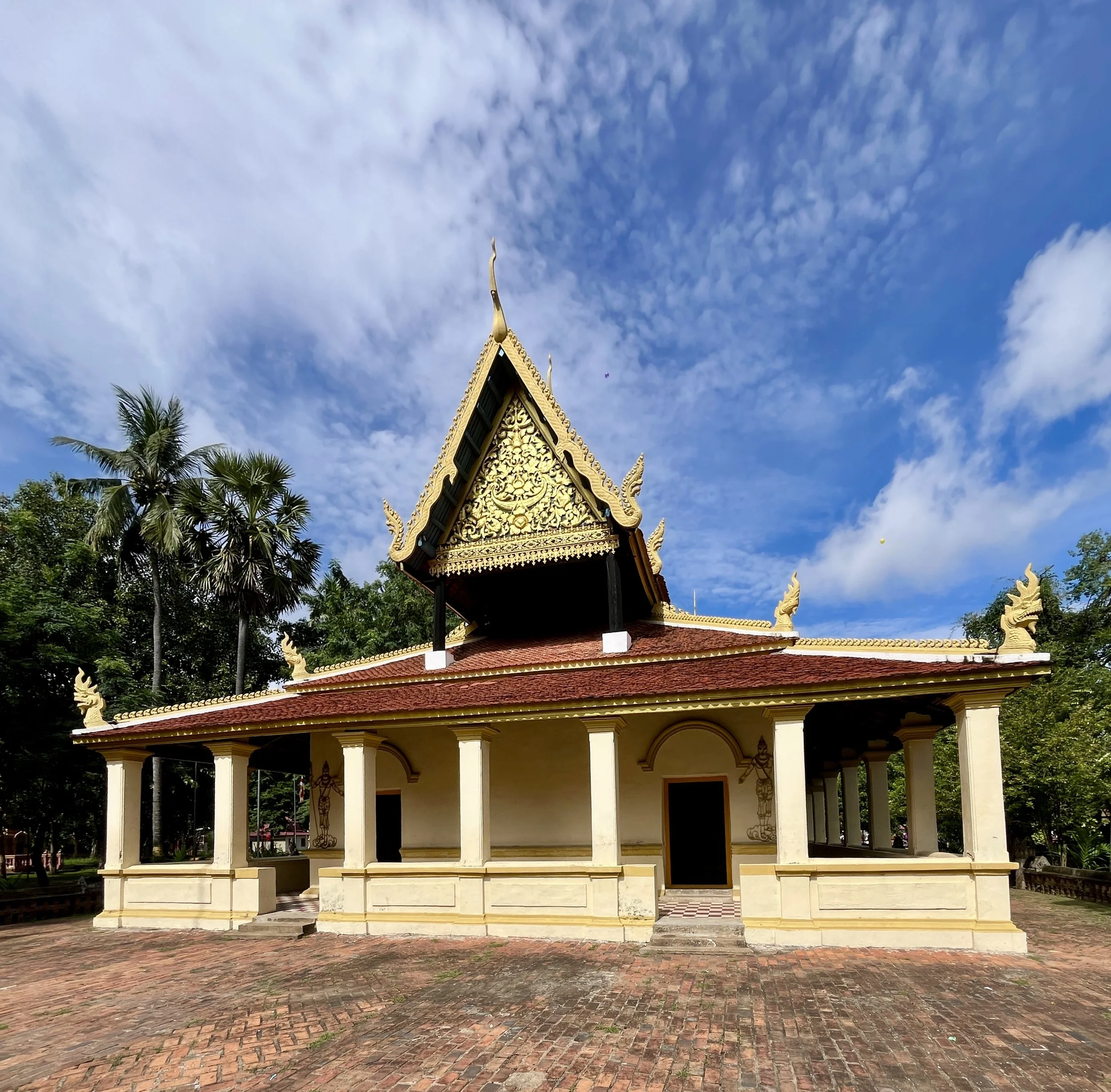
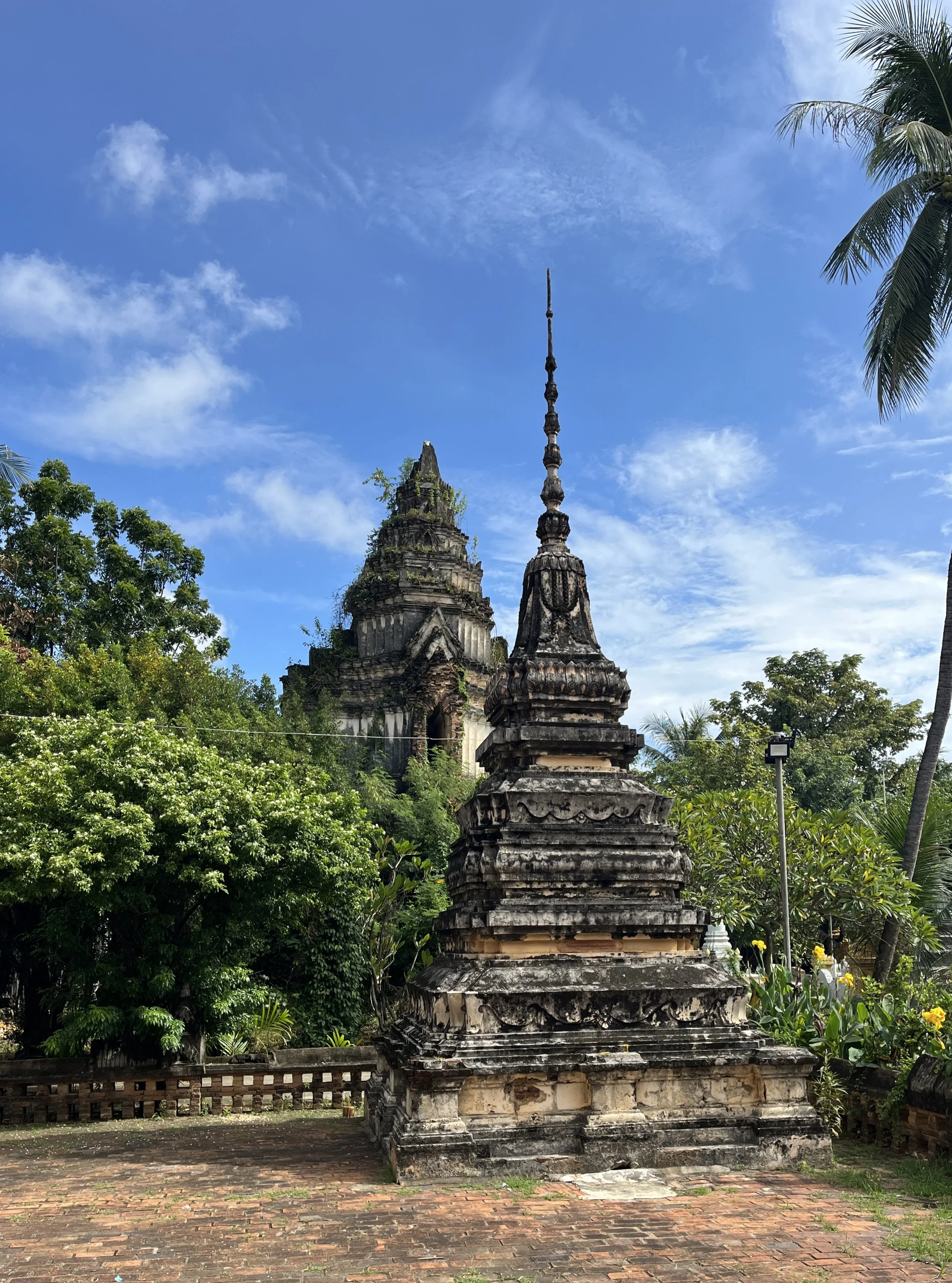
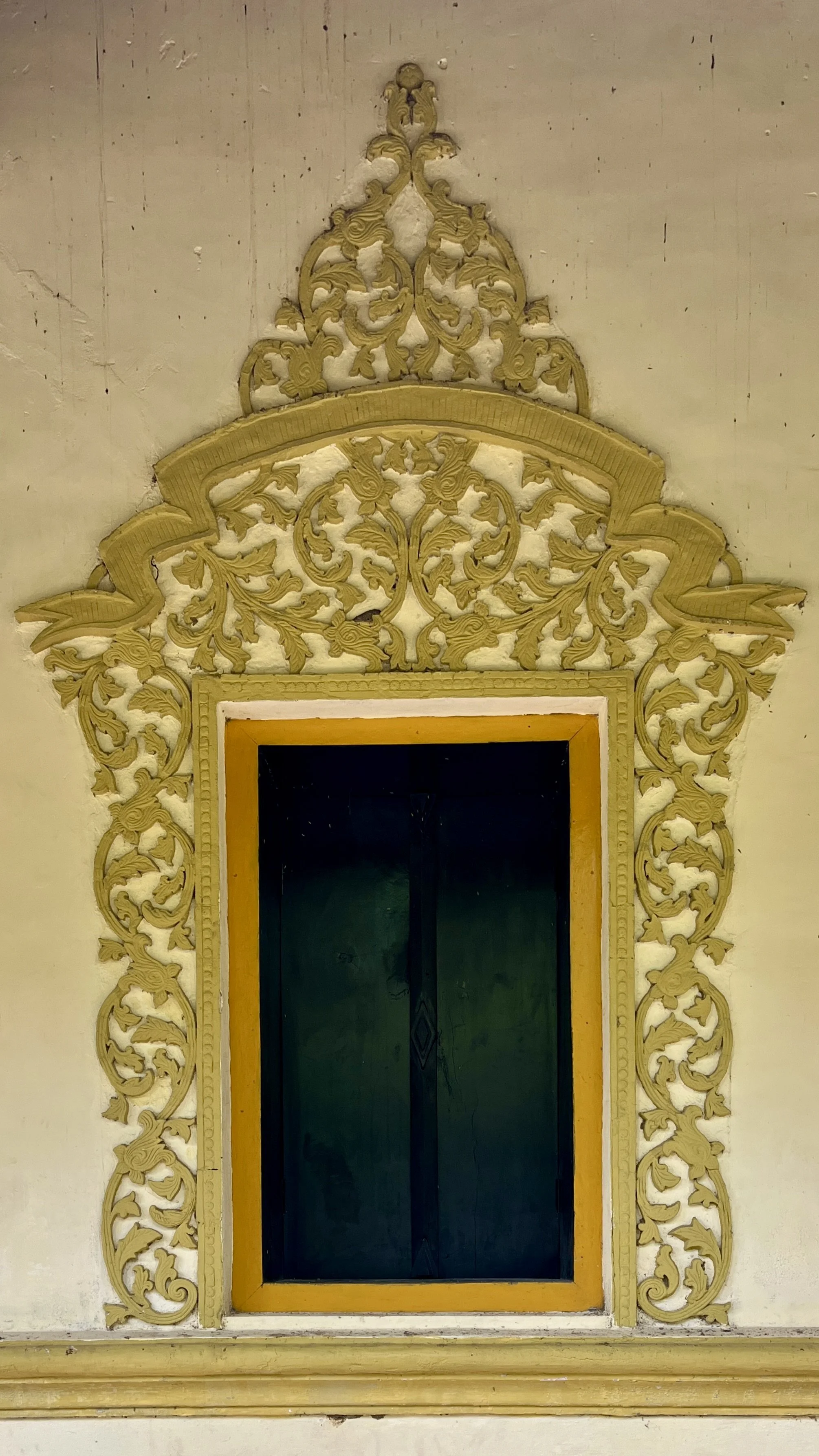
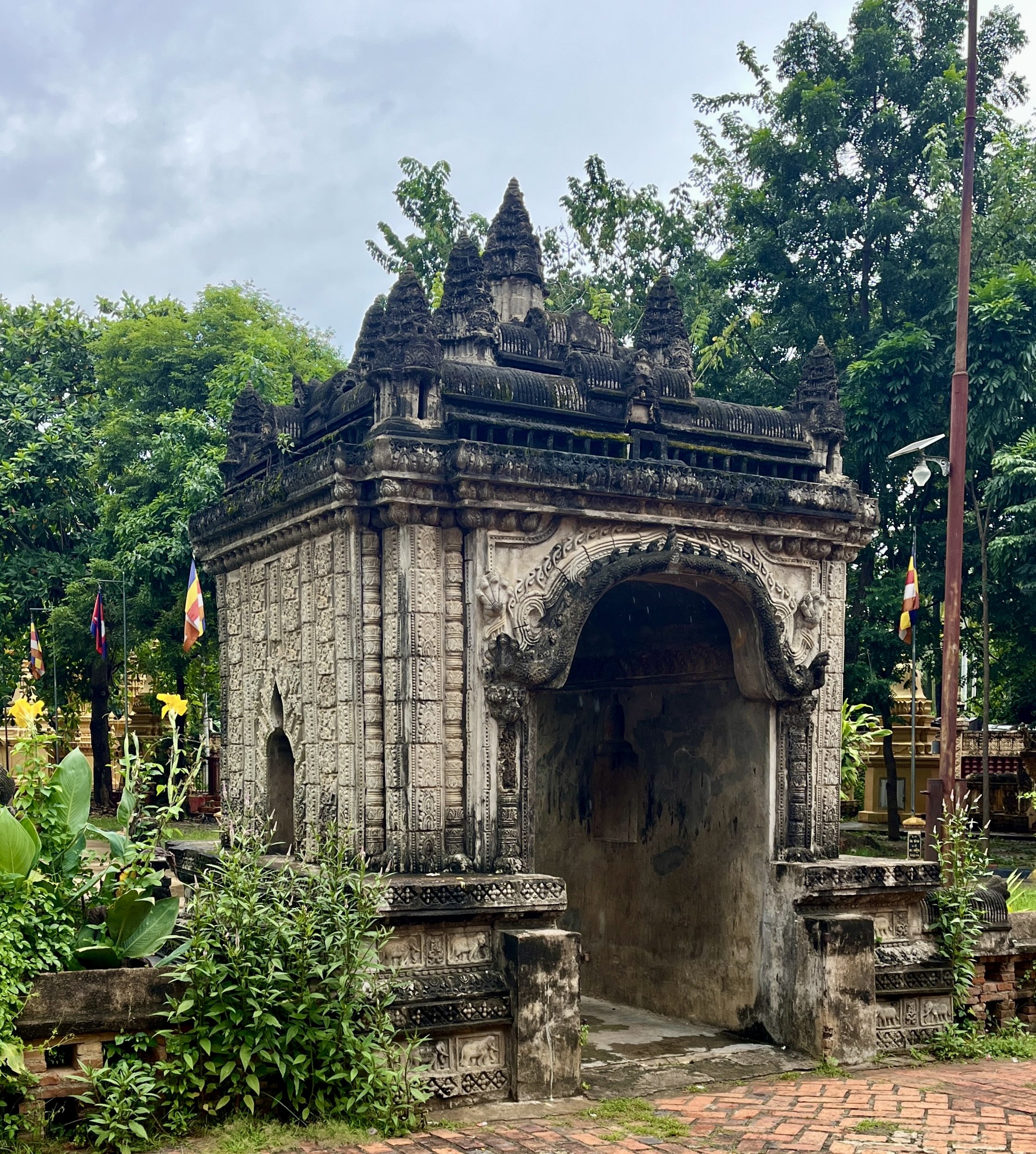
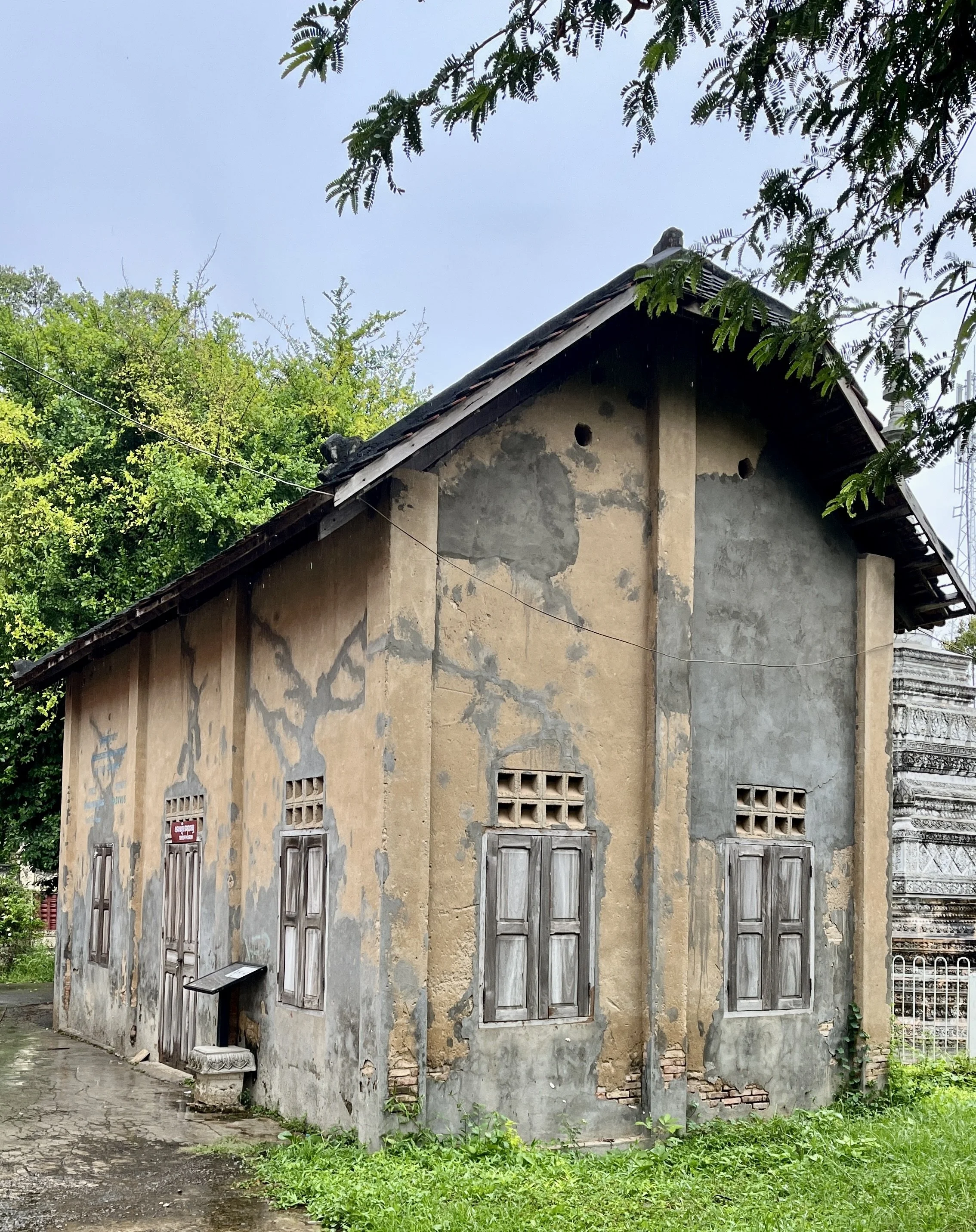
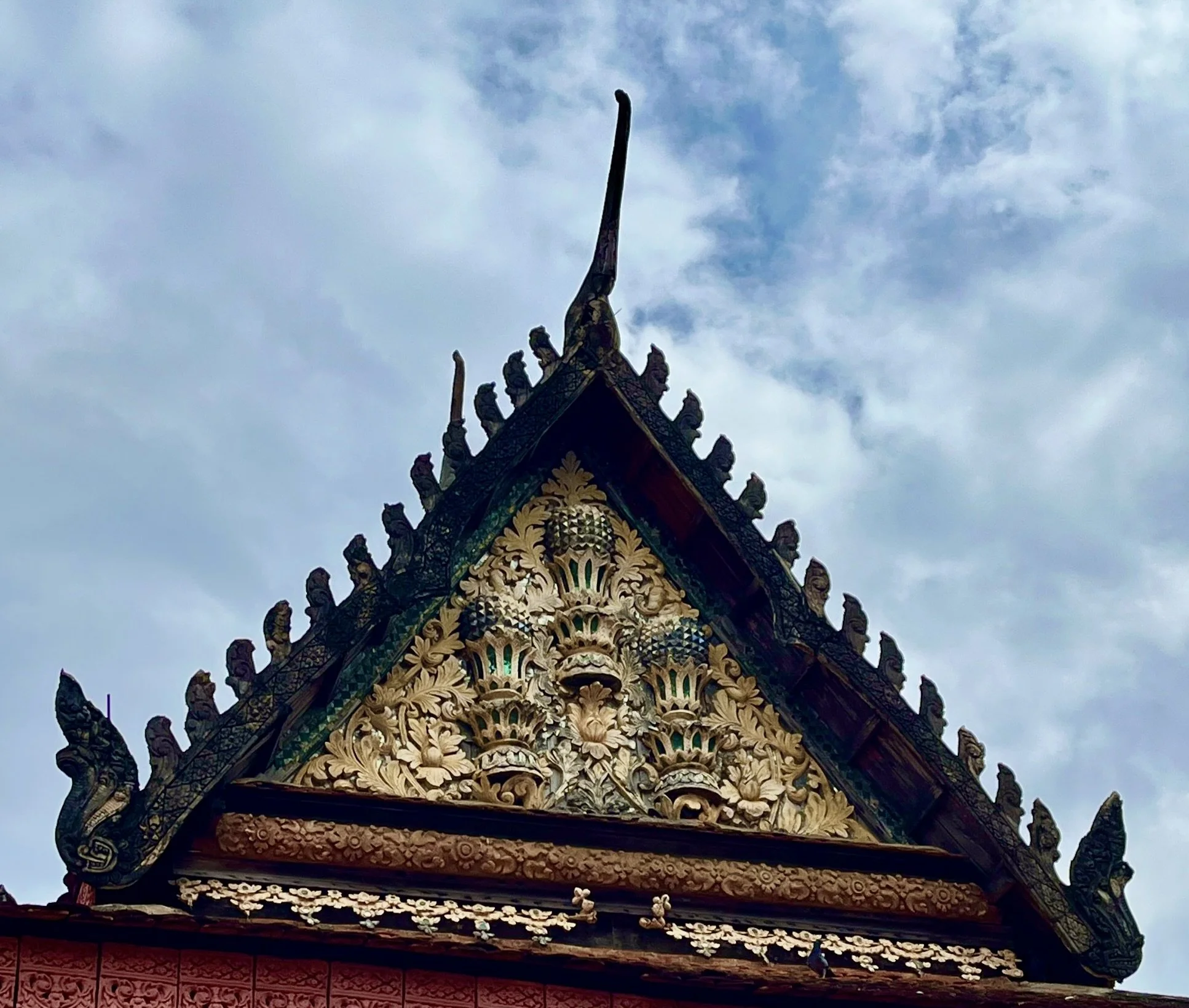
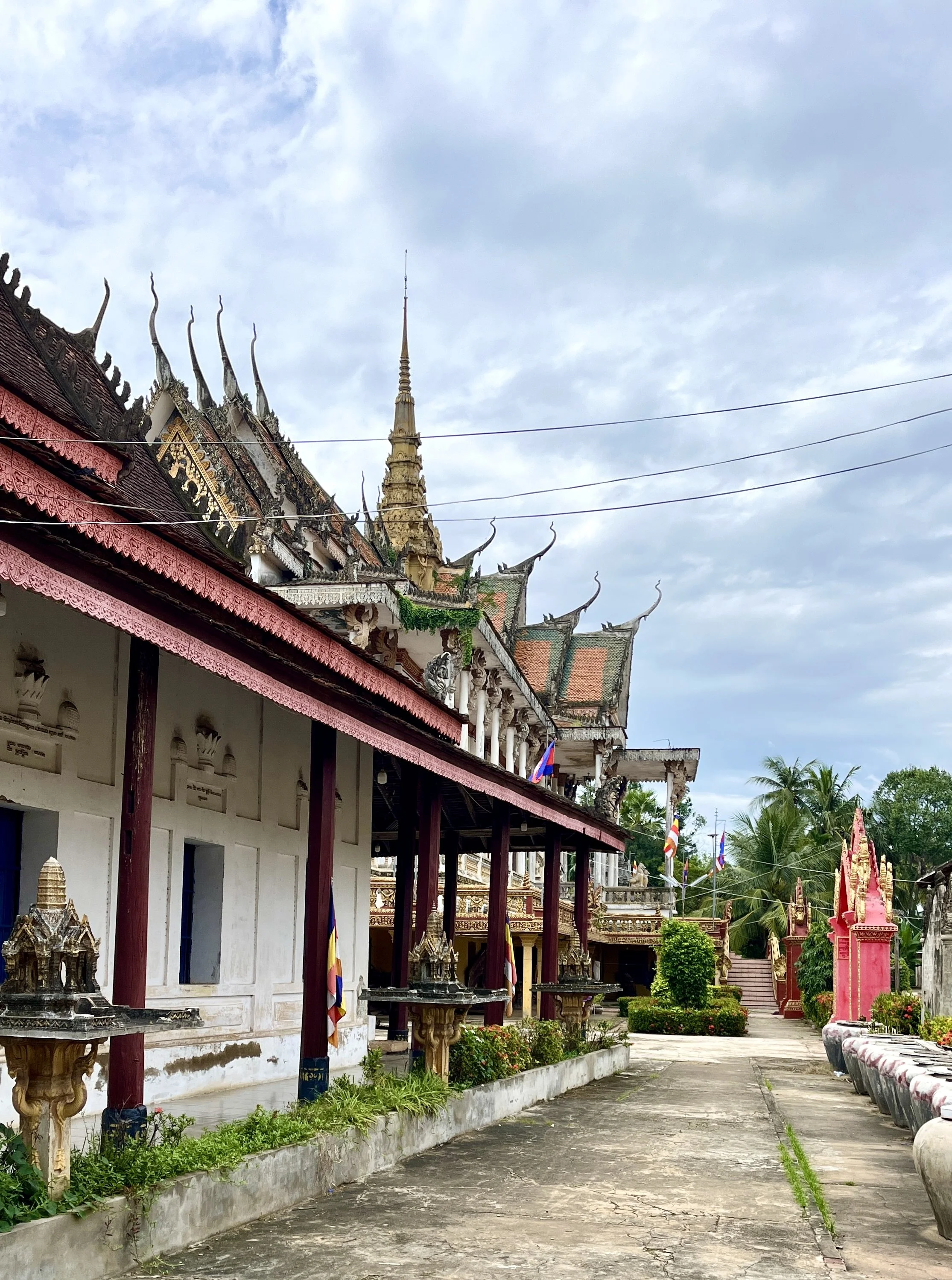
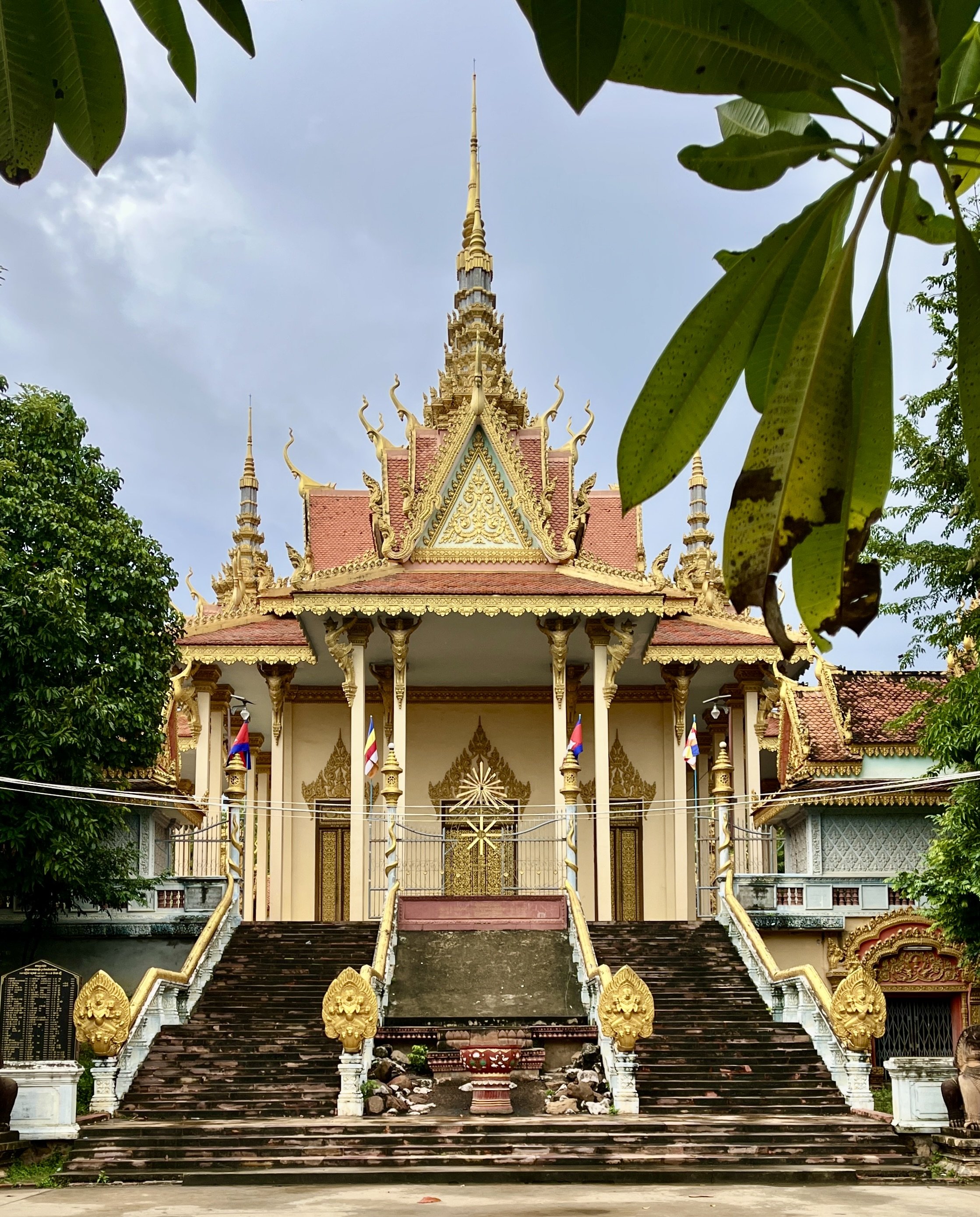
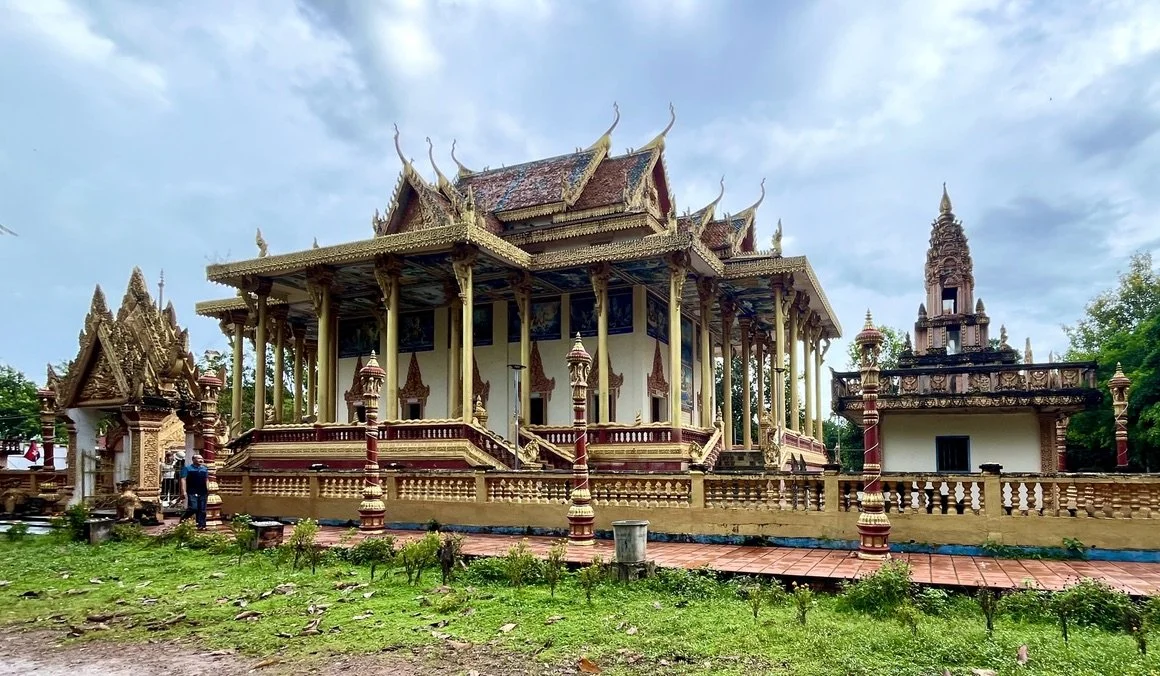
Like most of the other temples around Battambang, I can’t find much info on Wat Kor beyond “It dates from the early 1900s” and is in the “special Battambang architectural style blending Thai and Khmer”. I believe the proper context for understanding it is that historically, this was the neighborhood where Khmer civil servants and their various adjutants chose to live, in both Thai and French colonial eras. Their wealth afforded them a wat fitting their social status, and their exposure to Thai and French architecture and material culture diversified and refined their tastes.
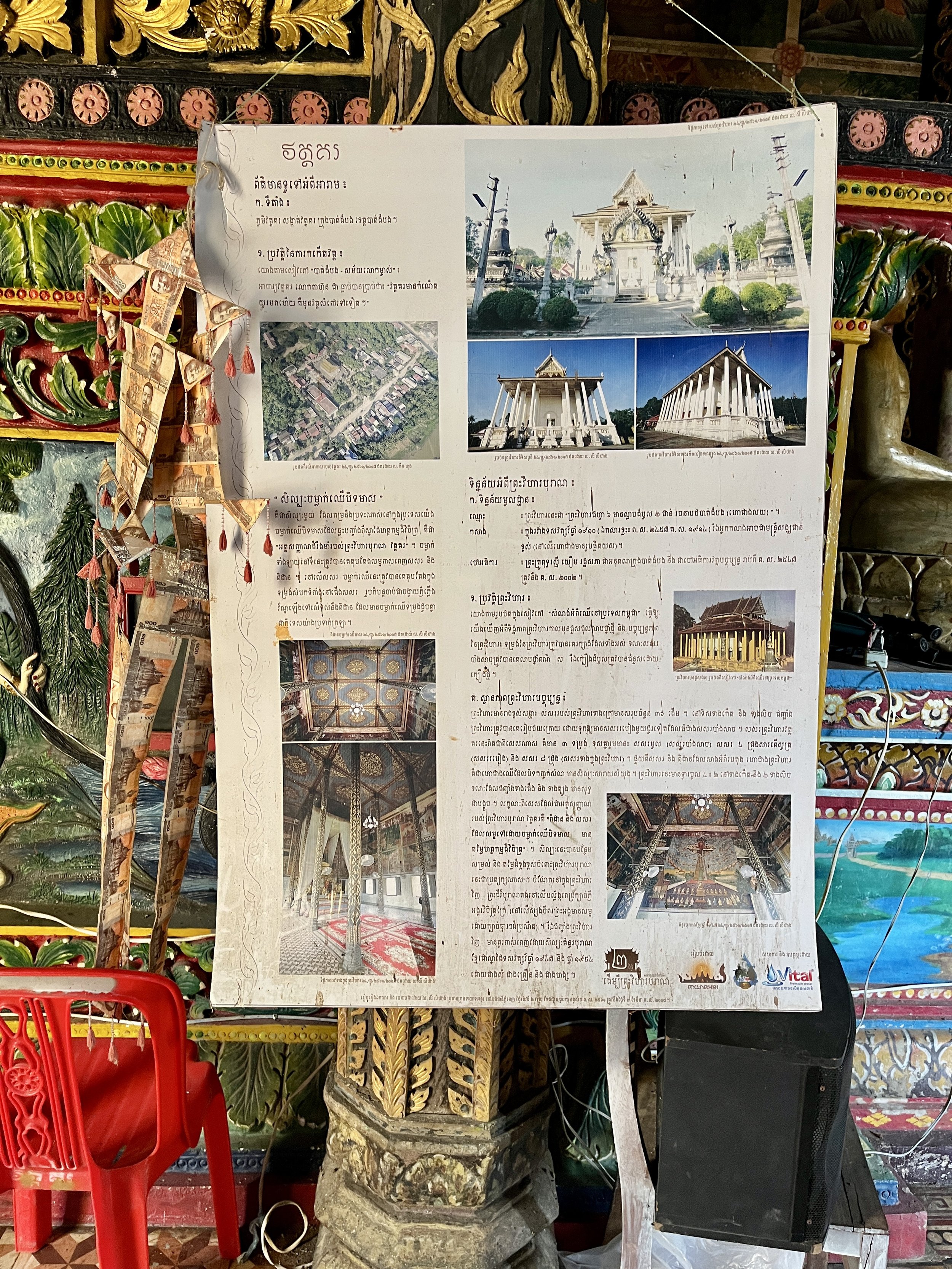
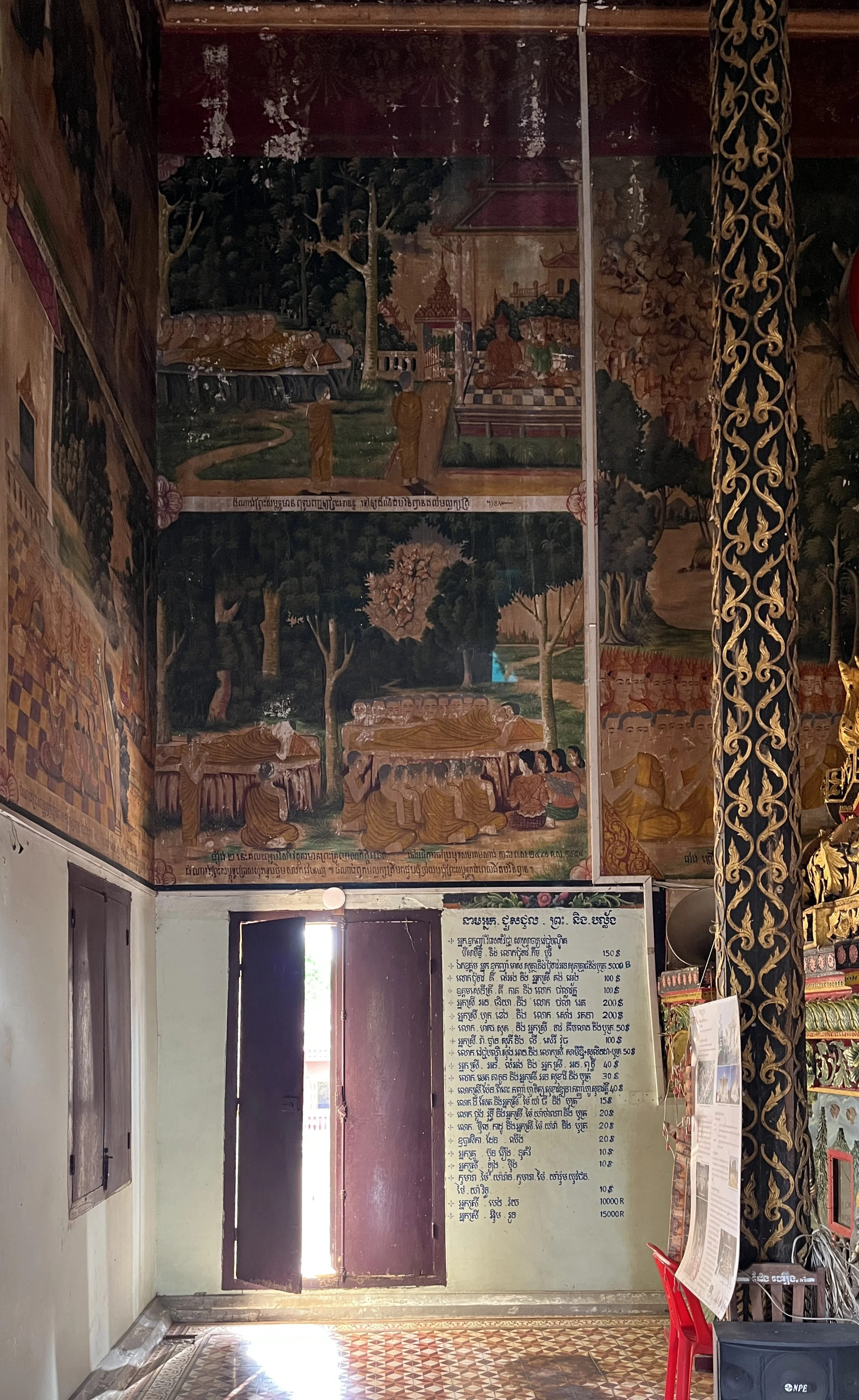
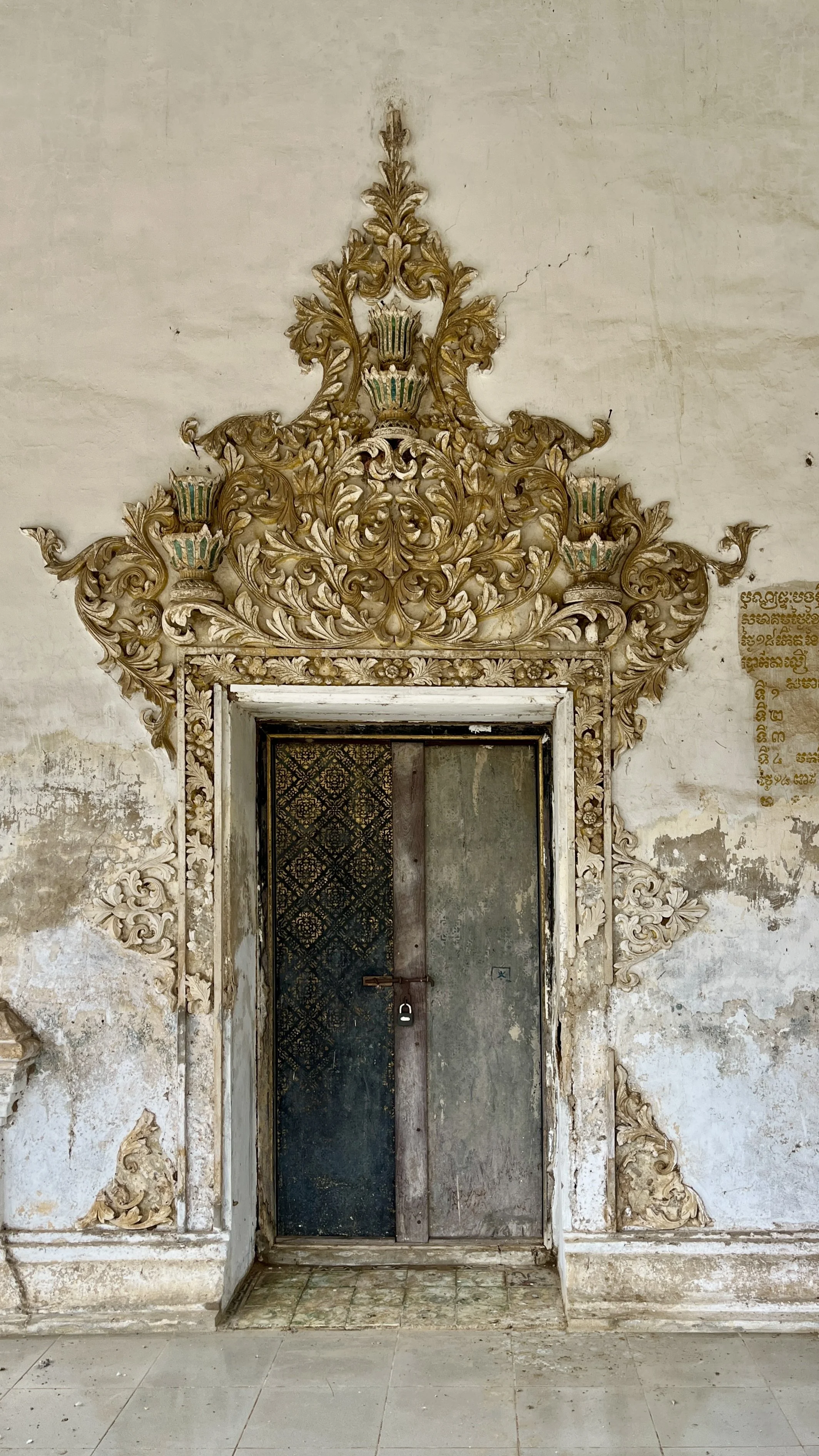
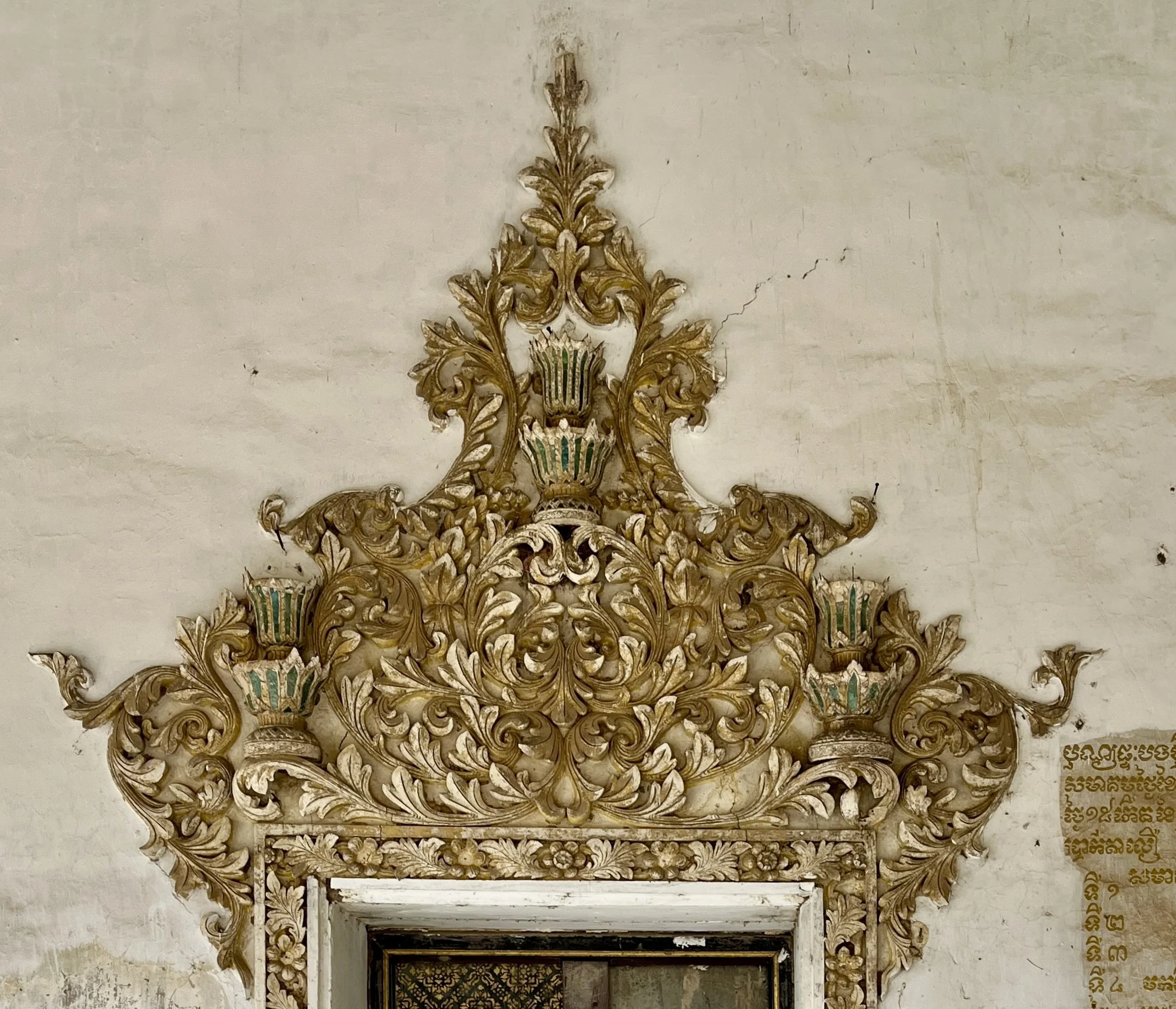
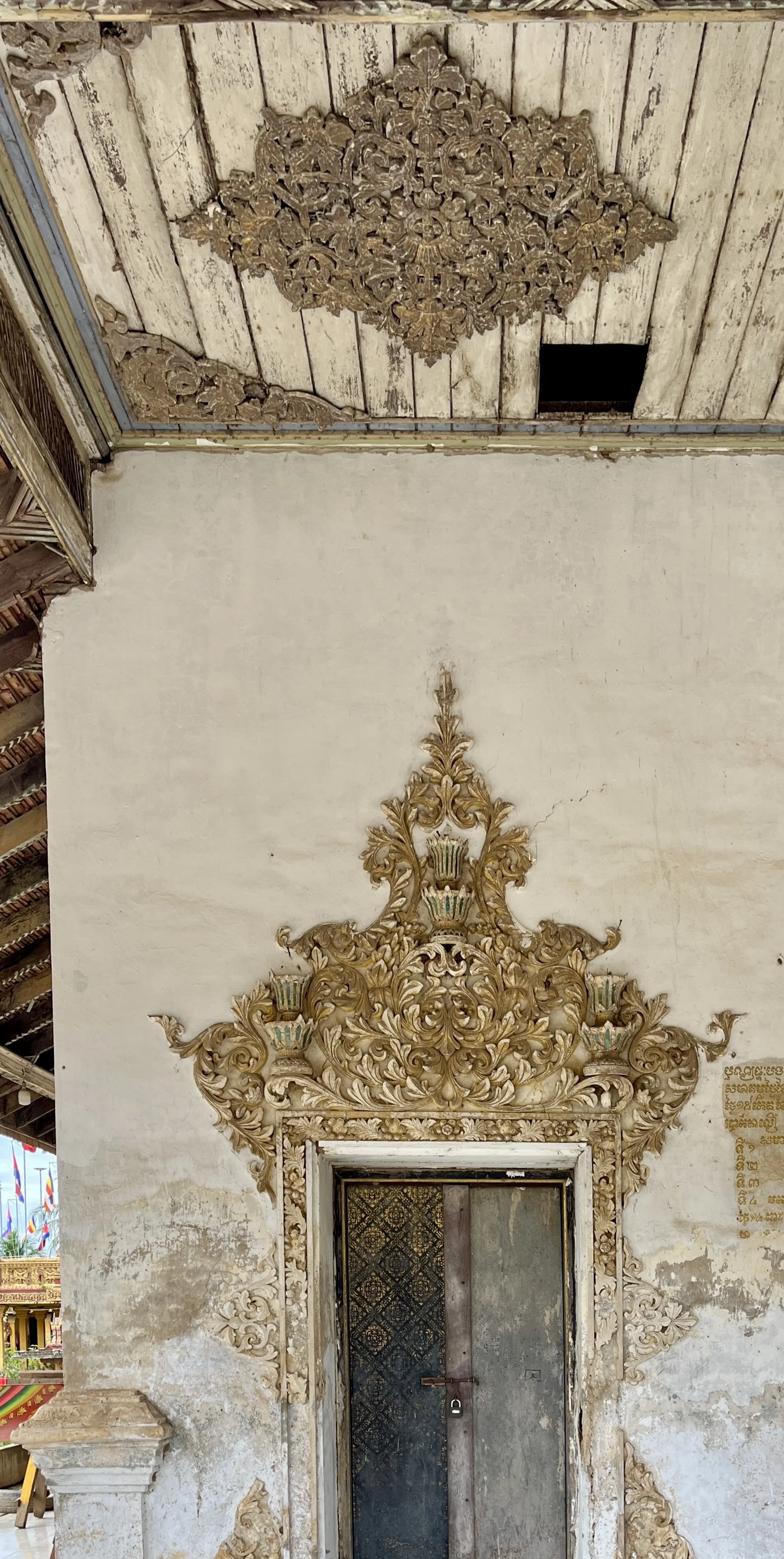
I’m assuming this is about the construction, history, and/or renovation of the temple. There was nothing in English or French.
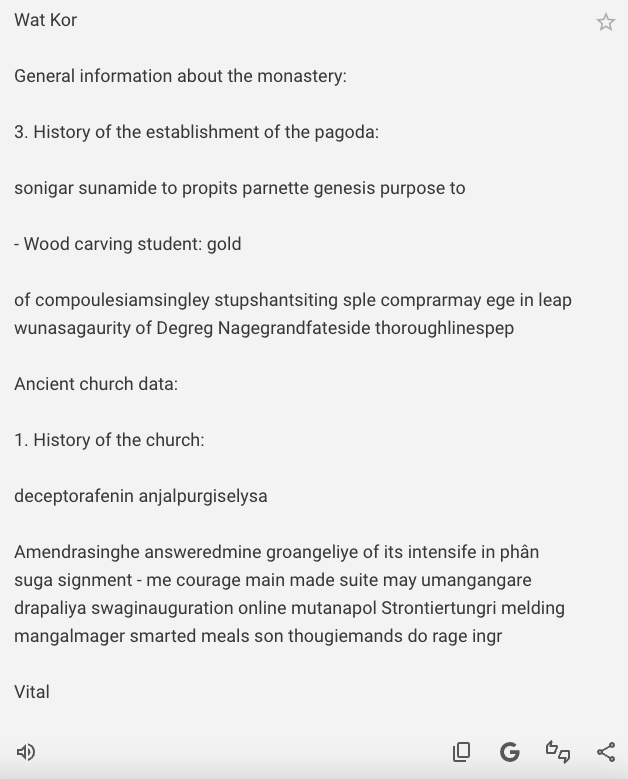
To give some context for exactly how mangled and useless translator apps are with Khmer, here’s the google translation of the text into English.
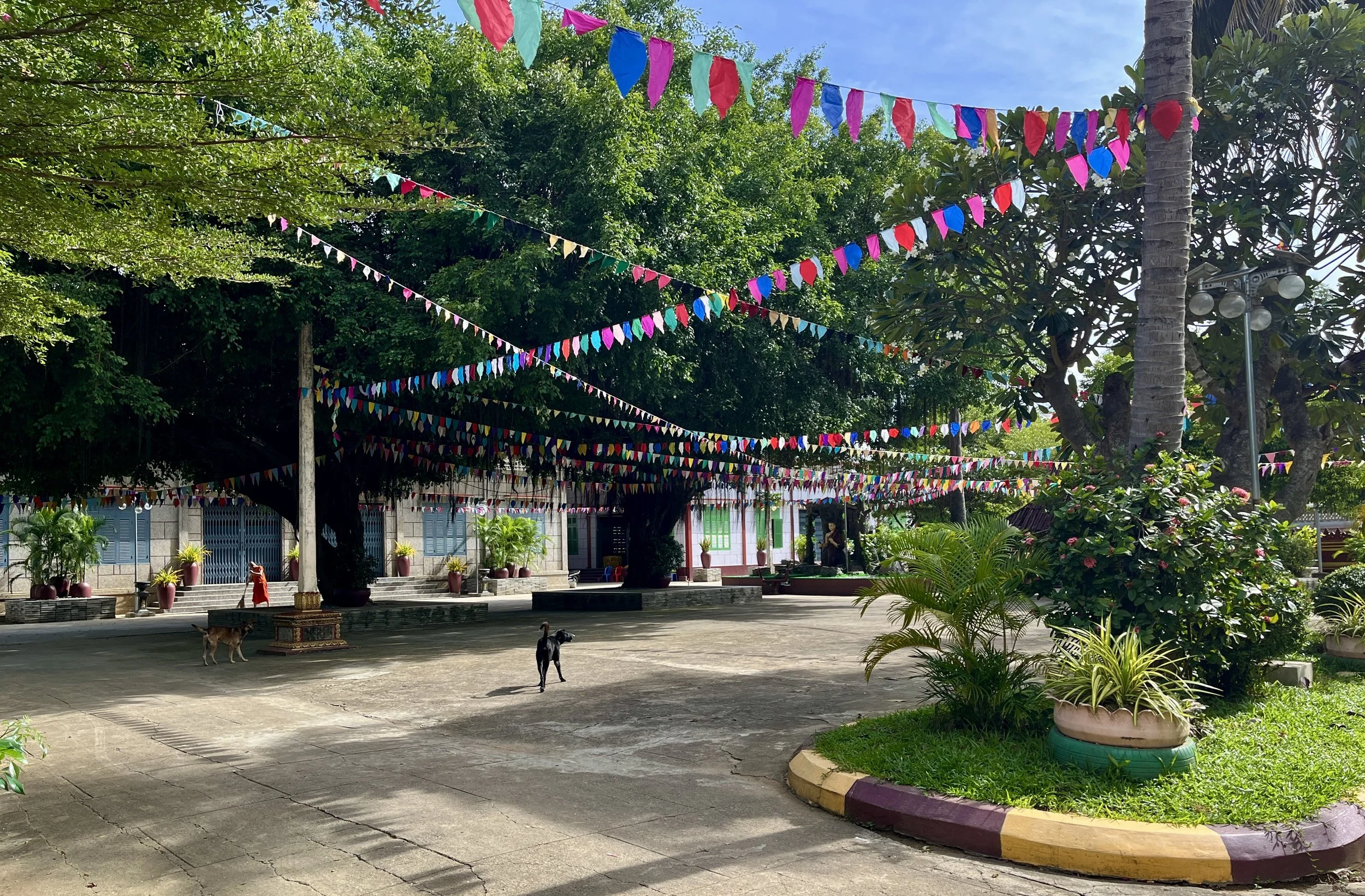
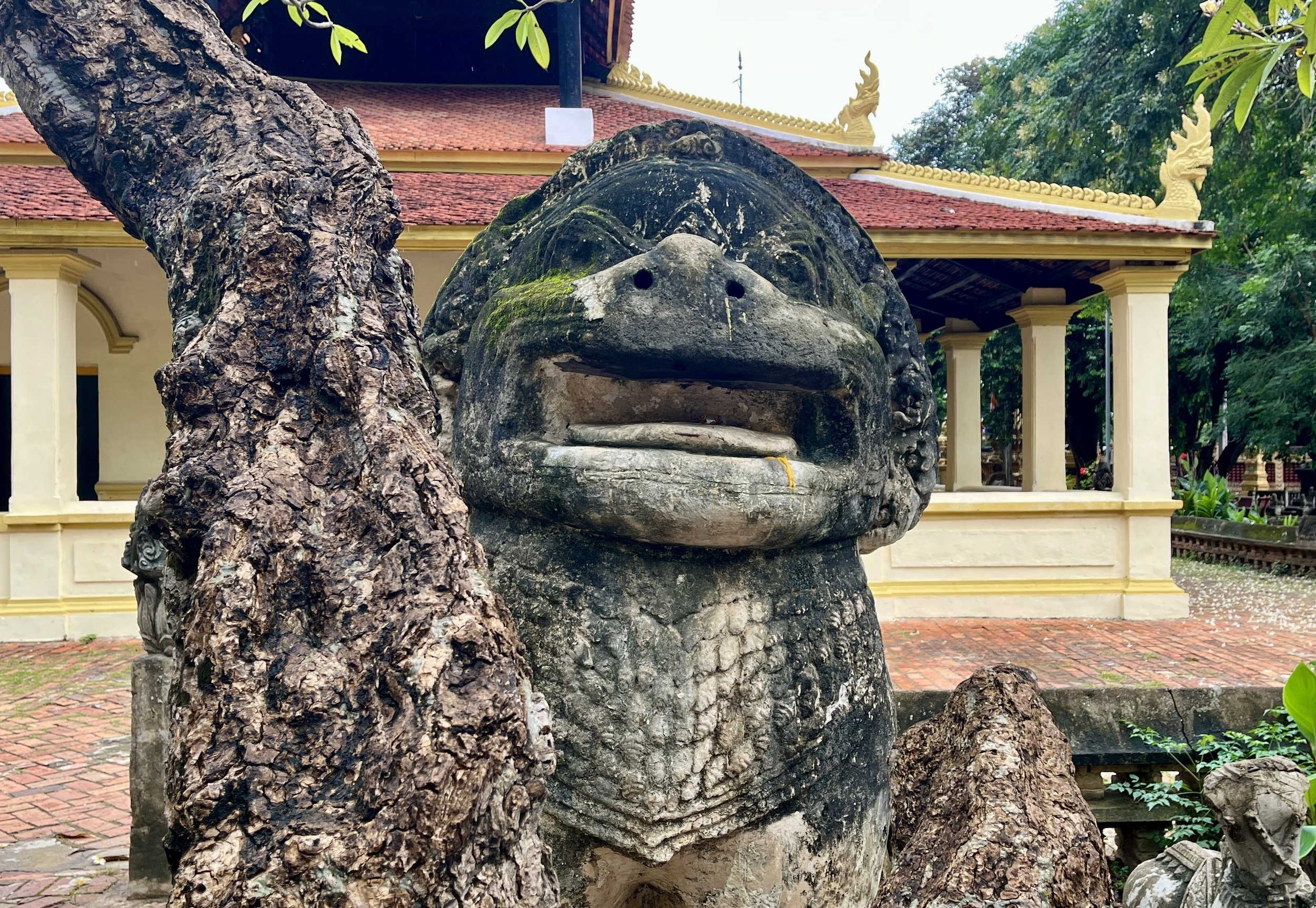
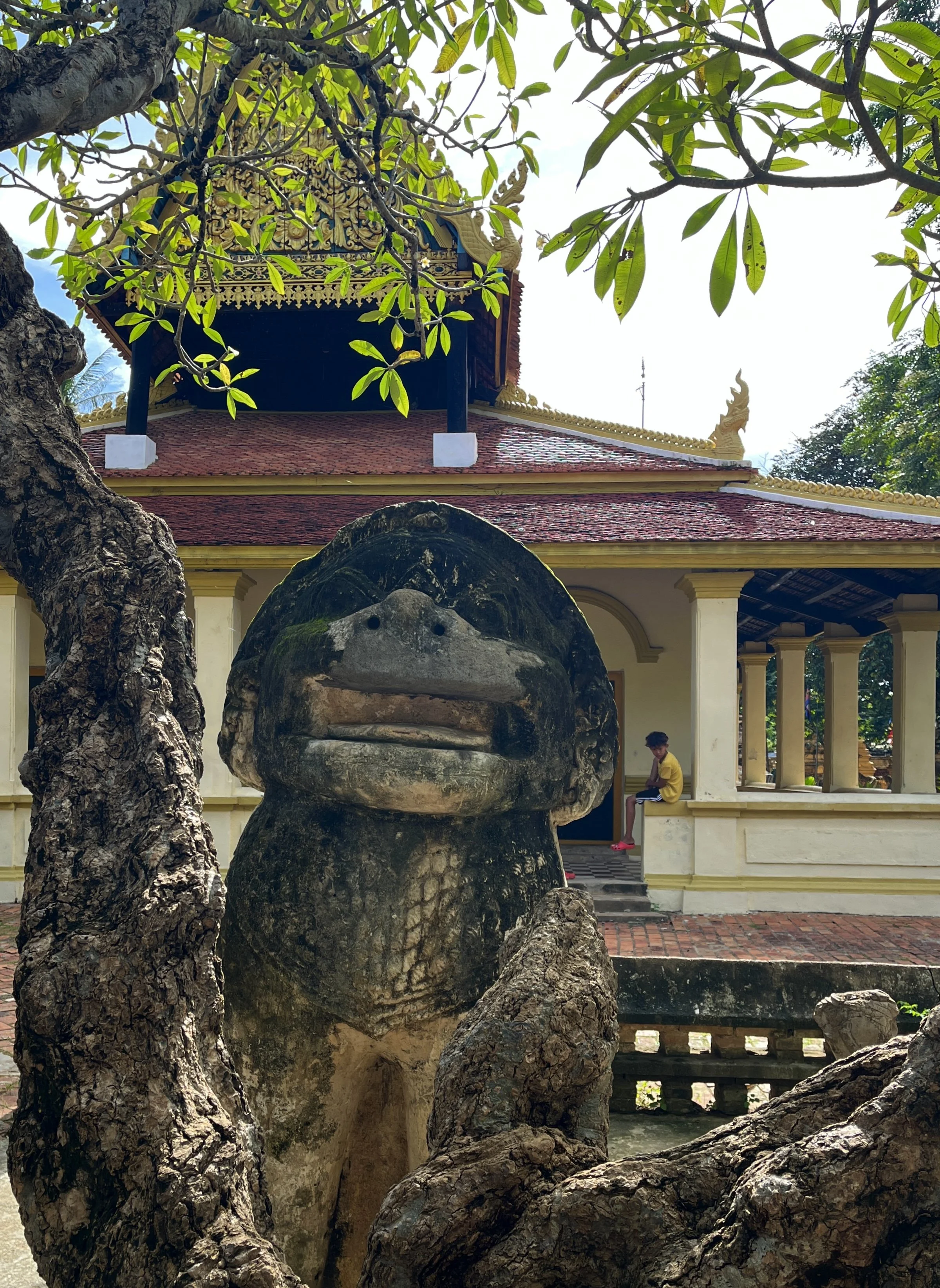
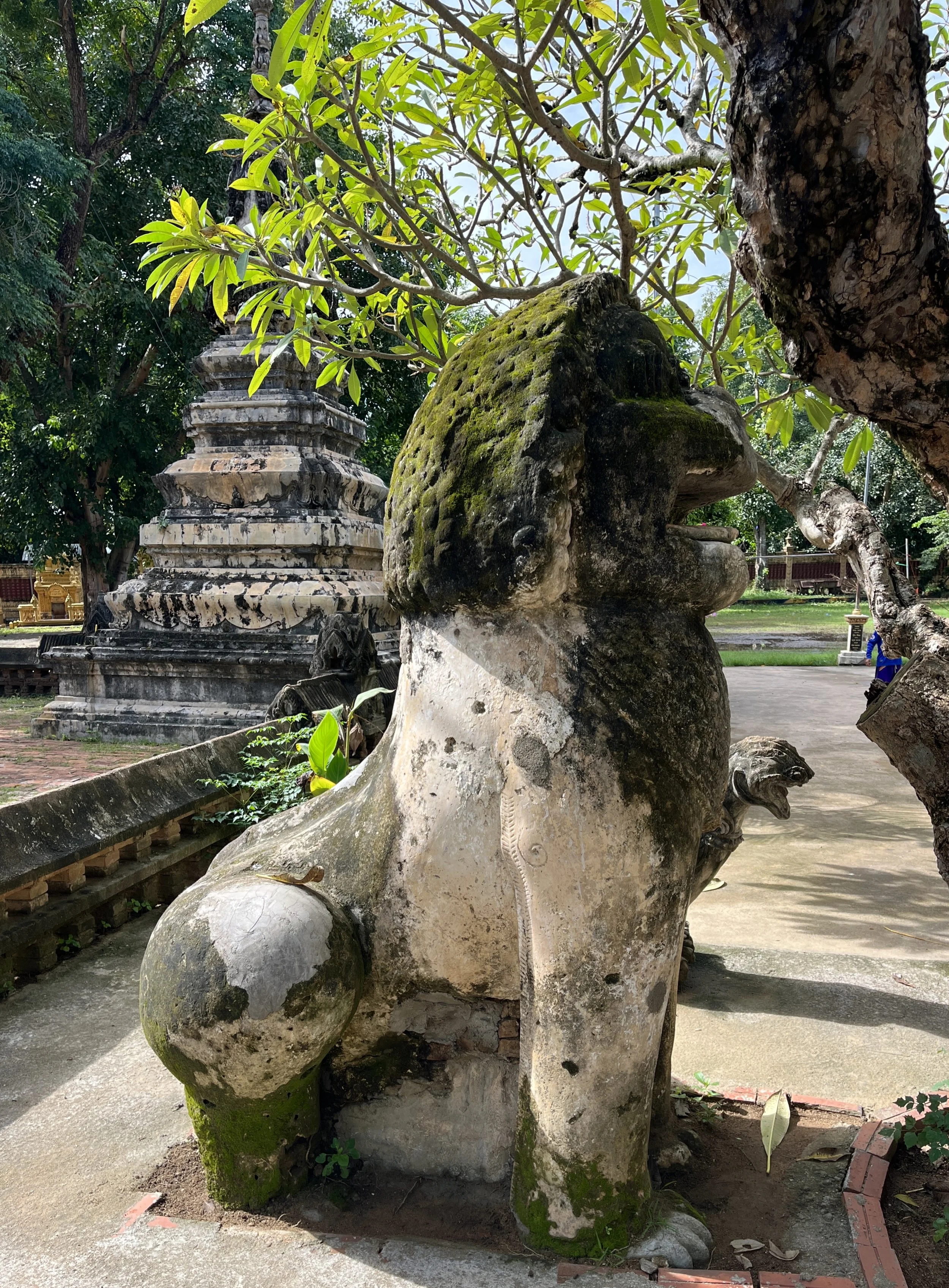
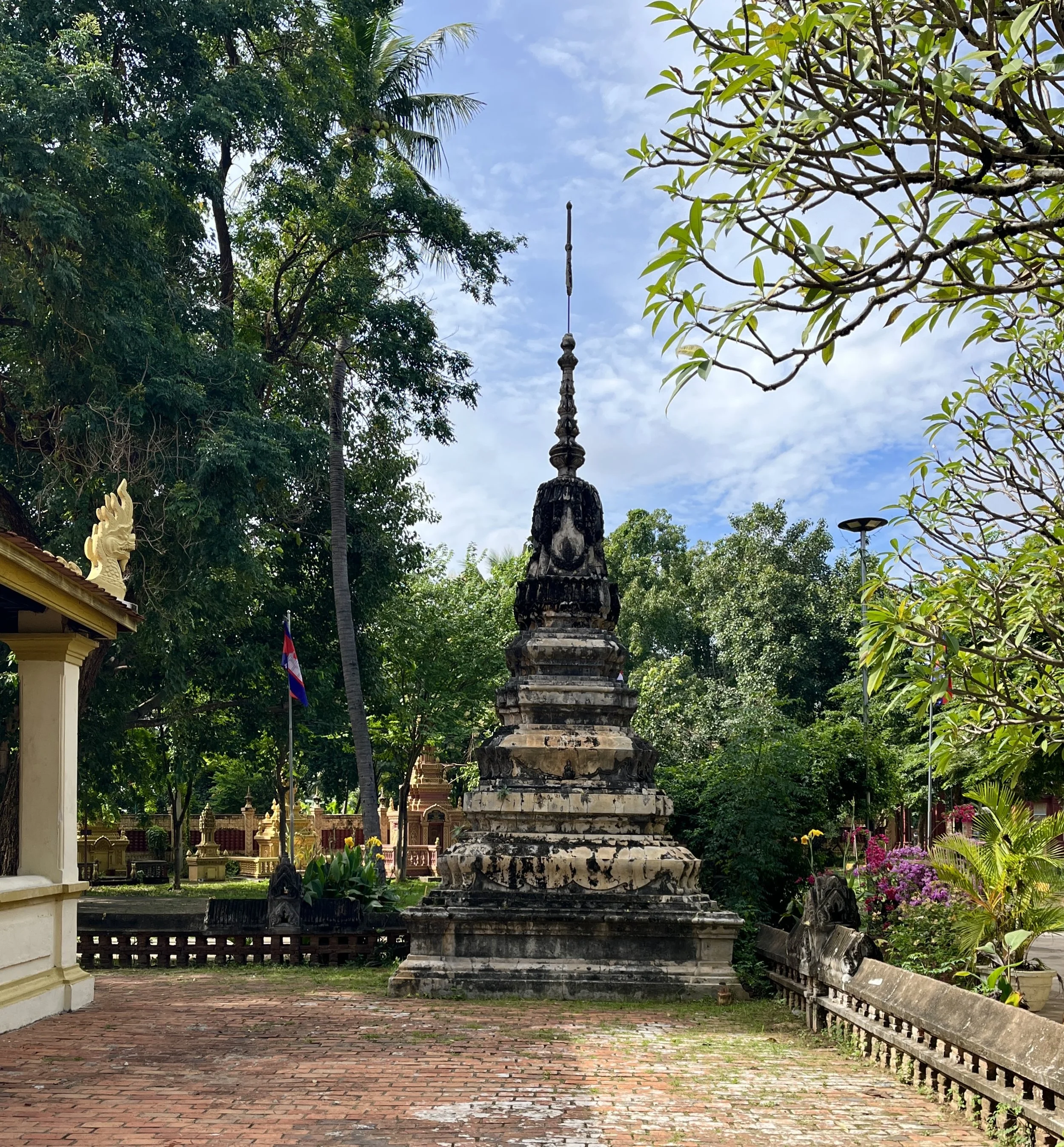
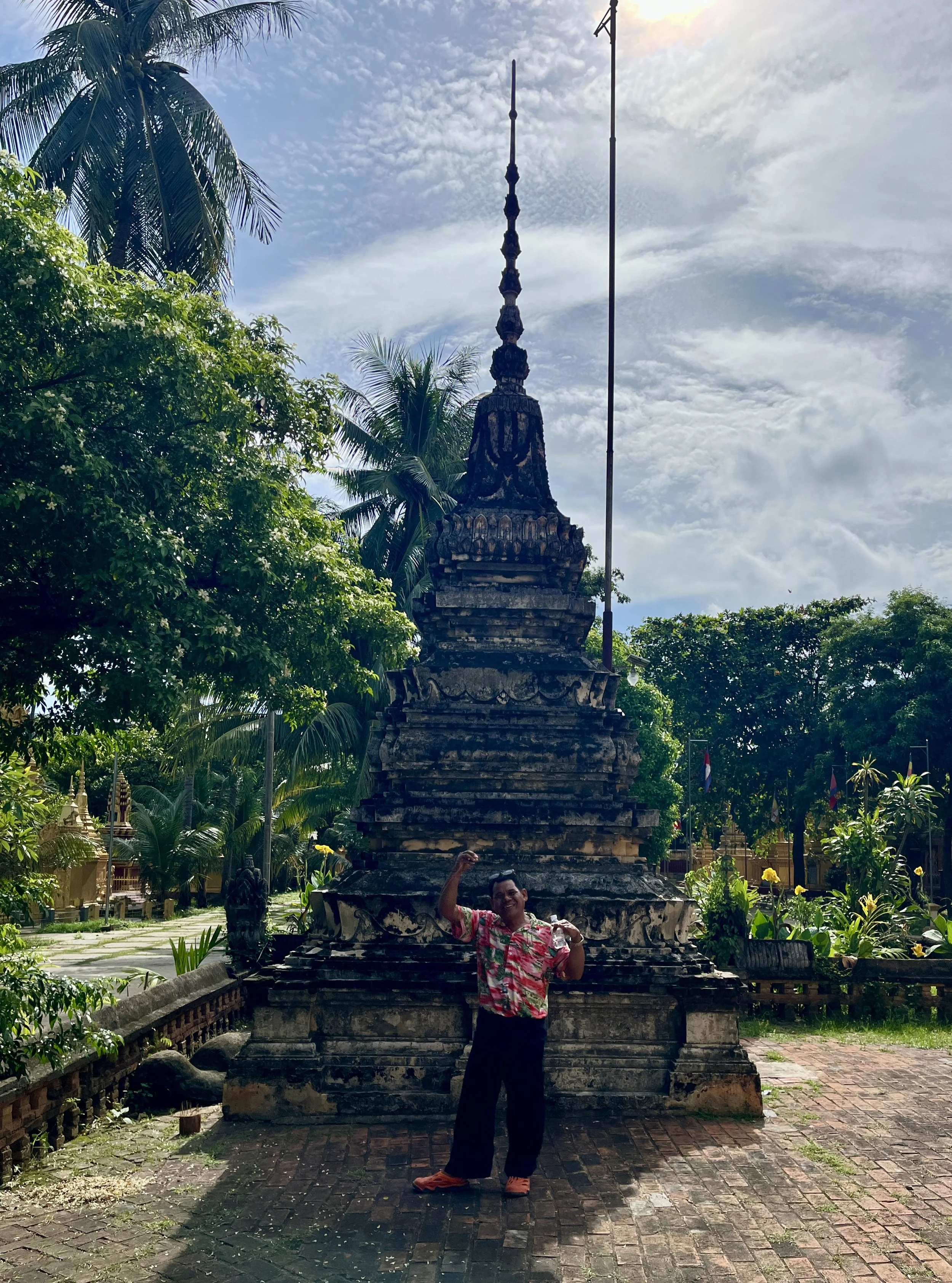
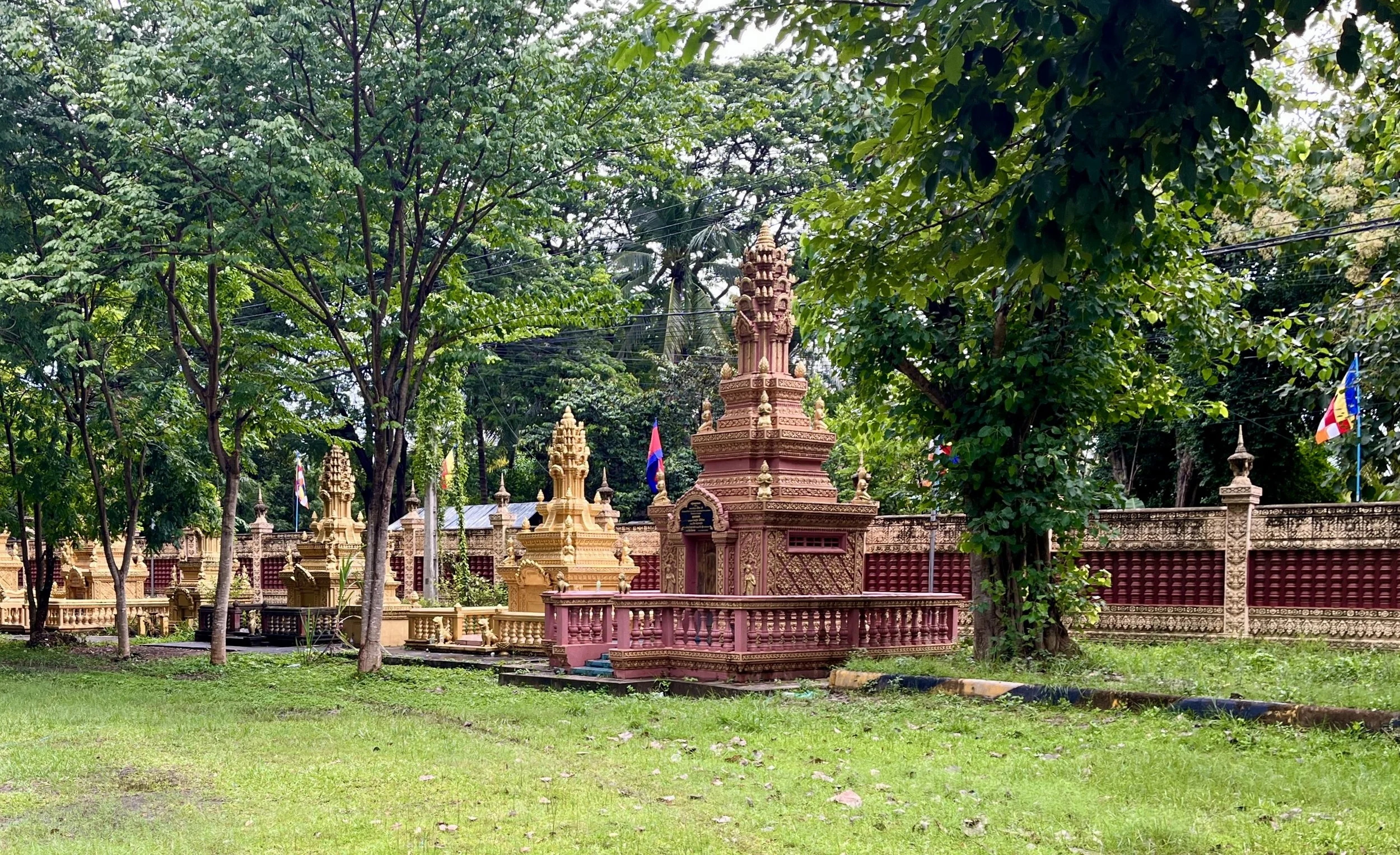
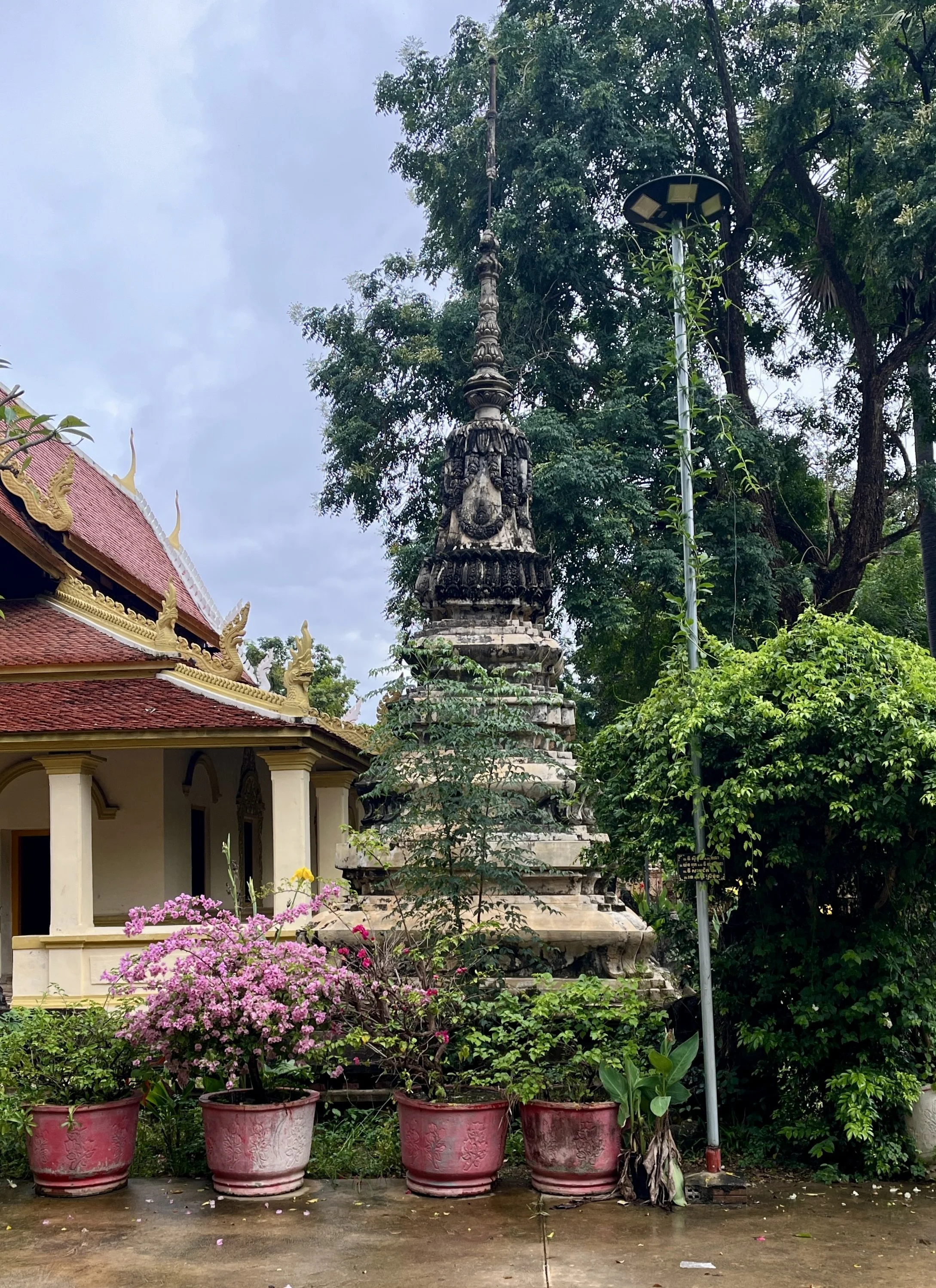
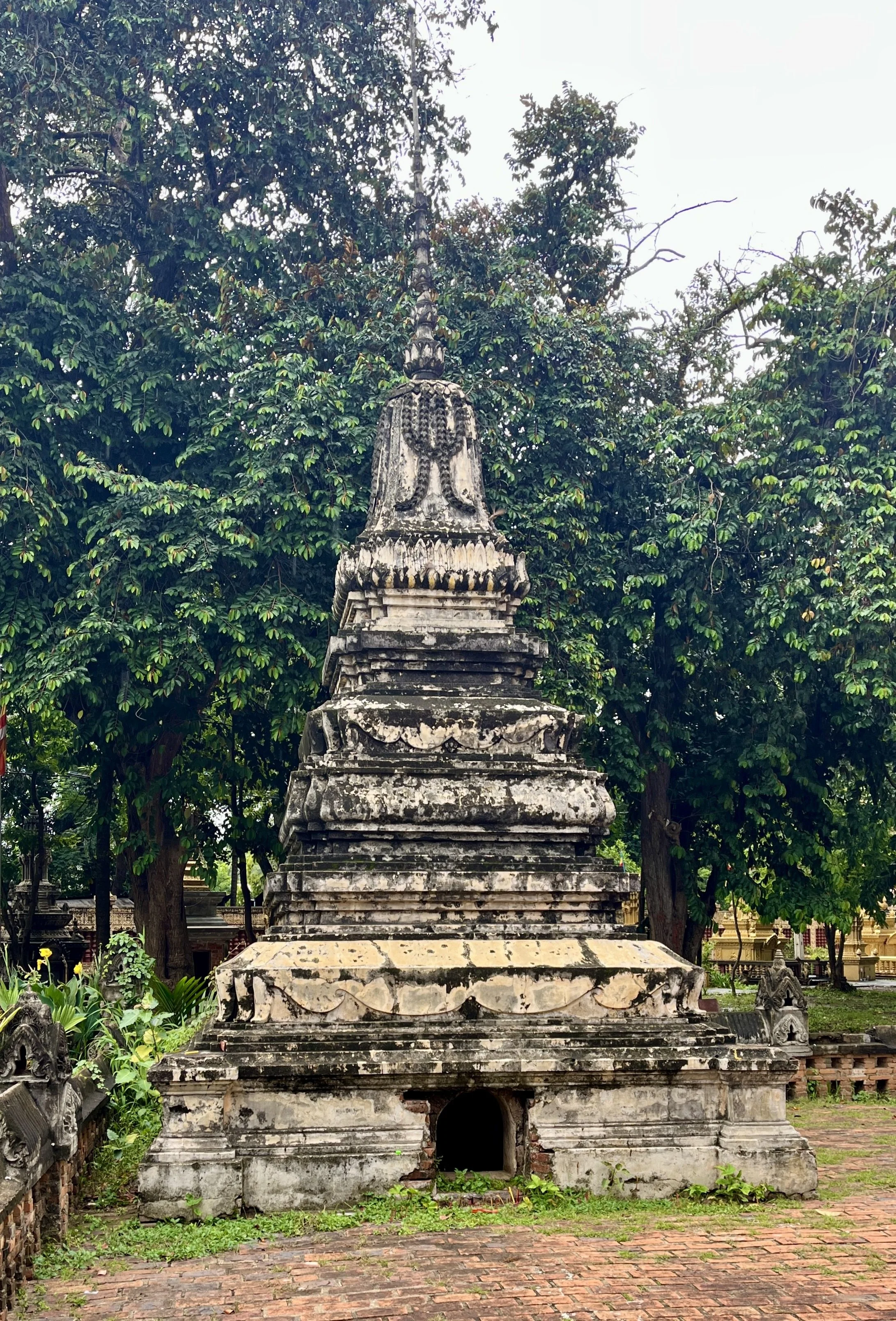
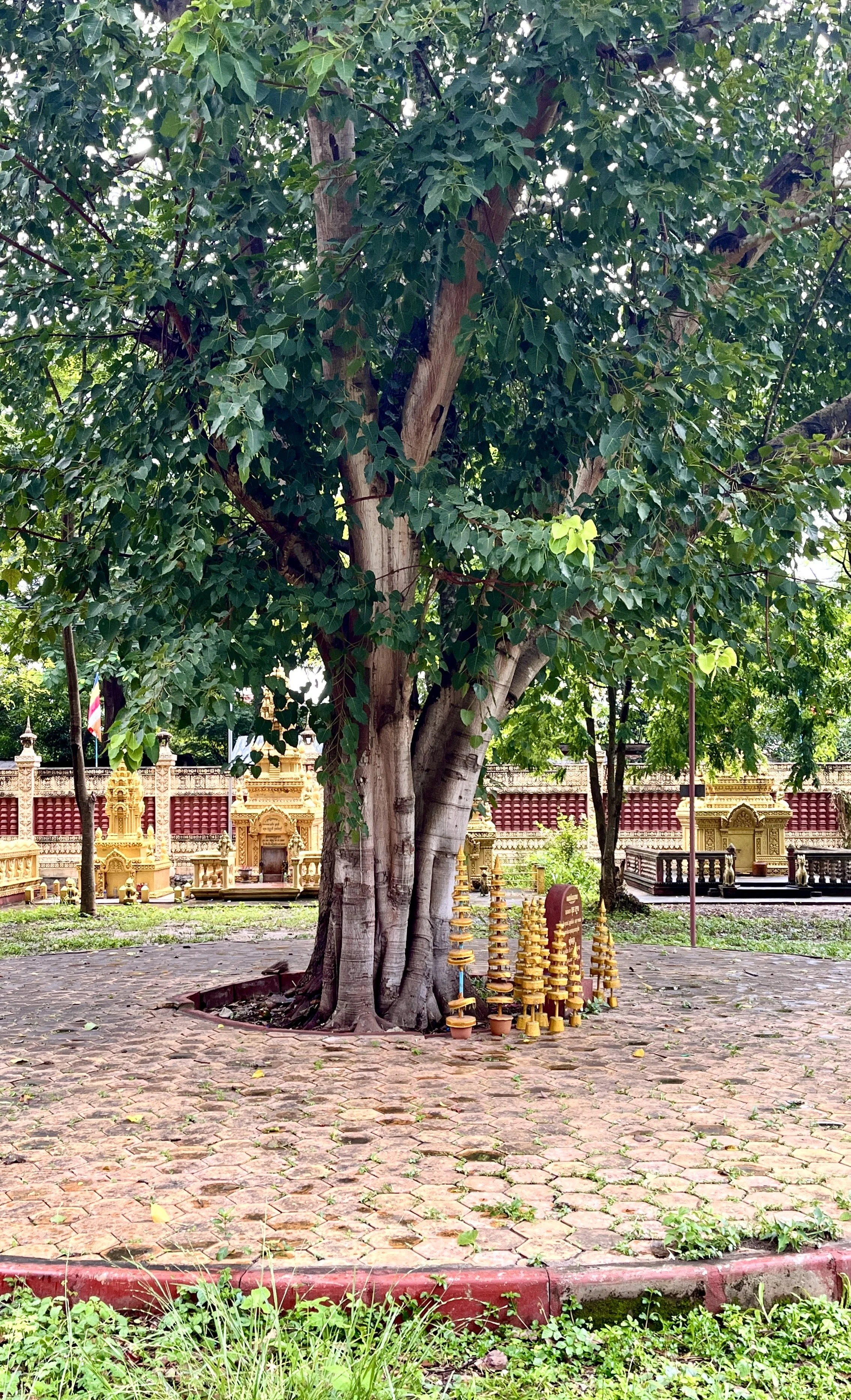
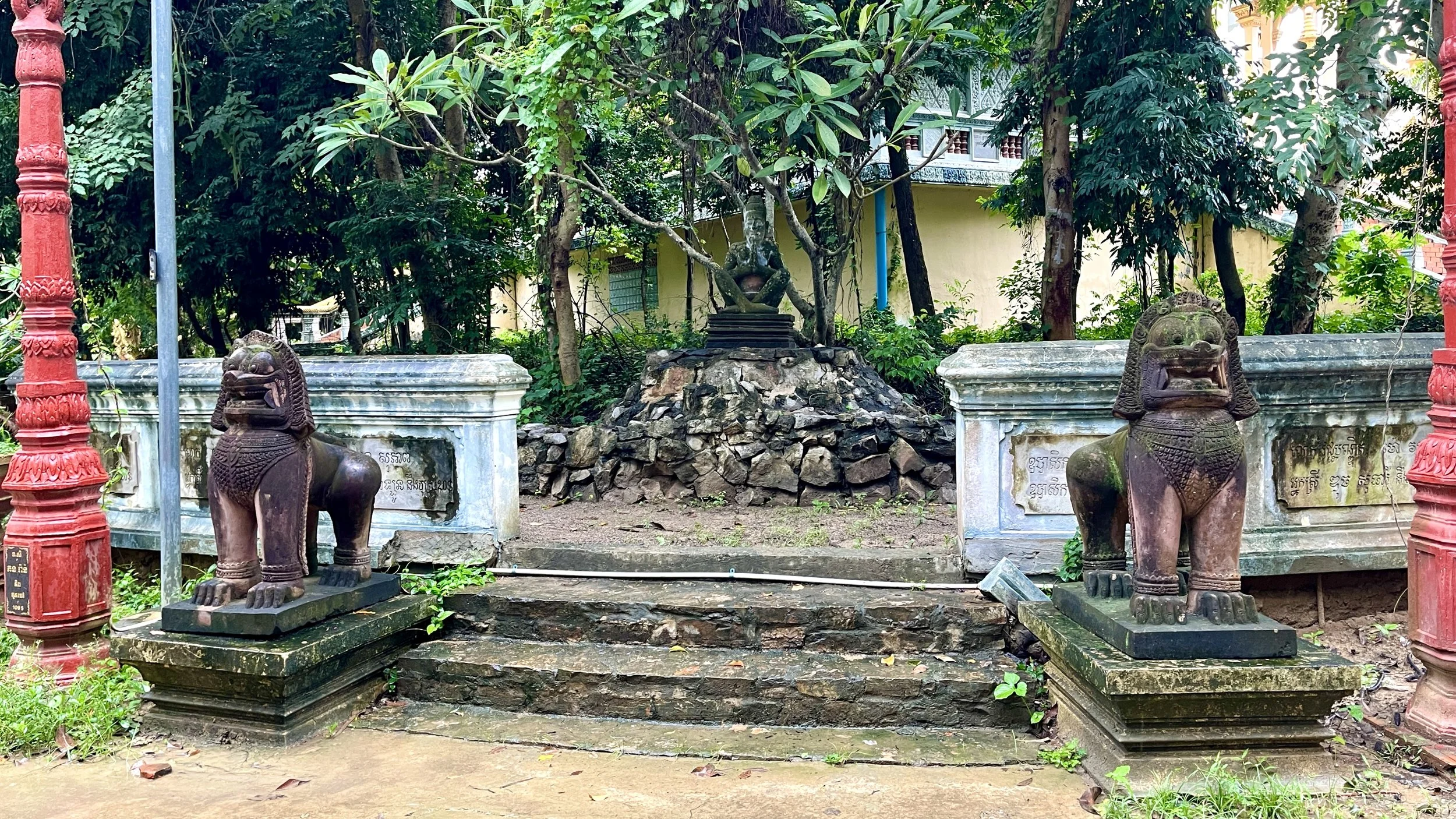
One lovely thing about the place is that, as it is not a monastery, it hasn’t been littered with the stupas of generations of abbots. The grounds, though not large, still give the relief delivered by negative space. The statuary here are more charming than tacky. Still can’t escape the mangey temple dogs though!

I was quite ill when I visited, so I took bad photos and worse videos, and am having trouble breathing in the audio. It’s a shame because this is probably the most aesthetic temple I encountered in Battambang. This video really shows what it’s like outside; even though my video is trash it does show more of the interior.
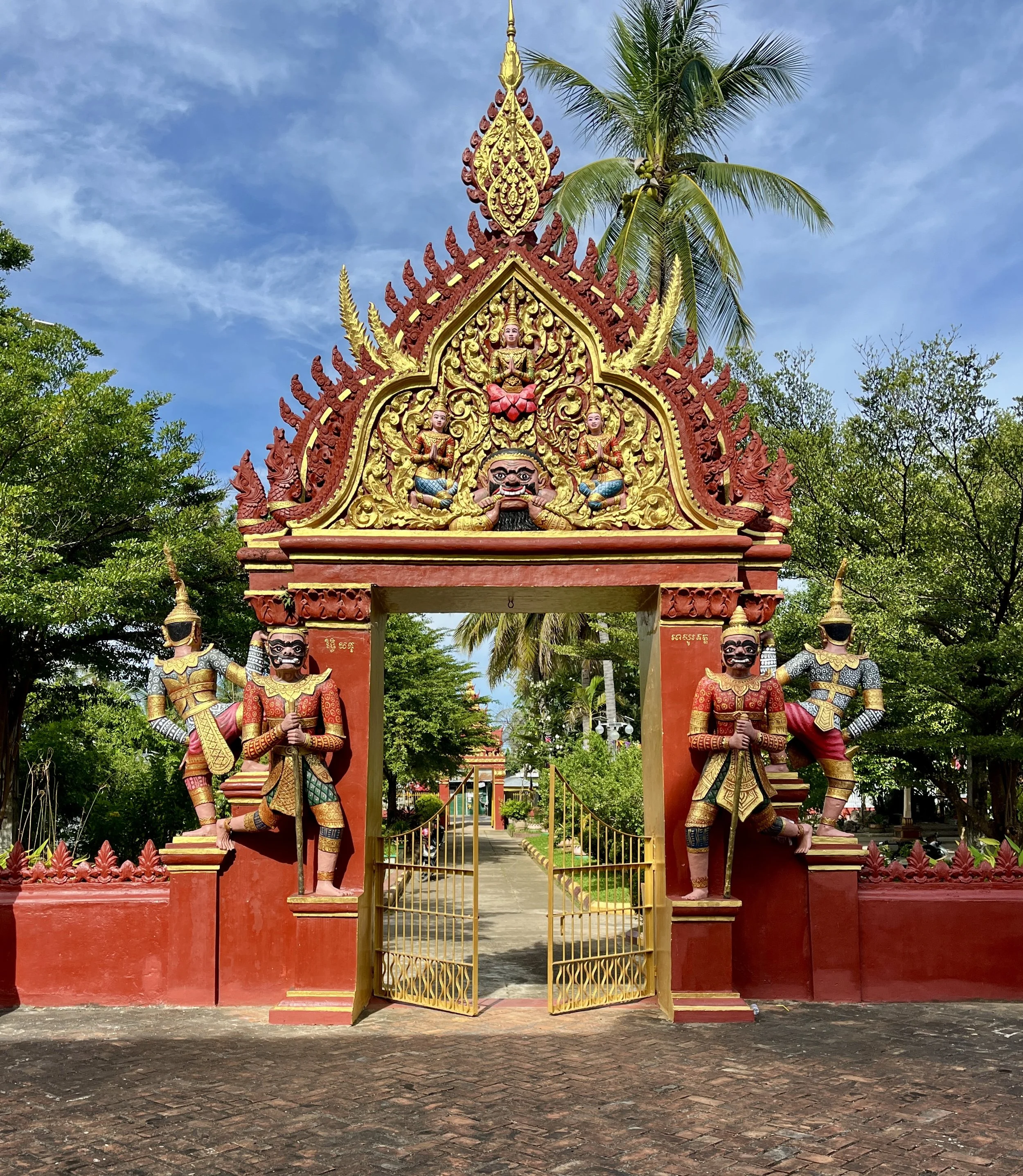
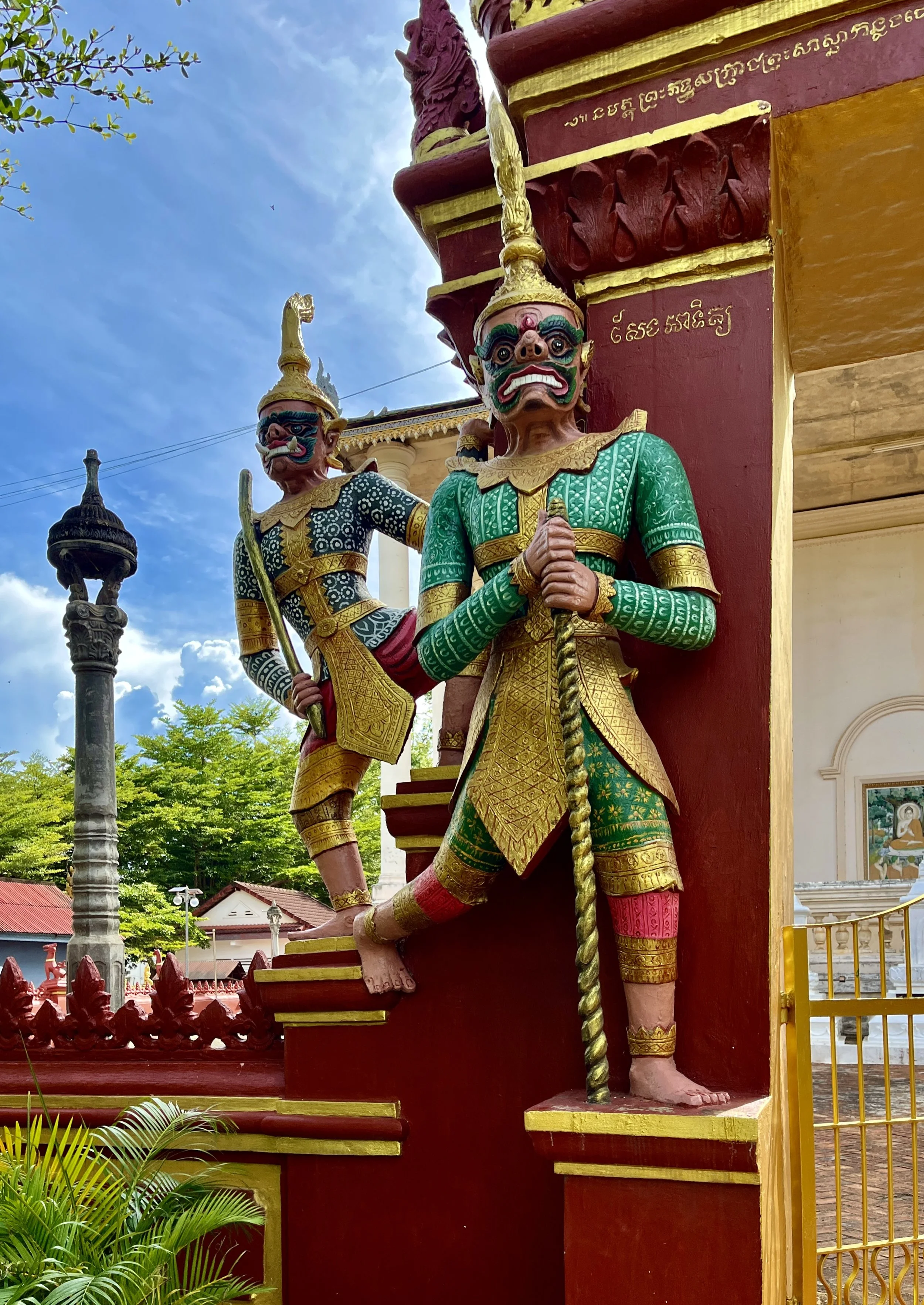
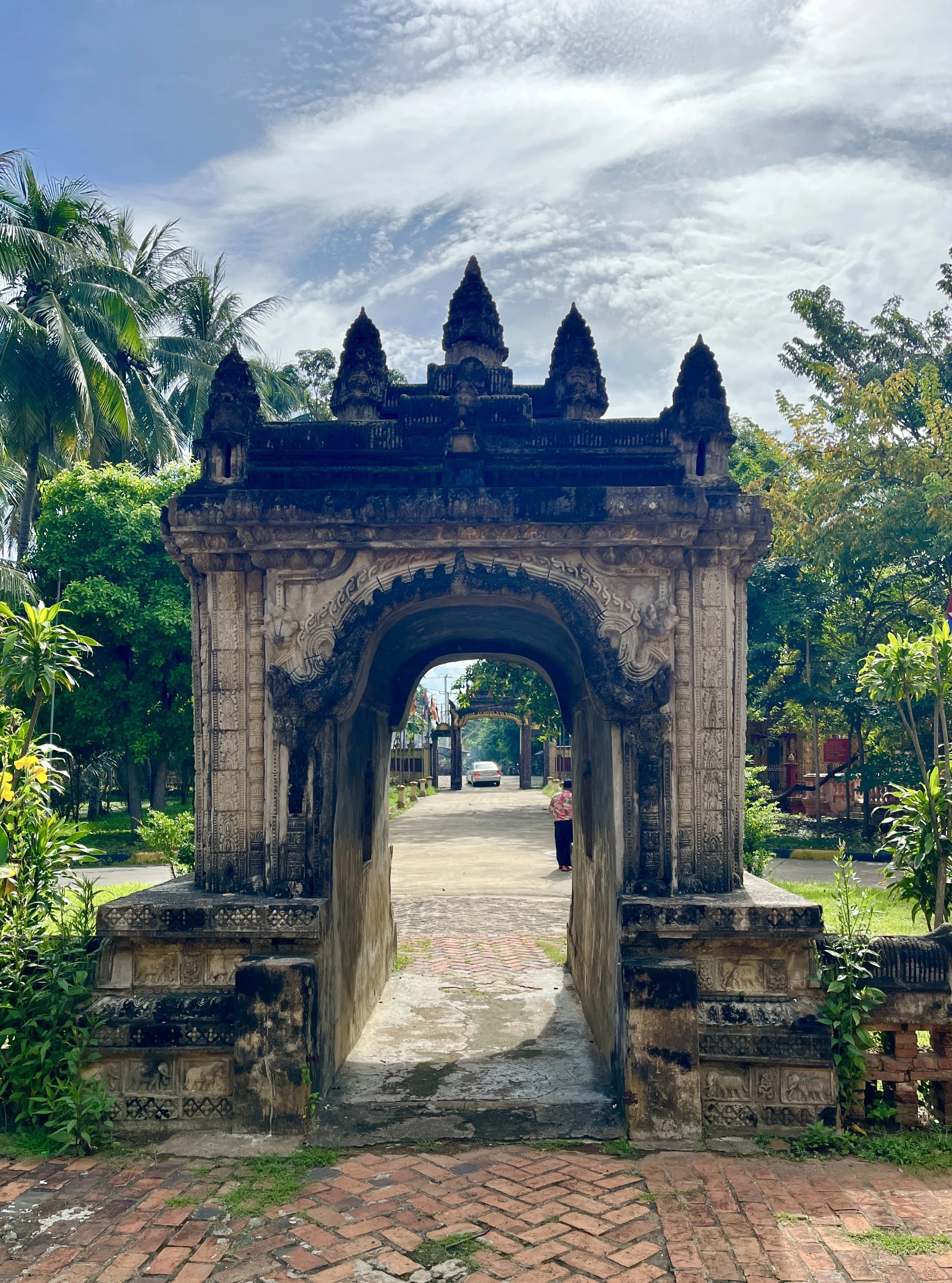
The gate guardians have brown glass eyes, making them at once more human and more grotesque.
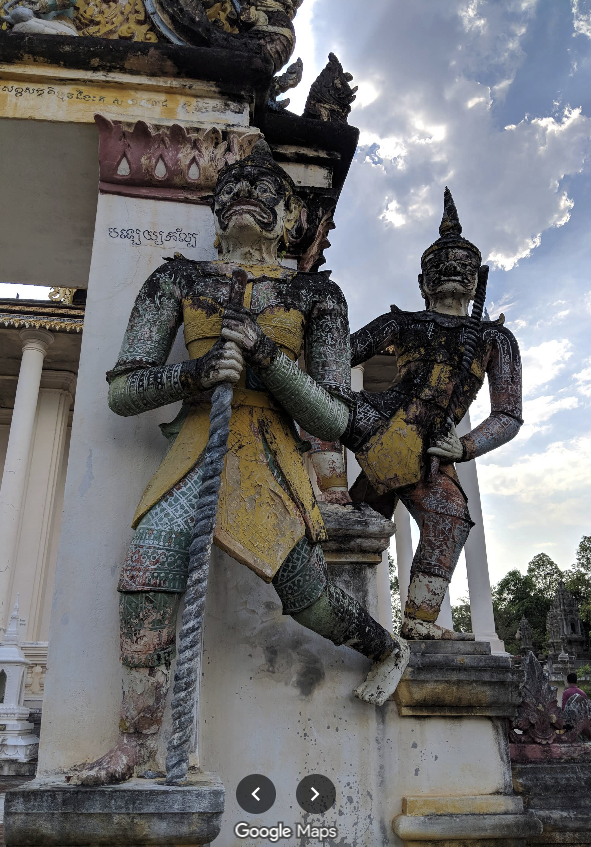
These photos from 2018 show how nicely/recently things have been retouched
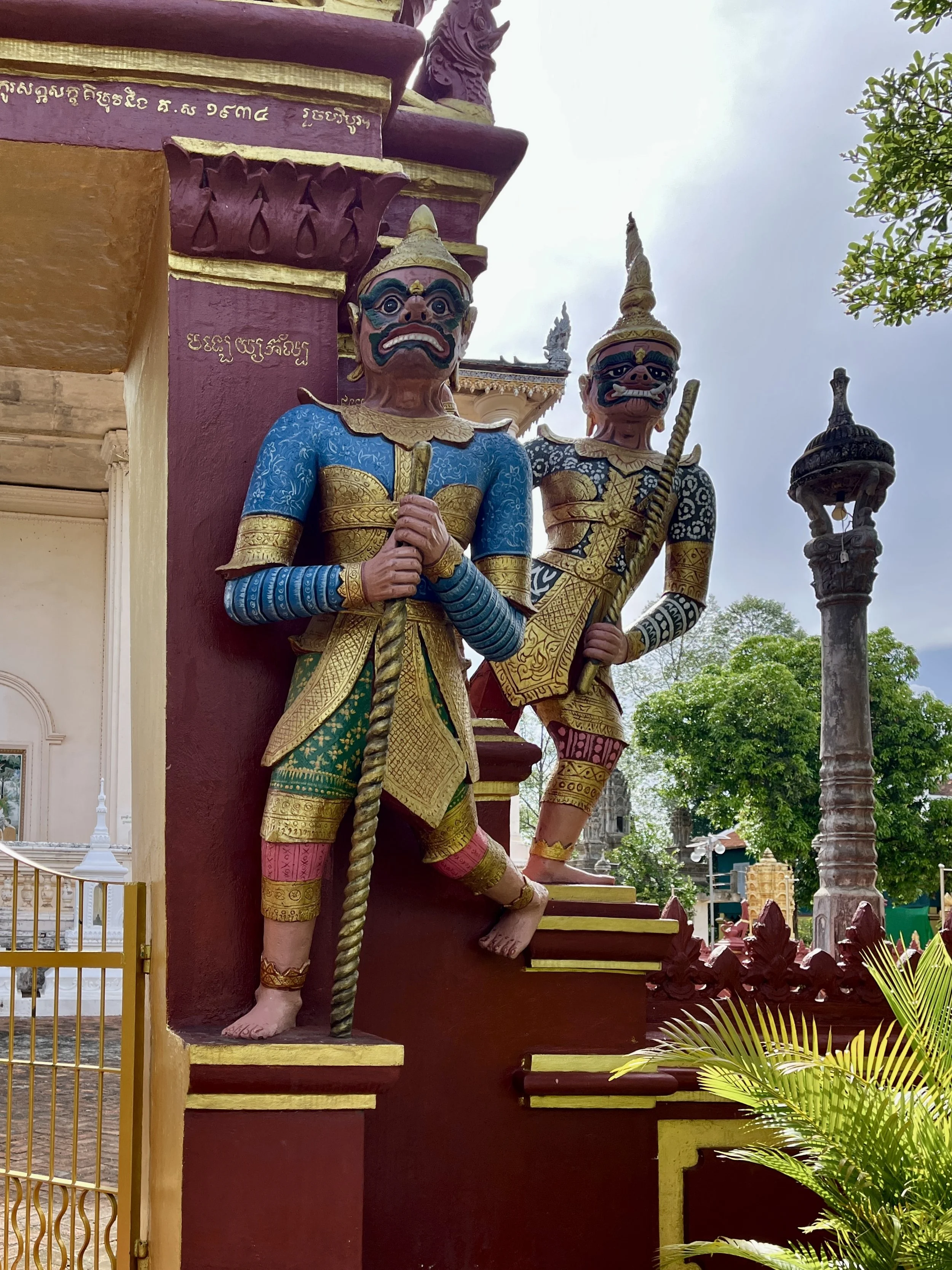
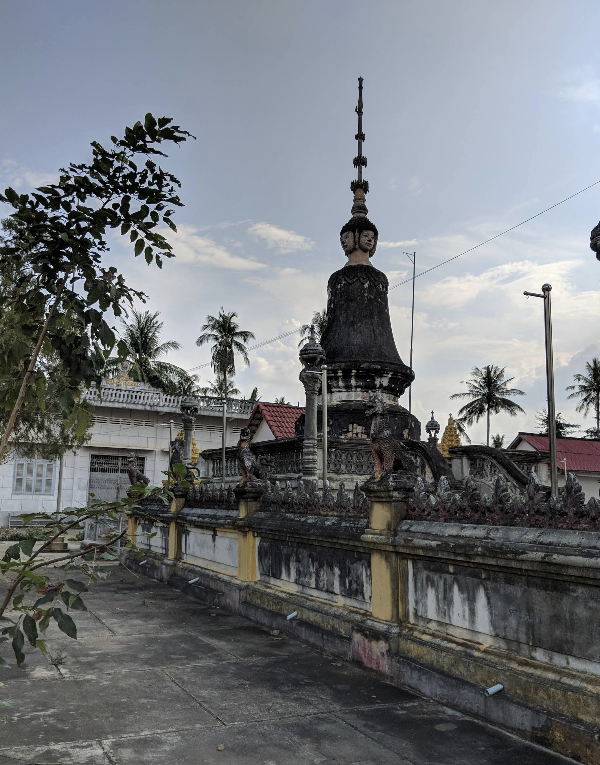
2018, from google maps
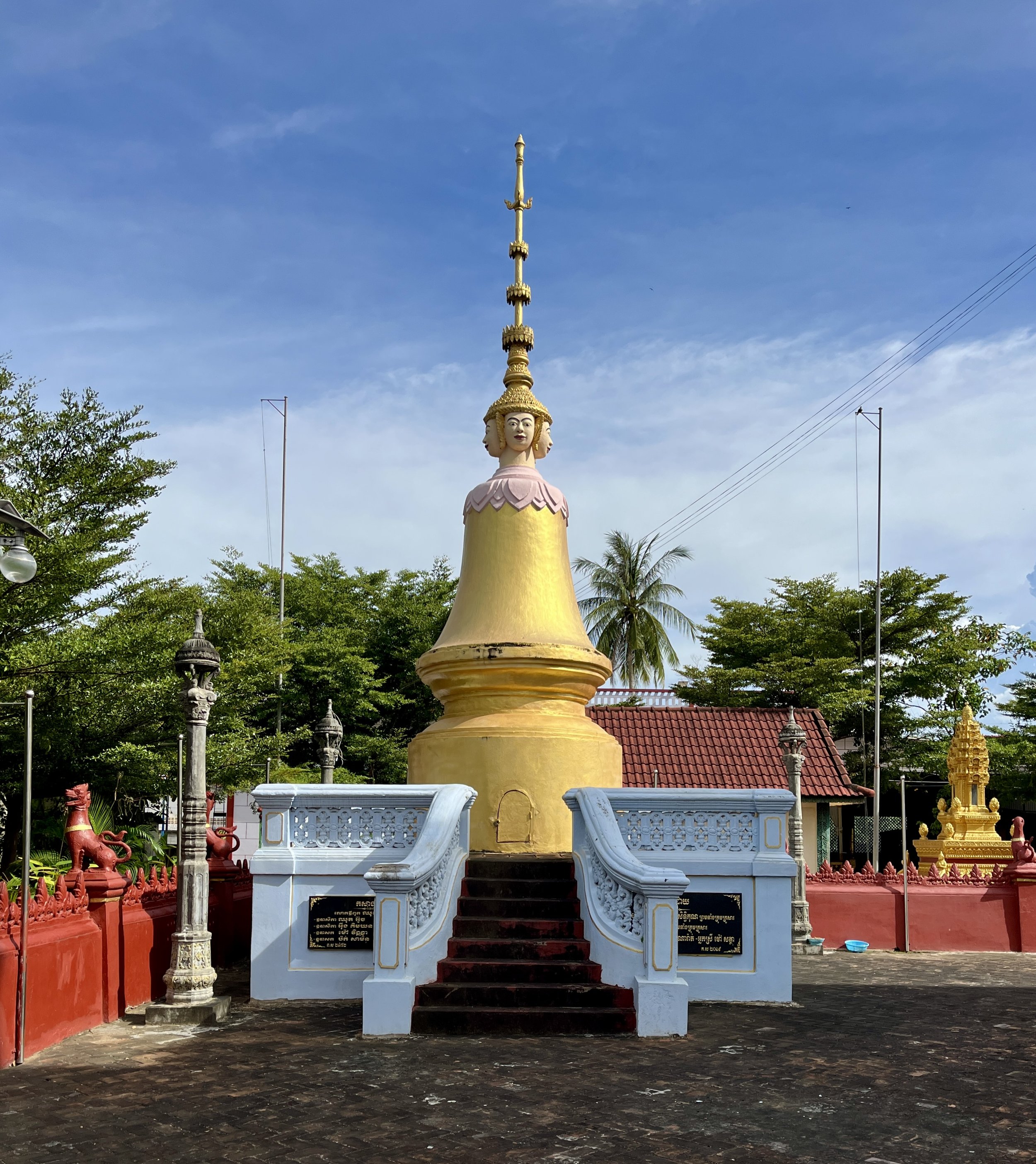
In Buddhist and Hindu traditions, these four faces represent the "four sublime states" or Brahmavihara: loving-kindness (Metta), compassion (Karuna), empathetic joy (Mudita), and equanimity (Upekkha)
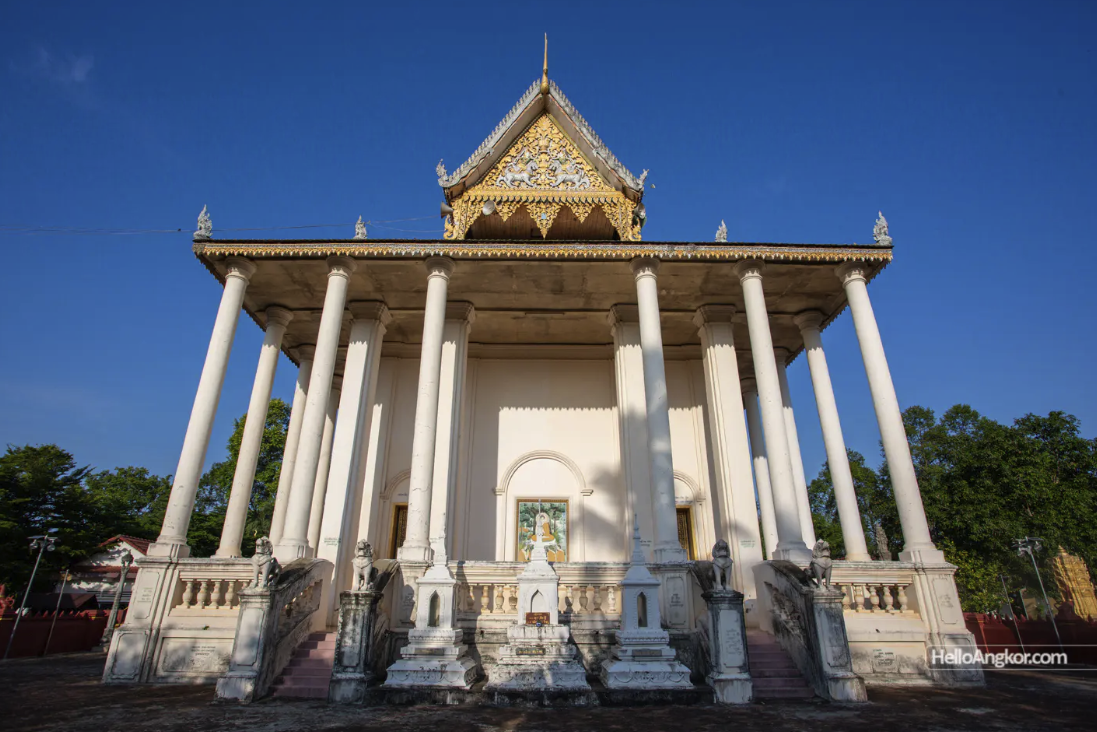
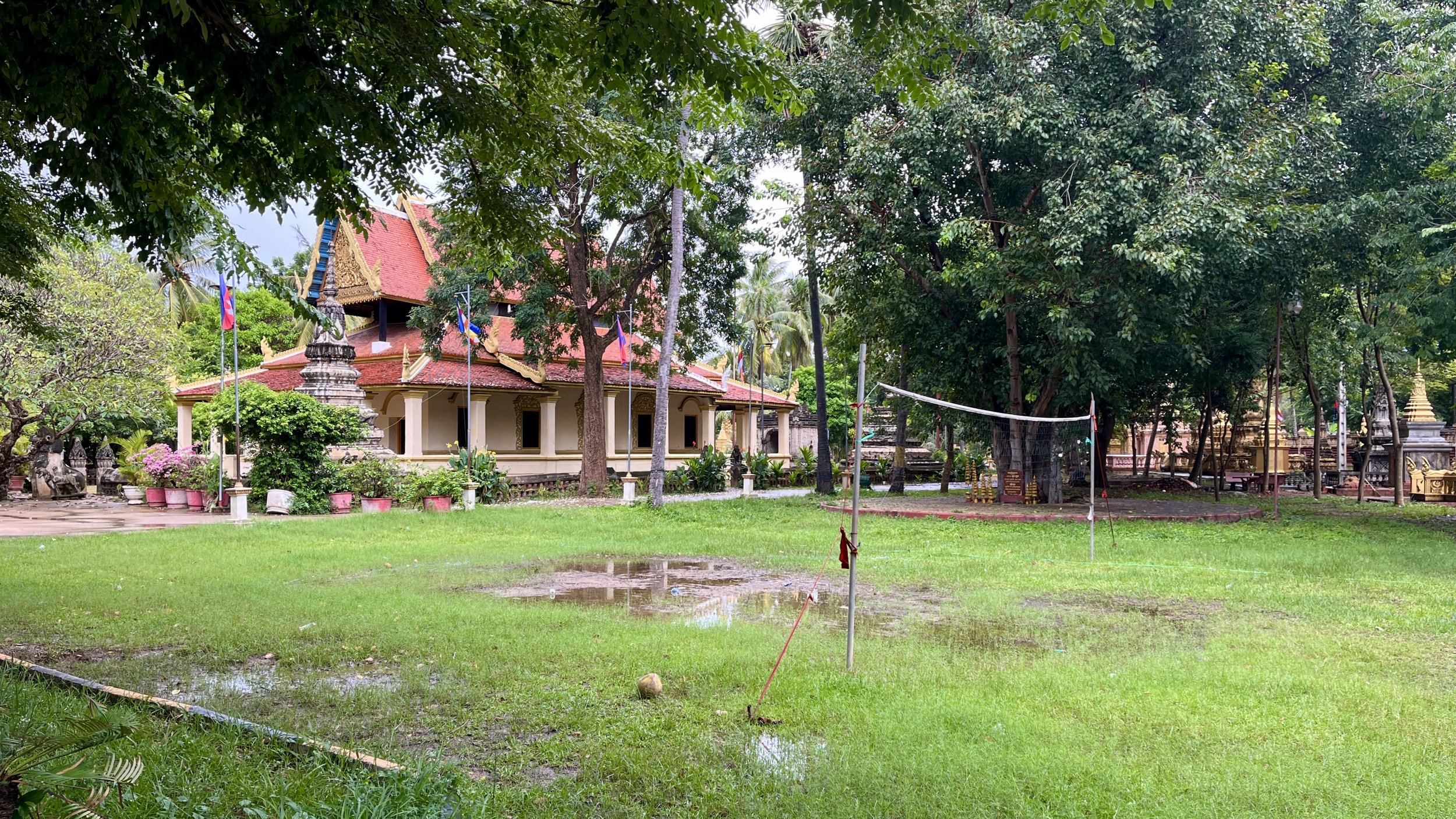
I didn’t take a single photo of the building. This is the best I could find, from Hello Angkor.
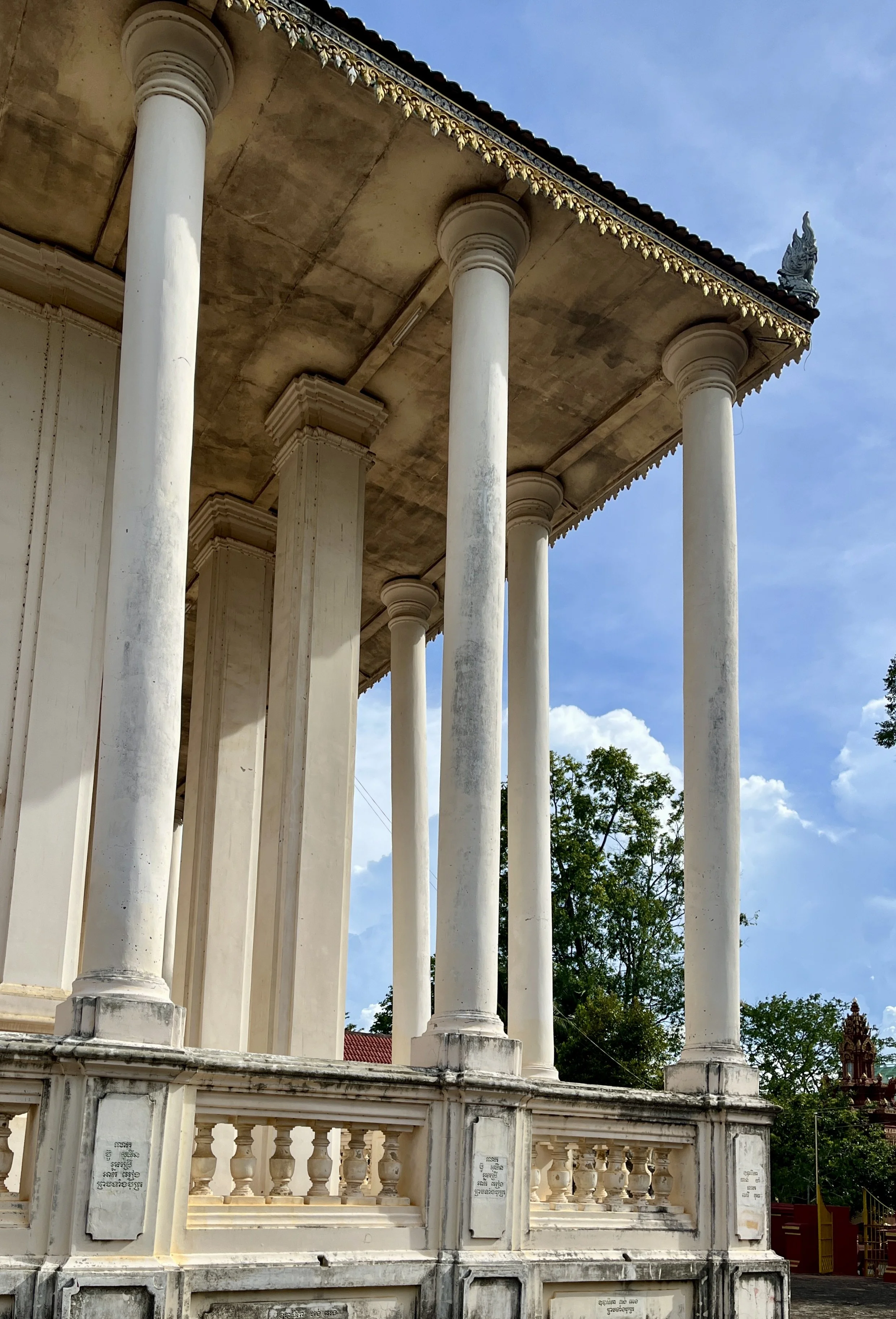
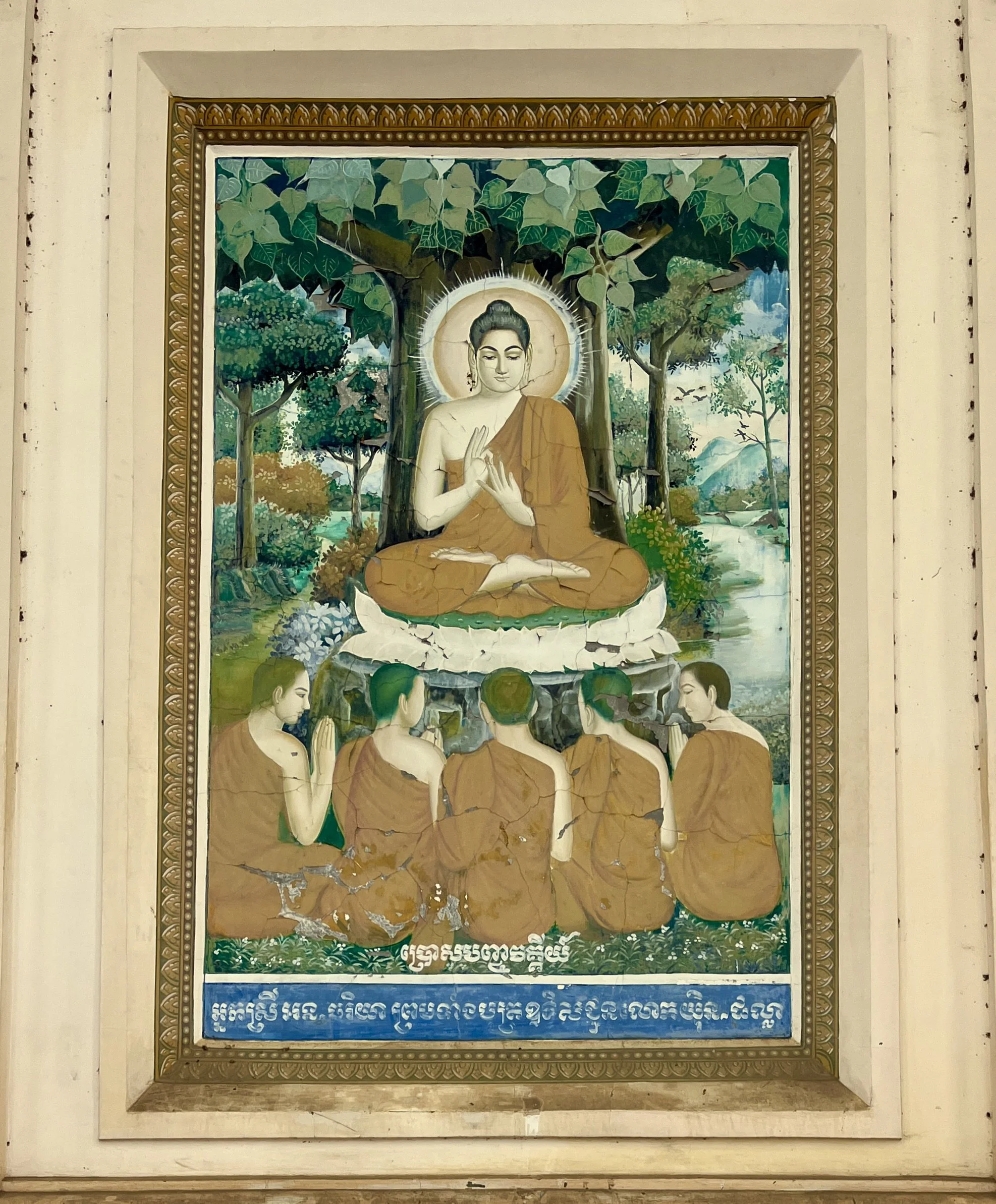
The mix of simple European and Khmer columns is interesting. The facade is very plain, almost completely whitewashed with just a couple of paintings.
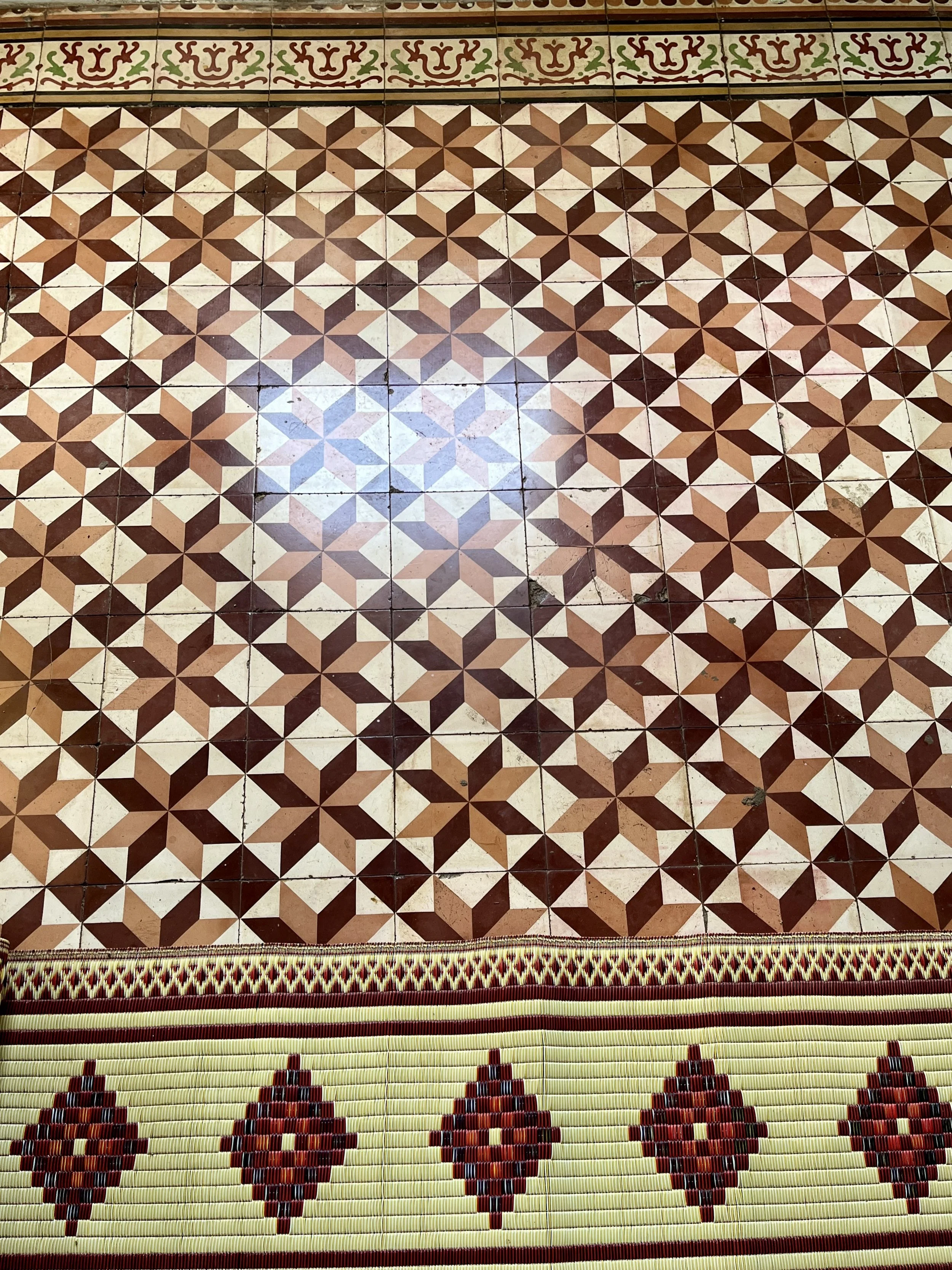
I really like the original tile. Not the colorway, but the intact original match, particularly at the borders.
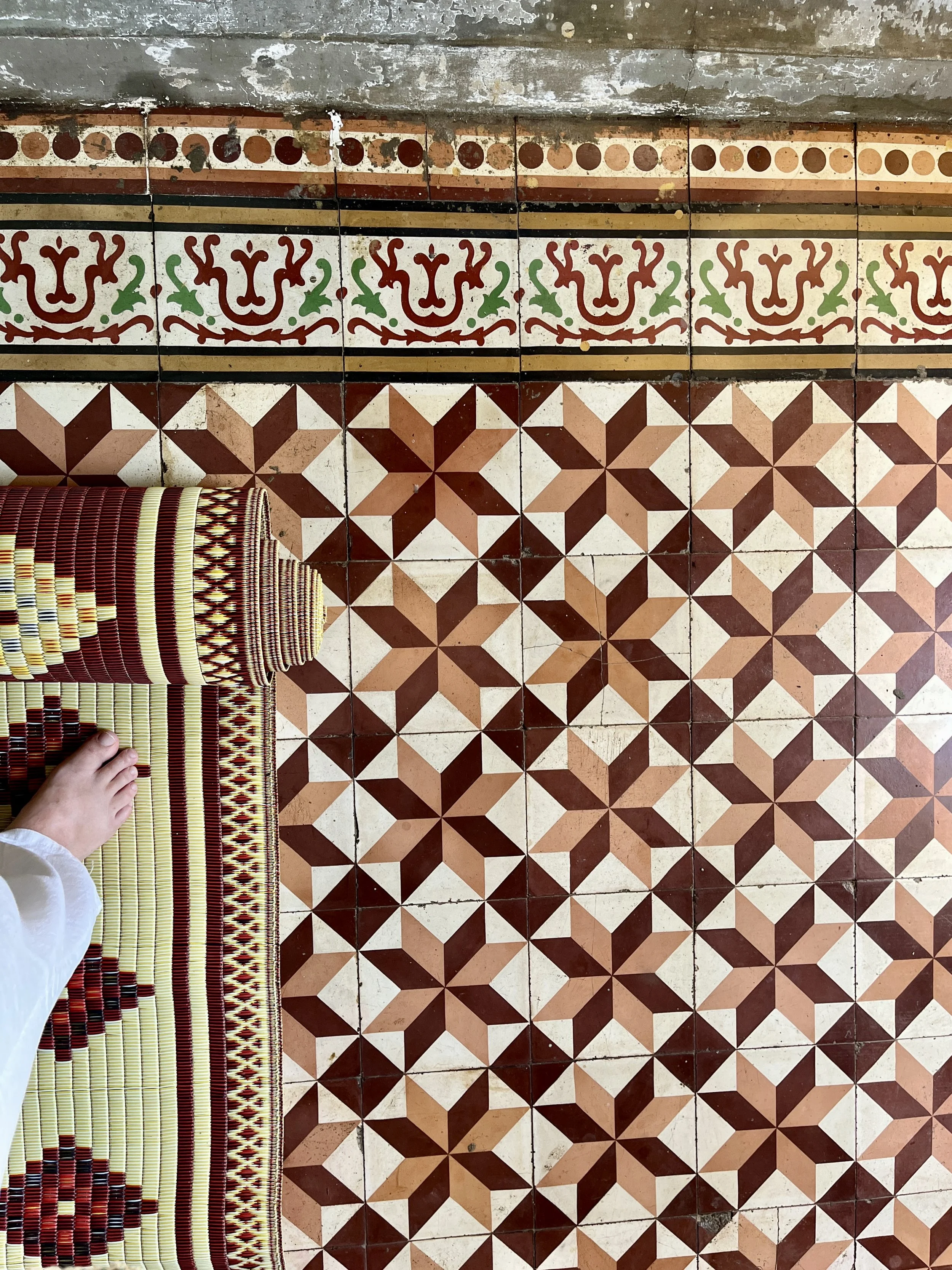
My ugly foot for scale, ha!
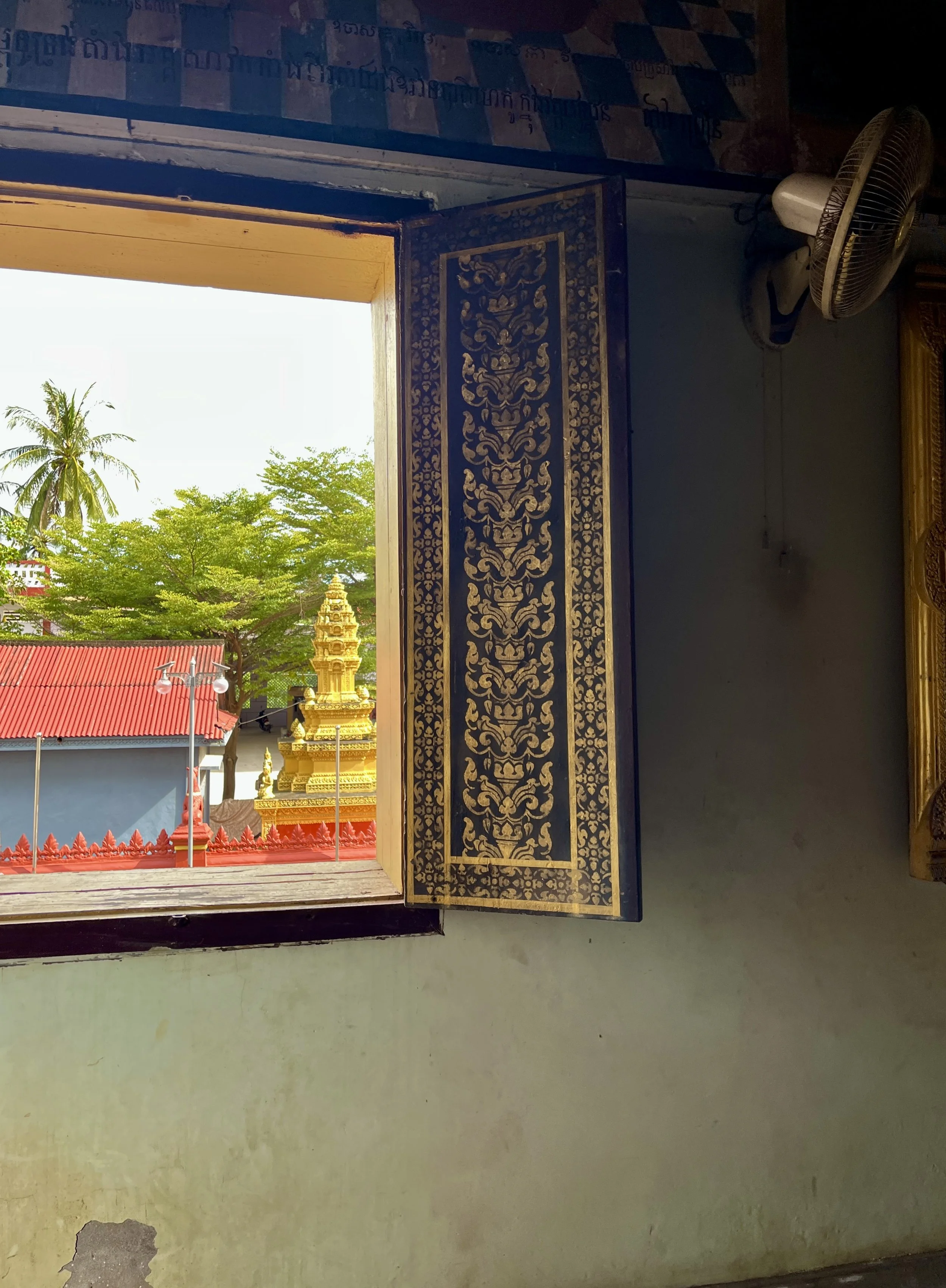
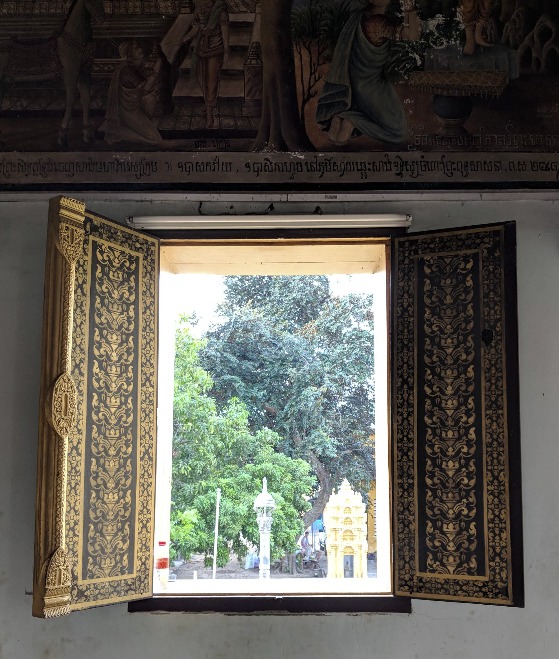
Another from google maps that’s just way better than mine.
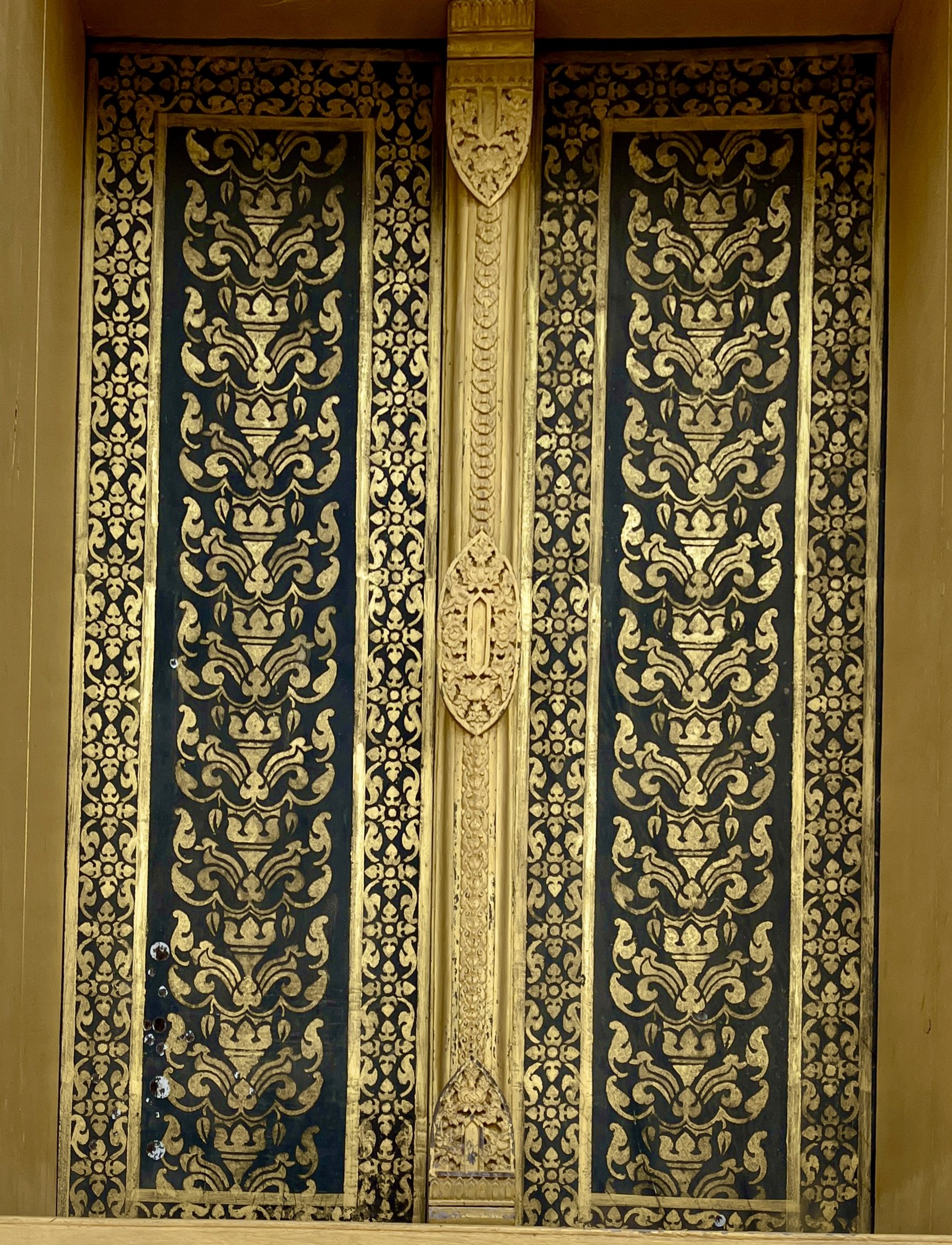
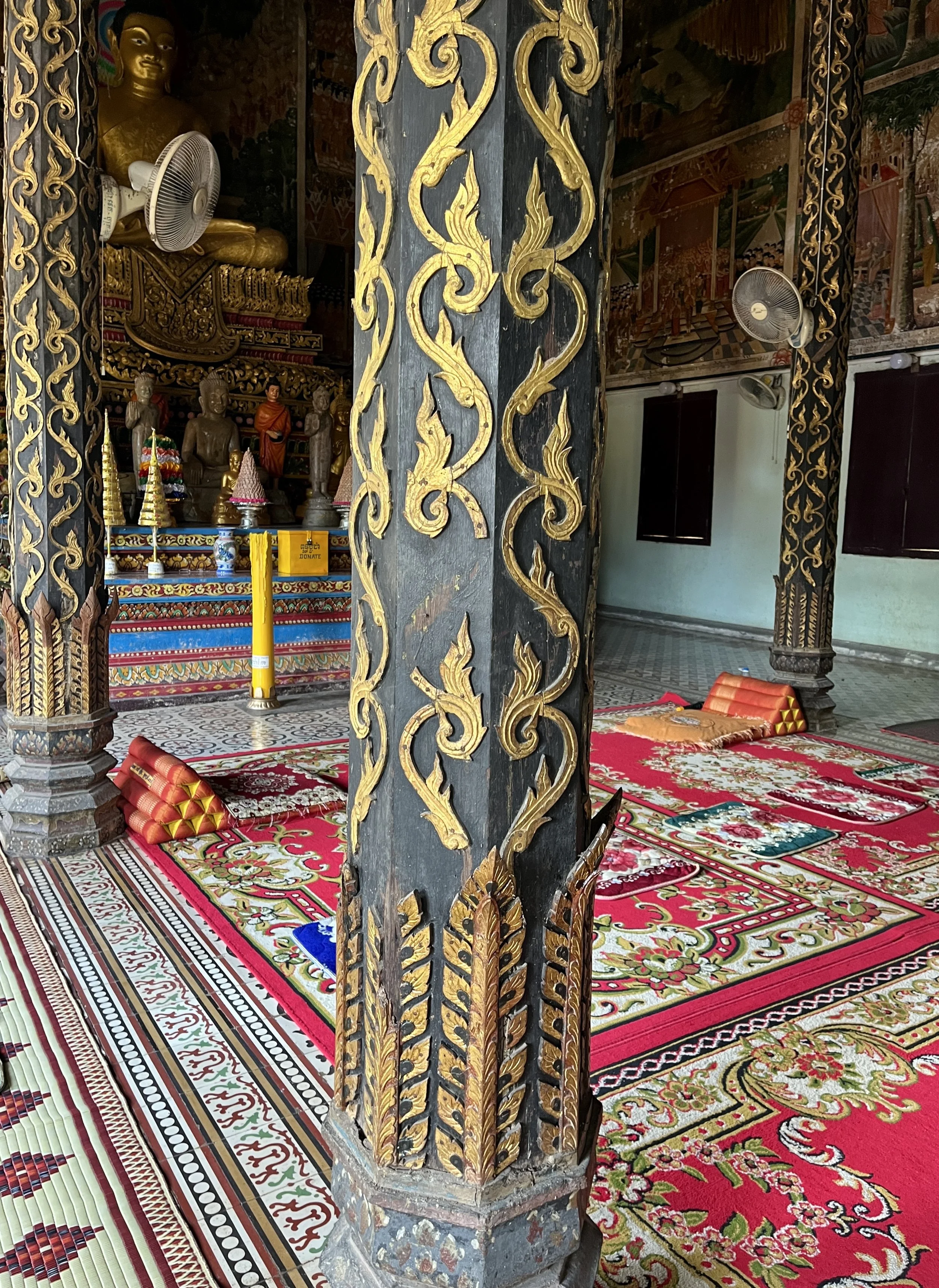
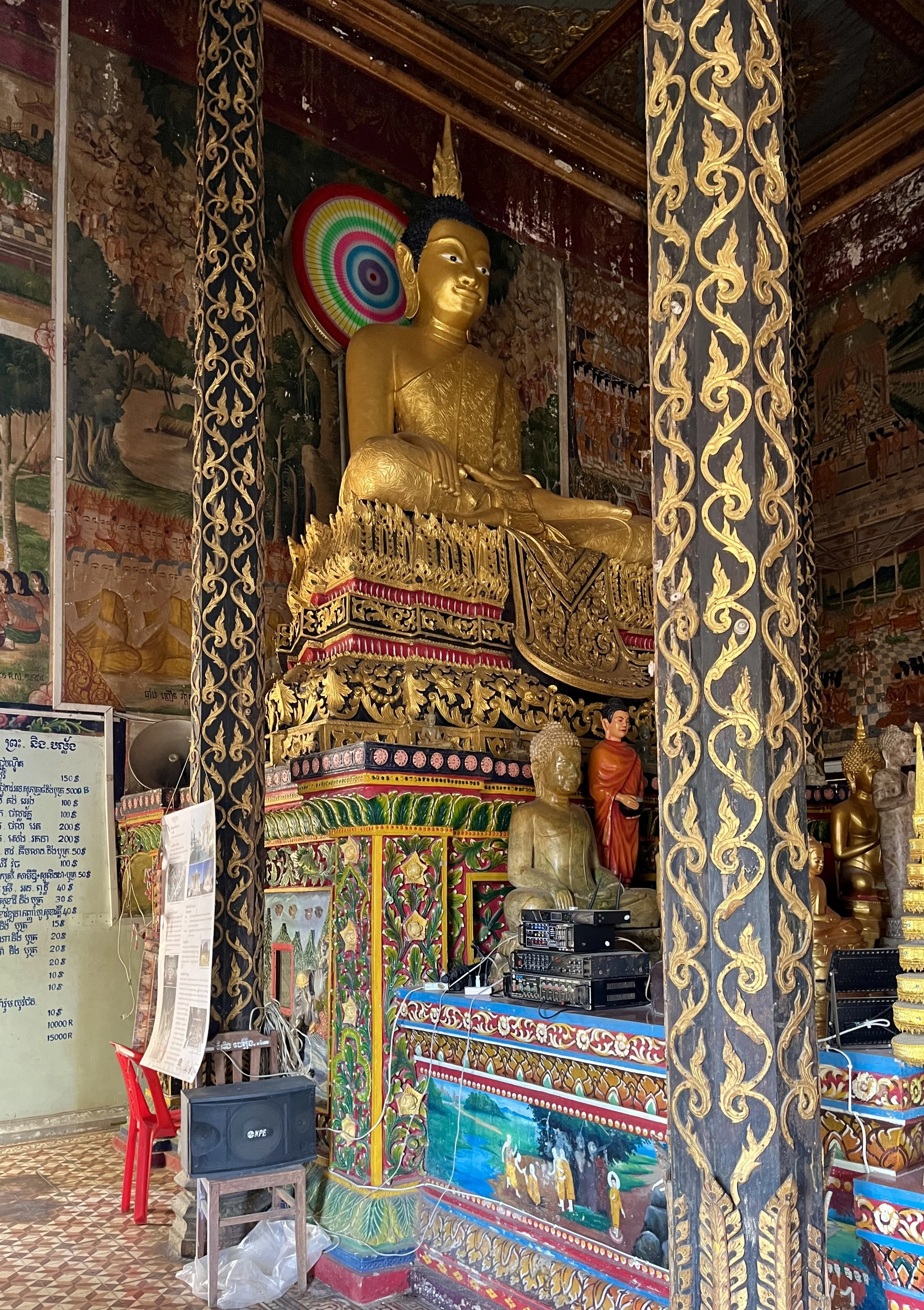
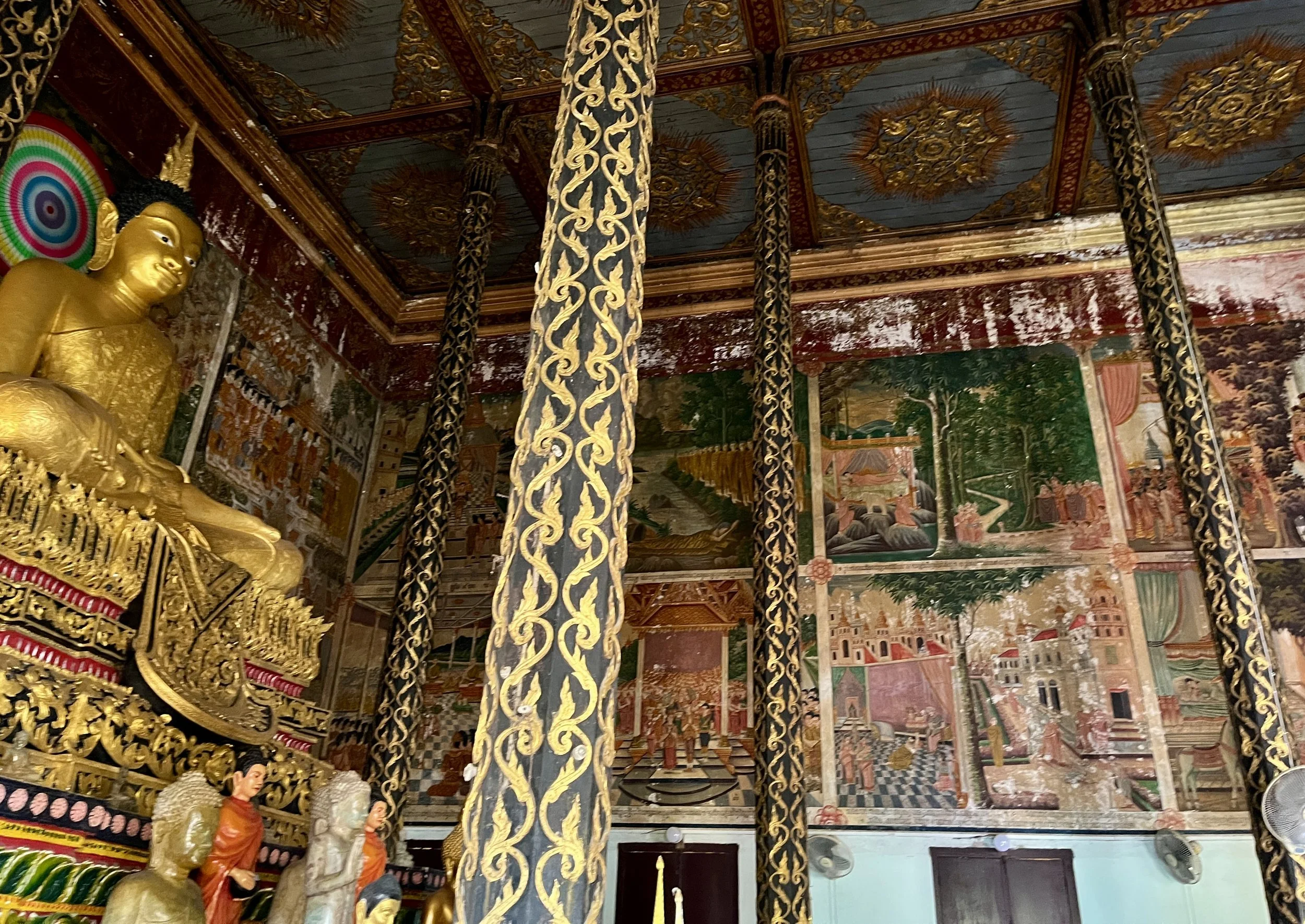
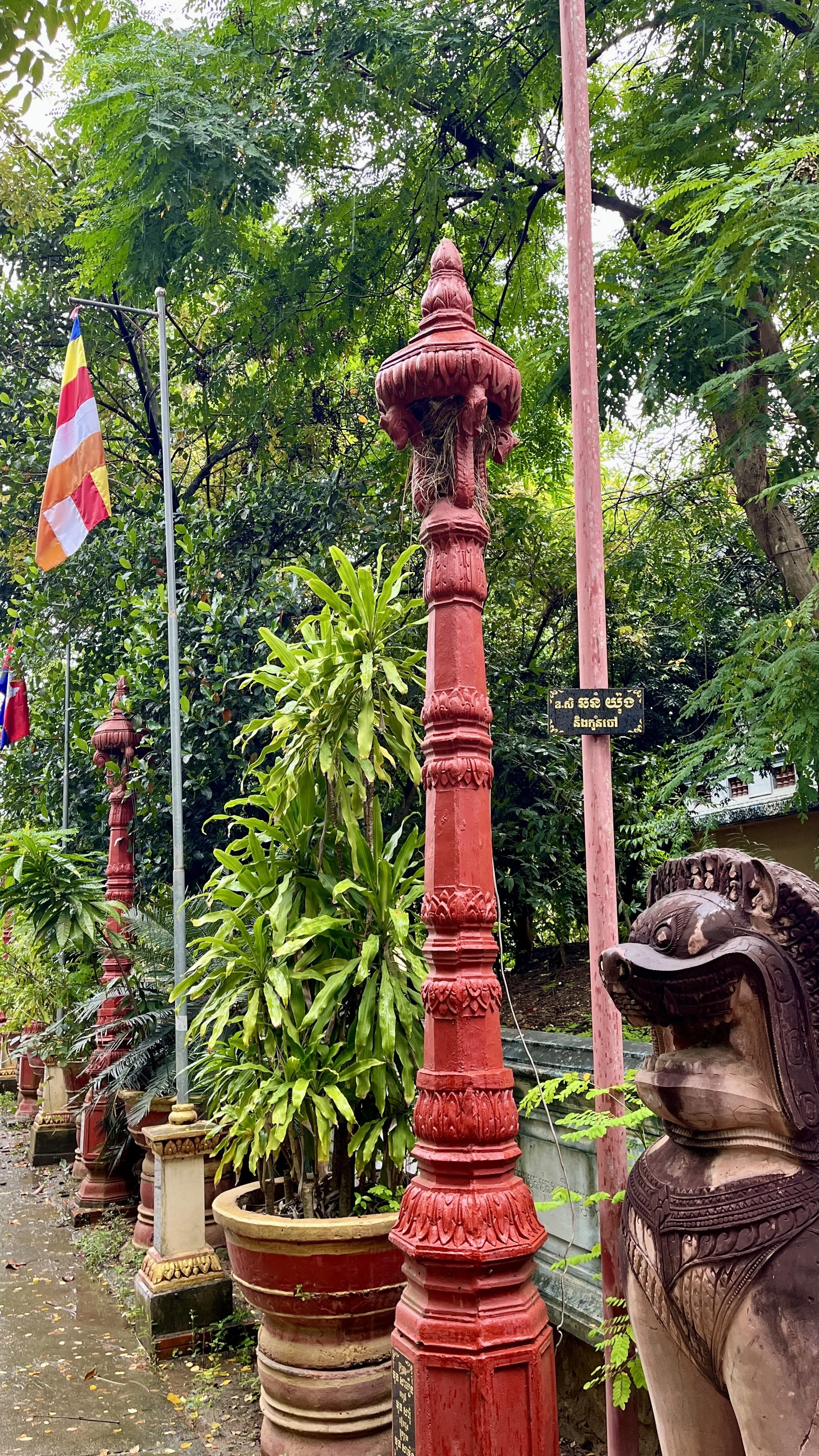
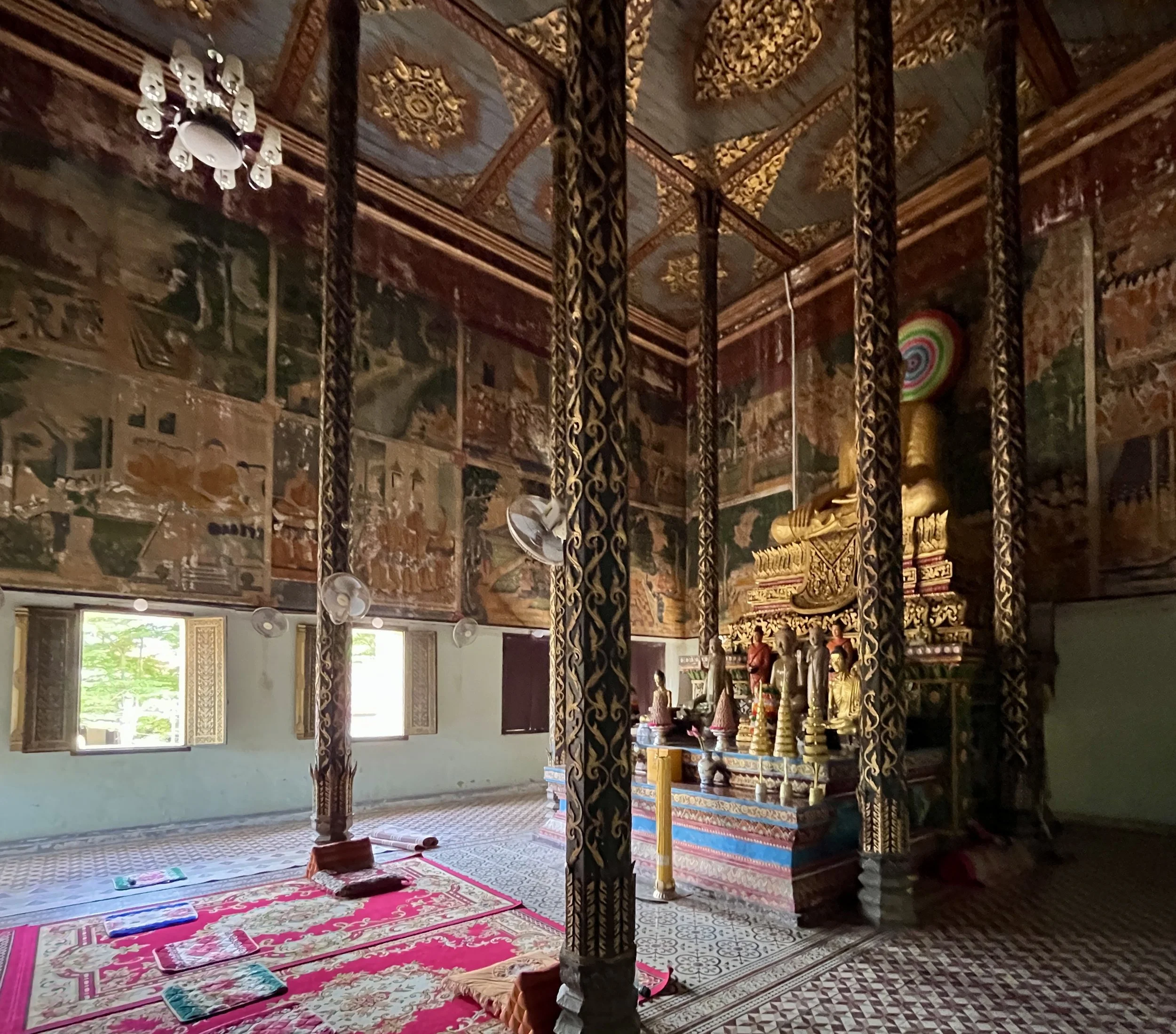
I saw it written somewhere that these pillars are very unique. They feature paint at the base and appliqués on the columns rather than carving, so it’s not just the supposedly unique motif of flaming scrolls, but an interesting way to get max impact with least labor.
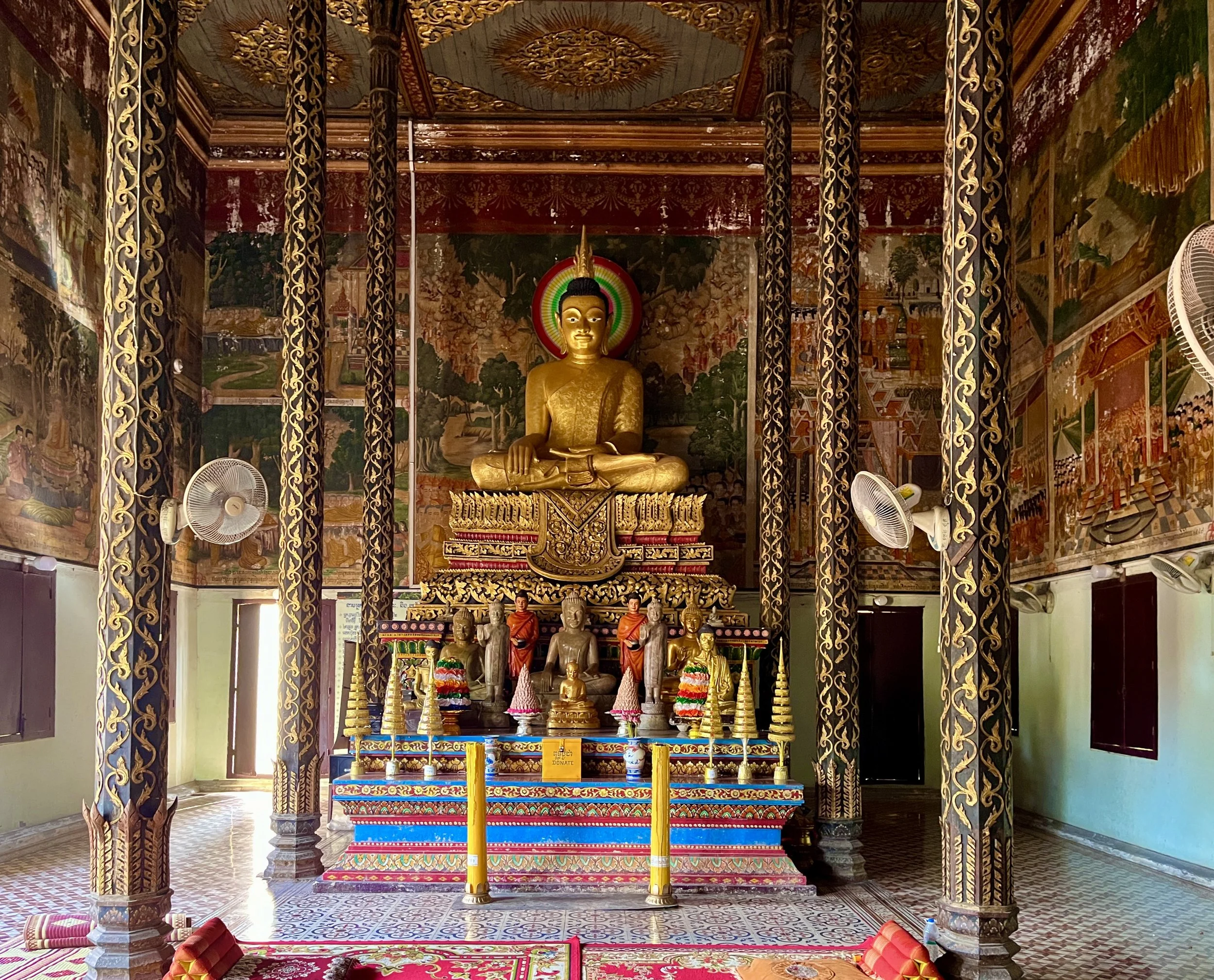
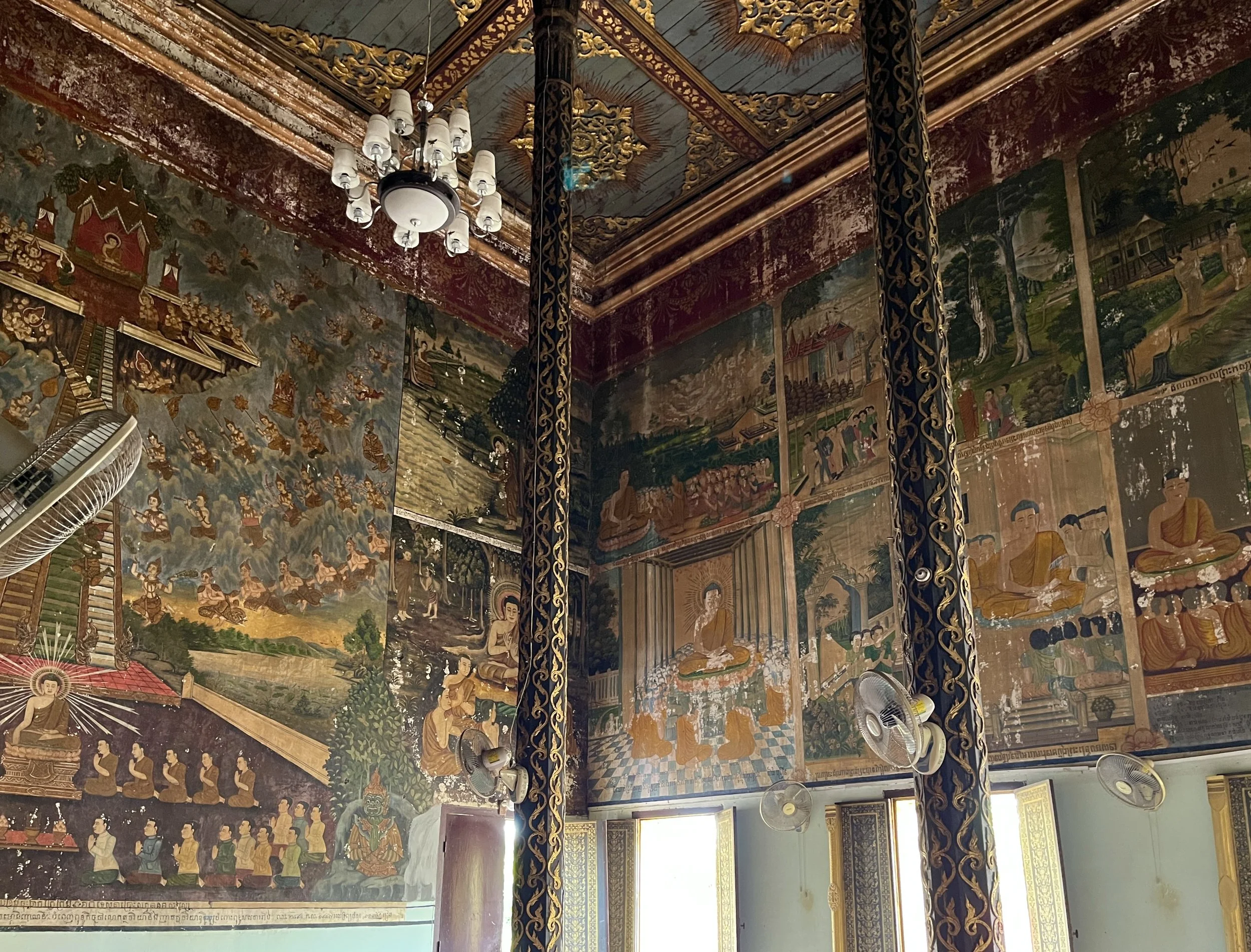
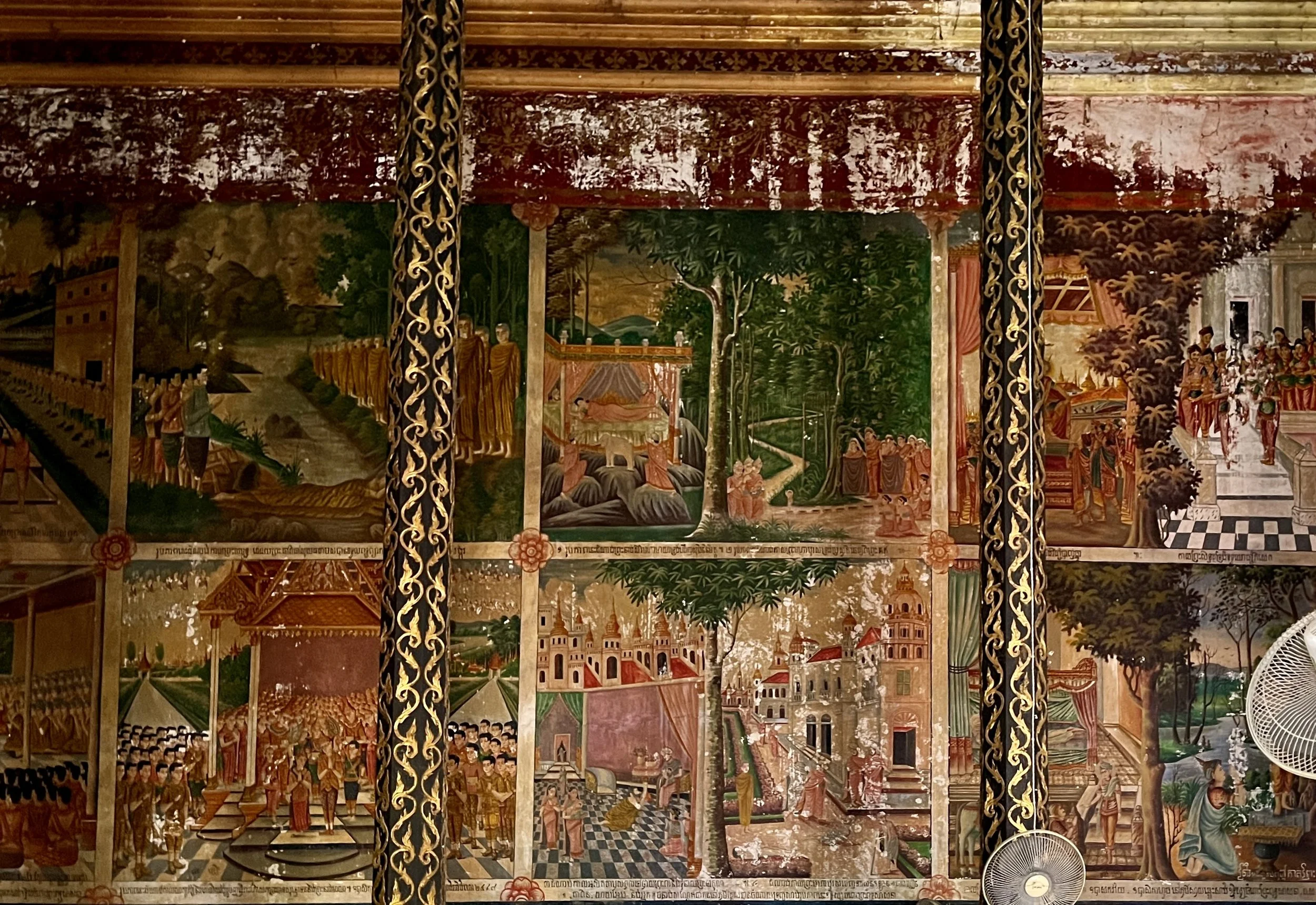
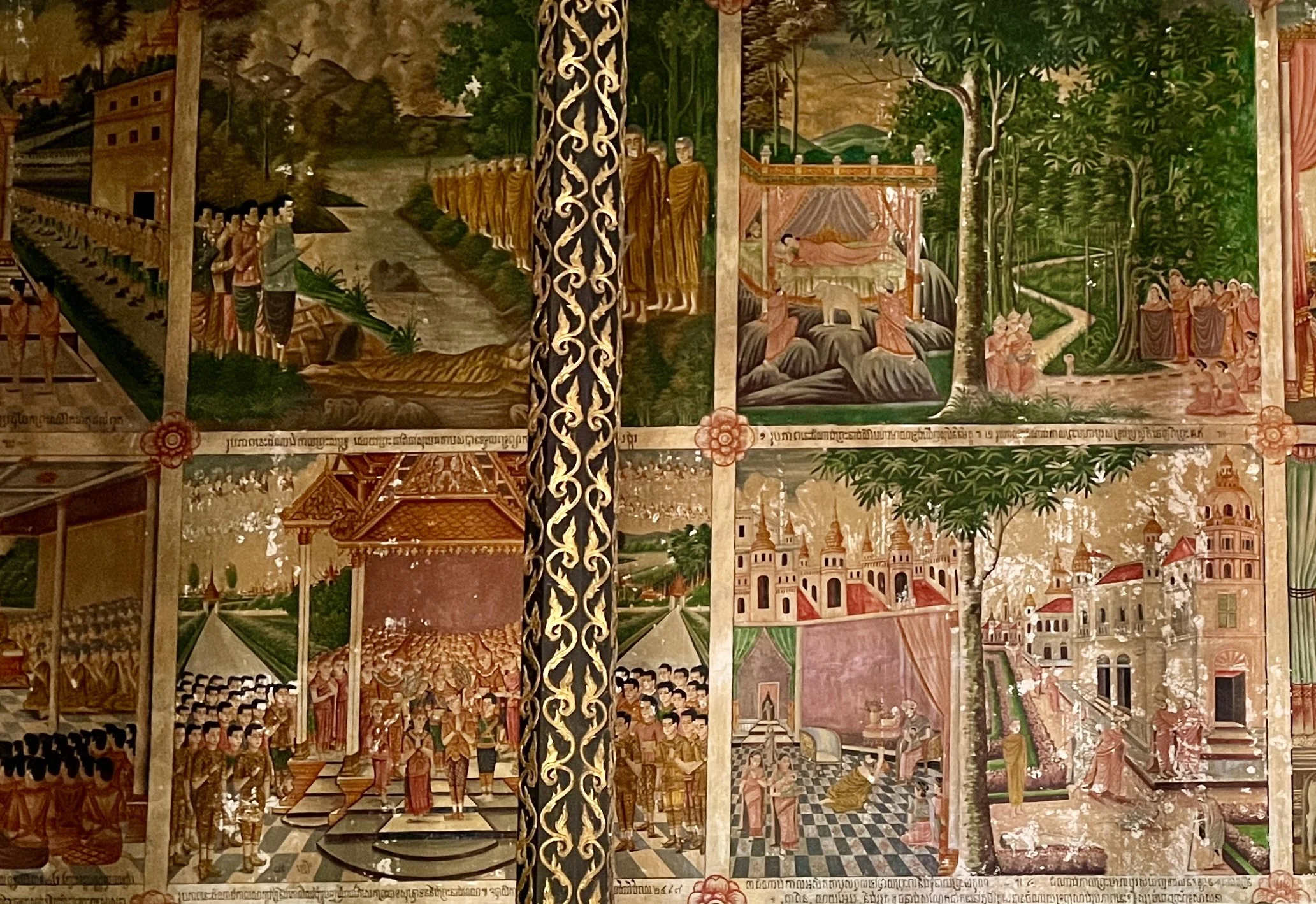
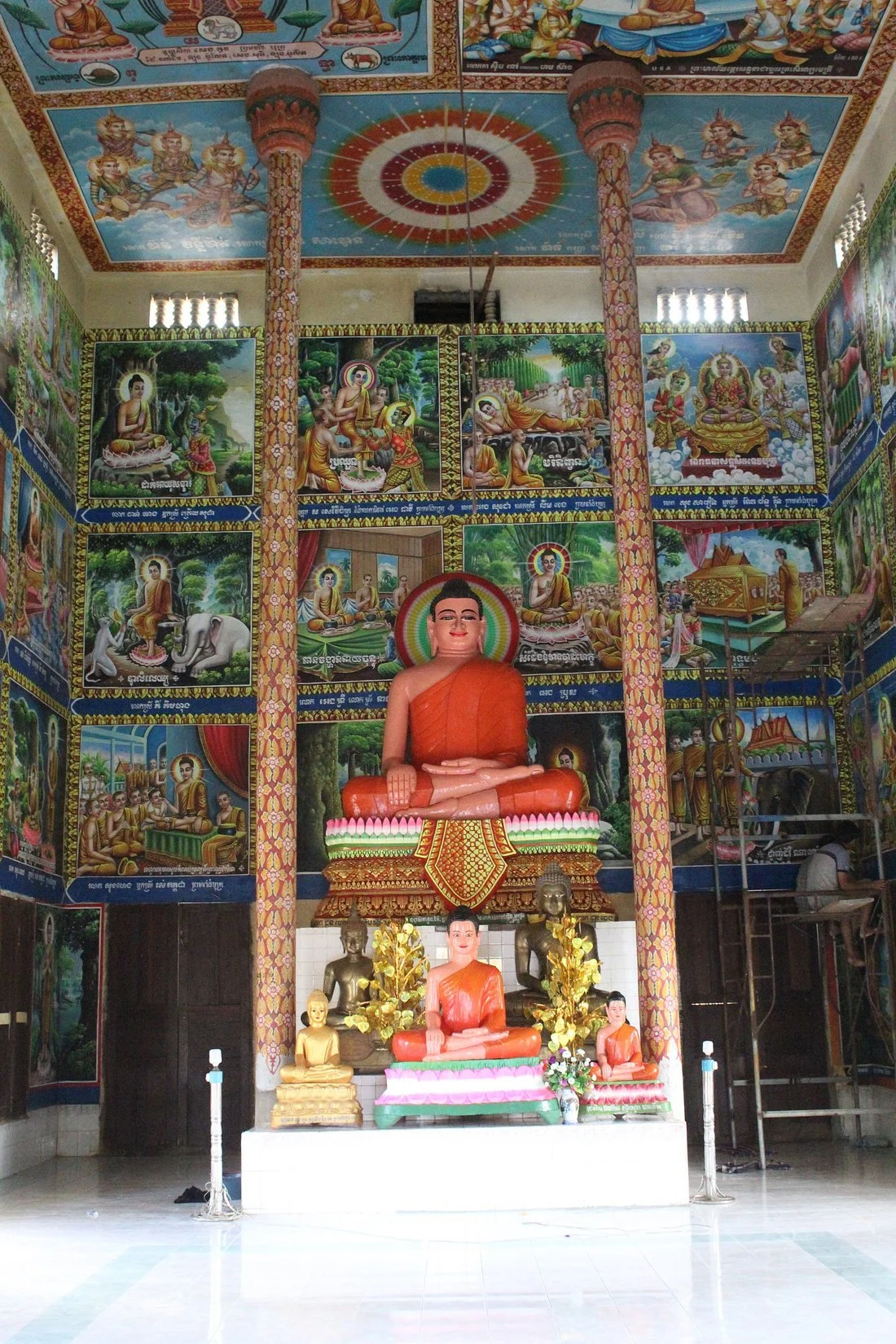
I was so thankful to finally find an unlocked vat in Battambang! I love, LOVE old Buddhist temple painted walls, they’re such a palette, such a vibe.
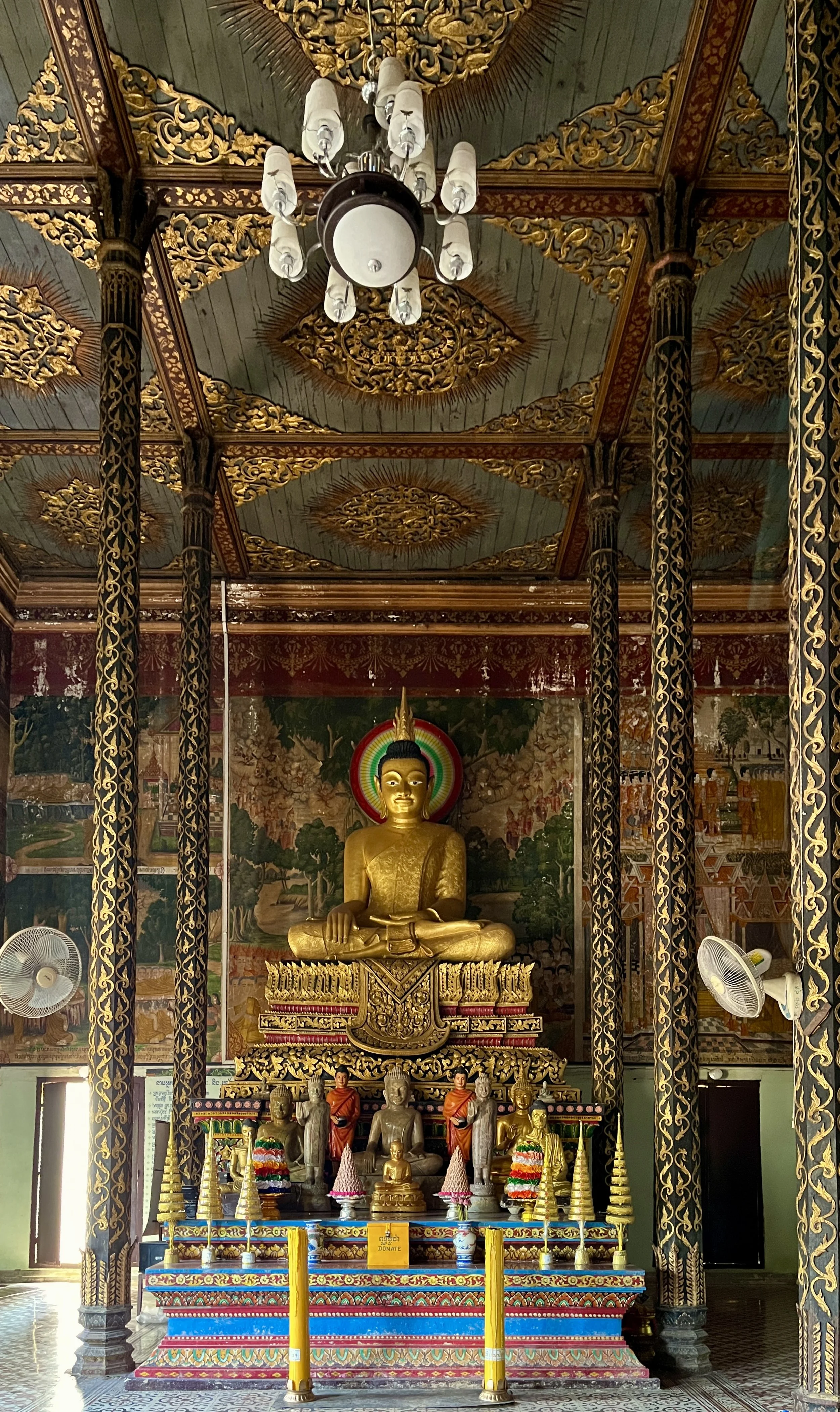
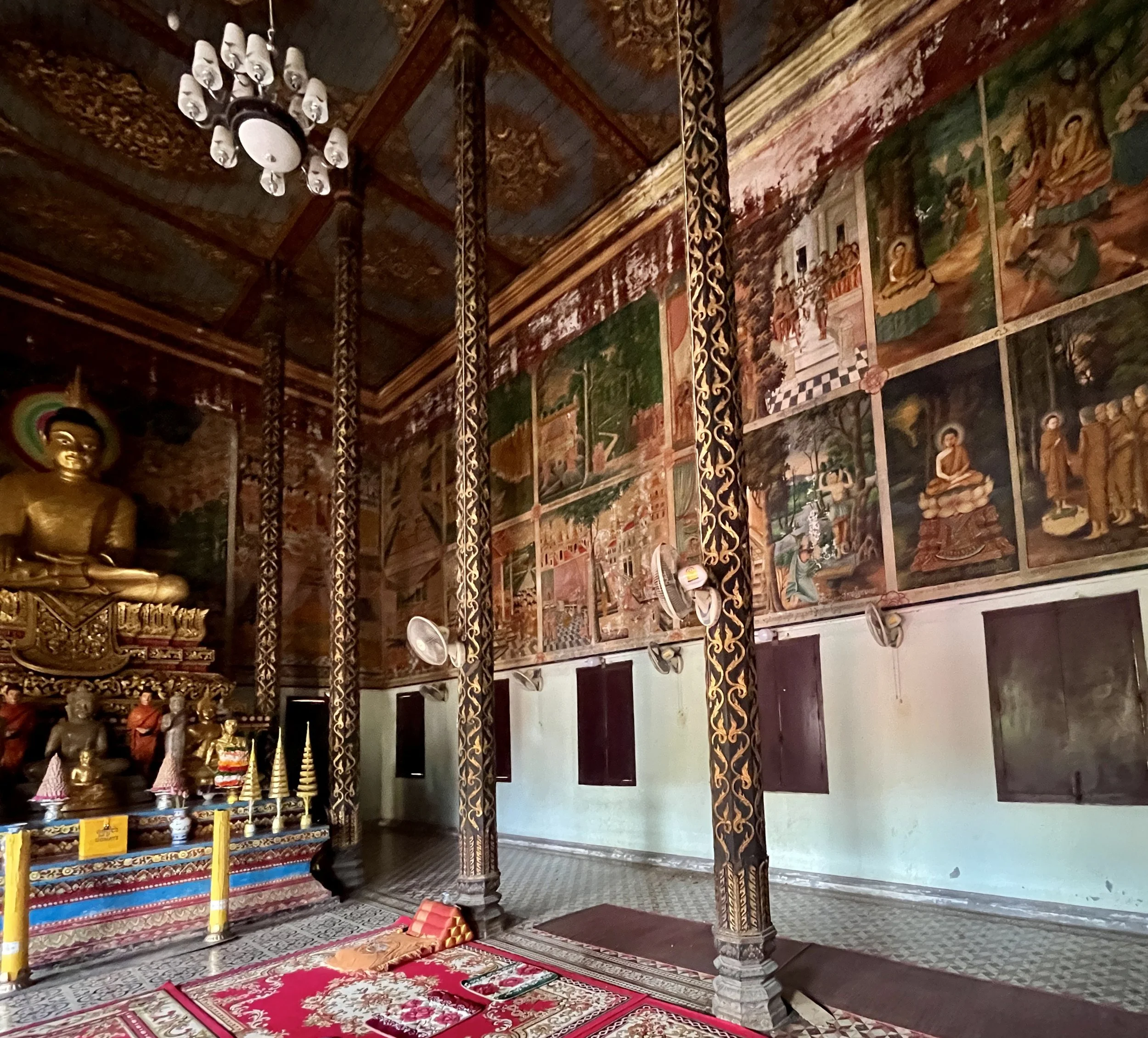
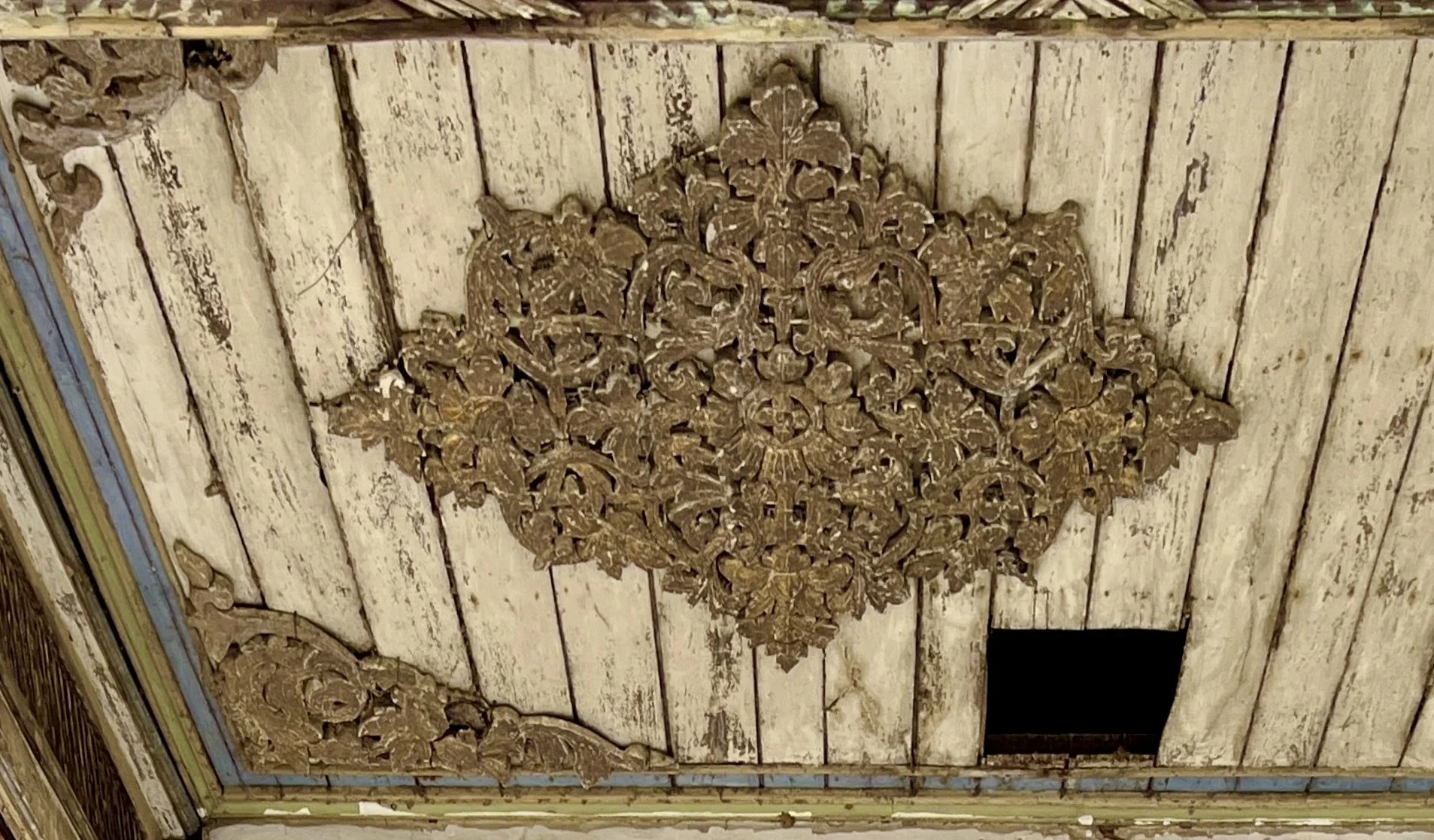
I particularly like the faux coffered ceilings and stenciled border. The border is SO of its era. This photo also makes it easy to appreciate how slender the columns are, which is unique and, I think, elegant.
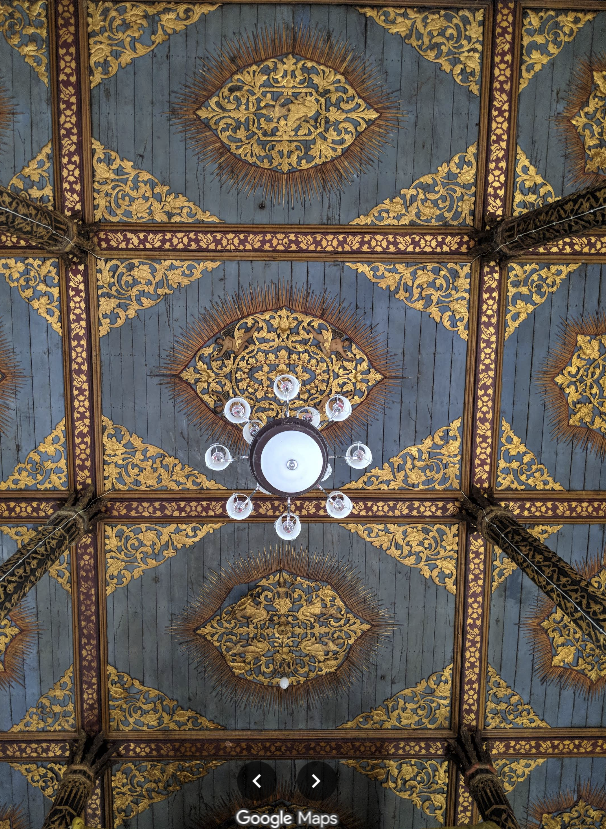
A much better photo of the ceiling from google maps.
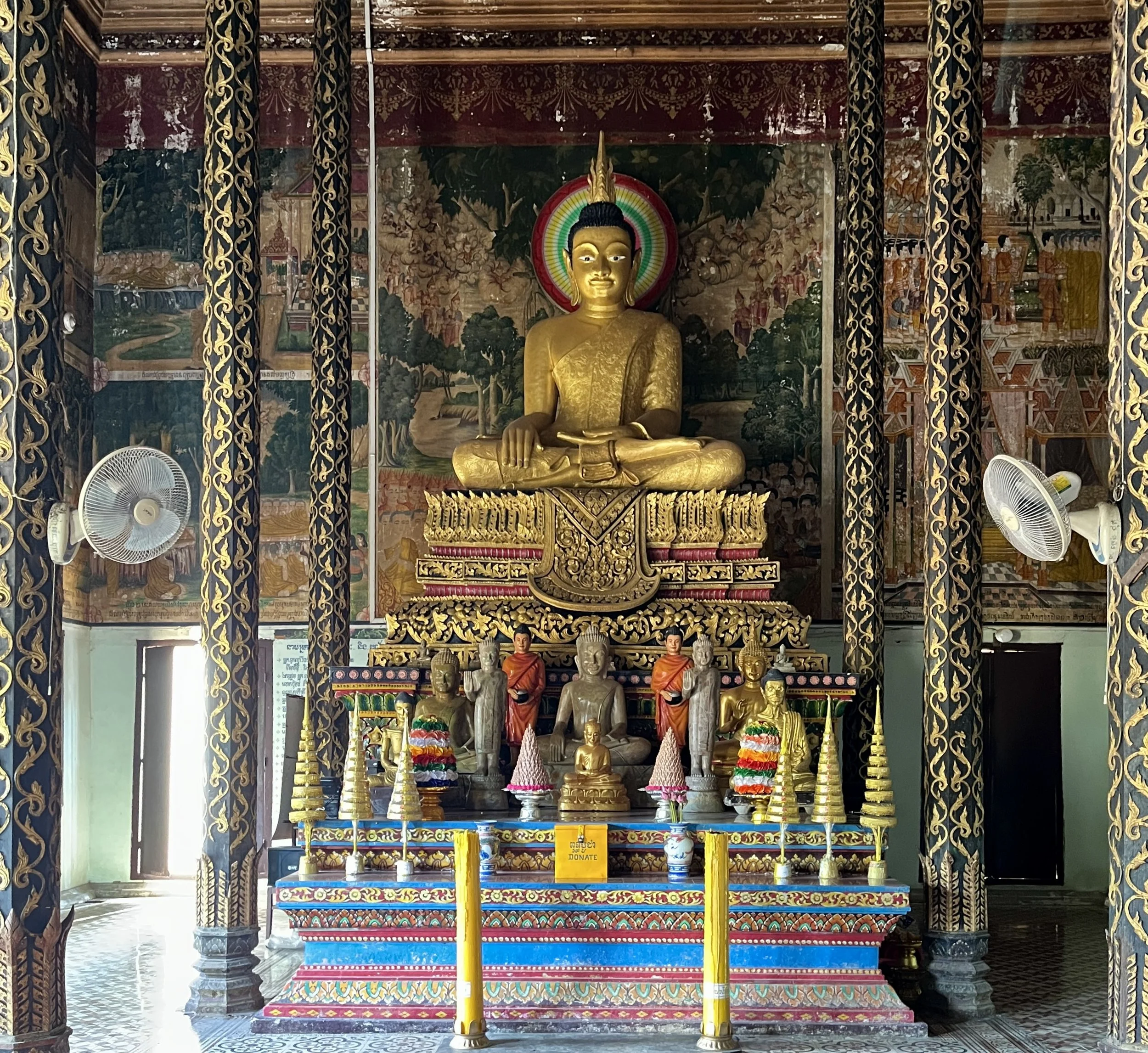
I couldn’t find any archival photos of this temple. Finding new resources for this blog is always an unpredictable journey though; there will be nothing for years, then a university in France that’s held the archives of some colonial administrator for a century puts 6000 photos online at once.
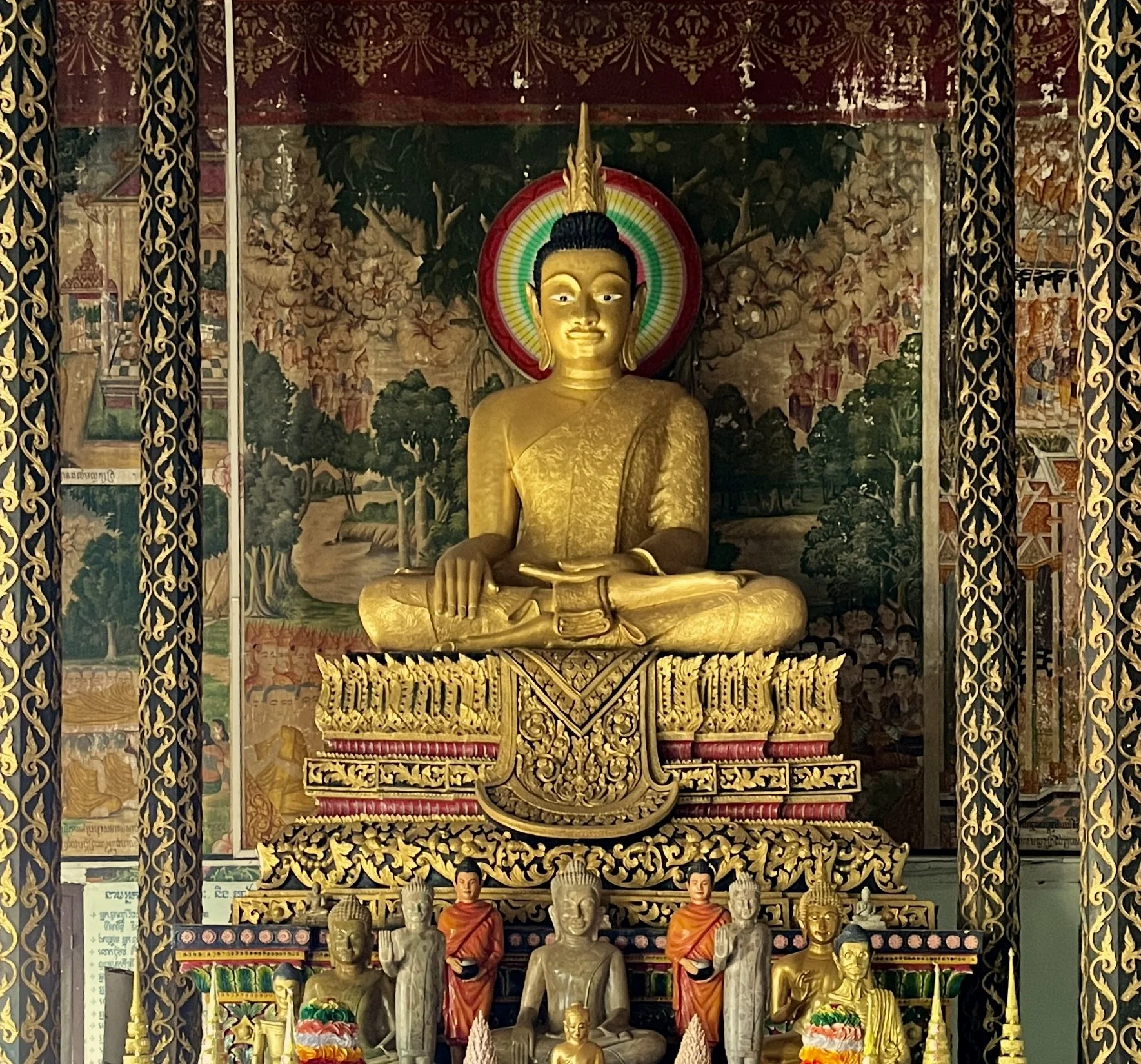
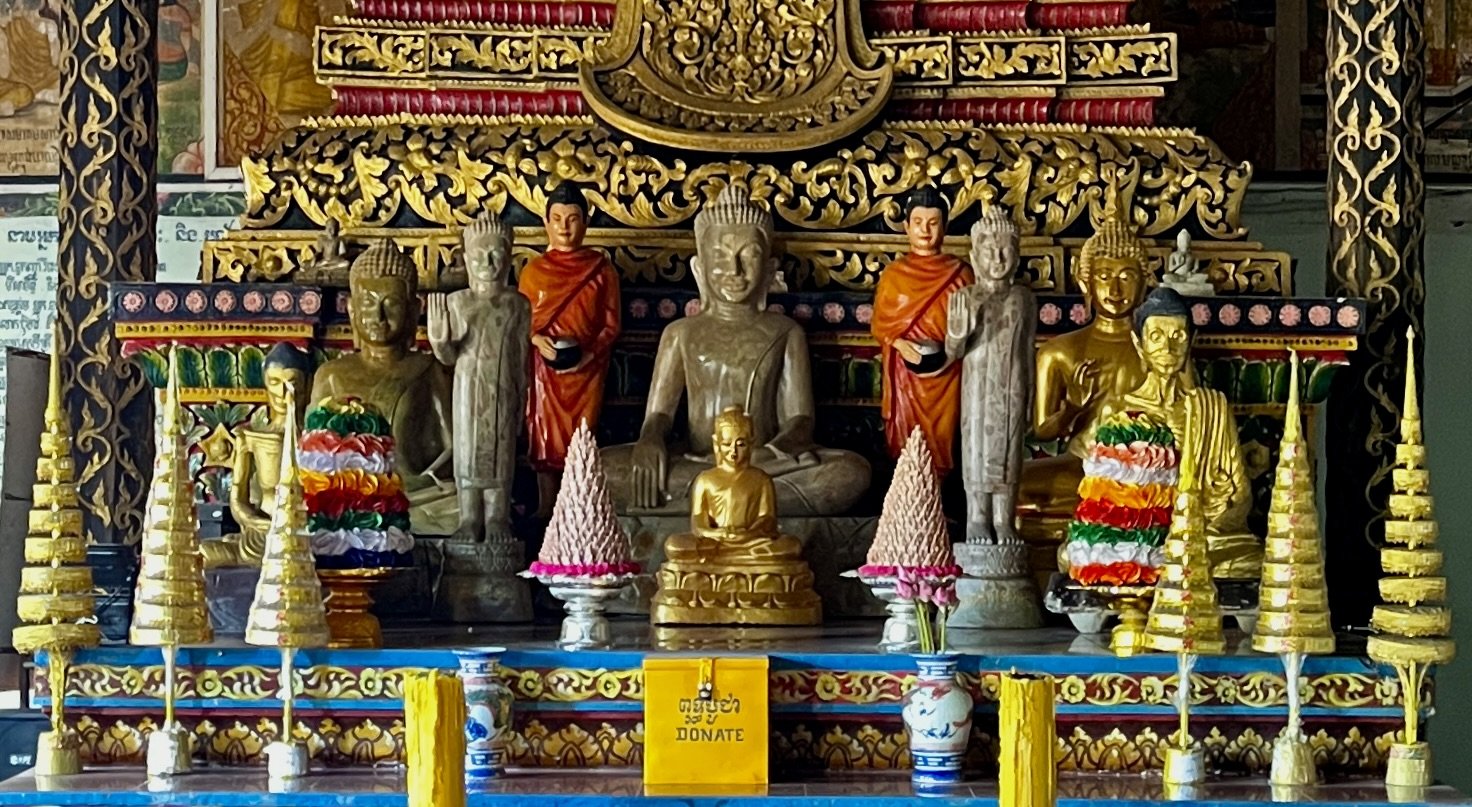
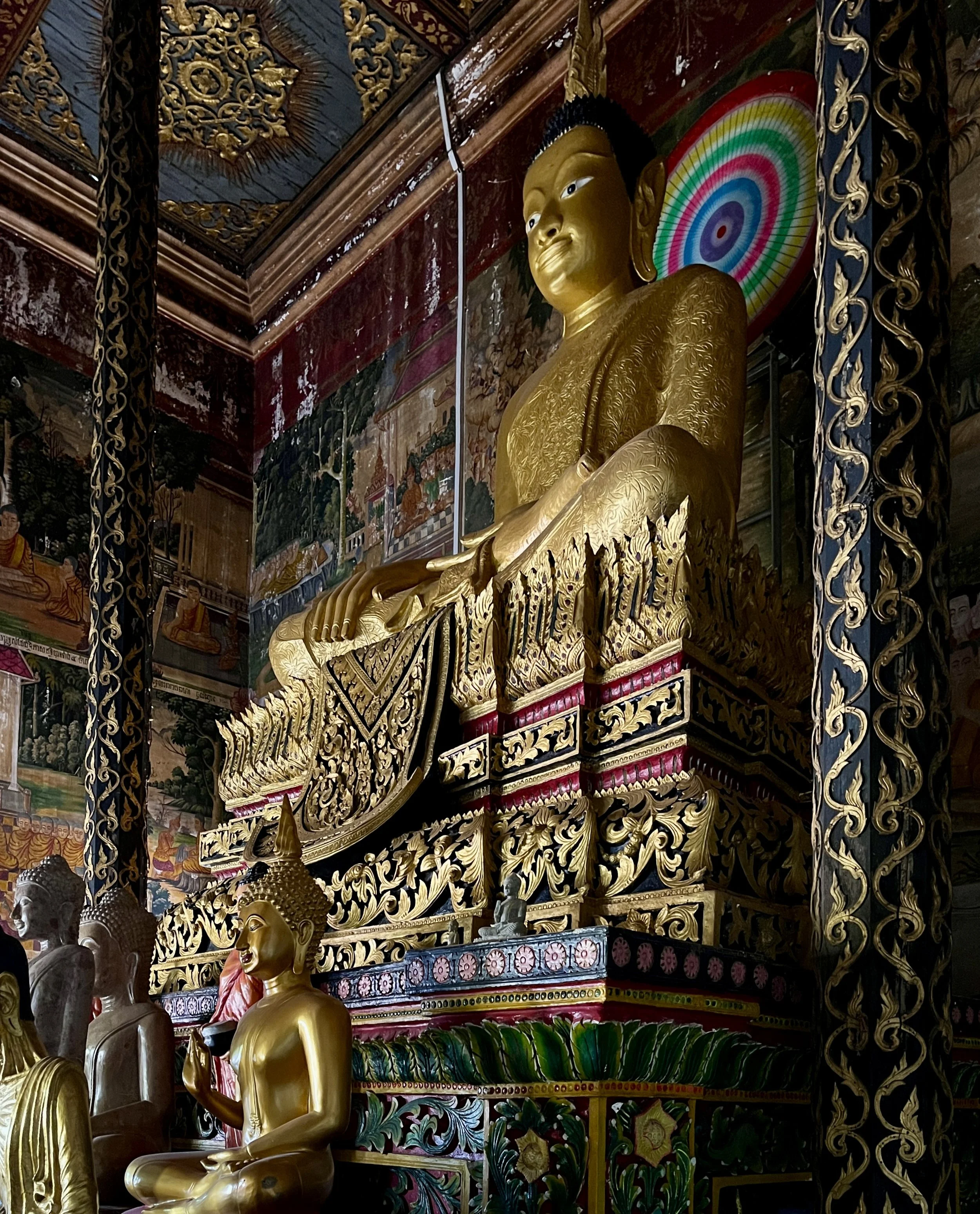
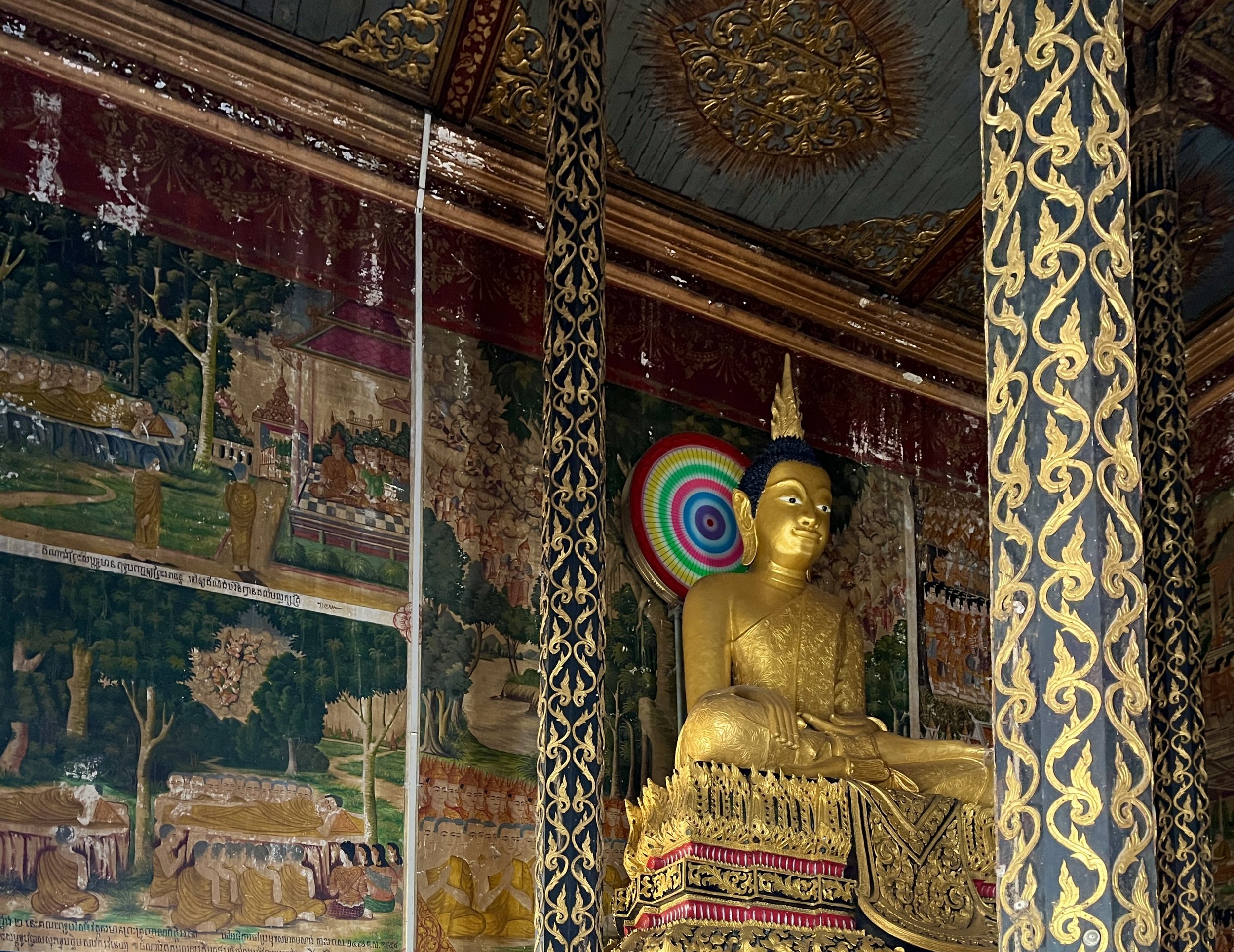
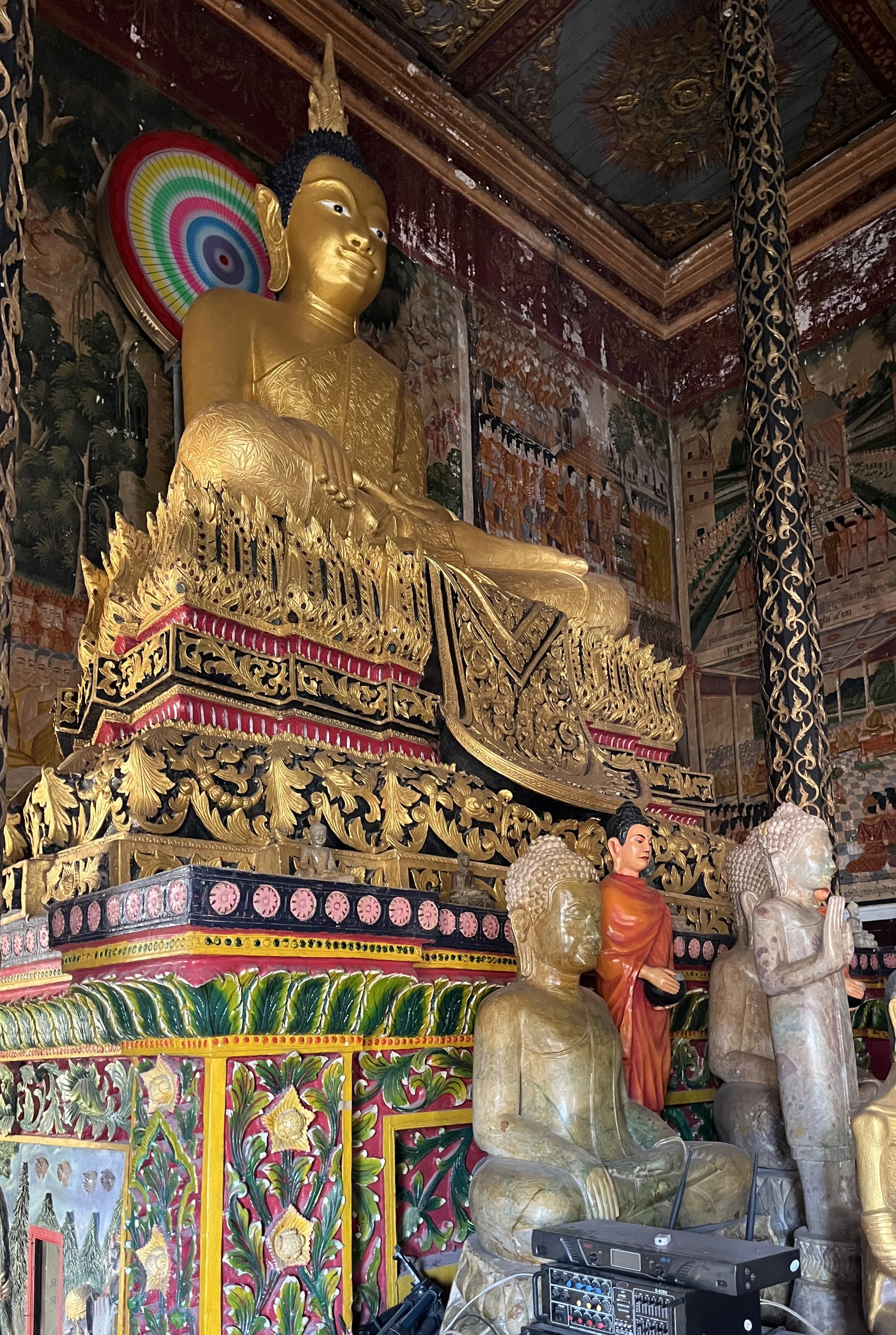
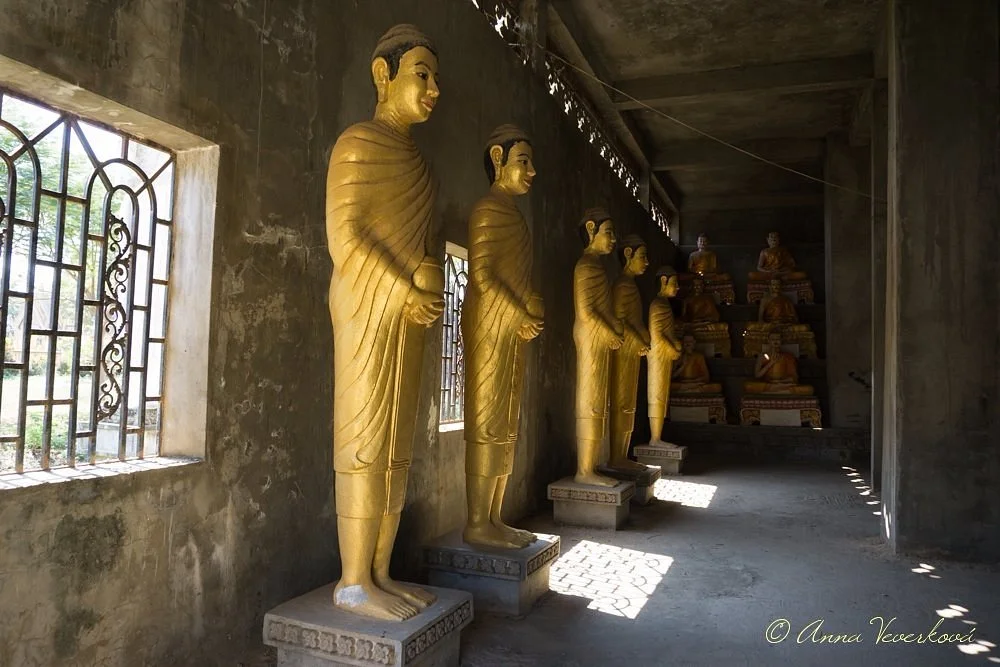
The Buddhas are pretty obviously modern.
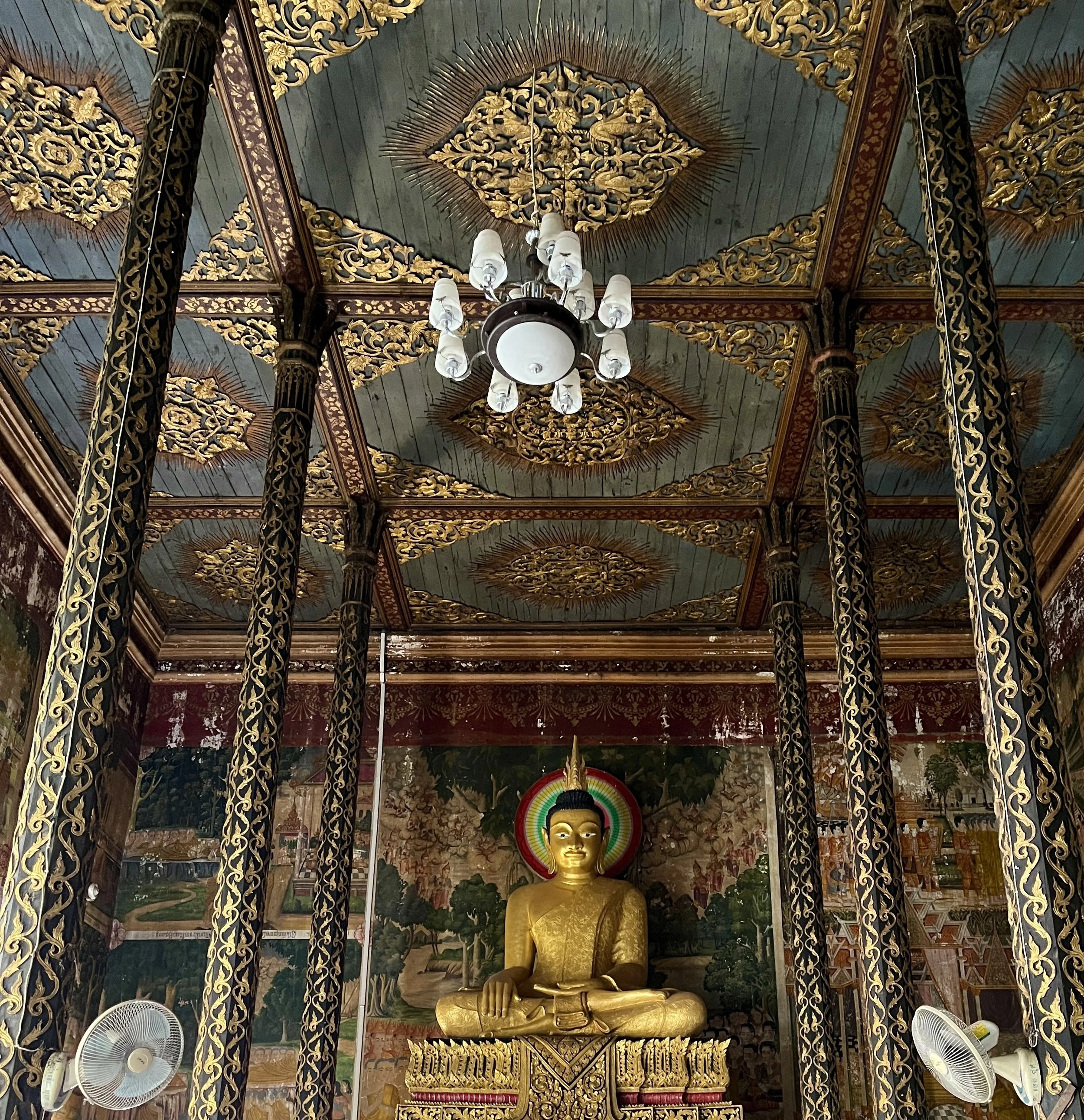
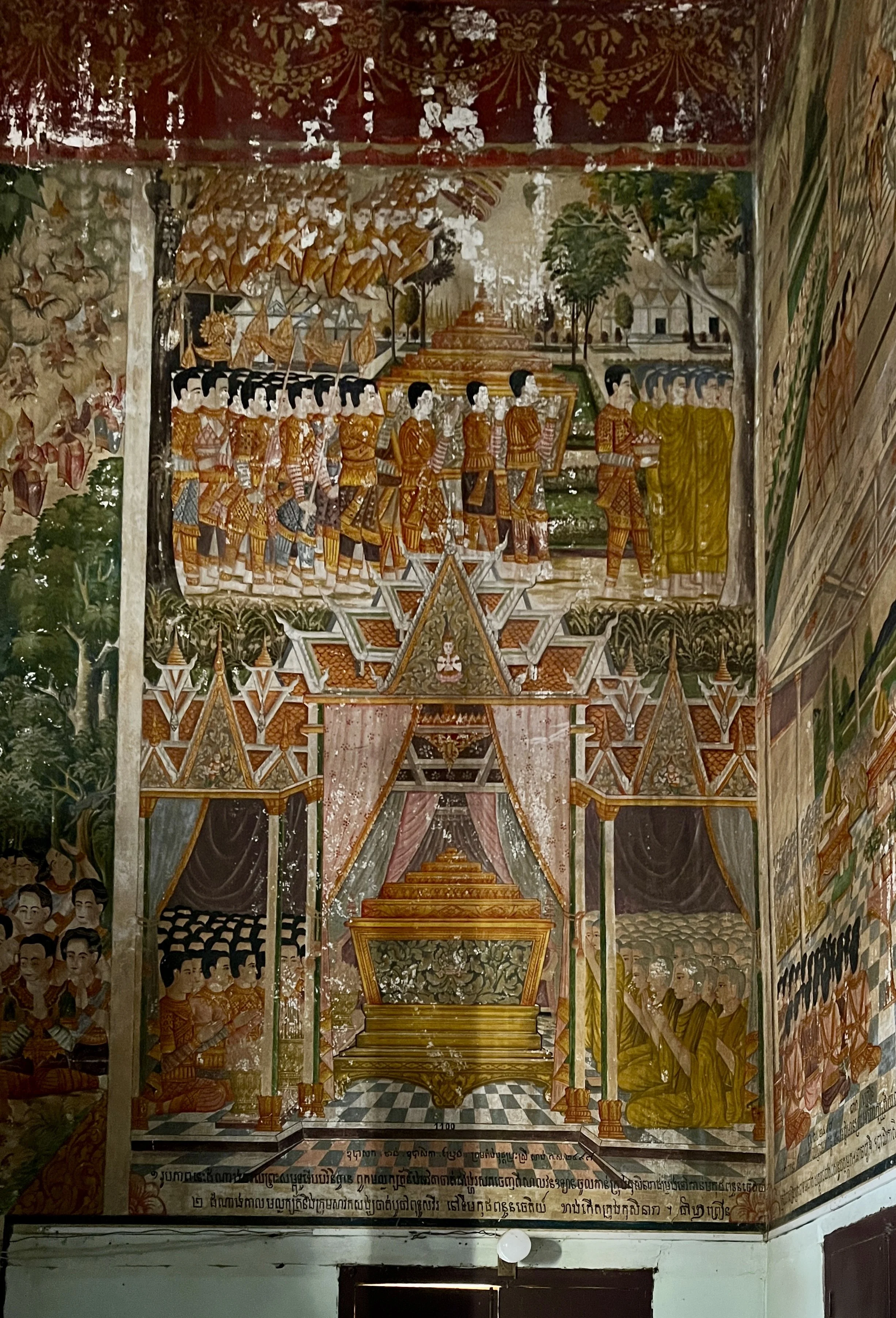
The wall paintings are from a range of decades. Some seem to be original; others, like those towards the right of this picture, are in the post 1950 style. I’m learning a lot about Khmer Buddhist paintings reading my first Roveda book about Preah Bot.
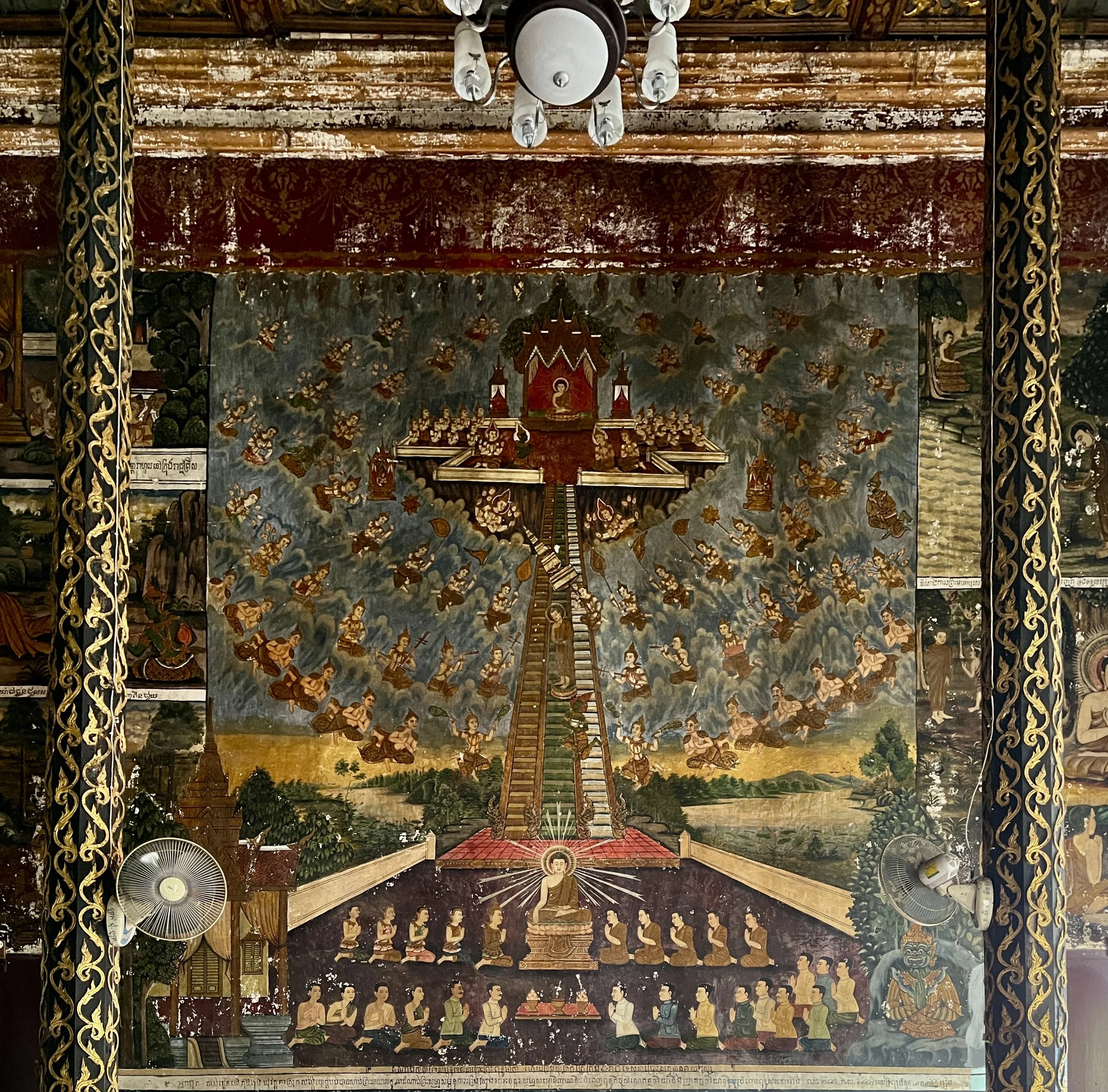
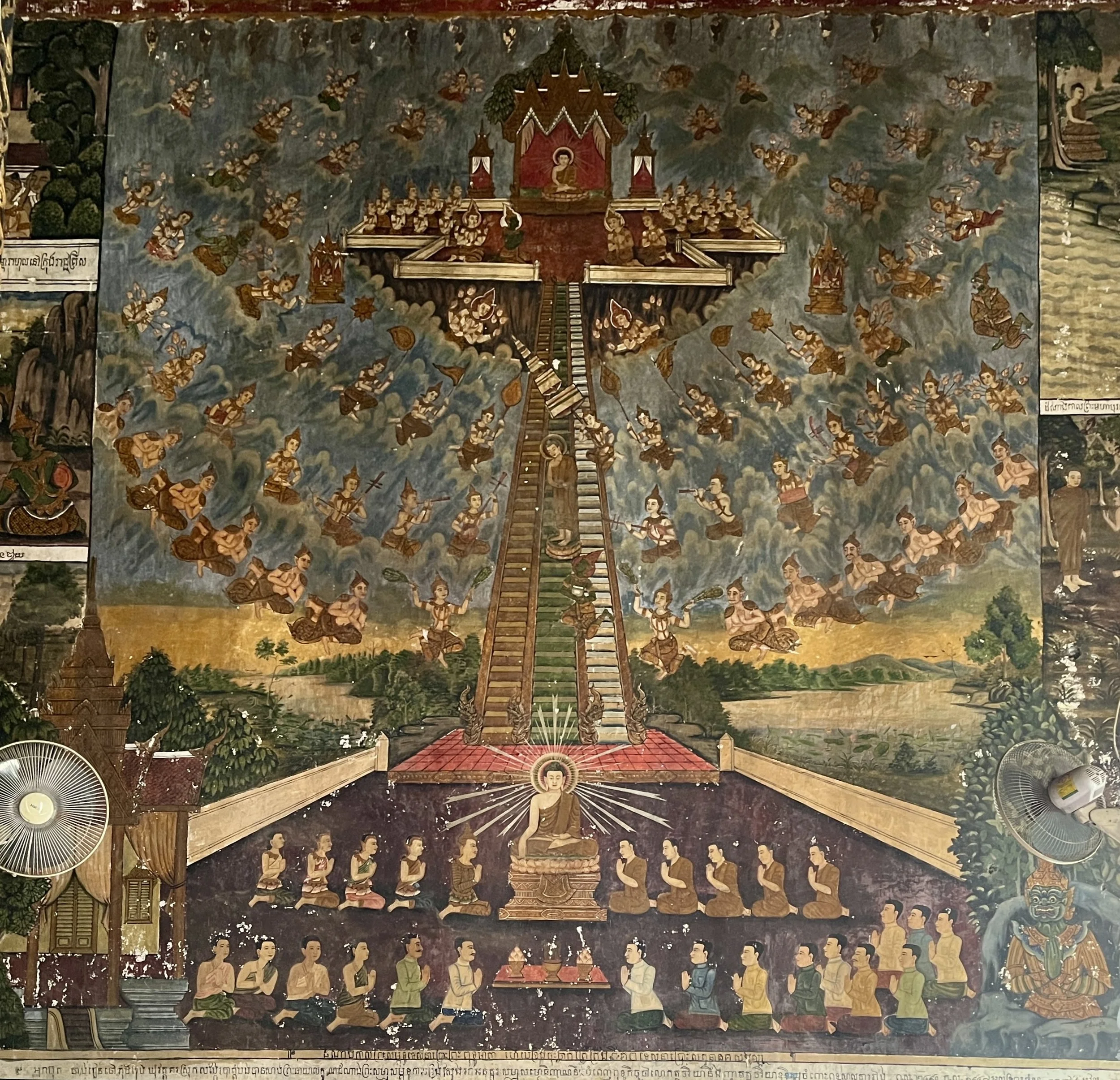
Though it is Buddhist tradition to touch up the temple every new year, they do pick and choose. I love seeing truly old paintings that haven’t been extensively retouched.
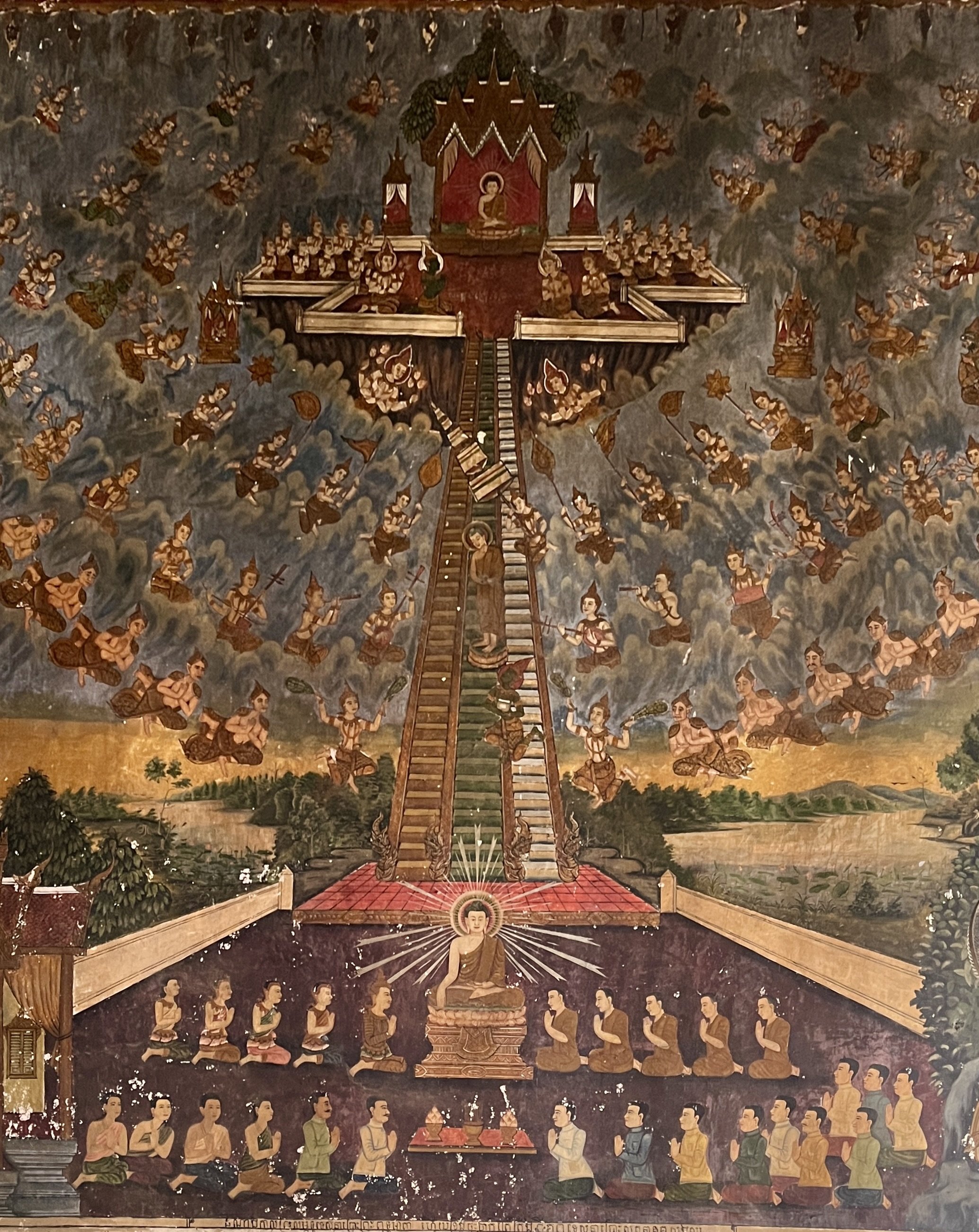
Buddha descends the celestial ladder.
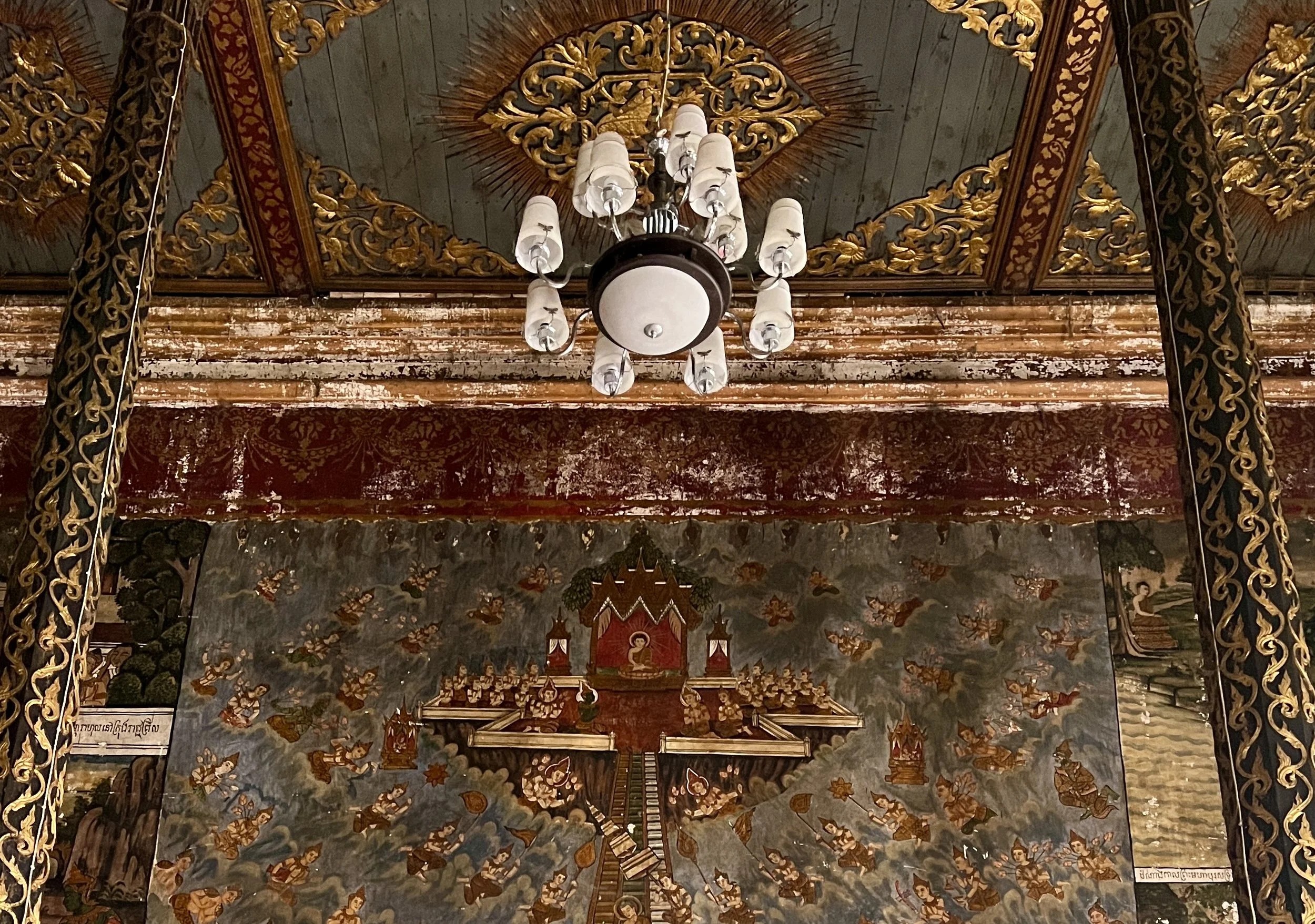
Probably my favorite panel and section of border.
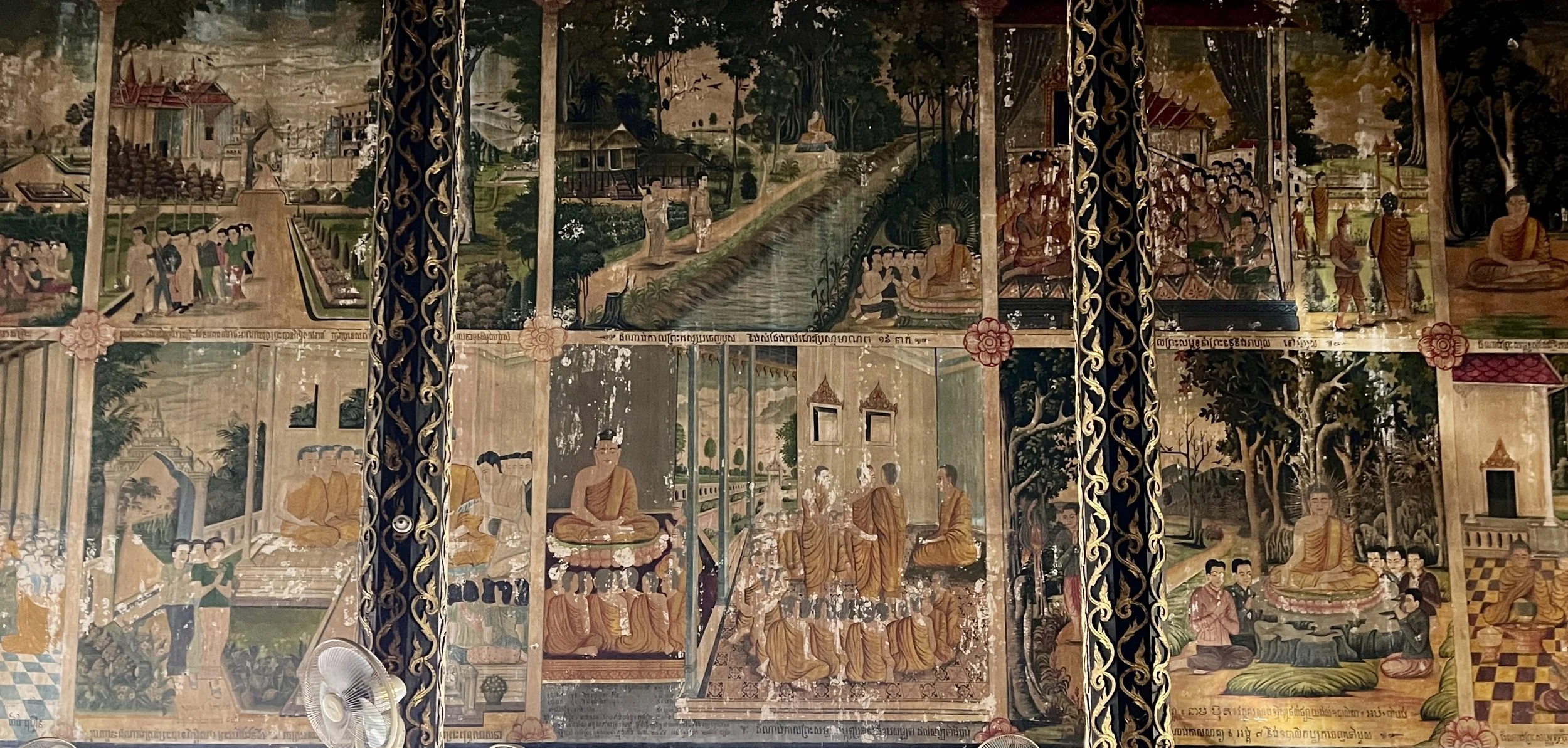
I really enjoy the rosettes (romdouls? lotus?). They seem a very late 1800s/early 1900s decorative touch.
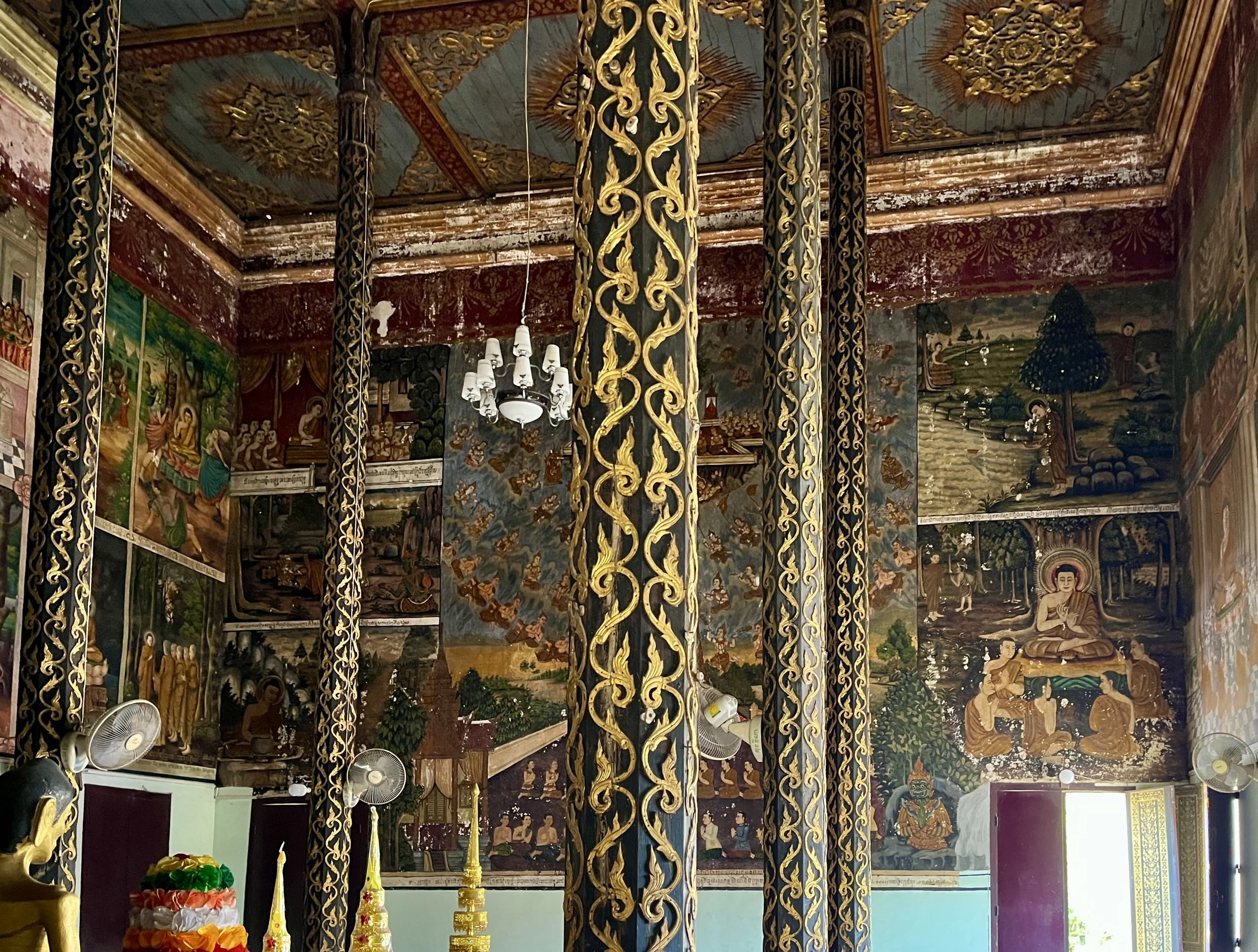
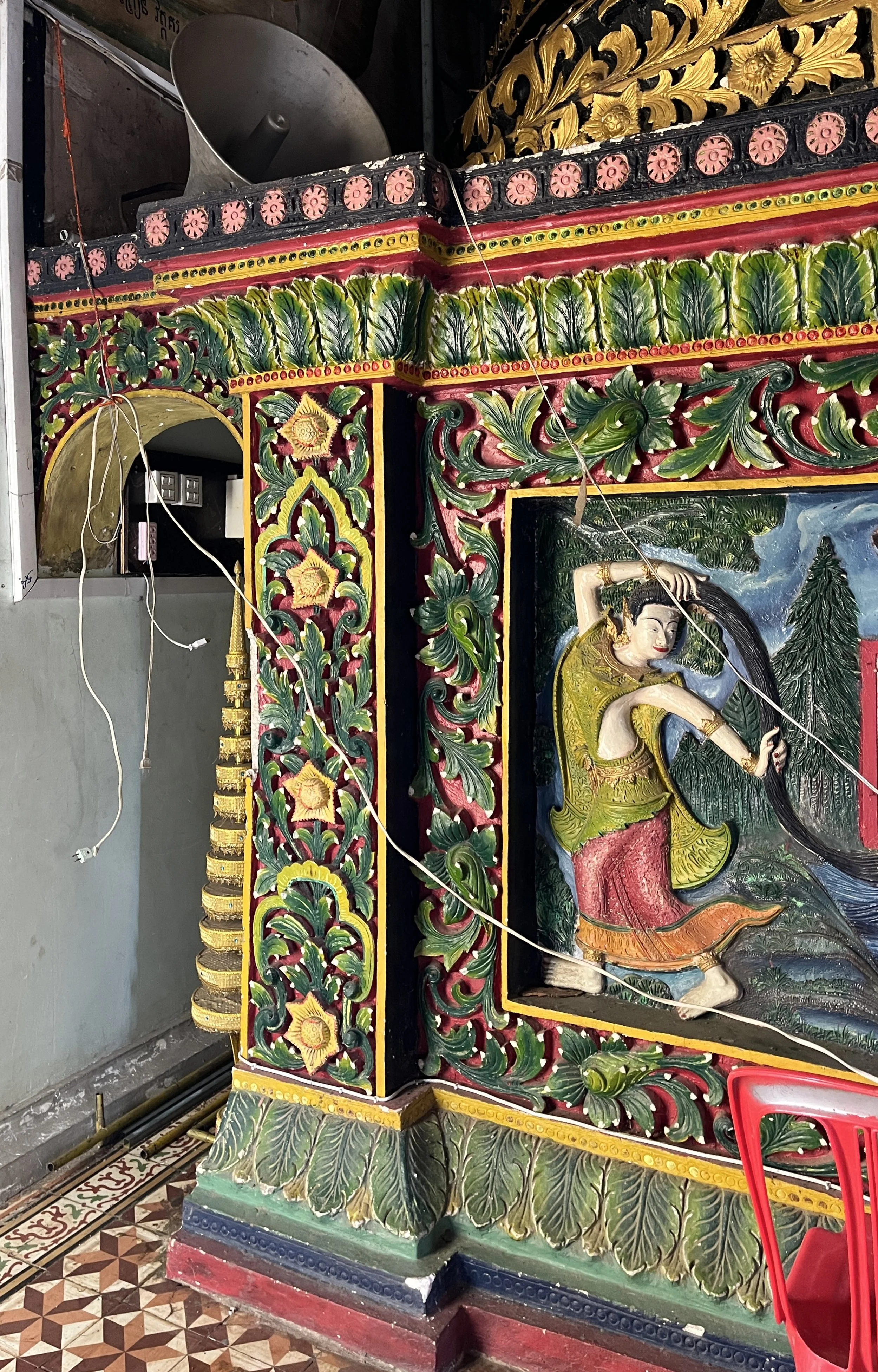
I really enjoyed this little ‘back doorway’ behind the main altar
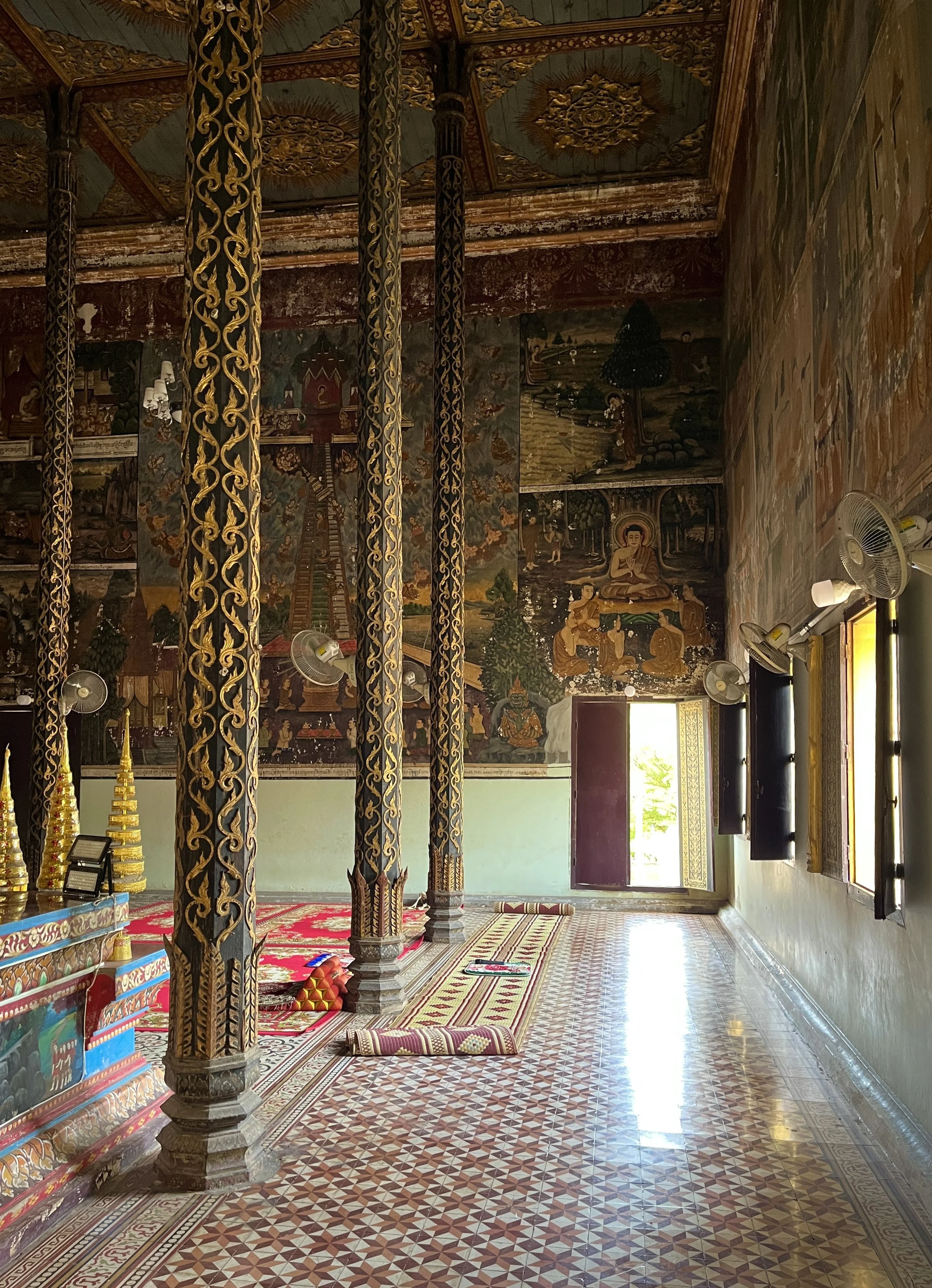
Wat Samrong Knong, Battambang | Cambodia

Battambang, as one of the historically wealthiest regions of Cambodia, has over 300 functional pagodas, not to mention the many ruins. Among them, Samrong Knong was, prior to the Khmer Rouge regime, the most powerful local monastery, with large grounds and many buildings and stupas, new and old. It was originally constructed in wood in 1707, and there is apparently (though I failed to identify it) at least one extant building dating from the first decade of the 19th century here. There are various stupas dating to the last quarter of the 19th century. The “new” pagoda was commissioned in 1887 and completely in 1890; the “old” pagoda was reconstructed in brick and plaster simultaneously, and last renovated quite recently.

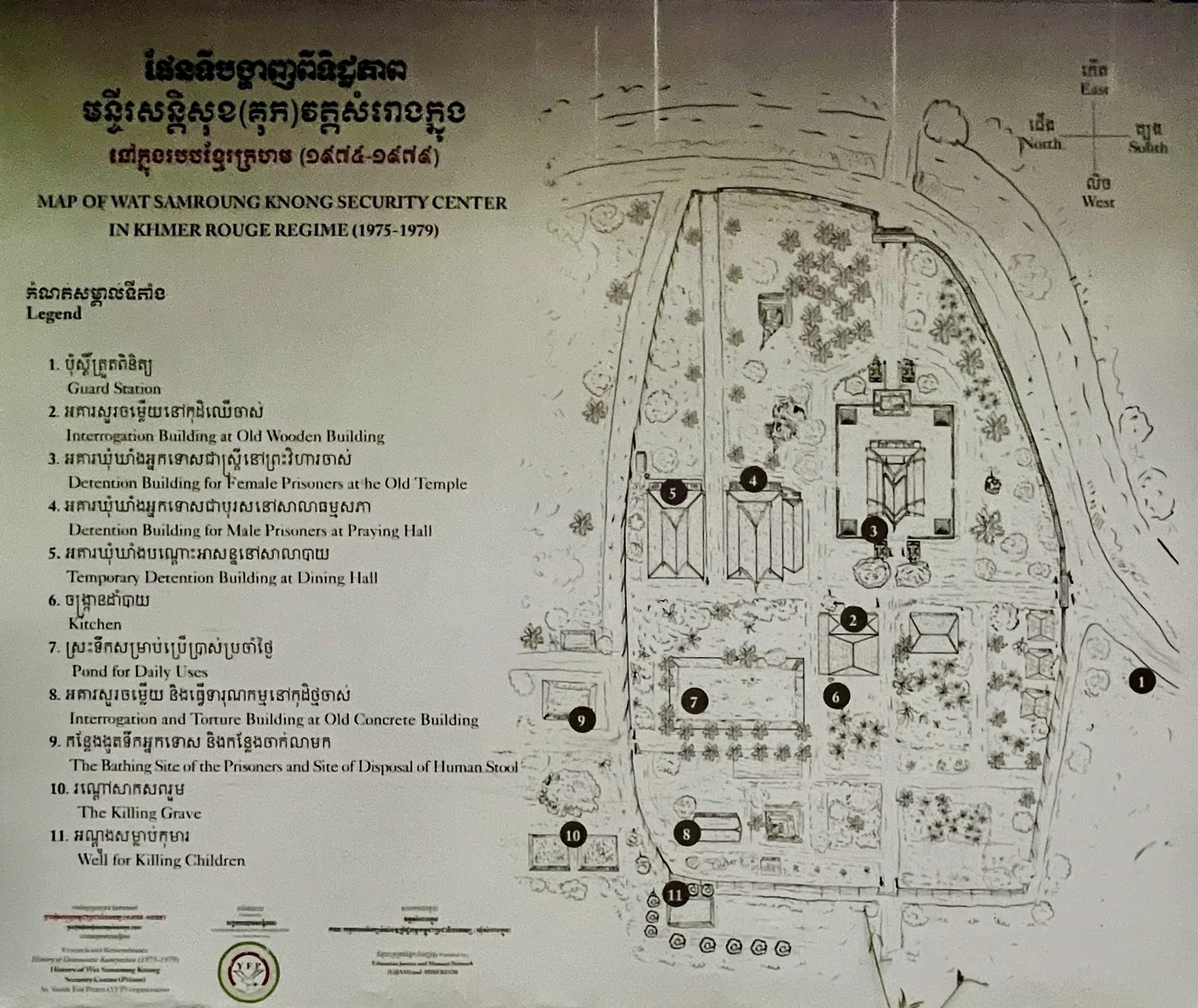
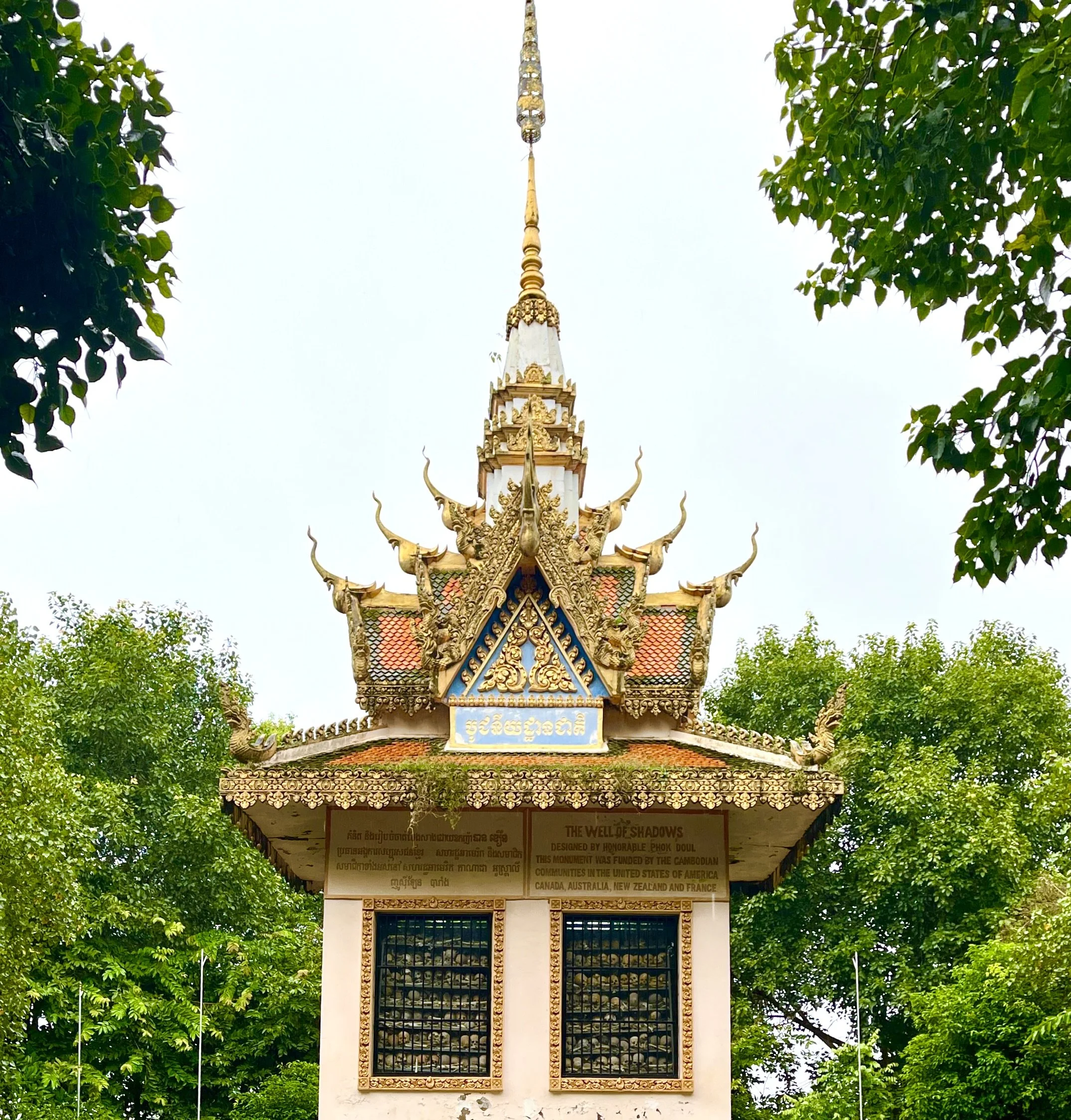
During the Khmer Rouge regime, Samrong Knong became a notorious interrogation/torture center and killing field. All these buildings are clearly mapped for visitors.

Far better photos are available, even on google maps reviews– these are all I managed to get because:
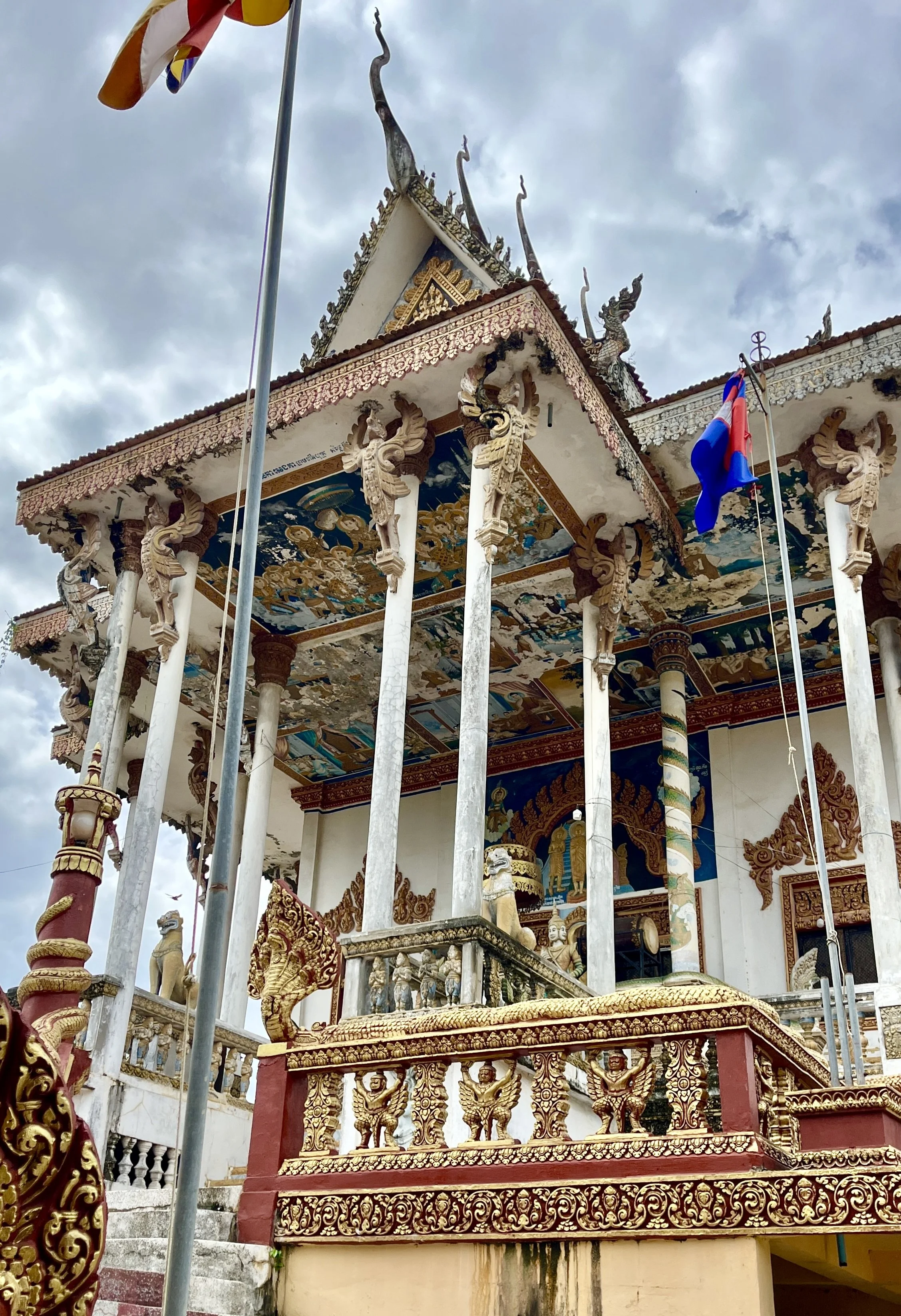
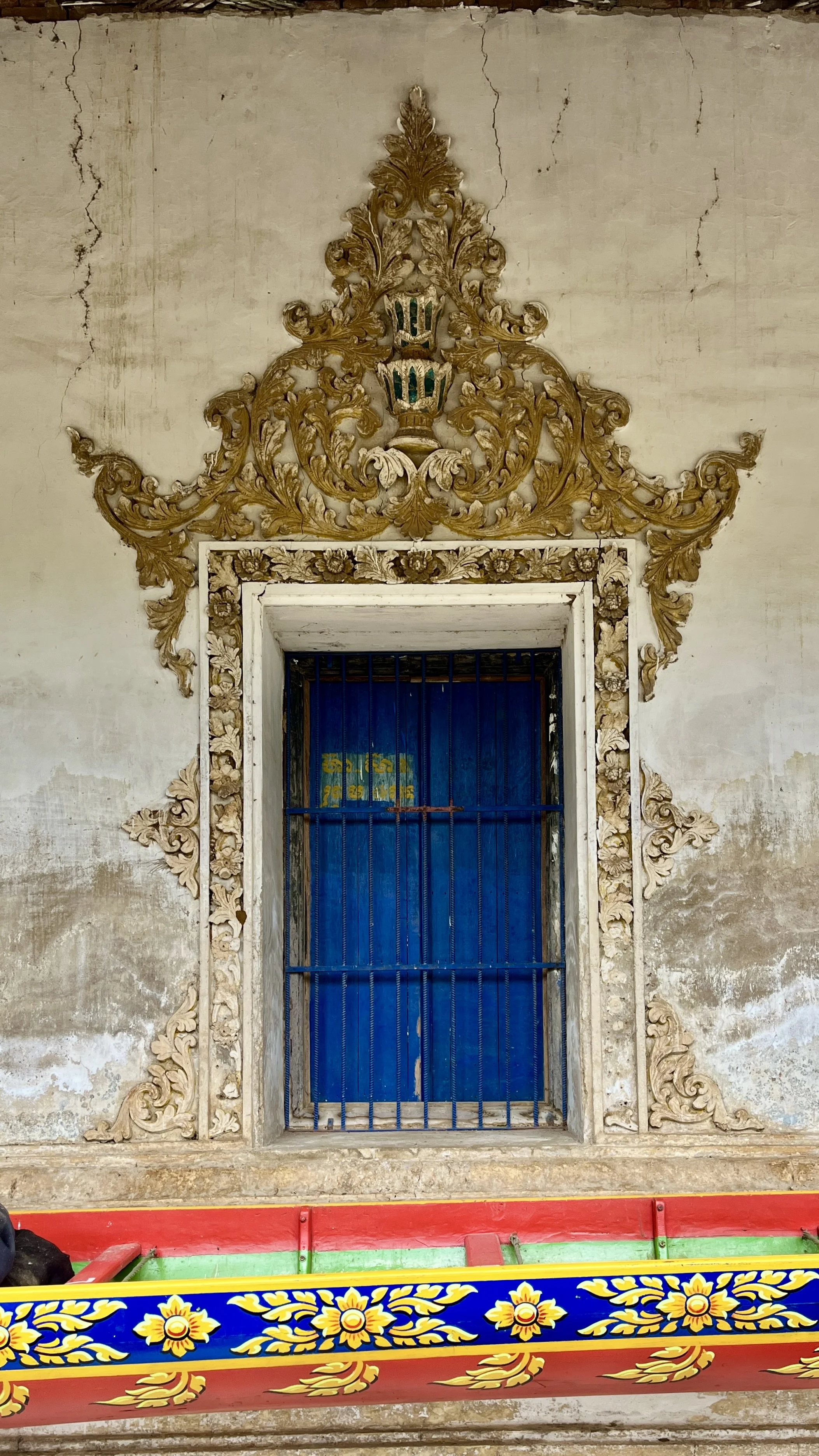
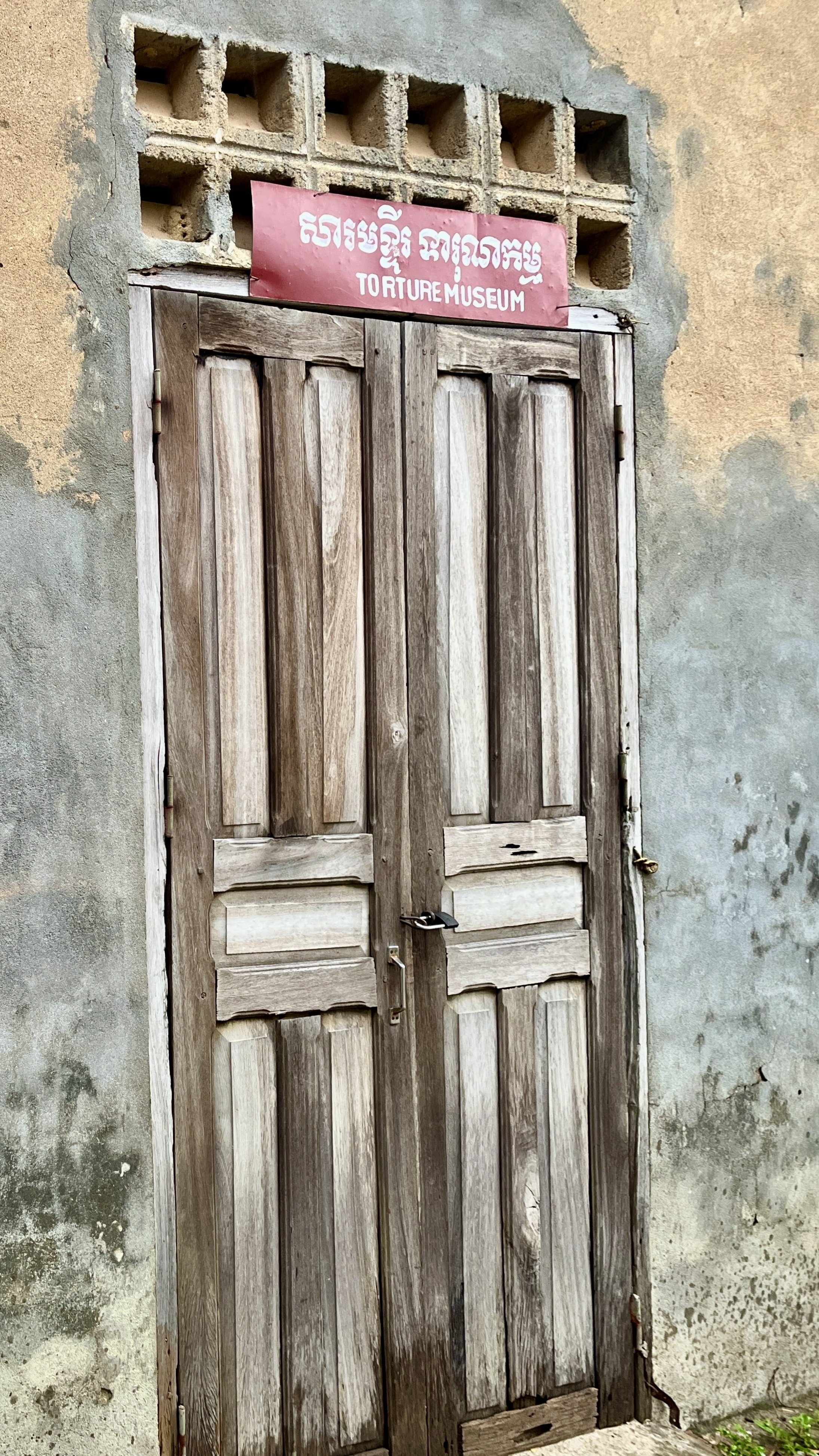
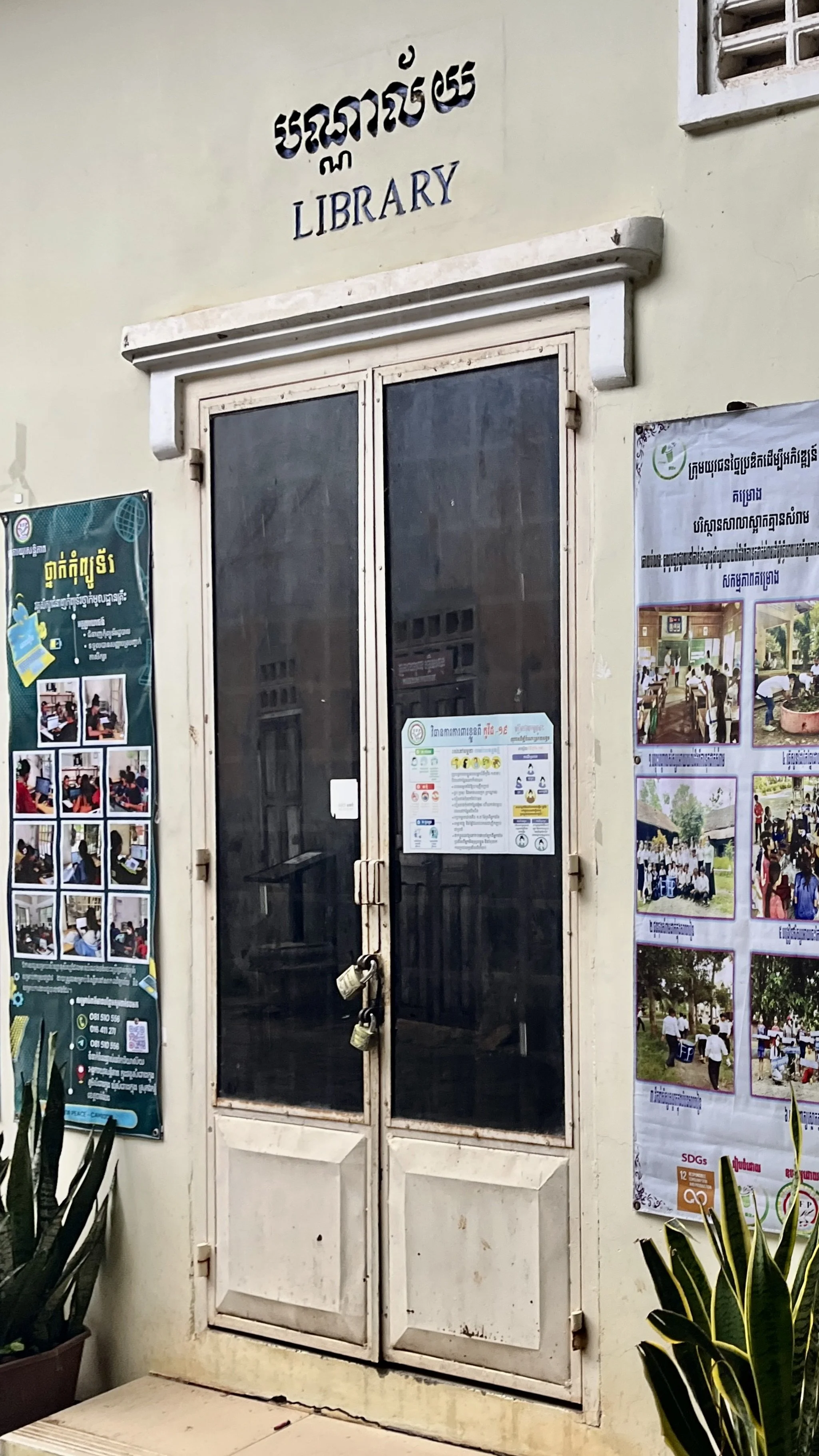
1. I kept going at the wrong times. Everything was always locked up: not just the temples themselves, which is regrettably commonplace, but even the museum and library that were supposed to be open. This happens in Cambodia; if no one is there they just shut up shop, not realizing/caring that it’s ludicrous to expect a constant flow of visitors at their ordered pair coordinate of location/awareness. I think Samrong Knong opens up to big tour groups, so perhaps join one if you really care to go inside.

2. The weather was dreary and I wasn’t feeling well. I caught some sort of dreadful up all night wondering if I should go to hospital type stomach bug in Battambang (I think it might have been fried rice syndrome), and showing up here only to miss the sites– not once, but twice– convinced me it just wasn’t meant to be. Wandering past a pond, an info plaque attested that this was the pond in which the human waste of Khmer Rouge prisoners was dumped in one half, while the well-behaved among them were permitted to bathe once a month in the other. Nauseating. I left.

Wat Ek Phnom, Battambang | Cambodia

Wat Ek Phnom is 9km north of Battambang, and must be one of the most popular temples with tourists as it was one of just two that commanded an entrance fee. The approximately $2 usd-ish per person fee was only collected when the tour guides showed up with their charges; go by yourself and no one is sitting at the ramshackle desk expecting it.
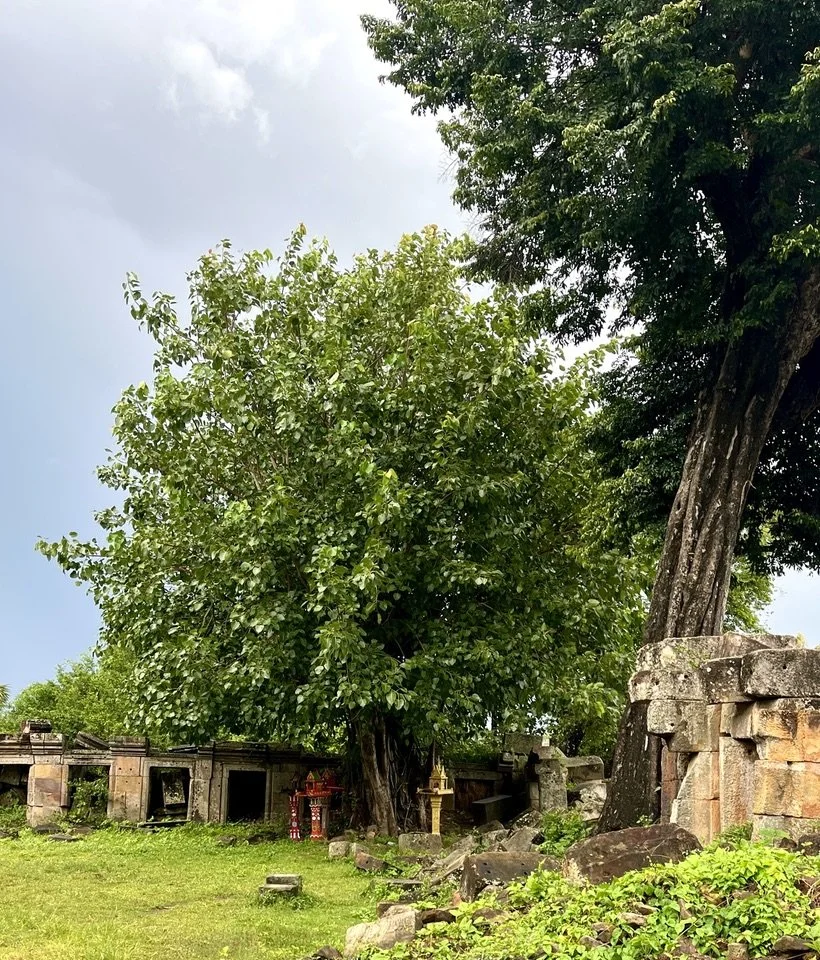
Fee or no fee, the more modern pagoda was locked, so I never got to see inside.

I found this picture of the inside on a TripAdvisor review. While I do like this modern Indian pop art style of depicting the life of the Buddha, I don’t feel I missed much.

The big modern Buddha.

Behind the Buddha is a bunch of unfinished construction; I believe they’re supposed to be additional standing Buddha statues.

I also didn’t go under the Buddha, but apparently this is what’s inside. Also from TripAdvisor.

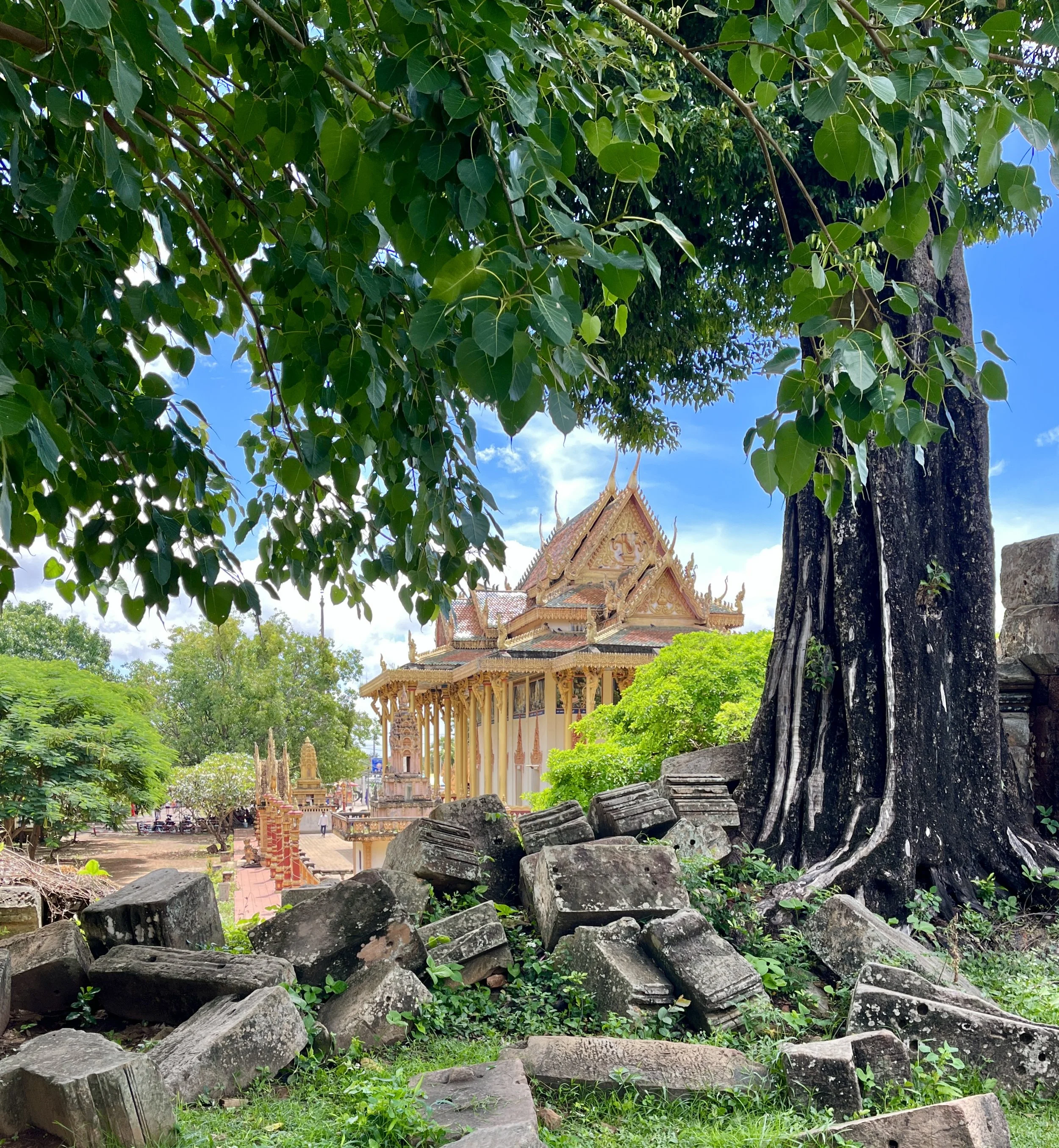
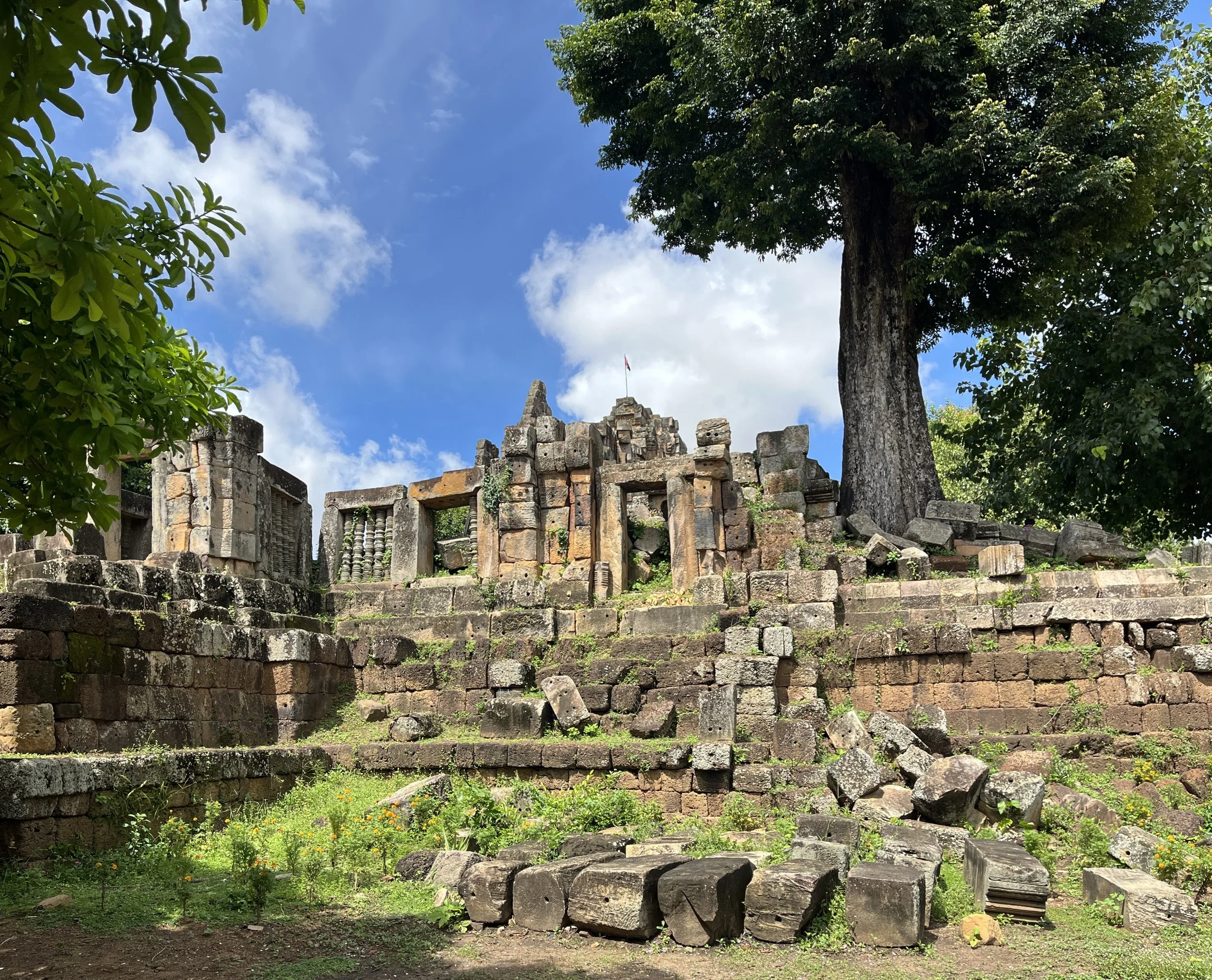
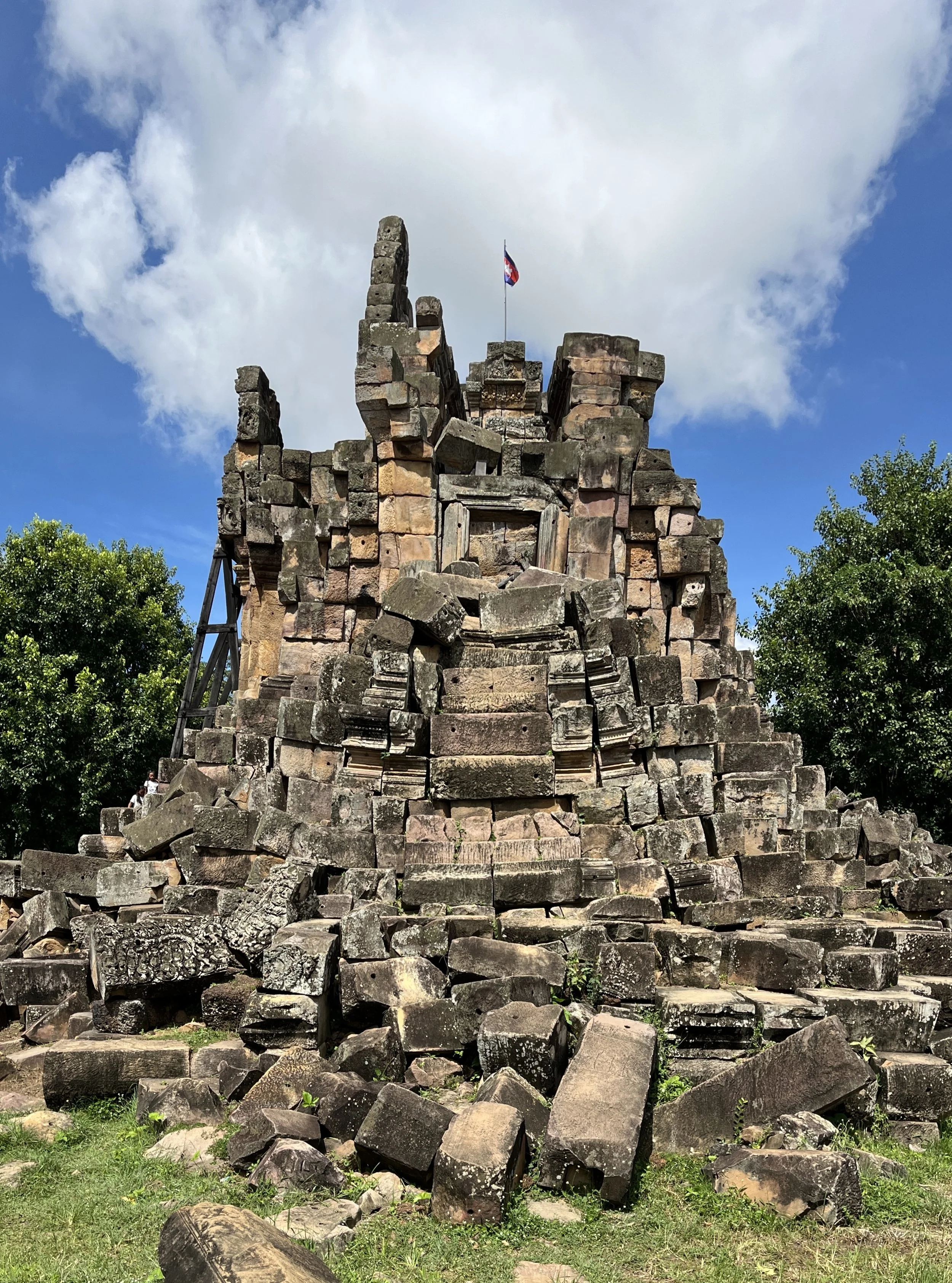
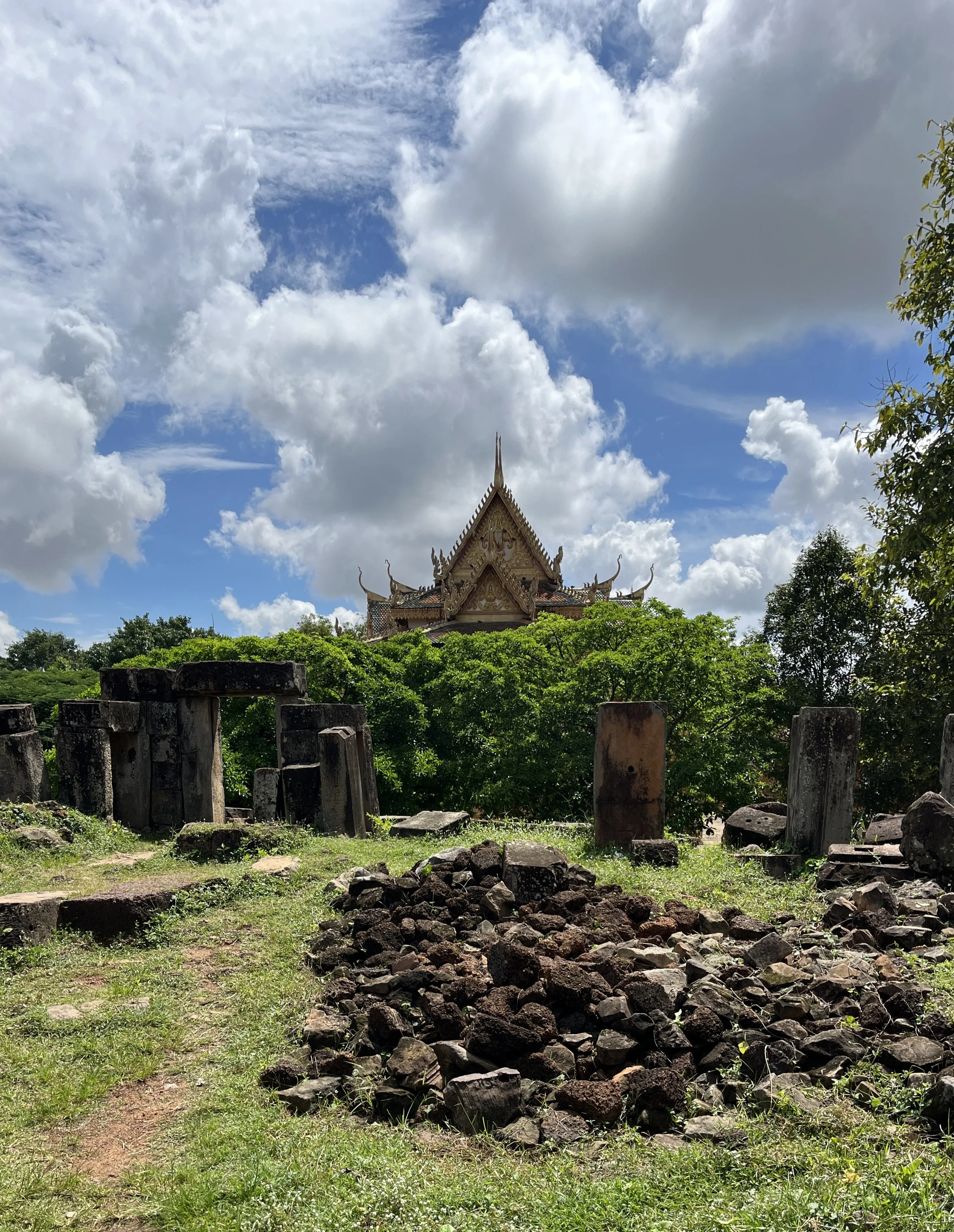
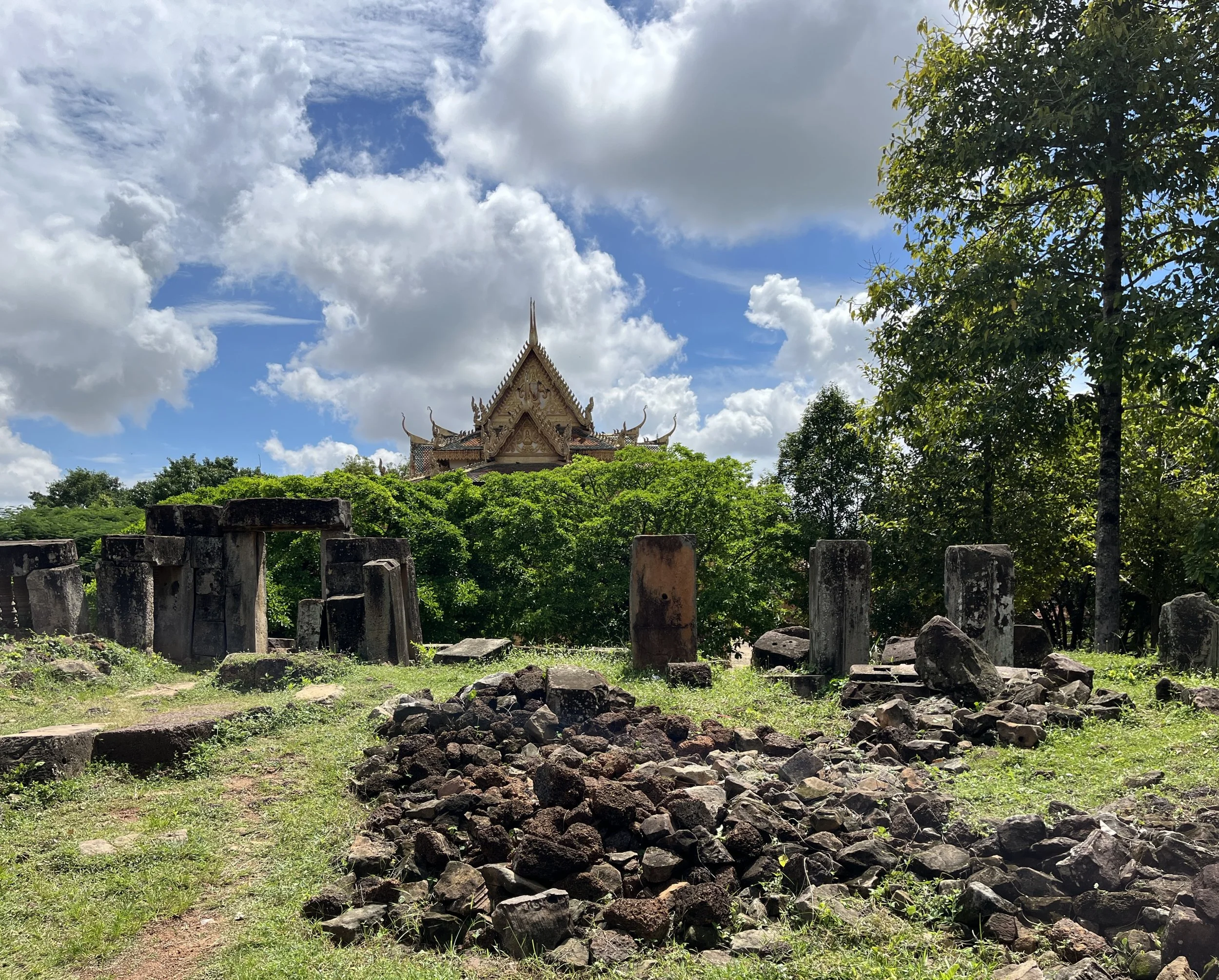
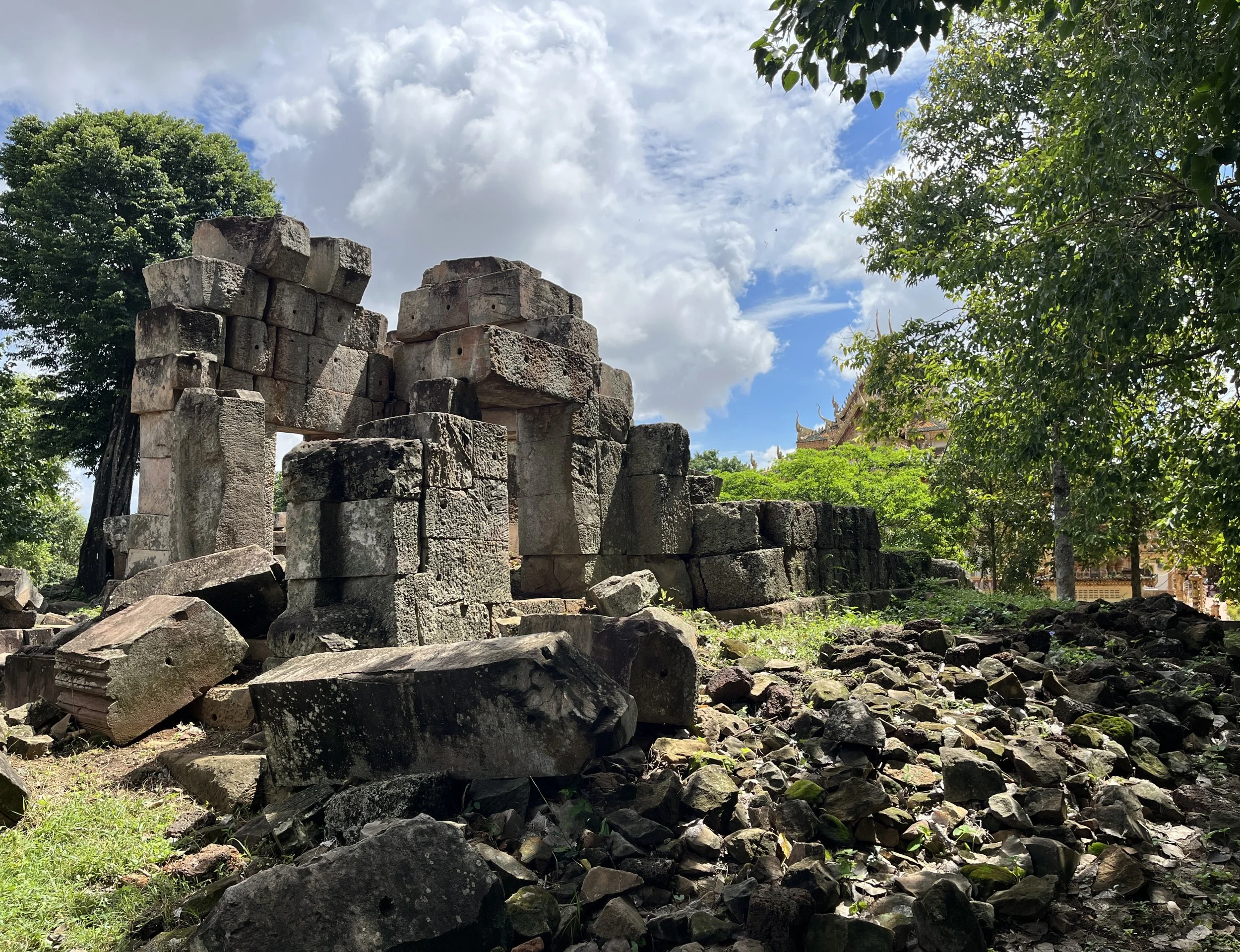
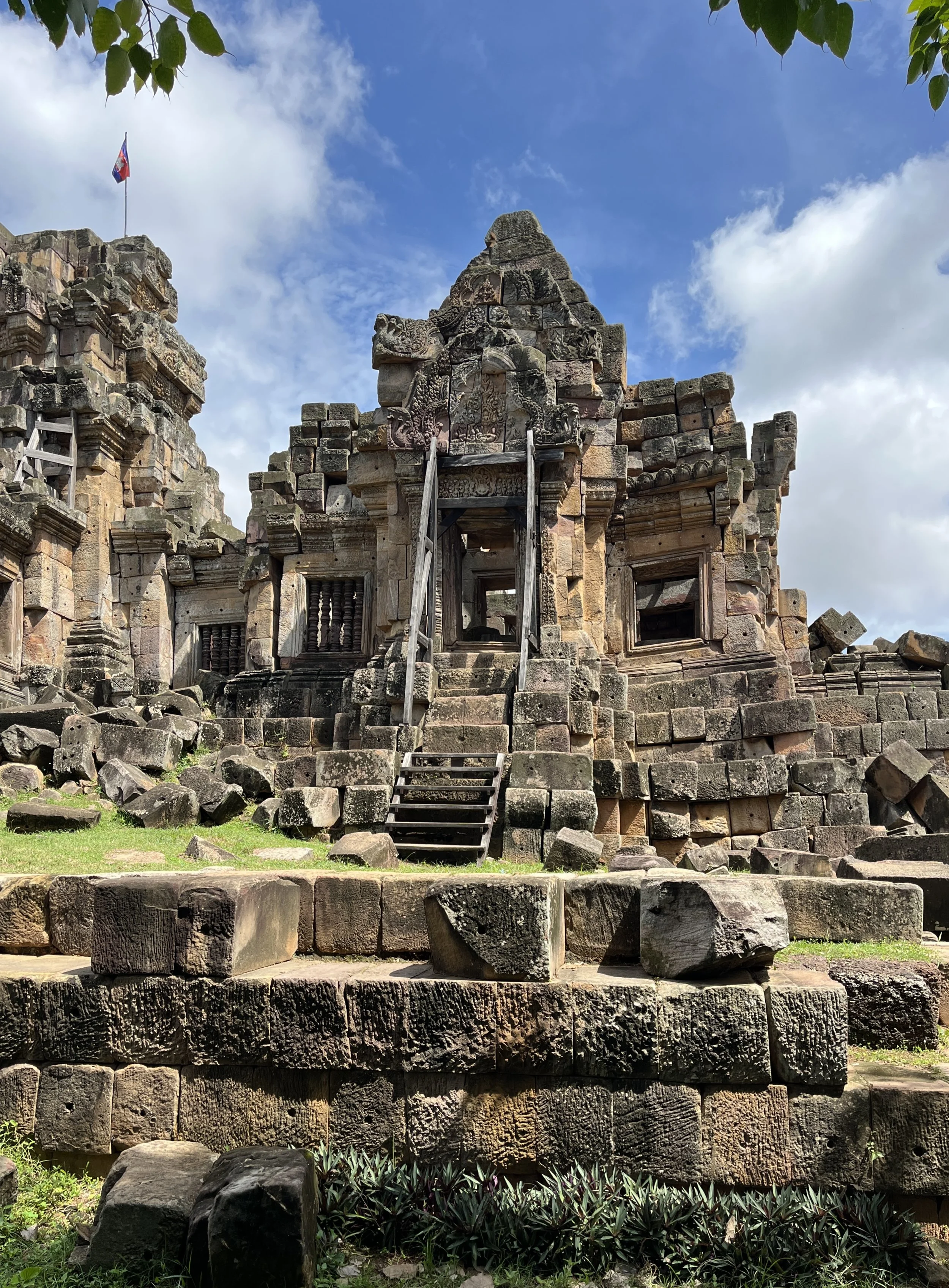
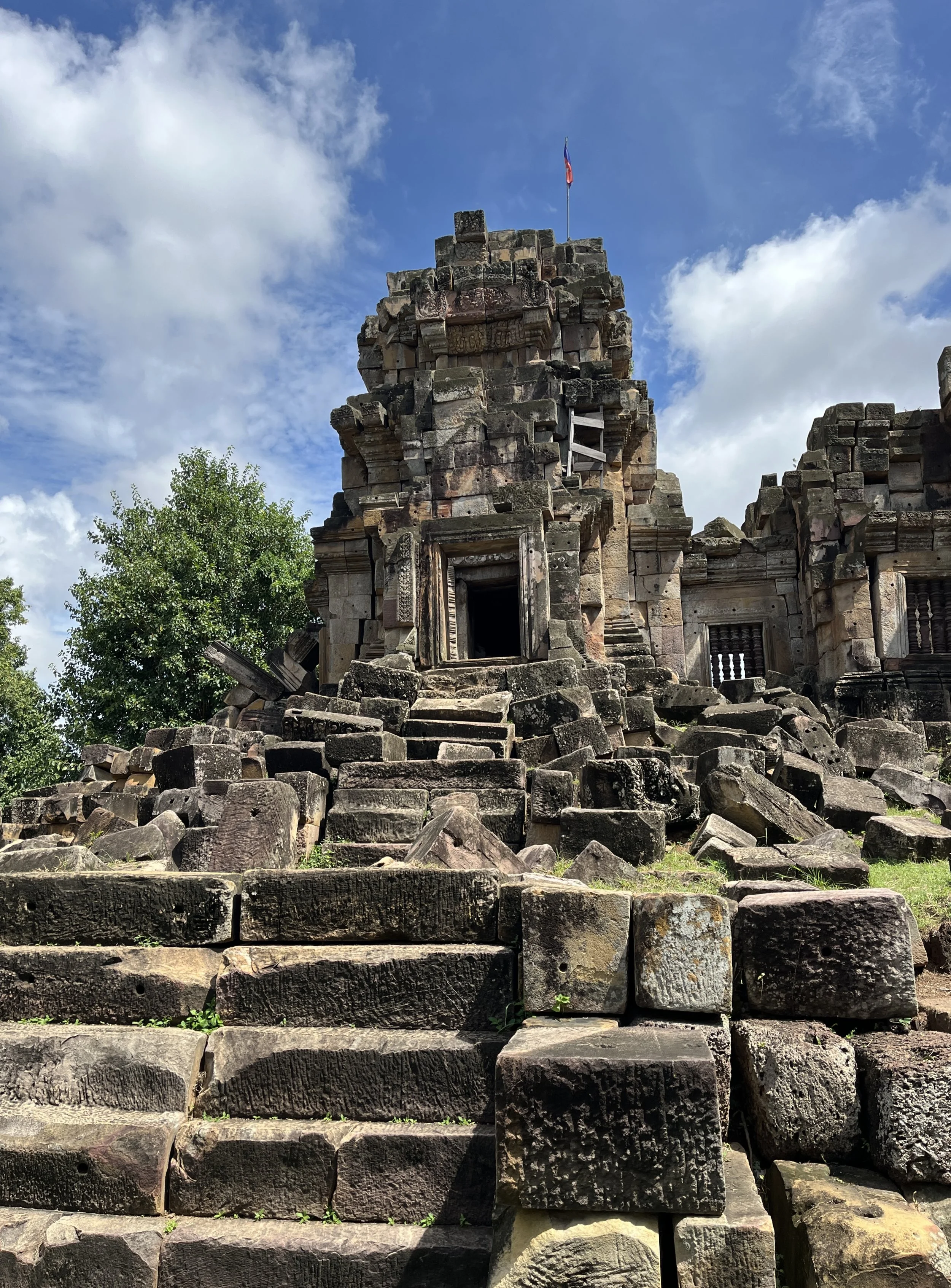
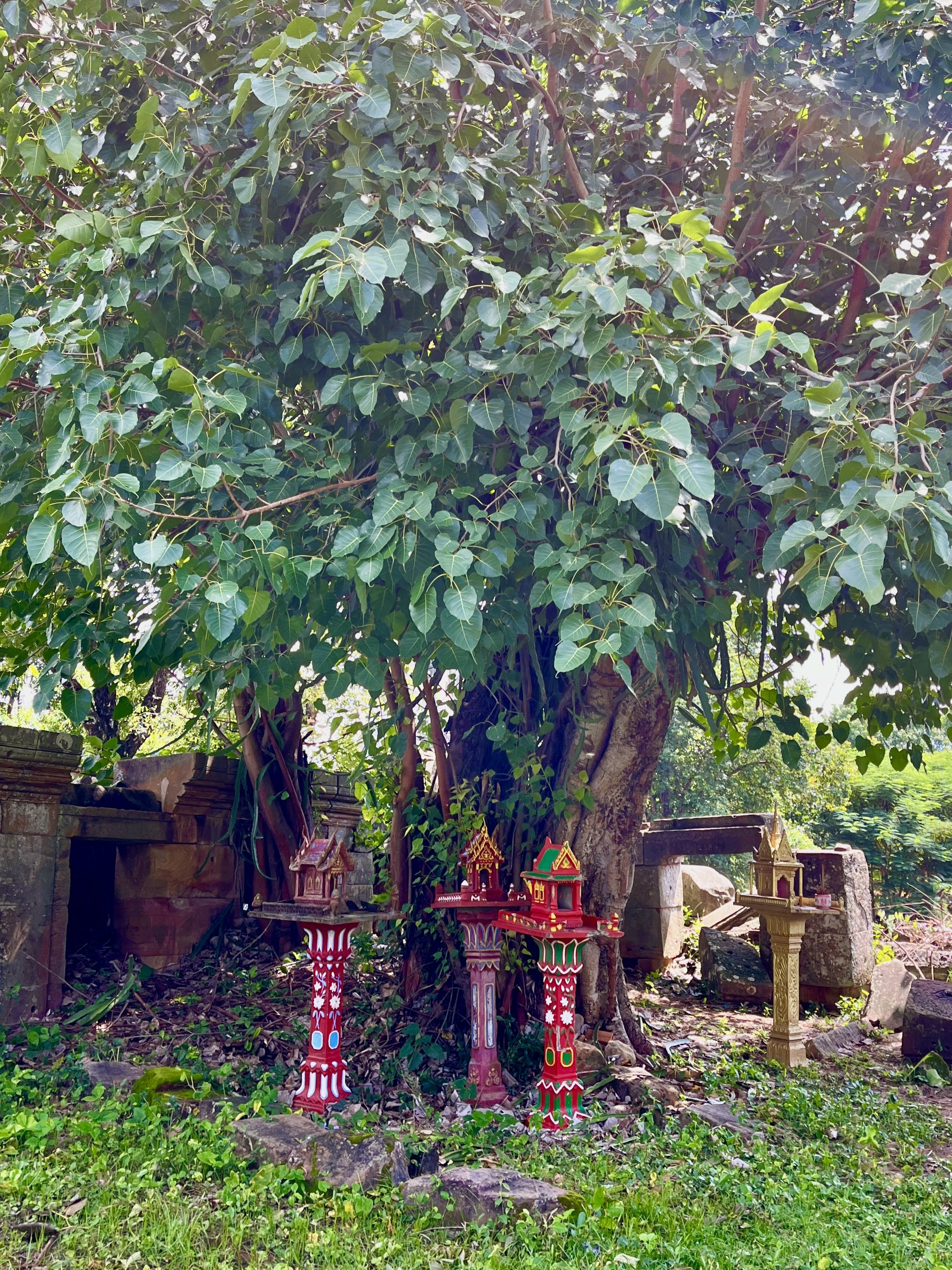
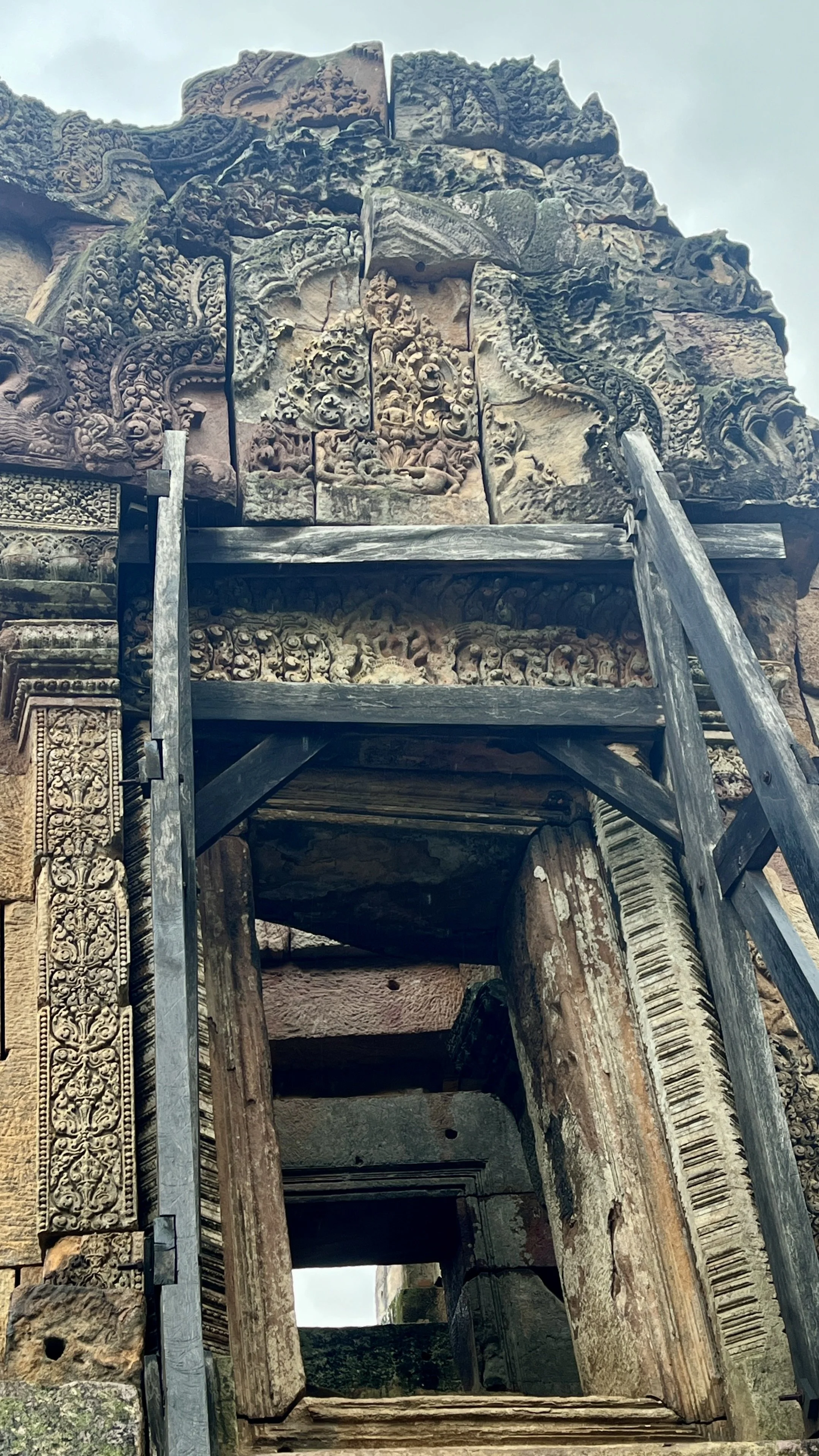
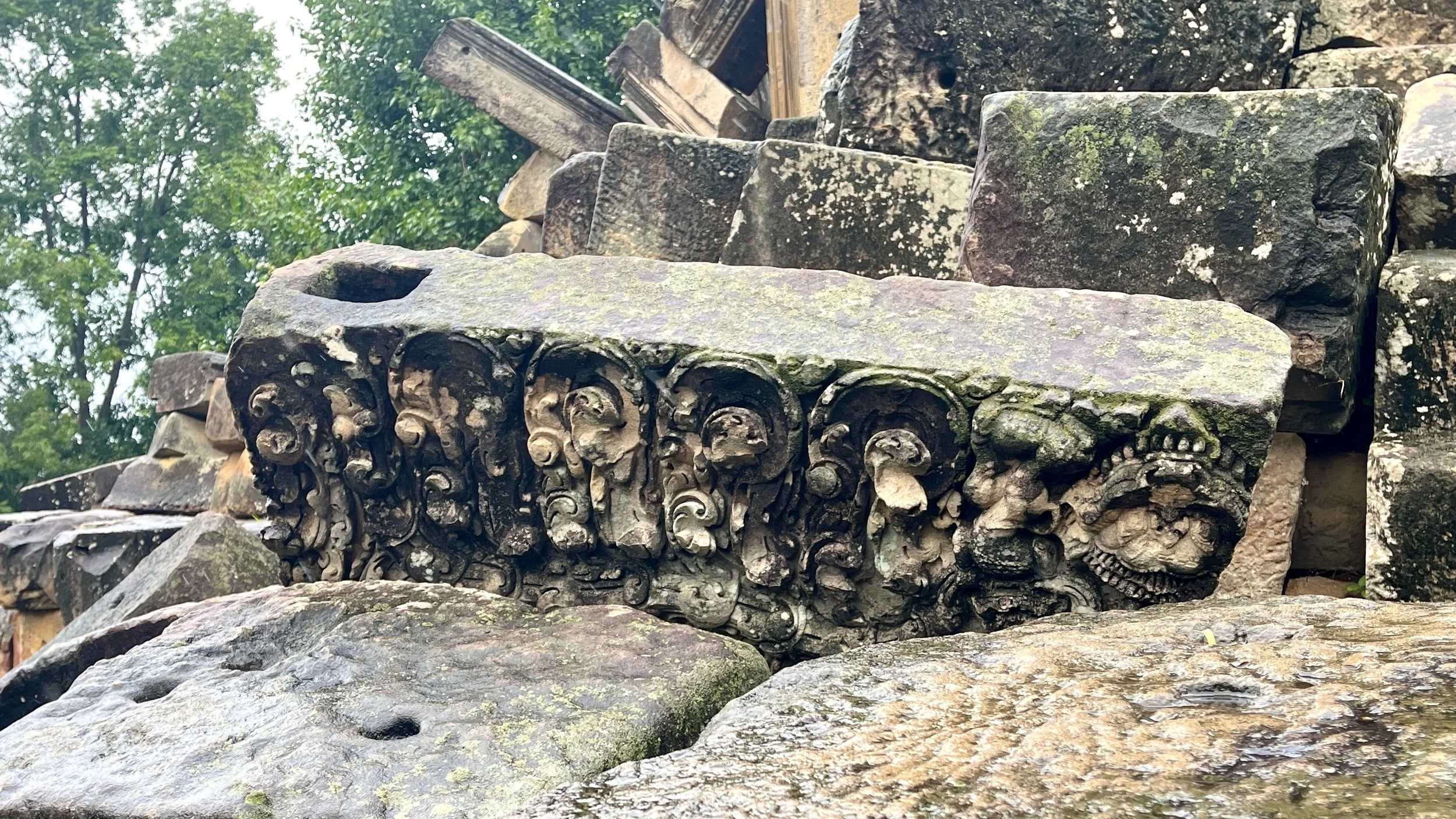
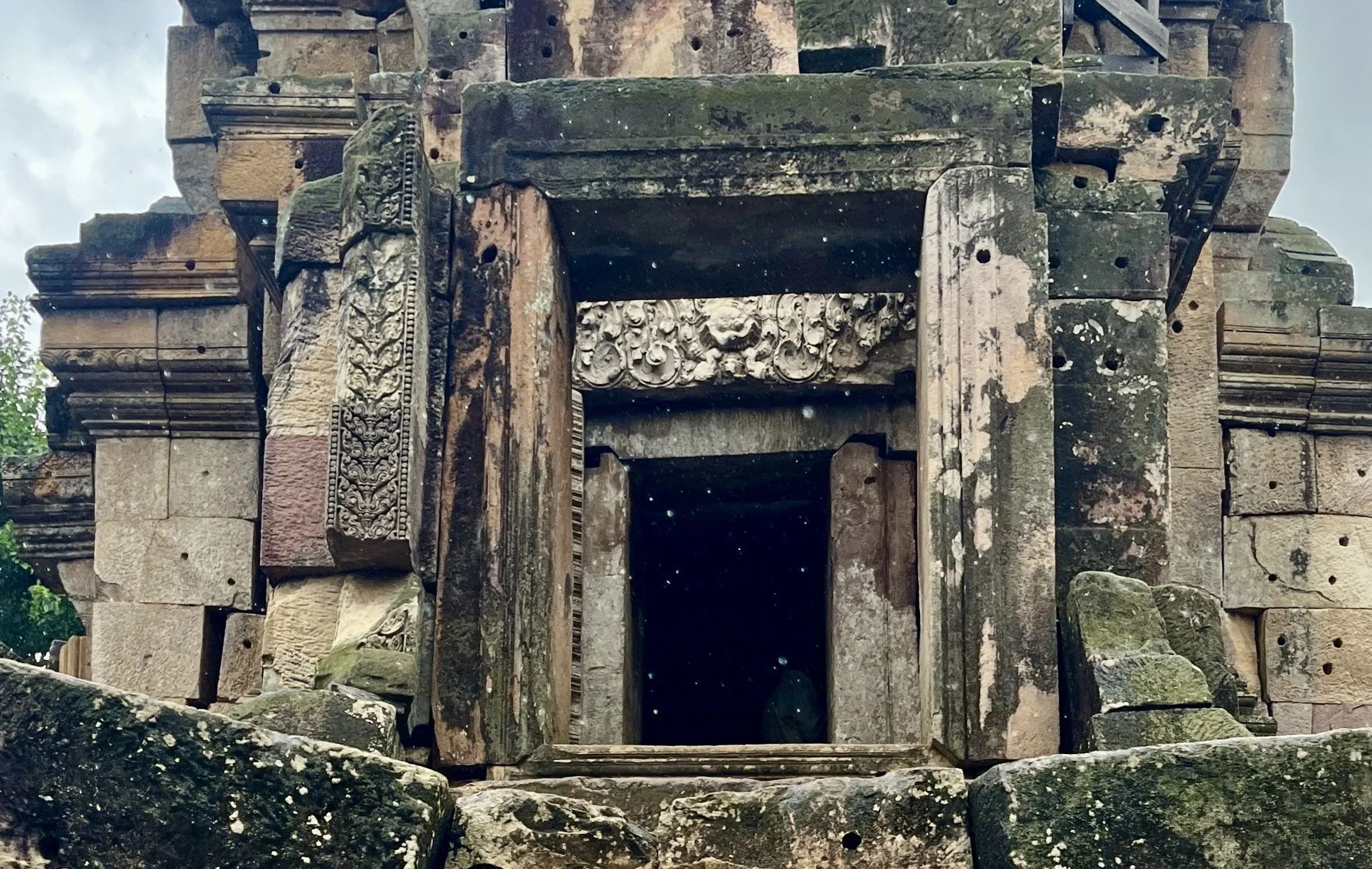
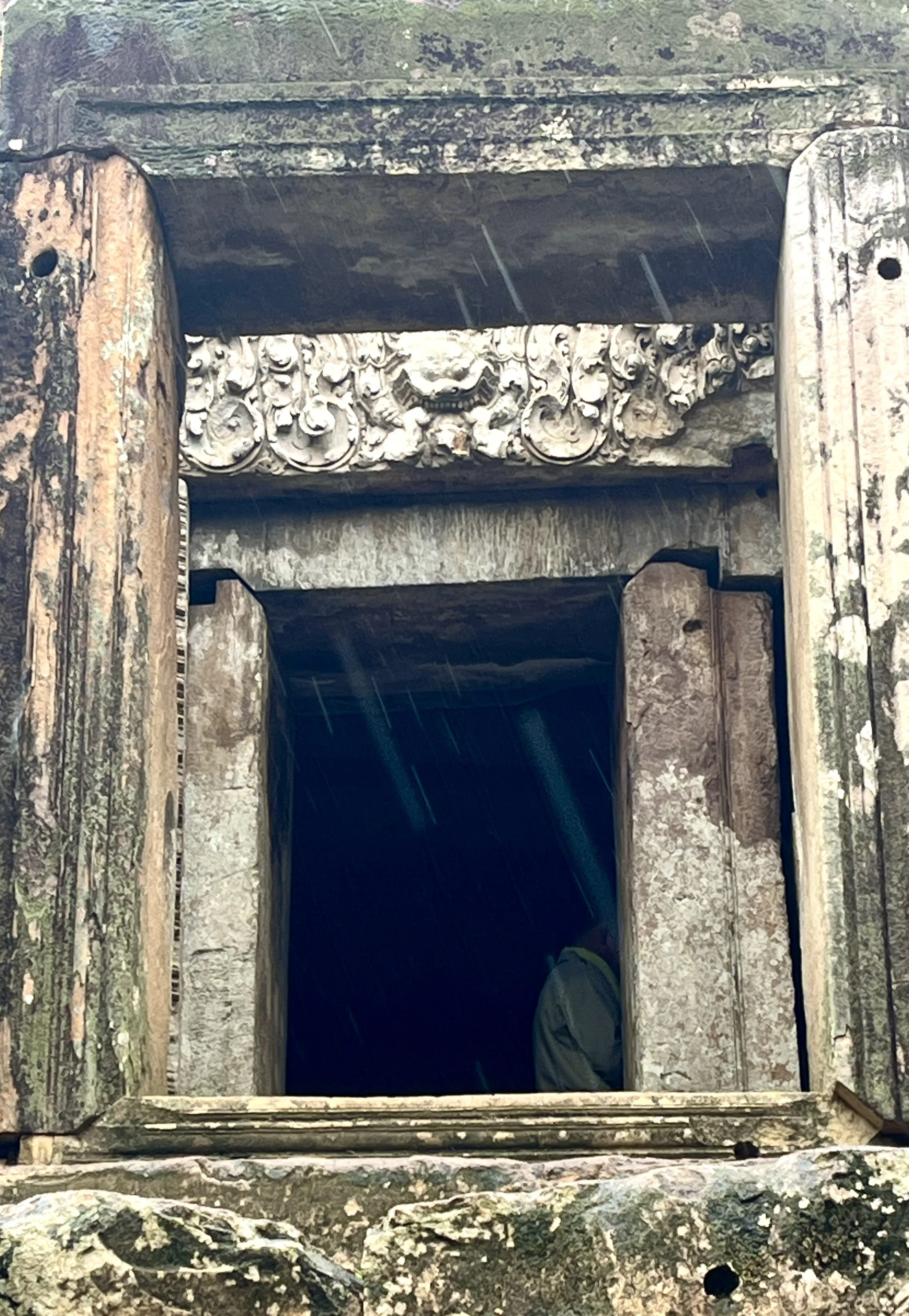
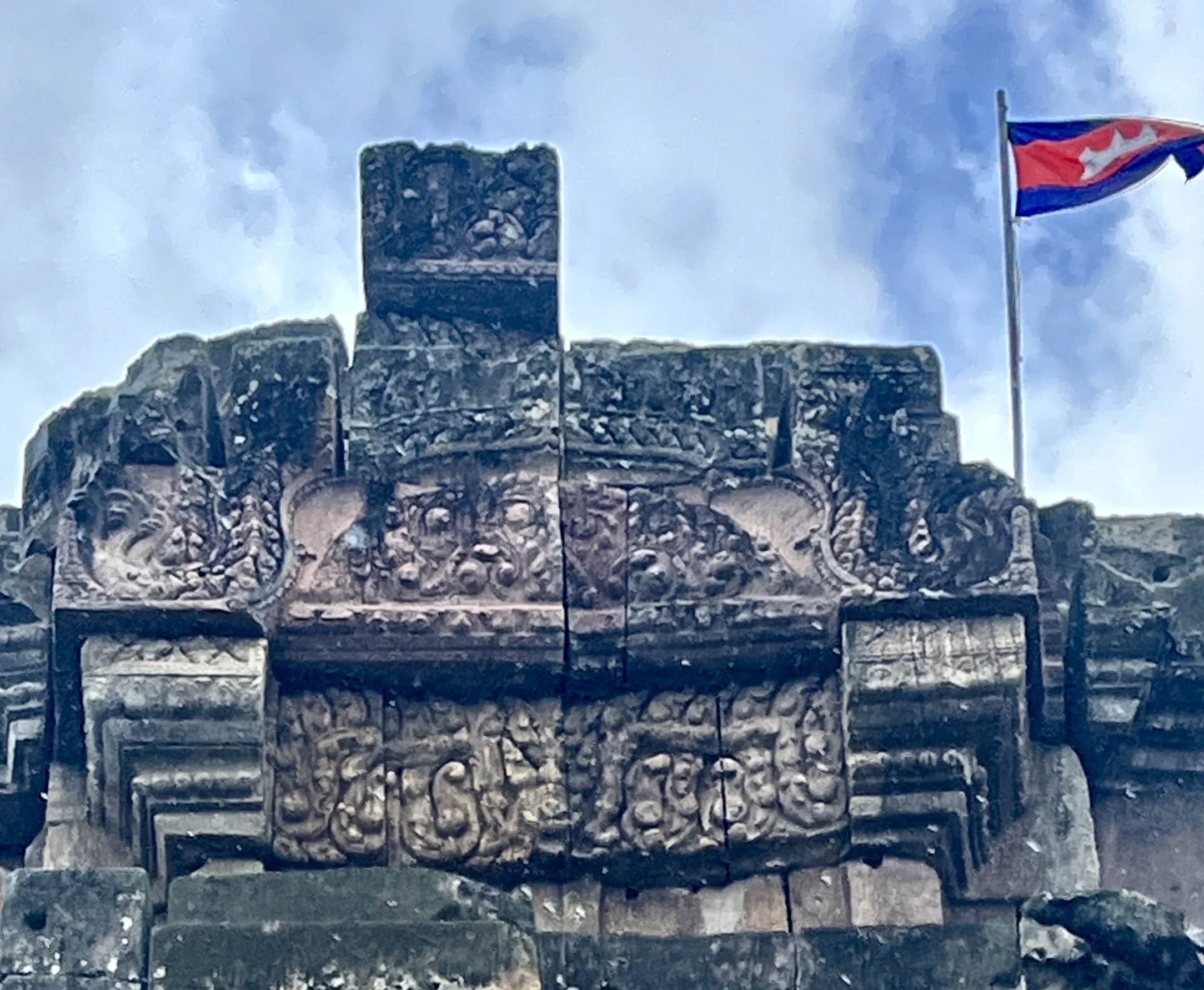
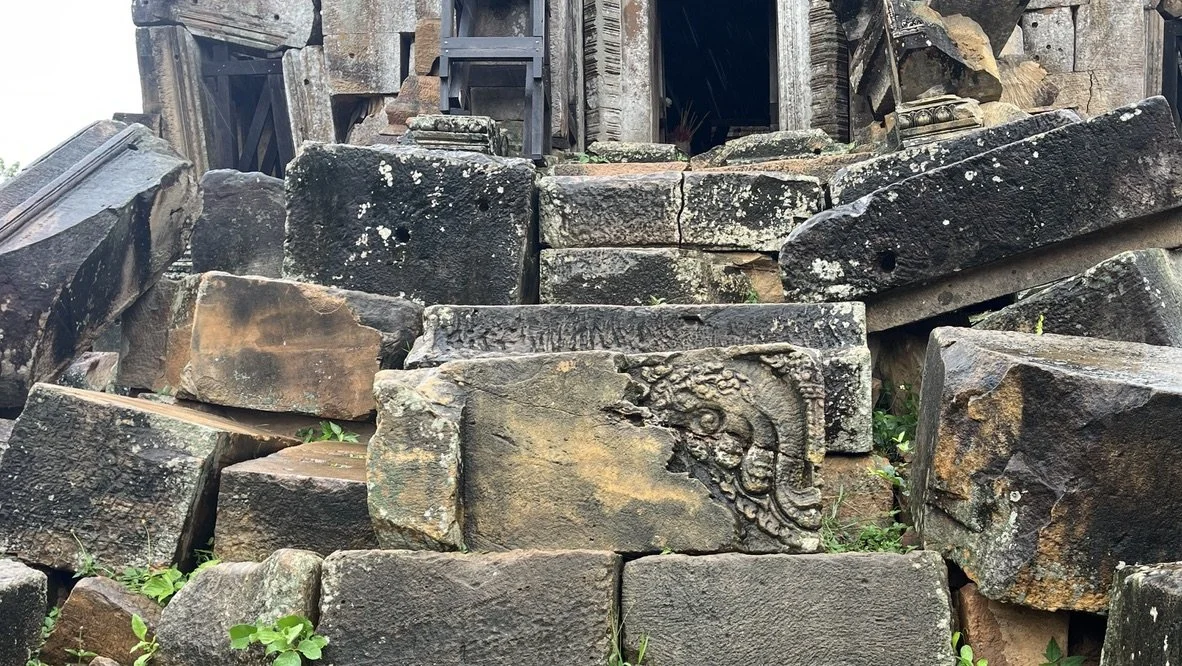
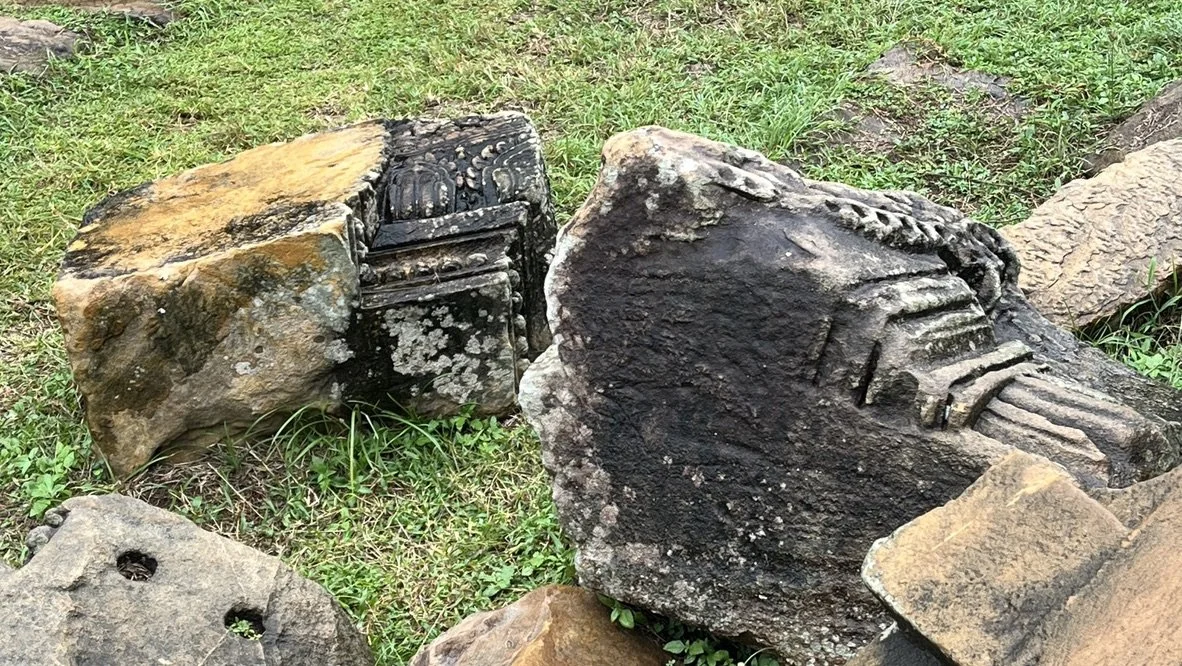
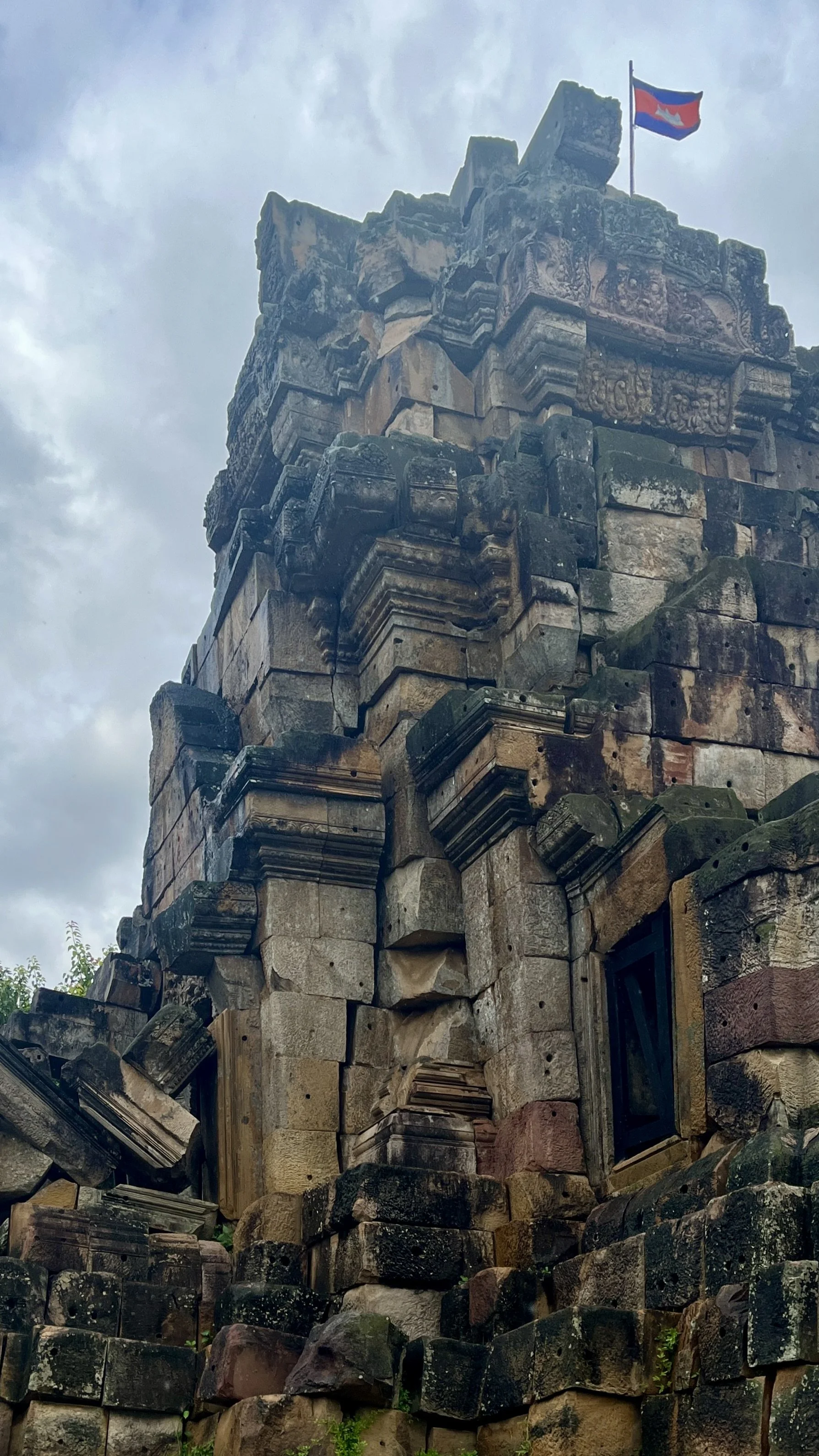
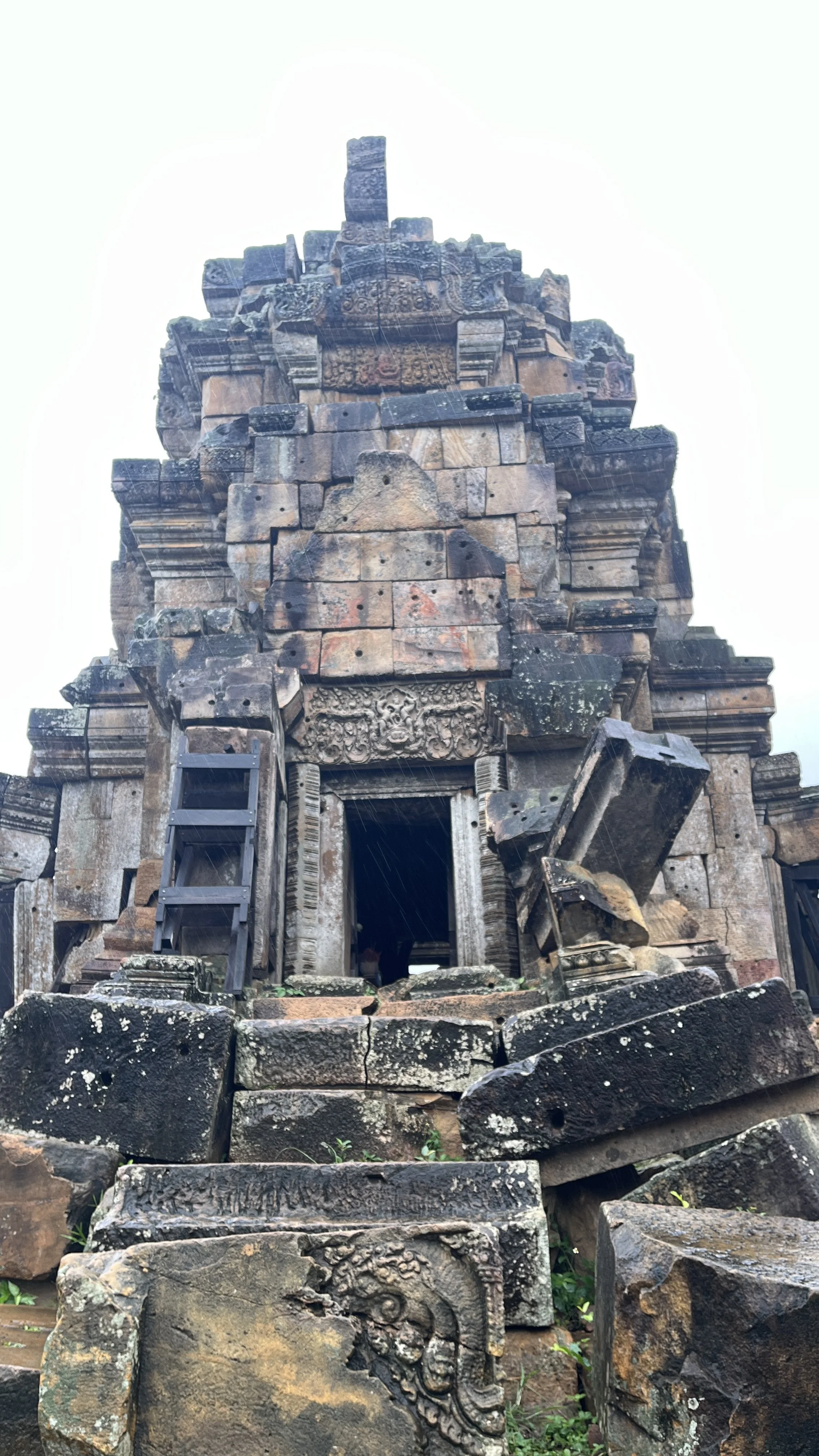
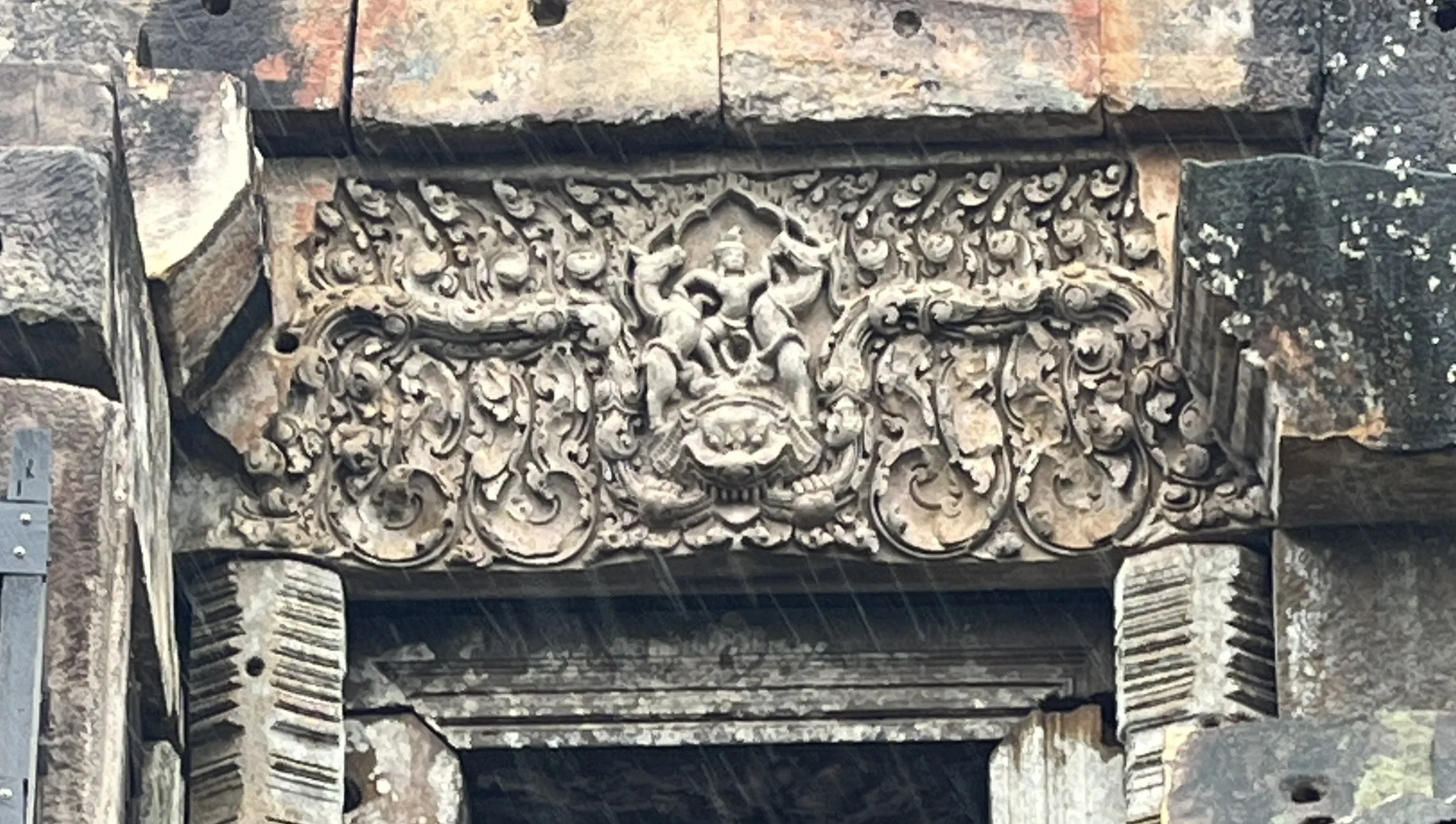
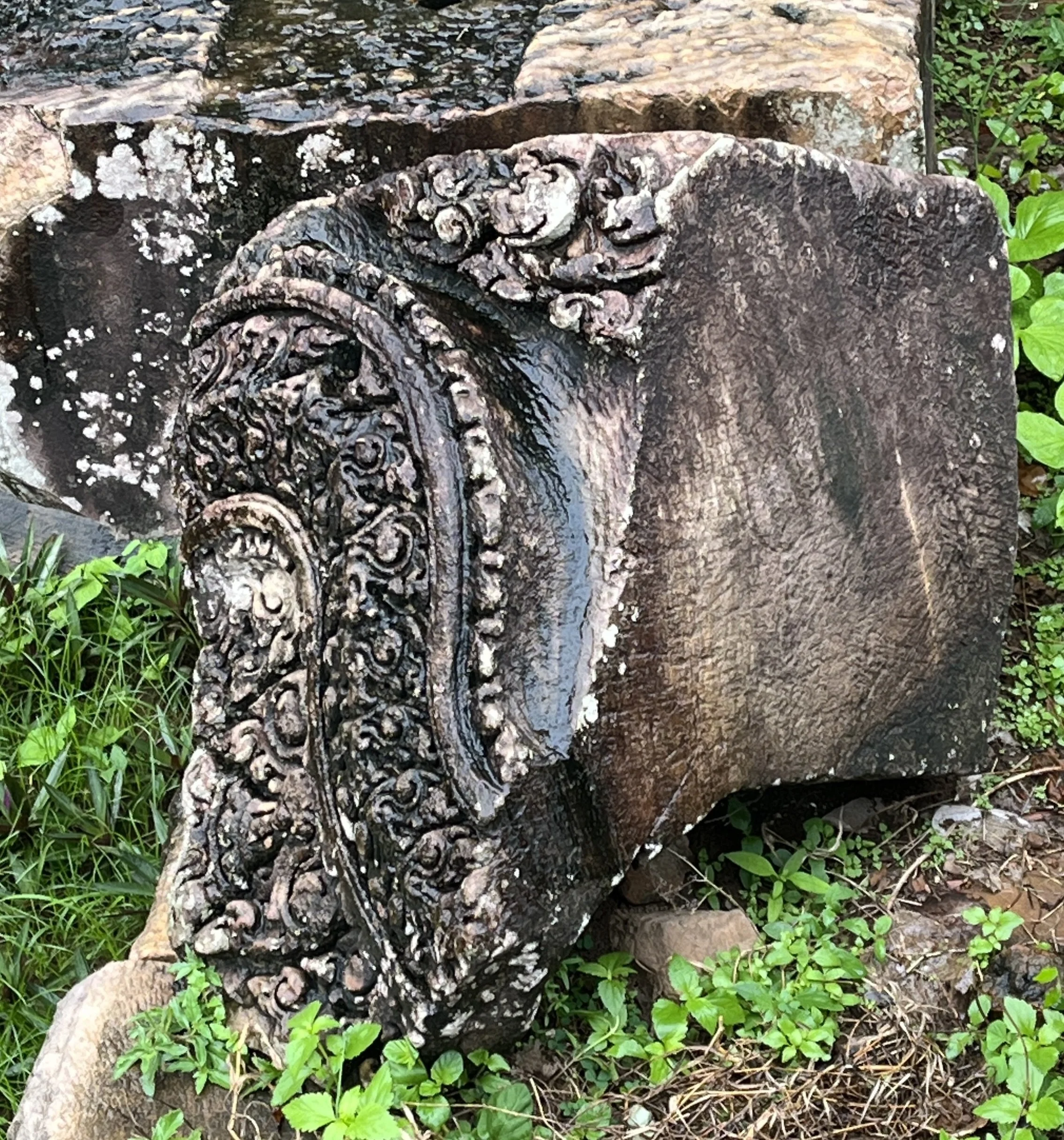
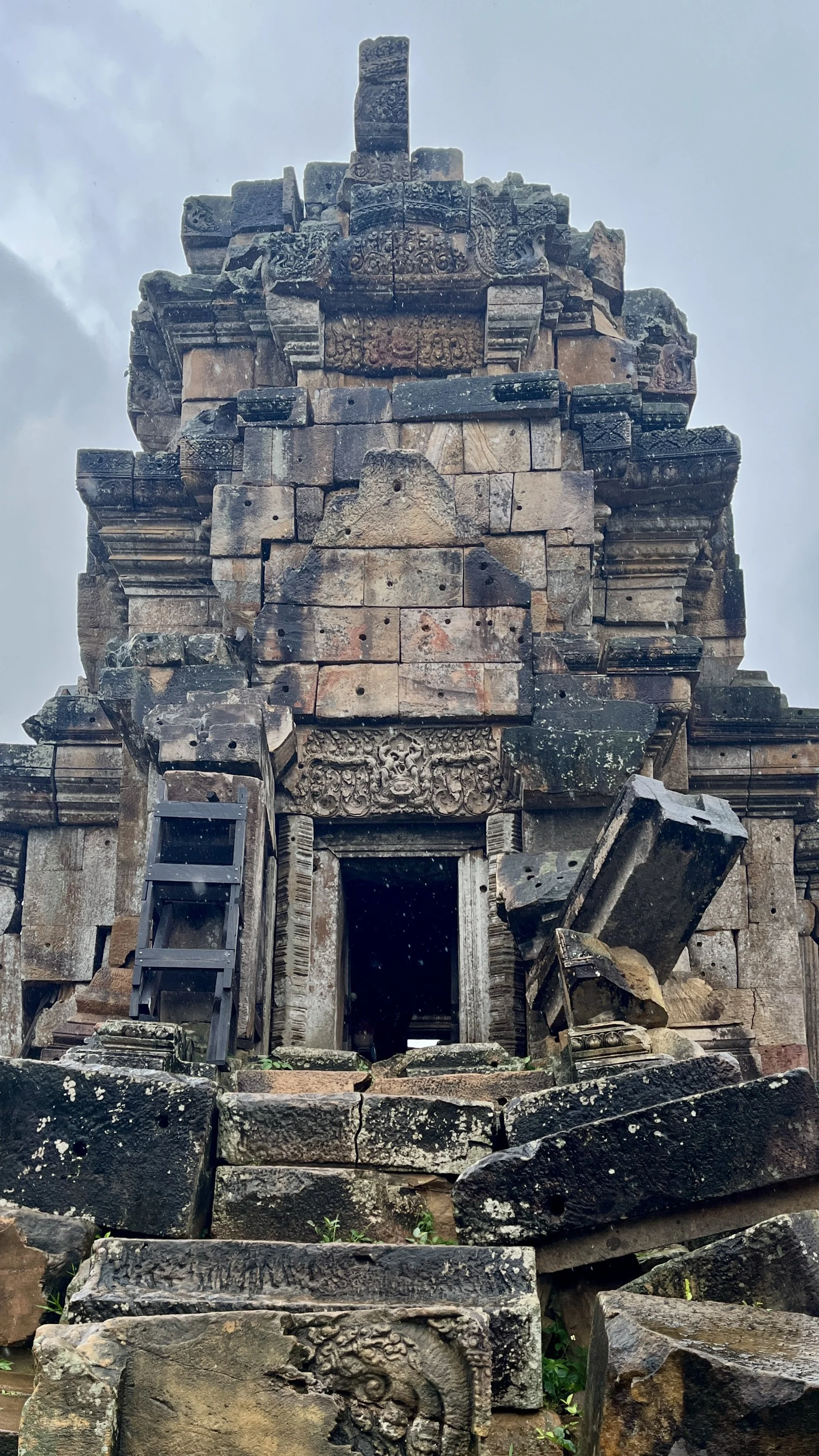
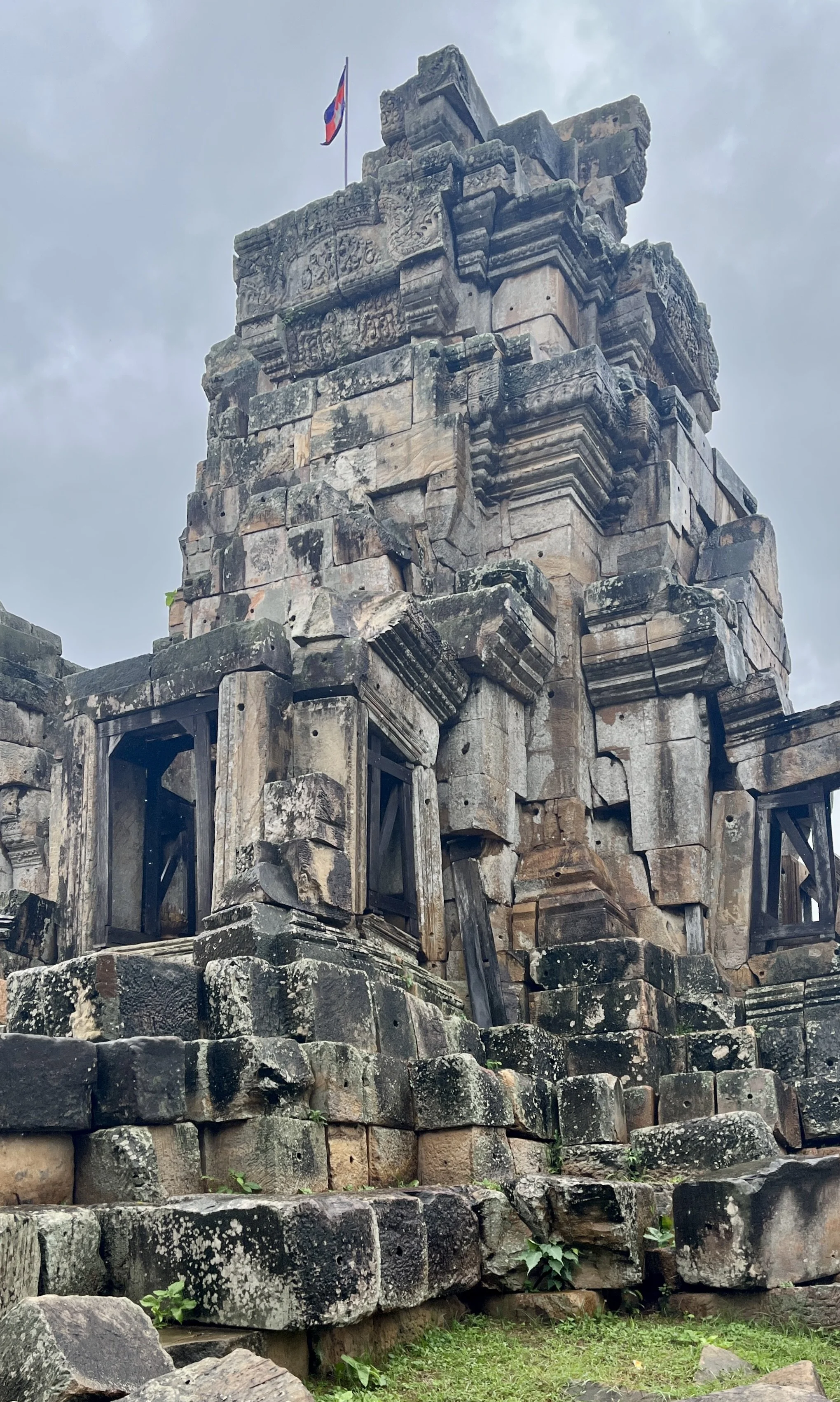
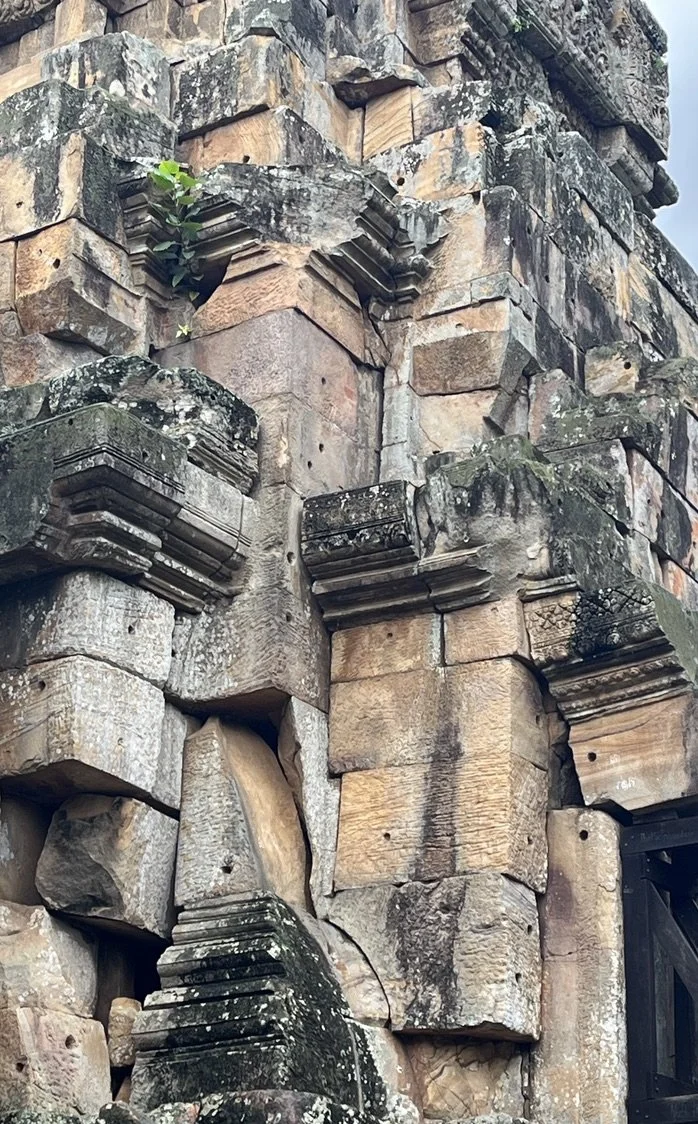
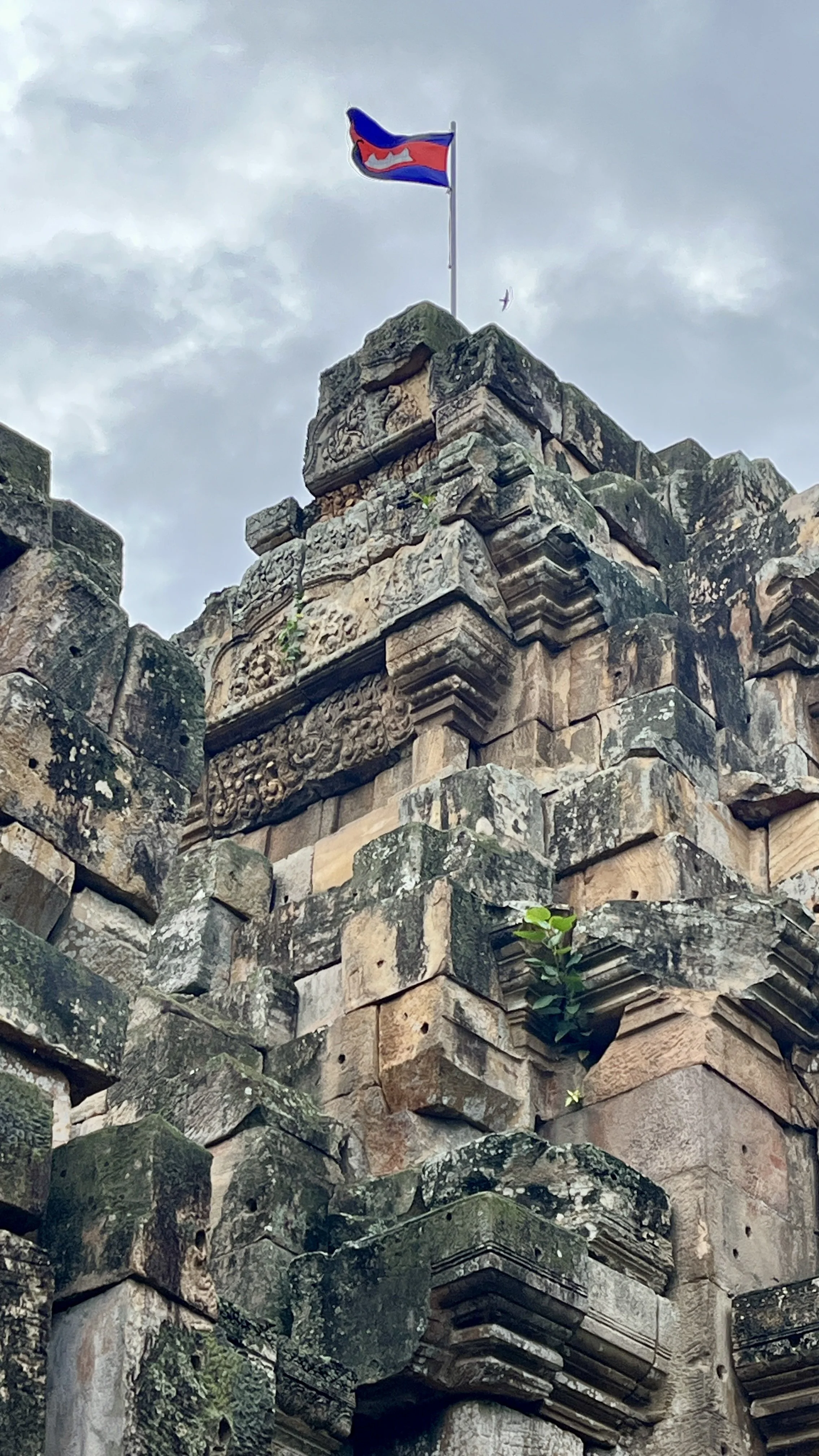
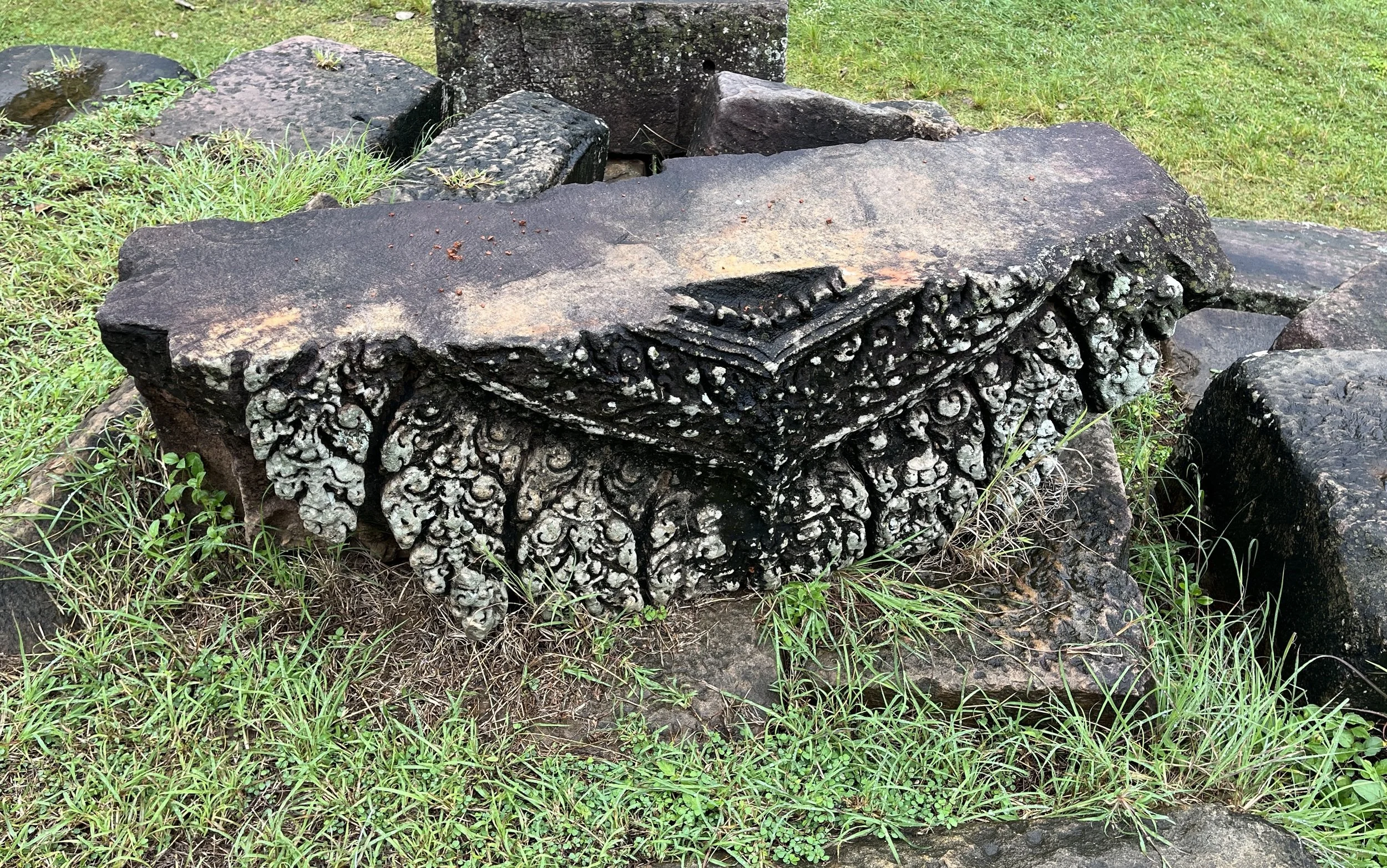
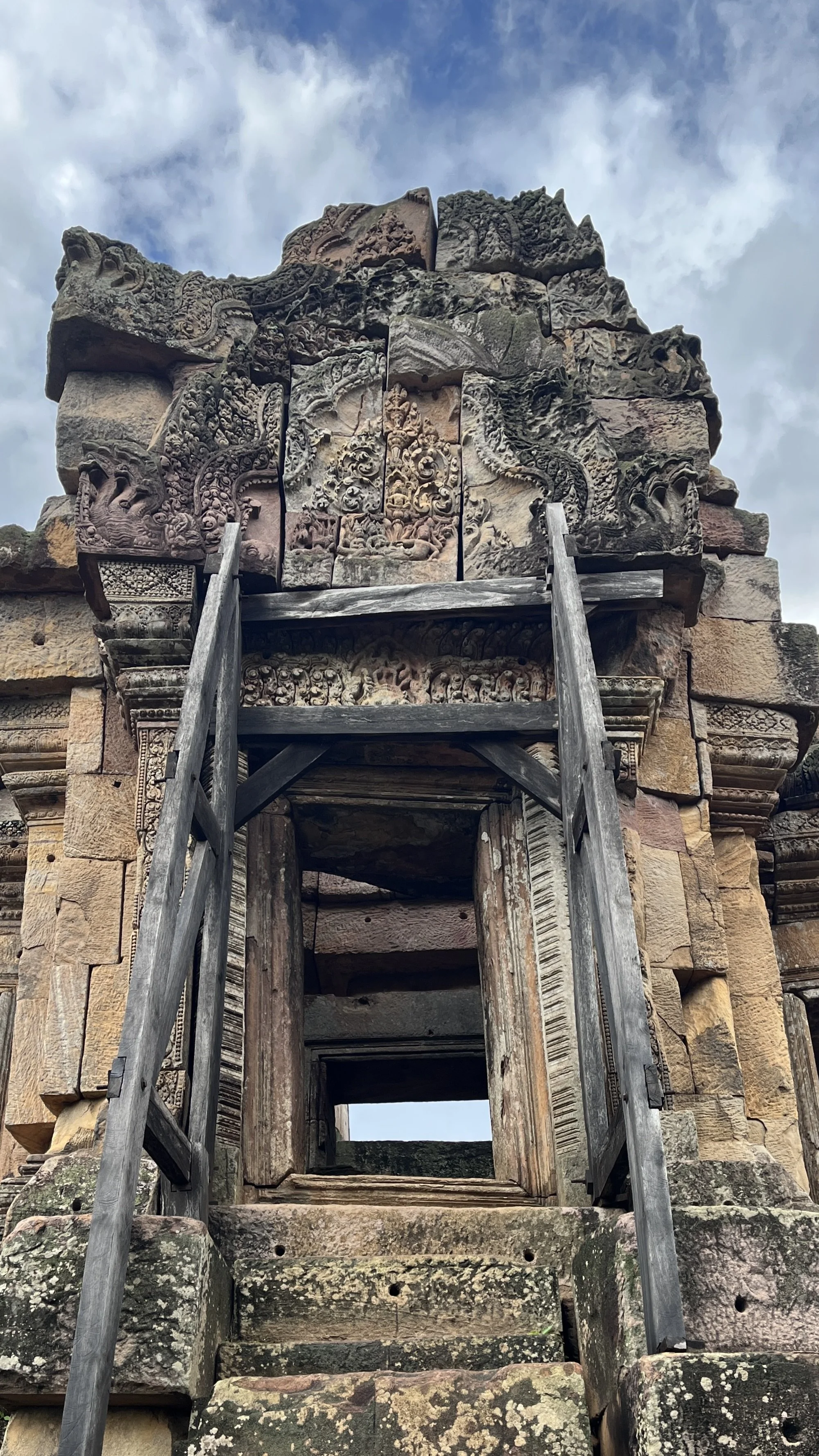
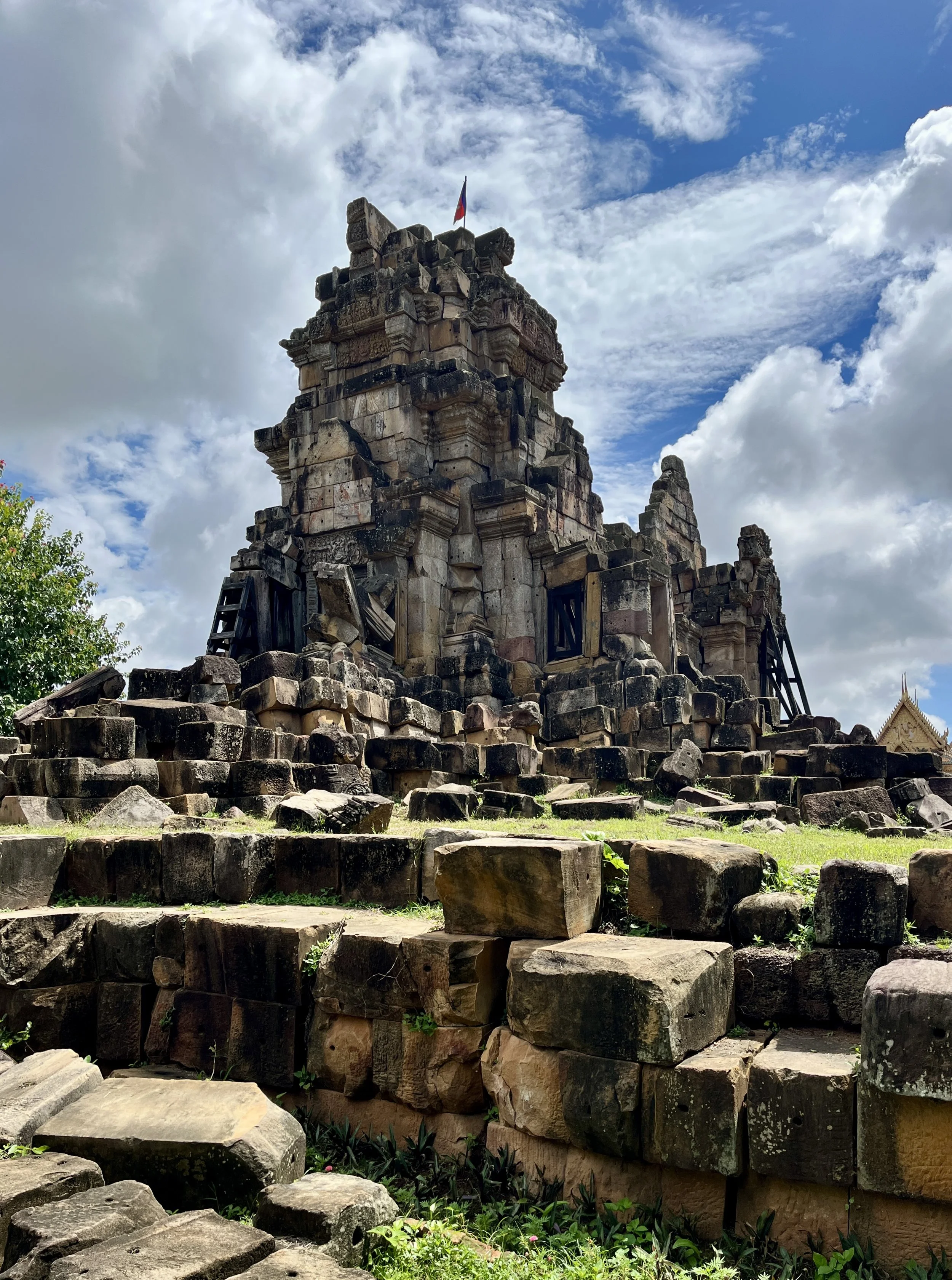
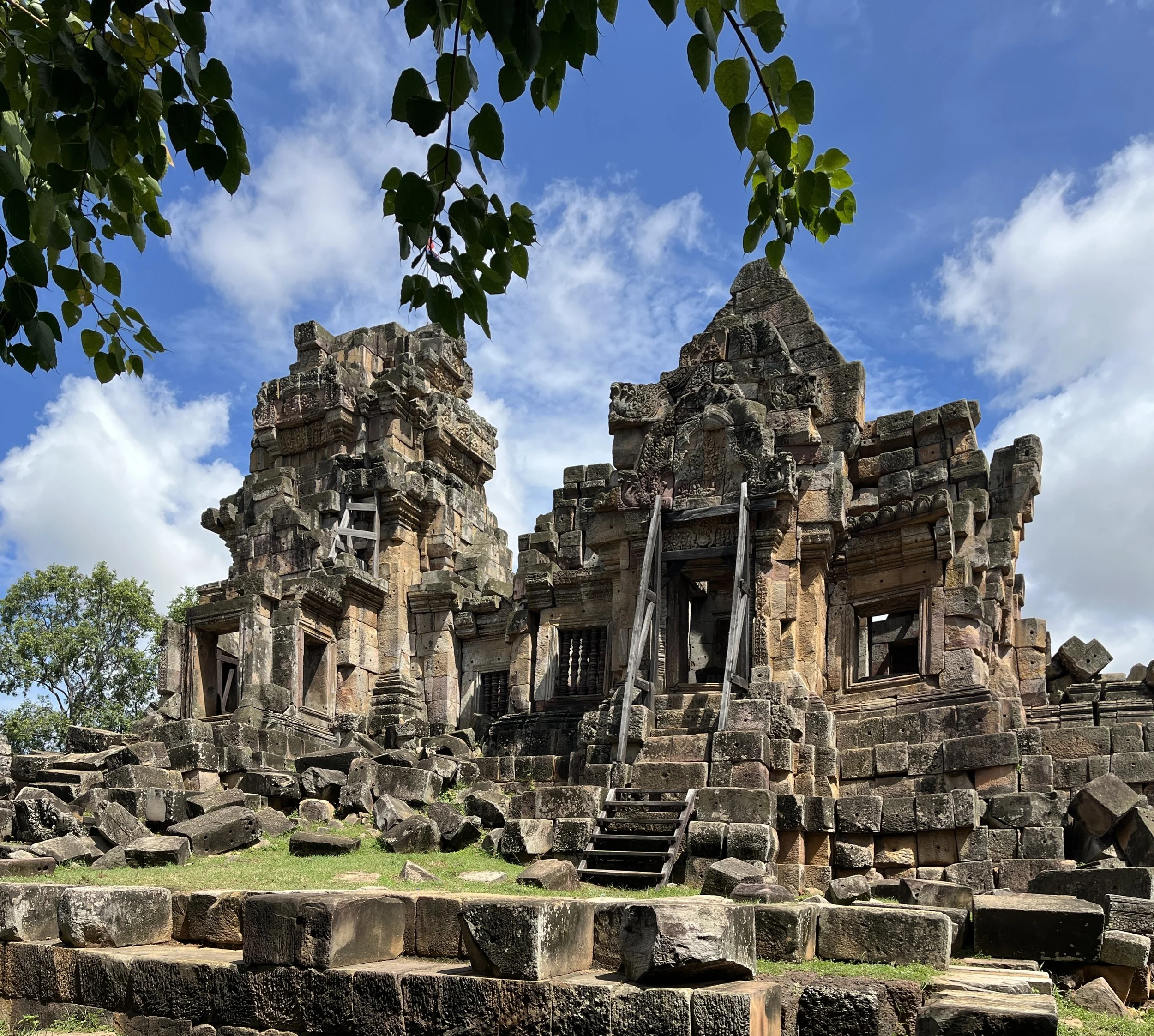
The ancient Hindu temple is believed to have been completed in either 1027 or 1029 by King Suryavarman I. As you can see, it’s wrecked.

I only have a handful of photos taken on a beautiful sunny day because the tour I was on covered literally every landmark in Battambang in a single very long day, and there was no time to get closer, climb up and inside etc.

I wanted to see more and went back by myself, despite the weather being miserable for 2 weeks straight.

An accidental selfie taken while fumbling in the rain

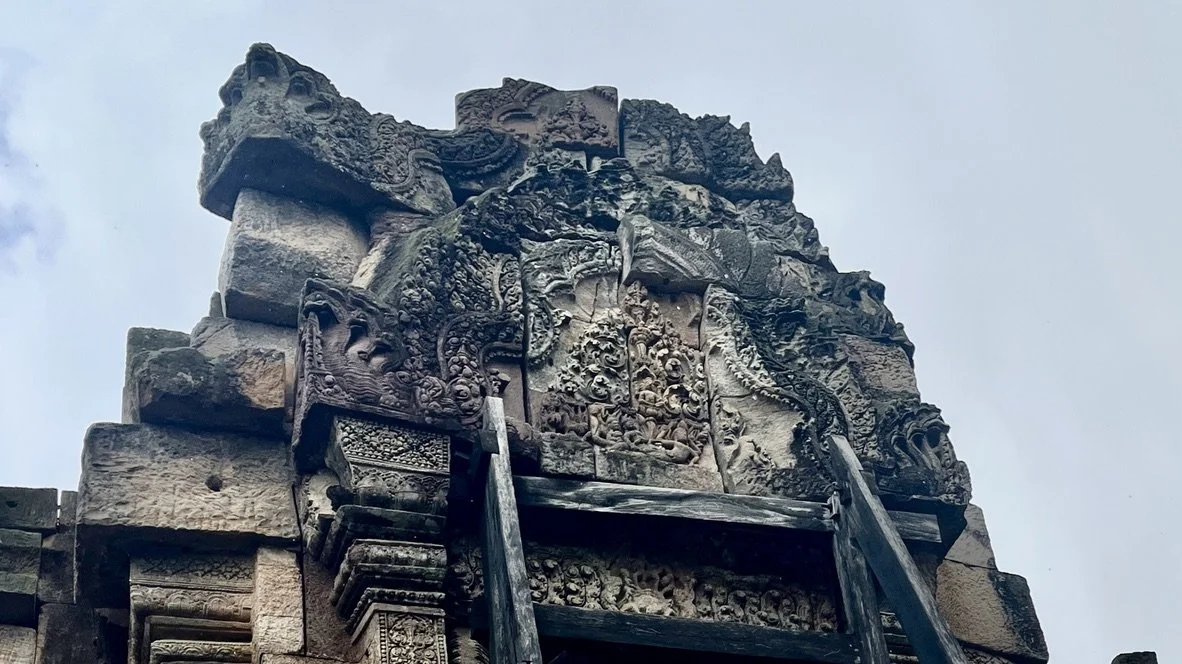
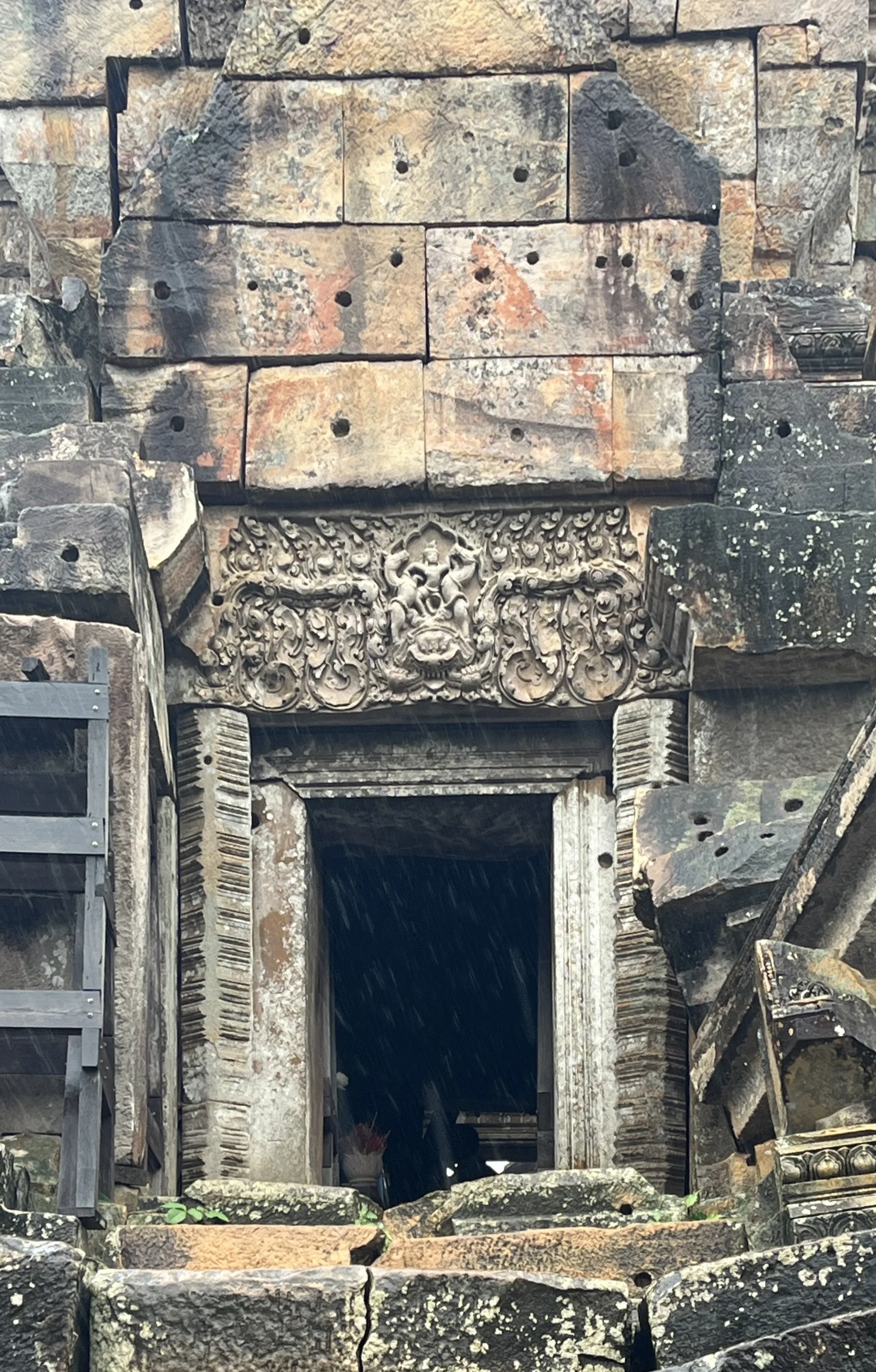
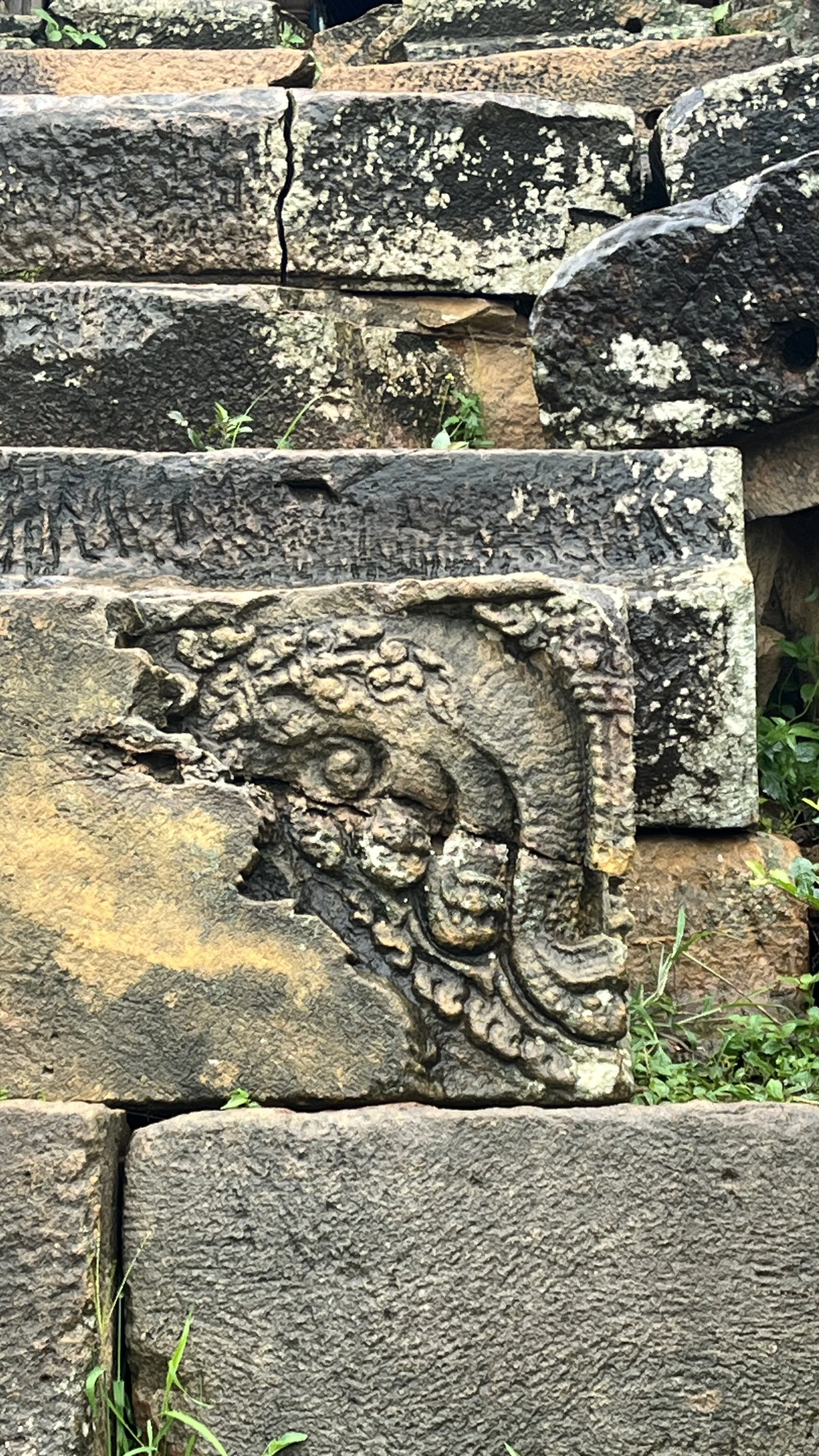
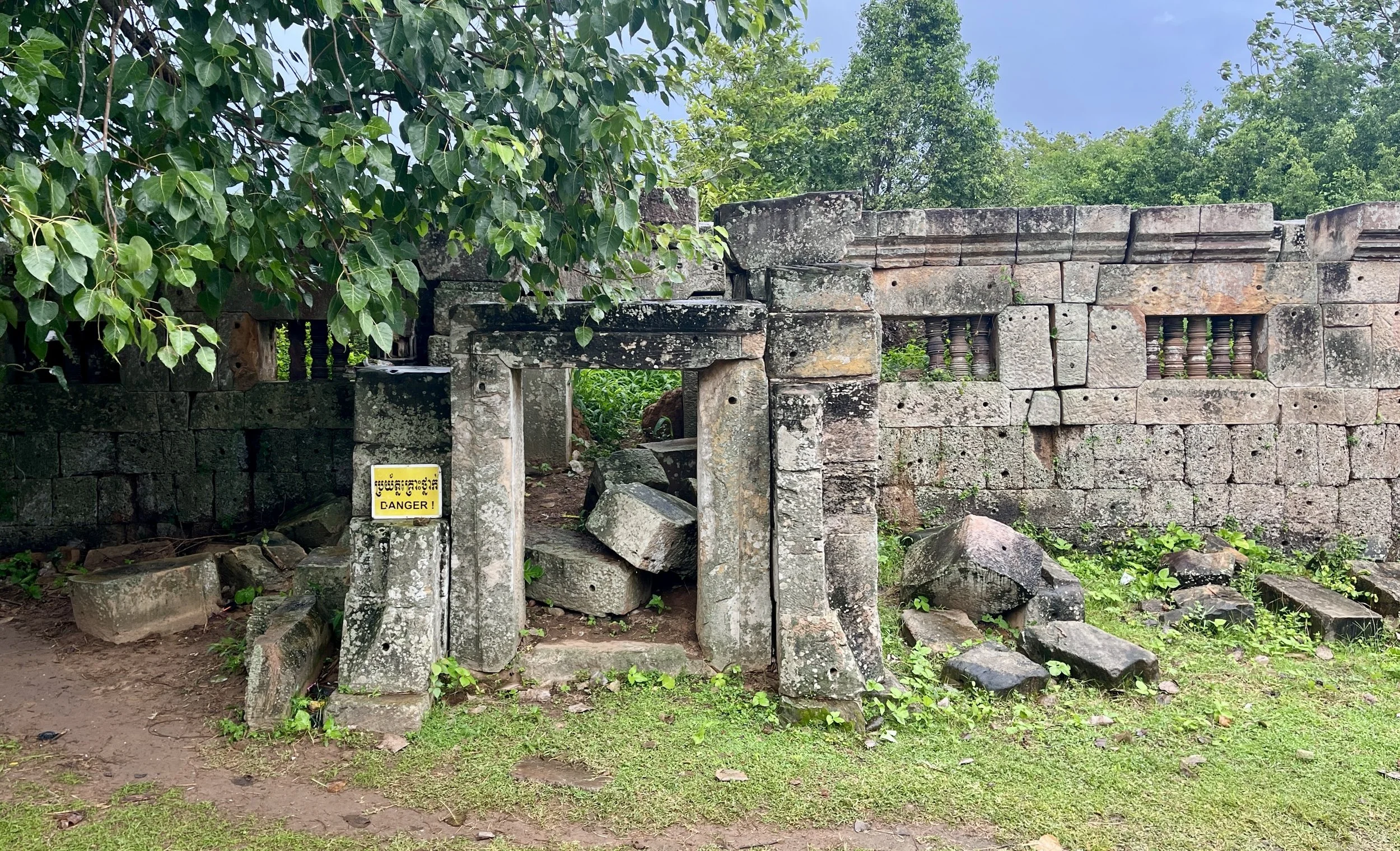
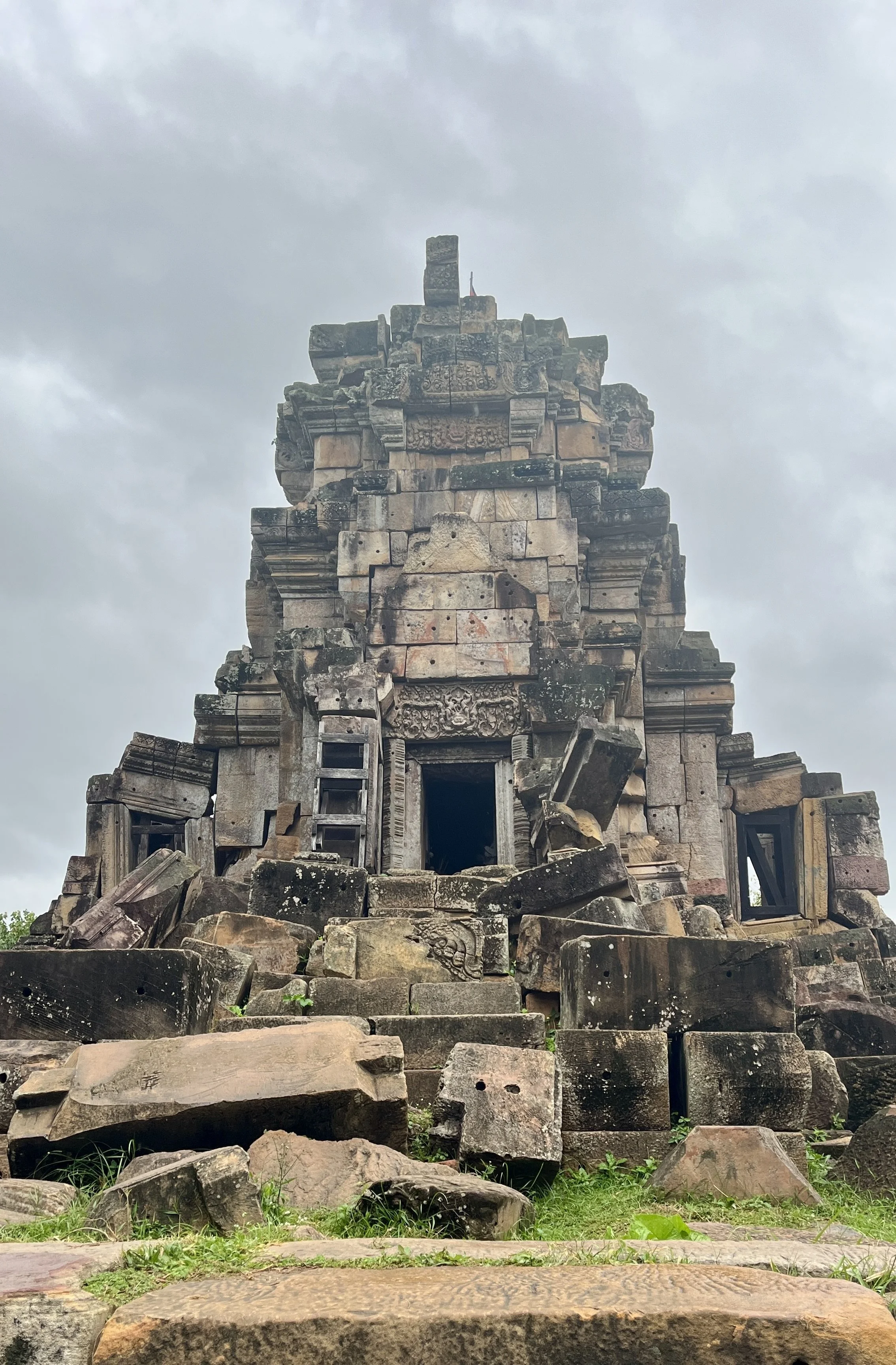
As the photos attest . . . it was probably not worth it. My phone camera couldn’t focus in the drizzle, there was not enough light, and I was a bit worried slipping and sliding on the completely unsecured stone with nary a handrail.

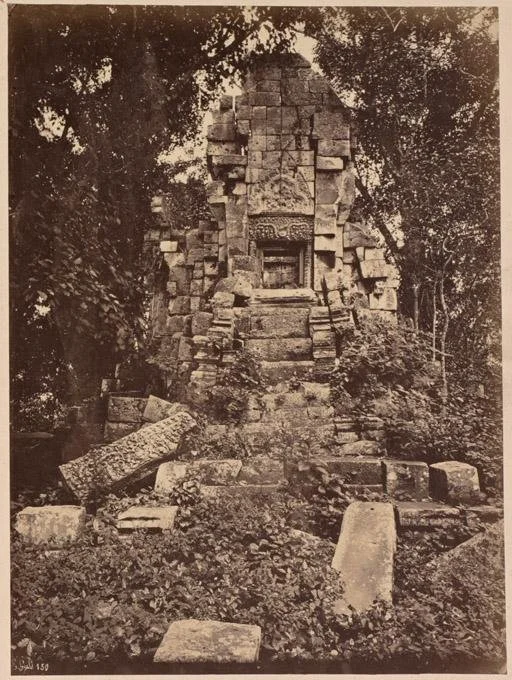
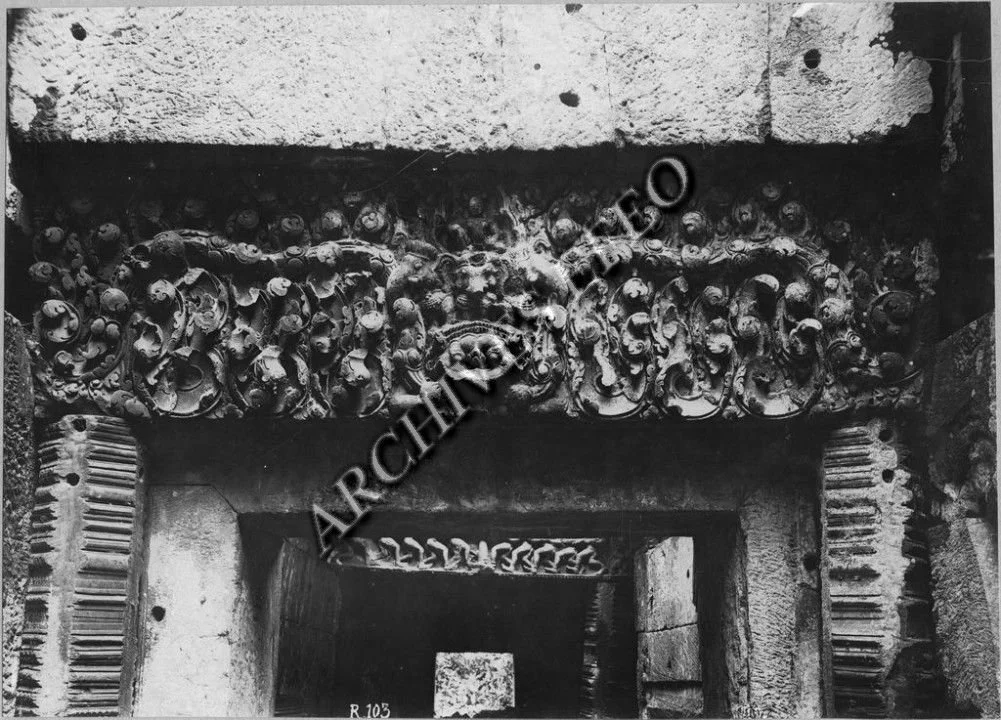
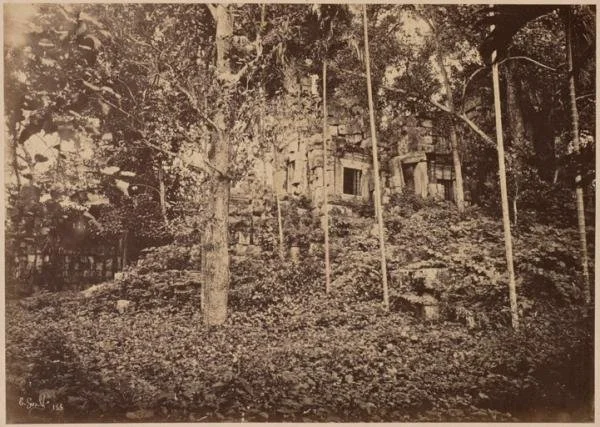
From what I can gather (and it was hard to gather anything online; perhaps there is more information available in person at the EFEO library, French National Archives, or similar), it was originally photographed by Émile Gsell in either 1866 or 1873, most likely 1873. These images are in the French National Archives.

I’m much closer to the containing wall and further round the side, but this is the closest apples to apples shot I have showing the differences between 1866/73 and 2025.

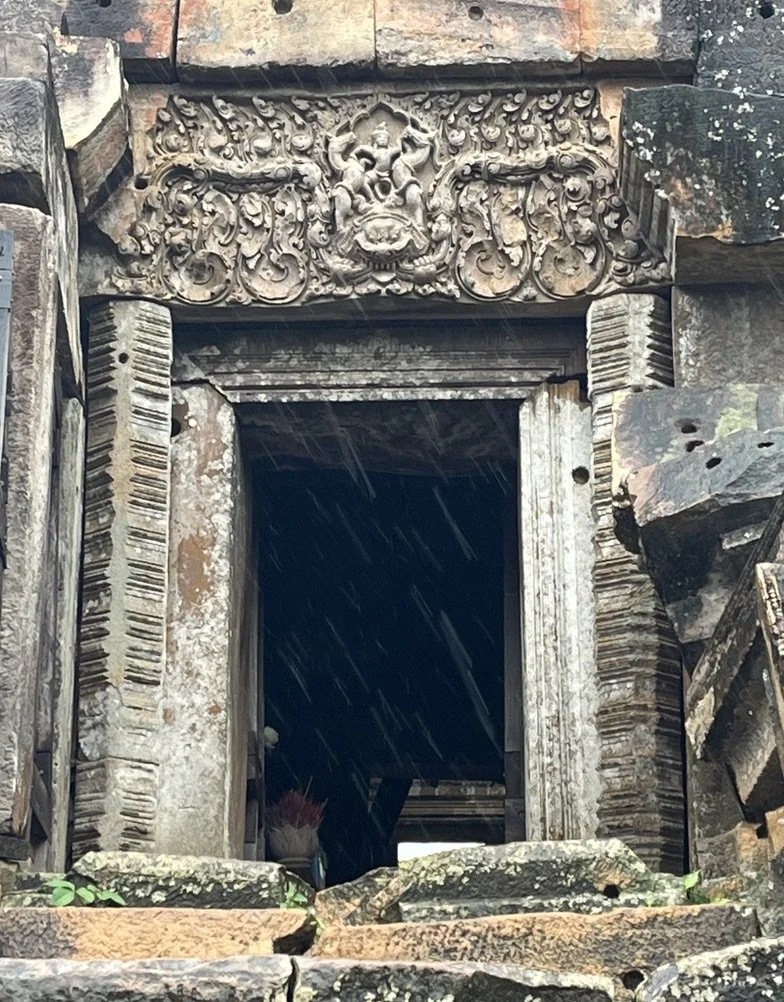
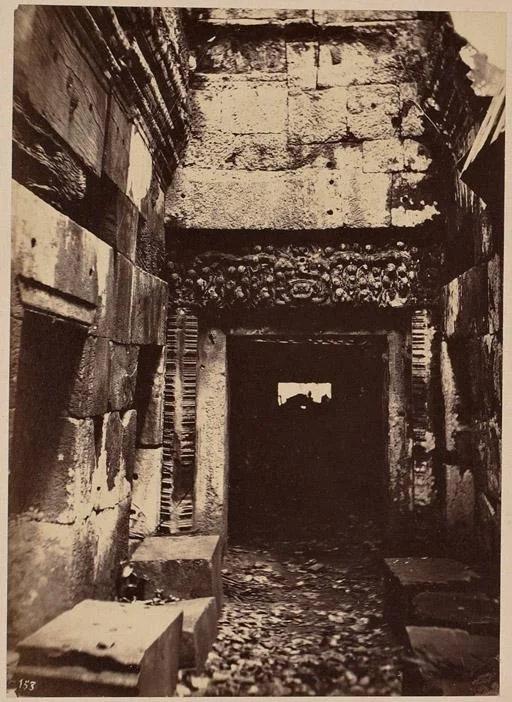
Hard to say because many outer doorways have similar lintels, and were obviously lazily and incorrectly jumbled together from fallen stones rather than reassembled and restored properly, but I think this might be an apple to apples shot, based on the two square blocks sitting in the lower right corner.

I risked my ass to climb the rocks and go inside, only to find it packed by so many local families bringing their kids for Pchum Ben/hiding from the rain that I could barely walk through, forget take decent photos.

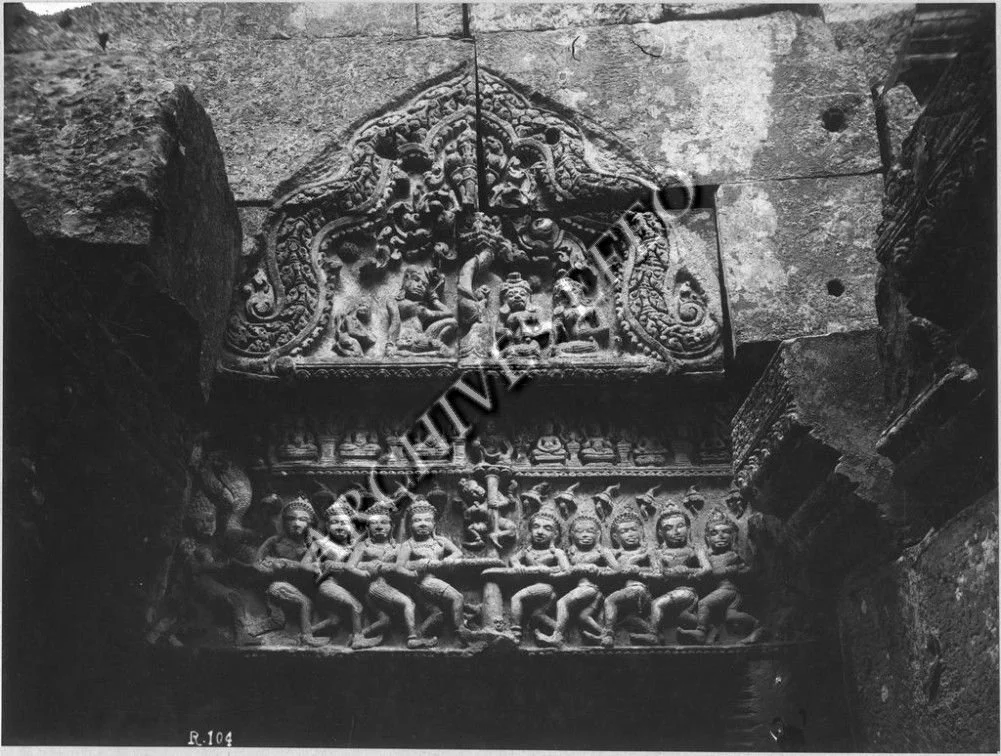
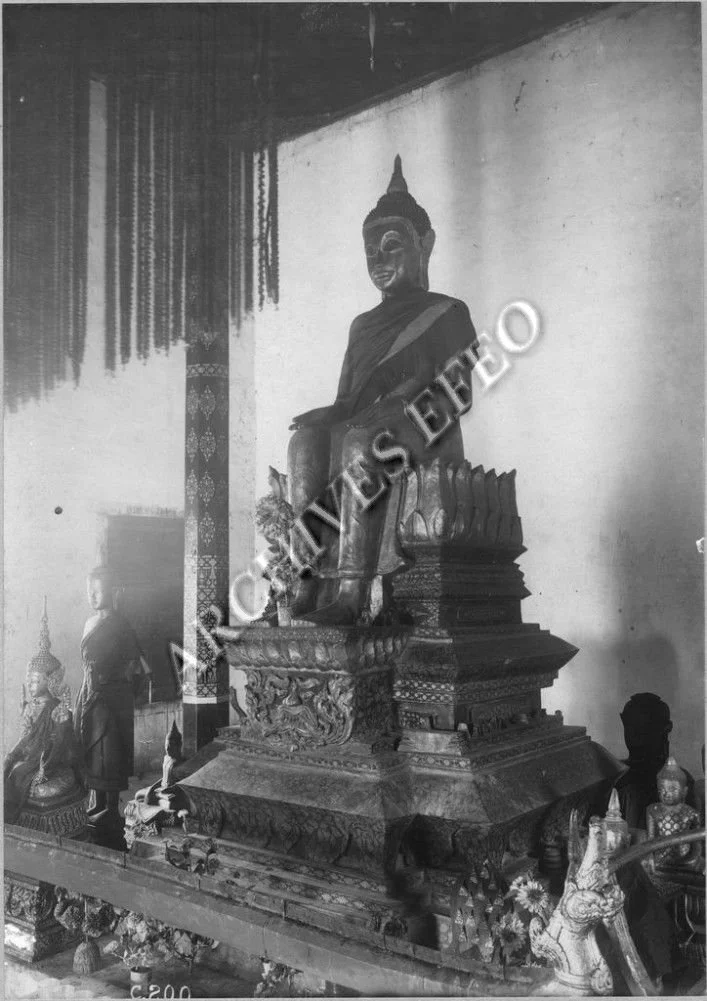
EFEO archives leave these photos undated, saying only they are from an anonymous Cambodian fonds. I learned something new going through them as well, which is that EFEO hand lettered photographs like this through the 1960s, so that alone is no determination of date.

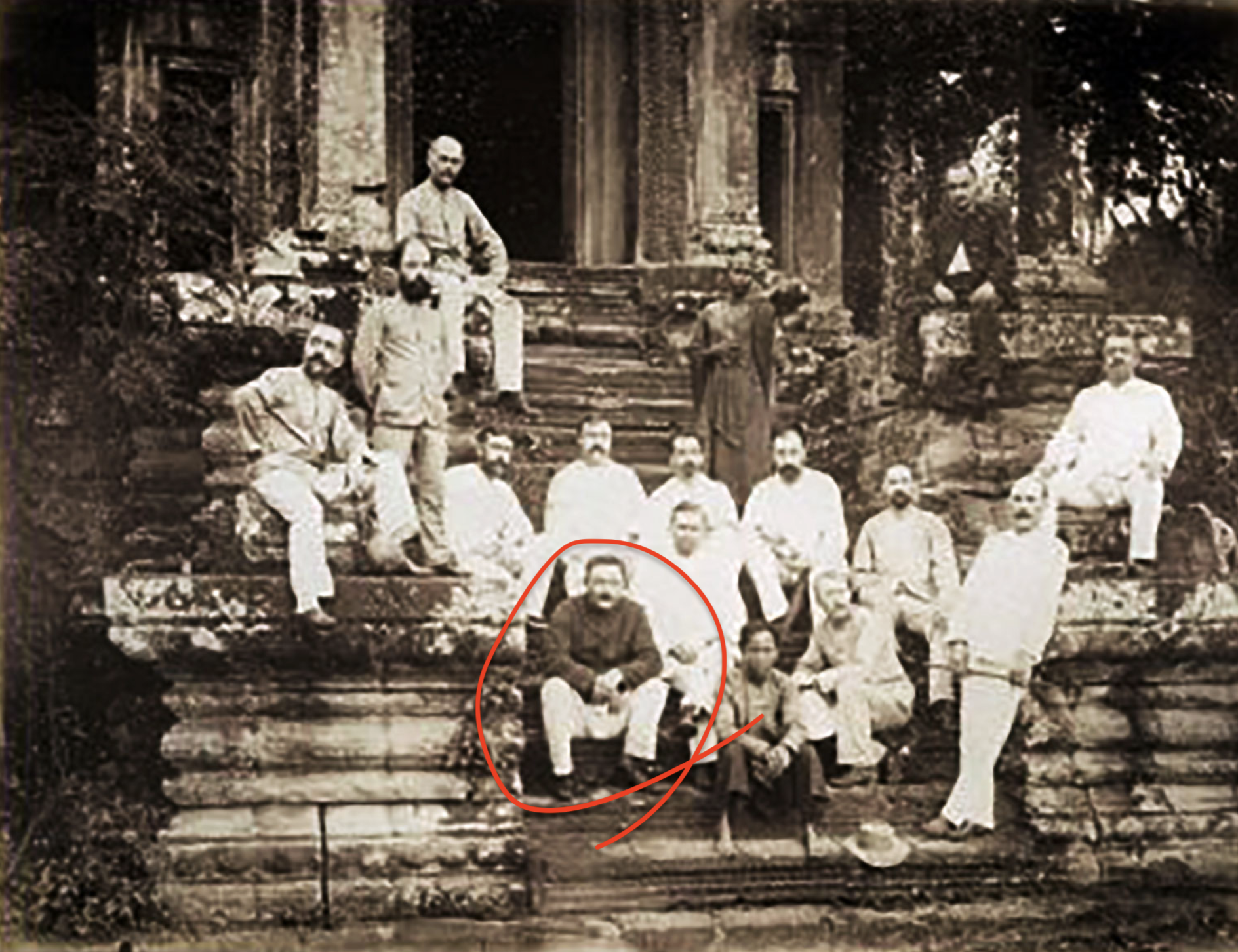
Perhaps because the Angkorian sites near Battambang are considered secondary to those of Angkor, I had to dig a little deeper to find colonial era photgraphs, and in the process learned the names of several seminal travel photographers, including Gsell, Agostini, and Thomson. The only one whose photos of Battambang I can find, Émile Gsell, is worth a post of his own; he was the first professional photographer to set up shop in French Indochina.

One of the only known images of Gsell, believed to be from 1873.

I also upped my search skills, accidentally discovering all the search terms I need to use to find old photos of this place– Wat Ek, Wat-ek, Wat Aek, Vat Ek, Wothec, Wothee. The Thai National Archives don’t appear to be available online as of yet, but I expect I’ll eventually be learning these homophones in Thai too.

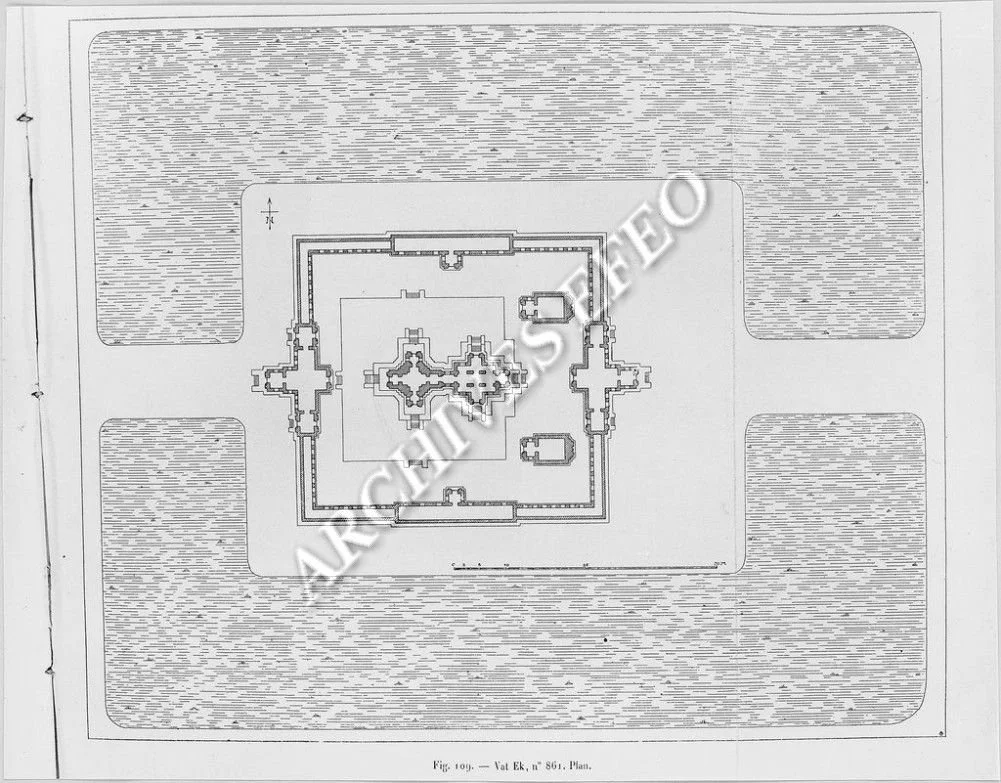
EFEO surveyed the site in October 1930, before the contemporary pagoda was built.

Surprisingly, given the clear cultural value of the carvings even as they remain today, just a few photos are available in the EFEO online photo library.

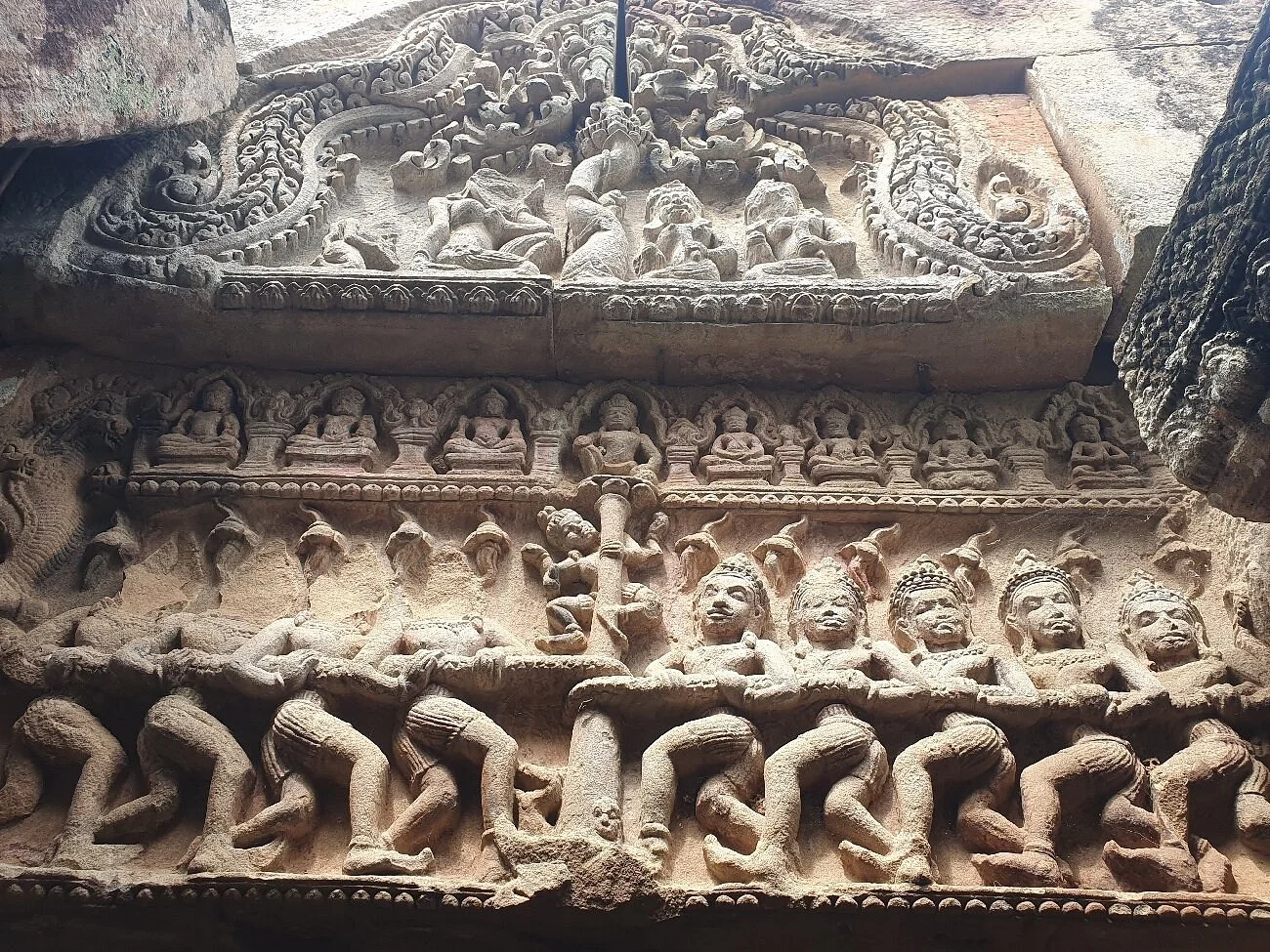
Another from Tripadvisor, showing what I believe to be the best remaining lintel and tympanum onsite. Half the heads are missing; they were likely looted to sell as decorative smalls. Dynamite Doug Latchford is known to have targeted Wat Ek, but as you can see at the very top left of the images, one of the figures had already been looted before EFEO was forced out of Cambodia in 1975.

This Buddha is long gone.

If you can’t tell, this visit really got me thinking about Dynamite Doug. The knavery has so many twists and turns over such a long time, it would make a great novel. I’ve been watching everything about him and will rank all that media in a future post.

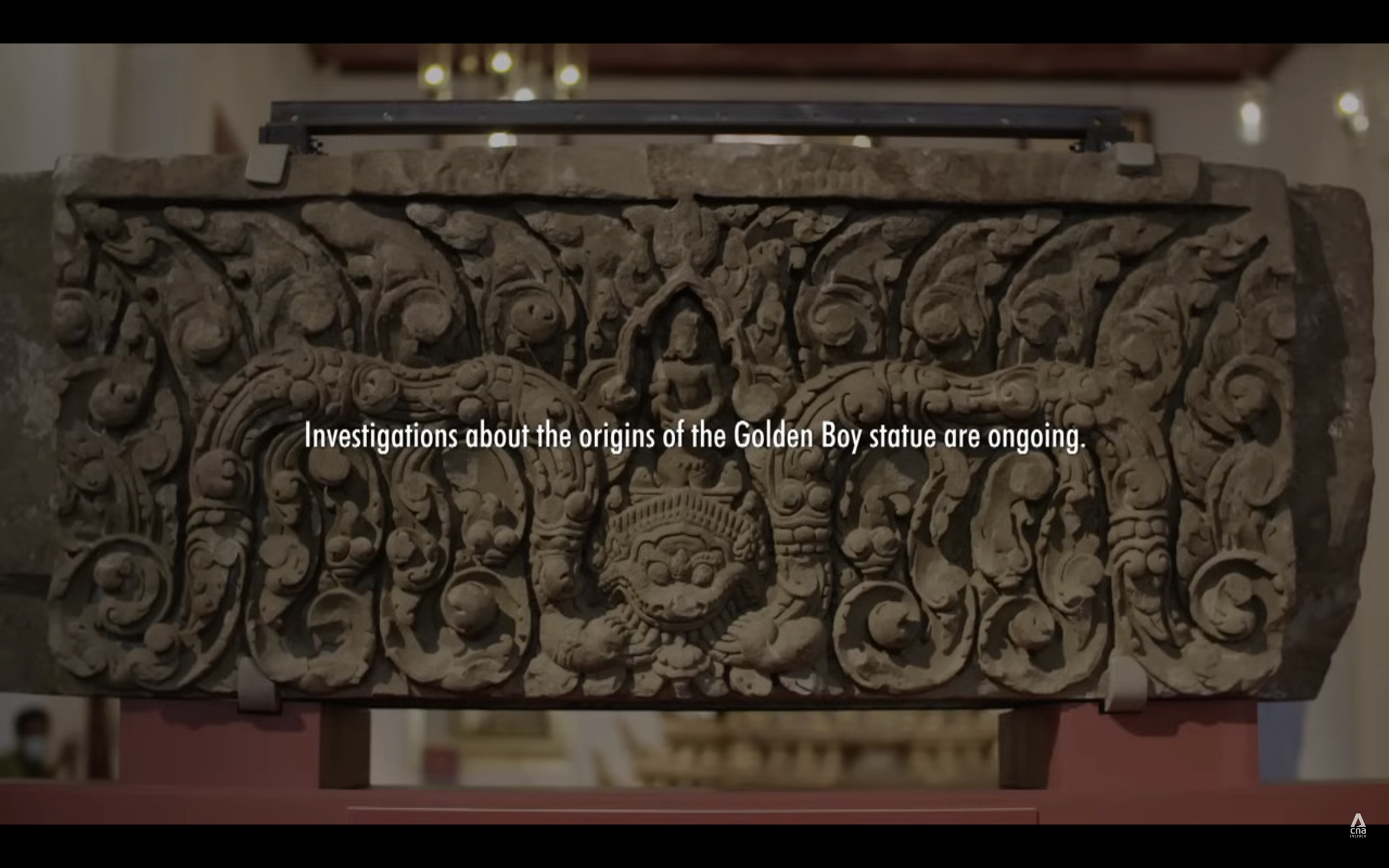
In one of the videos I watched about recovering looted Khmer art, the leader of the recovery process of looted Thai art, Dr. Tanongsak Hanwong, was gazing at this lintel, one of a pair on display at the Bangkok National Museum (2 years ago anyway) that I instantly recognized as from Wat Ek! Or maybe Wat Banan, judging from Gsell’s photos. Or maybe Banteay Srei? A formerly Khmer empire area in present day Thailand? According to the doctor they were from Prasat Nong Hong and Prasat Khao Lon, and eventually repatriated from the Asian Art Museum in San Francisco as such. This LA Times article tells the whole story well. Seeing how similar these various lintels look with my own eyes revealed to me the level of uncertainty and connoisseurship involved in the repatriation process.

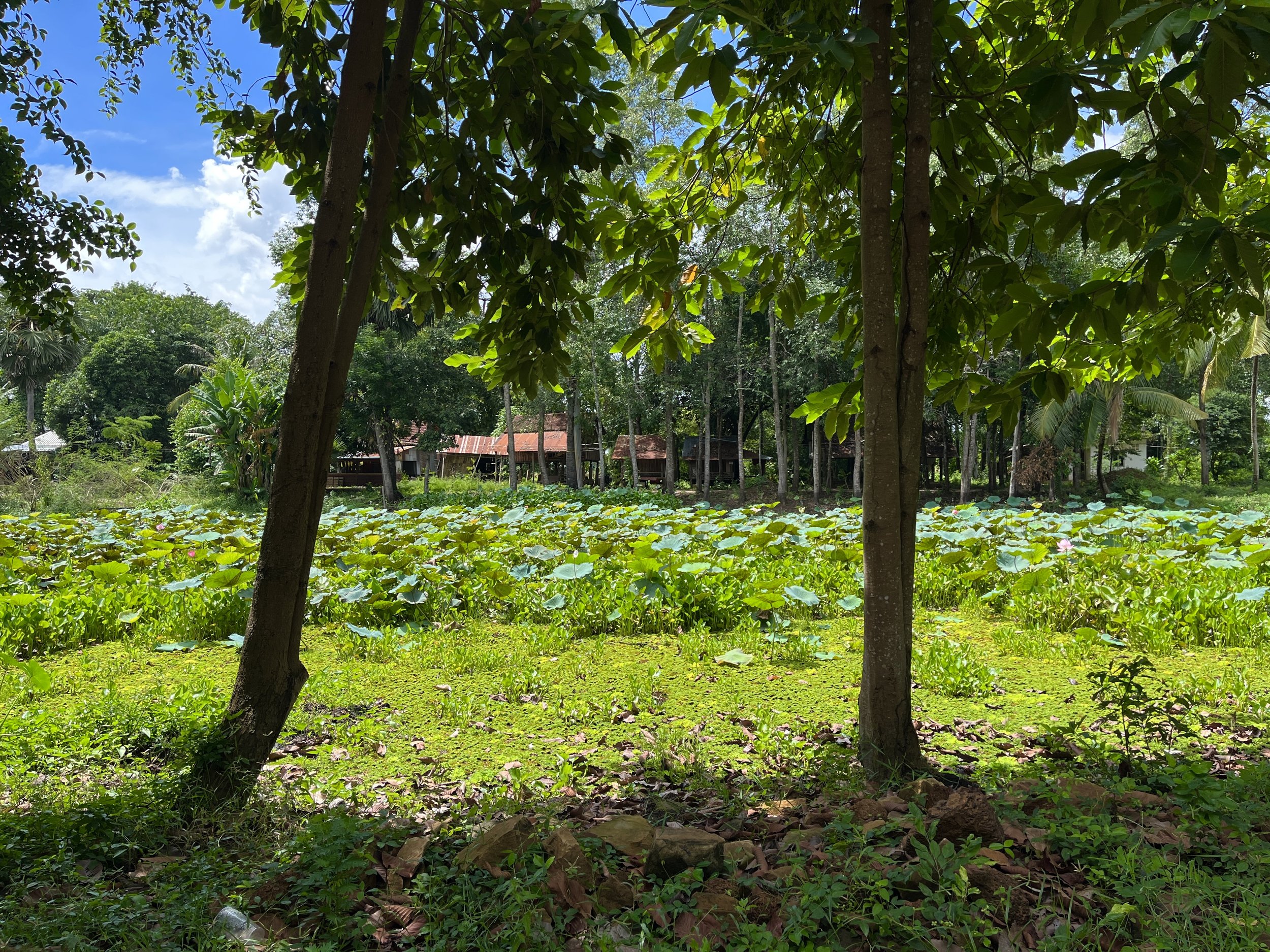
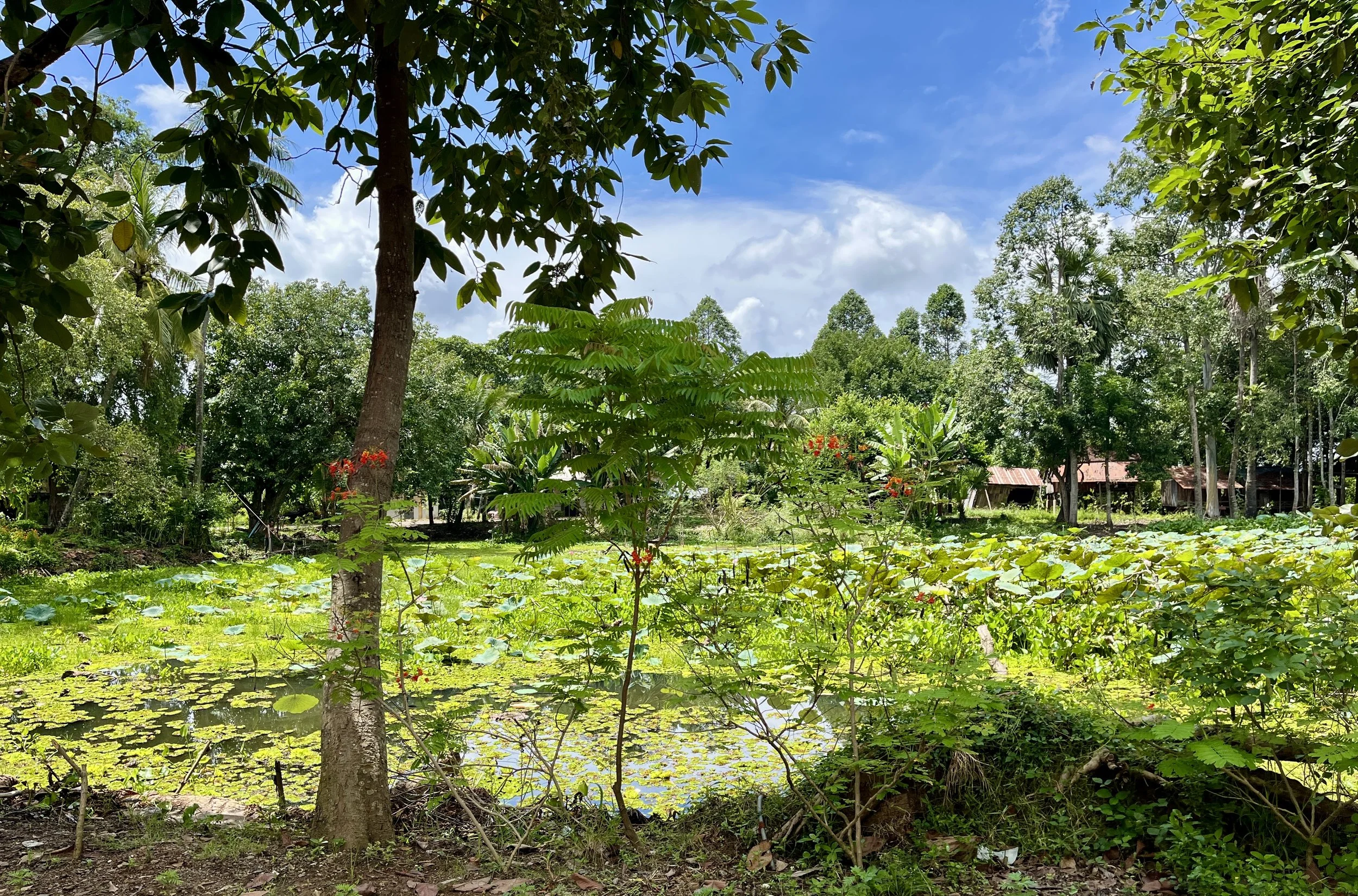
The old moat is still there, with some lilies.

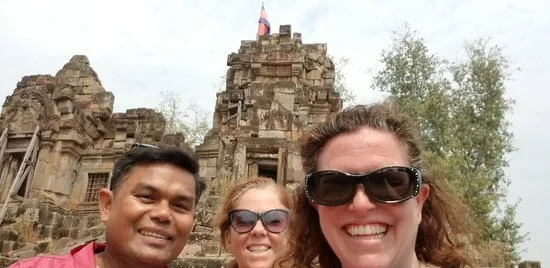
And for my final picture matching conspiracy about Wat Ek, look who I found when scanning TripAdvisor photos for my then and now comparisons . . . again, not totally sure of course, but 80-90% sure this is Princesses Beatrice and Eugenie . . . the teeth, the liplessness, the hairlines and haircolors, the oversized black plastic sunglasses, lol!